EP2999701B1 - 2-phenylimidazo[1,2-a]pyrimidine als bildgebungsmittel - Google Patents
2-phenylimidazo[1,2-a]pyrimidine als bildgebungsmittel Download PDFInfo
- Publication number
- EP2999701B1 EP2999701B1 EP14724757.1A EP14724757A EP2999701B1 EP 2999701 B1 EP2999701 B1 EP 2999701B1 EP 14724757 A EP14724757 A EP 14724757A EP 2999701 B1 EP2999701 B1 EP 2999701B1
- Authority
- EP
- European Patent Office
- Prior art keywords
- imidazo
- pyrimidin
- pyrimidine
- amine
- methoxyphenyl
- Prior art date
- Legal status (The legal status is an assumption and is not a legal conclusion. Google has not performed a legal analysis and makes no representation as to the accuracy of the status listed.)
- Active
Links
- 0 *N(*)c1nc2nc(I*)c[n]2cc1 Chemical compound *N(*)c1nc2nc(I*)c[n]2cc1 0.000 description 6
- MSNDUJAVTPZBDQ-UHFFFAOYSA-N COc1cccc(-c2c[n](ccc(N3CCCCC3)n3)c3n2)c1 Chemical compound COc1cccc(-c2c[n](ccc(N3CCCCC3)n3)c3n2)c1 MSNDUJAVTPZBDQ-UHFFFAOYSA-N 0.000 description 2
- RULQJYKREISGKD-UHFFFAOYSA-N CN(C)c(cc1)ccc1-c1c[n](ccc(N(C)C)n2)c2n1 Chemical compound CN(C)c(cc1)ccc1-c1c[n](ccc(N(C)C)n2)c2n1 RULQJYKREISGKD-UHFFFAOYSA-N 0.000 description 1
- NZFLWZAGACAXBI-UHFFFAOYSA-N CN(C)c(cc1)ccc1-c1c[n](ccc(N(CC2)CCC2F)n2)c2n1 Chemical compound CN(C)c(cc1)ccc1-c1c[n](ccc(N(CC2)CCC2F)n2)c2n1 NZFLWZAGACAXBI-UHFFFAOYSA-N 0.000 description 1
- JGVYTIGUFMMDRR-UHFFFAOYSA-N CN(C)c1nc2nc(-c(cc3)ccc3OC)c[n]2cc1 Chemical compound CN(C)c1nc2nc(-c(cc3)ccc3OC)c[n]2cc1 JGVYTIGUFMMDRR-UHFFFAOYSA-N 0.000 description 1
- MHYDJFWNKWKAHC-UHFFFAOYSA-N CN(C)c1nc2nc(-c3c[s]cc3)c[n]2cc1 Chemical compound CN(C)c1nc2nc(-c3c[s]cc3)c[n]2cc1 MHYDJFWNKWKAHC-UHFFFAOYSA-N 0.000 description 1
- KTULWOXDIWFWGW-UHFFFAOYSA-N CNc1nc2nc(-c(cc3)cc4c3OCO4)c[n]2cc1 Chemical compound CNc1nc2nc(-c(cc3)cc4c3OCO4)c[n]2cc1 KTULWOXDIWFWGW-UHFFFAOYSA-N 0.000 description 1
- ARYQCYNXXHGAKI-UHFFFAOYSA-N CNc1nc2nc(-c(cc3)ccc3C(OC)=O)c[n]2cc1 Chemical compound CNc1nc2nc(-c(cc3)ccc3C(OC)=O)c[n]2cc1 ARYQCYNXXHGAKI-UHFFFAOYSA-N 0.000 description 1
- QYXDDVAYABKNGP-UHFFFAOYSA-N CNc1nc2nc(-c(cc3)ccc3OCCCF)c[n]2cc1 Chemical compound CNc1nc2nc(-c(cc3)ccc3OCCCF)c[n]2cc1 QYXDDVAYABKNGP-UHFFFAOYSA-N 0.000 description 1
- YIZXEOHRWBROCZ-UHFFFAOYSA-N CNc1nc2nc(-c3cccc(O)c3)c[n]2cc1 Chemical compound CNc1nc2nc(-c3cccc(O)c3)c[n]2cc1 YIZXEOHRWBROCZ-UHFFFAOYSA-N 0.000 description 1
- JPTSSKNKHALQFD-UHFFFAOYSA-N COc(cc1)ccc1-c1c[n](ccc(N(C2)CC2F)n2)c2n1 Chemical compound COc(cc1)ccc1-c1c[n](ccc(N(C2)CC2F)n2)c2n1 JPTSSKNKHALQFD-UHFFFAOYSA-N 0.000 description 1
- ZCNCXTLDOPVUAK-UHFFFAOYSA-N COc(cc1)ccc1-c1c[n](ccc(N2CCN(CCF)CC2)n2)c2n1 Chemical compound COc(cc1)ccc1-c1c[n](ccc(N2CCN(CCF)CC2)n2)c2n1 ZCNCXTLDOPVUAK-UHFFFAOYSA-N 0.000 description 1
- RYKVSIGQKNGSDN-UHFFFAOYSA-N COc1cc(-c2c[n](ccc(N3CCCC3)n3)c3n2)ccc1 Chemical compound COc1cc(-c2c[n](ccc(N3CCCC3)n3)c3n2)ccc1 RYKVSIGQKNGSDN-UHFFFAOYSA-N 0.000 description 1
- PCRGLJHFYILWPC-UHFFFAOYSA-N COc1cccc(-c2c[n](ccc(N3CCOCC3)n3)c3n2)c1 Chemical compound COc1cccc(-c2c[n](ccc(N3CCOCC3)n3)c3n2)c1 PCRGLJHFYILWPC-UHFFFAOYSA-N 0.000 description 1
- ZHQMZOGJJSLVSD-UHFFFAOYSA-N Cc(cc1)ccc1-c1c[n](ccc(N(C)CCF)n2)c2n1 Chemical compound Cc(cc1)ccc1-c1c[n](ccc(N(C)CCF)n2)c2n1 ZHQMZOGJJSLVSD-UHFFFAOYSA-N 0.000 description 1
- CJTXJDQLJZDMOS-UHFFFAOYSA-N Cc(cc1)ccc1-c1c[n](ccc(N2CCC(CCF)CC2)n2)c2n1 Chemical compound Cc(cc1)ccc1-c1c[n](ccc(N2CCC(CCF)CC2)n2)c2n1 CJTXJDQLJZDMOS-UHFFFAOYSA-N 0.000 description 1
- AWYIGBHGXOILQQ-UHFFFAOYSA-N Cc(ccc(-c1c[n](ccc(N2CCC2)n2)c2n1)c1)c1OC Chemical compound Cc(ccc(-c1c[n](ccc(N2CCC2)n2)c2n1)c1)c1OC AWYIGBHGXOILQQ-UHFFFAOYSA-N 0.000 description 1
- USEVOVOCRIRPDY-UHFFFAOYSA-N Cc(ccc(-c1c[n](ccc(NC)n2)c2n1)c1)c1OC Chemical compound Cc(ccc(-c1c[n](ccc(NC)n2)c2n1)c1)c1OC USEVOVOCRIRPDY-UHFFFAOYSA-N 0.000 description 1
- BGEMFZOONFDJCB-UHFFFAOYSA-N Cc1cc(-c2c[n](ccc(N(CC3)CCC3F)n3)c3n2)ccc1 Chemical compound Cc1cc(-c2c[n](ccc(N(CC3)CCC3F)n3)c3n2)ccc1 BGEMFZOONFDJCB-UHFFFAOYSA-N 0.000 description 1
- OEQMFVGWCFGNHS-UHFFFAOYSA-N Cc1cccc(-c2c[n](ccc(N(C)CCF)n3)c3n2)c1 Chemical compound Cc1cccc(-c2c[n](ccc(N(C)CCF)n3)c3n2)c1 OEQMFVGWCFGNHS-UHFFFAOYSA-N 0.000 description 1
- JHMVEHJMJRUEMN-UHFFFAOYSA-N Cc1cccc(-c2c[n](ccc(N3CCC(CCF)CC3)n3)c3n2)c1 Chemical compound Cc1cccc(-c2c[n](ccc(N3CCC(CCF)CC3)n3)c3n2)c1 JHMVEHJMJRUEMN-UHFFFAOYSA-N 0.000 description 1
- HOJHVHBJRGLLMX-UHFFFAOYSA-N FC(CC1)CCN1c1nc2nc(-c(cc3)ccc3F)c[n]2cc1 Chemical compound FC(CC1)CCN1c1nc2nc(-c(cc3)ccc3F)c[n]2cc1 HOJHVHBJRGLLMX-UHFFFAOYSA-N 0.000 description 1
- ZXCQDQCYTYWEKT-UHFFFAOYSA-N FC(CC1)CCN1c1nc2nc(-c(cccc3)c3F)c[n]2cc1 Chemical compound FC(CC1)CCN1c1nc2nc(-c(cccc3)c3F)c[n]2cc1 ZXCQDQCYTYWEKT-UHFFFAOYSA-N 0.000 description 1
- NDTJKZRSEGOXFJ-UHFFFAOYSA-N FC(CC1)CCN1c1nc2nc(-c3cccc(OC(F)(F)F)c3)c[n]2cc1 Chemical compound FC(CC1)CCN1c1nc2nc(-c3cccc(OC(F)(F)F)c3)c[n]2cc1 NDTJKZRSEGOXFJ-UHFFFAOYSA-N 0.000 description 1
- RMUKRXZLTWRPOI-UHFFFAOYSA-N FCCCOc(cc1)ccc1-c1c[n](ccc(N2CCC2)n2)c2n1 Chemical compound FCCCOc(cc1)ccc1-c1c[n](ccc(N2CCC2)n2)c2n1 RMUKRXZLTWRPOI-UHFFFAOYSA-N 0.000 description 1
- DOGAJDFLFFEKNZ-UHFFFAOYSA-N FCCOc(cc1)ccc1-c1c[n](ccc(N2CCC2)n2)c2n1 Chemical compound FCCOc(cc1)ccc1-c1c[n](ccc(N2CCC2)n2)c2n1 DOGAJDFLFFEKNZ-UHFFFAOYSA-N 0.000 description 1
- DJNZRMCXMQVIDS-UHFFFAOYSA-N FCOc1cccc(-c2c[n](C=CC(N3)N4CCC4)c3n2)c1 Chemical compound FCOc1cccc(-c2c[n](C=CC(N3)N4CCC4)c3n2)c1 DJNZRMCXMQVIDS-UHFFFAOYSA-N 0.000 description 1
- FJEZSVYSWXWCIV-UHFFFAOYSA-N FCOc1cccc(-c2c[n](ccc(N3CCC3)n3)c3n2)c1 Chemical compound FCOc1cccc(-c2c[n](ccc(N3CCC3)n3)c3n2)c1 FJEZSVYSWXWCIV-UHFFFAOYSA-N 0.000 description 1
- RWKRYLGCKLBEGP-UHFFFAOYSA-N Oc(cc1)ccc1-c1c[n](ccc(N2CCC2)n2)c2n1 Chemical compound Oc(cc1)ccc1-c1c[n](ccc(N2CCC2)n2)c2n1 RWKRYLGCKLBEGP-UHFFFAOYSA-N 0.000 description 1
- NDJUGCZOWSIXEB-UHFFFAOYSA-N Oc1cccc(-c2c[n](ccc(N(CC3)CCC3F)n3)c3n2)c1 Chemical compound Oc1cccc(-c2c[n](ccc(N(CC3)CCC3F)n3)c3n2)c1 NDJUGCZOWSIXEB-UHFFFAOYSA-N 0.000 description 1
- BZMVUUXFUGHSFZ-UHFFFAOYSA-N Oc1cccc(-c2c[n](ccc(N3CCC3)n3)c3n2)c1 Chemical compound Oc1cccc(-c2c[n](ccc(N3CCC3)n3)c3n2)c1 BZMVUUXFUGHSFZ-UHFFFAOYSA-N 0.000 description 1
Classifications
-
- A—HUMAN NECESSITIES
- A61—MEDICAL OR VETERINARY SCIENCE; HYGIENE
- A61K—PREPARATIONS FOR MEDICAL, DENTAL OR TOILETRY PURPOSES
- A61K51/00—Preparations containing radioactive substances for use in therapy or testing in vivo
- A61K51/02—Preparations containing radioactive substances for use in therapy or testing in vivo characterised by the carrier, i.e. characterised by the agent or material covalently linked or complexing the radioactive nucleus
- A61K51/04—Organic compounds
- A61K51/041—Heterocyclic compounds
- A61K51/044—Heterocyclic compounds having nitrogen as a ring hetero atom, e.g. guanethidine, rifamycins
- A61K51/0459—Heterocyclic compounds having nitrogen as a ring hetero atom, e.g. guanethidine, rifamycins having six-membered rings with two nitrogen atoms as the only ring hetero atoms, e.g. piperazine
-
- A—HUMAN NECESSITIES
- A61—MEDICAL OR VETERINARY SCIENCE; HYGIENE
- A61K—PREPARATIONS FOR MEDICAL, DENTAL OR TOILETRY PURPOSES
- A61K31/00—Medicinal preparations containing organic active ingredients
- A61K31/33—Heterocyclic compounds
- A61K31/395—Heterocyclic compounds having nitrogen as a ring hetero atom, e.g. guanethidine or rifamycins
- A61K31/495—Heterocyclic compounds having nitrogen as a ring hetero atom, e.g. guanethidine or rifamycins having six-membered rings with two or more nitrogen atoms as the only ring heteroatoms, e.g. piperazine or tetrazines
- A61K31/505—Pyrimidines; Hydrogenated pyrimidines, e.g. trimethoprim
- A61K31/519—Pyrimidines; Hydrogenated pyrimidines, e.g. trimethoprim ortho- or peri-condensed with heterocyclic rings
-
- A—HUMAN NECESSITIES
- A61—MEDICAL OR VETERINARY SCIENCE; HYGIENE
- A61K—PREPARATIONS FOR MEDICAL, DENTAL OR TOILETRY PURPOSES
- A61K49/00—Preparations for testing in vivo
-
- A—HUMAN NECESSITIES
- A61—MEDICAL OR VETERINARY SCIENCE; HYGIENE
- A61P—SPECIFIC THERAPEUTIC ACTIVITY OF CHEMICAL COMPOUNDS OR MEDICINAL PREPARATIONS
- A61P25/00—Drugs for disorders of the nervous system
- A61P25/28—Drugs for disorders of the nervous system for treating neurodegenerative disorders of the central nervous system, e.g. nootropic agents, cognition enhancers, drugs for treating Alzheimer's disease or other forms of dementia
-
- C—CHEMISTRY; METALLURGY
- C07—ORGANIC CHEMISTRY
- C07D—HETEROCYCLIC COMPOUNDS
- C07D487/00—Heterocyclic compounds containing nitrogen atoms as the only ring hetero atoms in the condensed system, not provided for by groups C07D451/00 - C07D477/00
- C07D487/02—Heterocyclic compounds containing nitrogen atoms as the only ring hetero atoms in the condensed system, not provided for by groups C07D451/00 - C07D477/00 in which the condensed system contains two hetero rings
- C07D487/04—Ortho-condensed systems
Definitions
- the present invention relates to compounds of general formula wherein
- the present compounds may be used for binding and imaging tau aggregates and related beta-sheet aggregates including besides others beta-amyloid aggregates or alpha-synuclein aggregates, especially for use in binding and imaging tau aggregates in Alzheimer patients.
- AD Alzheimer's disease
- SPs senile plaques
- a ⁇ beta amyloid
- NFTs neurofibrillary tangles
- Tau belongs to the family of microtubule-associated proteins and is mainly expressed in neurons where it plays an important role in the assembly of tubulin monomers into microtubules to constitute the neuronal microtubule network as tracks for axonal transport ( Brain Res. Rev. 2000, 33(1), 95-130 ). Tau is translated from a single gene located on chromosome 17 and the expression is developmentally regulated by an alternative splicing mechanism generating six different isoforms in the human adult brain that can be distinguished by their number of binding domains. The underlying mechanisms leading to tau hyperphosphorylation, misfolding and aggregation are not well understood, but the deposition of tau aggregates follows a stereotyped spatiotemporal pathway both at the intracellular levels as well as on the level of brain topography.
- tau gene mutations leading to frontotemporal dementia (FTD) with parkinsonism linked to chromosome 17 has reinforced the predominant role attributed to tau in the pathogenesis of neurodegenerative disorders and underlined the fact that distinct sets of tau isoforms expressed in different neuronal populations could lead to different pathologies ( Biochim. Biophys. Acta 2005, 1739(2) 240-250 ).
- Neurodegenerative diseases characterized by pathological tau accumulation are termed 'tauopathies' ( Ann. Rev. Neurosci. 2001, 24, 1121-1159 ).
- other tauopathies include progressive supranuclear palsy (PSP), tangle-predominant dementia, Pick's disease, frontotemporal lobar degeneration (FTLD), Down's syndrome and others.
- NFTs pathological tau aggregates
- the degree of NFT involvement in AD is defined by Braak stages ( Acta Neuropathol. 1991, 82, 239-259 ).
- Braak stages I and II are defined when NFT involvement is confined mainly to the transentorhinal region of the brain, stages III and IV are diagnosed when limbic regions such as the hippocampus are involved, and stages V and VI when extensive neocortical involvement is found.
- tau aggregates are only possible by histological analysis of biopsy or autopsy materials.
- In vivo imaging of tau pathology would provide novel insights into deposition of tau aggregates in the human brain and allow to non-invasively examine the degree of tau pathology, quantify changes in tau deposition over time, assess its correlation with cognition and analyze the efficacy of an anti-tau therapy.
- Potential ligands for detecting tau aggregates in the living brain must cross the blood-brain barrier and possess high affinity and specificity for tau aggregates. To this end, successful neuroimaging radiotracers must have appropriate lipophilicity (logD 1-3) and low molecular weight ( ⁇ 450), show rapid clearance from blood and low non-specific binding.
- the object of the present application is to find an imaging tool which will improve diagnosis by identifying potential patients with excess of tau aggregates in the brain, which may be likely to develop Alzheimer's disease. It will also be useful to monitor the progression of the disease. When an anti-tau aggregate drug become available, imaging tau tangles in the brain may provide an essential tool for monitoring treatment.
- a further object of the present invention is a method of imaging tau-aggregate deposits, comprising
- lower alkyl denotes a saturated, i.e. aliphatic hydrocarbon group including a straight or branched carbon chain with 1 - 7 carbon atoms.
- alkyl examples are methyl, ethyl, n-propyl, and isopropyl.
- cycloalkyl denotes a non aromatic hydrocarbon ring, containing from 3 to 6 carbon atoms.
- alkoxy denotes a group -O-R' wherein R' is lower alkyl as defined above.
- halogen denotes chlorine, bromine, fluorine or iodine.
- lower alkyl substituted by halogen denotes an alkyl group as defined above, wherein at least one hydrogen atom is replaced by a halogen atom.
- lower alkoxy substituted by halogen denotes an alkoxy group as defined above, wherein at least one hydrogen atom is replaced by a halogen atom.
- heterocyclyl denotes an unsaturated ring, containing 1 - 3 heteroatoms, selected from N, O or S, for example morpholinyl, piperazinyl, piperidinyl or pyrrolidinyl. 3 H denotes a tritium atom.
- pharmaceutically acceptable salt or “pharmaceutically acceptable acid addition salt” embraces salts with inorganic and organic acids, such as hydrochloric acid, nitric acid, sulfuric acid, phosphoric acid, citric acid, formic acid, fumaric acid, maleic acid, acetic acid, succinic acid, tartaric acid, methane-sulfonic acid, p-toluenesulfonic acid and the like.
- the compounds of formula I may be used for binding and imaging tau aggregates and related b-sheet aggregates including besides others beta-amyloid aggregates or alpha-synuclein aggregates.
- One object of the present invention are compounds of formula wherein
- One object of the present invention are further compounds of formula wherein
- One object of the present invention are further compounds of formula wherein
- the compounds of formula I may be used in binding and imaging tau aggregates, beta-amyloid aggregates, alpha-synuclein aggregates or huntingtin aggregates.
- the preferred use of compounds of formula I is the use in binding and imaging tau aggregates in Alzheimer patients.
- the compounds of formula I may be used in a tau-binding study.
- the invention is also used for diagnostic imaging of tau-aggregate deposits in the brain of a mammal.
- the present compounds of formula I and their pharmaceutically acceptable salts can be prepared by processes described below, which process comprises
- the compounds of formula I can be manufactured by the methods given below, by the methods given in the examples or by analogous methods. Appropriate reaction conditions for the individual reaction steps are known to a person skilled in the art.
- the reaction sequence is not limited to the one displayed in schemes 1 to 4, however, depending on the starting materials and their respective reactivity the sequence of reaction steps can be freely altered.
- Starting materials are either commercially available or can be prepared by methods analogous to the methods given below, by methods described in references cited in the description or in the examples, or by methods known in the art.
- compounds of formula I wherein the substituents R 1 , R 2 and R 3 are as defined above can be prepared via consecutive alkylation reactions of amines V with suitable alkylation reagents, e.g.
- amine V is first converted into a protected amine V-a via reaction with a suitable reagent, e.g. di-tert-butyldicarbonate, in a suitable solvent, followed by an alkylation reaction with a suitable alkylation reagent, e.g. methyliodine or an alkyl halogenide in presence of a base, e.g. sodium hydride in a suitable solvent, e.g. DMF at ambient or elevated temperature. Deprotection is then leading to compounds of formula I.
- a suitable reagent e.g. di-tert-butyldicarbonate
- an activated ketone IV wherein R 1 is as defined above and X is a leaving group, e.g. Cl or Br is reacted with aminopyrimidines III wherein the substituents R 2 and R 3 are as defined above in a suitable solvent, e.g. acetone or ethanol, at elevated temperature to afford compounds of formula I.
- Aminopyrimidines III can be synthesized starting from 2-amino-4-chloropyrimidine VI by heating with amines HNR 2 R 3 and a suitable base, e.g. potassium carbonate or cesium carbonate, in a suitable solvent, e.g. sulfolane or NMP, at elevated temperature or by heating with amines HNR 2 R 3 in water at elevated temperature.
- compounds of formula I wherein the substituents R 1 , R 2 and R 3 are as defined above can also be prepared by coupling of an activated ketone IV wherein R 1 is as defined above and X is a leaving group, e.g. Cl or Br with aminopyrimidines VII wherein X is a leaving group, e.g. Cl or Br in a suitable solvent, e.g. acetone or ethanol, at elevated temperature to afford compounds of formula II.
- compounds of formula I wherein the substituents R 1 , R 2 and R 3 are as defined above can also be prepared by alkylation of phenols VIII using a suitable alkylation reagent, e.g. alkyl halides like 1-fluoroethyl bromide or alkyl tosylates like fluoromethyl tosylate, in presence of a suitable base, e.g. cesium carbonate or sodium hydride, in a suitable solvent, e.g. DMF, at ambient or elevated temperature.
- a suitable alkylation reagent e.g. alkyl halides like 1-fluoroethyl bromide or alkyl tosylates like fluoromethyl tosylate
- a suitable base e.g. cesium carbonate or sodium hydride
- a suitable solvent e.g. DMF
- phenols IX can be alkylated to afford compounds of formula II which are then further transformed into compounds of formula I.
- Compounds, wherein the substitution on R 1 is 3 H , OC( 3 H) 3 , O 11 CH 3 or OCH 2 CH 2 18 F or R 3 is C( 3 H) 3 or 11 CH 3 may be prepared in conventional manner starting from compounds of formula I or compounds of formula V as described in the specific examples 100 to 106.
- Isolation and purification of the compounds and intermediates described herein can be effected, if desired, by any suitable separation or purification procedure such as, for example, filtration, extraction, crystallization, column chromatography, thin-layer chromatography, thick-layer chromatography, preparative low or high-pressure liquid chromatography or a combination of these procedures.
- suitable separation and isolation procedures can be had by reference to the preparations and examples herein below. However, other equivalent separation or isolation procedures could, of course, also be used. Racemic mixtures of chiral compounds of formula I can be separated using chiral HPLC.
- the compounds of formula I are basic and may be converted to a corresponding acid addition salt.
- the conversion is accomplished by treatment with at least a stoichiometric amount of an appropriate acid, such as hydrochloric acid, hydrobromic acid, sulfuric acid, nitric acid, phosphoric acid and the like, and organic acids such as acetic acid, propionic acid, glycolic acid, pyruvic acid, oxalic acid, malic acid, malonic acid, succinic acid, maleic acid, fumaric acid, tartaric acid, citric acid, benzoic acid, cinnamic acid, mandelic acid, methanesulfonic acid, ethanesulfonic acid, p-toluenesulfonic acid, salicylic acid and the like.
- an appropriate acid such as hydrochloric acid, hydrobromic acid, sulfuric acid, nitric acid, phosphoric acid and the like
- organic acids such as acetic acid, propionic acid, glycolic acid,
- the free base is dissolved in an inert organic solvent such as diethyl ether, ethyl acetate, chloroform, ethanol or methanol and the like, and the acid added in a similar solvent.
- an inert organic solvent such as diethyl ether, ethyl acetate, chloroform, ethanol or methanol and the like.
- the temperature is maintained between 0 °C and 50 °C.
- the resulting salt precipitates spontaneously or may be brought out of solution with a less polar solvent.
- the acid addition salts of the basic compounds of formula I may be converted to the corresponding free bases by treatment with at least a stoichiometric equivalent of a suitable base such as sodium or potassium hydroxide, potassium carbonate, sodium bicarbonate, ammonia, and the like.
- a suitable base such as sodium or potassium hydroxide, potassium carbonate, sodium bicarbonate, ammonia, and the like.
- This in vitro binding assay assesses the affinity of compounds for native tau aggregates.
- the compounds are co-incubated with the well-established tau specific radioligand [ 3 H]T808 and the compound's displacement potency of [ 3 H]T808 binding is determined by in vitro autoradiography using human Alzheimer's disease (AD) brain sections (see illustration below).
- AD Alzheimer's disease
- AD human brains are purchased from Banner Sun Health Research Institute (Sun City, AZ, USA). Pathological diagnosis of AD is made according to standard NIA-Reagan Institute criteria based on neuropathological data.
- the radioligand [ 3 H]T808 was synthesized in-house ([ 3 H]-2-[4-(2-Fluoro-ethyl)-piperidin-1-yl]-benzo[4,5]imidazo[1,2-a]pyrimidine, radiochemical purity 99.0 %).
- As a reference cold T808 is used (2-[4-(2-Fluoro-ethyl)-piperidin-1-yl]-benzo[4,5]imidazo[1,2-a]pyrimidine).
- FujiFilm Imaging Plates BAS-IP TR 2025
- a FujiFilm IP reader BAS-5000.
- the signal intensity (Dens - PSL/mm2) in the region of interest (ROI) of the autoradiogram is quantified with the software MCID analysis (version 7.0, Imaging Research Inc.).
- the specific binding (SB) of [ 3 H]T808 binding in absence or in presence of a compound is calculated by subtracting the non-specific binding signal in the white matter, thus yielding SB [3H]T808 only and SB compund .
- the compounds of formula I as well as their pharmaceutically acceptable salts can be administered in form of pharmaceutical preparations, normally parenterally, e.g. in the form of injection solutions.
- Suitable excipients for injection solutions are e.g. water, alcohols, polyols, glycerol, vegetable oils etc.
- Table Structure Name % displacement of [ 3 H]T808 (10 nM) at Expl. luM 10 nM N-Methyl-2-phenylimidazo[1,2-a]pyrimidin-7-amine 37 1 7-(4-Fluoropiperidin-1-yl)-2-phenylimidazo[1,2-a]pyrimidine 72 19 2 7-(4-Fluoropiperidin-1--yl)-2-(4-methoxyphenyl)imidazo[1,2-a]pyrimidine 87 31 3 2-(4-Chlorophenyl)-7-(4-fluoropiperidin-1-yl)imidazo[1,2-a]pyrimidine 58 4 7-(4-Fluoropiperidin-1--yl)-2-(3-methoxyphenyl)imidazo[1,2-a
- Step 2 N-Methyl-2-phenylimidazo[1,2-a]pyrimidin-7-amineA yellow suspension of N4-methylpyrimidine-2,4-diamine (50 mg, 403 ⁇ mol) and 2-bromo-1-phenylethanone (120 mg, 604 ⁇ mol) in acetone (2.75 mL) was stirred at 65 °C overnight. The off-white suspension was filtered and washed with water ( ⁇ 1 mL) and acetone ( ⁇ 1 mL). The solid precipitate was suspended into water (1 mL) and ammoniumhydroxide (25 %, 0.9 mL). The suspension was stirred for 10 min at room temperature, filtered again and washed with water to yield after high vacuum drying for 4 h the title compound as light red solid (41 mg, 45 %). MS: m/z 225.5 (M+H) +
- Step 2 7-(4-Fluoropiperidin-1-yl)-2-phenyl-2,3-dihydroimidazo[1,2-a]pyrimidin-2-ol
- Step 3 7-(4-Fluoropiperidin-1-yl)-2-phenylimidazo[1,2-a]pyrimidine
- the precipitate was filtered, washed water, triturated with dichloromethane and dried to obtain 3.1 g product as white solid.
- the separated ethyl acetate phase was dried over MgSO 4 , filtered and concentrated in vacuum.
- the resulting light yellow solid was triturated with dichloromethane and dried to obtain 1.1 g product as white solid.
- the aqueous phase was extracted with dichloromethane (3 x 100 mL), dried over MgSO 4 , filtered and concentrated in vacuum. The resulting light yellow solid was triturated with dichloromethane to obtain another 0.52 g product as white solid.
- the product was obtained starting 4-chloropyrimidin-2-amine (3.24 g, 25.0 mmol) and dimethylamine hydrochloride (2.24 g, 27.5 mmol) and potassium carbonate (10.4 g, 75.0 mmol) according to the method described in example 2, step 1 as white solid (1.48 g, 43 %).
- Step 1 4-(4-(2-Fluoroethyl)piperazin-1-yl)pyrimidin-2-amine
- Step 2 7-[4-(2-Fluoroethyl)piperazin-1-yl]-2-(4-methoxyphenyl)imidazo[1,2-a]pyrimidine hydrochloride
- the crude product was obtained starting from 4-(4-(2-fluoroethyl)piperazin-1-yl)pyrimidin-2-amine (156 mg, 693 ⁇ mol) and 2-bromo-1-(4-methoxyphenyl)ethanone (238 mg, 1.04 mmol) according to method described in example 6.
- the resulting light yellow solid was triturated with heptane.
- the resulting suspension was filtrated, washed and dried in vacuum to yield 243 mg of a light yellow solid.
- THF (1.00 mL) and HCl (4 M solution in dioxane, 1.73 mL, 6.93 mmol).
- Step 2 7-[(3R)-3-Methoxypyrrolidin-1-yl]-2-phenylimidazo[1,2-a]pyrimidine
- Step 2 7-[(3S)-3-Methoxypyrrolidin-1-yl]-2-phenylimidazo[1,2-a]pyrimidine
- Step 2 7-[(3R)-3-Fluoropyrrolidin-1-yl]-2-(4-methoxyphenyl)imidazo[1,2-a]pyrimidine
- Step 2 7-[(3S)-3-Fluoropyrrolidin-1-yl]-2-(4-methoxyphenyl)imidazo[1,2-a]pyrimidine
- the product was obtained starting from 4-piperidin-1-yl-pyrimidin-2-ylamine (250 mg, 1.40 mmol, example 49, step 1) and 2-bromo-1-(3,4-dimethoxy-phenyl)-ethanone (545 mg, 2.10 mmol) according to the method described in example 49, step 2 as off-white solid (49 mg, 10 %).
- Step 4 4-[4-(2-Fluoro-ethyl)-piperidin-1-yl]-pyrimidin-2-ylamine
- Step 5 7-[4-(2-Fluoroethyl)piperidin-1-yl]-2-phenylimidazo[1,2-a]pyrimidine
- Step 1 7-chloro-2-(4-methoxyphenyl)imidazo[1,2-a]pirimidine and 7-bromo-2-(4-methoxyphenyl)imidazo[1,2-a]pyrimidine
- Step 2 N-[2-(2-Fluoroethoxy)ethyl]-2-(4-methoxyphenyl)-N-methylimidazo[1,2-a]pyrimidin-7-amine
- Step 2 N-[2-(2-Fluoroethoxy)ethyl]-N-methyl-2-(3-methylphenyl)imidazo[1,2-a]pyrimidin-7-amine
- Step 2 7-(Azetidin-1-yl)-2-(4-methoxyphenyl)imidazo[1,2-a]pyrimidine
- Step 1 4-(3-Fluoroazetidin-1-yl)pyrimidin-2-amine
- Step 2 7-(3-Fluoroazetidin-1-yl)-2-(4-methoxyphenyl)imidazo[1,2-a]pyrimidine
- the product was obtained starting from 4-chloropyrimidin-2-amine (300 mg, 2.32 mmol) and 2,2,2-trifluoroethylamine (1.26 g, 1.0 ml, 12.7 mmol) according to the method described in example 77, step 1 without final trituration as light yellow solid (121 mg, 26 %).
- a microwave vial was charged with 4-(azetidin-1-yl)pyrimidin-2-amine (70 mg, 466 ⁇ mol, example 69, step 1), 2-bromo-1-(4-hydroxyphenyl)ethanone (105 mg, 489 ⁇ mol) and acetone (0.70 mL).
- the reaction mixture was cooled to room temperature and then diluted with dichloromethane and saturated NaHCO 3 -solution whereof a precipitate formed in the aqueous layer.
- Step 2 7-(3-Methoxyazetidin-1-yl)-2-(4-methoxyphenyl)imidazo[1,2-a]pyrimidine
- Step 2 2-[4-(Dimethylamino)phenyl]-N-(2-fluoroethyl)imidazo[1,2-a]pyrimidin-7-amine
- the solution was cooled by liquid nitrogen and the excess tritium gas in the reaction vessel was reabsorbed on a uranium-trap for waste-tritium.
- the solvent was lyophilized off and labile tritium was removed by lyophilization with a 9:1-mixture of ethanol and water (3 x 1 mL) and toluene (2 x 1 mL).
- the remaining brownish oil was dissolved in ethanol (1.5 mL) and transferred on a SCX-2 cation exchanger.
- Remaining catalyst was eluted with MeOH (10 mL) and discarded, the product was eluted with NH 3 in MeOH (3.5 N, 10 mL), collected separately, and concentrated under reduced pressure.
- the crude product was purified by preparative HPLC (Nucleodur 100-5 Prep C-18, 5 ⁇ m, 10 x 250 mm) using acetonitrile, water, and pH 7 buffer as eluent. 900 MBq (24 mCi) of the title compound were obtained with a radiochemical purity of 94 % and a specific activity of 2.1 TBq/mmol (58 Ci/mmol), determined by MS spectrometry. The compound was stored as an ethanolic solution. MS m/z: 331.2 (M+H) +
- the reaction mixture was portion wise diluted with dichloromethane (30 mL) and transferred to a 50 mL flask. The solvent and volatile by-products were removed by vacuum transfer.
- the crude product was purified by preparative HPLC (XBridge C18, 5 ⁇ m, 10 x 250 mm) using acetonitrile, water, and pH 2.5 buffer as eluent. 460 MBq (12.4 mCi) of the desired compound were obtained with a radiochemical purity of 94 % and a specific activity of 2.6 TBq/mmol (70 Ci/mmol). MS m/z: 244.9 (M+H) +
- reaction mixture was diluted with 1 mL of HPLC water and injected onto the semipreparative HPLC column (XBridge C-18, 10 ⁇ m, 10x150 mm) eluted with 20:80 acetonitrile:water (0.1 M ammonium formate) at 10 mL/min.
- the HPLC effluent was monitored at 254 nm and an in-line radioactivity detector.
- the product, which eluted at approx. 8.5 minutes was collected in 50 mL water containing approx. 250 mg of ascorbic acid.
- the SepPak was washed with 10 mL of water.
- the radiolabeled product was eluted from the SepPak with1 mL of absolute ethanol followed by 10 mL sterile saline through a sterile filter to the final product vial. Aliquots were removed from the final product vial for quality control analysis.
- the final product average specific radioactivity was 5534 mCi/ ⁇ mole with an average radiochemical purity of 95.5 %.
- reaction mixture was diluted with 200 ⁇ L of HPLC solvent and injected onto the semipreparative HPLC column (XBridge C-18, 10 ⁇ m, 10x150 mm) eluted with 25:75 absolute ethanol: pH 7.2 TEA buffer at 10 mL/min.
- the HPLC effluent was monitored at 254 nm and an in-line radioactivity detector.
- the product, which eluted at approx. 7 minutes was collected in 50 mL water containing approx. 250 mg of ascorbic acid.
- the SepPak was washed with 10 mL of water containing approximately 50 mg ascorbic acid.
- the radiolabeled product was eluted from the Sep Pak with1 mL of absolute ethanol followed by 10 mL sterile saline through a sterile filter to the final vial.
- the final product average specific radioactivity was 16870 mCi/ ⁇ mole with an average radiochemical purity of 97.5 %.
- the ion exchange column was eluted with 150 ⁇ L of a stock solution of Krytpofix 2.2.2/potassium carbonate (48 mg of Kryptofix 2.2.2 and 10 mg potassium carbonate dissolved in 600 ⁇ L of 1:1 acetonitrile:water) into the reaction vial followed by 250 ⁇ L acetonitrile.
- the fluoride solution was evaporated to dryness at 110 °C via nitrogen flow and further dried azeotropically by two additions of acetonitrile (250 ⁇ L each).
- the reaction vial was remotely transferred to the microwave cavity (Resonance Instruments) and cooled with compressed air for 2 minutes. The precursor was added and then microwaved at 50 watts for 80 seconds after which the solution was quenched with 1 mL of water.
- reaction mixture was injected onto the semi-preparative HPLC column (XBridge C18, 10 ⁇ m, 10x150 mm) eluted with 30:70 methanol:triethylamine buffer (pH 7.2) at 15 mL/min.
- the HPLC effluent was monitored at 254 nm and an in-line radioactivity detector.
- the semipreparative chromatogram was observed (chromatogram shown below) and the 2-[4-(2-[ 18 F]fluoroethoxy)phenyl]-N-methyl-imidazo[1,2-a]pyrimidin-7-amine product peak was collected in 50 mL of water containing 250 mg ascorbic acid and reformulated using an automated SPE module.
- the product solution was eluted through a Waters Oasis Plus SPE, washed with 10 mL of Milli-Q water, then eluted with 1 mL of absolute ethanol and followed by 10 mL of normal saline into the final product vial via a 0.22 ⁇ m Millipore FG sterilizing filter. Aliquots were removed from the final product vial for quality control analysis.
- Analytical HPLC XBridge C18, 3.5 ⁇ m, 4.6x100mm
- An analytical chromatogram is displayed below.
- the final product had a specific radioactivity of 49,751 mCi/ ⁇ mole and radiochemical purity of 96 %.
- Step 2) 7-(Azetidin-1-yl)-2-(4-(2-fluoroethoxy)phenyl)imidazo[1,2-a]pyrimidine
- Step 2) 7-(Azetidin-1-yl)-2-(3-(2-fluoroethoxy)phenyl)imidazo[1,2-a]pyrimidine
- N-cyclopropyl-2-(4-methoxyphenyl)imidazo[1,2-a]pyrimidin-7-amine (0.095 g, 305 ⁇ mol, example 76) was dissolved in 2.0 mL DMF.
- Sodium hydride, 60 % dispersion in mineral oil (24 mg, 550 ⁇ mol) was added and the reaction mixture was stirred at room temperature for 45 min.
- 1-bromo-2-fluoroethane 47.6 mg, 28 ⁇ L, 375 ⁇ mol
Landscapes
- Health & Medical Sciences (AREA)
- Chemical & Material Sciences (AREA)
- Organic Chemistry (AREA)
- Life Sciences & Earth Sciences (AREA)
- General Health & Medical Sciences (AREA)
- Animal Behavior & Ethology (AREA)
- Veterinary Medicine (AREA)
- Public Health (AREA)
- Medicinal Chemistry (AREA)
- Epidemiology (AREA)
- Pharmacology & Pharmacy (AREA)
- Engineering & Computer Science (AREA)
- Biomedical Technology (AREA)
- Neurosurgery (AREA)
- Neurology (AREA)
- Bioinformatics & Cheminformatics (AREA)
- Physics & Mathematics (AREA)
- Proteomics, Peptides & Aminoacids (AREA)
- Optics & Photonics (AREA)
- Psychiatry (AREA)
- Chemical Kinetics & Catalysis (AREA)
- General Chemical & Material Sciences (AREA)
- Nuclear Medicine, Radiotherapy & Molecular Imaging (AREA)
- Hospice & Palliative Care (AREA)
- Nitrogen Condensed Heterocyclic Rings (AREA)
- Immunology (AREA)
- Urology & Nephrology (AREA)
- Molecular Biology (AREA)
- Hematology (AREA)
- Biochemistry (AREA)
- Microbiology (AREA)
- Cell Biology (AREA)
- Biotechnology (AREA)
- Food Science & Technology (AREA)
- Analytical Chemistry (AREA)
- General Physics & Mathematics (AREA)
- Pathology (AREA)
- Medicines Containing Antibodies Or Antigens For Use As Internal Diagnostic Agents (AREA)
- Pharmaceuticals Containing Other Organic And Inorganic Compounds (AREA)
- Plural Heterocyclic Compounds (AREA)
Claims (13)
- Verbindung der Formel
 R1 Phenyl ist, gegebenenfalls durch einen oder zwei Substituenten substituiert, die ausgewählt sind aus 3H, Halogen, C1-7-Alkyl, Dimethylamino, NHC(O)-C1-7-Alkyl, C(O)O-C1-7-Alkyl, C1-7-Alkoxy, OC(3H)3, O11CH3, OCH2CH2 18F, C1-7-Alkoxy substituiert durch Halogen, Hydroxy, C1-7-Alkyl substituiert durch Hydroxy, S-C1-7-Alkyl oder durch eine Heterocyclylgruppe; ausgewählt aus Morpholinyl, Piperazinyl, Piperidinyl oder Pyrrolidinyl; oder Benzo[d][1,3]dioxol-5-yl, 2,3-Dihydrobenzo[b][1,4]dioxin-6-yl, Indolin-2-on ist, oder Heteroaryl ist, ausgewählt aus der Gruppe bestehend aus Thiophenyl, Benzofuranyl, Benzothiophenyl, Pyrazinyl oder Benzothiazolyl;R2 Wasserstoff, C1-7-Alkyl oder C1-7-Alkyl substituiert durch Halogen ist;R3 C1-7-Alkyl, C(3H)3, 11CH3, C1-7-Alkyl substituiert durch Halogen, -(CH2)2-O-C1-7-Alkyl substituiert durch Halogen oder C3-6-Cycloalkyl ist; oderR2 und R3 zusammen mit dem N-Atom, an das sie gebunden sind, einen Ring bilden, enthaltend -CH2CH2CHRCH2CH2-, -CH2CH2CH2CH2-, -CH2CH2CH2-, -CH2CH2-NR-CH2CH2-, -CH2CH2-O-CH2CH2-, -CH2CH2CHRCH2-, -CH2CHRCH2- oder
 R Wasserstoff, Halogen, C1-7-Alkyl substituiert durch Halogen oder Alkoxy ist;oder ein pharmazeutisch annehmbares Säureadditionssalz, ein racemisches Gemisch oder sein entsprechendes Enantiomer und/oder optische Isomere davon.
 - Verbindung der Formel I-1 nach Anspruch 1
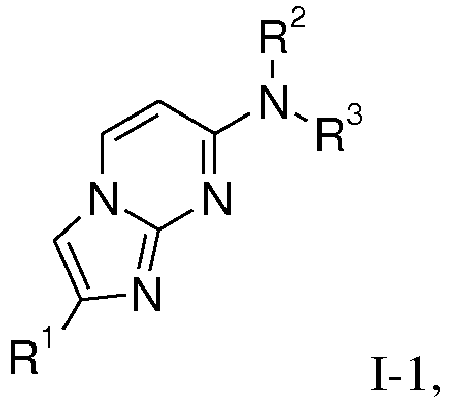 R1 Phenyl ist, gegebenenfalls durch ein oder zwei Substituenten substituiert, die ausgewählt sind aus 3H, Halogen, C1-7-Alkyl, Dimethylamino, NHC(O)-C1-7-Alkyl, C(O)O-C1-7-Alkyl, C1-7-Alkoxy, OC(3H)3, O11CH3, OCH2CH2 18F, C1-7-Alkoxy substituiert durch Halogen, Hydroxy, C1-7-Alkyl substituiert durch Hydroxy, S-C1-7-Alkyl oder durch eine Heterocyclylgruppe; ausgewählt aus Morpholinyl, Piperazinyl, Piperidinyl oder Pyrrolidinyl;R2 Wasserstoff, C1-7-Alkyl oder C1-7-Alkyl substituiert durch Halogen ist;R3 C1-7-Alkyl, C(3H)3, 11CH3, C1-7-Alkyl substituiert durch Halogen, -(CH2)2-O-C1-7-Alkyl substituiert durch Halogen oder Cycloalkyl ist; oderR2 und R3 zusammen mit dem N-Atom, an das sie gebunden sind, einen Ring bilden, enthaltend -CH2CH2CHRCH2CH2-, -CH2CH2CH2CH2-, -CH2CH2CH2-, -CH2CH2-NR-CH2CH2-, -CH2CH2-O-CH2CH2-, -CH2CH2CHRCH2-, -CH2CHRCH2- oder
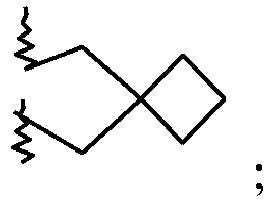 R Wasserstoff, Halogen, C1-7-Alkyl substituiert durch Halogen oder C1-7-Alkoxy ist;oder ein pharmazeutisch annehmbares Säureadditionssalz, ein racemisches Gemisch oder sein entsprechendes Enantiomer und/oder optische Isomere davon.
 - Verbindung nach Formel I-1 nach einem der Ansprüche 1 oder 2, wobei die Verbindungen N-Methyl-2-phenylimidazo[1,2-a]pyrimidin-7-amin 7-(4-Fluorpiperidin-1-yl)-2-phenylimidazo[1,2-a]pyrimidin 7-(4-Fluorpiperidin-1-yl)-2-(4-methoxyphenyl)imidazo[1,2-a]pyrimidin 2-(4-Chlorphenyl)-7-(4-fluorpiperidin-1-yl)imidazo[1,2-a]pyrimidin 7-(4-Fluorpiperidin-1-yl)-2(3-methoxyphenyl)imidazo[1,2-a]pyrimidin 2-(4-Fluorphenyl)-7-(4-fluorpiperidin-1-yl)imidazo[1,2-a]pyrimidin 4-[4-[7-(4-Fluorpiperidin-1-yl)imidazo[1,2-a]pyrimidin-2-yl]phenyl]morpholin 7-(4-Fluorpiperidin-1-yl)-2-(3-methylphenyl)imidazo[1,2-a]pyrimidin 7-(4-Fluorpiperidin-1-yl)-2-(4-methylphenyl)imidazo[1,2-a]pyrimidin 2-(2-Fluorphenyl)-7-(4-fluorpiperidin-1-yl)imidazo[1,2-a]pyrimidin 3-[7-(4-Fluorpiperidin-1-yl)imidazo[1,2-a]pyrimidin-2-yl]phenol 7-(4-Fluorpiperidin-1-yl)-2-(4-pyrrolidin-1-ylphenyl)imidazo[1,2-a]pyrimidin 7-(4-Fluorpiperidin-1-yl)-2-[3-(trifluormethoxy)phenyl]imidazo[1,2-a]pyrimidin 2-[3-(Fluormethoxy)phenyl]-7-pyrrolidin-1-ylimidazo[1,2-a]pyrimidin 2-[3-(2-Fluorethoxy)phenyl] -7-pyrrolidin-1-ylimidazo[1,2-a]pyrimidin N,N-Dimethyl-2-phenylimidazo[1,2-a]pyrimidin-7-amin 7-[4-(2-Fluorethyl)piperazin-1-yl]-2-(4-methoxyphenyl)imidazo[1,2-a]pyrimidin 7-[4-(2-Fluorethyl)piperazin-1-yl]-2-(3-methoxyphenyl)imidazo[1,2-a]pyrimidin N-(2-Fluorethyl)-N-methyl-2-phenylimidazo[1,2-a]pyrimidin-7-amin N-(2-Fluorethyl)-2-(3-methoxyphenyl)-N-methylimidazo[1,2-a]pyrimidin-7-amin N-(2-Fluorethyl)-2-(4-methoxyphenyl)-N-methylimidazo[1,2-a]pyrimidin-7-amin 7-[4-(2-Fluorethyl)piperazin-1-yl]-2-phenylimidazo[1,2-a]pyrimidin 4-[2-(4-Methoxyphenyl)imidazo[1,2-a]pyrimidin-7-yl]morpholin 4-[2-(3-Methylphenyl)imidazo[1,2-a]pyrimidin-7-yl]morpholin 4-[2-(3,4-Dimethoxyphenyl)imidazo[1,2-a]pyrimidin-7-yl] morpholin 4-(7-Pyrrolidin-1-ylimidazo[1,2-a]pyrimidin-2-yl)phenol 2-[4-(2-Fluorethoxy)phenyl]-7-pyrrolidin-1-ylimidazo[1,2-a]pyrimidin 2-[4-(Fluormethoxy)phenyl]-7-pyrrolidin-1-ylimidazo[1,2-a]pyrimidin 7-[(3R)-3-Methoxypyrrolidin-1-yl]-2-phenylimidazo[1,2-a]pyrimidin 7-[(3S)-3-Methoxypyrrolidin-1-yl]-2-phenylimidazo[1,2-a]pyrimidin 7-[(3R)-3-Fluorpyrrolidin-1-yl]-2-(4-methoxyphenyl)imidazo[1,2-a]pyrimidin 7-[(3S)-3-Fluorpyrrolidin-1-yl]-2-(4-methoxyphenyl)imidazo[1,2-a]pyrimidin 2-(3-Methoxyphenyl)-N,N-dimethylimidazo[1,2-a]pyrimidin-7-amin 2-(4-Methoxyphenyl)-N,N-dimethylimidazo[1,2-a]pyrimidin-7-amin N,N-Dimethyl-2-(4-methylphenyl)imidazo[1,2-a]pyrimidin-7-amin N,N-Dimethyl-2-(3-methylphenyl)imidazo[1,2-a]pyrimidin-7-amin 4-[2-(3-Methoxyphenyl)imidazo[1,2-a]pyrimidin-7-yl]morpholin 4-[2-(4-Methylphenyl)imidazo[1,2-a]pyrimidin-7-yl]morpholin 2-(4-Methoxyphenyl)-7-pyrrolidin-1-ylimidazo[1,2-a]pyrimidin 2-(4-Methylphenyl)-7-pyrrolidin-1-ylimidazo[1,2-a]pyrimidin N,N-Dimethyl-2-(4-morpholin-4-ylphenyl)imidazo[1,2-a]pyrimidin-7-amin 2-[4-(Dimethylamino)phenyl]-N,N-dimethylimidazo[1,2-a]pyrimidin-7-amin 2-(3-Methoxyphenyl)-7-pyrrolidin-1-ylimidazo[1,2-a]pyrimidin 2-(3-Methylphenyl)-7-pyrrolidin-1-ylimidazo[1,2-a]pyrimidin 2-(4-Methoxyphenyl)-7-piperidin-1-ylimidazo[1,2-a]pyrimidin 2-(3-Methoxyphenyl)-7-piperidin-1-ylimidazo[1,2-a]pyrimidin 2-(4-Methylphenyl)-7-piperidin-1-ylimidazo[1,2-a]pyrimidin 2-(3-Methylphenyl)-7-piperidin-1-ylimidazo[1,2-a]pyrimidin 2-(3,4-Dimethoxyphenyl)-7-piperidin-1-ylimidazo[1,2-a]pyrimidin 7-[4-(2-Fluorethyl)piperidin-1-yl]-2-phenylimidazo[1,2-a]pyrimidin 7-[4-(2-Fluorethyl)piperidin-1-yl]-2-(3-methoxyphenyl)imidazo[1,2-a]pyrimidin 7-[4-(2-Fluorethyl)piperidin-1-yl]-2-(4-methoxyphenyl)imidazo[1,2-a]pyrimidin 7-[4-(2-Fluorethyl)piperidin-1-yl]-2-(3-methylphenyl)imidazo[1,2-a]pyrimidin 7-[4-(2-Fluorethyl)piperidin-1-yl]-2-(4-methylphenyl)imidazo[1,2-a]pyrimidin 4-[4-[7-[4-(2-Fluorethyl)piperidin-1-yl]imidazo[1,2-a]pyrimidin-2-yl]phenyl]morpholin N-Methyl-2-(3-methylphenyl)imidazo [1,2-a]pyrimidin-7-amin N-[2-(2-Fluorethoxy)ethyl]-2-(4-methoxyphenyl)-N-methylimidazo[1,2-a]pyrimidin-7-amin 7-(2-Azaspiro[3.3]heptan-2-yl)-2-(4-methoxyphenyl)imidazo[1,2-a]pyrimidin N-Ethyl-2-(4-methoxyphenyl)-N-methylimidazo[1,2-a]pyrimidin-7-amin N,N-Diethyl-2-(4-methoxyphenyl)imidazo[1,2-a]pyrimidin-7-amin N-[2-(2-Fluorethoxy)ethyl]-N-methyl-2-(3-methylphenyl)imidazo[1,2-a]pyrimidin-7-amin 7-(Azetidin-1-yl)-2-(4-methoxyphenyl)imidazo[1,2-a]pyrimidin 7-(3-Fluorazetidin-1-yl)-2-(4-methoxyphenyl)imidazo[1,2-a]pyrimidin 7-(3-Fluorazetidin-1-yl)-2-phenylimidazo[1,2-a]pyrimidin 7-(3-Fluorazetidin-1-yl)-2-(3-methylphenyl)imidazo[1,2-a]pyrimidin N,N-Dimethyl-4-(7-morpholin-4-ylimidazo[1,2-a]pyrimidin-2-yl)anilin N-Cyclopropyl-2-(4-methoxyphenyl)imidazo[1,2-a]pyrimidin-7-amin N-Isopropyl-2-(4-methoxyphenyl)-imidazo[1,2-a]pyrimidin-7-amin 2-(4-Methoxyphenyl)-N-(2,2,2-trifluorethyl)imidazo[1,2-a]pyrimidin-7-amin 4-[7-(Azetidin-1-yl)imidazo[1,2-a]pyrimidin-2-yl]phenol 7-(3-Methoxyazetidin-1-yl)-2-(4-methoxyphenyl)imidazo[1,2-a]pyrimidin N-Methyl-2-(4-methylphenyl)imidazo[1,2-a]pyrimidin-7-amin 2-(4-Methoxyphenyl)-N-methylimidazo[1,2-a]pyrimidin-7-amin N-(2-Fluorethyl)-N-methyl-2-(4-methylphenyl)imidazo[1,2-a]pyrimidin-7-amin N-(2-Fluorethyl)-N-methyl-2-(3-methylphenyl)imidazo[1,2-a]pyrimidin-7-amin 2-(4-Methoxyphenyl)-7-(3-methylazetidin-1-yl)imidazo[1,2-a]pyrimidin 2-[4-(Dimethylamino)phenyl]-N-methylimidazo[1,2-a]pyrimidin-7-amin 4-[7-(4-Fluorpiperidin-1-yl)imidazo[1,2-a]pyrimidin-2-yl]-N,N-dimethylanilin 2-[4-(Dimethylamino)phenyl]-N-(2-fluorethyl)-N-methylimidazo[1,2-a]pyrimidin-7-amin N-Cyclopropyl-2-(4-methoxyphenyl)-N-methylimidazo[1,2-a]pyrimidin-7-amin 7-(Azetidin-1-yl)-2-(4-methylphenyl)imidazo[1,2-a]pyrimidin 7-(Azetidin-1-yl)-2-(3-methylphenyl)imidazo[1,2-a]pyrimidin 2-[4-(Dimethylamino)phenyl]-N-(2-fluorethyl)imidazo[1,2-a]pyrimidin-7-amin 7-(Azetidin-1-yl)-2-[4-(fluormethoxy)phenyl]imidazo[1,2-a]pyrimidin 2-Methoxy-4-[7-(methylamino)imidazo[1,2-a]pyrimidin-2-yl]phenol 2-(3-Bromphenyl)-N-methylimidazo[1,2-a]pyrimidin-7-amin 7-(4-Fluorpiperidin-1-yl)-2-(4-methoxy-2,6-ditritiophenyl)imidazo[1,2-a]pyrimidin 7-(Azetidin-1-yl)-2-[4-(tritritiomethoxy)phenyl)imidazo[1,2-a]pyrimidin 2-(3-Methylphenyl)-N-(tritritiomethyl)imidazo[1,2-a]pyrimidin-7-amin N-[11C]methyl-2-(m-tolyl)imidazo[1,2-a]pyrimidin-7-amin N-Cyclopropyl-2-(4-[11C]methoxyphenyl)imidazo[1,2-a]pyrimidin-7-amin 2-[4-(2-[18F]Fluorethoxy)phenyl]-N-methyl-imidazo[1,2-a]pyrimidin-7-amin [4-[7-(Methylamino)imidazo[1,2-a]pyrimidin-2-yl]phenyl]methanol 2-(3-Fluor-4-methoxyphenyl)-N-methylimidazo[1,2-a]pyrimidin-7-amin N-(4-(7-(Methylamino)imidazo[1,2-a]pyrimidin-2-yl)phenyl)acetamid 7-(Azetidin-1-yl)-2-(4-(2-fluorethoxy)phenyl)imidazo[1,2-a]pyrimidin 7-(Azetidin-1-yl)-2-(4-(3-fluorpropoxy)phenyl)imidazo[1,2-a]pyrimidin 7-(Azetidin-1-yl)-2-(3-methoxyphenyl)imidazo[1,2-a]pyrimidin [3-[7-(Methylamino)imidazo[1,2-a]pyrimidin-2-yl]phenyl]methanol 7-(Azetidin-1-yl)-2-(3-(2-fluorethoxy)phenyl)imidazo[1,2-a]pyrimidin N-Cyclopropyl-N-(2-fluorethyl)-2-(4-methoxyphenyl)imidazo[1,2-a]pyrimidin-7-amin 2-(3-Methoxyphenyl)-N-methylimidazo[1,2-a]pyrimidin-7-amin 7-(Azetidin-1-yl)-2-(3-(fluormethoxy)phenyl)imidazo[1,2-a]pyrimidin 7-(Azetidin-1-yl)-2-(4-fluorphenyl)imidazo[1,2-a]pyrimidin 7-(Azetidin-1-yl)-2-(3-fluorphenyl)imidazo[1,2-a]pyrimidin 7-(Azetidin-1-yl)-2-(3,5-dimethoxyphenyl)imidazo[1,2-a]pyrimidin 4-(7-(Methylamino)imidazo[1,2-a]pyrimidin-2-yl)phenol 2-(4-(2-Fluorethoxy)phenyl)-N-methylimidazo[1,2-a]pyrimidin-7-amin 2-(4-(3-Fluorpropoxy)phenyl)-N-methylimidazo[1,2-a]pyrimidin-7-amin 3-(7-(Methylamino)imidazo[1,2-a]pyrimidin-2-yl)phenol 7-(Azetidin-1-yl)-2-(3-(methylthio)phenyl)imidazo[1,2-a]pyrimidin 7-(Azetidin-1-yl)-2-(3-methoxy-4-methylphenyl)imidazo[1,2-a]pyrimidin 7-(Azetidin-1-yl)-2-(3,4-dimethoxyphenyl)imidazo[1,2-a]pyrimidin 2-(3-(2-Fluorethoxy)phenyl)-N-methylimidazo[1,2-a]pyrimidin-7-amin 2-(3-(3-Fluorpropoxy)phenyl)-N-methylimidazo[1,2-a]pyrimidin-7-amin 2-(3-(Fluormethoxy)phenyl)-N-methylimidazo[1,2-a]pyrimidin-7-amin 2-(4-(Fluormethoxy)phenyl)-N-methylimidazo[1,2-a]pyrimidin-7-amin 3-(7-(Cyclopropylamino)imidazo[1,2-a]pyrimidin-2-yl)phenol N-Cyclopropyl-2-(3-(2-fluorethoxy)phenyl)imidazo[1,2-a]pyrimidin-7-amin [4-[7-(Dimethylamino)imidazo[1,2-a]pyrimidin-2-yl]phenyl]methanol-Essigsäureaddukt Methyl 4-[7-(methylamino)imidazo[1,2-a]pyrimidin-2-yl]benzoat N-Cyclopropyl-2-(3-(fluormethoxy)phenyl)imidazo[1,2-a]pyrimidin-7-amin N-Cyclopropyl-2-(4-(2-fluorethoxy)phenyl)imidazo[1,2-a]pyrimidin-7-amin N-Cyclopropyl-2-(4-(3-fluorpropoxy)phenyl)imidazo[1,2-a]pyrimidin-7-amin N-Cyclopropyl-2-(4-(fluormethoxy)phenyl)imidazo[1,2-a]pyrimidin-7-amin N-Methyl-2-(4-(methylthio)phenyl)imidazo[1,2-a]pyrimidin-7-amin 2-(3,4-Dimethoxyphenyl)-N-methylimidazo[1,2-a]pyrimidin-7-amin 2-(3-Methoxy-4-methylphenyl)-N-methylimidazo[1,2-a]pyrimidin-7-amin oder 2-(3,5-Imethoxyphenyl)-N-methylimidazo[1,2-a]pyrimidin-7-amin sind.
- Verbindung der Formel I-2 nach Anspruch 1
 R1 Benzo[d][1,3]dioxol-5-yl, 2,3-dihydrobenzo[b][1,4]dioxin-6-yl oder Indolin-2-on ist;R2 Wasserstoff, C1-7-Alkyl oder C1-7-Alkyl substituiert durch Halogen ist;R3 C1-7-Alkyl, C(3H)3, 11CH3, C1-7-Alkyl substituiert durch Halogen, -(CH2)2-O-C1-7-Alkyl substituiert durch Halogen oder C3-6-Cycloalkyl ist; oderR2 und R3 zusammen mit dem N-Atom, an das sie gebunden sind, einen Ring bilden, enthaltend -CH2CH2CHRCH2CH2-, -CH2CH2CH2CH2-, -CH2CH2CH2-, -CH2CH2-NR-CH2CH2-, -CH2CH2-O-CH2CH2-, -CH2CH2CHRCH2-, -CH2CHRCH2- oder
 R Wasserstoff, Halogen, C1-7-Alkyl substituiert durch Halogen oder C1-7-Alkoxy ist;oder ein pharmazeutisch annehmbares Säureadditionssalz, ein racemisches Gemisch oder sein entsprechendes Enantiomer und/oder optische Isomere davon.
 - Verbindung der Formel I-2 gemäß einem der Ansprüche 1 oder 4, wobei die Verbindungen 2-(1,3-Benzodioxol-5-yl)-7-(4-fluorpiperidin-1-yl)imidazo[1,2-a]pyrimidin 2-(2,3-Dihydro-1,4-benzodioxin-6-yl)-7-(4-fluorpiperidin-1-yl)imidazo[1,2-a]pyrimidin 2-(1,3-Benzodioxol-5-yl)-N,N-dimethylimidazo[1,2-a]pyrimidin-7-amin 2-(2,3-Dihydro-1,4-benzodioxin-6-yl)-N,N-dimethylimidazo[1,2-a]pyrimidin-7-amin 2-(1,3-Benzodioxol-5-yl)-7-[4-(2-fluorethyl)piperidin-1-yl]imidazo[1,2-a]pyrimidin 2-(2,3-Dihydro-1,4-benzodioxin-6-yl)-7-[4-(2-fluorethyl)piperidin-1-yl]imidazo[1,2-a]pyrimidin 2-(1,3-Benzodioxol-5-yl)-N-methylimidazo[1,2-a]pyrimidin-7-amin 2-(1,3-Benzodioxol-5-yl)-N-(2-fluorethyl)-N-methylimidazo[1,2-a]pyrimidin-7-amin oder 5-(7-(Methylamino)imidazo[1,2-a]pyrimidin-2-yl)indolin-2-on sind.
- Verbindung der Formel I-3 nach Anspruch 1
 R1 Heteroaryl ist, ausgewählt aus der Gruppe bestehend aus Thiophenyl, Benzofuranyl, Benzothiophenyl, Pyrazinyl oder Benzothiazolyl;R2 Wasserstoff oder C1-7-Alkyl ist;R3 C1-7-Alkyl, C(3H)3, C1-7-Alkyl substituiert durch Halogen, -(CH2)2-O-C1-7-Alkyl substituiert durch Halogen oder C3-6-Cycloalkyl ist; oderR2 und R3 zusammen mit dem N-Atom, an das sie gebunden sind, einen Ring bilden, enthaltend -CH2CH2CHRCH2CH2-, -CH2CH2CH2CH2-, -CH2CH2CH2-, -CH2CH2-NR-CH2CH2-, -CH2CH2-O-CH2CH2-, -CH2CH2CHRCH2-, -CH2CHRCH2- oder
 R Wasserstoff, Halogen, C1-7-Alkyl substituiert durch Halogen oder C1-7-Alkoxy ist;oder ein pharmazeutisch annehmbares Säureadditionssalz, ein racemisches Gemisch oder sein entsprechendes Enantiomer und/oder optische Isomere davon.
 - Verbindung der Formel I-3 nach einem der Ansprüche 1 und 6, wobei die Verbindungen 7-(4-Fluorpiperidin-1-yl)-2-thiophen-3-ylimidazo[1,2-a]pyrimidin 2-(1-Benzofuran-2-yl)-7-(4-fluorpiperidin-1-yl)imidazo[1,2-a]pyrimidin 2-(1-Benzothiophen-2-yl)-7-(4-fluorpiperidin-1-yl)imidazo[1,2-a]pyrimidin 2-[7-(4-Fluorpiperidin-1-yl)imidazo[1,2-a]pyrimidin-2-yl]-1,3-benzothiazol N,N-Dimethyl-2-thiophen-3-ylimidazo[1,2-a]pyrimidin-7-amin oder 7-(4-Fluorpiperidin-1-yl)-2-(pyrazin-2-yl)imidazo[1,2-a]pyrimidin sind.
- Verbindung der Formel I nach einem der Ansprüche 1-7 zur Verwendung bei der Bindung und Bildgebung von Tau-Aggregaten, Beta-Amyloid-Aggregaten oder Alpha-Synuclein-Aggregaten.
- Verbindung der Formel I nach einem der Ansprüche 1-7 zur Verwendung bei der Bindung und Bildgebung von Tau-Aggregaten in Alzheimer-Patienten.
- Verbindung der Formel I nach einem der Ansprüche 1-7 zur Verwendung in einer Tau-Bindungsstudie.
- Verbindung der Formel I nach einem der Ansprüche 1-7 zur Verwendung in der diagnostischen Bildgebung von Tau-Aggregaten im Gehirn eines Säugetiers.
- Pharmazeutische Zusammensetzung, umfassend eine Verbindung der Formel I nach einem der Ansprüche 1-7 und einen pharmazeutisch annehmbaren Träger.
- Pharmazeutische Zusammensetzung nach Anspruch 12 zur Verwendung in einem Verfahren zur Bildgebung von Tau-Aggregatablagerungen, umfassend- Einbringen einer nachweisbaren Menge einer Zusammensetzung nach Anspruch 12 in ein Säugetier;- Vorsehen einer ausreichenden Zeit, um zuzulassen, dass sich die Verbindung der Formel I mit den Tau-Aggregatablagerungen verbinden kann, und- Nachweisen der mit einer oder mehreren Tau-Aggregatablagerungen verbundenen Verbindung.
Priority Applications (2)
| Application Number | Priority Date | Filing Date | Title |
|---|---|---|---|
| SI201430251T SI2999701T1 (sl) | 2013-05-23 | 2014-05-19 | 2-fenilimidazo(1,2-a)pirimidini kot sredstva za slikanje |
| EP14724757.1A EP2999701B1 (de) | 2013-05-23 | 2014-05-19 | 2-phenylimidazo[1,2-a]pyrimidine als bildgebungsmittel |
Applications Claiming Priority (3)
| Application Number | Priority Date | Filing Date | Title |
|---|---|---|---|
| EP13168830 | 2013-05-23 | ||
| PCT/EP2014/060203 WO2014187762A1 (en) | 2013-05-23 | 2014-05-19 | 2-phenylimidazo[1,2-a]pyrimidines as imaging agents |
| EP14724757.1A EP2999701B1 (de) | 2013-05-23 | 2014-05-19 | 2-phenylimidazo[1,2-a]pyrimidine als bildgebungsmittel |
Publications (2)
| Publication Number | Publication Date |
|---|---|
| EP2999701A1 EP2999701A1 (de) | 2016-03-30 |
| EP2999701B1 true EP2999701B1 (de) | 2017-04-12 |
Family
ID=48446195
Family Applications (1)
| Application Number | Title | Priority Date | Filing Date |
|---|---|---|---|
| EP14724757.1A Active EP2999701B1 (de) | 2013-05-23 | 2014-05-19 | 2-phenylimidazo[1,2-a]pyrimidine als bildgebungsmittel |
Country Status (20)
| Country | Link |
|---|---|
| US (1) | US9801961B2 (de) |
| EP (1) | EP2999701B1 (de) |
| JP (1) | JP6130055B2 (de) |
| KR (1) | KR101770494B1 (de) |
| CN (1) | CN105229009B (de) |
| AR (1) | AR096371A1 (de) |
| AU (1) | AU2014270524B2 (de) |
| BR (1) | BR112015025140A2 (de) |
| CA (1) | CA2907605A1 (de) |
| DK (1) | DK2999701T3 (de) |
| ES (1) | ES2629389T3 (de) |
| HU (1) | HUE033612T2 (de) |
| MX (1) | MX2015015893A (de) |
| PL (1) | PL2999701T3 (de) |
| RU (1) | RU2665580C2 (de) |
| SG (1) | SG11201509503QA (de) |
| SI (1) | SI2999701T1 (de) |
| TW (1) | TW201500360A (de) |
| WO (1) | WO2014187762A1 (de) |
| ZA (1) | ZA201506570B (de) |
Families Citing this family (30)
| Publication number | Priority date | Publication date | Assignee | Title |
|---|---|---|---|---|
| WO2016162318A1 (de) | 2015-04-08 | 2016-10-13 | Bayer Cropscience Aktiengesellschaft | Kondensierte bicyclische heterocyclen-derivate als schädlingsbekämpfungsmittel und deren zwischenprodukte |
| EP3331870B1 (de) | 2015-08-07 | 2021-06-16 | Bayer CropScience Aktiengesellschaft | 2-(het)aryl-substituierte kondensierte heterocyclen-derivate als schädlingsbekämpfungsmittel |
| BR112018006005A2 (pt) * | 2015-09-29 | 2018-10-30 | Oncotherapy Science Inc | composto bicíclico e uso do mesmo para inibição de suv39h2 |
| KR102666624B1 (ko) | 2015-10-26 | 2024-05-16 | 바이엘 크롭사이언스 악티엔게젤샤프트 | 농약으로서의 융합된 비사이클릭 헤테로사이클 유도체 |
| WO2017093180A1 (de) | 2015-12-01 | 2017-06-08 | Bayer Cropscience Aktiengesellschaft | Kondensierte bicyclische heterocyclen-derivate als schädlingsbekämpfungsmittel |
| CN105582168A (zh) * | 2016-01-08 | 2016-05-18 | 王明强 | 一种治疗体弱多病、元气不足、免疫力低下的中药药剂 |
| WO2017144341A1 (de) | 2016-02-23 | 2017-08-31 | Bayer Cropscience Aktiengesellschaft | Kondensierte bicyclische heterocyclen-derivate als schädlingsbekämpfungsmittel |
| WO2017174414A1 (de) | 2016-04-05 | 2017-10-12 | Bayer Cropscience Aktiengesellschaft | Naphthalin-derivate als schädlingsbekämpfungsmittel |
| EP3241830A1 (de) | 2016-05-04 | 2017-11-08 | Bayer CropScience Aktiengesellschaft | Kondensierte bicyclische heterocyclen-derivate als schädlingsbekämpfungsmittel |
| EP3487860B1 (de) | 2016-07-19 | 2021-04-14 | Bayer CropScience Aktiengesellschaft | Kondensierte bicyclische heterocyclen-derivate als schädlingsbekämpfungsmittel |
| CN115650982A (zh) | 2016-07-22 | 2023-01-31 | Ac免疫有限公司 | 用于成像tau蛋白聚集体的化合物 |
| EP3487545A1 (de) | 2016-07-22 | 2019-05-29 | AC Immune S.A. | Verbindungen zur bildgebung von tau-protein-aggregaten |
| RU2019107162A (ru) | 2016-08-15 | 2020-09-15 | Байер Кропсайенс Акциенгезельшафт | Конденсированные бициклические гетероциклические производные в качестве средств для борьбы с вредителями |
| MA46264A (fr) | 2016-09-19 | 2019-07-31 | Bayer Ag | Dérivés pyrazolo[1,5-a]pyridine et leur utilisation en tant qu'agents de lutte antiparasitaire |
| WO2018065288A1 (de) | 2016-10-07 | 2018-04-12 | Bayer Cropscience Aktiengesellschaft | 2-[2-phenyl-1-(sulfonylmethyl)vinyl]-imidazo[4,5-b]pyridin-derivate und verwandte verbindungen als schädlingsbekämpfungsmittel im pflanzenschutz |
| MX2019008230A (es) | 2017-01-10 | 2019-10-24 | Bayer Ag | Derivados heterociclicos como agentes de control de plagas. |
| JP7101177B2 (ja) | 2017-01-10 | 2022-07-14 | バイエル・アクチエンゲゼルシヤフト | 有害生物防除剤としてのヘテロサイクレン誘導体 |
| WO2018138050A1 (de) | 2017-01-26 | 2018-08-02 | Bayer Aktiengesellschaft | Kondensierte bicyclische heterocyclen-derivate als schädlingsbekämpfungsmittel |
| BR112019022273B1 (pt) | 2017-04-24 | 2023-04-11 | Bayer Aktiengesellschaft | Derivados de heterociclo bicíclicos fundidos, seus usos, formulação agroquímica, método para controle de pragas animais, e plantas, partes de plantas e/ou sementes resistentes a pestes |
| JP6831802B2 (ja) * | 2018-01-12 | 2021-02-17 | 上海富吉医療器械有限公司Shanghai Chartwell Medical Instrument Co., Ltd. | 放射性核種標識化合物及びこれを含有するイメージング剤 |
| EP3305786A3 (de) | 2018-01-22 | 2018-07-25 | Bayer CropScience Aktiengesellschaft | Kondensierte bicyclische heterocyclen-derivate als schädlingsbekämpfungsmittel |
| EP3743423A1 (de) | 2018-01-24 | 2020-12-02 | AC Immune SA | Gamma-carbolin-verbindungen zur detektion von tau-aggregaten |
| EP3743426A1 (de) | 2018-01-24 | 2020-12-02 | AC Immune SA | Azacarbolinverbindungen für den nachweis von tau-aggregaten |
| US11019821B2 (en) | 2018-02-21 | 2021-06-01 | Bayer Aktiengesellschaft | Fused bicyclic heterocycle derivatives as pesticides |
| SG11202012150UA (en) * | 2018-06-08 | 2021-01-28 | Ac Immune Sa | Novel compounds for diagnosis |
| CN113710669A (zh) | 2019-02-26 | 2021-11-26 | 拜耳公司 | 作为农药的稠合双环杂环衍生物 |
| KR20210133984A (ko) | 2019-02-26 | 2021-11-08 | 바이엘 악티엔게젤샤프트 | 해충 방제제로서의 축합된 비시클릭 헤테로시클릭 유도체 |
| CN114890955A (zh) * | 2022-06-23 | 2022-08-12 | 江西瑞威尔生物科技有限公司 | 一种n取代吗啉类有机化合物的制备工艺 |
| WO2024023266A1 (en) * | 2022-07-28 | 2024-02-01 | Ac Immune Sa | Novel compounds |
| TW202521543A (zh) * | 2023-11-21 | 2025-06-01 | 瑞士商諾華公司 | 取代咪唑并芳烴及其使用方法 |
Family Cites Families (11)
| Publication number | Priority date | Publication date | Assignee | Title |
|---|---|---|---|---|
| AU784484B2 (en) * | 1999-11-10 | 2006-04-13 | Ortho-Mcneil Pharmaceutical, Inc. | Substituted 2-aryl-3(heteroaryl)-imidazo(1,2-a) pyrimidines, and related pharmaceutical compositions and methods |
| EP1294723A1 (de) * | 2000-05-24 | 2003-03-26 | MERCK SHARP & DOHME LTD. | 3-phenyl-imidazo-pyrimidin derivate als liganden für gaba rezeptoren |
| EP1893245A4 (de) | 2005-06-24 | 2009-06-24 | Univ Pennsylvania | Radioaktiv markierte pegylierung von liganden zur verwendung als kontrastmittel |
| WO2007033080A2 (en) | 2005-09-12 | 2007-03-22 | Emory University | Alzheimer's disease imaging agents |
| WO2007034282A2 (en) * | 2005-09-19 | 2007-03-29 | Pfizer Products Inc. | Diaryl-imidazole compounds condensed with a heterocycle as c3a receptor antagonists |
| JP4738419B2 (ja) * | 2005-11-30 | 2011-08-03 | 富士フイルムRiファーマ株式会社 | アミロイドの凝集及び/又は沈着に起因する疾患の診断薬及び治療薬 |
| EP2023919A4 (de) * | 2006-05-08 | 2010-12-22 | Molecular Neuroimaging Llc | Verbindungen und amyloid-sonden für therapie- und bildgebungszwecke |
| JP5238496B2 (ja) | 2006-05-19 | 2013-07-17 | 日本メジフィジックス株式会社 | 新規アミロイド親和性化合物 |
| US8691187B2 (en) * | 2009-03-23 | 2014-04-08 | Eli Lilly And Company | Imaging agents for detecting neurological disorders |
| US8410117B2 (en) * | 2010-03-26 | 2013-04-02 | Hoffmann-La Roche Inc. | Imidazopyrimidine derivatives |
| KR20170094001A (ko) * | 2013-04-29 | 2017-08-16 | 에프. 호프만-라 로슈 아게 | 2-페닐 또는 2-헤트아릴 이미다졸[1,2-a]피리딘 유도체 |
-
2014
- 2014-05-19 MX MX2015015893A patent/MX2015015893A/es unknown
- 2014-05-19 KR KR1020157033039A patent/KR101770494B1/ko not_active Expired - Fee Related
- 2014-05-19 PL PL14724757T patent/PL2999701T3/pl unknown
- 2014-05-19 SG SG11201509503QA patent/SG11201509503QA/en unknown
- 2014-05-19 HU HUE14724757A patent/HUE033612T2/en unknown
- 2014-05-19 WO PCT/EP2014/060203 patent/WO2014187762A1/en not_active Ceased
- 2014-05-19 BR BR112015025140A patent/BR112015025140A2/pt not_active Application Discontinuation
- 2014-05-19 RU RU2015149528A patent/RU2665580C2/ru not_active IP Right Cessation
- 2014-05-19 CN CN201480029084.XA patent/CN105229009B/zh active Active
- 2014-05-19 ES ES14724757.1T patent/ES2629389T3/es active Active
- 2014-05-19 AU AU2014270524A patent/AU2014270524B2/en not_active Ceased
- 2014-05-19 JP JP2016514351A patent/JP6130055B2/ja active Active
- 2014-05-19 SI SI201430251T patent/SI2999701T1/sl unknown
- 2014-05-19 CA CA2907605A patent/CA2907605A1/en not_active Abandoned
- 2014-05-19 DK DK14724757.1T patent/DK2999701T3/en active
- 2014-05-19 EP EP14724757.1A patent/EP2999701B1/de active Active
- 2014-05-20 TW TW103117655A patent/TW201500360A/zh unknown
- 2014-05-21 AR ARP140102015A patent/AR096371A1/es unknown
-
2015
- 2015-09-07 ZA ZA2015/06570A patent/ZA201506570B/en unknown
- 2015-11-19 US US14/945,969 patent/US9801961B2/en active Active
Non-Patent Citations (1)
| Title |
|---|
| None * |
Also Published As
| Publication number | Publication date |
|---|---|
| RU2015149528A (ru) | 2017-06-28 |
| AR096371A1 (es) | 2015-12-23 |
| RU2665580C2 (ru) | 2018-08-31 |
| KR20150144796A (ko) | 2015-12-28 |
| WO2014187762A1 (en) | 2014-11-27 |
| AU2014270524B2 (en) | 2018-01-04 |
| CA2907605A1 (en) | 2014-11-27 |
| ZA201506570B (en) | 2017-02-22 |
| RU2015149528A3 (de) | 2018-03-22 |
| HK1213558A1 (zh) | 2016-07-08 |
| BR112015025140A2 (pt) | 2017-07-18 |
| MX2015015893A (es) | 2016-03-04 |
| HUE033612T2 (en) | 2017-12-28 |
| JP6130055B2 (ja) | 2017-05-17 |
| AU2014270524A1 (en) | 2015-09-17 |
| EP2999701A1 (de) | 2016-03-30 |
| KR101770494B1 (ko) | 2017-08-22 |
| SI2999701T1 (sl) | 2017-08-31 |
| SG11201509503QA (en) | 2015-12-30 |
| TW201500360A (zh) | 2015-01-01 |
| JP2016520091A (ja) | 2016-07-11 |
| US9801961B2 (en) | 2017-10-31 |
| AU2014270524A8 (en) | 2015-09-24 |
| CN105229009A (zh) | 2016-01-06 |
| DK2999701T3 (en) | 2017-07-10 |
| CN105229009B (zh) | 2017-09-29 |
| US20170128598A1 (en) | 2017-05-11 |
| ES2629389T3 (es) | 2017-08-09 |
| PL2999701T3 (pl) | 2017-09-29 |
Similar Documents
| Publication | Publication Date | Title |
|---|---|---|
| EP2999701B1 (de) | 2-phenylimidazo[1,2-a]pyrimidine als bildgebungsmittel | |
| EP2991983B1 (de) | 2-phenyl- oder 2-hetarylimidazo[1,2-a]pyridinderivate | |
| US11058781B2 (en) | Diazacarbazole derivatives as tau-PET-ligands | |
| EP3049411B1 (de) | Imidazo-[1,2-a-]pyridin-7-amine als bildgebungshilfsmittel | |
| EP3728234B1 (de) | Radioaktiv markierte verbindungen | |
| EP2885306B1 (de) | Imidazo[2,1]thiazol-3-on-derivate als diagnostische mittel für morbus alzheimer | |
| WO2024094731A1 (en) | Novel compounds for the diagnosis of tdp-43 proteinopathies | |
| WO2025210087A1 (en) | Novel compounds for the diagnosis of tdp-43 proteinopathies | |
| HK1213558B (en) | 2-phenylimidazo[1,2-a]pyrimidines as imaging agents | |
| NZ714831B2 (en) | Diazacarbazole derivatives as tau-pet-ligands |
Legal Events
| Date | Code | Title | Description |
|---|---|---|---|
| PUAI | Public reference made under article 153(3) epc to a published international application that has entered the european phase |
Free format text: ORIGINAL CODE: 0009012 |
|
| 17P | Request for examination filed |
Effective date: 20151223 |
|
| AK | Designated contracting states |
Kind code of ref document: A1 Designated state(s): AL AT BE BG CH CY CZ DE DK EE ES FI FR GB GR HR HU IE IS IT LI LT LU LV MC MK MT NL NO PL PT RO RS SE SI SK SM TR |
|
| AX | Request for extension of the european patent |
Extension state: BA ME |
|
| DAX | Request for extension of the european patent (deleted) | ||
| GRAP | Despatch of communication of intention to grant a patent |
Free format text: ORIGINAL CODE: EPIDOSNIGR1 |
|
| INTG | Intention to grant announced |
Effective date: 20170116 |
|
| GRAS | Grant fee paid |
Free format text: ORIGINAL CODE: EPIDOSNIGR3 |
|
| GRAA | (expected) grant |
Free format text: ORIGINAL CODE: 0009210 |
|
| AK | Designated contracting states |
Kind code of ref document: B1 Designated state(s): AL AT BE BG CH CY CZ DE DK EE ES FI FR GB GR HR HU IE IS IT LI LT LU LV MC MK MT NL NO PL PT RO RS SE SI SK SM TR |
|
| REG | Reference to a national code |
Ref country code: GB Ref legal event code: FG4D |
|
| REG | Reference to a national code |
Ref country code: CH Ref legal event code: EP |
|
| REG | Reference to a national code |
Ref country code: FR Ref legal event code: PLFP Year of fee payment: 4 |
|
| REG | Reference to a national code |
Ref country code: IE Ref legal event code: FG4D |
|
| REG | Reference to a national code |
Ref country code: AT Ref legal event code: REF Ref document number: 883750 Country of ref document: AT Kind code of ref document: T Effective date: 20170515 |
|
| REG | Reference to a national code |
Ref country code: DE Ref legal event code: R096 Ref document number: 602014008567 Country of ref document: DE |
|
| RAP2 | Party data changed (patent owner data changed or rights of a patent transferred) |
Owner name: F. HOFFMANN-LA ROCHE AG |
|
| REG | Reference to a national code |
Ref country code: NL Ref legal event code: FP |
|
| REG | Reference to a national code |
Ref country code: DK Ref legal event code: T3 Effective date: 20170704 |
|
| REG | Reference to a national code |
Ref country code: SE Ref legal event code: TRGR |
|
| REG | Reference to a national code |
Ref country code: ES Ref legal event code: FG2A Ref document number: 2629389 Country of ref document: ES Kind code of ref document: T3 Effective date: 20170809 |
|
| REG | Reference to a national code |
Ref country code: LT Ref legal event code: MG4D |
|
| PG25 | Lapsed in a contracting state [announced via postgrant information from national office to epo] |
Ref country code: HR Free format text: LAPSE BECAUSE OF FAILURE TO SUBMIT A TRANSLATION OF THE DESCRIPTION OR TO PAY THE FEE WITHIN THE PRESCRIBED TIME-LIMIT Effective date: 20170412 Ref country code: FI Free format text: LAPSE BECAUSE OF FAILURE TO SUBMIT A TRANSLATION OF THE DESCRIPTION OR TO PAY THE FEE WITHIN THE PRESCRIBED TIME-LIMIT Effective date: 20170412 Ref country code: LT Free format text: LAPSE BECAUSE OF FAILURE TO SUBMIT A TRANSLATION OF THE DESCRIPTION OR TO PAY THE FEE WITHIN THE PRESCRIBED TIME-LIMIT Effective date: 20170412 Ref country code: GR Free format text: LAPSE BECAUSE OF FAILURE TO SUBMIT A TRANSLATION OF THE DESCRIPTION OR TO PAY THE FEE WITHIN THE PRESCRIBED TIME-LIMIT Effective date: 20170713 Ref country code: NO Free format text: LAPSE BECAUSE OF FAILURE TO SUBMIT A TRANSLATION OF THE DESCRIPTION OR TO PAY THE FEE WITHIN THE PRESCRIBED TIME-LIMIT Effective date: 20170712 |
|
| PG25 | Lapsed in a contracting state [announced via postgrant information from national office to epo] |
Ref country code: IS Free format text: LAPSE BECAUSE OF FAILURE TO SUBMIT A TRANSLATION OF THE DESCRIPTION OR TO PAY THE FEE WITHIN THE PRESCRIBED TIME-LIMIT Effective date: 20170812 Ref country code: RS Free format text: LAPSE BECAUSE OF FAILURE TO SUBMIT A TRANSLATION OF THE DESCRIPTION OR TO PAY THE FEE WITHIN THE PRESCRIBED TIME-LIMIT Effective date: 20170412 Ref country code: LV Free format text: LAPSE BECAUSE OF FAILURE TO SUBMIT A TRANSLATION OF THE DESCRIPTION OR TO PAY THE FEE WITHIN THE PRESCRIBED TIME-LIMIT Effective date: 20170412 Ref country code: BG Free format text: LAPSE BECAUSE OF FAILURE TO SUBMIT A TRANSLATION OF THE DESCRIPTION OR TO PAY THE FEE WITHIN THE PRESCRIBED TIME-LIMIT Effective date: 20170712 |
|
| REG | Reference to a national code |
Ref country code: HU Ref legal event code: AG4A Ref document number: E033612 Country of ref document: HU |
|
| REG | Reference to a national code |
Ref country code: DE Ref legal event code: R097 Ref document number: 602014008567 Country of ref document: DE |
|
| PG25 | Lapsed in a contracting state [announced via postgrant information from national office to epo] |
Ref country code: MC Free format text: LAPSE BECAUSE OF FAILURE TO SUBMIT A TRANSLATION OF THE DESCRIPTION OR TO PAY THE FEE WITHIN THE PRESCRIBED TIME-LIMIT Effective date: 20170412 Ref country code: EE Free format text: LAPSE BECAUSE OF FAILURE TO SUBMIT A TRANSLATION OF THE DESCRIPTION OR TO PAY THE FEE WITHIN THE PRESCRIBED TIME-LIMIT Effective date: 20170412 Ref country code: SK Free format text: LAPSE BECAUSE OF FAILURE TO SUBMIT A TRANSLATION OF THE DESCRIPTION OR TO PAY THE FEE WITHIN THE PRESCRIBED TIME-LIMIT Effective date: 20170412 Ref country code: RO Free format text: LAPSE BECAUSE OF FAILURE TO SUBMIT A TRANSLATION OF THE DESCRIPTION OR TO PAY THE FEE WITHIN THE PRESCRIBED TIME-LIMIT Effective date: 20170412 |
|
| PLBE | No opposition filed within time limit |
Free format text: ORIGINAL CODE: 0009261 |
|
| STAA | Information on the status of an ep patent application or granted ep patent |
Free format text: STATUS: NO OPPOSITION FILED WITHIN TIME LIMIT |
|
| PG25 | Lapsed in a contracting state [announced via postgrant information from national office to epo] |
Ref country code: SM Free format text: LAPSE BECAUSE OF FAILURE TO SUBMIT A TRANSLATION OF THE DESCRIPTION OR TO PAY THE FEE WITHIN THE PRESCRIBED TIME-LIMIT Effective date: 20170412 |
|
| 26N | No opposition filed |
Effective date: 20180115 |
|
| PG25 | Lapsed in a contracting state [announced via postgrant information from national office to epo] |
Ref country code: LU Free format text: LAPSE BECAUSE OF NON-PAYMENT OF DUE FEES Effective date: 20170519 |
|
| REG | Reference to a national code |
Ref country code: FR Ref legal event code: PLFP Year of fee payment: 5 |
|
| PGFP | Annual fee paid to national office [announced via postgrant information from national office to epo] |
Ref country code: PL Payment date: 20180320 Year of fee payment: 5 |
|
| PGFP | Annual fee paid to national office [announced via postgrant information from national office to epo] |
Ref country code: NL Payment date: 20180430 Year of fee payment: 5 |
|
| PGFP | Annual fee paid to national office [announced via postgrant information from national office to epo] |
Ref country code: ES Payment date: 20180604 Year of fee payment: 5 Ref country code: IE Payment date: 20180425 Year of fee payment: 5 Ref country code: CZ Payment date: 20180426 Year of fee payment: 5 Ref country code: DK Payment date: 20180424 Year of fee payment: 5 |
|
| PGFP | Annual fee paid to national office [announced via postgrant information from national office to epo] |
Ref country code: BE Payment date: 20180523 Year of fee payment: 5 Ref country code: TR Payment date: 20180430 Year of fee payment: 5 Ref country code: BE Payment date: 20180514 Year of fee payment: 5 Ref country code: SI Payment date: 20180504 Year of fee payment: 5 |
|
| PG25 | Lapsed in a contracting state [announced via postgrant information from national office to epo] |
Ref country code: MT Free format text: LAPSE BECAUSE OF NON-PAYMENT OF DUE FEES Effective date: 20170519 |
|
| PGFP | Annual fee paid to national office [announced via postgrant information from national office to epo] |
Ref country code: SE Payment date: 20180507 Year of fee payment: 5 Ref country code: HU Payment date: 20180423 Year of fee payment: 5 |
|
| PG25 | Lapsed in a contracting state [announced via postgrant information from national office to epo] |
Ref country code: CY Free format text: LAPSE BECAUSE OF FAILURE TO SUBMIT A TRANSLATION OF THE DESCRIPTION OR TO PAY THE FEE WITHIN THE PRESCRIBED TIME-LIMIT Effective date: 20170412 |
|
| PG25 | Lapsed in a contracting state [announced via postgrant information from national office to epo] |
Ref country code: MK Free format text: LAPSE BECAUSE OF FAILURE TO SUBMIT A TRANSLATION OF THE DESCRIPTION OR TO PAY THE FEE WITHIN THE PRESCRIBED TIME-LIMIT Effective date: 20170412 |
|
| REG | Reference to a national code |
Ref country code: DK Ref legal event code: EBP Effective date: 20190531 |
|
| REG | Reference to a national code |
Ref country code: NL Ref legal event code: MM Effective date: 20190601 |
|
| PG25 | Lapsed in a contracting state [announced via postgrant information from national office to epo] |
Ref country code: HU Free format text: LAPSE BECAUSE OF NON-PAYMENT OF DUE FEES Effective date: 20190520 Ref country code: SE Free format text: LAPSE BECAUSE OF NON-PAYMENT OF DUE FEES Effective date: 20190520 Ref country code: CZ Free format text: LAPSE BECAUSE OF NON-PAYMENT OF DUE FEES Effective date: 20190519 |
|
| REG | Reference to a national code |
Ref country code: BE Ref legal event code: MM Effective date: 20190531 |
|
| PG25 | Lapsed in a contracting state [announced via postgrant information from national office to epo] |
Ref country code: SI Free format text: LAPSE BECAUSE OF NON-PAYMENT OF DUE FEES Effective date: 20190520 |
|
| REG | Reference to a national code |
Ref country code: SI Ref legal event code: KO00 Effective date: 20200109 |
|
| PG25 | Lapsed in a contracting state [announced via postgrant information from national office to epo] |
Ref country code: DK Free format text: LAPSE BECAUSE OF NON-PAYMENT OF DUE FEES Effective date: 20190531 Ref country code: IT Free format text: LAPSE BECAUSE OF NON-PAYMENT OF DUE FEES Effective date: 20190519 Ref country code: NL Free format text: LAPSE BECAUSE OF NON-PAYMENT OF DUE FEES Effective date: 20190601 Ref country code: IE Free format text: LAPSE BECAUSE OF NON-PAYMENT OF DUE FEES Effective date: 20190519 |
|
| REG | Reference to a national code |
Ref country code: SE Ref legal event code: EUG |
|
| PG25 | Lapsed in a contracting state [announced via postgrant information from national office to epo] |
Ref country code: PT Free format text: LAPSE BECAUSE OF FAILURE TO SUBMIT A TRANSLATION OF THE DESCRIPTION OR TO PAY THE FEE WITHIN THE PRESCRIBED TIME-LIMIT Effective date: 20170412 Ref country code: BE Free format text: LAPSE BECAUSE OF NON-PAYMENT OF DUE FEES Effective date: 20190531 |
|
| PG25 | Lapsed in a contracting state [announced via postgrant information from national office to epo] |
Ref country code: AL Free format text: LAPSE BECAUSE OF FAILURE TO SUBMIT A TRANSLATION OF THE DESCRIPTION OR TO PAY THE FEE WITHIN THE PRESCRIBED TIME-LIMIT Effective date: 20170412 |
|
| REG | Reference to a national code |
Ref country code: AT Ref legal event code: MM01 Ref document number: 883750 Country of ref document: AT Kind code of ref document: T Effective date: 20190519 |
|
| REG | Reference to a national code |
Ref country code: ES Ref legal event code: FD2A Effective date: 20200925 |
|
| PG25 | Lapsed in a contracting state [announced via postgrant information from national office to epo] |
Ref country code: ES Free format text: LAPSE BECAUSE OF NON-PAYMENT OF DUE FEES Effective date: 20190520 |
|
| PG25 | Lapsed in a contracting state [announced via postgrant information from national office to epo] |
Ref country code: AT Free format text: LAPSE BECAUSE OF NON-PAYMENT OF DUE FEES Effective date: 20190519 |
|
| PG25 | Lapsed in a contracting state [announced via postgrant information from national office to epo] |
Ref country code: PL Free format text: LAPSE BECAUSE OF NON-PAYMENT OF DUE FEES Effective date: 20190519 |
|
| PG25 | Lapsed in a contracting state [announced via postgrant information from national office to epo] |
Ref country code: TR Free format text: LAPSE BECAUSE OF NON-PAYMENT OF DUE FEES Effective date: 20190519 |
|
| REG | Reference to a national code |
Ref country code: FR Ref legal event code: PLFP Year of fee payment: 10 |
|
| REG | Reference to a national code |
Ref country code: AT Ref legal event code: UEP Ref document number: 883750 Country of ref document: AT Kind code of ref document: T Effective date: 20170412 |
|
| PGFP | Annual fee paid to national office [announced via postgrant information from national office to epo] |
Ref country code: DE Payment date: 20250423 Year of fee payment: 12 |
|
| PGFP | Annual fee paid to national office [announced via postgrant information from national office to epo] |
Ref country code: GB Payment date: 20250423 Year of fee payment: 12 |
|
| PGFP | Annual fee paid to national office [announced via postgrant information from national office to epo] |
Ref country code: FR Payment date: 20250423 Year of fee payment: 12 |
|
| PGFP | Annual fee paid to national office [announced via postgrant information from national office to epo] |
Ref country code: CH Payment date: 20250601 Year of fee payment: 12 |