EP2988597B1 - Macrolides and methods of their preparation and use - Google Patents
Macrolides and methods of their preparation and use Download PDFInfo
- Publication number
- EP2988597B1 EP2988597B1 EP14779590.0A EP14779590A EP2988597B1 EP 2988597 B1 EP2988597 B1 EP 2988597B1 EP 14779590 A EP14779590 A EP 14779590A EP 2988597 B1 EP2988597 B1 EP 2988597B1
- Authority
- EP
- European Patent Office
- Prior art keywords
- optionally substituted
- group
- alkyl
- hydrogen
- instance
- Prior art date
- Legal status (The legal status is an assumption and is not a legal conclusion. Google has not performed a legal analysis and makes no representation as to the accuracy of the status listed.)
- Active
Links
Images

Classifications
-
- C—CHEMISTRY; METALLURGY
- C07—ORGANIC CHEMISTRY
- C07D—HETEROCYCLIC COMPOUNDS
- C07D498/00—Heterocyclic compounds containing in the condensed system at least one hetero ring having nitrogen and oxygen atoms as the only ring hetero atoms
- C07D498/02—Heterocyclic compounds containing in the condensed system at least one hetero ring having nitrogen and oxygen atoms as the only ring hetero atoms in which the condensed system contains two hetero rings
- C07D498/04—Ortho-condensed systems
-
- A—HUMAN NECESSITIES
- A61—MEDICAL OR VETERINARY SCIENCE; HYGIENE
- A61K—PREPARATIONS FOR MEDICAL, DENTAL OR TOILETRY PURPOSES
- A61K31/00—Medicinal preparations containing organic active ingredients
- A61K31/33—Heterocyclic compounds
- A61K31/395—Heterocyclic compounds having nitrogen as a ring hetero atom, e.g. guanethidine or rifamycins
- A61K31/41—Heterocyclic compounds having nitrogen as a ring hetero atom, e.g. guanethidine or rifamycins having five-membered rings with two or more ring hetero atoms, at least one of which being nitrogen, e.g. tetrazole
- A61K31/42—Oxazoles
- A61K31/424—Oxazoles condensed with heterocyclic ring systems, e.g. clavulanic acid
-
- C—CHEMISTRY; METALLURGY
- C07—ORGANIC CHEMISTRY
- C07H—SUGARS; DERIVATIVES THEREOF; NUCLEOSIDES; NUCLEOTIDES; NUCLEIC ACIDS
- C07H17/00—Compounds containing heterocyclic radicals directly attached to hetero atoms of saccharide radicals
-
- A—HUMAN NECESSITIES
- A61—MEDICAL OR VETERINARY SCIENCE; HYGIENE
- A61K—PREPARATIONS FOR MEDICAL, DENTAL OR TOILETRY PURPOSES
- A61K31/00—Medicinal preparations containing organic active ingredients
- A61K31/70—Carbohydrates; Sugars; Derivatives thereof
- A61K31/7042—Compounds having saccharide radicals and heterocyclic rings
- A61K31/7052—Compounds having saccharide radicals and heterocyclic rings having nitrogen as a ring hetero atom, e.g. nucleosides, nucleotides
- A61K31/7056—Compounds having saccharide radicals and heterocyclic rings having nitrogen as a ring hetero atom, e.g. nucleosides, nucleotides containing five-membered rings with nitrogen as a ring hetero atom
-
- A—HUMAN NECESSITIES
- A61—MEDICAL OR VETERINARY SCIENCE; HYGIENE
- A61K—PREPARATIONS FOR MEDICAL, DENTAL OR TOILETRY PURPOSES
- A61K31/00—Medicinal preparations containing organic active ingredients
- A61K31/70—Carbohydrates; Sugars; Derivatives thereof
- A61K31/7042—Compounds having saccharide radicals and heterocyclic rings
- A61K31/7052—Compounds having saccharide radicals and heterocyclic rings having nitrogen as a ring hetero atom, e.g. nucleosides, nucleotides
- A61K31/706—Compounds having saccharide radicals and heterocyclic rings having nitrogen as a ring hetero atom, e.g. nucleosides, nucleotides containing six-membered rings with nitrogen as a ring hetero atom
-
- A—HUMAN NECESSITIES
- A61—MEDICAL OR VETERINARY SCIENCE; HYGIENE
- A61P—SPECIFIC THERAPEUTIC ACTIVITY OF CHEMICAL COMPOUNDS OR MEDICINAL PREPARATIONS
- A61P11/00—Drugs for disorders of the respiratory system
-
- A—HUMAN NECESSITIES
- A61—MEDICAL OR VETERINARY SCIENCE; HYGIENE
- A61P—SPECIFIC THERAPEUTIC ACTIVITY OF CHEMICAL COMPOUNDS OR MEDICINAL PREPARATIONS
- A61P29/00—Non-central analgesic, antipyretic or antiinflammatory agents, e.g. antirheumatic agents; Non-steroidal antiinflammatory drugs [NSAID]
-
- A—HUMAN NECESSITIES
- A61—MEDICAL OR VETERINARY SCIENCE; HYGIENE
- A61P—SPECIFIC THERAPEUTIC ACTIVITY OF CHEMICAL COMPOUNDS OR MEDICINAL PREPARATIONS
- A61P31/00—Antiinfectives, i.e. antibiotics, antiseptics, chemotherapeutics
-
- A—HUMAN NECESSITIES
- A61—MEDICAL OR VETERINARY SCIENCE; HYGIENE
- A61P—SPECIFIC THERAPEUTIC ACTIVITY OF CHEMICAL COMPOUNDS OR MEDICINAL PREPARATIONS
- A61P31/00—Antiinfectives, i.e. antibiotics, antiseptics, chemotherapeutics
- A61P31/04—Antibacterial agents
-
- A—HUMAN NECESSITIES
- A61—MEDICAL OR VETERINARY SCIENCE; HYGIENE
- A61P—SPECIFIC THERAPEUTIC ACTIVITY OF CHEMICAL COMPOUNDS OR MEDICINAL PREPARATIONS
- A61P33/00—Antiparasitic agents
-
- C—CHEMISTRY; METALLURGY
- C07—ORGANIC CHEMISTRY
- C07C—ACYCLIC OR CARBOCYCLIC COMPOUNDS
- C07C231/00—Preparation of carboxylic acid amides
- C07C231/12—Preparation of carboxylic acid amides by reactions not involving the formation of carboxamide groups
-
- C—CHEMISTRY; METALLURGY
- C07—ORGANIC CHEMISTRY
- C07D—HETEROCYCLIC COMPOUNDS
- C07D307/00—Heterocyclic compounds containing five-membered rings having one oxygen atom as the only ring hetero atom
- C07D307/02—Heterocyclic compounds containing five-membered rings having one oxygen atom as the only ring hetero atom not condensed with other rings
- C07D307/34—Heterocyclic compounds containing five-membered rings having one oxygen atom as the only ring hetero atom not condensed with other rings having two or three double bonds between ring members or between ring members and non-ring members
- C07D307/38—Heterocyclic compounds containing five-membered rings having one oxygen atom as the only ring hetero atom not condensed with other rings having two or three double bonds between ring members or between ring members and non-ring members with substituted hydrocarbon radicals attached to ring carbon atoms
- C07D307/54—Radicals substituted by carbon atoms having three bonds to hetero atoms with at the most one bond to halogen, e.g. ester or nitrile radicals
-
- C—CHEMISTRY; METALLURGY
- C07—ORGANIC CHEMISTRY
- C07D—HETEROCYCLIC COMPOUNDS
- C07D317/00—Heterocyclic compounds containing five-membered rings having two oxygen atoms as the only ring hetero atoms
- C07D317/08—Heterocyclic compounds containing five-membered rings having two oxygen atoms as the only ring hetero atoms having the hetero atoms in positions 1 and 3
- C07D317/10—Heterocyclic compounds containing five-membered rings having two oxygen atoms as the only ring hetero atoms having the hetero atoms in positions 1 and 3 not condensed with other rings
- C07D317/14—Heterocyclic compounds containing five-membered rings having two oxygen atoms as the only ring hetero atoms having the hetero atoms in positions 1 and 3 not condensed with other rings with substituted hydrocarbon radicals attached to ring carbon atoms
- C07D317/30—Radicals substituted by carbon atoms having three bonds to hetero atoms with at the most one bond to halogen, e.g. ester or nitrile radicals
-
- C—CHEMISTRY; METALLURGY
- C07—ORGANIC CHEMISTRY
- C07F—ACYCLIC, CARBOCYCLIC OR HETEROCYCLIC COMPOUNDS CONTAINING ELEMENTS OTHER THAN CARBON, HYDROGEN, HALOGEN, OXYGEN, NITROGEN, SULFUR, SELENIUM OR TELLURIUM
- C07F7/00—Compounds containing elements of Groups 4 or 14 of the Periodic Table
- C07F7/02—Silicon compounds
- C07F7/08—Compounds having one or more C—Si linkages
- C07F7/18—Compounds having one or more C—Si linkages as well as one or more C—O—Si linkages
- C07F7/1804—Compounds having Si-O-C linkages
- C07F7/1872—Preparation; Treatments not provided for in C07F7/20
- C07F7/1892—Preparation; Treatments not provided for in C07F7/20 by reactions not provided for in C07F7/1876 - C07F7/1888
-
- C—CHEMISTRY; METALLURGY
- C07—ORGANIC CHEMISTRY
- C07H—SUGARS; DERIVATIVES THEREOF; NUCLEOSIDES; NUCLEOTIDES; NUCLEIC ACIDS
- C07H17/00—Compounds containing heterocyclic radicals directly attached to hetero atoms of saccharide radicals
- C07H17/04—Heterocyclic radicals containing only oxygen as ring hetero atoms
- C07H17/08—Hetero rings containing eight or more ring members, e.g. erythromycins
-
- C—CHEMISTRY; METALLURGY
- C07—ORGANIC CHEMISTRY
- C07D—HETEROCYCLIC COMPOUNDS
- C07D498/00—Heterocyclic compounds containing in the condensed system at least one hetero ring having nitrogen and oxygen atoms as the only ring hetero atoms
- C07D498/02—Heterocyclic compounds containing in the condensed system at least one hetero ring having nitrogen and oxygen atoms as the only ring hetero atoms in which the condensed system contains two hetero rings
- C07D498/08—Bridged systems
Definitions
- the macrolides are one of the few major clinically important classes of antibiotics for which the only practical access has been through semi-synthesis, or chemical manipulation of structurally complex fermentation products, in routes as long as 16 steps. See, e.g., Paterson, Tetrahedron (1985) 41:3569-3624 ; Omura, Ed., Macrolide Antibiotics: Chemistry, Biology, and Practice, Second Edition; Academic Press, 2002 .
- the macrolide class of antibiotics has proven safe and effective in the battle against pathogenic bacteria since the discovery of erythromycin over 60 years ago. See, e.g., Wu et al., Curr. Med. Chem. (2001) 8, 1727-1758 .
- Erythromycin displays a spectrum of antibacterial activity against Gram-positive bacteria similar to that of penicillin but has a lesser propensity to induce allergic interactions, and has been routinely prescribed for upper and lower respiratory tract infections and urogenital infections. See, e.g., Washington et al., Mayo. Clin. Proc. (1985) 60:189-203 ; Washington et al., Mayo. Clin. Proc. (1985) 60:271-278 .
- erythromycin is known to undergo acid-promoted internal ketalization (cyclization of the C6 and C12 hydroxyl groups onto the C9 ketone) in the gut, which leads to adverse gastrointestinal events.
- Second-generation macrolide antibiotics clarithromycin and azithromycin addressed issues of acid instability and were prepared semi-synthetically in 4-6 steps from erythromycin, which is readily available through large-scale fermentation. See, e.g., Ma et al., Curr. Med. Chem. (2011) 18:1993-2015 ; Wu et al., Curr. Pharm. Des. (2000) 6:181-223 ; Ma et al., Mini-Rev. Med. Chem. (2010) 10:272-286 ; Asaka et al., Curr. Top. Med. Chem.
- Azithromycin has been shown to exhibit markedly improved efficacy against Gram-negative organisms, and has a longer half-life and higher tissue distribution than the other macrolide antibiotics, thought to correlate with its 15-membered ring containing a tertiary amine. See, e.g., Ferwerda et al., J. Antimicrob. Chemother. (2001) 47:441-446 ; Girard et al., Antimicrob. Agents Chemother. (1987) 31:1948-1954 .
- the natural product tylosin a 16-membered macrolide used in veterinary medicine, has been shown by X-ray crystallography to occupy the same binding pocket as erythromycin and azithromycin, suggesting that there is a high tolerance for variability in ring size and composition of the macrocycle.
- the three primary causes of resistance to macrolides in bacterial organisms are ribosome methylation encoded by erm genes, mutations in ribosomal RNA or peptides, and cell efflux mediated by mef and msr genes. See, e.g., Leclercq et al., Antimicrob. Agents Chemother. (1991) 35:1273-1276 ; Leclercq et al., Antimicrob. Agents Chemother. (1991) 35:1267-1272 ; Weisblum, Antimicrob. Agents Chemother. (1995) 39:577-585 ; Vester et al., Antimicrob. Agents Chemother.
- Ketolides such as telithromycin and solithromycin defeat the efflux mechanism of resistance by replacement of the C3 cladinose sugar with a carbonyl group (hence the name "ketolides"), and are thought to exhibit greatly increased binding by virtue of favorable interactions between the novel aryl-alkyl sidechain and the ribosome. See, e.g., Ma et al., Curr. Med. Chem. (2011) 18:1993-2015 ; Ma et al., Mini-Rev. Med. Chem. (2010) 10:272-286 .
- ketolides such as telithromycin and solithromycin have not addressed several of the newest forms of macrolide resistanc that have evolved in nosocomial settings, especially ribosome methylation and RNA point mutations.
- WO 2010/048599 A1 in accordance with its abstract states "Described herein are macrolide and ketolide antibiotics and pharmaceutical compositions, methods, and uses thereof for treating gastrointestinal dieaseases".
- composition comprising a compound of claim 1, or pharmaceutically acceptable salt thereof, and a pharmaceutically acceptable excipient.
- a compound of claim 1, or pharmaceutically acceptable salt thereof for use in treating an infectious disease to a subject in need thereof wherein the compound or salt thereof is administered in an effective amount.
- a compound of claim 1, or pharmaceutically acceptable salt thereof for use in treating an inflammatory condition, to a subject in need thereof, wherein the macrolide or salt thereof is administered in an effective amount.
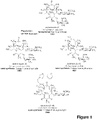
- This practical synthetic methodology includes the coupling of two components, the western half ( A ), and the eastern half ( B ), as depicted in Scheme 1, to provide a compound of Formula ( C - 1 ): or salt thereof, wherein G 1 , R 1a , R 1b , R 2a , R 2b , R 5a , R 5b , R 7 , R 8 , R 9 , R 11 , z1, and z2 are as defined herein;
- the double bond may be reduced to a single bond, and optionally the carbon alpha to the ketone may be substituted by a non-hydrogen group R Za .
- a nucleophile may react with the double bond via 1,4-addition of a non-hydrogen group R Zb optionally followed by alpha substitution via a non-hydrogen group R Za .
- nitro-aldol reaction coupling products and oxidized, reduced, and/or addition products formed therefrom.
- the nitro (-NO 2 ) moiety may be manipulated at any stage in the synthesis, e . g ., after coupling but before macrocylization, or after the macrolide has been formed.
- various macrolides may be accessed from the coupled product of Formula ( C - 1 ), depending upon the nature of the group G 2 , upon macrocyclization, e.g. via thermally induced macrocylization.
- G 2 is a group of formula: P 1 is hydrogen
- R 6 is a hydrogen or non-hydrogen group
- macrocyclization of the compound of Formula ( C - 1 ) provides a macrolide of Formula (C-2).
- Enolization of the macrolide of Formula (C-2) in the presence of a base, followed by addition of a non-hydrogen group R 10 provides a macrolide of Formula (C-3).
- Formula (C-467) and subgenera thereof as described herein are intended to encompass compounds of Formula (C-2), (C-4), (C6a), and (C7a) and subgenera thereof, wherein R Y1 is -OR 17 and R Y2 is hydrogen, or R Y1 is halogen and R Y2 is hydrogen, or R Y1 is halogen and R Y2 is halogen.
- Compounds and macrolides described herein can comprise one or more asymmetric centers, and thus can exist in various stereoisomeric forms, e . g ., enantiomers and/or diastereomers.
- the compounds and macrolides described herein can be in the form of an individual enantiomer, diastereomer or geometric isomer, or can be in the form of a mixture of stereoisomers, including racemic mixtures and mixtures enriched in one or more stereoisomer.
- Isomers can be isolated from mixtures by methods known to those skilled in the art, including chiral high pressure liquid chromatography (HPLC) and the formation and crystallization of chiral salts; or preferred isomers can be prepared by asymmetric syntheses.
- HPLC high pressure liquid chromatography
- C 1-6 alkyl is intended to encompass, C 1 , C 2 , C 3 , C 4 , C 5 , C 6 , C 1-6 , C 1-5 , C 1-4 , C 1-3 , C 1-2 , C 2-6 , C 2-5 , C 2-4 , C 2-3 , C 3-6 , C 3-5 , C 3-4 , C 4-6 , C 4-5 , and C 5-6 alkyl.
- alkyl refers to a radical of a straight-chain or branched saturated hydrocarbon group having from 1 to 10 carbon atoms (“C 1-10 alkyl”).
- An alkyl group can have 1 to 9 carbon atoms ("C 1-9 alkyl”).
- an alkyl group can have 1 to 8 carbon atoms ("C 1-8 alkyl”).
- an alkyl group can have 1 to 7 carbon atoms ("C 1-7 alkyl”).
- an alkyl group can have 1 to 6 carbon atoms (“C 1-6 alkyl”).
- An alkyl group can have 1 to 5 carbon atoms (“C 1-5 alkyl”).
- An alkyl group can have 1 to 4 carbon atoms ("C 1-4 alkyl”).
- An alkyl group can have 1 to 3 carbon atoms ("C 1-3 alkyl”).
- An alkyl group can have 1 to 2 carbon atoms ("C 1-2 alkyl”).
- An alkyl group can have 1 carbon atom (“C 1 alkyl”).
- An alkyl group can have 2 to 6 carbon atoms (“C 2-6 alkyl”).
- C 1-6 alkyl groups include methyl (C 1 ), ethyl (C 2 ), n-propyl (C 3 ), isopropyl (C 3 ), n-butyl (C 4 ), tert-butyl (C 4 ), sec-butyl (C 4 ), iso-butyl (C 4 ), n-pentyl (C 5 ), 3-pentanyl (C 5 ), amyl (C 5 ), neopentyl (C 5 ), 3-methyl-2-butanyl (C 5 ), tertiary amyl (C 5 ), and n-hexyl (C 6 ).
- alkyl groups include n-heptyl (C 7 ), n-octyl (C 8 ) and the like. Unless otherwise specified, each instance of an alkyl group is independently unsubstituted (an "unsubstituted alkyl") or substituted (a "substituted alkyl") with one or more substituents.
- the alkyl group can be an unsubstituted C 1-10 alkyl ( e.g.,- CH 3 ).
- the alkyl group can be a substituted C 1-10 alkyl.
- haloalkyl is a substituted alkyl group as defined herein wherein one or more of the hydrogen atoms are independently replaced by a halogen, e.g., fluoro, bromo, chloro, or iodo.
- a halogen e.g., fluoro, bromo, chloro, or iodo.
- Perhaloalkyl is a subset of haloalkyl, and refers to an alkyl group wherein all of the hydrogen atoms are independently replaced by a halogen, e.g., fluoro, bromo, chloro, or iodo.
- the haloalkyl moiety can have 1 to 8 carbon atoms ("C 1-8 haloalkyl").
- the haloalkyl moiety can have 1 to 6 carbon atoms ("C 1-6 haloalkyl”).
- the haloalkyl moiety can have 1 to 4 carbon atoms ("C 1-4 haloalkyl”).
- the haloalkyl moiety can have 1 to 3 carbon atoms ("C 1-3 haloalkyl”).
- the haloalkyl moiety can have 1 to 2 carbon atoms ("C 1-2 haloalkyl”).
- All of the haloalkyl hydrogen atoms can be replaced with fluoro to provide a perfluoroalkyl group.
- All of the haloalkyl hydrogen atoms can be replaced with chloro to provide a "perchloroalkyl” group. Examples of haloalkyl groups include -CF 3 , -CF 2 CF 3 ,-CF 2 CF 2 CF 3 , -CCl 3 , -CFCl 2 , -CF 2 Cl,
- heteroalkyl refers to an alkyl group as defined herein which further includes at least one heteroatom (e . g ., 1, 2, 3, or 4 heteroatoms) selected from oxygen, nitrogen, or sulfur within ( i . e ., inserted between adjacent carbon atoms of) and/or placed at one or more terminal position(s) of the parent chain.
- a heteroalkyl group can refer to a saturated group having from 1 to 10 carbon atoms and 1 or more heteroatoms within the parent chain ("heteroC 1-10 alkyl").
- a heteroalkyl group can be a saturated group having 1 to 9 carbon atoms and 1 or more heteroatoms within the parent chain (“heteroC 1-9 alkyl").
- a heteroalkyl group can be a saturated group having 1 to 8 carbon atoms and 1 or more heteroatoms within the parent chain ("heteroC 1-8 alkyl").
- a heteroalkyl group can be a saturated group having 1 to 7 carbon atoms and 1 or more heteroatoms within the parent chain ("heteroC 1-7 alkyl”).
- a heteroalkyl group can be a saturated group having 1 to 6 carbon atoms and 1 or more heteroatoms within the parent chain (“heteroC 1-6 alkyl”).
- a heteroalkyl group can be a saturated group having 1 to 5 carbon atoms and 1 or 2 heteroatoms within the parent chain (“heteroC 1-5 alkyl").
- a heteroalkyl group can be a saturated group having 1 to 4 carbon atoms and 1or 2 heteroatoms within the parent chain ("heteroC 1-4 alkyl").
- a heteroalkyl group can be a saturated group having 1 to 3 carbon atoms and 1 heteroatom within the parent chain ("heteroC 1-3 alkyl”).
- a heteroalkyl group can be a saturated group having 1 to 2 carbon atoms and 1 heteroatom within the parent chain (“heteroC 1-2 alkyl”).
- a heteroalkyl group can be a saturated group having 1 carbon atom and 1 heteroatom (“heteroCi alkyl").
- a heteroalkyl group can be a saturated group having 2 to 6 carbon atoms and 1 or 2 heteroatoms within the parent chain ("heteroC 2-6 alkyl"). Unless otherwise specified, each instance of a heteroalkyl group is independently unsubstituted (an "unsubstituted heteroalkyl") or substituted (a "substituted heteroalkyl") with one or more substituents.
- the heteroalkyl group can be an unsubstituted heteroC 1-10 alkyl.
- the heteroalkyl group can be a substituted heteroC 1-10 alkyl.
- alkenyl refers to a radical of a straight-chain or branched hydrocarbon group having from 2 to 10 carbon atoms and one or more carbon-carbon double bonds (e.g., 1, 2, 3, or 4 double bonds).
- An alkenyl group can have 2 to 9 carbon atoms ("C 2-9 alkenyl”).
- An alkenyl group can have 2 to 8 carbon atoms ("C 2-8 alkenyl”).
- An alkenyl group can have 2 to 7 carbon atoms (“C 2-7 alkenyl”).
- An alkenyl group can have 2 to 6 carbon atoms (“C 2-6 alkenyl”).
- An alkenyl group can have 2 to 5 carbon atoms (“C 2-5 alkenyl”).
- An alkenyl group can have 2 to 4 carbon atoms ("C 2-4 alkenyl”).
- An alkenyl group can have 2 to 3 carbon atoms ("C 2-3 alkenyl”).
- An alkenyl group can have 2 carbon atoms ("C 2 alkenyl”).
- the one or more carbon-carbon double bonds can be internal (such as in 2-butenyl) or terminal (such as in 1-butenyl).
- Examples of C 2-4 alkenyl groups include ethenyl (C 2 ), 1-propenyl (C 3 ), 2-propenyl (C 3 ), 1-butenyl (C 4 ), 2-butenyl (C 4 ), butadienyl (C 4 ), and the like.
- C 2-6 alkenyl groups include the aforementioned C 2-4 alkenyl groups as well as pentenyl (C 5 ), pentadienyl (C 5 ), hexenyl (C 6 ), and the like. Additional examples of alkenyl include heptenyl (C 7 ), octenyl (C 8 ), octatrienyl (C 8 ), and the like. Unless otherwise specified, each instance of an alkenyl group is independently unsubstituted (an "unsubstituted alkenyl") or substituted (a "substituted alkenyl") with one or more substituents.
- the alkenyl group can be an unsubstituted C 2-10 alkenyl.
- the alkenyl group can be a substituted C 2-10 alkenyl.
- heteroalkenyl refers to an alkenyl group as defined herein which further includes at least one heteroatom (e.g., 1, 2, 3, or 4 heteroatoms) selected from oxygen, nitrogen, or sulfur within ( i . e ., inserted between adjacent carbon atoms of) and/or placed at one or more terminal position(s) of the parent chain.
- a heteroalkenyl group can refer to a group having from 2 to 10 carbon atoms, at least one double bond, and 1 or more heteroatoms within the parent chain (“heteroC 2-10 alkenyl").
- a heteroalkenyl group can have 2 to 9 carbon atoms at least one double bond, and 1 or more heteroatoms within the parent chain ("heteroC 2-9 alkenyl").
- a heteroalkenyl group can have 2 to 8 carbon atoms, at least one double bond, and 1 or more heteroatoms within the parent chain ("heteroC 2-8 alkenyl”).
- a heteroalkenyl group can have 2 to 7 carbon atoms, at least one double bond, and 1 or more heteroatoms within the parent chain (“heteroC 2-7 alkenyl”).
- a heteroalkenyl group can have 2 to 6 carbon atoms, at least one double bond, and 1 or more heteroatoms within the parent chain (“heteroC 2-6 alkenyl").
- a heteroalkenyl group can have 2 to 5 carbon atoms, at least one double bond, and 1 or 2 heteroatoms within the parent chain ("heteroC 2-5 alkenyl").
- a heteroalkenyl group can have 2 to 4 carbon atoms, at least one double bond, and 1or 2 heteroatoms within the parent chain ("heteroC 2-4 alkenyl”).
- a heteroalkenyl group can have 2 to 3 carbon atoms, at least one double bond, and 1 heteroatom within the parent chain (“heteroC 2-3 alkenyl”).
- a heteroalkenyl group can have 2 to 6 carbon atoms, at least one double bond, and 1 or 2 heteroatoms within the parent chain (“heteroC 2-6 alkenyl”).
- each instance of a heteroalkenyl group is independently unsubstituted (an "unsubstituted heteroalkenyl") or substituted (a "substituted heteroalkenyl") with one or more substituents.
- the heteroalkenyl group can be an unsubstituted heteroC 2-10 alkenyl.
- the heteroalkenyl group can be a substituted heteroC 2-10 alkenyl.
- alkynyl refers to a radical of a straight-chain or branched hydrocarbon group having from 2 to 10 carbon atoms and one or more carbon-carbon triple bonds (e.g., 1, 2, 3, or 4 triple bonds) ("C 2-10 alkynyl”).
- An alkynyl group can have 2 to 9 carbon atoms ("C 2-9 alkynyl”).
- An alkynyl group can have 2 to 8 carbon atoms (“C 2-8 alkynyl”).
- An alkynyl group can have 2 to 7 carbon atoms (“C 2-7 alkynyl”).
- An alkynyl group can have 2 to 6 carbon atoms (“C 2-6 alkynyl”).
- An alkynyl group can have 2 to 5 carbon atoms ("C 2-5 alkynyl”).
- An alkynyl group can have 2 to 4 carbon atoms ("C 2-4 alkynyl”).
- An alkynyl group can have 2 to 3 carbon atoms ("C 2-3 alkynyl”).
- An alkynyl group can have 2 carbon atoms ("C 2 alkynyl”).
- the one or more carbon-carbon triple bonds can be internal (such as in 2-butynyl) or terminal (such as in 1-butynyl).
- Examples of C 2-4 alkynyl groups include, without limitation, ethynyl (C 2 ), 1-propynyl (C 3 ), 2-propynyl (C 3 ), 1-butynyl (C 4 ), 2-butynyl (C 4 ), and the like.
- Examples of C 2-6 alkenyl groups include the aforementioned C 2-4 alkynyl groups as well as pentynyl (C 5 ), hexynyl (C 6 ), and the like. Additional examples of alkynyl include heptynyl (C 7 ), octynyl (C 8 ), and the like.
- each instance of an alkynyl group is independently unsubstituted (an "unsubstituted alkynyl") or substituted (a "substituted alkynyl") with one or more substituents.
- the alkynyl group can be an unsubstituted C 2-10 alkynyl.
- the alkynyl group can be a substituted C 2-10 alkynyl.
- heteroalkynyl refers to an alkynyl group as defined herein which further includes at least one heteroatom (e.g., 1, 2, 3, or 4 heteroatoms) selected from oxygen, nitrogen, or sulfur within ( i . e ., inserted between adjacent carbon atoms of) and/or placed at one or more terminal position(s) of the parent chain.
- a heteroalkynyl group can refer to a group having from 2 to 10 carbon atoms, at least one triple bond, and 1 or more heteroatoms within the parent chain (“heteroC 2-10 alkynyl").
- a heteroalkynyl group can have 2 to 9 carbon atoms, at least one triple bond, and 1 or more heteroatoms within the parent chain ("heteroC 2-9 alkynyl").
- a heteroalkynyl group can have 2 to 8 carbon atoms, at least one triple bond, and 1 or more heteroatoms within the parent chain ("heteroC 2-8 alkynyl”).
- a heteroalkynyl group can have 2 to 7 carbon atoms, at least one triple bond, and 1 or more heteroatoms within the parent chain (“heteroC 2-7 alkynyl").
- a heteroalkynyl group can have 2 to 6 carbon atoms, at least one triple bond, and 1 or more heteroatoms within the parent chain ("heteroC 2-6 alkynyl").
- a heteroalkynyl group can have 2 to 5 carbon atoms, at least one triple bond, and 1 or 2 heteroatoms within the parent chain ("heteroC 2-5 alkynyl”).
- a heteroalkynyl group can have 2 to 4 carbon atoms, at least one triple bond, and 1or 2 heteroatoms within the parent chain (“heteroC 2-4 alkynyl").
- a heteroalkynyl group can have 2 to 3 carbon atoms, at least one triple bond, and 1 heteroatom within the parent chain (“heteroC 2-3 alkynyl").
- a heteroalkynyl group can have 2 to 6 carbon atoms, at least one triple bond, and 1 or 2 heteroatoms within the parent chain ("heteroC 2-6 alkynyl"). Unless otherwise specified, each instance of a heteroalkynyl group is independently unsubstituted (an "unsubstituted heteroalkynyl") or substituted (a "substituted heteroalkynyl") with one or more substituents.
- the heteroalkynyl group can be an unsubstituted heteroC 2-10 alkynyl.
- the heteroalkynyl group can be a substituted heteroC 2-10 alkynyl.
- carbocyclyl or “carbocyclic” refers to a radical of a non-aromatic cyclic hydrocarbon group having from 3 to 14 ring carbon atoms ("C 3-14 carbocyclyl") and zero heteroatoms in the non-aromatic ring system.
- a carbocyclyl group can have 3 to 10 ring carbon atoms ("C 3-10 carbocyclyl”).
- a carbocyclyl group can have 3 to 9 ring carbon atoms (“C 3-9 carbocyclyl”).
- a carbocyclyl group can have 3 to 8 ring carbon atoms (“C 3-8 carbocyclyl”).
- a carbocyclyl group can have 3 to 7 ring carbon atoms ("C 3-7 carbocyclyl”).
- a carbocyclyl group can have 3 to 6 ring carbon atoms ("C 3-6 carbocyclyl”).
- a carbocyclyl group can have 4 to 6 ring carbon atoms ("C 4-6 carbocyclyl”).
- a carbocyclyl group can have 5 to 6 ring carbon atoms ("C 5-6 carbocyclyl”).
- a carbocyclyl group can have 5 to 10 ring carbon atoms (“C 5-10 carbocyclyl”).
- Exemplary C 3-6 carbocyclyl groups include, without limitation, cyclopropyl (C 3 ), cyclopropenyl (C 3 ), cyclobutyl (C 4 ), cyclobutenyl (C 4 ), cyclopentyl (C 5 ), cyclopentenyl (C 5 ), cyclohexyl (C 6 ), cyclohexenyl (C 6 ), cyclohexadienyl (C 6 ), and the like.
- Exemplary C 3-8 carbocyclyl groups include, without limitation, the aforementioned C 3-6 carbocyclyl groups as well as cycloheptyl (C 7 ), cycloheptenyl (C 7 ), cycloheptadienyl (C 7 ), cycloheptatrienyl (C 7 ), cyclooctyl (C 8 ), cyclooctenyl (C 8 ), bicyclo[2.2.1]heptanyl (C 7 ), bicyclo[2.2.2]octanyl (C 8 ), and the like.
- Exemplary C 3-10 carbocyclyl groups include, without limitation, the aforementioned C 3-8 carbocyclyl groups as well as cyclononyl (C 9 ), cyclononenyl (C 9 ), cyclodecyl (C 10 ), cyclodecenyl (C 10 ), octahydro-1 H -indenyl (C 9 ), decahydronaphthalenyl (C 10 ), spiro[4.5]decanyl (C 10 ), and the like.
- the carbocyclyl group can be either monocyclic (“monocyclic carbocyclyl") or polycyclic ( e .
- Carbocyclyl also includes ring systems wherein the carbocyclyl ring, as defined above, is fused with one or more aryl or heteroaryl groups wherein the point of attachment is on the carbocyclyl ring, and in such instances, the number of carbons continue to designate the number of carbons in the carbocyclic ring system.
- each instance of a carbocyclyl group is independently unsubstituted (an "unsubstituted carbocyclyl") or substituted (a "substituted carbocyclyl") with one or more substituents.
- the carbocyclyl group can be an unsubstituted C 3-14 carbocyclyl.
- the carbocyclyl group can be a substituted C 3-14 carbocyclyl.
- Carbocyclyl can be a monocyclic, saturated carbocyclyl group having from 3 to 14 ring carbon atoms ("C 3-14 cycloalkyl”).
- a cycloalkyl group can have 3 to 10 ring carbon atoms ("C 3-10 cycloalkyl”).
- a cycloalkyl group can have 3 to 9 ring carbon atoms ("C 3-9 cycloalkyl”).
- a cycloalkyl group can have 3 to 8 ring carbon atoms (“C 3-8 cycloalkyl”).
- a cycloalkyl group can have 3 to 7 ring carbon atoms ("C 3-6 cycloalkyl”).
- a cycloalkyl group can have 3 to 6 ring carbon atoms ("C 3-6 cycloalkyl”).
- a cycloalkyl group can have 4 to 6 ring carbon atoms ("C 4-6 cycloalkyl”).
- a cycloalkyl group can have 5 to 6 ring carbon atoms ("C 5-6 cycloalkyl”).
- a cycloalkyl group can have 5 to 10 ring carbon atoms (“C 5-10 cycloalkyl”).
- Examples of C 5-6 cycloalkyl groups include cyclopentyl (C 5 ) and cyclohexyl (C 5 ).
- C 3-6 cycloalkyl groups include the aforementioned C 5-6 cycloalkyl groups as well as cyclopropyl (C 3 ) and cyclobutyl (C 4 ).
- Examples of C 3-8 cycloalkyl groups include the aforementioned C 3-6 cycloalkyl groups as well as cycloheptyl (C 7 ) and cyclooctyl (C 8 ).
- each instance of a cycloalkyl group is independently unsubstituted (an "unsubstituted cycloalkyl") or substituted (a "substituted cycloalkyl") with one or more substituents.
- the cycloalkyl group can be an unsubstituted C 3-14 cycloalkyl.
- the cycloalkyl group can be a substituted C 3-14 cycloalkyl.
- heterocyclyl or “heterocyclic” refers to a radical of a 3- to 14-membered non-aromatic ring system having ring carbon atoms and 1 to 4 ring heteroatoms, wherein each heteroatom is independently selected from nitrogen, oxygen, and sulfur ("3-14 membered heterocyclyl").
- the point of attachment can be a carbon or nitrogen atom, as valency permits.
- a heterocyclyl group can either be monocyclic (“monocyclic heterocyclyl”) or polycyclic (e.g., a fused, bridged or spiro ring system such as a bicyclic system (“bicyclic heterocyclyl”) or tricyclic system (“tricyclic heterocyclyl”)), and can be saturated or can contain one or more carbon-carbon double or triple bonds.
- Heterocyclyl polycyclic ring systems can include one or more heteroatoms in one or both rings.
- Heterocyclyl also includes ring systems wherein the heterocyclyl ring, as defined above, is fused with one or more carbocyclyl groups wherein the point of attachment is either on the carbocyclyl or heterocyclyl ring, or ring systems wherein the heterocyclyl ring, as defined above, is fused with one or more aryl or heteroaryl groups, wherein the point of attachment is on the heterocyclyl ring, and in such instances, the number of ring members continue to designate the number of ring members in the heterocyclyl ring system.
- each instance of heterocyclyl is independently unsubstituted (an "unsubstituted heterocyclyl") or substituted (a "substituted heterocyclyl") with one or more substituents.
- the heterocyclyl group can be an unsubstituted 3-14 membered heterocyclyl.
- the heterocyclyl group can be a substituted 3-14 membered heterocyclyl.
- a heterocyclyl group can be a 5-10 membered non-aromatic ring system having ring carbon atoms and 1-4 ring heteroatoms, wherein each heteroatom is independently selected from nitrogen, oxygen, and sulfur ("5-10 membered heterocyclyl").
- a heterocyclyl group can be a 5-8 membered non-aromatic ring system having ring carbon atoms and 1-4 ring heteroatoms, wherein each heteroatom is independently selected from nitrogen, oxygen, and sulfur ("5-8 membered heterocyclyl").
- a heterocyclyl group can be a 5-6 membered non-aromatic ring system having ring carbon atoms and 1-4 ring heteroatoms, wherein each heteroatom is independently selected from nitrogen, oxygen, and sulfur ("5-6 membered heterocyclyl").
- the 5-6 membered heterocyclyl can have 1-3 ring heteroatoms selected from nitrogen, oxygen, and sulfur.
- the 5-6 membered heterocyclyl can have 1-2 ring heteroatoms selected from nitrogen, oxygen, and sulfur.
- the 5-6 membered heterocyclyl can have 1 ring heteroatom selected from nitrogen, oxygen, and sulfur.
- Exemplary 3-membered heterocyclyl groups containing 1 heteroatom include, without limitation, azirdinyl, oxiranyl, and thiiranyl.
- Exemplary 4-membered heterocyclyl groups containing 1 heteroatom include, without limitation, azetidinyl, oxetanyl and thietanyl.
- Exemplary 5-membered heterocyclyl groups containing 1 heteroatom include, without limitation, tetrahydrofuranyl, dihydrofuranyl, tetrahydrothiophenyl, dihydrothiophenyl, pyrrolidinyl, dihydropyrrolyl and pyrrolyl-2,5-dione.
- Exemplary 5-membered heterocyclyl groups containing 2 heteroatoms include, without limitation, dioxolanyl, oxathiolanyl and dithiolanyl.
- Exemplary 5-membered heterocyclyl groups containing 3 heteroatoms include, without limitation, triazolinyl, oxadiazolinyl, and thiadiazolinyl.
- Exemplary 6-membered heterocyclyl groups containing 1 heteroatom include, without limitation, piperidinyl, tetrahydropyranyl, dihydropyridinyl, and thianyl.
- Exemplary 6-membered heterocyclyl groups containing 2 heteroatoms include, without limitation, piperazinyl, morpholinyl, dithianyl, dioxanyl.
- Exemplary 6-membered heterocyclyl groups containing 3 heteroatoms include, without limitation, triazinanyl.
- Exemplary 7-membered heterocyclyl groups containing 1 heteroatom include, without limitation, azepanyl, oxepanyl and thiepanyl.
- Exemplary 8-membered heterocyclyl groups containing 1 heteroatom include, without limitation, azocanyl, oxecanyl and thiocanyl.
- bicyclic heterocyclyl groups include, without limitation, indolinyl, isoindolinyl, dihydrobenzofuranyl, dihydrobenzothienyl, tetrahydrobenzothienyl, tetrahydrobenzofuranyl, tetrahydroindolyl, tetrahydroquinolinyl, tetrahydroisoquinolinyl, decahydroquinolinyl, decahydroisoquinolinyl, octahydrochromenyl, octahydroisochromenyl, decahydronaphthyridinyl, decahydro-1,8-naphthyridinyl, octahydropyrrolo[3,2-b]pyrrole, indolinyl, phthalimidyl, naphthalimidyl, chromanyl, chromenyl, 1H-benzo[e][1,4-
- aryl refers to a radical of a monocyclic or polycyclic (e.g., bicyclic or tricyclic) 4n+2 aromatic ring system ( e . g ., having 6, 10, or 14 ⁇ electrons shared in a cyclic array) having 6-14 ring carbon atoms and zero heteroatoms provided in the aromatic ring system ("C 6-14 aryl”).
- An aryl group can have 6 ring carbon atoms ("C 6 aryl”; e.g., phenyl).
- An aryl group can have 10 ring carbon atoms ("C 10 aryl”; e.g., naphthyl such as 1-naphthyl and 2-naphthyl).
- An aryl group can have 14 ring carbon atoms ("C 14 aryl”; e.g., anthracyl).
- Aryl also includes ring systems wherein the aryl ring, as defined above, is fused with one or more carbocyclyl or heterocyclyl groups wherein the radical or point of attachment is on the aryl ring, and in such instances, the number of carbon atoms continue to designate the number of carbon atoms in the aryl ring system.
- each instance of an aryl group is independently unsubstituted (an "unsubstituted aryl") or substituted (a "substituted aryl”) with one or more substituents.
- the aryl group can be an unsubstituted C6- 14 aryl.
- the aryl group can be a substituted C 6-14 aryl.
- Alkyl is a subset of “alkyl” and refers to an alkyl group, as defined herein, substituted by an aryl group, as defined herein, wherein the point of attachment is on the alkyl moiety.
- An exemplary aralkyl group is -CH 2 -phenyl (benzyl, Bz), wherein the phenyl moiety may be substituted or unsubstituted.
- heteroaryl refers to a radical of a 5-14 membered monocyclic or polycyclic (e.g., bicyclic, tricyclic) 4n+2 aromatic ring system (e.g., having 6, 10, or 14 ⁇ electrons shared in a cyclic array) having ring carbon atoms and 1-4 ring heteroatoms provided in the aromatic ring system, wherein each heteroatom is independently selected from nitrogen, oxygen and sulfur ("5-14 membered heteroaryl").
- the point of attachment can be a carbon or nitrogen atom, as valency permits.
- Heteroaryl polycyclic ring systems can include one or more heteroatoms in one or both rings.
- Heteroaryl includes ring systems wherein the heteroaryl ring, as defined above, is fused with one or more carbocyclyl or heterocyclyl groups wherein the point of attachment is on the heteroaryl ring, and in such instances, the number of ring members continue to designate the number of ring members in the heteroaryl ring system.
- Heteroaryl also includes ring systems wherein the heteroaryl ring, as defined above, is fused with one or more aryl groups wherein the point of attachment is either on the aryl or heteroaryl ring, and in such instances, the number of ring members designates the number of ring members in the fused polycyclic (aryl/heteroaryl) ring system.
- Polycyclic heteroaryl groups wherein one ring does not contain a heteroatom e.g., indolyl, quinolinyl, carbazolyl, and the like
- the point of attachment can be on either ring, i . e ., either the ring bearing a heteroatom (e.g., 2-indolyl) or the ring that does not contain a heteroatom (e.g., 5-indolyl).
- a heteroaryl group can be a 5-10 membered aromatic ring system having ring carbon atoms and 1-4 ring heteroatoms provided in the aromatic ring system, wherein each heteroatom is independently selected from nitrogen, oxygen, and sulfur ("5-10 membered heteroaryl").
- a heteroaryl group can be a 5-8 membered aromatic ring system having ring carbon atoms and 1-4 ring heteroatoms provided in the aromatic ring system, wherein each heteroatom is independently selected from nitrogen, oxygen, and sulfur ("5-8 membered heteroaryl").
- a heteroaryl group can be a 5-6 membered aromatic ring system having ring carbon atoms and 1-4 ring heteroatoms provided in the aromatic ring system, wherein each heteroatom is independently selected from nitrogen, oxygen, and sulfur ("5-6 membered heteroaryl").
- the 5-6 membered heteroaryl can have 1-3 ring heteroatoms selected from nitrogen, oxygen, and sulfur.
- the 5-6 membered heteroaryl can have 1-2 ring heteroatoms selected from nitrogen, oxygen, and sulfur.
- the 5-6 membered heteroaryl can have 1 ring heteroatom selected from nitrogen, oxygen, and sulfur.
- each instance of a heteroaryl group is independently unsubstituted (an "unsubstituted heteroaryl") or substituted (a "substituted heteroaryl") with one or more substituents.
- the heteroaryl group can be an unsubstituted 5-14 membered heteroaryl.
- the heteroaryl group can be a substituted 5-14 membered heteroaryl.
- Exemplary 5-membered heteroaryl groups containing 1 heteroatom include, without limitation, pyrrolyl, furanyl and thiophenyl.
- Exemplary 5-membered heteroaryl groups containing 2 heteroatoms include, without limitation, imidazolyl, pyrazolyl, oxazolyl, isoxazolyl, thiazolyl, and isothiazolyl.
- Exemplary 5-membered heteroaryl groups containing 3 heteroatoms include, without limitation, triazolyl, oxadiazolyl, and thiadiazolyl.
- Exemplary 5-membered heteroaryl groups containing 4 heteroatoms include, without limitation, tetrazolyl.
- Exemplary 6-membered heteroaryl groups containing 1 heteroatom include, without limitation, pyridinyl.
- Exemplary 6-membered heteroaryl groups containing 2 heteroatoms include, without limitation, pyridazinyl, pyrimidinyl, and pyrazinyl.
- Exemplary 6-membered heteroaryl groups containing 3 or 4 heteroatoms include, without limitation, triazinyl and tetrazinyl, respectively.
- Exemplary 7-membered heteroaryl groups containing 1 heteroatom include, without limitation, azepinyl, oxepinyl, and thiepinyl.
- Exemplary 5,6-bicyclic heteroaryl groups include, without limitation, indolyl, isoindolyl, indazolyl, benzotriazolyl, benzothiophenyl, isobenzothiophenyl, benzofuranyl, benzoisofuranyl, benzimidazolyl, benzoxazolyl, benzisoxazolyl, benzoxadiazolyl, benzthiazolyl, benzisothiazolyl, benzthiadiazolyl, indolizinyl, and purinyl.
- Exemplary 6,6-bicyclic heteroaryl groups include, without limitation, naphthyridinyl, pteridinyl, quinolinyl, isoquinolinyl, cinnolinyl, quinoxalinyl, phthalazinyl, and quinazolinyl.
- Exemplary tricyclic heteroaryl groups include, without limitation, phenanthridinyl, dibenzofuranyl, carbazolyl, acridinyl, phenothiazinyl, phenoxazinyl and phenazinyl.
- Heteroaralkyl is a subset of “alkyl” and refers to an alkyl group, as defined herein, substituted by a heteroaryl group, as defined herein, wherein the point of attachment is on the alkyl moiety.
- partially unsaturated refers to a ring moiety that includes at least one double or triple bond.
- partially unsaturated is intended to encompass rings having multiple sites of unsaturation, but is not intended to include aromatic groups (e.g., aryl or heteroaryl moieties) as herein defined.
- saturated refers to a ring moiety that does not contain a double or triple bond, i.e., the ring contains all single bonds.
- alkylene is the divalent moiety of alkyl
- alkenylene is the divalent moiety of alkenyl
- alkynylene is the divalent moiety of alkynyl
- heteroalkylene is the divalent moiety of heteroalkyl
- heteroalkenylene is the divalent moiety of heteroalkenyl
- heteroalkynylene is the divalent moiety of heteroalkynyl
- carbocyclylene is the divalent moiety of carbocyclyl
- heterocyclylene is the divalent moiety of heterocyclyl
- arylene is the divalent moiety of aryl
- heteroarylene is the divalent moiety of heteroaryl.
- alkyl, alkenyl, alkynyl, heteroalkyl, heteroalkenyl, heteroalkynyl, carbocyclyl, heterocyclyl, aryl, and heteroaryl groups, as defined herein, can be, optionally substituted.
- Optionally substituted refers to a group which may be substituted or unsubstituted ( e .
- substituted means that at least one hydrogen present on a group is replaced with a permissible substituent, e . g ., a substituent which upon substitution results in a stable compound, e.g., a compound which does not spontaneously undergo transformation such as by rearrangement, cyclization, elimination, or other reaction.
- a "substituted” group has a substituent at one or more substitutable positions of the group, and when more than one position in any given structure is substituted, the substituent is either the same or different at each position.
- substituted is contemplated to include substitution with all permissible substituents of organic compounds, and includes any of the substituents described herein that results in the formation of a stable compound.
- heteroatoms such as nitrogen may have hydrogen substituents and/or any suitable substituent as described herein which satisfy the valencies of the heteroatoms and results in the formation of a stable moiety.
- halo refers to fluorine (fluoro, -F), chlorine (chloro, -CI), bromine (bromo, -Br), or iodine (iodo, -I).
- a "counterion” is a negatively charged group associated with a positively charged quarternary amine in order to maintain electronic neutrality.
- exemplary counterions include halide ions (e.g., F - , Cl - , Br - , I - ), NO 3 - , ClO 4 - , OH - , H 2 PO 4 - , HSO 4 - , sulfonate ions ( e .
- methansulfonate trifluoromethanesulfonate, p-toluenesulfonate, benzenesulfonate, 10-camphor sulfonate, naphthalene-2-sulfonate, naphthalene-1-sulfonic acid-5-sulfonate, ethan-1-sulfonic acid-2-sulfonate, and the like), and carboxylate ions (e.g., acetate, ethanoate, propanoate, benzoate, glycerate, lactate, tartrate, glycolate, and the like).
- carboxylate ions e.g., acetate, ethanoate, propanoate, benzoate, glycerate, lactate, tartrate, glycolate, and the like.
- hydroxyl refers to the group -OH.
- thiol refers to the group -SH.
- amino refers to the group -NH 2 .
- substituted amino by extension, refers to a monosubstituted amino, a disubstituted amino, or a trisubstituted amino, as defined herein.
- substituted amino can be a monosubstituted amino or a disubstituted amino group.
- trisubstituted amino refers to an amino group wherein the nitrogen atom directly attached to the parent molecule is substituted with three groups, and includes groups selected from -N(R bb ) 3 and -N(R bb ) 3 + X - , wherein R bb and X - are as defined herein.
- alkoxyalkyl refers to an alkyl group as defined herein substituted by a group of formula -OR aa wherein R aa is as defined herein, wherein the point of attachment is on the alkyl group.
- aminoalkyl refers to an alkyl group as defined herein substituted by an amino or substituted amino group, as defined herein, wherein the point of attachment is on the alkyl group.
- sulfonyl refers to a group selected from -SO 2 N(R bb ) 2 ,-SO 2 R aa , and -SO 2 OR aa , wherein R aa and R bb are as defined herein.
- sil refers to the group -Si(R aa ) 3 , wherein R aa is as defined herein.
- Nitrogen atoms can be substituted or unsubstituted as valency permits, and include primary, secondary, tertiary, and quarternary nitrogen atoms.
- the substituent present on the nitrogen atom can be a nitrogen protecting group (also referred to herein as an "amino protecting group").
- Nitrogen protecting groups such as carbamate groups include, but are not limited to, methyl carbamate, ethyl carbamante, 9-fluorenylmethyl carbamate (Fmoc), 9-(2-sulfo)fluorenylmethyl carbamate, 9-(2,7-dibromo)fluoroenylmethyl carbamate, 2,7-di t -butyl-[9-(10,10-dioxo-10,10,10,10-tetrahydrothioxanthyl)]methyl carbamate (DBD-Tmoc), 4-methoxyphenacyl carbamate (Phenoc), 2,2,2-trichloroethyl carbamate (Troc), 2-trimethylsilylethyl carbamate (Teoc), 2-phenylethyl carbamate (hZ), 1-(1-adamantyl)-1-methylethyl
- Nitrogen protecting groups such as sulfonamide groups include, but are not limited to, p-toluenesulfonamide (Ts), benzenesulfonamide, 2,3,6,-trimethyl-4-methoxybenzenesulfonamide (Mtr), 2,4,6-trimethoxybenzenesulfonamide (Mtb), 2,6-dimethyl-4-methoxybenzenesulfonamide (Pme), 2,3,5,6-tetramethyl-4-methoxybenzenesulfonamide (Mte), 4-methoxybenzenesulfonamide (Mbs), 2,4,6-trimethylbenzenesulfonamide (Mts), 2,6-dimethoxy-4-methylbenzenesulfonamide (iMds), 2,2,5,7,8-pentamethylchroman-6-sulfonamide (Pmc), methanesulf
- nitrogen protecting groups include, but are not limited to, phenothiazinyl-(lO)-acyl derivative, N '- p -toluenesulfonylaminoacyl derivative, N '-phenylaminothioacyl derivative, N -benzoylphenylalanyl derivative, N -acetylmethionine derivative, 4,5-diphenyl-3-oxazolin-2-one, N -phthalimide, N -dithiasuccinimide (Dts), N -2,3-diphenylmaleimide, N -2,5-dimethylpyrrole, N -1,1,4,4-tetramethyldisilylazacyclopentane adduct (STABASE), 5-substituted 1,3-dimethyl-1,3,5-triazacyclohexan-2-one, 5-substituted 1,3-dibenzyl-1,3,5-triazacyclohexan-2-one
- oxygen protecting groups include, but are not limited to, methyl, methoxylmethyl (MOM), methylthiomethyl (MTM), t -butylthiomethyl, (phenyldimethylsilyl)methoxymethyl (SMOM), benzyloxymethyl (BOM), p- methoxybenzyloxymethyl (PMBM), (4-methoxyphenoxy)methyl (p-AOM), guaiacolmethyl (GUM), t -butoxymethyl, 4-pentenyloxymethyl (POM), siloxymethyl, 2-methoxyethoxymethyl (MEM), 2,2,2-trichloroethoxymethyl, bis(2-chloroethoxy)methyl, 2-(trimethylsilyl)ethoxymethyl (SEMOR), tetrahydropyranyl (THP), 3-bromotetrahydropyranyl, tetrahydrothiopyranyl, 1-methoxycyclohexyl, 4-methoxytetrahydropyranyl (MTHP),
- the substituent present on an sulfur atom can be a sulfur protecting group (also referred to as a "thiol protecting group").
- LG is an art-understood term referring to a molecular fragment that departs with a pair of electrons in heterolytic bond cleavage, wherein the molecular fragment is an anion or neutral molecule. See, for example, Smith, March Advanced Organic Chemistry 6th ed. (501-502 ).
- At least one instance refers to 1, 2, 3, 4, or more instances, but also encompasses a range, e.g., for example, from 1 to 4, from 1 to 3, from 1 to 2, from 2 to 4, from 2 to 3, or from 3 to 4 instances, inclusive.
- non-hydrogen group refers to any group that is defined for a particular variable that is not hydrogen.
- a “carbohydrate group” or a “carbohydrate” refers to a monosaccharide or a polysaccharide (e.g., a disaccharide or oligosaccharide).
- exemplary monosaccharides include, but are not limited to, natural sugars, such as allose, altrose, glucose, mannose, gulose, idose, galactose, talose, ribose, arabinose, xylose, and lyxose.
- Disaccharides are two joined monosaccharides.
- Exemplary disaccharides include, but are not limited to, sucrose, maltose, cellobiose, and lactose.
- an oligosaccharide includes between three and ten monosaccharide units (e.g., raffinose, stachyose).
- the carbohydrate group may be a natural sugar or a modified sugar.
- modified sugars include, but are not limited to, sugars where the hydroxyl group is replaced with an amino group and/or alkyl group ( e.g., such as desosamine), 2'-deoxyribose wherein a hydroxyl group is removed, 2'-fluororibose wherein a hydroxyl group is replace with a fluorine, or N-acetylglucosamine, or a nitrogen-containing form of glucose ( e.g ., 2'-fluororibose, deoxyribose, and hexose), and the like.
- Various carbohydrates are further described below and herein. Carbohydrates may exist in many different forms, for example, conformers, cyclic forms, acyclic forms,
- salt refers to any and all salts, and encompasses pharmaceutically acceptable salts.
- pharmaceutically acceptable salt refers to those salts which are, within the scope of sound medical judgment, suitable for use in contact with the tissues of humans and lower animals without undue toxicity, irritation, allergic response and the like, and are commensurate with a reasonable benefit/risk ratio.
- Pharmaceutically acceptable salts are well known in the art. For example, Berge et al., describes pharmaceutically acceptable salts in detail in J. Pharmaceutical Sciences (1977) 66:1-19 .
- Pharmaceutically acceptable salts of the macrolides of this invention include those derived from suitable inorganic and organic acids and bases.
- Examples of pharmaceutically acceptable, nontoxic acid addition salts are salts of an amino group formed with inorganic acids such as hydrochloric acid, hydrobromic acid, phosphoric acid, sulfuric acid and perchloric acid or with organic acids such as acetic acid, oxalic acid, maleic acid, tartaric acid, citric acid, succinic acid or malonic acid or by using other methods used in the art such as ion exchange.
- inorganic acids such as hydrochloric acid, hydrobromic acid, phosphoric acid, sulfuric acid and perchloric acid
- organic acids such as acetic acid, oxalic acid, maleic acid, tartaric acid, citric acid, succinic acid or malonic acid or by using other methods used in the art such as ion exchange.
- salts include adipate, alginate, ascorbate, aspartate, benzenesulfonate, benzoate, bisulfate, borate, butyrate, camphorate, camphorsulfonate, citrate, cyclopentanepropionate, digluconate, dodecylsulfate, ethanesulfonate, formate, fumarate, glucoheptonate, glycerophosphate, gluconate, hemisulfate, heptanoate, hexanoate, hydroiodide, 2-hydroxy-ethanesulfonate, lactobionate, lactate, laurate, lauryl sulfate, malate, maleate, malonate, methanesulfonate, 2-naphthalenesulfonate, nicotinate, nitrate, oleate, oxalate, palmitate, pamoate, pectinate,
- Pharmaceutically acceptable salts derived from appropriate bases include alkali metal, alkaline earth metal, ammonium and N + (C 1-4 alkyl) 4 salts.
- Representative alkali or alkaline earth metal salts include sodium, lithium, potassium, calcium, magnesium, and the like.
- Further pharmaceutically acceptable salts include, when appropriate, nontoxic ammonium, quaternary ammonium, and amine cations formed using counterions such as halide, hydroxide, carboxylate, sulfate, phosphate, nitrate, lower alkyl sulfonate, and aryl sulfonate.
- a "subject" to which administration is contemplated includes, but is not limited to, humans (i.e ., a male or female of any age group, e.g., a pediatric subject (e.g, infant, child, adolescent) or adult subject ( e.g ., young adult, middle-aged adult or senior adult)) and/or other non-human animals, for example mammals [ e.g., primates ( e.g., cynomolgus monkeys, rhesus monkeys); commercially relevant mammals such as cattle, pigs, horses, sheep, goats, cats, and/or dogs], birds ( e.g ., commercially relevant birds such as chickens, ducks, geese, and/or turkeys), reptiles, amphibians, and fish.
- the non-human animal can be a mammal.
- the non-human animal may be a male or female and at any stage of development.
- a non-human animal may be a transgenic animal.
- the terms “treat,” “treating” and “treatment” contemplate an action that occurs while a subject is suffering from the specified infectious disease or inflammatory condition, which reduces the severity of the infectious disease or inflammatory condition, or retards or slows the progression of the infectious disease or inflammatory condition ("therapeutic treatment”), and also contemplates an action that occurs before a subject begins to suffer from the specified infectious disease or inflammatory condition (“prophylactic treatment").
- the "effective amount" of a compound refers to an amount sufficient to elicit the desired biological response.
- the effective amount of a compound of the invention may vary depending on such factors as the desired biological endpoint, the pharmacokinetics of the compound, the disease being treated, the mode of administration, and the age, health, and condition of the subject An effective amount encompasses therapeutic and prophylactic treatment.
- a "therapeutically effective amount" of a compound is an amount sufficient to provide a therapeutic benefit in the treatment of an infectious disease or inflammatory condition, or to delay or minimize one or more symptoms associated with the infectious disease or inflammatory condition.
- a therapeutically effective amount of a compound means an amount of therapeutic agent, alone or in combination with other therapies, which provides a therapeutic benefit in the treatment of the infectious disease or inflammatory condition.
- the term "therapeutically effective amount” can encompass an amount that improves overall therapy, reduces or avoids symptoms or causes of infectious disease or inflammatory condition, or enhances the therapeutic efficacy of another therapeutic agent.
- a prophylactically effective amount of a compound is an amount sufficient to prevent an infectious disease or inflammatory condition, or one or more symptoms associated with the infectious disease or inflammatory condition, or prevent its recurrence.
- a prophylactically effective amount of a compound means an amount of a therapeutic agent, alone or in combination with other agents, which provides a prophylactic benefit in the prevention of the infectious disease or inflammatory condition.
- the term “prophylactically effective amount” can encompass an amount that improves overall prophylaxis or enhances the prophylactic efficacy of another prophylactic agent.
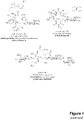
- macrolides of the present invention are prepared by coupling of an western half (A) with an eastern half (B) to provide a compound of Formula (C-1), as depicted in Scheme 8: or salt thereof, wherein L 1 , L 2 , L 3 , G 1 , G 3 , R 1a , R 1b , R 2a , R 2b , R 5a , R 5b , R 7 , R 8 , R 9 , R 11 , z1, and z2 are as defined herein;
- the double bond of the above recited formula can be provided in the cis- configuration.
- the double bond of the above recited formula can be provided in the trans configuration.
- the double bond of the above recited formula can be provided in the cis- configuration.
- the double bond of the above recited formula can be provided in the trans configuration.
- the double bond may be reduced to a single bond, and optionally the carbon alpha to the ketone may be substituted by a non-hydrogen group R Za .
- a nucleophile may react with the double bond via 1,4-addition of a non-hydrogen group R Zb optionally followed by alpha substitution via a non-hydrogen group R Za .
- R Za and R Zb are each independently hydrogen or a non-hydrogen group (e.g., halogen, hydroxyl, substituted hydroxyl, amino, substituted amino, thiol, substituted thiol, carbonyl, optionally substituted alkyl, optionally substituted alkenyl, optionally substituted alkynyl, optionally substituted carbocyclyl, optionally substituted heterocyclyl, optionally substituted aryl, or optionally substituted heteroaryl).
- a non-hydrogen group e.g., halogen, hydroxyl, substituted hydroxyl, amino, substituted amino, thiol, substituted thiol, carbonyl, optionally substituted alkyl, optionally substituted alkenyl, optionally substituted alkynyl, optionally substituted carbocyclyl, optionally substituted heterocyclyl, optionally substituted aryl, or optionally substituted heteroaryl.
- Exemplary bases include, but are not limited to, organic bases (e.g ., pyridine, DMAP, Hunig's base) and inorganic bases (e.g ., sodium bicarbonate, sodium carbonate).
- Exemplary leaving groups include bromine, chlorine, iodine, tosylate, triflate, mesylate, and besylate.
- Exemplary bases include, but are not limited to, organic bases (e.g., pyridine, DMAP, Hunig's base) and inorganic bases (e.g., sodium bicarbonate, sodium carbonate).
- Exemplary leaving groups include bromine, chlorine, iodine, tosylate, mesylate, triflate, and besylate.
- Exemplary bases include, but are not limited to, organic bases (e.g., pyridine, DMAP, Hunig's base) and inorganic bases (e.g ., sodium bicarbonate, sodium carbonate).
- Exemplary leaving groups include bromine, chlorine, iodine, tosylate, mesylate, triflate, and besylate.
- Exemplary reductive amination conditions include, but are not limited to, use of B 10 H 14 , InCl 3 /Et 3 SiH, NaBH4, NaBH 4 /H 3 BO 3 , NaBH 3 CN or NaBH(OAc) 3 , optionally in the prescence of an acid (e.g., AcOH, TFA) or protic solvent (e.g., MeOH).
- R Z2 can be hydrogen.
- R Z2 can be methyl.
- R Z2 can be a nitrogen protecting group.
- Exemplary reductive amination conditions include, but are not limited to, use of B 10 H 14 , InCl 3 /Et 3 SiH, NaBH4, NaBH 4 /H 3 BO 3 , NaBH 3 CN or NaBH(OAc) 3 , optionally in the prescence of an acid (e.g., AcOH, TFA) or protic solvent (e.g., MeOH).
- R Z2 can be hydrogen.
- nitro-aldol reaction (Henry reaction) coupling products, and oxidized, reduced, and/or addition products formed therefrom.
- the nitro aldol reaction may be catalyzed or promoted by many different sets of conditions, e.g ., use of an organic base, inorganic base, quaternary ammonium salt, and/or a catalyst; and use of protic or aprotic solvents and/or use of solventless conditions. See, e.g., Luzzio Tetrahedron (2001) 915-945 , for a review of various conditions employed in a nitro aldol reaction.
- the nitro (-NO 2 ) moiety may be manipulated at any stage in the synthesis.
- a non-hydrogen group R 10 e.g., with a base and an R 10 alkylating agent, e.g., R 10 -LG, or with a halogenating agent if R 10 is halogen
- the C3 ketone C-2 or C-3, or C-4 or C-5 (e.g., hydroxyl at C3, wherein R 17 is hydrogen), can be halogenated with an electrophilic halogenating agent (e.g . Deoxo-Fluor) to give geminal dihalides such as C-6, or monohalides such as C-7, respectively, wherein X is a halogen (e.g. fluorine, bromine, iodine).
- an electrophilic halogenating agent e.g . Deoxo-Fluor
- R 3 or R 4 enable rapid derivitization into novel macrolides as demonstrated in Schemes 16A-16B and 17A-17B.
- a variety of groups, such as heteroaryl or aryl moieties may be introduced through a transition metal catalyzed cross coupling (e.g. Heck reaction) or through an olefin metathesis reaction (e.g. cross methathesis using a Grubbs or Schrock metal carbene catalyst) leading to derivatives such as C-9 or C-15.
- olefin e.g . hydrogenation
- can access further structural diversity e.g . C-I0a-b, C-16a-b).
- the olefin functionality can be oxidatively cleaved to produce a carbonyl functionality (C-11a-b or C-17a-b) that may be further modified through transformations such as reduction, nucleophilic additions (C-13a-b or C-19a-b), or reductive amination (C-12a-b or C-18a-b), wherein each instance of R 22 is independently hydrogen or optionally substituted alkyl and R 24 is hydrogen, optionally substituted alkyl, or optionally substituted aryl.
- R 22 can be R 22 can be While the modifications as drawn herein are demonstrated in the context of the preformed macrocycle, identical transformations on the macrolide building blocks prior to assembly are contemplated herein.
- R 22 can be .
- R 22 can be While the modifications as drawn herein are demonstrated in the context of the preformed macrocycle, identical transformations on the macrolide building blocks prior to assembly are contemplated herein.
- Conjugate addition reactions using nucleophilic R 23 species (such as X-R 23 or M-R 23 , wherein M is an anion, Li, Na, K, CuX, or MgX and wherein X is a halogen) provide compounds of formula C-42a-b.
- the nitrogen of the macrocycle can be further functionalized with R Z2 groups.
- double bond fuctionalization include:
- the group -L C1 -A 1 may be installed directly by reaction of the amine with a compound of formula LG-L C1 -A 1 .
- Such reactions are also contemplated wherein G 1 is -OH.
- L 3 is a group of formula ( L 3 - i ), wherein R 3 is hydrogen (referred to as ( L 3 -ia ))
- the group -L C1 -A 1 may be installed directly from ( L 3 -ia ) to provide ( L 3 -ic ) by reaction of the hydroxyl group with a compound of formula LG-L C1 -A 1 .
- A may be any group, e.g., for example, a cyclic moiety selected from the group consisting of optionally substituted carbocyclyl, optionally substituted heterocyclyl, optionally substituted aryl, and optionally substituted heteroaryl.
- a group of formula ( L C1 -iii ) may be installed by reaction of the group -OR 12 , -NR 13 R 14 , and/or -OR 3 , wherein R 12 , R 14 , and/or R 3 are hydrogen, with a compound of formula ( L C1 -vii ), e.g., by nucleophilic displacement, to provide a group wherein R 12 , R 14 , and/or R 3 is of formula ( L C1 -iii ). See, e.g., Scheme 28.
- the above recited Z linkage may be formed via Wittig or Horner Emmons reaction between an aldehyde and a ylide or phosphonate ester to form an ⁇ , ⁇ -unsaturated keto linked intermediate. See, e.g., Schemes 30 and 31.
- the ketone moeity and ⁇ -substitutent can be in a cis -configuration.
- the ketone moeity and ⁇ -substitutent can be in a trans- configuration.
- the isocyanate can react with the free hydroxyl group and -NHR 14 undergoes the conjugate addition reaction in a single step.
- the intermediate acyclic carbamate can be isolated. Base can be added to the isolated acyclic carbamate to promote the conjugate addition reaction.
- Scheme 32 depicts various synthetic modifications which are contemplated and further described in greater detail elsewhere.
- the carbon alpha to the ketone moiety so installed may be monosubstituted (e.g ., wherein R Z3 is hydrogen and R Z4 is a non-hydrogen) or di-substituted ( i.e., wherein both R Z3 and R Z4 are non-hydrogen groups).
- Scheme 33 depicts additional functionalization of ketolides prepared by the methods described herein via an enolate or trapped enolate, wherein PG is an oxygen protecting group as defined herein.
- the trapped enolate can be trapped as a protected enol ether using a reagent of formula LG-PG wherein LG is leaving group and PG is protecting group as defined herein.
- Either the protected enol ether or the enolate can be utilized to carry out an aldol condensation reaction with aldehydes of formula R 23 -CHO.
- the protected enol ether can be contacted with iminium salts under suitable conditions to afford amino substituted products. Amines produced via this method can be eliminated to provide exocyclic alkenes.
- G 1 is -OR 12 or -NR 13 R 14 .
- G 1 can be -OR 12 and R 11 and R 12 are not joined to form a cyclic carbonate.
- R 11 can be hydrogen, optionally substituted alkyl, optionally substituted alkenyl, optionally substituted alkynyl, optionally substituted carbocyclyl, optionally substituted heterocyclyl, optionally substituted aryl, optionally substituted heteroaryl, or an oxygen protecting group
- R 12 is hydrogen, optionally substituted alkyl, optionally substituted alkenyl, optionally substituted alkynyl, optionally substituted carbocyclyl, optionally substituted heterocyclyl, optionally substituted aryl, optionally substituted heteroaryl, an oxygen protecting group, or a group of formula: as defined herein.
- R 12 When R 12 is not hydrogen, R 12 can be optionally substituted with a non-hydrogen group of formula R 23 as defined herein.
- G 1 can be -NR 13 R 14 , and R 11 and R 13 are not joined to form a cyclic carbamate.
- R 11 can be hydrogen, optionally substituted alkyl, optionally substituted alkenyl, optionally substituted alkynyl, optionally substituted carbocyclyl, optionally substituted heterocyclyl, optionally substituted aryl, optionally substituted heteroaryl, or an oxygen protecting group
- R 13 can be hydrogen, optionally substituted alkyl, optionally substituted alkenyl, optionally substituted alkynyl, optionally substituted carbocyclyl, optionally substituted heterocyclyl, optionally substituted aryl, optionally substituted heteroaryl, or a nitrogen protecting group.
- R 13 When R 13 is not hydrogen, R 13 can be optionally substituted with a non-hydrogen group of formula R 23 as defined herein.
- R 14 When R 14 is not hydrogen, R 14 can be optionally substituted with a non-hydrogen group of formula R 23 as defined herein.
- R 13 and R 14 can be joined to form an optionally substituted heterocyclyl or optionally substituted heteroaryl.
- the heterocyclyl or heteroaryl ring system formed from the joining of R 13 and R 14 can be optionally substituted with a non-hydrogen group of formula R 23 as defined herein.
- each instance of R 1a , R 1b , R 2a , and R 2b is independently hydrogen, halogen, carbonyl, optionally substituted alkyl, optionally substituted alkenyl, optionally substituted alkynyl, optionally substituted carbocyclyl, optionally substituted heterocylyl, optionally substituted aryl, optionally substituted heteroaryl, or wherein R 1a and R 1b or R 2a and R 2b can be taken together to form
- the carbon to which R 1a and R 1b is attached can be a stereocenter of the (R)-configuration.
- the carbon to which R 1a and R 1b is attached can be a stereocenter of the (S)-configuration
- At least one of R 1a and R 1b can be hydrogen. Both R 1a and R 1b can be hydrogen.
- At least one of R 1a and R 1b can be halogen; e.g. -F, -Cl, -Br, or I. Both R 1a and R 1b can be halogen; e.g. -F, -Cl, -Br, or I.
- At least one of R 1a and R 1b can be carbonyl. At least one of R 1a and R 1b can be a carboxylic acid. At least one of R 1a and R 1b can be a ketone. At least one of R 1a and R 1b can be an aldehyde (-CHO).
- At least one instance of R 1a and R 1b can be optionally substituted alkyl, e.g., optionally substituted C 1-6 alkyl optionally substituted C 1-2 alkyl, optionally substituted C 2-3 alkyl, optionally substituted C 3-4 alkyl, optionally substituted C 4-5 alkyl, or optionally substituted C 5-6 alkyl.
- At least one instance of R 1a and R 1b can be -CH 3 . Both instances of R 1a and R 1b can be -CH 3 .
- At least one instance of R 1a and R 1b can be alkyl substituted with one or more halogen atoms, e.g., optionally substituted haloalkyl; e.g., -CF 3 , -CF 2 CF 3 , or -CF 2 H. At least one of R 1a and R 1b can be -CH 2 CHO.
- At least one instance of R 1a and R 1b can be optionally substituted alkenyl, e.g., optionally substituted C 2-6 alkenyl, optionally substituted C 2-3 alkenyl, optionally substituted C 3-4 alkenyl, optionally substituted C 4-5 alkenyl, or optionally substituted C 5-6 alkenyl.
- At least one instance of R 1a and R 1b can be vinyl, allyl, or prenyl.
- At least one instance of R 1a and R 1b can be optionally substituted alkynyl, e.g., optionally substituted C 2-6 alkynyl, optionally substituted C 2-3 alkynyl, optionally substituted C 3-4 alkynyl, optionally substituted C 4-5 alkynyl, or optionally substituted C 5-6 alkynyl.
- At least one instance of R 1a and R 1b can be optionally substituted carbocyclyl, e.g., optionally substituted C 3-6 carbocyclyl, optionally substituted C 3-4 carbocyclyl, optionally substituted C 4-5 carbocyclyl, or optionally substituted C 5-6 carbocyclyl.
- At least one instance of R 1a and R 1b can be optionally substituted cyclopropyl.
- At least one instance of R 1a and R 1b can be unsubstituted cyclopropyl.
- At least one instance of R 1a and R 1b can be optionally substituted cyclobutyl.
- At least one instance of R 1a and R 1b can be unsubstituted cyclobutyl.
- At least one instance of R 1a and R 1b can be optionally substituted cyclopentyl. At least one instance of R 1a and R 1b can be unsubstituted cyclopentyl. At least one instance of R 1a and R 1b can be optionally substituted cyclohexyl. At least one instance of R 1a and R 1b can be unsubstituted cyclohexyl.
- At least one instance of R 1a and R 1b can be optionally substituted heterocylyl, e.g., e.g., optionally substituted 3-6memberedheterocyclyl, optionally substituted 3-4 membered heterocyclyl, optionally substituted 4-5 membered heterocyclyl, or optionally substituted 5-6 membered heterocyclyl.
- heterocylyl e.g., e.g., optionally substituted 3-6memberedheterocyclyl, optionally substituted 3-4 membered heterocyclyl, optionally substituted 4-5 membered heterocyclyl, or optionally substituted 5-6 membered heterocyclyl.
- At least one instance of R 1a and R 1b can be optionally substituted aryl, e.g., optionally substituted phenyl.
- At least one instance of R 1a and R 1b can be optionally substituted heteroaryl, e.g., optionally substituted 5- to 6-membered heteroaryl.
- R 1a and R 1b can be taken together to form
- the carbon to which R 2a and R 2b is attached can be a stereocenter of the (R)-configuration.
- the carbon to which R 2a and R 2b is attached can be a stereocenter of the (S)-configuration.
- At least one instance of R 2a and R 2b can be hydrogen. Both R 2a and R 2b can be hydrogen.
- At least one of R 2a and R 2b can be halogen; e.g. -F, -Cl, -Br, or I. Both R 2a and R 2b can be halogen; e.g. -F, -Cl, -Br, or I.
- At least one of R 2a and R 2b can be carbonyl. At least one of R 2a and R 2b can be a carboxylic acid. At least one of R 2a and R 2b can be a ketone. At least one of R 2a and R 2b can be an aldehyde (-CHO).
- At least one instance of R 2a and R 2b can be optionally substituted alkyl, e.g., optionally substituted C 1-6 alkyl optionally substituted C 1-2 alkyl, optionally substituted C 2-3 alkyl, optionally substituted C 3-4 alkyl, optionally substituted C 4 _ 5 alkyl, or optionally substituted C 5 _ 6 alkyl.
- At least one instance of R 2a and R 2b can be -CH 3 . Both instances of R 2a and R 2b can be -CH 3 .
- At least one instance of R 2a and R 2b can be alkyl optionally substituted with one or more halogen atoms, e.g., optionally substituted haloalkyl; e.g., -CF 3 , -CF 2 CF 3 , or -CF 2 H. At least one of R 2a and R 2b can be -CH 2 CHO.
- At least one instance of R 2a and R 2b can be optionally substituted alkenyl, e.g., optionally substituted C 2-6 alkenyl, optionally substituted C 2-3 alkenyl, optionally substituted C 3-4 alkenyl, optionally substituted C 4-5 alkenyl, or optionally substituted C 5-6 alkenyl.
- At least one instance of R 2a and R 2b can be vinyl, allyl, or prenyl.
- At least one instance of R 2a and R 2b can be optionally substituted alkynyl, e.g., optionally substituted C 2-6 alkynyl, optionally substituted C 2-3 alkynyl, optionally substituted C 3-4 alkynyl, optionally substituted C 4-5 alkynyl, or optionally substituted C 5-6 alkynyl.
- At least one instance of R 2a and R 2b can be optionally substituted carbocyclyl, e.g., optionally substituted C 3-6 carbocyclyl, optionally substituted C 3-4 carbocyclyl, optionally substituted C 4-5 carbocyclyl, or optionally substituted C 5-6 carbocyclyl.
- At least one instance of R 2a and R 2b can be optionally substituted heterocylyl, e.g., optionally substituted 3-6 membered heterocyclyl, optionally substituted 3-4 membered heterocyclyl, optionally substituted 4-5 membered heterocyclyl, or optionally substituted 5-6 membered heterocyclyl.
- At least one instance of R 2a and R 2b can be optionally substituted aryl, e.g., optionally substituted phenyl.
- At least one instance of R 2a and R 2b can be optionally substituted heteroaryl, e.g., optionally substituted 5- to 6-membered heteroaryl.
- R 2a and R 2b can be taken together to form
- L 3 is a group of the formula:
- the carbon to which R 3 is attached can be a stereocenter of the (R)-configuration.
- the carbon to which R 3 is attached can be a stereocenter of the (S)-configuration.
- R 3 can be hydrogen.
- R 3 can be optionally substituted alkyl; e.g., optionally substituted C 1-6 alkyl optionally substituted C 1-2 alkyl, optionally substituted C 2-3 alkyl, optionally substituted C 3-4 alkyl, optionally substituted C 4-5 alkyl, or an optionally substituted C 5-6 alkyl.
- R 3 can be - CH 3 .
- R 3 can be -CH 2 CHO.
- R 3 can be -CH 2 N(R 22 ) 2 wherein each instance of R 22 is independently hydrogen or optionally substituted alkyl.
- R 3 can be -CH 2 NH(R 22 ).
- R 3 can be - CH 2 NH 2 .
- R 3 can be -CH 2 CH(OH)R 24 wherein R 24 is hydrogen, optionally substituted alkyl, or optionally substituted aryl.
- R 3 can be -CH 2 CH 2 OH.
- R 3 can be -CH 2 CH 2 R 23 wherein R 23 is as defined herein.
- R 3 can be optionally substituted alkenyl; e.g., optionally substituted C 2-6 alkenyl, optionally substituted C 2-3 alkenyl, optionally substituted C 3-4 alkenyl, optionally substituted C 4-5 alkenyl, or optionally substituted C 5-6 alkenyl.
- R 3 can be vinyl, allyl, or prenyl.
- R 3 can be optionally substituted allyl, e.g., substituted allyl, e.g., wherein R 23 is as defined herein, or unsubstituted allyl
- R 3 can be optionally substituted vinyl, e.g., substituted vinyl, e.g., wherein R 23 is as defined herein, or unsubstituted vinyl
- R 3 can be optionally substituted alkynyl, e.g ., optionally substituted C 2-6 alkynyl, optionally substituted C 2-3 alkynyl, optionally substituted C 3-4 alkynyl, optionally substituted C 4-5 alkynyl, or optionally substituted C 5-6 alkynyl.
- R 3 can be optionally substituted carbocyclyl; e.g ., optionally substituted C 3-6 carbocyclyl, optionally substituted C 3-4 carbocyclyl, optionally substituted C 4-5 carbocyclyl, or optionally substituted C 5-6 carbocyclyl.
- R 3 can be optionally substituted heterocyclyl, e.g ., optionally substituted 3-6 membered heterocyclyl, optionally substituted 3-4 membered heterocyclyl, optionally substituted 4-5 membered heterocyclyl, or optionally substituted 5-6 membered heterocyclyl.
- R 3 can be optionally substituted aryl, e.g., optionally substituted phenyl.
- R 3 can be optionally substituted heteroaryl, e.g ., optionally substituted 5- to 6-membered heteroaryl.
- R 3 can be or a group of formula: wherein L C1 , LG, A 1 , A, L C2 , and R 23 are as defined herein.
- the carbon to which R 4 is attached can be a stereocenter of the (R)-configuration.
- the carbon to which R 4 is attached can be a stereocenter of the (S)-configuration.
- R 4 can be hydrogen
- R 4 can be optionally substituted alkyl, e.g., optionally substituted C 1-6 alkyl optionally substituted C 1-2 alkyl, optionally substituted C 2-3 alkyl, optionally substituted C 3-4 alkyl, optionally substituted C 4-5 alkyl, or optionally substituted C 5-6 alkyl.
- R 4 can be -CH 3 .
- R 4 can be -CH 2 CHO.
- R 4 can be -CH 2 N(R 22 ) 2 wherein each instance of R 22 is independently hydrogen or optionally substituted alkyl.
- R 4 can be -CH 2 NH(R 22 ).
- R 4 can be -CH 2 NH 2 .
- R 4 can be -CH 2 CH(OH)R 24 wherein R 24 is hydrogen, optionally substituted alkyl, or optionally substituted aryl.
- R 4 can be -CH 2 CH 2 OH.
- R 4 can be -CH 2 CH 2 R 23 wherein R 23 is as defined herein.
- R 4 can be optionally substituted alkenyl, e.g., optionally substituted C 2-6 alkenyl, optionally substituted C 2-3 alkenyl, optionally substituted C 3-4 alkenyl, optionally substituted C 4-5 alkenyl, or optionally substituted C 5-6 alkenyl.
- R 4 can be optionally substituted allyl, e.g., substituted allyl, e.g., wherein R 23 is as defined herein, or unsubstituted allyl
- R 4 can be optionally substituted vinyl, e.g ., substituted vinyl, e.g., wherein R 23 is as defined herein, or unsubstituted vinyl
- R 4 and R 21 are contemplated herein.
- R 4 can be optionally substituted C 1-3 alkyl and R 21 can be hydrogen.
- R 3 can be -CH 2 CHO, - CH 2 N(R 22 ) 2 , -CH 2 CH(OH)R 24 , or -CH 2 CH 2 R 23 and R 21 is hydrogen.
- R 4 can be optionally substituted C 2-3 alkenyl, and R 21 can be hydrogen.
- R 4 can be or and R 21 can be hydrogen.
- R 4 can be optionally substituted alkynyl, e.g ., optionally substituted C 2-6 alkynyl, optionally substituted C 2-3 alkynyl, optionally substituted C 3-4 alkynyl, optionally substituted C 4-5 alkynyl, or optionally substituted C 5-6 alkynyl.
- R 4 can be optionally substituted carbocyclyl, e.g ., optionally substituted C 3-6 carbocyclyl, optionally substituted C 3-4 carbocyclyl, optionally substituted C 4-5 carbocyclyl, or optionally substituted C 5-6 carbocyclyl.
- R 4 can be optionally substituted heterocyclyl, e.g ., optionally substituted 3-6 membered heterocyclyl, optionally substituted 3-4 membered heterocyclyl, optionally substituted 4-5 membered heterocyclyl, or optionally substituted 5-6 membered heterocyclyl.
- R 4 can be optionally substituted aryl, e.g., optionally substituted phenyl.
- R 4 can be optionally substituted heteroaryl, e.g ., optionally substituted 5- to 6-membered heteroaryl.
- R 18 and R 19 can be independently hydrogen or optionally substituted alkyl, e.g., hydrogen or -CH 3 .
- the carbon to which R 18 and R 19 are attached can be a stereocenter in the (R) configuration.
- the carbon to which R 18 and R 19 are attached can be a stereocenter in the (S) configuration.
- R 20 and R 21 can be independently hydrogen, hydroxyl, substituted hydroxyl, thiol, substituted thiol, amino, substituted amino, halogen, or R 20 and R 21 are joined to form an optionally substituted cyclopropyl or an oxiranyl ring.
- R 20 and R 21 can be syn to each other.
- R 20 and R 21 can be anti to each other.
- L 3 can be:
- L 3 can be: wherein L C1 and A 1 are as defined herein.
- L 3 can be of the formula: wherein L C1 , A, L C2 , and R 23 are as defined herein.
- each instance of R 5a and R 5b is independently hydrogen, halogen, silyl, optionally substituted alkyl, optionally substituted carbocyclyl, or optionally substituted heterocyclyl.
- R 5a and R 5b can be hydrogen, and the other of R 5a and R 5b can be a non-hydrogen group.
- Each instance of R 5a and R 5b can be hydrogen.
- Each instance of R 5a and R 5b can be a non-hydrogen group, e.g., halogen, optionally substituted alkyl, optionally substituted carbocyclyl, or optionally substituted heterocyclyl.
- the carbon to which R 5a and R 5b is attached can be a stereocenter of the (R)-configuration.
- the carbon to which R 5a and R 5b is attached can be a stereocenter of the (S)-configuration.
- At least one instance of R 5a and R 5b can be optionally substituted alkyl, e.g., optionally substituted C 1-6 alkyl, optionally substituted C 1-2 alkyl, optionally substituted C 2-3 alkyl optionally substituted C 3-4 alkyl, optionally substituted C 4-5 alkyl, or optionally substituted C 5-6 alkyl.
- At least one instance of R 5a and R 5b can be -CH 3 .
- IBoth instances of R 5a and R 5b can be -CH 3 .
- At least one instance of R 5a and R 5b can be optionally substituted carbocyclyl, e.g., optionally substituted C 3-6 carbocyclyl, optionally substituted C 3-4 carbocyclyl, optionally substituted C 4-5 carbocyclyl, or optionally substituted C 5-6 carbocyclyl.
- At least one instance of R 5a and R 5b can be optionally substituted heterocyclyl, e.g., optionally substituted 3-6 membered heterocyclyl, optionally substituted 3-4 membered heterocyclyl, optionally substituted 4-5 membered heterocyclyl, or optionally substituted 5-6 membered heterocyclyl.
- At least one instance of R 5a and R 5b can be halogen, e.g ., bromo, iodo, chloro, or fluoro. At least one instance of R 5a and R 5b can be fluoro. Both instances of R 5a and R 5b can be fluoro. One of R 5a and R 5b can be hydrogen and the other of R 5a and R 5b can be fluoro.
- At least one instance of R 5a and R 5b can be silyl.
- R 6 and/or R 10 is hydrogen, optionally substituted alkyl, optionally substituted alkenyl, optionally substituted alkynyl, optionally substituted carbocyclyl, optionally substituted heterocyclyl, optionally substituted aryl, optionally substituted aralkyl, optionally substituted heteroaryl, optionally substituted heteroaralkyl, hydroxyl, substituted hydroxyl, thiol, substituted thiol, amino, substituted amino, carbonyl, silyl, or halogen.
- R 6 and/or R 10 can be hydrogen.
- R 6 can be hydrogen.
- R 10 can be hydrogen.
- R 6 can be hydrogen, and R 10 can be hydrogen. Both of R 6 and R 10 can be non-hydrogen groups.
- the carbon to which R 6 and R 10 is attached can be a stereocenter of the (R)-configuration.
- the carbon to which R 6 and R 10 is attached can be a stereocenter of the (S)-configuration.
- At least one instance of R 6 and R 10 can be optionally substituted alkyl; e.g., optionally substituted C 1-6 alkyl optionally substituted C 1-2 alkyl, optionally substituted C 2-3 alkyl, optionally substituted C 3-4 alkyl, optionally substituted C 4-5 alkyl, or optionally substituted C 5-6 alkyl.
- At least one instance of R 6 and R 10 can be -CH 3 .
- At least one instance of R 6 and R 10 can be -CH 3 .
- At least one instance of R 6 and R 10 can be -CH 2 CN.
- R 32 can be optionally substituted alkyl, e.g. C 1-6 alkyl.
- R 32 can be unsubstituted C 1-6 alkyl.
- R 32 can be methyl, ethyl, or propyl.
- R 32 can be substituted C 1-6 alkyl.
- R 32 can be hydrogen.
- At least one instance of R 6 and R 10 can be optionally substituted alkenyl, e.g., optionally substituted C 2-6 alkenyl, optionally substituted C 2-3 alkenyl, optionally substituted C 3-4 alkenyl, optionally substituted C 4-5 alkenyl, or optionally substituted C 5-6 alkenyl. At least one instance of R 6 and R 10 can be substituted or unsubstituted allyl. At least one instance of R 6 and R 10 can be substituted or unsubstituted vinyl. Such groups are contemplated after the macrocyclization step, converted, for example, from the enolate of the macrolide wherein R 6 and/or R 10 is hydrogen.
- At least one instance of R 6 and R 10 can be optionally substituted alkynyl, e.g., optionally substituted C 2-6 alkynyl, optionally substituted C 2-3 alkynyl, optionally substituted C 3-4 alkynyl, optionally substituted C 4-5 alkynyl, or optionally substituted C 5-6 alkynyl.
- Such groups are contemplated after the macrocyclization step, converted, for example, from the enolate of the macrolide wherein R 6 and/or R 10 is hydrogen.
- At least one instance of R 6 and R 10 can be optionally substituted carbocyclyl, e.g., optionally substituted C 3-6 carbocyclyl, optionally substituted C 3-4 carbocyclyl, optionally substituted C 4-5 carbocyclyl, or optionally substituted C 5-6 carbocyclyl.
- At least one instance of R 6 and R 10 can be optionally substituted heterocyclyl, e.g., optionally substituted 3-6 membered heterocyclyl, optionally substituted 3-4 membered heterocyclyl, optionally substituted 4-5 membered heterocyclyl, or optionally substituted 5-6 membered heterocyclyl.
- At least one instance of R 6 and R 10 can be optionally substituted aryl; e.g., optionally substituted phenyl.
- At least one instance of R 6 and R 10 can be optionally substituted aralkyl; e.g., optionally substituted benzyl.
- At least one instance of R 6 and R 10 can be optionally substituted heteroaryl, e.g., optionally substituted 5- to 6-membered heteroaryl.
- At least one instance of R 6 and R 10 can be optionally substituted heteroaralkyl; e.g., optionally substituted pyrazolylalkyl, imidazolylalkyl, thiazolylalkyl, oxazolylalkyl, pyridinylalkyl, pyrimidinylalkyl, or pyrazinylalkyl.
- optionally substituted pyrazolylalkyl imidazolylalkyl, thiazolylalkyl, oxazolylalkyl, pyridinylalkyl, pyrimidinylalkyl, or pyrazinylalkyl.
- At least one instance of R 6 and R 10 can be hydroxyl, substituted hydroxyl, thiol, substituted thiol, amino, or substituted amino. Such groups are contemplated after the macrocyclization step, converted, for example, from wherein R 6 and/or R 10 is a halogen.
- At least one instance of R 6 and R 10 can be carbonyl, e.g., acetyl.
- At least one instance of R 6 and R 10 can be silyl.
- R 6 can be silyl prior to macrocyclization, but is removed after the macrolide is formed and replaced with, for example, hydrogen.
- At least one instance of R 6 and R 10 can be halogen, e.g., fluoro, bromo, chloro, or iodo.
- R 7 is hydrogen, optionally substituted alkyl, optionally substituted alkenyl, optionally substituted alkynyl, optionally substituted carbocyclyl, optionally substituted heterocyclyl, optionally substituted aryl, or optionally substituted heteroaryl.
- R 7 can be hydrogen. However, R 7 can be a non-hydrogen group, and the carbon to which R 7 is attached can be a stereocenter of the (R)-configuration. R 7 can be a non-hydrogen group, and the carbon to which R 7 is attached can be a stereocenter of the (S)-configuration.
- R 7 can be optionally substituted alkyl, e.g., optionally substituted C 1-6 alkyl optionally substituted C 1-2 alkyl, optionally substituted C 2-3 alkyl, optionally substituted C 3-4 alkyl, optionally substituted C 4-5 alkyl, or optionally substituted C 5-6 alkyl.
- R 7 can be -CH 3 or -CH 2 CH 3 .
- R 7 can be optionally substituted alkenyl, e.g., optionally substituted C 2-6 alkenyl, optionally substituted C 2-3 alkenyl, optionally substituted C 3-4 alkenyl, optionally substituted C 4-5 alkenyl, or optionally substituted C 5-6 alkenyl.
- R 7 can be vinyl, allyl, or prenyl.
- R 7 can be optionally substituted alkynyl, e.g. , optionally substituted C 2-6 alkynyl, optionally substituted C 2-3 alkynyl, optionally substituted C 3-4 alkynyl, optionally substituted C 4-5 alkynyl, or optionally substituted C 5-6 alkynyl.
- R 7 can be optionally substituted carbocyclyl, e.g ., optionally substituted C 3-6 carbocyclyl, optionally substituted C 3-4 carbocyclyl, optionally substituted C 4-5 carbocyclyl, or optionally substituted C 5-6 carbocyclyl.
- R 7 can be optionally substituted heterocyclyl, e.g ., optionally substituted 3-6 membered heterocyclyl, optionally substituted 3-4 membered heterocyclyl, optionally substituted 4-5 membered heterocyclyl, or optionally substituted 5-6 membered heterocyclyl.
- R 7 can be optionally substituted aryl; e.g., optionally substituted phenyl.
- R 7 can be optionally substituted heteroaryl, e.g. , optionally substituted 5- to 6-membered heteroaryl.
- R 8 is hydrogen, optionally substituted alkyl, optionally substituted alkenyl, optionally substituted alkynyl, optionally substituted carbocyclyl, optionally substituted heterocyclyl, optionally substituted aryl, or optionally substituted heteroaryl.
- R 8 can be hydrogen
- R 8 can be optionally substituted alkyl, e.g., optionally substituted C 1-6 alkyl optionally substituted C 1-2 alkyl, optionally substituted C 2-3 alkyl, optionally substituted C 3-4 alkyl, optionally substituted C 4-5 alkyl, or optionally substituted C 5-6 alkyl.
- R 8 can be -CH 3 or -CH 2 CH 3 .
- R 8 can be optionally substituted alkenyl, e.g., optionally substituted C 2-6 alkenyl, optionally substituted C 2-3 alkenyl, optionally substituted C 3-4 alkenyl, optionally substituted C 4-5 alkenyl, or optionally substituted C 5-6 alkenyl.
- R 8 can be vinyl, allyl, or prenyl
- R 8 can be optionally substituted alkynyl, e.g ., optionally substituted C 2-6 alkynyl, optionally substituted C 2-3 alkynyl, optionally substituted C 3-4 alkynyl, optionally substituted C 4-5 alkynyl, or optionally substituted C 5-6 alkynyl.
- R 8 can be optionally substituted carbocyclyl, e.g ., optionally substituted C 3-6 carbocyclyl, optionally substituted C 3-4 carbocyclyl, optionally substituted C 4-5 carbocyclyl, or optionally substituted C 5-6 carbocyclyl.
- R 8 can be optionally substituted heterocyclyl, e.g ., optionally substituted 3-6 membered heterocyclyl, optionally substituted 3-4 membered heterocyclyl, optionally substituted 4-5 membered heterocyclyl, or optionally substituted 5-6 membered heterocyclyl.
- R 8 can be optionally substituted aryl, e.g., optionally substituted phenyl.
- R 8 can be optionally substituted heteroaryl, e.g. , optionally substituted 5- to 6-membered heteroaryl.
- R Za and R Zb are each independently hydrogen, halogen, hydroxyl, substituted hydroxyl, amino, substituted amino, thiol, substituted thiol, carbonyl, optionally substituted alkyl, optionally substituted alkenyl, optionally substituted alkynyl, optionally substituted carbocyclyl, optionally substituted heterocyclyl, optionally substituted aryl, or optionally substituted heteroaryl.
- the bond between the two carbons to which R Za and R Zb are attached can represent a double bond, and R Za and R Zb can each independently be hydrogen.
- the bond between the two carbons to which R Za and R Zb are attached can represent a single bond (e.g ., provided by hydrogenation of the double bond), and R Za and R Zb can each independently be hydrogen.
- At least one of R Za and R Zb can be a hydrogen and at least one of R Za and R Zb can be a non-hydrogen group, e.g., halogen, hydroxyl, substituted hydroxyl, amino, substituted amino, thiol, substituted thiol, carbonyl, optionally substituted alkyl, optionally substituted alkenyl, optionally substituted alkynyl, optionally substituted carbocyclyl, optionally substituted heterocyclyl, optionally substituted aryl, or optionally substituted heteroaryl.
- R Za can be hydrogen and R Zb can be a non-hydrogen group.
- R Za can be a non-hydrogen group and R Zb can be hydrogen.
- Both of R Za and R Zb can be non-hydrogen groups.
- the bond between the two carbons to which R Za and R Zb are attached can represent a single bond.
- the bond between the two carbons to which R Za and R Zb are attached can represent a double bond.
- R Za can be hydrogen
- R Zb can be hydrogen
- the bond between the two carbons to which R Za and R Zb are attached can represent a double bond
- R Za can be halogen (e.g., fluoro) or optionally substituted alkyl (e.g., methyl), R Zb can be hydrogen, and the bond between the two carbons to which R Za and R Zb are attached can represent a single bond.
- R Za can be halogen (e.g., fluoro) or optionally substituted alkyl (e.g., methyl)
- R Zb can be hydrogen
- the bond between the two carbons to which R Za and R Zb are attached can represent a single bond.
- the bond between the two carbons to which R Za and R Zb are attached can represent a double bond and R Za and R Zb can be in a cis -configuration.
- the bond between the two carbons to which R Za and R Zb are attached can represent a double bond and R Za and R Zb can be in a trans -configuration.
- R Z2 can be hydrogen
- R Z2 can be optionally substituted alkyl; e.g., optionally substituted C 1-6 alkyl optionally substituted C 1-2 alkyl, optionally substituted C 2-3 alkyl, optionally substituted C 3-4 alkyl, optionally substituted C 4-5 alkyl, or optionally substituted C 5-6 alkyl.
- R Z2 can be -CH 3 .
- R Z2 can be optionally substituted alkenyl, e.g., optionally substituted C 2-6 alkenyl, optionally substituted C 2-3 alkenyl, optionally substituted C 3-4 alkenyl, optionally substituted C 4-5 alkenyl, or optionally substituted C 5-6 alkenyl.
- R Z2 can be optionally substituted alkynyl, e.g ., optionally substituted C 2-6 alkynyl, optionally substituted C 2-3 alkynyl, optionally substituted C 3-4 alkynyl, optionally substituted C 4-5 alkynyl, or optionally substituted C 5-6 alkynyl.
- R Z2 can be optionally substituted carbocyclyl, e.g., optionally substituted C 3-6 carbocyclyl, optionally substituted C 3-4 carbocyclyl, optionally substituted C 4-5 carbocyclyl, or optionally substituted C 5-6 carbocyclyl.
- R Z2 can be optionally substituted heterocyclyl, e.g ., optionally substituted 3-6 membered heterocyclyl, optionally substituted 3-4 membered heterocyclyl, optionally substituted 4-5 membered heterocyclyl, or optionally substituted 5-6 membered heterocyclyl.
- R Z2 can be optionally substituted aryl, e.g., optionally substituted phenyl.
- R Z2 can be optionally substituted heteroaryl, e.g ., optionally substituted 5- to 6-membered heteroaryl.
- R Z2 can be hydroxyl, substituted hydroxyl, amino, or substituted amino.
- R Z2 can be a nitrogen protecting group.
- Two R Z2 groups can be joined to form an optionally substituted heterocylyl or optionally substituted heteroaryl ring.
- R Z3 is hydrogen, optionally substituted alkyl, optionally substituted alkenyl, optionally substituted alkynyl, optionally substituted carbocyclyl, optionally substituted heterocylyl, optionally substituted aryl, or optionally substituted heteroaryl.
- R Z3 can be hydrogen.
- R Z3 can be optionally substituted alkyl; e.g., optionally substituted C 1-6 alkyl optionally substituted C 1-2 alkyl, optionally substituted C 2-3 alkyl, optionally substituted C 3-4 alkyl, optionally substituted C 4-5 alkyl, or optionally substituted C 5-6 alkyl.
- R Z3 can be -CH 3 .
- R Z3 can be -CH 2 CHO.
- R Z3 can be -CH 2 CH 2 OH.
- R Z3 can be -CH 2 CH 2 N(R 22 ) 2 .
- R Z3 can be - CH 2 CH 2 N(CH 3 ) 2 .
- R Z3 can be -CH 2 CH(OH)R 24 .
- R Z3 can be alkyl optionally substituted with one or more halogen atoms, e.g., optionally substituted haloalkyl; e.g., -CF 3 , -CF 2 CF 3 , or - CF 2 H.
- R Z3 can be -CF 3 .
- R Z3 can be optionally substituted alkenyl, e.g., optionally substituted C 2-6 alkenyl, optionally substituted C 2-3 alkenyl, optionally substituted C 3-4 alkenyl, optionally substituted C 4-5 alkenyl, or optionally substituted C 5-6 alkenyl.
- R Z3 can be optionally substituted vinyl.
- R Z3 can be unsubstituted vinyl.
- R Z3 can be optionally substituted allyl.
- R Z3 can be unsubstituted allyl.
- R Z3 can be optionally substituted alkynyl, e.g ., optionally substituted C 2-6 alkynyl, optionally substituted C 2-3 alkynyl, optionally substituted C 3-4 alkynyl, optionally substituted C 4-5 alkynyl, or optionally substituted C 5-6 alkynyl.
- R Z3 can be optionally substituted carbocyclyl, e.g ., optionally substituted C 3-6 carbocyclyl, optionally substituted C 3-4 carbocyclyl, optionally substituted C 4-5 carbocyclyl, or optionally substituted C 5-6 carbocyclyl.
- R Z3 can be optionally substituted cyclopropyl.
- R Z3 can be unsubstituted cyclopropyl.
- R Z3 can be optionally substituted cyclobutyl.
- R Z3 can be unsubstituted cyclobutyl.
- R Z3 can be optionally substituted heterocyclyl, e.g ., optionally substituted 3-6 membered heterocyclyl, optionally substituted 3-4 membered heterocyclyl, optionally substituted 4-5 membered heterocyclyl, or optionally substituted 5-6 membered heterocyclyl.
- R Z3 can be optionally substituted aryl, e.g., optionally substituted phenyl.
- R Z3 can be optionally substituted aralkyl.
- R Z3 can be unsubstituted aralkyl.
- R Z3 can be optionally substituted benzyl.
- R Z3 can be wherein X is halogen.
- R Z3 can be unsubstituted benzyl.
- R Z3 can be optionally substituted heteroaryl, e.g ., optionally substituted 5- to 6-membered heteroaryl.
- R Z3 can be optionally substituted heteroaralkyl.
- R Z3 can be unsubstituted heteroaralkyl.
- R Z4 is optionally substituted alkyl, optionally substituted alkenyl, optionally substituted alkynyl, optionally substituted carbocyclyl, optionally substituted heterocylyl, optionally substituted aryl, or optionally substituted heteroaryl.
- R Z4 can be optionally substituted alkyl, e.g., optionally substituted C 1-6 alkyl optionally substituted C 1-2 alkyl, optionally substituted C 2-3 alkyl, optionally substituted C 3-4 alkyl, optionally substituted C 4-5 alkyl, or optionally substituted C 5-6 alkyl.
- R Z4 can be -CH 3 .
- R Z4 can be alkyl optionally substituted with one or more halogen atoms, e.g., optionally substituted haloalkyl; e.g., -CF 3 , -CF 2 CF 3 , or -CF 2 H.
- R Z4 can be optionally substituted alkenyl, e.g., optionally substituted C 2-6 alkenyl, optionally substituted C 2-3 alkenyl, optionally substituted C 3-4 alkenyl, optionally substituted C 4-5 alkenyl, or optionally substituted C 5-6 alkenyl.
- R Z4 can be optionally substituted alkynyl, e.g ., optionally substituted C 2-6 alkynyl, optionally substituted C 2-3 alkynyl, optionally substituted C 3-4 alkynyl, optionally substituted C 4-5 alkynyl, or optionally substituted C 5-6 alkynyl.
- R Z4 can be optionally substituted carbocyclyl, e.g ., optionally substituted C 3-6 carbocyclyl, optionally substituted C 3-4 carbocyclyl, optionally substituted C 4-5 carbocyclyl, or optionally substituted C 5-6 carbocyclyl.
- R Z4 can be optionally substituted heterocyclyl, e.g ., optionally substituted 3-6 membered heterocyclyl, optionally substituted 3-4 membered heterocyclyl, optionally substituted 4-5 membered heterocyclyl, or optionally substituted 5-6 membered heterocyclyl.
- R Z4 can be optionally substituted aryl, e.g., optionally substituted phenyl.
- R Z4 can be optionally substituted heteroaryl, e.g ., optionally substituted 5- to 6-membered heteroaryl.
- R Z3 and R Z4 can be taken together to form
- R Y1 can be -OR 17 and R Y2 can be hydrogen.
- R Y1 can be halogen (e.g., fluoro) and R Y2 can be hydrogen.
- R Y1 can be halogen (e.g., fluoro) and R Y2 can be halogen (e.g., fluoro).
- the carbon to which R 9 is attached can be of the (R)-configuration.
- IThe carbon to which R 9 is attached can be of the (S)-configuration.
- the carbon to which R 17 is attached can be of the (R)-configuration.
- the carbon to which R 17 is attached can be of the (S)-configuration.
- R 9 can be hydrogen.
- R 17 can be hydrogen.
- R 9 and/or R 17 can be each independently optionally substituted alkyl, e.g., optionally substituted C 1-6 alkyl, optionally substituted C 1-2 alkyl, optionally substituted C 2-3 alkyl, optionally substituted C 3-4 alkyl, optionally substituted C 4-5 alkyl, or optionally substituted C 5-6 alkyl, e.g., -CH 3 .
- R 9 can be where R S1 , R S2a , R S2b , R S3a , and R S3b are defined herein. R 9 can be . R 9 can be R 9 can be
- R 9 and/or R 17 can be each independently optionally substituted alkenyl, e.g., substituted or unsubstituted C 2-6 alkenyl, substituted or unsubstituted C 2-3 alkenyl, substituted or unsubstituted C 3-4 alkenyl, substituted or unsubstituted C 4-5 alkenyl, or substituted or unsubstituted C 5-6 alkenyl.
- alkenyl e.g., substituted or unsubstituted C 2-6 alkenyl, substituted or unsubstituted C 2-3 alkenyl, substituted or unsubstituted C 3-4 alkenyl, substituted or unsubstituted C 4-5 alkenyl, or substituted or unsubstituted C 5-6 alkenyl.
- R 9 and/or R 17 can be each independently optionally substituted alkynyl, e.g., substituted or unsubstituted C 2-6 alkynyl, substituted or unsubstituted C 2-3 alkynyl, substituted or unsubstituted C 3-4 alkynyl, substituted or unsubstituted C 4-5 alkynyl, or substituted or unsubstituted C 5-6 alkynyl.
- alkynyl e.g., substituted or unsubstituted C 2-6 alkynyl, substituted or unsubstituted C 2-3 alkynyl, substituted or unsubstituted C 3-4 alkynyl, substituted or unsubstituted C 4-5 alkynyl, or substituted or unsubstituted C 5-6 alkynyl.
- R 9 and/or R 17 can be each independently optionally substituted carbocyclyl, e . g ., substituted or unsubstituted C 3-6 carbocyclyl, substituted or unsubstituted C 3-4 carbocyclyl, substituted or unsubstituted C 4-5 carbocyclyl, or substituted or unsubstituted C 5-6 carbocyclyl.
- R 9 and/or R 17 can be each independently optionally substituted heterocyclyl, e.g., optionally substituted 3-6 membered heterocyclyl, optionally substituted 3-4 membered heterocyclyl, optionally substituted 4-5 membered heterocyclyl, or optionally substituted 5-6 membered heterocyclyl.
- R 9 and/or R 17 can be each independently optionally substituted aryl, e.g., optionally substituted phenyl.
- R 9 and/or R 17 can be each independently optionally substituted heteroaryl, e.g., optionally substituted 5- to 6-membered heteroaryl.
- R 9 and/or R 17 can be each independently an oxygen protecting group.
- R 9 and/or R 17 can be each independently a carbohydrate.
- R 9 and/or R 17 can be a group of Formula (s - 1), which encompasses carbohydrates, but also encompasses optionally substituted heterocylyl: wherein:
- each instance of R S1 is independently hydrogen, optionally substituted alkyl, -OR SO , or -N(R SN ) 2 .
- R S1 can be hydrogen.
- R S1 can be optionally substituted alkyl.
- R S1 can be substituted C 1-6 alkyl.
- R S1 can be unsubstituted C 1-6 alkyl.
- R S1 can be methyl, ethyl, propyl, butyl, pentyl, or hexyl.
- R S1 can be isopropyl, isobutyl, or isoamyl.
- R S1 can be isobutyl.
- R S1 can be tert -butyl.
- R S1 can be -OR SO , wherein R SO is independently hydrogen, optionally substituted alkyl, optionally substituted alkenyl, optionally substituted heterocyclyl, or an oxygen protecting group.
- R S1 can be -OH.
- R S1 can be -OR SO , wherein R SO is optionally substituted alkyl.
- R S1 can be -O-methyl, -O-ethyl, or -O-propyl.
- R S1 can be optionally substituted -O-alkyl-aryl.
- R S1 can be -O-Bz.
- R S1 can be optionally substituted -O-alkyl-heteroaryl.
- R S1 can be optionally substituted -O-alkenyl-aryl.
- R S1 can be optionally substituted -O-alkenyl-heteroaryl.
- R S1 can be -OR SO , wherein R SO is R S1 can be -OR SO , wherein R SO is R S1 can be -OR SO , wherein R SO is an oxygen protecting group.
- R S1 can be -OR SO , wherein R SO is carbonyl.
- R S1 can be -OR SO , wherein R SO is acetyl.
- R S1 can be -OR SO , wherein R SO is optionally substituted heterocyclyl.
- R S1 can be -N(R SN ) 2 .
- R S1 can be -N(R SN ) 2 , wherein each R SN is the same.
- R S1 can be -N(R SN ) 2 , wherein each R SN is different.
- R S1 can be -NH 2 .
- R S1 can be -NHR SN .
- R S1 can be -NHR SN , wherein R SN is optionally substituted C 1-6 alkyl.
- R S1 can be -NHR SN , wherein R SN is unsubstituted C 1-6 alkyl.
- R S1 can be -NHR SN , wherein R SN is substituted C 1-6 alkyl.
- R S1 can be -NH-benzyl.
- R S1 can be -NHR SN , wherein R SN is a nitrogen protecting group.
- R S1 can be - NHFmoc.
- R S1 can be -NHBoc.
- R S1 can be -N(R SN ) 2 , wherein each R SN is independently optionally substituted C 1-6 alkyl.
- R S1 can be -N(R SN ) 2 , wherein each R SN is independently unsubstituted C 1-6 alkyl.
- R S1 can be -N(CH 3 )R SN , wherein each R SN is independently optionally substituted C 1-6 alkyl.
- R S1 can be -N(CH 3 )R SN , wherein each R SN is independently unsubstituted C 1-6 alkyl.
- R S1 can be -N(CH 2 CH 3 )R SN , wherein each R SN is independently optionally substituted C 1-6 alkyl.
- R S1 can be -N(CH 2 CH 3 )R SN , wherein each R SN is independently unsubstituted C 1-6 alkyl.
- R S1 can be -N(R SN ) 2 , wherein each R SN is independently selected from the group consisting of methyl, ethyl, isopropyl, isobutyl, isoamyl, and benzyl.
- R S1 can be -N(R SN ) 2 , wherein two R SN groups are taken together with the intervening atoms to form an optionally substituted heterocyclic ring.
- R S1 can be of the formula: wherein R sq is as defined herein, and sn is 0, 1, 2, or 3.
- each instance of R S2a and R S2b is independently hydrogen, optionally substituted alkyl, -OR SO , or -N(R SN ) 2 .
- At least one instance of R S2a and R S2b can be hydrogen.
- At least one instance of R S2a and R S2b can be optionally substituted alkyl. At least one instance of R S2a and R S2b can be substituted C 1-6 alkyl. At least one instance of R S2a and R S2b can be unsubstituted C 1-6 alkyl. At least one instance of R S2a and R S2b can be methyl, ethyl, propyl, butyl, pentyl, or hexyl. At least one instance of R S2a and R S2b can be isopropyl, isobutyl, or isoamyl. At least one instance of R S2a and R S2b can be isobutyl. At least one instance of R S2a and R S2b can be tert -butyl.
- At least one instance of R S2a and R S2b can be -OR SO , wherein R SO is independently hydrogen, optionally substituted alkyl, optionally substituted alkenyl, optionally substituted heterocyclyl, or an oxygen protecting group. At least one instance of R S2a and R S2b can be -OH. At least one instance of R S2a and R S2b can be -OR SO , wherein R SO is optionally substituted alkyl. At least one instance of R S2a and R S2b can be -O-methyl, -O-ethyl, or -O-propyl. At least one instance of R S2a and R S2b can be optionally substituted -O-alkyl-aryl.
- At least one instance of R S2a and R S2b can be -O-Bz. At least one instance of R S2a and R S2b can be -O-alkyl-heteroaryl. At least one instance of R S2a and R S2b can be optionally substituted -O-alkenyl-aryl. At least one instance of R S2a and R S2b can be optionally substituted -O-alkenyl-heteroaryl. At least one instance of R S2a and R S2b can be -OR SO , wherein R SO is wherein Aryl is an optionally substituted aryl group.
- At least one instance of R S2a and R S2b can be -OR SO , wherein R SO is wherein Heteroaryl is an optionally substituted heteroaryl group. At least one instance of R S2a and R S2b can be -OR SO , wherein R SO is At least one instance of R S2a and R S2b can be -OR SO , wherein R SO is an oxygen protecting group. At least one instance of R S2a and R S2b can be -OR SO , wherein R SO is carbonyl. At least one instance of R S2a and R S2b can be -OR SO , wherein R SO is acetyl. At least one instance of R S2a and R S2b can be -OR SO , wherein R SO is optionally substituted heterocyclyl.
- At least one instance of R S2a and R S2b can be -N(R SN ) 2 . At least one instance of R S2a and R S2b can be -N(R SN ) 2 , wherein each R SN is the same. At least one instance of R S2a and R S2b can be -N(R SN ) 2 , wherein each R SN is different.
- At least one instance of R S2a and R S2b can be -NH 2 .
- At least one instance of R S2a and R S2b can be -NHR SN . At least one instance of R S2a and R S2b can be -NHR SN , wherein R SN is optionally substituted C 1-6 alkyl. At least one instance of R S2a and R S2b can be -NHR SN , wherein R SN is unsubstituted C 1-6 alkyl. At least one instance of R S2a and R S2b can be -NHR SN , wherein R SN is substituted C 1-6 alkyl. At least one instance of R S2a and R S2b can be -NH-benzyl.
- At least one instance of R S2a and R S2b can be -NHR SN , wherein R SN is a nitrogen protecting group. At least one instance of R S2a and R S2b can be -NHFmoc. At least one instance of R S2a and R S2b can be -NHBoc.
- At least one instance of R S2a and R S2b can be -N(R SN ) 2 , wherein each R SN is independently optionally substituted C 1-6 alkyl. At least one instance of R S2a and R S2b can be -N(R SN ) 2 , wherein each R SN is independently unsubstituted C 1-6 alkyl. At least one instance of R S2a and R S2b can be -N(CH 3 )R SN , wherein each R SN is independently optionally substituted C 1-6 alkyl.
- At least one instance of R S2a and R S2b can be -N(CH 3 )R SN , wherein each R SN is independently unsubstituted C 1-6 alkyl. At least one instance of R S2a and R S2b can be -N(CH 2 CH 3 )R SN , wherein each R SN is independently optionally substituted C 1-6 alkyl. At least one instance of R S2a and R S2b can be -N(CH 2 CH 3 )R SN , wherein each R SN is independently unsubstituted C 1-6 alkyl.
- At least one instance of R S2a and R S2b can be - N(R SN ) 2 , wherein each R SN is independently selected from the group consisting of methyl, ethyl, isopropyl, isobutyl, isoamyl, and benzyl.
- At least one instance of R S2a and R S2b can be -N(R SN ) 2 , wherein two R SN groups are taken together with the intervening atoms to form an optionally substituted heterocyclic ring.
- at least one instance of R S2a and R S2b can be of the formula: wherein R sq is as defined herein, and sn is 0, 1, 2, or 3.
- each instance of R S3a and R S3b is independently hydrogen, optionally substituted alkyl, -OR SO , or -N(R SN ) 2 .
- At least one instance of R S3a and R S3b can be hydrogen.
- At least one instance of R S3a and R S3b can be optionally substituted alkyl. At least one instance of R S3a and R S3b can be substituted C 1-6 alkyl. At least one instance of R S3a and R S3b can be unsubstituted C 1-6 alkyl. At least one instance of R S3a and R S3b can be methyl, ethyl, propyl, butyl, pentyl, or hexyl. At least one instance of R S3a and R S3b can be isopropyl, isobutyl, or isoamyl. At least one instance of R S3a and R S3b can be isobutyl. At least one instance of R S3a and R S3b can be tert -butyl.
- At least one instance of R S3a and R S3b can be -OR SO , wherein R SO is independently hydrogen, optionally substituted alkyl, optionally substituted alkenyl, optionally substituted alkyl, optionally substituted heterocyclyl, or an oxygen protecting group. At least one instance of R S3a and R S3b can be -OH. At least one instance of R S3a and R S3b can be -OR SO , wherein R SO is optionally substituted alkyl. At least one instance of R S3a and R S3b can be -O-methyl, -O-ethyl, or -O-propyl.
- At least one instance of R S3a and R S3b can be optionally substituted -O-alkyl-aryl. At least one instance of R S3a and R S3b can be - O-Bz. At least one instance of R S3a and R S3b can be -O-alkyl-heteroaryl. At least one instance of R S3a and R S3b can be optionally substituted -O-alkenyl-aryl. At least one instance of R S3a and R S3b can be optionally substituted -O-alkenyl-heteroaryl.
- At least one instance of R S3a and R S3b can be -OR SO , wherein R SO is wherein Aryl is an optionally substituted aryl group. At least one instance of R S3a and R S3b can be -OR SO , wherein R SO is wherein Heteroaryl is an optionally substituted heteroaryl group. At least one instance of R S2a and R S3b can be -OR SO , wherein R SO is At least one instance of R S3a and R S3b can be -OR SO , wherein R SO is an oxygen protecting group. At least one instance of R S3a and R S3b can be -OR SO , wherein R SO is carbonyl.
- At least one instance of R S3a and R S3b can be -OR SO , wherein R SO is acetyl. At least one instance of R S3a and R S3b can be -OR SO , wherein R SO is optionally substituted heterocyclyl.
- At least one instance of R S3a and R S3b can be -N(R SN ) 2 . At least one instance of R S3a and R S3b can be -N(R SN ) 2 , wherein each R SN is the same. At least one instance of R S3a and R S3b can be -N(R SN ) 2 , wherein each R SN is different.
- At least one instance of R S3a and R S3b can be -NH 2 .
- At least one instance of R S3a and R S3b can be -NHR SN . At least one instance of R S3a and R S3b can be -NHR SN , wherein R SN is optionally substituted C 1-6 alkyl. At least one instance of R S3a and R S3b can be -NHR SN , wherein R SN is unsubstituted C 1-6 alkyl. At least one instance of R S3a and R S3b can be -NHR SN , wherein R SN is substituted C 1-6 alkyl. At least one instance of R S3a and R S3b can be -NH-benzyl.
- At least one instance of R S3a and R S3b can be -NHR SN , wherein R SN is a nitrogen protecting group. At least one instance of R S3a and R S3b can be -NHFmoc. At least one instance of R S3a and R S3b can be -NHBoc.
- At least one instance of R S3a and R S3b can be -N(R SN ) 2 , wherein each R SN is independently optionally substituted C 1-6 alkyl. At least one instance of R S3a and R S3b can be -N(R SN ) 2 , wherein each R SN is independently unsubstituted C 1-6 alkyl. At least one instance of R S4a and R S4b can be -N(CH 3 )R SN , wherein each R SN is independently optionally substituted C 1-6 alkyl.
- At least one instance of R S3a and R S3b can be -N(CH 3 )R SN , wherein each R SN is independently unsubstituted C 1-6 alkyl. At least one instance of R S3a and R S3b can be -N(CH 2 CH 3 )R SN , wherein each R SN is independently optionally substituted C 1-6 alkyl. At least one instance of R S3a and R S3b can be -N(CH 2 CH 3 )R SN , wherein each R SN is independently unsubstituted C 1-6 alkyl.
- At least one instance of R S3a and R S3b can be - N(R SN ) 2 , wherein each R SN is independently selected from the group consisting of methyl, ethyl, isopropyl, isobutyl, isoamyl, and benzyl.
- At least one instance of R S3a and R S3b can be -N(R SN ) 2 , wherein two R SN groups are taken together with the intervening atoms to form an optionally substituted heterocyclic ring.
- at least one instance of R S3a and R S3b can be of the formula: wherein R sq is as defined herein, and sn is 0, 1, 2, or 3.
- R S2a or R S2b can be taken together with R S3a or R S3b to form an optionally substituted fused heterocyclic ring.
- R S2a can be taken together with R S3a to form an optionally substituted fused heterocyclic ring.
- R S2b can be taken together with R S3b to form an optionally substituted fused heterocyclic ring.
- R S2a can be taken together with R S3b to form an optionally substituted fused heterocyclic ring.
- R S2b can be taken together with R S3a to form an optionally substituted fused heterocyclic ring.
- R S2a or R S2b can be taken together with R S3a or R S3b to form an optionally substituted fused pyrrolidine.
- R S2a or R S2b can be taken together with R S3a or R S3b to form an optionally substituted fused piperidine.
- R S2a or R S2b can be taken together with R S3a or R S3b to form an optionally substituted fused piperidinone.
- R S2a or R S2b can be taken together with R S3a or R S3b to form an optionally substituted fused piperazine.
- R S2a or R S2b can be taken together with R S3a or R S3b to form an optionally substituted fused piperazinone.
- R S2a or R S2b can be taken together with R S3a or R S3b to form an optionally substituted fused morpholine.
- R S2a or R S2b can be taken together with R S3a or R S3b to form an optionally substituted fused morpholinone.
- R S2a or R S2b can be taken together with R S3a or R S3b to form an optionally substituted fused pyrrolidine; and R SN can be methyl.
- R S2a or R S2b can be taken together with R S3a or R S3b to form an optionally substituted fused piperidine; and R SN can be methyl.
- R S2a or R S2b can be taken together with R S3a or R S3b to form an optionally substituted fused piperidinone; and R SN can be methyl.
- R S2a or R S2b can be taken together with R S3a or R S3b to form an optionally substituted fused piperazine; and R SN can be methyl.
- R S2a or R S2b can be taken together with R S3a or R S3b to form an optionally substituted fused piperazinone; and R SN can be methyl.
- R S2a or R S2b can be taken together with R S3a or R S3b to form an optionally substituted fused morpholine; and R SN can be methyl.
- R S2a or R S2b can be taken together with R S3a or R S3b to form an optionally substituted fused morpholinone; and R SN can be methyl.
- R S2a can be taken together with R S3a to form
- R S2a can be taken together with R S3a to form
- R S2a can be taken together with R S3a to form
- R S2a can be taken together with R S3a to form
- R S2a can be taken together with R S3a to form and R SN can be methyl.
- R S2a can be taken together with R S3a to form can be methyl.
- R SN
- R S2a can be taken together with R S3a to form and R SN can be methyl.
- R S2a can be taken together with R S3a to form and R SN can be methyl.
- each instance of R S4a and R S4b is independently hydrogen, optionally substituted alkyl, -OR SO , or -N(R SN ) 2 .
- At least one instance of R S4a and R S4b can be hydrogen.
- At least one instance of R S4a and R S4b can be optionally substituted alkyl. At least one instance of R S4a and R S4b can be substituted C 1-6 alkyl. At least one instance of R S4a and R S4b can be unsubstituted C 1-6 alkyl. At least one instance of R S4a and R S4b can be methyl, ethyl, propyl, butyl, pentyl, or hexyl. At least one instance of R S4a and R S4b can be isopropyl, isobutyl, or isoamyl. At least one instance of R S4a and R S4b can be isobutyl. At least one instance of R S4a and R S4b can be tert -butyl.
- At least one instance of R S4a and R S4b can be -OR SO , wherein R SO is independently hydrogen, optionally substituted alkyl, optionally substituted alkenyl, optionally substituted alkyl, optionally substituted heterocyclyl, or an oxygen protecting group. At least one instance of R S4a and R S4b can be -OH. At least one instance of R S4a and R S4b can be -OR SO , wherein R SO is optionally substituted alkyl. At least one instance of R S4a and R S4b can be -O-methyl, -O-ethyl, or -O-propyl.
- At least one instance of R S4a and R S4b can be optionally substituted -O-alkyl-aryl. At least one instance of R S4a and R S4b can be - O-Bz. At least one instance of R S4a and R S4b can be -OR SO , wherein R SO is wherein Aryl is an optionally substituted aryl group. At least one instance of R S4a and R S4b can be -OR SO , wherein R SO is wherein Heteroaryl is an optionally substituted heteroaryl group.
- At least one instance of R S4a and R S4b can be -OR SO , wherein R SO is At least one instance of R S4a and R S4b can be -OR SO , wherein R SO is an oxygen protecting group. At least one instance of R S4a and R S4b can be - OR SO , wherein R SO is carbonyl. At least one instance of R S4a and R S4b can be -OR SO , wherein R SO is acetyl. At least one instance of R S4a and R S4b can be -OR SO , wherein R SO is optionally substituted heterocyclyl.
- At least one instance of R S4a and R S4b can be -N(R SN ) 2 . At least one instance of R S4a and R S4b can be -N(R SN ) 2 , wherein each R SN is the same. At least one instance of R S4a and R S4b can be -N(R SN ) 2 , wherein each R SN is different.
- At least one instance of R S4a and R S4b can be -NH 2 .
- At least one instance of R S4a and R S4b can be -NHR SN . At least one instance of R S4a and R S4b can be -NHR SN , wherein R SN is optionally substituted C 1-6 alkyl. At least one instance of R S4a and R S4b can be -NHR SN , wherein R SN is unsubstituted C 1-6 alkyl. At least one instance of R S4a and R S4b can be -NHR SN , wherein R SN is substituted C 1-6 alkyl. At least one instance of R S4a and R S4b can be -NH-benzyl.
- At least one instance of R S4a and R S4b can be -NHR SN , wherein R SN is a nitrogen protecting group. At least one instance of R S4a and R S4b can be -NHFmoc. At least one instance of R S4a and R S4b can be -NHBoc.
- At least one instance of R S4a and R S4b can be -N(R SN ) 2 , wherein each R SN is independently optionally substituted C 1-6 alkyl. At least one instance of R S4a and R S4b can be -N(R SN ) 2 , wherein each R SN is independently unsubstituted C 1-6 alkyl. At least one instance of R S4a and R S4b can be -N(CH 3 )R SN , wherein each R SN is independently optionally substituted C 1-6 alkyl.
- At least one instance of R S4a and R S4b can be -N(CH 3 )R SN , wherein each R SN is independently unsubstituted C 1-6 alkyl. At least one instance of R S4a and R S4b can be -N(CH 2 CH 3 )R SN , wherein each R SN is independently optionally substituted C 1-6 alkyl. At least one instance of R S4a and R S4b can be -N(CH 2 CH 3 )R SN , wherein each R SN is independently unsubstituted C 1-6 alkyl.
- At least one instance of R S4a and R S4b can be - N(R SN ) 2 , wherein each R SN is independently selected from the group consisting of methyl, ethyl, isopropyl, isobutyl, isoamyl, and benzyl.
- At least one instance of R S4a and R S4b can be -N(R SN ) 2 , wherein two R SN groups are taken together with the intervening atoms to form an optionally substituted heterocyclic ring.
- at least one instance of R S4a and R S4b can be of the formula: wherein R sq is as defined herein, and sn is 0, 1, 2, or 3.
- each instance of R S5a and R S5b is independently hydrogen, optionally substituted alkyl, -OR SO , or -N(R SN ) 2 .
- At least one instance of R S5a and R S5b can be hydrogen.
- At least one instance of R S5a and R S5b can be optionally substituted alkyl. At least one instance of R S5a and R S5b can be substituted C 1-6 alkyl. At least one instance of R S5a and R S5b can be unsubstituted C 1-6 alkyl. At least one instance of R S5a and R S5b can be methyl, ethyl, propyl, butyl, pentyl, or hexyl. At least one instance of R S5a and R S5b can be isopropyl, isobutyl, or isoamyl. At least one instance of R S5a and R S5b can be isobutyl.
- At least one instance of R S5a and R S5b can be tert -butyl. At least one instance of R S5a and R S5b can be alkoxyalkyl, e.g. -CH 2 OMe, -CH 2 OEt, or -CH 2 OBn. At least one instance of R S5a and R S5b can be -CH 2 OH. At least one instance of R S5a and R S5b can be -CH 2 OBz. At least one instance of R S5a and R S5b can be -CH 2 OPG, wherein PG is an oxygen protecting group. At least one instance of R S5a and R S5b can be aminoalkyl, e.g.
- R S5a and R S5b can be -CH 2 NH 2 .
- At least one instance of R S5a and R S5b can be -CH 2 NHPG, wherein PG is an nitrogen protecting group.
- At least one instance of R S5a and R S5b can be -OR SO , wherein R SO is independently hydrogen, optionally substituted alkyl, optionally substituted alkenyl, optionally substituted alkyl, optionally substituted heterocyclyl, or an oxygen protecting group. At least one instance of R S5a and R S5b can be -OH. At least one instance of R S5a and R S5b can be -OR SO , wherein R SO is optionally substituted alkyl. At least one instance of R S5a and R S5b can be -O-methyl, -O-ethyl, or -O-propyl.
- At least one instance of R S5a and R S5b can be optionally substituted -O-alkyl-aryl. At least one instance of R S5a and R S5b can be - O-Bz. At least one instance of R S5a and R S5b can be -OR SO , wherein R SO is wherein Aryl is an optionally substituted aryl group. At least one instance of R S5a and R S5b can be -OR SO , wherein R SO is wherein Heteroaryl is an optionally substituted heteroaryl group.
- At least one instance of R S5a and R S5b can be -OR SO , wherein R SO is At least one instance of R S5a and R S5B can be -OR SO , wherein R SO is an oxygen protecting group. At least one instance of R S5a and R S5b can be - OR SO , wherein R SO is carbonyl. At least one instance of R S5a and R S5b can be -OR SO , wherein R SO is acetyl. At least one instance of R S5a and R S5b can be -OR SO , wherein R SO is optionally substituted heterocyclyl.
- At least one instance of R S5a and R S5b can be -N(R SN ) 2 . At least one instance of R S5a and R S5b can be -N(R SN ) 2 , wherein each R SN is the same. At least one instance of R S5a and R S5b can be -N(R SN ) 2 , wherein each R SN is different.
- At least one instance of R S5a and R S5b can be -NH 2 .
- At least one instance of R S5a and R S5b can be -NHR SN . At least one instance of R S5a and R S5b can be -NHR SN , wherein R SN is optionally substituted C 1-6 alkyl. At least one instance of R S5a and R S5b can be -NHR SN , wherein R SN is unsubstituted C 1-6 alkyl. At least one instance R S5a and R S5b can be -NHR SN , wherein R SN is substituted C 1-6 alkyl. At least one instance of R S5a and R S5b can be -NH-benzyl.
- At least one instance of R S5a and R S5b can be -NHR SN , wherein R SN is a nitrogen protecting group. At least one instance of R S4a and R S4b can be -NHFmoc. At least one instance of R S5a and R S5b can be -NHBoc.
- At least one instance of R S5a and R S5b can be -N(R SN ) 2 , wherein each R SN is independently optionally substituted C 1-6 alkyl. At least one instance of R S5a and R S5b can be -N(R SN ) 2 , wherein each R SN is independently unsubstituted C 1-6 alkyl. At least one instance of R S5a and R S5b can be -N(CH 3 )R SN , wherein each R SN is independently optionally substituted C 1-6 alkyl.
- At least one instance of R S5a and R S5b can be -N(CH 3 )R SN , wherein each R SN is independently unsubstituted C 1-6 alkyl. At least one instance of R S5a and R S5b can be -N(CH 2 CH 3 )R SN , wherein each R SN is independently optionally substituted C 1-6 alkyl. At least one instance of R S5a and R S5b can be -N(CH 2 CH 3 )R SN , wherein each R SN is independently unsubstituted C 1-6 alkyl.
- At least one instance of R S5a and R S5b can be - N(R SN ) 2 , wherein each R SN is independently selected from the group consisting of methyl, ethyl, isopropyl, isobutyl, isoamyl, and benzyl.
- At least one instance of R S5a and R S5b can be -N(R SN ) 2 , wherein two R SN groups are taken together with the intervening atoms to form an optionally substituted heterocyclic ring.
- at least one instance of R S5a and R S5b can be of the formula: wherein R sq is as defined herein, and sn is 0, 1, 2, or 3.
- each instance R sq is independently halogen, optionally substituted alkyl, -OR SO1 , or -N(R SN1 ) 2 , wherein R SO1 is independently hydrogen, optionally substituted alkyl, or an oxygen protecting group; and R SN1 is independently hydrogen, optionally substituted alkyl, or a nitrogen protecting group; or optionally two R SN1 are taken together with the intervening atoms to form an optionally substituted heterocyclic ring.
- each instance of R SO is independently hydrogen, optionally substituted alkyl, carbonyl, optionally substituted heterocyclyl, or an oxygen protecting group.
- R SO can be hydrogen.
- R SO can be optionally substituted alkyl.
- R SO can be optionally substituted C 1-6 alkyl.
- R SO can be methyl, ethyl, or propyl.
- R SO can be optionally substituted aralkyl, e.g., optionally substituted benzyl (Bn).
- R SO can be optionally substituted heterocyclyl.
- R SO can be carbonyl.
- R SO can be wherein Aryl is an optionally substituted aryl group.
- R SO can be wherein Heteroaryl is an optionally substituted heteroaryl group.
- R SO can be R SO can be an oxygen protecting group.
- each instance of R SN is independently hydrogen, optionally substituted alkyl, optionally substituted heterocyclyl, or a nitrogen protecting group; or optionally two R SN are taken together with the intervening atoms to form an optionally substituted heterocyclic ring.
- R SN can be hydrogen.
- R SN can be optionally substituted alkyl.
- R SN can be optionally substituted C 1-6 alkyl.
- R SN can be methyl, ethyl, or propyl.
- R SN can be substituted aralkyl, e.g., optionally substituted benzyl (Bn).
- R SN can be optionally substituted heterocyclyl.
- R SN can be carbonyl.
- R SN can be a nitrogen protecting group.
- R 9 and/or R 17 can be of Formula ( s - 2 ):
- R 9 and/or R 17 can be of Formula ( s - 2a ):
- R 9 and/or R 17 can be of one of the following formulae:
- R 9 and/or R 17 can be of Formula ( s - 2b ):
- R 9 and/or R 17 can be of one of the following formulae:
- R 9 and/or R 17 can be of Formula ( s - 3 ):
- R 9 and/or R 17 can be of Formula ( s - 3a ):
- R 9 and/or R 17 can be one of the following formulae:
- R SO can be an optionally substituted heterocycyl.
- R SO can be of the formula:
- R SO can be of the formula:
- R SO can be of the formula:
- R SO can be of the formula:
- R 9 and/or R 17 can be of the formula: or
- R 9 and/or R 17 can be one of the following formulae:
- R 12 , R 14 , and/or R 3 can be a group of Formula (L C1 -i), wherein LG is a leaving group as defined herein. Nucleophilic displacement of the leaving group can provide a group of Formula (L C1 -ii). See Scheme A1. It is generally understood that A 1 is a group which is reactive with A 2 of a compound of Formula A 2 -L C2 -R 23 , and reaction between the two halves provides a group of Formula (L C1 -iii). See, Scheme A1.
- the coupling reaction from (L C1 -ii) to (L C1 -iii) can comprise a reaction typically referred to as "click chemistry.”
- Click chemistry is a chemical approach introduced by Sharpless in 2001 and describes chemistry tailored to generate substances quickly and reliably by joining small units together. See, e.g., Kolb, Finn and Sharpless Angewandte Chemie International Edition (2001) 40: 2004-2021 ; Evans, Australian Journal of Chemistry (2007) 60: 384-395 ).
- Exemplary coupling reactions include, but are not limited to, formation of esters, thioesters, amides (e.g., such as peptide coupling) from activated acids or acyl halides; nucleophilic displacement reactions (e.g ., such as nucleophilic displacement of a halide or ring opening of strained ring systems); azide-alkyne Huisgon cycloaddition; thiol-yne addition; imine formation; and Michael additions (e.g ., maleimide addition).
- nucleophilic displacement reactions e.g ., such as nucleophilic displacement of a halide or ring opening of strained ring systems
- azide-alkyne Huisgon cycloaddition thiol-yne addition
- imine formation e.g ., maleimide addition
- a 1 should be complimentary and reactive with the group A 2 in order to form the group (L C1 -iii).
- the group A 1 must be a electrophilic group.
- the group A 2 of A 2 -L C2 -R 23 is an electrophilic group, the group A 1 must be a nucleophilic group. While A 1 and A 2 are defined the same in the present invention, it is thus understood that such groups are paired complements.
- a 2 can be -SH.
- a 1 can be -SH.
- a 2 can be -OH.
- a 1 can be -OH.
- a 2 can be -NH 2 .
- a 1 can be -NH 2 .
- a 2 can be -NH-NH 2 .
- a 1 can be -NH-NH 2 .
- a 2 can be -O-NH 2 .
- a 1 can be -O-NH 2 .
- a 2 can be -N 3 .
- a 1 can be -N 3 .
- a 2 can be a leaving group, e.g., -Cl, -Br, or -I.
- a 1 can be a leaving group, e.g., -Cl, -Br, or -I.
- a 2 can be an oxiranyl, thiorenyl, or azirdinyl group of formula: wherein W is O, S, or NR W1 .
- W can be O.
- W can be S.
- W can be NR W1 .
- a 1 can be an oxiranyl, thiorenyl, or azirdinyl group of formula: wherein W is O, S, or NR W1 .
- W can be O.
- W can be S.
- W can be NR W1 .
- a 1 or A 2 can be ethynyl:
- a 1 or A 2 can be ethenyl or propenyl:
- a 1 or A 2 can be an ⁇ , ⁇ - unsaturated carbonyl:
- a 1 or A 2 can be a maleimide group:
- a 1 or A 2 can be a group: wherein R W2 is alkyl, e.g., methyl.
- a 1 or A 2 can be a group:
- a 1 or A 2 react together to form a group A, wherein A is a group of the formula: -NH-, -NH-NH-, -NH-O-, -O-NH-, -S-, -O-, wherein:
- A can be -NH-.
- A can be -NH-NH-.
- A can be -S-.
- A can be -O-.
- A can be a disulfide group
- A can be wherein Q is -NH-, -NH-NH-, -O-NH-,-NH-O-,-S-, -O-.
- A can be an amide group of the formula:
- A can be an amide hydrazide group of the formula:
- A can be an thioester group of the formula:
- A can be an ester group of the formula:
- R W2 can be alkyl, e.g., methyl.
- R W2 can be alkyl, e.g., methyl.
- R W1 can be hydrogen.
- R W2 can be alkyl, e.g., methyl.
- A can be :
- A can be : wherein W is O, S, or NR W1 , R W1 is hydrogen, optionally substituted alkyl, or an amino protecting group; and Q is -NH-, -NH-NH-, -O-NH-, -NH-O-, -S-, or -O-.
- W can be O.
- W can be S.
- W can be NR W1 .
- Q can be -NH-.
- Q can be -NH-NH-.
- Q can be -S-.
- Q can be -O-.
- A can be : wherein Q is -NH-, -NH-NH-, -O-NH-, -NH-O-, -S-, or -O-.
- Q can be -NH-.
- Q can be -NH-NH-.
- Q can be -S-.
- Q can be -O-.
- A can be : wherein Q is -NH-, -NH-NH-, -O-NH-, -NH-O-, -S-, or -O-.
- Q can be -NH-.
- Q can be -NH-NH-.
- Q can be -S-.
- Q can be -O-.
- A can be : wherein Q is -NH-, -NH-NH-, -O-NH-, -NH-O-, -S-, or -O-.
- Q can be -NH-.
- Q can be -NH-NH-.
- Q can be -S-.
- Q can be -O-.
- the method can comprise coupling a group of formula (L C1 -ii) with a compound of formula A 2 -L C2 -R 23 , wherein one of A 1 and A 2 is a leaving group (LG), and the other of A 1 and A 2 is -SH, -OH, -NH 2 , or -NH-NH 2 to provide a group of formula (L C1 -iii) wherein A is, respectively, -S-, -O-, -NH-, or -NH-NH-. See, for example, Scheme A3 and Table A2.
- the method can comprise coupling a group of formula (L C1 -ii) with a w compound of formula A 2 -L C2 -R 23 , wherein one of A 1 and A 2 is , and the other of A 1 and A 2 is -SH, -OH, -NH 2 , or -NH-NH 2 to provide a group of formula (L C1 -iii). See, for example, Scheme A4 and Table A3. Table A3.
- the method can comprise coupling a group of formula (L C1 -ii) with a compound of formula A 2 -L C2 -R 23 , wherein one of A 1 and A 2 is , and the other of A 1 and A 2 is -N 3 to provide a group of formula (L C1 -iii). See, for example, Scheme A5 and Table A4. Table A4. A 1 A 2 A 1,4-adduct 1,5-adduct - -N 3 -N 3 -
- the method can comprise coupling a group of formula (L C1 -ii) with a compound of formula A 2 -L C2 -R 23 , wherein one of A 1 and A 2 is , and the other of A 1 and A 2 is -SH to provide a group of formula (L C1 -iii). See, for example, Scheme A6 and Table A5. Table A5. A 1 A 2 A - -SH -SH -
- the method can comprise coupling a group of formula (L C1 -ii) with a compound of formula A 2 -L C2 -R 23 , wherein one of A 1 and A 2 is an aldehyde -CHO or ketone, and the other of A 1 and A 2 is -NH 2 , -NH-NH 2 , or -O-NH 2 to provide a group of formula (L C1 -iii). See, for example, Scheme A7 and Table A6. Table A6.
- the method can comprise coupling a group of formula (L C1 -ii) with a compound of formula A 2 -L C2 -R 23 , wherein one of A 1 and A 2 is an ⁇ , ⁇ -unsaturated carbonyl, and the other of A 1 and A 2 is -OH, -SH, -NH 2 , -NHNH 2 , or -O-NH 2 to provide a group of formula (L C1 -iii). See, for example, Scheme A8 and Table A7. Table A7.
- the method can comprise coupling a group of formula (L C1 -ii) with a compound of formula A 2 -L C2 -R 23 , wherein one of A 1 and A 2 is a maleimide group, and the other of A 1 and A 2 is -OH, -SH, -NH 2 , -NHNH 2 , or -O-NH 2 to provide a group of formula (L C1 -iii). See, for example, Scheme A9 and Table A8. Table A8.
- the method can comprise coupling (e.g ., palladium catalyzed coupling) of a group of formula (L C1 -ii) with a compound of formula A 2 -L C2 -R 23 , wherein one of A 1 and A 2 is an propenyl group, and one of A 1 and A 2 is a leaving group, to provide a group of formula (L C1 -iii) upon treatment with a palladium catalyst. See, for example, Table A9. Table A9. A9. A 1 A 2 A LG LG
- the method can comprise coupling a group of formula (L C1 -ii) with a compound of formula A 2 -L C2 -R 23 , wherein one of A 1 and A 2 is -SH to provide, upon treatment with an oxidant, a group of formula (L C1 -iii), wherein A is a disulfide bond. See, for example, Scheme A8.
- a 1 can be -N 3 and A 2 can be such that the compound of formula A 2 -L C2 -R 23 is of the formula: and A 1 and A 2 -L C2 -R 23 react together to provide a group of formula:
- a 1 can be and A 2 can be a leaving group, and A 1 and A 2 -L C2 -R 23 can react together ( e.g ., via palladium catalysis) to provide a group of formula:
- a group of formula (L C1 -iii) may be installed by reaction of the group -OR 12 , -NR 13 R 14 , and/or - OR 3 , wherein R 12 , R 14 , and/or R 3 are hydrogen, with a compound of formula (L C1 -vii), e.g., by nucleophilic displacement, to provide a group wherein R 12 , R 14 , and/or R 3 is of formula (L C1 -iii). See, e.g., Scheme A9.
- A may be any group as defined above, and further may be any cyclic moiety selected from the group consisting of optionally substituted carbocyclyl, optionally substituted heterocyclyl, optionally substituted aryl, and optionally substituted heteroaryl.
- A can be an optionally substituted heteroaryl, e.g., a 5- to 6- membered optionally substituted heteroaryl.
- the group of formula (L C1 -iii) can be of the formula (L C1 -v): wherein each instance of Y 1 , Y 2 , Y 3 , Y 4 , and Y 5 is independently CR Y , O, S, N, or NR Y , wherein R Y is hydrogen or optionally substituted alkyl.
- the group of formula (L C1 -iii) can be selected from:
- each instance of L C1 and L C2 is independently a bond, or a linking group selected from the group consisting of optionally substituted alkylene, optionally substituted alkenylene, optionally substituted alkynylene; optionally substituted heteroalkylene, optionally substituted heteroalkenylene, optionally substituted heteroalkynylene, and combinations thereof.
- L C1 can be a bond. It is generally understood that if L C1 is a bond, then the group -LG, -A 1 , or -A-L C2 -R 23 , as described herein, is directly attached to the parent moiety, e.g., the macrolide or intermediate compounds. Furthermore, L C2 can be a bond. It is generally understood that if L C2 is a bond, then the group R 23 is directly attached to A, as described herein.
- L C1 can be a linking group.
- L C2 can be a linking group.
- L C1 and L C2 can each be optionally and independently linking groups comprising at least one instance of optionally substituted alkylene, e.g ., substituted or unsubstituted C 1-6 alkylene, substituted or unsubstituted C 2-6 alkylene, substituted or unsubstituted C 3-6 alkylene, substituted or unsubstituted C 4-6 alkylene, substituted or unsubstituted C 5-6 alkylene, substituted or unsubstituted C 2-5 alkylene, substituted or unsubstituted C 2-4 alkylene, substituted or unsubstituted C 2-3 alkylene, substituted or unsubstituted C 1 alkylene, substituted or unsubstituted C 2 alkylene, substituted or unsubstituted C 3 alkylene, substituted or unsubstituted C 4 alkylene, substituted or unsubstituted C 5 alkylene, or substituted or unsubstituted C 6 alky
- L C1 and L C2 can each be optionally and independently linking groups comprising at least one instance of substituted or unsubstituted alkenylene, e.g ., substituted or unsubstituted C 2-6 alkenylene, substituted or unsubstituted C 3-6 alkenylene, substituted or unsubstituted C 4-6 alkenylene, substituted or unsubstituted C 5-6 alkenylene, substituted or unsubstituted C 2-5 alkenylene, substituted or unsubstituted C 2-4 alkenylene, substituted or unsubstituted C 2-3 alkenylene, substituted or unsubstituted C 2 alkenylene, substituted or unsubstituted C 3 alkenylene, substituted or unsubstituted C 4 alkenylene, substituted or unsubstituted C 5 alkenylene, or substituted or unsubstituted C 6 alkenylene.
- L C1 and L C2 can each be optionally and independently linking groups comprising at least one instance of substituted or unsubstituted alkynylene, e.g ., substituted or unsubstituted C 2-6 alkynylene, substituted or unsubstituted C 3-6 alkynylene, substituted or unsubstituted C 4-6 alkynylene, substituted or unsubstituted C 5-6 alkynylene, substituted or unsubstituted C 2-5 alkynylene, substituted or unsubstituted C 2-4 alkynylene, substituted or unsubstituted C 2-3 alkynylene, substituted or unsubstituted C 2 alkynylene, substituted or unsubstituted C 3 alkynylene, substituted or unsubstituted C 4 alkynylene, substituted or unsubstituted C 5 alkynylene, or substituted or unsubstituted C 6 alkyny
- L C1 and L C2 can each be optionally and independently linking groups comprising at least one instance of substituted or unsubstituted heteroalkylene, e.g ., substituted or unsubstituted heteroC 1-6 alkylene, substituted or unsubstituted heteroC 2-6 alkylene, substituted or unsubstituted heteroC 3-6 alkylene, substituted or unsubstituted heteroC 4-6 alkylene, substituted or unsubstituted heteroC 5-6 alkylene, substituted or unsubstituted heteroC 2-5 alkylene, substituted or unsubstituted heteroC 2-4 alkylene, substituted or unsubstituted heteroC 2-3 alkylene, substituted or unsubstituted heteroC 1 alkylene, substituted or unsubstituted heteroC 2 alkylene, substituted or unsubstituted heteroC 3 alkylene, substituted or unsubstituted heteroC 4 alkylene, substituted or unsubstituted heteroC
- L C1 and L C2 can each be optionally and independently linking groups comprising at least one instance of substituted or unsubstituted heteroalkenylene, e.g ., substituted or unsubstituted heteroC 2-6 alkenylene, substituted or unsubstituted heteroC 3-6 alkenylene, substituted or unsubstituted heteroC 4-6 alkenylene, substituted or unsubstituted heteroC 5-6 alkenylene, substituted or unsubstituted heteroC 2-5 alkenylene, substituted or unsubstituted heteroC 2-4 alkenylene, substituted or unsubstituted heteroC 2-3 alkenylene, substituted or unsubstituted heteroC 2 alkenylene, substituted or unsubstituted heteroC 3 alkenylene, substituted or unsubstituted heteroC 4 alkenylene, substituted or unsubstituted heteroC 5 alkenylene, or substituted or unsubstituted heteroC 6 alkeny
- L C1 and L C2 can each be optionally and independently linking groups comprising at least one instance of substituted or unsubstituted heteroalkynylene, e.g ., substituted or unsubstituted heteroC 2-6 alkynylene, substituted or unsubstituted heteroC 3-6 alkynylene, substituted or unsubstituted heteroC 4-6 alkynylene, substituted or unsubstituted heteroC 5-6 alkynylene, substituted or unsubstituted heteroC 2-5 alkynylene, substituted or unsubstituted heteroC 2-4 alkynylene, substituted or unsubstituted heteroC 2-3 alkynylene, substituted or unsubstituted heteroC 2 alkynylene, substituted or unsubstituted heteroC 3 alkynylene, substituted or unsubstituted heteroC 4 alkynylene, substituted or unsubstituted heteroC 5 alkynylene, or substituted or
- L C1 can be an optionally substituted alkylene
- L C2 is a bond
- L C1 is an optionally substituted alkylene of the formula -(CH 2 ) n -, wherein n is 1, 2, 3, 4, 5, 6, 7, 8, 9, or 10
- L C2 is a bond in groups of formula (L C1 -v) or (L C1 -viii) as described herein.
- both of L C1 and L C2 can be bonds, e.g., both of L C1 and L C2 can be bonds in the group of formula (L C1 -vi) as described herein.
- R 23 may be an acyclic moiety or a cyclic moiety selected from the group consisting of optionally substituted alkyl; optionally substituted alkenyl; optionally substituted alkynyl; optionally substituted carbocyclyl; optionally substituted heterocyclyl; optionally substituted aryl; and optionally substituted heteroaryl.
- R 23 can be an acyclic moiety selected from the group consisting of optionally substituted alkyl; optionally substituted alkenyl; and optionally substituted alkynyl.
- R 23 can be optionally substituted alkyl, e.g., optionally substituted C 1-6 alkyl, substituted or unsubstituted C 1-2 alkyl, optionally substituted C 2-3 alkyl, optionally substituted C 3-4 alkyl, optionally substituted C 4-5 alkyl, or optionally substituted C 5-6 alkyl.
- Exemplary R 23 C 1-6 alkyl groups include, but are not limited to, optionally substituted methyl (C 1 ), ethyl (C 2 ), n-propyl (C 3 ), isopropyl (C 3 ), n-butyl (C 4 ), tert-butyl (C 4 ), sec-butyl (C 4 ), iso-butyl (C 4 ), n-pentyl (C 5 ), 3-pentanyl (C 5 ), amyl (C 5 ), neopentyl (C 5 ), 3-methyl-2-butanyl (C 5 ), tertiary amyl (C 5 ), and n-hexyl (C 6 ).
- R 23 can be optionally substituted alkenyl, e.g ., optionally substituted C 2-6 alkenyl, optionally substituted C 2-3 alkenyl, optionally substituted C 3-4 alkenyl, optionally substituted C 4-5 alkenyl, or optionally substituted C 5-6 alkenyl.
- R 23 can be optionally substituted alkynyl, e.g ., optionally substituted C 2-6 alkynyl, optionally substituted C 2-3 alkynyl, optionally substituted C 3-4 alkynyl, optionally substituted C 4-5 alkynyl, or optionally substituted C 5-6 alkynyl.
- R 23 can be a cyclic moiety selected from the group consisting of optionally substituted carbocyclyl; optionally substituted heterocyclyl; optionally substituted aryl; and optionally substituted heteroaryl.
- R 23 can be optionally substituted carbocyclyl, e.g ., optionally substituted C 3-6 carbocyclyl, optionally substituted C 3-4 carbocyclyl, optionally substituted C 4-5 carbocyclyl, or optionally substituted C 5-6 carbocyclyl.
- R 23 can be optionally substituted heterocyclyl, e.g., optionally substituted 3-6 membered heterocyclyl, optionally substituted 3-4 membered heterocyclyl, optionally substituted 4-5 membered heterocyclyl, or optionally substituted 5-6 membered heterocyclyl.
- R 23 can be optionally substituted aryl, e.g., optionally substituted monocyclic aryl, optionally substituted 5,6-fused bicyclic aryl, or optionally substituted 6,6-fused aryl.
- R 23 can be optionally substituted phenyl.
- R 23 can be optionally substituted napthyl.
- R 23 can be optionally substituted heteroaryl, e.g ., optionally substituted monocyclic heteoaryl or optionally substituted bicyclic heteroaryl, e.g ., optionally substituted 5-6 membered heteroaryl, optionally substituted 5,6 fused-bicyclic heteroaryl, or optionally substituted 6,6 fused-bicyclic heteroaryl.
- R 23 can be an aryl or heteroaryl ring system of formula: wherein:
- V 1 can be O, S, N or NR 23N .
- V 1 can be N or NR 23N .
- V 1 can be O.
- V 1 can be S.
- V 2 can be O, S, N or NR 23N .
- V 2 can be N or NR 23N .
- V 2 can be O.
- V 2 can be S.
- V 3 can be O, S, N or NR 23N .
- V 3 can be N or NR 23N .
- V 3 can be O.
- V 3 can be S.
- V 4 can be O, S, N or NR 23N .
- V 4 can be N or NR 23N .
- V 4 can be O.
- V 4 can be S.
- V 5 can be O, S, N or NR 23N .
- V 5 can be N or NR 23N .
- V 5 can be O.
- V 5 can be S.
- V 6 can be O, S, N or NR 23N .
- V 6 can be N or NR 23N .
- V 6 can be O.
- V 6 can be S.
- V 7 can be O, S, N or NR 23N .
- V 7 can be N or NR 23N .
- V 7 can be O.
- V 7 can be S.
- V 8 can be O, S, N or NR 23N .
- V 8 can be N or NR 23N .
- V 8 can be O.
- V 8 can be S.
- V 9 can be O, S, N or NR 23N .
- V 9 can be N or NR 23N .
- V 9 can be O.
- V 9 can be S.
- V 1 , V 2 , V 3 , V 4 , V 5 , V 6 , V 7 , V 8 , and V 9 is selected from the group consisting of N and NR 23N .
- V 1 , V 2 , V 3 , V 4 , V 5 , V 6 , V 7 , V 8 , and V 9 is O.
- V 1 , V 2 , V 3 , V 4 , V 5 , V 6 , V 7 , V 8 , and V 9 is S.
- the rest of V 1 , V 2 , V 3 , V 4 , V 5 , V 6 , V 7 , V 8 , and V 9 can be independently C or CR 23C as valency permits.
- V 1 , V 2 , V 3 , V 4 , V 5 , V 6 , V 7 , V 8 , and V 9 are each independently selected from the group consisting of N and NR 23N .
- V 1 , V 2 , V 3 , V 4 , V 5 , V 6 , V 7 , V 8 , and V 9 are each independently selected from the group consisting of O, N and NR 23N .
- V 1 , V 2 , V 3 , V 4 , V 5 , V 6 , V 7 , V 8 , and V 9 are each independently selected from the group consisting of S, N and NR 23N .
- the rest of V 1 , V 2 , V 3 , V 4 , V 5 , V 6 , V 7 , V 8 , and V 9 can be independently C or CR 23C as valency permits.
- All V 1 , V 2 , V 3 , V 4 , V 5 , V 6 , V 7 , V 8 , and V 9 can be independently C or CR 23C as valency permits.
- R 23C can be hydrogen, halogen, -CN, hydroxyl, substituted hydroxyl, amino, or substituted amino.
- R 23N can be independently hydrogen or optionally substituted alkyl ( e.g ., - CH 3 ).
- R 23 can be selected from any one of the following aryl or heteroaryl ring systems: and wherein R 23C is as defined herein, and x is 0, 1, or 2.
- R 23 can be selected from any one of the following aryl or heteroaryl ring systems:
- G 1 can be -NR 13 NR 14 , to provide a compound or macrolide of formula: or a salt thereof.
- G 1 can be -NR 13 NR 14 , and R 13 and R 11 can be joined to form a carbamate group to provide a compound or macrolide of formula: or a salt thereof.
- G 1 can be -NR 13 NR 14 , and R 13 and R 11 can be joined to form a carbamate group to provide a compound or macrolide having the following stereochemistry: or salts thereof.
- Z can be of formula: wherein z1 and z2 are 1, L 1 and L 2 are both a bond, R 7 is -CH 2 CH 3 , R 8 is -CH 3 , G 3 is -O-, L 3 is a group of formula and R 18 and R 19 are both hydrogen;
- Z can be of formula: wherein z1 is 1, z2 is 0, L 1 and L 2 are both a bond, R 7 is -CH 2 CH 3 , R 8 is -CH 3 , G 3 is -O-, L 3 is a group of formula and R 18 is hydrogen.
- Z can be of formula: wherein z1 is 1, z2 is 2, L 1 and L 2 are both a bond, R 7 is -CH 2 CH 3 , R 8 is -CH 3 , G 3 is -O-, L 3 is a group of formula and R 18 and R 19 are both hydrogen.
- Z can be of formula: wherein z1 and z2 are 1, L 1 and L 2 are both a bond, Z 4 is -O- or -NH-, R 7 is -CH 2 CH 3 , R 8 is -CH 3 , G 3 is -O-, L 3 is a group of formula and R 18 is hydrogen.
- Z can be of formula: wherein z1 is 0, z2 is 1, L 1 is a bond, L 2 is -CH 2 -, Z 4 is -O- or -NH-, R 7 is -CH 2 CH 3 , R 8 is -CH 3 , G 3 is -O-, L 3 is a group of formula and R 18 is hydrogen.
- Z can be of formula: wherein z1 and z2 are 1, L 1 and L 2 are both a bond, R 7 is -CH 2 CH 3 , R 8 is -CH 3 , G 3 is -O-, L 3 is a group of formula and R 18 is hydrogen.
- Z can be of formula: wherein z1 is 0, z2 is 1, L 1 and L 2 are both a bond, R 7 is -CH 2 CH 3 , R 8 is -CH 3 , G 3 is -O-, and L 3 is a group of formula and R 18 is hydrogen.
- R Z3 can be hydrogen.
- R Z3 can be not hydrogen.
- the carbon to which R Z3 is attached can be a stereocenter of the (R)-configuration.
- the carbon to which R Z3 is attached can be a stereocenter of the (S)-configuration.
- R Z3 can be optionally substituted C 1-6 alkyl.
- R Z3 can be optionally substituted C 1-2 alkyl.
- R Z3 can be -CH 3 .
- R Z3 can be optionally substituted haloalkyl.
- R Z3 can be -CF 3 .
- R Z3 can be -CH 2 CH 2 OH.
- R Z3 can be - CH 2 CH 2 N(R 22 ) 2 .
- R Z3 can be -CH 2 CH 2 N(R 22 ) 2 .
- R Z3 can be -CH 2 CH 2 NHR 22 .
- R Z3 can be -CH 2 CH 2 NHR 22 ; and R 22 can be R Z3 can be -CH 2 CH 2 NHR 22 ; and R 22 can be R Z3 can be optionally substituted aralkyl.
- R Z3 can be optionally substituted benzyl.
- R Z3 can be unsubstituted benzyl.
- R Z3 can be substituted benzyl.
- R Z3 can be monosubstituted benzyl.
- R Z3 can be benzyl substituted by one instance of halogen.
- R Z3 can be optionally substituted C 2-6 alkenyl.
- R Z3 can be optionally substituted vinyl.
- R Z3 can be unsubstituted vinyl.
- R Z3 can be optionally substituted allyl.
- R Z3 can be unsubstituted allyl.
- R Z3 can be optionally substituted carbocyclyl.
- R Z3 can be optionally substituted C 3-6 carbocyclyl.
- R Z3 can be optionally substituted cyclopropyl.
- R Z3 can be unsubstituted cyclopropyl.
- R Z2 can be hydrogen.
- R Z2 can be optionally substituted C 1-6 alkyl.
- R Z2 can be optionally substituted C 1-2 alkyl.
- R Z2 can be -CH 3 .
- R Z8 can be optionally substituted alkyl.
- R Z2 can be acetyl.
- R Z2 can be a nitrogen protecting group.
- R 1a and R 1b can be hydrogen. Both R 1a and R 1b can be hydrogen. Neither R 1a nor R 1b can be hydrogen.
- the carbon to which R 1a and R 1b is attached can be a stereocenter of the (R)-configuration.
- the carbon to which R 1a and R 1b is attached can be a stereocenter of the (S)-configuration.
- R 1a can be optionally substituted C 1-6 alkyl; and R 1b can be hydrogen.
- R 1a can be optionally substituted C 1-2 alkyl; and R 1b can be hydrogen.
- R 1a can be -CH 3 ; and R 1b can be hydrogen. Both R 1a and R 1b can be -CH 3 .
- R 1a can be optionally substituted haloalkyl; and R 1b can be hydrogen.
- R 1a can be -CF 3 ; and R 1b can be hydrogen.
- R 1a can be -CH 2 CH 2 OH; and R 1b can be hydrogen.
- R 1a can be -CH 2 CH 2 N(R 22 ) 2 ; and R 1b can be hydrogen.
- R 1a can be -CH 2 CH 2 N(R 22 ) 2 ;
- R 22 can be -CH 3 ; and R 1b can be hydrogen.
- R 1a can be -CH 2 CH 2 NHR 22 ; and R 1b can be hydrogen.
- R 1a can be - CH 2 CH 2 NHR 22 ; R 22 can be and R 1b can be hydrogen.
- R 1a can be - CH 2 CH 2 NHR 22 ; R 22 can be and R 1b can be hydrogen.
- R 1a can be optionally substituted aralkyl; and R 1b can be hydrogen.
- R 1a can be optionally substituted benzyl; and R 1b can be hydrogen.
- R 1a can be unsubstituted benzyl; and R 1b can be hydrogen.
- R 1a can be substituted benzyl; and R 1b can be hydrogen.
- R 1a can be monosubstituted benzyl; and R 1b can be hydrogen.
- R 1a can be benzyl substituted by one instance of halogen; and R 1b can be hydrogen.
- R 1a can be optionally substituted C 2-6 alkenyl; and R 1b can be hydrogen.
- R 1a can be optionally substituted vinyl; and R 1b can be hydrogen.
- R 1a can be unsubstituted vinyl; and R 1b can be hydrogen.
- R 1a can be optionally substituted allyl; and R 1b can be hydrogen.
- R 1a can be unsubstituted allyl; and R 1b can be hydrogen.
- R 1a can be optionally substituted carbocyclyl; and R 1b can be hydrogen.
- R 1a can be optionally substituted C 3-6 carbocyclyl; and R 1b can be hydrogen.
- R 1a can be optionally substituted cyclopropyl; and R 1b can be hydrogen.
- R 1a can be unsubstituted cyclopropyl; and R 1b can be hydrogen.
- R 2a and R 2b can be hydrogen. Both R 2a and R 2b can be hydrogen. Neither R 2a nor R 2b can be hydrogen.
- R 2a can be optionally substituted C 1-6 alkyl; and R 2b can be hydrogen.
- R 2a can be optionally substituted C 1-2 alkyl; and R 2b can be hydrogen.
- R 2a can be -CH 3 ; and R 2b can be hydrogen.
- Both R 2a and R 2b can be -CH 3 .
- R 2a can be optionally substituted haloalkyl; and R 2b can be hydrogen.
- R 2a can be -CF 3 ; and R 2b can be hydrogen.
- R 2a can be halogen; and R 2b can be hydrogen.
- R 2a can be -F; and R 2b can be hydrogen.
- R 2a can be halogen; and R 2b can be C 1-6 alkyl.
- R 2a can be -F; and R 2b can be C 1-6 alkyl.
- R 2a can be halogen; and R 2b can be -CH 3 .
- R 2a can be -F; and R 2b can be -CH 3 .
- the carbon to which R 4 is attached can be a stereocenter of the (R)-configuration.
- the carbon to which R 4 is attached can be a stereocenter of the (S)-configuration.
- R 3 can be hydrogen; and R 4 can be not hydrogen. Neither R 3 nor R 4 can be hydrogen.
- R 3 can be hydrogen.
- R 3 can be optionally substituted C 1-6 alkyl.
- R 3 can be optionally substituted C 1-2 alkyl.
- R 3 can be -CH 3 .
- R 3 can be optionally substituted C 2-6 alkenyl.
- R 3 can be optionally substituted allyl.
- R 3 can be unsubstituted allyl.
- R 3 can be allyl substituted with one optionally substituted heteroaryl ring.
- R 3 can be allyl substituted with one optionally substituted quinoline ring.
- R 3 can be hydrogen; and R 4 can be -CH 3 .
- R 3 can be optionally substituted C 1-6 alkyl; and R 4 can be -CH 3 .
- R 3 can be optionally substituted C 1-2 alkyl; and R 4 can be -CH 3 .
- R 3 can be -CH 3 ; and R 4 can be -CH 3 .
- R 3 can be optionally substituted C 2-6 alkenyl; and R 4 can be -CH 3 .
- R 3 can be optionally substituted allyl; and R 4 can be -CH 3 .
- R 3 can be unsubstituted allyl; and R 4 can be -CH 3 .
- R 3 can be allyl substituted with one optionally substituted heteroaryl ring; and R 4 can be -CH 3 .
- R 3 can be allyl substituted with one optionally substituted quinoline ring; and R 4 can be -CH 3 .
- R 4 can be optionally substituted C 1-6 alkyl.
- R 4 can be optionally substituted C 1-2 alkyl.
- R 4 can be -CH 3 .
- R 4 can be optionally substituted C 2-6 alkenyl.
- R 4 can be optionally substituted allyl.
- R 4 can be unsubstituted allyl.
- R 4 can be allyl substituted with one optionally substituted heteroaryl ring.
- R 4 can be allyl substituted with one optionally substituted quinoline ring.
- R 4 can be - CH 2 CH 2 OH.
- R 4 can be -CH 2 CH 2 N(R 22 ) 2 .
- R 4 can be -CH 2 CH 2 N(R 22 ) 2 ; and
- R 22 can be -CH 3 .
- R 4 can be -CH 2 CHO.
- R 4 can be optionally substituted C 1-6 alkyl; and R 3 can be -CH 3 .
- R 4 can be optionally substituted C 1-2 alkyl; and R 3 can be -CH 3 .
- R 4 can be optionally substituted C 2-6 alkenyl; and R 3 can be -CH 3 .
- R 4 can be optionally substituted allyl; and R 3 can be -CH 3 .
- R 4 can be unsubstituted allyl; and R 3 can be -CH 3 .
- R 4 can be allyl substituted with one optionally substituted heteroaryl ring; and R 3 can be -CH 3 .
- R 4 can be allyl substituted with one optionally substituted quinoline ring; and R 3 can be -CH 3 .
- R 4 can be -CH 2 CH 2 OH; and R 3 can be -CH 3 .
- R 4 can be -CH 2 CH 2 N(R 22 ) 2 ; and R 3 can be -CH 3 .
- R 4 can be - CH 2 CH 2 N(R 22 ) 2 ;
- R 22 can be -CH 3 ; and
- R 3 can be -CH 3 .
- R 4 can be -CH 2 CHO; and R 3 can be -CH 3 .
- R 4 can be optionally substituted C 1-6 alkyl; and R 3 can be hydrogen.
- R 4 can be optionally substituted C 1-2 alkyl; and R 3 can be hydrogen.
- R 4 can be optionally substituted C 2-6 alkenyl; and R 3 can be hydrogen.
- R 4 can be optionally substituted allyl; and R 3 can be hydrogen.
- R 4 can be unsubstituted allyl; and R 3 can be hydrogen.
- R 4 can be allyl substituted with one optionally substituted heteroaryl ring; and R 3 can be hydrogen.
- R 4 can be allyl substituted with one optionally substituted quinoline ring; and R 3 can be hydrogen.
- R 4 can be -CH 2 CH 2 OH; and R 3 can be hydrogen.
- R 4 can be -CH 2 CH 2 N(R 22 ) 2 ; and R 3 can be hydrogen.
- R 4 can be -CH 2 CH 2 N(R 22 ) 2 ;
- R 22 can be -CH 3 ; and
- R 3 can be hydrogen.
- R 4 can be -CH 2 CHO; and R 3 can be hydrogen.
- R 4 can be optionally substituted C 1-6 alkyl; and R 21 can be hydrogen.
- R 4 can be optionally substituted C 1-2 alkyl; and R 21 can be hydrogen.
- R 4 can be optionally substituted C 2-6 alkenyl; and R 21 can be hydrogen.
- R 4 can be optionally substituted allyl; and R 21 can be hydrogen.
- R 4 can be unsubstituted allyl; and R 21 can be hydrogen.
- R 4 can be allyl substituted with one optionally substituted heteroaryl ring; and R 21 can be hydrogen.
- R 4 can be allyl substituted with one optionally substituted quinoline ring; and R 21 can be hydrogen.
- R 4 can be -CH 2 CH 2 OH; and R 21 can be hydrogen.
- R 4 can be -CH 2 CH 2 N(R 22 ) 2 ; and R 21 can be hydrogen.
- R 4 can be -CH 2 CH 2 N(R 22 ) 2 ;
- R 22 can be -CH 3 ; and
- R 21 can be hydrogen.
- R 4 can be -CH 2 CHO; and R 21 can be hydrogen.
- R 9 can be hydrogen. R 9 can be not hydrogen. R 9 can be an oxygen protecting group.
- R 9 can be R SO can be hydrogen.
- R SO can be an oxygen protecting group.
- R 9 can be methyl carbonate.
- At least one R SN can be hydrogen.
- At least one R SN can be -CH 3 .
- One R SN can be -CH 3 ; and the second R SN can be hydrogen.
- Both R SN groups can be -CH 3 .
- R S4b can be hydrogen.
- R S4b can be not hydrogen.
- R S4b can be -OR SO ; and
- R SO can be hydrogen.
- R S4b can be -OR SO ; and
- R SO can be an oxygen protecting group.
- R S5a can be optionally substituted alkyl.
- R S5a can be alkoxyalkyl.
- R S5a can be -CH 2 OH.
- R S5a can be -CH 2 OBz.
- R S5a can be aminoalkyl.
- R S5a can be -CH 2 NH 2 .
- the carbon to which R 5a and R 5b is attached can be a stereocenter of the (R)-configuration.
- the carbon to which R 5a and R 5b is attached can be a stereocenter of the (S)-configuration.
- At least one of R 5a and R 5b can be hydrogen.
- Both R 5a and R 5b can be hydrogen.
- Neither R 5a nor R 5b can be hydrogen.
- At least one instance of R 5a and R 5b can be optionally substituted alkyl.
- At least one instance of R 5a and R 5b can be optionally substituted C 1-6 alkyl.
- At least one instance of R 5a and R 5b can be optionally substituted C 1-2 alkyl.
- At least one instance of R 5a and R 5b can be unsubstituted C 1-2 alkyl. At least one instance of R 5a and R 5b can be -CH 3 .
- R 5a can be optionally substituted alkyl; and R 5b can be hydrogen.
- R 5a can be optionally substituted C 1-6 alkyl; and R 5b can be hydrogen.
- R 5a can be optionally substituted C 1-2 alkyl; and R 5b can be hydrogen.
- R 5a can be unsubstituted C 1-2 alkyl; and R 5b can be hydrogen.
- R 5a can be -CH 3 ; and R 5b can be hydrogen. Both instances of R 5a and R 5b can be - CH 3 . Neither R 5a nor R 5b can be -CH 3 .
- R 17 can be hydrogen.
- R 17 can be not hydrogen.
- R 17 can be an oxygen protecting group.
- the carbon to which R 6 and R 10 is attached can be a stereocenter of the (R)-configuration.
- the carbon to which R 6 and R 10 is attached can be a stereocenter of the (S)-configuration.
- At least one of R 6 and R 10 can be hydrogen. Both R 6 and R 10 can be hydrogen. Neither R 6 nor R 10 can be hydrogen.
- At least one instance of R 6 and R 10 can be optionally substituted alkyl.
- At least one instance of R 6 and R 10 can be optionally substituted C 1-6 alkyl.
- At least one instance of R 6 and R 10 can be optionally substituted C 1-2 alkyl.
- At least one instance of R 6 and R 10 can be -CH 3 .
- At least one instance of R 6 and R 10 can be -CH 2 CN.
- At least one instance of R 6 and R 10 can be pyrimidinylalkyl. At least one instance of R 6 and R 10 can be pyrazinylalkyl. At least one instance of R 6 and R 10 can be optionally substituted alkenyl. At least one instance of R 6 and R 10 can be optionally substituted allyl. At least one instance of R 6 and R 10 can be unsubstituted allyl. At least one instance of R 6 and R 10 can be optionally substituted aralkyl. At least one instance of R 6 and R 10 can be optionally substituted benzyl. At least one instance of R 6 and R 10 can be unsubstituted benzyl. R 6 can be optionally substituted alkyl; and R 10 can be hydrogen.
- R 6 can be optionally substituted C 1-6 alkyl; and R 10 can be hydrogen.
- R 6 can be optionally substituted C 1-2 alkyl; and R 10 can be hydrogen.
- R 6 can be -CH 3 ; and R 10 can be hydrogen.
- R 6 can be -CH 2 CN; and R 10 can be hydrogen.
- R 32 can be optionally substituted alkyl or hydrogen; and
- R 10 can be hydrogen.
- R 6 can be optionally substituted heteroaralkyl; and R 10 can be hydrogen.
- R 6 can be optionally substituted pyrazolylalkyl; and R 10 can be hydrogen.
- R 6 can be imidazolylalkyl; and R 10 can be hydrogen.
- R 6 can be thiazolylalkyl; and R 10 can be hydrogen.
- R 6 can be oxazolylalkyl; and R 10 can be hydrogen.
- R 6 can be pyridinylalkyl; and R 10 can be hydrogen.
- R 6 can be pyrimidinylalkyl; and R 10 can be hydrogen.
- R 6 can be pyrazinylalkyl; and R 10 can be hydrogen.
- R 6 can be optionally substituted alkenyl; and R 10 can be hydrogen.
- R 6 can be optionally substituted allyl; and R 10 can be hydrogen.
- R 6 can be unsubstituted allyl; and R 10 can be hydrogen.
- R 6 can be optionally substituted aralkyl; and R 10 can be hydrogen.
- R 6 can be optionally substituted benzyl; and R 10 can be hydrogen.
- R 6 can be unsubstituted benzyl; and R 10 can be hydrogen.
- At least one instance of R 6 and R 10 can be halogen.
- At least one instance of R 6 and R 10 can be fluorine., both R 6 and R 10 can be halogen.
- Both R 6 and R 10 can be fluorine.
- R 6 can be optionally substituted alkyl; and R 10 can be halogen.
- R 6 can be optionally substituted C 1-6 alkyl; and R 10 can be halogen.
- R 6 can be optionally substituted C 1-2 alkyl; and R 10 can be halogen.
- R 6 can be -CH 3 ; and R 10 can be halogen.
- R 6 can be optionally substituted alkyl; and R 10 can be fluorine.
- R 6 can be optionally substituted C 1-6 alkyl; and R 10 can be fluorine.
- R 6 can be optionally substituted C 1-2 alkyl; and R 10 can be fluorine.
- R 6 can be -CH 3 ; and R 10 can be fluorine.
- R 14 can be hydrogen. R 14 can be not hydrogen. R 14 can be and A 1 can be -N 3 . R 14 can be and L C2 can be a bond.
- L C1 can be a linking group comprising at least one instance of optionally substituted alkylene.
- L C1 can be a linking group comprising at least one instance of substituted or unsubstituted C 3-6 alkylene.
- L C1 can be an alkylene linking group of the formula -(CH 2 ) n -, wherein n is 3, 4, or 5.
- L C1 can be a linking group comprising at least one instance of optionally substituted alkenylene.
- L C1 can be a linking group comprising at least one instance of substituted or unsubstituted C 3-6 alkenylene.
- L C1 can be a linking group comprising at least one instance of optionally substituted alkynylene.
- L C1 can be a linking group comprising at least one instance of substituted or unsubstituted C 3-6 alkynylene.
- R 23 can be optionally substituted aryl.
- R 23 can be optionally substituted phenyl.
- R 23 can be optionally substituted 5-6 membered heteroaryl.
- R 23 can be optionally substituted aniline.
- R 23 can be optionally substituted pyridizine.
- R 23 can be optionally substituted pyridine.
- R 23 can be optionally substituted aminopyridine.
- R 23 can be optionally substituted thiazole.
- R 23 can be optionally substituted aminothiazole.
- R 23 can be optionally substituted thiadiazole.
- R 23 can be optionally substituted aminothiadiazole.
- R 23 can be optionally substituted 5,6 fused-bicyclic heteroaryl.
- Known macrolides such as the macrolides disclosed in Figure 1 , are specifically excluded.
- Exemplary novel macrolides of the present invention are provided in Tables A-L, and salts thereof. Compounds that are not part of the invention are indicated with the suffix '(X)' in the compound notation in Tables A-L.
- the present invention provides pharmaceutical compositions comprising a macrolide as described herein, or a pharmaceutically acceptable salt thereof, and a pharmaceutically acceptable excipient.
- compositions agents include any and all solvents, diluents, or other liquid vehicles, dispersions, suspension aids, surface active agents, isotonic agents, thickening or emulsifying agents, preservatives, solid binders, lubricants and the like, as suited to the particular dosage form desired.
- General considerations in formulation and/or manufacture of pharmaceutical compositions agents can be found, for example, in Remington's Pharmaceutical Sciences, Sixteenth Edition, E. W. Martin (Mack Publishing Co., Easton, Pa., 1980 ), and Remington: The Science and Practice of Pharmacy, 21st Edition (Lippincott Williams & Wilkins, 2005 ).
- compositions described herein can be prepared by any method known in the art of pharmacology.
- preparatory methods include the steps of bringing the macrolide of the present invention into association with a carrier and/or one or more other accessory ingredients, and then, if necessary and/or desirable, shaping and/or packaging the product into a desired single- or multi-dose unit.
- compositions can be prepared, packaged, and/or sold in bulk, as a single unit dose, and/or as a plurality of single unit doses.
- a "unit dose" is discrete amount of the pharmaceutical composition comprising a predetermined amount of the macrolide of the present invention.
- the amount of the macrolide is generally equal to the dosage of the macrolide which would be administered to a subject and/or a convenient fraction of such a dosage such as, for example, one-half or one-third of such a dosage.
- Relative amounts of the macrolide, the pharmaceutically acceptable excipient, and/or any additional ingredients in a pharmaceutical composition of the invention will vary, depending upon the identity, size, and/or condition of the subject treated and further depending upon the route by which the composition is to be administered.
- the composition may comprise between 0.1% and 100% (w/w) macrolide.
- Exemplary diluents include calcium carbonate, sodium carbonate, calcium phosphate, dicalcium phosphate, calcium sulfate, calcium hydrogen phosphate, sodium phosphate lactose, sucrose, cellulose, microcrystalline cellulose, kaolin, mannitol, sorbitol, inositol, sodium chloride, dry starch, cornstarch, powdered sugar, and mixtures thereof.
- Exemplary granulating and/or dispersing agents include potato starch, corn starch, tapioca starch, sodium starch glycolate, clays, alginic acid, guar gum, citrus pulp, agar, bentonite, cellulose and wood products, natural sponge, cation-exchange resins, calcium carbonate, silicates, sodium carbonate, cross-linked poly(vinyl-pyrrolidone) (crospovidone), sodium carboxymethyl starch (sodium starch glycolate), carboxymethyl cellulose, cross-linked sodium carboxymethyl cellulose (croscarmellose), methylcellulose, pregelatinized starch (starch 1500), microcrystalline starch, water insoluble starch, calcium carboxymethyl cellulose, magnesium aluminum silicate (Veegum), sodium lauryl sulfate, quaternary ammonium compounds, and mixtures thereof.
- crospovidone cross-linked poly(vinyl-pyrrolidone)
- sodium carboxymethyl starch sodium starch glycolate
- Exemplary surface active agents and/or emulsifiers include natural emulsifiers (e.g. acacia, agar, alginic acid, sodium alginate, tragacanth, chondrux, cholesterol, xanthan, pectin, gelatin, egg yolk, casein, wool fat, cholesterol, wax, and lecithin), colloidal clays (e.g. bentonite [aluminum silicate] and Veegum [magnesium aluminum silicate]), long chain amino acid derivatives, high molecular weight alcohols (e.g.
- stearyl alcohol cetyl alcohol, oleyl alcohol, triacetin monostearate, ethylene glycol distearate, glyceryl monostearate, and propylene glycol monostearate, polyvinyl alcohol), carbomers (e.g . carboxy polymethylene, polyacrylic acid, acrylic acid polymer, and carboxyvinyl polymer), carrageenan, cellulosic derivatives (e.g . carboxymethylcellulose sodium, powdered cellulose, hydroxymethyl cellulose, hydroxypropyl cellulose, hydroxypropyl methylcellulose, methylcellulose), sorbitan fatty acid esters ( e.g .
- Cremophor polyoxyethylene ethers, (e.g. polyoxyethylene lauryl ether [Brij 30]), poly(vinyl-pyrrolidone), diethylene glycol monolaurate, triethanolamine oleate, sodium oleate, potassium oleate, ethyl oleate, oleic acid, ethyl laurate, sodium lauryl sulfate, Pluronic F68, Poloxamer 188, cetrimonium bromide, cetylpyridinium chloride, benzalkonium chloride, docusate sodium, and/or mixtures thereof.
- polyoxyethylene ethers e.g. polyoxyethylene lauryl ether [Brij 30]
- poly(vinyl-pyrrolidone) diethylene glycol monolaurate
- triethanolamine oleate sodium oleate
- potassium oleate ethyl oleate
- oleic acid ethyl laurate
- Exemplary binding agents include starch (e.g. cornstarch and starch paste), gelatin, sugars (e.g . sucrose, glucose, dextrose, dextrin, molasses, lactose, lactitol, mannitol, etc .), natural and synthetic gums (e.g.
- acacia sodium alginate, extract of Irish moss, panwar gum, ghatti gum, mucilage of isapol husks, carboxymethylcellulose, methylcellulose, ethylcellulose, hydroxyethylcellulose, hydroxypropyl cellulose, hydroxypropyl methylcellulose, microcrystalline cellulose, cellulose acetate, poly(vinyl-pyrrolidone), magnesium aluminum silicate (Veegum), and larch arabogalactan), alginates, polyethylene oxide, polyethylene glycol, inorganic calcium salts, silicic acid, polymethacrylates, waxes, water, alcohol, and/or mixtures thereof.
- Exemplary preservatives include antioxidants, chelating agents, antimicrobial preservatives, antifungal preservatives, alcohol preservatives, acidic preservatives, and other preservatives.
- antioxidants include alpha tocopherol, ascorbic acid, acorbyl palmitate, butylated hydroxyanisole, butylated hydroxytoluene, monothioglycerol, potassium metabisulfite, propionic acid, propyl gallate, sodium ascorbate, sodium bisulfite, sodium metabisulfite, and sodium sulfite.
- Exemplary chelating agents include ethylenediaminetetraacetic acid (EDTA) and salts and hydrates thereof (e.g ., sodium edetate, disodium edetate, trisodium edetate, calcium disodium edetate, dipotassium edetate, and the like), citric acid and salts and hydrates thereof (e.g., citric acid monohydrate), fumaric acid and salts and hydrates thereof, malic acid and salts and hydrates thereof, phosphoric acid and salts and hydrates thereof, and tartaric acid and salts and hydrates thereof.
- EDTA ethylenediaminetetraacetic acid
- salts and hydrates thereof e.g ., sodium edetate, disodium edetate, trisodium edetate, calcium disodium edetate, dipotassium edetate, and the like
- citric acid and salts and hydrates thereof e.g., citric
- antimicrobial preservatives include benzalkonium chloride, benzethonium chloride, benzyl alcohol, bronopol, cetrimide, cetylpyridinium chloride, chlorhexidine, chlorobutanol, chlorocresol, chloroxylenol, cresol, ethyl alcohol, glycerin, hexetidine, imidurea, phenol, phenoxyethanol, phenylethyl alcohol, phenylmercuric nitrate, propylene glycol, and thimerosal.
- antifungal preservatives include butyl paraben, methyl paraben, ethyl paraben, propyl paraben, benzoic acid, hydroxybenzoic acid, potassium benzoate, potassium sorbate, sodium benzoate, sodium propionate, and sorbic acid.
- Exemplary alcohol preservatives include ethanol, polyethylene glycol, phenol, phenolic compounds, bisphenol, chlorobutanol, hydroxybenzoate, and phenylethyl alcohol.
- Exemplary acidic preservatives include vitamin A, vitamin C, vitamin E, beta-carotene, citric acid, acetic acid, dehydroacetic acid, ascorbic acid, sorbic acid, and phytic acid.
- preservatives include tocopherol, tocopherol acetate, deteroxime mesylate, cetrimide, butylated hydroxyanisol (BHA), butylated hydroxytoluened (BHT), ethylenediamine, sodium lauryl sulfate (SLS), sodium lauryl ether sulfate (SLES), sodium bisulfite, sodium metabisulfite, potassium sulfite, potassium metabisulfite, Glydant Plus, Phenonip, methylparaben, Germall 115, Germaben II, Neolone, Kathon, and Euxyl.
- the preservative can be an anti-oxidant.
- the preservative can be a chelating agent.
- Exemplary buffering agents include citrate buffer solutions, acetate buffer solutions, phosphate buffer solutions, ammonium chloride, calcium carbonate, calcium chloride, calcium citrate, calcium glubionate, calcium gluceptate, calcium gluconate, D-gluconic acid, calcium glycerophosphate, calcium lactate, propanoic acid, calcium levulinate, pentanoic acid, dibasic calcium phosphate, phosphoric acid, tribasic calcium phosphate, calcium hydroxide phosphate, potassium acetate, potassium chloride, potassium gluconate, potassium mixtures, dibasic potassium phosphate, monobasic potassium phosphate, potassium phosphate mixtures, sodium acetate, sodium bicarbonate, sodium chloride, sodium citrate, sodium lactate, dibasic sodium phosphate, monobasic sodium phosphate, sodium phosphate mixtures, tromethamine, magnesium hydroxide, aluminum hydroxide, alginic acid, pyrogen-free water, isotonic saline, Ringer
- Exemplary lubricating agents include magnesium stearate, calcium stearate, stearic acid, silica, talc, malt, glyceryl behanate, hydrogenated vegetable oils, polyethylene glycol, sodium benzoate, sodium acetate, sodium chloride, leucine, magnesium lauryl sulfate, sodium lauryl sulfate, and mixtures thereof.
- Exemplary natural oils include almond, apricot kernel, avocado, babassu, bergamot, black current seed, borage, cade, camomile, canola, caraway, carnauba, castor, cinnamon, cocoa butter, coconut, cod liver, coffee, corn, cotton seed, emu, eucalyptus, evening primrose, fish, flaxseed, geraniol, gourd, grape seed, hazel nut, hyssop, isopropyl myristate, jojoba, kukui nut, lavandin, lavender, lemon, litsea cubeba, macademia nut, mallow, mango seed, meadowfoam seed, mink, nutmeg, olive, orange, orange roughy, palm, palm kernel, peach kernel, peanut, poppy seed, pumpkin seed, rapeseed, rice bran, rosemary, safflower, sandalwood, sasquana, savoury, sea buckt
- Exemplary synthetic oils include, but are not limited to, butyl stearate, caprylic triglyceride, capric triglyceride, cyclomethicone, diethyl sebacate, dimethicone 360, isopropyl myristate, mineral oil, octyldodecanol, oleyl alcohol, silicone oil, and mixtures thereof.
- Liquid dosage forms for oral and parenteral administration include pharmaceutically acceptable emulsions, microemulsions, solutions, suspensions, syrups and elixirs.
- the liquid dosage forms may comprise inert diluents commonly used in the art such as, for example, water or other solvents, solubilizing agents and emulsifiers such as ethyl alcohol, isopropyl alcohol, ethyl carbonate, ethyl acetate, benzyl alcohol, benzyl benzoate, propylene glycol, 1,3-butylene glycol, dimethylformamide, oils ( e.g., cottonseed, groundnut, corn, germ, olive, castor, and sesame oils), glycerol, tetrahydrofurfuryl alcohol, polyethylene glycols and fatty acid esters of sorbitan, and mixtures thereof.
- inert diluents commonly used in the art such as, for example, water or other solvents,
- the oral compositions can include adjuvants such as wetting agents, emulsifying and suspending agents, sweetening, flavoring, and perfuming agents.
- adjuvants such as wetting agents, emulsifying and suspending agents, sweetening, flavoring, and perfuming agents.
- the conjugates of the invention can be mixed with solubilizing agents such as Cremophor, alcohols, oils, modified oils, glycols, polysorbates, cyclodextrins, polymers, and mixtures thereof.
- sterile injectable aqueous or oleaginous suspensions can be formulated according to the known art using suitable dispersing or wetting agents and suspending agents.
- the sterile injectable preparation can be a sterile injectable solution, suspension or emulsion in a nontoxic parenterally acceptable diluent or solvent, for example, as a solution in 1,3-butanediol.
- acceptable vehicles and solvents that can be employed are water, Ringer's solution, U.S.P. and isotonic sodium chloride solution.
- sterile, fixed oils are conventionally employed as a solvent or suspending medium.
- any bland fixed oil can be employed including synthetic mono- or diglycerides.
- fatty acids such as oleic acid are used in the preparation of injectables.
- the injectable formulations can be sterilized, for example, by filtration through a bacterial-retaining filter, or by incorporating sterilizing agents in the form of sterile solid compositions which can be dissolved or dispersed in sterile water or other sterile injectable medium prior to use.
- compositions for rectal or vaginal administration are typically suppositories which can be prepared by mixing the conjugates of this invention with suitable non-irritating excipients or carriers such as cocoa butter, polyethylene glycol or a suppository wax which are solid at ambient temperature but liquid at body temperature and therefore melt in the rectum or vaginal cavity and release the macrolide.
- suitable non-irritating excipients or carriers such as cocoa butter, polyethylene glycol or a suppository wax which are solid at ambient temperature but liquid at body temperature and therefore melt in the rectum or vaginal cavity and release the macrolide.
- Solid dosage forms for oral administration include capsules, tablets, pills, powders, and granules.
- the macrolide is mixed with at least one inert, pharmaceutically acceptable excipient or carrier such as sodium citrate or dicalcium phosphate and/or a) fillers or extenders such as starches, lactose, sucrose, glucose, mannitol, and silicic acid, b) binders such as, for example, carboxymethylcellulose, alginates, gelatin, polyvinylpyrrolidinone, sucrose, and acacia, c) humectants such as glycerol, d) disintegrating agents such as agar, calcium carbonate, potato or tapioca starch, alginic acid, certain silicates, and sodium carbonate, e) solution retarding agents such as paraffin, f) absorption accelerators such as quaternary ammonium compounds, g) wetting agents such as, for example, cetyl alcohol and glycerol
- Solid compositions of a similar type can be employed as fillers in soft and hard-filled gelatin capsules using such excipients as lactose or milk sugar as well as high molecular weight polyethylene glycols and the like.
- the solid dosage forms of tablets, dragees, capsules, pills, and granules can be prepared with coatings and shells such as enteric coatings and other coatings well known in the pharmaceutical formulating art. They may optionally comprise opacifying agents and can be of a composition that they release the macrolide(s) only, or preferentially, in a certain part of the intestinal tract, optionally, in a delayed manner. Examples of embedding compositions which can be used include polymeric substances and waxes.
- Solid compositions of a similar type can be employed as fillers in soft and hard-filled gelatin capsules using such excipients as lactose or milk sugar as well as high molecular weight polethylene glycols and the like.
- the macrolide can be in micro-encapsulated form with one or more excipients as noted above.
- the solid dosage forms of tablets, dragees, capsules, pills, and granules can be prepared with coatings and shells such as enteric coatings, release controlling coatings and other coatings well known in the pharmaceutical formulating art.
- the macrolide can be admixed with at least one inert diluent such as sucrose, lactose or starch.
- Such dosage forms may comprise, as is normal practice, additional substances other than inert diluents, e.g ., tableting lubricants and other tableting aids such a magnesium stearate and microcrystalline cellulose.
- the dosage forms may comprise buffering agents. They may optionally comprise opacifying agents and can be of a composition that they release the macrolide(s) only, or preferentially, in a certain part of the intestinal tract, optionally, in a delayed manner.
- opacifying agents include polymeric substances and waxes.
- Dosage forms for topical and/or transdermal administration of a macrolide of this invention may include ointments, pastes, creams, lotions, gels, powders, solutions, sprays, inhalants and/or patches.
- the macrolide is admixed under sterile conditions with a pharmaceutically acceptable carrier and/or any needed preservatives and/or buffers as can be required.
- the present invention contemplates the use of transdermal patches, which often have the added advantage of providing controlled delivery of an macrolide to the body.
- Such dosage forms can be prepared, for example, by dissolving and/or dispensing the macrolide in the proper medium.
- the rate can be controlled by either providing a rate controlling membrane and/or by dispersing the macrolide in a polymer matrix and/or gel.
- Suitable devices for use in delivering intradermal pharmaceutical compositions described herein include short needle devices such as those described in U.S. Patents 4,886,499 ; 5,190,521 ; 5,328,483 ; 5,527,288 ; 4,270,537 ; 5,015,235 ; 5,141,496 ; and 5,417,662 .
- Intradermal compositions can be administered by devices which limit the effective penetration length of a needle into the skin, such as those described in PCT publication WO 99/34850 and functional equivalents thereof.
- Jet injection devices which deliver liquid vaccines to the dermis via a liquid jet injector and/or via a needle which pierces the stratum corneum and produces a jet which reaches the dermis are suitable.
- Jet injection devices are described, for example, in U.S. Patents 5,480,381 ; 5,599,302 ; 5,334,144 ; 5,993,412 ; 5,649,912 ; 5,569,189 ; 5,704,911 ; 5,383,851 ; 5,893,397 ; 5,466,220 ; 5,339,163 ; 5,312,335 ; 5,503,627 ; 5,064,413 ; 5,520,639 ; 4,596,556 ; 4,790,824 ; 4,941,880 ; 4,940,460 ; and PCT publications WO 97/37705 and WO 97/13537 .
- Ballistic powder/particle delivery devices which use compressed gas to accelerate vaccine in powder form through the outer layers of the skin to the dermis are suitable.
- conventional syringes can be used in the classical mantoux method of intradermal administration.
- Formulations suitable for topical administration include, but are not limited to, liquid and/or semi liquid preparations such as liniments, lotions, oil in water and/or water in oil emulsions such as creams, ointments and/or pastes, and/or solutions and/or suspensions.
- Topically-administrable formulations may, for example, comprise from about 1% to about 10% (w/w) macrolide, although the concentration of the macrolide can be as high as the solubility limit of the macrolide in the solvent.
- Formulations for topical administration may further comprise one or more of the additional ingredients described herein.
- a pharmaceutical composition of the invention can be prepared, packaged, and/or sold in a formulation suitable for pulmonary administration via the buccal cavity.
- a formulation may comprise dry particles which comprise the macrolide and which have a diameter in the range from about 0.5 to about 7 nanometers or from about 1 to about 6 nanometers.
- Such compositions are conveniently in the form of dry powders for administration using a device comprising a dry powder reservoir to which a stream of propellant can be directed to disperse the powder and/or using a self propelling solvent/powder dispensing container such as a device comprising the macrolide dissolved and/or suspended in a low-boiling propellant in a sealed container.
- Such powders comprise particles wherein at least 98% of the particles by weight have a diameter greater than 0.5 nanometers and at least 95% of the particles by number have a diameter less than 7 nanometers. Alternatively, at least 95% of the particles by weight have a diameter greater than 1 nanometer and at least 90% of the particles by number have a diameter less than 6 nanometers.
- Dry powder compositions may include a solid fine powder diluent such as sugar and are conveniently provided in a unit dose form.
- Low boiling propellants generally include liquid propellants having a boiling point of below 65 °F at atmospheric pressure.
- the propellant may constitute 50 to 99.9% (w/w) of the composition, and the macrolide may constitute 0.1 to 20% (w/w) of the composition.
- the propellant may further comprise additional ingredients such as a liquid non-ionic and/or solid anionic surfactant and/or a solid diluent (which may have a particle size of the same order as particles comprising the macrolide).
- compositions of the invention formulated for pulmonary delivery may provide the macrolide in the form of droplets of a solution and/or suspension.
- Such formulations can be prepared, packaged, and/or sold as aqueous and/or dilute alcoholic solutions and/or suspensions, optionally sterile, comprising the macrolide, and may conveniently be administered using any nebulization and/or atomization device.
- Such formulations may further comprise one or more additional ingredients including, but not limited to, a flavoring agent such as saccharin sodium, a volatile oil, a buffering agent, a surface active agent, and/or a preservative such as methylhydroxybenzoate.
- the droplets provided by this route of administration may have an average diameter in the range from about 0.1 to about 200 nanometers.
- Formulations described herein as being useful for pulmonary delivery are useful for intranasal delivery of a pharmaceutical composition of the invention.
- Another formulation suitable for intranasal administration is a coarse powder comprising the macrolide and having an average particle from about 0.2 to 500 micrometers. Such a formulation is administered. by rapid inhalation through the nasal passage from a container of the powder held close to the nares.
- Formulations for nasal administration may, for example, comprise from about as little as 0.1% (w/w) and as much as 100% (w/w) of the macrolide, and may comprise one or more of the additional ingredients described herein.
- a pharmaceutical composition can be prepared, packaged, and/or sold in a formulation for buccal administration.
- Such formulations may, for example, be in the form of tablets and/or lozenges made using conventional methods, and may contain, for example, 0.1 to 20% (w/w) macrolide, the balance comprising an orally dissolvable and/or degradable composition and, optionally, one or more of the additional ingredients described herein.
- formulations for buccal administration may comprise a powder and/or an aerosolized and/or atomized solution and/or suspension comprising the macrolide.
- Such powdered, aerosolized, and/or aerosolized formulations when dispersed, may have an average particle and/or droplet size in the range from about 0.1 to about 200 nanometers, and may further comprise one or more of the additional ingredients described herein.
- a pharmaceutical composition can be prepared, packaged, and/or sold in a formulation for ophthalmic administration.
- Such formulations may, for example, be in the form of eye drops including, for example, a 0.1/1.0% (w/w) solution and/or suspension of the macrolide in an aqueous or oily liquid carrier.
- Such drops may further comprise buffering agents, salts, and/or one or more other of the additional ingredients described herein.
- Other opthalmically-administrable formulations which are useful include those which comprise the macrolide in microcrystalline form and/or in a liposomal preparation. Ear drops and/or eye drops are contemplated as being within the scope of this invention.
- compositions suitable for administration to humans are principally directed to pharmaceutical compositions which are suitable for administration to humans, it will be understood by the skilled artisan that such compositions are generally suitable for administration to animals of all sorts. Modification of pharmaceutical compositions suitable for administration to humans in order to render the compositions suitable for administration to various animals is well understood, and the ordinarily skilled veterinary pharmacologist can design and/or perform such modification with ordinary experimentation.
- Macrolides provided herein are typically formulated in dosage unit form for ease of administration and uniformity of dosage. It will be understood, however, that the total daily amount of the macrolide will be decided by the attending physician within the scope of sound medical judgment.
- the specific therapeutically effective dose level for any particular subject will depend upon a variety of factors including the disease, disorder, or condition being treated and the severity of the disorder; the activity of the specific macrolide employed; the specific composition employed; the age, body weight, general health, sex and diet of the subject; the time of administration, route of administration, and rate of excretion of the specific macrolide employed; the duration of the treatment; drugs used in combination or coincidental with the specific macrolide employed; and like factors well known in the medical arts.
- the macrolides and compositions provided herein can be administered by any route, including enteral (e.g., oral), parenteral, intravenous, intramuscular, intra-arterial, intramedullary, intrathecal, subcutaneous, intraventricular, transdermal, interdermal, rectal, intravaginal, intraperitoneal, topical (as by powders, ointments, creams, and/or drops), mucosal, nasal, bucal, sublingual; by intratracheal instillation, bronchial instillation, and/or inhalation; and/or as an oral spray, nasal spray, and/or aerosol.
- enteral e.g., oral
- parenteral intravenous, intramuscular, intra-arterial, intramedullary
- intrathecal subcutaneous, intraventricular, transdermal, interdermal, rectal, intravaginal, intraperitoneal
- topical as by powders, ointments, creams, and/or drops
- Oral administration is the preferred mode of administration.
- the subject may not be in a condition to tolerate oral administration, and thus intravenous, intramuscular, and/or rectal administration are also preferred altermative modes of adminsitration.
- the exact amount of a macrolide required to achieve an effective amount will vary from subject to subject, depending, for example, on species, age, and general condition of a subject, severity of the side effects or disorder, identity of the particular macrolide(s), mode of administration, and the like.
- the desired dosage can be delivered three times a day, two times a day, once a day, every other day, every third day, every week, every two weeks, every three weeks, or every four weeks.
- the desired dosage can be delivered using multiple administrations (e.g. , two, three, four, five, six, seven, eight, nine, ten, eleven, twelve, thirteen, fourteen, or more administrations).
- an effective amount of a macrolide for administration one or more times a day to a 70 kg adult human may comprise about 0.1 mg to about 3000 mg, about 0.1 mg to about 2000 mg, about 0.1 mg to about 1000 mg, about 0.1 mg to about 100 mg, about 1 mg to about 100 mg, or about 10 mg to about 100 mg, of a macrolide per unit dosage form.
- the macrolides of the present invention may be administered at dosage levels sufficient to deliver from about 0.001 mg/kg to about 100 mg/kg, from about 0.01 mg/kg to about 100 mg/kg, from about 0.1 mg/kg to about 100 mg/kg, from about 0.5 mg/kg to about 100 mg/kg, from about 10 mg/kg to about 100 mg/kg, from about 20 mg/kg to about 100 mg/kg, and from about 25 mg/kg to about 100 mg/kg, of subject body weight per day, one or more times a day, to obtain the desired therapeutic effect.
- a macrolide or composition can be administered in combination with one or more additional therapeutically active agents.
- the macrolide or composition can be administered concurrently with, prior to, or subsequent to, one or more additional therapeutically active agents.
- each agent will be administered at a dose and/or on a time schedule determined for that agent.
- the additional therapeutically active agent utilized in this combination can be administered together in a single composition or administered separately in different compositions.
- the particular combination to employ in a regimen will take into account compatibility of the inventive macrolide with the additional therapeutically active agent and/or the desired therapeutic effect to be achieved.
- it is expected that additional therapeutically active agents utilized in combination be utilized at levels that do not exceed the levels at which they are utilized individually. In some embodiments, the levels utilized in combination will be lower than those utilized individually.
- one or more additional therapeutic agents may be administered concurrently with, prior to, or subsequent to, the macrolide of the present invention, as described herein.
- the agent may be added at the same time as the macrolide of the present invention (simultaneous administration), before or after administration of the macrolide of the present invention (sequential administration), or any combination thereof.
- the agent is administered first, followed by simultaneous administration of the agent and the macrolide of the present invention.
- the macrolide of the present invention is administered first, followed by simultaneous administration of the agent and the macrolide of the present invention.
- either the agent or the macrolide of the present invention may be further administered alone after the simultaneous administration.
- Exemplary additional therapeutically active agents include, but are not limited to, antibiotics, anti-viral agents, anesthetics, anti-coagulants, inhibitors of an enzyme, steroidal agents, steroidal or non-steroidal anti-inflammatory agents, antihistamine, immunosuppressant agents, antigens, vaccines, antibodies, decongestant, sedatives, opioids, pain-relieving agents, analgesics, anti-pyretics, hormones, and prostaglandins.
- Therapeutically active agents include small organic molecules such as drug compounds (e.g ., compounds approved by the US Food and Drug Administration as provided in the Code of Federal Regulations (CFR)), peptides, proteins, carbohydrates, monosaccharides, oligosaccharides, polysaccharides, nucleoproteins, mucoproteins, lipoproteins, synthetic polypeptides or proteins, small molecules linked to proteins, glycoproteins, steroids, nucleic acids, DNAs, RNAs, nucleotides, nucleosides, oligonucleotides, antisense oligonucleotides, lipids, hormones, vitamins, and cells.
- drug compounds e.g ., compounds approved by the US Food and Drug Administration as provided in the Code of Federal Regulations (CFR)
- CFR Code of Federal Regulations
- the additional therapeutically agent is an antibiotic.
- antibiotics include, but are not limited to, penicillins (e.g ., penicillin, amoxicillin), cephalosporins (e.g., cephalexin), macrolides (e.g., erythromycin, clarithormycin, azithromycin, troleandomycin), fluoroquinolones (e.g.
- ciprofloxacin levofloxacin, ofloxacin
- sulfonamides e.g., co-trimoxazole, trimethoprim
- tetracyclines e.g., tetracycline, chlortetracycline, oxytetracycline, demeclocycline, methacycline, sancycline, doxycline, aureomycin, terramycin, minocycline, 6-deoxytetracycline, lymecycline, meclocycline, methacycline, rolitetracycline, and glycylcycline antibiotics ( e.g ., tigecycline)), aminoglycosides ( e.g., gentamicin, tobramycin, paromomycin), aminocyclitol ( e.g., spectinomycin), chloramphenicol, sparsomycin, and quinupristin/dalfoprisin
- kits e.g ., pharmaceutical packs
- the kits provided may comprise an inventive pharmaceutical composition or macrolide and a container (e.g., a vial, ampule, bottle, syringe, and/or dispenser package, or other suitable container).
- a container e.g., a vial, ampule, bottle, syringe, and/or dispenser package, or other suitable container.
- provided kits may optionally further include a second container comprising a pharmaceutical excipient for dilution or suspension of an inventive pharmaceutical composition or macrolide.
- the inventive pharmaceutical composition or macrolide provided in the container and the second container are combined to form one unit dosage form.
- the present invention contemplates using macrolides of the present invention for the treatment of infectious diseases, for example, fungal, bacterial, viral, or parasitic infections, and for the treatment of inflammatory conditions.
- Macrolides are known to exhibit anti-bacterial activity as well as anti-parasitic activity. See, for example, Clark et al., Bioorganic & Medicinal Chemistry Letters (2000) 10:815-819 (anti-bacterial activity); and Lee et al., J. Med. Chem. (2011) 54:2792-2804 (anti-bacterial and anti-parasitic activity).
- Macrolides are also known to exhibit an anti-inflammatory effect. See, for example, Amsden, Journal of Antimicrobial Chemotherapy (2005) 55:10-21 (chronic pulmonary inflammatory syndromes).
- a method of treating a infectious disease comprising administering an effective amount of a macrolide of the present invention, or a pharmaceutically acceptable salt thereof, to a subject in need thereof.
- Such a method can be conducted in vivo (i.e., by administration to a subject) or in vitro ( e.g., upon contact with the pathogen, tissue, or cell culture). Treating, as used herein, encompasses therapeutic treatment and prophylactic treatment.
- the effective amount is a therapeutically effective amount.
- the method slows the progress of an infectious disease in the subject.
- the method improves the condition of the subject suffering from an infectious disease.
- the subject has a suspected or confirmed infectious disease.
- the effective amount is a prophylatically effective amount.
- the method prevents or reduces the likelihood of an infectious disease, e.g., in certain embodiments, the method comprises administering a macrolide of the present invention to a subject in need thereof in an amount sufficient to prevent or reduce the likelihood of an infectious disease.
- the subject is at risk of an infectious disease (e.g., has been exposed to another subject who has a suspected or confirmed infectious disease or has been exposed or thought to be exposed to a pathogen).
- an in vitro method of inhibiting pathogenic growth comprising contacting an effective amount of the macrolide of the present invention with a pathogen (e.g., a bacteria, virus, fungus, or parasite) in a cell culture.
- a pathogen e.g., a bacteria, virus, fungus, or parasite
- infectious disease and “microbial infection” are used interchangeably, and refer to an infection with a pathogen, such as a fungus, bacteria, virus, or a parasite.
- infectious disease is caused by a pathogen resistant to other treatments.
- infectious disease is caused by a pathogen that is multi-drug tolerant or resistant, e.g ., the infectious disease is caused by a pathogen that neither grows nor dies in the presence of or as a result of other treatments.
- the infectious disease is a bacterial infection.
- a method of treating a bacterial infection comprising administering an effective amount of a macrolide of the present invention, or a pharmaceutically acceptable salt thereof, to a subject in need thereof.
- the macrolide has a mean inhibitory concentration (MIC), with respect to a particular bacteria, of less than 50 ⁇ g/mL, less than 25 ⁇ g/mL, less than 20 ⁇ g/mL, less than 10 ⁇ g/mL, less than 5 ⁇ g/mL, or less than 1 ⁇ g/mL.
- MIC mean inhibitory concentration
- the bacteria is susceptible (e.g. , responds to) or resistant to known commercial macrolides, such as azithromycin, clindamycin, telithromycin, erythromycin, spiramycin, and the like. See also Figure 1 for a listing of known macrolides.
- the bactera is resistant to a known macrolide.
- the bacteria is erythromycin resistant (ER).
- the bacterial infection is resistant to other antibiotics (e.g ., non-macrolide) therapy.
- the pathogen is vancomycin resistant (VR).
- the pathogen is a methicillin-resistant (MR), e.g., in certain embodiments, the bacterial infection is an methicillin-resistant S . aureus infection (a MRSA infection).
- the bacteria has an efflux (e.g., mef, msr) genotype. In certain embodiments, the bacteria has a methylase ( e.g ., erm) genotype. In certain embodiments, the bacteria has a constitutive genotype. In certain embodiments, the bacteria has an inducible genotype.
- efflux e.g., mef, msr
- methylase e.g ., erm
- the bacteria has a constitutive genotype.
- the bacteria has an inducible genotype.
- Exemplary bacterial infections include, but are not limited to, infections with a Gram positive bacteria (e.g., of the phylum Actinobacteria, phylum Firmicutes, or phylum Tenericutes ); Gram negative bacteria (e.g., of the phylum Aquificae, phylum Deinococcus-Thermus, phylum Fibrobacteres / Chlorobi / Bacteroidetes (FCB), phylum Fusobacteria, phylum Gemmatimonadest, phylum Ntrospirae, phylum Planctomycetes / Verrucomicrobia / Chlamydiae (PVC), phylum Proteobacteria, phylum Spirochaetes, or phylum Synergistetes ); or other bacteria (e.g., of the phylum Acidobacteria, phylum Chlroflexi, phylum Chrystiogenetes, phylum Cyano
- the bacterial infection is an infection with a Gram positive bacteria.
- the Gram positive bacteria is a bacteria of the phylum Firmicutes.
- the bacteria is a member of the phylum Firmicutes and the genus Enterococcus, i.e., the bacterial infection is an Enterococcus infection.
- Exemplary Enterococci bacteria include, but are not limited to, E. avium, E. durans, E. faecalis, E. faecium, E. gallinarum, E. solitarius, E. casseliflavus, and E. raffinosus.
- the bacteria is a member of the phylum Firmicutes and the genus Staphylococcus, i.e., the bacterial infection is a Staphylococcus infection.
- Exemplary Staphylococci bacteria include, but are not limited to, S . arlettae, S. aureus, S. auricularis, S. capitis, S. caprae, S. carnous, S. chromogenes, S. cohii, S. condimenti, S. croceolyticus, S. delphini, S. devriesei, S. epidermis, S. equorum, S. felis, S. fluroettii, S. gallinarum, S. haemolyticus, S. hominis, S. hyicus, S. intermedius, S. kloosii, S. leei, S. lenus, S.
- the Staphylococcus infection is an S . aureus infection.
- the S . aureus has an efflux (e.g., mef, msr) genotype.
- the S . aureus has a methylase ( e.g ., erm) genotype.
- the bacteria is a member of the phylum Firmicutes and the genus Bacillus, i.e., the bacterial infection is a Bacillus infection.
- Bacillus bacteria include, but are not limited to, B. alcalophilus, B. alvei, B. aminovorans, B. amyloliquefaciens, B. aneurinolyticus, B. anthracis, B. aquaemaris, B. atrophaeus, B. boroniphilus, B. brevis, B. caldolyticus, B. centrosporus, B. cereus, B. circulans, B. coagulans, B. firmus, B. flavothermus, B. fusiformis, B.
- the Bacillus infection is a B. subtilis infection.
- the B. subtilis has an efflux (e.g., mef, msr) genotype.
- the B. subtilis has a methylase ( e.g ., erm) genotype.
- the bacteria is a member of the phylum Firmicutes and the genus Strepococcus, i.e., the bacterial infection is a Strepococcus infection.
- Exemplary Strepococcus bacteria include, but are not limited to, S . agalactiae, S. anginosus, S. bovis, S. canis, S. constellatus, S. dysgalactiae, S. equinus, S. iniae, S. intermedius, S. mitis, S. mutans, S. oralis, S. parasanguinis, S. peroris, S. pneumoniae, S. pyogenes, S. ratti, S. salivarius, S.
- the Strepococcus infection is an S . pyogenes infection.
- the Strepococcus infection is an S. pneumoniae infection.
- the S. pneumoniae has an efflux (e.g., mef, msr) genotype.
- the S. pneumoniae has a methylase ( e.g., erm) genotype.
- the bacterial infection is an infection with a Gram negative bacteria.
- the Gram negtive bacteria is a bacteria of the phylum Proteobacteria and the genus Escherichia. i.e., the bacterial infection is an Escherichia infection.
- Exemplary Escherichia bacteria include, but are not limited to, E. albertii, E. blattae, E. coli, E. fergusonii, E. hermannii, and E. vulneris.
- the Escherichia infection is an E. coli infection.
- the Gram negtive bacteria is a bacteria of the phylum Proteobacteria and the genus Haemophilus. i.e., the bacterial infection is an Haemophilus infection.
- Exemplary Haemophilus bacteria include, but are not limited to, H. aegyptius, H. aphrophilus, H. avium, H. ducreyi, H. felis, H. haemolyticus, H. influenzae, H. parainfluenzae, H. paracuniculus, H. parahaemolyticus, H. pittmaniae, Haemophilus segnis, and H. somnus.
- the Escherichia infection is an H. influenzae infection.
- the infectious disease is an infection with a parasitic infection.
- a method of treating a parasitic infection comprising administering an effective amount of a macrolide of the present invention, or a pharmaceutically acceptable salt thereof, to a subject in need thereof.
- the macrolide can have a IC 50 (uM) with respect to a particular parasite, of less than 50 uM, less than 25 uM, less than 20 uM, less than 10 uM, less than 5 uM, or less than 1 uM.
- uM IC 50
- Exemplary parasites include, but are not limited to, Trypanosoma spp. (e.g., Trypanosoma cruzi, Trypansosoma brucei), Leishmania spp., Giardia spp., Trichomonas spp., Entamoeba spp., Naegleria spp., Acanthamoeba spp., Schistosoma spp., Plasmodium spp. (e.g., P.
- Trypanosoma spp. e.g., Trypanosoma cruzi, Trypansosoma brucei
- Leishmania spp. Giardia spp.
- Trichomonas spp. Trichomonas spp.
- Entamoeba spp. Entamoeba spp.
- Naegleria spp. Naegleria spp.
- Crytosporidium spp. Crytosporidium spp., Isospora spp., Balantidium spp., Loa Loa, Ascaris lumbricoides, Dirofilaria immitis, and Toxoplasma ssp. ( e.g. T. gondii ).
- the present invention further a method of treating an inflammatory condition comprising administering an effective amount of a macrolide of the present invention, or a pharmaceutically acceptable salt thereof, to a subject in need thereof.
- a method can be conducted in vivo (i.e., by administration to a subject) or in vitro ( e.g., upon contact with the pathogen, tissue, or cell culture). Treating, as used herein, encompasses therapeutic treatment and prophylactic treatment.
- the effective amount can be a therapeutically effective amount.
- the method can slow the progress of an inflammatory condition in the subject.
- the method can improve the condition of the subject suffering from an inflammatory condition.
- the subject can have a suspected or confirmed inflammatory condition.
- the effective amount can be a prophylatically effective amount.
- the method can prevent or reduce the likelihood of an inflammatory condition, e.g., the method can comprise administering a macrolide of the present invention to a subject in need thereof in an amount sufficient to prevent or reduce the likelihood of an inflammatory condition.
- the subject can be at risk to an inflammatory condition.
- Also provided here is an in vitro method of treating an inflammatory condition comprising contacting an effective amount of the macrolide of the present invention with an inflammatory cell culture.
- the term "inflammatory condition” refers to those diseases, disorders, or conditions that are characterized by signs of pain (dolor, from the generation of noxious substances and the stimulation of nerves), heat (calor, from vasodilatation), redness (rubor, from vasodilatation and increased blood flow), swelling (tumor, from excessive inflow or restricted outflow of fluid), and/or loss of function (functio laesa, which can be partial or complete, temporary or permanent).
- Inflammation takes on many forms and includes, but is not limited to, acute, adhesive, atrophic, catarrhal, chronic, cirrhotic, diffuse, disseminated, exudative, fibrinous, fibrosing, focal, granulomatous, hyperplastic, hypertrophic, interstitial, metastatic, necrotic, obliterative, parenchymatous, plastic, productive, proliferous, pseudomembranous, purulent, sclerosing, seroplastic, serous, simple, specific, subacute, suppurative, toxic, traumatic, and/or ulcerative inflammation.
- Exemplary inflammatory conditions include, but are not limited to, inflammation associated with acne, anemia (e.g., aplastic anemia, haemolytic autoimmune anaemia), chronic pulmonary inflammatory syndromes (e.g., diffuse panbronchiolitis, cystic fibrosis, asthma, bronchiectasis, chronic obstructive pulmonary disease), arteritis ( e.g., polyarteritis, temporal arteritis, periarteritis nodosa, Takayasu's arteritis), arthritis ( e.g., crystalline arthritis, osteoarthritis, psoriatic arthritis, gouty arthritis, reactive arthritis, rheumatoid arthritis and Reiter's arthritis), ankylosing spondylitis, amylosis, amyotrophic lateral sclerosis, autoimmune diseases, allergies or allergic reactions, atherosclerosis, bronchitis, bursitis, chronic prostatitis, conjunctivitis,
- the inflammatory condition is an acute inflammatory condition (e.g., for example, inflammation resulting from an infection).
- the inflammatory condition is a chronic inflammatory condition.
- the inflammatory condition is inflammation associated with cancer.
- R 25 can be optionally substituted C 1-6 alkyl.
- R 25 can be unsubstituted C 1-6 alkyl.
- R 25 can be methyl.
- R 25 can be ethyl.
- R 25 can be a nitrogen protecting group.
- R 26 and R 27 can be each independently optionally substituted alkyl. At least one of R 26 and R 27 can be independently optionally substituted C 1-6 alkyl. At least one of R 26 and R 27 can be unsubstituted alkyl. At least one of R 26 and R 27 can be methyl. At least one of R 26 and R 27 can be ethyl.
- R 26 and R 27 can be each independently optionally substituted aryl. At least one of R 26 and R 27 can be independently optionally substituted aryl. At least one of R 26 and R 27 can be independently optionally substituted phenyl. At least one of R 26 and R 27 can be independently unsubstituted phenyl. Both R 26 and R 27 can be optionally substituted phenyl. Both R 26 and R 27 can be unsubstituted phenyl.
- R 26 can be optionally substituted C 1-6 alkyl and R 27 can be optionally substituted aryl. R 26 can be unsubstituted C 1-6 alkyl and R 27 can be optionally substituted phenyl.
- R 26 can be methyl and R 27 can be phenyl.
- R 26 and R 27 can be each independently optionally substituted heteroaryl, e.g., pyridinyl. At least one of R 26 and R 27 can be independently optionally substituted heteroaryl. Both R 26 and R 27 can be optionally substituted heteroaryl. R 26 can be optionally substituted C 1-6 alkyl and R 27 can be optionally substituted heteroaryl.
- G 1 is -OR 12 , or -NR 14 R 13 , wherein R 12 , R 13 , and R 14 are as defined above.
- G 1 can be -NH 2 .
- G 1 can be -OH.
- P 2 can be hydrogen.
- P 2 can be optionally substituted alkyl, e.g. C 1-6 alkyl.
- P 2 can be unsubstituted C 1-6 alkyl.
- P 2 can be an oxygen protecting group.
- R 8 and R 29 can be different.
- R 29 can be a larger group (sterically) than R 8 .
- At least one of R 8 and R 29 can be optionally substituted alkyl, e.g. C 1-10 alkyl. At least one of R 8 and R 29 can be unsubstituted C 1-10 alkyl. At least one of R 8 and R 29 can be substituted C 1-10 alkyl.
- R 8 can be hydrogen.
- R 8 can be hydrogen and R 29 can be optionally substituted alkyl, optionally substituted alkenyl, optionally substituted alkynyl, optionally substituted carbocycyl, optionally substituted heterocyclyl, optionally substituted aryl, or optionally substituted heteroaryl.
- R 8 can be hydrogen and R 29 can be optionally substituted alkyl, e.g. C 1-10 alkyl.
- R 8 can be hydrogen and R 29 can be optionally substituted aryl, e.g. phenyl.
- R 8 can be optionally substituted alkyl, e.g., methyl.
- R 8 can be optionally substituted alkyl and R 29 is optionally substituted alkyl, optionally substituted alkenyl, optionally substituted alkynyl, optionally substituted carbocycyl, optionally substituted heterocyclyl, optionally substituted aryl, or optionally substituted heteroaryl.
- R 8 can be optionally substituted alkyl and R 29 can be optionally substituted alkyl, e.g. C 1-10 alkyl.
- R 8 can be optionally substituted alkyl and R 29 can be optionally substituted aryl, e.g. phenyl.
- R 8 and R 29 can be taken together to form an optionally substituted carbocyclyl ring, e.g., cyclopropyl, cyclobutyl, cyclopentyl, or cyclohexyl.
- R 8 and R 29 can be taken together to form an optionally substituted heterocyclyl ring, e.g., oxetane, azetidine, tetrahydrofuran, pyrrolidine, pyran, dioxolane, piperidine, piperizine, or morpholine.
- the compound of Formula ( A-1 ) can be of the formula:
- An organic base can be present in the adol reaction of Scheme W1.
- the organic base can be a Group IA or Group IIA hydroxide or alkoxide, organo lithium, organo sodium, or organo magnesium.
- the base can be organo lithium.
- the base can be LDA.
- the base can be LiHMDS.
- the base can be NaHMDS.
- a Group IA or Group IIA halide salt can be present in the adol reaction of Scheme W1.
- a Group IA or Group IIA halide salt can be present with the organic base in the adol reaction of Scheme W1.
- the halide salt can be a lithium halide.
- the halide salt can be LiCl.
- the diastereoselective aldol reaction can provide up to four diastereomeric products upon formation of the two new stereogenic centers. These products are typically enriched in the stereoisomer depicted for formula A-20 over all other stereoisomers.
- the aldol reaction of Scheme W1 can provide a ratio of the stereoisomer of formula A-20 over all other stereoisomers of about 1:1 to about 100:1.
- the aldol reaction of Scheme W1 can provide a ratio of stereoisomer of formula A-20 over all other stereoisomers of about 1:1 to about 10:1.
- the aldol reaction of Scheme W1 can provide a ratio of the stereoisomer of formula A-20 over all other stereoisomers of about 5:1 to about 10:1.
- the aldol reaction of Scheme W1 can provide a ratio of the stereoisomer of formula A-20 over all other stereoisomers of about 10:1 to about 100:1.
- the aldol reaction of Scheme W1 can provide a ratio of the stereoisomer of formula A-20 over all other stereoisomers of about 30:1 to about 100:1.
- the aldol reaction of Scheme W1 can provide a ratio of the stereoisomer of formula A-20 over all other stereoisomers of about 50:1 to about 100:1.
- the aldol reaction of Scheme W1 can provide a ratio of the stereoisomer of formula A-20 over all other stereoisomers of about 80:1 to about 100:1.
- the aldol reaction of Scheme W1 can provide a ratio of the stereoisomer of formula A-20 over all other stereoisomers of about 90:1 to about 100:1.
- R 30 is optionally substituted alkyl, optionally substituted alkenyl, optionally substituted alkynyl, optionally substituted carbocycyl, optionally substituted heterocyclyl, optionally substituted aryl, optionally substituted heteroaryl, hydroxyl, substituted hydroxyl, thiol, substituted thiol, amino, or substituted amino.
- R 30 can be optionally substituted alkyl.
- R 30 can be hydroxyl.
- R 30 can be substituted hydroxyl.
- R 30 can be amino.
- R 30 can be substituted amino.
- Treating a compound of Formula ( A-20 ) with an organometal complex having a carbon-metal bond can provide a compound of Formula ( A-21 ) as a ketone, wherein the metal is Li, Na, K, Mg, or Zn.
- the organometal complex can be organolithium.
- the organometal complex can be alkyl lithium ( e.g . methyl lithium, ethyl lithium).
- the organometal complex can be Grignard reagent ( e.g. MeMgCl, EtMgCl, MeMgBr).
- Heating a compound of Formula ( A-20 ) under a proton-rich condition can provide a compound of Formula ( A-22 ) as a carboxylic acid or ester as shown in W3.
- proton-rich condition refers to either a protic solvent, or, a mixture of an aprotic solvent and a proton source.
- exemplary protic solvents include, but are not limited to, H 2 O, methanol, ethanol, propanol, isopropanol, butanol, t- butanol, and the like.
- Proton source can be either inorganic acid or organic acid.
- Exemplary inorganic acids include, but are not limited to, hydrobromic acid, hydrochloric acid, hydrofluoric acid, hydroiodic acid, nitric acid, perchloric acid, sulfuric acid, and phosphoric acid.
- Exemplary organic acids include, but are not limited to, sulfonic acid (methanesulfonic, trifluoromethan sulfonic, ethanesulfonic, benzenesulfonic or p-toluenesulfonic), acetic acid, malic acid, fumaric acid, succinic acid, citric acid, benzoic acid, gluconic acid, lactic acid, mandelic acid, mucic acid, pamoic acid, pantothenic acid, oxalic acid, and maleic acid.
- the proton-rich condition can be a mixture of an aprotic solvent and sulfuric acid.
- R 31 is hydrogen, optionally substituted alkyl, optionally substituted alkenyl, optionally substituted alkynyl, optionally substituted carbocycyl, optionally substituted heterocyclyl, optionally substituted aryl, optionally substituted heteroaryl.
- R 31 can be optionally substituted alkyl, e.g. C 1-6 alkyl.
- R 31 can be unsubstituted C 1-6 alkyl.
- R 31 can be methyl, ethyl, or propyl.
- R 31 can be substituted C 1-6 alkyl.
- R 31 can be hydrogen.
- a compound of Formula ( A-20 ) can be treated with a reducing agent to provide a compound of Formula ( A-23 ) as an aldehyde as shown in W4.
- a reducing agent to be used in Scheme W4 includes metal hydrides.
- the reducing agent can be lithium aluminum hydride, lithium borohydride, sodium borohydride, diisobutyl aluminum hydride, or sodium bis(2-methoxyethoxy)aluminum hydride.
- the amount of the reducing agent to be used may be selected, as appropriate, in the range from equivalent to excess amount relative to the compound of Formula ( A-20 ).
- a compound of Formula ( A-20 ) can be treated with a reducing agent to provide a compound of Formula ( A-24 ) as an alcohol shown in Scheme W5.
- a reducing agent to be used in Scheme W5 includes metal hydrides.
- the reducing agent can be lithium amino boronhydride, lithium aluminum hydride, lithium borohydride, sodium borohydride, diisobutyl aluminum hydride, or sodium bis(2-methoxyethoxy)aluminum hydride.
- the amount of the reducing agent to be used may be selected, as appropriate, in the range from equivalent to excess amount relative to the compound of Formula ( A-20 ).
- the reaction of Scheme W4 can be conducted under inert gas such as nitrogen or argon.
- a compound of Formula ( A-20 ) can be treated with a reducing agent to provide a compound of Formula ( A-25 ) as an amine shown in Scheme W6.
- a reducing agent to be used in Scheme W6 includes metal hydrides.
- the reducing agent can be lithium amino boronhydride, lithium aluminum hydride, lithium borohydride, sodium borohydride, diisobutyl aluminum hydride, or sodium bis(2-methoxyethoxy)aluminum hydride.
- the amount of the reducing agent to be used may be selected, as appropriate, in the range from equivalent to excess amount relative to the compound of Formula ( A-20 ).
- the reaction of Scheme W4 can be conducted under inert gas such as nitrogen or argon.
- a compound of Formula ( A-21 ) or Formula ( A-26 ) can be treated with phosphine to provide a compound of Formula ( A-27 ) or Formula ( A-28 ) respectively as shown in Scheme W7.
- An organic amine can be present in the reactions of Scheme W7.
- the organic amine can be tertiary amine.
- the tertiary amine can be Et 2 i PrN .
- the synthesis of the western half can proceed with the treatment of ( A-1 ) or salt thereof, with a base, followed by contacting with a compound of Formula ( A-2 ), or salt thereof, to provide an aldol product of Formula ( A-3 ), or salt thereof, as depicted in Scheme W-8, wherein R 8 , R 7 , R 25 , R 26 , R 27 , G 1 , G 3 , and P 3 are as defined herein.
- the base can be LiHMDS.
- the base can be LDA.
- the reaction can further comprise an additive, such as LiCl.
- reaction can provide an aldol product, or salt thereof, as depicted in Scheme W-10, or salt thereof.
- reaction can provide an aldol product, or salt thereof, as depicted in Scheme W-11, or salt thereof.
- reaction can provide an aldol product, or salt thereof, as depicted in Scheme W-12, or salt thereof.
- G 1 is -NH 2 , -NHR 13 , or -NHR 14
- the amino group be protected first, followed by protection of the alcohol to provide a compound of Formula ( A-4 ), or salt thereof, wherein G 1 is -NHR 13 , -NHR 14 , or -NR 13 R 14 as depicted in Scheme W-14.
- G 1 is -NH 2 , -NHR 13 , -NHR 14 , or -OH
- the amino and hydroxyl groups can be simultaneously protected as a cyclic carbamate or cyclic carbonate, e.g., upon treatment with phosgene, as depicted in Scheme W-15, or salt thereof.
- R 1a reagent e.g., R 1a M, wherein M is an anion, Li, Na, K, or MgX wherein X is a halogen
- the resulting compound is a suitable handle for further diversification, such as reduction of the ketone moiety to an alcohol, followed by conversion to a leaving group (LG), optionally followed by conversion to a nitro moiety, amination to an amine or imine, or additional nucleophilic attack of the ketone or imine moiety with a nucleophilic R 1b reagent, e.g., R 1b M, wherein M is an anion, Li, Na, K, or MgX wherein X is a halogen, to provide a tertiary alcohol or amine, wherein R 1a , R 1b , R 8 , R 7 , R 25 , R 26 , R 27 , R 13 , R 14 , G 3 , P 2 , and P 3 are as defined herein.
- a nucleophilic R 1b reagent e.g., R 1b M, wherein M is an anion, Li, Na, K, or MgX wherein X is
- Reducing a compound of Formula ( A-4 ), wherein R 11 and G 1 are as defined herein, and which may be joined or not joined as a carbonate or carbamate, can provide an alcohol, or salt thereof, as depicted in Scheme W-17.
- the resulting compound is a suitable handle for further diversification, such as oxidation to an aldehyde, or conversion to a leaving group, which optionally is converted to a nitro compound or an amine, wherein LG, R 1a , R 1b , R 8 , R 7 , R 25 , R 26 , R 27 , G 1 , G 3 , P 2 , and P 3 are as defined herein.
- the aldehydes or ketones depicted in Scheme W-16 can be converted into substituted amines using the route depicted in Scheme W-18.
- Formation of the Ellman sulfinimide followed by addition of nucleophiles reagents derived from R 1b (e.g., Grignard or organolithium reagents) and subsequent deprotection of the auxiliary produces the desired substituted amines with either relative stereochemistry.
- the compound of Formula ( A-4 ), wherein R 11 and G 1 are as defined herein, or salt thereof, may be converted to an acid, ester, activated acid or acyl halide, ketone, vinyl iodide, epoxide, or 1-carbon homologated ketone or aldehyde as depicted in Scheme W-18, wherein X, R 1a , R Z3 , LG, R 8 , R 7 , R 21 , R 26 , R 27 , G 1 , G 3 , P 2 , and P 3 are as defined herein.
- Phosphonate ester or phosphorous ylides of the western fragment can be prepared to enable linkage to an eastern half carbonyl moiety through an unsaturated ketone linkage (see Scheme W-20).
- the ester group can be homologated into an intermediate that enables addition of carbon nucleophiles containing the reactive phosphorous moiety.
- the eastern half ( B ) is generally described herein, and comprises a group L3 of formula: respectively providing a compound of formula: wherein , z2, Y 2 , L 2 , R 2a , R 2b , R 18 , R 19 , R 20 , R 21 , R 5a , R 5b , G 2 , and R 9 are as defined herein.
- the eastern half encompasses such functionality of formula ( L 3 -i ), ( L 3 -ii ), and ( L 3 -iii ), and that this functionality may be present in the starting material, or may be manipulated at any stage in the synthesis of the eastern half component.
- the ( L 3 -i ) group may be converted to ( L 3 -ii ) and ( L 3 -iii ) by elimination of the -OR 3 group, and reduction or functionalization of the double bond.
- Preparation of the eastern half can comprise installation of a G 2 group from the aldehyde ( A-1 ), or salt thereof, with a G 2 reagent as defined herein, optionally in the presence of a base, to provide a compound of formula ( A-2 ), or salt thereof, as depicted in Scheme E-1.
- a G 2 group from the aldehyde ( A-1 ), or salt thereof with a G 2 reagent as defined herein, optionally in the presence of a base, to provide a compound of formula ( A-2 ), or salt thereof, as depicted in Scheme E-1.
- L 3 , R 2a , R 2b , and z2 are as defined herein,
- R 9 Protection of the alcohol with an R 9 group, wherein R 9 is as defined herein, using a compound of formula R 9 -LG, wherein LG is a leaving group as defined herein, or using a thioglycoside compound R 9 -SAr, when R 9 is a carbohydrate as defined herein and wherein Ar is optionally substituted aryl or optionally substituted heteroaryl, provides the protected alcohol of Formula ( A-3 ), as depicted in Scheme E-2, wherein G 2 , L 3 , R 2a , R 2b , R 5a , R 5b , and z2 are as defined herein.
- Deprotection of P 3 of ( A-3 ) provides the alcohol ( A-4 ), which is a handle for further synthetic manipulation. See, e.g., Scheme E-3.
- the alcohol may be oxidized to the aldehyde or acid, and the acid may be further converted to the ester or an activated acid or acyl halide.
- the aldehyde may be converted to the amine by reductive amination, or to the ketone upon addition with a nucleophilic R Z4 reagent, e.g., R Z4 M, wherein M is an anion, Li, Na, K, or MgX wherein X is a halogen, followed by oxidation.
- Th alcohol may also be converted to a leaving group, as defined herein, which may in turn be converted to a nitro compound or an amine.
- aldehyde ( A-1 ) further contemplated is an aldehyde of Formula (A-5), or salt thereof, which may be converted to various compounds similar to the synthetic manipulations as described in the proceeding Schemes. See, e.g., Scheme E-4.
- aldehyde ( A-1 ) and ( A-5 ) further contemplated is an alkenyl compound of Formula ( A-9 ), or salt thereof, which may be converted to various compounds similar to the synthetic manipulations as described in the proceeding Schemes. See, e.g., Scheme E-5.
- Aldehydes or ketones such as those described in Scheme E-5 can be modified to produce substituted amines such as those described in Scheme E-6.
- Formation of the chiral t-butyl sulfinimide followed by nucleophilic addition of R Z4 (e.g., Grignard or organolithium reagents) produces intermediates such as C-37 or C-38 in either stereochemical configuration. Deprotection of the chiral auxiliary leads to desired amines C-39 and C-40, which are used for subsequent macrocyclization reactions.
- R Z4 e.g., Grignard or organolithium reagents
- Aldehydes such as those described in Scheme E-5 can be further modified under conditions depicted in Scheme E-7 to arrive at other useful intermediates for derivitization or macrocyclization.
- Phosphonium salts or phosphonate ester derivatives such as those of formula C-42, wherein R P1 , R P2 , and R P3 are each independently optionally substituted alkyl, optionally substituted alkenyl, optionally substituted alkynyl, optionally substituted carbocycyl, optionally substituted heterocyclyl, optionally substituted aryl, or optionally substituted heteroaryl, can be used to homologate through alkene formation with a corresponding carbonyl containing organic compound.
- halogenation of eastern half aldehyde intermediates can be accomplished using a two-step sequence outlined in Scheme E-9.
- Enol ethers C-16 or C-17, wherein PG is an oxygen protecting group as defined herein can be prepared using a base and an oxygen protecting group reagent (e.g. , trimethylsilyl triflate or trimethylsilyl chloride).
- the intermediate silyl enol ethers can be halogenated using an electrophilic halogen source.
- the electrophilic halogen can be fluorine.
- the halogenating reagent can be SelectFluor.
- the macrolide antibiotics inhibit peptide synthesis by hindering transit of the nascent peptide through the exit tunnel in the bacterial ribosome.
- telithromycin and solithromycin are believed to engage in pi-stacking interactions with the A752-U2609 base pair, enhancing binding to the ribosome. See, e.g., Mankin, Curr. Opin. Microbiol. 2008, 11, 414-421 ; Douthwaite et al., Mol. Microbiol. 2000, 36, 183-192 ; Hansen et al., Mol. Microbiol.
- the 3-aminophenyl substituent of solithromycin has been shown by X-ray crystallography to make contacts with A752 and G748 through hydrogen bonding, which may account in part for the higher binding affinity of solithromycin relative to telithromycin. See, e.g., Llano-Sotelo et al., Antimicrob. Agents Chemother. 2010, 54, 4961-4970 .
- the fluorine atom at position C2 of solithromycin makes a hydrophobic contact with C2611, and is believed to account for the 4- to 16-fold increase in activity versus the non-fluorinated molecule against panels of Gram-positive bacteria. See, e.g., Llano-Sotelo et al., Antimicrob. Agents Chemother. 2010, 54, 4961-4970 .
- Modification of the macrolide binding pocket is one of the primary forms of resistance among pathogenic bacteria. This can take the form of a base modification (e.g ., A2058 dimethylation by erm genes), a base mutation (e.g., A2058G, A2059G, C2611G), or a more subtle alteration of the binding pocket caused by distal mutations in the ribosome (e.g ., L4 ribosomal peptide modification). See, e.g., Leclercq et al., Antimicrob. Agents Chemother. 1991, 35, 1273-1276 ; Leclercq et al., Antimicrob. Agents Chemother. 1991, 35, 1273-1276 ; Leclercq et al., Antimicrob. Agents Chemother.
- inventive synthetic method allows easy variation of the size and heteroatomic composition of the macrocycle. Variation of the desosamine residue is also easily achieved using the inventive synthetic method, permitting exploration of several analogs that could potentially overcome resistance associated with erm methylase, characterized by unfavorable interactions between the sugar and dimethylated A2058. See, e.g., Romero et al., Tetrahedron Lett (2005) 46:1483-1487 ; Liang et al., Medicinal Chemistry Letters (2005) 75:1307-1310 .
- a general thermally-induced macrolactonization of a dioxolenone or beta-keto ester is contemplated, proceeding through acylketene intermediate, delivering the macrolactone without the need for elaborate protecting groups or coupling reagents.
- the dioxolenone method was pioneered by Boeckman et al. for the preparation of medium-sized macrolactones. See, e.g., Boeckman, et al., J. Am. Chem. Soc. (1989) 111:8286-8288 .
- the beta-keto ester method was explored by Witzeman in detail. See, e.g., Witzeman, et al., J. Org. Chem. (1991) 56:1713-1718 .
- results discussed herein demonstrate that the macrolactonization using a dioxolenone or beta-keto ester works beautifully with diverse skeletal substitutions.
- the macrocyclization precursor is generated from two halves of approximately equal complexity (the western and eastern half) that in turn are derived from diversifiable building blocks.
- Our convergent building-block strategy enables the independent evolution (synthetic route, structural composition) of each component.
- Example 1-4 Formation of Y 2 aldehyde from alcohol with either epimeric C4 methyl
- eastern halves that incorporate C4 methyl group that is present in erythromycin can be accessed by using a methylated dioxolenone building block to provide both the natural and epimeric stereochemical configuration at C4.
- Example 1-6 Formation of Y 2 aldehyde from alcohol with C6 allyl and C4 methyl
- Example I-7 Formation of Y 2 aldehyde from alcohol with C6 desmethoxy allyl
- Example I-8 Formation of Y 2 aldehyde with C6 O-allyl from tertiary alcohol
- Example I-13 Formation of Y 2 truncated aldehyde with elimination
- Example I-17 Formation of Y 2 truncated aldehyde with vinyl group oxidation
- Example I-18 Formation of Y 2 -CH 2 NO 2 from an iodo intermediate
- Example I-20 Oxidation to Y 2 carboxylic acid
- Methyl iodide freshly passed through basic alumina, 26.0 mL, 416 mmol was added and the mixture was warmed to rt. After 2 h, TLC indicated complete reaction. The reaction mixture was slowly poured into 100 mL half-saturated NH 4 Cl solution, and diluted with 100 mL ether. The layers were separated, and the aqueous layer was extracted with ether (2 ⁇ 50 mL). The combined organic layers were dried over MgSO 4 , filtered and concentrated. The residue was purified by column chromatography (12% to 20% ether in hexanes) to give the product as a colorless oil. (19.5 g, 99%).
- the reaction was quenched with saturated aqueous NH 4 Cl (10.0 mL), stirred for 5 min, and saturated aqueous NaHCO 3 (10 mL) was added.
- the mixture was filtered through a pad of Celite, rinsing with CH 2 Cl 2 (100 mL), and the filtrate was washed with saturated aqueous NaHCO 3 (20 mL).
- the organic layer was dried over Na 2 SO 4 , filtered and concentrated.
- the crude product was purified by flash column chromatography (70% ethyl acetate in hexanes) to give the product as a white foam (9.0 g, 70%).
- TBDPS-OCH 3 -EH 9.0 g, 11.48 mmol
- CH 3 CN 57.4 mL
- hydrofluoric acid 48% aq, 9.90 mL, 574 mmol
- the reaction solution was slowly added to an Erlenmyer containing saturated aqueous NaHCO 3 solution (300 mL). After gas evolution subsided, the mixture was extracted with ether (3 x 100 mL).
- Lithium diisopropylamide (1.0 M solution in THF, freshly prepared from diisopropylamine and nBuLi, 2.415 mL, 2.415 mmol) was charged into a flamed-dried flask. THF (6.9 mL) was added to supplement the volume to 9.3 mL, and the solution was cooled to -78 °C. A solution of dimethyl methylphosphonate (0.262 mL, 2.415 mmol) in THF (1 mL) was added dropwise. The resulting solution was stirred at -78 °C for 15 min.
- Step 8a Alternative phosphonate preparation:
- the aldehyde (100 mg, 0.184 mmol) was dissolved in CH 2 Cl 2 (2.62 mL), and tin(II) chloride (6.98 mg, 0.037 mmol) was added. The solution was stirred at rt for 5 min, before dimethyl (diazomethyl)phosphonate (55.2 mg, 0.368 mmol) was added via syringe. The reaction was then warmed to 40 °C. After 12 h, TLC (10% methanol in ethyl acetate) indicated full consumption of the aldehyde. The reaction was diluted with ethyl acetate (10 mL) and saturated aqueous NaHCO 3 (10 mL) and vigorously stirred.
- the aldehyde (575 mg, 1.443 mmol, 1 equiv) was dried by azeotropic distillation (benzene) and then dissolved in dichloromethane (11 mL).
- Magnesium bromide ethyl etherate (1.86 g, 7.21 mmol, 5.0 equiv) was added in one portion to this solution and the resulting mixture was cooled to -78 °C.
- aqueous potassium phosphate buffer solution pH 7.0, 0.2 M, 25 mL was added to the reaction solution.
- the cooling bath was removed and the reaction flask was allowed to warm to 23 °C.
- Water (25 mL) and dichloromethane (60 mL) were added and the phases were separated.
- the aqueous phase was extracted with dichloromethane (2 x 60 mL).
- the organic extracts were combined and the combined solution was dried over anhydrous sodium sulfate. The dried solution was filtered and the filtrate was concentrated.
- the product was purified by flash-column chromatography (10% ethyl acetate-hexanes, grading to 12%), providing the aldol product in diastereomerically pure form (490 mg, 60%). A minor aldol diastereomer was isolated separately in diastereomerically pure form (97 mg, 12%). NB - clearly distinguishable peaks corresponding to the enol tautomer of aldol product ( ⁇ 10%) are reported with non-integer integrals.
- the Celite pad was washed with dichloromethane (100 mL) and the resulting filtrate was concentrated, providing an orange-brown foam.
- the crude product was purified by flash-column chromatography (40% ethyl acetate-hexanes, grading to 70%), affording the glycosylated product ⁇ as a white foam (1.09 g, 51%).
- aqueous hydrofluoric acid solution (48%, 2.00 mL, 50.9 mmol, 40 equiv) was added dropwise via syringe to a solution of the glycosylated product (1.00 g, 1.27 mmol, 1 equiv) in acetonitrile (12 mL) in a polypropylene reaction vessel at 23 °C.
- the reaction solution was stirred vigorously at 23 °C for 15 h, then was added dropwise via plastic pipette to an ice-cold solution of saturated aqueous sodium bicarbonate (60 mL). The resulting mixture was extracted with ethyl acetate (3 x 60 mL).
- Lithium chloride (3.29 g, 78 mmol) was added to a 200-mL round-bottom flask equipped with a stir bar, and the whole was exposed to a gentle flame under vacuum (0.1 mmHg) for 2 minutes.
- the vessel and its contents were allowed to cool to 23 °C, and THF (25 mL) and diisopropylamine (4.16 ml, 29.2 mmol) were added.
- the vessel was cooled to -78 °C, and BuLi (12.06 ml, 28.6 mmol) was added dropwise.
- the solution was allowed to warm to 0 °C, was stirred for 5 minutes at this temperature, and was re-cooled to -78 °C.
- BuLi (12.61 ml, 29.9 mmol) was added by syringe to a stirring solution of diisopropylamine (4.59 ml, 32.2 mmol) in THF (32 mL) at -78 °C.
- the vessel was transferred to an ice-water bath and was allowed to warm to 0 °C.
- Borane-ammonia complex (1.051 g, 30.6 mmol) was added as a single portion, and a vigorous evolution of gas was observed. The mixture was stirred for 3 minutes at 0 °C, and was then allowed to warm to 23 °C, and was stirred for 15 minutes at this temperature.
- the vessel was re-cooled to 0 °C, and a solution of (S)-2-((R)-3- (( tert -butyldiphenylsilyl)oxy)-2-methylpropyl)- N -((1 R ,2 R )-2-hydroxy-1,2-diphenylethyl)- N- methylpent-4-enamide (4.75 g, 7.66 mmol) in THF (32 mL + 5 mL wash) was added by cannula. The reaction vessel was then allowed to warm to 23 °C (11:50 AM). After 3 h, the starting material had been completely consumed.
- the vessel was cooled in an ice-water bath, and 3 M hydrochloric acid (90 mL) was added carefully with vigorous stirring. The mixture was stirred at 0-10 °C for 30 minutes, and was then extracted with ether (4 ⁇ 100 mL). The combined ether extracts were washed with 3 M HCl (100 mL), 2 M NaOH (100 mL), sat aq NaCl (100 mL). The washed organic solution was dried over sodium sulfate and filtered, and the filtrate was concentrated.
- the first acidic, aqueous layer was treated with 2 M NaOH (-200 mL) until pH 14, and the resulting suspension was extracted with dichloromethane (2 ⁇ 150 mL) to recover pseudoephenamine ((1 R ,2 R )-2-(methylamino)-1,2-diphenylethanol (1.61 g, 7.08 mmol, 92 % yield).
- the crude product was purifed by column chromatography (25% ether to hexanes) affording ( S )-2-(( R )-3-(( tert -butyldiphenylsilyl)oxy)-2-methylpropyl)pent-4-en-1-ol (2.99g, 7.54 mmol, 98 % yield).
- the layers were mixed vigorously for 5 minutes, and sat. aq. sodium bicarbonate (5 mL) was added, and the layers were mixed vigorously.
- the resulting emulsion was filtered through a sintered-glass funnel, and the resulting biphasic mixture was mixed vigorously and separated.
- the aqueous layer was extracted with dichloromethane (5 mL), and the organic phases were combined, and the resulting solution was dried through a pad of sodium sulfate. The filtrate was concentrated under reduced pressure.
Landscapes
- Chemical & Material Sciences (AREA)
- Organic Chemistry (AREA)
- Health & Medical Sciences (AREA)
- Life Sciences & Earth Sciences (AREA)
- General Health & Medical Sciences (AREA)
- Veterinary Medicine (AREA)
- Chemical Kinetics & Catalysis (AREA)
- Animal Behavior & Ethology (AREA)
- Public Health (AREA)
- Medicinal Chemistry (AREA)
- Pharmacology & Pharmacy (AREA)
- Nuclear Medicine, Radiotherapy & Molecular Imaging (AREA)
- General Chemical & Material Sciences (AREA)
- Molecular Biology (AREA)
- Engineering & Computer Science (AREA)
- Biochemistry (AREA)
- Genetics & Genomics (AREA)
- Biotechnology (AREA)
- Oncology (AREA)
- Communicable Diseases (AREA)
- Epidemiology (AREA)
- Bioinformatics & Cheminformatics (AREA)
- Rheumatology (AREA)
- Pain & Pain Management (AREA)
- Tropical Medicine & Parasitology (AREA)
- Pulmonology (AREA)
- Pharmaceuticals Containing Other Organic And Inorganic Compounds (AREA)
- Saccharide Compounds (AREA)
- Agricultural Chemicals And Associated Chemicals (AREA)
- Acyclic And Carbocyclic Compounds In Medicinal Compositions (AREA)
Priority Applications (1)
| Application Number | Priority Date | Filing Date | Title |
|---|---|---|---|
| EP22169365.8A EP4095146A1 (en) | 2013-04-04 | 2014-04-04 | Macrolides and methods of their preparation and use |
Applications Claiming Priority (4)
| Application Number | Priority Date | Filing Date | Title |
|---|---|---|---|
| US201361808441P | 2013-04-04 | 2013-04-04 | |
| US201361832639P | 2013-06-07 | 2013-06-07 | |
| US201461946604P | 2014-02-28 | 2014-02-28 | |
| PCT/US2014/033025 WO2014165792A2 (en) | 2013-04-04 | 2014-04-04 | Macrolides and methods of their preparation and use |
Related Child Applications (2)
| Application Number | Title | Priority Date | Filing Date |
|---|---|---|---|
| EP22169365.8A Division EP4095146A1 (en) | 2013-04-04 | 2014-04-04 | Macrolides and methods of their preparation and use |
| EP22169365.8A Division-Into EP4095146A1 (en) | 2013-04-04 | 2014-04-04 | Macrolides and methods of their preparation and use |
Publications (3)
| Publication Number | Publication Date |
|---|---|
| EP2988597A2 EP2988597A2 (en) | 2016-03-02 |
| EP2988597A4 EP2988597A4 (en) | 2017-03-08 |
| EP2988597B1 true EP2988597B1 (en) | 2022-06-08 |
Family
ID=51659360
Family Applications (2)
| Application Number | Title | Priority Date | Filing Date |
|---|---|---|---|
| EP14779590.0A Active EP2988597B1 (en) | 2013-04-04 | 2014-04-04 | Macrolides and methods of their preparation and use |
| EP22169365.8A Pending EP4095146A1 (en) | 2013-04-04 | 2014-04-04 | Macrolides and methods of their preparation and use |
Family Applications After (1)
| Application Number | Title | Priority Date | Filing Date |
|---|---|---|---|
| EP22169365.8A Pending EP4095146A1 (en) | 2013-04-04 | 2014-04-04 | Macrolides and methods of their preparation and use |
Country Status (11)
| Country | Link |
|---|---|
| US (3) | US9982005B2 (enExample) |
| EP (2) | EP2988597B1 (enExample) |
| JP (3) | JP6437523B2 (enExample) |
| KR (2) | KR102363621B1 (enExample) |
| CN (2) | CN111825733A (enExample) |
| AU (3) | AU2014248014B2 (enExample) |
| BR (1) | BR112015025159A2 (enExample) |
| CA (2) | CA3130061C (enExample) |
| IL (1) | IL241878B (enExample) |
| MX (2) | MX377459B (enExample) |
| WO (1) | WO2014165792A2 (enExample) |
Families Citing this family (20)
| Publication number | Priority date | Publication date | Assignee | Title |
|---|---|---|---|---|
| CA2703475A1 (en) | 2007-10-25 | 2009-04-30 | Cempra Pharmaceuticals, Inc. | Process for the preparation of macrolide antibacterial agents |
| EP2358379B1 (en) | 2008-10-24 | 2015-12-16 | Cempra Pharmaceuticals, Inc. | Biodefenses using triazole-containing macrolides |
| US9937194B1 (en) | 2009-06-12 | 2018-04-10 | Cempra Pharmaceuticals, Inc. | Compounds and methods for treating inflammatory diseases |
| ES2608285T3 (es) | 2009-09-10 | 2017-04-07 | Cempra Pharmaceuticals, Inc. | Procedimientos para el tratamiento de paludismo, tuberculosis y enfermedades por MAC |
| US9815863B2 (en) | 2010-09-10 | 2017-11-14 | Cempra Pharmaceuticals, Inc. | Hydrogen bond forming fluoro ketolides for treating diseases |
| KR20140139083A (ko) | 2012-03-27 | 2014-12-04 | 셈프라 파마슈티컬스, 인크. | 마크롤라이드계 항생제를 투여하기 위한 비경구 제제 |
| RU2015138796A (ru) | 2013-03-14 | 2017-04-19 | Семпра Фармасьютикалс, Инк. | Способы и составы для лечения респираторных заболеваний |
| JP6675973B2 (ja) | 2013-03-15 | 2020-04-08 | センプラ ファーマシューティカルズ,インコーポレイテッド | マクロライド抗菌薬を調製するための集束的な方法 |
| AU2014248014B2 (en) | 2013-04-04 | 2018-11-08 | President And Fellows Of Harvard College | Macrolides and methods of their preparation and use |
| US20160303242A1 (en) | 2013-12-09 | 2016-10-20 | Durect Corporation | Pharmaceutically Active Agent Complexes, Polymer Complexes, and Compositions and Methods Involving the Same |
| EP3211997A4 (en) * | 2014-10-08 | 2018-10-24 | President and Fellows of Harvard College | 14-membered ketolides and methods of their preparation and use |
| SG11201707215XA (en) * | 2015-03-06 | 2017-10-30 | Cempra Pharmaceuticals Inc | Processes for preparing fluoroketolides |
| CA2978670A1 (en) | 2015-03-25 | 2016-09-29 | President And Fellows Of Harvard College | Synthesis of desosamines |
| EP3273969A4 (en) | 2015-03-25 | 2018-11-21 | President and Fellows of Harvard College | Macrolides with modified desosamine sugars and uses thereof |
| GB201608236D0 (en) * | 2016-05-11 | 2016-06-22 | Fidelta D O O | Seco macrolide compounds |
| SG11201908454TA (en) * | 2017-02-17 | 2019-10-30 | Cempra Pharmaceuticals Inc | Triazole-containing macrolides and ophthalmic uses therefor |
| US11673910B2 (en) | 2017-04-28 | 2023-06-13 | Zikani Therapeutics, Inc. | Macrolides with modified desosamine sugars and uses thereof |
| SG11202105227QA (en) | 2018-11-19 | 2021-06-29 | Zikani Therapeutics Inc | C10-alkylene substituted 13-membered macrolides and uses thereof |
| IL283185B2 (en) * | 2018-11-19 | 2024-06-01 | Zikani Therapeutics Inc | Macrolides with 13 members converted to C10-cyclic and their uses |
| CN114591286B (zh) * | 2021-04-12 | 2023-05-23 | 南京大学 | 新型大环内酯化合物acautalides A-C及其制备方法和应用 |
Family Cites Families (97)
| Publication number | Priority date | Publication date | Assignee | Title |
|---|---|---|---|---|
| US4270537A (en) | 1979-11-19 | 1981-06-02 | Romaine Richard A | Automatic hypodermic syringe |
| ZA859575B (en) * | 1984-12-21 | 1986-08-27 | Hoffmann La Roche | Oxetanones |
| US4596556A (en) | 1985-03-25 | 1986-06-24 | Bioject, Inc. | Hypodermic injection apparatus |
| CA1283827C (en) | 1986-12-18 | 1991-05-07 | Giorgio Cirelli | Appliance for injection of liquid formulations |
| GB8704027D0 (en) | 1987-02-20 | 1987-03-25 | Owen Mumford Ltd | Syringe needle combination |
| US4940460A (en) | 1987-06-19 | 1990-07-10 | Bioject, Inc. | Patient-fillable and non-invasive hypodermic injection device assembly |
| US4941880A (en) | 1987-06-19 | 1990-07-17 | Bioject, Inc. | Pre-filled ampule and non-invasive hypodermic injection device assembly |
| US4790824A (en) | 1987-06-19 | 1988-12-13 | Bioject, Inc. | Non-invasive hypodermic injection device |
| US5339163A (en) | 1988-03-16 | 1994-08-16 | Canon Kabushiki Kaisha | Automatic exposure control device using plural image plane detection areas |
| FR2638359A1 (fr) | 1988-11-03 | 1990-05-04 | Tino Dalto | Guide de seringue avec reglage de la profondeur de penetration de l'aiguille dans la peau |
| US5312335A (en) | 1989-11-09 | 1994-05-17 | Bioject Inc. | Needleless hypodermic injection device |
| US5064413A (en) | 1989-11-09 | 1991-11-12 | Bioject, Inc. | Needleless hypodermic injection device |
| US5190521A (en) | 1990-08-22 | 1993-03-02 | Tecnol Medical Products, Inc. | Apparatus and method for raising a skin wheal and anesthetizing skin |
| US5527288A (en) | 1990-12-13 | 1996-06-18 | Elan Medical Technologies Limited | Intradermal drug delivery device and method for intradermal delivery of drugs |
| GB9118204D0 (en) | 1991-08-23 | 1991-10-09 | Weston Terence E | Needle-less injector |
| SE9102652D0 (sv) | 1991-09-13 | 1991-09-13 | Kabi Pharmacia Ab | Injection needle arrangement |
| US5328483A (en) | 1992-02-27 | 1994-07-12 | Jacoby Richard M | Intradermal injection device with medication and needle guard |
| FR2692579B1 (fr) * | 1992-06-19 | 1995-06-02 | Roussel Uclaf | Nouveaux dérivés de la picromycine, leur procédé de préparation et leur application comme médicaments. |
| US5383851A (en) | 1992-07-24 | 1995-01-24 | Bioject Inc. | Needleless hypodermic injection device |
| US5569189A (en) | 1992-09-28 | 1996-10-29 | Equidyne Systems, Inc. | hypodermic jet injector |
| US5334144A (en) | 1992-10-30 | 1994-08-02 | Becton, Dickinson And Company | Single use disposable needleless injector |
| AU6082594A (en) | 1993-01-11 | 1994-08-15 | Merck & Co., Inc. | 8a-aza and 9a-aza macrolide antibiotics, and a process for producing same and methods of use |
| WO1995024176A1 (en) | 1994-03-07 | 1995-09-14 | Bioject, Inc. | Ampule filling device |
| US5466220A (en) | 1994-03-08 | 1995-11-14 | Bioject, Inc. | Drug vial mixing and transfer device |
| FR2718450B1 (fr) | 1994-04-08 | 1997-01-10 | Roussel Uclaf | Nouveaux dérivés de l'érythromycine, leur procédé de préparation et leur application comme médicaments. |
| US5599302A (en) | 1995-01-09 | 1997-02-04 | Medi-Ject Corporation | Medical injection system and method, gas spring thereof and launching device using gas spring |
| JP3652394B2 (ja) * | 1995-01-27 | 2005-05-25 | 高砂香料工業株式会社 | N−置換−7−アミノ−5−ヒドロキシ−3−オキソヘプタン酸誘導体およびその製造法 |
| US5730723A (en) | 1995-10-10 | 1998-03-24 | Visionary Medical Products Corporation, Inc. | Gas pressured needle-less injection device and method |
| US5893397A (en) | 1996-01-12 | 1999-04-13 | Bioject Inc. | Medication vial/syringe liquid-transfer apparatus |
| GB9607549D0 (en) | 1996-04-11 | 1996-06-12 | Weston Medical Ltd | Spring-powered dispensing device |
| US5993412A (en) | 1997-05-19 | 1999-11-30 | Bioject, Inc. | Injection apparatus |
| HN1998000074A (es) * | 1997-06-11 | 1999-01-08 | Pfizer Prod Inc | Derivados de macrolidos c-4 sustituidos |
| AU7986098A (en) * | 1997-06-27 | 1999-01-19 | Merck & Co., Inc. | 9a-aza-3-ketolides, compositions containing such compounds and methods of treatment |
| HN1998000159A (es) * | 1997-10-29 | 1999-02-09 | Monsanto Co | Derivados de 9- amino - 3 ceto eritromicina |
| IT1298087B1 (it) | 1998-01-08 | 1999-12-20 | Fiderm S R L | Dispositivo per il controllo della profondita' di penetrazione di un ago, in particolare applicabile ad una siringa per iniezioni |
| GB9814006D0 (en) | 1998-06-29 | 1998-08-26 | Biotica Tech Ltd | Polyketides and their synthesis |
| FR2785612A1 (fr) * | 1998-11-10 | 2000-05-12 | Hoechst Marion Roussel Inc | Nouveaux derives de l'erythromycine, leur procede de preparation et leur application comme medicaments |
| US6262030B1 (en) | 1998-11-03 | 2001-07-17 | Pfizer Inc. | Erythromycin derivatives |
| US6939861B2 (en) | 1999-04-16 | 2005-09-06 | Kosan Biosciences, Inc. | Amido macrolides |
| JP2002542197A (ja) | 1999-04-16 | 2002-12-10 | オーソ−マクニール・フアーマシユーチカル・インコーポレーテツド | ケトライド抗菌剤 |
| US6590083B1 (en) | 1999-04-16 | 2003-07-08 | Ortho-Mcneil Pharmaceutical, Inc. | Ketolide antibacterials |
| HRP990116B1 (en) | 1999-04-20 | 2007-10-31 | GlaxoSmithKline istra�iva�ki centar Zagreb d.o.o. | NOVEL 8a AND 9a- 15-MEMBERED LACTAMES |
| OA11945A (en) | 1999-05-24 | 2006-04-13 | Pfizer Prod Inc | 13-Methyl erythromycin derivatives. |
| AU6316400A (en) | 1999-08-06 | 2001-03-05 | Taisho Pharmaceutical Co., Ltd. | Erythromycin a derivatives |
| AU6748500A (en) | 1999-08-24 | 2001-03-19 | Abbott Laboratories | 9a-azalides with antibacterial activity |
| NZ518665A (en) | 2000-01-27 | 2005-02-25 | Pfizer Prod Inc | Azalide antibiotic compositions |
| JP4596591B2 (ja) | 2000-03-09 | 2010-12-08 | 塩野義製薬株式会社 | 8a−オキサホモエリスロマイシン誘導体、製造方法、合成中間体および医薬組成物 |
| US6440942B1 (en) | 2000-12-22 | 2002-08-27 | Enanta Pharmaceuticals, Inc. | 14-membered macrolides derived from leucomycins |
| RU2004117082A (ru) | 2001-12-05 | 2005-04-10 | Орто-Макнейл Фармасьютикал, Инк. (Us) | Кетолидные 6-0-ацил-производные эритромицина в качестве антибактериальных средств |
| US8063021B2 (en) | 2002-01-17 | 2011-11-22 | Kosan Biosciences Incorporated | Ketolide anti-infective compounds |
| RU2330069C2 (ru) * | 2002-11-29 | 2008-07-27 | Мершан Корпорейшн | Способ получения макролидного соединения и штаммы streptomyces sp., mortierella sp. и micromonosporaceae |
| JPWO2004065346A1 (ja) | 2003-01-21 | 2006-05-18 | 住友化学株式会社 | (−)−テトラヒドロリプスタチンおよびその中間体の製造方法 |
| EP1638549A4 (en) * | 2003-03-10 | 2011-06-15 | Optimer Pharmaceuticals Inc | NEW ANTIBACTERIAL AGENTS |
| CN1530079A (zh) | 2003-03-13 | 2004-09-22 | 钱本文 | 中空分叉髓内钉 |
| HRP20030381B1 (en) | 2003-05-14 | 2007-05-31 | GlaxoSmithKline istra�iva�ki centar Zagreb d.o.o. | 3-DECLADINOZYL 9a-N-CARBAMOYL AND 9a-N-THIOCARBAMOYL DERIVATIVES 9-DEOXO-9-DIHYDRO-9a-AZA-9a-HOMOERYTHROMICYNE A |
| US7276487B2 (en) | 2003-09-23 | 2007-10-02 | Enanta Pharmaceuticals, Inc. | 9a, 11-3C-bicyclic 9a-azalide derivatives |
| EP1794171A2 (en) | 2004-07-28 | 2007-06-13 | Ranbaxy Laboratories, Ltd. | Ketolide derivatives as antibacterial agents |
| US7767797B1 (en) | 2004-09-30 | 2010-08-03 | Synovo Gmbh | Macrocyclic compounds and methods of use thereof |
| US20090170790A1 (en) | 2004-10-25 | 2009-07-02 | Biswajit Das | Ketolide derivatives as antibacterial agents |
| US20060096158A1 (en) | 2004-11-08 | 2006-05-11 | Robinson J M | Lactones as new oxygenate fuel additives, fuels based thereon and methods for using same |
| CN101103039A (zh) | 2005-01-12 | 2008-01-09 | 阿尔法马股份公司 | 作为抗菌剂的红霉素衍生物 |
| EP1841775A2 (en) | 2005-01-12 | 2007-10-10 | Alpharma APS | Erythromycin derivatives as antibacterial agents |
| CN101142225B (zh) | 2005-01-13 | 2011-09-07 | 葛兰素集团有限公司 | 具有抗炎活性的大环内酯 |
| EP1879903A1 (en) * | 2005-05-10 | 2008-01-23 | GlaxoSmithKline istrazivacki centar Zagreb d.o.o. | Ether linked macrolides useful for the treatment of microbial infections |
| CN101228171A (zh) | 2005-07-26 | 2008-07-23 | 默克勒有限公司 | 作为5-脂氧化酶和环加氧酶抑制剂的吡咯里嗪和中氮茚化合物的大环内酯偶联物 |
| WO2007034909A1 (ja) * | 2005-09-22 | 2007-03-29 | Kaneka Corporation | (3r,5r)-7-アミノ-3,5-ジヒドロキシヘプタン酸誘導体の製造法 |
| EP1935893A4 (en) * | 2005-10-13 | 2009-07-22 | Eisai R&D Man Co Ltd | TOTAL SYNTHESIS OF PLADIENOLIDE B AND PLADIENOLIDE D |
| JP5015016B2 (ja) | 2006-02-07 | 2012-08-29 | 大正製薬株式会社 | 10a−アザライド化合物 |
| AU2008224633A1 (en) | 2007-03-13 | 2008-09-18 | Pfizer Products Inc. | Erythromycin-based macrolides |
| DE102007046388A1 (de) * | 2007-09-21 | 2009-09-10 | Universität Hamburg | Entwicklung eines Bindungsassays und Darstellung neuartiger Inhibitoren des Myelin Assoziierten Glycoproteins |
| CA2703475A1 (en) | 2007-10-25 | 2009-04-30 | Cempra Pharmaceuticals, Inc. | Process for the preparation of macrolide antibacterial agents |
| US20090209547A1 (en) | 2008-02-15 | 2009-08-20 | In Jong Kim | C-8 halogenated macrolides |
| KR100980379B1 (ko) * | 2008-04-02 | 2010-09-06 | 주식회사 파마코스텍 | 광학활성을 갖는 5-히드록시-3-옥소헵타노에이트 유도체의제조방법 |
| WO2010015703A2 (en) | 2008-08-07 | 2010-02-11 | Glaxosmithkline Istrazivacki Centar Zagreb D.O.O. | Novel 6-o-substituted 15-membered 8a- and 9a-lactams |
| EP2358379B1 (en) | 2008-10-24 | 2015-12-16 | Cempra Pharmaceuticals, Inc. | Biodefenses using triazole-containing macrolides |
| JP5662445B2 (ja) | 2009-08-13 | 2015-01-28 | バジリア ファルマスーチカ アーゲーBasilea Pharmaceutica AG | 新規マクロライド及びその使用 |
| ES2608285T3 (es) | 2009-09-10 | 2017-04-07 | Cempra Pharmaceuticals, Inc. | Procedimientos para el tratamiento de paludismo, tuberculosis y enfermedades por MAC |
| JP5890785B2 (ja) | 2010-03-10 | 2016-03-22 | センプラ ファーマシューティカルズ,インコーポレイテッド | マクロライド抗生物質の非経口製剤 |
| MX361413B (es) | 2010-03-22 | 2018-12-05 | Cempra Pharmaceuticals Inc Star | Formas cristalinas de un macrólido y usos para las mismas. |
| WO2011131749A1 (en) | 2010-04-23 | 2011-10-27 | Glaxo Group Limited | New 14 and 15 membered macrolides for the treatment of neutrophil dominated inflammatory diseases |
| KR101945324B1 (ko) | 2010-05-20 | 2019-02-07 | 셈프라 파마슈티컬스, 인크. | 매크로라이드들 및 케톨라이드들과 이의 중간체들을 제조하는 공정들 |
| WO2012001089A1 (en) | 2010-07-01 | 2012-01-05 | Novartis Ag | Antibiotic compositions |
| US8975232B2 (en) | 2010-07-29 | 2015-03-10 | President And Fellows Of Harvard College | Macrocyclic kinase inhibitors and uses thereof |
| US8796474B1 (en) | 2010-08-23 | 2014-08-05 | Rutgers, The State University Of New Jersey | Macrolide compounds and methods and intermediates useful for their preparation |
| US9815863B2 (en) | 2010-09-10 | 2017-11-14 | Cempra Pharmaceuticals, Inc. | Hydrogen bond forming fluoro ketolides for treating diseases |
| WO2012051126A2 (en) * | 2010-10-10 | 2012-04-19 | Synovo Gmbh | Anti-inflammatory macrolides |
| NZ610547A (en) * | 2010-11-16 | 2015-07-31 | Merial Ltd | Novel monensin derivatives for the treatment and prevention of protozoal infections |
| WO2012127351A1 (en) | 2011-03-22 | 2012-09-27 | Wockhardt Limited | Process for preparation of ketolide compounds |
| CN102690297A (zh) | 2011-03-22 | 2012-09-26 | 连云港海康生物科技有限公司 | 一种壳寡糖季铵盐及其合成方法 |
| JP6023192B2 (ja) | 2011-07-01 | 2016-11-09 | プレジデント アンド フェローズ オブ ハーバード カレッジ | 大環状インスリン分解酵素(ide)阻害剤およびその使用 |
| KR20140139083A (ko) | 2012-03-27 | 2014-12-04 | 셈프라 파마슈티컬스, 인크. | 마크롤라이드계 항생제를 투여하기 위한 비경구 제제 |
| RU2015138796A (ru) | 2013-03-14 | 2017-04-19 | Семпра Фармасьютикалс, Инк. | Способы и составы для лечения респираторных заболеваний |
| JP6675973B2 (ja) | 2013-03-15 | 2020-04-08 | センプラ ファーマシューティカルズ,インコーポレイテッド | マクロライド抗菌薬を調製するための集束的な方法 |
| AU2014248014B2 (en) | 2013-04-04 | 2018-11-08 | President And Fellows Of Harvard College | Macrolides and methods of their preparation and use |
| EP3211997A4 (en) | 2014-10-08 | 2018-10-24 | President and Fellows of Harvard College | 14-membered ketolides and methods of their preparation and use |
| EP3273969A4 (en) | 2015-03-25 | 2018-11-21 | President and Fellows of Harvard College | Macrolides with modified desosamine sugars and uses thereof |
| CA2978670A1 (en) | 2015-03-25 | 2016-09-29 | President And Fellows Of Harvard College | Synthesis of desosamines |
-
2014
- 2014-04-04 AU AU2014248014A patent/AU2014248014B2/en active Active
- 2014-04-04 EP EP14779590.0A patent/EP2988597B1/en active Active
- 2014-04-04 MX MX2015014026A patent/MX377459B/es active IP Right Grant
- 2014-04-04 KR KR1020157031656A patent/KR102363621B1/ko active Active
- 2014-04-04 JP JP2016506660A patent/JP6437523B2/ja active Active
- 2014-04-04 KR KR1020227004693A patent/KR102528984B1/ko active Active
- 2014-04-04 US US14/781,719 patent/US9982005B2/en active Active
- 2014-04-04 CN CN202010566628.3A patent/CN111825733A/zh active Pending
- 2014-04-04 CA CA3130061A patent/CA3130061C/en active Active
- 2014-04-04 MX MX2020011518A patent/MX2020011518A/es unknown
- 2014-04-04 WO PCT/US2014/033025 patent/WO2014165792A2/en not_active Ceased
- 2014-04-04 CA CA2908575A patent/CA2908575C/en active Active
- 2014-04-04 EP EP22169365.8A patent/EP4095146A1/en active Pending
- 2014-04-04 BR BR112015025159A patent/BR112015025159A2/pt not_active Application Discontinuation
- 2014-04-04 CN CN201480031522.6A patent/CN105246334A/zh active Pending
-
2015
- 2015-10-06 IL IL241878A patent/IL241878B/en unknown
-
2018
- 2018-04-05 US US15/946,658 patent/US10913764B2/en active Active
- 2018-11-14 JP JP2018214091A patent/JP6850783B2/ja active Active
-
2019
- 2019-01-24 AU AU2019200494A patent/AU2019200494B2/en active Active
-
2020
- 2020-05-21 JP JP2020088633A patent/JP7111381B2/ja active Active
- 2020-12-02 AU AU2020281043A patent/AU2020281043C1/en active Active
- 2020-12-04 US US17/112,743 patent/US11634449B2/en active Active
Also Published As
Similar Documents
| Publication | Publication Date | Title |
|---|---|---|
| US11634449B2 (en) | Macrolides and methods of their preparation and use | |
| US20230109357A1 (en) | 14-membered ketolides and methods of their preparation and use | |
| IL283194B2 (en) | C10-alkylene substituted 13-membered macrolides and uses thereof | |
| HK40085225A (en) | Macrolides and methods of their preparation and use | |
| HK1225228A1 (en) | Macrolides and methods of their preparation and use | |
| HK1225228B (en) | Macrolides and methods of their preparation and use | |
| US20220306673A1 (en) | Macrolides with Modified Desosamine Sugars and Uses Thereof | |
| CA3249734A1 (en) | LINCOSAMIDES AND THEIR USES |
Legal Events
| Date | Code | Title | Description |
|---|---|---|---|
| PUAI | Public reference made under article 153(3) epc to a published international application that has entered the european phase |
Free format text: ORIGINAL CODE: 0009012 |
|
| 17P | Request for examination filed |
Effective date: 20151030 |
|
| AK | Designated contracting states |
Kind code of ref document: A2 Designated state(s): AL AT BE BG CH CY CZ DE DK EE ES FI FR GB GR HR HU IE IS IT LI LT LU LV MC MK MT NL NO PL PT RO RS SE SI SK SM TR |
|
| AX | Request for extension of the european patent |
Extension state: BA ME |
|
| DAX | Request for extension of the european patent (deleted) | ||
| RIN1 | Information on inventor provided before grant (corrected) |
Inventor name: MYERS, ANDREW, G. Inventor name: SEIPLE, IAN, BASS Inventor name: ZHANG, ZIYANG |
|
| RIC1 | Information provided on ipc code assigned before grant |
Ipc: A01N 43/02 20060101ALI20161020BHEP Ipc: C07H 17/08 20060101AFI20161020BHEP Ipc: A61K 31/04 20060101ALI20161020BHEP |
|
| REG | Reference to a national code |
Ref country code: DE Ref legal event code: R079 Ref document number: 602014083967 Country of ref document: DE Free format text: PREVIOUS MAIN CLASS: A01N0043020000 Ipc: C07H0017080000 |
|
| A4 | Supplementary search report drawn up and despatched |
Effective date: 20170206 |
|
| RIC1 | Information provided on ipc code assigned before grant |
Ipc: A01N 43/02 20060101ALI20170131BHEP Ipc: A61K 31/04 20060101ALI20170131BHEP Ipc: C07H 17/08 20060101AFI20170131BHEP |
|
| REG | Reference to a national code |
Ref country code: HK Ref legal event code: DE Ref document number: 1225228 Country of ref document: HK |
|
| STAA | Information on the status of an ep patent application or granted ep patent |
Free format text: STATUS: EXAMINATION IS IN PROGRESS |
|
| 17Q | First examination report despatched |
Effective date: 20180220 |
|
| GRAP | Despatch of communication of intention to grant a patent |
Free format text: ORIGINAL CODE: EPIDOSNIGR1 |
|
| STAA | Information on the status of an ep patent application or granted ep patent |
Free format text: STATUS: GRANT OF PATENT IS INTENDED |
|
| INTG | Intention to grant announced |
Effective date: 20200313 |
|
| GRAJ | Information related to disapproval of communication of intention to grant by the applicant or resumption of examination proceedings by the epo deleted |
Free format text: ORIGINAL CODE: EPIDOSDIGR1 |
|
| STAA | Information on the status of an ep patent application or granted ep patent |
Free format text: STATUS: EXAMINATION IS IN PROGRESS |
|
| INTC | Intention to grant announced (deleted) | ||
| GRAP | Despatch of communication of intention to grant a patent |
Free format text: ORIGINAL CODE: EPIDOSNIGR1 |
|
| STAA | Information on the status of an ep patent application or granted ep patent |
Free format text: STATUS: GRANT OF PATENT IS INTENDED |
|
| GRAJ | Information related to disapproval of communication of intention to grant by the applicant or resumption of examination proceedings by the epo deleted |
Free format text: ORIGINAL CODE: EPIDOSDIGR1 |
|
| GRAP | Despatch of communication of intention to grant a patent |
Free format text: ORIGINAL CODE: EPIDOSNIGR1 |
|
| INTG | Intention to grant announced |
Effective date: 20211011 |
|
| INTG | Intention to grant announced |
Effective date: 20211026 |
|
| GRAS | Grant fee paid |
Free format text: ORIGINAL CODE: EPIDOSNIGR3 |
|
| GRAA | (expected) grant |
Free format text: ORIGINAL CODE: 0009210 |
|
| STAA | Information on the status of an ep patent application or granted ep patent |
Free format text: STATUS: THE PATENT HAS BEEN GRANTED |
|
| AK | Designated contracting states |
Kind code of ref document: B1 Designated state(s): AL AT BE BG CH CY CZ DE DK EE ES FI FR GB GR HR HU IE IS IT LI LT LU LV MC MK MT NL NO PL PT RO RS SE SI SK SM TR |
|
| REG | Reference to a national code |
Ref country code: GB Ref legal event code: FG4D |
|
| REG | Reference to a national code |
Ref country code: AT Ref legal event code: REF Ref document number: 1496873 Country of ref document: AT Kind code of ref document: T Effective date: 20220615 Ref country code: CH Ref legal event code: EP |
|
| REG | Reference to a national code |
Ref country code: DE Ref legal event code: R096 Ref document number: 602014083967 Country of ref document: DE |
|
| REG | Reference to a national code |
Ref country code: IE Ref legal event code: FG4D |
|
| REG | Reference to a national code |
Ref country code: LT Ref legal event code: MG9D |
|
| REG | Reference to a national code |
Ref country code: NL Ref legal event code: MP Effective date: 20220608 |
|
| PG25 | Lapsed in a contracting state [announced via postgrant information from national office to epo] |
Ref country code: SE Free format text: LAPSE BECAUSE OF FAILURE TO SUBMIT A TRANSLATION OF THE DESCRIPTION OR TO PAY THE FEE WITHIN THE PRESCRIBED TIME-LIMIT Effective date: 20220608 Ref country code: NO Free format text: LAPSE BECAUSE OF FAILURE TO SUBMIT A TRANSLATION OF THE DESCRIPTION OR TO PAY THE FEE WITHIN THE PRESCRIBED TIME-LIMIT Effective date: 20220908 Ref country code: LT Free format text: LAPSE BECAUSE OF FAILURE TO SUBMIT A TRANSLATION OF THE DESCRIPTION OR TO PAY THE FEE WITHIN THE PRESCRIBED TIME-LIMIT Effective date: 20220608 Ref country code: HR Free format text: LAPSE BECAUSE OF FAILURE TO SUBMIT A TRANSLATION OF THE DESCRIPTION OR TO PAY THE FEE WITHIN THE PRESCRIBED TIME-LIMIT Effective date: 20220608 Ref country code: GR Free format text: LAPSE BECAUSE OF FAILURE TO SUBMIT A TRANSLATION OF THE DESCRIPTION OR TO PAY THE FEE WITHIN THE PRESCRIBED TIME-LIMIT Effective date: 20220909 Ref country code: FI Free format text: LAPSE BECAUSE OF FAILURE TO SUBMIT A TRANSLATION OF THE DESCRIPTION OR TO PAY THE FEE WITHIN THE PRESCRIBED TIME-LIMIT Effective date: 20220608 Ref country code: ES Free format text: LAPSE BECAUSE OF FAILURE TO SUBMIT A TRANSLATION OF THE DESCRIPTION OR TO PAY THE FEE WITHIN THE PRESCRIBED TIME-LIMIT Effective date: 20220608 Ref country code: BG Free format text: LAPSE BECAUSE OF FAILURE TO SUBMIT A TRANSLATION OF THE DESCRIPTION OR TO PAY THE FEE WITHIN THE PRESCRIBED TIME-LIMIT Effective date: 20220908 |
|
| REG | Reference to a national code |
Ref country code: AT Ref legal event code: MK05 Ref document number: 1496873 Country of ref document: AT Kind code of ref document: T Effective date: 20220608 |
|
| PG25 | Lapsed in a contracting state [announced via postgrant information from national office to epo] |
Ref country code: RS Free format text: LAPSE BECAUSE OF FAILURE TO SUBMIT A TRANSLATION OF THE DESCRIPTION OR TO PAY THE FEE WITHIN THE PRESCRIBED TIME-LIMIT Effective date: 20220608 Ref country code: LV Free format text: LAPSE BECAUSE OF FAILURE TO SUBMIT A TRANSLATION OF THE DESCRIPTION OR TO PAY THE FEE WITHIN THE PRESCRIBED TIME-LIMIT Effective date: 20220608 |
|
| PG25 | Lapsed in a contracting state [announced via postgrant information from national office to epo] |
Ref country code: NL Free format text: LAPSE BECAUSE OF FAILURE TO SUBMIT A TRANSLATION OF THE DESCRIPTION OR TO PAY THE FEE WITHIN THE PRESCRIBED TIME-LIMIT Effective date: 20220608 |
|
| PG25 | Lapsed in a contracting state [announced via postgrant information from national office to epo] |
Ref country code: SM Free format text: LAPSE BECAUSE OF FAILURE TO SUBMIT A TRANSLATION OF THE DESCRIPTION OR TO PAY THE FEE WITHIN THE PRESCRIBED TIME-LIMIT Effective date: 20220608 Ref country code: SK Free format text: LAPSE BECAUSE OF FAILURE TO SUBMIT A TRANSLATION OF THE DESCRIPTION OR TO PAY THE FEE WITHIN THE PRESCRIBED TIME-LIMIT Effective date: 20220608 Ref country code: RO Free format text: LAPSE BECAUSE OF FAILURE TO SUBMIT A TRANSLATION OF THE DESCRIPTION OR TO PAY THE FEE WITHIN THE PRESCRIBED TIME-LIMIT Effective date: 20220608 Ref country code: PT Free format text: LAPSE BECAUSE OF FAILURE TO SUBMIT A TRANSLATION OF THE DESCRIPTION OR TO PAY THE FEE WITHIN THE PRESCRIBED TIME-LIMIT Effective date: 20221010 Ref country code: EE Free format text: LAPSE BECAUSE OF FAILURE TO SUBMIT A TRANSLATION OF THE DESCRIPTION OR TO PAY THE FEE WITHIN THE PRESCRIBED TIME-LIMIT Effective date: 20220608 Ref country code: CZ Free format text: LAPSE BECAUSE OF FAILURE TO SUBMIT A TRANSLATION OF THE DESCRIPTION OR TO PAY THE FEE WITHIN THE PRESCRIBED TIME-LIMIT Effective date: 20220608 Ref country code: AT Free format text: LAPSE BECAUSE OF FAILURE TO SUBMIT A TRANSLATION OF THE DESCRIPTION OR TO PAY THE FEE WITHIN THE PRESCRIBED TIME-LIMIT Effective date: 20220608 |
|
| PG25 | Lapsed in a contracting state [announced via postgrant information from national office to epo] |
Ref country code: PL Free format text: LAPSE BECAUSE OF FAILURE TO SUBMIT A TRANSLATION OF THE DESCRIPTION OR TO PAY THE FEE WITHIN THE PRESCRIBED TIME-LIMIT Effective date: 20220608 Ref country code: IS Free format text: LAPSE BECAUSE OF FAILURE TO SUBMIT A TRANSLATION OF THE DESCRIPTION OR TO PAY THE FEE WITHIN THE PRESCRIBED TIME-LIMIT Effective date: 20221008 |
|
| REG | Reference to a national code |
Ref country code: DE Ref legal event code: R097 Ref document number: 602014083967 Country of ref document: DE |
|
| PG25 | Lapsed in a contracting state [announced via postgrant information from national office to epo] |
Ref country code: AL Free format text: LAPSE BECAUSE OF FAILURE TO SUBMIT A TRANSLATION OF THE DESCRIPTION OR TO PAY THE FEE WITHIN THE PRESCRIBED TIME-LIMIT Effective date: 20220608 |
|
| PLBE | No opposition filed within time limit |
Free format text: ORIGINAL CODE: 0009261 |
|
| STAA | Information on the status of an ep patent application or granted ep patent |
Free format text: STATUS: NO OPPOSITION FILED WITHIN TIME LIMIT |
|
| PG25 | Lapsed in a contracting state [announced via postgrant information from national office to epo] |
Ref country code: DK Free format text: LAPSE BECAUSE OF FAILURE TO SUBMIT A TRANSLATION OF THE DESCRIPTION OR TO PAY THE FEE WITHIN THE PRESCRIBED TIME-LIMIT Effective date: 20220608 |
|
| 26N | No opposition filed |
Effective date: 20230310 |
|
| PG25 | Lapsed in a contracting state [announced via postgrant information from national office to epo] |
Ref country code: SI Free format text: LAPSE BECAUSE OF FAILURE TO SUBMIT A TRANSLATION OF THE DESCRIPTION OR TO PAY THE FEE WITHIN THE PRESCRIBED TIME-LIMIT Effective date: 20220608 |
|
| P01 | Opt-out of the competence of the unified patent court (upc) registered |
Effective date: 20230509 |
|
| REG | Reference to a national code |
Ref country code: CH Ref legal event code: PL |
|
| PG25 | Lapsed in a contracting state [announced via postgrant information from national office to epo] |
Ref country code: LU Free format text: LAPSE BECAUSE OF NON-PAYMENT OF DUE FEES Effective date: 20230404 |
|
| REG | Reference to a national code |
Ref country code: BE Ref legal event code: MM Effective date: 20230430 |
|
| PG25 | Lapsed in a contracting state [announced via postgrant information from national office to epo] |
Ref country code: MC Free format text: LAPSE BECAUSE OF FAILURE TO SUBMIT A TRANSLATION OF THE DESCRIPTION OR TO PAY THE FEE WITHIN THE PRESCRIBED TIME-LIMIT Effective date: 20220608 |
|
| PG25 | Lapsed in a contracting state [announced via postgrant information from national office to epo] |
Ref country code: MC Free format text: LAPSE BECAUSE OF FAILURE TO SUBMIT A TRANSLATION OF THE DESCRIPTION OR TO PAY THE FEE WITHIN THE PRESCRIBED TIME-LIMIT Effective date: 20220608 Ref country code: LI Free format text: LAPSE BECAUSE OF NON-PAYMENT OF DUE FEES Effective date: 20230430 Ref country code: IT Free format text: LAPSE BECAUSE OF FAILURE TO SUBMIT A TRANSLATION OF THE DESCRIPTION OR TO PAY THE FEE WITHIN THE PRESCRIBED TIME-LIMIT Effective date: 20220608 Ref country code: CH Free format text: LAPSE BECAUSE OF NON-PAYMENT OF DUE FEES Effective date: 20230430 |
|
| REG | Reference to a national code |
Ref country code: IE Ref legal event code: MM4A |
|
| PG25 | Lapsed in a contracting state [announced via postgrant information from national office to epo] |
Ref country code: BE Free format text: LAPSE BECAUSE OF NON-PAYMENT OF DUE FEES Effective date: 20230430 |
|
| PG25 | Lapsed in a contracting state [announced via postgrant information from national office to epo] |
Ref country code: IE Free format text: LAPSE BECAUSE OF NON-PAYMENT OF DUE FEES Effective date: 20230404 |
|
| PG25 | Lapsed in a contracting state [announced via postgrant information from national office to epo] |
Ref country code: IE Free format text: LAPSE BECAUSE OF NON-PAYMENT OF DUE FEES Effective date: 20230404 |
|
| PG25 | Lapsed in a contracting state [announced via postgrant information from national office to epo] |
Ref country code: BG Free format text: LAPSE BECAUSE OF FAILURE TO SUBMIT A TRANSLATION OF THE DESCRIPTION OR TO PAY THE FEE WITHIN THE PRESCRIBED TIME-LIMIT Effective date: 20220608 |
|
| PG25 | Lapsed in a contracting state [announced via postgrant information from national office to epo] |
Ref country code: BG Free format text: LAPSE BECAUSE OF FAILURE TO SUBMIT A TRANSLATION OF THE DESCRIPTION OR TO PAY THE FEE WITHIN THE PRESCRIBED TIME-LIMIT Effective date: 20220608 |
|
| PGFP | Annual fee paid to national office [announced via postgrant information from national office to epo] |
Ref country code: DE Payment date: 20250429 Year of fee payment: 12 |
|
| PGFP | Annual fee paid to national office [announced via postgrant information from national office to epo] |
Ref country code: GB Payment date: 20250428 Year of fee payment: 12 |
|
| PGFP | Annual fee paid to national office [announced via postgrant information from national office to epo] |
Ref country code: FR Payment date: 20250425 Year of fee payment: 12 |
|
| PG25 | Lapsed in a contracting state [announced via postgrant information from national office to epo] |
Ref country code: CY Free format text: LAPSE BECAUSE OF FAILURE TO SUBMIT A TRANSLATION OF THE DESCRIPTION OR TO PAY THE FEE WITHIN THE PRESCRIBED TIME-LIMIT; INVALID AB INITIO Effective date: 20140404 |
|
| PG25 | Lapsed in a contracting state [announced via postgrant information from national office to epo] |
Ref country code: HU Free format text: LAPSE BECAUSE OF FAILURE TO SUBMIT A TRANSLATION OF THE DESCRIPTION OR TO PAY THE FEE WITHIN THE PRESCRIBED TIME-LIMIT; INVALID AB INITIO Effective date: 20140404 |
|
| PG25 | Lapsed in a contracting state [announced via postgrant information from national office to epo] |
Ref country code: TR Free format text: LAPSE BECAUSE OF FAILURE TO SUBMIT A TRANSLATION OF THE DESCRIPTION OR TO PAY THE FEE WITHIN THE PRESCRIBED TIME-LIMIT Effective date: 20220608 |