EP2987484B1 - Goserelin sustained release microsphere pharmaceutical composition - Google Patents
Goserelin sustained release microsphere pharmaceutical composition Download PDFInfo
- Publication number
- EP2987484B1 EP2987484B1 EP14785916.9A EP14785916A EP2987484B1 EP 2987484 B1 EP2987484 B1 EP 2987484B1 EP 14785916 A EP14785916 A EP 14785916A EP 2987484 B1 EP2987484 B1 EP 2987484B1
- Authority
- EP
- European Patent Office
- Prior art keywords
- goserelin
- microspheres
- poloxamer
- peg
- pharmaceutical composition
- Prior art date
- Legal status (The legal status is an assumption and is not a legal conclusion. Google has not performed a legal analysis and makes no representation as to the accuracy of the status listed.)
- Active
Links
Images

Classifications
-
- A—HUMAN NECESSITIES
- A61—MEDICAL OR VETERINARY SCIENCE; HYGIENE
- A61K—PREPARATIONS FOR MEDICAL, DENTAL OR TOILETRY PURPOSES
- A61K9/00—Medicinal preparations characterised by special physical form
- A61K9/14—Particulate form, e.g. powders, Processes for size reducing of pure drugs or the resulting products, Pure drug nanoparticles
- A61K9/16—Agglomerates; Granulates; Microbeadlets ; Microspheres; Pellets; Solid products obtained by spray drying, spray freeze drying, spray congealing,(multiple) emulsion solvent evaporation or extraction
- A61K9/1605—Excipients; Inactive ingredients
- A61K9/1629—Organic macromolecular compounds
- A61K9/1641—Organic macromolecular compounds obtained otherwise than by reactions only involving carbon-to-carbon unsaturated bonds, e.g. polyethylene glycol, poloxamers
- A61K9/1647—Polyesters, e.g. poly(lactide-co-glycolide)
-
- A—HUMAN NECESSITIES
- A61—MEDICAL OR VETERINARY SCIENCE; HYGIENE
- A61K—PREPARATIONS FOR MEDICAL, DENTAL OR TOILETRY PURPOSES
- A61K38/00—Medicinal preparations containing peptides
- A61K38/04—Peptides having up to 20 amino acids in a fully defined sequence; Derivatives thereof
- A61K38/08—Peptides having 5 to 11 amino acids
- A61K38/09—Luteinising hormone-releasing hormone [LHRH], i.e. Gonadotropin-releasing hormone [GnRH]; Related peptides
-
- A—HUMAN NECESSITIES
- A61—MEDICAL OR VETERINARY SCIENCE; HYGIENE
- A61K—PREPARATIONS FOR MEDICAL, DENTAL OR TOILETRY PURPOSES
- A61K47/00—Medicinal preparations characterised by the non-active ingredients used, e.g. carriers or inert additives; Targeting or modifying agents chemically bound to the active ingredient
- A61K47/30—Macromolecular organic or inorganic compounds, e.g. inorganic polyphosphates
- A61K47/34—Macromolecular compounds obtained otherwise than by reactions only involving carbon-to-carbon unsaturated bonds, e.g. polyesters, polyamino acids, polysiloxanes, polyphosphazines, copolymers of polyalkylene glycol or poloxamers
-
- A—HUMAN NECESSITIES
- A61—MEDICAL OR VETERINARY SCIENCE; HYGIENE
- A61K—PREPARATIONS FOR MEDICAL, DENTAL OR TOILETRY PURPOSES
- A61K9/00—Medicinal preparations characterised by special physical form
- A61K9/14—Particulate form, e.g. powders, Processes for size reducing of pure drugs or the resulting products, Pure drug nanoparticles
- A61K9/16—Agglomerates; Granulates; Microbeadlets ; Microspheres; Pellets; Solid products obtained by spray drying, spray freeze drying, spray congealing,(multiple) emulsion solvent evaporation or extraction
- A61K9/1605—Excipients; Inactive ingredients
- A61K9/1629—Organic macromolecular compounds
- A61K9/1641—Organic macromolecular compounds obtained otherwise than by reactions only involving carbon-to-carbon unsaturated bonds, e.g. polyethylene glycol, poloxamers
-
- A—HUMAN NECESSITIES
- A61—MEDICAL OR VETERINARY SCIENCE; HYGIENE
- A61K—PREPARATIONS FOR MEDICAL, DENTAL OR TOILETRY PURPOSES
- A61K9/00—Medicinal preparations characterised by special physical form
- A61K9/14—Particulate form, e.g. powders, Processes for size reducing of pure drugs or the resulting products, Pure drug nanoparticles
- A61K9/16—Agglomerates; Granulates; Microbeadlets ; Microspheres; Pellets; Solid products obtained by spray drying, spray freeze drying, spray congealing,(multiple) emulsion solvent evaporation or extraction
- A61K9/1682—Processes
-
- A—HUMAN NECESSITIES
- A61—MEDICAL OR VETERINARY SCIENCE; HYGIENE
- A61K—PREPARATIONS FOR MEDICAL, DENTAL OR TOILETRY PURPOSES
- A61K9/00—Medicinal preparations characterised by special physical form
- A61K9/14—Particulate form, e.g. powders, Processes for size reducing of pure drugs or the resulting products, Pure drug nanoparticles
- A61K9/16—Agglomerates; Granulates; Microbeadlets ; Microspheres; Pellets; Solid products obtained by spray drying, spray freeze drying, spray congealing,(multiple) emulsion solvent evaporation or extraction
- A61K9/1682—Processes
- A61K9/1694—Processes resulting in granules or microspheres of the matrix type containing more than 5% of excipient
-
- A—HUMAN NECESSITIES
- A61—MEDICAL OR VETERINARY SCIENCE; HYGIENE
- A61P—SPECIFIC THERAPEUTIC ACTIVITY OF CHEMICAL COMPOUNDS OR MEDICINAL PREPARATIONS
- A61P13/00—Drugs for disorders of the urinary system
-
- A—HUMAN NECESSITIES
- A61—MEDICAL OR VETERINARY SCIENCE; HYGIENE
- A61P—SPECIFIC THERAPEUTIC ACTIVITY OF CHEMICAL COMPOUNDS OR MEDICINAL PREPARATIONS
- A61P13/00—Drugs for disorders of the urinary system
- A61P13/08—Drugs for disorders of the urinary system of the prostate
-
- A—HUMAN NECESSITIES
- A61—MEDICAL OR VETERINARY SCIENCE; HYGIENE
- A61P—SPECIFIC THERAPEUTIC ACTIVITY OF CHEMICAL COMPOUNDS OR MEDICINAL PREPARATIONS
- A61P15/00—Drugs for genital or sexual disorders; Contraceptives
-
- A—HUMAN NECESSITIES
- A61—MEDICAL OR VETERINARY SCIENCE; HYGIENE
- A61P—SPECIFIC THERAPEUTIC ACTIVITY OF CHEMICAL COMPOUNDS OR MEDICINAL PREPARATIONS
- A61P15/00—Drugs for genital or sexual disorders; Contraceptives
- A61P15/08—Drugs for genital or sexual disorders; Contraceptives for gonadal disorders or for enhancing fertility, e.g. inducers of ovulation or of spermatogenesis
-
- A—HUMAN NECESSITIES
- A61—MEDICAL OR VETERINARY SCIENCE; HYGIENE
- A61P—SPECIFIC THERAPEUTIC ACTIVITY OF CHEMICAL COMPOUNDS OR MEDICINAL PREPARATIONS
- A61P35/00—Antineoplastic agents
-
- A—HUMAN NECESSITIES
- A61—MEDICAL OR VETERINARY SCIENCE; HYGIENE
- A61P—SPECIFIC THERAPEUTIC ACTIVITY OF CHEMICAL COMPOUNDS OR MEDICINAL PREPARATIONS
- A61P5/00—Drugs for disorders of the endocrine system
-
- A—HUMAN NECESSITIES
- A61—MEDICAL OR VETERINARY SCIENCE; HYGIENE
- A61P—SPECIFIC THERAPEUTIC ACTIVITY OF CHEMICAL COMPOUNDS OR MEDICINAL PREPARATIONS
- A61P5/00—Drugs for disorders of the endocrine system
- A61P5/06—Drugs for disorders of the endocrine system of the anterior pituitary hormones, e.g. TSH, ACTH, FSH, LH, PRL, GH
Definitions
- the present disclosure relates to pharmaceutical preparations and, more particularly, to compositions of long-acting sustained release goserelin microspheres, methods for preparing the same and use of the same.
- Gonadotropin-releasing hormone also known as luteinizing hormone-releasing hormone (LHRH)
- LHRH luteinizing hormone-releasing hormone
- Analogues of LHRH regulate the secretion of LH and FSH through feedback inhibition by competitively binding to most of the hypophyseal LHRH receptors, whereby inhibit the produce of ovarian estrogen, and achieve therapeutic effect of medical oophorectomy.
- hormone analogues of LHRH are at least able to achieve the same therapeutic effect as surgical castration or CMF chemotherapy, and are used as postoperative adjuvant treatment for premenopausal patients with breast cancer; and achieve the same therapeutic effect as CMF chemotherapy in estrogen receptor-positive patients with axillary lymph node metastasis, with fewer side effects, and more acceptable to the patients.
- goserelin has been used for control of clinical signs and symptoms of endometriosis and adenomyosis to prevent recurrence of endometriosis after surgery, all obtained good results.
- goserelin has also been used for endometrium thinning and treatment of uterine fibroids and other symptoms.
- LHRH analogues have been commercially available.
- the goserelin preparation with the trade name of "Zoladex”
- Zoladex has been approved in France in 1987 and approved by FDA On December 29, 1989.
- Its dosage form is an implant, with a monthly injection dose of 3.6mg/vial.
- Adults are subcutaneously injected 3.6mg once every 28-days at anterior abdominal.
- goserelin According to the characteristics of administration of goserelin to its clinical indications, patients often require long-term administration. Thus, in order to improve patient compliance, goserelin has been developed into long-acting sustained release preparations. Compared with the implant preparations, injecting microsphere preparations to patients significantly reduces the patients' pain and bleeding. Several commercially available LHRH analogues microspheres, such as leuprolide microspheres, adopt this drug release pattern. However, studies have shown that when microspheres are prepared from goserelin to which no pre-treatment is subjected, the drug entrapment efficiency is low and the loss in the manufacturing process is high, resulting in increasing in production cost. Pharmacokinetic studies of the prepared microspheres in animals have shown that the bioavailability of goserelin is low, which makes the drug incapable of acting to its full effect.
- US 2011/200679 A1 relates to a method for preparing a sustained-release microsphere which can control the long-term release of a drug. More particularly, as the preparation of a microsphere in which a drug is loaded in a carrier comprising a biodegradable polymer, the present invention relates to a method for preparing a sustained-release microsphere wherein a solvent intra-exchange evaporation method by means of co-solvent is used for suppressing the initial burst release of physiologically active substance, to release the physiologically active substance in the body continuously and uniformly.
- US 2009/123556 A1 provides a sustained release microsphere composition
- microspheres comprising (A) a biodegradable polymer which is a homopolymer of lactic acid or a copolymer of lactic acid and glycolic acid having a monomer ratio in the range of about 1:1 to about 3:1, and (B) a therapeutically effective amount of goserelin or a pharmaceutically acceptable salt thereof, and (ii) pharmaceutically acceptable excipients, which when injected intramuscularly, delivers goserelin or a pharmaceutically acceptable salt thereof, for a period of at least one month.
- CN 101 721 370 A discloses a Goserelin release microsphere preparation, wherein the Goserelin microsphere contains Goserelin or salt thereof which is 0.1% to 40% of the weight of the microsphere, high molecular material which is biodegradable and biocompatible, has the molecular weight ranged from 5000 to 100,000 daltons and is 60% to 99.9% of the weight of the microsphere, and other medical acceptable auxiliary materials which are 0% to 15% of the weight of the microsphere.
- the Goserelin or salt thereof is packed or embedded in the high molecular material.
- the size of the microsphere is 1 to 10 microns and the average size is 5 to 50 microns.
- the invention further discloses a preparation method and a detecting method for the Goserelin release microsphere preparation.
- the Goserelin release microsphere preparation of the invention can work for days, weeks, even months by just injecting for one time so the injection times is reduced, the compliance of patient is promoted, and the clinical use is convenient. Furthermore, the patient is convenient to take medicine.
- the present disclosure provides a pharmaceutical composition of sustained release goserelin microspheres.
- the goserelin microspheres comprise goserelin or a salt thereof, copolymers of lactide and glycolide (PLGA), and poloxamer or polyethylene glycol, wherein the sustained release goserelin microspheres contain less than 0.01% by weight of acetic acid.
- the content by weight of goserelin or the salt thereof may be 1-10%, preferably 1-8%, more preferably 1-5%.
- the content by weight of the copolymers of lactide and glycolide may be 80-98%, preferably 86-98%, more preferably 91-98%.
- the content by weight of poloxamer or polyethylene glycol is 1-10%, preferably 1-6%, more preferably 1-4%
- the copolymer of lactide and glycolide is also referred to as poly (lactide-co-glycolide), abbreviated as PLGA.
- the molar ratio of lactide to glycolide in said PLGA may be 90:10 to 10:90, preferably 75:25 to 25:75, more preferably 60:40 to 40:60, most preferably 50:50.
- the intrinsic viscosity of poly (lactide-co-glycolide) (PLGA) may be 0.10-0.40 dL/g, preferably in the range of 0.10-0.35 dL/g, more preferably in the range of 0.10-0.30dL/g.
- a method for measuring the intrinsic viscosity of PLGA may be as follows: prepare an about 0.5% (w/v) solution of PLGA in chloroform, and determine the intrinsic viscosity of PLGA at 30°C using a Cannon-Fenske glass capillary viscometer.
- the PLGA described in the present disclosure may have a molecular weight of 4,000-45,000 Dalton, preferably 4,000-35,000 Dalton, more preferably 4,000-30,000 Dalton.
- molecular weight refers to "weight average molecular weight.”
- PLGA (50/50, 0.14, 7,200)
- PLGA poly (lactide-co-glycolide) with a molar ratio of lactide to glycolide of 50:50, an intrinsic viscosity of 0.14 dL/g, and a molecular weight of 7,200 Dalton.
- the poloxamers described in the present disclosure are block copolymers of polyethylene glycol and polypropylene glycol.
- the copolymers are composed of various compounds with different hydrophile-lipophile balance and are formed by appropriate amount of polyoxypropylene and appropriate amount of polyoxyethylene.
- the preferred poloxamers is Poloxamer 188 or Poloxamer 407, more preferably Poloxamer 188.
- the polyethylene glycol described in the present disclosure also known as polymer of ⁇ -hydrogen- ⁇ -hydroxy (oxy-1,2-ethanediyl) or polyoxyethylene (PEO-LS), is a general term for glycol polymer.
- the polyethylene glycol may be PEG 2000, PEG 4000 or PEG 6000, more preferably PEG 6000.
- entrapment efficiency (%) [measured drug loading amount in microspheres/(theoretical drug loading amount in microspheres)] ⁇ 100%, wherein the theoretical drug loading amount in microspheres equals to the drug amount added to the polymeric excipients during the preparation; the polymeric excipients include polymers disclosed in the present disclosure, for example the combination of PLGA and poloxamers or the combination of PLGA and polyethylene glycol.
- the salt of goserelin in the sustained release microspheres provided by the present disclosure can be a water-soluble salt such as acetates, etc.
- the sustained release goserelin microspheres provided by the present disclosure are prepared by solid-in-oil-in-water (s/o/w) emulsion-solvent evaporation process.
- the process is as follows: goserelin acetate is pretreated by mixing with poloxamer or polyethylene glycol to form a solid powder mixture; PLGA is dissolved in an organic solvent to form an oil phase; the solid powder mixture is added into the oil phase, and then subjected to shearing emulsification to obtain a solid-in-oil (s/o) primary emulsion.
- the primary emulsion is added into an aqueous solution containing an emulsifier, homogeneously emulsified to obtain an S/O/W double emulsion, then the organic solvent is removed from the S/O/W double emulsion, and the residue is washed and filtered to obtain the microspheres.
- the organic solvent may be ethyl acetate, chloroform or dichloromethane, preferably dichloromethane.
- the emulsifiers may behydrophilic emulsifiers, for example, tweens, polyethylene glycol octylphenol ether (Triton), Brij , Poly polyvinyl pyrrolidone or polyvinyl alcohol, preferably polyvinyl alcohol (PVA).
- tweens polyethylene glycol octylphenol ether (Triton), Brij , Poly polyvinyl pyrrolidone or polyvinyl alcohol, preferably polyvinyl alcohol (PVA).
- the concentration of emulsifier in the aqueous solution may be 0.01%-5%, preferably 0.02-2%, more preferably 0.5%-1.0%.
- the present disclosure provides a use of the goserelin microspheres in preparation of drugs for treating prostate cancer, sexual precocity, adenomyosis, female infertility, and hysteromyoma.
- the microspheres provided by the present invention may be made into the form of sterile powder, wherein the sterile powder may comprise the composition of goserelin microspheres and mannitol, and it may be prepared as follows: rinsing the composition of goserelin microspheres with water for injection and transferring into a freeze-drying tray, adding mannitol and a proper amount of water for injection therein, placing the freeze-drying tray in a freeze drier for freeze-drying; and subjecting the freeze-dried product to sieving and mixing, aseptic filling and capping, so as to obtain the sterile powder.
- the sterile powder Before being administrated to a patient, the sterile powder may be suspended in a pharmaceutically acceptable dispersion solvent, wherein the dispersion solvent may comprise a suspending agent, a pH regulator, an isoosmotic adjusting agent, a surfactant, or a combination thereof, together with water for injection;
- the suspending agent may be selected from the group consisting of sodium carboxymethyl cellulose, polyvinyl alcohol, polyvinylpyrrolidone, sodium alginate, glycerol, and a combination thereof;
- the isoosmotic adjusting agent may be selected from the group consisting of sodium chloride, glucose, mannitol, sorbitol and a combination thereof;
- the surfactant may be a nonionic surfactant, such as polysorbate series (e.g., polysorbate 80, polysorbate 60, etc.).
- the sustained release goserelin microspheres provided by the present disclosure may be used for intramuscular or subcutaneous injection.
- the sustained release goserelin microspheres described in the present disclosure have entrapment efficiency over 90% when goserelin is pretreated by poloxamer or PEG, and have a relatively high bioavailability in vivo after administration, which promotes the drug taking its full effect.
- Appropriate amount of goserelin acetate and Poloxamer 188 were weighed and ball-mill mixed at frequency of 15 Hz for 5 min so as to obtain a mixture of solid powder. 430mg mixture of goserelin and Poloxamer 188 (the measured amount of goserelin was 215mg) was accurately weighed for later use.
- PLGA PLGA
- a high shear emulsifier (6,500 rpm, 3min) so as to obtain a s/o primary emulsion.
- the primary emulsion was added into 1,000 ml of a 0.5% PVA solution at 6°C under homogenization at 1,800 rpm, and then it was homogeneously emulsified for 2 min to obtain an S/O/W double emulsion.
- the double emulsion was stirred to volatilize and remove the organic solvent; the residue was washed and freeze-dried to obtain powdery microspheres.
- the microspheres had a drug loading amount of 9.01% and an entrapment efficiency of 90.1%.
- the double emulsion was stirred to volatilize and remove the organic solvent; the residue was washed and freeze-dried to obtain powdery microspheres.
- the microspheres had a drug loading amount of 7.21% and an entrapment efficiency of 90.7%.
- Appropriate amount of goserelin acetate and Poloxamer 188 were weighed and dissolved in water to form a clear solution, and then the solution was sprayed dried so as to obtain a mixture of solid powder. 47 mg spray-dried mixture of goserelin and Poloxamer 188 (the measured amount of goserelin was 23 mg) was accurately weighed and put into a vial.
- the double emulsion was stirred to volatilize and remove the organic solvent; the residue was washed and freeze-dried to obtain powdery microspheres.
- the microspheres had a drug loading amount of 1.02% and an entrapment efficiency of 90.1%.
- 92mg of goserelin acetate (containing 80mg of goserelin as measured) and 21mg of Poloxamer 188 were weighed and dissolved in 10ml of water to form a clear solution, and then the solution was freeze-dried so as to obtain a mixture of solid powder.
- 1.908 g of PLGA (50/50, 0.14, 7,200) was weighed and dissolved in 10 ml of dichloromethane to form an oil phase; and then the pretreated drug mixture of solid powder was added into the oil phase, and subjected to emulsification in a high shear emulsifier (6,500rpm, 3min) so as to obtain a s/o primary emulsion.
- the primary emulsion was added into 1,000 ml of a 0.5% PVA solution at 6°C under homogenization at 1,800 rpm, and then it was homogeneously emulsified for 2 min to obtain an S/O/W double emulsion.
- the double emulsion was stirred to volatilize and remove the organic solvent; the residue was washed and freeze-dried to obtain powdery microspheres.
- the microspheres had a drug loading amount of 3.62% and an entrapment efficiency of 91.4%.
- 83mg of goserelin acetate (containing 72mg of goserelin as measured) and 41mg of Poloxamer 188 were weighed and dissolved in 10ml of water to form a clear solution, and then the solution was freeze-dried so as to obtain a mixture of solid powder.
- 1.876 g PLGA (50/50, 0.14, 7,200) was weighed and dissolved in 10 ml of dichloromethane to form an oil phase; and then the pretreated drug mixture of solid powder was added into the oil phase, and subjected to emulsification in a high shearing emulsifier (6500rpm, 3min) so as to obtain a s/o primary emulsion.
- the primary emulsion was added into 1,000 ml of a 0.5% PVA solution at 6°C under homogenization at 1,800 rpm, and then it was homogeneously emulsified for 2 min to obtain an S/O/W double emulsion.
- the double emulsion was stirred to volatilize and remove the organic solvent; the residue was washed and freeze-dried to obtain powdery microspheres.
- the microspheres had a drug loading amount of 3.56% and an entrapment efficiency of 98.6%.
- 91mg of goserelin acetate (containing 79mg ofgoserelin as measured) and 101mg ofPoloxamer 188 were weighed and dissolved in 20ml of water to form a clear solution, and then the solution was freeze-dried so as to obtain a mixture of solid powder.
- 1.811 g PLGA (50/50, 0.14, 7,200) was weighed and dissolved in 10 ml of dichloromethane to form an oil phase; and then the pretreated drug mixture of solid powder was added into the oil phase, and subjected to emulsification in a high shearing emulsifier (6,500rpm, 3min) so as to obtain a s/o primary emulsion.
- the primary emulsion was added into 1,000 ml of a 0.5% PVA solution at 6°C under homogenization at 1,800 rpm, and then it was homogeneously emulsified for 2 min to obtain an S/O/W double emulsion.
- the double emulsion was stirred to volatilize and remove the organic solvent; the residue was washed and freeze-dried to obtain powdery microspheres.
- the microspheres had a drug loading amount of 3.61% and an entrapment efficiency of 91.3%.
- 92mg of goserelin acetate (containing 80mg of goserelin as measured) and 201mg of Poloxamer 188 were weighed and dissolved in 20ml of water to form a clear solution, and then the solution was freeze-dried so as to obtain a mixture of solid powder.
- 1.723 g PLGA (50/50, 0.14, 7,200) was weighed and dissolved in 10 ml of dichloromethane to form an oil phase; and then the pretreated drug mixture of solid powder was added into the oil phase, and subjected emulsification in a high shearing emulsifier (6,500rpm, 3min) so as to obtain a s/o primary emulsion.
- the primary emulsion was added into 1000 ml of a 0.5% PVA solution at 6°C under homogenization at 1800 rpm, and then it was homogeneously emulsified for 2 min to obtain an S/O/W double emulsion.
- the double emulsion was stirred to volatilize and remove the organic solvent; the residue was washed and freeze-dried to obtain powdery microspheres.
- the microspheres had a drug loading amount of 3.58% and an entrapment efficiency of 90.2%.
- PLGA 50/50, 0.14, 7,200
- PLGA PLGA (0/50, 0.20, 18,000) with weight ratio of 1:1 were weighed and a total of 1.964 g of PLGAs were dissolved in 10 ml of dichloromethane to form an oil phase; and then the pretreated drug mixture of solid powder was added into the oil phase, and subjected to emulsification in a high shearing emulsifier (6,500rpm, 3min) so as to obtain a s/o primary emulsion.
- a high shearing emulsifier (6,500rpm, 3min)
- the primary emulsion was added into 1,000 ml of a 0.5% PVA solution at 6°C under homogenization at 1,800 rpm, and then it was homogeneously emulsified for 2 min to obtain an S/O/W double emulsion.
- the double emulsion was stirred to volatilize and remove the organic solvent; the residue was washed and freeze-dried to obtain powdery microspheres.
- the microspheres had a drug loading amount of 2.54% and an entrapment efficiency of 97.3%.
- PLGA 50/50, 0.14, 7,200
- PLGA(0/50, 0.20, 18,000) with weight ratio of 1:3 were weighed and a total of 1.801 g PLGAs were dissolved in 10 ml of dichloromethane to form an oil phase; and then the pretreated drug mixture of solid powder was added into the oil phase, and subjected to emulsification in a high shearing emulsifier (6,500rpm, 3min) so as to obtain a s/o primary emulsion.
- a high shearing emulsifier (6,500rpm, 3min)
- the primary emulsion was added into 1,000 ml of a 0.5% PVA solution at 6°C under homogenization at 1,800 rpm, and then it was homogeneously emulsified for 2 min to obtain an S/O/W double emulsion.
- the double emulsion was stirred to volatilize and remove the organic solvent; the residue was washed and freeze-dried to obtain powdery microspheres.
- the microspheres had a drug loading amount of 1.15% and an entrapment efficiency of 95.8%.
- 129mg of goserelin acetate (containing 112mg of goserelin as measured) and 82mg of Poloxamer 188 were weighed and dissolved in 10ml of water to form a clear solution, and then the solution was freeze-dried so as to obtain a mixture of solid powder.
- PLGA 50/50, 0.14, 7,200
- PLGA(50, 0.20, 18,000) with weight ratio of 3:1 were weighed and a total of 1.861 g PLGAs were dissolved in 10 ml of dichloromethane to form an oil phase; and then the pretreated drug mixture of solid powder was added into the oil phase, and subjected to emulsification in a high shearing emulsifier (6,500rpm, 3min) so as to obtain a s/o primary emulsion.
- a high shearing emulsifier (6,500rpm, 3min)
- the primary emulsion was added into 1,000 ml of a 0.5% PVA solution at 6°C, under homogenization at 1,800 rpm, and then it was homogeneously emulsified for 2 min to obtain an S/O/W double emulsion.
- the double emulsion was stirred to volatilize and remove the organic solvent; the residue was washed and freeze-dried to obtain powdery microspheres.
- the microspheres had a drug loading amount of 5.31% and an entrapment efficiency of 98.0%.
- 91mg of goserelin acetate (containing 79mg of goserelin as measured) and 6mg of Poloxamer 188 were weighed and dissolved in 10ml of water to form a clear solution, and then the solution was freeze-dried so as to obtain a mixture of solid powder.
- 1.924 g PLGA (50/50, 0.14, 7,200) was weighed and dissolved in 10 ml of dichloromethane to form an oil phase; and then the pretreated drug mixture of solid powder was added into the oil phase, and subjected to emulsification in a high shearing emulsifier (6,500rpm, 3min) so as to obtain a s/o primary emulsion.
- the primary emulsion was added into 1,000 ml of a 0.5% PVA solution at 6°C under homogenization at 1,800 rpm, and then it was homogeneously emulsified for 2 min to obtain an S/O/W double emulsion.
- the double emulsion was stirred to volatilize and remove the organic solvent; the residue was washed and freeze-dried to obtain powdery microspheres.
- the microspheres had a drug loading amount of 2.98% and an entrapment efficiency of 76.1%.
- 93mg of goserelin acetate (containing 81mg of goserelin as measured) and 41mg of PEG6000 were weighed and dissolved in 10ml of water to form a clear solution, and then the solution was freeze-dried so as to obtain a mixture of solid powder.
- 1.931 g PLGA (50/50, 0.14, 7,200) was weighed and dissolved in 10 ml of dichloromethane to form an oil phase; and then the pretreated drug mixture of solid powder was added into the oil phase, and subjected to emulsification in a high shearing emulsifier (6,500rpm, 3min) so as to obtain a s/o primary emulsion.
- the primary emulsion was added into 1,000 ml of a 0.5% PVA solution at 6°C under homogenization at 1,800 rpm, and then it was homogeneously emulsified for 2 min to obtain an S/O/W double emulsion.
- the double emulsion was stirred to volatilize and remove the organic solvent; the residue was washed and freeze-dried to obtain powdery microspheres.
- the microspheres had a drug loading amount of 3.64% and an entrapment efficiency of 92.9%.
- the primary emulsion was added into 1,000 ml of a 0.5% PVA solution at 6°C under homogenization at 1,800 rpm, and then it was homogeneously emulsified for 2 min to obtain an S/O/W double emulsion.
- the double emulsion was stirred to volatilize and remove the organic solvent; the residue was washed and freeze-dried to obtain powdery microspheres.
- the microspheres had a drug loading amount of 3.43% and an entrapment efficiency of 90.1%.
- the primary emulsion was added into 1,000 ml of a 0.5% PVA solution at 6°C under homogenization at 1,800 rpm, and then it was homogeneously emulsified for 2 min to obtain an S/O/W double emulsion.
- the double emulsion was stirred to volatilize and remove the organic solvent; the residue was washed and freeze-dried to obtain powdery microspheres.
- the microspheres had a drug loading amount of 3.59% and an entrapment efficiency of 90.4%.
- 93mg of goserelin acetate (containing 81mg of goserelin as measured) was weighed and dissolved in 4ml of water to form a clear solution, and then the solution was freeze-dried so as to obtain a mixture of solid powder.
- 1.908 g PLGA 50/50, 0.14, 7,200 was weighed and dissolved in 10 ml of dichloromethane to form an oil phase; and then the pretreated drug mixture of solid powder was added into the oil phase, and subjected to emulsification in a high shearing emulsifier (6,500rpm, 3min) so as to obtain a s/o primary emulsion.
- the primary emulsion was added into 1,000 ml of a 0.5% PVA solution at 6°C, under homogenization at 1,800 rpm, and then it was homogeneously emulsified for 2 min to obtain an S/O/W double emulsion.
- the double emulsion was stirred to volatilize and remove the organic solvent; the residue was washed and freeze-dried to obtain powdery microspheres.
- the microspheres had a drug loading amount of 2.12% and an entrapment efficiency of 52.4%.
- Test Example 1 Entrapment Efficiency tests of Examples and Comparative Examples
- Test method 25mg of goserelin reference was weighed and dissolved in distilled water to form a goserelin solution at a concentration of 0.02mg/ml to be used as reference solution. In a 10ml of volumetric flask, 20mg of goserelin microspheres was dissolved in appropriate amount of pure acetic acid and diluted with distilled water to reach the volume to make a test solution. Then the sample was subjected to high speed centrifugation, and the supernatant was directly injected into high performance liquid chromatography (HPLC).
- HPLC high performance liquid chromatography
- the chromatographic column C 18 column (25cm ⁇ 4.6mm, 5 ⁇ m); column temperature: 40°C ⁇ 0.5°C
- Mobile phase 0.5% of phosphoric acid acetonitrile solution - 0.5% of phosphoric acid solution (25: 75)
- V V
- Flow rate 1.0 ml/min
- Detection wavelength 220nm
- Sampling volume 10 ⁇ l 10 ⁇ l of the test solution and 10 ⁇ l of the reference solution were injected into the liquid chromatograph. Then the chromatographic peak retention time and chromatographic peak areas were measured and recorded to calculate the amount of goserelin in microspheres by external standard method, and the entrapment efficiency can be calculated through the aforesaid formula.
- Example 1 90.1% 10.00%
- Example 2 90.7% 7.95%
- Example 3 90.1% 1.05%
- Example 4 91.4% 1.04%
- Example 5 98.6% 2.05%
- Example 6 91.3% 5.04%
- Example 7 90.2% 9.97%
- Example 8 97.3% 1.98%
- Example 9 95.8% 3.08%
- Example 10 98.0% 3.96%
- Example 12 92.9% 1.99%
- Example 13 90.1% 2.04%
- Example 14 90.4% 2.04% Comparative Example 1 52.4% no
- Table 1 shows that the entrapment efficiency of the microspheres can reach to 90% and above if the goserelin microspheres were prepared from goserelin pretreated by Poloxamer/ PEG and the content by weight of Poloxamer/PEG in the goserelin microspheres is above 1%.
- the entrapment efficiency of the microspheres containing no poloxamer/PEG is about 50%.
- Test Example 2 In Vivo Release Test of Goserelin Microspheres Comprising Poloxamer/PEG with Different Contents and no Poloxamer/PEG
- Test drugs goserelin microspheres prepared according to Examples 11, 4, 5, 6 and 7, which contain 0.3% (w/w), 1% (w/w), 2%(w/w), 5% (w/w), 10% (w/w) ofPoloxamer 188, respectively.
- goserelin microspheres prepared according to Example 12 which contain 2%PEG6000.
- PLGA used in the samples are PLGA (50/50, 0.14, 7,200) .
- Control group goserelin microspheres containing no poloxamer/PEG and with a drug loading amount of about 2.42% prepared according to Comparative Example 1.
- a QTRAP5500 mass spectrometer fitted with an ionspray ionization source (Applied Biosystem, Inc.); an Agilent 1290 high performance liquid chromatography system comprising a dual infusion pump, an autosampler and a column oven; an Anke TGL-16G Feige desk centrifuge, (ShangHai Anting Scientific Instrument Factory); and a Turbo Vap LV pressure blowing concentrator, (Biotage, Inc).
- Example 2 Blood concentrations of goserelin at different time after intramuscular injection to rats (ng/mL) Time (Day) Comparative Example 1
- Example 11 Example 4
- Example 6 Example 7
- Example 12 0 0 0 0 0 0 0 0 0 0.04 150.25 31.23 30.60 51.12 43.32 42.57 43.02 0.25 6.17 1.24 2.10 2.12 2.71 1.43 1.58 1 1.58 1.15 1.81 1.13 2.54 0.95 2.86 4 4.42 4.02 3.62 5.82 6.24 4.98 5.72 7 4.74 3.50 6.45 9.27 10.87 10.29 10.52 9 5.60 7.57 8.86 10.96 8.96 10.44 10.48 11 1.37 4.72 5.25 6.78 5.48 5.89 6.02 13 0.24 3.76 2.91 3.12 2.39 3.46 1.95 15 0.02 2.51 2.12 2.63 1.80 2.10 1.32 17 0 1.51 1.51 1.65 1.12 1.13 0.73 19 0 0.38 0.38 0.31 0.73 0.13 0.20 23 0 0.24
- the results show that the goserelin microspheres released drugs immediately after administration, and the AUC of the goserelin microspheres containing poloxamer/PEG was significantly higher than those containing no poloxamer/PEG.
- the presence of poloxamer/PEG in the goserelin microspheres was shown to increase the in vivo bioavailability.
- the bioavailability of the microspheres was shown to be relevant to the content of poloxamer/PEG in the microspheres.
- 92mg of goserelin acetate (containing 80mg of goserelin as measured) and 6mg of Poloxamer 188 were weighed and dissolved in 4ml of water to form a clear solution, and then the solution was freeze-dried so as to obtain a mixture of solid powder.
- 1.902 g PLGA (50/50, 0.20, 16,000) was weighed and dissolved in 8 ml of dichloromethane to form an oil phase; and then the pretreated drug mixture of solid powder was added into the oil phase, and subjected to emulsification in a high shearing emulsifier (6,500rpm, 3min) so as to obtain a s/o primary emulsion.
- the primary emulsion was added into 1,000 ml of a 1.0% PVA solution at 6°C under homogenization at 1,800 rpm, and then it was homogeneously emulsified for 2 min to obtain an S/O/W double emulsion.
- the double emulsion was stirred to volatilize and remove the organic solvent; the residue was washed and freeze-dried to obtain powdery microspheres.
- the microspheres had a drug loading amount of 2.76% and an entrapment efficiency of 74.6%.
- the primary emulsion was added into 1,000 ml of a 1.0% PVA solution at 6°C under homogenization at 1,800 rpm, and then it was homogeneously emulsified for 2 min to obtain an S/O/W double emulsion.
- the double emulsion was stirred to volatilize and remove the organic solvent; the residue was washed and freeze-dried to obtain powdery microspheres.
- the microspheres had a drug loading amount of 3.49% and an entrapment efficiency of 90.1%.
- 92mg of goserelin acetate (containing 80mg of goserelin as measured) and 39mg of Poloxamer 188 were weighed and dissolved in 10ml of water to form a clear solution, and then the solution was freeze-dried so as to obtain a mixture of solid powder.
- 1.870 g PLGA (50/50, 0.20, 16,000) was weighed and dissolved in 8 ml of dichloromethane to form an oil phase; and then the pretreated drug mixture of solid powder was added into the oil phase, and subjected to emulsification in a high shearing emulsifier (6,500rpm, 3min) so as to obtain a s/o primary emulsion.
- the primary emulsion was added into 1,000 ml of a 1.0% PVA solution at 6°C under homogenization at 1,800 rpm, and then it was homogeneously emulsified for 2 min to obtain an S/O/W double emulsion.
- the double emulsion was stirred to volatilize and remove the organic solvent; the residue was washed and freeze-dried to obtain powdery microspheres.
- the microspheres had a drug loading amount of 3.67% and an entrapment efficiency of 95.7%.
- 92mg of goserelin acetate (containing 80mg of goserelin as measured) and 70mg of Poloxamer 188 were weighed and dissolved in 4ml of water to form a clear solution, and then the solution was freeze-dried so as to obtain a mixture of solid powder.
- 1.838 g PLGA (50/50, 0.20, 16000) was weighed and dissolved in 8 ml of dichloromethane to form an oil phase; and then the pretreated drug mixture of solid powder was added into the oil phase, and subjected to emulsification in a high shearing emulsifier (6,500rpm, 3min) so as to obtain a s/o primary emulsion.
- the primary emulsion was added into 1000 ml of a 1.0% PVA solution at 6°C under homogenization at , rpm, and then it was homogeneously emulsified for 2 min to obtain an S/O/W double emulsion.
- the double emulsion was stirred to volatilize and remove the organic solvent; the residue was washed and freeze-dried to obtain powdery microspheres.
- the microspheres had a drug loading amount of 3.74% and an entrapment efficiency of 99.3%.
- 92mg of goserelin acetate (containing 80mg of goserelin as measured) and 121mg of Poloxamer 188 were weighed and dissolved in 4ml of water to form a clear solution, and then the solution was freeze-dried so as to obtain a mixture of solid powder.
- 1.786g PLGA (50/50, 0.20, 16,000) was weighed and dissolved in 8 ml of dichloromethane to form an oil phase; and then the pretreated drug mixture of solid powder was added into the oil phase, and subjected to emulsification in a high shearing emulsifier (6,500rpm, 3min) so as to obtain a s/o primary emulsion.
- the primary emulsion was added into 1,000 ml of a 1.0% PVA solution at 6°C under homogenization at 1,800 rpm, and then it was homogeneously emulsified for 2 min to obtain an S/O/W double emulsion.
- the double emulsion was stirred to volatilize and remove the organic solvent; the residue was washed and freeze-dried to obtain powdery microspheres.
- the microspheres had a drug loading amount of 3.38% and an entrapment efficiency of 91.2%.
- 92mg of goserelin acetate (containing 80mg of goserelin as measured) and 201mg of Poloxamer 188 were weighed and dissolved in 10ml of water to form a clear solution, and then the solution was freeze-dried so as to obtain a mixture of solid powder.
- 1.693 g PLGA (50/50, 0.20, 16,000) was weighed and dissolved in 8 ml of dichloromethane to form an oil phase; and then the pretreated drug mixture of solid powder was added into the oil phase, and subjected to emulsification in a high shearing emulsifier (6,500rpm, 3min) so as to obtain a s/o primary emulsion.
- the primary emulsion was added into 1,000 ml of a 1.0% PVA solution at 6°C, under homogenization at 1,800 rpm, and then it was homogeneously emulsified for 2 min to obtain an S/O/W double emulsion.
- the double emulsion was stirred to volatilize and remove the organic solvent; the residue was washed and freeze-dried to obtain powdery microspheres.
- the microspheres had a drug loading amount of 3.51% and an entrapment efficiency of 90.1%.
- 92mg of goserelin acetate (containing 80mg of goserelin as measured) and 70mg of PEG6000 were weighed and dissolved in 4ml of water to form a clear solution, and then the solution was freeze-dried so as to obtain a mixture of solid powder.
- 1.838 g PLGA (50/50, 0.20, 16,000) was weighed and dissolved in 8 ml of dichloromethane to form an oil phase; and then the pretreated drug mixture of solid powder was added into the oil phase, and subjected to emulsification in a high shearing emulsifier (6,500rpm, 3min) so as to obtain a s/o primary emulsion.
- the primary emulsion was added into 1,000 ml of a 1.0% PVA solution at 6°C under homogenization at 1,800 rpm, and then it was homogeneously emulsified for 2 min to obtain an S/O/W double emulsion.
- the double emulsion was stirred to volatilize and remove the organic solvent; the residue was washed and freeze-dried to obtain powdery microspheres.
- the microspheres had a drug loading amount of 3.57% and an entrapment efficiency of 90.7%.
- 92mg of goserelin acetate (containing 80mg of goserelin as measured) was weighed and dissolved in 4ml of water to form a clear solution, and then the solution was freeze-dried so as to obtain a mixture of solid powder.
- 1.908 g PLGA 50/50, 0.20, 16,000 was weighed and dissolved in 8 ml of dichloromethane to form an oil phase; and then the pretreated drug mixture of solid powder was added into the oil phase, and subjected to emulsification in a high shearing emulsifier (6,500rpm, 3min) so as to obtain a s/o primary emulsion.
- the primary emulsion was added into 1,000 ml of a 1.0% PVA solution at 6°C under homogenization at 1,800 rpm, and then it was homogeneously emulsified for 2 min to obtain an S/O/W double emulsion.
- the double emulsion was stirred to volatilize and remove the organic solvent; the residue was washed and freeze-dried to obtain powdery microspheres.
- the microspheres had a drug loading amount of 2.86% and an entrapment efficiency of 57.1%.
- Test Example 3 In Vivo Release Test of Goserelin Microspheres comprising Poloxamer/PEG With Different Contents and no Poloxamer/PEG
- Test drugs goserelin microspheres prepared according to Examples 15, 16, 17, 18, 19 and 20, which contain 0.3% (w/w), 1% (w/w), 2% (w/w), 3.5% (w/w), 6.0% (w/w) and 10% (w/w) of Poloxamer 188, respectively.
- Control group goserelin microspheres containing no poloxamer/PEG and with a drug loading amount of about 2.74% prepared according to Comparative Example 2.
- a QTRAP5500 mass spectrometer fitted with an ionspray ionization source (Applied Biosystem, Inc.); an Agilent 1290 high performance liquid chromatography system comprising a dual infusion pump, an autosampler and a column oven; an Anke TGL-16G Feige desk centrifuge, (ShangHai Anting Scientific Instrument Factory); and a Turbo Vap LV pressure blowing concentrator, (Biotage, Inc).
- Example 3 Blood concentrations of goserelin at different time after intramuscular injection to rats (ng/mL) Time (Day )
- Example 2 Example 15
- Example 16 Example 17
- Example 18 Example 19
- Example 20 Example 21 0 0 0 0 0 0 0 0 0 0.04 117.21 26.91 27.48 34.31 49.32 43.87 39.31 38.51 0.25 12.14 1.69 2.38 2.12 3.41 3.28 2.57 1.59 1 2.14 1.41 2.04 1.13 2.33 1.47 3.24 1.97 4 4.42 5.21 4.87 5.82 5.21 5.96 5.24 6.07 7 3.87 4.54 5.98 8.27 12.34 9.89 7.21 7.28 9 4.69 5.18 6.41 9.96 10.24 7.54 9.84 10.24 11 2.07 4.08 6.54 6.78 5.07 5.28 5.17 4.46 13 0.16 2.94 3.54 3.12 2.17 3.67 2.47 2.77 15 0.01 2.04 2.01 2.63 1.69 2.46 1.97 2.31 17 0 1.11 1.37 1.35 0.97 1.
- the results show that the goserelin microspheres released drugs immediately after administration, and the AUC of the goserelin microspheres containing poloxamer/PEG was significantly higher than those containing no poloxamer/PEG.
- the presence of poloxamer/PEG in goserelin microspheres was shown to increase the in vivo bioavailability.
- the bioavailability of the microspheres was shown to be relevant to the content of poloxamer/PEG in the microspheres.
- the double emulsion was stirred to volatilize and remove the organic solvent; the residue was washed and freeze-dried to obtain powdery microspheres.
- the microspheres had a drug loading amount of 3.73% and an entrapment efficiency of 97.4%.
- the double emulsion was stirred to volatilize and remove the organic solvent; the residue was washed and freeze-dried to obtain powdery microspheres.
- the microspheres had a drug loading amount of 3.71% and an entrapment efficiency of 99.6%.
- the double emulsion was stirred to volatilize and remove the organic solvent; the residue was washed and freeze-dried to obtain powdery microspheres.
- the microspheres had a drug loading amount of 3.73% and an entrapment efficiency of 99.4%.
- Test Example 4 Influence of different content of acetic acid in goserelin microspheres on the in vivo release amount
- Test method determine with gas chromatography [ Appendix VE, Method 3, of Chinese Pharmacopoeia (second part, 2000 Editi on)].
- the column was a 10 meters long capillary column with inner diameter of 0.32mm, and the inner layer was coated with 0.33 ⁇ m of FFAP-CB fused silica.
- the chromatographic conditions were set as follows: Injection temperature: 220 °C; Detector temperature: 250 °C; Split ratio: 100: 1;
- the column temperature program was set as follows:
- 1.0ml n-hexadecane was precisely weighted and dissolved in 30ml of dimethylformamide in a 50 ml volumetric flask, diluted to volume and shaken well to be used as internal standard solution.
- 625mg of acetic acid reference was precisely weighted and dissolved in dimethylformamide in a 100 ml volumetric flask, diluted to volume and shaken well before use.
- 10ml of the aforesaid solution was transferred into a 100 ml volumetric flask. 5ml of the internal standard solution was added.
- the solution was dissolved with dimethylformamide and diluted to volume and shaken well. 1 ⁇ l of the solution was injected into gas chromatography and injected continually for 3-5 times. The correction factor was calculated according to average peak area.
- test sample preparation and measurement About 50mg of goserelin microspheres prepared according to Example 22, 23 and 24 was weighted and transferred into a 2ml volumetric flask, into which 1ml of dimethylformamide was added to dissolve the sample. 100 ⁇ l internal standard solution was added precisely and then the flask was brought to final volume with dimethylformamide and shakenwell. 1 ⁇ l of the sample was injected into gas chromatograph. The result was calculated by internal standard method.
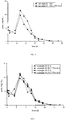
- Example 22 The goserelin microspheres in Example 22, 23 and 24 were studied for stability by conducting in vivo release test between samples immediately after prepared and samples stored for 6 months at temperature of 25 °C and humidity of 75%.
- the test method is showed in Test Example 2 and results are shown in Table 5 and Figs. 3 and 4 .
- Test Example 5 Measurement of the particle sizes of solid powder in oil phase and the particle sizes of microspheres prepared.
- Test drugs goserelin microspheres prepared according to Examples 15, 16, 17, 18, 19 and 20, which contain 0.3% (w/w), 1% (w/w), 2% (w/w), 3.5% (w/w), 6.0%(w/w) and 10% (w/w) of Poloxamer 188, respectively; goserelin microspheres prepared according to Example 21, which contain 2% (w/w) of PEG6000.
- PLGA used in the samples are 50/50, 0.20, 16,000.
- Control group goserelin microspheres containing no poloxamer/PEG and with a drug loading amount of about 2.74% prepared according to Comparative Example 2.
- Test method According to the related regulations on particle size and particle size distribution measurement method [ The third method in Appendix XIX E of Chinese Pharmacopoeia (second part, 2010 Editi on)], 0.1% Tween 20 solution was used as dispersing agent. About 120ml Tween 20 solution was transferred into the sample dispersion device of a particle size analyzer, and the rotational speed controller was adjusted so that the stirring was at 2,100 rpm. The background of dispersing agent was measured first. Then 0.1ml of primary emulsion and 50mg of freeze-dried microspheres powder were added into the dispersing agent. After the samples were distributed evenly, the particle sizes were measured in parallel for three times and the average numbers were taken.
Landscapes
- Health & Medical Sciences (AREA)
- Bioinformatics & Cheminformatics (AREA)
- Engineering & Computer Science (AREA)
- Life Sciences & Earth Sciences (AREA)
- Chemical & Material Sciences (AREA)
- Pharmacology & Pharmacy (AREA)
- Public Health (AREA)
- Veterinary Medicine (AREA)
- Medicinal Chemistry (AREA)
- Animal Behavior & Ethology (AREA)
- General Health & Medical Sciences (AREA)
- Epidemiology (AREA)
- Endocrinology (AREA)
- Nuclear Medicine, Radiotherapy & Molecular Imaging (AREA)
- General Chemical & Material Sciences (AREA)
- Chemical Kinetics & Catalysis (AREA)
- Organic Chemistry (AREA)
- Reproductive Health (AREA)
- Proteomics, Peptides & Aminoacids (AREA)
- Gastroenterology & Hepatology (AREA)
- Immunology (AREA)
- Urology & Nephrology (AREA)
- Diabetes (AREA)
- Gynecology & Obstetrics (AREA)
- Pregnancy & Childbirth (AREA)
- Inorganic Chemistry (AREA)
- Medicinal Preparation (AREA)
- Medicines That Contain Protein Lipid Enzymes And Other Medicines (AREA)
- Pharmaceuticals Containing Other Organic And Inorganic Compounds (AREA)
Priority Applications (1)
| Application Number | Priority Date | Filing Date | Title |
|---|---|---|---|
| PL14785916T PL2987484T3 (pl) | 2013-04-18 | 2014-04-16 | Kompozycja farmaceutyczna mikrosfery o przedłużonym uwalnianiu gosereliny |
Applications Claiming Priority (2)
| Application Number | Priority Date | Filing Date | Title |
|---|---|---|---|
| CN201310136505 | 2013-04-18 | ||
| PCT/CN2014/075441 WO2014169816A1 (zh) | 2013-04-18 | 2014-04-16 | 戈舍瑞林缓释微球药物组合物 |
Publications (3)
| Publication Number | Publication Date |
|---|---|
| EP2987484A1 EP2987484A1 (en) | 2016-02-24 |
| EP2987484A4 EP2987484A4 (en) | 2017-03-08 |
| EP2987484B1 true EP2987484B1 (en) | 2018-12-19 |
Family
ID=51704550
Family Applications (1)
| Application Number | Title | Priority Date | Filing Date |
|---|---|---|---|
| EP14785916.9A Active EP2987484B1 (en) | 2013-04-18 | 2014-04-16 | Goserelin sustained release microsphere pharmaceutical composition |
Country Status (8)
| Country | Link |
|---|---|
| US (2) | US20160022584A1 (pl) |
| EP (1) | EP2987484B1 (pl) |
| JP (1) | JP6151848B2 (pl) |
| CN (1) | CN104107434B (pl) |
| ES (1) | ES2716384T3 (pl) |
| PL (1) | PL2987484T3 (pl) |
| RU (1) | RU2694901C2 (pl) |
| WO (1) | WO2014169816A1 (pl) |
Families Citing this family (4)
| Publication number | Priority date | Publication date | Assignee | Title |
|---|---|---|---|---|
| GB201805191D0 (en) * | 2018-03-29 | 2018-05-16 | Camurus Ab | Compositions |
| KR20200051916A (ko) * | 2018-11-05 | 2020-05-14 | 주식회사 메디포럼제약 | 고세렐린을 포함하는 실리카 하이드로겔 조성물 |
| JP2023151957A (ja) * | 2022-04-01 | 2023-10-16 | 理研ビタミン株式会社 | 薬物含有粒子の製造方法 |
| CN119139240A (zh) * | 2024-10-08 | 2024-12-17 | 北京博恩特药业有限公司 | 一种戈舍瑞林微球的制备方法及其产品 |
Family Cites Families (17)
| Publication number | Priority date | Publication date | Assignee | Title |
|---|---|---|---|---|
| IE52535B1 (en) * | 1981-02-16 | 1987-12-09 | Ici Plc | Continuous release pharmaceutical compositions |
| AR012448A1 (es) * | 1997-04-18 | 2000-10-18 | Ipsen Pharma Biotech | Composicion en forma de microcapsulas o de implantes que comprende un excipiente biodegradable, polimero o co-polimero, o una mezcla de talesexcipientes, y una sustancia activa o una mezcla de sustancias activas, procedimiento para la preparacion de una sustancia soluble en agua de elevada |
| IE980115A1 (en) | 1998-02-16 | 2000-02-09 | Biovail Internat Ltd | Solubilizing delivery systems and method of manufacture |
| ES2250502T3 (es) * | 2000-12-13 | 2006-04-16 | Merckle Gmbh | Microparticulas con un perfil de liberacion mejorado y procedimient0 para su preparacion. |
| WO2006123361A2 (en) * | 2005-03-01 | 2006-11-23 | Sun Pharmaceutical Industries Limited | Microspheres containing goserelin or a pharmaceutically acceptable salt thereof |
| US8293819B2 (en) | 2006-11-24 | 2012-10-23 | Canon Kabushiki Kaisha | Method for producing particles and particles |
| JP5350620B2 (ja) * | 2006-11-24 | 2013-11-27 | キヤノン株式会社 | 粒子の製造方法、及び粒子 |
| KR100816065B1 (ko) * | 2006-11-27 | 2008-03-24 | 동국제약 주식회사 | 초기 방출억제 특성이 우수한 서방출성 마이크로캡슐의제조방법 및 이에 의해 제조되는 마이크로캡슐 |
| JP5158835B2 (ja) * | 2006-12-06 | 2013-03-06 | 独立行政法人産業技術総合研究所 | 生分解性高分子リン酸カルシウム複合ナノ粒子及びその製造方法 |
| GB0625322D0 (en) | 2006-12-19 | 2007-01-24 | Pharmakodex Ltd | Pharmaceutical compositions |
| JP5713897B2 (ja) * | 2008-07-16 | 2015-05-07 | エボニック コーポレイションEvonik Corporation | 生理活性ペプチドを含有する微粒子を調製するためのプロセス |
| KR101113044B1 (ko) * | 2008-08-29 | 2012-02-27 | 동국제약 주식회사 | 용매교류증발법에 의한 서방출성 미립구의 제조방법 |
| CN101721370A (zh) * | 2008-10-10 | 2010-06-09 | 深圳清华大学研究院 | 戈舍瑞林缓释微球制剂及其制备方法、检测方法 |
| CA2742680C (en) * | 2008-11-07 | 2013-12-31 | Samyang Corporation | Pharmaceutical compositions for release control of methylphenidate |
| CN101461786A (zh) * | 2009-01-08 | 2009-06-24 | 上海交通大学 | 用水包油-油包固体制备的pla/plga壳-核微球及其制备方法 |
| GB201110601D0 (en) * | 2011-06-23 | 2011-08-03 | Controlled Therapeutics Scotland Ltd | Improved bioresorbable |
| MY169349A (en) * | 2011-07-22 | 2019-03-21 | Innocore Tech B V | Biodegradable, semi-crystalline, phase separated, thermoplastic multi-block copolymers for controlled release of biologically active compounds |
-
2014
- 2014-04-16 PL PL14785916T patent/PL2987484T3/pl unknown
- 2014-04-16 CN CN201410152866.4A patent/CN104107434B/zh active Active
- 2014-04-16 WO PCT/CN2014/075441 patent/WO2014169816A1/zh not_active Ceased
- 2014-04-16 EP EP14785916.9A patent/EP2987484B1/en active Active
- 2014-04-16 ES ES14785916T patent/ES2716384T3/es active Active
- 2014-04-16 RU RU2015149431A patent/RU2694901C2/ru active
- 2014-04-16 JP JP2016507993A patent/JP6151848B2/ja active Active
-
2015
- 2015-10-08 US US14/877,976 patent/US20160022584A1/en not_active Abandoned
-
2017
- 2017-10-20 US US15/789,091 patent/US10258572B2/en active Active
Non-Patent Citations (1)
| Title |
|---|
| None * |
Also Published As
| Publication number | Publication date |
|---|---|
| CN104107434A (zh) | 2014-10-22 |
| US20160022584A1 (en) | 2016-01-28 |
| PL2987484T3 (pl) | 2019-07-31 |
| EP2987484A1 (en) | 2016-02-24 |
| WO2014169816A1 (zh) | 2014-10-23 |
| JP6151848B2 (ja) | 2017-06-21 |
| US20180036246A1 (en) | 2018-02-08 |
| RU2015149431A (ru) | 2017-05-24 |
| ES2716384T3 (es) | 2019-06-12 |
| EP2987484A4 (en) | 2017-03-08 |
| RU2694901C2 (ru) | 2019-07-18 |
| CN104107434B (zh) | 2017-02-01 |
| JP2016516785A (ja) | 2016-06-09 |
| US10258572B2 (en) | 2019-04-16 |
Similar Documents
| Publication | Publication Date | Title |
|---|---|---|
| US8956659B2 (en) | Fulvestrant nanosphere/microsphere and preparative method and use thereof | |
| AU2003217367B2 (en) | Polymer-based compositions for sustained release | |
| EP2793865B1 (en) | Pharmaceutical compositions of triptorelin microspheres | |
| US9724397B2 (en) | Sustained release formulations comprising very low molecular weight polymers | |
| EP1399133B2 (en) | Sustained-release composition comprising lactic acid-glycolic acid copolymer and process for producing the same | |
| US10258572B2 (en) | Pharmaceutical compositions of goserelin sustained release microspheres | |
| WO2011087496A1 (en) | Microspheres for the sustained release of octreotide without an initial time lag | |
| CN104523605A (zh) | 一种曲普瑞林微球及其制备方法与应用 | |
| CN101721370A (zh) | 戈舍瑞林缓释微球制剂及其制备方法、检测方法 | |
| CN111358934B (zh) | 一种醋酸亮丙瑞林长效药物制剂组合及其使用方法 | |
| CN111388406B (zh) | 氟维司群或其衍生物可注射递药贮库及其制备方法和应用 | |
| WO2022119383A1 (ko) | 풀베스트란트의 서방형 약학 조성물 및 그 제조 방법 | |
| TW202440148A (zh) | GnRH拮抗劑可注射組合物及其製備方法和用途 | |
| KR20240031868A (ko) | 류프롤라이드를 포함하는 서방형 미립구, 이를 포함하는 주사제제 및 이의 제조방법 | |
| KR20230094172A (ko) | 용해도가 개선된 풀베스트란트의 약학 조성물 및 그 제조 방법 | |
| CN120960173A (zh) | 一种添加助溶剂制备药物缓释微球的方法 |
Legal Events
| Date | Code | Title | Description |
|---|---|---|---|
| PUAI | Public reference made under article 153(3) epc to a published international application that has entered the european phase |
Free format text: ORIGINAL CODE: 0009012 |
|
| 17P | Request for examination filed |
Effective date: 20151118 |
|
| AK | Designated contracting states |
Kind code of ref document: A1 Designated state(s): AL AT BE BG CH CY CZ DE DK EE ES FI FR GB GR HR HU IE IS IT LI LT LU LV MC MK MT NL NO PL PT RO RS SE SI SK SM TR |
|
| AX | Request for extension of the european patent |
Extension state: BA ME |
|
| DAX | Request for extension of the european patent (deleted) | ||
| A4 | Supplementary search report drawn up and despatched |
Effective date: 20170206 |
|
| RIC1 | Information provided on ipc code assigned before grant |
Ipc: A61P 15/08 20060101ALI20170127BHEP Ipc: A61P 35/00 20060101ALI20170127BHEP Ipc: A61K 9/16 20060101AFI20170127BHEP Ipc: A61K 47/34 20170101ALI20170127BHEP Ipc: A61K 38/08 20060101ALI20170127BHEP Ipc: A61P 13/08 20060101ALI20170127BHEP Ipc: A61K 38/09 20060101ALI20170127BHEP |
|
| STAA | Information on the status of an ep patent application or granted ep patent |
Free format text: STATUS: EXAMINATION IS IN PROGRESS |
|
| 17Q | First examination report despatched |
Effective date: 20180116 |
|
| GRAP | Despatch of communication of intention to grant a patent |
Free format text: ORIGINAL CODE: EPIDOSNIGR1 |
|
| STAA | Information on the status of an ep patent application or granted ep patent |
Free format text: STATUS: GRANT OF PATENT IS INTENDED |
|
| INTG | Intention to grant announced |
Effective date: 20180720 |
|
| GRAS | Grant fee paid |
Free format text: ORIGINAL CODE: EPIDOSNIGR3 |
|
| GRAA | (expected) grant |
Free format text: ORIGINAL CODE: 0009210 |
|
| STAA | Information on the status of an ep patent application or granted ep patent |
Free format text: STATUS: THE PATENT HAS BEEN GRANTED |
|
| AK | Designated contracting states |
Kind code of ref document: B1 Designated state(s): AL AT BE BG CH CY CZ DE DK EE ES FI FR GB GR HR HU IE IS IT LI LT LU LV MC MK MT NL NO PL PT RO RS SE SI SK SM TR |
|
| REG | Reference to a national code |
Ref country code: GB Ref legal event code: FG4D |
|
| REG | Reference to a national code |
Ref country code: CH Ref legal event code: EP |
|
| REG | Reference to a national code |
Ref country code: IE Ref legal event code: FG4D |
|
| REG | Reference to a national code |
Ref country code: DE Ref legal event code: R096 Ref document number: 602014038290 Country of ref document: DE |
|
| REG | Reference to a national code |
Ref country code: AT Ref legal event code: REF Ref document number: 1077913 Country of ref document: AT Kind code of ref document: T Effective date: 20190115 |
|
| REG | Reference to a national code |
Ref country code: NL Ref legal event code: FP |
|
| PG25 | Lapsed in a contracting state [announced via postgrant information from national office to epo] |
Ref country code: LT Free format text: LAPSE BECAUSE OF FAILURE TO SUBMIT A TRANSLATION OF THE DESCRIPTION OR TO PAY THE FEE WITHIN THE PRESCRIBED TIME-LIMIT Effective date: 20181219 Ref country code: NO Free format text: LAPSE BECAUSE OF FAILURE TO SUBMIT A TRANSLATION OF THE DESCRIPTION OR TO PAY THE FEE WITHIN THE PRESCRIBED TIME-LIMIT Effective date: 20190319 Ref country code: FI Free format text: LAPSE BECAUSE OF FAILURE TO SUBMIT A TRANSLATION OF THE DESCRIPTION OR TO PAY THE FEE WITHIN THE PRESCRIBED TIME-LIMIT Effective date: 20181219 Ref country code: BG Free format text: LAPSE BECAUSE OF FAILURE TO SUBMIT A TRANSLATION OF THE DESCRIPTION OR TO PAY THE FEE WITHIN THE PRESCRIBED TIME-LIMIT Effective date: 20190319 Ref country code: HR Free format text: LAPSE BECAUSE OF FAILURE TO SUBMIT A TRANSLATION OF THE DESCRIPTION OR TO PAY THE FEE WITHIN THE PRESCRIBED TIME-LIMIT Effective date: 20181219 Ref country code: LV Free format text: LAPSE BECAUSE OF FAILURE TO SUBMIT A TRANSLATION OF THE DESCRIPTION OR TO PAY THE FEE WITHIN THE PRESCRIBED TIME-LIMIT Effective date: 20181219 |
|
| REG | Reference to a national code |
Ref country code: CH Ref legal event code: NV Representative=s name: ING. MARCO ZARDI C/O M. ZARDI AND CO. S.A., CH |
|
| REG | Reference to a national code |
Ref country code: LT Ref legal event code: MG4D |
|
| PG25 | Lapsed in a contracting state [announced via postgrant information from national office to epo] |
Ref country code: RS Free format text: LAPSE BECAUSE OF FAILURE TO SUBMIT A TRANSLATION OF THE DESCRIPTION OR TO PAY THE FEE WITHIN THE PRESCRIBED TIME-LIMIT Effective date: 20181219 Ref country code: AL Free format text: LAPSE BECAUSE OF FAILURE TO SUBMIT A TRANSLATION OF THE DESCRIPTION OR TO PAY THE FEE WITHIN THE PRESCRIBED TIME-LIMIT Effective date: 20181219 Ref country code: SE Free format text: LAPSE BECAUSE OF FAILURE TO SUBMIT A TRANSLATION OF THE DESCRIPTION OR TO PAY THE FEE WITHIN THE PRESCRIBED TIME-LIMIT Effective date: 20181219 Ref country code: GR Free format text: LAPSE BECAUSE OF FAILURE TO SUBMIT A TRANSLATION OF THE DESCRIPTION OR TO PAY THE FEE WITHIN THE PRESCRIBED TIME-LIMIT Effective date: 20190320 |
|
| REG | Reference to a national code |
Ref country code: ES Ref legal event code: FG2A Ref document number: 2716384 Country of ref document: ES Kind code of ref document: T3 Effective date: 20190612 |
|
| PG25 | Lapsed in a contracting state [announced via postgrant information from national office to epo] |
Ref country code: CZ Free format text: LAPSE BECAUSE OF FAILURE TO SUBMIT A TRANSLATION OF THE DESCRIPTION OR TO PAY THE FEE WITHIN THE PRESCRIBED TIME-LIMIT Effective date: 20181219 Ref country code: PT Free format text: LAPSE BECAUSE OF FAILURE TO SUBMIT A TRANSLATION OF THE DESCRIPTION OR TO PAY THE FEE WITHIN THE PRESCRIBED TIME-LIMIT Effective date: 20190419 |
|
| PG25 | Lapsed in a contracting state [announced via postgrant information from national office to epo] |
Ref country code: SK Free format text: LAPSE BECAUSE OF FAILURE TO SUBMIT A TRANSLATION OF THE DESCRIPTION OR TO PAY THE FEE WITHIN THE PRESCRIBED TIME-LIMIT Effective date: 20181219 Ref country code: SM Free format text: LAPSE BECAUSE OF FAILURE TO SUBMIT A TRANSLATION OF THE DESCRIPTION OR TO PAY THE FEE WITHIN THE PRESCRIBED TIME-LIMIT Effective date: 20181219 Ref country code: EE Free format text: LAPSE BECAUSE OF FAILURE TO SUBMIT A TRANSLATION OF THE DESCRIPTION OR TO PAY THE FEE WITHIN THE PRESCRIBED TIME-LIMIT Effective date: 20181219 Ref country code: RO Free format text: LAPSE BECAUSE OF FAILURE TO SUBMIT A TRANSLATION OF THE DESCRIPTION OR TO PAY THE FEE WITHIN THE PRESCRIBED TIME-LIMIT Effective date: 20181219 Ref country code: IS Free format text: LAPSE BECAUSE OF FAILURE TO SUBMIT A TRANSLATION OF THE DESCRIPTION OR TO PAY THE FEE WITHIN THE PRESCRIBED TIME-LIMIT Effective date: 20190419 |
|
| REG | Reference to a national code |
Ref country code: DE Ref legal event code: R097 Ref document number: 602014038290 Country of ref document: DE |
|
| PLBE | No opposition filed within time limit |
Free format text: ORIGINAL CODE: 0009261 |
|
| STAA | Information on the status of an ep patent application or granted ep patent |
Free format text: STATUS: NO OPPOSITION FILED WITHIN TIME LIMIT |
|
| PG25 | Lapsed in a contracting state [announced via postgrant information from national office to epo] |
Ref country code: DK Free format text: LAPSE BECAUSE OF FAILURE TO SUBMIT A TRANSLATION OF THE DESCRIPTION OR TO PAY THE FEE WITHIN THE PRESCRIBED TIME-LIMIT Effective date: 20181219 |
|
| 26N | No opposition filed |
Effective date: 20190920 |
|
| REG | Reference to a national code |
Ref country code: BE Ref legal event code: MM Effective date: 20190430 |
|
| PG25 | Lapsed in a contracting state [announced via postgrant information from national office to epo] |
Ref country code: MC Free format text: LAPSE BECAUSE OF FAILURE TO SUBMIT A TRANSLATION OF THE DESCRIPTION OR TO PAY THE FEE WITHIN THE PRESCRIBED TIME-LIMIT Effective date: 20181219 Ref country code: LU Free format text: LAPSE BECAUSE OF NON-PAYMENT OF DUE FEES Effective date: 20190416 |
|
| PG25 | Lapsed in a contracting state [announced via postgrant information from national office to epo] |
Ref country code: SI Free format text: LAPSE BECAUSE OF FAILURE TO SUBMIT A TRANSLATION OF THE DESCRIPTION OR TO PAY THE FEE WITHIN THE PRESCRIBED TIME-LIMIT Effective date: 20181219 Ref country code: BE Free format text: LAPSE BECAUSE OF NON-PAYMENT OF DUE FEES Effective date: 20190430 |
|
| PG25 | Lapsed in a contracting state [announced via postgrant information from national office to epo] |
Ref country code: TR Free format text: LAPSE BECAUSE OF FAILURE TO SUBMIT A TRANSLATION OF THE DESCRIPTION OR TO PAY THE FEE WITHIN THE PRESCRIBED TIME-LIMIT Effective date: 20181219 |
|
| PG25 | Lapsed in a contracting state [announced via postgrant information from national office to epo] |
Ref country code: IE Free format text: LAPSE BECAUSE OF NON-PAYMENT OF DUE FEES Effective date: 20190416 |
|
| PG25 | Lapsed in a contracting state [announced via postgrant information from national office to epo] |
Ref country code: CY Free format text: LAPSE BECAUSE OF FAILURE TO SUBMIT A TRANSLATION OF THE DESCRIPTION OR TO PAY THE FEE WITHIN THE PRESCRIBED TIME-LIMIT Effective date: 20181219 |
|
| PG25 | Lapsed in a contracting state [announced via postgrant information from national office to epo] |
Ref country code: MT Free format text: LAPSE BECAUSE OF FAILURE TO SUBMIT A TRANSLATION OF THE DESCRIPTION OR TO PAY THE FEE WITHIN THE PRESCRIBED TIME-LIMIT Effective date: 20181219 Ref country code: HU Free format text: LAPSE BECAUSE OF FAILURE TO SUBMIT A TRANSLATION OF THE DESCRIPTION OR TO PAY THE FEE WITHIN THE PRESCRIBED TIME-LIMIT; INVALID AB INITIO Effective date: 20140416 |
|
| PG25 | Lapsed in a contracting state [announced via postgrant information from national office to epo] |
Ref country code: MK Free format text: LAPSE BECAUSE OF FAILURE TO SUBMIT A TRANSLATION OF THE DESCRIPTION OR TO PAY THE FEE WITHIN THE PRESCRIBED TIME-LIMIT Effective date: 20181219 |
|
| REG | Reference to a national code |
Ref country code: AT Ref legal event code: UEP Ref document number: 1077913 Country of ref document: AT Kind code of ref document: T Effective date: 20181219 |
|
| PGFP | Annual fee paid to national office [announced via postgrant information from national office to epo] |
Ref country code: NL Payment date: 20250325 Year of fee payment: 12 |
|
| PGFP | Annual fee paid to national office [announced via postgrant information from national office to epo] |
Ref country code: PL Payment date: 20250321 Year of fee payment: 12 |
|
| PGFP | Annual fee paid to national office [announced via postgrant information from national office to epo] |
Ref country code: DE Payment date: 20250411 Year of fee payment: 12 |
|
| PGFP | Annual fee paid to national office [announced via postgrant information from national office to epo] |
Ref country code: GB Payment date: 20250417 Year of fee payment: 12 Ref country code: ES Payment date: 20250512 Year of fee payment: 12 |
|
| PGFP | Annual fee paid to national office [announced via postgrant information from national office to epo] |
Ref country code: IT Payment date: 20250409 Year of fee payment: 12 |
|
| PGFP | Annual fee paid to national office [announced via postgrant information from national office to epo] |
Ref country code: FR Payment date: 20250429 Year of fee payment: 12 |
|
| PGFP | Annual fee paid to national office [announced via postgrant information from national office to epo] |
Ref country code: CH Payment date: 20250501 Year of fee payment: 12 |
|
| PGFP | Annual fee paid to national office [announced via postgrant information from national office to epo] |
Ref country code: AT Payment date: 20250321 Year of fee payment: 12 |