EP2979539B1 - Plant cultivation method - Google Patents
Plant cultivation method Download PDFInfo
- Publication number
- EP2979539B1 EP2979539B1 EP14776229.8A EP14776229A EP2979539B1 EP 2979539 B1 EP2979539 B1 EP 2979539B1 EP 14776229 A EP14776229 A EP 14776229A EP 2979539 B1 EP2979539 B1 EP 2979539B1
- Authority
- EP
- European Patent Office
- Prior art keywords
- plant
- environmental stimulus
- buds
- hours
- day length
- Prior art date
- Legal status (The legal status is an assumption and is not a legal conclusion. Google has not performed a legal analysis and makes no representation as to the accuracy of the status listed.)
- Not-in-force
Links
- 238000012364 cultivation method Methods 0.000 title claims description 4
- 241000196324 Embryophyta Species 0.000 claims description 118
- 230000007613 environmental effect Effects 0.000 claims description 110
- 230000017260 vegetative to reproductive phase transition of meristem Effects 0.000 claims description 52
- 238000000034 method Methods 0.000 claims description 39
- 235000013399 edible fruits Nutrition 0.000 claims description 37
- 230000012010 growth Effects 0.000 claims description 34
- 238000003306 harvesting Methods 0.000 claims description 33
- 230000004069 differentiation Effects 0.000 claims description 32
- 206010021033 Hypomenorrhoea Diseases 0.000 claims description 23
- 240000000851 Vaccinium corymbosum Species 0.000 claims description 22
- 230000001965 increasing effect Effects 0.000 claims description 8
- 238000004519 manufacturing process Methods 0.000 claims description 4
- 238000011161 development Methods 0.000 claims description 2
- 230000018109 developmental process Effects 0.000 claims description 2
- 230000001737 promoting effect Effects 0.000 claims description 2
- 238000012360 testing method Methods 0.000 description 18
- 235000003095 Vaccinium corymbosum Nutrition 0.000 description 13
- 235000017537 Vaccinium myrtillus Nutrition 0.000 description 13
- 235000021014 blueberries Nutrition 0.000 description 13
- 230000000052 comparative effect Effects 0.000 description 12
- 230000005059 dormancy Effects 0.000 description 9
- 230000015572 biosynthetic process Effects 0.000 description 8
- 239000011521 glass Substances 0.000 description 6
- 238000011282 treatment Methods 0.000 description 6
- 230000034303 cell budding Effects 0.000 description 4
- 230000008859 change Effects 0.000 description 4
- 239000002689 soil Substances 0.000 description 4
- 244000144730 Amygdalus persica Species 0.000 description 3
- 241000167854 Bourreria succulenta Species 0.000 description 3
- 235000006040 Prunus persica var persica Nutrition 0.000 description 3
- 238000006243 chemical reaction Methods 0.000 description 3
- 235000019693 cherries Nutrition 0.000 description 3
- 230000009105 vegetative growth Effects 0.000 description 3
- 235000016623 Fragaria vesca Nutrition 0.000 description 2
- 240000009088 Fragaria x ananassa Species 0.000 description 2
- 235000011363 Fragaria x ananassa Nutrition 0.000 description 2
- 244000141359 Malus pumila Species 0.000 description 2
- 230000001939 inductive effect Effects 0.000 description 2
- 230000029553 photosynthesis Effects 0.000 description 2
- 238000010672 photosynthesis Methods 0.000 description 2
- 230000001850 reproductive effect Effects 0.000 description 2
- 230000004044 response Effects 0.000 description 2
- 241000256837 Apidae Species 0.000 description 1
- DGAQECJNVWCQMB-PUAWFVPOSA-M Ilexoside XXIX Chemical compound C[C@@H]1CC[C@@]2(CC[C@@]3(C(=CC[C@H]4[C@]3(CC[C@@H]5[C@@]4(CC[C@@H](C5(C)C)OS(=O)(=O)[O-])C)C)[C@@H]2[C@]1(C)O)C)C(=O)O[C@H]6[C@@H]([C@H]([C@@H]([C@H](O6)CO)O)O)O.[Na+] DGAQECJNVWCQMB-PUAWFVPOSA-M 0.000 description 1
- 244000235659 Rubus idaeus Species 0.000 description 1
- 241000335421 Vaccinium darrowii Species 0.000 description 1
- 230000006978 adaptation Effects 0.000 description 1
- 230000003466 anti-cipated effect Effects 0.000 description 1
- 235000021016 apples Nutrition 0.000 description 1
- 238000010924 continuous production Methods 0.000 description 1
- 238000001816 cooling Methods 0.000 description 1
- 230000007423 decrease Effects 0.000 description 1
- 230000003247 decreasing effect Effects 0.000 description 1
- 230000001747 exhibiting effect Effects 0.000 description 1
- 238000002474 experimental method Methods 0.000 description 1
- 239000003337 fertilizer Substances 0.000 description 1
- 230000004907 flux Effects 0.000 description 1
- 230000004345 fruit ripening Effects 0.000 description 1
- 230000006698 induction Effects 0.000 description 1
- 230000007774 longterm Effects 0.000 description 1
- 239000000463 material Substances 0.000 description 1
- 229910001507 metal halide Inorganic materials 0.000 description 1
- 150000005309 metal halides Chemical class 0.000 description 1
- 239000003595 mist Substances 0.000 description 1
- 210000000056 organ Anatomy 0.000 description 1
- 230000000243 photosynthetic effect Effects 0.000 description 1
- 230000008635 plant growth Effects 0.000 description 1
- 235000021018 plums Nutrition 0.000 description 1
- 108090000623 proteins and genes Proteins 0.000 description 1
- 235000021013 raspberries Nutrition 0.000 description 1
- 230000001932 seasonal effect Effects 0.000 description 1
- 238000004904 shortening Methods 0.000 description 1
- 230000019491 signal transduction Effects 0.000 description 1
- 229910052708 sodium Inorganic materials 0.000 description 1
- 239000011734 sodium Substances 0.000 description 1
- 230000003595 spectral effect Effects 0.000 description 1
- 230000000153 supplemental effect Effects 0.000 description 1
- 230000009466 transformation Effects 0.000 description 1
- 238000009423 ventilation Methods 0.000 description 1
Images






Classifications
-
- A—HUMAN NECESSITIES
- A01—AGRICULTURE; FORESTRY; ANIMAL HUSBANDRY; HUNTING; TRAPPING; FISHING
- A01G—HORTICULTURE; CULTIVATION OF VEGETABLES, FLOWERS, RICE, FRUIT, VINES, HOPS OR SEAWEED; FORESTRY; WATERING
- A01G7/00—Botany in general
Definitions
- the present invention relates to a plant cultivation technique for controlling factors involved in differentiation into flower buds and leaf buds, flowering and fruiting, leaf bud sprouting, growth of new shoots, and the like.
- blueberry plants flower in spring, the fruit thereof matures in summer, and the plants shed leaves and enter dormancy during autumn and winter.
- flower buds form at distal ends of new shoots (newly extended stems) or at joints (leaf axils) of upper leaves of new shoots by about September in response to shortening of days from about July after the summer solstice, shedding of leaves is completed in November when daytime air temperatures are about 10 to 15°C, and flowering in the following year occurs following dormancy.
- leaf buds In a normal life cycle, leaf buds begin to sprout after flowers have bloomed and scattered (around April), or at the same time as flowering, leaf buds extend into leaves and stems to form new shoots, and as the new shoots grow, fruit flesh forms/matures around seeds in approximately 60 days, and harvest occurs at the beginning of summer (June).
- blueberry is a deciduous fruit tree that can be harvested only once per year. The same life cycle is observed in so-called one-season-bearing fruit trees such as cherry, plum, peach, and apple.
- the harvest period for blueberries under natural conditions (sunlight only) in Japan is from June to September at best, considering a combination of varieties having different fruit maturation periods and other characteristics.
- the harvest time is from mid-April to early June, and a hiatus in domestic harvesting and exporting of blueberries occurs from October to March of the following year (off-season).
- the supply of fresh blueberries is therefore insufficient for demand from October to May of the following year, and blueberries imported from Chile and other southern-hemisphere countries are expensive.
- Patent Reference 1 from the present inventors discloses a cultivation method whereby harvesting even in the off-season is made possible through use of a blueberry variety having a relatively short chilling requirement of about 100 to 500 hours for breaking dormancy.
- the method disclosed in Patent Reference 1 includes a step for inducing flowering by placing the blueberry plant in an environment having a temperature higher than the dormancy-inducing temperature thereof after the formation of flower buds (about September under natural conditions in Tokyo), and a step for then (starting in about November) placing the blueberry plant in conditions having a longer light period than during induction of flowering. This method makes it possible to cause continuous flower bud formation/flowering/fruiting to occur while fruit is harvested throughout the off season (from December to about July of the following year in this case).
- Patent Reference 1 enables continuous flower bud formation, flowering, and fruiting, the amount of growth of new shoots is suppressed when large amounts of fruit are produced, leading to reduced leaf area. Fruit size is thereby reduced, and large yields cannot be expected.
- Patent Reference 1 when the method of Patent Reference 1 is applied, although flowering and fruiting are repeated and the period for such reproductive growth is dramatically lengthened, vegetative growth of foliage is inadequate, and tree vigor is therefore difficult to maintain. Specifically, in a blueberry or other one-season-bearing fruit tree, sprouting of leaf buds and growth of new shoots begin at the same time as flowering or after flowers have bloomed and scattered. Therefore, in the system of Patent Reference 1 for producing repeated flowering after flowers have bloomed and scattered, the vegetative growth period for foliage until the next flowering is extremely short or almost absent.
- Patent References 2 and 3 disclose systems for controlling the growth environment of plants, but do not suggest methods of control capable of satisfying the above requirements.
- An object of the present invention is to provide a technique for controlling factors involved in differentiation into flower buds and leaf buds, sprouting, flowering and fruiting, growth of new shoots, and the like.
- the most interesting subject of this technique is the control of flower bud and leaf bud differentiation.
- the control of sprouting of flower buds and leaf buds differentiated as described above may also be included as a subject of the present invention.
- leaf buds sprout in tandem with flower buds, and flowering and fruiting are repeated on new foliage.
- the above problems are solved with the methods according to claims 1 and 9.
- the present inventors have discovered that differentiation of flower buds and leaf buds can be controlled by specific environmental stimuli. Specifically, the present inventors have discovered that by applying the control technique of the present invention, flower bud differentiation can be further promoted, or that flower bud differentiation can instead be suppressed and priority given to leaf bud differentiation. More surprisingly, the present inventors have discovered that flower bud differentiation and leaf bud differentiation can be advanced simultaneously in a plant to which the present invention is applied. Consequently, a first aspect of the present invention is:
- the first environmental stimulus is applied by combining an air temperature of 16 to 40°C (a midday temperature of about 40°C and a night temperature of about 16°C) and a day length of 8 to 13 hours.
- an air temperature of 16 to 40°C a midday temperature of about 40°C and a night temperature of about 16°C
- a day length of 8 to 13 hours For example, when the air temperature is set to 16 to 23°C (a midday temperature of about 23°C and a night temperature of about 16°C), almost all buds differentiate (convert) into flower buds. Meanwhile, when the light-period air temperature is maintained at 25°C or higher, conversion to flower buds can be suppressed (i.e., differentiation into flower buds can be suppressed, and formation of leaf buds can be promoted).
- flower buds and leaf buds are formed at the same time in a good balance, leaf buds thereby sprout in tandem with flower buds, and flowering and fruiting are repeated on new foliage.
- the present invention includes:
- a typical stimulus includes placing a plant in a low-temperature condition of about 3 to 7°C.
- an extremely low-temperature stimulus of a temperature of about 3 to 7°C is abruptly applied to a plant subsequent to harvesting, the plant typically having been grown at a midday temperature of 30°C or higher and a day length of 14 hours, and differs from so-called breaking of dormancy.
- a second aspect of the present invention and a preferred embodiment thereof are:
- a third aspect of the present invention and a preferred embodiment thereof are therefore:
- the present invention may also be treated as a fruit production method using an environmentally variable facility such as a plant factory. Consequently, other aspects of the present invention are:
- plant cultivation by the present invention it is possible to appropriately control factors involved in differentiation into flower buds and leaf buds, flowering and fruiting, leaf bud sprouting, growth of new shoots, and the like. Therefore, fruit can be delivered even in the off season for outdoor cultivation or normal protected cultivation, for example.
- leaf buds sprout in tandem with flower buds, and flowering and fruiting are repeated on new foliage. Fruit can thereby be continuously produced without loss of tree vigor.
- factors involved in flower bud differentiation, leaf bud differentiation, flowering, sprouting, dormancy, and the like are factors causing reception of stimuli from the outside environment by plant organs, tissues, or cells, and the resultant signal transduction and expression of specific genes. Consequently, in the present specification, to control these factors means to subject a plant individual to stimuli from the outside environment thereof, particularly to air temperature, day length, and other environmental stimuli.
- the environmental stimuli of the present invention to which plant individuals are subjected also include stimuli which could not be encountered by the plant individuals in the wild, and are used as appropriate.
- a first environmental stimulus for controlling flower bud differentiation and/or leaf bud differentiation is applied to a plant.
- the stimulus must be applied at least before flower bud differentiation is completed. More precisely, the stimulus must be applied before a leaf primordium converts to a flower bud.
- a leaf primordium that does not convert (differentiate) to a flower bud differentiates to a leaf bud.
- the first environmental stimulus of the present invention must be applied to a plant before September at the latest.
- the first environmental stimulus of the present invention can be shown to be applied to plants starting immediately after fruit harvest at any time from early July to early August (i.e., within about one month).
- the first environmental stimulus of the present invention is applied by a combination of an air temperature in the range of 16 to 40°C and a light period in the range of a day length of 8 to 13 hours.
- Applying the environmental stimulus in the abovementioned ranges to a plant immediately after harvest can promote differentiation of leaf primordia into flower buds and/or leaf buds.
- the air temperature is set to approximately 16 to 23°C and the day length to 8 to 10 hours, almost all buds convert (differentiate) to flower buds. Meanwhile, conversion to flower buds is suppressed when the light-period air temperature is approximately 25°C or higher and the day length is maintained at about 12 to 13 hours, and as a result, leaf bud formation can be promoted.
- the ratio of leaf buds can be increased when the day length is set to approximately 12 to 13 hours in combination with the air temperature condition described above, and flower buds can be formed in a suitable ratio when the day length is set to approximately 8 to 10 hours. Consequently, in a particularly preferred embodiment of the present invention, flower buds and leaf buds are formed at the same time in a good balance, leaf buds thereby sprout in tandem with flower buds, and flowering and fruiting are repeated on new foliage.
- a typical example of the environmental stimulus is a combination of a light-period temperature of 25°C or higher and a day length of 8 to 10 hours.
- the present inventors are unaware of any reported instances of flower buds and leaf buds differentiating at the same time and flowering and new shoot growth occurring simultaneously as in the present invention in a blueberry plant placed in a conventional protected horticultural environment under ordinary natural conditions. Specifically, it is reasonable to infer that the first environmental stimulus of the present invention produces plant physiological and molecular biological changes not obtainable under ordinary environmental conditions.
- the present invention is not bound to any particular theory of operation, in comparison with the Tokyo early summer (i.e., immediately after harvest) day length of approximately 14 hours or more, the day length of 12 to 13 hours of the first environmental stimulus of the present invention corresponds to an autumn of sorts (around September and later). Particularly when the day length is about 8 to 10 hours, such a day length corresponds to late autumn (around November and later). Consequently, the first environmental stimulus of the present invention can be considered to change the growth environment of the plant non-continuously and at once.
- the combination of a light-period temperature of 25°C or higher and a day length of 8 to 10 hours as an embodiment of the first environmental stimulus is also cannot normally occur under natural conditions.
- an environment of high temperature and short days does not occur at any time of year in the temperate region in which blueberries and the like naturally grow. From this perspective as well, such an embodiment of the present invention whereby it is possible to cause differentiation of flower buds and leaf buds at the same time (i.e., it is possible to suppress conversion of all leaf primordia into flower buds) is deemed capable of applying significant stress to a plant.
- bud differentiation can be promoted by the first environmental stimulus of the present invention, i.e., by an air temperature and day length combination in the range of an air temperature of 16 to 40°C and a day length of 8 to 13 hours.
- the air temperature condition described above for the first environmental stimulus can be realized using various types of temperature control devices singly or in combinations thereof, such as heaters, air-cooling equipment, ventilation, (de)humidifiers, ventilating fans, dry mist, and shading curtains.
- a closed-system chamber including these temperature control devices or an ordinary greenhouse provided with the temperature control devices may be used for this purpose. Suitable examples of such a facility are disclosed in Japanese Laid-open Patent Applications 2011-120555 and 2011-150557 .
- the term "light period” which constitutes "day length” in the environmental stimuli of the present invention refers to a continuous time period (hours) for which a plant is placed in a light intensity condition under which photosynthesis is possible.
- a light intensity photosynthetic photon flux density (PPFD)
- PPFD photosynthetic photon flux density
- the primary wavelength (spectral energy accounting for the majority) of the light radiated in the light period is not particularly limited, but a wavelength in the range of approximately 400 to 730 nm is suitable.
- the light radiated in the light period for the day length condition of the first environmental stimulus may be sunlight (natural light), artificial light, or both.
- the source of the light radiated in the light period is not particularly limited, and may, of course, be the Sun, or a high-pressure sodium lamp, a metal halide lamp, a light-emitting diode (LED), a laser light source, or the like.
- a single light source may be used, or an appropriate combination of a plurality of light sources may be used.
- supplemental lighting is preferred.
- the light intensity is preferably adjusted using shading curtains or the like when the intensity of natural light exceeds the abovementioned range, such as on extremely hot midsummer days.
- Suitable facilities for controlling the day length condition of the first environmental stimulus of the present invention are also disclosed in Japanese Laid-open Patent Applications 2011-120555 and 2011-150557 .
- the time period for which the first environmental stimulus is applied to a plant may be approximately 30 days to 90 days, for example.
- a period of about 30 days is adequate for controlling flower bud differentiation and/or leaf bud differentiation.
- the upper limit of this period is not particularly limited from the perspective of bud differentiation, from the perspective of enabling off-season harvesting, there is no need to make the period longer than necessary.
- the period until the new shoots are adequately grown can be cited as an example of a criterion for the upper limit.
- the meaning of one day in the present specification is the unit composed of one light period and one dark period. Specifically, when the sum of one light period and one dark period is 24 hours, 24 hours constitutes one day. Unless otherwise specified in the present specification, 24 hours corresponds to one day.
- relative humidity is preferably in the range of approximately 30 to 80%
- CO 2 concentration is preferably in the range of approximately 400 to 600 ⁇ mol ⁇ mol -1
- soil pH is preferably in the range of approximately 5.0 to 6.0
- soil EC is preferably in the range of approximately 0.7 to 1.2.
- the second environmental stimulus of the present invention is also a stimulus for changing the growth environment of a plant non-continuously and at once. Specifically, this stimulus suddenly changes the growth environment of a plant to an extremely low temperature, the growth environment typically including a day length of 14 hours and a midday temperature of 30°C or higher before application of the environmental stimulus.
- the purpose of applying the second environmental stimulus of the present invention to a plant is not the same as that of a so-called breaking of dormancy. Specifically, blueberries or cherry, peach, plum, and other deciduous trees have a dormant stage, and must be exposed to low temperature for a certain time period to break dormancy. This characteristic is called a chilling requirement, and poor sprouting occurs when the chilling requirement is not satisfied.
- the present inventors have discovered that the second environmental stimulus of the present invention makes it possible to control the sprouting time for flower buds and/or leaf buds independently of chilling requirements.
- the second environmental stimulus of the present invention can naturally be applied separately from the first environmental stimulus of the present invention as desired, and application of the second environmental stimulus to a plant subjected to the first environmental stimulus of the present invention is a preferred aspect of the present invention.
- application of the second environmental stimulus to a plant subjected to the first environmental stimulus of the present invention is a preferred aspect of the present invention.
- the second environmental stimulus of the present invention should be applied at the desired time in order to obtain more deliberate flowering, fruiting, and harvest.
- the second environmental stimulus is applied immediately after application of the first environmental stimulus.
- the second environmental stimulus of the present invention can be applied by placing a plant in a low-temperature environment.
- the plant is placed in an environment having an air temperature of 3 to 7°C, for example.
- Such an air temperature condition can be considered to correspond to the coldest period of weather in Tokyo.
- the time period for which the second environmental stimulus of the present invention is applied is preferably approximately 15 days to 45 days, and more preferably approximately 30 days.
- the method and facility for applying the second environmental stimulus of the present invention are the same as described for the first environmental stimulus of the present invention.
- the day length is not particularly limited, but the second environmental stimulus is preferably applied only in a dark period.
- the third environmental stimulus of the present invention is for generating foliage and causing the flowering/fruiting subsequent thereto in an environment appropriate for sprouting of both leaf buds and flower buds.
- the plant is placed in conditions of an air temperature of approximately 16 to 23°C and a day length of approximately 10 to 11 hours, and sprouting is promoted.
- leaf buds sprout and foliage develops in axillary buds of bearing branches typically about 15 to 30 days from the third environmental stimulus of the present invention.
- Flowering occurs in a blueberry plant subjected to the third environmental stimulus of the present invention in about 30 to 60 days at apical buds of bearing branches and in several buds below the apical buds.
- the timing for applying the third environmental stimulus of the present invention to a plant is not particularly limited insofar as the timing is after the first and second environmental stimuli, but the third environmental stimulus of the present invention should, of course, be applied at an appropriate time from the perspective of obtaining more deliberate flowering, fruiting, and harvest.
- the third environmental stimulus is applied immediately after application of the second environmental stimulus, for example.
- the third environmental stimulus of the present invention can also be considered to correspond to a Tokyo autumn weather condition.
- the method and facility for applying the third environmental stimulus of the present invention are the same as described for the first environmental stimulus of the present invention.
- the present invention is suitable for application to so-called one-season-bearing blueberries, cherries, peaches, plums, apples, and the like.
- applying the environmental stimuli of the present invention also enables continuous flowering/fruiting cultivation while developing foliage in summer in a strawberry rootstock after the end of harvest. Consequently, raspberries and the like can also be included as plants to which the present invention can be applied.
- ⁇ Test Plant> The "Misty” variety of Southern Highbush blueberry was used. Plants were planted in pots and grown in the natural environment of Fuchu City, Tokyo (outdoors in Tokyo) until the start of experimentation.
- the day length in the artificial-light-type closed-environment chamber was set to 0 hours, and the air temperature was set to 3 to 7°C.
- the CO 2 concentration in the chamber was 0.04 to 0.08%, and the relative humidity was 70 to 100%.
- the chamber set to this environment is referred to below as ⁇ Chamber 2>.
- the day length in the artificial-light-type closed-environment chamber was set to 8 to 11 hours, the air temperature for light periods was set to 21 to 26°C, and the air temperature for dark periods was set to 14 to 16°C.
- the CO 2 concentration in the chamber was 0.04 to 0.08%, and the relative humidity was 50 to 90%.
- the chamber set to this environment is referred to below as ⁇ Chamber 3>.
- the day length in the glass chamber was set to 14 hours, the air temperature for light periods was set to 25 to 32°C, and the air temperature for dark periods was set to 18 to 25°C.
- the chamber set to this environment is referred to below as ⁇ Chamber 4>.
- Test plants were moved to ⁇ Chamber 1A> in early July (day length: 14 hours; highest air temperature: about 28°C; lowest air temperature: about 20°C) immediately after harvesting of the fruit thereof, and the test plants were then grown therein for 67 days. The plants were then immediately moved to ⁇ Chamber 2> and grown therein for 30 days. The plants were then immediately moved to ⁇ Chamber 3>.
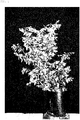
- FIGS. 1 and 2 The growth status of the plants after the treatments described above is illustrated in FIGS. 1 and 2 . From observation in the period of September to December, the appearance of new shoots in mid-November, and flowering in early December were confirmed. More specifically, the appearance of new shoots from base parts of bearing basal branches was observed, followed by flowering from buds at distal ends of bearing basal branches.
- Test plants were moved to ⁇ Chamber 1A> in late August (day length: 13 hours; highest air temperature: about 30°C; lowest air temperature: about 20°C) immediately after harvesting of the fruit thereof, and the test plants were then grown therein for 30 days. The plants were then immediately moved to ⁇ Chamber 2> and grown therein for 45 days. The plants were then immediately moved to ⁇ Chamber 3>.
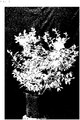
- FIGS. 3 and 4 The growth status of the plants after the treatments described above is illustrated in FIGS. 3 and 4 . From observation in the period of September to December, the appearance of new shoots and flowering were confirmed. More specifically, the appearance of new shoots from base parts of bearing basal branches was observed, followed by flowering from buds at distal ends of bearing basal branches.
- Test plants were moved to ⁇ Chamber 1B> in early July immediately after harvesting of the fruit thereof, and the test plants were then grown therein for 80 days, whereupon flowering was observed from axillary buds of distal ends and top parts of all new shoots.
- the test plants were pollinated by bumblebees, and normal fruit matured and was harvested beginning in early December.
- FIGS. 5 and 6 The growth status of the plant after the treatments described above is illustrated in FIGS. 5 and 6 . As described above, from observation in the period of September to December, flowering occurred from about late September, and it was possible to begin harvesting in early December. New shoots began appearing in mid-December.
- Reference Example 1 is of a case in which test plants were moved to ⁇ Chamber 2> in late August (day length: 13 hours; highest air temperature: about 30°C; lowest air temperature: about 20°C) after formation of flower buds and grown therein for 60 days, then immediately moved to ⁇ Chamber 3> and grown therein for 60 days.
- Reference Example 2 is of a case in which test plants were moved to ⁇ Chamber 1B> in late August after formation of flower buds and grown therein for 120 days.
- Comparative Example 1 is of a case in which test plants were moved to ⁇ Chamber 1A> in late August after formation of flower buds and grown therein for 120 days.
- Comparative Example 2 is of a case in which test plants were moved to ⁇ Chamber 4> in early July immediately after harvesting of fruit from the test plant, and the test plants were grown in ⁇ Chamber 4> for 140 days.
- Comparative Example 3 is of a case in which test plants were grown in natural conditions (see FIGS. 15 and 16 ). All leaves turned red.
- Example 4 shows the results of applying the present invention to other plants.
- the strawberry varieties “Tochiotome” and “Akihime” were used as test plants.
- the plants were planted in pots and force-cultivated in a glass chamber in Fuchu City, Tokyo until the start of experimentation.
- Test plants were moved to ⁇ Chamber 3> in early May immediately after harvesting of the fruit thereof, and the test plants were then grown therein for 195 days. Cultivation of plants was continued in the glass chamber for comparison.
- FIG. 17 The growth status of the plants after the treatments described above is illustrated in FIG. 17 . During the period described above, budding stopped in June to July in control-group individuals, but continuous budding was observed throughout the period in example individuals.
- the yield per rootstock during the period was five to eight times that of the control group.
- the present invention is useful as a technique for freely controlling the time of flowering and foliage growth in blueberry plant and fruit cultivation.
- the present invention can therefore be used in agriculture-related fields.
Landscapes
- Life Sciences & Earth Sciences (AREA)
- Botany (AREA)
- Environmental Sciences (AREA)
- Biodiversity & Conservation Biology (AREA)
- Ecology (AREA)
- Forests & Forestry (AREA)
- Cultivation Of Plants (AREA)
Description
- The present invention relates to a plant cultivation technique for controlling factors involved in differentiation into flower buds and leaf buds, flowering and fruiting, leaf bud sprouting, growth of new shoots, and the like.
- In natural conditions, blueberry plants flower in spring, the fruit thereof matures in summer, and the plants shed leaves and enter dormancy during autumn and winter.
- Specifically, in temperate regions of the northern hemisphere (e.g., Tokyo), flower buds form at distal ends of new shoots (newly extended stems) or at joints (leaf axils) of upper leaves of new shoots by about September in response to shortening of days from about July after the summer solstice, shedding of leaves is completed in November when daytime air temperatures are about 10 to 15°C, and flowering in the following year occurs following dormancy. In a normal life cycle, leaf buds begin to sprout after flowers have bloomed and scattered (around April), or at the same time as flowering, leaf buds extend into leaves and stems to form new shoots, and as the new shoots grow, fruit flesh forms/matures around seeds in approximately 60 days, and harvest occurs at the beginning of summer (June). Specifically, blueberry is a deciduous fruit tree that can be harvested only once per year. The same life cycle is observed in so-called one-season-bearing fruit trees such as cherry, plum, peach, and apple.
- Consequently, the harvest period for blueberries under natural conditions (sunlight only) in Japan is from June to September at best, considering a combination of varieties having different fruit maturation periods and other characteristics. Even in the case of protected cultivation using greenhouses, the harvest time is from mid-April to early June, and a hiatus in domestic harvesting and exporting of blueberries occurs from October to March of the following year (off-season). The supply of fresh blueberries is therefore insufficient for demand from October to May of the following year, and blueberries imported from Chile and other southern-hemisphere countries are expensive.
- Patent Reference 1 from the present inventors discloses a cultivation method whereby harvesting even in the off-season is made possible through use of a blueberry variety having a relatively short chilling requirement of about 100 to 500 hours for breaking dormancy. The method disclosed in Patent Reference 1 includes a step for inducing flowering by placing the blueberry plant in an environment having a temperature higher than the dormancy-inducing temperature thereof after the formation of flower buds (about September under natural conditions in Tokyo), and a step for then (starting in about November) placing the blueberry plant in conditions having a longer light period than during induction of flowering. This method makes it possible to cause continuous flower bud formation/flowering/fruiting to occur while fruit is harvested throughout the off season (from December to about July of the following year in this case).
- However, although the technique disclosed in Patent Reference 1 enables continuous flower bud formation, flowering, and fruiting, the amount of growth of new shoots is suppressed when large amounts of fruit are produced, leading to reduced leaf area. Fruit size is thereby reduced, and large yields cannot be expected.
- Consequently, when the method of Patent Reference 1 is applied, although flowering and fruiting are repeated and the period for such reproductive growth is dramatically lengthened, vegetative growth of foliage is inadequate, and tree vigor is therefore difficult to maintain. Specifically, in a blueberry or other one-season-bearing fruit tree, sprouting of leaf buds and growth of new shoots begin at the same time as flowering or after flowers have bloomed and scattered. Therefore, in the system of Patent Reference 1 for producing repeated flowering after flowers have bloomed and scattered, the vegetative growth period for foliage until the next flowering is extremely short or almost absent. Therefore, in order to achieve more long-term continuous production of blueberries, there is a strong need for sprouting of leaf buds and growth of new shoots to be initiated together with flowering, and also for foliage to be developed. Patent References 2 and 3 disclose systems for controlling the growth environment of plants, but do not suggest methods of control capable of satisfying the above requirements.
-
- Patent Reference 1:
WO 2012/161351 - Patent Reference 2: Japanese Laid-open Patent Application No.
2011-120555 - Patent Reference 3: Japanese Laid-open Patent Application No.
2011-150557 - An object of the present invention is to provide a technique for controlling factors involved in differentiation into flower buds and leaf buds, sprouting, flowering and fruiting, growth of new shoots, and the like. The most interesting subject of this technique is the control of flower bud and leaf bud differentiation. The control of sprouting of flower buds and leaf buds differentiated as described above may also be included as a subject of the present invention. Preferably, in a plant to which such a technique is applied, leaf buds sprout in tandem with flower buds, and flowering and fruiting are repeated on new foliage.
- The above problems are solved with the methods according to claims 1 and 9. The present inventors have discovered that differentiation of flower buds and leaf buds can be controlled by specific environmental stimuli. Specifically, the present inventors have discovered that by applying the control technique of the present invention, flower bud differentiation can be further promoted, or that flower bud differentiation can instead be suppressed and priority given to leaf bud differentiation. More surprisingly, the present inventors have discovered that flower bud differentiation and leaf bud differentiation can be advanced simultaneously in a plant to which the present invention is applied. Consequently, a first aspect of the present invention is:
- [1] a plant cultivation method comprising applying, to a plant, a first environmental stimulus for controlling flower bud differentiation and/or leaf bud differentiation.
- The abovementioned environmental stimulus must be applied before flower buds and leaf buds are formed, but a time immediately after harvesting of fruit can be cited as an example of the preferred timing of application. Specifically, the reason for this is that in a blueberry or other one-season-bearing plant, differentiation into flower buds from the appearance of leaf primordia begins at a time substantially immediately after harvesting of fruit. Consequently, a preferred embodiment of the present invention is:
- [2] the method according to aspect [1], the first environmental stimulus being applied immediately after harvesting of fruit.
- The first environmental stimulus is applied by combining an air temperature of 16 to 40°C (a midday temperature of about 40°C and a night temperature of about 16°C) and a day length of 8 to 13 hours. For example, when the air temperature is set to 16 to 23°C (a midday temperature of about 23°C and a night temperature of about 16°C), almost all buds differentiate (convert) into flower buds. Meanwhile, when the light-period air temperature is maintained at 25°C or higher, conversion to flower buds can be suppressed (i.e., differentiation into flower buds can be suppressed, and formation of leaf buds can be promoted). It has also been shown that by setting a day length of 12 to 13 hours in combination with the conditions described above, the ratio of leaf buds can be increased, and by setting a day length of 8 to 10 hours, flower buds can be formed in a suitable ratio. Consequently, other preferred embodiments of the present invention are:
- [3] the method according to [1] or [2], the first environmental stimulus being applied by placing a plant in an environment having an air temperature of 16 to 40°C and a day length of 8 to 13 hours;
- [4] the method according to [3], the air temperature being set to 16 to 23°C, thereby promoting development of flower buds;
- [5] the method according [3], the air temperature of a light period being set to 25°C or higher, thereby increasing a differentiation rate of leaf buds in conjunction with growth of new shoots;
- [6] the method according to [3], the day length being set to 12 to 13 hours, thereby increasing the ratio in which leaf buds are formed; and
- [7] the method according to [3], the day length being set to 8 to 10 hours, thereby increasing the ratio of flower bud differentiation.
- In a particularly preferred embodiment of the present invention, flower buds and leaf buds are formed at the same time in a good balance, leaf buds thereby sprout in tandem with flower buds, and flowering and fruiting are repeated on new foliage. Regarding a typical example of the environmental stimulus, the present invention includes:
- [8] the method according to [3], the temperature of a light period being set to 25°C or higher, and the day length being set to 8 to 10 hours.
- The present inventors have also discovered a suitable environmental stimulus for controlling the sprouting time of flower buds and/or leaf buds formed as described above. A typical stimulus includes placing a plant in a low-temperature condition of about 3 to 7°C. In this stimulus, an extremely low-temperature stimulus of a temperature of about 3 to 7°C is abruptly applied to a plant subsequent to harvesting, the plant typically having been grown at a midday temperature of 30°C or higher and a day length of 14 hours, and differs from so-called breaking of dormancy. Specifically, a second aspect of the present invention and a preferred embodiment thereof are:
- [9] the method according to any of [1] through [8], further comprising applying, to the plant, a second environmental stimulus for controlling a sprouting time for flower buds and/or leaf buds; and
- [10] the method according to [9], the second environmental stimulus being applied by placing a plant in an environment having an air temperature of 3 to 7°C.
- Even when a plant subjected to the first environmental stimulus or subjected to the first and second environmental stimuli in sequence is returned to natural conditions, it is conceivable that sprouting and growth of new shoots will each begin at appropriate times, and that fruiting will occur as foliage is adequately developed. However, the present invention is intended also to apply environmental conditions appropriate for sprouting and control generation of foliage and the flowering and fruiting subsequent thereto. Application of an air temperature of 16 to 23°C (a midday temperature of about 23°C and a night temperature of about 16°C) and a day length of 8 to 11 hours can be cited as an example of typical environmental conditions. A third aspect of the present invention and a preferred embodiment thereof are therefore:
- [11] the method according to [9] or [10], further comprising applying, to a plant, a third environmental stimulus applied by placing a plant in an environment suitable for sprouting of leaf buds, sprouting of flower buds, generation of foliage, flowering, and fruiting; and
- [12] the method according to [11], the environmental stimulus comprising an air temperature of 16 to 23°C and a day length of 8 to 11 hours.
- The present invention may also be treated as a fruit production method using an environmentally variable facility such as a plant factory. Consequently, other aspects of the present invention are:
- [13] a fruit production method, the method comprising:
- 1) a step for placing a plant in an environment having an air temperature of 16 to 40°C and a day length of 8 to 13 hours immediately after harvesting of fruit;
- 2) a step for placing the plant in an environment having an air temperature of 3 to 7°C after the 1) step; and
- 3) a step for placing the plant in an environment having an air temperature of 16 to 23°C and a day length of 8 to 11 hours after the 2) step; and
- [14] the method according to [13], the 1) environment having a light-period temperature of 25°C or higher and a day length of 8 to 10 hours.
- Suitable durations for treatment in the aforementioned production method are described below.
- [15] The method according to [13] or [14], the duration of the 1) step being 30 to 90 days, the duration of the 2) step being 15 to 45 days, and the duration of the 3) step being 15 days or greater.
- In plant cultivation by the present invention, it is possible to appropriately control factors involved in differentiation into flower buds and leaf buds, flowering and fruiting, leaf bud sprouting, growth of new shoots, and the like. Therefore, fruit can be delivered even in the off season for outdoor cultivation or normal protected cultivation, for example. In a preferred embodiment of the present invention, leaf buds sprout in tandem with flower buds, and flowering and fruiting are repeated on new foliage. Fruit can thereby be continuously produced without loss of tree vigor.
-
- [
FIG. 1 ] Is a photograph of an entire plant to which the environmental stimulus of Example 1 was applied.FIG. 1 shows sound growth of the plant body and flowering amid growth of foliage. Numerous new shoots have also already appeared. - [
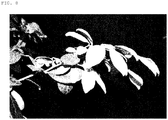
FIG. 2 ] Is a photograph of a bearing branch of a plant to which the environmental stimulus of Example 1 was applied.FIG. 2 shows that after sprouting of leaf buds and flower buds, foliage growth and flowering progressed simultaneously. Fruit stems are also longer than usual, and spaces are formed between flower clusters (fruits). - [
FIG. 3 ] Is a photograph of an entire plant to which the environmental stimulus of Example 2 was applied.FIG. 1 shows sound growth of the plant body and flowering amid growth of foliage. Numerous new shoots have also already appeared. - [
FIG. 4 ] Is a photograph of a bearing branch of a plant to which the environmental stimulus of Example 2 was applied.FIG. 4 shows that after sprouting of leaf buds and flower buds, foliage growth and flowering progressed simultaneously. Fruit stems are also longer than usual, and spaces are formed between flower clusters (fruits). - [
FIG. 5 ] Is a photograph of an entire plant to which the environmental stimulus of Example 3 was applied. The plant is fruiting, but new shoots are not observed. - [
FIG. 6 ] Is a photograph of a bearing branch of a plant to which the environmental stimulus of Example 3 was applied. Vigorous fruiting is observed. - [
FIG. 7 ] Is a photograph of an entire plant to which the environmental stimulus of Reference Example 1 was applied. New shoots have appeared, but flowering is not observed. - [
FIG. 8 ] Is a photograph of a bearing branch of a plant to which the environmental stimulus of Reference Example 1 was applied. Flowering is not observed. - [
FIG. 9 ] Is a photograph of an entire plant to which the environmental stimulus of Reference Example 2 was applied. Flowering is present, but foliage growth is not observed. - [
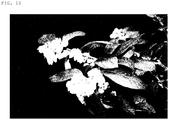
FIG. 10 ] Is a photograph of a bearing branch of a plant to which the environmental stimulus of Reference Example 2 was applied. Vigorous flowering is present, but sprouting of leaf buds is not observed. - [
FIG. 11 ] Is a photograph of an entire plant to which the environmental stimulus of Comparative Example 1 was applied. Neither flowering nor new shoots are observed. - [
FIG. 12 ] Is a photograph of a bearing branch of a plant to which the environmental stimulus of Comparative Example 1 was applied. Buds have grown large. - [
FIG. 13 ] Is a photograph of an entire plant to which the environmental stimulus of Comparative Example 2 was applied. Spindly branch growth and flowering/fruiting are present, but new shoots have not appeared. - [
FIG. 14 ] Is a photograph of a bearing branch of a plant to which the environmental stimulus of Comparative Example 2 was applied. New shoots have not appeared. - [
FIG. 15 ] Is a photograph of the entire plant of Comparative Example 3 (under natural conditions). All leaves have turned red. - [
FIG. 16 ] Is a photograph of a bearing branch of the plant of Comparative Example 3 (under natural conditions). All leaves have turned red. - [
FIG. 17 ] Is a photograph of an entire plant to which the environmental stimulus of Example 4 was applied.FIG. 17 shows sound growth of the plant body of Example 4 in comparison with controls, and fruiting is continued. - In the present specification, "factors involved in flower bud differentiation, leaf bud differentiation, flowering, sprouting, dormancy, and the like" are factors causing reception of stimuli from the outside environment by plant organs, tissues, or cells, and the resultant signal transduction and expression of specific genes. Consequently, in the present specification, to control these factors means to subject a plant individual to stimuli from the outside environment thereof, particularly to air temperature, day length, and other environmental stimuli. However, the environmental stimuli of the present invention to which plant individuals are subjected also include stimuli which could not be encountered by the plant individuals in the wild, and are used as appropriate.
- In the present invention, a first environmental stimulus for controlling flower bud differentiation and/or leaf bud differentiation is applied to a plant. In other words, the stimulus must be applied at least before flower bud differentiation is completed. More precisely, the stimulus must be applied before a leaf primordium converts to a flower bud. A leaf primordium that does not convert (differentiate) to a flower bud differentiates to a leaf bud.
- Despite seasonal differences according to plant species or variety, many one-season-bearing fruit trees form flower buds from leaf primordia of apical buds or axillary buds at harvest time, i.e., when fruit is mature. In the case of blueberries, for which harvest time begins about June in the climate of Tokyo, leaf primordia at the tops of apical buds and axillary buds differentiate into flower buds by about October from about early July when harvesting is ended. Consequently, in this case, the first environmental stimulus of the present invention must be applied to a plant before September at the latest. For example, the first environmental stimulus of the present invention can be shown to be applied to plants starting immediately after fruit harvest at any time from early July to early August (i.e., within about one month). Although it is also possible to apply the first environmental stimulus of the present invention starting before fruit harvest or during harvest time, out of concern for decreased yield when an extremely short daytime condition or the like is selected as the first environmental stimulus, it is probably not necessary to change the environment before harvest is completed.
- The first environmental stimulus of the present invention is applied by a combination of an air temperature in the range of 16 to 40°C and a light period in the range of a day length of 8 to 13 hours. Applying the environmental stimulus in the abovementioned ranges to a plant immediately after harvest can promote differentiation of leaf primordia into flower buds and/or leaf buds. For example, when the air temperature is set to approximately 16 to 23°C and the day length to 8 to 10 hours, almost all buds convert (differentiate) to flower buds. Meanwhile, conversion to flower buds is suppressed when the light-period air temperature is approximately 25°C or higher and the day length is maintained at about 12 to 13 hours, and as a result, leaf bud formation can be promoted.
- The ratio of leaf buds can be increased when the day length is set to approximately 12 to 13 hours in combination with the air temperature condition described above, and flower buds can be formed in a suitable ratio when the day length is set to approximately 8 to 10 hours. Consequently, in a particularly preferred embodiment of the present invention, flower buds and leaf buds are formed at the same time in a good balance, leaf buds thereby sprout in tandem with flower buds, and flowering and fruiting are repeated on new foliage. A typical example of the environmental stimulus is a combination of a light-period temperature of 25°C or higher and a day length of 8 to 10 hours.
- The present inventors are unaware of any reported instances of flower buds and leaf buds differentiating at the same time and flowering and new shoot growth occurring simultaneously as in the present invention in a blueberry plant placed in a conventional protected horticultural environment under ordinary natural conditions. Specifically, it is reasonable to infer that the first environmental stimulus of the present invention produces plant physiological and molecular biological changes not obtainable under ordinary environmental conditions.
- Although the present invention is not bound to any particular theory of operation, in comparison with the Tokyo early summer (i.e., immediately after harvest) day length of approximately 14 hours or more, the day length of 12 to 13 hours of the first environmental stimulus of the present invention corresponds to an autumn of sorts (around September and later). Particularly when the day length is about 8 to 10 hours, such a day length corresponds to late autumn (around November and later). Consequently, the first environmental stimulus of the present invention can be considered to change the growth environment of the plant non-continuously and at once. The combination of a light-period temperature of 25°C or higher and a day length of 8 to 10 hours as an embodiment of the first environmental stimulus is also cannot normally occur under natural conditions. Specifically, an environment of high temperature and short days does not occur at any time of year in the temperate region in which blueberries and the like naturally grow. From this perspective as well, such an embodiment of the present invention whereby it is possible to cause differentiation of flower buds and leaf buds at the same time (i.e., it is possible to suppress conversion of all leaf primordia into flower buds) is deemed capable of applying significant stress to a plant.
- The unusual physiological and molecular biological change indicated by simultaneous differentiation into flower buds and leaf buds may possibly occur in response to such a stress factor as described above, which cannot occur under natural conditions. In this regard, the modern climate is relatively stable from the perspective of plant evolutionary history, while the ancient environment was harsh. Consequently, the present inventors have reasoned that although plants were originally provided with the ability to immediately begin reproductive growth and vegetative growth upon settling of environmental conditions, as a result of adaptation to the modern stable change of seasons, or for such reasons as having been artificially selected for the sake of constancy of harvest time, the cultivated plants of today simply do not manifest such characteristics.
- In any case, bud differentiation can be promoted by the first environmental stimulus of the present invention, i.e., by an air temperature and day length combination in the range of an air temperature of 16 to 40°C and a day length of 8 to 13 hours.
- The air temperature condition described above for the first environmental stimulus can be realized using various types of temperature control devices singly or in combinations thereof, such as heaters, air-cooling equipment, ventilation, (de)humidifiers, ventilating fans, dry mist, and shading curtains. A closed-system chamber including these temperature control devices or an ordinary greenhouse provided with the temperature control devices may be used for this purpose. Suitable examples of such a facility are disclosed in Japanese Laid-open Patent Applications
2011-120555 2011-150557 - The term "light period" which constitutes "day length" in the environmental stimuli of the present invention refers to a continuous time period (hours) for which a plant is placed in a light intensity condition under which photosynthesis is possible. A light intensity (photosynthetic photon flux density (PPFD)) in the range of approximately 100 to 1000 µmol·m-2·s-1 PPFD, preferably 700 to 800 µmol·m-2·s-1 PPFD, can be cited as an example of a light intensity condition under which photosynthesis is possible. The primary wavelength (spectral energy accounting for the majority) of the light radiated in the light period is not particularly limited, but a wavelength in the range of approximately 400 to 730 nm is suitable. Consequently, the light radiated in the light period for the day length condition of the first environmental stimulus may be sunlight (natural light), artificial light, or both. Specifically, the source of the light radiated in the light period is not particularly limited, and may, of course, be the Sun, or a high-pressure sodium lamp, a metal halide lamp, a light-emitting diode (LED), a laser light source, or the like. A single light source may be used, or an appropriate combination of a plurality of light sources may be used. When the intensity of natural light falls below the abovementioned range, such as during rainy weather or cloudy skies, for example, supplemental lighting is preferred. The light intensity is preferably adjusted using shading curtains or the like when the intensity of natural light exceeds the abovementioned range, such as on extremely hot midsummer days. Suitable facilities for controlling the day length condition of the first environmental stimulus of the present invention are also disclosed in Japanese Laid-open Patent Applications
2011-120555 2011-150557 - The time period for which the first environmental stimulus is applied to a plant may be approximately 30 days to 90 days, for example. A period of about 30 days is adequate for controlling flower bud differentiation and/or leaf bud differentiation. Although the upper limit of this period is not particularly limited from the perspective of bud differentiation, from the perspective of enabling off-season harvesting, there is no need to make the period longer than necessary. When new shoots are formed, the period until the new shoots are adequately grown can be cited as an example of a criterion for the upper limit. The meaning of one day in the present specification is the unit composed of one light period and one dark period. Specifically, when the sum of one light period and one dark period is 24 hours, 24 hours constitutes one day. Unless otherwise specified in the present specification, 24 hours corresponds to one day.
- While the first environmental stimulus is being applied, relative humidity, CO2 concentration, soil pH, soil electric conductivity (EC) (whereby fertilizer concentration can be estimated), and various other parameters are preferably adjusted in ranges appropriate for plant growth. For example, the relative humidity is preferably in the range of approximately 30 to 80%, the CO2 concentration is preferably in the range of approximately 400 to 600 µmol·mol-1, the soil pH is preferably in the range of approximately 5.0 to 6.0, and the soil EC is preferably in the range of approximately 0.7 to 1.2.
- The second environmental stimulus of the present invention is also a stimulus for changing the growth environment of a plant non-continuously and at once. Specifically, this stimulus suddenly changes the growth environment of a plant to an extremely low temperature, the growth environment typically including a day length of 14 hours and a midday temperature of 30°C or higher before application of the environmental stimulus. The purpose of applying the second environmental stimulus of the present invention to a plant is not the same as that of a so-called breaking of dormancy. Specifically, blueberries or cherry, peach, plum, and other deciduous trees have a dormant stage, and must be exposed to low temperature for a certain time period to break dormancy. This characteristic is called a chilling requirement, and poor sprouting occurs when the chilling requirement is not satisfied. However, the present inventors have discovered that the second environmental stimulus of the present invention makes it possible to control the sprouting time for flower buds and/or leaf buds independently of chilling requirements.
- Consequently, the second environmental stimulus of the present invention can naturally be applied separately from the first environmental stimulus of the present invention as desired, and application of the second environmental stimulus to a plant subjected to the first environmental stimulus of the present invention is a preferred aspect of the present invention. Specifically, when a plant is left in a state of application of the first environmental stimulus, neither flower budding, leaf budding, nor sprouting occurs even after a period of 100 days has elapsed. Meanwhile, although sprouting also is anticipated to occur spontaneously as soon as the dormancy requirement is satisfied even when the plant is returned to a natural environment, for example, after being subjected to the first environmental stimulus, the second environmental stimulus of the present invention should be applied at the desired time in order to obtain more deliberate flowering, fruiting, and harvest. For example, the second environmental stimulus is applied immediately after application of the first environmental stimulus.
- Consequently, the second environmental stimulus of the present invention can be applied by placing a plant in a low-temperature environment. Specifically, the plant is placed in an environment having an air temperature of 3 to 7°C, for example. Such an air temperature condition can be considered to correspond to the coldest period of weather in Tokyo.
- When the time period for which the second environmental stimulus of the present invention is applied is too short, the number of bearing branches that sprout leaf buds is small, and the number of bearing branches having only flowers increases. It was also discovered that when the time period of the second environmental stimulus is too long, the number of leaf bud sprouts or the amount of new shoot growth increases, and the number of flower clusters decreases. From the perspective of maintaining an appropriate ratio of leaf buds and flower buds, the time period for which the second environmental stimulus of the present invention is applied to plants is preferably approximately 15 days to 45 days, and more preferably approximately 30 days.
- The method and facility for applying the second environmental stimulus of the present invention are the same as described for the first environmental stimulus of the present invention. The day length is not particularly limited, but the second environmental stimulus is preferably applied only in a dark period.
- The third environmental stimulus of the present invention is for generating foliage and causing the flowering/fruiting subsequent thereto in an environment appropriate for sprouting of both leaf buds and flower buds. Specifically, after the first and second environmental stimuli are applied, the plant is placed in conditions of an air temperature of approximately 16 to 23°C and a day length of approximately 10 to 11 hours, and sprouting is promoted. In a blueberry plant subjected to the first and second environmental stimuli of the present invention, leaf buds sprout and foliage develops in axillary buds of bearing branches typically about 15 to 30 days from the third environmental stimulus of the present invention. Flowering occurs in a blueberry plant subjected to the third environmental stimulus of the present invention in about 30 to 60 days at apical buds of bearing branches and in several buds below the apical buds.
- The timing for applying the third environmental stimulus of the present invention to a plant is not particularly limited insofar as the timing is after the first and second environmental stimuli, but the third environmental stimulus of the present invention should, of course, be applied at an appropriate time from the perspective of obtaining more deliberate flowering, fruiting, and harvest. The third environmental stimulus is applied immediately after application of the second environmental stimulus, for example. The third environmental stimulus of the present invention can also be considered to correspond to a Tokyo autumn weather condition. The method and facility for applying the third environmental stimulus of the present invention are the same as described for the first environmental stimulus of the present invention.
- The present invention is suitable for application to so-called one-season-bearing blueberries, cherries, peaches, plums, apples, and the like. However, as described in the examples below, applying the environmental stimuli of the present invention also enables continuous flowering/fruiting cultivation while developing foliage in summer in a strawberry rootstock after the end of harvest. Consequently, raspberries and the like can also be included as plants to which the present invention can be applied.
- The description above is sufficient for a person skilled in the art to implement the present invention. Examples are given below for the purpose of further description, and the present invention is therefore not limited to the described examples.
- <Test Plant> The "Misty" variety of Southern Highbush blueberry was used. Plants were planted in pots and grown in the natural environment of Fuchu City, Tokyo (outdoors in Tokyo) until the start of experimentation.
- <Experiment Facility> In order to apply the first through third environmental stimuli of the present invention to the plant, a glass chamber or an artificial-light-type closed-environment chamber in the Advanced Plant Factory Research Center at Tokyo University of Agriculture and Technology having a facility corresponding to the system disclosed in Japanese Laid-open Patent Application
2011-120555 2011-150557 - <Environmental Conditions> The glass chamber or artificial-light-type closed-environment chamber described above was set to the air temperature and day length conditions described below.
-
- 1-A) The day length in the glass chamber was set to 8 hours, the air temperature for light periods was set to 25 to 30°C, and the air temperature for dark periods was set to 15 to 20°C. The air temperature for light periods was set so as to be no lower than 25°C. The chamber set to this environment is referred to below as <Chamber 1A>.
- 1-B) The day length in the artificial-light-type closed-environment chamber was set to 8 hours, the air temperature for light periods was set to 25 to 28°C, and the air temperature for dark periods was set to 16 to 18°C. The CO2 concentration in the chamber was 0.04 to 0.08%, and the relative humidity was 50 to 90%. The chamber set to this environment is referred to below as <Chamber 1B>.
- The day length in the artificial-light-type closed-environment chamber was set to 0 hours, and the air temperature was set to 3 to 7°C. The CO2 concentration in the chamber was 0.04 to 0.08%, and the relative humidity was 70 to 100%. The chamber set to this environment is referred to below as <Chamber 2>.
- The day length in the artificial-light-type closed-environment chamber was set to 8 to 11 hours, the air temperature for light periods was set to 21 to 26°C, and the air temperature for dark periods was set to 14 to 16°C. The CO2 concentration in the chamber was 0.04 to 0.08%, and the relative humidity was 50 to 90%. The chamber set to this environment is referred to below as <Chamber 3>.
- The day length in the glass chamber was set to 14 hours, the air temperature for light periods was set to 25 to 32°C, and the air temperature for dark periods was set to 18 to 25°C. The chamber set to this environment is referred to below as <Chamber 4>.
- Test plants were moved to <Chamber 1A> in early July (day length: 14 hours; highest air temperature: about 28°C; lowest air temperature: about 20°C) immediately after harvesting of the fruit thereof, and the test plants were then grown therein for 67 days. The plants were then immediately moved to <Chamber 2> and grown therein for 30 days. The plants were then immediately moved to <Chamber 3>.
- The growth status of the plants after the treatments described above is illustrated in
FIGS. 1 and2 . From observation in the period of September to December, the appearance of new shoots in mid-November, and flowering in early December were confirmed. More specifically, the appearance of new shoots from base parts of bearing basal branches was observed, followed by flowering from buds at distal ends of bearing basal branches. - Furthermore, not only did the tree as a whole grow soundly, but fruit stems thereof were long. Spaces were thereby formed between fruits, making long stems a preferred characteristic for ease of harvesting. The peduncles and rachises of flowers attached in flower clusters were longer than those occurring in natural conditions, and transformation of florets into leaves was observed.
- Test plants were moved to <Chamber 1A> in late August (day length: 13 hours; highest air temperature: about 30°C; lowest air temperature: about 20°C) immediately after harvesting of the fruit thereof, and the test plants were then grown therein for 30 days. The plants were then immediately moved to <Chamber 2> and grown therein for 45 days. The plants were then immediately moved to <Chamber 3>.
- The growth status of the plants after the treatments described above is illustrated in
FIGS. 3 and4 . From observation in the period of September to December, the appearance of new shoots and flowering were confirmed. More specifically, the appearance of new shoots from base parts of bearing basal branches was observed, followed by flowering from buds at distal ends of bearing basal branches. - Test plants were moved to <Chamber 1B> in early July immediately after harvesting of the fruit thereof, and the test plants were then grown therein for 80 days, whereupon flowering was observed from axillary buds of distal ends and top parts of all new shoots. The test plants were pollinated by bumblebees, and normal fruit matured and was harvested beginning in early December.
- The growth status of the plant after the treatments described above is illustrated in
FIGS. 5 and6 . As described above, from observation in the period of September to December, flowering occurred from about late September, and it was possible to begin harvesting in early December. New shoots began appearing in mid-December. - Reference Example 1 is of a case in which test plants were moved to <Chamber 2> in late August (day length: 13 hours; highest air temperature: about 30°C; lowest air temperature: about 20°C) after formation of flower buds and grown therein for 60 days, then immediately moved to <Chamber 3> and grown therein for 60 days.
- In this condition, flowering was absent on all bearing basal branches, and only new shoots occurred. New shoots appeared beginning in early November (see
FIGS. 7 and8 ). - Reference Example 2 is of a case in which test plants were moved to <Chamber 1B> in late August after formation of flower buds and grown therein for 120 days.
- In this condition, flowering occurred in late November, but growth of foliage was not observed, and leaves appeared after maturing of fruit (see
FIGS. 9 and10 ). - Comparative Example 1 is of a case in which test plants were moved to <Chamber 1A> in late August after formation of flower buds and grown therein for 120 days.
- In this condition, flowering and the appearance of new shoots were not observed, but buds were of a larger size than those occurring under natural conditions, and flowering occurred after 150 days (see
FIGS. 11 and12 ). - Comparative Example 2 is of a case in which test plants were moved to <Chamber 4> in early July immediately after harvesting of fruit from the test plant, and the test plants were grown in <Chamber 4> for 140 days.
- In this condition, after flowering/fruiting was observed at apical buds of branches exhibiting spindly growth in about mid-October, flowering gradually progressed toward the base part, and flowering/fruiting occurred also on bearing basal branches. However, new shoots did not appear (see
FIGS. 13 and14 ). - Comparative Example 3 is of a case in which test plants were grown in natural conditions (see
FIGS. 15 and16 ). All leaves turned red. - Example 4 shows the results of applying the present invention to other plants. The strawberry varieties "Tochiotome" and "Akihime" were used as test plants. The plants were planted in pots and force-cultivated in a glass chamber in Fuchu City, Tokyo until the start of experimentation.
- Test plants were moved to <Chamber 3> in early May immediately after harvesting of the fruit thereof, and the test plants were then grown therein for 195 days. Cultivation of plants was continued in the glass chamber for comparison.
- The growth status of the plants after the treatments described above is illustrated in
FIG. 17 . During the period described above, budding stopped in June to July in control-group individuals, but continuous budding was observed throughout the period in example individuals. - For the examples, the yield per rootstock during the period was five to eight times that of the control group.
- The present invention is useful as a technique for freely controlling the time of flowering and foliage growth in blueberry plant and fruit cultivation. The present invention can therefore be used in agriculture-related fields.
Claims (11)
- A plant cultivation method comprising:applying to a plant, a first environmental stimulus for controlling flower bud differentiation and/or leaf bud differentiation, wherein the plant is a blueberry plant; andapplying to the plant, a second environmental stimulus for controlling a sprouting time for flower buds and /or leaf buds;said first environmental stimulus being applied by placing a plant in an environment having an air temperature of 16 to 40°C and a day length of 8 to 13 hours, and said second environmental stimulus being applied by placing a plant in an environment having an air temperature of 3 to 7°C for approximately 15 to 45 days, wherein the entire period of the second environmental stimulus is a dark period.
- The method according to claim 1, said first environmental stimulus being applied immediately after harvesting of fruit.
- The method according to claim 1 or 2, the air temperature in said first environmental stimulus being set to 16 to 23°C and the day length being set to 8 to 10 hours, thereby promoting development of flower buds.
- The method according to claim 1 or 2, the air temperature of a light period in said first environmental stimulus being set to 25°C or higher, thereby increasing a differentiation rate of leaf buds in conjunction with growth of new shoots.
- The method according to claim 1 or 2, the day length in said first environmental stimulus being set to 12 to 13 hours, thereby increasing the ratio in which leaf buds are formed.
- The method according to claim 1 or 2, the day length in said first environmental stimulus being set to 8 to 10 hours, thereby increasing the ratio of flower bud differentiation.
- The method according to claim 1 or 2, the temperature of a light period in said first environmental stimulus being set to 25°C or higher, and the day length being set to 8 to 10 hours.
- The method according to any of claims 1 to 7, further comprising applying, to a plant, a third environmental stimulus applied by placing a plant in an environment suitable for sprouting of leaf buds, sprouting of flower buds, generation of foliage, flowering, and fruiting, said third environmental stimulus being applied by placing a plant in an environment having an air temperature of 16 to 23°C and a day length of 8 to 11 hours.
- A fruit production method, said method comprising:1) a step for placing a plant in an environment having an air temperature of 16 to 40°C and a day length of 8 to 13 hours immediately after harvesting of fruit, wherein the plant is a blueberry plant;2) a step for placing the plant in an environment having an air temperature of 3 to 7°C after said 1) step, wherein the entire period of the 2) step is a dark period; and3) a step for placing the plant in an environment having an air temperature of 16 to 23°C and a day length of 8 to 11 hours after said 2) step.
- The method according to claim 9, said 1) environment having a light-period temperature of 25°C or higher and a day length of 8 to 10 hours.
- The method according to claim 9 or 10, the duration of said 1) step being 30 to 90 days, the duration of said 2) step being 15 to 45 days, and the duration of said 3) step being 15 days or greater.
Applications Claiming Priority (3)
| Application Number | Priority Date | Filing Date | Title |
|---|---|---|---|
| JP2013062060 | 2013-03-25 | ||
| JP2013194961 | 2013-09-20 | ||
| PCT/JP2014/057716 WO2014156939A1 (en) | 2013-03-25 | 2014-03-20 | Plant cultivation method |
Publications (3)
| Publication Number | Publication Date |
|---|---|
| EP2979539A1 EP2979539A1 (en) | 2016-02-03 |
| EP2979539A4 EP2979539A4 (en) | 2016-11-09 |
| EP2979539B1 true EP2979539B1 (en) | 2017-12-20 |
Family
ID=51623918
Family Applications (1)
| Application Number | Title | Priority Date | Filing Date |
|---|---|---|---|
| EP14776229.8A Not-in-force EP2979539B1 (en) | 2013-03-25 | 2014-03-20 | Plant cultivation method |
Country Status (5)
| Country | Link |
|---|---|
| US (1) | US10076083B2 (en) |
| EP (1) | EP2979539B1 (en) |
| JP (1) | JP6418697B2 (en) |
| SG (1) | SG11201507724UA (en) |
| WO (1) | WO2014156939A1 (en) |
Families Citing this family (16)
| Publication number | Priority date | Publication date | Assignee | Title |
|---|---|---|---|---|
| EP4137139A1 (en) | 2013-07-10 | 2023-02-22 | Matrix Biology Institute | Compositions of hyaluronan with high elasticity and uses thereof |
| ES2871199T3 (en) * | 2015-09-24 | 2021-10-28 | Matrix Biology Inst | High Elastic Hyaluronan Compositions and Methods of Using Them |
| JP2017143769A (en) * | 2016-02-16 | 2017-08-24 | 住友ゴム工業株式会社 | Method for cultivating asteraceae plants |
| CN105993785B (en) * | 2016-06-06 | 2019-01-01 | 大连大学 | A kind of method that north open country high clump blueberry shifts to an earlier date result |
| JP6775114B2 (en) * | 2016-09-12 | 2020-10-28 | 国立大学法人東京農工大学 | How to grow fruit harvesting plants |
| CN107711337A (en) * | 2017-09-28 | 2018-02-23 | 北京雷力海洋生物新产业股份有限公司 | A kind of method for being used to improve strawberry soil for growth environment and improve strawberry growth quality |
| CN108293699A (en) * | 2017-10-27 | 2018-07-20 | 桐梓县茅石乡龙会村蔬菜种植场 | A kind of strawberry cultivation method |
| JP7146441B2 (en) * | 2018-05-01 | 2022-10-04 | 株式会社クボタ | Agricultural support system |
| CN109430054B (en) * | 2018-11-08 | 2021-10-22 | 上海市农业科学院 | A method for inducing blueberry flower bud differentiation and fruiting |
| CN111527827A (en) * | 2020-06-03 | 2020-08-14 | 昭通市农业科学院 | Potato original seed treatment method |
| CN113519339A (en) * | 2021-08-12 | 2021-10-22 | 广西壮族自治区中国科学院广西植物研究所 | Method for promoting lateral bud germination of Lepidium clavatum |
| CN117940011A (en) * | 2021-09-14 | 2024-04-26 | 昕诺飞控股有限公司 | System and method for controlling plant growth |
| CN114885822B (en) * | 2022-04-15 | 2023-07-04 | 四川农业大学 | Sweet cherry cultivation management method |
| CN114747418B (en) * | 2022-05-18 | 2023-06-16 | 云南省农业科学院热区生态农业研究所 | Flower and fruit promotion method suitable for low-latitude plateau climate type kiwi fruits |
| CN115349435B (en) * | 2022-08-04 | 2023-06-30 | 宿迁市绿港现代农业研究院有限公司 | Key cultivation technology for second-crop melon of facility semi-soilless planting reticulate melon |
| CN116671383A (en) * | 2023-07-20 | 2023-09-01 | 华中农业大学 | Method for rapid flower formation of kumquat plants through temperature regulation |
Family Cites Families (29)
| Publication number | Priority date | Publication date | Assignee | Title |
|---|---|---|---|---|
| CH420710A (en) * | 1964-07-14 | 1966-09-15 | Strasser Willy | Plant for cultivating useful and ornamental plants |
| US3824736A (en) * | 1970-11-09 | 1974-07-23 | Integrated Dev And Mfg Co | Method and apparatus for producing plants |
| US3973353A (en) * | 1974-05-29 | 1976-08-10 | Gravi-Mechanics Co. | Plant growth accelerating apparatus |
| US4068405A (en) * | 1975-09-11 | 1978-01-17 | Joseph W. Campbell | Automatic food plant production |
| US4028847A (en) * | 1976-02-19 | 1977-06-14 | General Mills, Inc. | Apparatus for producing plants |
| US4337986A (en) * | 1978-08-02 | 1982-07-06 | General Mills, Inc. | Method and apparatus for increasing the spacing between plants in accordance with their growth rate |
| US4765092A (en) * | 1982-02-16 | 1988-08-23 | Cline Dean R | Method and apparatus for growing sprouts |
| USPP5714P (en) * | 1984-08-01 | 1986-04-08 | Yoder Brothers, Inc. | Chrysanthemum plant named Dorado |
| US4897957A (en) * | 1988-04-12 | 1990-02-06 | Oglevee, Ltd. | Precision flowering of regal pelargoniums (pelargonium xdomesticum) |
| US6309440B1 (en) * | 1998-08-25 | 2001-10-30 | Thomas T. Yamashita | Method and composition for promoting and controlling growth of plants |
| US5642587A (en) * | 1993-05-17 | 1997-07-01 | Grow International Corp. | Compressed dormancy process for increased plant growth |
| JP2651455B2 (en) | 1994-06-02 | 1997-09-10 | 農林水産省 野菜・茶業試験場長 | How to treat cultivated plants |
| US20020026659A1 (en) * | 1999-07-09 | 2002-02-28 | Blowers Alan D. | Developed seed and methods for making the same |
| AU2003222146A1 (en) * | 2002-04-01 | 2003-10-20 | Regents Of The University Of Minnesota | Novel l. x formolongo lilies |
| US20050193448A1 (en) * | 2004-02-09 | 2005-09-01 | Regents Of The University Of Minnesota | Methods for increasing one or more glucosinolates in a plant |
| US7635665B2 (en) | 2004-06-28 | 2009-12-22 | John Raymond Keim | Method and apparatus for treating stored crops |
| WO2007018252A1 (en) * | 2005-08-05 | 2007-02-15 | Kirin Agribio Kabushiki Kaisha | Method for production of plant seedling |
| JP2007289125A (en) | 2006-04-27 | 2007-11-08 | Harison Toshiba Lighting Corp | Plant cultivation method and plant cultivation apparatus |
| WO2010028205A1 (en) * | 2008-09-08 | 2010-03-11 | Monsanto Technology Llc | Methods for manipulating yield of plants and identifying yield genes |
| JP5700748B2 (en) | 2009-12-14 | 2015-04-15 | 国立大学法人東京農工大学 | Plant cultivation system |
| JP2011120553A (en) | 2009-12-14 | 2011-06-23 | Daitsu:Kk | Method for cultivating mango |
| JP5276607B2 (en) | 2010-01-22 | 2013-08-28 | 株式会社日立製作所 | FORECAST MANAGEMENT SYSTEM, ITS CONTROL METHOD, AND ITS PROGRAM |
| JP5717111B2 (en) | 2011-05-25 | 2015-05-13 | 国立大学法人東京農工大学 | Blueberry production method and continuous flowering blueberry obtained by the method |
| JP5531173B2 (en) | 2011-06-28 | 2014-06-25 | 有限会社菊地園芸 | Cultivation method with mango heating facility |
| JP2013034438A (en) | 2011-08-09 | 2013-02-21 | Sakae:Kk | Method and apparatus for cultivating plant |
| JP5830661B2 (en) | 2011-08-24 | 2015-12-09 | パナソニックIpマネジメント株式会社 | Crop cultivation system |
| MX369489B (en) * | 2013-03-05 | 2019-11-11 | Xiant Technologies Inc | Photon modulation management system. |
| MX2019011244A (en) * | 2013-03-15 | 2019-11-01 | Monsanto Technology Llc | METHOD FOR IMPROVED SEED YIELD. |
| US9844518B2 (en) * | 2014-09-30 | 2017-12-19 | MJAR Holdings, LLC | Methods of growing cannabaceae plants using artificial lighting |
-
2014
- 2014-03-20 EP EP14776229.8A patent/EP2979539B1/en not_active Not-in-force
- 2014-03-20 SG SG11201507724UA patent/SG11201507724UA/en unknown
- 2014-03-20 WO PCT/JP2014/057716 patent/WO2014156939A1/en not_active Ceased
- 2014-03-20 JP JP2015508404A patent/JP6418697B2/en active Active
- 2014-03-20 US US14/778,666 patent/US10076083B2/en not_active Expired - Fee Related
Non-Patent Citations (1)
| Title |
|---|
| None * |
Also Published As
| Publication number | Publication date |
|---|---|
| WO2014156939A1 (en) | 2014-10-02 |
| JP6418697B2 (en) | 2018-11-07 |
| SG11201507724UA (en) | 2015-10-29 |
| EP2979539A4 (en) | 2016-11-09 |
| US20160044871A1 (en) | 2016-02-18 |
| EP2979539A1 (en) | 2016-02-03 |
| US10076083B2 (en) | 2018-09-18 |
| JPWO2014156939A1 (en) | 2017-02-16 |
Similar Documents
| Publication | Publication Date | Title |
|---|---|---|
| US10076083B2 (en) | Plant cultivation method | |
| JP6795176B2 (en) | How to grow plants | |
| JP5717111B2 (en) | Blueberry production method and continuous flowering blueberry obtained by the method | |
| CN106171809B (en) | Greenhouse in North grape first planting fruit two crops a year implantation methods | |
| JP6296596B2 (en) | Strawberry cultivation method | |
| CN103518512A (en) | Wild peach cutting seedling method | |
| CN109121947B (en) | Pruning method for arbuscular shape of open blueberry | |
| CN104429783B (en) | A kind of facility peach is not necessarily to cold cultural method | |
| CN104855099A (en) | Method for cultivating pitaya in greenhouse | |
| CN103609441A (en) | Blueberry seedling culturing method | |
| CN114847099A (en) | Light control method for strawberry growth | |
| CN109006110B (en) | A method of macadamia dwarfing | |
| CN107646395A (en) | A kind of efficient, protecting field blueberry summer of increasing yield and improving quality cuts down formula pruning method | |
| CN105075777B (en) | A kind of blueberry liver moss seedling mating system | |
| CN118402426B (en) | A method for growing large cherries that bear fruit in two years and three seasons under facility conditions | |
| CN118614319B (en) | Light control method based on red and blue light to promote the dual increase of blueberry yield and quality in greenhouses | |
| CN105830685A (en) | Technology for growing cucumber seedlings by using LED plant lamps | |
| CN103404428B (en) | Cross-breeding method of Fuhong large cherry | |
| CN108464202B (en) | South-breeding north-breeding method for strawberry plug seedlings | |
| CN102106224A (en) | Cultivation method for improving salt resistance of eggplant rootstock to grafted tomato | |
| JP2017077203A (en) | Plant cultivation method and plant cultivation apparatus | |
| CN114557210A (en) | Light regulation and control method for promoting growth of melons in light-deficient environment | |
| CN106941809A (en) | A kind of tulip kind ' the upper agriculture rosy clouds of dawn ' florescence control technology and its application on combined pot culture | |
| Chen et al. | Physiological effects and technical strategies of LED supplemental lighting for pitaya cultivation: a review | |
| CN110036818A (en) | A viticulture method for delaying leaf senescence and fruit hanging tree storage |
Legal Events
| Date | Code | Title | Description |
|---|---|---|---|
| PUAI | Public reference made under article 153(3) epc to a published international application that has entered the european phase |
Free format text: ORIGINAL CODE: 0009012 |
|
| 17P | Request for examination filed |
Effective date: 20150925 |
|
| AK | Designated contracting states |
Kind code of ref document: A1 Designated state(s): AL AT BE BG CH CY CZ DE DK EE ES FI FR GB GR HR HU IE IS IT LI LT LU LV MC MK MT NL NO PL PT RO RS SE SI SK SM TR |
|
| AX | Request for extension of the european patent |
Extension state: BA ME |
|
| DAX | Request for extension of the european patent (deleted) | ||
| A4 | Supplementary search report drawn up and despatched |
Effective date: 20161010 |
|
| RIC1 | Information provided on ipc code assigned before grant |
Ipc: A01G 1/00 20060101ALI20161004BHEP Ipc: A01G 7/00 20060101AFI20161004BHEP |
|
| GRAP | Despatch of communication of intention to grant a patent |
Free format text: ORIGINAL CODE: EPIDOSNIGR1 |
|
| INTG | Intention to grant announced |
Effective date: 20170802 |
|
| GRAS | Grant fee paid |
Free format text: ORIGINAL CODE: EPIDOSNIGR3 |
|
| GRAA | (expected) grant |
Free format text: ORIGINAL CODE: 0009210 |
|
| AK | Designated contracting states |
Kind code of ref document: B1 Designated state(s): AL AT BE BG CH CY CZ DE DK EE ES FI FR GB GR HR HU IE IS IT LI LT LU LV MC MK MT NL NO PL PT RO RS SE SI SK SM TR |
|
| REG | Reference to a national code |
Ref country code: GB Ref legal event code: FG4D |
|
| REG | Reference to a national code |
Ref country code: CH Ref legal event code: EP |
|
| REG | Reference to a national code |
Ref country code: IE Ref legal event code: FG4D |
|
| REG | Reference to a national code |
Ref country code: AT Ref legal event code: REF Ref document number: 955501 Country of ref document: AT Kind code of ref document: T Effective date: 20180115 |
|
| REG | Reference to a national code |
Ref country code: DE Ref legal event code: R096 Ref document number: 602014018842 Country of ref document: DE |
|
| REG | Reference to a national code |
Ref country code: NL Ref legal event code: FP |
|
| PG25 | Lapsed in a contracting state [announced via postgrant information from national office to epo] |
Ref country code: FI Free format text: LAPSE BECAUSE OF FAILURE TO SUBMIT A TRANSLATION OF THE DESCRIPTION OR TO PAY THE FEE WITHIN THE PRESCRIBED TIME-LIMIT Effective date: 20171220 Ref country code: SE Free format text: LAPSE BECAUSE OF FAILURE TO SUBMIT A TRANSLATION OF THE DESCRIPTION OR TO PAY THE FEE WITHIN THE PRESCRIBED TIME-LIMIT Effective date: 20171220 Ref country code: LT Free format text: LAPSE BECAUSE OF FAILURE TO SUBMIT A TRANSLATION OF THE DESCRIPTION OR TO PAY THE FEE WITHIN THE PRESCRIBED TIME-LIMIT Effective date: 20171220 Ref country code: NO Free format text: LAPSE BECAUSE OF FAILURE TO SUBMIT A TRANSLATION OF THE DESCRIPTION OR TO PAY THE FEE WITHIN THE PRESCRIBED TIME-LIMIT Effective date: 20180320 |
|
| REG | Reference to a national code |
Ref country code: LT Ref legal event code: MG4D |
|
| REG | Reference to a national code |
Ref country code: AT Ref legal event code: MK05 Ref document number: 955501 Country of ref document: AT Kind code of ref document: T Effective date: 20171220 |
|
| PG25 | Lapsed in a contracting state [announced via postgrant information from national office to epo] |
Ref country code: GR Free format text: LAPSE BECAUSE OF FAILURE TO SUBMIT A TRANSLATION OF THE DESCRIPTION OR TO PAY THE FEE WITHIN THE PRESCRIBED TIME-LIMIT Effective date: 20180321 Ref country code: LV Free format text: LAPSE BECAUSE OF FAILURE TO SUBMIT A TRANSLATION OF THE DESCRIPTION OR TO PAY THE FEE WITHIN THE PRESCRIBED TIME-LIMIT Effective date: 20171220 Ref country code: BG Free format text: LAPSE BECAUSE OF FAILURE TO SUBMIT A TRANSLATION OF THE DESCRIPTION OR TO PAY THE FEE WITHIN THE PRESCRIBED TIME-LIMIT Effective date: 20180320 Ref country code: HR Free format text: LAPSE BECAUSE OF FAILURE TO SUBMIT A TRANSLATION OF THE DESCRIPTION OR TO PAY THE FEE WITHIN THE PRESCRIBED TIME-LIMIT Effective date: 20171220 Ref country code: RS Free format text: LAPSE BECAUSE OF FAILURE TO SUBMIT A TRANSLATION OF THE DESCRIPTION OR TO PAY THE FEE WITHIN THE PRESCRIBED TIME-LIMIT Effective date: 20171220 |
|
| PG25 | Lapsed in a contracting state [announced via postgrant information from national office to epo] |
Ref country code: ES Free format text: LAPSE BECAUSE OF FAILURE TO SUBMIT A TRANSLATION OF THE DESCRIPTION OR TO PAY THE FEE WITHIN THE PRESCRIBED TIME-LIMIT Effective date: 20171220 Ref country code: CZ Free format text: LAPSE BECAUSE OF FAILURE TO SUBMIT A TRANSLATION OF THE DESCRIPTION OR TO PAY THE FEE WITHIN THE PRESCRIBED TIME-LIMIT Effective date: 20171220 Ref country code: SK Free format text: LAPSE BECAUSE OF FAILURE TO SUBMIT A TRANSLATION OF THE DESCRIPTION OR TO PAY THE FEE WITHIN THE PRESCRIBED TIME-LIMIT Effective date: 20171220 Ref country code: CY Free format text: LAPSE BECAUSE OF FAILURE TO SUBMIT A TRANSLATION OF THE DESCRIPTION OR TO PAY THE FEE WITHIN THE PRESCRIBED TIME-LIMIT Effective date: 20171220 Ref country code: EE Free format text: LAPSE BECAUSE OF FAILURE TO SUBMIT A TRANSLATION OF THE DESCRIPTION OR TO PAY THE FEE WITHIN THE PRESCRIBED TIME-LIMIT Effective date: 20171220 |
|
| PG25 | Lapsed in a contracting state [announced via postgrant information from national office to epo] |
Ref country code: PL Free format text: LAPSE BECAUSE OF FAILURE TO SUBMIT A TRANSLATION OF THE DESCRIPTION OR TO PAY THE FEE WITHIN THE PRESCRIBED TIME-LIMIT Effective date: 20171220 Ref country code: IS Free format text: LAPSE BECAUSE OF FAILURE TO SUBMIT A TRANSLATION OF THE DESCRIPTION OR TO PAY THE FEE WITHIN THE PRESCRIBED TIME-LIMIT Effective date: 20180420 Ref country code: RO Free format text: LAPSE BECAUSE OF FAILURE TO SUBMIT A TRANSLATION OF THE DESCRIPTION OR TO PAY THE FEE WITHIN THE PRESCRIBED TIME-LIMIT Effective date: 20171220 Ref country code: IT Free format text: LAPSE BECAUSE OF FAILURE TO SUBMIT A TRANSLATION OF THE DESCRIPTION OR TO PAY THE FEE WITHIN THE PRESCRIBED TIME-LIMIT Effective date: 20171220 Ref country code: AT Free format text: LAPSE BECAUSE OF FAILURE TO SUBMIT A TRANSLATION OF THE DESCRIPTION OR TO PAY THE FEE WITHIN THE PRESCRIBED TIME-LIMIT Effective date: 20171220 Ref country code: SM Free format text: LAPSE BECAUSE OF FAILURE TO SUBMIT A TRANSLATION OF THE DESCRIPTION OR TO PAY THE FEE WITHIN THE PRESCRIBED TIME-LIMIT Effective date: 20171220 |
|
| REG | Reference to a national code |
Ref country code: DE Ref legal event code: R097 Ref document number: 602014018842 Country of ref document: DE |
|
| REG | Reference to a national code |
Ref country code: DE Ref legal event code: R119 Ref document number: 602014018842 Country of ref document: DE |
|
| REG | Reference to a national code |
Ref country code: CH Ref legal event code: PL |
|
| PLBE | No opposition filed within time limit |
Free format text: ORIGINAL CODE: 0009261 |
|
| STAA | Information on the status of an ep patent application or granted ep patent |
Free format text: STATUS: NO OPPOSITION FILED WITHIN TIME LIMIT |
|
| GBPC | Gb: european patent ceased through non-payment of renewal fee |
Effective date: 20180320 |
|
| PG25 | Lapsed in a contracting state [announced via postgrant information from national office to epo] |
Ref country code: DK Free format text: LAPSE BECAUSE OF FAILURE TO SUBMIT A TRANSLATION OF THE DESCRIPTION OR TO PAY THE FEE WITHIN THE PRESCRIBED TIME-LIMIT Effective date: 20171220 Ref country code: MC Free format text: LAPSE BECAUSE OF FAILURE TO SUBMIT A TRANSLATION OF THE DESCRIPTION OR TO PAY THE FEE WITHIN THE PRESCRIBED TIME-LIMIT Effective date: 20171220 |
|
| 26N | No opposition filed |
Effective date: 20180921 |
|
| REG | Reference to a national code |
Ref country code: BE Ref legal event code: MM Effective date: 20180331 |
|
| REG | Reference to a national code |
Ref country code: IE Ref legal event code: MM4A |
|
| PG25 | Lapsed in a contracting state [announced via postgrant information from national office to epo] |
Ref country code: LU Free format text: LAPSE BECAUSE OF NON-PAYMENT OF DUE FEES Effective date: 20180320 |
|
| PG25 | Lapsed in a contracting state [announced via postgrant information from national office to epo] |
Ref country code: IE Free format text: LAPSE BECAUSE OF NON-PAYMENT OF DUE FEES Effective date: 20180320 Ref country code: DE Free format text: LAPSE BECAUSE OF NON-PAYMENT OF DUE FEES Effective date: 20181002 |
|
| PG25 | Lapsed in a contracting state [announced via postgrant information from national office to epo] |
Ref country code: BE Free format text: LAPSE BECAUSE OF NON-PAYMENT OF DUE FEES Effective date: 20180331 Ref country code: GB Free format text: LAPSE BECAUSE OF NON-PAYMENT OF DUE FEES Effective date: 20180320 Ref country code: CH Free format text: LAPSE BECAUSE OF NON-PAYMENT OF DUE FEES Effective date: 20180331 Ref country code: LI Free format text: LAPSE BECAUSE OF NON-PAYMENT OF DUE FEES Effective date: 20180331 Ref country code: SI Free format text: LAPSE BECAUSE OF FAILURE TO SUBMIT A TRANSLATION OF THE DESCRIPTION OR TO PAY THE FEE WITHIN THE PRESCRIBED TIME-LIMIT Effective date: 20171220 |
|
| PG25 | Lapsed in a contracting state [announced via postgrant information from national office to epo] |
Ref country code: FR Free format text: LAPSE BECAUSE OF NON-PAYMENT OF DUE FEES Effective date: 20180331 |
|
| PG25 | Lapsed in a contracting state [announced via postgrant information from national office to epo] |
Ref country code: MT Free format text: LAPSE BECAUSE OF NON-PAYMENT OF DUE FEES Effective date: 20180320 |
|
| PG25 | Lapsed in a contracting state [announced via postgrant information from national office to epo] |
Ref country code: TR Free format text: LAPSE BECAUSE OF FAILURE TO SUBMIT A TRANSLATION OF THE DESCRIPTION OR TO PAY THE FEE WITHIN THE PRESCRIBED TIME-LIMIT Effective date: 20171220 |
|
| PG25 | Lapsed in a contracting state [announced via postgrant information from national office to epo] |
Ref country code: PT Free format text: LAPSE BECAUSE OF FAILURE TO SUBMIT A TRANSLATION OF THE DESCRIPTION OR TO PAY THE FEE WITHIN THE PRESCRIBED TIME-LIMIT Effective date: 20171220 |
|
| PG25 | Lapsed in a contracting state [announced via postgrant information from national office to epo] |
Ref country code: MK Free format text: LAPSE BECAUSE OF NON-PAYMENT OF DUE FEES Effective date: 20171220 Ref country code: HU Free format text: LAPSE BECAUSE OF FAILURE TO SUBMIT A TRANSLATION OF THE DESCRIPTION OR TO PAY THE FEE WITHIN THE PRESCRIBED TIME-LIMIT; INVALID AB INITIO Effective date: 20140320 |
|
| PG25 | Lapsed in a contracting state [announced via postgrant information from national office to epo] |
Ref country code: AL Free format text: LAPSE BECAUSE OF FAILURE TO SUBMIT A TRANSLATION OF THE DESCRIPTION OR TO PAY THE FEE WITHIN THE PRESCRIBED TIME-LIMIT Effective date: 20171220 |
|
| PGFP | Annual fee paid to national office [announced via postgrant information from national office to epo] |
Ref country code: NL Payment date: 20210319 Year of fee payment: 8 |
|
| REG | Reference to a national code |
Ref country code: NL Ref legal event code: MM Effective date: 20220401 |
|
| PG25 | Lapsed in a contracting state [announced via postgrant information from national office to epo] |
Ref country code: NL Free format text: LAPSE BECAUSE OF NON-PAYMENT OF DUE FEES Effective date: 20220401 |