EP2968618B1 - Imageable embolic microsphere - Google Patents
Imageable embolic microsphere Download PDFInfo
- Publication number
- EP2968618B1 EP2968618B1 EP14721095.9A EP14721095A EP2968618B1 EP 2968618 B1 EP2968618 B1 EP 2968618B1 EP 14721095 A EP14721095 A EP 14721095A EP 2968618 B1 EP2968618 B1 EP 2968618B1
- Authority
- EP
- European Patent Office
- Prior art keywords
- beads
- bead
- hydrogel
- iodinated
- alcohol
- Prior art date
- Legal status (The legal status is an assumption and is not a legal conclusion. Google has not performed a legal analysis and makes no representation as to the accuracy of the status listed.)
- Active
Links
- 0 O=*(N1C=CNC1)[n]1cncc1 Chemical compound O=*(N1C=CNC1)[n]1cncc1 0.000 description 1
Images



Classifications
-
- A—HUMAN NECESSITIES
- A61—MEDICAL OR VETERINARY SCIENCE; HYGIENE
- A61K—PREPARATIONS FOR MEDICAL, DENTAL OR TOILETRY PURPOSES
- A61K49/00—Preparations for testing in vivo
- A61K49/04—X-ray contrast preparations
- A61K49/0433—X-ray contrast preparations containing an organic halogenated X-ray contrast-enhancing agent
- A61K49/0442—Polymeric X-ray contrast-enhancing agent comprising a halogenated group
-
- A—HUMAN NECESSITIES
- A61—MEDICAL OR VETERINARY SCIENCE; HYGIENE
- A61K—PREPARATIONS FOR MEDICAL, DENTAL OR TOILETRY PURPOSES
- A61K49/00—Preparations for testing in vivo
- A61K49/04—X-ray contrast preparations
- A61K49/0433—X-ray contrast preparations containing an organic halogenated X-ray contrast-enhancing agent
- A61K49/0438—Organic X-ray contrast-enhancing agent comprising an iodinated group or an iodine atom, e.g. iopamidol
-
- A—HUMAN NECESSITIES
- A61—MEDICAL OR VETERINARY SCIENCE; HYGIENE
- A61K—PREPARATIONS FOR MEDICAL, DENTAL OR TOILETRY PURPOSES
- A61K49/00—Preparations for testing in vivo
- A61K49/04—X-ray contrast preparations
- A61K49/0433—X-ray contrast preparations containing an organic halogenated X-ray contrast-enhancing agent
- A61K49/0447—Physical forms of mixtures of two different X-ray contrast-enhancing agents, containing at least one X-ray contrast-enhancing agent which is a halogenated organic compound
- A61K49/0476—Particles, beads, capsules, spheres
-
- A—HUMAN NECESSITIES
- A61—MEDICAL OR VETERINARY SCIENCE; HYGIENE
- A61K—PREPARATIONS FOR MEDICAL, DENTAL OR TOILETRY PURPOSES
- A61K49/00—Preparations for testing in vivo
- A61K49/04—X-ray contrast preparations
- A61K49/0433—X-ray contrast preparations containing an organic halogenated X-ray contrast-enhancing agent
- A61K49/0447—Physical forms of mixtures of two different X-ray contrast-enhancing agents, containing at least one X-ray contrast-enhancing agent which is a halogenated organic compound
- A61K49/0476—Particles, beads, capsules, spheres
- A61K49/0485—Nanoparticles, nanobeads, nanospheres, nanocapsules, i.e. having a size or diameter smaller than 1 micrometer
-
- A—HUMAN NECESSITIES
- A61—MEDICAL OR VETERINARY SCIENCE; HYGIENE
- A61P—SPECIFIC THERAPEUTIC ACTIVITY OF CHEMICAL COMPOUNDS OR MEDICINAL PREPARATIONS
- A61P35/00—Antineoplastic agents
-
- A—HUMAN NECESSITIES
- A61—MEDICAL OR VETERINARY SCIENCE; HYGIENE
- A61P—SPECIFIC THERAPEUTIC ACTIVITY OF CHEMICAL COMPOUNDS OR MEDICINAL PREPARATIONS
- A61P43/00—Drugs for specific purposes, not provided for in groups A61P1/00-A61P41/00
-
- A—HUMAN NECESSITIES
- A61—MEDICAL OR VETERINARY SCIENCE; HYGIENE
- A61P—SPECIFIC THERAPEUTIC ACTIVITY OF CHEMICAL COMPOUNDS OR MEDICINAL PREPARATIONS
- A61P9/00—Drugs for disorders of the cardiovascular system
-
- C—CHEMISTRY; METALLURGY
- C08—ORGANIC MACROMOLECULAR COMPOUNDS; THEIR PREPARATION OR CHEMICAL WORKING-UP; COMPOSITIONS BASED THEREON
- C08F—MACROMOLECULAR COMPOUNDS OBTAINED BY REACTIONS ONLY INVOLVING CARBON-TO-CARBON UNSATURATED BONDS
- C08F116/00—Homopolymers of compounds having one or more unsaturated aliphatic radicals, each having only one carbon-to-carbon double bond, and at least one being terminated by an alcohol, ether, aldehydo, ketonic, acetal or ketal radical
- C08F116/02—Homopolymers of compounds having one or more unsaturated aliphatic radicals, each having only one carbon-to-carbon double bond, and at least one being terminated by an alcohol, ether, aldehydo, ketonic, acetal or ketal radical by an alcohol radical
- C08F116/04—Acyclic compounds
- C08F116/06—Polyvinyl alcohol ; Vinyl alcohol
-
- C—CHEMISTRY; METALLURGY
- C08—ORGANIC MACROMOLECULAR COMPOUNDS; THEIR PREPARATION OR CHEMICAL WORKING-UP; COMPOSITIONS BASED THEREON
- C08L—COMPOSITIONS OF MACROMOLECULAR COMPOUNDS
- C08L29/00—Compositions of homopolymers or copolymers of compounds having one or more unsaturated aliphatic radicals, each having only one carbon-to-carbon double bond, and at least one being terminated by an alcohol, ether, aldehydo, ketonic, acetal or ketal radical; Compositions of hydrolysed polymers of esters of unsaturated alcohols with saturated carboxylic acids; Compositions of derivatives of such polymers
- C08L29/02—Homopolymers or copolymers of unsaturated alcohols
- C08L29/04—Polyvinyl alcohol; Partially hydrolysed homopolymers or copolymers of esters of unsaturated alcohols with saturated carboxylic acids
-
- B—PERFORMING OPERATIONS; TRANSPORTING
- B82—NANOTECHNOLOGY
- B82Y—SPECIFIC USES OR APPLICATIONS OF NANOSTRUCTURES; MEASUREMENT OR ANALYSIS OF NANOSTRUCTURES; MANUFACTURE OR TREATMENT OF NANOSTRUCTURES
- B82Y5/00—Nanobiotechnology or nanomedicine, e.g. protein engineering or drug delivery
Definitions
- This disclosure relates to imageable embolic microspheres and, in particular, microspheres which are radiopaque i.e. have the property of blocking or attenuating radiation, such as X-rays.
- the microspheres have particularly useful radiological properties and may be used to enhance X-ray pictures in real-time, or near real-time, during medical procedures.
- the imageable microspheres find particular use in embolization of blood vessels, without the requirement for additional contrast agent to be added.
- the imageable microspheres can be loaded with therapeutic agents to provide localized drug delivery at the point of embolization, making them particularly useful for chemoembolization procedures.
- Embolic microspheres are useful for a variety of applications, such as occluding blood vessels and other vessels, such as fallopian tubes, filling aneurysm sacs, as arterial sealants and as puncture sealants.
- Embolization of blood vessels is performed for a number of reasons, e.g. to reduce blood flow to and encourage atrophy of tumors, for example in the liver, to reduce blood flow and induce atrophy of uterine fibroids, for treatment of vascular malformations, such as arteriovenous malformations (AVMs) and arteriovenous fistulas (AVFs), to seal endoleaks into aneurysm sacs, to stop uncontrolled bleeding, or to slow bleeding prior to surgery.
- AVMs arteriovenous malformations
- AMFs arteriovenous fistulas
- Chemoembolization refers to the combination of providing mechanical blockage and highly localized, in situ, delivery of therapeutic agents, commonly chemotherapeutic drugs.
- the chemotherapeutic agent acts as an adjunct to the embolization. This is particularly advantageous in that drug is delivered directly to the tumor whilst minimizing systemic exposure to the drug.
- chemoembolization has been demonstrated to be effective in terms of improving survival rates
- one drawback of the procedure is the difficulty in visualizing, in real time, the administration of the drug-loaded microspheres to ensure precise delivery at the target site.
- the ability to visualize an embolic particle is important not only in terms of monitoring injection and deposition of the embolic to the vascular site but is very useful for clinical follow-up to monitor the effects of embolization and ensure embolic and drug remain in the desired location and to identify regions at risk for further treatment.
- Radiopacity is generally provided by using inherently radiopaque embolic materials or by mixing non-radiopaque embolic particles with radiopaque materials.
- Iodinated polyvinyl alcohol is a radiopaque embolic material in the form of a viscous liquid which precipitates in aqueous conditions such as those encountered in vivo.
- embolization with precipitating liquid is not reproducible and there is always a risk of precipitation occurring in an undesired location outside the target area.
- Contrast agents are inherently radiopaque.
- Common contrast agents include ethiodized oils, such as Ethiodol® (Guerbet Joint Stock Company, France; marketed in the EU under the trade name Lipiodol®).
- Ethiodol is an iodinated oily X-ray contrast medium composed of about 40% iodinated poppy-seed oil (40% Iodine by weight).
- Ethiodol® may be used directly as an embolization agent. Due to its viscous nature, the ethiodized oil tends to accumulate in the capillary bed and slow down blood flow. It has thus been described as "microembolic". However, such use is contraindicated by the FDA and, in any event, it fails to provide a reproducible level of embolization. As a result, embolization with ethiodized oil is normally followed by conventional embolization with particles or microspheres.
- Contrast agents such as Ethiodol®
- embolic particles are, however, routinely mixed with embolic particles to impart radiopacity to an injectable composition.
- Such compositions tend to be unstable because of the different physical properties of the aqueous suspension of embolic particle and the oily contrast agent. This means that the injectable composition needs to be prepared immediately prior to injection. Even after administration, however, it is the contrast agent which is visible rather than the embolic particle and the contrast agent and the embolic particle may not reside at the same location in tissue.
- EP1810698 describes a process for forming stable radiopaque embolic beads in which PVA hydrogel embolic beads are loaded with iodinated oils to make them radiopaque.
- the process described in EP1810698 requires the beads to be dry or dried for loading with iodinated oil before recovering oil-loaded beads from any excess extra-particulate loading liquid, swelling the beads in an aqueous storage liquid and sterilizing the beads by heating to a temperature of at least 90°C.
- EP1810698 it is an essential step that the final product is sterilized by a heating process in the presence of water. Sterilization is carried out by heating to a suitably raised temperature of at least 90° but preferably to a higher temperature than 100°C under pressure. It is disclosed that the radiopaque oil is not adversely affected under the preferred sterilization conditions of reduced pressure, at a temperature of around 120°C. However, this approach does not provide control over elution of the contrast agent from the bead nor does it contemplate the impact of contrast agent on the loading and elution of drug.
- WO2011/110589 describes synthesis of an iodinated poly(vinyl alcohol) by grafting iodobenzoyl chloride to poly(vinyl alcohol) via ester linkages. Whilst this polymer is demonstrated to be radiopaque, it results in a water insoluble polymer, which cannot then be formed into microspheres through the water-in-oil polymersation processes normally used to generate hydrogel microspheres with desirable embolization properties. The same publication mentions microspheres but contains no disclosure as to how this is achieved.
- WO 2008/051291 discloses methods of treating subjects having conditions related to angiogenesis including administering an effective amount of a polymeric nanoparticle form of thyroid hormone agonist, partial agonist or an antagonist thereof, to promote or inhibit angiogenesis in the subject. Compositions of the polymeric forms of thyroid hormone, or thyroid hormone analogs, are also disclosed.
- Radiopacity can be quantified according to the Hounsfield scale, a principle which is central to X-ray computed tomography (CT scan) applications.
- CT scan computed tomography
- distilled water has a value of 0 Hounsfield units (HU), while air is specified as -1000 HU.
- HU Hounsfield units
- such an embolic bead would ideally have properties which enable efficient load drug loading and elution such that chemoembolization procedures may be monitored with confidence.
- the applicants have established that by utilizing relatively straightforward chemistry, it is possible to post-process pre-formed hydrogel microspheres to make them permanently radiopaque, without adversely affecting the physical properties of the microsphere (i.e. size, spherical shape, high water content, swellability, and compressibility) that make them so suited to embolization.
- the radiopaque microspheres have the same, or better, drug loading and elution properties as the non-radiopaque beads from which they are formed.
- the radiopacity of the microsphere is also permanent or sufficiently long-lived to allow for monitoring during clinical follow up.
- the post-processing of pre-formed beads provides a degree of flexibility in terms of manufacturing in that the same manufacturing process can be used for radiopaque and non-radiopaque beads and size selection or sieving can be made prior to post-processing so that only a particular size or size range of beads may be made radiopaque.
- the present disclosure provides a method of making a radiopaque hydrogel bead, comprising preforming hydrogel beads and reacting functional groups on the selected preformed hydrogel beads with an aromatic iodine containing compound.
- the hydrogel beads may have been reacted with carbonyl diimidazole or carbodiimide so as to be activated towards nucleophilic substitution reaction .
- Carbonyldiimidazole and analogues of carbonyldiimidazole are N-acylimidazoles are well-established reagents which, like carbodiimide, are traditionally used to provide specific and practical conjugation to carboxylic acids, amines and alcohols.
- Typical carbodiimides include N,N'-diisopropylcarbodiimide ("DIC"), 1-ethyl-3-(-3-dimethylaminopropyl) carbodiimide hydrochloride, ("EDC” or “EDAC”), N',N'-dicyclohexyl carbodiimide, (“DCC”).
- DIC N,N'-diisopropylcarbodiimide
- EDC 1-ethyl-3-(-3-dimethylaminopropyl) carbodiimide hydrochloride
- DCC N',N'-dicyclohexyl carbodiimide
- Carbonyldiimidazoles are alternative reagents to carbodiimides, which perform a similar function, although they are moisture sensitive.
- hydrogel refers to a superabsorbent network of crosslinked hydrophilic polymer chains that are able to absorb extremely large amounts of water relative to their own mass. Hydrogels can contain as much as 99.9% water. Typical hydrogels are polyhydroxy polymers, such as polymers of vinyl alcohols, polyacrylate polymers, such as polyacrylic acid or polymethacrylic acid and copolymers of any of these polymers.
- Activation of the hydrogel bead is thought to occur by reaction of pendent carboxylic acid, amine or hydroxyl moieties throughout the loose hydrogel network with activating agents which activate the hydrogel polymer towards nucleophilic attack.
- hydrogel beads made from polyhydroxy polymers such as polyvinyl alcohol (PVA) or copolymers of vinyl alcohol are particularly useful and are readily activated by reaction of pendent hydroxyl moieties with the polymer network with activating agents such as carbonyldiimidazole.
- PVA hydrogels, with a polymer backbone with a 1,2-diol and/or a 1,3-diol structure are particularly useful because the diol groups crosslink with acrylic and similar monomers to provide high water content, compressible microspheres with good embolization properties.
- a particularly preferred polymer hydrogel of this type is an acrylamido PVA (polyvinyl alcohol partially acetalized with N-formylmethyl acrylamide) copolymerised with an acrylic monomer, such as 2-acrylamido-2-methylpropane sulfonic acid (AMPS).
- PVA-AMPS hydrogel beads are commercially available (Bead Block®, LC BeadTM, DC Bead® Biocompatibles UK Ltd).
- the activated beads are made by suspending pre-formed beads in a suitable organic solvent until they have swollen.
- DMSO dimethyl sulfoxide
- THF tetrahydrofuran
- EtOAc ethyl acetate
- DMF dimethylformamide
- MeCN acetonitrile
- Activating agent such as carbonyldiimidazole
- the base is typically of moderate strength (pKa of conjugate acid around 10-13) and suitable bases will be well known to the organic chemist and will include a variety of pyridines, amines and nitrogen heterocycles, triethylamines, N,N-diisopropylethylamine, DMAP and the like.
- the reaction is typically conducted under gentle heating (30-80°C) for 24 hours, although this can be varied to modify reaction times as will be routine in the art.
- the activated beads may simply be filtered and washed with organic solvent to provide purified activated beads.
- the activated beads are stable and are particularly useful because they are susceptible to nucleophilic substitution reactions, which may be used to functionalize the beads in a controlled manner to provide hydrogel beads which have, covalently bound throughout their network, radiopaque materials, such that the entire bead is rendered radiopaque.
- the present disclosure provides a radiopaque hydrogel bead wherein the activated hydrogel bead has been coupled with an iodinated compound which is reactive towards the imidazole or diimide functionality of the activated bead.
- the radiopaque hydrogel bead is formed by reaction of the activated hydrogel bead described above with an iodinated organic material.
- the beads comprise iodinated compounds, covalently incorporated into the polymer network of the hydrogel bead.
- the iodinated material will be an iodinated aryl compound but any iodinated compound which is reactive towards the imidazole or diimide functionality (as appropriate, depending on the activation chemistry selected) of the activated bead is suitable.
- Iodinated alcohols, iodinated amines or iodinated carboxylic acids are thus all suitable reactants for rendering the activated beads radiopaque.
- Iodinated alcohols, and particularly, iodinated aryl alcohols such as triiodobenzyl alcohols or triiodophenyl alcohols are particularly suitable because of the relatively high degree of iodination available whilst retaining a suitable level of reactivity towards the activated bead.
- the radiopaque hydrogel bead is an activated PVA or PVA-AMPS hydrogel as described above coupled with 2,3,5-triiodobenzyl alcohol. Beads modified in this way have good levels of radiopacity while retaining physical properties such as size, compressibility and drug loading efficiency that enables their use in chemoembolization.
- the reaction of the activated bead with the iodinated material is particularly useful as it may be carried out in a single reaction vessel, immediately after the activation of the bead, or the activated beads, prepared as described above, may be filtered, washed with solvent and then immediately added to a vessel comprising the iodinated material e.g. triiodobenzyl alcohol, in suitable dry solvent and in the presence of base.
- the reaction is typically conducted with stirring, under gentle heat (30-80°C) for 24 hours or less.
- the resulting radiopaque beads are stable and may be isolated by filtration and washing with solvent.
- the beads retain hydrogel bead characteristics and reaction solvent may be exchanged for water, upon which the bead absorbs its characteristic high quantity of water or water for injection.
- the size of the radiopaque beads may be controlled by selecting the size or range of sizes of the pre-formed beads which are activated in the initial activation step and the resulting radiopaque bead size, although likely to be smaller, is not significantly changed after reaction. However, if required, a narrower size range may be selected by sieving or selectively filtering the resulting radiopaque beads. In this way, accurately calibrated radiopaque beads are provided which may be used directly in embolization procedures or may be loaded with chemotherapeutic drugs, such as doxorubicin, irinotecan, epirubicin and the like.
- chemotherapeutic drugs such as doxorubicin, irinotecan, epirubicin and the like.
- an activated hydrogel bead once an activated hydrogel bead has been prepared, a high degree of selectivity is available in a polymer network which was largely unreactive, such that other chemistries may be adopted to tailor and control how radiopaque iodinated compounds may be covalently incorporated into the hydrogel network.
- the activated bead may be further functionalized to enable chemistries beyond those that are available with standard carbodiimide or carbonyldimidazole nucleophilic substitutions.
- reactive spacers or linker molecules may be grafted onto the activated hydrogel bead, provided they have at least one functionality (i.e.
- the spacer or linker molecule will then have a second functionality that enables further reaction to render the bead radiopaque.
- the inventors have found this to be particularly useful in tailoring bead chemistry e.g. to account for steric effects which may hinder direct reaction of the activated bead.
- the present disclosure may be useful in providing a reactive hydrogel bead comprising the activated hydrogel bead described above and having coupled to its imide or imidazole function, a bifunctional linker which comprises an aliphatic carbon chain with at least 2 carbons.
- the functional groups of the bifunctional linker are preferably, but not essentially, situated at the terminal ends of the linker.
- the bifunctional linker is characterized in that one functionalities of the linker must be of the activated bead and, preferably both functionalities are reactive with imide or imidazole to enable further reaction.
- the reactive hydrogel bead is formed by simply reacting of the activated hydrogel bead, prepared as described above, with a bifunctional linker which comprises an aliphatic carbon chain with at least 2 carbons wherein both functionalities are reactive with imide and/or imidazole.
- the functionalities of the linker are at terminal ends of the molecule.
- the functionality or reactive moieties of the bifunctional linker conveniently comprises one or more of an amine, carboxylic acid and alcohol.
- both moieties are the same and it is particularly preferred that the bifunctional linker is a diamino alkane compound of general formula H 2 N(CH 2 ) n NH 2 wherein n includes any number between 2 and 20.
- the number of carbons in the aliphatic carbon chain is between 2 and 10 carbon atoms, ideally between 2 and 4 carbon atoms.
- a particular embodiment of the method of the present disclosure provides a radiopaque hydrogel bead comprising the reactive hydrogel bead described above and having covalently coupled through its bifunctional linker, an aromatic iodine containing compound.
- the radiopaque hydrogel bead is formed by further activation of the reactive hydrogel bead (i.e. the reactive terminal end of the linker which is covalently coupled to the bead) and subsequently reacted with an iodinated compound to render the bead radiopaque.
- the same activation chemistry may be utilized twice: firstly to activate a pre-formed hydrogel bead towards reaction with a bifunctional linker; and, secondly, to activate the terminal end of the bifunctional linker towards reaction with a iodinated compound.
- the bifunctional linker is an aliphatic diamino alkane linker, such as 1,3-diaminopropane. After activation of the terminal amine, the bead, via its linker, is reactive towards iodinated alcohols, amines or carboxylic acids.
- the iodinated material is an iodinated benzyl or phenyl alcohol or is an iodinated benzoic acid, such as 2,3,5-triiodobenzoic acid. 2,3,5-triiodobenzoic acid is particularly preferred in this embodiment.
- the inventors By performing activation chemistry on a relatively unreactive embolic hydrogel bead, the inventors have produced a radiopaque hydrogel bead characterized in that functional groups on a preformed hydrogel bead have been reacted with an iodine containing compound.
- the iodine containing compound is suitably an iodinated benzyl or phenyl alcohol or is an iodinated benzoic acid, such as 2,3,5-triiodobenzoic acid.
- the chemistry works particularly well on hydrogel beads which have been pre-formed from crosslinked polyvinyl alcohol.
- crosslinked PVA is described in WO 2004/071495 , which describes a hydrogel bead, formed from a crosslinked polyvinyl alcohol which, itself, has been formed by copolymerizing ethylenically unsaturated polyvinyl alcohol macromer with ethylenically unsaturated comonomer.
- the macromer comprises pendant ethylenic groups are linked via cyclic acetal linkages with oxygen atoms from adjacent hydroxyl groups, formed by the reaction of N-acrylaminoacetaldehyde dimethyl acetal and the ethylenically unsaturated comonomer is 2-acrylamido-2 methylpropanesulfonate sodium salt.
- the method according to the disclosure provides a radiopaque hydrogel bead as described above, which comprises a pharmacologically active agent absorbed within the bead.
- the pharmacologically active bead is an antiangiogenic or a chemotherapeutic drug, as are well known in the art.
- Particularly suitable classes of drugs are anthracyclines, such as doxorubicin, daunorubicin, epirubicin and idarubicin, camptothecins and camptothecin analogues such as irinotecan.
- drugs include rapamycin, paclitaxel, ibuprofen, cisplatin, sunitinib, angiostatin K1-3, arresten, DL-a-difluoromethyl-ornithine, fumagillin, genistein, staurosporine, thalidomide, tumstatin, axitinib, bortezomib, bosutinib gefitinib, pazopanib, semaxanib, sorafenib, vandetanib, vatalanib, canertinib, dovitinib, dasatinib, erlotinib, imatinib, lapatinib, masutinib, mubitinib, lestaurtinib, pazopanib, tandutinib and vismodegib,
- radiopaque beads described above are particularly useful in embolization or chemoembolization procedures.
- the radiopaque beads are formulated and administered in a composition which further comprises traditional contrast agent, such as ethiodized oil.
- traditional contrast agent such as ethiodized oil.
- a further useful application of the disclosure is a method of monitoring an embolization procedure by administering radiopaque hydrogel beads as described above into a blood vessel of a patient and detecting presence of the bead in tissue using X-rays.
- Sulphonate modified polyvinyl alcohol AMPS microspheres (LC/DC-BeadTM, Biocomaptibles UK Ltd) were prepared as described in Example 1 of WO 2004/071495 .
- Doxorubicin Dox was obtained from Bedford Laboratories.
- De-ionized water (DI water) obtained from Millipore purification system.
- the first stage of microspheresynthesis involves the preparation of Nelfilcon B - a polymerisable macromer from the widely used water soluble polymer PVA.
- Mowiol 8-88 poly(vinyl alcohol) (PVA) powder (88% hydrolised, 12% acetate content, average molecular weight about 67,000D) (150g) (Clariant, Charlotte, NC USA) is added to a 2 litre glass reaction vessel. With gentle stirring, 1000ml water is added and the stirring. increased to 400rpm. To ensure complete dissolution of the PVA, the temperature is raised to 99 ⁇ 9°C for 2-3 hours.
- N-acryloylaminoacetaldehyde (Ciba Vision,Germany) (2.49g or 0.104mmol/g of PVA) is mixed in to the PVA solution followed by the addition of concentrated hydrochloric acid (100ml) which catalyzes the addition of the NAAADA to the PVA by transesterification.
- the reaction proceeds at room temperature for 6-7 hours then stopped by neutralisation to pH 7.4 using 2.5M sodium hydroxide solution.
- the resulting sodium chloride plus any unreacted NAAADA is removed by diafiltration using a stainless steel Pellicon 2 Mini holder stacked with 0.1m 2 cellulose membranes having a pore size with a molecular weight cut off of 3000 (Millipore Corporation, Bedford, MA USA). Upon completion, the macromere solution is concentrated to 20-23% solids with a viscosity of 1700-3400 cP at 25°C.
- Hydrogel microspheres are synthesized by suspension polymerization in which an aqueous phase comprising the modified PVA macromer is added to an immiscible organic phase comprising 2-acrylamido-2-methylpropane sulfonic acid (AMPS) and rapidly mixed such that the aqueous phase is dispersed to form droplets, the size and stability of which can be controlled by stirring rates, viscosity, ratio of aqueous/organic phase and the use of stabilizers and surfactants which influence the interfacial energy between the phases.
- the resulting hydrogel microspheres are recovered by filtration and washing and may be sieved to provide particular size ranges. Unless otherwise stated preformed hydrogel beads were 300-500 ⁇ m diameter.
- beads were suspended in an agarose matrix at bead concentrations (bead volume percent) that is relevant for in vivo applications.
- Bead containing agarose phantoms (0.5% w/v) with various concentrations (bead volume percents ranging from 0, 3.1, 6.2 and 12.5%) were prepared by adding a 1% agarose mixture to an equal volume of bead suspension in deionsed water. The solutions were mixed while allowing the agarose to slowly gel (over ice), resulting in a homogeneous distribution of beads.
- the bead volume percent is packed bead volume due to gravity alone and does not account for aqueous solution between the packed beads or altered bead packing efficiency.
- the distribution of conjugated iodine contrast agent within the radiopaque microspheres was imaged on a clinical 256 Slice CT (Philips, Andover, MA) to determine the overall attenuation with the following settings: 465 mAs tube current, 80 keV tube voltage, 1mm thickness, 0.5mm overlap.
- the average attenuation of an 80 mm2 rectangular region in the middle slice of a given phantom was measured using OsiriX.
- Micro-CT imaging and analysis of imageable bead containing phantoms was performed with a SkyScan 1172 high-resolution micro-CT (Skyscan, Konitch, BE) to evaluate the radiopacity of each individual bead, as well as, intra-bead distribution of iodine.
- Example 1 Preparation of Imageable embolic beads by Conjugation of 2,3,5-Triiodobenzyl alcohol on to preformed PVA-AMPS hydrogel embolic Beads
- Pre-formed PVA based hydrogel embolic Beads [depicted by Scheme 1, 1 ] were washed (200 mg) with DMSO (3X 5 ml) and the beads were allowed to swell in DMSO (20 ml) for 30 minutes at 50 °C.
- the beads were activated by stirring the suspended beads with carbonyldiimidazole (CDI) (800 mg) (CDI:OH ratio of approximately 1.2:1) in the presence of catalytic amount of triethylamine (0.12 equivalent) at 50 °C for 24 hours to form activated beads (Scheme II).
- CDI carbonyldiimidazole
- the reaction mixture was cooled to room temperature and washed quickly with a cocktail of DMSO and DCM (1:1) and finally with DMSO alone to provide activated beads [ 2 ].
- the beads were successfully activated with CDI under very mild conditions.
- the beads were stored in DMSO for further use.
- Example 2 Preparation of Imageable embolic beads by direct Conjugation of 2,3,5-Triiodobenzyl alcohol to activated PVA-AMPS hydrogel embolic Beads
- Activated beads were prepared according to Example 1. Activated beads were immediately transferred into a reaction flask containing a solution of 2,3,5-Triiodobenzyl alcohol (971.7 mg) in DMSO (10 ml) and stirred for 24 hours at 50 °C (Scheme II). The resulting product cooled to room temperature and was washed thoroughly with DMSO: DCM (1:1), followed by DMSO alone. Finally, the DMSO was exchanged with DI water (under continuous agitation) and the image-able beads thoroughly washed with saline and DI water consecutively. The clean imageable beads were suspended in DI water until further analysis. The beads were successfully conjugated with 2,3,5-triiodobenzyl alcohol (as depicted in Scheme II).
- the radiopacity of imageable beads prepared according to Example 2 was assessed both in clinical and micro CT and they are visualized in both radiographic techniques.
- visualization is based on radiopacity of the imageable beads in an agarose phantom per a given volume.
- a 3.1% imageable bead packed volume showed a mean attenuation of 26 ⁇ 15 HU (Hounsfield Units) and increased to 41 ⁇ 16 HU and 74 ⁇ 25 HU as the imageable bead packed volume increased to 6.2 and 12.5 %, respectively.
- Activated beads prepared according to Example 1, were reacted with the diamino alkane linker, 1,3-diaminopropane, by mixing at 50 °C for 24 hours (Scheme III). After the reaction was complete, the reaction mixture was cooled and washed thoroughly with DMSO: DCM (1:1), followed by DMSO to yield the amino-reactive hydrogel bead (depicted in Scheme III as [ 4 ]). The amino-reactive bead gave a positive ninhydrin response confirming the presence of the terminal primary amine group.
- Example 5 Preparation of an imageable hydrogel bead from a reactive hydrogel bead
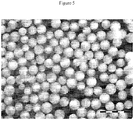
- Imageable beads prepared according to Example 5, were loaded with Doxorubicin according to previously reported method ( Lewis, A. L. et al. Journal of Materials Science-Materials in Medicine 2007, 18, 1691 ). Briefly, 250 ⁇ l of thoroughly washed beads with DI water was immersed into 0.5 ml of Dox (20 mg/ml) solution and shaken for 3 hrs at room temperature. As can be seen from the light microscopy image in Figure 3B , the doxorubicin loaded radiopaque beads have taken on the characteristic red appearance of doxorubicin loaded hydrogels and appear to have decreased slightly in size.
- radiopacity, or radiodensity, of the beads prepared in Examples 6 and 7 were assessed in clinical and micro CT with both techniques confirming that both sets of beads are radiopaque and easily visualized in both radiographic techniques.
- visualization is based on radiopacity of the beads per given volume.
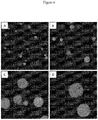
- a 3.1% packed bead volume showed a mean radiopacity of 129 ⁇ 33 HU and increased to 269 ⁇ 53 HU and 444 ⁇ 83 HU as the bead packed volume increased to 6.2 and 12.5 %, respectively. This is shown in Figure 4A .
- Figures 4B and 4C are shown in Figures 4B and 4C , respectively.
- a bifunctional linker was then grafted on to the activated beads.
- Activated beads were suspended in 200 ml of anhydrous DMSO at 50 °C, and 18.5 g of 1,3-diaminopropane was added into the bead suspension. After the reaction was complete, the reaction vessel was cooled down to room temperature and the resulting beads were washed by diethyl ether and DMSO mixture three times, followed by the removal of solvents.
- triiodobenzoic acid was activated towards reaction with the activated bead;
- TIBA 2,3,5-triiodobenzoic acid
- the compound was then activated by adding 13 g of CDI powder, resulting in a steady release of CO 2 (at room temperature), the solution becoming turbid and viscous after stirring for about 30 to 60 min.
- the mixture was then added into a suspension of activated beads in 100 ml of DMSO. At 50 °C, the suspension was stirred for over 24 hr whilst protected from light. Finally, the beads were washed with diethyl ether and DMSO mixture and deionized water.
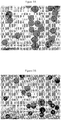
- MicroCT image of bead phantoms is shown in Figure 6 .
- the iodine content of vacuum-dried beads was 42-45% by elemental analysis.
- Table 1 shows the measured bead solid content, iodine content and parameters of characterization.
- this example conforms in all respects to Example 8, except that a reaction temperature of 70 °C was used in all three steps and 2/3 of TIBA equivalent to initial OH on beads are used in the third step.
- the beads appeared more brown color under these higher temperature conditions.
- the iodine content of dried beads is listed in Table 1, indicating slightly less conjugation efficiency.
- the beads were further autoclaved under 121 °C for 20 min., and no damage/degradation was observed post-sterilisation.
- Drug loading capacity of the beads prepared according to Example 9 was tested by adding 2.87 ml of doxorubicin solution (24.4 mg/ml) to 1 ml of beads (sieved, 100-300 ⁇ m) with occasional agitation. After 24 hr, the residual doxorubicin in solution was measured by UV at 483 nm, and the loading yield was calculated as 99.6%.
- Example 9 This example is the same in all respects as Example 9, other than that in the third step, an alternative coupling agent, N,N'-diisopropylcarbodiimide (DIC) was used in the reaction of TIBA and reactive (amino-linked) beads. Equivalent DIC and TIBA to initial OH on beads were used in this case. The iodine content of final dried beads was confirmed by elemental analysis to be 17.7%, illustrating a lower conjugation efficiency that that observed in Examples 8 & 9. Table 1: Iodine Content and Radiodensitv of Radiopaque beads prepared according to the Examples 8 and 9 Example No.
- DIC N,N'-diisopropylcarbodiimide
Landscapes
- Health & Medical Sciences (AREA)
- Chemical & Material Sciences (AREA)
- Life Sciences & Earth Sciences (AREA)
- General Health & Medical Sciences (AREA)
- Veterinary Medicine (AREA)
- Animal Behavior & Ethology (AREA)
- Public Health (AREA)
- Epidemiology (AREA)
- Medicinal Chemistry (AREA)
- Chemical Kinetics & Catalysis (AREA)
- Organic Chemistry (AREA)
- Engineering & Computer Science (AREA)
- Pharmacology & Pharmacy (AREA)
- Nuclear Medicine, Radiotherapy & Molecular Imaging (AREA)
- General Chemical & Material Sciences (AREA)
- Polymers & Plastics (AREA)
- Nanotechnology (AREA)
- Bioinformatics & Cheminformatics (AREA)
- Heart & Thoracic Surgery (AREA)
- Cardiology (AREA)
- Medicinal Preparation (AREA)
- Addition Polymer Or Copolymer, Post-Treatments, Or Chemical Modifications (AREA)
- Medicines Containing Antibodies Or Antigens For Use As Internal Diagnostic Agents (AREA)
- Medicines That Contain Protein Lipid Enzymes And Other Medicines (AREA)
- Materials For Medical Uses (AREA)
- Pharmaceuticals Containing Other Organic And Inorganic Compounds (AREA)
- Biophysics (AREA)
- Biotechnology (AREA)
- General Engineering & Computer Science (AREA)
- Medical Informatics (AREA)
- Molecular Biology (AREA)
- Crystallography & Structural Chemistry (AREA)
Applications Claiming Priority (2)
| Application Number | Priority Date | Filing Date | Title |
|---|---|---|---|
| US201361790373P | 2013-03-15 | 2013-03-15 | |
| PCT/US2014/027395 WO2014152488A2 (en) | 2013-03-15 | 2014-03-14 | Imageable embolic microsphere |
Publications (2)
| Publication Number | Publication Date |
|---|---|
| EP2968618A2 EP2968618A2 (en) | 2016-01-20 |
| EP2968618B1 true EP2968618B1 (en) | 2021-02-17 |
Family
ID=50631039
Family Applications (1)
| Application Number | Title | Priority Date | Filing Date |
|---|---|---|---|
| EP14721095.9A Active EP2968618B1 (en) | 2013-03-15 | 2014-03-14 | Imageable embolic microsphere |
Country Status (8)
| Country | Link |
|---|---|
| US (3) | US10307493B2 (https=) |
| EP (1) | EP2968618B1 (https=) |
| JP (3) | JP6420817B2 (https=) |
| KR (1) | KR20160032000A (https=) |
| CN (2) | CN117982687A (https=) |
| CA (1) | CA2906574C (https=) |
| HK (1) | HK1220119A1 (https=) |
| WO (1) | WO2014152488A2 (https=) |
Families Citing this family (30)
| Publication number | Priority date | Publication date | Assignee | Title |
|---|---|---|---|---|
| ES2531488T3 (es) | 2009-10-06 | 2015-03-16 | Regents Of The University Of Minnesota | Microesferas de embolización bioreabsorbibles |
| AU2013274199B2 (en) | 2012-06-14 | 2016-08-11 | Microvention, Inc. | Polymeric treatment compositions |
| WO2014062696A1 (en) | 2012-10-15 | 2014-04-24 | Microvention, Inc. | Polymeric treatment compositions |
| GB2519738A (en) | 2013-09-06 | 2015-05-06 | Biocompatibles Uk Ltd | Radiopaque polymers |
| GB2521997A (en) | 2013-09-06 | 2015-07-15 | Biocompatibles Uk Ltd | Radiopaque polymers |
| EP4245782B1 (en) | 2015-01-12 | 2025-10-29 | Biosphere Medical, Inc. | Radiopaque monomers, polymers, microspheres, and methods related thereto |
| CN115137870B (zh) * | 2016-03-14 | 2024-05-10 | 生物相容性英国公司 | 包含颗粒的乳液 |
| US10182979B2 (en) | 2016-03-22 | 2019-01-22 | Regents Of The University Of Minnesota | Biodegradable microspheres |
| US10368874B2 (en) | 2016-08-26 | 2019-08-06 | Microvention, Inc. | Embolic compositions |
| CN107050501B (zh) * | 2016-12-29 | 2020-09-15 | 苏州恒瑞迦俐生生物医药科技有限公司 | 一种可视化多羟基聚合体栓塞微球及其制备方法 |
| CN106822983B (zh) * | 2016-12-29 | 2020-09-15 | 苏州恒瑞迦俐生生物医药科技有限公司 | 一种用于微创介入疗法治疗肿瘤疾病的可显影栓塞微球及其制备方法 |
| JP6925014B2 (ja) | 2017-02-15 | 2021-08-25 | ドリームメディカルパートナーズ株式会社 | 塞栓材の製造方法 |
| JP7362598B2 (ja) | 2017-10-09 | 2023-10-17 | マイクロベンション インコーポレイテッド | 放射性液体塞栓物質 |
| CN107854720B (zh) * | 2017-12-28 | 2020-12-08 | 苏州恒瑞迦俐生生物医药科技有限公司 | 具有造影功能的可载药多羟基聚合物栓塞微球及其制备方法 |
| GB201810788D0 (en) | 2018-06-29 | 2018-08-15 | Biocompatibles Uk Ltd | Biodegradable polymer |
| TW202000189A (zh) | 2018-06-29 | 2020-01-01 | 英商白康帝英國有限公司 | 不透射線聚合物 |
| CN108686259B (zh) * | 2018-07-12 | 2020-11-24 | 中国人民解放军总医院 | 用于血管内栓塞x线下可显影的载药微球及其制备方法 |
| CN113348001B (zh) * | 2018-11-13 | 2022-10-21 | 上海盛迪医药有限公司 | 一种聚合物及其组合物 |
| CN110628008B (zh) * | 2019-06-25 | 2021-10-08 | 复旦大学 | 一种具有x-射线显影功能的含碘聚碳酸酯及其制备方法与应用 |
| GB201910286D0 (en) | 2019-07-18 | 2019-09-04 | Biocompatibles Uk Ltd | Radiopaque polymers |
| EP4026859A4 (en) * | 2019-09-05 | 2022-12-28 | Dalian Heyuan Medical Equipments Co., Ltd. | Poly[alpha-cyanoacrylate] hydrolyzate and preparation method and applicaiton thereof |
| CN112972754B (zh) * | 2021-02-24 | 2022-07-19 | 苏州微尺度科技有限公司 | 一种可视化岩藻多糖栓塞微球及其制备方法 |
| US20230037198A1 (en) * | 2021-07-29 | 2023-02-02 | Varian Medical Systems, Inc. | Apparatuses and methods for producing embolic particles with activated loading sites |
| CN116115818B (zh) * | 2021-11-12 | 2024-06-28 | 重庆百迈腾世医药科技有限公司 | 活性金属微球、基于活性金属微球的复合栓塞剂及其应用 |
| CN114057600B (zh) * | 2021-12-02 | 2024-02-02 | 上海汇禾医疗科技股份有限公司 | 一种可x射线显影分子、载药栓塞微球及其制备方法 |
| CN114344554A (zh) * | 2022-02-11 | 2022-04-15 | 上海益思妙医疗器械有限公司 | 一种peg化合物作为制备栓塞剂的应用 |
| CN116059368B (zh) * | 2022-07-20 | 2025-07-25 | 暨南大学 | Smo抑制剂在制备预防、延缓或减轻动静脉内瘘通路狭窄的药物中的应用 |
| US20240327335A1 (en) | 2022-08-25 | 2024-10-03 | Cardiolink Science (Shenzhen) Medical Technology Development Co., Ltd. | Amide compound having iodoaryl or iodoheteroaryl, preparation method therefor and use thereof |
| CN115490639B (zh) * | 2022-09-19 | 2023-05-16 | 科睿驰(深圳)医疗科技发展有限公司 | X射线显影化合物及其制备方法、x射线显影栓塞材料及其制备方法 |
| CN117323294B (zh) * | 2023-09-25 | 2024-05-31 | 至微(深圳)医学科技有限公司 | 一种载药栓塞微球及其制备方法和应用 |
Family Cites Families (40)
| Publication number | Priority date | Publication date | Assignee | Title |
|---|---|---|---|---|
| US2860986A (en) | 1956-08-31 | 1958-11-18 | Eastman Kodak Co | Partially acetalized polyvinyl alcohol containing active halogen |
| US3840482A (en) | 1971-09-13 | 1974-10-08 | Ici Australia Ltd | Process for curing poly(vinyl alcohol)matrix beads |
| US4406878A (en) | 1978-08-02 | 1983-09-27 | Eastman Kodak Company | Iodinated contrast agent for radiography |
| US4306031A (en) | 1979-08-14 | 1981-12-15 | Mitsubishi Chemical Industries Limited | Weakly acidic cation exchange resin and process for producing same |
| US5141739A (en) | 1986-07-03 | 1992-08-25 | Advanced Magnetics, Inc. | Delivery of x-ray contrast agents using receptor mediated endocytosis |
| JPH0656676B2 (ja) | 1986-09-01 | 1994-07-27 | ティアツク株式会社 | 記録再生装置 |
| EP0391741B1 (en) | 1989-04-06 | 1995-04-19 | Merocel Corporation | Polymeric broad-spectrum antimicrobial materials |
| DK0586524T3 (https=) | 1991-06-03 | 1997-05-20 | Nycomed Imaging As | |
| JPH0656676A (ja) | 1992-08-05 | 1994-03-01 | Hori Shinichi | 血管塞栓用懸濁液 |
| US5330739A (en) | 1992-12-04 | 1994-07-19 | Sterling Winthrop Inc. | Iodinated benzoyl acetals and ketals for x-ray imaging |
| TW272976B (https=) * | 1993-08-06 | 1996-03-21 | Ciba Geigy Ag | |
| EP1263803B1 (en) | 2000-03-13 | 2007-09-19 | BioCure, Inc. | Embolic compositions |
| US6652883B2 (en) | 2000-03-13 | 2003-11-25 | Biocure, Inc. | Tissue bulking and coating compositions |
| WO2002053288A2 (en) * | 2000-12-31 | 2002-07-11 | Amersham Biosciences Ab | A method for the manufacture of compositions containing low concentrations of salts |
| US6911219B2 (en) | 2001-09-27 | 2005-06-28 | Surgica Corporation | Partially acetalized polyvinyl alcohol embolization particles, compositions containing those particles and methods of making and using them |
| HK1079980B (en) | 2003-02-12 | 2008-11-14 | Biocompatibles Uk Limited | Composition for chemoembolotherapy of solid tumors |
| US20040161466A1 (en) | 2003-02-14 | 2004-08-19 | Biocompatibles Uk Limited | Chemoembolisation |
| US7201918B2 (en) | 2004-11-16 | 2007-04-10 | Microvention, Inc. | Compositions, systems and methods for treatment of defects in blood vessels |
| US20060292077A1 (en) | 2005-03-18 | 2006-12-28 | Zhao Jonathon Z | Dendritic and star-shaped contrast agents for medical devices and bioabsorbable radiopaque bulk material and method for producing same |
| EP1810698A1 (en) | 2006-01-24 | 2007-07-25 | Biocompatibles UK Limited | Process for producing radiopaque embolic microspheres |
| WO2008051291A2 (en) * | 2006-04-11 | 2008-05-02 | Ordway Research Institute | Nanoparticle and polymer formulations for thyroid hormone analogs, antagonists, and formulations thereof |
| US8507639B2 (en) | 2006-09-11 | 2013-08-13 | Boston Scientific Scimed, Inc. | Radiopaque amide polymers and medical devices formed thereof |
| WO2008039827A2 (en) | 2006-09-26 | 2008-04-03 | Aeris Therapeutics, Inc. | Polymer systems for lung volume reduction therapy |
| JPWO2008059835A1 (ja) | 2006-11-16 | 2010-03-04 | 財団法人ヒューマンサイエンス振興財団 | 金属キレート複合体及びプロトン緩和速度増強剤並びにmri造影剤 |
| CA2686563A1 (en) | 2007-05-11 | 2008-11-20 | Aeris Therapeutics, Llc | Lung volume reduction therapy using crosslinked non-natural polymers |
| EP1992371A1 (de) | 2007-05-15 | 2008-11-19 | Occlutech GmbH | Bioresorbierbare röntgenopake Polymermaterialien und daraus hergestellte Occlussionsinstrumente |
| AU2008279129A1 (en) | 2007-07-24 | 2009-01-29 | Nexbio, Inc. | Technology for the preparation of microparticles |
| CN101835749A (zh) | 2007-07-30 | 2010-09-15 | 奥斯拜客斯制药有限公司 | 取代的吲哚 |
| EP2090592A1 (en) | 2007-07-31 | 2009-08-19 | OctoPlus Sciences B.V. | Biodegradable hydrogels based on click chemistry |
| US20090169471A1 (en) * | 2007-12-28 | 2009-07-02 | Boston Scientific Scimed, Inc. | Particles for injection and processes for forming the same |
| US20090269390A1 (en) | 2008-04-25 | 2009-10-29 | Medtronic, Inc. | Medical devices, polymers, compositions, and methods for delivering a haloacetate |
| US8790701B2 (en) | 2008-04-28 | 2014-07-29 | Surmodics, Inc. | Poly-α(1→4)glucopyranose-based matrices with hydrazide crosslinking |
| ITRM20080636A1 (it) | 2008-11-28 | 2010-05-29 | Univ Palermo | Procedimento per la produzione di derivati funzionalizzati dell acido ialuronico e relativi idrogeli. |
| CA3149284A1 (en) | 2009-12-15 | 2011-07-14 | Incept, Llc | Implants and biodegradable fiducial markers |
| EP2365009A1 (en) * | 2010-03-10 | 2011-09-14 | Universite Claude Bernard Lyon 1 (UCBL) | Radiopaque, non-biodegradable, water-insoluble iodinated benzyl ethers of poly(vinyl alcohol), preparation method thereof, injectable embolizing compositions containing thereof and use thereof |
| ES2368307B1 (es) | 2010-04-28 | 2012-10-17 | Universidade De Santiago De Compostela | Hidrogeles elaborados a base de polímeros aniónicos de origen natural. |
| CN103124762B (zh) | 2010-09-29 | 2016-03-16 | 塞恩心血管公司 | 制备微球的方法及其制备的微球和微球的用途 |
| JP5915177B2 (ja) * | 2010-12-09 | 2016-05-11 | 東レ株式会社 | 生分解性粒子、血管塞栓材料及び生分解性粒子の製造方法 |
| US9910037B2 (en) | 2013-03-15 | 2018-03-06 | Iris International, Inc. | Conjugation of multiple vancomycin molecules on a polyvinyl alcohol backbone for the capture of microorganisms |
| JP6506230B2 (ja) | 2016-09-28 | 2019-04-24 | Necプラットフォームズ株式会社 | 音声無音検知装置、音声無音検知方法、音声無音検知プログラム、及び音声無音検知システム |
-
2014
- 2014-03-14 JP JP2016502420A patent/JP6420817B2/ja active Active
- 2014-03-14 WO PCT/US2014/027395 patent/WO2014152488A2/en not_active Ceased
- 2014-03-14 HK HK16108169.0A patent/HK1220119A1/zh unknown
- 2014-03-14 EP EP14721095.9A patent/EP2968618B1/en active Active
- 2014-03-14 CA CA2906574A patent/CA2906574C/en active Active
- 2014-03-14 CN CN202311346292.XA patent/CN117982687A/zh active Pending
- 2014-03-14 CN CN201480024766.1A patent/CN105517580A/zh active Pending
- 2014-03-14 KR KR1020157028536A patent/KR20160032000A/ko not_active Ceased
- 2014-03-14 US US14/777,168 patent/US10307493B2/en active Active
-
2018
- 2018-10-12 JP JP2018193368A patent/JP6723312B2/ja active Active
-
2019
- 2019-04-11 US US16/381,204 patent/US20190328908A1/en not_active Abandoned
-
2020
- 2020-01-22 US US16/749,370 patent/US11672876B2/en active Active
- 2020-02-27 JP JP2020031965A patent/JP6983930B2/ja active Active
Non-Patent Citations (1)
| Title |
|---|
| None * |
Also Published As
| Publication number | Publication date |
|---|---|
| EP2968618A2 (en) | 2016-01-20 |
| US20160030602A1 (en) | 2016-02-04 |
| HK1220119A1 (zh) | 2017-04-28 |
| CA2906574C (en) | 2021-08-31 |
| US10307493B2 (en) | 2019-06-04 |
| WO2014152488A2 (en) | 2014-09-25 |
| JP2020079313A (ja) | 2020-05-28 |
| JP6420817B2 (ja) | 2018-11-07 |
| KR20160032000A (ko) | 2016-03-23 |
| JP2016515158A (ja) | 2016-05-26 |
| JP6723312B2 (ja) | 2020-07-15 |
| WO2014152488A8 (en) | 2014-12-04 |
| CN117982687A (zh) | 2024-05-07 |
| CN105517580A (zh) | 2016-04-20 |
| US11672876B2 (en) | 2023-06-13 |
| CA2906574A1 (en) | 2014-09-25 |
| JP2019023221A (ja) | 2019-02-14 |
| US20190328908A1 (en) | 2019-10-31 |
| WO2014152488A3 (en) | 2015-03-05 |
| JP6983930B2 (ja) | 2021-12-17 |
| US20200155711A1 (en) | 2020-05-21 |
Similar Documents
| Publication | Publication Date | Title |
|---|---|---|
| US11672876B2 (en) | Imageable embolic microsphere | |
| JP7705834B2 (ja) | ヒドロゲルおよびヒドロゲルを含む組成物 | |
| AU2021215248B2 (en) | Radiopaque polymers |
Legal Events
| Date | Code | Title | Description |
|---|---|---|---|
| PUAI | Public reference made under article 153(3) epc to a published international application that has entered the european phase |
Free format text: ORIGINAL CODE: 0009012 |
|
| 17P | Request for examination filed |
Effective date: 20151014 |
|
| AK | Designated contracting states |
Kind code of ref document: A2 Designated state(s): AL AT BE BG CH CY CZ DE DK EE ES FI FR GB GR HR HU IE IS IT LI LT LU LV MC MK MT NL NO PL PT RO RS SE SI SK SM TR |
|
| AX | Request for extension of the european patent |
Extension state: BA ME |
|
| DAX | Request for extension of the european patent (deleted) | ||
| REG | Reference to a national code |
Ref country code: HK Ref legal event code: DE Ref document number: 1220119 Country of ref document: HK |
|
| STAA | Information on the status of an ep patent application or granted ep patent |
Free format text: STATUS: EXAMINATION IS IN PROGRESS |
|
| 17Q | First examination report despatched |
Effective date: 20170515 |
|
| RAP1 | Party data changed (applicant data changed or rights of an application transferred) |
Owner name: NATIONAL INSTITUTES OF HEALTH Owner name: BIOCOMPATIBLES UK LIMITED |
|
| RIN1 | Information on inventor provided before grant (corrected) |
Inventor name: DREHER, MATTHEW R. Inventor name: LEWIS, ANDREW LEONARD Inventor name: TANG, YIQING Inventor name: WOOD, BRADFORD J. Inventor name: NEGUSSIE, AYELE H. |
|
| RIN1 | Information on inventor provided before grant (corrected) |
Inventor name: DREHER, MATTHEW R. Inventor name: LEWIS, ANDREW LENNARD Inventor name: TANG, YIQING Inventor name: WOOD, BRADFORD J. Inventor name: NEGUSSIE, AYELE H. |
|
| GRAP | Despatch of communication of intention to grant a patent |
Free format text: ORIGINAL CODE: EPIDOSNIGR1 |
|
| STAA | Information on the status of an ep patent application or granted ep patent |
Free format text: STATUS: GRANT OF PATENT IS INTENDED |
|
| RIC1 | Information provided on ipc code assigned before grant |
Ipc: B82Y 5/00 20110101ALI20200406BHEP Ipc: A61P 43/00 20060101ALI20200406BHEP Ipc: A61P 9/00 20060101ALI20200406BHEP Ipc: A61P 35/00 20060101ALI20200406BHEP Ipc: A61K 49/04 20060101AFI20200406BHEP |
|
| INTG | Intention to grant announced |
Effective date: 20200430 |
|
| GRAJ | Information related to disapproval of communication of intention to grant by the applicant or resumption of examination proceedings by the epo deleted |
Free format text: ORIGINAL CODE: EPIDOSDIGR1 |
|
| STAA | Information on the status of an ep patent application or granted ep patent |
Free format text: STATUS: EXAMINATION IS IN PROGRESS |
|
| GRAP | Despatch of communication of intention to grant a patent |
Free format text: ORIGINAL CODE: EPIDOSNIGR1 |
|
| STAA | Information on the status of an ep patent application or granted ep patent |
Free format text: STATUS: GRANT OF PATENT IS INTENDED |
|
| INTC | Intention to grant announced (deleted) | ||
| INTG | Intention to grant announced |
Effective date: 20201006 |
|
| GRAS | Grant fee paid |
Free format text: ORIGINAL CODE: EPIDOSNIGR3 |
|
| GRAA | (expected) grant |
Free format text: ORIGINAL CODE: 0009210 |
|
| STAA | Information on the status of an ep patent application or granted ep patent |
Free format text: STATUS: THE PATENT HAS BEEN GRANTED |
|
| AK | Designated contracting states |
Kind code of ref document: B1 Designated state(s): AL AT BE BG CH CY CZ DE DK EE ES FI FR GB GR HR HU IE IS IT LI LT LU LV MC MK MT NL NO PL PT RO RS SE SI SK SM TR |
|
| REG | Reference to a national code |
Ref country code: GB Ref legal event code: FG4D |
|
| REG | Reference to a national code |
Ref country code: CH Ref legal event code: EP |
|
| REG | Reference to a national code |
Ref country code: DE Ref legal event code: R096 Ref document number: 602014074819 Country of ref document: DE |
|
| REG | Reference to a national code |
Ref country code: AT Ref legal event code: REF Ref document number: 1360598 Country of ref document: AT Kind code of ref document: T Effective date: 20210315 |
|
| REG | Reference to a national code |
Ref country code: IE Ref legal event code: FG4D |
|
| REG | Reference to a national code |
Ref country code: LT Ref legal event code: MG9D |
|
| REG | Reference to a national code |
Ref country code: NL Ref legal event code: MP Effective date: 20210217 |
|
| PG25 | Lapsed in a contracting state [announced via postgrant information from national office to epo] |
Ref country code: FI Free format text: LAPSE BECAUSE OF FAILURE TO SUBMIT A TRANSLATION OF THE DESCRIPTION OR TO PAY THE FEE WITHIN THE PRESCRIBED TIME-LIMIT Effective date: 20210217 Ref country code: HR Free format text: LAPSE BECAUSE OF FAILURE TO SUBMIT A TRANSLATION OF THE DESCRIPTION OR TO PAY THE FEE WITHIN THE PRESCRIBED TIME-LIMIT Effective date: 20210217 Ref country code: GR Free format text: LAPSE BECAUSE OF FAILURE TO SUBMIT A TRANSLATION OF THE DESCRIPTION OR TO PAY THE FEE WITHIN THE PRESCRIBED TIME-LIMIT Effective date: 20210518 Ref country code: LT Free format text: LAPSE BECAUSE OF FAILURE TO SUBMIT A TRANSLATION OF THE DESCRIPTION OR TO PAY THE FEE WITHIN THE PRESCRIBED TIME-LIMIT Effective date: 20210217 Ref country code: PT Free format text: LAPSE BECAUSE OF FAILURE TO SUBMIT A TRANSLATION OF THE DESCRIPTION OR TO PAY THE FEE WITHIN THE PRESCRIBED TIME-LIMIT Effective date: 20210617 Ref country code: NO Free format text: LAPSE BECAUSE OF FAILURE TO SUBMIT A TRANSLATION OF THE DESCRIPTION OR TO PAY THE FEE WITHIN THE PRESCRIBED TIME-LIMIT Effective date: 20210517 Ref country code: BG Free format text: LAPSE BECAUSE OF FAILURE TO SUBMIT A TRANSLATION OF THE DESCRIPTION OR TO PAY THE FEE WITHIN THE PRESCRIBED TIME-LIMIT Effective date: 20210517 |
|
| REG | Reference to a national code |
Ref country code: AT Ref legal event code: MK05 Ref document number: 1360598 Country of ref document: AT Kind code of ref document: T Effective date: 20210217 |
|
| PG25 | Lapsed in a contracting state [announced via postgrant information from national office to epo] |
Ref country code: SE Free format text: LAPSE BECAUSE OF FAILURE TO SUBMIT A TRANSLATION OF THE DESCRIPTION OR TO PAY THE FEE WITHIN THE PRESCRIBED TIME-LIMIT Effective date: 20210217 Ref country code: PL Free format text: LAPSE BECAUSE OF FAILURE TO SUBMIT A TRANSLATION OF THE DESCRIPTION OR TO PAY THE FEE WITHIN THE PRESCRIBED TIME-LIMIT Effective date: 20210217 Ref country code: LV Free format text: LAPSE BECAUSE OF FAILURE TO SUBMIT A TRANSLATION OF THE DESCRIPTION OR TO PAY THE FEE WITHIN THE PRESCRIBED TIME-LIMIT Effective date: 20210217 Ref country code: NL Free format text: LAPSE BECAUSE OF FAILURE TO SUBMIT A TRANSLATION OF THE DESCRIPTION OR TO PAY THE FEE WITHIN THE PRESCRIBED TIME-LIMIT Effective date: 20210217 Ref country code: RS Free format text: LAPSE BECAUSE OF FAILURE TO SUBMIT A TRANSLATION OF THE DESCRIPTION OR TO PAY THE FEE WITHIN THE PRESCRIBED TIME-LIMIT Effective date: 20210217 |
|
| PG25 | Lapsed in a contracting state [announced via postgrant information from national office to epo] |
Ref country code: IS Free format text: LAPSE BECAUSE OF FAILURE TO SUBMIT A TRANSLATION OF THE DESCRIPTION OR TO PAY THE FEE WITHIN THE PRESCRIBED TIME-LIMIT Effective date: 20210617 |
|
| PG25 | Lapsed in a contracting state [announced via postgrant information from national office to epo] |
Ref country code: SM Free format text: LAPSE BECAUSE OF FAILURE TO SUBMIT A TRANSLATION OF THE DESCRIPTION OR TO PAY THE FEE WITHIN THE PRESCRIBED TIME-LIMIT Effective date: 20210217 Ref country code: EE Free format text: LAPSE BECAUSE OF FAILURE TO SUBMIT A TRANSLATION OF THE DESCRIPTION OR TO PAY THE FEE WITHIN THE PRESCRIBED TIME-LIMIT Effective date: 20210217 Ref country code: CZ Free format text: LAPSE BECAUSE OF FAILURE TO SUBMIT A TRANSLATION OF THE DESCRIPTION OR TO PAY THE FEE WITHIN THE PRESCRIBED TIME-LIMIT Effective date: 20210217 Ref country code: AT Free format text: LAPSE BECAUSE OF FAILURE TO SUBMIT A TRANSLATION OF THE DESCRIPTION OR TO PAY THE FEE WITHIN THE PRESCRIBED TIME-LIMIT Effective date: 20210217 |
|
| REG | Reference to a national code |
Ref country code: CH Ref legal event code: PL |
|
| REG | Reference to a national code |
Ref country code: DE Ref legal event code: R097 Ref document number: 602014074819 Country of ref document: DE |
|
| PG25 | Lapsed in a contracting state [announced via postgrant information from national office to epo] |
Ref country code: MC Free format text: LAPSE BECAUSE OF FAILURE TO SUBMIT A TRANSLATION OF THE DESCRIPTION OR TO PAY THE FEE WITHIN THE PRESCRIBED TIME-LIMIT Effective date: 20210217 Ref country code: ES Free format text: LAPSE BECAUSE OF FAILURE TO SUBMIT A TRANSLATION OF THE DESCRIPTION OR TO PAY THE FEE WITHIN THE PRESCRIBED TIME-LIMIT Effective date: 20210217 Ref country code: DK Free format text: LAPSE BECAUSE OF FAILURE TO SUBMIT A TRANSLATION OF THE DESCRIPTION OR TO PAY THE FEE WITHIN THE PRESCRIBED TIME-LIMIT Effective date: 20210217 Ref country code: SK Free format text: LAPSE BECAUSE OF FAILURE TO SUBMIT A TRANSLATION OF THE DESCRIPTION OR TO PAY THE FEE WITHIN THE PRESCRIBED TIME-LIMIT Effective date: 20210217 Ref country code: RO Free format text: LAPSE BECAUSE OF FAILURE TO SUBMIT A TRANSLATION OF THE DESCRIPTION OR TO PAY THE FEE WITHIN THE PRESCRIBED TIME-LIMIT Effective date: 20210217 |
|
| REG | Reference to a national code |
Ref country code: BE Ref legal event code: MM Effective date: 20210331 |
|
| PLBE | No opposition filed within time limit |
Free format text: ORIGINAL CODE: 0009261 |
|
| STAA | Information on the status of an ep patent application or granted ep patent |
Free format text: STATUS: NO OPPOSITION FILED WITHIN TIME LIMIT |
|
| 26N | No opposition filed |
Effective date: 20211118 |
|
| PG25 | Lapsed in a contracting state [announced via postgrant information from national office to epo] |
Ref country code: AL Free format text: LAPSE BECAUSE OF FAILURE TO SUBMIT A TRANSLATION OF THE DESCRIPTION OR TO PAY THE FEE WITHIN THE PRESCRIBED TIME-LIMIT Effective date: 20210217 Ref country code: CH Free format text: LAPSE BECAUSE OF NON-PAYMENT OF DUE FEES Effective date: 20210331 Ref country code: LI Free format text: LAPSE BECAUSE OF NON-PAYMENT OF DUE FEES Effective date: 20210331 Ref country code: LU Free format text: LAPSE BECAUSE OF NON-PAYMENT OF DUE FEES Effective date: 20210314 |
|
| PG25 | Lapsed in a contracting state [announced via postgrant information from national office to epo] |
Ref country code: SI Free format text: LAPSE BECAUSE OF FAILURE TO SUBMIT A TRANSLATION OF THE DESCRIPTION OR TO PAY THE FEE WITHIN THE PRESCRIBED TIME-LIMIT Effective date: 20210217 |
|
| PG25 | Lapsed in a contracting state [announced via postgrant information from national office to epo] |
Ref country code: IT Free format text: LAPSE BECAUSE OF FAILURE TO SUBMIT A TRANSLATION OF THE DESCRIPTION OR TO PAY THE FEE WITHIN THE PRESCRIBED TIME-LIMIT Effective date: 20210217 |
|
| PG25 | Lapsed in a contracting state [announced via postgrant information from national office to epo] |
Ref country code: IS Free format text: LAPSE BECAUSE OF FAILURE TO SUBMIT A TRANSLATION OF THE DESCRIPTION OR TO PAY THE FEE WITHIN THE PRESCRIBED TIME-LIMIT Effective date: 20210617 |
|
| PG25 | Lapsed in a contracting state [announced via postgrant information from national office to epo] |
Ref country code: BE Free format text: LAPSE BECAUSE OF NON-PAYMENT OF DUE FEES Effective date: 20210331 |
|
| PG25 | Lapsed in a contracting state [announced via postgrant information from national office to epo] |
Ref country code: HU Free format text: LAPSE BECAUSE OF FAILURE TO SUBMIT A TRANSLATION OF THE DESCRIPTION OR TO PAY THE FEE WITHIN THE PRESCRIBED TIME-LIMIT; INVALID AB INITIO Effective date: 20140314 |
|
| P01 | Opt-out of the competence of the unified patent court (upc) registered |
Effective date: 20230509 |
|
| PG25 | Lapsed in a contracting state [announced via postgrant information from national office to epo] |
Ref country code: CY Free format text: LAPSE BECAUSE OF FAILURE TO SUBMIT A TRANSLATION OF THE DESCRIPTION OR TO PAY THE FEE WITHIN THE PRESCRIBED TIME-LIMIT Effective date: 20210217 |
|
| REG | Reference to a national code |
Ref country code: HK Ref legal event code: WD Ref document number: 1220119 Country of ref document: HK |
|
| REG | Reference to a national code |
Ref country code: DE Ref legal event code: R081 Ref document number: 602014074819 Country of ref document: DE Owner name: NATIONAL INSTITUTES OF HEALTH, BETHESDA, US Free format text: FORMER OWNERS: BIOCOMPATIBLES UK LTD., FARNHAM, SURREY, GB; NATIONAL INSTITUTES OF HEALTH, BETHESDA, MD., US Ref country code: DE Ref legal event code: R081 Ref document number: 602014074819 Country of ref document: DE Owner name: BOSTON SCIENTIFIC MEDICAL DEVICE LIMITED, IE Free format text: FORMER OWNERS: BIOCOMPATIBLES UK LTD., FARNHAM, SURREY, GB; NATIONAL INSTITUTES OF HEALTH, BETHESDA, MD., US |
|
| PG25 | Lapsed in a contracting state [announced via postgrant information from national office to epo] |
Ref country code: MK Free format text: LAPSE BECAUSE OF FAILURE TO SUBMIT A TRANSLATION OF THE DESCRIPTION OR TO PAY THE FEE WITHIN THE PRESCRIBED TIME-LIMIT Effective date: 20210217 |
|
| PG25 | Lapsed in a contracting state [announced via postgrant information from national office to epo] |
Ref country code: MT Free format text: LAPSE BECAUSE OF FAILURE TO SUBMIT A TRANSLATION OF THE DESCRIPTION OR TO PAY THE FEE WITHIN THE PRESCRIBED TIME-LIMIT Effective date: 20210217 |
|
| PG25 | Lapsed in a contracting state [announced via postgrant information from national office to epo] |
Ref country code: TR Free format text: LAPSE BECAUSE OF FAILURE TO SUBMIT A TRANSLATION OF THE DESCRIPTION OR TO PAY THE FEE WITHIN THE PRESCRIBED TIME-LIMIT Effective date: 20210217 |
|
| PGFP | Annual fee paid to national office [announced via postgrant information from national office to epo] |
Ref country code: GB Payment date: 20260220 Year of fee payment: 13 |
|
| PGFP | Annual fee paid to national office [announced via postgrant information from national office to epo] |
Ref country code: IE Payment date: 20260223 Year of fee payment: 13 Ref country code: DE Payment date: 20260219 Year of fee payment: 13 |
|
| PGFP | Annual fee paid to national office [announced via postgrant information from national office to epo] |
Ref country code: FR Payment date: 20260219 Year of fee payment: 13 |