EP2968593B1 - Biologisch aktive moleküle, konjugate davon und therapeutische verwendungen davon - Google Patents
Biologisch aktive moleküle, konjugate davon und therapeutische verwendungen davon Download PDFInfo
- Publication number
- EP2968593B1 EP2968593B1 EP14729755.0A EP14729755A EP2968593B1 EP 2968593 B1 EP2968593 B1 EP 2968593B1 EP 14729755 A EP14729755 A EP 14729755A EP 2968593 B1 EP2968593 B1 EP 2968593B1
- Authority
- EP
- European Patent Office
- Prior art keywords
- asparagine
- compound
- alkyl
- aryl
- heteroaryl
- Prior art date
- Legal status (The legal status is an assumption and is not a legal conclusion. Google has not performed a legal analysis and makes no representation as to the accuracy of the status listed.)
- Active
Links
Images




Classifications
-
- C—CHEMISTRY; METALLURGY
- C07—ORGANIC CHEMISTRY
- C07D—HETEROCYCLIC COMPOUNDS
- C07D507/00—Heterocyclic compounds containing a condensed beta-lactam ring system, not provided for by groups C07D463/00, C07D477/00 or C07D499/00 - C07D505/00; Such ring systems being further condensed
-
- A—HUMAN NECESSITIES
- A61—MEDICAL OR VETERINARY SCIENCE; HYGIENE
- A61K—PREPARATIONS FOR MEDICAL, DENTAL OR TOILETRY PURPOSES
- A61K31/00—Medicinal preparations containing organic active ingredients
- A61K31/33—Heterocyclic compounds
- A61K31/395—Heterocyclic compounds having nitrogen as a ring hetero atom, e.g. guanethidine or rifamycins
- A61K31/535—Heterocyclic compounds having nitrogen as a ring hetero atom, e.g. guanethidine or rifamycins having six-membered rings with at least one nitrogen and one oxygen as the ring hetero atoms, e.g. 1,2-oxazines
- A61K31/5365—Heterocyclic compounds having nitrogen as a ring hetero atom, e.g. guanethidine or rifamycins having six-membered rings with at least one nitrogen and one oxygen as the ring hetero atoms, e.g. 1,2-oxazines ortho- or peri-condensed with heterocyclic ring systems
-
- A—HUMAN NECESSITIES
- A61—MEDICAL OR VETERINARY SCIENCE; HYGIENE
- A61K—PREPARATIONS FOR MEDICAL, DENTAL OR TOILETRY PURPOSES
- A61K47/00—Medicinal preparations characterised by the non-active ingredients used, e.g. carriers or inert additives; Targeting or modifying agents chemically bound to the active ingredient
- A61K47/50—Medicinal preparations characterised by the non-active ingredients used, e.g. carriers or inert additives; Targeting or modifying agents chemically bound to the active ingredient the non-active ingredient being chemically bound to the active ingredient, e.g. polymer-drug conjugates
- A61K47/51—Medicinal preparations characterised by the non-active ingredients used, e.g. carriers or inert additives; Targeting or modifying agents chemically bound to the active ingredient the non-active ingredient being chemically bound to the active ingredient, e.g. polymer-drug conjugates the non-active ingredient being a modifying agent
- A61K47/68—Medicinal preparations characterised by the non-active ingredients used, e.g. carriers or inert additives; Targeting or modifying agents chemically bound to the active ingredient the non-active ingredient being chemically bound to the active ingredient, e.g. polymer-drug conjugates the non-active ingredient being a modifying agent the modifying agent being an antibody, an immunoglobulin or a fragment thereof, e.g. an Fc-fragment
- A61K47/6801—Drug-antibody or immunoglobulin conjugates defined by the pharmacologically or therapeutically active agent
- A61K47/6803—Drugs conjugated to an antibody or immunoglobulin, e.g. cisplatin-antibody conjugates
-
- A—HUMAN NECESSITIES
- A61—MEDICAL OR VETERINARY SCIENCE; HYGIENE
- A61K—PREPARATIONS FOR MEDICAL, DENTAL OR TOILETRY PURPOSES
- A61K47/00—Medicinal preparations characterised by the non-active ingredients used, e.g. carriers or inert additives; Targeting or modifying agents chemically bound to the active ingredient
- A61K47/50—Medicinal preparations characterised by the non-active ingredients used, e.g. carriers or inert additives; Targeting or modifying agents chemically bound to the active ingredient the non-active ingredient being chemically bound to the active ingredient, e.g. polymer-drug conjugates
- A61K47/51—Medicinal preparations characterised by the non-active ingredients used, e.g. carriers or inert additives; Targeting or modifying agents chemically bound to the active ingredient the non-active ingredient being chemically bound to the active ingredient, e.g. polymer-drug conjugates the non-active ingredient being a modifying agent
- A61K47/68—Medicinal preparations characterised by the non-active ingredients used, e.g. carriers or inert additives; Targeting or modifying agents chemically bound to the active ingredient the non-active ingredient being chemically bound to the active ingredient, e.g. polymer-drug conjugates the non-active ingredient being a modifying agent the modifying agent being an antibody, an immunoglobulin or a fragment thereof, e.g. an Fc-fragment
- A61K47/6801—Drug-antibody or immunoglobulin conjugates defined by the pharmacologically or therapeutically active agent
- A61K47/6803—Drugs conjugated to an antibody or immunoglobulin, e.g. cisplatin-antibody conjugates
- A61K47/68033—Drugs conjugated to an antibody or immunoglobulin, e.g. cisplatin-antibody conjugates the drug being a maytansine
-
- A—HUMAN NECESSITIES
- A61—MEDICAL OR VETERINARY SCIENCE; HYGIENE
- A61K—PREPARATIONS FOR MEDICAL, DENTAL OR TOILETRY PURPOSES
- A61K47/00—Medicinal preparations characterised by the non-active ingredients used, e.g. carriers or inert additives; Targeting or modifying agents chemically bound to the active ingredient
- A61K47/50—Medicinal preparations characterised by the non-active ingredients used, e.g. carriers or inert additives; Targeting or modifying agents chemically bound to the active ingredient the non-active ingredient being chemically bound to the active ingredient, e.g. polymer-drug conjugates
- A61K47/51—Medicinal preparations characterised by the non-active ingredients used, e.g. carriers or inert additives; Targeting or modifying agents chemically bound to the active ingredient the non-active ingredient being chemically bound to the active ingredient, e.g. polymer-drug conjugates the non-active ingredient being a modifying agent
- A61K47/68—Medicinal preparations characterised by the non-active ingredients used, e.g. carriers or inert additives; Targeting or modifying agents chemically bound to the active ingredient the non-active ingredient being chemically bound to the active ingredient, e.g. polymer-drug conjugates the non-active ingredient being a modifying agent the modifying agent being an antibody, an immunoglobulin or a fragment thereof, e.g. an Fc-fragment
- A61K47/6835—Medicinal preparations characterised by the non-active ingredients used, e.g. carriers or inert additives; Targeting or modifying agents chemically bound to the active ingredient the non-active ingredient being chemically bound to the active ingredient, e.g. polymer-drug conjugates the non-active ingredient being a modifying agent the modifying agent being an antibody, an immunoglobulin or a fragment thereof, e.g. an Fc-fragment the modifying agent being an antibody or an immunoglobulin bearing at least one antigen-binding site
- A61K47/6849—Medicinal preparations characterised by the non-active ingredients used, e.g. carriers or inert additives; Targeting or modifying agents chemically bound to the active ingredient the non-active ingredient being chemically bound to the active ingredient, e.g. polymer-drug conjugates the non-active ingredient being a modifying agent the modifying agent being an antibody, an immunoglobulin or a fragment thereof, e.g. an Fc-fragment the modifying agent being an antibody or an immunoglobulin bearing at least one antigen-binding site the antibody targeting a receptor, a cell surface antigen or a cell surface determinant
-
- A—HUMAN NECESSITIES
- A61—MEDICAL OR VETERINARY SCIENCE; HYGIENE
- A61K—PREPARATIONS FOR MEDICAL, DENTAL OR TOILETRY PURPOSES
- A61K47/00—Medicinal preparations characterised by the non-active ingredients used, e.g. carriers or inert additives; Targeting or modifying agents chemically bound to the active ingredient
- A61K47/50—Medicinal preparations characterised by the non-active ingredients used, e.g. carriers or inert additives; Targeting or modifying agents chemically bound to the active ingredient the non-active ingredient being chemically bound to the active ingredient, e.g. polymer-drug conjugates
- A61K47/51—Medicinal preparations characterised by the non-active ingredients used, e.g. carriers or inert additives; Targeting or modifying agents chemically bound to the active ingredient the non-active ingredient being chemically bound to the active ingredient, e.g. polymer-drug conjugates the non-active ingredient being a modifying agent
- A61K47/68—Medicinal preparations characterised by the non-active ingredients used, e.g. carriers or inert additives; Targeting or modifying agents chemically bound to the active ingredient the non-active ingredient being chemically bound to the active ingredient, e.g. polymer-drug conjugates the non-active ingredient being a modifying agent the modifying agent being an antibody, an immunoglobulin or a fragment thereof, e.g. an Fc-fragment
- A61K47/6835—Medicinal preparations characterised by the non-active ingredients used, e.g. carriers or inert additives; Targeting or modifying agents chemically bound to the active ingredient the non-active ingredient being chemically bound to the active ingredient, e.g. polymer-drug conjugates the non-active ingredient being a modifying agent the modifying agent being an antibody, an immunoglobulin or a fragment thereof, e.g. an Fc-fragment the modifying agent being an antibody or an immunoglobulin bearing at least one antigen-binding site
- A61K47/6851—Medicinal preparations characterised by the non-active ingredients used, e.g. carriers or inert additives; Targeting or modifying agents chemically bound to the active ingredient the non-active ingredient being chemically bound to the active ingredient, e.g. polymer-drug conjugates the non-active ingredient being a modifying agent the modifying agent being an antibody, an immunoglobulin or a fragment thereof, e.g. an Fc-fragment the modifying agent being an antibody or an immunoglobulin bearing at least one antigen-binding site the antibody targeting a determinant of a tumour cell
- A61K47/6855—Medicinal preparations characterised by the non-active ingredients used, e.g. carriers or inert additives; Targeting or modifying agents chemically bound to the active ingredient the non-active ingredient being chemically bound to the active ingredient, e.g. polymer-drug conjugates the non-active ingredient being a modifying agent the modifying agent being an antibody, an immunoglobulin or a fragment thereof, e.g. an Fc-fragment the modifying agent being an antibody or an immunoglobulin bearing at least one antigen-binding site the antibody targeting a determinant of a tumour cell the tumour determinant being from breast cancer cell
-
- A—HUMAN NECESSITIES
- A61—MEDICAL OR VETERINARY SCIENCE; HYGIENE
- A61K—PREPARATIONS FOR MEDICAL, DENTAL OR TOILETRY PURPOSES
- A61K47/00—Medicinal preparations characterised by the non-active ingredients used, e.g. carriers or inert additives; Targeting or modifying agents chemically bound to the active ingredient
- A61K47/50—Medicinal preparations characterised by the non-active ingredients used, e.g. carriers or inert additives; Targeting or modifying agents chemically bound to the active ingredient the non-active ingredient being chemically bound to the active ingredient, e.g. polymer-drug conjugates
- A61K47/51—Medicinal preparations characterised by the non-active ingredients used, e.g. carriers or inert additives; Targeting or modifying agents chemically bound to the active ingredient the non-active ingredient being chemically bound to the active ingredient, e.g. polymer-drug conjugates the non-active ingredient being a modifying agent
- A61K47/68—Medicinal preparations characterised by the non-active ingredients used, e.g. carriers or inert additives; Targeting or modifying agents chemically bound to the active ingredient the non-active ingredient being chemically bound to the active ingredient, e.g. polymer-drug conjugates the non-active ingredient being a modifying agent the modifying agent being an antibody, an immunoglobulin or a fragment thereof, e.g. an Fc-fragment
- A61K47/6835—Medicinal preparations characterised by the non-active ingredients used, e.g. carriers or inert additives; Targeting or modifying agents chemically bound to the active ingredient the non-active ingredient being chemically bound to the active ingredient, e.g. polymer-drug conjugates the non-active ingredient being a modifying agent the modifying agent being an antibody, an immunoglobulin or a fragment thereof, e.g. an Fc-fragment the modifying agent being an antibody or an immunoglobulin bearing at least one antigen-binding site
- A61K47/6851—Medicinal preparations characterised by the non-active ingredients used, e.g. carriers or inert additives; Targeting or modifying agents chemically bound to the active ingredient the non-active ingredient being chemically bound to the active ingredient, e.g. polymer-drug conjugates the non-active ingredient being a modifying agent the modifying agent being an antibody, an immunoglobulin or a fragment thereof, e.g. an Fc-fragment the modifying agent being an antibody or an immunoglobulin bearing at least one antigen-binding site the antibody targeting a determinant of a tumour cell
- A61K47/6869—Medicinal preparations characterised by the non-active ingredients used, e.g. carriers or inert additives; Targeting or modifying agents chemically bound to the active ingredient the non-active ingredient being chemically bound to the active ingredient, e.g. polymer-drug conjugates the non-active ingredient being a modifying agent the modifying agent being an antibody, an immunoglobulin or a fragment thereof, e.g. an Fc-fragment the modifying agent being an antibody or an immunoglobulin bearing at least one antigen-binding site the antibody targeting a determinant of a tumour cell the tumour determinant being from a cell of the reproductive system: ovaria, uterus, testes, prostate
-
- A—HUMAN NECESSITIES
- A61—MEDICAL OR VETERINARY SCIENCE; HYGIENE
- A61K—PREPARATIONS FOR MEDICAL, DENTAL OR TOILETRY PURPOSES
- A61K47/00—Medicinal preparations characterised by the non-active ingredients used, e.g. carriers or inert additives; Targeting or modifying agents chemically bound to the active ingredient
- A61K47/50—Medicinal preparations characterised by the non-active ingredients used, e.g. carriers or inert additives; Targeting or modifying agents chemically bound to the active ingredient the non-active ingredient being chemically bound to the active ingredient, e.g. polymer-drug conjugates
- A61K47/51—Medicinal preparations characterised by the non-active ingredients used, e.g. carriers or inert additives; Targeting or modifying agents chemically bound to the active ingredient the non-active ingredient being chemically bound to the active ingredient, e.g. polymer-drug conjugates the non-active ingredient being a modifying agent
- A61K47/68—Medicinal preparations characterised by the non-active ingredients used, e.g. carriers or inert additives; Targeting or modifying agents chemically bound to the active ingredient the non-active ingredient being chemically bound to the active ingredient, e.g. polymer-drug conjugates the non-active ingredient being a modifying agent the modifying agent being an antibody, an immunoglobulin or a fragment thereof, e.g. an Fc-fragment
- A61K47/6835—Medicinal preparations characterised by the non-active ingredients used, e.g. carriers or inert additives; Targeting or modifying agents chemically bound to the active ingredient the non-active ingredient being chemically bound to the active ingredient, e.g. polymer-drug conjugates the non-active ingredient being a modifying agent the modifying agent being an antibody, an immunoglobulin or a fragment thereof, e.g. an Fc-fragment the modifying agent being an antibody or an immunoglobulin bearing at least one antigen-binding site
- A61K47/6871—Medicinal preparations characterised by the non-active ingredients used, e.g. carriers or inert additives; Targeting or modifying agents chemically bound to the active ingredient the non-active ingredient being chemically bound to the active ingredient, e.g. polymer-drug conjugates the non-active ingredient being a modifying agent the modifying agent being an antibody, an immunoglobulin or a fragment thereof, e.g. an Fc-fragment the modifying agent being an antibody or an immunoglobulin bearing at least one antigen-binding site the antibody targeting an enzyme
-
- A—HUMAN NECESSITIES
- A61—MEDICAL OR VETERINARY SCIENCE; HYGIENE
- A61P—SPECIFIC THERAPEUTIC ACTIVITY OF CHEMICAL COMPOUNDS OR MEDICINAL PREPARATIONS
- A61P19/00—Drugs for skeletal disorders
- A61P19/08—Drugs for skeletal disorders for bone diseases, e.g. rachitism, Paget's disease
-
- A—HUMAN NECESSITIES
- A61—MEDICAL OR VETERINARY SCIENCE; HYGIENE
- A61P—SPECIFIC THERAPEUTIC ACTIVITY OF CHEMICAL COMPOUNDS OR MEDICINAL PREPARATIONS
- A61P25/00—Drugs for disorders of the nervous system
- A61P25/28—Drugs for disorders of the nervous system for treating neurodegenerative disorders of the central nervous system, e.g. nootropic agents, cognition enhancers, drugs for treating Alzheimer's disease or other forms of dementia
-
- A—HUMAN NECESSITIES
- A61—MEDICAL OR VETERINARY SCIENCE; HYGIENE
- A61P—SPECIFIC THERAPEUTIC ACTIVITY OF CHEMICAL COMPOUNDS OR MEDICINAL PREPARATIONS
- A61P31/00—Antiinfectives, i.e. antibiotics, antiseptics, chemotherapeutics
- A61P31/04—Antibacterial agents
-
- A—HUMAN NECESSITIES
- A61—MEDICAL OR VETERINARY SCIENCE; HYGIENE
- A61P—SPECIFIC THERAPEUTIC ACTIVITY OF CHEMICAL COMPOUNDS OR MEDICINAL PREPARATIONS
- A61P35/00—Antineoplastic agents
-
- A—HUMAN NECESSITIES
- A61—MEDICAL OR VETERINARY SCIENCE; HYGIENE
- A61P—SPECIFIC THERAPEUTIC ACTIVITY OF CHEMICAL COMPOUNDS OR MEDICINAL PREPARATIONS
- A61P43/00—Drugs for specific purposes, not provided for in groups A61P1/00-A61P41/00
-
- A—HUMAN NECESSITIES
- A61—MEDICAL OR VETERINARY SCIENCE; HYGIENE
- A61P—SPECIFIC THERAPEUTIC ACTIVITY OF CHEMICAL COMPOUNDS OR MEDICINAL PREPARATIONS
- A61P9/00—Drugs for disorders of the cardiovascular system
Definitions
- the present disclosure provides Ligand-Biologically Active Molecule Conjugates as defined in the claims wherein the Ligand is connected to the Biologically Active Molecule through a linker compound.
- the present disclosure also provides conjugate compounds in pharmaceutical compositions for use in various therapeutic applications.
- Proliferative diseases are characterized by uncontrolled growth and spread of abnormal cells. If the spread is not controlled, it can result in death.
- Abnormal proliferation for example, cancer, is caused by both external factors (e.g., tobacco, chemicals, radiation and infectious organisms) and internal factors (inherited mutations, immune system conditions, the mutations that occur from metabolism). These causal factors may act together or in sequence to initiate or promote abnormal proliferation. Cancer is treated by surgery, radiation, chemotherapy, hormones and immunotherapy. However, there is a need for more effective anti-proliferation drugs.
- the ideal anti-proliferation therapy would enable targeted delivery of highly cytotoxic agents to tumor cells and would leave normal cells unaffected.
- Conventional chemotherapeutic treatment with maytansine for example, is limited because of the toxic side-effects that arise from effects of the drug on non-cancerous cells.
- Various approaches to targeted drug delivery have been tried, including the use of conjugates of tumor targeted probes (such as antibodies or growth factors) with toxins such as pseudomonas or diphtheria toxins, which arrest the synthesis of proteins and cells.
- the side effects include reaction of the immune system due to non-human components of the conjugates.
- the half-life of the drug conjugates were limited due to elimination from the circulation through renal filtration, and schematic degradation, uptake by the reticuloendothelial system (RES), and accumulation in non-targeted organs and tissues.
- RES reticuloendothelial system
- Another approach uses passive drug carriers such as polymers, liposomes, and polymeric micelles to take advantage of the hyper-permeability of vascular endothelia of tumor tissue.
- Polymeric drugs and macromolecules accumulate within solid tumors due to an enhanced permeability and retention mechanism.
- barriers of using such targeted deliveries include fast clearance of foreign particles from the blood, and technological hindrances in obtaining highly standardized, pharmaceutically acceptable drug delivery systems with the necessary specificity and selectivity for binding tumor cells.
- US 2013/029900 A1 discloses a cell-binding agent-cytotoxic agent conjugate having a peptide linker. US 2013/029900 A1 also describes compositions and methods of inhibiting abnormal cell growth and treating a proliferative disorder in a mammal using the conjugate disclosed therein.
- Reddy et al. (“Folate Receptor-Specific Antitumor Activity of EC 131, a Folate- Maytansinoid Conjugate", CANCER RESEARCH, vol. 67, no. 13, 1 July 2007, pages 6376-6382 ) describes how EC131, a new folate receptor (FR)-targeted drug conjugate, was prepared by covalently attaching the vitamin folic acid (FA) to a potent microtubule-inhibiting agent, maytansinoid DM1, via an intramolecular disulfide bond. Reddy et al. also describes the biological activity of EC 131.
- linker-biologically active compounds represented by the following structural formula (V): Z 2 -A-W-X-Y-Z 1 -D (V) wherein:
- linkers represented by the following structural formula (VI).
- the linker compounds is represented by formula (VI): Z 2 -A-W-X-Y-Z 1 (VI) wherein:
- the present disclosure also relates to pharmaceutical composition
- pharmaceutical composition comprising a therapeutically effective amount of a compound of the first aspect or a pharmaceutically acceptable salt thereof and one or more pharmaceutically acceptable carriers, diluents, or excipients.
- the present disclosure also provides a compound of the first aspect for use in reducing, retarding or stopping an abnormal cell growth.
- the present disclosure also provides a compound of the first aspect for use in killing a cell.
- the present disclosure also provides a compound of the first aspect for use in the treatment of a medical disorder in an individual.
- the present disclosure also provides a compound of the first aspect for use in reducing tumor size, stopping tumor size increase, reducing tumor proliferation, or preventing tumor proliferation in an individual in need thereof.
- Biologically Active Molecule-linker compounds as represented by formula (V).
- Compounds of formula (V) provide building blocks for conjugate compounds of formula (I).
- compounds of formula (V) may be provided as compositions, pharmaceutical compositions and pharmaceutically acceptable salts thereof.
- conjugate refers to compound having a Ligand, linker and Biologically Active Molecule.
- Illustrative examples include compounds of formula (I), (III) and (IV).
- spacer refers to chemical building blocks of the linker used to spatially separate the Ligand from the Biologically Active Molecule and to allow for catabolism of the linker inside of cells.
- a spacer can be represented by Z 1 and Z 2 .
- macrolide refers to any Biologically Active Molecule having a macrolide ring.
- alkyl refers to a hydrocarbon group having a general formula C n H 2n +1 .
- alkyl include: methyl, ethyl, 1-propyl, 2-propyl, 1-butyl, and the like.
- Typical alkyl have from one to ten carbon atoms, one to nine carbon atoms, one to eight carbon atoms, one to seven carbon atoms, one to six carbon atoms, one to five carbon atoms, one to four carbon atoms, one to three carbon atoms, one to two carbon atoms or one carbon atom.
- aryl refers to a monovalent or polycyclic aromatic hydrocarbon typically having 6 to 18 carbon atoms.
- Example aryl include phenyl (like benzene), substituted benzenes, naphthalene, anthracene, indenyl, tetrahydronapthyl and the like.
- alkynyl refers to a univalent aliphatic hydrocarbon radical containing a triple bond. Typical alkynyl are from two to twenty carbon atoms (and include at least one triple bond). Examples alkynyl include ethynyl, propynyl, 1-butynyl, 2-butynyl, 1-pentynyl, hexynyl and the like.
- cycloalkyl refers to a monovalent saturated carbocyclic ring radical. Typical cycloalkyl are 3 to 7 member monocyclic ring radicals. One example of a cycloalkyl is cyclohexyl.
- heteroaryl refers to a monovalent aromatic radical of 5 or 6 membered rings. Heteroaryl includes fused ring systems (at least one must be aromatic) that include up to 5 to 18 atoms, containing one or more heteroatoms independently selected from nitrogen, sulfur or oxygen. Illustrative heteroaryl are pyridinyl, triazolyl, furyl, pyrazinyl, thienyl, isoxazolyl, indazolyl, furazanyl, benzothiazolyl, quinazolinyl, and furopyridinyl.
- heterocyclyl refers to saturated or partially saturated carbocyclic radical typically of 3 to 18 carbon atoms in which at least one ring atom is a heteroatom selected from nitrogen, oxygen, phosphorous, and sulfur.
- a heterocycyl may be a monocycle or a bicycle, for example.
- Example heterocyclyl are pyrolidinyl, tetrahydrofuranyl, dihydropyranyl, thioxanyl, 2H-pyranyl, dioxanyl, dithianyl, piperidino, and the like.
- pharmaceutically acceptable salt refers to both organic and inorganic salts of the conjugate compounds described herein, e.g., compounds of formula (I), (III), (IV) and (V).
- the salts are pharmaceutically acceptable and include: sulfate, citrate, nitrate, phosphate, ascorbate, bromide, gluconate, benzoate, oxalate, pantothenate, and the like.
- pharmaceutically acceptable salts herein may include more than one charged atom in its structure as well as one or more counter ion. Preparation of conjugate compounds herein as pharmaceutically acceptable salts is well known to one of skill in the art.
- human antibody as used herein is intended to include antibodies having variable and constant regions derived from human immunoglobulin sequences.
- the human mAbs of the invention may include amino acid residues not encoded by human immunoglobulin sequences (e.g., mutations introduced by random or site-specific mutagenesis in vitro or by somatic mutation in vivo ), for example in the CDRs and in particular CDR3.
- human antibody as used herein, is not intended to include mAbs in which CDR sequences derived from the germline of another mammalian species have been grafted onto human FR sequences.
- terapéuticaally effective amount refers to an amount that produces the desired effect for which it is administered. The exact amount will depend on the purpose of the treatment, and will be ascertainable by one skilled in the art using known techniques (see, for example, Lloyd (1999) The Art, Science and Technology of Pharmaceutical Compounding ).
- conjugate compounds which do not comprise an antibody or an antigen binding fragment thereof are not covered by the claims and are for reference only.
- Ligands are any molecule capable of binding with some specificity to a given binding partner within a mammal where the interaction can result in a therapeutic use. In some examples the Ligand is capable of binding to a cell or cell population.
- Ligands for use herein include antibodies, lymphokines, hormones, growth factors, viral receptors, interleukins, or any other cell binding or peptide binding molecule or substance.
- the Ligand is an antibody.
- antibody refers to monoclonal antibodies, polyclonal antibodies, antibody fragments (Fab, Fab', and F(ab)2, minibodies, diabodies, tribodies, and the like), and bispecific antibodies.
- Antibodies herein can be humanized using methods described in US Patent No. 6,596,541 and US Publication No. 2012/0096572 .
- the Ligand binds to an antigen binding partner that is a polypeptide and may be a transmembrane molecule (e.g., receptor) or a growth factor.
- antigens include, but are not limited to, molecules such as renin; a growth hormone, including human growth hormone and bovine growth hormone; growth hormone releasing factor; parathyroid hormone; thyroid stimulating hormone; lipoproteins; alpha1-antitrypsin; insulin A-chain; insulin B-chain; proinsulin; follicle stimulating hormone; calcitonin; luteinizing hormone; glucagon; clotting factors such as factor vmc, factor IX, tissue factor (TF), and von Willebrands factor; anti-clotting factors such as Protein C; atrial natriuretic factor; lung surfactant; a plasminogen activator, such as urokinase or human urine or tissue-type plasminogen activator (t-PA); bombesin; thrombin; hemo
- erythropoietin erythropoietin
- osteoinductive factors immunotoxins
- a bone morphogenetic protein BMP
- an interferon such as interferon-alpha, -beta, and -gamma
- colony stimulating factors CSFs
- CSFs colony stimulating factors
- ILs interleukins
- superoxide dismutase T-cell receptors
- surface membrane proteins surface membrane proteins
- viral antigen such as, for example, a portion of the HIV envelope; transport proteins; homing receptors; addressins; regulatory proteins; integrins, such as CDlla, CDllb, CDllc, CDI8, an ICAM, VLA-4 and VCAM
- a tumor associated antigen such as AFP, ALK, B7H4, BAGE proteins, ⁇ -catenin, brc-abl, BRCA1, BORIS, CA9 (carbonic an interferon-alpha, -beta, and -gamma
- Ligands may also include ankyrin repeat proteins, interferons, lymphokines such as IL-2 or IL-3, hormones like insulin and glucocorticoids, growth factors such as EGF, transferrin, fibronectin type III, etc.
- Ligands are prepared to interact with and bind to antigens defined as tumor antigens, which include antigens specific for a type of tumor or antigens that are shared, overexpressed or modified on a particular type of tumor.
- Examples include: alpha-actinin-4 with lung cancer, ARTC1 with melanoma, BCR-ABL fusion protein with chronic myeloid leukemia, B-RAF, CLPP or Cdc27 with melanoma, CASP-8 with squamous cell carcinoma, and hsp70-2 with renal cell carcinoma as well as the following shared tumor-specific antigens, for example: BAGE-1, GAGE, GnTV, KK-LC-1, MAGE-A2, NA88-A, TRP2-INT2.
- conjugate compounds or compounds which do not comprise a maytansinoid are not covered by the claims and are for reference only.
- Biologically Active Molecules herein include any molecules that have a therapeutic use in a mammal.
- the molecule is beneficially delivered to a target within the mammal and in particular is beneficially delivered to and then within a cell (e.g., endocytosis) as compared to molecules released into the vascular or lymphatic systems.
- Biologically Active Molecules are compounds that result in the inhibition, retardation, reduction, and/or prevention of cell growth. Biologically Active Molecules can also result in cell death via necrosis or apoptosis.
- Illustrative Biologically Active Molecules for use in conjugate compounds described herein include: maytansinoids (e.g., DM1, DM4, etc.), auristatins (e.g., MMAE, MMAD, MMAF, etc.), duocarmycin (e.g., MGBA), dolastatin, toxoids, and other chemotherapeutically effective drugs.
- Bioly Active Molecules include, e.g., 1-dehydrotestosterone, 2-pyrrolinodoxorubicin, 5-fluorouracil, 6-mercaptopurine, 6-thioguanine, actinomycin D, anthracycline, anthramycin (AMC), bleomycin, busulfan, calicheamicins, carmustine cisplatin, colchicin, cyanomorpholino-doxorubicin, cyclophosphamide, cytarabine, cytochalasin B, dactinomycin, daunorubicin, decarbazine, dibromomannitol, dihydroxy anthracin dione, doxorubicin, emetine, epirubicin, ethidium bromide, etoposide, gramicidin D, glucocorticoids, lidocaine, lomustine (CCNU), mechlorethamine, melphal
- the Biologically Active Molecule is a maytansinoid or a maytansinoid analog.
- Exemplary maytansinoids for use herein are described in Widdison et al., J. Med. Chem., 2006, 49, 4392-4408 .
- the present disclosure includes a linker compound that is chemically capable of covalently linking two spaced chemical moieties.
- the linker spaces and links two moieties, for example, the linker can link a Ligand and a Biologically Active Molecule.
- the linker is self immolative wherein the linker connects two or more different chemical moieties and releases at least one of the said chemical moieties in the presence of an enzyme.
- the linker may be attached to other chemical moieties, including but not limited to, analytical agents, biomolecules, targeting agents, detectable labels, diagnostic agents, and the like.
- the linker attaches a Biologically Active Molecule and a Ligand.
- the linker attaches a biologically active macrolide and a Ligand.
- the linker attaches a biologically active macrolide and an antibody or fragments thereof.
- the linkers are useful to covalently link ligands with therapeutic agents and markers.
- the linkers improve chemical and/or systemic stability of the attached moieties.
- the linkers reduce in vivo toxicity of the attached moieties.
- the linkers improve pharmacokinetics, pharmacodynamics, and/or bioavailability of the attached moieties.
- the linkers cleave and release a Biologically Active Molecule at a site in or near a target cell or a cell population in a pharmacologically effective form.
- the cleavage is performed by enzymes.
- the cleavable groups on the linkers for the enzymatic cleavage include, but not limited to, peptide bonds, ester linkages, and disulfide linkages.
- the linker is cleaved through pH changes.
- linker compounds is represented by formula (VI): Z 2 -A-W-X-Y-Z 1 (VI) wherein:
- the disclosure provides compounds of formula (VI), wherein Z 2 is represented by the following structural formula: -Z 2A -Z 2B -Z 2C -Z 2D -, wherein:
- the disclosure provides compounds of formula (VI), wherein Z 1 is represented by the following structural formula: -Z 1A -Z 1B -Z 1C -Z 1D -, wherein:
- the disclosure provides compounds of formula (VI), wherein A is an amino acid selected from the group consisting of alanine, aspartic acid, glutamic acid, phenylalanine, glycine, histidine, isoleucine, lysine, leucine, methionine, asparagine, proline, glutamine, arginine, serine, threonine, valine, tryptophan, tyrosine, cysteine, and citrulline.
- A is an amino acid selected from the group consisting of alanine, aspartic acid, glutamic acid, phenylalanine, glycine, histidine, isoleucine, lysine, leucine, methionine, asparagine, proline, glutamine, arginine, serine, threonine, valine, tryptophan, tyrosine, cysteine, and citrulline.
- the disclosure provides compounds of formula (VI), wherein A is a peptide selected from the group consisting of valine-citrulline, citrulline-valine, lysine-phenylalanine, phenylalanine-lysine, valine-asparagine, asparagine-valine, threonine-asparagine, serine-asparagine, asparagine-serine, phenylalanine-asparagine, asparagine-phenylalanine, leucine-asparagine, asparagine-leucine, isoleucine-asparagine, asparagine-isoleucine, glycine-asparagine, asparagine-glycine, glutamic acid- asparagine, asparagine-glutamic acid, citrulline-asparagine, asparagine-citrulline, alanine-asparagine, asparagine-
- the disclosure provides compounds of formula (VI), wherein X is an aryl selected from the group consisting of
- the linkers, the biologically active molecules, and other compounds of the present disclosure can be connected to an antibody or antigen-binding molecule through an attachment at a particular amino acid within the antibody or antigen-binding molecule.
- exemplary amino acid attachments that can be used in the context of the disclosure include, e.g., lysine (see, e.g., US 5,208,020 ; US 2010/0129314 ; Hollander et al., Bioconjugate Chem., 2008, 19:358-361 ; WO 2005/089808 ; US 5,714,586 ; US 2013/0101546 ; and US 2012/0585592 ), cysteine (see, e.g., US 2007/0258987 ; WO 2013/055993 ; WO 2013/055990 ; WO 2013/053873 ; WO 2013/053872 ; WO 2011/130598 ; US 2013/0101546 ; and US 7,750,116 ),
- Linkers can also be conjugated to an antigen-binding protein via attachment to carbohydrates (see, e.g., US 2008/0305497 , and Ryan et al., Food & Agriculture Immunol., 2001, 13:127-130 ) and disulfide linkers (see, e.g., WO 2013/085925 , WO 2010/010324 , WO 2011/018611 , and Shaunak et al., Nat. Chem. Biol., 2006, 2:312-313 ).
- the linkers, the biologically active molecules such as drugs can be connected to an antibody or antigen-binding molecule through an attachment at a particular amino acid within the antibody or antigen-binding molecule forming an antibody-drug conjugate (ADC).
- ADC antibody-drug conjugate
- the present disclosure provides Biologically Active Molecules and Ligand conjugates represented by the following structural formula (I): wherein:
- the present disclosure relates to compounds where the Biologically Active Molecule is a cytotoxic biologically active macrolide.
- the maytansinoid is represented by the following structural formula (II)(a):
- the disclosure provides a compound of formula (I), wherein the Ligand (L) is capable of binding to a specifically targeted cell population.
- the disclosure provides a compound of formula (I), wherein the Ligand (L) is selected from the group consisting of proteins, antibodies, fragments of antibodies, nucleic acids, antigen binding scaffolds, and carbohydrates.
- the disclosure provides a compound of formula (I), wherein the Ligand (L) is an antibody or a fragment thereof.
- the disclosure provides a compound of formula (I), wherein Ligand (L) is an antibody or fragment thereof that specifically binds a tumor associated antigen.
- the disclosure provides a compound of formula (I), wherein the antibody or a fragment thereof comprises a sulfur group that is covalently attached with Z 2 .
- the disclosure provides compounds of formula (I), wherein Z 2 is represented by the following structural formula: -Z 2A -Z 2B -Z 2C -Z 2D -, wherein:
- the disclosure provides compounds of formula (I), wherein the antibody or a fragment thereof comprises a sulfur group that is covalently attached with Z 2A .
- the disclosure provides compounds of formula (I), wherein Z 1 is represented by the following structural formula: -Z 1A -Z 1B -Z 1C -Z 1D -, wherein:
- the disclosure provides compounds of formula (I), wherein the Biologically Active Molecule (D) is covalently attached with Z 1 .
- the disclosure provides compounds of formula (I), wherein A is an amino acid selected from the group consisting of alanine, aspartic acid, glutamic acid, phenylalanine, glycine, histidine, isoleucine, lysine, leucine, methionine, asparagine, proline, glutamine, arginine, serine, threonine, valine, tryptophan, tyrosine, cysteine, and citrulline.
- A is an amino acid selected from the group consisting of alanine, aspartic acid, glutamic acid, phenylalanine, glycine, histidine, isoleucine, lysine, leucine, methionine, asparagine, proline, glutamine, arginine, serine, threonine, valine, tryptophan, tyrosine, cysteine, and citrulline.
- the disclosure provides compounds of formula (I), wherein A is a peptide selected from the group consisting of valine-citrulline, citrulline-valine, lysine-phenylalanine, phenylalanine-lysine, valine-asparagine, asparagine-valine, threonine-asparagine, serine-asparagine, asparagine-serine, phenylalanine-asparagine, asparagine-phenylalanine, leucine-asparagine, asparagine-leucine, isoleucine-asparagine, asparagine-isoleucine, glycine-asparagine, asparagine-glycine, glutamic acid- asparagine, asparagine-glutamic acid, citrulline-asparagine, asparagine-citrulline, alanine-asparagine, asparagine-a
- the disclosure provides compounds of formula (I), wherein X is an aryl selected from the group consisting of
- the disclosure provides the compounds of formula (III) wherein:
- the disclosure provides the compounds of formula (III) represented by the following structures (III)(a) and (III)(b): wherein Ab is an antibody or a fragment thereof.
- the disclosure provides the compounds of formula (IV): wherein:
- the disclosure provides the compounds of formula (IV) wherein:
- the disclosure provides the compounds of formula (IV) represented by the following structure (IV)(a): wherein Ab is an antibody or a fragment thereof.
- the disclosure provides a compound of Formula (V) Z 2 -A-W-X-Y-Z 1 -D (V) wherein:
- the disclosure provides the compound of formula (V), wherein:
- the disclosure provides compounds of formula (V), wherein the biologically active molecule is a maytansinoid represented by the following structural formula:
- the disclosure provides compounds of formula (V) represented by the following structures: (V)(a), (V)(b), (V)(c), (V)(d), and (V)(e): and
- the disclosure provides the compounds of formula (IX): Y 1 -Z 1 -D (IX) wherein:
- the disclosure provides compound of formula (IX) wherein the Biologically Active Molecule is a cytotoxic biologically active macrolide.
- the disclosure provides compound of formula (IX) wherein the biologically active macrolide is a maytansinoid.
- the disclosure provides compound of formula (IX) wherein the maytansinoid is represented by formula (II).
- the disclosure provides compound of formula (IX) wherein the maytansinoid is represented by formula (II)(a).
- the disclosure provides a compound of formula (IX) wherein IC 50 of the compound is greater than about 10 nM.
- the disclosure provides a compound of formula (IX) wherein the compound is about 10 fold less cytotoxic than the corresponding compound of formula (I).
- the disclosure provides the compound of formula (X) represented by the following structure (X)(a): wherein a is an integer from 1 to 10.
- the disclosure provides the compound of formula (XI) represented by the following structure (XI)(a): wherein a is an integer from 1 to 10.
- the disclosure provides the compounds of formula (I), (III), (IV) (V), and (X), wherein A is a peptide cleavable by a protease.
- the disclosure provides the compound of formula (XI) wherein the peptide is cleavable by a protease.
- the disclosure provides the compounds of formula (I), (III), (IV) (V), and (X) wherein A is a peptide cleavable by a protease expressed in tumor tissue.
- the disclosure provides the compound of formula (XI) wherein the peptide is cleavable by a protease expressed in tumor tissue.
- the disclosure provides the compounds of formula (I), (III), (IV) (V), (X) wherein A is a peptide cleavable by a protease further wherein the protease is a cathepsin or a plasmin.
- the disclosure provides the compound of formula (XI) wherein the peptide is cleavable by a protease further wherein the protease is a cathepsin or a plasmin.
- compositions which comprise conjugate compounds which are not covered by the claims are for reference only.
- compositions comprising conjugate compounds of formula (I), (III), (IV), (V), (X), or (XI) as well as mixtures thereof.
- the compound is further represented by a compound of formula (III)(a), (III)(b), (IV)(a), (V)(a), (V)(b), (V)(c), (V)(d) (V)(e), (X)(a), or (XI)(a).
- compositions comprising compounds of formula (I), (III), (IV), (V), (IX), (X), or (XI) as well as mixtures thereof.
- compositions may be pharmaceutical compositions that further include one or more pharmaceutically acceptable carriers, diluents, and/or excipients.
- the pharmaceutical composition is the pharmaceutically acceptable salt of compounds of formula (I), (III), (IV), (V), (IX), (X), or (XI) or mixtures thereof.
- the pharmaceutical composition is the pharmaceutically acceptable salt of compounds of formula (I), (III), (IV), (V), (IX), (X), or (XI) or mixtures thereof.
- Suitable pharmaceutical acceptable carriers, diluents and excipients are well known in the art and can be determined by one of ordinary skill in the art as the clinical situation warrants.
- suitable carriers, diluents and excipients include: buffers for maintenance of proper composition pH (e.g., citrate buffers, succinate buffers, acetate buffers, phosphate buffers, lactate buffers, oxalate buffers and the like), carrier proteins (e.g., human serum albumin), saline, polyols (e.g., trehalose, sucrose, xylitol, sorbitol, and the like), surfactants (e.g., polysorbate 20, polysorbate 80, polyoxolate, and the like), antimicrobials, and antioxidants.
- buffers for maintenance of proper composition pH e.g., citrate buffers, succinate buffers, acetate buffers, phosphate buffers, lactate buffers, oxalate buffers and the
- the pharmaceutical compositions herein may include a second or more therapeutic agent (e.g., an adjuvant to the conjugate compounds of formula (I), (III), (IV), (X), and/or (XI), anti-tumor agents, antibiotics, anti-inflammatories, and the like).
- the second therapeutic agent can be included in the same composition as the compounds of formula (I), (III), (IV), (V), (IX), (X), and/or (XI), or can be administered separately from the compounds of formula (I), (III), (IV), (V), (IX), (X), and/or (XI) (by time, or type and location of administration).
- each of the compounds of formula (I), (III), (IV), (V), (IX), (X), and/or (XI) can be modified in such a manner that the resulting compound still retains specificity and/or activity similar to the starting compound.
- the Biologically Active Molecule (D) of compounds of formula (I), (III), (IV), (V), (IX), (X), and/or (XI) can include any and all of the Biologically Active Molecules' analogues and derivatives.
- the Biologically Active Molecules is a macrolide and further is maytansine or an analogue of maytansine as described in Widdison et al., J. Med. Chem., 2006, 49 (14), 4392-4408 .
- the disclosure provides the pharmaceutical composition comprising a therapeutically effective amount of a compound of formula (I) , (III) ,(IV), (X), (XI) including (III)(a), (III)(b) (IV)(a), (X)(a), and (XI)(a), or a pharmaceutically acceptable salt thereof and one or more pharmaceutically acceptable carriers, diluents, or excipients.
- the disclosure provides the pharmaceutical composition comprising a therapeutically effective amount of a compound of formula (I) , (III) ,(IV), (V), (IX), (X), (XI) including (III)(a), (III)(b) (IV)(a), (V)(a), (V)(b), (V)(c), (V)(d), and (V)(e), (X)(a), and (XI)(a), or a pharmaceutically acceptable salt thereof and one or more pharmaceutically acceptable carriers, diluents, or excipients.
- the disclosure provides pharmaceutical composition
- the disclosure provides pharmaceutical composition
- the disclosure provides pharmaceutical composition
- references to methods of treatment in the following section of this description are to be interpreted as references to the compounds, pharmaceutical compositions and medicaments of the present invention for use in a method for treatment of the human or animal body by therapy.
- the conjugate compounds which are not covered by the claims are for reference only.
- conjugate compounds of formula (I), (III), (IV), (X), and (XI) can be produced with various functional groups such that attachment of the Ligand (L) to the linker and thereby a Biologically Active Molecule form a covalent conjugate.
- the Ligand specially targets the conjugate compound to the Ligand binding partner, typically a polypeptide or other like antigen.
- the conjugate is designed to include a Ligand having a binding partner found on cells undergoing abnormal cell growth or cells involved in a proliferative disorder.
- conjugate compounds of formula (I), (III), (IV), (X), and (XI) have been designed such that each compound's linker is catabolized inside the cell bound by the conjugate.
- a Biologically Active Molecule through the conjugate examples herein allows for delivery of Biologically Active Molecules that would normally be too toxic to administer conventionally.
- the examples herein allow for highly selective and specific delivery of these molecules to cells undergoing abnormal cell growth or cells involved in proliferative disorders (as compared to catabolism outside the cell, thereby releasing the biologically active compound into the blood or lymphatic system, for example).
- the covalent conjugate compounds described herein can also be used to deliver any type of useful Biologically Active Molecule and can be selectively targeted to any type of cell population, for example, the conjugate may be used to deliver anti-proliferative drugs to cells undergoing abnormal growth or anti-viral drugs to cells infected with a virus, as long as the selected Ligand recognizes a proper cell binding partner.
- the pharmaceutical compositions described herein are useful in inhibiting, retarding and/or preventing abnormal cell growth or in the treatment of various proliferative disorders or disease states in mammals.
- the mammal is a human (examples herein will be described in relation to humans).
- Other mammals include any mammal that can suffer from a detectable proliferative disorder, including primates, dogs, cats, horses, goats, sheep, cattle, camels, and the like.
- the conjugate compounds of the pharmaceutical compositions are designed for selective targeting to the cells undergoing abnormal cell growth or for the treatment of the various proliferative disorders or disease states described herein.
- examples herein include methods of inhibiting abnormal cell growth or treatment of a proliferative disorder in a human comprising administering to the human a therapeutically effective amount of a pharmaceutical composition described herein.
- Administration of a therapeutically effective amount of a pharmaceutical composition described herein may be effected in different ways, e.g., by intravenous, intraperitoneal, subcutaneous, intramuscular, topical, intradermal, intranasal, or intrabronchial administration.
- the pharmaceutical compositions herein may also be administered directly to an abnormal cell growth site (directly or indirectly contacting the abnormal cell growth) by, for example, biolistic delivery (biolistic delivery of the pharmaceutical compositions herein to a lung or brain tumor, for example).
- Dosage regiments for administration of the pharmaceutical compositions herein will be determined by the attending health care professional or other person of skill in the art as well as based on the particular clinical situation.
- dosages for any one human, i.e., patient depends on a number of factors, including patient size, patient's body surface area, patient's age and general health, patient's sex, the time and route of administration, and presence of a second therapeutic agent.
- the conjugate compounds of formula (I), (III), (IV), (X), and/or (XI) may be present in amounts between 1 ⁇ g and 100 mg/kg body weight per dose (note that where continuous infusion is considered as an administration route, as little as 1 pg/kg body weight per minute may be considered).
- Pharmaceutical compositions can be administered one or more times a day and over a period of days, weeks, months, or years.
- Treatment of proliferative disorder or disease, for example a tumor includes methods of reducing a tumor size, causing necrosis or apoptosis in a tumor, killing a tumor, stopping a tumor from increasing in size and/or preventing invasiveness or metastasis of a tumor.
- Examples of medical conditions that can be treated according to methods of inhibiting abnormal cell growth, or treating proliferative disorders include: malignancy of any type, e.g., cancer of the lung, colon, prostate, kidney, pancreas, liver, ovary, skin, lymphoma, leukemia and the like; autoimmune diseases, e.g., systemic lupus, rheumatoid arthritis, multiple sclerosis; viral infections, e.g., CMV infection, HIV infection, AIDS, Hepatitis, HPV infection; pain; mental disorders; and inflammatory diseases.
- malignancy of any type e.g., cancer of the lung, colon, prostate, kidney, pancreas, liver, ovary, skin, lymphoma, leukemia and the like
- autoimmune diseases e.g., systemic lupus, rheumatoid arthritis, multiple sclerosis
- viral infections e.g., CMV infection, HIV infection, AIDS, Hepatitis, HPV
- compositions described herein are also useful in the prevention or treatment of viral infections, pain, inflammatory diseases, autoimmune diseases, and the like in a mammal.
- the disclosure provides a method of reducing, retarding or stopping an abnormal cell growth comprising contacting the abnormal cell with a compound of formula (I), (III) (IV), (X), and/or (XI) in an amount sufficient to retard, reduce or stop the abnormal cell growth, and wherein the abnormal cell growth is retarded, reduced or stopped.
- the disclosure provides a method of killing a cell, comprising contacting the cell with a compound of formula (I), (III), (IV), (X), and/or (XI) in an amount sufficient to kill the cell, and wherein the cell is killed.
- the disclosure provides a method of killing a cell, comprising contacting the cell with a compound of formula (I), (III), (IV), (X), and/or (XI) in an amount sufficient to kill the cell, and wherein the cell is killed and further wherein the cell is a tumor cell.
- the disclosure provides a method of treatment of a medical disorder in an individual suffering from the medical disorder, comprising administering to the individual an effective amount of a composition comprising a compound of formula (I), (III), (IV), (X), and/or (XI).
- the disclosure provides a method of treatment of a medical disorder in an individual suffering from the medical disorder, comprising administering to the individual an effective amount of a composition comprising a compound of formula (I), (III), (IV), (V), (IX), (X), and/or (XI).
- the disclosure provides a method of treatment of a medical disorder in an individual suffering from the medical disorder comprising administering to the individual an effective amount of a composition comprising a compound of formula (I), (III), (IV), (X), and/or (XI) and further comprising administering sequentially or consecutively an additional therapy.
- the disclosure provides methods, wherein additional therapy is radiation therapy, chemotherapy, or a combination of both.
- the disclosure provides a method of treatment of a medical disorder in an individual suffering from the medical disorder comprising administering to the individual an effective amount of a composition comprising a compound of formula (I), (III), (IV), (X), and/or (XI) and further comprising administering sequentially or consecutively an additional therapy and administering at least one additional therapeutic agent.
- the disclosure provides a method of treatment of a medical disorder in an individual suffering from the medical disorder comprising administering to the individual an effective amount of a composition comprising a compound of formula (I), (III), (IV), (X), and/or (XI) and further comprising administering sequentially or consecutively an additional therapy or administering at least one additional therapeutic agent.
- the medical disorder treated is selected from tumors, cancers, infectious diseases, neurodegenerative diseases, bone disorders, and cardiovascular diseases.
- Examples herein also provide methods of preparing compounds of formula (I) from precursor or building block compounds of formula (V).
- the compounds of formula (V) can also be used in therapeutic application where the compound of formula (V) is a pharmaceutical composition.
- compounds of formula (V) can be included in any of the compositions or pharmaceutical compositions of compound (I), (III), (IV), (IX), (X), and/or (XI).
- examples herein may include mixtures of compounds as represented by formula (I), (III), (IV), (V), (IX), (X), and/or (XI).
- the Ligand-Biologically Active Molecule conjugate compounds can be generated by any technique known to the skilled artisan.
- the Ligand-Biologically Active Molecule conjugate compounds comprise a Ligand unit, a Biologically Active Molecule, and optionally a Linker that joins the Biologically Active Molecule and the Ligand.
- the covalent attachment of Biologically Active Molecules and/or Linkers to the Ligand can be accomplished using variety of reactions using the amino acid residues of the Ligand, e.g., antibody, including the amine groups of lysine, the free carboxylic acid groups of glutamic and aspartic acid, the sulfhydryl groups of cysteine and the various moieties of the aromatic amino acids.
- conjugates in accordance with various examples described herein can be prepared by any known method in the art.
- An illustrative protocol for producing conjugates is provided in the Examples below.
- other known methods can be used, including, for example, protocols described in WO 2009/134977 , US Patent No. 7,811,572 and US Patent No. 6,441,163 , as long as the protocols are used to prepare the compounds as described herein.
- the conjugates can be prepared by i) reacting a Ligand with Linker to form a modified Ligand-Linker compound; ii) optionally purifying the Ligand-Linker compound; iii) conjugating a Biologically Active Molecule, e.g., a macrolide, to the Ligand-Linker to form a conjugate of formula (I), (III), (IV), (X), or (XI); and iv) purifying the conjugate.
- a Biologically Active Molecule e.g., a macrolide
- the conjugates can be prepared by reacting a Biologically Active Molecule with a first component of the Linker (Z 1 ), followed by successive reactions to build out the Linker, including addition of Y, X, W, A and Z 2 , or any combination thereof.
- the conjugates are prepared by reacting a Ligand, Linker and biologically active macrolide in a single reaction. Once the conjugates in accordance with the invention are prepared they can be purified.
- the conjugate compounds described herein can be evaluated for their ability to suppress proliferation of various cancer cell lines in vitro.
- the in vitro cytotoxicity assays can be conducted using methods known in the art (see Widdison et al., J. Med. Chem., 2006, 49(14), 4392-408 ) and as illustrated in Reference Example 7 herein.
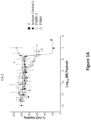
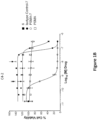
- conjugate compounds can be applied to in vitro plated cancer cells for a predetermined number of days and surviving cells measured in assays by known methods. Proper controls can be utilized to ensure validity of results as can IC 50 values. Examples of in vitro potency of conjugate compounds herein can be seen in Figures 1 and 2 . Additional in vivo efficacy can be used to confirm proposed conjugate compound potency - for example using a nude mouse model.
- Proton NMR spectra (for compounds that could not be detected by UV) were acquired on a Varian Inova 300 MHz instrument, while mass spectra were collected on an Agilent 1100 series LC/MSD with electrospray ionization source and triple-quad ion trap analyzer. Appropriate conjugates were analyzed using a Bruker ultraFleXtreme MALDI-TOF-TOF mass spectrometer. All starting materials and solvents were purchased commercially and used without purification, unless otherwise noted.
- Step 2 Maytansin-3-N-methyl-L-(S)-alanine-N-[4-(amino-citrulline-valine-hexanamide-6-maleimidyl)benzyl]carbamate (3):
- the product of the preceding step (2, 0.020 g, 0.031 mmol) and p-NO 2 -Ph-carbonato-Bn-Cit-Val-maleimide (MA-VC-PAB-PNP, 0.027 g, 0.037 mmol; Concortis Biosystems) were dissolved in N,N-dimethylformamide (DMF, ca. 0.25 mL) in a conical vial, treated with Brockmann I basic alumina (0.10 g), the vial purged with argon, and the reaction stirred at ambient temperature for 4 days.
- DMF N,N-dimethylformamide
- Step 2 Maytansin-3-N-methyl-L-( S )-alanine-Boc- ⁇ -Ala (5)
- Step 4 Maytansin-3-N-methyl-L-(S)-alanine-propanamidyl-3-N-methyl-N-[4-(amino-citrulline-valine-hexanamide-6-maleimidyl)benzyl]carbamate (7)
- the title compound was prepared using a modified version of the method described by Whitesides et al. (J. Org. Chem., 1991, 56, 2648-2650 ).
- the product of the preceding step ( 9, 2.42 g, 3.09 mmol) was dissolved in acetonitrile (30 mL), treated with a solution of tris(2-carboxyethyl)phosphine hydrochloride (8.23 g, 28.7 mmol) in water (30 mL), the pH raised to 3 with the addition of saturated aqueous NaHCOs (5 mL), the flask purged with Ar, and the reaction stirred at ambient temperature under a rubber septum (vented due to effervescence).
- Step 8 Boc-valine-citrulline-amino-4-benzylamino-N-benzyloxycarbamate (15)
- the product of the preceding step ( 12, 3.08 g, 8.23 mmol) was dissolved in N,N-dimethylformamide (DMF, 30 mL, dried over molecular sieves), treated with dicyclohexylcarbodiimide (DCC, 2.31 g, 11.2 mmol) and 1-hydroxybenzotriazole hydrate (HOBt, 1.51 g, 11.2 mmol), the flask purged with N 2 and stirred at ambient temperature for 1 hour.
- DMF N,N-dimethylformamide
- DCC dicyclohexylcarbodiimide
- HOBt 1-hydroxybenzotriazole hydrate
- Step 11 Maytansin-3-N-methyl-L-(S)-alanine-propanamidyl-3-N-[4-(amino-citrulline-Boc-valine)-benzyl]-dithiocarbamate (18)
- Step 12 Maytansin-3-N-methyl-L-(S)-alanine-propanamidyl-3-N-[4-(amino-citrulline-valine)-benzyl]-dithiocarbamate (19)
- Step 13 Maytansin-3-N-methyl-L-(S)-alanine-propanamidyl-3-N-[4-(amino-citrulline-valine-hexanamide-6-maleimidyl)benzyl]-dithiocarbamate (27)
- the product of the preceding step ( 19, 0.055 g, 0.032 mmol) was dissolved in 1:1 acetonitrile/water (4 mL), treated with 1N aq. NaHCOs (0.5 mL) and a solution of 6-maleimidylhexanoic acid succinate ester ( 20, 0.070 g, 2.27 mmol) in acetonitrile (6 mL), and the flask purged with Ar under rubber septum. After the reaction stirred at ambient temperature for 5 hours, it was stored at -20°C for 3 days before warming again to ambient temperature and diluting with brine. The mixture was extracted thrice with ethyl acetate, combined organic layers dried over Na 2 SO 4 , and filtered.
- Step 3 Maytansin-3-N-methyl-L-(S)-alanine-propanamidyl-3-N-[4-(acetamidyl)benzyl]-dithio-carbamate (25)
- Step 1 Maytansin-3-N-methyl-L-(S)-alanine-N-carboxy-6-[3,4-dihydro-2-(tert-butoxycarbonyl)-1H-isoquinoline]
- Step 2 Maytansin-3-N-methyl-L-(S)-alanine-N-carboxy-6-(1,2,3,4-tetrahydroisoquinoline) (33)
- Step 1 Maytansin-3-N-methyl-L-(S)-alanine- N-carboxy-4-[1-(tert-butoxycarbonyl)-piperidine]
- the title compound was prepared as a white solid (0.027 g, 46%) from maytan-3-N-methyl-L-(S)-alanine (2, 0.045 g, 0.069 mmol) and commercial 1-t-butoxycarbonylpiperidine-4-carboxylic acid (34, 0.024 g,0.105 mmol) by the method of Example 8, Step 1.
- the title compound was prepared as a white solid (0.012 g, 50%) from the product of the preceding step (0.025 g, 0.029 mmol) by the method of Example 2, Step 3 (compound 6).
- the compound purified on a C18 column using a different gradient and modifier (20 - 80% MeCN in water, 0.05% acetic acid in both). Lyophilization of the pure fractions gave the title compound (0.008 g, 35%).
- Step 1 Maytansin-3-N-methyl-L-(S)-alanine- N-methyl-beta-alanine-N-[4-(tert-butoxycarbonyl-valine-citrulline-amino)benzyloxy]-carbamate
- Boc-valine-citrulline-p-aminobenzyloxy-(p-nitrophenyloxy)-carbonate (36), prepared according to WO 2005112919 , (0.092 g, 0.143 mmol), the product of Example 2, Step 3 (6, 0.110 g, 0.130 mmol), and 1-Hydroxy-7-azabenzotriazole (HOAT, 0.037 g, 0.272 mmol) were dissolved in DMF (7 mL), treated with triethylamine (0.100 mL, 0.717 mmol), and stirred at ambient temperature in a stoppered flask.
- Step 2 Maytansin-3-N-methyl-L-(S)-alanine- N-methyl-beta-alanine-N-[4-(valine-citrulline-amino)benzyloxy]-carbamate (37)
- Step 3 Maytansin-3-N-methyl-L-(S)-alanine- N-methyl-beta-alanine-N-[4- (4-(isothiocyanato-phenyl)-thioureido-valine-citrulline-amino )benzyloxy]-carbamate (39)
- the product of the preceding step (37, 0.037 g, 0.029 mmol) was dissolved in tetrahydrofuran (THF, 5 mL) in a vial, treated with triethylamine (0.020 mL, 0.143 mmol), and the resulting solution added dropwise to a flask containing a stirred solution of 1,4-phenylenediisothiocyanate (38, 0.055 g, 0.286 mmol) in THF (10 mL) over 15 min. The vial was rinsed with THF (2 mL) and the solution added to the reaction flask, which was sealed with a rubber septum.
- THF tetrahydrofuran
- the product of the preceding step was dissolved in acetonitrile (MeCN, 3 ⁇ 40 mL) and concentrated in vacuo at 60°C via rotary evaporator.
- the dried product (0.650 g, 2.45 mmol) was dissolved in MeCN (75 mL) and chloroform (30 mL) in a flask, treated with triethylamine (1.0 mL, 7.35 mmol), and the resulting solution added dropwise to a flask containing 1,1'-thiocarbonyldi-2,2'-pyridone (0.68 g, 2.94 mmol) in chloroform (25 mL) under nitrogen over 10 min.
- Step 3 Maytansin-3-N-methyl-L-(S)-alanine- N-methyl-beta-alanine-N-[4- (4-fmaleimidylbutyl]-thioureido-valine-citrulline-amino)benzyloxy]-carbamate (42)
- Example 10 The product of Example 10, Step 2 (37, 0.029 g, 0.023 mmol) was dissolved in dry DMF (2 mL), treated with diisopropylethylamine (0.020 mL, 0.115 mmol) via dry syringe, then with a solution of product of the preceding step (41, 0.026 g, 0.124 mmol) in dry DMF (2 mL).
- the reaction flask was purged with Ar, sealed with a rubber septum, and the reaction stirred at ambient temperature.
- the four antibodies used in these experiments were: (1) a PSMA antibody having the heavy and light chain variable domains of clone AB-PG1-XG1-006 as set forth in WO 2007002222A2 , (2) a STEAP1 antibody having the heavy and light chain variable domains of clone mu120, expressed as a hIgG 1, as set forth in WO 2008052187A2 , (3) an EGFRvIII antibody having the heavy and light chain variable domains of clone 131 as set forth in WO2013075048A1 , and (4) a PRLR having the heavy and light chain variable domains of clone H1H6953N as set forth in US Application Serial No. 61/868,185; filed on August 21, 2013 . All the monoclonal antibodies were expressed in CHO cells and purified by Protein A.
- LCMS liquid chromatography-mass spectrometry
- Cells were seeded in PDL-coated 96 well plates at 375 (MMT/hEGFRvIII), 1500 (U251/hEGFRvIII), 2000 (HEK293/hEGFRvIII), or 3000 (C4-2, PC3/hSTEAP1, T47D, and U87-MG) cells per well in complete growth media and grown overnight.
- MMT/hEGFRvIII MMT/hEGFRvIII
- 1500 U251/hEGFRvIII
- 2000 HEK293/hEGFRvIII
- 3000 C4-2, PC3/hSTEAP1, T47D, and U87-MG cells per well in complete growth media and grown overnight.
- serially diluted conjugates or free representative payloads were added to the cells at final concentrations ranging from 500 nM to 1 pM and incubated for 3 days.
- IC 50 values were determined from a four-parameter logistic equation over a 10-point response curve (GraphPad Prism). All curves and IC 50 values are corrected for payload equivalents.
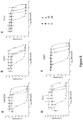
- the maytansinoid conjugate STEAP1- 7 possesses an IC 50 value of 4 nM ( Figure 2 ).
- the naked STEAP1 antibody was devoid of any anti-proliferation activity.
- T47D cells breast cancer line
- natively expressing PRLR at 14 fold above isotype control binding the maytansinoid conjugate PRLR- 7 possesses an IC 50 value of 1.0 nM ( Figure 3 ).
- the naked T47D antibody was devoid of any anti-proliferation activity.
- the maytansinoid conjugate EGFRvIII- 7 possesses an IC 50 value of 0.4 nM ( Figure 4 ).
- the naked EGFRvIII antibody was devoid of any anti-proliferation activity.
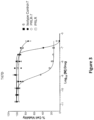
- the maytansinoid conjugate EGFRvIII- 7 possesses an IC 50 value of 0.3 nM ( Figure 5 ).
- the naked EGFRvIII antibody was devoid of any anti-proliferation activity.
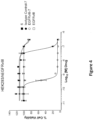
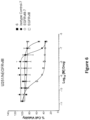
- the maytansinoid conjugate EGFRvIII- 7 possesses an IC 50 value of 0.3 nM ( Figure 6 ).
- the naked EGFRvIII antibody was devoid of any anti-proliferation activity.
- Anti-EGFRvIII Antibody Drug Conjugates are Potent Inhibitors of Tumor Growth in in vivo EGFRvIIIPositive Breast Cancer Allograft Models
- H1H1863N2 comprises a heavy chain variable region (HCVR) comprising SEQ ID NO:1; a light chain variable region (LCVR) comprising SEQ ID NO:5; heavy chain complementarity determining regions (HCDR1, HCDR2 and HCDR3) comprising SEQ ID NOs: 2, 3 and 4, respectively; and light chain complementarity determining regions (LCDR1, LCDR2 and LCDR3) comprising SEQ ID NOs: 6, 7 and 8, respectively.
- HCVR heavy chain variable region
- LCVR light chain variable region
- LCVR light chain variable region
- HCDR1, HCDR2 and HCDR3 comprising SEQ ID NOs: 2, 3 and 4, respectively
- light chain complementarity determining regions LCDR1, LCDR2 and LCDR3 comprising SEQ ID NOs: 6, 7 and 8, respectively.
- a first ADC was produced by conjugating H1H1863N2 to the maytansinoid DM1 via a non-cleavable MCC linker ( see , e.g., US 5,208,020 and US application 20100129314 ) to produce "H1H1863N2-MCC-DM1.”
- a second ADC was produced by conjugating H1H1863N2 to 7 to yield "H1H1863N2-7.”
- H1H1863N2-MCC-DM1 When tested for cytotoxicity in vitro against MMT/EGFRvIII cells using the assay format described in Example 14, H1H1863N2-MCC-DM1 exhibited an IC 50 of 12 nM whereas H1H1863N2-7 exhibited an IC 50 of only 0.8 nM.
- the anti-EGFRvIII ADC H1H1863N2-7 exhibited much more potent tumor cell killing ability than the corresponding antibody conjugated to DM1 via an MCC linker.
- mice bearing EGFRvIII positive breast cancer allografts were established by subcutaneous implantation of 0.5 ⁇ 10 6 MMT/EGFRvIII cells into the left flank of female CB17 SCID mice (Taconic, Hudson, NY). Once tumors had reached an average volume of 140 mm 3 ( ⁇ Day 8), mice were randomized into groups of seven, and dosed with anti-EGFRvIII ADCs using either the MCC-DM1 or 7 linker-drug format.
- Control reagents including non-binding ADCs using either the MCC-DM1 or 7 linker-drug format, and PBS vehicle were also assessed.
- ADCs were dosed at 1 and 5 mg/kg three times over one week and thereafter monitored until an average tumor size of approximately 2000 mm 3 was attained in the group administered with vehicle alone. At this point the Tumor Growth Inhibition was calculated.
- Average tumor size relative to the vehicle treated group were calculated as follows: tumors were measured with calipers twice a week until the average size of the vehicle group reached 1000mm 3 ; tumor size was calculated using the formula (length ⁇ width 2 )/2. Tumor growth inhibition was calculated according to the following formula: (1-((T final -T initial )/(C final -C initial )))*100, where T (treated group) and C (control group) represent the mean tumor mass on the day the vehicle group reached 1000mm 3 . Results are summarized in Table 3.
- Table 3 Tumor Size and Tumor Growth Inhibition Following Administration of Anti-EGFRvIII Antibody-Drug Conjugates and Controls, administered in repeat dose Treatment Group Final Tumor size at Day 8 mm 3 (mean ⁇ SD) Average Tumor Growth Inhibition (%) PBS Vehicle 2253 ⁇ 217 0 Control-MCC-DM1 (1 mg/kg) 2827 ⁇ 278 -27 Control-MCC-DM1 (5 mg/kg) 2402 ⁇ 256 -7 Control- 7 (1 mg/kg) 2729 ⁇ 470 -22 Control- 7 (5 mg/kg) 2787 ⁇ 503 -25 H1H1863N2-MCC-DM1 (1 mg/kg) 931 ⁇ 292 62 H1H1863N2-MCC-DM1 (5 mg/kg) 471 ⁇ 227 84 H1H1863N2- 7 (1 mg/kg) 679 ⁇ 265 74 H1H1863N2- 7 (5 mg/kg) 96 ⁇ 34 102
- mice dosed with 5 mg/kg H1H1863N2-7 where regression of the initial tumor was observed.
- the tumor growth inhibition of 102% resulting from treatment with 5 mg/kg H1H1863N2-7 was significantly greater relative to that observed following treatment of tumor with 5 mg/kg H1H1862N2-MCC-DM1 (83%).
- the superiority of the tumor growth inhibition induced by H1H1863N2-7 compared to H1H1863N2-MCC-DM1 was maintained at the 1 mg/kg dose as well. No anti-tumor effect was observed in groups treated with Control ADC using MCC-DM1 or 7.
Landscapes
- Health & Medical Sciences (AREA)
- Life Sciences & Earth Sciences (AREA)
- Chemical & Material Sciences (AREA)
- Bioinformatics & Cheminformatics (AREA)
- Engineering & Computer Science (AREA)
- Animal Behavior & Ethology (AREA)
- Pharmacology & Pharmacy (AREA)
- Medicinal Chemistry (AREA)
- General Health & Medical Sciences (AREA)
- Public Health (AREA)
- Veterinary Medicine (AREA)
- Epidemiology (AREA)
- Immunology (AREA)
- Cell Biology (AREA)
- Organic Chemistry (AREA)
- General Chemical & Material Sciences (AREA)
- Chemical Kinetics & Catalysis (AREA)
- Nuclear Medicine, Radiotherapy & Molecular Imaging (AREA)
- Oncology (AREA)
- Reproductive Health (AREA)
- Neurology (AREA)
- Physical Education & Sports Medicine (AREA)
- Neurosurgery (AREA)
- Biomedical Technology (AREA)
- Heart & Thoracic Surgery (AREA)
- Communicable Diseases (AREA)
- Psychiatry (AREA)
- Orthopedic Medicine & Surgery (AREA)
- Cardiology (AREA)
- Rheumatology (AREA)
- Hospice & Palliative Care (AREA)
- Peptides Or Proteins (AREA)
- Medicinal Preparation (AREA)
- Pharmaceuticals Containing Other Organic And Inorganic Compounds (AREA)
- Medicines That Contain Protein Lipid Enzymes And Other Medicines (AREA)
- Medicines Containing Antibodies Or Antigens For Use As Internal Diagnostic Agents (AREA)
- Nitrogen And Oxygen Or Sulfur-Condensed Heterocyclic Ring Systems (AREA)
- Acyclic And Carbocyclic Compounds In Medicinal Compositions (AREA)
Claims (15)
- Verbindung mit der folgenden Formel:

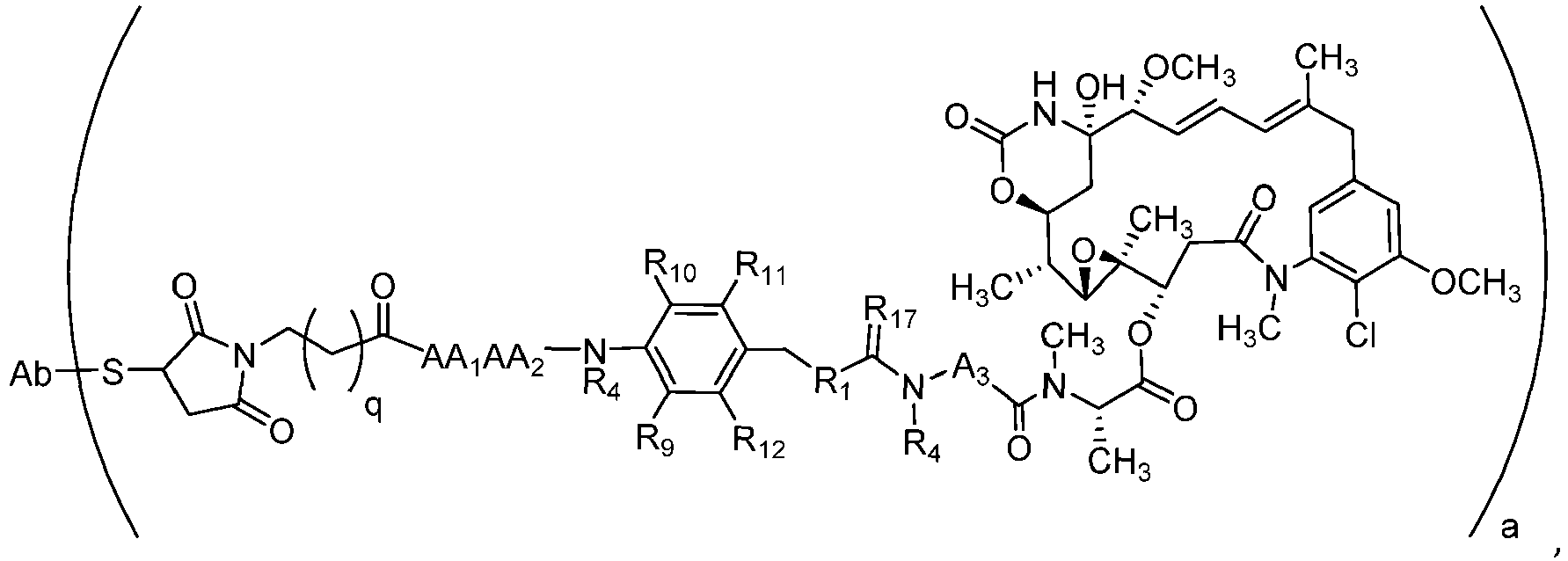
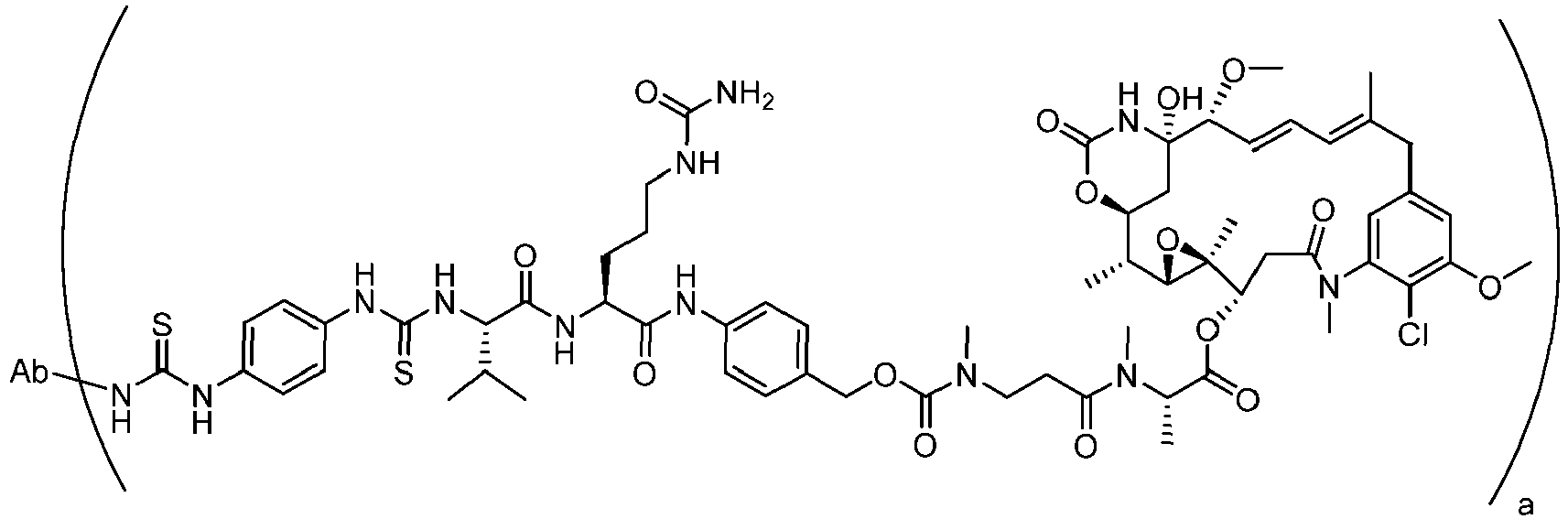 Ab ein Antikörper oder ein antigenbindendes Fragment davon ist;AA1-AA2 ein Peptidrest ist, der aus der Gruppe ausgewählt ist, die aus Valin-Citrullin, Citrullin-Valin, Lysin-Phenylalanin, Phenylalanin-Lysin, Valin-Asparagin, Asparagin-Valin, Threonin-Asparagin, Serin-Asparagin, Asparagin-Serin, Phenylalanin-Asparagin, Asparagin-Phenylalanin, Leucin-Asparagin, Asparagin-Leucin, Isoleucin-Asparagin, Asparagin-Isoleucin, Glycin-Asparagin, Asparagin-Glycin, Glutaminsäure-Asparagin, Asparagin-Glutaminsäure, Citrullin-Asparagin, Asparagin-Citrullin, Alanin-Asparagin und Asparagin-Alanin besteht;a eine ganze Zahl von 1 bis 10 ist;q 0 ist oder eine ganze Zahl von 1 bis 5 ist;R1 ein Aminsäurerest, ein Peptidrest mit 2-20 Aminsäureresten, ein -Alkylen-, ein - Alkinylen-, ein -Alkenylen-, ein -Cycloalkylen-, ein -Arylen-, ein -Heteroarylen-, ein - Heterocyclylen-, -CR5R6-, -O-, -C(=O)-, -O-C(=O)-, -C(=O)-O-, -O-C(=O)-O-, -C(=O)-(CHx)p1-, -C(=O)-O-(CHx)p1-, -(CHx)p1-C(=O)-, -(CHx)p1-C(=O)-O-, -(O-(CH2)p2-)p3-, -((CH2)P2-O-)p3-, - C(=S)-, -C(=S)-S-, -C(=S)-NH-, -S-C(=S)-, -S-C(=S)-S-, -S-, -SO-, -SO2-, -NR4-, -N(R4)-C(=O)- N(R8)-, -N(R4)-C(=O)O-, -N(R4)-C(=O)-, -C(=O)-N(R4)-, -C(=O)-N(R4)-C(=O)- oder -O-C(=O)- NR4- ist, wobei -Alkylen-, -Alkinylen-, Alkenylen-, -Cycloalkylen-, -Arylen-, Heteroarylen- und -Heterocyclylen- optional substituiert sind;A3 -CH2-, -CH2CH2-, -CH2CH2CH2- oder -CH2CH2CH2CH2- ist;R17 aus der Gruppe ausgewählt ist, die aus O, S, NR18, oder CR5R6 besteht;R18 aus der Gruppe ausgewählt ist, die aus Wasserstoff, Alkyl, Alkinyl, Alkenyl, Cycloalkyl, Aryl, Heteroaryl, Heterocyclyl und Acyl besteht, wobei Alkyl, Alkinyl, Alkenyl, Cycloalkyl, Aryl, Heteroaryl, Heterocyclyl und Acyl optional substituiert sind;R4, R5, R6 und R8 jeweils unabhängig H oder ein substituiertes oder unsubstituiertes Alkyl, Alkenyl, Alkinyl, Aryl, Heteroaryl und Heterocyclyl sind;R9, R10, R11 und R12 jeweils unabhängig H, Halogen, NR13R14, Nitro, Cyano, -OH, -O-C(=O)-R15, -C(=O)-R15, -C(=O)-O-R15, -C(=O)-NR13R14 oder substituiertes oder unsubstituiertes Alkyl, Cycloalkyl, Aryl, Heteroaryl und Heterocyclyl sind;R13 und R14 jeweils unabhängig H oder ein optional substituiertes Alkyl sind;R15 ein optional substituiertes Alkyl ist;p1, p2 und p3 jeweils unabhängig 0 oder eine ganze Zahl von 1 bis 100 sind; undx 0, 1 oder 2 ist.
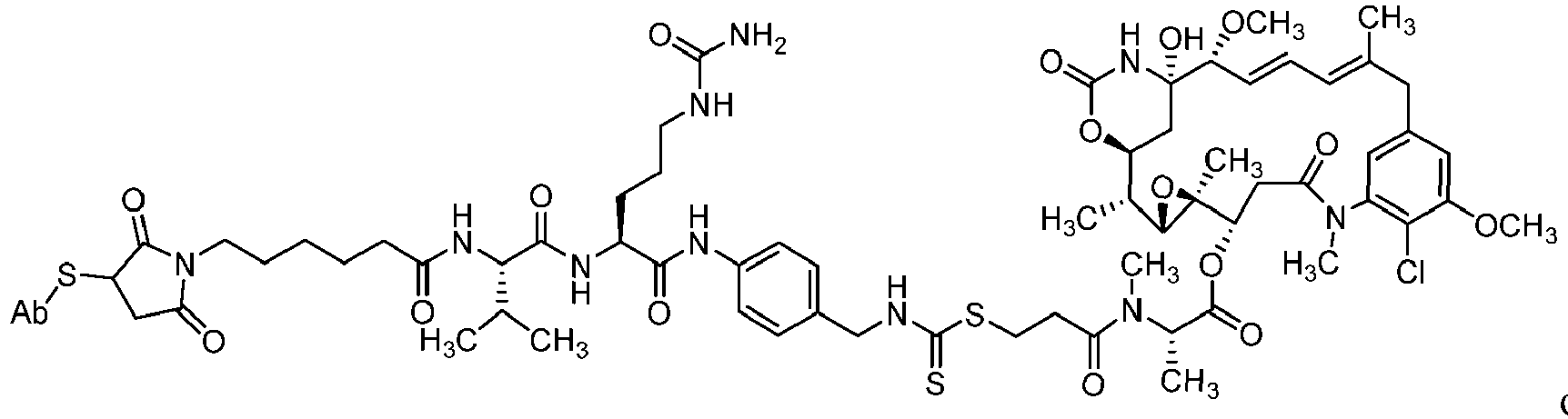
 - Verbindung nach Anspruch 1, dargestellt durch die folgende Struktur:

- Verbindung nach Anspruch 1, wobei die Verbindung die folgende Formel aufweist:
 q 4 ist;R1 -O-, -S-, -NR4- oder -CR5R6- ist; undR4, R5, R6, R9, R10, R11 und R12 jeweils unabhängig H oder Alkyl sind.
 - Verbindung nach einem von Anspruch 1 oder Anspruch 3, wobei die Verbindung durch die folgende Struktur dargestellt ist:
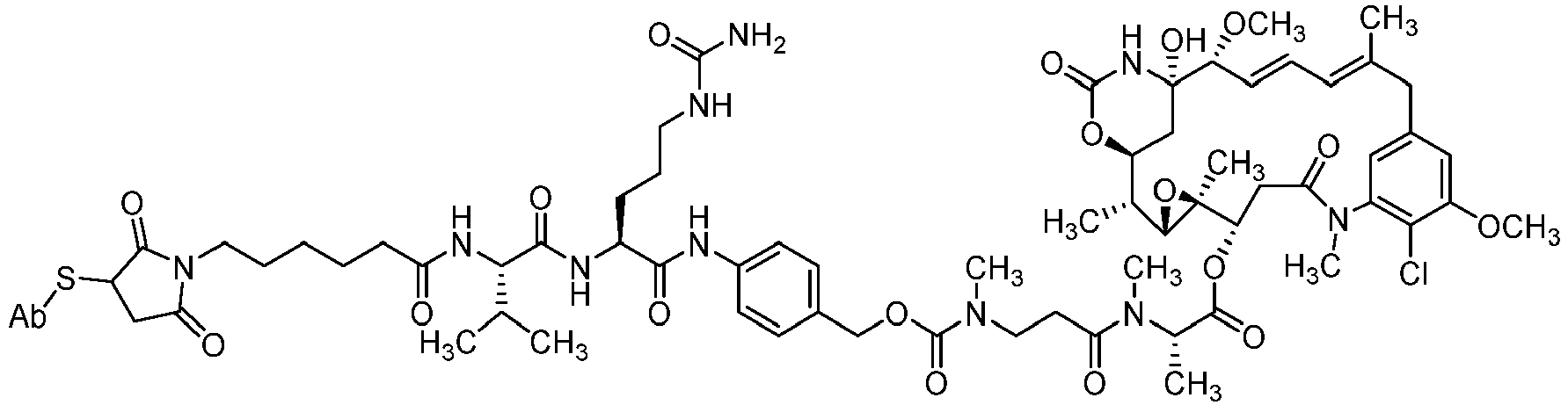
- Verbindung nach Anspruch 1 oder Anspruch 3, wobei die Verbindung durch die folgende Struktur dargestellt ist
 wobei Ab ein Antikörper oder ein antigenbindendes Fragment davon ist; unda eine ganze Zahl von 1 bis 10 ist.
 - Verbindung nach Anspruch 1, wobei A3 -CH2CH2- ist.
- Pharmazeutische Zusammensetzung, umfassend eine therapeutisch wirksame Menge einer Verbindung nach einem der Ansprüche 1 bis 6 oder ein pharmazeutisch unbedenkliches Salz davon und einen oder mehrere pharmazeutisch unbedenkliche Trägerstoffe, Verdünner oder Hilfsstoffe.
- Verbindung nach einem der Ansprüche 1 bis 6 oder pharmazeutische Zusammensetzung gemäß Anspruch 7 zur Verwendung bei der Therapie.
- Verbindung nach einem der Ansprüche 1 bis 6 oder pharmazeutische Zusammensetzung gemäß Anspruch 7 zur Verwendung bei:- Verringerung, Verzögerung oder Stoppen abnormalen Zellwachstums oder zur Verwendung bei der Abtötung einer Zelle;- der Behandlung einer medizinischen Störung bei einem Individuum; und/oder- Verringerung der Tumorgröße, Stoppen der Tumorgrößenzunahme, Verringerung der Tumorproliferation oder Verhinderung der Tumorproliferation bei einem Individuum, das dies benötigt.
- Verbindung zur Verwendung gemäß Anspruch 9, wobei die Verbindung oder Zusammensetzung zur Verwendung bei der Verringerung, Verzögerung oder beim Stoppen abnormalen Zellwachstums oder zur Verwendung bei der Abtötung einer Zelle dient und die Zelle eine Tumorzelle ist.
- Verbindung zur Verwendung gemäß Anspruch 9, wobei die Verbindung oder Zusammensetzung zur Verwendung bei der Behandlung einer medizinischen Störung bei einem Individuum dient und das Individuum ein Säuger ist und/oder die medizinische Störung aus der Gruppe ausgewählt ist, die aus Tumoren, Krebserkrankungen, Infektionskrankheiten, neurodegenerativen Krankheiten, Knochenstörungen und Herz-Kreislauf-Krankheiten besteht.
- Verbindung zur Verwendung gemäß einem von Anspruch 9 oder Anspruch 11, wobei die Verbindung oder Zusammensetzung zur Verwendung bei der Behandlung einer medizinischen Störung bei einem Individuum dient und die Verbindung zur Verwendung mit Folgendem dient:- einer zusätzlichen Therapie, die fortlaufend oder nacheinander mit der Verbindung verabreicht wird, wobei die zusätzliche Therapie vorzugsweise Strahlentherapie, Chemotherapie oder eine Kombination aus beiden ist; und/oder- mindestens einem zusätzlichen therapeutischen Mittel.
- Verbindung mit einer Struktur, die aus der Gruppe ausgewählt ist, die aus Folgendem besteht:


- Verbindung nach Anspruch 13, wobei die Verbindung

- Antikörper-Wirkstoff-Konjugat, einen Antikörper oder ein antigenbindendes Fragment davon umfassend, der/das mit einer Payload der folgenden Formel konjugiert ist:

Priority Applications (1)
| Application Number | Priority Date | Filing Date | Title |
|---|---|---|---|
| EP21194635.5A EP3964237A1 (de) | 2013-03-15 | 2014-03-14 | Biologisch aktive moleküle, konjugate davon und therapeutische verwendungen davon |
Applications Claiming Priority (2)
| Application Number | Priority Date | Filing Date | Title |
|---|---|---|---|
| US201361792216P | 2013-03-15 | 2013-03-15 | |
| PCT/US2014/029757 WO2014145090A1 (en) | 2013-03-15 | 2014-03-14 | Biologically active molecules, conjugates thereof, and therapeutic uses |
Related Child Applications (2)
| Application Number | Title | Priority Date | Filing Date |
|---|---|---|---|
| EP21194635.5A Division EP3964237A1 (de) | 2013-03-15 | 2014-03-14 | Biologisch aktive moleküle, konjugate davon und therapeutische verwendungen davon |
| EP21194635.5A Division-Into EP3964237A1 (de) | 2013-03-15 | 2014-03-14 | Biologisch aktive moleküle, konjugate davon und therapeutische verwendungen davon |
Publications (2)
| Publication Number | Publication Date |
|---|---|
| EP2968593A1 EP2968593A1 (de) | 2016-01-20 |
| EP2968593B1 true EP2968593B1 (de) | 2024-11-20 |
Family
ID=50933481
Family Applications (2)
| Application Number | Title | Priority Date | Filing Date |
|---|---|---|---|
| EP14729755.0A Active EP2968593B1 (de) | 2013-03-15 | 2014-03-14 | Biologisch aktive moleküle, konjugate davon und therapeutische verwendungen davon |
| EP21194635.5A Pending EP3964237A1 (de) | 2013-03-15 | 2014-03-14 | Biologisch aktive moleküle, konjugate davon und therapeutische verwendungen davon |
Family Applications After (1)
| Application Number | Title | Priority Date | Filing Date |
|---|---|---|---|
| EP21194635.5A Pending EP3964237A1 (de) | 2013-03-15 | 2014-03-14 | Biologisch aktive moleküle, konjugate davon und therapeutische verwendungen davon |
Country Status (19)
| Country | Link |
|---|---|
| US (3) | US10570151B2 (de) |
| EP (2) | EP2968593B1 (de) |
| JP (3) | JP6847388B2 (de) |
| KR (1) | KR102306490B1 (de) |
| CN (1) | CN105188766B (de) |
| AU (1) | AU2014233385C1 (de) |
| BR (1) | BR112015022585B1 (de) |
| CA (1) | CA2902872A1 (de) |
| CL (1) | CL2015002765A1 (de) |
| EA (1) | EA038512B1 (de) |
| ES (1) | ES2996807T3 (de) |
| IL (1) | IL240418B (de) |
| MA (1) | MA38496B2 (de) |
| MX (1) | MX379256B (de) |
| MY (1) | MY183572A (de) |
| PH (1) | PH12015502131B1 (de) |
| SG (1) | SG11201507481WA (de) |
| WO (1) | WO2014145090A1 (de) |
| ZA (1) | ZA201505813B (de) |
Families Citing this family (62)
| Publication number | Priority date | Publication date | Assignee | Title |
|---|---|---|---|---|
| US8542802B2 (en) | 2007-02-15 | 2013-09-24 | Global Tel*Link Corporation | System and method for three-way call detection |
| PT2935259T (pt) | 2012-12-21 | 2019-04-04 | Abgenomics Int Inc | Ligantes de autoimolação hidrofílicos e conjugados dos mesmos |
| EP2968593B1 (de) | 2013-03-15 | 2024-11-20 | Regeneron Pharmaceuticals, Inc. | Biologisch aktive moleküle, konjugate davon und therapeutische verwendungen davon |
| US9545451B2 (en) | 2013-08-21 | 2017-01-17 | Regeneron Pharmaceuticals, Inc. | Anti-PRLR antibodies and methods for killing PRLR-expressing cells |
| TWI641620B (zh) | 2013-08-21 | 2018-11-21 | 再生元醫藥公司 | 抗-prlr抗體及其用途 |
| MX373528B (es) | 2013-08-26 | 2020-04-21 | Regeneron Pharma | Composiciones farmacéuticas que contienen diasterómeros macrólidos, métodos para su síntesis y usos terapéuticos. |
| RS59077B1 (sr) | 2014-03-11 | 2019-09-30 | Regeneron Pharma | Anti-egfrviii antitela i njihova primena |
| HK1231367A1 (zh) | 2014-06-02 | 2017-12-22 | Regeneron Pharmaceuticals, Inc. | 抗体药物偶联物、试剂和制备方法及其治疗用途 |
| AU2015276821A1 (en) | 2014-06-20 | 2017-01-12 | Abgenomics International Inc. | Anti-folate receptor aplha (FRA) antibody-drug conjugates and methods of using thereof |
| SG11201707148PA (en) * | 2015-03-27 | 2017-10-30 | Regeneron Pharma | Maytansinoid derivatives, conjugates thereof, and methods of use |
| EP3308801A4 (de) | 2015-06-09 | 2019-02-27 | XDCExplorer (Shanghai) Co., Ltd. | Antikörper-wirkstoff-konjugat, zwischenprodukt, herstellungsverfahren, pharmazeutische zusammensetzung und verwendung davon |
| EP3319994B1 (de) | 2015-07-06 | 2024-02-07 | Regeneron Pharmaceuticals, Inc. | Multispezifische antigenbindungsmoleküle und verwendungen davon |
| EP3400239B1 (de) | 2016-01-08 | 2021-06-02 | AltruBio Inc. | Tetravalente anti-psgl-1-antikörper und verwendungen davon |
| CN108779127B (zh) | 2016-01-25 | 2022-07-05 | 里珍纳龙药品有限公司 | 美登素类化合物衍生物、其偶联物和使用方法 |
| MA45328A (fr) | 2016-04-01 | 2019-02-06 | Avidity Biosciences Llc | Compositions acide nucléique-polypeptide et utilisations de celles-ci |
| US11352446B2 (en) | 2016-04-28 | 2022-06-07 | Regeneron Pharmaceuticals, Inc. | Methods of making multispecific antigen-binding molecules |
| HRP20220479T1 (hr) | 2016-06-01 | 2022-05-27 | Athira Pharma, Inc. | Spojevi |
| JP7078609B2 (ja) | 2016-09-23 | 2022-05-31 | リジェネロン・ファーマシューティカルズ・インコーポレイテッド | 抗steap2抗体、抗体-薬物複合体、およびsteap2とcd3を結合する二重特異性抗原結合分子、ならびにそれらの使用 |
| EP3515487B1 (de) | 2016-09-23 | 2023-07-19 | Regeneron Pharmaceuticals, Inc. | Bi spezifische anti-muc16-cd3-antikörper und anti-muc16-drogen-konjugate |
| TWI782930B (zh) * | 2016-11-16 | 2022-11-11 | 美商再生元醫藥公司 | 抗met抗體,結合met之雙特異性抗原結合分子及其使用方法 |
| KR20190091290A (ko) | 2016-11-29 | 2019-08-05 | 리제너론 파아마슈티컬스, 인크. | Prlr 양성 유방암 치료 방법 |
| WO2018129384A1 (en) | 2017-01-06 | 2018-07-12 | Avidity Biosciences Llc | Nucleic acid-polypeptide compositions and methods of inducing exon skipping |
| CN117982673A (zh) | 2017-02-28 | 2024-05-07 | 第一三共株式会社 | 抗her3抗体-药物偶联物的应用 |
| TW201836647A (zh) | 2017-04-06 | 2018-10-16 | 美商艾伯維有限公司 | 抗-prlr抗體藥物軛合物(adc)及其用途 |
| US11491237B2 (en) | 2017-05-18 | 2022-11-08 | Regeneron Pharmaceuticals, Inc. | Cyclodextrin protein drug conjugates |
| CA3066569A1 (en) | 2017-06-07 | 2018-12-13 | Regeneron Pharmaceuticals, Inc. | Compositions and methods for internalizing enzymes |
| WO2018237335A1 (en) | 2017-06-23 | 2018-12-27 | VelosBio Inc. | IMMUNOCONJUGUATED ROR1 ANTIBODIES |
| GB201711809D0 (en) | 2017-07-21 | 2017-09-06 | Governors Of The Univ Of Alberta | Antisense oligonucleotide |
| KR102822647B1 (ko) | 2017-10-04 | 2025-06-19 | 어비디티 바이오사이언시스 인크. | 핵산-폴리펩티드 조성물 및 그의 용도 |
| MX2020004691A (es) * | 2017-11-07 | 2020-08-20 | Regeneron Pharma | Enlazadores hidrofilicos para conjugados anticuerpo-farmaco. |
| IL319835A (en) | 2017-12-06 | 2025-05-01 | Avidity Biosciences Inc | Compositions and methods for treating muscular dystrophy and myotonic dystrophy |
| AU2019262953B2 (en) | 2018-04-30 | 2025-12-04 | Regeneron Pharmaceuticals, Inc. | Antibodies, and bispecific antigen-binding molecules that bind HER2 and/or APLP2, conjugates, and uses thereof |
| CA3100021A1 (en) | 2018-05-17 | 2019-11-21 | Regeneron Pharmaceuticals, Inc. | Anti-cd63 antibodies, conjugates, and uses thereof |
| CA3104511A1 (en) * | 2018-06-26 | 2020-01-02 | Immunogen, Inc. | Immunoconjugates targeting adam9 and methods of use thereof |
| WO2020059772A1 (ja) | 2018-09-20 | 2020-03-26 | 第一三共株式会社 | 抗her3抗体-薬物コンジュゲート投与によるher3変異がんの治療 |
| IL319265A (en) | 2018-12-21 | 2025-04-01 | Avidity Biosciences Inc | Anti-transferrin receptor antibodies and their uses |
| PH12021551631A1 (en) * | 2019-01-07 | 2022-05-02 | Astellas Pharma Inc | Conjugate comprising ligand, spacer, peptide linker, and biomolecule |
| CN113727757A (zh) | 2019-02-21 | 2021-11-30 | 瑞泽恩制药公司 | 使用结合met的抗-met抗体和双特异性抗原结合分子治疗眼癌的方法 |
| CN114375296A (zh) | 2019-06-06 | 2022-04-19 | 艾维迪提生物科学公司 | 核酸多肽组合物及其用途 |
| CA3142337A1 (en) | 2019-06-06 | 2020-12-10 | Avidity Biosciences, Inc. | Una amidites and uses thereof |
| MX2022002886A (es) | 2019-09-16 | 2022-04-06 | Regeneron Pharma | Proteinas de union met radiomarcadas para la obtencion de imagenes por inmuno-pet. |
| US11814428B2 (en) | 2019-09-19 | 2023-11-14 | Regeneron Pharmaceuticals, Inc. | Anti-PTCRA antibody-drug conjugates and uses thereof |
| KR20220115566A (ko) | 2019-11-15 | 2022-08-17 | 시아겐 인크. | 항-her2 항체-약물 접합체와 조합된 투카티닙으로 her2 양성 유방암을 치료하는 방법 |
| CN115348874A (zh) | 2020-01-24 | 2022-11-15 | 里珍纳龙药品有限公司 | 蛋白质-抗病毒化合物偶联物 |
| IL295312A (en) | 2020-02-28 | 2022-10-01 | Regeneron Pharma | Bispecific antigen binding molecules that bind her2, and methods of use thereof |
| IL296387B2 (en) | 2020-03-19 | 2024-08-01 | Avidity Biosciences Inc | Preparations and methods for the treatment of facial, back and arm muscle atrophy |
| MX2022011880A (es) | 2020-03-27 | 2022-10-20 | Avidity Biosciences Inc | Composiciones y metodos para tratar distrofia muscular. |
| IL297027B2 (en) | 2020-04-16 | 2025-08-01 | Regeneron Pharma | Antibody-drug conjugates prepared using diels-alder conjugation methods |
| CN116157417A (zh) | 2020-07-17 | 2023-05-23 | 第一三共株式会社 | 抗体-药物缀合物的制造方法 |
| MX2023004434A (es) | 2020-10-22 | 2023-05-08 | Regeneron Pharma | Anticuerpos anti-fgfr2 y metodos para usarlos. |
| US20220143194A1 (en) | 2020-11-10 | 2022-05-12 | Regeneron Pharmaceuticals, Inc. | Selenium antibody conjugates |
| KR20230158005A (ko) | 2021-03-18 | 2023-11-17 | 씨젠 인크. | 생물학적 활성 화합물의 내재화된 접합체로부터의 선택적 약물 방출 |
| US20240191272A1 (en) | 2021-03-31 | 2024-06-13 | Microbiopharm Japan Co., Ltd. | Method for producing antibody-drug conjugate and enzyme used for the same |
| CA3216175A1 (en) | 2021-04-05 | 2022-10-13 | Altheia Science S.R.L. | Diagnosis and treatment of myeloid disorders and acute leukemias using novel tumor specific antigens |
| KR20240055874A (ko) | 2021-09-16 | 2024-04-29 | 어비디티 바이오사이언시스 인크. | 안면견갑상완 근이영양증을 치료하는 조성물 및 방법 |
| CN118660722A (zh) | 2021-12-23 | 2024-09-17 | 米雷楚来有限公司 | 用于递送多核苷酸的组合物 |
| CN119317643A (zh) | 2022-04-05 | 2025-01-14 | 阿尔泰亚科学有限公司 | 靶向新型肿瘤特异性抗原的骨髓病症和急性白血病的治疗 |
| US12071621B2 (en) | 2022-04-05 | 2024-08-27 | Avidity Biosciences, Inc. | Anti-transferrin receptor antibody-PMO conjugates for inducing DMD exon 44 skipping |
| JP2025511684A (ja) | 2022-04-07 | 2025-04-16 | ツインピッグ バイオラブ インコーポレイテッド | 新規ペプチドベースの免疫抗癌剤 |
| EP4561636A1 (de) | 2022-07-29 | 2025-06-04 | Regeneron Pharmaceuticals, Inc. | Zusammensetzungen und verfahren zur transferrinrezeptor (tfr)-vermittelten abgabe an das gehirn und den muskel |
| CN120500498A (zh) | 2022-11-14 | 2025-08-15 | 瑞泽恩制药公司 | 用于成纤维细胞生长因子受体3介导的至星形胶质细胞的递送的组合物及方法 |
| WO2025007063A1 (en) | 2023-06-30 | 2025-01-02 | Avidity Biosciences, Inc. | Compositions and methods of using pln-targeting antibody-oligonucleotide conjugates |
Citations (1)
| Publication number | Priority date | Publication date | Assignee | Title |
|---|---|---|---|---|
| WO2015081282A1 (en) * | 2013-11-27 | 2015-06-04 | Redwood Bioscience, Inc. | Hydrazinyl-pyrrolo compounds and methods for producing a conjugate |
Family Cites Families (86)
| Publication number | Priority date | Publication date | Assignee | Title |
|---|---|---|---|---|
| US4307016A (en) | 1978-03-24 | 1981-12-22 | Takeda Chemical Industries, Ltd. | Demethyl maytansinoids |
| JPS5566585A (en) | 1978-11-14 | 1980-05-20 | Takeda Chem Ind Ltd | Novel maytansinoid compound and its preparation |
| US5208020A (en) | 1989-10-25 | 1993-05-04 | Immunogen Inc. | Cytotoxic agents comprising maytansinoids and their therapeutic use |
| CA2026147C (en) | 1989-10-25 | 2006-02-07 | Ravi J. Chari | Cytotoxic agents comprising maytansinoids and their therapeutic use |
| US5714586A (en) | 1995-06-07 | 1998-02-03 | American Cyanamid Company | Methods for the preparation of monomeric calicheamicin derivative/carrier conjugates |
| US6596541B2 (en) | 2000-10-31 | 2003-07-22 | Regeneron Pharmaceuticals, Inc. | Methods of modifying eukaryotic cells |
| US20070258987A1 (en) | 2000-11-28 | 2007-11-08 | Seattle Genetics, Inc. | Recombinant Anti-Cd30 Antibodies and Uses Thereof |
| EP1258255A1 (de) | 2001-05-18 | 2002-11-20 | Boehringer Ingelheim International GmbH | Konjugate eines Antikörpers zu CD44 und eines Maytansinoids |
| US6441163B1 (en) | 2001-05-31 | 2002-08-27 | Immunogen, Inc. | Methods for preparation of cytotoxic conjugates of maytansinoids and cell binding agents |
| ATE455561T1 (de) * | 2002-03-01 | 2010-02-15 | Univ Tulane | Konjugate von zytotoxischen mitteln und biologisch aktiven peptiden |
| US20090068178A1 (en) | 2002-05-08 | 2009-03-12 | Genentech, Inc. | Compositions and Methods for the Treatment of Tumor of Hematopoietic Origin |
| US20110250133A1 (en) | 2003-01-13 | 2011-10-13 | Bracco Imaging S.P.A. | Gastrin releasing peptide compounds |
| US8088387B2 (en) | 2003-10-10 | 2012-01-03 | Immunogen Inc. | Method of targeting specific cell populations using cell-binding agent maytansinoid conjugates linked via a non-cleavable linker, said conjugates, and methods of making said conjugates |
| US7276497B2 (en) | 2003-05-20 | 2007-10-02 | Immunogen Inc. | Cytotoxic agents comprising new maytansinoids |
| US7736644B2 (en) | 2003-06-27 | 2010-06-15 | Amgen Fremont Inc. | Antibodies directed to the deletion mutants of epidermal growth factor receptor and uses thereof |
| GB0316294D0 (en) | 2003-07-11 | 2003-08-13 | Polytherics Ltd | Conjugated biological molecules and their preparation |
| AR048098A1 (es) | 2004-03-15 | 2006-03-29 | Wyeth Corp | Conjugados de caliqueamicina |
| EP1747021B1 (de) | 2004-05-19 | 2015-09-09 | E. R. Squibb & Sons, L.L.C. | Selbstimmolative verbinder und arzneimittelkonjugate |
| BRPI0510883B8 (pt) * | 2004-06-01 | 2021-05-25 | Genentech Inc | composto conjugado de droga e anticorpo, composição farmacêutica, método de fabricação de composto conjugado de droga e anticorpo e usos de uma formulação, de um conjugado de droga e anticorpo e um agente quimioterapêutico e de uma combinação |
| WO2006065533A2 (en) | 2004-11-29 | 2006-06-22 | Seattle Genetics, Inc. | Engineered antibodies and immunoconjugates |
| HUE025449T2 (en) | 2004-12-09 | 2016-04-28 | Janssen Biotech Inc | Immunoconjugates against Integrin, a method for their preparation and use |
| US20070160617A1 (en) | 2005-06-20 | 2007-07-12 | Psma Development Company, Llc | PSMA antibody-drug conjugates |
| SG155947A1 (en) * | 2005-06-20 | 2009-10-29 | Genentech Inc | Compositions and methods for the diagnosis and treatment of tumor |
| ATE535529T1 (de) | 2005-08-09 | 2011-12-15 | Millennium Pharm Inc | Verfahren zur acylierung von maytansinol mit chiralen aminosäuren |
| CN101267841B (zh) | 2005-08-24 | 2012-10-10 | 免疫原公司 | 制备美登木素生物碱抗体缀合物的方法 |
| US7750116B1 (en) | 2006-02-18 | 2010-07-06 | Seattle Genetics, Inc. | Antibody drug conjugate metabolites |
| MX2009003938A (es) | 2006-10-27 | 2009-04-24 | Genentech Inc | Anticuerpos e inmunoconjugados y sus usos. |
| JP5394246B2 (ja) * | 2007-03-30 | 2014-01-22 | ジェネンテック, インコーポレイテッド | 抗体及びイムノコンジュゲートとこれらの使用方法 |
| WO2008122039A2 (en) | 2007-04-02 | 2008-10-09 | The Government Of The United States Of America, As Represented By The Secretary, Department Of Health And Human Services | Selenocysteine mediated hybrid antibody molecules |
| CA2683568A1 (en) | 2007-05-08 | 2008-11-20 | Genentech, Inc. | Cysteine engineered anti-muc16 antibodies and antibody drug conjugates |
| WO2008153744A2 (en) | 2007-05-23 | 2008-12-18 | Ventana Medical Systems, Inc. | Polymeric carriers for immunohistochemistry and in situ hybridization |
| KR102449659B1 (ko) | 2008-03-18 | 2022-09-29 | 제넨테크, 인크. | 항-her2 항체-약물 접합체와 화학요법제의 병용물, 및 사용 방법 |
| BRPI0906903B8 (pt) * | 2008-04-11 | 2021-05-25 | Seattle Genetics Inc | anticorpo monoclonal e método de detecção da expressão de cd70 |
| US8236319B2 (en) | 2008-04-30 | 2012-08-07 | Immunogen, Inc. | Cross-linkers and their uses |
| MX2010011808A (es) * | 2008-04-30 | 2011-03-04 | Immunogen Inc | Conjugados potentes y enlazadores hidrofilicos. |
| KR101763559B1 (ko) | 2008-07-21 | 2017-08-14 | 폴리테릭스 리미티드 | 생물학적 분자의 컨쥬게이팅을 위한 신규한 시약 및 방법 |
| WO2010100430A1 (en) | 2009-03-04 | 2010-09-10 | Polytherics Limited | Conjugated proteins and peptides |
| MX2011010264A (es) * | 2009-04-01 | 2011-10-11 | Genentech Inc | Anticuerpos anti-fcrh5 e inmunoconjugados y metodos de uso. |
| CA2770617C (en) | 2009-08-10 | 2018-02-20 | Mark Smith | Reversible covalent linkage of functional molecules |
| TW201116297A (en) | 2009-10-02 | 2011-05-16 | Sanofi Aventis | Antibodies that specifically bind to the EphA2 receptor |
| UY32913A (es) | 2009-10-02 | 2011-04-29 | Sanofi Aventis | Nuevos maitansinoides y el uso de dichos maitansinoides para preparar conjugados con un anticuero |
| KR20120080611A (ko) | 2009-10-06 | 2012-07-17 | 이뮤노젠 아이엔씨 | 효능 있는 접합체 및 친수성 링커 |
| PH12012500665B1 (en) * | 2009-10-23 | 2019-10-30 | Amgen British Columbia | Anti-gcc antibody molecules and related compositions and methods |
| US8501692B2 (en) | 2009-12-14 | 2013-08-06 | The Regents Of The University Of Michigan | Compositions and methods for altering cocaine esterase activity |
| CN102933236B (zh) | 2010-04-15 | 2014-10-08 | 斯皮罗根有限公司 | 吡咯并苯二氮卓类及其结合物 |
| WO2012005982A2 (en) | 2010-07-06 | 2012-01-12 | Board Of Supervisors Of Louisiana State University And Agricultural And Mechanical College | Reporter for rna polymerase ii termination |
| AU2011285919C1 (en) | 2010-08-02 | 2015-09-17 | Regeneron Pharmaceuticals, Inc. | Mice that make binding proteins comprising VL domains |
| JP5805767B2 (ja) | 2010-09-01 | 2015-11-10 | バイエル・インテレクチュアル・プロパティ・ゲゼルシャフト・ミット・ベシュレンクテル・ハフツングBayer Intellectual Property GmbH | N−(テトラゾール−5−イル)アリールカルボキサミド類及びn−(トリアゾール−5−イル)アリールカルボキサミド類並びに除草剤としてのそれらの使用 |
| EP2632947A4 (de) | 2010-10-29 | 2015-03-18 | Immunogen Inc | Nicht-antagonistische egfr-bindende moleküle und immunkonjugate davon |
| MX2013005046A (es) | 2010-11-03 | 2013-12-12 | Immunogen Inc | Agentes citotoxicos que comprenden nuevos derivados de ansamitocina. |
| EP2640727B1 (de) * | 2010-11-17 | 2015-05-13 | Genentech, Inc. | Alaninylmaytansinol-antikörperkonjugate |
| JP6482273B2 (ja) | 2011-05-16 | 2019-03-13 | コーニンクレッカ フィリップス エヌ ヴェKoninklijke Philips N.V. | 生体直交型薬物活性化 |
| MX345538B (es) | 2011-05-27 | 2017-02-03 | Ambrx Inc | Composiciones que contienen, metodos que incluyen, y usos de derivados de dolastatina enlazados a aminoacidos no naturales. |
| US8815226B2 (en) | 2011-06-10 | 2014-08-26 | Mersana Therapeutics, Inc. | Protein-polymer-drug conjugates |
| BR112013032928A2 (pt) * | 2011-06-21 | 2017-01-24 | Immunogen Inc | "derivados de maitansinoide com ligante de peptídeo e conjugados dos mesmos, composição farmacêutica que os compreende e uso dos mesmos" |
| CA2850373C (en) | 2011-10-14 | 2019-07-16 | Seattle Genetics, Inc. | Pyrrolobenzodiazepines and targeted conjugates |
| CA2850375C (en) | 2011-10-14 | 2019-07-02 | Seattle Genetics, Inc. | Pyrrolobenzodiazepines and targeted conjugates |
| AU2012322933B2 (en) | 2011-10-14 | 2017-02-02 | Medimmune Limited | Synthesis method and intermediates useful in the preparation of pyrrolobenzodiazepines |
| CN103998450B (zh) | 2011-10-14 | 2017-03-08 | 麦迪穆有限责任公司 | 吡咯并苯并二氮杂卓 |
| WO2013068874A1 (en) | 2011-11-11 | 2013-05-16 | Pfizer Inc. | Antibody-drug conjugates |
| WO2013075048A1 (en) | 2011-11-16 | 2013-05-23 | Amgen Inc. | Methods of treating epidermal growth factor deletion mutant viii related disorders |
| IN2014CN04961A (de) | 2011-12-05 | 2015-09-18 | Igenica Biotherapeutics Inc | |
| GB201210770D0 (en) | 2012-06-18 | 2012-08-01 | Polytherics Ltd | Novel conjugation reagents |
| EP2861261A2 (de) | 2012-06-19 | 2015-04-22 | Polytherics Limited | Verfahren zur herstellung von antikörperkonjugaten und antikörperkonjugate |
| LT2911699T (lt) | 2012-10-23 | 2018-03-26 | Synaffix B.V. | Modifikuotas antikūnas, antikūnų konjugatas ir jų gavimo būdas |
| NO2789793T3 (de) | 2012-10-24 | 2018-01-27 | ||
| JP6133431B2 (ja) | 2012-11-24 | 2017-05-24 | ハンジョウ ディーエーシー バイオテック シーオー.,エルティディ.Hangzhou Dac Biotech Co.,Ltd. | 親水性連結体及び薬物分子と細胞結合分子との共役反応における親水性連結体の使用 |
| TW201425336A (zh) | 2012-12-07 | 2014-07-01 | Amgen Inc | Bcma抗原結合蛋白質 |
| CN103254213B (zh) | 2012-12-21 | 2015-02-25 | 百奥泰生物科技(广州)有限公司 | 类美登素酯的制备方法及用于所述方法的组合物 |
| CN104688740A (zh) | 2012-12-21 | 2015-06-10 | 百奥泰生物科技(广州)有限公司 | 类美登素衍生物及其制备方法和用途 |
| EP2968593B1 (de) | 2013-03-15 | 2024-11-20 | Regeneron Pharmaceuticals, Inc. | Biologisch aktive moleküle, konjugate davon und therapeutische verwendungen davon |
| CN103254311B (zh) | 2013-05-09 | 2015-05-13 | 齐鲁制药有限公司 | 一种制备抗体-美登素类生物碱药物偶联物的方法 |
| WO2014194030A2 (en) | 2013-05-31 | 2014-12-04 | Immunogen, Inc. | Conjugates comprising cell-binding agents and cytotoxic agents |
| WO2014197854A1 (en) | 2013-06-06 | 2014-12-11 | Igenica Biotherapeutics, Inc. | Novel linkers for antibody-drug conjugates and related compounds, compositions, and methods of use |
| US20140363454A1 (en) | 2013-06-06 | 2014-12-11 | Igenica Biotherapeutics, Inc. | Antibody-Drug Conjugates, Compositions and Methods of Use |
| WO2014197866A1 (en) | 2013-06-06 | 2014-12-11 | Igenica Biotherapeutics, Inc. | Modified antibodies and related compounds, compositions, and methods of use |
| ES2891755T3 (es) | 2013-06-06 | 2022-01-31 | Pf Medicament | Anticuerpos anti-C10orf54 y utilizaciones de los mismos |
| US9545451B2 (en) | 2013-08-21 | 2017-01-17 | Regeneron Pharmaceuticals, Inc. | Anti-PRLR antibodies and methods for killing PRLR-expressing cells |
| MX373528B (es) | 2013-08-26 | 2020-04-21 | Regeneron Pharma | Composiciones farmacéuticas que contienen diasterómeros macrólidos, métodos para su síntesis y usos terapéuticos. |
| US20160354105A1 (en) | 2013-11-26 | 2016-12-08 | Segway Orthopaedics, Inc. | Surgical Blade with Viewing Aperture |
| EP3077402B1 (de) | 2013-12-02 | 2018-09-19 | Hong Kong Baptist University | Maytansinoide gegen krebs mit zwei kondensierten makrocyclischen ringen |
| HK1231367A1 (zh) | 2014-06-02 | 2017-12-22 | Regeneron Pharmaceuticals, Inc. | 抗体药物偶联物、试剂和制备方法及其治疗用途 |
| SG11201707148PA (en) | 2015-03-27 | 2017-10-30 | Regeneron Pharma | Maytansinoid derivatives, conjugates thereof, and methods of use |
| CN108779127B (zh) | 2016-01-25 | 2022-07-05 | 里珍纳龙药品有限公司 | 美登素类化合物衍生物、其偶联物和使用方法 |
| JP7078609B2 (ja) | 2016-09-23 | 2022-05-31 | リジェネロン・ファーマシューティカルズ・インコーポレイテッド | 抗steap2抗体、抗体-薬物複合体、およびsteap2とcd3を結合する二重特異性抗原結合分子、ならびにそれらの使用 |
| US11814428B2 (en) | 2019-09-19 | 2023-11-14 | Regeneron Pharmaceuticals, Inc. | Anti-PTCRA antibody-drug conjugates and uses thereof |
-
2014
- 2014-03-14 EP EP14729755.0A patent/EP2968593B1/de active Active
- 2014-03-14 EA EA201500905A patent/EA038512B1/ru unknown
- 2014-03-14 EP EP21194635.5A patent/EP3964237A1/de active Pending
- 2014-03-14 AU AU2014233385A patent/AU2014233385C1/en active Active
- 2014-03-14 ES ES14729755T patent/ES2996807T3/es active Active
- 2014-03-14 JP JP2016503215A patent/JP6847388B2/ja active Active
- 2014-03-14 CN CN201480025356.9A patent/CN105188766B/zh active Active
- 2014-03-14 SG SG11201507481WA patent/SG11201507481WA/en unknown
- 2014-03-14 WO PCT/US2014/029757 patent/WO2014145090A1/en not_active Ceased
- 2014-03-14 MY MYPI2015002247A patent/MY183572A/en unknown
- 2014-03-14 MX MX2015011348A patent/MX379256B/es unknown
- 2014-03-14 CA CA2902872A patent/CA2902872A1/en active Pending
- 2014-03-14 BR BR112015022585-3A patent/BR112015022585B1/pt active IP Right Grant
- 2014-03-14 MA MA38496A patent/MA38496B2/fr unknown
- 2014-03-14 US US14/776,668 patent/US10570151B2/en active Active
- 2014-03-14 KR KR1020157028418A patent/KR102306490B1/ko active Active
-
2015
- 2015-08-06 IL IL240418A patent/IL240418B/en active IP Right Grant
- 2015-08-13 ZA ZA2015/05813A patent/ZA201505813B/en unknown
- 2015-09-15 PH PH12015502131A patent/PH12015502131B1/en unknown
- 2015-09-15 CL CL2015002765A patent/CL2015002765A1/es unknown
-
2019
- 2019-03-26 JP JP2019059070A patent/JP2019135239A/ja active Pending
-
2020
- 2020-01-10 US US16/740,312 patent/US11345715B2/en active Active
-
2021
- 2021-03-17 JP JP2021043270A patent/JP2021105007A/ja active Pending
-
2022
- 2022-04-29 US US17/733,974 patent/US12378258B2/en active Active
Patent Citations (1)
| Publication number | Priority date | Publication date | Assignee | Title |
|---|---|---|---|---|
| WO2015081282A1 (en) * | 2013-11-27 | 2015-06-04 | Redwood Bioscience, Inc. | Hydrazinyl-pyrrolo compounds and methods for producing a conjugate |
Also Published As
Similar Documents
| Publication | Publication Date | Title |
|---|---|---|
| US12378258B2 (en) | Biologically active molecules, conjugates thereof, and therapeutic uses | |
| US10752690B2 (en) | Biologically active molecule conjugates, reagents and methods of manufacture, and therapeutic uses | |
| CN120248020B (zh) | 生物活性物偶联物及其制备方法和用途 | |
| CN103648532A (zh) | 具有肽连接子的新型美登木素生物碱衍生物及其偶联物 | |
| JP6423804B2 (ja) | 細胞結合剤及び細胞毒性剤を含む複合体 | |
| EP4578464A1 (de) | Pharmazeutische zusammensetzung eines antikörper-wirkstoff-konjugats | |
| HK1212890B (en) | Biologically active molecules, conjugates thereof, and therapeutic uses | |
| HK40066743A (en) | Biologically active molecules, conjugates thereof, and therapeutic uses | |
| NZ710814B2 (en) | Biologically active molecules, conjugates thereof, and therapeutic uses |
Legal Events
| Date | Code | Title | Description |
|---|---|---|---|
| PUAI | Public reference made under article 153(3) epc to a published international application that has entered the european phase |
Free format text: ORIGINAL CODE: 0009012 |
|
| 17P | Request for examination filed |
Effective date: 20150806 |
|
| AK | Designated contracting states |
Kind code of ref document: A1 Designated state(s): AL AT BE BG CH CY CZ DE DK EE ES FI FR GB GR HR HU IE IS IT LI LT LU LV MC MK MT NL NO PL PT RO RS SE SI SK SM TR |
|
| AX | Request for extension of the european patent |
Extension state: BA ME |
|
| REG | Reference to a national code |
Ref country code: HK Ref legal event code: DE Ref document number: 1212890 Country of ref document: HK |
|
| STAA | Information on the status of an ep patent application or granted ep patent |
Free format text: STATUS: EXAMINATION IS IN PROGRESS |
|
| 17Q | First examination report despatched |
Effective date: 20180504 |
|
| REG | Reference to a national code |
Ref country code: DE Ref legal event code: R079 Free format text: PREVIOUS MAIN CLASS: A61K0047480000 Ipc: A61K0047680000 Ref country code: DE Ref legal event code: R079 Ref document number: 602014091199 Country of ref document: DE Free format text: PREVIOUS MAIN CLASS: A61K0047480000 Ipc: A61K0047680000 |
|
| GRAP | Despatch of communication of intention to grant a patent |
Free format text: ORIGINAL CODE: EPIDOSNIGR1 |
|
| STAA | Information on the status of an ep patent application or granted ep patent |
Free format text: STATUS: GRANT OF PATENT IS INTENDED |
|
| RIC1 | Information provided on ipc code assigned before grant |
Ipc: A61P 9/00 20060101ALI20240823BHEP Ipc: A61P 25/28 20060101ALI20240823BHEP Ipc: A61P 31/04 20060101ALI20240823BHEP Ipc: A61P 43/00 20060101ALI20240823BHEP Ipc: A61P 19/08 20060101ALI20240823BHEP Ipc: A61P 35/00 20060101ALI20240823BHEP Ipc: C07D 507/00 20060101ALI20240823BHEP Ipc: A61K 31/5365 20060101ALI20240823BHEP Ipc: A61K 47/68 20170101AFI20240823BHEP |
|
| GRAS | Grant fee paid |
Free format text: ORIGINAL CODE: EPIDOSNIGR3 |
|
| INTG | Intention to grant announced |
Effective date: 20240913 |
|
| GRAA | (expected) grant |
Free format text: ORIGINAL CODE: 0009210 |
|
| STAA | Information on the status of an ep patent application or granted ep patent |
Free format text: STATUS: THE PATENT HAS BEEN GRANTED |
|
| AK | Designated contracting states |
Kind code of ref document: B1 Designated state(s): AL AT BE BG CH CY CZ DE DK EE ES FI FR GB GR HR HU IE IS IT LI LT LU LV MC MK MT NL NO PL PT RO RS SE SI SK SM TR |
|
| P01 | Opt-out of the competence of the unified patent court (upc) registered |
Free format text: CASE NUMBER: APP_56340/2024 Effective date: 20241015 |
|
| REG | Reference to a national code |
Ref country code: GB Ref legal event code: FG4D |
|
| REG | Reference to a national code |
Ref country code: CH Ref legal event code: EP |
|
| REG | Reference to a national code |
Ref country code: DE Ref legal event code: R096 Ref document number: 602014091199 Country of ref document: DE |
|
| REG | Reference to a national code |
Ref country code: IE Ref legal event code: FG4D |
|
| REG | Reference to a national code |
Ref country code: ES Ref legal event code: FG2A Ref document number: 2996807 Country of ref document: ES Kind code of ref document: T3 Effective date: 20250213 |
|
| REG | Reference to a national code |
Ref country code: NL Ref legal event code: FP |
|
| PGFP | Annual fee paid to national office [announced via postgrant information from national office to epo] |
Ref country code: NL Payment date: 20250219 Year of fee payment: 12 |
|
| REG | Reference to a national code |
Ref country code: LT Ref legal event code: MG9D |
|
| PG25 | Lapsed in a contracting state [announced via postgrant information from national office to epo] |
Ref country code: HR Free format text: LAPSE BECAUSE OF FAILURE TO SUBMIT A TRANSLATION OF THE DESCRIPTION OR TO PAY THE FEE WITHIN THE PRESCRIBED TIME-LIMIT Effective date: 20241120 Ref country code: PT Free format text: LAPSE BECAUSE OF FAILURE TO SUBMIT A TRANSLATION OF THE DESCRIPTION OR TO PAY THE FEE WITHIN THE PRESCRIBED TIME-LIMIT Effective date: 20250320 Ref country code: IS Free format text: LAPSE BECAUSE OF FAILURE TO SUBMIT A TRANSLATION OF THE DESCRIPTION OR TO PAY THE FEE WITHIN THE PRESCRIBED TIME-LIMIT Effective date: 20250320 |
|
| PGFP | Annual fee paid to national office [announced via postgrant information from national office to epo] |
Ref country code: DE Payment date: 20250218 Year of fee payment: 12 |
|
| PG25 | Lapsed in a contracting state [announced via postgrant information from national office to epo] |
Ref country code: FI Free format text: LAPSE BECAUSE OF FAILURE TO SUBMIT A TRANSLATION OF THE DESCRIPTION OR TO PAY THE FEE WITHIN THE PRESCRIBED TIME-LIMIT Effective date: 20241120 |
|
| REG | Reference to a national code |
Ref country code: AT Ref legal event code: MK05 Ref document number: 1742994 Country of ref document: AT Kind code of ref document: T Effective date: 20241120 |
|
| PG25 | Lapsed in a contracting state [announced via postgrant information from national office to epo] |
Ref country code: BG Free format text: LAPSE BECAUSE OF FAILURE TO SUBMIT A TRANSLATION OF THE DESCRIPTION OR TO PAY THE FEE WITHIN THE PRESCRIBED TIME-LIMIT Effective date: 20241120 |
|
| PGFP | Annual fee paid to national office [announced via postgrant information from national office to epo] |
Ref country code: IE Payment date: 20250220 Year of fee payment: 12 |
|
| PG25 | Lapsed in a contracting state [announced via postgrant information from national office to epo] |
Ref country code: NO Free format text: LAPSE BECAUSE OF FAILURE TO SUBMIT A TRANSLATION OF THE DESCRIPTION OR TO PAY THE FEE WITHIN THE PRESCRIBED TIME-LIMIT Effective date: 20250220 |
|
| PG25 | Lapsed in a contracting state [announced via postgrant information from national office to epo] |
Ref country code: GR Free format text: LAPSE BECAUSE OF FAILURE TO SUBMIT A TRANSLATION OF THE DESCRIPTION OR TO PAY THE FEE WITHIN THE PRESCRIBED TIME-LIMIT Effective date: 20250221 Ref country code: AT Free format text: LAPSE BECAUSE OF FAILURE TO SUBMIT A TRANSLATION OF THE DESCRIPTION OR TO PAY THE FEE WITHIN THE PRESCRIBED TIME-LIMIT Effective date: 20241120 Ref country code: LV Free format text: LAPSE BECAUSE OF FAILURE TO SUBMIT A TRANSLATION OF THE DESCRIPTION OR TO PAY THE FEE WITHIN THE PRESCRIBED TIME-LIMIT Effective date: 20241120 |
|
| PGFP | Annual fee paid to national office [announced via postgrant information from national office to epo] |
Ref country code: BE Payment date: 20250218 Year of fee payment: 12 |
|
| PG25 | Lapsed in a contracting state [announced via postgrant information from national office to epo] |
Ref country code: PL Free format text: LAPSE BECAUSE OF FAILURE TO SUBMIT A TRANSLATION OF THE DESCRIPTION OR TO PAY THE FEE WITHIN THE PRESCRIBED TIME-LIMIT Effective date: 20241120 |
|
| PGFP | Annual fee paid to national office [announced via postgrant information from national office to epo] |
Ref country code: FR Payment date: 20250219 Year of fee payment: 12 |
|
| PGFP | Annual fee paid to national office [announced via postgrant information from national office to epo] |
Ref country code: IT Payment date: 20250218 Year of fee payment: 12 Ref country code: GB Payment date: 20250221 Year of fee payment: 12 |
|
| PG25 | Lapsed in a contracting state [announced via postgrant information from national office to epo] |
Ref country code: RS Free format text: LAPSE BECAUSE OF FAILURE TO SUBMIT A TRANSLATION OF THE DESCRIPTION OR TO PAY THE FEE WITHIN THE PRESCRIBED TIME-LIMIT Effective date: 20250220 |
|
| PG25 | Lapsed in a contracting state [announced via postgrant information from national office to epo] |
Ref country code: SM Free format text: LAPSE BECAUSE OF FAILURE TO SUBMIT A TRANSLATION OF THE DESCRIPTION OR TO PAY THE FEE WITHIN THE PRESCRIBED TIME-LIMIT Effective date: 20241120 |
|
| PG25 | Lapsed in a contracting state [announced via postgrant information from national office to epo] |
Ref country code: DK Free format text: LAPSE BECAUSE OF FAILURE TO SUBMIT A TRANSLATION OF THE DESCRIPTION OR TO PAY THE FEE WITHIN THE PRESCRIBED TIME-LIMIT Effective date: 20241120 |
|
| PGFP | Annual fee paid to national office [announced via postgrant information from national office to epo] |
Ref country code: ES Payment date: 20250401 Year of fee payment: 12 |
|
| PG25 | Lapsed in a contracting state [announced via postgrant information from national office to epo] |
Ref country code: EE Free format text: LAPSE BECAUSE OF FAILURE TO SUBMIT A TRANSLATION OF THE DESCRIPTION OR TO PAY THE FEE WITHIN THE PRESCRIBED TIME-LIMIT Effective date: 20241120 |
|
| PGFP | Annual fee paid to national office [announced via postgrant information from national office to epo] |
Ref country code: CH Payment date: 20250401 Year of fee payment: 12 |
|
| PG25 | Lapsed in a contracting state [announced via postgrant information from national office to epo] |
Ref country code: RO Free format text: LAPSE BECAUSE OF FAILURE TO SUBMIT A TRANSLATION OF THE DESCRIPTION OR TO PAY THE FEE WITHIN THE PRESCRIBED TIME-LIMIT Effective date: 20241120 |
|
| PG25 | Lapsed in a contracting state [announced via postgrant information from national office to epo] |
Ref country code: SK Free format text: LAPSE BECAUSE OF FAILURE TO SUBMIT A TRANSLATION OF THE DESCRIPTION OR TO PAY THE FEE WITHIN THE PRESCRIBED TIME-LIMIT Effective date: 20241120 |
|
| PG25 | Lapsed in a contracting state [announced via postgrant information from national office to epo] |
Ref country code: CZ Free format text: LAPSE BECAUSE OF FAILURE TO SUBMIT A TRANSLATION OF THE DESCRIPTION OR TO PAY THE FEE WITHIN THE PRESCRIBED TIME-LIMIT Effective date: 20241120 |
|
| REG | Reference to a national code |
Ref country code: DE Ref legal event code: R097 Ref document number: 602014091199 Country of ref document: DE |
|
| PG25 | Lapsed in a contracting state [announced via postgrant information from national office to epo] |
Ref country code: SE Free format text: LAPSE BECAUSE OF FAILURE TO SUBMIT A TRANSLATION OF THE DESCRIPTION OR TO PAY THE FEE WITHIN THE PRESCRIBED TIME-LIMIT Effective date: 20241120 |
|
| PLBE | No opposition filed within time limit |
Free format text: ORIGINAL CODE: 0009261 |
|
| STAA | Information on the status of an ep patent application or granted ep patent |
Free format text: STATUS: NO OPPOSITION FILED WITHIN TIME LIMIT |
|
| PG25 | Lapsed in a contracting state [announced via postgrant information from national office to epo] |
Ref country code: MC Free format text: LAPSE BECAUSE OF FAILURE TO SUBMIT A TRANSLATION OF THE DESCRIPTION OR TO PAY THE FEE WITHIN THE PRESCRIBED TIME-LIMIT Effective date: 20241120 |
|
| 26N | No opposition filed |
Effective date: 20250821 |
|
| PG25 | Lapsed in a contracting state [announced via postgrant information from national office to epo] |
Ref country code: LU Free format text: LAPSE BECAUSE OF NON-PAYMENT OF DUE FEES Effective date: 20250314 |