EP4578464A1 - Pharmazeutische zusammensetzung eines antikörper-wirkstoff-konjugats - Google Patents
Pharmazeutische zusammensetzung eines antikörper-wirkstoff-konjugats Download PDFInfo
- Publication number
- EP4578464A1 EP4578464A1 EP23856675.6A EP23856675A EP4578464A1 EP 4578464 A1 EP4578464 A1 EP 4578464A1 EP 23856675 A EP23856675 A EP 23856675A EP 4578464 A1 EP4578464 A1 EP 4578464A1
- Authority
- EP
- European Patent Office
- Prior art keywords
- independently
- buffer
- antibody
- integer
- payload
- Prior art date
- Legal status (The legal status is an assumption and is not a legal conclusion. Google has not performed a legal analysis and makes no representation as to the accuracy of the status listed.)
- Pending
Links
Images


Classifications
-
- A—HUMAN NECESSITIES
- A61—MEDICAL OR VETERINARY SCIENCE; HYGIENE
- A61K—PREPARATIONS FOR MEDICAL, DENTAL OR TOILETRY PURPOSES
- A61K47/00—Medicinal preparations characterised by the non-active ingredients used, e.g. carriers or inert additives; Targeting or modifying agents chemically bound to the active ingredient
- A61K47/50—Medicinal preparations characterised by the non-active ingredients used, e.g. carriers or inert additives; Targeting or modifying agents chemically bound to the active ingredient the non-active ingredient being chemically bound to the active ingredient, e.g. polymer-drug conjugates
- A61K47/51—Medicinal preparations characterised by the non-active ingredients used, e.g. carriers or inert additives; Targeting or modifying agents chemically bound to the active ingredient the non-active ingredient being chemically bound to the active ingredient, e.g. polymer-drug conjugates the non-active ingredient being a modifying agent
- A61K47/68—Medicinal preparations characterised by the non-active ingredients used, e.g. carriers or inert additives; Targeting or modifying agents chemically bound to the active ingredient the non-active ingredient being chemically bound to the active ingredient, e.g. polymer-drug conjugates the non-active ingredient being a modifying agent the modifying agent being an antibody, an immunoglobulin or a fragment thereof, e.g. an Fc-fragment
- A61K47/6889—Conjugates wherein the antibody being the modifying agent and wherein the linker, binder or spacer confers particular properties to the conjugates, e.g. peptidic enzyme-labile linkers or acid-labile linkers, providing for an acid-labile immuno conjugate wherein the drug may be released from its antibody conjugated part in an acidic, e.g. tumoural or environment
-
- A—HUMAN NECESSITIES
- A61—MEDICAL OR VETERINARY SCIENCE; HYGIENE
- A61K—PREPARATIONS FOR MEDICAL, DENTAL OR TOILETRY PURPOSES
- A61K47/00—Medicinal preparations characterised by the non-active ingredients used, e.g. carriers or inert additives; Targeting or modifying agents chemically bound to the active ingredient
- A61K47/50—Medicinal preparations characterised by the non-active ingredients used, e.g. carriers or inert additives; Targeting or modifying agents chemically bound to the active ingredient the non-active ingredient being chemically bound to the active ingredient, e.g. polymer-drug conjugates
- A61K47/51—Medicinal preparations characterised by the non-active ingredients used, e.g. carriers or inert additives; Targeting or modifying agents chemically bound to the active ingredient the non-active ingredient being chemically bound to the active ingredient, e.g. polymer-drug conjugates the non-active ingredient being a modifying agent
- A61K47/68—Medicinal preparations characterised by the non-active ingredients used, e.g. carriers or inert additives; Targeting or modifying agents chemically bound to the active ingredient the non-active ingredient being chemically bound to the active ingredient, e.g. polymer-drug conjugates the non-active ingredient being a modifying agent the modifying agent being an antibody, an immunoglobulin or a fragment thereof, e.g. an Fc-fragment
- A61K47/6801—Drug-antibody or immunoglobulin conjugates defined by the pharmacologically or therapeutically active agent
- A61K47/6803—Drugs conjugated to an antibody or immunoglobulin, e.g. cisplatin-antibody conjugates
- A61K47/68037—Drugs conjugated to an antibody or immunoglobulin, e.g. cisplatin-antibody conjugates the drug being a camptothecin [CPT] or derivatives
-
- A—HUMAN NECESSITIES
- A61—MEDICAL OR VETERINARY SCIENCE; HYGIENE
- A61K—PREPARATIONS FOR MEDICAL, DENTAL OR TOILETRY PURPOSES
- A61K47/00—Medicinal preparations characterised by the non-active ingredients used, e.g. carriers or inert additives; Targeting or modifying agents chemically bound to the active ingredient
- A61K47/50—Medicinal preparations characterised by the non-active ingredients used, e.g. carriers or inert additives; Targeting or modifying agents chemically bound to the active ingredient the non-active ingredient being chemically bound to the active ingredient, e.g. polymer-drug conjugates
- A61K47/51—Medicinal preparations characterised by the non-active ingredients used, e.g. carriers or inert additives; Targeting or modifying agents chemically bound to the active ingredient the non-active ingredient being chemically bound to the active ingredient, e.g. polymer-drug conjugates the non-active ingredient being a modifying agent
- A61K47/62—Medicinal preparations characterised by the non-active ingredients used, e.g. carriers or inert additives; Targeting or modifying agents chemically bound to the active ingredient the non-active ingredient being chemically bound to the active ingredient, e.g. polymer-drug conjugates the non-active ingredient being a modifying agent the modifying agent being a protein, peptide or polyamino acid
- A61K47/65—Peptidic linkers, binders or spacers, e.g. peptidic enzyme-labile linkers
-
- A—HUMAN NECESSITIES
- A61—MEDICAL OR VETERINARY SCIENCE; HYGIENE
- A61K—PREPARATIONS FOR MEDICAL, DENTAL OR TOILETRY PURPOSES
- A61K47/00—Medicinal preparations characterised by the non-active ingredients used, e.g. carriers or inert additives; Targeting or modifying agents chemically bound to the active ingredient
- A61K47/50—Medicinal preparations characterised by the non-active ingredients used, e.g. carriers or inert additives; Targeting or modifying agents chemically bound to the active ingredient the non-active ingredient being chemically bound to the active ingredient, e.g. polymer-drug conjugates
- A61K47/51—Medicinal preparations characterised by the non-active ingredients used, e.g. carriers or inert additives; Targeting or modifying agents chemically bound to the active ingredient the non-active ingredient being chemically bound to the active ingredient, e.g. polymer-drug conjugates the non-active ingredient being a modifying agent
- A61K47/68—Medicinal preparations characterised by the non-active ingredients used, e.g. carriers or inert additives; Targeting or modifying agents chemically bound to the active ingredient the non-active ingredient being chemically bound to the active ingredient, e.g. polymer-drug conjugates the non-active ingredient being a modifying agent the modifying agent being an antibody, an immunoglobulin or a fragment thereof, e.g. an Fc-fragment
- A61K47/6801—Drug-antibody or immunoglobulin conjugates defined by the pharmacologically or therapeutically active agent
- A61K47/6803—Drugs conjugated to an antibody or immunoglobulin, e.g. cisplatin-antibody conjugates
-
- A—HUMAN NECESSITIES
- A61—MEDICAL OR VETERINARY SCIENCE; HYGIENE
- A61K—PREPARATIONS FOR MEDICAL, DENTAL OR TOILETRY PURPOSES
- A61K47/00—Medicinal preparations characterised by the non-active ingredients used, e.g. carriers or inert additives; Targeting or modifying agents chemically bound to the active ingredient
- A61K47/50—Medicinal preparations characterised by the non-active ingredients used, e.g. carriers or inert additives; Targeting or modifying agents chemically bound to the active ingredient the non-active ingredient being chemically bound to the active ingredient, e.g. polymer-drug conjugates
- A61K47/51—Medicinal preparations characterised by the non-active ingredients used, e.g. carriers or inert additives; Targeting or modifying agents chemically bound to the active ingredient the non-active ingredient being chemically bound to the active ingredient, e.g. polymer-drug conjugates the non-active ingredient being a modifying agent
- A61K47/68—Medicinal preparations characterised by the non-active ingredients used, e.g. carriers or inert additives; Targeting or modifying agents chemically bound to the active ingredient the non-active ingredient being chemically bound to the active ingredient, e.g. polymer-drug conjugates the non-active ingredient being a modifying agent the modifying agent being an antibody, an immunoglobulin or a fragment thereof, e.g. an Fc-fragment
- A61K47/6835—Medicinal preparations characterised by the non-active ingredients used, e.g. carriers or inert additives; Targeting or modifying agents chemically bound to the active ingredient the non-active ingredient being chemically bound to the active ingredient, e.g. polymer-drug conjugates the non-active ingredient being a modifying agent the modifying agent being an antibody, an immunoglobulin or a fragment thereof, e.g. an Fc-fragment the modifying agent being an antibody or an immunoglobulin bearing at least one antigen-binding site
- A61K47/6849—Medicinal preparations characterised by the non-active ingredients used, e.g. carriers or inert additives; Targeting or modifying agents chemically bound to the active ingredient the non-active ingredient being chemically bound to the active ingredient, e.g. polymer-drug conjugates the non-active ingredient being a modifying agent the modifying agent being an antibody, an immunoglobulin or a fragment thereof, e.g. an Fc-fragment the modifying agent being an antibody or an immunoglobulin bearing at least one antigen-binding site the antibody targeting a receptor, a cell surface antigen or a cell surface determinant
-
- A—HUMAN NECESSITIES
- A61—MEDICAL OR VETERINARY SCIENCE; HYGIENE
- A61K—PREPARATIONS FOR MEDICAL, DENTAL OR TOILETRY PURPOSES
- A61K47/00—Medicinal preparations characterised by the non-active ingredients used, e.g. carriers or inert additives; Targeting or modifying agents chemically bound to the active ingredient
- A61K47/50—Medicinal preparations characterised by the non-active ingredients used, e.g. carriers or inert additives; Targeting or modifying agents chemically bound to the active ingredient the non-active ingredient being chemically bound to the active ingredient, e.g. polymer-drug conjugates
- A61K47/51—Medicinal preparations characterised by the non-active ingredients used, e.g. carriers or inert additives; Targeting or modifying agents chemically bound to the active ingredient the non-active ingredient being chemically bound to the active ingredient, e.g. polymer-drug conjugates the non-active ingredient being a modifying agent
- A61K47/68—Medicinal preparations characterised by the non-active ingredients used, e.g. carriers or inert additives; Targeting or modifying agents chemically bound to the active ingredient the non-active ingredient being chemically bound to the active ingredient, e.g. polymer-drug conjugates the non-active ingredient being a modifying agent the modifying agent being an antibody, an immunoglobulin or a fragment thereof, e.g. an Fc-fragment
- A61K47/6835—Medicinal preparations characterised by the non-active ingredients used, e.g. carriers or inert additives; Targeting or modifying agents chemically bound to the active ingredient the non-active ingredient being chemically bound to the active ingredient, e.g. polymer-drug conjugates the non-active ingredient being a modifying agent the modifying agent being an antibody, an immunoglobulin or a fragment thereof, e.g. an Fc-fragment the modifying agent being an antibody or an immunoglobulin bearing at least one antigen-binding site
- A61K47/6851—Medicinal preparations characterised by the non-active ingredients used, e.g. carriers or inert additives; Targeting or modifying agents chemically bound to the active ingredient the non-active ingredient being chemically bound to the active ingredient, e.g. polymer-drug conjugates the non-active ingredient being a modifying agent the modifying agent being an antibody, an immunoglobulin or a fragment thereof, e.g. an Fc-fragment the modifying agent being an antibody or an immunoglobulin bearing at least one antigen-binding site the antibody targeting a determinant of a tumour cell
- A61K47/6855—Medicinal preparations characterised by the non-active ingredients used, e.g. carriers or inert additives; Targeting or modifying agents chemically bound to the active ingredient the non-active ingredient being chemically bound to the active ingredient, e.g. polymer-drug conjugates the non-active ingredient being a modifying agent the modifying agent being an antibody, an immunoglobulin or a fragment thereof, e.g. an Fc-fragment the modifying agent being an antibody or an immunoglobulin bearing at least one antigen-binding site the antibody targeting a determinant of a tumour cell the tumour determinant being from breast cancer cell
-
- A—HUMAN NECESSITIES
- A61—MEDICAL OR VETERINARY SCIENCE; HYGIENE
- A61K—PREPARATIONS FOR MEDICAL, DENTAL OR TOILETRY PURPOSES
- A61K47/00—Medicinal preparations characterised by the non-active ingredients used, e.g. carriers or inert additives; Targeting or modifying agents chemically bound to the active ingredient
- A61K47/50—Medicinal preparations characterised by the non-active ingredients used, e.g. carriers or inert additives; Targeting or modifying agents chemically bound to the active ingredient the non-active ingredient being chemically bound to the active ingredient, e.g. polymer-drug conjugates
- A61K47/51—Medicinal preparations characterised by the non-active ingredients used, e.g. carriers or inert additives; Targeting or modifying agents chemically bound to the active ingredient the non-active ingredient being chemically bound to the active ingredient, e.g. polymer-drug conjugates the non-active ingredient being a modifying agent
- A61K47/68—Medicinal preparations characterised by the non-active ingredients used, e.g. carriers or inert additives; Targeting or modifying agents chemically bound to the active ingredient the non-active ingredient being chemically bound to the active ingredient, e.g. polymer-drug conjugates the non-active ingredient being a modifying agent the modifying agent being an antibody, an immunoglobulin or a fragment thereof, e.g. an Fc-fragment
- A61K47/6835—Medicinal preparations characterised by the non-active ingredients used, e.g. carriers or inert additives; Targeting or modifying agents chemically bound to the active ingredient the non-active ingredient being chemically bound to the active ingredient, e.g. polymer-drug conjugates the non-active ingredient being a modifying agent the modifying agent being an antibody, an immunoglobulin or a fragment thereof, e.g. an Fc-fragment the modifying agent being an antibody or an immunoglobulin bearing at least one antigen-binding site
- A61K47/6883—Polymer-drug antibody conjugates, e.g. mitomycin-dextran-Ab; DNA-polylysine-antibody complex or conjugate used for therapy
-
- A—HUMAN NECESSITIES
- A61—MEDICAL OR VETERINARY SCIENCE; HYGIENE
- A61K—PREPARATIONS FOR MEDICAL, DENTAL OR TOILETRY PURPOSES
- A61K9/00—Medicinal preparations characterised by special physical form
- A61K9/08—Solutions
-
- A—HUMAN NECESSITIES
- A61—MEDICAL OR VETERINARY SCIENCE; HYGIENE
- A61P—SPECIFIC THERAPEUTIC ACTIVITY OF CHEMICAL COMPOUNDS OR MEDICINAL PREPARATIONS
- A61P35/00—Antineoplastic agents
Definitions
- the present disclosure relates to the field of biopharmaceuticals and, in particular, to a pharmaceutical composition of an antibody-conjugated drug.
- HER2 has been found to be overexpressed in several types of cancer, including breast cancer and gastric cancer, and it has been proved to be a promising target for cancer therapy.
- HER2-targeting therapeutic modalities include HER2 tyrosine kinase inhibitors (lapatinib and tucatinib), therapeutic HER2 antibodies (Herceptin and Perjeta), and HER2 antibody-conjugated drugs (ADCs) (Kadcyla and Enhertu). These therapeutic agents have significantly improved the survival rate of the patients with HER2-positive breast cancer and gastric cancer.
- Enhertu has demonstrated significant efficacy not only in patients with high expression of HER2 but also shown signs of clinical benefit in patients with moderate/low expression of HER2. This could potentially benefit a broader population of patients with HER2-expressing cancers. Enhertu, although highly effective, causes interstitial lung disease in no less than 10% of patients, which limits its use in some patients.
- Enhertu other commercially available ADCs, and most ADCs in clinical trials are prepared through chemical conjugation, which uses a thiosuccinimide structure (thiosuccinimide linkage) to conjugate small-molecule drugs to targeting antibodies or proteins.
- the thiosuccinimide structure is formed by the reaction between sulfhydryl and maleimide.
- the thiosuccinimide linkage is not stable.
- the retro-Michael addition or the sulfhydryl-sulfhydryl exchange leads to the shedding of cytotoxins from ADCs, which may result in off-target toxicity and thereby reduce the safety and limit the clinical applications.
- the inventors developed a new ADC that addresses the above problems in the prior art. During the research and development, the inventors further found that the stability of the ADC is affected by the formulation. Therefore, the inventors have developed a pharmaceutical composition based on the ADC.
- the pharmaceutical composition has the advantages of high stability, long-term storage, and prevention of toxicity due to degradation of the ADC and can be used as a pharmaceutical formulation of the ADC.
- an antibody-conjugated drug also referred to herein as “antibody-drug conjugate”, “conjugate”, or “ADC” having the structure of formula (III): wherein,
- the present disclosure provides a pharmaceutical composition
- a pharmaceutical composition comprising an active ingredient, a buffering agent, a stabilizer, and optionally a surfactant, wherein the active ingredient comprises the conjugate of formula (III) described above.
- the buffer is selected from an acetic acid buffer, a histidine buffer, a citric acid buffer, and a phosphoric acid buffer. In some embodiments, the buffer is an acetic acid buffer or a histidine buffer. In some embodiments, the buffer is a histidine buffer. In some embodiments, the concentration of the buffer is 10-50 mM; preferably, the pH of the buffer is 5.0-6.5 or 5.5-6.4.
- the stabilizer is selected from sucrose and trehalose, preferably sucrose. In some embodiments, the concentration of the stabilizer is 1-20% (w:v).
- the pH of the pharmaceutical composition is 5.0-6.5, preferably 5.2-6.0, more preferably about 5.5.
- the surfactant is a polysorbate; preferably, the concentration of the surfactant is 0.01-10 mg/mL.
- the present disclosure provides a pharmaceutical formulation comprising an active ingredient of formula (III), wherein the pharmaceutical formulation comprises:
- the present disclosure provides use of the pharmaceutical composition of the present disclosure in the manufacture of a medicament for treating a disease, wherein the disease is a tumor or an autoimmune disease.
- a certain amount, concentration, or another value or parameter is set forth in the form of a range, a preferred range, or a preferred upper limit or a preferred lower limit, it should be understood that it is equivalent to specifically indicating any range formed by combining any upper limit or preferred value with any lower limit or preferred value, regardless of whether the range is explicitly recited.
- the numerical ranges set forth herein are intended to include the endpoints of the ranges, as well as all integers and fractions (decimals) within the ranges.
- the expression "i is an integer from 1 to 20” means that i is any integer from 1 to 20.
- i may be 1, 2, 3, 4, 5, 6, 7, 8, 9, 10, 11, 12, 13, 14, 15, 16, 17, 18, 19, or 20.
- Other similar expressions such as j, k, and g should also be understood in a similar manner.
- the "%" related to a component in the present disclosure specifically refers to weight/volume (w/v) percentage, wherein the weight unit may be g and the volume unit may be mL.
- 1% stabilizer in a solution means that 1 g of stabilizer is present in 100 mL of solution or the stabilizer has a content of 0.01 g/mL.
- the amount of the buffering agent in the present disclosure means the total amount of the buffer pair in the buffer system constituting the buffering agent.
- the molar concentration is taken as the unit of the amount of the buffering agent (or buffer), the value of which refers to the molar concentration of the buffer pair in the buffer system of the buffering agent (or buffer).
- histidine buffering agent consisting of histidine and histidine hydrochloride
- a given concentration of histidine buffering agent e.g., 20 mM
- histidine and histidine hydrochloride e.g., histidine at 15 mM and histidine hydrochloride at 5 mM, or histidine at 3.6 mM and histidine hydrochloride at 16.4 mM.
- Trehalose is generally present as trehalose dihydrate in a solid state, so in some embodiments, the formulation is prepared using trehalose dihydrate, or using other forms of trehalose in the corresponding amounts, and the resulting formulation contains the same concentration of trehalose.
- the formulation may contain such an amount of trehalose dihydrate or a corresponding amount of trehalose or other forms of trehalose or combinations thereof, and vice versa.
- the term "stoichiometric ratio" refers to matching various substances according to a certain amount by weight.
- the active ingredient is mixed with a filler, a binder, and a lubricant in a specified weight ratio.
- targeting molecule refers to a molecule that has affinity for a particular target (e.g., a receptor, a cell surface protein, a cytokine, a tumor-specific antigen, or the like).
- a targeting molecule can deliver the payload to a specific site in vivo by targeted delivery.
- a targeting molecule can recognize one or more targets. The specific target sites are defined by the target it recognizes.
- a targeting molecule that targets a receptor can deliver the cytotoxin to sites containing a large number of receptors.
- Examples of targeting molecules include, but are not limited to, antibodies, antibody fragments, binding proteins for a given antigen, antibody mimetics, scaffold proteins having affinity for a given target, ligands, and the like.
- an antibody is used in a broad manner and specifically includes intact monoclonal antibodies, polyclonal antibodies, monospecific antibodies, multispecific antibodies (e.g., bispecific antibodies), and antibody fragments so long as they possess the desired biological activity.
- An antibody may be of any subtype (e.g., IgG, IgE, IgM, IgD, and IgA) or subclass and may be derived from any suitable species.
- the antibody is of human or murine origin.
- the antibody may also be a fully human antibody, a humanized antibody, or a chimeric antibody prepared by recombinant methods.
- the monoclonal antibody used herein refers to an antibody obtained from a population of substantially homogeneous antibodies, i.e., the individual antibodies composing the population are identical except for a few possible natural mutations. Monoclonal antibodies are highly specific for a single antigenic site, different epitopes of the same antigen, multiple antigenic sites. "Monoclonal" means that the characteristics of the antibody are derived from a population of substantially homogeneous antibodies and it should not be construed as requiring some particular methods to produce the antibody.
- antibody fragments also include single-chain Fv (scFv), Fv, dsFv, diabody, Fd, and Fd' fragments, as well as other fragments, including modified fragments.
- An antibody fragment typically comprises at least or about 50 amino acids, typically at least or about 200 amino acids.
- the antigen-binding fragment may include any antibody fragment that, when inserted into an antibody framework (e.g., by replacing the corresponding region), can result in an antibody that immunospecifically binds to an antigen.
- the linkage between the groups may be linear or branched, provided that a chemically stable structure is formed.
- the structure formed by such a combination may be linked to the rest of the molecule through any suitable atom in the structure, preferably through a designated chemical bond.
- Sp1 is selected from PABC, acetal, heteroacetal, and combinations thereof.
- Sp1 is an acetal, heteroacetal, or PABC.
- the heteroacetal is selected from N,O-heteroacetal.
- Sp1 is -O-CH 2 -U- or -NH-CH 2 -U-, wherein -O- or -NH- is linked to the cleavable sequence 1 and U is O, S, or NH, preferably O or S.
- U is O, S, or N, preferably O or S.
- B is R 10 , -NH-CH 2 -U-R 10 , or -NH-CH 2 -U-(CH 2 ) g -(CO)-R 10 .
- R 10 is hydrogen, hydroxyl, or In an embodiment, R 10 is hydrogen. In an embodiment, R 10 is hydroxyl or
- R 10 represents a structural moiety that will not be present in the product molecule resulting from the reaction of B with the payload.
- W is hydrogen and each Lka is In an embodiment, the compound of formula (I) has the structure of formula (I-1):
- Ld2 is a bond, and d is 0.
- the compound of formula (I-1) is as follows:
- d is 0, and Ld2 is In an embodiment, the compound of formula (I-1) is as follows:
- d is 1, 2, or 3
- Ld2 and each Ld1 are independently selected from
- the compound of formula (I-1) is as follows: or
- Ld2 is and d is 0.
- the compound of formula (I-1) is as follows:
- d is 1, 2, or 3
- Ld2 is and each Ld1 is independently selected from
- the compound of formula (I-1) is as follows: or
- n 3
- L 2 is -(CH 2 ) p -(CH 2 ) 2 (CO)-
- p is 3
- L 1 is GGFG
- B is -NH-CH 2 -U-R 10 , -R 10 , or -NH-CH 2 -U-(CH 2 ) g -(CO)-R 10
- U is O
- g is 1.
- the linker LA301-1 has the following structure:
- the linker LA301-2 has the following structure:
- the linker LA301-3 has the following structure:
- the linker LA301-4 has the following structure:
- the linker LA301-5 has the following structure:
- the linker LA302-1 has the following structure:
- the linker LA302-2 has the following structure:
- the linker LA302-3 has the following structure:
- the linker LA302-4 has the following structure:
- i is 4, g is 1, and R 11 is methyl.
- the linker LA301-2 is as follows (linkers LA301-2-1 to LA301-2-3):
- linker LA302-2 is as follows (linkers LA302-2-1 to LA302-2-3):
- linker LA302-2 is as follows (linkers LA302-2-4 to LA302-2-6): wherein opSu is or a mixture thereof.
- M is hydrogen or LKa-L 2 -L 1 -B-P, wherein each B is independently absent or is -NH-CH 2 -U- or -NH-CH 2 -U-(CH 2 ) g -(CO)-; g is any integer from 1 to 6, preferably 1.
- M is LKa-L 2 -L 1 -B-P.
- B in LKa-L 2 -L 1 -B-P is absent.
- B in LKa-L 2 -L 1 -B-P is a combination of 1) and 2) below: 1) a self-immolative spacer Sp1; and 2) a bond, or one divalent group, or a combination of two or more divalent groups, wherein the divalent group is selected from: -CR 1 R 2 -, C 1-10 alkylene, and -(CO)-.
- B in LKa-L 2 -L 1 -B-P is -NH-CH 2 -U- or -NH-CH 2 -U-(CH 2 ) g -(CO)-; g is any integer from 1 to 6, preferably 1.
- U is O, S, or NH, preferably O or S.
- B in the compound of formula (I) is linked to the payload via an amide bond, an ester bond, or an ether bond.
- the cytotoxin is exatecan or a derivative thereof, such as DX8951f.
- the payload contains a reactive group that can react with the reactive group in the compound of formula (I) and thereby covalently conjugate the payload to the compound of formula (I).
- Compounds that do not contain a reactive group require appropriate derivatization to obtain a payload.
- the cytotoxin is a compound of formula (i) below: wherein, g is any integer from 1 to 6; in an embodiment, g is any integer from 1 to 3, preferably 1.
- the payload is selected from DX8951f (compound 9), DXd-(1) (compound 10), and DXd-(2) (compound 14), preferably DX8951f or DXd-(1), more preferably DXd-(1).
- the linking unit and the payload are linked through the reactive groups as defined above using any reaction known in the art, including but not limited to a condensation reaction, nucleophilic addition, electrophilic addition, and the like.
- the anti-human HER2 antibody is one or more antibodies selected from trastuzumab-based engineered anti-HER2 antibodies.
- d is 1, 2, or 3, Ld2 is and each Ld1 is independently selected from
- the compound of formula (III-1) is as follows: In an embodiment, z is 1-4; in an embodiment, z is 2 or 4; in an embodiment, z is 2; in an ambodiment, in the conjugates LC301-1, LC301-2, and LC302-1, z in 2 or 4. In an embodiment, in the conjugates LC301-3, LC301-4, LC301-5, LC302-2, LC302-3, and LC302-4, z is 2.
- the conjugate LC301-2 has the following structure:
- the conjugate LC301-4 has the following structure:
- the conjugate LC302-1 has the following structure:
- the conjugate LC302-4 has the following structure:
- the conjugates of the present disclosure may be prepared by any method known in the art.
- the conjugates are prepared by site-specific conjugation of a targeting molecule and a payload-bearing compound of formula (I) under catalysis of a ligase, wherein the targeting molecule is modified by a ligase recognition sequence.
- the method comprises step A and step B.
- B in the compound of formula (I) is covalently linked via a reactive group to a payload comprising another reactive group.
- the linking unit-payload intermediate prepared by using the compound of formula (I) of the present disclosure features definite structure, definite composition, and high purity, such that less or no other impurities are introduced when the intermediate is subjected to coupling reaction with an antibody.
- intermediates are used for site-specific conjugation to modified antibodies containing a ligase recognition sequence under catalysis of a ligase, homogeneous ADCs with highly controllable quality are obtained.
- Step B Linking of targeting molecule to payload-bearing compound of formula (I)
- the targeting molecule and the payload-bearing compound of formula (I) are linked to each other by a ligase-specific recognition sequence of the substrate.
- the recognition sequence depends on the particular ligase used.
- the targeting molecule is an antibody that has a recognition sequence-based terminal modification introduced at the C-terminus of the light chain and/or heavy chain, and the targeting molecule is conjugated to the compound of formula (II) under catalysis of a wild-type ligase, an optimized engineered ligase, or any combination thereof, as well as under suitable catalytic reaction conditions.
- the ligase is Sortase A
- the conjugation reaction can be represented by the following scheme:
- n, X, and J are each as defined above.
- the peptide bond upstream of glycine in LPXTGJ sequence is cleaved by Sortase A, and the generated intermediate is linked to the free N-terminus of G n to generate a new peptide bond.
- the resulting amino acid sequence is LPXTG n .
- the sequences G n and LPXTGJ are as defined above.
- the anti-tumor compound When part or all of the linker in the tumor cell is cleaved, the anti-tumor compound is partially released to exhibit the anti-tumor effect of the anti-tumor compound. Since the linker is cleaved at the site of linking to the drug, the anti-tumor compound is released in its inherent structure to exhibit its inherent anti-tumor effect.
- the cleavable sequence 1 (e.g., GGFG) may be cleaved by a lysosomal enzyme (e.g., cathepsin B and/or cathepsin L).
- a lysosomal enzyme e.g., cathepsin B and/or cathepsin L.
- Sp1 comprises a self-immolative spacer.
- Sp1 comprises PABC, acetal, or heteroacetal.
- L 1 is GGFG.
- the linker comprises - GGFG-NH-CH 2 -O-.
- -GGFG-NH-CH 2 -O- represents a combination of a restriction enzyme site and a self-immolative spacer that will cleave and release the molecule of interest (e.g., drug) in the cell.
- the payload is a cytotoxin or a fragment thereof.
- the antibody is modified trastuzumab, preferably Ab0001-LCCT L -HC (light chain: SEQ ID NO: 1; heavy chain: SEQ ID NO: 2) or Ab0001-LCCT L -HCCT L (light chain: SEQ ID NO: 3; heavy chain: SEQ ID NO: 4).
- the sequences of Ab0001-LCCT L -HC and Ab0001-LCCT L -HCCT L are all based on the amino acid sequence of Ab0001 (trastuzumab), with GALPETGG introduced at the C-terminus of the light chain (Ab0001-LCCT L -HC) or GALPETGG introduced at the C-termini of the light and heavy chains (Ab0001-LCCT L -HCCT L ), wherein LPETGG is the recognition sequence for ligase donor substrate, and GA is the spacer sequence.
- Ab0001-LCCT L -HCCT L the C-terminal lysine of the Ab0001 heavy chain may be retained, as shown in SEQ ID NO: 4, or may be deleted prior to the introduction of GALPETGG (resulting sequence not shown in sequence listing).
- the content of the active ingredient (i.e., conjugate) in the pharmaceutical composition administered to a subject can be adjusted to a considerable extent.
- the amount thereof may vary depending on the particular administration route and the needs of the subject and may be determined based on the judgment of a healthcare professional.
- CHO cells were acquired from Thermo Fisher Scientific; pcDNA3.3 was acquired from Life Technology; HEK293F was acquired from Prejin; PEIMAX transfection reagent was acquired from Polyscience; MabSelect Sure ProA was acquired from GE; Capto S ImpAct was acquired from GE; Rink-amide-MBHA-resin and 2-chlorotrityl chloride resin were acquired from Nankai synthesis; HCC1954 was acquired from ATCC CAT# CRL-2338; SK-BR-3 was acquired from ATCC CAT# HTB-30; BT-474 was acquired from ATCC CAT# HTB-20; NCI-N87 (ATCC Cat# CRL-5822); MCF7 was acquired from ATCC CAT# HTB-22; MDA-MB-231 was acquired from ATCC CAT# HTB-26; MDA-MB-468 was acquired from ATCC CAT# HTB-132; CFPAC-1 was acquired from ATCC CAT# CRL-1918; NCI-H2110 was acquired from
- Expression plasmids for antibody Ab0001-LCCT L -HC were constructed as follows. Sequence of antibody Ab0001-LCCT L -HC: based on the amino acid sequence of trastuzumab, GALPETGG was introduced at the C terminus of the light chain, wherein LPETGG was a recognition sequence for ligase donor substrate, and GA was a spacer sequence. CHO cells were transfected with the plasmids. Cell populations were established and screened to obtain a high-expression cell population, which was cultured according to the culture process of trastuzumab in a 5-10 L reactor, and the supernatant was collected.
- the purity of the antibody Ab0001-LCCT L -HC purified by SDS-PAGE described above was 98.5%; SEC-HPLC detection showed that the content of the macromolecular polymer in the sample was less than 0.4%; the content of endotoxin was less than 0.098 EU/mg.
- a terminal modification based on the ligase recognition sequence was introduced at the C-termini of the light chain and/or heavy chain of trastuzumab, thus obtaining modified antibodies.
- Modified anti-human HER2 antibodies based on Ab0001 are listed in Table 1.
- LPETGG in the terminal modification sequence is a recognition sequence for ligase donor substrate, and GA is a spacer sequence.
- Table 1 Modified anti-human HER2 antibodies Sequence Sequence introduced at terminus Light chain of Ab0001-LCCT L -HC SEQ ID NO:1
- GALPETGG *: "-" indicates no terminal modification
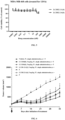
- mice were inoculated subcutaneously in the right flank with 5 ⁇ 10 6 Capan-1 human pancreatic cancer cells (with low expression of HER2) to prepare a xenograft tumor model. After 8 days, when the tumor volume averaged 178 mm 3 , the tumor-bearing mice were intravenously administrated LC1184(8) and five other different conjugates at 5 mg/kg. Tumor volume was measured twice weekly with a caliper. The efficacy of LC1184(8) was better than that of LC1184(4). LC302-2-1(4), LC302-2-4(4), and LC301-2-1(4) showed comparable efficacy to LC1184(8), while LC301-2-1(2) showed comparable efficacy to LC1184(4) ( FIG. 7 ).
- conjugates LC302-2-1(4), LC302-2-4(4), and LC1184(8) were each inoculated into mixed human serum at 37 °C.
- the conjugate was captured with an antigen, deglycosylated with glycosidase, and then dissociated with acid.
- the supernatant was collected and centrifuged, and then detected by high resolution LC-MS to determine the DAR.
- LC302-2-1(4) and LC302-2-4(4) were very stable after 96 h of incubation in serum. After 96 h of incubation, there was no significant reduction in DAR for LC302-2-1(4) and LC302-2-4(4). However, the DAR of LC1184(8) decreased from 7.8 to 2.6 after 96 h of incubation ( FIG. 8 ). The stability of the linker indicates that more payloads are delivered to the targeted tumor and the release of off-target free payload is reduced, thereby increasing the therapeutic index.
- Appearance was determined by visual inspection.
- the illumination intensity of the clarity detector was ensured to be kept between 1000 lx and 1500 lx.
- the sample was kept at the same level as the eye, and gently shaken or inverted to prevent the generation of bubbles.
- Visual inspection was performed in front of a black background and a white background. The results were recorded in terms of the two aspects of appearance and visible particle.
- the protein concentration was detected using a UV-visible spectrophotometer (dual wavelength method).
- the cuvette was washed with ultrapure water three times, then 400 ⁇ L of ultrapure water was added to the cuvette, and then the "measure" button was clicked; the calibration was performed by taking the ultrapure water as the blank control.
- the mixture was diluted with water for injection (not more than 10-fold dilution each time) to a final concentration of about 0.5 mg/mL.
- three duplicate samples were required to be prepared and each well mixed for later use.
- the absorbance of the diluted sample at 280 nm and 360 nm (A280 and A360) was measured with a UV spectrophotometer.
- A280 and A360 were calculated for each test sample according to the following formulas.
- a 280 A 2801 + A 2802 + A 2803 / 3 ;
- a 360 A 3601 + A 3602 + A 3603 / 3
- a 280 and A 360 obtained by the above calculation were substituted into the following formula (1) and formula (2) to calculate C mAb , and the C mAb was substituted into formula (3) to obtain the protein concentration C of the test sample;
- a 280 ⁇ mAb ⁇ 280 * L * C mAb + ⁇ Linker ⁇ Drug ⁇ 280 * L * C Linker ⁇ Drug
- Sample purity was detected using size-exclusion high-performance liquid chromatography (SEC-HPLC).
- the chromatographic column used was TSKgel G3000SWXL gel chromatographic column (7.8 ⁇ 300 mm); the mobile phase was 0.2 mol/L potassium dihydrogen phosphate-0.25 mol/L potassium chloride solution, and the pH was 6.2; the test sample was diluted with ultrapure water to about 2 mg/mL to prepare the test solution, and 50 ⁇ L of the test solution was injected into a high-performance liquid chromatograph.
- the column temperature was 25 °C
- the flow rate was 0.5 mL/min
- the detection wavelength was 280 nm
- the injector temperature was 4 °C
- the analysis time was 30 min.
- the relative percentages of aggregate, monomer, and fragment components were calculated using the area normalization method.
- the charge heterogeneity of samples was detected by cation-exchange high-performance liquid chromatography (CEX-HPLC).
- the chromatographic column was a ProPac WCX-10 (4 ⁇ 250 mm) cation-exchange chromatographic column.
- the composition of mobile phase was as follows: A: 100% water, B: 200 mM NaCl, C: 100 mM sodium dihydrogen phosphate, D: 100 mM disodium hydrogen phosphate.
- the test sample was diluted with ultrapure water to about 2 mg/mL to prepare the test solution. 15 ⁇ L of the test solution was injected into the liquid chromatograph, and then the gradient elution was performed as shown in the table below.
- the column temperature was 45 °C
- the flow rate was 0.8 mL/min
- the detection wavelength was 214 nm.
- the relative percentages of the acidic component, the main peak, and the basic component were calculated using the area normalization method.
- the sample injection voltage was -5 KV
- the sample injection time was 20 s
- the separation voltage was -15 KV
- the analysis time was 35 min
- the column temperature was 25 °C
- sample chamber temperature was 15 °C.
- the purities of LC, LC-Drug, and HC were calculated using the area normalization method, and the sum of the purities of the three was the sample purity.
- the free drug was detected by reverse-phase high-performance liquid chromatography (RP-HPLC).
- the chromatographic column used was Agilent Poroshell 120 EC-C18 (4.6 ⁇ 100 mm, 2.7 ⁇ m particle size).
- the mobile phase A was 0.1% TFA (trifluoroacetic acid) in water
- the mobile phase B was 0.1% TFA in acetonitrile.
- 100 ⁇ L of the test sample and 200 ⁇ L of acetone were well mixed.
- the resulting mixture was centrifuged at 13000 rpm for 5 min, and the supernatant was collected as the test solution.
- a proper amount of small molecule sample was prepared into 0.133-1.33 ⁇ g/mL reference solution.
Landscapes
- Health & Medical Sciences (AREA)
- Life Sciences & Earth Sciences (AREA)
- Bioinformatics & Cheminformatics (AREA)
- Engineering & Computer Science (AREA)
- Animal Behavior & Ethology (AREA)
- Medicinal Chemistry (AREA)
- Pharmacology & Pharmacy (AREA)
- Chemical & Material Sciences (AREA)
- General Health & Medical Sciences (AREA)
- Public Health (AREA)
- Veterinary Medicine (AREA)
- Epidemiology (AREA)
- Immunology (AREA)
- Cell Biology (AREA)
- Organic Chemistry (AREA)
- Nuclear Medicine, Radiotherapy & Molecular Imaging (AREA)
- General Chemical & Material Sciences (AREA)
- Chemical Kinetics & Catalysis (AREA)
- Oncology (AREA)
- Proteomics, Peptides & Aminoacids (AREA)
- Biotechnology (AREA)
- Medicinal Preparation (AREA)
- Medicines Containing Antibodies Or Antigens For Use As Internal Diagnostic Agents (AREA)
- Pharmaceuticals Containing Other Organic And Inorganic Compounds (AREA)
- Peptides Or Proteins (AREA)
Applications Claiming Priority (2)
| Application Number | Priority Date | Filing Date | Title |
|---|---|---|---|
| CN202211029543 | 2022-08-25 | ||
| PCT/CN2023/114566 WO2024041587A1 (zh) | 2022-08-25 | 2023-08-24 | 抗体偶联药物的药物组合物 |
Publications (1)
| Publication Number | Publication Date |
|---|---|
| EP4578464A1 true EP4578464A1 (de) | 2025-07-02 |
Family
ID=90012599
Family Applications (1)
| Application Number | Title | Priority Date | Filing Date |
|---|---|---|---|
| EP23856675.6A Pending EP4578464A1 (de) | 2022-08-25 | 2023-08-24 | Pharmazeutische zusammensetzung eines antikörper-wirkstoff-konjugats |
Country Status (6)
| Country | Link |
|---|---|
| EP (1) | EP4578464A1 (de) |
| JP (1) | JP2025531032A (de) |
| KR (1) | KR20250053921A (de) |
| CN (1) | CN119730886A (de) |
| AU (1) | AU2023328010A1 (de) |
| WO (1) | WO2024041587A1 (de) |
Families Citing this family (1)
| Publication number | Priority date | Publication date | Assignee | Title |
|---|---|---|---|---|
| AU2024252499A1 (en) * | 2023-04-13 | 2025-10-23 | Genequantum Healthcare (Suzhou) Co., Ltd. | Combination of antibody-drug conjugate and anti-pd-1 antibody, and use thereof |
Family Cites Families (9)
| Publication number | Priority date | Publication date | Assignee | Title |
|---|---|---|---|---|
| US7256257B2 (en) | 2001-04-30 | 2007-08-14 | Seattle Genetics, Inc. | Pentapeptide compounds and uses related thereto |
| EP2391714B2 (de) | 2009-01-30 | 2019-07-24 | Whitehead Institute for Biomedical Research | Ligaturverfahren und ihre verwendung |
| RS60000B1 (sr) | 2012-10-11 | 2020-04-30 | Daiichi Sankyo Co Ltd | Veznici za antitelo-lek konjugate |
| US20180104349A9 (en) * | 2013-04-28 | 2018-04-19 | Gang Qin | Novel linker, preparation method, and application thereof |
| WO2015165413A1 (zh) | 2014-04-29 | 2015-11-05 | 秦刚 | 一种新型的稳定型抗体药物耦联物及其制备方法和用途 |
| KR20250004902A (ko) * | 2017-08-23 | 2025-01-08 | 다이이찌 산쿄 가부시키가이샤 | 항체-약물 콘주게이트의 제제 및 그 동결 건조 방법 |
| JPWO2020022363A1 (ja) * | 2018-07-25 | 2021-08-02 | 第一三共株式会社 | 抗体−薬物コンジュゲートの効果的な製造方法 |
| KR20230170769A (ko) * | 2021-04-14 | 2023-12-19 | 진콴텀 헬스케어 (쑤저우) 씨오., 엘티디. | 링커, 접합체 및 그 응용 |
| US11814394B2 (en) * | 2021-11-16 | 2023-11-14 | Genequantum Healthcare (Suzhou) Co., Ltd. | Exatecan derivatives, linker-payloads, and conjugates and thereof |
-
2023
- 2023-08-24 JP JP2025511523A patent/JP2025531032A/ja active Pending
- 2023-08-24 CN CN202380061564.3A patent/CN119730886A/zh active Pending
- 2023-08-24 EP EP23856675.6A patent/EP4578464A1/de active Pending
- 2023-08-24 KR KR1020257009650A patent/KR20250053921A/ko active Pending
- 2023-08-24 WO PCT/CN2023/114566 patent/WO2024041587A1/zh not_active Ceased
- 2023-08-24 AU AU2023328010A patent/AU2023328010A1/en active Pending
Also Published As
| Publication number | Publication date |
|---|---|
| JP2025531032A (ja) | 2025-09-19 |
| WO2024041587A1 (zh) | 2024-02-29 |
| CN119730886A (zh) | 2025-03-28 |
| KR20250053921A (ko) | 2025-04-22 |
| AU2023328010A1 (en) | 2025-03-20 |
Similar Documents
| Publication | Publication Date | Title |
|---|---|---|
| CN115197297B (zh) | 连接子、缀合物及其应用 | |
| KR102645430B1 (ko) | 개선된 리간드-약물 컨쥬게이트 약물동력학을 위한 peg화된 약물-링커 | |
| EP3783025A1 (de) | Zielgerichteter cd73-antikörper und antikörperarzneimittelfkonjugat, verfahren zu seiner herstellung und verwendungen davon | |
| WO2021136475A1 (en) | A drug conjugate and applications thereof | |
| KR20150128932A (ko) | 생물학적 활성 분자, 그의 접합체 및 치료 용도 | |
| WO2023232144A1 (zh) | 寡糖连接子,包含寡糖连接子的连接子-负载物和糖链重塑的抗体偶联药物,其制备方法和用途 | |
| JP2024509891A (ja) | 抗her2抗体-免疫アゴニストコンジュゲート及びその使用 | |
| EP4578464A1 (de) | Pharmazeutische zusammensetzung eines antikörper-wirkstoff-konjugats | |
| WO2024078612A1 (en) | Linker-payload compound, conjugates and applications thereof | |
| WO2024051747A1 (en) | A pharmaceutical composition of anti-her2 antibody-immune agonist conjugate and applications thereof | |
| WO2025140358A1 (en) | A pharmaceutical composition of anti-fgfr3 antibody drug conjugate and applications thereof | |
| US20250332277A1 (en) | Protein tyrosine kinase 7 antibodies and antibody-drug conjugates |
Legal Events
| Date | Code | Title | Description |
|---|---|---|---|
| STAA | Information on the status of an ep patent application or granted ep patent |
Free format text: STATUS: THE INTERNATIONAL PUBLICATION HAS BEEN MADE |
|
| PUAI | Public reference made under article 153(3) epc to a published international application that has entered the european phase |
Free format text: ORIGINAL CODE: 0009012 |
|
| STAA | Information on the status of an ep patent application or granted ep patent |
Free format text: STATUS: REQUEST FOR EXAMINATION WAS MADE |
|
| 17P | Request for examination filed |
Effective date: 20250228 |
|
| AK | Designated contracting states |
Kind code of ref document: A1 Designated state(s): AL AT BE BG CH CY CZ DE DK EE ES FI FR GB GR HR HU IE IS IT LI LT LU LV MC ME MK MT NL NO PL PT RO RS SE SI SK SM TR |
|
| DAV | Request for validation of the european patent (deleted) | ||
| DAX | Request for extension of the european patent (deleted) |