EP2946474B1 - N-well switching circuit - Google Patents
N-well switching circuit Download PDFInfo
- Publication number
- EP2946474B1 EP2946474B1 EP14702369.1A EP14702369A EP2946474B1 EP 2946474 B1 EP2946474 B1 EP 2946474B1 EP 14702369 A EP14702369 A EP 14702369A EP 2946474 B1 EP2946474 B1 EP 2946474B1
- Authority
- EP
- European Patent Office
- Prior art keywords
- voltage
- well
- pmos transistor
- oxide
- switched
- Prior art date
- Legal status (The legal status is an assumption and is not a legal conclusion. Google has not performed a legal analysis and makes no representation as to the accuracy of the status listed.)
- Not-in-force
Links
- 230000015654 memory Effects 0.000 claims description 27
- 238000000034 method Methods 0.000 claims description 16
- 230000008569 process Effects 0.000 description 9
- 230000008901 benefit Effects 0.000 description 3
- 230000008878 coupling Effects 0.000 description 3
- 238000010168 coupling process Methods 0.000 description 3
- 238000005859 coupling reaction Methods 0.000 description 3
- 238000010586 diagram Methods 0.000 description 3
- 230000004044 response Effects 0.000 description 3
- 239000000758 substrate Substances 0.000 description 3
- 238000005516 engineering process Methods 0.000 description 2
- 230000003071 parasitic effect Effects 0.000 description 2
- 230000002265 prevention Effects 0.000 description 2
- 239000004065 semiconductor Substances 0.000 description 2
- 230000002159 abnormal effect Effects 0.000 description 1
- 230000015556 catabolic process Effects 0.000 description 1
- 238000004891 communication Methods 0.000 description 1
- 230000000295 complement effect Effects 0.000 description 1
- 230000001419 dependent effect Effects 0.000 description 1
- 239000000463 material Substances 0.000 description 1
- 238000012986 modification Methods 0.000 description 1
- 230000004048 modification Effects 0.000 description 1
- 230000002035 prolonged effect Effects 0.000 description 1
- 238000006467 substitution reaction Methods 0.000 description 1
Images

Classifications
-
- H—ELECTRICITY
- H03—ELECTRONIC CIRCUITRY
- H03K—PULSE TECHNIQUE
- H03K17/00—Electronic switching or gating, i.e. not by contact-making and –breaking
- H03K17/22—Modifications for ensuring a predetermined initial state when the supply voltage has been applied
- H03K17/223—Modifications for ensuring a predetermined initial state when the supply voltage has been applied in field-effect transistor switches
-
- G—PHYSICS
- G11—INFORMATION STORAGE
- G11C—STATIC STORES
- G11C17/00—Read-only memories programmable only once; Semi-permanent stores, e.g. manually-replaceable information cards
- G11C17/14—Read-only memories programmable only once; Semi-permanent stores, e.g. manually-replaceable information cards in which contents are determined by selectively establishing, breaking or modifying connecting links by permanently altering the state of coupling elements, e.g. PROM
- G11C17/18—Auxiliary circuits, e.g. for writing into memory
-
- G—PHYSICS
- G11—INFORMATION STORAGE
- G11C—STATIC STORES
- G11C7/00—Arrangements for writing information into, or reading information out from, a digital store
-
- G—PHYSICS
- G11—INFORMATION STORAGE
- G11C—STATIC STORES
- G11C7/00—Arrangements for writing information into, or reading information out from, a digital store
- G11C7/12—Bit line control circuits, e.g. drivers, boosters, pull-up circuits, pull-down circuits, precharging circuits, equalising circuits, for bit lines
-
- G—PHYSICS
- G11—INFORMATION STORAGE
- G11C—STATIC STORES
- G11C8/00—Arrangements for selecting an address in a digital store
- G11C8/08—Word line control circuits, e.g. drivers, boosters, pull-up circuits, pull-down circuits, precharging circuits, for word lines
-
- H—ELECTRICITY
- H03—ELECTRONIC CIRCUITRY
- H03K—PULSE TECHNIQUE
- H03K17/00—Electronic switching or gating, i.e. not by contact-making and –breaking
- H03K17/08—Modifications for protecting switching circuit against overcurrent or overvoltage
- H03K17/081—Modifications for protecting switching circuit against overcurrent or overvoltage without feedback from the output circuit to the control circuit
- H03K17/08104—Modifications for protecting switching circuit against overcurrent or overvoltage without feedback from the output circuit to the control circuit in field-effect transistor switches
-
- H—ELECTRICITY
- H03—ELECTRONIC CIRCUITRY
- H03K—PULSE TECHNIQUE
- H03K17/00—Electronic switching or gating, i.e. not by contact-making and –breaking
- H03K17/51—Electronic switching or gating, i.e. not by contact-making and –breaking characterised by the components used
- H03K17/56—Electronic switching or gating, i.e. not by contact-making and –breaking characterised by the components used by the use, as active elements, of semiconductor devices
- H03K17/687—Electronic switching or gating, i.e. not by contact-making and –breaking characterised by the components used by the use, as active elements, of semiconductor devices the devices being field-effect transistors
- H03K17/6871—Electronic switching or gating, i.e. not by contact-making and –breaking characterised by the components used by the use, as active elements, of semiconductor devices the devices being field-effect transistors the output circuit comprising more than one controlled field-effect transistor
- H03K17/6872—Electronic switching or gating, i.e. not by contact-making and –breaking characterised by the components used by the use, as active elements, of semiconductor devices the devices being field-effect transistors the output circuit comprising more than one controlled field-effect transistor using complementary field-effect transistors
-
- H—ELECTRICITY
- H03—ELECTRONIC CIRCUITRY
- H03K—PULSE TECHNIQUE
- H03K19/00—Logic circuits, i.e. having at least two inputs acting on one output; Inverting circuits
- H03K19/003—Modifications for increasing the reliability for protection
- H03K19/00315—Modifications for increasing the reliability for protection in field-effect transistor circuits
-
- G—PHYSICS
- G11—INFORMATION STORAGE
- G11C—STATIC STORES
- G11C13/00—Digital stores characterised by the use of storage elements not covered by groups G11C11/00, G11C23/00, or G11C25/00
- G11C13/0002—Digital stores characterised by the use of storage elements not covered by groups G11C11/00, G11C23/00, or G11C25/00 using resistive RAM [RRAM] elements
- G11C13/0021—Auxiliary circuits
- G11C13/0069—Writing or programming circuits or methods
-
- H—ELECTRICITY
- H03—ELECTRONIC CIRCUITRY
- H03K—PULSE TECHNIQUE
- H03K2217/00—Indexing scheme related to electronic switching or gating, i.e. not by contact-making or -breaking covered by H03K17/00
- H03K2217/0018—Special modifications or use of the back gate voltage of a FET
-
- H—ELECTRICITY
- H03—ELECTRONIC CIRCUITRY
- H03K—PULSE TECHNIQUE
- H03K2217/00—Indexing scheme related to electronic switching or gating, i.e. not by contact-making or -breaking covered by H03K17/00
- H03K2217/0063—High side switches, i.e. the higher potential [DC] or life wire [AC] being directly connected to the switch and not via the load
-
- H—ELECTRICITY
- H03—ELECTRONIC CIRCUITRY
- H03K—PULSE TECHNIQUE
- H03K2217/00—Indexing scheme related to electronic switching or gating, i.e. not by contact-making or -breaking covered by H03K17/00
- H03K2217/0072—Low side switches, i.e. the lower potential [DC] or neutral wire [AC] being directly connected to the switch and not via the load
Definitions
- This application relates to integrated circuits, and more particularly to an n-well biasing scheme to prevent latchup for high-density applications.
- a PMOS transistor includes a p-type drain and source formed in an n-type body. Holes are thus the majority carrier in a PMOS channel.
- CMOS complementary MOS
- the bulk substrate is p-type such that the n-type body for a PMOS transistor exists as an n-type well (n-well) in the p-type substrate.
- the PMOS source will be at a positive voltage with regard to the drain when the channel is conducting. This positive voltage on the source can be problematic in that a p-n junction is formed between the source and the n-well for the PMOS transistor. If the source is sufficiently biased with regard to the n-well, that p-n junction is then forward biased. A conducting parasitic structure results from this forward biased p-n junction and the ground connection to NMOS transistors in the p-type substrate. The resulting short circuit condition in the conducting parasitic structure is referred to as latchup. Latchup is dangerous in that the circuit can be destroyed from the latchup currents. Moreover, even if the circuit can withstand the short circuit currents, latchup inhibits normal operation.
- a PMOS transistor's n-well To prevent latchup, it is conventional to tie a PMOS transistor's n-well to the highest expected voltage. For example, if a PMOS transistor can operate in a low-voltage mode and also in a high-voltage mode, it is conventional to tie the PMOS n-well to the high-voltage supply used during the high-voltage mode operation. But the n-well tie is problematic as transistor dimensions are reduced such as in deep sub-micron technology. At these modem process nodes, the gate oxide is too thin and the transistor is too small to handle the stress resulting from tying the n-well to a relatively high-voltage supply.
- the internal voltage generator includes a comparator for receiving a reference voltage through its first input terminal, receiving the internal voltage through its second input terminal, and comparing the reference voltage with the internal voltage, a driving transistor for receiving the output signal from the comparator through its gate terminal, a first terminal of which being coupled to a driving voltage, a second terminal of which being an output terminal for outputting the internal voltage, a back bias circuit for supplying a predetermined potential of back bias voltage to a well region of the driving transistor, and a controller for receiving the output signal from the comparator, and controlling the operation of the back bias circuit.
- the second terminal of the driving transistor is feedback-coupled to the second input terminal of the comparator.
- the controller for receiving the output signal from the comparator supplies the predetermined potential of back bias voltage to the well region of the driving transistor by driving the back bias circuit.
- document US 6 452 858 B1 which relates to a semiconductor device to output voltages at three levels to a word driver while alleviating the breakdown voltage in the MOS transistor.
- the semiconductor is comprised of a breakdown-voltage reducing MOS transistor inserted in the word driver and two NMOS transistors to supply a read-out voltage to a word line.
- the word driver is moreover controlled by different voltage amplitudes on the main word lines and the common word lines.
- An n-well voltage switching circuit controls the voltage for a switched n-well of a dual-mode PMOS transistor to prevent latchup.
- the dual-mode PMOS transistor is controlled to operate in both a high-voltage mode and a low-voltage mode.
- the n-well voltage switching circuit biases the switched n-well to a high voltage.
- This high voltage is at least as high as any expected source (or drain) voltage for the dual-mode PMOS transistor during operation in the high-voltage mode. In this fashion, the p-n junction for the dual-mode PMOS transistor between its source and the switched n-well does not get forward biased and latchup is prevented accordingly.
- the n-well voltage switching circuit biases the switched n-well to a low voltage that is lower than the high voltage. This low voltage is sufficiently low such that the dual-mode PMOS transistor is not strained during the low-voltage mode. In this fashion, the dual-mode PMOS transistor may be relatively small and have a thin-gate oxide to enhance density.
- a plurality of dual-mode PMOS transistors may have the voltage of their switched n-wells biased by the n-well voltage switching circuit to further enhance density.
- the n-well switching voltage switching circuit includes a first PMOS transistor of a first size having a first gate-oxide thickness.
- the first size and the first gate-oxide thickness have a magnitude such that a permanent coupling of an un-switched n-well and a source for the first PMOS transistor to a high-voltage supply providing the high voltage does not cause damage to the first PMOS transistor.
- the dual-mode PMOS transistor has a second size that is less than the first size and a second gate-oxide thickness that is less than the first gate-oxide thickness.
- the second size and the second gate-oxide thickness have a magnitude such that the switched n-well for the dual-mode PMOS transistor cannot be permanently coupled to the high-voltage supply without incurring damage to the dual-mode PMOS transistor.
- the n-well voltage switching circuit is controlled so that the switched n-well is biased to the high voltage for no longer than a safe duration that protects the dual-mode PMOS transistor from damage despite its relatively small size and thin gate-oxide thickness.
- an n-well voltage switching circuit that controls the voltage bias for a dual-mode PMOS transistor's switched n-well. In a low-power mode of operation, the n-well voltage switching circuit biases the switched n-well to a relatively low voltage. Conversely, in a high-power mode of operation, the n-well voltage switching circuit biases the switched n-well to a relatively high voltage. What constitutes low and high voltage for the embodiments discussed herein depends upon the process node. For example, in a 20 nm process node, the high voltage may be 1.9 V whereas the low voltage may be 1 V.
- the high voltage has a magnitude that is too high for the switched n-well to be continuously biased to the high voltage without incurring damage to PMOS transistors within the n-well.
- the low voltage is safe for a prolonged biasing of the switched n-well. What is safe versus what is not safe will depend on the particular process node being used.
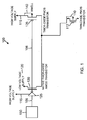
- Figure 1 shows an embodiment of an n-well voltage switching circuit 100 that is responsive to a mode control signal 105. If mode control signal 105 is asserted high (to indicate high-voltage mode operation), n-well voltage switching circuit 100 charges a switched n-well 110 for a dual-mode PMOS transistor 112 to a high voltage during a high-voltage (or power) mode of operation for dual-mode PMOS transistor 112. On the other hand, if mode control signal 105 is pulled low to select for a low-voltage mode of operation for dual-mode PMOS transistor 112, n-well voltage switching circuit 100 biases switched n-well 110 to a low voltage. In this fashion, switched n-well 110 need not be permanently tied to a high-voltage supply. As discussed further herein, dual-mode PMOS transistor 112 can then take advantage of the smaller dimensions (and thinner oxide) available in modern process nodes.
- An inverter 125 inverts mode control signal 105 into an inverted control signal 106.
- Inverted control signal 106 drives the gate of a native thick-oxide NMOS transistor 130.
- a drain of native thick-oxide NMOS transistor 130 is tied to a low voltage supply 120 whereas its source is tied to switched n-well 110.
- Low voltage supply 120 supplies the low voltage for switched n-well 110 when NMOS transistor 130 is turned on.
- mode control signal 105 goes low to select for a low-voltage mode of operation for dual-mode PMOS transistor 112
- inverted control signal 106 goes high such that NMOS transistor 130 turns fully on to bias switched n-well 110 to the low voltage.
- the source for NMOS transistor 130 forms part of an output node for n-well switching circuit 100 that couples to switched n-well 110.
- Inverted control signal 106 also drives the gate of a thick-oxide PMOS transistor 135, which is thus off in the low-voltage mode.
- the source of PMOS transistor 135 is tied to a high-voltage supply 115 and its drain is tied to switched n-well 110.
- mode control signal 105 is asserted high such that inverter 125 pulls inverted control signal 106 low so that PMOS transistor 135 is fully on.
- the drain of PMOS transistor 135 forms a remaining part of an output node for n-well voltage switching circuit 100 that couples to switched n-well 110.
- High-voltage supply 115 supplies the high voltage that biases switched n-well 110 when PMOS transistor 135 is turned on.
- NMOS transistor 130 is turned off in response to inverted control signal 106 going low at this time.
- switched n-well 110 for dual-mode PMOS transistor 112 is biased to the high voltage when mode control signal 105 goes high.
- PMOS transistor 135 is not stressed from the high voltage since its n-well 140 is also tied to high voltage supply 115 and because its gate oxide is relatively thick. In addition, PMOS transistor 135 has a size (channel length) sufficiently large to be robust to such a permanent coupling to the high voltage.
- control signal 106 should also be charged to the high voltage during the low-power mode of operation for dual-mode PMOS transistor 112. If control signal 106 were instead just charged to the low voltage during this time, the gate voltage of PMOS transistor 135 could be sufficiently lower than its source voltage so that PMOS transistor 135 would conduct rather than be shut off. Thus, high-voltage supply 115 supplies the power to inverter 125 so that control signal 106 is charged to the high voltage during the low-voltage mode of operation for dual-mode PMOS transistor 112. In this fashion, PMOS transistor 135 is fully off during the low-power mode of operation.
- NMOS transistor 130 is a thick-oxide transistor even though its drain is tied only to low-voltage supply 120 because its gate will thus be charged to the high voltage during the low-voltage mode of operation for dual-mode PMOS transistor 112.
- Both PMOS transistor 135 and NMOS transistor 130 must be relatively large and robust to withstand the strain from high-voltage supply 115. These transistors thus demand die space accordingly. But there need only be one n-well voltage switching circuit 100 to control the switched n-well potential for assorted other dual-mode PMOS transistors having the low and high voltage modes of operation. In this fashion, substantial die area savings may be realized.
- Dual-mode transistor PMOS 112 has a size that is smaller than the size used for PMOS transistor 135 and NMOS transistor 130. For example, dual-mode PMOS transistor 112 may have the minimum size and gate oxide thickness allowed by the process node. In this fashion, density is greatly enhanced.
- inverter 125 may be omitted in alternative embodiments in which control signal 105 is replaced with an active low control signal that would directly drive the gates of NMOS transistor 130 and PMOS transistor 135.
- the active low control signal would be pulled low to select for the high-voltage mode of operation.
- the active low control signal would be charged to the high voltage to select for the low-voltage mode of operation.
- an electrically-programmable fuse (e-fuse) memory includes assorted word line drivers as well as programming transistors.
- the corresponding transistors for the word line drivers and the associated programming transistors needed to be relatively large and have thick gate oxides to withstand the high voltage used to program the e-fuses.
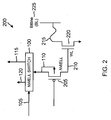
- an e-fuse memory 200 shown in Figure 2 enables the use of small thin-oxide word line drivers and programming transistors, which advantageously increases density.
- e-fuse memory 200 is shown with just a single word line 210 and a single bit line 225. It will be appreciated, however, that e-fuse memory 200 includes a plurality of other word lines and bit lines arranged analogously as shown for word line 210 and bit line 225. The other word lines would form additional rows in parallel with word line 210. Similarly, the other bit lines would form columns in parallel with bit line 225. When a word line is asserted by its word line driver, the corresponding e-fuses for that word line may be either read or programmed depending upon the bias for the bit lines. Each intersection of a word line and the bit lines corresponds to an e-fuse.
- an e-fuse 215 corresponds to the intersection of word line 210 and bit line 225.
- Each e-fuse comprises a fusible link that is conductive in the un-programmed state.
- a programmed e-fuse is either an open circuit or much more resistive as compared to an un-programmed e-fuse.
- To read a given e-fuse its word line and bit line are both asserted. Since an e-fuse should not be programmed in a read operation, the assertion of the word line and the bit line in a read operation may be performed using the low voltage. In contrast, the word line and bit line are both asserted to the high voltage to program a corresponding e-fuse. Reading the e-fuses would thus correspond to a low-voltage mode of operation whereas programming the e-fuses corresponds to a high-voltage mode of operation.
- a small thin-oxide word line (WL) driver PMOS transistor 205 has its drain tied to word line 210.
- WL driver PMOS transistor 205 has its switched n-well 110 controlled by n-well voltage switching circuit 100 as discussed with regard to Figure 1 .
- the source of WL driver PMOS transistor 205 is also tied to switched n-well 110 so that the voltage bias for both the source and switched n-well 110 are controlled by mode control signal 105.
- n-well voltage switching circuit 100 biases the source and switched n-well 110 for WL driver PMOS transistor 205 to the high voltage.
- a word line decoder (not illustrated) selects for word line 210 by pulling the gate of WL driver PMOS transistor 205 low.
- WL driver PMOS transistor 205 turns on and biases word line 210 to the high voltage.
- Word line 210 controls a gate of a small thin-oxide programming NMOS transistor 220 having its source tied to ground and a drain tied to a terminal of e-fuse 215. In the programming mode, programming NMOS transistor 220 thus has its gate biased to the high voltage.
- Bit line 225 couples to a remaining terminal of e-fuse 215. If bit line 225 is also charged to the high voltage when NMOS programming transistor 220 turns on, a relatively large amount of current will flow through e-fuse 215 so that it can be programmed.
- mode control signal 105 commands n-well voltage switching circuit 100 to bias the source and switched n-well 110 of WL driver PMOS transistor 205 to the low voltage. If the gate of WL driver PMOS transistor 205 is then pulled low, this transistor will then turn on to charge word line 210 to the low voltage so as to turn on NMOS programming transistor 220. During this read operation, bit line 225 is biased to the low-voltage. If e-fuse 215 is un-programmed, the assertion of word line 210 will pull the charged bit line 225 towards ground because of the conduction through NMOS programming transistor 220. In contrast, if e-fuse 215 had been programmed, bit line 225 will not be pulled to ground despite NMOS programming transistor 220 being turned on.
- WL driver PMOS transistor 205 is thus protected from latchup during the high-voltage mode of operation for programming e-fuses, it is not robust to a sufficiently long period of high-voltage operation since WL driver PMOS transistor 205 is a small thin-oxide transistor. But the programming of an e-fuse takes a relatively short amount of time as compared to the high-voltage longevity of such a small thin-oxide transistor.
- a controller 150 that controls the state of mode control signal 105 is configured to assert mode control signal 105 only for the relatively short amount of time necessary to program e-fuse 215.
- both WL driver PMOS transistor 205 and programming NMOS transistor 220 are biased by the high voltage only for the duration necessary to program e-fuse 215.
- both of these transistors can take advantage of the small dimensions and thin gate-oxide thickness available in modem process nodes, which greatly enhances die saving. For example, if memory 200 includes a plurality N of word lines and the same plurality N of bit lines, it would include N 2 e-fuses and would thus require N 2 programming transistors. The die area savings are thus quadratically related to the size of the memory.
- n-well voltage switching discussed herein may also be applied to the power switch used to pull bit line 225 to the high voltage during the programming mode.
- a global power switch in series with a local power switch for the high-voltage charging of bit line 225.
- both these switches would comprise relatively large thick-oxide PMOS transistors having their n-wells permanently tied to high voltage supply 115 to prevent latchup.
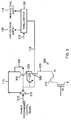
- a local power switch comprises a relatively small thin-oxide PMOS transistor 300 having its switched n-well 110 controlled by n-well voltage switching circuit 100.
- a global power switch comprises a relatively large thick-oxide PMOS transistor 305 having its source and an un-switched n-well 306 tied to high-voltage supply 115.
- PMOS transistor 300 couples in series between bit line 225 and a drain for PMOS transistor 305.
- An enable programming control signal 315 is inverted through an inverter 310 to drive the gates of both PMOS transistors 305 and 300.
- enable programming control signal 315 is also the mode control signal for n-well voltage switching circuit 100.
- enable programming control signal 315 is asserted, switched n-well 110 is also charged to the high voltage.
- enable programming control signal 315 is de-asserted such that PMOS transistors 300 and 305 are turned off.
- n-well voltage switching circuit 100 biases switched n-well 110 to the low voltage. But note that a node 320 coupling to the source for PMOS transistor 300 was charged to the high voltage during the programming mode. To prevent any possibility of latchup occurring from this charged node potential as compared to the low voltage for switched n-well 110, an NMOS transistor 325 pulls node 320 to ground when memory 200 is not being programmed.
- inverter 310 drives the gate of NMOS transistor 325 such that NMOS transistor 325 turns on in response to the de-assertion of enable programming mode control signal 315.
- a source of NMOS transistor 325 is tied to ground whereas its drain is tied to node 320. In this fashion, NMOS transistor 325 will pull the potential for node 320 to ground when e-fuse memory 200 is not in the programming mode.
- a separate low voltage switch (not illustrated) would be active during a read mode of operation for memory 200 to charge bit line 225 to the low voltage.
- Electrically programmable memory 200 has numerous applications. For example, it conventional to use such a memory to configure a system-on-a-chip (SOC) with configuration data, trim data, RAM redundancy information, an encryption code, or other suitable information.
- Figure 4 illustrates some exemplary devices that include an SOC enhanced with electrically programmable memory 200.
- a cell phone 400, a laptop 405, and a tablet PC 410 may all include an electrically programmable memory 200 constructed in accordance with the disclosure.
- Other exemplary electronic systems such as a music player, a video player, a communication device, and a personal computer may also be configured with electrically programmable memories in accordance with the disclosure.
Landscapes
- Engineering & Computer Science (AREA)
- Physics & Mathematics (AREA)
- Computer Hardware Design (AREA)
- Computing Systems (AREA)
- General Engineering & Computer Science (AREA)
- Mathematical Physics (AREA)
- Microelectronics & Electronic Packaging (AREA)
- Read Only Memory (AREA)
- Semiconductor Integrated Circuits (AREA)
- Design And Manufacture Of Integrated Circuits (AREA)
- Metal-Oxide And Bipolar Metal-Oxide Semiconductor Integrated Circuits (AREA)
Applications Claiming Priority (2)
| Application Number | Priority Date | Filing Date | Title |
|---|---|---|---|
| US13/742,964 US8787096B1 (en) | 2013-01-16 | 2013-01-16 | N-well switching circuit |
| PCT/US2014/011138 WO2014113295A1 (en) | 2013-01-16 | 2014-01-10 | N-well switching circuit |
Publications (2)
| Publication Number | Publication Date |
|---|---|
| EP2946474A1 EP2946474A1 (en) | 2015-11-25 |
| EP2946474B1 true EP2946474B1 (en) | 2016-07-27 |
Family
ID=50031588
Family Applications (1)
| Application Number | Title | Priority Date | Filing Date |
|---|---|---|---|
| EP14702369.1A Not-in-force EP2946474B1 (en) | 2013-01-16 | 2014-01-10 | N-well switching circuit |
Country Status (6)
| Country | Link |
|---|---|
| US (2) | US8787096B1 (enExample) |
| EP (1) | EP2946474B1 (enExample) |
| JP (1) | JP6092427B2 (enExample) |
| KR (1) | KR101557812B1 (enExample) |
| CN (1) | CN104937848B (enExample) |
| WO (1) | WO2014113295A1 (enExample) |
Families Citing this family (13)
| Publication number | Priority date | Publication date | Assignee | Title |
|---|---|---|---|---|
| US8787096B1 (en) | 2013-01-16 | 2014-07-22 | Qualcomm Incorporated | N-well switching circuit |
| US9082498B2 (en) * | 2013-08-08 | 2015-07-14 | Qualcomm Incorporated | N-well switching circuit |
| TWI739734B (zh) | 2015-02-23 | 2021-09-21 | 紐西蘭商藍瑟科技紐西蘭有限公司 | 用於將甲烷轉化為產物之重組產醋酸細菌 |
| CN105049029B (zh) * | 2015-07-06 | 2018-05-04 | 上海巨微集成电路有限公司 | 一种pmos管衬底切换电路 |
| JP6905518B2 (ja) | 2015-10-13 | 2021-07-21 | ランザテク・ニュージーランド・リミテッド | エネルギー発生発酵経路を含む遺伝子操作細菌 |
| KR20180127632A (ko) | 2015-12-03 | 2018-11-29 | 란자테크 뉴질랜드 리미티드 | 가스 발효 아세토젠에서의 효율을 개선하기 위한 아르기닌 보충 |
| KR20180118651A (ko) | 2016-02-01 | 2018-10-31 | 란자테크 뉴질랜드 리미티드 | 통합형 발효 및 전해 공정 |
| EP3420089B1 (en) | 2016-02-26 | 2021-12-29 | LanzaTech NZ, Inc. | Crispr/cas systems for c-1 fixing bacteria |
| US9570192B1 (en) | 2016-03-04 | 2017-02-14 | Qualcomm Incorporated | System and method for reducing programming voltage stress on memory cell devices |
| AU2019218389B2 (en) | 2018-02-12 | 2024-09-05 | Lanzatech, Inc. | A process for improving carbon conversion efficiency |
| AU2019257224B2 (en) | 2018-04-20 | 2024-12-19 | Lanzatech, Inc. | Intermittent electrolysis streams |
| CN113225056A (zh) * | 2021-05-21 | 2021-08-06 | 上海韦尔半导体股份有限公司 | 一种控制电路、电路控制方法及电子产品 |
| US12212315B1 (en) * | 2023-01-04 | 2025-01-28 | Cadence Design Systems, Inc. | Interface device |
Family Cites Families (22)
| Publication number | Priority date | Publication date | Assignee | Title |
|---|---|---|---|---|
| US4670668A (en) | 1985-05-09 | 1987-06-02 | Advanced Micro Devices, Inc. | Substrate bias generator with power supply control means to sequence application of bias and power to prevent CMOS SCR latch-up |
| KR0169157B1 (ko) * | 1993-11-29 | 1999-02-01 | 기다오까 다까시 | 반도체 회로 및 mos-dram |
| JP3264622B2 (ja) | 1996-07-16 | 2002-03-11 | 株式会社東芝 | 半導体装置 |
| US5844425A (en) | 1996-07-19 | 1998-12-01 | Quality Semiconductor, Inc. | CMOS tristate output buffer with having overvoltage protection and increased stability against bus voltage variations |
| JP4105833B2 (ja) * | 1998-09-09 | 2008-06-25 | 株式会社ルネサステクノロジ | 半導体集積回路装置 |
| TW453032B (en) * | 1998-09-09 | 2001-09-01 | Hitachi Ltd | Semiconductor integrated circuit apparatus |
| US6452858B1 (en) * | 1999-11-05 | 2002-09-17 | Hitachi, Ltd. | Semiconductor device |
| US6377112B1 (en) | 2000-12-05 | 2002-04-23 | Semiconductor Components Industries Llc | Circuit and method for PMOS device N-well bias control |
| US6573134B2 (en) * | 2001-03-27 | 2003-06-03 | Sharp Laboratories Of America, Inc. | Dual metal gate CMOS devices and method for making the same |
| US7218151B1 (en) * | 2002-06-28 | 2007-05-15 | University Of Rochester | Domino logic with variable threshold voltage keeper |
| US6882188B1 (en) * | 2003-09-30 | 2005-04-19 | Faraday Technology Corp. | Input/output buffer |
| US7038274B2 (en) * | 2003-11-13 | 2006-05-02 | Volterra Semiconductor Corporation | Switching regulator with high-side p-type device |
| US7046493B2 (en) * | 2003-12-12 | 2006-05-16 | Faraday Technology Corp. | Input/output buffer protection circuit |
| KR100728950B1 (ko) * | 2004-03-11 | 2007-06-15 | 주식회사 하이닉스반도체 | 내부전압 발생장치 |
| FR2894373B1 (fr) * | 2005-12-07 | 2008-01-04 | Atmel Corp | Cellule anti-fusible autonome |
| US7355437B2 (en) * | 2006-03-06 | 2008-04-08 | Altera Corporation | Latch-up prevention circuitry for integrated circuits with transistor body biasing |
| US7330049B2 (en) * | 2006-03-06 | 2008-02-12 | Altera Corporation | Adjustable transistor body bias generation circuitry with latch-up prevention |
| TWI451697B (zh) * | 2006-05-03 | 2014-09-01 | Synopsys Inc | 極低功率類比補償電路 |
| US7863962B2 (en) * | 2008-04-17 | 2011-01-04 | National Semiconductor Corporation | High voltage CMOS output buffer constructed from low voltage CMOS transistors |
| US7800179B2 (en) * | 2009-02-04 | 2010-09-21 | Fairchild Semiconductor Corporation | High speed, low power consumption, isolated analog CMOS unit |
| CN101997305B (zh) | 2009-08-26 | 2013-04-10 | 安凯(广州)微电子技术有限公司 | 一种反向电压保护电路及功率管装置 |
| US8787096B1 (en) | 2013-01-16 | 2014-07-22 | Qualcomm Incorporated | N-well switching circuit |
-
2013
- 2013-01-16 US US13/742,964 patent/US8787096B1/en active Active
-
2014
- 2014-01-10 JP JP2015552832A patent/JP6092427B2/ja not_active Expired - Fee Related
- 2014-01-10 EP EP14702369.1A patent/EP2946474B1/en not_active Not-in-force
- 2014-01-10 WO PCT/US2014/011138 patent/WO2014113295A1/en not_active Ceased
- 2014-01-10 KR KR1020157021577A patent/KR101557812B1/ko not_active Expired - Fee Related
- 2014-01-10 CN CN201480004776.9A patent/CN104937848B/zh active Active
- 2014-08-29 US US14/472,953 patent/US9252765B2/en active Active
Also Published As
| Publication number | Publication date |
|---|---|
| KR101557812B1 (ko) | 2015-10-06 |
| CN104937848B (zh) | 2017-12-05 |
| WO2014113295A1 (en) | 2014-07-24 |
| US20140198588A1 (en) | 2014-07-17 |
| US20140369152A1 (en) | 2014-12-18 |
| US8787096B1 (en) | 2014-07-22 |
| CN104937848A (zh) | 2015-09-23 |
| EP2946474A1 (en) | 2015-11-25 |
| US9252765B2 (en) | 2016-02-02 |
| KR20150097815A (ko) | 2015-08-26 |
| JP6092427B2 (ja) | 2017-03-08 |
| JP2016511933A (ja) | 2016-04-21 |
Similar Documents
| Publication | Publication Date | Title |
|---|---|---|
| EP2946474B1 (en) | N-well switching circuit | |
| JP2016511933A5 (enExample) | ||
| US10305474B2 (en) | High voltage output driver with low voltage devices | |
| US9748957B2 (en) | Voltage level shifter circuit, system, and method for wide supply voltage applications | |
| US7224630B2 (en) | Antifuse circuit | |
| US20110273940A1 (en) | Level shifting circuit | |
| EP3683965B1 (en) | Switch control circuit for a power switch with electrostatic discharge (esd) protection | |
| JP2016092536A (ja) | 半導体装置 | |
| US11615828B2 (en) | Boundary protection in memory | |
| US7863959B2 (en) | Apparatus and methods for a high-voltage latch | |
| US9082498B2 (en) | N-well switching circuit | |
| US20120081165A1 (en) | High voltage tolerative driver | |
| US7764108B2 (en) | Electrical fuse circuit | |
| US20090052102A1 (en) | Semiconductor device | |
| US9780030B2 (en) | Integrated circuit | |
| US20130301374A1 (en) | Word line driver having a control switch | |
| US11205488B2 (en) | Apparatuses and methods for transistor protection by charge sharing | |
| US7379358B2 (en) | Repair I/O fuse circuit of semiconductor memory device | |
| US12072750B2 (en) | Power management circuit, system-on-chip device, and method of power management | |
| KR100924341B1 (ko) | 래치 회로 | |
| KR20150093079A (ko) | 반도체장치 |
Legal Events
| Date | Code | Title | Description |
|---|---|---|---|
| PUAI | Public reference made under article 153(3) epc to a published international application that has entered the european phase |
Free format text: ORIGINAL CODE: 0009012 |
|
| 17P | Request for examination filed |
Effective date: 20150717 |
|
| AK | Designated contracting states |
Kind code of ref document: A1 Designated state(s): AL AT BE BG CH CY CZ DE DK EE ES FI FR GB GR HR HU IE IS IT LI LT LU LV MC MK MT NL NO PL PT RO RS SE SI SK SM TR |
|
| AX | Request for extension of the european patent |
Extension state: BA ME |
|
| GRAP | Despatch of communication of intention to grant a patent |
Free format text: ORIGINAL CODE: EPIDOSNIGR1 |
|
| DAX | Request for extension of the european patent (deleted) | ||
| INTG | Intention to grant announced |
Effective date: 20160210 |
|
| GRAS | Grant fee paid |
Free format text: ORIGINAL CODE: EPIDOSNIGR3 |
|
| GRAA | (expected) grant |
Free format text: ORIGINAL CODE: 0009210 |
|
| AK | Designated contracting states |
Kind code of ref document: B1 Designated state(s): AL AT BE BG CH CY CZ DE DK EE ES FI FR GB GR HR HU IE IS IT LI LT LU LV MC MK MT NL NO PL PT RO RS SE SI SK SM TR |
|
| REG | Reference to a national code |
Ref country code: GB Ref legal event code: FG4D |
|
| REG | Reference to a national code |
Ref country code: CH Ref legal event code: EP |
|
| REG | Reference to a national code |
Ref country code: FR Ref legal event code: PLFP Year of fee payment: 4 |
|
| REG | Reference to a national code |
Ref country code: AT Ref legal event code: REF Ref document number: 816518 Country of ref document: AT Kind code of ref document: T Effective date: 20160815 |
|
| REG | Reference to a national code |
Ref country code: IE Ref legal event code: FG4D |
|
| REG | Reference to a national code |
Ref country code: DE Ref legal event code: R096 Ref document number: 602014002896 Country of ref document: DE |
|
| REG | Reference to a national code |
Ref country code: LT Ref legal event code: MG4D |
|
| REG | Reference to a national code |
Ref country code: NL Ref legal event code: MP Effective date: 20160727 |
|
| REG | Reference to a national code |
Ref country code: AT Ref legal event code: MK05 Ref document number: 816518 Country of ref document: AT Kind code of ref document: T Effective date: 20160727 |
|
| PG25 | Lapsed in a contracting state [announced via postgrant information from national office to epo] |
Ref country code: LT Free format text: LAPSE BECAUSE OF FAILURE TO SUBMIT A TRANSLATION OF THE DESCRIPTION OR TO PAY THE FEE WITHIN THE PRESCRIBED TIME-LIMIT Effective date: 20160727 Ref country code: NL Free format text: LAPSE BECAUSE OF FAILURE TO SUBMIT A TRANSLATION OF THE DESCRIPTION OR TO PAY THE FEE WITHIN THE PRESCRIBED TIME-LIMIT Effective date: 20160727 Ref country code: IT Free format text: LAPSE BECAUSE OF FAILURE TO SUBMIT A TRANSLATION OF THE DESCRIPTION OR TO PAY THE FEE WITHIN THE PRESCRIBED TIME-LIMIT Effective date: 20160727 Ref country code: NO Free format text: LAPSE BECAUSE OF FAILURE TO SUBMIT A TRANSLATION OF THE DESCRIPTION OR TO PAY THE FEE WITHIN THE PRESCRIBED TIME-LIMIT Effective date: 20161027 Ref country code: FI Free format text: LAPSE BECAUSE OF FAILURE TO SUBMIT A TRANSLATION OF THE DESCRIPTION OR TO PAY THE FEE WITHIN THE PRESCRIBED TIME-LIMIT Effective date: 20160727 Ref country code: IS Free format text: LAPSE BECAUSE OF FAILURE TO SUBMIT A TRANSLATION OF THE DESCRIPTION OR TO PAY THE FEE WITHIN THE PRESCRIBED TIME-LIMIT Effective date: 20161127 Ref country code: HR Free format text: LAPSE BECAUSE OF FAILURE TO SUBMIT A TRANSLATION OF THE DESCRIPTION OR TO PAY THE FEE WITHIN THE PRESCRIBED TIME-LIMIT Effective date: 20160727 Ref country code: RS Free format text: LAPSE BECAUSE OF FAILURE TO SUBMIT A TRANSLATION OF THE DESCRIPTION OR TO PAY THE FEE WITHIN THE PRESCRIBED TIME-LIMIT Effective date: 20160727 |
|
| PG25 | Lapsed in a contracting state [announced via postgrant information from national office to epo] |
Ref country code: ES Free format text: LAPSE BECAUSE OF FAILURE TO SUBMIT A TRANSLATION OF THE DESCRIPTION OR TO PAY THE FEE WITHIN THE PRESCRIBED TIME-LIMIT Effective date: 20160727 Ref country code: LV Free format text: LAPSE BECAUSE OF FAILURE TO SUBMIT A TRANSLATION OF THE DESCRIPTION OR TO PAY THE FEE WITHIN THE PRESCRIBED TIME-LIMIT Effective date: 20160727 Ref country code: AT Free format text: LAPSE BECAUSE OF FAILURE TO SUBMIT A TRANSLATION OF THE DESCRIPTION OR TO PAY THE FEE WITHIN THE PRESCRIBED TIME-LIMIT Effective date: 20160727 Ref country code: PL Free format text: LAPSE BECAUSE OF FAILURE TO SUBMIT A TRANSLATION OF THE DESCRIPTION OR TO PAY THE FEE WITHIN THE PRESCRIBED TIME-LIMIT Effective date: 20160727 Ref country code: GR Free format text: LAPSE BECAUSE OF FAILURE TO SUBMIT A TRANSLATION OF THE DESCRIPTION OR TO PAY THE FEE WITHIN THE PRESCRIBED TIME-LIMIT Effective date: 20161028 Ref country code: BE Free format text: LAPSE BECAUSE OF FAILURE TO SUBMIT A TRANSLATION OF THE DESCRIPTION OR TO PAY THE FEE WITHIN THE PRESCRIBED TIME-LIMIT Effective date: 20160727 Ref country code: SE Free format text: LAPSE BECAUSE OF FAILURE TO SUBMIT A TRANSLATION OF THE DESCRIPTION OR TO PAY THE FEE WITHIN THE PRESCRIBED TIME-LIMIT Effective date: 20160727 Ref country code: PT Free format text: LAPSE BECAUSE OF FAILURE TO SUBMIT A TRANSLATION OF THE DESCRIPTION OR TO PAY THE FEE WITHIN THE PRESCRIBED TIME-LIMIT Effective date: 20161128 |
|
| PG25 | Lapsed in a contracting state [announced via postgrant information from national office to epo] |
Ref country code: RO Free format text: LAPSE BECAUSE OF FAILURE TO SUBMIT A TRANSLATION OF THE DESCRIPTION OR TO PAY THE FEE WITHIN THE PRESCRIBED TIME-LIMIT Effective date: 20160727 Ref country code: EE Free format text: LAPSE BECAUSE OF FAILURE TO SUBMIT A TRANSLATION OF THE DESCRIPTION OR TO PAY THE FEE WITHIN THE PRESCRIBED TIME-LIMIT Effective date: 20160727 |
|
| REG | Reference to a national code |
Ref country code: DE Ref legal event code: R097 Ref document number: 602014002896 Country of ref document: DE |
|
| PG25 | Lapsed in a contracting state [announced via postgrant information from national office to epo] |
Ref country code: CZ Free format text: LAPSE BECAUSE OF FAILURE TO SUBMIT A TRANSLATION OF THE DESCRIPTION OR TO PAY THE FEE WITHIN THE PRESCRIBED TIME-LIMIT Effective date: 20160727 Ref country code: SM Free format text: LAPSE BECAUSE OF FAILURE TO SUBMIT A TRANSLATION OF THE DESCRIPTION OR TO PAY THE FEE WITHIN THE PRESCRIBED TIME-LIMIT Effective date: 20160727 Ref country code: SK Free format text: LAPSE BECAUSE OF FAILURE TO SUBMIT A TRANSLATION OF THE DESCRIPTION OR TO PAY THE FEE WITHIN THE PRESCRIBED TIME-LIMIT Effective date: 20160727 Ref country code: BG Free format text: LAPSE BECAUSE OF FAILURE TO SUBMIT A TRANSLATION OF THE DESCRIPTION OR TO PAY THE FEE WITHIN THE PRESCRIBED TIME-LIMIT Effective date: 20161027 Ref country code: DK Free format text: LAPSE BECAUSE OF FAILURE TO SUBMIT A TRANSLATION OF THE DESCRIPTION OR TO PAY THE FEE WITHIN THE PRESCRIBED TIME-LIMIT Effective date: 20160727 |
|
| PLBE | No opposition filed within time limit |
Free format text: ORIGINAL CODE: 0009261 |
|
| STAA | Information on the status of an ep patent application or granted ep patent |
Free format text: STATUS: NO OPPOSITION FILED WITHIN TIME LIMIT |
|
| 26N | No opposition filed |
Effective date: 20170502 |
|
| PG25 | Lapsed in a contracting state [announced via postgrant information from national office to epo] |
Ref country code: SI Free format text: LAPSE BECAUSE OF FAILURE TO SUBMIT A TRANSLATION OF THE DESCRIPTION OR TO PAY THE FEE WITHIN THE PRESCRIBED TIME-LIMIT Effective date: 20160727 |
|
| REG | Reference to a national code |
Ref country code: CH Ref legal event code: PL |
|
| PG25 | Lapsed in a contracting state [announced via postgrant information from national office to epo] |
Ref country code: MC Free format text: LAPSE BECAUSE OF FAILURE TO SUBMIT A TRANSLATION OF THE DESCRIPTION OR TO PAY THE FEE WITHIN THE PRESCRIBED TIME-LIMIT Effective date: 20160727 |
|
| PG25 | Lapsed in a contracting state [announced via postgrant information from national office to epo] |
Ref country code: LI Free format text: LAPSE BECAUSE OF NON-PAYMENT OF DUE FEES Effective date: 20170131 Ref country code: CH Free format text: LAPSE BECAUSE OF NON-PAYMENT OF DUE FEES Effective date: 20170131 |
|
| REG | Reference to a national code |
Ref country code: IE Ref legal event code: MM4A |
|
| PG25 | Lapsed in a contracting state [announced via postgrant information from national office to epo] |
Ref country code: LU Free format text: LAPSE BECAUSE OF NON-PAYMENT OF DUE FEES Effective date: 20170110 |
|
| REG | Reference to a national code |
Ref country code: FR Ref legal event code: PLFP Year of fee payment: 5 |
|
| PG25 | Lapsed in a contracting state [announced via postgrant information from national office to epo] |
Ref country code: IE Free format text: LAPSE BECAUSE OF NON-PAYMENT OF DUE FEES Effective date: 20170110 |
|
| PG25 | Lapsed in a contracting state [announced via postgrant information from national office to epo] |
Ref country code: MT Free format text: LAPSE BECAUSE OF NON-PAYMENT OF DUE FEES Effective date: 20170110 |
|
| PG25 | Lapsed in a contracting state [announced via postgrant information from national office to epo] |
Ref country code: AL Free format text: LAPSE BECAUSE OF FAILURE TO SUBMIT A TRANSLATION OF THE DESCRIPTION OR TO PAY THE FEE WITHIN THE PRESCRIBED TIME-LIMIT Effective date: 20160727 |
|
| PG25 | Lapsed in a contracting state [announced via postgrant information from national office to epo] |
Ref country code: HU Free format text: LAPSE BECAUSE OF FAILURE TO SUBMIT A TRANSLATION OF THE DESCRIPTION OR TO PAY THE FEE WITHIN THE PRESCRIBED TIME-LIMIT; INVALID AB INITIO Effective date: 20140110 |
|
| PG25 | Lapsed in a contracting state [announced via postgrant information from national office to epo] |
Ref country code: CY Free format text: LAPSE BECAUSE OF FAILURE TO SUBMIT A TRANSLATION OF THE DESCRIPTION OR TO PAY THE FEE WITHIN THE PRESCRIBED TIME-LIMIT Effective date: 20160727 |
|
| PG25 | Lapsed in a contracting state [announced via postgrant information from national office to epo] |
Ref country code: MK Free format text: LAPSE BECAUSE OF FAILURE TO SUBMIT A TRANSLATION OF THE DESCRIPTION OR TO PAY THE FEE WITHIN THE PRESCRIBED TIME-LIMIT Effective date: 20160727 |
|
| PG25 | Lapsed in a contracting state [announced via postgrant information from national office to epo] |
Ref country code: TR Free format text: LAPSE BECAUSE OF FAILURE TO SUBMIT A TRANSLATION OF THE DESCRIPTION OR TO PAY THE FEE WITHIN THE PRESCRIBED TIME-LIMIT Effective date: 20160727 |
|
| PGFP | Annual fee paid to national office [announced via postgrant information from national office to epo] |
Ref country code: GB Payment date: 20201231 Year of fee payment: 8 Ref country code: FR Payment date: 20201223 Year of fee payment: 8 |
|
| PGFP | Annual fee paid to national office [announced via postgrant information from national office to epo] |
Ref country code: DE Payment date: 20201218 Year of fee payment: 8 |
|
| REG | Reference to a national code |
Ref country code: DE Ref legal event code: R119 Ref document number: 602014002896 Country of ref document: DE |
|
| GBPC | Gb: european patent ceased through non-payment of renewal fee |
Effective date: 20220110 |
|
| PG25 | Lapsed in a contracting state [announced via postgrant information from national office to epo] |
Ref country code: GB Free format text: LAPSE BECAUSE OF NON-PAYMENT OF DUE FEES Effective date: 20220110 Ref country code: DE Free format text: LAPSE BECAUSE OF NON-PAYMENT OF DUE FEES Effective date: 20220802 |
|
| PG25 | Lapsed in a contracting state [announced via postgrant information from national office to epo] |
Ref country code: FR Free format text: LAPSE BECAUSE OF NON-PAYMENT OF DUE FEES Effective date: 20220131 |