EP2942397A1 - Co-cultivation of propionibacterium and yeast - Google Patents
Co-cultivation of propionibacterium and yeast Download PDFInfo
- Publication number
- EP2942397A1 EP2942397A1 EP14167774.0A EP14167774A EP2942397A1 EP 2942397 A1 EP2942397 A1 EP 2942397A1 EP 14167774 A EP14167774 A EP 14167774A EP 2942397 A1 EP2942397 A1 EP 2942397A1
- Authority
- EP
- European Patent Office
- Prior art keywords
- propionibacterium
- cultivation
- fungal cell
- yeast
- stationary
- Prior art date
- Legal status (The legal status is an assumption and is not a legal conclusion. Google has not performed a legal analysis and makes no representation as to the accuracy of the status listed.)
- Withdrawn
Links
- 241000186429 Propionibacterium Species 0.000 title claims abstract description 85
- 240000004808 Saccharomyces cerevisiae Species 0.000 title description 40
- 210000004027 cell Anatomy 0.000 claims abstract description 73
- 230000002538 fungal effect Effects 0.000 claims abstract description 73
- 238000000034 method Methods 0.000 claims abstract description 52
- 210000005253 yeast cell Anatomy 0.000 claims abstract description 22
- 239000000126 substance Substances 0.000 claims abstract description 14
- QVGXLLKOCUKJST-UHFFFAOYSA-N atomic oxygen Chemical compound [O] QVGXLLKOCUKJST-UHFFFAOYSA-N 0.000 claims abstract description 7
- 239000001301 oxygen Substances 0.000 claims abstract description 7
- 229910052760 oxygen Inorganic materials 0.000 claims abstract description 7
- 239000006228 supernatant Substances 0.000 claims description 49
- 230000005526 G1 to G0 transition Effects 0.000 claims description 43
- 239000005862 Whey Substances 0.000 claims description 33
- 102000007544 Whey Proteins Human genes 0.000 claims description 33
- 108010046377 Whey Proteins Proteins 0.000 claims description 33
- 230000012010 growth Effects 0.000 claims description 27
- 238000005273 aeration Methods 0.000 claims description 22
- 239000000047 product Substances 0.000 claims description 20
- 229940041514 candida albicans extract Drugs 0.000 claims description 15
- 239000012138 yeast extract Substances 0.000 claims description 15
- 235000009508 confectionery Nutrition 0.000 claims description 9
- 241000186428 Propionibacterium freudenreichii Species 0.000 claims description 7
- XLYOFNOQVPJJNP-UHFFFAOYSA-N water Substances O XLYOFNOQVPJJNP-UHFFFAOYSA-N 0.000 claims description 7
- 239000000843 powder Substances 0.000 claims description 5
- FAPWYRCQGJNNSJ-UBKPKTQASA-L calcium D-pantothenic acid Chemical compound [Ca+2].OCC(C)(C)[C@@H](O)C(=O)NCCC([O-])=O.OCC(C)(C)[C@@H](O)C(=O)NCCC([O-])=O FAPWYRCQGJNNSJ-UBKPKTQASA-L 0.000 claims description 4
- FDJOLVPMNUYSCM-UVKKECPRSA-L cobalt(3+);[(2r,3s,4r,5s)-5-(5,6-dimethylbenzimidazol-1-yl)-4-hydroxy-2-(hydroxymethyl)oxolan-3-yl] [(2r)-1-[3-[(2r,3r,4z,7s,9z,12s,13s,14z,17s,18s,19r)-2,13,18-tris(2-amino-2-oxoethyl)-7,12,17-tris(3-amino-3-oxopropyl)-3,5,8,8,13,15,18,19-octamethyl-2,7, Chemical group [Co+3].N#[C-].C1([C@H](CC(N)=O)[C@@]2(C)CCC(=O)NC[C@@H](C)OP([O-])(=O)O[C@H]3[C@H]([C@H](O[C@@H]3CO)N3C4=CC(C)=C(C)C=C4N=C3)O)[N-]\C2=C(C)/C([C@H](C\2(C)C)CCC(N)=O)=N/C/2=C\C([C@H]([C@@]/2(CC(N)=O)C)CCC(N)=O)=N\C\2=C(C)/C2=N[C@]1(C)[C@@](C)(CC(N)=O)[C@@H]2CCC(N)=O FDJOLVPMNUYSCM-UVKKECPRSA-L 0.000 claims description 2
- 239000007788 liquid Substances 0.000 claims description 2
- 229940045999 vitamin b 12 Drugs 0.000 claims description 2
- 238000000855 fermentation Methods 0.000 abstract description 41
- 230000004151 fermentation Effects 0.000 abstract description 41
- 239000002699 waste material Substances 0.000 abstract description 5
- 239000002609 medium Substances 0.000 description 53
- QTBSBXVTEAMEQO-UHFFFAOYSA-N Acetic acid Chemical compound CC(O)=O QTBSBXVTEAMEQO-UHFFFAOYSA-N 0.000 description 45
- XBDQKXXYIPTUBI-UHFFFAOYSA-N Propionic acid Substances CCC(O)=O XBDQKXXYIPTUBI-UHFFFAOYSA-N 0.000 description 30
- HEMHJVSKTPXQMS-UHFFFAOYSA-M Sodium hydroxide Chemical compound [OH-].[Na+] HEMHJVSKTPXQMS-UHFFFAOYSA-M 0.000 description 18
- 239000002054 inoculum Substances 0.000 description 18
- 235000019260 propionic acid Nutrition 0.000 description 17
- IUVKMZGDUIUOCP-BTNSXGMBSA-N quinbolone Chemical compound O([C@H]1CC[C@H]2[C@H]3[C@@H]([C@]4(C=CC(=O)C=C4CC3)C)CC[C@@]21C)C1=CCCC1 IUVKMZGDUIUOCP-BTNSXGMBSA-N 0.000 description 15
- 241001521757 Propionibacterium sp. Species 0.000 description 14
- 238000012360 testing method Methods 0.000 description 14
- 244000005700 microbiome Species 0.000 description 13
- GUBGYTABKSRVRQ-QKKXKWKRSA-N Lactose Natural products OC[C@H]1O[C@@H](O[C@H]2[C@H](O)[C@@H](O)C(O)O[C@@H]2CO)[C@H](O)[C@@H](O)[C@H]1O GUBGYTABKSRVRQ-QKKXKWKRSA-N 0.000 description 11
- 235000011054 acetic acid Nutrition 0.000 description 11
- 239000008101 lactose Substances 0.000 description 11
- 150000007524 organic acids Chemical class 0.000 description 11
- 235000005985 organic acids Nutrition 0.000 description 11
- FDJOLVPMNUYSCM-WZHZPDAFSA-L cobalt(3+);[(2r,3s,4r,5s)-5-(5,6-dimethylbenzimidazol-1-yl)-4-hydroxy-2-(hydroxymethyl)oxolan-3-yl] [(2r)-1-[3-[(1r,2r,3r,4z,7s,9z,12s,13s,14z,17s,18s,19r)-2,13,18-tris(2-amino-2-oxoethyl)-7,12,17-tris(3-amino-3-oxopropyl)-3,5,8,8,13,15,18,19-octamethyl-2 Chemical compound [Co+3].N#[C-].N([C@@H]([C@]1(C)[N-]\C([C@H]([C@@]1(CC(N)=O)C)CCC(N)=O)=C(\C)/C1=N/C([C@H]([C@@]1(CC(N)=O)C)CCC(N)=O)=C\C1=N\C([C@H](C1(C)C)CCC(N)=O)=C/1C)[C@@H]2CC(N)=O)=C\1[C@]2(C)CCC(=O)NC[C@@H](C)OP([O-])(=O)O[C@H]1[C@@H](O)[C@@H](N2C3=CC(C)=C(C)C=C3N=C2)O[C@@H]1CO FDJOLVPMNUYSCM-WZHZPDAFSA-L 0.000 description 10
- 239000011715 vitamin B12 Substances 0.000 description 10
- 238000011081 inoculation Methods 0.000 description 9
- 239000003471 mutagenic agent Substances 0.000 description 9
- 229930003779 Vitamin B12 Natural products 0.000 description 7
- 230000015572 biosynthetic process Effects 0.000 description 7
- 239000001963 growth medium Substances 0.000 description 7
- 238000004519 manufacturing process Methods 0.000 description 7
- 238000011218 seed culture Methods 0.000 description 7
- 235000019163 vitamin B12 Nutrition 0.000 description 7
- IJGRMHOSHXDMSA-UHFFFAOYSA-N Atomic nitrogen Chemical compound N#N IJGRMHOSHXDMSA-UHFFFAOYSA-N 0.000 description 6
- 239000002028 Biomass Substances 0.000 description 6
- JVTAAEKCZFNVCJ-UHFFFAOYSA-N lactic acid Chemical compound CC(O)C(O)=O JVTAAEKCZFNVCJ-UHFFFAOYSA-N 0.000 description 6
- 241000235646 Cyberlindnera jadinii Species 0.000 description 5
- WQZGKKKJIJFFOK-GASJEMHNSA-N Glucose Natural products OC[C@H]1OC(O)[C@H](O)[C@@H](O)[C@@H]1O WQZGKKKJIJFFOK-GASJEMHNSA-N 0.000 description 5
- 235000013351 cheese Nutrition 0.000 description 5
- 239000004615 ingredient Substances 0.000 description 5
- 230000002401 inhibitory effect Effects 0.000 description 5
- 235000015097 nutrients Nutrition 0.000 description 5
- 235000018102 proteins Nutrition 0.000 description 5
- 102000004169 proteins and genes Human genes 0.000 description 5
- 108090000623 proteins and genes Proteins 0.000 description 5
- VTYYLEPIZMXCLO-UHFFFAOYSA-L Calcium carbonate Chemical compound [Ca+2].[O-]C([O-])=O VTYYLEPIZMXCLO-UHFFFAOYSA-L 0.000 description 4
- PLUBXMRUUVWRLT-UHFFFAOYSA-N Ethyl methanesulfonate Chemical compound CCOS(C)(=O)=O PLUBXMRUUVWRLT-UHFFFAOYSA-N 0.000 description 4
- 239000002253 acid Substances 0.000 description 4
- 239000006227 byproduct Substances 0.000 description 4
- 238000003501 co-culture Methods 0.000 description 4
- 235000013365 dairy product Nutrition 0.000 description 4
- 235000013305 food Nutrition 0.000 description 4
- 239000008103 glucose Substances 0.000 description 4
- 231100000219 mutagenic Toxicity 0.000 description 4
- 230000003505 mutagenic effect Effects 0.000 description 4
- 238000002360 preparation method Methods 0.000 description 4
- 241000894006 Bacteria Species 0.000 description 3
- UHOVQNZJYSORNB-UHFFFAOYSA-N Benzene Chemical compound C1=CC=CC=C1 UHOVQNZJYSORNB-UHFFFAOYSA-N 0.000 description 3
- 241000233866 Fungi Species 0.000 description 3
- 241001138401 Kluyveromyces lactis Species 0.000 description 3
- JVTAAEKCZFNVCJ-UHFFFAOYSA-M Lactate Chemical compound CC(O)C([O-])=O JVTAAEKCZFNVCJ-UHFFFAOYSA-M 0.000 description 3
- QAOWNCQODCNURD-UHFFFAOYSA-N Sulfuric acid Chemical compound OS(O)(=O)=O QAOWNCQODCNURD-UHFFFAOYSA-N 0.000 description 3
- 239000000654 additive Substances 0.000 description 3
- 238000013019 agitation Methods 0.000 description 3
- 150000001875 compounds Chemical class 0.000 description 3
- 239000012153 distilled water Substances 0.000 description 3
- -1 hydroxyl radicals Chemical class 0.000 description 3
- 239000004310 lactic acid Substances 0.000 description 3
- 235000014655 lactic acid Nutrition 0.000 description 3
- 239000002207 metabolite Substances 0.000 description 3
- 231100000350 mutagenesis Toxicity 0.000 description 3
- 238000002703 mutagenesis Methods 0.000 description 3
- 229910052757 nitrogen Inorganic materials 0.000 description 3
- 230000001954 sterilising effect Effects 0.000 description 3
- 238000004659 sterilization and disinfection Methods 0.000 description 3
- 238000003756 stirring Methods 0.000 description 3
- LJUQGASMPRMWIW-UHFFFAOYSA-N 5,6-dimethylbenzimidazole Chemical compound C1=C(C)C(C)=CC2=C1NC=N2 LJUQGASMPRMWIW-UHFFFAOYSA-N 0.000 description 2
- GUBGYTABKSRVRQ-XLOQQCSPSA-N Alpha-Lactose Chemical compound O[C@@H]1[C@@H](O)[C@@H](O)[C@@H](CO)O[C@H]1O[C@@H]1[C@@H](CO)O[C@H](O)[C@H](O)[C@H]1O GUBGYTABKSRVRQ-XLOQQCSPSA-N 0.000 description 2
- WKBOTKDWSSQWDR-UHFFFAOYSA-N Bromine atom Chemical compound [Br] WKBOTKDWSSQWDR-UHFFFAOYSA-N 0.000 description 2
- OKTJSMMVPCPJKN-UHFFFAOYSA-N Carbon Chemical compound [C] OKTJSMMVPCPJKN-UHFFFAOYSA-N 0.000 description 2
- 229910021580 Cobalt(II) chloride Inorganic materials 0.000 description 2
- 241000196324 Embryophyta Species 0.000 description 2
- MHAJPDPJQMAIIY-UHFFFAOYSA-N Hydrogen peroxide Chemical compound OO MHAJPDPJQMAIIY-UHFFFAOYSA-N 0.000 description 2
- 241001465754 Metazoa Species 0.000 description 2
- 239000001888 Peptone Substances 0.000 description 2
- 108010080698 Peptones Proteins 0.000 description 2
- PXIPVTKHYLBLMZ-UHFFFAOYSA-N Sodium azide Chemical compound [Na+].[N-]=[N+]=[N-] PXIPVTKHYLBLMZ-UHFFFAOYSA-N 0.000 description 2
- 150000001243 acetic acids Chemical class 0.000 description 2
- 230000000996 additive effect Effects 0.000 description 2
- BFNBIHQBYMNNAN-UHFFFAOYSA-N ammonium sulfate Chemical compound N.N.OS(O)(=O)=O BFNBIHQBYMNNAN-UHFFFAOYSA-N 0.000 description 2
- 229910052921 ammonium sulfate Inorganic materials 0.000 description 2
- 239000002518 antifoaming agent Substances 0.000 description 2
- 238000011138 biotechnological process Methods 0.000 description 2
- GDTBXPJZTBHREO-UHFFFAOYSA-N bromine Substances BrBr GDTBXPJZTBHREO-UHFFFAOYSA-N 0.000 description 2
- 229910052794 bromium Inorganic materials 0.000 description 2
- 229910000019 calcium carbonate Inorganic materials 0.000 description 2
- 229910052799 carbon Inorganic materials 0.000 description 2
- 238000005119 centrifugation Methods 0.000 description 2
- 239000003795 chemical substances by application Substances 0.000 description 2
- GVPFVAHMJGGAJG-UHFFFAOYSA-L cobalt dichloride Chemical compound [Cl-].[Cl-].[Co+2] GVPFVAHMJGGAJG-UHFFFAOYSA-L 0.000 description 2
- RMRCNWBMXRMIRW-BYFNXCQMSA-M cyanocobalamin Chemical compound N#C[Co+]N([C@]1([H])[C@H](CC(N)=O)[C@]\2(CCC(=O)NC[C@H](C)OP(O)(=O)OC3[C@H]([C@H](O[C@@H]3CO)N3C4=CC(C)=C(C)C=C4N=C3)O)C)C/2=C(C)\C([C@H](C/2(C)C)CCC(N)=O)=N\C\2=C\C([C@H]([C@@]/2(CC(N)=O)C)CCC(N)=O)=N\C\2=C(C)/C2=N[C@]1(C)[C@@](C)(CC(N)=O)[C@@H]2CCC(N)=O RMRCNWBMXRMIRW-BYFNXCQMSA-M 0.000 description 2
- 238000011143 downstream manufacturing Methods 0.000 description 2
- 238000001914 filtration Methods 0.000 description 2
- UYTPUPDQBNUYGX-UHFFFAOYSA-N guanine Chemical compound O=C1NC(N)=NC2=C1N=CN2 UYTPUPDQBNUYGX-UHFFFAOYSA-N 0.000 description 2
- 239000000203 mixture Substances 0.000 description 2
- 230000003287 optical effect Effects 0.000 description 2
- 235000019319 peptone Nutrition 0.000 description 2
- 239000002243 precursor Substances 0.000 description 2
- 238000012545 processing Methods 0.000 description 2
- 150000004672 propanoic acids Chemical class 0.000 description 2
- 239000003642 reactive oxygen metabolite Substances 0.000 description 2
- 229940108461 rennet Drugs 0.000 description 2
- 108010058314 rennet Proteins 0.000 description 2
- 238000010187 selection method Methods 0.000 description 2
- NGSFWBMYFKHRBD-UHFFFAOYSA-M sodium lactate Chemical compound [Na+].CC(O)C([O-])=O NGSFWBMYFKHRBD-UHFFFAOYSA-M 0.000 description 2
- 239000001540 sodium lactate Substances 0.000 description 2
- 235000011088 sodium lactate Nutrition 0.000 description 2
- 235000000346 sugar Nutrition 0.000 description 2
- 239000013589 supplement Substances 0.000 description 2
- 239000000725 suspension Substances 0.000 description 2
- 238000011282 treatment Methods 0.000 description 2
- 235000013343 vitamin Nutrition 0.000 description 2
- 239000011782 vitamin Substances 0.000 description 2
- 229930003231 vitamin Natural products 0.000 description 2
- 229940088594 vitamin Drugs 0.000 description 2
- GHOKWGTUZJEAQD-ZETCQYMHSA-N (D)-(+)-Pantothenic acid Chemical compound OCC(C)(C)[C@@H](O)C(=O)NCCC(O)=O GHOKWGTUZJEAQD-ZETCQYMHSA-N 0.000 description 1
- CZIHNRWJTSTCEX-UHFFFAOYSA-N 2 Acetylaminofluorene Chemical compound C1=CC=C2C3=CC=C(NC(=O)C)C=C3CC2=C1 CZIHNRWJTSTCEX-UHFFFAOYSA-N 0.000 description 1
- WTLKTXIHIHFSGU-UHFFFAOYSA-N 2-nitrosoguanidine Chemical compound NC(N)=NN=O WTLKTXIHIHFSGU-UHFFFAOYSA-N 0.000 description 1
- 241000203809 Actinomycetales Species 0.000 description 1
- VHUUQVKOLVNVRT-UHFFFAOYSA-N Ammonium hydroxide Chemical compound [NH4+].[OH-] VHUUQVKOLVNVRT-UHFFFAOYSA-N 0.000 description 1
- 108010023063 Bacto-peptone Proteins 0.000 description 1
- 241000222120 Candida <Saccharomycetales> Species 0.000 description 1
- 241001527609 Cryptococcus Species 0.000 description 1
- 241000235035 Debaryomyces Species 0.000 description 1
- 241000235036 Debaryomyces hansenii Species 0.000 description 1
- 229930091371 Fructose Natural products 0.000 description 1
- 239000005715 Fructose Substances 0.000 description 1
- RFSUNEUAIZKAJO-ARQDHWQXSA-N Fructose Chemical compound OC[C@H]1O[C@](O)(CO)[C@@H](O)[C@@H]1O RFSUNEUAIZKAJO-ARQDHWQXSA-N 0.000 description 1
- 241000159512 Geotrichum Species 0.000 description 1
- 241000250507 Gigaspora candida Species 0.000 description 1
- VEXZGXHMUGYJMC-UHFFFAOYSA-N Hydrochloric acid Chemical compound Cl VEXZGXHMUGYJMC-UHFFFAOYSA-N 0.000 description 1
- 241000235644 Issatchenkia Species 0.000 description 1
- 239000007836 KH2PO4 Substances 0.000 description 1
- 241000235649 Kluyveromyces Species 0.000 description 1
- JVTAAEKCZFNVCJ-REOHCLBHSA-N L-lactic acid Chemical compound C[C@H](O)C(O)=O JVTAAEKCZFNVCJ-REOHCLBHSA-N 0.000 description 1
- 102000014171 Milk Proteins Human genes 0.000 description 1
- 108010011756 Milk Proteins Proteins 0.000 description 1
- FUSGACRLAFQQRL-UHFFFAOYSA-N N-Ethyl-N-nitrosourea Chemical compound CCN(N=O)C(N)=O FUSGACRLAFQQRL-UHFFFAOYSA-N 0.000 description 1
- IOVCWXUNBOPUCH-UHFFFAOYSA-N Nitrous acid Chemical compound ON=O IOVCWXUNBOPUCH-UHFFFAOYSA-N 0.000 description 1
- 241000235648 Pichia Species 0.000 description 1
- 241000235645 Pichia kudriavzevii Species 0.000 description 1
- 241000223252 Rhodotorula Species 0.000 description 1
- 241000235070 Saccharomyces Species 0.000 description 1
- 244000253911 Saccharomyces fragilis Species 0.000 description 1
- OUUQCZGPVNCOIJ-UHFFFAOYSA-M Superoxide Chemical compound [O-][O] OUUQCZGPVNCOIJ-UHFFFAOYSA-M 0.000 description 1
- 241000235006 Torulaspora Species 0.000 description 1
- 241000223230 Trichosporon Species 0.000 description 1
- 241000223231 Trichosporon beigelii Species 0.000 description 1
- 241000863480 Vinca Species 0.000 description 1
- BZHJMEDXRYGGRV-UHFFFAOYSA-N Vinyl chloride Chemical compound ClC=C BZHJMEDXRYGGRV-UHFFFAOYSA-N 0.000 description 1
- 241000235013 Yarrowia Species 0.000 description 1
- 241000235015 Yarrowia lipolytica Species 0.000 description 1
- 241000235017 Zygosaccharomyces Species 0.000 description 1
- 230000002378 acidificating effect Effects 0.000 description 1
- 150000007513 acids Chemical class 0.000 description 1
- GZCGUPFRVQAUEE-SLPGGIOYSA-N aldehydo-D-glucose Chemical compound OC[C@@H](O)[C@@H](O)[C@H](O)[C@@H](O)C=O GZCGUPFRVQAUEE-SLPGGIOYSA-N 0.000 description 1
- 229930013930 alkaloid Natural products 0.000 description 1
- 150000003797 alkaloid derivatives Chemical class 0.000 description 1
- 239000002168 alkylating agent Substances 0.000 description 1
- 229940100198 alkylating agent Drugs 0.000 description 1
- 150000001408 amides Chemical class 0.000 description 1
- 150000001413 amino acids Chemical class 0.000 description 1
- 239000001166 ammonium sulphate Substances 0.000 description 1
- 235000011130 ammonium sulphate Nutrition 0.000 description 1
- 230000003698 anagen phase Effects 0.000 description 1
- 150000004982 aromatic amines Chemical class 0.000 description 1
- WQZGKKKJIJFFOK-VFUOTHLCSA-N beta-D-glucose Chemical compound OC[C@H]1O[C@@H](O)[C@H](O)[C@@H](O)[C@@H]1O WQZGKKKJIJFFOK-VFUOTHLCSA-N 0.000 description 1
- 230000001847 bifidogenic effect Effects 0.000 description 1
- QKSKPIVNLNLAAV-UHFFFAOYSA-N bis(2-chloroethyl) sulfide Chemical compound ClCCSCCCl QKSKPIVNLNLAAV-UHFFFAOYSA-N 0.000 description 1
- 238000001816 cooling Methods 0.000 description 1
- 238000012786 cultivation procedure Methods 0.000 description 1
- 239000012228 culture supernatant Substances 0.000 description 1
- 235000000639 cyanocobalamin Nutrition 0.000 description 1
- 239000011666 cyanocobalamin Substances 0.000 description 1
- 229960002104 cyanocobalamin Drugs 0.000 description 1
- 230000003247 decreasing effect Effects 0.000 description 1
- 239000007857 degradation product Substances 0.000 description 1
- 238000011161 development Methods 0.000 description 1
- 230000018109 developmental process Effects 0.000 description 1
- 239000008121 dextrose Substances 0.000 description 1
- 235000015872 dietary supplement Nutrition 0.000 description 1
- 238000010790 dilution Methods 0.000 description 1
- 239000012895 dilution Substances 0.000 description 1
- 238000005516 engineering process Methods 0.000 description 1
- 238000000605 extraction Methods 0.000 description 1
- 239000012467 final product Substances 0.000 description 1
- 239000000796 flavoring agent Substances 0.000 description 1
- 235000019634 flavors Nutrition 0.000 description 1
- 235000012055 fruits and vegetables Nutrition 0.000 description 1
- 239000007789 gas Substances 0.000 description 1
- 238000010353 genetic engineering Methods 0.000 description 1
- 239000011521 glass Substances 0.000 description 1
- 235000011617 hard cheese Nutrition 0.000 description 1
- 238000011065 in-situ storage Methods 0.000 description 1
- 229910052500 inorganic mineral Inorganic materials 0.000 description 1
- 239000002198 insoluble material Substances 0.000 description 1
- 238000002955 isolation Methods 0.000 description 1
- 238000009630 liquid culture Methods 0.000 description 1
- SQQMAOCOWKFBNP-UHFFFAOYSA-L manganese(II) sulfate Chemical compound [Mn+2].[O-]S([O-])(=O)=O SQQMAOCOWKFBNP-UHFFFAOYSA-L 0.000 description 1
- 229910000357 manganese(II) sulfate Inorganic materials 0.000 description 1
- 230000004060 metabolic process Effects 0.000 description 1
- MBABOKRGFJTBAE-UHFFFAOYSA-N methyl methanesulfonate Chemical compound COS(C)(=O)=O MBABOKRGFJTBAE-UHFFFAOYSA-N 0.000 description 1
- 235000007672 methylcobalamin Nutrition 0.000 description 1
- 239000011585 methylcobalamin Substances 0.000 description 1
- JEWJRMKHSMTXPP-BYFNXCQMSA-M methylcobalamin Chemical compound C[Co+]N([C@]1([H])[C@H](CC(N)=O)[C@]\2(CCC(=O)NC[C@H](C)OP(O)(=O)OC3[C@H]([C@H](O[C@@H]3CO)N3C4=CC(C)=C(C)C=C4N=C3)O)C)C/2=C(C)\C([C@H](C/2(C)C)CCC(N)=O)=N\C\2=C\C([C@H]([C@@]/2(CC(N)=O)C)CCC(N)=O)=N\C\2=C(C)/C2=N[C@]1(C)[C@@](C)(CC(N)=O)[C@@H]2CCC(N)=O JEWJRMKHSMTXPP-BYFNXCQMSA-M 0.000 description 1
- 235000013336 milk Nutrition 0.000 description 1
- 239000008267 milk Substances 0.000 description 1
- 210000004080 milk Anatomy 0.000 description 1
- 235000021239 milk protein Nutrition 0.000 description 1
- 235000010755 mineral Nutrition 0.000 description 1
- 239000011707 mineral Substances 0.000 description 1
- 238000002156 mixing Methods 0.000 description 1
- 235000013379 molasses Nutrition 0.000 description 1
- 238000012544 monitoring process Methods 0.000 description 1
- 229910000402 monopotassium phosphate Inorganic materials 0.000 description 1
- 231100000707 mutagenic chemical Toxicity 0.000 description 1
- 230000035772 mutation Effects 0.000 description 1
- 150000004005 nitrosamines Chemical class 0.000 description 1
- 229940014662 pantothenate Drugs 0.000 description 1
- 229940037038 pantothenate 10 mg Drugs 0.000 description 1
- 235000019161 pantothenic acid Nutrition 0.000 description 1
- 239000011713 pantothenic acid Substances 0.000 description 1
- 238000009928 pasteurization Methods 0.000 description 1
- 239000008363 phosphate buffer Substances 0.000 description 1
- 229920005547 polycyclic aromatic hydrocarbon Polymers 0.000 description 1
- GNSKLFRGEWLPPA-UHFFFAOYSA-M potassium dihydrogen phosphate Chemical compound [K+].OP(O)([O-])=O GNSKLFRGEWLPPA-UHFFFAOYSA-M 0.000 description 1
- 230000002265 prevention Effects 0.000 description 1
- 102000004196 processed proteins & peptides Human genes 0.000 description 1
- 108090000765 processed proteins & peptides Proteins 0.000 description 1
- 238000011027 product recovery Methods 0.000 description 1
- 238000002708 random mutagenesis Methods 0.000 description 1
- 238000012216 screening Methods 0.000 description 1
- 239000000243 solution Substances 0.000 description 1
- 238000010561 standard procedure Methods 0.000 description 1
- 239000007858 starting material Substances 0.000 description 1
- 239000000758 substrate Substances 0.000 description 1
- 150000008163 sugars Chemical class 0.000 description 1
- 230000009897 systematic effect Effects 0.000 description 1
- 238000010998 test method Methods 0.000 description 1
- 108010050327 trypticase-soy broth Proteins 0.000 description 1
- 238000009281 ultraviolet germicidal irradiation Methods 0.000 description 1
- 235000013618 yogurt Nutrition 0.000 description 1
Images

Classifications
-
- C—CHEMISTRY; METALLURGY
- C12—BIOCHEMISTRY; BEER; SPIRITS; WINE; VINEGAR; MICROBIOLOGY; ENZYMOLOGY; MUTATION OR GENETIC ENGINEERING
- C12P—FERMENTATION OR ENZYME-USING PROCESSES TO SYNTHESISE A DESIRED CHEMICAL COMPOUND OR COMPOSITION OR TO SEPARATE OPTICAL ISOMERS FROM A RACEMIC MIXTURE
- C12P39/00—Processes involving microorganisms of different genera in the same process, simultaneously
-
- C—CHEMISTRY; METALLURGY
- C12—BIOCHEMISTRY; BEER; SPIRITS; WINE; VINEGAR; MICROBIOLOGY; ENZYMOLOGY; MUTATION OR GENETIC ENGINEERING
- C12N—MICROORGANISMS OR ENZYMES; COMPOSITIONS THEREOF; PROPAGATING, PRESERVING, OR MAINTAINING MICROORGANISMS; MUTATION OR GENETIC ENGINEERING; CULTURE MEDIA
- C12N1/00—Microorganisms, e.g. protozoa; Compositions thereof; Processes of propagating, maintaining or preserving microorganisms or compositions thereof; Processes of preparing or isolating a composition containing a microorganism; Culture media therefor
- C12N1/14—Fungi; Culture media therefor
- C12N1/16—Yeasts; Culture media therefor
-
- C—CHEMISTRY; METALLURGY
- C12—BIOCHEMISTRY; BEER; SPIRITS; WINE; VINEGAR; MICROBIOLOGY; ENZYMOLOGY; MUTATION OR GENETIC ENGINEERING
- C12N—MICROORGANISMS OR ENZYMES; COMPOSITIONS THEREOF; PROPAGATING, PRESERVING, OR MAINTAINING MICROORGANISMS; MUTATION OR GENETIC ENGINEERING; CULTURE MEDIA
- C12N1/00—Microorganisms, e.g. protozoa; Compositions thereof; Processes of propagating, maintaining or preserving microorganisms or compositions thereof; Processes of preparing or isolating a composition containing a microorganism; Culture media therefor
- C12N1/14—Fungi; Culture media therefor
- C12N1/16—Yeasts; Culture media therefor
- C12N1/165—Yeast isolates
-
- C—CHEMISTRY; METALLURGY
- C12—BIOCHEMISTRY; BEER; SPIRITS; WINE; VINEGAR; MICROBIOLOGY; ENZYMOLOGY; MUTATION OR GENETIC ENGINEERING
- C12P—FERMENTATION OR ENZYME-USING PROCESSES TO SYNTHESISE A DESIRED CHEMICAL COMPOUND OR COMPOSITION OR TO SEPARATE OPTICAL ISOMERS FROM A RACEMIC MIXTURE
- C12P19/00—Preparation of compounds containing saccharide radicals
- C12P19/26—Preparation of nitrogen-containing carbohydrates
- C12P19/28—N-glycosides
- C12P19/42—Cobalamins, i.e. vitamin B12, LLD factor
-
- C—CHEMISTRY; METALLURGY
- C12—BIOCHEMISTRY; BEER; SPIRITS; WINE; VINEGAR; MICROBIOLOGY; ENZYMOLOGY; MUTATION OR GENETIC ENGINEERING
- C12R—INDEXING SCHEME ASSOCIATED WITH SUBCLASSES C12C - C12Q, RELATING TO MICROORGANISMS
- C12R2001/00—Microorganisms ; Processes using microorganisms
- C12R2001/645—Fungi ; Processes using fungi
- C12R2001/72—Candida
Definitions
- the present invention is in the field of bioprocess technology, in particular, of bioprocesses using co-cultures of yeast and propionibacterium (i.e., Propionibacterium sp.).
- Waste streams with a high organic chemical oxygen demand (COD) are an ecological burden that has to be dealt with accordingly.
- These waste streams can be by-products of different industries such as dairy, fruit and vegetable or sugar processing industries.
- An example is whey that is produced by the dairy industry as a by-product resulting from cheese making. This process results in high volumes of whey (sweet or sour) that have a high COD but on the other hand cannot be easily/economically utilised otherwise, due to the low relatively low content of useful dry content, e.g. milk protein and lactose.
- the COD value of leftover whey can range from 35,000 mg O 2 /L to 100,000 mg O 2 /L.
- the main contributor of the high organic load is lactose, which can represent up to 90% of the COD value.
- lactose also represents about 75% of the whey dry matter and as such can be exploited by processes utilizing microorganisms.
- solutions of whey utilisation have been studied, such as bioethanol and biogas production, extraction of lactose or proteins, production of organic acids or biomass, but there is still a need of an economical way of whey utilisation.
- WO 2011/140649 describes the utilization of whey by a mixed culture of lactic acid bacteria and yeast for the production of edible biomass. The process can successfully decrease the COD load of whey, but the final product has little commercial value.
- Whey can be used for the cultivation of bacteria from the genus Propionibacterium sp., belonging to the order of Actinomycetales ( Bergey's Manual of Systematic Bacteriology (1st Edition, 1986 )) .
- Propionibacterium sp. are known producers of valuable products such as organic acids (propionic and acetic acid), vitamin B12 and bifidogenic compounds. While Propionibacterium sp. can be successfully cultivated on whey they cannot lower the COD load satisfactorily as they produce organic acids which accumulate in the fermented (spent) whey and contribute significantly toward the final COD load.
- the terms "Propionibacterium sp.” and "propionibacterium” are used interchangably.
- Co-cultures of Propionibacterium sp. and other bacteria are known to be able to decrease the COD load of the spent medium (Miyano et al., 2000), but such processes have the disadvantage of not being food grade and as such being exempt from being used inside food processing plants.
- the metabolites produced by Propionibacterium sp. are known to inhibit the growth of other microorganisms, especially fungi, and their use in food-spoilage prevention is well known.
- US 5,260,061 describes the application of Propionibacterium sp. metabolites for food applications to inhibit the growth of yeast.
- WO 2008/030089 describes co-cultivation of Propionibacterium sp. with yeast for the purpose of obtaining good flavour/aroma characteristics in the cheese making process. In this case, Propionibacterium sp. was used to control and finally inhibit the growth of yeast in the mixed culture as the yeast cell applied was not tolerant to growth-inhibiting substances from Propionibacterium sp..
- Another object of the invention is to provide novel bioprocesses for producing valuable biotechnological products from sweet or sour whey where the final spent fermentation media exhibit a relatively low COD.
- Another object of the invention is to provide fungal cells useful in processes of the invention.
- the present invention meets the objectives stated above by providing novel fungal cells, preferably yeast cells, which are capable of growing in co-cultivation with propionibacterium.
- Such fungal cells or cells may be characterized/defined by their ability to grow on stationary-phase supernatant (spent medium) resulted after propionibacterium cultivation.
- the present invention also relates to biotechnological processes using such fungal cells which can grow in the presence of said medium in co-culture with propionibacterium.
- a first aspect of the present invention relates to fungal cell capable of growing in a stationary-phase supernatant of a propionibacterium cultivation.
- Such a fungal cell can reproducibly be obtained by mutagenesis/selection procedures described in this patent application.
- Fungal cells in particular yeast cells, having the capability of growing in a stationary-phase supernatant of a propionibacterium cultivation are useful for the reduction of the COD load of waste materials from fermentation processes according to the invention.
- Such fungal cells in particular such yeast cells
- Such fungal cells were heretofore not available to the person skilled in the art.
- Fungal cells of the invention can easily be identified and distinguished from other fungal cells by procedures disclosed herein below.
- a well-defined cultivation medium and well defined cultivation conditions of propionibacterium therein are disclosed for testing the capability of a fungal cell of "growing in a stationary-phase supernatant of a propionibacterium cultivation", according to the invention.
- the stationary-phase supernatant (to be used for testing whether the fungal cell is one according to the invention) is obtained from a stationary culture of Propionibacterium freudenreichii cultivated under anaerobic conditions at 35°C and pH 6.5 in a medium consisting of 60 g/L sweet whey powder, 5 g/L yeast extract, and 40 mg/L calcium D-pantothenate.
- the sweet whey powder has food-grade quality, and preferably it contains at least 63%wt. lactose, at least 10%wt. protein and at most 5%wt. water.
- the capability of growing in a stationary-phase supernatant of a propionibacterium cultivation can be defined in terms of the maximum growth rate achieved by the fungal cell when growing in a stationary-phase supernatant of a propionibacterium cultivation.
- said capability of growing of said fungal cell in a stationary-phase supernatant of a propionibacterium cultivation is defined as the capability of said fungal cell of growing on said stationary-phase supernatant at a maximum growth rate ( ⁇ max ) of at least 0.02 h -1 .
- the stationary culture state of a propionibacterium culture may be indicated by a constant concentration of acetic acid and propionic acid in the culture medium over time when the culture is not exposed to aeration.
- the stationary state of the propionibacterium culture is indicated by a constant cell density of propionibacterium (in g(DW)/L) over time.
- the ability of the fungal cell to grow in a stationary-phase supernatant of a propionibacterium cultivation is tested in the test method described in Example 2, herein below.
- the preferred fungal cell is a yeast cell.
- the yeast cell is the yeast cell deposited on 14.1.2014 at Deutsche Sammlung von Mikroorganismen und Zellkulturen (DSMZ) under accession number DSM 28271.
- a second aspect of the invention relates to a process for producing a biotechnological product, said process comprising co-cultivation of propionibacterium and a fungal cell in a cultivation medium.
- the fungal cell is preferably capable of growing in a stationary-phase supernatant of a propionibacterium cultivation.
- the fungal cell is preferably a yeast cell, such as a fungal cell according to the invention, as described hereinabove and below.
- the biotechnological product is preferably one which is produced by propionibacterium.
- a preferred biotechnological product is vitamin B 12.
- the process includes a first phase with no aeration followed by a second phase in which aeration occurs.
- both the phases are at least 24 hours, or 48 hours, or 72 hours long.
- At least 90% of the growth of the propionibacterium [in % gram dry weight] occurs during said first phase without aeration.
- At least 90% of the growth of the fungal cell occurs during said second phase in which aeration occurs.
- the chemical oxygen demand (COD) of the cultivation medium is reduced to a level of equal to or less than 25%, preferably equal to or less than 10%, or equal to or less than 1%, of the initial COD of the cultivation medium.
- the cultivation medium is (or comprises) whey.
- the cultivation medium is or comprises, e.g., sweet whey, or sour whey.
- said fungal cell is added at or after the point in time when said propionibacterium has reached at least 90% of its maximum cell density [g(DW)/L] in the culture.
- the fungal cell is added when or after the propionibacterium has reached its stationary growth phase.
- the invention further relates to a method of making a propionibacterium-tolerant fungal strain, such as a propionibacterium-tolerant yeast strain.
- the method comprises:
- a preferred mutagenic agent in accordance with the invention is ethyl methanesulfonate.
- Any other mutagenic agent, i.e. chemical or physical can however be used which increases the frequency of mutation occurrence.
- Known mutagenic agents which can be used in the above method include: Reactive oxygen species (ROS), such as superoxide, hydroxyl radicals and hydrogen peroxide; deaminating agents, for example nitrous acid; polycyclic aromatic hydrocarbon (PAH); alkylating agents such as ethylnitrosourea or methyl methanesulfonate; guanine; nitrosamines; nitrosoguanidine; mustard gas; vinyl chloride; aromatic amines; amides; 2-acetylaminofluorene; alkaloid from plants; such as those from Vinca species; bromine; compounds that contain bromine in their chemical structure; sodium azide; benzene.
- Suitable mutagenic conditions or physical mutagens are,
- steps 2 to 4 above can be omitted, e.g., if the starting strain in step 1 is already sufficiently tolerant to acetic acid and/or propionic acid, or otherwise able to grow in a medium comprising stationary-phase supernatant of a propionibacterium cultivation. In this case the starting strain from step 1 is directly exposed to the mutagenic agent and/or condition in step 5.
- a further aspect of the present invention relates to a fungal strain obtained by the above method.
- supernatant means the liquid obtained when filtrating or centrifuging a fermentation broth, thus removing cells and other insoluble material.
- the supernatant contains any nutrients and other components of the culture medium not (yet) consumed by the microorganism or degradation products, and any products produced by the microorganism during fermentation.
- Crom medium shall be understood as being a nutrient-containing medium in which a microorganism can grow. Liquid culture media are preferred.
- Broth or “fermentation broth” shall be understood as referring to a culture medium in which a microorganism grows, or has grown.
- a broth may comprise non-used nutrients and/or products produced by the microorganism.
- a “stationary-phase supernatant” or "spent medium”, in accordance with the present invention shall be understood as being a supernatant from a stationary-phase fermentation broth.
- the stationary phase shall be understood the phase of the cultivation in which the microorganism has substantially ceased to grow, e.g., the microorganism has reached its maximum cell density during the cultivation.
- the stationary phase of a cultivation can also be detected by monitoring the concentration of fermentation products.
- the stationary phase of a propionibacterium cultivation is defined as the phase starting from the point in time at which the concentration of acetic acid and/or propionic acid have reached its maximum value, or alternatively have reached 90% of its maximum value.
- “Whey” is a by-product in the dairy industry, which separates from milk after curdling, when rennet or an acidic substance is added or formed in situ.
- “Sweet whey” is manufactured during the making of rennet types of hard cheese like cheddar or Swiss cheese.
- “Acid whey”, or “sour whey” is a by-product produced during the making of acid types of dairy products such as cottage cheese or strained yogurt.
- the "chemical oxygen demand” or “COD” shall be understood as being the chemical oxygen demand as determined by ISO 6060:1989 standard method. It is understood that a sample may have to be diluted with water, if the COD to be determined is above the allowed maximum COD of 700 mg/L, according to this method. The COD is then calculated from the determined COD by multiplication with the dilution factor.
- the present invention provides fungal cells, tolerant to co-cultivation with propionibacterium.
- This invention also provides a process of co-cultivating propionibacterium and a fungal cell, which cell is tolerant to inhibitory compounds produced by propionibacterium.
- the invention provides fungal cells, which are capable of growing in the presence of propionibacterium and their inhibitory metabolites. These cells are obtained by procedures of selection of naturally occurring random mutants of generally available fungal cells on growth substrates in which propionibacterium has been previously cultivated. Preferably, selection of such tolerant fungal cells is carried out in at least two steps. In the first step random mutants of fungal cells are selected that can tolerate higher concentrations of organic acids, for example acetic acid and propionic acid. In the second step, random mutants of these acid-tolerant cells are subjected to additional round of selection on used growth medium in which propionibacterium has been previously cultivated and reached stationary phase of growth.
- the fungal cells, provided by this invention are yeast cells.
- the fungal cells of this invention which are tolerant to co-cultivation with propionibacterium, e.g., capable of growing in a stationary-phase supernatant of a propionibacterium culture, can be obtained by classical selection methods, possibly supported by random mutagenesis, by genetic engineering or by screening natural isolates.
- a biotechnological process of the invention using tolerant yeast cells in a process of co-cultivation with propionibacterium may include the following steps:
- the fermentation medium is the fermentation medium
- the fermentation medium can be any suitable fermentation medium in which both propionibacterium and fungal cells can grow.
- the fermentation medium may comprise molasses or whey.
- the fermentation medium may be composed of waste streams from different industries (such as whey) to which specific additives (such as minerals, vitamins, nitrogen and additional carbon sources, precursors etc.) may be added to increase the growth rate or the formation of desired products.
- the medium can contain different carbon sources such as glucose, lactose, fructose, lactic acid and nitrogen sources such as ammonium sulphate, amino acids, peptides and proteins that are suitable for propionibacterium.
- the pH value of the fermentation medium may be adjusted at the beginning of the process or can be maintained during the fermentation process to allow good growth of propionibacterium and/or product formation.
- the medium is normally treated by a process to inactivate a sufficient proportion of microorganisms that would be initially present in the fermentation medium, before the inoculation with propionibacterium.
- These processes can be sterilization/pasteurization, e.g., autoclaving, filtration, irradiation and/or chemical treatments.
- the cultivation vessel or fermenter should be prepared by a method that enables the removal of a sufficient proportion of microorganisms initially present and then filled with the fermentation medium.
- the cultivation vessel to be used in processes of the invention can be very simple, as long as it can maintain a desired temperature, and can maintain adequate stirring to prevent large pH or nutrient gradients. It can ideally withhold slight overpressure.
- the inoculum with propionibacterium can consist of one or several stages depending on the final seed culture volume and the process used.
- the inoculum may be prepared in a medium that supports the growth of propionibacterium.
- the inoculum is cultivated at the preferred temperature for the desired time after which it can be used to inoculate the fermentation medium.
- the inoculation volumes for subsequent stages of the inoculum or the fermentation stage can range from 1 to 20 %.
- the fermentation broth is first maintained without aeration at the desired temperature for optimal growth or product formation.
- the temperature can be in the range of 25°C to 40°C, preferably at 35°C.
- the pH value should be maintained at the desired level, which can range from 5.5 to 8.0, preferably at 6.5.
- the pH can be maintained by several different acids/bases such as H 2 SO 4 , HCl, NaOH, NH 4 OH, etc.
- the bioprocess can be carried out without aeration or can be maintained under CO 2 and/or N 2 sparging and/or overpressure. Cultivation under CO 2 overpressure is favoured.
- Stirring of the fermentation medium should be sufficient to prevent large pH gradients and can be performed but not limited by Rushton turbines, marine propellers or an internal and/or external recirculation pump.
- the culture can be switched to aerobic conditions.
- the air can be introduced into the cultivation vessel and should be sufficient for the growth of yeast described below.
- the aeration rate also influences the rate that yeast metabolises organic acids produced by propionibacterium.
- Additional supplements may be introduced at this time that either influence the properties of the broth (i.e. antifoam), influence the formation of products produced by propionibacterium (i.e. 5,6-dimethylbenzimidazole) or influence the growth or product formation of yeast (nitrogen sources, precursors etc.).
- the pH value can range from 5.5 to 8, preferably at 6.5 to enable good growth of yeast.
- the inoculum of the tolerant yeast cell can consist of one or several stages depending on the final volume of the seed culture.
- the yeast inoculum is prepared in a medium that supports the growth of yeast.
- the inoculum is cultivated at the preferred temperature for the desired time.
- the yeast inoculum can then be used to inoculate the fermentation medium with cultivated propionibacterium after it has been switched to aerobic conditions.
- the inoculation volumes for subsequent stages of the inoculum or the final stage can range but are not limited to 1 to 20 %.
- the yeast inoculum represents 5% of the final volume.
- the fermentation broth is maintained at the desired temperature and the pH value is constantly maintained at the desired level by the addition of the appropriate acid or base. Stirring and aeration should be maintained at required levels to ensure complete utilization of organic acids. The amount of aeration and/or mixing influences the metabolism of organic acids by yeast.
- Additional supplements can also be introduced at this time that either influence the properties of the broth (i.e. antifoam), influence the formation of products produced by propionibacterium or influence the growth or product formation of yeast.
- the COD value of the supernatant of the fermentation broth and yield of a valuable product, produced by either propionibacterium or yeast cells are monitored to achieve desired properties of the broth.
- the COD value of the supernatant of the broth can be decreased to less than 20000 mg O 2 /L, preferably to less than 15000 mg O 2 /L, more preferably to less than 10000 mg O 2 /L and even more preferably to less than 5000 mg O 2 /L.
- the selected high-value product is vitamin B12
- the yield of vitamin B12 can be more than 5 mg/L, preferably more than 10 mg/L, more preferably more than 20 mg/L and even more preferably more than 100 mg/L.
- the bioprocess is stopped.
- Mixed propionibacterium/yeast biomass together with insoluble components of the broth can be separated from the supernatant by centrifugation, filtration or any other suitable method.
- the supernatant has low COD and presents a small burden if disposed to the water treatment plant or, in an ideal case, the COD is low enough that it can be disposed directly into the environment.
- the biomass is enriched with valuable substances, such as vitamins and proteins, particularly vitamin B 12 , these substances can be used as an additive to animal feed.
- the biomass can be used as a starting material for isolation of valuable substances, such as vitamin B 12 in any form (e.g. cyanocobalamin or methylcobalamin).
- vitamin B 12 can be used as an additive for animal feed or as a pharmaceutical or dietary supplement for human consumption.
- the yeast according to the invention may be of the genus Kluyveromyces (e.g. K. lactis; K. marxianus ), preferably K. lactis, and/or of the genus Yarrowia, preferably Y. lipolytica.
- the strain may also be of the genus Debaryomyces (e.g. Debaryomyces hansenii ), Candida (e.g. Candida versatilis ), Cryptococcus, Rhodotorula, Pichia, Trichosporon (e.g. Trichosporon beigelii), Torulaspora, Issatchenkia (e.g. Issatchenkia orientalis ), Geotrichum, Saccharomyces or Zygosaccharomyces.
- Such cells are available in the art and can be either obtained from deposit institutions or they can be isolated from food products.
- the yeast Candida utilis NRRL Y-7586 was cultivated in YEPD medium consisting of yeast extract (20 g/L), peptone (20 g/L) and dextrose (10 g/L) at 35°C for 72 hours, washed twice with 0.1 M phosphate buffer (pH 7) and exposed to an adequate dose of an mutagenic agent (ethyl methanesulfonate) to obtain a 99.9% kill rate. Any other suitable fungal cell or yeast cell can be used. The surviving cells were cultivated in a medium containing yeast extract (10 g/L) and acetic and propionic acid at the minimal inhibitory concentration.
- utilis cells previously selected to be tolerant to organic acids, were grown in YEPD medium, subjected to ethyl methanesulfonate and subsequently cultivated on a medium which was a mixture of the stationary-phase supernatant obtained from fermentation of Propionibacterium freudenreichii strain ABLM1700 in whey (whey, 5 g/L yeast extract, 20 mg/L CoCl 2 , Propionibacterium freudenreichii cultivated for 96 hours at 35°C, supernatant hereinafter referred to as medium "As") and the medium used for the development of yeast cells tolerant to organic acids (i.e.
- propionibacterium-tolerant C . utilits strain The procedure described above resulted in a propionibacterium-tolerant C . utilits strain. It should be noted, however, that a similar procedure was used successfully to produce other propionibacterium-tolerant strains, i.e., starting from a different yeast strain. For example, Kluyveromyces lactis Y-17597 strain was treated in a similar procedure and resulted in propionibacterium-tolerant fungal strains according to the invention. The procedure was hence shown to be reproducible and applicable to other yeast strains.
- the following method is useful for determining whether a fungal stain, e.g. a yeast strain, is "capable of growing in a stationary-phase supernatant of a propionibacterium cultivation", according to claim 1.
- Step 1 Obtaining a stationary-phase supernatant of a propionibacterium cultivation
- a first-stage propionibacterium seed culture is prepared in medium P1 (Table 1, below) as follows. 100 ⁇ L of propionibacterium stock culture, obtained from the culture collection ( Propionibacterium freudenreichii ATCC 6207) is transferred to 50 mL of medium P1 and incubated for 4 days at 35°C without aeration and without shaking.
- 15 mL of this first-stage seed culture is then transferred to a 150 mL glass bottle filled with 135 mL of medium P2 (Table 2, below) and incubated for 4 days at 35°C without aeration and without shaking to obtain a second-stage seed culture.
- medium P2 Table 2, below
- 100 mL of the so obtained second-stage seed culture is then used to inoculate a 1L working volume stirred tank bioreactor filled with 900 mL of medium P3 (Table 3, below).
- the cultivation parameters are: temperature: 35 ⁇ 0.5 °C, pH: 6.5 ⁇ 0.1 (controlled with 15% NaOH or H 2 SO 4 ), agitation: 100 ⁇ 10 RPM, sparging with CO 2 : 0.1 ⁇ 0.05 vvm, NH 4 + concentration: 400 ⁇ 100 mg/L (adjusted every 12 hours using 15% (NH 4 ) 2 SO 4 , pH 6.5).
- the fermentation is run until the concentration of lactose is below 1g/L.
- the sum of the concentrations of acetic acid and propionic acid in the broth is preferably greater or equal to 20 g/L.
- the autoclaved medium is a "stationary-phase supernatant of a propionibacterium cultivation".
- Step 2 Testing the ability to grow in stationary phase supernatant of a propionibacterium
- An inoculum of the fungal cell to be tested is prepared by adding 100 ⁇ L of a stock culture to 10 mL of Y1 medium (Table 4). The inoculum culture is incubated on a rotary shaker at 35°C and 200 RPM for 72 hours. The resulting culture is used as the "fungal inoculum" in the following steps.
- the autoclaved Erlenmeyer flask containing the stationary-phase supernatant obtained in Step 1 above is inoculated with 2.5 mL of the fungal inoculum and incubated on a rotary shaker at 35°C and 200 RPM.
- the initial pH value is set to pH 6.5. This is considered the "test cultivation".
- a tested fungal cell is considered to be "capable of growing in a stationary-phase supernatant of a propionibacterium", within the meaning of the appended claim 1, if the pH value of the broth in the test cultivation increases from the starting pH (pH 6.5) to a pH value of 8.0 or higher after 24 h of cultivation time.
- the tested fungal cell may be regarded as not being capable of growing in a stationary-phase supernatant of a propionibacterium cultivation, if the pH value of the broth in the test cultivation remains below 8.0 after 24 h of cultivation time.
- the claimed fungal cell being capable of growing in a stationary-phase supernatant of a propionibacterium cultivation is preferably one testing positive in the above test.
- growth of the fungus can be evaluated by measuring changes OD of the culture after 24 hours of cultivation.
- a tested fungal cell may be regarded as capable of growing in a stationary-phase supernatant of a propionibacterium cultivation, within the meaning of the appended claim 1, if the difference of the optical density (measured at 620 nm) of the broth is increased by at least 0.5 within 24 h after inoculation.
- a tested fungal cell is regarded as capable of growing in a stationary-phase supernatant of a propionibacterium cultivation, within the meaning of the appended claim 1, if the maximum growth rate ( ⁇ max ) of the fungal cell in the test cultivation is equal to 0.02 h -1 or above.
- a tested fungal cell is regarded as not being capable of growing in a stationary-phase supernatant of a propionibacterium cultivation, within the meaning of the appended claim 1, if the difference of the optical density (measured at 620 nm) of the broth is increased by less than 0.5 within 24 h after inoculation.
- a tested fungal cell is regarded as not being capable of growing in a stationary-phase supernatant of a propionibacterium cultivation, within the meaning of the appended claim 1, if the maximum growth rate ( ⁇ max ) of the fungal cell in the test cultivation below 0.02 h -1 .
- the claimed fungal cell being capable of growing in a stationary-phase supernatant of a propionibacterium cultivation is one testing positive in one of the above alternative tests.
- Table 1 Defined medium P1 for propionibacterium Ingredient Amount Trypticase (BBL) 10 g Yeast extract (Difco) 10 g Sodium DL-lactate(Sigma) 10 g KH 2 PO 4 (Sigma) 2.5 g MnSO 4 (Sigma) 0.05 g Distilled water up to 1000 mL pH is adjusted to 7.0 with NaOH/HCl autoclave for 20 minutes at 121°C @ 1.2 bar
- Table 2 Defined medium P2 for propionibacterium Ingredient Amount Glucose (Sigma) 40 g Sodium DL-lactate (Sigma) 40 g Yeast extract (Biolife) 10 g CaCO 3 (Sigma) 10 g CoCl 2 (Sigma) 10 mg Calcium D-panthotenate* (Sigma) 20 mg Distilled water up
- the inoculum of propionibacterium was prepared in two stages.
- a 0.5 mL stock suspension of Propionibacterium freudenreichii ABLM2475 (any other vitamin B12-producing strain, such as Propionibacterium freudenreichii ATCC6207, could have been used) was inoculated into 50 mL of the first vegetative medium (yeast extract 20 g/L and DL-lactate 20 g/L) and incubated for 4 days at 35°C.
- the first vegetative stage was then transferred to 400 mL of the second-stage vegetative medium (glucose 40 g/L, yeast extract 40 g/L, DL-lactate 40 g/L, calcium carbonate 10 g/L, cobalt chloride 20 mg/L, pantothenate 10 mg/L) and cultivated for 4 days while pH value being continuously neutralised with sodium hydroxide.
- the entire second stage was then transferred to the final bioreactor.
- the inoculum of tolerant yeast was also prepared in two stages.
- a 0.5 mL stock suspension of the yeast DSM 28271 was inoculated into 50 mL of the first vegetative medium (yeast extract 40 g/L, peptone 40 g/L and glucose 10 g/L) in a 250 mL Erlenmeyer flask and incubated for 2 days at 35°C on a rotary shaker at 220 RPM.
- the first vegetative stage was then transferred into 200 mL of the same medium in a 1000 mL Erlenmeyer flask and cultivated for 2 days at 35°C on a rotary shaker at 220 RPM.
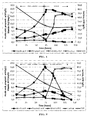
- a 7 L working volume bioreactor was filled with 4 L of sour whey (COD was 80.000 mg O 2 /L) supplemented with yeast extract (5 g/L) and cobalt chloride (20 mg/L) and sterilized for 1 hour at 121°C. After cooling to 35°C pantothenate (10 mg/L) was added and the bioreactor inoculated with seed culture of propionibacterium. The cultivation temperature was 35°C and the agitation rate 100 RPM. The content of the bioreactor was sparged with CO 2 gas (10 mL/min) and the pH was maintained at 6.5 (with NaOH). After 90 hours the lactate and lactose have been exhausted and approximately 8 and 15 g/L acetic and propionic acid were produced.
- COD sour whey
- yeast extract 5 g/L
- cobalt chloride 20 mg/L
- FIG. 3 A schematic flow sheet of the exemplary process is shown in Figure 3 .
Landscapes
- Life Sciences & Earth Sciences (AREA)
- Chemical & Material Sciences (AREA)
- Organic Chemistry (AREA)
- Engineering & Computer Science (AREA)
- Health & Medical Sciences (AREA)
- Wood Science & Technology (AREA)
- Zoology (AREA)
- Genetics & Genomics (AREA)
- Bioinformatics & Cheminformatics (AREA)
- Biotechnology (AREA)
- Microbiology (AREA)
- Biochemistry (AREA)
- General Engineering & Computer Science (AREA)
- General Health & Medical Sciences (AREA)
- Mycology (AREA)
- General Chemical & Material Sciences (AREA)
- Chemical Kinetics & Catalysis (AREA)
- Botany (AREA)
- Medicinal Chemistry (AREA)
- Tropical Medicine & Parasitology (AREA)
- Virology (AREA)
- Biomedical Technology (AREA)
- Molecular Biology (AREA)
- Micro-Organisms Or Cultivation Processes Thereof (AREA)
- Preparation Of Compounds By Using Micro-Organisms (AREA)
Priority Applications (19)
| Application Number | Priority Date | Filing Date | Title |
|---|---|---|---|
| EP14167774.0A EP2942397A1 (en) | 2014-05-09 | 2014-05-09 | Co-cultivation of propionibacterium and yeast |
| HUE15723471A HUE040087T2 (hu) | 2014-05-09 | 2015-05-08 | Propionibaktérium és élesztõ együtt-tenyésztése |
| PCT/EP2015/060270 WO2015169967A1 (en) | 2014-05-09 | 2015-05-08 | Co-cultivation of propionibacterium and yeast |
| BR112016025970-0A BR112016025970B1 (pt) | 2014-05-09 | 2015-05-08 | Célula de levedura, processo para produção de um produto biotecnológico e método para preparação de uma cepa de levedura tolerante a propionibacterium |
| JP2017510771A JP6814131B2 (ja) | 2014-05-09 | 2015-05-08 | プロピオン酸菌と酵母との共培養 |
| PL15723471T PL3140416T3 (pl) | 2014-05-09 | 2015-05-08 | Wspólna hodowla Propionibacterium i drożdży |
| PT15723471T PT3140416T (pt) | 2014-05-09 | 2015-05-08 | Cocultura de propionibacterium e leveduras |
| ES15723471T ES2698529T3 (es) | 2014-05-09 | 2015-05-08 | Cocultivo de propionibacterium y levadura |
| CN201580024641.3A CN106536715B (zh) | 2014-05-09 | 2015-05-08 | 丙酸杆菌和酵母的共同培养 |
| KR1020167034601A KR102265802B1 (ko) | 2014-05-09 | 2015-05-08 | 프로피오니박테륨 및 효모의 공-배양 |
| SI201530454T SI3140416T1 (sl) | 2014-05-09 | 2015-05-08 | Kokultivacija propionibakterije in kvasovke |
| US15/309,869 US9938554B2 (en) | 2014-05-09 | 2015-05-08 | Co-cultivation of propionibacterium and yeast |
| EP15723471.7A EP3140416B1 (en) | 2014-05-09 | 2015-05-08 | Co-cultivation of propionibacterium and yeast |
| AU2015257590A AU2015257590B2 (en) | 2014-05-09 | 2015-05-08 | Co-cultivation of Propionibacterium and yeast |
| EA201692263A EA037230B1 (ru) | 2014-05-09 | 2015-05-08 | Дрожжевая клетка для применения в производстве витамина b12 с помощью совместного культивирования с пропионобактериями |
| DK15723471.7T DK3140416T3 (en) | 2014-05-09 | 2015-05-08 | COLLECTION OF PROPIONI BACTERIUM AND Yeast |
| MX2016014718A MX378401B (es) | 2014-05-09 | 2015-05-08 | Cocultivo de propionibacteria y levadura. |
| CA2948421A CA2948421C (en) | 2014-05-09 | 2015-05-08 | Co-cultivation of propionibacterium and yeast |
| ZA2016/08104A ZA201608104B (en) | 2014-05-09 | 2016-11-23 | Co-cultivation of propionibacterium and yeast |
Applications Claiming Priority (1)
| Application Number | Priority Date | Filing Date | Title |
|---|---|---|---|
| EP14167774.0A EP2942397A1 (en) | 2014-05-09 | 2014-05-09 | Co-cultivation of propionibacterium and yeast |
Publications (1)
| Publication Number | Publication Date |
|---|---|
| EP2942397A1 true EP2942397A1 (en) | 2015-11-11 |
Family
ID=50687312
Family Applications (2)
| Application Number | Title | Priority Date | Filing Date |
|---|---|---|---|
| EP14167774.0A Withdrawn EP2942397A1 (en) | 2014-05-09 | 2014-05-09 | Co-cultivation of propionibacterium and yeast |
| EP15723471.7A Active EP3140416B1 (en) | 2014-05-09 | 2015-05-08 | Co-cultivation of propionibacterium and yeast |
Family Applications After (1)
| Application Number | Title | Priority Date | Filing Date |
|---|---|---|---|
| EP15723471.7A Active EP3140416B1 (en) | 2014-05-09 | 2015-05-08 | Co-cultivation of propionibacterium and yeast |
Country Status (18)
| Country | Link |
|---|---|
| US (1) | US9938554B2 (enExample) |
| EP (2) | EP2942397A1 (enExample) |
| JP (1) | JP6814131B2 (enExample) |
| KR (1) | KR102265802B1 (enExample) |
| CN (1) | CN106536715B (enExample) |
| AU (1) | AU2015257590B2 (enExample) |
| BR (1) | BR112016025970B1 (enExample) |
| CA (1) | CA2948421C (enExample) |
| DK (1) | DK3140416T3 (enExample) |
| EA (1) | EA037230B1 (enExample) |
| ES (1) | ES2698529T3 (enExample) |
| HU (1) | HUE040087T2 (enExample) |
| MX (1) | MX378401B (enExample) |
| PL (1) | PL3140416T3 (enExample) |
| PT (1) | PT3140416T (enExample) |
| SI (1) | SI3140416T1 (enExample) |
| WO (1) | WO2015169967A1 (enExample) |
| ZA (1) | ZA201608104B (enExample) |
Families Citing this family (5)
| Publication number | Priority date | Publication date | Assignee | Title |
|---|---|---|---|---|
| DE102017212564A1 (de) * | 2017-07-21 | 2019-01-24 | Martin Frettlöh | Sequentielles Co-Kultivierungsverfahren zur Herstellung eines vitamin- und proteinreichen Nahrungsmittels |
| CA3104259A1 (en) | 2018-06-18 | 2019-12-26 | S&P Ingredient Development, Llc | Isolation of microbial cell lines for organic acid production |
| JP2023513799A (ja) * | 2020-02-14 | 2023-04-03 | エスアンドピー・イングリーディエント・ディベロップメント・エルエルシー | 有機酸産生を最大化するための微生物細胞株の使用 |
| EP4449878A1 (en) * | 2023-04-18 | 2024-10-23 | Purac Biochem B.V. | Liquid propionate-containing fermentate and process for the manufacture thereof |
| EP4574984A1 (en) | 2023-12-21 | 2025-06-25 | Tirlán Limited | A method of producing organic acids or salts thereof |
Citations (3)
| Publication number | Priority date | Publication date | Assignee | Title |
|---|---|---|---|---|
| US5260061A (en) | 1982-09-17 | 1993-11-09 | The State Of Oregon Acting By And Through The State Board Of Higher Education On Behalf Of Oregon State University | Propionibacteria metabolites inhibit spoilage yeast in foods |
| WO2008030089A1 (en) | 2006-09-08 | 2008-03-13 | Csk Food Enrichment B.V. | Use of yeast and bacteria for making dairy products with improved flavour and/or texture quality characteristics |
| WO2011140649A1 (en) | 2010-05-14 | 2011-11-17 | Corporation Het - Horizon Environnement Technologies | Fermentation process of a substrate using a mixed culture for the production of an edible biomass for animal and/or human consumption |
Family Cites Families (7)
| Publication number | Priority date | Publication date | Assignee | Title |
|---|---|---|---|---|
| JPS52154596A (en) * | 1976-06-14 | 1977-12-22 | Vysoka Skola Chem Tech | Controlling method of protein concentrate |
| DK0668359T3 (da) * | 1994-02-22 | 2000-08-07 | Biotechnolog Forschung Gmbh | Fremgangsmåde til kontinuerlig fermentering, som er nyttig ved samtidig optimal fremstilling af propionsyre og B12 vitamin |
| JP3017456B2 (ja) * | 1997-05-08 | 2000-03-06 | 明治乳業株式会社 | プロピオン酸菌の高濃度培養方法及び培養物ならびにその加工物 |
| HUP0204186A3 (en) * | 1998-12-18 | 2004-07-28 | Dsm Ip Assets Bv | Improved process for the production of vitamin b12 |
| CN100475951C (zh) | 2007-03-13 | 2009-04-08 | 南京工业大学 | 利用费氏丙酸杆菌nx-4制备丙酸及联产维生素b12的方法 |
| KR20170059011A (ko) * | 2007-11-27 | 2017-05-29 | 가부시키가이샤 메이지 | 유산균의 생잔성 향상제 및 생잔성 향상 방법, 및 식품 조성물 |
| CH700192B1 (de) * | 2009-01-12 | 2010-07-15 | Bioforce Ag Roggwil Tg | Verfahren zur Herstellung einer Fermentationsbrühe. |
-
2014
- 2014-05-09 EP EP14167774.0A patent/EP2942397A1/en not_active Withdrawn
-
2015
- 2015-05-08 WO PCT/EP2015/060270 patent/WO2015169967A1/en not_active Ceased
- 2015-05-08 PT PT15723471T patent/PT3140416T/pt unknown
- 2015-05-08 ES ES15723471T patent/ES2698529T3/es active Active
- 2015-05-08 EP EP15723471.7A patent/EP3140416B1/en active Active
- 2015-05-08 SI SI201530454T patent/SI3140416T1/sl unknown
- 2015-05-08 BR BR112016025970-0A patent/BR112016025970B1/pt active IP Right Grant
- 2015-05-08 US US15/309,869 patent/US9938554B2/en active Active
- 2015-05-08 HU HUE15723471A patent/HUE040087T2/hu unknown
- 2015-05-08 JP JP2017510771A patent/JP6814131B2/ja active Active
- 2015-05-08 CN CN201580024641.3A patent/CN106536715B/zh active Active
- 2015-05-08 DK DK15723471.7T patent/DK3140416T3/en active
- 2015-05-08 AU AU2015257590A patent/AU2015257590B2/en active Active
- 2015-05-08 KR KR1020167034601A patent/KR102265802B1/ko active Active
- 2015-05-08 MX MX2016014718A patent/MX378401B/es unknown
- 2015-05-08 CA CA2948421A patent/CA2948421C/en active Active
- 2015-05-08 EA EA201692263A patent/EA037230B1/ru not_active IP Right Cessation
- 2015-05-08 PL PL15723471T patent/PL3140416T3/pl unknown
-
2016
- 2016-11-23 ZA ZA2016/08104A patent/ZA201608104B/en unknown
Patent Citations (3)
| Publication number | Priority date | Publication date | Assignee | Title |
|---|---|---|---|---|
| US5260061A (en) | 1982-09-17 | 1993-11-09 | The State Of Oregon Acting By And Through The State Board Of Higher Education On Behalf Of Oregon State University | Propionibacteria metabolites inhibit spoilage yeast in foods |
| WO2008030089A1 (en) | 2006-09-08 | 2008-03-13 | Csk Food Enrichment B.V. | Use of yeast and bacteria for making dairy products with improved flavour and/or texture quality characteristics |
| WO2011140649A1 (en) | 2010-05-14 | 2011-11-17 | Corporation Het - Horizon Environnement Technologies | Fermentation process of a substrate using a mixed culture for the production of an edible biomass for animal and/or human consumption |
Non-Patent Citations (3)
| Title |
|---|
| "Bergey's Manual of Systematic Bacteriology", 1986 |
| DANILOVA I V ET AL: "A positive effect of Propionibacterium freudenreichii on the growth of Saccharomyces cerevisiae during their cocultivation", APPLIED BIOCHEMISTRY AND MICROBIOLOGY, KLUWER ACADEMIC PUBLISHERS-PLENUM PUBLISHERS, NE, vol. 42, no. 4, 1 July 2006 (2006-07-01), pages 378 - 383, XP019389679, ISSN: 1608-3024, DOI: 10.1134/S0003683806040065 * |
| I. ATHANASIADIS ET AL: "Whey Liquid Waste of the Dairy Industry as Raw Material for Potable Alcohol Production by Kefir Granules", JOURNAL OF AGRICULTURAL AND FOOD CHEMISTRY, vol. 50, no. 25, 1 December 2002 (2002-12-01), pages 7231 - 7234, XP055113829, ISSN: 0021-8561, DOI: 10.1021/jf020331q * |
Also Published As
| Publication number | Publication date |
|---|---|
| EA037230B1 (ru) | 2021-02-24 |
| SI3140416T1 (sl) | 2018-12-31 |
| ES2698529T3 (es) | 2019-02-05 |
| WO2015169967A1 (en) | 2015-11-12 |
| MX378401B (es) | 2025-03-10 |
| BR112016025970B1 (pt) | 2022-11-01 |
| ZA201608104B (en) | 2019-04-24 |
| JP6814131B2 (ja) | 2021-01-13 |
| CN106536715A (zh) | 2017-03-22 |
| KR102265802B1 (ko) | 2021-06-16 |
| CA2948421C (en) | 2024-03-05 |
| AU2015257590A1 (en) | 2016-11-10 |
| AU2015257590B2 (en) | 2019-03-14 |
| US9938554B2 (en) | 2018-04-10 |
| US20170145467A1 (en) | 2017-05-25 |
| CN106536715B (zh) | 2018-12-21 |
| PL3140416T3 (pl) | 2019-03-29 |
| JP2017514526A (ja) | 2017-06-08 |
| PT3140416T (pt) | 2018-11-16 |
| EP3140416A1 (en) | 2017-03-15 |
| MX2016014718A (es) | 2017-03-06 |
| KR20170002620A (ko) | 2017-01-06 |
| CA2948421A1 (en) | 2015-11-12 |
| BR112016025970A2 (enExample) | 2017-08-15 |
| EP3140416B1 (en) | 2018-08-01 |
| EA201692263A1 (ru) | 2017-04-28 |
| DK3140416T3 (en) | 2018-11-26 |
| HUE040087T2 (hu) | 2019-02-28 |
Similar Documents
| Publication | Publication Date | Title |
|---|---|---|
| Breuer et al. | Debaryomyces hansenii—an extremophilic yeast with biotechnological potential | |
| Goh et al. | Fermentation of black tea broth (Kombucha): I. Effects of sucrose concentration and fermentation time on the yield of microbial cellulose. | |
| EP3140416B1 (en) | Co-cultivation of propionibacterium and yeast | |
| US12037627B2 (en) | Lactobacillus paracasei and uses thereof | |
| EP2648530A1 (en) | Fruit ferments containing propionate and use thereof | |
| Yee et al. | The production of functional γ-aminobutyric acid Malaysian soy sauce koji and moromi using the trio of Aspergillus oryzae NSK, Bacillus cereus KBC, and the newly identified Tetragenococcus halophilus KBC in liquid-state fermentation | |
| JP2025089534A (ja) | 飲食品の製造方法 | |
| Tari et al. | Optimization of the associative growth of novel yoghurt cultures in the production of biomass, β-galactosidase and lactic acid using response surface methodology | |
| Champagne et al. | Production of Leuconostoc oenos biomass under pH control | |
| EP0483888A2 (en) | Process for preparing an aroma product containing alpha-acetolactic acid | |
| Nouska et al. | Saccharomyces cerevisiae and Kefir Production using Waste Pomegranate Juice, Molasses, and Whey. | |
| KR20140069622A (ko) | 최적의 배지 조성을 이용한 글루콘아세토박터 속 kcg326 균주에 의한 박테리아 셀룰로오스의 제조 방법 | |
| JPH0670782A (ja) | 廃棄物からの有用物質の生産方法 | |
| JP5186431B2 (ja) | 食品用抗カビ液の製造方法 | |
| Romeo et al. | Ability of commercially available Lactobacillus strains as starter in brining and debittering of table olives | |
| US20250212927A1 (en) | Fermented food and production method thereof | |
| Parrondo et al. | Whey vinegar | |
| CN119184290A (zh) | 一种利用食用菌发酵水果制备酵素的方法 | |
| Christman | Kluyveromyces marxianus Prepared as a Ready to Use Supplemental Food (RUSF) | |
| CN114982968A (zh) | 一种利用复合菌种制备的蜂蜜荷花酵素及制备方法与应用 | |
| Santos et al. | Development of a new beverage with probiotic activity | |
| Sip et al. | Biosynthesis of divercin by Carnobacterium divergens AS7 in continuous high cell density cultures | |
| CZ299782B6 (cs) | Zpusob fermentacní výroby etanolu a/nebo kvasnicné biomasy | |
| US20120115191A1 (en) | Production of fructo-oligosaccharide and derivatives by use of aspergillus spp | |
| Trontel et al. | GAS CROMATOGRAPHIC DETERMINATION OF FREE AMINO ACIDS IN SAMPLES WITHDRAWN DURING LACTIC ACID PRODUCTION BY LACTOBACILLUS AMYLOVORUS DSM 20531T |
Legal Events
| Date | Code | Title | Description |
|---|---|---|---|
| PUAI | Public reference made under article 153(3) epc to a published international application that has entered the european phase |
Free format text: ORIGINAL CODE: 0009012 |
|
| AK | Designated contracting states |
Kind code of ref document: A1 Designated state(s): AL AT BE BG CH CY CZ DE DK EE ES FI FR GB GR HR HU IE IS IT LI LT LU LV MC MK MT NL NO PL PT RO RS SE SI SK SM TR |
|
| AX | Request for extension of the european patent |
Extension state: BA ME |
|
| STAA | Information on the status of an ep patent application or granted ep patent |
Free format text: STATUS: THE APPLICATION IS DEEMED TO BE WITHDRAWN |
|
| 18D | Application deemed to be withdrawn |
Effective date: 20160512 |