EP2861568B1 - Tertiary amines for use in the treatment of cardiac disorders - Google Patents
Tertiary amines for use in the treatment of cardiac disorders Download PDFInfo
- Publication number
- EP2861568B1 EP2861568B1 EP13723783.0A EP13723783A EP2861568B1 EP 2861568 B1 EP2861568 B1 EP 2861568B1 EP 13723783 A EP13723783 A EP 13723783A EP 2861568 B1 EP2861568 B1 EP 2861568B1
- Authority
- EP
- European Patent Office
- Prior art keywords
- compound
- mmol
- benzyl
- alkyl
- denotes
- Prior art date
- Legal status (The legal status is an assumption and is not a legal conclusion. Google has not performed a legal analysis and makes no representation as to the accuracy of the status listed.)
- Active
Links
- 0 *c1ccc(CN(Cc(cc2)ccc2NI)I)cc1 Chemical compound *c1ccc(CN(Cc(cc2)ccc2NI)I)cc1 0.000 description 4
- BWLQWSYWGJUQQL-HXHGMITMSA-N CC/C=C(/CN(Cc(cc1)ccc1C(O)=O)Cc(cc1)ccc1F)\C=C/C Chemical compound CC/C=C(/CN(Cc(cc1)ccc1C(O)=O)Cc(cc1)ccc1F)\C=C/C BWLQWSYWGJUQQL-HXHGMITMSA-N 0.000 description 1
- QGDAGNBZYBIQCB-UHFFFAOYSA-O CCN(CC)c1ccc(C[NH+](Cc2ccccc2)Cc(cc2)ccc2N(CC)CC)cc1 Chemical compound CCN(CC)c1ccc(C[NH+](Cc2ccccc2)Cc(cc2)ccc2N(CC)CC)cc1 QGDAGNBZYBIQCB-UHFFFAOYSA-O 0.000 description 1
- PCIWNSCYTQODNX-UHFFFAOYSA-N CN(C)c1ccc(C[N+2](Cc2ccccc2)Cc(cc2)ccc2N(C)C)cc1 Chemical compound CN(C)c1ccc(C[N+2](Cc2ccccc2)Cc(cc2)ccc2N(C)C)cc1 PCIWNSCYTQODNX-UHFFFAOYSA-N 0.000 description 1
- UNASQULGZIISMF-UHFFFAOYSA-O CN(C)c1ccc(C[NH+](Cc2ccccc2)Cc(cc2)ccc2N(C)C)cc1 Chemical compound CN(C)c1ccc(C[NH+](Cc2ccccc2)Cc(cc2)ccc2N(C)C)cc1 UNASQULGZIISMF-UHFFFAOYSA-O 0.000 description 1
- QGMHQPTXLRWNRK-UHFFFAOYSA-O COC(c1ccc(C[NH+](Cc2ccccc2)Cc(cc2)ccc2C(OC)=O)cc1)=O Chemical compound COC(c1ccc(C[NH+](Cc2ccccc2)Cc(cc2)ccc2C(OC)=O)cc1)=O QGMHQPTXLRWNRK-UHFFFAOYSA-O 0.000 description 1
- KSJJXGFYKVINDY-XMMPIXPASA-N CO[C@H](c1ccc(CN(Cc2ccccc2)Cc(cc2)ccc2C(OC)=O)cc1)O Chemical compound CO[C@H](c1ccc(CN(Cc2ccccc2)Cc(cc2)ccc2C(OC)=O)cc1)O KSJJXGFYKVINDY-XMMPIXPASA-N 0.000 description 1
- LNOPMKHWHYFDAB-UHFFFAOYSA-N Cc(cc1)ccc1NI Chemical compound Cc(cc1)ccc1NI LNOPMKHWHYFDAB-UHFFFAOYSA-N 0.000 description 1
- MTBUOESFHRORQT-UHFFFAOYSA-N Cc(cccc1)c1-c1n[nH]nn1 Chemical compound Cc(cccc1)c1-c1n[nH]nn1 MTBUOESFHRORQT-UHFFFAOYSA-N 0.000 description 1
- GIAKOEWLTIJJDO-UHFFFAOYSA-N Cc1ccc(CN(CC(C=C2)=CCC2F)Cc2ccccc2)cc1 Chemical compound Cc1ccc(CN(CC(C=C2)=CCC2F)Cc2ccccc2)cc1 GIAKOEWLTIJJDO-UHFFFAOYSA-N 0.000 description 1
- ODVBBZFQPGORMJ-UHFFFAOYSA-N NCc(cc1)ccc1[N+]([O-])=O Chemical compound NCc(cc1)ccc1[N+]([O-])=O ODVBBZFQPGORMJ-UHFFFAOYSA-N 0.000 description 1
- ZBLKSPJHBKDHQO-UHFFFAOYSA-N Nc1ccc(CN(Cc2ccccc2)Cc(cc2)ccc2N)cc1 Chemical compound Nc1ccc(CN(Cc2ccccc2)Cc(cc2)ccc2N)cc1 ZBLKSPJHBKDHQO-UHFFFAOYSA-N 0.000 description 1
- ZBLKSPJHBKDHQO-UHFFFAOYSA-O Nc1ccc(C[NH+](Cc2ccccc2)Cc(cc2)ccc2N)cc1 Chemical compound Nc1ccc(C[NH+](Cc2ccccc2)Cc(cc2)ccc2N)cc1 ZBLKSPJHBKDHQO-UHFFFAOYSA-O 0.000 description 1
- UAZDVOMCWJWVAG-UHFFFAOYSA-O OC(c1ccc(C[NH+](Cc2ccccc2)Cc(cc2)ccc2C(O)=O)cc1)=O Chemical compound OC(c1ccc(C[NH+](Cc2ccccc2)Cc(cc2)ccc2C(O)=O)cc1)=O UAZDVOMCWJWVAG-UHFFFAOYSA-O 0.000 description 1
- SIXQBLMYPQTXNS-UHFFFAOYSA-N [O-]N(c1ccc(CN(Cc2ccccc2)Cc(cc2)ccc2[N+]([O-])=O)cc1)O Chemical compound [O-]N(c1ccc(CN(Cc2ccccc2)Cc(cc2)ccc2[N+]([O-])=O)cc1)O SIXQBLMYPQTXNS-UHFFFAOYSA-N 0.000 description 1
- VXOSGTSXEKBHQI-UHFFFAOYSA-N [O-][N+](c1ccc(CN(Cc(cc2)ccc2[N+]([O-])=O)Cc(cc2)ccc2[N+](O)=O)cc1)=O Chemical compound [O-][N+](c1ccc(CN(Cc(cc2)ccc2[N+]([O-])=O)Cc(cc2)ccc2[N+](O)=O)cc1)=O VXOSGTSXEKBHQI-UHFFFAOYSA-N 0.000 description 1
- IFSOPSPHJMVMCI-CUPMVOCTSA-O [O-][NH+2]c1ccc(CN(Cc(cc2)ccc2[NH+]=O)Cc2cc([C@@H]3C(Cc4c(CBr)cccc4)C3)ccc2)cc1 Chemical compound [O-][NH+2]c1ccc(CN(Cc(cc2)ccc2[NH+]=O)Cc2cc([C@@H]3C(Cc4c(CBr)cccc4)C3)ccc2)cc1 IFSOPSPHJMVMCI-CUPMVOCTSA-O 0.000 description 1
- KVMXXANLDJZNJB-UHFFFAOYSA-N [O-][NH+](c1ccc(CN(Cc(cc2)ccc2[NH+]([O-])[O-])Cc(cc2)ccc2[NH+]([O-])O)cc1)[O-] Chemical compound [O-][NH+](c1ccc(CN(Cc(cc2)ccc2[NH+]([O-])[O-])Cc(cc2)ccc2[NH+]([O-])O)cc1)[O-] KVMXXANLDJZNJB-UHFFFAOYSA-N 0.000 description 1
Images


Classifications
-
- C—CHEMISTRY; METALLURGY
- C07—ORGANIC CHEMISTRY
- C07D—HETEROCYCLIC COMPOUNDS
- C07D307/00—Heterocyclic compounds containing five-membered rings having one oxygen atom as the only ring hetero atom
- C07D307/77—Heterocyclic compounds containing five-membered rings having one oxygen atom as the only ring hetero atom ortho- or peri-condensed with carbocyclic rings or ring systems
- C07D307/78—Benzo [b] furans; Hydrogenated benzo [b] furans
- C07D307/79—Benzo [b] furans; Hydrogenated benzo [b] furans with only hydrogen atoms, hydrocarbon or substituted hydrocarbon radicals, directly attached to carbon atoms of the hetero ring
- C07D307/81—Radicals substituted by nitrogen atoms not forming part of a nitro radical
-
- A—HUMAN NECESSITIES
- A61—MEDICAL OR VETERINARY SCIENCE; HYGIENE
- A61P—SPECIFIC THERAPEUTIC ACTIVITY OF CHEMICAL COMPOUNDS OR MEDICINAL PREPARATIONS
- A61P43/00—Drugs for specific purposes, not provided for in groups A61P1/00-A61P41/00
-
- A—HUMAN NECESSITIES
- A61—MEDICAL OR VETERINARY SCIENCE; HYGIENE
- A61P—SPECIFIC THERAPEUTIC ACTIVITY OF CHEMICAL COMPOUNDS OR MEDICINAL PREPARATIONS
- A61P9/00—Drugs for disorders of the cardiovascular system
-
- A—HUMAN NECESSITIES
- A61—MEDICAL OR VETERINARY SCIENCE; HYGIENE
- A61P—SPECIFIC THERAPEUTIC ACTIVITY OF CHEMICAL COMPOUNDS OR MEDICINAL PREPARATIONS
- A61P9/00—Drugs for disorders of the cardiovascular system
- A61P9/04—Inotropic agents, i.e. stimulants of cardiac contraction; Drugs for heart failure
-
- A—HUMAN NECESSITIES
- A61—MEDICAL OR VETERINARY SCIENCE; HYGIENE
- A61P—SPECIFIC THERAPEUTIC ACTIVITY OF CHEMICAL COMPOUNDS OR MEDICINAL PREPARATIONS
- A61P9/00—Drugs for disorders of the cardiovascular system
- A61P9/10—Drugs for disorders of the cardiovascular system for treating ischaemic or atherosclerotic diseases, e.g. antianginal drugs, coronary vasodilators, drugs for myocardial infarction, retinopathy, cerebrovascula insufficiency, renal arteriosclerosis
-
- C—CHEMISTRY; METALLURGY
- C07—ORGANIC CHEMISTRY
- C07C—ACYCLIC OR CARBOCYCLIC COMPOUNDS
- C07C211/00—Compounds containing amino groups bound to a carbon skeleton
- C07C211/01—Compounds containing amino groups bound to a carbon skeleton having amino groups bound to acyclic carbon atoms
- C07C211/26—Compounds containing amino groups bound to a carbon skeleton having amino groups bound to acyclic carbon atoms of an unsaturated carbon skeleton containing at least one six-membered aromatic ring
- C07C211/27—Compounds containing amino groups bound to a carbon skeleton having amino groups bound to acyclic carbon atoms of an unsaturated carbon skeleton containing at least one six-membered aromatic ring having amino groups linked to the six-membered aromatic ring by saturated carbon chains
-
- C—CHEMISTRY; METALLURGY
- C07—ORGANIC CHEMISTRY
- C07C—ACYCLIC OR CARBOCYCLIC COMPOUNDS
- C07C211/00—Compounds containing amino groups bound to a carbon skeleton
- C07C211/01—Compounds containing amino groups bound to a carbon skeleton having amino groups bound to acyclic carbon atoms
- C07C211/26—Compounds containing amino groups bound to a carbon skeleton having amino groups bound to acyclic carbon atoms of an unsaturated carbon skeleton containing at least one six-membered aromatic ring
- C07C211/29—Compounds containing amino groups bound to a carbon skeleton having amino groups bound to acyclic carbon atoms of an unsaturated carbon skeleton containing at least one six-membered aromatic ring the carbon skeleton being further substituted by halogen atoms or by nitro or nitroso groups
-
- C—CHEMISTRY; METALLURGY
- C07—ORGANIC CHEMISTRY
- C07C—ACYCLIC OR CARBOCYCLIC COMPOUNDS
- C07C211/00—Compounds containing amino groups bound to a carbon skeleton
- C07C211/43—Compounds containing amino groups bound to a carbon skeleton having amino groups bound to carbon atoms of six-membered aromatic rings of the carbon skeleton
-
- C—CHEMISTRY; METALLURGY
- C07—ORGANIC CHEMISTRY
- C07C—ACYCLIC OR CARBOCYCLIC COMPOUNDS
- C07C211/00—Compounds containing amino groups bound to a carbon skeleton
- C07C211/43—Compounds containing amino groups bound to a carbon skeleton having amino groups bound to carbon atoms of six-membered aromatic rings of the carbon skeleton
- C07C211/44—Compounds containing amino groups bound to a carbon skeleton having amino groups bound to carbon atoms of six-membered aromatic rings of the carbon skeleton having amino groups bound to only one six-membered aromatic ring
- C07C211/49—Compounds containing amino groups bound to a carbon skeleton having amino groups bound to carbon atoms of six-membered aromatic rings of the carbon skeleton having amino groups bound to only one six-membered aromatic ring having at least two amino groups bound to the carbon skeleton
-
- C—CHEMISTRY; METALLURGY
- C07—ORGANIC CHEMISTRY
- C07C—ACYCLIC OR CARBOCYCLIC COMPOUNDS
- C07C217/00—Compounds containing amino and etherified hydroxy groups bound to the same carbon skeleton
- C07C217/54—Compounds containing amino and etherified hydroxy groups bound to the same carbon skeleton having etherified hydroxy groups bound to carbon atoms of at least one six-membered aromatic ring and amino groups bound to acyclic carbon atoms or to carbon atoms of rings other than six-membered aromatic rings of the same carbon skeleton
- C07C217/56—Compounds containing amino and etherified hydroxy groups bound to the same carbon skeleton having etherified hydroxy groups bound to carbon atoms of at least one six-membered aromatic ring and amino groups bound to acyclic carbon atoms or to carbon atoms of rings other than six-membered aromatic rings of the same carbon skeleton with amino groups linked to the six-membered aromatic ring, or to the condensed ring system containing that ring, by carbon chains not further substituted by singly-bound oxygen atoms
- C07C217/58—Compounds containing amino and etherified hydroxy groups bound to the same carbon skeleton having etherified hydroxy groups bound to carbon atoms of at least one six-membered aromatic ring and amino groups bound to acyclic carbon atoms or to carbon atoms of rings other than six-membered aromatic rings of the same carbon skeleton with amino groups linked to the six-membered aromatic ring, or to the condensed ring system containing that ring, by carbon chains not further substituted by singly-bound oxygen atoms with amino groups and the six-membered aromatic ring, or the condensed ring system containing that ring, bound to the same carbon atom of the carbon chain
-
- C—CHEMISTRY; METALLURGY
- C07—ORGANIC CHEMISTRY
- C07C—ACYCLIC OR CARBOCYCLIC COMPOUNDS
- C07C229/00—Compounds containing amino and carboxyl groups bound to the same carbon skeleton
- C07C229/38—Compounds containing amino and carboxyl groups bound to the same carbon skeleton having amino groups bound to acyclic carbon atoms and carboxyl groups bound to carbon atoms of six-membered aromatic rings of the same carbon skeleton
-
- C—CHEMISTRY; METALLURGY
- C07—ORGANIC CHEMISTRY
- C07C—ACYCLIC OR CARBOCYCLIC COMPOUNDS
- C07C275/00—Derivatives of urea, i.e. compounds containing any of the groups, the nitrogen atoms not being part of nitro or nitroso groups
- C07C275/28—Derivatives of urea, i.e. compounds containing any of the groups, the nitrogen atoms not being part of nitro or nitroso groups having nitrogen atoms of urea groups bound to carbon atoms of six-membered aromatic rings of a carbon skeleton
- C07C275/40—Derivatives of urea, i.e. compounds containing any of the groups, the nitrogen atoms not being part of nitro or nitroso groups having nitrogen atoms of urea groups bound to carbon atoms of six-membered aromatic rings of a carbon skeleton being further substituted by nitrogen atoms not being part of nitro or nitroso groups
-
- C—CHEMISTRY; METALLURGY
- C07—ORGANIC CHEMISTRY
- C07D—HETEROCYCLIC COMPOUNDS
- C07D213/00—Heterocyclic compounds containing six-membered rings, not condensed with other rings, with one nitrogen atom as the only ring hetero atom and three or more double bonds between ring members or between ring members and non-ring members
- C07D213/02—Heterocyclic compounds containing six-membered rings, not condensed with other rings, with one nitrogen atom as the only ring hetero atom and three or more double bonds between ring members or between ring members and non-ring members having three double bonds between ring members or between ring members and non-ring members
- C07D213/04—Heterocyclic compounds containing six-membered rings, not condensed with other rings, with one nitrogen atom as the only ring hetero atom and three or more double bonds between ring members or between ring members and non-ring members having three double bonds between ring members or between ring members and non-ring members having no bond between the ring nitrogen atom and a non-ring member or having only hydrogen or carbon atoms directly attached to the ring nitrogen atom
- C07D213/24—Heterocyclic compounds containing six-membered rings, not condensed with other rings, with one nitrogen atom as the only ring hetero atom and three or more double bonds between ring members or between ring members and non-ring members having three double bonds between ring members or between ring members and non-ring members having no bond between the ring nitrogen atom and a non-ring member or having only hydrogen or carbon atoms directly attached to the ring nitrogen atom with substituted hydrocarbon radicals attached to ring carbon atoms
- C07D213/36—Radicals substituted by singly-bound nitrogen atoms
-
- C—CHEMISTRY; METALLURGY
- C07—ORGANIC CHEMISTRY
- C07D—HETEROCYCLIC COMPOUNDS
- C07D257/00—Heterocyclic compounds containing rings having four nitrogen atoms as the only ring hetero atoms
- C07D257/02—Heterocyclic compounds containing rings having four nitrogen atoms as the only ring hetero atoms not condensed with other rings
- C07D257/04—Five-membered rings
-
- C—CHEMISTRY; METALLURGY
- C07—ORGANIC CHEMISTRY
- C07D—HETEROCYCLIC COMPOUNDS
- C07D277/00—Heterocyclic compounds containing 1,3-thiazole or hydrogenated 1,3-thiazole rings
- C07D277/02—Heterocyclic compounds containing 1,3-thiazole or hydrogenated 1,3-thiazole rings not condensed with other rings
- C07D277/20—Heterocyclic compounds containing 1,3-thiazole or hydrogenated 1,3-thiazole rings not condensed with other rings having two or three double bonds between ring members or between ring members and non-ring members
- C07D277/22—Heterocyclic compounds containing 1,3-thiazole or hydrogenated 1,3-thiazole rings not condensed with other rings having two or three double bonds between ring members or between ring members and non-ring members with only hydrogen atoms, hydrocarbon or substituted hydrocarbon radicals, directly attached to ring carbon atoms
- C07D277/28—Radicals substituted by nitrogen atoms
-
- C—CHEMISTRY; METALLURGY
- C07—ORGANIC CHEMISTRY
- C07D—HETEROCYCLIC COMPOUNDS
- C07D277/00—Heterocyclic compounds containing 1,3-thiazole or hydrogenated 1,3-thiazole rings
- C07D277/02—Heterocyclic compounds containing 1,3-thiazole or hydrogenated 1,3-thiazole rings not condensed with other rings
- C07D277/20—Heterocyclic compounds containing 1,3-thiazole or hydrogenated 1,3-thiazole rings not condensed with other rings having two or three double bonds between ring members or between ring members and non-ring members
- C07D277/32—Heterocyclic compounds containing 1,3-thiazole or hydrogenated 1,3-thiazole rings not condensed with other rings having two or three double bonds between ring members or between ring members and non-ring members with hetero atoms or with carbon atoms having three bonds to hetero atoms with at the most one bond to halogen, e.g. ester or nitrile radicals, directly attached to ring carbon atoms
- C07D277/56—Carbon atoms having three bonds to hetero atoms with at the most one bond to halogen
-
- C—CHEMISTRY; METALLURGY
- C07—ORGANIC CHEMISTRY
- C07D—HETEROCYCLIC COMPOUNDS
- C07D307/00—Heterocyclic compounds containing five-membered rings having one oxygen atom as the only ring hetero atom
- C07D307/77—Heterocyclic compounds containing five-membered rings having one oxygen atom as the only ring hetero atom ortho- or peri-condensed with carbocyclic rings or ring systems
- C07D307/78—Benzo [b] furans; Hydrogenated benzo [b] furans
- C07D307/79—Benzo [b] furans; Hydrogenated benzo [b] furans with only hydrogen atoms, hydrocarbon or substituted hydrocarbon radicals, directly attached to carbon atoms of the hetero ring
Definitions
- the invention relates to new chemical compounds, new pharmaceutical compositions and use of these compounds and their compositions for treatment of cardiac disorders especially reperfusion syndrome following myocardial infarction and post-infarction chronic heart failure.
- the specific compounds interfere with the A-kinase anchor protein (AKAP) 18delta (AKAP18 ⁇ ) binding to the PKA substrate phospholamban.
- AKAP A-kinase anchor protein
- AKAPs The A-kinase anchor proteins
- PKA protein kinase A
- Typical AKAPs include for example AKAP79, AKAP18, AKAP450, all of which are somewhat arbitrarily named after their apparent mobility by SDS-poly acrylamide gel electrophoresis.
- the gene nomenclature committee has also introduced a separate nomenclature for AKAPs where they are consecutively numbered AKAP1, AKAP2, AKAP3 etc.
- some AKAPs like ezrin and Opa1 have already been assigned other names that are in use.
- AKAPs act as targeting devices that assemble signaling elements on a scaffold (the AKAP) that itself targets to microdomains in cells. This allows specific targeting of substrates to be regulated by phosphorylation (by PKA) and dephosphorylation (by phosphatases).
- PKA binds via its regulatory subunits (RI ⁇ , RII ⁇ , RI ⁇ , RII ⁇ ) directly to an amphipathic ⁇ -helix in the AKAP, which is a common feature of AKAPs.
- the AKAPs also bind other components including; phosphodiesterases (PDEs) which break down cAMP, phosphatases which dephosphorylate downstream PKA targets and also other kinases (PKC and MAPK).
- PDEs phosphodiesterases
- PKC and MAPK kinases
- Some AKAPs are able to bind both regulatory subunits (RI & RII) of PKA and are dual-specific AKAPs (for example D-AKAP
- US7,432,342 (Sequenom) relates to A-kinase anchor protein (AKAPs) muteins, peptides thereof, and nucleic acids encoding the peptides , especially a polypeptide that is a mutein of a D-AKAP2 polypeptide, wherein the mutein exhibits modified binding to a regulatory subunit of PKA compared to a native D-AKAP2.
- AKAPs A-kinase anchor protein
- EP2098226 (Forsungsverbund Berlin E.V.) describes use of bicyclic compounds (I) or their salts, solvates, hydrates or formulations for preparing a medicament for the prophylaxis or treatment of diseases associated with defect of compartmentalized cyclic adenosine monophosphate (cAMP)-dependent signal transduction, is claimed.
- Use of bicyclic compounds of formula (I) or their salts, solvates, hydrates or formulations for preparing a medicament for the prophylaxis or treatment of diseases associated with defect of compartmentalized cyclic adenosine monophosphate (cAMP)-dependent signal transduction is claimed.
- Formula (X) describes a general bicyclic formula in EP2098226 , while formula (I) describes biphenyl compounds which are the most preferred compounds.
- A O, S, NH, CO, (hetero)alkyl, alkenyl, alkynyl, (hetero)aryl, cycloalkylene, (hetero)alkylcycloalkylene, heterocycloalkylene or (hetero)aralkylene group;
- R, R1 H, halo, NH 2 , OH, NO 2 , (hetero)alkyl, alkenyl, alkynyl (all preferred), SH, N 3 , (hetero)aryl, (hetero)cycloalkyl, (hetero)alkylcycloalkyl or (hetero)aralkyl residue;
- D, E (hetero)aryl, (hetero)cycloalkyl, (hetero)alkylcycloalkyl or (hetero)aralkyl (preferably substituted phenyl group); and
- m, n 0-5 (preferably 1-3).
- WO2007/028969 (University of Oslo) relates to molecules which modify the binding between AKAP 18d and phosphodiesterase 4D or AKAP 18d and phospholamban and their use in altering PKA type II-mediated, activation of SERCA2 in a cell, for example to alleviate cardiovascular disease.
- molecules include the motif RRASTIE.
- Molecules such as those which mimic binding of AKAP 18d to PKA, which allow enhanced phosphorylation of PLB are also discussed. No low-molecular weight compounds are specifically mentioned in this document.
- WO2006/122546 describes non-peptide protein kinase A / protein kinase A anchor protein decouplers or disruptors.
- the compounds are listed in extensive tables of compounds. The chemical structures are structurally diverse and cannot be represented in any general formula. The compounds disclosed in these tables do not fall within the general formula of compounds of the present invention. The potential indications for use of these compounds are very broad including an extensive listing of very many different diseases, disorders and conditions.
- WO2006/154330 (Forsungsverbund Berlin E.V.) relates to a nucleic acid sequence encoding a protein kinase A anchor protein, to the use of said nucleic acid sequence in a fusion protein, to a method of determining the interaction of said protein kinase A anchor protein with regulatory subunits of protein kinase A, and to a method of identifying cell-permeable substances.
- WO2006/032923 (University of Oslo) describes a PKA I anchoring disrupting molecule or AKAP mimic, wherein said molecule or mimic is a polypeptide which comprises the following amino acid sequence: X1 X2 X3 Y A X4 X5 L A X6 X7 X8 I X9 X10 X11 X12 X13 (sequence (1)) or a peptidomimetic or analogue thereof is provided. Also provided are antibodies to the molecule, nucleic acid molecules comprising a sequence encoding the molecule and pharmaceutical compositions. A method of altering the PKA type I signaling pathway in a cell by administration of the anchoring disruption molecule or AKAP mimic, in particular to treat immunosuppressive disorders, proliferative diseases or autoimmune diseases is also described.
- WO2006/032909 (University of Oslo) describes a PKA II anchoring disruption molecule or AKAP mimic, wherein said molecule or mimic is a polypeptide which comprises the following amino acid sequence: X1 X2 E X3 X4 A K Q I V X5 X6 X7 I X8 X9 X10 (sequence (1)) or a peptidomimetic or analogue thereof is provided. Also provided are antibodies to the molecule, nucleic acid molecules comprising a sequence encoding the molecule and pharmaceutical compositions. A method of altering the PKA type II signaling pathway in a cell by administration of the anchoring disruption molecule or AKAP mimic, in particular to treat cardiovascular and metabolic disorders is also described.
- US2009/104177 relates to a nucleic acid sequence encoding peptides which inhibit the interaction of protein kinase A (PKA) and protein kinase A anchor proteins (AKAP), to a host organism comprising said nucleic acid sequence and optionally expressing said peptides, to the use of said peptides and of said host organism in investigating diseases associated with said AKAP-PKA interaction, and to the use of said peptides as pharmaceutical agent for the treatment of such diseases.
- PKA protein kinase A
- AKAP protein kinase A anchor proteins
- US6,958,214 (Sequenom) relates to polymorphic A-kinase anchor proteins (AKAPs) and nucleic acids encoding the proteins are provided herein. Methods of detecting polymorphic AKAPs and nucleic acids encoding the AKAPs, and kits for use in the detection methods are also provided. Further provided herein are methods of identifying subjects having or at risk of developing disorders of signal transduction. Methods of determining susceptibility to morbidity and/or increased or early mortality are also described.
- AKAPs polymorphic A-kinase anchor proteins
- WO2004/081576 relates to polymorphic A-kinase anchor proteins (AKAPs) and nucleic acids encoding the proteins are provided herein. Methods of detecting polymorphic AKAPs and nucleic acids encoding the AKAPs, and kits for use in the detection methods are also provided. Further provided herein are methods of identifying subjects having or at risk of developing diseases or disorders, such as those related to signal transduction and/or cardiovascular disease. Methods of determining susceptibility to morbidity and/or increased or early mortality are also described.
- compositions and methods useful for isolating calcineurin as well as inhibiting calcineurin activity relate to compositions and methods useful for isolating calcineurin as well as inhibiting calcineurin activity.
- the compositions are peptides that contain regions that are homologous to calcineurin-binding regions of Akap79.
- methods for determining if a cell contains a calcineurin-binding and PKA-binding anchoring protein that are useful for identifying additional proteins that bind both calcineurin and PKA.
- Another aspect of the disclosure is methods for enhancing expression of interleukin 2 by T cells. Further provided are methods to identify proteins which interact with AKAP79, and methods to identify inhibitors of AKAP 79 interaction with other proteins.
- the present invention relates to new chemical compounds, new pharmaceutical compositions and use of compounds and their compositions for treatment of cardiac disorders especially cardiac failure.
- the specific compounds interfere with the ability of the A-kinase anchor protein (AKAP) 18 ⁇ to bind to the PKA substrate phospholamban and by disrupting this interaction specifically inhibits PKA phosphorylation of phospholamban upon adrenergic stimulation.
- AKAP A-kinase anchor protein
- One aspect of the present disclosure relates to specific compounds interfering with A-kinase anchor proteins.
- the present invention relates to a compound of formula (I) or a physiologically acceptable salt thereof for use in treating or preventing congenital heart failure, myocardial infarction, post infarction heart failure, congestive heart failure, reperfusion damage, dilated cardiomyopathy or arrhythmia: wherein
- the present invention relates to a compound of formula (Ia) or a physiologically acceptable salt thereof for use in treating or preventing congenital heart failure, myocardial infarction, post infarction heart failure, congestive heart failure, reperfusion damage, dilated cardiomyopathy or arrhythmia: wherein
- L 1 , L 2 and L 3 independently denote C 1 -C 3 -alkylene optionally substituted with one phenyl.
- L 1 denotes -CH 2 -.
- L 2 denotes -CH 2 -.
- L 3 denotes C 1 -C 3 -alkylene optionally substituted with one phenyl.
- preferred compounds for use according to the invention include a compound of formula (II) wherein
- Ar 3 and R in the compound of formula (II) are as defined for the compound of formula (Ia).
- L 3 denotes -CH 2 -, -CH(CH 3 )- or -CH 2 CH 2 CH(C 6 H 5 )-.
- L 3 denotes -CH 2 - or -CH 2 CH 2 CH(C 6 H 5 )-; and Ar 3 denotes phenyl optionally substituted with one R.
- Y denotes OR 5 .
- R 6 and R 7 independently denote H and C 1 -C 6 -alkyl.
- the compound of formula (I) contains at least one group capable of acting as a hydrogen bond donor, and/or at least one group capable of acting as a hydrogen bond acceptor.
- the compound of formula (I) will contain at least one, more preferably two, groups capable of acting as a hydrogen bond donor.
- the compound of formula (I) will contain at least one, more preferably two, groups capable of acting as a hydrogen bond acceptor.
- hydrogen bond donor is meant a group containing a hydrogen atom capable of forming a hydrogen bond, such as OH or NH. Hydrogen bond donors may also form part of a ring, such as tetrazole NH groups.
- hydrogen bond acceptor is meant a group capable of forming a hydrogen bond with a hydrogen atom, such as OMe or NMe 2 . Hydrogen bond acceptors may also form part of a ring, such as pyridyl nitrogen atoms.
- the L 1 Ar 1 and L 2 Ar 2 moiety in the compound of formula (I) are identical.
- L 1 Ar 1 , L 2 Ar 2 and L 3 Ar 3 in the compound of formula (I) are all different.
- Preferred compounds according to formula (I) for use in the invention have the following structure:
- the invention relates to compounds of formula (I) for use in treating or preventing congenital heart failure, myocardial infarction, post infarction heart failure, congestive heart failure, reperfusion damage, dilated cardiomyopathy or arrhythmia.
- compounds of formula (I) having the following structure:
- Preferred novel compounds of formula (I) for use in therapy are: and
- alkyl or “alkylene” is intended to include both branched and straight-chain saturated aliphatic hydrocarbon groups having the specified number of carbon atoms.
- C 1 -C 6 alkyl is intended to include C 1 , C 2 , C 3 , C 4 , C 5 and C 6 alkyl groups.
- alkyl examples include, but are not limited to, methyl, ethyl, n-propyl, i-propyl, n-butyl, i-butyl, sec-butyl, t-butyl, n-pentyl, n-hexyl, 2-methylbutyl, 2-methylpentyl, 2-ethylbutyl, 3-methylpentyl, and 4-methylpentyl.
- haloalkyl is meant both branched and straight chain saturated aliphatic hydrocarbon groups having the specified number of carbon atoms, wherein at least one of the hydrogen atoms has been replaced by F, Cl, Br or I.
- haloalkyl refers to perfluoralkyl.
- cycloalkyl refers to cyclized alkyl groups, including mono-, bi- or poly-cyclic ring systems.
- Example cycloalkyl groups include, but are not limited to, cyclopropyl, cyclobutyl, cyclopentyl, cyclohexyl, norbornyl, adamantyl and the like.
- Branched cycloalkyl groups such as 1-methylcyclopropyl and 2-methylcyclopropyl are included in the definition of "cycloalkyl”.
- heteroaryl is intended to mean an aromatic moiety containing, if specified, the specified number of atoms with at least one of the ring atoms being selected from N, O or S.
- heteroaryl rings include pyrrole, furan, thiophene, imidazole, pyrazole, 1,2,3-triazole, 1,2,4-triazole, tetrazole, thiazole, oxazole, isooxazole, benzofuran, isobenzofuran, indole, isoindole, benzothiophene, benzo[c]thiophene, benzinimdazole, indazole, purine, benzoxazole, benzothiazole, pyridine, pyrimidine, pyrazine, pyrazidine, quinoline, isoquinoline, quinoxaline, quinazoline and cinnoline.
- the compounds of formula (I), (Ia) and (II) are found to selectively target and disrupt Phospholamban-AKAP18 ⁇ , indicating that they would find use as cardioprotective agents following myocardial infarction.
- the present invention relates to a compound of formula (I), (Ia) or (II) for use in treating or preventing congenital heart failure, myocardial infarction, post infarction heart failure, congestive heart failure, reperfusion damage, dilated cardiomyopathy or arrhythmia.
- treating refers to the reduction, alleviation or elimination, preferably to normal levels, of one or more of the symptoms of said disease, disorder or condition which is being treated, e.g. normal blood pressure, cardiac function, etc., relative to the symptoms prior to treatment. Where not explicitly stated, treatment encompasses prevention. "Preventing” refers to absolute prevention, i.e. maintenance of normal levels with reference to the extent or appearance of a particular symptom (e.g. hypertension) or reduction or alleviation of the extent or timing (e.g. delaying) of the onset of that symptom.
- the present invention relates to a compound of formula (I) (Ia) or (II) for use in treating myocardial infarction.
- the present invention relates to a compound of formula (I), (Ia) or (II) for use in treating congestive heart failure.
- the present invention relates to a compound of formula (I), (Ia) or (II) for use in protecting against reperfusion damage.
- the present invention relates to a compound of formula (I), (Ia) or (II) for use in protecting against post infarction heart failure.
- the present invention relates to a compound of formula (I), (Ia) or (II) for use in protecting against congenital heart failure.
- the present invention relates to a compound of formula (I), (Ia) or (II) for use in protecting against dilated cardiomyopathy.
- the present invention relates to a compound of formula (I), (Ia) or (II) for use in protecting against arrhythmia heart failure.
- the present invention relates to a compound of formula (I), (Ia) or (II) for use in preventing arrhythmia.
- Subjects which may be treated are preferably mammalian, preferably humans and companion or agricultural animals such as dogs, cats, monkeys, horses, sheep, goats, cows, rabbits, rats and mice.
- Preferred mammals are humans.
- the compounds of the invention are capable of influencing phospholamban phosphorylation. This is believed to be the first time this the activity of this target has been modulated by chemical moieties.
- the present invention also relates to pharmaceutical compositions comprising a compound according to claim 8 and one or more pharmaceutically acceptable excipients and/or diluents.
- pharmaceutically acceptable is meant that the ingredient must be compatible with other ingredients in the composition as well as physiologically acceptable to the recipient.
- compositions for use according to the invention may be formulated in conventional manner using readily available ingredients.
- the active ingredient may be incorporated, optionally together with other active substances as a combined preparation, with one or more conventional carriers, diluents and/or excipients, to produce conventional galenic preparations such as tablets, pills, powders, lozenges, sachets, cachets, elixirs, suspensions (as injection or infusion fluids), emulsions, solutions, syrups, aerosols (as a solid or in a liquid medium), ointments, soft and hard gelatin capsules, suppositories, sterile injectable solutions, sterile packaged powders, and the like.
- Biodegradable polymers such as polyesters, polyanhydrides, polylactic acid, or polyglycolic acid
- the compositions may be stabilized by use of freeze-drying, undercooling or Permazyme.
- Suitable excipients, carriers or diluents are lactose, dextrose, sucrose, sorbitol, mannitol, starches, gum acacia, calcium phosphate, calcium carbonate, calcium lactose, corn starch, aglinates, tragacanth, gelatin, calcium silicate, microcrystalline cellulose, polyvinylpyrrolidone, cellulose, water syrup, water, water/ethanol, water/glycol, water/polyethylene, glycol, propylene glycol, methyl cellulose, methylhydroxybenzoates, propyl hydroxybenzoates, talc, magnesium stearate, mineral oil or fatty substances such as hard fat or suitable mixtures thereof.
- compositions for obtaining sustained release formulations such as carboxypolymethylene, carboxymethyl cellulose, cellulose acetate phthalate, or polyvinylacetate may also be used.
- the compositions may additionally include lubricating agents, wetting agents, viscosity increasing agents, colouring agents, granulating agents, disintegrating agents, binding agents, osmotic active agents, emulsifying agents, suspending agents, preserving agents, sweetening agents, flavouring agents, adsorption enhancers, e.g. for nasal delivery (bile salts, lecithins, surfactants, fatty acids, chelators) and the like.
- the compositions of the invention may be formulated so as to provide quick, sustained or delayed release of the active ingredient after administration of the patient by employing procedures well known in the art.
- the active ingredient in such compositions may comprise from about 0.01% to about 99% by weight of the formulation, preferably from about 0.1 to about 50%, for example 10%.
- the invention also extends to pharmaceutical compositions as described above for use as a medicament.
- the administration may be by any suitable method known in the medicinal arts, including for example oral, parenteral (e.g. intramuscular, subcutaneous, intraperitoneal or intravenous) percutaneous, buccal, rectal or topical administration or administration by inhalation.
- parenteral e.g. intramuscular, subcutaneous, intraperitoneal or intravenous
- percutaneous e.g. buccal, rectal or topical administration or administration by inhalation.
- the preferred routes of administration are oral administration and intravenous administration.
- Preferred formulations for the composition of the invention are therefore as a tablet, a capsule or an intravenous solution.
- the tablets are typically prepared by direct compression or a granulation procedure, for example using standard fluid bed technology.
- the tablets are preferably coated with film coating or another coating such as an enteric coating.
- the capsules are preferably gelatine capsules.
- composition for injection can be a ready to use solution or a dry material to be dissolved before administration. All intravenous compositions are sterile. Any sterilization method may be used, such as heat sterilization and aseptic preparation.
- compositions for use in the invention may contain the compound of formula (I) as a physiologically acceptable salt thereof.
- Such salts might typically be HCI, HBr, sulphate salt, phosphate salt, nitrate salt and salts with sulphonic acids like for example methane sulphonic acid.
- Other salts include organic salts like acetate, citrate and fumarate.
- the salt form of the compound of formula (I) is preferred for intravenous administration.
- the unit dose will vary depending upon choice of compound and disease or disorder being treated.
- the unit dose will vary from 0.1 mg to 500 mg; more preferably from 1 mg to 300 mg.
- a typical daily dose will be from 0.1 mg to 2 grams, more preferably 1 mg to 1 g, even more preferably 1 mg to 600 mg.
- Typical daily doses per kg body weight of the patient vary from 5 mg/kg/day to 50 mg/kg/day, preferably from 10 mg/kg/day to 40 mg/kg/day.
- the tablet or capsule weight is between 70 mg and 1 gram.
- the injection or infusion volume is between 0.3 ml and 500 ml.
- the dosing regime will vary depending upon the clinical situation. Typical average dosing will be once, twice or three times a day, preferably once or twice a day.
- the precise dosage of the active compound to be administered and the length of the course of treatment will of course, depend on a number of factors including for example, the age and weight of the patient, the specific condition requiring treatment and its severity, and the route of administration.
- the compounds of formula (I) typically show an EC 50 value (as determined by the AlphaScreen described in the Examples) of 200 ⁇ M or below, preferably 100 ⁇ M or below, more preferably 50 ⁇ M or below, more preferably 25 ⁇ M or below, most preferably 10 ⁇ M or below, such as 5 ⁇ M or below.
- compositions for use in the invention may additionally contain one or more of such active ingredients.
- Co-administration with other cardiovascular drugs is particularly preferred.
- the most preferred drugs to be administered together with the compounds of formula (I) are beta-blockers, calcium antagonists, ACE-inhibitors, ATII/-blockers and anti-arrhythmic drugs.
- Stable and optimal assay conditions were determined by cross-titrating GST-AKAP18 ⁇ and biotinylated PLB using 10 ⁇ g/ml glutathione acceptor beads and 10 ⁇ g/ml streptavidin donor beads in an AlphaScreen assay.
- the excitation wavelength was 680 nm, with the emission wavelength being 520-560 nm.
- Signal intensity in each well was registered and the optimal concentration to use was chosen to be the concentration prior to the peak of the signal.
- the set up of the assay and cross-titration results are shown in Figures 1A and 1B .
- Concentrations to give a reliable signal were determined to be between 2 and 16 nM for AKAP18 ⁇ -GST and 4 and 20 nM PLB-biotin for relevant preparations of protein, for example 4 nM and 20 nM, respectively.
- N -benzyl-1-(4-fluorophenyl)methanamine (0.61 g, 2.7 mmol) was added to 20 ml acetone in a round bottom flask.
- methyl 4-(bromomethyl)benzoate (1.15 g, 5 mmol) and K 2 CO 3 (1.38 g, 10 mmol) were added and the reaction mixture was stirred for 4 hours at 55 °C at reflux. The progress of the reaction was monitored by thin layer chromatography (TLC), and when the reaction was complete the mixture was filtered and concentrated in vacuo.
- Example 13 The product from Example 13 was diluted in 0.1 M NaOH (15 ml) and added to 10 ml methanol. The reaction mixture was stirred for 8 hours at 60 °C at reflux, and methanol was evaporated off on rotary evaporator. The remaining aqueous phase was acidified with HCI until pH 5 and extracted with 3x20 ml dichloromethane. The combined organic phase was dried over anhydrous MgSO 4 and concentrated in vacuo to give 4-((benzyl(4-fluorobenzyl)amino)methyl)benzoic acid as a pale yellow oil.
- N -benzyl-1-(4-fluorophenyl)methanamine 0.4 g, 1.97 mmol
- 5-(4'-bromo-[1,1'-biphenyl]-2-yl)-2-trityl-2H-tetrazole 1.4 g, 2.5 mmol
- the reaction mixture was stirred for 4 hours at 55 °C at reflux.
- the progress of the reaction was monitored by thin layer chromatography (TLC). After filtration the solution was concentrated in vacuo and the crude product was purified by flash chromatography using 5-10 % ethyl acetate in dichloromethane giving 0.2 g of the tertiary amine.
- the tertiary amine from the first step of the reaction (0.2 g, 0.29 mmol) was added 10 ml of a solution of trifluoro acetic acid/dichloromethane/methanol (2:1:1) and stirred for 3 hours at room temperature.
- the crude product was purified by flash chromatography using 5-10 % ethyl acetate in dichloromethane giving 1-(2'-(2H-tetrazol-5-yl)-[1,1'-biphenyl]-4-yl)- N -benzyl- N -(4-fluorobenzyl)methanamine as a pale brown oil.
- Benzylamine 0.536 g, 5 mmol
- sodium hydrogen carbonate (0.92 g, 11 mmol)
- sodium dodecyl sulfate (approx. 20 mg) were added to water (20 ml) in a 50 ml round-bottom flask, along with a stirring magnet.
- the mixture was heated at 80 °C for 5 min.
- 4- tert -Butylbenzyl bromide 2.5 g, 11 mmol was added to the mixture and subsequently heated to 80 °C for 1 hour.
- reaction mixture was cooled to room temperature and the residue filtered and dried, before being recrystallized from a 1:1 mixture of hexane and ethyl acetate to yield N -benzyl- N -(4-( tert- butyl)benzyl)-1-(4-( tert -butyl)phenyl)methanamine as a white crystalline powder.
- Benzylamine 0.536 g, 5 mmol
- sodium hydrogen carbonate (0.92 g, 11 mmol)
- sodium dodecyl sulfate (approx. 20 mg) were added to water (20 ml) in a 50 ml round-bottom flask, along with a stirring magnet.
- the mixture was heated at 80 °C for 5 min.
- 4-nitrobenzylbromide (2.37 g, 11 mmol) was added to the mixture and subsequently heated to 80 °C for 1 hour.
- reaction mixture was cooled to room temperature and the residue filtered and dried, before being recrystallized from a 1:1 mixture of hexane and ethyl acetate to yield N -benzyl- N -(4-nitrobenzyl)-1-(4-nitrophenyl)methanamine as a white crystalline powder.
- N -benzyl- N -(4-nitrobenzyl)-1-(4-nitrophenyl)methanamine (compound 20) (2.19 g, 5.81 mmol), calcium chloride (0.782 g, 5.32 mmol) and acid-washed zinc (15 g) were suspended in 125 ml of ethanol. The mixture was refluxed for 2 hours, cooled to room temperature, filtered and dried in vacuo, before being recrystallized from a 1:1 mixture of hexane and diethyl ether to yield 4-(((4-aminobenzyl)(benzyl)amino)methyl)aniline as a light yellow crystalline powder.
- N -Benzyl- N -(4-( tert -butyl)benzyl)-1-(4-( tert -butyl)phenyl)methanamine (compound 19) (0.2 g, 0.46 mmol) was added to stirring diethyl ether in a round bottom flask and methane sulfonic acid (0.05 g, 0.52 mmol) was slowly added. After 5 minutes, the precipitate was filtered off and dried under vacuum to yield N -benzyl- N -(4-( tert- butyl)benzyl)-1-(4-( tert -butyl)phenyl)methanaminium methanesulfonate as a viscous substance.
- N -Benzyl- N -(4-nitrobenzyl)-1-(4-nitrophenyl)methanamine (compound 20) (0.2 g, 0.53 mmol) was added to stirring diethyl ether in a round bottom flask and 2.0 M hydrochloride solution in diethyl ether (0.3 mL, 0.6 mmol) was slowly added. After 5 minutes, the precipitate was filtered off and dried under vacuum to N -benzyl- N -(4-nitrobenzyl)-1-(4-nitrophenyl)methanaminium chloride as a light yellow crystal-like powder.
- N -benzyl- N -(4-nitrobenzyl)-1-(4-nitrophenyl)methanamine (compound 20) (0.2 g, 0.53 mmol) was added to stirring diethyl ether in a round bottom flask and methane sulfonic acid (0.06 g, 0.62 mmol) was slowly added. After 5 minutes, the precipitate was filtered off and dried under vacuum to yield N -benzyl- N -(4-(dimethylamino)benzyl)-1-(4-(dimethylamino)phenyl)methanaminium methanesulfonate as a light yellow viscous substance.
- Example 40 Aqueous solubility of free bases and various salts.
- aqueous solubility of various amine compounds and their corresponding salts were determined by dissolution of various amounts of the respective compounds at room temperature.
- Compound Solubility free base (mg/ml) Solubility HCl salt
- Example 41 Aqueous solubility of tribenzylamine as free bases and various salts.
- Tribenzylamine and the corresponding salts were dissolved in water and the solubility was quantified (area under curve (AUC)) by HPLC
- Example 42 Testing of derivatized and newly synthesized tertiary amines in the AKAP18 ⁇ -PLB AlphaScreen assay
- the compounds of formula (I) were made in two groups that differed in their substituents on the aromatic rings. Tertiary amines where two of three substituents were similar were defined in one group (Series 2, 2a-2h), while those containing three unique substituents were in the other (Series 3, 3a-3g).
- Compound 2b contained four hydrogen-bond donors and two hydrogen-bond acceptors, increasing the possibility of binding to the protein complex through hydrogen binding.
- compound 2g two nitrogens were introduced in substituents coupled to the aromatic rings, leaving the molecule with three hydrogen-binding domains.
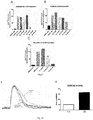
- Figures 2 and 3 show the concentration-response curves of compounds 2b and 2g in the AKAP18 ⁇ assay.
- tetrazole is a part of the pharmacophore of a group of existing drugs, angiotensin-II blockers, commonly used in the treatment of hypertension.
- the histogram shows levels of phosphorylated Ser 16 -PLB quantified by densiometery relative to actin levels.
- Table 2 Overview of effect and viability of synthesized tertiary amines with two different substituents.
- rat cardiomyocytes were isolated and perfused with external solution (NaCl 125, CsCI 20, D-glucose 5, MgCl 2 1, CaCl 2 1.8, Hepes 10, 4-aminopyridine 5, probenecid 2, pH 7.4 by NaOH).
- Compound 2g (mesylate salt dissolved in water) was included at a concentration of 10 uM.
Landscapes
- Chemical & Material Sciences (AREA)
- Organic Chemistry (AREA)
- Health & Medical Sciences (AREA)
- Engineering & Computer Science (AREA)
- Bioinformatics & Cheminformatics (AREA)
- Pharmacology & Pharmacy (AREA)
- Animal Behavior & Ethology (AREA)
- Chemical Kinetics & Catalysis (AREA)
- General Chemical & Material Sciences (AREA)
- Medicinal Chemistry (AREA)
- Nuclear Medicine, Radiotherapy & Molecular Imaging (AREA)
- Veterinary Medicine (AREA)
- Cardiology (AREA)
- Life Sciences & Earth Sciences (AREA)
- Public Health (AREA)
- General Health & Medical Sciences (AREA)
- Heart & Thoracic Surgery (AREA)
- Hospice & Palliative Care (AREA)
- Urology & Nephrology (AREA)
- Vascular Medicine (AREA)
- Pharmaceuticals Containing Other Organic And Inorganic Compounds (AREA)
- Acyclic And Carbocyclic Compounds In Medicinal Compositions (AREA)
- Organic Low-Molecular-Weight Compounds And Preparation Thereof (AREA)
- Thiazole And Isothizaole Compounds (AREA)
- Pyridine Compounds (AREA)
Priority Applications (1)
| Application Number | Priority Date | Filing Date | Title |
|---|---|---|---|
| PL13723783T PL2861568T3 (pl) | 2012-05-18 | 2013-05-17 | Aminy trzeciorzędowe do zastosowania w leczeniu zaburzeń serca |
Applications Claiming Priority (2)
| Application Number | Priority Date | Filing Date | Title |
|---|---|---|---|
| GBGB1208775.5A GB201208775D0 (en) | 2012-05-18 | 2012-05-18 | Chemical compounds |
| PCT/EP2013/060263 WO2013171332A2 (en) | 2012-05-18 | 2013-05-17 | Tertiary amines for use in the treatment of cardiac disorders |
Publications (2)
| Publication Number | Publication Date |
|---|---|
| EP2861568A2 EP2861568A2 (en) | 2015-04-22 |
| EP2861568B1 true EP2861568B1 (en) | 2019-04-17 |
Family
ID=46546292
Family Applications (1)
| Application Number | Title | Priority Date | Filing Date |
|---|---|---|---|
| EP13723783.0A Active EP2861568B1 (en) | 2012-05-18 | 2013-05-17 | Tertiary amines for use in the treatment of cardiac disorders |
Country Status (9)
| Country | Link |
|---|---|
| US (2) | US9556111B2 (https=) |
| EP (1) | EP2861568B1 (https=) |
| JP (1) | JP6397398B2 (https=) |
| DK (1) | DK2861568T3 (https=) |
| ES (1) | ES2731525T3 (https=) |
| GB (1) | GB201208775D0 (https=) |
| PL (1) | PL2861568T3 (https=) |
| TR (1) | TR201908770T4 (https=) |
| WO (1) | WO2013171332A2 (https=) |
Families Citing this family (4)
| Publication number | Priority date | Publication date | Assignee | Title |
|---|---|---|---|---|
| GB201320506D0 (en) | 2013-11-26 | 2014-01-01 | Uni I Oslo | Cyclic amino compounds for the use in the treatment of cardiac disorders |
| CN112174829B (zh) * | 2020-10-27 | 2022-11-18 | 山东阳谷华泰化工股份有限公司 | 一种二苄胺的制备方法 |
| WO2024119431A1 (en) * | 2022-12-08 | 2024-06-13 | Westlake University | Apoe4 and lilrb3, variants and uses thereof |
| CN120271787B (zh) * | 2025-06-05 | 2025-08-15 | 东莞市腾崴塑胶制品有限公司 | 一种低温聚氨酯海绵、制备方法及其化合物 |
Citations (2)
| Publication number | Priority date | Publication date | Assignee | Title |
|---|---|---|---|---|
| US3689524A (en) * | 1969-05-30 | 1972-09-05 | Allen & Hanburys Ltd | Phenethylamine derivatives |
| GB2088873A (en) * | 1980-12-10 | 1982-06-16 | Thomae Gmbh Dr K | Chemical Compounds |
Family Cites Families (34)
| Publication number | Priority date | Publication date | Assignee | Title |
|---|---|---|---|---|
| US3634316A (en) * | 1968-08-23 | 1972-01-11 | Showa Denko Kk | Sulfur-vulcanizable natural and synthetic rubbery polymers containing xylylene diamines as antiozonants |
| JPS496302B1 (https=) * | 1968-09-30 | 1974-02-13 | ||
| BE757601A (fr) | 1969-10-17 | 1971-04-16 | Geigy Ag J R | Derives basiques du pyrrole et medicaments renfermant de tels composes |
| DE2150293A1 (de) * | 1971-10-08 | 1973-04-12 | Hoechst Ag | Fasern und faeden aus modifizierten synthetischen linearen polyestern mit verbesserter faerbbarkeit |
| JPS62252746A (ja) * | 1986-04-24 | 1987-11-04 | Mitsubishi Chem Ind Ltd | 3級アミンの製造方法 |
| JPS63302364A (ja) * | 1987-06-02 | 1988-12-09 | Terumo Corp | ペルオキシドフェニル化合物およびその製造法 |
| US5871945A (en) | 1994-11-23 | 1999-02-16 | Icos Corporation | Modulators of anchoring protein function |
| JPH08217731A (ja) * | 1995-02-10 | 1996-08-27 | Takeda Chem Ind Ltd | キノン誘導体 |
| DE19824922A1 (de) | 1998-06-04 | 1999-12-09 | Boehringer Ingelheim Pharma | Neue substituierte Indolinone, ihre Herstellung und ihre Verwendung als Arzneimittel |
| EP1087929A1 (de) * | 1998-06-18 | 2001-04-04 | MERCK PATENT GmbH | Verfahren zur herstellung von kombinatorischen aminbibliotheken |
| AU1177200A (en) * | 1998-11-10 | 2000-05-29 | Meiji Seika Kaisha Ltd. | Novel imidazo(5,1-B)thiazole derivatives and fungicides containing the same as the active ingredient |
| US6723743B1 (en) | 1999-09-28 | 2004-04-20 | Neurogen Corporation | High affinity small molecule C5a receptor modulators |
| US6958214B2 (en) | 2000-07-10 | 2005-10-25 | Sequenom, Inc. | Polymorphic kinase anchor proteins and nucleic acids encoding the same |
| JP2005516964A (ja) | 2001-12-28 | 2005-06-09 | バイエル・フアーマシユーチカルズ・コーポレーシヨン | 5−ht2cレセプターと関連する疾患における使用のための1h−ピラゾリル誘導体化合物 |
| WO2003093296A2 (en) | 2002-05-03 | 2003-11-13 | Sequenom, Inc. | Kinase anchor protein muteins, peptides thereof, and related methods |
| WO2003101927A1 (en) * | 2002-05-31 | 2003-12-11 | Proteotech, Inc. | Compounds, compositions and methods for the treatment of amyloid diseases and synucleinopathies such as alzheimer's disease, type 2 diabetes, and parkinson's disease |
| CA2497254A1 (en) | 2002-09-06 | 2004-03-18 | Forschungsverbund Berlin E. V. | Akap18 delta, a novel splicing variant of a protein kinase a anchor protein and the use of the same |
| US20050282814A1 (en) | 2002-10-03 | 2005-12-22 | Targegen, Inc. | Vasculostatic agents and methods of use thereof |
| ITGE20020104A1 (it) * | 2002-11-22 | 2004-05-23 | Fabrizio Parodi | Composizioni polimeriche rapidamente riscaldabili |
| AU2004219665A1 (en) | 2003-03-07 | 2004-09-23 | Sequenom, Inc. | Association of polymorphic kinase anchor proteins with cardiac phenotypes and related methods |
| US8883160B2 (en) | 2004-02-13 | 2014-11-11 | Ibc Pharmaceuticals, Inc. | Dock-and-lock (DNL) complexes for therapeutic and diagnostic use |
| DE102004031579B4 (de) | 2004-06-29 | 2012-12-27 | Forschungsverbund Berlin E.V. | Peptide zur Inhibition der Interaktion von Proteinkinase A und Proteinkinase A-Ankerproteinen, diese umfassendes Nukleinsäuremolekül, Vektor, Wirtszelle, gegen diese gerichtetes Erkennungsmolekül, diese enthaltende pharmazeutische Zusammensetzung, diese enthaltender Kit und deren Verwendung |
| WO2006011043A1 (en) | 2004-07-21 | 2006-02-02 | Pfizer Products Inc. | Histamine-3 receptor antagonists |
| GB0421355D0 (en) | 2004-09-24 | 2004-10-27 | Univ Oslo | Inhibitors |
| GB0421356D0 (en) | 2004-09-24 | 2004-10-27 | Univ Oslo | Inhibitors |
| WO2006122546A1 (de) | 2005-05-18 | 2006-11-23 | Forschungsverbund Berlin E.V. | Nicht-peptidische inhibitoren der akap-pka-wechselwirkung |
| GB0518027D0 (en) | 2005-09-05 | 2005-10-12 | Birkeland Innovasjon As | Compounds |
| EP1777230A1 (en) * | 2005-10-19 | 2007-04-25 | LG Chem Ltd. | Multinuclear half metallocene catalyst and method for preparing syndiotactic polystyrene using the same |
| JP4216844B2 (ja) * | 2005-10-31 | 2009-01-28 | エルジー・ケム・リミテッド | 新たな多核ハーフメタロセン触媒系及びそれを利用したシンジオタクチックポリスチレンの製造 |
| CN100383112C (zh) * | 2006-06-12 | 2008-04-23 | 清华大学 | 一种还原硝基苄胺化合物为氨基苄胺盐酸盐的方法 |
| EP2098226A1 (de) | 2008-03-06 | 2009-09-09 | Forschungsverbund Berlin e.V. | AKAP-PKA-Interaktionshemmer zur Anwendung in der Behandlung von Herzkrankheiten |
| WO2010010359A2 (en) * | 2008-07-24 | 2010-01-28 | Cilpa Limited | A process for the preparation of cinacalcet and its salts |
| FR2940289B1 (fr) | 2008-12-23 | 2014-09-12 | Biopharmed | Derives de la classe des hydroxyquinoleines aminees pour le traitement du cancer du pancreas |
| HU1000676D0 (en) * | 2010-12-17 | 2011-02-28 | Pharmahungary 2000 Kft | Inhibitors of matrix metalloproteinase, pharmaceutical compositions thereof and use of them for preventing and treating diseases where the activation of mmp is involved |
-
2012
- 2012-05-18 GB GBGB1208775.5A patent/GB201208775D0/en not_active Ceased
-
2013
- 2013-05-17 TR TR2019/08770T patent/TR201908770T4/tr unknown
- 2013-05-17 WO PCT/EP2013/060263 patent/WO2013171332A2/en not_active Ceased
- 2013-05-17 US US14/402,037 patent/US9556111B2/en active Active
- 2013-05-17 DK DK13723783.0T patent/DK2861568T3/da active
- 2013-05-17 ES ES13723783T patent/ES2731525T3/es active Active
- 2013-05-17 JP JP2015512079A patent/JP6397398B2/ja active Active
- 2013-05-17 EP EP13723783.0A patent/EP2861568B1/en active Active
- 2013-05-17 PL PL13723783T patent/PL2861568T3/pl unknown
-
2016
- 2016-12-15 US US15/380,613 patent/US9951033B2/en active Active
Patent Citations (2)
| Publication number | Priority date | Publication date | Assignee | Title |
|---|---|---|---|---|
| US3689524A (en) * | 1969-05-30 | 1972-09-05 | Allen & Hanburys Ltd | Phenethylamine derivatives |
| GB2088873A (en) * | 1980-12-10 | 1982-06-16 | Thomae Gmbh Dr K | Chemical Compounds |
Non-Patent Citations (1)
| Title |
|---|
| MATEO ALAJARÍN ET AL: "Dimeric Self-Assembling Capsules Derived from the Highly Flexible Tribenzylamine Skeleton +", THE JOURNAL OF ORGANIC CHEMISTRY, vol. 67, no. 20, 1 October 2002 (2002-10-01), pages 7091 - 7095, XP055340814, ISSN: 0022-3263, DOI: 10.1021/jo025852r * |
Also Published As
| Publication number | Publication date |
|---|---|
| ES2731525T3 (es) | 2019-11-15 |
| JP2015522537A (ja) | 2015-08-06 |
| JP6397398B2 (ja) | 2018-09-26 |
| US20170158657A1 (en) | 2017-06-08 |
| DK2861568T3 (da) | 2019-06-17 |
| US20150133510A1 (en) | 2015-05-14 |
| WO2013171332A2 (en) | 2013-11-21 |
| US9556111B2 (en) | 2017-01-31 |
| US9951033B2 (en) | 2018-04-24 |
| PL2861568T3 (pl) | 2019-11-29 |
| TR201908770T4 (tr) | 2019-07-22 |
| EP2861568A2 (en) | 2015-04-22 |
| GB201208775D0 (en) | 2012-07-04 |
| WO2013171332A3 (en) | 2014-04-17 |
Similar Documents
| Publication | Publication Date | Title |
|---|---|---|
| JP6887996B2 (ja) | Tead転写因子自己パルミトイル化阻害剤 | |
| Krystof et al. | Perspective of cyclin-dependent kinase 9 (CDK9) as a drug target | |
| CN101855203B (zh) | F1f0-atp合成酶抑制剂以及相关的方法 | |
| EP4039675B1 (en) | Phenyl-2-hydroxy-acetylamino-2-methyl-phenyl compounds | |
| TW201742863A (zh) | 靶向蛋白質之嵌合化合物、組合物、方法及其用途 | |
| Kaneshige et al. | Discovery of a potent and selective STAT5 PROTAC degrader with strong antitumor activity in vivo in acute myeloid leukemia | |
| TW200538119A (en) | GSK-3 inhibitors | |
| US20210179577A1 (en) | Aromatic sulfonamide derivatives for the treatment of ischemic stroke | |
| Uehling et al. | Design, synthesis, and characterization of 4-aminoquinazolines as potent inhibitors of the G protein-coupled receptor kinase 6 (GRK6) for the treatment of multiple myeloma | |
| EP2861568B1 (en) | Tertiary amines for use in the treatment of cardiac disorders | |
| JP6916562B2 (ja) | 化合物、その薬学的に許容される塩、溶媒和物、立体異性体及び互変異性体、並びに薬物組成物、過剰増殖性障害治療剤、過剰増殖性障害予防剤、薬物、癌治療剤、癌予防剤、及びキナーゼシグナル伝達調節剤 | |
| Gornati et al. | Synthesis and characterization of novel mono-and bis-guanyl hydrazones as potent and selective asic1 inhibitors able to reduce brain ischemic insult | |
| US20170334863A1 (en) | Cdc42 INHIBITOR AND USES THEREOF | |
| WO2023131677A1 (en) | Compounds containing a hydroxyphenyl moiety and their use | |
| JP2020072706A (ja) | ピリジノン化合物およびその用途 | |
| KR20140000666A (ko) | 카세인 키나아제 1δ 및 카세인 키나아제 1ε 저해제 | |
| SA518391657B1 (ar) | مشتقات بيريدين ثنائي الأمينو | |
| EP3881840A1 (en) | Sortilin antagonists for use inthe treatment of diabetic retinopathy | |
| US20210346388A1 (en) | CDC7-Inhibiting Purine Derivatives and their use for the Treatment of Neurological Conditions | |
| US9585880B2 (en) | Cyclic amino compounds for use in the treatment of cardiac disorders | |
| WO2009081564A1 (ja) | DAPKs阻害剤 | |
| CN114096247B (zh) | 苯并咪唑衍生物及其用途 | |
| US11945814B2 (en) | Salt form | |
| TWI776810B (zh) | 新穎二胺基吡啶衍生物 | |
| HK40079392B (en) | Phenyl-2-hydroxy-acetylamino-2-methyl-phenyl compounds |
Legal Events
| Date | Code | Title | Description |
|---|---|---|---|
| PUAI | Public reference made under article 153(3) epc to a published international application that has entered the european phase |
Free format text: ORIGINAL CODE: 0009012 |
|
| 17P | Request for examination filed |
Effective date: 20141217 |
|
| AK | Designated contracting states |
Kind code of ref document: A2 Designated state(s): AL AT BE BG CH CY CZ DE DK EE ES FI FR GB GR HR HU IE IS IT LI LT LU LV MC MK MT NL NO PL PT RO RS SE SI SK SM TR |
|
| AX | Request for extension of the european patent |
Extension state: BA ME |
|
| DAX | Request for extension of the european patent (deleted) | ||
| STAA | Information on the status of an ep patent application or granted ep patent |
Free format text: STATUS: EXAMINATION IS IN PROGRESS |
|
| 17Q | First examination report despatched |
Effective date: 20170208 |
|
| GRAP | Despatch of communication of intention to grant a patent |
Free format text: ORIGINAL CODE: EPIDOSNIGR1 |
|
| STAA | Information on the status of an ep patent application or granted ep patent |
Free format text: STATUS: GRANT OF PATENT IS INTENDED |
|
| INTG | Intention to grant announced |
Effective date: 20181031 |
|
| GRAS | Grant fee paid |
Free format text: ORIGINAL CODE: EPIDOSNIGR3 |
|
| GRAA | (expected) grant |
Free format text: ORIGINAL CODE: 0009210 |
|
| STAA | Information on the status of an ep patent application or granted ep patent |
Free format text: STATUS: THE PATENT HAS BEEN GRANTED |
|
| AK | Designated contracting states |
Kind code of ref document: B1 Designated state(s): AL AT BE BG CH CY CZ DE DK EE ES FI FR GB GR HR HU IE IS IT LI LT LU LV MC MK MT NL NO PL PT RO RS SE SI SK SM TR |
|
| REG | Reference to a national code |
Ref country code: GB Ref legal event code: FG4D |
|
| REG | Reference to a national code |
Ref country code: CH Ref legal event code: EP |
|
| REG | Reference to a national code |
Ref country code: DE Ref legal event code: R096 Ref document number: 602013053986 Country of ref document: DE |
|
| REG | Reference to a national code |
Ref country code: AT Ref legal event code: REF Ref document number: 1121406 Country of ref document: AT Kind code of ref document: T Effective date: 20190515 Ref country code: IE Ref legal event code: FG4D |
|
| REG | Reference to a national code |
Ref country code: DK Ref legal event code: T3 Effective date: 20190613 |
|
| REG | Reference to a national code |
Ref country code: SE Ref legal event code: TRGR |
|
| REG | Reference to a national code |
Ref country code: NL Ref legal event code: FP |
|
| REG | Reference to a national code |
Ref country code: NO Ref legal event code: T2 Effective date: 20190417 |
|
| REG | Reference to a national code |
Ref country code: LT Ref legal event code: MG4D |
|
| REG | Reference to a national code |
Ref country code: GR Ref legal event code: EP Ref document number: 20190402020 Country of ref document: GR Effective date: 20191016 |
|
| PG25 | Lapsed in a contracting state [announced via postgrant information from national office to epo] |
Ref country code: HR Free format text: LAPSE BECAUSE OF FAILURE TO SUBMIT A TRANSLATION OF THE DESCRIPTION OR TO PAY THE FEE WITHIN THE PRESCRIBED TIME-LIMIT Effective date: 20190417 Ref country code: PT Free format text: LAPSE BECAUSE OF FAILURE TO SUBMIT A TRANSLATION OF THE DESCRIPTION OR TO PAY THE FEE WITHIN THE PRESCRIBED TIME-LIMIT Effective date: 20190817 Ref country code: AL Free format text: LAPSE BECAUSE OF FAILURE TO SUBMIT A TRANSLATION OF THE DESCRIPTION OR TO PAY THE FEE WITHIN THE PRESCRIBED TIME-LIMIT Effective date: 20190417 Ref country code: LT Free format text: LAPSE BECAUSE OF FAILURE TO SUBMIT A TRANSLATION OF THE DESCRIPTION OR TO PAY THE FEE WITHIN THE PRESCRIBED TIME-LIMIT Effective date: 20190417 |
|
| PG25 | Lapsed in a contracting state [announced via postgrant information from national office to epo] |
Ref country code: BG Free format text: LAPSE BECAUSE OF FAILURE TO SUBMIT A TRANSLATION OF THE DESCRIPTION OR TO PAY THE FEE WITHIN THE PRESCRIBED TIME-LIMIT Effective date: 20190717 Ref country code: RS Free format text: LAPSE BECAUSE OF FAILURE TO SUBMIT A TRANSLATION OF THE DESCRIPTION OR TO PAY THE FEE WITHIN THE PRESCRIBED TIME-LIMIT Effective date: 20190417 Ref country code: LV Free format text: LAPSE BECAUSE OF FAILURE TO SUBMIT A TRANSLATION OF THE DESCRIPTION OR TO PAY THE FEE WITHIN THE PRESCRIBED TIME-LIMIT Effective date: 20190417 |
|
| REG | Reference to a national code |
Ref country code: CH Ref legal event code: NV Representative=s name: VALIPAT S.A. C/O BOVARD SA NEUCHATEL, CH |
|
| PG25 | Lapsed in a contracting state [announced via postgrant information from national office to epo] |
Ref country code: IS Free format text: LAPSE BECAUSE OF FAILURE TO SUBMIT A TRANSLATION OF THE DESCRIPTION OR TO PAY THE FEE WITHIN THE PRESCRIBED TIME-LIMIT Effective date: 20190817 |
|
| REG | Reference to a national code |
Ref country code: DE Ref legal event code: R097 Ref document number: 602013053986 Country of ref document: DE |
|
| PG25 | Lapsed in a contracting state [announced via postgrant information from national office to epo] |
Ref country code: RO Free format text: LAPSE BECAUSE OF FAILURE TO SUBMIT A TRANSLATION OF THE DESCRIPTION OR TO PAY THE FEE WITHIN THE PRESCRIBED TIME-LIMIT Effective date: 20190417 Ref country code: SK Free format text: LAPSE BECAUSE OF FAILURE TO SUBMIT A TRANSLATION OF THE DESCRIPTION OR TO PAY THE FEE WITHIN THE PRESCRIBED TIME-LIMIT Effective date: 20190417 Ref country code: CZ Free format text: LAPSE BECAUSE OF FAILURE TO SUBMIT A TRANSLATION OF THE DESCRIPTION OR TO PAY THE FEE WITHIN THE PRESCRIBED TIME-LIMIT Effective date: 20190417 Ref country code: EE Free format text: LAPSE BECAUSE OF FAILURE TO SUBMIT A TRANSLATION OF THE DESCRIPTION OR TO PAY THE FEE WITHIN THE PRESCRIBED TIME-LIMIT Effective date: 20190417 Ref country code: MC Free format text: LAPSE BECAUSE OF FAILURE TO SUBMIT A TRANSLATION OF THE DESCRIPTION OR TO PAY THE FEE WITHIN THE PRESCRIBED TIME-LIMIT Effective date: 20190417 |
|
| PLBE | No opposition filed within time limit |
Free format text: ORIGINAL CODE: 0009261 |
|
| STAA | Information on the status of an ep patent application or granted ep patent |
Free format text: STATUS: NO OPPOSITION FILED WITHIN TIME LIMIT |
|
| PG25 | Lapsed in a contracting state [announced via postgrant information from national office to epo] |
Ref country code: LU Free format text: LAPSE BECAUSE OF NON-PAYMENT OF DUE FEES Effective date: 20190517 Ref country code: SM Free format text: LAPSE BECAUSE OF FAILURE TO SUBMIT A TRANSLATION OF THE DESCRIPTION OR TO PAY THE FEE WITHIN THE PRESCRIBED TIME-LIMIT Effective date: 20190417 |
|
| 26N | No opposition filed |
Effective date: 20200120 |
|
| PG25 | Lapsed in a contracting state [announced via postgrant information from national office to epo] |
Ref country code: IE Free format text: LAPSE BECAUSE OF NON-PAYMENT OF DUE FEES Effective date: 20190517 |
|
| PG25 | Lapsed in a contracting state [announced via postgrant information from national office to epo] |
Ref country code: SI Free format text: LAPSE BECAUSE OF FAILURE TO SUBMIT A TRANSLATION OF THE DESCRIPTION OR TO PAY THE FEE WITHIN THE PRESCRIBED TIME-LIMIT Effective date: 20190417 |
|
| PG25 | Lapsed in a contracting state [announced via postgrant information from national office to epo] |
Ref country code: CY Free format text: LAPSE BECAUSE OF FAILURE TO SUBMIT A TRANSLATION OF THE DESCRIPTION OR TO PAY THE FEE WITHIN THE PRESCRIBED TIME-LIMIT Effective date: 20190417 |
|
| PG25 | Lapsed in a contracting state [announced via postgrant information from national office to epo] |
Ref country code: HU Free format text: LAPSE BECAUSE OF FAILURE TO SUBMIT A TRANSLATION OF THE DESCRIPTION OR TO PAY THE FEE WITHIN THE PRESCRIBED TIME-LIMIT; INVALID AB INITIO Effective date: 20130517 Ref country code: MT Free format text: LAPSE BECAUSE OF FAILURE TO SUBMIT A TRANSLATION OF THE DESCRIPTION OR TO PAY THE FEE WITHIN THE PRESCRIBED TIME-LIMIT Effective date: 20190417 |
|
| REG | Reference to a national code |
Ref country code: AT Ref legal event code: UEP Ref document number: 1121406 Country of ref document: AT Kind code of ref document: T Effective date: 20190417 |
|
| PG25 | Lapsed in a contracting state [announced via postgrant information from national office to epo] |
Ref country code: MK Free format text: LAPSE BECAUSE OF FAILURE TO SUBMIT A TRANSLATION OF THE DESCRIPTION OR TO PAY THE FEE WITHIN THE PRESCRIBED TIME-LIMIT Effective date: 20190417 |
|
| P01 | Opt-out of the competence of the unified patent court (upc) registered |
Effective date: 20230512 |
|
| PGFP | Annual fee paid to national office [announced via postgrant information from national office to epo] |
Ref country code: NL Payment date: 20250522 Year of fee payment: 13 |
|
| PGFP | Annual fee paid to national office [announced via postgrant information from national office to epo] |
Ref country code: FI Payment date: 20250522 Year of fee payment: 13 |
|
| PGFP | Annual fee paid to national office [announced via postgrant information from national office to epo] |
Ref country code: DE Payment date: 20250520 Year of fee payment: 13 Ref country code: PL Payment date: 20250507 Year of fee payment: 13 |
|
| PGFP | Annual fee paid to national office [announced via postgrant information from national office to epo] |
Ref country code: GB Payment date: 20250520 Year of fee payment: 13 Ref country code: ES Payment date: 20250611 Year of fee payment: 13 Ref country code: DK Payment date: 20250522 Year of fee payment: 13 |
|
| PGFP | Annual fee paid to national office [announced via postgrant information from national office to epo] |
Ref country code: NO Payment date: 20250523 Year of fee payment: 13 |
|
| PGFP | Annual fee paid to national office [announced via postgrant information from national office to epo] |
Ref country code: BE Payment date: 20250522 Year of fee payment: 13 Ref country code: IT Payment date: 20250528 Year of fee payment: 13 |
|
| PGFP | Annual fee paid to national office [announced via postgrant information from national office to epo] |
Ref country code: FR Payment date: 20250520 Year of fee payment: 13 |
|
| PGFP | Annual fee paid to national office [announced via postgrant information from national office to epo] |
Ref country code: GR Payment date: 20250521 Year of fee payment: 13 |
|
| PGFP | Annual fee paid to national office [announced via postgrant information from national office to epo] |
Ref country code: CH Payment date: 20250601 Year of fee payment: 13 |
|
| PGFP | Annual fee paid to national office [announced via postgrant information from national office to epo] |
Ref country code: AT Payment date: 20250520 Year of fee payment: 13 |
|
| PGFP | Annual fee paid to national office [announced via postgrant information from national office to epo] |
Ref country code: TR Payment date: 20250507 Year of fee payment: 13 |
|
| PGFP | Annual fee paid to national office [announced via postgrant information from national office to epo] |
Ref country code: SE Payment date: 20250522 Year of fee payment: 13 |