EP2825661B1 - Verfahren zur herstellung von terpen-nitrilen aus terpen-oximen unter verwendung einer aldoxim dehydratase - Google Patents
Verfahren zur herstellung von terpen-nitrilen aus terpen-oximen unter verwendung einer aldoxim dehydratase Download PDFInfo
- Publication number
- EP2825661B1 EP2825661B1 EP13712707.2A EP13712707A EP2825661B1 EP 2825661 B1 EP2825661 B1 EP 2825661B1 EP 13712707 A EP13712707 A EP 13712707A EP 2825661 B1 EP2825661 B1 EP 2825661B1
- Authority
- EP
- European Patent Office
- Prior art keywords
- paox
- dehydratase
- seq
- process according
- nucleic acid
- Prior art date
- Legal status (The legal status is an assumption and is not a legal conclusion. Google has not performed a legal analysis and makes no representation as to the accuracy of the status listed.)
- Not-in-force
Links
- -1 terpene nitriles Chemical class 0.000 title claims description 72
- 108010025442 aldoxime dehydratase Proteins 0.000 title description 52
- 238000004519 manufacturing process Methods 0.000 title description 15
- 235000007586 terpenes Nutrition 0.000 title description 12
- 238000000034 method Methods 0.000 claims description 103
- 150000007523 nucleic acids Chemical group 0.000 claims description 99
- 108090000623 proteins and genes Proteins 0.000 claims description 76
- 108030001510 Phenylacetaldoxime dehydratases Proteins 0.000 claims description 69
- 102000004190 Enzymes Human genes 0.000 claims description 62
- 108090000790 Enzymes Proteins 0.000 claims description 62
- 244000005700 microbiome Species 0.000 claims description 60
- 230000014509 gene expression Effects 0.000 claims description 52
- 230000008569 process Effects 0.000 claims description 46
- 238000006243 chemical reaction Methods 0.000 claims description 39
- 150000002825 nitriles Chemical class 0.000 claims description 32
- 108091028043 Nucleic acid sequence Proteins 0.000 claims description 30
- 102000004169 proteins and genes Human genes 0.000 claims description 30
- 150000002923 oximes Chemical class 0.000 claims description 27
- 239000000203 mixture Substances 0.000 claims description 26
- JUCCIEVMICHZPK-FLIBITNWSA-N (nz)-n-(3,7-dimethyloct-6-enylidene)hydroxylamine Chemical compound O\N=C/CC(C)CCC=C(C)C JUCCIEVMICHZPK-FLIBITNWSA-N 0.000 claims description 23
- 108030001512 Aliphatic aldoxime dehydratases Proteins 0.000 claims description 21
- 150000001875 compounds Chemical class 0.000 claims description 19
- 125000003275 alpha amino acid group Chemical group 0.000 claims description 18
- 239000000758 substrate Substances 0.000 claims description 16
- 108010006519 Molecular Chaperones Proteins 0.000 claims description 14
- 230000002210 biocatalytic effect Effects 0.000 claims description 12
- MTDAKBBUYMYKAR-UHFFFAOYSA-N 3,7-dimethyloct-6-enenitrile Chemical compound N#CCC(C)CCC=C(C)C MTDAKBBUYMYKAR-UHFFFAOYSA-N 0.000 claims description 11
- 108700010070 Codon Usage Proteins 0.000 claims description 10
- 102100038222 60 kDa heat shock protein, mitochondrial Human genes 0.000 claims description 9
- 241000223195 Fusarium graminearum Species 0.000 claims description 9
- 230000001580 bacterial effect Effects 0.000 claims description 9
- 241000194110 Bacillus sp. (in: Bacteria) Species 0.000 claims description 8
- 108010058432 Chaperonin 60 Proteins 0.000 claims description 8
- 102000005431 Molecular Chaperones Human genes 0.000 claims description 7
- LXFKDMGMYAHNAQ-WAKDDQPJSA-N CC(C)=CCC\C(C)=C\C=N/O Chemical compound CC(C)=CCC\C(C)=C\C=N/O LXFKDMGMYAHNAQ-WAKDDQPJSA-N 0.000 claims description 6
- 239000007795 chemical reaction product Substances 0.000 claims description 6
- 239000011541 reaction mixture Substances 0.000 claims description 5
- 239000012429 reaction media Substances 0.000 claims description 4
- 102100024341 10 kDa heat shock protein, mitochondrial Human genes 0.000 claims description 3
- 108010059013 Chaperonin 10 Proteins 0.000 claims description 3
- WTEVQBCEXWBHNA-UHFFFAOYSA-N Citral Natural products CC(C)=CCCC(C)=CC=O WTEVQBCEXWBHNA-UHFFFAOYSA-N 0.000 claims description 3
- 241000187562 Rhodococcus sp. Species 0.000 claims description 3
- WTEVQBCEXWBHNA-JXMROGBWSA-N citral A Natural products CC(C)=CCC\C(C)=C\C=O WTEVQBCEXWBHNA-JXMROGBWSA-N 0.000 claims 2
- 241000134874 Geraniales Species 0.000 claims 1
- WTEVQBCEXWBHNA-YFHOEESVSA-N citral B Natural products CC(C)=CCC\C(C)=C/C=O WTEVQBCEXWBHNA-YFHOEESVSA-N 0.000 claims 1
- 108020004707 nucleic acids Proteins 0.000 description 60
- 102000039446 nucleic acids Human genes 0.000 description 60
- 229920001184 polypeptide Polymers 0.000 description 32
- 108020004414 DNA Proteins 0.000 description 29
- 108090000765 processed proteins & peptides Proteins 0.000 description 28
- 102000004196 processed proteins & peptides Human genes 0.000 description 28
- 210000004027 cell Anatomy 0.000 description 26
- 230000000694 effects Effects 0.000 description 26
- 239000013598 vector Substances 0.000 description 25
- 241000588724 Escherichia coli Species 0.000 description 24
- 125000003729 nucleotide group Chemical group 0.000 description 17
- 238000009396 hybridization Methods 0.000 description 16
- 239000002773 nucleotide Substances 0.000 description 16
- 108090001042 Hydro-Lyases Proteins 0.000 description 15
- 239000000047 product Substances 0.000 description 15
- 102000004867 Hydro-Lyases Human genes 0.000 description 14
- 230000001105 regulatory effect Effects 0.000 description 14
- 150000003839 salts Chemical class 0.000 description 14
- IJGRMHOSHXDMSA-UHFFFAOYSA-N Atomic nitrogen Chemical compound N#N IJGRMHOSHXDMSA-UHFFFAOYSA-N 0.000 description 12
- 150000001413 amino acids Chemical class 0.000 description 12
- 230000035772 mutation Effects 0.000 description 12
- 241000894006 Bacteria Species 0.000 description 11
- 108091034117 Oligonucleotide Proteins 0.000 description 10
- 238000007792 addition Methods 0.000 description 10
- 150000003254 radicals Chemical class 0.000 description 10
- 239000002609 medium Substances 0.000 description 9
- 239000013612 plasmid Substances 0.000 description 9
- 150000003505 terpenes Chemical class 0.000 description 9
- ZHNUHDYFZUAESO-UHFFFAOYSA-N Formamide Chemical compound NC=O ZHNUHDYFZUAESO-UHFFFAOYSA-N 0.000 description 8
- 229910052799 carbon Inorganic materials 0.000 description 8
- 125000004432 carbon atom Chemical group C* 0.000 description 8
- 238000010369 molecular cloning Methods 0.000 description 8
- 238000002360 preparation method Methods 0.000 description 8
- 238000012216 screening Methods 0.000 description 8
- 238000006467 substitution reaction Methods 0.000 description 8
- FWMNVWWHGCHHJJ-SKKKGAJSSA-N 4-amino-1-[(2r)-6-amino-2-[[(2r)-2-[[(2r)-2-[[(2r)-2-amino-3-phenylpropanoyl]amino]-3-phenylpropanoyl]amino]-4-methylpentanoyl]amino]hexanoyl]piperidine-4-carboxylic acid Chemical compound C([C@H](C(=O)N[C@H](CC(C)C)C(=O)N[C@H](CCCCN)C(=O)N1CCC(N)(CC1)C(O)=O)NC(=O)[C@H](N)CC=1C=CC=CC=1)C1=CC=CC=C1 FWMNVWWHGCHHJJ-SKKKGAJSSA-N 0.000 description 7
- OKTJSMMVPCPJKN-UHFFFAOYSA-N Carbon Chemical compound [C] OKTJSMMVPCPJKN-UHFFFAOYSA-N 0.000 description 7
- XEEYBQQBJWHFJM-UHFFFAOYSA-N Iron Chemical compound [Fe] XEEYBQQBJWHFJM-UHFFFAOYSA-N 0.000 description 7
- IMNFDUFMRHMDMM-UHFFFAOYSA-N N-Heptane Chemical compound CCCCCCC IMNFDUFMRHMDMM-UHFFFAOYSA-N 0.000 description 7
- 241001224412 Pseudomonas fluorescens WH6 Species 0.000 description 7
- JLCPHMBAVCMARE-UHFFFAOYSA-N [3-[[3-[[3-[[3-[[3-[[3-[[3-[[3-[[3-[[3-[[3-[[5-(2-amino-6-oxo-1H-purin-9-yl)-3-[[3-[[3-[[3-[[3-[[3-[[5-(2-amino-6-oxo-1H-purin-9-yl)-3-[[5-(2-amino-6-oxo-1H-purin-9-yl)-3-hydroxyoxolan-2-yl]methoxy-hydroxyphosphoryl]oxyoxolan-2-yl]methoxy-hydroxyphosphoryl]oxy-5-(5-methyl-2,4-dioxopyrimidin-1-yl)oxolan-2-yl]methoxy-hydroxyphosphoryl]oxy-5-(6-aminopurin-9-yl)oxolan-2-yl]methoxy-hydroxyphosphoryl]oxy-5-(6-aminopurin-9-yl)oxolan-2-yl]methoxy-hydroxyphosphoryl]oxy-5-(6-aminopurin-9-yl)oxolan-2-yl]methoxy-hydroxyphosphoryl]oxy-5-(6-aminopurin-9-yl)oxolan-2-yl]methoxy-hydroxyphosphoryl]oxyoxolan-2-yl]methoxy-hydroxyphosphoryl]oxy-5-(5-methyl-2,4-dioxopyrimidin-1-yl)oxolan-2-yl]methoxy-hydroxyphosphoryl]oxy-5-(4-amino-2-oxopyrimidin-1-yl)oxolan-2-yl]methoxy-hydroxyphosphoryl]oxy-5-(5-methyl-2,4-dioxopyrimidin-1-yl)oxolan-2-yl]methoxy-hydroxyphosphoryl]oxy-5-(5-methyl-2,4-dioxopyrimidin-1-yl)oxolan-2-yl]methoxy-hydroxyphosphoryl]oxy-5-(6-aminopurin-9-yl)oxolan-2-yl]methoxy-hydroxyphosphoryl]oxy-5-(6-aminopurin-9-yl)oxolan-2-yl]methoxy-hydroxyphosphoryl]oxy-5-(4-amino-2-oxopyrimidin-1-yl)oxolan-2-yl]methoxy-hydroxyphosphoryl]oxy-5-(4-amino-2-oxopyrimidin-1-yl)oxolan-2-yl]methoxy-hydroxyphosphoryl]oxy-5-(4-amino-2-oxopyrimidin-1-yl)oxolan-2-yl]methoxy-hydroxyphosphoryl]oxy-5-(6-aminopurin-9-yl)oxolan-2-yl]methoxy-hydroxyphosphoryl]oxy-5-(4-amino-2-oxopyrimidin-1-yl)oxolan-2-yl]methyl [5-(6-aminopurin-9-yl)-2-(hydroxymethyl)oxolan-3-yl] hydrogen phosphate Polymers Cc1cn(C2CC(OP(O)(=O)OCC3OC(CC3OP(O)(=O)OCC3OC(CC3O)n3cnc4c3nc(N)[nH]c4=O)n3cnc4c3nc(N)[nH]c4=O)C(COP(O)(=O)OC3CC(OC3COP(O)(=O)OC3CC(OC3COP(O)(=O)OC3CC(OC3COP(O)(=O)OC3CC(OC3COP(O)(=O)OC3CC(OC3COP(O)(=O)OC3CC(OC3COP(O)(=O)OC3CC(OC3COP(O)(=O)OC3CC(OC3COP(O)(=O)OC3CC(OC3COP(O)(=O)OC3CC(OC3COP(O)(=O)OC3CC(OC3COP(O)(=O)OC3CC(OC3COP(O)(=O)OC3CC(OC3COP(O)(=O)OC3CC(OC3COP(O)(=O)OC3CC(OC3COP(O)(=O)OC3CC(OC3COP(O)(=O)OC3CC(OC3CO)n3cnc4c(N)ncnc34)n3ccc(N)nc3=O)n3cnc4c(N)ncnc34)n3ccc(N)nc3=O)n3ccc(N)nc3=O)n3ccc(N)nc3=O)n3cnc4c(N)ncnc34)n3cnc4c(N)ncnc34)n3cc(C)c(=O)[nH]c3=O)n3cc(C)c(=O)[nH]c3=O)n3ccc(N)nc3=O)n3cc(C)c(=O)[nH]c3=O)n3cnc4c3nc(N)[nH]c4=O)n3cnc4c(N)ncnc34)n3cnc4c(N)ncnc34)n3cnc4c(N)ncnc34)n3cnc4c(N)ncnc34)O2)c(=O)[nH]c1=O JLCPHMBAVCMARE-UHFFFAOYSA-N 0.000 description 7
- 238000010367 cloning Methods 0.000 description 7
- 239000002299 complementary DNA Substances 0.000 description 7
- 238000004817 gas chromatography Methods 0.000 description 7
- 238000002703 mutagenesis Methods 0.000 description 7
- 231100000350 mutagenesis Toxicity 0.000 description 7
- 239000012071 phase Substances 0.000 description 7
- 239000002243 precursor Substances 0.000 description 7
- 238000013518 transcription Methods 0.000 description 7
- 230000035897 transcription Effects 0.000 description 7
- 108091032973 (ribonucleotides)n+m Proteins 0.000 description 6
- QTBSBXVTEAMEQO-UHFFFAOYSA-N Acetic acid Chemical compound CC(O)=O QTBSBXVTEAMEQO-UHFFFAOYSA-N 0.000 description 6
- 108020004705 Codon Proteins 0.000 description 6
- LFQSCWFLJHTTHZ-UHFFFAOYSA-N Ethanol Chemical compound CCO LFQSCWFLJHTTHZ-UHFFFAOYSA-N 0.000 description 6
- XEKOWRVHYACXOJ-UHFFFAOYSA-N Ethyl acetate Chemical compound CCOC(C)=O XEKOWRVHYACXOJ-UHFFFAOYSA-N 0.000 description 6
- 241000589516 Pseudomonas Species 0.000 description 6
- 241001478283 Variovorax Species 0.000 description 6
- 230000033228 biological regulation Effects 0.000 description 6
- 230000000295 complement effect Effects 0.000 description 6
- 238000012217 deletion Methods 0.000 description 6
- 230000037430 deletion Effects 0.000 description 6
- 230000002255 enzymatic effect Effects 0.000 description 6
- 239000012634 fragment Substances 0.000 description 6
- 239000001963 growth medium Substances 0.000 description 6
- 238000003780 insertion Methods 0.000 description 6
- 230000037431 insertion Effects 0.000 description 6
- 239000000463 material Substances 0.000 description 6
- JUCCIEVMICHZPK-UHFFFAOYSA-N n-(3,7-dimethyloct-6-enylidene)hydroxylamine Chemical compound ON=CCC(C)CCC=C(C)C JUCCIEVMICHZPK-UHFFFAOYSA-N 0.000 description 6
- 229910052757 nitrogen Inorganic materials 0.000 description 6
- 239000000126 substance Substances 0.000 description 6
- 238000003786 synthesis reaction Methods 0.000 description 6
- QGZKDVFQNNGYKY-UHFFFAOYSA-N Ammonia Chemical compound N QGZKDVFQNNGYKY-UHFFFAOYSA-N 0.000 description 5
- 241000193830 Bacillus <bacterium> Species 0.000 description 5
- WQZGKKKJIJFFOK-QTVWNMPRSA-N D-mannopyranose Chemical compound OC[C@H]1OC(O)[C@@H](O)[C@@H](O)[C@@H]1O WQZGKKKJIJFFOK-QTVWNMPRSA-N 0.000 description 5
- 102000053602 DNA Human genes 0.000 description 5
- 241000196324 Embryophyta Species 0.000 description 5
- 240000004808 Saccharomyces cerevisiae Species 0.000 description 5
- 235000014680 Saccharomyces cerevisiae Nutrition 0.000 description 5
- 125000000217 alkyl group Chemical group 0.000 description 5
- 238000004587 chromatography analysis Methods 0.000 description 5
- 238000013519 translation Methods 0.000 description 5
- 241000933166 Burkholderia ambifaria MC40-6 Species 0.000 description 4
- 241000651940 Burkholderia cenocepacia MC0-3 Species 0.000 description 4
- 241000233866 Fungi Species 0.000 description 4
- 108030001509 Indoleacetaldoxime dehydratases Proteins 0.000 description 4
- BZLVMXJERCGZMT-UHFFFAOYSA-N Methyl tert-butyl ether Chemical compound COC(C)(C)C BZLVMXJERCGZMT-UHFFFAOYSA-N 0.000 description 4
- 241000983368 Pantoea sp. Species 0.000 description 4
- NBIIXXVUZAFLBC-UHFFFAOYSA-N Phosphoric acid Chemical compound OP(O)(O)=O NBIIXXVUZAFLBC-UHFFFAOYSA-N 0.000 description 4
- 241001041887 Pseudomonas putida F1 Species 0.000 description 4
- 241000316848 Rhodococcus <scale insect> Species 0.000 description 4
- 241000861885 Shewanella woodyi ATCC 51908 Species 0.000 description 4
- FAPWRFPIFSIZLT-UHFFFAOYSA-M Sodium chloride Chemical compound [Na+].[Cl-] FAPWRFPIFSIZLT-UHFFFAOYSA-M 0.000 description 4
- 241000861066 Sphingomonas wittichii RW1 Species 0.000 description 4
- QAOWNCQODCNURD-UHFFFAOYSA-N Sulfuric acid Chemical compound OS(O)(=O)=O QAOWNCQODCNURD-UHFFFAOYSA-N 0.000 description 4
- WYURNTSHIVDZCO-UHFFFAOYSA-N Tetrahydrofuran Chemical compound C1CCOC1 WYURNTSHIVDZCO-UHFFFAOYSA-N 0.000 description 4
- 241000322535 Variovorax paradoxus EPS Species 0.000 description 4
- 241001311561 Xanthobacter autotrophicus Py2 Species 0.000 description 4
- 238000005119 centrifugation Methods 0.000 description 4
- 235000019441 ethanol Nutrition 0.000 description 4
- 238000002474 experimental method Methods 0.000 description 4
- 238000000855 fermentation Methods 0.000 description 4
- 230000004151 fermentation Effects 0.000 description 4
- 230000004927 fusion Effects 0.000 description 4
- 239000007789 gas Substances 0.000 description 4
- 125000004051 hexyl group Chemical group [H]C([H])([H])C([H])([H])C([H])([H])C([H])([H])C([H])([H])C([H])([H])* 0.000 description 4
- 229930195733 hydrocarbon Natural products 0.000 description 4
- 238000000338 in vitro Methods 0.000 description 4
- 230000004048 modification Effects 0.000 description 4
- 238000012986 modification Methods 0.000 description 4
- 239000013615 primer Substances 0.000 description 4
- 239000000523 sample Substances 0.000 description 4
- 238000000926 separation method Methods 0.000 description 4
- 239000000243 solution Substances 0.000 description 4
- 235000000346 sugar Nutrition 0.000 description 4
- 238000012360 testing method Methods 0.000 description 4
- 230000009261 transgenic effect Effects 0.000 description 4
- MTDAKBBUYMYKAR-SNVBAGLBSA-N (3r)-3,7-dimethyloct-6-enenitrile Chemical compound N#CC[C@H](C)CCC=C(C)C MTDAKBBUYMYKAR-SNVBAGLBSA-N 0.000 description 3
- LXFKDMGMYAHNAQ-AMMQDNIMSA-N (ne)-n-[(2e)-3,7-dimethylocta-2,6-dienylidene]hydroxylamine Chemical compound CC(C)=CCC\C(C)=C\C=N\O LXFKDMGMYAHNAQ-AMMQDNIMSA-N 0.000 description 3
- 241000588625 Acinetobacter sp. Species 0.000 description 3
- 241000219195 Arabidopsis thaliana Species 0.000 description 3
- 101100388296 Arabidopsis thaliana DTX51 gene Proteins 0.000 description 3
- UHOVQNZJYSORNB-UHFFFAOYSA-N Benzene Chemical compound C1=CC=CC=C1 UHOVQNZJYSORNB-UHFFFAOYSA-N 0.000 description 3
- 241000589171 Bradyrhizobium sp. Species 0.000 description 3
- 241000912817 Burkholderia ambifaria IOP40-10 Species 0.000 description 3
- 239000004215 Carbon black (E152) Substances 0.000 description 3
- 108091026890 Coding region Proteins 0.000 description 3
- 241000186216 Corynebacterium Species 0.000 description 3
- SHZGCJCMOBCMKK-UHFFFAOYSA-N D-mannomethylose Natural products CC1OC(O)C(O)C(O)C1O SHZGCJCMOBCMKK-UHFFFAOYSA-N 0.000 description 3
- YMWUJEATGCHHMB-UHFFFAOYSA-N Dichloromethane Chemical compound ClCCl YMWUJEATGCHHMB-UHFFFAOYSA-N 0.000 description 3
- RTZKZFJDLAIYFH-UHFFFAOYSA-N Diethyl ether Chemical compound CCOCC RTZKZFJDLAIYFH-UHFFFAOYSA-N 0.000 description 3
- 241000588722 Escherichia Species 0.000 description 3
- PEDCQBHIVMGVHV-UHFFFAOYSA-N Glycerine Chemical compound OCC(O)CO PEDCQBHIVMGVHV-UHFFFAOYSA-N 0.000 description 3
- 101001098482 Homo sapiens Peroxisomal N(1)-acetyl-spermine/spermidine oxidase Proteins 0.000 description 3
- DGAQECJNVWCQMB-PUAWFVPOSA-M Ilexoside XXIX Chemical compound C[C@@H]1CC[C@@]2(CC[C@@]3(C(=CC[C@H]4[C@]3(CC[C@@H]5[C@@]4(CC[C@@H](C5(C)C)OS(=O)(=O)[O-])C)C)[C@@H]2[C@]1(C)O)C)C(=O)O[C@H]6[C@@H]([C@H]([C@@H]([C@H](O6)CO)O)O)O.[Na+] DGAQECJNVWCQMB-PUAWFVPOSA-M 0.000 description 3
- 108010093096 Immobilized Enzymes Proteins 0.000 description 3
- PNNNRSAQSRJVSB-UHFFFAOYSA-N L-rhamnose Natural products CC(O)C(O)C(O)C(O)C=O PNNNRSAQSRJVSB-UHFFFAOYSA-N 0.000 description 3
- OKKJLVBELUTLKV-UHFFFAOYSA-N Methanol Chemical compound OC OKKJLVBELUTLKV-UHFFFAOYSA-N 0.000 description 3
- MUBZPKHOEPUJKR-UHFFFAOYSA-N Oxalic acid Chemical compound OC(=O)C(O)=O MUBZPKHOEPUJKR-UHFFFAOYSA-N 0.000 description 3
- 102100037209 Peroxisomal N(1)-acetyl-spermine/spermidine oxidase Human genes 0.000 description 3
- KWYUFKZDYYNOTN-UHFFFAOYSA-M Potassium hydroxide Chemical compound [OH-].[K+] KWYUFKZDYYNOTN-UHFFFAOYSA-M 0.000 description 3
- 241000242285 Pseudomonas putida BIRD-1 Species 0.000 description 3
- 241000589774 Pseudomonas sp. Species 0.000 description 3
- 241000187561 Rhodococcus erythropolis Species 0.000 description 3
- 241001464989 Rhodococcus globerulus Species 0.000 description 3
- 101100215626 Saccharomyces cerevisiae (strain ATCC 204508 / S288c) ADP1 gene Proteins 0.000 description 3
- 241000221696 Sclerotinia sclerotiorum Species 0.000 description 3
- VYPSYNLAJGMNEJ-UHFFFAOYSA-N Silicium dioxide Chemical compound O=[Si]=O VYPSYNLAJGMNEJ-UHFFFAOYSA-N 0.000 description 3
- 108020004682 Single-Stranded DNA Proteins 0.000 description 3
- HEMHJVSKTPXQMS-UHFFFAOYSA-M Sodium hydroxide Chemical compound [OH-].[Na+] HEMHJVSKTPXQMS-UHFFFAOYSA-M 0.000 description 3
- 241000187747 Streptomyces Species 0.000 description 3
- YXFVVABEGXRONW-UHFFFAOYSA-N Toluene Chemical compound CC1=CC=CC=C1 YXFVVABEGXRONW-UHFFFAOYSA-N 0.000 description 3
- 241000588902 Zymomonas mobilis Species 0.000 description 3
- 239000002253 acid Chemical class 0.000 description 3
- 125000000539 amino acid group Chemical group 0.000 description 3
- 238000013459 approach Methods 0.000 description 3
- 239000012431 aqueous reaction media Substances 0.000 description 3
- QVGXLLKOCUKJST-UHFFFAOYSA-N atomic oxygen Chemical compound [O] QVGXLLKOCUKJST-UHFFFAOYSA-N 0.000 description 3
- 239000000872 buffer Substances 0.000 description 3
- 229940041514 candida albicans extract Drugs 0.000 description 3
- 239000012876 carrier material Substances 0.000 description 3
- KRKNYBCHXYNGOX-UHFFFAOYSA-N citric acid Chemical compound OC(=O)CC(O)(C(O)=O)CC(O)=O KRKNYBCHXYNGOX-UHFFFAOYSA-N 0.000 description 3
- 230000018044 dehydration Effects 0.000 description 3
- 238000006297 dehydration reaction Methods 0.000 description 3
- 239000003599 detergent Substances 0.000 description 3
- 239000003623 enhancer Substances 0.000 description 3
- 238000006911 enzymatic reaction Methods 0.000 description 3
- 239000013604 expression vector Substances 0.000 description 3
- 108020001507 fusion proteins Proteins 0.000 description 3
- 102000037865 fusion proteins Human genes 0.000 description 3
- 229910052742 iron Inorganic materials 0.000 description 3
- 239000011159 matrix material Substances 0.000 description 3
- 239000012092 media component Substances 0.000 description 3
- 239000003471 mutagenic agent Substances 0.000 description 3
- VLKZOEOYAKHREP-UHFFFAOYSA-N n-Hexane Chemical compound CCCCCC VLKZOEOYAKHREP-UHFFFAOYSA-N 0.000 description 3
- 235000019645 odor Nutrition 0.000 description 3
- 150000007524 organic acids Chemical class 0.000 description 3
- 235000005985 organic acids Nutrition 0.000 description 3
- 239000012074 organic phase Substances 0.000 description 3
- 239000003960 organic solvent Substances 0.000 description 3
- 239000001301 oxygen Substances 0.000 description 3
- 229910052760 oxygen Inorganic materials 0.000 description 3
- CXISHLWVCSLKOJ-UHFFFAOYSA-N phenylacetaldehyde oxime Chemical compound ON=CCC1=CC=CC=C1 CXISHLWVCSLKOJ-UHFFFAOYSA-N 0.000 description 3
- 238000003752 polymerase chain reaction Methods 0.000 description 3
- 239000002987 primer (paints) Substances 0.000 description 3
- 238000000746 purification Methods 0.000 description 3
- 229920006395 saturated elastomer Polymers 0.000 description 3
- 239000011734 sodium Substances 0.000 description 3
- 229910052708 sodium Inorganic materials 0.000 description 3
- 235000013343 vitamin Nutrition 0.000 description 3
- 239000011782 vitamin Substances 0.000 description 3
- 229940088594 vitamin Drugs 0.000 description 3
- 229930003231 vitamin Natural products 0.000 description 3
- 239000012138 yeast extract Substances 0.000 description 3
- YBJHBAHKTGYVGT-ZKWXMUAHSA-N (+)-Biotin Chemical compound N1C(=O)N[C@@H]2[C@H](CCCCC(=O)O)SC[C@@H]21 YBJHBAHKTGYVGT-ZKWXMUAHSA-N 0.000 description 2
- 125000004169 (C1-C6) alkyl group Chemical group 0.000 description 2
- FZENGILVLUJGJX-NSCUHMNNSA-N (E)-acetaldehyde oxime Chemical compound C\C=N\O FZENGILVLUJGJX-NSCUHMNNSA-N 0.000 description 2
- QPFMBZIOSGYJDE-UHFFFAOYSA-N 1,1,2,2-tetrachloroethane Chemical compound ClC(Cl)C(Cl)Cl QPFMBZIOSGYJDE-UHFFFAOYSA-N 0.000 description 2
- 125000006079 1,1,2-trimethyl-2-propenyl group Chemical group 0.000 description 2
- 125000006059 1,1-dimethyl-2-butenyl group Chemical group 0.000 description 2
- 125000006033 1,1-dimethyl-2-propenyl group Chemical group 0.000 description 2
- 125000006060 1,1-dimethyl-3-butenyl group Chemical group 0.000 description 2
- 125000005919 1,2,2-trimethylpropyl group Chemical group 0.000 description 2
- 125000006061 1,2-dimethyl-1-butenyl group Chemical group 0.000 description 2
- 125000006034 1,2-dimethyl-1-propenyl group Chemical group 0.000 description 2
- 125000006062 1,2-dimethyl-2-butenyl group Chemical group 0.000 description 2
- 125000006035 1,2-dimethyl-2-propenyl group Chemical group 0.000 description 2
- 125000006063 1,2-dimethyl-3-butenyl group Chemical group 0.000 description 2
- 125000005918 1,2-dimethylbutyl group Chemical group 0.000 description 2
- 125000006064 1,3-dimethyl-1-butenyl group Chemical group 0.000 description 2
- 125000006065 1,3-dimethyl-2-butenyl group Chemical group 0.000 description 2
- 125000006066 1,3-dimethyl-3-butenyl group Chemical group 0.000 description 2
- 125000004973 1-butenyl group Chemical group C(=CCC)* 0.000 description 2
- 125000006073 1-ethyl-1-butenyl group Chemical group 0.000 description 2
- 125000006080 1-ethyl-1-methyl-2-propenyl group Chemical group 0.000 description 2
- 125000006036 1-ethyl-1-propenyl group Chemical group 0.000 description 2
- 125000006074 1-ethyl-2-butenyl group Chemical group 0.000 description 2
- 125000006081 1-ethyl-2-methyl-1-propenyl group Chemical group 0.000 description 2
- 125000006082 1-ethyl-2-methyl-2-propenyl group Chemical group 0.000 description 2
- 125000006037 1-ethyl-2-propenyl group Chemical group 0.000 description 2
- 125000006075 1-ethyl-3-butenyl group Chemical group 0.000 description 2
- 125000006218 1-ethylbutyl group Chemical group [H]C([H])([H])C([H])([H])C([H])([H])C([H])(*)C([H])([H])C([H])([H])[H] 0.000 description 2
- 125000006039 1-hexenyl group Chemical group 0.000 description 2
- 125000006025 1-methyl-1-butenyl group Chemical group 0.000 description 2
- 125000006044 1-methyl-1-pentenyl group Chemical group 0.000 description 2
- 125000006019 1-methyl-1-propenyl group Chemical group 0.000 description 2
- 125000006028 1-methyl-2-butenyl group Chemical group 0.000 description 2
- 125000006048 1-methyl-2-pentenyl group Chemical group 0.000 description 2
- 125000006021 1-methyl-2-propenyl group Chemical group 0.000 description 2
- 125000006030 1-methyl-3-butenyl group Chemical group 0.000 description 2
- 125000006052 1-methyl-3-pentenyl group Chemical group 0.000 description 2
- 125000006055 1-methyl-4-pentenyl group Chemical group 0.000 description 2
- 125000006018 1-methyl-ethenyl group Chemical group 0.000 description 2
- 125000006023 1-pentenyl group Chemical group 0.000 description 2
- 125000006017 1-propenyl group Chemical group 0.000 description 2
- 125000006068 2,3-dimethyl-1-butenyl group Chemical group 0.000 description 2
- 125000006069 2,3-dimethyl-2-butenyl group Chemical group 0.000 description 2
- 125000006070 2,3-dimethyl-3-butenyl group Chemical group 0.000 description 2
- 125000004974 2-butenyl group Chemical group C(C=CC)* 0.000 description 2
- 125000006076 2-ethyl-1-butenyl group Chemical group 0.000 description 2
- 125000006077 2-ethyl-2-butenyl group Chemical group 0.000 description 2
- 125000006078 2-ethyl-3-butenyl group Chemical group 0.000 description 2
- 125000006176 2-ethylbutyl group Chemical group [H]C([H])([H])C([H])([H])C([H])(C([H])([H])*)C([H])([H])C([H])([H])[H] 0.000 description 2
- 125000006040 2-hexenyl group Chemical group 0.000 description 2
- 125000000954 2-hydroxyethyl group Chemical group [H]C([*])([H])C([H])([H])O[H] 0.000 description 2
- 125000006026 2-methyl-1-butenyl group Chemical group 0.000 description 2
- 125000006045 2-methyl-1-pentenyl group Chemical group 0.000 description 2
- 125000006020 2-methyl-1-propenyl group Chemical group 0.000 description 2
- 125000006029 2-methyl-2-butenyl group Chemical group 0.000 description 2
- 125000006049 2-methyl-2-pentenyl group Chemical group 0.000 description 2
- 125000006022 2-methyl-2-propenyl group Chemical group 0.000 description 2
- 125000006031 2-methyl-3-butenyl group Chemical group 0.000 description 2
- 125000006053 2-methyl-3-pentenyl group Chemical group 0.000 description 2
- 125000006056 2-methyl-4-pentenyl group Chemical group 0.000 description 2
- 125000004493 2-methylbut-1-yl group Chemical group CC(C*)CC 0.000 description 2
- 125000005916 2-methylpentyl group Chemical group 0.000 description 2
- 125000006024 2-pentenyl group Chemical group 0.000 description 2
- WRMNZCZEMHIOCP-UHFFFAOYSA-N 2-phenylethanol Chemical compound OCCC1=CC=CC=C1 WRMNZCZEMHIOCP-UHFFFAOYSA-N 0.000 description 2
- 125000003903 2-propenyl group Chemical group [H]C([*])([H])C([H])=C([H])[H] 0.000 description 2
- 125000006071 3,3-dimethyl-1-butenyl group Chemical group 0.000 description 2
- 125000004975 3-butenyl group Chemical group C(CC=C)* 0.000 description 2
- 125000006041 3-hexenyl group Chemical group 0.000 description 2
- QOXOZONBQWIKDA-UHFFFAOYSA-N 3-hydroxypropyl Chemical group [CH2]CCO QOXOZONBQWIKDA-UHFFFAOYSA-N 0.000 description 2
- 125000006027 3-methyl-1-butenyl group Chemical group 0.000 description 2
- 125000006046 3-methyl-1-pentenyl group Chemical group 0.000 description 2
- 125000006050 3-methyl-2-pentenyl group Chemical group 0.000 description 2
- 125000006032 3-methyl-3-butenyl group Chemical group 0.000 description 2
- 125000006054 3-methyl-3-pentenyl group Chemical group 0.000 description 2
- 125000006057 3-methyl-4-pentenyl group Chemical group 0.000 description 2
- 125000003542 3-methylbutan-2-yl group Chemical group [H]C([H])([H])C([H])(*)C([H])(C([H])([H])[H])C([H])([H])[H] 0.000 description 2
- 125000005917 3-methylpentyl group Chemical group 0.000 description 2
- 125000006042 4-hexenyl group Chemical group 0.000 description 2
- SXIFAEWFOJETOA-UHFFFAOYSA-N 4-hydroxy-butyl Chemical group [CH2]CCCO SXIFAEWFOJETOA-UHFFFAOYSA-N 0.000 description 2
- 125000006047 4-methyl-1-pentenyl group Chemical group 0.000 description 2
- 125000006051 4-methyl-2-pentenyl group Chemical group 0.000 description 2
- 125000003119 4-methyl-3-pentenyl group Chemical group [H]\C(=C(/C([H])([H])[H])C([H])([H])[H])C([H])([H])C([H])([H])* 0.000 description 2
- 125000006058 4-methyl-4-pentenyl group Chemical group 0.000 description 2
- 125000006043 5-hexenyl group Chemical group 0.000 description 2
- HBAQYPYDRFILMT-UHFFFAOYSA-N 8-[3-(1-cyclopropylpyrazol-4-yl)-1H-pyrazolo[4,3-d]pyrimidin-5-yl]-3-methyl-3,8-diazabicyclo[3.2.1]octan-2-one Chemical class C1(CC1)N1N=CC(=C1)C1=NNC2=C1N=C(N=C2)N1C2C(N(CC1CC2)C)=O HBAQYPYDRFILMT-UHFFFAOYSA-N 0.000 description 2
- 241001600124 Acidovorax avenae Species 0.000 description 2
- 241000123665 Actinosynnema mirum Species 0.000 description 2
- NLXLAEXVIDQMFP-UHFFFAOYSA-N Ammonia chloride Chemical compound [NH4+].[Cl-] NLXLAEXVIDQMFP-UHFFFAOYSA-N 0.000 description 2
- 235000014469 Bacillus subtilis Nutrition 0.000 description 2
- 241000123650 Botrytis cinerea Species 0.000 description 2
- 241001453380 Burkholderia Species 0.000 description 2
- 241000589638 Burkholderia glumae Species 0.000 description 2
- 125000000882 C2-C6 alkenyl group Chemical group 0.000 description 2
- OYPRJOBELJOOCE-UHFFFAOYSA-N Calcium Chemical compound [Ca] OYPRJOBELJOOCE-UHFFFAOYSA-N 0.000 description 2
- VTYYLEPIZMXCLO-UHFFFAOYSA-L Calcium carbonate Chemical compound [Ca+2].[O-]C([O-])=O VTYYLEPIZMXCLO-UHFFFAOYSA-L 0.000 description 2
- HEDRZPFGACZZDS-UHFFFAOYSA-N Chloroform Chemical compound ClC(Cl)Cl HEDRZPFGACZZDS-UHFFFAOYSA-N 0.000 description 2
- 241000193403 Clostridium Species 0.000 description 2
- RGSFGYAAUTVSQA-UHFFFAOYSA-N Cyclopentane Chemical compound C1CCCC1 RGSFGYAAUTVSQA-UHFFFAOYSA-N 0.000 description 2
- 102000016928 DNA-directed DNA polymerase Human genes 0.000 description 2
- 108010014303 DNA-directed DNA polymerase Proteins 0.000 description 2
- 101710088194 Dehydrogenase Proteins 0.000 description 2
- ZAFNJMIOTHYJRJ-UHFFFAOYSA-N Diisopropyl ether Chemical compound CC(C)OC(C)C ZAFNJMIOTHYJRJ-UHFFFAOYSA-N 0.000 description 2
- 241000221778 Fusarium fujikuroi Species 0.000 description 2
- 102100023737 GrpE protein homolog 1, mitochondrial Human genes 0.000 description 2
- 101000829489 Homo sapiens GrpE protein homolog 1, mitochondrial Proteins 0.000 description 2
- VEXZGXHMUGYJMC-UHFFFAOYSA-N Hydrochloric acid Chemical compound Cl VEXZGXHMUGYJMC-UHFFFAOYSA-N 0.000 description 2
- 102000004195 Isomerases Human genes 0.000 description 2
- 108090000769 Isomerases Proteins 0.000 description 2
- RRHGJUQNOFWUDK-UHFFFAOYSA-N Isoprene Chemical group CC(=C)C=C RRHGJUQNOFWUDK-UHFFFAOYSA-N 0.000 description 2
- KFZMGEQAYNKOFK-UHFFFAOYSA-N Isopropanol Chemical compound CC(C)O KFZMGEQAYNKOFK-UHFFFAOYSA-N 0.000 description 2
- 241000228457 Leptosphaeria maculans Species 0.000 description 2
- PVNIIMVLHYAWGP-UHFFFAOYSA-N Niacin Chemical compound OC(=O)C1=CC=CN=C1 PVNIIMVLHYAWGP-UHFFFAOYSA-N 0.000 description 2
- 241001110813 Paenarthrobacter aurescens TC1 Species 0.000 description 2
- OFBQJSOFQDEBGM-UHFFFAOYSA-N Pentane Chemical compound CCCCC OFBQJSOFQDEBGM-UHFFFAOYSA-N 0.000 description 2
- OAICVXFJPJFONN-UHFFFAOYSA-N Phosphorus Chemical compound [P] OAICVXFJPJFONN-UHFFFAOYSA-N 0.000 description 2
- 241000235648 Pichia Species 0.000 description 2
- NQRYJNQNLNOLGT-UHFFFAOYSA-N Piperidine Chemical compound C1CCNCC1 NQRYJNQNLNOLGT-UHFFFAOYSA-N 0.000 description 2
- 241001646398 Pseudomonas chlororaphis Species 0.000 description 2
- 241000589776 Pseudomonas putida Species 0.000 description 2
- 102000007056 Recombinant Fusion Proteins Human genes 0.000 description 2
- 108010008281 Recombinant Fusion Proteins Proteins 0.000 description 2
- 241000813090 Rhizoctonia solani Species 0.000 description 2
- AUNGANRZJHBGPY-SCRDCRAPSA-N Riboflavin Chemical compound OC[C@@H](O)[C@@H](O)[C@@H](O)CN1C=2C=C(C)C(C)=CC=2N=C2C1=NC(=O)NC2=O AUNGANRZJHBGPY-SCRDCRAPSA-N 0.000 description 2
- CDBYLPFSWZWCQE-UHFFFAOYSA-L Sodium Carbonate Chemical compound [Na+].[Na+].[O-]C([O-])=O CDBYLPFSWZWCQE-UHFFFAOYSA-L 0.000 description 2
- PXIPVTKHYLBLMZ-UHFFFAOYSA-N Sodium azide Chemical compound [Na+].[N-]=[N+]=[N-] PXIPVTKHYLBLMZ-UHFFFAOYSA-N 0.000 description 2
- 241000187432 Streptomyces coelicolor Species 0.000 description 2
- NINIDFKCEFEMDL-UHFFFAOYSA-N Sulfur Chemical compound [S] NINIDFKCEFEMDL-UHFFFAOYSA-N 0.000 description 2
- XSQUKJJJFZCRTK-UHFFFAOYSA-N Urea Chemical compound NC(N)=O XSQUKJJJFZCRTK-UHFFFAOYSA-N 0.000 description 2
- 241000119294 Variovorax paradoxus S110 Species 0.000 description 2
- 240000008042 Zea mays Species 0.000 description 2
- 235000005824 Zea mays ssp. parviglumis Nutrition 0.000 description 2
- 235000002017 Zea mays subsp mays Nutrition 0.000 description 2
- 150000007513 acids Chemical class 0.000 description 2
- 125000002252 acyl group Chemical group 0.000 description 2
- 230000006978 adaptation Effects 0.000 description 2
- 239000000654 additive Substances 0.000 description 2
- 125000001931 aliphatic group Chemical group 0.000 description 2
- 150000001338 aliphatic hydrocarbons Chemical class 0.000 description 2
- 125000003342 alkenyl group Chemical group 0.000 description 2
- 229910000147 aluminium phosphate Inorganic materials 0.000 description 2
- 125000003277 amino group Chemical class 0.000 description 2
- 229910021529 ammonia Inorganic materials 0.000 description 2
- BFNBIHQBYMNNAN-UHFFFAOYSA-N ammonium sulfate Chemical compound N.N.OS(O)(=O)=O BFNBIHQBYMNNAN-UHFFFAOYSA-N 0.000 description 2
- 229910052921 ammonium sulfate Inorganic materials 0.000 description 2
- 235000011130 ammonium sulphate Nutrition 0.000 description 2
- 230000003321 amplification Effects 0.000 description 2
- 239000008346 aqueous phase Substances 0.000 description 2
- 238000010923 batch production Methods 0.000 description 2
- 230000004071 biological effect Effects 0.000 description 2
- 230000015572 biosynthetic process Effects 0.000 description 2
- DKPFZGUDAPQIHT-UHFFFAOYSA-N butyl acetate Chemical compound CCCCOC(C)=O DKPFZGUDAPQIHT-UHFFFAOYSA-N 0.000 description 2
- 125000000484 butyl group Chemical group [H]C([*])([H])C([H])([H])C([H])([H])C([H])([H])[H] 0.000 description 2
- 210000004899 c-terminal region Anatomy 0.000 description 2
- 239000011575 calcium Substances 0.000 description 2
- 229910052791 calcium Inorganic materials 0.000 description 2
- 150000001722 carbon compounds Chemical class 0.000 description 2
- 125000003178 carboxy group Chemical class [H]OC(*)=O 0.000 description 2
- 125000002843 carboxylic acid group Chemical group 0.000 description 2
- 239000003054 catalyst Substances 0.000 description 2
- YCIMNLLNPGFGHC-UHFFFAOYSA-N catechol Chemical compound OC1=CC=CC=C1O YCIMNLLNPGFGHC-UHFFFAOYSA-N 0.000 description 2
- 239000001913 cellulose Substances 0.000 description 2
- 229920002678 cellulose Polymers 0.000 description 2
- 239000002738 chelating agent Substances 0.000 description 2
- MVPPADPHJFYWMZ-UHFFFAOYSA-N chlorobenzene Chemical compound ClC1=CC=CC=C1 MVPPADPHJFYWMZ-UHFFFAOYSA-N 0.000 description 2
- NEHNMFOYXAPHSD-UHFFFAOYSA-N citronellal Chemical compound O=CCC(C)CCC=C(C)C NEHNMFOYXAPHSD-UHFFFAOYSA-N 0.000 description 2
- 238000002742 combinatorial mutagenesis Methods 0.000 description 2
- 229940125773 compound 10 Drugs 0.000 description 2
- 235000005822 corn Nutrition 0.000 description 2
- 238000012258 culturing Methods 0.000 description 2
- 230000002950 deficient Effects 0.000 description 2
- 235000014113 dietary fatty acids Nutrition 0.000 description 2
- 125000001495 ethyl group Chemical group [H]C([H])([H])C([H])([H])* 0.000 description 2
- 238000011156 evaluation Methods 0.000 description 2
- 239000000194 fatty acid Substances 0.000 description 2
- 229930195729 fatty acid Natural products 0.000 description 2
- 150000004665 fatty acids Chemical class 0.000 description 2
- 238000001914 filtration Methods 0.000 description 2
- FVTCRASFADXXNN-SCRDCRAPSA-N flavin mononucleotide Chemical compound OP(=O)(O)OC[C@@H](O)[C@@H](O)[C@@H](O)CN1C=2C=C(C)C(C)=CC=2N=C2C1=NC(=O)NC2=O FVTCRASFADXXNN-SCRDCRAPSA-N 0.000 description 2
- OVBPIULPVIDEAO-LBPRGKRZSA-N folic acid Chemical compound C=1N=C2NC(N)=NC(=O)C2=NC=1CNC1=CC=C(C(=O)N[C@@H](CCC(O)=O)C(O)=O)C=C1 OVBPIULPVIDEAO-LBPRGKRZSA-N 0.000 description 2
- 239000003205 fragrance Substances 0.000 description 2
- 230000006870 function Effects 0.000 description 2
- 230000002538 fungal effect Effects 0.000 description 2
- 230000002068 genetic effect Effects 0.000 description 2
- 230000013595 glycosylation Effects 0.000 description 2
- 239000003102 growth factor Substances 0.000 description 2
- 239000001307 helium Substances 0.000 description 2
- 229910052734 helium Inorganic materials 0.000 description 2
- SWQJXJOGLNCZEY-UHFFFAOYSA-N helium atom Chemical compound [He] SWQJXJOGLNCZEY-UHFFFAOYSA-N 0.000 description 2
- IPCSVZSSVZVIGE-UHFFFAOYSA-N hexadecanoic acid Chemical compound CCCCCCCCCCCCCCCC(O)=O IPCSVZSSVZVIGE-UHFFFAOYSA-N 0.000 description 2
- 239000001257 hydrogen Substances 0.000 description 2
- 229910052739 hydrogen Inorganic materials 0.000 description 2
- 125000002768 hydroxyalkyl group Chemical group 0.000 description 2
- 125000004029 hydroxymethyl group Chemical group [H]OC([H])([H])* 0.000 description 2
- 239000004615 ingredient Substances 0.000 description 2
- 238000002347 injection Methods 0.000 description 2
- 239000007924 injection Substances 0.000 description 2
- 125000000959 isobutyl group Chemical group [H]C([H])([H])C([H])(C([H])([H])[H])C([H])([H])* 0.000 description 2
- 125000004491 isohexyl group Chemical group C(CCC(C)C)* 0.000 description 2
- 238000002955 isolation Methods 0.000 description 2
- 125000001972 isopentyl group Chemical group [H]C([H])([H])C([H])(C([H])([H])[H])C([H])([H])C([H])([H])* 0.000 description 2
- 125000001449 isopropyl group Chemical group [H]C([H])([H])C([H])(*)C([H])([H])[H] 0.000 description 2
- ZLVXBBHTMQJRSX-VMGNSXQWSA-N jdtic Chemical compound C1([C@]2(C)CCN(C[C@@H]2C)C[C@H](C(C)C)NC(=O)[C@@H]2NCC3=CC(O)=CC=C3C2)=CC=CC(O)=C1 ZLVXBBHTMQJRSX-VMGNSXQWSA-N 0.000 description 2
- 125000000468 ketone group Chemical group 0.000 description 2
- JVTAAEKCZFNVCJ-UHFFFAOYSA-N lactic acid Chemical compound CC(O)C(O)=O JVTAAEKCZFNVCJ-UHFFFAOYSA-N 0.000 description 2
- 230000014759 maintenance of location Effects 0.000 description 2
- 238000002844 melting Methods 0.000 description 2
- 230000008018 melting Effects 0.000 description 2
- 108020004999 messenger RNA Proteins 0.000 description 2
- 229910021645 metal ion Inorganic materials 0.000 description 2
- 125000002496 methyl group Chemical group [H]C([H])([H])* 0.000 description 2
- 235000013379 molasses Nutrition 0.000 description 2
- 238000003199 nucleic acid amplification method Methods 0.000 description 2
- 235000015097 nutrients Nutrition 0.000 description 2
- 230000002018 overexpression Effects 0.000 description 2
- 125000003538 pentan-3-yl group Chemical group [H]C([H])([H])C([H])([H])C([H])(*)C([H])([H])C([H])([H])[H] 0.000 description 2
- 125000001147 pentyl group Chemical group C(CCCC)* 0.000 description 2
- 229910052698 phosphorus Inorganic materials 0.000 description 2
- 239000011574 phosphorus Substances 0.000 description 2
- 230000008488 polyadenylation Effects 0.000 description 2
- 125000001844 prenyl group Chemical group [H]C([*])([H])C([H])=C(C([H])([H])[H])C([H])([H])[H] 0.000 description 2
- 125000001436 propyl group Chemical group [H]C([*])([H])C([H])([H])C([H])([H])[H] 0.000 description 2
- LXNHXLLTXMVWPM-UHFFFAOYSA-N pyridoxine Chemical compound CC1=NC=C(CO)C(CO)=C1O LXNHXLLTXMVWPM-UHFFFAOYSA-N 0.000 description 2
- 238000002708 random mutagenesis Methods 0.000 description 2
- 125000002914 sec-butyl group Chemical group [H]C([H])([H])C([H])([H])C([H])(*)C([H])([H])[H] 0.000 description 2
- 125000003548 sec-pentyl group Chemical group [H]C([H])([H])C([H])([H])C([H])([H])C([H])(*)C([H])([H])[H] 0.000 description 2
- 230000037432 silent mutation Effects 0.000 description 2
- 239000011780 sodium chloride Substances 0.000 description 2
- 239000001509 sodium citrate Substances 0.000 description 2
- 150000008163 sugars Chemical class 0.000 description 2
- 229910052717 sulfur Inorganic materials 0.000 description 2
- 239000011593 sulfur Substances 0.000 description 2
- 150000003467 sulfuric acid derivatives Chemical class 0.000 description 2
- NUMQCACRALPSHD-UHFFFAOYSA-N tert-butyl ethyl ether Chemical compound CCOC(C)(C)C NUMQCACRALPSHD-UHFFFAOYSA-N 0.000 description 2
- 125000000999 tert-butyl group Chemical group [H]C([H])([H])C(*)(C([H])([H])[H])C([H])([H])[H] 0.000 description 2
- 125000001973 tert-pentyl group Chemical group [H]C([H])([H])C([H])([H])C(*)(C([H])([H])[H])C([H])([H])[H] 0.000 description 2
- VZGDMQKNWNREIO-UHFFFAOYSA-N tetrachloromethane Chemical compound ClC(Cl)(Cl)Cl VZGDMQKNWNREIO-UHFFFAOYSA-N 0.000 description 2
- YLQBMQCUIZJEEH-UHFFFAOYSA-N tetrahydrofuran Natural products C=1C=COC=1 YLQBMQCUIZJEEH-UHFFFAOYSA-N 0.000 description 2
- 239000011573 trace mineral Substances 0.000 description 2
- 235000013619 trace mineral Nutrition 0.000 description 2
- 238000002604 ultrasonography Methods 0.000 description 2
- 238000011144 upstream manufacturing Methods 0.000 description 2
- 125000000391 vinyl group Chemical group [H]C([*])=C([H])[H] 0.000 description 2
- XLYOFNOQVPJJNP-UHFFFAOYSA-N water Chemical compound O XLYOFNOQVPJJNP-UHFFFAOYSA-N 0.000 description 2
- HLCSDJLATUNSSI-JXMROGBWSA-N (2e)-3,7-dimethylocta-2,6-dienenitrile Chemical compound CC(C)=CCC\C(C)=C\C#N HLCSDJLATUNSSI-JXMROGBWSA-N 0.000 description 1
- HLCSDJLATUNSSI-YFHOEESVSA-N (2z)-3,7-dimethylocta-2,6-dienenitrile Chemical compound CC(C)=CCC\C(C)=C/C#N HLCSDJLATUNSSI-YFHOEESVSA-N 0.000 description 1
- YYGNTYWPHWGJRM-UHFFFAOYSA-N (6E,10E,14E,18E)-2,6,10,15,19,23-hexamethyltetracosa-2,6,10,14,18,22-hexaene Chemical compound CC(C)=CCCC(C)=CCCC(C)=CCCC=C(C)CCC=C(C)CCC=C(C)C YYGNTYWPHWGJRM-UHFFFAOYSA-N 0.000 description 1
- 125000000008 (C1-C10) alkyl group Chemical group 0.000 description 1
- 125000004178 (C1-C4) alkyl group Chemical group 0.000 description 1
- CXISHLWVCSLKOJ-CLFYSBASSA-N (Z)-phenylacetaldehyde oxime Chemical compound O\N=C/CC1=CC=CC=C1 CXISHLWVCSLKOJ-CLFYSBASSA-N 0.000 description 1
- SCYULBFZEHDVBN-UHFFFAOYSA-N 1,1-Dichloroethane Chemical compound CC(Cl)Cl SCYULBFZEHDVBN-UHFFFAOYSA-N 0.000 description 1
- RYHBNJHYFVUHQT-UHFFFAOYSA-N 1,4-Dioxane Chemical compound C1COCCO1 RYHBNJHYFVUHQT-UHFFFAOYSA-N 0.000 description 1
- OCJBOOLMMGQPQU-UHFFFAOYSA-N 1,4-dichlorobenzene Chemical compound ClC1=CC=C(Cl)C=C1 OCJBOOLMMGQPQU-UHFFFAOYSA-N 0.000 description 1
- DURPTKYDGMDSBL-UHFFFAOYSA-N 1-butoxybutane Chemical compound CCCCOCCCC DURPTKYDGMDSBL-UHFFFAOYSA-N 0.000 description 1
- 125000004066 1-hydroxyethyl group Chemical group [H]OC([H])([*])C([H])([H])[H] 0.000 description 1
- OWEGMIWEEQEYGQ-UHFFFAOYSA-N 100676-05-9 Natural products OC1C(O)C(O)C(CO)OC1OCC1C(O)C(O)C(O)C(OC2C(OC(O)C(O)C2O)CO)O1 OWEGMIWEEQEYGQ-UHFFFAOYSA-N 0.000 description 1
- 125000006067 2,2-dimethyl-3-butenyl group Chemical group 0.000 description 1
- PAWQVTBBRAZDMG-UHFFFAOYSA-N 2-(3-bromo-2-fluorophenyl)acetic acid Chemical compound OC(=O)CC1=CC=CC(Br)=C1F PAWQVTBBRAZDMG-UHFFFAOYSA-N 0.000 description 1
- SXGZJKUKBWWHRA-UHFFFAOYSA-N 2-(N-morpholiniumyl)ethanesulfonate Chemical compound [O-]S(=O)(=O)CC[NH+]1CCOCC1 SXGZJKUKBWWHRA-UHFFFAOYSA-N 0.000 description 1
- 125000006072 3,3-dimethyl-2-butenyl group Chemical group 0.000 description 1
- YQUVCSBJEUQKSH-UHFFFAOYSA-N 3,4-dihydroxybenzoic acid Chemical compound OC(=O)C1=CC=C(O)C(O)=C1 YQUVCSBJEUQKSH-UHFFFAOYSA-N 0.000 description 1
- HLXHCNWEVQNNKA-UHFFFAOYSA-N 5-methoxy-2,3-dihydro-1h-inden-2-amine Chemical compound COC1=CC=C2CC(N)CC2=C1 HLXHCNWEVQNNKA-UHFFFAOYSA-N 0.000 description 1
- 101710154868 60 kDa heat shock protein, mitochondrial Proteins 0.000 description 1
- 241000170282 Absidia sp. (in: Fungi) Species 0.000 description 1
- 241000589212 Acetobacter pasteurianus Species 0.000 description 1
- 241000726119 Acidovorax Species 0.000 description 1
- 229920000178 Acrylic resin Polymers 0.000 description 1
- 239000004925 Acrylic resin Substances 0.000 description 1
- 241000452186 Actinosynnema mirum DSM 43827 Species 0.000 description 1
- 241000589158 Agrobacterium Species 0.000 description 1
- 241000589159 Agrobacterium sp. Species 0.000 description 1
- 241000589155 Agrobacterium tumefaciens Species 0.000 description 1
- IPWKGIFRRBGCJO-IMJSIDKUSA-N Ala-Ser Chemical compound C[C@H]([NH3+])C(=O)N[C@@H](CO)C([O-])=O IPWKGIFRRBGCJO-IMJSIDKUSA-N 0.000 description 1
- 241000588813 Alcaligenes faecalis Species 0.000 description 1
- 241000588810 Alcaligenes sp. Species 0.000 description 1
- 241001136792 Alle Species 0.000 description 1
- GUBGYTABKSRVRQ-XLOQQCSPSA-N Alpha-Lactose Chemical compound O[C@@H]1[C@@H](O)[C@@H](O)[C@@H](CO)O[C@H]1O[C@@H]1[C@@H](CO)O[C@H](O)[C@H](O)[C@H]1O GUBGYTABKSRVRQ-XLOQQCSPSA-N 0.000 description 1
- 241001135756 Alphaproteobacteria Species 0.000 description 1
- QGZKDVFQNNGYKY-UHFFFAOYSA-O Ammonium Chemical compound [NH4+] QGZKDVFQNNGYKY-UHFFFAOYSA-O 0.000 description 1
- ATRRKUHOCOJYRX-UHFFFAOYSA-N Ammonium bicarbonate Chemical compound [NH4+].OC([O-])=O ATRRKUHOCOJYRX-UHFFFAOYSA-N 0.000 description 1
- VHUUQVKOLVNVRT-UHFFFAOYSA-N Ammonium hydroxide Chemical compound [NH4+].[OH-] VHUUQVKOLVNVRT-UHFFFAOYSA-N 0.000 description 1
- 239000004254 Ammonium phosphate Substances 0.000 description 1
- 241000219194 Arabidopsis Species 0.000 description 1
- 239000004475 Arginine Substances 0.000 description 1
- 241001524201 Arthrobacter crystallopoietes Species 0.000 description 1
- 241000185993 Arthrobacter ramosus Species 0.000 description 1
- 241000186073 Arthrobacter sp. Species 0.000 description 1
- HCAUEJAQCXVQQM-ACZMJKKPSA-N Asn-Glu-Asp Chemical compound [H]N[C@@H](CC(N)=O)C(=O)N[C@@H](CCC(O)=O)C(=O)N[C@@H](CC(O)=O)C(O)=O HCAUEJAQCXVQQM-ACZMJKKPSA-N 0.000 description 1
- 241000228212 Aspergillus Species 0.000 description 1
- 241000228218 Aspergillus amstelodami Species 0.000 description 1
- 241000131314 Aspergillus candidus Species 0.000 description 1
- 241000228257 Aspergillus sp. Species 0.000 description 1
- 241000972773 Aulopiformes Species 0.000 description 1
- 241000223678 Aureobasidium pullulans Species 0.000 description 1
- 241000879125 Aureobasidium sp. Species 0.000 description 1
- 241000193749 Bacillus coagulans Species 0.000 description 1
- 241000194107 Bacillus megaterium Species 0.000 description 1
- 244000063299 Bacillus subtilis Species 0.000 description 1
- 241001135755 Betaproteobacteria Species 0.000 description 1
- 239000002028 Biomass Substances 0.000 description 1
- 241000123649 Botryotinia Species 0.000 description 1
- 241000857894 Botryotinia sp. Species 0.000 description 1
- 241000589174 Bradyrhizobium japonicum Species 0.000 description 1
- 241000186312 Brevibacterium sp. Species 0.000 description 1
- 101100507655 Canis lupus familiaris HSPA1 gene Proteins 0.000 description 1
- 241000186320 Cellulomonas fimi Species 0.000 description 1
- 241000120652 Cellulomonas sp. Species 0.000 description 1
- VEXZGXHMUGYJMC-UHFFFAOYSA-M Chloride anion Chemical compound [Cl-] VEXZGXHMUGYJMC-UHFFFAOYSA-M 0.000 description 1
- 108020004638 Circular DNA Proteins 0.000 description 1
- KRKNYBCHXYNGOX-UHFFFAOYSA-K Citrate Chemical compound [O-]C(=O)CC(O)(CC([O-])=O)C([O-])=O KRKNYBCHXYNGOX-UHFFFAOYSA-K 0.000 description 1
- 241000725101 Clea Species 0.000 description 1
- 244000060011 Cocos nucifera Species 0.000 description 1
- 235000013162 Cocos nucifera Nutrition 0.000 description 1
- RYGMFSIKBFXOCR-UHFFFAOYSA-N Copper Chemical compound [Cu] RYGMFSIKBFXOCR-UHFFFAOYSA-N 0.000 description 1
- 241001236745 Coprinopsis phlyctidospora Species 0.000 description 1
- 241000222511 Coprinus Species 0.000 description 1
- 241000186226 Corynebacterium glutamicum Species 0.000 description 1
- 241001290628 Cunninghamella echinulata Species 0.000 description 1
- 241000667819 Cunninghamella sp. Species 0.000 description 1
- 241000192700 Cyanobacteria Species 0.000 description 1
- XDTMQSROBMDMFD-UHFFFAOYSA-N Cyclohexane Chemical compound C1CCCCC1 XDTMQSROBMDMFD-UHFFFAOYSA-N 0.000 description 1
- ZGERHCJBLPQPGV-ACZMJKKPSA-N Cys-Ser-Gln Chemical compound C(CC(=O)N)[C@@H](C(=O)O)NC(=O)[C@H](CO)NC(=O)[C@H](CS)N ZGERHCJBLPQPGV-ACZMJKKPSA-N 0.000 description 1
- AUNGANRZJHBGPY-UHFFFAOYSA-N D-Lyxoflavin Natural products OCC(O)C(O)C(O)CN1C=2C=C(C)C(C)=CC=2N=C2C1=NC(=O)NC2=O AUNGANRZJHBGPY-UHFFFAOYSA-N 0.000 description 1
- HMFHBZSHGGEWLO-SOOFDHNKSA-N D-ribofuranose Chemical compound OC[C@H]1OC(O)[C@H](O)[C@@H]1O HMFHBZSHGGEWLO-SOOFDHNKSA-N 0.000 description 1
- ZAQJHHRNXZUBTE-NQXXGFSBSA-N D-ribulose Chemical compound OC[C@@H](O)[C@@H](O)C(=O)CO ZAQJHHRNXZUBTE-NQXXGFSBSA-N 0.000 description 1
- ZAQJHHRNXZUBTE-UHFFFAOYSA-N D-threo-2-Pentulose Natural products OCC(O)C(O)C(=O)CO ZAQJHHRNXZUBTE-UHFFFAOYSA-N 0.000 description 1
- 102000004594 DNA Polymerase I Human genes 0.000 description 1
- 108010017826 DNA Polymerase I Proteins 0.000 description 1
- 239000003155 DNA primer Substances 0.000 description 1
- 230000008265 DNA repair mechanism Effects 0.000 description 1
- RWSOTUBLDIXVET-UHFFFAOYSA-N Dihydrogen sulfide Chemical class S RWSOTUBLDIXVET-UHFFFAOYSA-N 0.000 description 1
- 102100035966 DnaJ homolog subfamily A member 2 Human genes 0.000 description 1
- 102000007458 EC nomenclature Human genes 0.000 description 1
- 108030002503 EC nomenclature Proteins 0.000 description 1
- 241000588921 Enterobacteriaceae Species 0.000 description 1
- 241000350139 Erythrophleum suaveolens Species 0.000 description 1
- 101001078600 Escherichia coli (strain K12) Chaperone protein HscC Proteins 0.000 description 1
- 241000051353 Flammulina sp. Species 0.000 description 1
- 240000006499 Flammulina velutipes Species 0.000 description 1
- 241000589580 Flavobacterium aquatile Species 0.000 description 1
- 241000589564 Flavobacterium sp. Species 0.000 description 1
- 241000187809 Frankia Species 0.000 description 1
- 229930091371 Fructose Natural products 0.000 description 1
- 239000005715 Fructose Substances 0.000 description 1
- RFSUNEUAIZKAJO-ARQDHWQXSA-N Fructose Chemical compound OC[C@H]1O[C@](O)(CO)[C@@H](O)[C@@H]1O RFSUNEUAIZKAJO-ARQDHWQXSA-N 0.000 description 1
- 241000223221 Fusarium oxysporum Species 0.000 description 1
- 241000427940 Fusarium solani Species 0.000 description 1
- 241001149959 Fusarium sp. Species 0.000 description 1
- 241000192128 Gammaproteobacteria Species 0.000 description 1
- 108700028146 Genetic Enhancer Elements Proteins 0.000 description 1
- 108700007698 Genetic Terminator Regions Proteins 0.000 description 1
- 206010071602 Genetic polymorphism Diseases 0.000 description 1
- FTIJVMLAGRAYMJ-MNXVOIDGSA-N Gln-Ile-Leu Chemical compound CC(C)C[C@@H](C(O)=O)NC(=O)[C@H]([C@@H](C)CC)NC(=O)[C@@H](N)CCC(N)=O FTIJVMLAGRAYMJ-MNXVOIDGSA-N 0.000 description 1
- WQZGKKKJIJFFOK-GASJEMHNSA-N Glucose Natural products OC[C@H]1OC(O)[C@H](O)[C@@H](O)[C@@H]1O WQZGKKKJIJFFOK-GASJEMHNSA-N 0.000 description 1
- SXRSQZLOMIGNAQ-UHFFFAOYSA-N Glutaraldehyde Chemical compound O=CCCCC=O SXRSQZLOMIGNAQ-UHFFFAOYSA-N 0.000 description 1
- 102100031181 Glyceraldehyde-3-phosphate dehydrogenase Human genes 0.000 description 1
- 102000004447 HSP40 Heat-Shock Proteins Human genes 0.000 description 1
- 108010042283 HSP40 Heat-Shock Proteins Proteins 0.000 description 1
- 102100034051 Heat shock protein HSP 90-alpha Human genes 0.000 description 1
- 102100039170 Heat shock protein beta-6 Human genes 0.000 description 1
- 101710100489 Heat shock protein beta-6 Proteins 0.000 description 1
- 244000215124 Hierochloe odorata Species 0.000 description 1
- WSDOHRLQDGAOGU-BQBZGAKWSA-N His-Asn Chemical compound NC(=O)C[C@@H](C(O)=O)NC(=O)[C@@H](N)CC1=CN=CN1 WSDOHRLQDGAOGU-BQBZGAKWSA-N 0.000 description 1
- RXVOMIADLXPJGW-GUBZILKMSA-N His-Asp-Glu Chemical compound [H]N[C@@H](CC1=CNC=N1)C(=O)N[C@@H](CC(O)=O)C(=O)N[C@@H](CCC(O)=O)C(O)=O RXVOMIADLXPJGW-GUBZILKMSA-N 0.000 description 1
- 108010093488 His-His-His-His-His-His Proteins 0.000 description 1
- 101000870166 Homo sapiens DnaJ homolog subfamily C member 14 Proteins 0.000 description 1
- 101001016865 Homo sapiens Heat shock protein HSP 90-alpha Proteins 0.000 description 1
- UFHFLCQGNIYNRP-UHFFFAOYSA-N Hydrogen Chemical compound [H][H] UFHFLCQGNIYNRP-UHFFFAOYSA-N 0.000 description 1
- RENBRDSDKPSRIH-HJWJTTGWSA-N Ile-Phe-Met Chemical compound N[C@@H]([C@@H](C)CC)C(=O)N[C@@H](CC1=CC=CC=C1)C(=O)N[C@@H](CCSC)C(=O)O RENBRDSDKPSRIH-HJWJTTGWSA-N 0.000 description 1
- 241001221585 Keratinomyces Species 0.000 description 1
- 239000005909 Kieselgur Substances 0.000 description 1
- 241000588754 Klebsiella sp. Species 0.000 description 1
- 241000235058 Komagataella pastoris Species 0.000 description 1
- LKDRXBCSQODPBY-AMVSKUEXSA-N L-(-)-Sorbose Chemical compound OCC1(O)OC[C@H](O)[C@@H](O)[C@@H]1O LKDRXBCSQODPBY-AMVSKUEXSA-N 0.000 description 1
- ODKSFYDXXFIFQN-BYPYZUCNSA-P L-argininium(2+) Chemical compound NC(=[NH2+])NCCC[C@H]([NH3+])C(O)=O ODKSFYDXXFIFQN-BYPYZUCNSA-P 0.000 description 1
- KDXKERNSBIXSRK-YFKPBYRVSA-N L-lysine Chemical compound NCCCC[C@H](N)C(O)=O KDXKERNSBIXSRK-YFKPBYRVSA-N 0.000 description 1
- SHZGCJCMOBCMKK-JFNONXLTSA-N L-rhamnopyranose Chemical compound C[C@@H]1OC(O)[C@H](O)[C@H](O)[C@H]1O SHZGCJCMOBCMKK-JFNONXLTSA-N 0.000 description 1
- TYYLDKGBCJGJGW-UHFFFAOYSA-N L-tryptophan-L-tyrosine Natural products C=1NC2=CC=CC=C2C=1CC(N)C(=O)NC(C(O)=O)CC1=CC=C(O)C=C1 TYYLDKGBCJGJGW-UHFFFAOYSA-N 0.000 description 1
- 241000186660 Lactobacillus Species 0.000 description 1
- 241000194036 Lactococcus Species 0.000 description 1
- GUBGYTABKSRVRQ-QKKXKWKRSA-N Lactose Natural products OC[C@H]1O[C@@H](O[C@H]2[C@H](O)[C@@H](O)C(O)O[C@@H]2CO)[C@H](O)[C@@H](O)[C@H]1O GUBGYTABKSRVRQ-QKKXKWKRSA-N 0.000 description 1
- 241000228456 Leptosphaeria Species 0.000 description 1
- 241001335050 Leptosphaeria sp. Species 0.000 description 1
- 241000144128 Lichtheimia corymbifera Species 0.000 description 1
- YKIRNDPUWONXQN-GUBZILKMSA-N Lys-Asn-Gln Chemical compound C(CCN)C[C@@H](C(=O)N[C@@H](CC(=O)N)C(=O)N[C@@H](CCC(=O)N)C(=O)O)N YKIRNDPUWONXQN-GUBZILKMSA-N 0.000 description 1
- KDXKERNSBIXSRK-UHFFFAOYSA-N Lysine Natural products NCCCCC(N)C(O)=O KDXKERNSBIXSRK-UHFFFAOYSA-N 0.000 description 1
- 239000004472 Lysine Substances 0.000 description 1
- 239000007987 MES buffer Substances 0.000 description 1
- FYYHWMGAXLPEAU-UHFFFAOYSA-N Magnesium Chemical class [Mg] FYYHWMGAXLPEAU-UHFFFAOYSA-N 0.000 description 1
- GUBGYTABKSRVRQ-PICCSMPSSA-N Maltose Natural products O[C@@H]1[C@@H](O)[C@H](O)[C@@H](CO)O[C@@H]1O[C@@H]1[C@@H](CO)OC(O)[C@H](O)[C@H]1O GUBGYTABKSRVRQ-PICCSMPSSA-N 0.000 description 1
- NTIZESTWPVYFNL-UHFFFAOYSA-N Methyl isobutyl ketone Chemical compound CC(C)CC(C)=O NTIZESTWPVYFNL-UHFFFAOYSA-N 0.000 description 1
- UIHCLUNTQKBZGK-UHFFFAOYSA-N Methyl isobutyl ketone Natural products CCC(C)C(C)=O UIHCLUNTQKBZGK-UHFFFAOYSA-N 0.000 description 1
- 241000589346 Methylococcus capsulatus Species 0.000 description 1
- 241000500375 Microbacterium sp. Species 0.000 description 1
- 241000203815 Microbacterium testaceum Species 0.000 description 1
- 241000191936 Micrococcus sp. Species 0.000 description 1
- 244000128833 Mimulus luteus Species 0.000 description 1
- ZOKXTWBITQBERF-UHFFFAOYSA-N Molybdenum Chemical class [Mo] ZOKXTWBITQBERF-UHFFFAOYSA-N 0.000 description 1
- 241001558147 Mortierella sp. Species 0.000 description 1
- 241001558145 Mucor sp. Species 0.000 description 1
- 241000234295 Musa Species 0.000 description 1
- 244000291473 Musa acuminata Species 0.000 description 1
- OVBPIULPVIDEAO-UHFFFAOYSA-N N-Pteroyl-L-glutaminsaeure Natural products C=1N=C2NC(N)=NC(=O)C2=NC=1CNC1=CC=C(C(=O)NC(CCC(O)=O)C(O)=O)C=C1 OVBPIULPVIDEAO-UHFFFAOYSA-N 0.000 description 1
- 241000603544 Neosartorya sp. Species 0.000 description 1
- 241000187654 Nocardia Species 0.000 description 1
- 241000187681 Nocardia sp. Species 0.000 description 1
- 241001655308 Nocardiaceae Species 0.000 description 1
- 108091092724 Noncoding DNA Proteins 0.000 description 1
- 238000000636 Northern blotting Methods 0.000 description 1
- 229910019142 PO4 Inorganic materials 0.000 description 1
- 241000157908 Paenarthrobacter aurescens Species 0.000 description 1
- 235000021314 Palmitic acid Nutrition 0.000 description 1
- 235000019483 Peanut oil Nutrition 0.000 description 1
- 244000045930 Phaseolus coccineus Species 0.000 description 1
- BQMFWUKNOCJDNV-HJWJTTGWSA-N Phe-Val-Ile Chemical compound [H]N[C@@H](CC1=CC=CC=C1)C(=O)N[C@@H](C(C)C)C(=O)N[C@@H]([C@@H](C)CC)C(O)=O BQMFWUKNOCJDNV-HJWJTTGWSA-N 0.000 description 1
- 241000235400 Phycomyces Species 0.000 description 1
- 240000000697 Pinguicula vulgaris Species 0.000 description 1
- 239000004698 Polyethylene Substances 0.000 description 1
- 239000004743 Polypropylene Substances 0.000 description 1
- 239000004793 Polystyrene Substances 0.000 description 1
- ZLMJMSJWJFRBEC-UHFFFAOYSA-N Potassium Chemical class [K] ZLMJMSJWJFRBEC-UHFFFAOYSA-N 0.000 description 1
- 108010076504 Protein Sorting Signals Proteins 0.000 description 1
- 241000334216 Proteus sp. Species 0.000 description 1
- 241000947836 Pseudomonadaceae Species 0.000 description 1
- 241000589540 Pseudomonas fluorescens Species 0.000 description 1
- 239000012614 Q-Sepharose Substances 0.000 description 1
- MUPFEKGTMRGPLJ-RMMQSMQOSA-N Raffinose Natural products O(C[C@H]1[C@@H](O)[C@H](O)[C@@H](O)[C@@H](O[C@@]2(CO)[C@H](O)[C@@H](O)[C@@H](CO)O2)O1)[C@@H]1[C@H](O)[C@@H](O)[C@@H](O)[C@@H](CO)O1 MUPFEKGTMRGPLJ-RMMQSMQOSA-N 0.000 description 1
- 241000232299 Ralstonia Species 0.000 description 1
- 241001633102 Rhizobiaceae Species 0.000 description 1
- 241001361634 Rhizoctonia Species 0.000 description 1
- 241000684075 Rhizoctonia sp. Species 0.000 description 1
- 241000235527 Rhizopus Species 0.000 description 1
- 240000005384 Rhizopus oryzae Species 0.000 description 1
- 241000235546 Rhizopus stolonifer Species 0.000 description 1
- 241000191025 Rhodobacter Species 0.000 description 1
- 241000187693 Rhodococcus rhodochrous Species 0.000 description 1
- 241000190950 Rhodopseudomonas palustris Species 0.000 description 1
- PYMYPHUHKUWMLA-LMVFSUKVSA-N Ribose Natural products OC[C@@H](O)[C@@H](O)[C@@H](O)C=O PYMYPHUHKUWMLA-LMVFSUKVSA-N 0.000 description 1
- 235000004789 Rosa xanthina Nutrition 0.000 description 1
- 241000109329 Rosa xanthina Species 0.000 description 1
- 229910003798 SPO2 Inorganic materials 0.000 description 1
- 101100434411 Saccharomyces cerevisiae (strain ATCC 204508 / S288c) ADH1 gene Proteins 0.000 description 1
- 241000607142 Salmonella Species 0.000 description 1
- 241000222481 Schizophyllum commune Species 0.000 description 1
- 241000222482 Schizophyllum sp. Species 0.000 description 1
- 101100478210 Schizosaccharomyces pombe (strain 972 / ATCC 24843) spo2 gene Proteins 0.000 description 1
- 241000221662 Sclerotinia Species 0.000 description 1
- 241000966613 Sclerotinia sp. Species 0.000 description 1
- 108091081021 Sense strand Proteins 0.000 description 1
- 238000012300 Sequence Analysis Methods 0.000 description 1
- 241000607715 Serratia marcescens Species 0.000 description 1
- 241000607714 Serratia sp. Species 0.000 description 1
- 102000008063 Small Heat-Shock Proteins Human genes 0.000 description 1
- 238000002105 Southern blotting Methods 0.000 description 1
- 235000019764 Soybean Meal Nutrition 0.000 description 1
- 108010073771 Soybean Proteins Proteins 0.000 description 1
- 229920002472 Starch Polymers 0.000 description 1
- 235000021355 Stearic acid Nutrition 0.000 description 1
- 241000122973 Stenotrophomonas maltophilia Species 0.000 description 1
- 241000983364 Stenotrophomonas sp. Species 0.000 description 1
- 241000187398 Streptomyces lividans Species 0.000 description 1
- 241000204060 Streptomycetaceae Species 0.000 description 1
- CZMRCDWAGMRECN-UGDNZRGBSA-N Sucrose Chemical compound O[C@H]1[C@H](O)[C@@H](CO)O[C@@]1(CO)O[C@@H]1[C@H](O)[C@@H](O)[C@H](O)[C@@H](CO)O1 CZMRCDWAGMRECN-UGDNZRGBSA-N 0.000 description 1
- 229930006000 Sucrose Natural products 0.000 description 1
- 235000019486 Sunflower oil Nutrition 0.000 description 1
- 108700005078 Synthetic Genes Proteins 0.000 description 1
- 241000228343 Talaromyces flavus Species 0.000 description 1
- 241001207467 Talaromyces sp. Species 0.000 description 1
- BHEOSNUKNHRBNM-UHFFFAOYSA-N Tetramethylsqualene Natural products CC(=C)C(C)CCC(=C)C(C)CCC(C)=CCCC=C(C)CCC(C)C(=C)CCC(C)C(C)=C BHEOSNUKNHRBNM-UHFFFAOYSA-N 0.000 description 1
- JZRWCGZRTZMZEH-UHFFFAOYSA-N Thiamine Natural products CC1=C(CCO)SC=[N+]1CC1=CN=C(C)N=C1N JZRWCGZRTZMZEH-UHFFFAOYSA-N 0.000 description 1
- GQPQJNMVELPZNQ-GBALPHGKSA-N Thr-Ser-Trp Chemical compound C[C@H]([C@@H](C(=O)N[C@@H](CO)C(=O)N[C@@H](CC1=CNC2=CC=CC=C21)C(=O)O)N)O GQPQJNMVELPZNQ-GBALPHGKSA-N 0.000 description 1
- 241000223259 Trichoderma Species 0.000 description 1
- GSEJCLTVZPLZKY-UHFFFAOYSA-N Triethanolamine Chemical compound OCCN(CCO)CCO GSEJCLTVZPLZKY-UHFFFAOYSA-N 0.000 description 1
- 101710154918 Trigger factor Proteins 0.000 description 1
- 239000007983 Tris buffer Substances 0.000 description 1
- 241000204063 Tsukamurella paurometabola Species 0.000 description 1
- LUMQYLVYUIRHHU-YJRXYDGGSA-N Tyr-Ser-Thr Chemical compound [H]N[C@@H](CC1=CC=C(O)C=C1)C(=O)N[C@@H](CO)C(=O)N[C@@H]([C@@H](C)O)C(O)=O LUMQYLVYUIRHHU-YJRXYDGGSA-N 0.000 description 1
- FZADUTOCSFDBRV-RNXOBYDBSA-N Tyr-Tyr-Trp Chemical compound C([C@H](N)C(=O)N[C@@H](CC=1C=CC(O)=CC=1)C(=O)N[C@@H](CC=1C2=CC=CC=C2NC=1)C(O)=O)C1=CC=C(O)C=C1 FZADUTOCSFDBRV-RNXOBYDBSA-N 0.000 description 1
- MUPFEKGTMRGPLJ-UHFFFAOYSA-N UNPD196149 Natural products OC1C(O)C(CO)OC1(CO)OC1C(O)C(O)C(O)C(COC2C(C(O)C(O)C(CO)O2)O)O1 MUPFEKGTMRGPLJ-UHFFFAOYSA-N 0.000 description 1
- 241000306282 Umbelopsis isabellina Species 0.000 description 1
- 241000134363 Umbelopsis ramanniana Species 0.000 description 1
- GVJUTBOZZBTBIG-AVGNSLFASA-N Val-Lys-Arg Chemical compound CC(C)[C@@H](C(=O)N[C@@H](CCCCN)C(=O)N[C@@H](CCCN=C(N)N)C(=O)O)N GVJUTBOZZBTBIG-AVGNSLFASA-N 0.000 description 1
- ZVNYJIZDIRKMBF-UHFFFAOYSA-N Vesnarinone Chemical compound C1=C(OC)C(OC)=CC=C1C(=O)N1CCN(C=2C=C3CCC(=O)NC3=CC=2)CC1 ZVNYJIZDIRKMBF-UHFFFAOYSA-N 0.000 description 1
- 241000700605 Viruses Species 0.000 description 1
- 241000589495 Xanthobacter flavus Species 0.000 description 1
- 241001148118 Xanthomonas sp. Species 0.000 description 1
- HCHKCACWOHOZIP-UHFFFAOYSA-N Zinc Chemical compound [Zn] HCHKCACWOHOZIP-UHFFFAOYSA-N 0.000 description 1
- 241000588901 Zymomonas Species 0.000 description 1
- 241000589587 [Flavobacterium] lutescens Species 0.000 description 1
- 230000009471 action Effects 0.000 description 1
- 125000002015 acyclic group Chemical group 0.000 description 1
- 101150102866 adc1 gene Proteins 0.000 description 1
- 239000003570 air Substances 0.000 description 1
- 150000001298 alcohols Chemical class 0.000 description 1
- HMFHBZSHGGEWLO-UHFFFAOYSA-N alpha-D-Furanose-Ribose Natural products OCC1OC(O)C(O)C1O HMFHBZSHGGEWLO-UHFFFAOYSA-N 0.000 description 1
- WQZGKKKJIJFFOK-PHYPRBDBSA-N alpha-D-galactose Chemical compound OC[C@H]1O[C@H](O)[C@H](O)[C@@H](O)[C@H]1O WQZGKKKJIJFFOK-PHYPRBDBSA-N 0.000 description 1
- PNEYBMLMFCGWSK-UHFFFAOYSA-N aluminium oxide Inorganic materials [O-2].[O-2].[O-2].[Al+3].[Al+3] PNEYBMLMFCGWSK-UHFFFAOYSA-N 0.000 description 1
- 239000012080 ambient air Substances 0.000 description 1
- 150000001408 amides Chemical class 0.000 description 1
- 150000001412 amines Chemical class 0.000 description 1
- 230000006229 amino acid addition Effects 0.000 description 1
- 239000001099 ammonium carbonate Substances 0.000 description 1
- 235000012501 ammonium carbonate Nutrition 0.000 description 1
- 235000019270 ammonium chloride Nutrition 0.000 description 1
- 235000011114 ammonium hydroxide Nutrition 0.000 description 1
- 229910000148 ammonium phosphate Inorganic materials 0.000 description 1
- 235000019289 ammonium phosphates Nutrition 0.000 description 1
- 150000003863 ammonium salts Chemical class 0.000 description 1
- AVKUERGKIZMTKX-NJBDSQKTSA-N ampicillin Chemical compound C1([C@@H](N)C(=O)N[C@H]2[C@H]3SC([C@@H](N3C2=O)C(O)=O)(C)C)=CC=CC=C1 AVKUERGKIZMTKX-NJBDSQKTSA-N 0.000 description 1
- 229960000723 ampicillin Drugs 0.000 description 1
- 238000004458 analytical method Methods 0.000 description 1
- 238000005349 anion exchange Methods 0.000 description 1
- 150000001450 anions Chemical class 0.000 description 1
- 239000003242 anti bacterial agent Substances 0.000 description 1
- 230000000692 anti-sense effect Effects 0.000 description 1
- 229940088710 antibiotic agent Drugs 0.000 description 1
- 239000002518 antifoaming agent Substances 0.000 description 1
- 239000000427 antigen Substances 0.000 description 1
- 108091007433 antigens Proteins 0.000 description 1
- 102000036639 antigens Human genes 0.000 description 1
- 239000012062 aqueous buffer Substances 0.000 description 1
- ODKSFYDXXFIFQN-UHFFFAOYSA-N arginine Natural products OC(=O)C(N)CCCNC(N)=N ODKSFYDXXFIFQN-UHFFFAOYSA-N 0.000 description 1
- 150000001491 aromatic compounds Chemical class 0.000 description 1
- 150000004945 aromatic hydrocarbons Chemical class 0.000 description 1
- 210000003578 bacterial chromosome Anatomy 0.000 description 1
- 150000007514 bases Chemical class 0.000 description 1
- 230000009286 beneficial effect Effects 0.000 description 1
- 230000008901 benefit Effects 0.000 description 1
- WQZGKKKJIJFFOK-VFUOTHLCSA-N beta-D-glucose Chemical compound OC[C@H]1O[C@@H](O)[C@H](O)[C@@H](O)[C@@H]1O WQZGKKKJIJFFOK-VFUOTHLCSA-N 0.000 description 1
- GUBGYTABKSRVRQ-QUYVBRFLSA-N beta-maltose Chemical compound OC[C@H]1O[C@H](O[C@H]2[C@H](O)[C@@H](O)[C@H](O)O[C@@H]2CO)[C@H](O)[C@@H](O)[C@@H]1O GUBGYTABKSRVRQ-QUYVBRFLSA-N 0.000 description 1
- 230000027455 binding Effects 0.000 description 1
- 239000011942 biocatalyst Substances 0.000 description 1
- 238000010364 biochemical engineering Methods 0.000 description 1
- 230000003115 biocidal effect Effects 0.000 description 1
- 230000008827 biological function Effects 0.000 description 1
- 238000010170 biological method Methods 0.000 description 1
- 235000020958 biotin Nutrition 0.000 description 1
- 239000011616 biotin Substances 0.000 description 1
- 229960002685 biotin Drugs 0.000 description 1
- 230000036983 biotransformation Effects 0.000 description 1
- 238000009835 boiling Methods 0.000 description 1
- 210000004556 brain Anatomy 0.000 description 1
- 239000008366 buffered solution Substances 0.000 description 1
- 239000006227 byproduct Substances 0.000 description 1
- 239000000648 calcium alginate Substances 0.000 description 1
- 235000010410 calcium alginate Nutrition 0.000 description 1
- 229960002681 calcium alginate Drugs 0.000 description 1
- 229910000019 calcium carbonate Inorganic materials 0.000 description 1
- OKHHGHGGPDJQHR-YMOPUZKJSA-L calcium;(2s,3s,4s,5s,6r)-6-[(2r,3s,4r,5s,6r)-2-carboxy-6-[(2r,3s,4r,5s,6r)-2-carboxylato-4,5,6-trihydroxyoxan-3-yl]oxy-4,5-dihydroxyoxan-3-yl]oxy-3,4,5-trihydroxyoxane-2-carboxylate Chemical compound [Ca+2].O[C@@H]1[C@H](O)[C@H](O)O[C@@H](C([O-])=O)[C@H]1O[C@H]1[C@@H](O)[C@@H](O)[C@H](O[C@H]2[C@H]([C@@H](O)[C@H](O)[C@H](O2)C([O-])=O)O)[C@H](C(O)=O)O1 OKHHGHGGPDJQHR-YMOPUZKJSA-L 0.000 description 1
- 239000004202 carbamide Substances 0.000 description 1
- 239000000679 carrageenan Substances 0.000 description 1
- 235000010418 carrageenan Nutrition 0.000 description 1
- 229920001525 carrageenan Polymers 0.000 description 1
- 229940113118 carrageenan Drugs 0.000 description 1
- 239000012159 carrier gas Substances 0.000 description 1
- 230000003197 catalytic effect Effects 0.000 description 1
- 238000006555 catalytic reaction Methods 0.000 description 1
- 239000003518 caustics Substances 0.000 description 1
- 238000004113 cell culture Methods 0.000 description 1
- 239000013592 cell lysate Substances 0.000 description 1
- 230000001413 cellular effect Effects 0.000 description 1
- 239000012707 chemical precursor Substances 0.000 description 1
- 239000003153 chemical reaction reagent Substances 0.000 description 1
- 229960005091 chloramphenicol Drugs 0.000 description 1
- WIIZWVCIJKGZOK-RKDXNWHRSA-N chloramphenicol Chemical compound ClC(Cl)C(=O)N[C@H](CO)[C@H](O)C1=CC=C([N+]([O-])=O)C=C1 WIIZWVCIJKGZOK-RKDXNWHRSA-N 0.000 description 1
- 230000002759 chromosomal effect Effects 0.000 description 1
- 229940043350 citral Drugs 0.000 description 1
- 229930003633 citronellal Natural products 0.000 description 1
- 235000000983 citronellal Nutrition 0.000 description 1
- 239000002734 clay mineral Substances 0.000 description 1
- 238000004140 cleaning Methods 0.000 description 1
- 238000012411 cloning technique Methods 0.000 description 1
- 238000000975 co-precipitation Methods 0.000 description 1
- 239000010941 cobalt Chemical class 0.000 description 1
- 229910017052 cobalt Inorganic materials 0.000 description 1
- GUTLYIVDDKVIGB-UHFFFAOYSA-N cobalt atom Chemical class [Co] GUTLYIVDDKVIGB-UHFFFAOYSA-N 0.000 description 1
- 229940125904 compound 1 Drugs 0.000 description 1
- 229940125782 compound 2 Drugs 0.000 description 1
- 229940126214 compound 3 Drugs 0.000 description 1
- 238000009833 condensation Methods 0.000 description 1
- 230000005494 condensation Effects 0.000 description 1
- 238000007796 conventional method Methods 0.000 description 1
- 229910052802 copper Inorganic materials 0.000 description 1
- 239000010949 copper Substances 0.000 description 1
- 239000002537 cosmetic Substances 0.000 description 1
- 238000004132 cross linking Methods 0.000 description 1
- 239000000287 crude extract Substances 0.000 description 1
- 238000002425 crystallisation Methods 0.000 description 1
- 230000008025 crystallization Effects 0.000 description 1
- 238000012364 cultivation method Methods 0.000 description 1
- 230000001955 cumulated effect Effects 0.000 description 1
- 150000004292 cyclic ethers Chemical class 0.000 description 1
- 125000004122 cyclic group Chemical group 0.000 description 1
- WJTCGQSWYFHTAC-UHFFFAOYSA-N cyclooctane Chemical compound C1CCCCCCC1 WJTCGQSWYFHTAC-UHFFFAOYSA-N 0.000 description 1
- 239000004914 cyclooctane Substances 0.000 description 1
- 230000009849 deactivation Effects 0.000 description 1
- 238000010908 decantation Methods 0.000 description 1
- 238000001514 detection method Methods 0.000 description 1
- 238000011161 development Methods 0.000 description 1
- 229960000633 dextran sulfate Drugs 0.000 description 1
- SHFGJEQAOUMGJM-UHFFFAOYSA-N dialuminum dipotassium disodium dioxosilane iron(3+) oxocalcium oxomagnesium oxygen(2-) Chemical compound [O--].[O--].[O--].[O--].[O--].[O--].[O--].[O--].[Na+].[Na+].[Al+3].[Al+3].[K+].[K+].[Fe+3].[Fe+3].O=[Mg].O=[Ca].O=[Si]=O SHFGJEQAOUMGJM-UHFFFAOYSA-N 0.000 description 1
- 238000000502 dialysis Methods 0.000 description 1
- MNNHAPBLZZVQHP-UHFFFAOYSA-N diammonium hydrogen phosphate Chemical compound [NH4+].[NH4+].OP([O-])([O-])=O MNNHAPBLZZVQHP-UHFFFAOYSA-N 0.000 description 1
- 229940117389 dichlorobenzene Drugs 0.000 description 1
- ZPWVASYFFYYZEW-UHFFFAOYSA-L dipotassium hydrogen phosphate Chemical compound [K+].[K+].OP([O-])([O-])=O ZPWVASYFFYYZEW-UHFFFAOYSA-L 0.000 description 1
- POLCUAVZOMRGSN-UHFFFAOYSA-N dipropyl ether Chemical compound CCCOCCC POLCUAVZOMRGSN-UHFFFAOYSA-N 0.000 description 1
- PRAKJMSDJKAYCZ-UHFFFAOYSA-N dodecahydrosqualene Natural products CC(C)CCCC(C)CCCC(C)CCCCC(C)CCCC(C)CCCC(C)C PRAKJMSDJKAYCZ-UHFFFAOYSA-N 0.000 description 1
- 238000004520 electroporation Methods 0.000 description 1
- 238000005516 engineering process Methods 0.000 description 1
- 150000002148 esters Chemical class 0.000 description 1
- 239000000284 extract Substances 0.000 description 1
- 238000000605 extraction Methods 0.000 description 1
- 239000003925 fat Substances 0.000 description 1
- 235000019197 fats Nutrition 0.000 description 1
- 238000011049 filling Methods 0.000 description 1
- 239000000796 flavoring agent Substances 0.000 description 1
- 235000019634 flavors Nutrition 0.000 description 1
- 239000012530 fluid Substances 0.000 description 1
- 239000007850 fluorescent dye Substances 0.000 description 1
- 239000006260 foam Substances 0.000 description 1
- 229960000304 folic acid Drugs 0.000 description 1
- 235000019152 folic acid Nutrition 0.000 description 1
- 239000011724 folic acid Substances 0.000 description 1
- 238000003958 fumigation Methods 0.000 description 1
- 230000009760 functional impairment Effects 0.000 description 1
- 229930182830 galactose Natural products 0.000 description 1
- 239000000499 gel Substances 0.000 description 1
- 238000001502 gel electrophoresis Methods 0.000 description 1
- 238000002523 gelfiltration Methods 0.000 description 1
- 238000010353 genetic engineering Methods 0.000 description 1
- 239000008103 glucose Substances 0.000 description 1
- 108010042598 glutamyl-aspartyl-glycine Proteins 0.000 description 1
- 150000004676 glycans Chemical class 0.000 description 1
- 108020004445 glyceraldehyde-3-phosphate dehydrogenase Proteins 0.000 description 1
- 238000006206 glycosylation reaction Methods 0.000 description 1
- 230000012010 growth Effects 0.000 description 1
- 239000007952 growth promoter Substances 0.000 description 1
- DMEGYFMYUHOHGS-UHFFFAOYSA-N heptamethylene Natural products C1CCCCCC1 DMEGYFMYUHOHGS-UHFFFAOYSA-N 0.000 description 1
- 125000005842 heteroatom Chemical group 0.000 description 1
- JHEPBQHNVNUAFL-UHFFFAOYSA-N hex-1-en-1-ol Chemical class CCCCC=CO JHEPBQHNVNUAFL-UHFFFAOYSA-N 0.000 description 1
- HNDVDQJCIGZPNO-UHFFFAOYSA-N histidine Natural products OC(=O)C(N)CC1=CN=CN1 HNDVDQJCIGZPNO-UHFFFAOYSA-N 0.000 description 1
- 238000002744 homologous recombination Methods 0.000 description 1
- 230000006801 homologous recombination Effects 0.000 description 1
- 150000002430 hydrocarbons Chemical class 0.000 description 1
- 125000004435 hydrogen atom Chemical class [H]* 0.000 description 1
- 230000002209 hydrophobic effect Effects 0.000 description 1
- 125000002887 hydroxy group Chemical group [H]O* 0.000 description 1
- 210000001822 immobilized cell Anatomy 0.000 description 1
- 238000010348 incorporation Methods 0.000 description 1
- 238000011534 incubation Methods 0.000 description 1
- 230000006698 induction Effects 0.000 description 1
- 230000001939 inductive effect Effects 0.000 description 1
- 239000003262 industrial enzyme Substances 0.000 description 1
- 238000001802 infusion Methods 0.000 description 1
- 229910052500 inorganic mineral Inorganic materials 0.000 description 1
- 229910017053 inorganic salt Inorganic materials 0.000 description 1
- 230000003834 intracellular effect Effects 0.000 description 1
- 238000004255 ion exchange chromatography Methods 0.000 description 1
- 150000002500 ions Chemical class 0.000 description 1
- BPHPUYQFMNQIOC-NXRLNHOXSA-N isopropyl beta-D-thiogalactopyranoside Chemical compound CC(C)S[C@@H]1O[C@H](CO)[C@H](O)[C@H](O)[C@H]1O BPHPUYQFMNQIOC-NXRLNHOXSA-N 0.000 description 1
- CYPPCCJJKNISFK-UHFFFAOYSA-J kaolinite Chemical compound [OH-].[OH-].[OH-].[OH-].[Al+3].[Al+3].[O-][Si](=O)O[Si]([O-])=O CYPPCCJJKNISFK-UHFFFAOYSA-J 0.000 description 1
- 229910052622 kaolinite Inorganic materials 0.000 description 1
- 150000002576 ketones Chemical class 0.000 description 1
- 101150109249 lacI gene Proteins 0.000 description 1
- 239000004310 lactic acid Substances 0.000 description 1
- 235000014655 lactic acid Nutrition 0.000 description 1
- 229940039696 lactobacillus Drugs 0.000 description 1
- 239000008101 lactose Substances 0.000 description 1
- 239000007788 liquid Substances 0.000 description 1
- 239000006210 lotion Substances 0.000 description 1
- 239000006166 lysate Substances 0.000 description 1
- 230000002101 lytic effect Effects 0.000 description 1
- 239000011777 magnesium Chemical class 0.000 description 1
- 229910052749 magnesium Inorganic materials 0.000 description 1
- WPBNNNQJVZRUHP-UHFFFAOYSA-L manganese(2+);methyl n-[[2-(methoxycarbonylcarbamothioylamino)phenyl]carbamothioyl]carbamate;n-[2-(sulfidocarbothioylamino)ethyl]carbamodithioate Chemical class [Mn+2].[S-]C(=S)NCCNC([S-])=S.COC(=O)NC(=S)NC1=CC=CC=C1NC(=S)NC(=O)OC WPBNNNQJVZRUHP-UHFFFAOYSA-L 0.000 description 1
- 235000019988 mead Nutrition 0.000 description 1
- 235000013372 meat Nutrition 0.000 description 1
- 125000000325 methylidene group Chemical group [H]C([H])=* 0.000 description 1
- 230000000813 microbial effect Effects 0.000 description 1
- 230000007483 microbial process Effects 0.000 description 1
- 235000010755 mineral Nutrition 0.000 description 1
- 239000011707 mineral Substances 0.000 description 1
- 238000001823 molecular biology technique Methods 0.000 description 1
- 239000002808 molecular sieve Substances 0.000 description 1
- 239000011733 molybdenum Chemical class 0.000 description 1
- 229910052750 molybdenum Inorganic materials 0.000 description 1
- 229910000402 monopotassium phosphate Inorganic materials 0.000 description 1
- 235000019796 monopotassium phosphate Nutrition 0.000 description 1
- 238000002887 multiple sequence alignment Methods 0.000 description 1
- 231100000310 mutation rate increase Toxicity 0.000 description 1
- WQEPLUUGTLDZJY-UHFFFAOYSA-N n-Pentadecanoic acid Natural products CCCCCCCCCCCCCCC(O)=O WQEPLUUGTLDZJY-UHFFFAOYSA-N 0.000 description 1
- MOEQRSIYELTNBW-UHFFFAOYSA-N n-[2-(1h-indol-2-yl)ethylidene]hydroxylamine Chemical compound C1=CC=C2NC(CC=NO)=CC2=C1 MOEQRSIYELTNBW-UHFFFAOYSA-N 0.000 description 1
- 229930014626 natural product Natural products 0.000 description 1
- 125000001971 neopentyl group Chemical group [H]C([*])([H])C(C([H])([H])[H])(C([H])([H])[H])C([H])([H])[H] 0.000 description 1
- 235000001968 nicotinic acid Nutrition 0.000 description 1
- 229960003512 nicotinic acid Drugs 0.000 description 1
- 239000011664 nicotinic acid Substances 0.000 description 1
- 150000002823 nitrates Chemical class 0.000 description 1
- 125000002560 nitrile group Chemical group 0.000 description 1
- 150000002826 nitrites Chemical class 0.000 description 1
- 229910017464 nitrogen compound Inorganic materials 0.000 description 1
- 150000002830 nitrogen compounds Chemical class 0.000 description 1
- 230000009871 nonspecific binding Effects 0.000 description 1
- QIQXTHQIDYTFRH-UHFFFAOYSA-N octadecanoic acid Chemical compound CCCCCCCCCCCCCCCCCC(O)=O QIQXTHQIDYTFRH-UHFFFAOYSA-N 0.000 description 1
- OQCDKBAXFALNLD-UHFFFAOYSA-N octadecanoic acid Natural products CCCCCCCC(C)CCCCCCCCC(O)=O OQCDKBAXFALNLD-UHFFFAOYSA-N 0.000 description 1
- TVMXDCGIABBOFY-UHFFFAOYSA-N octane Chemical compound CCCCCCCC TVMXDCGIABBOFY-UHFFFAOYSA-N 0.000 description 1
- 235000014593 oils and fats Nutrition 0.000 description 1
- 230000003287 optical effect Effects 0.000 description 1
- 238000005457 optimization Methods 0.000 description 1
- 150000007530 organic bases Chemical class 0.000 description 1
- 150000002894 organic compounds Chemical class 0.000 description 1
- 125000001477 organic nitrogen group Chemical group 0.000 description 1
- 150000002898 organic sulfur compounds Chemical class 0.000 description 1
- 235000006408 oxalic acid Nutrition 0.000 description 1
- 125000003544 oxime group Chemical group 0.000 description 1
- 239000002245 particle Substances 0.000 description 1
- 239000000312 peanut oil Substances 0.000 description 1
- 239000002304 perfume Substances 0.000 description 1
- 230000002093 peripheral effect Effects 0.000 description 1
- 239000010451 perlite Substances 0.000 description 1
- 235000019362 perlite Nutrition 0.000 description 1
- 238000002823 phage display Methods 0.000 description 1
- 229920001568 phenolic resin Polymers 0.000 description 1
- NBIIXXVUZAFLBC-UHFFFAOYSA-K phosphate Chemical compound [O-]P([O-])([O-])=O NBIIXXVUZAFLBC-UHFFFAOYSA-K 0.000 description 1
- 239000010452 phosphate Substances 0.000 description 1
- PJNZPQUBCPKICU-UHFFFAOYSA-N phosphoric acid;potassium Chemical compound [K].OP(O)(O)=O PJNZPQUBCPKICU-UHFFFAOYSA-N 0.000 description 1
- 230000035479 physiological effects, processes and functions Effects 0.000 description 1
- 235000017807 phytochemicals Nutrition 0.000 description 1
- 229930000223 plant secondary metabolite Natural products 0.000 description 1
- 229920000573 polyethylene Polymers 0.000 description 1
- 229920000151 polyglycol Polymers 0.000 description 1
- 239000010695 polyglycol Substances 0.000 description 1
- 229920000642 polymer Polymers 0.000 description 1
- 102000054765 polymorphisms of proteins Human genes 0.000 description 1
- 108091033319 polynucleotide Proteins 0.000 description 1
- 229920000098 polyolefin Polymers 0.000 description 1
- 229920001155 polypropylene Polymers 0.000 description 1
- 229920001282 polysaccharide Polymers 0.000 description 1
- 239000005017 polysaccharide Substances 0.000 description 1
- 229920002223 polystyrene Polymers 0.000 description 1
- 229920002635 polyurethane Polymers 0.000 description 1
- 239000004814 polyurethane Substances 0.000 description 1
- 239000011591 potassium Chemical class 0.000 description 1
- 229910052700 potassium Inorganic materials 0.000 description 1
- 239000008057 potassium phosphate buffer Substances 0.000 description 1
- 239000000843 powder Substances 0.000 description 1
- 125000002924 primary amino group Chemical group [H]N([H])* 0.000 description 1
- 201000005484 prostate carcinoma in situ Diseases 0.000 description 1
- 238000000164 protein isolation Methods 0.000 description 1
- 238000001742 protein purification Methods 0.000 description 1
- 210000001938 protoplast Anatomy 0.000 description 1
- 238000010926 purge Methods 0.000 description 1
- 235000008160 pyridoxine Nutrition 0.000 description 1
- 239000011677 pyridoxine Substances 0.000 description 1
- WQGWDDDVZFFDIG-UHFFFAOYSA-N pyrogallol Chemical class OC1=CC=CC(O)=C1O WQGWDDDVZFFDIG-UHFFFAOYSA-N 0.000 description 1
- 230000002285 radioactive effect Effects 0.000 description 1
- MUPFEKGTMRGPLJ-ZQSKZDJDSA-N raffinose Chemical compound O[C@H]1[C@H](O)[C@@H](CO)O[C@@]1(CO)O[C@@H]1[C@H](O)[C@@H](O)[C@H](O)[C@@H](CO[C@@H]2[C@@H]([C@@H](O)[C@@H](O)[C@@H](CO)O2)O)O1 MUPFEKGTMRGPLJ-ZQSKZDJDSA-N 0.000 description 1
- 239000000376 reactant Substances 0.000 description 1
- 230000009257 reactivity Effects 0.000 description 1
- 238000010188 recombinant method Methods 0.000 description 1
- 230000006798 recombination Effects 0.000 description 1
- 238000005215 recombination Methods 0.000 description 1
- 238000007670 refining Methods 0.000 description 1
- 230000003252 repetitive effect Effects 0.000 description 1
- 230000010076 replication Effects 0.000 description 1
- 238000011160 research Methods 0.000 description 1
- 230000000284 resting effect Effects 0.000 description 1
- 230000001177 retroviral effect Effects 0.000 description 1
- 238000003757 reverse transcription PCR Methods 0.000 description 1
- 229960002477 riboflavin Drugs 0.000 description 1
- 235000019192 riboflavin Nutrition 0.000 description 1
- 239000002151 riboflavin Substances 0.000 description 1
- 235000019515 salmon Nutrition 0.000 description 1
- 238000005185 salting out Methods 0.000 description 1
- 150000003335 secondary amines Chemical class 0.000 description 1
- 238000004904 shortening Methods 0.000 description 1
- 239000000377 silicon dioxide Substances 0.000 description 1
- 238000002741 site-directed mutagenesis Methods 0.000 description 1
- 108091052270 small heat shock protein (HSP20) family Proteins 0.000 description 1
- 230000035943 smell Effects 0.000 description 1
- 239000000344 soap Substances 0.000 description 1
- URGAHOPLAPQHLN-UHFFFAOYSA-N sodium aluminosilicate Chemical compound [Na+].[Al+3].[O-][Si]([O-])=O.[O-][Si]([O-])=O URGAHOPLAPQHLN-UHFFFAOYSA-N 0.000 description 1
- 229910000029 sodium carbonate Inorganic materials 0.000 description 1
- NLJMYIDDQXHKNR-UHFFFAOYSA-K sodium citrate Chemical compound O.O.[Na+].[Na+].[Na+].[O-]C(=O)CC(O)(CC([O-])=O)C([O-])=O NLJMYIDDQXHKNR-UHFFFAOYSA-K 0.000 description 1
- 239000001488 sodium phosphate Substances 0.000 description 1
- 229910000162 sodium phosphate Inorganic materials 0.000 description 1
- 239000007787 solid Substances 0.000 description 1
- 239000002904 solvent Substances 0.000 description 1
- 229940001941 soy protein Drugs 0.000 description 1
- 239000004455 soybean meal Substances 0.000 description 1
- 239000003549 soybean oil Substances 0.000 description 1
- 235000012424 soybean oil Nutrition 0.000 description 1
- 241000894007 species Species 0.000 description 1
- UNFWWIHTNXNPBV-WXKVUWSESA-N spectinomycin Chemical compound O([C@@H]1[C@@H](NC)[C@@H](O)[C@H]([C@@H]([C@H]1O1)O)NC)[C@]2(O)[C@H]1O[C@H](C)CC2=O UNFWWIHTNXNPBV-WXKVUWSESA-N 0.000 description 1
- 229960000268 spectinomycin Drugs 0.000 description 1
- TUHBEKDERLKLEC-UHFFFAOYSA-N squalene Natural products CC(=CCCC(=CCCC(=CCCC=C(/C)CCC=C(/C)CC=C(C)C)C)C)C TUHBEKDERLKLEC-UHFFFAOYSA-N 0.000 description 1
- 229940031439 squalene Drugs 0.000 description 1
- 238000012289 standard assay Methods 0.000 description 1
- 238000010561 standard procedure Methods 0.000 description 1
- 239000008107 starch Substances 0.000 description 1
- 235000019698 starch Nutrition 0.000 description 1
- 239000007858 starting material Substances 0.000 description 1
- 239000008117 stearic acid Substances 0.000 description 1
- 238000011146 sterile filtration Methods 0.000 description 1
- 238000003756 stirring Methods 0.000 description 1
- 239000005720 sucrose Substances 0.000 description 1
- LSNNMFCWUKXFEE-UHFFFAOYSA-L sulfite Chemical class [O-]S([O-])=O LSNNMFCWUKXFEE-UHFFFAOYSA-L 0.000 description 1
- 239000002600 sunflower oil Substances 0.000 description 1
- 239000006228 supernatant Substances 0.000 description 1
- 238000001308 synthesis method Methods 0.000 description 1
- 229920001059 synthetic polymer Polymers 0.000 description 1
- 230000008685 targeting Effects 0.000 description 1
- AWDRATDZQPNJFN-VAYUFCLWSA-N taurodeoxycholic acid Chemical compound C([C@H]1CC2)[C@H](O)CC[C@]1(C)[C@@H]1[C@@H]2[C@@H]2CC[C@H]([C@@H](CCC(=O)NCCS(O)(=O)=O)C)[C@@]2(C)[C@@H](O)C1 AWDRATDZQPNJFN-VAYUFCLWSA-N 0.000 description 1
- KYMBYSLLVAOCFI-UHFFFAOYSA-N thiamine Chemical compound CC1=C(CCO)SCN1CC1=CN=C(C)N=C1N KYMBYSLLVAOCFI-UHFFFAOYSA-N 0.000 description 1
- 235000019157 thiamine Nutrition 0.000 description 1
- 229960003495 thiamine Drugs 0.000 description 1
- 239000011721 thiamine Substances 0.000 description 1
- 150000003568 thioethers Chemical class 0.000 description 1
- 150000003573 thiols Chemical class 0.000 description 1
- 150000004764 thiosulfuric acid derivatives Chemical class 0.000 description 1
- 238000001890 transfection Methods 0.000 description 1
- 238000003151 transfection method Methods 0.000 description 1
- 230000009466 transformation Effects 0.000 description 1
- 230000001131 transforming effect Effects 0.000 description 1
- 230000007704 transition Effects 0.000 description 1
- LENZDBCJOHFCAS-UHFFFAOYSA-N tris Chemical compound OCC(N)(CO)CO LENZDBCJOHFCAS-UHFFFAOYSA-N 0.000 description 1
- HRXKRNGNAMMEHJ-UHFFFAOYSA-K trisodium citrate Chemical compound [Na+].[Na+].[Na+].[O-]C(=O)CC(O)(CC([O-])=O)C([O-])=O HRXKRNGNAMMEHJ-UHFFFAOYSA-K 0.000 description 1
- 229940038773 trisodium citrate Drugs 0.000 description 1
- RYFMWSXOAZQYPI-UHFFFAOYSA-K trisodium phosphate Chemical compound [Na+].[Na+].[Na+].[O-]P([O-])([O-])=O RYFMWSXOAZQYPI-UHFFFAOYSA-K 0.000 description 1
- 108010044292 tryptophyltyrosine Proteins 0.000 description 1
- 238000000108 ultra-filtration Methods 0.000 description 1
- 241000701161 unidentified adenovirus Species 0.000 description 1
- 241000701447 unidentified baculovirus Species 0.000 description 1
- 235000013311 vegetables Nutrition 0.000 description 1
- ORGHESHFQPYLAO-UHFFFAOYSA-N vinyl radical Chemical compound C=[CH] ORGHESHFQPYLAO-UHFFFAOYSA-N 0.000 description 1
- 229940011671 vitamin b6 Drugs 0.000 description 1
- 239000000341 volatile oil Substances 0.000 description 1
- 239000008096 xylene Substances 0.000 description 1
- 150000003738 xylenes Chemical class 0.000 description 1
- 150000003751 zinc Chemical class 0.000 description 1
- 239000011701 zinc Substances 0.000 description 1
- 229910052725 zinc Inorganic materials 0.000 description 1
- UHVMMEOXYDMDKI-JKYCWFKZSA-L zinc;1-(5-cyanopyridin-2-yl)-3-[(1s,2s)-2-(6-fluoro-2-hydroxy-3-propanoylphenyl)cyclopropyl]urea;diacetate Chemical compound [Zn+2].CC([O-])=O.CC([O-])=O.CCC(=O)C1=CC=C(F)C([C@H]2[C@H](C2)NC(=O)NC=2N=CC(=CC=2)C#N)=C1O UHVMMEOXYDMDKI-JKYCWFKZSA-L 0.000 description 1
Images


Classifications
-
- C—CHEMISTRY; METALLURGY
- C12—BIOCHEMISTRY; BEER; SPIRITS; WINE; VINEGAR; MICROBIOLOGY; ENZYMOLOGY; MUTATION OR GENETIC ENGINEERING
- C12P—FERMENTATION OR ENZYME-USING PROCESSES TO SYNTHESISE A DESIRED CHEMICAL COMPOUND OR COMPOSITION OR TO SEPARATE OPTICAL ISOMERS FROM A RACEMIC MIXTURE
- C12P13/00—Preparation of nitrogen-containing organic compounds
- C12P13/002—Nitriles (-CN)
Definitions
- the present invention relates to novel processes for the biocatalytic preparation of oximes from oximes using oxime dehydratases, such as for the preparation of citral nitrile, nitrile nitrile, geranitrile nitrile or citralilonitrile from citraloxime, neraloxime, geranialoxime or citronellaloxime.
- oxime dehydratases nucleotide sequences therefor and expression constructs or microorganisms comprising them are also disclosed.
- Terpenes are organic compounds derived from the isoprene skeleton and are found in nature, especially as secondary ingredients of organisms, especially as phytochemicals. Terpenes are often odors or flavors, and can be obtained, for example, from essential oils of vegetable origin. Accordingly, terpenes and terpene derivatives are used as ingredients for products in the field of cosmetics, personal care or for cleaning products, such as blended perfumes, body lotions, shower gels, soaps, detergents or cleaners. Depending on the compound used, a variety of odor notes can be produced, such as spicy, fresh, citrusy or floral fragrances of the corresponding products.
- corresponding starting products that are offered by the chemical industry for incorporation into corresponding products are often nitrites of terpenes or terpene derivatives.
- Examples are geranyl nitrile, which has an intense fresh and citrus-like odor, or citronellylnitrile, which smells like roses.
- the corresponding nitriles are either isolated as natural products or chemically synthesized from suitable precursors. That's how it describes WO 2006/106141 the applicant the production of saturated nitriles from unsaturated nitriles as precursors.
- the EP 0 491 127 describes the addition of unsaturated nitriles to hexenols to give modified nitriles. In both cases starting compounds are used which already comprise the nitrile group. It is accordingly desirable to have processes by which precursors other than nitriles can be used.
- the DE 3139358 describes a process for the production of fragrances by chemical reaction of oximes to corresponding nitriles. As part of this process, extreme reaction conditions are required for the required dehydration, especially caustic dehydration reagents and boiling temperatures.
- KATO, Y. and ASANO, Y describe in Bioscience, Biotechnology, and Biochemistry, 2005, 69, 11, 2254-2257 a process for the preparation of saturated C 3 -C 6 -alkylnitriles by reacting the corresponding saturated C 3 -C 6 -alkyloximes in the presence of the phenylacetaldoxime in Gibberella zeae dehydratase.
- Pedras MSC et al. describe in Phytochemistry, 2010, 71, 17-18, 1952-1962 , the indole acetaldoxime dehydratase from Sclerotinia sclerotiorum.
- WO 2010/044031 A1 describes a process for preparing the C 11 -alkyl unsaturated nitrile methylcitronellonitrile from methylcitronellaldoxime by chemical synthesis.
- aldoxime dehydratases encompasses further, more specifically specified aldoxime dehydratases, such as aliphatic aldoxime dehydratase (EC 4.99.1.5, according to the EC nomenclature of the Nomenclature Committee of the International Union of Biochemistry and Molecular Biology), or phenylacetaldoxime Dehydratase (PAOx) (EC 4.99.1.7).
- the present invention relates to the enzymatic reactions described herein in both directions of conversion.
- biocatalytic process refers to any process carried out in the presence of catalytic activity of an "aldoxime dehydratase” of the invention or an enzyme having "aldoxime dehydratase activity", i. Method in the presence of crude, or purified, dissolved, dispersed or immobilized enzyme, or in the presence of whole microbial cells having or expressing such enzyme activity. Biocatalytic processes thus include enzymatic as well as microbial processes.
- stereoisomerically pure means that one of several possible stereoisomers of a compound mentioned in the invention with at least one asymmetric center in high “Enantiomerenüberschuß” or high “enantiomeric purity", such as at least 90% ee, in particular at least 95% ee, or at least 98% ee, or at least 99% ee present.
- aldoxime dehydratase activity determined with a “reference substrate under standard conditions” is meant, for example, an enzyme activity which describes the formation of a nitrile product from an oxime substrate.
- Standard conditions include substrate concentrations of 10 mM to 0.2 M, in particular 15 to 100 mM, such as about 20 to 25 mM; at pH 4 to 8, and at temperatures of eg 15 to 30 or 20 to 25 ° C.
- the Determination can be carried out with recombinant aldoxime dehydratase-expressing cells, digested aldoxime dehydratase-expressing cells, fractions thereof or enriched or purified aldoxime dehydratase enzyme.
- the reference substrate is citronellaloxime, or a citronellaloxime racemate, as described in more detail in the examples.
- a specific standard assay for detecting aldoxime dehydratase activity is, for example, of Kato, Y. et al. in Biochemistry 2000, 39, 800-809 described. Thereafter, a standard batch contains 50 .mu.Mol potassium phosphate buffer, pH 7.0, 125 nmol FMN, 2.5 .mu.mol enzyme. The reaction is stopped after 10 min by addition of 500 ⁇ L of 0.5 MH 3 PO 4 , the supernatant obtained by centrifugation (18,000 g, 10 min) is then analyzed for formed product.
- Terpenes are hydrocarbons composed of isoprene units (C5 units), especially non-cyclic terpenes, such as e.g. Squalene, the carbon number is divisible by 5.
- Terpenoids are substances derived from terpenes, especially non-cyclic terpenes, e.g. by additional insertion of carbon atoms and / or heteroatoms, e.g. Citronellal.
- Tepene-like compounds within the meaning of the present invention include in particular those compounds which fall under the general structural formula (IV), as defined below.
- isomeric forms of the compounds described herein such as constitutional isomers, and in particular stereoisomers and mixtures thereof, e.g. optical isomers or geometric isomers, such as E and Z isomers, as well as combinations thereof.
- optical isomers e.g. optical isomers
- geometric isomers such as E and Z isomers
- the invention encompasses all combinations of different conformations of these asymmetric centers, e.g. Enantiomers.
- the present invention is not limited to the enzymes specifically disclosed herein having aldoxime dehydratase activity, but rather extends to functional equivalents thereof.
- “Functional equivalents” or analogues of the specifically disclosed enzymes and enzyme mutants in the context of the present invention are various polypeptides which furthermore possess the desired biological activity, aldoxime dehydratase activity.
- “functional equivalents” are understood as meaning enzymes and mutants which, in a test used for "aldoxime dehydratase activity" within the meaning of the invention (ie with a reference substrate under standard conditions), increase by at least 1%, in particular by at least about 5% 10%, such as at least 10% or at least 20%, e.g. at least 50% or 75% or 90% higher or lower activity of an enzyme comprising an amino acid sequence specifically defined herein (eg, a mutant derived from SEQ ID NO: 1 or derived from any of the sequences of SEQ ID NOs: 4 to 27) ,
- aldoxime dehydratase activity within the meaning of the invention can be detected by means of various known tests. Without being limited to this, let a test be performed using a reference substrate, such as a reference substrate. Citronellaloxime or citronellaloxime racemate, under standard conditions as described above (also see Kato et al, Biochemistry, 2000, 39, 800-809 ; described for PAOx; and analogously to other aldoxime dehydratases transferable or adaptable) and explained in the experimental part, to name.
- Functional equivalents are also e.g. stable between pH 4 to 11 and advantageously have a pH optimum in a range of pH 5 to 10, in particular 6.5 to 9.5 or 7 to 8 or about 7.5, and a temperature optimum in the range of 15 ° C to 80 ° C or 20 ° C to 70 ° C, such as about 30 to 60 ° C or about 35 to 45 ° C, such as at 40 ° C.
- “Functional equivalents” include those represented by one or more, e.g. 1 to 50, 2 to 30, 2 to 15, 4 to 12, or 5 to 10 "additional mutations,” such as amino acid additions, substitutions, deletions, and / or inversions, wherein said changes occur in any sequence position can, as long as they lead to a mutant with the property profile according to the invention.
- additional mutations such as amino acid additions, substitutions, deletions, and / or inversions, wherein said changes occur in any sequence position can, as long as they lead to a mutant with the property profile according to the invention.
- functional equivalence also exists when the reactivity patterns between mutant and unmodified polypeptide are qualitatively consistent, i. For example, the same substrates are reacted at different speeds.
- Nonlimiting examples of suitable amino acid substitutions are summarized in the following table: Original rest Examples of substitution Ala Ser bad Lys Asn Gln; His Asp Glu Cys Ser Gln Asn Glu Asp Gly Per His Asn; Gln Ile Leu; Val Leu Ile; Val Lys Arg; Gln; Glu mead Leu; Ile Phe Met; Leu; Tyr Ser Thr Thr Ser Trp Tyr Tyr Trp; Phe Val Ile; Leu
- Precursors are natural or synthetic precursors of the polypeptides with or without the desired biological activity.
- salts means both salts of carboxyl groups and acid addition salts of amino groups of the protein molecules according to the invention.
- Salts of carboxyl groups can be prepared in a manner known per se and include inorganic salts such as sodium, calcium, ammonium, iron and zinc salts, as well as salts with organic bases such as amines such as triethanolamine, arginine, lysine , Piperidine and the like.
- Acid addition salts such as, for example, salts with mineral acids, such as hydrochloric acid or sulfuric acid, and salts with organic acids, such as acetic acid and oxalic acid, are likewise provided by the invention.
- “Functional derivatives” of polypeptides of the invention may also be produced at functional amino acid side groups or at their N- or C-terminal end by known techniques.
- Such derivatives include, for example, aliphatic esters of carboxylic acid groups, amides of carboxylic acid groups, obtainable by reaction with ammonia or with a primary or secondary amine; N-acyl derivatives of free amino groups prepared by reaction with acyl groups; or O-acyl derivatives of free hydroxy groups prepared by reaction with acyl groups.
- “functional equivalents” also include polypeptides that are accessible from other organisms, as well as naturally occurring variants. For example, it is possible to determine regions of homologous sequence regions by sequence comparison and to determine equivalent enzymes on the basis of the specific requirements of the invention.
- “Functional equivalents” also include fragments, preferably single domains or sequence motifs, of the polypeptides of the invention which are e.g. have the desired biological function.
- Fusion proteins are also fusion proteins which have one of the above-mentioned polypeptide sequences or functional equivalents derived therefrom and at least one further functionally distinct heterologous sequence in functional N- or C-terminal linkage (ie without substantial substantial functional impairment of the fusion protein moieties) ,
- heterologous sequences are e.g. Signal peptides, histidine anchors or enzymes.
- homologs to the specifically disclosed proteins have at least 60%, preferably at least 75%, in particular at least 85%, such as 90, 91, 92, 93, 94, 95, 96, 97.98 or 99% homology (or identity) to one of the specifically disclosed Amino acid sequences, calculated according to the algorithm of Pearson and Lipman, Proc. Natl. Acad, Sci. (USA) 85 (8), 1988, 2444-2448 ,
- a percent homology or identity of a homologous polypeptide of the invention means, in particular, percent identity of the amino acid residues relative to the total length of one of the amino acid sequences specifically described herein.
- the percent identity values can also be determined using BLAST alignments, blastp algorithm (protein-protein BLAST), or by applying the Clustal settings below.
- “functional equivalents” include proteins of the type indicated above in deglycosylated or glycosylated form as well as modified forms obtainable by altering the glycosylation pattern.
- Homologs of the proteins or polypeptides can be generated by mutagenesis, e.g. by point mutation, extension or shortening of the protein.
- Homologs of the proteins can be identified by screening combinatorial libraries of mutants such as truncation mutants.
- a variegated library of protein variants can be generated by combinatorial mutagenesis at the nucleic acid level, such as by enzymatic ligation of a mixture of synthetic oligonucleotides.
- methods that can be used to prepare libraries of potential homologs from a degenerate oligonucleotide sequence. The chemical synthesis of a degenerate gene sequence can be performed in a DNA synthesizer, and the synthetic gene can then be ligated into a suitable expression vector.
- degenerate gene set allows for the provision of all sequences in a mixture that encode the desired set of potential protein sequences.
- Methods for the synthesis of degenerate oligonucleotides are known in the art (eg Narang, SA (1983) Tetrahedron 39: 3 ; Itakura et al. (1984) Annu. Rev. Biochem. 53: 323 ; Itakura et al., (1984) Science 198: 1056 ; Ike et al. (1983) Nucleic Acids Res. 11: 477 ).
- Recursive ensemble mutagenesis (REM), a technique that increases the frequency of functional mutants in the banks, can be used in combination with screening tests to identify homologues ( Arkin and Yourvan (1992) PNAS 89: 7811-7815 ; Delgrave et al. (1993) Protein Engineering 6 (3): 327-331 ).
- Nucleic acid sequences are also disclosed which code for an enzyme as described above or a mutant thereof described above with aldoxime dehydratase activity.
- nucleic acids having a certain degree of identity are also disclosed.
- identity between two nucleic acids is meant the identity of the nucleotides over the respective total nucleic acid length, in particular the identity which is determined by comparison with the help of the Vector NTI Suite 7.1 software of the company Informax (USA) using the Clustal method (Higgins DG, Sharp PM) Fast and sensitive multiple sequence alignments on a microcomputer. Comput Appl. Biosci.
- the identity may also be after Chenna, Ramu, Sugawara, Hideaki, Koike, Tadashi, Lopez, Rodrigo, Gibson, Toby J, Higgins, Desmond G, Thompson, Julie D. Multiple sequence alignment with the Clustal series of programs. (2003) Nucleic Acids Res 31 (13): 3497-500 , according to the Internet address: http://www.ebi.ac.uk/Tools/clustalw/index.html# and be determined with the following parameters: DNA gap open penalty 15.0 DNA gap extension penalty 6.66 DNA matrix Identity Protein gap open penalty 10.0 Protein gap extension penalty 0.2 Protein matrix Gonnet Protein / DNA ENDGAP -1 Protein / DNA GAPDIST 4
- nucleic acid sequences mentioned herein can be prepared in a manner known per se by chemical synthesis from the nucleotide units, for example by fragment condensation of individual overlapping, complementary nucleic acid units of the double helix.
- the chemical synthesis of oligonucleotides can be carried out, for example, in a known manner by the phosphoamidite method (Voet, Voet, 2nd edition, Wiley Press New York, pages 898-897). respectively.
- nucleic acid sequences single and double stranded DNA and RNA sequences such as cDNA and mRNA
- cDNA and mRNA single and double stranded DNA and RNA sequences
- encoding one of the above polypeptides and their functional equivalents e.g. accessible using artificial nucleotide analogs.
- nucleic acid molecules which code for polypeptides or proteins or biologically active portions thereof, as well as nucleic acid fragments, which are e.g. for use as hybridization probes or primers for the identification or amplification of coding nucleic acids disclosed herein.
- the nucleic acid molecules may also contain untranslated sequences from the 3 'and / or 5' end of the coding gene region.
- nucleic acid molecules complementary to the concretely described nucleotide sequences or a portion thereof.
- nucleotide sequences enable the generation of probes and primers useful for the identification and / or cloning of homologous sequences in other cell types and organisms.
- probes or primers usually comprise a nucleotide sequence region which, under "stringent” conditions (see below), is at least about 12, preferably at least about 25, e.g. about 40, 50 or 75 consecutive nucleotides of a sense strand of a presently disclosed nucleic acid sequence or a corresponding antisense strand hybridizes.
- nucleic acid molecule is separated from other nucleic acid molecules present in the natural source of the nucleic acid and, moreover, may be substantially free of other cellular material or culture medium when produced by recombinant techniques, or free of chemical precursors or other chemicals if it is synthesized chemically.
- a nucleic acid molecule disclosed herein can be isolated by standard molecular biology techniques and the sequence information provided.
- cDNA can be isolated from a suitable cDNA library by using any of the specifically disclosed complete sequences, or a portion thereof, as a hybridization probe and standard hybridization techniques (such as described, for example, in US Pat Sambrook, J., Fritsch, EF and Maniatis, T. Molecular Cloning: A Laboratory Manual. 2nd ed., Cold Spring Harbor Laboratory, Cold Spring Harbor Laboratory Press, Cold Spring Harbor, NY, 1989 ) be used.
- nucleic acid molecule comprising one of the disclosed sequences or a portion thereof can be isolated by polymerase chain reaction, using the oligonucleotide primers prepared on the basis of this sequence.
- the thus amplified nucleic acid can be cloned into a suitable vector and characterized by DNA sequence analysis.
- the oligonucleotides may further by Standard synthesis methods, for example, with an automatic DNA synthesizer manufactured.
- Nucleic acid sequences or derivatives thereof, homologues or parts of these sequences disclosed herein can be isolated, for example, by conventional hybridization techniques or the PCR technique from other bacteria, e.g. isolate via genomic or cDNA libraries. These DNA sequences hybridize under standard conditions with the sequences disclosed herein.
- hybridizing is meant the ability of a poly- or oligonucleotide to bind to a nearly complementary sequence under standard conditions, while under these conditions non-specific binding between non-complementary partners is avoided.
- the sequences may be 90-100% complementary.
- the property of complementary sequences to be able to specifically bind to one another for example, in the Northern or Southern Blot technique or in the primer binding in PCR or RT-PCR advantage.
- oligonucleotides For hybridization, it is advantageous to use short oligonucleotides of the conserved regions. However, longer fragments of the nucleic acids disclosed herein or the complete sequences for hybridization may also be used. Depending on the nucleic acid used (oligonucleotide, longer fragment or complete sequence) or which nucleic acid type DNA or RNA is used for the hybridization, these standard conditions vary. For example, the melting temperatures for DNA: DNA hybrids are about 10 ° C lower than those of DNA: RNA hybrids of the same length.
- DNA hybrids are 0.1X SSC and temperatures between about 20 ° C to 45 ° C, preferably between about 30 ° C to 45 ° C.
- the hybridization conditions are advantageously 0.1 x SSC and temperatures between about 30 ° C to 55 ° C, preferably between about 45 ° C to 55 ° C. These indicated temperatures for the hybridization are exemplary calculated melting temperature values for a nucleic acid with a length of about 100 nucleotides and a G + C content of 50% in the absence of formamide.
- the experimental conditions for DNA hybridization are in relevant textbooks of genetics, such as Sambrook et al., Molecular Cloning, Cold Spring Harbor Laboratory, 1989 , and can be calculated according to formulas known to those skilled in the art, for example, depending on the length of the nucleic acids, the type of hybrids or the G + C content.
- hybridization can be carried out in particular under stringent conditions.
- stringent conditions are for example Sambrook, J., Fritsch, EF, Maniatis, T., in: Molecular Cloning (A Laboratory Manual), 2nd Ed., Cold Spring Harbor Laboratory Press, 1989, pp. 9.31-9.57 or in Current Protocols in Molecular Biology, John Wiley & Sons, NY (1989), 6.3.1-6.3.6 described.
- stringent hybridization conditions are meant in particular: The incubation at 42 ° C overnight in a solution consisting of 50% formamide, 5 x SSC (750 mM NaCl, 75 mM trisodium citrate), 50 mM sodium phosphate ( pH7.6), 5x Denhardt's solution, 10% dextran sulfate and 20 g / ml denatured, salmon sperm spiked DNA, followed by a filter wash with 0.1x SSC at 65 ° C.
- nucleic acid sequences encoding aldoxime dehydratase disclosed herein e.g. are derived from SEQ ID NO: 2 or SEQ ID NO: 3 and differ therefrom by addition, substitution, insertion or deletion of single or multiple nucleotides, but furthermore encode polypeptides having the desired property profile.
- nucleic acid sequences which comprise so-called silent mutations or are modified according to the codon usage of a specific source or host organism, in comparison to a specifically mentioned sequence, such as SEQ ID NO: 3, which starts from SEQ ID NO: 2 is optimized with respect to the codon usage of E. coli , as well as naturally occurring variants, such as splice variants or allelic variants thereof.
- conservative nucleotide substitutions i.e., the amino acid in question is replaced by an amino acid of like charge, size, polarity, and / or solubility.
- Derivatives of the disclosed nucleic acid sequences coding for aldoxime dehydratase are, for example, allelic variants having at least 60% homology at the deduced amino acid level, preferably at least 80% homology, most preferably at least 90% homology over the entire sequence region (with respect to homology at the amino acid level, reference is made to the above comments on the polypeptides). About partial regions of the sequences, the homologies may be advantageous higher.
- derivatives of homologs of the disclosed nucleic acid sequences are truncated Sequences, single-stranded DNA or RNA of the coding and non-coding DNA sequence to understand.
- the promoters which are upstream of the specified nucleotide sequences, can be modified by at least one nucleotide exchange, at least one insertion, inversion and / or deletion, without, however, impairing the functionality or effectiveness of the promoters.
- the promoters can be increased in their effectiveness by changing their sequence or completely replaced by more effective promoters of alien organisms.
- the person skilled in the art can introduce completely random or even more targeted mutations into genes or non-coding nucleic acid regions (which are important, for example, for the regulation of expression) and subsequently generate gene banks.
- the molecular biological methods required for this purpose are known to the person skilled in the art and are described, for example, in US Pat Sambrook and Russell, Molecular Cloning. 3rd Edition, Cold Spring Harbor Laboratory Press 2001 ,
- directed evolution (described, inter alia, in Reetz MT and Jaeger KE (1999), Topics Curr Chem 200: 31 ; Zhao H, Moore JC, Volkov AA, Arnold FH (1999), Methods for optimizing industrial enzymes by directed evolution, In: Demain AL, Davies JE (ed.) Manual of industrial microbiology and biotechnology. American Society for Microbiology ), the skilled person can also produce functional mutants in a targeted manner and also on a large scale. Genebanks of the respective proteins are first generated in a first step, whereby, for example, the methods given above can be used. The libraries are appropriately expressed, for example, by bacteria or by phage display systems.
- the respective genes of host organisms expressing functional mutants with properties which largely correspond to the desired properties can be subjected to another round of mutation.
- the steps of mutation and selection or screening can be repeated iteratively until the functional mutants present have the desired properties to a sufficient extent.
- a limited number of mutations such as e.g. 1, 2, 3, 4 or 5 mutations, and evaluated for their influence on the relevant enzyme property and selected.
- the selected mutant can then be subjected in the same way to a further mutation step. This significantly reduces the number of single mutants to be studied.
- results also provide important information regarding the structure and sequence of the enzymes involved, which are required to target additional enzymes with desired modified properties.
- so-called "hot spots” can be defined, i. Sequences that are potentially useful for modifying an enzyme property through the introduction of targeted mutations.
- expression constructs comprising, under the genetic control of regulatory nucleic acid sequences, a nucleic acid sequence encoding a polypeptide; and, in particular recombinant, vectors comprising at least one of these expression constructs.
- an “expression unit” is understood as meaning a nucleic acid with expression activity which comprises a promoter as defined herein and, after functional linkage to a nucleic acid or gene to be expressed, regulates the expression, ie the transcription and the translation of this nucleic acid or gene. Therefore one speaks in this context of a “regulative Nucleic Acid Sequence. "In addition to the promoter, other regulatory elements such as enhancers may be included.
- an expression cassette or “expression construct” is understood as meaning an expression unit which is functionally linked to the nucleic acid to be expressed or to the gene to be expressed.
- an expression cassette comprises not only nucleic acid sequences that regulate transcription and translation, but also the nucleic acid sequences that are to be expressed as a protein as a result of transcription and translation.
- expression or “overexpression” in the context of the invention describe the production or increase of the intracellular activity of one or more enzymes in a microorganism which are encoded by the corresponding DNA.
- such constructs comprise a promoter 5'-upstream of the respective coding sequence and a terminator sequence 3'-downstream, and optionally other common regulatory elements, each operably linked to the coding sequence.
- promoter a nucleic acid with promoter activity
- promoter sequence a nucleic acid which, in functional linkage with a nucleic acid to be transcribed, regulates the transcription of this nucleic acid.
- a “functional” or “operative” linkage in this context means, for example, the sequential arrangement of one of the nucleic acids with promoter activity and a nucleic acid sequence to be transcribed and, if appropriate, further regulatory elements, for example nucleic acid sequences which ensure the transcription of nucleic acids, and, for example a terminator; such that each of the regulatory elements can fulfill its function in the transcription of the nucleic acid sequence.
- further regulatory elements for example nucleic acid sequences which ensure the transcription of nucleic acids, and, for example a terminator; such that each of the regulatory elements can fulfill its function in the transcription of the nucleic acid sequence.
- Genetic control sequences such as enhancer sequences, may also exert their function on the target sequence from more distant locations or even from other DNA molecules.
- nucleic acid sequence to be transcribed is positioned behind (i.e., at the 3 'end) of the promoter sequence such that both sequences are covalently linked together.
- the distance between the promoter sequence and the transgenic nucleic acid sequence to be expressed may be less than 200 base pairs, or less than 100 base pairs or less than 50 base pairs.
- regulatory elements include targeting sequences, enhancers, polyadenylation signals, selectable markers, amplification signals, origins of replication, and the like. Suitable regulatory sequences are described, for example in Goeddel, Gene Expression Technology: Methods in Enzymology 185, Academic Press, San Diego, CA (1990 ).
- Nucleic acid constructs disclosed herein include, in particular, a sequence coding for an aldoxime dehydratase mutant, in particular a derivative of the nucleic acid sequence coding for a PAOx according to SEQ ID NO: 1 and to the codon usage of E. coli adapted SEQ ID NO: 3 or derivatives and homologues thereof, as well as the nucleic acid sequences derivable therefrom, which were operatively or functionally linked to one or more regulatory signals advantageously for the control, eg increase, of the gene expression.
- the natural regulation of these sequences may still be present before the actual structural genes and may have been genetically altered so that natural regulation is eliminated and expression of genes increased.
- the nucleic acid construct can also be simpler, ie no additional regulatory signals have been inserted before the coding sequence and the natural promoter with its regulation has not been removed. Instead, the natural regulatory sequence is mutated so that regulation stops and gene expression is increased.
- a preferred nucleic acid construct advantageously also contains one or more of the already mentioned “enhancer” sequences, functionally linked to the promoter, which allow increased expression of the nucleic acid sequence. Additional advantageous sequences can also be inserted at the 3 'end of the DNA sequences, such as further regulatory elements or terminators.
- the nucleic acids disclosed herein may be contained in one or more copies in the construct.
- the construct may also contain further markers, such as antibiotic resistance or auxotrophic complementing genes, optionally for selection on the construct.
- promoters such as cos, tac, trp, tet, trp tet, Ipp, lac, Ipp-lac, lacI q, T7, T5, T3, gal, , trc, ara, rhaP (rhaP BAD ) SP6, lambda P R - or contained in the lambda P L promoter, which are advantageously used in gram-negative bacteria application.
- Further advantageous regulatory sequences are contained, for example, in the gram-positive promoters amy and SPO2, in the yeast or fungal promoters ADC1, MFalpha, AC, P-60, CYC1, GAPDH, TEF, rp28, ADH. It is also possible to use artificial promoters for regulation.
- the nucleic acid construct, for expression in a host organism is advantageously inserted into a vector, such as a plasmid or a phage, which allows for optimal expression of the genes in the host.
- a vector such as a plasmid or a phage
- Vectors other than plasmids and phages are also all other vectors known to those skilled in the art, e.g. To understand viruses such as SV40, CMV, baculovirus and adenovirus, transposons, IS elements, phasmids, cosmids, and linear or circular DNA. These vectors can be autonomously replicated in the host organism or replicated chromosomally.
- Suitable plasmids are described, for example, in E. coli pLG338, pACYC184, pBR322, pUC18, pUC19, pKC30, pRep4, pHS1, pKK223-3, pDHE19.2, pHS2, pPLc236, pMBL24, pLG200, pUR290, pIN-III 113 -B1, Agt11 or pBdCl, in Streptomyces pIJ101, pIJ364, pIJ702 or pIJ361, in Bacillus pUB110, pC194 or pBD214, in Corynebacterium pSA77 or pAJ667, in fungi pALS1, pIL2 or pBB116, in yeasts 2alphaM, pAG-1, YEp6, YEp13 or pEMBLYe23 or in Plants pLGV23, pGHlac + ,
- plasmids represent a small selection of the possible plasmids.
- Other plasmids are well known to the person skilled in the art and can be found, for example, in the book Cloning Vectors (Eds. Pouwels PH et al., Elsevier, Amsterdam-New York-Oxford, 1985, ISBN 0 444 904018 ).
- the vector containing the nucleic acid construct or the nucleic acid can also advantageously be introduced into the microorganisms in the form of a linear DNA and integrated into the genome of the host organism via heterologous or homologous recombination.
- This linear DNA may consist of a linearized vector, such as a plasmid, or only of the nucleic acid construct or the nucleic acid.
- an expression cassette disclosed herein is carried out by fusion of a suitable promoter with a suitable coding nucleotide sequence and a terminator or polyadenylation signal.
- a suitable promoter for this purpose, one uses common recombination and cloning techniques, such as in T. Maniatis, EF Fritsch and J. Sambrook, Molecular Cloning: A Laboratory Manual, Cold Spring Harbor Laboratory, Cold Spring Harbor, NY (1989 ) as in TJ Silhavy, ML Berman and LW Enquist, Experiments with Gene Fusion, Cold Spring Harbor Laboratory, Cold Spring Harbor, NY (1984 ) and in Ausubel, FM et al., Current Protocols in Molecular Biology, Greene Publishing Assoc. and Wiley Interscience (1987 ) are described.
- the recombinant nucleic acid construct or gene construct is advantageously inserted into a host-specific vector for expression in a suitable host organism, which enables optimal expression of the genes in the host.
- Vectors are well known to those skilled in the art and may be, for example, " Cloning Vectors "(Pouwels PH et al., Eds, Elsevier, Amsterdam-New York-Oxford, 1985 ).
- microorganism may be understood to mean the wild type microorganism or a genetically modified, recombinant microorganism or both.
- recombinant microorganisms can be produced, which are transformed, for example, with at least one disclosed herein vector and can be used to produce the polypeptides.
- the recombinant constructs described above are introduced into a suitable host system and expressed.
- prokaryotic or eukaryotic organisms can be considered as recombinant host organisms for the disclosed nucleic acid or the nucleic acid construct.
- microorganisms such as bacteria, fungi or yeast are used as host organisms.
- gram-positive or gram-negative bacteria preferably bacteria of the families Enterobacteriaceae, Pseudomonadaceae, Rhizobiaceae, Streptomycetaceae or Nocardiaceae, more preferably bacteria of the genera Escherichia, Pseudomonas, Streptomyces, Nocardia, Burkholderia, Salmonella, Agrobacterium, Clostridium or Rhodococcus used.
- Very particularly preferred is the genus and species Escherichia coli.
- Further beneficial bacteria are also found in the group of alpha-proteobacteria, beta-proteobacteria or gamma-proteobacteria
- the host organism or host organisms preferably contain at least one of the nucleic acid sequences disclosed herein, nucleic acid constructs or vectors which encode an enzyme having phenylethanol dehydrogenase activity as defined above.
- the organisms used in the method according to the invention are grown or grown, depending on the host organism, in a manner known to those skilled in the art.
- Microorganisms are usually in a liquid medium containing a carbon source usually in the form of sugars, a nitrogen source usually in the form of organic nitrogen sources such as yeast extract or salts such as ammonium sulfate, trace elements such as iron, manganese, magnesium salts and optionally vitamins, at temperatures between 0 ° C and 100 ° C, preferably between 10 ° C to 60 ° C attracted under oxygen fumigation.
- the pH of the nutrient fluid can be kept at a fixed value, that is regulated during the cultivation or not.
- the cultivation can be done batchwise, semi-batchwise or continuously. Nutrients can be presented at the beginning of the fermentation or fed in semi-continuously or continuously.
- polypeptides or functional, biologically active fragments thereof are also disclosed.
- methods for recombinantly producing the polypeptides or functional, biologically active fragments thereof by culturing a polypeptide-producing microorganism, optionally inducing the expression of the polypeptides and isolating them from the culture.
- the polypeptides can thus also be produced on an industrial scale, if desired.
- the microorganisms produced can be cultivated continuously or discontinuously in the batch process (batch culturing) or in the fed batch (feed process) or repeated fed batch process (repetitive feed process).
- a summary of known cultivation methods is in the textbook of Chmiel (Bioreatechnik 1. Introduction to Bioprocess Engineering (Gustav Fischer Verlag, Stuttgart, Germany) 1991 )) or in the textbook of Storhas (bioreactors and peripheral facilities (Vieweg Verlag, Braunschweig / Wiesbaden, 1994 )) to find.
- the culture medium to be used must suitably satisfy the requirements of the respective strains. Descriptions of culture media of various microorganisms are in the Handbook "Manual of Methods for General Bacteriology” of the American Society of Bacteriology (Washington DC, USA, 1981 ) contain.
- These useable media usually comprise one or more carbon sources, nitrogen sources, inorganic salts, vitamins and / or trace elements.
- Preferred carbon sources are sugars, such as mono-, di- or polysaccharides.
- sugars such as mono-, di- or polysaccharides.
- very good carbon sources are glucose, fructose, mannose, galactose, ribose, sorbose, ribulose, lactose, maltose, sucrose, raffinose, starch or cellulose.
- Sugar can also be added to the media via complex compounds, such as molasses, or other by-products of sugar refining. It may also be advantageous to add mixtures of different carbon sources.
- Other possible sources of carbon are oils and fats such.
- Nitrogen sources are usually organic or inorganic nitrogen compounds or materials containing these compounds.
- Exemplary nitrogen sources include ammonia gas or ammonium salts such as ammonium sulfate, ammonium chloride, ammonium phosphate, ammonium carbonate or ammonium nitrate, nitrates, urea, amino acids or complex nitrogen sources such as corn steep liquor, soybean meal, soy protein, yeast extract, meat extract and others.
- the nitrogen sources can be used singly or as a mixture.
- Inorganic salt compounds which may be included in the media include the chloride, phosphorus or sulfate salts of calcium, magnesium, sodium, cobalt, molybdenum, potassium, manganese, zinc, copper and iron.
- sulfur source inorganic sulfur-containing compounds such as sulfates, sulfites, dithionites, tetrathionates, thiosulfates, sulfides but also organic sulfur compounds, such as mercaptans and thiols can be used.
- Phosphoric acid potassium dihydrogen phosphate or dipotassium hydrogen phosphate or the corresponding sodium-containing salts can be used as the phosphorus source.
- Chelating agents can be added to the medium to keep the metal ions in solution.
- Particularly suitable chelating agents include dihydroxyphenols, such as catechol or protocatechuate, or organic acids, such as citric acid.
- the fermentation media used usually also contain other growth factors, such as vitamins or growth promoters, which include, for example, biotin, riboflavin, thiamine, folic acid, nicotinic acid, panthothenate and pyridoxine.
- growth factors and salts are often derived from complex media components, such as yeast extract, molasses, corn steep liquor, and the like.
- suitable precursors can be added to the culture medium.
- the exact composition of the media compounds depends strongly on the respective experiment and is decided individually for each specific case. Information about the media optimization is available from the Textbook "Applied Microbiol. Physiology, A Practical Approach” (Editor PM Rhodes, PF Stanbury, IRL Press (1997) pp. 53-73, ISBN 019963577 3 ).
- Growth media may also be obtained from commercial suppliers such as Standard 1 (Merck) or BHI (Brain heart infusion, DIFCO) and the like.
- All media components are sterilized either by heat (20 min at 1.5 bar and 121 ° C) or by sterile filtration.
- the components can either be sterilized together or, if necessary, sterilized separately. All media components may be present at the beginning of the culture or added randomly or batchwise, as desired.
- the temperature of the culture is usually between 15 ° C and 45 ° C, preferably 25 ° C to 40 ° C and can be kept constant or changed during the experiment.
- the pH of the medium should be in the range of 5 to 8.5, preferably around 7.0.
- the pH for cultivation can be controlled during cultivation by addition of basic compounds such as sodium hydroxide, potassium hydroxide, ammonia or ammonia water or acidic compounds such as phosphoric acid or sulfuric acid. To control the development of foam anti-foaming agents, such as. As fatty acid polyglycol, are used.
- the medium can be selected selectively acting substances such. As antibiotics, are added.
- oxygen or oxygen-containing gas mixtures such. B. ambient air, registered in the culture.
- the temperature of the culture is usually 20 ° C to 45 ° C.
- the culture is continued until a maximum of the desired product has formed. This goal is usually reached within 10 hours to 160 hours.
- the fermentation broth is then further processed.
- the biomass can be wholly or partly by separation methods, such. As centrifugation, filtration, decantation or a combination of these methods are removed from the fermentation broth or completely left in it.
- the cells may also, if the polypeptides are not secreted into the culture medium, be disrupted and the product recovered from the lysate by known protein isolation techniques.
- the cells may optionally be treated by high frequency ultrasound, high pressure, e.g. in a French pressure cell, by osmolysis, by the action of detergents, lytic enzymes or organic solvents, by homogenizers or by combining several of the listed methods.
- Purification of the polypeptides can be accomplished by known chromatographic techniques such as molecular sieve chromatography (gel filtration) such as Q-sepharose chromatography, ion exchange chromatography and hydrophobic chromatography, as well as other conventional techniques such as ultrafiltration, crystallization, salting out, dialysis and native gel electrophoresis. Suitable methods are described, for example, in Cooper, TG, Biochemical Working Methods, Verlag Walter de Gruyter, Berlin, New York or in Scopes, R., Protein Purification, Springer Verlag, New York, Heidelberg, Berlin.
- vector systems or oligonucleotides for the isolation of the recombinant protein, which extend the cDNA by certain nucleotide sequences and thus code for altered polypeptides or fusion proteins, for example, serve a simpler purification.
- suitable modifications include, for example, so-called "tags" acting as anchors, such as the modification known as hexa-histidine anchors, or epitopes that can be recognized as antigens of antibodies (described, for example, in US Pat Harlow, E. and Lane, D., 1988, Antibodies: A Laboratory Manual. Cold Spring Harbor (NY) Press ).
- These anchors may serve to attach the proteins to a solid support, such as a polymer matrix, which may be filled, for example, in a chromatography column, or used on a microtiter plate or other support.
- these anchors can also be used to detect the proteins.
- conventional markers such as fluorescent dyes, enzyme labels which form a detectable reaction product upon reaction with a substrate, or radioactive labels alone or in combination with the anchors may be used to derivatize the proteins to recognize the proteins.
- the enzymes can be used freely or immobilized in the methods described herein.
- An immobilized enzyme is an enzyme which is fixed to an inert carrier. Suitable carrier materials and the enzymes immobilized thereon are known from EP-A-1149849 .
- Suitable support materials include, for example, clays, clay minerals such as kaolinite, diatomaceous earth, perlite, silica, alumina, sodium carbonate, calcium carbonate, cellulose powders, anion exchange materials, synthetic polymers such as polystyrene, acrylic resins, phenol-formaldehyde resins, polyurethanes and polyolefins such as polyethylene and polypropylene.
- the support materials are usually used to prepare the supported enzymes in a finely divided, particulate form, with porous forms being preferred.
- the particle size of the carrier material is usually not more than 5 mm, in particular not more than 2 mm (grading curve).
- Carrier materials are, for example, calcium alginate, and carrageenan.
- Enzymes as well as cells can also be cross-linked directly with glutaraldehyde (cross-linking to CLEAs).
- Corresponding and further immobilization methods are, for example, in J. Lalonde and A. Margolin "Immobilization of Enzymes " in K. Drauz and H. Waldmann, Enzyme Catalysis in Organic Synthesis 2002, Vol.III, 991-1032, Wiley-VCH , Weinheim described. Further information on biotransformations and bioreactors for carrying out the process according to the invention can also be found, for example, in US Pat Rehm et al (Ed) Biotechology, 2nd Edn, Vol 3, Chapter 17, VCH, Weinheim ,
- the biocatalytic process according to the invention for the preparation of nitriles from corresponding oximes is carried out in the presence of an aliphatic aldoxime dehydratase (4.99.1.5) or a phenylacetaldoxime dehydratase (PAOx) (EC 4.99.1.7).
- examples of such enzymes comprise at least one amino acid sequence according to SEQ ID NO: 1 or 4 to 27, or at least 60% thereof, e.g. at least 65, 70, 75, 80, 85, 90, 91, 92, 93, 94, 95, 96, 97, 98, or 99% identical amino acid sequence; or wherein up to 25%, e.g.
- amino acid residues up to 20, 15, 10, 9, 8, 7, 6, 5, 4, 3, 2 or 1% of the amino acid residues relative to one of the sequences according to SEQ ID NO: 1 or 4 to 27 by addition, deletion, insertion, substitution , Inversion, or a combination thereof, and at least 50%, such as has at least 60, 65, 70, 75, 80, 85, 90 or 95% of the enzymatic activity of SEQ ID NO: 1.
- the process according to the invention is carried out in the presence of an enzyme, the enzyme having the protein sequence according to SEQ ID NO: 1 having.
- the enzyme is encoded by a nucleic acid sequence according to SEQ ID NO: 2 or a functional equivalent thereof, in particular a functional equivalent according to SEQ ID NO: 3, which represents a nucleic acid sequence codon-optimized for expression in a microorganism E. coli.
- the nucleic acid sequence is in particular part of a gene construct or vector. Such gene constructs or vectors are described in detail in the international application PCT / EP2010 / 057696 on pages 16 to 20, which is incorporated herein by reference.
- the host cell containing a gene construct or a vector containing the nucleic acid sequence encoding the enzyme having the desired activity is also referred to as a transgenic organism.
- the production of such transgenic organisms is known in principle and is described, for example, in international application PCT / EP2010 / 057696 on page 20 discussed.
- cells from the group consisting of bacteria, cyanobacteria, fungi and yeasts are preferably selected.
- the cell is preferably selected from fungi of the genus Pichia or bacteria of the genera Escherichia, Corynebacterium, Ralstonia, Clostridium, Pseudomonas, Bacillus, Zymomonas, Rhodobacter, Streptomyces, Burkholderia, Lactobacillus or Lactococcus.
- the cell is particularly preferably selected from bacteria of the species Escherichia coli, Pseudomonas putida, Burkholderia glumae, Streptomyces lividans, Streptomyces coelicolor or Zymomonas mobilis.
- a process according to the invention which is characterized in that the enzyme having the activity of an aliphatic aldoxime dehydratase (EC 4.99.1.5) or a phenylacetaldoxime dehydratase (also referred to herein as PAOx) (EC 4.99.1.7) is encoded by a gene, isolated from a microorganism selected from Zymomonas mobilis, Methylococcus capsulatus, Rhodopseudomonas palustris, Bradyrhizobium japonicum, Frankia spec, Streptomyces coelicolor, Acetobacter pasteurianus and Absidia sp., such as A.
- a gene isolated from a microorganism selected from Zymomonas mobilis, Methylococcus capsulatus, Rhodopseudomonas palustris, Bradyrhizobium japonicum, Frankia spec, Streptomyces coelicolor, Acetobacter
- corymbifera corymbifera; Agrobacterium sp., Such as A.radiobacter; Alcaligenes sp., Such as A. faecalis; Arthrobacter sp., Such as A.crystallopoietes or A. ramosus; Aspergillus sp., Such as A. amstelodami, A.celluosae; A. candidus or A. powderulentus; Aureobacterium sp., Such as A.testaceum; Aureobasidium sp., such as A.pullulans; Bacillus sp., Such as B. coagulans, B. megaterium, B. sp.
- OxB-1 or B.subtilis Botryotinia sp., Such as Botryotinia fuckeliana; Brevibacterium sp., Such as B.butanicum; Cellulomonas sp., Such as C. fimi; Coprinus sp., Such as C. phlyctidosporus; Corynebacterium sp, such as C. paurometabolum or C. rathavi; Cunninghamella sp., Such as C.echinulata var. Elegans; Flammulina sp., Such as F.sp. Strain TPU 4675 or F.
- Flavobacterium sp. Such as F.aquatile, F.lutescens, F.rigense or F. suaveolens; Fusarium sp., Such as F. culumorum, F. oxysporum f. sp. Nicotianae or F. solani var.
- N.fisheri such as N.fisheri; Nocardia sp., Such as N. asteroids; Phycomyces sp., Such as P.nitens; Proteus sp., Such as P. vulgaris; Pseudomonas sp., Such as Pseudomonas chioraphis or P. fluorescens; Pycnoporos sp., Such as P. coccineus; Rhizoctonia sp., Such as Rhizoctonia solani; Rhizopus, such as R. nigricans or R.oryzae; Rhodococcus sp., Such as R.erythropolis or R.
- accession numbers refer to the well-known databases REFSEQ and UNIPROT, whereby the person skilled in the art can easily access the sequence entries identified via access numbers via Internet-based services also on other databases such as GeneBank or SwissProt.
- Table 1 SEQ ID NO: access number description EC-No.
- phenylacetaldoxime dehydratases which are suitable for use in the context of a process according to the invention or whose sequences are suitable as a starting point for the production of functional equivalents are shown in Table 2 below: Table 2: SEQ ID NO: access number description EC-No.
- Table 3 An example of an indole acetaldoxime dehydratase whose sequence is suitable as a starting point for the production of functional equivalents is shown in Table 3 below: Table 3: SEQ ID NO: access number description EC-No. organism 28 049342 Indoleacetaldoxime dehydratase; EC 4.99.1.6; 4.99.1.6 Arabidopsis thaliana
- the enzyme has an amino acid sequence derived from one of the aldoxime dehydratases listed in Tables 1 to 3 as the starting sequence and at least 60%, such as at least 75%, at least 80, compared to the subject starting sequence %, at least 90%, at least 95%, at least 96%, at least 97%, at least 98% or at least 99% identical amino acid sequence.
- a particularly preferred embodiment of the method provides as enzyme a PAOx according to SEQ ID NO: 1 ( Kato, Y. et al., Biochemistry (2000), 39, 800-809 and Xie, S.-X. et al., Biosci. Biotechnol. Biochem.
- PAOx having at least 60% of SEQ ID NO: 1, such as at least 75%, at least 80%, at least 90%, at least 95%, at least 96%, at least 97%, at least 98% or at least 99% identical amino acid sequence.
- the radical R can furthermore be selected from analogs of the compounds 1 to 3 and 10 of Table 4, where the radical R is hydrogenated.
- the oxime is also selected from compound 1 (citraloxime), compound 2 (neraloxime), compound 3 (geranialoxime), and compound 10 (citronellaloxime) and partially or fully hydrogenated analogs thereof.
- An example of a compound having hydrogenated radical R is the compound 10 (citronellaloxime) in hydrogenated form (ie 6,7-dihydrocitronellyloxime, which is converted to 6,7-dihydrocitronellylnitrile in the context of the process according to the invention).
- two or more of these oximes can be present simultaneously, so that a product mixture of corresponding nitriles is formed.
- citronellaloxime of the formula IIa to citronellylnitrile of formula Ia implemented, wherein one uses the compound of formula IIa, in stereoisomerically pure form or as stereoisomer mixture, in particular as R / SE / Z mixture.
- the aldoxime dehydratase is a PAOx, or a mixture of aldoxime dehydratase comprises a PAOx in addition to other aldoxime dehydratases.
- the enzyme with the aldoxime dehydratase activity can be generated in particular by a microorganism which overproduces the enzyme.
- the microorganism may in particular be selected from the group of microorganisms consisting of the genera Leptosphaeria, such as Leptosphaeria maculans; Rhizoctonia, such as Rhizoctonia solani; Sclerotinia, such as Sclerotinia sclerotiorum; Botryotinia, such as Botryotinia fuckeliana; Pseudomonas, such as Pseudomonas chloraphis; Rhodococcus; Giberella, such as Gibberella fujikuroi or Gibberella zeae; Escherichia, Pichia, Aspergillus, Trichoderma or Bacillus, such as Escherichia coli or Pichia pastoris; and Saccharomycesw, such as Saccharo
- Table 6 contains a list of other suitable microorganisms, and the genera underlying the species mentioned there are also suitable examples.
- an aldoxime dehydratase can also be isolated from plants as overexpressing organisms and used in the sense of the above-mentioned options i) or ii) in the context of a method according to the invention.
- overexpressing plants are Musa (in particular M. acuminata banana) and Arabidopsis (in particular A. thaliana).
- Overexpressing microorganisms or plants can be determined by a person skilled in the art by screening for over-expressing representatives.
- overexpression may be induced by genetic engineering enhancement of expression of a gene naturally occurring in the microorganism or plant which expresses an aldoxime dehydratase, for example, by employing stronger promoters to enhance transcription.
- a reaction of the oxime is carried out in the presence of a microorganism, wherein the microorganism is a bacterial strain which expresses the aldoxime dehydratase, preferably PAOx, functional.
- the bacterial strain may, for example, be selected from Escherichia coli, Pseudomonas putida, Burkholderia glumae, Corynebacterium glutamicum, Bacillus subtilis or Zymomonas mobilis.
- the bacterial strain is an E. coli strain.
- the microorganism is in particular a recombinant microorganism in which a heterologous gene of oxime dehydratase, in particular a gene for PAOx is introduced.
- the microorganism carries an expression construct which has a nucleic acid sequence coding for the aldoxime dehydratase.
- the nucleic acid sequence may be partially or completely adapted to the codon usage of the microorganism.
- a complete adaptation is when all the codons of all amino acids are changed so that an optimal translation in the intended microorganism takes place, unless there was already an optimal codon anyway.
- a partial adaptation is assumed, if not the codons of all amino acids, but only selected amino acids are optimized, or if not all of the occurring within the nucleic acid sequence codons of each amino acid are optimized.
- the microorganism expresses at least one chaperone which supports the functional expression of aldoxime dehydratase, which may in particular be PAOx.
- the functional expression can be particularly supported by the fact that the chaperone supports the correct folding of the expressed oxime dehydratase, in particular during or subsequent to the translation.
- the expression of chaperones can advantageously increase the proportion of functional aldoxime dehydratase in the microorganism and increase the conversion of oxime to nitrile.
- the microorganism expresses one or more chaperones which are selected from GroEL and GroES.
- chaperones which are selected from GroEL and GroES.
- Those skilled in the art are aware of other chaperones classified into five major families, namely the Hsp100 / Clp family, the Hsp90 family, the Hsp70 family (with, for example, DnaK, DNAJ, Hsc62, Hsc56, and GrpE as representatives in E. coli), the Hsp60 / GroEL family (with the already mentioned GroEL) and the family of small heat shock proteins (Hsp20). Chaperones can also be selected from these protein families.
- Combinations may also be formed, for example, from the Dank / DnaJ / GrpE complex, the GroEL / ES complex, and Trigger Factor as described, for example, in O'Donnell and Lis, MIT 7.88 Research Paper, 2006.
- the chaperone (s) may be endogenous be expressed in the microorganism used, or partially or wholly expressed by additionally introduced into the microorganism nucleic acid sequences. These nucleic acid sequences can be introduced into the genome of the microorganism, for example in a bacterial chromosome, or extrachromosomally on expression constructs.
- an aldoxime dehydratase from an extrachromosomal expression construct for example, because a heterologous oxime dehydratase gene is to be expressed in a microorganism or because the expression of a chromosomal gene is to be supplemented by the additional expression of an extrachromosomal aldoxime dehydratase gene, so
- the aldoxime dehydratase gene and the chaperone gene may be present on a common or separate expression construct.
- substrate such as e.g. Citronellaloxime
- the enzyme having the activity of aldoxime dehydratase contacted in a medium and / or incubated so that a reaction of the substrate, such. from citronellaloxime, to citronallonitrile, in the presence of the enzyme.
- the medium is an aqueous reaction medium.
- the pH of the aqueous reaction medium in which the process according to the invention is preferably carried out is advantageously maintained between pH 4 and 12, preferably between pH 4.5 and 9, more preferably between pH 5 and 8.
- the aqueous reaction media are preferably buffered solutions, which generally have a pH of preferably from 5 to 8.
- a citrate, phosphate, TRIS (tris (hydroxymethyl) -aminomethane) or MES buffer (2- (N-morpholino) ethanesulfonic acid) can be used.
- the reaction medium may contain other additives, such as detergents (for example, taurodeoxycholate), FMN, ions such as metal ions (eg Fe 2+ and Sn 2+ ) or anions such as SO 3 2- , and sodium azide.
- detergents for example, taurodeoxycholate
- FMN ions
- metal ions eg Fe 2+ and Sn 2+
- SO 3 2- sulfur azide
- the substrate e.g. Citronellaloxim
- the substrate is preferably used in a concentration of 2 - 200mM, more preferably from 5 - 25mM in the enzymatic reaction and can be followed continuously or discontinuously.
- the reaction can also be carried out with pure aldoxime (e.g., citronellaloxime) in the presence of only the enzyme-expressing host, such as the PAOx-expressing host organism (e.g., E. coli) as described in Example 2.
- the enzymatic conversion of oxime to nitrile is generally carried out at a reaction temperature below the deactivation temperature of the enzyme used and above -10 ° C.
- the inventive method is at a temperature between 0 ° C and 95 ° C, more preferably at a temperature between 15 ° C and 60 ° C, in particular between 20 ° C and 40 ° C, e.g. carried out at about 25 ° C to 30 ° C.
- Particularly preferred is a process according to the invention, wherein the reaction of oxime to nitrile at a temperature in the range of 20 to 40 ° C and / or a pH in the range of 4 to 10, preferably at pH 8.
- two-phase systems are also used.
- organic, non-water-miscible reaction media are used.
- the reaction products accumulate in the organic phase.
- the product e.g. Citralnitrile, Neralnitril, Geranialnitril or citronellonitrile, in the organic phase easily separable from the aqueous phase containing the biocatalyst.
- nitriles citralnitrile, nitrile nitrile, geranitrile nitrile or citronellonitrile are prepared in single-phase aqueous systems or in two-phase systems.
- the reaction product e.g. Citralnitrile, neralnitrile, geranialitrile or citronellonitrile can be extracted with organic solvents and optionally distilled for purification.
- Suitable organic solvents are for example aliphatic hydrocarbons, preferably having 5 to 8 carbon atoms, such as pentane, cyclopentane, hexane, cyclohexane, heptane, octane or cyclooctane, halogenated aliphatic hydrocarbons, preferably having one or two carbon atoms, such as dichloromethane, chloroform, carbon tetrachloride, dichloroethane or Tetrachloroethane, aromatic hydrocarbons, such as benzene, toluene, the xylenes, chlorobenzene or dichlorobenzene, aliphatic acyclic and cyclic ethers or alcohols, preferably having from 4 to 8 carbon atoms, such as ethanol, isopropanol, diethyl ether, methyl tert-butyl ether, ethyl tert-butyl ether , Di
- aldoxime dehydratases used according to the invention can be used in the process according to the invention as free or immobilized enzyme, as already described above.
- free or immobilized cells can be used for the method according to the invention which contain nucleic acids, nucleic acid constructs or vectors coding for the aldoxime dehydratase.
- disrupted cells such as cell lysates or cell homogenates, can be used.
- open cells is meant, for example, cells that have been rendered permeable through treatment with, for example, solvents, or cells that have been disrupted by enzyme treatment, mechanical treatment (e.g., French Press or ultrasound) or otherwise.
- the crude extracts thus obtained are advantageously suitable for the process according to the invention. Purified or partially purified enzymes may also be used for the process.
- free organisms or enzymes are used for the process according to the invention, they are expediently removed before extraction, for example by filtration or centrifugation.
- the process according to the invention can be operated batchwise, semi-batchwise or continuously.
- Carrier gas helium Injector: Split / Splitless with Split Liner siltec-deactivated (Restec # 20713-214.5) Injector temperature : 280 ° C Injection volume : 1 ⁇ l Detector: FID with 300ml / min air, 30ml / min hydrogen and 30ml / min make-up gas (helium) Detector temperature : 320 ° C ⁇ B> temperature program: ⁇ / b> Begin: 60 ° C Residence time 1: 0min Temperature ramp 1: 15 ° C / min Final temperature 1: 320 ° C Residence time 2: 5min Total Running Time: 22,3min Evaluation: Empower-2 software by area%
- Example 1 Expression of PAOx in E. coli (not according to the invention)
- PAOx phenlyacetaldoxime dehydratase
- Bacillus sp. Strain OxB-1 optimized for expression in E. coli .
- the new DNA sequence was synthesized and cloned into pDHE, a rhamnose-inducible expression vector.
- the GroEL / S chaperones responsible for a production of soluble PAOx were required, were cloned into IPTG-inducible pAgro and pHSG vectors.
- the expression of PAOx was in E. coli TG10, a TG1 derivative without rhamnose isomerase.
- TG10 cells containing pAgro and pHSG were transformed with pDHE-PAOx and cultured in 2xYT for 5 h at 37 ° C in the presence of ampicillin (pDHE), spectinomycin (pAgro) and chloramphenicol (pHSG). 5 mL of this culture was transferred to 500 mL of the same medium containing 100 ⁇ M IPTG and 0.5 g / L rhamnose. The induction was carried out at 30 ° C over a period of about 18 h. The cells were harvested by centrifugation and used as catalysts in the conversion of citronellaloxime to citronellylnitrile. Optionally, the cells were stored at -20 ° C until use.
- Enzymatic conversion of citronellaloxime to the corresponding nitrile was performed as follows: 50 mL of racemic R / SE / Z citronellaloxime were mixed with 12.5 g of E. coli TG10 expressing phenylacetaldoxime dehydratase (PAOx). The reaction mixture was incubated with stirring at 30 ° C. Samples of the reaction mixture (0.1 mL) were taken after 18h and 90h and mixed with 0.5 mL of n-heptane. The organic phase was analyzed by gas chromatography (GC).
- GC gas chromatography
- GC analysis was performed on an Agilent 6890N (column: Optima 5 Accent, Macherey &Nagel; flow rate: 1 mL / min at 13.5 PSI, injection temp 280 ° C, detection temp 320 ° C, detector: FID, retention time Ctronellaloxime: 7.816 min & 8.018 min, citronellyl nitrile retention time: 6.765 min).
- the racemic R / SE / Z citronellaloxime had been quantitatively converted to the corresponding nitrile.
- the resulting reaction is in Fig. 1 shown.
- the corresponding gas chromatograms before, during and after the transformation are in Fig. 2A .
- Table 5 Time [h] Citronellaloxim Citronellalnitril 0 100.00 0.00 18 50.03 49.97 90 0.03 99.97 SEQ ID NO source kind comment 1 Bacillus s. OXB-1 AS PAOX 2 Bacillus s. OXB-1 NS PAOX Wild-type DNA for SEQ ID NO: 1 3 artificially NS PAOX SEQ ID NO: 1 codon-optimized for E. coli 4 Arthrobacter aurescens TC1 AS Aliphatic aldoxime dehydratase 5 Acinetobacter sp.
- BTAi1 AS Phenylacetaldoxime dehydratase 9 Burkholderia ambifaria IOP40-10 AS Phenylacetaldoxime dehydratase 10 Burkholderia ambifaria MC40-6 AS Phenylacetaldoxime dehydratase 11 Burkholderia cenocepacia MC0-3 AS Phenylacetaldoxime dehydratase 12 Pantoea sp.
Landscapes
- Organic Chemistry (AREA)
- Chemical & Material Sciences (AREA)
- Engineering & Computer Science (AREA)
- Zoology (AREA)
- Life Sciences & Earth Sciences (AREA)
- Wood Science & Technology (AREA)
- Chemical Kinetics & Catalysis (AREA)
- Microbiology (AREA)
- General Chemical & Material Sciences (AREA)
- Biotechnology (AREA)
- Health & Medical Sciences (AREA)
- Biochemistry (AREA)
- Bioinformatics & Cheminformatics (AREA)
- General Engineering & Computer Science (AREA)
- General Health & Medical Sciences (AREA)
- Genetics & Genomics (AREA)
- Preparation Of Compounds By Using Micro-Organisms (AREA)
- Enzymes And Modification Thereof (AREA)
- Micro-Organisms Or Cultivation Processes Thereof (AREA)
Description
- Die vorliegende Erfindung betrifft neuartige Verfahren zur biokatalytischen Herstellung von Nitrilen aus Oximen unter Verwendung von Oxim-Dehydratasen, wie zur Herstellung von Citralnitril, Neralnitril, Geranialnitril oder Citroneillylnitril aus Citraloxim, Neraloxim, Geranialoxim beziehungsweise Citronellaloxim. Dafür einsetzbare Oxim-Dehydratasen, Nukleotidsequenzen dafür sowie diese umfassende Expressionskonstrukte oder Mikroorganismen sind ebenfalls offenbart.
- Terpene sind organische Verbindungen, die sich vom Isopren-Grundgerüst ableiten und in der Natur insbesondere als sekundäre Inhaltsstoffe von Organismen, insbesondere als sekundäre Pflanzenstoffe vorkommen. Terpene sind oftmals Geruchs- oder Geschmacksstoffe, und können beispielsweise aus ätherischen Ölen pflanzlichen Ursprungs gewonnen werden. Entsprechend werden Terpene und Terpenderivate als Inhaltstoffe für Produkte im Bereich der Kosmetik, der Körperpflege oder für Reinigungsprodukte verwendet, etwa als beigemischte Riech- oder Aromastoffe Parfüme, Körperlotionen, Duschgele, Seifen, Waschmittel oder Reinigungsmittel. Je nach verwendeter Verbindung können vielfältige Geruchsnoten erzeugt werden, etwa würzige, frische, citrusartige oder blumige Düfte der entsprechenden Produkte.
- Die entsprechenden Ausgangsprodukte, die von der chemischen Industrie für die Beimischung zu entsprechenden Produkten angeboten werden, sind häufig Nitrile der Terpene oder Terpenderivate. Beispiele dafür sind Geranylnitril, welches einen intensiven frischen und citrusartigen Geruch aufweist, oder Citronellylnitril, welches rosenartig duftet.
- Die entsprechenden Nitrile werden entweder als Naturprodukte isoliert oder aus geeigneten Vorstufen chemisch synthetisiert. So beschreibt die
WO 2006/106141 der Anmelderin die Herstellung von gesättigten Nitrilen aus ungesättigten Nitrilen als Vorstufen. DieEP 0 491 127 beschreibt die Addition von ungesättigten Nitrilen an Hexenole unter Erhalt modifizierter Nitrile. In beiden Fällen werden Ausgangsverbindungen eingesetzt, welche bereits die Nitrilgruppe umfassen. Wünschenswert sind dementsprechend Verfahren, mit denen auch von Nitrilen abweichende Vorstufen verwendet werden können. DieDE 3139358 beschreibt ein Verfahren zur Erzeugung von Duftstoffen durch chemische Umsetzung von Oximen zu entsprechenden Nitrilen. Im Rahmen dieses Verfahrens werden für die erforderliche Dehydratisierung extreme Reaktionsbedingungen benötigt, insbesondere ätzende Dehydratisierungsreagenzien und Siedetemperaturen. - KATO, Y. und ASANO, Y beschreiben in Bioscience, Biotechnology, and Biochemistry, 2005, 69, 11, 2254-2257 ein Verfahren zur Herstellung von gesättigten C3-C6-Alkylnitrilen, wobei man die entsprechenden gesättigten C3-C6-Alkyloxime in Gegenwart der Phenylacetaldoxim Dehydratase aus Gibberella zeae umsetzt.
- Xie, S.X. et al. beschreiben in, Biochemistry, 2003, 42, 41, 12056-12066 ein Verfahren zur Herstellung von gesättigten C3-C6-Alkylnitrilen, wobei man die entsprechenden gesättigten C3-C6-Alkyloxime in Gegenwart der aliphatischen Aldoxim Dehydratase aus Rhodococcus globerulus Stamm A-4 umsetzt.
- Pedras M.S.C. et al. beschreiben in Phytochemistry, 2010, 71, 17-18, 1952-1962, die Indolacetaldoxim Dehydratase aus Sclerotinia sclerotiorum.
-
WO 2010/044031 A1 beschreibt ein Verfahren zur Herstellung des ungesättigten C11-Alkylnitrils Methylcitronellalnitril aus Methylcitronellaldoxim durch chemische Synthese. - Es besteht somit ein Bedarf an alternativen Verfahren zur Herstellung von Nitrilen aus Oximen, insbesondere Verfahren, die unter sanfteren Reaktionsbedingungen verlaufen. Weiterhin besteht ein Bedarf an geeigneten Reaktionsmitteln zur Durchführung eines solchen Verfahrens.
- Obige erste Aufgabe wird erfindungsgemäß durch ein biokatalytisches Verfahren zur Herstellung von Nitrilen
wobei man - a) ein Oxim, ausgewählt unter Citraloxim, Neraloxim, Geranialoxim, Citronellaloxim und teil- oder vollhydrierten Analoga davon, wobei die Verbindung in stereoisomerenreiner Form oder als Gemisch von Stereoisomeren vorliegt,
in Gegenwart einer aliphatische Aldoxim Dehydratase (EC 4.99.1.5) oder einer Phenylacetaldoxim Dehydratase (PAOx) (EC 4.99.1.7) zum Nitril umsetzt, wobei das Nitril in stereoisomerenreiner Form oder als Gemisch von Stereoisomeren vorliegt, und - b) gegebenenfalls das Reaktionsprodukt anschließend weiter reinigt.
- Obige zweite Aufgabe konnte durch Bereitstellung von hierin definierten Nukleinsäuresequenzen gelöst werden, die für Proteine kodieren, die im Rahmen des erfindungsgemäßen Verfahrens einsetzbar sind.
-
-
Fig. 1 zeigt schematisch die Umsetzung von Citronellaloxim zu Citronellylnitril. -
Fig. 2A : GC-Chromatogramm von E/Z-Citronellaloxim vor der biokatalytischen Umsetzung mit PAOx (RT: 7,816 & 8,018 min). -
Fig. 2B : GC-Chromatogramm von E/Z-Citronellaloxim während der biokatalytischen Umsetzung mit PAOx (Zeit: 18 h). Citronellylnitril ist als Produkt der Umsetzung nachweisbar (RT: 6,765 min). -
Fig. 2C : GC-Chromatogramm von Citronellylnitril, das während der biokatalytischen Umsetzung mit PAOx gebildet wurde (Zeit: 90 h). E/Z-Citronellaloxim wurde vollständig zum Nitril umgesetzt. - "Aldoxim-Dehydratasen" im Sinne der vorliegenden Erfindung sind allgemein Enzyme bzw. Enzymmutanten, welche die Wasserabspaltung von Oximen der allgemeinen Formel R1R2C=N-OH katalyiseren, wobei R1 für einen beliebigen organischen Rest und R2 für Wasserstoff steht. Der Begriff der Aldoxim-Dehydratasen umfasst weitere, genauer spezifizierte Aldoxim-Dehydratasen, wie etwa aliphatische Aldoxim-Dehydratase (EC 4.99.1.5, gemäß der EC-Nomenklatur des "Nomenciature Committee of the International Union of Biochemistry and Molecular Biology"), oder Phenylacetaldoxim-Dehydratase (PAOx) (EC 4.99.1.7).
- Aufgrund der Reversibilität enzymatischer Reaktionen betrifft die vorliegende Erfindung die hierin beschriebenen enzymatischen Umsetzungen in beiden Umsetzungsrichtungen.
- "Funktionale Mutanten" einer Aldoxim-Dehydratase umfassen die unten definierten "funktionalen Äquivalente" solcher Enzyme.
- Der Begriff "biokatalytisches Verfahren" betrifft jegliches in Gegenwart von katalytischer Aktivität einer erfindungsgemäßen "Aldoxim-Dehydratase" bzw. eines Enzyms mit "Aldoxim-Dehydratase-Aktivität" durchgeführtes Verfahren, d.h. Verfahren in Gegenwart von rohem, oder gereinigtem, gelöstem, dispergiertem oder immobilisiertem Enzym, oder in Gegenwart ganzer mikrobieller Zellen, welche derartige Enzymaktivität aufweisen oder exprimieren. Biokatalytische Verfahren umfassen somit enzymatische als auch mikrobielle Verfahren.
- Der Begriff "stereoisomerenrein" bedeutet, dass eines von mehreren möglichen Stereoisomeren einer im Rahmen der Erfindung genannten Verbindung mit wenigstens einem Asymmetriezentrum in hohem "Enatiomerenüberschuß" oder hoher "Enantiomerenreinheit", wie z.B. wenigstens 90%ee, insbesondere wenigstens 95 %ee, oder wenigstens 98 %ee, oder wenigstens 99 %ee vorliegt. Der ee% Wert wird nach folgender Formel berechnet:

- Unter einer "Aldoxim-Dehydratase-Aktivität", die mit einem "Referenzsubstrat unter Standardbedingungen" bestimmt wurde, ist z.B. eine Enzymaktivität zu verstehen, welche die Bildung eines Nitril-Produkts aus einem Oxim-Substrat beschreibt. Standardbedingungen sind z.B. Substratkonzentrationen von 10 mM bis 0,2 M, insbesondere 15 bis 100mM, wie z.B. etwa 20 bis 25 mM; bei pH 4 bis 8, und bei Temperaturen von z.B. 15 bis 30 oder 20 bis 25 °C. Die Bestimmung kann dabei mit rekombinanten Aldoxim-Dehydratase-exprimierenden Zellen, aufgeschlossenen Aldoxim-Dehydratase-exprimierenden Zellen, Fraktionen davon oder angereichertem oder gereinigtem Aldoxim-Dehydratase-Enzym erfolgen. Insbesondere ist das Referenzsubstrat Citronellaloxim, oder ein Citronellaloxim-Racemat, wie auch in den Bespielen näher beschrieben. Ein spezifischer Standard-Assay zum Nachweis der Aldoxim-Dehydratase-Aktivität ist beispielsweise von Kato, Y. et al. in Biochemistry 2000, 39, 800-809 beschrieben. Danach enthält ein Standardansatz 50 µMol Kaliumphosphatpuffer, pH 7,0, 125 nMol FMN, 2,5 µMol Enzym. Die Reaktion wird nach 10 min durch Zugabe von 500 µL 0,5 M H3PO4 abgestoppt, der durch Zentrifugation (18.000 g, 10 min) gewonnene Überstand wird dann auf gebildetes Produkt analysiert.
- "Terpene" sind Kohlenwasserstoffe die aus Isopreneinheiten (C5-Einheiten) aufgebaut sind, insbesondere nicht-cyclische Terpene, wie z.B. Squalen, der Kohlenstoffzahl durch 5 teilbar ist.
- "Terpenoide" sind Substanzen, die von Terpenen, insbesondere nicht-cyclischen Terpenen, abgeleitet sind, z.B. durch zusätzliche Einfügung von C-Atomen und/ oder Heteroatomen, wie z.B. Citronellal.
- "Terpen-ähnliche" Verbindungen im Sinne der vorliegenden Erfindung umfassen insbesondere solche Verbindungen, welche unter die allgemeine Strukturformel (IV), wie im Folgenden definiert, fallen.
- Generell mit umfasst sind erfindungsgemäß alle isomeren Formen der hierin beschriebenen Verbindungen, wie Konstitutionsisomere und insbesondere Stereoisomere und Gemische davon, wie z.B. optische Isomere oder geometrische Isomere, wie E- und Z-Isomere, sowie Kombinationen davon. Sind mehrere Asymmetriezentren in einem Molekül vorhanden, so umfasst die Erfindung sämtliche Kombinationen von unterschiedlichen Konformationen dieser Asymmetriezentren, wie z.B. Enantiomerenpaare.
- Sofern keine abweichenden Angaben gemacht werden gelten hierin folgende allgemeine chemische Definitionen:
- Aliphatische Kohlenwasserstoffreste umfassen Reste, die abgeleitet sind aus acyclischen oder cyclischen, gesättigten oder ungesättigten Kohlenstoffverbindungen mit Ausnahme von aromatischen Verbindungen. Aliphatische Kohlenwasserstoffreste umfassen insbesondere geradkettige oder verzweigte Alkylreste und geradkettige oder verzweigte Alkenylreste. Nicht-limitierende Beispiele sind nachfolgend aufgezählt:
- Alkyl sowie alle Alkylteile in davon abgeleiteten Resten, wie z.B. Hydroxyalkyl: gesättigte, geradkettige oder einfach oder mehrfach, wie z.B. 1-, 2-, 3- oder 4-fach verzweigte Kohlenwasserstoffreste mit 1 bis 4, 1 bis 6, 1 bis 8, 1 bis 10 oder 4 bis 10 Kohlenstoffatomen, z. B.
- C1-C10-Alkyl oder C1-C6-Alkyl oder C4-C10-Alkyl:: wie Methyl, Ethyl, Propyl, 1-Methylethyl, Butyl, 1-Methyl-propyl, 2-Methylpropyl, und 1,1-Dimethylethyl als beispielhafte Vertreter für C1-C4-Alkyl; sowie Pentyl, 1-Methylbutyl, 2-Methylbutyl, 3-Methylbutyl, 2,2-Di-methylpropyl, 1-Ethylpropyl, Hexyl, 1,1-Dimethylpropyl, 1,2-Dimethylpropyl, 1-Methylpentyl, 2-Methylpentyl, 3-Methylpentyl, 4-Methylpentyl, 1,1-Dimethylbutyl, 1,2-Dimethylbutyl, 1,3-Dimethylbutyl, 2,2-Dimethylbutyl, 2,3-Dimethylbutyl, 3,3-Dimethylbutyl, 1-Ethylbutyl, 2-Ethylbutyl, 1,1,2-Trimethylpropyl, 1,2,2-Trimethylpropyl, 1-Ethyl-1-methylpropyl und 1-Ethyl-2-methylpropyl, wie insbesondere die aus Tabelle 4 entnehmbaren Bedeutungen von R, wie z.B. Hexyl
- Hydroxy-C1-C10-alkyl, wie z.B. Hydroxy-C1-C6-alkyl, oder Hydroxy-C1-C4-Alkyl, oder Hydroxy-C4-C10-Alkyl: wie z.B. Hydroxymethyl, 1-oder 2-Hydroxyethyl, 1-, 2- oder 3-Hydroxypropyl, 1-Hydroxymethylethyl, 1-, 2-, 3- oder 4-Hydroxybutyl, 1-Hydroxymethylpropyl und 2-Hydroxymethylpropyl. oder andere hydroxysubstituierte Analoga obiger Alkylreste, wie insbesondere die aus Tabelle 4 entnehmbaren Bedeutungen von R, wie z.B. 6-Hydroxy-6-methyl-hept-1-yl.
- Alkenyl steht für ein- oder mehrfach, insbesondere einfach oder zweifach ungesättigte, geradkettige oder einfach oder mehrfach, wie z.B. 1-, 2-, 3- oder 4-fach verzweigte Kohlenwasserstoffreste mit 2 bis 4, 2 bis 6, 2 bis 8, 2 bis 10, 4 bis 10, 2 bis 20 oder 4 bis 20 Kohlenstoffatomen und einer Doppelbindung in einer beliebigen Position, oder 2 nichtkumulierte, konjugierte oder insbesondere nicht-konjugierte Doppelbindungen, z. B. C2-C6-Alkenyl wie Ethenyl, 1-Propenyl, 2-Propenyl, 1-Methylethenyl, 1-Butenyl, 2-Butenyl, 3-Butenyl, 1-Methyl-1-propenyl, 2-Methyl-1-propenyl, 1-Methyl-2-propenyl, 2-Methyl-2-propenyl, 1-Pentenyl, 2-Pentenyl, 3-Pentenyl, 4-Pentenyl, 1-Methyl-1-butenyl, 2-Methyl-1-butenyl, 3-Methyl-1-butenyl, 1-Methyl-2-butenyl, 2-Methyl-2-butenyl, 3-Methyl-2-butenyl, 1-Methyl-3-butenyl, 2-Methyl-3-butenyl, 3-Methyl-3-butenyl, 1,1-Dimethyl-2-propenyl, 1,2-Dimethyl-1-propenyl, 1,2-Dimethyl-2-propenyl, 1-Ethyl-1-propenyl, 1-Ethyl-2-propenyl, 1-Hexenyl, 2-Hexenyl, 3-Hexenyl, 4-Hexenyl, 5-Hexenyl, 1-Methyl-1-pentenyl, 2-Methyl-1-pentenyl, 3-Methyl-1-pentenyl, 4-Methyl-1-pentenyl, 1-Methyl-2-pentenyl, 2-Methyl-2-pentenyl, 3-Methyl-2-pentenyl, 4-Methyl-2-pentenyl, 1-Methyl-3-pentenyl, 2-Methyl-3pentenyl, 3-Methyl-3-pentenyl, 4-Methyl-3-pentenyl, 1-Methyl-4-pentenyl, 2-Methyl-4-pentenyl, 3-Methyl-4-pentenyl, 4-Methyl-4-pentenyl, 1,1-Dimethyl-2-butenyl, 1,1-Dimethyl-3-butenyl, 1,2-Dimethyl-1-butenyl, 1,2-Dimethyl-2-butenyl, 1,2-Dimethyl-3-butenyl, 1,3-Dimethyl-1-butenyl, 1,3-Dimethyl-2-butenyl, 1,3-Dimethyl-3-butenyl, 2,2-Dimethyl-3-butenyl, 2,3-Dimethyl-1-butenyl, 2,3-Dimethyl-2-butenyl, 2,3-Dimethyl-3-butenyl, 3,3-Dimethyl-1-butenyl, 3,3-Dimethyl-2-butenyl, 1-Ethyl-1-butenyl, 1-Ethyl-2-butenyl, 1-Ethyl-3-butenyl, 2-Ethyl-1-butenyl, 2-Ethyl-2-butenyl, 2-Ethyl-3-butenyl, 1,1,2-Trimethyl-2-propenyl, 1-Ethyl-1-methyl-2-propenyl, 1-Ethyl-2-methyl-1-propenyl und 1-Ethyl-2-methyl-2-propenyl, wie insbesondere die aus Tabelle 4 entnehmbaren Bedeutungen von R, wie 2,6-Dimethyl-hepta-1,5-dien-1-yl, 2,6-Dimethyl-hept-5-en-1-yl, 2,6-Dimethyl-octa-1,5-dien-1-yl, Octa-1,5-dien-1-yl, 1,5-Dimethyl-hexa-4-en-1-yl, 1,5,9-Trimethyl-non-8-en-1-yi
- Alkyl sowie alle Alkylteile in davon abgeleiteten Resten, wie z.B. Hydroxyalkyl: gesättigte, geradkettige oder einfach oder mehrfach, wie z.B. 1-, 2-, 3- oder 4-fach verzweigte Kohlenwasserstoffreste mit 1 bis 4, 1 bis 6, 1 bis 8, 1 bis 10 oder 4 bis 10 Kohlenstoffatomen, z. B.
- "Oxo" steht z.B. für einen Rest, der zusammen mit dem C-Atom an das er gebunden ist eine Ketogruppe (C=O) bildet. Dementsprechend sind beispielsweise abgeleitete Reste vorgenannter Kohlenwasserstoffreste solche, die eine oder mehrere Ketogruppen tragen.
- "Methylen" (=CH2) steht z.B. für einen Rest, der zusammen mit dem C-Atom an das er gebunden ist einen Vinylrest (-CH=CH2) bildet.
- Die vorliegende Erfindung betrifft insbesondere folgende spezielle Ausführungsformen:
- 1. Biokatalytisches Verfahren zur Herstellung von Nitrilen
wobei man ein Oxim, ausgewählt unter Citraloxim, Neraloxim, Geranialoxim, Citronellaloxim und teil- oder vollhydrierten Analoga davon, wie etwa 6,7-Dihydrocitronellyloxim, wobei die Verbindung in stereoisomerenreiner Form oder als Gemisch von Stereoisomeren vorliegt,
in Gegenwart einer aliphatischen Aldoxim Dehydratase (E.C. 4.99.1.5) oder einer Phenylacetaldoxim Dehydratase (PAOx) (EC 4.99.1.7), wie beispielsweise eines Enzyms umfassend eine Aminosäuresequenz ausgewählt unter SEQ ID NO: 1 und 4 bis 27, oder eine zu einer dieser Sequenzen zu mindestens 60%, wie z.B. mindestens 65, 70, 75, 80, 85, 90, 91, 92, 93, 94, 95, 96, 97, 98, oder 99% identische Aminosäuresequenz aufweist; insbesondere einer Phenylacetaldoxim Dehydratase (PAOx) (EC 4.99.1.7), insbesondere einem Enzym unfassend SEQ ID NO:1 oder eine dazu zu mindestens 60%, wie z.B. mindestens 65, 70, 75, 80, 85, 90, 91, 92, 93, 94, 95, 96, 97, 98, oder 99% identische Aminosäuresequenz aufweist; zum Nitril umsetzt, wobei das Nitril in stereoisomerenreiner Form oder als Gemisch von Stereoisomeren vorliegt, und b) gegebenenfalls das Reaktionsprodukt anschließend weiter reinigt. - 2. Verfahren nach Ausführungsform 1, wobei die PAOx ein Enzym aus Rhodococcus sp, Gibberella zeae oder insbesondere Bacillus sp. ist.
- 3. Verfahren nach einer der vorstehend genannten Ausführungsformen, wobei die PAOx eine Aminosäuresequenz gemäß SEQ ID NO: 1 oder eine dazu zu mindestens 60%, wie z.B. mindestens 65, 70, 75, 80, 85, 90, 91, 92, 93, 94, 95, 96, 97, 98, oder 99% identische Aminosäuresequenz aufweist; oder wobei bis zu 25%, wie z.B. bis zu 20, 15, 10, 9, 8, 7, 6, 5, 4, 3, 2 oder 1% der Aminosäurereste gegenüber SEQ ID NO:1 durch Addition, Deletion, Insertion, Substitution, Inversion oder einer Kombination davon verändert sind, und die noch mindestens 50%, wie z.B. mindestens 60, 65, 70, 75, 80, 85, 90 oder 95% der enzymatischen Aktivität von SEQ ID NO:1 aufweist.
- 4. Verfahren nach einer der vorstehend genannten Ausführungsformen, wobei man Citronellaloxim der Formel IIa


- 5. Verfahren nach einer der vorstehend genannten Ausführungsformen, wobei die Umsetzung enzymatisch, in Gegenwart von PAOx, einem PAOx enthaltenden Proteingemisch, oder in Gegenwart eines rekombinanten, PAOx funktional exprimierenden Mikroorganismus, eines davon abgeleiteten PAOx-haltigen Zellhomogenats oder einer PAOx-haltigen Fraktion davon erfolgt.
- 6. Verfahren nach einer der vorstehend genannten Ausführungsformen, wobei PAOx oder der PAOx funktional exprimierende Mikroorganismus im Reaktionsgemisch frei oder in immobilisierter Form vorliegt.
- 7. Verfahren nach einer der Ausführungsformen 5 und 6, wobei der rekombinante Mikroorganismus ein PAOx funktional exprimierender Bakterienstamm, insbesondere E. coli-Stamm, ist.
- 8. Verfahren nach Ausführungsform 7, wobei der rekombinante Mikroorganismus ein Expressionskonstrukt trägt, das die kodierende PAOx Nukleotidsequenz, gegebenenfalls angepasst an die Codonnutzung des Mikroorganismus, aufweist.
- 9. Verfahren nach einer der Ausführungsformen 5 bis 8, wobei der Mikroorganismus zusätzlich wenigstens ein die funktionale Expression (insbesondere korrekte Faltung) der PAOx unterstützendes Chaperon exprimiert.
- 10. Verfahren nach Ausführungsform 9, wobei der rekombinante Mikroorganismus ein Bakterienstamm ist, der zusätzlich zu PAOx ein oder mehrere Chaperone ausgewählt unter GroEL und-GroES exprimiert.
- 11. Verfahren nach einer der vorhergehenden Ausführungsformen, wobei man die Umsetzung in, insbesondere reinem Substrat, d.h. ohne weitere Zugabe von üblichen Zusätzen, wie Wasser oder Puffer, als Reaktionsmedium durchführt, wobei hierbei insbesondere ganze, das Dehydratase-Enzym exprimierende Zellen eingesetzt werden.
- Darüber hinaus sind die folgendenden Nukleotidsequenzen, Expressionskonstrukte und rekombinante Mikroorganismen offenbart:
- 12. Nukleotidsequenz gemäß SEQ ID NO: 2 oder 3, kodierend für PAOx, wobei die Nukleotidsequenz angepasst ist an die Codonnutzung des Mikroorganismus Escherichia coli.
- 13. Expressionskonstrukt gemäß der Definition in einer der Ausführungsformen 8 bis 11 oder umfassend eine Nukleotidsequenz, wie unter 12. offenbart.
- 14. Rekombinanter Mikroorganismus gemäß der Definition in einer der vorstehend genannten Ausführungsformen 5 bis 11, oder umfassend eine Nukleotidsequenz, wie unter 12. offenbart, oder ein Expressionskonstrukt, wie unter 13. offenbart.
- Die vorliegende Erfindung ist nicht auf die hierin konkret offenbarten Enzyme mit Aldoxim-Dehydratase-Aktivität, beschränkt, sondern erstreckt sich vielmehr auch auf funktionale Äquivalente davon.
- "Funktionale Äquivalente" oder Analoga der konkret offenbarten Enzyme und Enzymmutanten sind im Rahmen der vorliegenden Erfindung davon verschiedene Polypeptide, welche weiterhin die gewünschte biologische Aktivität, Aldoxim-Dehydratase-Aktivität, besitzen.
- So versteht man beispielsweise unter "funktionalen Äquivalenten" Enzyme und Mutanten, die in einem verwendeten Test auf "Aldoxim-Dehydratase-Aktivität" im Sinne der Erfindung (d.h. mit einem Referenzsubstrat unter Standardbedingungen) eine um mindestens 1%, insbesondere um mindestens etwa 5 bis 10 %, wie z.B. mindestens 10% oder mindestens 20 %, wie z.B. mindestens 50 % oder 75% oder 90 % höhere oder niedrigere Aktivität eines Enzyms, umfassend eine hierin konkret definierte Aminosäuresequenz (z.B. einer Mutante, abgeleitet von SEQ ID NO:1 oder abgeleitet von einer der Sequenzen gemäß SEQ ID NO: 4 bis 27) aufweisen.
- Die Aktivitätsangaben für funktionale Äquivalente beziehen sich hierin, wenn nichts anderes angegeben ist, auf Aktivitätsbestimmungen, durchgeführt mittels eines Referenzsubstrates unter Standardbedingungen, wie hierin definiert.
- Die "Aldoxim-Dehydratase-Aktivität" im Sinne der Erfindung kann mit Hilfe verschiedener bekannter Tests nachgewiesen werden. Ohne darauf beschränkt zu sein, sei ein Test unter Verwendung eines Referenzsubstrates, wie z. B. Citronellaloxim oder Citronellaloxim-Racemat, unter Standardbedingungen, wie oben beschrieben (vgl. auch Kato et al, Biochemistry, 2000, 39, 800-809; beschrieben für PAOx; und analog auf andere Aldoxim-Dehydratasen übertragbar bzw. anpassbar) und im experimentellen Teil erläutert, zu nennen.
- Funktionale Äquivalente sind außerdem z.B. zwischen pH 4 bis 11 stabil und besitzen vorteilhaft ein pH-Optimum in einem Bereich von pH 5 bis 10, wie insbesondere 6,5 bis 9,5 oder 7 bis 8 oder etwa bei 7,5, sowie ein Temperaturoptimum im Bereich von 15°C bis 80°C oder 20°C bis 70°C, wie z.B. etwa 30 bis 60°C oder etwa 35 bis 45°C, wie etwa bei 40°C.
- "Funktionale Äquivalente" umfassen die durch eine oder mehrere, wie z.B. 1 bis 50, 2 bis 30, 2 bis 15, 4 bis 12 oder 5 bis 10 "zusätzliche Mutationen", wie Aminosäure-Additionen, -Substitutionen, -Deletionen und/oder -Inversionen erhältlichen Mutanten, wobei die genannten Veränderungen in jeglicher Sequenzposition auftreten können, solange sie zu einer Mutante mit dem erfindungsgemäßen Eigenschaftsprofil führen. Funktionale Äquivalenz ist insbesondere auch dann gegeben, wenn die Reaktivitätsmuster zwischen Mutante und unverändertem Polypeptid qualitativ übereinstimmen, d.h. beispielsweise gleiche Substrate mit unterschiedlicher Geschwindigkeit umgesetzt werden.
- Derartige "zusätzliche Mutationen" können dabei an jeder beliebigen Position der jeweiligen Aminosäuresequenz erfolgen.
- Nichtlimitierende Beispiele für geeignete Aminosäuresubstitutionen sind in folgender Tabelle zusammengefasst:
Ursprünglicher Rest Beispiele der Substitution Ala Ser Arg Lys Asn Gln; His Asp Glu Cys Ser Gln Asn Glu Asp Gly Pro His Asn ; Gln Ile Leu; Val Leu Ile; Val Lys Arg ; Gln ; Glu Met Leu ; Ile Phe Met ; Leu ; Tyr Ser Thr Thr Ser Trp Tyr Tyr Trp ; Phe Val Ile; Leu - "Funktionale Äquivalente" im obigen Sinne sind auch "Präkursoren" der beschriebenen Polypeptide sowie "funktionale Derivate" und "Salze" der Polypeptide.
- "Präkursoren" sind dabei natürliche oder synthetische Vorstufen der Polypeptide mit oder ohne die gewünschte biologische Aktivität.
- Unter dem Ausdruck "Salze" versteht man sowohl Salze von Carboxylgruppen als auch Säureadditionssalze von Aminogruppen der erfindungsgemäßen Proteinmoleküle. Salze von Carboxylgruppen können in an sich bekannter Weise hergestellt werden und umfassen anorganische Salze, wie zum Beispiel Natrium-, Calcium-, Ammonium-, Eisen- und Zinksalze, sowie Salze mit organischen Basen, wie zum Beispiel Aminen, wie Triethanolamin, Arginin, Lysin, Piperidin und dergleichen. Säureadditionssalze, wie zum Beispiel Salze mit Mineralsäuren, wie Salzsäure oder Schwefelsäure und Salze mit organischen Säuren, wie Essigsäure und Oxalsäure sind ebenfalls Gegenstand der Erfindung.
- "Funktionale Derivate" erfindungsgemäßer Polypeptide können an funktionellen Aminosäure-Seitengruppen oder an deren N- oder C-terminalen Ende mit Hilfe bekannter Techniken ebenfalls hergestellt werden. Derartige Derivate umfassen beispielsweise aliphatische Ester von Carbonsäuregruppen, Amide von Carbonsäuregruppen, erhältlich durch Umsetzung mit Ammoniak oder mit einem primären oder sekundären Amin; N-Acylderivate freier Aminogruppen, hergestellt durch Umsetzung mit Acylgruppen; oder O-Acylderivate freier Hydroxygruppen, hergestellt durch Umsetzung mit Acylgruppen.
- "Funktionale Äquivalente" umfassen natürlich auch Polypeptide welche aus anderen Organismen zugänglich sind, sowie natürlich vorkommende Varianten. Beispielsweise lassen sich durch Sequenzvergleich Bereiche homologer Sequenzregionen festlegen und in Anlehnung an die konkreten Vorgaben der Erfindung äquivalente Enzyme ermitteln.
- "Funktionale Äquivalente" umfassen ebenfalls Fragmente, vorzugsweise einzelne Domänen oder Sequenzmotive, der erfindungsgemäßen Polypeptide, welche z.B. die gewünschte biologische Funktion aufweisen.
- "Funktionale Äquivalente" sind außerdem Fusionsproteine, welche eine der oben genannten Polypeptidsequenzen oder davon abgeleitete funktionale Äquivalente und wenigstens eine weitere, davon funktionell verschiedene, heterologe Sequenz in funktioneller N- oder C-terminaler Verknüpfung (d.h. ohne gegenseitigen wesentliche funktionelle Beeinträchtigung der Fusionsproteinteile) aufweisen. Nichtlimitierende Beispiele für derartige heterologe Sequenzen sind z.B. Signalpeptide, Histidin-Anker oder Enzyme.
- Erfindungsgemäß mit umfasste "funktionale Äquivalente" sind Homologe zu den konkret offenbarten Proteinen. Diese besitzen wenigstens 60 %, vorzugsweise wenigstens 75% ins besondere wenigsten 85 %, wie z.B. 90, 91, 92, 93, 94, 95, 96, 97,98 oder 99%, Homologie (bzw. Identität) zu einer der konkret offenbarten Aminosäuresequenzen, berechnet nach dem Algorithmus von Pearson und Lipman, Proc. Natl. Acad, Sci. (USA) 85(8), 1988, 2444-2448. Eine prozentuale Homologie bzw. Identität eines erfindungsgemäßen homologen Polypeptids bedeutet insbesondere prozentuale Identität der Aminosäurereste bezogen auf die Gesamtlänge einer der hierin konkret beschriebenen Aminosäuresequenzen.
- Die prozentualen Identitätswerte können auch anhand von BLAST Alignments, Algorithmus blastp (protein-protein BLAST), oder durch Anwendung der unten angegebenen Clustal Einstellungen ermittelt werden.
- Im Falle einer möglichen Proteinglykosylierung umfassen erfindungsgemäße "funktionale Äquivalente" Proteine des oben bezeichneten Typs in deglykosylierter bzw. glykosylierter Form sowie durch Veränderung des Glykosylierungsmusters erhältliche abgewandelte Formen.
- Homologe der Proteine oder Polypeptide können durch Mutagenese erzeugt werden, z.B. durch Punktmutation, Verlängerung oder Verkürzung des Proteins.
- Homologe der Proteine können durch Screening kombinatorischer Banken von Mutanten, wie z.B. Verkürzungsmutanten, identifiziert werden. Beispielsweise kann eine variegierte Bank von Protein-Varianten durch kombinatorische Mutagenese auf Nukleinsäureebene erzeugt werden, wie z.B. durch enzymatisches Ligieren eines Gemisches synthetischer Oligonukleotide. Es gibt eine Vielzahl von Verfahren, die zur Herstellung von Banken potentieller Homologer aus einer degenerierten Oligonukleotidsequenz verwendet werden können. Die chemische Synthese einer degenerierten Gensequenz kann in einem DNA-Syntheseautomaten durchgeführt werden, und das synthetische Gen kann dann in einen geeigneten Expressionsvektor ligiert werden. Die Verwendung eines degenerierten Gensatzes ermöglicht die Bereitstellung sämtlicher Sequenzen in einem Gemisch, die den gewünschten Satz an potentiellen Proteinsequenzen kodieren. Verfahren zur Synthese degenerierter Oligonukleotide sind dem Fachmann bekannt (z.B. Narang, S.A. (1983) Tetrahedron 39:3; Itakura et al. (1984) Annu. Rev. Biochem. 53:323; Itakura et al., (1984) Science 198:1056; Ike et al. (1983) Nucleic Acids Res. 11:477).
- Im Stand der Technik sind mehrere Techniken zum Screening von Genprodukten kombinatorischer Banken, die durch Punktmutationen oder Verkürzung hergestellt worden sind, und zum Screening von cDNA-Banken auf Genprodukte mit einer ausgewählten Eigenschaft bekannt. Diese Techniken lassen sich an das schnelle Screening der Genbanken anpassen, die durch kombinatorische Mutagenese Homologer erzeugt worden sind. Die am häufigsten verwendeten Techniken zum Screening großer Genbanken, die einer Analyse mit hohem Durchsatz unterliegen, umfassen das Klonieren der Genbank in replizierbare Expressionsvektoren, Transformieren der geeigneten Zellen mit der resultierenden Vektorenbank und Exprimieren der kombinatorischen Gene unter Bedingungen, unter denen der Nachweis der gewünschten Aktivität die Isolation des Vektors, der das Gen kodiert, dessen Produkt nachgewiesen wurde, erleichtert. Recursive-Ensemble-Mutagenese (REM), eine Technik, die die Häufigkeit funktioneller Mutanten in den Banken vergrößert, kann in Kombination mit den Screeningtests verwendet werden, um Homologe zu identifizieren (Arkin und Yourvan (1992) PNAS 89:7811-7815; Delgrave et al. (1993) Protein Engineering 6(3):327-331).
- Offenbart sind auch Nukleinsäuresequenzen, die für ein wie oben beschriebenes Enzym bzw. eine oben beschriebenen Mutante davon mit Aldoxim-Dehydratase-Aktivität kodieren.
- Ebenfalls offenbart sind Nukleinsäuren mit einem bestimmten Identitätsgrad zu den hierin beschriebenen konkreten Sequenzen.
- Unter "Identität" zwischen zwei Nukleinsäuren wird die Identität der Nukleotide über die jeweils gesamte Nukleinsäurelänge verstanden, insbesondere die Identität, die durch Vergleich mit Hilfe der Vector NTI Suite 7.1 Software der Firma Informax (USA) unter Anwendung der Clustal Methode (Higgins DG, Sharp PM. Fast and sensitive multiple sequence alignments on a microcomputer. Comput Appl. Biosci. 1989 Apr;5(2):151-1) unter Einstellung folgender Parameter berechnet wird:
Multiple alignment parameters: Gap opening penalty 10 Gap extension penalty 10 Gap separation penalty range 8 Gap separation penalty off % identity for alignment delay 40 Residue specific gaps off Hydrophilic residue gap off Transition weighting 0 Pairwise alignment parameter: FAST algorithm on K-tuple size 1 Gap penalty 3 Window size 5 Number of best diagonals 5 - Alternativ dazu kann die Identität auch nach Chenna, Ramu, Sugawara, Hideaki, Koike, Tadashi, Lopez, Rodrigo, Gibson, Toby J, Higgins, Desmond G, Thompson, Julie D. Multiple sequence alignment with the Clustal series of programs. (2003) Nucleic Acids Res 31 (13):3497-500, gemäß Intemetadresse: http://www.ebi.ac.uk/Tools/clustalw/index.html# und mit den folgenden Parametern bestimmt werden:
DNA Gap Open Penalty 15.0 DNA Gap Extension Penalty 6.66 DNA Matrix Identity Protein Gap Open Penalty 10.0 Protein Gap Extension Penalty 0.2 Protein matrix Gonnet Protein/DNA ENDGAP -1 Protein/DNA GAPDIST 4 - Alle hierin erwähnten Nukleinsäuresequenzen (einzel- und doppelsträngige DNA- und RNA-Sequenzen, wie z.B. cDNA und mRNA) sind in an sich bekannter Weise durch chemische Synthese aus den Nukleotidbausteinen, wie beispielsweise durch Fragmentkondensation einzelner überlappender, komplementärer Nukleinsäurebausteine der Doppelhelix herstellbar. Die chemische Synthese von Oligonukleotiden kann beispielsweise, in bekannter Weise, nach der Phosphoamiditmethode (Voet, Voet, 2. Auflage, Wiley Press New York, Seiten 898-897) erfolgen. Die Anlagerung synthetischer Oligonukleotide und Auffüllen von Lücken mit Hilfe des Klenow-Fragmentes der DNA-Polymerase und Ligationsreaktionen sowie allgemeine Klonierungsverfahren werden in Sambrook et al. (1989), Molecular Cloning: A laboratory manual, Cold Spring Harbor Laboratory Press, beschrieben.
- Offenbart sind auch Nukleinsäuresequenzen (einzel- und doppelsträngige DNA- und RNA-Sequenzen, wie z.B. cDNA und mRNA), kodierend für eines der obigen Polypeptide und deren funktionalen Äquivalente, welche z.B. unter Verwendung künstlicher Nukleotidanaloga zugänglich sind.
- Offenbart sind sowohl isolierte Nukleinsäuremoleküle, welche für Polypeptide bzw. Proteine oder biologisch aktive Abschnitte davon kodieren, als auch Nukleinsäurefragmente, die z.B. zur Verwendung als Hybridisierungssonden oder Primer zur Identifizierung oder Amplifizierung von vorliegend offenbarten kodierenden Nukleinsäuren verwendet werden können.
- Die Nukleinsäuremoleküle können zudem untranslatierte Sequenzen vom 3'- und/oder 5'-Ende des kodierenden Genbereichs enthalten.
- Offenbart sind außerdem die zu den konkret beschriebenen Nukleotidsequenzen komplementären Nukleinsäuremoleküle oder einen Abschnitt davon.
- Die Nukleotidsequenzen ermöglichen die Erzeugung von Sonden und Primern, die zur Identifizierung und/oder Klonierung von homologen Sequenzen in anderen Zelltypen und Organismen verwendbar sind. Solche Sonden bzw. Primer umfassen gewöhnlich einen Nukleotidsequenzbereich, der unter "stringenten" Bedingungen (siehe unten) an mindestens etwa 12, vorzugsweise mindestens etwa 25, wie z.B. etwa 40, 50 oder 75 aufeinander folgende Nukleotide eines Sense-Stranges einer vorliegend offenbarten Nukleinsäuresequenz oder eines entsprechenden Antisense-Stranges hybridisiert.
- Ein "isoliertes" Nukleinsäuremolekül wird von anderen Nukleinsäuremolekülen abgetrennt, die in der natürlichen Quelle der Nukleinsäure zugegen sind und kann überdies im wesentlichen frei von anderem zellulären Material oder Kulturmedium sein, wenn es durch rekombinante Techniken hergestellt wird, oder frei von chemischen Vorstufen oder anderen Chemikalien sein, wenn es chemisch synthetisiert wird.
- Ein vorliegend offenbartes Nukleinsäuremolekül kann mittels molekularbiologischer Standard-Techniken und der bereitgestellten Sequenzinformation isoliert werden. Beispielsweise kann cDNA aus einer geeigneten cDNA-Bank isoliert werden, indem eine der konkret offenbarten vollständigen Sequenzen oder ein Abschnitt davon als Hybridisierungssonde und Standard-Hybridisierungstechniken (wie z.B. beschrieben in Sambrook, J., Fritsch, E.F. und Maniatis, T. Molecular Cloning: A Laboratory Manual. 2. Aufl., Cold Spring Harbor Laboratory, Cold Spring Harbor Laboratory Press, Cold Spring Harbor, NY, 1989) verwendet werden. Überdies lässt sich ein Nukleinsäuremolekül, umfassend eine der offenbarten Sequenzen oder ein Abschnitt davon, durch Polymerasekettenreaktion isolieren, wobei die Oligonukleotidprimer, die auf der Basis dieser Sequenz erstellt wurden, verwendet werden. Die so amplifizierte Nukleinsäure kann in einen geeigneten Vektor kloniert werden und durch DNA-Sequenzanalyse charakterisiert werden. Die Oligonukleotide können ferner durch Standard-Syntheseverfahren, z.B. mit einem automatischen DNA-Synthesegerät, hergestellt werden.
- Vorliegend offenbarte Nukleinsäuresequenzen oder Derivate davon, Homologe oder Teile dieser Sequenzen, lassen sich beispielsweise mit üblichen Hybridisierungsverfahren oder der PCR-Technik aus anderen Bakterien, z.B. über genomische oder cDNA-Banken, isolieren. Diese DNA-Sequenzen hybridisieren unter Standardbedingungen mit den vorliegend offenbarten Sequenzen.
- Unter "hybridisieren" versteht man die Fähigkeit eines Poly- oder Oligonukleotids an eine nahezu komplementäre Sequenz unter Standardbedingungen zu binden, während unter diesen Bedingungen unspezifische Bindungen zwischen nicht-komplementären Partnern unterbleiben. Dazu können die Sequenzen zu 90-100% komplementär sein. Die Eigenschaft komplementärer Sequenzen, spezifisch aneinander binden zu können, macht man sich beispielsweise in der Northern- oder Southern-Blot-Technik oder bei der Primerbindung in PCR oder RT-PCR zunutze.
- Zur Hybridisierung werden vorteilhaft kurze Oligonukleotide der konservierten Bereiche verwendet. Es können aber auch längere Fragmente der vorliegend offenbarten Nukleinsäuren oder die vollständigen Sequenzen für die Hybridisierung verwendet werden. Je nach der verwendeten Nukleinsäure (Oligonukleotid, längeres Fragment oder vollständige Sequenz) oder je nachdem welche Nukleinsäureart DNA oder RNA für die Hybridisierung verwendet werden, variieren diese Standardbedingungen. So liegen beispielsweise die Schmelztemperaturen für DNA:DNA-Hybride ca 10 °C niedriger als die von DNA:RNA-Hybriden gleicher Länge.
- Unter Standardbedingungen sind beispielsweise je nach Nukleinsäure Temperaturen zwischen 42 und 58 °C in einer wässrigen Pufferlösung mit einer Konzentration zwischen 0,1 bis 5 x SSC (1 X SSC = 0,15 M NaCl, 15 mM Natriumcitrat, pH 7,2) oder zusätzlich in Gegenwart von 50% Formamid wie beispielsweise 42 °C in 5 x SSC, 50% Formamid zu verstehen. Vorteilhafterweise liegen die Hybridisierungsbedingungen für DNA:DNA-Hybride bei 0,1 x SSC und Temperaturen zwischen etwa 20 °C bis 45 °C, bevorzugt zwischen etwa 30 °C bis 45 °C. Für DNA:RNA-Hybride liegen die Hybridisierungsbedingungen vorteilhaft bei 0,1 x SSC und Temperaturen zwischen etwa 30 °C bis 55 °C, bevorzugt zwischen etwa 45 °C bis 55 °C. Diese angegebenen Temperaturen für die Hybridisierung sind beispielhaft kalkulierte Schmelztemperaturwerte für eine Nukleinsäure mit einer Länge von ca. 100 Nukleotiden und einem G + C-Gehalt von 50 % in Abwesenheit von Formamid. Die experimentellen Bedingungen für die DNA-Hybridisierung sind in einschlägigen Lehrbüchern der Genetik, wie beispielsweise Sambrook et al., "Molecular Cloning", Cold Spring Harbor Laboratory, 1989, beschrieben und lassen sich nach dem Fachmann bekannten Formeln beispielsweise abhängig von der Länge der Nukleinsäuren, der Art der Hybride oder dem G + C-Gehalt berechnen. Weitere Informationen zur Hybridisierung kann der Fachmann folgenden Lehrbüchern entnehmen: Ausubel et al. (eds), 1985, Current Protocols in Molecular Biology, John Wiley & Sons, New York; Harnes and Higgins (eds), 1985, Nucleic Acids Hybridization: A Practical Approach, IRL Press at Oxford University Press, Oxford; Brown (ed), 1991, Essential Molecular Biology: A Practical Approach, IRL Press at Oxford University Press, Oxford.
- Die "Hybridisierung" kann insbesondere unter stringenten Bedingungen erfolgen. Solche Hybridisierungsbedingungen sind beispielsweise bei Sambrook, J., Fritsch, E.F., Maniatis, T., in: Molecular Cloning (A Laboratory Manual), 2. Auflage, Cold Spring Harbor Laboratory Press, 1989, Seiten 9.31-9.57 oder in Current Protocols in Molecular Biology, John Wiley & Sons, N.Y. (1989), 6.3.1-6.3.6 beschrieben.
- Unter "stringenten" Hybridisierungs-Bedingungen werden insbesondere verstanden: Die Inkubation bei 42°C über Nacht in einer Lösung bestehend aus 50 % Formamid, 5 x SSC (750 mM NaCl, 75 mM Tri-Natrium-citrat), 50 mM Natrium Phosphat (pH7,6), 5x Denhardt Lösung, 10% Dextransulfat und 20 g/ml denaturierte, gescheerte Lachsspermien-DNA, gefolgt von einem Waschschritt der Filter mit 0,1x SSC bei 65°C.
- Offenbart sind auch Derivate der konkret offenbarten oder ableitbaren Nukleinsäuresequenzen.
- So können weitere vorliegend offenbarte, für Aldoxim-Dehydratase kodierende Nukleinsäuresequenzen z.B. von SEQ ID NO:2 oder SEQ ID NO:3 abgeleitet sein und sich davon durch Addition, Substitution, Insertion oder Deletion einzelner oder mehrerer Nukleotide unterscheiden, aber weiterhin für Polypeptide mit dem gewünschten Eigenschaftsprofil kodieren.
- Umfasst sind auch solche Nukleinsäuresequenzen, die sogenannte stumme Mutationen umfassen oder entsprechend der Codon-Nutzung eins speziellen Ursprungs- oder Wirtsorganismus, im Vergleich zu einer konkret genannten Sequenz verändert sind, wie etwa SEQ ID NO:3, die ausgehend von SEQ ID NO:2 hinsichtlich der Codon-Nutzung von E. coli optimiert ist, ebenso wie natürlich vorkommende Varianten, wie z.B. Spleißvarianten oder Allelvarianten, davon.
- Offenbart sind ebenso durch konservative Nukleotidsubstutionen (d.h. die betreffende Aminosäure wird durch eine Aminosäure gleicher Lädung, Größe, Polarität und/öder Löslichkeit ersetzt) erhältliche Sequenzen.
- Offenbart sind auch die durch Sequenzpolymorphismen von den konkret offenbarten Nukleinsäuren abgeleiteten Moleküle. Diese genetischen Polymorphismen können zwischen Individuen innerhalb einer Population aufgrund der natürlichen Variation existieren. Diese natürlichen Variationen bewirken üblicherweise eine Varianz von 1 bis 5 % in der Nukleotidsequenz eines Gens.
- Unter Derivaten der offenbarten, für Aldoxim-Dehydratase kodierenden Nukleinsäuresequenzen abgeleitet von Sequenz SEQ ID NO: 3 oder von einer der kodierenden Sequenzen zu SEQ ID NO:1, sind beispielsweise Allelvarianten zu verstehen, die mindestens 60 % Homologie auf der abgeleiteten Aminosäureebene, bevorzugt mindestens 80 % Homologie, ganz besonders bevorzugt mindestens 90 % Homologie über den gesamten Sequenzbereich aufweisen (bezüglich Homologie auf Aminosäureebene sei auf obige Ausführungen zu den Polypeptiden verwiesen auf). Über Teilbereiche der Sequenzen können die Homologien vorteilhaft höher liegen.
- Weiterhin sind unter Derivaten auch Homologe der offenbarten Nukleinsäuresequenzen, beispielsweise pilzliche oder bakterielle Homologe, verkürzte Sequenzen, Einzelstrang-DNA oder RNA der kodierenden und nichtkodierenden DNA-Sequenz, zu verstehen.
- Außerdem sind unter Derivaten beispielsweise Fusionen mit Promotoren zu verstehen. Die Promotoren, die den angegebenen Nukleotidsequenzen vorgeschalten sind, können durch wenigstens einen Nukleotidaustausch, wenigstens eine Insertion, Inversion und/oder Deletion verändert sein, ohne dass aber die Funktionalität bzw. Wirksamkeit der Promotoren beeinträchtigt sind. Des Weiteren können die Promotoren durch Veränderung ihrer Sequenz in ihrer Wirksamkeit erhöht oder komplett durch wirksamere Promotoren auch artfremder Organismen ausgetauscht werden.
- Dem Fachmann sind darüber hinaus Verfahren zur Erzeugung funktionaler Mutanten der Enzyme bekannt.
- Je nach verwendeter Technik kann der Fachmann völlig zufällige oder auch gezieltere Mutationen in Gene oder auch nicht kodierende Nukleinsäurebereiche (die beispielsweise für die Regulation der Expression wichtig sind) einbringen und anschließend Genbanken erstellen. Die dazu erforderlichen molekularbiologischen Methoden sind dem Fachmann bekannt und beispielsweise beschrieben in Sambrook und Russell, Molecular Cloning. 3. Edition, Cold Spring Harbor Laboratory Press 2001.
- Methoden zur Veränderung von Genen und somit zur Veränderung der von diesen kodierten Protein sind dem Fachmann seit langem geläufig, wie beispielsweise
- die ortsspezifische Mutagenese, bei der gezielt einzelne oder mehrere Nukleotide eines Gens ausgetauscht werden (Trower MK (Hrsg.) 1996; In vitro mutagenesis protocols. Humana Press, New Jersey),
- die Sättigungsmutagenese, bei der an jeder beliebigen Stelle eines Gens ein Codon für eine beliebige Aminosäure ausgetauscht oder hinzugefügt werden kann (Kegler-Ebo DM, Docktor CM, DiMaio D (1994) Nucleic Acids Res 22:1593; Barettino D, Feigenbutz M, Valcárel R, Stunnenberg HG (1994) Nucleic Acids Res 22:541; Barik S (1995) Mol Biotechnoi 3:1),
- die fehleranfällige Polymerase-Kettenreaktion (error-prone PCR), bei der Nukleotidsequenzen durch fehlerhaft arbeitende DNA-Polymerasen mutiert werden (Eckert KA, Kunkel TA (1990) Nucleic Acids Res 18:3739),
- die SeSaM-Methode (Sequence Saturation Method), bei der bevorzugte Austausche durch die Polymerase verhindert werden (Schenk et al., Biospektrum, Vol. 3, 2006, 277-279),
- das Passagieren von Genen in Mutator-Stämmen, in denen beispielsweise aufgrund defekter DNA-Reperaturmechanismen eine erhöhte Mutationsrate von Nukleotidsequenzen auftritt (Greener A, Callahan M, Jerpseth B (1996) An efficient random mutagenesis technique using an E.coli mutator strain. In: Trower MK (Hrsg.) In vitro mutagenesis protocols. Humana Press, New Jersey) oder
- das DNA-Shuffling, bei dem ein Pool aus nahe verwandten Genen gebildet und verdaut wird und die Bruchstücke als Templates für eine Polymerase-Kettenreaktion verwendet werden, bei der durch wiederholte Strangtrennung und Wiederannäherung letztendlich Mosaikgene voller Länge erzeugt werden (Stemmer WPC (1994) Nature 370:389; Stemmer WPC (1994) Proc Natl Acad Sci USA 91:10747).
- Unter Anwendung der so genannten gerichteten Evolution ("directed evolution"; beschrieben unter anderem in Reetz MT und Jaeger K-E (1999), Topics Curr Chem 200:31; Zhao H, Moore JC, Volkov AA, Arnold FH (1999), Methods for optimizing industrial enzymes by directed evolution, In: Demain AL, Davies JE (Hrsg.) Manual of industrial microbiology and biotechnology. American Society for Microbiology) kann der Fachmann auch in gezielter Weise und auch in großem Maßstab funktionale Mutanten erzeugen. Dabei werden in einem ersten Schritt zunächst Genbanken der jeweiligen Proteine erzeugt, wobei beispielsweise die oben angegebenen Methoden zur Anwendung kommen können. Die Genbanken werden auf geeignete Weise exprimiert, beispielsweise durch Bakterien oder durch Phagen-Display-Systeme.
- Die betreffenden Gene von Wirtsorganismen, die funktionale Mutanten mit Eigenschaften exprimieren, welche den gewünschten Eigenschaften weitgehend entsprechen, können einer weiteren Mutationsrunde unterworfen werden. Die Schritte der Mutation und der Selektion oder des Screening können iterativ solange wiederholt werden, bis die vorliegenden funktionalen Mutanten die gewünschten Eigenschaften in ausreichendem Maße aufweisen. Durch diese iterative Arbeitsweise kann stufenweise eine begrenzte Anzahl von Mutationen, wie z.B. 1, 2, 3, 4 oder 5 Mutationen, vorgenommen und auf deren Einfluss auf die betreffende Enzymeigenschaft bewertet und selektiert werden. Die selektierte Mutante kann dann in gleicher Weise einem weiteren Mutationsschritt unterworfen werden. Dadurch lässt sich die Anzahl der zu untersuchenden Einzelmutanten signifikant verringern.
- Die Ergebnisse liefern auch wichtige Informationen in Bezug auf Struktur und Sequenz der betreffenden Enzyme, die erforderlich sind, um gezielt weitere Enzyme mit gewünschten modifizierten Eigenschaften zu generieren. Insbesondere können sogenannte "hot spots" definiert werden, d.h. Sequenzabschnitte, die sich potentiell eignen, um über die Einführung gezielter Mutationen eine Enzymeigenschaft zu modifizieren.
- Ebenfalls sind Informationen ableitbar bezüglich Aminosäure-Sequenzpositionen, in deren Bereich Mutationen durchgeführt werden können, die voraussichtlich wenig Einfuß auf die Enzymaktivität haben sollten, und als potentielle "silent mutations" bezeichnet werden können.
- Offenbart sind außerdem, insbesondere rekombinante, Expressionskonstrukte, enthaltend unter der genetischen Kontrolle regulativer Nukleinsäuresequenzen eine für ein Polypeptid kodierende Nukleinsäuresequenz; sowie, insbesondere rekombinante, Vektoren, umfassend wenigstens eines dieser Expressionskonstrukte.
- Unter einer "Expressionseinheit" wird eine Nukleinsäure mit Expressionsaktivität verstanden, die einen Promotor, wie hierin definiert umfasst, und nach funktioneller Verknüpfung mit einer zu exprimierenden Nukleinsäure oder einem Gen die Expression, also die Transkription und die Translation dieser Nukleinsäure oder dieses Gens, reguliert. Man spricht deshalb auch in diesem Zusammenhang von einer "regulativen Nukleinsäuresequenz". Zusätzlich zum Promotor können weitere, regulative Elemente, wie z.B. Enhancer, enthalten sein.
- Unter einer "Expressionskassette" oder "Expressionskonstrukt" wird eine Expressionseinheit verstanden, die mit der zu exprimierenden Nukleinsäure oder dem zu exprimierenden Gen funktionell verknüpft ist. Im Gegensatz zu einer Expressionseinheit umfasst eine Expressionskassette somit nicht nur Nukleinsäuresequenzen, welche Transkription und Translation regulieren, sondern auch die Nukleinsäuresequenzen, welche als Folge der Transkription und Translation als Protein exprimiert werden sollen.
- Die Begriffe "Expression" oder "Überexpression" beschreiben im Kontext der Erfindung die Produktion bzw. Erhöhung der intrazellulären Aktivität eines oder mehrerer Enzyme in einem Mikroorganismus, die durch die entsprechende DNA kodiert werden. Dazu kann man beispielsweise ein Gen in einen Organismus einbringen, ein vorhandenes Gen durch ein anderes Gen ersetzen, die Kopienzahl des Gens bzw. der Gene erhöhen, einen starken Promotor verwenden oder ein Gen verwenden, das für ein entsprechendes Enzym mit einer hohen Aktivität kodiert und man kann gegebenenfalls diese Maßnahmen kombinieren.
- Vorzugsweise umfassen solche Konstrukte 5'-stromaufwärts von der jeweiligen kodierenden Sequenz einen Promotor und 3'-stromabwärts eine Terminatorsequenz sowie gegebenenfalls weitere übliche regulative Elemente, und zwar jeweils operativ verknüpft mit der kodierenden Sequenz.
- Unter einem "Promotor", einer "Nukleinsäure mit Promotoraktivität" oder einer "Promotorsequenz" wird eine Nukleinsäure verstanden, die in funktioneller Verknüpfung mit einer zu transkribierenden Nukleinsäure die Transkription dieser Nukleinsäure reguliert.
- Unter einer "funktionellen" oder "operativen" Verknüpfung versteht man in diesem Zusammenhang beispielsweise die sequentielle Anordnung einer der Nukleinsäuren mit Promotoraktivität und einer zu transkribierenden Nukleinsäuresequenz und gegebenenfalls weiterer regulativer Elemente, wie zum Beispiel Nukleinsäuresequenzen, die die Transkription von Nukleinsäuren gewährleisten, sowie zum Beispiel einen Terminator; derart, dass jedes der regulativen Elemente seine Funktion bei der Transkription der Nukleinsäuresequenz erfüllen kann. Dazu ist nicht unbedingt eine direkte Verknüpfung im chemischen Sinne erforderlich. Genetische Kontrollsequenzen, wie zum Beispiel Enhancer-Sequenzen, können ihre Funktion auch von weiter entfernten Positionen oder gar von anderen DNA-Molekülen aus auf die Zielsequenz ausüben. Bevorzugt sind Anordnungen, in denen die zu transkribierende Nukleinsäuresequenz hinter (d.h. am 3'-Ende) der Promotorsequenz positioniert wird, so dass beide Sequenzen kovalent miteinander verbunden sind. Dabei kann der Abstand zwischen der Promotorsequenz und der transgen zu exprimierende Nukleinsäuresequenz geringer als 200 Basenpaare, oder kleiner als 100 Basenpaare oder kleiner als 50 Basenpaare sein.
- Neben Promotoren und Terminator sind als Beispiele weiterer regulativer Elemente zu nennen Targeting-Sequenzen, Enhancer, Polyadenylierurigssignale, selektierbare Marker, Amplifikationssignale, Replikationsursprünge und dergleichen. Geeignete regulatorische Sequenzen sind z.B. beschrieben in Goeddel, Gene Expression Technology: Methods in Enzymology 185, Academic Press, San Diego, CA (1990).
- Vorliegend offenbarte Nukleinsäurekonstrukte umfassen insbesondere eine für eine Aldoxim-Dehydratase-Mutante kodierende Sequenz, insbesondere eine von der für eine PAOx gemäß SEQ ID NO:1 kodierenden Nukleinsäureequenz abgeleitete und an die Kodonnutzung von E. coli angepaßte SEQ ID NO: 3 oder Derivate und Homologe davon, sowie die davon ableitbaren Nukleinsäuresequenzen, die mit einem oder mehreren Regulationssignalen vorteilhafterweise zur Steuerung, z.B. Erhöhung, der Genexpression operativ oder funktionell verknüpft wurden.
- Zusätzlich zu diesen Regulationssequenzen kann die natürliche Regulation dieser Sequenzen vor den eigentlichen Strukturgenen noch vorhanden sein und gegebenenfalls genetisch verändert worden sein, so dass die natürliche Regulation ausgeschaltet und die Expression der Gene erhöht wurde. Das Nukleinsäurekonstrukt kann aber auch einfacher aufgebaut sein, das heißt es wurden keine zusätzlichen Regulationssignale vor die kodierende Sequenz insertiert und der natürliche Promotor mit seiner Regulation wurde nicht entfernt. Stattdessen wird die natürliche Regulationssequenz so mutiert, dass keine Regulation mehr erfolgt und die Genexpression gesteigert wird.
- Ein bevorzugtes Nukleinsäurekonstrukt enthält vorteilhafterweise auch eine oder mehrere der schon erwähnten "Enhancer" Sequenzen, funktionell verknüpft mit dem Promotor, die eine erhöhte Expression der Nukleinsäuresequenz ermöglichen. Auch am 3'-Ende der DNA-Sequenzen können zusätzliche vorteilhafte Sequenzen inseriert werden, wie weitere regulatorische Elemente oder Terminatoren. Die vorliegend offenbarten Nukleinsäuren können in einer oder mehreren Kopien im Konstrukt enthalten sein. Im Konstrukt können noch weitere Marker, wie Antibiotikaresistenzen oder Auxotrophien komplementierende Gene, gegebenenfalls zur Selektion auf das Konstrukt, enthalten sein.
- Beispiele geeigneter Regutationssequenzen sind in Promotoren wie cos-, tac-, trp-, tet-, trp-tet-, Ipp-, lac-, Ipp-lac-, lacIq-, T7-, T5-, T3-, gal-, trc-, ara-, rhaP (rhaPBAD)SP6-, lambda-PR- oder im lambda-PL-Promotor enthalten, die vorteilhafterweise in gram-negativen Bakterien Anwendung finden. Weitere vorteilhafte Regulationssequenzen sind beispielsweise in den gram-positiven Promotoren amy und SPO2, in den Hefe- oder Pilzpromotoren ADC1, MFalpha, AC, P-60, CYC1, GAPDH, TEF, rp28, ADH enthalten. Es können auch künstliche Promotoren für die Regulation verwendet werden.
- Das Nukleinsäurekonstrukt wird zur Expression in einem Wirtsorganismus vorteilhafterweise in einen Vektor, wie beispielsweise einem Plasmid oder einem Phagen inseriert, der eine optimale Expression der Gene im Wirt ermöglicht. Unter Vektoren sind außer Plasmiden und Phagen auch alle anderen dem Fachmann bekannten Vektoren, also z.B. Viren, wie SV40, CMV, Baculovirus und Adenovirus, Transposons, IS-Elemente, Phasmide, Cosmide, und lineare oder zirkuläre DNA zu verstehen. Diese Vektoren können autonom im Wirtsorganismus repliziert oder chromosomal repliziert werden.
- Geeignete Plasmide sind beispielsweise in E. coli pLG338, pACYC184, pBR322, pUC18, pUC19, pKC30, pRep4, pHS1, pKK223-3, pDHE19.2, pHS2, pPLc236, pMBL24, pLG200, pUR290, pIN-III113-B1, Agt11 oder pBdCl, in Streptomyces pIJ101, pIJ364, pIJ702 oder pIJ361, in Bacillus pUB110, pC194 oder pBD214, in Corynebacterium pSA77 oder pAJ667, in Pilzen pALS1, pIL2 oder pBB116, in Hefen 2alphaM, pAG-1, YEp6, YEp13 oder pEMBLYe23 oder in Pflanzen pLGV23, pGHlac+, pBIN19, pAK2004 oder pDH51. Die genannten Plasmide stellen eine kleine Auswahl der möglichen Plasmide dar. Weitere Plasmide sind dem Fachmann wohl bekannt und können beispielsweise aus dem Buch Cloning Vectors (Eds. Pouwels P. H. et al. Elsevier, Amsterdam-New York-Oxford, 1985, ISBN 0 444 904018) entnommen werden.
- In einer weiteren Ausgestaltungsform des Vektors kann der das Nukleinsäurekonstrukt oder die Nukleinsäure enthaltende Vektor auch vorteilhafterweise in Form einer linearen DNA in die Mikroorganismen eingeführt werden und über heterologe oder homologe Rekombination in das Genom des Wirtsorganismus integriert werden. Diese lineare DNA kann aus einem linearisierten Vektor, wie einem Plasmid, oder nur aus dem Nukleinsäurekonstrukt oder der Nukleinsäure bestehen.
- Für eine optimale Expression heterologer Gene in Organismen ist es vorteilhaft, die Nukleinsäuresequenzen entsprechend des im Organismus verwendeten spezifischen "Codonnutzung" zu verändern. Der "Codonnutzung" lässt sich anhand von Computerauswertungen anderer, bekannter Gene des betreffenden Organismus leicht ermitteln.
- Die Herstellung einer vorliegend offenbarten Expressionskassette erfolgt durch Fusion eines geeigneten Promotors mit einer geeigneten kodierenden Nukleotidsequenz sowie einem Terminator- oder Polyadenylierungssignal. Dazu verwendet man gängige Rekombinations- und Klonierungstechniken, wie sie beispielsweise in T. Maniatis, E.F. Fritsch und J. Sambrook, Molecular Cloning: A Laboratory Manual, Cold Spring Harbor Laboratory, Cold Spring Harbor, NY (1989) sowie in T.J. Silhavy, M.L. Berman und L.W. Enquist, Experiments with Gene Fusions, Cold Spring Harbor Laboratory, Cold Spring Harbor, NY (1984) und in Ausubel, F.M. et al., Current Protocols in Molecular Biology, Greene Publishing Assoc. and Wiley Interscience (1987) beschrieben sind.
- Das rekombinante Nukleinsäurekonstrukt bzw. Genkonstrukt wird zur Expression in einem geeigneten Wirtsorganismus vorteilhafterweise in einen wirtsspezifischen Vektor insertiert, der eine optimale Expression der Gene im Wirt ermöglicht. Vektoren sind dem Fachmann wohl bekannt und können beispielsweise aus "Cloning Vectors" (Pouwels P. H. et al., Hrsg, Elsevier, Amsterdam-New York-Oxford, 1985) entnommen werden.
- Je nach Zusammenhang kann unter dem Begriff "Mikroorganismus" der Wildtyp-Mikroorganismus oder ein genetisch veränderter, rekombinanter Mikroorganismus oder beides verstanden werden.
- Mit Hilfe der vorliegend offenbarten Vektoren sind rekombinante Mikroorganismen herstellbar, welche beispielsweise mit wenigstens einem vorliegend offenbarten Vektor transformiert sind und zur Produktion der Polypeptide eingesetzt werden können. Vorteilhafterweise werden die oben beschriebenen rekombinanten Konstrukte in ein geeignetes Wirtssystem eingebracht und exprimiert. Dabei werden vorzugsweise dem Fachmann bekannte geläufige Klonierungs- und Transfektionsmethoden, wie beispielsweise Co-Präzipitation, Protoplastenfusion, Elektroporation, retrovirale Transfektion und dergleichen, verwendet, um die genannten Nukleinsäuren im jeweiligen Expressionssystem zur Expression zu bringen. Geeignete Systeme werden beispielsweise in Current Protocols in Molecular Biology, F. Ausubel et al., Hrsg., Wiley Interscience, New York 1997, oder Sambrook et al. Molecular Cloning: A Laboratory Manual. 2. Aufl., Cold Spring Harbor Laboratory, Cold Spring Harbor Laboratory Press, Cold Spring Harbor, NY, 1989 beschrieben.
- Als rekombinante Wirtsorganismen für die offenbarte Nukleinsäure oder den Nukleinsäurekonstrukt kommen prinzipiell alle prokaryontischen oder eukaryontischen Organismen in Frage. Vorteilhafterweise werden als Wirtsorganismen Mikroorganismen wie Bakterien, Pilze oder Hefen verwendet. Vorteilhaft werden gram-positive oder gram-negative Bakterien, bevorzugt Bakterien der Familien Enterobacteriaceae, Pseudomonadaceae, Rhizobiaceae, Streptomycetaceae oder Nocardiaceae, besonders bevorzugt Bakterien der Gattungen Escherichia, Pseudomonas, Streptomyces, Nocardia, Burkholderia, Salmonella, Agrobacterium, Clostridium oder Rhodococcus verwendet. Ganz besonders bevorzugt ist die Gattung und Art Escherichia coli. Weitere vorteilhafte Bakterien sind darüber hinaus in der Gruppe der alpha-Proteobacterien, beta-Proteobacterien oder gamma-Proteobacterien zu finden
- Der Wirtsorganismus oder die Wirtsorganismen enthalten dabei vorzugsweise mindestens eine der hierin offenbarten Nukleinsäuresequenzen, Nukleinsäurekonstrukte oder Vektoren, die für ein Enzym mit Phenylethanol Dehydrogenase-Aktivität gemäß obiger Definition kodieren.
- Die im erfindungsgemäßen Verfahren verwendeten Organismen werden je nach Wirtsorganismus in dem Fachmann bekannter Weise angezogen bzw. gezüchtet. Mikroorganismen werden in der Regel in einem flüssigen Medium, das eine Kohlenstoffquelle meist in Form von Zuckern, eine Stickstoffquelle meist in Form von organischen Stickstoffquellen wie Hefeextrakt oder Salzen wie Ammoniumsulfat, Spurenelemente wie Eisen-, Mangan-, Magnesiumsalze und gegebenenfalls Vitamine enthält, bei Temperaturen zwischen 0 °C und 100 °C, bevorzugt zwischen 10 °C bis 60 °C unter Sauerstoffbegasung angezogen. Dabei kann der pH der Nährflüssigkeit auf einen festen Wert gehalten werden, das heißt während der Anzucht reguliert werden oder nicht. Die Anzucht kann "batch"-weise, "semi batch"-weise oder kontinuierlich erfolgen. Nährstoffe können zu Beginn der Fermentation vorgelegt oder semikontinuierlich oder kontinuierlich nachgefüttert werden.
- Offenbart sind weiterhin Verfahren zur rekombinanten Herstellung der Polypeptide oder funktioneller, biologisch aktiver Fragmente davon, wobei man einen Polypeptide-produzierenden Mikroorganismus kultiviert, gegebenenfalls die Expression der Polypeptide induziert und diese aus der Kultur isoliert. Die Polypeptide können so auch in großtechnischem Maßstab produziert werden, falls dies erwünscht ist.
- Die hergestellten Mikroorganismen können kontinuierlich oder diskontinuierlich im batch-Verfahren (Satzkultivierung) oder im fed batch (Zulaufverfahren) oder repeated fed batch Verfahren (repetitives Zulaufverfahren) kultiviert-werden. Eine Zusammenfassung über bekannte Kultivierungsmethoden ist im Lehrbuch von Chmiel (Bioprozeßtechnik 1. Einführung in die Bioverfahrenstechnik (Gustav Fischer Verlag, Stuttgart, 1991)) oder im Lehrbuch von Storhas (Bioreaktoren und periphere Einrichtungen (Vieweg Verlag, Braunschweig/Wiesbaden, 1994)) zu finden.
- Das zu verwendende Kulturmedium hat in geeigneter Weise den Ansprüchen der jeweiligen Stämme zu genügen. Beschreibungen von Kulturmedien verschiedener Mikroorganismen sind im Handbuch "Manual of Methods für General Bacteriology" der American Society für Bacteriology (Washington D. C., USA, 1981) enthalten.
- Diese einsetzbaren Medien umfassen gewöhnlich eine oder mehrere Kohlenstoffquellen, Stickstoffquellen, anorganische Salze, Vitamine und/oder Spurenelemente.
- Bevorzugte Kohlenstoffquellen sind Zucker, wie Mono-, Di- oder Polysaccharide. Sehr gute Kohlenstoffquellen sind beispielsweise Glucose, Fructose, Mannose, Galactose, Ribose, Sorbose, Ribulose, Lactose, Maltose, Saccharose, Raffinose, Stärke oder Cellulose. Man kann Zucker auch über komplexe Verbindungen, wie Melassen, oder andere Nebenprodukte der Zucker-Raffinierung zu den Medien geben. Es kann auch vorteilhaft sein, Gemische verschiedener Kohlenstoffquellen zuzugeben. Andere mögliche Kohlenstoffquellen sind Öle und Fette wie z. B. Sojaöl. Sonnenblumenöl. Erdnußöl und Kokosfett, Fettsäuren wie z. B. Palmitinsäure, Stearinsäure oder Linolsäure, Alkohole wie z. B. Glycerin, Methanol oder Ethanol und organische Säuren wie z. B. Essigsäure oder Milchsäure.
- Stickstoffquellen sind gewöhnlich organische oder anorganische Stickstoffverbindungen oder Materialien, die diese Verbindungen enthalten. Beispielhafte Stickstoffquellen umfassen Ammoniak-Gas oder Ammoniumsalze, wie Ammoniumsulfat, Ammoniumchlorid, Ammoniumphosphat, Ammoniumcarbonat oder Ammoniumnitrat, Nitrate, Harnstoff, Aminosäuren oder komplexe Stickstoffquellen, wie Maisquellwasser, Sojamehl, Sojaprotein, Hefeextrakt, Fleischextrakt und andere. Die Stickstoffquellen können einzeln oder als Mischung verwendet werden.
- Anorganische Salzverbindungen, die in den Medien enthalten sein können, umfassen die Chlorid-, Phosphor- oder Sulfatsalze von Calcium, Magnesium, Natrium, Kobalt, Molybdän, Kalium, Mangan, Zink, Kupfer und Eisen.
- Als Schwefelquelle können anorganische schwefelhaltige Verbindungen wie beispielsweise Sulfate, Sulfite, Dithionite, Tetrathionate, Thiosulfate, Sulfide aber auch organische Schwefelverbindungen, wie Mercaptane und Thiole, verwendet werden.
- Als Phosphorquelle können Phosphorsäure, Kaliumdihydrogenphosphat oder Dikaliumhydrogenphosphat oder die entsprechenden Natrium-haltigen Salze verwendet werden.
- Chelatbildner können zum Medium gegeben werden, um die Metallionen in Lösung zu halten. Besonders geeignete Chelatbildner umfassen Dihydroxyphenole, wie Catechol oder Protocatechuat, oder organische Säuren, wie Citronensäure.
- Die eingesetzten Fermentationsmedien enthalten üblicherweise auch andere Wachstumsfaktoren, wie Vitamine oder Wachstumsförderer, zu denen beispielsweise Biotin, Riboflavin, Thiamin, Folsäure, Nikotinsäure, Panthothenat und Pyridoxin gehören. Wachstumsfaktoren und Salze stammen häufig von komplexen Medienkomponenten, wie Hefeextrakt, Melassen, Maisquellwasser und dergleichen. Dem Kulturmedium können überdies geeignete Vorstufen zugesetzt werden. Die genaue Zusammensetzung der Medienverbindungen hängt stark vom jeweiligen Experiment ab und wird für jeden spezifischen Fall individuell entschieden. Information über die Medienoptimierung ist erhältlich aus dem Lehrbuch "Applied Microbiol. Physiology, A Practical Approach" (Hrsg. P.M. Rhodes, P.F. Stanbury, IRL Press (1997) S. 53-73, ISBN 0 19 963577 3). Wachstumsmedien lassen sich auch von kommerziellen Anbietern beziehen, wie Standard 1 (Merck) oder BHI (Brain heart infusion, DIFCO) und dergleichen.
- Sämtliche Medienkomponenten werden, entweder durch Hitze (20 min bei 1,5 bar und 121°C) oder durch Sterilfiltration, sterilisiert. Die Komponenten können entweder zusammen oder nötigenfalls getrennt sterilisiert werden. Sämtliche Medienkomponenten können zu Beginn der Anzucht zugegen sein oder wahlfrei kontinuierlich oder chargenweise hinzugegeben werden.
- Die Temperatur der Kultur liegt normalerweise zwischen 15°C und 45°C, vorzugsweise bei 25°C bis 40°C und kann während des Experimentes konstant gehalten oder verändert werden. Der pH-Wert des Mediums sollte im Bereich von 5 bis 8,5, vorzugsweise um 7,0 liegen. Der pH-Wert für die Anzucht lässt sich während der Anzucht durch Zugabe von basische Verbindungen wie Natriumhydroxid, Kaliumhydroxid, Ammoniak bzw. Ammoniakwasser oder saure Verbindungen wie Phosphorsäure oder Schwefelsäure kontrollieren. Zur Kontrolle der Schaumentwicklung können Antischaummittel, wie z. B. Fettsäurepolyglykolester, eingesetzt werden. Zur Aufrechterhaltung der Stabilität von Plasmiden können dem Medium geeignete selektiv wirkende Stoffe, wie z. B. Antibiotika, hinzugefügt werden. Um aerobe Bedingungen aufrechtzuerhalten, werden Sauerstoff oder Sauerstoff-haltige Gasmischungen, wie z. B. Umgebungsluft, in die Kultur eingetragen. Die Temperatur der Kultur liegt normalerweise bei 20°C bis 45°C. Die Kultur wird so lange fortgesetzt, bis sich ein Maximum des gewünschten Produktes gebildet hat. Dieses Ziel wird normalerweise innerhalb von 10 Stunden bis 160 Stunden erreicht.
- Die Fermentationsbrühe wird anschließend weiterverarbeitet. Je nach Anforderung kann die Biomasse ganz oder teilweise durch Separationsmethoden, wie z. B. Zentrifugation, Filtration, Dekantieren oder einer Kombination dieser Methoden aus der Fermentationsbrühe entfernt oder vollständig in ihr belassen werden.
- Die Zellen können auch, falls die Polypeptide nicht in das Kulturmedium sezerniert werden, aufgeschlossen und das Produkt nach bekannten Proteinisolierungsverfahren aus dem Lysat gewonnen werden. Die Zellen können wahlweise durch hochfrequenten Ultraschall, durch hohen Druck, wie z.B. in einer French-Druckzelle, durch Osmolyse, durch Einwirkung von Detergenzien, lytischen Enzymen oder organischen Lösungsmitteln, durch Homogenisatoren oder durch Kombination mehrerer der aufgeführten Verfahren aufgeschlossen werden.
- Eine Aufreinigung der Polypeptide kann mit bekannten, chromatographischen Verfahren erzielt werden, wie Molekularsieb-Chromatographie (Gelfiltration), wie Q-Sepharose-Chromatographie, lonenaustausch-Chromatographie und hydrophobe Chromatographie, sowie mit anderen üblichen Verfahren wie Ultrafiltration, Kristallisation, Aussalzen, Dialyse und nativer Gelelektrophorese. Geeignete Verfahren werden beispielsweise in Cooper, T. G., Biochemische Arbeitsmethoden, Verlag Walter de Gruyter, Berlin, New York oder in Scopes, R., Protein Purification, Springer Verlag, New York, Heidelberg, Berlin beschrieben.
- Vorteilhaft kann es sein, zur Isolierung des rekombinanten Proteins Vektorsysteme oder Oligonukleotide zu verwenden, die die cDNA um bestimmte Nukleotidsequenzen verlängern und damit für veränderte Polypeptide oder Fusionsproteine kodieren, die z.B. einer einfacheren Reinigung dienen. Derartige geeignete Modifikationen sind beispielsweise als Anker fungierende sogenannte "Tags", wie z.B. die als Hexa-Histidin-Anker bekannte Modifikation oder Epitope, die als Antigene von Antikörpern erkannt werden können (beschrieben zum Beispiel in Harlow, E. and Lane, D., 1988, Antibodies: A Laboratory Manual. Cold Spring Harbor (N.Y.) Press). Diese Anker können zur Anheftung der Proteine an einen festen Träger, wie z.B. einer Polymermatrix, dienen, die beispielsweise in einer Chromatographiesäule eingefüllt sein kann, oder an einer Mikrotiterplatte oder an einem sonstigen Träger verwendet werden kann.
- Gleichzeitig können diese Anker auch zur Erkennung der Proteine verwendet werden. Zur Erkennung der Proteine können außerdem übliche Marker, wie Fluoreszenzfarbstoffe, Enzymmarker, die nach Reaktion mit einem Substrat ein detektierbares Reaktionsprodukt bilden, oder radioaktive Marker, allein oder in Kombination mit den Ankern zur Derivatisierung der Proteine verwendet werden.
- Die Enzyme können in den hierin beschriebenen Verfahren frei oder immobilisiert eingesetzt werden. Unter einem immobilisierten Enzym versteht man ein Enzym, das an einen inerten Träger fixiert ist. Geeignete Trägermaterialien sowie die darauf immobilisierten Enzyme sind aus der
EP-A-1149849 ,EP-A-1 069 183 und derDE-OS 100193773 - Das erfindungsgemäße biokatalytische Verfahren zur Herstellung von Nitrilen aus entsprechenden Oximen wird durchgeführt in Gegenwart, einer aliphatischen Aldoxim Dehydratase (4.99.1.5) oder einer Phenylacetaldoxim Dehydratase (PAOx) (EC 4.99.1.7). Beispiele solcher Enzyme umfassen wenigstens eine Aminosäuresequenz gemäß SEQ ID NO: 1 oder 4 bis 27, oder eine dazu zu mindestens 60%, wie z.B. mindestens 65, 70, 75, 80, 85, 90, 91, 92, 93, 94, 95, 96, 97, 98, oder 99% identische Aminosäuresequenz; oder wobei bis zu 25%, wie z.B. bis zu 20, 15, 10, 9, 8, 7, 6, 5, 4, 3, 2 oder 1% der Aminosäurereste gegenüber einer der Sequenzen gemäß SEQ ID NO:1 oder 4 bis 27 durch Addition, Deletion, Insertion, Substitution, Inversion oder einer Kombination davon verändert sind, und die noch mindestens 50%, wie z.B. mindestens 60, 65, 70, 75, 80, 85, 90 oder 95% der enzymatischen Aktivität von SEQ ID NO:1 aufweist.
- Insbesondere wird das erfindungsgemäße Verfahren in Gegenwart eines Enzyms durchgeführt, wobei das Enzym mit der Proteinsequenz gemäß SEQ ID NO:1 aufweist. Insbesondere ist das Enzym von einer Nukleinsäuresequenz gemäß SEQ ID NO:2 oder einem funktionalen Äquivalent davon, insbesondere einem funktionellen Äquivalent gemäß SEQ ID NO:3 kodiert, welches eine für die Expression in einem Mikroorganismus E. coli In kodonoptimierte Nukleinsäuresequenz darstellt. Dabei ist die Nukleinsäuresequenz insbesondere Bestandteil eines Genkonstrukts oder Vektors. Solche Genkonstrukte oder Vektoren werden ausführlich in der internationalen Anmeldung
PCT/EP2010/057696 - Die Wirtszelle, die ein Genkonstrukt oder einen Vektor enthält, worin die Nukleinsäuresequenz enthalten ist, die das Enzym mit der gewünschten Aktivität kodiert, bezeichnet man auch als transgenen Organismus. Die Herstellung solche transgenen Organismen ist prinzipiell bekannt und wird beispielsweise in internationalen Anmeldung
PCT/EP2010/057696 - Als transgene Organismen werden bevorzugt Zellen aus der Gruppe bestehend aus Bakterien, Cyanobakterien, Pilzen und Hefen ausgewählt. Bevorzugt ist die Zelle ausgewählt aus Pilzen der Gattung Pichia oder Bakterien der Gattungen Escherichia, Corynebacterium, Ralstonia, Clostridium, Pseudomonas, Bacillus, Zymomonas, Rhodobacter, Streptomyces, Burkholderia, Lactobacillus oder Lactococcus. Besonders bevorzugt ist die Zelle ausgewählt aus Bakterien der Spezies Escherichia coli, Pseudomonas putida, Burkholderia glumae, Streptomyces lividans, Streptomyces coelicolor oder Zymomonas mobilis.
- Bevorzugt ist ein erfindungsgemäßes Verfahren, das dadurch gekennzeichnet ist, dass das Enzym mit der Aktivität einer aliphatischen Aldoxim Dehydratase (EC 4.99.1.5) oder einer Phenylacetaldoxim Dehydratase (hier auch als PAOx bezeichnet) (EC 4.99.1.7) von einem Gen kodiert wird, das aus einem Mikroorganismus isoliert wurde, ausgewählt unter Zymomonas mobilis, Methylococcus capsulatus, Rhodopseudomonas palustris, Bradyrhizobium japonicum, Frankia spec, Streptomyces coelicolor, Acetobacter pasteurianus sowie Absidia sp., wie etwa A. corymbifera; Agrobacterium sp., wie etwa A.radiobacter; Alcaligenes sp., wie etwa A.faecalis; Arthrobacter sp., wie etwa A.crystallopoietes oder A. ramosus; Aspergillus sp., wie etwa A. amstelodami, A.celluosae; A.candidus oder A.pulverulentus; Aureobacterium sp., wie etwa A.testaceum; Aureobasidium sp., wie etwa A.pullulans; Bacillus sp., wie etwa B. coagulans, B. megaterium, B. sp. OxB-1 oder B.subtilis; Botryotinia sp., wie etwa Botryotinia fuckeliana; Brevibacterium sp., wie etwa B.butanicum; Cellulomonas sp., wie etwa C.fimi; Coprinus Sp., wie etwa C.phlyctidosporus; Corynebacterium sp, wie etwa C.paurometabolum oder C.rathavi; Cunninghamella sp., wie etwa C.echinulata var. Elegans; Flammulina sp., wie etwa F.sp. Stamm TPU 4675 oder F.velutipes; Flavobacterium sp., wie etwa F.aquatile, F.lutescens, F.rigense oder F. suaveolens; Fusarium sp., wie etwa F.culmorum, F.oxysporum f. sp. Nicotianae oder F. solani var. martii; Giberella sp., wie etwa Gibberella fujikuroi oder Gibberella zeae; Keratinomyces sp., wie etwa K.ajelloi; Klebsiella sp., wie etwa K.pneumoniae; Leptosphaeria sp., wie etwa Leptosphaeria maculans; Micrococcus sp.; wie etwa M.luteus oder M.ureae; Mortierella sp., wie etwa M.isabellina; M. ramanniana var. Angulispora oder M.sp. TPU 4801; Mucor sp., wie etwa M:fragilis; Neosartorya sp. wie etwa N.fisheri; Nocardia sp., wie etwa N.asteroides; Phycomyces sp., wie etwa P.nitens; Proteus sp., wie etwa P.vulgaris; Pseudomonas sp., wie etwa Pseudomonas chioraphis oder P.fluorescens; Pycnoporos sp., wie etwa P.coccineus; Rhizoctonia sp., wie etwa Rhizoctonia solani; Rhizopus, wie etwa R.nigricans oder R.oryzae; Rhodococcus sp., wie etwa R.erythropolis oder R.rhodochrous; Schizophyllum sp., wie etwa S. commune oder S. sp. Stamm TPU 4435; Sclerotinia sp., wie etwa Sclerotinia sclerotiorum; Talaromyces sp., wie etwa T. flavus; Serratia sp., wie etwa S. marcescens; Stenotrophomonas sp., wie etwa S. maltophilia; Xanthomonas sp., wie etwa X. flavus. Besonders bevorzugt sind die betreffenden Gene, insbesondere das Gen für PAOx, aus Rhodococcus sp., Gibberella zeae oder insbesondere Bacillus sp. isoliert.
- Beispiele für aliphatische Acetaldoxim-Dehydratasen, die im Rahmen eines erfindungsgemäßen Verfahrens geeignet einsetzbar sind oder deren Sequenzen als Ausgangspunkt für die Erzeugung funktionaler Äquivalente geeignet sind, sind in der nachfolgenden Tabelle 1 gezeigt. Die Zugangsnummern beziehen sich auf die fachbekannten Datenbanken REFSEQ und UNIPROT, wobei der Fachmann auf die über Zugangsnummern identifizierten Sequenzeinträge über intemetbasierte Dienste ohne Weiteres auch auf anderen Datenbanken wie etwa GeneBank oder SwissProt, zugreifen zu kann.
Tabelle 1: SEQ ID NO: Zugangsnummer Beschreibung EC-Nr. Organismus 4 YP_947647 (NCIB) Aldoxim-Dehydratase 4.99.1.5 Arthrobacter aurescens TC1 5 Q6FBU3 Aldoxim-Dehydratase; 4.99.1.5 Acinetobacter sp. Stamm ADP1 - Beispiele für Phenylacetaldoxim-Dehydratasen, die im Rahmen eines erfindungsgemäßen Verfahrens geeignet einsetzbar sind oder deren Sequenzen als Ausgangspunkt für die Erzeugung funktionaler Äquivalente geeignet sind, sind in der nachfolgenden Tabelle 2 gezeigt:
Tabelle 2: SEQ ID NO: Zugangsnummer Beschreibung EC-Nr. Organismus 6 F0QD95_ACIAP Phenylacetaldoxim-Dehydratase 4.99.1.7 Acidovorax avenae-Stamm ATCC 19860 DSM 7227 JCM 20985 NCPPB 1011 7 YP_003097901 Phenylacetaldoxim-Dehydratase 4.99.1.7 Actinosynnema mirum DSM 43827 8 YP_001240697 Vermutliche Phenylacetaldoxim-Dehydratase 4.99.1.7 Bradyrhizobium sp. BTAi1 9 ZP_02891657 Phenylacetaldoxim-Dehydratase 4.99.1.7 Burkholderia ambifaria IOP40-10 10 YP_001816246 Phenylacetaldoxim-Dehydratase [Burkholderia ambifaria MC40-6]. 4.99.1.7 Burkholderia ambifaria MC40-6 11 YP_001776877 Phenylacetaldoxim-Dehydratase [Burkholderia cenocepacia MC0-3]. 4.99.1.7 Burkholderia cenocepacia MC0-3 12 YP_004119277 Phenylacetaldoxim-Dehydratase [Pantoea sp. At-9b]. 4.99.1.7 Pantoea sp. At-9b 13 ZP_07774756 Phenylacetaldoxim-Dehydratase [Pseudomonas fluorescens WH6]. 4.99.1.7 Pseudomonas fluorescens WH6 14 ZP_07774757 Phenylacetaldoxim-Dehydratase [Pseudomonas 4.99.1.7 Pseudomonas fluorescens WH6 fluorescens WH6]. 15 YP_001268042 Phenylacetaldoxim-Dehydratase [Pseudomonas putida F1]. 4.99.1.7 Pseudomonas putida F1 16 E4RFH2_PSEPB Phenylacetaldoxim_ Dehydratase 4.99.1.7 Pseudomonas putida strain BIRD-1 17 YP_001758607 Phenylacetaldoxim-Dehydratase [Shewanella woodyi ATCC 51908]. 4.99.1.7 Shewanella woodyi ATCC 51908 18 YP_001261493 Phenylacetaldoxim-Dehydratase [Sphingomonas wittichii RW1]. 4.99.1.7 Sphingomonas wittichii RW1 19 YP_004155682 Phenylacetaldoxim-Dehydratase [Variovorax paradoxus EPS]. 4.99.1.7 Variovorax paradoxus EPS 20 YP_002942593 Phenylacetaldoxim-Dehydratase [Variovorax paradoxus S110]. 4.99.1.7 Variovorax paradoxus S110 21 YP_002944432 Phenylacetaldoxim-Dehydratase [Variovorax paradoxus S110]. 4.99.1.7 Variovorax paradoxus S110 22 YP_001416464 Phenylacetaldoxim-Dehydratase [Xanthobacter autotrophicus Py2]. 4.99.1.7 Xanthobacter autotrophicus Py2 - Ein Beispiel für eine Indolacetaldoxim-Dehydratase, deren Sequenz als Ausgangspunkt für die Erzeugung funktionaler Äquivalente geeignet ist, ist in der nachfolgenden Tabelle 3 gezeigt:
Tabelle 3: SEQ ID NO: Zugangsnummer Beschreibung EC-Nr. Organismus 28 049342 Indoleacetaldoxime-Dehydratase; EC 4.99.1.6; 4.99.1.6 Arabidopsis thaliana - Gemäß einer weiteren Ausführungsform weist das Enzym eine Aminosäuresequenz auf, die abgeleitet ist von einer der in den Tabellen 1 bis 3 genannten Aldoxim-Dehydratasen als Ausgangssequenz und im Vergleich zu der betreffenden Ausgangssequenz ein mindestens zu 60%, wie etwa mindestens 75%, mindestens 80%, mindestens 90%, mindestens 95%, mindestens 96%, mindestens 97%, mindestens 98% oder mindestens 99% identischen Aminosäuresequenz aufweist. Eine besonders bevorzugte Ausführungsform des Verfahrens sieht als Enzym eine PAOx gemäß SEQ ID NO:1 vor (Kato, Y. et al., Biochemistry (2000), 39, 800-809 und Xie, S.-X. et al., Biosci. Biotechnol. Biochem. (2001), 65(12), 2666-2672) oder eine PAOx mit einer zu SEQ ID NO:1 mindestens zu 60%, wie etwa mindestens 75%, mindestens 80%, mindestens 90%, mindestens 95%, mindestens 96%, mindestens 97%, mindestens 98% oder mindestens 99% identischen Aminosäuresequenz.
- Man setzt ein Oxim der Formel II
R-[-CH=N-OH]n (II)
um, wobei n für 1 steht und das Oxim ausgewählt ist unter Verbindungen der nachfolgenden Tabelle 4, die sich durch unterschiedliche, mit der Oximgruppe verknüpfte Reste R unterscheiden:Tabelle 4: R-[C=N-OH]n (II) Name n = 1 1 
Citraloxim (3,7-Dimethyl-octa-2,6-dienaloxim) 2 
Neraloxim 3 
Geranialoxim 10 
Citronellaloxim - Der Rest R kann weiterhin ausgewählt sein aus Analoga der Verbindungen 1 - 3 und 10 der Tabelle 4, wobei der Rest R hydriert ist. Das Oxim ist augewählt unter Verbindung 1 (Citraloxim), Verbindung 2 (Neraloxim), Verbindung 3 (Geranialoxim) und Verbindung 10 (Citronellaloxim) und teil- oder vollhydrierten Analoga davon. Ein Beispiel für eine Verbindung mit hydriertem Rest R ist die Verbindung 10 (Citronellaloxim) in hydrierter Form (also 6,7-Dihydrocitronellyloxim, welches im Rahmen des erfindungsgemäßen Verfahrens zu 6,7-Dihydrocitronellylnitril umgesetzt wird).
- Bei dem offenbarten Verfahren können gleichzeitig zwei oder mehr dieser Oxime vorliegen, so dass ein Produktgemisch entsprechender Nitrile entsteht. Vorzugsweise wird jedoch genau ein Oxim eingesetzt.
- Gemäß einer besonderen Ausführungsform des erfindungsgemäßen Verfahrens wird Citronellaloxim der Formel IIa


- Eine erfindungsgemäße Umsetzung in Gegenwart einer aliphatischen Aldoxim-Dehydratase (EC 4.99.1.5) oder einer Phenylacetaldoxim-Dehydratase (PAOx) (EC 4.99.1.7) kann insbesondere folgendermaßen erfolgen als:
- a) Umsetzung in Gegenwart der Aldoxim-Dehydratase
- b) Umsetzung in Gegenwart eines die Aldoxim-Dehydratase enthaltenden Proteingemisches
- c) Umsetzung in Gegenwart eines rekombinanten, die Aldoxim-Dehydratase funktional exprimierenden Mikroorganismus, eines davon abgeleiteten Aldoxim-Dehydratasehaltigen Zellhomogenats oder einer Aldoxim-Dehydratase-haltigen Fraktion davon.
Vorzugsweise handelt es sich bei der Aldoxim-Dehydratase um PAOx, gegebenenfalls zusammen mit weiteren Aldoxim-Dehydratasen. Bei Expression in rekombinanten Mikroorganismen werden überraschenderweise hohe Ausbeuten erreicht, beispielsweise Ausbeuten von mehr als 70% bis hin zu im Wesentlichen quantitativen Ausbeuten, bezogen auf das eingesetzte Substrat. Die Umsetzungen können dabei unter anderem auch bei niedrigen Temperaturen erfolgen, beispielsweise bei 15°C-60°C, bevorzugt 25°C - 45°C, wie bei Temperaturen von etwa 30°C. - Bei der Umsetzung in Gegenwart der Aldoxim-Dehydratase kann es sich beispielsweise um
- i. freies, gegebenenfalls gereinigtes oder teilweise gereinigtes Polypeptid
- ii. immobilisiertes Polypeptid, und/oder
- iii. aus Zellen isoliertes Polypeptid
- In bevorzugten Ausführungsformen ist die Aldoxim-Dehydratase eine PAOx, beziehungsweise ein Gemisch aus Aldoxim-Dehydratase umfasst neben weiteren Aldoxim-Dehydratasen eine PAOx.
- Im Rahmen eines erfindungsgemäßen Verfahrens kann das Enzym mit der Aldoxim-Dehydratase-Aktivität insbesondere von einem Mikroorganismus generiert werden, der das Enzym überproduziert. Der Mikroorganismus kann dabei insbesondere ausgewählt sein aus der Gruppe der Mikroorganismen bestehend aus den Gattungen Leptosphaeria, wie etwa Leptosphaeria maculans; Rhizoctonia, wie etwa Rhizoctonia solani; Sclerotinia, wie etwa Sclerotinia sclerotiorum; Botryotinia, wie etwa Botryotinia fuckeliana; Pseudomonas, wie etwa Pseudomonas chloraphis; Rhodococcus; Giberella, wie etwa Gibberella fujikuroi oder Gibberella zeae; Escherichia, Pichia, Aspergillus, Trichoderma oder Bacillus, wie Escherichia coli oder Pichia pastoris; sowie Saccharomycesw, wie Saccharomyces cerevisiae. Tabelle 6 enthält eine Liste mit weiteren geeigneten Mikroorganismen, wobei auch die Gattungen, die den dort genannen Arten zugrunde liegen, geeignete Beispiele darstellen. Alternativ kann eine Aldoxim-Dehydratase auch aus Pflanzen als überexprimierenden Organismen isoliert und im Sinne der oben angegebenen Optionen i) oder ii) im Rahmen eines erfindungsgemäßen Verfahrens verwendet werden. Als überexprimierende Pflanzen kommen beispielsweise Musa (insbesondere M. acuminata banana) und Arabidopsis (insbesondere A. thaliana) in Frage. Überexprimierende Mikroorganismen oder Pflanzen können dabei vom Fachmann auf fachbekannte Weise durch Screening auf überexprimierende Vertreter ermittelt werden. Alternativ kann Überexpression herbeibegeführt werden durch gentechnologische Verstärkung der Expression eines natürlicherweise in den Mikroorganismen oder Pflanzen vorkommenden Gens, welches eine Aldoxim-Dehydratase exprimiert, beispielsweise durch Einsetzen stärkerer Promotoren zur Steigerung der Transkription.
- Gemäß einer besonderen Ausführungsform erfolgt eine Umsetzung des Oxims in Gegenwart eines Mikroorganismus, wobei der Mikroorganismus ein Bakterienstamm ist, der die Aldoxim-Dehydratase, vorzugsweise PAOx, funktional exprimiert. Der Bakterienstamm kann besipielsweise ausgewählt sein unter Escherichia coli, Pseudomonas putida, Burkholderia glumae, Corynebacterium glutamicum, Bacillus subtilis oder Zymomonas mobilis. Gemäß besonderen Ausführungsformen ist der Bakterienstamm ein E. coli-Stamm. Der Mikroorganismus ist insbesondere ein rekombinanter Mikroorganismus, in den ein heterologes Gen der Oxim-Dehydratase, insbesondere ein Gen für PAOx eingebracht ist.
- In einer besonderen Weiterbildung trägt der Mikroorganismus dabei ein Expressionskonstrukt, das eine für die Aldoxim-Dehydratase kodierende Nukleinsäurequenz aufweist. Die Nukleinsäuresequenz kann dabei teilweise oder vollständig an die Codonnutzung des Mikroorganismus angepasst sein. Eine vollständige Anpassung liegt vor, wenn alle Codons aller Aminosäuren so verändert sind, dass eine optimale Translation im vorgesehenen Mikroorganismus erfolgt, sofern nicht ohnehin bereits ein optimales Codon vorlag. Von einer teilweisen Anpassung ist auszugehen, wenn nicht die Codons aller Aminosäuren, sondern nur ausgewählter Aminosäuren optimiert sind, oder wenn nicht alle der innerhalb der Nukleinsäuresequenz vorkommenden Codons jeweils einer Aminosäure optimiert sind.
- Gemäß einer weiteren bevorzugten Ausführungsform des erfindungsgemäßen Verfahrens exprimiert der Mikrorganismus wenigstens ein Chaperon, das die funktionale Expression der Aldoxim-Dehydratase, die insbesondere PAOx sein kann, unterstützt. Die funktionale Expression kann insbesondere dadurch unterstützt werden, dass das Chaperon die korrekte Faltung der exprimierten Oxim-Dehydratase unterstützt, insbesondere während der oder anschließend an die Translation. Durch die Expression von Chaperonen kann vorteilhaft der Anteil an funktionaler Aldoxim-Dehydratase im Mikroorganismus gesteigert und der Umsatz von Oxim zu Nitril gesteigert werden.
- Im Rahmen des erfindungsgemäßen Verfahrens kann insbesondere vorgesehen sein, dass der Mikroorganismus ein oder mehrere Chaperone exprimiert, die ausgewählt sind unter GroEL und GroES. Dem Fachmann sind weitere Chaperone bekannt, die in fünf große Familien eingeteilt werden, nämlich die Hsp100/Clp-Familie, die Hsp90-Familie, die Hsp70-Familie (mit beispielsweise DnaK, DNAJ, Hsc62, Hsc56, and GrpE als Vertretern in E.coli), die Hsp60/GroEL-Familie (mit dem bereits erwähnten GroEL) und die Familie der kleinen Hitzeschockproteine (Hsp20). Chaperone können ebenfalls aus diesen Proteinfamilien ausgewählt werden. Ebenfalls können Kombinationen gebildet werden, beispielsweise aus dem Dank/DnaJ/GrpE-Komplex, dem GroEL/ES-Komplex und Trigger Factor, wie beispielsweise beschrieben in O'Donnell und Lis, MIT 7.88 Research Paper, 2006. Das oder die Chaperone können endogen in dem verwendeten Mikroorganismus exprimiert werden, oder teilweise oder ganz durch zusätzlich in den Mikroorganismus eingebrachte Nukleinsäuresequenzen exprimiert werden. Diese Nukleinsäuresequenzen können in das Genom des Mikroorganismus eingebracht sein, beispielsweise in ein Bakterienchromosom, oder extrachromosomal auf Expressionskonstrukten vorliegen. Erfolgt eine Expression einer Aldoxim-Dehydratase von einem extrachromosomalen Expressionskonstrukt, etwa weil ein heterologes Oxim-Dehydratase-Gen in einem Mikroorganismus exprimiert werden soll oder weil die Expression eines chromosomalen Gens durch die zusätzliche Expression eines extrachromosomalen Aldoxim-Dehydratase-Gens ergänzt werden soll, so können das Aldoxim-Dehydratase-Gen und das Chaperon-Gen auf einem gemeinsamen oder auf getrennten Expressionskonstrukten vorliegen.
- Eine bevorzugte Ausführungsform des erfindungsgemäßen Verfahrens umfasst wenigstens die folgenden Schritte a), b) und d):
- a) einen ein Enzym mit Aldoxim-Dehydratase-Aktivität produzierenden Mikroorganismus aus einer natürlichen Quelle zu isolieren oder rekombinant herzustellen,
- b) diesen Mikroorganismus zu vermehren,
- c) aus dem Mikroorganismus das Enzym mit Aldoxim-Dehydratase-Aktivität gegebenenfalls zu isolieren oder eine dieses Enzym enthaltende Proteinfraktion herzustellen, und
- d) den Mikroorganismus gemäß Stufe b) oder das Enzym gemäß Stufe c) in ein Medium zu überführen, das das Oxim enthält.
- In dem erfindungsgemäßen Verfahren wird Substrat, wie z.B. Citronellaloxim, mit dem Enzym, das die Aktivität der Aldoxim-Dehydratase besitzt, in einem Medium in Kontakt gebracht und/oder so inkubiert, dass eine Umsetzung des Substrats, wie z.B. von Citronellaloxim, zu Citronallalnitril, in Gegenwart des Enzyms erfolgt. Bevorzugt handelt es sich bei dem Medium um ein wässriges Reaktionsmedium.
- Der pH-Wert des wässrigen Reaktionsmediums, in dem das erfindungsgemäße Verfahren bevorzugt durchgeführt wird, wird dabei vorteilhaft zwischen pH 4 und 12, bevorzugt zwischen pH 4,5 und 9, besonders bevorzugt zwischen pH 5 und 8 gehalten.
- Bei den wässrigen Reaktionsmedien handelt es sich vorzugsweise um gepufferte Lösungen, die in der Regel einen pH-Wert von vorzugsweise von 5 bis 8, aufweisen. Als Puffer kann ein Citrat-, Phosphat-, TRIS- (Tris(hydroxymethyl)-aminomethan) oder MES-Puffer (2-(N-Morpholino)ethansulfonsäure) verwendet werden. Ferner kann das Reaktionsmedium noch weitere Zusätze enthalten, wie z.B. Detergentien (beispielsweise Taurodeoxycholat), FMN, Ionen, wie Metallionen (z.B. Fe2+ und Sn2+) oder Anionen wie SO3 2-, sowie Natriumazid. Detaillierte Zusammensetzungen geeigneter Reaktionsgemische sind auch in folgenden Literaturquellen zu finden: Kato, Y. et al., Biochemistry (2000), 39, 800-809 und Xie, S.-X. et al., Biosci. Biotechnol. Biochem. (2001), 65(12), 2666-2672.
- Das Substrat, wie z.B. Citronellaloxim, wird vorzugsweise in einer Konzentration von 2 - 200mM, besonders bevorzugt von 5 - 25mM in die enzymatische Umsetzung eingesetzt und kann kontinuierlich oder diskontinuierlich nachgeführt werden. Die Umsetzung kann aber auch mit reinem Aldoxim (z.B. Citronellaloxim) in Anwesenheit nur des Enzym-exprimierenden, wie der PAOx- exprimierenden Wirtsorganismus (z.B. E. coli) - wie im Beispiel 2 beschrieben - durchgeführt werden.
- Die enzymatische Umsetzung von Oxim zu Nitril erfolgt in der Regel bei einer Reaktionstemperatur unterhalb der Deaktivierungstemperatur des eingesetzten Enzyms und oberhalb von -10°C. Bevorzugt wird das erfindungsgemäße Verfahren bei einer Temperatur zwischen 0°C und 95°C, besonders bevorzugt bei einer Temperatur zwischen 15°C und 60°C, insbesondere zwischen 20°C und 40°C, z.B. bei etwa 25°C bis 30°C durchgeführt.
- Besonders bevorzugt ist ein erfindungsgemäßes Verfahren, wobei die Reaktion von Oxim zu Nitril bei einer Temperatur im Bereich von 20 bis 40 °C und/oder einem pH-Wert im Bereich von 4 bis 10 erfolgt, bevorzugt bei pH 8.
- Neben diesen einphasigen wässrigen Systemen werden in einer weiteren Variante der Erfindung auch zweiphasige Systeme eingesetzt. Dabei werden neben einer wässrigen Phase als zweite Phase, organische, nicht-wasser-mischbare Reaktionsmedien verwendet. Dadurch akkumulieren die Reaktionsprodukte in der organischen Phase. Nach der Reaktion ist das Produkt, wie z.B. Citralnitril, Neralnitril, Geranialnitril oder Citronellalnitril, in der organischen Phase leicht von der wässrigen Phase, die den Biokatalysator enthält, abtrennbar.
- Bevorzugt ist ein erfindungsgemäßes Verfahren, dadurch gekennzeichnet, dass die Herstellung der Nitrile Citralnitril, Neralnitril, Geranialnitril oder Citronellalnitril, in einphasigen wässrigen Systemen oder in zweiphasigen Systemen erfolgt.
- Das Reaktionsprodukt, wie z.B. Citralnitril, Neralnitril, Geranialnitril oder Citronellalnitril, kann mit organischen Lösungsmitteln extrahiert werden und gegebenenfalls zur Aufreinigung destilliert werden.
- Geeignete organische Lösungsmittel sind beispielsweise aliphatische Kohlenwasserstoffe, vorzugsweise mit 5 bis 8 Kohlenstoffatomen, wie Pentan, Cyclopentan, Hexan, Cyclohexan, Heptan, Octan oder Cyclooctan, halogenierte aliphatische Kohlenwasserstoffe, vorzugsweise mit einem oder zwei Kohlenstoffatomen, wie Dichlormethan, Chloroform, Tetrachlorkohlenstoff, Dichlorethan oder Tetrachlorethan, aromatische Kohlenwasserstoffe, wie Benzol, Toluol, die Xylole, Chlorbenzol oder Dichlorbenzol, aliphatische acyclische und cyclische Ether oder Alkohole, vorzugsweise mit 4 bis 8 Kohlenstoffatomen, wie Ethanol, Isopropanol, Diethylether, Methyl-tert-butylether, Ethyl-tert-butylether, Dipropylether, Diisopropylether, Dibutylether, Tetrahydrofuran oder Ester wie Ethylacetat oder n-Butylacetat oder Ketone wie Methylisobutylketon oder Dioxan oder Gemische davon. Besonders bevorzugt werden die vorgenannten Heptan, Methyl-tert-butylether, Diisopropylether, Tetrahydrofuran, Ethylacetat verwendet.
- Die erfindungsgemäß eingesetzten Aldoxim-Dehydratasen können im erfindungsgemäßen Verfahren als freies oder immobilisiertes Enzym, wie oben bereits beschrieben, verwendet werden.
- Für das erfindungsgemäße Verfahren können ruhende oder wachsende, freie oder immobilisierte Zellen verwendet werden, die für die Aldoxim-Dehydratase kodierenden Nukleinsäuren, Nukleinsäurekonstrukte oder Vektoren enthalten. Auch aufgeschlossene Zellen, wie Zelllysate oder Zellhomogenate, können verwendet werden. Unter aufgeschlossenen Zellen sind beispielsweise Zellen zu verstehen, die über eine Behandlung beispielsweise mit Lösungsmitteln durchlässig gemacht worden sind, oder Zellen die über eine Enzymbehandlung, über eine mechanische Behandlung (z.B. French Press oder Ultraschall) oder über eine sonstige Methode aufgebrochen wurden. Die so erhaltenen Rohextrakte sind für das erfindungsgemäße Verfahren vorteilhaft geeignet. Auch gereinigte oder teilweise gereinigte Enzyme können für das Verfahren verwendet werden.
- Werden für das erfindungsgemäße Verfahren freie Organismen oder Enzyme verwendet, so werden diese vor der Extraktion zweckmäßigerweise abgetrennt, beispielsweise über eine Filtration oder Zentrifugation.
- Das erfindungsgemäße Verfahren kann batchweise, semi-batchweise oder kontinuierlich betrieben werden.
- Sofern keine speziellen Angaben in den folgenden Beispielen gemacht werden, gelten die folgenden allgemeinen Angaben.
- Sämtliche eingesetzte Materialien und Mikroorganismen sind im Handel oder in Stammsammlungen erhältliche Produkte.
- Soweit nicht anderes angegeben wird, erfolgt die Klonierung und Expression von rekombinanten Proteinen nach Standardmethoden, wie z.B. in Sambrook, J., Fritsch, E.F. und Maniatis, T., Molecular cloning: A Laboratory Manual, 2. Auflage, Cold Spring Harbor Laboratory, Cold Spring Harbor Laboratory Press, Cold Spring Harbor, NY, 1989 beschrieben.
- Sämtliche Experimente wurden mit E. coli durchgeführt. Für die Expression von PAOx wurde E. coli TG10, ein TG1-Derivat ohne Rhamnose-Isomerase, verwendet.
-
Säule: Optima 5 Accent Länge= 30m, ∅innen = 0,25mm, ∅außen = 0,4mm, Filmdicke 0,25 µm Fa. Macherey&Nagel # 725820.30
Fluss:1,0ml/min bei 13,5PSI (bei Ofentemp. 80°C)
Split: 1:50, Splitflow: 50ml/min, Septum purge 3ml/min (bei Ofentemp. 80°C)
Trägergas: Helium
Injektor: Split/Splitless mit Split Liner siltec-deactivated (Restec # 20713-214.5)
Injektortemperatur: 280°C
Injektionsvolumen: 1µl
Detektor: FID mit 300ml/min Luft, 30ml/min Wasserstoff und 30ml/min Make-Up-Gas (Helium)
Detektortemperatur: 320°CTemperaturprogramm: Start: 60°C Verweildauer 1: 0min Temperaturrampe 1: 15°C/min Endtemperatur 1: 320°C Verweildauer 2: 5min Gesamtlaufzeit: 22,3min
Auswertung: Empower-2-Software nach Flächen-% - Im vorliegenden Beispiel wurde die Kodonnutzung vom Gen der Phenlyacetaldoxim-Dehydratase (PAOx) aus Bacillus sp. Stamm OxB-1 für die Expression in E.coli optimiert. Die neue DNA-Sequenz wurde synthetisiert und in pDHE, einen Rhamnose-induzierbaren Expressionsvektor kloniert. Die GroEL/S-Chaperone, die für eine Produktion von löslicher PAOx erforderlich sind, wurden in IPTG-induzierbare pAgro- bzw. pHSG-Vektoren kloniert. Die Expression von PAOx erfolgte in E. coli TG10, ein TG1-Abkömmling ohne Rhamnose-Isomerase. TG10-Zellen, die pAgro und pHSG (TG10+) enthielten, wurden mit pDHE-PAOx transformiert und in 2xYT 5 h bei 37 °C in Gegenwart von Ampicillin (pDHE), Spectinomycin (pAgro) und Chloramphenicol (pHSG) kultiviert. 5 mL dieser Kultur wurden in 500 mL des gleichen Mediums transferiert, das 100 µM IPTG und 0.5 g/L Rhamnose enthielt. Die Induktion erfolgte bei 30 °C über einen Zeitraum von etwa 18 h. Die Zellen wurden durch Zentrifugation geerntet und als Katalysatoren bei der Umwandlung von Citronellaloxim in Citronellylnitril verwendet. Gegebenenfalls wurden die Zellen bis zur Verwendung bei -20°C gelagert.
- Die enzymatische Umwandlung von Citronellaloxim in das entsprechende Nitril wurde folgendermaßen durchgeführt: 50 mL racemisches R/S-E/Z Citronellaloxim wurden mit 12,5 g E.coli TG10 gemischt, die Phenylacetaldoxim-Dehydratase (PAOx) exprimierten. Das Reaktionsgemisch wurde unter Rühren bei 30°C inkubiert. Proben des Reaktionsgemisches (0,1 mL) wurden nach 18h und 90h entnommen und mit 0,5 mL n-Heptan gemischt. Die organische Phase wurde über Gaschromatographie (GC) analysisert. Die GC-Analyse erfolgte auf einem Agilent 6890 N (Säule: Optima 5 Accent, Macherey & Nagel; Fließgeschwindigkeit: 1 mL/min bei 13,5 PSI, Injectionstemp. 280°C; Detektionstemp. 320°C; Detektor: FID; Retentionszeit Ctronellaloxim: 7,816 min & 8,018 min; Retentionsezeit Citronellylnitril: 6,765 min). Nach 90 h war das racemische R/S-E/Z Citronellaloxim quantitativ in das entsprechende Nitril überführt worden. Die dabei erfolgte Reaktion ist in
Fig. 1 gezeigt. Die entsprechenden Gaschromatogramme vor, während und nach der Umwandlung sind inFig. 2A ,Fig. 2B und Fig. 2C gezeigt. Ein grober zeitlicher Verlauf der Umsetzung, in welcher der prozentuale Anteil der Peakflächen der Gaschromatogramme angegeben ist, ist in Tabelle 5 gezeigt.Tabelle 5 Zeit [h] Citronellaloxim Citronellalnitril 0 100,00 0,00 18 50,03 49,97 90 0,03 99,97 Tabelle 6 - Sequenzangaben: SEQ ID NO Quelle Art Bemerkung 1 Bacillus s. OxB-1 AS PAOx 2 Bacillus s. OxB-1 NS PAOx Wildtyp-DNA für SEQ ID NO:1 3 künstlich NS PAOx SEQ ID NO:1 kodonoptimiert für E.coli 4 Arthrobacter aurescens TC1 AS Aliphatische Aldoxim-Dehydratase 5 Acinetobacter sp. Stamm ADP1 AS Aliphatische Aldoxim-Dehydratase 6 Acidovorax avenae (ATCC 19860) AS Phenylacetaldoxim-Dehydratase 7 Actinosynnema mirum (DSM 43827) AS Phenylacetaldoxim-Dehydratase 8 Bradyrhizobium sp. BTAi1 AS Phenylacetaldoxim-Dehydratase 9 Burkholderia ambifaria IOP40-10 AS Phenylacetaldoxim-Dehydratase 10 Burkholderia ambifaria MC40-6 AS Phenylacetaldoxim-Dehydratase 11 Burkholderia cenocepacia MC0-3 AS Phenylacetaldoxim-Dehydratase 12 Pantoea sp. At-9b AS Phenylacetaldoxim-Dehyd ratase 13 Pseudomonas fluorescens WH6 AS Phenylacetaldoxim-Dehydratase 14 Pseudomonas fluorescens WH6 AS Phenylacetaldoxim-Dehydratase 15 Pseudomonas putida F1 AS Phenylacetaldoxim-Dehydratase 16 Pseudomonas putida Stamm BIRD-1 AS Phenylacetaldoxim-Dehydratase 17 Shewanella woodyi ATCC 51908 AS Phenylacetaldoxim-Dehydratase 18 Sphingomonas wittichii RW1 AS Phenylacetaldoxim-Dehyd ratase 19 Variovorax paradoxus EPS AS Phenylacetaldoxim-Dehyd ratase 20 Variovorax paradoxus S110 AS Phenylacetaldoxim-Dehydratase 21 Variovorax paradoxus S110 AS Phenylacetaldoxim-Dehyd ratase 22 Xanthobacter autotrophicus Py2 AS Phenylacetaldoxim-Dehydratase 23 Gibberella zeae AS Phenylacetaldoxim-Dehydratase 24 Pseudomonas chlororaphis AS Aliphatische Aldoxim-Dehydratase 25 Pseudomonas sp. K-9 AS Aliphatische Aldoxim-Dehydratase 26 Rhodococcus erythropolis AS Aliphatische Aldoxim-Dehydratase 27 Rhodococcus globerulus AS Aliphatische Aldoxim-Dehydratase 28 Arabidopsis thaliana AS Indoleacetaldoxim_Dehydratase NS: Nukleinsäure; AS: Aminosäure - Es folgt eine Auflistung brauchbarer Sequenzen gemäß Tabelle 6, die - mit Ausnahme der SEQ ID NO: 28 - direkt für ein erfindungsgemäßes Verfahren einsetzbar sind oder als Ausgangssequenzen, gegebenenfalls auch in Form kodierender Nukleinsäuresequenzen, für die Erzeugung funktionaler Äquivalente dienen, welche dann in einem erfindungsgemäßen Verfahren einsetzbar sind. Die Zugangsnummern verweisen auf fachbekannte Datenbanken, z.B. NCBI (National Center for Biotechnology Information), GeneBank, oder SwissProt.
- SEQ ID NO: 1; Zugangsnummern: BAA90461; P82604 (UniProtKB/Swiss-Prot)

- SEQ ID NO: 2; Zugangsnummer: AB028892 (NCBI)

- SEQ ID NO: 3;


- SEQ ID NO: 4, Zugangsnummern: NCBI: YP_947647.1, GenBank: ABM07831.1

- SEQ ID NO: 5; Zugangsnummer: NCBI: YP_046290.1; GenBank: CAG68468.1

- SEQ ID NO: 6; Zugangsnummer: F0QD95_ACIAP (UniProtKB/TrEMBL)

- SEQ ID NO: 7, Zugangsnummer: YP_003097901.1 (NCBI)


- SEQ ID NO: 8, Zugangsnummer: YP_001240697 (NCBI)

- SEQ ID NO: 9, Zugangsnummer: ZP_02891657 (NCBI)

- SEQ ID NO: 10; Zugangsnummern: ACB68693 (GenBank), YP_001816246 (NCBI)
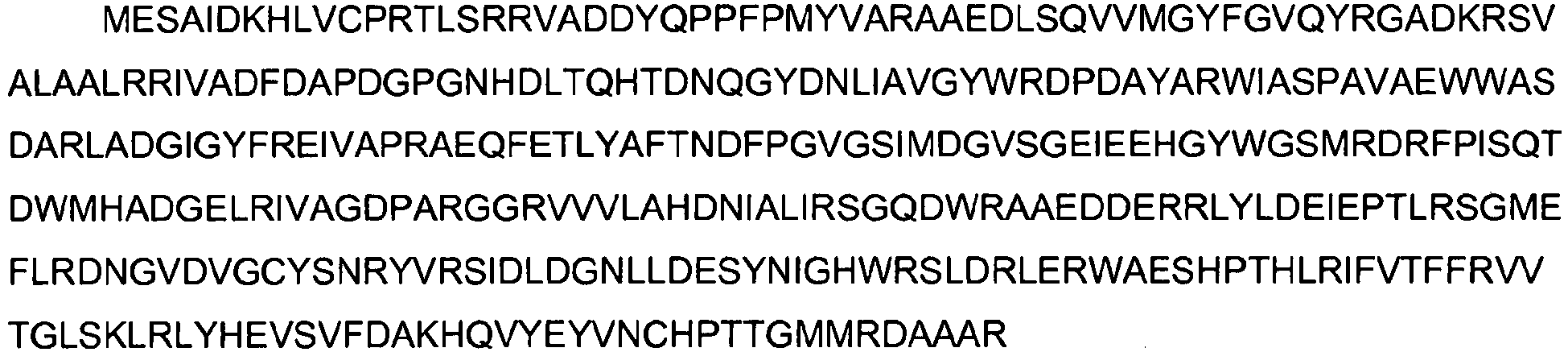
- SEQ ID NO: 11, Zugangsnummer: YP_001776877 (NCBI)


- SEQ ID NO: 12, Zugangsnummer: YP_004119277 (NCBI)

- SEQ ID NO: 13, Zugangsnummer: ZP_07774756 (NCBI)

- SEQ ID NO: 14:, Zugangsnummer: ZP_07774757 (NCBI)

- SEQ ID NO: 15; Zugangsnummer: YP_001268042 (NCBI)

- SEQ ID NO. 16, Zugangsnummer: E4RFH2_PSEPB (UniProtKB/TrEMBL)


- SEQ ID NO: 17, Zugangsnummer: YP_001758607 (NCBI)

- SEQ ID NO: 18, Zugangsnummer: YP_001261493 (NCBI)

- SEQ ID NO: 19, Zugangsnummer: YP_004155682 (NCIB)

- SEQ ID NO: 20, Zugangsnummer YP_002942593 (NCBI)

- SEQ ID NO: 21, Zugangsnummer: YP_002944432

- SEQ ID NO: 22, Zugangsnummer: YP_001416464

- SEQ ID NO: 23; Zugangsnummer: Q2WG72 (NCBI, SwissProt)

- SEQ ID NO: 24, Zugangsnummer: Q7WSJ4 (NCBI, SwissProt)

- SEQ ID NO: 25, Zugangsnummer: Q4W7T3 (NCBI, SwissProt)


- SEQ ID NO: 26, Zugangsnummer: Q76K71 (NCBI, SwissProt)

- SEQ ID NO: 27, Zugangsnummer: Q76EV4 (NCBI, SwissProt)

- SEQ ID NO: 28, Zugangsnummer: 049342 (NCBI, SwissProt)

-
- <110> BASF SE
- <120> Verfahren zur biokatalytischen Herstellung von Nitrilen aus Oximen und darin einsetzbare Oxim-Dehydratasen
- <130> M/52415
- <160> 28
- <170> PatentIn version 3.3
- <210> 1
<211> 351
<212> PRT
<213> Bacillus sp. OxB-1 - <400> 1
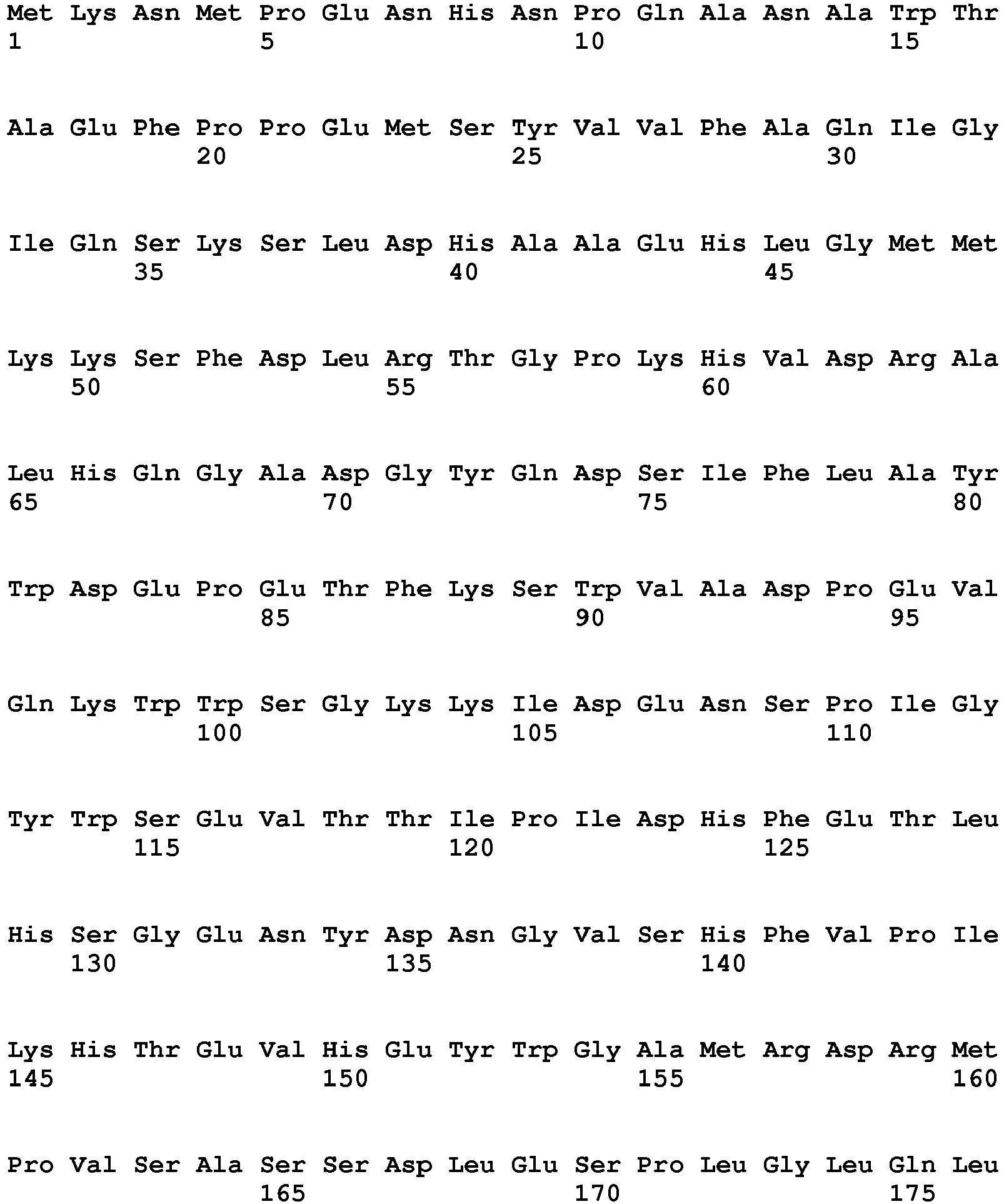

- <210> 2
<211> 1056
<212> DNA
<213> Bacillus sp. OxB-1 - <400> 2


- <210> 3
<211> 1056
<212> DNA
<213> artificial - <220>
<223> DNA sequence coding for seq ID NO:1, codon-optimized for E.coli - <400> 3


- <210> 4
<211> 366
<212> PRT
<213> Arthrobacter aurescens - <400> 4


- <210> 5
<211> 352
<212> PRT
<213> Acinetobacter sp. Stamm ADP1 - <400> 5


- <210> 6
<211> 353
<212> PRT
<213> Acidovorax avanae - <400> 6


- <210> 7
<211> 343
<212> PRT
<213> Actinosynnema mirum - <400> 7


- <210> 8
<211> 340
<212> PRT
<213> Bradyrhizobium sp. BTAi1 - <400> 8


- <210> 9
<211> 350
<212> PRT
<213> Burkholderia ambifaria IOP40-10 - <400> 9


- <210> 10
<211> 350
<212> PRT
<213> Burkholderia ambifaria MC40-6 - <400> 10


- <210> 11
<211> 352
<212> PRT
<213> Burkholderia cenocepacia MC0-3 - <400> 11

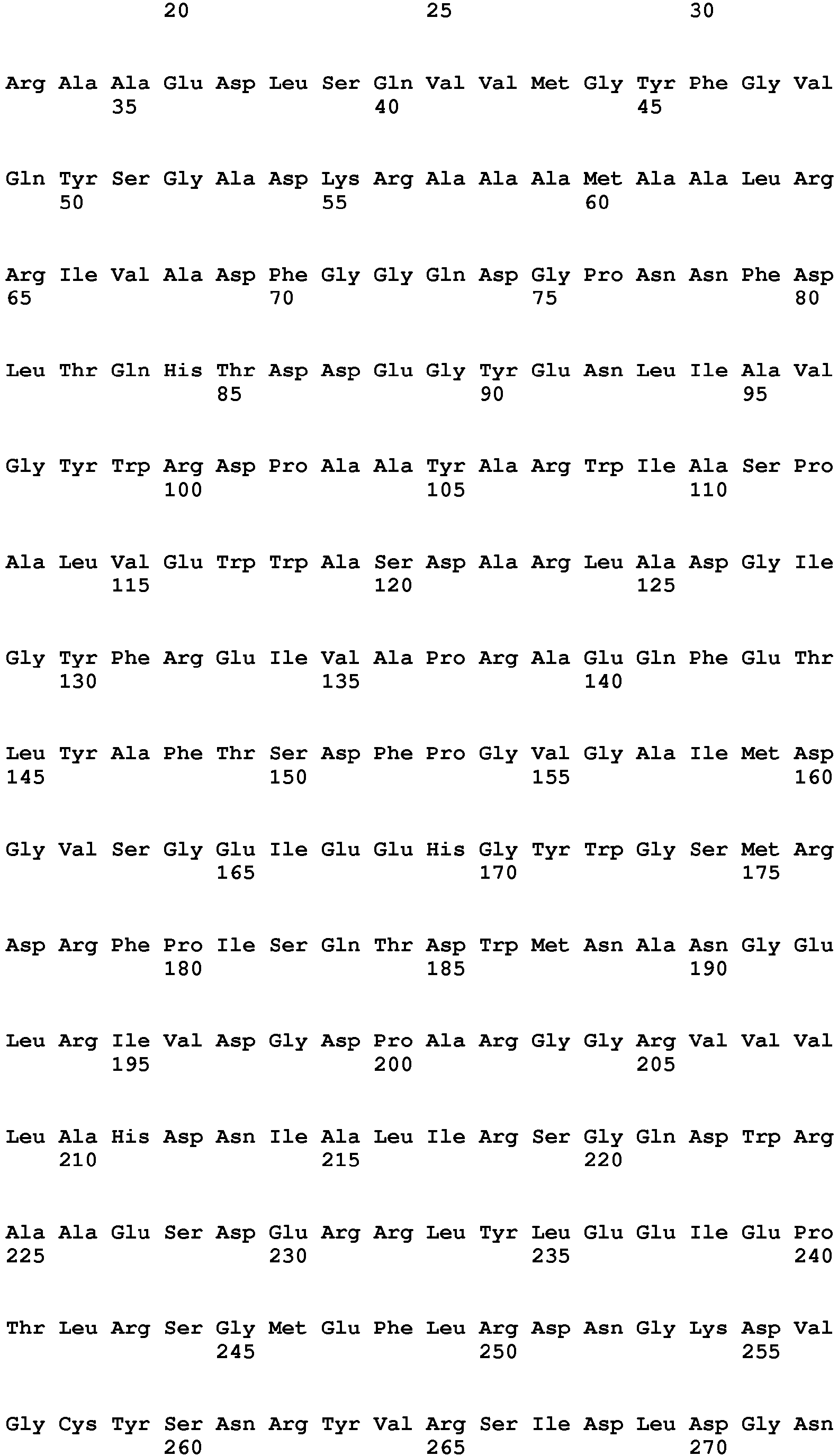
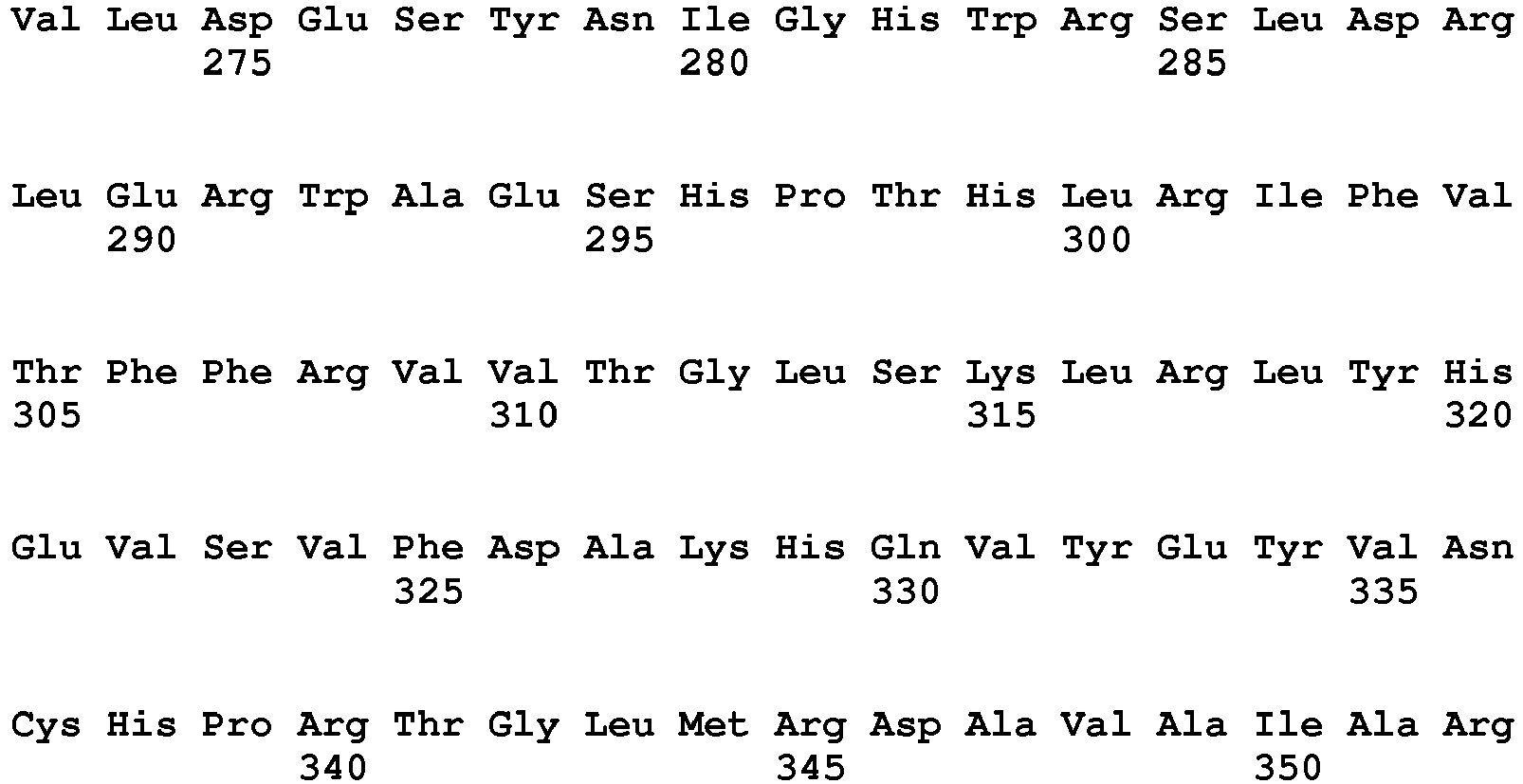
- <210> 12
<211> 348
<212> PRT
<213> Pantoea sp. At-9b - <400> 12


- <210> 13
<211> 166
<212> PRT
<213> Pseudomonas fluorescens WH6 - <400> 13


- <210> 14
<211> 186
<212> PRT
<213> Pseudomonas fluorescens WH6 - <400> 14


- <210> 15
<211> 352
<212> PRT
<213> Pseudomonas putida F1 - <400> 15


- <210> 16
<211> 352
<212> PRT
<213> Pseudomonas putida Stamm BIRD-1 - <400> 16
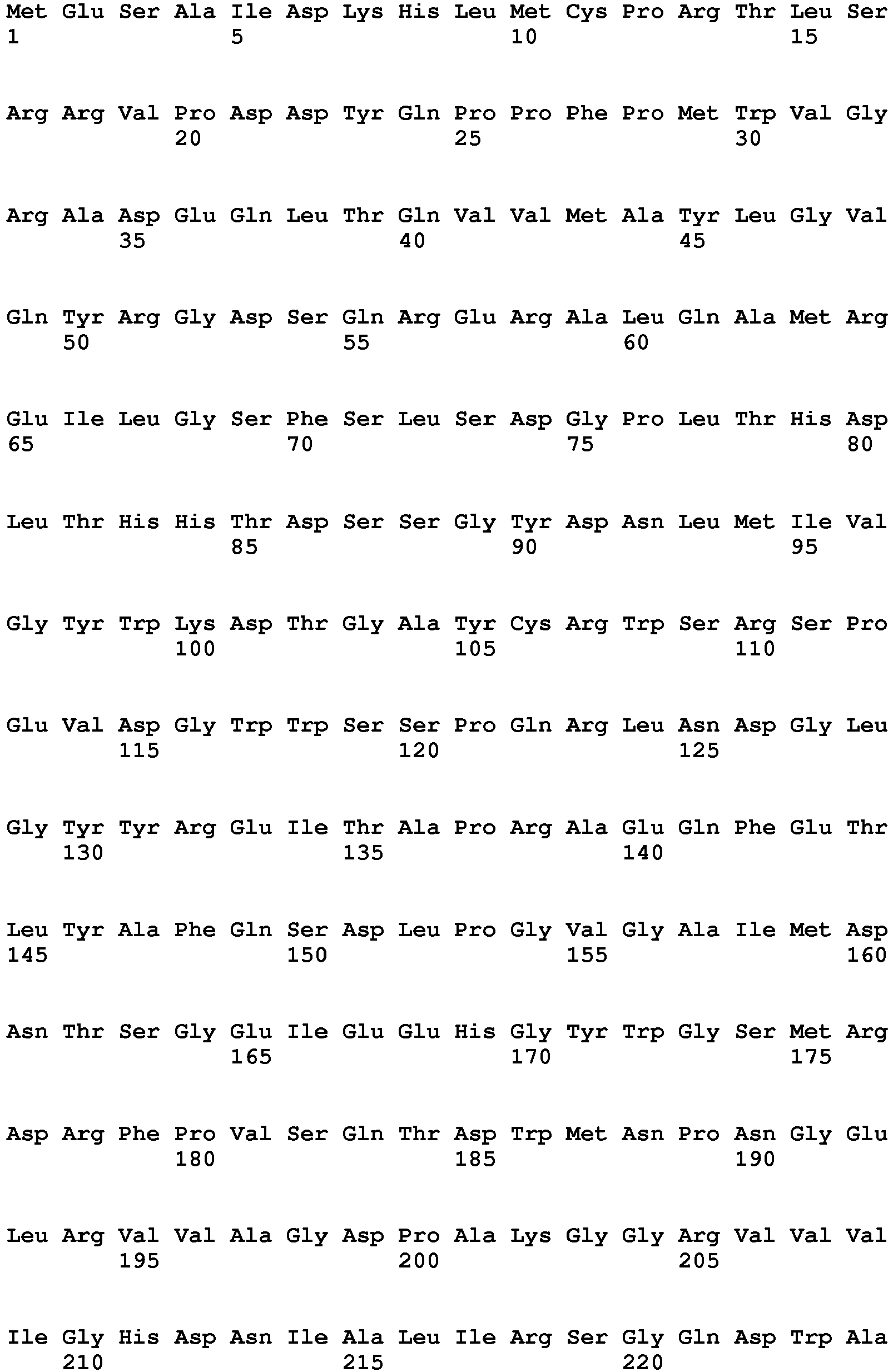

- <210> 17
<211> 332
<212> PRT
<213> Shewanella woodyi ATCC 51908 - <400> 17
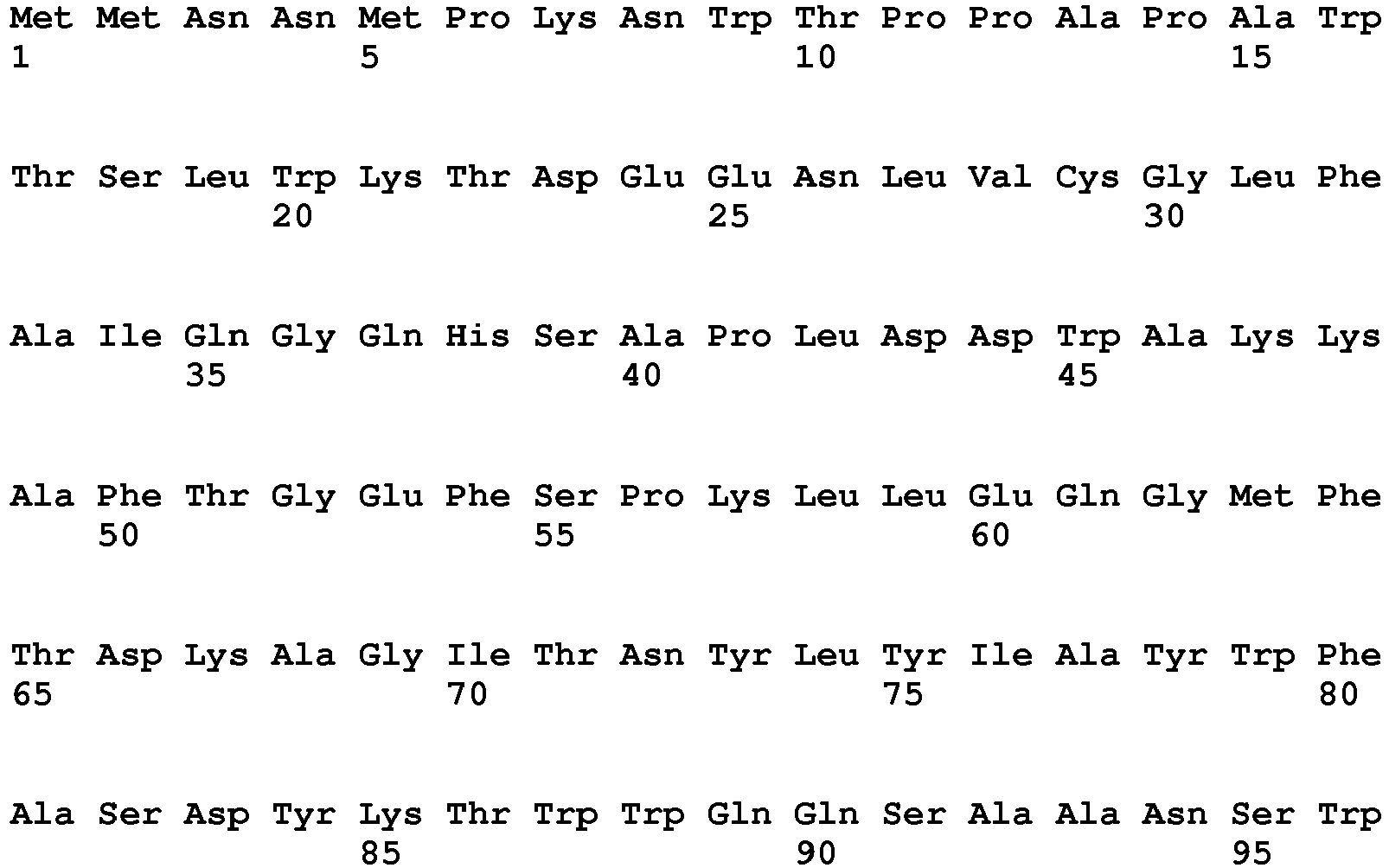

- <210> 18
<211> 343
<212> PRT
<213> Sphingomonas wittichii RW1 - <400> 18


- <210> 19
<211> 353
<212> PRT
<213> Variovorax paradoxus EPS - <400> 19


- <210> 20
<211> 305
<212> PRT
<213> Variovorax paradoxus S110 - <400> 20


- <210> 21
<211> 353
<212> PRT
<213> Variovorax paradoxus S110 - <400> 21


- <210> 22
<211> 347
<212> PRT
<213> Xanthobacter autotrophicus Py2 - <400> 22


- <210> 23
<211> 363
<212> PRT
<213> Gibberella zeae - <400> 23



- <210> 24
<211> 352
<212> PRT
<213> Pseudomonas chlororaphis - <400> 24


- <210> 25
<211> 352
<212> PRT
<213> Pseudomonas sp. K-9 - <400> 25


- <210> 26
<211> 353
<212> PRT
<213> Rhodococcus erythropolis - <400> 26


- <210> 27
<211> 353
<212> PRT
<213> Rhodococcus globerulus - <400> 27


- <210> 28
<211> 497
<212> PRT
<213> Arabidopsis thaliana - <400> 28


Claims (11)
- Biokatalytisches Verfahren zur Herstellung von Nitrilen
wobei mana) ein Oxim, ausgewählt unter Citraloxim, Neraloxim, Geranialoxim, Citronellaloxim und teil- oder vollhydrierten Analoga davon, wobei die Verbindung in stereoisomerenreiner Form oder als Gemisch von Stereoisomeren vorliegt,
in Gegenwart einer aliphatischen Aldoxim Dehydratase (E.C. 4.99.1.5) oder einer Phenylacetaldoxim Dehydratase (PAOx) (EC 4.99.1.7) zum Nitril umsetzt, wobei das Nitril in stereoisomerenreiner Form oder als Gemisch von Stereoisomeren vorliegt, undb) gegebenenfalls das Reaktionsprodukt anschließend weiter reinigt. - Verfahren nach Anspruch 1, wobei die PAOx ein Enzym aus Rhodococcus sp., Gibberella zeae oder Bacillus sp. ist.
- Verfahren nach einem der Ansprüche 1 und 2, wobei die PAOx eine Aminosäuresequenz gemäß SEQ ID NO: 1 oder eine dazu zu mindestens 60% identische Aminosäuresequenz aufweist.
- Verfahren nach Anspruch 1, wobei man Citronellaloxim der Formel IIa


- Verfahren nach einem der vorhergehenden Ansprüche, wobei die Umsetzung enzymatisch, in Gegenwart von PAOx, eines PAOx enthaltenden Proteingemisches, oder in Gegenwart eines rekombinanten, PAOx funktional exprimierenden Mikroorganismus, eines davon abgeleiteten PAOx-haltigen Zellhomogenats oder einer PAOx-haltigen Fraktion davon erfolgt.
- Verfahren nach einem der vorhergehenden Ansprüche, wobei PAOx oder der PAOx funktional exprimierende Mikroorganismus im Reaktionsgemisch frei oder in immobilisierter Form vorliegt.
- Verfahren nach einem der Ansprüche 5 und 6, wobei der rekombinante Mikroorganismus ein PAOx funktional exprimierender Bakterienstamm ist.
- Verfahren nach Anspruch 7, wobei der rekombinante Mikroorganismus ein Expressionskonstrukt trägt, das die kodierende PAOx Nukleinsäuresequenz, gegebenenfalls angepasst an die Codonnutzung des Mikroorganismus, aufweist.
- Verfahren nach einem der Ansprüche 5 bis 8, wobei der Mikroorganismus zusätzlich wenigstens ein die funktionale Expression der PAOx unterstützendes Chaperon exprimiert.
- Verfahren nach Anspruch 9, wobei der rekombinante Mikroorganismus ein Bakterienstamm ist, der zusätzlich zu PAOx ein oder mehrere Chaperone ausgewählt unter GroEL und GroES exprimiert.
- Verfahren nach einem der vorhergehenden Ansprüche, wobei man die Umsetzung in Substrat als Reaktionsmedium durchführt.
Priority Applications (1)
| Application Number | Priority Date | Filing Date | Title |
|---|---|---|---|
| EP13712707.2A EP2825661B1 (de) | 2012-03-13 | 2013-03-11 | Verfahren zur herstellung von terpen-nitrilen aus terpen-oximen unter verwendung einer aldoxim dehydratase |
Applications Claiming Priority (3)
| Application Number | Priority Date | Filing Date | Title |
|---|---|---|---|
| EP12159265 | 2012-03-13 | ||
| EP13712707.2A EP2825661B1 (de) | 2012-03-13 | 2013-03-11 | Verfahren zur herstellung von terpen-nitrilen aus terpen-oximen unter verwendung einer aldoxim dehydratase |
| PCT/EP2013/054817 WO2013135601A1 (de) | 2012-03-13 | 2013-03-11 | Verfahren zur herstellung von terpen-nitrilen aus terpen-oximen unter verwendung einer aldoxim-dehydratase |
Publications (2)
| Publication Number | Publication Date |
|---|---|
| EP2825661A1 EP2825661A1 (de) | 2015-01-21 |
| EP2825661B1 true EP2825661B1 (de) | 2016-05-18 |
Family
ID=48013932
Family Applications (1)
| Application Number | Title | Priority Date | Filing Date |
|---|---|---|---|
| EP13712707.2A Not-in-force EP2825661B1 (de) | 2012-03-13 | 2013-03-11 | Verfahren zur herstellung von terpen-nitrilen aus terpen-oximen unter verwendung einer aldoxim dehydratase |
Country Status (6)
| Country | Link |
|---|---|
| EP (1) | EP2825661B1 (de) |
| JP (1) | JP6230549B2 (de) |
| CN (1) | CN104364387B (de) |
| ES (1) | ES2587561T3 (de) |
| MX (1) | MX349698B (de) |
| WO (1) | WO2013135601A1 (de) |
Families Citing this family (6)
| Publication number | Priority date | Publication date | Assignee | Title |
|---|---|---|---|---|
| DE102017112191A1 (de) * | 2017-06-02 | 2018-12-06 | Universität Bielefeld | Verfahren zur Herstellung von aliphatischen linearen α.ω-Dinitrilen aus α,ω- Dialdehyddioxim-Vorstufen |
| KR101984957B1 (ko) * | 2017-08-09 | 2019-06-04 | 재단법인 지능형 바이오 시스템 설계 및 합성 연구단 | 효모의 단백질 접힘 기작(protein-folding machinery) 개량을 통한 진세노사이드 생산 증대 |
| CN109180407A (zh) * | 2018-09-04 | 2019-01-11 | 北京工商大学 | 一种由醛肟制备腈的方法 |
| CN111848448B (zh) * | 2020-07-30 | 2022-07-12 | 万华化学集团股份有限公司 | 一种香茅腈的制备方法 |
| CN113388600B (zh) * | 2021-06-16 | 2022-05-27 | 杭州师范大学 | 一种醛肟脱水酶及其在催化合成芳香腈类化合物中的应用 |
| CN114908028B (zh) * | 2022-04-19 | 2024-05-31 | 杭州师范大学 | 一种双相体系下化学酶法级联催化腈类化合物的一锅法合成工艺 |
Family Cites Families (8)
| Publication number | Priority date | Publication date | Assignee | Title |
|---|---|---|---|---|
| DE3139358C2 (de) | 1981-10-02 | 1984-06-07 | Dragoco Gerberding & Co Gmbh, 3450 Holzminden | Verwendung von 1,1-Di(C↓1↓-C↓6↓-alkyl)-2-phenyl-ethan-Derivaten als Riechstoffe |
| DE4037345A1 (de) | 1990-11-20 | 1992-05-21 | Dragoco Gerberding Co Gmbh | 3-(hexenyloxy)-propan-nitrile |
| DE19931847A1 (de) | 1999-07-09 | 2001-01-11 | Basf Ag | Immobilisierte Lipase |
| DE10019377A1 (de) | 2000-04-19 | 2001-10-25 | Basf Ag | Verfahren zur Immobilisierung von biologisch aktiven Stoffen auf Trägermaterialien und Verwendung der mit biologisch aktiven Stoffen geträgerten Materialien für chirale Synthesen |
| DE10019380A1 (de) | 2000-04-19 | 2001-10-25 | Basf Ag | Verfahren zur Herstellung von kovalent gebundenen biologisch aktiven Stoffen an Polyurethanschaumstoffen sowie Verwendung der geträgerten Polyurethanschaumstoffe für chirale Synthesen |
| DE102005016489A1 (de) | 2005-04-08 | 2006-10-12 | Basf Ag | Verfahren zur Herstellung von gesättigten Nitrilen |
| JP4323553B2 (ja) * | 2008-09-01 | 2009-09-02 | 三菱レイヨン株式会社 | 新規アルドキシム脱水酵素およびその利用方法 |
| JP5355698B2 (ja) * | 2008-10-13 | 2013-11-27 | フイルメニツヒ ソシエテ アノニム | レモン着香剤として化学的に安定な成分 |
-
2013
- 2013-03-11 ES ES13712707.2T patent/ES2587561T3/es active Active
- 2013-03-11 JP JP2014561384A patent/JP6230549B2/ja not_active Expired - Fee Related
- 2013-03-11 MX MX2014010905A patent/MX349698B/es active IP Right Grant
- 2013-03-11 CN CN201380024702.7A patent/CN104364387B/zh not_active Expired - Fee Related
- 2013-03-11 EP EP13712707.2A patent/EP2825661B1/de not_active Not-in-force
- 2013-03-11 WO PCT/EP2013/054817 patent/WO2013135601A1/de not_active Ceased
Also Published As
| Publication number | Publication date |
|---|---|
| MX349698B (es) | 2017-08-09 |
| JP2015509729A (ja) | 2015-04-02 |
| MX2014010905A (es) | 2014-10-15 |
| WO2013135601A1 (de) | 2013-09-19 |
| EP2825661A1 (de) | 2015-01-21 |
| ES2587561T3 (es) | 2016-10-25 |
| CN104364387B (zh) | 2017-12-19 |
| JP6230549B2 (ja) | 2017-11-15 |
| CN104364387A (zh) | 2015-02-18 |
Similar Documents
| Publication | Publication Date | Title |
|---|---|---|
| EP3201184B1 (de) | Verfahren zur biokatalytischen cyclisierung von geranyllinalool und dabei erhaltene cyclisierungsprodukte | |
| EP2640835B1 (de) | Verfahren zur biokatalytischen cyclisierung von terpenen und darin einsetzbare cyclase-mutanten | |
| EP3174977B1 (de) | 7beta-hydroxysteroid dehydrogenase-mutanten und verfahren zur herstellung von ursodesoxycholsäure | |
| EP2334801B1 (de) | Verfahren zur herstellung von l-phenylephrin unter verwendung einer alkoholdehydrogenase | |
| EP2825661A1 (de) | Verfahren zur herstellung von terpen-nitrilen aus terpen-oximen unter verwendung einer aldoxim-dehydratase | |
| EP2268803A2 (de) | Neue 12alpha-hydroxysteroiddehydrogenasen, deren herstellung und verwendung | |
| EP3180424B1 (de) | 3alpha-hydroxysteroid dehydrogenase-mutanten und verfahren zur herstellung von ursodesoxycholsäure | |
| EP0909821B1 (de) | Verfahren zur Änderung der Substratspezifität von Enzymen | |
| EP2759598A1 (de) | Verfahren zur Herstellung von alpha, omega-Alkandiol | |
| EP2171074B1 (de) | Verfahren zur Herstellung optisch aktiver Alkohole unter Verwendung einer Dehydrogenase aus Azoarcus sp. EbN1 | |
| EP3816297A1 (de) | Biokatalytische zyklisierung von mehrfach ungesättigten carbonsäuren-verbindungen | |
| EP3161144A2 (de) | Verfahren zur biokatalytischen ganzzellreduktion von dehydrocholsäureverbindungen, und 7-beta-hydroxysteroid-dehydrogenase-mutanten | |
| EP2441771A1 (de) | Neue 12alpha-Hydroxysteroid- dehydrogenase-Mutanten, deren Herstellung deren Verwendung | |
| EP2327790A1 (de) | Neuartige 7ß-Hydroxysteroid Dehydrogenasen und deren Verwendung | |
| EP1613745B1 (de) | L-carnitin dehydrogenasen, deren derivate und ein verfahren zur herstellung von substituierten (s)-alkanolen | |
| EP2038407B1 (de) | Proteine mit esterase-aktivität | |
| WO2013115012A1 (ja) | シロ‐イノシトールの製造方法 | |
| EP2379714A1 (de) | Verbesserte biokatalysatoren zur herstellung von duloxetinalkohol | |
| US9080191B2 (en) | Method for biocatalytic production of nitriles from oximes and oxime dehydratases usable therein | |
| EP1966381A2 (de) | Verfahren zur herstellung von 5-norbornen-2-carbonsäure aus 5-norbornen-2-carbonitril unter verwendung einer arylacetonitrilase | |
| EP2643467A1 (de) | Verfahren zur herstellung n-heterozyklischer optisch aktiver alkohole |
Legal Events
| Date | Code | Title | Description |
|---|---|---|---|
| PUAI | Public reference made under article 153(3) epc to a published international application that has entered the european phase |
Free format text: ORIGINAL CODE: 0009012 |
|
| 17P | Request for examination filed |
Effective date: 20141013 |
|
| AK | Designated contracting states |
Kind code of ref document: A1 Designated state(s): AL AT BE BG CH CY CZ DE DK EE ES FI FR GB GR HR HU IE IS IT LI LT LU LV MC MK MT NL NO PL PT RO RS SE SI SK SM TR |
|
| AX | Request for extension of the european patent |
Extension state: BA ME |
|
| DAX | Request for extension of the european patent (deleted) | ||
| GRAP | Despatch of communication of intention to grant a patent |
Free format text: ORIGINAL CODE: EPIDOSNIGR1 |
|
| INTG | Intention to grant announced |
Effective date: 20151021 |
|
| GRAS | Grant fee paid |
Free format text: ORIGINAL CODE: EPIDOSNIGR3 |
|
| GRAA | (expected) grant |
Free format text: ORIGINAL CODE: 0009210 |
|
| AK | Designated contracting states |
Kind code of ref document: B1 Designated state(s): AL AT BE BG CH CY CZ DE DK EE ES FI FR GB GR HR HU IE IS IT LI LT LU LV MC MK MT NL NO PL PT RO RS SE SI SK SM TR |
|
| REG | Reference to a national code |
Ref country code: GB Ref legal event code: FG4D Free format text: NOT ENGLISH |
|
| REG | Reference to a national code |
Ref country code: CH Ref legal event code: EP |
|
| REG | Reference to a national code |
Ref country code: IE Ref legal event code: FG4D Free format text: LANGUAGE OF EP DOCUMENT: GERMAN Ref country code: AT Ref legal event code: REF Ref document number: 800502 Country of ref document: AT Kind code of ref document: T Effective date: 20160615 |
|
| REG | Reference to a national code |
Ref country code: DE Ref legal event code: R096 Ref document number: 502013003057 Country of ref document: DE |
|
| REG | Reference to a national code |
Ref country code: NL Ref legal event code: FP |
|
| REG | Reference to a national code |
Ref country code: LT Ref legal event code: MG4D |
|
| REG | Reference to a national code |
Ref country code: ES Ref legal event code: FG2A Ref document number: 2587561 Country of ref document: ES Kind code of ref document: T3 Effective date: 20161025 |
|
| PG25 | Lapsed in a contracting state [announced via postgrant information from national office to epo] |
Ref country code: LT Free format text: LAPSE BECAUSE OF FAILURE TO SUBMIT A TRANSLATION OF THE DESCRIPTION OR TO PAY THE FEE WITHIN THE PRESCRIBED TIME-LIMIT Effective date: 20160518 Ref country code: FI Free format text: LAPSE BECAUSE OF FAILURE TO SUBMIT A TRANSLATION OF THE DESCRIPTION OR TO PAY THE FEE WITHIN THE PRESCRIBED TIME-LIMIT Effective date: 20160518 Ref country code: NO Free format text: LAPSE BECAUSE OF FAILURE TO SUBMIT A TRANSLATION OF THE DESCRIPTION OR TO PAY THE FEE WITHIN THE PRESCRIBED TIME-LIMIT Effective date: 20160818 |
|
| PG25 | Lapsed in a contracting state [announced via postgrant information from national office to epo] |
Ref country code: HR Free format text: LAPSE BECAUSE OF FAILURE TO SUBMIT A TRANSLATION OF THE DESCRIPTION OR TO PAY THE FEE WITHIN THE PRESCRIBED TIME-LIMIT Effective date: 20160518 Ref country code: PT Free format text: LAPSE BECAUSE OF FAILURE TO SUBMIT A TRANSLATION OF THE DESCRIPTION OR TO PAY THE FEE WITHIN THE PRESCRIBED TIME-LIMIT Effective date: 20160919 Ref country code: GR Free format text: LAPSE BECAUSE OF FAILURE TO SUBMIT A TRANSLATION OF THE DESCRIPTION OR TO PAY THE FEE WITHIN THE PRESCRIBED TIME-LIMIT Effective date: 20160819 Ref country code: RS Free format text: LAPSE BECAUSE OF FAILURE TO SUBMIT A TRANSLATION OF THE DESCRIPTION OR TO PAY THE FEE WITHIN THE PRESCRIBED TIME-LIMIT Effective date: 20160518 Ref country code: LV Free format text: LAPSE BECAUSE OF FAILURE TO SUBMIT A TRANSLATION OF THE DESCRIPTION OR TO PAY THE FEE WITHIN THE PRESCRIBED TIME-LIMIT Effective date: 20160518 Ref country code: SE Free format text: LAPSE BECAUSE OF FAILURE TO SUBMIT A TRANSLATION OF THE DESCRIPTION OR TO PAY THE FEE WITHIN THE PRESCRIBED TIME-LIMIT Effective date: 20160518 |
|
| PG25 | Lapsed in a contracting state [announced via postgrant information from national office to epo] |
Ref country code: IT Free format text: LAPSE BECAUSE OF FAILURE TO SUBMIT A TRANSLATION OF THE DESCRIPTION OR TO PAY THE FEE WITHIN THE PRESCRIBED TIME-LIMIT Effective date: 20160518 |
|
| PG25 | Lapsed in a contracting state [announced via postgrant information from national office to epo] |
Ref country code: CZ Free format text: LAPSE BECAUSE OF FAILURE TO SUBMIT A TRANSLATION OF THE DESCRIPTION OR TO PAY THE FEE WITHIN THE PRESCRIBED TIME-LIMIT Effective date: 20160518 Ref country code: RO Free format text: LAPSE BECAUSE OF FAILURE TO SUBMIT A TRANSLATION OF THE DESCRIPTION OR TO PAY THE FEE WITHIN THE PRESCRIBED TIME-LIMIT Effective date: 20160518 Ref country code: DK Free format text: LAPSE BECAUSE OF FAILURE TO SUBMIT A TRANSLATION OF THE DESCRIPTION OR TO PAY THE FEE WITHIN THE PRESCRIBED TIME-LIMIT Effective date: 20160518 Ref country code: SK Free format text: LAPSE BECAUSE OF FAILURE TO SUBMIT A TRANSLATION OF THE DESCRIPTION OR TO PAY THE FEE WITHIN THE PRESCRIBED TIME-LIMIT Effective date: 20160518 Ref country code: EE Free format text: LAPSE BECAUSE OF FAILURE TO SUBMIT A TRANSLATION OF THE DESCRIPTION OR TO PAY THE FEE WITHIN THE PRESCRIBED TIME-LIMIT Effective date: 20160518 |
|
| REG | Reference to a national code |
Ref country code: DE Ref legal event code: R097 Ref document number: 502013003057 Country of ref document: DE |
|
| PG25 | Lapsed in a contracting state [announced via postgrant information from national office to epo] |
Ref country code: PL Free format text: LAPSE BECAUSE OF FAILURE TO SUBMIT A TRANSLATION OF THE DESCRIPTION OR TO PAY THE FEE WITHIN THE PRESCRIBED TIME-LIMIT Effective date: 20160518 Ref country code: SM Free format text: LAPSE BECAUSE OF FAILURE TO SUBMIT A TRANSLATION OF THE DESCRIPTION OR TO PAY THE FEE WITHIN THE PRESCRIBED TIME-LIMIT Effective date: 20160518 |
|
| PLBE | No opposition filed within time limit |
Free format text: ORIGINAL CODE: 0009261 |
|
| STAA | Information on the status of an ep patent application or granted ep patent |
Free format text: STATUS: NO OPPOSITION FILED WITHIN TIME LIMIT |
|
| REG | Reference to a national code |
Ref country code: FR Ref legal event code: PLFP Year of fee payment: 5 |
|
| 26N | No opposition filed |
Effective date: 20170221 |
|
| PG25 | Lapsed in a contracting state [announced via postgrant information from national office to epo] |
Ref country code: SI Free format text: LAPSE BECAUSE OF FAILURE TO SUBMIT A TRANSLATION OF THE DESCRIPTION OR TO PAY THE FEE WITHIN THE PRESCRIBED TIME-LIMIT Effective date: 20160518 |
|
| PG25 | Lapsed in a contracting state [announced via postgrant information from national office to epo] |
Ref country code: MC Free format text: LAPSE BECAUSE OF FAILURE TO SUBMIT A TRANSLATION OF THE DESCRIPTION OR TO PAY THE FEE WITHIN THE PRESCRIBED TIME-LIMIT Effective date: 20160518 |
|
| REG | Reference to a national code |
Ref country code: IE Ref legal event code: MM4A |
|
| PG25 | Lapsed in a contracting state [announced via postgrant information from national office to epo] |
Ref country code: LU Free format text: LAPSE BECAUSE OF NON-PAYMENT OF DUE FEES Effective date: 20170311 |
|
| PG25 | Lapsed in a contracting state [announced via postgrant information from national office to epo] |
Ref country code: IE Free format text: LAPSE BECAUSE OF NON-PAYMENT OF DUE FEES Effective date: 20170311 |
|
| REG | Reference to a national code |
Ref country code: BE Ref legal event code: MM Effective date: 20170331 |
|
| REG | Reference to a national code |
Ref country code: FR Ref legal event code: PLFP Year of fee payment: 6 |
|
| PG25 | Lapsed in a contracting state [announced via postgrant information from national office to epo] |
Ref country code: BE Free format text: LAPSE BECAUSE OF NON-PAYMENT OF DUE FEES Effective date: 20170331 |
|
| PG25 | Lapsed in a contracting state [announced via postgrant information from national office to epo] |
Ref country code: MT Free format text: LAPSE BECAUSE OF FAILURE TO SUBMIT A TRANSLATION OF THE DESCRIPTION OR TO PAY THE FEE WITHIN THE PRESCRIBED TIME-LIMIT Effective date: 20160518 |
|
| PG25 | Lapsed in a contracting state [announced via postgrant information from national office to epo] |
Ref country code: AL Free format text: LAPSE BECAUSE OF FAILURE TO SUBMIT A TRANSLATION OF THE DESCRIPTION OR TO PAY THE FEE WITHIN THE PRESCRIBED TIME-LIMIT Effective date: 20160518 |
|
| PGFP | Annual fee paid to national office [announced via postgrant information from national office to epo] |
Ref country code: GB Payment date: 20190327 Year of fee payment: 7 Ref country code: CH Payment date: 20190328 Year of fee payment: 7 |
|
| REG | Reference to a national code |
Ref country code: AT Ref legal event code: MM01 Ref document number: 800502 Country of ref document: AT Kind code of ref document: T Effective date: 20180311 |
|
| PGFP | Annual fee paid to national office [announced via postgrant information from national office to epo] |
Ref country code: NL Payment date: 20190325 Year of fee payment: 7 |
|
| PG25 | Lapsed in a contracting state [announced via postgrant information from national office to epo] |
Ref country code: HU Free format text: LAPSE BECAUSE OF FAILURE TO SUBMIT A TRANSLATION OF THE DESCRIPTION OR TO PAY THE FEE WITHIN THE PRESCRIBED TIME-LIMIT; INVALID AB INITIO Effective date: 20130311 |
|
| PGFP | Annual fee paid to national office [announced via postgrant information from national office to epo] |
Ref country code: ES Payment date: 20190425 Year of fee payment: 7 Ref country code: DE Payment date: 20190531 Year of fee payment: 7 |
|
| PG25 | Lapsed in a contracting state [announced via postgrant information from national office to epo] |
Ref country code: BG Free format text: LAPSE BECAUSE OF FAILURE TO SUBMIT A TRANSLATION OF THE DESCRIPTION OR TO PAY THE FEE WITHIN THE PRESCRIBED TIME-LIMIT Effective date: 20160518 |
|
| PGFP | Annual fee paid to national office [announced via postgrant information from national office to epo] |
Ref country code: FR Payment date: 20190401 Year of fee payment: 7 |
|
| PG25 | Lapsed in a contracting state [announced via postgrant information from national office to epo] |
Ref country code: AT Free format text: LAPSE BECAUSE OF NON-PAYMENT OF DUE FEES Effective date: 20180311 Ref country code: CY Free format text: LAPSE BECAUSE OF FAILURE TO SUBMIT A TRANSLATION OF THE DESCRIPTION OR TO PAY THE FEE WITHIN THE PRESCRIBED TIME-LIMIT Effective date: 20160518 |
|
| PG25 | Lapsed in a contracting state [announced via postgrant information from national office to epo] |
Ref country code: MK Free format text: LAPSE BECAUSE OF FAILURE TO SUBMIT A TRANSLATION OF THE DESCRIPTION OR TO PAY THE FEE WITHIN THE PRESCRIBED TIME-LIMIT Effective date: 20160518 |
|
| PG25 | Lapsed in a contracting state [announced via postgrant information from national office to epo] |
Ref country code: TR Free format text: LAPSE BECAUSE OF FAILURE TO SUBMIT A TRANSLATION OF THE DESCRIPTION OR TO PAY THE FEE WITHIN THE PRESCRIBED TIME-LIMIT Effective date: 20160518 |
|
| PG25 | Lapsed in a contracting state [announced via postgrant information from national office to epo] |
Ref country code: IS Free format text: LAPSE BECAUSE OF FAILURE TO SUBMIT A TRANSLATION OF THE DESCRIPTION OR TO PAY THE FEE WITHIN THE PRESCRIBED TIME-LIMIT Effective date: 20160918 |
|
| REG | Reference to a national code |
Ref country code: DE Ref legal event code: R119 Ref document number: 502013003057 Country of ref document: DE |
|
| REG | Reference to a national code |
Ref country code: CH Ref legal event code: PL |
|
| REG | Reference to a national code |
Ref country code: NL Ref legal event code: MM Effective date: 20200401 |
|
| PG25 | Lapsed in a contracting state [announced via postgrant information from national office to epo] |
Ref country code: NL Free format text: LAPSE BECAUSE OF NON-PAYMENT OF DUE FEES Effective date: 20200401 |
|
| PG25 | Lapsed in a contracting state [announced via postgrant information from national office to epo] |
Ref country code: CH Free format text: LAPSE BECAUSE OF NON-PAYMENT OF DUE FEES Effective date: 20200331 Ref country code: DE Free format text: LAPSE BECAUSE OF NON-PAYMENT OF DUE FEES Effective date: 20201001 Ref country code: LI Free format text: LAPSE BECAUSE OF NON-PAYMENT OF DUE FEES Effective date: 20200331 Ref country code: FR Free format text: LAPSE BECAUSE OF NON-PAYMENT OF DUE FEES Effective date: 20200331 |
|
| GBPC | Gb: european patent ceased through non-payment of renewal fee |
Effective date: 20200311 |
|
| PG25 | Lapsed in a contracting state [announced via postgrant information from national office to epo] |
Ref country code: GB Free format text: LAPSE BECAUSE OF NON-PAYMENT OF DUE FEES Effective date: 20200311 |
|
| REG | Reference to a national code |
Ref country code: ES Ref legal event code: FD2A Effective date: 20210729 |
|
| PG25 | Lapsed in a contracting state [announced via postgrant information from national office to epo] |
Ref country code: ES Free format text: LAPSE BECAUSE OF NON-PAYMENT OF DUE FEES Effective date: 20200312 |