EP2718340B1 - Aliphatic polyester polyols from cyclohexane oxidation byproduct streams as precursors for polyurethane and polyisocyanurate polymers - Google Patents
Aliphatic polyester polyols from cyclohexane oxidation byproduct streams as precursors for polyurethane and polyisocyanurate polymers Download PDFInfo
- Publication number
- EP2718340B1 EP2718340B1 EP12728918.9A EP12728918A EP2718340B1 EP 2718340 B1 EP2718340 B1 EP 2718340B1 EP 12728918 A EP12728918 A EP 12728918A EP 2718340 B1 EP2718340 B1 EP 2718340B1
- Authority
- EP
- European Patent Office
- Prior art keywords
- acid
- mixture
- polyol
- composition
- polymer
- Prior art date
- Legal status (The legal status is an assumption and is not a legal conclusion. Google has not performed a legal analysis and makes no representation as to the accuracy of the status listed.)
- Active
Links
Images
Classifications
-
- C—CHEMISTRY; METALLURGY
- C08—ORGANIC MACROMOLECULAR COMPOUNDS; THEIR PREPARATION OR CHEMICAL WORKING-UP; COMPOSITIONS BASED THEREON
- C08G—MACROMOLECULAR COMPOUNDS OBTAINED OTHERWISE THAN BY REACTIONS ONLY INVOLVING UNSATURATED CARBON-TO-CARBON BONDS
- C08G18/00—Polymeric products of isocyanates or isothiocyanates
- C08G18/06—Polymeric products of isocyanates or isothiocyanates with compounds having active hydrogen
- C08G18/28—Polymeric products of isocyanates or isothiocyanates with compounds having active hydrogen characterised by the compounds used containing active hydrogen
- C08G18/40—High-molecular-weight compounds
- C08G18/42—Polycondensates having carboxylic or carbonic ester groups in the main chain
- C08G18/4205—Polycondensates having carboxylic or carbonic ester groups in the main chain containing cyclic groups
- C08G18/4208—Polycondensates having carboxylic or carbonic ester groups in the main chain containing cyclic groups containing aromatic groups
- C08G18/4222—Polycondensates having carboxylic or carbonic ester groups in the main chain containing cyclic groups containing aromatic groups derived from aromatic polyhydroxy compounds and polycarboxylic acids
-
- C—CHEMISTRY; METALLURGY
- C05—FERTILISERS; MANUFACTURE THEREOF
- C05C—NITROGENOUS FERTILISERS
- C05C9/00—Fertilisers containing urea or urea compounds
- C05C9/005—Post-treatment
-
- C—CHEMISTRY; METALLURGY
- C05—FERTILISERS; MANUFACTURE THEREOF
- C05G—MIXTURES OF FERTILISERS COVERED INDIVIDUALLY BY DIFFERENT SUBCLASSES OF CLASS C05; MIXTURES OF ONE OR MORE FERTILISERS WITH MATERIALS NOT HAVING A SPECIFIC FERTILISING ACTIVITY, e.g. PESTICIDES, SOIL-CONDITIONERS, WETTING AGENTS; FERTILISERS CHARACTERISED BY THEIR FORM
- C05G5/00—Fertilisers characterised by their form
- C05G5/30—Layered or coated, e.g. dust-preventing coatings
- C05G5/37—Layered or coated, e.g. dust-preventing coatings layered or coated with a polymer
-
- C—CHEMISTRY; METALLURGY
- C08—ORGANIC MACROMOLECULAR COMPOUNDS; THEIR PREPARATION OR CHEMICAL WORKING-UP; COMPOSITIONS BASED THEREON
- C08G—MACROMOLECULAR COMPOUNDS OBTAINED OTHERWISE THAN BY REACTIONS ONLY INVOLVING UNSATURATED CARBON-TO-CARBON BONDS
- C08G18/00—Polymeric products of isocyanates or isothiocyanates
- C08G18/06—Polymeric products of isocyanates or isothiocyanates with compounds having active hydrogen
- C08G18/08—Processes
- C08G18/10—Prepolymer processes involving reaction of isocyanates or isothiocyanates with compounds having active hydrogen in a first reaction step
-
- C—CHEMISTRY; METALLURGY
- C08—ORGANIC MACROMOLECULAR COMPOUNDS; THEIR PREPARATION OR CHEMICAL WORKING-UP; COMPOSITIONS BASED THEREON
- C08G—MACROMOLECULAR COMPOUNDS OBTAINED OTHERWISE THAN BY REACTIONS ONLY INVOLVING UNSATURATED CARBON-TO-CARBON BONDS
- C08G18/00—Polymeric products of isocyanates or isothiocyanates
- C08G18/06—Polymeric products of isocyanates or isothiocyanates with compounds having active hydrogen
- C08G18/28—Polymeric products of isocyanates or isothiocyanates with compounds having active hydrogen characterised by the compounds used containing active hydrogen
- C08G18/40—High-molecular-weight compounds
- C08G18/42—Polycondensates having carboxylic or carbonic ester groups in the main chain
- C08G18/4266—Polycondensates having carboxylic or carbonic ester groups in the main chain prepared from hydroxycarboxylic acids and/or lactones
- C08G18/4286—Polycondensates having carboxylic or carbonic ester groups in the main chain prepared from hydroxycarboxylic acids and/or lactones prepared from a combination of hydroxycarboxylic acids and/or lactones with polycarboxylic acids or ester forming derivatives thereof and polyhydroxy compounds
-
- C—CHEMISTRY; METALLURGY
- C09—DYES; PAINTS; POLISHES; NATURAL RESINS; ADHESIVES; COMPOSITIONS NOT OTHERWISE PROVIDED FOR; APPLICATIONS OF MATERIALS NOT OTHERWISE PROVIDED FOR
- C09D—COATING COMPOSITIONS, e.g. PAINTS, VARNISHES OR LACQUERS; FILLING PASTES; CHEMICAL PAINT OR INK REMOVERS; INKS; CORRECTING FLUIDS; WOODSTAINS; PASTES OR SOLIDS FOR COLOURING OR PRINTING; USE OF MATERIALS THEREFOR
- C09D175/00—Coating compositions based on polyureas or polyurethanes; Coating compositions based on derivatives of such polymers
- C09D175/04—Polyurethanes
- C09D175/06—Polyurethanes from polyesters
-
- C—CHEMISTRY; METALLURGY
- C07—ORGANIC CHEMISTRY
- C07C—ACYCLIC OR CARBOCYCLIC COMPOUNDS
- C07C31/00—Saturated compounds having hydroxy or O-metal groups bound to acyclic carbon atoms
- C07C31/18—Polyhydroxylic acyclic alcohols
-
- C—CHEMISTRY; METALLURGY
- C08—ORGANIC MACROMOLECULAR COMPOUNDS; THEIR PREPARATION OR CHEMICAL WORKING-UP; COMPOSITIONS BASED THEREON
- C08G—MACROMOLECULAR COMPOUNDS OBTAINED OTHERWISE THAN BY REACTIONS ONLY INVOLVING UNSATURATED CARBON-TO-CARBON BONDS
- C08G2101/00—Manufacture of cellular products
-
- C—CHEMISTRY; METALLURGY
- C08—ORGANIC MACROMOLECULAR COMPOUNDS; THEIR PREPARATION OR CHEMICAL WORKING-UP; COMPOSITIONS BASED THEREON
- C08G—MACROMOLECULAR COMPOUNDS OBTAINED OTHERWISE THAN BY REACTIONS ONLY INVOLVING UNSATURATED CARBON-TO-CARBON BONDS
- C08G2115/00—Oligomerisation
- C08G2115/02—Oligomerisation to isocyanurate groups
Definitions
- reaction byproducts are often mixtures that may be complex in composition, difficult to use directly, and difficult and/or costly to purify. They are frequently treated as materials of little or no value, for example being discarded or burned for fuel value.
- adipic acid from cyclohexane generally involves two steps. First, cyclohexane is oxidized using air to a mixture of cyclohexanol (A) and cyclohexanone (K), the mixture being referred to as KA. Second, KA is oxidized using nitric acid to adipic acid, a nylon-66 precursor.
- a similar "cyclohexane oxidation" step is also performed in manufacture of caprolactam from cyclohexane.
- cyclohexanone is converted to its oxime, which is then caused to undergo molecular rearrangement to yield caprolactam.
- Caprolactam can then be polymerized to provide nylon-6.
- cyclohexane is generally oxidized with oxygen or a gas containing oxygen, at low conversion, to produce an intermediate stream containing cyclohexanol (A), cyclohexanone (K), and cyclohexyl hydroperoxide (CHHP) in cyclohexane.
- CHHP is an important intermediate in oxidation of cyclohexane to KA and various processes are known in the art to optimize conversion of CHHP to KA, in order to maximize yield of KA.
- K, A, and CHHP cyclohexane oxidation produces byproducts. In some cases, it has been found that these byproducts interfere with subsequent processing to convert CHHP to KA.
- the stream containing K, A, and CHHP is further processed by methods well known in the art, to complete conversion of CHHP to K and A.
- the resulting mixture is then refined, again by methods well known in the art, to recover unconverted cyclohexane for recycle and to obtain purified K and A for subsequent oxidation to adipic acid or conversion to caprolactam.
- the byproduct streams available from a cyclohexane oxidation process include “Water Wash” (the aqueous stream produced by water extraction of cyclohexane oxidate) and “NVR” (the high-boiling distillation bottoms from KA refining), CAS Registry Number 68411-76-7 . Concentration of "Water Wash” by removal of at least some of the water produces a stream known as “COP Acid,” CAS Registry Number 68915-38-8 .
- NVR non-volatile residue
- US2012/0064252 and US2012/0101009 describing processing of NVR, Water Wash, or COP acid through conversion of free acid functional groups to monomeric esters and oligomeric esters, and converting oligomeric esters to monomeric esters.
- “Water Wash”, “COP Acid”, and “NVR” are known to contain both mono- and poly-functional materials (functional monomers), mainly with the functional groups comprising acids, peroxides, ketones, alcohols, and esters. Other functional groups such as aldehyde, lactone, and alkene are also known to be present. Multiple functional groups may be combined in a single molecule, such as in a hydroxyacid, for example hydroxycaproic acid or hydroxyvaleric acid. In general, the acid functional group is at one end of a linear hydrocarbyl chain, and the hydroxy group may be present in various positions along the chain.
- the mono- and poly-functional materials contained within these byproduct streams are primarily aliphatic.
- hydroxyacids include 6-hydroxycaproic acid, 5-hydroxyvaleric acid, 3-hydroxyvaleric acid, and 3-hydroxypropionic acid.
- known examples of simple mono-acids include formic acid, acetic acid, propionic acid, butyric acid, valeric acid, and caproic acid.
- diacids include succinic acid, glutaric acid, and adipic acid.
- keto-acids include 4-oxo valeric acid (also known as levulinic acid) and 5-oxo caproic acid.
- alcohols include cyclohexanol, 1- propanol, 1-butanol, 1-pentanol, and various diols such as 1,2- 1,3-, and 1,4-cyclohexanediols, various butanediol isomers, and various pentanediol isomers.
- the inventors herein have discovered a new simple and economical process that provides polyols of new and unique composition from cyclohexane oxidation byproducts. It has further been found that these polyols can be used to prepare new and unique polyurethanes, and that the polyurethanes thereby obtained are useful in a wide variety of applications.
- a process of the invention it is not necessary to first separate individual monomers such as adipic acid from the cyclohexane oxidation byproducts.
- the complex mixtures can be used directly in a simple process that affords useful polyols. This discovery is of great value because it can eliminate the need for costly and complicated purification or separation processes.
- the current disclosure is focused on utilization of byproduct streams from the oxidation of cyclohexane to KA.
- the polyol compositions of the invention can be used as components of resin blends that can be combined with coreactants, catalysts, and other ingredients to provide pre-polymer compositions, which then can undergo polymerization to provide polymer materials useful as coatings, sealants, binders, and the like, such as coatings for controlled release fertilizer compositions.
- the present invention can provide aliphatic polyester polyol compositions, methods of making polyol compositions from cyclohexane oxidation byproducts, methods of using aliphatic polyester polyol compositions such as in the formation of resin blends, pre-polymer compositions comprising the resin blends incorporating the polyol compositions, methods of making and using pre-polymer compositions incorporating the inventive polyol compositions, polyurethane (PU) and polyisocyanurate (PIR) compositions incorporating the polyol-containing pre-polymer compositions compositions for flexible applications, polyurethane compositions for semi-rigids applications, polyurethane compositions for rigid applications, foam compositions, methods of making foam compositions, methods of using foam compositions, PIR and/or PIR foams, methods of using PU and/or PIR foams, PU coating compositions, methods of making PU coating compositions, methods of using PU coating compositions, PU adhesive compositions, methods of making PU adhesive compositions, methods of
- the invention can provide new materials, incorporating inventive polyurethane and polyisocyanurate compositions, useful for coatings, adhesives, elastomers, sealants, binders, and the like. More specifically, the invention can provide coatings for controlled release fertilizer compositions incorporating polyol compositions prepared by methods of the invention.
- the present invention can provide polyol compositions through application of processes of the invention, starting with a byproduct stream derived from cyclohexane oxidation products, wherein the polyol composition is obtained by, starting with one or more of the following: a water extract (Water Wash), a concentrated water extract (COP Acid), or a non-volatile residue (NVR).
- a water extract Water Wash
- COP Acid concentrated water extract
- NVR non-volatile residue
- the present invention provides a method of preparing a polyol composition, the method comprising:
- Monofunctional components include, inter alia, monocarboxylic acids such as formic acid, acetic acid, and the like; and also monofunctional components include monohydroxy compounds, i.e., monohydric alcohols, such as cyclohexanol.
- the method includes a step of heating the byproduct mixture, optionally under vacuum, or optionally with an inert gas sparge, to remove monofunctional components and water, prior to adding the one or more polyhydroxy compounds, then continuing to heat the resulting mixture.
- a polyol can be a glycol, or can be a triol, tetraol, or higher polyol such as a saccharide, sugar alcohol, and the like.
- the method can further include adding polycarboxylic acids, or esters or anhydrides thereof; or adding hydrophobic materials; or any combination thereof; before or during the heating and distillation process.
- the heating and distillation process can use vacuum, inert gas sparge, superheated steam, special equipment such as various types of evaporators, or combinations thereof, to enhance mass transfer and removal of water and monofunctional components.
- the relative amount of polyhydroxy compounds and other optional components that are added can be adjusted to provide a polyol product with a favorably low acid number (as determined by standard ASTM method, preferably less than 10 mg KOH / gm of sample, more preferably less than 5 mg KOH / gm of sample) and a favorably high OH number (a standard value in polyol chemistry, determined by an ASTM method) of about 30 to about 500 mg KOH / gm of sample or of about 100 to about 500 mg KOH / gm of sample. If appropriate acid and OH numbers are not initially achieved, the product obtained can be reheated in the presence of additional polyol (glycol).
- a favorably low acid number as determined by standard ASTM method, preferably less than 10 mg KOH / gm of sample, more preferably less than 5 mg KOH / gm of sample
- a favorably high OH number a standard value in polyol chemistry, determined by an ASTM method
- a remaining content of the monofunctional components following the step of heating can be about 10% or less, or can be about 5% or less, or can be 2% or less of the reaction mixture, by weight.
- the method can comprise adding the catalyst to the byproduct mixture, then heating to remove monofunctional components; and/or, the method can comprise adding a polyhydroxy compound then heating to remove monofunctional components, or can comprise heating prior to, concurrent with, and/or subsequent to addition of the polyhydroxy compound.
- a polyhydroxy compound can be a: diol (glycol), triol, or higher functionality polyols, including but not limited to ethylene glycol, diethylene glycol, polyethylene glycol, propylene glycol, dipropylene glycol, polypropylene glycol, butanediol, pentanediol, hexanediol, glycerine, trimethylolpropane, pentaerythritol, sorbitol, or a combination thereof.
- a third composition comprising a polyfunctional (i.e., polycarboxylic) acid, ester, or anhydride; and/or a hydrophobic material; can be added, e.g., prior to or concurrently with heating the mixture to remove water and monofunctional components.
- a polyfunctional (i.e., polycarboxylic) acid, ester, or anhydride can be added, e.g., prior to or concurrently with heating the mixture to remove water and monofunctional components.
- examples include polyfunctional aromatic acids, anhydrides, and polyfunctional esters thereof, (e.g., a diol monoester), and polyfunctional aliphatic acids, anhydrides, and polyfunctional esters thereof.
- a polycarboxylic acid can be a: diacid, triacid, or higher-functionality polycarboxylic acid or corresponding ester or anhydride including but not limited to polyfunctional aromatic acids, polyfunctional aromatic anhydrides, and polyfunctional aromatic esters (e.g., a diol monoester), and polyfunctional aliphatic acids, anhydrides, and polyfunctional esters thereof such as succinic acid, glutaric acid, adipic acid, phthalic acid, terephthalic acid, sebacic acid, azelaic acid, dodecanedioic acid, citric acid, succinic anhydride, phthalic anhydride, dimethyl succinate, dimethyl glutarate, dimethyl adipate, dimethyl terephthalate and a combination thereof.
- polyfunctional aromatic acids e.g., a diol monoester
- polyfunctional aliphatic acids, anhydrides, and polyfunctional esters thereof such as succinic acid, glutaric acid, adipic
- a hydrophobic material can be a plant oil (i.e., a plant-derived oil), or a fatty acid or ester derived therefrom; an animal oil (i.e., an animal-derived oil), or a fatty acid or ester derived therefrom; or a synthetic oil, synthetic fatty acid, or synthetic fatty ester.
- an oil is meant a hydrophobic compound regardless of its physical state at room temperature; i.e., an oil can be a solid, such as a solid fat, at room temperature.
- the invention can provide a method of making an aliphatic polyester polyol, comprising processing a byproduct mixture from a water extract (Water Wash), or a concentrated water extract (COP Acid), or a non-volatile residue (NVR), or mixture thereof, by adding one or more polyhyhydroxy compound after heating the byproduct mixture to remove monofunctional components and water, and then removing by heating and distillation at least a portion of the water along with free and bound mono functional components from the mixture, so that about 10% or less, or 5% or less, or 2% or less by weight, of total monofunctional components remain in the mixture.
- a third composition, or a hydrophobic material, or both can be added to the byproduct mixture, with heating and distillation; thus forming the aliphatic polyester polyol.
- a method of the invention can further comprise adding a polycarboxylic acid, ester, or anhydride then heating to remove monofunctional components; and/or the method can comprise adding a hydrophobic material then heating to remove monofunctional components. Then, if the acid number and OH number are not optimal for a planned use, they can be further adjusted by adding additional polyhydroxy compound (e.g., glycol), and further heating, optionally in the presence of a catalyst, with distillation to remove any further monofunctional components and/or water.
- additional polyhydroxy compound e.g., glycol
- compositions prepared by methods of the invention can further include one or more other components known to those skilled in the art and dependent on end use.
- Such components may include other polyols, solvents, catalysts, chain extenders, crosslinking agents, curatives, surfactants, blowing agents, fillers, flame retardants, plasticizers, light stabilizers, colorants, waxes, biocides, minerals, micronutrients, inhibitors, stabilizers or other organic or inorganic additives.
- a polyol composition of the invention or prepared by a method of the invention can be used in formation of a resin blend, suitable as an "B-side" component of a pre-polymer composition.
- the resin blend comprises the polyol composition and can further comprise the other polyols, solvents, catalysts, chain extenders, crosslinking agents, curatives, surfactants, blowing agents, fillers, flame retardants, plasticizers, light stabilizers, colorants, waxes, biocides, minerals, micronutrients, inhibitors, stabilizers or other organic or inorganic additives.
- the resin blend of the invention can be reacted with a polyfunctional isocyanate ("A-side component"), such as methylene diphenyl diisocyanate (MDI) or a polymeric MDI (PMDI), to provide a pre-polymer composition of the invention, that upon reaction of the A-side and B-side components can provide an inventive polyurethane or a polyisocyanurate, depending upon the specific conditions used.
- A-side component such as methylene diphenyl diisocyanate (MDI) or a polymeric MDI (PMDI)
- MDI methylene diphenyl diisocyanate
- PMDI polymeric MDI
- the invention further provides polyurethane or polyisocyanurate polymer compositions, methods of preparing the polymer compositions, and methods of using the polymer compositions.
- the invention can provide a method of making an aliphatic polyester polyol, comprising processing a byproduct mixture from a water extract (Water Wash), or a concentrated water extract (COP Acid), or a non-volatile residue (NVR), or mixture thereof, by adding one or more polyhyhydroxy compound after heating the byproduct mixture to remove monofunctional components and water, and then removing by heating and distillation at least a portion of the water along with free and bound monofunctional components from the mixture, so that about 10% or less, or 5% or less, or 2% or less by weight, of total monofunctional components remain in the mixture.
- a third composition, or a hydrophobic material, or both can be added to the byproduct mixture, with heating and distillation; thus forming the aliphatic polyester polyol.
- a method of the invention can further comprise adding a polycarboxylic acid, ester, or anhydride then heating to remove monofunctional components; and/or the method can comprise adding a hydrophobic material then heating to remove monofunctional components. Then, if the acid number and OH number are not optimal for a planned use, they can be further adjusted by adding additional polyhydroxy compound (e.g., glycol), and further heating, optionally in the presence of a catalyst, with distillation to remove any further monofunctional components and/or water, until the acid number is sufficiently low and the OH value is sufficiently high.
- additional polyhydroxy compound e.g., glycol
- the invention can provide a polyurethane (PU) or polyisocyanurate (PIR) polymer from a polyol of the invention or prepared by a method of the invention, by reacting the polyol composition with a polyfunctional isocyanate to provide a PU or PIR pre-polymer composition, which upon standing under suitable conditions can set up to provide a PU or PIR polymer.
- PU polyurethane
- PIR polyisocyanurate
- a polymer of the invention can be useful as a coating, e.g., a controlled release fertilizer coating; an adhesive; a sealant; or a binder, e.g., a wood binder.
- a PU or PIR polymer of the invention or prepared by a method of the invention can be used for a fiber-reinforced composition, such as a wood fiber reinforced composite.
- a PU or PIR polymer of the invention can further include other polyols, solvents, catalysts, chain extenders, crosslinking agents, curatives, surfactants, blowing agents, fillers, flame retardants, plasticizers, light stabilizers, colorants, waxes, biocides, minerals, micronutrients, inhibitors, stabilizers, or other organic or inorganic additives.
- a controlled release fertilizer of the invention can include a coating containing biocides, micronutrients, and the like.
- a PU or PIR polymer of the invention can be used as a controlled-release fertilizer coating, as taught in published U.S. Patent Applications 2010/0307211 to Xing et al. , 2010/0275665 to Ogle et al. , 2010/0233332 to Xing et al. , 2010/0186470 to Xing et al. , U.S. Patent 7,544,736B2 to Kazemizadeh et al. , published U.S. Application 2008/010878A1 to Kazemizadeh , U.S. Patent 7,267,707 to Rosenthal et al. , published U.S.
- a PU or PIR coated particulate fertilizer of the invention can be prepared by coating a particulate fertilizer material with a pre-polymer composition of the invention, then allowing the pre-polymer composition to set up to provide a polymer coating of the fertilizer material.
- a fertilizer coated with a polymer of the invention can provide improved, i.e., more prolonged, or better timed- or controlled-release fertilizer compositions.
- the inventors herein have unexpectedly discovered that by use of a third component comprising an aromatic component such as an aromatic polyacid, activated ester, polyfunctional ester, or anhydride, coated fertilizer compositions having improved extended release properties under field conditions can be obtained.
- the invention can provide a foam composition, comprising a pre-polymer composition of the invention or prepared by a method of the invention, with a blowing agent.
- the foam composition can be a spray foam.
- the invention can provide a spray foam extrudate fertilizer.
- the invention provides technical solutions to the problems of enhancing the value and use of byproduct streams resulting from large scale chemical industrial operations, such as nylon manufacturing operations involving a step of cyclohexane oxidation to cyclohexanol/cyclohexanone products, by devising technically and economically feasible uses for the byproduct streams.
- Methods and compositions of the invention provide a higher value use for these byproduct streams than merely combusting the streams for their heat value.
- the present invention solves the technical problems of enhancing uses and economic benefits from chemical processing operations.
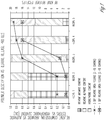
- Figure 1 shows a graph of fertilizer release rates under field conditions from five examples of controlled release fertilizer compositions having varying proportions of aromatic constituents with respect to aliphatic components and hydrophobic components, as related to delay of fertilizer release.
- Embodiments of the present disclosure will employ, unless otherwise indicated, techniques of chemistry, polymer chemistry, foam chemistry, and the like, which are within the skill of the art. Such techniques are explained fully in the literature.
- ratios, concentrations, amounts, and other numerical data may be expressed herein in a range format. It is to be understood that such a range format is used for convenience and brevity, and thus, should be interpreted in a flexible manner to include not only the numerical values explicitly recited as the limits of the range, but also to include all the individual numerical values or sub-ranges encompassed within that range as if each numerical value and sub-range includes "about 'x' to about 'y'".
- a concentration range of "about 0.1% to about 5%” should be interpreted to include not only the explicitly recited concentration of about 0.1 wt% to about 5 wt%, but also include individual concentrations (e.g., 1%, 2%, 3%, and 4%) and the sub-ranges (e.g., 0.5%, 1.1%, 2.2%, 3.3%, and 4.4%) within the indicated range.
- the term “about” can include traditional rounding according to significant figures of the numerical value.
- the phrase “about 'x' to 'y'” includes “about 'x' to about 'y"'.
- hydroxyl value indicates the total amount of residual hydroxyl groups present in the material.
- the hydroxyl value also referred to herein as hydroxyl number, is reported as mg KOH/g (i.e., mg KOH per gram of sample),, and is measured according to well-known methods such as standard ASTM D 1957 or ASTM E1899.
- average functionality or "average hydroxyl functionality" of a polyol indicates the number of OH groups per molecule, on average.
- average functionality of an isocyanate refers to the number of -NCO groups per molecule, on average.
- acid number correspondingly indicates the concentration of carboxylic acid groups present in the material, and is reported in terms of mg KOH/g (i.e., mg KOH per gram of sample), and measured according to well-known methods such as standard ASTM D 4662 or ASTM D1613.
- the amount of isocyanate (-NCO) present in the pre-polymer composition may be expressed in terms of an “isocyanate reaction index", also called “isocyanate index", "NCO index” or simply “index.”
- an isocyanate reaction index of 100 corresponds to 1.0 isocyanate group (-NCO) per active hydrogen atom. Additional details regarding the NCO index are described in U.S. Patent 6,884,824 .
- Typical Isocyanate Indexes for sprayed polyurethane (PU) foam range from about 110 to 120. As stated in “ The Polyurethanes Book” by Huntsman [The Polyurethanes Book, Ed.
- Isocyanate Index is the measure of the excess isocyanate used relative to the theoretical equivalent amount required. For example, an index of 105 indicates a 5% excess of isocyanate is being used.
- aliphatic group refers to a saturated or unsaturated linear or branched hydrocarbon group and encompasses alkyl, alkenyl, and alkynyl groups, for example.
- polyol or "aliphatic polyol” refer to a polyol prepared from a mixture of aliphatic functional monomers (byproducts) from a cyclohexane oxidation process, with average functionality greater than 1. Such polyols can be prepared from water extracts or non-volatile residues that are byproduct streams resulting from cyclohexane oxidation processes.
- alk refers to straight or branched chain hydrocarbon groups, which can have from 1 to 20 carbon atoms, such as from 1 to 12 carbon atoms, for example 1 to 8 carbon atoms,; including groups such as methyl, ethyl, n-propyl, i-propyl, n-butyl, i-butyl, t-butyl, pentyl, hexyl, heptyl, n-octyl, dodecyl, amyl, 2-ethylhexyl, and the like.
- alkyl group is optionally substituted, unless stated otherwise, with one or more groups, selected from aryl (optionally substituted), heterocyclo (optionally substituted), carbocyclo (optionally substituted), halo, hydroxy, protected hydroxy, alkoxy ( e.g., C 1 to C 7 ) (optionally substituted), poly(oxyalkylene) (e.g., ethoxylated or propoxylated groups), acyl ( e.g., C 1 to C 7 ), aryloxy (optionally subsituted), alkylester (optionally substituted), arylester (optionally substituted), alkanoyl (optionally substituted), aroyl (optionally substituted), carboxy, protected carboxy, cyano, nitro, amino, substituted amino, (monosubstituted)amino, (disubstituted)amino, protected amino, amido, lactam, urea, urethane, sulfonyl
- aromatic refers to aromatic homocyclic (i.e., hydrocarbon) mono-, bi-, or tricyclic ring-containing groups, for example having 6 to 12 members such as phenyl, naphthyl, and biphenyl.
- An aryl group is optionally substituted, unless stated otherwise, with one or more groups, selected from alkyl (optionally substituted alkyl), alkenyl (optionally substituted), aryl (optionally substituted), heterocyclo (optionally substituted), halo, hydroxy, alkoxy (optionally substituted), poly(oxyalkylene) (e.g., ethoxylated or propoxylated groups), aryloxy (optionally substituted), alkanoyl (optionally substituted), aroyl, (optionally substituted), alkylester (optionally substituted), arylester (optionally substituted), cyano, nitro, amino, substituted amino, amido, lactam, urea, urethane, sulfonyl, and the like.
- adjacent substituents, together with the atoms to which they are bonded form a 3- to 7-member ring.
- monofunctional components or “monofunctional compounds” refers to compounds in free form, or bound to other compounds by ester bonds, where each monofunctional component or compound contains only a single reactive functional group.
- methanol is a free monofunctional component
- a methyl ester of a diacid is a bound monofunctional component.
- reactive groups would include carboxylic acid and hydroxyl groups since those are capable of reacting with the complementary functional group in another monomeric compound to form an ester linkage.
- Non-reactive functional groups such as ketone or alkene are not included in determination of whether a component is monofunctional, since such groups do not participate in forming a polyester polyol.
- a monomeric compound containing one hydroxyl group and one ketone group would be considered a monofunctional compound in the context herein.
- a monomeric compound containing one hydroxyl group would be considered a monofunctional compound in the context herein.
- Monofunctional components or compounds can include bound and/or unbound and include: formic acid, acetic acid, cyclohexanol (e.g., bound can include cyclohexanol bound to adipic acid), propionic acid, butyric acid, valeric acid, caproic acid, propanol (e.g., 1-propanol and 2-propanol), butanol (e.g., 1-butanol, 2-butanol, etc.), pentanol (e.g., 1-pentanol, 2-pentanol, etc.), hexanol (e.g.
- removing monofunctional components monofunctional compounds, such as “removing free and bound monofunctional components” refers to removing from the mixture referred to, such as by heating and distillation, both free monofunctional components (e.g., monocarboxylic acids, mono-hydroxy compounds, and the like), and those products that can be derived from cleavage of bound monofunctional components under the conditions of removal (e.g., heat, vacuum, acid catalysis) to yield free monofunctional components in the course of the process step, which are then removed by distillation or the like along with the free monofunctional components.
- free monofunctional components e.g., monocarboxylic acids, mono-hydroxy compounds, and the like
- removal e.g., heat, vacuum, acid catalysis
- a “polyfunctional” or “polyfunctional compound”, as used herein, refers to compounds that have more than a single functional group capable of forming new bonds under the conditions of heating and, optionally, catalysis as disclosed herein. Examples include diacids, diols, hydroxyacids, hydroxyesters, and the like.
- a value of a variable that is necessarily an integer, e.g., the number of carbon atoms in an alkyl group or the number of substituents on a ring is described as a range, e.g., 0-4, what is meant is that the value can be any integer between 0 and 4 inclusive, i.e., 0, 1, 2, 3, or 4.
- the compound or set of compounds, such as are used in the inventive methods can be any one of any of the combinations and/or sub-combinations of the above-listed embodiments.
- a compound as shown in any of the Examples, or among the exemplary compounds is provided. Provisos may apply to any of the disclosed categories or embodiments wherein any one or more of the other above disclosed embodiments or species may be excluded from such categories or embodiments.
- phrases such as "under conditions suitable to provide” or “under conditions sufficient to yield” or the like, in the context of methods of synthesis, as used herein refers to reaction conditions, such as time, temperature, solvent, reactant concentrations, and the like, that are within ordinary skill for an experimenter to vary, that provide a useful quantity or yield of a reaction product. It is not necessary that the desired reaction product be the only reaction product or that the starting materials be entirely consumed, provided the desired reaction product can be isolated or otherwise further used.
- Available cyclohexane oxidation process byproduct streams include “Water Wash” (the aqueous stream produced by water extraction of cyclohexane oxidate); “COP Acid”, a concentrate of Water Wash produced by removal of at least some of the water; and Non-Volatile Residue "NVR” (the high-boiling distillation bottoms from distillative recovery of main process products cyclohexanol and cyclohexanone).
- Water Wash the aqueous stream produced by water extraction of cyclohexane oxidate
- COP Acid a concentrate of Water Wash produced by removal of at least some of the water
- NVR Non-Volatile Residue
- These byproduct streams can be converted to polyol compositions of the invention as described and claimed herein, which can then be used, e.g., in the production of polyurethane and polyisocyanurate polymers of the invention via pre-polymer compositions of the invention, said polymers and their precursor pre-polymer compositions being useful in the various products such as coatings, binders, and the like, as disclosed and claimed herein.
- the byproduct mixture that is processed via the inventive methods herein to provide the polyol composition of the invention can be derived from one or a combination of Water Wash, COP acid, NVR, or a combination thereof.
- a combination thereof is meant any one or a combination of two (Water Wash and COP acid; Water Wash and NVR; or COP and NVR) or a combination of all three (Water Wash, COP acid, and NVR).
- COP Acid may be provided by contacting cyclohexane air oxidation products with water in an extraction step and separating the Water Wash aqueous phase, followed by concentration by evaporation or the like.
- the Water Wash can be thermally treated to destroy peroxides that may pose difficulties during storage and shipment.
- the Water Wash can be concentrated by partial removal of water to reduce storage volume and transportation cost.
- Wash Water can contain about 70% to 90% by weight water, e.g., about 85% by weight water.
- COP Acid generally can contain about 10% to 70% by weight water, e.g., about 10% to 50% by weight water.
- NVR can contain about 10% to 50% by weight water.
- Water Wash, COP Acid, or NVR, or a combination thereof can include monofunctional and polyfunctional byproducts of the cyclohexane oxidation reaction or process, in free and/or bound form.
- free form is meant that the monofunctional compounds are not bound covalently to other compounds through bonds (e.g., ester bonds) subject to cleavage in the heating and distillation process, optionally in the presence of a transesterification catalyst.
- bound form is meant that the monofunctional compounds are bound by covalent bonds subject to cleavage in the heating and distillation process (e.g., ester bonds), optionally in the presence of a transesterification catalyst.
- ester bonds bonds subject to cleavage in the heating and distillation process
- transesterification catalyst optionally in the presence of a transesterification catalyst.
- free monofunctional compounds present in the byproduct mixture can distill out of the mixture. Bound monofunctional compounds can undergo hydrolysis or transesterification, liberating the free form of the monofunctional compounds, which then can also be
- the types of functional group(s) present in the organic components of the compounds present in a byproduct mixture of a cyclohexane oxidation reaction can include: an acid (e.g., a monobasic carboxylic acid and a dibasic carboxylic acid), a peroxide (e.g., a hydroperoxide, a dialkyl peroxide), a ketone (e.g., an aliphatic or cycloaliphatic ketone), an alcohol (e.g., an aliphatic alcohol, a cycloaliphatic alcohol), an ester (e.g., an aliphatic ester, a cycloaliphatic ester), an aldehyde (e.g., an aliphatic aldehyde, aldehyde-acid), a lactone (e.g., an aliphatic lactone), and an alkene (e.g., a keto-alkene, an alkene acid, an alkene
- monoacids can include: formic acid, acetic acid, propionic acid, butyric acid, valeric acid, caproic acid, and the like. These can be present in free form, or in bound form as formates, acetates, propionates, and similar esters with hydroxy compounds.
- Diacids can include malonic acid, succinic acid, glutaric acid, adipic acid, fumaric acid, maleic acid, oxalic acid, hex-2-enedioic acid, and the like. These can be present in free or in bound forms also, but are not removed by distillation to any significant extent in the step of heating.
- Peroxides can include cyclohexylhydroperoxide, hydroxycaproic hydroperoxide, and the like.
- Ketones can include cyclohexanone, cyclopentanone, and the like.
- Keto-acids can include an alpha-keto acid (e.g., a 2-oxo acid such as pyruvic acid), a beta-keto acid (e.g., a 3-oxo acid such as acetoacetic acid), a gamma-keto acid (e.g., a 4-oxo acid such as levulinic acid), a 5-oxo caproic acid, and the like.
- Keto-acids containing only one carboxylic acid group and no hydroxyl groups, such as the above examples, are considered monofunctional compounds herein, and can be removed during the heating/distillation process.
- monofunctional alcohols can include cyclohexanol, propanol (e.g., 1-propanol and 2-propanol), butanol (e.g., 1-butanol, 2-butanol, etc.), pentanol (e.g., 1- pentanol, 2-pentanol, etc.), hexanol (e.g., 1-hexanol, 2-hexanol, etc.). These can be present in free form, and can also be present in bound form, e.g., in combination with carboxylic acid groups as esters thereof.
- diols can include, 1,2-, 1,3-, and 1,4-cyclohexanediols, a butanediol isomer, a pentanediol isomer, and the like.
- the components of the byproduct streams Water Wash, COP acid, and NVR can include monofunctional compounds, both free and bound, and polyfunctional compounds, including alcohols, carboxylic acids, and other types of functional compounds such as ketones, aldehydes, peroxides, and other oxygenates.
- the alcohols may form ester and/or polyester linkages with an acid functional group present in Water Wash, COP Acid, NVR, or a combination thereof.
- carboxylic acid is a mono-carboxylic acid, or the alcohol is a mono-ol
- the acid or alcohol moiety respectively is a bound monofunctional, that can be liberated and removed during the step of heating and distillation, optionally in the presence of an catalyst such as an acid or an organometallic compound.
- the polyfunctional compounds can become incorporated into the polyol composition of the invention.
- these can also become incorporated into the polyol composition of the invention by the processing steps disclosed and claimed herein.
- a hydroxyacid can form ester or polyester linkages with themselves or with other polyfunctional materials present in the mixture.
- adipic acid can form an ester linkage (e.g., condensation reaction product) with the alcohol function in hydroxycaproic acid.
- hydroxycaproic acid may form an ester linkage (e.g., condensation reaction product) with the alcohol function in another hydroxycaproic acid. Then, such diesters can themselves undergo transesterification with removal of monofunctional alcohols and formation of esters with polyhydroxy components like glycols.
- a hydroxyacid can include hydroxycaproic acid, hydroxyvaleric acid, hydroxybutryic acid, hydroxypropionic acid, or hydroxyacetic acid.
- the acid functional group is at one end of a linear chain (e.g., a hydrocarbyl chain) and the hydroxy group may be present in various positions along the chain.
- the hydroxycaproic acid can include 2-hydroxycaproic acid, 3-hydroxycaproic acid, 4-hydroxycaproic acid, 5-hydroxycaproic acid, and 6-hydroxycaproic acid, in which the hydroxyl group can be free, or can be bonded to a bound monoacid, or a bound polyacid.
- the hydroxyvaleric acid can include 2-hydroxyvaleric acid, 3-hydroxyvaleric acid, 4-hydroxyvaleric acid, and 5-hydroxyvaleric acid.
- the hydroxybutyric acid can include 2-hydroxybutyric acid, 3-hydroxybutyric acid, and 4-hydroxybutyric acid.
- the hydroxypropionic acid can include 2-hydroxypropionic acid and 3-hydroxypropionic acid.
- Byproduct mixtures from two or more different reaction e.g., one from adipic acid production and the other from caprolactam production, can be combined into a single byproduct mixture, which can be further processed into a polyol composition of the invention.
- a polyhydroxy compound e.g., a glycol, a triol, a tetraol, or a higher polyol
- the resulting composition has been found by the inventors herein to have favorably low acid numbers and favorably high OH values to serve as polyol compositions suitable for, inter alia, the preparation of pre-polymer compositions with polyisocyanates, which mutually react and polymerize to form polyurethane and polyisocyanurate polymers of the invention.
- the invention provides a method of preparing a polyol composition, the method comprising:
- the method of the invention comprises a step of heating the byproduct mixture, optionally under vacuum, or optionally with an inert gas sparge, to remove monofunctional components and water, prior to adding the one or more polyhydroxy compounds, then, after adding the one or more polyhydroxy compounds, continuing to heat the resulting mixture.
- this additional step of heating and distilling optionally in the presence of a catalyst such as is suitable for transesterification reactions, prior to addition of the polyhydroxy compound takes place, it is believed that ester formation and transesterification takes place between the polyfunctional components of the byproduct mixture, as the monofunctional components are removed by distillation.
- polyhydroxy compound e.g., a glycol, triol, etc.
- further esterification and transesterification takes place along with distillative removal of monofunctional components along with water.
- the amount of polyhydroxy compound used can be about 3% to 50% by weight. Removal of water and monofunctionals can help drive the formation of esters from polyfunctional acids present in the byproduct mixture and the added polyhydroxy compounds.
- the heating and distillation process following addition of the polyhydroxy component can continue for any suitable period to accomplish removal of water and monofunctional components, for example, the distillation process can continue until a remaining content of the monofunctional compounds, following the step of heating and removal thereof by distillation, is about 10% or less, or is about 5% or less, or is about 2% or less, by weight, of the composition.
- a more complete removal of monofunctionals can be favored, whereas for other end uses, the removal need not be as stringent. This can be determined by the end-user for the specific application.
- catalysts can facilitate the esterification and particularly the transesterification of the various carboxlic acid and hydroxylated components of the byproduct mixture and of the added polyhydroxy compound.
- catalysts reduce the activation barrier for a reaction to occur and, in conjunction with heating and distillative removal of water and monofunctional components, the presence of a catalyst can more quickly and effectively enable the reaction mixture to reach a favorable condition of condensation of its polyfunctional components to provide a polyol composition of suitable properties for the desired use.
- the catalyst can be a transesterification or a hydrolysis catalyst such as an acid or an organometallic compound, as is discussed in greater detail below.
- a polyol composition of the invention can be made by removing water and monofunctional compounds from a byproduct mixture, such as described above.
- the process includes heating (e.g., at about 100 to 300° C, or at about 150°C to 250°C, or at about 180°C to 200°C, or at about 235° C) a mixture of functional monomers from one or more of the following: a water extract (Water Wash), a concentrated water extract (COP Acid), and a non-volatile residue (NVR), or a mixture thereof, and removing monofunctional components and, optionally, water, to form the inventive polyol composition.
- heating is used in combination with vacuum (e.g.
- heating is used in combination with sparging, or introduction of a gaseous substance beneath the liquid surface of the mixture to enhance removal of water and monofunctional compounds (e.g. an inert gas such as nitrogen, or superheated steam).
- a gaseous substance beneath the liquid surface of the mixture to enhance removal of water and monofunctional compounds (e.g. an inert gas such as nitrogen, or superheated steam).
- the monofunctional compounds and any associated water can be removed using the process (or system) such as distillation, a vapor-liquid separation (e.g., single-stage flash separation, evaporation (short-path, wiped, falling film, atmospheric, sub-atmospheric), a multi-stage distillation, multiple instances of these, or combinations of these), a liquid-liquid separation by differential solubility, a solid-liquid separations ( e.g ., fractional crystallization), separation by molecular size and shape ( e.g., membrane separation), post treatments ( e.g ., carbon decolorizing, clay treatments, and the like), and combinations of each of these (e.g., extractive distillation, distillation followed by post treatments, and the like).
- a vapor-liquid separation e.g., single-stage flash separation, evaporation (short-path, wiped, falling film, atmospheric, sub-atmospheric), a multi-stage distillation, multiple instances of these, or combinations of these
- the polyhydroxy component can be selected for production of a polyol composition based upon the desired properties of the polyol composition.
- Any suitable polyhydroxy compound can be used; for example, the polyhydroxy compound can be a dihydroxy compound (diol), trihydroxy compound (triol), a tetrahydroxy compound (tetraol), or a higher polyhydroxy compound.
- the polyhydroxy compound can be ethylene glycol, diethylene glycol, polyethylene glycol, propylene glycol, dipropylene glycol, polypropylene glycol, butanediol, pentanediol, hexanediol, glycerine, trimethylolpropane, pentaerythritol, or sorbitol, or a combination thereof.
- polyols suitable for use as a component of a PU or PIR polymer can arise through transesterification of, e.g., methyl esters of compounds such as the adipoylhydroxycaproate with the polyhydroxy compounds, such as by a process exemplified with diethyleneglycol, shown below in Scheme 1, wherein the R group is either hydrogen or is a monovalent organic radical, e.g.., cyclohexyl, that yields a monofunctional alcohol, ROH, e.g., cyclohexanol, on hydrolysis.
- R group is either hydrogen or is a monovalent organic radical, e.g.., cyclohexyl, that yields a monofunctional alcohol, ROH, e.g., cyclohexanol, on hydrolysis.
- Byproduct monofunctional alcohols e.g., cyclohexanol
- This reaction is illustrative of the sorts of reactions that can occur under conditions of esterification and transesterification, optionally in the presence of a suitable catalyst, under conditions of heating and distiallative removal of water and monofunctional components.
- Scheme 1 shows an example of a monofunctional hydroxy compound ROH bound to a polyfunctional carboxylic acid in reaction with diethylene glycol, that is, a transesterification reaction yielding a bis(diethyleneglycol) ester of the dicarboxylic acid.
- Scheme 2 illustrates displacement of a bound monofunctional carboxylic acid (valeric acid) by a polycarboxylic acid (adipic acid), following which the liberated valeric acid can be removed by distillation and the remaining adipoyl hydroxycaproate reacted with diethyleneglycol to form a polyol polyester, water of esterification (not illustrated) being removed by distillation.
- valeric acid a bound monofunctional carboxylic acid
- adipic acid polycarboxylic acid
- R when R is H, the reaction of the diethylene glycol with the dicarboxylic acid is an esterification, and water is released, which can be removed by distillation.
- R is a group such as an alkyl group or a cycloalkyl group
- the reaction with diethylene glycol is a transesterification, and the monofunctional alcohol, e.g., cyclohexanol, is released and then removed by distillation.
- one polyol produced by a method of the invention is a dihydroxy-triester, which can be categorized as a polyol-polyester.
- further transesterification steps can take place to provide mixed oligomers of higher molecular weight.
- Other difunctional, trifunctional, and higher polyfunctional esters, remaining in the byproduct mixture after removal of the monofunctional components, can likewise undergo transesterification reactions with the various polyhydroxy compounds as disclosed and claimed herein to provide various species of polyol-polyester, useful for condensation with diisocyanates, triisocyanates, and higher polyisocyanates to provide PU and PIR polymers of the invention, as further described below.
- the removal of monofunctional components decreases the concentration of chain terminating moieties in the mixture being heated; for example, bound monofunctional components like esters of monofunctional alcohols or of monofunctional carboxylic acids would serve to eliminate a reactive group on a molecular terminus, because such esters do not include further functionality that could react, e.g., with isocyanates, to form carbamate (urethane) bonds.
- esterification can take place with a difunctional or trifunctional, or higher polyfunctional compound (glycols, polycarboxylic compounds, hydroxyesters, etc), forming esters that have further functionality that will be available for urethane bond formation in a subsequent process to form a polyurethane polymer.
- removal of monofunctional components can serve to increase chain length and available reactive functionality of the polyol compositions of the invention.
- a third component comprising a polyfunctional acid, or an activated ester thereof, or a polyfunctional ester or an anhydride thereof, or a combination thereof, can be added to the mixture, whereupon monofunctional components can be removed by distillation, to a level of 10% or less, or 5% or less, or 2% or less on a weight basis.
- a polyfunctional acid is meant a carboxylic acid having two or more carboxylate groups.
- an activated ester thereof is meaning an ester of a polyfunctional acid that can undergo transesterification or hydrolysis under the conditions of heating of the byproduct mixture.
- polyfunctional ester thereof an ester of the polyfunctional carboxylic acid with one or more polyfunctional alcohols, such as a glycol ester.
- anhydride thereof is meant an intramolecular or intermolecular anhydride of one or two, respectively, polycarboxylic acids as defined above.
- the third component can comprise, or can be, a polyfunctional aromatic acid, or an anhydride thereof, or an activated ester thereof, or a polyfunctional ester thereof, or a mixture thereof.
- the polyfunctional aromatic acid, the activated ester thereof, the polyfunctional ester thereof, or the anhydride thereof can comprise, or can be, terephthalic acid, isophthalic acid, orthophthalic acid, trimellitic acid, pyromellitic acid, or any combination thereof.
- the amount of third component used can be about 1%-30% by weight.
- the third component can comprise, or can be, a polyfunctional aliphatic acid, or an activated ester thereof, or a polyfunctional ester thereof, or an anhydride thereof; or a mixture thereof. More specifically, the third component can comprise, or can be, glycolic acid, citric acid, lactic acid, malic acid, furmaric acid, maleic acid, succinic acid, glutaric acid, or adipic acid; or an activated ester thereof; or a polyfunctional ester thereof; or an anhydride thereof; or a mixture thereof.
- the amount of third component used can be about 1%-30% by weight.
- polyurethane polymers comprising an aromatic acid or derivative thereof in the polyol component prepared as described above, when used as a coating of a particulate fertilizer, can provide a more favorable, i.e., prolonged, period of fertilizer release after application to soil, compared to polyurethane polymers that do not comprise an aromatic acid or derivative thereof, under comparable conditions.
- a polyfunctional crosslinker or chain extender with two or more reactive hydroxyl or amino functionalities can be added during the heating/distillation stage.
- the polyfunctional crosslinker or chain extender can be ethylene glycol, diethylene glycol, triethylene glycol, propylene glycol, dipropylene glycol, tripropylene glycol, 1,3-propanediol, 1,3-butanediol, 1,4-butanediol, 1,6-hexanediol, cyclohexane dimethanol, hydroquinone bis(2-hydroxyethyl)ether, neopentyl glycol, glycerol mono-oleate, ethanolamine, diethanolamine, triethanolamine, methyl diethanolamine, phenyl diethanolamine, trimethylolpropane, 1,2,6-hexanetriol, pentaerythritol, N,N,N',N'-te
- the polyfunctional crosslinker or chain extender can have three or more reactive hydroxyl or amino functionalities; for example, the polyfunctional crosslinker or chain extender can be glycerol, triethanolamine, trimethylolpropane, 1,2,6-hexanetriol, pentaerythritol, or N,N,N',N'-tetrakis-(2-hydroxypropyl) ethylenediamine; or any mixture thereof.
- a catalyst such as a transesterification catalyst
- the catalyst can be an acid, e.g., toluenesulfonic acid or xylenesulfonic acid; or the catalyst can be a carboxylate salt, e.g., potassium acetate or potasiium octoate; or the catalyst can comprise an organometallic compound, e.g., an organomercury, organolead, organoferric, organotin, organobismuth, or organozinc compound.
- the organometallic compound can be tetraisopropyl titanate or dibutyl tin dilaurate, well known as effective transesterification catalysts.
- the specific catalyst and concentration used are determined by methods known to those skilled in the art.
- the catalyst is typically about 0.01 to 1 % by weight of the resin blend composition, but may be higher or lower as required according to catalyst activity.
- An additional component that can be added to the byproduct mixture can include a hydrophobic material, the addition of which can be followed by heating and removing monofunctional components by distillation.
- a hydrophobic material in preparation of a polyol composition of the invention can modify the properties, e.g., of polyurethane polymers subsequently prepared by using the inventive polyol composition as a polyol component in conjunction with a polyisocyanate in formation of the polyurethane polymer.
- the hydrophobic material can comprise a natural oil, a fatty acid or a fatty acid ester derived therefrom; or a mixture thereof.
- the hydrophobic material can comprise a plant oil, a fatty acid or a fatty acid ester derived therefrom; or a mixture thereof.
- the hydrophobic material comprises an animal oil, a fatty acid or a fatty acid ester derived therefrom, and mixtures thereof.
- the hydrophobic material can comprise one or more of tallow oil, tall oil fatty acid, soybean oil, coconut oil, castor oil, linseed oil, a nonedibile plant-derived oil, or an edible plant-derived oil.
- the hydrophobic material can comprise a synthetic oil, a synthetic fatty acid, or a synthetic fatty ester.
- the hydrophobic material can be an aminated material, a hydroxylated material, or a combination thereof, such as an amine, an aminoalcohol, a hydroxyacid, or a combination thereof.
- one or more additional ingredient can be added, selected from the group consisting of another polyol, a solvent, a catalyst, a chain extender, a crosslinking agent, a curative, a surfactant, a blowing agent, a filler, a flame retardant, a plasticizer, a light stabilizer, a colorant, a wax, a biocide, a mineral, a micronutrient, an inhibitor, a stabilizer, or an organic and inorganic additive.
- another polyol selected from the group consisting of another polyol, a solvent, a catalyst, a chain extender, a crosslinking agent, a curative, a surfactant, a blowing agent, a filler, a flame retardant, a plasticizer, a light stabilizer, a colorant, a wax, a biocide, a mineral, a micronutrient, an inhibitor, a stabilizer, or an organic and inorganic additive.
- a polyol composition with favorable properties for preparation of PU/PIR polymers has a relatively low free carboxylic acid content (which can be expressed as acid number, defined above).
- a polyol composition suitable for preparation of a PU/PRI polymer can have an OH value of about 100 to 500 mg KOH / gm of sample; or, can have an acid number of less than 10 mg KOH/ gm of sample, or less than 5 mg KOH/ gm of sample, or preferably less than 1 mg KOH/ gm of sample; or any combination thereof.
- a polyol with a low acid number such as less than 10 mg KOH/ gm of sample, or less than 5 mg KOH/ gm of sample, or preferably less than 1 mg KOH/ gm of sample, has relatively few free, un-esterified carboxylic acid groups.
- a polyol with a high OH value such as about 100 to 500 mg KOH / gm of sample, has a relatively high proportion per mass of reactive hydroxyl groups available for condensation with isocyanate groups of the polyfunctional isocyanate to yield the urethane (carbamate) groups of a resulting PU or PIR polymer.
- the invention can provide a polyol composition prepared using any combination or subcombination of the above-recited methods and variants thereof.
- these polyol compositions find uses in many final products, thus conferring a higher value on what has hitherto been a waste product of a chemical process.
- the present invention can provide resin blend compositions for foamed and non-foamed applications that include polyol compositions of the invention as components.
- Embodiments of the resin blend include a polyester polyol prepared as described herein, and additionally one or more other components, such as catalysts and modifiers, known to those skilled in the art and dependent on end use.
- Such components may include, in addition to catalysts for the reaction, other modifier polyols, solvents, chain extenders, crosslinking agents, curatives, surfactants, blowing agents, fillers, flame retardants, plasticizers, light stabilizers, colorants, waxes, biocides, inhibitors, stabilizers, minerals, micronutrients, or other organic or inorganic additives.
- a resin blend can be a composition of sufficient stability to be shipped, or stored for prolonged periods, while retaining its reactivity with an intended coreactant sufficient to form a pre-polymer and polymer having properties adequate for the intended function.
- a resin blend can contain a coreactant, provided that the coreactant component and the polyol component of the resin blend react at a sufficiently low rate for the purpose intended.
- a resin blend can comprise a polyol prepared as described herein and one or more of the aforementioned components, an can exclude coreactive ingredients such as polyisocyanates. Resin blends excluding coreactive ingredients have longer shelf life than resin blends containing such ingredients and may be blended with coreactive ingredients such as isocyanate at the time of use. However, a resin bland can, in some specific circumstance under conditions wherein premature reaction is not an issue, also include a coreactant. Typically, however, a resin blend does not contain a coreactant until a coreactant, e.g., a polyisocyanate, suitable for preparation of a pre-polymer composition and resulting polymer, e.g., a polyurethane, is added at the time of use.
- a coreactant e.g., a polyisocyanate
- a "pre-polymer composition” refers to a composition that can be semi-liquid or flowable prior to the mutual reaction of the polyol component and the coreactant, and can be obtained by mixing the two mutually reactive components, that upon reaction can "set up” to form a solid polymer material.
- a polyurethane-forming pre-polymer composition can include a polyol composition or a resin blend of the invention, plus a polyfunctional isocyanate as a coreactant, and other optional ingredients such as catalysts, as outlined above.
- the physical state of the pre-polymer composition can be liquid or quasi-liquid, having a greater or lesser viscosity depending upon specific components, or can be a malleable soft gel.
- the hydroxyl groups of the polyol can react with the isocyanate groups to form carbamate (urethane) bonds.
- reaction with the isocyanate groups can yield urea groups as well.
- the physical state of the substance changes from the liquid or quasi-liquid state to a solid state, in which the polymeric product is present.
- the pre-polymer composition solidifies into the solid polymer product, it is said that the material "sets” or “sets up.” If a solvent is present in the pre-polymer composition, the solvent can at least partially evaporate during the condensation or "setting up” process.
- a pre-polymer composition as a coating, adhesive, sealer, binder, and the like, to an object or objects, can be accomplished while the pre-polymer composition is flowable, sprayable, or spreadable, but on standing for a suitable period of time, such as minutes to hours, and at a suitable temperature, such as room temperature or higher (or in certain combinations, below room temperature), the mixture undergoes polymerization / cross-linking, and a solid, if flexible, material is produced.
- room temperature is meant a temperature in the range of about 20 °C to 25°C.
- the coating, adhesive, sealer, binder, and the like can be applied to the object or objects by separately applying the resin blend and the coreactant, either simultaneously or sequentially, such that the pre-polymer composition is formed in situ on the surface(s) of the object(s).
- the polyurethane or polyisocyanurate polymer that results can still have a tacky texture, and can still contain residues of optional solvents and the like, but a phase transition from liquid to solid has taken place.
- the solid material then provides the coating or sealing effect, and, if adherent to the object(s), the adhesive effect.
- the liquid or quasi-liquid pre-polymer composition can be foamed by use of a blowing agent, i.e., a volatile material that liquifies and expands within the solidifying pre-polymer composition, producing bubbles in the material, that are then present in the final foam structure containing the solid polymer reaction product.
- a blowing agent i.e., a volatile material that liquifies and expands within the solidifying pre-polymer composition, producing bubbles in the material, that are then present in the final foam structure containing the solid polymer reaction product.
- Foams can be adherent as well, depending upon the nature of the objects they contact, and can be used as insulation, packing, and the like. Or, the foam can set up without adherence, producing solid foam blocks, sheets, packing peanuts, and the like.
- a pre-polymer composition comprising a polyol composition of the invention and a polyfunctional isocyanate can yield a polyurethane polymer, or a polyisocyanurate polymer, or a polymer that can include both functional groups, depending on the conditions and the ratios of reactants present in the blend, as is known in the art.
- a polyisocyanurate polymer contains triazine rings in addition to the urethane bonds, which are believed to be formed via the reaction of three of the diisocyanate molecules to yield an intermediate of formula which can then react at the exocyclic isocyanate groups with polyol hydroxy groups to yield the PIR polymer, a variant of the PU polymer.
- PIR polymers can be more highly crosslinked, and more rigid, than some PU polymers, although both kinds of polymers do contain domains of linear polyurethane. It is known to use various amines and polyamines as curatives, crosslinkers, or chain extenders and it should be understood that when primary or secondary amines are used as such that urea linkages may be present in the resulting polymer.
- the invention can provide a pre-polymer composition for formation of a polymer, comprising a polyol of the invention, a coreactant, and optionally, a catalyst, and optionally, a solvent.
- the coreactant can be a polyfunctional isocyanate, for formation of a PU or PIR polymer.
- a pre-polymer composition can include the polyester polyol of the invention, a coreactant such as a diisocyanate, and optionally a catalyst for non-foamed applications such as polyurethane based coatings, binders, adhesives, sealants, and elastomers.
- the pre-polymer composition can include the polyol composition, a coreactant, and a catalyst for coating applications. Other components can be included; for example, a solvent can be used for coating applications.
- the pre-polymer composition including a polyol composition of the current invention can also include any one or combination of polyurethane formulation components known to those skilled in the art, such as described in the book "Polyurethanes Chemistry, Technology, and Applications by Z. Wirpsza (Ellis Horwood, 1993).
- the present invention can provide methods and compositions for a polyurethane polymer, the method of preparation comprising mixing a polyol composition of the invention, or a polyol composition prepared by the method of the invention, and a polyfunctional isocyanate.
- a polyfunctional isocyanate is an isocyanate with at least 2 isocyanate functional groups per molecule.
- the polyfunctional isocyanate can comprise, or can be, monomeric methylene diphenyl diisocyanate (MDI), polymeric MDI, an aliphatic diisocyanate, a cycloaliphatic diisocyanate, an aromatic diisocyanate, a multifunctional aromatic isocyanate, an organic polyisocyanate, a modified polyisocyanate, an isocyanate-based prepolymer, or a mixture thereof.
- the polyfunctional isocyanate can include more than two isocyanate groups, on average, per molecule.
- the polyfunctional isocyanate can be polymeric MDI (PMDI) with average functionality of about 2.1 to about 3.3.
- a catalyst can be added when mixing the polyol composition and the polyfunctional isocyanate.
- the catalyst can comprise an amine, e.g., triethanolamine or diazobicyclooctane; or the catalyst can comprise an organometallic compound such as tetraisopropyl titanate or dibutyl tin dilaurate; or the catalyst can comprise a metal carboxylate, such as potassium acetate or potassium octoate.
- solvent can be added when mixing the resin blend and the polyfunctional isocyanate.
- solvent can comprise a hydrocarbon, such as toluene.
- the invention can provide a method of preparing a polyisocyanurate polymer, comprising mixing a resin blend of the invention, or a resin blend prepared by the method of invention, and MDI.
- the method can further comprise adding a catalyst, such as an amine like triethanolamine or diazobicyclooctane (e.g., a DABCO® series catalyst from Air Products Corp.), when mixing the resin composition and the MDI.
- a catalyst such as an amine like triethanolamine or diazobicyclooctane (e.g., a DABCO® series catalyst from Air Products Corp.)
- the invention can provide foam compositions, comprising a resin blend of the invention or prepared by a method of the invention, and a polyfunctional isocyanate, with a blowing agent.
- the foam composition incorporating a polyester polyol resin of the invention or prepared by a method of the invention can be used in rigid applications such as in appliance, spray, and other pour-in-place applications.
- the foam composition incorporating a polyester polyol blend resin of the invention or prepared by a method of the invention can be used in flexible applications as in slabstock or moulded foams for automotive applications, furniture/bedding cushioning applications, packaging applications, etc
- the pre-polymer composition for producing a PU or PIR polymer can include an inventive polyol composition or resin blend, and a coreactant such as a diisocyanate or a polyisocyanate can also include a surfactant, a catalyst, and a blowing agent for foamed applications.
- the surfactant for use in foamed applications includes any surfactant known to a skilled person in the art for the purposes of making a suitable PU and/or PIR spray foam.
- the surfactant can include silicone based surfactants, organic based surfactants, and a mixture thereof.
- the surfactant is about 0.25 to 3.0 % by weight of the pre-polymer composition.
- the invention can provide a foam composition comprising a polyurethane polymer of the invention or prepared by the method of the invention, or a polyisocyanurate polymer of the invention or prepared by the method of the invention, and a blowing agent, and, optionally, a surfactant.
- the foam comprising the polymer can be formed by foaming a liquid or quasi-liquid pre-polymer composition that is a precursor to the polymer, the pre-polymer composition components then setting up to yield the solid foam material.
- the blowing agent that creates the foam in, e.g., a viscous liquid pre-polymer composition can be any suitable volatile material.
- the blowing agent can comprise a hydrocarbon having 3 to 7 carbon atoms, a hydrofluorocarbon, water, carbon dioxide, or a mixture thereof.
- a hydrofluorocarbon blowing agent can be 1,1,1,3,3-pentafluoropropane (HFC-245fa), 1,1,1,2-tetrafluoroethane (HCF-134a), 1,1-dichloro-1-fluoroethane (HCFC 141-B), chlorodifluoromethane (HCFC R-22), 1,1,1,3,3-pentafluorobutane (HFC-365mfc), or a combination thereof.
- a hydrocarbon blowing agent can be butane, n-pentane, i-pentane, cyclopentane, hexane, cyclohexane, any of their alkene analogues, or a combination thereof.
- the blowing agent can include two or more blowing agents (e.g., blowing agent, co-blowing agent, and the like).
- the blowing agent can be 1,1,1,3,3-pentafluoropropane and the co-blowing agent can be water, where 1,1,1,3,3-pentafluoropropane can be about 60 to 99 % by weight of the blowing agents and water can be about 1 to 40 % by weight of the blowing agents.
- the total amount of the blowing agent(s) can be about 5 to 25 % by weight or can be about 8 to 15 % by weight, of the pre-polymer composition.
- the invention can provide a method of preparing a foam composition, comprising mixing a polyol of the invention, a polyfunctional isocyanate, and a blowing agent, to yield a pre-polymer composition comprising the blowing agent, which foams and sets up to yield the foam formed of the solid polymer material.
- the mixture can be sprayed, foamed in place, or otherwise applied in any suitable manner where a foam is needed.
- a catalyst can be used in preparing a foam composition of the invention.
- the catalyst can include a metal-based catalyst, amine-based catalyst, or a mixture thereof.
- the metal-based catalyst can include, but is not limited to, organomercury, organolead, organoferric, organotin, organobismuth, organozinc catalysts (e.g., stannous octoate and dibutyltin dilaurate), and a combination thereof.
- the amine-based catalyst can include, but is not limited to, triethylenediamine, N-methylmorpholine, pentamethyl diethylenetriamine, dimethylcyclohexylamine, tetramethylethylenediamine, 1-methyl-4-dimethylaminoethyl-piperazine, 3-methoxy-N-dimethyl-propylamine, N-ethylmorpholine, diethylethanolamine, N-cocomorpholine, N,N-dimethyl-N',N'-dimethylisopropyl-propylene diamine, N,N-diethyl-3-diethyl aminopropylamine, dimethyl-benzyl amine, triethanolamine, triisopropanolamine, or any combination thereof.
- the catalyst can be present at about 0.001 to 10 % by weight of the pre-polymer composition.
- a pre-polymer composition comprising a polyol of the invention and a coreactant, such as a polyfunctional isocyanate
- a solvent can be one or more substances that are liquid at temperature of use and capable of dissolving the pre-polymer composition.
- Solvents may be non-reactive solvents that do not react with isocyanate, or reactive solvents that react with isocyanate and become incorporated into the polyurethane. Use of reactive solvents can help reduce emissions of volatile organic compounds (VOCs) during use of the pre-polymer composition.
- VOCs volatile organic compounds
- Suitable solvents may include but are not limited to toluene, xylene and other aromatic solvents including higher-boiling mixtures such as Aromatic 150 (e.g., Solvesso 150® of Exxon Mobil Chemical), limonene and other unsaturated hydrocarbons, ester solvents such as methyl acetate, ethyl acetate, propyl acetate, butyl acetate, t-butyl acetate, methyl glycolate, ethyl glycolate, propyl glycolate, butyl glycolate methyl lactate, ethyl lactate, propyl lactate, butyl lactate, dimethyl succinate, dimethyl glutarate, dimethyl adipate, diisobutyl succinate, diisobutyl glutarate, diisobutyl adipate, methyl 6-hydroxycaproate, methyl 5-hydroxyvalerate, methyl 4-hydroxybutyrate, methyl levulinate, ethyl levulinate
- VOC exempt solvents are listed in the United States Code of Federal Regulations, Title 40, Part 51.100 and include, among others, acetone, methyl acetate, dimethyl carbonate, methylene chloride, t-butyl acetate, propylene carbonate, and p-chlorobenzotrifluoride.
- Low photochemical reactivity refers to the tendency of a solvent to participate in photochemical reactions that contribute to ground-level ozone and "smog.”
- MIR maximum incremental reactivity
- Dimethyl succinate and dimethyl glutarate are two examples of solvents having desirable low MIR values of 0.23 and 0.42 respectively.
- the pre-polymer composition e.g., for foamed applications, can be prepared by methods known by the skilled person.
- resin blend compositions of the invention can be added to a blend tank and mixed under ambient conditions with the coreactant and catalyst, if used, and, if the blend tank is pressure rated, the blowing agent may be added last and all the compositions mixed for a period of time until a homogenous mixture is produced.
- foaming of the pre-polymer composition occurs to provide a foamed polymer upon set-up.
- embodiments of the present disclosure include compositions for coatings, adhesives, sealants, elastomers, and binders that include a reaction product of an inventive polyol composition or resin blend comprising the polyol, with a polyfunctional isocyanate.
- Embodiments of the present disclosure also include pour-in-place foam compositions, appliance foam compositions spray foam compositions, polyisocyanurate foam compositions that include a reaction product of the polyol composition with a polyfunctional isocyanate.
- the polyol composition can include any of the polyol compositions described herein.
- the polyfunctional isocyanate can include any isocyanate with an average functionality of at least two that can be used to make a suitable polyurethane and/or polyisocyanurate foam.
- the present disclosure can provide polymer foams including polyurethane and/or polyisocyanurate foams.
- the PU and/or PIR foam can include an aliphatic polyester polyol composition, a coreactant polyisocyanate, a catalyst, a surfactant, and a blowing agent.
- the aliphatic polyester polyol composition can include any of the aliphatic polyester polyol compositions described herein.
- the catalyst, the surfactant, and the blowing agent can be any of the catalyst, the surfactant, and the blowing agent described herein.
- the pre-polymer composition can be used to produce a polyurethane and/or a polyisocyanurate foam for spray or other types of application with an NCO index ranging from about 100 to 400.
- the aliphatic polyester polyol blend composition for this use can have an average functionality of at least about 1.5 and an overall hydroxyl value of at least about 120.
- the PU and/or PIR foam can be produced at various volume ratios of polyol composition and polyisocyanate to obtain a certain Isocyanate Index.
- the ratios are normally referred to as A:B where "A" (or A-side component) is the polyisocyanate and "B" (or B-side component) is the polyol composition, according to common usage in the USA, although A-side and B-side may have other meanings in other parts of the world (e.g., in Europe).
- the ratio can be about 1:1 to 4:1.
- the A-side component can be a polyisocyanate of the formulations disclosed herein, which can incorporate polymeric MDI (PMDI).
- PMDI polymeric MDI
- Mondur® MR Lite from Bayer Corporation and Rubinate® M from Huntsman Corporation are typically used.
- the A-side component be limited to those specifically illustrated herein.
- the A-side component of the formulations of the present disclosure can be selected from organic polyisocyanates, modified polyisocyanates, isocyanate-based prepolymers, and mixtures thereof. Such choices can also include aliphatic and cycloaliphatic isocyanates, but aromatic and especially multifunctional aromatic isocyanates are particularly useful.
- the invention can also provide a sealant, adhesive, or binder, comprising a polyurethane polymer of the invention, or prepared by the method of the invention, or a polyisocyanurate polymer of the invention or prepared by the method of the invention.
- the invention can provide a fiber-reinforced composite material comprising a polyurethane polymer of the invention or prepared by the method of the invention, or a polyisocyanurate polymer of the invention or prepared by the method of the invention; and a cellulosic substance.
- the cellulosic substance can comprise wood fibers, as is described in more detail in the Examples, below.
- Pre-polymer compositions of the invention comprising a polyol of the invention, a coreactant, and optionally, a catalyst, and optionally, a solvent are provided. Such pre-polymer compositions can be used as needed in various sealant and adhesive applications.
- Pre-polymer compositions of the invention can also be used to coat fertilizers to provide PU/PIR polymer-coated particulate fertilizers that can have extended or controlled release properties under field conditions.
- the invention can provide a particulate fertilizer composition, comprising a fertilizer substance in particulate form, with a coating comprising a polyurethane polymer of the invention or prepared by the method of the invention, or a polyisocyanurate polymer of the invention or prepared by the method of the invention.
- the fertilizer substance incorporated therein can be urea, such as prilled urea or granular urea.
- Figure 1 differing degrees of delay of fertilizer release under field conditions can be achieved using different coating formulations.
- Figure 1 indicates that PU compositions containing a higher content of aromatic groups, derived from the third component as described above, can achieve more prolonged periods of release than can PU compositions containing lower contents of aromatic groups.
- the coating which can undergo decomposition by physical or by biological processes, or both, can be biodegradable.
- a polymer coating can be applied to the particulate fertilizer material according to various methods that produce a pre-polymer coating on the fertilizer particles.
- a resin blend of the invention can be mixed with a coreactant polyfunctional isocyanate, optionally with catalyst, solvent, or the like, as described above, wherein the resulting pre-polymer is then applied to the fertilizer particles while still in fluid condition.
- the pre-polymer composition can be formed in situ on the fertilizer particles by separately applying the B-side resin blend and the A-side isocyanate, either concurrently, or sequentially, such that the pre-polymer forms in place, then sets up to provide the polymer coating on the fertilizer particles.
- a coated fertilizer of the invention can further comprise a herbicide, an insecticide, or a fungicide, or any combination thereof, such as in the polyurethane coating or in the particle itself.
- a coated fertilizer particle can also comprise a micronutrient, e.g. in the polyurethane coating, for controlled release along with the nitrogen of the urea or other N-containing fertilizer, or other element such as P or K, incorporated into the particulate fertilizer.
- a particulate fertilizer prepared using in a pre-polymer composition a polyol wherein a third component thereof comprises a polyfunctional aromatic acid, or an anhydride thereof, or an ester thereof, or a mixture thereof, added in the preparation of the polyol composition can exhibit unexpectedly favorable controlled release properties.
- a polyol composition comprising an aromatic functionality comprising the polyfunctional aromatic acid, ester thereof, or anhydride thereof, or mixture thereof, when incorporated into a PU polymer coating for particulate urea fertilizer, exhibits a slower release profile of the fertilizer under field conditions than does a comparable composition having a lesser content of aromatic functionality.
- Recipes 1-5 are prepared according to methods described herein to provide samples having the indicated content of aromatic components, aliphatic components, and hydrophobic components.
- the relative content of each class of component, i.e., aromatic, aliphatic, and hydrophobic, is indicated, and data are shown for 1-day and 3-day fertilizer release results expressed as a relative release profile ranging from 0 to 20, for a 3-4% coating.
- Figure 1 indicates a high degree of correllation between the content of aromatic materials in the composition and the delay of release of the fertilizer content.
- the invention can provide a method of preparing a coated fertilizer, comprising applying a pre-polymer composition of the invention to a particulate fertilizer material, such as prilled urea or granular urea, wherein a relative release profile is adjustable by modification of relative proportions of aromatic, aliphatic, and hydrophobic components of polyol compositions prepared according to methods disclosed and claimed herein.
- the polyol composition used in formation of the polyurethane coating for the particulate fertilizer can be adjusted to provide solutions to various problems involved in production of coated fertilizer particles.
- Modifier can include aromatic groups, hydrophobic groups (such as oil),etc Processing issues due to stickiness Modify pre-polymer composition used in the PU coating by coblending other polyether and/or oils Modify PU coating formulation by adjusting index and/or catalyses Change processing conditions, ex preheat raw materials (to a point) to even out chemical distribution Lower polyol viscosity Modify aliphatic polyester polyol backbone by optimizing type of glycol use and modifier content.
- Modifier can include aromatic groups, hydrophobic groups (such as oil),etc Processing and handling issues due to coating instability Modify aliphatic polyester polyol backbone by optimizing type of glycol use and modifier content.
- Modifier can include aromatic groups, hydrophobic groups (such as oil),etc Increase overall functionality of the polyol by using functionalized glycol.
- the invention can also provide a fiber-reinforced composite material comprising a polyurethane polymer of the invention, or a polyisocyanurate polymer of the invention and a fiber substance.
- the fiber substance can be cellulosic, such as wood fibers.
- the invention can also provide a method of preparing a fiber-reinforced composite material, comprising contacting the fiber substance and the pre-polymer composition of the invention, then maintaining the pre-polymer composition in contact with the fiber substance under conditions suitable for the pre-polymer composition to form the solid PU or PIR polymer material of the invention.
- An Example is provided below.
- NVR and COP Acid contain mono-and poly-functional molecules bearing alcohol and carboxylic acid functional groups that can react with each other through well-known condensation reactions to form ester linkages.
- ester linkages When two or more such monomeric molecules link by formation of ester linkages, the resulting larger molecule is called an ester oligomer.
- ester oligomers When at least one of the monomeric molecules is polyfunctional, it is possible to form ester oligomers by linking 3 or more monomeric molecules by ester linkages.
- Ester oligomers, particularly higher molecular weight oligomers are not amenable to analysis by gas chromatography (GC) because they are not sufficiently volatile or stable. Consequently, GC analysis of NVR "as is" may give an incomplete picture of composition.
- GC gas chromatography
- NVR may be derivitized before analysis by treatment with common derivitization agents such as bis(trifluoromethyl)trifluoroacetamide (BSTFA), but even after such treatment, direct analysis of NVR reveals only the amount of free adipic acid, which represents only a fraction of the total adipic acid contained in free and bound or ester oligomeric states.
- BSTFA bis(trifluoromethyl)trifluoroacetamide
- the methanolysis analysis is done by refluxing ⁇ 1 g sample and 0.125 g suberic acid internal standard with 10 g of 10% sulfuric acid in methanol. The resulting mixture is diluted with 50 mL deionized water and extracted with three 20-mL portions of methylene chloride. The methylene chloride extracts are analyzed by gas chromatography on an HP-FFAP column using a method that was calibrated using authentic materials of known composition. Table 4, below, summarizes analytical results from several different samples of NVR and COP Acid obtained using the methanolysis method. The table also shows "free adipic acid" as determined by BSTFA derivitization and GC analysis, for comparision with the "total adipic acid” as determined by the methanolysis method.
- composition of cyclohexane oxidation byproducts such as water wash, COP Acid, and NVR may vary, but the characteristic difunctional components adipic acid and 6-hydroxycaproic acid are both always present in free and/or bound (i.e. esterified) states.
- Characteristic monofunctional components include but are not limited to butyric acid, valeric acid, and caproic acid. These monofunctional components can be at least partly removed to form a refined mixture before and/or during formation of the polyester polyol of the present invention is completed.
- a coating comprises a Part A and a Part B capable of reacting with each other to form a polyurethane polymer.
- Part B may be a pre-polymer composition comprising at least one polyol and optionally other components as described above.
- the other components may include other isocyanate-reactive compounds such as chain extenders or crosslinkers, one or more catalysts, and one or more solvents.
- Part A comprises at least one isocyanate and optionally one or more solvents. Relative amounts of reactants are calculated to produce polyurethane with the desired isocyanate index, where isocyanate index is calculated as the molar ratio of isocyanate to isocyanate-reactive groups.
- isocyanate index may be expressed as a percentage, where 100 indicates a molar ratio of isocyanate to isocyanate-reactive groups of 100%.
- Isocyanate index may also be expressed as a simple ratio rather than as a percentage and the two expressions are equivalent: for example, an isocyanate index of 1 is equivalent to index of 100% and indicates equal moles of isocyanate and isocyanate-reactive groups while isocyanate index 1.05 is equivalent to 105% and indicates a 5% molar excess of isocyanate over isocyanate-reactive groups.
- a Büchi R-210 rotary evaporator is set up with a dry-ice-cooled condenser.
- a length of 1 ⁇ 4" PTFE tubing is attached to the liquid inlet and extends into the upper neck area of the evaporator flask.
- a water bath is preheated to curing temperature, typically 60-80°C.
- a 1 liter, pear-shaped, Buchi rotary-evaporator flask is charged with 150.0 g fertilizer and attached to a Büchi R-210 rotary evaporator.
- the apparatus is evacuated to 50-60 mm Hg and the fertilizer pre-heated to curing temperature.
- the evaporator flask is initially rotated at a setting of "2" on the Büchi, corresponding to -45 rpm.
- the Büchi flask is raised from the water bath and a reactant (or mixture or reactants, optionally comprising a solvent) is admitted through the liquid inlet, using vacuum to pull the reactant into the Büchi apparatus through the liquid inlet and PTFE tube onto the fertilizer in the rotating evaporator flask.
- a reactant or mixture or reactants, optionally comprising a solvent
- a small amount of solvent may be used as a "chaser" to rinse reactant adhering to the liquid inlet and PTFE tubing onto the fertilizer.
- the rotating Büchi flask is lowered into the water bath and heat/rotation is continued for a time sufficient to coat the reactant(s) onto the fertilizer. Rotation speed is adjusted as necessary to impart a tumbling motion to the flask contents.
- Steps 3 and 4 are repeated as necessary to add all reactants necessary to form one single coat.
- Steps 3 through 6 are repeated as desired to form as many additional coats as desired.
- Coating Procedure B is the same as Coating Procedure A except that an alternative version of step 3 is used to minimize solvent usage.
- the rotary evaporator inlet is not used. Instead, the Büchi flask is removed from the rotary evaporator and reactants are added directly to the Büchi flask. No solvent "chaser” is necessary or used. The flask is shaken by hand for -30 seconds to disperse the liquid reactants onto the urea. The flask is then attached to the rotary evaporator and the procedure completed as in Coating Procedure A above.
- coated urea fertilizer Approximately 5 g of coated urea fertilizer is weighed into a mortar and a pestle is used to pulverize the coated sample, to disrupt the coating
- the pulverized sample is transferred to a 150 mL beaker and stirred with -50 mL deionized water for 10 minutes to dissolve the water-soluble portion of the sample (i.e. the urea). The coating remains undissolved.
- a vacuum filtration apparatus is assembled using a vacuum flask, 70 mm Büchner funnel, and a tared piece of Whatman #42 filter paper.
- the contents of the beaker are poured through the filter assembly to collect the undissolved coating on the filter paper.
- the beaker is rinsed with -50 mL additional deionized water to transfer all of the coating onto the tared filter paper.
- the filter paper bearing the coating is dried in a 100°C oven for 1 hour, cooled and weighed.
- the paper tare weight is subtracted and the coating weight calculated.
- the weight percentage coating is calculated based on the initial weight of fertilizer used in step 1.
- Test duration can be any desired time period that reveals a performance difference between the samples of interest. Too short a test duration may not discriminate well if very little release is observed for all test samples. Too long a test duration may not discriminate well if virtually complete release is observed for all test samples. We have found that test duration of 68 hours discriminates performance of some commercial controlled-release urea fertilizers as well as controlled-release fertilizers made using the current invention.
- a 20 mL scintillation vial is charged with 2.0 g coated fertilizer and 8.0 g deionized water.
- the scintillation vial is capped securely and attached (using elastic bands) to a rotating horizontal shaft so that it will be turned end-over-end at ⁇ 7 rpm.
- the start time is recorded.
- the aluminum pan containing filtrate is placed in a 100°C nitrogen-purged oven until all water has evaporated. The dry gross weight is recorded and the weight of dry residue is calculated.
- the percent solids in the filtrate is calculated from the weight of dry residue from step 4 and the net weight of filtrate measured in step 3.
- the maximum percent solids expected if 100% of the urea contained in the coated fertilizer sample dissolved is calculated by subtracting the coating weight from the coated fertilizer weight in step 1 and dividing by total weight of fertilizer and water (10 g). The percent release is calculated by dividing the result of step 5 by the result of step 6.
- a polyol with hydroxyl number 168 is prepared using NVR-D and diethylene glycol as follows.
- a 3-liter round-bottom flask is charged with 565 g NVR-D (see Table) and 225 g diethylene glycol.
- the flask is fitted with a distillation takeoff, condenser, and distillate receiver, a vacuum connection, magnetic stirrer, and a dip-tube (sparger) to admit nitrogen below the surface of the liquid.
- the mixture is heated and sparged with nitrogen while pressure is reduced to -300 mm Hg.
- Distillate is collected in the distillate receiver. When no more distillate is seen coming overhead, vacuum is broken with nitrogen and the mixture allowed to cool to ⁇ 100°C. Collected distillate is removed and found to weigh 153 g.
- distillate shows that it contains monofunctional components including cyclohexanol, butyric acid, valeric acid, and caproic acid but desirable difunctional species including adipic acid and 6-hydroxycaproic acid are not detected.
- the nitrogen sparger is removed, 0.15 g titanium tetraisopropoxide added, and the mixture heated under vacuum. Temperature is increased to 196°C and pressure reduced to 142 mm over ⁇ 1 hour. Pressure is reduced further to -42 mm Hg over the course of an additional 2.6 hours, while temperature is maintained in the range 196-200°C. Heat is removed and the mixture allowed to cool under nitrogen.
- the reaction mixture is analyzed for hydroxyl number. Hydroxyl number is found to be 158 mg KOH/g. Diethylene glycol (4.56 g) is added and the reaction mixture heated to 180°C for 1 hour to re-equilibrate the polyol with the added diethylene glycol.
- the product polyol has hydroxyl number 168 mg KOH/g, viscosity of 324 cSt at 23°C, and weighs 464 g.
- the NVR-D starting material and polyol product are both analyzed using the methanolysis method described above.
- the weight ratio of valeric acid to adipic acid is found to be 0.61 in the NVR-D feed and only 0.32 in the polyol product, showing that the polyol product contains only 52% of the monofunctional valeric acid, relative to adipic acid, as is present in the NVR-D starting material.
- analysis of the condensate shows that the monofunctional components were at least partly removed with the condensate, explaining the reduced amount found in the polyol product.
- the weight ratio of adipic acid to 6-hydroxycaproic acid is 0.63 in the NVR-D starting material and 0.66 in the polyol product, showing that the relative amounts of those two desirable difunctional molecules is essentially unchanged by the polyol preparation.
- a polyol with hydroxyl number 168 is prepared using NVR-E, terephthalic acid, and diethylene glycol as follows.
- a 500-mL round-bottom flask is charged with 113 g NVR-E (See Table) and 13.5 g terephthalic acid.
- the flask is fitted with a distillation takeoff, condenser and distillate receiver, a vacuum connection, magnetic stirrer, and a dip-tube (sparger) to admit nitrogen below the surface of the liquid.
- the mixture is heated to 154°C and sparged with nitrogen while pressure is reduced to ⁇ 143 mm Hg. Distillate is collected in the distillate receiver. When no more distillate is seen coming overhead, vacuum is broken with nitrogen.
- the mixture is allowed to cool to 91°C, then 0.02 g titanium tetraisopropoxide is added.
- the mixture is heated to 159°C and sparged with nitrogen while pressure is reduced to 148 mm Hg. When no more distillate is seen coming overhead, vacuum is broken with nitrogen. The distillate is removed and found to weigh 32.4 g.
- Diethylene glycol (70 g) is added and the reaction mixture heated to 156°C and sparged with nitrogen while pressure is reduced to 283 mm Hg. After 3 hours, 0.02 g additional titanium tetraisopropoxide is added, the nitrogen sparge is removed, and the mixture heated under vacuum. Temperature is maintained in the range 174-208°C while pressure is reduced to 41 mm Hg. After 7.5 hours at these conditions, 57.9 g distillate has been collected.
- the reaction mixture weighs 104.8 g and analysis shows acid number to be 0.21 mg KOH/g and hydroxyl number to be 131 mg KOH/g.
- Diethylene glycol (4.23 g) is added and the reaction mixture heated to 180°C for 1 hour to equilibrate. Heat is removed and the mixture allowed to cool under nitrogen.
- Final product weight is 109.1 g, acid number is 0.80 mg KOH/g, hydroxyl number is 168 mg KOH/g, and viscosity is 947 cSt at 23°C.
- the NVR-E starting material and polyol product are both analyzed using the methanolysis method described above.
- the weight ratio of valeric acid to adipic acid is found to be 1.04 in the NVR-E feed and only 0.53 in the polyol product, showing that the polyol product contains only 51% of the monofunctional valeric acid, relative to adipic acid, as is present in the NVR-E starting material.
- a polyol with hydroxyl number 168 is prepared using NVR-D and neopentyl glycol as follows.
- a 500-mL round-bottom flask is charged with 113 g NVR-D (see Table) and 68.3 g neopentyl glycol.
- the flask is fitted with a distillation takeoff, condenser, and distillate receiver, a vacuum connection, magnetic stirrer, and a dip-tube (sparger) to admit nitrogen below the surface of the liquid.
- the mixture is heated to 151°C and sparged with nitrogen while pressure is reduced to 298 mm Hg. Distillate is collected in the distillate receiver. When no more distillate is seen coming overhead, vacuum is broken with nitrogen and the mixture allowed to cool to ⁇ 100°C. The weight of distillate collected is 32.9 g.
- the nitrogen sparger is removed, 0.03 g titanium tetraisopropoxide added, and the mixture heated and maintained in the range 173-202°C while pressure is reduced to 40 mm Hg. Heat is removed and the mixture allowed to cool under nitrogen.
- the reaction mixture is analyzed for acid number and hydroxyl number. Acid number is found to be 0.41 mg KOH/g. Hydroxyl number is found to be 142 mg KOH/g.
- Neopentyl glycol (2.50 g) is added and the reaction mixture heated to 180°C for 1 hour to re-equilibrate the polyol with the added neopentyl glycol.
- the product polyol has acid number 0.68 mg KOH/g, hydroxyl number 167 mg KOH/g, viscosity of 667 cSt at 23°C, and weighs 89.6 g.
- the NVR-D starting material and polyol product are both analyzed using the methanolysis method described above.
- the weight ratio of valeric acid to adipic acid is found to be 0.61 in the NVR-D feed and only 0.33 in the polyol product, showing that the polyol product contains only 54% of the monofunctional valeric acid, relative to adipic acid, as is present in the NVR-D starting material.
- a polyol with hydroxyl number 169 is prepared using NVR-D, terephthalic acid, and diethylene glycol as follows.
- a 2 L round-bottom flask is charged with 508.5 g NVR-D (see Table ) and 60.75 g terephthalic acid.
- the flask is fitted with a distillation takeoff, condenser and distillate receiver, a vacuum connection, magnetic stirrer, a dip-tube (sparger) to admit nitrogen below the surface of the liquid.
- the mixture is heated and sparged with nitrogen while pressure is reduced to ⁇ 150 mm Hg. Water and low boiling components of NVR distill overhead and are collected in the distillate receiver. When no more distillate is seen coming overhead, vacuum is broken with nitrogen, the mixture is allowed to cool to 118°C, and 0.1 g titanium tetraisopropoxide is added.
- the reaction mixture is sparged with nitrogen and heated to 160°C while pressure is reduced to 300 mm Hg.
- the vacuum is broken with nitrogen and the mixture is allowed to cool to 69°C.
- the accumulated distillate is drained from the distillate receiver and found to weigh 143.1 g. Analysis of the distillate shows that it contains monofunctional components including cyclohexanol, butyric acid, valeric acid, and caproic acid but desirable difunctional species including adipic acid and 6-hydroxycaproic acid are not detected.
- Diethylene glycol (315 g) is added to the reaction mixture.
- the reaction mixture is sparged with nitrogen and heated to 160°C while pressure is reduced to 300 mm Hg.
- the reaction mixture is analyzed for hydroxyl number. Hydroxyl number is found to be 148 mg KOH/g. Diethylene glycol (10.6 g) is added and the reaction mixture heated to 180°C for 1 hour to re-equilibrate the polyol with the added diethylene glycol.
- the product polyol weighs 515 g and has acid number 0.43 mg KOH/g, hydroxyl number 169 mg KOH/g, and viscosity of 773 cSt at 23°C.
- the NVR-D starting material and polyol product are both analyzed using the methanolysis method described above.
- the weight ratio of valeric acid to adipic acid is found to be 0.61 in the NVR-D feed and only 0.31 in the polyol product, showing that the polyol product contains only 51% of the monofunctional valeric acid, relative to adipic acid, as is present in the NVR-D starting material.
- analysis of the condensate shows that the monofunctional components were at least partly removed with the condensate, explaining the reduced amount found in the polyol product.
- a polyol with hydroxyl number 168 is prepared using COP Acid and diethylene glycol as follows:
- the COP Acid starting material and the polyol product are both analyzed using the methanolysis method described above.
- the weight ratio of valeric acid to adipic acid is found to be 0.0372 in the COP Acid feed and only 0.015 in the polyol product, showing that the polyol product contains only 40% of the monofunctional valeric acid, relative to adipic acid, as is present in the COP Acid starting material.
- the weight ratio of adipic acid to 6-hydroxycaproic acid is 0.96 in both starting material and product, showing that the relative amounts of those two desirable difunctional molecules is unchanged by the polyol preparation.
- a polyol with hydroxyl number 188 is prepared using NVR-D, glycerine, and diethylene glycol as follows.
- a 500 mL round-bottom flask is charged with 113 g NVR-D (see Table).
- the flask is fitted with a distillation takeoff, condenser, and distillate receiver, a vacuum connection, magnetic stirrer, and a dip-tube (sparger) to admit nitrogen below the surface of the liquid.
- the mixture is sparged with nitrogen while pressure is reduced to ⁇ 300 mm Hg and the contents heated to 150°C.
- Distillate is collected in the distillate receiver. After ⁇ 4.5 hours, no more distillate is seen coming overhead, vacuum is broken with nitrogen and the mixture allowed to cool. The collected distillate is removed and found to weigh 30.2 g.
- the nitrogen sparger is removed, 0.3 g titanium tetraisopropoxide, 10.0 g glycerine, and 28 g diethylene glycol are added, and the mixture is heated to 185°C while pressure is reduced to 40 mm Hg. After 7 hours, the mixture is cooled. Acid number is found to be 1.76 mg KOH/g. About 0.03 g titanium tetraisopropoxide is added and temperature is increased to 200°C while pressure reduced to 40 mm Hg. After 1 hour, acid number is found to be 0.90 mg KOH/g and hydroxyl number is 223 mg KOH/g. The collected distillate is removed and found to weigh 20.3 g.
- the reaction mixture is again heated and maintained at 200-212°C and 40 mm Hg until an additional 6.7 g distillate was collected. Heat is removed and the mixture allowed to cool under nitrogen. The product is found to weigh 88.6 g and has acid number 0.25 mg KOH/g, hydroxyl number 188 mg KOH/g, and viscosity 725 cSt at 23°C.
- the NVR-D starting material and polyol product are both analyzed using the methanolysis method described above.
- the weight ratio of valeric acid to adipic acid is found to be 0.61 in the NVR-D feed and only 0.38 in the polyol product, showing that the polyol product contains only 62% of the monofunctional valeric acid, relative to adipic acid, as is present in the NVR-D starting material.
- OH Value 190 mg KOH/gram sample
- AN 1.5 mg KOH/gram sample
- viscosity 1390 cps at 25°C.
- a polyol with hydroxyl number 163 is prepared using NVR-E, terephthalic acid, and diethylene glycol as follows.
- a 500-mL round-bottom flask is charged with 113 g NVR-E (See Table) and 27 g terephthalic acid.
- the flask is fitted with a distillation takeoff, condenser and distillate receiver, a vacuum connection, magnetic stirrer, and a dip-tube (sparger) to admit nitrogen below the surface of the liquid.
- the mixture is heated to 154°C and sparged with nitrogen while pressure is reduced to ⁇ 156 mm Hg. Distillate is collected in the distillate receiver. When no more distillate is seen coming overhead, vacuum is broken with nitrogen.
- the mixture is allowed to cool to 122°C, then 0.02 g titanium tetraisopropoxide is added.
- the mixture is heated to 154°C and sparged with nitrogen while pressure is reduced to 153 mm Hg. When no more distillate is seen coming overhead, vacuum is broken with nitrogen. Diethylene glycol (70 g) is added and the reaction mixture heated to 150°C and sparged with nitrogen while pressure is reduced to 295 mm Hg. After 4 hours, the mixture is allowed to cool. The distillate is removed and found to weigh 33.2 g. An additional 0.02 g additional titanium tetraisopropoxide is added, the nitrogen sparge is removed, and the mixture heated under vacuum. Temperature is maintained in the range 184-202°C while pressure is reduced to 40 mm Hg. After 6.5 hours, 36 g distillate has been collected.
- the reaction mixture weighs 138.8 g and analysis shows acid number to be 0.53 mg KOH/g, hydroxyl number to be 163 mg KOH/g, and viscosity to be 1181 cSt at 23°C.
- the NVR-E starting material and polyol product are both analyzed using the methanolysis method described above.
- the weight ratio of valeric acid to adipic acid is found to be 1.04 in the NVR-E feed and only 0.69 in the polyol product, showing that the polyol product contains only 66% of the monofunctional valeric acid, relative to adipic acid, as is present in the NVR-E starting material.
- Handmix rigid polyurethane foams were prepared after the aliphatic polyester polyols were prepared as described above.
- the polyol resin (B-side) for the control is prepared using ingredients of polyurethane foam as used in appliance applications such as select polyethers, catalyst, surfactants, water and 245fa.
- a separate polyol (B-side) similar to the control was prepared, with portions of the polyether replaced with Polyol Example 9, as shown in Table 5, below.
- the MDI used and the B-sides were precooled to 15 deg C prior to handmix foaming to enable handling of the blowing agent in the laboratory.
- the polyurethane foam containing the aliphatic polyester polyols showed equivalent properties to a PUR foam from an all-polyether formulation.
- This example describes use of castor oil to prepare a coated urea using coating procedure A as described above.
- a 1-liter pear-shaped Büchi rotary-evaporator flask was charged with 150 g urea prills (Aldrich catalog number 51460, 99.0% purity).
- a solution of the B-part is prepared from 4.20 g Vertellus DB castor oil (obtained from The HallStar Company, hydroxyl number 165 mg KOH/g) and 0.49 g triethanolamine in dry toluene to make a total of 42 g.
- a solution of the A-part is prepared from 3.30 g polymeric methylene diphenyl diisocyanate (PMDI, Sigma Aldrich product number 372986, 30% NCO) in dry toluene to make a total of 42 g.
- PMDI polymeric methylene diphenyl diisocyanate
- the amounts of castor oil polyol and isocyanate are calculated to give a combined weight of polyol, triethanolamine, and isocyanate of 8 grams and an isocyanate index of 1.05.
- Solution A and solution B are each divided into 6 equal portions.
- One sixth of solution A is combined with one sixth of solution B and the combined solution is immediately admitted to the coating apparatus as described above to make one coat.
- the coat is allowed to cure for 50 minutes at 60°C.
- Five additional coats are subsequently added, allowing 50 minutes cure time in between coats, for a total of 6 equal coats.
- the final coat is allowed to cure for a total of 2.5 hours at 60°C.
- the coating weight is measured using the procedure described above and found to be 4.14 percent by weight.
- the release rate is measured using the procedure described above and found to be 55% in 68 hours.
- Vigoro® Ultra-Turf® 29-0-4 fertilizer is purchased from Lowe's. The label states that the product contains 29% urea nitrogen, 4.5% of which is slow-release N from coated urea. The exact nature of the coating employed is not disclosed. V isual inspection reveals white uncoated urea as well as green-colored coated urea. The green-colored coated urea particles are physically separated for analysis and release testing.
- the coating weight is measured using the procedure described above and found to be 3.1 percent by weight.
- the release rate is measured using the procedure described above and found to be 72% in 68 hours.
- Polyon® 43-0-0 controlled-release fertilizer manufactured by Agrium Advanced Technologies, is purchased from Harrell's. According to product literature, Polyon® 43-0-0 is 100% polymer-coated, controlled-release urea with no uncoated, immediate release urea. The exact nature of the coating employed is not disclosed. Visual inspection shows that all particles are green-colored coated urea.
- the coating weight is measured using the procedure described above and found to be 6.0 percent by weight.
- the release rate is measured using the procedure described above and found to be 3% in 68 hours.
- Agrium Duration 75 coated urea is tested as above and found to have 4.38 percent by weight coating and release of 12% in 68 hours.
- Agrium XCU 43-0-0 coated urea is tested as above and found to have 6.36 percent by weight coating and release of 64% in 68 hours.
- Shaw's Turf Food, SurfCote 36-0-6 fertilizer from Knox Fertilizer is observed to be a mixture of blue-coated urea and brown irregular particles.
- the blue-coated urea is physically separated from the brown particles, tested as above, and found to have 4.37 percent by weight coating and release of 78% in 68 hours.
- This example describes use of a predominantly aromatic polyol, Terate® 258 available from INVISTA, to prepare a coated urea using coating procedure A described above.
- Solution B is prepared comprising 3.60 g Terate® 258 polyol (INVISTA, hydroxyl number 256 mg KOH/g) and 0.49 g triethanolamine in a 50/50 mixture of dry toluene and dry tetrahydrofuran (THF) to make a total of 42 g.
- Solution A is prepared comprising 3.91 g polymeric methylene diphenyl diisocyanate (Sigma Aldrich product number 372986, 30% NCO) in dry toluene to make a total of 42 g.
- the amounts of castor oil polyol and isocyanate are calculated to give a combined weight of polyol, triethanolamine, and isocyanate of 8 grams and an isocyanate index of 105.
- Solution A and solution B are each divided into 6 equal portions.
- One sixth of solution A is combined with one sixth of solution B and the combined solution is immediately admitted to the coating apparatus as described above to make one coat.
- the coat is allowed to cure for 50 minutes at 60°C.
- Five additional coats are subsequently added, allowing 50 minutes cure time in between coats, for a total of 6 equal coats.
- the final coat is allowed to cure for a total of 2.5 hours at 60°C.
- the coating weight is measured using the procedure described above and found to be 3.80 percent by weight.
- the release rate is measured using the procedure described above and found to be 16% in 68 hours.
- This example describes use of NVR-based polyol of the current invention to prepare a coated urea according to procedure A described above.
- Solution B is prepared comprising 4.20 g polyol of Polyol Example 1 and 0.49 g triethanolamine in dry toluene to make a total of 42 g.
- Solution A is prepared comprising 3.34 g polymeric methylene diphenyl diisocyanate (Sigma Aldrich product number 372986, 30% NCO) in dry toluene to make a total of 42 g.
- the amounts of polyol and isocyanate are calculated to give a combined weight of polyol, triethanolamine, and isocyanate of 8 grams and an isocyanate index of 1.05.
- Solution A and solution B are each divided into 6 equal portions.
- One sixth of solution A is combined with one sixth of solution B and the combined solution is immediately admitted to the coating apparatus as described above to make one coat.
- the coat is allowed to cure for 50 minutes at 60°C.
- Five additional coats are subsequently added, allowing 50 minutes cure time in between coats, for a total of 6 equal coats.
- the final coat is allowed to cure for a total of 2.5 hours at 60°C.
- the coating weight is measured using the procedure described above and found to be 4.37 percent by weight.
- the release rate is measured using the procedure described above and found to be 65% in 68 hours.
- This example describes use of NVR-based polyol of the current invention to prepare a coated urea using procedure B described above.
- Solution B is prepared comprising 3.86 g polyol of Polyol Example 1 and 0.49 g triethanolamine in dry toluene to make a total of 12 g.
- Solution A is prepared comprising 3.15 g polymeric methylene diphenyl diisocyanate (Sigma Aldrich product number 372986, 30% NCO) in dry toluene to make a total of 12 g.
- the amounts of polyol and isocyanate are calculated to give a combined weight of polyol, triethanolamine, and isocyanate of 7.5 grams and an isocyanate index of 1.05.
- Solution A and solution B are each divided into 6 equal portions.
- One sixth of solution A is combined with one sixth of solution B and the combined solution is immediately added to the coating flask as described in procedure B above to make one coat.
- the coat is allowed to cure for 50-55 minutes at 60°C.
- Five additional coats are subsequently added, allowing 50-55 minutes cure time in between coats, for a total of 6 equal coats.
- the final coat is allowed to cure for a total of 2.5 hours at 60°C.
- the coating weight is measured using the procedure described above and found to be 4.40 percent by weight.
- the release rate is measured using the procedure described above and found to be 28% in 68 hours.
- This example describes use of NVR-based polyol of the current invention to prepare a coated urea using procedure B described above.
- Solution B is prepared by dissolving 3.86 g polyol of Polyol Example 1 and 0.49 g triethanolamine in dry toluene to make a total of 6 g.
- Solution A is prepared by dissolving 3.15 g polymeric methylene diphenyl diisocyanate (Sigma Aldrich product number 372986, 30% NCO) in dry toluene to make a total of 6 g.
- the amounts of polyol and isocyanate are calculated to give a combined weight of polyol, triethanolamine, and isocyanate of 7.5 grams and an isocyanate index of 1.05.
- Solution A and solution B are each divided into 6 equal portions.
- One sixth of solution A is combined with one sixth of solution B and the combined solution is immediately added directly to the evaporator flask as described in coating procedure B above to make one coat.
- the coat is allowed to cure for 30 minutes at 80°C.
- Five additional coats are subsequently added in the same way, allowing 30 minutes cure time in between coats, for a total of 6 equal coats.
- the final coat is allowed to cure for a total of 2 hours at 80°C.
- the coating weight is measured using the procedure described above and found to be 3.38 percent by weight.
- the release rate is measured using the procedure described above and found to be 56% in 68 hours.
- This example describes use of NVR-based polyol of the current invention to prepare a coated urea using procedure B described above.
- Solution B is prepared by dissolving 3.86 g polyol of Polyol Example 1 and 0.49 g triethanolamine in dry toluene to make a total of 12 g.
- Solution A is prepared by dissolving 3.15 g polymeric methylene diphenyl diisocyanate (Sigma Aldrich product number 372986, 30% NCO) in dry toluene to make a total of 12 g.
- the amounts of polyol and isocyanate are calculated to give a combined weight of polyol, triethanolamine, and isocyanate of 7.5 grams and an isocyanate index of 1.05.
- Solution A and solution B are each divided into 6 equal portions.
- One sixth of solution A is combined with one sixth of solution B and the combined solution is immediately added directly to the evaporator flask as described in coating procedure B above to make one coat.
- the coat is allowed to cure for 50 minutes at 60°C.
- Five additional coats are subsequently added in the same way, allowing 50 minutes cure time in between coats, for a total of 6 equal coats.
- the final coat is allowed to cure for a total of 2.5 hours at 60°C. Since the coated urea from Urea Coating Example 2 already had 6 coats, the product of this example has a total of 12 coats.
- the coating weight is measured using the procedure described above and found to be 7.24 percent by weight.
- the release rate is measured using the procedure described above and found to be 5% in 68 hours.
- This example describes use of NVR-based polyol of the current invention to prepare a coated urea according to procedure A described above.
- Solution B is prepared comprising 3.85 g polyol of Polyol Example 6 and 0.49 g triethanolamine in dry toluene to make a total of 42 g.
- Solution A is prepared comprising 3.63 g polymeric methylene diphenyl diisocyanate (Sigma Aldrich product number 372986, 30% NCO) in dry toluene to make a total of 42 g.
- the amounts of polyol and isocyanate are calculated to give a combined weight of polyol, triethanolamine, and isocyanate of 8 grams and an isocyanate index of 1.15.
- Solution A and solution B are each divided into 6 equal portions.
- One sixth of solution A is combined with one sixth of solution B and the combined solution is immediately admitted to the coating apparatus as described in Coating Procedure A above to make one coat.
- the coat is allowed to cure for 50 minutes at 60°C.
- Five additional coats are subsequently added, allowing 50 minutes cure time in between coats, for a total of 6 equal coats.
- the final coat is allowed to cure for a total of 2.5 hours at 60°C.
- the coating weight is measured using the procedure described above and found to be 3.46 percent by weight.
- the release rate is measured using the procedure described above and found to be 35% in 68 hours.
- This example describes use of NVR-based polyol of the current invention to prepare a coated urea according to procedure A described above.
- Solution B is prepared comprising 5.35 g polyol of Polyol Example 1 and 0.10 g DABCO 8154® catalyst (Air Products) in dry toluene to make a total of 42 g.
- Solution A is prepared comprising 2.53 g polymeric methylene diphenyl diisocyanate (Sigma Aldrich product number 372986, 30% NCO) in dry toluene to make a total of 42 g.
- the amounts of polyol (including hydroxyl content of the DABCO 8154® catalyst) and isocyanate are calculated to give a combined weight of polyol, DABCO®, and isocyanate of 8 grams and an isocyanate index of 1.05.
- Solution A and solution B are each divided into 6 equal portions. One sixth of solution A is combined with one sixth of solution B and the combined solution is immediately admitted to the coating apparatus as described above to make one coat.
- the coat is allowed to cure for 45 minutes at 60°C and 55 mm Hg. Five additional coats are subsequently added in a similar manner, allowing 45-55 minutes cure time in between coats, for a total of 6 equal coats. The final coat is allowed to cure for a total of 2.5 hours at 60°C.
- the coating weight is measured using the procedure described above and found to be 4.45 percent by weight.
- the release rate is measured using the procedure described above and found to be 86% in 68 hours.
- This example describes use of NVR-based polyol of the current invention to prepare a coated urea using procedure B described above and toluene solvent.
- Solution B is prepared by dissolving 3.92 g polyol of Polyol Example 7 and 0.49 g triethanolamine in dry toluene to make a total of 9 g.
- Solution A is prepared by dissolving 3.09 g polymeric methylene diphenyl diisocyanate (Sigma Aldrich product number 372986, 30% NCO) in dry toluene to make a total of 9 g.
- the amounts of polyol and isocyanate are calculated to give a combined weight of polyol, triethanolamine, and isocyanate of 7.5 grams and an isocyanate index of 1.05.
- Solution A and solution B are each divided into 6 equal portions.
- One sixth of solution A is combined with one sixth of solution B and the combined solution is immediately added directly to the evaporator flask as described in coating procedure B above to make one coat.
- the coat is allowed to cure for 50 minutes at 60°C.
- Five additional coats are subsequently added in the same way, allowing 50 minutes cure time in between coats, for a total of 6 equal coats.
- the final coat is allowed to cure for a total of 2.5 hours at 60°C.
- the coating weight is measured using the procedure described above and found to be 3.40 percent by weight.
- the release rate is measured using the procedure described above and found to be 11 % in 68 hours.
- This example describes use of NVR-based polyol of the current invention to prepare a coated urea using procedure B described above and t-butyl acetate solvent.
- Solution B is prepared by dissolving 3.86 g polyol of Polyol Example 1 and 0.49 g triethanolamine in dry t-butyl acetate to make a total of 9 g.
- Solution A is prepared by dissolving 3.15 g polymeric methylene diphenyl diisocyanate (Sigma Aldrich product number 372986, 30% NCO) in dry t-butyl acetate to make a total of 9 g.
- the amounts of polyol and isocyanate are calculated to give a combined weight of polyol, triethanolamine, and isocyanate of 7.5 grams and an isocyanate index of 1.05.
- Solution A and solution B are each divided into 6 equal portions.
- One sixth of solution A is combined with one sixth of solution B and the combined solution is immediately added directly to the evaporator flask as described in coating procedure B above to make one coat.
- the coat is allowed to cure for 50 minutes at 60°C.
- Five additional coats are subsequently added in the same way, allowing 50 minutes cure time in between coats, for a total of 6 equal coats.
- the final coat is allowed to cure for a total of 2.5 hours at 60°C.
- the coating weight is measured using the procedure described above and found to be 3.52 percent by weight.
- the release rate is measured using the procedure described above and found to be 22% in 68 hours.
- This example describes use of NVR-based polyol of the current invention to prepare a coated urea using procedure B described above and toluene solvent.
- Solution B is prepared by dissolving 3.86 g polyol of Polyol Example 6 and 0.49 g triethanolamine in dry toluene to make a total of 9 g.
- Solution A is prepared by dissolving 3.26 g polymeric methylene diphenyl diisocyanate (Sigma Aldrich product number 372986, 30% NCO) in dry toluene to make a total of 9 g.
- the amounts of polyol and isocyanate are calculated to give a combined weight of polyol, triethanolamine, and isocyanate of 7.5 grams and an isocyanate index of 1.03.
- Solution A and solution B are each divided into 6 equal portions.
- One sixth of solution A is combined with one sixth of solution B and the combined solution is immediately added directly to the evaporator flask as described in coating procedure B above to make one coat.
- the coat is allowed to cure for 50 minutes at 60°C.
- Five additional coats are subsequently added in the same way, allowing 50 minutes cure time in between coats, for a total of 6 equal coats.
- the final coat is allowed to cure for a total of 2.5 hours at 60°C.
- the coating weight is measured using the procedure described above and found to be 3.25 percent by weight.
- the release rate is measured using the procedure described above and found to be 27% in 68 hours.
- This example describes use of NVR-based polyol of the current invention to prepare a coated urea using procedure B described above and acetone solvent.
- Solution B is prepared by dissolving 3.86 g polyol of Polyol Example 1 and 0.49 g triethanolamine in dry acetone to make a total of 9 g.
- Solution A is prepared by dissolving 3.15 g polymeric methylene diphenyl diisocyanate (Sigma Aldrich product number 372986, 30% NCO) in dry acetone to make a total of 9 g.
- the amounts of polyol and isocyanate are calculated to give a combined weight of polyol, triethanolamine, and isocyanate of 7.5 grams and an isocyanate index of 1.05.
- Solution A and solution B are each divided into 6 equal portions.
- One sixth of solution A is combined with one sixth of solution B and the combined solution is immediately added directly to the evaporator flask as described in coating procedure B above to make one coat.
- the coat is allowed to cure for 50 minutes at 60°C.
- Five additional coats are subsequently added in the same way, allowing 50 minutes cure time in between coats, for a total of 6 equal coats.
- the final coat is allowed to cure for a total of 2.5 hours at 60°C.
- the coating weight is measured using the procedure described above and found to be 4.25 percent by weight.
- the release rate is measured using the procedure described above and found to be 48% in 68 hours.
- This example describes use of NVR-based polyol of the current invention to prepare a coated urea according to procedure A described above.
- Solution B is prepared comprising 4.20 g polyol of Polyol Example 2 and 0.49 g triethanolamine in dry toluene to make a total of 42 g.
- Solution A is prepared comprising 3.33 g polymeric methylene diphenyl diisocyanate (Sigma Aldrich product number 372986, 30% NCO) in dry toluene to make a total of 42 g.
- the amounts of polyol and isocyanate are calculated to give a combined weight of polyol, triethanolamine, and isocyanate of 8 grams and an isocyanate index of 105.
- Solution A and solution B are each divided into 6 equal portions.
- One sixth of solution A is combined with one sixth of solution B and the combined solution is immediately admitted to the coating apparatus as described above to make one coat.
- the coat is allowed to cure for 50 minutes at 60°C. Five additional coats are subsequently added, allowing 50 minutes cure time in between coats, for a total of 6 equal coats.
- the final coat is allowed to cure for a total of 2.5 hours at 60°C.
- the coating weight is measured using the procedure described above and found to be 4.50 percent by weight.
- the release rate is measured using the procedure described above and found to be 43% in 68 hours.
- This example describes use of NVR-based polyol of the current invention to prepare a coated urea using procedure B described above.
- Solution B is prepared by dissolving 3.86 g polyol of Polyol Example 1 and 0.49 g triethanolamine in dry DBE®-LVP ester to make a total of 6 g.
- Solution A is prepared by dissolving 3.15 g polymeric methylene diphenyl diisocyanate (Sigma Aldrich product number 372986, 30% NCO) in dry DBE®-LVP ester to make a total of 6 g.
- the amounts of polyol and isocyanate are calculated to give a combined weight of polyol, triethanolamine, and isocyanate of 7.5 grams and an isocyanate index of 105.
- Solution A and solution B are each divided into 6 equal portions.
- One sixth of solution A is combined with one sixth of solution B and the combined solution is immediately added directly to the evaporator flask as described in coating procedure B above to make one coat.
- the coat is allowed to cure for 30 minutes at 80°C.
- Five additional coats are subsequently added in the same way, allowing 30 minutes cure time in between coats, for a total of 6 equal coats.
- the final coat is allowed to cure for a total of 2 hours at 80°C.
- the coating weight is measured using the procedure described above and found to be 3.29 percent by weight.
- the release rate is measured using the procedure described above and found to be 100% in 68 hours.
- This example describes use of NVR-based polyol of the current invention to prepare a coated urea using procedure B described above.
- Solution B is prepared by dissolving 3.86 g polyol of Polyol Example 1 and 0.49 g triethanolamine in dry propylene carbonate to make a total of 6 g.
- Solution A is prepared by dissolving 3.15 g polymeric methylene diphenyl diisocyanate (Sigma Aldrich product number 372986, 30% NCO) in dry propylene carbonate to make a total of 6 g.
- the amounts of polyol and isocyanate are calculated to give a combined weight of polyol, triethanolamine, and isocyanate of 7.5 grams and an isocyanate index of 105.
- Solution A and solution B are each divided into 6 equal portions.
- One sixth of solution A is combined with one sixth of solution B and the combined solution is immediately added directly to the evaporator flask as described in coating procedure B above to make one coat.
- the coat is allowed to cure for 50 minutes at 60°C.
- Five additional coats are subsequently added in the same way, allowing 30 minutes cure time in between coats, for a total of 6 equal coats.
- the final coat is allowed to cure for a total of 2.5 hours at 60°C.
- the coating weight is measured using the procedure described above and found to be 3.43 percent by weight.
- the release rate is measured using the procedure described above and found to be 100% in 68 hours.
- This example describes use of NVR-based polyol of the current invention to prepare a coated urea according to procedure A described above.
- Solution B is prepared comprising 4.00 g polyol of Polyol Example 1, 0.10 g DABCO 8154® catalyst (Air Products) and 0.49 g triethanolamine in dry toluene to make a total of 42 g.
- Solution A is prepared comprising 3.40 g polymeric methylene diphenyl diisocyanate (Sigma Aldrich product number 372986, 30% NCO) in dry toluene to make a total of 42 g.
- the amounts of polyol and isocyanate are calculated to give a combined weight of polyol, triethanolamine, and isocyanate of 8 grams and an isocyanate index of 105.
- Solution A and solution B are each divided into 6 equal portions.
- One sixth of solution A is combined with one sixth of solution B and the combined solution is immediately admitted to the coating apparatus as described above to make one coat.
- the coat is allowed to cure for 50 minutes at 60°C.
- Five additional coats are subsequently added, allowing 50 minutes cure time in between coats, for a total of 6 equal coats.
- the final coat is allowed to cure for a total of 2.5 hours at 60°C.
- the coating weight is measured using the procedure described above and found to be 3.90 percent by weight.
- the release rate is measured using the procedure described above and found to be 71 % in 68 hours.
- This example describes use of NVR-based polyol of the current invention to prepare a coated urea according to procedure A described above.
- Solution B is prepared comprising 3.95 g polyol of Polyol Example 1 and 0.49 g triethanolamine in dry toluene to make a total of 42 g.
- Solution A is prepared comprising 3.58 g polymeric methylene diphenyl diisocyanate (Sigma Aldrich product number 372986, 30% NCO) in dry toluene to make a total of 42 g.
- the amounts of polyol and isocyanate are calculated to give a combined weight of polyol, triethanolamine, and isocyanate of 8 grams and an isocyanate index of 105.
- Solution A and solution B are each divided into 6 equal portions.
- One sixth of solution A is combined with one sixth of solution B and the combined solution is immediately admitted to the coating apparatus as described above to make one coat.
- the coat is allowed to cure for 50 minutes at 60°C.
- Five additional coats are subsequently added, allowing 50 minutes cure time in between coats, for a total of 6 equal coats.
- 0.1 g Exxal 13 isotridecyl alcohol (ExxonMobil Chemical) in toluene was added and allowed to cure for 2 hours at 60°C.
- Table 6 summarizes coating weight and release test results for Urea Coating Examples of the present invention and for Comparative Examples. It is easily seen from the Table that Comparative Examples exhibit release rates over a very wide range of 3% to as high as 78% and that Urea Coating Examples of the present invention span a similar range of release rates depending on composition of the polyol, composition of the pre-polymer composition, thickness of the coating, and other details of the coating process.
- the current invention provides polyols, pre-polymer compositions, and coatings that can be tailored to achieve a wide range of release rates.
- a polyurethane encapsulated, slow release fertilizer with a coating based upon an isocyanate component and an isocyanate-reactive component comprising a polyol comprises applying an isocyanate-reactive component comprising a polyol onto fertilizer particles to form coated fertilizer particles, applying an isocyanate component onto said coated fertilizer particles; and forming the polyurethane encapsulated fertilizer particles.
- a spray foam formulation is made by preparing the following "B" side blend: 76.40% by weight of a polyol with hydroxyl number 168, prepared according to Example 1 from NVR-D and diethylene glycol; 5.00% by wt. of Saytex ® RB-79 obtained from Albermarle ® Corporation; 1.00% by wt. of DABCO DC 193®; 3.00% by wt. Polycat® 30 obtained from Air Products; 2.00% by wt. of Pluracol ® 220 from BASF Corporation; 8.00% by wt. of EnovateTM 3000 (HFC-245fa) from Honeywell; 3.00% by wt. of Toyocat® TRX from Tosoh Specialty Chemicals USA, Inc.
- This "B" side blend is sprayed with an "A" side polyisocyanate obtained from Huntsman Corp. under the trade name Rubinate® M at a volume ratio of 1:1 through a high pressure spray foam machine.
- the resulting foam from the spray machine is directed onto a mass of urea prills (Aldrich catalog number 51460, 99.0% purity) such that the urea prills comprise about 10 weight percent of the total mass of the resulting foam. Without the urea content the foam would have a density of 1.80 pounds per cubic foot with a compressive strength exceeding 21 psig in the parallel direction to rise and a closed cell content of greater than 94%.
- the foam when sprayed at room temp 72°F/>20% RH shows good adhesion on the urea substrate.
- the "A" side and "B" side blend may be co-linearly guided with an air conveyed mass of urea prills using any suitable extrusion means known in the art to provide an extrudate comprising a urea distributed throughout the foam.
- the extrudate may be further processed in short sections for use as a urea slow release fertilizer with a coating based upon an isocyanate component and an isocyanate-reactive component comprising a polyol.
- Aliphatic polyester polyols from the byproducts of cyclohexane oxidation aree used to prepare polyurethane based binder for use in the preparation of a synthetic board from cellulosic and/or lignocellulosic materials.
- a polyol can be prepared from the following ingredients in the indicated proportions, having OH values ranging from 100 to 400:
- the polyurethane binder consists of the polyol blend reacted with polyisocyanate.
- the polyol blend can consist of the aliphatic polyester polyol listed above, aromatic polyester polyols, other polyethers, polyurethane catalyst, and a surfactant.
- the polyisocyanate of the binder system is any organic polyisocyanate compound with at least 2 active isocyanate groups per molecule or mixtures of such compounds.
- Polyurethane catalyst 0-5% Polyisocyanate 50-90%
- Wood fibers are treated sequentially with 1% of the polyol blend described above followed by 3% of polyisocyanate such as Rubinate M.
- the treated furnish is compression molded at about 500 psi pressure and temperature of about 350 deg F between untreated steel plattens. The operation is repeated 40-50 times and then terminated with the fiberboards still releasing without sticking at the end.
Landscapes
- Chemical & Material Sciences (AREA)
- Organic Chemistry (AREA)
- Health & Medical Sciences (AREA)
- Polymers & Plastics (AREA)
- Medicinal Chemistry (AREA)
- Chemical Kinetics & Catalysis (AREA)
- Life Sciences & Earth Sciences (AREA)
- Engineering & Computer Science (AREA)
- Wood Science & Technology (AREA)
- Materials Engineering (AREA)
- Pest Control & Pesticides (AREA)
- Polyurethanes Or Polyureas (AREA)
- Polyesters Or Polycarbonates (AREA)
- Biological Depolymerization Polymers (AREA)
- Reinforced Plastic Materials (AREA)
- Fertilizers (AREA)
Priority Applications (1)
| Application Number | Priority Date | Filing Date | Title |
|---|---|---|---|
| PL12728918T PL2718340T3 (pl) | 2011-06-13 | 2012-06-11 | Alifatyczne poliole poliestrowe ze strumieni produktu ubocznego utleniania cykloheksanu jako prekursory dla polimerów poliuretanowych i poliizocyjanuratowych |
Applications Claiming Priority (3)
| Application Number | Priority Date | Filing Date | Title |
|---|---|---|---|
| US201161496268P | 2011-06-13 | 2011-06-13 | |
| US201161496868P | 2011-06-14 | 2011-06-14 | |
| PCT/US2012/041951 WO2012173938A1 (en) | 2011-06-13 | 2012-06-11 | Aliphatic polyester polyols from cyclohexane oxidation byproduct streams as precursors for polyurethane and polyisocyanurate polymers |
Publications (2)
| Publication Number | Publication Date |
|---|---|
| EP2718340A1 EP2718340A1 (en) | 2014-04-16 |
| EP2718340B1 true EP2718340B1 (en) | 2017-08-09 |
Family
ID=46321495
Family Applications (1)
| Application Number | Title | Priority Date | Filing Date |
|---|---|---|---|
| EP12728918.9A Active EP2718340B1 (en) | 2011-06-13 | 2012-06-11 | Aliphatic polyester polyols from cyclohexane oxidation byproduct streams as precursors for polyurethane and polyisocyanurate polymers |
Country Status (8)
| Country | Link |
|---|---|
| US (1) | US9056940B2 (enExample) |
| EP (1) | EP2718340B1 (enExample) |
| JP (1) | JP2014522446A (enExample) |
| KR (1) | KR20140039288A (enExample) |
| CN (1) | CN103732644B (enExample) |
| ES (1) | ES2643842T3 (enExample) |
| PL (1) | PL2718340T3 (enExample) |
| WO (1) | WO2012173938A1 (enExample) |
Cited By (1)
| Publication number | Priority date | Publication date | Assignee | Title |
|---|---|---|---|---|
| EP3851471A1 (en) | 2020-01-16 | 2021-07-21 | Purinowa spolka z o.o. | Method for obtaining high flame retardancy polyester polyols |
Families Citing this family (30)
| Publication number | Priority date | Publication date | Assignee | Title |
|---|---|---|---|---|
| WO2012173938A1 (en) | 2011-06-13 | 2012-12-20 | Invista Technologies S.A.R.L. | Aliphatic polyester polyols from cyclohexane oxidation byproduct streams as precursors for polyurethane and polyisocyanurate polymers |
| RU2635116C2 (ru) * | 2012-05-18 | 2017-11-09 | Басф Се | Инкапсулированная частица |
| WO2014047043A1 (en) * | 2012-09-21 | 2014-03-27 | Invista North America S.A R.L. | Materials comprising nvr polyols |
| KR20150085832A (ko) | 2012-11-16 | 2015-07-24 | 바스프 에스이 | 살충제를 함유하는 캡슐화된 비료 입자 |
| CN103160236B (zh) * | 2013-04-17 | 2014-04-16 | 衡水前进油脂有限责任公司 | 一种利用植物油脂肪酸制备双组份彩钢板胶 |
| WO2014182513A1 (en) * | 2013-05-07 | 2014-11-13 | Agrium Advanced Technologies (U.S.) Inc. | Fertilizer granules having polymeric coating with organic carbonate |
| JP2016524007A (ja) * | 2013-06-07 | 2016-08-12 | ヴァルスパー・ソーシング・インコーポレーテッド | 金属基材用ウレタンコーティング用組成物 |
| PL229712B1 (pl) * | 2014-04-01 | 2018-08-31 | Korzeniowski Waclaw Chemenergia | Sposób wytwarzania żywic poliestrowych |
| CA2947010C (en) | 2014-04-28 | 2022-09-13 | Basf Se | Method of forming an encapsulated fertilizer |
| WO2015189045A1 (en) * | 2014-06-11 | 2015-12-17 | Basf Se | Polyurethane compound for producing an integrated insulation component |
| CN104141231B (zh) * | 2014-08-02 | 2016-08-24 | 甄曰菊 | 一种织物涂层浆料及其制备方法 |
| JP6597039B2 (ja) * | 2015-08-11 | 2019-10-30 | 三菱ケミカル株式会社 | 接着剤、接着剤混合物及び木質ボード |
| US10563005B2 (en) | 2016-01-21 | 2020-02-18 | Invista North America S.A.R.L. | Aromatic polyester polyol compositions |
| MY202501A (en) * | 2017-08-23 | 2024-05-01 | Basf Se | Method for the preparation of lignocellulose materials in the presence of caprolactam and its oligomers |
| CN107814909A (zh) * | 2017-11-13 | 2018-03-20 | 蒋艳玲 | 树脂板复合材料的制备方法 |
| KR102510340B1 (ko) | 2017-12-14 | 2023-03-15 | 주식회사 엘지화학 | 용출 제어형 비료 |
| WO2019117650A1 (ko) * | 2017-12-14 | 2019-06-20 | 주식회사 엘지화학 | 용출 제어형 비료 |
| CN108484313A (zh) * | 2018-02-06 | 2018-09-04 | 金华市众鑫农业科技有限公司 | 茶花专用缓释肥的制备方法 |
| MX2021014744A (es) * | 2019-06-05 | 2022-02-11 | Oms Invest Inc | Composiciones de fertilizantes de liberación controlada. |
| CN111138659B (zh) * | 2020-01-14 | 2021-04-23 | 四川大学 | 一种非异氰酸酯路线制备三嵌段非离子型含氟短链表面活性剂的方法 |
| CN111303373B (zh) * | 2020-02-25 | 2022-07-12 | 万华化学集团股份有限公司 | 一种低色度脲基甲酸酯组合物及其制备方法和应用 |
| US11193041B1 (en) * | 2020-06-09 | 2021-12-07 | Surface Chemists Of Florida, Inc. | Polyurethane moisture barrier coatings containing thermoplastic resins |
| US10919816B1 (en) | 2020-06-09 | 2021-02-16 | Surface Chemists Of Florida, Inc. | Epoxide moisture barrier coatings containing thermoplastic resins |
| US11180618B1 (en) * | 2020-08-05 | 2021-11-23 | Timeplast, Llc | Process of transforming a plastic extrusion system into a dynamic depolymerization reactor |
| CN111793380A (zh) * | 2020-08-25 | 2020-10-20 | 江苏冠军科技集团股份有限公司 | 一种含不参与光化学反应溶剂的涂料稀释剂及其制备方法和应用 |
| CN113512172B (zh) * | 2021-06-02 | 2022-02-22 | 茂施农业科技有限公司 | 一种聚氨酯控释肥包膜用的癸二酸副产脂肪酸聚酯多元醇 |
| CN114921162B (zh) * | 2021-07-20 | 2023-08-01 | 上海澳昌实业有限公司 | 一种水性透明耐磨阻燃罩面漆及其制备方法 |
| CN113817086B (zh) * | 2021-09-29 | 2022-11-11 | 韦尔通(厦门)科技股份有限公司 | 一种生物基光固化树脂组合物及其制备方法和应用 |
| CN118184933A (zh) | 2024-03-28 | 2024-06-14 | 茂施农业科技有限公司 | 一种含基于可再生原料的呋喃二甲酸的聚氨酯控释肥包膜材料及其应用和产品 |
| CN118374258B (zh) * | 2024-06-26 | 2024-10-29 | 上海京球新材料科技有限公司 | 一种胶粘剂及其制备方法 |
Family Cites Families (44)
| Publication number | Priority date | Publication date | Assignee | Title |
|---|---|---|---|---|
| US3365490A (en) | 1966-08-05 | 1968-01-23 | Du Pont | Process for the production of dicarboxylic acids |
| PL93248B1 (enExample) * | 1975-05-02 | 1977-05-30 | ||
| US4166056A (en) * | 1978-04-13 | 1979-08-28 | Witco Chemical Corporation | Polyester plasticizer for vinyl resins derived from adipic acid process waste |
| US4233408A (en) | 1979-05-07 | 1980-11-11 | Witco Chemical Corporation | Polyurethane foams from polyester precursor derived from adipic acid process waste |
| US4752637A (en) | 1984-08-15 | 1988-06-21 | Jim Walter Research Corp. | Binder composition for manufacture of fiberboard |
| US4609513A (en) | 1984-08-15 | 1986-09-02 | Jim Walter Research Corp. | Binder composition for manufacture of fiberboard |
| US5435821A (en) | 1985-12-12 | 1995-07-25 | Exxon Research & Engineering Co. | Controlled release vegetation enhancement agents coated with sulfonated polymers, method of production and prcesses of use |
| US4804403A (en) * | 1986-08-18 | 1989-02-14 | Melamine Chemicals, Inc. | Attrition-resistant, controlled release fertilizers |
| US4833182A (en) | 1986-09-29 | 1989-05-23 | Jim Walter Research Corp. | Isocyanate-polyester polyol binder for manufacture of cellulosic composites |
| US4898776A (en) | 1986-09-29 | 1990-02-06 | Jim Walter Reasearch Corp. | Isocyanate/surfactant-modified polyol binder for manufacture of lignocellulosic composites |
| PL151999B1 (pl) * | 1987-04-17 | 1990-10-31 | Sposób wytwarzania poliestroli | |
| PL162632B1 (pl) * | 1990-02-20 | 1993-12-31 | Politechnika Lodzka | Sposób wytwarzania oligoestroli PL |
| JP3082231B2 (ja) * | 1990-09-26 | 2000-08-28 | 大日本インキ化学工業株式会社 | 可塑剤及びそれを含むハロゲン含有樹脂組成物 |
| US5538531A (en) | 1991-06-24 | 1996-07-23 | Hudson; Alice P. | Controlled release fertilizers and methods of production |
| EP0606553A2 (en) * | 1993-01-11 | 1994-07-20 | Conoco Inc. | An ester base oil for lubricant compounds and process of making an ester base oil from an organic reaction by-product |
| US5374292A (en) | 1993-02-08 | 1994-12-20 | Pursell Industries | Machine system and process for producing attrition resistant slow release fertilizers |
| JPH0762180A (ja) * | 1993-08-20 | 1995-03-07 | Dainippon Ink & Chem Inc | 可塑剤及びそれを含むハロゲン含有樹脂組成物 |
| US5599374A (en) | 1994-09-23 | 1997-02-04 | Rlc Technologies, L.L.C. | Process for producing improved sulfur-coated urea slow release fertilizers |
| US5803946A (en) | 1996-06-20 | 1998-09-08 | Planet Polymer Technologies, Inc. | Controlled release plant nutrients |
| US5851261A (en) * | 1996-12-30 | 1998-12-22 | Bayer Corporation | Process for the production of polyurea encapsulated fertilizer particles and the encapsulated fertilizer particles produced by this process |
| US6338746B1 (en) | 1999-07-23 | 2002-01-15 | Rlc Technologies, L.L.C. | Polymer-sulfur-polymer coated fertilizers |
| US6663686B1 (en) | 2000-06-27 | 2003-12-16 | Agrium, Inc. | Controlled release fertilizer and method for production thereof |
| EP1172387A1 (en) | 2000-07-14 | 2002-01-16 | Huntsman International Llc | Process for preparing an elastomer |
| US6682751B1 (en) | 2001-09-12 | 2004-01-27 | Rlc Technologies, L.L.C. | Controlled-release pesticidal composition and method of making |
| US20040016276A1 (en) | 2002-07-26 | 2004-01-29 | Wynnyk Nick P. | Controlled release fertilizer having improved mechanical handling durability and method for production thereof |
| US20040020254A1 (en) | 2002-08-02 | 2004-02-05 | Agrium | Controlled release fertilizer and method for production thereof |
| US6703529B1 (en) | 2002-09-12 | 2004-03-09 | E. I. Du Pont De Nemours And Company | Process for oxidation of cyclohexane |
| US6995206B2 (en) | 2003-07-28 | 2006-02-07 | Hewlett-Packard Development Company, L.P. | Methods of preparing latex particulates with reactive functional groups |
| AU2005214369A1 (en) | 2004-02-17 | 2005-09-01 | Agrium | Sulfur-containing compositions and processes for making same |
| US7682656B2 (en) | 2004-06-14 | 2010-03-23 | Agruim Inc. | Process and apparatus for producing a coated product |
| CN101068628B (zh) | 2004-11-30 | 2012-04-25 | 爱禾瑞公司 | 在旋转辊筒中包覆控释产品的方法和装置 |
| US7267707B2 (en) | 2005-03-30 | 2007-09-11 | Florikan E.S.A. Corp. | Polyurethane encapsulated fertilizer |
| EP3023400B1 (en) | 2005-08-09 | 2018-06-06 | Agrium Inc. | Controlled release fertilizer employing epoxidized fatty acid triglyceride oil as a coating additive |
| US7818906B2 (en) | 2006-03-24 | 2010-10-26 | CCS digital—fabric GmbH | Lightbox |
| US20070231369A1 (en) | 2006-03-31 | 2007-10-04 | Rlc Technologies, L.L.C. | Ruminant feed composition and method of making |
| US20100087350A1 (en) * | 2007-04-09 | 2010-04-08 | Sonnenschein Mark F | Capped polyester polyol lubricant composition |
| EP2178811B1 (en) * | 2007-08-13 | 2011-03-09 | Sumitomo Chemical Company, Limited | Granule coated with urethane resin |
| US7771505B2 (en) * | 2008-07-16 | 2010-08-10 | Agrium Inc. | Controlled release fertilizer composition |
| CN102256927A (zh) | 2008-12-18 | 2011-11-23 | 因温斯特技术公司 | 环己烷氧化工艺副产物衍生物及其使用方法 |
| PL2384344T3 (pl) * | 2009-01-30 | 2020-04-30 | Invista Textiles (U.K.) Limited | Aromatyczne poliestropoliole, pianki poliuretanowe modyfikowane izocyjanuratem i sposoby ich wytwarzania |
| WO2010115759A2 (de) * | 2009-04-08 | 2010-10-14 | Basf Se | Verfahren zur herstellung von 1,6-hexandiol durch hydrierung von oligo- und polyestern |
| KR20120029392A (ko) * | 2009-05-19 | 2012-03-26 | 인비스타 테크놀러지스 에스.에이.알.엘. | 폴리올 조성물, 수지 블렌드 조성물, 스프레이 조성물, 및 각각의 사용 방법, 및 각각의 제조 방법 |
| US8303680B2 (en) * | 2009-06-24 | 2012-11-06 | Basf Se | Encapsulated particle |
| WO2012173938A1 (en) | 2011-06-13 | 2012-12-20 | Invista Technologies S.A.R.L. | Aliphatic polyester polyols from cyclohexane oxidation byproduct streams as precursors for polyurethane and polyisocyanurate polymers |
-
2012
- 2012-06-11 WO PCT/US2012/041951 patent/WO2012173938A1/en not_active Ceased
- 2012-06-11 CN CN201280039275.5A patent/CN103732644B/zh active Active
- 2012-06-11 EP EP12728918.9A patent/EP2718340B1/en active Active
- 2012-06-11 ES ES12728918.9T patent/ES2643842T3/es active Active
- 2012-06-11 JP JP2014515904A patent/JP2014522446A/ja active Pending
- 2012-06-11 PL PL12728918T patent/PL2718340T3/pl unknown
- 2012-06-11 KR KR1020147000832A patent/KR20140039288A/ko not_active Withdrawn
- 2012-06-11 US US13/493,840 patent/US9056940B2/en active Active
Non-Patent Citations (1)
| Title |
|---|
| None * |
Cited By (1)
| Publication number | Priority date | Publication date | Assignee | Title |
|---|---|---|---|---|
| EP3851471A1 (en) | 2020-01-16 | 2021-07-21 | Purinowa spolka z o.o. | Method for obtaining high flame retardancy polyester polyols |
Also Published As
| Publication number | Publication date |
|---|---|
| WO2012173938A1 (en) | 2012-12-20 |
| CN103732644B (zh) | 2016-03-23 |
| JP2014522446A (ja) | 2014-09-04 |
| ES2643842T3 (es) | 2017-11-24 |
| KR20140039288A (ko) | 2014-04-01 |
| US20130042659A1 (en) | 2013-02-21 |
| US9056940B2 (en) | 2015-06-16 |
| PL2718340T3 (pl) | 2017-12-29 |
| EP2718340A1 (en) | 2014-04-16 |
| CN103732644A (zh) | 2014-04-16 |
Similar Documents
| Publication | Publication Date | Title |
|---|---|---|
| US9056940B2 (en) | Aliphatic polyester polyols from cyclohexane oxidation byproduct streams as precursors for polyurethane and polyisocyanurate polymers | |
| US20150274922A1 (en) | Materials comprising nvr polyols | |
| US10344121B2 (en) | Polyester polyols from thermoplastic polyesters and dimer fatty acids | |
| JP6286877B2 (ja) | ポリエステル及びポリウレタンの製造方法 | |
| JP5495360B2 (ja) | ポリエステルポリオール | |
| KR20200080320A (ko) | 지방족 폴리에스테르의 연속식 제조 방법 | |
| WO2016069622A1 (en) | High recycle content polyester polyols from hydroxy-functional ketal acids, esters or amides | |
| US20170002138A1 (en) | High recycle content polyols from thermoplastic polyesters and lignin or tannin | |
| EP3807333B1 (en) | Lignin-based polyurethane prepolymers, polymers, related compositions, and related methods | |
| EP3140281A1 (en) | Improved recycle-content polyester polyols | |
| CN110382584A (zh) | 可持续、可能量固化的聚酯多元醇及由其制得的涂层或硬质泡沫 | |
| JP2009527595A (ja) | 分解性ポリオールポリエステル調製のための組成物、ポリオールポリエステル、エラストマー、気泡体、ペイントおよび接着剤、ならびに、分解性ポリオールポリエステル気泡体を得るための方法 | |
| JP6048159B2 (ja) | ポリウレタンの製造方法 | |
| EP4534583A1 (en) | Copolyester resin and method for producing same | |
| US20230303900A1 (en) | Hybrid alkyd-acrylic based pressure sensitive adhesives and methods of making and using thereof | |
| WO2015185744A1 (en) | Polyester polyols and polyurethanes | |
| JP2014529002A (ja) | パーム油からポリオールを得る方法、該方法によって得られるポリオール、並びに該ポリオールを用いた製品及びその製造方法 | |
| HK1196840A (en) | Aliphatic polyester polyols from cyclohexane oxidation byproduct streams as precursors for polyurethane and polyisocyanurate polymers | |
| MX2012000328A (es) | Metodo para producir polioles con base en recursos renovables. | |
| WO2025262292A1 (en) | Process for obtaining polyacetalpolyols from water solution of formaldehyde and alcohols | |
| CA3200708A1 (en) | Upgraded stabilized polyol composition | |
| WO2023161344A1 (de) | Aufreinigung von kunststoffsolvolysegemischen |
Legal Events
| Date | Code | Title | Description |
|---|---|---|---|
| PUAI | Public reference made under article 153(3) epc to a published international application that has entered the european phase |
Free format text: ORIGINAL CODE: 0009012 |
|
| 17P | Request for examination filed |
Effective date: 20140113 |
|
| AK | Designated contracting states |
Kind code of ref document: A1 Designated state(s): AL AT BE BG CH CY CZ DE DK EE ES FI FR GB GR HR HU IE IS IT LI LT LU LV MC MK MT NL NO PL PT RO RS SE SI SK SM TR |
|
| RIN1 | Information on inventor provided before grant (corrected) |
Inventor name: MCADAMS, CARINA ARAULLO Inventor name: MICKA, THOMAS A. Inventor name: BEATTY, RICHARD P. Inventor name: SUN, YANHUI |
|
| DAX | Request for extension of the european patent (deleted) | ||
| 17Q | First examination report despatched |
Effective date: 20141001 |
|
| GRAP | Despatch of communication of intention to grant a patent |
Free format text: ORIGINAL CODE: EPIDOSNIGR1 |
|
| INTG | Intention to grant announced |
Effective date: 20170424 |
|
| GRAS | Grant fee paid |
Free format text: ORIGINAL CODE: EPIDOSNIGR3 |
|
| GRAA | (expected) grant |
Free format text: ORIGINAL CODE: 0009210 |
|
| AK | Designated contracting states |
Kind code of ref document: B1 Designated state(s): AL AT BE BG CH CY CZ DE DK EE ES FI FR GB GR HR HU IE IS IT LI LT LU LV MC MK MT NL NO PL PT RO RS SE SI SK SM TR |
|
| RAP1 | Party data changed (applicant data changed or rights of an application transferred) |
Owner name: INVISTA TECHNOLOGIES S.A.R.L. |
|
| REG | Reference to a national code |
Ref country code: GB Ref legal event code: FG4D |
|
| REG | Reference to a national code |
Ref country code: CH Ref legal event code: EP Ref country code: AT Ref legal event code: REF Ref document number: 916742 Country of ref document: AT Kind code of ref document: T Effective date: 20170815 |
|
| REG | Reference to a national code |
Ref country code: IE Ref legal event code: FG4D |
|
| REG | Reference to a national code |
Ref country code: DE Ref legal event code: R096 Ref document number: 602012035632 Country of ref document: DE |
|
| REG | Reference to a national code |
Ref country code: ES Ref legal event code: FG2A Ref document number: 2643842 Country of ref document: ES Kind code of ref document: T3 Effective date: 20171124 |
|
| REG | Reference to a national code |
Ref country code: NL Ref legal event code: MP Effective date: 20170809 |
|
| REG | Reference to a national code |
Ref country code: LT Ref legal event code: MG4D |
|
| REG | Reference to a national code |
Ref country code: AT Ref legal event code: MK05 Ref document number: 916742 Country of ref document: AT Kind code of ref document: T Effective date: 20170809 |
|
| PG25 | Lapsed in a contracting state [announced via postgrant information from national office to epo] |
Ref country code: AT Free format text: LAPSE BECAUSE OF FAILURE TO SUBMIT A TRANSLATION OF THE DESCRIPTION OR TO PAY THE FEE WITHIN THE PRESCRIBED TIME-LIMIT Effective date: 20170809 Ref country code: LT Free format text: LAPSE BECAUSE OF FAILURE TO SUBMIT A TRANSLATION OF THE DESCRIPTION OR TO PAY THE FEE WITHIN THE PRESCRIBED TIME-LIMIT Effective date: 20170809 Ref country code: FI Free format text: LAPSE BECAUSE OF FAILURE TO SUBMIT A TRANSLATION OF THE DESCRIPTION OR TO PAY THE FEE WITHIN THE PRESCRIBED TIME-LIMIT Effective date: 20170809 Ref country code: NO Free format text: LAPSE BECAUSE OF FAILURE TO SUBMIT A TRANSLATION OF THE DESCRIPTION OR TO PAY THE FEE WITHIN THE PRESCRIBED TIME-LIMIT Effective date: 20171109 Ref country code: NL Free format text: LAPSE BECAUSE OF FAILURE TO SUBMIT A TRANSLATION OF THE DESCRIPTION OR TO PAY THE FEE WITHIN THE PRESCRIBED TIME-LIMIT Effective date: 20170809 Ref country code: SE Free format text: LAPSE BECAUSE OF FAILURE TO SUBMIT A TRANSLATION OF THE DESCRIPTION OR TO PAY THE FEE WITHIN THE PRESCRIBED TIME-LIMIT Effective date: 20170809 Ref country code: HR Free format text: LAPSE BECAUSE OF FAILURE TO SUBMIT A TRANSLATION OF THE DESCRIPTION OR TO PAY THE FEE WITHIN THE PRESCRIBED TIME-LIMIT Effective date: 20170809 |
|
| PG25 | Lapsed in a contracting state [announced via postgrant information from national office to epo] |
Ref country code: RS Free format text: LAPSE BECAUSE OF FAILURE TO SUBMIT A TRANSLATION OF THE DESCRIPTION OR TO PAY THE FEE WITHIN THE PRESCRIBED TIME-LIMIT Effective date: 20170809 Ref country code: IS Free format text: LAPSE BECAUSE OF FAILURE TO SUBMIT A TRANSLATION OF THE DESCRIPTION OR TO PAY THE FEE WITHIN THE PRESCRIBED TIME-LIMIT Effective date: 20171209 Ref country code: BG Free format text: LAPSE BECAUSE OF FAILURE TO SUBMIT A TRANSLATION OF THE DESCRIPTION OR TO PAY THE FEE WITHIN THE PRESCRIBED TIME-LIMIT Effective date: 20171109 Ref country code: LV Free format text: LAPSE BECAUSE OF FAILURE TO SUBMIT A TRANSLATION OF THE DESCRIPTION OR TO PAY THE FEE WITHIN THE PRESCRIBED TIME-LIMIT Effective date: 20170809 Ref country code: GR Free format text: LAPSE BECAUSE OF FAILURE TO SUBMIT A TRANSLATION OF THE DESCRIPTION OR TO PAY THE FEE WITHIN THE PRESCRIBED TIME-LIMIT Effective date: 20171110 |
|
| PG25 | Lapsed in a contracting state [announced via postgrant information from national office to epo] |
Ref country code: RO Free format text: LAPSE BECAUSE OF FAILURE TO SUBMIT A TRANSLATION OF THE DESCRIPTION OR TO PAY THE FEE WITHIN THE PRESCRIBED TIME-LIMIT Effective date: 20170809 Ref country code: CZ Free format text: LAPSE BECAUSE OF FAILURE TO SUBMIT A TRANSLATION OF THE DESCRIPTION OR TO PAY THE FEE WITHIN THE PRESCRIBED TIME-LIMIT Effective date: 20170809 Ref country code: DK Free format text: LAPSE BECAUSE OF FAILURE TO SUBMIT A TRANSLATION OF THE DESCRIPTION OR TO PAY THE FEE WITHIN THE PRESCRIBED TIME-LIMIT Effective date: 20170809 |
|
| REG | Reference to a national code |
Ref country code: DE Ref legal event code: R097 Ref document number: 602012035632 Country of ref document: DE |
|
| PG25 | Lapsed in a contracting state [announced via postgrant information from national office to epo] |
Ref country code: SM Free format text: LAPSE BECAUSE OF FAILURE TO SUBMIT A TRANSLATION OF THE DESCRIPTION OR TO PAY THE FEE WITHIN THE PRESCRIBED TIME-LIMIT Effective date: 20170809 Ref country code: SK Free format text: LAPSE BECAUSE OF FAILURE TO SUBMIT A TRANSLATION OF THE DESCRIPTION OR TO PAY THE FEE WITHIN THE PRESCRIBED TIME-LIMIT Effective date: 20170809 Ref country code: EE Free format text: LAPSE BECAUSE OF FAILURE TO SUBMIT A TRANSLATION OF THE DESCRIPTION OR TO PAY THE FEE WITHIN THE PRESCRIBED TIME-LIMIT Effective date: 20170809 |
|
| PLBE | No opposition filed within time limit |
Free format text: ORIGINAL CODE: 0009261 |
|
| STAA | Information on the status of an ep patent application or granted ep patent |
Free format text: STATUS: NO OPPOSITION FILED WITHIN TIME LIMIT |
|
| 26N | No opposition filed |
Effective date: 20180511 |
|
| PG25 | Lapsed in a contracting state [announced via postgrant information from national office to epo] |
Ref country code: SI Free format text: LAPSE BECAUSE OF FAILURE TO SUBMIT A TRANSLATION OF THE DESCRIPTION OR TO PAY THE FEE WITHIN THE PRESCRIBED TIME-LIMIT Effective date: 20170809 |
|
| REG | Reference to a national code |
Ref country code: CH Ref legal event code: PL |
|
| REG | Reference to a national code |
Ref country code: BE Ref legal event code: MM Effective date: 20180630 |
|
| REG | Reference to a national code |
Ref country code: IE Ref legal event code: MM4A |
|
| PG25 | Lapsed in a contracting state [announced via postgrant information from national office to epo] |
Ref country code: LU Free format text: LAPSE BECAUSE OF NON-PAYMENT OF DUE FEES Effective date: 20180611 Ref country code: MC Free format text: LAPSE BECAUSE OF FAILURE TO SUBMIT A TRANSLATION OF THE DESCRIPTION OR TO PAY THE FEE WITHIN THE PRESCRIBED TIME-LIMIT Effective date: 20170809 |
|
| PG25 | Lapsed in a contracting state [announced via postgrant information from national office to epo] |
Ref country code: FR Free format text: LAPSE BECAUSE OF NON-PAYMENT OF DUE FEES Effective date: 20180630 Ref country code: IE Free format text: LAPSE BECAUSE OF NON-PAYMENT OF DUE FEES Effective date: 20180611 Ref country code: LI Free format text: LAPSE BECAUSE OF NON-PAYMENT OF DUE FEES Effective date: 20180630 Ref country code: CH Free format text: LAPSE BECAUSE OF NON-PAYMENT OF DUE FEES Effective date: 20180630 |
|
| PG25 | Lapsed in a contracting state [announced via postgrant information from national office to epo] |
Ref country code: BE Free format text: LAPSE BECAUSE OF NON-PAYMENT OF DUE FEES Effective date: 20180630 |
|
| PG25 | Lapsed in a contracting state [announced via postgrant information from national office to epo] |
Ref country code: MT Free format text: LAPSE BECAUSE OF NON-PAYMENT OF DUE FEES Effective date: 20180611 |
|
| PG25 | Lapsed in a contracting state [announced via postgrant information from national office to epo] |
Ref country code: TR Free format text: LAPSE BECAUSE OF FAILURE TO SUBMIT A TRANSLATION OF THE DESCRIPTION OR TO PAY THE FEE WITHIN THE PRESCRIBED TIME-LIMIT Effective date: 20170809 |
|
| PG25 | Lapsed in a contracting state [announced via postgrant information from national office to epo] |
Ref country code: PT Free format text: LAPSE BECAUSE OF FAILURE TO SUBMIT A TRANSLATION OF THE DESCRIPTION OR TO PAY THE FEE WITHIN THE PRESCRIBED TIME-LIMIT Effective date: 20170809 Ref country code: HU Free format text: LAPSE BECAUSE OF FAILURE TO SUBMIT A TRANSLATION OF THE DESCRIPTION OR TO PAY THE FEE WITHIN THE PRESCRIBED TIME-LIMIT; INVALID AB INITIO Effective date: 20120611 |
|
| PG25 | Lapsed in a contracting state [announced via postgrant information from national office to epo] |
Ref country code: MK Free format text: LAPSE BECAUSE OF NON-PAYMENT OF DUE FEES Effective date: 20170809 Ref country code: CY Free format text: LAPSE BECAUSE OF FAILURE TO SUBMIT A TRANSLATION OF THE DESCRIPTION OR TO PAY THE FEE WITHIN THE PRESCRIBED TIME-LIMIT Effective date: 20170809 |
|
| PG25 | Lapsed in a contracting state [announced via postgrant information from national office to epo] |
Ref country code: AL Free format text: LAPSE BECAUSE OF FAILURE TO SUBMIT A TRANSLATION OF THE DESCRIPTION OR TO PAY THE FEE WITHIN THE PRESCRIBED TIME-LIMIT Effective date: 20170809 |
|
| P01 | Opt-out of the competence of the unified patent court (upc) registered |
Effective date: 20230528 |
|
| REG | Reference to a national code |
Ref country code: GB Ref legal event code: 732E Free format text: REGISTERED BETWEEN 20231116 AND 20231122 |
|
| REG | Reference to a national code |
Ref country code: DE Ref legal event code: R081 Ref document number: 602012035632 Country of ref document: DE Owner name: INVISTA TEXTILES (U.K.) LIMITED, GB Free format text: FORMER OWNER: INVISTA TECHNOLOGIES S.A.R.L., ST. GALLEN, CH |
|
| REG | Reference to a national code |
Ref country code: ES Ref legal event code: PC2A Owner name: INVISTA TEXTILES (U.K.) LIMITED Effective date: 20241017 |
|
| PGFP | Annual fee paid to national office [announced via postgrant information from national office to epo] |
Ref country code: DE Payment date: 20250402 Year of fee payment: 14 Ref country code: PL Payment date: 20250327 Year of fee payment: 14 |
|
| PGFP | Annual fee paid to national office [announced via postgrant information from national office to epo] |
Ref country code: GB Payment date: 20250401 Year of fee payment: 14 |
|
| PGFP | Annual fee paid to national office [announced via postgrant information from national office to epo] |
Ref country code: IT Payment date: 20250522 Year of fee payment: 14 |
|
| PGFP | Annual fee paid to national office [announced via postgrant information from national office to epo] |
Ref country code: ES Payment date: 20250707 Year of fee payment: 14 |