EP2701745B1 - Injectable preformed macroscopic 3-dimensional scaffolds for minimally invasive administration - Google Patents
Injectable preformed macroscopic 3-dimensional scaffolds for minimally invasive administration Download PDFInfo
- Publication number
- EP2701745B1 EP2701745B1 EP12775937.1A EP12775937A EP2701745B1 EP 2701745 B1 EP2701745 B1 EP 2701745B1 EP 12775937 A EP12775937 A EP 12775937A EP 2701745 B1 EP2701745 B1 EP 2701745B1
- Authority
- EP
- European Patent Office
- Prior art keywords
- composition
- cell
- alginate
- cells
- cryogel
- Prior art date
- Legal status (The legal status is an assumption and is not a legal conclusion. Google has not performed a legal analysis and makes no representation as to the accuracy of the status listed.)
- Active
Links
Images






Classifications
-
- A—HUMAN NECESSITIES
- A61—MEDICAL OR VETERINARY SCIENCE; HYGIENE
- A61K—PREPARATIONS FOR MEDICAL, DENTAL OR TOILETRY PURPOSES
- A61K9/00—Medicinal preparations characterised by special physical form
- A61K9/70—Web, sheet or filament bases ; Films; Fibres of the matrix type containing drug
- A61K9/7007—Drug-containing films, membranes or sheets
-
- A—HUMAN NECESSITIES
- A61—MEDICAL OR VETERINARY SCIENCE; HYGIENE
- A61K—PREPARATIONS FOR MEDICAL, DENTAL OR TOILETRY PURPOSES
- A61K39/00—Medicinal preparations containing antigens or antibodies
- A61K39/0005—Vertebrate antigens
- A61K39/0011—Cancer antigens
-
- A—HUMAN NECESSITIES
- A61—MEDICAL OR VETERINARY SCIENCE; HYGIENE
- A61L—METHODS OR APPARATUS FOR STERILISING MATERIALS OR OBJECTS IN GENERAL; DISINFECTION, STERILISATION OR DEODORISATION OF AIR; CHEMICAL ASPECTS OF BANDAGES, DRESSINGS, ABSORBENT PADS OR SURGICAL ARTICLES; MATERIALS FOR BANDAGES, DRESSINGS, ABSORBENT PADS OR SURGICAL ARTICLES
- A61L27/00—Materials for grafts or prostheses or for coating grafts or prostheses
- A61L27/14—Macromolecular materials
- A61L27/20—Polysaccharides
-
- A—HUMAN NECESSITIES
- A61—MEDICAL OR VETERINARY SCIENCE; HYGIENE
- A61L—METHODS OR APPARATUS FOR STERILISING MATERIALS OR OBJECTS IN GENERAL; DISINFECTION, STERILISATION OR DEODORISATION OF AIR; CHEMICAL ASPECTS OF BANDAGES, DRESSINGS, ABSORBENT PADS OR SURGICAL ARTICLES; MATERIALS FOR BANDAGES, DRESSINGS, ABSORBENT PADS OR SURGICAL ARTICLES
- A61L27/00—Materials for grafts or prostheses or for coating grafts or prostheses
- A61L27/50—Materials characterised by their function or physical properties, e.g. injectable or lubricating compositions, shape-memory materials, surface modified materials
- A61L27/52—Hydrogels or hydrocolloids
-
- A—HUMAN NECESSITIES
- A61—MEDICAL OR VETERINARY SCIENCE; HYGIENE
- A61L—METHODS OR APPARATUS FOR STERILISING MATERIALS OR OBJECTS IN GENERAL; DISINFECTION, STERILISATION OR DEODORISATION OF AIR; CHEMICAL ASPECTS OF BANDAGES, DRESSINGS, ABSORBENT PADS OR SURGICAL ARTICLES; MATERIALS FOR BANDAGES, DRESSINGS, ABSORBENT PADS OR SURGICAL ARTICLES
- A61L27/00—Materials for grafts or prostheses or for coating grafts or prostheses
- A61L27/50—Materials characterised by their function or physical properties, e.g. injectable or lubricating compositions, shape-memory materials, surface modified materials
- A61L27/54—Biologically active materials, e.g. therapeutic substances
-
- A—HUMAN NECESSITIES
- A61—MEDICAL OR VETERINARY SCIENCE; HYGIENE
- A61L—METHODS OR APPARATUS FOR STERILISING MATERIALS OR OBJECTS IN GENERAL; DISINFECTION, STERILISATION OR DEODORISATION OF AIR; CHEMICAL ASPECTS OF BANDAGES, DRESSINGS, ABSORBENT PADS OR SURGICAL ARTICLES; MATERIALS FOR BANDAGES, DRESSINGS, ABSORBENT PADS OR SURGICAL ARTICLES
- A61L27/00—Materials for grafts or prostheses or for coating grafts or prostheses
- A61L27/50—Materials characterised by their function or physical properties, e.g. injectable or lubricating compositions, shape-memory materials, surface modified materials
- A61L27/56—Porous materials, e.g. foams or sponges
-
- A—HUMAN NECESSITIES
- A61—MEDICAL OR VETERINARY SCIENCE; HYGIENE
- A61P—SPECIFIC THERAPEUTIC ACTIVITY OF CHEMICAL COMPOUNDS OR MEDICINAL PREPARATIONS
- A61P35/00—Antineoplastic agents
-
- A—HUMAN NECESSITIES
- A61—MEDICAL OR VETERINARY SCIENCE; HYGIENE
- A61P—SPECIFIC THERAPEUTIC ACTIVITY OF CHEMICAL COMPOUNDS OR MEDICINAL PREPARATIONS
- A61P37/00—Drugs for immunological or allergic disorders
- A61P37/02—Immunomodulators
-
- A—HUMAN NECESSITIES
- A61—MEDICAL OR VETERINARY SCIENCE; HYGIENE
- A61P—SPECIFIC THERAPEUTIC ACTIVITY OF CHEMICAL COMPOUNDS OR MEDICINAL PREPARATIONS
- A61P41/00—Drugs used in surgical methods, e.g. surgery adjuvants for preventing adhesion or for vitreum substitution
-
- A—HUMAN NECESSITIES
- A61—MEDICAL OR VETERINARY SCIENCE; HYGIENE
- A61K—PREPARATIONS FOR MEDICAL, DENTAL OR TOILETRY PURPOSES
- A61K39/00—Medicinal preparations containing antigens or antibodies
- A61K2039/555—Medicinal preparations containing antigens or antibodies characterised by a specific combination antigen/adjuvant
- A61K2039/55511—Organic adjuvants
- A61K2039/55522—Cytokines; Lymphokines; Interferons
-
- A—HUMAN NECESSITIES
- A61—MEDICAL OR VETERINARY SCIENCE; HYGIENE
- A61K—PREPARATIONS FOR MEDICAL, DENTAL OR TOILETRY PURPOSES
- A61K39/00—Medicinal preparations containing antigens or antibodies
- A61K2039/555—Medicinal preparations containing antigens or antibodies characterised by a specific combination antigen/adjuvant
- A61K2039/55511—Organic adjuvants
- A61K2039/55561—CpG containing adjuvants; Oligonucleotide containing adjuvants
-
- A—HUMAN NECESSITIES
- A61—MEDICAL OR VETERINARY SCIENCE; HYGIENE
- A61K—PREPARATIONS FOR MEDICAL, DENTAL OR TOILETRY PURPOSES
- A61K39/00—Medicinal preparations containing antigens or antibodies
- A61K2039/64—Medicinal preparations containing antigens or antibodies characterised by the architecture of the carrier-antigen complex, e.g. repetition of carrier-antigen units
-
- A—HUMAN NECESSITIES
- A61—MEDICAL OR VETERINARY SCIENCE; HYGIENE
- A61L—METHODS OR APPARATUS FOR STERILISING MATERIALS OR OBJECTS IN GENERAL; DISINFECTION, STERILISATION OR DEODORISATION OF AIR; CHEMICAL ASPECTS OF BANDAGES, DRESSINGS, ABSORBENT PADS OR SURGICAL ARTICLES; MATERIALS FOR BANDAGES, DRESSINGS, ABSORBENT PADS OR SURGICAL ARTICLES
- A61L2300/00—Biologically active materials used in bandages, wound dressings, absorbent pads or medical devices
- A61L2300/20—Biologically active materials used in bandages, wound dressings, absorbent pads or medical devices containing or releasing organic materials
- A61L2300/252—Polypeptides, proteins, e.g. glycoproteins, lipoproteins, cytokines
-
- A—HUMAN NECESSITIES
- A61—MEDICAL OR VETERINARY SCIENCE; HYGIENE
- A61L—METHODS OR APPARATUS FOR STERILISING MATERIALS OR OBJECTS IN GENERAL; DISINFECTION, STERILISATION OR DEODORISATION OF AIR; CHEMICAL ASPECTS OF BANDAGES, DRESSINGS, ABSORBENT PADS OR SURGICAL ARTICLES; MATERIALS FOR BANDAGES, DRESSINGS, ABSORBENT PADS OR SURGICAL ARTICLES
- A61L2300/00—Biologically active materials used in bandages, wound dressings, absorbent pads or medical devices
- A61L2300/20—Biologically active materials used in bandages, wound dressings, absorbent pads or medical devices containing or releasing organic materials
- A61L2300/258—Genetic materials, DNA, RNA, genes, vectors, e.g. plasmids
-
- A—HUMAN NECESSITIES
- A61—MEDICAL OR VETERINARY SCIENCE; HYGIENE
- A61L—METHODS OR APPARATUS FOR STERILISING MATERIALS OR OBJECTS IN GENERAL; DISINFECTION, STERILISATION OR DEODORISATION OF AIR; CHEMICAL ASPECTS OF BANDAGES, DRESSINGS, ABSORBENT PADS OR SURGICAL ARTICLES; MATERIALS FOR BANDAGES, DRESSINGS, ABSORBENT PADS OR SURGICAL ARTICLES
- A61L2300/00—Biologically active materials used in bandages, wound dressings, absorbent pads or medical devices
- A61L2300/60—Biologically active materials used in bandages, wound dressings, absorbent pads or medical devices characterised by a special physical form
- A61L2300/64—Animal cells
-
- A—HUMAN NECESSITIES
- A61—MEDICAL OR VETERINARY SCIENCE; HYGIENE
- A61L—METHODS OR APPARATUS FOR STERILISING MATERIALS OR OBJECTS IN GENERAL; DISINFECTION, STERILISATION OR DEODORISATION OF AIR; CHEMICAL ASPECTS OF BANDAGES, DRESSINGS, ABSORBENT PADS OR SURGICAL ARTICLES; MATERIALS FOR BANDAGES, DRESSINGS, ABSORBENT PADS OR SURGICAL ARTICLES
- A61L2400/00—Materials characterised by their function or physical properties
- A61L2400/06—Flowable or injectable implant compositions
-
- A—HUMAN NECESSITIES
- A61—MEDICAL OR VETERINARY SCIENCE; HYGIENE
- A61L—METHODS OR APPARATUS FOR STERILISING MATERIALS OR OBJECTS IN GENERAL; DISINFECTION, STERILISATION OR DEODORISATION OF AIR; CHEMICAL ASPECTS OF BANDAGES, DRESSINGS, ABSORBENT PADS OR SURGICAL ARTICLES; MATERIALS FOR BANDAGES, DRESSINGS, ABSORBENT PADS OR SURGICAL ARTICLES
- A61L2400/00—Materials characterised by their function or physical properties
- A61L2400/16—Materials with shape-memory or superelastic properties
-
- A—HUMAN NECESSITIES
- A61—MEDICAL OR VETERINARY SCIENCE; HYGIENE
- A61L—METHODS OR APPARATUS FOR STERILISING MATERIALS OR OBJECTS IN GENERAL; DISINFECTION, STERILISATION OR DEODORISATION OF AIR; CHEMICAL ASPECTS OF BANDAGES, DRESSINGS, ABSORBENT PADS OR SURGICAL ARTICLES; MATERIALS FOR BANDAGES, DRESSINGS, ABSORBENT PADS OR SURGICAL ARTICLES
- A61L2430/00—Materials or treatment for tissue regeneration
- A61L2430/34—Materials or treatment for tissue regeneration for soft tissue reconstruction
Definitions
- the invention relates to polymer scaffolds for drug and cell delivery systems.
- Tissue engineering is an approach for regeneration, replacement, and improvement of the functions of damaged tissues by manipulating materials according to the specific structure or function of the desired tissues.
- Porous and biodegradable polymer scaffolds are utilized as a structural supporting matrix or as a cell adhesive substrate for cell-based tissue engineering.
- a major side effect of the surgical implantation of three dimensional scaffolds is the trauma created by physicians while treating patient illness.
- current technologies for the surgical implantation of three dimensional scaffolds involve incisions that lead to patient pain, bleeding, and bruising. As such, there is a pressing need in the art to develop less invasive structured polymer scaffolds Reference is made to WO2006/113407 and WO98/16266 .
- the present invention provides compositions and a minimally-invasive method of injecting preformed large macroporous polymer-based hydrogels that are loaded with cargo such as cells and/or therapeutics such as small molecule compounds, proteins/peptides (e.g., antigens to which an immune response is desired), or nucleic acids.
- Hydrogel also called aquagel
- Hydrogels are highly absorbent (they can contain over 99% water) natural or synthetic polymers that possess a degree of flexibility very similar to natural tissue, due to their significant water content.
- the invention features a cell-compatible highly crosslinked hydrogel polymer composition comprising a high density of open interconnected pores, wherein the hydrogel is characterized by shape memory following deformation by compression or dehydration.
- the hydrogel comprises polymers that are modified, e.g., sites on the polymer molecule are modified with a methacrylic acid group (methacrylate (MA)) or an acrylic acid group (acrylate).
- MA methacrylic acid group
- acrylate acrylic acid group
- An exemplary modified alginate is MA-alginate (methacrylated alginate).
- Methacrylated-alginate 50% corresponds to the degree of methacrylation of alginate. This means that every other repeat unit contains a methacrylated group.
- the degree of methacrylation can be varied from 1% to 90%.
- the chemical modification may reduce solubility of the polymer water-solubility.
- Polymers can also be modified with acrylated groups instead of methacrylated groups. The product would then be referred to as an acrylated-polymer.
- the degree of methacrylation (or acrylation) can be varied for most polymers. However, some polymers (e.g. PEG) maintain their water-solubility properties even at 100% chemical modification.
- polymers in the hydrogel are 50-100% crosslinked (covalent bonds). The extent of crosslinking correlates with the durability of the hydrogel. Thus, a high level of crosslinking (90-100%) of the modified polymers is desirable.
- the highly crosslinked hydrogel polymer composition is characterized by at least 50% polymer crosslinking (e.g., 75%, 80%, 85%, 90%, 95%, 98%).
- the high level of crosslinking confers mechanical robustness to the structure.
- the % crosslinking is generally less than 100%.
- the composition is formed using a free radical polymerization process and a cryogelation process.
- the cryogel comprises at least 75% pores, e.g., 80%, 85, 90%, 95%, and up to 99% pores.
- the pores are interconnected. Interconnectivity is important to the function of the composition, as without interconnectivity, water would become trapped within the gel. Interconnectivity of the pores permits passage of water (and other compositions such as cells and compounds) in and out of the structure.
- the composition In a fully hydrated state, the composition comprises between 90-99% water. In a compressed or dehydrated hydrogel, up to 50%, 60%, 70% of that water is absent.
- the composition comprises a cell adhesion composition chemically linkd, e.g., covalently attached, to the polymer.
- the cell adhesion composition comprises a peptide comprising an RGD amino acid sequence.
- the composition comprises a eukaryotic cell in one or more of the open interconnected pores.
- the eukaryotic cell comprises a live attenuated cancer cell (e.g., irradiated cell acts as cancer antigen).
- the composition comprises a biomolecule in one or more of the open interconnected pores.
- Biomolecules include small molecule compounds (e.g., less than 1000 daltons in molecular mass), nucleic acids, proteins or fragments thereof, peptides.
- biomolecules include granulocyte macrophage-colony stimulating factore (GM-CSF), large nucleic acid compositions such as plasmid DNA, and smaller nucleic acid compositions such as CpG oligodeoxynucleotide (CpG-ODN).
- GM-CSF granulocyte macrophage-colony stimulating factore
- CpG-ODN CpG oligodeoxynucleotide
- cryogel compositions are injectable through a hollow needle.
- the composition maintains structural integrity and shape memory properties, i.e., after compression or dehydration, the composition regains its shape after it is rehydrated or the shear forces of compression are removed/relieved
- the composition comprises an alginate-based hydrogel.
- polymer compositions from which the cryogel is fabricated include hyaluronic acid, gelatin, heparin, dextran, carob gum, PEG, PEG derivatives including PEG-co-PGA and PEG-peptide conjugates.
- the techniques can be applied to any biocompatible polymers, e.g. collagen, chitosan, carboxymethylcellulose, pullulan, polyvinyl alcohol (PVA), Poly(2-hydroxyethyl methacrylate) (PHEMA), Poly(N-isopropylacrylamide) (PNIPAAm), Poly(acrylic acid) (PAAc), etc.
- the shape of the cryogel is dictated by a mold and can thus take on any shape desired by the fabricator, e.g., various sizes and shapes (disc, cylinders, squares, strings, etc.) are prepared by cryogenic polymerization.
- Injectable cryogels can be prepared in the micrometer-scale to millimeter-scale. Volume varies from a few hundred ⁇ m 3 to over 100 mm 3 .
- An exemplary scaffold composition is between 1 mm 3 and 10 mm 3 in size.
- the cryogel is defined by volume.
- the cryogel scaffold composition comprises 25 ⁇ l in volume in a hydrated state. The gels are hydrated in an aqueous medium.
- Exemplary cryogel compositions are typically in the range of 10-70 ⁇ l in volume and may be larger or smaller depending on the use and site to be treated.
- the cryogel acts as a sponge.
- the cryogels are sterilized.
- the cryogels are hydrated, loaded with cells or other compounds (e.g., small molecules and other compounds, nucleic acids, or proteins/peptides) and loaded into a syringe or other delivery apparatus.
- the syringes are prefilled and refridgerated until use.
- the cryogel is dehydrated, e.g., lyophyllized, optionally with a drug or other compound loaded in the gel and stored dry or refridgerated.
- the cryogel-loaded syringe or apparatus Prior to administration, the cryogel-loaded syringe or apparatus is contacted with a solution containing cells and/or other compounds to be delivered.
- the barrel of the cryogel pre-loaded syringe is filled with a physiologically-compatible solution, e.g., phosphate-buffered saline (PBS).
- a physiologically-compatible solution e.g., phosphate-buffered saline (PBS).
- PBS phosphate-buffered saline
- the cryogel is administered to a desired anatomical site followed by the volume of solution, optionally containing other ingredients, e.g., cells or therapeutic compounds.
- a 25 ⁇ l cryogel is administered with approximately 200 ⁇ l of solution.
- the cryogel is then rehydrated and regains its shape integrity in situ.
- the volume of PBS or other physiologic solution administered following cryogel placement is generally about 10 times the volume of the cryogel itself..
- a method for repairing, regenerating, or restructuring a tissue comprises administering to a subject the device/cryogel composition described above. If the cryogel contains cells, the cells retain their viability after passage through the syringe or delivery apparatus, cells proliferate in the device/cryogel, then leave the cryogel compositon to function outside of the gel and in the bodily tissues of the recipient subject.
- the cryogel is administered subcutaneously as a dermal filler, thereby restructuring the tissue, e.g., dermal tissue.
- the cryogel device comprises a stem cell and the composition/device is administered to a damaged or diseased tissue of a subject, thereby repairing or regenerating the tissue, e.g., muscle, bone, kidney, liver, heart, bladder, ocular tissue or other anatomic structures.
- tissue e.g., muscle, bone, kidney, liver, heart, bladder, ocular tissue or other anatomic structures.
- cryogel compositions are used in a method for delivering genetic material, e.g., to deliver plasmid DNA.
- a method for eliciting an immune response is carried out by administering to a subject a cryogel composition as described above that further contains a microbial pathogen or tumor cell to which an immune response is elicited.
- a vaccine compositon is administered prophylactically or therapeutically.
- Cell viability is minimally affected or unaffected by the shear thinning process, and gel/cell constructs stay fixed at the point of introduction. As such, these gels are useful for the delivery of cells and other compounds to target biological sites in therapeutic methods such as tissue regeneration (cell therapy, drug delivery) efforts.
- the invention provides a device comprising an injectable scaffold composition with open, interconnected macropores.
- the scaffold composition is injectable through a hollow needle.
- the scaffold composition is injectable through a 16-gauge, an 18-gauge, a 20-gauge, a 22-gauge, a 24-gauge, a 26-gauge, a 28-gauge, a 30-gauge, a 32-gauge, or a 34-gauge needle.
- the scaffold composition Upon compression, the scaffold composition maintains shape memory properties.
- the scaffold composition also maintains structural integrity in that it is flexible ( i.e., not brittle) and does not break under sheer pressure.
- the scaffold composition is an alginate-based hydrogel.
- the scaffold composition is between 0.01 mm 3 and 100 mm 3 .
- the scaffold composition is between 1 mm 3 and 75 mm 3 , between 5 mm 3 and 50 mm 3 , between 10 mm 3 and 25 mm 3 .
- the scaffold composition is between 1 mm 3 and 10 mm 3 in size.
- the hydrogel if to be used to transplant cells, comprises pores to permit the structure to be seeded with cells and to allow the cells to proliferate and migrate out to the structure to relocate to bodily tissues such as the injured or diseased muscle in need of repair or regeneration.
- cells are seeded at a concentration of about 1 x 10 4 to 1 x10 7 cells/ml and are administered dropwise onto a dried hydrogel device.
- the dose of the gel/device to be delivered to the subject is scaled depending on the magnitude of the injury or diseased area, e.g., one milliliter of gel for a relatively small defect and up to 50 mls of gel for a large wound.
- the hydrogel comprises macropores, e.g., pores that are characterized by a diameter of 2 ⁇ m-1mm.
- the average pore size comprises 200 ⁇ m.
- Cells can move into and out of the cryogel via the open interconnected pores as a typical cell comprises a diameter or about 20 ⁇ m.
- the gel delivery devices are suitable for treatment of human beings, as well as animals such as horses, cats, or dogs.
- the hydrogel is characterized by shape-memory.
- the polymer chains of the hydrogel are covalently crosslinked and/or oxidized.
- Such hydrogels are suitable for minimally-invasive delivery. Prior to delivery into the human body, such a hydrogel is lyophyllized and compressed prior to administration to a subject for the regeneration of muscle tissue. Minimally-invasive delivery is characterized by making only a small incision into the body. For example, the hydrogel is administered to a muscle of a subject using a needle or angiocatheter.
- Injectable cryogels have been designed to pass through a hollow structure, e.g., very fine needles, such as 18-30G needles, as a tissue filler for applications in cosmetic surgery, for tissue augmentation, and tissue repair which may be due to injury caused by disease and external trauma.
- the injectable cryogels may be molded to a desired shape, in the form of rods, square, disc, spheres, cubes, fibers, foams.
- the injectable cryogels can be used as scaffolds for cell incorporation.
- the formed cryogel is mixed with cells to provide tissue engineered products, or can be used as a bio-matrix to aid tissue repair or tissue augmentation.
- the incorporated cells can be any mammalian cells (e.g. stem cells, fibroblasts, osteoblasts, chrondrocytes, immune cells, etc).
- Injectable cryogels can also be produced in a form in which pharmaceuticals or other bioactive substances (e.g. growth factors, DNA, enzymes, peptides, drugs, etc) are incorporated for controlled drug delivery.
- pharmaceuticals or other bioactive substances e.g. growth factors, DNA, enzymes, peptides, drugs, etc.
- Injectable cryogels may be further functionalized by addition of a functional group chosen from the group consisting of: amino, vinyl, aldehyde, thiol, silane, carboxyl, azide, alkyne.
- the cryogel may be further functionalized by the addition of a further cross-linker agent (e.g. multiple arms polymers, salts, aldehydes, etc).
- the solvent may be aqueous, and in particular acidic or alkaline.
- the aqueous solvent may comprise a water-miscible solvent (e.g. methanol, ethanol, DMF, DMSO, acetone, dioxane, etc).
- the cryo-crosslinking takes place in a mold and the injectable cryogels may be degradable.
- the pore size can be controlled by the selection of the main solvent used, the incorporation of a porogen, the freezing temperature applied, the cross-linking conditions (e.g. polymer concentration), and also the type and molecule weight of the polymer used.
- Exemaplary applications include use as a dermal filler, in drug delivery, as a wound dressing, for post surgical adhesion prevention, and for repair and/or regenerative medical applications such as cell therapy, gene therapy, tissue engineering, immunotherapy.
- Biomolecules are purified naturally-occurring, synthetically produced, or recombinant compounds, e.g., polypeptides, nucleic acids, small molecules, or other agents.
- the compositions include GM-CSF, pathogen-associated molecular patterns (PAMPs) such as CpG-ODN, and tumor antigens or other antigens.
- PAMPs pathogen-associated molecular patterns
- the compositions described herein are purified. Purified compounds are at least 60% by weight (dry weight) the compound of interest. Preferably, the preparation is at least 75%, more preferably at least 90%, and most preferably at least 99%, by weight the compound of interest. Purity is measured by any appropriate standard method, for example, by column chromatography, polyacrylamide gel electrophoresis, or HPLC analysis.
- compositions and methods described herein reduce the cost and invasiveness of the tissue engineering approach.
- tissue engineering used devices and polymer scaffolds that required surgical implantation. Implantation of polymer scaffolds at a surgical site requires anesthesia and incisions, each of which treatment methods have undesirable side effects.
- compositions and methods that allow tissue engineers and surgeons to engage in tissue engineering applications in a less invasive manner, thereby removing the need for surgical implantation.
- injectable scaffolds were developed to reduce the invasiveness of a tissue engineering system, thereby eliminating the need for, or reduce the size of, any incisions required to implant the material.
- a system to be injectable it must be capable of flowing through a hollow small-bore needle.
- Methods of implantation of a preformed scaffold or injection of a liquid for polymerization in situ presented a number of challenges including short response time, proper gelation conditions, appropriate mechanical strength and persistence time, biocompatibility, and the likelihood to protect protein drugs or cells in some adverse environments.
- deformable fully-crosslinked and pre-shaped porous scaffold that is easily prepared, processed, and injected through the needle of a syringe was developed.
- the invention described herein provides a minimally-invasive method of injecting preformed macroporous hydrogels that are loaded with cells and/or therapeutics.
- Cells are implanted and cultured onto the polymeric matrix before or after administration to a subject.
- FDA-approved polymer-based scaffolds that support the attachment and proliferation of cells, degradable and capable of releasing drugs (e.g., proteins) at a controlled rate in vivo are designed in any desirable size and shape, and injected in situ as a safe, preformed, fully characterized, and sterile controlled delivery device. Described in detail below are biologically active cell-seeded injectable scaffolds with structural integrity within the body that controllably deliver growth factors while providing cellular building blocks to enhance tissue formation.
- Seeding and organizing cells prior administration of macroscopic injectable matrices enhance in vivo cell engraftment and provide cell support and guidance in the initial tissue formation stage.
- This invention is useful for clinical applications including artificial extracellular matrix for tissue engineering, dermal filler in cosmetic surgery, controlled release reservoir for drug and cell delivery, and immune cell reprogramming for cancer vaccines. Additional benefits include less injection pain, less bleeding/bruising and higher levels of patient satisfaction.
- the present invention describes a non invasive strategy to administer large-size macroporous biodegradable hydrogels as a 3-D scaffold and a drug delivery platform.
- Any biocompatible polymers or monomers undergoing cryopolymerization are utilized. Suitable polymers and monomers include naturally derived polymers (alginate, hyaluronic acid, heparin, gelatin, carob gum, collagen, etc.) and synthetic polymers (poly(ethylene glycol) (PEG), PEGylated glutaminase (PEG-PGA), PEG-poly(L-lactide; PLA), poly(2-hydroxyethyl methacrylate) (pHEMA), PAAm, poly(N-isopropylacrylamide) (PNIPAAm), etc.).
- PEG poly(ethylene glycol)
- PEG-PGA PEGylated glutaminase
- PLA poly(2-hydroxyethyl methacrylate)
- PAAm poly(N-isopropylacrylamide)
- the highly elastic macroscopic scaffolds with spongy-like morphology are prepared by cryogelation, a technique used to produce polymeric materials with large interconnected pores, high volume fraction porosity within soft, mechanically stable and high water absorbing capacity.
- cryogels allow for the injectability of preformed large-size scaffolds through a needle without the need of an invasive implantation.
- Flowable material can fill any defect due to the sponginess of the network.
- Elastic deformation of cryogels by external forces (mechanical deformation) led to abrupt gel shrinkage with full shape recovery capability, which is useful in the design of injectable preformed scaffolds for cell delivery in a minimally-invasive fashion for tissue engineering and regenerative medicine.
- the strategies described herein are for delivery of preformed biomaterials suitable for minimally invasive therapies.
- Injectable macroscopic biomaterials are useful as surgical tissue adhesives, space-filling injectable materials for hard and soft tissue repair, drug delivery, and tissue engineering.
- Described herein is an approach of pure alginate scaffolds fabrication, which resulted in the formation of, interconnected, superporous network (pore size in the range of 10 ⁇ m-600 ⁇ m).
- pore size in the range of 10 ⁇ m-600 ⁇ m.
- These spongy-like gels are highly flexible and squeezable, capable of releasing up to 70% of their water content without altering the gel microstructure.
- the gel further includes a large range of purified polymers such as hyaluronic acid, heparin, carob gum, gelatin etc; or a cell adhesive molecule such as fibronectin, or integrin binding peptide.
- the hydrogel is used as a drug reservoir for the controlled delivery of one or more therapeutic agents.
- Alginate-based gels have excellent mechanical properties, elongation, and fast shape recovery by elasticity. The shape of the gels, which was deformed by an external force (e.g., shear stress), was recovered by swelling in a very short time ( ⁇ 1s). This recovery had good persistence and repeatability.
- the superporous (e.g., greater than 75% porosity) scaffolds described herein offer significant advantages such as injectability and easy and efficient cell encapsulation post-polymerization.
- the cryogels are characterized by porosities of 80-90% or more. Animal studies were performed to examine the integration of the spongy-like gels with the host tissue show that the alginate-based scaffolds are biocompatible and do not elicit an immune response or rejection when injected in mice.
- Methacrylated alginate was prepared by reacting high molecular weight alginate with aminoethyl methacrylate (AEMA). To synthesize methacrylated alginate with 100% theoretical methacrylation of uronic acid carboxylate groups, high molecular weight sodium alginate (1 g) was dissolved in a buffer solution (0.6% w/v, pH ⁇ 6.5) of 100 mM MES containing 0.5 M NaCl.
- N-Hydroxysuccinimide (NHS, 1.3 g) and N-(3-Dimethylaminopropyl)-N'-ethylcarbodiimide hydrochloride (EDC, 2.8 g) was added to the reaction mixture to activate the carboxylic acid groups of the alginate.
- EDC N-(3-Dimethylaminopropyl)-N'-ethylcarbodiimide hydrochloride
- any biocompatible water-soluble polymer or monomer can be used to make injectable cryogels.
- Several monomers/polymers or a combination of polymers have been used to make the injectable cryogel devices described herein, e.g., hyaluronic acid, gelatin, heparin, dextran, carob gum, PEG, PEG derivatives including PEG-co-PGA and PEG-peptide conjugates.
- the polymers may be a combination of degradable and nondegradable synthetic polymers and natural polymers (polysaccharides, peptides, proteins, DNA).
- Biocompatible synthetic polymers include Polyethylene glycol (PEG), Polyvinyl alcohol (PVA), Poly(2-hydroxyethyl methacrylate) (PHEMA), Poly(N-isopropylacrylamide) (PNIPAAm), Poly(acrylic acid) (PAAc), Polyesters (e.g. Polylactide, Polyglycolide, Polycaprolactone), and Polyanhydrides.
- Naturally-occuring polymers include Carbohydrates (e.g. Starch, Cellulose, Dextrose, Alginate, Hyaluronic Acid, Heparin, Dextran, Gellan Gum, etc), Proteins (e.g. Gelatin, Albumin, Collagen), Peptides, and DNA. All compositions are purified prior to fabrication of the hydrogels.
- injectable cryogels are optionally polymerized using other processes.
- injectable cryogels can be classified under two main groups according to the nature if their cross-linking mechanism, namely chemically and physically cross-linked gels.
- Covalent cross-linking processes include radical polymerization (vinyl-vinyl coupling), michael-type addition reaction (vinyl-thiol cross-linking), Condensation (carboxylic acid-alcholol and carboxylic acid-amine cross-linking), Oxidation (thiol-thiol cross-linking), Click chemistry (1,3-dipolar cycloaddition of organic azides and alkynes), Diels-Alder reaction (cycloaddition of dienes and dienophiles), Oxime, Imine and Hydrazone chemistries.
- Non-covalent cross-linking include Ionic cross-linking (e.g. calcium-crosslinked alginate), Self assembly (phase transition in response to external stimuli, such as Temperature, pH, ion concentration, hydrophobic interactions, light, metabolite, and electric current).
- Cryogel matrices were synthesised by redox-induced free radical polymerization of MA-alginate in water.
- Alginate cryogels are synthesized by mixing 10mg (1% wt/v) of MA-alginate macromonomer in deionized water with TEMED (0.5% wt/v) and APS (0.25% wt/v). The mixture is immediately poured into a pre-cooled Teflon mold and frozen at -20°C. After cryo-crosslinking has finished, gels are heated to room temperature to remove ice crystals, and washed with distilled water.
- Cell-adhesive cryogels were synthesized using a RGD-containing peptide composition, e.g., ACRL-PEG-G4RGDASSKY as a comonomer (0.8% wt/v) during the polymerization.
- RGD-containing peptide composition e.g., ACRL-PEG-G4RGDASSKY
- ACRL Acryloyl
- RGD-containing peptide composition monomers
- RGD By mixing the RGD-containing peptide composition (monomers) with the alginate, the RGD becomes chemically attached (covalently attached) to the polymer structure.
- RGD integrin-binding motif was used to promote cell-substrate interactions.
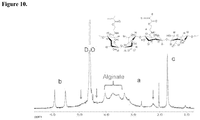
- NMR spectroscopy was used to characterize vinyl conversion of MA-alginate macromonomer after cryopolymerization.
- RGD remains attached to the polymer structure by virtue of covalent bonding (co-polymerization).
- certain biomolecules are to be released following administration of the cryogel to the subject. In this case, the biomolecules are simply mixed with the polymer prior to the cryogelation process.
- Cryogels are a class of materials with a highly porous interconnected structure that are produced using a cryotropic gelation (or cryogelation) technique.
- Cryogelation is a technique in which the polymerization-crosslinking reactions are conducted in quasi-frozen reaction solution.
- the macromoner (MA-alginate) solution the macromonomers and initiator system (APS/TEMED) expelled from the ice concentrate within the channels between the ice crystals, so that the reactions only take place in these unfrozen liquid channels.
- APS/TEMED macromonomers and initiator system
- a porous material is produced whose microstructure is a negative replica of the ice formed. Ice crystals act as porogens.
- Pore size is tuned by altering the temperature of the cryogelation process. For example, the cryogelation process is typically carried out by quickly freezing the solution at -20°C. Lowering the temperature to, e.g., -80°C, would result in more ice crystals and lead to smaller pores.
- cryogels compared to conventional macroporous hydrogels obtained by phase separation is their high mechanical stability. They are very tough, and can withstand high levels of deformations, such as elongation and torsion; they can also be squeezed under mechanical force to drain out their solvent content.
- the improved mechanical properties of alginate cryogels originate from the high crosslinking density (highly methacrylated alginate polymerizes into cross-linked polymer structures with a relatively high crosslink density) of the unfrozen liquid channels of the reaction system. Thus, after polymerization, the gel channels with high polymer content are perfect materials for building the pore walls.
- Biomolecules e.g., GM-CSF, CpG nucleic acids
- GM-CSF CpG nucleic acids
- these molecules are released from the cryogel by diffusion or gel degradation over time.
- low molecular weight compositions e.g., CpG oligonucleotides
- Larger entrapped molecules greater than about 10 kDa, e.g., 10-50 kDa in molecular mass
- proteins large DNAs, e.g., plasmid DNA
- Human Recombinant GM-CSF (e.g., available from PeproTech, Catalog # 300-03) is encoded by the following polypeptide sequence (SEQ ID NO:1):
- Injectable delivery systems for therapeutic proteins have attracted wide attention.
- Conventional hydrogels typically release their hydrophilic contents too rapidly in a large initial burst, and phagocytes may clear microspheres within a relatively short time period after administration.
- Microsphere/cryogel combination systems achieve a controlled and sustained release of proteins as an injectable delivery system.
- PLGA microspheres size ⁇ 10-50 ⁇ m
- GM-CSF model protein
- the mixing ratio of the components was optimized to retain injectability and shape memory properties of pure alginate cryogels.
- PLGA microspheres were physically entrapped within the cryogel network (polymeric walls) of cryogels.
- hybrid cryogel have been created as a carrier for controlled delivery of hydrophobic and/or low molecule weight drugs. The results not only provide a strategy for delivery drugs from an injectable 3-D preformed macroporous scaffolds as a sustained-release drug carrier but also open an avenue for the design of the hybrid injectable hydrogels.
- hybrid polymer combinations include cryo-ferrogels and polydiacetylene-based cryogels.
- One class of injectable porous biomaterials for on-demand drug and cell delivery comprises cryo-ferrogels.
- the magnetic-sensitive scaffolds based on macroporous elastic alginate-based cryo-ferrogels, were fabricated with 3-D connected macropores and coupled with magnetic particles (Fe 3 O 4 nano- and micro- particles) and cell-binding moieties. Under applied magnetic fields, the loaded macroporous ferrogel with biological agents lead to large and prompt deformation triggering release of drugs and cells in a controlled fashion.
- injectable color-changing biomaterials such as polydiacetylene-based cryogels, which change in response to external stimuli such as mechanical forces.
- the materials contain mechanophore-molecules (e.g., Polydiacetylene Liposome) that undergo a geometric distortion when a certain amount of force is exerted upon it, leading to a color transition.
- mechanophore-molecules e.g., Polydiacetylene Liposome
- Smart polymers that change color when the material becomes overstressed are very useful to identify cell-substrate interactions and to accurately measure deformations.
- Syringes and needles are typically used to introducing the cryogels into the body.
- the term “syringe” technically refers to the reservoir (that holds the liquid) and the plunger (which pushes the liquid out of the reservoir).
- the “needle” is the part that enters the body, e.g., into a vein, under the skin, or into muscle or other tissue.
- the needle gauge refers to the size of the bore or hole in the needle. The higher the gauge, the thinner the needle (and the smaller the hole). A 28 gauge needle (abbreviated 28G) is therefore thinner than a 25 gauge needle, which is in turn thinner than an 18 gauge needle. Insulin needles are typically 1/2 inch in length and tuberculin needles are typically 5/8 of an inch in length. As inscribed on packaging, needle length appears after the gauge number: "28G 1/2" refers to a 28 gauge needle that is 1/2 inch long.
- Muscle syringes are typically 1cc in volumes, but larger volumes are sometimes, e.g., 2 to 5 ccs syringes, depending on the application. Larger volumes and larger bores are appropriate for delivery of cryogels for larger scale muscle repair or regeneration, e.g., after extensive or traumatic laceration of tissue such as injuries incurred in battle or car/plane accidents.
- Intravenous injectors or needles are used for fine or delicate tissue therapy, e.g., cosmetic dermal filler administration. Such applications typically use shorter needles no larger than 25G.
- Reversible compactible behavior enables pre-formed cryogels with desired physical properties, as characterized ex-vivo, to be delivered in-vivo via application of a moderate non- destructive shear stress during injection through a syringe. Studies were carried out to evaluate whether the fluid velocity, dynamic pressure, and shear stress resulting from the injection affects cell viability.
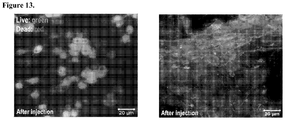
- cryogels are capable of absorbing most of the energy when the scaffolds are compressed, thereby, maintaining high cell viability (92%) and their proliferative potential as shown in Figure 13 .
- the shear stress (or compression) applied to cells in the cryogel as they pass through the bore of a needle or other delivery apparatus such as a catheter does not measurably hurt or damage the cells within the cryogel.
- cell viability was routinely 90% or greater.
- compositions and methods described herein provide hydrogels for minimally invasive delivery of shape memory scaffolds for in vivo applications.
- This method has demonstrated highly efficient and reproducible fabrication of injectable shape-defined macroporous scaffolds.
- the material performance is readily manipulated by altering its composition, formulation, and degradation profile.
- the formation of specific shapes and structural stability are desirable characteristics for shape-defined materials, and the most important requirement of these types of materials for minimally invasive therapies is the ability to collapse and faithfully reform the scaffold's structure in a stimulus-responsive manner.
- a combination of mechanical compression and dehydration is sufficient to compress the scaffolds developed in this work, allowing minimally invasive delivery through a conventional-gauge needle.
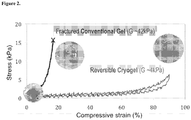
- cylindrical (4mm diameter x 8mm height) nanoporous gels reduced their heights by ⁇ 16% when subjected to a vertical load before mechanical fracture.
- cylindrical macroporous gels give much larger deformation under lower mechanical stress, due to its lower modulus.
- Macroporous scaffolds attained 90% or more of compression strain without mechanical fracture, demonstrating their ability to maintain their structural integrity after compression, compaction, and minimally invasive delivery. Also, these results confirmed that the scaffolds displayed shape memory in vitro.
- the large volume change of the macroporous shape-defined gels was caused by reversible collapse of the interconnected pores.
- the collapsing pores force water contained in the macropores to flow out of the gel.
- Gel deformation and water convection enhances water transport in and out of the gel.
- the elastically deformed gel immediately returns to its original, undeformed shape-defined configuration in less than 1s, as surrounding water was reabsorbed into the gel.
- Example 3 Shape Memory Injectable Scaffolds As a Controlled Drug Delivery Carrier
- Covalently crosslinked alginate scaffolds possessing shape memory properties were successfully used as a drug delivery system in vivo.
- the gels having a predefined size and structure were able to exceptionally maintain their structural features after minimally invasive subcutaneously insertion in mice.
- Suspended gels in PBS were spontaneously hydrated with full geometric restoration after one single injection per site on the lower back of mice. Injected animals did not demonstrate abnormalities in feeding, grooming, or behavior during the time frame of the experiment, nor did they exhibit signs of distress.
- the hydrogels maintained their hydrogel shape integrity at the site of injection.
- Animal studies performed to examine the integration of the spongy-like gels with the host tissue showed that the alginate-based scaffolds were biocompatible and did not elicit an immune response or rejection when injected in mice.
- rhodamine-labeled scaffolds were surgically removed from mice and analyzed.
- the scaffold guided in vivo tissue formation around the scaffold indicating the scaffolds could support tissue growth and integration.
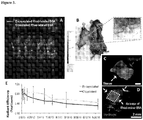
- fluorescent microscopy used to visualize the rhodamine-labeled scaffold noticeably displayed the original geometry, structural integrity, square-defined shape retention of the gels in vivo ( Figure 3C ).
- Rhodamine-labeled BSA was also used as a drug delivery model. By providing a drug depot at the site of injection, such devices achieve high local drug concentrations without significant systemic administration. Sustained release of BSA was achieved from the injected square-defined scaffolds as shown in Figure 3D . Targeted and controlled delivery of rhodamine-labeled BSA in mice was quantified via real-time non-invasive live imaging ( Figure 3A ). Exemplary compound, BSA, was either physically entrapped or chemically grafted to the scaffold during the cryopolymerization process. As illustrated in Figure 3E , sustained controlled release of BSA was achieved over of period of 4 months. Surprisingly, the release profiles for both types of BSA were similar indicating that the release is mainly mediated by matrix degradation over protein diffusion.
- Example 4 Cryogel Compositions Enhance Survivability and Limit Migration of Injected Cells in vivo
- compositions and methods described herein are non-invasive methods of cell injection based on cell-scaffold integration.
- Cell transplantation is a therapeutic option for patients with impaired regional or global function due to cell death.
- the limited number of transplantation methods of cells is considered a major factor limiting the efficacy of cell therapies.
- injectable preformed scaffolds offer the possibility of homogeneously distributing cells and molecular signals throughout the scaffold.
- the scaffolds are injected directly into tissues or cavities, e.g., muscle, bone, skin, fat, organs, even of irregular shape and size, in a minimally invasive manner.
- the compositions and methods described herein offer significant advantages such as injectability and efficient cell encapsulation post-polymerization while allowing sufficient mechanical strength to withstand biomechanical loading and providing temporary support for the cells.
- a unique characteristic of these cell/scaffold constructs is that when an appropriate shear stress is applied, the deformable hydrogel is dramatically and reversibly compressed (up to 90% of its volume) resulting in injectable macroporous preformed scaffolds.
- This property allows gel/cell constructs to be delivered via syringe with high precision to target sites. Homogenous cellular distribution and cell viability are unaffected by the shear thinning process and gel/cell constructs stay fixed at the point of introduction, suggesting that these gels are useful for the delivery of cells to target biological sites in tissue regeneration efforts.
- melanoma B16 cells Integration of melanoma B16 cells to RGD-modified alginate cryogel scaffolds and their injections into healthy mice was investigated to demonstrate successful syringe-delivery and function of pre-cultured cells while promoting homing, survival, and engraftment of tumorigenic cells.
- the results presented herein demonstrate that the designed tissue-engineered scaffolds mimic the natural environment where cells normally reside, and as a result tumors are formed after every injection of tumorigenic cell-embedded matrix in healthy BALB/c mice.
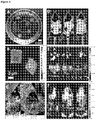
- the inoculation of melanoma cells subcutaneously was monitored via real-time non-invasive live imaging ( Figure 4D ). The incidence of tumor formation and tumor growth was examined over a period of 9 days.
- rhodamine-labeled (1) and rhodamine-labeled RGD-modified (2) cell-seeded alginate cryogels were administered in mice to study the effect of cell-engraftment in cell transplantation and homing.
- a bolus of free cells (B) was also injected.
- Rhodamine-labeled scaffolds were successfully injected subcutaneously as shown in Figure 4D . Except for the bolus injection site, red-emitting rhodamine dyes show intense fluorescent red spots in each side of the mice's back indicating in vivo localization of cell-seeded scaffolds.
- bioluminescence of cell-seeded scaffolds was measured 30 min after intraperitoneal injection of luciferin.
- bioluminescence for injected RGD-modified cell-seeded gels was particularly brighter when compared to the plain scaffolds showing the necessity to incorporate RGD to the polymeric network to support cell-engraftment and thus efficient cell transplantation.
- the absence of bioluminescence suggests minimal cell retention at the injection site, rapid cell migration, and likely limited cell transplants survival.
- Example 5 Injectable biodegradable cryogels for immunotherapy applications
- a minimally invasive scaffold-based active vaccine containing host pathogens was developed for the therapeutic treatment of cancer.
- the immune system needs an external boost from immunotherapies to be able to become more effective in fighting cancer.
- the active immunotherapy system described herein was designed to stimulate the patient's immune system, with the objective of promoting an antigen-specific antitumor effect using the body's own immune cells.
- the cryogel-vaccine leads to a durable antitumor response that protects tumor recurrence.
- Dendritic cells DCs are antigen-presenting cells critically involved in regulating the immune system.
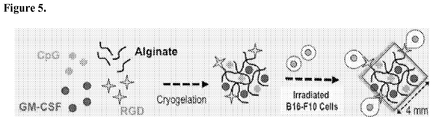
- the vaccine mediates in situ manipulation of dendritic cell recruitment, activation, and their dispersion to the lymph nodes. Cytosine-guanosine oligonucleotide (CpG-ODN) was used as an adjuvant further stimulate responses to the vaccine.
- both components can be easily incorporated into the cryogel matrix and released in a sustained fashion to recruit and host DCs, and subsequently present cancer antigens from the irradiated cells (or other cell-associated antigens) and danger signals to activate resident naive DCs and promote their homing to the lymph nodes, which is necessary for a robust anti-cancer immune response.
- Specific and protective anti-tumor immunity was generated with our minimally invasive alginate-based active vaccine, as 80% survival was achieved in animals that otherwise die from cancer within a couple of months.
- the data using the cryogel-based prophylactic vaccine for melanoma was shown to induce a very strong immunologic memory, as 100% survival was achieved in the rechallenged animals following 100 days post vaccination.
- Different tumor cell-associated antigens are used in the cellular cryogel-based vaccine platform, thereby permitting treatment or prophylaxis for a variety of cancers.
- Active specific immunotherapy involves the priming of the immune system in order to generate a T- cell response against tumor-associated antigens.
- One example of the active specific approach is adoptive T-cell therapy, which involves the ex vivo cultivation of T cells with demonstrated activity against a specific target cancer antigen. Cells are obtained from the subject, purified, and cultured. Such ex vivo cultivation increases the frequency of these T cells to achieve therapeutic levels. The cells are then infused back into the patient via injectable alginate-based cryogel.
- Creating an infection-mimicking microenvironment by appropriately presenting exogenous cytokines (e.g., GM-CSF) and danger signals (e.g., CpG-ODN), in concert with cancer antigen provides a means to precisely control the number and timing of DC tr afficking and activation, in situ.
- exogenous cytokines e.g., GM-CSF
- danger signals e.g., CpG-ODN
- Macroporous cryogel matrices were fabricated for controlled release of GM-CSF to recruit and house host DCs, and with an interconnected porous structure that allows for cell infiltration and subsequently present cancer antigens (irradiated B16F10 melanoma cells) and danger signals (CpG-ODN) to activate the resident DCs and dramatically enhance their homing to lymph nodes and proliferation.
- Matrices were loaded with 3mg of GM-CSF and injected into the subcutaneous pockets of C57BL/6J mice.
- Fig. 3B indicates that the cryogel vaccine controls or therapeutically alters immune cell trafficking and activation in the body.
- a large number of DCs are recruited to the vaccine site.
- CD11c(+) DCs may home to the inguinal lymph nodes and spleen, present antigens to naive T cells, and stimulate and expand specific T-cell populations that elicit anti-tumor responses
- the total number of CD11c(+) DCs is inversely proportional to the total number of CD3(+) T cells.
- FACS analysis of cells infiltrating the vaccine site revealed a significant CD3(+) T cell response peaking at day 13.
- Local CD3(+) T cell numbers dropped sharply by day 24 and were negligible at day 30.
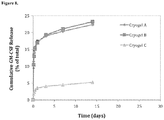
- cryogel matrices released approximately 20% of their bioactive GM-CSF load within the first 5 days, followed by slow and sustained release of bioactive GM -CSF over the next 10 days ( Fig. 8 , cryogel A); this release profile was chosen to allow diffusion of the factor through the surrounding tissue to effectively recruit resident DCs.
- Cryogels can be successfully used for specific spatiotemporal delivery of several drugs, as the incorporation of a second biomolecule (CpG-ODN) did not alter the release profile of GM-CSF over time ( Fig. 8 , cryogel B).
- CpG-ODN second biomolecule
- slowly degrading PLG microspheres integrated in the scaffolds seem to release GM-CSF much more slowly than pure cryogels (5% vs 24% release at day 14).
- Hybrid cryogel have been created as a potential carrier for controlled delivery of hydrophobic and/or low molecule weight drugs. Our results not only provide a new strategy for delivery drugs from an injectable 3-D preformed macroporous scaffolds as a sustained-release drug carrier but also open an avenue for the design of new hybrid injectable hydrogels.
- Example 6 Injectable biodegradable cryogels as a gene delivery system
- Nonviral gene delivery systems based upon polycation/plasmid DNA complexes are gaining recognition as an alternative to viral gene vectors for their potential in avoiding immunogenicity and toxicity problems inherent in viral systems. Studies were carried out to determine the feasibility of using a controlled release system based on encapsulated condensed plasmid DNA in injectable cryogels to achieve gene transfer in the surrounding tissues after injection.
- a unique feature of the cryogel-based gene delivery system is the biodegradability of the polymeric system, which can provide a sustained release of DNA at different rates depending on the polymer, cross-link density, mass fraction, and porosity created during the cryogelation process.
- Encapsulated DNA complexed with polyethylenimine (PEI), a nondegradable cationic polymer known to be an effective gene carrier, and naked PEI/DNA complexes, which were prepared at a ratio of 7:1 (PEI:DNA) were injected subcutaneously on the lower back of naive mice using luciferase as a reporter gene ( Figure 9 ).
- PEI:DNA polyethylenimine
- encapsulated PEI/DNA displayed strong bioluminescence providing the highest transgene expression at ⁇ 10 photons/s, about two-order of magnitude higher than that produced by naked PEI/DNA.
- the expression levels for naked PEI/DNA were about the same as day 1 but increased by 1 order of magnitude when released in a controllable fashion from the cryogels. Till 29 days, encapsulated PEI/DNA still provided a level of transgene expression at ⁇ 10 7 photons/s, similar to that observed at previous time points. This level was significantly higher than those offered by naked PEI/DNA.
- cryogels promote gene transfection to surrounding cells in the subcutis of mice, with an efficiency superior in terms of prolonged gene expression to naked DNA.
- the results establish an injectable delivery system as an effective gene carrier applicable to program or treat targeted cells.
Landscapes
- Health & Medical Sciences (AREA)
- Chemical & Material Sciences (AREA)
- Life Sciences & Earth Sciences (AREA)
- Medicinal Chemistry (AREA)
- Veterinary Medicine (AREA)
- Animal Behavior & Ethology (AREA)
- General Health & Medical Sciences (AREA)
- Public Health (AREA)
- Epidemiology (AREA)
- Dermatology (AREA)
- Oral & Maxillofacial Surgery (AREA)
- Transplantation (AREA)
- Engineering & Computer Science (AREA)
- Pharmacology & Pharmacy (AREA)
- Bioinformatics & Cheminformatics (AREA)
- Dispersion Chemistry (AREA)
- Immunology (AREA)
- Organic Chemistry (AREA)
- Chemical Kinetics & Catalysis (AREA)
- General Chemical & Material Sciences (AREA)
- Nuclear Medicine, Radiotherapy & Molecular Imaging (AREA)
- Microbiology (AREA)
- Molecular Biology (AREA)
- Biomedical Technology (AREA)
- Oncology (AREA)
- Mycology (AREA)
- Surgery (AREA)
- Medicinal Preparation (AREA)
- Materials For Medical Uses (AREA)
- Medicines That Contain Protein Lipid Enzymes And Other Medicines (AREA)
- Medicines Containing Antibodies Or Antigens For Use As Internal Diagnostic Agents (AREA)
- Pharmaceuticals Containing Other Organic And Inorganic Compounds (AREA)
- Peptides Or Proteins (AREA)
- Micro-Organisms Or Cultivation Processes Thereof (AREA)
- Immobilizing And Processing Of Enzymes And Microorganisms (AREA)
- Medicines Containing Material From Animals Or Micro-Organisms (AREA)
- Polymers & Plastics (AREA)
Priority Applications (1)
| Application Number | Priority Date | Filing Date | Title |
|---|---|---|---|
| EP18175253.6A EP3417876B1 (en) | 2011-04-28 | 2012-04-27 | Injectable preformed macroscopic 3-dimensional scaffolds for minimally invasive administration |
Applications Claiming Priority (2)
| Application Number | Priority Date | Filing Date | Title |
|---|---|---|---|
| US201161480237P | 2011-04-28 | 2011-04-28 | |
| PCT/US2012/035505 WO2012149358A1 (en) | 2011-04-28 | 2012-04-27 | Injectable preformed macroscopic 3-dimensional scaffolds for minimally invasive administration |
Related Child Applications (2)
| Application Number | Title | Priority Date | Filing Date |
|---|---|---|---|
| EP18175253.6A Division EP3417876B1 (en) | 2011-04-28 | 2012-04-27 | Injectable preformed macroscopic 3-dimensional scaffolds for minimally invasive administration |
| EP18175253.6A Division-Into EP3417876B1 (en) | 2011-04-28 | 2012-04-27 | Injectable preformed macroscopic 3-dimensional scaffolds for minimally invasive administration |
Publications (3)
| Publication Number | Publication Date |
|---|---|
| EP2701745A1 EP2701745A1 (en) | 2014-03-05 |
| EP2701745A4 EP2701745A4 (en) | 2014-12-03 |
| EP2701745B1 true EP2701745B1 (en) | 2018-07-11 |
Family
ID=47072783
Family Applications (2)
| Application Number | Title | Priority Date | Filing Date |
|---|---|---|---|
| EP12775937.1A Active EP2701745B1 (en) | 2011-04-28 | 2012-04-27 | Injectable preformed macroscopic 3-dimensional scaffolds for minimally invasive administration |
| EP18175253.6A Active EP3417876B1 (en) | 2011-04-28 | 2012-04-27 | Injectable preformed macroscopic 3-dimensional scaffolds for minimally invasive administration |
Family Applications After (1)
| Application Number | Title | Priority Date | Filing Date |
|---|---|---|---|
| EP18175253.6A Active EP3417876B1 (en) | 2011-04-28 | 2012-04-27 | Injectable preformed macroscopic 3-dimensional scaffolds for minimally invasive administration |
Country Status (7)
| Country | Link |
|---|---|
| US (3) | US10045947B2 (enExample) |
| EP (2) | EP2701745B1 (enExample) |
| JP (4) | JP6359966B2 (enExample) |
| AU (3) | AU2012249456A1 (enExample) |
| CA (1) | CA2833385C (enExample) |
| ES (2) | ES2685327T3 (enExample) |
| WO (1) | WO2012149358A1 (enExample) |
Cited By (2)
| Publication number | Priority date | Publication date | Assignee | Title |
|---|---|---|---|---|
| WO2020116989A1 (ko) * | 2018-12-07 | 2020-06-11 | 한국생명공학연구원 | 생체내 세포 투입칩을 포함하는 항암용 조성물 |
| EP4294373A1 (en) | 2021-02-22 | 2023-12-27 | Instytut Podstawowych Problemów Techniki Polskiej Akademii Nauk | A method for obtaining injectable biocompatible drug delivery vehicles, cell carriers or combinations thereof, in the form of microscaffolds, an injectable composition containing said vehicles, and its applications |
Families Citing this family (57)
| Publication number | Priority date | Publication date | Assignee | Title |
|---|---|---|---|---|
| WO2007070660A2 (en) | 2005-12-13 | 2007-06-21 | President And Fellows Of Harvard College | Scaffolds for cell transplantation |
| US9770535B2 (en) * | 2007-06-21 | 2017-09-26 | President And Fellows Of Harvard College | Scaffolds for cell collection or elimination |
| US9370558B2 (en) | 2008-02-13 | 2016-06-21 | President And Fellows Of Harvard College | Controlled delivery of TLR agonists in structural polymeric devices |
| CA2715460C (en) | 2008-02-13 | 2020-02-18 | President And Fellows Of Harvard College | Continuous cell programming devices |
| US9012399B2 (en) * | 2008-05-30 | 2015-04-21 | President And Fellows Of Harvard College | Controlled release of growth factors and signaling molecules for promoting angiogenesis |
| US9297005B2 (en) | 2009-04-13 | 2016-03-29 | President And Fellows Of Harvard College | Harnessing cell dynamics to engineer materials |
| AU2010278702C1 (en) | 2009-07-31 | 2016-07-14 | Forsyth Dental Infirmary For Children | Programming of cells for tolerogenic therapies |
| WO2011109834A2 (en) | 2010-03-05 | 2011-09-09 | President And Fellows Of Harvard College | Enhancement of skeletal muscle stem cell engrafment by dual delivery of vegf and igf-1 |
| US9693954B2 (en) | 2010-06-25 | 2017-07-04 | President And Fellows Of Harvard College | Co-delivery of stimulatory and inhibitory factors to create temporally stable and spatially restricted zones |
| HRP20200310T1 (hr) | 2010-10-06 | 2020-08-21 | President And Fellows Of Harvard College | Hidrogelovi koji stvaraju pore pogodni za injekcije, namijenjeni staničnim terapijama na bazi materijala |
| WO2012064697A2 (en) | 2010-11-08 | 2012-05-18 | President And Fellows Of Harvard College | Materials presenting notch signaling molecules to control cell behavior |
| EP2701753B1 (en) | 2011-04-27 | 2018-12-26 | President and Fellows of Harvard College | Cell-friendly inverse opal hydrogels for cell encapsulation, drug and protein delivery, and functional nanoparticle encapsulation |
| ES2685327T3 (es) | 2011-04-28 | 2018-10-08 | President And Fellows Of Harvard College | Armazones tridimensionales macroscópicos preformados inyectables para administración mínimamente invasiva |
| US9675561B2 (en) | 2011-04-28 | 2017-06-13 | President And Fellows Of Harvard College | Injectable cryogel vaccine devices and methods of use thereof |
| US9486512B2 (en) | 2011-06-03 | 2016-11-08 | President And Fellows Of Harvard College | In situ antigen-generating cancer vaccine |
| US8753309B2 (en) | 2011-06-24 | 2014-06-17 | The Invention Science Fund I, Llc | Device, system, and method including micro-patterned cell treatment array |
| ES2773895T3 (es) | 2012-04-16 | 2020-07-15 | Harvard College | Composiciones de sílice mesoporosa para modular las respuestas inmunitarias |
| EP2983718A4 (en) * | 2013-04-11 | 2016-12-07 | Univ Of Vermont And State Agricultural College | Decellularization and recellularization of whole organs |
| JP6787789B2 (ja) | 2014-04-04 | 2020-11-18 | プレジデント アンド フェローズ オブ ハーバード カレッジ | 詰め替え可能な薬物送達デバイスおよびその使用方法 |
| CN107073090A (zh) | 2014-04-30 | 2017-08-18 | 哈佛学院董事会 | 结合的疫苗装置和杀死癌细胞的方法 |
| WO2016013594A1 (ja) * | 2014-07-24 | 2016-01-28 | 国立研究開発法人物質・材料研究機構 | 医療用生体吸収性部材及びその製造方法 |
| KR20170070008A (ko) * | 2014-08-15 | 2017-06-21 | 더 존스 홉킨스 유니버시티 | 조직 복원용 복합 재료 |
| MA41044A (fr) | 2014-10-08 | 2017-08-15 | Novartis Ag | Compositions et procédés d'utilisation pour une réponse immunitaire accrue et traitement contre le cancer |
| SG11201702401RA (en) | 2014-10-14 | 2017-04-27 | Novartis Ag | Antibody molecules to pd-l1 and uses thereof |
| WO2016123573A1 (en) | 2015-01-30 | 2016-08-04 | President And Fellows Of Harvard College | Peritumoral and intratumoral materials for cancer therapy |
| US11150242B2 (en) | 2015-04-10 | 2021-10-19 | President And Fellows Of Harvard College | Immune cell trapping devices and methods for making and using the same |
| US20180207273A1 (en) | 2015-07-29 | 2018-07-26 | Novartis Ag | Combination therapies comprising antibody molecules to tim-3 |
| US20180340025A1 (en) | 2015-07-29 | 2018-11-29 | Novartis Ag | Combination therapies comprising antibody molecules to lag-3 |
| EP3328418A1 (en) | 2015-07-29 | 2018-06-06 | Novartis AG | Combination therapies comprising antibody molecules to pd-1 |
| DE102016203287A1 (de) * | 2015-08-07 | 2017-02-09 | Aesculap Ag | Mechanophores Medizinprodukt |
| CN108289734B (zh) * | 2015-08-17 | 2024-06-18 | 约翰·霍普金斯大学 | 用于组织恢复的间充质细胞结合复合材料 |
| GB201521784D0 (en) | 2015-12-10 | 2016-01-27 | Univ Birmingham | Cell purification |
| CN108495651A (zh) | 2015-12-17 | 2018-09-04 | 诺华股份有限公司 | 抗pd-1的抗体分子及其用途 |
| WO2017136837A1 (en) | 2016-02-06 | 2017-08-10 | President And Fellows Of Harvard College | Recapitulating the hematopoietic niche to reconstitute immunity |
| CN117244049A (zh) | 2016-02-16 | 2023-12-19 | 哈佛学院院长等 | 病原体疫苗及其生产和使用方法 |
| AU2017295704B2 (en) | 2016-07-13 | 2023-07-13 | President And Fellows Of Harvard College | Antigen-presenting cell-mimetic scaffolds and methods for making and using the same |
| CN110418651A (zh) | 2016-08-02 | 2019-11-05 | 哈佛学院院长等 | 用于调节免疫应答的生物材料 |
| JP7216006B2 (ja) | 2017-03-22 | 2023-01-31 | ジェネンテック, インコーポレイテッド | ヒドロゲル架橋ヒアルロン酸プロドラッグ組成物及び方法 |
| ES3060255T3 (en) | 2018-05-09 | 2026-03-25 | Univ Johns Hopkins | Nanofiber-hydrogel composites for enhanced soft tissue replacement and regeneration |
| EP3790602A1 (en) | 2018-05-09 | 2021-03-17 | The Johns Hopkins University | Nanofiber-hydrogel composites for cell and tissue delivery |
| US12303618B2 (en) | 2018-08-08 | 2025-05-20 | Northeastern University | Oxygen-generating cryogels |
| WO2020061129A1 (en) | 2018-09-19 | 2020-03-26 | President And Fellows Of Harvard College | Compositions and methods for labeling and modulation of cells in vitro and in vivo |
| JP2022514568A (ja) | 2018-12-17 | 2022-02-14 | プレジデント アンド フェローズ オブ ハーバード カレッジ | 免疫系のモジュレーションのための生物工学的スキャフォールドおよびその使用 |
| JP2022549270A (ja) | 2019-09-23 | 2022-11-24 | プレジデント アンド フェローズ オブ ハーバード カレッジ | バイオマテリアルベースの無抗原ワクチンおよびその使用 |
| US12076464B2 (en) * | 2019-10-17 | 2024-09-03 | The Texas A&M University System | Drug eluting shape memory foam |
| US11850325B2 (en) | 2019-10-24 | 2023-12-26 | Northeastern University | Injectable, bioadhesive cryogel scaffolds for biomedical uses |
| EP4164706A1 (en) | 2019-12-04 | 2023-04-19 | Centre Hospitalier Universitaire Vaudois (CHUV) | Device and process for tissue-engineering and regenerative medicine |
| CN112245658A (zh) * | 2020-10-09 | 2021-01-22 | 北京大学 | 一种可注射晶胶微球细胞扩增载体及其制备方法 |
| US20240033401A1 (en) * | 2020-12-18 | 2024-02-01 | Drexel University | Injectable, cross-linkable and subcellular size microfibers for soft tissue repair |
| EP4147730A1 (en) | 2021-09-09 | 2023-03-15 | ETH Zurich | Method of preparing a functional hydrogel material that can be injected |
| US12201643B2 (en) | 2021-10-15 | 2025-01-21 | The Board Of Trustees Of The University Of Illinois | Mechanochemical dynamic for focal cancer treatment |
| KR102721585B1 (ko) * | 2022-04-06 | 2024-10-25 | 성균관대학교산학협력단 | 형상복원능을 갖는 콜라겐 기반 하이드로겔의 제조방법 및 이의 용도 |
| CN114957810B (zh) * | 2022-05-05 | 2023-04-18 | 中国科学院天津工业生物技术研究所 | 一种普鲁兰多糖形状记忆材料的制备方法及其4d打印方法及制品 |
| CN115804870B (zh) * | 2022-12-02 | 2023-12-19 | 浙江大学 | 一种微创注射生物支架及其制造方法与应用 |
| WO2024187056A2 (en) * | 2023-03-08 | 2024-09-12 | The Trustees Of The University Of Pennsylvania | Minoxidil-crosslinked injectable hydrogels for local and sustained intradermal delivery |
| AU2024366722A1 (en) * | 2023-10-27 | 2026-05-14 | William Marsh Rice University | Photo-responsive therapeutic encapsulation compositions and devices |
| WO2026050387A1 (en) * | 2024-08-27 | 2026-03-05 | IVANOV, Ian Gitsov | Mechanochromic shape memory polymers with simultaneous shape and color change |
Family Cites Families (168)
| Publication number | Priority date | Publication date | Assignee | Title |
|---|---|---|---|---|
| US3773919A (en) | 1969-10-23 | 1973-11-20 | Du Pont | Polylactide-drug mixtures |
| US4522811A (en) | 1982-07-08 | 1985-06-11 | Syntex (U.S.A.) Inc. | Serial injection of muramyldipeptides and liposomes enhances the anti-infective activity of muramyldipeptides |
| US4946778A (en) | 1987-09-21 | 1990-08-07 | Genex Corporation | Single polypeptide chain binding molecules |
| US5132405A (en) | 1987-05-21 | 1992-07-21 | Creative Biomolecules, Inc. | Biosynthetic antibody binding sites |
| US5091513A (en) | 1987-05-21 | 1992-02-25 | Creative Biomolecules, Inc. | Biosynthetic antibody binding sites |
| US5073627A (en) | 1989-08-22 | 1991-12-17 | Immunex Corporation | Fusion proteins comprising GM-CSF and IL-3 |
| GB9206504D0 (en) | 1992-03-25 | 1992-05-06 | Jevco Ltd | Heteromorphic sponges as wound implants |
| JPH09506866A (ja) | 1993-12-14 | 1997-07-08 | ジョーンズ ホプキンス ユニバーシティー スクール オブ メディシン | 医薬として活性のある物質の免疫療法のための放出制御 |
| US6429199B1 (en) | 1994-07-15 | 2002-08-06 | University Of Iowa Research Foundation | Immunostimulatory nucleic acid molecules for activating dendritic cells |
| US5625048A (en) | 1994-11-10 | 1997-04-29 | The Regents Of The University Of California | Modified green fluorescent proteins |
| US6251396B1 (en) | 1994-11-18 | 2001-06-26 | Neurocrine Biosciences, Inc. | Methods for treatment of multiple sclerosis using peptide analogs of human myelin basic protein |
| US6329499B1 (en) | 1994-11-18 | 2001-12-11 | Neurocrine Biosciences, Inc. | Methods for treatment of multiple sclerosis using peptide analogues of human myelin basic protein |
| US6129761A (en) | 1995-06-07 | 2000-10-10 | Reprogenesis, Inc. | Injectable hydrogel compositions |
| IL118376A0 (en) | 1996-05-22 | 1996-09-12 | Univ Ben Gurion | Polysaccharide sponges for cell culture and transplantation |
| WO1997045533A1 (en) | 1996-05-28 | 1997-12-04 | The Regents Of The University Of Michigan | Engineering oral tissues |
| US6124128A (en) | 1996-08-16 | 2000-09-26 | The Regents Of The University Of California | Long wavelength engineered fluorescent proteins |
| JP4335316B2 (ja) * | 1996-09-19 | 2009-09-30 | ザ・リージェンツ・オブ・ザ・ユニバーシティ・オブ・ミシガン | アルギネートまたは修飾アルギネートのようなポリサッカライドを含むポリマー |
| US5863551A (en) * | 1996-10-16 | 1999-01-26 | Organogel Canada Ltee | Implantable polymer hydrogel for therapeutic uses |
| GB2318577B (en) | 1996-10-28 | 2000-02-02 | Johnson & Johnson Medical | Solvent dried polysaccharide sponges |
| GB2323282B (en) | 1997-03-17 | 2001-03-07 | Bristol Myers Squibb Co | Improvements relating to hygiene and medical products |
| DE69818052T2 (de) | 1997-03-31 | 2004-07-08 | The Regents Of The University Of Michigan, Ann Arbor | Offenporige bioabbaubare matrize |
| EP1014897B1 (en) | 1997-05-30 | 2008-10-29 | Osteobiologics, Inc. | Fiber-reinforced, porous, biodegradable implant device |
| US6218371B1 (en) | 1998-04-03 | 2001-04-17 | University Of Iowa Research Foundation | Methods and products for stimulating the immune system using immunotherapeutic oligonucleotides and cytokines |
| US7427602B1 (en) | 1998-05-13 | 2008-09-23 | The Regents Of The University Of Michigan | Sustained DNA delivery from structural matrices |
| FR2780730B1 (fr) | 1998-07-01 | 2000-10-13 | Corneal Ind | Compositions biphasiques injectables, notamment utiles en chirurgies reparatrice et esthetique |
| EP1100529B2 (en) | 1998-07-30 | 2010-08-25 | The Government of the United States of America, as repres. by the Secretary of Health and Human Services, Nat. Inst. of Health | Thymosin beta 4 promotes wound repair |
| EP1374908A3 (en) | 1998-10-09 | 2004-03-24 | The Regents Of The University Of Michigan | Polymer-drug conjugates comprising hydrazide linkers |
| WO2000050006A2 (en) | 1999-02-26 | 2000-08-31 | Chiron Corporation | Microemulsions with adsorbed macromoelecules and microparticles |
| US6541022B1 (en) | 1999-03-19 | 2003-04-01 | The Regents Of The University Of Michigan | Mineral and cellular patterning on biomaterial surfaces |
| US6767928B1 (en) | 1999-03-19 | 2004-07-27 | The Regents Of The University Of Michigan | Mineralization and biological modification of biomaterial surfaces |
| DE60036863T2 (de) | 1999-03-25 | 2008-07-31 | Metabolix, Inc., Cambridge | Medizinische vorrichtungen und verwendungen von polyhydroxyalkanoatpolymeren |
| US6511650B1 (en) | 1999-04-09 | 2003-01-28 | The Regents Of The University Of Michigan | Preparing porous hydrogel products |
| AU782297B2 (en) | 1999-06-30 | 2005-07-14 | Ethicon Inc. | Porous tissue scaffoldings for the repair or regeneration of tissue |
| US8084258B2 (en) | 1999-07-12 | 2011-12-27 | University Of Basel | Manipulation of tissue of organ type using the notch pathway |
| CA2379909C (en) | 1999-08-06 | 2011-01-04 | Board Of Regents, The University Of Texas System | Drug releasing biodegradable fiber implant |
| US7015205B1 (en) | 1999-10-18 | 2006-03-21 | St. Vincent's Hospital And Medical Center Of New York | Melanoma vaccine and methods of making and using same |
| WO2001035932A2 (en) | 1999-11-18 | 2001-05-25 | The Regents Of The University Of Michigan | Sustained drug delivery from structural matrices |
| US6790840B1 (en) | 1999-11-26 | 2004-09-14 | The Regents Of The University Of Michigan | Reversibly cross-linked hydrogels |
| WO2002009650A2 (en) | 2000-07-31 | 2002-02-07 | New York Medical College | Methods and compositions for the repair and/or regeneration of damaged myocardium |
| JP2004507237A (ja) | 2000-08-21 | 2004-03-11 | ライスユニバーシティ | マトリクスタンパク質の産生を促進する組織工学足場 |
| US7785810B2 (en) | 2000-09-09 | 2010-08-31 | The Research Foundation Of State University Of New York | Method and compositions for isolating metastatic cancer cells, and use in measuring metastatic potential of a cancer thereof |
| US6748954B2 (en) | 2000-10-27 | 2004-06-15 | The Regents Of The University Of Michigan | Drug release from polymer matrices through mechanical stimulation |
| WO2002040071A1 (en) | 2000-11-14 | 2002-05-23 | Osteogenesis Co., Ltd. | Compositions for forming bone or periodontium and injections for forming bone or periodontium |
| MXPA03006587A (es) | 2001-01-24 | 2003-09-22 | Schering Corp | Quimiocinas como adyuvantes de respuesta inmune. |
| WO2002068605A2 (en) | 2001-02-26 | 2002-09-06 | The Regents Of The University Of California | Non-oligomerizing tandem fluorescent proteins |
| JP2002263981A (ja) | 2001-03-14 | 2002-09-17 | Murata Mach Ltd | 板材吸着持ち上げ装置の吸着制御装置 |
| US6656488B2 (en) | 2001-04-11 | 2003-12-02 | Ethicon Endo-Surgery, Inc. | Bioabsorbable bag containing bioabsorbable materials of different bioabsorption rates for tissue engineering |
| WO2002087627A1 (en) | 2001-04-27 | 2002-11-07 | Xcyte Therapies, Inc. | Maturation of antigen-presenting cells using activated t cells |
| US20050079159A1 (en) | 2001-06-13 | 2005-04-14 | Massachusetts Instiute Of Technology | In vivo bioreactors |
| US7297343B2 (en) | 2001-07-31 | 2007-11-20 | Biosurface Engineering Technologies, Inc. | Bioactive medical films |
| US7354909B2 (en) | 2001-08-14 | 2008-04-08 | The United States Of America As Represented By Secretary Of The Department Of Health And Human Services | Method for rapid generation of mature dendritic cells |
| SE0103404D0 (sv) * | 2001-10-12 | 2001-10-12 | Protista Internat Ab | Macroporous gel, ITS preparation and its use |
| CA2412012C (en) | 2001-11-20 | 2011-08-02 | Ed. Geistlich Soehne Ag Fuer Chemische Industrie | Resorbable extracellular matrix containing collagen i and collagen ii for reconstruction of cartilage |
| AU2002361902A1 (en) | 2001-12-31 | 2003-07-24 | Ares Medical, Inc. | Hemostatic compositions and methods for controlling bleeding |
| US7575759B2 (en) | 2002-01-02 | 2009-08-18 | The Regents Of The University Of Michigan | Tissue engineering scaffolds |
| US6811777B2 (en) | 2002-04-13 | 2004-11-02 | Allan Mishra | Compositions and minimally invasive methods for treating incomplete connective tissue repair |
| CN101160399A (zh) | 2002-04-22 | 2008-04-09 | 拜奥尼茨生命科学公司 | 寡核苷酸组合物及其在调节免疫应答中的应用 |
| US6960617B2 (en) | 2002-04-22 | 2005-11-01 | Purdue Research Foundation | Hydrogels having enhanced elasticity and mechanical strength properties |
| US20040242469A1 (en) | 2002-05-13 | 2004-12-02 | Lee Richard T. | Angiogenesis and cardiac tissue engineering with peptide hydrogels and related compositions and methods of use thereof |
| AUPS312602A0 (en) | 2002-06-21 | 2002-07-18 | James Cook University | Organ arrest, protection, preservation and recovery |
| US7332160B2 (en) | 2002-07-12 | 2008-02-19 | Boston Scientific Scimed, Inc. | Medical device and method for tissue removal and repair |
| US20040136968A1 (en) | 2002-09-27 | 2004-07-15 | Verigen Ag | Autologous cells on a support matrix for tissue repair |
| US20040063206A1 (en) | 2002-09-30 | 2004-04-01 | Rowley Jon A. | Programmable scaffold and method for making and using the same |
| AU2003272805A1 (en) | 2002-10-01 | 2004-04-23 | Peter K. Law | Bioactive implants |
| US8940292B2 (en) | 2003-01-28 | 2015-01-27 | Wake Forest University Health Sciences | Enhancement of angiogenesis to grafts using cells engineered to produce growth factors |
| SE0301109D0 (sv) | 2003-04-14 | 2003-04-14 | Mallen Huang | Nucleotide vaccine composition |
| CA2524356C (en) | 2003-05-05 | 2015-03-10 | Smadar Cohen | Injectable cross-linked polymeric preparations and uses thereof |
| EP1475434A1 (en) | 2003-05-09 | 2004-11-10 | Oncoscience AG | Method for storing tumor cells |
| US20050053667A1 (en) | 2003-07-09 | 2005-03-10 | Darrell Irvine | Programmed immune responses using a vaccination node |
| US20060264380A1 (en) | 2003-07-21 | 2006-11-23 | Mats Hellstrom | Compounds and Methods for Promoting Angiogenesis |
| GB0317999D0 (en) | 2003-07-31 | 2003-09-03 | Univ Liege | Improvements in or relating to drug delivery systems |
| US8247231B2 (en) | 2003-07-31 | 2012-08-21 | Wilson Constance N | Methods and compositions for producing antigenic responses |
| EP1664168B1 (en) | 2003-08-29 | 2008-12-03 | Mayo Foundation for Medical Education and Research | Hydrogel porogens for fabricating biodegradable scaffolds |
| WO2005037190A2 (en) | 2003-09-03 | 2005-04-28 | Dendritherapeutics, Inc. | Multiplex vaccines |
| JP5021309B2 (ja) | 2003-10-16 | 2012-09-05 | ステファン ジョン ラルフ | 免疫調節性組成物およびその使用方法 |
| EP1689289B1 (en) | 2003-11-07 | 2016-12-21 | Carnegie Mellon University | Robot for minimally invasive interventions |
| CA2448995A1 (en) | 2003-11-12 | 2005-05-12 | James Keenan | Device and method for attracting diseased cells and foreign substances |
| JP2005160669A (ja) | 2003-12-02 | 2005-06-23 | Olympus Corp | 生体組織補填体の製造方法 |
| CA2548992A1 (en) | 2003-12-11 | 2005-08-11 | Vaxdesign Corporation | Immunotherapy compositions, method of making and method of use thereof |
| US11395865B2 (en) | 2004-02-09 | 2022-07-26 | DePuy Synthes Products, Inc. | Scaffolds with viable tissue |
| US7192693B2 (en) | 2004-02-24 | 2007-03-20 | University Of Washington | Methods for photopatterning hydrogels |
| US7790699B2 (en) | 2004-10-12 | 2010-09-07 | Fmc Biopolymer As | Self-gelling alginate systems and uses thereof |
| US7235592B2 (en) | 2004-10-12 | 2007-06-26 | Zimmer Gmbh | PVA hydrogel |
| US7999161B2 (en) | 2005-01-22 | 2011-08-16 | Alexander Oraevsky | Laser-activated nanothermolysis of cells |
| JP5199866B2 (ja) | 2005-03-23 | 2013-05-15 | メイヨ フオンデーシヨン フオー メデイカル エジユケーシヨン アンド リサーチ | 細胞及び薬物送達用の光架橋性オリゴ(ポリ(エチレングリコール)フマレート)ヒドロゲル |
| EP1869169A4 (en) | 2005-03-29 | 2015-11-04 | Univ California | REGULATION OF THE DESTINATION OF STEM CELLS WITH TUNABLE NETS |
| US20070003595A1 (en) | 2005-04-19 | 2007-01-04 | Shaopeng Wang | Three dimensional micro-environments and methods of making and using same |
| US8828433B2 (en) | 2005-04-19 | 2014-09-09 | Advanced Cardiovascular Systems, Inc. | Hydrogel bioscaffoldings and biomedical device coatings |
| CN101355928B (zh) | 2005-04-26 | 2013-05-22 | 卫材R&D管理株式会社 | 用于癌症免疫疗法的组合物和方法 |
| WO2006119619A1 (en) | 2005-05-06 | 2006-11-16 | Replicor Inc. | Oligonucleotides inhibiting cell proliferation |
| ITPI20050071A1 (it) | 2005-06-20 | 2006-12-21 | Giuseppe Calvosa | Composizione biocompatibile per la sostituzione/rigenerazione di tessuti |
| US7645742B2 (en) | 2005-06-22 | 2010-01-12 | Advocare International, L.P. | Composition for enhancing cellular energy |
| CN1302050C (zh) | 2005-07-07 | 2007-02-28 | 复旦大学 | 一种互穿网络聚合物超多孔水凝胶及其制备方法和应用 |
| US20090017096A1 (en) | 2005-08-15 | 2009-01-15 | Anthony Lowman | Porous non-biodegradable hydrogel admixed with a chemoattractant for tissue replacement |
| BRPI0503817A (pt) | 2005-09-12 | 2007-05-15 | Cristalia Prod Quimicos Farm | complexo imunogênico formado por antìgenos vacinais encapsulados por sìlica mesoporosa nanoestruturada |
| US20070081972A1 (en) | 2005-09-30 | 2007-04-12 | The University Of Iowa Research Foundation | Polymer-based delivery system for immunotherapy of cancer |
| US20070116680A1 (en) | 2005-11-18 | 2007-05-24 | Rensselaer Polytechnic Institute | Stem cells within gel microenvironments |
| DK2119450T3 (da) | 2005-11-29 | 2013-05-06 | Actogenix Nv | Induktion af mucosal tolerance over for pankreatisk ø-beta-celle-autoantigener |
| KR100687281B1 (ko) | 2005-11-30 | 2007-02-27 | 한국과학기술연구원 | 생리 활성 물질이 결합된 조직 재생용 주입형 온도 감응성플루로닉 유도체 하이드로겔 및 이의 제조 방법 |
| WO2007070660A2 (en) | 2005-12-13 | 2007-06-21 | President And Fellows Of Harvard College | Scaffolds for cell transplantation |
| EP1806395A1 (en) | 2006-01-06 | 2007-07-11 | Stichting Sanquin Bloedvoorziening | Maturation of dendritic cells |
| US20070178159A1 (en) | 2006-01-30 | 2007-08-02 | Alza Corporation | In-Situ Forming Porous Scaffold |
| US20070190646A1 (en) | 2006-02-10 | 2007-08-16 | The Trustees Of The University Of Pennsylvania | Regulating stem cell differentiation by controlling matrix elasticity |
| US20100015709A1 (en) | 2006-02-10 | 2010-01-21 | Trustees Of The University Of Pennsylvania | Regulating Stem Cell Differentiation By Controlling 2D and 3D Matrix Elasticity |
| US20090169532A1 (en) | 2006-02-27 | 2009-07-02 | Ying Jackie Y | Curable bone cement |
| US9456860B2 (en) | 2006-03-14 | 2016-10-04 | Kci Licensing, Inc. | Bioresorbable foaming tissue dressing |
| GB0605521D0 (en) | 2006-03-18 | 2006-04-26 | Isis Innovation | Adjuvant |
| WO2008127256A1 (en) | 2006-06-01 | 2008-10-23 | Massachusetts Institute Of Technology | Control of cells and cell multipotentiality in three dimensional matrices |
| EP2032149A4 (en) | 2006-06-13 | 2010-09-01 | Fmc Biopolymer As | METHOD AND SYSTEMS FOR THE USE OF BIOPOLYMER-BASED BEADS AND HYDROGELS |
| US20070298067A1 (en) | 2006-06-22 | 2007-12-27 | Boston Scientific Scimed, Inc. | Control release drug coating for medical devices |
| WO2007150020A1 (en) | 2006-06-23 | 2007-12-27 | Simon Paul M | Targeted immune conjugates |
| US7993918B2 (en) | 2006-08-04 | 2011-08-09 | Anthrogenesis Corporation | Tumor suppression using placental stem cells |
| KR100802139B1 (ko) | 2006-08-08 | 2008-02-11 | 한국생명공학연구원 | 자성 나노입자를 함유하는 골드 나노케이지 |
| KR100818708B1 (ko) | 2006-08-18 | 2008-04-01 | 주식회사 하이닉스반도체 | 표면 세정을 포함하는 반도체소자 제조방법 |
| ITMI20061726A1 (it) | 2006-09-11 | 2008-03-12 | Fidia Farmaceutici | Derivati crosslinkati a base di acido ialuronico reticolato via click chemistry |
| CA2663722C (en) | 2006-09-21 | 2014-12-09 | Purdue Research Foundation | Collagen preparation and method of isolation |
| US20080114277A1 (en) | 2006-11-09 | 2008-05-15 | Archel Ambrosio | Porous bioresorbable dressing conformable to a wound and methods of making same |
| WO2008086486A1 (en) | 2007-01-10 | 2008-07-17 | The Regents Of The University Of Michigan | Porous objects having immobilized encapsulated biomolecules |
| JP5650406B2 (ja) | 2007-03-07 | 2015-01-07 | ユーティーアイ リミテッド パートナーシップ | 自己免疫状態の予防および治療のための組成物および方法 |
| EP2181121A4 (en) | 2007-03-21 | 2012-07-11 | Id Biomedical Corp Quebec | CHIMÄRE ANTIGENE |
| US8501905B2 (en) | 2007-03-22 | 2013-08-06 | The Regents Of The University Of California | Synthetic cell platforms and methods of use thereof |
| EP1975230A1 (en) | 2007-03-30 | 2008-10-01 | Capsulution Nanoscience AG | Method for forming glucose sensing micro-particles, use of micro-particles, and kit |
| WO2008131074A1 (en) | 2007-04-19 | 2008-10-30 | University Of Pittsburgh - Of The Commonwealth System Of Higher Education | Use of toll-like receptor-9 agonists, toll-like receptor-4 antagonists, and/or nuclear oligomerization domain-2 agonists for the treatment or prevention of toll-like receptor-4-associated disorders |
| AU2008258646A1 (en) | 2007-06-05 | 2008-12-11 | Fondazione Centro San Raffaele Del Monte Tabor | Induction of tolerogenic phenotype in mature dendritic cells |
| JP2010531138A (ja) | 2007-06-13 | 2010-09-24 | ラ ホヤ インスティテュート フォア アラージー アンド イムノロジー | 制御性t細胞ならびに同製造および使用方法 |
| US9770535B2 (en) | 2007-06-21 | 2017-09-26 | President And Fellows Of Harvard College | Scaffolds for cell collection or elimination |
| US11083190B2 (en) | 2007-06-29 | 2021-08-10 | Makoto Funaki | Soft gel systems in modulating stem cell development |
| EP2178896A1 (en) | 2007-07-31 | 2010-04-28 | The Johns Hopkins University | Polypeptide-nucleic acid conjugate for immunoprophylaxis or immunotherapy for neoplastic or infectious disorders |
| US20090192079A1 (en) | 2007-10-09 | 2009-07-30 | Genzyme Corporation | Prolonged delivery of heparin-binding growth factors from heparin-derivatized collagen |
| KR100900837B1 (ko) | 2007-12-07 | 2009-06-04 | (주)두비엘 | 리포펩타이드와 폴리(i:c)를 아쥬반트로 포함하는 강력한백신 조성물 |
| EP2072617A1 (en) | 2007-12-12 | 2009-06-24 | Trimed Biotech GmbH | Method for producing dendritic cells |
| DE102008008522A1 (de) | 2008-02-11 | 2009-08-13 | Magforce Nanotechnologies Ag | Implantierbare Nanopartikel-enthaltende Produkte |
| WO2011063336A2 (en) | 2009-11-20 | 2011-05-26 | President And Fellows Of Harvard College | Secondary site of antigen stimulation for therapeutic vaccination |
| CA2715460C (en) | 2008-02-13 | 2020-02-18 | President And Fellows Of Harvard College | Continuous cell programming devices |
| US9370558B2 (en) | 2008-02-13 | 2016-06-21 | President And Fellows Of Harvard College | Controlled delivery of TLR agonists in structural polymeric devices |
| US20090238853A1 (en) | 2008-03-21 | 2009-09-24 | 3D Biotek, Llc | Hybrid Biomedical Device Fabricated From Biomaterials and Coated With a Natural Extra Cellular Matrix (ECM) Coating |
| US9012399B2 (en) | 2008-05-30 | 2015-04-21 | President And Fellows Of Harvard College | Controlled release of growth factors and signaling molecules for promoting angiogenesis |
| US20110182957A1 (en) | 2008-06-19 | 2011-07-28 | Nicoll Steven B | Cellulosics for tissue replacement |
| CN102149735A (zh) * | 2008-09-15 | 2011-08-10 | 玛丽亚·斯特罗姆 | 乙烯醇共聚物冷冻凝胶、乙烯醇共聚物及其制备方法和由其制得的产品 |
| US8889124B2 (en) | 2008-09-25 | 2014-11-18 | The Board Of Trustees Of The Leland Stanford Junior University | Tolerogenic populations of dendritic cells |
| KR101132732B1 (ko) | 2008-11-26 | 2012-04-06 | 한국과학기술연구원 | 인 시튜 조직재생용 지능형 다공성 생분해 고분자 지지체 및 이의 제조방법 |
| US8273373B2 (en) * | 2008-12-30 | 2012-09-25 | Case Western Reserve University | Photocrosslinked biodegradable hydrogel |
| US9297005B2 (en) | 2009-04-13 | 2016-03-29 | President And Fellows Of Harvard College | Harnessing cell dynamics to engineer materials |
| US8551749B2 (en) | 2009-04-23 | 2013-10-08 | The Invention Science Fund I, Llc | Device including bone cage and method for treatment of disease in a subject |
| AU2010278702C1 (en) | 2009-07-31 | 2016-07-14 | Forsyth Dental Infirmary For Children | Programming of cells for tolerogenic therapies |
| CN101655611B (zh) | 2009-09-11 | 2011-06-08 | 中国科学院长春应用化学研究所 | 一种具有双层杂化结构的反蛋白石水凝胶光子晶体的制备方法 |
| EP2514718A4 (en) | 2009-12-18 | 2013-09-04 | Kao Corp | METHOD FOR PRODUCING MESOPOROUS SILICONE ARTICLES |
| JP5603063B2 (ja) | 2009-12-21 | 2014-10-08 | 花王株式会社 | 複合シリカ粒子の製造方法 |
| WO2011109834A2 (en) | 2010-03-05 | 2011-09-09 | President And Fellows Of Harvard College | Enhancement of skeletal muscle stem cell engrafment by dual delivery of vegf and igf-1 |
| CN102905732A (zh) | 2010-03-15 | 2013-01-30 | 弗罗桑医疗设备公司 | 用于促进止血和/或伤口愈合的方法 |
| US20110300186A1 (en) | 2010-04-14 | 2011-12-08 | Battelle Memorial Institute | Functionalized Nano- and Micro-materials for Medical Therapies |
| CN107029223A (zh) | 2010-05-26 | 2017-08-11 | 西莱克塔生物科技公司 | 合成纳米载体联合疫苗 |
| GB201009273D0 (en) | 2010-06-03 | 2010-07-21 | Glaxosmithkline Biolog Sa | Novel vaccine |
| US9693954B2 (en) | 2010-06-25 | 2017-07-04 | President And Fellows Of Harvard College | Co-delivery of stimulatory and inhibitory factors to create temporally stable and spatially restricted zones |
| CN103118678A (zh) | 2010-07-16 | 2013-05-22 | 约翰斯·霍普金斯大学 | 用于癌症免疫治疗的方法和组合物 |
| AU2011285639B2 (en) | 2010-08-04 | 2014-12-18 | Georgia Tech Research Corporation | Devices, systems, and methods for excavating cancer cells |
| HRP20200310T1 (hr) | 2010-10-06 | 2020-08-21 | President And Fellows Of Harvard College | Hidrogelovi koji stvaraju pore pogodni za injekcije, namijenjeni staničnim terapijama na bazi materijala |
| WO2012064697A2 (en) | 2010-11-08 | 2012-05-18 | President And Fellows Of Harvard College | Materials presenting notch signaling molecules to control cell behavior |
| EP2701753B1 (en) | 2011-04-27 | 2018-12-26 | President and Fellows of Harvard College | Cell-friendly inverse opal hydrogels for cell encapsulation, drug and protein delivery, and functional nanoparticle encapsulation |
| ES2685327T3 (es) | 2011-04-28 | 2018-10-08 | President And Fellows Of Harvard College | Armazones tridimensionales macroscópicos preformados inyectables para administración mínimamente invasiva |
| US9675561B2 (en) | 2011-04-28 | 2017-06-13 | President And Fellows Of Harvard College | Injectable cryogel vaccine devices and methods of use thereof |
| US9486512B2 (en) | 2011-06-03 | 2016-11-08 | President And Fellows Of Harvard College | In situ antigen-generating cancer vaccine |
| DK2723741T3 (en) | 2011-06-24 | 2016-06-06 | Arqule Inc | SUBSTITUTED imidazopyridinyl-aminopyridine compounds |
| CN104411331B (zh) | 2012-01-13 | 2018-08-21 | 哈佛学院董事会 | 在结构聚合装置中tlr激动剂的控制传递 |
| ES2773895T3 (es) | 2012-04-16 | 2020-07-15 | Harvard College | Composiciones de sílice mesoporosa para modular las respuestas inmunitarias |
| CN107073090A (zh) | 2014-04-30 | 2017-08-18 | 哈佛学院董事会 | 结合的疫苗装置和杀死癌细胞的方法 |
| WO2016123573A1 (en) | 2015-01-30 | 2016-08-04 | President And Fellows Of Harvard College | Peritumoral and intratumoral materials for cancer therapy |
| WO2016161372A1 (en) | 2015-04-01 | 2016-10-06 | President And Fellows Of Harvard College | Immunoconjugates for programming or reprogramming of cells |
-
2012
- 2012-04-27 ES ES12775937.1T patent/ES2685327T3/es active Active
- 2012-04-27 JP JP2014508611A patent/JP6359966B2/ja active Active
- 2012-04-27 EP EP12775937.1A patent/EP2701745B1/en active Active
- 2012-04-27 EP EP18175253.6A patent/EP3417876B1/en active Active
- 2012-04-27 WO PCT/US2012/035505 patent/WO2012149358A1/en not_active Ceased
- 2012-04-27 AU AU2012249456A patent/AU2012249456A1/en not_active Abandoned
- 2012-04-27 CA CA2833385A patent/CA2833385C/en active Active
- 2012-04-27 ES ES18175253T patent/ES2878089T3/es active Active
- 2012-04-27 US US14/112,096 patent/US10045947B2/en active Active
-
2017
- 2017-06-16 AU AU2017204078A patent/AU2017204078B2/en active Active
-
2018
- 2018-06-21 JP JP2018117680A patent/JP6741723B2/ja active Active
- 2018-07-11 US US16/033,025 patent/US20190076373A1/en not_active Abandoned
-
2019
- 2019-03-12 AU AU2019201669A patent/AU2019201669B2/en active Active
-
2020
- 2020-06-02 JP JP2020095862A patent/JP7097629B2/ja active Active
-
2022
- 2022-04-12 JP JP2022065630A patent/JP2022092026A/ja active Pending
-
2023
- 2023-01-10 US US18/095,488 patent/US20230404936A1/en not_active Abandoned
Non-Patent Citations (1)
| Title |
|---|
| None * |
Cited By (2)
| Publication number | Priority date | Publication date | Assignee | Title |
|---|---|---|---|---|
| WO2020116989A1 (ko) * | 2018-12-07 | 2020-06-11 | 한국생명공학연구원 | 생체내 세포 투입칩을 포함하는 항암용 조성물 |
| EP4294373A1 (en) | 2021-02-22 | 2023-12-27 | Instytut Podstawowych Problemów Techniki Polskiej Akademii Nauk | A method for obtaining injectable biocompatible drug delivery vehicles, cell carriers or combinations thereof, in the form of microscaffolds, an injectable composition containing said vehicles, and its applications |
Also Published As
| Publication number | Publication date |
|---|---|
| JP2018162285A (ja) | 2018-10-18 |
| US20140112990A1 (en) | 2014-04-24 |
| CA2833385C (en) | 2020-10-27 |
| WO2012149358A1 (en) | 2012-11-01 |
| US20190076373A1 (en) | 2019-03-14 |
| US10045947B2 (en) | 2018-08-14 |
| EP2701745A4 (en) | 2014-12-03 |
| JP7097629B2 (ja) | 2022-07-08 |
| EP2701745A1 (en) | 2014-03-05 |
| AU2017204078B2 (en) | 2019-04-04 |
| US20230404936A1 (en) | 2023-12-21 |
| EP3417876A1 (en) | 2018-12-26 |
| AU2019201669B2 (en) | 2021-04-01 |
| JP2014514336A (ja) | 2014-06-19 |
| EP3417876B1 (en) | 2021-03-31 |
| JP2022092026A (ja) | 2022-06-21 |
| AU2017204078A1 (en) | 2017-07-06 |
| AU2012249456A1 (en) | 2013-10-31 |
| JP6359966B2 (ja) | 2018-07-18 |
| ES2685327T3 (es) | 2018-10-08 |
| AU2019201669A1 (en) | 2019-04-04 |
| JP2020143147A (ja) | 2020-09-10 |
| CA2833385A1 (en) | 2012-11-01 |
| JP6741723B2 (ja) | 2020-08-19 |
| ES2878089T3 (es) | 2021-11-18 |
Similar Documents
| Publication | Publication Date | Title |
|---|---|---|
| US20230404936A1 (en) | Injectable preformed macroscopic 3-dimensional scaffolds for minimally invasive administration | |
| US12427118B2 (en) | Injectable cryogel vaccine devices and methods of use thereof | |
| Andorko et al. | Designing biomaterials with immunomodulatory properties for tissue engineering and regenerative medicine | |
| JP7065806B2 (ja) | 細胞移植のための足場 | |
| JP5690143B2 (ja) | 持続的細胞プログラミング装置 | |
| EP3691738A1 (en) | Implantable bioreactor and methods for making and using same | |
| US20250127929A1 (en) | Scaffolds for modifying immune cells and the uses thereof | |
| Conova et al. | A pilot study of poly (N-isopropylacrylamide)-g-polyethylene glycol and poly (N-isopropylacrylamide)-g-methylcellulose branched copolymers as injectable scaffolds for local delivery of neurotrophins and cellular transplants into the injured spinal cord | |
| US12303618B2 (en) | Oxygen-generating cryogels | |
| HK40001918A (en) | Injectable preformed macroscopic 3-dimensional scaffolds for minimally invasive administration | |
| HK40001918B (en) | Injectable preformed macroscopic 3-dimensional scaffolds for minimally invasive administration | |
| Nukavarapu et al. | Hydrogels: cell delivery and tissue regeneration | |
| Martins et al. | Materials facilitating protein drug delivery and vascularisation |
Legal Events
| Date | Code | Title | Description |
|---|---|---|---|
| PUAI | Public reference made under article 153(3) epc to a published international application that has entered the european phase |
Free format text: ORIGINAL CODE: 0009012 |
|
| 17P | Request for examination filed |
Effective date: 20131126 |
|
| AK | Designated contracting states |
Kind code of ref document: A1 Designated state(s): AL AT BE BG CH CY CZ DE DK EE ES FI FR GB GR HR HU IE IS IT LI LT LU LV MC MK MT NL NO PL PT RO RS SE SI SK SM TR |
|
| DAX | Request for extension of the european patent (deleted) | ||
| REG | Reference to a national code |
Ref country code: DE Ref legal event code: R079 Ref document number: 602012048393 Country of ref document: DE Free format text: PREVIOUS MAIN CLASS: A61K0047480000 Ipc: A61K0039000000 |
|
| A4 | Supplementary search report drawn up and despatched |
Effective date: 20141103 |
|
| RIC1 | Information provided on ipc code assigned before grant |
Ipc: A61L 27/50 20060101ALI20141028BHEP Ipc: A61L 27/52 20060101ALI20141028BHEP Ipc: A61L 27/54 20060101ALI20141028BHEP Ipc: A61L 27/56 20060101ALI20141028BHEP Ipc: A61L 27/20 20060101ALI20141028BHEP Ipc: A61K 39/00 20060101AFI20141028BHEP |
|
| STAA | Information on the status of an ep patent application or granted ep patent |
Free format text: STATUS: EXAMINATION IS IN PROGRESS |
|
| 17Q | First examination report despatched |
Effective date: 20170216 |
|
| GRAP | Despatch of communication of intention to grant a patent |
Free format text: ORIGINAL CODE: EPIDOSNIGR1 |
|
| STAA | Information on the status of an ep patent application or granted ep patent |
Free format text: STATUS: GRANT OF PATENT IS INTENDED |
|
| INTG | Intention to grant announced |
Effective date: 20180201 |
|
| GRAS | Grant fee paid |
Free format text: ORIGINAL CODE: EPIDOSNIGR3 |
|
| GRAA | (expected) grant |
Free format text: ORIGINAL CODE: 0009210 |
|
| STAA | Information on the status of an ep patent application or granted ep patent |
Free format text: STATUS: THE PATENT HAS BEEN GRANTED |
|
| AK | Designated contracting states |
Kind code of ref document: B1 Designated state(s): AL AT BE BG CH CY CZ DE DK EE ES FI FR GB GR HR HU IE IS IT LI LT LU LV MC MK MT NL NO PL PT RO RS SE SI SK SM TR |
|
| REG | Reference to a national code |
Ref country code: GB Ref legal event code: FG4D |
|
| REG | Reference to a national code |
Ref country code: CH Ref legal event code: EP |
|
| REG | Reference to a national code |
Ref country code: AT Ref legal event code: REF Ref document number: 1016209 Country of ref document: AT Kind code of ref document: T Effective date: 20180715 |
|
| REG | Reference to a national code |
Ref country code: IE Ref legal event code: FG4D |
|
| REG | Reference to a national code |
Ref country code: DE Ref legal event code: R096 Ref document number: 602012048393 Country of ref document: DE |
|
| REG | Reference to a national code |
Ref country code: ES Ref legal event code: FG2A Ref document number: 2685327 Country of ref document: ES Kind code of ref document: T3 Effective date: 20181008 |
|
| REG | Reference to a national code |
Ref country code: NL Ref legal event code: MP Effective date: 20180711 |
|
| REG | Reference to a national code |
Ref country code: LT Ref legal event code: MG4D |
|
| REG | Reference to a national code |
Ref country code: AT Ref legal event code: MK05 Ref document number: 1016209 Country of ref document: AT Kind code of ref document: T Effective date: 20180711 |
|
| PG25 | Lapsed in a contracting state [announced via postgrant information from national office to epo] |
Ref country code: NL Free format text: LAPSE BECAUSE OF FAILURE TO SUBMIT A TRANSLATION OF THE DESCRIPTION OR TO PAY THE FEE WITHIN THE PRESCRIBED TIME-LIMIT Effective date: 20180711 |
|
| PG25 | Lapsed in a contracting state [announced via postgrant information from national office to epo] |
Ref country code: NO Free format text: LAPSE BECAUSE OF FAILURE TO SUBMIT A TRANSLATION OF THE DESCRIPTION OR TO PAY THE FEE WITHIN THE PRESCRIBED TIME-LIMIT Effective date: 20181011 Ref country code: GR Free format text: LAPSE BECAUSE OF FAILURE TO SUBMIT A TRANSLATION OF THE DESCRIPTION OR TO PAY THE FEE WITHIN THE PRESCRIBED TIME-LIMIT Effective date: 20181012 Ref country code: BG Free format text: LAPSE BECAUSE OF FAILURE TO SUBMIT A TRANSLATION OF THE DESCRIPTION OR TO PAY THE FEE WITHIN THE PRESCRIBED TIME-LIMIT Effective date: 20181011 Ref country code: SE Free format text: LAPSE BECAUSE OF FAILURE TO SUBMIT A TRANSLATION OF THE DESCRIPTION OR TO PAY THE FEE WITHIN THE PRESCRIBED TIME-LIMIT Effective date: 20180711 Ref country code: AT Free format text: LAPSE BECAUSE OF FAILURE TO SUBMIT A TRANSLATION OF THE DESCRIPTION OR TO PAY THE FEE WITHIN THE PRESCRIBED TIME-LIMIT Effective date: 20180711 Ref country code: LT Free format text: LAPSE BECAUSE OF FAILURE TO SUBMIT A TRANSLATION OF THE DESCRIPTION OR TO PAY THE FEE WITHIN THE PRESCRIBED TIME-LIMIT Effective date: 20180711 Ref country code: PL Free format text: LAPSE BECAUSE OF FAILURE TO SUBMIT A TRANSLATION OF THE DESCRIPTION OR TO PAY THE FEE WITHIN THE PRESCRIBED TIME-LIMIT Effective date: 20180711 Ref country code: IS Free format text: LAPSE BECAUSE OF FAILURE TO SUBMIT A TRANSLATION OF THE DESCRIPTION OR TO PAY THE FEE WITHIN THE PRESCRIBED TIME-LIMIT Effective date: 20181111 Ref country code: RS Free format text: LAPSE BECAUSE OF FAILURE TO SUBMIT A TRANSLATION OF THE DESCRIPTION OR TO PAY THE FEE WITHIN THE PRESCRIBED TIME-LIMIT Effective date: 20180711 Ref country code: FI Free format text: LAPSE BECAUSE OF FAILURE TO SUBMIT A TRANSLATION OF THE DESCRIPTION OR TO PAY THE FEE WITHIN THE PRESCRIBED TIME-LIMIT Effective date: 20180711 |
|
| PG25 | Lapsed in a contracting state [announced via postgrant information from national office to epo] |
Ref country code: HR Free format text: LAPSE BECAUSE OF FAILURE TO SUBMIT A TRANSLATION OF THE DESCRIPTION OR TO PAY THE FEE WITHIN THE PRESCRIBED TIME-LIMIT Effective date: 20180711 Ref country code: AL Free format text: LAPSE BECAUSE OF FAILURE TO SUBMIT A TRANSLATION OF THE DESCRIPTION OR TO PAY THE FEE WITHIN THE PRESCRIBED TIME-LIMIT Effective date: 20180711 Ref country code: LV Free format text: LAPSE BECAUSE OF FAILURE TO SUBMIT A TRANSLATION OF THE DESCRIPTION OR TO PAY THE FEE WITHIN THE PRESCRIBED TIME-LIMIT Effective date: 20180711 |
|
| REG | Reference to a national code |
Ref country code: DE Ref legal event code: R097 Ref document number: 602012048393 Country of ref document: DE |
|
| PG25 | Lapsed in a contracting state [announced via postgrant information from national office to epo] |
Ref country code: EE Free format text: LAPSE BECAUSE OF FAILURE TO SUBMIT A TRANSLATION OF THE DESCRIPTION OR TO PAY THE FEE WITHIN THE PRESCRIBED TIME-LIMIT Effective date: 20180711 Ref country code: RO Free format text: LAPSE BECAUSE OF FAILURE TO SUBMIT A TRANSLATION OF THE DESCRIPTION OR TO PAY THE FEE WITHIN THE PRESCRIBED TIME-LIMIT Effective date: 20180711 Ref country code: CZ Free format text: LAPSE BECAUSE OF FAILURE TO SUBMIT A TRANSLATION OF THE DESCRIPTION OR TO PAY THE FEE WITHIN THE PRESCRIBED TIME-LIMIT Effective date: 20180711 |
|
| PLBE | No opposition filed within time limit |
Free format text: ORIGINAL CODE: 0009261 |
|
| STAA | Information on the status of an ep patent application or granted ep patent |
Free format text: STATUS: NO OPPOSITION FILED WITHIN TIME LIMIT |
|
| PG25 | Lapsed in a contracting state [announced via postgrant information from national office to epo] |
Ref country code: SK Free format text: LAPSE BECAUSE OF FAILURE TO SUBMIT A TRANSLATION OF THE DESCRIPTION OR TO PAY THE FEE WITHIN THE PRESCRIBED TIME-LIMIT Effective date: 20180711 Ref country code: DK Free format text: LAPSE BECAUSE OF FAILURE TO SUBMIT A TRANSLATION OF THE DESCRIPTION OR TO PAY THE FEE WITHIN THE PRESCRIBED TIME-LIMIT Effective date: 20180711 Ref country code: SM Free format text: LAPSE BECAUSE OF FAILURE TO SUBMIT A TRANSLATION OF THE DESCRIPTION OR TO PAY THE FEE WITHIN THE PRESCRIBED TIME-LIMIT Effective date: 20180711 |
|
| 26N | No opposition filed |
Effective date: 20190412 |
|
| PG25 | Lapsed in a contracting state [announced via postgrant information from national office to epo] |
Ref country code: SI Free format text: LAPSE BECAUSE OF FAILURE TO SUBMIT A TRANSLATION OF THE DESCRIPTION OR TO PAY THE FEE WITHIN THE PRESCRIBED TIME-LIMIT Effective date: 20180711 |
|
| REG | Reference to a national code |
Ref country code: CH Ref legal event code: PL |
|
| REG | Reference to a national code |
Ref country code: BE Ref legal event code: MM Effective date: 20190430 |
|
| PG25 | Lapsed in a contracting state [announced via postgrant information from national office to epo] |
Ref country code: MC Free format text: LAPSE BECAUSE OF FAILURE TO SUBMIT A TRANSLATION OF THE DESCRIPTION OR TO PAY THE FEE WITHIN THE PRESCRIBED TIME-LIMIT Effective date: 20180711 Ref country code: LU Free format text: LAPSE BECAUSE OF NON-PAYMENT OF DUE FEES Effective date: 20190427 |
|
| REG | Reference to a national code |
Ref country code: DE Ref legal event code: R082 Ref document number: 602012048393 Country of ref document: DE Representative=s name: STRAUS, ALEXANDER, DIPL.-CHEM.UNIV. DR.PHIL., DE Ref country code: DE Ref legal event code: R082 Ref document number: 602012048393 Country of ref document: DE Representative=s name: 2K PATENT- UND RECHTSANWAELTE PARTNERSCHAFT MB, DE |
|
| PG25 | Lapsed in a contracting state [announced via postgrant information from national office to epo] |
Ref country code: LI Free format text: LAPSE BECAUSE OF NON-PAYMENT OF DUE FEES Effective date: 20190430 Ref country code: CH Free format text: LAPSE BECAUSE OF NON-PAYMENT OF DUE FEES Effective date: 20190430 |
|
| PG25 | Lapsed in a contracting state [announced via postgrant information from national office to epo] |
Ref country code: BE Free format text: LAPSE BECAUSE OF NON-PAYMENT OF DUE FEES Effective date: 20190430 |
|
| PG25 | Lapsed in a contracting state [announced via postgrant information from national office to epo] |
Ref country code: TR Free format text: LAPSE BECAUSE OF FAILURE TO SUBMIT A TRANSLATION OF THE DESCRIPTION OR TO PAY THE FEE WITHIN THE PRESCRIBED TIME-LIMIT Effective date: 20180711 |
|
| PG25 | Lapsed in a contracting state [announced via postgrant information from national office to epo] |
Ref country code: IE Free format text: LAPSE BECAUSE OF NON-PAYMENT OF DUE FEES Effective date: 20190427 |
|
| PG25 | Lapsed in a contracting state [announced via postgrant information from national office to epo] |
Ref country code: PT Free format text: LAPSE BECAUSE OF FAILURE TO SUBMIT A TRANSLATION OF THE DESCRIPTION OR TO PAY THE FEE WITHIN THE PRESCRIBED TIME-LIMIT Effective date: 20181111 |
|
| PG25 | Lapsed in a contracting state [announced via postgrant information from national office to epo] |
Ref country code: CY Free format text: LAPSE BECAUSE OF FAILURE TO SUBMIT A TRANSLATION OF THE DESCRIPTION OR TO PAY THE FEE WITHIN THE PRESCRIBED TIME-LIMIT Effective date: 20180711 |
|
| PG25 | Lapsed in a contracting state [announced via postgrant information from national office to epo] |
Ref country code: HU Free format text: LAPSE BECAUSE OF FAILURE TO SUBMIT A TRANSLATION OF THE DESCRIPTION OR TO PAY THE FEE WITHIN THE PRESCRIBED TIME-LIMIT; INVALID AB INITIO Effective date: 20120427 Ref country code: MT Free format text: LAPSE BECAUSE OF FAILURE TO SUBMIT A TRANSLATION OF THE DESCRIPTION OR TO PAY THE FEE WITHIN THE PRESCRIBED TIME-LIMIT Effective date: 20180711 |
|
| PG25 | Lapsed in a contracting state [announced via postgrant information from national office to epo] |
Ref country code: MK Free format text: LAPSE BECAUSE OF FAILURE TO SUBMIT A TRANSLATION OF THE DESCRIPTION OR TO PAY THE FEE WITHIN THE PRESCRIBED TIME-LIMIT Effective date: 20180711 |
|
| P01 | Opt-out of the competence of the unified patent court (upc) registered |
Effective date: 20230505 |
|
| REG | Reference to a national code |
Ref country code: DE Ref legal event code: R082 Ref document number: 602012048393 Country of ref document: DE Representative=s name: STRAUS, ALEXANDER, DIPL.-CHEM.UNIV. DR.PHIL., DE |
|
| PGFP | Annual fee paid to national office [announced via postgrant information from national office to epo] |
Ref country code: ES Payment date: 20260504 Year of fee payment: 15 |
|
| PGFP | Annual fee paid to national office [announced via postgrant information from national office to epo] |
Ref country code: GB Payment date: 20260427 Year of fee payment: 15 |
|
| PGFP | Annual fee paid to national office [announced via postgrant information from national office to epo] |
Ref country code: IT Payment date: 20260421 Year of fee payment: 15 |
|
| PGFP | Annual fee paid to national office [announced via postgrant information from national office to epo] |
Ref country code: DE Payment date: 20260429 Year of fee payment: 15 |
|
| PGFP | Annual fee paid to national office [announced via postgrant information from national office to epo] |
Ref country code: FR Payment date: 20260427 Year of fee payment: 15 |