EP2682111A1 - Modulation of solubility, stability, absorption, metabolism, and pharmacokinetic profile of lipophilic drugs by sterols - Google Patents
Modulation of solubility, stability, absorption, metabolism, and pharmacokinetic profile of lipophilic drugs by sterols Download PDFInfo
- Publication number
- EP2682111A1 EP2682111A1 EP13170663.2A EP13170663A EP2682111A1 EP 2682111 A1 EP2682111 A1 EP 2682111A1 EP 13170663 A EP13170663 A EP 13170663A EP 2682111 A1 EP2682111 A1 EP 2682111A1
- Authority
- EP
- European Patent Office
- Prior art keywords
- formulation
- testosterone
- therapeutic agent
- oil
- formulations
- Prior art date
- Legal status (The legal status is an assumption and is not a legal conclusion. Google has not performed a legal analysis and makes no representation as to the accuracy of the status listed.)
- Ceased
Links
Images







Classifications
-
- A—HUMAN NECESSITIES
- A61—MEDICAL OR VETERINARY SCIENCE; HYGIENE
- A61K—PREPARATIONS FOR MEDICAL, DENTAL OR TOILETRY PURPOSES
- A61K31/00—Medicinal preparations containing organic active ingredients
- A61K31/56—Compounds containing cyclopenta[a]hydrophenanthrene ring systems; Derivatives thereof, e.g. steroids
- A61K31/565—Compounds containing cyclopenta[a]hydrophenanthrene ring systems; Derivatives thereof, e.g. steroids not substituted in position 17 beta by a carbon atom, e.g. estrane, estradiol
- A61K31/568—Compounds containing cyclopenta[a]hydrophenanthrene ring systems; Derivatives thereof, e.g. steroids not substituted in position 17 beta by a carbon atom, e.g. estrane, estradiol substituted in positions 10 and 13 by a chain having at least one carbon atom, e.g. androstanes, e.g. testosterone
-
- A—HUMAN NECESSITIES
- A61—MEDICAL OR VETERINARY SCIENCE; HYGIENE
- A61K—PREPARATIONS FOR MEDICAL, DENTAL OR TOILETRY PURPOSES
- A61K31/00—Medicinal preparations containing organic active ingredients
- A61K31/33—Heterocyclic compounds
- A61K31/395—Heterocyclic compounds having nitrogen as a ring hetero atom, e.g. guanethidine or rifamycins
- A61K31/495—Heterocyclic compounds having nitrogen as a ring hetero atom, e.g. guanethidine or rifamycins having six-membered rings with two or more nitrogen atoms as the only ring heteroatoms, e.g. piperazine or tetrazines
- A61K31/4985—Pyrazines or piperazines ortho- or peri-condensed with heterocyclic ring systems
-
- A—HUMAN NECESSITIES
- A61—MEDICAL OR VETERINARY SCIENCE; HYGIENE
- A61K—PREPARATIONS FOR MEDICAL, DENTAL OR TOILETRY PURPOSES
- A61K45/00—Medicinal preparations containing active ingredients not provided for in groups A61K31/00 - A61K41/00
- A61K45/06—Mixtures of active ingredients without chemical characterisation, e.g. antiphlogistics and cardiaca
-
- A—HUMAN NECESSITIES
- A61—MEDICAL OR VETERINARY SCIENCE; HYGIENE
- A61K—PREPARATIONS FOR MEDICAL, DENTAL OR TOILETRY PURPOSES
- A61K9/00—Medicinal preparations characterised by special physical form
- A61K9/0012—Galenical forms characterised by the site of application
- A61K9/0053—Mouth and digestive tract, i.e. intraoral and peroral administration
-
- A—HUMAN NECESSITIES
- A61—MEDICAL OR VETERINARY SCIENCE; HYGIENE
- A61K—PREPARATIONS FOR MEDICAL, DENTAL OR TOILETRY PURPOSES
- A61K9/00—Medicinal preparations characterised by special physical form
- A61K9/10—Dispersions; Emulsions
- A61K9/107—Emulsions ; Emulsion preconcentrates; Micelles
-
- A—HUMAN NECESSITIES
- A61—MEDICAL OR VETERINARY SCIENCE; HYGIENE
- A61K—PREPARATIONS FOR MEDICAL, DENTAL OR TOILETRY PURPOSES
- A61K9/00—Medicinal preparations characterised by special physical form
- A61K9/10—Dispersions; Emulsions
- A61K9/107—Emulsions ; Emulsion preconcentrates; Micelles
- A61K9/1075—Microemulsions or submicron emulsions; Preconcentrates or solids thereof; Micelles, e.g. made of phospholipids or block copolymers
-
- A—HUMAN NECESSITIES
- A61—MEDICAL OR VETERINARY SCIENCE; HYGIENE
- A61K—PREPARATIONS FOR MEDICAL, DENTAL OR TOILETRY PURPOSES
- A61K9/00—Medicinal preparations characterised by special physical form
- A61K9/48—Preparations in capsules, e.g. of gelatin, of chocolate
- A61K9/4841—Filling excipients; Inactive ingredients
- A61K9/4858—Organic compounds
-
- A—HUMAN NECESSITIES
- A61—MEDICAL OR VETERINARY SCIENCE; HYGIENE
- A61K—PREPARATIONS FOR MEDICAL, DENTAL OR TOILETRY PURPOSES
- A61K9/00—Medicinal preparations characterised by special physical form
- A61K9/48—Preparations in capsules, e.g. of gelatin, of chocolate
- A61K9/4841—Filling excipients; Inactive ingredients
- A61K9/4866—Organic macromolecular compounds
-
- A—HUMAN NECESSITIES
- A61—MEDICAL OR VETERINARY SCIENCE; HYGIENE
- A61K—PREPARATIONS FOR MEDICAL, DENTAL OR TOILETRY PURPOSES
- A61K9/00—Medicinal preparations characterised by special physical form
- A61K9/48—Preparations in capsules, e.g. of gelatin, of chocolate
- A61K9/4841—Filling excipients; Inactive ingredients
- A61K9/4875—Compounds of unknown constitution, e.g. material from plants or animals
-
- A—HUMAN NECESSITIES
- A61—MEDICAL OR VETERINARY SCIENCE; HYGIENE
- A61P—SPECIFIC THERAPEUTIC ACTIVITY OF CHEMICAL COMPOUNDS OR MEDICINAL PREPARATIONS
- A61P15/00—Drugs for genital or sexual disorders; Contraceptives
-
- A—HUMAN NECESSITIES
- A61—MEDICAL OR VETERINARY SCIENCE; HYGIENE
- A61P—SPECIFIC THERAPEUTIC ACTIVITY OF CHEMICAL COMPOUNDS OR MEDICINAL PREPARATIONS
- A61P15/00—Drugs for genital or sexual disorders; Contraceptives
- A61P15/10—Drugs for genital or sexual disorders; Contraceptives for impotence
-
- A—HUMAN NECESSITIES
- A61—MEDICAL OR VETERINARY SCIENCE; HYGIENE
- A61P—SPECIFIC THERAPEUTIC ACTIVITY OF CHEMICAL COMPOUNDS OR MEDICINAL PREPARATIONS
- A61P3/00—Drugs for disorders of the metabolism
-
- A—HUMAN NECESSITIES
- A61—MEDICAL OR VETERINARY SCIENCE; HYGIENE
- A61P—SPECIFIC THERAPEUTIC ACTIVITY OF CHEMICAL COMPOUNDS OR MEDICINAL PREPARATIONS
- A61P5/00—Drugs for disorders of the endocrine system
- A61P5/24—Drugs for disorders of the endocrine system of the sex hormones
- A61P5/26—Androgens
-
- Y—GENERAL TAGGING OF NEW TECHNOLOGICAL DEVELOPMENTS; GENERAL TAGGING OF CROSS-SECTIONAL TECHNOLOGIES SPANNING OVER SEVERAL SECTIONS OF THE IPC; TECHNICAL SUBJECTS COVERED BY FORMER USPC CROSS-REFERENCE ART COLLECTIONS [XRACs] AND DIGESTS
- Y02—TECHNOLOGIES OR APPLICATIONS FOR MITIGATION OR ADAPTATION AGAINST CLIMATE CHANGE
- Y02A—TECHNOLOGIES FOR ADAPTATION TO CLIMATE CHANGE
- Y02A50/00—TECHNOLOGIES FOR ADAPTATION TO CLIMATE CHANGE in human health protection, e.g. against extreme weather
- Y02A50/30—Against vector-borne diseases, e.g. mosquito-borne, fly-borne, tick-borne or waterborne diseases whose impact is exacerbated by climate change
Definitions
- the present invention relates to formulations for administration of a therapeutic agent, where the formulation contains one or more therapeutic agents, administered with a sterol and, optionally, a solubilizer and an enhancer, where the formulations provide modulation to one or more of: solubility, stability, absorption, metabolism, and pharmacokinetic profile of the therapeutic agent when administered to a subject.
- the invention also relates to methods of making and methods of using the formulations.
- Drug absorption is the process by which a drug is transported from its site of administration into the blood, via portal or lymphatic system.
- Oral drug delivery as one type of delivery, is advantageous in that it provides easy administration, can be performed by the patient or another, is not painful to the patient and involves relatively low effort.
- Absorption of a drug administered orally occurs along the entire gastrointestinal (GI) tract, although most drug absorption occurs in the lower GI tract. Such absorption can occur via either of the portal and mesenteric lymphatic routes.
- GI gastrointestinal
- the portal route involves transport of the drug through the portal vein, to the liver.
- Many drugs are metabolized in the liver. This may result in a lowered systemic bioavailability of the drug as the drug is metabolized. This lowering of bioavailability is referred to as the "first pass effect.”
- the greater the first pass effect the smaller the amount of the drug that will reach the systemic circulation. This results in increased doses of the drug taken orally to achieve desired levels for efficacy. Metabolism of a drug may also occur in the GI tract and contributes to the reduced or variable absorption of such a drug.
- the lymphatic system is an extensive drainage network spread throughout the body. It shadows the blood circulation system and its functions include the transport of fluid components of blood which have passed into the interstitial space from the capillaries of the circulation system.
- the intestinal lymphatics also play an essential role in absorption of products from lipid digestion, e.g., long chain fatty acids and lipid soluble vitamins. If the lymphatic route can be optimized or selected for drug absorption and absorption via the portal route reduced, then the first pass effect can correspondingly be reduced or bypassed, improving bioavailability of the drug.
- the drugs are also metabolized in the GI tract by enzymes present in the brush-border layer or secreted into the GI tract.
- the amount of the drug available for absorption is thus impacted by the susceptibility of the drug to these metabolizing enzymes.
- the access of the enzymes to the drug can be modulated by using excipients which preferentially shield the drug.
- the inventor has discovered that sterols minimize the chemical and enzymatic degradation of the drugs in the GI tract and hence increase the amount of drug available for absorption. This leads to lower doses of lipophilic drugs and modulating the side effect profile of the effective dose.
- Poorly soluble drugs may have to be dissolved in oils so that they can be incorporated into a capsule.
- poorly soluble compounds are likely to have limited bioavailability because once in the body, they do not remain in solution at the site of action. This results in lower absorption and reduced efficacy. To counter this, administration of higher doses is often necessary. However, higher doses can potentially lead to increased side effects.
- the science of drug administration therefore requires consideration of a number of factors in evaluating the absorption of a drug, such as type and route of transport, the drug's properties including its susceptibility to degradation/metabolism, the formulation by which the drug is administered, concentration and amounts of drug, poor water solubility and any inhibitory factors.
- Administration via the intestinal lymphatic system provides advantages such as avoidance of hepatic first pass metabolism, and the potential to target specific diseases states known to spread via the lymphatic system, for example certain cancers and HIV.
- Most formulation approaches to improve bioavailability of water insoluble, highly lipophilic drugs are based on either particle size reduction technologies (e.g. micronization, nano-particle generation) to increase drug dissolution rate and/or achieve transient solubilization, or technologies to achieve a sustained solubilization of the drug, such as complexation, or use of lipid-based delivery systems.
- particle size reduction technologies e.g. micronization, nano-particle generation
- technologies to achieve a sustained solubilization of the drug such as complexation, or use of lipid-based delivery systems.
- the particle size reduction technologies often fail to overcome bioavailability limitations and result in a large food effect, i.e ., much higher exposure in a fed state than in a fasted state, which can lead to greater sensitivity of the pharmacokinetic profile to the fat content of meals and the timing of food administration.
- These conventional dissolution enhancement and transient solubilization technologies do not improve the transport across the unstirred water (or boundary) layer (UWL), which separates the bulk fluid phase of the small intestine lumen from the brush border membrane of enterocytes. For many poorly soluble drugs, this transport across the UWL represents the dominant rate-limiting step for drug absorption.
- a widely utilized approach to achieve sustained solubilization and overcome poor fasted state bioavailability of lipophilic drugs is to utilize solutions in lipid vehicles containing surfactants that constitute a self-emulsifying drug delivery system (SEDDS), to effect spontaneous emulsification upon contact of the lipid with fluids in the GI tract. If microemulsions are formed, these are referred to as self-microemulsifying drug delivery systems (SMEDDS).
- SEDDS produce opaque, white emulsions with lipid droplet sizes of approximately 100nm, while SMEDDS form transparent microemulsions with droplet size of less than 50nm ( Gursoy et al., Biomed Pharmacother 2004: 58(3): 173-182 ).
- SEDDS and SMEDDS form micelles upon dilution and are well suited for providing the sustained solubilization in vivo and rapid transport across the UWL.
- the advantages of SEDDS/SMEDDS include fast absorption, lower effective dose, less variable absorption, and minimal or absence of food effects.
- a SMEDDS formulation of CyclosporinA (Neoral ® ) was shown to enhance fasted state bioavailability, decrease the food effect, increase dose linearity and reduce variability in exposures ( Perlman et al., Int J Pharm, 15-22, 2008 ).
- lipid-based drug formulations enhance drug solubilization within the GI tract are by presentation as a solubilized formulation (thereby avoiding solid-state limitations) and by induced changes to the character of the GI environment such that solute-solvent interactions and drug solubility are enhanced.
- the altered postprandial absorption is generally a function of the changes associated with conversion from the fasted to fed state. Changes due to (i) secretion of gastric acid and bile and pancreatic fluids, (ii) modification of gastric and intestinal motility patterns, and (iii) alterations in visceral blood and lymph flow have the most significant impact on absorption.
- composition and amount of the food ingested may have an effect on the absorption of a drug, for instance a meal containing significant lipid content may solubilize a drug to a greater extent than in the fasted state, thus increasing absorption.
- a meal containing significant lipid content may solubilize a drug to a greater extent than in the fasted state, thus increasing absorption.
- Drugs which show a strong food effect usually show highly variable inter- and/or intra-subject bioavailability. As a result, active patient compliance is required to ensure proper drug administration.
- Testosterone is one of the most important androgens synthesized in the body. It is formed mainly in the testicles and in small amounts in the adrenal glands and in women in the ovaries. In males, testosterone is responsible for the development of the male characteristics during fetal, neonatal and pubertal maturation and finally for attaining the male phenotype and for androgen-dependent functions (for example spermatogenesis). Testosterone exerts protein-anabolic action (in muscles, bones, hematopoiesis, kidneys and liver) ( E. Mutschler, "Arzneistoff Koch Wunsch für mbh [publisher], Stuttgart, 1991 .).
- Testosterone products currently on the market utilize oral, parenteral, intramuscular, transdermal, sublingual, and/or buccal routes of administration.
- Testosterone is rapidly metabolized by the liver.
- Oral, and transdermal administration is particularly challenging because testosterone is metabolized by 5-alpha reductase enzyme in the skin or GI brush-border layer to dihydrotestosterone resulting in supraphysiological levels of DHT.
- the plasma half-life of testosterone is short, i.e ., about 10 to 30 minutes.
- Testosterone is rapidly metabolized by the liver to DHT and other metabolites. To achieve a physiological serum level, oral administration of 400 mg of testosterone is needed ( S. G. Johnson, et al., Therapeutic effectiveness of oral testosterone, Lancet 2:1974, 1473-1475 ).
- testosterone esters with varying chain length have been developed for intramuscular injection as an oily solution or suspension. It is known that in contact with body fluids these esters will slowly hydrolyze under the action of esterases thus releasing the pharmacologically active testosterone.
- the influence of the type of ester on the growth of the capon comb after i.m. injection has already been described ( Meier, R. and Tschopp, E., Arch. Exptl. Pathol. Pharmacol. 226:1955, 532 ).
- Aveed ® (Nebido ® outside of the United States) and contains 250mg/mL of testosterone undecanoate in castor oil.
- Overseas the formulation (1000 mg TU in 4mL; other ingredients: castor oil and benzyl benzoate) has been approved for use in various countries and the recommended administration regimen is 1000 mg initial administration, an optional second 1000 mg dose as soon as 6 weeks, then 1000 mg every subsequent 10-14 weeks.
- U.S. Patent Application No. 2008/0317844 describes a SEDDS formulation of testosterone palmitate (TP). TP, once absorbed, is slowly hydrolyzed prolonging the circulation of TP and, consequently, T. SEDDS formulations comprising TP have a T half-life of about 8-9 hours. By comparison, the half-life of T is about 10-30 minutes and that of TU is about 1.5 hours.
- U.S. Patent Application No. 2010/0173882 describes delayed release formulations of testosterone undecanoate (TU) which reduce the C max by 5-15% relative to the C max of an immediate release formulation of Andriol ® Testocaps ® at the same dose ( U.S. Patent No. 7,138,389 ; U.S. Patent Application Publication No. 2009/0075961 ; U.S. Patent Application Publication No. 2008/0305177 ).
- U.S. Patent Application Publication No. 2005/0287203 describes a Castor oil formulation of testosterone undecanoate in a pharmaceutically acceptable liquid carrier, characterized in that the liquid carrier comprises at least 50% by weight of Castor oil.
- the formulation also contains a lipophilic surfactant such as LauroglycolTM 35%.
- the final formulation contains 53% w/w of Castor oil, 35% LauroglycolTM, and 12% testosterone undecanoate.
- This formulation is currently marketed in Europe and more than 86 other countries as Andriol ® Testocaps ® .
- the present invention relates to a formulation that achieves modulation of solubility, stability, absorption, metabolism, and/or pharmacokinetic profile of a therapeutic agent when administered to a subject, the formulation comprising: at least one lipophilic, poorly water soluble therapeutic agent and a phytosterol or phytosterol ester.
- the formulation further comprises a solubilizing agent effective for solubilization of the therapeutic agent and/or an agent for enhancement of the biological absorption and/or metabolic stability of the therapeutic agent.
- the invention relates to a pharmaceutical composition containing such a formulation for oral, parenteral, intramuscular, transdermal, nasal, sublingual, buccal or subcutaneous administration.
- the invention in another aspect relates to a method of enhancing solubility of one or more poorly soluble therapeutic agent, comprising combining: a) a phytosterol or phytosterol ester; b) a non-sterol solubilizing agent; and c) at least one lipophilic, poorly water soluble therapeutic agents, in a composition, wherein the composition is effective to enhance solubility of at least one therapeutic agent, as compared to the solubility of the same therapeutic agent in the absence of a) a phytosterol or phytosterol ester and b) a non-sterol solubilizing agent.
- the composition may further comprise an enhancing agent for enhancement of the biological absorption and/or metabolic stability of the therapeutic agent.
- the invention provides a method of enhancing biological absorption or metabolic stability of one or more poorly soluble therapeutic agents, the method comprising administering: a) a phytosterol or phytosterol ester; b) a non-sterol solubilizing agent; c) an enhancing agent; and d) at least one lipophilic, poorly water soluble therapeutic agent in a composition, wherein the composition is effective to enhance biological absorption or metabolic stability of at least one therapeutic agent, as compared to correspondingly administered therapeutic agent in the absence of a) a phytosterol or phytosterol ester, b) a non-sterol solubilizing agent and c) an enhancing agent.
- the invention provides a method of treating a condition, comprising administering: a) at least one lipophilic, poorly water soluble therapeutic agent; b) a phytosterol or phytosterol ester; c) a non-sterol solubilizing agent effective for solubilization of the at least one therapeutic agent; and d) an enhancing agent effective to enhance the biological absorption and/or metabolic stability of the at least one therapeutic agent.
- the invention provides a method for maintaining or controlling physiological levels of testosterone and DHT in a subject in need of testosterone replacement, the method comprising administering: a) one or more therapeutic agents selected from testosterone, testosterone esters and combinations thereof, in a formulation selected from immediate release, sustained release, and combinations thereof; b) a phytosterol or phytosterol ester; c) a non-sterol solubilizing agent effective for solubilization of the testosterone or testosterone ester; and d) an enhancing agent effective to enhance the biological absorption and/or metabolic stability of the one or more therapeutic agents; wherein the method is effective to deliver the one or more therapeutic agents to the subject to achieve in the subject a testosterone level of about 300ng/dL to about 1100 ng/dL and a DHT level of about 30 ng/dL to about 300 ng/dL.
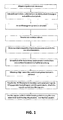
- FIG. 1 is a flowchart of the process used to obtain formulations of the invention (Table 20), as described in Example 8.
- FIG. 2 shows dissolution curves of testosterone undecanoate Formulations 9 (Table 2), 51, 53 and 55 (Table 20), as compared to known preparations described in Example 1 of US2010/0173882 .
- FIG. 3 shows dissolution curves of testosterone undecanoate Formulations 17 (Table 5), 28 (Table 10), 39 (Table 14), 56, 57 (Table 27) and 58 (Table 21).
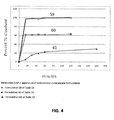
- FIG. 4 shows dissolution curves of testosterone undecanoate from formulations 59, 60, and 61 (Table 22).
- FIG. 5A is a mean PK profile of testosterone undecanoate resulting from treatments A through F described in Table 23 dosed to 4 beagle dogs after eating a high fat meal.
- FIG. 5B is the mean PK profile of testosterone for the same treatments A-F.
- FIG. 6 shows the mean testosterone concentration in beagle dogs dosed with 80mg testosterone undecanoate in Formulations 54 and 52 (Table 20). Values are the mean values obtained from a single group of 4 dogs. Phytosterols (400mg) were co-dosed on both occasions
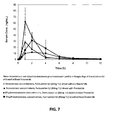
- FIG. 7 shows the mean testosterone and DHT concentration profile in 4 beagle dogs dosed with 80mg testosterone undecanoate in formulation 52 (Table 20), with and without 5mg finasteride. Phytosterols (400mg) were co-dosed on both occasions.
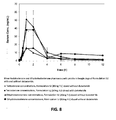
- FIG. 8 shows the mean testosterone and DHT concentration profile in 4 beagle dogs dosed with 80mg testosterone undecanoate in formulation 52 (Table 20), with and without 0.5mg dutasteride. Phytosterols (400mg) were co-dosed on both occasions.
- FIG. 9 shows the mean testosterone concentration profile in three beagle dog groups (4 per group) dosed with 80mg testosterone undecanoate in formulation 52 (Table 20) and 400 or 800mg of phytosterols.
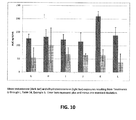
- FIG. 10 shows the average testosterone and DHT exposures (ng-h/mL) for a study of 6 treatments G-L each containing 80mg TU, as provided in Example 5.
- FIG. 11 shows the DHT/T ratios for 4 beagle dogs dosed with three treatments each containing 80mg TU, as provided in Example 5. All treatments were co-dosed with 400mg phytosterols.
- FIG. 12 shows the predicted average human concentrations of testosterone and DHT resulting from dosing with Treatments I, K, and L as described in Table 24.
- the present invention relates to improved formulations and methods (e.g., oral, parenteral, intramuscular, transdermal, nasal, sublingual, buccal and/or subcutaneous) for drug delivery involving modulation of solubility, stability, absorption, metabolism, and/or pharmacokinetic profile of the therapeutic agent when administered to a subject in need of such therapeutic agent.
- improved formulations and methods e.g., oral, parenteral, intramuscular, transdermal, nasal, sublingual, buccal and/or subcutaneous
- a formulation or composition of the invention includes a combination of one or more therapeutic agents and a sterol or sterol ester, where inclusion of the sterol or sterol ester provides an additive or synergistic effect with respect to one or more of: solubility, stability, absorption, metabolism, and pharmacokinetic profile of the therapeutic agent.
- inclusion of a sterol or sterol ester smaller amounts of a therapeutic agent are required in the formulation, to achieve a desired pharmacokinetic profile of the therapeutic agent in the subject that is similar to that achieved with a larger amount of therapeutic agent administered without the sterol or sterol ester.
- the sterol is a phytosterol.
- a formulation of the invention further includes a non-sterol solubilizer to further modulate the pharmacokinetic profile of the therapeutic agent upon administration of the formulation.
- the formulations described herein contain a therapeutic agent in substantially solubilized form.
- the formulations improve the bioavailability and pharmacokinetic profile of the therapeutic agent after oral, parenteral, intramuscular, transdermal, nasal, sublingual, buccal and/or subcutaneous administration and/or improve patient compliance through an easily followed dosing regimen.
- the invention further provides pharmaceutical compositions containing such formulations and methods of making and methods of using such formulations.
- the formulations of the invention are formulations for the oral, parenteral, intramuscular, transdermal, nasal, sublingual, buccal and/or subcutaneous administration of a therapeutic agent.
- the therapeutic agent contained in such formulation can be generally lipophilic in nature (with a log P greater than 2, wherein P is the intrinsic octanol:water partition coefficient) and poorly water soluble.
- P is the intrinsic octanol:water partition coefficient
- "Poorly water soluble” refers to drugs for which the dose is not soluble in 250mL of aqueous solution across a pH range of 1.0 to 7.5. This definition is used in The Biopharmaceutics Classification System (BCS) Guidance published in 2005 by the US Food and Drug Administration .
- BCS Biopharmaceutics Classification System
- Lipophilic refers to a therapeutic agent that is soluble in lipids, such as fats, oils, and the like. Accordingly, in one embodiment, the invention provides a formulation where a lipid is provided as a solubilizer with the therapeutic agent, so that the administered therapeutic agent is bioavailable, exhibits desirable pharmacokinetic profile and any effects of food on the oral bioavailability of the therapeutic agent are minimized.
- hydrophobic drugs defined herein encompass both those drugs which are inherently hydrophobic (i.e., having a log P of at least 2) as well otherwise hydrophobic medicaments that have been rendered hydrophobic with suitable modification (e.g., by conjugation to fatty acids and/or lipids).
- the therapeutic agent herein may also be referred to herein as an "active agent,” “drug” or “pharmacologically active agent.”
- active agent drug
- drug pharmacologically active agent
- the above-listed terms interchangeably refer to a chemical material or compound which, when administered to an organism (human or animal), is generally bioavailable and induces a desired pharmacologic effect.
- the therapeutic agent may be selected from any agent that is traditionally used as a medicament and lends itself to being administered via oral or parenteral (such as intramuscular, transdermal, nasal, sublingual, buccal and subcutaneous) routes of administration.
- Such therapeutic agents may be chemotherapeutics; antimycotics; oral contraceptives, nicotine or nicotine replacement agents, minerals, analgesics, antacids, muscle relaxants, antihistamines, decongestants, anesthetics, antitussives, diuretics, anti-inflammatories, antibiotics, antivirals, psychotherapeutic agents, anti-diabetic agents and cardiovascular agents, nutraceuticals and nutritional supplements.
- Additional therapeutic agents for administration via formulations of the invention include vitamins and co-enzymes including, but not limited to, water or fat soluble vitamins such as thiamin, riboflavin, nicotinic acid, pyridoxine, pantothenic acid, biotin, flavin, choline, inositol and paraminobenzoic acid, carnitine, vitamin C, vitamin D and its analogs, vitamin A and the carotenoids, retinoic acid, vitamin E and vitamin K and Coenzyme Q10.
- water or fat soluble vitamins such as thiamin, riboflavin, nicotinic acid, pyridoxine, pantothenic acid, biotin, flavin, choline, inositol and paraminobenzoic acid, carnitine, vitamin C, vitamin D and its analogs, vitamin A and the carotenoids, retinoic acid, vitamin E and vitamin K and Coenzyme Q10.
- the therapeutic agent of formulations of the invention may also be selected from botanical bioactive agents, such as: polyphenols, isoflavones, resveratrol, soy isoflavones, grape seed extract polyphenols, curcumin, policosanols, and epigenin; anti-inflammatory plant extracts such as aloe vera, echinacea and chamomile hammamelis extracts; anti-psoriatic plant extracts, such as chinese zizipus jujube; astringents plant extracts such as hammamelis; anti bacterial plant extracts such as artemisia, chamomile, and golden seal; immune modulators such as Echinacea; anti-aging or anti-cancer or anti-photo damage agents; anti-inflammatory agents, such as feverfew parthenolides, rejuvenation agents, carotenoids, beta-carotene, lycopene, astaxanthons, lutein, tocopheryl and retino
- the therapeutic agent of formulations of the invention may also include coronary drugs, including vasodilators such as nitroglycerin and isosorbide dinitrate, calcium-antagonists such as verapamile, nifedipine and diltiazem, and cardiac-glycosides such as digoxine.
- coronary drugs including vasodilators such as nitroglycerin and isosorbide dinitrate, calcium-antagonists such as verapamile, nifedipine and diltiazem, and cardiac-glycosides such as digoxine.
- vasodilators such as nitroglycerin and isosorbide dinitrate
- calcium-antagonists such as verapamile, nifedipine and diltiazem
- cardiac-glycosides such as digoxine.
- Other therapeutic agents that can be usefully administered in the broad practice of the invention include analgesics such as morphine, bupren
- the therapeutic agent of a formulation of the invention may be selected from cholesterol-lowering and triglycerides-lowering drugs: fenofibrate, lovastatin, simvastatin, pravastatin, fluvastatin, atorvastatin, or cerivastatin; anxiolytics, sedatives and hypnotics: diazepam, nitrazepam, flurazepam, estazolam, flunitrazepam, triazolam, alprazolam, midazolam, temazepam, lormetazepam, brotizolam, clobazam, clonazepam, lorazepam, oxazepam, buspirone, and the like; migraine relieving agents: sumatriptan, ergotamines and derivatives, and the like; drugs for combating motion sickness: cinnarizine, anti-histamines, and the like; anti-emetics: ondan
- therapeutic agents for use in formulations of the invention include: chemotherapeutic agents, including, but not limited to: cisplatin (CDDP), procarbazine, mechlorethamine, cyclophosphamide, camptothecin, ifosfamide, melphalan, chlorambucil, bisulfan, nitrosurea, dactinomycin, daunorubicin, doxorubicin, bleomycin, plicomycin, mitomycin, etoposide (VP16), tamoxifen, taxol, transplatinum, 5-fluorouracil, vincristin, vinblastin and methotrexate, or any analog or derivative variant thereof; antibiotic drugs: Tetracyclines such as tetracycline, doxycycline, oxytetracycline, chloramphenicol etc.; Macrolides such as erythromycin and derivatives, etc.; Antivirals: such as acyclovir, idoxuridine,
- Anti-amoebics Metronidazole, metronidazole benzoate and tinidazole etc.; Anti-inflammatory drugs: steroids or NSAIDs such as indomethacin, ibuprofen, piroxicam, diclofenac etc.; Anti-allergics: Disodium cromoglycate etc.; Immunosuppressive agents: cyclosporins etc.; Antimicrobial agents that may be used include, but are not limited to, naficillin, oxacillin, vancomycin, clindamycin, erythromycin, trimethoprim-sulphamethoxazole, rifampin, ciprofloxacin, broad spectrum penicillin, amoxicillin, gentamicin, ceftriazoxone, cefotaxime, chloramphenicol, clavunate, sulbactam, probenecid, doxycycline, spectinomycin, cefixime, penicillin G, minocycl
- Antiviral agents include, but are not limited to: acyclovir, trifluridine, idoxorudine, foscarnet, ganciclovir, zidovudine, dideoxycytosine, dideoxyinosine, stavudine, famciclovir, didanosine, zalcitabine, rifimantadine, and cytokines.
- Antihistamines useful for therapeutic administration include, but are not limited to: cimetidine, ranitidine, diphenydramine, prylamine, promethazine, chlorpheniramine, chlorcyclizine, terfenadine, carbinoxamine maleate, clemastine fumarate, diphenhydramine hydrochloride, dimenhydrinate, prilamine maleate, tripelennamine hydrochloride, tripelennamine citrate, chlorpheniramine maleate, brompheniramine maleate, hydroxyzine pamoate, hydroxyzine hydrochloride, cyclizine lactate, cyclizine hydrochloride, meclizine hydrochloride, acrivastine, cetirizine hydrochloride, astemizole, levocabastine hydrochloride, and loratadine.
- Decongestants and antitussives included, but are not limited to: dextromethorphan, levopropoxyphene napsylate, noscapine, carbetapentane, caramiphen, chlophedianol, pseudoephedrine hydrochloride, diphenhydramine, glaucine, pholcodine, and benzonatate.
- therapeutic agents administerable in formulations of the invention include: anesthetics, such as: etomidate, ketamine, propofol, and benodiazapines (e.g ., chlordiazepoxide, diazepam, clorezepate, halazepam, flurazepam, quazepam, estazolam, triazolam, alprozolm, midazolam, temazepam, oxazepam, lorazepam), benzocaine, dyclonine, bupivacaine, etidocaine, lidocaine, mepivacaine, promoxine, prilocaine, procaine, proparcaine, ropivacaine, and tetracaine.
- anesthetics such as: etomidate, ketamine, propofol, and benodiazapines (e.g ., chlordiazepoxide, diazepam, c
- Other useful agents may include: amobartital, aprobarbital, butabarbital, butalbital mephobarbital, methohexital, pentobarbital, phenobarbital, secobarbital, thiopental, paral, chloral hydrate, ethchlorvynol, clutethimide, methprylon, ethinamate, and meprobamate;
- Analgesics including, but not limited to: opioids such as morphine, mepidine, dentanyl, sufentranil, alfentanil, aspirin, acetaminophen, ibuprofen, indomethacine, naproxen, atrin, isocome, midrin, axotal, firinal, phrenilin, ergot and ergot derivatives (wigraine, cafergot, ergostat, ergomar, dihydroergotamine), imitrex; Diure
- paraminophenol derivative e.g . acetaminophen indole and indene acetic acids (indomethacin, sulindac and etodalac) heteroaryl acetic acids (tolmetin diclofenac and ketorolac) aryl propionic acid derivatives (ibuprofen, naproxen, ketoprofen, fenopren, oxaprozine), anthranilic acids (mefenamic acid, meclofenamic acid) enolic acids (piroxicam, tenoxicam, phenylbutazone and oxyphenthatrazone);
- Psychotherapeutic agents including, but not limited to: thorazine, serentil, mellaril, millazine, tindal, permitil, prolixin, trilafon, stelazine, suprazine, taractan, navan, clozaril, haldol, halperon
- compositions of the invention in various embodiments provide effective formulations for oral, parenteral, intramuscular, transdermal, nasal, sublingual, buccal and/or subcutaneous administration of androgens as the therapeutic agent.
- Androgens have diverse effects in many tissues. Recent studies have begun to elucidate the mechanisms of their anabolic effects. The mechanistic understanding is leading to an increase in clinical usefulness for many disease states. The strongest indication for the use of androgens is for replacement therapy in hypogonadal men to maintain sexual function and libido, muscle strength, and prevent the development of osteoporosis. Another use is for the stimulation of erythropoiesis in condition of bone marrow suppression such as aplastic anaemia.
- testosterone concentrations are reduced and considerable interest has developed over the use of physiologic doses of testosterone to return concentrations to the level of young men.
- Testosterone administration increases muscle protein synthesis, muscle strength, improve mood and quality of life in older men.
- androgens as replacement therapy in post-menopausal women and the benefits of improvement in muscle strength, sexuality and libido are compelling in this group of women.
- Androgens have also shown clinical usefulness in the treatment of muscle wasting syndromes. In men with AIDS wasting syndrome, there was a direct relationship between the loss of lean body mass and the degree of hypogonadism present in the disease. Testosterone replacement in men and women with AIDS wasting syndrome increases weight gain in this debilitating condition. Androgens have also shown anabolic effects on muscular dystrophy, metabolic syndrome, and Alzheimer disease ( Diab. Nutr. Metab. 12:339-343, 1999 ).
- Androgen-containing formulations are therefore of interest in preparations for male contraception and male HRT (hormone replacement therapy). Androgens can also be used in the female, e.g. as androgen replacement therapy in postmenopausal women. Androgens may particularly be used as a replacement for or a supplement to endogenous testosterone.
- androgen is administered in order to relieve the undesired effects of the (partial) androgen-deficiency including, but not limited to, effects on bone mineral density, changes in body composition, reduction of sexual interests and erectile dysfunction.
- the invention provides androgen-containing formulations useful for administration of androgens to a subject in need of such administration.
- the therapeutic agent of a formulation of the invention may be selected from testosterone and esters thereof.
- Testosterone esters may include, but are not limited to, any C 1 -C 24 esters of testosterone, including testosterone proprionate, testosterone enanthate, testosterone cypionate, testosterone undecanoate, testosterone cyclohexylmethylcarbonate, and testosterone triglyceride.
- Additional testosterone esters can include, but are not limited to, formate, acetate, butyrate, valerate, hexanoate, heptanoate, octanoate, nonanoate, and decanoate.
- the therapeutic agent is a testosterone ester with a carbon structure that is linear or branched, and saturated, monounsaturated or polyunsaturated.
- a carbon number range e.g., in C 1 -C 12 alkyl
- identification of a carbon number range is intended to include each of the component carbon number moieties within such range, so that each intervening carbon number and any other stated or intervening carbon number value in that stated range, is encompassed, it being further understood that sub-ranges of carbon number within specified carbon number ranges may independently be included in smaller carbon number ranges, within the scope of the invention, and that ranges of carbon numbers specifically excluding a carbon number or numbers are included in the invention, and sub-ranges excluding either or both of carbon number limits of specified ranges are also included in the invention.
- C 1 -C 12 alkyl is intended to include methyl, ethyl, propyl, butyl, pentyl, hexyl, heptyl, octyl, nonyl, decyl, undecyl and dodecyl, including straight chain as well as branched groups of such types. It therefore is to be appreciated that identification of a carbon number range, e.g., C 1 -C 12 , as broadly applicable to a substituent moiety, enables, in specific embodiments of the invention, the carbon number range to be further restricted, as a sub-group of moieties having a carbon number range within the broader specification of the substituent moiety.
- the carbon number range e.g., C 1 -C 12 akyl
- the carbon number range may be more restrictively specified, in particular embodiments of the invention, to encompass sub-ranges such as C 1 -C 4 alkyl, C 2 -C 8 alkyl, C 2 -C 4 alkyl, C 3 -C 5 alkyl, or any other sub-range within the broad carbon number range.
- Alkyls as used herein include, but are not limited to, methyl, ethyl, propyl, isopropyl, butyl, s-butyl, t-butyl, pentyl and isopentyl and the like.
- Aryls as used herein includes hydrocarbons derived from benzene or a benzene derivative that are unsaturated aromatic carbocyclic groups of from 6 to 10 carbon atoms. The aryls may have a single or multiple rings. The term “aryl” as used herein also includes substituted aryls.
- Examples include, but are not limited to phenyl, naphthyl, xylene, phenylethane, substituted phenyl, substituted naphthyl, substituted xylene, substituted phenylethane and the like.
- Cycloalkyls as used herein include, but are not limited to cyclopropyl, cyclobutyl, cyclopentyl, cyclohexyl and the like.
- a range of carbon numbers will be regarded as specifying a sequence of consecutive alternative carbon-containing moieties, including all moieties containing numbers of carbon atoms intermediate the endpoint values of carbon number in the specific range as well as moieties containing numbers of carbon atoms equal to an endpoint value of the specific range, e.g., C 1 -C 6 , is inclusive of C 1 , C 2 , C 3 , C 4 , C 5 and C 6 , and each of such broader ranges may be further limitingly specified with reference to carbon numbers within such ranges, as sub-ranges thereof.
- the range C 1 -C 6 would be inclusive of and can be further limited by specification of sub-ranges such as C 1 -C 3 , C 1 -C 4 , C 2 -C 6 , C 4 -C 6 , etc. within the scope of the broader range.
- the therapeutic agent is selected from testosterone and/or testosterone undecanoate (TU).
- the formulation contains a combination of testosterone and one or more testosterone esters as therapeutic agents, where the ratio of testosterone to testosterone ester is from about 0: 100 or 100:0 to about 1:1, preferably from about 1:10 to about 1:3 or from about 10:1 to about 3:1.
- the ratio of testosterone to testosterone ester may be in a range having a lower value of any of 0, 0.01, 0.05, 0.1, 0.15, 0.2, 0.33, 0.5, 1.0, 2.0 and 3.0 and having an upper value of any of 90.5, 91.0, 91.25, 91.5, 91.75, 92.0, 93.0, 94.0, 95.0, 97.5, 99.0, 99.5, 99.75, 99.9, 99.95 and 100.0.
- the formulation contains testosterone and/or TU as therapeutic agents.
- references to the amounts of therapeutic agents as percent by weight of a formulation may be made as equivalent to T.
- 100mg of T is equivalent to 139 mg testosterone enanthate, 158 mg testosterone undecanoate, 143 mg testosterone cypionate, and 183 mg testosterone palmitate.
- Amounts of therapeutic agents included in formulations of the invention may be proportionally adjusted, relative to testosterone.
- the invention addresses the problem of providing an orally active androgen formulation that is well absorbed in the human body. It has been well established by dog ( Shackleford J. Pharmacol. and Exp. Ther., 925-933, 2003 ) and human studies that testosterone undecanoate is absorbed almost exclusively via the intestinal lymphatics ( Coert et al., Acta Endocrinol (Copenh), 789-800, 1975 ; Nieschlag et al., Acta Endocrinol (Copenh), 366-374,1975 ; Horst et al., Klin Klin Klinschr, 875-879, 1976 ), thereby bypassing hepatic metabolism.
- the invention provides SEDDS formulations of testosterone undecanoate containing phytosterols which enhances lymphatic absorption of TU by about 10% to about 300% over current commercial products, Andriol ® Testocaps ® , and known SEDDS formulations ( U.S. Patent Application No. 2008/0317844 ; U.S. Patent Application No. 2010/0173882 ).
- the invention also provides a formulation of TU and/or testosterone that has a higher strength than currently known TU formulations.
- the composition is formulated for parenteral administration.
- the parenteral administration is intramuscular.
- One embodiment of the present invention also contemplates a formulation that releases the therapeutic agent into the patient's system at physiologically effective levels, over a period of up to 12 hours.
- the formulation releases the therapeutic agent into the patient's system at physiologically effective levels over a period of up to 24 hours.
- the invention provides embodiments where the formulation is effective for any of immediate release of the therapeutic agent, sustained release of the therapeutic agent, delayed release of the therapeutic agent, and/or any other modified release of the therapeutic agent.
- the invention provides a composition formulated for a combination of immediate and modified release of testosterone and/or testosterone esters.
- Testosterone is generally administered by oral ingestion in a bonded form as testosterone undecanoate, methyltestosterone, or testosterone cyclodextrin complex, to avoid the first pass effect.
- testosterone undecanoate methyltestosterone
- testosterone cyclodextrin complex testosterone cyclodextrin complex
- testosterone itself could not be administered by oral ingestion. According to The Pharmacological Basis of Therapeutics, 10th ed., by Goodman and Gilman, oral administration of testosterone leads to absorption into the hepatic circulation but results in rapid metabolism by the liver. Therefore, oral ingestion is ineffective in delivering testosterone systemically. However, some researchers have further investigated oral administration of testosterone.
- P. R. Daggett et al. in the article entitled "Oral Testosterone, a Reappraisal," ( Daggett, et al., Horm Res. 1978, 9(3):121-9 ) described an oral administration of 200 mg of micronized testosterone twice daily. The dosage provided a double peak effect, with a desired level of serum testosterone for about 4 hours for each peak. Daggett et al. found that the administration of oral testosterone was "unsuitable for routine use.”
- Modified release generally refers to release of a drug that differs from immediate release of the drug under the same conditions via the same route of administration. Modified release may include each of immediate release, sustained release and delayed release. "Sustained release,” as used herein, generally refers to release of a drug whereby the level of drug available to the patient is maintained at some level over a desired period of time. A variety of methods and formulations are used to provide sustained release of drugs. U.S. Patent No. 5,567,439 , describing methods of sustained release, is hereby incorporated by reference.
- the desired resulting level of total serum testosterone in a subject is in the range of from about 300 to about 1100 ng/dL in a male subject and in the range of from about 30 to about 110 ng/dL in a female subject.
- a formulation of the present invention, with testosterone or TU as the therapeutic agent delivers the desired level of serum testosterone for a minimum time period of about 8 to about 12 hours.
- the desired level of serum testosterone may be maintained for more than 12 hours. In a further embodiment the desired level of serum testosterone may be maintained for about 24 hours.
- the formulation is designed for administration three times a day (tid), two times a day (bid), or once a day (qd).
- Administration of a formulation of the invention may be by any regimen that achieves the desired resulting level of total serum testosterone in the target subject.
- the formulation and methods of the present invention provide the ability to administer testosterone and/or testosterone ester in combination with sterols and/or sterol esters to achieve improved sustained release properties, as described more fully herein.
- the administration is oral delivery.
- the administration is parenteral, transdermal, nasal, sublingual, buccal or subcutaneous.
- delivery methods of formulations or pharmaceutical compositions described herein include, but are not limited to sublingual administration, buccal administration, parenteral administration, intraperitoneal (i.p.) administration, intravenous (i.v.) administration, intraarterial (i.a.) administration, topical administration, transdermal administration, intradermal (i.d.) administration, intramuscular (i.m.) administration, subcutaneous (sc) administration, and nasal administration.
- the invention provides a formulation including more than one therapeutic agent.
- a second therapeutic agent is included in a formulation of the invention, the weight ratio of the primary therapeutic agent to the secondary therapeutic agent may be varied and will depend upon the effective dose of each ingredient.
- Each therapeutic agent contained in the composition or dosage form will be present in a therapeutically effective amount.
- the low bioavailability of a therapeutic agent caused by the high first-pass effect in the liver can be reduced by optimizing lymphatic absorption of the therapeutic agent.
- the present invention enables enhancement of the lymphatic absorption of testosterone esters and/or a combination of testosterone with testosterone esters, by formulations including sterols.
- the sterols are phytosterols. It is shown herein that sterols, phytosterols and/or phytosterol esters modulate the solubility, stability, absorption, metabolism and pharmacokinetic profile of therapeutic agents that are lipophilic.
- the invention provides a formulation for the administration of a therapeutic agent in which the formulation contains a sterol in addition to the therapeutic agent, to provide desired properties of solubility, stability, absorption, metabolism and/or pharmacokinetic profile of the therapeutic agent.
- the therapeutic agent is selected from testosterone and testosterone undecanoate.
- stability includes the stability of both the formulation and the therapeutic agent, both prior to administration and after administration to an individual.
- An improved stability prior to administration enables longer shelf life, less protective packaging, or storage at more aggressive environments.
- An improved stability after administration enables improved pharmacokinetic properties, such as higher exposure, or longer duration of action.
- Steprols include all of plant, animal and fungal sterols.
- the sterols may be pure or may be a mixture of sterols.
- the sterol is cholesterol.
- the sterol is a "phytosterol," a plant sterol or stanol, used herein to refer generally to plant-derived sterols or plant-derived stanols, phytochemicals that are added to foods, or supplements.
- Use of the term sterols also includes sterol esters, of any of plant-derived, animal-derived or fungal-derived sterol.
- Steprol esters refer to plant sterols or stanols that have been esterified by creating an ester bond between a fatty acid and the sterol or stanol.
- Fatty acids used in esterification are plant-derived, animal-derived or fungal-derived.
- Esterification occurs in intestinal cells and is also an industrial process. Esterification may make plant sterols and stanols more fat-soluble so they are easily incorporated into fat-containing foods, including margarines and salad dressings.
- Exemplary sterols useful in the invention may include, but are not limited to, phytosterols, cholesterol, beta-sitosterol, and/or sitostanol.
- Cholesterol with a ClogP (calculated logP) of 12 and a water solubility of ⁇ 10ng/mL is efficiently absorbed from the intestine by presentation of cholesterol dissolved in the BAMM droplets to the enterocyte brush border mucosa with subsequent collisional transfer to the glycocalyx.
- Many other extremely insoluble and lipophilic compounds are absorbed more efficiently in the fed state where the BAMM is present.
- the BAMM system is more effective than the BA system because of the higher miceller concentration in the fed as compared to the fasted state.
- the plant phytosterols which are present in food have similar ClogP and solubility but are slightly different in structure of the side chain and displace a significant percentage of cholesterol from the BAMM and reduce cholesterol absorption.
- the present inventor selected sterols for investigation as providing a modulating effect on the solubility, stability, absorption, metabolism and/or PK profile of various lipophilic drugs.
- the modulating effect provided by sterols in formulations and methods of the invention is dependent upon the concentration of the sterols.
- the vegetable oils contain a number of sterols that differ from cholesterol by having ethyl or methyl groups or unsaturation in the side chain.
- ß-sitosterol which differs from cholesterol in that it has an ethyl group at carbon 24 of the side chain.
- sitosterol in the early 1950s it was noted that the addition of sitosterol to the diet of cholesterol-fed chickens or rabbits lowered cholesterol levels in both species and inhibited atherogenesis in the latter ( Pollak OJ, Kritchevsky D. Monogr Atherosclerosis, 1981; 10:1-219 ).
- Sitosterol or mixtures of soy sterols were studied extensively as cholesterol-lowering agents between 1950 and 1960 ( Lees AM, Mok HYI, Lees RS, McCluskey MA, Grundy SM. Atherosclerosis, 1977; 28:325-338 ).
- sitostanol a 5- ⁇ saturated sitosterol derivative
- sitostanol was interesterified with margarine, and the resultant product (1.9 to 2.6 g sitosterol per day) exhibited a hypocholesterolemic effect in a population with mild hypercholesteremia. The mean 1-year reduction in plasma cholesterol was 10.2%. The sitostanol was not absorbed and did not appear to interfere with absorption of fat-soluble vitamins.
- Phytosterols have a long history of safe use in humans.
- the drug Cytellin ® was marketed in the United States between 1954 and 1982. The dosage was 6-18 g/d, with higher dosages recommended for those patients not responding to the standard dose. Dosages as high as 45 g/d were reported to be well tolerated without serious side effects (Eli Lilly Package Insert M100 Suspension Cytellin ® (Beta and Di-hydrobeta sitosterols). A drug product indicated for the reduction of hypercholesterolemia. Dated 1954.).
- LCPUFA long-chain polyunsaturated fatty acids
- EPA eicosapentaneoic acid
- DHA docosahexaenoic acid
- Plasma triglyceride concentration was lowered by (n-3) LCPUFA (22.3%) alone and in combination with phytosterols (25.9%), whereas phytosterol treatment alone had no effect. ( Michelle A. Micallef et al., J. Nutr. 138: 1086-90, 2008 )
- Testosterone is implicated as one of the gender-related risk factors for coronary artery disease in men due to its HDL-C lowering effect.
- Weekly administration of 200mg TE to male powerlifters decreased HDL-C and apolipoprotein A significantly but total cholesterol, LDL-C or triglyceride levels were not altered ( Zmuda et al, Metabolism 42: 446-450, 1993 ).
- testosterone and/ or testosterone ester formulations of the present invention containing LCPUFA and phytosterols may be used to minimize the HDL-C lowering effect observed with currently available testosterone and/or testosterone ester products delivered via oral, parenteral, intramuscular, transdermal, nasal, sublingual, buccal and/or subcutaneous routes of administration.
- the invention provides a formulation for the oral administration of a therapeutic agent which contains testosterone, testosterone undecanoate and/or another testosterone ester in combination with a phytosterol, where the phytosterol provides modulation of one or more of: solubility, stability, absorption, metabolism and pharmacokinetic profile of the testosterone or testosterone ester.
- concentration of the dissolved phytosterol(s) ranges from about 1% to about 30% of the formulation, preferably about 2% to about 20% solubilized in the formulation to exhibit the desired modulating effect.
- the formulation further comprises LCPUFA, LCPUFA oils, LCPUFA esters, and mixtures thereof in addition to the phytosterol and therapeutic agent.
- the formulation further comprises solubilizers (lipids, surfactants, etc.), and LCPUFA, LCPUFA oils, LCPUFA esters, and mixtures thereof, in addition to the phytosterol and therapeutic agent.
- the amount of phytosterol and/or phytosterol esters in the formulation is an amount effective to modulate the solubility, stability, metabolism and/or bioavailability to deliver the desired PK profile for a minimum of about 8 to about 12 hours. In another embodiment, the modulation will last longer than 12 hours, preferably about 24 hours. This modulative effect is important for hormone replacement therapies, e.g., in elderly men with partial androgen deficiency (PADAM patients), in that a deficient plasma level of testosterone can be appropriately corrected.
- hormone replacement therapies e.g., in elderly men with partial androgen deficiency (PADAM patients)
- PADAM patients partial androgen deficiency
- HRT hormone replacement therapy
- Another embodiment of a dosing regiment for hormone replacement therapy involves administering orally a testosterone and/or testosterone ester formulation to hypogonadal men for a specified duration (1 week to 6 months) to achieve normal physiological levels of testosterone (300ng/dL - 1100 ng/dL in a male subject), followed by parenteral administration of a long acting intramuscular product of the present invention every (6-12 weeks) for maintenance therapy.
- the invention includes formulations including a therapeutic agent, a sterol and a non-sterol solubilizing agent for solubilization of the therapeutic agent.
- absorption is not dependent on the dissolution of the therapeutic agent from the formulation in the patient's gastrointestinal tract, as all or a substantial fraction of the therapeutic agent in the formulation is already solubilized prior to administration to the patient, increasing the amount of therapeutic agent available for absorption.
- the therapeutic agent is selected from testosterone and testosterone undecanoate and the sterol is a phytosterol.
- a “solubilizer” as referred to herein, may also be referred to as a “solubilizing agent.”
- the terms are used interchangeably.
- Solubilizers included in formulations of the invention are any pharmaceutically acceptable material that has a solubility for TU of at least about 1 mg per gram of the solubilizer, more preferably at least about 40 mg per gram of the solubilizer, and most preferably at least about 100 mg per gram of the solubilizer.
- the solubilizer is preferably present in an amount such that a significant fraction of the therapeutic agent is solubilized in the composition and is capable of providing an immediate and therapeutically effective amount of the therapeutic agent to a patient in a readily absorbable form upon administration.
- the therapeutic agent is testosterone undecanoate, which provides a therapeutically effective amount of testosterone to a patient.
- the solubilizers of the present invention can also increase the solubilization of TU or any other therapeutic agent when the composition contacts an aqueous medium, and particularly gastro-intestinal fluids upon administration of the dosage form containing the composition.
- the solubilizers as provided herein improve the dissolution profile of TU or any other therapeutic agent and thereby the bioavailability of TU or any other therapeutic agent.
- the solubilizer is a non-sterol solubilizer.
- the solubilizers are selected from triglycerides, diglycerides, monoglycerides, free fatty acids, and fatty acid esters and derivatives thereof, individually or in combination.
- solubilizers include, but are not limited to, propylene glycol dicaprylate/caprate, caprilic/capric triglyceride, caprylic/capric/linoleic triglyceride, e.g.
- Additional examples include vegetable oils and C 12-18 fatty acid mono-, di- and triglycerides prepared by individual admixing or as transesterification products of vegetable oils (such as soybean oil, almond oil, sunflower oil, olive oil or corn oil) with glycerol.
- vegetable oils such as soybean oil, almond oil, sunflower oil, olive oil or corn oil
- Particularly preferred lower alcohol fatty acid esters include ethyl oleate, ethyl linoleate, ethyl caprylate, ethyl caprate, isopropyl myristate, isopropyl palmitate and mixtures thereof.
- the formulation includes a vitamin E solubilizer.
- nitrogen-containing solvents have unexpected solubilization power toward testosterone undecanoate and other hydrophobic therapeutic agents relative to other commonly used non-nitrogen containing solvents such as glycerol, propylene glycol, and polyethylene glycols.
- the nitrogen-containing solvent solubilizer may be selected from, but is not limited to: dimethylformamide, dimethylacetamide, N-alkylpyrrolidone, N-hydroxyalkylpyrrolidone, N-alkylpiperidone, N-alkylcaprolactam and mixtures thereof wherein alkyl is a C 1-12 branched or straight chain alkyl.
- nitrogen-containing solvents include N-methyl 2-pyrrolidone, N-ethyl 2-pyrrolidone or a mixture thereof.
- the nitrogen-containing solvent may be in the form of a polymer such as polyvinylpyrrolidone.
- the formulation includes a solubilizer selected from nitrogen-containing solvents,
- the inventor has further surprisingly found that replacing one or more of the hydroxyl groups of glycerol and propylene glycol with, for example, a C 2 -C 24 alkyl ester, results in a propylene glycol or glycerol fatty acid ester with an unexpectedly high solubilizing power for testosterone undecanoate.
- the formulation includes a solubilizer selected from dehydroxylated, esterified non-nitrogen containing solvents, where the hydroxyl group has been replaced with an ester.
- esters of monohydric alcohols such as ethanol and ethylene glycols such as polyethylene glycols
- organic acid such as acetic acid, fatty acids and citric acids.
- solubilizers for use in formulations of the invention includes phospholipids.
- Solubilizing phospholipids include, but are not limited to, phosphatidylcholine, phosphatidylethanolamine, phosphatidylserine, phosphatidylinositol, lecithins, lysolecithins, lysophosphatidylcholine, polyethylene glycolated phospholipids/lysophospholipids, lecithins/lysolecithins and mixtures thereof.
- a formulation of the invention contains a solubilizer that is a hydrophobic or hydrophilic surfactant that would enhance the galenic properties of the therapeutic agent within the formulation.
- suitable surfactants include, but are not limited to: polyoxyethylene-sorbitan-fatty acid esters; e.g., mono- and tri-lauryl, palmityl, stearyl and oleyl esters; e.g., products of the type known as polysorbates and commercially available under the trade name Tween ® ; polyoxyethylene fatty acid esters, e.g., polyoxyethylene stearic acid esters of the type known and commercially available under the trade name Myrj ® ; polyoxyethylene castor oil derivatives, e.g., products of the type known and commercially available as Cremophors ® .
- polyoxyl 35 castor oil (Cremophor ® EL) and polyoxyl 40 hydrogenated castor oil (Cremophor ® RH40); ⁇ -tocopherol, ⁇ -tocopheryl polyethylene glycol succinate (vitamin E TPGS), ⁇ -tocopherol palmitate and ⁇ -tocopherol acetate; PEG glyceryl fatty acid esters such as PEG-8 glyceryl caprylate/caprate (commercially known as Labrasol ® ), PEG-4 glyceryl caprylate/caprate (Labrafac ® Hydro WL 1219), PEG-32 glyceryl laurate (Gelucire ® 44/14), PEG-6 glyceryl mono oleate (Labrafil ® M 1944 CS), PEG-6 glyceryl linoleate (Labrafil ® M 2125 CS); propylene glycol mono- and di-fatty acid esters, such as propylene
- one widely utilized approach to achieve sustained solubilization is to utilize formulations within a lipid vehicle containing surfactants that constitute a SEDDS or SMEDDS, to effect spontaneous emulsification upon contact of the lipid with fluids in the GI tract.
- Hydrophilic-Lipophilic Balance is a term used to describe an arbitrary scale from 0 to 40 depicting the Hydrophilic/Lipophilic Balance of a surfactant. Products with low HLB are more oil soluble. High HLB represents good water solubility. HLB is a numerically calculated number based on the surfactants' molecular structure. It is not a measured parameter.
- HLB hydrophilic lipophilic balance
- the powder can be compressed into tablets, filled into hard gelatin capsules or formulated into other oral dosage forms known to the art.
- the pre-concentrates can be formulated for parenteral, intramuscular, transdermal, nasal, sublingual, buccal and subcutaneous administration.
- solubilizing species present in the intestinal contents comprise low concentrations of bile salt, phospholipids and cholesterol derived from fasted biliary output.
- solubilization capacity of the fasted small intestine remains low and is correlated with the total bile salt concentrations rather than reflecting the structure of the individual colloidal species ( Pendersen et al., Pharm Res. 17, 891-894, 2000 ; Kaukonen et.al., Pharm Res. 21, 245-253, 2004 ).
- the drug solubilization capacity increases significantly and is dependent on the nature of the digestion products (in terms of the fatty-acid chain length) and the characteristics of the colloidal structures they form.
- the digestion products of medium-chain triglycerides C 8-C12 fatty acids and monoglycerides
- the drug solubilization capacity of these composite colloidal species can be up to 50-fold higher than that of endogenous bile salt, phospholipids and cholesterol species ( Kosenna et al., J. Pharm Sci. 93, 332-348, 2004 ).
- solubilization capacity is dependent on lipid concentration, and the solubility of a range of poorly water-soluble drugs has been shown to be enhanced by less than threefold at lower ( ⁇ 25mM) exogenous lipid levels ( Kosenna et al., J. Pharm Sci. 93, 332-348, 2004 ; Kosenna et al., J. Pharm. Sci. 94, 481-492, 2005 ).
- phase behavior and solubilization characteristics of the species formed on the intercalations of the digestion products of long-chain triglycerides (which comprise primarily C 18 lipids, e.g.
- palm oil, corn oil, canola oil, soybean oil, olive oil, peanut oil, sesame oil, hydrogenated vegetable oils, hydrogenated soybean oil, etc. vary significantly when compared to medium-chain triglycerides ( Kosenna et al., J. Pharm. Sci. 94, 481-492, 2005 ).
- C 18 fatty acids and monoglycerides are considerably less polar than their C 8 or C 12 equivalents and turbid systems that contain larger ( ⁇ 100 nm) vesicular species are evident even at low (>2.5mM) lipid concentrations. Importantly, these vesicular species provide for significantly enhanced drug solubilization capacities.
- solubilization enhancements of up to 20-fold are apparent ( Kosenna et al., J. Pharm Sci. 93, 332-348, 2004 ; Kosenna et al., J. Pharm. Sci. 94, 481-492, 2005 ).
- solubilization differences which are based on lipid content, are particularly significant in the context of the likely luminal concentration of lipid obtained after oral administration of a lipid-based formulation.
- the maximal luminal concentrations of fatty acid and monoglyceride (solubilized in micelles) post-digestion are approximately 8.5 mM and 4.2 mM, respectively.
- the present formulations do not require a separate in vivo step for the dissolution of crystalline testosterone undecanoate since a significant fraction of TU is already solubilized in the compositions by the included solubilizer.
- the invention in various embodiments provides a formulation for administration of a therapeutic agent, including 1) one or more lipophilic, poorly water soluble therapeutic agents, 2) a sterol or ester thereof; and 3) a solubilizing agent effective for solubilization of the therapeutic agent.
- the therapeutic agent is an androgen, and in a more particular embodiment, the androgen is selected from testosterone and testosterone esters, such as testosterone undecanoate.
- the sterol or ester thereof is a phytosterol.
- the solubilizing agent is a non-sterol solubilizing agent.
- the invention provides a method of enhancing solubility of one or more poorly water soluble therapeutic agents, including combining 1) a phytosterol or phytosterol ester, 2) a non-sterol solubilizing agent effective for solubilization of the therapeutic agent, and 3) at least one lipophilic, poorly water soluble therapeutic agent, to form a composition, wherein the composition is effective to enhance solubility of the at least one therapeutic agent, as compared to the solubility of the same therapeutic agent in the absence of 1) a phytosterol or phytosterol ester and 2) a non-sterol solubilizing agent effective for solubilization.
- TU is absorbed almost exclusively via the intestinal lymphatics ( Coert et al., Acta Endocrinol (Copenh), 789-800, 1975 ; Nieschlag et al., Acta Endocrinol (Copenh), 366-374,1975 ; Horst et al., Klin Klischr, 875-879, 1976 ; Shackleford J. Pharmacol. and Exp.
- Formulations containing oleic acid, glycerol monooleate, Polyoxyl 40 Hydrogenated Castor Oil (e.g., Cremophore RH 40), Polysorbate 80 (e.g., Tween 80), and phytosterols (Formulation # 54) enhance lymphatic absorption relative to the Castor oil and Lauroyl glycol (Andriol Testocap®) formulation by 294%.
- Cremophore RH 40, Tween 80, and Solutol HS 15 are known PgP efflux and P450 inhibitors.
- Tween 80 is also a known chylomicron secretion inducer.
- the formulation contains Polyoxyl 40 Hydrogenated Castor Oil (e.g., Cremophore RH 40) and Polysorbate 80 (e.g., Tween 80) in a ratio of about 1:10 to about 10:1, more preferably about 1:2 to about 2:1.
- Polyoxyl 40 Hydrogenated Castor Oil e.g., Cremophore RH 40
- Polysorbate 80 e.g., Tween 80
- TU absorption and metabolic stability include natural (e.g., phytosterols, borage oil, gamma-linoleic acid) and synthetic inhibitors (e.g., MK386) of 5-alpha-reductase absorbed via intestinal lymphatics.
- 5-alpha-reductase inhibitors such as Finasteride and Dutasteride have minimal effect on modulation of T or DHT exposure from oral T or T esters (Table 24) as they are absorbed via the portal vein.
- the invention further provides a formulation for oral administration of a therapeutic agent, including 1) one or more lipophilic, poorly water soluble therapeutic agents, 2) a sterol or ester thereof; 3) a solubilizing agent effective for solubilization of the therapeutic agent; and 4) an enhancing agent.
- a therapeutic agent including 1) one or more lipophilic, poorly water soluble therapeutic agents, 2) a sterol or ester thereof; 3) a solubilizing agent effective for solubilization of the therapeutic agent; and 4) an enhancing agent.
- the therapeutic agent is an androgen, and in a more particular embodiment, the androgen is selected from testosterone and testosterone esters, such as testosterone undecanoate.
- the sterol or ester thereof is a phytosterol.
- the solubilizing agent is a non-sterol solubilizing agent.
- the formulation comprises an enhancing agent.
- the enhancing agent is selected from the group consisting of: an inhibitor of 5- ⁇ -reductase enzymes, a P450 inhibitor, a PgP inhibitor and a chylomicron secretion inducer.
- the 5- ⁇ -reductase inhibitor is MK-386, phytosterols, borage oil, or gamma-linoleic acid;
- the P450 and/or PgP inhibitors are selected from peppermint oil, Cremophore RH 40, Tween-80, and Solutol HS 15; and the chylomicron secretion inducer is Tween 80.
- the invention provides a method of enhancing biological absorption and/or metabolic stability of one or more poorly water soluble therapeutic agents, including administering: 1) a sterol or ester thereof; 2) a non-sterol solubilizing agent effective for solubilization of the therapeutic agent; 3) an enhancing agent effective to improve the biological absorption and/or metabolic stability of at least one therapeutic agent; and 4) at least one lipophilic, poorly water soluble therapeutic agent, to form a composition, wherein the composition is effective to enhance biological absorption and/or metabolic stability of at least one therapeutic agent, as compared to correspondingly administered therapeutic in the absence of 1) a sterol or ester thereof; 2) a non-sterol solubilizing agent; and 3) an enhancing agent.
- the invention provides a formulation consisting essentially of a therapeutic agent and an enhancing agent effective to improve the biological absorption and/or metabolic stability of the therapeutic agent.
- the enhancing agent is selected from Cremophore RH 40, Tween-80, phytosterols and phytosterol esters.
- the formulations of the invention make use of the advantages of oral administration of androgens, especially of testosterone and the esters thereof, by exploiting the different pharmacokinetics of the various testosterone esters in combination with phytosterols and/or phytosterol esters, so as to be able, by careful selection of appropriate dosages and esters, to attain a desired drug profile.
- the invention is advantageous for administration of androgens having high first-pass effect and low bioavailability.
- Formulations of the invention may include further additives to achieve a cumulative or additional therapeutic effect.
- Such further additives may include, but are not limited to lipids, bile salts, 5- ⁇ -reductase inhibitors and any other additives effective in increasing the bioavailability of the therapeutic agent, maximizing absorption of the therapeutic agent, treating additional conditions and/or reducing side effects of drug administration, e.g. inflammation.
- Classes of additives that may be present in the compositions include, but are not limited to, absorbents, acids, adjuvants, anticaking agent, glidants, antitacking agents, antifoamers, anticoagulants, antimicrobials, antioxidants, antiphlogistics, astringents, antiseptics, bases, binders, chelating agents, sequestrants, coagulants, coating agents, colorants, dyes, pigments, compatiblizers, complexing agents, softeners, crystal growth regulators, denaturants, dessicants, drying agents, dehydrating agents, diluents, dispersants, emollients, emulsifiers, encapsulants, enzymes, fillers, extenders, flavor masking agents, flavorants, fragrances, gelling agents, hardeners, stiffening agents, humectants, lubricants, moisturizers, bufferants, pH control agents, plasticizers, soothing agents, demulcents, retarding agents,
- Essential Fatty Acids EFAs
- EFAs are necessary fats that humans cannot synthesize, and must be obtained through diet.
- EFAs are long-chain polyunsaturated fatty acids derived from linolenic, linoleic, and oleic acids.
- omega-3 and omega-6 Omega-9 is necessary yet "non-essential" because the body can manufacture a modest amount on its own, provided essential EFAs are present.
- the number following the "omega-" prefix represents the position of the first double bond, counting from the terminal methyl group on the molecule.
- Omega-3 fatty acids are derived from linolenic acid, omega-6 from linoleic acid, and omega-9 from oleic acid.
- Alpha linolenic acid is the principal omega-3 fatty acid, which a healthy human will convert into eicosapentaenoic acid (EPA), and later into docosahexaenoic acid (DHA).
- EPA and the gamma linolenic acid (GLA) synthesized from linoleic (omega-6) acid are later converted into hormone-like compounds known as eicosanoids, which aid in many bodily functions including vital organ function and intracellular activity.
- Linoleic acid is the primary omega-6 fatty acid. A healthy human with good nutrition will convert linoleic acid into GLA.
- the formulation further includes one or more triglycerides containing fatty acids, including, but not limited to, omega-3, omega-6 and omega-9.
- DHT dihydrotestosterone
- Finasteride a 5- ⁇ -reductase inhibitor
- Dutasteride a 5- ⁇ -reductase inhibitor
- Commercial preparations of Finasteride and Dutasteride are known, e.g. Proscar ® , Propecia ® , and Avodart ® .
- the present inventor observed that when 5- ⁇ -reductase inhibitors Finasteride and Dutasteride are first dosed for 3 days in dogs to completely inhibit the 5- ⁇ -reductase enzyme known to reduce testosterone to DHT, followed by co-dosing with TU and Finasteride or Dutasteride, there was no significant change in the testosterone or DHT levels. This is contrary to published reports and patents issued claiming that Finasteride and Dutasteride inhibit conversion of testosterone or testosterone esters to DHT ( Amory & Bremner, J Clin Endocrinol Metab, 2610-2617,2005 ; Amory et al., J Androl, 72-78, 2006 ; U.S. Patent No.
- TU is absorbed almost exclusively via the intestinal lymphatics ( Coert et al., Acta Endocrinol (Copenh), 789-800, 1975 ; Nieschlag et al., Acta Endocrinol (Copenh), 366-374,1975 ; Horst et al., Klin Klischr, 875-879, 1976 ; Shackleford J. Pharmacol. and Exp. Ther., 925-933, 2003 ), thereby bypassing hepatic metabolism.
- oral TU is absorbed via intestinal lymphatics ( Coert et al., Acta Endocrinol (Copenh), 789-800, 1975 ; Nieschlag et al., Acta Endocrinol (Copenh), 366-374, 1975 ), whereas the oral formulations of non-esterified testosterone are absorbed via the portal circulation ( Amory & Bremner, J Clin Endocrinol Metab, 2610-2617, 2005 ). Finasteride and Dutesteride are also absorbed via the portal circulation ( Carlin et al., Drug Metabol Dispos, 148-155, 1992 ; Branson et al., J.
- 5- ⁇ -reductase inhibitors with proven absorption via the intestinal lymphatics, such as MK-386 ( Gloria et al., Int. J. of Pharmaceutics, 37-44, 1998 ), may be successful in suppressing the elevations in serum DHT observed with dosing of oral TU.
- the amount or percentage of the therapeutic agent present in the formulation and dosage forms will vary.
- the amount of therapeutic agent is based, in part, upon the actual need of the patient and can be determined by the attending clinician.
- the amount of the therapeutic agent present in the composition and dosage forms is an amount such that the therapeutic agent is significantly solubilized in the appropriately selected solubilizer or solubilizers so that the aforementioned advantages of the present invention are achieved.
- the amount or percentage of all elements of a formulation of the invention are optimized to achieve a desired level of total serum testosterone in a subject in the range of from about 300 to about 1100 ng/dL in a male subject, and about 30 to about 110 ng/dL in a female subject, over a time period of about 8 hours to about 24 hours.
- an appropriate “effective amount” in any individual case can be determined by one of ordinary skill in the art using only routine experimentation, based on the disclosure herein.
- the formulations are prepared so as to contain a sufficient amount, i.e., dose of TU within a dosage unit, e.g., a capsule.
- the amount of testosterone will be present in the formulation so as to provide each dosage form with a unit dosage of from about 1 to about 1000 mg, and preferably about 40 to about 400 mg of testosterone undecanoate for oral administration, and preferably from 200 to 1000 mg for parenteral.
- the testosterone and/or testosterone ester is from about 0.1% to about 80% of the formulation by weight.
- the testosterone and/or testosterone ester is from about 0.1% to about 50% of the formulation by weight. More preferably, the testosterone and/or testosterone ester is from about 0.1% to about 40% of the formulation by weight.
- the testosterone and/or testosterone ester may be in a range having a lower value of any of 0.01, 0.05, 0.1, 0.15, 0.2, 0.5 and 1%, and having an upper value of any of 70.5, 71.0, 71.25, 71.5, 71.75, 72.0, 73.0, 74.0, 75.0, 77.5, 79.0, 79.5, 79.75, 79.9, 79.95 and 80.0%.
- the entire amount of TU is solubilized in the composition.
- the TU present in the composition is significantly solubilized.
- at least about 20% of the TU is solubilized in the composition and preferably at least about 50% of the TU is solubilized in the composition of the dosage form.
- the dosage form contains TU solubilized in the composition in an amount of at least about 1 mg, preferably in an amount of at least about 40 mg, and more preferably in an amount of at least about 100 mg.
- the dosage form is preferably a capsule or other oral dose form (e.g., a tablet, lozenge, etc.) containing the formulation having a therapeutically effective amount of testosterone and/or testosterone undecanoate contained therein.
- the dosage form is preferably a formulation suitable for parenteral administration, e.g. an intra-muscular injection.
- the amount of solubilizer that can be included in a formulation of the present invention is not particularly limited. When the formulation is administered to a subject, however, the amount of any given solubilizer is limited to a bio-acceptable amount. Bio-acceptable amounts of solubilizers and other components are readily determined by one of skill in the art by using routine experimentation or searching the literature. In some circumstances, it may be advantageous to include amounts of solubilizers far in excess of bio-acceptable amounts, for example, to maximize the concentration of the TU, with excess solubilizer removed prior to providing the composition to a patient. Excess solubilizer may be removed using conventional techniques such as distillation, spray drying, lyophilization or evaporation.
- the amount of solubilizer in the composition will be from about 10% to about 90%, preferably between about 12.5% to about 85% by weight.
- the solubilizer may be in a range having a lower value of any of 0.01, 9.05, 9.1, 9.15, 9.2, 9.5 and 10%, and having an upper value of any of 80.5, 81.0, 81.25, 81.5, 81.75, 82.0, 83.0, 84.0, 85.0, 87.5, 89.0, 89.5, 89.75, 89.9, 89.95 and 90.0%.
- the formulation also contains 1% to 99% by weight of a sterol and/or sterol ester. In a preferred embodiment the formulation contains about 1% to about 90% of phytosterol and/or phytosterol esters, solubilized and/or suspended. Preferably, the formulation contains from about 1% to about 70% of phytosterols and/or phytosterol esters; more preferably, the formulation contains from about 1% to about 45% of phytosterols and/or phytosterol esters. In a more preferred embodiment, the formulation contains about 2% to about 20% solubilized phytosterols or phytosterol esters. In a further embodiment, additional phytosterols or phytosterol esters may be co-dosed with a formulation of the invention.
- the total phytosterol and/or phytosterol esters, solubilized and/or suspended may be in a range having a lower value of any of 0.01, 0.05, 0.1, 0.15, 0.2, 0.5 and 1%, and having an upper value of any of 80.5, 81.0, 81.25, 81.5, 81.75, 82.0, 83.0, 84.0, 85.0, 87.5, 89.0, 89.5, 89.75, 89.9, 89.95 and 90.0%.
- phytosterols or phytosterol esters may be added with the therapeutic agent in solubilized form, in suspended form, as an additive, as a co-dose accompanying dosing of a formulation of the invention, or any combination thereof.
- the amount of additional components in a formulation of the invention can be determined by one of ordinary skill in the art, according to the desired property or properties to be imparted to the composition.
- the amount of a suspending agent may be determined by adding gradual amounts of the agent until the desired homogeneity of undissolved drug particles in the composition is achieved.
- the amount of the colorant may determined by adding small amounts of the colorant until the desired color of the composition is achieved.
- the amount of a surfactant may determined by adding gradual amounts of the surfactant until the desired wetting effect or dispersibility of the composition is achieved.
- the amount of surfactant, when present, in the composition will generally be up to about 80 wt. %, preferably between about 1 wt. % to about 50 wt. %, more preferably between 1 wt. % to about 35 wt. %.
- the invention provides a formulation containing a therapeutically effective amount of a hydrophobic drug, a phytosterol and/or phytosterol ester, and a LCPUFA, LCPUFA oils, LCPUFA esters or mixtures thereof.
- the hydrophobic drug is present in an amount of from about 0.1 to 70% w/w of the composition.
- the hydrophobic drug is at least about 20% solubilized in the composition.
- the LCPUFA substance in the composition is present in an amount of from about 1 to 99% w/w of said composition.
- the phytosterols and/or phytosterol esters are suspended in the formulation in an amount of from 1% to 40%.
- a formulation of the invention may be provided as a pharmaceutical composition.
- the formulation is provided in a dosage form, for administration to a subject in need of such formulation.
- Administration of a formulation of the invention may be as a single composition, or as multiple compositions.
- the formulations and compositions thereof maybe administered at the same time or may be administered at different times. Administration may be performed by any method which results in the desired serum concentration of therapeutic agent.
- the pharmaceutical composition is present in a single dosage form.
- the dosage form(s) are not limited with respect to size, shape or general configuration, and may comprise, for example, a capsule, a tablet or a caplet, or a plurality of granules, beads, powders or pellets that may or may not be encapsulated.
- a preferred dosage form is a capsule containing a composition as described herein ( FIG. 1 ).
- the capsule material may be either hard or soft and is generally made of a suitable compound such as gelatin, starch or a cellulosic material. As is known in the art, use of soft gelatin capsules places a number of limitations on the compositions that can be encapsulated.
- the encapsulated composition may be liquid or semi-solid (e.g ., a gel).
- the formulation may optionally include a carrier, in addition to the therapeutic agent, sterol and solubilizer.
- the carrier contains the solubilizer.
- the carrier includes one or more solubilizers and, optionally further includes one or more pharmaceutically acceptable additives in addition to the solubilizer.
- Carrier or “vehicle” as used herein refers to carrier materials suitable for drug administration.
- Carriers and vehicles useful herein include any such materials known in the art, e.g., any liquid, gel, solvent, liquid diluent, solubilizer, surfactant, or the like, which is nontoxic and which does not interact with other components of the composition in a deleterious manner.
- the formulation is provided in a lipid suspension as a pharmaceutical composition.
- the lipids may be of animal, vegetable or mineral origin, which are substantially water-insoluble, inert, non-toxic hydrocarbon fats and oils and derivatives thereof, and may comprise any of the commonly commercially available fats or oils approved by the Food & Drug Administration.
- the lipid may be a liquid or a solid at room temperature.
- the lipid has a melting point in the range of about 90 to 160° F. (32 to 71° C.).
- the lipid may comprise a vegetable oil base commonly known as hard butter. Hard butters are hydrogenated, press fractionated, or other processed oils that are processed or recombined to have a solid fat index (percent solid fat vs. temperature) similar to that of cocoa butter.
- lipids may be used that are relatively hard or solid at room temperature, but melt rapidly in the mouth at a temperature of about 92° to 98° F. (29 to 32° C).
- the lipid is employed in the amounts within the range of from about 20 to about 50%.
- suitable lipids include tallow, hydrogenated tallow, hydrogenated vegetable oil, almond oil, coconut oil, corn oil, cottonseed oil, fish oil, light liquid petrolatum, heavy liquid petrolatum, olein, olive oil, palm oil, peanut oil, persic oil, sesame oil, soybean oil, castor oil or safflower oil.
- stearines can be used as a lipid in the present invention.
- the addition of stearines to the product provides the favorable property of mold-release.
- a pharmaceutical composition of the invention may comprise a filler.
- Fillers of the present invention are pharmacologically inert and optionally nutritionally beneficial to humans and animals.
- Such fillers include cellulose such as microcrystalline cellulose, grain starches such as cornstarch, tapioca, dextrin, sugars and sugar alcohols such as sucrose, sorbitol, xylitol, mannitol and the like.
- Preferred fillers include non-fat milk powder, whey, grain brans such as oat bran, and fruit and vegetable pulps.
- Preferred fillers are finely divided and have a preferred average particle size in the range of about 0.10 to about 500 microns.
- the fillers are present in the drug delivery device in a concentration of about 50 to 80%.
- the pharmaceutical particles can also serve as filler in the delivery system.
- the filler may include sterols, particularly phytosterols. (See Example 9 for use of microcrystalline cellulose for making a solid dosage form of the
- the therapeutic agent is microencapsulated.
- microencapsulation includes sustained release encapsulation.
- Any known method of encapsulation is suitable in the present invention. Such methods include, but are not limited to air coating, chemical erosion, coacervation, fluid bed coating, macroencapsulation, microencapsulation, osmosis, pan spray coating, physical erosion, polymer protein conjugate systems, and polymeric microspheres.
- a preferred method involves slowly blending the drug with a filming agent solution to form granulated particles. The granulated particles are allowed to dry on a tray and are sieved to the desired size, typically in the range of from about 200 to about 500 microns.
- the coating materials include, but are not limited to, acrylic polymers and co-polymers, alginates, calcium stearate, cellulose, including methylcellulose, ethylcellulose, and hydroxypropyl cellulose, gelatins, glyceryl behenate, glycholic acid and its various forms, ion exchange resins, lactic acid and its various forms, lipids, methacrylic monomers, methacrylic polymers and co-polymers, polyethylene glycol polymers, shellac (pharmaceutical glaze), stearic acid, glycerol esters of fatty acids and waxes.
- the microencapsulated testosterone and/or testosterone ester may be used alone, or in the lipid suspension. Further, the microencapsulated testosterone and/or testosterone ester may be used in any other system, such as tablets, boluses, enclosed in a gelatin capsule, or in a liquid or syrup system.
- the therapeutic agent is not microencapsulated, but suspended in the lipid as dry particles.
- the therapeutic agent is a testosterone and/or testosterone ester
- typically the testosterone and/or testosterone ester is present in the delivery device in a concentration of 50% or less.
- the testosterone can comprise all of the dried particles, to provide the necessary dose.
- the dry particles include flavorings that make the device taste and smell appealing to humans or animals.
- the flavorings can be natural or synthetic, and can include fruit flavorings, citrus, meat, chocolate, vanilla, fish, butter, milk, cream, egg or cheese.
- the flavorings are typically present in the device in the range of about 0.05 to about 1.0%.
- the delivery device may also include other pharmaceutically acceptable agents, such as sweetening agents, including hydrogenated starch hydrolysates, synthetic sweeteners such as sorbitol, xylitol, saccharin salts, L-aspartyl-L-phenylalanine methyl ester, as well as coloring agents, other binding agents, lubricants, such as calcium stearate, stearic acid, magnesium stearate, antioxidants such as butylated hydroxy toluene, antiflatulants such as simethicone and the like.
- sweetening agents including hydrogenated starch hydrolysates, synthetic sweeteners such as sorbitol, xylitol, saccharin salts, L-aspartyl-L-phenylalanine methyl ester, as well as coloring agents, other binding agents, lubricants, such as calcium stearate, stearic acid, magnesium stearate, antioxidants such as butylated hydroxy toluene, antiflatulants
- rupturing agents are used to rapidly deliver the testosterone and/or testosterone ester into the recipient's system.
- a typical rupturing agent is a starch that swells in the presence of water.
- Various modified starches, such as carboxymethyl starch, currently marketed under the trade name Explotab or Primojel are used as rupturing agents.
- a preferred rupturing agent is sodium starch glycolate. When ingested, the capsule or pellet swells in the presence of gastric juices and ruptures.
- the rupturing agent is present with the therapeutic agent inside the microcapsule. As water penetrates the microcapsule, it swells the starch and ruptures the capsule, rapidly delivering the testosterone undecanoate to the system. Additional rupturing agents are disclosed in U.S. Pat. No. 5,567,439 , which is hereby incorporated by reference.
- the rupturing agent is present in the lipid suspension, which ruptures the pellet, but leaves the microcapsules intact. This allows delayed delivery of the drug farther along in the digestive system, or in the intestines.
- the present invention is particularly effective in this embodiment, in that the ingested pellet may be chewable, where the pellet cleaves in the lipid suspension when chewed, but leaves the microcapsules intact. Tablets or gel capsules, when chewed, typically result in damage to or rupturing of the microcapsules defeating the effectiveness of the microcapsules.
- multiple drugs have multiple encapsulations, each containing a rupturing agent.
- the filming agents used for encapsulation are selected to disintegrate at selected pH conditions, which rupture and release each drug at desired locations in the digestive system.
- the formulations of the present invention are prepared by conventional methods well known to those skilled in the art.
- the formulation can be prepared by mixing the active agent, the solubilizer, and optional additive according to methods well known in the art. Excess solvent or solubilizer, added to facilitate solubilization of the active agent and/or mixing of the formulation components, can be removed before administration of the pharmaceutical dosage form.
- the compositions can be further processed according to conventional processes known to those skilled in the art, such as lyophilization, encapsulation, compression, melting, extrusion, balling, drying, chilling, molding, spraying, spray congealing, coating, comminution, mixing, homogenization, sonication, cryopelletization, spheronization and granulation to produce the desired dosage form.
- compositions substantially free of water i.e., when the composition is provided in a pre-concentrated form for administration or for later dispersion in an aqueous system, the composition is prepared by simple mixing of the components to form a pre-concentrate.
- the compositions comprising solubilized TU can be further formulated into desirable dosage forms utilizing skills well known in the art.
- compositions in liquid or semi-solid form can be filled into soft gelatin capsules using appropriate filling machines.
- the composition can also be sprayed, granulated or coated onto a substrate to become a powder, granule or bead that can be further encapsulated or tableted or molded if the compositions solidify at room temperature with or without the addition of appropriate solidifying or binding agents. This approach allows for the creation of a "fused mixture,” a "solid solution” or a "eutectic mixture.”
- testosterone undecanoate and phytosterols form a eutectic mixture when the ratio of TU:phytosterols is 80:20.
- the melting point of the eutectic is 54°C while the melting points of TU and phytosterols are 60°C and 137°C, respectively.
- the dissolution profile of the eutectic is shown in FIG. 2 .
- FIG. 2 provides the dissolution profiles of each of Formulations 9, 51, 53, and 55, as set forth in Tables 2 and 20 herein and Capsules 2 and 4 from Example 1 of US2010/0173882 .
- the data were obtained in a dissolution medium incorporating 2% TritonX-100 as a surfactant in the USP 2 apparatus in accordance with the present invention.
- the dissolution profiles of formulations in the present invention are clearly different from those in US2010/0173882 .
- Formulations 51, 53 and 55 were used in the human clinical study described in Example 8.
- FIG. 4 depicting the dissolution profile of a formulation saturated with phytosterols (Formulation 59) and one in which excess phytosterols have been added to form a waxy solid (Formulation 61) that the concentration of phytosterols may be used to modulate the dissolution profile of formulations containing phytosterols.
- the dissolution profiles of FIGs 2 and 4 illustrate that at higher concentrations phytosterols function to retard the dissolution of the therapeutic agent ( FIG. 4 ).
- FIG. 4 provides dissolution curves of TU from formulations 59, 60, and 61 (Table 22). Dissolution was measured in 900 mL of 25mM phosphate buffer at pH 7.0 containing 0.1% SLS, obtained at 200 rpm using USP 2 apparatus.
- Formulation 59 illustrates the dissolution of a formulation with the properties of remaining a liquid a room temperature
- Formulation 60 is a suitable formulation which is solid at room temperature.
- Phytosterols in excess of the amount soluble at 70°C may be added to the composition to modulate the release rate, as illustrated by the dissolution profile of Formulation 61 in FIG. 4 .
- Formulation 61 further has the desirable property of being a sufficiently hard material that it may be reduced to a powder, which is fillable into a capsule by ordinary means.
- the compositions may include additional amounts of T or TU over the amount that is solubilized in the composition.
- TU can be partially suspended in the composition.
- Such partially solubilized and partially suspended TU compositions can be prepared by adding solids of T or TU of desired form and particle size.
- micronized crystalline T or TU having an average particle size of less than 30 microns, nanosized crystalline T or TU having an average particle size of less than 1 micron or amorphous T or TU may be added to the composition.
- Such micronized or nanosized T and TU particles can be obtained by precipitation or size reduction techniques well-known in the art.
- partially suspended T and/or TU compositions may be obtained from a supersaturated T or TU solution or by co-precipitation with an additive from a T and/or TU solution.
- an orally administered drug delivery system be prepared by first embedding the therapeutic agent(s) into phytosterols and/or phytosterol esters and an organic polymer, separately or together, in a solid state as obtained by suspension or use of a spray-drying process.
- testosterone products are especially preferred to mix with other auxiliary agents, binders, fillers, lubricants, surfactants or disintegration accelerators and to compress or mold the mixture into tablets or fill into a capsule.
- testosterone and testosterone esters are employed along with phytosterols and/or phytosterol esters
- the use of the embedding technique of spray-drying in organic polymers polyvinylpyrrolidone, hydroxypropylmethylcellulose and its derivatives, solid polyethylene glycols
- solubility of the testosterone and testosterone esters in the intestinal fluids is enhanced.
- a formulation of the invention is made by dissolving testosterone and/or the particular testosterone ester, phytosterols and/or phytosterol esters together with the polymer (for example polyvinylpyrrolidone or hydroxypropylmethylcellulose and its derivatives) in ethanol and processing the mixtures further in a spray-drying unit to form an amorphous, embedded, spray-dried formulation. It is possible in this case 1) to embed said active ingredients separately from each other or 2) to embed them together in a single processing step, to obtain an amorphous mixture.
- the polymer for example polyvinylpyrrolidone or hydroxypropylmethylcellulose and its derivatives
- a formulation of the invention is made by suspending crystalline or amorphous testosterone and/or the particular testosterone ester, phytosterols and/or phytosterol esters in a lipid based formulation containing one or more surfactants resulting in SEDDS or SMEDDS.
- the fine-particle embedded spray-dried material or the SEDDS or the SMEDDS is then subjected to dry mixing with other auxiliary agents for making tablets or capsules.
- the mixture is then compressed into tablets or filled into capsules.
- the formulation In order to obtain a formulation with the desired release patterns, it is advantageous to individually consider characteristics of the individual components of the formulation, such as dosage of the active ingredient, ratio of testosterone to testosterone esters, selection of the ester or of the chain length at C-17 position of the androgen moiety, level of phytosterols and/or phytosterol esters, length of fatty acid chain and unsaturation level of lipids, level of surfactants, and level of sustained release polymer.
- characteristics of the individual components of the formulation such as dosage of the active ingredient, ratio of testosterone to testosterone esters, selection of the ester or of the chain length at C-17 position of the androgen moiety, level of phytosterols and/or phytosterol esters, length of fatty acid chain and unsaturation level of lipids, level of surfactants, and level of sustained release polymer.
- An exemplary optimized formulation is a short-acting testosterone with testosterone undecanoate (eleven-carbon chain) which has a longer half-life.
- testosterone esters in an immediate release and sustained release formulation, it is possible to attain blood level patterns which are capable of recreating or simulating the body's own rhythmicity of endogenous testosterone levels.
- the present inventor has shown that by the administration of testosterone and/or testosterone undecanoate and phytosterol and/or phytosterol esters, it is possible to increase lymphatic absorption of testosterone undecanoate and modulate levels of T and DHT ( FIG. 10 ).
- the choice can be made specifically from three groups: 1) esters of shorter chain length (for example, testosterone acetate or propionate), 2) esters of medium chain length (for example testosterone enanthate, cypionate or cyclohexanecarboxylate) and 3) esters of higher chain length (for example testosterone undecanoate, bucyclate or palmitate).
- the process for preparing the composition including the formulation in a delivery system containing a lipid comprises melting the lipid, phytosterols and/or phytosterol esters and mixing with the surfactant.
- the dry particles of the active substance are mixed with the melted lipid/phytosterol mixture to form a suspension exhibiting pseudoplastic and/or thixotropic flow properties, and poured or molded to provide solid dosage forms ( FIG. 1 ).
- the dry particles which include the testosterone and/or testosterone ester, filler and optional flavorings and additives, are pre-blended and typically have a particle size in the range of from about 50 microns to about 250 microns.
- the pre-blended particles are gradually added to the heated lipid base containing phytosterols and/or phytosterol esters until a high solids suspension is obtained, typically in the range of about 50% to about 80% particles and from about 50% to about 20% lipid.
- the mixing step is accomplished in a heated mixing device that insures thorough mixing of all materials with minimal shear, such as a planetary mixer or a scrape surface mixer.
- a heated mixing device that insures thorough mixing of all materials with minimal shear, such as a planetary mixer or a scrape surface mixer.
- the product is poured into molds and allowed to cool. De-molding and packaging are then performed.
- the suspension can be super-cooled and sheeted in a semi-soft format. The sheet is processed through forming rolls containing a design or configuration that embosses and forms the final shape.
- the formulations and pharmaceutical compositions of the invention are useful in methods of treatment of subjects in need of such treatment.
- the testosterone-containing formulations and pharmaceutical compositions described herein can be administered to patients who would benefit from testosterone replacement therapy. Patients suffering from any condition, disease or disorder which can be effectively treated with testosterone can benefit from the administration of a therapeutically effective amount of the testosterone-containing compositions described herein.
- the testosterone-containing compositions are effective in treating individuals suffering from androgen deficiency (e.g., postmenopausal women, menopausal women, sexually dysfunctional women, andropausal men, hypogonadal men, erectile dysfunctional men and the like).
- the invention provides a method of treating a condition comprising administering: a) at least one lipophilic, poorly water soluble therapeutic agent; b) a phytosterol or phytosterol ester; c) a non-sterol solubilizing agent effective for solubilization of the at least one therapeutic agent; and d) an enhancing agent effective to enhance the biological absorption and/or metabolic stability of the at least one therapeutic agent.
- the therapeutic agent is an androgen, and in a more particular embodiment, the androgen is selected from testosterone and testosterone esters, such as testosterone undecanoate.
- the sterol or ester thereof is a phytosterol.
- the invention provides a method of treating a subject in need of treatment for erectile dysfunction wherein the method comprises administration of two therapeutic agents, a first therapeutic agent comprising an androgen and a second therapeutic agent comprising a PDE V inhibitor, including, but not limited to, tadalafil (Cialis ® ), sildenafil (Viagra ® ), and vardenafil (Levitra ® ).
- animal models can be used.
- Shackleford et al studied testosterone exposure in dogs dosed with testosterone undecanoate ( Shackleford et al., J. Pharmacol. And Exptl. Therap., 2003, vol. 306, no. 3, pp. 925-933 .) and demonstrated that TU is almost exclusively absorbed through intestinal lymphatics by-passing the liver.
- Canine models are generally accepted in the art as predictive of human efficacy with respect to oral administration of testosterone and its esters.
- Formulations of the present invention were tested in canine models, as described in Examples 4 and 5 below, which demonstrates improved TU absorption when co-dosed with phytosterols, as compared to TU dosed from a reference formulation composition similar to that of Andriol ® Testocaps ® (Table 23 and 24).
- phytosterols have unexpectedly enhanced the solubility of testosterone and/or testosterone esters in a range of lipid-based formulations from simple one lipid solubilizer component to complex 3-5 lipid solubilizer and surfactant SEDDS and/or SMEDDS formulations from about 1% to about 40% (Tables 1-20).
- the formulations have been divided into various classes I through VII depending on the complexity of the formulation. These tables also provide the compositions of representative formulations of the invention along with method of making them.
- Dosage regimens and daily dosages for testosterone can vary, as a number of factors are involved, including the age and general condition of the patient.
- the present invention relates to a method of administering a combination of testosterone and/or testosterone esters, phytosterols and/or phytosterol esters, mono and polyunsaturated oils and/or esters of mono and polyunsaturated oils and/or mono and polyunsaturated fatty acids in an oral preparation so that, by finely adjusted dosing of the active ingredients with improved sustained release properties, various desired plasma levels of testosterone can be set or produced in individual patients, for example to restore an endogenous body rhythm.
- the testosterone when delivered in the present invention, may provide improved sustained release properties with an improvement of 10-300% over that shown in the art using micronized/nanomilled testosterone alone or testosterone undecanoate in a commercial formulation (Andriol ® Testocaps ® ).
- the testosterone and testosterone esters may be delivered as a solid (capsule or tablet), liquid lipid solution, or liquid lipid suspension.
- the invention provides a method of administering a combination of testosterone and testosterone esters (or solely testosterone esters), phytosterols and/or phytosterol esters, mono and polyunsaturated oils and/or esters of mono and polyunsaturated oils and/or mono and polyunsaturated fatty acids in an oral preparation so that, by finely adjusted dosing of the active ingredients with immediate and/or modified release properties and targeted delivery in various regions of the GI tract, various desired plasma levels of testosterone can be set or produced in individual patients along with maintaining or controlling normal physiological levels of dihydrotestosterone (DHT).
- DHT dihydrotestosterone
- DHT levels in eugonadal men are typically about 1/10 th that of testosterone (i.e . about 30-110 ng/dL).
- Modified release dosage forms include but are not limited to those where drug release is modulated by gastric retention, muco-adhesion, time, pH, enzymes, or pressure. In this context, improved modified release properties are adjustment of release so that the amount of DHT relative to testosterone is minimized.
- Testosterone interacts with receptive androgen receptors either directly or following its conversion to DHT via the action of 5-alpha-reductase.
- DHT is a more potent androgen than testosterone and elevated DHT levels are thought by some scientists to increase the risk of benign prostate hyperplasia (BPH) and prostate cancer. Elevated levels of DHT are a noted problem with the oral or transdermal administration of testosterone and/or testosterone esters.
- the invention provides a method of maintaining or controlling physiological levels of DHT in a subject in need of testosterone replacement such that the physiological levels of DHT are normal or near normal and supra-physiological levels of DHT are avoided by such control or maintenance.
- the method for maintaining or controlling physiological levels of DHT in a subject in need of testosterone replacement comprises administration of 1) testosterone and/or testosterone undecanoate, 2) a sterol or ester thereof; 3) a non-sterol solubilizing agent effective for solubilization of the T or TU; and 4) an agent for enhancing the biological absorption and/or metabolic stability of the T or TU.
- the sterol or ester thereof is a phytosterol.
- the method results in total serum testosterone in the subject in the range of from about 300 to about 1100 ng/dL and total serum DHT in the subject in the range of from about 30 to 300ng/dL, where the subject is a male subject.
- the further embodiment results in total serum testosterone in the subject in the range of from about 30 to about 110 ng/dL, where the subject is a female subject.
- the testosterone and/or testosterone esters when delivered, may provide total serum testosterone in the desired range for a period of eight (8) to twelve (12) or more hours. In one embodiment, the total serum testosterone is maintained in the desired range for up to about 24 hours.
- the sterol and/or sterol esters, essential fatty acids, essential fatty acid oils, and essential fatty acid esters and therapeutic agent exert an additive or synergistic therapeutic effect or the sterols mediate negative side effects of the therapeutic agent.
- compositions and pharmaceutical compositions of the invention are further useful in methods of treatment of additional hormone deficiencies and associated effects.
- the invention provides a method of treating an androgen deficiency in a subject, where the method includes administering a pharmaceutical composition of the invention.
- the invention provides formulations and methods including biological absorption of one or more therapeutic agents.
- the route of such absorption is determined by the therapeutic agent used, additional elements of the formulation and/or the method of administration.
- the absorption comprises lymphatic absorption and/or portal absorption.
- the absorption comprises lymphatic absorption of testosterone undecanoate.
- the invention may in particular implementations be constituted as comprising, consisting, or consisting essentially of, some or all of such features, aspects and embodiments, as well as elements and components thereof being aggregated to constitute various further implementations of the invention.
- the invention is described herein in various embodiments, and with reference to various features and aspects of the invention.
- the invention contemplates such features, aspects and embodiments in various permutations and combinations, as being within the scope of the invention.
- the invention may therefore be specified as comprising, consisting or consisting essentially of, any of such combinations and permutations of these specific features, aspects and embodiments, or a selected one or ones thereof.
- compositions of the invention may be further specified in specific embodiments by provisos or limitations excluding specific substituents, groups, moieties or structures, in relation to various specifications and exemplifications thereof set forth herein.
- the invention contemplates restrictively defined compositions, e.g., a composition excluding one or more specified ingredients.
- solubility of TU in various solubilizers was determined using conventional techniques such as incrementally adding TU until the solubilizer could no longer solubilize additional material.
- Table 1 below lists experimentally measured solubilities of testosterone undecanoate (TU) in various excipients of interest.
- Formulations 1-50 below starting with simple one component to complex 4-6 components (Classes I through VII) were then prepared representing different categories of solubilizers.
- the solubility of TU and/or T was enhanced by sterols (phytosterols, cholesterol, sitostanol, and beta-sitosterol) by 1-40%.
- the extent of enhancement is governed by the properties of solubilizers, emulsifiers, and surfactants selected to form the formulation.
- Table 1 Testosterone undecanoate (TU) solubility in various solubilizers Vehicle TU Solubility (mg/g) at 37C Oleic acid 405 Linoleic acid 391 Linolenic acid 162 Ricinoleic acid 244 Caprylic acid 595 Incromega E7010 (omega-3) 247 Incromega TG7010 SR (omega-3 high purity) 225 Omega-3 ethyl esters w/ antioxidant (AMRI) 261 Omega-3 ethyl esters w/o antioxidant (AMRI) 360 Crodamol IPM (isopropyl mvristate) 295 Crodamol IPP (isopropyl palmitate) 215 Crodamol EO (ethyl oleate
- Table 2 Class I: TU + Phytosterols Formulation # TU % Phytosterols % 1 5 95 2 10 90 3 20 80 4 30 70 5 40 60 6 50 50 7 60 40 8 70 30 9 80 20 10 90 10 11 95 5 Table 3: Class II: TU + 1 Lipid Solubilizer + Phytosterols % Composition (w/w) Formulation # 12 13 ⁇ -3 Ethyl esters w antioxidant 100 Oleic acid 100 TU solubility mg/gm 246 385 TU solubility mg/gm saturated with phytosterols 290 418 Percent change in solubility 17.9% 8.6 Table 4: Mono/diglyceride or Polyoxylglyceride Based % Composition (w/w) Formulation # 14 15 GMO (Peceol) 100 - Labrafil M 1944 CS - 100 TU solubility mg/gm 257 242 TU solubility mg/gm saturated with phytosterols 317 275 Percent change in solubility 2
- Class VI Formulations of T and TU with and without phytosterol saturation
- Formulations 42-45 were prepared first without phytosterols and then saturated with phytosterols. First, the added T was used to estimate the amount of solid required to produce saturation. These samples were used to determine the solubility of T in the vehicles. As soon as the T loading was known (e.g., 1 day), the same vehicles were prepared with both T and TU above saturation.
- the level of phytosterols is from about 2% to about 20%.
- the level of solubilizers ranges from about 10% to about 90%.
- the level of surfactants ranges from about 1% to about 35%.
- formulations containing TU and/or T may be prepared from the compositions of Table 1-20 to contain the active agent in any concentration up to the solubility shown.
- the formulation may be further modified by addition of testosterone and/or testosterone ester beyond the solubility shown, while retaining useful dissolution and other pharmaceutical properties.
- FIG. 4 of Example 3 illustrates this modulation of properties.
- compositions comprising T, TU, and Phytosterol were prepared by weighing out the components in the described amount, placing the components into an appropriate container, mixing the components in an appropriate manner and, if necessary, heating to facilitate the solubilization of T, TU, and Phytosterols in the formulation.
- the formulations can be prepared by adding the components in any order.
- T, TU, and phytosterols can be added to an individual component or into mixtures of two or more components.
- the composition can be prepared at room temperature or gently heated to 40-60° C.
- the composition can also be prepared by melting TU or Phytosterol and/or phytosterol esters at a temperature above the melting point, i.e. , 64-66° C., followed by mixing it with other components.
- FIG. 1 A flow chart of a small-scale manufacturing process for preparation of pharmaceutical products suitable for clinical use is shown in FIG. 1 .
- This process is suitable for the small scale manufacture of HPMC capsules, and it is a simple matter to adapt the process to gelatin capsules by replacing the HPMC banding solution with a gelatin banding solution.
- Other means of sealing capsules are also available, such as the LEMSTM system used with LiCapsTM.
- Formulations containing only TU and Phytosterols were prepared by melting the mixture and cooling to room temperature. The solid was ground to a powder and filled into gelatin or HPMC capsules.
- Formulations which are liquid at room temperature can be converted into free flowable powder or a waxy solid by addition of carriers or spraying the formulation on to an inert carrier.
- An example of preparing a solid powder is given below in Table 21.
- the liquid formulation was prepared by heating TU, excess phytosterols, and all other excipients at 70°C for one day and cooled to room temp.
- Microcrystalline cellulose was added to absorb the formulation and yield a solid that was ground to a powder and filled in a HPMC capsule.
- the dissolution profile of the formulation is shown in FIG. 3 .
- dissolution profiles are provided for all of TU formulations 51, 53 and 55 (Table 20); Formulation 9 (Table 2), and Capsules 2 and 4 of Example 1 from US2010/0173882 .
- the data were obtained in a dissolution medium incorporating 2% TritonX-100 as a surfactant in the USP 2 apparatus in accordance with the present invention.
- dissolution profiles are provided for all of TU Formulations 17 (Table 5), 28 (Table 10), 39 (Table 14), 56, 57 (Table 27) and 58 (Table 21).
- the data were obtained in a dissolution medium incorporating 2% TritonX-100 as a surfactant in the USP 2 apparatus in accordance with the present invention.
- Table 21 Formulation # 58 Ingredient Composition (% w/w) TU 120mg/gm OA 30.05 GMO 18.97 Labrafil M 1944 CS 14.71 Cremophor RH40 11.44 Tween 80 22.87 Phytosterol Saturated Lecithin 0.98 HPMC 0.98 Microcrystalline Cellulose 40 parts of microcrystalline cellulose were added to 60 parts of the above formulation.
- the percentage of phytosterol in the phytosterol-saturated formulations ranges from 2% to 20%. Three formulations are described in Table 22 containing between 5.8% and 44.6% phytosterols.
- FIG. 4 describes the dissolution profiles of these three formulations. Dissolution was measured in 900 mL of 25mM phosphate buffer at pH 7.0 containing 0.1% SLS, obtained at 200 rpm using USP 2 apparatus.
- Formulation 59 illustrates the dissolution of a formulation with the properties of remaining a liquid a room temperature
- Formulation 60 is a suitable formulation which is solid at room temperature.
- Phytosterols in excess of the amount soluble at 70°C may be added to the composition to modulate the release rate, as illustrated by the dissolution profile of Formulation 61 in FIG. 4 .
- Formulation 61 further has the desirable property of being a sufficiently hard material that it may be reduced to a powder, which is fillable into a capsule by ordinary means.
- phytosterols behave as delayed release agents due to their high log P ( ⁇ 12) and hydrophobic properties.
- Table 22 The formulations of Table 22 range in phytosterol composition from about 6% to 45% by weight. The same formulations range in TU composition from about 20% to about 72% by weight.
- Table 22 Formulation compositions with phytosterols Percent composition Component Formulation 59 Formulation 60 Formulation 61 TU 20.3% 71.7% 42.2% Oleic acid 18.5% 6.7% 4.0% GMO 11.1% 4.0% 2.4% Labrafil M 1944 CS 8.4% 3.1% 1.8% Cremophor RH40 7.1% 2.6% 1.5% Tween 80 14.1% 5.1% 3.0% Phytosterols 18.2% 5.8% 44.6% Lyso Lecithin 0.6% 0.2% 0.1% HPMC 0.6% 0.2% 0.1% Vitamin E 1.3% 0.5% 0.3%
- Test formulations were administered to four beagle dogs (body weight 8-10kg) with food. The dosages were delivered as formulations consisting of two or three capsules. There were six different formulations in this study and they were identified by letters A through F.
- Treatment A was a reference formulation of testosterone undecanoate (40mg TU in a vehicle of 60:40 castor oil:lauroglycol, which is the formulation of the commercial product Andriol Testocap®).
- Treatments B through F all contained TU in castor oil base (Formulation 52 in Table 20) and are described in Table 23. All treatments, including the reference formulation contained a dosage of 80 mg per dog of TU, and one treatment also contained 100mg of testosterone (T).
- FIG. 5 Graphs of the results of serum concentration analyses for TU and T are provided in FIG. 5 . It can be seen from FIG. 5 that significant TU absorption was observed with Formulation C (TU + castor oil + solubilized phytosterols + solid phytosterols), Formulation B (TU + castor oil + solubilized phytosterols) and Formulation D (TU+ castor oil + solubilized phytosterols + phytosterols esters), as compared to reference Formulation A, lacking phytosterols.
- Formulation C TU + castor oil + solubilized phytosterols + solid phytosterols
- Formulation B TU + castor oil + solubilized phytosterols
- Formulation D TU+ castor oil + solubilized phytosterols + phytosterols esters
- TU and T area under the curve (AUC) results and relative bioavailability were as follows: Table 23 PK parameters from a formulation study in beagle dogs Treatment description Mean TU exposure, ng*h/mL Standard Deviation Relative bioavailability (TU) Mean T exposure, ng*h/mL Standard Deviation Relative bioavailability (T) A 80mg TU in a formulation of 60:40 castor oil:lauroglycol 1029.9 349.2 100% 65.6 16 100% B 80mg TU as Formulation 52 1437.8 454.9 140% 83.9 21 128% C 80mg TU as Formulation 52, co-dosed with 400mg phytosterols 2181.5 1124.0 212% 99.7 20.7 152% D 80mg TU as Formulation 52, co-dosed with 640mg phytosterol esters 1357.5 829.6 132% 62.1 19.8 95% E 80mg TU as Formulation 52, 100mg of testosterone, 640mg phytosterol esters 129
- Part 1 This study consisted of two parts: Part 1 and Part 2. Part 1 of the study examined the effects of the metabolic inhibitors dutasteride and finasteride, and Part 2 examined the effect of 800mg of phytosterols on T and DHT.
- Part 1 consisted of two arms: a dutasteride arm and a finasteride arm.
- a dutasteride arm In the dutasteride arm four female Beagle dogs were dosed with 80 mg testosterone undecanoate (#52) and 400 mg phytosterol powder for three days (Days 3-5) followed by dutasteride at 2.5 mg (a one day loading dose; Day 6) and dutasteride at 0.5 mg for three more days (Days 7-9). These dogs then received 80 mg testosterone undecanoate (#52), 400 mg phytosterol powder, and 0.5 mg dutasteride for three days (days 10-12).
- the finasteride arm (four female Beagle dogs) was dosed identically to the dutasteride arm except finasteride at 5.0 mg was given instead of dutasteride, and the study lasted an additional three days (Days 13-15), during which 400 mg phytosterol only was dosed the first two days (Days 13, 14), and 80 mg TU in oleic acid formulation (#54) plus 400 mg phytosterols were dosed on Day 15. All testosterone undecanoate doses were administered to animals in the fed state.
- Part 2 consisted of one arm and four female Beagle dogs were dosed with 80 mg testosterone undecanoate and 800 mg phytosterol powder for one day. All doses of testosterone undecanoate were administered to animals in the fed state.
- FIG. 6 Graphs of the results of serum concentration analyses for testosterone are provided in FIG. 6 . It can be seen from FIG. 6 that significant systemic T exposure was observed with the oleic acid formulation (#54) relative to the Castor oil formulation (#52). The DHT levels with the Oleic acid formulation were also significantly lower relative to the Castor oil formulation (#52) as shown in FIG. 10 .
- FIGs. 7 & 8 Graphs of the results of serum concentration analyses for T and DHT for the finasteride arm and the dutasteride arm are provided in FIGs. 7 & 8 , respectively. It can be seen from FIGs 7 & 8 that 5-alpha-reductase inhibitors had no significant effect on the T and DHT exposures.
- FIG. 9 Graphs of the results of serum concentration analyses for testosterone for Part 2 evaluating the effect of 800mg of phytosterol vs. 400mg in Part 1 using the castor oil formulation (#52) are provided in FIG. 9 . It can be seen from FIG. 9 that there was no difference in T levels with increased levels of phytosterols.
- the lipid dispersion test can be used to select formulations that maximize the amount of TU in the aqueous phase.
- Buffer solution (100 mL) is prepared. Each test requires 36 mL with the following composition: 50 mM TRIS maleate/150 mM NaCl/5 mM CaCl 2 ⁇ 2H 2 O/5 mM Na taurodeoxycholate/1.25 mM lecithin.
- TRIS, maleic acid, NaCl and CaCl 2 ⁇ 2H 2 O are dissolved together.
- the buffer can be made to about 90% final volume, with adjustment of the pH to 6.8 with NaOH or HCl.
- Na taurodeoxycholate is dissolved into the solution.
- Lipoid E PC S should be removed from the freezer and allowed to thaw to room temperature in its bag with desiccant before removing it from the bag.
- Lecithin is dissolved, which requires stirring for several hours for the solution to clarify.
- the solution is quantitatively transferred back into a volumetric flask and diluted to volume with purified water. The final pH is checked and recorded it on the flask. Once the solution is made, it is stored in the refrigerator.
- Table 25 Dispersion media Component MW (g/mol) Molarity (M) Wt (g) to make 100 mL Wt (g) to make 500 mL TRIS (base) 121.14 0.05 0.6057 3.0285 Maleic acid 116.08 0.05 0.5804 2.902 NaCl 58.44 0.15 0.8766 4.383 CaCl2-2H2O 147.02 0.005 0.07351 0.36755 Na taurodeoxycholate (hydrate) 521.7 0.005 0.26085 1.30425 Lecithin (Lipoid E PC S) 775 0.00125 0.096875 0.484375
- the iodine value I I is the number that expresses in grams the quantity of halogen, calculated as iodine, that can be fixed in the prescribed conditions by 100 g of the substance.
- Iodine value test per USP ⁇ 401> Fats and Fixed Oils (Method 1) is used for determining the Iodine number. The method follows.
- Procedure Introduce the prescribed quantity of the substance to be examined (mg) into a 250 ml flask fitted with a ground-glass stopper and previously dried or rinsed with glacial acetic acid, and dissolve it in 15 ml of chloroform unless otherwise prescribed. Add very slowly 25.0 ml of iodine bromide solution. Close the flask and keep it in the dark for 30 min unless otherwise prescribed, shaking frequently. Add 10 ml of a 100 g/l solution of potassium iodide and 100 ml of water. Titrate with 0.1 M sodium thiosulphate, shaking vigorously until the yellow color is almost discharged.
- Iodine number values after 1 and 2 weeks are given in Table 28. It can be seen from Table 28 that phytosterols minimize the degradation of the oxidation of the double bonds in the lipid-based formulations. This discovery enables longer shelf-life for oxidation-prone lipid-based formulations to be achieved.
- Table 28 Stability results Iodine Test Formulation Initial 1 week at 60°C 2 weeks at 60°C 56 59.48 42.89 41.86 57 59.20 57.24 53.26
- Table 28 demonstrate that phytosterols enhance the stability of formulations containing unsaturated fatty acids or glycerides.
- Table 29 demonstrates the acceptable stability of the clinical formulations 51, 53, and 55 (Table 20).
- Formulations 51, 53, and 55 were selected for assessment of PK profile in hypogonadal men. These capsules were manufactured according to Example 2, each capsule containing 40mg of TU. Using accepted principles of allometric scaling and the direct comparison of the in-vivo results obtained with Andriol ® Testocaps ® , human clinical exposures are predicted as in Tables 30 and 31.
- a randomized, single-dose, open-label, 5-period crossover study to evaluate the bioavailability, safety, and tolerability of four different testosterone undecanoate treatments versus a reference formulation (Andriol ® Testocaps ® ) that is the current marketed formulation of TU was performed.
- Three investigational formulations 51, 53, and 55 comprised three of the treatments; the fourth treatment was a combination of the two (Formulations 53 and 55) of the investigational formulations.
- the study enrolled hypogonadal men that have low systemic testosterone levels but do not exhibit clinical symptoms at such levels (i.e., the subjects are asymptomatic).
- a total of 8 subjects were enrolled to receive a single dose of each of the four test treatments (80 mg TU per dose) and the reference formulation (80 mg TU as Andriol ® Testocaps ® ) under fed conditions in crossover fashion. Subjects were randomized to treatment sequence with a washout period of 24 hours (period 1 to 3 for Andriol ® Testocaps ® , formulation 51 and 53) or 48 hours (period 4 and 5 for formulations 55 and 53+55) between each blinded administration of study drug. Each dose of study drug was immediately preceded by a standard meal to allow for dosing in the fed state.
- Serial blood samples for serum PK analysis of testosterone and dihydrotestosterone (DHT) levels were collected at 0 (pre-dose), 0.5, 1, 2, 3, 4, 5, 6, 8, 10, 12, 14, 24 and additional 16 and 48 (period 4 and 5) hours after dosing of each of the test and reference TU formulations to characterize single-dose bioavailability and pharmacokinetics.
- Vitals signs, AEs, clinical labs, ECGs, and urinalysis was assessed pre-dose and at various times through discharge.
- the predicted human Cavg for formulations 51 and 53 is given in Tables 30 and 31.
- Formulations 51 and 53 are derived from Formulations 52 and 54 by addition of minor amounts of antioxidants.
- the steady state testosterone C avg of a SEDDS formulation from Clarus Therapeutics with a dose of 316mg of TU (200mg T equivalent) is 514 ng/dL ( Roth et al, International Journal of Andrology, on-line issue October 2010 ).
- Table 31 Predicted human PK parameters for 80mg TU dose for Formulations 52 and 54 by direct comparison method Composition or formulation Cmax ng/mL AUC 0-12hrs ng-h/mL Dog: 60:40 castor oil:lauroglycol FCC 7.7 1 35.6 1 Human: 60:40 castor oil:lauroglycol FCC 32.9 2 65.6 2 Ratio dog : human: 0.23 0.54 Formulation 52 result in dogs 53.6 99.7 Predicted human PK parameters of Formulation 51 3 12.5 54.1 Formulation 54 result in dogs 123 210 Predicted human PK parameters of Formulation 53 3 28.8 113.4 1.
- Treatment in beagle dogs is the same composition as published for Andriol ® Testocaps ® except filled into hard gelatin capsules.
- Phytosterols, 400mg co-administered with Formulations 52 and 54 to dogs.
- Formulations 51 and 53 will be co-administered in humans with phytosterols, 400mg. 4.
- FIG. 12 shows the predicted average human concentrations of T and DHT resulting from dosing with Formulations 51 and 53.
- Treatment I is Formulation 51 co-dosed with 400mg phytosterols.
- Treatment K is Formulation 53 co-dosed with 400mg phytosterols.
- Treatment L is Formulation 51 co-dosed with 800mg phytosterols.
- the predictions of human exposure are based on extrapolation of in vivo results in beagle dogs, using the beagle dog and human PK parameters for a reference formulation of TU in 60% castor oil and 40% lauroglycol.
Landscapes
- Health & Medical Sciences (AREA)
- Life Sciences & Earth Sciences (AREA)
- Chemical & Material Sciences (AREA)
- Veterinary Medicine (AREA)
- Public Health (AREA)
- General Health & Medical Sciences (AREA)
- Animal Behavior & Ethology (AREA)
- Medicinal Chemistry (AREA)
- Pharmacology & Pharmacy (AREA)
- Epidemiology (AREA)
- Dispersion Chemistry (AREA)
- Organic Chemistry (AREA)
- Chemical Kinetics & Catalysis (AREA)
- General Chemical & Material Sciences (AREA)
- Bioinformatics & Cheminformatics (AREA)
- Engineering & Computer Science (AREA)
- Nuclear Medicine, Radiotherapy & Molecular Imaging (AREA)
- Endocrinology (AREA)
- Botany (AREA)
- Molecular Biology (AREA)
- Biophysics (AREA)
- Zoology (AREA)
- Diabetes (AREA)
- Reproductive Health (AREA)
- Nutrition Science (AREA)
- Physiology (AREA)
- Gynecology & Obstetrics (AREA)
- Obesity (AREA)
- Hematology (AREA)
- Pharmaceuticals Containing Other Organic And Inorganic Compounds (AREA)
- Medicinal Preparation (AREA)
- Medicines That Contain Protein Lipid Enzymes And Other Medicines (AREA)
Applications Claiming Priority (2)
| Application Number | Priority Date | Filing Date | Title |
|---|---|---|---|
| US29176909P | 2009-12-31 | 2009-12-31 | |
| EP10841783.3A EP2519230B1 (en) | 2009-12-31 | 2010-12-31 | Modulation of solubility, stability, absorption, metabolism, and pharmacokinetic profile of lipophilic drugs by sterols |
Related Parent Applications (3)
| Application Number | Title | Priority Date | Filing Date |
|---|---|---|---|
| EP10841783.3 Division | 2010-12-31 | ||
| EP10841783.3A Division-Into EP2519230B1 (en) | 2009-12-31 | 2010-12-31 | Modulation of solubility, stability, absorption, metabolism, and pharmacokinetic profile of lipophilic drugs by sterols |
| WOPCT/US2010/062649 Previously-Filed-Application | 2010-12-31 |
Publications (1)
| Publication Number | Publication Date |
|---|---|
| EP2682111A1 true EP2682111A1 (en) | 2014-01-08 |
Family
ID=44188274
Family Applications (2)
| Application Number | Title | Priority Date | Filing Date |
|---|---|---|---|
| EP13170663.2A Ceased EP2682111A1 (en) | 2009-12-31 | 2010-12-31 | Modulation of solubility, stability, absorption, metabolism, and pharmacokinetic profile of lipophilic drugs by sterols |
| EP10841783.3A Active EP2519230B1 (en) | 2009-12-31 | 2010-12-31 | Modulation of solubility, stability, absorption, metabolism, and pharmacokinetic profile of lipophilic drugs by sterols |
Family Applications After (1)
| Application Number | Title | Priority Date | Filing Date |
|---|---|---|---|
| EP10841783.3A Active EP2519230B1 (en) | 2009-12-31 | 2010-12-31 | Modulation of solubility, stability, absorption, metabolism, and pharmacokinetic profile of lipophilic drugs by sterols |
Country Status (8)
| Country | Link |
|---|---|
| US (5) | US20110160168A1 (enExample) |
| EP (2) | EP2682111A1 (enExample) |
| JP (2) | JP5847730B2 (enExample) |
| CA (1) | CA2822435C (enExample) |
| ES (1) | ES2710149T3 (enExample) |
| PL (1) | PL2519230T3 (enExample) |
| PT (1) | PT2519230T (enExample) |
| WO (1) | WO2011082384A2 (enExample) |
Cited By (4)
| Publication number | Priority date | Publication date | Assignee | Title |
|---|---|---|---|---|
| WO2020022659A1 (en) * | 2018-07-23 | 2020-01-30 | Chong Kun Dang Pharmaceutical Corp. | A stable pharmaceutical composition comprising testosterone undecanoate |
| US10576090B2 (en) | 2009-12-31 | 2020-03-03 | Marius Pharmaceuticals Llc | Modulation of solubility, stability, absorption, metabolism, and pharmacokinetic profile of lipophilic drugs by sterols |
| US11617758B2 (en) | 2009-12-31 | 2023-04-04 | Marius Pharmaceuticals Llc | Emulsion formulations |
| US12403146B2 (en) | 2019-10-30 | 2025-09-02 | Marius Pharmaceuticals, Inc. | Preferred oral testosterone undecanoate therapy to achieve testosterone replacement treatment |
Families Citing this family (35)
| Publication number | Priority date | Publication date | Assignee | Title |
|---|---|---|---|---|
| US20030236236A1 (en) * | 1999-06-30 | 2003-12-25 | Feng-Jing Chen | Pharmaceutical compositions and dosage forms for administration of hydrophobic drugs |
| RU2623206C2 (ru) | 2005-04-15 | 2017-06-22 | Кларус Терапьютикс, Инк. | Фармацевтические системы доставки для гидрофобных лекарственных средств и композиций, их содержащих |
| US8492369B2 (en) | 2010-04-12 | 2013-07-23 | Clarus Therapeutics Inc | Oral testosterone ester formulations and methods of treating testosterone deficiency comprising same |
| US11304960B2 (en) | 2009-01-08 | 2022-04-19 | Chandrashekar Giliyar | Steroidal compositions |
| US9358241B2 (en) | 2010-11-30 | 2016-06-07 | Lipocine Inc. | High-strength testosterone undecanoate compositions |
| US9034858B2 (en) | 2010-11-30 | 2015-05-19 | Lipocine Inc. | High-strength testosterone undecanoate compositions |
| US20180153904A1 (en) | 2010-11-30 | 2018-06-07 | Lipocine Inc. | High-strength testosterone undecanoate compositions |
| US20120148675A1 (en) | 2010-12-10 | 2012-06-14 | Basawaraj Chickmath | Testosterone undecanoate compositions |
| JP6368645B2 (ja) | 2011-09-29 | 2018-08-01 | ピーエルエックス オプコ インコーポレーテッド | 胃腸管に沿った医薬の標的化放出のためのpH依存性担体、それによる組成物、ならびにこれらの製造および使用 |
| CA2931086C (en) | 2012-12-20 | 2020-11-03 | Solural Pharma ApS | Solid oral dosage form of testosterone derivative |
| US10201549B2 (en) * | 2013-06-14 | 2019-02-12 | Professional Compounding Centers Of America (Pcca) | Testosterone combined with anastrozole injection solutions |
| ES2981705T3 (es) * | 2013-12-11 | 2024-10-10 | Health Ever Biotech Co Ltd | Composiciones farmacéuticas de carotenoides |
| CA2950670A1 (en) * | 2014-06-17 | 2015-12-23 | Merck Sharp & Dohme B.V. | Stable formulations of testosterone undecanoate |
| DK3157508T3 (da) * | 2014-06-19 | 2021-02-15 | Solural Pharma ApS | Fast oral doseringsform af lipofile forbindelser |
| US20170246187A1 (en) | 2014-08-28 | 2017-08-31 | Lipocine Inc. | (17-ß)-3-OXOANDROST-4-EN-17-YL TRIDECANOATE COMPOSITIONS AND METHODS OF THEIR PREPARATION AND USE |
| WO2016033556A1 (en) | 2014-08-28 | 2016-03-03 | Lipocine Inc. | BIOAVAILABLE SOLID STATE (17-β)-HYDROXY-4-ANDROSTEN-3-ONE ESTERS |
| RU2017111503A (ru) * | 2014-08-29 | 2018-10-05 | Липосин Инк. | КОМПОЗИЦИИ(17-β)-3-ОКСОАНДРОСТ-4-ЕН-17-ИЛ УНДЕКАНОАТА И СПОСОБЫ ИХ ПОЛУЧЕНИЯ И ПРИМЕНЕНИЯ |
| WO2016205423A2 (en) | 2015-06-15 | 2016-12-22 | Lipocine Inc. | Composition and method for oral delivery of androgen prodrugs |
| KR101679380B1 (ko) * | 2015-09-10 | 2016-11-25 | 주식회사 유유제약 | 두타스테리드를 포함하는 약학적 조성물 및 이를 포함하는 캡슐 제형 |
| KR101634382B1 (ko) * | 2015-10-20 | 2016-06-28 | 미래제약 주식회사 | 타다라필 경구용 액제 |
| JP6840423B2 (ja) * | 2016-02-29 | 2021-03-10 | 有限会社 Ipe | 米糠酵素処理物の利用法 |
| US20180110730A1 (en) * | 2016-10-20 | 2018-04-26 | Axim Biotechnologies, Inc. | Chewing gum composition comprising cannabinoids and opioid agonists and/or antagonists |
| US11559530B2 (en) | 2016-11-28 | 2023-01-24 | Lipocine Inc. | Oral testosterone undecanoate therapy |
| WO2019036503A1 (en) * | 2017-08-14 | 2019-02-21 | Spruce Biosciences, Inc. | CORTICOTROPIN RELEASE FACTOR RECEPTOR ANTAGONISTS |
| CN109419771B (zh) * | 2017-08-28 | 2022-02-01 | 中国人民解放军军事医学科学院毒物药物研究所 | 十一酸睾酮缓释药物组合物、其制备方法及用途 |
| CA3072198C (en) * | 2017-08-30 | 2023-07-04 | Antares Pharma, Inc. | Testosterone ester triglyceride formulations |
| CN107875034B (zh) * | 2017-10-11 | 2021-01-26 | 广东药科大学 | 一种复合抗氧化自微乳及其制备方法和应用 |
| WO2019087696A1 (ja) * | 2017-11-01 | 2019-05-09 | 富士フイルム株式会社 | 経口医薬組成物 |
| EP3706730A4 (en) * | 2017-11-06 | 2021-08-11 | Catabasis Pharmaceuticals, Inc. | EDASALONEXENT DOSING SCHEME FOR TREATING MUSCLE DYSTROPHY |
| US20200323773A1 (en) * | 2017-11-07 | 2020-10-15 | Poviva Corp. | Food and beverage compositions comprising pde5 inhibitors |
| GR1009542B (el) | 2018-04-25 | 2019-06-07 | Φαρματεν Α.Β.Ε.Ε. | Καψουλα μαλακης γελης που περιλαμβανει εναν εκλεκτικο ρυθμιστη οιστρογονικων υποδοχεων |
| US12150945B2 (en) | 2018-07-20 | 2024-11-26 | Lipocine Inc. | Liver disease |
| JP2022523704A (ja) * | 2019-01-25 | 2022-04-26 | シェンチェン・ファーマシン・カンパニー・リミテッド | 医薬組成物 |
| JP2023518822A (ja) * | 2020-03-26 | 2023-05-08 | ピーエルエックス オプコ インコーポレイテッド | pH依存的再構築が可能な医薬キャリア、その製造方法及び使用方法 |
| MX2023013734A (es) * | 2021-05-19 | 2024-02-07 | Marius Pharmaceuticals Llc | Terapia oral con undecanoato de testosterona preferida para lograr el tratamiento de reemplazo de testosterona. |
Citations (10)
| Publication number | Priority date | Publication date | Assignee | Title |
|---|---|---|---|---|
| US5567439A (en) | 1994-06-14 | 1996-10-22 | Fuisz Technologies Ltd. | Delivery of controlled-release systems(s) |
| US20030203043A1 (en) * | 2002-04-25 | 2003-10-30 | A. Braswell | Composition and method for increasing testosterone levels |
| WO2005051290A2 (en) * | 2003-11-20 | 2005-06-09 | Zomanex, Llc | Methods and formulations for the treatment of medical conditions related to elevated dihydrotestosterone |
| US20050287203A1 (en) | 2002-05-08 | 2005-12-29 | Nijs De H | Formulation comprising testosteron undecanoate and castor oil |
| WO2006084312A1 (en) * | 2005-02-09 | 2006-08-17 | Acrux Dds Pty Ltd | Method of promoting hair growth |
| WO2006113505A2 (en) * | 2005-04-15 | 2006-10-26 | Clarus Therapeutics, Inc. | Pharmaceutical delivery systems for hydrophobic drugs and compositions comprising same |
| US7138389B2 (en) | 2004-02-09 | 2006-11-21 | University Of Washington | Oral androgen therapy using modulators of testosterone bioavailability |
| US20080305177A1 (en) | 2002-11-14 | 2008-12-11 | Alvin Kershman | Method of administering testosterone |
| US20090075961A1 (en) | 2003-02-21 | 2009-03-19 | Charles Ebert | Testosterone Oral Dosage Formulations And Associated Methods |
| US20100173882A1 (en) | 2009-01-08 | 2010-07-08 | Lipocine, Inc. | Steroidal Compositions |
Family Cites Families (80)
| Publication number | Priority date | Publication date | Assignee | Title |
|---|---|---|---|---|
| US4147783A (en) * | 1974-02-28 | 1979-04-03 | Akzona Incorporated | Oral pharmaceutical preparation |
| DE3774832D1 (de) | 1986-09-25 | 1992-01-09 | Nec Corp | Einrichtung zur ermittlung der bit-phasendifferenz. |
| US5229370A (en) * | 1988-08-15 | 1993-07-20 | Ammeraal Robert N | Water soluble branched beta cyclodextrin steroid complex |
| GB9405304D0 (en) * | 1994-03-16 | 1994-04-27 | Scherer Ltd R P | Delivery systems for hydrophobic drugs |
| GB9608719D0 (en) | 1996-04-26 | 1996-07-03 | Scherer Ltd R P | Pharmaceutical compositions |
| US6696484B2 (en) * | 1997-10-31 | 2004-02-24 | University Of Chicago Office Of Technology And Intellectual Property | Method and compositions for regulation of 5-alpha reductase activity |
| CA2313024C (en) * | 1997-12-10 | 2008-06-03 | Severson, Mary L. | Pharmaceutical compositions containing an omega-3 fatty acid oil |
| EP1077686B1 (en) | 1998-05-15 | 2008-08-06 | NASA/Johnson Space Center | Externally triggered microcapsules |
| US6087353A (en) * | 1998-05-15 | 2000-07-11 | Forbes Medi-Tech Inc. | Phytosterol compositions and use thereof in foods, beverages, pharmaceuticals, nutraceuticals and the like |
| DE19825591A1 (de) * | 1998-06-09 | 1999-12-23 | Jenapharm Gmbh | Pharmazeutische Kombinationen zum Ausgleich eines Testosteron-Defizits beim Mann mit gleichzeitigem Schutz der Prostata |
| US6977083B1 (en) * | 1998-10-02 | 2005-12-20 | Jenapharm Gmbh & Co. Kg | Bioadhesive tablet containing testosterone/testosterone ester mixtures and method for producing a predetermined testosterone time-release profile with same |
| US6294192B1 (en) * | 1999-02-26 | 2001-09-25 | Lipocine, Inc. | Triglyceride-free compositions and methods for improved delivery of hydrophobic therapeutic agents |
| US6761903B2 (en) * | 1999-06-30 | 2004-07-13 | Lipocine, Inc. | Clear oil-containing pharmaceutical compositions containing a therapeutic agent |
| US6267985B1 (en) * | 1999-06-30 | 2001-07-31 | Lipocine Inc. | Clear oil-containing pharmaceutical compositions |
| US7374779B2 (en) * | 1999-02-26 | 2008-05-20 | Lipocine, Inc. | Pharmaceutical formulations and systems for improved absorption and multistage release of active agents |
| US20030104048A1 (en) * | 1999-02-26 | 2003-06-05 | Lipocine, Inc. | Pharmaceutical dosage forms for highly hydrophilic materials |
| US6248363B1 (en) * | 1999-11-23 | 2001-06-19 | Lipocine, Inc. | Solid carriers for improved delivery of active ingredients in pharmaceutical compositions |
| US6652880B1 (en) * | 1999-04-01 | 2003-11-25 | R.P. Scherer Technologies, Inc. | Oral pharmaceutical compositions containing long-chain triglycerides and liphophilic surfactants |
| US6383471B1 (en) * | 1999-04-06 | 2002-05-07 | Lipocine, Inc. | Compositions and methods for improved delivery of ionizable hydrophobic therapeutic agents |
| US6309663B1 (en) * | 1999-08-17 | 2001-10-30 | Lipocine Inc. | Triglyceride-free compositions and methods for enhanced absorption of hydrophilic therapeutic agents |
| US6982281B1 (en) * | 2000-11-17 | 2006-01-03 | Lipocine Inc | Pharmaceutical compositions and dosage forms for administration of hydrophobic drugs |
| US20030236236A1 (en) * | 1999-06-30 | 2003-12-25 | Feng-Jing Chen | Pharmaceutical compositions and dosage forms for administration of hydrophobic drugs |
| US6458383B2 (en) * | 1999-08-17 | 2002-10-01 | Lipocine, Inc. | Pharmaceutical dosage form for oral administration of hydrophilic drugs, particularly low molecular weight heparin |
| US6720001B2 (en) * | 1999-10-18 | 2004-04-13 | Lipocine, Inc. | Emulsion compositions for polyfunctional active ingredients |
| US20060034937A1 (en) * | 1999-11-23 | 2006-02-16 | Mahesh Patel | Solid carriers for improved delivery of active ingredients in pharmaceutical compositions |
| US6468559B1 (en) * | 2000-04-28 | 2002-10-22 | Lipocine, Inc. | Enteric coated formulation of bishosphonic acid compounds and associated therapeutic methods |
| CN1248738C (zh) * | 2000-08-23 | 2006-04-05 | 阿克佐诺贝尔公司 | 用于人的睾酮酯制剂 |
| US6838484B2 (en) * | 2000-08-24 | 2005-01-04 | University Of Tennessee Research Foundation | Formulations comprising selective androgen receptor modulators |
| WO2002055020A2 (en) * | 2000-12-11 | 2002-07-18 | Testocreme Llc | Topical testosterone formulations and associated methods |
| FR2827599A1 (fr) | 2001-07-20 | 2003-01-24 | Neuro3D | Composes derives de quinoleine et quinoxaline,preparation et utilisations |
| US20030212046A1 (en) | 2002-05-07 | 2003-11-13 | Kapac, Llc | Methods and formulations for enhancing the absorption and gastro-intestinal bioavailability of hydrophobic drugs |
| US6742488B2 (en) | 2002-07-18 | 2004-06-01 | Kohler Co. | Component for governing air flow in and around cylinder head port |
| US20080206161A1 (en) * | 2002-10-25 | 2008-08-28 | Dov Tamarkin | Quiescent foamable compositions, steroids, kits and uses thereof |
| US20040087564A1 (en) * | 2002-10-31 | 2004-05-06 | Wright D. Craig | Delivery composition and method |
| EP1562548A1 (en) * | 2002-11-14 | 2005-08-17 | Shear/Kershman Laboratories, Inc. | Oral testosterone delivery system with improved sustained release |
| US6742448B1 (en) | 2002-12-09 | 2004-06-01 | J. U. Manufacturing Co., Inc. | Baler with doors and platen positions interlocks |
| US20040115226A1 (en) * | 2002-12-12 | 2004-06-17 | Wenji Li | Free-flowing solid formulations with improved bio-availability of poorly water soluble drugs and process for making the same |
| US20040115287A1 (en) * | 2002-12-17 | 2004-06-17 | Lipocine, Inc. | Hydrophobic active agent compositions and methods |
| US20200069805A1 (en) | 2003-11-03 | 2020-03-05 | Lipocine Inc. | Pharmaceutical compositions with synchronized solubilizer release |
| US20060003002A1 (en) * | 2003-11-03 | 2006-01-05 | Lipocine, Inc. | Pharmaceutical compositions with synchronized solubilizer release |
| WO2005053660A2 (en) * | 2003-12-03 | 2005-06-16 | Lifecycle Pharma A/S | Pharmaceutical compositions comprising danazol |
| IL159729A0 (en) * | 2004-01-06 | 2004-06-20 | Doron I Friedman | Non-aqueous composition for oral delivery of insoluble bioactive agents |
| EP1796726A2 (en) * | 2004-08-10 | 2007-06-20 | Enzymotec Ltd. | Mixture of phytosterol ester(s) and 1,3-diglyceride(s) for use in the treatment of medical conditions |
| WO2006113242A2 (en) * | 2005-04-13 | 2006-10-26 | Unimed Pharmaceuticals, Inc. | Method of increasing testosterone and related steroid concentrations in women |
| US8492369B2 (en) * | 2010-04-12 | 2013-07-23 | Clarus Therapeutics Inc | Oral testosterone ester formulations and methods of treating testosterone deficiency comprising same |
| AU2006264407B2 (en) * | 2005-07-04 | 2012-08-30 | Ramu Krishnan | Improved drug or pharmaceutical compounds and a preparation thereof |
| US7588274B2 (en) | 2005-07-06 | 2009-09-15 | Landon Worthington | Building block lifting and carrying tool |
| BRPI0710096A2 (pt) * | 2006-03-31 | 2011-08-02 | Panacea Biotec Limited | composições para distúrbios capilares e processo de preparação dessas |
| WO2007124598A2 (en) * | 2006-05-01 | 2007-11-08 | Forbes Medi-Tech Inc. | Softgel capsules with phytosterols and/or phytostanols and optionlly omega polyunstaurated fatty acids |
| US20080124387A1 (en) * | 2006-11-27 | 2008-05-29 | Kapac, Llc | Methods and formulations for enhancing the absorption and decreasing the absorption variability of orally administered drugs, vitamins and nutrients |
| US20080261937A1 (en) * | 2007-03-23 | 2008-10-23 | Dudley Robert E | Pharmaceutical compositions and method for treating pediatric hypogonadism |
| US20090077961A1 (en) | 2007-09-24 | 2009-03-26 | Baker David M | Heat Concentrator Piston and Chamber |
| EP2140861A1 (en) | 2008-06-30 | 2010-01-06 | Abbott GmbH & Co. KG | Pharmaceutical dosage form comprising polymeric carrier composition |
| EP2229936B1 (en) | 2009-03-09 | 2015-05-06 | PharmaSol GmbH | Nanonized testosterone formulations for improved bioavailability |
| US20110263552A1 (en) | 2009-12-31 | 2011-10-27 | Sov Therapeutics | Modulation of side effect profile of 5-alpha reductase inhibitor therapy |
| EP2682111A1 (en) | 2009-12-31 | 2014-01-08 | Differential Drug Development Associates LLC | Modulation of solubility, stability, absorption, metabolism, and pharmacokinetic profile of lipophilic drugs by sterols |
| US20130303495A1 (en) | 2009-12-31 | 2013-11-14 | Sov Therapeutics | Emulsion formulations |
| MX2012011952A (es) | 2010-04-12 | 2013-02-07 | Clarus Therapeutics Inc | Formulaciones orales de ester de testosterona y metodos para el tratamiento de la deficiencia de testosterona que comprende estos. |
| US8512794B2 (en) * | 2010-05-20 | 2013-08-20 | Perlman Consulting, Llc | Oleate ester phytosterol compositions |
| US9375437B2 (en) * | 2010-06-18 | 2016-06-28 | Lipocine Inc. | Progesterone containing oral dosage forms and kits |
| US20110312928A1 (en) * | 2010-06-18 | 2011-12-22 | Lipocine Inc. | Progesterone Containing Oral Dosage Forms and Related Methods |
| US9034858B2 (en) * | 2010-11-30 | 2015-05-19 | Lipocine Inc. | High-strength testosterone undecanoate compositions |
| US20120135074A1 (en) * | 2010-11-30 | 2012-05-31 | Chandrashekar Giliyar | High-Strength Testosterone Undecanoate Compositions |
| US20180153904A1 (en) | 2010-11-30 | 2018-06-07 | Lipocine Inc. | High-strength testosterone undecanoate compositions |
| US20120148675A1 (en) | 2010-12-10 | 2012-06-14 | Basawaraj Chickmath | Testosterone undecanoate compositions |
| CA2931086C (en) | 2012-12-20 | 2020-11-03 | Solural Pharma ApS | Solid oral dosage form of testosterone derivative |
| EP2968137B1 (en) | 2013-03-15 | 2021-11-10 | Marius Pharmaceuticals LLC | Emulsion formulations |
| CA2950670A1 (en) | 2014-06-17 | 2015-12-23 | Merck Sharp & Dohme B.V. | Stable formulations of testosterone undecanoate |
| US20160184321A1 (en) | 2014-09-24 | 2016-06-30 | Lipocine Inc. | Compositions and their use in oral dosing regimens |
| WO2016205423A2 (en) | 2015-06-15 | 2016-12-22 | Lipocine Inc. | Composition and method for oral delivery of androgen prodrugs |
| US20170319596A1 (en) | 2015-11-10 | 2017-11-09 | Lipocine Inc. | Methods for improving quality of life or sexual domain function and composition useful in the methods |
| US11559530B2 (en) | 2016-11-28 | 2023-01-24 | Lipocine Inc. | Oral testosterone undecanoate therapy |
| US12150945B2 (en) | 2018-07-20 | 2024-11-26 | Lipocine Inc. | Liver disease |
| TW202027725A (zh) | 2018-09-25 | 2020-08-01 | 愛爾蘭商托爾瑪國際有限公司 | 供藥物之延長投予之液體聚合物輸送系統 |
| US20200197413A1 (en) | 2018-12-20 | 2020-06-25 | Clarus Therapeutics, Inc. | Methods of treating testosterone deficiency |
| US11564933B2 (en) | 2019-04-12 | 2023-01-31 | Tolmar, Inc. | Methods of treating testosterone deficiency |
| US12403146B2 (en) | 2019-10-30 | 2025-09-02 | Marius Pharmaceuticals, Inc. | Preferred oral testosterone undecanoate therapy to achieve testosterone replacement treatment |
| CN115955959A (zh) | 2020-02-26 | 2023-04-11 | 康普萨姆公司 | 纳米结构脂质载体递送系统、组合物和方法 |
| US11464735B2 (en) | 2020-09-25 | 2022-10-11 | Lipocine Inc. | Fixed dose oral testosterone undecanoate compositions and use thereof |
| MX2023013734A (es) | 2021-05-19 | 2024-02-07 | Marius Pharmaceuticals Llc | Terapia oral con undecanoato de testosterona preferida para lograr el tratamiento de reemplazo de testosterona. |
-
2010
- 2010-12-31 EP EP13170663.2A patent/EP2682111A1/en not_active Ceased
- 2010-12-31 EP EP10841783.3A patent/EP2519230B1/en active Active
- 2010-12-31 CA CA2822435A patent/CA2822435C/en active Active
- 2010-12-31 JP JP2012547323A patent/JP5847730B2/ja active Active
- 2010-12-31 PL PL10841783T patent/PL2519230T3/pl unknown
- 2010-12-31 WO PCT/US2010/062649 patent/WO2011082384A2/en not_active Ceased
- 2010-12-31 ES ES10841783T patent/ES2710149T3/es active Active
- 2010-12-31 PT PT10841783T patent/PT2519230T/pt unknown
- 2010-12-31 US US12/983,216 patent/US20110160168A1/en not_active Abandoned
-
2013
- 2013-06-13 JP JP2013124891A patent/JP5836322B2/ja active Active
- 2013-07-05 US US13/936,036 patent/US10576089B2/en active Active
-
2018
- 2018-04-23 US US15/959,626 patent/US10576090B2/en active Active
-
2019
- 2019-11-26 US US16/696,159 patent/US11590146B2/en active Active
-
2023
- 2023-01-27 US US18/102,136 patent/US12295961B2/en active Active
Patent Citations (12)
| Publication number | Priority date | Publication date | Assignee | Title |
|---|---|---|---|---|
| US5567439A (en) | 1994-06-14 | 1996-10-22 | Fuisz Technologies Ltd. | Delivery of controlled-release systems(s) |
| US20030203043A1 (en) * | 2002-04-25 | 2003-10-30 | A. Braswell | Composition and method for increasing testosterone levels |
| US20050287203A1 (en) | 2002-05-08 | 2005-12-29 | Nijs De H | Formulation comprising testosteron undecanoate and castor oil |
| US20080305177A1 (en) | 2002-11-14 | 2008-12-11 | Alvin Kershman | Method of administering testosterone |
| US20090075961A1 (en) | 2003-02-21 | 2009-03-19 | Charles Ebert | Testosterone Oral Dosage Formulations And Associated Methods |
| WO2005051290A2 (en) * | 2003-11-20 | 2005-06-09 | Zomanex, Llc | Methods and formulations for the treatment of medical conditions related to elevated dihydrotestosterone |
| US7138389B2 (en) | 2004-02-09 | 2006-11-21 | University Of Washington | Oral androgen therapy using modulators of testosterone bioavailability |
| WO2006084312A1 (en) * | 2005-02-09 | 2006-08-17 | Acrux Dds Pty Ltd | Method of promoting hair growth |
| WO2006113505A2 (en) * | 2005-04-15 | 2006-10-26 | Clarus Therapeutics, Inc. | Pharmaceutical delivery systems for hydrophobic drugs and compositions comprising same |
| US20080317844A1 (en) | 2005-04-15 | 2008-12-25 | Clarus Therapeutics, Inc. | Pharmaceutical Delivery Systems for Hydrophobic Drugs and Compositions Compositions Comprising Same |
| US20100173882A1 (en) | 2009-01-08 | 2010-07-08 | Lipocine, Inc. | Steroidal Compositions |
| WO2010081032A2 (en) * | 2009-01-08 | 2010-07-15 | Lipocine, Inc. | Steroidal compositions |
Non-Patent Citations (60)
| Title |
|---|
| A. M. MATSUMOTO: "Hormonal therapy of male hypogonadism", ENDOCRINOL. METAB. CLIN. NORTH AM., vol. 23, 1994, pages 857 - 875 |
| AMORY ET AL., J ANDROL, 2006, pages 72 - 78 |
| AMORY; BREMNER, J CLIN ENDOCRINOL METAB, 2005, pages 2610 - 2617 |
| AMORY; BRENMER, J CLIN ENDOCRINOL METAB, 2005, pages 2610 - 2617 |
| ANONYMOUS: "Saw palmetto extract", WIKIPEDIA.ORG, 4 November 2009 (2009-11-04), pages 1 - 3, XP055064792, Retrieved from the Internet <URL:http://en.wikipedia.org/w/index.php?title=Saw_palmetto_extract&oldid=323861017> [retrieved on 20130531], DOI: 10.1016/j.clpt.2003.08.010 * |
| AUTERHOFF, H. ET AL.: "Lehrbuch der Pharmazeutischen Chemie 12th ed.", 1991, WISSENSCHAFTLICHE VERLAGSGESELLSCHAFT MBH, pages: 570 - 573 |
| BORGSTROM ET AL., J. CLIN INVEST, vol. 36, 1957, pages 1521 - 1529 |
| BRANSON ET AL., J. PHARMACOL & EXP THER, 1997, pages 1496 - 1502 |
| CAREY ET AL., AM J MED, vol. 49, 1970, pages 590 - 598 |
| CARLIN ET AL., DRUG METABOL DISPOS, 1992, pages 148 - 155 |
| COERT ET AL., ACTA ENDOCRINOL (COPENH, 1975, pages 789 - 800 |
| CONNERS, R.D.; ELDER, E.J., DRUG DELIV. TECH., vol. 4, no. 8, 2004, pages 1 - 11 |
| DAGGETT ET AL., HORM RES., vol. 9, no. 3, 1978, pages 121 - 9 |
| DIAB. NUTR. METAB., vol. 12, 1999, pages 339 - 343 |
| E. MUTSCHLER: "Arzneimittelwirkungen", 1991, WISSENSCHAFTLICHE VERLAGSGESELLSCHAFT MBH, pages: 334 - 337 |
| EBERT: "Soft Elastic Gelatin Capsules: A Unique Dosage Form", PHARMACEUTICAL TECHNOLOGY, vol. 1, no. 5, 1978 |
| FOGH ET AL., ACTA. ENDOCRINOL. (COPENHAGEN, vol. 87, no. 3, 1978, pages 643 - 9 |
| GILIYAR, C. ET AL., DRUG DELIV. TECH., vol. 6, no. 1, 2006, pages 57 - 63 |
| GLORIA ET AL., INT. J. OF PHARMACEUTICS, 1998, pages 37 - 44 |
| GOODMAN; GILMAN: "The Pharmacological Basis of Therapeutics" |
| GURSOY ET AL., BIOMED PHARMACOTHER, vol. 58, no. 3, 2004, pages 173 - 182 |
| HEINEMANN T; LEISS O; BERGMANN K., ATHEROSCLEROSIS, vol. 61, 1986, pages 219 - 223 |
| HORST ET AL., KLIN WOCHENSCHR, 1976, pages 875 - 879 |
| HOUWING ET AL., PHARMACOTHERAPY, 2003, pages 1257 - 1265 |
| JOHNSEN ET AL., LANCET, vol. 2, no. 7895, 21 December 1973 (1973-12-21), pages 1473 - 5 |
| KAUKONEN, PHARM RES., vol. 21, 2004, pages 245 - 253 |
| KOSENNA ET AL., J. PHARM SCI., vol. 93, 2004, pages 332 - 348 |
| KOSENNA ET AL., J. PHARM. SCI., vol. 94, 2005, pages 481 - 492 |
| LEA LJ; HEPBURN PA: "Safety evaluation of phytosterol esters. Part 9: Results of a European post-launch monitoring programme", FOOD CHEM TOXICOL., vol. 44, 2006, pages 1213 - 22 |
| LEES AM; MOK HYI; LEES RS; MCCLUSKEY MA; GRUNDY SM., ATHEROSCLEROSIS, vol. 28, 1977, pages 325 - 338 |
| MATTSON FH; GRUNDY SM; CROUSE JR, AM J CLIN NUTR., vol. 35, 1982, pages 697 - 700 |
| MEIER, R.; TSCHOPP, E., ARCH. EXPTL. PATHOL. PHARMACOL., vol. 226, 1955, pages 532 |
| MELANDER, A., WM. REV. NUTR. DIET., vol. 43, 1984, pages 34 - 44 |
| MICHELLE A. MICALLEF ET AL., J. NUTR., vol. 138, 2008, pages 1086 - 90 |
| MIETTINEN TA; PUSKA P; GYLLING H; VANHANEN H; VARTIAINEN E., NEW. ENG. J. MED., vol. 333, 1995, pages 1308 - 1312 |
| MIETTINEN TA; TILVIS RS; KESANIEMI YA, AM J EPIDEMIOL., vol. 131, 1990, pages 20 - 31 |
| N. A. MAZER; W. E. HEIBER; J. F. MOELLMER; A. W. MEIKLE; J. D. STRINGHAM; S. W. SANDERS; K. G. TOLMAN; W. D. ODELL: "Enhanced transdermal delivery of testosterone: A new physiological approach for androgen replacement in hypogonadal men", J. CONTROLL. REL., vol. 19, 1992, pages 347 - 362 |
| NATALIE L. TREVASKIS, PHARM RES., vol. 27, 2010, pages 878 - 893 |
| NIESCHLAG ET AL., ACTA ENDOCRINOL (COPENH, 1975, pages 366 - 374 |
| NIESCHLAG ET AL., EUR. J. CLIN. INVEST., vol. 7, no. 2, 1977, pages 145 - 7 |
| PENDERSEN ET AL., PHARM RES., vol. 17, 2000, pages 891 - 894 |
| PERLMAN ET AL., INT J PHARM, 2008, pages 15 - 22 |
| POLLAK OJ; KRITCHEVSKY D., MONOGR ATHEROSCLEROSIS, vol. 10, 1981, pages 1 - 219 |
| PORTER, C.J.H., NAT. REV. DRUG DISCOV., vol. 6, 2007, pages 231 - 248 |
| REMINGTON: "Remington: The Science and Practice of Pharmacy Twenty first Edition. (", 2006 |
| ROTH ET AL., INTERNATIONAL JOURNAL OF ANDROLOGY, October 2010 (2010-10-01) |
| S. G. JOHNSON ET AL.: "Therapeutic effectiveness of oral testosterone", LANCET, vol. 2, 1974, pages 1473 - 1475 |
| SCHNABEL ET AL., CLIN ENDOCRINOL, 2007, pages 579 - 585 |
| SHACKLEFORD ET AL., J. PHARMACOL. AND EXPTL. THERAP., vol. 306, no. 3, 2003, pages 925 - 933 |
| SHACKLEFORD, J. PHARMACOL. AND EXP. THER., 2003, pages 925 - 933 |
| SHAH, N. H., INT. J. OF PHARMACEUTICS, vol. 106, 1994, pages 15 - 23 |
| STEINER ET AL., CLIN PHARMACOKINET, 1996, pages 16 - 27 |
| TILVIS RS; MIETTINEN TA, AM J CLIN NUTR., vol. 43, 1986, pages 92 - 97 |
| VAHOUNY GV, KRITCHEVSKY D.: "Nutritional Pharmacology", 1981, ALAN R LISS INC, pages: 31 - 72 |
| WAGNER, J.G., HOSP. PRACTICE, vol. 12, 1977, pages 119 - 27 |
| WELLING, P.G., CLIN. PHARMACOKINET., vol. 9, 1984, pages 404 - 434 |
| WELLING, P.G., PHARMACOL THER., vol. 43, 1989, pages 425 - 44 |
| WELLING, P.G., POSTGRAD. MED., vol. 62, 1977, pages 73 - 82 |
| WILLIAM N. CHARMAN, J. PHARM SCI., vol. 86, 1997, pages 269 - 82 |
| ZMUDA ET AL., METABOLISM, vol. 42, 1993, pages 446 - 450 |
Cited By (9)
| Publication number | Priority date | Publication date | Assignee | Title |
|---|---|---|---|---|
| US10576090B2 (en) | 2009-12-31 | 2020-03-03 | Marius Pharmaceuticals Llc | Modulation of solubility, stability, absorption, metabolism, and pharmacokinetic profile of lipophilic drugs by sterols |
| US10576089B2 (en) | 2009-12-31 | 2020-03-03 | Marius Pharmaceuticals Llc | Modulation of solubility, stability, absorption, metabolism, and pharmacokinetic profile of lipophilic drugs by sterols |
| US11590146B2 (en) | 2009-12-31 | 2023-02-28 | Marius Pharmaceuticals Llc | Modulation of solubility, stability, absorption, metabolism, and pharmacokinetic profile of lipophilic drugs by sterols |
| US11617758B2 (en) | 2009-12-31 | 2023-04-04 | Marius Pharmaceuticals Llc | Emulsion formulations |
| US12295961B2 (en) | 2009-12-31 | 2025-05-13 | Marius Pharmaceuticals, Inc. | Modulation of solubility, stability, absorption, metabolism, and pharmacokinetic profile of lipophilic drugs by sterols |
| US12357643B2 (en) | 2013-03-15 | 2025-07-15 | Marius Pharmaceuticals, Inc. | Emulsion formulations |
| WO2020022659A1 (en) * | 2018-07-23 | 2020-01-30 | Chong Kun Dang Pharmaceutical Corp. | A stable pharmaceutical composition comprising testosterone undecanoate |
| US11826460B2 (en) | 2018-07-23 | 2023-11-28 | Chong Kun Dang Pharmaceutical Corp. | Stable pharmaceutical composition comprising testosterone undecanoate |
| US12403146B2 (en) | 2019-10-30 | 2025-09-02 | Marius Pharmaceuticals, Inc. | Preferred oral testosterone undecanoate therapy to achieve testosterone replacement treatment |
Also Published As
| Publication number | Publication date |
|---|---|
| US20110160168A1 (en) | 2011-06-30 |
| CA2822435C (en) | 2018-09-11 |
| US20240000798A1 (en) | 2024-01-04 |
| PT2519230T (pt) | 2019-01-18 |
| WO2011082384A3 (en) | 2011-11-10 |
| US11590146B2 (en) | 2023-02-28 |
| JP2013177454A (ja) | 2013-09-09 |
| US20180243319A1 (en) | 2018-08-30 |
| ES2710149T3 (es) | 2019-04-23 |
| US10576090B2 (en) | 2020-03-03 |
| PL2519230T3 (pl) | 2019-05-31 |
| JP5836322B2 (ja) | 2015-12-24 |
| EP2519230A4 (en) | 2013-07-10 |
| EP2519230B1 (en) | 2018-10-10 |
| JP5847730B2 (ja) | 2016-01-27 |
| US12295961B2 (en) | 2025-05-13 |
| CA2822435A1 (en) | 2011-07-07 |
| US20140011780A1 (en) | 2014-01-09 |
| JP2013516433A (ja) | 2013-05-13 |
| US20200390784A1 (en) | 2020-12-17 |
| WO2011082384A2 (en) | 2011-07-07 |
| US10576089B2 (en) | 2020-03-03 |
| EP2519230A2 (en) | 2012-11-07 |
Similar Documents
| Publication | Publication Date | Title |
|---|---|---|
| US12295961B2 (en) | Modulation of solubility, stability, absorption, metabolism, and pharmacokinetic profile of lipophilic drugs by sterols | |
| US12357643B2 (en) | Emulsion formulations | |
| US20130303495A1 (en) | Emulsion formulations | |
| US20110263552A1 (en) | Modulation of side effect profile of 5-alpha reductase inhibitor therapy | |
| EP3280448B1 (en) | Abiraterone acetate lipid formulations | |
| US8187615B2 (en) | Non-aqueous compositions for oral delivery of insoluble bioactive agents | |
| AU2022202308A1 (en) | Ubiquinone and ubiquinol compositions, and methods relating thereto | |
| JP2022517217A (ja) | 経口薄フィルム | |
| JP6259288B2 (ja) | 医薬組成物 | |
| HK1193359A (en) | Modulation of solubility, stability, absorption, metabolism, and pharmacokinetic profile of lipophilic drugs by sterols | |
| HK1219061B (zh) | 乳液制剂 | |
| WO2025030153A1 (en) | Oral formulations of cannabinoids |
Legal Events
| Date | Code | Title | Description |
|---|---|---|---|
| PUAI | Public reference made under article 153(3) epc to a published international application that has entered the european phase |
Free format text: ORIGINAL CODE: 0009012 |
|
| AC | Divisional application: reference to earlier application |
Ref document number: 2519230 Country of ref document: EP Kind code of ref document: P |
|
| AK | Designated contracting states |
Kind code of ref document: A1 Designated state(s): AL AT BE BG CH CY CZ DE DK EE ES FI FR GB GR HR HU IE IS IT LI LT LU LV MC MK MT NL NO PL PT RO RS SE SI SK SM TR |
|
| 17P | Request for examination filed |
Effective date: 20140708 |
|
| RBV | Designated contracting states (corrected) |
Designated state(s): AL AT BE BG CH CY CZ DE DK EE ES FI FR GB GR HR HU IE IS IT LI LT LU LV MC MK MT NL NO PL PT RO RS SE SI SK SM TR |
|
| REG | Reference to a national code |
Ref country code: HK Ref legal event code: DE Ref document number: 1193359 Country of ref document: HK |
|
| 17Q | First examination report despatched |
Effective date: 20161007 |
|
| RAP1 | Party data changed (applicant data changed or rights of an application transferred) |
Owner name: MARIUS PHARMACEUTICALS LLC Owner name: DIFFERENTIAL DRUG DEVELOPMENT ASSOCIATES LLC |
|
| RAP1 | Party data changed (applicant data changed or rights of an application transferred) |
Owner name: MARIUS PHARMACEUTICALS LLC |
|
| 18R | Application refused |
Effective date: 20180413 |
|
| REG | Reference to a national code |
Ref country code: HK Ref legal event code: WD Ref document number: 1193359 Country of ref document: HK |