EP2614079B1 - Mutant channelrhodopsin 2 - Google Patents
Mutant channelrhodopsin 2 Download PDFInfo
- Publication number
- EP2614079B1 EP2614079B1 EP11760432.2A EP11760432A EP2614079B1 EP 2614079 B1 EP2614079 B1 EP 2614079B1 EP 11760432 A EP11760432 A EP 11760432A EP 2614079 B1 EP2614079 B1 EP 2614079B1
- Authority
- EP
- European Patent Office
- Prior art keywords
- light
- cell
- cys
- ion channel
- seq
- Prior art date
- Legal status (The legal status is an assumption and is not a legal conclusion. Google has not performed a legal analysis and makes no representation as to the accuracy of the status listed.)
- Active
Links
Images


Classifications
-
- C—CHEMISTRY; METALLURGY
- C07—ORGANIC CHEMISTRY
- C07K—PEPTIDES
- C07K14/00—Peptides having more than 20 amino acids; Gastrins; Somatostatins; Melanotropins; Derivatives thereof
- C07K14/405—Peptides having more than 20 amino acids; Gastrins; Somatostatins; Melanotropins; Derivatives thereof from algae
-
- A—HUMAN NECESSITIES
- A61—MEDICAL OR VETERINARY SCIENCE; HYGIENE
- A61P—SPECIFIC THERAPEUTIC ACTIVITY OF CHEMICAL COMPOUNDS OR MEDICINAL PREPARATIONS
- A61P27/00—Drugs for disorders of the senses
- A61P27/02—Ophthalmic agents
-
- C—CHEMISTRY; METALLURGY
- C07—ORGANIC CHEMISTRY
- C07K—PEPTIDES
- C07K14/00—Peptides having more than 20 amino acids; Gastrins; Somatostatins; Melanotropins; Derivatives thereof
- C07K14/435—Peptides having more than 20 amino acids; Gastrins; Somatostatins; Melanotropins; Derivatives thereof from animals; from humans
- C07K14/705—Receptors; Cell surface antigens; Cell surface determinants
-
- C—CHEMISTRY; METALLURGY
- C12—BIOCHEMISTRY; BEER; SPIRITS; WINE; VINEGAR; MICROBIOLOGY; ENZYMOLOGY; MUTATION OR GENETIC ENGINEERING
- C12N—MICROORGANISMS OR ENZYMES; COMPOSITIONS THEREOF; PROPAGATING, PRESERVING, OR MAINTAINING MICROORGANISMS; MUTATION OR GENETIC ENGINEERING; CULTURE MEDIA
- C12N15/00—Mutation or genetic engineering; DNA or RNA concerning genetic engineering, vectors, e.g. plasmids, or their isolation, preparation or purification; Use of hosts therefor
- C12N15/09—Recombinant DNA-technology
- C12N15/63—Introduction of foreign genetic material using vectors; Vectors; Use of hosts therefor; Regulation of expression
-
- C—CHEMISTRY; METALLURGY
- C12—BIOCHEMISTRY; BEER; SPIRITS; WINE; VINEGAR; MICROBIOLOGY; ENZYMOLOGY; MUTATION OR GENETIC ENGINEERING
- C12N—MICROORGANISMS OR ENZYMES; COMPOSITIONS THEREOF; PROPAGATING, PRESERVING, OR MAINTAINING MICROORGANISMS; MUTATION OR GENETIC ENGINEERING; CULTURE MEDIA
- C12N5/00—Undifferentiated human, animal or plant cells, e.g. cell lines; Tissues; Cultivation or maintenance thereof; Culture media therefor
- C12N5/10—Cells modified by introduction of foreign genetic material
-
- G—PHYSICS
- G01—MEASURING; TESTING
- G01N—INVESTIGATING OR ANALYSING MATERIALS BY DETERMINING THEIR CHEMICAL OR PHYSICAL PROPERTIES
- G01N33/00—Investigating or analysing materials by specific methods not covered by groups G01N1/00 - G01N31/00
- G01N33/48—Biological material, e.g. blood, urine; Haemocytometers
- G01N33/50—Chemical analysis of biological material, e.g. blood, urine; Testing involving biospecific ligand binding methods; Immunological testing
- G01N33/68—Chemical analysis of biological material, e.g. blood, urine; Testing involving biospecific ligand binding methods; Immunological testing involving proteins, peptides or amino acids
- G01N33/6872—Intracellular protein regulatory factors and their receptors, e.g. including ion channels
Definitions
- the invention relates to mutant channelrhodopsins having improved properties, nucleic acid constructs encoding same, expression vectors carrying the nucleic acid construct, cells comprising said nucleic acid construct or expression vector, and their respective use, as defined in the claims.
- ChR2 channelrhodopsin-2
- WT wild-type ChR2
- ChR2 mutants with increased light-sensitivity for potential future clinical applications ( WO 03/084994 and 5-7 ). Higher efficacy would enable depolarization of cell layers distant from the applied light source despite the low optical transmittance of, e.g., brain tissue.
- CatCh has a four-fold higher Ca ++ -permeability, a 70-fold higher light-sensitivity and faster response kinetics when expressed in hippocampal neurons compared to the WT ChR2.
- the enhanced light sensitivity and fast kinetics are shown to stem from the relatively high light-gated Ca ++ -influx, which elevates the inner membrane surface potential and activates Ca ++ -activated large conductance potassium (BK) channels.
- An increase in [Ca ++ ] i elevates the internal surface potential, facilitating activation of voltage-gated Na + -channels and indirectly increasing light-sensitivity. Repolarization following light-stimulation is markedly accelerated by Ca ++ -dependent BK-channel activation.
- CatCh exemplifies a new principle by which light-gated channels can be engineered to increase the light sensitivity of neuronal stimulation. Its characteristics such as triggering precise and fast action potentials while requiring low light intensities for activation open the way for the use of light-gated channels in clinical applications.
- the invention relates to a light-inducible ion channel, wherein the light-inducible ion channel comprises an amino acid sequence which has at least 70% homology to the amino acid sequence shown in positions 1-309 of SEQ ID NO: 1 (CHOP-2), and which comprises a mutation at a position corresponding to L132 in SEQ ID NO: 1, as further defined in the claims.
- the light-inducible ion channel comprises an amino acid sequence which has at least 70% homology to the amino acid sequence shown in positions 1-309 of SEQ ID NO: 1 (CHOP-2), and which comprises a mutation at a position corresponding to L132 in SEQ ID NO: 1, as further defined in the claims.
- the invention also relates to a channelrhodopsin, comprising the light-inducible ion channel according to the first aspect and a retinal or retinal derivative.
- the invention provides a nucleic acid construct, comprising a nucleotide sequence coding for the light-inducible ion channel according to the first aspect.
- the invention provides an expression vector, comprising a nucleotide sequence coding for the light-inducible ion channel according to the first aspect or the nucleic acid construct according to the third aspect.
- a cell comprising the channelrhodopsin according to the second aspect, the nucleic acid construct according to the third aspect, or the expression vector according to the fourth aspect.
- the invention pertains to the use of the light inducible ion channel according to the first aspect, the channelrhodopsin of the second aspect, the nucleic acid construct or the expression vector according to the invention, and the cell according to the invention as a medicament.
- a use of the expression vector according to the invention in gene therapy is contemplated.
- the use of the light-inducible ion channel, channelrhodopsin, nucleic acid construct, expression vector, or cell according to the invention in the treatment of blindness or reduced sight is contemplated.
- the invention provides the use of the light-inducible ion-channel according to the first aspect, additionally having threonine, serine, or alanine at a position corresponding to position 128 of SEQ ID NO: 1; and/or alanine at a position corresponding to position 156 of SEQ ID NO: 1, in the ablation of cancer cells.
- the invention relates to the use of a light-inducible ion channel according to the first aspect, or a channelrhodopsin according to the second aspect, or a cell according to the invention in a high-throughput screening.
- the invention relates to a light-inducible ion channel, wherein the light-inducible ion channel comprises an amino acid sequence which has at least 70% identity to the amino acid sequence shown in positions 1-309 of SEQ ID NO: 1 (CHOP-2), more preferably to the amino acid sequence shown in positions 1-315 of SEQ ID NO: 1, or even to the amino acid sequence shown in positions 1- 737 of SEQ ID NO: 1, and which comprises a mutation at a position corresponding to L132 in SEQ ID NO: 1.
- the light-inducible ion channel comprises an amino acid sequence which has at least 70% identity to the amino acid sequence shown in positions 1-309 of SEQ ID NO: 1 (CHOP-2), more preferably to the amino acid sequence shown in positions 1-315 of SEQ ID NO: 1, or even to the amino acid sequence shown in positions 1- 737 of SEQ ID NO: 1, and which comprises a mutation at a position corresponding to L132 in SEQ ID NO: 1.
- Wild-type CHOP2 has the following amino acid sequence:
- the light inducible ion channel of the invention is a membrane protein with at least 5 transmembrane helices, which is capable of binding a light-sensitive polyene.
- Transmembrane proteins with 6 or 7 transmembrane helices are preferable.
- Transmembrane proteins with more than 7 helices, for example 8, 9 or 10 transmembrane helices are however also covered by the invention.
- the invention covers transmembrane proteins which in addition to the transmembrane part include C- and/or N-terminal sequences, where the C-terminal sequences can extend into the inside of the lumen enclosed by the membrane, for example the cytoplasm of a cell or the inside of a liposome, or can also be arranged on the membrane outer surface.
- the optionally present N-terminal sequences which can likewise be arranged both within the lumen and also on the outer surface of the membrane.
- the length of the C- and/or N-terminal sequences is in principle subject to no restriction; however, light-inducible ion channels with C-terminal sequences not embedded in the membrane, with 1 to 1000 amino acids, preferably 1 to 500, especially preferably 5 to 50 amino acids, are preferred.
- the N-terminal located sequences not embedded in the membrane preferably comprise 1 to 500 amino acids, especially preferably 5 to 50 amino acids.
- the concept of the transmembrane helix is well known to the skilled person.
- transmembrane segments are generally ⁇ -helical protein structures, which as a rule comprise 20 to 25 amino acids.
- the membrane which can be a natural membrane, for example a cell or plasma membrane, or also a synthetic membrane
- the transmembrane segments can also be shorter or longer.
- transmembrane segments in artificial membranes can comprise up to 30 amino acids, but on the other hand also only a few amino acids, for example 12 to 16.
- the light-inducible ion channel comprises an amino acid sequence which has at least 70% identity, preferably at least 75% identity, more preferably at least 80% identity, even more preferably at least 85% identity, such as at least 90% identity, and most preferably at least 95% identity to the amino acid sequence shown in positions 1-309 of SEQ ID NO: 1.
- the light-inducible ion channel comprises an amino acid sequence which has at least 70% identity, preferably at least 75% identity, more preferably at least 80% identity, even more preferably at least 85% identity, such as at least 90% identity, and most preferably at least 95% identity to the amino acid sequence shown in positions 1-315 of SEQ ID NO: 1.
- an amino acid sequence has "at least x % identity" with another amino acid sequence or SEQ ID NO: 1 above, when the sequence identity between those to aligned sequences is at least x %.
- Such an alignment can be performed using for example publicly available computer homology programs such as the "BLAST" program provided at the NCBI homepage at http://www.ncbi.nlm.nih.gov/blast/blast.cgi, using the default settings provided therein. Further methods of calculating sequence identity percentages of sets of nucleic acid sequences are known in the art.
- Examples for such light-inducible ion channels comprising an amino acid sequence which has at least 70% identity to the amino acid sequence shown in positions 1-309 or 1-315 of SEQ ID NO: 1 is CHOP1 from C. reinhardtii (gi:15811379), CHOP2 (gi:167650748) and CHOP1 (gi:167650744) from Volvox carteri, or any other ortholog or allelic variant of CHOP2 or CHOP1.
- the light-inducible ion channel comprises, preferably consists of the amino acid sequence shown in positions 1-309 of SEQ ID NO: 1 (CHOP-2), except for a mutation at position L132.
- the light-inducible ion channel comprises, preferably consists of the amino acid sequence shown in positions 1-315 of SEQ ID NO: 1 (CHOP-2), except for a mutation at position L132.
- the mutation at position L132, or at the position corresponding to L132 in SEQ ID NO: 1 is a substitution, more preferably selected from L132C, L132S, L132E, L132D, and L132T, most preferably wherein the substitution is L132C. Even though the experimental data is limited to L132C, it is contemplated that the substitutions L132S, L132E, L132D, and L132T will exhibit similar properties, since all these substitutions will increase the polarity of the channel.
- the light-inducible ion channel comprises further (semi-)conservative substitutions.
- Conservative substitutions are those that take place within a family of amino acids that are related in their side chains and chemical properties. Examples of such families are amino acids with basic side chains, with acidic side chains, with non-polar aliphatic side chains, with non-polar aromatic side chains, with uncharged polar side chains, with small side chains, with large side chains etc.
- Typical semi-conservative and conservative substitutions are: Amino acid Conservative substitution Semi-conservative substitution A G; S; T N; V; C C A; V; L M; I; F; G D E; N; Q A; S; T; K; R; H E D; Q; N A; S; T; K; R; H F W; Y; L; M; H I; V; A G A S; N; T; D; E; N; Q H Y; F; K; R L; M; A I V; L; M; A F; Y; W; G K R; H D; E; N; Q; S; T; A L M; I; V; A F; Y; W; H; C M L; I; V; A F; Y; W; C; N Q D; E; S; T; A; G; K; R P V; I L; A; M; W; Y; S; T; C; F Q N D; E; A; S; T; L; M; K; R
- the light-inducible ion channel comprises the consensus motif L(I)DxxxKxxW(F,Y). Amino acids given in brackets can in each case replace the preceding amino acid.
- This consensus sequence is the motif surrounding the retinal-binding amino acid lysine.
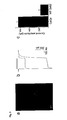
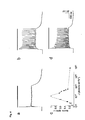
- CatCh spikes can be generated even by excitation far from its spectral maximum of 474 nm, e.g. with green light (532 nm - see Fig. 4d ).
- Green light 532 nm - see Fig. 4d .
- Working at the outer flanks of the action spectrum is feasible due to its reduced light-requirements and facilitates tissue penetration.
- the light-sensitivity of the mutant light-inducible ion channel of the invention is preferably increased by more than 5 times, preferably by more than 10 times, more preferably by more than 20 times, such as 30 times, even more preferably by more than 40 times, such as 50 times, and most preferably by more than 60 times, or even by more than 70 times, as compared to WT CHOP-2 in hippocampal neurons.
- the mutant light-inducible ion channel of the invention exhibits a stimulation frequency which is increased at least 1.5-fold, more preferably 2-fold, or even more preferably 2.5 fold, compared to WT CHOP-2 as determined by whole-cell electrophysiological recordings in hippocampal neurons.
- WT-Chop2 exhibits a stimulation frequency in hippocampal neurons of about 10 Hz up to about 20 Hz, wherein at 20 Hz signalling is already inaccurate.
- the intrinsic spike frequency is also dependent on the cell type. For example, auditory cells have an intrinsic spike frequency of up to 500 Hz.
- the experiments have been conducted in vitro, i.e. at ambient temperature. However, the skilled person will expect that the stimulation frequency will be even higher in warm-blooded animals, such as mammals, since the kinetics are also temperature-dependent.
- the mutant light-inducible ion channel of the invention may also exhibit a stimulation frequency which is increased at least 5-fold, preferably at least 10-fold, such as at least 20-fold, or at least 30-fold, or more preferably at least 40-fold, at least 50-fold, such as at least 60-fold, or at least 70-fold, even more preferably at least 80-fold, at least 90-fold, or at least 100-fold, most preferably at least 125-fold, such as at least 150-fold, or at least 175-fold, and even most preferably at least 200-fold, compared to WT CHOP-2 as determined by whole-cell electrophysiological recordings. Hippocampal neuron culture and electrophysiological recordings from hippocampal neurons is exemplified in the examples below.
- Hippocampi are isolated from postnatal P1 Sprague-Dawley rats (Jackson Laboratory) and treated with papain (20 U ml-1) for 20 min at 37°C.
- the hippocampi are washed with DMEM (Invitrogen/Gibco, high glucose) supplemented with 10% fetal bovine serum and triturated in a small volume of this solution.
- DMEM Invitrogen/Gibco, high glucose
- fetal bovine serum fetal bovine serum
- ⁇ 75,000 cells are plated on poly-D-lysine / laminin coated glass cover slips in 24-well plates. After 3 hours the plating medium is replaced by culture medium (Neurobasal A containing 2% B-27 supplement, 2 mM Glutamax-I and 100 U/ml penicillin and 100 ⁇ g/ml streptomycin).
- Mutant ChR2(L132C)-YFP and ChR2 (WT)-YFP are transfected 5-10 days after plating using the lipofectamine 2000 reagent (Invitrogen).
- 2-5 ⁇ 109 GC/ml of virus (AAV2/7-CAG-ChR2(L132C)-2A-EGFP-WPRE-bGH) may be added to each well 4-9 days after plating.
- Representative construction of the Adeno-associated viral vector construct is described in detail in the examples below. Expression becomes visible 5 days post-transduction. No all-trans retinal is added to the culture medium or recording medium for any of the experiments.
- patch pipettes with resistances of 5-10 M ⁇ are filled with 129 mM potassium gluconate, 10 mM HEPES, 10 mM KCl, 4 mM MgATP and 0.3 mM Na 3 GTP, titrated to pH 7.2.
- Tyrode's solution is employed as the extracellular solution (125 mM NaCl, 2 mM KCl, 2 mM CaCl 2 , 1 mM MgCl 2 , 30 mM glucose and 25 mM HEPES, titrated to pH 7.4).
- the nominally Ca ++ -free extracellular solution contains this same solution except that it has 0 mM Ca ++ and 3 mM Mg ++ .
- Recordings are conducted in the presence of the excitatory synaptic transmission blockers, 1,2,3,4-tetrahydro-6-nitro-2,3-dioxo-benzo[f]quinoxaline-7-sulfonamide (NBQX, 10 ⁇ M, Sigma) and D(-)-2-Amino-5-phosphonopentanoic acid (AP-5, 50 ⁇ M, Sigma).
- NBQX 1,2,3,4-tetrahydro-6-nitro-2,3-dioxo-benzo[f]quinoxaline-7-sulfonamide
- AP-5 D(-)-2-Amino-5-phosphonopentanoic acid
- Electrophysiological signals are amplified using an Axopatch 200A amplifier (Axon Instruments, Union City, CA), filtered at 10 kHz, digitized with an Axon Digidata 1600 (50 Hz) and acquired and analyzed using pClamp9 software (Axon Instruments).
- Specific light intensities are intensities at the end of a 400 ⁇ m diameter quartz optic fiber (STE-F100/400-Y-VIS/NIR; Laser 2000, Wessling, Germany) at a distance of ⁇ 500 ⁇ m from the cell.
- Currents measured from neurons expressing ChR2(L132C)-YFP and ChR2(L132C)-2A-EGFP are identical.
- the calcium conductivity of the mutant light-inducible ion channel of the invention is increased at least two-fold, preferably at least three-fold, more preferably at least four-fold compared to WT CHOP-2, as determined by Fura-2-imaging on HEK293 cells.
- Fura-2 AM (5 mM; Invitrogen) is loaded at room temperature for 30 min to 1 hour. After loading, the cells are recovered in a 140 mM NaCl solution without Ca ++ (140 mM NaCl, 7 mM EGTA, 2 mM MgCl 2 and 10 mM HEPES).
- Yellow fluorescent protein is excited by a 500 ms exposure to light using a 460/40 nm filter (Visitron Systems, Puchheim, Germany) to estimate each cell's expression level from its YFP-fluorescence.
- the solution is then replaced by an extracellular Ca ++ -solution that consists of 90 mM CaCl 2 , 7 mM EGTA, 2 mM MgCl 2 and 10 mM HEPES. After 15 min in the dark the light-gated channels are stimulated for 10 s with blue light (460/40 nm).
- Fura-2 is excited with 340 nm (340/20) and 380 nm (380/20) and the emitted light (540/80 nm) detected with a CCD camera (all filters from Visitron Systems, Puchheim, Germany).
- the mutant light-inducible ion channel may additionally comprise further mutations, preferably substitutions.
- the light-inducible ion channel may additionally comprise at least one of the following amino acid residues: aspartic acid at a position corresponding to position 253 of SEQ ID NO: 1; lysine at a position corresponding to position 257 of SEQ ID NO: 1; tryptophan at a position corresponding to position 260 of SEQ ID NO: 1; glutamic acid at a position corresponding to position 123 of SEQ ID NO: 1; histidine or arginine, preferably arginine, at a position corresponding to position 134 of SEQ ID NO: 1; threonine, serine, or alanine at a position corresponding to position 128 of SEQ ID NO: 1; and/or alanine at a position corresponding to position 156 of SEQ ID NO: 1.
- the mutant light-inducible ion channel may comprise one of the following amino acid residues: aspartic
- Cys 132 may also be substituted by either Ser 132, Glu 132, Asp 132, or Thr 132.
- the retinal or retinal derivative necessary for the functioning of the light-inducible ion channel is produced by the cell to be transfected with said ion channel.
- the retinal may be all-trans retinal, 11-cis-retinal, 13-cis-retinal, or 9-cis-retinal.
- the mutant light-inducible ion channel of the invention may be incorporated into vesicles, liposomes or other artificial cell membranes.
- the invention provides a channelrhodopsin, comprising the light-inducible ion channel according to the first aspect and a retinal or retinal derivative.
- the retinal derivative is selected from the group consisting of 3,4-dehydroretinal, 13-ethylretinal, 9-dm-retinal, 3- hydroxyretinal, 4-hydroxyretinal, naphthylretinal; 3,7,11 -trimethyl-dodeca-2,4,6,8, 10- pentaenal; 3,7-dimethyl-deca-2,4,6,8-tetraenal; 3 ,7-dimethyl-octa-2,4,6-trienal; and 6-7 rotation-blocked retinals, 8-9 rotation-blocked retinals, and 10-11 rotation-blocked retinals.
- the preferred embodiments of the first aspect correspond to the preferred embodiments of the second aspect.
- the invention also relates to a nucleic acid construct, comprising a nucleotide sequence coding for the light-inducible ion channel according to the first aspect.
- the coding DNA can also be suitably modified, for example by adding suitable regulatory sequences and/or targeting sequences and/or by matching of the coding DNA sequence to the preferred codon usage of the chosen host.
- the targeting sequence may encode a C-terminal extension targeting the light-inducible ion channel to a particular site or compartment within the cell, such as to the synapse or to a post-synaptic site, to the axon-hillock, or the endoplasmic reticulum.
- the nucleic acid may be combined with further elements, e.g., a promoter and a transcription start and stop signal and a translation start and stop signal and a polyadenylation signal in order to provide for expression of the sequence of the protein of the invention.
- the promoter can be inducible or constitutive, general or cell specific promoter.
- An example of a cell-specific promoter is the mGlu6-promotor specific for bipolar cells. Selection of promoters, vectors and other elements is a matter of routine design within the level of ordinary skill in the art. Many such elements are described in the literature and are available through commercial suppliers.
- the invention provides an expression vector, comprising a nucleotide sequence coding for the light-inducible ion channel according to the first aspect or the nucleic acid construct according to the third aspect.
- the vector is suitable for gene therapy, in particular wherein the vector is suitable for virus-mediated gene transfer.
- suitable for virus-mediated gene transfer means herein that said vector can be packed in a virus and thus be delivered to the site or the cells of interest.
- viruses suitable for gene therapy are retroviruses, adenoviruses, adeno-associated viruses, lentiviruses, pox viruses, alphaviruses, rabies virus, semliki forest virus and herpes viruses.
- gene therapy also encompasses non-viral methods, such as application of naked DNA, lipoplexes and polyplexes, and dendrimers.
- the resulting nucleic acid sequence may be introduced into cells e.g. using a virus as a carrier or by transfection including e.g. by chemical transfectants (such as Lipofectamine, Fugene, etc.), electroporation, calcium phosphate co-precipitation and direct diffusion of DNA.
- a method for transfecting a cell is detailed in the examples and may be adapted to the respective recipient cell. Transfection with DNA yields stable cells or cell lines, if the transfected DNA is integrated into the genome, or unstable (transient) cells or cell lines, wherein the transfected DNA exists in an extrachromosomal form.
- stable cell lines can be obtained by using episomal replicating plasmids, which means that the inheritance of the extrachromosomal plasmid is controlled by control elements that are integrated into the cell genome.
- the selection of a suitable vector or plasmid depends on the intended host cell.
- the invention relates to a cell comprising the channelrhodopsin according to the second aspect, the nucleic acid construct according to the third aspect or the expression vector according to the fourth aspect.
- one application of the mutant light-inducible ion channel according to the present invention is the treatment of blind subjects such as humans or animals.
- blind subjects such as humans or animals.
- the deliberate expression of light-controlled ion channels according to the invention in these ganglion cells, amacrine cells or bipolar cells would be a very much more elegant solution and enable greater three-dimensional visual resolution.
- the incorporation of the mutant light-inducible ion channel into the membrane of cells which do not express the corresponding channels in nature can for example be simply effected in that, using known procedures of recombinant DNA technology, the DNA coding for this ion channel is firstly incorporated into a suitable expression vector, e.g. a plasmid, a cosmid or a virus, the target cells are then transformed with this, and the protein is expressed in this host. Next, the cells are treated in a suitable manner, e.g. with retinal, in order to enable the linkage of a Schiffs base between protein and retinal.
- a suitable expression vector e.g. a plasmid, a cosmid or a virus
- this occurs in various yeasts such as Saccharomyces cerevisiae, Schizosaccharo-myces pombe or Pichia pastoris as already successfully performed for rhodopsins such as bacteriorhodopsin and/or bovine rhodopsin.
- yeasts such as Saccharomyces cerevisiae, Schizosaccharo-myces pombe or Pichia pastoris as already successfully performed for rhodopsins such as bacteriorhodopsin and/or bovine rhodopsin.
- the expression can also be effected in certain mammalian cell systems or insect cell systems.
- the cell is a mammalian cell or an insect cell.
- the expression is effected either with episomal vectors as transient expression, preferably in melanoma cells (e.g., the BLM cell line), COS cells (generated by infection of "African green monkey kidney CV1" cells) or HEK cells ("human embryonic kidney cells", e.g.
- the mammalian cell is a COS cell; a BHK cell; a HEK293 cell; a CHO cell; a myeloma cell; or a MDCK cell.
- the mammalian cell is a photoreceptor cell; a retinal rod cell; a retinal cone cell; a retinal ganglion cell; a bipolar neuron; a ganglion cell; a pseudounipolar neuron; a multipolar neuron; a pyramidal neuron, a Purkinje cell; or a granule cell.
- a neuron is an electrically excitable cell that processes and transmits information by electrical and chemical signalling, wherein chemical signalling occurs via synapses, specialized connections with other cells.
- a number of specialized types of neurons exist such as sensory neurons responding to touch, sound, light and numerous other stimuli affecting cells of the sensory organs, motor neurons receiving signals from the brain and spinal cord and causing muscle contractions and affecting glands, and interneurons connecting neurons to other neurons within the same region of the brain or spinal cord.
- a neuron possesses a soma, dendrites, and an axon. Dendrites are filaments that arise from the cell body, often extending for hundreds of microns and branching multiple times.
- An axon is a special cellular filament that arises from the cell body at a site called the axon hillock.
- the cell body of a neuron frequently gives rise to multiple dendrites, but never to more than one axon, although the axon may branch hundreds of times before it terminates.
- signals are sent from the axon of one neuron to a dendrite of another.
- neurons that lack dendrites neurons that have no axon, synapses that connect an axon to another axon or a dendrite to another dendrite, etc.
- Most neurons can further be anatomically characterized as unipolar or pseudounipolar (dendrite and axon emerge from same process), bipolar (axon and single dendrite on opposite ends of the soma), multipolar (having more than two dendrites and may be further classified as (i) Golgi I neurons with long-projecting axonal processes, such as pyramidal cells, Purkinje cells, and anterior horn cells, and (ii) Golgi II: neurons whose axonal process projects locally, e.g., granule cells.
- a photoreceptor cell is a specialized neuron found in the retina that is capable of phototransduction.
- the two classic photoreceptors are rods and cones, each contributing information used by the visual system.
- a retinal ganglion cell is a type of neuron located near the inner surface of the retina of the eye. These cells have dendrites and long axons projecting to the protectum (midbrain), the suprachiasmatic nucleus in the hypothalamus, and the lateral geniculate (thalamus). A small percentage contribute little or nothing to vision, but are themselves photosensitive. Their axons form the retinohypothalamic tract and contribute to circadian rhythms and pupillary light reflex, the resizing of the pupil.
- bipolar cells receive visual information from photoreceptors via two intermediate neuron types: bipolar cells and amacrine cells.
- Amacrine cells are intemeurons in the retina, and responsible for 70% of input to retinal ganglion cells.
- Bipolar cells which are responsible for the other 30% of input to retinal ganglia, are regulated by amacrine cells.
- the bipolar cell exists between photoreceptors (rod cells and cone cells) and ganglion cells. They act, directly or indirectly, to transmit signals from the photoreceptors to the ganglion cells.
- the cell may be isolated (and genetically modified), maintained and cultured at an appropriate temperature and gas mixture (typically, 37°C, 5% CO2), optionally in a cell incubator as known to the skilled person and as exemplified for certain cell lines or cell types in the examples.
- Culture conditions may vary for each cell type, and variation of conditions for a particular cell type can result in different phenotypes. Aside from temperature and gas mixture, the most commonly varied factor in cell culture systems is the growth medium.
- Recipes for growth media can vary in pH, glucose concentration, growth factor and the presence of other nutrient components among others. Growth media are either commercially available, or can be prepared according to compositions, which are obtainable from the American Tissue Culture Collection (ATCC). Growth factors used for supplement media are often derived from animal blood such as calf serum. Additionally, antibiotics may be added to the growth media.
- ATCC American Tissue Culture Collection
- CatCh Since Ca ++ is an important intracellular regulator, CatCh opens the doors to optical intervention into the fine-tuned Ca ++ homeostasis of the cell, modulating its state and activity.
- CatCh may be used to optically control Ca ++ -dependent exocytosis as an alternative to caged Ca ++ 26 (e.g. transmitter release at the synapse), to optically activate downstream intracellular processes via calcium-activated kinases and phosphatases or to induce apoptosis by targeting CatCh to intracellular compartments such as the Golgi apparatus or endoplasmic reticulum.
- a further aspect of the invention is the use of the light-inducible ion channel according to the first aspect or channelrhodopsin according to the second aspect, or the nucleic acid construct according to the third aspect, or the cell according to the invention as a medicament.
- the expression vector of the invention may be used in gene therapy.
- the light-inducible ion channel according to the first aspect, channelrhodopsin according to the second aspect, nucleic acid construct according to the third aspect, or the cell according to the invention may be used in the treatment of blindness or reduced sight.
- a use of the light-inducible ion channel in the reestablishing of hearing or the treatment of deafness is also contemplated.
- the mutant light-inducible ion channel according to the first aspect may comprise additional substitutions (so called SFO's, or slow mutants, see Table 1), which lead to a permanent light-induced calcium-influx, which in turn leads to cell death.
- SFO's additional substitutions
- a use of the light-inducible ion-channel according to the invention additionally having threonine, serine, or alanine at a position corresponding to position 128 of SEQ ID NO: 1; and/or alanine at a position corresponding to position 156 of SEQ ID NO: 1 in the ablation of cancer cells is contemplated.
- the expression vector according to the invention could be targeted by virus-mediated gene transfer via a cancer cell surface marker to cancer cells.
- retroviruses preferably integrate into fast dividing cells, such as cancer cells.
- the light-inducible ion channel according to the present invention is predominantly expressed and incorporated into the cell membrane of cancer cells. Upon stimulation by light, these ion channels will open and induce a permanent calcium-influx, thereby leading to the death of the cancer cell.
- the cancer is a melanoma cancer.
- the invention pertains to a use of a light-inducible ion channel according to the first aspect, or a channelrhodopsin according to the second aspect, or a cell according to the invention in a high-throughput screening.
- a high-throughput screening is a method for scientific experimentation especially used in drug discovery and relevant to the fields of biology and chemistry. HTS allows a researcher to effectively conduct millions of biochemical, genetic or pharmacological tests in a short period of time, often through a combination of modem robotics, data processing and control software, liquid handling devices, and sensitive detectors.
- active agents which modulate a particular biomolecular pathway particularly a substance modifying an ion channel, such as the light-inducible ion channel according to the invention, a Ca ++ -inducible potassium channel, or a BK channel.
- a substance modifying an ion channel such as the light-inducible ion channel according to the invention, a Ca ++ -inducible potassium channel, or a BK channel.
- active agents which modulate a particular biomolecular pathway particularly a substance modifying an ion channel, such as the light-inducible ion channel according to the invention, a Ca ++ -inducible potassium channel, or a BK channel.
- a substance modifying an ion channel such as the light-inducible ion channel according to the invention, a Ca ++ -inducible potassium channel, or a BK channel.
- the light-inducible channel will open and the intracellular Ca ++ concentration will increase, thereby activating the potassium channel.
- RH 421 N-(4-Sulfobutyl)-4-(4-(4-(dipentylamino)phenyl)butadienyl)pyridinium, inner salt.
- Such a HTS may thus comprise the following steps: (i) contacting a cell expressing a Ca ++ -inducible (potassium) channel and the light-inducible ion channel according to the invention with a candidate agent directed against the Ca ++ -inducible channel, (ii) applying a light stimulus in order to induce the light-inducible channel, (iii) determining the alteration of the membrane potential (mixed signal), and (iv) comparing the signal determined in step (iii) with the signal determined in a cell only expressing the light-inducible ion channel according to the invention subjected to step (ii) (single signal).
- a reduction in the change of the membrane potential would be indicative of a promising modulator of the Ca ++ -inducible (potassium) channel.
- Such an approach is supposed to yield a signal-to-noise ratio of approximately 5:1, which is quite improved compared to direct measurements conducted on a cell only expressing the Ca ++ -inducible channel. Due to the improved signal-to-noise ratio, said method, in particular by using the light-inducible ion channel, may be particularly suitable for HTS.
- HTS uses an approach to collect a large amount of experimental data on the effect of a multitude of substances on a particular target in a relatively short time.
- a screen in this context, is the larger experiment, with a single goal (usually testing a scientific hypothesis), to which all this data may subsequently be applied.
- HTS cells according to the invention may be seed in a tissue plate, such as a multi well plate, e.g. a 96-well plate. Then the cell in the plate is contacted with the test substance for a time sufficient to interact with the targeted ion channel. The test substance may be different from well to well across the plate.
- measurements are taken across all the plate's wells, either manually or by a machine and optionally compared to measurements of a cell which has not been contacted with the test substance.
- Manual measurements may be necessary when the researcher is using patch-clamp, looking for effects not yet implemented in automated routines.
- a specialized automated analysis machine can run a number of experiments on the wells (such as analysing light of a particular frequency or a high-throughput patch-clamp measurement). In this case, the machine outputs the result of each experiment e.g. as a grid of numeric values, with each number mapping to the value obtained from a single well.
- the researcher can perform follow up assays within the same screen by using substances similar to those identified as active (i.e. modifying an intracellular cyclic nucleotide level) into new assay plates, and then re-running the experiment to collect further data, optimize the structure of the chemical agent to improve the effect of the agent on the cell.
- Automation is an important element in HTS's usefulness.
- a specialized robot is often responsible for much of the process over the lifetime of a single assay plate, from creation through final analysis.
- An HTS robot can usually prepare and analyze many plates simultaneously, further speeding the data-collection process.
- Examples for apparatuses suitable for HTS in accordance with the present invention comprise a Fluorometric Imaging Plate Reader (FLIPRTM; Molecular Devices), FLEXstationTM (Molecular Devices), Voltage Ion Probe Reader (VIPR, Aurora Biosciences), Attofluor® Ratio Vision® (ATTO).
- FLIPRTM Fluorometric Imaging Plate Reader
- FLEXstationTM Molecular Devices
- VPR Voltage Ion Probe Reader
- TOO Attofluor® Ratio Vision®
- the inventors' objective was to identify residues within WT ChR2 whose mutations modify cation permeability.
- Each residue from Arg 115 to Thr 139 was individually replaced by cysteine and screened for functional changes in Xenopus laevis oocytes.
- CatCh was expressed in and purified from Pichia pastoris as described before . 5,13 . Flash-photolysis studies were performed and absorbance changes were measured after excitation of a 10 ns laser flash from an excimer pumped dye laser (450 nm, 2-3 mJ) 13 .
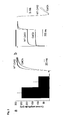
- the L132C (CatCh) mutation displays significant alterations in the amplitude and shape of the current traces.
- C-terminally truncated ChR2(L132C)-YFP (vector: pcDNA3(-)-chop2-309-(L132C)-EYFP) was transfected in HEK293 cells and kept under G418 selection at all times (0.6 mg/ml; PAA Germany, Cölbe, Germany).
- the C-terminally truncated ChR2-YFP (vector: pcDNA4TO-chop2-309-EYFP) was stably transfected into HEK293-Trex cells (Invitrogen), cultured and induced as described 13 .
- the peak to stationary relations were determined from HEK293 cells transiently transfected (Effectene, QIAGEN) with human-codon-optimized pcDNA3.1(-)-ChR2-YFP constructs (WT, H134R or L132C) 24 hours prior to measurements.
- external 140 mM NaCl was exchanged by 140 mM KCl, 90 mM CaCl 2 or 90 mM MgCl 2 , respectively.
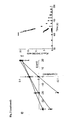
- Proton permeabilities were determined from the reversal potential shift of the current-voltage-relationship when the pH was reduced from 9 to 7.4 (or 6). Permeability ratios were calculated according to the Goldman-Hodgkin-Katz (GHK) equation, including terms for Na + , K + , H + and Ca ++ .
- GLK Goldman-Hodgkin-Katz
- the pipette solution contained 1 mM Guanidine-HCl, 199 mM NMG-Cl (N-Methylglucamine), 10 mM EGTA, 2 mM MgCl 2 , and 20 mM Hepes (pH 7.4), the bath solution contained 200 mM guanidine-HCl, 2 mM MgCl 2 , 2 mM CaCl 2 , and 20 mM Hepes (pH 7.4).
- Xenopus laevis oocyte preparation and molecular biology A C-terminally-truncated ChR2 variant (residues 1-315) without extracellularly exposed cysteine residues (containing mutations C34A and C36A) were subcloned into the vector pTLN 27 . Single cysteine mutations were introduced by QuickChange Site-Directed Mutagenesis (Stratagene) and verified by sequencing. The mRNA was prepared using the SP6 mMessage mMachine kit (Ambion, Austin, TX). 50 nl cRNA, which included 30 ng of WT ChR2/CatCh mRNA were injected into each Xenopus oocyte.
- Oocytes were obtained by collagenase treatment after partial ovarectomy. After cRNA injection, oocytes were incubated in all-trans retinal (1 ⁇ M, from a 1 mM stock in ethanol) and were kept in ORI buffer (90 mM NaCl, 2 mM KCl, 2 mM CaCl 2 and 5 mM Mops, pH 7.4) containing 1 mg/ml gentamycin at 18° C for two to four days.
- ORI buffer 90 mM NaCl, 2 mM KCl, 2 mM CaCl 2 and 5 mM Mops, pH 7.4
- Photocurrents were activated with a 75-W xenon arc lamp and a 450 ⁇ 25 nm band filter, the light of which was coupled into a 1-mm-light-guide with an output of ⁇ 10 18 photons s -1 cm -2 .
- Action spectra were recorded using narrow bandwidth filters (398-645 nm; ⁇ 10 nm ; K-series Balzer) in combination with neutral density filters to achieve a fiber output of ⁇ 1.4 ⁇ 10 17 photons s -1 cm -2 for each wavelength.
- Ca ++ in the ORI solution was replaced by Ba ++ to suppress CaCC currents.
- Fura-2 calcium imaging on CatCh-expressing HEK293 cells and compared the measured 340/380 ratios to the ratios measured in WT ChR2-expressing cells.
- Fura-2-imaging on HEK293 cells Fura-2 AM (5 mM; Invitrogen) was loaded at room temperature for 30 min to 1 hour. After loading the cells were recovered in a 140 mM NaCl solution without Ca ++ (140 mM NaCl, 7 mM EGTA, 2 mM MgCl 2 and 10 mM HEPES). Yellow fluorescent protein was excited by a 500 ms exposure to light using a 460/40 nm filter (Visitron Systems, Puchheim, Germany) to estimate each cell's expression level from its YFP-fluorescence.
- the solution was then replaced by an extracellular Ca ++ -solution that consisted of 90 mM CaCl 2 , 7 mM EGTA, 2 mM MgCl 2 and 10 mM HEPES. After 15 min in the dark the light-gated channels were stimulated for 10 s with blue light (460/40 nm). Fura-2 was excited with 340 nm (340/20) and 380 nm (380/20) and the emitted light (540/80 nm) detected with a CCD camera (all filters from Visitron Systems, Puchheim, Germany).
- the construct was expressed in cultured hippocampal pyramidal cells.
- Hippocampal neuron culture Hippocampi were isolated from postnatal P1 Sprague-Dawley rats (Jackson Laboratory) and treated with papain (20 U ml -1 ) for 20 min at 37°C. The hippocampi were washed with DMEM (Invitrogen/Gibco, high glucose) supplemented with 10% fetal bovine serum and triturated in a small volume of this solution. ⁇ 75,000 cells were plated on poly-D-lysine / laminin coated glass cover slips in 24-well plates.
- DMEM Invitrogen/Gibco, high glucose
- ChR2(L132C)-YFP and ChR2-YFP were transfected 5-10 days after plating using the lipofectamine 2000 reagent (Invitrogen).
- 2-5 ⁇ 10 9 GC/ml of virus AAV2/7-CAG-ChR2(L132C)-2A-EGFP-WPRE-bGH was added to each well 4-9 days after plating. Expression became visible 5 days post-transduction. No neurotoxicity was observed for the lifetime of the culture ( ⁇ 5 weeks). No all-trans retinal was added to the culture medium or recording medium for any of the experiments described here.
- the cytomegalovirus early enhancer / chicken ⁇ -actin (CAG) promoter was PCR-amplified and inserted into pAAV2-Rho-EGFP (kind gift from Alberto Auricchio 28 ) to obtain pAAV2-CAG-EGFP.
- the pAAV2-CAG-EGFP viral expression plasmid contained additionally a woodchuck posttranscriptional regulatory element (WPRE) and a bovine growth hormone (BGH) polyadenylation sequence.
- WPRE woodchuck posttranscriptional regulatory element
- BGH bovine growth hormone
- ChR2(L132C)-2A-EGFP (kind gift from Volker Busskampö - 2A self-cleaving peptide / CHYSEL 29 ) was constructed by adapter PCR and subcloned into pAAV2-CAG-EGFP by replacement of EGFP using Clontech's in fusion kit.
- the viral vector (pAAV2-CAG-ChR2(L132C)-2A-EGFP-WPRE-bGH) was packaged (serotype 7) and affinity purified at the Gene Therapy Program of the University of Pennsylvania with a final infectious virus titer of 2.26x10 11 genome copies / ml.
- Electrophysiological recordings from hippocampal neurons For whole-cell recordings in cultured hippocampal neurons, patch pipettes with resistances of 5-10 M ⁇ were filled with 129 mM potassium gluconate, 10 mM HEPES, 10 mM KCl, 4 mM MgATP and 0.3 mM Na 3 GTP, titrated to pH 7.2. Tyrode's solution was employed as the extracellular solution (125 mM NaCl, 2 mM KCl, 2 mM CaCl 2 , 1 mM MgCl 2 , 30 mM glucose and 25 mM HEPES, titrated to pH 7.4).
- the nominally Ca ++ -free extracellular solution contained this same solution except that it had 0 mM Ca ++ and 3 mM Mg ++ .
- Recordings were conducted in the presence of the excitatory synaptic transmission blockers, 1,2,3,4-tetrahydro-6-nitro-2,3-dioxo-benzo[f]quinoxaline-7-sulfonamide (NBQX, 10 ⁇ M, Sigma) and D(-)-2-Amino-5-phosphonopentanoic acid (AP-5, 50 ⁇ M, Sigma).
- NBQX 1,2,3,4-tetrahydro-6-nitro-2,3-dioxo-benzo[f]quinoxaline-7-sulfonamide
- AP-5 D(-)-2-Amino-5-phosphonopentanoic acid
- Electrophysiological signals were amplified using an Axopatch 200A amplifier (Axon Instruments, Union City, CA), filtered at 10 kHz, digitized with an Axon Digidata 1600 (50 Hz) and acquired and analyzed using pClamp9 software (Axon Instruments).
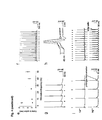
- the higher light efficacy of CatCh-expressing neurons facilitates activation with wavelengths away from the peak sensitivity, as exemplified for green light (532 nm) in figure 4d . This may confer benefits in terms of more effective tissue recruitment with deeper-penetrating green light.
- CatCh serves as a membrane bound fast Ca ++ -source, by temporarily increasing the local intracellular surface Ca ++ concentration, thereby neutralizing the negative surface charges ( Fig. 7 ). It is known that this causes a shift of the internal surface potential to more positive values thus depolarizing the membrane ( Fig. 7 ) 11,18 . A consequence is that voltage-gated Na + -channels are activated at more negative membrane potentials 18 . After short light pulses or after switching off the stationary light, Ca ++ equilibrates rapidly (microseconds) within the cytoplasm, leading to a rapid recovery and the immediate disappearance of action potentials. Thus, for CatCh, less photocurrent and subsequently less light is required for spike initiation compared to WT ChR2.
- the light pulse-to-spike latency in CatCh was faster ( ⁇ 5-6 ms; Fig. 4e ) with a smaller jitter than the latency for WT ChR2 ( ⁇ 10 ms) at similar light intensities (2.8 ⁇ 10 18 photons s -1 cm -2 ) 3 .
- the inventors further tested CatCh for its ability to induce single action potentials at high frequency light-stimulation.
- the WT requires at least 2-ms light pulses to induce spikes reliably and does this only up to frequencies of 20 Hz 12 .
- fast stimulation frequencies also require a fast repolarization of the cell after each spike.
- the ⁇ 4-fold increase in Ca ++ -influx during CatCh activation see Fura-2 measurements Fig.
- BK channels Ca ++ -activated large conductance potassium channels 20 to potently repolarize the cell to its original resting potential within milliseconds after each action potential.
- TAA potassium channel inhibitor tetraethylammonium
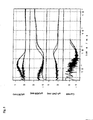
- CatCh-expressing neurons exhibit a faster spike onset, a faster repolarization and an increased light-sensitivity compared to WT-expressing cells (for a comparison see table 1).
- CatCh a channelrhodopsin with an elevated Ca ++ -permeability
- pairs increased light-sensitivity with fast kinetics and thus outperforms the WT ChR2 and the published slow and fast mutants (for a comparison of the properties of different ChR2 variants see table 1).
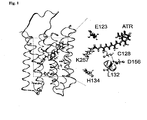
- This cavity would be located in a hydrophobic patch as part of the conserved transmembrane helix three (TM3), only a helical turn apart from C128.
- TM3 conserved transmembrane helix three
- TM4 D156
- CatCh When delivered to hippocampal pyramidal cells, CatCh exhibited a ⁇ 70-fold increase in light-sensitivity compared to WT ChR2. Usually, such an increased light efficacy is accompanied by a strongly prolonged open channel life-time 2,6,13 . This is not the case for CatCh. The observed light sensitivity differs markedly from what has been observed for other channelrhodopsins up to now. As explained below, the secondary effects on neuronal excitability are induced by Ca ++ influx through CatCh.
- CatCh shows increased spike-reliability and precision during high-frequency light-stimulation, reducing extra spikes and eliminating artificial plateau potentials typically observed in WT-expressing cells at stimulation frequencies above 20 Hz 3,7,12 , 1-ms light pulses delivered at room temperature induced reliable spike trains up to 50 Hz in CatCh-expressing pyramidal cells (their natural limit of natural spiking; Fig. 4f ). Higher frequency CatCh-mediated spike induction on faster spiking cells such as cortical paravalbumin interneurons remains to be tested 12 .
- CatCh as a light-gated membrane bound Ca ++ source ("a membrane bound caged Ca ++ "), which transiently delivers Ca ++ to the cytosolic surface of the cell membrane as long as the CatCh channel is open. This temporarily neutralizes the negative charges on the inner membrane face, thereby increasing the surface potential, which is equivalent to a depolarization of the membrane 11 ( Fig. 7 ).
- extracellular Ca ++ was replaced by the non-permeating Mg ++ , all the observed Ca ++ effects on the action potential were abolished, restoring the phenotype of WT ChR2.
- the continuous Ca ++ -influx during persistent illumination may activate calcium-activated non-selective cation channels, which further support the maintenance of a stationary depolarization level.
- a prerequisite for successful high-frequency pulsed stimulation is a fast repolarization of the cell following each action potential.
- the slightly increased life-time of the open state of CatCh compared to the WT should limit its maximal stimulation frequency.
- an enhanced Ca ++ -permeability counteracts this limitation by potent activation of large conductance calcium-gated potassium channels (BK channels). This reestablishes the resting membrane potential of the neuron within milliseconds after each action potential. This theory was confirmed by the inhibition of BK channels with the open-channel blocker TEA, which resulted in a persistent depolarization of the neuron during the length of a pulse stimulation protocol.
- CatCh has an increased light-sensitivity similar to the slow-mutants 13 or SFO's 6 but with much accelerated response kinetics owing to its increased Ca ++ -permeability and the consequences on neuronal excitability. This makes CatCh superior to available ChR2 variants, where a high light sensitivity had to be established at cost of fast kinetics and vice versa with respect to the fast channelrhodopsins 7,12 (for an overview see table 1).
Landscapes
- Health & Medical Sciences (AREA)
- Life Sciences & Earth Sciences (AREA)
- Chemical & Material Sciences (AREA)
- Organic Chemistry (AREA)
- Engineering & Computer Science (AREA)
- Genetics & Genomics (AREA)
- Molecular Biology (AREA)
- General Health & Medical Sciences (AREA)
- Biochemistry (AREA)
- Medicinal Chemistry (AREA)
- Biotechnology (AREA)
- Zoology (AREA)
- Cell Biology (AREA)
- Proteomics, Peptides & Aminoacids (AREA)
- Biomedical Technology (AREA)
- Biophysics (AREA)
- Immunology (AREA)
- Gastroenterology & Hepatology (AREA)
- Bioinformatics & Cheminformatics (AREA)
- Wood Science & Technology (AREA)
- Microbiology (AREA)
- Toxicology (AREA)
- General Engineering & Computer Science (AREA)
- Urology & Nephrology (AREA)
- Hematology (AREA)
- Physics & Mathematics (AREA)
- Analytical Chemistry (AREA)
- Food Science & Technology (AREA)
- General Physics & Mathematics (AREA)
- Pathology (AREA)
- Nuclear Medicine, Radiotherapy & Molecular Imaging (AREA)
- Plant Pathology (AREA)
- Chemical Kinetics & Catalysis (AREA)
- General Chemical & Material Sciences (AREA)
- Veterinary Medicine (AREA)
- Pharmacology & Pharmacy (AREA)
- Animal Behavior & Ethology (AREA)
- Ophthalmology & Optometry (AREA)
- Public Health (AREA)
- Micro-Organisms Or Cultivation Processes Thereof (AREA)
Priority Applications (5)
| Application Number | Priority Date | Filing Date | Title |
|---|---|---|---|
| EP11760432.2A EP2614079B1 (en) | 2010-09-08 | 2011-09-08 | Mutant channelrhodopsin 2 |
| SI201130552T SI2614079T1 (sl) | 2010-09-08 | 2011-09-08 | Mutantski kanalnirodopsin 2 |
| PL11760432T PL2614079T3 (pl) | 2010-09-08 | 2011-09-08 | Zmutowana kanałowa rodopsyna 2 |
| HRP20150846TT HRP20150846T1 (hr) | 2010-09-08 | 2011-09-08 | Mutirani kalanski rodopsin 2 |
| CY20151100714T CY1116725T1 (el) | 2010-09-08 | 2015-08-13 | Μεταλλαγμενη διαυλοροδοψινη 2 |
Applications Claiming Priority (4)
| Application Number | Priority Date | Filing Date | Title |
|---|---|---|---|
| US38079310P | 2010-09-08 | 2010-09-08 | |
| EP10175832 | 2010-09-08 | ||
| EP11760432.2A EP2614079B1 (en) | 2010-09-08 | 2011-09-08 | Mutant channelrhodopsin 2 |
| PCT/EP2011/065510 WO2012032103A1 (en) | 2010-09-08 | 2011-09-08 | Mutant channelrhodopsin 2 |
Publications (2)
| Publication Number | Publication Date |
|---|---|
| EP2614079A1 EP2614079A1 (en) | 2013-07-17 |
| EP2614079B1 true EP2614079B1 (en) | 2015-07-15 |
Family
ID=42979822
Family Applications (1)
| Application Number | Title | Priority Date | Filing Date |
|---|---|---|---|
| EP11760432.2A Active EP2614079B1 (en) | 2010-09-08 | 2011-09-08 | Mutant channelrhodopsin 2 |
Country Status (20)
| Country | Link |
|---|---|
| US (1) | US8748578B2 (enExample) |
| EP (1) | EP2614079B1 (enExample) |
| JP (1) | JP5933556B2 (enExample) |
| KR (1) | KR101945962B1 (enExample) |
| CN (1) | CN103261219B (enExample) |
| AU (1) | AU2011298745B2 (enExample) |
| BR (1) | BR112013005634A2 (enExample) |
| CA (1) | CA2810757C (enExample) |
| DK (1) | DK2614079T3 (enExample) |
| ES (1) | ES2545992T3 (enExample) |
| HR (1) | HRP20150846T1 (enExample) |
| HU (1) | HUE025952T2 (enExample) |
| IL (1) | IL225060A (enExample) |
| MX (1) | MX347453B (enExample) |
| PL (1) | PL2614079T3 (enExample) |
| PT (1) | PT2614079E (enExample) |
| RU (1) | RU2595384C2 (enExample) |
| SG (1) | SG188409A1 (enExample) |
| SI (1) | SI2614079T1 (enExample) |
| WO (1) | WO2012032103A1 (enExample) |
Cited By (1)
| Publication number | Priority date | Publication date | Assignee | Title |
|---|---|---|---|---|
| US12234267B2 (en) | 2016-08-29 | 2025-02-25 | Wayne State University | Identification of mutations in channelopsin variants having improved light sensitivity and methods of use thereof |
Families Citing this family (50)
| Publication number | Priority date | Publication date | Assignee | Title |
|---|---|---|---|---|
| US10052497B2 (en) | 2005-07-22 | 2018-08-21 | The Board Of Trustees Of The Leland Stanford Junior University | System for optical stimulation of target cells |
| US20070053996A1 (en) | 2005-07-22 | 2007-03-08 | Boyden Edward S | Light-activated cation channel and uses thereof |
| US8926959B2 (en) | 2005-07-22 | 2015-01-06 | The Board Of Trustees Of The Leland Stanford Junior University | System for optical stimulation of target cells |
| US9274099B2 (en) | 2005-07-22 | 2016-03-01 | The Board Of Trustees Of The Leland Stanford Junior University | Screening test drugs to identify their effects on cell membrane voltage-gated ion channel |
| US9238150B2 (en) | 2005-07-22 | 2016-01-19 | The Board Of Trustees Of The Leland Stanford Junior University | Optical tissue interface method and apparatus for stimulating cells |
| US8470790B2 (en) | 2006-05-04 | 2013-06-25 | Wayne State University | Restoration of visual responses by in vivo delivery of rhodopsin nucleic acids |
| WO2008086470A1 (en) | 2007-01-10 | 2008-07-17 | The Board Of Trustees Of The Leland Stanford Junior University | System for optical stimulation of target cells |
| WO2008101128A1 (en) | 2007-02-14 | 2008-08-21 | The Board Of Trustees Of The Leland Stanford Junior University | System, method and applications involving identification of biological circuits such as neurological characteristics |
| WO2008106694A2 (en) | 2007-03-01 | 2008-09-04 | The Board Of Trustees Of The Leland Stanford Junior University | Systems, methods and compositions for optical stimulation of target cells |
| US10035027B2 (en) | 2007-10-31 | 2018-07-31 | The Board Of Trustees Of The Leland Stanford Junior University | Device and method for ultrasonic neuromodulation via stereotactic frame based technique |
| US10434327B2 (en) | 2007-10-31 | 2019-10-08 | The Board Of Trustees Of The Leland Stanford Junior University | Implantable optical stimulators |
| SG189813A1 (en) | 2008-04-23 | 2013-05-31 | Univ Leland Stanford Junior | Systems, methods and compositions for optical stimulation of target cells |
| JP5890176B2 (ja) | 2008-05-29 | 2016-03-22 | ザ ボード オブ トラスティーズ オブ ザ レランド スタンフォード ジュニア ユニバーシティー | セカンドメッセンジャーを光制御するためのセルライン、システム、および方法 |
| AU2009260029B2 (en) | 2008-06-17 | 2016-03-17 | The Board Of Trustees Of The Leland Stanford Junior University | Methods, systems and devices for optical stimulation of target cells using an optical transmission element |
| EP2303405A4 (en) | 2008-06-17 | 2017-12-27 | The Board of Trustees of the Leland Stanford Junior University | Apparatus and methods for controlling cellular development |
| US9101759B2 (en) | 2008-07-08 | 2015-08-11 | The Board Of Trustees Of The Leland Stanford Junior University | Materials and approaches for optical stimulation of the peripheral nervous system |
| NZ602416A (en) | 2008-11-14 | 2014-08-29 | Univ Leland Stanford Junior | Optically-based stimulation of target cells and modifications thereto |
| JP5866332B2 (ja) | 2010-03-17 | 2016-02-17 | ザ ボード オブ トラスティーズ オブ ザ レランド スタンフォード ジュニア ユニバーシティー | 感光性イオンを通過させる分子 |
| US9453241B2 (en) | 2010-05-04 | 2016-09-27 | Wayne State University | AAV-mediated subcellular targeting of heterologous rhodopsins in retinal ganglion cells |
| WO2012061681A1 (en) | 2010-11-05 | 2012-05-10 | The Board Of Trustees Of The Leland Stanford Junior University. | Control and characterization of memory function |
| CN103491770B (zh) | 2010-11-05 | 2016-06-08 | 斯坦福大学托管董事会 | 稳定阶跃函数视蛋白及其使用方法 |
| US9992981B2 (en) | 2010-11-05 | 2018-06-12 | The Board Of Trustees Of The Leland Stanford Junior University | Optogenetic control of reward-related behaviors |
| CA2817175C (en) | 2010-11-05 | 2019-09-24 | The Board Of Trustees Of The Leland Stanford Junior University | Upconversion of light using lanthanide-doped nanoparticles for use in optogenetic methods |
| EP3486253A1 (en) | 2010-11-05 | 2019-05-22 | The Board of Trustees of The Leland Stanford Junior University | Light-activated chimeric opsins and methods of using the same |
| CN106106368A (zh) | 2010-11-05 | 2016-11-16 | 斯坦福大学托管董事会 | 光控cns功能障碍 |
| US8696722B2 (en) | 2010-11-22 | 2014-04-15 | The Board Of Trustees Of The Leland Stanford Junior University | Optogenetic magnetic resonance imaging |
| EP3524676A1 (en) | 2011-12-16 | 2019-08-14 | The Board of Trustees of The Leland Stanford Junior University | Opsin polypeptides and methods of use thereof |
| ES2628006T3 (es) | 2012-02-21 | 2017-08-01 | Circuit Therapeutics, Inc. | Composiciones para el tratamiento de trastornos neurogénicos del suelo pélvico |
| CN111378020A (zh) * | 2012-03-05 | 2020-07-07 | 韦恩州立大学 | 通道视蛋白-2(Chop2)突变的鉴定及使用方法 |
| US9636380B2 (en) | 2013-03-15 | 2017-05-02 | The Board Of Trustees Of The Leland Stanford Junior University | Optogenetic control of inputs to the ventral tegmental area |
| US10974064B2 (en) | 2013-03-15 | 2021-04-13 | The Board Of Trustees Of The Leland Stanford Junior University | Optogenetic control of behavioral state |
| WO2014179331A2 (en) | 2013-04-29 | 2014-11-06 | The Board Of Trustees Of The Leland Stanford Junior University | Devices, systems and methods for optogenetic modulation of action potentials in target cells |
| CA2921221A1 (en) | 2013-08-14 | 2015-02-19 | The Board Of Trustees Of The Leland Stanford Junior University | Compositions and methods for controlling pain |
| JP6118239B2 (ja) | 2013-11-29 | 2017-04-19 | 雅敏 堀 | 害虫の防除方法及び防除装置 |
| EP3102290A1 (en) | 2014-02-07 | 2016-12-14 | Massachusetts Institute Of Technology | Blue light-activated ion channel molecules and uses thereof |
| WO2015142984A1 (en) * | 2014-03-18 | 2015-09-24 | Washington University | Methods and compositions for red-shifted chromophore substitution for optogenetic applications |
| WO2015161308A1 (en) * | 2014-04-18 | 2015-10-22 | Massachusetts Institute Of Technology | Mutant channelrhodopsins with altered ion selectivity |
| WO2016209654A1 (en) | 2015-06-22 | 2016-12-29 | The Board Of Trustees Of The Leland Stanford Junior University | Methods and devices for imaging and/or optogenetic control of light-responsive neurons |
| JP2019522469A (ja) * | 2016-06-03 | 2019-08-15 | マックス−プランク−ゲゼルシャフト ツア フェルデルンク デア ヴィッセンシャフテン エー.ファウ. | チャネルロドプシンの変異型光誘導性イオンチャネル |
| WO2017207761A1 (en) | 2016-06-03 | 2017-12-07 | Max-Planck-Gesellschaft Zur Foerderung Der Wissenschaften E.V. | Mutant light-inducible ion channel of chrimson |
| WO2018106369A2 (en) | 2016-11-06 | 2018-06-14 | Nanoscope Technologies Llc | Optogenetic modulation by multi-characteristic opsins for vision restoration and other applications thereof |
| US11294165B2 (en) | 2017-03-30 | 2022-04-05 | The Board Of Trustees Of The Leland Stanford Junior University | Modular, electro-optical device for increasing the imaging field of view using time-sequential capture |
| WO2018189247A1 (en) * | 2017-04-12 | 2018-10-18 | MAX-PLANCK-Gesellschaft zur Förderung der Wissenschaften e.V. | New optogenetic tool |
| CN110483645B (zh) * | 2018-05-14 | 2023-05-12 | 郑州大学第一附属医院 | 线粒体定位质子泵型视紫红质、其突变蛋白及其应用 |
| GB2586751B (en) * | 2018-07-26 | 2022-12-07 | Council Scient Ind Res | Screening kit for detection of grades of cervical cancer and process for the preparation thereof |
| WO2020054868A1 (ja) * | 2018-09-14 | 2020-03-19 | 国立大学法人名古屋工業大学 | 光応答性タンパク質及びその利用 |
| JP7723983B2 (ja) * | 2020-03-13 | 2025-08-15 | 国立大学法人 名古屋工業大学 | 色認識のための光応答性タンパク質及びその利用 |
| WO2022176754A1 (ja) * | 2021-02-18 | 2022-08-25 | 国立大学法人名古屋工業大学 | 青色光もしくは藍色光応答性タンパク質及びその利用 |
| EP4223768A1 (en) | 2022-02-04 | 2023-08-09 | Georg-August-Universität Göttingen Stiftung Öffentlichen Rechts, Universitätsmedizin | Novel mutant bacteriorhodopsin-like-channelrhodopsin ion channel |
| WO2024092248A1 (en) * | 2022-10-28 | 2024-05-02 | The Board Of Trustees Of The Leland Stanford Junior University | Enhanced light gated potassium selective channelrhodopsin |
Family Cites Families (5)
| Publication number | Priority date | Publication date | Assignee | Title |
|---|---|---|---|---|
| EP2112501A1 (de) | 1998-02-05 | 2009-10-28 | Novartis Ag | Verfahren und Vorrichtung zur Lumineszenzmessung |
| DE10216005A1 (de) | 2002-04-11 | 2003-10-30 | Max Planck Gesellschaft | Verwendung von biologischen Photorezeptoren als direkt lichtgesteuerte Ionenkanäle |
| US8470790B2 (en) * | 2006-05-04 | 2013-06-25 | Wayne State University | Restoration of visual responses by in vivo delivery of rhodopsin nucleic acids |
| DE102008020152B4 (de) * | 2008-04-22 | 2012-04-05 | MAX-PLANCK-Gesellschaft zur Förderung der Wissenschaften e.V. | Verwendung von biologischen Photorezeptoren als direkt lichtgesteuerte Ionenkanäle |
| NZ602416A (en) * | 2008-11-14 | 2014-08-29 | Univ Leland Stanford Junior | Optically-based stimulation of target cells and modifications thereto |
-
2011
- 2011-09-08 SI SI201130552T patent/SI2614079T1/sl unknown
- 2011-09-08 WO PCT/EP2011/065510 patent/WO2012032103A1/en not_active Ceased
- 2011-09-08 EP EP11760432.2A patent/EP2614079B1/en active Active
- 2011-09-08 PT PT117604322T patent/PT2614079E/pt unknown
- 2011-09-08 AU AU2011298745A patent/AU2011298745B2/en active Active
- 2011-09-08 KR KR1020137008660A patent/KR101945962B1/ko active Active
- 2011-09-08 ES ES11760432.2T patent/ES2545992T3/es active Active
- 2011-09-08 CA CA2810757A patent/CA2810757C/en active Active
- 2011-09-08 HR HRP20150846TT patent/HRP20150846T1/hr unknown
- 2011-09-08 PL PL11760432T patent/PL2614079T3/pl unknown
- 2011-09-08 HU HUE11760432A patent/HUE025952T2/en unknown
- 2011-09-08 SG SG2013016332A patent/SG188409A1/en unknown
- 2011-09-08 US US13/821,353 patent/US8748578B2/en active Active
- 2011-09-08 MX MX2013002591A patent/MX347453B/es active IP Right Grant
- 2011-09-08 DK DK11760432.2T patent/DK2614079T3/en active
- 2011-09-08 RU RU2013115454/10A patent/RU2595384C2/ru active
- 2011-09-08 CN CN201180052156.9A patent/CN103261219B/zh active Active
- 2011-09-08 BR BR112013005634A patent/BR112013005634A2/pt not_active Application Discontinuation
- 2011-09-08 JP JP2013527595A patent/JP5933556B2/ja active Active
-
2013
- 2013-03-05 IL IL225060A patent/IL225060A/en active IP Right Grant
Cited By (1)
| Publication number | Priority date | Publication date | Assignee | Title |
|---|---|---|---|---|
| US12234267B2 (en) | 2016-08-29 | 2025-02-25 | Wayne State University | Identification of mutations in channelopsin variants having improved light sensitivity and methods of use thereof |
Also Published As
| Publication number | Publication date |
|---|---|
| JP2013544494A (ja) | 2013-12-19 |
| US20130281379A1 (en) | 2013-10-24 |
| AU2011298745A1 (en) | 2013-03-21 |
| PL2614079T3 (pl) | 2016-01-29 |
| HUE025952T2 (en) | 2016-04-28 |
| AU2011298745B2 (en) | 2015-05-07 |
| CA2810757A1 (en) | 2012-03-15 |
| EP2614079A1 (en) | 2013-07-17 |
| CA2810757C (en) | 2020-06-09 |
| PT2614079E (pt) | 2015-10-06 |
| MX2013002591A (es) | 2013-07-22 |
| US8748578B2 (en) | 2014-06-10 |
| IL225060A (en) | 2016-10-31 |
| CN103261219B (zh) | 2017-05-17 |
| SG188409A1 (en) | 2013-04-30 |
| RU2013115454A (ru) | 2014-10-20 |
| HRP20150846T1 (hr) | 2015-09-11 |
| JP5933556B2 (ja) | 2016-06-15 |
| ES2545992T3 (es) | 2015-09-17 |
| DK2614079T3 (en) | 2015-08-10 |
| MX347453B (es) | 2017-04-27 |
| WO2012032103A1 (en) | 2012-03-15 |
| BR112013005634A2 (pt) | 2017-06-27 |
| CN103261219A (zh) | 2013-08-21 |
| KR20130108335A (ko) | 2013-10-02 |
| SI2614079T1 (sl) | 2015-10-30 |
| KR101945962B1 (ko) | 2019-02-08 |
| RU2595384C2 (ru) | 2016-08-27 |
Similar Documents
| Publication | Publication Date | Title |
|---|---|---|
| EP2614079B1 (en) | Mutant channelrhodopsin 2 | |
| Kleinlogel et al. | Ultra light-sensitive and fast neuronal activation with the Ca2+-permeable channelrhodopsin CatCh | |
| US7144733B2 (en) | Bio-synthetic photostimulators and methods of use | |
| US7824869B2 (en) | Use of biological photoreceptors as directly light-activated ion channels | |
| WO2015167639A1 (en) | Blue light-activated ion channel molecules and uses thereof | |
| US20240002444A1 (en) | New optogenetic tool | |
| US20190218256A1 (en) | Mutant light-inducible ion channel of channelrhodopsin | |
| US11384132B2 (en) | Mutant light-inducible ion channel of chrimson | |
| Kleinlogel et al. | Ultra light-sensitive and fast neuronal activation with the Ca permeable Channelrhodopsin CatCh | |
| Meijer | Genetically encoded optical control of protein function |
Legal Events
| Date | Code | Title | Description |
|---|---|---|---|
| PUAI | Public reference made under article 153(3) epc to a published international application that has entered the european phase |
Free format text: ORIGINAL CODE: 0009012 |
|
| 17P | Request for examination filed |
Effective date: 20130306 |
|
| AK | Designated contracting states |
Kind code of ref document: A1 Designated state(s): AL AT BE BG CH CY CZ DE DK EE ES FI FR GB GR HR HU IE IS IT LI LT LU LV MC MK MT NL NO PL PT RO RS SE SI SK SM TR |
|
| DAX | Request for extension of the european patent (deleted) | ||
| 17Q | First examination report despatched |
Effective date: 20131217 |
|
| GRAP | Despatch of communication of intention to grant a patent |
Free format text: ORIGINAL CODE: EPIDOSNIGR1 |
|
| INTG | Intention to grant announced |
Effective date: 20140911 |
|
| GRAP | Despatch of communication of intention to grant a patent |
Free format text: ORIGINAL CODE: EPIDOSNIGR1 |
|
| INTG | Intention to grant announced |
Effective date: 20150213 |
|
| GRAS | Grant fee paid |
Free format text: ORIGINAL CODE: EPIDOSNIGR3 |
|
| GRAA | (expected) grant |
Free format text: ORIGINAL CODE: 0009210 |
|
| AK | Designated contracting states |
Kind code of ref document: B1 Designated state(s): AL AT BE BG CH CY CZ DE DK EE ES FI FR GB GR HR HU IE IS IT LI LT LU LV MC MK MT NL NO PL PT RO RS SE SI SK SM TR |
|
| REG | Reference to a national code |
Ref country code: GB Ref legal event code: FG4D Ref country code: CH Ref legal event code: EP |
|
| REG | Reference to a national code |
Ref country code: HR Ref legal event code: TUEP Ref document number: P20150846 Country of ref document: HR Ref country code: DK Ref legal event code: T3 Effective date: 20150803 |
|
| REG | Reference to a national code |
Ref country code: IE Ref legal event code: FG4D Ref country code: RO Ref legal event code: EPE |
|
| REG | Reference to a national code |
Ref country code: AT Ref legal event code: REF Ref document number: 736740 Country of ref document: AT Kind code of ref document: T Effective date: 20150815 |
|
| REG | Reference to a national code |
Ref country code: SE Ref legal event code: TRGR |
|
| REG | Reference to a national code |
Ref country code: DE Ref legal event code: R096 Ref document number: 602011017906 Country of ref document: DE |
|
| REG | Reference to a national code |
Ref country code: NL Ref legal event code: T3 |
|
| REG | Reference to a national code |
Ref country code: HR Ref legal event code: T1PR Ref document number: P20150846 Country of ref document: HR |
|
| REG | Reference to a national code |
Ref country code: ES Ref legal event code: FG2A Ref document number: 2545992 Country of ref document: ES Kind code of ref document: T3 Effective date: 20150917 |
|
| REG | Reference to a national code |
Ref country code: PT Ref legal event code: SC4A Free format text: AVAILABILITY OF NATIONAL TRANSLATION Effective date: 20150824 |
|
| REG | Reference to a national code |
Ref country code: EE Ref legal event code: FG4A Ref document number: E010918 Country of ref document: EE Effective date: 20150817 |
|
| REG | Reference to a national code |
Ref country code: GR Ref legal event code: EP Ref document number: 20150401669 Country of ref document: GR Effective date: 20150929 |
|
| REG | Reference to a national code |
Ref country code: SK Ref legal event code: T3 Ref document number: E 19238 Country of ref document: SK |
|
| PG25 | Lapsed in a contracting state [announced via postgrant information from national office to epo] |
Ref country code: NO Free format text: LAPSE BECAUSE OF FAILURE TO SUBMIT A TRANSLATION OF THE DESCRIPTION OR TO PAY THE FEE WITHIN THE PRESCRIBED TIME-LIMIT Effective date: 20151015 |
|
| PG25 | Lapsed in a contracting state [announced via postgrant information from national office to epo] |
Ref country code: RS Free format text: LAPSE BECAUSE OF FAILURE TO SUBMIT A TRANSLATION OF THE DESCRIPTION OR TO PAY THE FEE WITHIN THE PRESCRIBED TIME-LIMIT Effective date: 20150715 |
|
| PGFP | Annual fee paid to national office [announced via postgrant information from national office to epo] |
Ref country code: CY Payment date: 20151007 Year of fee payment: 5 |
|
| REG | Reference to a national code |
Ref country code: DE Ref legal event code: R097 Ref document number: 602011017906 Country of ref document: DE |
|
| REG | Reference to a national code |
Ref country code: HU Ref legal event code: AG4A Ref document number: E025952 Country of ref document: HU |
|
| PLBE | No opposition filed within time limit |
Free format text: ORIGINAL CODE: 0009261 |
|
| STAA | Information on the status of an ep patent application or granted ep patent |
Free format text: STATUS: NO OPPOSITION FILED WITHIN TIME LIMIT |
|
| 26N | No opposition filed |
Effective date: 20160418 |
|
| PG25 | Lapsed in a contracting state [announced via postgrant information from national office to epo] |
Ref country code: IS Free format text: LAPSE BECAUSE OF FAILURE TO SUBMIT A TRANSLATION OF THE DESCRIPTION OR TO PAY THE FEE WITHIN THE PRESCRIBED TIME-LIMIT Effective date: 20150715 |
|
| REG | Reference to a national code |
Ref country code: FR Ref legal event code: PLFP Year of fee payment: 6 |
|
| PG25 | Lapsed in a contracting state [announced via postgrant information from national office to epo] |
Ref country code: SM Free format text: LAPSE BECAUSE OF FAILURE TO SUBMIT A TRANSLATION OF THE DESCRIPTION OR TO PAY THE FEE WITHIN THE PRESCRIBED TIME-LIMIT Effective date: 20150715 Ref country code: CY Free format text: LAPSE BECAUSE OF NON-PAYMENT OF DUE FEES Effective date: 20160908 |
|
| REG | Reference to a national code |
Ref country code: AT Ref legal event code: UEP Ref document number: 736740 Country of ref document: AT Kind code of ref document: T Effective date: 20150715 |
|
| REG | Reference to a national code |
Ref country code: FR Ref legal event code: PLFP Year of fee payment: 7 |
|
| PG25 | Lapsed in a contracting state [announced via postgrant information from national office to epo] |
Ref country code: MK Free format text: LAPSE BECAUSE OF FAILURE TO SUBMIT A TRANSLATION OF THE DESCRIPTION OR TO PAY THE FEE WITHIN THE PRESCRIBED TIME-LIMIT Effective date: 20150715 |
|
| REG | Reference to a national code |
Ref country code: FR Ref legal event code: PLFP Year of fee payment: 8 |
|
| PG25 | Lapsed in a contracting state [announced via postgrant information from national office to epo] |
Ref country code: AL Free format text: LAPSE BECAUSE OF FAILURE TO SUBMIT A TRANSLATION OF THE DESCRIPTION OR TO PAY THE FEE WITHIN THE PRESCRIBED TIME-LIMIT Effective date: 20150715 |
|
| REG | Reference to a national code |
Ref country code: HR Ref legal event code: ODRP Ref document number: P20150846 Country of ref document: HR Payment date: 20190903 Year of fee payment: 9 |
|
| REG | Reference to a national code |
Ref country code: HR Ref legal event code: ODRP Ref document number: P20150846 Country of ref document: HR Payment date: 20200828 Year of fee payment: 10 |
|
| PGFP | Annual fee paid to national office [announced via postgrant information from national office to epo] |
Ref country code: CZ Payment date: 20200904 Year of fee payment: 10 Ref country code: RO Payment date: 20200901 Year of fee payment: 10 Ref country code: GR Payment date: 20200918 Year of fee payment: 10 Ref country code: PT Payment date: 20200831 Year of fee payment: 10 Ref country code: FI Payment date: 20200918 Year of fee payment: 10 Ref country code: EE Payment date: 20200921 Year of fee payment: 10 Ref country code: TR Payment date: 20200907 Year of fee payment: 10 Ref country code: SK Payment date: 20200902 Year of fee payment: 10 Ref country code: MC Payment date: 20200921 Year of fee payment: 10 Ref country code: LT Payment date: 20200828 Year of fee payment: 10 |
|
| PGFP | Annual fee paid to national office [announced via postgrant information from national office to epo] |
Ref country code: BG Payment date: 20200923 Year of fee payment: 10 Ref country code: SI Payment date: 20200828 Year of fee payment: 10 Ref country code: HU Payment date: 20200926 Year of fee payment: 10 Ref country code: LV Payment date: 20200921 Year of fee payment: 10 Ref country code: PL Payment date: 20200901 Year of fee payment: 10 |
|
| PGFP | Annual fee paid to national office [announced via postgrant information from national office to epo] |
Ref country code: HR Payment date: 20200828 Year of fee payment: 10 Ref country code: MT Payment date: 20200929 Year of fee payment: 10 |
|
| REG | Reference to a national code |
Ref country code: HR Ref legal event code: PBON Ref document number: P20150846 Country of ref document: HR Effective date: 20210908 |
|
| REG | Reference to a national code |
Ref country code: LT Ref legal event code: MM4D Effective date: 20210908 |
|
| REG | Reference to a national code |
Ref country code: FI Ref legal event code: MAE |
|
| REG | Reference to a national code |
Ref country code: EE Ref legal event code: MM4A Ref document number: E010918 Country of ref document: EE Effective date: 20210930 |
|
| PG25 | Lapsed in a contracting state [announced via postgrant information from national office to epo] |
Ref country code: FI Free format text: LAPSE BECAUSE OF NON-PAYMENT OF DUE FEES Effective date: 20210908 |
|
| REG | Reference to a national code |
Ref country code: SK Ref legal event code: MM4A Ref document number: E 19238 Country of ref document: SK Effective date: 20210908 |
|
| PG25 | Lapsed in a contracting state [announced via postgrant information from national office to epo] |
Ref country code: RO Free format text: LAPSE BECAUSE OF NON-PAYMENT OF DUE FEES Effective date: 20210908 Ref country code: PT Free format text: LAPSE BECAUSE OF NON-PAYMENT OF DUE FEES Effective date: 20220308 Ref country code: MC Free format text: LAPSE BECAUSE OF NON-PAYMENT OF DUE FEES Effective date: 20210930 Ref country code: LV Free format text: LAPSE BECAUSE OF NON-PAYMENT OF DUE FEES Effective date: 20210908 Ref country code: CZ Free format text: LAPSE BECAUSE OF NON-PAYMENT OF DUE FEES Effective date: 20210908 |
|
| REG | Reference to a national code |
Ref country code: SI Ref legal event code: KO00 Effective date: 20220520 |
|
| PG25 | Lapsed in a contracting state [announced via postgrant information from national office to epo] |
Ref country code: SK Free format text: LAPSE BECAUSE OF NON-PAYMENT OF DUE FEES Effective date: 20210908 Ref country code: LT Free format text: LAPSE BECAUSE OF NON-PAYMENT OF DUE FEES Effective date: 20210908 Ref country code: HU Free format text: LAPSE BECAUSE OF NON-PAYMENT OF DUE FEES Effective date: 20210909 Ref country code: HR Free format text: LAPSE BECAUSE OF NON-PAYMENT OF DUE FEES Effective date: 20210908 Ref country code: EE Free format text: LAPSE BECAUSE OF NON-PAYMENT OF DUE FEES Effective date: 20210930 Ref country code: BG Free format text: LAPSE BECAUSE OF NON-PAYMENT OF DUE FEES Effective date: 20220331 |
|
| PG25 | Lapsed in a contracting state [announced via postgrant information from national office to epo] |
Ref country code: GR Free format text: LAPSE BECAUSE OF NON-PAYMENT OF DUE FEES Effective date: 20220407 |
|
| PG25 | Lapsed in a contracting state [announced via postgrant information from national office to epo] |
Ref country code: PL Free format text: LAPSE BECAUSE OF NON-PAYMENT OF DUE FEES Effective date: 20210908 |
|
| PG25 | Lapsed in a contracting state [announced via postgrant information from national office to epo] |
Ref country code: MT Free format text: LAPSE BECAUSE OF NON-PAYMENT OF DUE FEES Effective date: 20210809 |
|
| PGFP | Annual fee paid to national office [announced via postgrant information from national office to epo] |
Ref country code: IT Payment date: 20240930 Year of fee payment: 14 Ref country code: ES Payment date: 20241018 Year of fee payment: 14 |
|
| PGFP | Annual fee paid to national office [announced via postgrant information from national office to epo] |
Ref country code: CH Payment date: 20241001 Year of fee payment: 14 |
|
| REG | Reference to a national code |
Ref country code: CH Ref legal event code: U11 Free format text: ST27 STATUS EVENT CODE: U-0-0-U10-U11 (AS PROVIDED BY THE NATIONAL OFFICE) Effective date: 20251001 |
|
| PGFP | Annual fee paid to national office [announced via postgrant information from national office to epo] |
Ref country code: DK Payment date: 20250922 Year of fee payment: 15 Ref country code: DE Payment date: 20250919 Year of fee payment: 15 |
|
| PGFP | Annual fee paid to national office [announced via postgrant information from national office to epo] |
Ref country code: LU Payment date: 20250922 Year of fee payment: 15 Ref country code: NL Payment date: 20250922 Year of fee payment: 15 |
|
| PGFP | Annual fee paid to national office [announced via postgrant information from national office to epo] |
Ref country code: BE Payment date: 20250919 Year of fee payment: 15 Ref country code: GB Payment date: 20250923 Year of fee payment: 15 |
|
| PGFP | Annual fee paid to national office [announced via postgrant information from national office to epo] |
Ref country code: AT Payment date: 20250918 Year of fee payment: 15 Ref country code: FR Payment date: 20250924 Year of fee payment: 15 |
|
| PGFP | Annual fee paid to national office [announced via postgrant information from national office to epo] |
Ref country code: SE Payment date: 20250922 Year of fee payment: 15 |
|
| PGFP | Annual fee paid to national office [announced via postgrant information from national office to epo] |
Ref country code: IE Payment date: 20250919 Year of fee payment: 15 |