EP2485207B1 - Blood vessel model - Google Patents
Blood vessel model Download PDFInfo
- Publication number
- EP2485207B1 EP2485207B1 EP10820320.9A EP10820320A EP2485207B1 EP 2485207 B1 EP2485207 B1 EP 2485207B1 EP 10820320 A EP10820320 A EP 10820320A EP 2485207 B1 EP2485207 B1 EP 2485207B1
- Authority
- EP
- European Patent Office
- Prior art keywords
- blood vessel
- vessel model
- polyvinyl alcohol
- model
- mixed solution
- Prior art date
- Legal status (The legal status is an assumption and is not a legal conclusion. Google has not performed a legal analysis and makes no representation as to the accuracy of the status listed.)
- Active
Links
Images



Classifications
-
- G—PHYSICS
- G09—EDUCATION; CRYPTOGRAPHY; DISPLAY; ADVERTISING; SEALS
- G09B—EDUCATIONAL OR DEMONSTRATION APPLIANCES; APPLIANCES FOR TEACHING, OR COMMUNICATING WITH, THE BLIND, DEAF OR MUTE; MODELS; PLANETARIA; GLOBES; MAPS; DIAGRAMS
- G09B23/00—Models for scientific, medical, or mathematical purposes, e.g. full-sized devices for demonstration purposes
- G09B23/28—Models for scientific, medical, or mathematical purposes, e.g. full-sized devices for demonstration purposes for medicine
- G09B23/30—Anatomical models
- G09B23/303—Anatomical models specially adapted to simulate circulation of bodily fluids
-
- G—PHYSICS
- G09—EDUCATION; CRYPTOGRAPHY; DISPLAY; ADVERTISING; SEALS
- G09B—EDUCATIONAL OR DEMONSTRATION APPLIANCES; APPLIANCES FOR TEACHING, OR COMMUNICATING WITH, THE BLIND, DEAF OR MUTE; MODELS; PLANETARIA; GLOBES; MAPS; DIAGRAMS
- G09B23/00—Models for scientific, medical, or mathematical purposes, e.g. full-sized devices for demonstration purposes
- G09B23/28—Models for scientific, medical, or mathematical purposes, e.g. full-sized devices for demonstration purposes for medicine
- G09B23/285—Models for scientific, medical, or mathematical purposes, e.g. full-sized devices for demonstration purposes for medicine for injections, endoscopy, bronchoscopy, sigmoidscopy, insertion of contraceptive devices or enemas
-
- A—HUMAN NECESSITIES
- A61—MEDICAL OR VETERINARY SCIENCE; HYGIENE
- A61F—FILTERS IMPLANTABLE INTO BLOOD VESSELS; PROSTHESES; DEVICES PROVIDING PATENCY TO, OR PREVENTING COLLAPSING OF, TUBULAR STRUCTURES OF THE BODY, e.g. STENTS; ORTHOPAEDIC, NURSING OR CONTRACEPTIVE DEVICES; FOMENTATION; TREATMENT OR PROTECTION OF EYES OR EARS; BANDAGES, DRESSINGS OR ABSORBENT PADS; FIRST-AID KITS
- A61F2/00—Filters implantable into blood vessels; Prostheses, i.e. artificial substitutes or replacements for parts of the body; Appliances for connecting them with the body; Devices providing patency to, or preventing collapsing of, tubular structures of the body, e.g. stents
- A61F2/02—Prostheses implantable into the body
- A61F2/04—Hollow or tubular parts of organs, e.g. bladders, tracheae, bronchi or bile ducts
- A61F2/06—Blood vessels
-
- A—HUMAN NECESSITIES
- A61—MEDICAL OR VETERINARY SCIENCE; HYGIENE
- A61K—PREPARATIONS FOR MEDICAL, DENTAL OR TOILETRY PURPOSES
- A61K9/00—Medicinal preparations characterised by special physical form
- A61K9/0012—Galenical forms characterised by the site of application
- A61K9/0019—Injectable compositions; Intramuscular, intravenous, arterial, subcutaneous administration; Compositions to be administered through the skin in an invasive manner
- A61K9/0024—Solid, semi-solid or solidifying implants, which are implanted or injected in body tissue
Definitions
- the present invention relates to a blood vessel model. More particularly, the present invention relates to a blood vessel model which imitates a human blood vessel, and which can be suitably used, for example, as a blood vessel model for practicing insertion of a stent graft into an aneurysm, a blood vessel model for practicing resection or ligation surgery of a blood vessel, and the like.
- a tube made of a silicone rubber has been widely used among these materials, since the silicone rubber is comparatively similar to a blood vessel of the human body.
- the above-mentioned materials such as the silicone rubber have very strong water repellency, the materials have neither hydrophilicity nor flexibility like the blood vessel of the human body. Therefore, it cannot be said that the blood vessel model made of the material is suited for vascular surgeons to perform manipulation training.
- a blood vessel model which can be suitably used as a blood vessel model for practicing resection or ligation surgery of a blood vessel, a blood vessel model for practicing insertion of a stent graft into an aneurysm, and the like.
- JP 2-026567 A discloses a phantom for the skin formed of a highly hydrous gel obtained by executing a step of injecting an aqueous solution containing polyvinyl alcohol (PVA) having ⁇ 95 mol% degree of saponification and ⁇ 1000 average degree of polymerization at a concentration of over 8 wt.% and ⁇ 50 wt.% and into which the moisture of the same moisture content as the moisture content in the prescribed biotissue and the quantity of the electrolyte meeting the frequency of a prescribed electromagnetic wave heater are incorporated, into the casting mold for molding and cooling the solution to ⁇ -10°C to solidity and mold the solution, then thawing the molding.
- PVA polyvinyl alcohol
- An object of the present invention is to provide a blood vessel model which has moderate hydrophilicity, flexibility (resilience) and a surface free from stickiness, and which can be suitably used as a blood vessel model for practicing insertion of a stent graft into an aneurysm, a blood vessel model for practicing resection or ligation surgery of a blood vessel, and the like.
- the present invention relates to
- the blood vessel model of the present invention has moderate hydrophilicity and flexibility (resilience), and has a surface free from stickiness. Therefore, the blood vessel model can be suitably used as a blood vessel model for practicing insertion of a stent graft into an aneurysm, a blood vessel model for practicing resection or ligation surgery of a blood vessel, and the like.
- the blood vessel model of the present invention is a blood vessel model which imitates a human blood vessel.
- the blood vessel model is characterized in that the blood vessel model contains an aqueous gel made from polyvinyl alcohol having an average polymerization degree of 300 to 3500 and a saponification degree of 90% by mole or more, and silica particles in having a particle diameters of from 3 to 100 nm an amount of from 0.01 to 50 parts by weight based on 100 parts by weight of the polyvinyl alcohol.
- the blood vessel model of the present invention can be easily produced, for example, by freezing a mixed solution containing polyvinyl alcohol having an average polymerization degree of 300 to 3500 and a saponification degree of 90% by mole or more, water and silica particles in an amount of from 0.01 to 50 parts by weight based on 100 parts by weight of the polyvinyl alcohol, at a temperature of -10°C or lower, followed by thawing.
- the average polymerization degree of the polyvinyl alcohol as determined by a viscosity method is preferably 300 or more, more preferably 500 or more, and still more preferably 1000 or more from the viewpoint of increase in mechanical strength such as tensile strength of the blood vessel model of the present invention, and preferably 3500 or less, more preferably 3000 or less, and still more preferably 2500 or less from the viewpoint of imparting of moderate flexibility (resilience).
- the saponification degree of the polyvinyl alcohol is preferably 90% by mole or more, more preferably 95% by mole or more, and still more preferably 98% by mole or more from the viewpoint of increase in mechanical strength such as tensile strength and flexibility (resilience) of the blood vessel model of the present invention.
- the polyvinyl alcohol can be usually used in the form of an aqueous solution.
- the polyvinyl alcohol or water is preferably warmed in advance from the viewpoint of increase in solubility of the polyvinyl alcohol.
- the concentration of the polyvinyl alcohol in the aqueous solution of the polyvinyl alcohol is preferably 1% by weight or more, more preferably 3% by weight or more, and still more preferably 5% by weight or more from the viewpoint of increase in mechanical strength of the blood vessel model of the present invention, and the concentration of the polyvinyl alcohol is preferably 40% by weight or less, more preferably 30% by weight or less, and still more preferably 20% by weight or less from the viewpoint of improvement in moldability as well as sufficient dissolution of the ving polyvinyl alcohol in water.
- the blood vessel model of the present invention has one of great features in that the blood vessel model contains silica particles. Since the blood vessel model of the present invention contains silica particles, the blood vessel model has a surface free from stickiness, and also has moderate hydrophilicity and flexibility (resilience). Therefore, the blood vessel model of the present invention can be suitably used as a blood vessel model for practicing insertion of a stent graft into an aneurysm, a blood vessel model for practicing resection or ligation surgery of a blood vessel, and the like.
- the silica particles and the polyvinyl alcohol are used in combination as raw materials. Therefore, it is possible to efficiently obtain a blood vessel model which has a surface free from stickiness, also has moderate hydrophilicity and flexibility (resilience), and is excellent in mechanical strength such as tensile strength, by performing freezing and thawing of a mixed solution containing the silica particles and the polyvinyl alcohol only once without the repetition of an operation of freezing and thawing of the polyvinyl alcohol solution plural times, like in a conventional method.
- the particle diameter of the silica particles is in a range of from 3 to 100 nm from the viewpoint of enhancement in dispersion stability of the silica particles in the polyvinyl alcohol and smoothness of the blood vessel model of the present invention.
- the amount of the silica particles is 0.01 parts by weight or more, preferably 0.05 parts by weight or more, and more preferably 0.1 parts by weight or more based on 100 parts by weight of the polyvinyl alcohol from the viewpoint of increase in mechanical strength and flexibility (resilience) of the blood vessel model of the present invention, and 50 parts by weight or less, preferably 30 parts by weight or less, and more preferably 20 parts by weight or less from the viewpoint of preventing the blood vessel model of the present invention from becoming hard.
- the silica particles can be usually mixed with the polyvinyl alcohol or its aqueous solution.
- the silica particles are used in the form of colloidal silica.
- the colloidal silica is used as the silica particles, it is possible to obtain a blood vessel model which has a surface free from stickiness and has moderate hydrophilicity and flexibility (resilience), and which can be suitably used as a blood vessel model for practicing insertion of a stent graft into an aneurysm, a blood vessel model for practicing resection or ligation surgery of a blood vessel, and the like.
- the content of the silica particles in the colloidal silica is preferably from 3 to 40% by weight or so from the viewpoint of improvement in dispersion stability of the silica particles in the colloidal silica.
- the colloidal silica is commercially available, for example, from Nissan Chemical Industries, Ltd. under the trade name of SNOWTEX (registered trademark), and the like.
- the aqueous gel is a cross-linked gel from the viewpoint of obtaining a blood vessel model of the present invention, which has moderate hydrophilicity, flexibility (resilience) and a surface free from stickiness, and which also has a large tensile strength.
- the cross-linked gel is a cross-linked gel being cross-linked with dimethyl sulfoxide from the viewpoint of producing a blood vessel model having moderate hydrophilicity, flexibility (resilience) and a surface free from stickiness, and also having a large tensile strength.
- the blood vessel model containing the cross-linked gel and the silica particles of the present invention can be easily produced, for example, by cooling a mixed solution containing polyvinyl alcohol having an average polymerization degree of 300 to 3500 and a saponification degree of 90% by mole or more, silica particles, dimethyl sulfoxide and water to a temperature of -10°C or lower, followed by thawing.
- the polyvinyl alcohol can be added to a mixed solvent of dimethyl sulfoxide and water, water used in the mixed solvent, or a mixture prepared by adding the silica particles to the mixed solvent. It is preferred that the mixed solvent, water to be used in the mixed solvent, or the mixed solution is heated prior to the addition of the polyvinyl alcohol from the viewpoint of increase in solubility of the polyvinyl alcohol. There is no particular limitation in heating temperature in case of heating, and usually, it is preferred that the heating temperature is from 60° to 95°C or so.
- the content of the polyvinyl alcohol in the mixed solution containing the polyvinyl alcohol, the silica particles, dimethyl sulfoxide and water is preferably 1% by weight or more, more preferably 3% by weight or more, and still more preferably 5% by weight or more from the viewpoint of increase in mechanical strength such as tensile strength of the blood vessel model of the present invention, and the content of the polyvinyl alcohol is preferably 40% by weight or less, more preferably 30% by weight or less, and still more preferably 20% by weight or less from the viewpoint of increase in solubility of the polyvinyl alcohol and prevention of stickiness.
- the ratio of dimethyl sulfoxide to water is preferably 50/50 or more, more preferably 60/40 or more, and still more preferably 70/30 or more from the viewpoint of increase in mechanical strength such as tensile strength of the blood vessel model of the present invention, and the ratio is preferably 95/5 or less, more preferably 90/10 or less, and still more preferably 85/15 or less from the viewpoint of suppression of stickiness of the surface, and enhancement of flexibility (resilience) and hydrophilicity of the blood vessel model of the present invention.
- the amount of the silica particles is 0.01 parts by weight or more, preferably 0.05 parts by weight or more, and more preferably 0.1 parts by weight or more based on 100 parts by weight of water from the viewpoint of increase in mechanical strength such as tensile strength, prevention of stickiness and imparting moderate hydrophilicity of the blood vessel model of the present invention, and the amount of the silica particles is 50 parts by weight or less, preferably 30 parts by weight or less, and more preferably 20 parts by weight or less from the viewpoint of enhancement in flexibility (resilience) of the blood vessel model of the present invention.
- the amount of the above-mentioned water includes the amount of the water contained in the colloidal silica.
- a mixed solution containing the polyvinyl alcohol, the silica particles, dimethyl sulfoxide and water is cooled to a desired temperature for a desired period of time to frozen the mixed solution.
- the mixed solution is frozen, the mixed solution is gelled by cross-linking, and thereby a molded product containing a cross-linked gel and the silica particles is formed.
- polysaccharide is added to the polyvinyl alcohol from the viewpoint of preventing the surface layer of a molded product from drying. It is preferred that the polysaccharide is added to the mixed solution from the viewpoint of increase in dispersion stability.
- the polysaccharide includes, for example, chitin, deacetylated chitin, chitosan, chitosan acetate, chitosan maleate, chitosan glyconate, chitosan sorbate, chitosan formate, chitosan salicylate, chitosan propionate, chitosan lactate, chitosan itaconate, chitosan niacinate, chitosan gallate, chitosan glutamate, carboxymethyl chitosan, alkyl cellulose, nitrocellulose, hydroxypropyl cellulose, starch, collagen, alginate, hyaluronic acid, heparin, and the like.
- the present invention is not limited only to those exemplified ones.
- these polysaccharides chitosan and its derivative are preferable, and chitosan is more preferable from the viewpoint of preventing the blood vessel model of the present invention from drying.
- the chitosan includes, for example, those obtained by deacetylating chitin derived from crustaceans such as prawn, crab and cuttlefish.
- the chitosan is commercially easily available.
- the chitosan can be usually used in the form of powder.
- the molecular weight of the chitosan is not particularly limited, and is usually preferably from 10000 to 200000, and more preferably from 10000 to 40000.
- the amount of the polysaccharide cannot be absolutely determined because the amount varies depending on its kind, and the amount is usually preferably 0.3 parts by weight or more, more preferably 0.5 parts by weight or more, and still more preferably 1 part by weight or more based on 100 parts by weight of the polyvinyl alcohol from the viewpoint of preventing the blood vessel model of the present invention from drying, and the amount is preferably 300 parts by weight or less, more preferably 250 parts by weight or less, and still more preferably 200 parts by weight or less from the viewpoint of imparting moderate resilience to the blood vessel model of the present invention.
- polysaccharide is usually used in the form of aqueous solution from the viewpoint of enhancement in dispersion stability.
- the aqueous solution of the polysaccharide can be obtained, for example, by dissolving the polysaccharide in an aqueous solution of an acid such as acetic acid, hydrochloric acid or lactic acid so as to have a concentration of 0.5 to 10% by weight or so.
- the aqueous solution of the polysaccharide can be controlled to neutral to basic with a basic substance such as sodium hydroxide or potassium hydroxide as occasion demands.
- the mixed solution may contain an additive, for example, a colorant such as a pigment or a dye, a perfume, an antioxidant, a mildewproofing agent or an antibacterial agent in a proper amount, so long as an object of the present invention is not hindered. It is preferred that these additives are usually added to the mixed solution from the viewpoint of improvement in dispersion stability.
- a colorant such as a pigment or a dye
- a perfume such as a a perfume, an antioxidant, a mildewproofing agent or an antibacterial agent in a proper amount, so long as an object of the present invention is not hindered.
- a mildewproofing agent such as a pigment or a dye
- an antibacterial agent in a proper amount, so long as an object of the present invention is not hindered. It is preferred that these additives are usually added to the mixed solution from the viewpoint of improvement in dispersion stability.
- the blood vessel model of the present invention can be produced by filling a mixed solution containing the polyvinyl alcohol, water, the silica particles and dimethyl sulfoxide as occasion demands into a mold for forming a blood vessel model, and freezing the mixed solution at a temperature of -10°C or lower, followed by thawing.
- the blood vessel model of the present invention can be produced, for example, by filling the mixed solution into a tube having an inner diameter corresponding to the diameter of a blood vessel of the human body; freezing the mixed solution at a temperature of -10°C or lower; thawing the frozen mixed solution; inserting a striped body having a diameter corresponding to the inner diameter of the blood vessel, such as a galvanized steel wire, a wire or a metal wire into the central portion of a molded product formed in the tube to form a passage of blood; and removing the tube and the striped body from the molded product.
- the molded product When the striped body is inserted into the central portion of the molded product, the molded product may be taken out from the interior of the tube through suction or extruding, followed by insertion of a striped body into the central portion of the molded product to form a passage of blood.
- the tube includes, for example, a rubber tube made of a silicone rubber, a tube made of an elastomer, a resin tube made of a resin such as polypropylene, an acrylic resin or polycarbonate, and the like.
- a rubber tube made of a silicone rubber a tube made of an elastomer
- a resin tube made of a resin such as polypropylene, an acrylic resin or polycarbonate, and the like.
- the present invention is not limited only to those exemplified ones.
- the blood vessel model can be produced, for example, by filling a mixed solution into a straight tube having an inner diameter corresponding to the external form of a blood vessel; inserting a core material having a diameter corresponding to the inner diameter of the blood vessel into the central portion of the straight tube; freezing the mixed solution at a temperature of -10°C or lower; thawing the frozen mixed solution; and removing the straight tube and the core material from the molded product.
- the straight tube includes, for example, a resin tube made of a synthetic resin such as polypropylene, hard polyethylene, hard polyvinyl chloride, an acrylic resin, a polyester or polycarbonate, a glass tube, and the like.
- a resin tube made of a synthetic resin such as polypropylene, hard polyethylene, hard polyvinyl chloride, an acrylic resin, a polyester or polycarbonate, a glass tube, and the like.
- the present invention is not limited only to those exemplified ones. It is preferred that the inner diameter of the straight tube is determined in accordance with the diameter of a blood vessel of the living body.
- the core material to be inserted into the straight tube includes, for example, a core material made of a synthetic resin such as polypropylene, hard polyethylene, hard vinyl chloride, an acrylic resin, a polyester or polycarbonate, a core material made of glass, a core material made of a metal, and the like.
- a core material made of a synthetic resin such as polypropylene, hard polyethylene, hard vinyl chloride, an acrylic resin, a polyester or polycarbonate, a core material made of glass, a core material made of a metal, and the like.
- a core material made of a synthetic resin such as polypropylene, hard polyethylene, hard vinyl chloride, an acrylic resin, a polyester or polycarbonate
- a core material made of glass a core material made of a metal, and the like.
- the present invention is not limited only to those exemplified ones.
- an opening at one end of the straight tube is sealed with a shield plug having a through hole for inserting a core material into the central portion of the straight tube, and the core material is inserted into the through hole.
- the opening at one end of the straight tube may be sealed with the shield plug after inserting the core material into the through hole of the shield plug.
- the shield plug includes, for example, a rubber plug made of a rubber such as silicone rubber or natural rubber, a cork plug, and the like.
- the present invention is not limited only to those exemplified ones.
- a mixed solution is poured in the gap between the straight tube and the core material, and then an opening at another end of the straight tube is sealed with a shield plug having a through hole for inserting the core material into the central portion in the same manner as described above.
- the core material is inserted into the straight tube at the central portion.
- the mixed solution is poured to the inside of the strait tube, and thereafter the straight tube is sealed with a shield plug at both ends.
- the straight tube is frozen at a temperature of -10°C or lower so as to gel the mixed solution.
- the freezing temperature of the mixed solution is preferably -10°C or lower, more preferably -15°C or lower, and still more preferably -20°C or lower from the viewpoint of increase in mechanical strength of the blood vessel model of the present invention, and the freezing temperature is preferably -35°C or higher, and more preferably -30°C or higher from the viewpoint of enhancement in productive efficiency of the blood vessel model of the present invention.
- the period of time for cooling the mixed solution to the above-mentioned temperature is preferably from 1 to 10 hours or so, and more preferably from 3 to 8 hours or so from the viewpoint of increase in mechanical strength of the blood vessel model of the present invention and enhancement in productive efficiency.
- the mixed solution is frozen by cooling to a desired temperature for a desired period of time.
- the mixed solution is gelled, a molded product containing the aqueous gel and the silica particles is formed.
- the molded product is thawed.
- the molded product may be naturally thawed, for example, by allowing the molded product to stand at room temperature, or may be thawed by heating. From the viewpoint of increase in energy efficiency, natural thawing is preferable.
- the temperature at which the molded product is thawed is not particularly limited, and can be usually from room temperature to 40°C or so, and preferably from 10° to 40°C or so.
- the blood vessel model of the present invention can be obtained by thawing the molded product in the above manner.
- the obtained blood vessel model can be used as it is without drying.
- the blood vessel model may be dried as occasion demands so as to make the blood vessel model similar to the blood vessel of the living body.
- the degree of drying cannot be absolutely determined since the degree varies depending on the kind of the blood vessel of the living body. Therefore, it is preferred that the degree of drying is appropriately controlled in accordance with the kind of the blood vessel.
- the texture of the aqueous gel constituting the blood vessel model can be homogenized.
- the blood vessel model when the blood vessel model is dried by heating, the blood vessel model can be dried in a drying chamber.
- the temperature of the blood vessel model is preferably 35°C or higher, and more preferably 40°C or higher from the viewpoint of homogenizing the texture of the aqueous gel, and the temperature is preferably 80°C or lower, and more preferably 75°C or lower from the viewpoint of improvement in gel elasticity and flexibility (resilience) of the blood vessel model.
- the period of time necessary for controlling the temperature of the blood vessel model to the above temperature cannot be absolutely determined, because the period of time varies depending on the temperature.
- the period of time is usually from 0.5 to 3 hours or so from the viewpoint of homogenizing the texture of the aqueous gel constituting the blood vessel model.
- the blood vessel model may be allowed to stand to cool to room temperature.
- the blood vessel model of the present invention is usually produced so as to have an outer diameter and an inner diameter similar to those of the blood vessel of the human body. Therefore, it is preferred that the outer diameter of the blood vessel model of the present invention is usually controlled to 2 to 5 mm or so, and that the inner diameter of the blood vessel model is usually controlled to 1 to 3 mm or so.
- the blood vessel model of the present invention can be used as a blood vessel model as it is, and may be cut so as to have a desired length as occasion demands.
- the blood vessel model of the present invention also can be produced by molding a blood vessel model having a predetermined outer diameter and a predetermined inner diameter which are larger than those of a blood vessel of the human body, and drawing the blood vessel model to have a desired outer diameter and a desired inner diameter.
- the internal of the blood vessel model of the present invention may be hollow.
- the internal can be filled with a liquid similar to blood.
- the blood vessel model can be used as a blood vessel model filled with the liquid similar to the blood.
- an aneurysm-shaped blood vessel model which imitates an aneurysm having a diameter of several cm, for example, 3 to 6 cm or so may be formed between one blood vessel model and another blood vessel model.
- the aneurysm-shaped blood vessel model can be produced, for example, by applying the above-mentioned mixed solution to the surface of a balloon-shaped spherical body having a predetermined diameter, which is expanded by blowing air into the spherical body, followed by freezing and thawing in accordance with the method for producing a blood vessel model of the present invention.
- the spherical body in the aneurysm-shaped blood vessel model can be removed by shrinkage.
- a hole can be formed in this blood vessel model. This hole can be used as a passage of blood by connecting this hole with the inner hole of a straight tubular blood vessel model.
- the blood vessel model in which an aneurysm-shaped blood vessel model is connected with a straight tubular blood vessel model can be produced, for example, by bonding the aneurysm-shaped blood vessel model with the straight tubular blood vessel model to connect the inside space of both models with each other, and applying a mixed solution to the connected portion of both models, followed by freezing and thawing in accordance with the method for producing a blood vessel model of the present invention.
- a blood vessel model is produced in the above manner, the leakage of a liquid being filled in the blood vessel can be avoided at the connected portion of the aneurysm-shaped blood vessel model and the straight tubular blood vessel model.
- the aneurysm-shaped blood vessel model thus obtained can be suitably used, for example, as a blood vessel model for practicing insertion of a stent graft into a large aneurysm, a blood vessel model for practicing surgery including resecting a large aneurysm, and then implanting an artificial blood vessel in place of the large aneurysm, and the like. Its one embodiment is described below with reference to a drawing.
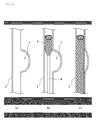
- Fig. 2 is a schematic drawing for the explanation of manipulation training carried out by inserting a stent graft into the blood vessel model having a large aneurysm of the present invention.
- Fig. 2(a) shows a blood vessel model having a large aneurysm 2 formed in an aorta 1.
- the large aneurysm 2 existing in the human body is allowed to stand as it is, the large aneurysm 2 may rupture, resulting in death. Therefore, as shown in Fig. 2(b) , a catheter 4 including a stent graft 3 is inserted to the position where the large aneurysm 2 exists, and the stent graft 3 is taken out from the catheter 4 at the position where the large aneurysm 2 exists. Thereafter, the stent graft 3 is spread in the aorta 1 so as to cover the large aneurysm 2.
- the blood vessel model of the present invention can be used as a blood vessel model for practicing resection of a blood vessel portion having a large aneurysm and implantation of an artificial blood vessel in place of the resected blood vessel portion.
- a blood vessel model having a large aneurysm 2 in an aorta 1 as shown in Fig. 2(a) is possible to use a blood vessel model having a large aneurysm 2 in an aorta 1 as shown in Fig. 2(a) .
- bleeding is stopped by clipping the blood vessel before and after the large aneurysm 2 of a blood vessel model with forceps.
- a blood vessel model having a healthy blood vessel shape is applied to the thus resected position, followed by ligation of both end portions of this blood vessel model with the blood vessel model in which the large aneurysm 2 is resected.
- treatment practice is completed.
- the blood vessel model of the present invention as a blood vessel model for practicing manipulation in which a blood vessel portion having a large aneurysm is resected and an artificial blood vessel is implanted in place of the resected blood vessel portion.
- the silica particles and the polyvinyl alcohol are used in combination as raw materials. Therefore, it is possible to efficiently obtain a blood vessel model which has hydrophilicity like a blood vessel of the human body and a surface free from stickiness, and which also has flexibility (resilience), incision feeling like a blood vessel of the human body and satisfactory mechanical strength, by performing freezing and thawing of the mixed solution only one time without the repeating of an operation for freezing and thawing of the mixed solution plural times.
- the operation for freezing and thawing may be repeated plural times as occasion demands.
- the blood vessel model of the present invention has hydrophilicity like a blood vessel of the human body and a surface free from stickiness, and also has flexibility (resilience) and incision feeling like a blood vessel of the human body.
- the blood vessel model containing the cross-linked gel and the silica particles of the present invention has a surface free from stickiness, and also has moderate hydrophilicity, flexibility (resilience) and a suitable tensile strength.
- the blood vessel model of the present invention can be suitably used, for example, as a blood vessel model for practicing insertion of a stent graft into a blood vessel having an aneurysm, and a blood vessel model for practicing resection or ligation surgery of a blood vessel.
- a polyvinyl alcohol having an average polymerization degree of 1700 and a saponification degree of about 98 to about 99% by mole [manufactured by KURARAY CO., LTD. under the trade name of KURARAY POVAL PVA-117] was dissolved in water to prepare an aqueous polyvinyl alcohol solution in which the concentration of polyvinyl alcohol was 10% by weight. After stirring the obtained aqueous polyvinyl alcohol solution for 15 minutes while warming to 80°C, the solution was allowed to stand to cool to room temperature. This aqueous polyvinyl alcohol solution in an amount of 500 mL was charged in a 1L (liter) beaker.
- colloidal silica manufactured by Nissan Chemical Industries, Ltd. under the trade name of SNOWTEX XP, particle diameter of silica: about 5 nm, content of silica: 5% by weight
- a rubber plug made of a silicone rubber was inserted into the opening at one end of a straight tube made of an acrylic resin and having a outer diameter of 5 mm, an inner diameter of 4 mm and a length of 200 mm, and a core material made of an acrylic resin having a diameter of 2 mm and a length of 250 mm was inserted into the hole for inserting a core material provided at the central portion of the rubber plug.
- the opening at another end of this straight tube was faced upward, and the tinted mixed solution obtained in the above (liquid temperature: 20°C) was poured into the gap between the straight tube and the core material up to the vicinity of the opening at another end of the straight tube so that no air bubbles infiltrated. Thereafter, a core material was penetrated into the hole for inserting the core material provided at the central portion of the rubber plug made of a silicone rubber, and the rubber plug was inserted into the opening of the straight tube.
- this straight tube was placed in a freezing chamber (temperature in the freezing chamber: -20°C), cooled for 5 hours, taken out from the freezing chamber and then allowed to stand at room temperature to have room temperature.
- a freezing chamber temperature in the freezing chamber: -20°C
- this straight tube was placed in a dryer, heated to 60°C, maintained at the same temperature for 10 minutes, taken out from the dryer, and then allowed to stand to cool.
- the obtained blood vessel model was taken out from this straight tube.
- the core material was taken out from this blood vessel model, and then dried to give a blood vessel model similar to a blood vessel of the human body.
- An acrylic poster color having a red color similar to the color of human blood [manufactured by Delta Corporation under the trade name of DeltaCeramcoat] was filled into the obtained blood vessel model.
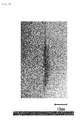
- the blood vessel model thus obtained is shown in Fig. 1.
- Fig. 1 is a photograph, which is substituted for a drawing, of the blood vessel model.
- a liquid similar to blood exists inside the obtained blood vessel model, and it can be seen that the blood vessel model has a form similar to a blood vessel of the human body.
- a blood vessel model was produced in the same manner as in Example 1, except that polyvinyl alcohol having an average polymerization degree of 1000 and a saponification degree of about 98 to about 99% by mole [manufactured by KURARAY CO., LTD. under the trade name of KURARAY POVAL PVA-110] was used as polyvinyl alcohol in Example 1.
- a blood vessel model was produced in the same manner as in Example 1, except that polyvinyl alcohol having an average polymerization degree of 2000 and a saponification degree of about 98 to about 99% by mole [manufactured by KURARAY CO., LTD. under the trade name of KURARAY POVAL PVA-120] was used as polyvinyl alcohol in Example 1.
- a blood vessel model was produced in the same manner as in Example 1, except that the amount of colloidal silica was changed to 1 mL in Example 1.
- a blood vessel model was produced in the same manner as in Example 1, except that the amount of the colloidal silica was changed to 80 mL in Example 1.
- a blood vessel model was produced in the same manner as in Example 1, except that the colloidal silica was not used in Example 1.
- the obtained polyvinyl alcohol mixture was dissolved in a mixed solvent of dimethyl sulfoxide and water [dimethyl sulfoxide/water (weight ratio): 80/20] while heating to 120°C to prepare a polyvinyl alcohol solution having a water content of 80% by weight.
- Example 2 The same procedures as in Example 1 were carried out except that the polyvinyl alcohol solution obtained in the above was used in place of the mixed solution used in Example 1.
- the polyvinyl alcohol solution obtained in the above (liquid temperature: 45°C) was poured into the gap between the straight tube and the core material up to the vicinity of the opening at another end of the straight tube so that no air bubbles infiltrated. Then, a core material was penetrated into the hole for inserting a core material provided at the central portion of a rubber plug made of a silicone rubber, and the rubber plug was inserted into the opening of the straight tube.
- this straight tube was placed in a freezing chamber (temperature in the freezing chamber: -20°C), cooled for 6 hours, taken out from the freezing chamber, and then allowed to stand at room temperature, to have room temperature.
- the rubber plug at both ends of this straight tube was removed, and the core material was taken out from the straight tube.
- This straight tube was dipped in 200 mL of ethanol for 2 hours at room temperature, whereby dimethyl sulfoxide was substituted with ethanol to remove. After dipping the straight tube in water at 25°C, this straight tube was taken out from the water, and the obtained blood vessel model was taken out from the straight tube.
- This blood vessel model was observed with naked eyes. As a result, it was confirmed that the blood vessel model was not sufficiently gelled, had scarcely resilience, and also had fluidity and stickiness on its surface. Therefore, this model was unsuitable for a blood vessel model.
- a blood vessel model cannot be obtained, since gelling of the obtained polyvinyl alcohol does not sufficiently proceed, even though polyvinyl alcohol having an average polymerization degree of 1700 and a saponification degree of 99.0% by mole is mixed with polyvinyl alcohol having an average polymerization degree of 1800 and a saponification degree of 86 to 90% by mole in a weight ratio of 80/20, and the mixture is dissolved in a mixed solvent of water and dimethyl sulfoxide and cooled to room temperature.
- a blood vessel model was produced by cutting a commercially available silicone rubber tube having a diameter of 2 mm into pieces each having a length of 20 cm.
- a water drop was dropped on the blood vessel model, and ten students and teachers who majored in surgery in a graduate school of medicine of a university were asked to observe the surface of the blood vessel model with naked eyes.
- the water wettability was evaluated in accordance with the following evaluation criteria. Incidentally, acceptable standard is that nobody rates "D".
- Example and Comparative Example No. Physical properties of blood vessel model Appearance Water wettability Sticky feeling Resilience Incision feeling A B C D A B C N A B C D A B C D A B C D A B C D 1 9 1 0 0 9 1 0 0 8 2 0 0 9 1 0 0 9 1 0 0 2 7 2 1 0 9 1 0 0 7 2 1 0 8 2 0 0 9 1 0 0 3 7 1 2 0 9 1 0 0 7 3 0 0 8 1 1 0 8 1 1 0 4 7 2 1 0 8 2 0 0 8 2 0 0 8 2 0 0 8 2 0 0 5 8 1 1 0 8 2 0 0 7 2 1 0 7 3 0 0 7 2 1 0 Comp.
- the blood vessel model obtained in each Example has appearance and water wettability similar to a blood vessel of the living body and a surface free from stickiness, and also has resilience and incision feeling like a blood vessel of the human body, since the blood vessel model containing polyvinyl alcohol and silica particles is used.
- Two blood vessel models each having an outer diameter of 4 mm, an inner diameter of 2 mm and a length of 200 mm were produced in the same manner as in Example 1.
- the two blood vessel models were intersected with each other, and a hole having a diameter of about 2 mm was formed at the intersected portion in each blood vessel model.
- the two blood vessel models were connected with each other so that the inside of each blood vessel model was communicated with each other, and the mixed solution obtained in Example 1 was applied to the intersected portion so as to seal the intersected portion.
- an opening having a diameter of about 2 mm was formed on the side surface of one of the blood vessel models.
- this aneurysm-shaped blood vessel model which imitated an aneurysm was produced by using the mixed solution obtained in Example 1. More specifically, this aneurysm-shaped blood vessel model was produced by applying the mixed solution obtained in Example 1 to the surface of a rubber balloon expanded by blowing air to have a diameter of about 8 mm; carrying out freezing and thawing in the same manner as in Example 1 to produce an aneurysm-shaped blood vessel model; pricking the blood vessel model with a needle thereby causing the balloon to rupture inside the blood vessel model; removing the needle; and then taking out the balloon from the formed opening having a diameter of about 2 mm.
- the opening of the aneurysm-shaped blood vessel model obtained in the above was intersected with the opening positioned at the side surface of the blood vessel model produced by intersecting and integrating the two blood vessel models obtained in the above, and the inside of each blood vessel model was communicated with each other.
- the mixed solution obtained in Example 1 was applied to the intersected portion so as to seal the intersected portion. Thereafter, freezing and thawing of the model was carried out in the same manner as in Example 1, to give a blood vessel model having an aneurysm-shaped blood vessel.
- An acrylic poster color having a red color similar to the color of human blood [manufactured by Delta Corporation under the trade name of DeltaCeramcoat] was filled into the obtained blood vessel model.
- the obtained blood vessel model is shown in Fig. 3 .
- Fig. 3 is a photograph, which is substituted for a drawing, of the blood vessel model obtained in the above. As shown in Fig. 3 , it can be seen that a liquid similar to blood (black area in the drawing) exists inside the obtained blood vessel model, and that a lump similar to an aneurysm exists on the left side of the intersected portion of the two blood vessel models in the blood vessel model which extends in a lateral direction facing the drawing.
- the surgeon was asked to observe the obtained blood vessel model.
- this blood vessel model there could be obtained high evaluation, such that the blood vessel model could be sufficiently expected to be used as a blood vessel model for practicing surgery for implanting an artificial blood vessel in an aneurysm, a blood vessel model for practicing insertion of a stent graft into an aneurysm, and the like.
- the blood vessel model of the present invention can be suitably used, for example, as a blood vessel model for practicing insertion of a stent graft into an aneurysm, a blood vessel model for practicing resection or ligation surgery of a blood vessel, and the like.
- a 500 mL volume beaker was charged with 80 mL of dimethyl sulfoxide and 20 mL of water, and they were sufficiently mixed with each other, to give a mixed solvent.
- 20 mL of colloidal silica manufactured by Nissan Chemical Industries, Ltd. under the trade name of SNOWTEX XP, particle diameter of silica: about 5 nm, content of silica: 5% by weight] was added, followed by stirring so that the contents in the beaker became uniform.
- polyvinyl alcohol having an average polymerization degree of 1700 and a saponification degree of 98 to 99% by mole or so [manufactured by KURARAY CO., LTD. under the trade name of KURARAY POVAL PVA-117] was added to the beaker to have a concentration of 10% by weight. The mixture was stirred for 15 minutes while heating to 80°C, to give a mixed solution.
- a rubber plug made of a silicone rubber was inserted to the opening at one end of a straight tube made of an acrylic resin having an outer diameter of 5 mm, an inner diameter of 4 mm and a length of 200 mm, and a core material made of an acrylic resin having a diameter of 2 mm and a length of 250 mm was inserted to the hole for inserting a core material formed at the central portion of the rubber plug.
- the opening positioned at another end of this straight tube was facing upward, and the tinted mixed solution obtained in the above (liquid temperature: 45°C) was poured into the gap between the straight tube and the core material up to the vicinity of the opening at another end of the straight tube so that no air bubbles infiltrated. Thereafter, a core material was penetrated to the hole for inserting a core material formed at the central portion of the rubber plug made of a silicone rubber, and the rubber plug was inserted to the opening of the straight tube.
- this straight tube was placed in a freezing chamber (temperature in the freezing chamber: -20°C), cooled for 6 hours, taken out from the freezing chamber and then allowed to stand at room temperature to have room temperature.
- a freezing chamber temperature in the freezing chamber: -20°C
- the obtained blood vessel model was taken out from this straight tube, and the core material was taken out from this blood vessel model.
- This blood vessel model was dipped in water in a container charged with 5 L of water at 25°C. The container was allowed to stand for 24 hours while supplying water to this container at a flow rate of 200 mL/min, and then the blood vessel model was taken out from the container.
- FIG. 4 is a photograph, which is substituted for a drawing, of the blood vessel model obtained in the above. As shown in Fig. 4 , it can be seen that a liquid similar to blood (black area in the drawing) exists inside the obtained blood vessel model, and that the blood vessel model has a form similar to a blood vessel of the human body.
- a blood vessel model was produced in the same manner as in Example 7, except that polyvinyl alcohol having an average polymerization degree of 1000 and a saponification degree of about 98 to about 99% by mole [manufactured by KURARAY CO., LTD under the trade name of KURARAY POVAL PVA-110] was used as polyvinyl alcohol in Example 7.
- a blood vessel model was produced in the same manner as in Example 7, except that polyvinyl alcohol having an average polymerization degree of 2000 and a saponification degree of about 98 to about 99% by mole [manufactured by KURARAY CO., LTD. under the trade name of KURARAY POVAL PVA-120] was used as polyvinyl alcohol in Example 7.
- a blood vessel model was produced in the same manner as in Example 7, except that the amount of colloidal silica was changed to 5 mL in Example 7.
- a blood vessel model was produced in the same manner as in Example 7, except that the amount of colloidal silica was changed to 50 mL in Example 7.
- a blood vessel model was produced in the same manner as in Example 7, except that 75 mL of dimethyl sulfoxide and 25 mL of water were used in place of 80 mL of dimethyl sulfoxide and 20 mL of water in Example 7.
- a blood vessel model was produced in the same manner as in Example 7, except that 85 mL of dimethyl sulfoxide and 15 mL of water were used in place of 80 mL of dimethyl sulfoxide and 20 mL of water in Example 7.
- a blood vessel model was produced in the same manner as in Example 7, except that the colloidal silica was not used in Example 7.
- the obtained polyvinyl alcohol mixture was dissolved in a mixed solvent of dimethyl sulfoxide and water [dimethyl sulfoxide/water (weight ratio): 80/20] while heating to 120°C to prepare a polyvinyl alcohol solution having a water content of 80% by weight.
- Example 7 The same procedures as in Example 7 were carried out except that the polyvinyl alcohol solution obtained in the above was used in place of the mixed solution used in Example 7, and the polyvinyl alcohol solution (liquid temperature: 45°C) was poured into the gap between the straight tube and the core material up to the vicinity of an opening at another end of the straight tube so that no air bubbles infiltrated. Then, a core material was penetrated to the hole for inserting a core material formed at the central portion of a rubber plug made of a silicone rubber, and the rubber plug was inserted to the opening of the straight tube.
- the polyvinyl alcohol solution obtained in the above was used in place of the mixed solution used in Example 7, and the polyvinyl alcohol solution (liquid temperature: 45°C) was poured into the gap between the straight tube and the core material up to the vicinity of an opening at another end of the straight tube so that no air bubbles infiltrated. Then, a core material was penetrated to the hole for inserting a core material formed at the central portion of a rubber plug
- this straight tube was placed in a freezing chamber (temperature in the freezing chamber: -20°C), cooled for 6 hours, taken out from the freezing chamber and then allowed to stand at room temperature to have room temperature.
- the rubber plug at both ends of this straight tube was removed and the core material was taken out from the straight tube.
- This straight tube was dipped in 200 mL of ethanol for 2 hours at room temperature, and dimethyl sulfoxide was substituted with ethanol to remove.
- the straight tube was dipped in water at 25°C, and this straight tube was taken out from the water.
- the obtained blood vessel model was taken out from the straight tube.
- This blood vessel model was observed with naked eyes. As a result, it was confirmed that the blood vessel model was not sufficiently gelled and had scarcely resilience, and also had fluidity and stickiness on its surface. Therefore, this model could not be used as a blood vessel model.
- a blood vessel model cannot be obtained, since gelling of the obtained polyvinyl alcohol does not sufficiently proceed, even though polyvinyl alcohol having an average polymerization degree of 1700 and a saponification degree of 99.0% by mole is mixed with polyvinyl alcohol having an average polymerization degree of 1800 and a saponification degree of 86 to 90% by mole in a weight ratio of 80/20, and the mixture is dissolved in a mixed solvent of water and dimethyl sulfoxide and cooled to room temperature.
- Each blood vessel model was observed with naked eyes, and transparency was evaluated in accordance with the following evaluation criteria.
- a water drop was dropped on each blood vessel model, and the surface of the blood vessel model was observed with naked eyes.
- the water wettability was evaluated in accordance with the following evaluation criteria.
- Flexibility (resilience) of each blood vessel model was examined by finger touching, and evaluated in accordance with the following evaluation criteria.
- the blood vessel model obtained in each Example is excellent in transparency and has moderate hydrophilicity and flexibility, and has a surface free from stickiness and large tensile strength.
- Two blood vessel models each having an outer diameter of 4 mm, an inner diameter of 2 mm and a length of 200 mm were produced in the same manner as in Example 7.
- the two blood vessel models were intersected with each other, and a hole having a diameter of about 2 mm was formed at the intersected portion in each blood vessel model.
- the two blood vessel models were connected with each other so that the inside of each blood vessel model was communicated with each other, and the mixed solution obtained in Example 7 was applied to the intersected portion so as to seal the intersected portion.
- an opening having a diameter of about 2 mm was formed on the side surface of one of the blood vessel models.
- this aneurysm-shaped blood vessel model was produced by using the mixed solution obtained in Example 7. More specifically, this aneurysm-shaped blood vessel model was produced by applying the mixed solution obtained in Example 7 to the surface of a rubber balloon expanded by blowing air to have a diameter of about 8 mm; carrying out freezing and thawing in the same manner as in Example 7 to produce an aneurysm-shaped blood vessel model; pricking the blood vessel model with a needle, and thereby causing the balloon to rupture inside the blood vessel model; removing the needle; and then taking out the balloon from the formed opening having a diameter of about 2 mm.
- the opening of the aneurysm-shaped blood vessel model obtained in the above was intersected with the opening positioned at the side surface of the blood vessel model produced by intersecting and integrating two blood vessel models obtained in the above, and the inside of each blood vessel model was communicated with each other.
- the mixed solution obtained in Example 7 was applied to the intersected portion so as to seal the intersected portion. Thereafter, freezing and thawing of the model was carried out in the same manner as in Example 7, to give a blood vessel model having an aneurysm-shaped blood vessel.
- An acrylic poster color having a red color similar to the color of human blood [manufactured by Delta Corporation under the trade name of DeltaCeramcoat] was filled into the obtained blood vessel model.
- the obtained blood vessel model is shown in Fig. 5 .
- Fig. 5 is a photograph, which is substituted for a drawing, of the blood vessel model obtained in the above. As shown in Fig. 5 , it can be seen that a liquid similar to blood (black area in the drawing) exists inside the obtained blood vessel model, and that a lump similar to an aneurysm exists on the left side of the intersected portion of the two blood vessel models in the blood vessel model which extends in a lateral direction facing the drawing.
- the blood vessel model of the present invention can be suitably used, for example, as a blood vessel model for practicing insertion of a stent graft into an aneurysm, a blood vessel model for practicing resection or ligation surgery of a blood vessel, and the like.
Landscapes
- Health & Medical Sciences (AREA)
- Engineering & Computer Science (AREA)
- General Physics & Mathematics (AREA)
- Physics & Mathematics (AREA)
- General Health & Medical Sciences (AREA)
- Medicinal Chemistry (AREA)
- Chemical & Material Sciences (AREA)
- Educational Technology (AREA)
- Business, Economics & Management (AREA)
- Algebra (AREA)
- Computational Mathematics (AREA)
- Medical Informatics (AREA)
- Mathematical Analysis (AREA)
- Mathematical Optimization (AREA)
- Mathematical Physics (AREA)
- Pure & Applied Mathematics (AREA)
- Theoretical Computer Science (AREA)
- Educational Administration (AREA)
- Pulmonology (AREA)
- Life Sciences & Earth Sciences (AREA)
- Biomedical Technology (AREA)
- Veterinary Medicine (AREA)
- Public Health (AREA)
- Animal Behavior & Ethology (AREA)
- Radiology & Medical Imaging (AREA)
- Dermatology (AREA)
- Epidemiology (AREA)
- Pharmacology & Pharmacy (AREA)
- Neurosurgery (AREA)
- Gastroenterology & Hepatology (AREA)
- Cardiology (AREA)
- Oral & Maxillofacial Surgery (AREA)
- Transplantation (AREA)
- Heart & Thoracic Surgery (AREA)
- Vascular Medicine (AREA)
- Instructional Devices (AREA)
- Prostheses (AREA)
- Materials For Medical Uses (AREA)
Applications Claiming Priority (3)
| Application Number | Priority Date | Filing Date | Title |
|---|---|---|---|
| JP2009228305A JP4790055B2 (ja) | 2009-05-29 | 2009-09-30 | 動脈瘤に対するステントグラフトの挿入練習用または血管の切除・縫合手術練習用の血管モデル |
| JP2009228296A JP4841663B2 (ja) | 2009-09-30 | 2009-09-30 | 動脈瘤に対するステントグラフトの挿入練習用または血管の切除・縫合手術練習用の血管モデル |
| PCT/JP2010/065473 WO2011040200A1 (ja) | 2009-09-30 | 2010-09-09 | 血管モデル |
Publications (3)
| Publication Number | Publication Date |
|---|---|
| EP2485207A1 EP2485207A1 (en) | 2012-08-08 |
| EP2485207A4 EP2485207A4 (en) | 2013-05-01 |
| EP2485207B1 true EP2485207B1 (en) | 2015-08-26 |
Family
ID=43826028
Family Applications (1)
| Application Number | Title | Priority Date | Filing Date |
|---|---|---|---|
| EP10820320.9A Active EP2485207B1 (en) | 2009-09-30 | 2010-09-09 | Blood vessel model |
Country Status (4)
| Country | Link |
|---|---|
| US (2) | US8758797B2 (enExample) |
| EP (1) | EP2485207B1 (enExample) |
| JP (1) | JP4841663B2 (enExample) |
| WO (1) | WO2011040200A1 (enExample) |
Families Citing this family (19)
| Publication number | Priority date | Publication date | Assignee | Title |
|---|---|---|---|---|
| EP2758087B1 (en) * | 2011-10-21 | 2018-07-04 | Nitta Casings Inc. | Collagen-polysaccharide materials mimicking blood vessels, tissues and bones |
| CN103284765B (zh) * | 2012-02-28 | 2016-02-24 | 常州奥斯特医疗器械有限公司 | 一种动脉瘤血管模型及其制作方法 |
| JP6120504B2 (ja) * | 2012-08-06 | 2017-04-26 | 有限会社湘南化成 | 管状モデルの製造方法、血管モデル、血管モデルシミュレータ及び成形型 |
| CN105448170B (zh) * | 2014-08-19 | 2019-10-08 | 中山大学附属第三医院 | 一种内含树状管道结构的仿体模型 |
| CA2973242C (en) | 2015-01-06 | 2018-02-27 | The Hospital For Sick Children | Simulator for practicing trans-oral surgery and method of use thereof |
| US10510268B2 (en) * | 2016-04-05 | 2019-12-17 | Synaptive Medical (Barbados) Inc. | Multi-metric surgery simulator and methods |
| CN106141593B (zh) * | 2016-08-11 | 2019-06-25 | 成都嘉宝祥生物科技有限公司 | 一种分叉血管模型制作方法 |
| CN107049486B (zh) * | 2017-03-29 | 2019-04-26 | 广州博敏科技有限公司 | 动脉瘤血管模型及其制备方法和应用 |
| US10692402B2 (en) * | 2017-05-05 | 2020-06-23 | Synaptive Medical (Barbados) Inc. | Simulated fibrous tissue for surgical training |
| JP7107509B2 (ja) | 2017-06-28 | 2022-07-27 | デンカ株式会社 | 止血を含む手技を練習するために用いられる潰瘍模型、及び、潰瘍模型の使用 |
| CN109674558B (zh) * | 2019-03-08 | 2021-03-16 | 北京工业大学 | 一种基于等离子电晕法制备高度光滑和透明主动脉根部的方法 |
| CN110491231A (zh) * | 2019-08-22 | 2019-11-22 | 潍坊医学院 | 一种血管内支架植入的生物力学实验模拟装置 |
| CN110640950B (zh) * | 2019-09-24 | 2021-07-27 | 中国人民解放军东部战区总医院 | 一种个体化肠瘘支架制作方法及其适用模具 |
| JP7416375B2 (ja) * | 2019-10-23 | 2024-01-17 | 国立大学法人横浜国立大学 | 生体モデル |
| WO2021132204A1 (ja) | 2019-12-23 | 2021-07-01 | デンカ株式会社 | 粘膜組織モデル |
| TWI787902B (zh) | 2020-12-08 | 2022-12-21 | 日商泰爾茂股份有限公司 | 手法模擬器及模擬方法 |
| CN113838353A (zh) * | 2021-08-29 | 2021-12-24 | 北京工业大学 | 一种高透明的弹性脑动脉瘤模型的制备方法 |
| CN115536965A (zh) * | 2022-09-27 | 2022-12-30 | 中新巨成医学科技有限公司 | 一种生物仿真材料及其制备方法和用途 |
| CN117304539B (zh) * | 2023-11-30 | 2024-02-09 | 上海汇禾医疗器械有限公司 | 一种血管模型、其制备方法和栓塞剂体外模拟测试装置 |
Family Cites Families (28)
| Publication number | Priority date | Publication date | Assignee | Title |
|---|---|---|---|---|
| US3592936A (en) | 1969-04-25 | 1971-07-13 | Merck & Co Inc | Method of treatment using pharmaceutical composition containing dimethyl sulfoxide |
| US3738957A (en) * | 1971-03-18 | 1973-06-12 | Du Pont | Coacervates of polyvinyl alcohol and colloidal silica |
| DE3381136D1 (de) | 1983-09-28 | 1990-03-01 | Idemitsu Petrochemical Co | Verfahren zur herstellung von filmen oder folien aus thermoplastischem kunststoff. |
| JPS62230609A (ja) * | 1986-04-01 | 1987-10-09 | Asahi Glass Co Ltd | シリカ系粒子 |
| JPH0527776Y2 (enExample) | 1988-04-01 | 1993-07-15 | ||
| JPH0226567A (ja) * | 1988-07-15 | 1990-01-29 | Nippon Oil Co Ltd | ハイパーサーミア用ファントム |
| JPH064768Y2 (ja) | 1989-07-10 | 1994-02-09 | ホシザキ電機株式会社 | 貯氷式陳列台 |
| US5349008A (en) | 1990-04-05 | 1994-09-20 | Kuraray Co., Ltd. | Process for suspension polymerization of vinyl compound |
| JPH0462010A (ja) | 1990-06-23 | 1992-02-27 | Bando Chem Ind Ltd | 袋状中空体の成形用マンドレルおよび加硫装置 |
| US5266224A (en) | 1991-05-24 | 1993-11-30 | Zirconium Technology Corporation | Borate cross-linking solutions |
| JP2541332Y2 (ja) | 1991-09-12 | 1997-07-16 | 株式会社高研 | 装着型注射採血手技練習模型 |
| JPH064768U (ja) | 1992-05-13 | 1994-01-21 | 株式会社高研 | 注射採血輸液手技練習模型 |
| JPH062010A (ja) | 1992-06-18 | 1994-01-11 | Kobe Steel Ltd | 粉末成形体の焼結方法 |
| JP2683992B2 (ja) | 1993-01-29 | 1997-12-03 | 博 田中 | 成形用型およびその型を用いた成形方法 |
| US5977021A (en) | 1996-12-24 | 1999-11-02 | Oji Paper Co., Ltd | Heat-sensitive recording adhesive sheet |
| JPH11167342A (ja) | 1997-12-05 | 1999-06-22 | Koken Co Ltd | 動物実験手技訓練用動物血管モデル |
| JP2000080126A (ja) * | 1998-09-02 | 2000-03-21 | Fujikura Ltd | ホウ素架橋ポリビニルアルコール成形物およびその製造方法 |
| US7857626B2 (en) | 2000-10-23 | 2010-12-28 | Toly Christopher C | Medical physiological simulator including a conductive elastomer layer |
| JP4207777B2 (ja) | 2003-12-26 | 2009-01-14 | オムロンヘルスケア株式会社 | 血管模型セット |
| JP2006126686A (ja) | 2004-11-01 | 2006-05-18 | Crosswell:Kk | 血管モデル |
| EP1848332A4 (en) | 2005-02-03 | 2011-11-02 | Christopher Sakezles | MODELS AND METHODS USING THESE MODELS FOR TESTING MEDICAL DEVICES |
| US7521434B2 (en) | 2005-06-27 | 2009-04-21 | Luromed Llc | Cross-linked gels of hyaluronic acid with hydrophobic polymers and processes for making them |
| JP4326011B2 (ja) | 2006-05-25 | 2009-09-02 | 学校法人早稲田大学 | 手技訓練用血管モデル |
| JP2007316434A (ja) * | 2006-05-26 | 2007-12-06 | Tohoku Techno Arch Co Ltd | 生体模型のための粘膜材 |
| CN101547968A (zh) | 2006-08-08 | 2009-09-30 | 克莱里安特财务(Bvi)有限公司 | 荧光增白剂的水溶液 |
| US8361503B2 (en) | 2007-03-02 | 2013-01-29 | University of Pittsburgh—of the Commonwealth System of Higher Education | Extracellular matrix-derived gels and related methods |
| JP4448153B2 (ja) | 2007-03-27 | 2010-04-07 | 村中医療器株式会社 | 脳神経外科手術のトレーニング装置、この装置に用いられる脳モデル及びモデル主体 |
| JP5176055B2 (ja) | 2007-04-11 | 2013-04-03 | 国立大学法人神戸大学 | 手術訓練用脳モデル |
-
2009
- 2009-09-30 JP JP2009228296A patent/JP4841663B2/ja active Active
-
2010
- 2010-09-09 EP EP10820320.9A patent/EP2485207B1/en active Active
- 2010-09-09 WO PCT/JP2010/065473 patent/WO2011040200A1/ja not_active Ceased
- 2010-09-09 US US13/392,177 patent/US8758797B2/en active Active
-
2014
- 2014-05-08 US US14/272,624 patent/US9202389B2/en active Active
Also Published As
| Publication number | Publication date |
|---|---|
| US9202389B2 (en) | 2015-12-01 |
| JP4841663B2 (ja) | 2011-12-21 |
| JP2011075907A (ja) | 2011-04-14 |
| US20140246798A1 (en) | 2014-09-04 |
| US8758797B2 (en) | 2014-06-24 |
| EP2485207A1 (en) | 2012-08-08 |
| WO2011040200A1 (ja) | 2011-04-07 |
| EP2485207A4 (en) | 2013-05-01 |
| US20120156666A1 (en) | 2012-06-21 |
Similar Documents
| Publication | Publication Date | Title |
|---|---|---|
| US9202389B2 (en) | Blood vessel model comprising polyvinyl alcohol and silica particles | |
| JP4790055B2 (ja) | 動脈瘤に対するステントグラフトの挿入練習用または血管の切除・縫合手術練習用の血管モデル | |
| EP2426657B1 (en) | Organ model | |
| CN105209075B (zh) | 生物相容性原位水凝胶 | |
| CN104888263B (zh) | 生物相容性止血、防粘连、促愈合、外科封闭的变性淀粉材料 | |
| CN104144714B (zh) | 交联透明质酸线及其使用方法 | |
| JP6055069B1 (ja) | 臓器、組織又は器官モデル | |
| US20070160647A1 (en) | Materials for medical implants and occlusive devices | |
| JP2011076035A (ja) | 臓器モデル | |
| US6652883B2 (en) | Tissue bulking and coating compositions | |
| JP7365020B2 (ja) | ゲルを有する物体の製造法 | |
| JP2011022522A (ja) | 皮膚モデル | |
| JP2010277003A (ja) | 臓器モデル | |
| CN115403882A (zh) | 一种发泡工艺成型的生物仿真材料及其制备方法和用途 | |
| EP3300057B1 (en) | Use of a simulated animal organ | |
| CN109589446A (zh) | 一种可吸收生物止血材料及其制备方法 | |
| CN106133808A (zh) | 生物体器官模型用水性凝胶组合物及生物体器官模型 | |
| JPWO2016047329A1 (ja) | 生体臓器模型用水性ゲル組成物および生体臓器模型 | |
| WO2025087389A1 (zh) | 一种水凝胶及其制备方法和应用 | |
| JP7825246B2 (ja) | 十二指腸乳頭モデル | |
| JP2010262119A (ja) | 骨モデル | |
| RU2270483C2 (ru) | Способ изготовления учебных анатомических препаратов кровеносных сосудов на трупном материале | |
| JP4993516B2 (ja) | 手技練習用シート | |
| JP2022173176A (ja) | 釣り用疑似餌 |
Legal Events
| Date | Code | Title | Description |
|---|---|---|---|
| PUAI | Public reference made under article 153(3) epc to a published international application that has entered the european phase |
Free format text: ORIGINAL CODE: 0009012 |
|
| 17P | Request for examination filed |
Effective date: 20120430 |
|
| AK | Designated contracting states |
Kind code of ref document: A1 Designated state(s): AL AT BE BG CH CY CZ DE DK EE ES FI FR GB GR HR HU IE IS IT LI LT LU LV MC MK MT NL NO PL PT RO SE SI SK SM TR |
|
| DAX | Request for extension of the european patent (deleted) | ||
| A4 | Supplementary search report drawn up and despatched |
Effective date: 20130403 |
|
| RIC1 | Information provided on ipc code assigned before grant |
Ipc: C08K 3/36 20060101ALI20130326BHEP Ipc: G09B 23/28 20060101AFI20130326BHEP Ipc: C08L 29/04 20060101ALI20130326BHEP Ipc: C08K 5/42 20060101ALI20130326BHEP |
|
| 17Q | First examination report despatched |
Effective date: 20140704 |
|
| GRAP | Despatch of communication of intention to grant a patent |
Free format text: ORIGINAL CODE: EPIDOSNIGR1 |
|
| INTG | Intention to grant announced |
Effective date: 20150331 |
|
| GRAS | Grant fee paid |
Free format text: ORIGINAL CODE: EPIDOSNIGR3 |
|
| GRAA | (expected) grant |
Free format text: ORIGINAL CODE: 0009210 |
|
| AK | Designated contracting states |
Kind code of ref document: B1 Designated state(s): AL AT BE BG CH CY CZ DE DK EE ES FI FR GB GR HR HU IE IS IT LI LT LU LV MC MK MT NL NO PL PT RO SE SI SK SM TR |
|
| REG | Reference to a national code |
Ref country code: GB Ref legal event code: FG4D |
|
| REG | Reference to a national code |
Ref country code: CH Ref legal event code: EP |
|
| REG | Reference to a national code |
Ref country code: AT Ref legal event code: REF Ref document number: 745587 Country of ref document: AT Kind code of ref document: T Effective date: 20150915 |
|
| REG | Reference to a national code |
Ref country code: IE Ref legal event code: FG4D |
|
| REG | Reference to a national code |
Ref country code: DE Ref legal event code: R096 Ref document number: 602010027061 Country of ref document: DE |
|
| REG | Reference to a national code |
Ref country code: FR Ref legal event code: PLFP Year of fee payment: 6 |
|
| REG | Reference to a national code |
Ref country code: AT Ref legal event code: MK05 Ref document number: 745587 Country of ref document: AT Kind code of ref document: T Effective date: 20150826 |
|
| REG | Reference to a national code |
Ref country code: LT Ref legal event code: MG4D |
|
| PG25 | Lapsed in a contracting state [announced via postgrant information from national office to epo] |
Ref country code: LT Free format text: LAPSE BECAUSE OF FAILURE TO SUBMIT A TRANSLATION OF THE DESCRIPTION OR TO PAY THE FEE WITHIN THE PRESCRIBED TIME-LIMIT Effective date: 20150826 Ref country code: LV Free format text: LAPSE BECAUSE OF FAILURE TO SUBMIT A TRANSLATION OF THE DESCRIPTION OR TO PAY THE FEE WITHIN THE PRESCRIBED TIME-LIMIT Effective date: 20150826 Ref country code: FI Free format text: LAPSE BECAUSE OF FAILURE TO SUBMIT A TRANSLATION OF THE DESCRIPTION OR TO PAY THE FEE WITHIN THE PRESCRIBED TIME-LIMIT Effective date: 20150826 Ref country code: GR Free format text: LAPSE BECAUSE OF FAILURE TO SUBMIT A TRANSLATION OF THE DESCRIPTION OR TO PAY THE FEE WITHIN THE PRESCRIBED TIME-LIMIT Effective date: 20151127 Ref country code: NO Free format text: LAPSE BECAUSE OF FAILURE TO SUBMIT A TRANSLATION OF THE DESCRIPTION OR TO PAY THE FEE WITHIN THE PRESCRIBED TIME-LIMIT Effective date: 20151126 |
|
| REG | Reference to a national code |
Ref country code: NL Ref legal event code: MP Effective date: 20150826 |
|
| PG25 | Lapsed in a contracting state [announced via postgrant information from national office to epo] |
Ref country code: HR Free format text: LAPSE BECAUSE OF FAILURE TO SUBMIT A TRANSLATION OF THE DESCRIPTION OR TO PAY THE FEE WITHIN THE PRESCRIBED TIME-LIMIT Effective date: 20150826 Ref country code: SE Free format text: LAPSE BECAUSE OF FAILURE TO SUBMIT A TRANSLATION OF THE DESCRIPTION OR TO PAY THE FEE WITHIN THE PRESCRIBED TIME-LIMIT Effective date: 20150826 Ref country code: IS Free format text: LAPSE BECAUSE OF FAILURE TO SUBMIT A TRANSLATION OF THE DESCRIPTION OR TO PAY THE FEE WITHIN THE PRESCRIBED TIME-LIMIT Effective date: 20151226 Ref country code: PL Free format text: LAPSE BECAUSE OF FAILURE TO SUBMIT A TRANSLATION OF THE DESCRIPTION OR TO PAY THE FEE WITHIN THE PRESCRIBED TIME-LIMIT Effective date: 20150826 Ref country code: AT Free format text: LAPSE BECAUSE OF FAILURE TO SUBMIT A TRANSLATION OF THE DESCRIPTION OR TO PAY THE FEE WITHIN THE PRESCRIBED TIME-LIMIT Effective date: 20150826 Ref country code: ES Free format text: LAPSE BECAUSE OF FAILURE TO SUBMIT A TRANSLATION OF THE DESCRIPTION OR TO PAY THE FEE WITHIN THE PRESCRIBED TIME-LIMIT Effective date: 20150826 Ref country code: PT Free format text: LAPSE BECAUSE OF FAILURE TO SUBMIT A TRANSLATION OF THE DESCRIPTION OR TO PAY THE FEE WITHIN THE PRESCRIBED TIME-LIMIT Effective date: 20151228 |
|
| PG25 | Lapsed in a contracting state [announced via postgrant information from national office to epo] |
Ref country code: NL Free format text: LAPSE BECAUSE OF FAILURE TO SUBMIT A TRANSLATION OF THE DESCRIPTION OR TO PAY THE FEE WITHIN THE PRESCRIBED TIME-LIMIT Effective date: 20150826 |
|
| PG25 | Lapsed in a contracting state [announced via postgrant information from national office to epo] |
Ref country code: CZ Free format text: LAPSE BECAUSE OF FAILURE TO SUBMIT A TRANSLATION OF THE DESCRIPTION OR TO PAY THE FEE WITHIN THE PRESCRIBED TIME-LIMIT Effective date: 20150826 Ref country code: IT Free format text: LAPSE BECAUSE OF FAILURE TO SUBMIT A TRANSLATION OF THE DESCRIPTION OR TO PAY THE FEE WITHIN THE PRESCRIBED TIME-LIMIT Effective date: 20150826 Ref country code: SK Free format text: LAPSE BECAUSE OF FAILURE TO SUBMIT A TRANSLATION OF THE DESCRIPTION OR TO PAY THE FEE WITHIN THE PRESCRIBED TIME-LIMIT Effective date: 20150826 Ref country code: DK Free format text: LAPSE BECAUSE OF FAILURE TO SUBMIT A TRANSLATION OF THE DESCRIPTION OR TO PAY THE FEE WITHIN THE PRESCRIBED TIME-LIMIT Effective date: 20150826 Ref country code: EE Free format text: LAPSE BECAUSE OF FAILURE TO SUBMIT A TRANSLATION OF THE DESCRIPTION OR TO PAY THE FEE WITHIN THE PRESCRIBED TIME-LIMIT Effective date: 20150826 |
|
| REG | Reference to a national code |
Ref country code: CH Ref legal event code: PL |
|
| REG | Reference to a national code |
Ref country code: DE Ref legal event code: R097 Ref document number: 602010027061 Country of ref document: DE |
|
| PG25 | Lapsed in a contracting state [announced via postgrant information from national office to epo] |
Ref country code: RO Free format text: LAPSE BECAUSE OF FAILURE TO SUBMIT A TRANSLATION OF THE DESCRIPTION OR TO PAY THE FEE WITHIN THE PRESCRIBED TIME-LIMIT Effective date: 20150826 Ref country code: MC Free format text: LAPSE BECAUSE OF FAILURE TO SUBMIT A TRANSLATION OF THE DESCRIPTION OR TO PAY THE FEE WITHIN THE PRESCRIBED TIME-LIMIT Effective date: 20150826 |
|
| REG | Reference to a national code |
Ref country code: IE Ref legal event code: MM4A |
|
| PLBE | No opposition filed within time limit |
Free format text: ORIGINAL CODE: 0009261 |
|
| STAA | Information on the status of an ep patent application or granted ep patent |
Free format text: STATUS: NO OPPOSITION FILED WITHIN TIME LIMIT |
|
| PG25 | Lapsed in a contracting state [announced via postgrant information from national office to epo] |
Ref country code: LI Free format text: LAPSE BECAUSE OF NON-PAYMENT OF DUE FEES Effective date: 20150930 Ref country code: CH Free format text: LAPSE BECAUSE OF NON-PAYMENT OF DUE FEES Effective date: 20150930 Ref country code: IE Free format text: LAPSE BECAUSE OF NON-PAYMENT OF DUE FEES Effective date: 20150909 |
|
| 26N | No opposition filed |
Effective date: 20160530 |
|
| PG25 | Lapsed in a contracting state [announced via postgrant information from national office to epo] |
Ref country code: SI Free format text: LAPSE BECAUSE OF FAILURE TO SUBMIT A TRANSLATION OF THE DESCRIPTION OR TO PAY THE FEE WITHIN THE PRESCRIBED TIME-LIMIT Effective date: 20150826 |
|
| REG | Reference to a national code |
Ref country code: FR Ref legal event code: PLFP Year of fee payment: 7 |
|
| PG25 | Lapsed in a contracting state [announced via postgrant information from national office to epo] |
Ref country code: BE Free format text: LAPSE BECAUSE OF FAILURE TO SUBMIT A TRANSLATION OF THE DESCRIPTION OR TO PAY THE FEE WITHIN THE PRESCRIBED TIME-LIMIT Effective date: 20150826 |
|
| PG25 | Lapsed in a contracting state [announced via postgrant information from national office to epo] |
Ref country code: MT Free format text: LAPSE BECAUSE OF FAILURE TO SUBMIT A TRANSLATION OF THE DESCRIPTION OR TO PAY THE FEE WITHIN THE PRESCRIBED TIME-LIMIT Effective date: 20150826 |
|
| PG25 | Lapsed in a contracting state [announced via postgrant information from national office to epo] |
Ref country code: HU Free format text: LAPSE BECAUSE OF FAILURE TO SUBMIT A TRANSLATION OF THE DESCRIPTION OR TO PAY THE FEE WITHIN THE PRESCRIBED TIME-LIMIT; INVALID AB INITIO Effective date: 20100909 Ref country code: SM Free format text: LAPSE BECAUSE OF FAILURE TO SUBMIT A TRANSLATION OF THE DESCRIPTION OR TO PAY THE FEE WITHIN THE PRESCRIBED TIME-LIMIT Effective date: 20150826 Ref country code: BG Free format text: LAPSE BECAUSE OF FAILURE TO SUBMIT A TRANSLATION OF THE DESCRIPTION OR TO PAY THE FEE WITHIN THE PRESCRIBED TIME-LIMIT Effective date: 20150826 |
|
| PG25 | Lapsed in a contracting state [announced via postgrant information from national office to epo] |
Ref country code: CY Free format text: LAPSE BECAUSE OF FAILURE TO SUBMIT A TRANSLATION OF THE DESCRIPTION OR TO PAY THE FEE WITHIN THE PRESCRIBED TIME-LIMIT Effective date: 20150826 |
|
| PG25 | Lapsed in a contracting state [announced via postgrant information from national office to epo] |
Ref country code: TR Free format text: LAPSE BECAUSE OF FAILURE TO SUBMIT A TRANSLATION OF THE DESCRIPTION OR TO PAY THE FEE WITHIN THE PRESCRIBED TIME-LIMIT Effective date: 20150826 |
|
| REG | Reference to a national code |
Ref country code: FR Ref legal event code: PLFP Year of fee payment: 8 |
|
| PG25 | Lapsed in a contracting state [announced via postgrant information from national office to epo] |
Ref country code: LU Free format text: LAPSE BECAUSE OF NON-PAYMENT OF DUE FEES Effective date: 20150909 |
|
| PG25 | Lapsed in a contracting state [announced via postgrant information from national office to epo] |
Ref country code: MK Free format text: LAPSE BECAUSE OF FAILURE TO SUBMIT A TRANSLATION OF THE DESCRIPTION OR TO PAY THE FEE WITHIN THE PRESCRIBED TIME-LIMIT Effective date: 20150826 |
|
| REG | Reference to a national code |
Ref country code: FR Ref legal event code: PLFP Year of fee payment: 9 |
|
| PG25 | Lapsed in a contracting state [announced via postgrant information from national office to epo] |
Ref country code: AL Free format text: LAPSE BECAUSE OF FAILURE TO SUBMIT A TRANSLATION OF THE DESCRIPTION OR TO PAY THE FEE WITHIN THE PRESCRIBED TIME-LIMIT Effective date: 20150826 |
|
| PGFP | Annual fee paid to national office [announced via postgrant information from national office to epo] |
Ref country code: DE Payment date: 20250919 Year of fee payment: 16 |
|
| PGFP | Annual fee paid to national office [announced via postgrant information from national office to epo] |
Ref country code: GB Payment date: 20250918 Year of fee payment: 16 |
|
| PGFP | Annual fee paid to national office [announced via postgrant information from national office to epo] |
Ref country code: FR Payment date: 20250922 Year of fee payment: 16 |