EP2464377B1 - Use of il-15 to increase thymic output and to treat lymphopenia - Google Patents
Use of il-15 to increase thymic output and to treat lymphopenia Download PDFInfo
- Publication number
- EP2464377B1 EP2464377B1 EP10752466.2A EP10752466A EP2464377B1 EP 2464377 B1 EP2464377 B1 EP 2464377B1 EP 10752466 A EP10752466 A EP 10752466A EP 2464377 B1 EP2464377 B1 EP 2464377B1
- Authority
- EP
- European Patent Office
- Prior art keywords
- heterodimer
- cells
- fusion protein
- seq
- administered
- Prior art date
- Legal status (The legal status is an assumption and is not a legal conclusion. Google has not performed a legal analysis and makes no representation as to the accuracy of the status listed.)
- Active
Links
Images








Classifications
-
- C—CHEMISTRY; METALLURGY
- C07—ORGANIC CHEMISTRY
- C07K—PEPTIDES
- C07K14/00—Peptides having more than 20 amino acids; Gastrins; Somatostatins; Melanotropins; Derivatives thereof
- C07K14/435—Peptides having more than 20 amino acids; Gastrins; Somatostatins; Melanotropins; Derivatives thereof from animals; from humans
- C07K14/52—Cytokines; Lymphokines; Interferons
- C07K14/54—Interleukins [IL]
- C07K14/5443—IL-15
-
- A—HUMAN NECESSITIES
- A61—MEDICAL OR VETERINARY SCIENCE; HYGIENE
- A61K—PREPARATIONS FOR MEDICAL, DENTAL OR TOILETRY PURPOSES
- A61K38/00—Medicinal preparations containing peptides
- A61K38/16—Peptides having more than 20 amino acids; Gastrins; Somatostatins; Melanotropins; Derivatives thereof
- A61K38/17—Peptides having more than 20 amino acids; Gastrins; Somatostatins; Melanotropins; Derivatives thereof from animals; from humans
- A61K38/177—Receptors; Cell surface antigens; Cell surface determinants
- A61K38/1793—Receptors; Cell surface antigens; Cell surface determinants for cytokines; for lymphokines; for interferons
-
- A—HUMAN NECESSITIES
- A61—MEDICAL OR VETERINARY SCIENCE; HYGIENE
- A61K—PREPARATIONS FOR MEDICAL, DENTAL OR TOILETRY PURPOSES
- A61K38/00—Medicinal preparations containing peptides
- A61K38/16—Peptides having more than 20 amino acids; Gastrins; Somatostatins; Melanotropins; Derivatives thereof
- A61K38/17—Peptides having more than 20 amino acids; Gastrins; Somatostatins; Melanotropins; Derivatives thereof from animals; from humans
- A61K38/19—Cytokines; Lymphokines; Interferons
- A61K38/20—Interleukins [IL]
- A61K38/2086—IL-13 to IL-16
-
- A—HUMAN NECESSITIES
- A61—MEDICAL OR VETERINARY SCIENCE; HYGIENE
- A61K—PREPARATIONS FOR MEDICAL, DENTAL OR TOILETRY PURPOSES
- A61K45/00—Medicinal preparations containing active ingredients not provided for in groups A61K31/00 - A61K41/00
- A61K45/06—Mixtures of active ingredients without chemical characterisation, e.g. antiphlogistics and cardiaca
-
- A—HUMAN NECESSITIES
- A61—MEDICAL OR VETERINARY SCIENCE; HYGIENE
- A61K—PREPARATIONS FOR MEDICAL, DENTAL OR TOILETRY PURPOSES
- A61K47/00—Medicinal preparations characterised by the non-active ingredients used, e.g. carriers or inert additives; Targeting or modifying agents chemically bound to the active ingredient
- A61K47/50—Medicinal preparations characterised by the non-active ingredients used, e.g. carriers or inert additives; Targeting or modifying agents chemically bound to the active ingredient the non-active ingredient being chemically bound to the active ingredient, e.g. polymer-drug conjugates
- A61K47/51—Medicinal preparations characterised by the non-active ingredients used, e.g. carriers or inert additives; Targeting or modifying agents chemically bound to the active ingredient the non-active ingredient being chemically bound to the active ingredient, e.g. polymer-drug conjugates the non-active ingredient being a modifying agent
- A61K47/68—Medicinal preparations characterised by the non-active ingredients used, e.g. carriers or inert additives; Targeting or modifying agents chemically bound to the active ingredient the non-active ingredient being chemically bound to the active ingredient, e.g. polymer-drug conjugates the non-active ingredient being a modifying agent the modifying agent being an antibody, an immunoglobulin or a fragment thereof, e.g. an Fc-fragment
- A61K47/6801—Drug-antibody or immunoglobulin conjugates defined by the pharmacologically or therapeutically active agent
- A61K47/6803—Drugs conjugated to an antibody or immunoglobulin, e.g. cisplatin-antibody conjugates
- A61K47/6811—Drugs conjugated to an antibody or immunoglobulin, e.g. cisplatin-antibody conjugates the drug being a protein or peptide, e.g. transferrin or bleomycin
- A61K47/6813—Drugs conjugated to an antibody or immunoglobulin, e.g. cisplatin-antibody conjugates the drug being a protein or peptide, e.g. transferrin or bleomycin the drug being a peptidic cytokine, e.g. an interleukin or interferon
-
- A—HUMAN NECESSITIES
- A61—MEDICAL OR VETERINARY SCIENCE; HYGIENE
- A61K—PREPARATIONS FOR MEDICAL, DENTAL OR TOILETRY PURPOSES
- A61K47/00—Medicinal preparations characterised by the non-active ingredients used, e.g. carriers or inert additives; Targeting or modifying agents chemically bound to the active ingredient
- A61K47/50—Medicinal preparations characterised by the non-active ingredients used, e.g. carriers or inert additives; Targeting or modifying agents chemically bound to the active ingredient the non-active ingredient being chemically bound to the active ingredient, e.g. polymer-drug conjugates
- A61K47/51—Medicinal preparations characterised by the non-active ingredients used, e.g. carriers or inert additives; Targeting or modifying agents chemically bound to the active ingredient the non-active ingredient being chemically bound to the active ingredient, e.g. polymer-drug conjugates the non-active ingredient being a modifying agent
- A61K47/68—Medicinal preparations characterised by the non-active ingredients used, e.g. carriers or inert additives; Targeting or modifying agents chemically bound to the active ingredient the non-active ingredient being chemically bound to the active ingredient, e.g. polymer-drug conjugates the non-active ingredient being a modifying agent the modifying agent being an antibody, an immunoglobulin or a fragment thereof, e.g. an Fc-fragment
- A61K47/6835—Medicinal preparations characterised by the non-active ingredients used, e.g. carriers or inert additives; Targeting or modifying agents chemically bound to the active ingredient the non-active ingredient being chemically bound to the active ingredient, e.g. polymer-drug conjugates the non-active ingredient being a modifying agent the modifying agent being an antibody, an immunoglobulin or a fragment thereof, e.g. an Fc-fragment the modifying agent being an antibody or an immunoglobulin bearing at least one antigen-binding site
-
- A—HUMAN NECESSITIES
- A61—MEDICAL OR VETERINARY SCIENCE; HYGIENE
- A61K—PREPARATIONS FOR MEDICAL, DENTAL OR TOILETRY PURPOSES
- A61K48/00—Medicinal preparations containing genetic material which is inserted into cells of the living body to treat genetic diseases; Gene therapy
- A61K48/005—Medicinal preparations containing genetic material which is inserted into cells of the living body to treat genetic diseases; Gene therapy characterised by an aspect of the 'active' part of the composition delivered, i.e. the nucleic acid delivered
-
- A—HUMAN NECESSITIES
- A61—MEDICAL OR VETERINARY SCIENCE; HYGIENE
- A61P—SPECIFIC THERAPEUTIC ACTIVITY OF CHEMICAL COMPOUNDS OR MEDICINAL PREPARATIONS
- A61P35/00—Antineoplastic agents
-
- A—HUMAN NECESSITIES
- A61—MEDICAL OR VETERINARY SCIENCE; HYGIENE
- A61P—SPECIFIC THERAPEUTIC ACTIVITY OF CHEMICAL COMPOUNDS OR MEDICINAL PREPARATIONS
- A61P37/00—Drugs for immunological or allergic disorders
- A61P37/02—Immunomodulators
-
- A—HUMAN NECESSITIES
- A61—MEDICAL OR VETERINARY SCIENCE; HYGIENE
- A61P—SPECIFIC THERAPEUTIC ACTIVITY OF CHEMICAL COMPOUNDS OR MEDICINAL PREPARATIONS
- A61P37/00—Drugs for immunological or allergic disorders
- A61P37/02—Immunomodulators
- A61P37/04—Immunostimulants
-
- A—HUMAN NECESSITIES
- A61—MEDICAL OR VETERINARY SCIENCE; HYGIENE
- A61P—SPECIFIC THERAPEUTIC ACTIVITY OF CHEMICAL COMPOUNDS OR MEDICINAL PREPARATIONS
- A61P43/00—Drugs for specific purposes, not provided for in groups A61P1/00-A61P41/00
-
- C—CHEMISTRY; METALLURGY
- C07—ORGANIC CHEMISTRY
- C07K—PEPTIDES
- C07K14/00—Peptides having more than 20 amino acids; Gastrins; Somatostatins; Melanotropins; Derivatives thereof
- C07K14/435—Peptides having more than 20 amino acids; Gastrins; Somatostatins; Melanotropins; Derivatives thereof from animals; from humans
- C07K14/52—Cytokines; Lymphokines; Interferons
- C07K14/54—Interleukins [IL]
-
- C—CHEMISTRY; METALLURGY
- C07—ORGANIC CHEMISTRY
- C07K—PEPTIDES
- C07K14/00—Peptides having more than 20 amino acids; Gastrins; Somatostatins; Melanotropins; Derivatives thereof
- C07K14/435—Peptides having more than 20 amino acids; Gastrins; Somatostatins; Melanotropins; Derivatives thereof from animals; from humans
- C07K14/705—Receptors; Cell surface antigens; Cell surface determinants
- C07K14/715—Receptors; Cell surface antigens; Cell surface determinants for cytokines; for lymphokines; for interferons
- C07K14/7155—Receptors; Cell surface antigens; Cell surface determinants for cytokines; for lymphokines; for interferons for interleukins [IL]
-
- C—CHEMISTRY; METALLURGY
- C12—BIOCHEMISTRY; BEER; SPIRITS; WINE; VINEGAR; MICROBIOLOGY; ENZYMOLOGY; MUTATION OR GENETIC ENGINEERING
- C12N—MICROORGANISMS OR ENZYMES; COMPOSITIONS THEREOF; PROPAGATING, PRESERVING, OR MAINTAINING MICROORGANISMS; MUTATION OR GENETIC ENGINEERING; CULTURE MEDIA
- C12N15/00—Mutation or genetic engineering; DNA or RNA concerning genetic engineering, vectors, e.g. plasmids, or their isolation, preparation or purification; Use of hosts therefor
- C12N15/09—Recombinant DNA-technology
-
- C—CHEMISTRY; METALLURGY
- C12—BIOCHEMISTRY; BEER; SPIRITS; WINE; VINEGAR; MICROBIOLOGY; ENZYMOLOGY; MUTATION OR GENETIC ENGINEERING
- C12N—MICROORGANISMS OR ENZYMES; COMPOSITIONS THEREOF; PROPAGATING, PRESERVING, OR MAINTAINING MICROORGANISMS; MUTATION OR GENETIC ENGINEERING; CULTURE MEDIA
- C12N15/00—Mutation or genetic engineering; DNA or RNA concerning genetic engineering, vectors, e.g. plasmids, or their isolation, preparation or purification; Use of hosts therefor
- C12N15/09—Recombinant DNA-technology
- C12N15/11—DNA or RNA fragments; Modified forms thereof; Non-coding nucleic acids having a biological activity
- C12N15/62—DNA sequences coding for fusion proteins
-
- C—CHEMISTRY; METALLURGY
- C12—BIOCHEMISTRY; BEER; SPIRITS; WINE; VINEGAR; MICROBIOLOGY; ENZYMOLOGY; MUTATION OR GENETIC ENGINEERING
- C12N—MICROORGANISMS OR ENZYMES; COMPOSITIONS THEREOF; PROPAGATING, PRESERVING, OR MAINTAINING MICROORGANISMS; MUTATION OR GENETIC ENGINEERING; CULTURE MEDIA
- C12N5/00—Undifferentiated human, animal or plant cells, e.g. cell lines; Tissues; Cultivation or maintenance thereof; Culture media therefor
- C12N5/10—Cells modified by introduction of foreign genetic material
- C12N5/12—Fused cells, e.g. hybridomas
- C12N5/16—Animal cells
- C12N5/163—Animal cells one of the fusion partners being a B or a T lymphocyte
-
- C—CHEMISTRY; METALLURGY
- C12—BIOCHEMISTRY; BEER; SPIRITS; WINE; VINEGAR; MICROBIOLOGY; ENZYMOLOGY; MUTATION OR GENETIC ENGINEERING
- C12P—FERMENTATION OR ENZYME-USING PROCESSES TO SYNTHESISE A DESIRED CHEMICAL COMPOUND OR COMPOSITION OR TO SEPARATE OPTICAL ISOMERS FROM A RACEMIC MIXTURE
- C12P19/00—Preparation of compounds containing saccharide radicals
- C12P19/26—Preparation of nitrogen-containing carbohydrates
- C12P19/28—N-glycosides
- C12P19/30—Nucleotides
-
- A—HUMAN NECESSITIES
- A61—MEDICAL OR VETERINARY SCIENCE; HYGIENE
- A61K—PREPARATIONS FOR MEDICAL, DENTAL OR TOILETRY PURPOSES
- A61K38/00—Medicinal preparations containing peptides
-
- C—CHEMISTRY; METALLURGY
- C07—ORGANIC CHEMISTRY
- C07K—PEPTIDES
- C07K2319/00—Fusion polypeptide
- C07K2319/30—Non-immunoglobulin-derived peptide or protein having an immunoglobulin constant or Fc region, or a fragment thereof, attached thereto
-
- C—CHEMISTRY; METALLURGY
- C07—ORGANIC CHEMISTRY
- C07K—PEPTIDES
- C07K2319/00—Fusion polypeptide
- C07K2319/33—Fusion polypeptide fusions for targeting to specific cell types, e.g. tissue specific targeting, targeting of a bacterial subspecies
-
- C—CHEMISTRY; METALLURGY
- C07—ORGANIC CHEMISTRY
- C07K—PEPTIDES
- C07K2319/00—Fusion polypeptide
- C07K2319/70—Fusion polypeptide containing domain for protein-protein interaction
-
- C—CHEMISTRY; METALLURGY
- C12—BIOCHEMISTRY; BEER; SPIRITS; WINE; VINEGAR; MICROBIOLOGY; ENZYMOLOGY; MUTATION OR GENETIC ENGINEERING
- C12N—MICROORGANISMS OR ENZYMES; COMPOSITIONS THEREOF; PROPAGATING, PRESERVING, OR MAINTAINING MICROORGANISMS; MUTATION OR GENETIC ENGINEERING; CULTURE MEDIA
- C12N15/00—Mutation or genetic engineering; DNA or RNA concerning genetic engineering, vectors, e.g. plasmids, or their isolation, preparation or purification; Use of hosts therefor
- C12N15/09—Recombinant DNA-technology
- C12N15/11—DNA or RNA fragments; Modified forms thereof; Non-coding nucleic acids having a biological activity
- C12N15/113—Non-coding nucleic acids modulating the expression of genes, e.g. antisense oligonucleotides; Antisense DNA or RNA; Triplex- forming oligonucleotides; Catalytic nucleic acids, e.g. ribozymes; Nucleic acids used in co-suppression or gene silencing
- C12N15/1138—Non-coding nucleic acids modulating the expression of genes, e.g. antisense oligonucleotides; Antisense DNA or RNA; Triplex- forming oligonucleotides; Catalytic nucleic acids, e.g. ribozymes; Nucleic acids used in co-suppression or gene silencing against receptors or cell surface proteins
-
- C—CHEMISTRY; METALLURGY
- C12—BIOCHEMISTRY; BEER; SPIRITS; WINE; VINEGAR; MICROBIOLOGY; ENZYMOLOGY; MUTATION OR GENETIC ENGINEERING
- C12N—MICROORGANISMS OR ENZYMES; COMPOSITIONS THEREOF; PROPAGATING, PRESERVING, OR MAINTAINING MICROORGANISMS; MUTATION OR GENETIC ENGINEERING; CULTURE MEDIA
- C12N5/00—Undifferentiated human, animal or plant cells, e.g. cell lines; Tissues; Cultivation or maintenance thereof; Culture media therefor
- C12N5/06—Animal cells or tissues; Human cells or tissues
-
- C—CHEMISTRY; METALLURGY
- C12—BIOCHEMISTRY; BEER; SPIRITS; WINE; VINEGAR; MICROBIOLOGY; ENZYMOLOGY; MUTATION OR GENETIC ENGINEERING
- C12P—FERMENTATION OR ENZYME-USING PROCESSES TO SYNTHESISE A DESIRED CHEMICAL COMPOUND OR COMPOSITION OR TO SEPARATE OPTICAL ISOMERS FROM A RACEMIC MIXTURE
- C12P21/00—Preparation of peptides or proteins
- C12P21/02—Preparation of peptides or proteins having a known sequence of two or more amino acids, e.g. glutathione
Definitions
- compositions for promoting the maturation and export of T cells from the thymus e.g ., to peripheral lymphoid and non-lymphoid tissues by contacting the thymus tissue in vivo with interleukin (IL)-15.
- IL interleukin
- the claimed invention additionally provides for preventing, alleviating, reducing, and/or inhibiting lymphopenia or depletion of lymphocytes in peripheral tissues in a patient in need thereof by administering IL-15 to the patient.
- IL-2 and IL-7 Two common gamma-chain cytokines, IL-2 and IL-7 are currently approved or considered for both AIDS and cancer immunotherapy. See, Sportes, et al., (2008) J Exp Med 205:1701-1714 ; Levy, Y. (2009) J Clin Invest. 119(4):997-100785 ; and Rosenberg, et al., (2006) J Immunother 29:313-319 . No clinical experience exists with the gamma-chain cytokine IL-15. See, Cheever, (2008) Immunological Reviews 222:357-368 .
- IL-15 is a non-redundant cytokine important for the development, survival, and proliferation of natural killer (NK) and CD8+ T-cells. It shares with IL-2 the same IL-2 beta gamma receptor and has many similar effects on lymphocytes, but unlike IL-2 is not produced by lymphocytes but by a plethora of other cells including, importantly, antigen presenting cells and macrophages, and stroma cells in several tissues.
- the biological effects of IL-2 and IL-15 at the level of the organism are dramatically different, as shown by work in knockout mice: lack of IL-15 causes immune system defects, whereas lack of IL-2 causes immune activation and severe autoimmunity.
- IL-2 and IL-15 are under tight and complex regulation at all steps of expression and secretion.
- the biological differences of IL-2 and IL-15 are determined by their different production sites, their strength of association with membrane receptor proteins termed IL-2 Receptor alpha and IL-15 Receptor alpha (IL-15R ⁇ ), respectively, and the regulation of these extra receptor molecules.
- IL-15 has been also reported to have a unique mechanism of action in vivo among the common gamma chain cytokines: IL-15 functions in a complex with IL-15R ⁇ and depends on the co-expression by the same cells of IL-15R ⁇ .
- IL-15 has non-redundant roles in the development and function of NK and intestinal intraepithelial lymphocytes (IELs). See, Cooper, et al., (2001) Blood 97:3146-3151 . It stimulates cytolytic activity, cytokine secretion, proliferation and survival of NK cells. See, Fehniger, et al., (1999) J Immunol 162:4511-4520 ; Ross, et al., (1997) Blood 89:910-918 ; and Carson, et al., (1994) J Exp Med 180:1395-1403 . IL-15 has a proliferative and survival effect on CD8+ memory T-cells and naive CD8+ T-cells.
- IL-15R ⁇ IL-15 Receptor alpha
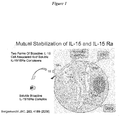
- Co-production leads to intracellular association of IL-15 and IL-15R ⁇ in the endoplasmic reticulum, stabilization of both molecules and efficient transport to the cell surface ( Figure 1 ).
- an additional critical step is the rapid cleavage and release of the IL-15/IL-15R ⁇ complex from the cell surface, both in vitro and in vivo, resulting in a soluble, systemically active form of IL-15/IL-15R ⁇ , in addition to the bioactive complex on the cell surface.
- IL-15R ⁇ is part of a heterodimeric 3IL-15 cytokine, rather than functioning as a cytokine receptor.
- IL-15 interleukin-15
- LSP long signal peptide
- SSP short signal peptide
- SSP IL-15 may have a regulatory function since it was detected both in the cytoplasm and the nucleus of DNA-transfected cells.
- the SSP signal affects both stability and localization of IL-15, since lower levels of the SSP isoform were detected when the two isoforms were expressed from similar vectors. See, See, Onu, et al., (1997) J Immunol 158:255-262 ; Tagaya, et al., (1997) Proc Natl Acad Sci USA 94:14444-14449 ; and Bergamaschi, et al., (2009) J Immunol, 5:3064-72 .
- alternative splicing may provide the cell with the ability to produce different levels of bioactive IL-15. Since both forms of IL-15 may be produced in the same cell by alternative splicing, an additional level of regulation is possible.
- LSP IL-15 and SSP IL-15 are produced in the same cell they compete for the binding to IL-15R ⁇ , resulting in lower levels of bioactive IL-15. Therefore, co-expressed SSP IL-15 acts as competitive inhibitor of LSP IL-15. This suggests that usage of alternative splicing is an additional level of control of IL-15 activity.
- the present invention is based, in part, on the discovery that SSP IL-15, which is produced in the thymus, is important for intrathymic effects on lymphocyte differentiation and maturation.
- WO 2007/084342 states that it discloses nucleic acids improved for the expression of IL-15 in mammalian cells.
- US 2006/257361 states that it discloses Fc-IL-15 hybrids, which may or may not include peptide linkers between the IL-15 and the Fc portion, for methods of treating tumors or viral infections.
- US 2007/160578 states that it discloses methods and compositions for expanding lymphocyte populations in vitro, ex vivo and in vivo using IL-15R ⁇ /IL-15 activator complexes. Jalah et al (2007) DNA and Cell Biology, 26, 827-840 states that it discloses optimized expression vectors for expressing IL-15. Williams et al (2007) Seminars in Immunology, 19, 318-330 refers to T-cell reconstitution following lymphopenia from chemotherapy or stem cell transplant.
- compositions that promote the maturation of T cells in the thymus and the output or migration of mature and/or activated lymphocytes from a central lymphoid organ to peripheral tissues by administration of IL-15.
- the claimed invention is based, in part, on the discovery that IL-15 promotes the migration of T cells out of the thymus and subsequently to peripheral lymphoid (e.g ., spleen and lymph node) and non-lymphoid tissues (e.g ., lung and liver).
- peripheral lymphoid e.g ., spleen and lymph node
- non-lymphoid tissues e.g ., lung and liver.
- lymphocytes in the bone marrow e.g ., B cells and natural killer (NK) cells, and their migration to peripheral lymphoid and non-lymphoid tissues is concurrently promoted.
- the claimed invention provides a heterodimer comprising (i) an IL-15 and (ii) an IL-15R ⁇ -Fc fusion protein that comprises a soluble IL-15R ⁇ that lacks the transmembrane anchor portion fused to an Fc region for use in a method of preventing or reducing drug-induced lymphopenia, comprising systemically administering the heterodimer to a human patient treated with an anti-cancer agent or who will be treated with the anti-cancer agent at a dose that maintains supraphysiological plasma levels of IL-15 for an extended period of time of about 2, 3, 4, 5, 6, 7, 8, 9, 10 or more days.
- the disclosure provides for promoting the migration of lymphocytes from a central lymphoid tissue to one or more peripheral tissues in a subject in need thereof by administering to the subject IL-15.
- the lymphocytes are T cells and the central lymphoid tissue is thymus. In some instances, the lymphocytes are B cells and/or NK cells and the central lymphoid tissue is bone marrow.
- the lymphocytes migrating from the central lymphoid tissues are mature but not activated. In some instances, the lymphocytes migrating from the central lymphoid tissues are mature and activated. In some instances, the T cells migrating from the thymus are mature single positive (CD4+ or CD8+) T cells. The T cells induced to leave the thymus may be activated or not activated.
- the disclosure additionally provides for preventing, treating, alleviating, reducing and/or inhibiting lymphopenia or depletion of lymphocytes in peripheral tissues by administration of IL-15.
- the present disclosure further provides for promoting the repopulation of peripheral tissues that have been depleted of lymphocytes and accelerating the recovery from lymphocyte depletion of peripheral tissues by the administration of IL-15.
- the disclosure provides for preventing, reducing or inhibiting lymphopenia or depletion of lymphocytes in peripheral tissues in an individual in need thereof comprising systemically administering IL-15 to the individual.
- the lymphopenia or lymphocyte depletion of peripheral tissues is drug-induced.
- the individual is receiving or will receive anticancer drugs. Also disclosed herein are individuals who are receiving antiviral drugs, or radiation therapy that induces lymphopenia or lymphocyte depletion of peripheral tissues.
- the IL-15 is co-administered with an agent that causes depletion of lymphocytes in peripheral tissues, e.g., an anticancer or an antiviral agent. In some instances of the disclosure, the IL-15 is co-administered with radiation therapy.
- the disclosure provides for promoting or accelerating the repopulation of lymphocytes in peripheral tissues in an individual in need thereof comprising systemically administering IL-15 to the individual.
- systemic administration of IL-15 prevents or reduces the depletion of or promotes or accelerates the repopulation of one or more of T cells, B cells or NK cells. In some instances, the systemic administration of IL-15 prevents or reduces the depletion of or promotes or accelerates the repopulation of one or more of CD4+ T cells or CD8+ T cells.
- the subject or patient is a mammal. In the claimed invention, the subject or patient is a human.
- the heterodimer is administered systemically, including without limitation, enterally (i.e., orally) or parenterally, e.g., intravenously, intramuscularly, subcutaneously, intradermally, intranasally, or inhalationally.
- the IL-15 is administered locally, for example, intrathymically.
- Systemic administration is at a dose that is sufficient to maintain IL-15 at supraphysiologic levels.
- IL-15 DNA or protein can be administered at a dose sufficient to achieve plasma levels of IL-15 of about 1 to 1000 ng/ml, for example, plasma levels of IL-15 of about 10 to 1000 ng/ml.
- the IL-15 and IL-15R ⁇ can be delivered in equimolar amounts.
- Such a range of IL-15 plasma concentrations can be achieved, e.g ., after intramuscular electroporation of about 0.1 mg IL-15/IL-15R ⁇ expressing DNA plasmid per kg body weight.
- an IL-15/IL-15R ⁇ protein complex can be administered at a dose of about 0.01 to 0.5 mg/kg.
- IL-15/IL-15R ⁇ polypeptides can be administered, e.g ., subcutaneously, intramuscularly, intraperitoneally or intravenously. See, e.g., Rosati, et al., Vaccine (2008) 26:5223-5229 .
- the IL-15 can be administered as a polypeptide or as a polynucleotide encoding IL-15.
- the IL-15 is co-administered with IL-15R ⁇ , e.g., as a heterodimer.
- the co-administered IL-15R ⁇ can be a polypeptide or a polynucleotide encoding IL-15R ⁇ .
- the co-administered IL-15R ⁇ can be in the same or different form as the IL-15.
- both the IL-15 and the IL-15R ⁇ can be administered as polypeptides or as one or more polynucleotides encoding IL-15 and/or IL15R ⁇ .
- one of the IL-15 and the IL15R ⁇ can be administered as a polypeptide and the other as a polynucleotide encoding either IL-15 or IL-15R ⁇ .
- the IL-15R ⁇ is a soluble IL-15R ⁇ .
- the IL-15R ⁇ may be administered in the form of an Fc fusion protein or a polynucleotide that encodes an Fc fusion protein.
- the IL-15 and the IL-15R ⁇ are concurrently administered as one or more polynucleotides encoding IL-15 and/or IL-15R ⁇ .
- the polynucleotide encoding IL-15 and the polynucleotide encoding IL-15R ⁇ can be on the same or separate vectors, for example, single or multiple plasmid vectors.
- the IL-15 and the IL-15R ⁇ polynucleotides are concurrently expressed from a plasmid vector of SEQ ID NO:13, SEQ ID NO:14, SEQ ID NO:15, SEQ ID NO:16, or SEQ ID NO: 19.
- the polynucleotides encoding one or both of IL-15 and the IL-15R ⁇ are wild-type coding sequences.
- the polynucleotide encoding IL-15 shares at least 90%, 91%, 92%, 93%, 94%, 95%, 96%, 97%, 98%, 99% or 100% sequence identity to SEQ ID NO:1.
- the polynucleotide encoding IL-15R ⁇ shares at least 90%, 91%, 92%, 93%, 94%, 95%, 96%, 97%, 98%, 99% or 100% sequence identity to SEQ ID NO:5 or SEQ ID NO:7.
- the polynucleotides encoding one or both of IL-15 and the IL-15R ⁇ are codon optimized for improved expression over the wild-type coding sequences.
- the polynucleotide encoding IL-15 shares at least 90%, 91%, 92%, 93%, 94%, 95%, 96%, 97%, 98%, 99% or 100% sequence identity to SEQ ID NO:3 or SEQ ID NO:4.
- the polynucleotide encoding IL-15R ⁇ shares at least 90%, 91%, 92%, 93%, 94%, 95%, 96%, 97%, 98%, 99% or 100% sequence identity to SEQ ID NO:9 or SEQ ID NO:11.
- the coding sequence can have a native or a heterologous signal peptide.
- the signal peptide is a native IL-15 signal peptide, for example, the native IL-15 long signal peptide or the native IL-15 short signal peptide.
- the signal peptide is a heterologous signal peptide, for example, a signal peptide from granulocyte-macrophage colony stimulating factor (GM-CSF), tissue plasminogen activator (tPA), growth hormone, or an immunoglobulin.
- GM-CSF granulocyte-macrophage colony stimulating factor
- tPA tissue plasminogen activator
- the peripheral tissue is a peripheral lymphoid tissue, including without limitation, spleen, lymph node, mucosal-associated lymphoid tissues (MALT), e.g ., tonsils and/or gut-associated lymphoid tissues (GALT), including Peyer's patches.
- MALT mucosal-associated lymphoid tissues
- GALT gut-associated lymphoid tissues
- the peripheral tissue is a peripheral non-lymphoid tissue, e.g., lung, liver, kidney, heart, skin, etc.
- the IL-15 is administered without an antigen, i.e., is not co-administered with an antigen.
- Also described herein is a DNA vector encoding IL-15 and IL-15R ⁇ for use in promoting lymphocyte mobilization from central lymphoid tissue and migration to peripheral tissues.
- the disclosure provides IL-15/IL-15R ⁇ for use in promoting lymphocyte mobilization from central lymphoid tissue and migration to peripheral tissues.
- IL-15 and IL-15R ⁇ for use in promoting the maturation and export of T cells from the thymus to peripheral tissues, including peripheral lymphoid and non-lymphoid tissues.
- the disclosure provides IL-15/IL-15R ⁇ polypeptide complexes for use in promoting the maturation and export of T cells from the thymus to peripheral tissues, including peripheral lymphoid and non-lymphoid tissues.
- Also described herein is a DNA vector encoding IL-15 and IL-15R ⁇ for use in promoting repopulation of depleted lymphocytes in peripheral tissues and/or preventing, reducing and/or inhibiting lymphopenia.
- the disclosure provides IL-15/IL-15R ⁇ polypeptide complexes for use in promoting repopulation of depleted lymphocytes in peripheral tissues and/or preventing, reducing and/or inhibiting lymphopenia.
- stable cell lines that express IL-15/IL-15R ⁇ polypeptides.
- the stable cell line may express IL-15/IL-15R ⁇ in the form of a fusion protein or the stable cell line may produce IL-15 and IL-15R ⁇ as different molecules.
- the stable cell lines may produce IL-15 and secreted IL-15R ⁇ deletions that lack the transmembrane anchor portion of the receptor.
- the stable cell lines may produce IL-15 and fusions of IL15R ⁇ to an immunoglobulin Fc region.
- the stable cell lines may produce IL-15 and IL-15R ⁇ fusions to polypeptides able to direct binding of the fusion to the cell surface of specific cell types.
- the stable cell lines may produce IL-15 and IL-15R ⁇ fusions to polypeptides able to direct multimerization of the fusion.
- central lymphoid tissue or "central lymphoid organ” refers to specialized lymphoid tissues where the production of new lymphocytes, or lymphopoiesis, takes place.
- T cells develop and mature in the thymus or thymic tissue.
- B cells and natural killer (NK) cells develop in bone marrow tissue. See, e.g., Chapter 7 of Janeway, et al., Immunobiology, 2001, Garland Publishing, New York .
- peripheral lymphoid tissue or "peripheral lymphoid organ” refers to peripheral tissues of highly organized architecture, with distinct areas of B cells and T cells. Newly produced lymphocytes leave the central lymphoid tissues, and are carried in the blood to the peripheral lymphoid tissues.
- Exemplary peripheral lymphoid tissues or organs include the spleen, lymph nodes, mucosal-associated lymphoid tissues (MALT), e.g ., tonsils and gut-associated lymphoid tissues (GALT), including Peyer's patches.
- MALT mucosal-associated lymphoid tissues
- GALT gut-associated lymphoid tissues
- mature lymphocyte refers to a lymphocyte that is undergone selection and development to maturity in the central lymphoid tissue sufficient to circulate to peripheral lymphoid tissues.
- T cells a mature T cell is characterized by the expression of either CD4 or CD8, but not both (i.e., they are single positive), and expression of CD3.
- B cells a mature B cell is characterized by VDJ rearranged immunoglobulin heavy chain gene, VJ rearranged immunoglobulin light chain gene, and the surface expression of IgD and/or IgM.
- the mature B cell may also express CD 19 and the IL-7 receptor on the cell surface.
- activated lymphocyte refers to lymphocytes that have recognized an antigen bound to a MHC molecule and the simultaneous delivery of a co-stimulatory signal by a specialized antigen-presenting cell. Activation of lymphocytes changes the expression of several cell-surface molecules.
- T cells With respect to T cells, resting naive T cells express L-selectin, and low levels of other adhesion molecules such as CD2 and LFA-1. Upon activation of the T cell, expression of L-selectin is lost and, instead, increased amounts of the integrin VLA-4 are expressed. Activated T cells also express higher densities of the adhesion molecules CD2 and LFA-1, increasing the avidity of the interaction of the activated T cell with potential target cells, and higher densities of the adhesion molecule CD44.
- the isoform of the CD45 molecule expressed by activated cells changes, by alternative splicing of the RNA transcript of the CD45 gene, so that activated T cells express the CD45RO isoform that associates with the T-cell receptor and CD4. Also, with respect to cytokine production, resting T cells produce little or no IL-2 and the ⁇ and ⁇ subunits of the IL-2 receptor. In contrast, activated T cells produce significant amounts IL-2 along with the ⁇ chain of the IL-2 receptor.
- activated B cells have undergone isotype switching and secrete immunoglobulin.
- Naive B cells express cell-surface IgM and IgD immunoglobulin isotypes.
- activated or memory B cells express and secrete IgG, IgA or IgE immunoglobulin isotypes.
- output or "migration” from a central lymphoid tissue refers to migration or export of mature lymphocytes from a central lymphocyte tissue to a peripheral tissue, including lymphoid and non-lymphoid peripheral tissues. Output includes the migration of mature T cells from the thymus and the migration of mature B cells and NK cells from the bone marrow.
- treating and “treatment” refer to delaying the onset of, retarding or reversing the progress of, or alleviating or preventing either the disease or condition to which the term applies, or one or more symptoms of such disease or condition.
- lymphopenia or “lymphocytopenia” or “lymphocytic leucopenia” interchangeably refer to an abnormally small number of lymphocytes in the circulating blood or in peripheral circulation.
- lymphopenia can be described by various cutoffs.
- a patient is suffering from lymphopenia when their circulating blood total lymphocyte count falls below about 600/mm 3 .
- a patient suffering from lymphopenia may have less than about 2000/ ⁇ L total circulating lymphocytes at birth, less than about 4500/ ⁇ L total circulating lymphocytes at about age 9 months, or less than about 1000/ ⁇ L total circulating lymphocytes patients older than about 9 months (children and adults).
- Lymphocytopenia has a wide range of possible causes, including viral (e.g. , HIV infection), bacterial (e.g ., active tuberculosis infection), and fungal infections; chronic failure of the right ventricle of the heart, Hodgkin's disease and cancers of the lymphatic system, leukemia, a leak or rupture in the thoracic duct, side effects of prescription medications including anticancer agents, antiviral agents, and glucocorticoids, malnutrition resulting from diets that are low in protein, radiation therapy, uremia, autoimmune disorders, immune deficiency syndromes, high stress levels, and trauma.
- viral e.g. , HIV infection
- bacterial e.g ., active tuberculosis infection
- fungal infections chronic failure of the right ventricle of the heart
- Hodgkin's disease and cancers of the lymphatic system e.g., leukemia, a leak or rupture in the thoracic duct
- side effects of prescription medications
- Lymphopenia may also be of unknown etiology (i.e., idiopathic lymphopenia). Peripheral circulation of all types of lymphocytes or subpopulations of lymphocytes (e.g ., CD4+ T cells) may be depleted or abnormally low in a patient suffering from lymphopenia. See, e.g., The Merck Manual, 18th Edition, 2006, Merck & Co.
- IL-15 native mammalian interleukin-15
- IL-15 nucleic acid and amino acid sequences are publicly available in gene databases, for example, GenBank through the National Center for Biotechnological Information on the worldwide web at ncbi.nlm.nih.gov.
- Exemplified native mammalian IL-15 nucleic acid or amino acid sequences can be from, for example, human, primate, canine, feline, porcine, equine, bovine, ovine, rodentia, murine, rat, hamster, guinea pig, etc.
- Accession numbers for exemplified native mammalian IL-15 nucleic acid sequences include NM_172174.2 (human preproprotein); NM_172175 (human); NM_000585.3 (human preproprotein); U19843 (macaque); DQ021912 (macaque); AB000555 (macaque); NM_214390 (porcine); DQ152967 (ovine); NM_174090 (bovine); NM_008357 (murine); NM_013129 (rattus); DQ083522 (water buffalo); XM_844053 (canine); DQ157452 (lagomorpha); and NM_001009207 (feline).
- Accession numbers for exemplified native mammalian IL-15 amino acid sequences include NP_000576.1 (human preproprotein); NP 751914 (human preproprotein); CAG46804 (human); CAG46777 (human); AAB60398 (macaque); AAY45895 (macaque); NP_999555 (porcine); NP_776515 (bovine); AAY83832 (water buffalo); ABB02300 (ovine); XP_849146 (canine); NP_001009207 (feline); NP_037261 (rattus); and NP_032383 (murine).
- IL-15 refers to a polypeptide that has at least 90%, 91%, 92%, 93%, 94%, 95%, 96%, 97%, 98% or 99% sequence identity to a native mammalian IL-15 amino acid sequence, or a nucleotide encoding such a polypeptide, is biologically active, meaning the mutated protein (“mutein”) has functionality similar (75% or greater) to that of a native IL-15 protein in at least one functional assay.
- mutein mutated protein
- IL-15 is a cytokine that regulates T cell and natural killer cell activation and proliferation.
- IL-15 and IL-2 share many biological activities, including binding to CD 122, the IL-2 ⁇ /IL-15 ⁇ receptor subunit.
- IL-15 induces the activation of JAK kinases, as well as the phosphorylation and activation of transcription activators STAT3, STAT5, and STAT6.
- IL-15 also increases the expression of apoptosis inhibitor BCL2L1/BCL-x(L), possibly through the transcription activation activity of STAT6, and thus prevents apoptosis.
- Two alternatively spliced transcript variants of the IL-15 gene encoding the same mature protein have been reported.
- Exemplified functional assays of an IL-15 polypeptide include proliferation of T-cells ( see, for example , Montes, et al., Clin Exp Immunol (2005) 142:292 ), and activation of NK cells, macrophages and neutrophils. Methods for isolation of particular immune cell subpopulations and detection of proliferation (i.e ., 3 H-thymidine incorporation) are well known in the art. Cell-mediated cellular cytotoxicity assays can be used to measure NK cell, macrophage and neutrophil activation.
- Cell-mediated cellular cytotoxicity assays including release of isotopes ( 51 Cr), dyes ( e.g ., tetrazolium, neutral red) or enzymes, are also well known in the art, with commercially available kits (Oxford Biomedical Research, Oxford, M; Cambrex, Walkersville, MD; Invitrogen, Carlsbad, CA). IL-15 has also been shown to inhibit Fas mediated apoptosis ( see, Demirci and Li, Cell Mol Immunol (2004) 1:123 ). Apoptosis assays, including for example, TUNEL assays and annexin V assays, are well known in the art with commercially available kits (R&D Systems, Minneapolis, MN). See also, Coligan, et al., Current Methods in Immunology, 1991-2006, John Wiley & Sons .
- IL15R ⁇ native mammalian interleukin-15 Receptor alpha
- IL15R ⁇ native mammalian interleukin-15 Receptor alpha
- Exemplified native mammalian IL-15 receptor alpha nucleic acid or amino acid sequences can be from, for example, human, primate, canine, feline, porcine, equine, bovine, ovine, rodentia, murine, rat, hamster, guinea pig, etc. Accession numbers for exemplified native mammalian IL-15 nucleic acid sequences include NM_172200.1 (human isoform 2); and NM_002189.2 (human isoform 1 precursor). Accession numbers for exemplified native mammalian IL-15 amino acid sequences include NP_751950.1 (human isoform 2); and NP_002180.1 (human isoform 1 precursor).
- IL15R ⁇ refers to a polypeptide that has at least 90%, 91%, 92%, 93%, 94%, 95%, 96%, 97%, 98% or 99% sequence identity to a native mammalian IL15Ra amino acid sequence, or a nucleotide encoding such a polypeptide, is biologically active, meaning the mutated protein (“mutein”) has functionality similar (75% or greater) to that of a native IL15R ⁇ protein in at least one functional assay.
- IL15R ⁇ is a cytokine receptor that specifically binds IL15 with high affinity.
- One functional assay is specific binding to a native IL-15 protein.
- soluble IL-15 Receptor alpha or "sIL-15 ⁇ ” refers to forms of IL-15 Receptor alpha lacking the transmembrane anchor portion of the receptor and thus able to be secreted out of the cell without being anchored to the plasma membrane.
- exemplary sIL-15 ⁇ include aa 31-205 and aa31-185 of the native IL-15 Receptor alpha.
- an "IL-15R ⁇ Fc fusion" or an “IL-15R ⁇ fused to an Fc region” as used herein refers to forms of IL-15R ⁇ in which the protein is fused to one or more domains of an Fc region of an immunoglobulin, typically of an IgG immunoglobulin.
- the Fc region comprises the CH2 and CH3 domains of the IgG heavy chain and the hinge region.
- the hinge serves as a flexible spacer between the two parts of the Fc-Fusion protein, allowing each part of the molecule to function independently.
- the use of Fc fusions is known in the art (see, e.g., U.S. Patent Nos.
- Fc fusion proteins can include variant Fc molecules ( e.g ., as described in U.S. Patent No. 7,732,570 ). Fc fusion proteins can be soluble in the plasma or can associate to the cell surface of cells having specific Fc receptors.
- nucleic acid refers to deoxyribonucleotides or ribonucleotides and polymers thereof in either single- or double-stranded form.
- the term encompasses nucleic acids containing known nucleotide analogs or modified backbone residues or linkages, which are synthetic, naturally occurring, and non-naturally occurring, which have similar binding properties as the reference nucleic acid, and which are metabolized in a manner similar to the reference nucleotides. Examples of such analogs include, without limitation, phosphorothioates, phosphoramidates, methyl phosphonates, chiral-methyl phosphonates, 2-O-methyl ribonucleotides, peptide-nucleic acids (PNAs).
- PNAs peptide-nucleic acids
- nucleic acid sequence also implicitly encompasses conservatively modified variants thereof (e.g., degenerate codon substitutions) and complementary sequences, as well as the sequence explicitly indicated.
- Degenerate codon substitutions can be achieved by generating sequences in which the third position of one or more selected (or all) codons is substituted with mixed-base and/or deoxyinosine residues ( Batzer et al., Nucleic Acid Res. 19:5081 (1991 ); Ohtsuka et al., J. Biol. Chem. 260:2605-2608 (1985 ); Rossolini et al., Mol. Cell. Probes 8:91-98 (1994 )).
- nucleic acid is used interchangeably with gene, cDNA, mRNA, oligonucleotide, and polynucleotide.
- nucleic acids or polypeptide sequences refer to two or more sequences or subsequences that are the same or have a specified percentage of amino acid residues or nucleotides that are the same (i.e., about 70% identity, preferably 75%, 80%, 85%, 90%, 91%, 92%, 93%, 94%, 95%, 96%, 97%, 98%, 99%, or higher identity over a specified region (e.g., of a IL-15 or IL-15R ⁇ sequence), when compared and aligned for maximum correspondence over a comparison window or designated region) as measured using a BLAST or BLAST 2.0 sequence comparison algorithms with default parameters described below, or by manual alignment and visual inspection ( see, e.g., NCBI web site or the like).
- sequences are then said to be "substantially identical.”
- This definition also refers to, or can be applied to, the compliment of a test sequence.
- the definition also includes sequences that have deletions and/or additions, as well as those that have substitutions.
- the preferred algorithms can account for gaps and the like.
- identity exists over a region that is at least about 25, 50, 75, 100, 150, 200 amino acids or nucleotides in length, and oftentimes over a region that is 225, 250, 300, 350, 400, 450, 500 amino acids or nucleotides in length or over the full-length of am amino acid or nucleic acid sequences.
- test and reference sequences are entered into a computer, subsequence coordinates are designated, if necessary, and sequence algorithm program parameters are designated. Preferably, default program parameters can be used, or alternative parameters can be designated.
- sequence comparison algorithm calculates the percent sequence identities for the test sequences relative to the reference sequence, based on the program parameters.
- BLAST algorithms are described in Altschul et al., Nuc. Acids Res. 25:3389-3402 (1977 ) and Altschul et al., J. Mol. Biol. 215:403-410 (1990 ), respectively.
- BLAST software is publicly available through the National Center for Biotechnology Information on the worldwide web at ncbi.nlm.nih.gov/. Both default parameters or other non-default parameters can be used.
- GC content refers to the percentage of a nucleic acid sequence comprised of deoxyguanosine (G) and/or deoxycytidine (C) deoxyribonucleosides, or guanosine (G) and/or cytidine (C) ribonucleoside residues.
- operably linked refers to a functional linkage between a first nucleic acid sequence and a second nucleic acid sequence, such that the first and second nucleic acid sequences are transcribed into a single nucleic acid sequence. Operably linked nucleic acid sequences need not be physically adjacent to each other.
- operably linked also refers to a functional linkage between a nucleic acid expression control sequence (such as a promoter, or array of transcription factor binding sites) and a transcribable nucleic acid sequence, wherein the expression control sequence directs transcription of the nucleic acid corresponding to the transcribable sequence.
- Amino acids can be referred to herein by either their commonly known three letter symbols or by the one-letter symbols recommended by the IUPAC-IUB Biochemical Nomenclature Commission. Nucleotides, likewise, can be referred to by their commonly accepted single-letter codes.
- Constantly modified variants as used herein applies to amino acid sequences.
- One of skill will recognize that individual substitutions, deletions or additions to a nucleic acid, peptide, polypeptide, or protein sequence which alters, adds or deletes a single amino acid or a small percentage of amino acids in the encoded sequence is a "conservatively modified variant” where the alteration results in the substitution of an amino acid with a chemically similar amino acid.
- Conservative substitution tables providing functionally similar amino acids are well known in the art.
- Such conservatively modified variants are in addition to and do not exclude polymorphic variants, interspecies homologs, and alleles of the invention.
- mammal or “mammalian” refer to any animal within the taxonomic classification mammalia.
- a mammal can refer to a human or a non-human primate.
- a mammal can refer to a domestic animal, including for example, canine, feline, rodentia, including lagomorpha, murine, rattus, Cricetinae (hamsters), etc.
- a mammal can refer to an agricultural animal, including for example, bovine, ovine, porcine, equine, etc.
- therapeutically effective amount refers to the dose of a therapeutic agent or agents sufficient to achieve the intended therapeutic effect with minimal or no undesirable side effects.
- a therapeutically effective amount can be readily determined by a skilled physician, e.g ., by first administering a low dose of the pharmacological agent(s) and then incrementally increasing the dose until the desired therapeutic effect is achieved with minimal or no undesirable side effects.
- IL-15 DNA or protein can be administered at a dose sufficient to achieve plasma levels of 1L-15 of about 1 to 1000 ng/ml, for example, plasma levels of IL-15 of about 10 to 1000 ng/ml.
- the IL-15 and IL-15R ⁇ can be delivered in equimolar amounts.
- an IL-15/IL-15R ⁇ protein complex can be administered at a dose of about 0.01 to 0.5 mg/kg.
- co-administer refers to the presence of two pharmacological agents, e.g., IL-15 and IL-15R ⁇ , in the blood at the same time.
- the two pharmacological agents can be administered concurrently or sequentially.
- consisting essentially of refers to administration of the pharmacologically active agents expressly recited, e.g., IL-15 and IL-15R ⁇ , and excludes pharmacologically active agents not expressly recited, e.g., an antigen.
- the term consisting essentially of does not exclude pharmacologically inactive or inert agents, e.g., physiologically acceptable carriers or excipients.
- the presently claimed invention is based, in part, on the surprising discovery that subjecting thymic tissue to supraphysiological levels of IL-15 promotes the maturation of T cells in the thymus from double positive CD4+CD8+ T cells to single positive (i.e., CD4+ or CD8+) CD3high T cells, decreases the frequency of apoptotic thymocytes, and increases the migration of mature T cells from the thymus to peripheral tissues, including lymphoid and non-lymphoid peripheral tissues.
- the presently claimed invention is further based, in part, on the surprising discovery that systemic administration of supraphysio logical levels of IL-15 promotes the maturation and export of lymphocytes from central lymphoid tissues (e.g ., in the thymus and bone marrow) to peripheral tissues, including lymphoid and non-lymphoid peripheral tissues.
- central lymphoid tissues e.g ., in the thymus and bone marrow
- the presently claimed invention provides for promoting T cell maturation in the thymus, decreasing apoptosis of T cells in the thymus and promoting migration or output of mature T cells from the thymus, by contacting the thymus tissue with supraphysiological levels of IL-15.
- the thymic tissue can be in vivo or in vitro.
- the IL-15 When the IL-15 is administered in vivo, it is provided to a subject or patient or individual in need thereof.
- the subject can be any mammal, such as a non-human primate.
- the subject In the claimed invention, the subject is a human.
- Subjects who will benefit from the present disclosure have a deficiency of mature thymocytes and/or other lymphocytes in peripheral tissues, including lymphoid and non-lymphoid peripheral tissues.
- the subject in the disclosure is immunodeficient or has lymphopenia.
- the subject has a drug-induced immunodeficiency due to anticancer drugs.
- subjects who have an immunodeficiency secondary to a disease e.g ., HIV infection.
- Subjects may have a genetic mutation that results in a non-functional IL-15 or non-functional IL-15 receptor subunit (e.g ., IL-15R ⁇ , IL-15R ⁇ , or IL-15R ⁇ ).
- IL-15 promotes the maturation of double positive T cells.
- IL-15 promotes the terminal differentiation of the thymocytes to single positive T cells expressing either CD4 or CD8.
- the mature T cells also may express CD122 (also known as the beta subunit of IL-2/IL-15 receptor).
- the mature T cells may also express high levels of the CD3 surface protein.
- IL-15-induced maturation of T cells also corresponds to a reduction in the frequency of immature T cells that undergo apoptosis.
- the CD4+CD8+ double positive and CD3low T cells can be substantially eliminated as the cells mature into single positive CD3high T cells.
- at least 60%, 70%, 80%, 90%, 95% or more of the T cells are CD4+ or CD8+ single positive CD3high T cells.
- IL-15-induced maturation of T cells in thymus tissue also promotes the migration of the mature T cells to the peripheral tissues, including lymphoid and non-lymphoid peripheral tissues.
- the mature T cells leaving the thymus may or may not be activated.
- the thymus organ may have decreased in size, e.g., by at least about 30%, 40%, 50%, or more, due to IL-15-induced thymic output.
- Systemic administration of supraphysiologic levels of IL-15 also promotes the maturation and migration of lymphocytes, including NK cells, from bone marrow.
- lymphocytes including NK cells
- the percentage of lymphocytes in the bone marrow may have decreased, e.g., by at least about 50%, 60%, 70%, 80%, or more, due to IL-15-induced lymphocyte output from bone marrow.
- lymphocytes decrease in the central lymphoid tissues, i.e., in the thymus and bone marrow
- peripheral lymphoid tissues e.g., spleen, lymph node, mucosal-associated lymphoid tissues (MALT), e.g., tonsils and/or gut-associated lymphoid tissues (GALT), including Peyer's patches
- MALT mucosal-associated lymphoid tissues
- GALT gut-associated lymphoid tissues
- the administration of supraphysiologic levels of IL-15 increases the number of lymphocytes, including T cells, B cells and NK cells, in the blood.
- the disclosure is based on the discovery that systemic administration of supraphysiological levels of IL-15 promotes the maturation and export of lymphocytes from central lymphoid tissues (e.g., in the thymus and bone marrow) to peripheral tissues, including lymphoid and non-lymphoid peripheral tissues.
- central lymphoid tissues e.g., in the thymus and bone marrow
- peripheral tissues including lymphoid and non-lymphoid peripheral tissues.
- the disclosure provides for preventing, reducing and inhibiting the depletion of lymphocytes, including T cells, B cells and natural killer (NK) cells, in peripheral circulation or tissues by systemic administration of IL-15 to a subject in need thereof.
- the present disclosure also provides for accelerating the recovery from and shortening the time period of depletion of lymphocytes, including T cells, B cells and natural killer (NK) cells, in peripheral circulation or tissues by systemic administration of IL-15 to a subject in need thereof.
- the subjects, patients or individuals can be any mammal, such as a non-human primate.
- the mammal is a human.
- the individual is a domestic mammal (e.g ., a canine or feline), a laboratory mammal (e.g., a mouse, a rat, a rabbit, a hamster), or an agricultural mammal (e.g., a bovine, a porcine, a ovine, an equine).
- Subjects who will benefit from the present methods either already have or will have (as a result of a course of drug treatment) a deficiency of mature lymphocytes in peripheral circulation or tissues, including lymphoid and non-lymphoid peripheral tissues.
- the subject is immunodeficient or has lymphopenia.
- the patient is already suffering abnormally low levels of circulating lymphocytes.
- the patient may have normal levels of peripheral lymphocytes and is likely to experience lymphodepletion as a result of a chemotherapeutic treatment.
- the patient has a circulating blood total lymphocyte count that is below about 600/mm 3 .
- the patient may have a circulating blood total lymphocyte count that is less than about 2000/ ⁇ L total circulating lymphocytes at birth, less than about 4500/ ⁇ L total circulating lymphocytes at about age 9 months, or less than about 1000/ ⁇ L total circulating lymphocytes patients older than about 9 months (children and adults). See, e.g., The Merck Manual, 18th Edition, 2006, Merck & Co.
- Lymphocytopenia has a wide range of possible causes, including viral (e.g., HIV infection), bacterial (e.g., active tuberculosis infection), and fungal infections; chronic failure of the right ventricle of the heart, Hodgkin's disease and cancers of the lymphatic system, leukemia, a leak or rupture in the thoracic duct, side effects of prescription medications including anticancer agents, antiviral agents, and glucocorticoids, malnutrition resulting from diets that are low in protein, radiation therapy, uremia, autoimmune disorders, immune deficiency syndromes, high stress levels, and trauma. Lymphopenia may also be of unknown etiology ( i.e ., idiopathic lymphopenia).
- the lymphocyte depletion may involve total lymphocytes (e.g., T cells, B cells, and NK cells, etc.), or may only involve a subpopulation of total lymphocytes (one or more of T cells, CD4+ T cells, CD8+ T cells, B cells, NK cells).
- the patient may suffer from a cancer, including Hodgkin's disease and cancers of the lymphatic system, leukemia; a viral infection, including HIV or hepatitis virus.
- the patient is receiving an anticancer agent such as chemotherapy that causes depletion of peripheral circulating lymphocytes.
- anticancer agent such as chemotherapy that causes depletion of peripheral circulating lymphocytes.
- pharmacological agents that can cause lymphodepletion include without limitation vinblastine, fludarabine, aclarubicin, doxorubicin, exemestane, alefacept, alemtuzumab, chloramphenicol, pamidronate, idarubicin and cyclophosphamide.
- Patients could also receive antiviral agents, retroviral agents or glucocorticoids.
- IL-15 or non-functional IL-15 receptor subunit e.g., IL 15R ⁇ , IL 15R ⁇ , or IL 15R ⁇ .
- the IL-15 for use in the claimed invention can be any physiologically active (i.e., functional) IL-15.
- the IL-15 can be delivered as a polypeptide or a polynucleotide encoding IL-15.
- the IL-15 can be full-length or a physiologically active fragment thereof, for example, an IL-15 fragment that retains binding to IL-15R ⁇ and/or IL-15R ⁇ , or an IL-15 fragment that promotes proliferation and/or maturation of T cells.
- the delivered or expressed IL-15 polypeptide has one or more amino acids that are substituted, added or deleted, while still retaining the physiological activity of IL-15.
- the delivered or expressed IL-15 shares at least 90%, 93%, 95%, 97%, 98%, 99% or 100% amino acid sequence identity with a wild-type IL-15, e.g., SEQ ID NO:2.
- the polynucleotide encoding IL-15 shares at least 90%, 93%, 95%, 97%, 98%, 99% or 100% nucleic acid sequence identity with a wild-type IL-15 coding sequence, e.g., SEQ ID NO:1.
- the polynucleotide encoding IL-15 may have one or more codons altered for improved expression.
- the polynucleotide encoding IL-15 shares at least 90%, 93%, 95%, 97%, 98%, 99% or 100% nucleic acid sequence identity with a wild-type IL-15 coding sequence, e.g., SEQ ID NO:3.
- the polynucleotide encoding IL-15 shares at least 96%, 97%, 98%, 99% or 100% nucleic acid sequence identity with a wild-type IL-15 coding sequence, e.g., SEQ ID NO:4.
- Polynucleotides encoding IL-15 which have altered codons for improved expression are described, e.g., in WO 2007/084342 and in WO 2004/059556 .
- the polynucleotide encoding IL-15 can be operably linked to polynucleotide encoding a native signal peptide sequence, e.g., the long IL-15 signal peptide sequence (LSP) or the short IL-15 signal peptide sequence (SSP).
- LSP long IL-15 signal peptide sequence
- SSP short IL-15 signal peptide sequence
- the nucleic acid sequence encoding a native IL-15 signal peptide is replaced with a nucleic acid sequence encoding a signal peptide from a heterologous protein.
- the heterologous protein can be, for example, from tissue plasminogen activator (tPA), growth hormone, granulocyte-macrophage colony stimulating factor (GM-CSF) or an immunoglobulin (e.g., IgE).
- nucleic acid encoding the IL-15 is operably linked to a nucleic acid encoding an RNA export element, for example a CTE or RTEm26CTE.
- the IL-15 is administered as a heterodimer with IL-15R ⁇ .
- One or both of the IL-15 and the IL-15R ⁇ can be delivered as a polypeptide.
- One or both of the IL-15 and the IL-15R ⁇ can be delivered as a polynucleotide.
- the IL-15 and the IL-15R ⁇ are co-administered as polypeptides.
- an IL-15 polypeptide is co-administered with a polynucleotide encoding IL-15R ⁇ .
- an IL-15R ⁇ polypeptide is co-administered with a polynucleotide encoding IL-15.
- the administered IL-15R ⁇ can be any physiologically active (i.e., functional) IL-15R ⁇ .
- the IL-15R ⁇ can be delivered as a polypeptide or a polynucleotide encoding IL-15R ⁇ .
- the IL-15R ⁇ can be full-length or a physiologically active fragment thereof, for example, an IL-15R ⁇ fragment that retains specific binding to IL-15.
- the IL-15R ⁇ e.g., a fragment that retains specific binding to IL-15 and lacks the transmembrane anchor region, can be fused to an Fc region.
- the delivered or expressed IL-15R ⁇ polypeptide has one or more amino acids that are substituted, added or deleted, while still retaining the physiological activity of IL-15R ⁇ .
- the delivered or expressed IL-15 shares at least 90%, 93%, 95%, 97%, 98%, 99% or 100% amino acid sequence identity with a wild-type IL-15R ⁇ , e.g., SEQ ID NO:5 or SEQ ID NO:7.
- the polynucleotide encoding IL-15 shares at least 90%, 93%, 95%, 97%, 98%, 99% or 100% nucleic acid sequence identity with a wild-type IL-15 coding sequence, e.g., SEQ ID NO:6 or SEQ ID NO:8.
- the polynucleotide encoding IL-15R ⁇ may have one or more codons altered for improved expression.
- the polynucleotide encoding IL-15R ⁇ shares at least 90%, 93%, 95%, 97%, 98%, 99% or 100% nucleic acid sequence identity with a wild-type IL-15R ⁇ coding sequence, e.g., SEQ ID NO:9 or SEQ ID NO:11.
- Polynucleotides encoding IL-15R ⁇ which have altered codons for improved expression are described, e.g., in WO 2007/084342 .
- the polynucleotide encoding IL-15R ⁇ can be operably linked to polynucleotide encoding a native signal peptide sequence.
- the nucleic acid sequence encoding a native IL-15R ⁇ signal peptide is replaced with a nucleic acid sequence encoding a signal peptide from a heterologous protein.
- the heterologous protein can be, for example, from tissue plasminogen activator (tPA), growth hormone, granulocyte-macrophage colony stimulating factor (GM-CSF) or an immunoglobulin ( e.g., IgE).
- the nucleic acid encoding the IL-15R ⁇ is operably linked to a nucleic acid encoding an RNA export element, for example a CTE or RTEm26CTE.
- the IL-15R ⁇ is in the form of an Fc fusion protein.
- sIL-15R ⁇ polypeptide sequences are shown in SEQ ID NO:17 and SEQ ID NO:20.
- proteins are secreted and can be found soluble in the plasma, or they can be associated with the surface of cells expressing the Fc receptor for the Fc region of the fusion protein.
- Different fragments of IL-15R ⁇ can be fused to the Fc region.
- Two examples of functional fusions are provided as SEQ ID NO:17 and SEQ ID NO:20, containing 205 or 200 amino acids within the IL-15R ⁇ region.
- the IL-15R ⁇ region of the fusion protein can be released by proteolytic cleavage.
- IL-15R ⁇ functional region of the protein is linked to a polypeptide that is able to bind specific cell types via surface receptors.
- the IL15-R ⁇ Fc fusion protein shares at least 95%, 96%, 97%, 98%, 99% or 100% amino acid sequence identity with a polypeptide selected from the group consisting of SEQ ID NO:17 and SEQ ID NO:20.
- a polynucleotide encoding IL-15 is co-administered with a polynucleotide encoding IL-15R ⁇ .
- the polynucleotide encoding IL-15 and the polynucleotide encoding IL-15R ⁇ can be administered on the same vector or on separate vectors.
- the polynucleotide encoding IL-15 is co-administered with a polynucleotide encoding IL-15R ⁇ are on the same vector.
- SEQ ID NO:16 An example of a plasmid that encodes an IL-15R ⁇ -Fc fusion having a polypeptide sequence of SEQ ID NO:17 and a human GM-CSF signal peptide-IL-15 of SEQ ID NO:18 is provided in SEQ ID NO:16.
- a second example of a plasmid that encodes an IL-15R ⁇ -Fc fusion having a polypeptide sequence of SEQ ID NO:20 and a human GM-CSF signal peptide-IL-15 of SEQ ID NO:18 is provided in SEQ ID NO:19.
- the administered vector shares at least 95%, 97%, 98%, 99% or 100% nucleic acid sequence identity with a plasmid vector selected from the group consisting of SEQ ID NO:13, SEQ ID NO:14, SEQ ID NO:15, SEQ ID NO:16, and SEQ ID NO:19.
- expression vectors, promoters, polyadenylation signals, and secretory peptides alternatives to those in the example sequences provided herein can be used for the expression of the optimized IL-15 and IL-15 Receptor alpha.
- the IL-15 is not being used as an adjuvant to enhance the immune response against a particular antigen. Therefore, in the present methods, the IL-15 is administered without an antigen. Stated another way, the IL-15 is not co-administered with an antigen.
- the IL-15 (and the IL-15R ⁇ ) are administered at a dose sufficient to achieve supraphysiological levels of IL-15 systemically or in the target tissue, e.g., thymus, for the desired time period.
- the desired time period can be days, weeks, or longer if necessary.
- supraphysiological levels of IL-15 are sustained throughout the duration of treatment or until a desired therapeutic endpoint is achieved, e.g., the repopulation of peripheral tissues with lymphocytes.
- the IL-15 is administered one time, as a bolus.
- the IL-15 is administered two or more times. When administered multiple times, the IL-15 can be administered daily, weekly, bi-weekly, monthly, or as needed to sustain supraphysiological levels of IL-15 systemically or in the target tissue.
- typical dosages can range from about 0.1 mg/kg body weight up to and including about 0.5 mg/kg body weight.
- the dose of polypeptide is about 0.01, 0.02, 0.05, 0.08, 0.1, 0.2, 0.3, 0.4, 0.5 mg/kg body weight.
- IL-15 and the IL-15R ⁇
- dosages are sufficient to achieve plasma levels of IL-15 of about 1 to 1000 ng/ml, for example, plasma levels of IL-15 of about 10 to 1000 ng/ml.
- plasma levels of IL-15 of about 10 to 1000 ng/ml.
- Such a range of plasma concentrations can be achieved, e.g., after intramuscular electroporation of about 0.1 mg IL-15/IL-15sR ⁇ expressing DNA plasmid per kg body weight.
- the dose of nucleic acid is about 0.02, 0.05, 0.1, 0.2, 0.5 mg/kg body weight.
- the IL-15 can be administered by a route appropriate to effect systemic supraphysiological levels of IL-15 or supraphysiological levels of IL-15 in the target tissue, e.g., thymus.
- the IL-15 and the IL-15R ⁇ can be administered via the same or different routes.
- the IL-15 (and the IL-15R ⁇ ) are administered systemically, including without limitation, enterally ( i.e ., orally) or parenterally, e.g., intravenously, intramuscularly, subcutaneously, intradermally, intranasally, or inhalationally.
- enterally i.e ., orally
- parenterally e.g., intravenously, intramuscularly, subcutaneously, intradermally, intranasally, or inhalationally.
- local administration of the IL-15 (and the IL-15R ⁇ ) for example, intrathymically or directly into the bone marrow.
- the peripherally circulating lymphocytes or lymphocyte subpopulations can be at least 80%, 85%, 90% or 95% of levels considered to be normal in a healthy individual.
- the lymphocytes or lymphocyte subpopulations are completely repopulated to normal levels.
- the repopulation of lymphocytes is days or weeks faster in an individual who received administration of IL-15 in comparison to an individual who did not receive administration of IL-15.
- IL-15 also prevents, reduces or inhibits lymphocyte depletion in peripheral circulation, e.g., caused by chemotherapy or radiation therapy.
- the peripherally circulating lymphocytes or lymphocyte subpopulations can be maintained at levels of at least 70%, 75%, 80%, 85%, 90% or 95% of normal levels. In some embodiments, the lymphocytes or lymphocyte subpopulations are maintained at normal levels.
- the IL-15 is co-administered with a chemotherapeutic agent that causes or may cause lymphopenia or lymphocyte depletion in peripheral tissues.
- the chemotherapeutic agent may be an anticancer agent or an antiviral agent.
- the IL-15 is administered after a course of treatment with a chemotherapeutic agent that causes or may cause lymphopenia or lymphocyte depletion in peripheral tissues.
- IL-15 could also be administered prior to, during or after a course of radiation therapy.
- Example 1 Systemic Administration of IL-15 Promotes Maturation of T cells in the Thymus and the Migration of T cells to Peripheral Tissues
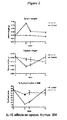
- IL-15/IL-15R ⁇ DNA was expressed systemically and locally at various levels in either normal or IL-15 knockout (KO) mice to further understand IL-15 biology. See, Bergamaschi, et al., (2008) J Biol Chem 283:4189-4199 . Supraphysiologic levels of IL-15/IL-15R ⁇ in normal mice have rapid and profound effects in many tissues. There is a rapid and reversible increase in the size of spleen, whereas the thymus becomes smaller and bone marrow lymphocyte numbers decrease ( Figure 2 ). We have previously shown that spleen and lymph node size increase is proportional to the amount of IL-15 in the plasma.
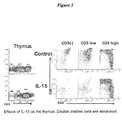
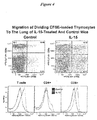
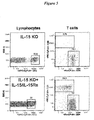
- IL-15 stimulates the maturation of CD4+CD8+ double positive thymocytes into CD3high single positive T cells ( Figure 3 ) and accelerates their rapid migration to the periphery ( Figure 4 ).
- IL-15/IL-15R ⁇ Seven days after in situ labeling of thymocytes, IL-15/IL-15R ⁇ promoted their migration to the lung.
- the lymphocytes in the lung have higher levels of IL-2/IL-15R ⁇ (CD122, see, Figure 4 , bottom) indicating that they are activated.
- lymphocytes including naive and memory CD4 and CD8 cells, and B lymphocytes are also affected to either divide, migrate or be activated. This is in agreement with the widespread (but not universal) expression of the IL-2/IL-15 betagamma receptor.
- the hierarchy of responsiveness of the lymphocyte subsets to IL-15 reflects the levels of CD122 (IL-2Rbeta) on their surface. See, Bergamaschi, et al., (2008) J Biol Chem 283:4189-4199 .
- IL-15 KO mice are characterized by a decrease in total T cell count that preferentially affects CD8+ T cells, which are almost completely absent in peripheral tissues.
- IL-15/IL-15R ⁇ is able to repopulate non-lymphoid organs, such as lungs, with both mature CD4 and CD8 T lymphocytes.
- the increase in CD4 T cells upon IL-15/IL-15R ⁇ treatment is 10-fold, while the increase in the CD8+ population is significantly greater, reaching 100-fold ( Figure 5 ).
- lymphopenia e.g., caused by total absence of IL-15 or of another etiology.
- Analysis of lymphocytes migrating in different organs in the presence of IL-15 suggests that many acquire rapidly a memory phenotype in the absence of antigen recognition and that IL-15 promotes re-entry of some lymphocytes into the thymus.
- the issue of lymphocyte re-entry in the thymus is controversial, and the study of IL-15 effects may contribute to the understanding of this phenomenon.
- IL-15 decreases the frequency of apoptotic thymocytes, mainly by promoting their terminal differentiation into mature single positive T cells.
- Our results after intrathymic injection of CFSE indicate that IL-15 increases thymic output, as reflected by the higher frequency of fully mature CFSE labeled T cells in the spleen and lung of IL-15 treated mice.
- the present example shows the reversal of cyclophosphamide-induced lymphopenia in normal young mice by systemic administration of IL-15.
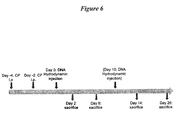
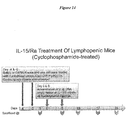
- One or two high doses of IL-15 were administered two (2) days (or two (2) and twelve (12) days) after cyclophosphamide by hydrodynamic DNA injection.
- the results show that mice recover faster from lymphopenia after IL-15 administration in comparison to control mice with cyclophosphamide-induced lymphopenia that did not receive IL-15.
- Lymphocytes recovered faster in peripheral tissues after IL-15 administration.
- NK cells were the first to recover, whereas T cells recovered in approximately one month.
- two administrations of IL-15 improved T cell recovery over a single administration of IL-15.
- low and sustained levels of IL-15 provides for a more efficient repopulation of lymphocytes to the peripheral tissues in comparison to a single high dose.
- Cyclophosphamide (Sigma) was dissolved in pyrogen-free saline and injected intra-peritoneally (i.p.) at a dose of 200 mg/kg of body weight. Two treatments with cyclophosphamide were performed at day -4 and -2.
- mice were sacrificed at different time points (days 2-26) after DNA injection and serum, bone marrow, thymus, spleen, liver and lungs were collected for analysis.
- left and right femurs were collected and centrifuged at 13,000 for 5 min, re-suspended, and centrifuged again (total of 3 times). Collected cells were re-suspended in RPMI containing 10% fetal calf serum and viable cells were counted using Acridine Orange (Molecular Probes)/Ethidium Bromide (Fisher) dye.
- splenocyte or thymocyte isolation For splenocyte or thymocyte isolation, spleens or thymi were gently squeezed through a 100 ⁇ m Cell Strainer (Thomas) and washed in RPMI (Gibco) to remove any remaining lymphocytes from the organ stroma. After centrifugation, the cells were re-suspended in RPMI containing 10% fetal calf serum and counted.
- lymphocytes from livers or lungs were minced and incubated with 200 U/ml of collagenase (Sigma) and 30 U/ml of DNase (Roche) for 1 h at 37°C, then single cells were collected, centrifuged and re-suspended in complete RPMI with 10% fetal calf serum.
- the cells were incubated with the following mix of directly conjugated anti-mouse antibodies (BD Pharmingen): CD3-APC, CD4-PerCP, CD8-PECy7, CD44-APC, CD49b-FITC, CD19-PE, CD62L-PE.
- BD Pharmingen directly conjugated anti-mouse antibodies
- CD3-APC CD4-PerCP
- CD8-PECy7 CD8-PECy7
- CD44-APC CD49b-FITC
- CD19-PE CD62L-PE.
- Labeled cell samples were analyzed by flow cytometry using an LSR II Flow Cytometer (BD) and were analyzed using FlowJo software (Tree Star, San Carlos, CA).
- Lymphocytes of the different group of mice were counted and compared. Statistical analyses were performed using the Prism Software Program. Comparisons of two groups were performed by non-parametric Mann-Whitney t test. Confidence intervals were 0.05, and all p values were two-tailed.
- IL-15/15R ⁇ DNA expression vector was injected in the tail vein, which generated high systemic levels of bioactive IL-15/15R ⁇ , as published ( Bergamaschi, et al., J Biol Chem. (2008) 283(7):4189-99 ).
- the biological effects after injection of IL-15/15R ⁇ DNA were compared to the injection of a non-producing DNA (vector BV) as negative control in cyclophosphamide-treated animals.
- mice were extracted from mice sacrificed at days 2-26 from DNA injection and the lymphocyte populations were studied.
- Cyclophosphamide treatment had strong effects on lymphocytes, as reflected in the increased spleen weight of treated animals ( Figure 7 ).
- Four animals per time point were sacrificed and the spleen weight was monitored.
- the two groups treated with cyclophosphamide (CP+vector, treated with a non-producing DNA vector; CP+IL-15) had a smaller spleen at day 2 after DNA treatment (4 days after cyclophosphamide).
- CP+vector, treated with a non-producing DNA vector; CP+IL-15 had a smaller spleen at day 2 after DNA treatment (4 days after cyclophosphamide).
- the IL-15 treated animals showed a statistically significant difference in spleen size, indicating accelerated recovery by IL-15.
- IL-15 Lung lymphocytes were evaluated in order to determine the effects of IL-15/15R ⁇ on a peripheral site, where lymphocytes need to function.
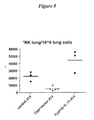
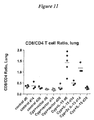
- IL-15 is known to affect strongly CD8+ T cells and NK cells. High levels of IL-15 (achieved with two injections of 2 ⁇ g DNA at days 0 and 10), favors lymphocyte recovery in the lung after Cyp treatment.
- the lymphocyte population that recovers first is the NK cells.
- NK cells The lymphocyte population that recovers first is the NK cells.
- IL-15/15R ⁇ administration accelerated this recovery.
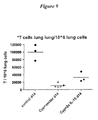
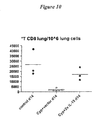
- mice were treated and analyzed as above. Lung T cells were enumerated at day 14 after the first DNA injection. It was found that total T cells increased at day 14 after two IL-15/R ⁇ administrations at days 0 and 10, compared to the Cyp treated animals. See, Figure 9 .
- IL-15 Sustained high level of IL-15 (achieved with two injections of 2 ⁇ g DNA at days 0 and 10) resulted in T cell recovery in bone marrow by day 14 after the first DNA injection ( Figure 13 ). IL-15 affected both CD4 and CD8 compartments. Treatment with two administrations of IL-15/15R ⁇ resulted in high levels of bone marrow T cells at day 14 compared to Cyp treated animals.
- This example also employed Black6 mice to analyze therapeutic effects of various forms of IL-15 on lymphopenia.
- mice 6-8 weeks in age were treated intra-peritoneally with a dose of 200 mg/kg of body weight of cyclophosphamide (CYP, Figure 14 ).
- Two injections of CYP were performed at day -4 and day -2.
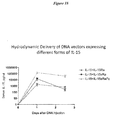
- hydrodynamic injection of either a control DNA or DNA expressing IL-15/IL-15sR ⁇ soluble molecule was performed.
- Control vector was also delivered in CYP-untreated mice as control.
- Mice were sacrificed at different time points: day -1 to assess the CYP-induced lymphoablation and day 5, 10, 17 and 24 to follow immune reconstitution in presence or absence of exogenous IL-15.
- Different tissues spleen, thymus, bone marrow, lung and liver
- Treg population T CD4 + CD25 + FoxP3 + cells
- the cells were fixed and permeabilized (eBioscience), and incubated with anti-mouse FoxP3-PeCy7 antibody (eBioscience).
- T effector cells were defined as CD3 + FoxP3 - lymphocytes. Therefore, the term "Teffector" as used in here refers to all T cells except Treg.
- Figure 15 shows the reconstitution of NK cell compartment in spleen and lung after CYP treatment.
- CYP-untreated mice were used as baseline control (squares).
- Two injections of CYP resulted in a drastic reduction of the absolute number of NK cells in both spleen and lung (day -1).
- NK cells spontaneously recover between day 10 and day 14 days after control DNA injection (triangles).
- One single administration of IL-15/IL-15sR ⁇ DNA was able to promote a full recovery ofNK within 5 days after DNA injection.
- the second IL-15/IL-15sR ⁇ expressing DNA injection resulted in an even further expansion of NK cells in both spleen and lung (circles).
- FIG 16 shows the reconstitution of T cell compartment in spleen and lung after CYP treatment.
- CYP-untreated mice were used as baseline control (squares).
- Two injections of CYP resulted in a 4 fold reduction in the level of splenic T cells and in 10 fold reduction in the level of T cells residing in the lung (day -1).
- the spontaneous recovery ofT cells appeared to be slower in comparison with the recovery ofNK cells and was still incomplete at day 24 after control DNA injection.
- the kinetics of spontaneous recovery of T CD8 and T CD4 was similar in both spleen and lung (triangles).
- Two injections of DNA expressing IL-15/IL-15sR ⁇ were able to fully reconstitute the T cell numbers within 10 days after DNA administration in both spleen and lung.
- IL-15 promoted mainly the expansion of T CD8 cells that reached normal level at day 5 after DNA injection and were boosted over normal level at day 10 after DNA injection.
- IL-15 did not significantly affect the recovery of T CD4
- T cells recovering in the presence of high level of IL-15/IL- ⁇ show increased T effector (Teff)/T regulatory (Treg) ratio and increased ability to secrete IFNgamma and greater degranulation after in vitro stimulation.
- Figure 17 is an analysis of the Teff/Treg ratio after CYP treatment for lymphodepletion and during the recovery phase. The Teff/Treg ratio increased significantly at day 10 after IL-15/15sR ⁇ DNA injection.
- Example 4 DNA delivery for IL-15 to treat lymphopenia
- IL-15/IL-15R ⁇ heterodimer by approach (1) above leads to expression of both plasma membrane-bound and secreted IL-15/IL-15R ⁇ . Delivery by approach (2) leads to exclusively secreted IL-15/IL-15R ⁇ heterodimer. Delivery by approach (3) leads to a secreted bioactive heterodimer, which is then bound to cells expressing the Fc Ab receptor on their surface. These cells can present the IL-15/IL-15R ⁇ Fc heterodimer to neighboring cells, resulting in activation.
- Figure 18 shows expression of different IL-15/IL-15R ⁇ heterodimeric forms in mice by hydrodynamic injection of DNA vectors. Mice were injected at the tail vein (hydrodynamic delivery) with 0.1 ⁇ g of DNA expressing the different forms of IL-15/IL-15R ⁇ . Plasma levels of IL-15 were measured at days 1 and 2.5 by R&D Quantiglo ELISA.
- Table 2 shows the CD4/CD8 ratios measured in the spleen and lung of mice treated with different IL-15/IL-15R ⁇ heterodimeric forms, 2 1 ⁇ 2 days after hydrodynamic injection of 0.1 ⁇ g of DNA vector (see Figure 17 ).
- the different molecules have differential effects on lymphocytes. Therefore, the different IL-15 complexes can be used alone or in combinations for the most beneficial treatment under specific conditions. For example, delivery of combinations of IL-15/sR ⁇ soluble complex and IL-15/15R ⁇ Fc fusion complex provides the opportunity to deliver both soluble and cell-bound IL-15 (through the Fc receptor) at different levels and proportions.
- Figure 20 shows that IL-15/IL-15R ⁇ Fc increased the levels of CD62L on the surface of spleen T cells, whereas the other forms of IL-15/IL-15R ⁇ either did not affect or decreased average levels of CD62L on spleen T cells.
- IL-15/IL-15R ⁇ Fc was less effective in increasing CD44 on spleen T cells compared to either IL-15/IL-15R ⁇ full-length or IL-15/IL-15sR ⁇ ( Figure 21 ).
- IL-15 As an alternative method to provide IL-15, delivery of purified protein can be used. Protein purification from cell lines over-producing IL-15/IL-15R ⁇ complexes has been achieved. Similar to DNA, different forms of the heterodimer can be used alone or in combinations for obtaining the appropriate effects:
- IL-15/sIL-15R ⁇ was purified from overproducing human 293 cells and delivered into lympho-ablated mice. The results showed that this heterodimer is bioactive and that it promoted the proliferation of adoptively transferred lymphocytes (T cells, NK cells, but not B cells).
- the 205FC fusion contains the natural processing site generating the s15R ⁇ from the membrane-bound form, whereas the 200FC fusion (SEQ ID NO:20) does not have an intact processing site.
- Fc fusions that may be processed differently to generate non-cell associated forms after cleavage between the 15R ⁇ region and the antibody constant region. Additional molecules can be generated having processing sites for cleavage and generating both cell associated and soluble forms of the cytokine. Additional methods for cell attachment, other than the Fc region are known in the art and can also be employed.
Landscapes
- Health & Medical Sciences (AREA)
- Life Sciences & Earth Sciences (AREA)
- Chemical & Material Sciences (AREA)
- Engineering & Computer Science (AREA)
- Bioinformatics & Cheminformatics (AREA)
- General Health & Medical Sciences (AREA)
- Genetics & Genomics (AREA)
- Organic Chemistry (AREA)
- Medicinal Chemistry (AREA)
- Zoology (AREA)
- Public Health (AREA)
- Veterinary Medicine (AREA)
- Animal Behavior & Ethology (AREA)
- Pharmacology & Pharmacy (AREA)
- Immunology (AREA)
- Molecular Biology (AREA)
- Epidemiology (AREA)
- Biotechnology (AREA)
- Wood Science & Technology (AREA)
- Biomedical Technology (AREA)
- Biochemistry (AREA)
- Gastroenterology & Hepatology (AREA)
- Proteomics, Peptides & Aminoacids (AREA)
- General Engineering & Computer Science (AREA)
- Biophysics (AREA)
- Microbiology (AREA)
- General Chemical & Material Sciences (AREA)
- Chemical Kinetics & Catalysis (AREA)
- Toxicology (AREA)
- Cell Biology (AREA)
- Nuclear Medicine, Radiotherapy & Molecular Imaging (AREA)
- Physics & Mathematics (AREA)
- Plant Pathology (AREA)
- Medicines That Contain Protein Lipid Enzymes And Other Medicines (AREA)
- Peptides Or Proteins (AREA)
- Micro-Organisms Or Cultivation Processes Thereof (AREA)
- Medicines Containing Antibodies Or Antigens For Use As Internal Diagnostic Agents (AREA)
- Pharmaceuticals Containing Other Organic And Inorganic Compounds (AREA)
- Preparation Of Compounds By Using Micro-Organisms (AREA)
- Medicines Containing Material From Animals Or Micro-Organisms (AREA)
Priority Applications (1)
| Application Number | Priority Date | Filing Date | Title |
|---|---|---|---|
| EP16174632.6A EP3135294B1 (en) | 2009-08-14 | 2010-08-13 | Use of il-15-il-15 receptor heterodimers to treat lymphopenia |
Applications Claiming Priority (3)
| Application Number | Priority Date | Filing Date | Title |
|---|---|---|---|
| US23415509P | 2009-08-14 | 2009-08-14 | |
| US23415209P | 2009-08-14 | 2009-08-14 | |
| PCT/US2010/045511 WO2011020047A1 (en) | 2009-08-14 | 2010-08-13 | Use of il-15 to increase thymic output and to treat lymphopenia |
Related Child Applications (2)
| Application Number | Title | Priority Date | Filing Date |
|---|---|---|---|
| EP16174632.6A Division-Into EP3135294B1 (en) | 2009-08-14 | 2010-08-13 | Use of il-15-il-15 receptor heterodimers to treat lymphopenia |
| EP16174632.6A Division EP3135294B1 (en) | 2009-08-14 | 2010-08-13 | Use of il-15-il-15 receptor heterodimers to treat lymphopenia |
Publications (2)
| Publication Number | Publication Date |
|---|---|
| EP2464377A1 EP2464377A1 (en) | 2012-06-20 |
| EP2464377B1 true EP2464377B1 (en) | 2016-07-27 |
Family
ID=42813425
Family Applications (2)
| Application Number | Title | Priority Date | Filing Date |
|---|---|---|---|
| EP10752466.2A Active EP2464377B1 (en) | 2009-08-14 | 2010-08-13 | Use of il-15 to increase thymic output and to treat lymphopenia |
| EP16174632.6A Active EP3135294B1 (en) | 2009-08-14 | 2010-08-13 | Use of il-15-il-15 receptor heterodimers to treat lymphopenia |
Family Applications After (1)
| Application Number | Title | Priority Date | Filing Date |
|---|---|---|---|
| EP16174632.6A Active EP3135294B1 (en) | 2009-08-14 | 2010-08-13 | Use of il-15-il-15 receptor heterodimers to treat lymphopenia |
Country Status (8)
| Country | Link |
|---|---|
| US (5) | US8871191B2 (enExample) |
| EP (2) | EP2464377B1 (enExample) |
| JP (2) | JP2013501817A (enExample) |
| AU (2) | AU2010282280B2 (enExample) |
| CA (1) | CA2768965C (enExample) |
| ES (1) | ES2598005T3 (enExample) |
| NZ (1) | NZ714757A (enExample) |
| WO (1) | WO2011020047A1 (enExample) |
Families Citing this family (99)
| Publication number | Priority date | Publication date | Assignee | Title |
|---|---|---|---|---|
| WO2007001677A2 (en) | 2005-05-17 | 2007-01-04 | University Of Connecticut | Compositions and methods for immunomodulation in an organism |
| JP5603012B2 (ja) | 2005-12-02 | 2014-10-08 | トヘ モウント シナイ スクール オフ メディシネ オフ ニューヨーク ウニベルシトイ | 非天然表面タンパク質を提示するキメラウイルス及びその使用 |
| EP2366787B1 (en) | 2006-01-13 | 2019-12-11 | The Government Of The U.S.A, As Represented By The Secretary, Dept. Of Health And Human Services | Codon optimized IL-15 and IL-15R-Alpha genes for expression in mammalian cells |
| EP2173378B1 (en) | 2007-06-27 | 2014-03-19 | Admune Therapeutics LLC | Complexes of il-15 and il-15ralpha and uses thereof |
| WO2011020047A1 (en) * | 2009-08-14 | 2011-02-17 | The Government Of The United States Of America As Represented By The Secretary Of The Department Of Health And Human Services | Use of il-15 to increase thymic output and to treat lymphopenia |
| US20150359853A1 (en) * | 2012-10-24 | 2015-12-17 | Admune Therapeutics Llc | Il-15r alpha forms, cells expressing il-15r alpha forms, and therapeutic uses of il-15r alpha and il-15/il-15r alpha complexes |
| PE20151921A1 (es) | 2013-03-14 | 2015-12-26 | Icahn School Med Mount Sinai | Virus de la enfermedad de newcastle y usos de los mismos |
| UY35468A (es) | 2013-03-16 | 2014-10-31 | Novartis Ag | Tratamiento de cáncer utilizando un receptor quimérico de antígeno anti-cd19 |
| SI3030575T1 (sl) | 2013-08-08 | 2018-11-30 | Cytune Pharma | Modulokini na osnovi IL-15 in IL-15R-alfa sushi domene |
| LT3094351T (lt) * | 2014-01-15 | 2022-04-11 | Kadmon Corporation, Llc | Imunitetą moduliuojantys agentai |
| AU2015222685A1 (en) | 2014-02-27 | 2016-09-08 | Viralytics Limited | Combination method for treatment of cancer |
| CN122399016A (zh) | 2014-03-15 | 2026-07-17 | 诺华股份有限公司 | 使用嵌合抗原受体治疗癌症 |
| SG10202109752XA (en) | 2014-04-07 | 2021-10-28 | Novartis Ag | Treatment of cancer using anti-cd19 chimeric antigen receptor |
| EP3805371A1 (en) | 2014-05-15 | 2021-04-14 | National University of Singapore | Modified natural killer cells and uses thereof |
| JP6831777B2 (ja) | 2014-07-21 | 2021-02-17 | ノバルティス アーゲー | Cd33キメラ抗原受容体を使用する癌の処置 |
| AU2015292744C1 (en) | 2014-07-21 | 2021-01-21 | Novartis Ag | Treatment of cancer using humanized anti-BCMA chimeric antigen receptor |
| US10335460B2 (en) | 2014-07-29 | 2019-07-02 | Novartis Ag | IL-15 and IL-15Rα heterodimer dose escalation regimens for treating conditions |
| EP3180359A1 (en) | 2014-08-14 | 2017-06-21 | Novartis AG | Treatment of cancer using gfr alpha-4 chimeric antigen receptor |
| EP3712171A1 (en) | 2014-08-19 | 2020-09-23 | Novartis AG | Treatment of cancer using a cd123 chimeric antigen receptor |
| US10577417B2 (en) | 2014-09-17 | 2020-03-03 | Novartis Ag | Targeting cytotoxic cells with chimeric receptors for adoptive immunotherapy |
| US20180334490A1 (en) | 2014-12-03 | 2018-11-22 | Qilong H. Wu | Methods for b cell preconditioning in car therapy |
| PL3280729T3 (pl) | 2015-04-08 | 2022-08-22 | Novartis Ag | Terapie cd20, terapie cd22 i terapie skojarzone komórką eksprymującą chimeryczny receptor antygenowy (car) cd19 |
| WO2016172583A1 (en) | 2015-04-23 | 2016-10-27 | Novartis Ag | Treatment of cancer using chimeric antigen receptor and protein kinase a blocker |
| PT3393504T (pt) | 2015-12-22 | 2025-12-30 | Novartis Ag | Recetor de antigénio quimérico (car) de mesotelina e anticorpo contra o inibidor de pd-l1 para utilização combinada em terapia anticancerígena |
| SG11201807489PA (en) | 2016-03-04 | 2018-09-27 | Novartis Ag | Cells expressing multiple chimeric antigen receptor (car) molecules and uses therefore |
| US20190112380A1 (en) | 2016-03-29 | 2019-04-18 | University Of Southern California | Chimeric antigen receptors targeting cancer |
| US20190117690A1 (en) * | 2016-04-06 | 2019-04-25 | The University State Of America As Represented By The Secretary Of The Department Of Health And Hum | Use of heterodimeric il-15 in adoptive cell transfer |
| WO2017180587A2 (en) | 2016-04-11 | 2017-10-19 | Obsidian Therapeutics, Inc. | Regulated biocircuit systems |
| CA3024509A1 (en) | 2016-05-18 | 2017-11-23 | Modernatx, Inc. | Mrna combination therapy for the treatment of cancer |
| CN109715196A (zh) | 2016-06-13 | 2019-05-03 | 转矩医疗股份有限公司 | 用于促进免疫细胞功能的组合物和方法 |
| WO2018013585A1 (en) * | 2016-07-12 | 2018-01-18 | Flagship Pioneering, Inc. | Methods and compositions for modulating thymic function |
| WO2018013855A2 (en) | 2016-07-14 | 2018-01-18 | The United States Of America As Represented By The Secretary Of The Department Of Health And Human Services | Il-15/il-15 receptor alpha treatment regimens and use with therapeutic vaccines |
| US11365252B2 (en) | 2016-07-20 | 2022-06-21 | University Of Utah Research Foundation | CD229 CAR T cells and methods of use thereof |
| JP7467117B2 (ja) | 2016-10-07 | 2024-04-15 | ノバルティス アーゲー | 癌の治療のためのキメラ抗原受容体 |
| MX2019004327A (es) | 2016-10-14 | 2019-10-14 | Xencor Inc | Proteinas de fusion heterodimericas biespecificas que contienen proteinas de fusion fc il-15/il-15ra y fragmentos de anticuerpo pd-1. |
| US11629340B2 (en) | 2017-03-03 | 2023-04-18 | Obsidian Therapeutics, Inc. | DHFR tunable protein regulation |
| BR112019018915A2 (pt) | 2017-03-15 | 2020-04-14 | Pandion Therapeutics Inc | imunotolerância direcionada |
| CN117363636A (zh) | 2017-03-27 | 2024-01-09 | 新加坡国立大学 | 一种编码嵌合受体的多核苷酸 |
| MX2019011570A (es) | 2017-03-27 | 2019-11-18 | Nat Univ Singapore | Lineas celulares estimuladoras para expansion y activacion ex vivo de celulas asesinas naturales. |
| JP2020517259A (ja) | 2017-04-19 | 2020-06-18 | ボード・オブ・リージエンツ,ザ・ユニバーシテイ・オブ・テキサス・システム | 操作された抗原受容体を発現する免疫細胞 |
| EP3615055A1 (en) | 2017-04-28 | 2020-03-04 | Novartis AG | Cells expressing a bcma-targeting chimeric antigen receptor, and combination therapy with a gamma secretase inhibitor |
| EP3615068A1 (en) | 2017-04-28 | 2020-03-04 | Novartis AG | Bcma-targeting agent, and combination therapy with a gamma secretase inhibitor |
| JOP20190256A1 (ar) | 2017-05-12 | 2019-10-28 | Icahn School Med Mount Sinai | فيروسات داء نيوكاسل واستخداماتها |
| AU2018273914A1 (en) | 2017-05-24 | 2019-11-14 | Pandion Operations, Inc. | Targeted immunotolerance |
| CA3064375A1 (en) | 2017-05-25 | 2018-11-29 | Memorial Sloan Kettering Cancer Center | Use of the il-15/il-15ra complex in the generation of antigen-specific t cells for adoptive immunotherapy |
| IL327498A (en) | 2017-06-02 | 2026-05-01 | Juno Therapeutics Inc | Articles of manufacture and methods for treatment using adoptive cell therapy |
| CN111050545A (zh) | 2017-06-29 | 2020-04-21 | 朱诺治疗学股份有限公司 | 评估与免疫疗法相关的毒性的小鼠模型 |
| AU2018291497A1 (en) | 2017-06-30 | 2020-01-16 | Xencor, Inc. | Targeted heterodimeric Fc fusion proteins containing IL-15/IL-15Ra and antigen binding domains |
| CA3074826A1 (en) | 2017-09-05 | 2019-03-14 | Torque Therapeutics, Inc. | Therapeutic protein compositions and methods of making and using the same |
| MA49911A (fr) | 2017-11-01 | 2020-06-24 | Juno Therapeutics Inc | Anticorps et récepteurs antigéniques chimériques spécifiques de l'antigene de maturation des lymphocytes b |
| WO2019089858A2 (en) | 2017-11-01 | 2019-05-09 | Juno Therapeutics, Inc. | Methods of assessing or monitoring a response to a cell therapy |
| US11066475B2 (en) | 2017-11-01 | 2021-07-20 | Juno Therapeutics, Inc. | Chimeric antigen receptors specific for B-cell maturation antigen and encoding polynucleotides |
| USRE50550E1 (en) | 2017-12-06 | 2025-08-26 | Pandion Operations, Inc. | IL-2 muteins and uses thereof |
| US10946068B2 (en) | 2017-12-06 | 2021-03-16 | Pandion Operations, Inc. | IL-2 muteins and uses thereof |
| US10174091B1 (en) | 2017-12-06 | 2019-01-08 | Pandion Therapeutics, Inc. | IL-2 muteins |
| EP3724225A1 (en) | 2017-12-15 | 2020-10-21 | Juno Therapeutics, Inc. | Anti-cct5 binding molecules and methods of use thereof |
| JP7360174B2 (ja) | 2018-02-09 | 2023-10-12 | ナショナル ユニヴァーシティー オブ シンガポール | ナチュラルキラー細胞免疫療法における活性化キメラ受容体及びその使用 |
| WO2019165121A1 (en) | 2018-02-21 | 2019-08-29 | Board Of Regents, The University Of Texas System | Methods for activation and expansion of natural killer cells and uses therof |
| US12441787B2 (en) | 2018-04-02 | 2025-10-14 | National University Of Singapore | Neutralization of human cytokines with membrane-bound anti-cytokine non-signaling binders expressed in immune cells |
| KR20210003814A (ko) | 2018-04-18 | 2021-01-12 | 젠코어 인코포레이티드 | IL-15/IL-15Rα Fc-융합 단백질 및 TIM-3 항원 결합 도메인을 함유하는 TIM-3 표적화 이종이량체 융합 단백질 |
| CA3097625A1 (en) | 2018-04-18 | 2019-10-24 | Xencor, Inc. | Il-15/il-15ra heterodimeric fc fusion proteins and uses thereof |
| CA3097593A1 (en) | 2018-04-18 | 2019-10-24 | Xencor, Inc. | Pd-1 targeted heterodimeric fusion proteins containing il-15/il-15ra fc-fusion proteins and pd-1 antigen binding domains and uses thereof |
| WO2019204646A1 (en) | 2018-04-18 | 2019-10-24 | Xencor, Inc. | Lag-3 targeted heterodimeric fusion proteins containing il-15/il-15ra fc-fusion proteins and lag-3 antigen binding domains |
| US20210047405A1 (en) | 2018-04-27 | 2021-02-18 | Novartis Ag | Car t cell therapies with enhanced efficacy |
| US20210213063A1 (en) | 2018-05-25 | 2021-07-15 | Novartis Ag | Combination therapy with chimeric antigen receptor (car) therapies |
| IL279367B2 (en) | 2018-06-13 | 2026-05-01 | Novartis Ag | BCMA chimeric antigen receptors and their uses |
| EP3837277A4 (en) | 2018-08-17 | 2022-05-11 | Icahn School of Medicine at Mount Sinai | RECOMBINANT NEWCASTLE DISEASE VIRUSES AND THEIR USES IN THE PREVENTION OF RSV DISEASE OR HUMAN METAPNEUMOVIRUS INFECTION |
| WO2020044239A1 (en) | 2018-08-29 | 2020-03-05 | National University Of Singapore | A method to specifically stimulate survival and expansion of genetically-modified immune cells |
| CN113286812B (zh) | 2018-09-27 | 2025-05-30 | 西里欧发展公司 | 掩蔽型细胞因子多肽 |
| WO2020069405A1 (en) | 2018-09-28 | 2020-04-02 | Novartis Ag | Cd22 chimeric antigen receptor (car) therapies |
| US20210347851A1 (en) | 2018-09-28 | 2021-11-11 | Novartis Ag | Cd19 chimeric antigen receptor (car) and cd22 car combination therapies |
| CA3116188A1 (en) | 2018-10-12 | 2020-04-16 | Xencor, Inc. | Pd-1 targeted il-15/il-15ralpha fc fusion proteins and uses in combination therapies thereof |
| US12473345B2 (en) | 2018-11-01 | 2025-11-18 | Juno Therapeutics, Inc. | Methods for treatment using chimeric antigen receptors specific for B-cell maturation antigen |
| CN119569895A (zh) | 2018-11-01 | 2025-03-07 | 朱诺治疗学股份有限公司 | G蛋白偶合受体c类5族成员d(gprc5d)特异性嵌合抗原受体 |
| BR112021009420A2 (pt) | 2018-11-16 | 2021-11-23 | Juno Therapeutics Inc | Métodos de dosagem de células t manipuladas para o tratamento de malignidades de células b |
| CN113226340A (zh) | 2018-11-26 | 2021-08-06 | 恩卡尔塔公司 | 同时扩增多种免疫细胞类型的方法、相关组合物及其在癌症免疫疗法中的用途 |
| EP4427810A3 (en) | 2018-11-30 | 2024-12-04 | Juno Therapeutics, Inc. | Methods for treatment using adoptive cell therapy |
| US11618776B2 (en) | 2018-12-20 | 2023-04-04 | Xencor, Inc. | Targeted heterodimeric Fc fusion proteins containing IL-15/IL-15RA and NKG2D antigen binding domains |
| US12497435B2 (en) | 2019-01-11 | 2025-12-16 | Memorial Sloan Kettering Cancer Center | Multimerization of IL-15/IL-15R-alpha-fc complexes to enhance immunotherapy |
| EA202192103A1 (ru) | 2019-01-29 | 2021-12-15 | Джуно Терапьютикс, Инк. | Антитела и химерные антигенные рецепторы, специфичные к орфанному рецептору типа рецеторной тирозинкиназы 1 (ror1) |
| KR20210137085A (ko) | 2019-03-05 | 2021-11-17 | 엔카르타, 인크. | Cd19 유도된 키메라 항원 수용체 및 면역 요법에서 이의 용도 |
| WO2020205100A1 (en) * | 2019-03-15 | 2020-10-08 | Nantcell, Inc. | Recombinant eril-15 nk cells |
| AU2020279240A1 (en) | 2019-05-20 | 2021-12-23 | Pandion Operations, Inc. | MAdCAM targeted immunotolerance |
| CN114651003A (zh) | 2019-09-10 | 2022-06-21 | 黑曜石疗法公司 | 用于可调调节的ca2-il15融合蛋白 |
| TW202128757A (zh) | 2019-10-11 | 2021-08-01 | 美商建南德克公司 | 具有改善之特性的 PD-1 標靶 IL-15/IL-15Rα FC 融合蛋白 |
| US11981715B2 (en) | 2020-02-21 | 2024-05-14 | Pandion Operations, Inc. | Tissue targeted immunotolerance with a CD39 effector |
| IL297147B1 (en) | 2020-04-10 | 2026-05-01 | Juno Therapeutics Inc | Methods and uses related to engineered cell therapy with a chimeric antigen receptor directed against a B-cell maturation antigen |
| KR20230107617A (ko) | 2020-11-13 | 2023-07-17 | 노파르티스 아게 | 키메라 항원 수용체(car)-발현 세포를 사용한 병용 요법 |
| EP4251187A4 (en) | 2020-11-25 | 2025-09-10 | Xilio Dev Inc | TUMOR-SPECIFIC CLASSIBLE LINKERS |
| US12234473B2 (en) | 2020-12-31 | 2025-02-25 | Immatics US, Inc. | CD8 polypeptides, compositions, and methods of using thereof |
| US20230151095A1 (en) | 2021-11-12 | 2023-05-18 | Xencor, Inc. | Bispecific antibodies that bind to b7h3 and nkg2d |
| US20250332180A1 (en) * | 2022-05-17 | 2025-10-30 | The Regents Of The University Of California | Cannabinoids and il-15 activate nk cells |
| JP2025521543A (ja) | 2022-06-22 | 2025-07-10 | ジュノー セラピューティクス インコーポレイテッド | Cd19標的car t細胞のセカンドライン治療のための処置方法 |
| EP4565262A2 (en) | 2022-08-05 | 2025-06-11 | Juno Therapeutics, Inc. | Chimeric antigen receptors specific for gprc5d and bcma |
| US20260048099A1 (en) | 2022-08-16 | 2026-02-19 | The United States Of America, As Represented By The Secretary, Deparment Of Health And Human Service | Synergistic interactions for improved cancer treatment |
| WO2024102636A1 (en) | 2022-11-07 | 2024-05-16 | Xencor, Inc. | Bispecific antibodies that bind to b7h3 and mica/b |
| US20260207667A1 (en) | 2022-12-13 | 2026-07-23 | Juno Therapeutics, Inc. | Chimeric antigen receptors specific for baff-r and cd19 and methods and uses thereof |
| WO2025085672A1 (en) | 2023-10-17 | 2025-04-24 | Xencor, Inc. | Bispecific antibodies that bind to nkp46 and mica/b |
| WO2025151752A1 (en) | 2024-01-10 | 2025-07-17 | Xilio Development, Inc. | Masked il-2 cytokines and methods of use thereof |
Family Cites Families (54)
| Publication number | Priority date | Publication date | Assignee | Title |
|---|---|---|---|---|
| DE59010908D1 (de) | 1989-09-12 | 2000-08-10 | Hoffmann La Roche | TNF-bindende Proteine |
| ATE311895T1 (de) | 1992-05-26 | 2005-12-15 | Immunex Corp | Neue zytokine die cd30 binden |
| US5574138A (en) | 1993-03-08 | 1996-11-12 | Immunex Corporation | Epithelium-derived T-cell factor |
| US5552303A (en) | 1993-03-08 | 1996-09-03 | Immunex Corporation | DNA encoding epithelium-derived T-cell factor |
| US5858350A (en) | 1993-12-01 | 1999-01-12 | Marine Polymer Technologies | Methods and compositions for poly-β-1→4-N-acetylglucosamine cell therapy system |
| US6063911A (en) | 1993-12-01 | 2000-05-16 | Marine Polymer Technologies, Inc. | Methods and compositions for treatment of cell proliferative disorders |
| WO1995027722A1 (en) | 1994-04-06 | 1995-10-19 | Immunex Corporation | Interleukin-15 |
| US6548065B1 (en) | 1994-05-06 | 2003-04-15 | Immunex Corporation | Interleukin-15 receptors |
| US5591630A (en) | 1994-05-06 | 1997-01-07 | Immunex Corporation | Monoclonal antibodies that bind interleukin-15 receptors |
| US20020127201A1 (en) | 1994-07-01 | 2002-09-12 | Dana-Farber Cancer Institute. | Methods for inhibiting T cell responses by manipulating a common cytokine receptor gamma-chain |
| US7008624B1 (en) | 1995-02-22 | 2006-03-07 | Immunex Corporation | Antagonists of interleukin-15 |
| US5660824A (en) | 1995-05-24 | 1997-08-26 | Grabstein; Kenneth H. | Muscle trophic factor |
| US6369027B1 (en) | 1995-12-22 | 2002-04-09 | Amgen Inc. | Osteoprotegerin |
| DE19608813C2 (de) | 1996-03-07 | 1998-07-02 | Angewandte Gentechnologie Syst | Konjugat zur Beeinflussung von Wechselwirkungen zwischen Proteinen |
| US6451308B1 (en) | 1996-04-26 | 2002-09-17 | Beth Israel Deaconess Medical Center | Antagonists of interleukin-15 |
| JP2001502521A (ja) | 1996-04-26 | 2001-02-27 | ベス イスラエル デアコネス メディカル センター | インターロイキン―15の拮抗剤 |
| EP1835030A1 (en) | 1996-12-20 | 2007-09-19 | Amgen, Inc. | OB fusion protein compositions and methods |
| EP0971728B1 (en) | 1997-02-21 | 2002-12-11 | Vlaams Interuniversitair Instituut voor Biotechnologie vzw. | Use of interleukin-15 |
| US6787132B1 (en) | 1997-12-04 | 2004-09-07 | Yissum Research Development Company Of The Hebrew University Of Jerusalem | Combined chemo-immunotherapy with liposomal drugs and cytokines |
| US20040170604A1 (en) | 1998-07-06 | 2004-09-02 | Tosoh Corporation | IL-6 receptor IL-6 direct fusion protein |
| GB9814892D0 (en) | 1998-07-10 | 1998-09-09 | Kennedy Rheumatology Inst | Treatment of celiac disease |
| US20050202005A1 (en) | 1998-07-31 | 2005-09-15 | The Trustees Of Columbia University In The City Of New York | Uses of inhibitors for the activation of CXCR4 receptor by SDF-1 in treating rheumatoid arthritis |
| US6946465B2 (en) | 1999-02-02 | 2005-09-20 | 4 Aza Bioscience Nv | Immunosuppressive effects of pteridine derivatives |
| US20010046486A1 (en) | 2000-04-17 | 2001-11-29 | Boyd Richard L. | Stimulation of thymus for vaccination development |
| AU4459500A (en) | 1999-04-15 | 2000-11-02 | Duke University | A method of reversing thymic atrophy by administering an antagonist of an overproduced cytokine |
| ATE407697T1 (de) | 1999-07-13 | 2008-09-15 | Bolder Biotechnology Inc | Erythropoietin immunglobulin fusionsproteine |
| WO2001080889A1 (en) | 2000-04-26 | 2001-11-01 | National Jewish Medical And Research Center | Product and process for regulation of t cell responses |
| EP1284747A2 (en) | 2000-05-12 | 2003-02-26 | Beth Israel Deaconess Medical Center, Inc. | Compositions and methods for achieving immune suppression |
| MXPA03002278A (es) | 2000-09-14 | 2004-12-03 | Beth Israel Hospital | Modulacion de respuestas de la celula t mediadas por il-2 e il-15. |
| JP2004517817A (ja) * | 2000-10-13 | 2004-06-17 | モナッシュ ユニバーシティ | 胸腺を再活性化することによる疾患の予防 |
| CA2462681A1 (en) | 2000-10-13 | 2002-04-18 | Monash University | Disease prevention by reactivation of the thymus |
| US7638604B2 (en) | 2001-02-23 | 2009-12-29 | Genetics Institute, Llc | Monoclonal antibodies against interleukin-22 |
| JP2003169693A (ja) * | 2001-12-07 | 2003-06-17 | Japan Energy Corp | 可溶性IL−15レセプターα鎖の製造方法 |
| US8663622B2 (en) | 2002-12-16 | 2014-03-04 | The United States Of America, As Represented By The Secretary, Department Of Health & Human Services | Recombinant vaccine viruses expressing IL-15 and methods using the same |
| DE10260805A1 (de) | 2002-12-23 | 2004-07-22 | Geneart Gmbh | Verfahren und Vorrichtung zum Optimieren einer Nucleotidsequenz zur Expression eines Proteins |
| WO2005023289A1 (ja) | 2003-09-08 | 2005-03-17 | Intellectual Property Consulting Incorporated | 慢性c型肝炎を治療するための医薬組成物 |
| EP1673395A1 (en) | 2003-10-15 | 2006-06-28 | PDL BioPharma, Inc. | Alteration of fc-fusion protein serum half-lives by mutagenesis of positions 250, 314 and/or 428 of the heavy chain constant region of ig |
| US7435596B2 (en) | 2004-11-04 | 2008-10-14 | St. Jude Children's Research Hospital, Inc. | Modified cell line and method for expansion of NK cell |
| ES2367027T3 (es) | 2004-02-27 | 2011-10-27 | Inserm (Institut National De La Santé Et De La Recherche Medicale) | Sitio de unión de la il-15 para il-15ralfa y mutantes específicos de il-15 que tienen actividad agonista/antagonista. |
| US20060057680A1 (en) | 2004-08-11 | 2006-03-16 | Zheng Xin X | Mutant interleukin-15 polypeptides |
| US20060104945A1 (en) | 2004-10-05 | 2006-05-18 | Choi Yong S | Enhancement of B cell proliferation by IL-15 |
| WO2006063301A1 (en) | 2004-12-10 | 2006-06-15 | Maxcyte, Inc. | Genetically modified tumor cells as cancer vaccines |
| US20060257361A1 (en) * | 2005-04-12 | 2006-11-16 | Government Of The Us, As Represented By The Secretary, Department Of Health And Human Services | Novel form of interleukin-15, Fc-IL-15, and methods of use |
| WO2007001677A2 (en) * | 2005-05-17 | 2007-01-04 | University Of Connecticut | Compositions and methods for immunomodulation in an organism |
| EP1777294A1 (en) | 2005-10-20 | 2007-04-25 | Institut National De La Sante Et De La Recherche Medicale (Inserm) | IL-15Ralpha sushi domain as a selective and potent enhancer of IL-15 action through IL-15Rbeta/gamma, and hyperagonist (IL15Ralpha sushi -IL15) fusion proteins |
| US20070160578A1 (en) * | 2005-12-14 | 2007-07-12 | The Gov. Of The Usa As Represented By The Secretary Of The Dep. Of Health And Human Services | Expansion of natural killer and CD8 T-cells with IL-15R/ligand activator complexes |
| EP2366787B1 (en) | 2006-01-13 | 2019-12-11 | The Government Of The U.S.A, As Represented By The Secretary, Dept. Of Health And Human Services | Codon optimized IL-15 and IL-15R-Alpha genes for expression in mammalian cells |
| JP4886304B2 (ja) | 2006-01-27 | 2012-02-29 | 昭和シェル石油株式会社 | グリース組成物 |
| AU2007214426A1 (en) | 2006-02-16 | 2007-08-23 | Nascent Biologics, Inc. | Methods for improving immune function and methods for prevention or treatment of disease in a mammalian subject |
| CN101548008B (zh) | 2006-10-04 | 2013-04-17 | 詹森药业有限公司 | 失活的人工抗原提呈细胞的制备及其在细胞疗法中的用途 |
| US8586055B2 (en) | 2007-01-12 | 2013-11-19 | The United States Of America As Represented By The Secretary Of The Department Of Health And Human Services | DNA immunization protocols |
| EP2388266B1 (en) | 2007-05-11 | 2014-04-23 | Altor BioScience Corporation | Fusion molecules and IL-15 variants |
| EP2173378B1 (en) | 2007-06-27 | 2014-03-19 | Admune Therapeutics LLC | Complexes of il-15 and il-15ralpha and uses thereof |
| WO2011020047A1 (en) * | 2009-08-14 | 2011-02-17 | The Government Of The United States Of America As Represented By The Secretary Of The Department Of Health And Human Services | Use of il-15 to increase thymic output and to treat lymphopenia |
-
2010
- 2010-08-13 WO PCT/US2010/045511 patent/WO2011020047A1/en not_active Ceased
- 2010-08-13 EP EP10752466.2A patent/EP2464377B1/en active Active
- 2010-08-13 US US13/390,504 patent/US8871191B2/en active Active
- 2010-08-13 AU AU2010282280A patent/AU2010282280B2/en active Active
- 2010-08-13 ES ES10752466.2T patent/ES2598005T3/es active Active
- 2010-08-13 CA CA2768965A patent/CA2768965C/en active Active
- 2010-08-13 JP JP2012524911A patent/JP2013501817A/ja active Pending
- 2010-08-13 NZ NZ714757A patent/NZ714757A/en unknown
- 2010-08-13 EP EP16174632.6A patent/EP3135294B1/en active Active
-
2014
- 2014-10-13 US US14/512,913 patent/US9975937B2/en active Active
-
2015
- 2015-03-03 JP JP2015041346A patent/JP6162167B2/ja active Active
-
2016
- 2016-05-23 AU AU2016203362A patent/AU2016203362B2/en active Active
-
2017
- 2017-04-11 US US15/485,093 patent/US10093710B2/en active Active
-
2018
- 2018-05-02 US US15/969,647 patent/US10894816B2/en active Active
- 2018-09-06 US US16/123,431 patent/US11041008B2/en active Active
Also Published As
| Publication number | Publication date |
|---|---|
| NZ736967A (en) | 2020-11-27 |
| NZ714757A (en) | 2018-07-27 |
| US20120141413A1 (en) | 2012-06-07 |
| US20190048056A1 (en) | 2019-02-14 |
| CA2768965C (en) | 2019-06-04 |
| US11041008B2 (en) | 2021-06-22 |
| EP3135294B1 (en) | 2020-06-03 |
| EP2464377A1 (en) | 2012-06-20 |
| CA2768965A1 (en) | 2011-02-17 |
| AU2016203362A1 (en) | 2016-06-16 |
| ES2598005T3 (es) | 2017-01-24 |
| US10093710B2 (en) | 2018-10-09 |
| US20150246956A1 (en) | 2015-09-03 |
| WO2011020047A1 (en) | 2011-02-17 |
| EP3135294A1 (en) | 2017-03-01 |
| JP2013501817A (ja) | 2013-01-17 |
| US20180291075A1 (en) | 2018-10-11 |
| JP2015134796A (ja) | 2015-07-27 |
| US8871191B2 (en) | 2014-10-28 |
| US9975937B2 (en) | 2018-05-22 |
| AU2016203362B2 (en) | 2018-07-19 |
| AU2010282280B2 (en) | 2016-06-09 |
| AU2010282280A1 (en) | 2012-02-09 |
| US10894816B2 (en) | 2021-01-19 |
| JP6162167B2 (ja) | 2017-07-12 |
| US20170226174A1 (en) | 2017-08-10 |
Similar Documents
| Publication | Publication Date | Title |
|---|---|---|
| EP3135294B1 (en) | Use of il-15-il-15 receptor heterodimers to treat lymphopenia | |
| US12157762B2 (en) | Tethered interleukin-15 and interleukin-21 | |
| Zhang et al. | Low-dose IL-2 therapy in autoimmune diseases: An update review | |
| AU2011293522B2 (en) | Interleukin-13 receptor alpha 2 peptide-based brain cancer vaccines | |
| WO2003087320A2 (en) | Antagonists of il-21 and modulation of il-21-mediated t cell responses | |
| EP3833682A1 (en) | Suicide module compositions and methods | |
| US20230374454A1 (en) | Human immune cells genomically modified to express orthogonal receptors | |
| KR20220092523A (ko) | 변이체 인터루킨-2 (vIL-2) 폴리펩타이드를 코딩하는 종양용해성 바이러스 벡터 | |
| WO2017177063A1 (en) | Use of heterodimeric il-15 in adoptive cell transfer | |
| WO2024025832A2 (en) | Treatment of mhc-i negative tumors with nk and t cells | |
| HK1173363B (en) | Use of il-15 to increase thymic output and to treat lymphopenia | |
| HK1173363A (en) | Use of il-15 to increase thymic output and to treat lymphopenia | |
| JP2024515577A (ja) | 修飾された顆粒球コロニー刺激因子(g-csf)及びこれに結合するキメラサイトカイン受容体 | |
| NZ736967B2 (en) | Use of il-15 to increase thymic output and to treat lymphopenia | |
| US20240352088A1 (en) | Chimeric cytokine receptor |
Legal Events
| Date | Code | Title | Description |
|---|---|---|---|
| PUAI | Public reference made under article 153(3) epc to a published international application that has entered the european phase |
Free format text: ORIGINAL CODE: 0009012 |
|
| 17P | Request for examination filed |
Effective date: 20120224 |
|
| AK | Designated contracting states |
Kind code of ref document: A1 Designated state(s): AL AT BE BG CH CY CZ DE DK EE ES FI FR GB GR HR HU IE IS IT LI LT LU LV MC MK MT NL NO PL PT RO SE SI SK SM TR |
|
| DAX | Request for extension of the european patent (deleted) | ||
| RAP1 | Party data changed (applicant data changed or rights of an application transferred) |
Owner name: THE GOVERNMENT OF THE UNITED STATES OF AMERICA AS |
|
| REG | Reference to a national code |
Ref country code: HK Ref legal event code: DE Ref document number: 1173363 Country of ref document: HK |
|
| 17Q | First examination report despatched |
Effective date: 20140213 |
|
| GRAP | Despatch of communication of intention to grant a patent |
Free format text: ORIGINAL CODE: EPIDOSNIGR1 |
|
| RIC1 | Information provided on ipc code assigned before grant |
Ipc: A61K 47/48 20060101ALI20160126BHEP Ipc: A61K 48/00 20060101ALI20160126BHEP Ipc: A61P 37/02 20060101ALI20160126BHEP Ipc: A61K 38/17 20060101ALI20160126BHEP Ipc: A61K 45/06 20060101ALI20160126BHEP Ipc: A61K 38/20 20060101AFI20160126BHEP Ipc: C07K 14/54 20060101ALI20160126BHEP Ipc: C07K 14/715 20060101ALI20160126BHEP |
|
| INTG | Intention to grant announced |
Effective date: 20160217 |
|
| GRAS | Grant fee paid |
Free format text: ORIGINAL CODE: EPIDOSNIGR3 |
|
| GRAA | (expected) grant |
Free format text: ORIGINAL CODE: 0009210 |
|
| AK | Designated contracting states |
Kind code of ref document: B1 Designated state(s): AL AT BE BG CH CY CZ DE DK EE ES FI FR GB GR HR HU IE IS IT LI LT LU LV MC MK MT NL NO PL PT RO SE SI SK SM TR |
|
| REG | Reference to a national code |
Ref country code: GB Ref legal event code: FG4D |
|
| REG | Reference to a national code |
Ref country code: CH Ref legal event code: EP |
|
| REG | Reference to a national code |
Ref country code: AT Ref legal event code: REF Ref document number: 815250 Country of ref document: AT Kind code of ref document: T Effective date: 20160815 |
|
| REG | Reference to a national code |
Ref country code: IE Ref legal event code: FG4D |
|
| REG | Reference to a national code |
Ref country code: DE Ref legal event code: R096 Ref document number: 602010035053 Country of ref document: DE |
|
| REG | Reference to a national code |
Ref country code: FR Ref legal event code: PLFP Year of fee payment: 7 |
|
| REG | Reference to a national code |
Ref country code: LT Ref legal event code: MG4D |
|
| REG | Reference to a national code |
Ref country code: NL Ref legal event code: MP Effective date: 20160727 |
|
| REG | Reference to a national code |
Ref country code: AT Ref legal event code: MK05 Ref document number: 815250 Country of ref document: AT Kind code of ref document: T Effective date: 20160727 |
|
| PG25 | Lapsed in a contracting state [announced via postgrant information from national office to epo] |
Ref country code: BE Free format text: LAPSE BECAUSE OF NON-PAYMENT OF DUE FEES Effective date: 20160831 |
|
| REG | Reference to a national code |
Ref country code: ES Ref legal event code: FG2A Ref document number: 2598005 Country of ref document: ES Kind code of ref document: T3 Effective date: 20170124 |
|
| PG25 | Lapsed in a contracting state [announced via postgrant information from national office to epo] |
Ref country code: NO Free format text: LAPSE BECAUSE OF FAILURE TO SUBMIT A TRANSLATION OF THE DESCRIPTION OR TO PAY THE FEE WITHIN THE PRESCRIBED TIME-LIMIT Effective date: 20161027 Ref country code: LT Free format text: LAPSE BECAUSE OF FAILURE TO SUBMIT A TRANSLATION OF THE DESCRIPTION OR TO PAY THE FEE WITHIN THE PRESCRIBED TIME-LIMIT Effective date: 20160727 Ref country code: HR Free format text: LAPSE BECAUSE OF FAILURE TO SUBMIT A TRANSLATION OF THE DESCRIPTION OR TO PAY THE FEE WITHIN THE PRESCRIBED TIME-LIMIT Effective date: 20160727 Ref country code: NL Free format text: LAPSE BECAUSE OF FAILURE TO SUBMIT A TRANSLATION OF THE DESCRIPTION OR TO PAY THE FEE WITHIN THE PRESCRIBED TIME-LIMIT Effective date: 20160727 Ref country code: IS Free format text: LAPSE BECAUSE OF FAILURE TO SUBMIT A TRANSLATION OF THE DESCRIPTION OR TO PAY THE FEE WITHIN THE PRESCRIBED TIME-LIMIT Effective date: 20161127 Ref country code: FI Free format text: LAPSE BECAUSE OF FAILURE TO SUBMIT A TRANSLATION OF THE DESCRIPTION OR TO PAY THE FEE WITHIN THE PRESCRIBED TIME-LIMIT Effective date: 20160727 |
|
| PG25 | Lapsed in a contracting state [announced via postgrant information from national office to epo] |
Ref country code: PT Free format text: LAPSE BECAUSE OF FAILURE TO SUBMIT A TRANSLATION OF THE DESCRIPTION OR TO PAY THE FEE WITHIN THE PRESCRIBED TIME-LIMIT Effective date: 20161128 Ref country code: LV Free format text: LAPSE BECAUSE OF FAILURE TO SUBMIT A TRANSLATION OF THE DESCRIPTION OR TO PAY THE FEE WITHIN THE PRESCRIBED TIME-LIMIT Effective date: 20160727 Ref country code: PL Free format text: LAPSE BECAUSE OF FAILURE TO SUBMIT A TRANSLATION OF THE DESCRIPTION OR TO PAY THE FEE WITHIN THE PRESCRIBED TIME-LIMIT Effective date: 20160727 Ref country code: BE Free format text: LAPSE BECAUSE OF FAILURE TO SUBMIT A TRANSLATION OF THE DESCRIPTION OR TO PAY THE FEE WITHIN THE PRESCRIBED TIME-LIMIT Effective date: 20160727 Ref country code: SE Free format text: LAPSE BECAUSE OF FAILURE TO SUBMIT A TRANSLATION OF THE DESCRIPTION OR TO PAY THE FEE WITHIN THE PRESCRIBED TIME-LIMIT Effective date: 20160727 Ref country code: AT Free format text: LAPSE BECAUSE OF FAILURE TO SUBMIT A TRANSLATION OF THE DESCRIPTION OR TO PAY THE FEE WITHIN THE PRESCRIBED TIME-LIMIT Effective date: 20160727 Ref country code: GR Free format text: LAPSE BECAUSE OF FAILURE TO SUBMIT A TRANSLATION OF THE DESCRIPTION OR TO PAY THE FEE WITHIN THE PRESCRIBED TIME-LIMIT Effective date: 20161028 |
|
| REG | Reference to a national code |
Ref country code: CH Ref legal event code: PL |
|
| PG25 | Lapsed in a contracting state [announced via postgrant information from national office to epo] |
Ref country code: CH Free format text: LAPSE BECAUSE OF NON-PAYMENT OF DUE FEES Effective date: 20160831 Ref country code: LI Free format text: LAPSE BECAUSE OF NON-PAYMENT OF DUE FEES Effective date: 20160831 Ref country code: MC Free format text: LAPSE BECAUSE OF FAILURE TO SUBMIT A TRANSLATION OF THE DESCRIPTION OR TO PAY THE FEE WITHIN THE PRESCRIBED TIME-LIMIT Effective date: 20160727 Ref country code: RO Free format text: LAPSE BECAUSE OF FAILURE TO SUBMIT A TRANSLATION OF THE DESCRIPTION OR TO PAY THE FEE WITHIN THE PRESCRIBED TIME-LIMIT Effective date: 20160727 Ref country code: EE Free format text: LAPSE BECAUSE OF FAILURE TO SUBMIT A TRANSLATION OF THE DESCRIPTION OR TO PAY THE FEE WITHIN THE PRESCRIBED TIME-LIMIT Effective date: 20160727 |
|
| REG | Reference to a national code |
Ref country code: DE Ref legal event code: R097 Ref document number: 602010035053 Country of ref document: DE |
|
| PG25 | Lapsed in a contracting state [announced via postgrant information from national office to epo] |
Ref country code: SM Free format text: LAPSE BECAUSE OF FAILURE TO SUBMIT A TRANSLATION OF THE DESCRIPTION OR TO PAY THE FEE WITHIN THE PRESCRIBED TIME-LIMIT Effective date: 20160727 Ref country code: CZ Free format text: LAPSE BECAUSE OF FAILURE TO SUBMIT A TRANSLATION OF THE DESCRIPTION OR TO PAY THE FEE WITHIN THE PRESCRIBED TIME-LIMIT Effective date: 20160727 Ref country code: SK Free format text: LAPSE BECAUSE OF FAILURE TO SUBMIT A TRANSLATION OF THE DESCRIPTION OR TO PAY THE FEE WITHIN THE PRESCRIBED TIME-LIMIT Effective date: 20160727 Ref country code: DK Free format text: LAPSE BECAUSE OF FAILURE TO SUBMIT A TRANSLATION OF THE DESCRIPTION OR TO PAY THE FEE WITHIN THE PRESCRIBED TIME-LIMIT Effective date: 20160727 Ref country code: BG Free format text: LAPSE BECAUSE OF FAILURE TO SUBMIT A TRANSLATION OF THE DESCRIPTION OR TO PAY THE FEE WITHIN THE PRESCRIBED TIME-LIMIT Effective date: 20161027 |
|
| REG | Reference to a national code |
Ref country code: IE Ref legal event code: MM4A |
|
| PLBE | No opposition filed within time limit |
Free format text: ORIGINAL CODE: 0009261 |
|
| STAA | Information on the status of an ep patent application or granted ep patent |
Free format text: STATUS: NO OPPOSITION FILED WITHIN TIME LIMIT |
|
| 26N | No opposition filed |
Effective date: 20170502 |
|
| PG25 | Lapsed in a contracting state [announced via postgrant information from national office to epo] |
Ref country code: IE Free format text: LAPSE BECAUSE OF NON-PAYMENT OF DUE FEES Effective date: 20160813 |
|
| REG | Reference to a national code |
Ref country code: FR Ref legal event code: PLFP Year of fee payment: 8 |
|
| PG25 | Lapsed in a contracting state [announced via postgrant information from national office to epo] |
Ref country code: SI Free format text: LAPSE BECAUSE OF FAILURE TO SUBMIT A TRANSLATION OF THE DESCRIPTION OR TO PAY THE FEE WITHIN THE PRESCRIBED TIME-LIMIT Effective date: 20160727 Ref country code: LU Free format text: LAPSE BECAUSE OF NON-PAYMENT OF DUE FEES Effective date: 20160813 |
|
| REG | Reference to a national code |
Ref country code: HK Ref legal event code: GR Ref document number: 1173363 Country of ref document: HK |
|
| PG25 | Lapsed in a contracting state [announced via postgrant information from national office to epo] |
Ref country code: HU Free format text: LAPSE BECAUSE OF FAILURE TO SUBMIT A TRANSLATION OF THE DESCRIPTION OR TO PAY THE FEE WITHIN THE PRESCRIBED TIME-LIMIT; INVALID AB INITIO Effective date: 20100813 Ref country code: CY Free format text: LAPSE BECAUSE OF FAILURE TO SUBMIT A TRANSLATION OF THE DESCRIPTION OR TO PAY THE FEE WITHIN THE PRESCRIBED TIME-LIMIT Effective date: 20160727 |
|
| PG25 | Lapsed in a contracting state [announced via postgrant information from national office to epo] |
Ref country code: MT Free format text: LAPSE BECAUSE OF NON-PAYMENT OF DUE FEES Effective date: 20160831 Ref country code: MK Free format text: LAPSE BECAUSE OF FAILURE TO SUBMIT A TRANSLATION OF THE DESCRIPTION OR TO PAY THE FEE WITHIN THE PRESCRIBED TIME-LIMIT Effective date: 20160727 Ref country code: TR Free format text: LAPSE BECAUSE OF FAILURE TO SUBMIT A TRANSLATION OF THE DESCRIPTION OR TO PAY THE FEE WITHIN THE PRESCRIBED TIME-LIMIT Effective date: 20160727 |
|
| REG | Reference to a national code |
Ref country code: FR Ref legal event code: PLFP Year of fee payment: 9 |
|
| PG25 | Lapsed in a contracting state [announced via postgrant information from national office to epo] |
Ref country code: AL Free format text: LAPSE BECAUSE OF FAILURE TO SUBMIT A TRANSLATION OF THE DESCRIPTION OR TO PAY THE FEE WITHIN THE PRESCRIBED TIME-LIMIT Effective date: 20160727 |
|
| P01 | Opt-out of the competence of the unified patent court (upc) registered |
Effective date: 20230525 |
|
| PGFP | Annual fee paid to national office [announced via postgrant information from national office to epo] |
Ref country code: ES Payment date: 20250902 Year of fee payment: 16 |
|
| PGFP | Annual fee paid to national office [announced via postgrant information from national office to epo] |
Ref country code: DE Payment date: 20250722 Year of fee payment: 16 |
|
| PGFP | Annual fee paid to national office [announced via postgrant information from national office to epo] |
Ref country code: IT Payment date: 20250728 Year of fee payment: 16 |
|
| PGFP | Annual fee paid to national office [announced via postgrant information from national office to epo] |
Ref country code: GB Payment date: 20250717 Year of fee payment: 16 |
|
| PGFP | Annual fee paid to national office [announced via postgrant information from national office to epo] |
Ref country code: FR Payment date: 20250721 Year of fee payment: 16 |