EP2450436A1 - Polymerase-chimären aus phage-phi-29-dna - Google Patents
Polymerase-chimären aus phage-phi-29-dna Download PDFInfo
- Publication number
- EP2450436A1 EP2450436A1 EP10793649A EP10793649A EP2450436A1 EP 2450436 A1 EP2450436 A1 EP 2450436A1 EP 10793649 A EP10793649 A EP 10793649A EP 10793649 A EP10793649 A EP 10793649A EP 2450436 A1 EP2450436 A1 EP 2450436A1
- Authority
- EP
- European Patent Office
- Prior art keywords
- dna
- dna polymerase
- amino acid
- concentration
- acid sequence
- Prior art date
- Legal status (The legal status is an assumption and is not a legal conclusion. Google has not performed a legal analysis and makes no representation as to the accuracy of the status listed.)
- Granted
Links
Images

Classifications
-
- C—CHEMISTRY; METALLURGY
- C07—ORGANIC CHEMISTRY
- C07K—PEPTIDES
- C07K14/00—Peptides having more than 20 amino acids; Gastrins; Somatostatins; Melanotropins; Derivatives thereof
- C07K14/005—Peptides having more than 20 amino acids; Gastrins; Somatostatins; Melanotropins; Derivatives thereof from viruses
- C07K14/01—DNA viruses
-
- C—CHEMISTRY; METALLURGY
- C12—BIOCHEMISTRY; BEER; SPIRITS; WINE; VINEGAR; MICROBIOLOGY; ENZYMOLOGY; MUTATION OR GENETIC ENGINEERING
- C12N—MICROORGANISMS OR ENZYMES; COMPOSITIONS THEREOF; PROPAGATING, PRESERVING, OR MAINTAINING MICROORGANISMS; MUTATION OR GENETIC ENGINEERING; CULTURE MEDIA
- C12N9/00—Enzymes; Proenzymes; Compositions thereof; Processes for preparing, activating, inhibiting, separating or purifying enzymes
- C12N9/10—Transferases (2.)
- C12N9/12—Transferases (2.) transferring phosphorus containing groups, e.g. kinases (2.7)
- C12N9/1241—Nucleotidyltransferases (2.7.7)
- C12N9/1252—DNA-directed DNA polymerase (2.7.7.7), i.e. DNA replicase
-
- C—CHEMISTRY; METALLURGY
- C07—ORGANIC CHEMISTRY
- C07K—PEPTIDES
- C07K19/00—Hybrid peptides, i.e. peptides covalently bound to nucleic acids, or non-covalently bound protein-protein complexes
-
- C—CHEMISTRY; METALLURGY
- C12—BIOCHEMISTRY; BEER; SPIRITS; WINE; VINEGAR; MICROBIOLOGY; ENZYMOLOGY; MUTATION OR GENETIC ENGINEERING
- C12N—MICROORGANISMS OR ENZYMES; COMPOSITIONS THEREOF; PROPAGATING, PRESERVING, OR MAINTAINING MICROORGANISMS; MUTATION OR GENETIC ENGINEERING; CULTURE MEDIA
- C12N15/00—Mutation or genetic engineering; DNA or RNA concerning genetic engineering, vectors, e.g. plasmids, or their isolation, preparation or purification; Use of hosts therefor
- C12N15/09—Recombinant DNA-technology
- C12N15/11—DNA or RNA fragments; Modified forms thereof; Non-coding nucleic acids having a biological activity
-
- C—CHEMISTRY; METALLURGY
- C12—BIOCHEMISTRY; BEER; SPIRITS; WINE; VINEGAR; MICROBIOLOGY; ENZYMOLOGY; MUTATION OR GENETIC ENGINEERING
- C12N—MICROORGANISMS OR ENZYMES; COMPOSITIONS THEREOF; PROPAGATING, PRESERVING, OR MAINTAINING MICROORGANISMS; MUTATION OR GENETIC ENGINEERING; CULTURE MEDIA
- C12N9/00—Enzymes; Proenzymes; Compositions thereof; Processes for preparing, activating, inhibiting, separating or purifying enzymes
- C12N9/90—Isomerases (5.)
-
- C—CHEMISTRY; METALLURGY
- C12—BIOCHEMISTRY; BEER; SPIRITS; WINE; VINEGAR; MICROBIOLOGY; ENZYMOLOGY; MUTATION OR GENETIC ENGINEERING
- C12Q—MEASURING OR TESTING PROCESSES INVOLVING ENZYMES, NUCLEIC ACIDS OR MICROORGANISMS; COMPOSITIONS OR TEST PAPERS THEREFOR; PROCESSES OF PREPARING SUCH COMPOSITIONS; CONDITION-RESPONSIVE CONTROL IN MICROBIOLOGICAL OR ENZYMOLOGICAL PROCESSES
- C12Q1/00—Measuring or testing processes involving enzymes, nucleic acids or microorganisms; Compositions therefor; Processes of preparing such compositions
- C12Q1/68—Measuring or testing processes involving enzymes, nucleic acids or microorganisms; Compositions therefor; Processes of preparing such compositions involving nucleic acids
- C12Q1/6844—Nucleic acid amplification reactions
-
- C—CHEMISTRY; METALLURGY
- C12—BIOCHEMISTRY; BEER; SPIRITS; WINE; VINEGAR; MICROBIOLOGY; ENZYMOLOGY; MUTATION OR GENETIC ENGINEERING
- C12Q—MEASURING OR TESTING PROCESSES INVOLVING ENZYMES, NUCLEIC ACIDS OR MICROORGANISMS; COMPOSITIONS OR TEST PAPERS THEREFOR; PROCESSES OF PREPARING SUCH COMPOSITIONS; CONDITION-RESPONSIVE CONTROL IN MICROBIOLOGICAL OR ENZYMOLOGICAL PROCESSES
- C12Q1/00—Measuring or testing processes involving enzymes, nucleic acids or microorganisms; Compositions therefor; Processes of preparing such compositions
- C12Q1/68—Measuring or testing processes involving enzymes, nucleic acids or microorganisms; Compositions therefor; Processes of preparing such compositions involving nucleic acids
- C12Q1/6844—Nucleic acid amplification reactions
- C12Q1/686—Polymerase chain reaction [PCR]
-
- C—CHEMISTRY; METALLURGY
- C12—BIOCHEMISTRY; BEER; SPIRITS; WINE; VINEGAR; MICROBIOLOGY; ENZYMOLOGY; MUTATION OR GENETIC ENGINEERING
- C12Q—MEASURING OR TESTING PROCESSES INVOLVING ENZYMES, NUCLEIC ACIDS OR MICROORGANISMS; COMPOSITIONS OR TEST PAPERS THEREFOR; PROCESSES OF PREPARING SUCH COMPOSITIONS; CONDITION-RESPONSIVE CONTROL IN MICROBIOLOGICAL OR ENZYMOLOGICAL PROCESSES
- C12Q1/00—Measuring or testing processes involving enzymes, nucleic acids or microorganisms; Compositions therefor; Processes of preparing such compositions
- C12Q1/68—Measuring or testing processes involving enzymes, nucleic acids or microorganisms; Compositions therefor; Processes of preparing such compositions involving nucleic acids
- C12Q1/6869—Methods for sequencing
-
- C—CHEMISTRY; METALLURGY
- C12—BIOCHEMISTRY; BEER; SPIRITS; WINE; VINEGAR; MICROBIOLOGY; ENZYMOLOGY; MUTATION OR GENETIC ENGINEERING
- C12Y—ENZYMES
- C12Y207/00—Transferases transferring phosphorus-containing groups (2.7)
- C12Y207/07—Nucleotidyltransferases (2.7.7)
- C12Y207/07007—DNA-directed DNA polymerase (2.7.7.7), i.e. DNA replicase
-
- C—CHEMISTRY; METALLURGY
- C12—BIOCHEMISTRY; BEER; SPIRITS; WINE; VINEGAR; MICROBIOLOGY; ENZYMOLOGY; MUTATION OR GENETIC ENGINEERING
- C12Y—ENZYMES
- C12Y599/00—Other isomerases (5.99)
- C12Y599/01—Other isomerases (5.99.1)
- C12Y599/01002—DNA topoisomerase (5.99.1.2)
-
- C—CHEMISTRY; METALLURGY
- C07—ORGANIC CHEMISTRY
- C07K—PEPTIDES
- C07K2319/00—Fusion polypeptide
- C07K2319/80—Fusion polypeptide containing a DNA binding domain, e.g. Lacl or Tet-repressor
Definitions
- the present invention is encompassed within the biotechnology field. Specifically, it relates to a DNA polymerase chimera comprising an amino-terminal (N-terminal) region encoding a ⁇ 29 type DNA polymerase and a carboxyl-terminal (C-terminal) region comprising at least one HhH domain which are bound by means of a connecting amino acid sequence and to the use thereof for replicating, amplifying or sequencing a template DNA.
- the present invention provides a method for replicating, amplifying or sequencing a deoxyribonucleic acid with said DNA polymerase chimera and a kit for carrying out said method.
- the only enzyme required by the bacteriophage ⁇ 29 to replicate its genome is its DNA polymerase, a 66 KDa monomeric protein capable of catalyzing both the initiation of the replication and the elongation of the synthesized strand.
- this polymerase is bound to a protein known as "terminal" (TP), recognizes the end of the ⁇ 29 DNA and catalyzes the formation of a TP-dAMP covalent complex.
- TP terminal protein
- the DNA polymerase/TP heterodimer disassociates and the elongation of the strand coming from DNA is carried out.
- DNA polymerase of the bacteriophage ⁇ 29 has various intrinsic functional characteristics making it unique:
- the products produced are of high quality and can be digested or sequenced directly without the need of prior purification, it has been demonstrated that the ⁇ 29 DNA polymerase is the most robust enzyme for this purpose.
- the common buffer for carrying out the amplification reactions with the ⁇ 29 DNA polymerase contains tris-HC1 (pH 7.5) plus different concentrations (in the millimolar order) of NaCl or KCl and MgCl 2 ( US20030207267 ).
- tris-HC1 pH 7.5
- concentrations in the millimolar order
- HhH helix-hairpin-helix
- motifs bind the DNA regardless of its sequence and are found in various DNA polymerases, ligases and glycosylases ( Shao and Grishin. Nucleic Acids Res. 2000; 28: 2643-2650 ; Doherty et al. Nucleic Acids Res. 1996; 24:2488-2497 ).
- These motifs contain a pair of anti-parallel ⁇ -helixes connected by a "hairpin” type loop.
- the second ⁇ -helix does not protrude from the structure and therefore, unlike other DNA binding motifs, it cannot be intercalated in the major groove of the DNA.
- Crystallographic studies suggest that the protein-DNA interactions are established through the "loop" between the two ⁇ -helixes. This loop is involved in establishing nonspecific interactions with the DNA and normally contains the consensus sequence GhG, wherein h is a hydrophobic residue normally I, V, or L.
- GhG a hydrophobic residue normally I, V, or L.
- the resolution of crystallographic structures suggests that the interactions are established between the nitrogen of the polypeptide strand and the oxygen of the phosphates of the DNA.
- polar amino acids which would establish additional interactions with the phosphate groups tend to exist in the positions 2 and 3 with respect to the second G.
- the last G of the consensus sequence forms the N-terminal part of the second ⁇ -helix and the hydrophobic residue h contributes to the interactions between the two ⁇ -helixes of the motif.
- the two ⁇ -helixes are packaged forming an angle of 25-50° between one another dictating the characteristic hydrophobic pattern in the sequences.
- the HhH motifs generally form part of major structures known as (HhH) 2 made up by two HhH motifs bound by an ⁇ -helix, forming a mirror symmetry with respect to that of the DNA facilitating the stable binding thereof to the same ( Shao and Grishin. Nucleic Acids Res. 2000; 28: 2643-2650 ; Doherty et al. Nucleic Acids Res. 1996; 24:2488-2497 ; Thayer et al. EMBO J. 1995; 14: 4108-4120 ).
- the crystallographic resolution of the structure of the ⁇ 29 DNA polymerase has provided the molecular bases responsible for the processive polymerization coupled to the strand detachment, a specific characteristic of this enzyme ( Kamtekar et al. 2006; EMBO J 25: 1335-1343 ).
- the comparative analysis with other DNA polymerases of the eukaryotic type (family B) shows a similar general folding: a C-terminal polymerization domain formed by the universal subdomains fingers, palm and thumb and forming a channel through which the DNA is bound; and a 3'-5' N-terminal exonuclease domain responsible for removing the nucleotides mistakenly incorporated during the polymerization.
- the main structural difference between the DNA polymerases of known structure and that of ⁇ 29 is the presence, in the latter, of two additional subdomains in its polymerization domain, both corresponding to insertions of conserved sequence in the subgroup of the DNA polymerases using a protein called TPR1 and TPR2 as primer.
- the subdomain TPR1 is located close to palm and contacts with the DNA duplex.
- the subdomain TPR2, with a ⁇ - hairpin structure forms, close to the subdomains thumb, palm and fingers, an annular structure which would completely surround the newly synthesized DNA, binding the DNA polymerase to the DNA, required for replicating in a processive manner.
- the subdomain TPR2 together with the subdomains fingers, palm and the exonuclease domain, participates in the formation of a narrow channel through which the template strand passes to access the active center during replication, forcing the separation of the double stranded DNA as the polymerase is displaced, acting in a manner similar to how a helicase would act and providing the polymerase with its capacity of coupling the polymerization to the strand detachment ( Kamtekar et al. 2006; EMBO J 25: 1335-1343 ; Rodriguez et al. 2005; Proc Natl Acad Sci USA 102: 6407-6412 ).
- Such significant differences in the polymerization domain of the ⁇ 29 DNA polymerase with respect to the rest has the effect that the fusion of a peptide in the C-terminal end thereof would have unpredictable binding properties thereof in the polymerization and DNA.
- the present invention relates to a DNA polymerase chimera comprising a N-terminal region encoding a ⁇ 29 type DNA polymerase and a C-terminal region comprising, at least one HhH domain which are bound by means of a connecting amino acid sequence and to the use thereof for replicating, amplifying or sequencing a template DNA.
- the present invention provides a method for replicating, amplifying or sequencing a deoxyribonucleic acid with said DNA polymerase chimera and a kit for carrying out said method.
- the phage ⁇ 29 DNA polymerase has several characteristics of great interest for amplifying DNA such as: a high processivity without the need of the participation of any accessory protein and a high strand detachment capacity allowing it to replicate the genome of said bacteriophage in a single binding event to the DNA, as well as a high accuracy in the insertion of nucleotides in the new strand. These characteristics have lead to the development of a great variety of protocols for the isothermal amplification of DNA based on the use of this polymerase which allow obtaining products of high quality that can be digested or sequenced directly without the need of prior purification. However, there is a need for protocols which allow the amplification of DNA from lesser amounts thereof.
- the present invention responds to this need by means of two approaches: 1) the development of a composition which significantly improves the specificity and the yield of the reaction, and 2) the formation of chimeras between the ⁇ 29 DNA polymerase and nonspecific DNA binding motifs increasing the DNA binding capacity of the enzyme.
- HhH motifs of the topoisomerase V of Methanopyrus kandleri have been fused to the carboxyl end of the ⁇ 29 DNA polymerase through a connecting sequence or linker originating from 4 different chimeras. These chimeras are capable of amplifying the template DNA from an amount less than that required by the natural ⁇ 29 DNA polymerase.
- a first aspect of the present invention relates to a DNA polymerase chimera (hereinafter, DNA polymerase chimera of the invention) comprising:
- DNA polymerase relates to an enzyme capable of catalyzing the polymerization of deoxynucleoside triphosphates. Generally, the enzyme initiates the synthesis in the 3' end of a primer hybridized with a template DNA sequence and proceeds towards the 5' end of the template DNA strand.
- chimera relates to a protein, the amino acid sequence of which is a product of fusion of amino acid sequences of at least two different proteins.
- a chimeric protein is generally produced by means of its expression from a chimeric DNA encoding the chimeric amino acid sequence.
- DNA polymerase chimera or “chimeric DNA polymerase” relate to a protein, the amino acid sequence of which is a product of fusion of amino acid sequences of at least two different proteins, of which one is a DNA polymerase, and which is capable of catalyzing the polymerization of deoxynucleoside triphosphates.
- the DNA polymerase chimera of the invention comprises an N-terminal region encoding a ⁇ 29 type DNA polymerase (a), and a C-terminal region comprising at least one HhH domain (c) which are bound by means of a connecting amino acid sequence (b).
- ⁇ 29 type DNA polymerase relates to any DNA polymerase containing TPR1 and TPR2 subdomains in its polymerization domain providing the polymerase with the capacity of coupling the processive polymerization to the strand detachment.
- ⁇ 29 type DNA polymerases that can be used in the present invention are selected from the list comprising the DNA polymerases isolated from the following phages: ⁇ 29, Cp-1, PRD-1, ⁇ 15, ⁇ 21, PZE, PZA, Nf, M2Y, B103, GA-1, SF5, Cp-5, Cp-7, PR4, PR5, PR722, L17 or Acidianus Bottle-shaped virus (ABV).
- the amino acid sequence of (a) of the DNA polymerase chimera of the invention encodes a ⁇ 29 type DNA polymerase which is selected from the DNA polymerases isolated from the following phages: ⁇ 29, Cp-1, PRD-1, ⁇ 15, ⁇ 21, PZE, PZA, Nf, M2Y, B103, GA-1, SF5, Cp-5, Cp-7, PR4, PR5, PR722, L17 or Acidianus Bottle-shaped virus (ABV).
- a ⁇ 29 type DNA polymerase which is selected from the DNA polymerases isolated from the following phages: ⁇ 29, Cp-1, PRD-1, ⁇ 15, ⁇ 21, PZE, PZA, Nf, M2Y, B103, GA-1, SF5, Cp-5, Cp-7, PR4, PR5, PR722, L17 or Acidianus Bottle-shaped virus (ABV).
- the amino acid sequence of (a) of the DNA polymerase chimera of the invention has a identity of at least 80% with SEQ ID NO: 1. More preferably, the amino acid sequence of (a) of the chimera of the invention has an identity of at least 90% with SEQ ID NO: 1. Still more preferably, the amino acid sequence of (a) of the chimera of the invention is SEQ ID NO: 1.
- the exonuclease domain of the ⁇ 29 type DNA polymerases is known and can be modified to reduce the exonuclease activity retaining a high processivity and strand detachment capacity. These modified DNA polymerases are especially useful for sequencing large molecules.
- the amino acid sequence of (a) of the DNA polymerase chimera of the invention encodes a ⁇ 29 type DNA polymerase having modification in the exonuclease domain, wherein said modified DNA polymerase has preferably, less than 10% of exonuclease activity and, more preferably, less than 1% of exonuclease activity than the corresponding naturally occurring DNA polymerase or "wild type".
- said modified ⁇ 29 type DNA polymerase lacks detectable exonuclease activity with respect to the corresponding naturally occurring DNA polymerase.
- the HhH (“helix-hairpin-helix”) motifs are non-sequence dependent DNA binding motifs. Structurally, the HhH motifs are formed by a pair of anti-parallel ⁇ -helixes connected by a hook-type loop. This loop is involved in the interaction with the DNA and has in general a consensus sequence consisting of glycine-amino acid hydrophobic-glycine (GhG) wherein h is a hydrophobic amino acid residue, commonly, leucine, isoleucine or valine. The last glycine of the consensus sequence serves as N-terminal residue of the second ⁇ -helix and the hydrophobic residue h contributes to the interactions between the two ⁇ -helixes of the motif.
- GhG glycine-amino acid hydrophobic-glycine
- proteins having a HhH motif in their sequence are, but not limited to, the DNA topoisomerase V of Methanopyrus kandleri, the proteins MutY, Nth, MutM/Fpg, Nei, UvrC, DinP, RecR, UmuC, DnaE or DnIJ of Escherichia coli or the proteins RAD1, RAD2, RAD10, RAD27, RAD 55, RAD 57, REV1, OGG1, NTG1, NTG2, DIN-7 or EXO-1 of yeasts, as well as the homologs of these proteins in other organisms such as for example, but not limited to, Bacillus subtilis, Caenorhabditis elegans, Haemophilus influenzae, Methanococcus jannaschii, Micrococcus luteus, Methanobacterium thermoformicum or Salmonella typhimurium.
- the amino acid sequence of (c) of the DNA polymerase chimera of the invention comprises at least one HhH domain of a protein which is selected from the list comprising:
- the C-terminal end of the topoisomerase V of M. kandler is organized into 12 repeats of about 50 amino acids each known as A-L domains and each having two HhH motifs.
- the amino acid sequence of (c) of the DNA polymerase chimera of the invention comprises at least one HhH domain derived from the topoisomerase V of M. kandleri, the amino acid sequence of which is SEQ ID NO: 2.
- amino acid sequence of (c) of the DNA polymerase chimera of the invention is SEQ ID NO: 3 corresponding to the sequence of the H domain of the topoisomerase V of M. kandleri.
- the amino acid sequence of (c) of the DNA polymerase chimera of the invention is SEQ ID NO: 3 bound by its C-terminal end to SEQ ID NO: 4 corresponding to the sequence of the H domain of the topoisomerase V of M. kandleri bound by its C-terminal end to the I domain of the topoisomerase V of M. kandleri.
- connecting amino acid sequence relates to a short amino acid sequence of at least 2 amino acids in length which allows maintaining the functionality of the amino acid sequences of (a) and (c) of the DNA polymerase chimera of the invention.
- the connecting amino acid sequence of (b) is of 6 amino acids. More preferably, the connecting amino acid sequence of (b) is SEQ ID NO: 5 or SEQ ID NO: 6.
- Another aspect of the present invention relates to the use of the DNA polymerase chimera of the invention for replicating, amplifying or sequencing a template DNA.
- Another aspect of the present invention relates to a method for replicating, amplifying or sequencing a template DNA which comprises contacting said DNA with a reaction mixture comprising at least:
- a preferred embodiment of this aspect of the invention relates to a method for replicating, amplifying or sequencing a template DNA which comprises contacting said DNA with a reaction mixture comprising the aforementioned elements (a)-(e) and further comprising polyoxyethylenated sorbitan monolaurate, an ammonium salt, a potassium salt or a combination of any of the above.
- the DNA polymerase chimera of the invention is at a concentration between 5 nM and 75 nM. In a more preferred embodiment, the DNA polymerase chimera of the invention is at a concentration between 25 nM and 60 nM. In a still more preferred embodiment, the DNA polymerase chimera of the invention is at a concentration of approximately 50 nM.
- the polyoxyethylenated sorbitan monolaurate (Tween ® 20) is at a concentration between 0.003% and 0.1% of the total volume of the reaction. In a more preferred embodiment, the polyoxyethylenated sorbitan monolaurate is in a proportion between 0.006% and 0.05% of the total volume of the reaction. In a still more preferred embodiment, the polyoxyethylenated sorbitan monolaurate is in a proportion between 0.01% and 0.03% of the total volume of the reaction.
- the polyoxyethylenated sorbitan monolaurate is in a proportion of approximately 0.025% of the total volume of the reaction. "Total volume of the reaction”, is understood as the resulting volume after the addition of the template DNA to the reaction mixture.
- the ammonium salt is selected from the list comprising: ammonium sulfate, ammonium chloride or ammonium acetate.
- the ammonium salt is ammonium sulfate.
- the ammonium sulfate is at a concentration between 30 mM and 60 mM.
- the ammonium sulfate is at a concentration between 40 mM and 50 mM.
- the ammonium sulfate is at a concentration of approximately 45 mM.
- the ammonium salt is ammonium chloride.
- the ammonium chloride is at a concentration between 60 mM and 120 mM.
- the ammonium chloride is at a concentration between 80 mM and 100 mM.
- the ammonium chloride is at a concentration of approximately 90 mM.
- the ammonium salt is ammonium acetate.
- the ammonium acetate is at a concentration between 60 mM and 120 mM.
- the ammonium acetate is at a concentration between 80 mM and 100 mM.
- the ammonium acetate is at a concentration of approximately 90 mM.
- the buffer is at a pH between 7.0 and 8.5. In a more preferred embodiment, the buffer is at a pH between 7.2 and 8. In a still more preferred embodiment, the buffer is at a pH of approximately 7,5.
- the buffer is tris-hydrochloric, tris-acetic or HEPES.
- the buffer tris-hydrochloric, tris-acetic or HEPES is at a pH between 7.0 and 8.5.
- the buffer tris-hydrochloric, tris-acetic or HEPES is at a pH between 7.2 and 8.
- the buffer tris-hydrochloric, tris-acetic or HEPES is at a pH of approximately 7.5.
- the buffer tris-hydrochloric, tris-acetic or HEPES is at a concentration between 25 mM and 50 mM. In a more preferred embodiment, the buffer tris-hydrochloric, tris-acetic or HEPES is at a concentration between 30 mM and 45 mM. In a still more preferred embodiment, the buffer tris-hydrochloric, tris-acetic or HEPES is at a concentration of approximately 40 mM.
- the potassium salt is potassium chloride or potassium acetate.
- the potassium chloride or the potassium acetate is at a concentration between 30 mM and 70 mM.
- the potassium chloride or the potassium acetate is at a concentration between 40 mM and 60 mM.
- the potassium chloride or the potassium acetate is at a concentration of approximately 50 mM.
- the magnesium chloride is at a concentration between 2 mM and 20 mM. In a more preferred embodiment, the magnesium chloride is at a concentration between 5 mM and 15 mM. In a still more preferred embodiment, the magnesium chloride is at approximately 10 mM.
- the polyoxyethylenated sorbitan monolaurate is in a proportion between 0.01% and 0.03% of the total volume
- the ammonium sulfate is at a concentration between 40 mM and 50 mM
- the buffer tris-hydrochloric, tris-acetic or HEPES is at a concentration between 30 mM and 45 mM and at a pH between 7.2 and 8.0
- the magnesium chloride is at a concentration between 5 mM and 15 mM
- the potassium chloride or the potassium acetate is at a concentration between 40 mM and 60 mM.
- the polyoxyethylenated sorbitan monolaurate is in a concentration of 0.025% of the total volume
- the ammonium sulfate is at a concentration of 45 mM
- the buffer tris-hydrochloric, tris-acetic or HEPES is at a concentration of 40 mM and at a pH of 7.5
- the magnesium chloride is at a concentration of 10 mM
- the potassium chloride or the potassium acetate is at a concentration of 50 mM.
- the polyoxyethylenated sorbitan monolaurate is in a proportion between 0.01% and 0.03% of the total volume
- the ammonium chloride is at a concentration between 80 mM and 100 mM
- the buffer tris-hydrochloric, tris-acetic or HEPES is at a concentration between 30 mM and 45 mM and at a pH between 7.2 and 8.0
- the magnesium chloride is at a concentration between 5 mM and 15 mM
- the potassium chloride or the potassium acetate is at a concentration between 40 mM and 60 mM.
- the polyoxyethylenated sorbitan monolaurate is in a concentration of 0.025% of the total volume
- the ammonium chloride is at a concentration of 90 mM
- the buffer tris-hydrochloric, tris-acetic or HEPES is at a concentration of 40 mM and at a pH of 7.5
- the magnesium chloride is at a concentration of 10 mM
- the potassium chloride or the potassium acetate is at a concentration of 50 mM.
- the polyoxyethylenated sorbitan monolaurate is in a proportion between 0.01% and 0.03% of the total volume
- the ammonium acetate is at a concentration between 80 mM and 100 mM
- the buffer tris-hydrochloric, tris-acetic or HEPES is at a concentration between 30 mM and 45 mM and at a pH between 7.2 and 8.0
- the magnesium chloride is at a concentration between 5 mM and 15 mM
- the potassium chloride or the potassium acetate is at a concentration between 40 mM and 60 mM.
- the polyoxyethylenated sorbitan monolaurate is in a concentration of 0.025% of the total volume
- the ammonium acetate is at a concentration of 90 mM
- the buffer tris-hydrochloric, tris-acetic or HEPES is at a concentration of 40 mM and at a pH of 7.5
- the magnesium chloride is at a concentration of 10 mM
- the potassium chloride or the potassium acetate is at a concentration of 50 mM.
- replication relates to the synthesis of a complementary DNA from a template DNA.
- amplification relates to the increase of the number of copies of a template DNA.
- sequencing relates to the determination of the order of the nucleotides of a template DNA.
- Contacting is understood as the fact that the template DNA and the reaction mixture are incubated in primer extension conditions.
- the term "primer” relates to an oligonucleotide capable of acting as the starting point of the DNA synthesis when it is in primer extension conditions.
- the primer is a deoxyribose oligonucleotide.
- the primers can be prepared by means of any suitable method, including for example, but not limited to, the direct chemical synthesis.
- the primers can be designed to hybridize with specific deoxynucleotide sequences in the template DNA (specific primers) or can be randomly synthesized (arbitrary primers).
- telomere sequence As used in the present description, the term "specific primer” relates to a primer the sequence of which is complementary to a specific deoxynucleotide sequence in the template DNA to be amplified.
- “Complementary” is understood as the fact that the primer can be hybridized with a region of the template DNA such that it can act as the starting point of the DNA synthesis when it is in primer extension conditions. Preferably, that region has a 100% complementarity with a region of the template DNA. In other words, each nucleotide in the region of complementarity with the primer can form hydrogen bonds with a nucleotide present in the single stranded template.
- primers having a region with less than 100% complementarity with respect to the template DNA will function to carry out the method for replicating, amplifying or sequencing of the present invention.
- arbitrary primer relates to a primer the sequence of which is randomly synthesized and which is used to initiate the DNA synthesis in random positions of the template DNA.
- a population of arbitrary primers is used.
- arbitrary primers relates to a set of primers with a random sequence and which are used to initiate the DNA synthesis in random positions of the template DNA.
- the primer is specific.
- the primer is arbitrary.
- the arbitrary primer is protected against the action of 3'-5' exonucleases.
- the arbitrary primer is an oligonucleotide of 6 nucleotides, "hexanucleotide” or “hexamer” protected against the action of 3'-5' exonucleases.
- the expression "protected against the action of exonucleases” relates to a modified primer such that it is resistant to the nucleolytic degradation by any 3'-5' exonuclease activity present in the DNA polymerase chimera of the invention.
- more than one primer can be used, being able to use specific and/or arbitrary primers.
- the primer is at a concentration between 2 ⁇ M and 100 ⁇ M. In a more preferred embodiment, the primer is at a concentration between 20 ⁇ M and 80 ⁇ M. In a still more preferred embodiment, the primer is at a concentration between 40 ⁇ M and 60 ⁇ M. In a still more preferred embodiment, the primer is at a concentration of approximately 50 ⁇ M.
- nucleoside triphosphates relates to organic molecules formed by the covalent bond of a pentose, a nitrogen base and three phosphate groups.
- nucleoside triphosphates include deoxynucleoside triphosphates (dNTPs) such as for example, but not limited to dATP, dCTP, dITP, dUTP, dGTP, dTTP, or derivatives thereof.
- dNTPs deoxynucleoside triphosphates
- the deoxynucleoside triphosphates are dATP, dTTP, dGTP and dCTP. Still more preferably, these four dNTPs are in equimolar conditions.
- the deoxynucleoside triphosphates are at a concentration between 100 ⁇ M and 800 ⁇ M.
- the deoxynucleoside triphosphates are at a concentration between 200 ⁇ M and 600 ⁇ M. In a still more preferred embodiment, the deoxynucleoside triphosphates are at a concentration of approximately 500 ⁇ M.
- nucleoside triphosphates also includes dideoxynucleoside triphosphates (ddNTPs) such as for example, but not limited to, ddATP, ddCTP, ddITP, ddUTP, ddGTP, ddTTP, or derivatives thereof.
- ddNTPs dideoxynucleoside triphosphates
- At least one nucleoside triphosphate or one primer is labelled by means of techniques well known in the state of the art.
- the nucleotide labelled can be, for example, a deoxynucleoside triphosphate or a dideoxynucleoside triphosphate.
- Detectable labels include, for example, radioactive isotopes, fluorescent labels, chemiluminescent labels, bioluminescent labels or enzymatic labels.
- template DNA relates to a DNA molecule that can serve as a substrate for synthesizing a complementary DNA strand; i.e., it relates to a DNA molecule to be replicated, amplified or sequenced.
- the template DNA is plasmid DNA.
- the template DNA is genomic DNA.
- primer extension conditions refers to the conditions in which the template DNA-dependent synthesis initiated in a primer can take place.
- the template DNA synthesis according to the method for replicating, amplifying or sequencing of the present invention can take place by means of a thermal cycling process or at an essentially constant temperature.
- “Isothermal conditions” is understood as essentially constant temperature.
- the template DNA synthesis according to the method for replicating, amplifying or sequencing of the present invention takes place at an essentially constant temperature. More preferably, at an essentially constant temperature between 25 and 40°C, and still more preferably at approximately 30°C.
- PCR polymerase chain reaction
- MDA multiple detachment amplification
- SDA strand displacement amplification
- LAMP loop mediated amplification
- the amplification of the template DNA according to the method for amplifying of the present invention takes place by means of rolling circle amplification (RCA), by means of multiple detachment amplification (MDA), strand displacement amplification (SDA) or loop mediated amplification (LAMPA).
- RCA rolling circle amplification
- MDA multiple detachment amplification
- SDA strand displacement amplification
- LAMPA loop mediated amplification
- kits or devices comprising elements suitable for carrying out the method for replicating, amplifying or sequencing of the present invention.
- kits for carrying out the method for replicating, amplifying or sequencing of the present invention comprising:
- the kit further comprises polyoxyethylenated sorbitan monolaurate, an ammonium salt, a potassium salt or a combination of any the above.
- said ammonium salt is selected from the list comprising: ammonium sulfate, ammonium chloride or ammonium acetate.
- said potassium salt is potassium chloride or potassium acetate.
- the kit further comprises a primer.
- the primer is an arbitrary primer which is protected against the action of 3'-5' exonucleases.
- the kit further comprises nucleoside triphosphates.
- the kit further comprises deoxynucleoside triphosphates and/or a dideoxynucleoside triphosphate.
- the kit comprises at least one triphosphate nucleoside or one labelled primer.
- the labelled nucleoside can be, for example, a deoxynucleoside triphosphate or a dideoxynucleoside triphosphate.
- the kit can further include, without any form of limitation, buffers, agents to prevent contamination, etc.
- the kit can include all the supports and recipients necessary for putting it into practice and for its optimization.
- the kit further comprises the instructions for carrying out the method of the invention.
- ⁇ 29 DNA polymerase amplifies 10 4 -10 6 times starting from several picograms of circular DNA.
- a reaction buffer containing 40 mM tris-HC1, pH 7.5, 50 mM KCl and 10 mM MgCl 2 (hereinafter Buffer A) was used.
- Buffer A a reaction buffer containing 40 mM tris-HC1, pH 7.5, 50 mM KCl and 10 mM MgCl 2
- Reaction conditions for amplifying plasmid DNA were 12.5 ⁇ l of buffer A, 50 ⁇ M of hexamers protected against the action of the 3'-5' exonuclease, 500 ⁇ M of each of the deoxynucleoside triphosphates (dCTP, dGTP, dTTP and dATP), the indicated amounts of a plasmid DNA (with a size of 4.2 kbp) and, where indicated, (NH 4 ) 2 SO 4 45 mM or 0.025% Tween® 20 or a combination of both was added.
- the DNA was denatured by incubation at 95°C for 3 minutes and subsequent cooling in ice for 5 min.
- the reaction was initiated upon adding 50 nM ⁇ 29 DNA polymerase and it was stopped after the incubation at 30°C by means of heating to 65°C for 10 min.
- 1 ⁇ l samples were taken from the reactions, the amplified DNA was digested with the EcoRI restriction endonuclease and was subjected to electrophoresis in 0.7% agarose gel. The DNA was detected by means of staining the gels with ethidium bromide.
- the incubation mixture contained 12.5 ⁇ l of buffer A, 45 mM (NH 4 ) 2 SO 4 , 0.025% Tween® 20, 50 ⁇ M of hexamers protected against the action of the 3'-5' exonuclease, 500 ⁇ M of each of the deoxynucleoside triphosphates (dCTP, dGTP, dTTP and dATP) and the indicated amounts of Bacillus subtilis genomic DNA (with a size of 4 Mpb).
- the DNA denatured by incubation at 95°C for 3 minutes and subsequent cooling in ice for 5 min.
- the reaction was initiated upon adding 50 nM ⁇ 29 DNA polymerase and it was stopped after the incubation at 30°C by means of heating to 65°C for 10 min. To analyze the results, 1 ⁇ l samples were taken from the reactions and were subjected to electrophoresis in 0.7% agarose gel. The DNA was detected by means of staining the gels with ethidium bromide.
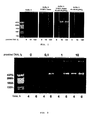
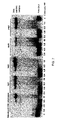
- Figure 1 shows the effect of adding 45 mM (NH 4 ) 2 SO 4 and 0.025% Tween® 20 in the amplification of small amounts of provided plasmid DNA.
- the ⁇ 29 DNA polymerase did not give any amplification product detectable with the standard Buffer A when 100 fg of provided DNA were used.
- the addition of 0.025% Tween® 20 in the absence of DNA caused the appearance of trace DNA products, most probably as a consequence of the nonspecific DNA amplification caused by the hybridization and elongation of the random hexamer primers. The same trace was observed with 10 fg of provided DNA.
- Buffer B the simultaneous addition of 0.025% Tween® 20 and 45 mM (NH 4 ) 2 SO 4 to the Buffer A (hereinafter Buffer B) produces a clear optimization of the experimental conditions for carrying out the amplification with multiple priming of circular DNA by the ⁇ 29 DNA polymerase, both being absolutely necessary reactants to amplify limited amounts (10 fg) of provided DNA.
- Buffer B allowed the ⁇ 29 DNA polymerase to synthesize micrograms of DNA by using a provided amount of plasmid as low as 0.1 fg ( ⁇ 24 molecules) after 6 hours of reaction.
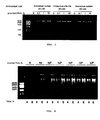
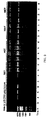
- Figure 3 shows the effect of the ammonium ions and 0.025% Tween® 20 in improving the amplification of small amounts of plasmid DNA.
- the assay was carried out in the previously mentioned conditions in the presence of 0.025% Tween® 20 and the indicated ammonium salt.
- both the NH 4 Cl and the NH 4 CH 3 COO had a similar effect to the (NH 4 ) 2 SO 4 both in the yield and in the specificity of the amplified products. This result indicates that the aforementioned effect of the (NH 4 ) 2 SO 4 in the amplification of limiting amounts of plasmid DNA is due to the NH 4 + ions.
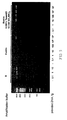
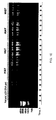
- Figure 5 shows the significant improvements depicted by the addition of 0.025% Tween® 20 and 45 mM (NH 4 ) 2 SO 4 to the current reaction buffer of the Illustra kit (GE HealthCare).
- the Illustra kit only amounts of plasmid provided equal to or greater than 10 pg can be amplified in a detectable manner in agarose gel.
- EXAMPLE 2 Improvement of the amplification capacity of the ⁇ 29 DNA polymerase by the addition of HhH domains.
- ⁇ 29 DNA polymerase was fused with one or two HhH domains to construct new DNA polymerases with an improved DNA binding capacity which allows using less amounts of provided DNA.
- the inspection of the structure of the ⁇ 29 DNA polymerase lead to selecting the fusion of the HhH domains with the C-terminal end of the enzyme since this end (the end of the subdomain thumb ) is close to the tunnel entrance of the top dsDNA sequence.
- the fusion of the HhH domains with the N-terminal end of the ⁇ 29 DNA polymerase would compromise the intrinsic capacity of strand detachment since the biochemical and structural data demonstrated that the unwinding of the parent DNA takes place near the amino end.
- HhH domains in the N-terminal end would not be suitable one for improving the binding of the dsDNA part formed by hybridization of the hexamer primer with the template DNA.
- the fusion of a sequence (His) 6 at the N-terminal end of the ⁇ 29 DNA polymerase has a damaging effect in the amplification.
- GenScript Corporation was entrusted to synthesise a DNA fragment which contained the nucleotides encoding the HhH domains, H (56 amino acids) and I (51 amino acids) of the topoisomerase V of M. kandleri (code in GenBank AF311944 and ( Pavlov et al. Proc Natl Acad Sci USA. 2002; 99: 13510-13515 ), and the latter was cloned between the EcoRV sites of the commercial vector pUC57. The resulting plasmid pUC57-HhH was used as template for amplifying a DNA fragment encoding the domains H and I by PCR.
- primer 3 SEQ ID NO: 7 together with the primers 1 (SEQ ID NO: 8) or 2 (SEQ ID NO: 9) gave the DNA I and II fragments of 369 bp, respectively.
- primer 1 also introduced the sequence encoding the SEQ ID NO: 5 connector ( Pavlov et al. Proc Natl Acad Sci USA. 2002; 99: 13510-13515 )
- the primer 2 introduced the nucleotide sequence encoding the SEQ ID NO: 6 connector (a SEQ ID NO: 10 connector derivative previously described in Sun et al. Proteins. 2006; 65: 231-238 ).
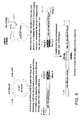
- the primer 3 contained the sequence encoding the 6 histidine residues followed by a stop codon and a BamH I site (see in Figure 6 a simplified diagram of the chimeric DNA polymerase construct).
- a pJLw2 plasmid derivative ( Lázaro et al. Methods Enzymol. 1995; 262: 42-49 ) containing the gene encoding the ⁇ 29 DNA polymerase (572 amino acids) was used as a template for a PCR reaction carried out with the primer 4 (SEQ ID NO: 11) including a 5' Hind III site and the primers 5 (SEQ ID NO: 12) or 6 (SEQ ID NO: 13), to obtain the fragments III and IV of 1757 bp, respectively.
- the fragments III and IV will therefore contain the DNA encoding the ⁇ 29 DNA polymerase followed by the SEQ ID NO: 5 (Fragment III) and SEQ ID NO: 6 (fragment IV) sequences which also include a Kas I site.
- the fragments I-IV were purified in 0.7% agarose gels and were then digested with Kas I .
- the digested DNA fragments I and III, and II and IV were ligated with the T4 DNA ligase to obtain a linear DNA of 2108 bp encoding the chimera HIAY (Fragment V) and HIGT (Fragment VI), respectively.
- the ligated products were purified in 0.7% agarose gels and were then digested with the BamH I and Hind III endonucleases.
- the digested products were purified by electrophoresis in agarose gels.
- the fragments V and VI were finally cloned in the vector pT7-4 ( Tabor et al. Proc Natl Acad Sci USA. 1985; 82: 1074-1078 ).
- the chimeras HIAY ( ⁇ 29 DNA polymerase + SEQ ID NO: 5 connector + domains H and I of topoV) and HIGT ( ⁇ 29 DNA polymerase + SEQ ID NO: 6 connector + domains H and I of topoV) were used as the template to construct the chimeras HGT and HAY, respectively, by inserting a stop codon after the H fragment of TopoV by means of the QuikChange ® (Stratagene) directed mutagenesis kit. The confirmation of the DNA sequence and the absence of additional mutations was carried out by means of sequencing the entire gene. The chimeric DNA polymerases were expressed in BL21(DE3) cells of E.
- chimeric DNA polymerases obtained were the following:
- the oligonucleotides of 15 bases (SEQ ID NO: 14) and 21 bases (SEQ ID NO: 15) having a 5' extension of six nucleotides in addition to the sequence complementary to the oligonucleotide of 15 bases were supplied by Isogen.
- the oligonucleotide of 15 bases was labelled in 5' with [ ⁇ - 32 P] ATP and the T4 kinase polynucleotide.
- the oligonucleotide of 15 bases labelled in 5' was hybridized with that of 21 bases in the presence of 0.2 M NaCl and 60 mM (pH 7.5) tris-HCl.
- the hybridized oligonucleotide molecule of 15 bases labelled in 5'/oligonucleotide of 21 bases was used to analyze the interaction with the natural or chimeric ⁇ 29 DNA polymerases.
- the incubation mixture, in a final volume of 20 ⁇ l contained 50 mM (pH 7.5) tris-HCl, 1 mM dithiothreitol, 10 mM MgCl 2 , 20 mM ammonium sulfate, 0.1 mg/ml bovine serum albumin (BSA), 4% glycerol, 1 nM oligonucleotide molecule of 15 bases/21 bases, and the indicated concentration of the natural or chimeric ⁇ 29 DNA polymerase.
- BSA bovine serum albumin
- the natural ⁇ 29 DNA polymerase produces a single retardation band using the labelled hybridized oligonucleotide molecule of 15 bases/21 bases (see Figure 7 ) which has been interpreted as a stable enzyme-DNA complex competent for polymerization ( Méndez et al. J Biol Chem. 1994; 269: 30030-30038 ).
- the chimeras HAY, HGT and HIGT showed a DNA binding capacity greater than the natural enzyme since the larger part of the substrate was detached with a 9.5 nM concentration unlike the natural DNA polymerase which needed an approximately 2 times higher concentration.
- the chimera HIAY had a DNA binding capacity similar to, or even less than, that of the natural polymerase.
- replication assays with M13 primer in which the DNA polymerase starts the polymerization from the 3'-OH group of a DNA oligonucleotide were carried out.
- the first replication cycle does not require strand detachment, but once it is completed, the polymerase finds the 5' end of the primer, thus requiring an active detachment to continue the following replication cycles (rolling circle type).
- the M13mp18 ssDNA was hybridized with the universal primer in the presence of 0.2 M NaCl and 60 mM (pH 7.5) tris-HC1, and the resulting molecule was used as a primer/template to analyze the polymerization of processive DNA coupled to the strand detachment by the chimeric DNA polymerases.
- the incubation mixture contained in 25 ⁇ l, 50 mM (pH 7.5) tris-HCl, 10 mM MgCl 2 , 1 mM dithiothreitol, 4% glycerol, 0.1 mg/ml BSA, 40 ⁇ M dCTP, dGTP, dTTP, and [ ⁇ - 32 P]DATP (1 ⁇ Ci), 250 ng M13mp18 ssDNA primed with the oligonucleotide of sequence SEQ ID NO: 16, and 30 nM natural or chimeric ⁇ 29 DNA polymerase.
- the reactions were stopped by the addition of 0.1% EDTA 10 mM -SDS, and the samples were filtered through Sephadex G-50 columns.
- the relative activity was calculated from the Cerenkov radiation corresponding to the excluded volume.
- the labelled DNA was denatured by treatment with 0.7 M NaOH and was subjected to electrophoresis in 0.7% alkaline agarose gels as described in ( McDonell et al. J Mol Biol. 1977; 110: 119-146 ). After the electrophoresis, the M13mp8 ssDNA of unit in length was detected by staining with ethidium bromide, and the gels were then dried and autoradiographed.
- a significant discovery is that the presence of the HhH domains does not interfere with the strand detachment capacity of the chimeric DNA polymerases.
- the amount of DNA synthesized by the chimeras HAY, HGT, HIAY and HIGT was greater than that synthesized by the natural ⁇ 29 DNA polymerase (4, 5, 5 and 7 times, respectively).
- the replication speed was similar (in the case of the chimeras HAY and HGT) or even faster (chimeras HIGT and HIAY) than that obtained with the natural ⁇ 29 DNA polymerase. This result indicates that the presence of HhH domains in the C-terminal end of the ⁇ 29 DNA polymerase in the chimeras improves the use of the template DNA during the rolling circle replication.
- ⁇ 29 DNA polymerase is a paradigm for the processive DNA replication since it is capable of incorporating more than 70 kb without dissociating from the DNA in the absence of auxiliary proteins. Therefore, whether the fusion of the HhH domains in the C-terminal end of the ⁇ 29 DNA polymerase in the chimeric DNA polymerases affected the processivity of the polymerization was analyzed.
- the processivity of the chimeric DNA polymerases was analyzed with different proportions of enzyme/DNA.
- the incubation mixture contained, in 25 ⁇ l, 50 mM (pH 7.5) tris-HCL, 10 mM MgCl 2 , 1 mM ditiothreitol, 4% glycerol, 0.1 mg/ml BSA, 40 ⁇ M dCTP, dGTP, dTTP, and [ ⁇ - 32 P]dATP (1 ⁇ Ci), 250 ng primed M13mp18 ssDNA, and the indicated decreasing amounts of the natural ⁇ 29 DNA polymerase or chimeric DNA polymerases.
- the reactions were stopped by the addition of 10 mM EDTA -0.1% SDS, and the samples were filtered through Sephadex G-50 columns.
- the labelled DNA was denatured by treatment with 0.7 M NaOH and was subjected to electrophoresis in 0.7% alkaline agarose gel. The processivity of the polymerization was evaluated by analyzing the length of the replication products with decreasing proportions of DNA polymerase/DNA.
- the incubation mixture contained, in 12.5 ⁇ l of buffer B, 10 fg plasmid DNA (4.2 kpb) as supply. To denature the DNA provided, the samples were incubated for 3 min at 95°C and were then cooled in ice for 5 min. The reactions were initiated by the addition of 50 nM natural or chimeric ⁇ 29 DNA polymerase. After incubating at 30°C for the indicated times, the reactions were stopped by incubating the samples for 10 min at 65°C. 1 ⁇ l of each reaction was digested with EcoRI and was then analyzed by electrophoresis in 0.7% agarose gel. After electrophoresis, the amplified DNA was detected by staining with ethidium bromide.
- the natural ⁇ 29 DNA polymerase gave a detectable amplification product from 4 h of reaction.
- the chimera HAY gave a detectable amplification product from 4 h, the total production amount of amplification after 5 h being twice of that obtained with the natural ⁇ 29 DNA polymerase.
- the chimera HGT produced an amount of amplified DNA comparable to that obtained with the chimera HAY; it is interesting that the yield of maximum amplification was obtained in the shorter reaction time (3 h).
- the maximum amount of amplified DNA with the chimeras HIAY and HIGT was similar to that obtained with the natural ⁇ 29 DNA polymerase, although as in the case of the chimera HGT, said maximum yield was achieved from 3 h of reaction.
- MDA multiple displacement amplification
- the incubation mixture contained, in 12.5 ⁇ l of buffer B, 100 fg B. subtilis genomic DNA. To denature the DNA, the samples were incubated for 3 min at 95°C and were then cooled with ice for 5 min. The reactions were initiated by the addition of 50 nM natural or chimeric ⁇ 29 DNA polymerase. After incubating at 30°C for the indicated times, the reactions were stopped by incubating the samples for 10 min at 65°C. 1 ⁇ l of each reaction was analyzed by electrophoresis in 0.7% agarose gel. After electrophoresis, the amplified DNA was detected by staining with ethidium bromide.
- the natural ⁇ 29 DNA polymerase gave detectable amplification products after 5 h of incubation.
- the chimera HAY also produced amplification products in this time, but the total amount of amplified DNA after 6 h was much greater than that obtained with the natural ⁇ 29 DNA polymerase.
- the rest of the chimeras, HGT, HIAY and HIGT gave clear amplification products in the shorter assay time (3 h), the total amplified amount in this time being similar to (HIAY and HIGT) or much greater (HGT) than that observed after 6 h with the natural ⁇ 29 DNA polymerase.
- the oligonucleotides used for the sequencing were: pT7-N (SEQ ID NO: 17), sp4+10 (SEQ ID NO: 18) and sp10+7 (SEQ ID NO: 19).
- 4918 non-overlapping nucleotides of each of the plasmids amplified by the natural and chimeric DNA polymerases were sequenced. The results are shown in Table 1 and they indicate a synthesis accuracy of the chimeric DNA polymerases similar to the natural enzyme. Table 1.
Landscapes
- Chemical & Material Sciences (AREA)
- Life Sciences & Earth Sciences (AREA)
- Health & Medical Sciences (AREA)
- Organic Chemistry (AREA)
- Engineering & Computer Science (AREA)
- Zoology (AREA)
- Wood Science & Technology (AREA)
- Genetics & Genomics (AREA)
- Bioinformatics & Cheminformatics (AREA)
- Biochemistry (AREA)
- Molecular Biology (AREA)
- General Health & Medical Sciences (AREA)
- General Engineering & Computer Science (AREA)
- Proteomics, Peptides & Aminoacids (AREA)
- Biotechnology (AREA)
- Microbiology (AREA)
- Biomedical Technology (AREA)
- Biophysics (AREA)
- Medicinal Chemistry (AREA)
- Physics & Mathematics (AREA)
- Immunology (AREA)
- Analytical Chemistry (AREA)
- Chemical Kinetics & Catalysis (AREA)
- Virology (AREA)
- Gastroenterology & Hepatology (AREA)
- Plant Pathology (AREA)
- Measuring Or Testing Involving Enzymes Or Micro-Organisms (AREA)
- Enzymes And Modification Thereof (AREA)
- Peptides Or Proteins (AREA)
- Saccharide Compounds (AREA)
Priority Applications (3)
| Application Number | Priority Date | Filing Date | Title |
|---|---|---|---|
| PL10793649T PL2450436T3 (pl) | 2009-07-02 | 2010-07-01 | Chimeryczna polimeraza DNA z faga Φ29 |
| SI201030435T SI2450436T1 (sl) | 2009-07-02 | 2010-07-01 | Polimerazna kimera kot fag phi 29 dna |
| CY20131101144T CY1114747T1 (el) | 2009-07-02 | 2013-12-18 | Χιμαιρα dna πολυμερασης φαγου φ 29 |
Applications Claiming Priority (2)
| Application Number | Priority Date | Filing Date | Title |
|---|---|---|---|
| ES200930413A ES2359058B1 (es) | 2009-07-02 | 2009-07-02 | Quimera de adn polimerasa del fago ph1 29. |
| PCT/ES2010/070454 WO2011000997A1 (es) | 2009-07-02 | 2010-07-01 | QUIMERA DE ADN POLIMERASA DEL FAGO φ 29 |
Publications (3)
| Publication Number | Publication Date |
|---|---|
| EP2450436A1 true EP2450436A1 (de) | 2012-05-09 |
| EP2450436A4 EP2450436A4 (de) | 2012-11-28 |
| EP2450436B1 EP2450436B1 (de) | 2013-10-02 |
Family
ID=43410525
Family Applications (1)
| Application Number | Title | Priority Date | Filing Date |
|---|---|---|---|
| EP10793649.4A Active EP2450436B1 (de) | 2009-07-02 | 2010-07-01 | Polymerase-chimären aus phage-phi-29-dna |
Country Status (23)
| Country | Link |
|---|---|
| US (2) | US8404808B2 (de) |
| EP (1) | EP2450436B1 (de) |
| JP (1) | JP5778671B2 (de) |
| KR (1) | KR101751554B1 (de) |
| CN (1) | CN102648275B (de) |
| AU (1) | AU2010267954B2 (de) |
| BR (1) | BR112012000026A2 (de) |
| CA (1) | CA2766725C (de) |
| CL (1) | CL2011003312A1 (de) |
| CO (1) | CO6480970A2 (de) |
| CY (1) | CY1114747T1 (de) |
| DK (1) | DK2450436T3 (de) |
| ES (2) | ES2359058B1 (de) |
| HR (1) | HRP20131163T1 (de) |
| IL (1) | IL217324A0 (de) |
| MX (1) | MX2012000133A (de) |
| NZ (1) | NZ597884A (de) |
| PL (1) | PL2450436T3 (de) |
| PT (1) | PT2450436E (de) |
| SG (1) | SG177410A1 (de) |
| SI (1) | SI2450436T1 (de) |
| SM (1) | SMT201300153B (de) |
| WO (1) | WO2011000997A1 (de) |
Cited By (2)
| Publication number | Priority date | Publication date | Assignee | Title |
|---|---|---|---|---|
| EP3778891A1 (de) * | 2014-08-27 | 2021-02-17 | New England Biolabs, Inc. | Synthonbildung |
| EP4491719A1 (de) | 2023-07-12 | 2025-01-15 | 4basebio, S.L.U. | Verfahren zur amplifikation von matrizennukleinsäuren unter verwendung eines thermostabilen tthprimpols |
Families Citing this family (10)
| Publication number | Priority date | Publication date | Assignee | Title |
|---|---|---|---|---|
| KR20140010093A (ko) * | 2011-02-28 | 2014-01-23 | 트랜스제노믹, 인크. | 혼합 집단 중 표적 dna의 서열분석을 위한 키트 및 방법 |
| WO2014140309A1 (en) | 2013-03-15 | 2014-09-18 | Sygnis Biotech S.L.U. | Methods for amplification and sequencing using thermostable tthprimpol |
| CN105483115A (zh) * | 2014-09-19 | 2016-04-13 | 深圳华大基因科技有限公司 | 一种用于单细胞全基因组扩增的试剂盒及其应用 |
| KR20190093659A (ko) * | 2016-12-19 | 2019-08-09 | 퀀텀-에스아이 인코포레이티드 | 시퀀싱 반응을 위한 중합 효소 |
| CN114302961A (zh) | 2019-06-28 | 2022-04-08 | 宽腾矽公司 | 用于测序反应的聚合酶 |
| CN110747191B (zh) * | 2019-10-17 | 2021-08-17 | 深圳清华大学研究院 | 多肽、嵌合聚合酶及其应用 |
| CN115003829A (zh) | 2020-01-31 | 2022-09-02 | 泰瑞斯疗法公司 | 带有修饰的核苷酸的闭合线性dna |
| CN115023503A (zh) | 2020-01-31 | 2022-09-06 | 泰瑞斯疗法公司 | 生产闭合线性dna的方法 |
| EP4299731A1 (de) | 2022-06-29 | 2024-01-03 | ASOCIACIÓN CENTRO DE INVESTIGACIÓN COOPERATIVA EN NANOCIENCIAS "CIC nanoGUNE" | Synthetische primaspe-polymerase und deren verwendungen |
| CN120225667A (zh) * | 2022-12-30 | 2025-06-27 | 深圳华大智造科技股份有限公司 | 重组蛋白及其应用 |
Family Cites Families (6)
| Publication number | Priority date | Publication date | Assignee | Title |
|---|---|---|---|---|
| US5001050A (en) | 1989-03-24 | 1991-03-19 | Consejo Superior Investigaciones Cientificas | PHφ29 DNA polymerase |
| US5198543A (en) | 1989-03-24 | 1993-03-30 | Consejo Superior Investigaciones Cientificas | PHI29 DNA polymerase |
| US6323009B1 (en) | 2000-06-28 | 2001-11-27 | Molecular Staging, Inc. | Multiply-primed amplification of nucleic acid sequences |
| AU2003279696A1 (en) * | 2002-05-14 | 2004-02-23 | Fidelity Systems, Inc. | Helix-hairpin-helix motifs to manipulate properties of dna processing enzymes |
| DE602004025801D1 (de) * | 2003-03-25 | 2010-04-15 | Stratagene California | Dna-polymerasefusionen und deren verwendungen |
| EP1910534A4 (de) * | 2005-07-15 | 2010-03-10 | Stratagene California | Dna-bindungsprotein-polymerase-chimären |
-
2009
- 2009-07-02 ES ES200930413A patent/ES2359058B1/es not_active Expired - Fee Related
-
2010
- 2010-07-01 CN CN201080039946.9A patent/CN102648275B/zh active Active
- 2010-07-01 AU AU2010267954A patent/AU2010267954B2/en active Active
- 2010-07-01 SI SI201030435T patent/SI2450436T1/sl unknown
- 2010-07-01 CA CA2766725A patent/CA2766725C/en active Active
- 2010-07-01 NZ NZ597884A patent/NZ597884A/xx not_active IP Right Cessation
- 2010-07-01 WO PCT/ES2010/070454 patent/WO2011000997A1/es not_active Ceased
- 2010-07-01 DK DK10793649.4T patent/DK2450436T3/da active
- 2010-07-01 PT PT107936494T patent/PT2450436E/pt unknown
- 2010-07-01 EP EP10793649.4A patent/EP2450436B1/de active Active
- 2010-07-01 JP JP2012519025A patent/JP5778671B2/ja active Active
- 2010-07-01 SG SG2011097060A patent/SG177410A1/en unknown
- 2010-07-01 HR HRP20131163AT patent/HRP20131163T1/hr unknown
- 2010-07-01 US US13/381,837 patent/US8404808B2/en active Active
- 2010-07-01 MX MX2012000133A patent/MX2012000133A/es active IP Right Grant
- 2010-07-01 KR KR1020127002884A patent/KR101751554B1/ko active Active
- 2010-07-01 BR BR112012000026A patent/BR112012000026A2/pt not_active IP Right Cessation
- 2010-07-01 ES ES10793649.4T patent/ES2438786T3/es active Active
- 2010-07-01 PL PL10793649T patent/PL2450436T3/pl unknown
-
2011
- 2011-12-26 CL CL2011003312A patent/CL2011003312A1/es unknown
- 2011-12-29 CO CO11180682A patent/CO6480970A2/es active IP Right Grant
-
2012
- 2012-01-02 IL IL217324A patent/IL217324A0/en unknown
-
2013
- 2013-03-15 US US13/837,944 patent/US20130236886A1/en not_active Abandoned
- 2013-12-18 CY CY20131101144T patent/CY1114747T1/el unknown
- 2013-12-19 SM SM201300153T patent/SMT201300153B/xx unknown
Cited By (3)
| Publication number | Priority date | Publication date | Assignee | Title |
|---|---|---|---|---|
| EP3778891A1 (de) * | 2014-08-27 | 2021-02-17 | New England Biolabs, Inc. | Synthonbildung |
| EP4491719A1 (de) | 2023-07-12 | 2025-01-15 | 4basebio, S.L.U. | Verfahren zur amplifikation von matrizennukleinsäuren unter verwendung eines thermostabilen tthprimpols |
| WO2025012454A1 (en) | 2023-07-12 | 2025-01-16 | 4Basebio, S.L.U. | Methods of amplifying template nucleic acid using a thermostable tthprimpol |
Also Published As
Similar Documents
| Publication | Publication Date | Title |
|---|---|---|
| EP2450436B1 (de) | Polymerase-chimären aus phage-phi-29-dna | |
| US10597705B2 (en) | Enhanced ligation reactions | |
| EP2927317B1 (de) | Chimäre dna-polymerasen | |
| US8993298B1 (en) | DNA polymerases | |
| KR19990029676A (ko) | 서열화를 위해 변경시킨 열안정성 디엔에이폴리머라제 | |
| CN108779442A (zh) | 多种连接酶的组合物、系统以及方法 | |
| CN108473970B (zh) | Dna聚合酶变体 | |
| EP3402880A1 (de) | Thermophile dna-polymerase-mutanten | |
| CA2802000C (en) | Dna polymerases with increased 3'-mismatch discrimination | |
| EP2450453B1 (de) | Verfahren zur replikation, verstärkung oder sequenzierung einer dna-vorlage | |
| WO2013082164A1 (en) | Enhanced ligation reactions | |
| HK1173188B (en) | Phage φ 29 dna polymerase chimera | |
| Zhu et al. | Characterization of a 3′–5′ exonuclease associated with VDJP |
Legal Events
| Date | Code | Title | Description |
|---|---|---|---|
| PUAI | Public reference made under article 153(3) epc to a published international application that has entered the european phase |
Free format text: ORIGINAL CODE: 0009012 |
|
| 17P | Request for examination filed |
Effective date: 20120202 |
|
| AK | Designated contracting states |
Kind code of ref document: A1 Designated state(s): AL AT BE BG CH CY CZ DE DK EE ES FI FR GB GR HR HU IE IS IT LI LT LU LV MC MK MT NL NO PL PT RO SE SI SK SM TR |
|
| DAX | Request for extension of the european patent (deleted) | ||
| RIC1 | Information provided on ipc code assigned before grant |
Ipc: C12Q 1/68 20060101ALI20121015BHEP Ipc: C12N 9/12 20060101AFI20121015BHEP |
|
| A4 | Supplementary search report drawn up and despatched |
Effective date: 20121025 |
|
| GRAP | Despatch of communication of intention to grant a patent |
Free format text: ORIGINAL CODE: EPIDOSNIGR1 |
|
| INTG | Intention to grant announced |
Effective date: 20130419 |
|
| GRAS | Grant fee paid |
Free format text: ORIGINAL CODE: EPIDOSNIGR3 |
|
| GRAA | (expected) grant |
Free format text: ORIGINAL CODE: 0009210 |
|
| AK | Designated contracting states |
Kind code of ref document: B1 Designated state(s): AL AT BE BG CH CY CZ DE DK EE ES FI FR GB GR HR HU IE IS IT LI LT LU LV MC MK MT NL NO PL PT RO SE SI SK SM TR |
|
| REG | Reference to a national code |
Ref country code: GB Ref legal event code: FG4D |
|
| REG | Reference to a national code |
Ref country code: CH Ref legal event code: EP Ref country code: AT Ref legal event code: REF Ref document number: 634646 Country of ref document: AT Kind code of ref document: T Effective date: 20131015 |
|
| REG | Reference to a national code |
Ref country code: IE Ref legal event code: FG4D |
|
| REG | Reference to a national code |
Ref country code: DE Ref legal event code: R096 Ref document number: 602010010749 Country of ref document: DE Effective date: 20131205 Ref country code: HR Ref legal event code: TUEP Ref document number: P20131163 Country of ref document: HR |
|
| REG | Reference to a national code |
Ref country code: NL Ref legal event code: T3 |
|
| REG | Reference to a national code |
Ref country code: PT Ref legal event code: SC4A Free format text: AVAILABILITY OF NATIONAL TRANSLATION Effective date: 20131219 |
|
| REG | Reference to a national code |
Ref country code: RO Ref legal event code: EPE |
|
| REG | Reference to a national code |
Ref country code: DK Ref legal event code: T3 Effective date: 20140110 |
|
| REG | Reference to a national code |
Ref country code: CH Ref legal event code: NV Representative=s name: WEINMANN ZIMMERLI, CH |
|
| REG | Reference to a national code |
Ref country code: ES Ref legal event code: FG2A Ref document number: 2438786 Country of ref document: ES Kind code of ref document: T3 Effective date: 20140120 |
|
| REG | Reference to a national code |
Ref country code: SE Ref legal event code: TRGR |
|
| REG | Reference to a national code |
Ref country code: HR Ref legal event code: T1PR Ref document number: P20131163 Country of ref document: HR |
|
| REG | Reference to a national code |
Ref country code: EE Ref legal event code: FG4A Ref document number: E008773 Country of ref document: EE Effective date: 20131219 |
|
| REG | Reference to a national code |
Ref country code: NO Ref legal event code: T2 Effective date: 20131002 |
|
| REG | Reference to a national code |
Ref country code: GR Ref legal event code: EP Ref document number: 20130402794 Country of ref document: GR Effective date: 20140124 |
|
| REG | Reference to a national code |
Ref country code: SK Ref legal event code: T3 Ref document number: E 15529 Country of ref document: SK |
|
| REG | Reference to a national code |
Ref country code: DE Ref legal event code: R097 Ref document number: 602010010749 Country of ref document: DE |
|
| PLBE | No opposition filed within time limit |
Free format text: ORIGINAL CODE: 0009261 |
|
| STAA | Information on the status of an ep patent application or granted ep patent |
Free format text: STATUS: NO OPPOSITION FILED WITHIN TIME LIMIT |
|
| 26N | No opposition filed |
Effective date: 20140703 |
|
| REG | Reference to a national code |
Ref country code: DE Ref legal event code: R097 Ref document number: 602010010749 Country of ref document: DE Effective date: 20140703 |
|
| REG | Reference to a national code |
Ref country code: HU Ref legal event code: AG4A Ref document number: E020696 Country of ref document: HU |
|
| REG | Reference to a national code |
Ref country code: HR Ref legal event code: ODRP Ref document number: P20131163 Country of ref document: HR Payment date: 20160628 Year of fee payment: 7 |
|
| PG25 | Lapsed in a contracting state [announced via postgrant information from national office to epo] |
Ref country code: SM Free format text: LAPSE BECAUSE OF NON-PAYMENT OF DUE FEES Effective date: 20140731 |
|
| REG | Reference to a national code |
Ref country code: FR Ref legal event code: PLFP Year of fee payment: 7 |
|
| PGFP | Annual fee paid to national office [announced via postgrant information from national office to epo] |
Ref country code: MC Payment date: 20160622 Year of fee payment: 7 Ref country code: ES Payment date: 20160603 Year of fee payment: 7 Ref country code: HR Payment date: 20160628 Year of fee payment: 7 Ref country code: CZ Payment date: 20160621 Year of fee payment: 7 |
|
| PGFP | Annual fee paid to national office [announced via postgrant information from national office to epo] |
Ref country code: TR Payment date: 20160621 Year of fee payment: 7 Ref country code: LT Payment date: 20160620 Year of fee payment: 7 Ref country code: IS Payment date: 20160620 Year of fee payment: 7 Ref country code: PL Payment date: 20160620 Year of fee payment: 7 Ref country code: EE Payment date: 20160627 Year of fee payment: 7 Ref country code: LU Payment date: 20160728 Year of fee payment: 7 Ref country code: PT Payment date: 20160622 Year of fee payment: 7 Ref country code: SK Payment date: 20160620 Year of fee payment: 7 |
|
| PGFP | Annual fee paid to national office [announced via postgrant information from national office to epo] |
Ref country code: BG Payment date: 20160728 Year of fee payment: 7 Ref country code: FI Payment date: 20160727 Year of fee payment: 7 Ref country code: IE Payment date: 20160726 Year of fee payment: 7 Ref country code: NO Payment date: 20160727 Year of fee payment: 7 Ref country code: IT Payment date: 20160722 Year of fee payment: 7 |
|
| PGFP | Annual fee paid to national office [announced via postgrant information from national office to epo] |
Ref country code: LV Payment date: 20160621 Year of fee payment: 7 Ref country code: AT Payment date: 20160621 Year of fee payment: 7 Ref country code: HU Payment date: 20160628 Year of fee payment: 7 Ref country code: AL Payment date: 20160711 Year of fee payment: 7 Ref country code: SI Payment date: 20160621 Year of fee payment: 7 Ref country code: GR Payment date: 20160727 Year of fee payment: 7 |
|
| PGFP | Annual fee paid to national office [announced via postgrant information from national office to epo] |
Ref country code: BE Payment date: 20160727 Year of fee payment: 7 |
|
| PGFP | Annual fee paid to national office [announced via postgrant information from national office to epo] |
Ref country code: CY Payment date: 20160630 Year of fee payment: 7 |
|
| PGFP | Annual fee paid to national office [announced via postgrant information from national office to epo] |
Ref country code: RO Payment date: 20160622 Year of fee payment: 7 |
|
| REG | Reference to a national code |
Ref country code: FR Ref legal event code: PLFP Year of fee payment: 8 |
|
| REG | Reference to a national code |
Ref country code: HR Ref legal event code: PBON Ref document number: P20131163 Country of ref document: HR Effective date: 20170701 |
|
| REG | Reference to a national code |
Ref country code: LT Ref legal event code: MM4D Effective date: 20170701 |
|
| PG25 | Lapsed in a contracting state [announced via postgrant information from national office to epo] |
Ref country code: CZ Free format text: LAPSE BECAUSE OF NON-PAYMENT OF DUE FEES Effective date: 20170701 |
|
| REG | Reference to a national code |
Ref country code: EE Ref legal event code: MM4A Ref document number: E008773 Country of ref document: EE Effective date: 20170731 |
|
| REG | Reference to a national code |
Ref country code: NO Ref legal event code: MMEP |
|
| REG | Reference to a national code |
Ref country code: AT Ref legal event code: MM01 Ref document number: 634646 Country of ref document: AT Kind code of ref document: T Effective date: 20170701 |
|
| REG | Reference to a national code |
Ref country code: SI Ref legal event code: KO00 Effective date: 20180213 |
|
| REG | Reference to a national code |
Ref country code: SK Ref legal event code: MM4A Ref document number: E 15529 Country of ref document: SK Effective date: 20170701 |
|
| REG | Reference to a national code |
Ref country code: IE Ref legal event code: MM4A |
|
| PG25 | Lapsed in a contracting state [announced via postgrant information from national office to epo] |
Ref country code: CY Free format text: LAPSE BECAUSE OF NON-PAYMENT OF DUE FEES Effective date: 20170701 Ref country code: FI Free format text: LAPSE BECAUSE OF NON-PAYMENT OF DUE FEES Effective date: 20170701 Ref country code: RO Free format text: LAPSE BECAUSE OF NON-PAYMENT OF DUE FEES Effective date: 20170701 Ref country code: IE Free format text: LAPSE BECAUSE OF NON-PAYMENT OF DUE FEES Effective date: 20170701 Ref country code: NO Free format text: LAPSE BECAUSE OF NON-PAYMENT OF DUE FEES Effective date: 20170731 Ref country code: HU Free format text: LAPSE BECAUSE OF NON-PAYMENT OF DUE FEES Effective date: 20170702 Ref country code: LT Free format text: LAPSE BECAUSE OF NON-PAYMENT OF DUE FEES Effective date: 20170701 |
|
| REG | Reference to a national code |
Ref country code: BE Ref legal event code: MM Effective date: 20170731 |
|
| PG25 | Lapsed in a contracting state [announced via postgrant information from national office to epo] |
Ref country code: PT Free format text: LAPSE BECAUSE OF NON-PAYMENT OF DUE FEES Effective date: 20180102 Ref country code: LV Free format text: LAPSE BECAUSE OF NON-PAYMENT OF DUE FEES Effective date: 20170701 Ref country code: SK Free format text: LAPSE BECAUSE OF NON-PAYMENT OF DUE FEES Effective date: 20170701 Ref country code: EE Free format text: LAPSE BECAUSE OF NON-PAYMENT OF DUE FEES Effective date: 20170731 Ref country code: AT Free format text: LAPSE BECAUSE OF NON-PAYMENT OF DUE FEES Effective date: 20170701 Ref country code: SI Free format text: LAPSE BECAUSE OF NON-PAYMENT OF DUE FEES Effective date: 20170702 Ref country code: GR Free format text: LAPSE BECAUSE OF NON-PAYMENT OF DUE FEES Effective date: 20180208 Ref country code: HR Free format text: LAPSE BECAUSE OF NON-PAYMENT OF DUE FEES Effective date: 20170701 Ref country code: IS Free format text: LAPSE BECAUSE OF FAILURE TO SUBMIT A TRANSLATION OF THE DESCRIPTION OR TO PAY THE FEE WITHIN THE PRESCRIBED TIME-LIMIT Effective date: 20180131 |
|
| PG25 | Lapsed in a contracting state [announced via postgrant information from national office to epo] |
Ref country code: LU Free format text: LAPSE BECAUSE OF NON-PAYMENT OF DUE FEES Effective date: 20170701 |
|
| PGFP | Annual fee paid to national office [announced via postgrant information from national office to epo] |
Ref country code: MK Payment date: 20160623 Year of fee payment: 7 |
|
| REG | Reference to a national code |
Ref country code: FR Ref legal event code: PLFP Year of fee payment: 9 |
|
| PG25 | Lapsed in a contracting state [announced via postgrant information from national office to epo] |
Ref country code: IT Free format text: LAPSE BECAUSE OF NON-PAYMENT OF DUE FEES Effective date: 20170701 Ref country code: BE Free format text: LAPSE BECAUSE OF NON-PAYMENT OF DUE FEES Effective date: 20170731 |
|
| PG25 | Lapsed in a contracting state [announced via postgrant information from national office to epo] |
Ref country code: MT Free format text: LAPSE BECAUSE OF NON-PAYMENT OF DUE FEES Effective date: 20170701 |
|
| PGFP | Annual fee paid to national office [announced via postgrant information from national office to epo] |
Ref country code: MT Payment date: 20160701 Year of fee payment: 7 |
|
| REG | Reference to a national code |
Ref country code: ES Ref legal event code: FD2A Effective date: 20181030 |
|
| PG25 | Lapsed in a contracting state [announced via postgrant information from national office to epo] |
Ref country code: PL Free format text: LAPSE BECAUSE OF NON-PAYMENT OF DUE FEES Effective date: 20170701 Ref country code: BG Free format text: LAPSE BECAUSE OF NON-PAYMENT OF DUE FEES Effective date: 20180206 |
|
| PG25 | Lapsed in a contracting state [announced via postgrant information from national office to epo] |
Ref country code: AL Free format text: LAPSE BECAUSE OF NON-PAYMENT OF DUE FEES Effective date: 20170701 Ref country code: ES Free format text: LAPSE BECAUSE OF NON-PAYMENT OF DUE FEES Effective date: 20170702 |
|
| PG25 | Lapsed in a contracting state [announced via postgrant information from national office to epo] |
Ref country code: MC Free format text: LAPSE BECAUSE OF NON-PAYMENT OF DUE FEES Effective date: 20170731 |
|
| PG25 | Lapsed in a contracting state [announced via postgrant information from national office to epo] |
Ref country code: TR Free format text: LAPSE BECAUSE OF NON-PAYMENT OF DUE FEES Effective date: 20170701 |
|
| P01 | Opt-out of the competence of the unified patent court (upc) registered |
Effective date: 20230526 |
|
| PGFP | Annual fee paid to national office [announced via postgrant information from national office to epo] |
Ref country code: NL Payment date: 20250715 Year of fee payment: 16 |
|
| PGFP | Annual fee paid to national office [announced via postgrant information from national office to epo] |
Ref country code: DK Payment date: 20250723 Year of fee payment: 16 Ref country code: DE Payment date: 20250721 Year of fee payment: 16 |
|
| PGFP | Annual fee paid to national office [announced via postgrant information from national office to epo] |
Ref country code: GB Payment date: 20250718 Year of fee payment: 16 |
|
| PGFP | Annual fee paid to national office [announced via postgrant information from national office to epo] |
Ref country code: FR Payment date: 20250716 Year of fee payment: 16 |
|
| PGFP | Annual fee paid to national office [announced via postgrant information from national office to epo] |
Ref country code: CH Payment date: 20250801 Year of fee payment: 16 Ref country code: SE Payment date: 20250723 Year of fee payment: 16 |