EP2414455B1 - Coating composition and method of making and using the same - Google Patents
Coating composition and method of making and using the same Download PDFInfo
- Publication number
- EP2414455B1 EP2414455B1 EP10711492.8A EP10711492A EP2414455B1 EP 2414455 B1 EP2414455 B1 EP 2414455B1 EP 10711492 A EP10711492 A EP 10711492A EP 2414455 B1 EP2414455 B1 EP 2414455B1
- Authority
- EP
- European Patent Office
- Prior art keywords
- core
- composition
- polymer
- silica particles
- dispersion
- Prior art date
- Legal status (The legal status is an assumption and is not a legal conclusion. Google has not performed a legal analysis and makes no representation as to the accuracy of the status listed.)
- Active
Links
Images
Classifications
-
- C—CHEMISTRY; METALLURGY
- C08—ORGANIC MACROMOLECULAR COMPOUNDS; THEIR PREPARATION OR CHEMICAL WORKING-UP; COMPOSITIONS BASED THEREON
- C08L—COMPOSITIONS OF MACROMOLECULAR COMPOUNDS
- C08L75/00—Compositions of polyureas or polyurethanes; Compositions of derivatives of such polymers
- C08L75/04—Polyurethanes
-
- C—CHEMISTRY; METALLURGY
- C08—ORGANIC MACROMOLECULAR COMPOUNDS; THEIR PREPARATION OR CHEMICAL WORKING-UP; COMPOSITIONS BASED THEREON
- C08J—WORKING-UP; GENERAL PROCESSES OF COMPOUNDING; AFTER-TREATMENT NOT COVERED BY SUBCLASSES C08B, C08C, C08F, C08G or C08H
- C08J3/00—Processes of treating or compounding macromolecular substances
- C08J3/20—Compounding polymers with additives, e.g. colouring
- C08J3/205—Compounding polymers with additives, e.g. colouring in the presence of a continuous liquid phase
- C08J3/21—Compounding polymers with additives, e.g. colouring in the presence of a continuous liquid phase the polymer being premixed with a liquid phase
- C08J3/215—Compounding polymers with additives, e.g. colouring in the presence of a continuous liquid phase the polymer being premixed with a liquid phase at least one additive being also premixed with a liquid phase
-
- C—CHEMISTRY; METALLURGY
- C08—ORGANIC MACROMOLECULAR COMPOUNDS; THEIR PREPARATION OR CHEMICAL WORKING-UP; COMPOSITIONS BASED THEREON
- C08K—Use of inorganic or non-macromolecular organic substances as compounding ingredients
- C08K3/00—Use of inorganic substances as compounding ingredients
- C08K3/34—Silicon-containing compounds
- C08K3/36—Silica
-
- C—CHEMISTRY; METALLURGY
- C08—ORGANIC MACROMOLECULAR COMPOUNDS; THEIR PREPARATION OR CHEMICAL WORKING-UP; COMPOSITIONS BASED THEREON
- C08K—Use of inorganic or non-macromolecular organic substances as compounding ingredients
- C08K9/00—Use of pretreated ingredients
- C08K9/08—Ingredients agglomerated by treatment with a binding agent
-
- C—CHEMISTRY; METALLURGY
- C09—DYES; PAINTS; POLISHES; NATURAL RESINS; ADHESIVES; COMPOSITIONS NOT OTHERWISE PROVIDED FOR; APPLICATIONS OF MATERIALS NOT OTHERWISE PROVIDED FOR
- C09D—COATING COMPOSITIONS, e.g. PAINTS, VARNISHES OR LACQUERS; FILLING PASTES; CHEMICAL PAINT OR INK REMOVERS; INKS; CORRECTING FLUIDS; WOODSTAINS; PASTES OR SOLIDS FOR COLOURING OR PRINTING; USE OF MATERIALS THEREFOR
- C09D175/00—Coating compositions based on polyureas or polyurethanes; Coating compositions based on derivatives of such polymers
- C09D175/04—Polyurethanes
-
- C—CHEMISTRY; METALLURGY
- C08—ORGANIC MACROMOLECULAR COMPOUNDS; THEIR PREPARATION OR CHEMICAL WORKING-UP; COMPOSITIONS BASED THEREON
- C08J—WORKING-UP; GENERAL PROCESSES OF COMPOUNDING; AFTER-TREATMENT NOT COVERED BY SUBCLASSES C08B, C08C, C08F, C08G or C08H
- C08J2375/00—Characterised by the use of polyureas or polyurethanes; Derivatives of such polymers
- C08J2375/04—Polyurethanes
-
- C—CHEMISTRY; METALLURGY
- C08—ORGANIC MACROMOLECULAR COMPOUNDS; THEIR PREPARATION OR CHEMICAL WORKING-UP; COMPOSITIONS BASED THEREON
- C08L—COMPOSITIONS OF MACROMOLECULAR COMPOUNDS
- C08L2207/00—Properties characterising the ingredient of the composition
- C08L2207/53—Core-shell polymer
Definitions
- the present disclosure broadly relates to compositions useful for coating a substrate.
- compositions that can be applied to substrates to provide a beneficial protective layer with desirable properties such as one or more of easy cleaning, stain prevention, long lasting performance, soap scum deposit inhibition, and the like.
- Many compositions developed for such applications rely on materials (for example, volatile organic solvents) that can present environmental issues and/or involve complex application processes. Further, problems relating to inadequate shelf-life continue to plague product developers of such compositions.
- EP 0 823 450 A1 discloses a composite material having a structure in which negatively charged colloidal silica having an average particle diameter of not greater than 50 nm and remaining substantially in the form of primary particles is attached to the outer surfaces of negatively charged polymer particles.
- WO 2008/028640 A2 discloses an optical coating composition comprising core-shell nanoparticles, wherein the nanoparticles comprise: (a) core material comprising polymer; and (b) shell material comprising metal oxide.
- the present disclosure provides a composition comprising:
- the foregoing compositions are free of acicular silica particles.
- the present disclosure provides a method of making an article that comprises applying the composition to a surface of a substrate and at least partially drying the composition.
- the surface comprises at least one of glass, metal, fiberglass, or ceramic.
- the substrate is selected from the group consisting of shower surrounds, bathtubs, toilets, sinks, faucets, windows, and mirrors.
- the substrate comprises a painted surface or a clearcoat surface.
- the present disclosure provides articles made by the foregoing method.
- the present disclosure provides a method comprising:
- the core-shell particle dispersion contains less than 0.1 percent by weight of acicular silica particles based on a total weight of the core-shell particle dispersion. In some embodiments of the foregoing method, the core-shell particle dispersion is free of acicular silica particles.
- compositions according to the present disclosure provide long lasting useful levels of protection from staining minerals and soap deposits when applied to common substrates having a hard surface; for example, those that may be found in or around a home or office.
- the compositions may be formulated to contain little or no volatile organic solvents, are typically easy to apply, and may exhibit extended shelf stability.
- compositions according to the present disclosure comprise an aqueous continuous liquid phase, and dispersed organic polymer particles having a silica particle shell thereon, wherein the silica particles have a mean particle size of 60 nm or less.
- the term "shell” refers to an assembly of nonporous spherical silica particles disposed on and covering (for example, densely covering) the surface of a polymer core.
- the nonporous spherical silica particles may optionally be covalently bonded one to another.
- the aqueous continuous liquid phase comprises at least 5 percent by weight of water; for example, the aqueous continuous liquid phase may comprise at least 50, 60, 70, 80, or 90 percent by weight of water, or more. While the aqueous continuous liquid phase is preferably essentially free of (that is, contains less than 0.1 percent by weight of based on the total weight of the aqueous continuous liquid phase) organic solvents, especially volatile organic solvents, organic solvents may optionally be included in a minor amount if desired. If present, the organic solvents should preferably be water-miscible, or at least water-soluble in the amounts in which they are used, although this is not a requirement.
- organic solvents include acetone and lower molecular weight ethers and/or alcohols such as methanol, ethanol, isopropanol, n-propanol, glycerin, ethylene glycol, triethylene glycol, propylene glycol, ethylene glycol monomethyl or monoethyl ether, diethylene or dipropylene glycol methyl or ethyl ether, ethylene or propylene glycol dimethyl ether, and triethylene or tripropylene glycol monomethyl or monoethyl ether, n-butanol, isobutanol, s-butanol, t-butanol, and methyl acetate.
- alcohols such as methanol, ethanol, isopropanol, n-propanol, glycerin, ethylene glycol, triethylene glycol, propylene glycol, ethylene glycol monomethyl or monoethyl ether, diethylene or dipropylene glycol methyl or eth
- the nonporous spherical silica particles have a volume average particle diameter (that is, a D 50 ) of 60 nanometers (nm) or less.
- the nonporous spherical silica particles have a volume average particle diameter in a range of from 2 to 60 nm, more preferably in a range of from 1 to 20 nm, and still more preferably in a range of from 2 to 10 nm.
- the silica particles may have any particle size distribution consistent with the above 60 nm volume average particle diameter; for example, the particle size distribution may be monomodal or polymodal.
- Nonporous spherical silica particles in aqueous media are well known in the art and are available commercially; for example, as silica sols in water or aqueous alcohol solutions under the trade designations LUDOX from E. I. du Pont de Nemours and Co., Wilmington, DE), NYACOL from Nyacol Co. of Ashland, MA, or NALCO from Nalco Chemical Co. ofNaperville, IL.
- One useful silica sol with a volume average particle size of 5 nm, a pH of 10.5, and a nominal solids content of 15 percent by weight, is available as NALCO 2326 from Nalco Chemical Co.
- silica sols include those available as NALCO 1115 and NALCO 1130 from Nalco Chemical Co., as REMASOL SP30 from Remet Corp. of Utica, NY, and as LUDOX SM from E. I. du Pont de Nemours and Co.
- Non-aqueous spherical silica sols are spherical silica sol dispersions wherein the liquid phase is an organic solvent.
- the silica sol is chosen so that its liquid phase is compatible with the remaining components of the continuous liquid phase.
- sodium-stabilized nonporous spherical silica particles should first be acidified prior to dilution with an organic solvent such as ethanol, as dilution prior to acidification may yield poor or non-uniform coatings.
- Ammonium-stabilized silica nanoparticles may generally be diluted and acidified in any order.
- the polymer core may comprise any polymer, typically one that can be prepared as a latex, more typically as an alkaline pH stable latex.
- exemplary polymers include acrylic polymers, styrenic polymers, vinyl acetate-ethylene copolymers, polyvinyl acetate, styrene-butadiene rubbers, polyurethanes (including urethane-acrylic polymers), polyesters, and polyamides.
- the polymer is a film-forming polymer.
- the polymer may be thermosetting or thermoplastic.
- the polymer comprises a polyurethane segment as in the case of a polyurethane or a urethane-acrylic polymer (which typically has polyurethane and polyacrylic segments). Suitable polymer latexes and methods for making them are widely known in the art, and many are commercially available.
- polymer latexes examples include those aqueous aliphatic polyurethane emulsions available as NEOREZ R-960, NEOREZ R-967, NEOREZ R-9036, and NEOREZ R-9699 from DSM NeoResins, Inc. of Wilmington, MA; aqueous anionic polyurethane dispersions available as ESSENTIAL CC4520, ESSENTIAL CC4560, ESSENTIAL R4100, and ESSENTIAL R4188 from Essential Industries, Inc. of Merton, WI; polyester polyurethane dispersions available as SANCURE 843, SANCURE 898, and SANCURE 12929 from Lubrizol, Inc.
- aqueous aliphatic polyurethane emulsions available as NEOREZ R-960, NEOREZ R-967, NEOREZ R-9036, and NEOREZ R-9699 from DSM NeoResins, Inc. of Wilmington, MA
- an individual polymer core may comprise two or more polymers.
- the composition may contain two types of polymer cores, each comprising a different type of polymer, for example, as would be obtained by mixing an acrylic latex and a polyurethane latex.
- the particles in the polymer latexes are substantially spherical in shape.
- the polymer core comprises one or more water-insoluble polymers, although this is not a requirement.
- Useful polymer particle sizes include those typical of latexes and other dispersions or emulsions. Typical polymer particle sizes are in a range of from about 0.01 micrometers to 100 micrometers, preferably in a range of from 0.01 to 0.2 micrometers, although this is not a requirement.
- Core-shell particles may typically be prepared from an alkaline pH stable polymer particle dispersion and an alkaline spherical silica sol.
- such polymer particle dispersions become unstable upon acidification to pH values of 5 or less. Accordingly, it is unexpected that by adding the alkaline nonporous spherical silica sol to the aqueous polymer particle dispersion, with acidification, results in core-shell particles that are stable at low pH values.
- the nonporous spherical silica particles should typically be smaller than the polymer core, although this is not a requirement.
- the volume average particle diameter (D50) of the polymer particles may be on the order of at least 3 times greater than the volume average particle diameter (D50) of the spherical silica particles. More typically, the volume average particle diameter of the polymer particles should typically be on the order of at least 5 times, at least 10 times, or even at least 50 times greater than the volume average particle diameter of the spherical silica particles.
- a weight ratio of the nonporous spherical silica particles to the one or more polymer particles is in a range of from 30:70 to 97:3, preferably 80:20 to 95:5, and more preferably 85:15 to 95:5.
- nonporous spherical silica particles deposit on the surface of the polymer latex particles, eventually in sufficient quantity to form a shell (typically at least a monolayer of the spherical silica particles) that serves to stabilize the dispersion and reduce or prevent agglomeration and precipitation of the polymer particles. It is further believed that upon addition of base to raise the pH that the nonporous spherical.silica particles dissociate from the polymer latex particles and regenerate a mixture of the two types of particles.
- Each core-shell particle comprises a polymer core surrounded by a shell that consists essentially of nonporous spherical silica particles disposed on the polymer core. Accordingly, the shell is substantially free of other particulate matter, and especially acicular silica particles.
- coating compositions according to the present disclosure have a pH of less than 5, preferably less than 4, and more preferably less than 3.
- the coating compositions preferably have a pH of at least 1, more preferably at least 2.
- it may be suitable to adjust the pH to a value of from about 5 to about 7.5, although this may tend to disrupt the core-shell particle structure.
- compositions may be acidified to the desired pH level with an acid having a pK a of less than 5, preferably less than 2.5, and more preferably less than 1.
- Useful acids include both organic and inorganic acids such as, for example, oxalic acid, citric acid, benzoic acid, acetic acid, methoxyacetic acid, formic acid, propionic acid, benzenesulfonic acid, H 2 SO 3 , H 3 PO 4 , HCl, HBr, Hl, HBrO 3 , HNO 3 , HClO 4 , H 2 SO 4 , CH 3 SO 3 H, CF 3 SO 3 H, CF 3 CO 2 H, and CH 3 OSO 3 H.
- Preferred acids include HCl, H 2 SO 4 , and H 3 PO 4 . Combinations of organic and inorganic acids may also be used. Using weaker acids having a pK a of greater than 5 may not result in a uniform coating having the desirable properties such as transmissivity, cleanability and/or durability.
- compositions according to the present disclosure may optionally include at least one surfactant.
- surfactant as used herein describes molecules with hydrophilic (polar) and hydrophobic (non-polar) segments on the same molecule, and which are capable of reducing the surface tension of the composition.
- useful surfactants include: anionic surfactants such as sodium dodecylbenzenesulfonate, dioctyl ester of sodium sulfosuccinic acid, polyethoxylated alkyl (C12) ether sulfate, ammonium salt, and salts of aliphatic hydrogen sulfates; cationic surfactants such as alkyldimethylbenzylammonium chlorides and di-tallowdimethylammonium chloride; nonionic surfactants such as block copolymers of polyethylene glycol and polypropylene glycol, polyoxyethylene (7) lauryl ether, polyoxyethylene (9) lauryl ether, and polyoxyethylene (18) lauryl ether; and amphoteric surfactants such as N-coco-aminopropionic acid.
- anionic surfactants such as sodium dodecylbenzenesulfonate, dioctyl ester of sodium sulfosuccinic acid,
- Silicone and fluorochemical surfactants such as those available under the trade designation FLUORAD from 3M Company of St. Paul, MN, may also be used. If present, the amount of surfactant typically is in an amount of less than about 0.1 percent by weight of the composition, preferably between about 0.003 and 0.05 percent by weight of the composition.
- the composition may also optionally contain an antimicrobial agent.
- antimicrobial agents are commercially available. Examples include those available as: Kathon CG or LX available from Rohm and Haas Co. of Philadelphia, PA; 1,3-dimethylol-5,5-dimethylhydantoin; 2-phenoxyethanol; methyl-p-hydroxybenzoate; propyl-p- hydroxybenzoate; alkyldimethylbenzylammonium chloride; and benzisothiazolinone.
- compositions according to the present disclosure may be made by any suitable mixing technique.
- One useful technique includes combining an alkaline polymer latex with an alkaline spherical silica sol of appropriate particle size, and then adjusting the pH to the final desired level.
- compositions are free of various impurities including nonspherical silica particles, porous silica particles, and added crosslinkers (for example, polyaziridines or orthosilicates). Accordingly, compositions according to the present disclosure may contain less than 0.1 weight percent or less than 0.01 weight percent of acicular silica particles, and, if desired, they may be free of acicular silica particles.
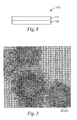
- an article 100 comprises a substrate 120 having a layer 110 disposed thereon.
- Layer 110 is formed by applying a composition according to the present disclosure to a surface of a substrate and at least partially removing the aqueous continuous liquid phase from the composition.
- Suitable substrates may include, for example, glass (for example, windows (including architectural and motor vehicle windows) and optical elements such as, for example, lenses and mirrors), ceramic (for example, ceramic tile), cement, stone, painted and/or clearcoat surfaces (for example, automobile or truck body or closure panels, boat surfaces, motorcycle parts, truck tractors, snowmobiles, jet skis, off-road vehicles, and tractor trailers), appliances, plastic protective films which are backed with pressure-sensitive adhesives, metal (for example, architectural columns, plumbing fixtures), fiberglass, thermosetting polymers, sheet molding compound, thermoplastics (for example, polycarbonate, acrylics, polyolefins, polyurethanes, polyesters, polyamides, polyimides, phenolic resins, cellulose diacetate, cellulose triacetate, polystyrene, and styrene-acrylonitrile copolymers), and combinations thereof. Additional exemplary substrates include bathtubs, toilets, sinks, faucets, mirrors, windows.
- optical elements for example, lenses and mirrors
- compositions according to the present disclosure are particularly useful in the coating of automotive panels having painted or clearcoat surfaces, examples of which include: polyacrylic-polyol-polyisocyanate compositions (for example, as described in U. S. Pat. No. 5,286,782 (Lamb, et al. ); hydroxyl functional acrylic-polyol-polyisocyanate compositions (for example, as described in U. S. Pat. No. 5,354,797 (Anderson, et al. ); polyisocyanate-carbonate melamine compositions (for example, as described in U. S. Pat. No. 6,544,593 (Nagata et al. ); high solids polysiloxane compositions (for example, as described in U.
- Clearcoats are transparent protective coatings (typically crosslinked coatings comprising an organic polymer) applied over a paint layer to enhance protection and/or gloss.
- transparent protective coatings typically crosslinked coatings comprising an organic polymer
- Examples of clearcoats include that available as CERAMICLEAR from PPG Industries, Pittsburgh, PA. and RK8014, a urethane acrylate clearcoat available from E. 1. du Pont de Nemours and Co.
- compositions according to the present disclosure when coated on a substrate and at least partially dried, provide improved cleanability by way of a reduced tendency to accumulate dirt and other contaminants.
- cleaning it is meant that compositions according to the present disclosure, when dried and cured, provide a coating which is easier to clean by contacting with flowing water or a water spray to readily displace overlying contamination, thereby removing a substantial portion of the contamination from the coating.
- the water sheeting effect allows road spray, snow, slush dirt, soap scum, and staining minerals in rainwater and rinse water to substantially sheet out and run off the substrate surface, which significantly reduces the amount and the localized concentration of contaminants that are deposited after the water dries.
- the composition provides an abrasion resistant layer that helps protect the substrate from damage from causes such as scratches, abrasion, and solvents.
- compositions are preferably coated on the article using conventional coating techniques, such as brush, bar, roll, wipe, curtain, rotogravure, spray, or dip coating techniques.
- a preferred method is to wipe the coating formulation on using a suitable woven or nonwoven cloth, sponge, or foam.
- Such application materials are preferably acid-resistant and may be hydrophilic or hydrophobic in nature, preferably hydrophilic.
- Another method to control final thickness and resultant appearance is to apply the coating using any suitable method and, after allowing a portion of the solvent to evaporate, to rinse off excess composition with a stream of water, while the substrate is still fully or substantially wetted with the composition.
- compositions according to the present disclosure are preferably applied to a substrate in a uniform average wet thickness varying from 0.5 to 50 micrometers, and more preferably 1 to 10 micrometer, in order to avoid visible interference color variations in the coating, although other thicknesses may also be used.
- the optimal average dry coating thickness is dependent upon the particular composition that is coated, but in general the average thickness of the composition coating thickness is between 0.05 to 5 micrometers, preferably 0.05 to 1 micrometer; for example, as estimated from atomic force microscopy and/or surface profilometry. Above this range, the dry coating thickness variations typically cause optical interference effects, leading to visible iridescence (rainbow effect) of the dried coating which is particularly apparent on darker substrates. Below this range the dry coating thickness may be inadequate to confer sufficient durability for most coatings exposed to environmental wear.
- the resultant article is typically dried at ambient or warm temperatures without the need for high temperature heat, radiation or other curing method. Although higher temperature may increase the speed of the drying process, such temperatures are usually not practical or convenient and care must be exercised to avoid damage to the substrate.
- compositions according to the present disclosure are stable when stored in the liquid form, for example, they do not gel, opacify, form precipitated or agglomerated particulates, or otherwise deteriorate significantly.
- Static water contact angle measurements were made using purified and filtered water, available as OMNISOLV from EM Science of Gibbstown, NJ.
- the contact angle analyzer used a custom-built manual instrument equipped with a goniometer-microscope obtained from Gaertner Scientific Corporation of Chicago, IL, mounted on a horizontal positioning device, model number UNISLIDE SERIES A2500 made by Velmex, Inc. of Holcomb, NY.
- Water droplets approximately 0.5 microliters ( ⁇ l) in volume were dispensed from a 1 cubic centimeter (cm 3 ) syringe having a flat-tipped needle, obtained from Henke Sass Wolf GmbH, Tuttlinger, Germany, using a micrometer thimble, barrel, and spindle, Part No. 263, from L. S. Starrett of Athol, MA.
- the tip of the syringe needle was flattened using a fine grit sandpaper.
- the syringe was mounted on a double-armed holder which that was lowered through a screw crank to deposit the water drop on the test specimen as it rested on an adjustable platform. The drop was backlit through a translucent paper screen with a small lamp.
- the leveling of the contact angle instrument was monitored with a circular bull's-eye level, adjustable through four leveling screws. Contact angle was measured on sessile water drops approximately 30 seconds after deposition, and the value reported is the average of measurements made on at least three separate drops on each test panel.
- Crushed IVORY soap (The Procter and Gamble Co. of Cincinnati, OH, 1.6 grams) was added to hot tap water (192 grams) in a first vessel and then the mixture was sonicated for 30 minutes at 60 °C. Subsequently, artificial sebum (1.2 grams) was added and the mixture was sonicated for an additional 10 minutes.
- a second vessel was charged with hot tap water (600 grams), CLAIROL TOTALLY TWISTED HERBAL ESSENCE shampoo (The Procter and Gamble Co., 1.6 grams), CLAIROL COLOR ME HAPPY HERBAL ESSENCE conditioner (The Procter and Gamble Co., 4.0 grams), and then stirred for 15 seconds. Oleic acid (1.6 grams) was added to the shampoo solution and the solution was then stirred for an additional 15 seconds. The contents of both solutions were ten combined and mixed for an additional 2 hours.
- NPS1 (1.992 grams (g)) was manually mixed with 4.404 g of deionized water.
- a master batch of 4.5 percent solids polyurethane dispersion was prepared by manually mixing until homogeneous, 5.125 g of PU1 with 32.113 g of deionized water at 22 °C.
- a dispersion having a silica:polyurethane ratio of 9:1 was made by manually mixing at 22 °C until homogeneous, the diluted NPS with 0.787 g of the 4.5 percent solids PU1. To this was added 2 drops HCl, and the mixture was agitated. The dispersion was then diluted to a total solids content of 0.5 percent by weight with deionized water, and the pH was measured using pH paper.
- a master batch of 5.32 percent solids NPS1 was prepared by manually mixing until homogeneous 30.013 g of NPS1 with 66.014 g of deionized water at 22 °C. Aliquots (approximately 6.4 g each) of the 5.32 percent solids NPS1 master batch were combined with suitable amounts of 4.5 percent solids polyurethane dispersions PU2 and PU5 - PU13. As indicated in Table 1, drops of HCl were added to these mixtures after which each NPS:PU dispersion was then diluted to a total solids content of between 0.50 -1.00 percent and silica:polyurethane ratios of between 9:1 to 7:3. Compositions of Examples 1 - 11 are reported in Table 1 (below).
- Examples 3, 4, 8 and 10 are reference examples.
- TABLE 1 EXAMPLE POLYURETHANE DISPERSION SILICA/ URETHANE RATIO DROPS HCL TOTAL SOLIDS, percent pH 1 PU1 9:1 2 0.50 2.5 2 PU2 8:2 1 0.75 4.0 3 PU5 9:1 0 0.50 8.5 4 PU6 7:3 0 0.50 8.5 5 PU7 7:3 2 0.50 3.0 6 PU8 8:2 1 0.75 4.0 7 PU9 8:2 1 0.75 4.0 8 PU10 7:3 0 1.00 9.5 9 PU11 9:1 2 1.00 2.0 10 PU12 9:1 0 1.00 9.0 11 PU13 7:3 2 1.00 2.5
- test panels TP1, TP2 and TP3 were sprayed with ethanol and wiped dry prior to applying the test dispersions.
- a single drop of each test dispersion was placed on a test panel and then wiped down the long axis of the panel using several strokes with a large rectangular foam pad swab, type CRITICAL SWAB, Catalog No. 89022-984 from VWR Scientific of West Chester, PA.
- the coupons were laid flat and dried at 22°C for 24 hours. Static water contact angles (SWCA) were then measured on each of three separate drops evenly spaced along the long axis of each coupon.
- SWCA Static water contact angles
- NPS1 (2.069 g) was mixed with 4.226 g deionized water in a plastic bottle. To this was added 0.655 g of a 5.0 percent solids aqueous solution of PU1, and the dispersion manually mixed at 22 °C until homogeneous. One drop of HCl was added and the dispersion again manually mixed until homogeneous. A pH of 3 was recorded using pH paper. From this dispersion, 0.5 g was diluted with 2.5081 g deionized water to provide a test solution having a total solids concentration of 0.885 percent.
- test solution was then applied to one half of test panels TP3 and TP4, measuring 3 inches by 4 inches (7.62 by 10.16 cm), using a lint free wiper, type KIM-WIPE EX-L, from Kimberly-Clark Corp. of Roswell, GA.
- the panels were dried at 22°C, then attached to the lower rear side of a vehicle. After driving the vehicle for 30 days, gloss measurements were made on the test panels using a gloss meter, model MICRO TRIGLOSS, from BYK-Gardner Company of Columbia, MD. Results are reported in Table 3 (below).
- NPS1 (9.998 g) was mixed with 21.992 g of deionized water in a plastic bottle. To this was added 3.939 grams of a 4.5 percent solids aqueous solution of PU1, and the dispersion manually mixed at 22°C until homogeneous. Ten drops of HCl were added, and the dispersion again manually mixed until homogeneous. A pH of between 1 and 1.5 was recorded using pH paper. Then 9.997 grams of this dispersion was diluted with 40.002 grams deionized water to provide a test solution having a total solids concentration of 0.885 percent solids. Using pH paper, a pH of 1.5 was recorded.
- the dispersion was applied to the driver's side of the hood of a vehicle using a polyester/rayon cheesecloth, obtained from Daego Company, Ltd. of South Korea.
- a comparative material 3M PERFORMANCE FINISH, from 3M Company of St. Paul, MN, using a 3M general purpose microfiber cloth.
- After 33 days of driving the hood was rinsed with water using a spray hose and allowed to dry at 22 °C, without wiping. Before and after gloss measurements are reported in Table 4 (below).
- a master batch of 5.33 percent solids of NPS1 dispersion was prepared by manually mixing until homogeneous 31.049 g of NPS1 with 63.389 g of deionized water at 22°C. Dispersions of polyurethanes PU2 and PU5 - PU11 containing 5 percent solids were made by diluting the as-received dispersions with the appropriate amount of deionized water. Approximately 0.65 g of the diluted polyurethanes were then mixed with approximately 6.3 g of the 5.33 percent solids NPS1 master batch to provide a mixture having a total solids content of 5.25 percent solids.
- Example 21 is a reference example.
- NPS SILICA POLYURETHANE RATIO pH Z-AVERAGE DIAMETER, nm PDI Comparative Example C None PU1 8 41 0.26 101 NPS2 9:1 4.0 113 0.199 102 NPS2 8:2 3 638.1 0.501 103 NPS2 8:2 2.5 830 0.539 (HCl) 104 NPS1 9:1 3 201.0 0.265 105 NPS1 9:1 2.5 220 0.383 (HCl) 106 NPS1 8:2 3 1023 0.968 (HCl) 107 NPS3 9:1 4.0 102 0.293 (IEX) 108 NPS3 1:9 5 172.2 0.262 (HCl) 109 NPS3 8:2 5 1213 0.863
- a cationic ion exchange column was made by packing a 5 milliliter (ml) disposable syringe with glass wool, followed by an ion exchange resin available as AMBERLITE IR-120 PLUS(H) from Dow Chemical Co. The packed resin bed was then rinsed twice with 2 milliliters (ml) of deionized water.
- a series of silica (NPS2):polyurethane (PU1) dispersions, having ratios of 9:1, 8:2, 7:3 and 6:4 were made generally according to the method described in Example 101. A portion (10 g) of each dispersion was repeatedly passed through the cationic ion exchange column until a pH of 3.0 was reached.
- the samples were then subjected to three rinsing cycles with a low-pressured water stream at a speed of 600 ml/minute.
- the samples were dried with a stream of compressed air after each cycle.
- the sample surfaces were then visually examined to determine if any soap scum residue remained after rinsing.
- the Cleaning Performance of each coating was visually rated on a scale of 1-5 as defined below.
- Examples 122-126 (10 g samples) were prepared by mixing PU1 with NPS2 individually in the ratios described in Table 10. The mixtures were acidified to the pH values indicated in Table 10 by ion exchange (IEX) or by acid addition.
- IEX ion exchange
- IEX procedure (Acidification Method A) a disposable syringe (5 ml) was packed with glass wool followed by 1-2 cm 3 of AMBERLITE IR-120 PLUS(H) ion exchange resin. The packed bead bed was rinsed with deionized water (2 x 2 ml portions) before passing 10 gram samples of the coating dispersion through the resin beads until the desired pH value was obtained, sometimes requiring multiple passes. The pH was monitored after each pass with pH paper.
- the coating dispersion was acidified with H 3 PO 4 (1.0 M) to the noted pH while mixing on a stirring plate with a magnetic stirrer (Acidification Method B).
- Test samples for the soap scum test were prepared by coating float glass panels (3 inches x 6 inches) (7.6 cm x 15.2 cm) with the example solutions using a KIM-WIPE EX-L paper wiper. Prior to coating, the glass panels were cleaned with a cleaning solution (ALCONOX POWDERED PRECISION CLEANER from Alconox, Inc. of White Plains, NY) dissolved in water according to the manufacturer's directions. The samples were allowed to air-dry for a period greater than 2 hr before performing the test. Three sprays of prepared soap scum mixture were applied using a spray bottle to each sample. The samples were allowed to air-dry for 15 min before an additional three sprays were applied. This process was repeated for a total of three applications before the samples were rinsed with deionized water (600 ml/min) and dried to complete one cycle. Cleaning performance ratings were determined as in Example 121, and are reported in Table 10, wherein:
- compositions were prepared and tested generally according to the method of Example 118 as indicated in Tables 12 - 16 below.
- Tables 12 - 15 static water contact angle measurements were made on the dried coated samples using as-received deionized water filtered through a filtration system obtained from Millipore Corporation of Billerica, MA on a video contact angle analyzer available as product number VCA-2500XE from AST Products of Billerica, MA.
- Reported values are the averages of measurements on at least three drops measured on the right and the left sides of the drops. Drop volumes were one microliter for static measurements.
- Tables 12-15 (below), the pH was adjusted using 0.1 N HCl. Examples 139, 140, 141, 158 and 159 are reference examples.
- a disposable syringe (5 ml) was packed with glass wool followed by ion exchange resin.
- the packed bead bed was rinsed with deionized water (2 x 2 ml) before passing a 10 g solution of a composition through the resin bead until the noted pH (denoted IEX in Table 17).
- compositions were prepared by combination of the individual components and acidified with HCl (1.0 N) while mixing on a stirring plate with a magnetic stirrer (denoted HCl in Table 17). The samples were periodically monitored during storage at room temperature for stability or gelation.
- S means readily flowable
- G means gelled
- T means thickened thick. Examples 166 and 167 are reference examples.
Landscapes
- Chemical & Material Sciences (AREA)
- Organic Chemistry (AREA)
- Polymers & Plastics (AREA)
- Health & Medical Sciences (AREA)
- Chemical Kinetics & Catalysis (AREA)
- Medicinal Chemistry (AREA)
- Materials Engineering (AREA)
- Wood Science & Technology (AREA)
- Engineering & Computer Science (AREA)
- Life Sciences & Earth Sciences (AREA)
- Paints Or Removers (AREA)
- Processes Of Treating Macromolecular Substances (AREA)
- Compositions Of Macromolecular Compounds (AREA)
- Application Of Or Painting With Fluid Materials (AREA)
Applications Claiming Priority (2)
| Application Number | Priority Date | Filing Date | Title |
|---|---|---|---|
| US16498609P | 2009-03-31 | 2009-03-31 | |
| PCT/US2010/027452 WO2010114700A1 (en) | 2009-03-31 | 2010-03-16 | Coating composition and method of making and using the same |
Publications (2)
| Publication Number | Publication Date |
|---|---|
| EP2414455A1 EP2414455A1 (en) | 2012-02-08 |
| EP2414455B1 true EP2414455B1 (en) | 2014-02-26 |
Family
ID=42184105
Family Applications (1)
| Application Number | Title | Priority Date | Filing Date |
|---|---|---|---|
| EP10711492.8A Active EP2414455B1 (en) | 2009-03-31 | 2010-03-16 | Coating composition and method of making and using the same |
Country Status (8)
| Country | Link |
|---|---|
| US (1) | US8633263B2 (enExample) |
| EP (1) | EP2414455B1 (enExample) |
| JP (1) | JP5540071B2 (enExample) |
| KR (1) | KR101738176B1 (enExample) |
| CN (1) | CN102378792A (enExample) |
| BR (1) | BRPI1014700A2 (enExample) |
| ES (1) | ES2461169T3 (enExample) |
| WO (1) | WO2010114700A1 (enExample) |
Families Citing this family (30)
| Publication number | Priority date | Publication date | Assignee | Title |
|---|---|---|---|---|
| EP2443203B1 (en) | 2009-03-31 | 2014-12-17 | 3M Innovative Properties Company | Aqueous coating composition comprising spherical silica particles and method of making and using the same |
| US8633263B2 (en) | 2009-03-31 | 2014-01-21 | 3M Innovative Properties Company | Coating composition and method of making and using the same |
| WO2011062880A2 (en) * | 2009-11-18 | 2011-05-26 | 3M Innovative Properties Company | Protective coatings and methods of making and using the same |
| CN103154152B (zh) | 2010-10-06 | 2018-04-13 | 3M创新有限公司 | 涂料组合物及其制备和使用方法 |
| EP2714775A1 (en) * | 2011-06-01 | 2014-04-09 | Basf Se | Fast water-absorbing material having a coating of elastic film-forming polyurethane with high wicking |
| CN104053731B (zh) | 2011-12-15 | 2016-10-26 | 3M创新有限公司 | 包含含水聚合物分散体、交联剂和表面活性剂的防雾涂料 |
| WO2013089927A1 (en) | 2011-12-15 | 2013-06-20 | 3M Innovative Properties Company | Anti-fog coating comprising aqueous polymeric dispersion, crosslinker & acid or salt of polyalkylene oxide |
| US10160891B2 (en) | 2012-02-08 | 2018-12-25 | Honeywell International Inc. | High performance water-based tackified acrylic pressure sensitive adhesives |
| US10167416B2 (en) | 2012-02-08 | 2019-01-01 | Honeywell International Inc. | High performance water-based adhesion compositions and applications |
| EP2674449A1 (en) | 2012-06-11 | 2013-12-18 | 3M Innovative Properties Company | Nanosilica coating assembly with enhanced durability |
| EP2674450A1 (en) | 2012-06-11 | 2013-12-18 | 3M Innovative Properties Company | Nanosilica coating for retarding dew formation |
| EP2695918A1 (en) | 2012-08-07 | 2014-02-12 | 3M Innovative Properties Company | Coating composition for the prevention and/or removal of limescale and/or soap scum |
| US20150252196A1 (en) * | 2012-09-26 | 2015-09-10 | 3M Innovative Properties Company | Coatable Composition, Wear-Resistant Composition, Wear-Resistant Articles, and Methods of Making the Same |
| CN104870688B (zh) * | 2012-09-26 | 2017-11-03 | 3M创新有限公司 | 可涂覆型组合物、光催化制品及其制备方法 |
| KR20150097635A (ko) * | 2012-12-20 | 2015-08-26 | 쓰리엠 이노베이티브 프로퍼티즈 컴파니 | 오염방지성, 내마모성 구조물 및 제조 방법 |
| JP2016529085A (ja) | 2013-05-30 | 2016-09-23 | スリーエム イノベイティブ プロパティズ カンパニー | ポリ(ビニルアルコール)及びシリカナノ粒子多層コーティング及び方法 |
| CN105246985B (zh) | 2013-05-30 | 2017-11-03 | 3M创新有限公司 | 交联聚(乙烯醇)和二氧化硅纳米颗粒多层涂层以及方法 |
| WO2014193571A1 (en) | 2013-05-30 | 2014-12-04 | 3M Innovative Properties Company | Poly(vinyl alcohol)-containing and silica nanoparticle multilayer coatings and methods |
| CN105683302A (zh) | 2013-10-04 | 2016-06-15 | 3M创新有限公司 | 可涂覆型组合物、防静电组合物、防静电制品及它们的制备方法 |
| US20160377416A1 (en) | 2013-11-26 | 2016-12-29 | 3M Innovative Properties Company | Devices and methods for assessment of surfaces |
| JP6687535B2 (ja) * | 2014-04-15 | 2020-04-22 | ハネウェル・インターナショナル・インコーポレーテッドHoneywell International Inc. | 高性能水性接着組成物および用途 |
| CN105086794B (zh) | 2014-05-09 | 2018-03-06 | 3M创新有限公司 | 防滑液、防滑件及其制备方法 |
| US20160165844A1 (en) * | 2014-12-11 | 2016-06-16 | The Kong Company, Llc | Pet toy with braided exterior and flexible core |
| US10851262B2 (en) * | 2015-06-03 | 2020-12-01 | Sun Chemical Corporation | Primer for digital printing |
| EP3394174A4 (en) | 2015-12-25 | 2019-08-07 | 3M Innovative Properties Company | COMPOSITION, PROCESS FOR PREPARING A COMPOSITION AND OBJECT |
| US10787582B2 (en) | 2015-12-25 | 2020-09-29 | 3M Innovative Properties Company | Composition, method of making composition, and article |
| WO2019097469A2 (en) | 2017-11-17 | 2019-05-23 | 3M Innovative Properties Company | Ink-receptive layers for durable labels |
| WO2020003188A2 (en) | 2018-06-29 | 2020-01-02 | 3M Innovative Properties Company | Ink-receptive layers for durable labels |
| CN114672279A (zh) * | 2022-04-20 | 2022-06-28 | 江门市胜鹏化工实业有限公司 | 一种基于107胶的胶黏剂组合物制备方法 |
| EP4729164A1 (en) * | 2024-10-17 | 2026-04-22 | Covestro (Netherlands) B.V. | Core-shell particles as opacifiers |
Family Cites Families (52)
| Publication number | Priority date | Publication date | Assignee | Title |
|---|---|---|---|---|
| US1014802A (en) | 1911-06-26 | 1912-01-16 | Otto W Boche | Flying-machine. |
| BE611861A (enExample) | 1960-12-24 | |||
| GB1003178A (en) | 1961-05-27 | 1965-09-02 | Kurashiki Rayon Kk | Method of manufacturing water soluble film |
| BE624486A (enExample) | 1961-11-07 | 1900-01-01 | ||
| US3700487A (en) | 1971-02-23 | 1972-10-24 | American Optical Corp | Polycarbonate substrate with durable,abrasion and scratch-resistant,antifogging coating |
| US3773776A (en) | 1971-03-31 | 1973-11-20 | Du Pont | Aqueous acidic polyvinyl alcoholsilica solution |
| US3940359A (en) | 1974-05-08 | 1976-02-24 | E. I. Du Pont De Nemours And Company | Soil-repellent coating compositions |
| US4152165A (en) | 1978-04-11 | 1979-05-01 | Minnesota Mining And Manufacturing Company | One-part hydrophilic treatment compositions |
| US4338377A (en) | 1979-10-10 | 1982-07-06 | Minnesota Mining And Manufacturing Company | Sulfonato-organosilanol compounds and aqueous solutions thereof |
| JPS56112984A (en) | 1980-02-13 | 1981-09-05 | Tomoji Tanaka | Antifogging paper bag |
| DE3400079A1 (de) | 1984-01-03 | 1985-07-11 | Röhm GmbH, 6100 Darmstadt | Wasserspreitendes kunststoffmaterial, verfahren zu seiner herstellung u. verwendung als verglasungs- und bedachungsmaterial |
| SE450771B (sv) | 1984-02-17 | 1987-07-27 | Eka Nobel Ab | Smutsavvisande beleggningskomposition innehallande kiseldioxid, polyvinylalkohol och vetmedel |
| US5073404A (en) | 1987-03-09 | 1991-12-17 | Minnesota Mining And Manufacturing Company | Silica coating composition for reflective sheeting |
| US5354797A (en) | 1992-08-31 | 1994-10-11 | E. I. Du Pont De Nemours And Company | Coating composition of hydroxy functional acrylic polymer, polyol and polyisocyanate crosslinking agent |
| US5286782A (en) | 1992-08-31 | 1994-02-15 | E. I. Du Pont De Nemours And Company | Coating composition of an acrylic polymer, polyol and polyisocyanate crosslinking agent |
| JP3219914B2 (ja) * | 1993-08-18 | 2001-10-15 | クラリアント インターナショナル リミテッド | 耐ブロッキング性合成樹脂エマルジョン粉末 |
| DK0759950T3 (da) | 1994-05-19 | 2000-10-30 | Minnesota Mining & Mfg | Polymer genstand med forbedret hydrofili og en fremgangsmåde til fremstilling deraf |
| JP3464527B2 (ja) | 1994-05-27 | 2003-11-10 | 東レ・ダウコーニング・シリコーン株式会社 | 硬化性樹脂組成物および硬化樹脂 |
| US5585186A (en) | 1994-12-12 | 1996-12-17 | Minnesota Mining And Manufacturing Company | Coating composition having anti-reflective, and anti-fogging properties |
| EP0823450B1 (en) | 1995-04-25 | 2004-11-24 | Mitsubishi Rayon Co., Ltd. | Composite and moldings produced therefrom |
| JP2877520B2 (ja) * | 1995-04-25 | 1999-03-31 | 三菱レイヨン株式会社 | 複合体及び該複合体を含有する成形品 |
| US5820978A (en) | 1995-11-09 | 1998-10-13 | Minnesota Mining And Manufacturing Company | Durability improved colloidal silica coating |
| EP0974560B2 (en) | 1997-12-09 | 2015-12-30 | Nippon Sheet Glass Co., Ltd. | Antireflection glass plate, process for producing the same, and antireflection coating composition |
| DK1054916T3 (da) | 1998-02-06 | 2006-03-06 | Du Pont | Reaktive siliciumoligomerer og coatingsammensætninger fremstillet deraf |
| EP1169396B1 (en) | 1999-03-17 | 2005-11-02 | E.I. Du Pont De Nemours And Company | High solids clear coating composition |
| US6096469A (en) | 1999-05-18 | 2000-08-01 | 3M Innovative Properties Company | Ink receptor media suitable for inkjet printing |
| JP2001106791A (ja) * | 1999-10-05 | 2001-04-17 | Jsr Corp | 複合粒子及びその製造方法 |
| US7267728B2 (en) | 2001-01-30 | 2007-09-11 | The Procter & Gamble Company | System and method for cleaning and/or treating vehicles and the surfaces of other objects |
| US7066998B2 (en) | 2000-06-14 | 2006-06-27 | The Procter & Gamble Company | Coatings for modifying hard surfaces and processes for applying the same |
| US6872444B2 (en) | 2001-01-30 | 2005-03-29 | The Procter & Gamble Company | Enhancement of color on surfaces |
| MXPA03006830A (es) | 2001-01-30 | 2003-11-13 | Procter & Gamble | Composiciones para recubrimiento superficial auxiliares en el enjuague para modificar superficies de loza. |
| US6727309B1 (en) | 2002-10-08 | 2004-04-27 | 3M Innovative Properties Company | Floor finish composition |
| US7196043B2 (en) | 2002-10-23 | 2007-03-27 | S. C. Johnson & Son, Inc. | Process and composition for producing self-cleaning surfaces from aqueous systems |
| DE10258831A1 (de) | 2002-12-17 | 2004-07-08 | Henkel Kgaa | Reinigungsmittel für harte Oberflächen |
| CN1517411A (zh) | 2003-01-14 | 2004-08-04 | 华东理工大学 | 室温长期稳定的水分散纳米二氧化硅及其杂化材料的制备 |
| US20060204655A1 (en) | 2003-02-06 | 2006-09-14 | Koji Takahashi | Method for producing article having been subjected to low reflection treatment, solution for forming low reflection layer and article having been subjected to low reflection treatment |
| KR20070014627A (ko) | 2005-07-29 | 2007-02-01 | 주식회사 케이씨씨 | 비오염성 자기 세정형 폴리우레탄 도료 조성물 |
| GB0525714D0 (en) | 2005-12-17 | 2006-01-25 | Reckitt Benckiser Uk Ltd | A liquid composition |
| GB0617480D0 (en) * | 2006-09-06 | 2006-10-18 | Univ Sheffield | Novel nanoparticles |
| US20080153963A1 (en) | 2006-12-22 | 2008-06-26 | 3M Innovative Properties Company | Method for making a dispersion |
| US9314544B2 (en) | 2007-08-17 | 2016-04-19 | Kemal Vatansever Catalan | Durable hydrophilic coating compositions |
| CN101469250B (zh) | 2007-12-26 | 2012-09-19 | 3M创新有限公司 | 可去除的防雾涂层、制品、涂料组合物和方法 |
| CN102076762A (zh) | 2008-05-07 | 2011-05-25 | 3M创新有限公司 | 抗微生物的纳米粒子 |
| CN101579672A (zh) | 2008-05-16 | 2009-11-18 | 3M创新有限公司 | 用于提高亲水性/透射率的二氧化硅涂层 |
| US20100035039A1 (en) | 2008-08-07 | 2010-02-11 | 3M Innovative Properties Company | Acicular silica coating for enhanced hydrophilicity/transmittivity |
| US20100092765A1 (en) | 2008-10-10 | 2010-04-15 | 3M Innovative Properties Company | Silica coating for enhanced hydrophilicity |
| US7957621B2 (en) | 2008-12-17 | 2011-06-07 | 3M Innovative Properties Company | Light extraction film with nanoparticle coatings |
| US8633263B2 (en) | 2009-03-31 | 2014-01-21 | 3M Innovative Properties Company | Coating composition and method of making and using the same |
| EP2443203B1 (en) | 2009-03-31 | 2014-12-17 | 3M Innovative Properties Company | Aqueous coating composition comprising spherical silica particles and method of making and using the same |
| US20120082977A1 (en) | 2009-05-06 | 2012-04-05 | Raj Rajagopal | Articles with matrix comprising a cell extractant and biodetection methods thereof |
| CN101892584A (zh) | 2009-05-22 | 2010-11-24 | 3M新设资产公司 | 亲水性纤维物件 |
| CN101941001B (zh) | 2009-07-03 | 2014-04-02 | 3M创新有限公司 | 亲水涂层、制品、涂料组合物和方法 |
-
2010
- 2010-03-16 US US13/201,288 patent/US8633263B2/en active Active
- 2010-03-16 EP EP10711492.8A patent/EP2414455B1/en active Active
- 2010-03-16 JP JP2012503475A patent/JP5540071B2/ja active Active
- 2010-03-16 WO PCT/US2010/027452 patent/WO2010114700A1/en not_active Ceased
- 2010-03-16 ES ES10711492.8T patent/ES2461169T3/es active Active
- 2010-03-16 BR BRPI1014700A patent/BRPI1014700A2/pt not_active Application Discontinuation
- 2010-03-16 KR KR1020117025294A patent/KR101738176B1/ko not_active Expired - Fee Related
- 2010-03-16 CN CN2010800149891A patent/CN102378792A/zh active Pending
Also Published As
| Publication number | Publication date |
|---|---|
| CN102378792A (zh) | 2012-03-14 |
| JP5540071B2 (ja) | 2014-07-02 |
| BRPI1014700A2 (pt) | 2016-04-12 |
| US8633263B2 (en) | 2014-01-21 |
| EP2414455A1 (en) | 2012-02-08 |
| KR20120004476A (ko) | 2012-01-12 |
| WO2010114700A1 (en) | 2010-10-07 |
| ES2461169T3 (es) | 2014-05-19 |
| JP2012522110A (ja) | 2012-09-20 |
| US20120010327A1 (en) | 2012-01-12 |
| KR101738176B1 (ko) | 2017-05-19 |
Similar Documents
| Publication | Publication Date | Title |
|---|---|---|
| US8633263B2 (en) | Coating composition and method of making and using the same | |
| EP2443203B1 (en) | Aqueous coating composition comprising spherical silica particles and method of making and using the same | |
| CN102239222B (zh) | 用于增强亲水性的二氧化硅涂层 | |
| US9206335B2 (en) | Silica coating for enhanced hydrophilicity | |
| JP6305462B2 (ja) | スルホネート官能コーティング及び方法 | |
| US20080250978A1 (en) | Hydrophobic self-cleaning coating composition | |
| US20080221009A1 (en) | Hydrophobic self-cleaning coating compositions | |
| WO2008153687A2 (en) | Hydrophobic self-cleaning coating composition | |
| JP2003147340A (ja) | 超撥水剤およびそれを用いて作製される超撥水材 | |
| EP2996818B1 (en) | Method of making easy-clean surface | |
| CN115243800A (zh) | 拒水性覆膜及形成有其的制品、以及该拒水性覆膜的修复方法和该拒水性覆膜的劣化检测方法 | |
| JPWO2005063903A1 (ja) | 撥水剤とその使用 | |
| JP2008069365A (ja) | 撥水剤とその使用 | |
| WO2017107184A1 (en) | Composition, method of making composition, and article | |
| WO2017107185A1 (en) | Composition, method of making composition, and article | |
| TW201538594A (zh) | 適用於清潔及保護的包含水溶性共聚物及界面活性劑之組成物 | |
| JPH01256576A (ja) | ノングレア性ハードコート被膜 | |
| TW201538593A (zh) | 適用於清潔和保護的含烷基醣界面活性劑組成物 | |
| JP2004149701A (ja) | コーティング組成物および被覆体 |
Legal Events
| Date | Code | Title | Description |
|---|---|---|---|
| PUAI | Public reference made under article 153(3) epc to a published international application that has entered the european phase |
Free format text: ORIGINAL CODE: 0009012 |
|
| 17P | Request for examination filed |
Effective date: 20111031 |
|
| AK | Designated contracting states |
Kind code of ref document: A1 Designated state(s): AT BE BG CH CY CZ DE DK EE ES FI FR GB GR HR HU IE IS IT LI LT LU LV MC MK MT NL NO PL PT RO SE SI SK SM TR |
|
| DAX | Request for extension of the european patent (deleted) | ||
| 17Q | First examination report despatched |
Effective date: 20130301 |
|
| GRAP | Despatch of communication of intention to grant a patent |
Free format text: ORIGINAL CODE: EPIDOSNIGR1 |
|
| INTG | Intention to grant announced |
Effective date: 20130920 |
|
| GRAS | Grant fee paid |
Free format text: ORIGINAL CODE: EPIDOSNIGR3 |
|
| GRAA | (expected) grant |
Free format text: ORIGINAL CODE: 0009210 |
|
| AK | Designated contracting states |
Kind code of ref document: B1 Designated state(s): AT BE BG CH CY CZ DE DK EE ES FI FR GB GR HR HU IE IS IT LI LT LU LV MC MK MT NL NO PL PT RO SE SI SK SM TR |
|
| REG | Reference to a national code |
Ref country code: GB Ref legal event code: FG4D |
|
| REG | Reference to a national code |
Ref country code: CH Ref legal event code: EP |
|
| REG | Reference to a national code |
Ref country code: AT Ref legal event code: REF Ref document number: 653598 Country of ref document: AT Kind code of ref document: T Effective date: 20140315 |
|
| REG | Reference to a national code |
Ref country code: DE Ref legal event code: R096 Ref document number: 602010013739 Country of ref document: DE Effective date: 20140403 |
|
| REG | Reference to a national code |
Ref country code: IE Ref legal event code: FG4D |
|
| REG | Reference to a national code |
Ref country code: ES Ref legal event code: FG2A Ref document number: 2461169 Country of ref document: ES Kind code of ref document: T3 Effective date: 20140519 |
|
| REG | Reference to a national code |
Ref country code: NL Ref legal event code: VDEP Effective date: 20140226 |
|
| REG | Reference to a national code |
Ref country code: AT Ref legal event code: MK05 Ref document number: 653598 Country of ref document: AT Kind code of ref document: T Effective date: 20140226 |
|
| REG | Reference to a national code |
Ref country code: LT Ref legal event code: MG4D |
|
| PG25 | Lapsed in a contracting state [announced via postgrant information from national office to epo] |
Ref country code: IS Free format text: LAPSE BECAUSE OF FAILURE TO SUBMIT A TRANSLATION OF THE DESCRIPTION OR TO PAY THE FEE WITHIN THE PRESCRIBED TIME-LIMIT Effective date: 20140626 Ref country code: NO Free format text: LAPSE BECAUSE OF FAILURE TO SUBMIT A TRANSLATION OF THE DESCRIPTION OR TO PAY THE FEE WITHIN THE PRESCRIBED TIME-LIMIT Effective date: 20140526 Ref country code: LT Free format text: LAPSE BECAUSE OF FAILURE TO SUBMIT A TRANSLATION OF THE DESCRIPTION OR TO PAY THE FEE WITHIN THE PRESCRIBED TIME-LIMIT Effective date: 20140226 |
|
| PG25 | Lapsed in a contracting state [announced via postgrant information from national office to epo] |
Ref country code: AT Free format text: LAPSE BECAUSE OF FAILURE TO SUBMIT A TRANSLATION OF THE DESCRIPTION OR TO PAY THE FEE WITHIN THE PRESCRIBED TIME-LIMIT Effective date: 20140226 Ref country code: FI Free format text: LAPSE BECAUSE OF FAILURE TO SUBMIT A TRANSLATION OF THE DESCRIPTION OR TO PAY THE FEE WITHIN THE PRESCRIBED TIME-LIMIT Effective date: 20140226 Ref country code: NL Free format text: LAPSE BECAUSE OF FAILURE TO SUBMIT A TRANSLATION OF THE DESCRIPTION OR TO PAY THE FEE WITHIN THE PRESCRIBED TIME-LIMIT Effective date: 20140226 Ref country code: SE Free format text: LAPSE BECAUSE OF FAILURE TO SUBMIT A TRANSLATION OF THE DESCRIPTION OR TO PAY THE FEE WITHIN THE PRESCRIBED TIME-LIMIT Effective date: 20140226 Ref country code: CY Free format text: LAPSE BECAUSE OF FAILURE TO SUBMIT A TRANSLATION OF THE DESCRIPTION OR TO PAY THE FEE WITHIN THE PRESCRIBED TIME-LIMIT Effective date: 20140226 Ref country code: PT Free format text: LAPSE BECAUSE OF FAILURE TO SUBMIT A TRANSLATION OF THE DESCRIPTION OR TO PAY THE FEE WITHIN THE PRESCRIBED TIME-LIMIT Effective date: 20140626 |
|
| PG25 | Lapsed in a contracting state [announced via postgrant information from national office to epo] |
Ref country code: HR Free format text: LAPSE BECAUSE OF FAILURE TO SUBMIT A TRANSLATION OF THE DESCRIPTION OR TO PAY THE FEE WITHIN THE PRESCRIBED TIME-LIMIT Effective date: 20140226 Ref country code: BE Free format text: LAPSE BECAUSE OF FAILURE TO SUBMIT A TRANSLATION OF THE DESCRIPTION OR TO PAY THE FEE WITHIN THE PRESCRIBED TIME-LIMIT Effective date: 20140226 Ref country code: LV Free format text: LAPSE BECAUSE OF FAILURE TO SUBMIT A TRANSLATION OF THE DESCRIPTION OR TO PAY THE FEE WITHIN THE PRESCRIBED TIME-LIMIT Effective date: 20140226 |
|
| PG25 | Lapsed in a contracting state [announced via postgrant information from national office to epo] |
Ref country code: RO Free format text: LAPSE BECAUSE OF FAILURE TO SUBMIT A TRANSLATION OF THE DESCRIPTION OR TO PAY THE FEE WITHIN THE PRESCRIBED TIME-LIMIT Effective date: 20140226 Ref country code: CZ Free format text: LAPSE BECAUSE OF FAILURE TO SUBMIT A TRANSLATION OF THE DESCRIPTION OR TO PAY THE FEE WITHIN THE PRESCRIBED TIME-LIMIT Effective date: 20140226 Ref country code: EE Free format text: LAPSE BECAUSE OF FAILURE TO SUBMIT A TRANSLATION OF THE DESCRIPTION OR TO PAY THE FEE WITHIN THE PRESCRIBED TIME-LIMIT Effective date: 20140226 Ref country code: DK Free format text: LAPSE BECAUSE OF FAILURE TO SUBMIT A TRANSLATION OF THE DESCRIPTION OR TO PAY THE FEE WITHIN THE PRESCRIBED TIME-LIMIT Effective date: 20140226 |
|
| REG | Reference to a national code |
Ref country code: CH Ref legal event code: PL |
|
| REG | Reference to a national code |
Ref country code: DE Ref legal event code: R097 Ref document number: 602010013739 Country of ref document: DE |
|
| PG25 | Lapsed in a contracting state [announced via postgrant information from national office to epo] |
Ref country code: MC Free format text: LAPSE BECAUSE OF FAILURE TO SUBMIT A TRANSLATION OF THE DESCRIPTION OR TO PAY THE FEE WITHIN THE PRESCRIBED TIME-LIMIT Effective date: 20140226 Ref country code: PL Free format text: LAPSE BECAUSE OF FAILURE TO SUBMIT A TRANSLATION OF THE DESCRIPTION OR TO PAY THE FEE WITHIN THE PRESCRIBED TIME-LIMIT Effective date: 20140226 Ref country code: SK Free format text: LAPSE BECAUSE OF FAILURE TO SUBMIT A TRANSLATION OF THE DESCRIPTION OR TO PAY THE FEE WITHIN THE PRESCRIBED TIME-LIMIT Effective date: 20140226 |
|
| REG | Reference to a national code |
Ref country code: IE Ref legal event code: MM4A |
|
| PLBE | No opposition filed within time limit |
Free format text: ORIGINAL CODE: 0009261 |
|
| STAA | Information on the status of an ep patent application or granted ep patent |
Free format text: STATUS: NO OPPOSITION FILED WITHIN TIME LIMIT |
|
| PG25 | Lapsed in a contracting state [announced via postgrant information from national office to epo] |
Ref country code: CH Free format text: LAPSE BECAUSE OF NON-PAYMENT OF DUE FEES Effective date: 20140331 Ref country code: LI Free format text: LAPSE BECAUSE OF NON-PAYMENT OF DUE FEES Effective date: 20140331 Ref country code: IE Free format text: LAPSE BECAUSE OF NON-PAYMENT OF DUE FEES Effective date: 20140316 |
|
| 26N | No opposition filed |
Effective date: 20141127 |
|
| REG | Reference to a national code |
Ref country code: DE Ref legal event code: R097 Ref document number: 602010013739 Country of ref document: DE Effective date: 20141127 |
|
| PG25 | Lapsed in a contracting state [announced via postgrant information from national office to epo] |
Ref country code: SI Free format text: LAPSE BECAUSE OF FAILURE TO SUBMIT A TRANSLATION OF THE DESCRIPTION OR TO PAY THE FEE WITHIN THE PRESCRIBED TIME-LIMIT Effective date: 20140226 |
|
| REG | Reference to a national code |
Ref country code: FR Ref legal event code: PLFP Year of fee payment: 7 |
|
| PG25 | Lapsed in a contracting state [announced via postgrant information from national office to epo] |
Ref country code: MT Free format text: LAPSE BECAUSE OF FAILURE TO SUBMIT A TRANSLATION OF THE DESCRIPTION OR TO PAY THE FEE WITHIN THE PRESCRIBED TIME-LIMIT Effective date: 20140226 |
|
| PG25 | Lapsed in a contracting state [announced via postgrant information from national office to epo] |
Ref country code: SM Free format text: LAPSE BECAUSE OF FAILURE TO SUBMIT A TRANSLATION OF THE DESCRIPTION OR TO PAY THE FEE WITHIN THE PRESCRIBED TIME-LIMIT Effective date: 20140226 |
|
| PG25 | Lapsed in a contracting state [announced via postgrant information from national office to epo] |
Ref country code: BG Free format text: LAPSE BECAUSE OF FAILURE TO SUBMIT A TRANSLATION OF THE DESCRIPTION OR TO PAY THE FEE WITHIN THE PRESCRIBED TIME-LIMIT Effective date: 20140226 Ref country code: GR Free format text: LAPSE BECAUSE OF FAILURE TO SUBMIT A TRANSLATION OF THE DESCRIPTION OR TO PAY THE FEE WITHIN THE PRESCRIBED TIME-LIMIT Effective date: 20140527 |
|
| PG25 | Lapsed in a contracting state [announced via postgrant information from national office to epo] |
Ref country code: LU Free format text: LAPSE BECAUSE OF NON-PAYMENT OF DUE FEES Effective date: 20140316 Ref country code: TR Free format text: LAPSE BECAUSE OF FAILURE TO SUBMIT A TRANSLATION OF THE DESCRIPTION OR TO PAY THE FEE WITHIN THE PRESCRIBED TIME-LIMIT Effective date: 20140226 Ref country code: HU Free format text: LAPSE BECAUSE OF FAILURE TO SUBMIT A TRANSLATION OF THE DESCRIPTION OR TO PAY THE FEE WITHIN THE PRESCRIBED TIME-LIMIT; INVALID AB INITIO Effective date: 20100316 |
|
| REG | Reference to a national code |
Ref country code: FR Ref legal event code: PLFP Year of fee payment: 8 |
|
| PGFP | Annual fee paid to national office [announced via postgrant information from national office to epo] |
Ref country code: FR Payment date: 20170213 Year of fee payment: 8 |
|
| PGFP | Annual fee paid to national office [announced via postgrant information from national office to epo] |
Ref country code: IT Payment date: 20170320 Year of fee payment: 8 Ref country code: ES Payment date: 20170214 Year of fee payment: 8 |
|
| PG25 | Lapsed in a contracting state [announced via postgrant information from national office to epo] |
Ref country code: MK Free format text: LAPSE BECAUSE OF FAILURE TO SUBMIT A TRANSLATION OF THE DESCRIPTION OR TO PAY THE FEE WITHIN THE PRESCRIBED TIME-LIMIT Effective date: 20140226 |
|
| PG25 | Lapsed in a contracting state [announced via postgrant information from national office to epo] |
Ref country code: IT Free format text: LAPSE BECAUSE OF NON-PAYMENT OF DUE FEES Effective date: 20180316 |
|
| PG25 | Lapsed in a contracting state [announced via postgrant information from national office to epo] |
Ref country code: FR Free format text: LAPSE BECAUSE OF NON-PAYMENT OF DUE FEES Effective date: 20180331 |
|
| PGFP | Annual fee paid to national office [announced via postgrant information from national office to epo] |
Ref country code: GB Payment date: 20190313 Year of fee payment: 10 |
|
| REG | Reference to a national code |
Ref country code: ES Ref legal event code: FD2A Effective date: 20190911 |
|
| PG25 | Lapsed in a contracting state [announced via postgrant information from national office to epo] |
Ref country code: ES Free format text: LAPSE BECAUSE OF NON-PAYMENT OF DUE FEES Effective date: 20180317 |
|
| GBPC | Gb: european patent ceased through non-payment of renewal fee |
Effective date: 20200316 |
|
| PG25 | Lapsed in a contracting state [announced via postgrant information from national office to epo] |
Ref country code: GB Free format text: LAPSE BECAUSE OF NON-PAYMENT OF DUE FEES Effective date: 20200316 |
|
| P01 | Opt-out of the competence of the unified patent court (upc) registered |
Effective date: 20230530 |
|
| PGFP | Annual fee paid to national office [announced via postgrant information from national office to epo] |
Ref country code: DE Payment date: 20260219 Year of fee payment: 17 |