EP2361835B2 - Vorrichtung und Vefahren zum Etikettieren befüllter Behältnisse - Google Patents
Vorrichtung und Vefahren zum Etikettieren befüllter Behältnisse Download PDFInfo
- Publication number
- EP2361835B2 EP2361835B2 EP11167475.0A EP11167475A EP2361835B2 EP 2361835 B2 EP2361835 B2 EP 2361835B2 EP 11167475 A EP11167475 A EP 11167475A EP 2361835 B2 EP2361835 B2 EP 2361835B2
- Authority
- EP
- European Patent Office
- Prior art keywords
- containers
- plastic containers
- filling
- plastic
- drying
- Prior art date
- Legal status (The legal status is an assumption and is not a legal conclusion. Google has not performed a legal analysis and makes no representation as to the accuracy of the status listed.)
- Active
Links
Images
Classifications
-
- B—PERFORMING OPERATIONS; TRANSPORTING
- B65—CONVEYING; PACKING; STORING; HANDLING THIN OR FILAMENTARY MATERIAL
- B65C—LABELLING OR TAGGING MACHINES, APPARATUS, OR PROCESSES
- B65C9/00—Details of labelling machines or apparatus
- B65C9/0015—Preparing the labels or articles, e.g. smoothing, removing air bubbles
-
- B—PERFORMING OPERATIONS; TRANSPORTING
- B65—CONVEYING; PACKING; STORING; HANDLING THIN OR FILAMENTARY MATERIAL
- B65C—LABELLING OR TAGGING MACHINES, APPARATUS, OR PROCESSES
- B65C9/00—Details of labelling machines or apparatus
- B65C9/0015—Preparing the labels or articles, e.g. smoothing, removing air bubbles
- B65C2009/0059—Preparing the articles
-
- B—PERFORMING OPERATIONS; TRANSPORTING
- B67—OPENING, CLOSING OR CLEANING BOTTLES, JARS OR SIMILAR CONTAINERS; LIQUID HANDLING
- B67C—CLEANING, FILLING WITH LIQUIDS OR SEMILIQUIDS, OR EMPTYING, OF BOTTLES, JARS, CANS, CASKS, BARRELS, OR SIMILAR CONTAINERS, NOT OTHERWISE PROVIDED FOR; FUNNELS
- B67C3/00—Bottling liquids or semiliquids; Filling jars or cans with liquids or semiliquids using bottling or like apparatus; Filling casks or barrels with liquids or semiliquids
- B67C3/02—Bottling liquids or semiliquids; Filling jars or cans with liquids or semiliquids using bottling or like apparatus
- B67C3/22—Details
- B67C2003/227—Additional apparatus related to blow-moulding of the containers, e.g. a complete production line forming filled containers from preforms
Definitions
- the present invention relates to a device according to the preamble of claim 1 for forming plastic preforms into plastic containers and for treating plastic containers, and to a corresponding method for forming plastic preforms into plastic containers and for treating plastic containers.
- various methods for labeling containers are known. It is known to first produce plastic containers from plastic preforms, then label them and fill them in the already labeled state and then close them. This approach has the disadvantage that the containers are often difficult to label, especially if the plastic is very thin-walled, because they can give in under the pressure of the labeling devices.
- a device according to the preamble of claim 1 is from the DE 10 2008 008 528 A1 known.
- a device for drying containers before labeling them is from the DE 1 025 791 known.
- the present invention is based on the object of preventing restrictions caused by condensation, particularly on the outer wall of the container, in devices and methods which label containers that have already been filled.
- the device according to claim 1 for treating containers has, among other things, a filling device which fills the containers with a flowable medium and a labeling device arranged downstream of a transport direction of the containers with respect to this filling device, which provides an outer wall of the containers with labels. Furthermore, a transport device is provided between the filling device and the labeling device, which transports the containers from the filling device to the labeling device.
- a drying device is arranged along the transport path of the containers between the filling device and the labeling device, which dries the containers and in particular an outer wall of the containers and in particular applies a gaseous medium.
- This drying device is intended to dry an outer wall of the containers again.
- the flowable medium is in particular food and in particular beverages.
- viscous media could also be used.
- the transport device is designed in such a way that it transports the containers individually.
- conveyor belts and the like are arranged between the filling device and the labeling device, which convey the containers in a continuous stream and which can in this way also compensate for short-term failures of the filling device or the labeling device, in particular by the distances between the containers change.
- the gaseous medium preferably avoids condensation on the bottle wall.
- the labeling device and the filling device are arranged in a block and are, in particular, permanently synchronized with one another. Furthermore, there are preferably no buffering devices or the like arranged between the filling device and the labeling device.
- the drying of the individual containers is simplified because they can be dried more easily from all sides.
- the containers are preferably conveyed in such a way that there are certain distances between them, so that the drying device can also easily get between the individual containers and carry out the drying there.
- the drying device is arranged along the transport path of the containers directly in front of the labeling device.
- no further transport devices are arranged in the transport direction of the containers between the drying device and the labeling device.
- the drying device could thus be provided in an end region of a transport device which conveys the containers from the filling device to the labeling device. In this way, recondensation of the containers is avoided.
- the device further has a forming device which transforms plastic preforms into plastic containers and this forming device is arranged upstream of the filling device in the transport direction of the containers.
- the present invention therefore applies to devices for treating plastic containers.
- the particular suitability for plastic containers results from the fact that post-labeling is particularly recommended here.
- Filling block with re-labeling i.e. an arrangement of blowing machine, filler and labeling machine, prevents condensation before labeling by blowing dried air into the block in front of the labeling device.
- the device has a feed device which feeds a gaseous medium produced in the forming device to the drying device. It is therefore proposed here to use the usually very dry exhaust air from the blow molding machine to dry the containers.
- the forming device is therefore understood to mean, on the one hand, the blow molding machine itself, which forms the plastic preforms into plastic containers, but also other units attributable to this, such as a heating device or an oven, which heats the plastic preforms. This heating device also produces a significant amount of hot, dry exhaust air, which can be used to dry the plastic containers.
- the supply device can be, for example, a line in which the gaseous medium can flow.
- the device advantageously also has a fan in order to supply the exhaust air from the forming device to the containers.
- This feed device can be arranged in such a way that it supplies the hot air to the containers from above, so that the drying process can be simplified in this way, since in this way the liquid can be blown away downwards.
- the device also has a discharge device in order to quickly remove any liquid that may drip down.
- the device has a closing device arranged between the filling device and the labeling device for closing the containers with closures and the drying device is arranged along the transport path for containers after this closing device. Here the already closed containers are dried by the said drying device.
- the device has a temperature measuring unit to determine the temperature of the air used for drying. It would also be possible for heating devices to be provided which heat the air reaching the containers, just as conversely cooling devices (active or passive) could also be provided which cool the air reaching the containers.
- a transport device for transporting the containers from the filling device to the labeling device is provided between the filling device and the labeling device, whereby, as mentioned above, this transport device carries the containers individually.
- This transport device preferably conveys the containers in a straight line.
- transport stars in this area, which guide the containers along a circular segment-shaped path.
- the drying device is preferably arranged in the area of this transport device.
- the isolated guidance allows the blocking between the units to be maintained so that the containers always have a predetermined division, although the extent of this division can be consciously changed by certain types of transport devices.
- the transport device is advantageously a so-called screw conveyor.
- the filling device is synchronized with the labeling device when the system is in operation. According to the invention, it is possible for this synchronization to be specifically canceled, particularly in the event of an error.
- the filling device, the labeling device and the forming device are blocked with one another.
- the device has a drying element which dries the containers through mechanical contact. This can be, for example, a sponge or the like.
- This drying element can be provided instead of or in addition to air drying.
- the present invention is further directed to a method for treating containers.
- the containers are filled with a flowable medium using a filling device.
- the containers are transported from the filling device to a labeling device, with the containers being transported individually.
- labels are attached to the filled containers.
- At least an area of the outer wall of the containers and in particular an area of the containers to be labeled is dried after filling by means of a drying device, the containers being exposed to a gaseous medium in particular.
- the filled and, in particular, sealed containers be dried before labeling.
- the containers in particular blown off, it would also be possible for them to be dried at least partially with mechanical drying agents such as sponges or the like.
- the containers are formed from plastic preforms by a forming device.
- the containers are dried using a gaseous medium used in the forming device.
- this gaseous medium is hot air generated as part of the blowing process or a heating process for the plastic preforms (more precisely, air that is heated in the forming device or by the working operation of the forming device). In the prior art, this hot air is simply removed.
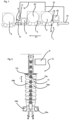
- Figure 1 shows a schematic representation of a device 1 according to the invention.
- the containers are conveyed along the arrow P1, that is, from right to left.
- the reference number 2 denotes a forming device which forms plastic containers from plastic preforms.
- the reference ratio 24 identifies a heating device which is used to heat the plastic preforms, this heating device also being a component of the forming device 2. From this heating device 24, the containers are transferred to the actual forming device 2 via a transport device 26.
- This forming device 2 here has a carrier 22 on which a large number of receiving elements or blow molds for the containers are arranged.
- the individual blowing stations preferably also have stretch rods, i.e. H.
- the forming device is a stretch blow molding machine.
- the containers 10 produced in this way (only shown in isolated cases) are transferred to a filling device 4 and filled there with a flowable medium and in particular a liquid such as a drink.
- This filling device 4 also has a carrier 42 on which a large number of filling stations are arranged.
- sterilization units can be provided, which sterilize the containers and in particular sterilize an inner wall of the containers.
- Different sterilization processes can be used, such as sterilization processes using UV light, sterilization processes using hydrogen peroxide (H 2 O 2 ) and the like.
- the filling device 4 is followed in the transport direction P1 by a closing device 9, with the help of which the containers are closed with closures. Sterilization of the containers and the closures can also take place in this area.
- the closing device 9 is again followed by a transport device 12, which transfers the now more filled and closed containers to a labeling device 6.
- This transport device 12 can be designed, for example, as a screw conveyor, but it would also be possible for rotating stars or the like to be used at this point. In particular, however, this transport device 12 conveys the containers individually and particularly preferably at a certain distance from one another.
- the reference number 8 denotes a drying device (shown only schematically) which dries the containers or the outer wall of the containers.
- This drying device 8 can be connected to the forming device 2 or also the heating device 24 by means of a connecting line 16, so that the dry, warm air generated in the latter systems mentioned can be used to dry the containers 10.
- a fan 18 can also be provided in an area of the line, as mentioned above.
- the containers are transferred to the labeling device 6 and labeled there.
- FIG. 2 shows an example of a transport device 12.
- This transport device 12 is designed here as a screw conveyor, which has 2 opposite checks 52a and 52b, between which the containers 10 (here only their closures 10a) are clearly conveyed.
- This screw conveyor also serves to increase the pitch T between the individual containers.
- the drying device 8 can be arranged here in an end region of the screw conveyor, which dries the containers or their abdominal wall, if necessary also the bottom region.
- the reference numbers 54a and 54b indicate Drive devices, which are advantageously synchronized with one another and drive the two screws 52a and 52b.
Landscapes
- Basic Packing Technique (AREA)
- Labeling Devices (AREA)
- Filling Of Jars Or Cans And Processes For Cleaning And Sealing Jars (AREA)
Description
- Die vorliegende Erfindung bezieht sich auf eine Vorrichtung nach dem Oberbegriff des Anspruchs 1 zum Umformen von Kunststoffvorformlingen zu Kunststoffbehältnissen und zum Behandeln von Kunststoffbehältnissen, und auf ein entsprechendes Verfahren zum Umformen von Kunststoffvorformlingen zu Kunststoffbehältnissen und zum Behandeln von Kunststoffbehältnissen. Nach dem Stand der Technik sind diverse Verfahren zum Etikettieren von Behältnissen bekannt. So ist es bekannt, zunächst aus Kunststoffvorformlingen Kunststoffbehältnisse herzustellen diese anschließend zu etikettieren und in bereits etikettierten Zustand zu befüllen und anschließend zu verschließen. Diese Vorgehensweise hat den Nachteil, dass die Behältnisse, insbesondere wenn der Kunststoff sehr dünnwandig ist, oft schwer zu etikettieren sind, da diese unter dem Druck der Etikettiereinrichtungen nachgeben können.
- Weiterhin ist es aus dem Stand der Technik bekannt, die Behältnisse zunächst zu befüllen und zu verschließen und anschließend die befüllten und verschlossenen Behältnisse zu etikettieren. Diese Vorgehensweise wird als Postlabeling bezeichnet. Insbesondere in solchen Fällen, in denen bei niedriger Temperatur abgefüllt wird und gleichzeitig eine hohe Luftfeuchtigkeit bzw. eine hohe Umgebungstemperatur besteht, kann vor dem Etikettieren Kondensation an der Flaschenwand entstehen. Dadurch wird eine Etikettierung der Behältnisse beeinträchtigt. Eine Vorrichtung nach dem Oberbegriff des Anspruchs 1 ist aus der
DE 10 2008 008 528 A1 bekannt. Eine Vorrichtung zum Trocknen von Behältnissen vor deren Etikettierung ist aus derDE 1 025 791 bekannt. Der vorliegenden Erfindung liegt die Aufgabe zugrunde, bei Vorrichtungen und Verfahren, welche bereits befüllte Behältnisse etikettieren, Einschränkungen durch Kondensation insbesondere an der Behältnisaußenwand zu verhindern. - Diese Aufgabe wird erfindungsgemäß durch die Gegenstände der unabhängigen Ansprüche erreicht. Vorteilhafte Ausführungsformen und Weiterbildungen sind Gegenstand der Unteransprüche. Die Vorrichtung nach Anspruch 1 zum Behandeln von Behältnissen weißt unter anderem eine Fülleinrichtung auf, welche die Behältnisse mit einem fließfähigen Medium befüllt sowie eine einer Transportrichtung der Behältnisse stromabwärts bezüglich dieser Fülleinrichtung angeordnete Etikettiereinrichtung, welche eine Außenwandung der Behältnisse mit Etiketten versieht. Weiterhin ist zwischen der Fülleinrichtung und der Etikettiereinrichtung eine Transporteinrichtung vorgesehen, welche die Behältnisse von der Fülleinrichtung zu der Etikettiereinrichtung transportiert.
- Erfindungsgemäß ist entlang des Transportpfades der Behältnisse zwischen der Fülleinrichtung und Etikettiereinrichtung eine Trocknungseinrichtung angeordnet, welche die Behältnisse und insbesondere eine Außenwand der Behältnisse trocknet und dabei insbesondere mit einem gasförmigen Medium beaufschlagt.
- Diese Trocknungseinrichtung ist vorgesehen, um eine Außenwandung der Behältnisse wieder zu trocknen. Bei dem fließfähigen Medium handelt es sich insbesondere um Nahrungsmittel und insbesondere um Getränke. Es könnte jedoch auch zähfließende Medien verwendet werden. Die Transporteinrichtung ist derart gestaltet, dass sie die Behältnisse vereinzelt fördert. So ist es aus dem Stand der Technik beispielsweise bekannt, dass zwischen der Fülleinrichtung und der Etikettiereinrichtung Transportbänder und dergleichen angeordnet sind, welche die Behältnisse in einen kontinuierlichen Strom befördern und welche auf diese Weise auch kurzzeitige Ausfälle der Fülleinrichtung oder der Etikettiereinrichtung kompensieren können, insbesondere indem sich die Abstände zwischen den Behältnissen verändern. Bevorzugt vermeidet das gasförmige Medium eine Kondensation an der Flaschenwand. Die Etikettiereinrichtung und die Fülleinrichtung sind in einem Block angeordnet also insbesondere dauerhaft miteinander synchronisiert. Weiterhin sind bevorzugt zwischen der Fülleinrichtung und Etikettiereinrichtung auch keine Pufferungseinrichtungen oder dergleichen angeordnet.
- Durch den vereinzelten Transport der Behältnisse wird die Trocknung der einzelnen Behältnisse vereinfacht, da diese leichter von allen Seiten her getrocknet werden können. Vorzugsweise werden die Behältnisse derart gefördert, dass zwischen ihnen bestimmte Abstände bestehen, so dass die Trocknungseinrichtung auch in einfacher Weise zwischen die einzelnen Behältnisse gelangen und dort die Trocknung durchführen kann.
- Bei einer weiteren vorteilhaften Ausführungsform ist die Trocknungseinrichtung entlang des Transportpfades der Behältnisse unmittelbar vor der Etikettiereinrichtung angeordnet. In diesem Fall sind in der Transportrichtung der Behältnisse zwischen der Trocknungseinrichtung und der Etikettiereinrichtung insbesondere keine weiteren Transporteinrichtungen mehr angeordnet. So könnte die Trocknungseinrichtung in einem Endbereich einer Transporteinrichtung vorgesehen sein, welche die Behältnisse von der Fülleinrichtung zu der Etikettiereinrichtung fördert. Auf diese Weise wird eine Rekondensation der Behältnisse vermieden. Weiterhin wäre es auch möglich, die Transportstrecke der Behältnisse nach der Trocknungseinrichtung einzuhausen und insbesondere gleichzeitig getrocknete Luft einzublasen. Die Vorrichtung weist weiterhin eine Umformungseinrichtung auf, welche Kunststoffvorformlinge zu Kunststoffbehältnissen umformt und diese Umformungseinrichtung ist in der Transportrichtung der Behältnisse stromaufwärts bezüglich der Fülleinrichtung angeordnet. Die vorliegende Erfindung findet daher auf Vorrichtungen zum Behandeln von Kunststoffbehältnissen Anwendung. Die besondere Eignung für Kunststoffbehältnisse ergibt sich daraus, dass sich hier in besonderer Weise das Postlabeling empfiehlt.
- Bevorzugt wird also in dem erfindungsgemäßen Abfüllblock mit Nachetikettierung das heißt einer Anordnung von Blasmaschine, Füller- und Etikettiermaschine eine Kondensation vor dem Etikettieren dadurch verhindert, dass getrocknete Luft in den Block vor der Etikettiereinrichtung eingeblasen wird.
- Bei einer weiteren vorteilhaften Ausführungsform weist die Vorrichtung eine Zuführeinrichtung auf, welche ein in der Umformungseinrichtung entstehendes gasförmiges Medium der Trocknungseinrichtung zuführt. Damit wird hier vorgeschlagen, die üblicherweise sehr trockene Abluft der Blasmaschine zu verwenden, um die Behältnisse zu trocknen. Unter der Umformungseinrichtung wird daher einerseits die Blasmaschine selbst verstanden, welche die Kunststoffvorformlinge zu Kunststoffbehältnissen umformt, jedoch auch weitere dieser zuzurechende Aggregate wie etwa eine Heizeinrichtung bzw. ein Ofen, der die Kunststoffvorformlinge erwärmt. Auch in dieser Heizeinrichtung entsteht in erheblicher Menge heiße trockene Abluft, welche zum Trocknen der Kunststoffbehältnisse verwendet werden kann. Bei der Zufuhreinrichtung kann es sich beispielsweise um eine Leitung handeln, in der das gasförmige Medium strömen kann.
- Vorteilhaft weist die Vorrichtung auch ein Gebläse auf, um die Abluft der Umformungseinrichtung den Behältnissen zuzuführen.
- Dabei kann diese Zuführeinrichtung derart angeordnet sein, dass sie den Behältnissen von oben her die heiße Luft zuführt, damit auf diese Weise der Trocknungsvorgang vereinfacht werden kann, da auf diese Weise die Flüssigkeit nach unten weggeblasen werden kann. Weiterhin weist die Vorrichtung auch eine Abführeinrichtung auf, um eventuell herabtropfende Flüssigkeit schnell abzuführen. Ferner weist die Vorrichtung eine zwischen der Fülleinrichtung und der Etikettiereinrichtung angeordnete Verschließeinrichtung zum Verschließen der Behältnisse mit Verschlüssen auf und die Trocknungseinrichtung ist entlang des Transportpfades für Behältnisse nach dieser Verschließeinrichtung angeordnet. Es werden also hier die bereits verschlossenen Behältnisse durch die besagte Trocknungseinrichtung getrocknet.
- Erfindungsgemäß weist die Vorrichtung eine Temperaturmesseinheit auf, um die Temperatur der zum Trocknen verwendeten Luft zu bestimmen. Es wäre doch auch möglich, dass Heizeinrichtungen vorgesehen sind, welche die auf die Behältnisse gelangende Luft erwärmen, so wie umgekehrt auch Kühleinrichtungen (aktiv oder passiv) vorgesehen sein könnten, welche die auf die Behältnisse gelangende Luft abkühlen.
- Dabei könnten beispielsweise auch Luft/Wasser-Wärmetauscher Anwendung finden. Weiterhin ist zwischen der Fülleinrichtung und der Etikettiereinrichtung eine Transporteinrichtung zum Transportieren der Behältnisse von der Fülleinrichtung zu der Etikettiereinrichtung vorgesehen, wobei, wie oben erwähnt diese Transporteinrichtung die Behältnisse vereinzelt führt. Dabei fördert diese Transporteinrichtung die Behältnisse vorzugsweise geradlinig. Es wäre jedoch auch möglich, in diesem Bereich Transportsterne vorzusehen, welche die Behältnisse entlang einer kreissegmentförmigen Bahn führen. Vorzugsweise ist die Trocknungseinrichtung im Bereich dieser Transporteinrichtung angeordnet.
- Wie erwähnt, kann durch die vereinzelte Führung die Blockung zwischen den Aggregaten aufrecht erhalten werden sodass die Behältnisse dabei immer eine vorbestimmte Teilung aufweisen, wobei jedoch das Maß dieser Teilung durch bestimmte Arten von Transporteinrichtungen bewusst verändert werden kann. Vorteilhaft handelt es sich bei der Transporteinrichtung um einen sogenannten Schneckenförderer. Ferner ist die Fülleinrichtung mit der Etikettiereinrichtung in einem Arbeitsbetrieb der Anlage synchronisiert. Dabei ist es erfindungsgemäß möglich, dass diese Synchronisierung insbesondere in einem Fehlerfall gezielt aufgehoben werden kann. Erfindungsgemäß sind die Fülleinrichtung, die Etikettiereinrichtung und die Umformungseinrichtung miteinander geblockt. Bei einer weiteren vorteilhaften Ausführungsform weist die Vorrichtung ein Trocknungselement auf, welches die Behältnisse durch mechanischen Kontakt trocknet. Dabei kann es sich beispielsweise um einen Schwamm oder dergleichen handeln. So wäre es möglich, dass bereits an dem Behältnis vorhandene Feuchtigkeit in den Transferbereich zwischen der Fülleinrichtung und der Etikettiereinrichtung und insbesondere zwischen der Verschließeinrichtung und der Etikettiereinrichtung von dem Behältnis abgewischt, abgebürstet oder abgeblasen wird. Bei der Verwendung einer Schnecke als Transporteinrichtung bzw. im Einlauf der Etikettiereinrichtung kann weiterhin vorgesehen sein, dass die Schnecke beispielsweise mit einem Schwamm oder dergleichen ausgestattet ist, um das Behältnis und insbesondere den Etikettenbereich des Behältnisses abzuwischen und damit trocken zu halten.
- Dieses Trocknungselement kann dabei anstelle oder neben der Lufttrocknung vorgesehen sein.
- Die vorliegende Erfindung ist weiterhin auf ein Verfahren zum Behandeln von Behältnissen gerichtet. Dabei werden in einem ersten Verfahrensschritt die Behältnisse mit einem fließfähigen Medium mittels einer Fülleinrichtung befüllt. In einem weiteren Verfahrensschritt werden die Behältnisse von der Fülleinrichtung zu einer Etikettiereinrichtung transportiert, wobei die Behältnisse vereinzelt transportiert werden. In einem weiteren Verfahrensschritt werden Etiketten an den befüllten Behältnissen angebracht.
- Erfindungsgemäß wird wenigstens ein Bereich der Außenwandung der Behältnisse und insbesondere ein zu etikettierender Bereich der Behältnisse nach dem Befüllen mittels einer Trocknungseinrichtung getrocknet, wobei die Behältnisse hierbei insbesondere mit einem gasförmigen Medium beaufschlagt werden.
- Damit wird auch verfahrensseitig vorgeschlagen, dass eine Trocknung der befüllten und insbesondere auch verschlossenen Behältnisse vor der Etikettierung stattfindet. Vorzugsweise werden dabei die Behältnisse insbesondere abgeblasen, es wäre doch auch möglich, dass sie zumindest teilweise mit mechanischen Trocknungsmitteln wie Schwämmen oder dergleichen getrocknet werden. Die Behältnisse werden vor deren Befüllung durch eine Umformungseinrichtung aus Kunststoffvorformlingen geformt.
- Bei einem weiteren vorteilhaften Verfahren werden die Behältnisse mittels einem in der Umformungseinrichtung benutzten gasförmigen Medium getrocknet. Insbesondere handelt es sich bei diesem gasförmigen Medium um im Rahmen des Blasvorgangs oder eines Erwärmungsvorgangs für die Kunststoffvorformlinge entstehende Heißluft (genauer gesagt um Luft, die in der Umformungseinrichtung bzw. durch den Arbeitsbetrieb der Umformungseinrichtung erwärmt wird). Diese Heißluft wird im Stand der Technik lediglich abgeführt.
- Es wäre doch auch möglich, dass die entstehende Heißluft, welche bereits sehr trocken ist noch zusätzlich durch weitere Trocknungsgeräte getrocknet wird.
- Durch die Verwendung der in der Blasmaschine entstehenden Heißluft, welche, wie oben erwähnt, als Abfallluft entsteht, kann eine hohe Energieeinsparung erreicht werden, da diese Luft auch einem weiteren Zweck nämlich der Trocknung von Behältnissen zugeführt wird.
- Weitere Vorteile und Ausführungsformen ergeben sich aus den beigefügten Zeichnungen:
Es zeigt: - Figur 1
- eine schematische Darstellung einer erfindungsgemäßen Vorrichtung; und
- Figur 2
- eine Darstellung einer Transporteinrichtung für eine erfindungsgemäße Vorrichtung.
-
Figur 1 zeigt eine schematische Darstellung einer erfindungsgemäßen Vorrichtung 1. Bei dieser Vorrichtung werden die Behältnisse entlang des Pfeils P1 das heißt von rechts nach links gefördert. - Das Bezugszeichen 2 kennzeichnet eine Umformungseinrichtung, welche aus Kunststoffvorformlingen Kunststoffbehältnisse formt. Das Bezugsverhältnis 24 kennzeichnet eine Heizeinrichtung, welche zum Erwärmen der Kunststoffvorformlinge dient wobei diese Heizeinrichtung auch ein Bestandteil der Umformungseinrichtung 2 ist. Von dieser Heizeinrichtung 24 werden die Behältnisse über eine Transporteinrichtung 26 an die eigentliche Umformungseinrichtung 2 übergeben. Diese Umformungseinrichtung 2 weist hier einen Träger 22 auf, an dem eine Vielzahl von Aufnahmeelementen bzw. Blasformen für die Behältnisse angeordnet ist. Vorzugsweise weisen die einzelnen Blasstationen auch Reckstangen auf, d. h. bei der Umformungseinrichtung handelt es sich um eine Streckblasmaschine.
- Nach dem durchlaufen der Umformungseinrichtung 2 werden die so hergestellten Behältnisse 10 (nur vereinzelt gezeigt) an eine Fülleinrichtung 4 übergeben und dort mit einem fließfähigen Medium und insbesondere einer Flüssigkeit wie einem Getränk befüllt.
- Auch diese Fülleinrichtung 4 weist dabei einen Träger 42 auf, an dem eine Vielzahl von Füllstationen angeordnet ist.
- Zwischen der Umformungseinrichtung 2 und der Fülleinrichtung 4 können noch weitere Elemente wie beispielsweise Sterilisationseinheiten vorgesehen sein, welche die Behältnisse sterilisieren und insbesondere eine Innenwandung der Behältnisse sterilisieren. Dabei können unterschiedliche Sterilisationsverfahren zur Anwendung kommen, wie beispielsweise Sterilisationsverfahren mittels UV-Licht, Sterilisationsverfahren mittels Wasserstoffperoxid (H2O2) und dergleichen.
- An die Fülleinrichtung 4 schließt sich in der Transportrichtung P1 eine Verschließeinrichtung 9 an, mit deren Hilfe die Behältnisse mit Verschlüssen verschlossen werden. Auch in diesem Bereich kann wieder eine Sterilisation der Behältnisse und auch der Verschlüsse stattfinden.
- An die Verschließeinrichtung 9 schließt sich wiederum eine Transporteinrichtung 12 an, welche die nun mehr hergestellten befüllten und verschlossenen Behältnisse an eine Etikettiereinrichtung 6 überführt. Diese Transporteinrichtung 12 kann dabei beispielsweise als Schneckenförderer ausgebildet sein, es wäre doch auch möglich, dass an dieser Stelle Drehsterne oder dergleichen eingesetzt werden. Insbesondere jedoch fördert diese Transporteinrichtung 12 die Behältnisse vereinzelt und besonders bevorzugt auch mit einem bestimmten Abstand zueinander.
- Das Bezugszeichen 8 kennzeichnet eine Trocknungseinrichtung (nur schematisch dargestellt), welche die Behältnisse bzw. die Außenwand der Behältnisse trocknet. Dabei kann diese Trocknungseinrichtung 8 mittels einer Verbindungsleitung 16 mit der Umformungseinrichtung 2 bzw. auch der Heizeinrichtung 24 verbunden sein, so dass die in den letzteren genannten Anlagen entstehende trockene warme Luft zum Trocknen der Behältnisse 10 verwendet werden kann. Dabei kann in einem Bereich der Leitung, wie oben erwähnt, auch ein Gebläse 18 vorgesehen sein.
- Nach dem Trocknungsvorgang werden die Behältnisse an die Etikettiereinrichtung 6 übergeben und dort mit Etiketten versehen.
-
Figur 2 zeigt ein Beispiel für eine Transporteinrichtung 12. Diese Transporteinrichtung 12 ist hier als Schneckenförderer ausgebildet, der 2 gegenüberliegende Schecken 52a und 52b aufweist, zwischen denen die Behältnisse 10 (hier nur deren Verschlüsse 10a) erkennbar gefördert werden. Dieser Schneckenförderer dient hier auch dazu, um die Teilung T zwischen den einzelnen Behältnissen zu erhöhen. In einem Endbereich des Schneckenförderers kann hier die Trocknungseinrichtung 8 angeordnet sein, welche die Behältnisse bzw. deren Bauchwandung gegebenenfalls auch den Bodenbereich trocknet. Die Bezugszeichen 54a und 54b kennzeichnen Antriebseinrichtungen, welche vorteilhaft miteinander synchronisiert sind und die beiden Schnecken 52a und 52b antreiben. - Dabei wäre es auch möglich, dass diese Schnecken abschnittsweise an ihrer Oberfläche 58 Schwämme aufweisen, welche auch einen Gewindebereich 10a der Behältnisse abtrocknen. Auch wäre es möglich, dass mehre Trocknungseinrichtungen vorgesehen sind, welche die Außenwandung der Behältnisse in mehreren Stufen trocknen.
-
- 1
- Vorrichtung
- 2
- Umformungseinrichtung
- 4
- Fülleinrichtung
- 6
- Etikettiereinrichtung
- 8
- Trocknungseinrichtung
- 9
- Verschließeinrichtung
- 10
- Behältnisse
- 10a
- Verschlüsse der Behältnisse
- 12
- Transporteinrichtung, Schneckenförderer
- 16
- Verbindungsleitung
- 18
- Gebläse
- 22
- Träger
- 24
- Heinzeinrichtung
- 26
- Transporteinrichtung
- 42
- Träger
- P1
- Transportrichtung
- 10a
- Gewindebereich, Verschluss
- 52a, 52b
- Schnecke
- 54a, 54b
- Antriebseinrichtung
- 58
- Oberfläche
- T
- Teilung
Claims (6)
- Vorrichtung (1) zum Umformen von Kunststoffvorformlingen zu Kunststoffbehältnissen und zum Behandeln von Kunststoffbehältnissen, mit einer Umformungseinrichtung (2), welche dazu gestaltet ist, Kunststoffvorformlinge zu Kunststoffbehältnissen (10) umzuformen, mit einer Fülleinrichtung (4), welche dazu gestaltet ist, die Kunststoffbehältnisse (10) mit einem fließfähigen Medium zu befüllen, wobei die Umformungseinrichtung (2) in Transportrichtung stromaufwärts bezüglich der Fülleinrichtung (4) angeordnet ist, und mit einer, in Transportrichtung der Kunststoffbehältnisse (10) stromabwärts bezüglich der Fülleinrichtung (4) angeordneten Etikettiereinrichtung (6), welche dazu gestaltet ist, eine Außenwandung der befüllten Kunststoffbehältnisse (10) mit Etiketten zu versehen, wobei zwischen der Fülleinrichtung (4) und der Etikettiereinrichtung (6) eine Transporteinrichtung (12) vorgesehen ist, welche dazu gestaltet ist, die Kunststoffbehältnisse (10) von der Fülleinrichtung (4) zu der Etikettiereinrichtung (6) entlang eines Transportpfades zu transportieren, wobei diese Transporteinrichtung (12) dazu gestaltet ist, die Kunststoffbehältnisse vereinzelt zu führen, wobei die Vorrichtung (1) eine zwischen der Fülleinrichtung (4) und der Etikettiereinrichtung (6) angeordnete Verschließeinrichtung (9) zum Verschließen der Behältnisse (10) mit Verschlüssen (10a) aufweist, und wobei die Fülleinrichtung (4), die Etikettiereinrichtung (6) und die Umformungseinrichtung (2) miteinander geblockt sind,
dadurch gekennzeichnet, dass- entlang des Transportpfades der Kunststoffbehältnisse (10) zwischen der Fülleinrichtung (4) und der Etikettiereinrichtung (6) eine Trocknungseinrichtung (8) angeordnet ist, welche dazu gestaltet ist, die Kunststoffbehältnisse zu trocknen und dabei mit einem gasförmigen Medium zu beaufschlagen, wobei die Trocknungseinrichtung (8) entlang des Transportpfades für die Behältnisse (10) nach der Verschließeinrichtung (9) angeordnet ist; wobei die Vorrichtung eine Temperaturmesseinheit aufweist, um die Temperatur der zum Trocknen verwendete Luft zu bestimmen und dass- die Fülleinrichtung (4) mit der Etikettiereinrichtung (6) in einem Arbeitsbetrieb der Anlage synchronisiert ist, und dabei diese Synchronisierung in einem Fehlerfall der Anlage gezielt aufhebbar ist. - Vorrichtung (1) nach Anspruch 1,
dadurch gekennzeichnet, dass
die Vorrichtung (1) eine Zuführeinrichtung aufweist, welche dazu gestaltet ist, ein in der Umformungseinrichtung (2) entstehendes gasförmiges Medium der Trocknungseinrichtung (8) zuzuführen. - Vorrichtung (1) nach Anspruch 1,
dadurch gekennzeichnet, dass
die Transporteinrichtung (12) ein Schneckenförderer (12) ist. - Vorrichtung (1) nach wenigstens einem der vorangegangenen Ansprüche,
dadurch gekennzeichnet, dass
die Vorrichtung (1) ein Trocknungselement (16) aufweist, welches dazu gestaltet ist, die Kunststoffbehältnisse (10) durch mechanischen Kontakt zu trocknen. - Verfahren zum Umformen von Kunststoffvorformlingen zu Kunststoffbehältnissen und zum Behandeln von Kunststoffbehältnissen mit den Schritten:- Umformen der Kunststoffbehältnisse, vor deren Befüllung, aus Kunststoffvorformlingen durch eine Umformungseinrichtung (2);- Befüllen der Kunststoffbehältnisse (10) mit einem fließfähigen Medium mittels einer Fülleinrichtung (4);- Transportieren der Kunststoffbehältnisse (10) von der Fülleinrichtung (4) zu einer Verschließeinrichtung (9), wobei die Kunststoffbehältnisse (10) vereinzelt transportiert werden;- Verschließen der Kunststoffbehältnisse (10) mit Verschlüssen (10a);- Transportieren der Kunststoffbehältnisse (10) von der Verschließeinrichtung (9) zu einer Etikettiereinrichtung (6), wobei die Kunststoffbehältnisse (10) vereinzelt transportiert werden;- Anbringen von Etiketten an den befüllten Kunststoffbehältnissen;wobei wenigstens ein Bereich der Außenwandung der Kunststoffbehältnisse (10) und insbesondere ein zu etikettierender Bereich der Kunststoffbehältnisse (10) nach dem Verschließen mittels einer Trocknungseinrichtung getrocknet wird, wobei die Kunststoffbehältnisse mit einem gasförmigen Medium beaufschlagt werden und wobei die Temperatur der zum Trocknen verwendete Luft mittels einer Temperaturmesseinheit bestimmt wird, wobei die Fülleinrichtung (4), die Etikettiereinrichtung (6) und die Umformungseinrichtung (2) miteinander geblockt sind, wobeidie Fülleinrichtung (4) mit der Etikettiereinrichtung (6) in einem Arbeitsbetrieb der Anlage synchronisiert ist, und dabei diese Synchronisierung in einem Fehlerfall der Anlage gezielt aufhebbar ist.
- Verfahren nach Anspruch 5,
dadurch gekennzeichnet, dass
die Kunststoffbehältnisse (10) mittels eines in der Umformungseinrichtung (2) entstehenden gasförmigen Mediums getrocknet werden.
Applications Claiming Priority (2)
| Application Number | Priority Date | Filing Date | Title |
|---|---|---|---|
| DE102009052289A DE102009052289A1 (de) | 2009-11-09 | 2009-11-09 | Vorrichtung und Verfahren zum Etikettieren befüllter Behältnisse |
| EP10189753A EP2319770B1 (de) | 2009-11-09 | 2010-11-03 | Vorrichtung und Verfahren zum Etikettieren befüllter Behältnisse |
Related Parent Applications (4)
| Application Number | Title | Priority Date | Filing Date |
|---|---|---|---|
| EP10189753A Division EP2319770B1 (de) | 2009-11-09 | 2010-11-03 | Vorrichtung und Verfahren zum Etikettieren befüllter Behältnisse |
| EP10189753A Previously-Filed-Application EP2319770B1 (de) | 2009-11-09 | 2010-11-03 | Vorrichtung und Verfahren zum Etikettieren befüllter Behältnisse |
| EP10189753.6 Division | 2010-11-03 | ||
| EP10189753 Previously-Filed-Application | 2010-11-03 |
Publications (3)
| Publication Number | Publication Date |
|---|---|
| EP2361835A1 EP2361835A1 (de) | 2011-08-31 |
| EP2361835B1 EP2361835B1 (de) | 2018-03-14 |
| EP2361835B2 true EP2361835B2 (de) | 2023-10-04 |
Family
ID=43567772
Family Applications (2)
| Application Number | Title | Priority Date | Filing Date |
|---|---|---|---|
| EP10189753A Active EP2319770B1 (de) | 2009-11-09 | 2010-11-03 | Vorrichtung und Verfahren zum Etikettieren befüllter Behältnisse |
| EP11167475.0A Active EP2361835B2 (de) | 2009-11-09 | 2010-11-03 | Vorrichtung und Vefahren zum Etikettieren befüllter Behältnisse |
Family Applications Before (1)
| Application Number | Title | Priority Date | Filing Date |
|---|---|---|---|
| EP10189753A Active EP2319770B1 (de) | 2009-11-09 | 2010-11-03 | Vorrichtung und Verfahren zum Etikettieren befüllter Behältnisse |
Country Status (4)
| Country | Link |
|---|---|
| US (1) | US20110108156A1 (de) |
| EP (2) | EP2319770B1 (de) |
| CN (2) | CN104743175B (de) |
| DE (1) | DE102009052289A1 (de) |
Families Citing this family (9)
| Publication number | Priority date | Publication date | Assignee | Title |
|---|---|---|---|---|
| ITTO20110383A1 (it) * | 2011-05-02 | 2012-11-03 | Sidel Spa Con Socio Unico | Unita' di sterilizzazione di chiusure di contenitori |
| CN103771318A (zh) * | 2012-10-23 | 2014-05-07 | 江苏柯本机电工具有限公司 | 塑料瓶灌装轧盖贴标系统 |
| DE102013208589A1 (de) * | 2013-05-10 | 2014-11-13 | Krones Ag | Vorrichtung zum Etikettieren von Behältern und zum Anbringen von Schrumpfhülsen auf Behältern und Verfahren dazu |
| EP2927140B1 (de) * | 2014-04-02 | 2016-11-16 | Sidel S.p.a. Con Socio Unico | Anlage zur Herstellung von gefüllten Behältern mit Trocknungseinheit |
| DE102014223696A1 (de) * | 2014-11-20 | 2016-05-25 | Krones Ag | Maschinenblock zum Füllen, Verschließen und Etikettieren von Behältern |
| EP3085628A1 (de) * | 2015-04-23 | 2016-10-26 | Sidel Participations, S.A.S. | Einheit und verfahren zum herstellen von mit einem fliessfähigen produkt gefüllten gegenständen |
| FR3090456B1 (fr) | 2018-12-19 | 2020-11-27 | Sidel Participations | Ligne de production de récipients controlée par un dispositif de détermination de position |
| CN110239927A (zh) * | 2019-07-25 | 2019-09-17 | 苏州浩克系统检测科技有限公司 | 一种单侧动力式双侧分瓶装置 |
| US20210188473A1 (en) * | 2019-12-19 | 2021-06-24 | Eliqs Llc | Pre-Filled and Pre-Sealed Beverage Container Sleeve Applicator |
Citations (21)
| Publication number | Priority date | Publication date | Assignee | Title |
|---|---|---|---|---|
| US2501367A (en) † | 1947-12-08 | 1950-03-21 | Barry Wehmiller Mach Co | Device for drying traveling articles |
| DE913747C (de) † | 1952-01-23 | 1954-06-18 | Jagenberg Werke Ag | Maschinenanlage zum Fuellen und Etikettieren von Flaschen |
| DE2436591A1 (de) † | 1974-07-30 | 1976-02-19 | Hermann Kronseder | Flaschenbehandlungsanlage |
| DE2507419A1 (de) † | 1975-02-21 | 1976-09-02 | Kronseder Hermann | Flaschenbehandlungsanlage |
| US4147011A (en) † | 1974-07-30 | 1979-04-03 | Hermann Kronseder | Bottle treating apparatus |
| US4361759A (en) † | 1981-01-15 | 1982-11-30 | Canadian Stackpole Limited | Speed control system for bottling line |
| EP0524483B1 (de) † | 1991-07-22 | 1995-10-11 | Etifix Etikettiersysteme GmbH | Etikettiermaschine |
| DE19513064A1 (de) † | 1995-04-07 | 1996-10-10 | Khs Masch & Anlagenbau Ag | Verfahren sowie System zum Füllen von Behältern mit einem flüssigen Füllgut sowie Füllmaschine und Etikettiereinrichtung zur Verwendung bei diesem Verfahren oder System |
| DE19824846A1 (de) † | 1998-06-04 | 1999-12-09 | Khs Masch & Anlagenbau Ag | Anlage zum Abfüllen von flüssigem Füllgut |
| WO2000078664A1 (de) † | 1999-06-21 | 2000-12-28 | Krones Ag | Abfüllvorrichtung für flaschen |
| WO2002044637A1 (en) † | 2000-12-01 | 2002-06-06 | O.N. Beck & Co. Ltd. | Drying apparatus for articles on a conveyor |
| EP1357082A1 (de) † | 2002-04-26 | 2003-10-29 | Cames snc di Colla G. & Sardi G. | Vorrichtung zum Vorbereiten von zu etikettierenden Flaschen in einer Abfüllanlage |
| DE102006035109A1 (de) † | 2006-07-29 | 2008-01-31 | Krones Ag | Fördereinrichtung |
| EP1927547A1 (de) † | 2006-11-30 | 2008-06-04 | Europool S.r.l. | Vorrichtung zur Trocknung zu etikettierender externer Oberflächen |
| DE102006059001A1 (de) † | 2006-12-14 | 2008-06-19 | Krones Ag | Flaschenbehandlungsanlage |
| EP1972877A2 (de) † | 2007-03-17 | 2008-09-24 | Krones Aktiengesellschaft | Vorrichtung und Verfahren zum Trocknen von Behältern |
| US7455807B2 (en) † | 2003-11-17 | 2008-11-25 | Graham Packaging Pet Technologies Inc. | Continuous production of molded plastic containers |
| EP2072405A1 (de) † | 2007-12-21 | 2009-06-24 | Europool S.r.l. | Modul zum Trocknen der Außenflächen von Behältern |
| EP2080971A2 (de) † | 2008-01-16 | 2009-07-22 | Krones AG | Vorrichtung und Verfahren zur Trocknung von Gegenständen, insbesondere von Flüssigkeitsbehältern |
| WO2009127962A2 (en) † | 2008-04-18 | 2009-10-22 | Sacmi Cooperativa Meccanici Imola Societa' Cooperativa | Method and apparatuses |
| WO2009133087A1 (de) † | 2008-04-30 | 2009-11-05 | Krones Ag | Anlage und verfahren zur herstellung von behältern |
Family Cites Families (49)
| Publication number | Priority date | Publication date | Assignee | Title |
|---|---|---|---|---|
| US2205702A (en) * | 1937-08-28 | 1940-06-25 | Crown Cork & Seal Co | Can drying machine |
| DE1025791B (de) * | 1953-03-05 | 1958-03-06 | Jagenberg Werke Ag | Verfahren und Vorrichtung zum Trocknen von Werkstuecken, wie Flaschen od. dgl. |
| GB1023046A (en) * | 1962-09-17 | 1966-03-16 | Stork & Co Nv | A method and installation for filling sterilized containers in a sterile space with a sterilized substance and a subsequent closure of said containers |
| US3420982A (en) * | 1966-11-15 | 1969-01-07 | Armstrong Cork Co | Prevention of moisture condensation on chilled,filled bottles |
| US3559563A (en) * | 1968-05-15 | 1971-02-02 | Glass Container Manufacturers | Bottling apparatus and method |
| US3873394A (en) * | 1968-06-17 | 1975-03-25 | David L Pearl | Carton closing and labeling method and apparatus |
| DE6610379U (de) * | 1968-09-21 | 1973-11-29 | Hermann Datz Dr. | Vorrichtung zum kontinuierlichen waschen und trocknen von gefuellten und verschlossenen flaschen. |
| US3660910A (en) * | 1970-10-21 | 1972-05-09 | G C Evans Products Corp | Apparatus for heating and drying chilled, filled containers |
| US3767496A (en) * | 1971-06-30 | 1973-10-23 | Owens Illinois Inc | Method of making a plastic-covered glass container |
| US3964240A (en) * | 1972-02-27 | 1976-06-22 | Societe Anonyme Machines Automatiques Cillotta | Bottle closing apparatus |
| DE2539857B2 (de) * | 1975-09-08 | 1981-04-09 | Wüma Maschinenbau GmbH, 6805 Heddesheim | Vorrichtung zum Füllen und Etikettieren von Behältern, wie Flaschen oder Dosen |
| US4115179A (en) * | 1976-12-06 | 1978-09-19 | A-T-O Inc. | Wrap neck label mechanism |
| US4151247A (en) * | 1977-10-20 | 1979-04-24 | Ethyl Corporation | Injection blow molding apparatus |
| DE3217526C2 (de) * | 1982-05-10 | 1985-08-14 | Langguth GmbH & Co, 4400 Münster | Trocknungsvorrichtung für zu etikettierende Behälter |
| NL8301427A (nl) * | 1983-04-22 | 1984-11-16 | Stork Bepak Bv | Verbindingsinrichting voor het synchroon koppelen van in serie geplaatste behandelingsmachines van voorwerpen. |
| US4573596A (en) * | 1983-10-08 | 1986-03-04 | Plastipak Packaging, Inc. | Plastic container with vapor barrier |
| DE8504435U1 (de) * | 1985-02-16 | 1985-05-23 | Krones Ag Hermann Kronseder Maschinenfabrik, 8402 Neutraubling | Vorrichtung zum entfernen von netzfluessigkeit von flaschen in etikettiermaschinen |
| US4737099A (en) * | 1987-06-25 | 1988-04-12 | Owens-Illinois Plastic Products Inc. | Apparatus for applying labels to blow molded articles |
| US4863046A (en) * | 1987-12-24 | 1989-09-05 | Continental Pet Technologies, Inc. | Hot fill container |
| CA2002285C (en) * | 1988-11-07 | 2002-01-08 | Thomas L. Brandt | Container label and system for applying same |
| DE4300595A1 (de) * | 1993-01-13 | 1994-07-14 | Fasti Farrag & Stipsits Ges M | Verfahren zum Betrieb eines Trockners für pulver-, granulatförmige und schüttfähige Stoffe und ein nach dem Verfahren arbeitender Trockner |
| DE9422234U1 (de) * | 1993-01-13 | 1999-07-22 | Fasti, Farrag & Stipsits Gesmbh, Hopfgarten I. Br. | Vorrichtung zur Trocknung für pulver-, granulatförmige und schüttfähige Stoffe |
| US5607706A (en) * | 1995-04-05 | 1997-03-04 | Husky Injection Molding Systems Ltd. | Preconditioning preforms on a reheat blow molding system |
| DE19819731A1 (de) * | 1998-05-02 | 1999-11-04 | Krones Ag | Verfahren und Vorrichtung zum Herstellen von etikettierten Kunststoffflaschen |
| DE69913480T2 (de) * | 1999-02-09 | 2004-06-09 | Cames Snc Di Colla G. & Sardi G., S. Stefano Belbo | Vorrichtung zum Trocknen von Flaschen |
| US6702985B1 (en) * | 1999-07-15 | 2004-03-09 | Steuben Foods, Inc. | Apparatus and method for providing container interior sterilization in an aseptic processing apparatus |
| US6223541B1 (en) * | 1999-08-17 | 2001-05-01 | Fasti, Farrag & Stipsits Gesmbh | Method and device for the after-cooling of a preform in the injection molding process |
| FR2802176B1 (fr) * | 1999-12-09 | 2002-01-18 | Ducros | Procede et dispositif pour conditionner un solide, notamment alimentaire, dans un recipient tel que flacon |
| US6834473B2 (en) * | 2000-02-23 | 2004-12-28 | Khs Maschinen- Und Anlagenbau Ag | Bottling plant and method of operating a bottling plant and a bottling plant with sections for stabilizing the bottled product |
| US6568156B2 (en) * | 2000-06-30 | 2003-05-27 | Schmalbach-Lubeca Ag | Method of providing a thermally-processed commodity within a plastic container |
| EP1363096A1 (de) * | 2002-05-16 | 2003-11-19 | Cames snc di Colla G. & Sardi G. | Vorrichtung zum Trocknen der Aussenfläche von Flaschen |
| DE10243704A1 (de) * | 2002-09-20 | 2004-03-25 | Khs Maschinen- Und Anlagenbau Ag | Etikettiermaschine für die Verarbeitung von mit thermoaktivierbarem Leim beschichteten Einzelblattetiketten |
| EP1498675A1 (de) * | 2003-07-18 | 2005-01-19 | Cames snc di Colla G. & Sardi G. | Vorrichtung zum Trocknen von Flaschen |
| DE10351689A1 (de) * | 2003-11-06 | 2005-06-16 | Khs Maschinen- Und Anlagenbau Ag | Verfahren zum Betreiben einer Pasteurisierungsanlage |
| DE102004005382A1 (de) * | 2004-02-03 | 2005-09-01 | Endress + Hauser Flowtec Ag, Reinach | Verfahren zum Abfüllen eines Mediums |
| CN100425523C (zh) * | 2004-02-24 | 2008-10-15 | 孔祥众 | 塑料啤酒瓶啤酒灌装工艺 |
| US7997048B2 (en) * | 2004-10-09 | 2011-08-16 | Khs Maschinen- Und Anlagenbau Ag | Container filling plant, such as a beverage bottling plant, for filling containers with a liquid beverage and for closing filled containers |
| DE102005011805A1 (de) * | 2005-03-15 | 2007-01-11 | Sig Technology Ltd. | Verfahren und Vorrichtung zur Blasformung von Behältern |
| JP4243259B2 (ja) * | 2005-04-13 | 2009-03-25 | サントリー株式会社 | 包材装着方法および包材装着装置 |
| ITRM20050437A1 (it) * | 2005-08-09 | 2007-02-10 | Sipa Societa Industrializzazio | Dispositivo e processo di essiccazione di materiale plastico per una macchina di produzione di contenitori in plastica. |
| FR2889993B1 (fr) * | 2005-08-23 | 2007-12-28 | Technoplan Engineering S A Sa | Procede de soufflage au moyen d'un gaz d'un emballage et installation de mise en oeuvre. |
| US7875143B2 (en) * | 2006-01-20 | 2011-01-25 | Gerroplast Gmbh | Method and apparatus for labeling containers |
| RU2401702C1 (ru) * | 2006-10-18 | 2010-10-20 | Кхс Аг | Способ и устройство для обработки емкостей из полимерного материала |
| CN200992481Y (zh) * | 2006-12-28 | 2007-12-19 | 房国荣 | 防爆型瓶装流线的集中控制装置 |
| DE102007003976A1 (de) * | 2007-01-26 | 2008-07-31 | Khs Ag | Pasteurisierungsvorrichtung mit integrierter Wärmepumpe und Verfahren hierzu |
| ITTO20070467A1 (it) * | 2007-06-28 | 2008-12-29 | Stefano Boido | "impianto e procedimento di imbottigliamento automatico" |
| US8158076B2 (en) * | 2007-08-10 | 2012-04-17 | Stokely-Van Camp, Inc. | Continuous hot fill process |
| DE102008008528A1 (de) * | 2008-02-11 | 2009-08-13 | Krones Ag | Behandlungsanlage, insbesondere für Behältnisse mit rückwirkender Korrekturmöglichkeit |
| CN201228226Y (zh) * | 2008-05-19 | 2009-04-29 | 湖南千山制药机械股份有限公司 | 旋转式塑料瓶吹洗灌封一体机 |
-
2009
- 2009-11-09 DE DE102009052289A patent/DE102009052289A1/de active Pending
-
2010
- 2010-11-03 EP EP10189753A patent/EP2319770B1/de active Active
- 2010-11-03 EP EP11167475.0A patent/EP2361835B2/de active Active
- 2010-11-05 CN CN201510189682.XA patent/CN104743175B/zh active Active
- 2010-11-05 CN CN201010545116.5A patent/CN102050245B/zh active Active
- 2010-11-05 US US12/941,028 patent/US20110108156A1/en not_active Abandoned
Patent Citations (21)
| Publication number | Priority date | Publication date | Assignee | Title |
|---|---|---|---|---|
| US2501367A (en) † | 1947-12-08 | 1950-03-21 | Barry Wehmiller Mach Co | Device for drying traveling articles |
| DE913747C (de) † | 1952-01-23 | 1954-06-18 | Jagenberg Werke Ag | Maschinenanlage zum Fuellen und Etikettieren von Flaschen |
| DE2436591A1 (de) † | 1974-07-30 | 1976-02-19 | Hermann Kronseder | Flaschenbehandlungsanlage |
| US4147011A (en) † | 1974-07-30 | 1979-04-03 | Hermann Kronseder | Bottle treating apparatus |
| DE2507419A1 (de) † | 1975-02-21 | 1976-09-02 | Kronseder Hermann | Flaschenbehandlungsanlage |
| US4361759A (en) † | 1981-01-15 | 1982-11-30 | Canadian Stackpole Limited | Speed control system for bottling line |
| EP0524483B1 (de) † | 1991-07-22 | 1995-10-11 | Etifix Etikettiersysteme GmbH | Etikettiermaschine |
| DE19513064A1 (de) † | 1995-04-07 | 1996-10-10 | Khs Masch & Anlagenbau Ag | Verfahren sowie System zum Füllen von Behältern mit einem flüssigen Füllgut sowie Füllmaschine und Etikettiereinrichtung zur Verwendung bei diesem Verfahren oder System |
| DE19824846A1 (de) † | 1998-06-04 | 1999-12-09 | Khs Masch & Anlagenbau Ag | Anlage zum Abfüllen von flüssigem Füllgut |
| WO2000078664A1 (de) † | 1999-06-21 | 2000-12-28 | Krones Ag | Abfüllvorrichtung für flaschen |
| WO2002044637A1 (en) † | 2000-12-01 | 2002-06-06 | O.N. Beck & Co. Ltd. | Drying apparatus for articles on a conveyor |
| EP1357082A1 (de) † | 2002-04-26 | 2003-10-29 | Cames snc di Colla G. & Sardi G. | Vorrichtung zum Vorbereiten von zu etikettierenden Flaschen in einer Abfüllanlage |
| US7455807B2 (en) † | 2003-11-17 | 2008-11-25 | Graham Packaging Pet Technologies Inc. | Continuous production of molded plastic containers |
| DE102006035109A1 (de) † | 2006-07-29 | 2008-01-31 | Krones Ag | Fördereinrichtung |
| EP1927547A1 (de) † | 2006-11-30 | 2008-06-04 | Europool S.r.l. | Vorrichtung zur Trocknung zu etikettierender externer Oberflächen |
| DE102006059001A1 (de) † | 2006-12-14 | 2008-06-19 | Krones Ag | Flaschenbehandlungsanlage |
| EP1972877A2 (de) † | 2007-03-17 | 2008-09-24 | Krones Aktiengesellschaft | Vorrichtung und Verfahren zum Trocknen von Behältern |
| EP2072405A1 (de) † | 2007-12-21 | 2009-06-24 | Europool S.r.l. | Modul zum Trocknen der Außenflächen von Behältern |
| EP2080971A2 (de) † | 2008-01-16 | 2009-07-22 | Krones AG | Vorrichtung und Verfahren zur Trocknung von Gegenständen, insbesondere von Flüssigkeitsbehältern |
| WO2009127962A2 (en) † | 2008-04-18 | 2009-10-22 | Sacmi Cooperativa Meccanici Imola Societa' Cooperativa | Method and apparatuses |
| WO2009133087A1 (de) † | 2008-04-30 | 2009-11-05 | Krones Ag | Anlage und verfahren zur herstellung von behältern |
Also Published As
| Publication number | Publication date |
|---|---|
| US20110108156A1 (en) | 2011-05-12 |
| DE102009052289A1 (de) | 2011-05-12 |
| EP2361835A1 (de) | 2011-08-31 |
| EP2319770B1 (de) | 2013-02-13 |
| EP2361835B1 (de) | 2018-03-14 |
| CN102050245A (zh) | 2011-05-11 |
| CN104743175A (zh) | 2015-07-01 |
| CN104743175B (zh) | 2017-10-27 |
| CN102050245B (zh) | 2015-05-13 |
| EP2319770A1 (de) | 2011-05-11 |
Similar Documents
| Publication | Publication Date | Title |
|---|---|---|
| EP2361835B1 (de) | Vorrichtung und Vefahren zum Etikettieren befüllter Behältnisse | |
| EP2477937B1 (de) | Vorrichtung zum herstellen von flüssigkeitsbehältnissen | |
| EP2560903B1 (de) | Transporteinrichtung und transportverfahren für behälterbehandlungsanlage sowie behälterbehandlungsanlage mit solcher transporteinrichtung | |
| EP2447038B1 (de) | Blasmaschine in Modulbauweise | |
| EP2595790B1 (de) | Verfahren und vorrichtung zum sterilisieren von vorformlingen | |
| EP2655040B1 (de) | Verfahren und vorrichtung zur blasformung von sterilen behältern | |
| EP2531440B2 (de) | Vorrichtung und verfahren zum automatisierten formen und abfüllen von behältern | |
| EP2125583B1 (de) | Flaschenbehandlungsanlage | |
| EP2390081A2 (de) | Verfahren und Vorrichtung zur Temperierung von Vorformlingen | |
| EP2100712B1 (de) | Vorrichtung und Verfahren zum Erwärmen von Vorformlingen | |
| EP2292550A1 (de) | Vorrichtung und Verfahren zum Herstellen von Kunststoffflaschen | |
| EP2407417A1 (de) | Abfüllanlage | |
| WO2010055113A2 (de) | Vorrichtung und verfahren zum herstellen von kunststoffbehältnissen | |
| EP2957414B1 (de) | Verfahren und Vorrichtung zur Blasformung von sterilen Behältern | |
| EP2565012A2 (de) | Anlage und Verfahren zum Herstellen von Kunststoffbehältnissen | |
| DE102009015519A1 (de) | Vorrichtung zum Umformen von Kunststoffvorformlingen mit Heizeinrichtung | |
| EP2441563B1 (de) | Vorrichtung und Verfahren zum Herstellen von Kunststoffbehältnissen mit variabler Stationsabschaltung | |
| EP2338830B1 (de) | Kühleinrichtung zum Stabilisieren einer Behältnisstruktur | |
| DE102005015565A1 (de) | Anlage zum Herstellen und Bearbeiten von Behältern | |
| EP2801535A2 (de) | Vorrichtung zum Etikettieren von Behältern und zum Anbringen von Schrumpfhülsen auf Behältern und Verfahren dazu | |
| DE102012102357A1 (de) | Preformtransport mit Auswurfmöglichkeit | |
| EP3402722B1 (de) | Behälterbehandlungsanlage und verfahren zum umstellen des betriebs einer behälterbehandlungsanlage | |
| DE102010000501A1 (de) | Behälterformungs- und Behälterbehandlungsanlage | |
| EP2282783B1 (de) | Vorrichtung zum sterilisieren von behältnisverschlüssen | |
| EP2019078A1 (de) | Vorrichtung zum Sterilisieren von Behältnissen |
Legal Events
| Date | Code | Title | Description |
|---|---|---|---|
| PUAI | Public reference made under article 153(3) epc to a published international application that has entered the european phase |
Free format text: ORIGINAL CODE: 0009012 |
|
| AC | Divisional application: reference to earlier application |
Ref document number: 2319770 Country of ref document: EP Kind code of ref document: P |
|
| AK | Designated contracting states |
Kind code of ref document: A1 Designated state(s): AL AT BE BG CH CY CZ DE DK EE ES FI FR GB GR HR HU IE IS IT LI LT LU LV MC MK MT NL NO PL PT RO RS SE SI SK SM TR |
|
| AX | Request for extension of the european patent |
Extension state: BA ME |
|
| 17P | Request for examination filed |
Effective date: 20120229 |
|
| 17Q | First examination report despatched |
Effective date: 20120801 |
|
| GRAP | Despatch of communication of intention to grant a patent |
Free format text: ORIGINAL CODE: EPIDOSNIGR1 |
|
| STAA | Information on the status of an ep patent application or granted ep patent |
Free format text: STATUS: GRANT OF PATENT IS INTENDED |
|
| INTG | Intention to grant announced |
Effective date: 20170705 |
|
| GRAJ | Information related to disapproval of communication of intention to grant by the applicant or resumption of examination proceedings by the epo deleted |
Free format text: ORIGINAL CODE: EPIDOSDIGR1 |
|
| STAA | Information on the status of an ep patent application or granted ep patent |
Free format text: STATUS: EXAMINATION IS IN PROGRESS |
|
| GRAP | Despatch of communication of intention to grant a patent |
Free format text: ORIGINAL CODE: EPIDOSNIGR1 |
|
| STAA | Information on the status of an ep patent application or granted ep patent |
Free format text: STATUS: GRANT OF PATENT IS INTENDED |
|
| INTC | Intention to grant announced (deleted) | ||
| INTG | Intention to grant announced |
Effective date: 20171106 |
|
| GRAS | Grant fee paid |
Free format text: ORIGINAL CODE: EPIDOSNIGR3 |
|
| GRAA | (expected) grant |
Free format text: ORIGINAL CODE: 0009210 |
|
| STAA | Information on the status of an ep patent application or granted ep patent |
Free format text: STATUS: THE PATENT HAS BEEN GRANTED |
|
| AC | Divisional application: reference to earlier application |
Ref document number: 2319770 Country of ref document: EP Kind code of ref document: P |
|
| AK | Designated contracting states |
Kind code of ref document: B1 Designated state(s): AL AT BE BG CH CY CZ DE DK EE ES FI FR GB GR HR HU IE IS IT LI LT LU LV MC MK MT NL NO PL PT RO RS SE SI SK SM TR |
|
| REG | Reference to a national code |
Ref country code: GB Ref legal event code: FG4D Free format text: NOT ENGLISH |
|
| REG | Reference to a national code |
Ref country code: AT Ref legal event code: REF Ref document number: 978644 Country of ref document: AT Kind code of ref document: T Effective date: 20180315 Ref country code: CH Ref legal event code: EP |
|
| REG | Reference to a national code |
Ref country code: IE Ref legal event code: FG4D Free format text: LANGUAGE OF EP DOCUMENT: GERMAN |
|
| REG | Reference to a national code |
Ref country code: DE Ref legal event code: R096 Ref document number: 502010014769 Country of ref document: DE |
|
| REG | Reference to a national code |
Ref country code: NL Ref legal event code: MP Effective date: 20180314 |
|
| REG | Reference to a national code |
Ref country code: LT Ref legal event code: MG4D |
|
| PG25 | Lapsed in a contracting state [announced via postgrant information from national office to epo] |
Ref country code: FI Free format text: LAPSE BECAUSE OF FAILURE TO SUBMIT A TRANSLATION OF THE DESCRIPTION OR TO PAY THE FEE WITHIN THE PRESCRIBED TIME-LIMIT Effective date: 20180314 Ref country code: NO Free format text: LAPSE BECAUSE OF FAILURE TO SUBMIT A TRANSLATION OF THE DESCRIPTION OR TO PAY THE FEE WITHIN THE PRESCRIBED TIME-LIMIT Effective date: 20180614 Ref country code: LT Free format text: LAPSE BECAUSE OF FAILURE TO SUBMIT A TRANSLATION OF THE DESCRIPTION OR TO PAY THE FEE WITHIN THE PRESCRIBED TIME-LIMIT Effective date: 20180314 Ref country code: ES Free format text: LAPSE BECAUSE OF FAILURE TO SUBMIT A TRANSLATION OF THE DESCRIPTION OR TO PAY THE FEE WITHIN THE PRESCRIBED TIME-LIMIT Effective date: 20180314 Ref country code: CY Free format text: LAPSE BECAUSE OF FAILURE TO SUBMIT A TRANSLATION OF THE DESCRIPTION OR TO PAY THE FEE WITHIN THE PRESCRIBED TIME-LIMIT Effective date: 20180314 Ref country code: HR Free format text: LAPSE BECAUSE OF FAILURE TO SUBMIT A TRANSLATION OF THE DESCRIPTION OR TO PAY THE FEE WITHIN THE PRESCRIBED TIME-LIMIT Effective date: 20180314 |
|
| PG25 | Lapsed in a contracting state [announced via postgrant information from national office to epo] |
Ref country code: RS Free format text: LAPSE BECAUSE OF FAILURE TO SUBMIT A TRANSLATION OF THE DESCRIPTION OR TO PAY THE FEE WITHIN THE PRESCRIBED TIME-LIMIT Effective date: 20180314 Ref country code: GR Free format text: LAPSE BECAUSE OF FAILURE TO SUBMIT A TRANSLATION OF THE DESCRIPTION OR TO PAY THE FEE WITHIN THE PRESCRIBED TIME-LIMIT Effective date: 20180615 Ref country code: BG Free format text: LAPSE BECAUSE OF FAILURE TO SUBMIT A TRANSLATION OF THE DESCRIPTION OR TO PAY THE FEE WITHIN THE PRESCRIBED TIME-LIMIT Effective date: 20180614 Ref country code: SE Free format text: LAPSE BECAUSE OF FAILURE TO SUBMIT A TRANSLATION OF THE DESCRIPTION OR TO PAY THE FEE WITHIN THE PRESCRIBED TIME-LIMIT Effective date: 20180314 Ref country code: LV Free format text: LAPSE BECAUSE OF FAILURE TO SUBMIT A TRANSLATION OF THE DESCRIPTION OR TO PAY THE FEE WITHIN THE PRESCRIBED TIME-LIMIT Effective date: 20180314 |
|
| PG25 | Lapsed in a contracting state [announced via postgrant information from national office to epo] |
Ref country code: MT Free format text: LAPSE BECAUSE OF FAILURE TO SUBMIT A TRANSLATION OF THE DESCRIPTION OR TO PAY THE FEE WITHIN THE PRESCRIBED TIME-LIMIT Effective date: 20180314 |
|
| REG | Reference to a national code |
Ref country code: FR Ref legal event code: PLFP Year of fee payment: 9 |
|
| PG25 | Lapsed in a contracting state [announced via postgrant information from national office to epo] |
Ref country code: RO Free format text: LAPSE BECAUSE OF FAILURE TO SUBMIT A TRANSLATION OF THE DESCRIPTION OR TO PAY THE FEE WITHIN THE PRESCRIBED TIME-LIMIT Effective date: 20180314 Ref country code: NL Free format text: LAPSE BECAUSE OF FAILURE TO SUBMIT A TRANSLATION OF THE DESCRIPTION OR TO PAY THE FEE WITHIN THE PRESCRIBED TIME-LIMIT Effective date: 20180314 Ref country code: EE Free format text: LAPSE BECAUSE OF FAILURE TO SUBMIT A TRANSLATION OF THE DESCRIPTION OR TO PAY THE FEE WITHIN THE PRESCRIBED TIME-LIMIT Effective date: 20180314 Ref country code: PL Free format text: LAPSE BECAUSE OF FAILURE TO SUBMIT A TRANSLATION OF THE DESCRIPTION OR TO PAY THE FEE WITHIN THE PRESCRIBED TIME-LIMIT Effective date: 20180314 Ref country code: AL Free format text: LAPSE BECAUSE OF FAILURE TO SUBMIT A TRANSLATION OF THE DESCRIPTION OR TO PAY THE FEE WITHIN THE PRESCRIBED TIME-LIMIT Effective date: 20180314 |
|
| REG | Reference to a national code |
Ref country code: DE Ref legal event code: R026 Ref document number: 502010014769 Country of ref document: DE |
|
| PG25 | Lapsed in a contracting state [announced via postgrant information from national office to epo] |
Ref country code: SK Free format text: LAPSE BECAUSE OF FAILURE TO SUBMIT A TRANSLATION OF THE DESCRIPTION OR TO PAY THE FEE WITHIN THE PRESCRIBED TIME-LIMIT Effective date: 20180314 Ref country code: CZ Free format text: LAPSE BECAUSE OF FAILURE TO SUBMIT A TRANSLATION OF THE DESCRIPTION OR TO PAY THE FEE WITHIN THE PRESCRIBED TIME-LIMIT Effective date: 20180314 Ref country code: SM Free format text: LAPSE BECAUSE OF FAILURE TO SUBMIT A TRANSLATION OF THE DESCRIPTION OR TO PAY THE FEE WITHIN THE PRESCRIBED TIME-LIMIT Effective date: 20180314 |
|
| PLBI | Opposition filed |
Free format text: ORIGINAL CODE: 0009260 |
|
| PG25 | Lapsed in a contracting state [announced via postgrant information from national office to epo] |
Ref country code: PT Free format text: LAPSE BECAUSE OF FAILURE TO SUBMIT A TRANSLATION OF THE DESCRIPTION OR TO PAY THE FEE WITHIN THE PRESCRIBED TIME-LIMIT Effective date: 20180716 |
|
| 26 | Opposition filed |
Opponent name: SIDEL PARTICIPATIONS S.A.S. Effective date: 20181123 |
|
| PLAX | Notice of opposition and request to file observation + time limit sent |
Free format text: ORIGINAL CODE: EPIDOSNOBS2 |
|
| PG25 | Lapsed in a contracting state [announced via postgrant information from national office to epo] |
Ref country code: DK Free format text: LAPSE BECAUSE OF FAILURE TO SUBMIT A TRANSLATION OF THE DESCRIPTION OR TO PAY THE FEE WITHIN THE PRESCRIBED TIME-LIMIT Effective date: 20180314 |
|
| PG25 | Lapsed in a contracting state [announced via postgrant information from national office to epo] |
Ref country code: SI Free format text: LAPSE BECAUSE OF FAILURE TO SUBMIT A TRANSLATION OF THE DESCRIPTION OR TO PAY THE FEE WITHIN THE PRESCRIBED TIME-LIMIT Effective date: 20180314 |
|
| PLBB | Reply of patent proprietor to notice(s) of opposition received |
Free format text: ORIGINAL CODE: EPIDOSNOBS3 |
|
| REG | Reference to a national code |
Ref country code: CH Ref legal event code: PL |
|
| GBPC | Gb: european patent ceased through non-payment of renewal fee |
Effective date: 20181103 |
|
| PG25 | Lapsed in a contracting state [announced via postgrant information from national office to epo] |
Ref country code: LU Free format text: LAPSE BECAUSE OF NON-PAYMENT OF DUE FEES Effective date: 20181103 Ref country code: MC Free format text: LAPSE BECAUSE OF FAILURE TO SUBMIT A TRANSLATION OF THE DESCRIPTION OR TO PAY THE FEE WITHIN THE PRESCRIBED TIME-LIMIT Effective date: 20180314 |
|
| REG | Reference to a national code |
Ref country code: BE Ref legal event code: MM Effective date: 20181130 |
|
| REG | Reference to a national code |
Ref country code: IE Ref legal event code: MM4A |
|
| PG25 | Lapsed in a contracting state [announced via postgrant information from national office to epo] |
Ref country code: LI Free format text: LAPSE BECAUSE OF NON-PAYMENT OF DUE FEES Effective date: 20181130 Ref country code: CH Free format text: LAPSE BECAUSE OF NON-PAYMENT OF DUE FEES Effective date: 20181130 |
|
| PG25 | Lapsed in a contracting state [announced via postgrant information from national office to epo] |
Ref country code: IE Free format text: LAPSE BECAUSE OF NON-PAYMENT OF DUE FEES Effective date: 20181103 |
|
| PG25 | Lapsed in a contracting state [announced via postgrant information from national office to epo] |
Ref country code: BE Free format text: LAPSE BECAUSE OF NON-PAYMENT OF DUE FEES Effective date: 20181130 |
|
| PG25 | Lapsed in a contracting state [announced via postgrant information from national office to epo] |
Ref country code: GB Free format text: LAPSE BECAUSE OF NON-PAYMENT OF DUE FEES Effective date: 20181103 |
|
| REG | Reference to a national code |
Ref country code: AT Ref legal event code: MM01 Ref document number: 978644 Country of ref document: AT Kind code of ref document: T Effective date: 20181103 |
|
| PG25 | Lapsed in a contracting state [announced via postgrant information from national office to epo] |
Ref country code: AT Free format text: LAPSE BECAUSE OF NON-PAYMENT OF DUE FEES Effective date: 20181103 |
|
| PG25 | Lapsed in a contracting state [announced via postgrant information from national office to epo] |
Ref country code: TR Free format text: LAPSE BECAUSE OF FAILURE TO SUBMIT A TRANSLATION OF THE DESCRIPTION OR TO PAY THE FEE WITHIN THE PRESCRIBED TIME-LIMIT Effective date: 20180314 |
|
| PG25 | Lapsed in a contracting state [announced via postgrant information from national office to epo] |
Ref country code: MK Free format text: LAPSE BECAUSE OF NON-PAYMENT OF DUE FEES Effective date: 20180314 Ref country code: HU Free format text: LAPSE BECAUSE OF FAILURE TO SUBMIT A TRANSLATION OF THE DESCRIPTION OR TO PAY THE FEE WITHIN THE PRESCRIBED TIME-LIMIT; INVALID AB INITIO Effective date: 20101103 |
|
| PG25 | Lapsed in a contracting state [announced via postgrant information from national office to epo] |
Ref country code: IS Free format text: LAPSE BECAUSE OF FAILURE TO SUBMIT A TRANSLATION OF THE DESCRIPTION OR TO PAY THE FEE WITHIN THE PRESCRIBED TIME-LIMIT Effective date: 20180714 |
|
| APAH | Appeal reference modified |
Free format text: ORIGINAL CODE: EPIDOSCREFNO |
|
| APBM | Appeal reference recorded |
Free format text: ORIGINAL CODE: EPIDOSNREFNO |
|
| APBP | Date of receipt of notice of appeal recorded |
Free format text: ORIGINAL CODE: EPIDOSNNOA2O |
|
| APBQ | Date of receipt of statement of grounds of appeal recorded |
Free format text: ORIGINAL CODE: EPIDOSNNOA3O |
|
| APBU | Appeal procedure closed |
Free format text: ORIGINAL CODE: EPIDOSNNOA9O |
|
| P01 | Opt-out of the competence of the unified patent court (upc) registered |
Effective date: 20230523 |
|
| PUAH | Patent maintained in amended form |
Free format text: ORIGINAL CODE: 0009272 |
|
| STAA | Information on the status of an ep patent application or granted ep patent |
Free format text: STATUS: PATENT MAINTAINED AS AMENDED |
|
| 27A | Patent maintained in amended form |
Effective date: 20231004 |
|
| AK | Designated contracting states |
Kind code of ref document: B2 Designated state(s): AL AT BE BG CH CY CZ DE DK EE ES FI FR GB GR HR HU IE IS IT LI LT LU LV MC MK MT NL NO PL PT RO RS SE SI SK SM TR |
|
| REG | Reference to a national code |
Ref country code: DE Ref legal event code: R102 Ref document number: 502010014769 Country of ref document: DE |
|
| PGFP | Annual fee paid to national office [announced via postgrant information from national office to epo] |
Ref country code: FR Payment date: 20250930 Year of fee payment: 16 |
|
| PGFP | Annual fee paid to national office [announced via postgrant information from national office to epo] |
Ref country code: DE Payment date: 20250930 Year of fee payment: 16 |
|
| PGFP | Annual fee paid to national office [announced via postgrant information from national office to epo] |
Ref country code: IT Payment date: 20251022 Year of fee payment: 16 |