EP2299700A2 - Vorrichtung und Verfahren zur Informationsaufzeichnung - Google Patents
Vorrichtung und Verfahren zur Informationsaufzeichnung Download PDFInfo
- Publication number
- EP2299700A2 EP2299700A2 EP20100158626 EP10158626A EP2299700A2 EP 2299700 A2 EP2299700 A2 EP 2299700A2 EP 20100158626 EP20100158626 EP 20100158626 EP 10158626 A EP10158626 A EP 10158626A EP 2299700 A2 EP2299700 A2 EP 2299700A2
- Authority
- EP
- European Patent Office
- Prior art keywords
- recording
- program information
- time
- program
- recording area
- Prior art date
- Legal status (The legal status is an assumption and is not a legal conclusion. Google has not performed a legal analysis and makes no representation as to the accuracy of the status listed.)
- Withdrawn
Links
- 238000000034 method Methods 0.000 title claims description 11
- 238000012217 deletion Methods 0.000 claims description 27
- 230000037430 deletion Effects 0.000 claims description 27
- 230000006870 function Effects 0.000 description 18
- 230000003287 optical effect Effects 0.000 description 4
- 238000010586 diagram Methods 0.000 description 3
- 230000005236 sound signal Effects 0.000 description 2
Images



Classifications
-
- H—ELECTRICITY
- H04—ELECTRIC COMMUNICATION TECHNIQUE
- H04N—PICTORIAL COMMUNICATION, e.g. TELEVISION
- H04N9/00—Details of colour television systems
- H04N9/79—Processing of colour television signals in connection with recording
- H04N9/80—Transformation of the television signal for recording, e.g. modulation, frequency changing; Inverse transformation for playback
- H04N9/82—Transformation of the television signal for recording, e.g. modulation, frequency changing; Inverse transformation for playback the individual colour picture signal components being recorded simultaneously only
- H04N9/8205—Transformation of the television signal for recording, e.g. modulation, frequency changing; Inverse transformation for playback the individual colour picture signal components being recorded simultaneously only involving the multiplexing of an additional signal and the colour video signal
- H04N9/8227—Transformation of the television signal for recording, e.g. modulation, frequency changing; Inverse transformation for playback the individual colour picture signal components being recorded simultaneously only involving the multiplexing of an additional signal and the colour video signal the additional signal being at least another television signal
-
- H—ELECTRICITY
- H04—ELECTRIC COMMUNICATION TECHNIQUE
- H04N—PICTORIAL COMMUNICATION, e.g. TELEVISION
- H04N21/00—Selective content distribution, e.g. interactive television or video on demand [VOD]
- H04N21/40—Client devices specifically adapted for the reception of or interaction with content, e.g. set-top-box [STB]; Operations thereof
- H04N21/43—Processing of content or additional data, e.g. demultiplexing additional data from a digital video stream; Elementary client operations, e.g. monitoring of home network or synchronising decoder's clock; Client middleware
- H04N21/433—Content storage operation, e.g. storage operation in response to a pause request, caching operations
- H04N21/4331—Caching operations, e.g. of an advertisement for later insertion during playback
-
- H—ELECTRICITY
- H04—ELECTRIC COMMUNICATION TECHNIQUE
- H04N—PICTORIAL COMMUNICATION, e.g. TELEVISION
- H04N21/00—Selective content distribution, e.g. interactive television or video on demand [VOD]
- H04N21/40—Client devices specifically adapted for the reception of or interaction with content, e.g. set-top-box [STB]; Operations thereof
- H04N21/43—Processing of content or additional data, e.g. demultiplexing additional data from a digital video stream; Elementary client operations, e.g. monitoring of home network or synchronising decoder's clock; Client middleware
- H04N21/433—Content storage operation, e.g. storage operation in response to a pause request, caching operations
- H04N21/4335—Housekeeping operations, e.g. prioritizing content for deletion because of storage space restrictions
-
- H—ELECTRICITY
- H04—ELECTRIC COMMUNICATION TECHNIQUE
- H04N—PICTORIAL COMMUNICATION, e.g. TELEVISION
- H04N5/00—Details of television systems
- H04N5/76—Television signal recording
- H04N5/765—Interface circuits between an apparatus for recording and another apparatus
- H04N5/775—Interface circuits between an apparatus for recording and another apparatus between a recording apparatus and a television receiver
-
- H—ELECTRICITY
- H04—ELECTRIC COMMUNICATION TECHNIQUE
- H04N—PICTORIAL COMMUNICATION, e.g. TELEVISION
- H04N5/00—Details of television systems
- H04N5/76—Television signal recording
- H04N5/78—Television signal recording using magnetic recording
- H04N5/781—Television signal recording using magnetic recording on disks or drums
-
- H—ELECTRICITY
- H04—ELECTRIC COMMUNICATION TECHNIQUE
- H04N—PICTORIAL COMMUNICATION, e.g. TELEVISION
- H04N5/00—Details of television systems
- H04N5/76—Television signal recording
- H04N5/84—Television signal recording using optical recording
- H04N5/85—Television signal recording using optical recording on discs or drums
-
- H—ELECTRICITY
- H04—ELECTRIC COMMUNICATION TECHNIQUE
- H04N—PICTORIAL COMMUNICATION, e.g. TELEVISION
- H04N9/00—Details of colour television systems
- H04N9/79—Processing of colour television signals in connection with recording
- H04N9/7921—Processing of colour television signals in connection with recording for more than one processing mode
-
- H—ELECTRICITY
- H04—ELECTRIC COMMUNICATION TECHNIQUE
- H04N—PICTORIAL COMMUNICATION, e.g. TELEVISION
- H04N9/00—Details of colour television systems
- H04N9/79—Processing of colour television signals in connection with recording
- H04N9/80—Transformation of the television signal for recording, e.g. modulation, frequency changing; Inverse transformation for playback
- H04N9/82—Transformation of the television signal for recording, e.g. modulation, frequency changing; Inverse transformation for playback the individual colour picture signal components being recorded simultaneously only
- H04N9/8205—Transformation of the television signal for recording, e.g. modulation, frequency changing; Inverse transformation for playback the individual colour picture signal components being recorded simultaneously only involving the multiplexing of an additional signal and the colour video signal
Definitions
- the present invention relates to an improved information recording apparatus having what is called a multichannel simultaneous recording function to simultaneously record streams of programs which are delivered on a plurality of channels.
- This invention also relates to improved information recording method for implementing the above-mentioned multichannel simultaneous recording function.
- an information recording apparatus which has a digital device, such as a hard disk drive (HDD), integrated therein and receives television broadcasting and can record images and sounds related to the broadcast programs has recently become widespread.
- a digital device such as a hard disk drive (HDD)
- HDD hard disk drive
- apparatuses including what is called a multichannel simultaneous recording function currently emerge.
- the multichannel simultaneous recording function based on a user's specification of a plurality of channels, streams of programs broadcast on the specified channels are simultaneously received and recorded.
- recording areas each having the same and fixed recording capacity are reserved so as to correspond to a plurality of channels to be received.
- Streams of programs obtained by simultaneously receiving a plurality of channels are recorded in a parallel manner in the corresponding recording areas from their initial positions.
- each recording area in which streams of programs are to be recorded is controlled such that when the recording area becomes full, the operation of overwriting a new stream from the initial position of the recording area is repeated, that is, what is called loop recording is performed.
- streams which are broadcast retroactively from the present time are always recorded such that the maximum amount of streams causes the recording area to become full. This enables a user to view programs retroactively for a given time period from the present time. Convenience for a user can therefore be improved.
- the program information includes various information items, such as information for searching the program, the title of the program, performers, the outline explanation, the start time and the finish time. Therefore, both the streams related to the program content and the program information need to be recorded for each of a plurality of channels, and rationally managing both of them has become important.
- Jpn. Pat. Appln. KOKAI Publication No. 2009-16959 discloses that a recording area to which stream data is repeatedly overwritten and recorded is generated in a recording medium, and management information is updated so as to correspond to recording of the stream data to the recording area to set a partial area which is a segment of the recording area, and prevent the number of the partial areas from exceeding a predetermined value.
- An object of the invention is to provide an information recording apparatus and an information recording method in which, at the time of implementing a multichannel simultaneous recording function, management of deletion of recorded program information is improved to allow a user to easily find programs on each channel which are sequentially updated by loop recording.
- each program information item recorded in a second recording area is deleted in order starting from program information on the earliest program whose stream is recorded in a first recording area, every time the set delete time has been reached.
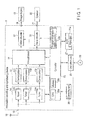
- FIG. 1 illustrates a signal processing system of an information recording and reproducing device 11 to be described in this embodiment.
- the information recording and reproducing device 11 has a digital television broadcast receiving function which enables images, streams of sounds and so on related to received broadcast programs, program information related to the programs, and the like to be recorded and reproduced.
- digital television broadcast signals received at an antenna 12 are supplied through an input terminal 13 to each of a plurality of tuners 141, 142, ... , 14n constituting a tuner processing unit 14.
- the tuners 141 to 14n each select broadcast signals of a desired channel from the input digital television broadcast signals.
- broadcast signals selected in the tuners 141 to 14n are supplied to a plurality of demodulators 151, 152, ... , 15n constituting a demodulating unit 15, respectively.
- the demodulators 151 to 15n each demodulate continuous streams of images, sounds and so on related to the broadcast programs from the input broadcast signals, and demodulate program information related to each program.
- the demultiplexer 16 selects one from a plurality of input streams, and separates the selected streams into a video stream and an audio stream.
- the video stream output from the demultiplexer 16 is supplied to a video decoder 17.
- the video decoder 17 performs decoding of the input video stream, and then converts the resultant into analog video signals.
- the analog video signals output from the video decoder 17 are supplied through an output terminal 18 to an image display 19 for image display.
- the audio stream output from the above-mentioned demultiplexer 16 is supplied to an audio decoder 20.
- the audio decoder 20 decodes the input audio stream, and then converts the resultant into analog audio signals.
- the analog audio signals output from the audio decoder 20 are supplied through an output terminal 21 to a speaker 22 for sound reproduction.
- the above-mentioned demultiplexer 16 can also combine video streams supplied from the demodulators 151 to 15n so as to perform what is called multi-image display in which the screen of the image display 19 is divided into a plurality of regions, and images different from one another are simultaneously displayed on the respective divided regions.
- the controller 23 has a central processing unit (CPU) 23a integrated therein, and receives operation information transmitted from an operation unit 24 including a remote controller (not illustrated) and controls each unit such that the content of the information is reflected.
- CPU central processing unit
- the controller 23 utilizes a memory unit 25b.
- the memory unit 25b mainly has a read-only memory (ROM) to which control programs to be executed by the CPU 23a are stored, a random access memory (RAM) for providing a working area to the CPU 23a, and a nonvolatile memory to which various kinds of setting information and control information are stored.
- ROM read-only memory
- RAM random access memory
- the disk drive unit 25 is designed such that an optical disk 26, such as a Digital Versatile Disk (DVD), is attachable to and removable from it, and has a function of recording and reproducing digital data on and from the attached optical disk 26.
- DVD Digital Versatile Disk
- the above-mentioned controller 23 On the basis of a user's operation of an operating unit 24, the above-mentioned controller 23 performs encryption on video and audio streams and the like related to a given program which are obtained from the demultiplexer 16 and converts them into a given recording format, and then supplies them to the disk drive unit 25. Thus, the controller 23 can control the disk drive unit 25 such that video and audio streams and the like are recorded on the optical disk 26.
- the controller 23 causes the disk drive unit 25 to read video and audio streams and the like related to a given program from the optical disk 26 and performs decryption on them, and then supplies them to the demultiplexer 16.
- the controller 23 can control the demultiplexer 16 such that the video and audio streams and the like are provided for image display and sound reproduction.
- a hard disk drive (HDD) 27 connected to the controller 23 is a hard disk drive (HDD) 27.
- the controller 23 performs encryption on video and audio streams and the like related to a given program which are obtained from the demultiplexer 16 and converts them into a given recording format, and then supplies them to the HDD 27.
- controller 23 can control the HDD 27 such that the video and audio streams and the like are recorded on a hard disk 27a.
- the controller 23 causes the HDD 27 to read video and audio streams and the like related to a given program from the hard disk 27a and performs decryption on them, and then supplies them to the demultiplexer 16.
- the controller 23 can control the demultiplexer 16 such that the video and audio streams and the like are provided for image display and sound reproduction.
- the controller 23 acquires, from the demultiplexer 16, program information on each program obtained from the demodulators 151 to 15n, and records it on the hard disk 27a. On the basis of a user's operation of the operating unit 24, the controller 23 can cause program information on a desired program to be read from the hard disk 27a and cause the desired program to be displayed on the image display 19.
- the controller 23 acquires, from the demultiplexer 16, streams of programs obtained from the demodulators 151 to 15n corresponding to a plurality of channels specified by a user, and performs encryption on the stream of each program and coverts it into a given recording format, and then supplies the streams to the HDD 27, so that a function to simultaneously record streams on the hard disk 27a, or what is called a multichannel simultaneous recording function, can be implemented.
- the controller 23 acquires, from the demultiplexer 16, program information on programs of each channel whose streams are recorded on the hard disk 27a, and supplies the program information to the HDD 27 and causes the program information to be recorded on the hard disk 27a.
- the controller 23 comprises a program information deletion controller 23c.
- the program information deletion controller 23c deletes program information which is recorded on the hard disk 27a using a multichannel simultaneous recording function, that is, program information on programs whose streams are loop recorded on the hard disk 27a, at a given timing in order starting from program information on the earliest program.
- the stream recording area 28 comprises recording areas 281, 282, ... , 28n each having a same and fixed recording capacity, respectively corresponding to a plurality of channels CH1, CH2, ... , CHn specified by a user.
- the streams of programs simultaneously received on channels CH1 to CHn are recorded in a parallel manner in recording areas 281 to 28n respectively corresponding to channels CH1 to CHn.
- streams of programs obtained from simultaneous reception on the plurality of channels CH1 to CHn are simultaneously recorded in a parallel manner in the corresponding recording areas 281 to 28n, respectively, from their initial positions (the position at the top end of each of the recording areas 281 to 28n in FIG. 2 ) as indicated by arrows A1, A2, ... , An in FIG. 2 .
- Recorded in the program information recording area 29 is program information on a plurality of programs whose streams are recorded in the recording areas 281 to 28n.
- CH1 program information 1 on a program 1 of channel CH1; CH1 program information 2 on a program 2 of channel CH1, ... ; CHn program information m on a program m of channel CHn; and other information are recorded.
- the recording areas 281 to 28n which record streams of programs are provided so as to correspond to channels CH1 to CHn, respectively, and loop recording is performed for each of the recording areas 281 to 28n.
- This enables streams to be automatically deleted by overwriting without any mutual influence among channels CH1 to CHn.
- Separating the program information recording area 29 from the stream recording area 28 enables the information recording and reproducing device 11 to delete desired program information at an arbitrary timing. For example, in cases where streams of an individual program are moved to another recording medium, program information which becomes unnecessary after the movement can be individually deleted from the hard disk 27a.
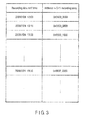
- the controller 23 measures a recording date and time at regular intervals in a condition that streams are recorded in the recording areas 281 to 28n (in FIG. 3 , only the recording area 281 corresponding to channel CH1 is illustrated) corresponding to channels CH1 to CHn in the stream recording area 28, respectively, and creates a table in which the measured recording date and time correspond to addresses in the recording area 281 at which streams are recorded at the recording date and time.
- the table illustrated in FIG. 3 shows that, on July 24, 2009 at 13:00, streams are recorded in the recording area 281 corresponding to channel CH1 from its initial position (address 0x0000_0000), subsequently the address of the recording area 281 is described once every 15 minutes and the operation returns to the initial position (address 0x0000_0000) at 19:00 of the same day, and the operation is repeated.
- the plurality of recording areas 281 to 28n provided in the stream recording area 28 have the same and fixed recording capacity, and loop recording of streams simultaneously starts from their initial positions. However, variations in bit rate of a stream occur among channels CH1 to CHn or for every broadcast program in the same channel.
- FIG. 4 illustrates a status of recording reproducible streams at some time points in the recording areas 281 to 287 corresponding to channels CH1 to CH7 in the case of repeating loop recording of streams of broadcast programs of each of the plurality of (seven in the case illustrated in FIG. 4 ) channels CH1 to CH7.
- reproducible streams which are once recorded and are left without being overwritten by the next loop recording are indicated as the diagonally shaded areas.
- reproducible streams are left after 9:30 a.m., and therefore programs can be reproduced retroactively from the present time to 9:30 a.m.
- reproducible streams are left after 10:00 a.m., and programs can be reproduced retroactively from the present time to 10:00 a.m.
- channel CH5 reproducible streams are left after 9:00 a.m., and therefore programs can be reproduced retroactively from the present time to 9:00 a.m.
- the foregoing program information deletion controller 23c performs control such that program information recorded in the program information recording area 29 by using the multichannel simultaneous recording function is deleted at regular intervals in order starting from program information on the earliest program.
- the program information is deleted after all the streams of the program are automatically deleted by overwriting.
- FIG. 5 illustrates a flowchart for providing a detailed explanation of the processing operation of the program information deletion controller 23c. That is, when the process starts (step S1), the program information deletion controller 23c determines in step S2 whether times at which program information is to be deleted are set. The times to delete program information are set by a user's operation of the operating unit 24 such that a specific time earlier than the present time is first set, and the subsequent times are set every time a certain time period has passed. For example, times are set at 9:00 a.m. and after every lapse of one hour (in this case, every hour).
- step S3 determines in step S3 whether a time to delete program information (in this case, every hour from 9:00 a.m.) has been reached. If it is determined that the time for deletion has been reached (YES), then the following processing is performed in a parallel manner for every channel CH1 to CHn.
- a time to delete program information in this case, every hour from 9:00 a.m.
- step S41 the program information deletion controller 23c obtains finish times of programs described in all pieces of program information recorded in the program information recording area 29 for channel CH1. Then, in step S51, the program information deletion controller 23c determines whether the finish time of each program is prior to the time to delete program information which is determined to have been reached in step S3.
- step S61 the program information deletion controller 23c deletes, from the program information recording area 29, program information on a program having a finish time which is determined to be prior to the time to delete the program information (YES), and the process ends (step S7).
- step S7 the program information deletion controller 23c leaves the program information intact in the program information recording area 29, and the process returns to step S2.
- step S42 the program information deletion controller 23c obtains finish times of programs described in all pieces of program information recorded in the program information recording area 29 for channel CH2. Then, in step S52, the program information deletion controller 23c determines whether the finish time of each program is prior to the time to delete program information which is determined to have been reached in step S3.
- step S62 the program information deletion controller 23c deletes, from the program information recording area 29, program information on a program having a finish time which is determined to be prior to the time to delete the program information (YES), and the process ends (step S7).
- step S7 the program information deletion controller 23c leaves the program information intact in the program information recording area 29, and the process returns to step S2.
- step S4n the program information deletion controller 23c obtains the finish times of programs described in all pieces of program information recorded in the program information recording area 29 for channel CHn. Then, in step S5n, the program information deletion controller 23c determines whether the finish time of each program is prior to the time to delete program information which is determined to have been reached in step S3.
- step S6n the program information deletion controller 23c deletes, from the program information recording area 29, program information on a program having a finish time which is determined to be prior to the time to delete the program information (YES), and the process ends (step S7).
- step S7 the program information deletion controller 23c leaves the program information intact in the program information recording area 29, and the process returns to step S2.
- the finish times of programs described in all pieces of program information recorded in the program information recording area 29 are obtained for each of channels CH1 to CHn, and program information on a program having a finish time prior to the preset delete time of program information is deleted from the program information recording area 29.
- the start times of the earliest programs which are retroactively reproducible can therefore be made uniform on the basis of time to delete program information.
- a user is enabled to easily find by what time programs on each of channels CH1 to CHn recorded by using a multichannel simultaneous recording function can be retroactively reproduced.
- FIG. 6 illustrates the recording status of reproducible streams for the plurality (seven in the illustrated case) of channels CH1 to CH7 recorded by using a multichannel simultaneous recording function, as the diagonally shaded areas in cases where program information on programs finishing by 10:00 a.m. is deleted.
- the times of the earliest programs which are retroactively reproducible are adjusted to every hour (10:00 a.m. in this case).
- program information corresponding to a program which starts before the delete time (10:00 a.m.) and finishes after the delete time (10:00 a.m.) such as a two-hour program which starts at 9:00 a.m. and finishes at 11:00 a.m.
- the program information is not deleted at the time point of 10:00 a.m. but is deleted when the delete time of 11:00 a.m. has been reached.
- this invention is not limited to this.
- this invention may be applied to a system of delivering streams of programs and program information on a plurality of channels over networks, such as cable television and the Internet.
Landscapes
- Engineering & Computer Science (AREA)
- Multimedia (AREA)
- Signal Processing (AREA)
- Management Or Editing Of Information On Record Carriers (AREA)
- Television Signal Processing For Recording (AREA)
- Signal Processing For Digital Recording And Reproducing (AREA)
- Two-Way Televisions, Distribution Of Moving Picture Or The Like (AREA)
Applications Claiming Priority (1)
| Application Number | Priority Date | Filing Date | Title |
|---|---|---|---|
| JP2009218113A JP2011066858A (ja) | 2009-09-18 | 2009-09-18 | 情報記録装置及び情報記録方法 |
Publications (1)
| Publication Number | Publication Date |
|---|---|
| EP2299700A2 true EP2299700A2 (de) | 2011-03-23 |
Family
ID=42827369
Family Applications (1)
| Application Number | Title | Priority Date | Filing Date |
|---|---|---|---|
| EP20100158626 Withdrawn EP2299700A2 (de) | 2009-09-18 | 2010-03-31 | Vorrichtung und Verfahren zur Informationsaufzeichnung |
Country Status (2)
| Country | Link |
|---|---|
| EP (1) | EP2299700A2 (de) |
| JP (1) | JP2011066858A (de) |
Citations (1)
| Publication number | Priority date | Publication date | Assignee | Title |
|---|---|---|---|---|
| JP2009016959A (ja) | 2007-06-29 | 2009-01-22 | Toshiba Corp | 記録装置、記録再生システム、記録方法 |
Family Cites Families (3)
| Publication number | Priority date | Publication date | Assignee | Title |
|---|---|---|---|---|
| JPH10145700A (ja) * | 1996-11-05 | 1998-05-29 | Toshiba Corp | 選局装置 |
| JP3778921B1 (ja) * | 2006-01-31 | 2006-05-24 | 三菱電機株式会社 | 推奨番組抽出装置及び推奨番組抽出方法 |
| JP4699412B2 (ja) * | 2007-03-23 | 2011-06-08 | シャープ株式会社 | 映像音声情報記録再生装置、映像音声情報記録再生方法、プログラム、およびプログラムを記録したコンピュータ読み取り可能な記録媒体 |
-
2009
- 2009-09-18 JP JP2009218113A patent/JP2011066858A/ja active Pending
-
2010
- 2010-03-31 EP EP20100158626 patent/EP2299700A2/de not_active Withdrawn
Patent Citations (1)
| Publication number | Priority date | Publication date | Assignee | Title |
|---|---|---|---|---|
| JP2009016959A (ja) | 2007-06-29 | 2009-01-22 | Toshiba Corp | 記録装置、記録再生システム、記録方法 |
Also Published As
| Publication number | Publication date |
|---|---|
| JP2011066858A (ja) | 2011-03-31 |
Similar Documents
| Publication | Publication Date | Title |
|---|---|---|
| KR100780152B1 (ko) | 녹화 재생 장치 및 콘텐츠 관리 방법 | |
| KR100690249B1 (ko) | 디지털 방송 수신기에서 복수의 프로그램 녹화 방법 | |
| JP2004349745A (ja) | 放送記録再生装置 | |
| JP2007525890A (ja) | 改良されたストレージキャパシティ構成 | |
| JP4389943B2 (ja) | 再生装置および再生方法、並びにプログラム | |
| JP6701776B2 (ja) | 録画装置、録画方法 | |
| CN100518278C (zh) | 用于确定录制内容的标题的方法和装置 | |
| JP2002209178A (ja) | 録画再生装置 | |
| KR101525484B1 (ko) | 방송 수신기와 방송 프로그램 예약 시청 방법 | |
| JP2004303368A (ja) | 記録再生装置、記録再生装置の制御方法、記録再生装置制御プログラム、および記録再生装置制御プログラムを記録した記録媒体 | |
| JP2006302337A (ja) | 記録再生装置 | |
| JP3692020B2 (ja) | 録画予約装置 | |
| JP4324922B2 (ja) | 番組録画装置 | |
| JP2011066858A (ja) | 情報記録装置及び情報記録方法 | |
| JP2007096998A (ja) | 映像記録装置 | |
| US7580763B2 (en) | Recording apparatus for recording signal including a plurality of sound information | |
| JP2011182440A (ja) | 情報記録装置及び情報記録方法 | |
| JP4321384B2 (ja) | 映像記録装置およびその映像ファイル管理方法 | |
| JP6916145B2 (ja) | 電子機器および番組処理方法 | |
| JP2019102909A (ja) | 電子機器及び映像再生方法 | |
| JP2007043240A (ja) | 録画再生装置 | |
| JP4924906B2 (ja) | 録画再生装置およびコンテンツ管理方法 | |
| JP2004062921A (ja) | 記録再生装置 | |
| KR100899237B1 (ko) | 영상표시기기의 녹화 제어장치 및 방법 | |
| JP4416586B2 (ja) | 映像記録再生装置 |
Legal Events
| Date | Code | Title | Description |
|---|---|---|---|
| PUAI | Public reference made under article 153(3) epc to a published international application that has entered the european phase |
Free format text: ORIGINAL CODE: 0009012 |
|
| 17P | Request for examination filed |
Effective date: 20100331 |
|
| AK | Designated contracting states |
Kind code of ref document: A2 Designated state(s): AT BE BG CH CY CZ DE DK EE ES FI FR GB GR HR HU IE IS IT LI LT LU LV MC MK MT NL NO PL PT RO SE SI SK SM TR |
|
| AX | Request for extension of the european patent |
Extension state: AL BA ME RS |
|
| STAA | Information on the status of an ep patent application or granted ep patent |
Free format text: STATUS: THE APPLICATION HAS BEEN WITHDRAWN |
|
| 18W | Application withdrawn |
Effective date: 20111010 |