EP2277550B1 - Process for the preparation of conjugated biological molecules. - Google Patents
Process for the preparation of conjugated biological molecules. Download PDFInfo
- Publication number
- EP2277550B1 EP2277550B1 EP20100175143 EP10175143A EP2277550B1 EP 2277550 B1 EP2277550 B1 EP 2277550B1 EP 20100175143 EP20100175143 EP 20100175143 EP 10175143 A EP10175143 A EP 10175143A EP 2277550 B1 EP2277550 B1 EP 2277550B1
- Authority
- EP
- European Patent Office
- Prior art keywords
- group
- protein
- general formula
- solution
- compound
- Prior art date
- Legal status (The legal status is an assumption and is not a legal conclusion. Google has not performed a legal analysis and makes no representation as to the accuracy of the status listed.)
- Expired - Lifetime
Links
Images


Classifications
-
- C—CHEMISTRY; METALLURGY
- C08—ORGANIC MACROMOLECULAR COMPOUNDS; THEIR PREPARATION OR CHEMICAL WORKING-UP; COMPOSITIONS BASED THEREON
- C08G—MACROMOLECULAR COMPOUNDS OBTAINED OTHERWISE THAN BY REACTIONS ONLY INVOLVING UNSATURATED CARBON-TO-CARBON BONDS
- C08G63/00—Macromolecular compounds obtained by reactions forming a carboxylic ester link in the main chain of the macromolecule
- C08G63/91—Polymers modified by chemical after-treatment
-
- A—HUMAN NECESSITIES
- A61—MEDICAL OR VETERINARY SCIENCE; HYGIENE
- A61K—PREPARATIONS FOR MEDICAL, DENTAL OR TOILETRY PURPOSES
- A61K47/00—Medicinal preparations characterised by the non-active ingredients used, e.g. carriers or inert additives; Targeting or modifying agents chemically bound to the active ingredient
- A61K47/50—Medicinal preparations characterised by the non-active ingredients used, e.g. carriers or inert additives; Targeting or modifying agents chemically bound to the active ingredient the non-active ingredient being chemically bound to the active ingredient, e.g. polymer-drug conjugates
- A61K47/51—Medicinal preparations characterised by the non-active ingredients used, e.g. carriers or inert additives; Targeting or modifying agents chemically bound to the active ingredient the non-active ingredient being chemically bound to the active ingredient, e.g. polymer-drug conjugates the non-active ingredient being a modifying agent
- A61K47/56—Medicinal preparations characterised by the non-active ingredients used, e.g. carriers or inert additives; Targeting or modifying agents chemically bound to the active ingredient the non-active ingredient being chemically bound to the active ingredient, e.g. polymer-drug conjugates the non-active ingredient being a modifying agent the modifying agent being an organic macromolecular compound, e.g. an oligomeric, polymeric or dendrimeric molecule
- A61K47/59—Medicinal preparations characterised by the non-active ingredients used, e.g. carriers or inert additives; Targeting or modifying agents chemically bound to the active ingredient the non-active ingredient being chemically bound to the active ingredient, e.g. polymer-drug conjugates the non-active ingredient being a modifying agent the modifying agent being an organic macromolecular compound, e.g. an oligomeric, polymeric or dendrimeric molecule obtained otherwise than by reactions only involving carbon-to-carbon unsaturated bonds, e.g. polyureas or polyurethanes
- A61K47/60—Medicinal preparations characterised by the non-active ingredients used, e.g. carriers or inert additives; Targeting or modifying agents chemically bound to the active ingredient the non-active ingredient being chemically bound to the active ingredient, e.g. polymer-drug conjugates the non-active ingredient being a modifying agent the modifying agent being an organic macromolecular compound, e.g. an oligomeric, polymeric or dendrimeric molecule obtained otherwise than by reactions only involving carbon-to-carbon unsaturated bonds, e.g. polyureas or polyurethanes the organic macromolecular compound being a polyoxyalkylene oligomer, polymer or dendrimer, e.g. PEG, PPG, PEO or polyglycerol
-
- A—HUMAN NECESSITIES
- A61—MEDICAL OR VETERINARY SCIENCE; HYGIENE
- A61K—PREPARATIONS FOR MEDICAL, DENTAL OR TOILETRY PURPOSES
- A61K47/00—Medicinal preparations characterised by the non-active ingredients used, e.g. carriers or inert additives; Targeting or modifying agents chemically bound to the active ingredient
- A61K47/50—Medicinal preparations characterised by the non-active ingredients used, e.g. carriers or inert additives; Targeting or modifying agents chemically bound to the active ingredient the non-active ingredient being chemically bound to the active ingredient, e.g. polymer-drug conjugates
-
- A—HUMAN NECESSITIES
- A61—MEDICAL OR VETERINARY SCIENCE; HYGIENE
- A61P—SPECIFIC THERAPEUTIC ACTIVITY OF CHEMICAL COMPOUNDS OR MEDICINAL PREPARATIONS
- A61P37/00—Drugs for immunological or allergic disorders
- A61P37/02—Immunomodulators
-
- C—CHEMISTRY; METALLURGY
- C08—ORGANIC MACROMOLECULAR COMPOUNDS; THEIR PREPARATION OR CHEMICAL WORKING-UP; COMPOSITIONS BASED THEREON
- C08F—MACROMOLECULAR COMPOUNDS OBTAINED BY REACTIONS ONLY INVOLVING CARBON-TO-CARBON UNSATURATED BONDS
- C08F10/00—Homopolymers and copolymers of unsaturated aliphatic hydrocarbons having only one carbon-to-carbon double bond
-
- C—CHEMISTRY; METALLURGY
- C08—ORGANIC MACROMOLECULAR COMPOUNDS; THEIR PREPARATION OR CHEMICAL WORKING-UP; COMPOSITIONS BASED THEREON
- C08F—MACROMOLECULAR COMPOUNDS OBTAINED BY REACTIONS ONLY INVOLVING CARBON-TO-CARBON UNSATURATED BONDS
- C08F8/00—Chemical modification by after-treatment
Definitions
- This invention relates to a process for the preparation of conjugated biological molecules. It further relates to novel chemically functionalised derivatives of polyethylene glycol.
- therapeutically active molecules do not possess the properties required to achieve efficacy in clinical medical use.
- therapeutically active proteins and polypeptides are now being discovered and produced by the biopharmaceutical industry and by genetic engineering. Although there are currently at least 80 protein based medicines marketed in the United States with at least 350 more protein based medicines undergoing clinical trails ( Harris J, Chess R: Effect of Pegylation on pharmaceuticals. Nature Review Drug Discovery, 2003, 2, 214-221 ), most native proteins do not make good medicines because upon administration to patients there are several inherent drawbacks that include: (1) proteins are digested by many endo-and exopeptidases present in blood or tissue, (2) many proteins are immunogenic to some extent and (3) proteins can be rapidly excreted by kidney ultrafiltration.
- molecules used as active therapeutic agents in medicines that are systemically toxic or lack optimal bioavailability and pharmacokinetics include low molecular weight molecules where an effective dose is limited by toxicity. Such molecules are routinely used to treat inflammation and conditions due to malignancies, infection and autoimmune disease.
- Water soluble, synthetic polymers are used to conjugate therapeutically active molecules such as proteins.
- These therapeutic conjugates have been shown to favourably alter pharmacokinetics by prolonging circulation time and decreasing clearance rates, decrease systemic toxicity, and in several cases, to display increased clinical efficacy.
- This process of covalently conjugating polyethylene glycol, PEG, to proteins is commonly known as "PEGylation” however many different polymers have been examined as conjugating polymers.
- polymer reagents for conjugation comprise conjugating chemical functionality that is hydrolytically unstable.
- hydrolytically unstable polymeric conjugating reagents are active esters that include, for example, polyalkylene oxide-N-succinimide carbonates ( Zalipsky US patent No. 5,122,614 ). These reagents have relatively short half lives in aqueous media, that includes blood or plasma. This results in the need to add large stoichiometric excesses of the conjugating polymer reagent.
- the hydrolytic stability of the reagent is important because the requirement to add stoichiometric excesses for protein conjugation requires significant effort and cost to purify the polymer-protein conjugate from the reaction mixture.
- hydrolytically unstable reagents tend to undergo preferentially, reaction with amine chemical functionality in the protein, particularly to the ⁇ -amine of lysine residues. Since most proteins of interest have more than one lysine residue, and frequently many lysine residues, then conjugation tends to be non-specific in that it occurs at many residue sites on the protein. It is possible to purify the conjugating reaction mixture to isolate proteins conjugated to one polymer molecule, however it is not possible, to isolate at a reasonable cost, polymer-protein conjugates that are all conjugated to the same amine group on the protein. Non-specific conjugation frequently results in impaired protein function.
- antibodies and antibody fragments with random poly(alkylene oxide) attachment via lysine residues result in modified antibodies (or modified antibody fragments) able to bind target antigen with reduced affinity, avidity or specificity.
- amine specific polymer conjugating reagents require conjugating reaction conditions that must be selected to ensure that the amines on the protein are not protonated. These conditions require moderately high pH media (8-10), this allows the amine moieties to be reactive enough for reaction with the polymer conjugating reagent. High pH conditions are frequently deleterious to the protein causing structural changes and denaturation. These processes result in impairment of protein function. Amine specific polymer conjugation reagents tend to bind to accessible amine sites on the protein.
- reagents can be termed kinetic reagents. They are labile and undergo a reaction with the most assessable amino nucleophilic sites on the protein. Amine specific polymer conjugating reagents that conjugate by amine acylation result in the loss of positive charge on the amine group of the amino acid residue on the protein that would normally be present under physiological conditions for the unconjugated protein. These features of amine specific polymer conjugating reagents often leads to partial impairment of the function of the protein.
- Other conjugating functional groups incorporated in polymers for conjugation to protein and that are amine specific and frequently hydrolytically labile include isocyanate ( WO 94/04193 ) and carbonates ( WO 90/13540 ).
- Particularly relevant for optimised efficacy and to ensure dose to dose consistency is to make certain that the number of conjugated polymer molecules per protein is the same and that each polymer molecule is specifically covalently conjugated to the same amino acid residue in each protein molecule.
- Non-specific conjugation at sites along a protein molecule results in a distribution of conjugation products and frequently, unconjugated protein, to give a complex mixture that is difficult, tedious, and expensive to purify.
- Thiol specific polymer conjugating reagents for proteins have been developed to address the limitations for the propensity of the conjugating reagent to undergo hydrolysis that is competitive with conjugation to the protein, non-specific polymer conjugation at different amino acid residues in the protein, and the need for high pH conjugating reaction conditions.
- Thiol specific polymer conjugating reagents can be utilised at pH values close to neutrality where the amine functional moieties on the amino acid residues of the protein are protonated and thus cannot effectively compete in the conjugation reaction with the polymer conjugating reagent.
- Thiol specific polymer conjugating reagents that are relatively more hydrolytically stable than are the aforementioned amine specific reagents can be utilised at a lower stoichiometric excess thus reducing the cost during purification of the polymer-protein conjugate.
- Conjugating functional moieties that are broadly selective for thiol groups include iodoacetamide, maleiimide ( WO 92/16221 ), vinylsulfone ( WO 95/13312 and WO 95/34326 ), vinyl pyridines ( WO 88/05433 ), and acrylate and methacrylate esters ( WO 99/01469 ). These thiol selective conjugating moieties yield a single thioether conjugating bond between the polymer.
- proteins do not have free sulfhydrals because these sulfhydrals undergo rearrangement and scrambling reactions with the disulfide bridges within the protein resulting in impaired protein function.
- these sulfhydrals are frequently critical for protein function.
- the number of sulfhydral moieties is less than the number of amine moieties (e.g. lysine or histadine). Since conjugation to a protein can be made to be specific at thiol groups and since proteins do not typically have free thiol groups, there are examples of site-specific modification of protein by mutagenesis to introduce thiol sites for PEG attachment. However such modifications increase costs significantly.
- the introduced free sulhydral can have the similar limitations as mentioned heretofore in the engineered protein for protein scrambling and protein dimerisation. Also the process of mutagensis and production of the modified protein from bacterial sources frequently causes the free sulfhydral to be bound in a disulfide bond with glutathione, for example. Interleukin-2, for example, has been modified by mutagenesis to replace a threonine residue by a cysteine to allow site specific attachment of PEG. [ Goodson RJ, Katre NV; Bio/Technology (1990) 8, 343-346 ].
- conjugating parameters have to be optimally matched with the therapeutically active molecule of interest in terms of polymer morphology, molecular weight characteristics, chemical functionality.
- polymer protein conjugate can display many favourable and necessary properties needed for safe, effective medical use, the effect of polymer conjugation on the activity and stability of the protein is of vital importance for performance.
- Conjugation variables related to the location and amount of conjugation and polymer characteristics must be optimally correlated with biological and physicochemical properties.
- WO 01/05818 describes water soluble cyclosporine conjugated compounds.
- US 2002/103259 describes terminally-branched polymeric linkers.
- US 5,786,387 describes a lipid double-chain derivative containing a polyoxyethylene.
- WO 99/55377 describes PEG-interferon- ⁇ conjugates.
- the invention in the first instance is intended for the conjugation of the two sulphur atoms that form natural disulphide bridges in native proteins. Disulphide bonds are found in medically relevant proteins, specifically, secretory proteins, lysosomal proteins, and the exoplasmic domains of membrane proteins.
- the technology provides clear advantages over known techniques for conjugating polymers to proteins.
- the present invention provides a process for the preparation of a compound of the general formula:
- the invention further provides ⁇ -methoxy- ⁇ -4-[2,2-bis[(p-tolylsulfonyl)methyl]-acetyl]benzamide poly(ethylene glycol).
- a polyalkylene glycol may contain a single linear chain, or it may have branched morphology composed of many chains either small or large.
- Substituted polyalkylene glycols for example methoxypolyethylene glycol, may be used.
- a single-chain polyethylene glycol is initiated by a suitable group, for example an alkoxy, e.g. methoxy, aryloxy, carboxy or hydroxyl group, and is connected at the other end of the chain to the linker group Q.
- the polyethylene glycol polymer X or X' may optionally be derivatised or functionalised in any desired way.
- polyethylene glycols with two or more chemical moieties for conjugation may be used to create conjugates of two or more linked bioactive molecules.
- Reactive groups may be linked at the polymer terminus or end group, or along the polymer chain through pendent linkers.
- Multimeric conjugates that contain more than one biological molecule, typically a biologically active polypeptide or drug can result in synergistic and additive benefits.
- the polymer may be coupled to a solid support using conventional methods.
- the optimum molecular weight of the polyethylene glycol will of course depend upon the intended application.
- the number average molecular weight is in the range of from 500g/mole to around 75,000g/mole.
- the compound of the general formula I is intended to leave the circulation and penetrate tissue, for example for use in the treatment of inflammation caused by malignancy, infection or autoimmune disease, or by trauma, it may be advantageous to use a lower molecular weight polymer in the range 2000-30,000g/mole.
- a higher molecular weight polymer for example in the range of 20,000 - 75,000g/mole.
- a linking group Q may for example be a direct bond, an alkylene group (preferably a C 1-10 alkylene group), or an optionally-substituted aryl or heteroaryl group, any of which may be terminated or interrupted by one or more oxygen atoms, sulphur atoms, -NR groups (in which R has the meaning given below), keto groups, -O-CO- groups and/or -CO-O- groups.
- Suitable aryl groups include phenyl and naphthyl groups, while suitable heteroaryl groups include pyridine, pyrrole, furan, pyran, imidazole, pyrazole, oxazole, pyridazine, primidine and purine.
- the linkage to the polyethylene glycol may be by way of a hydrolytically labile bond, or by a non-labile bond.
- W represents a keto group CO, an ester group -O-CO- or a sulphone group -SO 2 -, or a group obtained by reduction of such a group, e.g. a CH.OH group, an ether group CH.OR, an ester group CH.O.C(O)R, an amine group CH.NH 2 , CH.NHR or CH.NR 2 , or an amide CH.NHC(O)R or CH.N(C(O)R) 2 . or X-Q-W-together represent a cyano group.
- the protein Z may for example be a polypeptide, antibody, antibody fragment, enzyme, cytokine, chemokine or receptor.
- Constrained or cyclic polypeptides which are usually cyclised through a disulphide bridge, and epitopes, may also be used. Specific examples of suitable proteins are listed below.
- the process according to the invention is carried out by reducing a disulfide bond derived from two cysteine amino acids in the protein in situ following which the reduced product reacts with the compound of formula (II) or (III) in an aqueous reaction medium.
- Disulfides can be reduced, for example, with dithiothreitiol, mercaptoethanol, or tris-carboxyethylphosphine using conventional methods.
- the aqueous reaction medium may also be buffered, depending on the pH requirements of the thiol groups.
- the optimum pH for the reaction is generally between about 5.5 and about 8, for example about 7.4, preferably about 6.0-6.5.
- Reaction temperatures between 3-37 °C are generally suitable: proteins may decompose or denature impairing function if the conjugation reaction is conducted at a temperature where these processes may occur.
- a protein can contain one or a multiplicity of disulfide bridges. Reduction to give free sulfhyral moieties can be conducted to reduce one or a multiplicity of disulfide bridges in a protein. Depending on the extent of disulfide reduction and the stoichiometry of the polymeric conjugation reagent that is used, it is possible to conjugate one or a multiplicity of polyethylene glycol molecules to the protein. Immobilised reducing agents may be used if it is desired to reduce less than the total number of disulfides, as can partial reduction using different reaction conditions or the addition of denaturants.
- the protein can be effectively conjugated with the reagents used in the present invention using a stoichiometric equivalent or a slight excess of reagent, unlike many prior art reagents.
- the reagents used in the present invention do not undergo competitive reactions with aqueous media used to solvate proteins, it is possible to conduct the conjugation reaction with an excess stoichiometry of reagent.
- the excess reagent can be easily removed by ion exchange chromatography during routine purification of proteins.
- the compounds of formulae (II) and (III) are novel, and certain specific compounds are claimed in claims 7 to 9 of the present application. These novel reagents provide a breakthrough in conjugate technology, the chemical functional moiety on the polymer comprising a cross-functionalised, latently cross-conjugated, bis-alkylating moiety that is selective for two nucleophiles, particularly two thiols derived from a natural disulfide bond in proteins.
- the immediate product of the process according to the invention is a compound of the general formula I in which W is a keto group CO, an ester group -O-CO- or a sulphone group -SO 2 -.
- W is a keto group CO, an ester group -O-CO- or a sulphone group -SO 2 -.
- Such compounds have utility in themselves; because the process of the invention is reversible under suitable conditions, additionally compounds of formula (I) in which W is one of these groups have utility in applications where release of the free protein is required, for example in direct clinical applications.
- Such a group W may, however, be reduced to give a moiety which prevents release of the protein, and such compounds will also have utility in many clinical, industrial and diagnostic applications.
- a keto group may be reduced to a CH(OH) group; an ether group CH.OR may be obtained by the reaction of a hydroxy group with an etherifying agent; an ester group CH.O.C(O)R may be obtained by the reaction of a hydroxy group with an acylating agent; an amine group CH.NH 2 , CH.NHR or CH.NR 2 may be prepared from a ketone or aldehyde by reductive amination); or an amide CH.NHC(O)R or CH.N(C(O)R) 2 may be formed by acylation of an amine).
- a group X-Q-W- which is a cyano group may be reduced to an amine group.
- a compound of the general formula (II) in which X represents a polyethylene glycol may be prepared by reacting a compound of the general formula in which Q', W, A, B and L have the meanings given above, with a polymer of the general formula X - V (VII) in which X represents a polyethylene glycol; Q' and V being groups selected such that the compounds of (VI) and (VII) will react together to give the desired compound of the formula (II).
- a compound of the formula may be reacted with a polyethylene glycol of the general formula X - Q' (IX)
- a compound of the general formula (III) may be prepared by base mediated elimination of one leaving group L from a compound of the general formula (II).
- Compounds of the general formula I may include an imaging agent, for example a radio nucleotide, to enable tracking of the compound in vivo.
- an imaging agent for example a radio nucleotide
- the radio nucleotide or imaging agent I may be bound through the group W, to give, for example, compounds of the type In which "polymer” is polyethylene glycol, which may for example be prepared from reagents of the type for example
- the compounds of the general formula I have a number of applications. They may for example be used for direct clinical application to a patient. Any desired pharmaceutical effect, for example trauma treatment, enzyme replacement, toxin removal, anti-inflammatory, anti-infective, immunomodulatory, vaccination or anti-cancer, may be obtained by suitable choice of protein.
- the compounds of the general formula I may also be used in non-clinical applications. For example, many physiologically active compounds such as enzymes are able to catalyse reactions in organic solvents, and compounds of the general formula I may be used in such applications. Further, compounds of the general formula I may be used as diagnostic tools.
- Enzymes include carbohydrate-specific enzymes, proteolytic enzymes and the like. Enzymes of interest, for both industrial (organic based reactions) and biological applications in general and therapeutic applications in particular include the oxidoreductases, transferases, hydrolases, lyases, isomerases and ligases disclosed by US 4,179,337 .
- Specific enzymes of interest include asparaginase, arginase, adenosine deaminase, superoxide dismutase, catalase, chymotrypsin, lipase, uricase, bilirubin osidase, glucose oxidase, glucuronidase, galactosidase, glucocerbrosidase, glucuronidase, and glutaminase.
- the proteins used in compounds of the general formula I of the present invention include for example factor 8, insulin, ACTH, glucagen, somatostatin, somatotropins, thymosin, parathyroid hormone, pigmentary hormones, somatomedins, erythropoietin, luteinizing hormone, hypothalamic releasing factors, antidiuretic hormones, prolactin, interleukins, interferons, colony stimulating factors, hemoglobin, cytokines, antibodies, chorionicgonadotropin, follicle-stimulating hormone, thyroid stimulating hormone and tissue plasminogen activator.
- factor 8 insulin, ACTH, glucagen, somatostatin, somatotropins, thymosin, parathyroid hormone, pigmentary hormones, somatomedins, erythropoietin, luteinizing hormone, hypothalamic releasing factors, antidiuretic hormones, prolactin, interleukins, interferon
- non-glycosilated form usually the result of preparation by recombinant protein techniques.
- the non-glycosilated versions may be used in the present invention.
- the invention permits the preparation of conjugates in which the biological activity is retained compared with non-conjugated Interferons. This most surprising result is not possible using known conjugation techniques.
- allergen proteins disclosed by Dreborg et al Crit. Rev. Therap. Drug Carrier Syst. (1990) 6 315 365 as having reduced allergenicity when conjugated with a polymer such as poly(alkylene oxide) and consequently are suitable for use as tolerance inducers.
- allergens disclosed are Ragweed antigen E, honeybee venom, mite allergen and the like.
- Glycopolypeptides such as immunoglobulins, ovalbumin, lipase, glucocerebrosidase, lectins, tissue plasminogen activator and glycosilated inerleukins, interferons and colony stimulating factors are of interest, as are immunoglobulins such as IgG, IgE, IgM, IgA, IgD and fragments thereof.
- antibodies and antibody fragments which are used in clinical medicine for diagnostic and therapeutic purposes.
- the antibody may used alone or may be covalently conjugated ("loaded") with another atom or molecule such as a radioisotope or a cytotoxic/antiinfective drug.
- Epitopes may be used for vaccination to produce an immunogenic polymer - protein conjugate.
- a key feature of the process of the invention is that an ⁇ -methylene leaving group and a double bond are cross-conjugated with an electron withdrawing function that serves as a Michael activating moiety. If the leaving group is prone to elimination in the cross-functional reagent rather than to direct displacement and the electron-withdrawing group is a suitable activating moiety for the Michael reaction then sequential intramolecular bis-alkylation can occur by consecutive Michael and retro Michael reactions.
- the leaving moiety serves to mask a latent conjugated double bond that is not exposed until after the first alkylation has occurred and bis-alkylation results from sequential and interactive Michael and retro-Michael reactions as described in J. Am. Chem. Soc. 1979, 101, 3098-3110 and J. Am. Chem. Soc. 1988, 110, 5211-5212 .).
- the electron withdrawing group and the leaving group are optimally selected so bis-alkylation can occur by sequential Michael and retro-Michael reactions.
- cross-functionalised bis-alkylating reagents of the type mentioned above undergo alkylation that is controlled by Michael-retro Michael equilibria and since it is possible to partially reduce a number from one to a greater than one disulfide bonds in a protein in a controlled fashion significantly retaining tertiary structure, it is then possible to have bis-alkylation occur across the two sulfhydrals from cysteines of a given disulfide bond. Such a sequence of reactions results in the reannealling of the disulfide bridge with the bis-alkylating reagent.
- the thiol ether bonds formed upon conjugation to give a compound of the formula I are, in general, hydrolytically stable in aqueous solution.
- the reagents themselves are also hydrolytically stable.
- a compound is regarded as being hydrolytically stable if it does not undergo substantial degradation at physiological pH and temperature up to 45°C. Degradation of less than 50% under these conditions over an eight hour period is considered insubstantial.
- this invention allows the production of polyethylene glycol reagents that possess cross-functionalised bis-alkylating functionality at either the termini or on pendent chains along the main chain of a polymer.
- conjugates preparable by the process according to the invention include the following: and in which "polymer” represents polyethylene glycol.
- the ethyl acetate solution was extracted sequentially with 10% aqueous HCl, 5% NaHCO 3 and brine, and then dried over Na 2 SO 4 , and then the ethyl acetate was evaporated to an oil that crystallised to give 23.2 g of the desired product that was recrystallised in ethyl acetate-ethyl ether.
- the cooling bath was removed and the reaction mixture allowed to warm to -15 to 0 °C turning a red colour.
- the reaction mixture was then warmed to 25 °C over a 3-5 minute period and a solution of acrolein (0.14g, 2.1 mmol) in anhydrous tetrahydrofuran (20 ml) was added by dropping funnel over a 30-40 minute period.
- the exothermic reaction caused the temperature of the reaction mixture to increase to 30-40 °C and the solution stirred a further 20 minutes after addition of the aldehyde before addition of ethyl acetate (75 ml).
- aqueous layers were combined and extracted twice with ethyl acetate and all the ethyl acetate fractions were combined and washed twice with 10% aqueous HCl, 5% aqueous NaHCO 3 and brine, then dried over solid Na 2 SO 4 .
- aldehydes including acealdehyde, methacrolein, ethacrolein butryaldehyde, crotonaldehyde, 2, 4-pentadienyal, sorbaldehyde, tolualdehyde, cinnamaldehyde, methyl-cinnamaldehyde, chloro-cinnamaldehyde, 5-phenyl-2,4 pentadienal and 7-phenyl-2, 4, 6-heptatrienal.
- aldehydes including acealdehyde, methacrolein, ethacrolein butryaldehyde, crotonaldehyde, 2, 4-pentadienyal, sorbaldehyde, tolualdehyde, cinnamaldehyde, methyl-cinnamaldehyde, chloro-cinnamaldehyde, 5-phenyl-2,4 pentadienal and 7
- a one neck 100 mL round bottom flask fitted with a dropping funnel and nitrogen line was charged with triphosgene (23 mg), 2,2-bis[( p -tolylsulfonyl)methyl]- p -aminoacetophenone hydrochloride (125 mg), anhydrous toluene (2.5 mL) and a magnetic stir bar under a nitrogen atmosphere.
- the dropping funnel was separately charged with anhydrous triethylamine (68 ⁇ L) and anhydrous toluene (2.5 mL).
- An acetone/dry-ice bath was placed below the round bottom flask and the contents allowed to cool. The triethylamine solution was then added dropwise to the triphosgene solution under stirring over 5-10 min.
- the homogeneous eluent was transferred to a 100 mL separating funnel and then washed twice with deionised water (30 mL and then 10 mL).
- the aqueous phases were combined and then washed with diethyl ether (approximately 25 mL).
- the aqueous phase was then freeze-dried to give an off-white solid product (160 mg). Product was also found in diethyl ether and toluene phases.
- reaction flask was then allowed to cool to room temperature whereupon the reaction solution was diluted with diethyl ether (approximately 150 mL).
- diethyl ether approximately 150 mL
- the resulting organic phase was then washed with water (acidified using 1N hydrochloric acid to pH 2-3; 50 mL x 2), water (50 mL) and brine (75 mL) and then dried over magnesium sulfate. Filtration followed by removal of volatiles on a rotary evaporator afforded a solid residue.
- the solid was dissolved in a minimum volume of a mixture of predominately methanol and acetone with heating.
- reaction solution with bis[(p-tolylsulfonyl)-methyl]acetyl]benzoic acid was injected into the flask containing the poly(ethylene glycol) solution in a dropwise fashion, immediately resulting in the evolution of a white gas.
- the resulting solution was allowed to stir overnight at room temperature whereupon additional triethylamine (28 ⁇ L, was added).
- the reaction solution was added dropwise through a glass pipette into rapidly stirred diethyl ether. To achieve precipitation it was necessary to add hexane to the diethyl ether solution and place the flask in an ice bath.
- ⁇ -methoxy- ⁇ - 4-[2,2-bis[(p-tolylsulfonyl)-methyl]acetyl]benzamide poly(ethylene glycol) conjugating reagent (20,000 g/mol) (0.4 g) was dissolved in 10 mL of an argon purged mixture of acetonitrile:water (24:1 v/v, 2 mg hydroquinone) and the solution filtered through a 0.45 ⁇ m PP filter. The eluent was placed under argon in a round-bottom flask and triethylamine (50 ⁇ L) was added under stirring.
- the flask was then placed in a 30 °C oil bath for 20 h with stirring after which time the flask was cooled to room temperature and the volatile liquids removed in vacuum.
- the residue obtained was dissolved in warm acetone (10 mL) and once homogeneous the solution was placed in an ice-water bath whereupon precipitation occurred while the solution stirred.
- the white precipitate was isolated on a no. 3 sintered glass funnel and washed with chilled fresh acetone (approximately 30 mL). The isolated solid was allowed to dry under vacuum to afford 0.3 g of white solid.
- the polymer conjugating reagent, ⁇ -methoxy- ⁇ - 4-[2,2-bis[(p-tolylsulfonyl)methyl]acetyl]benzamide poly(ethylene glycol) (2000 g/mol) (30 mg, 12.1 ⁇ mol, 1 eq.) and 4-methylbenzenethiol (3 mg, 24.2 mmol, 2 eq.) were dissolved in deuterated chloroform (approximately 0.75 mL). To the homogeneous solution was then added triethylamine (1.7 ⁇ L, 12.1 ⁇ mol, 1 eq.). The reaction mixture was stirred and a H-NMR spectrum was obtained. The resulting spectrum confirmed that addition of the 4-methylbenzenethiol to the polymer conjugating reagent had occurred.
- a similar reaction was conducted with propane triol.
- the partially reduced Ribonuclease A (10.9 mg) was dissolved in argon purged pH 8 ammonia solution (500 ⁇ L).
- the polymer conjugating reagent, ⁇ -methoxy- ⁇ - 4-[2,2-bis[(p-tolylsulfonyl)-methyl]acetyl]benzamide derived from poly(ethylene)glycol (2000 g/mol) was also dissolved in ammonia solution (250 ⁇ L) and the resulting solution added to the Ribonuclease A solution.
- the PEG eppendorf was washed with 250 ⁇ L of fresh ammonia solution and this was also added to the main reaction eppendorf.
- reaction eppendorf was then closed under argon and heated at 37°C for approximately 24 h and then allowed to cool to room temperature.
- the cooled reaction solution was then analysed by sodium dodecyl sulfate -polyacrylamide gel electrophoresis (SDS-PAGE).
- SDS-PAGE sodium dodecyl sulfate -polyacrylamide gel electrophoresis
- mice IgG antibody Fab fragment (Abcam Cat. No. AB6668) in an argon purged 0.02 M sodium phosphate pH 6 buffer containing 0.15 M sodium chloride and 0.005 M EDTA was added 4 ⁇ L of an argon purged aqueous solution of 1 mM selenocystamine dihydrochloride, followed by 12 ⁇ L of an argon purged aqueous solution of tris(2-carboxyethyl) phosphine hydrochloride (TCEP) at room temperature. The resulting solution was immediately vortexed for several seconds and then allowed to stand at room temperature for 6 min.
- TCEP tris(2-carboxyethyl) phosphine hydrochloride
- reaction mixture was analysed by SEC-HPLC (100 ⁇ l injection, superpose 12-24 ml column, Amersham biosciences; eluent: 20 mM Na Phosphate, 0.15 M NaCl pH 7.0; isocratic elution for 100 min at a flow of 0.25 ml/min; UV detection, 210 nm) displaying the Fab-poly(ethylene glycol) conjugate that was not present in the identical control reaction mixture.
- SEC-HPLC 100 ⁇ l injection, superpose 12-24 ml column, Amersham biosciences; eluent: 20 mM Na Phosphate, 0.15 M NaCl pH 7.0; isocratic elution for 100 min at a flow of 0.25 ml/min; UV detection, 210 nm
- Fractions isolated from SEC-HPLC chromatography were analysed by SDS PAGE and the mono poly(ethylene glycol) conjugate was observed.
- the column was eluted with 1 ml portions of fresh buffer. Two fractions containing reduced protein were identified using UV spectroscopy at 280 nm. These fractions were concentrated using centrifugal filter devices (MWCO 3,000; Microcon) to a volume of approximately 270 ⁇ l and then diluted to 1 ml with fresh pH 6 phosphate buffer (additionally containing 0.23 mM hydroquinone). Two 5 ⁇ l samples were removed for later analysis by SDS PAGE.
- a 50 mg/ml solution of the conjugating reagent solution of ⁇ -methoxy- ⁇ -4-[2,2-bis[(p-tolylsulfonyl)methyl]acetyl]benzamide derived from poly(ethylene glycol) (20,000 g/mol) was made up in the same phosphate buffer and placed in an ice-water bath along with the protein solution for 5 min. To the protein solution was then added 58 ⁇ l of the conjugation reagent solution and after several seconds of vortexing, the reaction solution was placed in a refrigerator ( ⁇ 5°C). A control reaction was also performed under the same conditions and scale but using nonreduced asparaginase.
- a buffer solution sodium phosphate 0.02 M; NaCl 0.15 M; EDTA 0.005 M; pH 6.0 in argon purged deionised water
- the conjugation reagent ⁇ -methoxy- ⁇ -4-[2,2-bis[(p-tolylsulfonyl)methyl]acetyl]benzamide derived from poly(ethylene glycol)(20,000 g/mol) was dissolved in the buffer solution (50 mg/ml), cooled to 4°C and 16 ⁇ l added to the protein solution. The reaction mixture was vortexed and incubated at 4°C for 2 h. The non-ionic components of the reaction mixture were removed by cation exchange chromatography (Hitrap SP FF 1 ml column, Amersham biosciences) using two buffers: (A) 25 mM Na Acetate pH 4.0 and (B) 25 mM Na Acetate + 0.7 M NaCl pH 4.0.
- the column was washed (1ml/min) with buffer A (5.0 ml), then buffer B (5.0 ml) and then equilibrated with 10 ml of buffer A (10 ml).
- the conjugate was loaded on the column (200 ⁇ l) followed by buffer A (500 ⁇ l) and a loading fraction (0.5 ml) was collected.
- the column was washed with 5 ml of buffer A and fractions were collected.
- the sample was eluted from the column with buffer B (10 ml) and fractions were collected.
- Spectroscopy (UV, 280 nm) was used to determine the fractions that contained protein and these fractions were then purified into separate fractions by size exclusion chromatography (100 ⁇ l injections, superose 12 -24 ml column, Amersham biosciences; eluent: 20 mM Na Phosphate, 0.15 M NaCl pH 7.0; isocratic elution for 100 min at a flow of 0.25 ml/min; UV detection, 210 nm). These purification conditions provided base line resolution for the separation of the poly(ethylene glycol) interferon conjugate from native interferon.
- the conjugation reaction and purification of the poly(ethylene glycol) conjugate were confirmed by SDS-PAGE; 12%Bis-Tris gel (SilverQuest Silver Staining; Colloidal Blue Staining and perchloric acid 0.1 M/ BaCl 2 5% and I 2 0.1 M staining).
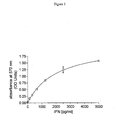
- the concentration of each purified fraction of the poly(ethylene glycol) interferon conjugate was determined by enzyme immuno assay. The same assay was utilised to determine the concentration of the native interferon that was conjugated and an international standard NIBSC (UK) sample of interferon. The reproducible and accurate standard curve obtained for all forms of the aforementioned interferon is shown in Figure 1 .
- A549 (human lung fibroblast) cells were plated at 15,000 cells/well in 96-well flat-bottom tissue culture plates. Interferon from the NIBSC (UK), the native interferon that was conjugated and the poly(ethylene glycol) interferon conjugate were then separately added to the cells in triplicate and the plate incubated at 37 C (5% CO 2 ) for 24 h.
- EMCV encephalomyocarditis virus
- DMEM/2% FCS from stock virus stored at -80 °C.
- the media containing the interferon or the poly(ethylene glycol) interferon conjugate was removed and replaced with media containing EMCV.
- the tissue culture plate was then incubated for 1 h at 37 °C after which the virus was removed.
- One hundred microlitres of DMEM/10% FCS media was added and the plate incubated for 16 - 24 h at 27 °C. From 16 h onwards, the plate was read regularly to ascertain when cell death was starting. The media was then aspirated and the cells washed with 100 ⁇ l of phosphate buffer solution.
- methyl violet solution i.e., methyl violet (4% formaldehyde, 0.05% methyl violet 2B (Sigma-Aldrich)] for 30 min at room temperature.
- the plate was then washed with 100 ⁇ l of water and dried in air.
- Spectrophotometric absorbance was determined at 570 nm using a plate reader.
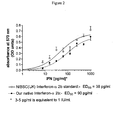
- Figure 2 confirms that the interferon used for the conjugation had equivalent activity of the international standard NIBSC (UK) interferon.
- Figure 3 confirms that native interferon used for conjugation maintained equivalent biological activity after being subjected to all the chemical and purification processes except for exposure with the poly(ethylene glycol) conjugation reagent.
- Figure 4 confirms that the native interferon used for conjugation and the purified poly(ethylene glycol) interferon conjugate maintained equivalent biological activity.
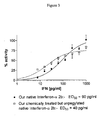
- Figure 5 in which Figure 5(a) shows the real-time quantitative RT-PCR (two-step) analysis of interferon-inducible 2'5'-Oligoadenylate Synthetase (2'5'-OAS)gene, and Figure 5(b) shows the real-time quantitative RT-PCR (two-step) analysis of interferon-inducible Protein Kinase R (PRKR) gene.
- the results confirm that the poly(ethylene glycol) interferon- ⁇ 2b conjugate stimulated 2'5'-oligoadenylate synthetase (2'5'-OAS and protein kinase R (PRKR) mRNA synthesis to levels that were similar to native unpegylated interferon- ⁇ 2b.
Landscapes
- Health & Medical Sciences (AREA)
- Chemical & Material Sciences (AREA)
- Medicinal Chemistry (AREA)
- Public Health (AREA)
- General Health & Medical Sciences (AREA)
- Chemical Kinetics & Catalysis (AREA)
- Bioinformatics & Cheminformatics (AREA)
- Engineering & Computer Science (AREA)
- Veterinary Medicine (AREA)
- Organic Chemistry (AREA)
- Pharmacology & Pharmacy (AREA)
- Life Sciences & Earth Sciences (AREA)
- Animal Behavior & Ethology (AREA)
- Polymers & Plastics (AREA)
- General Chemical & Material Sciences (AREA)
- Epidemiology (AREA)
- Immunology (AREA)
- Nuclear Medicine, Radiotherapy & Molecular Imaging (AREA)
- Medicinal Preparation (AREA)
- Polyethers (AREA)
- Peptides Or Proteins (AREA)
- Enzymes And Modification Thereof (AREA)
- Medicines That Contain Protein Lipid Enzymes And Other Medicines (AREA)
- Medicines Containing Material From Animals Or Micro-Organisms (AREA)
- Pharmaceuticals Containing Other Organic And Inorganic Compounds (AREA)
- Organic Low-Molecular-Weight Compounds And Preparation Thereof (AREA)
- Medicines Containing Antibodies Or Antigens For Use As Internal Diagnostic Agents (AREA)
- Measuring Or Testing Involving Enzymes Or Micro-Organisms (AREA)
- Pyrrole Compounds (AREA)
- Compounds Of Unknown Constitution (AREA)
- Preparation Of Compounds By Using Micro-Organisms (AREA)
Applications Claiming Priority (3)
| Application Number | Priority Date | Filing Date | Title |
|---|---|---|---|
| GBGB0316294.8A GB0316294D0 (en) | 2003-07-11 | 2003-07-11 | Conjugated biological molecules and their preparation |
| EP09167191.7A EP2133099B1 (en) | 2003-07-11 | 2004-07-12 | Conjugated biological molecules and their preparation |
| EP04743335A EP1648518B1 (en) | 2003-07-11 | 2004-07-12 | Conjugated biological molecules and their preparation |
Related Parent Applications (5)
| Application Number | Title | Priority Date | Filing Date |
|---|---|---|---|
| EP04743335.4 Division | 2004-07-12 | ||
| EP09167191.7A Division-Into EP2133099B1 (en) | 2003-07-11 | 2004-07-12 | Conjugated biological molecules and their preparation |
| EP09167191.7A Division EP2133099B1 (en) | 2003-07-11 | 2004-07-12 | Conjugated biological molecules and their preparation |
| EP04743335A Division EP1648518B1 (en) | 2003-07-11 | 2004-07-12 | Conjugated biological molecules and their preparation |
| EP09167191.7 Division | 2009-08-04 |
Publications (2)
| Publication Number | Publication Date |
|---|---|
| EP2277550A1 EP2277550A1 (en) | 2011-01-26 |
| EP2277550B1 true EP2277550B1 (en) | 2015-04-29 |
Family
ID=27742023
Family Applications (4)
| Application Number | Title | Priority Date | Filing Date |
|---|---|---|---|
| EP20100175143 Expired - Lifetime EP2277550B1 (en) | 2003-07-11 | 2004-07-12 | Process for the preparation of conjugated biological molecules. |
| EP10175140.2A Expired - Lifetime EP2253330B1 (en) | 2003-07-11 | 2004-07-12 | Conjugated biological molecules and their preparation |
| EP09167191.7A Expired - Lifetime EP2133099B1 (en) | 2003-07-11 | 2004-07-12 | Conjugated biological molecules and their preparation |
| EP04743335A Expired - Lifetime EP1648518B1 (en) | 2003-07-11 | 2004-07-12 | Conjugated biological molecules and their preparation |
Family Applications After (3)
| Application Number | Title | Priority Date | Filing Date |
|---|---|---|---|
| EP10175140.2A Expired - Lifetime EP2253330B1 (en) | 2003-07-11 | 2004-07-12 | Conjugated biological molecules and their preparation |
| EP09167191.7A Expired - Lifetime EP2133099B1 (en) | 2003-07-11 | 2004-07-12 | Conjugated biological molecules and their preparation |
| EP04743335A Expired - Lifetime EP1648518B1 (en) | 2003-07-11 | 2004-07-12 | Conjugated biological molecules and their preparation |
Country Status (13)
| Country | Link |
|---|---|
| US (4) | US7595292B2 (enExample) |
| EP (4) | EP2277550B1 (enExample) |
| JP (2) | JP4958549B2 (enExample) |
| KR (1) | KR101152500B1 (enExample) |
| CN (2) | CN1822860B (enExample) |
| AT (1) | ATE440620T1 (enExample) |
| AU (2) | AU2004257448B2 (enExample) |
| DE (1) | DE602004022824D1 (enExample) |
| DK (4) | DK2133099T3 (enExample) |
| ES (4) | ES2632515T3 (enExample) |
| GB (1) | GB0316294D0 (enExample) |
| PL (2) | PL2253330T3 (enExample) |
| WO (1) | WO2005007197A2 (enExample) |
Families Citing this family (90)
| Publication number | Priority date | Publication date | Assignee | Title |
|---|---|---|---|---|
| GEP20084486B (en) | 2002-12-26 | 2008-09-25 | Mountain View Pharmaceuticals | Polymer conjugates of interferon-beta with enhanced biological potency |
| GB0316294D0 (en) | 2003-07-11 | 2003-08-13 | Polytherics Ltd | Conjugated biological molecules and their preparation |
| US7046714B2 (en) * | 2003-09-10 | 2006-05-16 | Intel Corporation | Method and apparatus for Raman ring resonator based laser/wavelength converter |
| US7837980B2 (en) * | 2004-03-02 | 2010-11-23 | Seattle Genetics, Inc. | Partially loaded antibodies and methods of their conjugation |
| WO2007019620A1 (en) * | 2005-08-15 | 2007-02-22 | Arana Therapeutics Limited | Engineered antibodies with new world primate framework regions |
| NZ569988A (en) * | 2006-02-01 | 2011-09-30 | Cephalon Australia Pty Ltd | Domain antibody construct which binds to human TNF-alpha and contains a modified hinge region sequence and a truncated CH1 domain |
| US20080139790A1 (en) * | 2006-12-08 | 2008-06-12 | Jennings Philip A | Chimeric antibodies |
| EP2118150B1 (en) | 2007-02-14 | 2015-09-23 | Biocompatibles UK Limited | Derivatisation of biological molecules |
| GB0708376D0 (en) | 2007-05-01 | 2007-06-06 | Alligator Bioscience Ab | Novel polypeptides and uses thereof |
| US8658148B2 (en) | 2007-06-22 | 2014-02-25 | Genzyme Corporation | Chemically modified dendrimers |
| TWI360535B (en) * | 2007-08-30 | 2012-03-21 | Univ Nat Sun Yat Sen | Sulfur-containing compound, method of preparation |
| US20100239517A1 (en) * | 2007-10-09 | 2010-09-23 | Stephen Brocchini | Novel conjugated proteins and peptides |
| KR20110016440A (ko) * | 2008-04-24 | 2011-02-17 | 셀틱 파르마 피이지 엘티디. | 연장된 반감기를 가진 제 ⅰⅹ 인자 접합체 |
| RU2582244C2 (ru) | 2008-06-30 | 2016-04-20 | ИЭсБиЭйТЕК, ЭН АЛЬКОН БАЙОМЕДИКАЛ РИСЕРЧ ЮНИТ ЭлЭлСи | Функционализированные полипептиды |
| MX2011000009A (es) | 2008-07-10 | 2011-08-15 | Esbatech Alcon Biomed Res Unit | Metodos y composiciones para la administracion mejorada de macromoleculas. |
| ES2560807T3 (es) * | 2008-07-21 | 2016-02-22 | Polytherics Limited | Nuevos reactivos y procedimiento de conjugación de moléculas biológicas |
| GB0817978D0 (en) * | 2008-10-01 | 2008-11-05 | Imp Innovations Ltd | Peptides |
| BRPI0921640A2 (pt) * | 2008-11-04 | 2019-09-24 | Janssen Pharmaceutica Nv | agonistas peptídicos do crhr2 e usos do mesmo |
| US9005598B2 (en) | 2009-03-04 | 2015-04-14 | Polytherics Limited | Conjugated proteins and peptides |
| GB0922354D0 (en) | 2009-12-21 | 2010-02-03 | Polytherics Ltd | Novel polymer conjugates |
| GB0912485D0 (en) | 2009-07-17 | 2009-08-26 | Polytherics Ltd | Improved conjugation method |
| CN102869384B (zh) | 2009-06-22 | 2016-01-13 | 伯纳姆医学研究所 | 使用带有c-端元件的肽和蛋白质的方法和组合物 |
| GB0916576D0 (en) | 2009-09-22 | 2009-10-28 | Malmsten Nils M | Polypeptides and uses thereof |
| GB0916578D0 (en) | 2009-09-22 | 2009-10-28 | Malmsten Nils M | Polypeptides and uses thereof |
| FI124016B (fi) * | 2009-10-26 | 2014-01-31 | Vapo Oy | Menetelmä biomassakuivattimessa käytetyn kuivatusilman lämmittämiseksi välipiirinesteen avulla sekä vesi-glykoliseoksen tai sitä vastaavan jäätymättömän välipiirinesteen käyttö biomassakuivattimessa käytetyn kuivatusilman lämmittämiseksi |
| KR20120103606A (ko) * | 2009-11-04 | 2012-09-19 | 얀센 파마슈티카 엔.브이. | 스트레스코핀-유사 펩타이드를 이용해 심부전을 치료하는 방법 |
| GB201007356D0 (en) | 2010-04-30 | 2010-06-16 | Leverton Licence Holdings Ltd | Conjugated factor VIIa |
| GB201007357D0 (en) | 2010-04-30 | 2010-06-16 | Leverton Licence Holdings Ltd | Conjugated factor VIII |
| WO2012118778A1 (en) | 2011-02-28 | 2012-09-07 | Sanford-Burnham Medical Research Institute | Truncated car peptides and methods and compositions using truncated car peptides |
| GB2490655A (en) | 2011-04-28 | 2012-11-14 | Univ Aston | Modulators of tissue transglutaminase |
| CA2837588A1 (en) | 2011-05-31 | 2012-12-06 | Airware, Inc. | Re-calibration of ab ndir gas sensors |
| US10179801B2 (en) | 2011-08-26 | 2019-01-15 | Sanford-Burnham Medical Research Institute | Truncated LYP-1 peptides and methods and compositions using truncated LYP-1 peptides |
| HK1200695A1 (en) | 2012-04-16 | 2015-08-14 | Cantab Biopharmaceuticals Patents Limited | Optimised subcutaneous therapeutic agents |
| WO2013177481A1 (en) | 2012-05-25 | 2013-11-28 | Immunogen, Inc. | Benzodiazepines and conjugates thereof |
| GB201210770D0 (en) | 2012-06-18 | 2012-08-01 | Polytherics Ltd | Novel conjugation reagents |
| US9650331B2 (en) | 2012-06-18 | 2017-05-16 | Polytherics Limited | Conjugation reagents |
| BR112014031613A2 (pt) * | 2012-06-19 | 2017-07-25 | Polytherics Ltd | processo para preparação de conjugados de anticorpos e conjugados de anticorpos |
| NO2789793T3 (enExample) | 2012-10-24 | 2018-01-27 | ||
| ES2623209T3 (es) | 2012-10-24 | 2017-07-10 | Polytherics Limited | Conjugados fármaco-proteína |
| AU2013350802B2 (en) * | 2012-11-30 | 2016-07-14 | Novartis Ag | Methods for making conjugates from disulfide-containing proteins |
| US10226535B2 (en) | 2012-12-10 | 2019-03-12 | Mersana Therapeutics, Inc. | Auristatin compounds and conjugates thereof |
| WO2014093394A1 (en) | 2012-12-10 | 2014-06-19 | Mersana Therapeutics, Inc. | Protein-polymer-drug conjugates |
| US9872918B2 (en) | 2012-12-12 | 2018-01-23 | Mersana Therapeutics, Inc. | Hydroxyl-polymer-drug-protein conjugates |
| EP3964237B1 (en) | 2013-03-15 | 2026-02-18 | Regeneron Pharmaceuticals, Inc. | Biologically active molecules, conjugates thereof, and therapeutic uses |
| GB201308738D0 (en) * | 2013-05-15 | 2013-06-26 | Polytherics Ltd | Novel polymer conjugates |
| AU2014311361B2 (en) | 2013-08-26 | 2018-11-29 | Regeneron Pharmaceuticals, Inc. | Pharmaceutical compositions comprising macrolide diastereomers, methods of their synthesis and therapeutic uses |
| WO2015038984A2 (en) | 2013-09-12 | 2015-03-19 | Halozyme, Inc. | Modified anti-epidermal growth factor receptor antibodies and methods of use thereof |
| EP3046588B1 (en) | 2013-09-17 | 2022-03-02 | OBI Pharma, Inc. | Compositions of a carbohydrate vaccine for inducing immune responses and uses thereof in cancer treatment |
| CA2927022C (en) | 2013-10-11 | 2018-08-21 | Asana Biosciences, Llc | Protein-polymer-drug conjugates |
| WO2015054659A1 (en) | 2013-10-11 | 2015-04-16 | Mersana Therapeutics, Inc. | Protein-polymer-drug conjugates |
| ES2729643T3 (es) * | 2013-11-26 | 2019-11-05 | Novartis Ag | Métodos para la conjugación de oxima con polipéptidos modificados con cetona |
| GB201403875D0 (en) | 2014-03-05 | 2014-04-16 | Cantargia Ab | Novel antibodies and uses thereof |
| JP6721572B2 (ja) | 2014-05-23 | 2020-07-15 | ノバルティス アーゲー | ジスルフィド含有タンパク質からコンジュゲートを作製するための方法 |
| WO2015187596A2 (en) | 2014-06-02 | 2015-12-10 | Regeneron Pharmaceuticals, Inc. | Biologically active molecule conjugates, reagents and methods of manufacture, and therapeutic uses |
| GB201413913D0 (en) | 2014-08-06 | 2014-09-17 | Cantargia Ab | Novel antibodies and uses thereof |
| ES2885854T3 (es) | 2014-10-14 | 2021-12-15 | Polytherics Ltd | Proceso para la conjugación de un péptido o proteína con un reactivo que comprende un grupo saliente que incluye una porción de PEG |
| HK1249528A1 (zh) * | 2015-02-05 | 2018-11-02 | Ablynx N.V. | 通过c-末端合成半胱氨酸连接的纳米抗体二聚体 |
| CA2978340C (en) | 2015-03-27 | 2024-05-28 | Regeneron Pharmaceuticals, Inc. | Maytansinoid derivatives, conjugates thereof, and methods of use |
| US10098960B2 (en) | 2015-04-03 | 2018-10-16 | Ucl Business Plc | Polymer conjugate |
| WO2017025458A1 (en) | 2015-08-07 | 2017-02-16 | Gamamabs Pharma | Antibodies, antibody drug conjugates and methods of use |
| EP3344806A4 (en) | 2015-09-04 | 2019-03-20 | OBI Pharma, Inc. | GLYCANARRAYS AND METHOD OF USE |
| JP2019506155A (ja) | 2016-01-12 | 2019-03-07 | クレッシェンド、バイオロジックス、リミテッドCrescendo Biologics Limited | 治療分子 |
| GB201601136D0 (en) | 2016-01-21 | 2016-03-09 | Mörgelin Matthias And Abdillahi Suado M | Novel polypeptides and medical uses thereof |
| MX390630B (es) | 2016-01-25 | 2025-03-21 | Regeneron Pharma | Derivados de maitansinoide, conjugados de los mismos y metodos de uso. |
| WO2017161206A1 (en) | 2016-03-16 | 2017-09-21 | Halozyme, Inc. | Conjugates containing conditionally active antibodies or antigen-binding fragments thereof, and methods of use |
| AU2017239637A1 (en) | 2016-03-29 | 2018-11-15 | Obi Pharma, Inc. | Antibodies, pharmaceutical compositions and methods |
| US10980894B2 (en) | 2016-03-29 | 2021-04-20 | Obi Pharma, Inc. | Antibodies, pharmaceutical compositions and methods |
| CN109152845B (zh) | 2016-04-14 | 2022-07-12 | 宝力泰锐克斯有限公司 | 含有在环内包含至少两个(-ch2-ch2-o-)单元的接头的缀合物和缀合试剂 |
| IL262296B2 (en) | 2016-04-22 | 2024-09-01 | Obi Pharma Inc | Cancer immunotherapy by immune activation or immune modulation via globo series antigens |
| GB201608936D0 (en) | 2016-05-20 | 2016-07-06 | Polytherics Ltd | Novel conjugates and novel conjugating reagents |
| CN117534764A (zh) | 2016-06-06 | 2024-02-09 | 阿布泽纳(英国)有限公司 | 抗体、其用途及其缀合物 |
| KR20190067765A (ko) | 2016-07-27 | 2019-06-17 | 오비아이 파머 인코퍼레이티드 | 면역원성/치료 글리칸 조성물 및 그의 용도 |
| KR102528998B1 (ko) | 2016-07-29 | 2023-05-03 | 오비아이 파머 인코퍼레이티드 | 인간 항체, 제약 조성물 및 방법 |
| GB201614162D0 (en) | 2016-08-18 | 2016-10-05 | Polytherics Ltd | Antibodies, uses thereof and conjugates thereof |
| GB201615725D0 (en) | 2016-09-15 | 2016-11-02 | Polytherics Ltd | Novel cytotoxic agents and conjugates thereof |
| WO2018094414A1 (en) | 2016-11-21 | 2018-05-24 | Obi Pharma, Inc. | Conjugated biological molecules, pharmaceutical compositions and methods |
| US11135307B2 (en) | 2016-11-23 | 2021-10-05 | Mersana Therapeutics, Inc. | Peptide-containing linkers for antibody-drug conjugates |
| US10772971B2 (en) | 2017-06-22 | 2020-09-15 | Mersana Therpeutics, Inc. | Methods of producing drug-carrying polymer scaffolds and protein-polymer-drug conjugates |
| GB201711068D0 (en) | 2017-07-10 | 2017-08-23 | Crescendo Biologics Ltd | Therapeutic molecules binding PSMA |
| TW202504930A (zh) | 2018-06-27 | 2025-02-01 | 台灣浩鼎生技股份有限公司 | 用於糖蛋白工程的糖苷合成酶變體及其使用方法 |
| GB201814281D0 (en) | 2018-09-03 | 2018-10-17 | Femtogenix Ltd | Cytotoxic agents |
| GB201901197D0 (en) | 2019-01-29 | 2019-03-20 | Femtogenix Ltd | G-A Crosslinking cytotoxic agents |
| GB201909298D0 (en) | 2019-06-28 | 2019-08-14 | Colzyx Ab | Novel compositions and uses thereof |
| GB2597532A (en) | 2020-07-28 | 2022-02-02 | Femtogenix Ltd | Cytotoxic compounds |
| GB202016456D0 (en) | 2020-10-16 | 2020-12-02 | Colzyx Ab | Novel bioactive peptide combinations and uses thereof |
| KR20250049568A (ko) | 2022-07-15 | 2025-04-11 | 페온 테라퓨틱스 리미티드 | Cdcp1에 결합하는 항체 약물 접합체 및 이의 용도 |
| CN115304524A (zh) * | 2022-07-21 | 2022-11-08 | 湖南大学 | 一种β-酰基烯丙基甲基砜类化合物及其高效合成方法 |
| JP2025537044A (ja) | 2022-09-30 | 2025-11-13 | シャンハイ ドーァ ノボ ファーマテック カンパニー,リミティド | ベンザゼピン誘導体、それを含む複合体およびその応用 |
| AU2023393382A1 (en) | 2022-12-14 | 2025-06-19 | Pheon Therapeutics Ltd | Cytotoxic compounds |
| WO2025149667A1 (en) | 2024-01-12 | 2025-07-17 | Pheon Therapeutics Ltd | Antibody drug conjugates and uses thereof |
Family Cites Families (28)
| Publication number | Priority date | Publication date | Assignee | Title |
|---|---|---|---|---|
| US680343A (en) * | 1899-04-15 | 1901-08-13 | Johan Peter Moeller | Glove. |
| US3828412A (en) * | 1971-03-19 | 1974-08-13 | Dunham Bush Inc | Method of forming high integrity epoxy joint between aluminum tubes |
| US4179337A (en) | 1973-07-20 | 1979-12-18 | Davis Frank F | Non-immunogenic polypeptides |
| EP0298101A1 (en) | 1987-01-15 | 1989-01-11 | Celltech Limited | Thiol-reactive cross-linking reagents |
| ATE300519T1 (de) | 1989-04-19 | 2005-08-15 | Enzon Inc | Verfahren zum herstellen von modifizierten polypeptiden die eine polypeptid und ein polyalkylenoxid enthalten |
| US5122614A (en) | 1989-04-19 | 1992-06-16 | Enzon, Inc. | Active carbonates of polyalkylene oxides for modification of polypeptides |
| US6552170B1 (en) | 1990-04-06 | 2003-04-22 | Amgen Inc. | PEGylation reagents and compounds formed therewith |
| AU1674292A (en) | 1991-03-15 | 1992-10-21 | Synergen, Inc. | Pegylation of polypeptides |
| AU5006993A (en) | 1992-08-21 | 1994-03-15 | Enzon, Inc. | Novel attachment of polyalkylene oxides to bio-effecting substances |
| US5446090A (en) | 1993-11-12 | 1995-08-29 | Shearwater Polymers, Inc. | Isolatable, water soluble, and hydrolytically stable active sulfones of poly(ethylene glycol) and related polymers for modification of surfaces and molecules |
| WO1995025764A1 (en) * | 1994-03-23 | 1995-09-28 | Meiji Seika Kabushiki Kaisha | Double-stranded derivative of polyoxyethylene-containing lipid |
| US5877224A (en) | 1995-07-28 | 1999-03-02 | Rutgers, The State University Of New Jersey | Polymeric drug formulations |
| GB9713979D0 (en) | 1997-07-03 | 1997-09-10 | Univ Nottingham | Method for attaching peg to macromolecules |
| CA2323048C (en) | 1998-03-12 | 2006-10-10 | Shearwater Polymers, Inc. | Poly(ethylene glycol) derivatives with proximal reactive groups |
| US6153655A (en) | 1998-04-17 | 2000-11-28 | Enzon, Inc. | Terminally-branched polymeric linkers and polymeric conjugates containing the same |
| DE69936409T2 (de) * | 1998-04-28 | 2008-04-17 | Laboratoires Serono S.A., Coinsins | Verfahren zur schrittweise Bindung von Polyethylenglykol (PEG) an Polypeptide |
| WO2001005819A1 (en) * | 1999-07-15 | 2001-01-25 | Kuhnil Pharm. Co., Ltd. | Novel water soluble-cyclosporine conjugated compounds |
| JP2003528939A (ja) | 1999-09-03 | 2003-09-30 | スクール オブ ファーマシー, ユニヴァーシティ オブ ロンドン | 分解性ポリマー |
| US6828412B1 (en) | 1999-09-03 | 2004-12-07 | School Of Pharmacy, University Of London | Degradable polymers |
| JP4883515B2 (ja) | 1999-09-08 | 2012-02-22 | ポリセリックス リミテッド | 均一分子量ポリマー |
| GB0316294D0 (en) | 2003-07-11 | 2003-08-13 | Polytherics Ltd | Conjugated biological molecules and their preparation |
| GB0400264D0 (en) | 2004-01-07 | 2004-02-11 | Polytherics Ltd | Complexes |
| EP2118150B1 (en) | 2007-02-14 | 2015-09-23 | Biocompatibles UK Limited | Derivatisation of biological molecules |
| US20100239517A1 (en) | 2007-10-09 | 2010-09-23 | Stephen Brocchini | Novel conjugated proteins and peptides |
| ES2560807T3 (es) | 2008-07-21 | 2016-02-22 | Polytherics Limited | Nuevos reactivos y procedimiento de conjugación de moléculas biológicas |
| GB0912485D0 (en) | 2009-07-17 | 2009-08-26 | Polytherics Ltd | Improved conjugation method |
| US9005598B2 (en) | 2009-03-04 | 2015-04-14 | Polytherics Limited | Conjugated proteins and peptides |
| US9650331B2 (en) | 2012-06-18 | 2017-05-16 | Polytherics Limited | Conjugation reagents |
-
2003
- 2003-07-11 GB GBGB0316294.8A patent/GB0316294D0/en not_active Ceased
-
2004
- 2004-07-12 PL PL10175140T patent/PL2253330T3/pl unknown
- 2004-07-12 DE DE602004022824T patent/DE602004022824D1/de not_active Expired - Lifetime
- 2004-07-12 ES ES09167191.7T patent/ES2632515T3/es not_active Expired - Lifetime
- 2004-07-12 CN CN2004800198144A patent/CN1822860B/zh not_active Expired - Lifetime
- 2004-07-12 US US10/564,340 patent/US7595292B2/en not_active Expired - Lifetime
- 2004-07-12 JP JP2006518372A patent/JP4958549B2/ja not_active Expired - Lifetime
- 2004-07-12 EP EP20100175143 patent/EP2277550B1/en not_active Expired - Lifetime
- 2004-07-12 DK DK09167191.7T patent/DK2133099T3/en active
- 2004-07-12 DK DK10175140.2T patent/DK2253330T3/en active
- 2004-07-12 DK DK04743335T patent/DK1648518T3/da active
- 2004-07-12 EP EP10175140.2A patent/EP2253330B1/en not_active Expired - Lifetime
- 2004-07-12 AU AU2004257448A patent/AU2004257448B2/en not_active Expired
- 2004-07-12 ES ES10175143.6T patent/ES2542531T3/es not_active Expired - Lifetime
- 2004-07-12 KR KR1020067000278A patent/KR101152500B1/ko not_active Expired - Lifetime
- 2004-07-12 EP EP09167191.7A patent/EP2133099B1/en not_active Expired - Lifetime
- 2004-07-12 WO PCT/GB2004/002994 patent/WO2005007197A2/en not_active Ceased
- 2004-07-12 CN CN2010101399434A patent/CN101792525B/zh not_active Expired - Lifetime
- 2004-07-12 AT AT04743335T patent/ATE440620T1/de active
- 2004-07-12 ES ES04743335T patent/ES2331004T3/es not_active Expired - Lifetime
- 2004-07-12 DK DK10175143.6T patent/DK2277550T3/en active
- 2004-07-12 PL PL04743335T patent/PL1648518T3/pl unknown
- 2004-07-12 EP EP04743335A patent/EP1648518B1/en not_active Expired - Lifetime
- 2004-07-12 ES ES10175140.2T patent/ES2549427T3/es not_active Expired - Lifetime
-
2009
- 2009-07-28 US US12/458,931 patent/US7939630B2/en not_active Expired - Lifetime
-
2010
- 2010-12-20 AU AU2010257308A patent/AU2010257308B2/en not_active Expired
-
2011
- 2011-03-31 US US13/077,980 patent/US8816051B2/en active Active
- 2011-08-04 JP JP2011170597A patent/JP5349552B2/ja not_active Expired - Lifetime
-
2014
- 2014-07-28 US US14/444,859 patent/US9439974B2/en not_active Expired - Lifetime
Also Published As
Similar Documents
| Publication | Publication Date | Title |
|---|---|---|
| EP2253330B1 (en) | Conjugated biological molecules and their preparation | |
| US9415115B2 (en) | Conjugated proteins and peptides | |
| AU2013279079B2 (en) | Conjugation reagents | |
| EP2209494A1 (en) | Novel conjugated proteins and peptides | |
| US20100119484A1 (en) | Derivatisation of biological molecules | |
| US10174125B2 (en) | Conjugation reagents |
Legal Events
| Date | Code | Title | Description |
|---|---|---|---|
| PUAI | Public reference made under article 153(3) epc to a published international application that has entered the european phase |
Free format text: ORIGINAL CODE: 0009012 |
|
| AC | Divisional application: reference to earlier application |
Ref document number: 2133099 Country of ref document: EP Kind code of ref document: P Ref document number: 1648518 Country of ref document: EP Kind code of ref document: P |
|
| AK | Designated contracting states |
Kind code of ref document: A1 Designated state(s): AT BE BG CH CY CZ DE DK EE ES FI FR GB GR HU IE IT LI LU MC NL PL PT RO SE SI SK TR |
|
| 17P | Request for examination filed |
Effective date: 20110725 |
|
| 17Q | First examination report despatched |
Effective date: 20140127 |
|
| GRAP | Despatch of communication of intention to grant a patent |
Free format text: ORIGINAL CODE: EPIDOSNIGR1 |
|
| INTG | Intention to grant announced |
Effective date: 20141127 |
|
| GRAS | Grant fee paid |
Free format text: ORIGINAL CODE: EPIDOSNIGR3 |
|
| GRAA | (expected) grant |
Free format text: ORIGINAL CODE: 0009210 |
|
| AC | Divisional application: reference to earlier application |
Ref document number: 2133099 Country of ref document: EP Kind code of ref document: P Ref document number: 1648518 Country of ref document: EP Kind code of ref document: P |
|
| AK | Designated contracting states |
Kind code of ref document: B1 Designated state(s): AT BE BG CH CY CZ DE DK EE ES FI FR GB GR HU IE IT LI LU MC NL PL PT RO SE SI SK TR |
|
| REG | Reference to a national code |
Ref country code: GB Ref legal event code: FG4D |
|
| REG | Reference to a national code |
Ref country code: CH Ref legal event code: EP |
|
| REG | Reference to a national code |
Ref country code: AT Ref legal event code: REF Ref document number: 724084 Country of ref document: AT Kind code of ref document: T Effective date: 20150515 |
|
| REG | Reference to a national code |
Ref country code: IE Ref legal event code: FG4D |
|
| REG | Reference to a national code |
Ref country code: DE Ref legal event code: R096 Ref document number: 602004047112 Country of ref document: DE Effective date: 20150611 |
|
| REG | Reference to a national code |
Ref country code: CH Ref legal event code: NV Representative=s name: BOHEST AG, CH |
|
| REG | Reference to a national code |
Ref country code: DK Ref legal event code: T3 Effective date: 20150730 |
|
| REG | Reference to a national code |
Ref country code: ES Ref legal event code: FG2A Ref document number: 2542531 Country of ref document: ES Kind code of ref document: T3 Effective date: 20150806 Ref country code: DE Ref legal event code: R081 Ref document number: 602004047112 Country of ref document: DE Owner name: POLYTHERICS LTD., GB Free format text: FORMER OWNER: POLYTHERICS LTD., LONDON, GB |
|
| REG | Reference to a national code |
Ref country code: AT Ref legal event code: MK05 Ref document number: 724084 Country of ref document: AT Kind code of ref document: T Effective date: 20150429 |
|
| RAP2 | Party data changed (patent owner data changed or rights of a patent transferred) |
Owner name: POLYTHERICS LIMITED |
|
| REG | Reference to a national code |
Ref country code: CH Ref legal event code: PCOW Free format text: NEW ADDRESS: BABRAHAM RESEARCH CAMPUS BABRAHAM, CAMBRIDGE CB22 3AT (GB) |
|
| PG25 | Lapsed in a contracting state [announced via postgrant information from national office to epo] |
Ref country code: FI Free format text: LAPSE BECAUSE OF FAILURE TO SUBMIT A TRANSLATION OF THE DESCRIPTION OR TO PAY THE FEE WITHIN THE PRESCRIBED TIME-LIMIT Effective date: 20150429 Ref country code: PT Free format text: LAPSE BECAUSE OF FAILURE TO SUBMIT A TRANSLATION OF THE DESCRIPTION OR TO PAY THE FEE WITHIN THE PRESCRIBED TIME-LIMIT Effective date: 20150831 |
|
| PG25 | Lapsed in a contracting state [announced via postgrant information from national office to epo] |
Ref country code: GR Free format text: LAPSE BECAUSE OF FAILURE TO SUBMIT A TRANSLATION OF THE DESCRIPTION OR TO PAY THE FEE WITHIN THE PRESCRIBED TIME-LIMIT Effective date: 20150730 Ref country code: AT Free format text: LAPSE BECAUSE OF FAILURE TO SUBMIT A TRANSLATION OF THE DESCRIPTION OR TO PAY THE FEE WITHIN THE PRESCRIBED TIME-LIMIT Effective date: 20150429 |
|
| PG25 | Lapsed in a contracting state [announced via postgrant information from national office to epo] |
Ref country code: EE Free format text: LAPSE BECAUSE OF FAILURE TO SUBMIT A TRANSLATION OF THE DESCRIPTION OR TO PAY THE FEE WITHIN THE PRESCRIBED TIME-LIMIT Effective date: 20150429 |
|
| REG | Reference to a national code |
Ref country code: DE Ref legal event code: R097 Ref document number: 602004047112 Country of ref document: DE |
|
| PG25 | Lapsed in a contracting state [announced via postgrant information from national office to epo] |
Ref country code: RO Free format text: LAPSE BECAUSE OF NON-PAYMENT OF DUE FEES Effective date: 20150429 Ref country code: PL Free format text: LAPSE BECAUSE OF FAILURE TO SUBMIT A TRANSLATION OF THE DESCRIPTION OR TO PAY THE FEE WITHIN THE PRESCRIBED TIME-LIMIT Effective date: 20150429 Ref country code: SK Free format text: LAPSE BECAUSE OF FAILURE TO SUBMIT A TRANSLATION OF THE DESCRIPTION OR TO PAY THE FEE WITHIN THE PRESCRIBED TIME-LIMIT Effective date: 20150429 Ref country code: CZ Free format text: LAPSE BECAUSE OF FAILURE TO SUBMIT A TRANSLATION OF THE DESCRIPTION OR TO PAY THE FEE WITHIN THE PRESCRIBED TIME-LIMIT Effective date: 20150429 Ref country code: MC Free format text: LAPSE BECAUSE OF FAILURE TO SUBMIT A TRANSLATION OF THE DESCRIPTION OR TO PAY THE FEE WITHIN THE PRESCRIBED TIME-LIMIT Effective date: 20150429 |
|
| PLBE | No opposition filed within time limit |
Free format text: ORIGINAL CODE: 0009261 |
|
| STAA | Information on the status of an ep patent application or granted ep patent |
Free format text: STATUS: NO OPPOSITION FILED WITHIN TIME LIMIT |
|
| PG25 | Lapsed in a contracting state [announced via postgrant information from national office to epo] |
Ref country code: LU Free format text: LAPSE BECAUSE OF FAILURE TO SUBMIT A TRANSLATION OF THE DESCRIPTION OR TO PAY THE FEE WITHIN THE PRESCRIBED TIME-LIMIT Effective date: 20150712 |
|
| 26N | No opposition filed |
Effective date: 20160201 |
|
| REG | Reference to a national code |
Ref country code: IE Ref legal event code: MM4A |
|
| PG25 | Lapsed in a contracting state [announced via postgrant information from national office to epo] |
Ref country code: SI Free format text: LAPSE BECAUSE OF FAILURE TO SUBMIT A TRANSLATION OF THE DESCRIPTION OR TO PAY THE FEE WITHIN THE PRESCRIBED TIME-LIMIT Effective date: 20150429 |
|
| REG | Reference to a national code |
Ref country code: FR Ref legal event code: PLFP Year of fee payment: 13 |
|
| PG25 | Lapsed in a contracting state [announced via postgrant information from national office to epo] |
Ref country code: IE Free format text: LAPSE BECAUSE OF NON-PAYMENT OF DUE FEES Effective date: 20150712 |
|
| PG25 | Lapsed in a contracting state [announced via postgrant information from national office to epo] |
Ref country code: BE Free format text: LAPSE BECAUSE OF FAILURE TO SUBMIT A TRANSLATION OF THE DESCRIPTION OR TO PAY THE FEE WITHIN THE PRESCRIBED TIME-LIMIT Effective date: 20150429 |
|
| REG | Reference to a national code |
Ref country code: DE Ref legal event code: R079 Ref document number: 602004047112 Country of ref document: DE Free format text: PREVIOUS MAIN CLASS: A61K0047480000 Ipc: A61K0047500000 |
|
| PG25 | Lapsed in a contracting state [announced via postgrant information from national office to epo] |
Ref country code: HU Free format text: LAPSE BECAUSE OF FAILURE TO SUBMIT A TRANSLATION OF THE DESCRIPTION OR TO PAY THE FEE WITHIN THE PRESCRIBED TIME-LIMIT; INVALID AB INITIO Effective date: 20040712 Ref country code: BG Free format text: LAPSE BECAUSE OF FAILURE TO SUBMIT A TRANSLATION OF THE DESCRIPTION OR TO PAY THE FEE WITHIN THE PRESCRIBED TIME-LIMIT Effective date: 20150429 |
|
| PG25 | Lapsed in a contracting state [announced via postgrant information from national office to epo] |
Ref country code: SE Free format text: LAPSE BECAUSE OF FAILURE TO SUBMIT A TRANSLATION OF THE DESCRIPTION OR TO PAY THE FEE WITHIN THE PRESCRIBED TIME-LIMIT Effective date: 20150429 Ref country code: CY Free format text: LAPSE BECAUSE OF FAILURE TO SUBMIT A TRANSLATION OF THE DESCRIPTION OR TO PAY THE FEE WITHIN THE PRESCRIBED TIME-LIMIT Effective date: 20150429 |
|
| REG | Reference to a national code |
Ref country code: FR Ref legal event code: PLFP Year of fee payment: 14 |
|
| REG | Reference to a national code |
Ref country code: FR Ref legal event code: PLFP Year of fee payment: 15 |
|
| P01 | Opt-out of the competence of the unified patent court (upc) registered |
Effective date: 20230516 |
|
| PGFP | Annual fee paid to national office [announced via postgrant information from national office to epo] |
Ref country code: NL Payment date: 20230720 Year of fee payment: 20 |
|
| PGFP | Annual fee paid to national office [announced via postgrant information from national office to epo] |
Ref country code: TR Payment date: 20230711 Year of fee payment: 20 Ref country code: IT Payment date: 20230731 Year of fee payment: 20 Ref country code: GB Payment date: 20230706 Year of fee payment: 20 Ref country code: ES Payment date: 20230821 Year of fee payment: 20 Ref country code: CH Payment date: 20230801 Year of fee payment: 20 |
|
| PGFP | Annual fee paid to national office [announced via postgrant information from national office to epo] |
Ref country code: FR Payment date: 20230724 Year of fee payment: 20 Ref country code: DK Payment date: 20230724 Year of fee payment: 20 Ref country code: DE Payment date: 20230720 Year of fee payment: 20 |
|
| REG | Reference to a national code |
Ref country code: DE Ref legal event code: R071 Ref document number: 602004047112 Country of ref document: DE |
|
| REG | Reference to a national code |
Ref country code: CH Ref legal event code: PL Ref country code: DK Ref legal event code: EUP Expiry date: 20240712 |
|
| REG | Reference to a national code |
Ref country code: NL Ref legal event code: MK Effective date: 20240711 |
|
| REG | Reference to a national code |
Ref country code: GB Ref legal event code: PE20 Expiry date: 20240711 |
|
| REG | Reference to a national code |
Ref country code: ES Ref legal event code: FD2A Effective date: 20240802 |
|
| PG25 | Lapsed in a contracting state [announced via postgrant information from national office to epo] |
Ref country code: GB Free format text: LAPSE BECAUSE OF EXPIRATION OF PROTECTION Effective date: 20240711 |
|
| PG25 | Lapsed in a contracting state [announced via postgrant information from national office to epo] |
Ref country code: ES Free format text: LAPSE BECAUSE OF EXPIRATION OF PROTECTION Effective date: 20240713 |
|
| PG25 | Lapsed in a contracting state [announced via postgrant information from national office to epo] |
Ref country code: GB Free format text: LAPSE BECAUSE OF EXPIRATION OF PROTECTION Effective date: 20240711 Ref country code: ES Free format text: LAPSE BECAUSE OF EXPIRATION OF PROTECTION Effective date: 20240713 |