EP2216476A2 - Verlorene Schalung zum Einbau in eine Gebäudeöffnung - Google Patents
Verlorene Schalung zum Einbau in eine Gebäudeöffnung Download PDFInfo
- Publication number
- EP2216476A2 EP2216476A2 EP10000255A EP10000255A EP2216476A2 EP 2216476 A2 EP2216476 A2 EP 2216476A2 EP 10000255 A EP10000255 A EP 10000255A EP 10000255 A EP10000255 A EP 10000255A EP 2216476 A2 EP2216476 A2 EP 2216476A2
- Authority
- EP
- European Patent Office
- Prior art keywords
- lost formwork
- stop element
- formwork according
- insulating body
- building opening
- Prior art date
- Legal status (The legal status is an assumption and is not a legal conclusion. Google has not performed a legal analysis and makes no representation as to the accuracy of the status listed.)
- Granted
Links
- 238000009415 formwork Methods 0.000 title claims abstract description 51
- 238000003780 insertion Methods 0.000 title description 2
- 230000037431 insertion Effects 0.000 title description 2
- 238000009434 installation Methods 0.000 claims abstract description 5
- 239000002184 metal Substances 0.000 claims description 21
- 238000009413 insulation Methods 0.000 claims description 10
- 239000000463 material Substances 0.000 claims description 6
- 239000011810 insulating material Substances 0.000 claims description 5
- 229910000831 Steel Inorganic materials 0.000 claims description 3
- 239000010959 steel Substances 0.000 claims description 3
- 239000004033 plastic Substances 0.000 description 12
- 229920003023 plastic Polymers 0.000 description 12
- 239000006260 foam Substances 0.000 description 7
- 238000004804 winding Methods 0.000 description 4
- 239000012080 ambient air Substances 0.000 description 3
- 239000004794 expanded polystyrene Substances 0.000 description 3
- 230000005540 biological transmission Effects 0.000 description 2
- 238000000465 moulding Methods 0.000 description 2
- 230000002093 peripheral effect Effects 0.000 description 2
- 241000238631 Hexapoda Species 0.000 description 1
- 229920005830 Polyurethane Foam Polymers 0.000 description 1
- 230000006978 adaptation Effects 0.000 description 1
- 239000003570 air Substances 0.000 description 1
- 230000000712 assembly Effects 0.000 description 1
- 238000000429 assembly Methods 0.000 description 1
- 238000004140 cleaning Methods 0.000 description 1
- 238000004049 embossing Methods 0.000 description 1
- 239000003292 glue Substances 0.000 description 1
- 238000010438 heat treatment Methods 0.000 description 1
- 238000001746 injection moulding Methods 0.000 description 1
- 239000004570 mortar (masonry) Substances 0.000 description 1
- 239000011505 plaster Substances 0.000 description 1
- 230000003068 static effect Effects 0.000 description 1
- 230000007704 transition Effects 0.000 description 1
Images


Classifications
-
- E—FIXED CONSTRUCTIONS
- E06—DOORS, WINDOWS, SHUTTERS, OR ROLLER BLINDS IN GENERAL; LADDERS
- E06B—FIXED OR MOVABLE CLOSURES FOR OPENINGS IN BUILDINGS, VEHICLES, FENCES OR LIKE ENCLOSURES IN GENERAL, e.g. DOORS, WINDOWS, BLINDS, GATES
- E06B9/00—Screening or protective devices for wall or similar openings, with or without operating or securing mechanisms; Closures of similar construction
- E06B9/02—Shutters, movable grilles, or other safety closing devices, e.g. against burglary
- E06B9/08—Roll-type closures
- E06B9/11—Roller shutters
- E06B9/17—Parts or details of roller shutters, e.g. suspension devices, shutter boxes, wicket doors, ventilation openings
- E06B9/17007—Shutter boxes; Details or component parts thereof
- E06B9/17023—Shutter boxes; Details or component parts thereof made of more than two pieces
-
- E—FIXED CONSTRUCTIONS
- E04—BUILDING
- E04G—SCAFFOLDING; FORMS; SHUTTERING; BUILDING IMPLEMENTS OR AIDS, OR THEIR USE; HANDLING BUILDING MATERIALS ON THE SITE; REPAIRING, BREAKING-UP OR OTHER WORK ON EXISTING BUILDINGS
- E04G15/00—Forms or shutterings for making openings, cavities, slits, or channels
- E04G15/02—Forms or shutterings for making openings, cavities, slits, or channels for windows, doors, or the like
Definitions
- the present invention relates to a permanent formwork for installation in a building opening, with a Dämm emotions having a downwardly open receiving shaft for supporting a roller shutter box, and with a stop element for a to be mounted in the building opening window or door frame, wherein the stop element is designed as a thermal insulation element.
- the AT 004 384 U1 shows a shutter box in a receiving shaft from fixed in a wall opening built (lost) Dämmisson sculpture, wherein the window frame is encompassed above and to the side of a stop element, which is designed as a thermal insulation element.
- the DE 44 43 804 discloses a shutter box with a cross-section approximately arcuate or U-shaped moldings, wherein the molded body is made inside with a metal or plastic layer.
- Object of the present invention is to provide a permanent formwork of the type mentioned above with a reduced transmission heat loss, which also simplifies the subsequent insertion of a window or door frame.
- stop elements in the form of differently shaped profile pieces can be used, so that the stop element has the respective shape and size of the subsequently to be attached window or door frame.
- the window joints are problematic transition zones where the heat is transported to the outside very quickly.
- the room-side surface temperature of the components drops sharply at cold outside temperatures.
- the lost formwork has an integrally formed insulating body having the downwardly open receiving shaft for the Rollledenkasten.
- This insulating body may be made of a foamed plastic (for example of an expanded polystyrene rigid foam) which, in addition to good insulating properties, also has a low intrinsic weight and good dimensionally stable properties.
- a metal profile is arranged, whereby additional stability of the lost formwork can be brought about. It may be expedient to form the receiving shaft for the roller shutter in a foamed insulating body, wherein the metal profile rests against the inner wall of the receiving shaft, so that the metal profile is surrounded by the insulating body substantially completely. The metal profile is thus substantially adapted to the contour of the receiving shaft. In the interior or on the metal profile of the roller shutter and a winding shaft for winding and unwinding of the shutter is then stably fixed.
- An expedient embodiment provides for integrally forming the metal profile from galvanized sheet steel.
- the metal profile is arranged in the interior of the receiving shaft and is surrounded by the foamed plastic material of the insulating body substantially completely, the required material requirement of the metal profile can be reduced, wherein the metal profile surrounding insulating body also has better adhesion properties for a subsequently applied plaster.
- the stop element is made of the same material as the insulating body.
- This material may be a foam plastic (for example, an expanded EPS rigid foam or a rigid PU foam).
- the lost formwork has an outer surface facing the building opening and an inner surface facing the window or door frame, wherein the stop element is arranged on the said inner surface. From thermal considerations, it may be advantageous to arrange the stop element in the region of the receiving shaft.
- it may be provided to glue the stop element to the insulating body.
- the stop element can thus be arranged on the lost formwork in the form of a modular exchange element, wherein the stop element with the insulating body by a positive connection or a locking connection is detachably connectable. It may also be advantageous if the stop element has a plurality of abutment surfaces on which abut each separate stops of the door or window frame in mounting position.
- the lost formwork in several parts, wherein at least two fastening profiles of a heat-insulating material and an insulating body are provided, which is detachably arranged on the fastening walls on the side walls of the building opening. It may also be advantageous to produce the at least two fastening profiles, the insulating body and the stop element of a heat-insulating material, wherein the lost formwork is designed as a prefabricated mounting unit, which can be arranged in the building opening as thermal insulation.
- the prefabricated mounting unit also includes side parts for the side walls of the building opening and a base plate for the sill, so that the peripheral edge of the window or door frame is circumferentially isolatable.
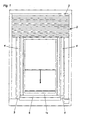
- Fig. 1 shows a typical installation situation of a window frame 1a within a building opening, which can be circumferentially isolated by a lost formwork 2 and positioned at a predetermined location.
- the lost formwork 2 has a DämmMech 3 with a downwardly open receiving shaft for a shutter not shown here (eg, a windable roller shutter) on. The receiving shaft is not visible in the figure shown.
- the lost formwork 2 further comprises left and right side parts 4 in the form of reveal embossing moldings, which can also be made from a foamed plastic. Recognizable are fastening profiles 5, which serve in addition to their insulating property for edge-side joining of the side parts 4 with a arranged under the sill 6 base plate.
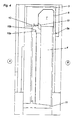
- Fig. 2 shows a side part of the lost formwork 2 in a perspective sectional view.
- the lost formwork 2 is formed in the form of a lintel with a foamed insulating body 3, wherein the insulating body 3 has a downwardly open receiving shaft 7 for supporting a roller shutter not shown here.
- the roller shutter may for example comprise a windable roller shutter with a winding shaft.
- a metal profile 8 (preferably made of galvanized sheet steel) is arranged, whereby an increased stability of the insulating body 3 and an improved mounting possibility of the shutter is made possible. Because the metal profile 8 is arranged inside the insulating body 3 and not on the outside thereof, the material requirement for the metal profile 8 is also smaller. Visible is an upper mounting profile 9 made of a foam plastic with a support 9a for the insulating body 3. Of relevance is a stop element 10, on which in mounting position of in Fig. 1 shown window or door frame can rest. The stop element 10 is made of a foamed plastic as a thermal insulation element.
- the stop element 10 comprises in the shown Embodiment offset staggered stop surfaces 10a and 10b, where the profiled window frame 1 of the subsequently to be mounted window can rest.
- the stop element 10 for the window frame 1 a can either be integrally connected to the insulating body 3 or be detachably connected thereto.
- the releasable attachment can be done for example by a snap connection, by a positive connection or by undercut.
- side parts 4 are provided, which are also made of a foam plastic.
- the side parts 4 have a projecting stop 4a, on which the lateral window frame 1a can rest and is thus largely insulated from the cold outside air. Visible is also in Fig.
- the upper fastening profile 9 and the lower fastening profile 5 are preferably only cut straight so that no notching of the adjacent molded parts (insulating body 3, side part 4 and insulating plate 11) is necessary.
- Fig. 3 shows an exploded view of the lost form 2 according to Fig. 2 , wherein the foamed insulating body 3 has a downwardly open receiving shaft 7 for a roller shutter.
- the preformed metal profile 8 is embedded in the receiving shaft 7.
- the stopper member 10 is formed integrally with either the insulating body 3 or releasably secured thereto for the purpose of easy interchangeability.
- the insulation and mounting system shown is arranged in a window or door frame 1 a completely running around within the building opening. All parts shown (with the exception of the metal section 8 and the sill 6) can be made of a foam plastic (eg an expanded polystyrene rigid foam).
- the density of the respective plastic components depends on their static load, ie that mechanically stressed parts are designed with respect to those with lower mechanical stress with higher plastic density.
- the lost formwork 2 is designed as a multipart, prefabricated assembly unit and can be prefixed as a common structural unit in the building opening as thermal insulation, whereupon a positionally accurate positioning of the window frame 1a to be inserted in the building opening can take place.
- Fig. 4 shows a vertical section of the arranged in the building opening lost formwork 2 with the upper insulating body 3, which has a receiving shaft 7 and a contour of the receiving shaft 7 adapted metal profile 8.
- the metal profile 8 is led out to the outside B (the side with the colder ambient air) and has a cleaning edge 8a for a mortar still to be applied.
- the lateral conclusion to the building wall forms the side part 4, while the lower end to the building wall of the base plate 11 is formed.
- Trained as a thermal element stop element 10 for the window frame 1 a is mounted in an exchangeable manner on the insulating body 3.
- the still attached to the lost formwork 2 window frame 1a is in mounting position on the two stepped stop surfaces 10a and 10b of the stop element 10 at.
- the reference numeral 12 generally denotes an insulating part, which is convex on its side facing the roller shutter, so that the sliding roller shutter does not come into contact with the stop element 10.
- a Ein rehabilitationitzkeit for an insect screen can be provided.
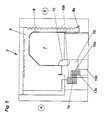
- Fig. 5 shows the lost formwork 2 with the heat-insulating stop member 10 for the profiled window or door frame 1 a. It is particularly well recognizable that both the peripheral edge of the window frame 1a and the side B of the window frame 1a directed towards the outside B are encompassed by the stop element 10 so that no thermal bridge from the inside A of the warmer ambient air to the outside B of the colder ambient air can occur. A relative to the stationary window frame 1a pivotable window or door leaf can strike at the two window stops 13a and 13b.
- the invention can also be provided to form the insulating body 3, the side panels 4 and / or the base plate 11 variable in length.
- the above-mentioned assemblies each have two relatively movable mold parts, which are telescopically movable. In this way, an optimal adaptation of the lost formwork 2 to the respective size of the building opening can be brought about.
- the present invention is not limited to the embodiment shown, but includes all variants and technical equivalents that may fall within the scope of the following claims. Also, the location selected in the description, such as top, bottom, side, etc. on the usual installation position of the lost formwork 2 and on the directly described as well shown figure and are mutatis mutandis transferred to the new situation in a change in position.
Landscapes
- Engineering & Computer Science (AREA)
- Architecture (AREA)
- Structural Engineering (AREA)
- Civil Engineering (AREA)
- Mechanical Engineering (AREA)
- Special Wing (AREA)
- Operating, Guiding And Securing Of Roll- Type Closing Members (AREA)
Abstract
Description
- Die vorliegende Erfindung bezieht sich auf eine verlorene Schalung zum Einbau in eine Gebäudeöffnung, mit einem Dämmkörper, welcher einen nach unten offenen Aufnahmeschacht zur Lagerung eines Rollladenkastens aufweist, und mit einem Anschlagelement für einen in der Gebäudeöffnung zu montierenden Fenster- oder Türrahmen, wobei das Anschlagelement als Wärmedämmelement ausgebildet ist.
- Unter einer verlorenen Schalung wird eine Schalung verstanden, die - nachdem sie ihre Schalungsfunktion erfüllt hat - im Baukörper verbleibt. Es ist bereits bekannt, eine verlorene Schalung so auszubilden, dass sie einen nach unten offenen Aufnahmeschacht zur Aufnahme eines Rollladens od. dgl. aufweist. Solche Schalungen kommen dann insbesondere als Sturzschalungen zum Einsatz. Aus der österreichischen Patentschrift
AT 412 109 B - Die
AT 004 384 U1 - Die
DE 44 43 804 offenbart einen Rollladenkasten mit einem im Querschnitt etwa bogen- oder U-förmigen Formkörper, wobei der Formkörper innen mit einer Metall- oder Kunststoffschicht gefertigt ist. - Aufgabe der vorliegenden Erfindung ist es, eine verlorene Schalung der eingangs erwähnten Gattung mit einem verminderten Transmissionswärmeverlust anzugeben, welche darüber hinaus das nachträgliche Einsetzen eines Fenster- bzw. Türrahmens vereinfacht.
- Dies wird erfindungsgemäß durch die Merkmale des Anspruchs 1 gelöst.
- Auf diese Weise können Anschlagelemente in Form von verschieden geformten Profilstücken Verwendung finden, sodass das Anschlagelement die jeweilige Form und Größe des nachträglich anzubringenden Fenster- bzw. Türrahmens aufweist.
- Die Fensterfugen sind aus wärmetechnischer Sicht problematische Übergangszonen, an denen die Wärme sehr schnell nach außen transportiert wird. Im Bereich solcher Wärmebrücken sinkt bei kalten Außentemperaturen die raumseitige Oberflächentemperatur der Bauteile stark ab. Durch die Bereitstellung eines Wärmedämmelementes können der Transmissionswärmeverlust, die Gefahr von Schimmelbildung und auch die Heizkosten erheblich reduziert werden.
- Gemäß einem bevorzugten Ausführungsbeispiel der Erfindung kann vorgesehen sein, dass die verlorene Schalung einen einstückig ausgebildeten Dämmkörper aufweist, der den nach unten offenen Aufnahmeschacht für den Rollledenkasten aufweist. Dieser Dämmkörper kann aus einem Schaumkunststoff (z.B. aus einem expandierten Polystyrol-Hartschaum) hergestellt sein, der neben guten isolierenden Eigenschaften auch ein geringes Eigengewicht sowie gute formstabile Eigenschaften aufweist.
- Gemäß einer möglichen Ausgestaltung der Erfindung kann vorgesehen sein, dass innerhalb des Aufnahmeschachtes ein Metallprofil angeordnet ist, wodurch eine zusätzliche Stabilität der verlorenen Schalung herbeigeführt werden kann. Hierbei kann es zweckmäßig sein, den Aufnahmeschacht für den Rollladen in einem geschäumten Dämmkörper auszubilden, wobei das Metallprofil an der Innenwand des Aufnahmeschachtes anliegt, sodass das Metallprofil vom Dämmkörper im Wesentlichen vollständig umgeben ist. Das Metallprofil ist also im Wesentlichen der Kontur des Aufnahmeschachtes angepasst. Im Inneren bzw. am Metallprofil ist dann der Rollladen sowie eine Wickelwelle zum Auf- bzw. Abwickeln des Rollladens stabil fixierbar. Eine zweckmäßige Ausgestaltung sieht dabei vor, das Metallprofil einstückig und aus verzinktem Stahlblech auszubilden.
- Dadurch, dass das Metallprofil im Inneren des Aufnahmeschachtes angeordnet ist und dabei vom geschäumten Kunststoffmaterial des Dämmkörpers im Wesentlichen vollständig umgeben ist, kann der erforderliche Materialbedarf des Metallprofiles reduziert werden, wobei der das Metallprofil umgebende Dämmkörper zudem bessere Haftungseigenschaften für einen nachträglich aufzutragenden Putz aufweist.
- Bei einer bevorzugten Ausführungsform der Erfindung kann vorgesehen sein, dass das Anschlagelement aus demselben Material wie der Dämmkörper hergestellt ist. Dieses Material kann dabei ein Schaumkunststoff (beispielsweise ein expandierter EPS-Hartschaum oder ein PU-Hartschaum) sein.
- Günstigerweise ist vorgesehen, dass die verlorene Schalung eine der Gebäudeöffnung zugewandte Außenfläche und eine dem Fenster- oder Türrahmen zugewandte Innenfläche aufweist, wobei das Anschlagelement an der besagten Innenfläche angeordnet ist. Aus wärmetechnischen Überlegungen kann es vorteilhaft sein, das Anschlagelement im Bereich des Aufnahmeschachtes anzuordnen.
- Bei einem möglichen Ausführungsbeispiel kann vorgesehen sein, das Anschlagelement mit dem Dämmkörper zu verkleben.
- Das Anschlagelement kann also an der verlorenen Schalung in Form eines modularen Austauschelementes angeordnet sein, wobei das Anschlagelement mit dem Dämmkörper durch eine Formschlussverbindung oder eine Rastverbindung lösbar verbindbar ist. Auch kann es vorteilhaft sein, wenn das Anschlagelement mehrere Anschlagflächen aufweist, an denen in Montagelage jeweils gesonderte Anschläge des Tür- oder Fensterrahmens anliegen.
- Gemäß einem besonderen Aspekt der Erfindung kann es vorteilhaft sein, die verlorene Schalung mehrteilig auszubilden, wobei wenigstens zwei Befestigungsprofile aus einem wärmedämmenden Material und ein Dämmkörper vorgesehen sind, der über die Befestigungsprofile an den Seitenwänden der Gebäudeöffnung lösbar anordenbar ist. Es kann auch günstig sein, die wenigstens zwei Befestigungsprofile, den Dämmkörper und das Anschlagelement aus einem wärmedämmenden Material herzustellen, wobei die verlorene Schalung als vorgefertigte Montageeinheit ausgebildet ist, die in der Gebäudeöffnung als Wärmedämmung anordenbar ist. Zweckmäßigerweise umfasst die vorgefertigte Montageeinheit auch Seitenteile für die Seitenwände der Gebäudeöffnung sowie eine Basisplatte für die Fensterbank, sodass der Umfangsrand des Fenster- bzw. Türrahmens umlaufend isolierbar ist.
- Weitere Einzelheiten und Vorteile der vorliegenden Erfindung werden anhand der nachfolgenden Figurenbeschreibung erläutert. Dabei zeigt:
- Fig. 1
- einen Fensterrahmen in einer Ansicht von vorne, der mittels einer verlorenen Schalung innerhalb einer Wandöffnung eingesetzt ist,
- Fig. 2
- eine perspektivische Schnittdarstellung eines Seitenteils der verlorenen Schalung,
- Fig. 3
- eine Explosionsdarstellung der verlorenen Schalung gemäß
Fig. 3 , - Fig. 4
- einen Vertikalschnitt der in die Wandöffnung eingesetzten verlorenen Schalung, und
- Fig. 5
- eine vergrößerte Darstellung des oberen Bereichs der verlorenen Schalung mit einem schematisch eingezeichneten Fensterrahmen.
-
Fig. 1 zeigt eine typische Einbausituation eines Fensterrahmens 1a innerhalb einer Gebäudeöffnung, der durch eine verlorene Schalung 2 umlaufend isoliert und an einer vorgegebenen Stelle positioniert werden kann. Die verlorene Schalung 2 weist einen Dämmkörper 3 mit einem nach unten offenen Aufnahmeschacht für einen hier nicht dargestellten Rollladen (z.B. einen aufwickelbaren Rollladenpanzer) auf. Der Aufnahmeschacht ist in der gezeigten Figur nicht ersichtlich. Die verlorene Schalung 2 umfasst im Weiteren linke und rechte Seitenteile 4 in Form von Laibungsdämmformteilen, die aus ebenfalls aus einem Schaumkunststoff hergestellt werden können. Erkennbar sind Befestigungsprofile 5, die neben ihrer isolierenden Eigenschaft auch zum kantseitigen Verbinden der Seitenteile 4 mit einer unter der Fensterbank 6 angeordneten Basisplatte dienen. -
Fig. 2 zeigt einen Seitenteil der verlorenen Schalung 2 in einer perspektivischen Schnittdarstellung. Die verlorene Schalung 2 ist in Form einer Sturzschalung mit einem geschäumten Dämmkörper 3 ausgebildet, wobei der Dämmkörper 3 einen nach unten offenen Aufnahmeschacht 7 zur Lagerung eines hier nicht dargestellten Rollladens aufweist. Der Rolladen kann beispielsweise einen aufwickelbaren Rollladenpanzer mit einer Wickelwelle umfassen. Auf eine nähere Darstellung bzw. Beschreibung solcher Rollläden mit einem Aufwickelmechanismus wird im Rahmen der vorliegenden Erfindung verzichtet, da diese gemäß dem Stand der Technik in vielfältigsten Ausführungsformen bereits bekannt sind, wodurch auch auf eine nähere Beschreibung derselben verzichtet wird. Im Inneren des Dämmkörpers 3 ist ein Metallprofil 8 (vorzugsweise aus verzinktem Stahlblech) angeordnet, wodurch eine erhöhte Stabilität des Dämmkörpers 3 und eine verbesserte Montagemöglichkeit des Rollladens ermöglicht wird. Dadurch, dass das Metallprofil 8 im Inneren des Dämmkörpers 3 und nicht an dessen Außenseite angeordnet ist, fällt auch der Materialbedarf für das Metallprofil 8 geringer aus. Erkennbar ist ein oberes Befestigungsprofil 9 aus einem Schaumkunststoff mit einer Auflage 9a für den Dämmkörper 3. Von Relevanz ist ein Anschlagelement 10, an dem in Montagelage der inFig. 1 gezeigte Fenster- bzw. Türrahmen anliegen kann. Das Anschlagelement 10 ist als Wärmedämmelement aus einem geschäumten Kunststoff hergestellt. Das Anschlagelement 10 umfasst im gezeigten Ausführungsbeispiel zueinander versetzte, stufenförmige Anschlagflächen 10a und 10b, an denen der profilierte Fensterrahmen 1 des nachträglich zu montierenden Fensters anliegen kann. Das Anschlagelement 10 für den Fensterrahmen 1a kann mit dem Dämmkörper 3 entweder einstückig verbunden sein oder mit diesem auch lösbar verbunden sein. Die lösbare Befestigung kann beispielsweise durch eine Schnappverbindung, durch eine Formschlussverbindung oder durch Hinterschneidung erfolgen. Zur seitlichen Isolierung des Fensters gegenüber der Gebäudeöffnung sind Seitenteile 4 vorgesehen, die ebenfalls aus einem Schaumkunststoff hergestellt sind. Die Seitenteile 4 weisen einen vorspringenden Anschlag 4a auf, an dem der seitliche Fensterrahmen 1a anliegen kann und so gegenüber der kalten Außenluft weitgehend isoliert ist. Erkennbar ist auch das inFig. 1 bereits gezeigte untere Befestigungsprofil 5, welches als Eckverbinder zwischen dem Seitenteil 4 und der Basisplatte 11 unter der Fensterbank dient. Das obere Befestigungsprofil 9 und das untere Befestigungsprofil 5 werden vorzugsweise nur gerade geschnitten, sodass keine Ausklinkung der benachbarten Formteile (Dämmkörper 3, Seitenteil 4 und Isolierplatte 11) notwendig ist. -
Fig. 3 zeigt eine Explosionsdarstellung der verlorenen Schalung 2 gemäßFig. 2 , wobei der geschäumte Dämmkörper 3 einen nach unten offenen Aufnahmeschacht 7 für einen Rollladen aufweist. Das vorgeformte Metallprofil 8 wird in den Aufnahmeschacht 7 eingebettet. Das Anschlagelement 10 ist entweder mit dem Dämmkörper 3 integral ausgebildet oder zum Zweck der einfachen Austauschbarkeit lösbar daran befestigt. Dargestellt sind die Eckverbindungsstücke in Form der Befestigungsprofile 9 und 5 und die unter der Fensterbank anzuordnende Basisplatte 11. Das gezeigte Isolier- und Montagesystem ist in einer den Fenster- bzw. Türrahmen 1 a vollständig rundum laufenden Weise innerhalb der Gebäudeöffnung angeordnet. Sämtliche gezeigten Teile (mit Ausnahme des Metallprofiles 8 und der Fensterbank 6) können aus einem Schaumkunststoff (z.B. einem expandierten Polystyrol-Hartschaum) hergestellt werden. Die Dichte der jeweiligen Kunststoffbauteile richtet sich nach deren statischer Belastung, d.h. dass mechanisch stärker beanspruchte Teile hinsichtlich jenen mit geringerer mechanischer Belastung mit höherer Kunststoffdichte ausgeführt werden. Die verlorene Schalung 2 ist als mehrteilige, vorgefertigte Montageeinheit ausgebildet und kann als gemeinsame Baueinheit in der Gebäudeöffnung als Wärmedämmung vorfixierbar, woraufhin eine lagegenaue Positionierung des in der Gebäudeöffnung einzusetzenden Fensterrahmes 1a erfolgen kann. -
Fig. 4 zeigt einen Vertikalschnitt der in der Gebäudeöffnung angeordneten verlorenen Schalung 2 mit dem oberen Dämmkörper 3, der einen Aufnahmeschacht 7 und ein den Konturen des Aufnahmeschachtes 7 angepasstes Metallprofil 8 aufweist. Das Metallprofil 8 ist an die Außenseite B (die Seite mit der kälteren Umgebungsluft) herausgeführt und weist eine Putzkante 8a für einen noch aufzutragenden Mörtel auf. Den seitlichen Abschluss zur Gebäudewand bildet das Seitenteil 4, während der untere Abschluss zur Gebäudewand von der Basisplatte 11 gebildet wird. Das als Wärmedämmelement ausgebildete Anschlagelement 10 für den Fensterrahmen 1 a ist in austauschbarer Weise am Dämmkörper 3 gelagert. Der noch an der verlorenen Schalung 2 zu befestigende Fensterrahmen 1a liegt in Montagelage an den beiden stufenförmigen Anschlagflächen 10a und 10b des Anschlagelementes 10 an. Mit dem Bezugszeichen 12 ist allgemein ein Dämmteil gekennzeichnet, welches auf seiner dem Rollladen zugewandten Seite konvex ausgebildet ist, damit der gleitende Rollladenpanzer nicht mit dem Anschlagelement 10 in Berührung kommt. Anstelle des Dämmteiles 12 kann auch eine Einhängemöglichkeit für ein Insektenschutzrollo vorgesehen werden. -
Fig. 5 zeigt die verlorene Schalung 2 mit dem wärmedämmenden Anschlagelement 10 für den profiliierten Fenster- bzw. Türrahmen 1 a. Besonders gut erkennbar ist, dass sowohl der Umfangsrand des Fensterrahmens 1 a als auch die zur Außenseite B hin gerichtete Seite des Fensterrahmes 1a vom Anschlagelement 10 umgriffen wird, sodass keine Wärmebrücke von der Innenseite A der wärmerem Umgebungsluft zur Außenseite B der kälteren Umgebungsluft auftreten kann. Ein relativ zum stationären Fensterrahmen 1a schwenkbarer Fenster- bzw. Türflügel kann an den beiden Fensteranschlägen 13a und 13b anschlagen. - Gemäß einer möglichen Weiterbildung der Erfindung kann auch vorgesehen sein, den Dämmkörper 3, die Seitenteile 4 und/oder die Basisplatte 11 längenveränderlich auszubilden. Hierbei können die vorstehend genannten Baugruppen jeweils zwei relativ zueinander verschiebbare Formteile aufweisen, die teleskopisch zueinander verfahrbar sind. Auf diese Weise kann eine optimale Anpassung der verlorenen Schalung 2 an die jeweilige Größe der Gebäudeöffnung herbeigeführt werden.
- Die vorliegende Erfindung beschränkt sich nicht auf das gezeigte Ausführungsbeispiel, sondern umfasst bzw. erstreckt sich auf alle Varianten und technischen Äquivalente, die in die Reichweite der nachfolgenden Ansprüche fallen können. Auch sind die in der Beschreibung gewählten Lageangaben, wie z.B. oben, unten, seitlich, usw. auf die übliche Einbaulage der verlorenen Schalung 2 sowie auf die unmittelbar beschriebene sowie dargestellte Figur bezogen und sind bei einer Lageänderung sinngemäß auf die neue Lage zu übertragen.
Claims (15)
- Verlorene Schalung (2) zum Einbau in eine Gebäudeöffnung, mit einem Dämmkörper (3), welcher einen nach unten offenen Aufnahmeschacht (7) zur Lagerung eines Rollladenkastens aufweist, und mit einem Anschlagelement (10) für einen in der Gebäudeöffnung zu montierenden Fenster- oder Türrahmen (1a), wobei das Anschlagelement (10) als Wärmedämmelement ausgebildet ist, dadurch gekennzeichnet, dass das Anschlagelement (10) mit dem Dämmkörper (3) lösbar verbindbar ist.
- Verlorene Schalung nach Anspruch 1, dadurch gekennzeichnet, dass der Dämmkörper (3) einstückig ausgebildet ist.
- Verlorene Schalung nach Anspruch 1 oder 2, dadurch gekennzeichnet, dass innerhalb des Aufnahmeschachtes (7) ein Metallprofil (8) angeordnet ist.
- Verlorene Schalung nach Anspruch 3, dadurch gekennzeichnet, dass die verlorene Schalung (2) einen geschäumten Dämmkörper (3) aufweist, der das Metallprofil (8) im Wesentlichen vollständig umgibt.
- Verlorene Schalung nach Anspruch 3 oder 4, dadurch gekennzeichnet, dass der Querschnitt des Metallprofiles (8) dem Querschnitt des Aufnahmeschachtes (7) angepasst ist.
- Verlorene Schalung nach einem der Ansprüche 3 bis 5, dadurch gekennzeichnet, dass das Metallprofil (8) einstückig ausgebildet und vorzugsweise aus verzinktem Stahlblech hergestellt ist.
- Verlorene Schalung nach einem der Ansprüche 2 bis 6, dadurch gekennzeichnet, dass das Anschlagelement (10) aus demselben Material wie der Dämmkörper (3) hergestellt ist.
- Verlorene Schalung nach einem der Ansprüche 1 bis 7, dadurch gekennzeichnet, dass die verlorene Schalung (2) eine der Gebäudeöffnung zugewandte Außenfläche und eine dem Fenster- oder Türrahmen (1 a) zugewandte Innenfläche aufweist, wobei das Anschlagelement (10) an der Innenfläche angeordnet ist.
- Verlorene Schalung nach einem der Ansprüche 1 bis 8, dadurch gekennzeichnet, dass das Anschlagelement (10) im Bereich des Aufnahmeschachtes (7) angeordnet ist.
- Verlorene Schalung nach einem der Ansprüche 1 bis 9, dadurch gekennzeichnet, dass das Anschlagelement (10) mit dem Dämmkörper (3) durch eine Formschlussverbindung oder eine Rastverbindung lösbar verbindbar ist.
- Verlorene Schalung nach einem der Ansprüche 1 bis 10, dadurch gekennzeichnet, dass das Anschlagelement (10) aus einem Profilstück aus einem wärmedämmenden Material hergestellt ist.
- Verlorene Schalung nach einem der Ansprüche 1 bis 11, dadurch gekennzeichnet, dass das Anschlagelement (10) mehrere Anschlagflächen (10a, 10b) aufweist, die in Montagelage jeweils an gesonderten Anschlägen des Tür- oder Fensterrahmens (1a) anliegen.
- Verlorene Schalung nach einem der Ansprüche 1 bis 12, dadurch gekennzeichnet, dass die verlorene Schalung (2) mehrteilig ausgebildet ist, wobei wenigstens zwei Befestigungsprofile (5, 9) aus einem wärmedämmenden Material und ein Dämmkörper (3) vorgesehen sind, wobei der Dämmkörper (3) über die Befestigungsprofile (9, 5) an den Seitenwänden der Gebäudeöffnung lösbar anordenbar ist.
- Verlorene Schalung nach Anspruch 13, dadurch gekennzeichnet, dass die wenigstens zwei Befestigungsprofile (5, 9), der Dämmkörper (3) und das Anschlagelement (10) aus einem wärmedämmenden Material hergestellt sind.
- Verlorene Schalung nach Anspruch 13 oder 14, dadurch gekennzeichnet, dass die verlorene Schalung (2) als vorgefertigte Montageeinheit ausgebildet ist, die in der Gebäudeöffnung als Wärmedämmung anordenbar ist.
Applications Claiming Priority (1)
| Application Number | Priority Date | Filing Date | Title |
|---|---|---|---|
| AT2172009A AT507678B1 (de) | 2009-02-10 | 2009-02-10 | Verlorene schalung zum einbau in eine gebäudeöffnung |
Publications (3)
| Publication Number | Publication Date |
|---|---|
| EP2216476A2 true EP2216476A2 (de) | 2010-08-11 |
| EP2216476A3 EP2216476A3 (de) | 2014-04-30 |
| EP2216476B1 EP2216476B1 (de) | 2014-10-29 |
Family
ID=42035925
Family Applications (1)
| Application Number | Title | Priority Date | Filing Date |
|---|---|---|---|
| EP20100000255 Active EP2216476B1 (de) | 2009-02-10 | 2010-01-13 | Verlorene Schalung zum Einbau in eine Gebäudeöffnung |
Country Status (2)
| Country | Link |
|---|---|
| EP (1) | EP2216476B1 (de) |
| AT (1) | AT507678B1 (de) |
Cited By (1)
| Publication number | Priority date | Publication date | Assignee | Title |
|---|---|---|---|---|
| AT515390A3 (de) * | 2014-02-07 | 2016-09-15 | D&M Rolladentechnik Gmbh | Energieeffiziente Einbauanordnung mit einem Kastenelement |
Citations (3)
| Publication number | Priority date | Publication date | Assignee | Title |
|---|---|---|---|---|
| DE4443804A1 (de) | 1994-12-09 | 1996-06-13 | Helmut Grauer | Rolladenkasten |
| AT4384U1 (de) | 1999-01-15 | 2001-06-25 | D & M Rolladentechnik Gmbh | Rolladenvorrichtung |
| AT412109B (de) | 2002-12-27 | 2004-09-27 | Kraler Franz | Verlorene schalung |
Family Cites Families (1)
| Publication number | Priority date | Publication date | Assignee | Title |
|---|---|---|---|---|
| DE3634128A1 (de) * | 1986-10-07 | 1988-04-21 | Besler Armin | Zusammenfassung eines mit aufgesetzten rolladenfuehrungen versehenen blendrahmens mit einem ihm zugeordneten rolladenkasten |
-
2009
- 2009-02-10 AT AT2172009A patent/AT507678B1/de active
-
2010
- 2010-01-13 EP EP20100000255 patent/EP2216476B1/de active Active
Patent Citations (3)
| Publication number | Priority date | Publication date | Assignee | Title |
|---|---|---|---|---|
| DE4443804A1 (de) | 1994-12-09 | 1996-06-13 | Helmut Grauer | Rolladenkasten |
| AT4384U1 (de) | 1999-01-15 | 2001-06-25 | D & M Rolladentechnik Gmbh | Rolladenvorrichtung |
| AT412109B (de) | 2002-12-27 | 2004-09-27 | Kraler Franz | Verlorene schalung |
Cited By (1)
| Publication number | Priority date | Publication date | Assignee | Title |
|---|---|---|---|---|
| AT515390A3 (de) * | 2014-02-07 | 2016-09-15 | D&M Rolladentechnik Gmbh | Energieeffiziente Einbauanordnung mit einem Kastenelement |
Also Published As
| Publication number | Publication date |
|---|---|
| EP2216476A3 (de) | 2014-04-30 |
| AT507678B1 (de) | 2010-07-15 |
| EP2216476B1 (de) | 2014-10-29 |
| AT507678A4 (de) | 2010-07-15 |
Similar Documents
| Publication | Publication Date | Title |
|---|---|---|
| EP2039871B1 (de) | Rolladen und Glied dafür | |
| CH699766A2 (de) | Rahmenanschlussteil zur Befestigung an einem Rahmen. | |
| EP2666948B1 (de) | Rahmenanordnung für ein Sektionaltorpaneel | |
| AT397281B (de) | Verglaste und/oder mit füllung versehene brandschutztüre | |
| DE2801527A1 (de) | Lueftungsvorrichtung | |
| EP1329583B1 (de) | Aussenverkleidung mit integrierter Wärmedämmung | |
| EP2216476B1 (de) | Verlorene Schalung zum Einbau in eine Gebäudeöffnung | |
| EP1070820B1 (de) | Fenster | |
| DE29900597U1 (de) | Rolladenvorrichtung | |
| DE1908567A1 (de) | Kombinierte Form- und Verglasungsleiste als Profilstab insbesondere zum Halten einer Glasscheibe vorzugsweise an einem Rahmen | |
| DE202009002913U1 (de) | Rollladenkasten | |
| DE202004021567U1 (de) | Wärmedämmendes Element für Hohlräume | |
| DE19637836A1 (de) | Fenstereinfassungselement | |
| DE9313426U1 (de) | Lüftungsvorrichtung für Räume | |
| DE202010003984U1 (de) | Lüftungsvorrichtung für Räume | |
| EP4006291B1 (de) | Zarge sowie fenstereinbauelement mit kompressionseinlage | |
| EP2060725A1 (de) | Zarge für den Einbau eines Fensters oder einer Tür | |
| DE3311668A1 (de) | Rolladenkasten | |
| DE19948467C2 (de) | Aufsatz-Rolladenkasten | |
| EP1391567A2 (de) | Wärmedämmelement für Gebäudefassaden und Verfahren zu dessen Montage | |
| DE202007017443U1 (de) | Kastenelement | |
| DE19709154C2 (de) | Verfahren zum Zusammenbauen von Isolierglasscheiben mit thermoplastischem Abstandhalter und mit eingesetztem Sprossenrahmen | |
| DE202016001423U1 (de) | Gebäude mit einer eine Fensteröffnung aufweisenden Gebäudewand und einer Beschattungseinrichtung für die Fensteröffnung | |
| EP1683925B1 (de) | Wärmedämmelement für die Laibung von Gebäudeöffnungen | |
| EP0834623A2 (de) | Wärmedämmelement |
Legal Events
| Date | Code | Title | Description |
|---|---|---|---|
| PUAI | Public reference made under article 153(3) epc to a published international application that has entered the european phase |
Free format text: ORIGINAL CODE: 0009012 |
|
| AK | Designated contracting states |
Kind code of ref document: A2 Designated state(s): AT BE BG CH CY CZ DE DK EE ES FI FR GB GR HR HU IE IS IT LI LT LU LV MC MK MT NL NO PL PT RO SE SI SK SM TR |
|
| AX | Request for extension of the european patent |
Extension state: AL BA RS |
|
| PUAL | Search report despatched |
Free format text: ORIGINAL CODE: 0009013 |
|
| AK | Designated contracting states |
Kind code of ref document: A3 Designated state(s): AT BE BG CH CY CZ DE DK EE ES FI FR GB GR HR HU IE IS IT LI LT LU LV MC MK MT NL NO PL PT RO SE SI SK SM TR |
|
| AX | Request for extension of the european patent |
Extension state: AL BA RS |
|
| RIC1 | Information provided on ipc code assigned before grant |
Ipc: E06B 9/17 20060101AFI20140321BHEP Ipc: E04G 15/02 20060101ALI20140321BHEP |
|
| 17P | Request for examination filed |
Effective date: 20140523 |
|
| RBV | Designated contracting states (corrected) |
Designated state(s): AT BE BG CH CY CZ DE DK EE ES FI FR GB GR HR HU IE IS IT LI LT LU LV MC MK MT NL NO PL PT RO SE SI SK SM TR |
|
| GRAP | Despatch of communication of intention to grant a patent |
Free format text: ORIGINAL CODE: EPIDOSNIGR1 |
|
| INTG | Intention to grant announced |
Effective date: 20140716 |
|
| GRAS | Grant fee paid |
Free format text: ORIGINAL CODE: EPIDOSNIGR3 |
|
| GRAA | (expected) grant |
Free format text: ORIGINAL CODE: 0009210 |
|
| AK | Designated contracting states |
Kind code of ref document: B1 Designated state(s): AT BE BG CH CY CZ DE DK EE ES FI FR GB GR HR HU IE IS IT LI LT LU LV MC MK MT NL NO PL PT RO SE SI SK SM TR |
|
| REG | Reference to a national code |
Ref country code: GB Ref legal event code: FG4D Free format text: NOT ENGLISH |
|
| REG | Reference to a national code |
Ref country code: CH Ref legal event code: EP |
|
| REG | Reference to a national code |
Ref country code: AT Ref legal event code: REF Ref document number: 693712 Country of ref document: AT Kind code of ref document: T Effective date: 20141115 |
|
| REG | Reference to a national code |
Ref country code: IE Ref legal event code: FG4D Free format text: LANGUAGE OF EP DOCUMENT: GERMAN |
|
| REG | Reference to a national code |
Ref country code: DE Ref legal event code: R096 Ref document number: 502010008119 Country of ref document: DE Effective date: 20141211 |
|
| REG | Reference to a national code |
Ref country code: CH Ref legal event code: NV Representative=s name: ISLER AND PEDRAZZINI AG, CH |
|
| REG | Reference to a national code |
Ref country code: NL Ref legal event code: VDEP Effective date: 20141029 |
|
| REG | Reference to a national code |
Ref country code: LT Ref legal event code: MG4D |
|
| PG25 | Lapsed in a contracting state [announced via postgrant information from national office to epo] |
Ref country code: PT Free format text: LAPSE BECAUSE OF FAILURE TO SUBMIT A TRANSLATION OF THE DESCRIPTION OR TO PAY THE FEE WITHIN THE PRESCRIBED TIME-LIMIT Effective date: 20150302 Ref country code: FI Free format text: LAPSE BECAUSE OF FAILURE TO SUBMIT A TRANSLATION OF THE DESCRIPTION OR TO PAY THE FEE WITHIN THE PRESCRIBED TIME-LIMIT Effective date: 20141029 Ref country code: NL Free format text: LAPSE BECAUSE OF FAILURE TO SUBMIT A TRANSLATION OF THE DESCRIPTION OR TO PAY THE FEE WITHIN THE PRESCRIBED TIME-LIMIT Effective date: 20141029 Ref country code: NO Free format text: LAPSE BECAUSE OF FAILURE TO SUBMIT A TRANSLATION OF THE DESCRIPTION OR TO PAY THE FEE WITHIN THE PRESCRIBED TIME-LIMIT Effective date: 20150129 Ref country code: IS Free format text: LAPSE BECAUSE OF FAILURE TO SUBMIT A TRANSLATION OF THE DESCRIPTION OR TO PAY THE FEE WITHIN THE PRESCRIBED TIME-LIMIT Effective date: 20150228 Ref country code: ES Free format text: LAPSE BECAUSE OF FAILURE TO SUBMIT A TRANSLATION OF THE DESCRIPTION OR TO PAY THE FEE WITHIN THE PRESCRIBED TIME-LIMIT Effective date: 20141029 Ref country code: LT Free format text: LAPSE BECAUSE OF FAILURE TO SUBMIT A TRANSLATION OF THE DESCRIPTION OR TO PAY THE FEE WITHIN THE PRESCRIBED TIME-LIMIT Effective date: 20141029 |
|
| PG25 | Lapsed in a contracting state [announced via postgrant information from national office to epo] |
Ref country code: LV Free format text: LAPSE BECAUSE OF FAILURE TO SUBMIT A TRANSLATION OF THE DESCRIPTION OR TO PAY THE FEE WITHIN THE PRESCRIBED TIME-LIMIT Effective date: 20141029 Ref country code: SE Free format text: LAPSE BECAUSE OF FAILURE TO SUBMIT A TRANSLATION OF THE DESCRIPTION OR TO PAY THE FEE WITHIN THE PRESCRIBED TIME-LIMIT Effective date: 20141029 Ref country code: CY Free format text: LAPSE BECAUSE OF FAILURE TO SUBMIT A TRANSLATION OF THE DESCRIPTION OR TO PAY THE FEE WITHIN THE PRESCRIBED TIME-LIMIT Effective date: 20141029 Ref country code: GR Free format text: LAPSE BECAUSE OF FAILURE TO SUBMIT A TRANSLATION OF THE DESCRIPTION OR TO PAY THE FEE WITHIN THE PRESCRIBED TIME-LIMIT Effective date: 20150130 Ref country code: PL Free format text: LAPSE BECAUSE OF FAILURE TO SUBMIT A TRANSLATION OF THE DESCRIPTION OR TO PAY THE FEE WITHIN THE PRESCRIBED TIME-LIMIT Effective date: 20141029 Ref country code: HR Free format text: LAPSE BECAUSE OF FAILURE TO SUBMIT A TRANSLATION OF THE DESCRIPTION OR TO PAY THE FEE WITHIN THE PRESCRIBED TIME-LIMIT Effective date: 20141029 |
|
| REG | Reference to a national code |
Ref country code: DE Ref legal event code: R097 Ref document number: 502010008119 Country of ref document: DE |
|
| PG25 | Lapsed in a contracting state [announced via postgrant information from national office to epo] |
Ref country code: DK Free format text: LAPSE BECAUSE OF FAILURE TO SUBMIT A TRANSLATION OF THE DESCRIPTION OR TO PAY THE FEE WITHIN THE PRESCRIBED TIME-LIMIT Effective date: 20141029 Ref country code: SK Free format text: LAPSE BECAUSE OF FAILURE TO SUBMIT A TRANSLATION OF THE DESCRIPTION OR TO PAY THE FEE WITHIN THE PRESCRIBED TIME-LIMIT Effective date: 20141029 Ref country code: CZ Free format text: LAPSE BECAUSE OF FAILURE TO SUBMIT A TRANSLATION OF THE DESCRIPTION OR TO PAY THE FEE WITHIN THE PRESCRIBED TIME-LIMIT Effective date: 20141029 Ref country code: EE Free format text: LAPSE BECAUSE OF FAILURE TO SUBMIT A TRANSLATION OF THE DESCRIPTION OR TO PAY THE FEE WITHIN THE PRESCRIBED TIME-LIMIT Effective date: 20141029 Ref country code: RO Free format text: LAPSE BECAUSE OF FAILURE TO SUBMIT A TRANSLATION OF THE DESCRIPTION OR TO PAY THE FEE WITHIN THE PRESCRIBED TIME-LIMIT Effective date: 20141029 |
|
| PG25 | Lapsed in a contracting state [announced via postgrant information from national office to epo] |
Ref country code: LU Free format text: LAPSE BECAUSE OF FAILURE TO SUBMIT A TRANSLATION OF THE DESCRIPTION OR TO PAY THE FEE WITHIN THE PRESCRIBED TIME-LIMIT Effective date: 20150113 |
|
| PLBE | No opposition filed within time limit |
Free format text: ORIGINAL CODE: 0009261 |
|
| STAA | Information on the status of an ep patent application or granted ep patent |
Free format text: STATUS: NO OPPOSITION FILED WITHIN TIME LIMIT |
|
| GBPC | Gb: european patent ceased through non-payment of renewal fee |
Effective date: 20150129 |
|
| PG25 | Lapsed in a contracting state [announced via postgrant information from national office to epo] |
Ref country code: MC Free format text: LAPSE BECAUSE OF FAILURE TO SUBMIT A TRANSLATION OF THE DESCRIPTION OR TO PAY THE FEE WITHIN THE PRESCRIBED TIME-LIMIT Effective date: 20141029 |
|
| 26N | No opposition filed |
Effective date: 20150730 |
|
| PG25 | Lapsed in a contracting state [announced via postgrant information from national office to epo] |
Ref country code: GB Free format text: LAPSE BECAUSE OF NON-PAYMENT OF DUE FEES Effective date: 20150129 |
|
| REG | Reference to a national code |
Ref country code: FR Ref legal event code: ST Effective date: 20150930 |
|
| REG | Reference to a national code |
Ref country code: IE Ref legal event code: MM4A |
|
| PG25 | Lapsed in a contracting state [announced via postgrant information from national office to epo] |
Ref country code: FR Free format text: LAPSE BECAUSE OF NON-PAYMENT OF DUE FEES Effective date: 20150202 |
|
| PG25 | Lapsed in a contracting state [announced via postgrant information from national office to epo] |
Ref country code: IE Free format text: LAPSE BECAUSE OF NON-PAYMENT OF DUE FEES Effective date: 20150113 |
|
| PG25 | Lapsed in a contracting state [announced via postgrant information from national office to epo] |
Ref country code: SI Free format text: LAPSE BECAUSE OF FAILURE TO SUBMIT A TRANSLATION OF THE DESCRIPTION OR TO PAY THE FEE WITHIN THE PRESCRIBED TIME-LIMIT Effective date: 20141029 |
|
| REG | Reference to a national code |
Ref country code: AT Ref legal event code: MM01 Ref document number: 693712 Country of ref document: AT Kind code of ref document: T Effective date: 20150113 |
|
| PG25 | Lapsed in a contracting state [announced via postgrant information from national office to epo] |
Ref country code: AT Free format text: LAPSE BECAUSE OF NON-PAYMENT OF DUE FEES Effective date: 20150113 |
|
| PG25 | Lapsed in a contracting state [announced via postgrant information from national office to epo] |
Ref country code: MT Free format text: LAPSE BECAUSE OF FAILURE TO SUBMIT A TRANSLATION OF THE DESCRIPTION OR TO PAY THE FEE WITHIN THE PRESCRIBED TIME-LIMIT Effective date: 20141029 |
|
| PG25 | Lapsed in a contracting state [announced via postgrant information from national office to epo] |
Ref country code: BG Free format text: LAPSE BECAUSE OF FAILURE TO SUBMIT A TRANSLATION OF THE DESCRIPTION OR TO PAY THE FEE WITHIN THE PRESCRIBED TIME-LIMIT Effective date: 20141029 Ref country code: SM Free format text: LAPSE BECAUSE OF FAILURE TO SUBMIT A TRANSLATION OF THE DESCRIPTION OR TO PAY THE FEE WITHIN THE PRESCRIBED TIME-LIMIT Effective date: 20141029 Ref country code: HU Free format text: LAPSE BECAUSE OF FAILURE TO SUBMIT A TRANSLATION OF THE DESCRIPTION OR TO PAY THE FEE WITHIN THE PRESCRIBED TIME-LIMIT; INVALID AB INITIO Effective date: 20100113 |
|
| PG25 | Lapsed in a contracting state [announced via postgrant information from national office to epo] |
Ref country code: BE Free format text: LAPSE BECAUSE OF NON-PAYMENT OF DUE FEES Effective date: 20150131 |
|
| PG25 | Lapsed in a contracting state [announced via postgrant information from national office to epo] |
Ref country code: TR Free format text: LAPSE BECAUSE OF FAILURE TO SUBMIT A TRANSLATION OF THE DESCRIPTION OR TO PAY THE FEE WITHIN THE PRESCRIBED TIME-LIMIT Effective date: 20141029 |
|
| PG25 | Lapsed in a contracting state [announced via postgrant information from national office to epo] |
Ref country code: MK Free format text: LAPSE BECAUSE OF FAILURE TO SUBMIT A TRANSLATION OF THE DESCRIPTION OR TO PAY THE FEE WITHIN THE PRESCRIBED TIME-LIMIT Effective date: 20141029 |
|
| P01 | Opt-out of the competence of the unified patent court (upc) registered |
Effective date: 20230522 |
|
| PGFP | Annual fee paid to national office [announced via postgrant information from national office to epo] |
Ref country code: DE Payment date: 20250129 Year of fee payment: 16 |
|
| PGFP | Annual fee paid to national office [announced via postgrant information from national office to epo] |
Ref country code: CH Payment date: 20250201 Year of fee payment: 16 |
|
| PGFP | Annual fee paid to national office [announced via postgrant information from national office to epo] |
Ref country code: IT Payment date: 20241210 Year of fee payment: 16 |