EP2141237A1 - Verfahren zur Verringerung des Fucosegehalts rekombinanter Proteine - Google Patents
Verfahren zur Verringerung des Fucosegehalts rekombinanter Proteine Download PDFInfo
- Publication number
- EP2141237A1 EP2141237A1 EP09000153A EP09000153A EP2141237A1 EP 2141237 A1 EP2141237 A1 EP 2141237A1 EP 09000153 A EP09000153 A EP 09000153A EP 09000153 A EP09000153 A EP 09000153A EP 2141237 A1 EP2141237 A1 EP 2141237A1
- Authority
- EP
- European Patent Office
- Prior art keywords
- amino acid
- acid sequence
- fragment
- seq
- fut8
- Prior art date
- Legal status (The legal status is an assumption and is not a legal conclusion. Google has not performed a legal analysis and makes no representation as to the accuracy of the status listed.)
- Withdrawn
Links
Images



Classifications
-
- C—CHEMISTRY; METALLURGY
- C12—BIOCHEMISTRY; BEER; SPIRITS; WINE; VINEGAR; MICROBIOLOGY; ENZYMOLOGY; MUTATION OR GENETIC ENGINEERING
- C12N—MICROORGANISMS OR ENZYMES; COMPOSITIONS THEREOF; PROPAGATING, PRESERVING, OR MAINTAINING MICROORGANISMS; MUTATION OR GENETIC ENGINEERING; CULTURE MEDIA
- C12N15/00—Mutation or genetic engineering; DNA or RNA concerning genetic engineering, vectors, e.g. plasmids, or their isolation, preparation or purification; Use of hosts therefor
- C12N15/09—Recombinant DNA-technology
- C12N15/63—Introduction of foreign genetic material using vectors; Vectors; Use of hosts therefor; Regulation of expression
-
- C—CHEMISTRY; METALLURGY
- C07—ORGANIC CHEMISTRY
- C07K—PEPTIDES
- C07K16/00—Immunoglobulins [IG], e.g. monoclonal or polyclonal antibodies
-
- C—CHEMISTRY; METALLURGY
- C12—BIOCHEMISTRY; BEER; SPIRITS; WINE; VINEGAR; MICROBIOLOGY; ENZYMOLOGY; MUTATION OR GENETIC ENGINEERING
- C12N—MICROORGANISMS OR ENZYMES; COMPOSITIONS THEREOF; PROPAGATING, PRESERVING, OR MAINTAINING MICROORGANISMS; MUTATION OR GENETIC ENGINEERING; CULTURE MEDIA
- C12N15/00—Mutation or genetic engineering; DNA or RNA concerning genetic engineering, vectors, e.g. plasmids, or their isolation, preparation or purification; Use of hosts therefor
- C12N15/09—Recombinant DNA-technology
-
- C—CHEMISTRY; METALLURGY
- C12—BIOCHEMISTRY; BEER; SPIRITS; WINE; VINEGAR; MICROBIOLOGY; ENZYMOLOGY; MUTATION OR GENETIC ENGINEERING
- C12N—MICROORGANISMS OR ENZYMES; COMPOSITIONS THEREOF; PROPAGATING, PRESERVING, OR MAINTAINING MICROORGANISMS; MUTATION OR GENETIC ENGINEERING; CULTURE MEDIA
- C12N9/00—Enzymes; Proenzymes; Compositions thereof; Processes for preparing, activating, inhibiting, separating or purifying enzymes
- C12N9/10—Transferases (2.)
- C12N9/1048—Glycosyltransferases (2.4)
- C12N9/1051—Hexosyltransferases (2.4.1)
-
- C—CHEMISTRY; METALLURGY
- C12—BIOCHEMISTRY; BEER; SPIRITS; WINE; VINEGAR; MICROBIOLOGY; ENZYMOLOGY; MUTATION OR GENETIC ENGINEERING
- C12Y—ENZYMES
- C12Y204/00—Glycosyltransferases (2.4)
- C12Y204/01—Hexosyltransferases (2.4.1)
- C12Y204/01068—Glycoprotein 6-alpha-L-fucosyltransferase (2.4.1.68), i.e. FUT8
-
- C—CHEMISTRY; METALLURGY
- C12—BIOCHEMISTRY; BEER; SPIRITS; WINE; VINEGAR; MICROBIOLOGY; ENZYMOLOGY; MUTATION OR GENETIC ENGINEERING
- C12Y—ENZYMES
- C12Y302/00—Hydrolases acting on glycosyl compounds, i.e. glycosylases (3.2)
- C12Y302/01—Glycosidases, i.e. enzymes hydrolysing O- and S-glycosyl compounds (3.2.1)
- C12Y302/01051—Alpha-L-fucosidase (3.2.1.51)
-
- C—CHEMISTRY; METALLURGY
- C07—ORGANIC CHEMISTRY
- C07K—PEPTIDES
- C07K2317/00—Immunoglobulins specific features
- C07K2317/40—Immunoglobulins specific features characterized by post-translational modification
- C07K2317/41—Glycosylation, sialylation, or fucosylation
-
- C—CHEMISTRY; METALLURGY
- C07—ORGANIC CHEMISTRY
- C07K—PEPTIDES
- C07K2317/00—Immunoglobulins specific features
- C07K2317/70—Immunoglobulins specific features characterized by effect upon binding to a cell or to an antigen
- C07K2317/73—Inducing cell death, e.g. apoptosis, necrosis or inhibition of cell proliferation
- C07K2317/732—Antibody-dependent cellular cytotoxicity [ADCC]
-
- C—CHEMISTRY; METALLURGY
- C07—ORGANIC CHEMISTRY
- C07K—PEPTIDES
- C07K2317/00—Immunoglobulins specific features
- C07K2317/70—Immunoglobulins specific features characterized by effect upon binding to a cell or to an antigen
- C07K2317/73—Inducing cell death, e.g. apoptosis, necrosis or inhibition of cell proliferation
- C07K2317/734—Complement-dependent cytotoxicity [CDC]
-
- C—CHEMISTRY; METALLURGY
- C07—ORGANIC CHEMISTRY
- C07K—PEPTIDES
- C07K2319/00—Fusion polypeptide
- C07K2319/01—Fusion polypeptide containing a localisation/targetting motif
- C07K2319/05—Fusion polypeptide containing a localisation/targetting motif containing a GOLGI retention signal
Definitions
- the present invention relates to a method for reducing the fucose content of a recombinant protein, which comprises expressing in an animal cell the recombinant protein and FUCA 1, an FUCA1 mutant, FUCA2, or a fragment of FUT8 localization domain; or with a fusion protein of a fragment of FUT8 localization domain and a fragment of FUCA1, a FUCA1 mutant or FUCA2.
- therapeutic protein research has undergone an enormous progress.
- Most therapeutic proteins are glycoproteins whose therapeutic effects had been previously known to be affected only by their amino acid sequences.
- the activity of a therapeutic protein can be effectively improved by modifying the sugar chain attached thereto, and such a sugar chain has been reported to be involved in variable biological functions including organogenesis, aging, infection, inflammation, biodefense, oncogenesis, cancer metastasis, tissue degeneration, regeneration and apoptosis.
- Glycomics is a glyco-engineering technology devoted to improve the therapeutic effect of conventional medicines by modifying its sugar chain so as to elevate both the activity and the stability, and also to minimize the effective dose and the adverse effects of them.
- the activity of a therapeutic antibody depends on its interaction with the Fc region receptor (FcrRIII) of natural killer (NK) cell, and it has been demonstrated that the removal of fucose from the sugar chain attached to Asn297 in Fc region of IgG leads to markedly strengthened interaction between the Fc region of IgG and Fc region receptor of NK cell, resulting in enhanced antibody-dependent cellular toxicity (ADCC) ( Shields, R. L. et al., The Journal of Biological Chemistry, 277(30), 26733-26740, 2002 ).
- ADCC antibody-dependent cellular toxicity
- GnTIII N-acetylglycosaminyltrasnferase III
- Fucosidase represents a set of enzymes that remove fucose from the sugar chain of protein and others including carbohydrates through hydrolysis, and it can be devided into tissue fucosidase (alpha-L-fucosidase-1, FUCA1) and plasma fucosidase (alpha-L-fucosidase-2, FUCA2) according to its localization.
- FUCA1 is a lysosomal protein known to have low pH-triggering activity
- FUCA2 is a cell membrane or soluble protein which is activated under a neutral condition ( Aviles, M. et al., Biochemical journal, 318, 821-831, 1996 ).
- FUT8 is a type II integral membrane protein localized in the Golgi apparatus, which has C-terminal catalytic domain located in the lumen and N-terminal cytoplasmic tail (CT) ( Milland, J. et al., The Journal of Biological Chemistry, 277(12), 10374-10378, 2002 ).
- CT cytoplasmic tail
- TM transmembrane domain
- stem stem region
- the present inventors have endeavored to develop an effective and new method for reducing the fucose content in an antibody, and have found that the fucose content of an antibody can be markedly reduced and the therapeutic effect of the antibody can be improved by a method comprising making fucosidase or its derivatives localized in the Golgi apparatus or expressing a recombinant protein using a FUT8 localization domain (a domain including CT, TM and stem region).
- a method for reducing the fucose content of a recombinant protein which comprises expressing in an animal cell the recombinant protein and one or more proteins selected from the group consisting of: a) FUCA1 having the amino acid sequence of SEQ ID NO: 6; b) an FUCA1 mutant having an amino acid sequence obtained by replacing asparagine of the amino acid sequence of FUCA1 with other amino acid; c) FUCA2 having the amino acid sequence of SEQ ID NO: 7; and d) a fragment of the localization domain of FUT8 having the amino acid sequence of SEQ ID NO: 1.
- a method for reducing the fucose content of a recombinant protein which comprises expressing in an animal cell the recombinant protein and a fusion protein obtained by fusing a fragment of the localization domain of FUT8 having the amino acid sequence of SEQ ID NO: 1 with a protein selected from the group consisting of: a) a fragment of FUCA1, which has the amino acid sequence obtained by deleting 1 st to 26 th amino acids of the amino acid sequence of SEQ ID NO: 6; b) a fragment of FUCA2, which has the amino acid sequence obtained by deleting 1 st to 28 th amino acids of the amino acid sequence of SEQ ID NO: 7; and c) a mutant of FUCA1 fragment, which has the amino acid sequence obtained by replacing asparagine of the amino acid sequence of the fragment of FUCA1 with other amino acid.
- the present invention provides a method for reducing the fucose content of a recombinant protein, which comprises expressing in an animal cell the recombinant protein and one or more proteins selected from the group consisting of:
- a method for reducing the fucose content of a therapeutic antibody obtained from a conventional antibody-producing animal cell line which comprises the step of modifying the antibody-producing animal cell line by glyco-engineering using fucosidase hydrolyzing alpha-1,6-fucose, which binds to the asparagine residue of the N-acethyl glucosamine sugar chain structure of antibody Fc region, and/or alpha-1,6-fucosyltransferase involved in the synthesis of alpha-1,6-fucose.
- the animal cell is first transfected with an expression vector for the recombinant protein and then one or more proteins selected from the group consisting of a) to d) are expressed therein.
- the "expression vector" for the recombinant protein can be introduced into an animal cell after overexpressing one or more proteins selected from the group consisting of a) to d) in the animal cell.
- the procedure of expressing one or more of the proteins a) to d) is conducted by introducing into the animal cell i) a recombinant vector comprising a DNA encoding the proteins or ii) recombinant vectors each comprising a DNA encoding any one of the proteins a) to d).
- the "recombinant protein” is preferably a glycoprotein having alpha-1,6-fucose on the N-acetylglucosamine reducing sugar terminal of the glycoprotein's carbohydrate moiety.
- representative examples of the recombinant protein include antibodies, and the antibodies may be human IgGs such as IgG1, IgG2, IgG3 and IgG4; or chimeric, humanized or human antibodies.
- the "animal cell” may be one of the known animal cells capable of producing a glycoprotein including an antibody, and representative examples of the “animal cell” include but not limited to the cells of CHO (Chinese hamster ovary), rat myeloma, BHK (Baby hamster kidney), hybridoma, Namalwa, embryonic stem and fertilized egg.
- FUCA1 and “FUCA2” may be proteins having the amino acid sequences of SEQ ID NOs: 6 and 7, respectively.
- the "FUCA1 mutant” may be a protein having an amino acid sequence obtained by replacing the 263 rd asparagine of FUCA1 having the amino acid sequence of SEQ ID NO: 6 with other amino acid, e.g., valine.
- the "fragment of FUT8 localization domain" may be a protein obtained by deleting the catalytic domain from wild type FUT8, which can reduce the content of fucose attached to antibody Fc regions by inhibiting the FUT8 retention in the Golgi apparatus or repressing FUT8 activity by inducing an inappropriate FUT8 aggregate, when overexpressed in a cell line expressing antibody.
- the fragment of FUT8 localization domain may comprise the cytoplasmic tail (CT), the transmembrane domain (TM) or the stem region (stem), which is known to be involved in the localization and retention of FUT8 in Golgi apparatus.
- the fragment of FUT8 localization domain may be a protein having an amino acid sequence consisting of the 1 to n th amino acids of FUT8 having the amino acid sequence of SEQ ID NO: 1, wherein n is an integer ranging from 30 to 200.
- Preferred examples of the fragment of FUT8 localization domain include a fragment of SEQ ID NO: 2 wherein n is 30 (comprising CT and TM in FUT8), a fragment of SEQ ID NO: 3 wherein n is 101 (comprising CT, TM and a part of stem in FUT8), a fragment of SEQ ID NO: 4 wherein n is 125 (comprising CT, TM and a part of stem in FUT8; "stem 1") and a fragment of SEQ ID NO: 5 wherein n is 200 (comprising CT, TM and a part of stem in FUT8; "stem 2").
- the present invention provides a method for reducing the fucose content of a recombinant protein, which comprises expressing in an animal cell the recombinant protein and a fusion protein obtained by fusing a fragment of the localization domain of FUT8 having the amino acid sequence of SEQ ID NO: 1 with a protein selected from the group consisting of:
- the animal cell is first transfected with an expression vector for the recombinant protein and then one or more proteins selected from the group consisting of a) to c) are expressed therein.
- the "expression vector" for the recombinant protein may be introduced into the animal cell after expressing the fusion protein of the fragment of FUT8 localization domain and a fragment selected from the group consisting of a) to c) in the animal cell.
- the "fragment of FUCA1" (or “FUCA1 fragment") and the “fragment of FUCA2” (or “FUCA2 fragment”) may be proteins obtained by deleting signal sequences from FUCA1 and FUCA2 having the amino acid sequences of SEQ ID NOs: 6 and 7, respectively.
- the "mutant of FUCA1 fragment” may be a protein having the amino acid sequence obtained by replacing asparagine of the fragment of FUCA1 with other amino acid, e.g., valine.
- the mutant of FUCA1 fragment may be a protein having the amino acid sequence obtained by replacing 263 rd asparagine with other amino acid, e.g., valine, and deleting 1 st to 26 th amino acids from the FUCA1 amino acid sequence of SEQ ID NO: 6.
- Such modification can make fucosidase lose its lysosome-targeting property so as to be localized to other intracellular regions such as Golgi apparatus.
- the fusion protein may be a protein obtained by fusing the catalytic domain of FUCA1, FUCA2 or FUCA1 mutant without the signal sequence thereof with the fragment of FUT8 localization domain described above.
- Representative examples of the fusion protein include a fusion protein prepared by fusing a fragment of FUT8 localization domain having the amino acid sequence of SEQ ID NO: 3 with a FUCA1 fragment having the amino acid sequence obtained by deleting 1 st to 26 th amino acids from the amino acid sequence of SEQ ID NO: 6; a fusion protein prepared by fusing a fragment of FUT8 localization domain having the amino acid sequence of SEQ ID NO: 3 with a FUCA2 fragment having the amino acid sequence obtained by deleting 1 st to 28 th amino acids from the amino acid sequence of SEQ ID NO: 7; a fusion protein prepared by fusing a fragment of FUT8 localization domain having the amino acid sequence of SEQ ID NO: 2 with a mutant of FUCA1 fragment, which has the
- the recombinant protein, the animal cell and the fragment of FUT8 localization domain are the same as described above, respectively.
- the procedure of expressing the fusion protein is conducted by introducing into the animal cell i) a recombinant vector comprising a DNA encoding the fusion proteins or ii) recombinant vector each comprising a DNA encoding anyone of the fusion proteins.
- FIG. 1 Gene structures of FUT8 and the fragments of FUT8 localization domain; FUCA 1, FUCA2 and FUCA1 mutant; and the inventive fusion proteins, used for the modification of sugar chain in the present invention, are shown in FIG. 1 .
- the "recombinant protein” is preferably a glycoprotein having alpha-1,6-fucose in its structure, such as an antibody.
- Alpha-1,6-fucose has a feature of existing on the N-acetylglucosamine reducing sugar terminal of the glycoprotein's carbohydrate moiety.
- the recombinant protein is an antibody
- the antibody expressed according to the method of the present invention exhibits a reduced fucose content in its Fc region, which leads to the improvement in the therapeutic activity thereof.
- Example 1 Construction of expression vectors for FUCA1, FUCA2 and FUCA1 mutant
- cDNAs encoding FUCA1, FUCA2 and FUCA1 mutant were each prepared by RT-PCR using human liver total RNA (Clontech, cat.636531, lot.5070344) as a template, and cloned into pcDNA3.1 B(-)Myc-His vector (Invitrogen, INV-V855-20, US; hereinafter, referred to as "pcDNA") using restriction sites of NheI (NEB,131L)/XhoI(NEB,146L).
- a cDNA was synthesized from the human liver total RNA using Superscript first-strand synthesis kit (Invitrogen, 11904-018), and whole sequences encoding FUCA1 and FUCA2 were obtained by employing the synthesized cDNA as a template and primer pairs of SEQ ID NOs: 8 and 9 and SEQ ID NOs: 10 and 11, respectively.
- pcDNA (Invitrogen) and the whole sequences encoding FUCA1 or FUCA2 were digested with NheI and XhoI restriction enzymes, and the resulting DNAs were ligated to each other using DNA ligation kit (TAKARA, 6023).
- coli (DH5 ⁇ ) cells were transformed with the resulting ligated DNAs and the vectors containing FUCA1 and FUCA2 DNAs were isolated and designated pcDNA-FUCA and pcDNA-FUCA2, respectively.
- the sequences of the vectors thus obtained were confirmed through sequence analysis.
- FUCA1 mutant (“FUCA1NV”) is a protein obtained by replacing the 263 rd amino acid, i.e., asparagine, of FUCA1 with valine.
- a cDNA encoding FUCK1 mutant was obtained by amplifying its 5' fragment and 3' fragment using primer pairs of SEQ ID NOs: 8 and 12 and SEQ ID NOs: 9 and 13, respectively, and performing overlap PCR using primers of SEQ ID NOs: 8 and 9.
- the cDNA encoding FUCA1 mutant was inserted into pcDNA (Invitrogen) using NheI/XhoI restriction sites to obtain pcDNA-FUCA1NV
- Plasmids designated pcDNA-FUCA1, pcDNA-FUCA2 and pcDNA-FUCA1NV were each harvested by using Endofree plasmid maxi kit (Quigen, 12362).
- a cDNA encoding FUT8 was prepared by RT-PCR using human liver total RNA as a template, and cloned in pcDNA vector (Invitrogen) using NheI/XhoI restriction sites.
- a cDNA was synthesized from the human liver total RNA using Superscript first-strand synthesis kit, and whole sequence encoding FUT8 was obtained by employing the synthesized cDNA as a template and primer pairs of SEQ ID NOs: 14 and 15.
- pcDNA Invitrogen
- the whole sequence encoding FUT8 were digested with NheI and XhoI restriction enzymes, and the resulting DNAs were ligated to each other using DNA ligation kit.
- E. coli (DH5 ⁇ ) cells were transformed with the resulting ligated DNAs and the vector containing FUT8 DNA were isolated and designated pcDNA-FUT8. The sequences of the vectors thus obtained were confirmed through sequence analysis, and the plasmid DNA was harvested by using Endofree plasmid maxi kit.
- DNAs encoding fragments of FUT8 localization domain which have amino acid sequences of 1 st to 30 th (CT/TM; SEQ ID NO: 2), 1 st to 125 th (stem1; SEQ ID NO: 4) and 1 st to 200 th (stem2; SEQ ID NO: 5) amino acids of FUT8, respectively, were amplified using pcDNA-FUT8 as a template and primer pairs of SEQ ID NOs: 14 and 16, SEQ ID NOs: 14 and 17 and SEQ ID NOs: 14 and 18, respectively.
- the amplified DNAs were each cloned in pcDNA to obtain pcDNA-FUT8-CT/TM, pcDNA-FUT8-stem1 and pcDNA-FUT8-stem2.
- Example 3 Construction of expression vectors for fusion proteins between a fragment of FUT8 localization domain and the catalytic domain of FUCA1, FUCA2 or FUCA1 mutant
- DNAs encoding fusion proteins between a fragment of FUT8 localization domain and the catalytic domain of FUCA 1, FUCA2 or FUCA1 mutant (without the signal sequence of FUCA1, FUCA2 or FUCA1 mutant) were prepared by performing overlap PCR using a DNA encoding a fragment of FUT8 localization domain and a DNA encoding a fragment of FUCA1, or FUCA2 or FUCA1 mutant, respectively.
- a DNA encoding a fusion protein between a fragment of FUT8 localization domain having the amino acid sequence of SEQ ID NO: 3 (i.e., 1 st to 101 st amino acids of FUT8) and a fragment of FUCA1 (i.e., a fragment consisting of 27 th to 461 st amino acids of FUCA1) (hereinafter, the fusion protein is referred to as "FLD-FUCA1"
- FLD-FUCA1 the fusion protein was amplified by PCR using pcDNA-FUT8 as a template and primers of SEQ ID NOs: 14 and 19, and 3' fragment of the DNA encoding FLD-FUCA1 was amplified by employing pcDNA-FUCA1 as a template and primers of SEQ ID NOs: 9 and 20.
- a DNA encoding a fusion protein between a fragment of FUT8 localization domain having the amino acid sequence of SEQ ID NO: 3 (i.e., 1 st to 101 st amino acids of FUT8) and a fragment of FUCA2 (i.e., a fragment consisting of 29 th to 467 th amino acids of FUCA2) (hereinafter, the fusion protein is referred to as "FLD-FUCA2”) was amplified by PCR using pcDNA-FUT8 as a template and primers of SEQ ID NOs: 14 and 21, and 3' fragment of the DNA encoding FLD-FUCA2 was amplified by employing pcDNA-FUCA2 as a template and primers of SEQ ID NOs: 11 and 22.
- FLD1-FUCA1NV a fragment consisting of 27 th to 461 st amino acids of FUCA1 mutant
- FLD1-FUCA1NV the fusion protein was amplified by PCR using pcDNA-FUT8 as a template and primers of SEQ ID NOs: 14 and 23, and 3' fragment of the DNA encoding FLD1-FUCA1NV was amplified by employing pcDNA-FUCA1NV as a template and primers of SEQ ID NOs: 9 and 24; and 5' fragment of a DNA encoding a fusion protein between a fragment of FUT8 localization domain having the amino acid sequence of SEQ ID NO: 3 (i.e., 1 st to 101 st amino acids of FUT8) and a fragment of FUCA1 mutant (i.e., a fragment consisting of 27 th to 461 st amino acids of FUCA1 mutant)
- FLD1-FUCA1NV the fusion protein is referred to as "FLD1-
- plasmids designated pcDNA-FLD-FUCA1, pcDNA-FLD-FUCA2, pcDNA-FLD1-FUCA1NV and pcDNA-FLD2-FUCA1NV were each harvested by using Endofree plasmid maxi kit (Quigen, 12362).
- a cell line expressing control antibody exhibiting a reduced fucose content was prepared by introducing FUT8 siRNA into a cell line expressing a therapeutic antibody.
- a DNA encoding a control antibody i.e., Rituxan, which is an anti-CD20 therapeutic antibody ( U.S. Patent No. 5,736,137 ) was inserted into pMSG vector (Korean Patent No. 408844 ; KCCM 10202), and CHO-DG44 (dhfr-) cells (Dr. Lawrence Chasin, Columbia University, New York, USA) were transfected with the resulting plasmid and pDCH1P plasmid (Dr. Lawrence Chasin, Columbia University, New York, USA) expressing dihydrofolate reductase (DHFR).
- pMSG vector Kerean Patent No. 408844 ; KCCM 10202
- CHO-DG44 (dhfr-) cells were transfected with the resulting plasmid and pDCH1P plasmid (Dr. Lawrence Chasin, Columbia University, New York, USA) expressing dihydrofolate reductase (DHFR).
- the cells were adapted to gradually increasing concentrations (until 1 ⁇ M) of methotrexate (MTX), which is a folate analog, to obtain CHO-Rituxan cell line highly expressing Rituxan.
- MTX methotrexate
- a cell line expressing control antibody exhibiting a reduced fucose content in its Fc region was prepared as follows, by employing two conventional siRNA sequences ( Mori, K. et al., Biotechnology and Bioengineering, 88(7), 901-908,2004 ).
- the transfected cells were subjected to a primary selection using hygromycin as a selection marker, followed by final selection through FACS (fluorescence activated cell sorting) analysis using LCA (biotilated-lens culinaris agglutinin; Vector Lab, B-1045(SO925)) and phycoerythrin (PE) streptavidin (Vector Lab, SA-5007(R1209)) to obtain CHO-R-siRNA cell lines.
- LCA biologicallycerated-lens culinaris agglutinin; Vector Lab, B-1045(SO925)
- PE phycoerythrin streptavidin
- CHO-Rituxan cells expressing the antibody of Rituxan were transfected with the plasmids comprising sugar chain modifying genes, pcDNA-FUT8, pcDNA-FUT8-CT/TM, pcDNA-FUT8-steml, pcDNA-FUT8-stem2, pcDNA-FUCA1, pcDNA-FUCA2, pcDNA-FUCA1NV, pcDNA-FLD-FUCA1, pcDNA-FLD-FUCA2, pcDNA-FLD1-FUCA1NV and pcDNA-FLD2-FUCA1NV, obtained in Examples 1 to 3 by using lipofectamine 2000 (Invitrogen, 11668-019(1369361)), and the recombinant cell lines were each selected using neomycin as a selection marker.
- the cell lines thus obtained were designated CHO-R-FUT8, CHO-R-FUTB-CT/TM, CHO-R-FUT8-stem1, CHO-R-FUT8-stem2, CHO-R-FUCA1, CHO-R-FUCA2, CHO-R-FUCA1NV, CHO-R-FLD-FUCA1, CHO-R-FLD-FUCA2, CHO-R-FLD1-FUCA1NV and CHO-R-FLD2-FUCA1NV, respectively.
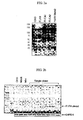
- the cell lines thus obtained were each subjected to western blot analysis using rabbit anti-His antibody (SantaCruz, His-probe (G-18) rabbit polyclonal, sc804 (H3006)) and Goat anti-rabbit antibody (KPL, Goat anti-rabbit IgG(H+L)-HRP, 074-1506), and to RT-PCR analysis, and the results are shown in FIGs. 2A and 2B .
- the sugar chain modifying gene of FUT8, FUCA1 or FUCA2 mutant was over-expressed in the CHO cell lines.
- the sugar chain modifying gene of FUT8-steml was over-expressed in the individually isolated subclones of the FUT8-stem1 CHO cell lines.
- the lane mix is transfectants comprising mixed isolated subclones of FUT8-stem1; the lane CHO is CHO DG44 cell line; and mock is a transfectant prepared using only vector.
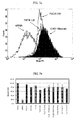
- FIGs. 3A and 3B the results from FACS analysis using LCA (Vector Lab, B-1045(S0925)) and phycoerythrin streptavidin (Vector Lab, SA-5007(R1209)) are shown in FIGs. 3A and 3B .
- the inventive cell lines exhibited low affmities to LCA, as compared with CHO-Rituxan cells lines.
- the relative FACS mean values of the inventive cell lines were reduced by about 10 ⁇ 35% from that of CHO-Rituxan cells, the values being, CHO-R-siRNA: 0.17, CHO-R-FUCA1: 0.93, CHO-R-FUCA2: 0.79, CHO-R-FUT8: 0.87, CHO-R-FUCA1NV: 0.65, CHO-R-FLD-FUCA2: 0.74, CHO-R-FLD1FUCA1NV: 0.79, CHO-R-FLD2-FUCA1NV: 0.80, CHO-R-FUT8-CT/TM: 0.80, CHO-R-FUT8-stem1: 0.79 and CHO-R-stem2: 0.73.
- FUT8 localization domain, FUCA1, FUCA2, FUCA1 mutant, and a fusion protein of a fragment of FUT8 localization domain and a fragment of FUCA1, FUCA2 or FUCA1 mutant can be advantageously used for reducing fucose contents in sugar chain structures of glycoproteins.
- Antibodies produced by the cell lines prepared in Example 5, which expresses therapeutic antibody with modified sugar chain, were purified and subjected to a monosaccharide analysis using BIO-LC system (DC ICS 3000 system, DIONEX, 06110276) to quantitatively analyze the sugar chains in the Fc regions thereof as follows.
- each cultured medium of the cell lines was purified using a Protein G Sepharose (Amersham, 17-0618-01) column.
- 20 mM sodium phosphate buffer (pH 7.0) was employed as a binding buffer; 0.5 M glycine (pH 2.7), as a diluting buffer; and 1 M Tris-HCl (pH 9.0), as a neutralizing buffer.
- the purity of each purified antibody was analyzed by silver staining.
- BIO-LC system was equipped with ED detector (DIONEX, 06110046), amino trap column (DIONEX, 046122) as a guard column and CarboPac PA 10 column (DIONEX, 046110) as an analysis column.
- the content of monosaccarides was represented as ratios of fucose to four N-acetylglucosamines existed in the frame of sugar chain of antibody Fc region.
- the inventive cell lines exhibited reduced ratio of fucose/N-acetylglucosamine by about 10-25% as compared with that of CHO-Rituxan cell lines, the ratios being, CHO-Rituxan: 1.01, CHO-R-siRNA: 0.10, CHO-R-FUCA1: 0.88, CHO-R-FUCA2: 0.90, CHO-R-FUT8: 1.03, CHO-R-FUCA1NV: 0.75, CHO-R-FLD-FUCA1: 0.90, CHO-R-FLD-FUCA2: 0.82, CHO-R-FLD1-FUCA1NV: 0.79, CHO-R-FLD2-FUCA1NV: 0.75, CHO-R-CT/TM: 0.78, CHO-R-F
- the fragments of FUT8 localization domain reduced the fucose contents in antibody Fc regions by about 15 to 25% when introduced into therapeutic antibody-expressing cell lines.
- the FUCA1 or FUCA2-overexpressing cell lines of the present invention exhibited reduced fucose contents by about 10%
- the inventive cell lines overexpressing a FUCA1 mutant, i.e., FUCA1NV exhibited reduced fucose contents by about 25%.
- the inventive cell lines expressing fusion proteins of a fragment of FUT8 localization domain and a catalytic domain of FUCA1, FUCA2 or FUCA1 mutant exhibited reduced fucose contents by 10 ⁇ 25%.
- the therapeutic effects of the inventive antibodies having modified sugar chain were analyzed by determining the complement-dependent cytotoxicities (CDC), the binding affinity with Fc region receptor and the antibody-dependent cellular cytotoxicities (ADCC) thereof.
- CDC complement-dependent cytotoxicities
- ADCC antibody-dependent cellular cytotoxicities
- CD20-expressing Daudi (ATCC CCL-213) B-cell lymphoma cells were treated with anti-CD20 antibodies purified from CHO-Rituxan, CHO-R-siRNA, CHO-R-FUT8-LD (CHO-R-FUT8-CT/TM and CHO-R-FUT8-stem1) and CHO-R-FUCA1NV cells, and standard human plasma (DADE Behring), respectively, and then, treated with WST-1 reagent (Roche), followed by determining the absorbance intensities of the cells at 450 nm and 690 nm ( Hodoniczky J. et al., Biotechnology Progress, 21(6), 1644-1652, 2005 ). As shown in FIG. 5A , the antibodies purified from the inventive cell lines exhibited similar CDC values.
- an antibody Fc region receptor (FcrRIIIa) was obtained from human peripheral blood mononuclear cell (PBMC) using RT-PCR ( Clémenceau, B. et. al., Blood, 107(12), 4669-4677, 2006 ). Specifically, in order to clone a gene encoding soluble antibody Fc region receptor (FcrRIIIa) (GenBank, X52645), total RNA was isolated from human PBMC, and subjected to RT-PCR using cDNA synthesis kit (Invitrogen, 18080-051) to obtain cDNA.
- PBMC peripheral blood mononuclear cell
- FcrRIIIa-His DNA was cloned in pMSG vector to obtain a plasmid designated pMSG-FcrRIIIa-his.
- Plasmid pMSG-FcrRIIIa-his was transfected into CHO cells using lipofectamine 2000 (Invitrogen, 11668-019), and the expression of FcrRIIIa was amplified through MTX system. The finally selected CHO-FcrRIIIa-his cell line was incubated in a conventional cell culture medium, and 200 ml of the incubated medium was subjected to His column (Novagen) purification to obtain purified FcrRIIIa-His.
- the binding capacity of antibody Fc region with the Fc receptor was measured by ELISA using anti-His monoclonal antibody (QIAGEN, anti-4X his antibody) and antihuman F(ab)2-HRP (Jackson Lab, 309-036-006).
- the absorbance values of the test cell lines were increased in an antibody dose-dependent manner, the inventive cell lines, and Rituxan having modified sugar chain exhibited higher binding affinity to FcrRIIIa-His by about 4 folds as compared with normal Rituxan.
- ADCC Antibody-dependent cellular toxicity
- Daudi ATCC CCL-213 cells (1 ⁇ 10 4 cells/well) expressing CD20 were treated with Cr-51 to introduce Cr-51 thereinto, and then treated with purified antibodies produced from CHO-Rituxan, CHO-R-siRNA, CHO-R-FUT8-CT/TM, CHO-R-FUT8-stem1 and CHO-R-FUCA1NV cell lines and PBMC (4 ⁇ 10 5 cells) isolated from the bloods of healthy volunteers, followed by measuring the amount of Cr-51 released from dead cells using a gamma counter.
- the antibodies having modified sugar chains produced from the inventive cell lines exhibited ADCC values increased by about 2 to 5 folds as compared with that of antibody having normal sugar chains.
Landscapes
- Chemical & Material Sciences (AREA)
- Health & Medical Sciences (AREA)
- Organic Chemistry (AREA)
- Life Sciences & Earth Sciences (AREA)
- Genetics & Genomics (AREA)
- Engineering & Computer Science (AREA)
- Zoology (AREA)
- Wood Science & Technology (AREA)
- Bioinformatics & Cheminformatics (AREA)
- Biochemistry (AREA)
- General Engineering & Computer Science (AREA)
- General Health & Medical Sciences (AREA)
- Biotechnology (AREA)
- Biomedical Technology (AREA)
- Molecular Biology (AREA)
- Biophysics (AREA)
- Microbiology (AREA)
- Medicinal Chemistry (AREA)
- Proteomics, Peptides & Aminoacids (AREA)
- Immunology (AREA)
- Physics & Mathematics (AREA)
- Plant Pathology (AREA)
- Peptides Or Proteins (AREA)
- Preparation Of Compounds By Using Micro-Organisms (AREA)
- Micro-Organisms Or Cultivation Processes Thereof (AREA)
Applications Claiming Priority (1)
| Application Number | Priority Date | Filing Date | Title |
|---|---|---|---|
| KR1020080064483A KR101054362B1 (ko) | 2008-07-03 | 2008-07-03 | 재조합 단백질의 푸코스 함량을 감소시키는 방법 |
Publications (1)
| Publication Number | Publication Date |
|---|---|
| EP2141237A1 true EP2141237A1 (de) | 2010-01-06 |
Family
ID=40736021
Family Applications (1)
| Application Number | Title | Priority Date | Filing Date |
|---|---|---|---|
| EP09000153A Withdrawn EP2141237A1 (de) | 2008-07-03 | 2009-01-08 | Verfahren zur Verringerung des Fucosegehalts rekombinanter Proteine |
Country Status (4)
| Country | Link |
|---|---|
| US (1) | US20100003742A1 (de) |
| EP (1) | EP2141237A1 (de) |
| KR (1) | KR101054362B1 (de) |
| CN (1) | CN101619321A (de) |
Cited By (3)
| Publication number | Priority date | Publication date | Assignee | Title |
|---|---|---|---|---|
| WO2015145268A2 (en) | 2014-03-17 | 2015-10-01 | Fountain Biopharma Inc. | Methods for producing recombinant glycoproteins with modified glycosylation |
| WO2016151599A1 (en) * | 2015-03-25 | 2016-09-29 | Biogenomics Limited | A bigenic mammalian expression vector |
| CN114369585A (zh) * | 2022-02-06 | 2022-04-19 | 北京睿脉医药科技有限公司 | 重组幽门螺杆菌的岩藻糖基转移酶突变体及应用 |
Families Citing this family (3)
| Publication number | Priority date | Publication date | Assignee | Title |
|---|---|---|---|---|
| EP2728009B1 (de) * | 2012-10-31 | 2017-07-26 | Jennewein Biotechnologie GmbH | Verfahren zur Herstellung von Monosacchariden |
| US9843657B1 (en) * | 2016-10-27 | 2017-12-12 | W. Jason Guzek | Mobile computing/communicating attachment device |
| WO2025068553A1 (en) * | 2023-09-28 | 2025-04-03 | Universität Basel | Catalytic moieties for treating cancer |
Citations (8)
| Publication number | Priority date | Publication date | Assignee | Title |
|---|---|---|---|---|
| WO1994014472A1 (en) * | 1992-12-22 | 1994-07-07 | The Regents Of The University Of California | Method for inhibition of cell adhesion to receptors containing selectins |
| US5736137A (en) | 1992-11-13 | 1998-04-07 | Idec Pharmaceuticals Corporation | Therapeutic application of chimeric and radiolabeled antibodies to human B lymphocyte restricted differentiation antigen for treatment of B cell lymphoma |
| EP1176195A1 (de) * | 1999-04-09 | 2002-01-30 | Kyowa Hakko Kogyo Co., Ltd. | VERFAHREN ZUR KONTROLLE DER AKTIVITäT VON IMMUNOLOGISCH FUNKTIONELLEM MOLEKüL |
| US6602684B1 (en) | 1998-04-20 | 2003-08-05 | Glycart Biotechnology Ag | Glycosylation engineering of antibodies for improving antibody-dependent cellular cytotoxicity |
| KR100408844B1 (ko) | 2000-07-29 | 2003-12-06 | 한국산업기술평가원 | 동물세포 발현벡터 |
| US20040093621A1 (en) | 2001-12-25 | 2004-05-13 | Kyowa Hakko Kogyo Co., Ltd | Antibody composition which specifically binds to CD20 |
| US20040110704A1 (en) | 2002-04-09 | 2004-06-10 | Kyowa Hakko Kogyo Co., Ltd. | Cells of which genome is modified |
| EP1500698A1 (de) * | 2002-04-09 | 2005-01-26 | Kyowa Hakko Kogyo Co., Ltd. | Zelle mit erniedrigter oder deletierter aktivität eines am gdp-fucosetransport beteiligten proteins |
Family Cites Families (7)
| Publication number | Priority date | Publication date | Assignee | Title |
|---|---|---|---|---|
| US6946292B2 (en) * | 2000-10-06 | 2005-09-20 | Kyowa Hakko Kogyo Co., Ltd. | Cells producing antibody compositions with increased antibody dependent cytotoxic activity |
| EP2174954B1 (de) | 2000-10-18 | 2016-03-23 | Robert Sackstein | E-Selectin/L-Selectin-Ligandenpolypeptide aus hämatopoetische Zellen und Verwendungsverfahren dafür |
| AU2002307037B2 (en) * | 2001-04-02 | 2008-08-07 | Biogen Idec Inc. | Recombinant antibodies coexpressed with GnTIII |
| NZ581474A (en) * | 2001-08-03 | 2011-04-29 | Glycart Biotechnology Ag | Antibody glycosylation variants having increased antibody-dependent cellular cytotoxicity |
| US7317091B2 (en) * | 2002-03-01 | 2008-01-08 | Xencor, Inc. | Optimized Fc variants |
| CZ308720B6 (cs) * | 2003-01-22 | 2021-03-24 | Roche Glycart Ag | Fúzní konstrukty a jejich použití pro přípravu protilátek se zvýšenou vazebnou afinitou k receptorům Fc a efektorovou funkcí |
| PT1692182E (pt) * | 2003-11-05 | 2010-05-13 | Roche Glycart Ag | Anticorpos de cd20 com uma afinidade de ligação acrescida ao receptor fc e uma função efectora acrescida |
-
2008
- 2008-07-03 KR KR1020080064483A patent/KR101054362B1/ko not_active Expired - Fee Related
- 2008-09-17 CN CN200810149314A patent/CN101619321A/zh active Pending
-
2009
- 2009-01-08 EP EP09000153A patent/EP2141237A1/de not_active Withdrawn
- 2009-01-09 US US12/351,239 patent/US20100003742A1/en not_active Abandoned
Patent Citations (8)
| Publication number | Priority date | Publication date | Assignee | Title |
|---|---|---|---|---|
| US5736137A (en) | 1992-11-13 | 1998-04-07 | Idec Pharmaceuticals Corporation | Therapeutic application of chimeric and radiolabeled antibodies to human B lymphocyte restricted differentiation antigen for treatment of B cell lymphoma |
| WO1994014472A1 (en) * | 1992-12-22 | 1994-07-07 | The Regents Of The University Of California | Method for inhibition of cell adhesion to receptors containing selectins |
| US6602684B1 (en) | 1998-04-20 | 2003-08-05 | Glycart Biotechnology Ag | Glycosylation engineering of antibodies for improving antibody-dependent cellular cytotoxicity |
| EP1176195A1 (de) * | 1999-04-09 | 2002-01-30 | Kyowa Hakko Kogyo Co., Ltd. | VERFAHREN ZUR KONTROLLE DER AKTIVITäT VON IMMUNOLOGISCH FUNKTIONELLEM MOLEKüL |
| KR100408844B1 (ko) | 2000-07-29 | 2003-12-06 | 한국산업기술평가원 | 동물세포 발현벡터 |
| US20040093621A1 (en) | 2001-12-25 | 2004-05-13 | Kyowa Hakko Kogyo Co., Ltd | Antibody composition which specifically binds to CD20 |
| US20040110704A1 (en) | 2002-04-09 | 2004-06-10 | Kyowa Hakko Kogyo Co., Ltd. | Cells of which genome is modified |
| EP1500698A1 (de) * | 2002-04-09 | 2005-01-26 | Kyowa Hakko Kogyo Co., Ltd. | Zelle mit erniedrigter oder deletierter aktivität eines am gdp-fucosetransport beteiligten proteins |
Non-Patent Citations (15)
| Title |
|---|
| AVILÉS M ET AL: "Immunocytochemical localization and biochemical characterization of a novel plasma membrane-associated, neutral pH optimum alpha-L-fucosidase from rat testis and epididymal spermatozoa.", THE BIOCHEMICAL JOURNAL 15 SEP 1996, vol. 318 ( Pt 3), 15 September 1996 (1996-09-15), pages 821 - 831, XP002533034, ISSN: 0264-6021 * |
| AVILES, M. ET AL., BIOCHEMICAL JOURNAL, vol. 318, 1996, pages 821 - 831 |
| CLÉMENCEAU, B., BLOOD, vol. 107, no. 12, 2006, pages 4669 - 4677 |
| DATABASE UniProt [online] 1 June 2001 (2001-06-01), "RecName: Full=Plasma alpha-L-fucosidase; EC=<A HREF="http://srs.ebi.ac.uk/srsbin/cgi-bin/wgetz?[enzyme-ECNumber:3.2.1.51]+-e">3.2.1.51</A>; AltName: Full=Alpha-L-fucoside fucohydrolase 2; Short=Alpha-L-fucosidase 2; Flags: Precursor;", XP002533035, retrieved from EBI accession no. UNIPROT:Q9BTY2 Database accession no. Q9BTY2 * |
| HODONICZKY J. ET AL., BIOTECHNOLOGY PROGRESS, vol. 21, no. 6, 2005, pages 1644 - 1652 |
| JAIN, M. ET AL., TREND IN BIOTECHNOLOGY, vol. 25, no. 7, 2007, pages 307 - 316 |
| LAZAR, G. A. ET AL., PNAS, vol. 103, no. 11, 2006, pages 4005 - 4010 |
| MILLAND, J. ET AL., THE JOURNAL OF BIOLOGICAL CHEMISTRY, vol. 277, no. 12, 2002, pages 10374 - 10378 |
| MORI, K. ET AL., BIOTECHNOLOGY AND BIOENGINEERING, vol. 88, no. 7, 2004, pages 901 - 908 |
| NILSSON, T. ET AL., THE EMBO JOURNAL, vol. 13, no. 3, 1994, pages 562 - 574 |
| ROQUE, A. C. ET AL., BIOTECHNOLOGY PROGRESS, vol. 20, no. 3, 2004, pages 639 - 654 |
| SHIELDS, R. L. ET AL., THE JOURNAL OF BIOLOGICAL CHEMISTRY, vol. 277, no. 30, 2002, pages 26733 - 26740 |
| SHINKAWA, T. ET AL., JOURNAL OF BIOLOGICAL CHEMISTRY, vol. 278, no. 5, 2003, pages 3466 - 3473 |
| SHUSTER, M. ET AL., CANCER RESEARCH, vol. 65, no. 17, 2005, pages 7934 - 7941 |
| YAMANE-OHNUKI, N. ET AL., BIOTECHNOLOGY AND BIOENGINEERING, vol. 87, no. 5, 2004, pages 614 - 622 |
Cited By (12)
| Publication number | Priority date | Publication date | Assignee | Title |
|---|---|---|---|---|
| WO2015145268A2 (en) | 2014-03-17 | 2015-10-01 | Fountain Biopharma Inc. | Methods for producing recombinant glycoproteins with modified glycosylation |
| KR20160127830A (ko) * | 2014-03-17 | 2016-11-04 | 파운테인 바이오파마 인크. | 변형된 글리코실화를 갖는 재조합 당단백질을 생산하는 방법 |
| JP2017507664A (ja) * | 2014-03-17 | 2017-03-23 | ファウンテン バイオファーマ インコーポレーテッドFountain Biopharma Inc. | 改変グリコシル化を有する組換え糖タンパク質の製造方法 |
| EP3119882A4 (de) * | 2014-03-17 | 2017-08-16 | Fountain Biopharma Inc. | Verfahren zur herstellung von rekombinanten glycoproteinen mit modifizierter glycosylierung |
| RU2704830C2 (ru) * | 2014-03-17 | 2019-10-31 | Уаннесс Биотек Ко. Лтд | Способы получения рекомбинантных гликопротеинов с модифицированным гликозилированием |
| TWI682033B (zh) * | 2014-03-17 | 2020-01-11 | 泉盛生物科技股份有限公司 | 製造具有經修飾的糖苷化作用之重組糖蛋白之方法 |
| JP2020072667A (ja) * | 2014-03-17 | 2020-05-14 | ワンネス バイオテック カンパニー リミテッドOneness Biotech Co.Ltd. | 改変グリコシル化を有する組換え糖タンパク質の製造方法 |
| US10745729B2 (en) | 2014-03-17 | 2020-08-18 | Oneness Biotech Co. Ltd. | Methods for producing recombinant glycoproteins with modified glycosylation |
| AU2015237951B2 (en) * | 2014-03-17 | 2021-07-01 | Oneness Biotech Co. LTD | Methods for producing recombinant glycoproteins with modified glycosylation |
| WO2016151599A1 (en) * | 2015-03-25 | 2016-09-29 | Biogenomics Limited | A bigenic mammalian expression vector |
| CN114369585A (zh) * | 2022-02-06 | 2022-04-19 | 北京睿脉医药科技有限公司 | 重组幽门螺杆菌的岩藻糖基转移酶突变体及应用 |
| CN114369585B (zh) * | 2022-02-06 | 2023-10-27 | 北京睿脉医药科技有限公司 | 重组幽门螺杆菌的岩藻糖基转移酶突变体及应用 |
Also Published As
| Publication number | Publication date |
|---|---|
| CN101619321A (zh) | 2010-01-06 |
| KR20100004359A (ko) | 2010-01-13 |
| KR101054362B1 (ko) | 2011-08-05 |
| US20100003742A1 (en) | 2010-01-07 |
Similar Documents
| Publication | Publication Date | Title |
|---|---|---|
| CN102782131B (zh) | 修饰抗体组合物 | |
| JP5071942B2 (ja) | エフェクター活性が増強された遺伝子組換え抗体組成物 | |
| EP3294774B1 (de) | Afucosyliertes protein, exprimierende zelle und assoziierte methoden | |
| JPWO2007011041A1 (ja) | 遺伝子組換え抗体組成物 | |
| JPWO2003084570A1 (ja) | FcγRIIIa多型患者に適応する抗体組成物含有医薬 | |
| WO2005035577A1 (ja) | ガングリオシドgd3に特異的に結合する抗体組成物 | |
| CN105111312A (zh) | 具有adcc和cdc功能及改善的糖基化特征的抗-cd19抗体 | |
| US20100003742A1 (en) | Method for reducing fucose contents of recombinant proteins | |
| EP2791164B1 (de) | Nicht- fucosyliertes Glycoprotein die Fc -Domäne eines Antikörpers , umfassend | |
| JP7216806B2 (ja) | アフコシル化抗体およびその製造法 | |
| US20150210777A1 (en) | Glycoprotein | |
| KR101026999B1 (ko) | 재조합 단백질의 푸코스 함량을 감소시키는 방법 | |
| JP7292377B2 (ja) | アフコシル化抗体およびその製造法 | |
| WO2005035581A1 (ja) | ヒトVEGF受容体Flt-1に特異的に結合する抗体組成物 |
Legal Events
| Date | Code | Title | Description |
|---|---|---|---|
| PUAI | Public reference made under article 153(3) epc to a published international application that has entered the european phase |
Free format text: ORIGINAL CODE: 0009012 |
|
| 17P | Request for examination filed |
Effective date: 20090108 |
|
| AK | Designated contracting states |
Kind code of ref document: A1 Designated state(s): AT BE BG CH CY CZ DE DK EE ES FI FR GB GR HR HU IE IS IT LI LT LU LV MC MK MT NL NO PL PT RO SE SI SK TR |
|
| AX | Request for extension of the european patent |
Extension state: AL BA RS |
|
| STAA | Information on the status of an ep patent application or granted ep patent |
Free format text: STATUS: THE APPLICATION HAS BEEN WITHDRAWN |
|
| 18W | Application withdrawn |
Effective date: 20091208 |