EP2136119B1 - Schraubelement und Rohranschlusseinrichtung für den Anschluss von Rohrleitungen - Google Patents
Schraubelement und Rohranschlusseinrichtung für den Anschluss von Rohrleitungen Download PDFInfo
- Publication number
- EP2136119B1 EP2136119B1 EP08010964A EP08010964A EP2136119B1 EP 2136119 B1 EP2136119 B1 EP 2136119B1 EP 08010964 A EP08010964 A EP 08010964A EP 08010964 A EP08010964 A EP 08010964A EP 2136119 B1 EP2136119 B1 EP 2136119B1
- Authority
- EP
- European Patent Office
- Prior art keywords
- screw
- coating
- pipe
- thread
- friction
- Prior art date
- Legal status (The legal status is an assumption and is not a legal conclusion. Google has not performed a legal analysis and makes no representation as to the accuracy of the status listed.)
- Active
Links
Images
Classifications
-
- F—MECHANICAL ENGINEERING; LIGHTING; HEATING; WEAPONS; BLASTING
- F16—ENGINEERING ELEMENTS AND UNITS; GENERAL MEASURES FOR PRODUCING AND MAINTAINING EFFECTIVE FUNCTIONING OF MACHINES OR INSTALLATIONS; THERMAL INSULATION IN GENERAL
- F16B—DEVICES FOR FASTENING OR SECURING CONSTRUCTIONAL ELEMENTS OR MACHINE PARTS TOGETHER, e.g. NAILS, BOLTS, CIRCLIPS, CLAMPS, CLIPS OR WEDGES; JOINTS OR JOINTING
- F16B37/00—Nuts or like thread-engaging members
-
- F—MECHANICAL ENGINEERING; LIGHTING; HEATING; WEAPONS; BLASTING
- F16—ENGINEERING ELEMENTS AND UNITS; GENERAL MEASURES FOR PRODUCING AND MAINTAINING EFFECTIVE FUNCTIONING OF MACHINES OR INSTALLATIONS; THERMAL INSULATION IN GENERAL
- F16L—PIPES; JOINTS OR FITTINGS FOR PIPES; SUPPORTS FOR PIPES, CABLES OR PROTECTIVE TUBING; MEANS FOR THERMAL INSULATION IN GENERAL
- F16L19/00—Joints in which sealing surfaces are pressed together by means of a member, e.g. a swivel nut, screwed on, or into, one of the joint parts
- F16L19/02—Pipe ends provided with collars or flanges, integral with the pipe or not, pressed together by a screwed member
- F16L19/025—Pipe ends provided with collars or flanges, integral with the pipe or not, pressed together by a screwed member the pipe ends having integral collars or flanges
- F16L19/028—Pipe ends provided with collars or flanges, integral with the pipe or not, pressed together by a screwed member the pipe ends having integral collars or flanges the collars or flanges being obtained by deformation of the pipe wall
- F16L19/0286—Pipe ends provided with collars or flanges, integral with the pipe or not, pressed together by a screwed member the pipe ends having integral collars or flanges the collars or flanges being obtained by deformation of the pipe wall and being formed as a flange
-
- B—PERFORMING OPERATIONS; TRANSPORTING
- B60—VEHICLES IN GENERAL
- B60T—VEHICLE BRAKE CONTROL SYSTEMS OR PARTS THEREOF; BRAKE CONTROL SYSTEMS OR PARTS THEREOF, IN GENERAL; ARRANGEMENT OF BRAKING ELEMENTS ON VEHICLES IN GENERAL; PORTABLE DEVICES FOR PREVENTING UNWANTED MOVEMENT OF VEHICLES; VEHICLE MODIFICATIONS TO FACILITATE COOLING OF BRAKES
- B60T17/00—Component parts, details, or accessories of power brake systems not covered by groups B60T8/00, B60T13/00 or B60T15/00, or presenting other characteristic features
- B60T17/04—Arrangements of piping, valves in the piping, e.g. cut-off valves, couplings or air hoses
- B60T17/043—Brake line couplings, air hoses and stopcocks
-
- F—MECHANICAL ENGINEERING; LIGHTING; HEATING; WEAPONS; BLASTING
- F02—COMBUSTION ENGINES; HOT-GAS OR COMBUSTION-PRODUCT ENGINE PLANTS
- F02B—INTERNAL-COMBUSTION PISTON ENGINES; COMBUSTION ENGINES IN GENERAL
- F02B77/00—Component parts, details or accessories, not otherwise provided for
-
- F—MECHANICAL ENGINEERING; LIGHTING; HEATING; WEAPONS; BLASTING
- F16—ENGINEERING ELEMENTS AND UNITS; GENERAL MEASURES FOR PRODUCING AND MAINTAINING EFFECTIVE FUNCTIONING OF MACHINES OR INSTALLATIONS; THERMAL INSULATION IN GENERAL
- F16B—DEVICES FOR FASTENING OR SECURING CONSTRUCTIONAL ELEMENTS OR MACHINE PARTS TOGETHER, e.g. NAILS, BOLTS, CIRCLIPS, CLAMPS, CLIPS OR WEDGES; JOINTS OR JOINTING
- F16B7/00—Connections of rods or tubes, e.g. of non-circular section, mutually, including resilient connections
-
- F—MECHANICAL ENGINEERING; LIGHTING; HEATING; WEAPONS; BLASTING
- F16—ENGINEERING ELEMENTS AND UNITS; GENERAL MEASURES FOR PRODUCING AND MAINTAINING EFFECTIVE FUNCTIONING OF MACHINES OR INSTALLATIONS; THERMAL INSULATION IN GENERAL
- F16L—PIPES; JOINTS OR FITTINGS FOR PIPES; SUPPORTS FOR PIPES, CABLES OR PROTECTIVE TUBING; MEANS FOR THERMAL INSULATION IN GENERAL
- F16L19/00—Joints in which sealing surfaces are pressed together by means of a member, e.g. a swivel nut, screwed on, or into, one of the joint parts
- F16L19/02—Pipe ends provided with collars or flanges, integral with the pipe or not, pressed together by a screwed member
- F16L19/0243—Pipe ends provided with collars or flanges, integral with the pipe or not, pressed together by a screwed member specially adapted for use with coated pipes
-
- F—MECHANICAL ENGINEERING; LIGHTING; HEATING; WEAPONS; BLASTING
- F16—ENGINEERING ELEMENTS AND UNITS; GENERAL MEASURES FOR PRODUCING AND MAINTAINING EFFECTIVE FUNCTIONING OF MACHINES OR INSTALLATIONS; THERMAL INSULATION IN GENERAL
- F16L—PIPES; JOINTS OR FITTINGS FOR PIPES; SUPPORTS FOR PIPES, CABLES OR PROTECTIVE TUBING; MEANS FOR THERMAL INSULATION IN GENERAL
- F16L33/00—Arrangements for connecting hoses to rigid members; Rigid hose-connectors, i.e. single members engaging both hoses
- F16L33/02—Hose-clips
- F16L33/04—Hose-clips tightened by tangentially-arranged threaded pin and nut
- F16L33/06—Hose-clips tightened by tangentially-arranged threaded pin and nut in which the threaded pin is rigid with the hose-encircling member
-
- F—MECHANICAL ENGINEERING; LIGHTING; HEATING; WEAPONS; BLASTING
- F02—COMBUSTION ENGINES; HOT-GAS OR COMBUSTION-PRODUCT ENGINE PLANTS
- F02M—SUPPLYING COMBUSTION ENGINES IN GENERAL WITH COMBUSTIBLE MIXTURES OR CONSTITUENTS THEREOF
- F02M55/00—Fuel-injection apparatus characterised by their fuel conduits or their venting means; Arrangements of conduits between fuel tank and pump F02M37/00
- F02M55/004—Joints; Sealings
-
- Y—GENERAL TAGGING OF NEW TECHNOLOGICAL DEVELOPMENTS; GENERAL TAGGING OF CROSS-SECTIONAL TECHNOLOGIES SPANNING OVER SEVERAL SECTIONS OF THE IPC; TECHNICAL SUBJECTS COVERED BY FORMER USPC CROSS-REFERENCE ART COLLECTIONS [XRACs] AND DIGESTS
- Y10—TECHNICAL SUBJECTS COVERED BY FORMER USPC
- Y10T—TECHNICAL SUBJECTS COVERED BY FORMER US CLASSIFICATION
- Y10T29/00—Metal working
- Y10T29/49—Method of mechanical manufacture
- Y10T29/49826—Assembling or joining
- Y10T29/49947—Assembling or joining by applying separate fastener
- Y10T29/49963—Threaded fastener
Definitions
- the invention relates to a screw, in particular for the connection or for the connection of pipes, preferably of motor vehicle piping, wherein a thread is provided, as well as at least one thread-free contact surface.
- the invention further relates to a pipe connection device for the connection of pipes, in particular motor vehicle piping with such a screw.
- Screw elements or pipe connection devices of the type described above are known from practice in various embodiments.
- screw elements are known, with which a pipe, in particular a motor vehicle pipeline can be connected to a connection element.
- These known erfittings are usually provided with a coating, in particular with an anti-corrosion coating, which normally covers the entire fitting. The coating is applied, for example, by dipping or spraying.
- the coating is applied, for example, by dipping or spraying.
- the torsion of the pipe generates a return torque, which can lead to an unwanted or uncontrolled loosening or loosening of the screw connection.
- An undesirable loosening or loosening of the screw connection can in particular also be caused by vibrations, as occur, for example, in motor vehicles.
- EP-A-0 997 677 describes a screw element for the connection of pipelines.
- the invention is based on the technical problem of specifying a screw of the type described above, with an unwanted loosening or loosening of the associated screw can be avoided in a simple, effective and reliable manner.
- the invention is further based on the technical problem of specifying a corresponding pipe connection device.
- the invention teaches a screw, in particular for the connection or for the connection of pipe lines, preferably of motor vehicle piping, wherein a thread is provided and at least one thread-free contact surface is present, wherein the thread is at least partially provided with a first coating having a first coefficient of friction ⁇ 1 , wherein the contact surface is at least partially provided with a second coating having a second coefficient of friction ⁇ 2 and wherein the first coefficient of friction ⁇ 1 is greater, in particular significantly greater than the second coefficient of friction ⁇ 2 .
- the first coating on the thread forms the outer surface in the region of the thread or is the outermost coating of the thread.
- the second coating on the at least one contact surface forms the outer surface in the region of the contact surface or the outermost coating of the contact surface is.
- the thread is completely or substantially completely provided with the first coating.
- the contact surface is completely or substantially completely provided with the second coating.
- the first coating is not an adhesive coating.
- the screw is a bolt or a screw fitting having a thread formed as an external thread. Then this external thread of the screw bolt or screw fitting is at least partially and preferably completely or substantially completely provided with the first coating.
- the screw element is a screw fitting to which a pipeline is connected.
- the pipe passes through the screw fitting in the axial direction and engages behind the end of the screw fitting with a pipe end. The end of the pipe is recommended designed as a crimp.
- the at least one unthreaded contact surface or the unthreaded contact surfaces of the screw are oriented perpendicular or transversely or substantially perpendicular or substantially transversely to the screwing of the screw.
- the recommended embodiment has the Stimende of the bolt or screw fitting on a thread-free contact surface, which is at least partially coated with the second coating with the second coefficient of friction ⁇ 2 .
- this thread-free contact surface is completely provided or coated at the end of the screw or rantfittings with the second coating.
- the screw or screw fitting has a screw head and that the thread-side underside of the screw head has a thread-free contact surface which is at least partially coated with the second coating with the second coefficient of friction ⁇ 2 .
- this thread-free contact surface on the underside of the screw head is completely or substantially completely provided with the second coating.
- the screw is a nut having a thread formed as an internal thread. Then this internal thread is at least partially and preferably completely or substantially completely coated with the first coating.
- the nut serves to receive a bolt or fferfittings and recommended for receiving a coated according to the invention bolt or sterfittings.
- the nut may be an internally threaded connection sleeve for connecting two pipes or an internally threaded blind hole in a connection block for a pipe to be connected. It is within the scope of the invention that a contact flange of the connection sleeve has a thread-free contact surface, which is then at least partially and preferably completely or substantially completely provided with the second coating.
- both a screw bolt or screw fitting is coated according to the invention as well as a screw bolt associated nut according to the invention coated.
- the first coefficient of friction ⁇ 1 is at least twice, preferably at least three times and particularly preferably at least four times the second coefficient of friction ⁇ 2 .
- the first coefficient of friction ⁇ 1 is at least five times the second coefficient of friction ⁇ 2 .
- a variant of the screw element according to the invention is characterized in that the first coating with the first coefficient of friction ⁇ 1 is applied to both the thread and the at least one thread-free contact surface and that the second coating with the second coefficient of friction ⁇ 2 on the at least one thread-free contact surface - the first coating covering there - is applied.
- the entire screw element or at least the thread and the unthreaded contact surfaces of the screw is provided with the first coating and then the second coating is applied to the first coating in the area of the unthreaded contact surface or in the area of the unthreaded contact surfaces, so that the second coating the outer surface forms at the thread-free contact surfaces.
- the first coating is suitably applied in this embodiment by a dipping process.
- the second coating can be applied as part of a spraying process.
- Another embodiment of the invention is characterized in that the first coating with the first coefficient of friction ⁇ 1 is applied at least partially to the thread and that the second coating with the second coefficient of friction ⁇ 2 is applied only to the at least one thread-free contact surface.
- the first Coating applied only to the thread and not on the at least one thread-free contact surface and the second coating is applied to the at least one thread-free contact surface without interposition of the first coating.
- the first and the second coating for example, each be applied in the course of a spraying process.
- the first coating is an aluminum-containing corrosion protection coating which has or contains at least one lubricant which increases the coefficient of friction of the coating.
- the second coating has at least one lubricant which reduces the coefficient of friction of the coating, and this lubricant is expediently polytetrafluoroethylene (PTFE) and / or molybdenum disulfide (MoS 2 ).
- the coefficient of friction ⁇ 1 of the first coating is preferably 0.15 to 0.5, preferably 0.2 to 0.45 and preferably 0.25 to 0.4.
- a coefficient of friction ⁇ 1 between 0.3 and 0.4, for example 0.35, has proven itself.
- the coefficient of friction ⁇ 2 of the second coating is 0.02 to 0.2, preferably 0.02 to 0.15 and preferably 0.03 to 0.1. It has been proven that the coefficient of friction ⁇ 2 of the second coating is between 0.03 and 0.08 and, for example, is 0.05.
- the layer thickness of the first coating is expediently from 2 ⁇ m to 25 ⁇ m and preferably from 3 ⁇ m to 20 ⁇ m.
- the layer thickness of the second coating is 5 microns to 25 microns and preferably 5 microns to 20 microns.
- the invention also relates to a pipe connection device for the connection of pipelines, in particular of motor vehicle pipelines, wherein the pipe connection device has a screw element according to the invention and wherein a pipe is connected to this screw element.
- the screw with the connected pipe can be connected to a connection element by screwing.
- the aforementioned screw element is a screw bolt or a screw fitting with a connected pipe.
- the connection element can then be a connection sleeve with a connected second pipeline.
- the screw connection then serves to connect two pipes, in particular motor vehicle pipelines.
- the connecting element can also be a blind bore in a connection block, into which the screw bolt or the screw fitting with the connected pipeline can be screwed.
- a particularly preferred embodiment of the invention is characterized in that the screw is a screw with an axial bore, which axial bore is penetrated by the pipe, wherein the pipe has a flange at its pipe end and wherein the provided with the second coating Stimende the SSfittings on the Bördel Wegseite of the flange is applied. It is also within the scope of the invention that the crimp back of the pipe end is provided with the second coating. It is also within the scope of the invention that the thread of the screw fitting is provided with the first coating. Appropriately, the Stimende of the screw fitting is at least partially positively against the crimp back.
- the flare at the end of the pipe is an F-flare
- the flare back is oriented perpendicular or substantially perpendicular to the pipe longitudinal axis and the Stimende of synchronfittings then has at least one perpendicular or substantially perpendicular to the pipe longitudinal axis oriented surface portion of the form-fitting manner the crimp back rests.
- the surface section runs around the circumference of the screw fitting.
- the flare at the end of the pipe is an E-flare whose flare back is conical or substantially cone-shaped and the end of the ringfittings has at least one conical or substantially conical surface portion which rests positively on the flare back.
- this surface section runs around the circumference of the screw fitting.
- the flare at the end of the pipe can also have other shapes.
- the butt end of the screw fitting rests at least partially and recommended over the entire circumference of the screw fitting positively against the crimp back of the pipe end.
- the screw is a nut with an axial bore, which axial bore is penetrated by the pipeline, wherein the pipe has a flange at its pipe end, wherein the nut has a provided with the second coating, inside contact flange and wherein the Bördel the pipe rests with its bead back on the contact flange.
- the contact flange is at least partially and preferably over the entire circumference of the crimp on a form-fitting on the hemming back.
- the flare is an F flare whose flanged rear side is oriented perpendicularly or substantially perpendicular to the longitudinal axis of the pipe, and the contact flange of the screw nut has at least one surface section oriented perpendicularly or substantially perpendicular to the pipe longitudinal axis, which bears against the flare back side in a form-fitting manner.
- the flare is an E-flare
- the flare rear side is conical or substantially cone-shaped and the contact flange of the nut has at least one cone-shaped or substantially cone-shaped surface portion, which rests positively on the crimp back.
- the nut has an internal thread for receiving a connection element and this internal thread is provided with the first coating.
- the screw element is a screw fitting, and that the end of the screw fitting rests on the crimp back of the flare at the pipe end in the mounted state of the pipe connection device.
- F ax axial contact force
- F ax axial contact force
- M torque M
- the purpose of the second coating at the front end of the screw fitting is to minimize the transmitted torque M.
- a torque of 0.2 to 2, 5 Nm, preferably from 0.2 to 2.2 Nm, preferably from 0.2 to 2.0 Nm and very preferably from 0.2 to 1.5 Nm is transmitted.
- a corrosion protection coating is first applied to a bolt or screw fitting.
- this corrosion protection coating on the applied entire surface of the screw fitting and preferably electrolytically.
- the anti-corrosion coating is recommended to be a zinc-nickel coating.
- the layer thickness of this corrosion protection coating is preferably 4 to 12 .mu.m, preferably 6 to 10 .mu.m and for example 8 .mu.m.
- the first coating with the high first coefficient of friction ⁇ 1 is selectively applied to this anticorrosion coating in the region of the thread of the screw fitting.
- the layer thickness of this first coating is recommended to be 2 to 8 ⁇ m, preferably 3 to 7 ⁇ m and for example 5 ⁇ m.
- this first coating has or contains at least one lubricant which influences the coefficient of friction of the coating.
- the second coating with the second lower coefficient of friction ⁇ 2 is applied to the unthreaded contact surfaces, namely at the Stimend Touch the SSfittings and at the bottom of the screw head of the screw fitting.
- the second coating contains polytetrafluoroethylene (PTFE) and molybdenum disulfide (MoS 2 ) to reduce the coefficient of friction.
- the layer thickness of this second coating is suitably 10 to 20 microns, for example 15 microns.
- the aforementioned second coating can also be applied selectively first, and then the aforementioned first coating can be applied selectively.
- the invention is based on the finding that due to the teaching of the invention or due to the inventive coating of the screw unintentional loosening or loosening of the associated screw in a simple manner and can be effectively and reliably avoided.
- the inventive application of different coatings the technical problem of the invention can be solved surprisingly effective.
- the invention is based on the finding that the coating with a high coefficient of friction in the region of the thread effectively prevents inadvertent loosening of the screw connection difficult.
- the coating with a lower coefficient of friction in the area of the contact surfaces reduces or prevents the transmission of torsional forces to the parts or pipe ends to be joined. As a result, an initially explained return torque is significantly reduced or even completely avoided.
- the targeted coatings in different areas of the screw can be made in a simple and precise manner, so that the inventive success is easily achieved.
- the screw elements according to the invention are particularly suitable for the connection of pipelines, in particular of motor vehicle pipelines.
- Motor vehicle piping means above all piping for fuels or brake fluid.
- the figures show a screw element 1 designed as a screw according to the invention, which is preferably and provided in the embodiment for the connection of a pipe 2.
- the pipeline 2 may be a motor vehicle pipeline.
- the screw fitting 1 has a Thread 3 and thread-free contact surfaces 4, 5 on.
- the unthreaded contact surface 4 is arranged at the end of the fferfittings 1 and the thread-free contact surface 5 is disposed on the threaded side underside of the screw head 6.
- the thread 3 or external thread of the screw fitting 1 is preferably and in the exemplary embodiment completely provided with a first coating 7, which has a first higher coefficient of friction ⁇ 1 .
- the two thread-free contact surfaces 4, 5 are preferably and in the exemplary embodiment completely provided with a second coating 8, which has a second lower coefficient of friction ⁇ 2 .
- the first coefficient of friction ⁇ 1 is at least five times, preferably at least six times the coefficient of friction ⁇ 2 .
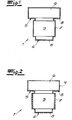
- the Fig. 1 1 shows a first embodiment of a screw fitting 1 according to the invention.
- the first coating 7 with the first coefficient of friction ⁇ 1 was applied to the entire surface of the screw fitting 1. This first coating was thus applied to the thread-free contact surfaces 4, 5 in a first step.
- the first coating 7 can be applied in particular in the course of a dipping process.
- the first coating 7 is an aluminum-containing corrosion protection coating, to which at least one lubricant influencing the coefficient of friction of the coating 7 is added.
- the coefficient of friction ⁇ 1 of the first coating 7 is expediently and in this exemplary embodiment 0.33 to 0.37, for example 0.35.
- the second coating 8 with the second lower coefficient of friction ⁇ 2 is applied only to the unthreaded contact surfaces 4, 5, with the interposition of the first coating 7.
- This second coating 8 can be applied, for example, as part of a spraying process.
- the coefficient of friction of second coating 8 may preferably and in this embodiment 0.03 to 0.07 and, for example 0.05.
- a (separate) corrosion protection coating 9 is applied to the entire surface of the screw fitting 1.
- This corrosion protection coating is expediently and in the exemplary embodiment an electrolytically applied zinc-nickel corrosion protection coating.
- the first coating 7 with the first higher coefficient of friction ⁇ 1 in the region of the thread 3 is applied to the anti-corrosion coating 9.
- the first coating 7 then forms the outer surface of the screw fitting 1 in the region of the thread 3.
- the second coating 8 with the second lower coefficient of friction ⁇ 2 is applied to the corrosion protection coating 9 in the area of the unthreaded contact surfaces 4, 5.
- the second coating 8 then forms the outer surface of the screw fitting 1 in the area of the unthreaded contact surfaces 4, 5.
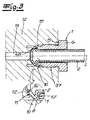
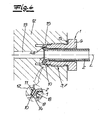
- the Figures 3 and 4 show a screw according to the invention 1 in the operating condition or a pipe connection device according to the invention with a screw according to the invention 1.
- a pipe 2 passes through the screw 1 in the axial direction.
- the pipe 2 has at one end a front element, which is formed in the embodiment as a flange 10. It is within the scope of the invention that it is a metallic bead 10, which is preferably integrally formed in the embodiment of the pipe end.
- the screw fitting 1 is in the embodiment of the Fig. 3 and 4 screwed into a formed as a terminal block 12 connecting element, which terminal block 12 has an integrated second pipe 13.
- the screw fitting 1 presses the flange 10 with its front-side sealing surface 11 against a connection surface 14 of the connection block 12.
- the screw fitting 1 is used with its thread 3 or external thread screwed into the blind bore 15 of the terminal block 12. It is understood that the blind bore 15 has a corresponding complementary internal thread.
- the thread 3 or external thread of the screw fitting 1 is provided with the first coating 7.
- the thread-free contact surface 4 at the end of the sterfittings 1 has the second coating 8.
- the flare 10 of the pipe end is an F-flare whose flare back is arranged transversely or perpendicular to the pipe longitudinal axis.
- the provided with the second coating 8 Stimende the SSfittings 1 has a complementary perpendicular to the pipe longitudinal axis L arranged surface portion 17 which rests positively against the crimp back of the F-flare.
- the flare 10 of the pipe end is an E-flare
- the flare back is cone-shaped.
- the Stimende of the associated screw fitting 1 has a conical surface portion 18 which rests positively against the crimp back of the E-flare.
- the second coating 8 is provided in the area of the positive engagement of the flange 10 in both the embodiment according to Fig. 3 as well as in the embodiment Fig. 4 .
Landscapes
- Engineering & Computer Science (AREA)
- General Engineering & Computer Science (AREA)
- Mechanical Engineering (AREA)
- Transportation (AREA)
- Chemical & Material Sciences (AREA)
- Combustion & Propulsion (AREA)
- Mutual Connection Of Rods And Tubes (AREA)
- Joints With Pressure Members (AREA)
- Branch Pipes, Bends, And The Like (AREA)
- Connection Of Plates (AREA)
- Protection Of Pipes Against Damage, Friction, And Corrosion (AREA)
Description
- Die Erfindung betrifft ein Schraubelement, insbesondere für den Anschluss bzw. für die Verbindung von Rohrleitungen, vorzugsweise von Kraftfahrzeugrohrleitungen, wobei ein Gewinde vorgesehen ist, sowie zumindest eine gewindefreie Kontaktfläche. Die Erfindung betrifft fernerhin eine Rohranschlusseinrichtung für den Anschluss von Rohrleitungen, insbesondere von Kraftfahrzeugrohrleitungen mit einem solchen Schraubelement.
- Schraubelemente bzw. Rohranschlusseinrichtungen der vorstehend beschriebenen Art sind aus der Praxis in verschiedenen Ausführungsformen bekannt. Insbesondere sind als Schraubfittings ausgebildete Schraubelemente bekannt, mit denen eine Rohrleitung, insbesondere eine Kraftfahrzeugrohrleitung an ein Anschlusselement anschließbar ist. Diese bekannten Schraubfittings sind in der Regel mit einer Beschichtung, insbesondere mit einer Korrosionsschutzbeschichtung versehen, die normalerweise den gesamten Fitting bedeckt. Die Beschichtung wird beispielsweise im Tauchverfahren oder Sprühverfahren aufgebracht. Bei Schraubverbindungen mit diesen bekannten Schraubfittings kann es zu einem unerwünschten Lockern oder sogar Lösen der Schraubverbindung kommen. Das gilt insbesondere für Schraubfittings mit angeschlossenen Rohrleitungen. Beim Verschrauben solcher Schraubfittings kann es zu einem Mitdrehen der Rohrleitung kommen und durch eine Torsion der Rohrleitung wird Federkraft gleichsam in der Rohrleitung gespeichert. Die Torsion der Rohrleitung erzeugt ein Rückdrehmoment, das zu einem unerwünschten bzw. unkontrollierten Lockern bzw. Lösen der Schraubverbindung führen kann. Ein unerwünschtes Lockern oder Lösen der Schraubverbindung kann insbesondere auch durch Vibrationen hervorgerufen werden, wie sie beispielsweise in Kraftfahrzeugen auftreten.
- Es sind auch Schraubelemente bzw. Schraubfittings bekannt, die im Bereich ihres Gewindes mit einer Adhäsivbeschichtung versehen sind. Dadurch wird der Schraubfitting nach dem Verschrauben fixiert und ein unerwünschtes Lockern bzw. Lösen der Schraubverbindung kann zumindest weitgehend vermieden werden. Solche Adhäsivbeschichtungen sind aber vor allem dann nicht zweckmäßig, wenn Schraubverbindungen zu einem späteren Zeitpunkt beabsichtigt wieder gelöst werden sollen.
- EP-A0 997 677 beschreibt ein Schraubelement für den Anschluss von Rohrleitungen.
- Der Erfindung liegt das technische Problem zugrunde, ein Schraubelement der eingangs beschriebenen Art anzugeben, mit dem ein unerwünschtes Lockern oder Lösen der zugeordneten Schraubverbindung auf einfache, effektive und funktionssichere Weise vermieden werden kann. Der Erfindung liegt weiterhin das technische Problem zugrunde, eine entsprechende Rohranschlusseinrichtung anzugeben.
- Zur Lösung dieses technischen Problems lehrt die Erfindung ein Schraubelement, insbesondere für den Anschluss bzw. für die Verbindung von Rohr leitungen, vorzugsweise von Kraftfahrzeugrohrleitungen, wobei ein Gewinde vorgesehen ist sowie zumindest eine gewindefreie Kontaktfläche vorhanden ist,
wobei das Gewinde zumindest bereichsweise mit einer ersten Beschichtung versehen ist, die einen ersten Reibwert µ1 aufweist,
wobei die Kontaktfläche zumindest bereichsweise mit einer zweiten Beschichtung versehen ist, die einen zweiten Reibwert µ2 aufweist
und wobei der erste Reibwert µ1 größer ist, insbesondere deutlich größer ist als der zweite Reibwert µ2. - Es liegt im Rahmen der Erfindung, dass die erste Beschichtung auf dem Gewinde die Außenoberfläche im Bereich des Gewindes bildet bzw. die äußerste Beschichtung des Gewindes ist. Es liegt weiterhin im Rahmen der Erfindung, dass die zweite Beschichtung auf der zumindest einen Kontaktfläche die Außenoberfläche im Bereich der Kontaktfläche bildet bzw. die äußerste Beschichtung der Kontaktfläche ist. Zweckmäßigerweise ist das Gewinde vollständig bzw. im Wesentlichen vollständig mit der ersten Beschichtung versehen. Vorzugsweise ist die Kontaktfläche vollständig bzw. im Wesentlichen vollständig mit der zweiten Beschichtung versehen. Es liegt im Übrigen im Rahmen der Erfindung, dass die erste Beschichtung keine Adhäsivbeschichtung ist.
- Nach sehr bevorzugter Ausführungsform, der im Rahmen der Erfindung besondere Bedeutung zukommt, ist das Schraubelement ein Schraubenbolzen bzw. ein Schraubfitting, der ein als Außengewinde ausgebildetes Gewinde aufweist. Dann ist dieses Außengewinde des Schraubenbolzens bzw. Schraubfittings zumindest bereichsweise und vorzugsweise vollständig bzw. im Wesentlichen vollständig mit der ersten Beschichtung versehen. Nach einer empfohlenen Ausführungsform handelt es sich bei dem Schraubelement um einen Schraubfitting, an den eine Rohrleitung angeschlossen ist. Gemäß bevorzugter Ausführungsform durchgreift die Rohrleitung den Schraubfitting in Axialrichtung und hintergreift das Stimende des Schraubfittings mit einem Rohrleitungsende. Das Rohrleitungsende ist dabei empfohlenermaßen als Bördel ausgebildet. Die Ausführungsform mit dem Schraubfitting bzw. weitere diesbezügliche Ausführungsvarianten werden weiter unten noch näher erläutert.
- Es empfiehlt sich, dass die zumindest eine gewindefreie Kontaktfläche bzw. die gewindefreien Kontaktflächen des Schraubelementes senkrecht bzw. quer oder im Wesentlichen senkrecht bzw. im Wesentlichen quer zur Einschraubrichtung des Schraubelementes orientiert sind. Gemäß empfohlener Ausführungsform weist das Stimende des Schraubenbolzens bzw. Schraubfittings eine gewindefreie Kontaktfläche auf, die zumindest bereichsweise mit der zweiten Beschichtung mit dem zweiten Reibwert µ2 beschichtet ist. Zweckmäßigerweise ist diese gewindefreie Kontaktfläche am Stimende des Schraubenbolzens bzw. Schraubfittings vollständig mit der zweiten Beschichtung versehen bzw. beschichtet.
- Es liegt weiterhin im Rahmen der Erfindung, dass der Schraubenbolzen bzw. Schraubfitting einen Schraubenkopf aufweist und dass die gewindeseitige Unterseite des Schraubenkopfs eine gewindefreie Kontaktfläche aufweist, die zumindest bereichsweise mit der zweiten Beschichtung mit dem zweiten Reibwert µ2 beschichtet ist. Zweckmäßigerweise ist diese gewindefreie Kontaktfläche an der Unterseite des Schraubenkopfes vollständig bzw. im Wesentlichen vollständig mit der zweiten Beschichtung versehen.
- Nach einer Ausführungsform der Erfindung ist das Schraubelement eine Schraubenmutter, die ein als Innengewinde ausgebildetes Gewinde aufweist. Dann ist dieses Innengewinde zumindest bereichsweise und vorzugsweise vollständig bzw. im Wesentlichen vollständig mit der ersten Beschichtung beschichtet. Die Schraubenmutter dient zur Aufnahme eines Schraubenbolzens bzw. Schraubfittings und empfohlenermaßen zur Aufnahme eines erfindungsgemäß beschichteten Schraubenbolzens bzw. Schraubfittings. Bei der Schraubenmutter kann es sich um eine Anschlussmuffe mit Innengewinde zur Verbindung zweier Rohrleitungen handeln oder um eine Sackbohrung mit Innengewinde in einem Anschlussblock für eine anzuschließende Rohrleitung. Es liegt im Rahmen der Erfindung, dass ein Kontaktflansch der Anschlussmuffe eine gewindefreie Kontaktfläche aufweist/ist, die dann zumindest bereichsweise und vorzugsweise vollständig bzw. im Wesentlichen vollständig mit der zweiten Beschichtung versehen ist. Gemäß einer Ausführungsform der Erfindung ist sowohl ein Schraubenbolzen bzw. Schraubfitting erfindungsgemäß beschichtet als auch eine dem Schraubenbolzen zugeordnete Schraubenmutter erfindungsgemäß beschichtet.
- Vorteilhafterweise beträgt der erste Reibwert µ1 zumindest das Doppelte, vorzugsweise zumindest das Dreifache und besonders bevorzugt zumindest das Vierfache des zweiten Reibwertes µ2. Gemäß einer Ausführungsform beträgt der erste Reibwert µ1 zumindest das Fünffache des zweiten Reibwertes µ2.
- Eine Ausführungsvariante des erfindungsgemäßen Schraubelementes ist dadurch gekennzeichnet, dass die erste Beschichtung mit dem ersten Reibwert µ1 sowohl auf das Gewinde als auch auf die zumindest eine gewindefreie Kontaktfläche aufgebracht ist und dass die zweite Beschichtung mit dem zweiten Reibwert µ2 auf die zumindest eine gewindefreie Kontaktfläche - die erste Beschichtung dort überdeckend - aufgebracht ist. Zunächst wird also das gesamte Schraubelement oder zumindest das Gewinde und die gewindefreien Kontaktflächen des Schraubelementes mit der ersten Beschichtung versehen und dann wird die zweite Beschichtung im Bereich der gewindefreien Kontaktfläche bzw. im Bereich der gewindefreien Kontaktflächen auf die erste Beschichtung aufgebracht, so dass die zweite Beschichtung die Außenoberfläche an den gewindefreien Kontaktflächen bildet. Die erste Beschichtung wird bei dieser Ausführungsform zweckmäßigerweise durch ein Tauchverfahren aufgebracht. Die zweite Beschichtung kann im Zuge eines Sprühverfahrens aufgebracht werden.
- Eine andere Ausführungsform der Erfindung ist dadurch gekennzeichnet, dass die erste Beschichtung mit dem ersten Reibwert µ1 lediglich auf das Gewinde zumindest bereichsweise aufgebracht ist und dass die zweite Beschichtung mit dem zweiten Reibwert µ2 lediglich auf die zumindest eine gewindefreie Kontaktfläche aufgebracht ist. Bei dieser Ausführungsform wird also die erste Beschichtung lediglich auf das Gewinde und nicht auf die zumindest eine gewindefreie Kontaktfläche aufgebracht und die zweite Beschichtung wird auf die zumindest eine gewindefreie Kontaktfläche ohne Zwischenschaltung der ersten Beschichtung aufgebracht. Bei dieser Ausführungsform können die erste und die zweite Beschichtung beispielsweise jeweils im Zuge eines Sprühverfahrens aufgebracht werden.
- Gemäß einer empfohlenen Ausführungsvariante handelt es sich bei der ersten Beschichtung um eine aluminiumhaltige Korrosionsschutzbeschichtung, die zumindest ein den Reibwert der Beschichtung erhöhendes Gleitmittel aufweist bzw. enthält. - Vorzugsweise weist die zweite Beschichtung zumindest ein den Reibwert der Beschichtung erniedrigendes Gleitmittel auf und dieses Gleitmittel ist zweckmäßigerweise Polytetrafluorethylen (PTFE) und/oder Molybdändisulfid (MoS2).
- Empfohlenermaßen beträgt der Reibwert µ1 der ersten Beschichtung 0,15 bis 0,5, vorzugsweise 0,2 bis 0,45 und bevorzugt 0,25 bis 0,4. Ein Reibwert µ1 zwischen 0,3 und 0,4, beispielsweise 0,35 hat sich bewährt. - Es empfiehlt sich, dass der Reibwert µ2 der zweiten Beschichtung 0,02 bis 0,2, vorzugsweise 0,02 bis 0,15 und bevorzugt 0,03 bis 0,1 beträgt. Es hat sich bewährt, dass der Reibwert µ2 der zweiten Beschichtung zwischen 0,03 und 0,08 liegt und beispielsweise 0,05 beträgt.
- Zweckmäßigerweise beträgt die Schichtdicke der ersten Beschichtung 2 µm bis 25 µm und vorzugsweise 3 µm bis 20 µm. - Empfohlenermaßen beträgt die Schichtdicke der zweiten Beschichtung 5 µm bis 25 µm und bevorzugt 5 µm bis 20 µm.
- Gegenstand der Erfindung ist auch eine Rohranschlusseinrichtung für den Anschluss von Rohrleitungen, insbesondere von Kraftfahrzeugrohrleitungen, wobei die Rohranschlusseinrichtung ein erfindungsgemäßes Schraubelement aufweist und wobei an dieses Schraubelement eine Rohrleitung angeschlossen ist. Das Schraubelement mit der angeschlossenen Rohrleitung ist an ein Anschlusselement durch Verschraubung anschließbar. Gemäß einer bevorzugten Ausführungsform handelt es sich bei dem vorgenannten Schraubelement um einen Schraubenbolzen oder um einen Schraubfitting mit angeschlossener Rohrleitung. Das Anschlusselement kann dann eine Anschlussmuffe mit angeschlossener zweiter Rohrleitung sein. Die Schraubverbindung dient dann also zur Verbindung zweier Rohrleitungen, insbesondere Kraftfahrzeugrohrleitungen. Wie oben bereits dargelegt, kann es sich bei dem Anschlusselement auch um eine Sackbohrung in einem Anschlussblock handeln, in die der Schraubenbolzen bzw. der Schraubfitting mit der angeschlossenen Rohrleitung einschraubbar ist.
- Eine besonders bevorzugte Ausführungsform der Erfindung ist dadurch gekennzeichnet, dass das Schraubelement ein Schraubfitting mit einer Axialbohrung ist, welche Axialbohrung von der Rohrleitung durchfasst wird, wobei die Rohrleitung an ihrem Rohrleitungsende einen Bördel aufweist und wobei das mit der zweiten Beschichtung versehene Stimende des Schraubfittings an der Bördelrückseite des Bördels anliegt. Es liegt auch im Rahmen der Erfindung, dass die Bördelrückseite des Rohrleitungsendes mit der zweiten Beschichtung versehen ist. Es liegt weiterhin im Rahmen der Erfindung, dass das Gewinde des Schraubfittings mit der ersten Beschichtung versehen ist. Zweckmäßigerweise liegt das Stimende des Schraubfittings zumindest bereichsweise formschlüssig an der Bördelrückseite an. Nach einer Ausführungsform der Erfindung ist der Bördel am Rohrleitungsende ein F-Bördel, dessen Bördelrückseite senkrecht bzw. im Wesentlichen senkrecht zur Rohrleitungslängsachse orientiert ist und das Stimende des Schraubfittings weist dann zumindest einen senkrecht oder im Wesentlichen senkrecht zur Rohrleitungslängsachse orientierten Flächenabschnitt auf, der formschlüssig an der Bördelrückseite anliegt. Zweckmäßigerweise läuft der Flächenabschnitt über den Umfang des Schraubfittings um. Nach einer anderen Ausführungsform der Erfindung ist der Bördel am Rohrleitungsende ein E-Bördel, dessen Bördelrückseite konusförmig bzw. im Wesentlichen konusförmig ausgebildet ist und das Stimende des Schraubfittings weist zumindest einen konusförmigen oder im Wesentlichen konusförmig ausgebildeten Flächenabschnitt auf, der formschlüssig an der Bördelrückseite anliegt. Zweckmäßigerweise läuft dieser Flächenabschnitt über den Umfang des Schraubfittings um. Grundsätzlich kann der Bördel am Rohrleitungsende auch andere Formen aufweisen. In jedem Fall wird bevorzugt, dass das Stimende des Schraubfittings zumindest bereichsweise und empfohlenermaßen über den gesamten Umfang des Schraubfittings formschlüssig an der Bördelrückseite des Rohrleitungsendes anliegt.
- Gemäß einer weiteren empfohlenen Ausführungsform der Erfindung ist das Schraubelement eine Schraubenmutter mit einer Axialbohrung, welche Axialbohrung von der Rohrleitung durchfasst wird, wobei die Rohrleitung an ihrem Rohrleitungsende einen Bördel aufweist, wobei die Schraubenmutter einen mit der zweiten Beschichtung versehenen, innenseitigen Kontaktflansch aufweist und wobei der Bördel der Rohrleitung mit seiner Bördelrückseite an dem Kontaktflansch anliegt. Vorzugsweise liegt der Kontaktflansch zumindest bereichsweise und bevorzugt über den gesamten Umfang des Bördels formschlüssig an der Bördelrückseite an. Gemäß einer Ausführungsvariante ist der Bördel ein F-Bördel, dessen Bördelrückseite senkrecht oder im Wesentlichen senkrecht zur Rohrleitungslängsachse orientiert ist und der Kontaktflansch der Schraubenmutter weist zumindest einen senkrecht oder im Wesentlichen senkrecht zur Rohrleitungslängsachse orientierten Flächenabschnitt auf, der formschlüssig an der Bördelrückseite anliegt. Gemäß einer weiteren Ausführungsvariante ist der Bördel ein E-Bördel, dessen Bördelrückseite konusförmig bzw. im Wesentlichen konusförmig ausgebildet ist und der Kontaktflansch der Schraubenmutter weist zumindest einen konusförmigen oder im Wesentlichen konusförmig ausgebildeten Flächenabschnitt auf, der formschlüssig an der Bördelrückseite anliegt. Es liegt im Rahmen der Erfindung, dass die Schraubenmutter ein Innengewinde zur Aufnahme eines Anschlusselementes aufweist und dieses Innengewinde ist mit der ersten Beschichtung versehen.
- Oben wurde dargelegt, dass nach einer bevorzugten Ausführungsform der Erfindung das Schraubelement ein Schraubfitting ist, und dass das Stimende des Schraubfittings im montierten Zustand der Rohranschlusseinrichtung an der Bördelrückseite des Bördels am Rohrleitungsende anliegt. Beim Anziehen des Schraubfittings übt dieser eine axiale Anpresskraft Fax auf die Bördelrückseite aus und überträgt ein Drehmoment M auf die Bördelrückseite und damit auf die Rohrleitung. Dieses Drehmoment M ist messbar. Sinn der zweiten Beschichtung am Stimende des Schraubfittings ist die Minimierung des übertragenen Drehmomentes M. Es liegt im Rahmen der Erfindung, dass mit der zweiten Beschichtung am Stimende des Schraubfittings bei einer Axialkraft von Fax = 11 kN ein Drehmoment von 0,2 bis 2,5 Nm, vorzugsweise von 0,2 bis 2,2 Nm, bevorzugt von 0,2 bis 2,0 Nm und sehr bevorzugt von 0,2 bis 1,5 Nm übertragen wird. Ohne zweite Beschichtung am Stimende des Schraubfittings wird bei einer Axialkraft von Fax = 11 kN ein Drehmoment von größer als 3 Nm bzw. deutlich größer als 3 Nm übertragen. Es versteht sich, dass das übertragene Drehmoment mit der jeweiligen Kontaktfläche zwischen Schraubfitting und Bördel zunimmt. Die vorstehend angegebenen Werte gelten insbesondere für erfindungsgemäß beschichtete metallische Schraubfittings und metallische Bördel und insbesondere für Schraubfittings mit Gewindedurchmessem zwischen 8 und 16 mm, vorzugsweise zwischen 10 und 14 mm. Die Durchmesser der zugeordneten Bördel liegen in der Größenordnung der Gewindedurchmesser.
- Die Erfindung wird nachfolgend anhand von zwei Ausführungsbeispielen näher erläutert:
- Nach einem ersten Ausführungsbeispiel wird ein Schraubenbolzen bzw. ein Schraubfitting zunächst vollständig bzw. im Wesentlichen vollständig mit der ersten Beschichtung versehen, bei der es sich um eine Korrosionsschutzbeschichtung handelt, die empfohlenermaßen Aluminium enthält. Fernerhin enthält diese erste Beschichtung zumindest ein den Reibwert der ersten Beschichtung beeinflussendes Gleitmittel. Es empfiehlt sich, die erste Beschichtung mit einer Schichtdicke von 10 bis 20 µm, beispielsweise 15 µm aufzubringen. Der Reibwert µ1 dieser ersten Beschichtung beträgt vorzugsweise 0,25 bis 0,45, bevorzugt 0,3 bis 0,4 und beispielsweise 0,35. Anschließend wird dann die zweite Beschichtung mit dem zweiten Reibwert µ2 lediglich im Bereich der gewindefreien Kontaktflächen aufgebracht, nämlich an der Stirnendfläche des Schraubenbolzens bzw. Schraubfittings und an der gewindeseitigen Unterseite des Schraubenkopfs des Schraubenbolzens bzw. Schraubfittings.
- Die zweite Beschichtung überdeckt im Bereich der gewindefreien Kontaktflächen also die erste Beschichtung. Es liegt im Rahmen der Erfindung, dass die zweite Beschichtung zumindest ein den Reibwert der Beschichtung erniedrigendes Gleitmittel aufweist. Zweckmäßigerweise handelt es sich bei diesem Gleitmittel um Polytetrafluorethylen (PTFE) und/oder Molybdändisulfid (MoS2). Empfohlenermaßen enthält die zweite Beschichtung sowohl Polytetrafluorethylen als auch Molybdändisulfid. Die zweite Beschichtung wird vorzugsweise in einer Schichtdicke von 5 bis 15 µm, beispielsweise 10 µm aufgebracht.
- Der Reibwert µ2 der zweiten Beschichtung beträgt zweckmäßigerweise 0,02 bis 0.08, bevorzugt 0,03 bis 0,07 und beispielsweise 0,05.
- Im Rahmen eines zweiten Ausführungsbeispiels wird auf einen Schraubenbolzen bzw. Schraubfitting zunächst eine Korrosionsschutzbeschichtung aufgebracht. Zweckmäßigerweise wird diese Korrosionsschutzbeschichtung auf die gesamte Oberfläche des Schraubfittings aufgebracht und zwar vorzugsweise elektrolytisch. Bei der Korrosionsschutzbeschichtung handelt es sich empfohlenermaßen um eine Zink-Nickel-Beschichtung. Die Schichtdicke dieser Korrosionsschutzbeschichtung beträgt vorzugsweise 4 bis 12 µm, bevorzugt 6 bis 10 µm und beispielsweise 8 µm. Anschließend wird auf diese Korrosionsschutzbeschichtung selektiv im Bereich des Gewindes des Schraubfittings die erste Beschichtung mit dem hohen ersten Reibwert µ1 aufgebracht. Die Schichtdicke dieser ersten Beschichtung beträgt empfohlenermaßen 2 bis 8 µm, vorzugsweise 3 bis 7 µm und beispielsweise 5 µm. Es liegt im Rahmen der Erfindung, dass diese erste Beschichtung zumindest ein den Reibwert der Beschichtung beeinflussendes Gleitmittel aufweist bzw. enthält. Daraufhin wird die zweite Beschichtung mit dem zweiten niedrigeren Reibwert µ2 auf den gewindefreien Kontaktflächen aufgebracht, nämlich an der Stimendfläche des Schraubfittings und an der Unterseite des Schraubenkopfes des Schraubfittings. Die zweite Beschichtung enthält zur Herabsetzung des Reibwertes Polytetrafluorethylen (PTFE) und Molybdändisulfid (MoS2). Die Schichtdicke dieser zweiten Beschichtung beträgt zweckmäßigerweise 10 bis 20 µm, beispielsweise 15 µm. Bei diesem zweiten Ausführungsbeispiel kann auch zuerst die vorgenannte zweite Beschichtung selektiv aufgebracht werden und anschließend die vorgenannte erste Beschichtung selektiv aufgebracht werden.
- Der Erfindung liegt die Erkenntnis zugrunde, dass aufgrund der erfindungsgemäßen Lehre bzw. aufgrund der erfindungsgemäßen Beschichtung des Schraubelementes ein unbeabsichtigtes Lockern oder Lösen der zugeordneten Schraubverbindung auf einfache Weise sowie effektiv und funktionssicher vermieden werden kann. Durch die erfindungsgemäße Aufbringung verschiedener Beschichtungen kann das erfindungsgemäße technische Problem überraschend wirksam gelöst werden. Der Erfindung liegt insoweit die Erkenntnis zugrunde, dass die Beschichtung mit hohem Reibwert im Bereich des Gewindes ein unbeabsichtigtes Lösen der Schraubverbindung effektiv erschwert. Die Beschichtung mit niedrigerem Reibwert im Bereich der Kontaktflächen verringert bzw. verhindert dagegen die Übertragung von Torsionskräften auf die zu verbindenden Teile bzw. Rohrenden. Dadurch wird also ein eingangs erläutertes Rückdrehmoment deutlich verringert oder sogar vollständig vermieden. Die gezielten Beschichtungen in verschiedenen Bereichen des Schraubelementes können auf einfache und präzise Weise vorgenommen werden, so dass der erfindungsgemäße Erfolg problemlos erzielbar ist. Die erfindungsgemäßen Schraubelemente eignen sich vor allem für die Verbindung von Rohrleitungen, insbesondere von Kraftfahrzeugrohrleitungen. Kraftfahrzeugrohrleitungen meint dabei vor allem Rohrleitungen für Kraftstoffe oder Bremsflüssigkeit.
- Nachfolgend wird die Erfindung anhand einer lediglich ein Ausführungsbeispiel darstellenden Zeichnung näher erläutert. Es zeigen in schematischer Darstellung:
- Fig. 1
- eine Ansicht eines als Schraubfitting ausgebildeten erfindungs- gemäßen Schraubelementes,
- Fig. 2
- den Gegenstand gemäß
Fig. 1 in einer anderen Ausführungsform, - Fig. 3
- eine erste Ausführungsform einer erfindungsgemäßen Rohran- schlusseinrichtung und
- Fig. 4
- den Gegenstand nach
Fig. 3 in einer zweiten Ausführungsform. - Die Figuren zeigen ein als Schraubfitting 1 ausgebildetes erfindungsgemäßes Schraubelement, das vorzugsweise und im Ausführungsbeispiel für den Anschluss einer Rohrleitung 2 vorgesehen ist. Bei der Rohrleitung 2 mag es sich um eine Kraftfahrzeugrohrleitung handeln. Der Schraubfitting 1 weist ein Gewinde 3 sowie gewindefreie Kontaktflächen 4, 5 auf. Die gewindefreie Kontaktfläche 4 ist am Stimende des Schraubfittings 1 angeordnet und die gewindefreie Kontaktfläche 5 ist an der gewindeseitigen Unterseite des Schraubenkopfes 6 angeordnet. Das Gewinde 3 bzw. Außengewinde des Schraubfittings 1 ist vorzugsweise und im Ausführungsbeispiel vollständig mit einer ersten Beschichtung 7 versehen, die einen ersten höheren Reibwert µ1 aufweist. Die beiden gewindefreien Kontaktflächen 4, 5 sind vorzugsweise und im Ausführungsbeispiel vollständig mit einer zweiten Beschichtung 8 versehen, die einen zweiten niedrigeren Reibwert µ2 aufweist. Nach bevorzugter Ausführungsform und im Ausführungsbeispiel beträgt der erste Reibwert µ1 zumindest das Fünffache, vorzugsweise zumindest das Sechsfache des Reibwertes µ2.
- Die
Fig. 1 zeigt eine erste Ausführungsform eines erfindungsgemäßen Schraubfittings 1. Hier wurde zunächst auf die gesamte Oberfläche des Schraubfittings 1 die erste Beschichtung 7 mit dem ersten Reibwert µ1 aufgebracht. Diese erste Beschichtung wurde also in einem ersten Schritt auch auf die gewindefreien Kontaktflächen 4, 5 aufgebracht. Die erste Beschichtung 7 kann insbesondere im Zuge eines Tauchverfahrens aufgebracht werden. Zweckmäßigerweise und im Ausführungsbeispiel handelt es sich bei der ersten Beschichtung 7 um eine aluminiumhaltige Korrosionsschutzbeschichtung, der zumindest ein den Reibwert der Beschichtung 7 beeinflussendes Gleitmittel zugesetzt ist. Der Reibwert µ1 der ersten Beschichtung 7 beträgt zweckmäßigerweise und in diesem Ausführungsbeispiel 0,33 bis 0,37, beispielsweise 0,35. In einem zweiten Schritt wird bei dieser Ausführungsform die zweite Beschichtung 8 mit dem zweiten niedrigeren Reibwert µ2 lediglich auf die gewindefreien Kontaktflächen 4, 5 - unter Zwischenschaltung der ersten Beschichtung 7 - aufgebracht. Diese zweite Beschichtung 8 kann beispielsweise im Rahmen eines Sprühverfahrens aufgebracht werden. Der Reibwert der zweiten Beschichtung 8 mag vorzugsweise und in diesem Ausführungsbeispiel 0,03 bis 0,07 und beispielsweise 0,05 betragen. - Bei der Ausführungsform gemäß
Fig. 2 wird zunächst eine (gesonderte) Korrosionsschutzbeschichtung 9 auf die gesamte Oberfläche des Schraubfittings 1 aufgebracht. Bei dieser Korrosionsschutzbeschichtung handelt es sich zweckmäßigerweise und im Ausführungsbeispiel um eine elektrolytisch aufgebrachte Zink-Nickel-Korrosionsschutzbeschichtung. In einem zweiten Schritt wird die erste Beschichtung 7 mit dem ersten höheren Reibwert µ1 im Bereich des Gewindes 3 auf die Korrosionsschutzbeschichtung 9 aufgebracht. Die erste Beschichtung 7 bildet dann im Bereich des Gewindes 3 die Außenoberfläche des Schraubfittings 1. In einem dritten Schritt wird daraufhin die zweite Beschichtung 8 mit dem zweiten niedrigeren Reibwert µ2 im Bereich der gewindefreien Kontaktflächen 4, 5 auf die Korrosionsschutzbeschichtung 9 aufgebracht. Die zweite Beschichtung 8 bildet dann im Bereich der gewindefreien Kontaktflächen 4, 5 die Außenoberfläche des Schraubfittings 1. - Die
Figuren 3 und4 zeigen einen erfindungsgemäßen Schraubfitting 1 im Betriebszustand bzw. eine erfindungsgemäße Rohranschlusseinrichtung mit einem erfindungsgemäßen Schraubfitting 1. Eine Rohrleitung 2 durchfasst den Schraubfitting 1 in axialer Richtung. Die Rohrleitung 2 weist an einem Ende ein Stirnelement auf, das im Ausführungsbeispiel als Bördel 10 ausgebildet ist. Es liegt im Rahmen der Erfindung, dass es sich um einen metallischen Bördel 10 handelt, der vorzugsweise und im Ausführungsbeispiel einstückig an das Rohrleitungsende angeformt ist. Der Schraubfitting 1 ist im Ausführungsbeispiel nach denFig. 3 und4 in ein als Anschlussblock 12 ausgebildetes Anschlusselement eingeschraubt, welcher Anschlussblock 12 eine integrierte zweite Rohrleitung 13 aufweist. Der Schraubfitting 1 drückt den Bördel 10 mit seiner stirnseitigen Dichtfläche 11 an eine Anschlussfläche 14 des Anschlussblocks 12. Der Schraubfitting 1 wird dazu mit seinem Gewinde 3 bzw. Außengewinde in die Sackbohrung 15 des Anschlussblocks 12 eingeschraubt. Es versteht sich, dass die Sackbohrung 15 ein entsprechendes komplementäres Innengewinde aufweist. Das Gewinde 3 bzw. Außengewinde des Schraubfittings 1 ist mit der ersten Beschichtung 7 versehen. Die gewindefreie Kontaktfläche 4 am Stimende des Schraubfittings 1 weist die zweite Beschichtung 8 auf. - Im Ausführungsbeispiel nach
Fig. 3 ist der Bördel 10 des Rohrleitungsendes ein F-Bördel, dessen Bördelrückseite quer bzw. senkrecht zur Rohrleitungslängsachse angeordnet ist. Das mit der zweiten Beschichtung 8 versehene Stimende des Schraubfittings 1 weist einen komplementären senkrecht zur Rohrleitungslängsachse L angeordneten Flächenabschnitt 17 auf, der formschlüssig an der Bördelrückseite des F-Bördels anliegt. - Im Ausführungsbeispiel nach
Fig. 4 ist der Bördel 10 des Rohrleitungsendes ein E-Bördel, dessen Bördelrückseite konusförmig ausgebildet ist. Das Stimende des zugeordneten Schraubfittings 1 weist einen konusförmigen Flächenabschnitt 18 auf, der formschlüssig an der Bördelrückseite des E-Bördels anliegt. Im Bereich des formschlüssigen Anliegens der Bördel 10 ist sowohl im Ausführungsbeispiel nachFig. 3 als auch im Ausführungsbeispiel nachFig. 4 die zweite Beschichtung 8 vorgesehen.
Claims (15)
- Schraubelement, für den Anschluss von Rohrleitungen (2), vorzugsweise von Kraftfahrzeugrohrleitungen, wobei ein Gewinde (3) vorgesehen ist, sowie zumindest eine gewindefreie Kontaktfläche (4, 5) vorhanden ist,
wobei das Gewinde (3) zumindest bereichsweise mit einer ersten Beschichtung (7) versehen ist, die einen ersten Reibwerte (µ1) aufweist,
dadurch gekennzeichnet, dass
die Kontaktfläche (4, 5) zumindest bereichsweise mit einer zweiten Beschichtung (8) versehen ist, die einen zweiten Reibwert (µ2) aufweist,
und dass der erste Reibwert (µ1) größer ist, insbesondere deutlich größer ist als der zweite Reibwert (µ2). - Schraubelement nach Anspruch 1, wobei das Schraubelement ein Schraubenbolzen bzw. Schraubfitting ist, der ein als Außengewinde ausgebildetes Gewinde (3) aufweist.
- Schraubelement nach Anspruch 2, wobei das Stimende des Schraubenbolzens bzw. Schraubfittings (1) eine gewindefreie Kontaktfläche (4, 5) aufweist, die zumindest bereichsweise mit der zweiten Beschichtung (8) mit dem zweiten Reibwert (µ2) beschichtet ist.
- Schraubelement nach einem der Ansprüche 2 oder 3, wobei der Schraubenbolzen bzw. Schraubfitting (1) einen Schraubenkopf (6) aufweist und wobei die gewindeseitige Unterseite des Schraubenkopfs (6) eine gewindefreie Kontaktfläche (4, 5) aufweist, die zumindest bereichsweise mit der zweiten Beschichtung (8) mit dem zweiten Reibwert (µ2) beschichtet ist.
- Schraubelement nach Anspruch 1, wobei das Schraubelement eine Schraubenmutter ist, die ein als Innengewinde ausgebildetes Gewinde (3) aufweist.
- Schraubelement nach einem der Ansprüche 1 bis 5, wobei der erste Reibwert (µ1) zumindest das Doppelte, vorzugsweise zumindest das Dreifache und besonders bevorzugt zumindest das Vierfache des zweiten Reibwertes (µ2) beträgt.
- Schraubelement nach einem der Ansprüche 1 bis 6, wobei der Reibwert (µ1) der ersten Beschichtung 0,15 bis 0,5, vorzugsweise 0,2 bis 0,45 und bevorzugt 0,25 bis 0,4 beträgt.
- Schraubelement nach einem der Ansprüche 1 bis 7, wobei der Reibwert (µ2) der zweiten Beschichtung (8) 0,02 bis 0,2, vorzugsweise 0,02 bis 0,15 und bevorzugt 0,03 bis 0,1 beträgt.
- Schraubelement nach einem der Ansprüche 1 bis 8, wobei die Schichtdicke der ersten Beschichtung (7) 2 µm bis 25 µm und vorzugsweise 3 µm bis 20 µm beträgt.
- Schraubelement nach einem der Ansprüche 1 bis 9, wobei die Schichtdicke der zweiten Beschichtung (8) 5 µm bis 25 µm und vorzugsweise 5 µm bis 20 µm beträgt.
- Rohranschlusseinrichtung für den Anschluss von Rohrleitungen (2), insbesondere von Kraftfahrzeugrohrleitungen, mit einem Schraubelement nach einem der Ansprüche 1 bis 10, wobei an das Schraubelement eine Rohrleitung (2) angeschlossen ist und wobei das Schraubelement an ein Anschlusselement durch Verschraubung anschließbar ist.
- Rohranschlusseinrichtung nach Anspruch 11, wobei das Schraubelement ein Schraubfitting (1) mit einer Axialbohrung ist, welche Axialbohrung von einer Rohrleitung (2) durchfasst wird, wobei die Rohrleitung (2) an ihrem Rohrleitungsende einen Bördel (10) aufweist und wobei das mit der zweiten Beschichtung (8) versehene Stimende des Schraubfittings (1) an der Bördelrückseite des Bördels (10) anliegt.
- Rohranschlusseinrichtung nach einem der Ansprüche 11 oder 12, wobei das Schraubelement eine Schraubenmutter mit einer Axialbohrung ist, welche Axialbohrung von einer Rohrleitung (2) durchfasst wird, wobei die Rohrleitung (2) an ihrem Rohrleitungsende einen Bördel (10) aufweist, wobei die Schraubenmutter einen mit der zweiten Beschichtung (8) versehenen innenseitigen Kontaktflansch aufweist und wobei der Bördel (10) der Rohrleitung (2) mit seiner Bördelrückseite an dem Kontaktflansch anliegt.
- Rohranschlusseinrichtung nach einem der Ansprüche 11 bis 13, wobei der Bördel (10) ein F-Bördel ist, dessen Bördelrückseite senkrecht bzw. im Wesentlichen senkrecht zur Rohrieitungslängsachse (L) angeordnet ist und wobei das Stimende des Schraubfittings (1) und/oder der Kontaktflansch der Schraubenmutter zumindest einen senkrecht bzw. im Wesentlichen senkrecht zur Rohrleitungslängsachse (L) orientierten Flächenabschnitt (17) aufweist, der formschlüssig an der Bördelrückseite anliegt.
- Rohranschlusseinrichtung nach einem der Ansprüche 11 bis 13, wobei der Bördel (10) ein E-Bördel ist, dessen Bördelrückseite konusförmig bzw. im Wesentlichen konusförmig ausgebildet ist und wobei das Stimende des Schraubfittings (1) und/oder der Kontaktflansch der Schraubenmutter zumindest einen konusförmigen bzw. im Wesentlichen konusförmig ausgebildeten Flächenabschnitt (18) aufweist, der formschlüssig an der Bördelrückseite anliegt.
Priority Applications (7)
| Application Number | Priority Date | Filing Date | Title |
|---|---|---|---|
| DE502008001944T DE502008001944D1 (de) | 2008-06-17 | 2008-06-17 | Schraubelement und Rohranschlusseinrichtung für den Anschluss von Rohrleitungen |
| EP08010964.8A EP2136119B2 (de) | 2008-06-17 | 2008-06-17 | Rohranschlusseinrichtung für den Anschluss von Rohrleitungen |
| CN200910135140.9A CN101608722B (zh) | 2008-06-17 | 2009-04-22 | 用于连接管件的装置 |
| JP2009138804A JP5438387B2 (ja) | 2008-06-17 | 2009-06-10 | パイプを接続するためのねじ要素及び装置 |
| BRPI0901773-9 BRPI0901773B1 (pt) | 2008-06-17 | 2009-06-16 | dispositivo para conectar tubulações |
| KR20090054042A KR101479351B1 (ko) | 2008-06-17 | 2009-06-17 | 나사식 구성요소 및 파이프 연결 장치 |
| US12/486,163 US8172278B2 (en) | 2008-06-17 | 2009-06-17 | Threaded component and device for connecting piping |
Applications Claiming Priority (1)
| Application Number | Priority Date | Filing Date | Title |
|---|---|---|---|
| EP08010964.8A EP2136119B2 (de) | 2008-06-17 | 2008-06-17 | Rohranschlusseinrichtung für den Anschluss von Rohrleitungen |
Publications (3)
| Publication Number | Publication Date |
|---|---|
| EP2136119A1 EP2136119A1 (de) | 2009-12-23 |
| EP2136119B1 true EP2136119B1 (de) | 2010-12-01 |
| EP2136119B2 EP2136119B2 (de) | 2018-09-12 |
Family
ID=39942921
Family Applications (1)
| Application Number | Title | Priority Date | Filing Date |
|---|---|---|---|
| EP08010964.8A Active EP2136119B2 (de) | 2008-06-17 | 2008-06-17 | Rohranschlusseinrichtung für den Anschluss von Rohrleitungen |
Country Status (7)
| Country | Link |
|---|---|
| US (1) | US8172278B2 (de) |
| EP (1) | EP2136119B2 (de) |
| JP (1) | JP5438387B2 (de) |
| KR (1) | KR101479351B1 (de) |
| CN (1) | CN101608722B (de) |
| BR (1) | BRPI0901773B1 (de) |
| DE (1) | DE502008001944D1 (de) |
Cited By (2)
| Publication number | Priority date | Publication date | Assignee | Title |
|---|---|---|---|---|
| EP2706277A2 (de) | 2012-09-10 | 2014-03-12 | Cooper-Standard Automotive (Deutschland) GmbH | Rohrschraube zur Befestigung einer Rohrleitung und ein Verfahren zur Herstellung einer solchen Rohrschraube |
| DE202017104112U1 (de) | 2017-07-11 | 2017-07-30 | Ti Automotive (Heidelberg) Gmbh | Schraubelement für den Anschluss von Rohrleitungen und Rohranschlusseinrichtung |
Families Citing this family (29)
| Publication number | Priority date | Publication date | Assignee | Title |
|---|---|---|---|---|
| FR2956893A1 (fr) * | 2010-02-26 | 2011-09-02 | Peugeot Citroen Automobiles Sa | Dispositif de connexion d'un conduit de fluide sur un boitier, moyen de fixation, organe de vissage et procede de vissage d'un moyen de fixation sur un boitier par l'intermediaire d'un organe de vissage |
| DE102010044763A1 (de) * | 2010-09-08 | 2012-03-08 | Gm Global Technology Operations Llc (N.D.Ges.D. Staates Delaware) | Rohrverbindung zum Verbinden von Rohren eines Kraftfahrzeuges, Abgasanlage, Luftansaugsystem und Kraftfahrzeug |
| US9057397B2 (en) * | 2010-09-22 | 2015-06-16 | Mcgard Llc | Chrome-plated fastener with organic coating |
| DE202011104255U1 (de) * | 2011-08-11 | 2011-11-15 | Voswinkel Entwicklungs- Und Verwaltungs-Gmbh & Co. Kg | Schraubkupplung zum lösbaren Verbinden von Hochdruckhydraulikleitungen |
| JP5722752B2 (ja) * | 2011-11-18 | 2015-05-27 | 新日鐵住金株式会社 | 高トルク締結性能に優れた管状ねじ継手 |
| WO2013176281A1 (en) | 2012-05-23 | 2013-11-28 | Nippon Steel & Sumitomo Metal Corporation | Tubular threaded joint having improved high-torque makeup properties |
| EP2679873B1 (de) * | 2012-06-29 | 2017-05-31 | TI Automotive (Heidelberg) GmbH | Verbindungsaggregat aus einer Kraftfahrzeugrohrleitung und einem Verbindungsfitting |
| US9291291B2 (en) | 2013-05-23 | 2016-03-22 | Ti Group Automotive Systems, Llc | Tube fitting with integrated seal |
| DE202013012239U1 (de) | 2013-10-14 | 2015-10-19 | Bant Boru Sanayi Ve Ticaret Anonim Sirketi | Aufgeweitetes Rohr für Rohrverbindungen und Vorrichtung damit |
| EP2860433B1 (de) | 2013-10-14 | 2018-12-12 | Bant Boru Sanayi Ve Ticaret Anonim Sirketi | Rohrverbindungsvorrichtung mit einem aufgeweitetem Rohr |
| DE202014102663U1 (de) * | 2014-06-06 | 2014-06-24 | Ti Automotive (Heidelberg) Gmbh | Schraubelement für den Anschluss von Rohrleitungen und Rohranschlusseinrichtung mit diesem Schraubelement |
| US10072778B2 (en) * | 2015-01-08 | 2018-09-11 | Toyota Motor Engineering & Manufacturing North America, Inc. | Tube nut assembly |
| DE102015105798B4 (de) | 2015-01-23 | 2016-12-08 | Cooper-Standard Automotive (Deutschland) Gmbh | Verfahren zum Herstellen einer Rohrleitung, insbesondere einer Bremsrohrleitung oder Kraftstoffrohrleitung für ein Kraftfahrzeug, sowie eine solche Rohrleitung |
| CN105065392A (zh) * | 2015-07-23 | 2015-11-18 | 苏州纽东精密制造科技有限公司 | 一种弹性扣件 |
| US10479339B2 (en) | 2016-01-19 | 2019-11-19 | Ford Global Technologies, Llc | Flare-type brake line assembly and method of making the same |
| DE102016210887A1 (de) | 2016-06-17 | 2017-12-21 | Cooper-Standard Automotive (Deutschland) Gmbh | Verfahren zum Herstellen einer Rohrleitung, insbesondere Bremsrohrleitung oder Kraftstoffrohrleitung für ein Kraftfahrzeug, sowie eine solche Rohrleitung |
| EP3479001B8 (de) * | 2016-06-30 | 2022-07-13 | TotalEnergies OneTech | System zum verbinden eines ersten und eines zweiten rohres |
| DE102017113195A1 (de) | 2017-06-14 | 2018-12-20 | Bantboru Sanayi Ve Ticaret Anonim Sirketi | Rohrverbindungsvorichtung |
| FR3069614B1 (fr) * | 2017-07-28 | 2020-05-29 | Akwel Sweden Ab | Tuyau a paroi mince et fabrication associee |
| ES2807230T3 (es) * | 2018-03-26 | 2021-02-22 | O N Ind Ltd | Aparato de expansión de tubos para tubos finos de acero inoxidable |
| JP6566376B1 (ja) | 2019-02-22 | 2019-08-28 | 三桜工業株式会社 | 管継手及び管継手付きチューブ並びに管継手の製造方法 |
| JP7127760B2 (ja) * | 2019-06-20 | 2022-08-30 | 三桜工業株式会社 | 管継手の軸力測定装置及び軸力測定方法 |
| JP7221486B2 (ja) * | 2019-06-20 | 2023-02-14 | 三桜工業株式会社 | 管継手及び管継手付きチューブ |
| JP7733361B2 (ja) | 2019-08-09 | 2025-09-03 | 三桜工業株式会社 | 管継手及び管継手付きチューブ |
| DE102019135827A1 (de) * | 2019-12-27 | 2021-07-01 | Cooper-Standard Automotive (Deutschland) Gmbh | Überwurfschraube für mit wenigstens einem Bördel versehene Rohrleitungen, insbesondere Bremsrohre |
| EP3961078B1 (de) * | 2020-08-27 | 2023-01-25 | TI Automotive (Heidelberg) GmbH | Verfahren zur beschichtung eines schraubelementes, schraubelement und rohranschlusseinrichtung |
| EP3961077B1 (de) | 2020-08-27 | 2023-09-27 | TI Automotive (Heidelberg) GmbH | Verfahren zur behandlung einer rohrleitung, rohrleitung und rohranschlusseinrichtung |
| US12173814B2 (en) | 2022-03-18 | 2024-12-24 | Martinrea International US Inc. | Female ISO flare union with integrated mating brake ISO F flare port |
| DE202022104716U1 (de) * | 2022-08-19 | 2022-09-05 | Ti Automotive Technology Center Gmbh | Verbindungsanordnung |
Family Cites Families (45)
| Publication number | Priority date | Publication date | Assignee | Title |
|---|---|---|---|---|
| US2518468A (en) | 1947-05-26 | 1950-08-15 | Harry E Karr | Lubricated lock nut |
| US2741288A (en) | 1950-04-15 | 1956-04-10 | Kenneth L Johnson | Thread root elastic lock means |
| US3494243A (en) † | 1967-06-28 | 1970-02-10 | Standard Pressed Steel Co | Sealing fastener |
| US3675950A (en) | 1969-11-21 | 1972-07-11 | Schlumberger Technology Corp | Articles of manufacture including cylindrical members having specially-terminated protective coatings |
| US3818525A (en) † | 1971-03-08 | 1974-06-25 | Eaton Corp | Self-locking fastener |
| DE2733802A1 (de) | 1977-07-27 | 1979-02-15 | Wuerth Adolf Schrauben | Schraube, insbesondere fuer spanplatten o.dgl. |
| US4268544A (en) | 1978-04-03 | 1981-05-19 | The Oakland Corporation | Method of applying friction materials to threaded article |
| US4206060A (en) | 1978-10-23 | 1980-06-03 | Sumitomo Kinzoku Kogyo Kabushiki Kaisha | Bolt and nut unit coated with lubricant |
| ATE9393T1 (de) | 1981-03-30 | 1984-09-15 | Mannesmann Aktiengesellschaft | Verfahren zur oberflaechenbehandlung von gewinden. |
| JPS5921185U (ja) * | 1982-07-30 | 1984-02-08 | 豊田工機株式会社 | パイプ接続装置 |
| US4468309A (en) * | 1983-04-22 | 1984-08-28 | White Engineering Corporation | Method for resisting galling |
| DE3432001C1 (de) | 1984-08-31 | 1985-10-17 | Daimler-Benz Ag, 7000 Stuttgart | Schraube mit definierten Reibbeiwerten |
| US4692988A (en) | 1986-08-19 | 1987-09-15 | Nowsco Well Service (U.K.) Limited | Screw thread protection |
| US4835819A (en) | 1986-09-15 | 1989-06-06 | Nylok Fastener Corporation | Coated fasteners and process for making the same |
| US5221170B1 (en) | 1986-09-15 | 1995-08-01 | Nylok Fastener Corp | Coated threaded fasteners |
| US5427698A (en) | 1988-12-09 | 1995-06-27 | Takata Corporation | Coating composition for lubrication |
| US5066051A (en) * | 1990-01-23 | 1991-11-19 | Cajon Company | Anti-twist coupling assembly with biasing means |
| JP2529032Y2 (ja) * | 1990-05-22 | 1997-03-12 | 臼井国際産業株式会社 | 高圧燃料多岐管における分岐枝管の接続構造 |
| JPH06235483A (ja) * | 1993-02-04 | 1994-08-23 | Hino Motors Ltd | フレアナット |
| WO1996010710A1 (en) | 1994-10-04 | 1996-04-11 | Nippon Steel Corporation | Steel pipe joint having high galling resistance and surface treatment method thereof |
| DE19507715C1 (de) † | 1995-03-07 | 1996-08-01 | Mero Werke Kg | Vorrichtung zur Befestigung eines Bauteiles an einem Träger |
| US5730568A (en) | 1996-10-03 | 1998-03-24 | Mcgard, Inc. | Anti-galling fastener |
| JPH10185025A (ja) * | 1996-12-26 | 1998-07-14 | Sanko Kogyo Kk | 容器弁接続継手 |
| JP3352350B2 (ja) * | 1997-03-04 | 2002-12-03 | 臼井国際産業株式会社 | コモンレール |
| JPH1130369A (ja) * | 1997-07-14 | 1999-02-02 | Usui Internatl Ind Co Ltd | 外面樹脂被覆細径金属管の接続構造 |
| DE19916860A1 (de) | 1998-04-28 | 1999-11-04 | Mcgard Inc | Zweifachplattierte Befestigungselemente |
| JP3307345B2 (ja) * | 1998-10-29 | 2002-07-24 | トヨタ自動車株式会社 | 管体の結合構造 |
| DE19854591C1 (de) * | 1998-11-26 | 2000-08-31 | Hewing Gmbh | Schraubverbindung für Rohre |
| DE10001857A1 (de) | 2000-01-18 | 2001-07-19 | Schatz Gmbh | Verbindungselement in Form einer Schraube, Mutter oder Scheibe für eine Schraubverbindung, sowie Verfahren zu deren Festziehen |
| US6527304B1 (en) * | 2000-02-17 | 2003-03-04 | Ford Global Technologies, Inc. | Brake tube connector |
| JP4092871B2 (ja) | 2000-12-04 | 2008-05-28 | 住友金属工業株式会社 | ねじ継手の潤滑処理に適した潤滑被膜形成用組成物 |
| JP3931564B2 (ja) | 2001-01-25 | 2007-06-20 | 住友金属工業株式会社 | 耐焼付き性及び防錆性に優れた鋼管用ねじ継手 |
| MXPA03009329A (es) | 2001-04-11 | 2004-11-12 | Sumitomo Metal Ind | Junta roscada para tubos de acero. |
| JP3870732B2 (ja) | 2001-07-25 | 2007-01-24 | 住友金属工業株式会社 | 耐焼付き性に優れた鋼管用ねじ継手 |
| US6729659B2 (en) * | 2001-09-11 | 2004-05-04 | Visteon Global Technologies, Inc. | Flare fitting assembly with metal-to-metal line seal |
| DE502004007539D1 (de) * | 2003-10-27 | 2008-08-21 | Ti Automotive Heidelberg Gmbh | Schraubverbindungsvorrichtung zur Verbindung der gebördelten Rohrenden zweier Rohre |
| JP4442806B2 (ja) * | 2003-12-17 | 2010-03-31 | 臼井国際産業株式会社 | 金属管の防食接続構造 |
| JP2005337469A (ja) | 2004-05-31 | 2005-12-08 | Jfe Steel Kk | 油井管用ネジ継手 |
| DE502004008971D1 (de) † | 2004-08-03 | 2009-03-26 | Ti Automotive Heidelberg Gmbh | Rohranschlusseinrichtung |
| US7770935B2 (en) | 2005-01-13 | 2010-08-10 | Sumitomo Metal Industries, Ltd. | Threaded joint for steel pipes |
| AR057940A1 (es) * | 2005-11-30 | 2007-12-26 | Tenaris Connections Ag | Conexiones roscadas con recubrimientos de alta y baja friccion |
| JP4742007B2 (ja) * | 2006-10-11 | 2011-08-10 | 株式会社トープラ | タッピンねじ用皮膜形成剤、同皮膜形成剤を用いてタッピンねじの外周を被覆する皮膜を形成する皮膜形成方法、および、同皮膜形成剤にて形成された皮膜付きタッピンねじ |
| CN1995690B (zh) * | 2006-12-25 | 2010-06-09 | 安东石油技术(集团)有限公司 | 纤维复合材料增强接箍 |
| CN101125995A (zh) * | 2007-09-28 | 2008-02-20 | 王新虎 | 一种防螺纹粘着磨损自润滑涂料及其制备方法 |
| US7789433B2 (en) * | 2008-12-22 | 2010-09-07 | Gm Global Technology Operations, Inc. | Tube nut assembly |
-
2008
- 2008-06-17 EP EP08010964.8A patent/EP2136119B2/de active Active
- 2008-06-17 DE DE502008001944T patent/DE502008001944D1/de active Active
-
2009
- 2009-04-22 CN CN200910135140.9A patent/CN101608722B/zh active Active
- 2009-06-10 JP JP2009138804A patent/JP5438387B2/ja active Active
- 2009-06-16 BR BRPI0901773-9 patent/BRPI0901773B1/pt not_active IP Right Cessation
- 2009-06-17 KR KR20090054042A patent/KR101479351B1/ko active Active
- 2009-06-17 US US12/486,163 patent/US8172278B2/en active Active
Cited By (5)
| Publication number | Priority date | Publication date | Assignee | Title |
|---|---|---|---|---|
| EP2706277A2 (de) | 2012-09-10 | 2014-03-12 | Cooper-Standard Automotive (Deutschland) GmbH | Rohrschraube zur Befestigung einer Rohrleitung und ein Verfahren zur Herstellung einer solchen Rohrschraube |
| EP2706277A3 (de) * | 2012-09-10 | 2014-05-21 | Cooper-Standard Automotive (Deutschland) GmbH | Rohrschraube zur Befestigung einer Rohrleitung und ein Verfahren zur Herstellung einer solchen Rohrschraube |
| DE102012108433C5 (de) | 2012-09-10 | 2022-04-14 | Cooper-Standard Automotive (Deutschland) Gmbh | Rohrschraube zur Befestigung einer Rohrleitung und ein Verfahren zur Herstellung einer solchen Rohrschraube |
| DE202017104112U1 (de) | 2017-07-11 | 2017-07-30 | Ti Automotive (Heidelberg) Gmbh | Schraubelement für den Anschluss von Rohrleitungen und Rohranschlusseinrichtung |
| WO2019012444A1 (en) | 2017-07-11 | 2019-01-17 | Ti Automotive (Heidelberg) Gmbh | PIPE CONNECTING SCREW MEMBER AND PIPE CONNECTING DEVICE |
Also Published As
| Publication number | Publication date |
|---|---|
| US8172278B2 (en) | 2012-05-08 |
| EP2136119A1 (de) | 2009-12-23 |
| CN101608722B (zh) | 2014-08-27 |
| KR20090131271A (ko) | 2009-12-28 |
| CN101608722A (zh) | 2009-12-23 |
| DE502008001944D1 (de) | 2011-01-13 |
| EP2136119B2 (de) | 2018-09-12 |
| JP2009299895A (ja) | 2009-12-24 |
| JP5438387B2 (ja) | 2014-03-12 |
| US20090324363A1 (en) | 2009-12-31 |
| BRPI0901773B1 (pt) | 2019-12-10 |
| BRPI0901773A2 (pt) | 2010-04-13 |
| KR101479351B1 (ko) | 2015-01-05 |
Similar Documents
| Publication | Publication Date | Title |
|---|---|---|
| EP2136119B1 (de) | Schraubelement und Rohranschlusseinrichtung für den Anschluss von Rohrleitungen | |
| DE69232503T2 (de) | Hydraulische Anschlussstücke | |
| EP1179154B1 (de) | Rohrverbindung und verfahren zu ihrer herstellung | |
| EP1624183B1 (de) | Rohranschlusseinrichtung | |
| DE19511063C2 (de) | Rohrverbindung mit einem Rohr mit einem Verbindungsabschnitt und Verfahren zur Herstellung desselben | |
| DE202017104112U1 (de) | Schraubelement für den Anschluss von Rohrleitungen und Rohranschlusseinrichtung | |
| EP2730828B1 (de) | Schraubverbindungsvorrichtung für Rohrleitungen, insbesondere für Kraftfahrzeugrohrleitungen | |
| DE2911919A1 (de) | Schraubanschlussvorrichtung fuer insbesondere rohre | |
| DE102015105798B4 (de) | Verfahren zum Herstellen einer Rohrleitung, insbesondere einer Bremsrohrleitung oder Kraftstoffrohrleitung für ein Kraftfahrzeug, sowie eine solche Rohrleitung | |
| EP2665920A1 (de) | Kraftstoffeinspritzventil mit verbessertem hochdruckanschluss | |
| DE10344703A1 (de) | Antriebsstrangverbindung für Fahrzeuge | |
| EP1857724B1 (de) | Rohrverbindung mit einem umgeformten Rohr | |
| DE2817438A1 (de) | Rohrverschraubung, insbesondere fuer unter druck stehende kraftstoffleitungen und oelleitungen in kraftfahrzeugen | |
| DE102012000602A1 (de) | Gelenkeinheit eines Kraftfahrzeugs und Verfahren zu deren Herstellung | |
| DE102008027123B4 (de) | Vorrichtung zum Befestigen eines Bauteiles, insbesondere einer Haltekonsole für Nebenaggregate eines Fahrzeuges, insbesondere eines Nutz- oder Kraftfahrzeuges | |
| DE102008057425B4 (de) | Rohrverbindung | |
| DE102016013700A1 (de) | Schweißmutter | |
| EP3961078B1 (de) | Verfahren zur beschichtung eines schraubelementes, schraubelement und rohranschlusseinrichtung | |
| DE4141841C1 (en) | Threaded coupling for gas fittings - has second threaded section corresp. to counter thread on bush for form-fitting connection | |
| DE102009051025B4 (de) | Vorrichtung und Verfahren zum Demontieren eines Anschlussteiles | |
| DE102004036518B4 (de) | Verdrehsichere Dichtkegelverbindung bei Einspritzleitungen zur Kraftstoffeinspritzung und Verfahren zu deren Herstellung | |
| DE102019206173B4 (de) | Verbindungssystem | |
| DE102012014779A1 (de) | Gewindeelement, insbesondere Schraube, sowie Verbindungsanordnung mit einem solchen Gewindeelement | |
| DE102017220729A1 (de) | Baugruppe und Verfahren zum Herstellen der Baugruppe | |
| WO2007090308A1 (de) | Trockengeschmierte rohrverschraubung |
Legal Events
| Date | Code | Title | Description |
|---|---|---|---|
| PUAI | Public reference made under article 153(3) epc to a published international application that has entered the european phase |
Free format text: ORIGINAL CODE: 0009012 |
|
| 17P | Request for examination filed |
Effective date: 20090107 |
|
| AK | Designated contracting states |
Kind code of ref document: A1 Designated state(s): AT BE BG CH CY CZ DE DK EE ES FI FR GB GR HR HU IE IS IT LI LT LU LV MC MT NL NO PL PT RO SE SI SK TR |
|
| AX | Request for extension of the european patent |
Extension state: AL BA MK RS |
|
| GRAP | Despatch of communication of intention to grant a patent |
Free format text: ORIGINAL CODE: EPIDOSNIGR1 |
|
| GRAS | Grant fee paid |
Free format text: ORIGINAL CODE: EPIDOSNIGR3 |
|
| AKX | Designation fees paid |
Designated state(s): DE FR |
|
| GRAA | (expected) grant |
Free format text: ORIGINAL CODE: 0009210 |
|
| AK | Designated contracting states |
Kind code of ref document: B1 Designated state(s): DE FR |
|
| REF | Corresponds to: |
Ref document number: 502008001944 Country of ref document: DE Date of ref document: 20110113 Kind code of ref document: P |
|
| PLBI | Opposition filed |
Free format text: ORIGINAL CODE: 0009260 |
|
| 26 | Opposition filed |
Opponent name: COOPER-STANDARD AUTOMOTIVE (DEUTSCHLAND) GMBH Effective date: 20110829 |
|
| PLAX | Notice of opposition and request to file observation + time limit sent |
Free format text: ORIGINAL CODE: EPIDOSNOBS2 |
|
| REG | Reference to a national code |
Ref country code: DE Ref legal event code: R026 Ref document number: 502008001944 Country of ref document: DE Effective date: 20110829 |
|
| PLBB | Reply of patent proprietor to notice(s) of opposition received |
Free format text: ORIGINAL CODE: EPIDOSNOBS3 |
|
| APBM | Appeal reference recorded |
Free format text: ORIGINAL CODE: EPIDOSNREFNO |
|
| APBP | Date of receipt of notice of appeal recorded |
Free format text: ORIGINAL CODE: EPIDOSNNOA2O |
|
| APAH | Appeal reference modified |
Free format text: ORIGINAL CODE: EPIDOSCREFNO |
|
| PLAB | Opposition data, opponent's data or that of the opponent's representative modified |
Free format text: ORIGINAL CODE: 0009299OPPO |
|
| R26 | Opposition filed (corrected) |
Opponent name: COOPER-STANDARD AUTOMOTIVE (DEUTSCHLAND) GMBH Effective date: 20110829 |
|
| PLAB | Opposition data, opponent's data or that of the opponent's representative modified |
Free format text: ORIGINAL CODE: 0009299OPPO |
|
| R26 | Opposition filed (corrected) |
Opponent name: COOPER-STANDARD AUTOMOTIVE (DEUTSCHLAND) GMBH Effective date: 20110829 |
|
| REG | Reference to a national code |
Ref country code: FR Ref legal event code: PLFP Year of fee payment: 9 |
|
| REG | Reference to a national code |
Ref country code: FR Ref legal event code: PLFP Year of fee payment: 10 |
|
| APBU | Appeal procedure closed |
Free format text: ORIGINAL CODE: EPIDOSNNOA9O |
|
| REG | Reference to a national code |
Ref country code: FR Ref legal event code: PLFP Year of fee payment: 11 |
|
| PUAH | Patent maintained in amended form |
Free format text: ORIGINAL CODE: 0009272 |
|
| STAA | Information on the status of an ep patent application or granted ep patent |
Free format text: STATUS: PATENT MAINTAINED AS AMENDED |
|
| 27A | Patent maintained in amended form |
Effective date: 20180912 |
|
| AK | Designated contracting states |
Kind code of ref document: B2 Designated state(s): DE FR |
|
| REG | Reference to a national code |
Ref country code: DE Ref legal event code: R102 Ref document number: 502008001944 Country of ref document: DE |
|
| P01 | Opt-out of the competence of the unified patent court (upc) registered |
Effective date: 20230524 |
|
| PGFP | Annual fee paid to national office [announced via postgrant information from national office to epo] |
Ref country code: DE Payment date: 20250618 Year of fee payment: 18 |
|
| PGFP | Annual fee paid to national office [announced via postgrant information from national office to epo] |
Ref country code: FR Payment date: 20250623 Year of fee payment: 18 |