EP2126127B1 - Use of anti-egfr antibodies in treatment of egfr mutant mediated disease - Google Patents
Use of anti-egfr antibodies in treatment of egfr mutant mediated disease Download PDFInfo
- Publication number
- EP2126127B1 EP2126127B1 EP08724838.1A EP08724838A EP2126127B1 EP 2126127 B1 EP2126127 B1 EP 2126127B1 EP 08724838 A EP08724838 A EP 08724838A EP 2126127 B1 EP2126127 B1 EP 2126127B1
- Authority
- EP
- European Patent Office
- Prior art keywords
- egfr
- cancer
- antibody
- mab806
- lung
- Prior art date
- Legal status (The legal status is an assumption and is not a legal conclusion. Google has not performed a legal analysis and makes no representation as to the accuracy of the status listed.)
- Active
Links
Images


Classifications
-
- C—CHEMISTRY; METALLURGY
- C07—ORGANIC CHEMISTRY
- C07K—PEPTIDES
- C07K16/00—Immunoglobulins [IG], e.g. monoclonal or polyclonal antibodies
- C07K16/18—Immunoglobulins [IG], e.g. monoclonal or polyclonal antibodies against material from animals or humans
- C07K16/28—Immunoglobulins [IG], e.g. monoclonal or polyclonal antibodies against material from animals or humans against receptors, cell surface antigens or cell surface determinants
- C07K16/2863—Immunoglobulins [IG], e.g. monoclonal or polyclonal antibodies against material from animals or humans against receptors, cell surface antigens or cell surface determinants against receptors for growth factors, growth regulators
-
- A—HUMAN NECESSITIES
- A61—MEDICAL OR VETERINARY SCIENCE; HYGIENE
- A61P—SPECIFIC THERAPEUTIC ACTIVITY OF CHEMICAL COMPOUNDS OR MEDICINAL PREPARATIONS
- A61P35/00—Antineoplastic agents
-
- A—HUMAN NECESSITIES
- A61—MEDICAL OR VETERINARY SCIENCE; HYGIENE
- A61P—SPECIFIC THERAPEUTIC ACTIVITY OF CHEMICAL COMPOUNDS OR MEDICINAL PREPARATIONS
- A61P43/00—Drugs for specific purposes, not provided for in groups A61P1/00-A61P41/00
-
- A—HUMAN NECESSITIES
- A61—MEDICAL OR VETERINARY SCIENCE; HYGIENE
- A61K—PREPARATIONS FOR MEDICAL, DENTAL OR TOILETRY PURPOSES
- A61K39/00—Medicinal preparations containing antigens or antibodies
- A61K2039/505—Medicinal preparations containing antigens or antibodies comprising antibodies
Definitions
- the present invention relates to an anti-EGFR mAb806 antibody for use in the treatment of EGFR-mediated disease, more particularly cancer, which is resistant to tyrosine kinase inhibitor therapies.
- Targeted cancer therapy is designed to disrupt the function of specific molecules needed for carcinogenesis and tumor growth and thus either kills or prevents the growth of cancer cells ( Ji H et al (2006) Cell Cycle 5(18):2072-2076 Epub 2006 Sep15 ). In contrast to conventional cytotoxic chemotherapy, such targeted cancer therapies may be more effective and less harmful to normal cells.
- EGFR epidermal growth factor receptor
- EGFR is a member of the ErbB family of closely related receptors including EGFR (ErbB-1), Her2/neu (ErbB-2), Her3 (ErbB-3) and Her4 (ErbB-4).
- Activation of EGFR leads to receptor tyrosine kinase activation and a series of downstream signaling events that mediate cellular proliferation, motility, adhesion, invasion, and resistance to chemotherapy as well as inhibition of apoptosis (2-4), processes that are crucial to the continual proliferation and survival of cancer cells.
- anti-EGFR antibodies and small molecule EGFR tyrosine kinase inhibitors(TKIs) (5, 6).
- Anti-EGFR antibodies such as cetuximab were designed to bind to the extra-cellular domain of the EGFR and block activation of EGFR downstream signaling (7).
- Cetuximab also known as antibody 225, U.S. Patent 4,943,533 was raised against A431 cells, which expresss high levels of wild type EGFR.
- TKIs such as gefitinib (compound ZD1839, Iressa) or erlotinib (compound OSI-774, Tarceva) compete with ATP for binding to the intracellular catalytic domain of the EGFR tyrosine kinase and, thus, prevent EGFR autophosphorylation and downstream signaling(4).
- gefitinib or erlotinib are largely ineffective in inhibiting the function of the EGFRvIII mutant (11), a distinct activating EGFR mutation in which there is an in-frame deletion of exon II to VII (also denoted EGFR de2-7).
- EGFRvIII is commonly found in glioblastomas and recently found to be present in a subset of human lung squamous cell carcinomas (12) and a large fraction of head and neck cancers (13).
- Cetuximab is shown to be effective in a small subset of non-small cell lung cancer (NSCLC) patients, and patients with head and neck cancers, as well as colorectal cancer patients.
- NSCLC non-small cell lung cancer
- cetuximab does not seem to correlate with expression levels of EGFR.
- Perez-Torres et al. J.
- MAb806 is a novel murine antibody, originally raised to recognize the unique truncation mutant, EGFRvIII using whole cells expressing EGFR vIII mutant as immunogen (15-17).
- the epitope recognized by mAb806 is not accessible in inactive wild-type ( wt ) EGFR, but is exposed in a transitional form of wt EGFR in cells with overexpression of EGFR, and expression of EGFRvIII (18).
- the epitope studies are supported by immunohistochemical studies demonstrating that the 806 antibody binds to epitopes present in gliomas, as well as a broad range of epithelial cancers, but not to normal human tissues (16, 19).
- mAb806 might have a different spectrum of clinical activity and side effect profile distinct from cetuximab and other anti-EGFR antibodies.
- mAb806 has exhibited a potent anti-tumor activity with no targeting of normal tissues.
- the unique targeting capabilities of mAb806 represent anew paradigm for cancer-specific molecularly targeted therapy.
- Mishima et al. (Cancer Res (2001) 61(14): 5349-5354 ) report that, in vivo, mAb 806 treatment resulted in reduced phosphorylation of the constitutively active DeltaEGFR and caused down-regulated expression of the apoptotic protector, Bcl-XL.
- tyrosine kinases including EGFR contribute to the development of cancer and these mutated tyrosine kinase (TK) enzymes often provide a target or sensitivity for selective and specific cancer therapy.
- Somatic mutations in the tyrosine kinase domains of the EGFR gene are associated with sensitivity of lung cancers to certain tyrosine kinase inhibitors (TKIs) including gefitinib and erlotinib.
- TKIs tyrosine kinase inhibitors
- T790M A secondary mutation at position 790 of EGFR (T790M) has been identified in tumor biopsy of relapsed and resistant patients ( Kobayashi S et al (2005) N Engl J Med 352(8):786-792 ). This mutation is predicted to lead to steric hindrance of inhibitor binding in the ATP-kinase-binding pocket.
- EGFR mutations have now been identified in a number of EGFR- mediated cancers, including lung cancer.
- EGFR mutations have been identified in human non-small cell lung cancer (NSCLC), with 5% of human lung squamous cell carcinomas having EGFRvIII mutations and 10 ⁇ 30% of lung adenocarcinomas having EGFR kinase domain mutations.
- NSCLC human non-small cell lung cancer
- mAb806 recognizes a conformational epitope of wild type (wt) EGFR as well as the truncated EGFRvIII mutant.
- mAb806 was used to treat genetically engineered mice with lung tumors that were driven by either EGFRvIII or EGFR kinase domain mutations.
- the present disclosure confirms that anti-EGFR vIII antibody, particularly mAb806, is remarkably effective in blocking EGFRvIII signaling and inducing tumor cell apoptosis, resulting in dramatic tumor regression in EGFRvIII driven murine lung cancers.
- TKIs Acquired resistance to TKIs, including either gefitinib or erlotinib
- This acquired resistance can be mediated by secondary resistance or compensatory mutations, particularly including a secondary mutation at position 790 of EGFR (T790M).
- T790M secondary resistance or compensatory mutations
- the investigators now show that anti-EGFR antibody, particularly mAb806, is effective against the T790M mutation, resulting in dramatic tumor regression in EGFR T790M/L858R driven murine lung cancers.
- anti-EGFR antibody, particularly mAb806 provides an effective alternative or adjunct in the treatment of patients with EGFR kinase domain mutations, including cancer patients, particularly lung cancer patients.
- the disclosure provides a method of treating tyrosine kinase inhibitor resistant EGFR-mediated disease in a mammal, wherein said resistant EGFR-mediated disease is a result of a secondary mutation in EGFR to generate a mutant EGFR and wherein said mutation is distinct from the EGFR vIII mutation, comprising administering to said mammal an effective amount of an anti-EGFR antibody capable of binding to and inhibiting the mutant EGFR.
- the secondary EGFR mutation is an EGFR tyrosine kinase domain mutation.
- the tyrosine kinase domain mutation is T790M.
- the anti-EGFR antibody is mAb806 antibody or an active fragment thereof.
- MAb806 includes murine antibody, recombinant antibody or a humanized antibody.
- anti-EGFR antibodies including those targeting the EGFRvIII mutant may be utilized in the therapeutic methods of the disclosure.
- Exemplary and known anti-EGFR antibodies may be selected from ABX-EGF (panitumumab), DH8.3, L8A4, and or active fragments thereof.
- EGFR-mediated disease for treatment in the methods includes cancer.
- EGFR-mediated cancers include glioblastoma, head and neck cancer, pancreatic cancer, lung cancer, cancer of the nervous system, gastrointestinal cancer, prostate cancer, ovarian cancer, breast cancer, kidney cancer, retina cancer, skin cancer, liver cancer, genital-urinary cancer, and bladder cancer.
- the EGFR-mediated cancer is lung adenocarcinoma, lung squamous cell carcinoma or non-small cell lung cancer.
- the disclosure provides a method for reducing EGFR-mediated tumor growth in a cancer patient, wherein said cancer patient has been previously treated with one or more tyrosine kinase inhibitor and has developed recurrent disease and tumor growth, comprising administering to said patient an effective amount of an anti-EGFR antibody such that the recurrent disease and tumor growth is inhibited and reduced.
- the anti-EGFR antibody is mAb806 antibody or an active fragment thereof.
- MAb806 includes murine antibody, recombinant antibody or a humanized antibody.
- anti-EGFR antibodies including those targeting the EGFRvIII mutant may be utilized.
- Exemplary and known anti-EGFR antibodies may be selected from ABX-EGF (panitumumab), DH8.3, L8A4, and or active fragments thereof.
- recurrent disease and tumor growth in the cancer patient is the result of a secondary EGFR mutation which is an EGFR tyrosine kinase domain mutation.
- a particular secondary EGFR mutation is the tyrosine kinase domain mutation T790M.
- the disclosure further provides a method of treating EGFR-mediated cancer in a mammal comprising administering to said mammal a tyrosine kinase inhibitor and anti-EGFR antibody, wherein said anti-EGFR antibody is administered after treatment with the tyrosine kinase inhibitor as a second line of therapy to inhibit potential secondary mutant EGFRs resistant to tyrosine kinase inhibitors.
- the EGFR-mediated cancer may be selected from glioblastoma, head and neck cancer, pancreatic cancer, lung cancer, cancer of the nervous system, gastrointestinal cencer, prostate cancer, ovarian cancer, breast cancer, kidney cancer, retina cancer, skin cancer, liver cancer, genital-urinary cancer, and bladder cancer.
- the cancer is lung adenocarcinoma, lung squamous cell carcinoma or non-small cell lung cancer.
- the tyrosine kinase inhibitor is a reversible tyrosine kinase inhibitor.
- the reversible tyrosine kinase inhibitor may be an aniliniquinazoline and is selected from gefitinib, erlotinib, AG1478, ST1571 and SU-6668.
- the tyrosine kinase inhibitor is an irreversible tyrosine kinase inhibitor.
- Exemplary irreversible tyrosine kinase inhibitor are known in the art and include, but are not limited to EKB-569, EKI-569, HKI-272, HKI-357 and BIBW 2992.
- the present invention provides an anti-EGFR mAb806 antibody or an antigen-binding fragment thereof for use in the treatment of a tyrosine kinase inhibitor resistant EGFR-mediated cancer in a mammal, wherein said resistant EGFR-mediated cancer comprises a secondary T790M mutation in EGFR.
- the present invention provides an anti-EGFR mAb806 antibody or an antigen-binding fragment thereof for use in the treatment of a tyrosine kinase inhibitor resistant EGFR-mediated cancer in a mammal, wherein said antibody or fragment is to be administered after treatment with a tyrosine kinase inhibitor.
- antibody describes an immunoglobulin whether natural or partly or wholly synthetically produced.
- Antibody includes any immunoglobulin, including antibodies and fragments thereof, that binds a specific epitope.
- the term encompasses polyclonal, monoclonal, recombinant, humanized, and chimeric antibodies.
- the term also covers any polypeptide or protein having a binding domain which is, or is homologous to, an antibody binding domain. CDR grafted antibodies are also contemplated by this term.
- antibody should be construed as covering any specific binding member or substance having a binding domain with the required specificity.
- this term covers antibody fragments, derivatives, functional equivalents and homologues of antibodies, including any polypeptide comprising an immunoglobulin binding domain, whether natural or wholly or partially synthetic. Chimeric molecules comprising an immunoglobulin binding domain, or equivalent, fused to another polypeptide are therefore included. Cloning and expression of chimeric antibodies are described in EP-A-0120694 and EP-A-0125023 and U.S. Patent Nos. 4,816,397 and 4,816,567 .
- binding fragments are (i) the Fab fragment consisting of VL, VH, CL and CH1 domains; (ii) the Fd fragment consisting of the VH and CH1 domains; (iii) the Fv fragment consisting of the VL and VH domains of a single antibody; (iv) the dAb fragment ( Ward, E.S.
- an “antibody combining site” is that structural portion of an antibody molecule comprised of light chain or heavy and light chain variable and hypervariable regions that specifically binds antigen.
- antibody molecule in its various grammatical forms as used herein contemplates both an intact immunoglobulin molecule and an immunologically active portion of an immunoglobulin molecule.
- Exemplary antibody molecules are intact immunoglobulin molecules, substantially intact immunoglobulin molecules and those portions of an immunoglobulin molecule that contains the paratope, including those portions known in the art as Fab, Fab', F(ab') 2 and F(v), which portions are preferred for use in the therapeutic methods described herein.
- Antibodies may also be bispecific, wherein one binding domain of the antibody is a specific binding member of the disclosure, and the other binding domain has a different specificity, e . g . to recruit an effector function or the like.
- Bispecific antibodies of the present disclosure include wherein one binding domain of the antibody is a specific binding member of the present disclosure, including a fragment thereof, and the other binding domain is a distinct antibody or fragment thereof, including that of a distinct anti-EGFR antibody, for instance antibody 528 ( U.S. Patent No. 4,943,533 ), the chimeric and humanized 225 antibody ( U.S. Patent No. 4,943,533 and WO/9640210 ), an anti-de2-7 antibody such as DH8.3 ( Hills, D.
- the other binding domain may be an antibody that recognizes or targets a particular cell type, as in a neural or glial cell-specific antibody.
- the one binding domain of the antibody of the disclosure may be combined with other binding domains or molecules which recognize particular cell receptors and/or modulate cells in a particular fashion, as for instance an immune modulator (e.g., interleukin(s)), a growth modulator or cytokine ( e . g . tumor necrosis factor (TNF), and particularly, the TNF bispecific modality demonstrated in U.S.S.N. 60/355,838 filed February 13, 2002 ) or a toxin ( e . g ., ricin) or anti-mitotic or apoptotic agent or factor.
- an immune modulator e.g., interleukin(s)
- a growth modulator or cytokine e . g . tumor necrosis factor (TNF)
- TNF tumor necrosis factor
- Fab and F(ab') 2 portions of antibody molecules may be prepared by the proteolytic reaction of papain and pepsin, respectively, on substantially intact antibody molecules by methods that are well-known. See for example, U.S. Patent No. 4,342,566 to Theofilopolous et al. Fab' antibody molecule portions are also well-known and are produced from F(ab') 2 portions followed by reduction of the disulfide bonds linking the two heavy chain portions as with mercaptoethanol, and followed by alkylation of the resulting protein mercaptan with a reagent such as iodoacetamide.
- An antibody containing intact antibody molecules is preferred herein.
- the phrase "monoclonal antibody” in its various grammatical forms refers to an antibody having only one species of antibody combining site capable of immunoreacting with a particular antigen.
- a monoclonal antibody thus typically displays a single binding affinity for any antigen with which it immunereacts.
- a monoclonal antibody may also contain an antibody molecule having a plurality of antibody combining sites, each immunospecific for a different antigen; e.g., a bispecific (chimeric) monoclonal antibody.
- an antigen binding domain describes the part of an antibody which comprises the area which specifically binds to and is complementary to part or all of an antigen. Where an antigen is large, an antibody may bind to a particular part of the antigen only, which part is termed an epitope.
- An antigen binding domain may be provided by one or more antibody variable domains.
- an antigen binding domain comprises an antibody light chain variable region (VL) and an antibody heavy chain variable region (VH).
- mAb806 The terms “mAb806”, “806 antibody”, “monoclonal antibody 806”, “ch806”, “humanized 806” may be used herein interchangeably.
- the mAb806 antibody including its generation, particular activities, amino acid and nucleic acid sequence, antigen binding domains, variable region sequences, are disclosed and known to the skilled artisan, including as provided in WO 02/092771 ; Luwor RB et al (2001) Cancer Res 61:5355-5361 ; Mishima K et al (2001) Cancer Res 61:5349-5354 ; Johns TG et al (2002) Int J Cancer 98:398-408 ; Jungbluth AA et al (2003) Proc Natl Acad Sci 100(2):639-644 .
- amino acid residues described herein are preferred to be in the "L" isomeric form.
- residues in the "D" isomeric form can be substituted for any L-amino acid residue, as long as the desired fuctional property of immunoglobulin-binding is retained by the polypeptide.
- NH 2 refers to the free amino group present at the amino terminus of a polypeptide.
- COOH refers to the free carboxy group present at the carboxy terminus of a polypeptide.
- amino-acid residue sequences are represented herein by formulae whose left and right orientation is in the conventional direction of amino-terminus to carboxy-terminus. Furthermore, it should be noted that a dash at the beginning or end of an amino acid residue sequence indicates a peptide bond to a further sequence of one or more amino-acid residues.
- the above Table is presented to correlate the three-letter and one-letter notations which may appear alternately herein.
- compositions for use in the methods of the present disclosure are DNA sequences encoding and/or expressing effective anti-EGFR antibodies, particularly induing mAb806 and ch806, which code for anti-EGFR antibodies, antigen binding domains thereof, or active fragments thereof having the same amino acid sequence as the mAb806 antibody as publicly disclosed and known to the skilled artisan, but which are degenerate to the known mAb806 sequence(s).
- degenerate to is meant that a different three-letter codon is used to specify a particular amino acid. It is well known in the art that the following codons can be used interchangeably to code for each specific amino acid:
- codons specified above are for RNA sequences.
- the corresponding codons for DNA have a T substituted for U.
- Mutations can be made in anti-EGFR antibody sequence, including in mAb806 antibody sequence, such that a particular codon is changed to a codon which codes for a different amino acid. Such a mutation is generally made by making the fewest nucleotide changes possible.
- a substitution mutation of this sort can be made to change an amino acid in the resulting protein in a non-conservative manner (i.e., by changing the codon from an amino acid belonging to a grouping of amino acids having a particular size or characteristic to an amino acid belonging to another grouping) or in a conservative manner (i.e., by changing the codon from an amino acid belonging to a grouping of amino acids having a particular size or characteristic to an amino acid belonging to the same grouping).
- Such a conservative change generally leads to less change in the structure and function of the resulting protein.
- a non-conservative change is more likely to alter the structure, activity or function of the resulting protein.
- the present disclosure should be considered to include sequences containing conservative changes which do not significantly alter the activity or binding characteristics of the resulting immunoglobulin and antibody.
- EGFR mutations which may effect or alter, even significantly, the activity of EGFR, for instance the EGFR kinase domain mutations described and utilized herein, may not affect the recognition, binding or inhibition of EGFR by anti-EGFR antibodies, particularly including anti-EGFR vIII mutant antibodies, particularly including the mAb806 antibody.
- mAb806 may be similarly effective against other, as yet unrecognized or as yet unknown, EGFR mutations, particularly secondary mutations which arise during anticancer therapy. These mutations may arise as a result of TKI inhibition therapy or as a result of other therapies against EGFR-mediated disease which may target kinase or other activities of EGFR.
- Amino acids may be grouped as similar or different, conserved or non-conserved.
- the grouping of amino acids may be based on their R groups (for instance nonpolar, uncharged polar, charged polar, those with phenyl groups), based on their molecular weight or the size of their R groups, and based on molecular weight.
- Particularly preferred substitutions are: Lys for Arg and vice versa such that a positive charge may be maintained; Glu for Asp and vice versa such that a negative charge may be maintained; Ser for Thr such that a free -OH can be maintained; and Gln for Asn such that a free NH 2 can be maintained.
- Amino acid substitutions may also be introduced to substitute an amino acid with a particularly preferable property.
- a Cys may be introduced a potential site for disulfide bridges with another Cys.
- a His may be introduced as a particularly "catalytic" site (i.e., His can act as an acid or base and is the most common amino acid in biochemical catalysis).
- Pro may be introduced because of its particularly planar structure, which induces ⁇ -turns in the protein's structure.
- Two amino acid sequences are "substantially homologous" when at least about 70% of the amino acid residues (preferably at least about 80%, and most preferably at least about 90 or 95%) are identical, or represent conservative substitutions.
- phrases “pharmaceutically acceptable” refers to molecular entities and compositions that are physiologically tolerable and do not typically produce an allergic or similar untoward reaction, such as gastric upset, dizziness and the like, when administered to a human.
- terapéuticaally effective amount is used herein to mean an amount sufficient to prevent, and preferably reduce by at least about 20 percent, more preferably by at least 30 percent, still more preferably by at least 50 percent, more preferably by at least 70 percent, more preferably by at least 90 percent, a clinically significant change in the S phase activity of a target cellular mass, or a significant change in the size or dimensions of a target cellular mass or tumor, or other feature of pathology as may attend its presence and activity.
- the antibody or active fragment can be formulated into the therapeutic composition as neutralized pharmaceutically acceptable salt forms.
- Pharmaceutically acceptable salts include the acid addition salts (formed with the free amino groups of the polypeptide or antibody molecule) and which are formed with inorganic acids such as, for example, hydrochloric or phosphoric acids, or such organic acids as acetic, oxalic, tartaric, mandelic, and the like. Salts formed from the free carboxyl groups can also be derived from inorganic bases such as, for example, sodium, potassium, ammonium, calcium, or ferric hydroxides, and such organic bases as isopropylamine, trimethylamine, 2-ethylamino ethanol, histidine, procaine, and the like.
- the therapeutic antibody or active fragment-containing compositions are conventionally administered intravenously, as by injection of a unit dose, for example.
- unit dose when used in reference to a therapeutic composition of the present disclosure refers to physically discrete units suitable as unitary dosage for humans, each unit containing a predetermined quantity of active material calculated to produce the desired therapeutic effect in association with the required diluent; i.e., carrier, or vehicle.
- the compositions are administered in a manner compatible with the dosage formulation, and in a therapeutically effective amount.
- the quantity to be administered depends on the subject to be treated, capacity of the subject's immune system to utilize the active ingredient, and degree of inhibition desired or extent of tumor mass being targeted.
- suitable dosages may range from about 0.1 to 20, preferably about 0.5 to about 10, and more preferably one to several, milligrams of active ingredient per kilogram body weight of individual per day and depend on the route of administration.
- suitable regimes for initial administration and booster shots are also variable, but are typified by an initial administration followed by repeated doses at one or more hour intervals by a subsequent injection or other administration.
- continuous intravenous infusion sufficient to maintain concentrations of ten nanomolar to ten micromolar in the blood are contemplated.
- pg means picogram
- ng means nanogram
- ug means microgram
- mg means milligram
- ul means microliter
- ml means milliliter
- l means liter
- the present disclosure describes the use of mAb806 to treat genetically engineered mice with lung tumors that were driven by either EGFRvIII or EGFR kinase domain mutations.
- EGFR-mediated disease particularly cancers, including lung cancer, pancreatic cancer, colorectal cancer, head and neck cancer, and glioblastoma.
- the present disclosure confirms that anti-EGFR vIII antibody, particularly mAb806, is remarkably effective in blocking EGFRvIII signaling and inducing tumor cell apoptosis, resulting in dramatic tumor regression in EGFRvIII driven murine lung cancers.
- a distinct EGFR-targeting antibody raised to cells expressing high levels of wild type EGFR, cetuximab, failed to show activity in these genetically defined lung tumors.
- treatment of murine lung tumors driven by a recognized and clinically relevant EGFR kinase domain mutation (L858R) withmAb806 induced a significant tumor regression.
- This kinase domain mutation has been shown to be sensitive to TKI therapy, particularly gefitinib or erlotinib. Acquired resistance to TKIs, including either gefitinib or erlotinib, is an ongoing challenge and tumors that are sensitive to TKIs eventually progress despite continued.
- This acquired resistance can be mediated by secondary resistance or compensatory mutations, particularly a secondary mutation at position 790 of EGFR (T790M).
- T790M secondary resistance or compensatory mutations
- the investigators now show that anti-EGFR antibody, particularly mAb806 is effective against the T790M mutation, resulting in dramatic tumor regression in EGFR T790M/L858R driven murine lung cancers.
- anti-EGFR antibody, particularly mAb806 provides an effective alternative or adjunct in the treatment of patients with EGFR kinase domain mutations, including cancer patients, particularly lung cancer patients.
- the present disclosure contemplates pharmaceutical intervention in the cascade of reactions and signaling in which EGFR is implicated, to modulate the tumorigenic capacity associated with EGFR mutations, including kinase domain mutations, both primary and secondary resistant mutations.
- the data provided herein demonstrate mAb806 activity against EGFR kinase domain mutations, including L858R and TKI resistant T790M. It is anticipated that further kinase domain mutations or EGFR secondary mutations may exist or will arise with continued and advancing directed anti-EGFR therapy.
- the irreversible inhibitor HKI272 which binds to EGFR at cysteine 797 (corresponding to cysteine 530 in EGFR vIII deletion mutants), is advancing in preclinical protocols. Resistant secondary mutations with substitutions at the cysteine are likely if not anticipated. These additional EGFR secondary mutants would be candidates for anti-EGFR antibody therapy.
- the disclosure thus provides a method of treating tyrosine kinase inhibitor resistant EGFR-mediated disease in a mammal, wherein said resistant EGFR-mediated disease is a result of a secondary mutation in EGFR to generate a mutant EGFR and wherein said mutation is distinct from the EGFR vIII mutation, comprising administering to said mammal an effective amount of an anti-EGFR antibody capable of binding to and inhibiting the mutant EGFR.
- the secondary EGFR mutation is an EGFR tyrosine kinase domain mutation.
- the tyrosine kinase domain mutation is T790M.
- the anti-EGFR antibody is mAb806 antibody or an active fragment thereof
- MAb806 includes murine antibody, recombinant antibody or a humanized antibody.
- Additional anti-EGFR antibodies including those targeting the EGFRvIII mutant may be utilized in the therapeutic methods of the disclosure.
- Exemplary and known anti-EGFR antibodies may be selected from ABX-EGF (panitumumab), DH8.3, L8A4, and or active fragments thereof.
- EGFR-mediated disease for treatment is particularly cancer and may be selected from glioblastoma, head and neck cancer, pancreatic cancer, lung cancer, cancer of the nervous system, gastrointestinal cancer, prostate cancer, ovarian cancer, breast cancer, kidney cancer, retina cancer, skin cancer, liver cancer, genital-urinary cancer, and bladder cancer.
- the EGFR-mediated cancer is lung adenocarcinoma, lung squamous cell carcinoma or non-small cell lung cancer.
- the disclosure includes a method for reducing EGFR-mediated tumor growth in a cancer patient, wherein said cancer patient has been previously treated with one or more tyrosine kinase inhibitor and has developed recurrent disease and tumor growth, comprising administering to said patient an effective amount of an anti-EGFR antibody such that the recurrent disease and tumor growth is inhibited and reduced.
- the anti-EGFR antibody is mAb806 antibody or an active fragment thereof.
- MAb806 includes murine antibody, recombinant antibody or a humanized antibody. Additional anti-EGFR antibodies, including those targeting the EGFRvIII mutant may be utilized.
- Exemplary and known anti-EGFR antibodies may be selected from ABX-EGF (panitumumab), DH8.3, L8A4, and or active fragments thereof.
- recurrent disease and tumor growth in the cancer patient is the result of a secondary EGFR mutation which is an EGFR tyrosine kinase domain mutation.
- a particular secondary EGFR mutation is the tyrosine kinase domain mutation T790M.
- the disclosure further provides a method of treating EGFR-mediated cancer in a mammal comprising administering to said mammal a tyrosine kinase inhibitor and anti-EGFR antibody.
- a tyrosine kinase inhibitor and anti-EGFR antibody are administered simultaneously.
- the tyrosine kinase inhibitor and anti-EGFR antibody are administered simultaneously or serially and repeatedly, before or after traditional chemotherapy.
- the disclosure further provides a method of treating EGFR-mediated cancer in a mammal comprising administering to said mammal a tyrosine kinase inhibitor and anti-EGFR antibody, wherein said anti-EGFR antibody is administered after treatment with the tyrosine kinase inhibitor as a second line of therapy to inhibit potential secondary mutant EGFRs resistant to tyrosine kinase inhibitors.
- the tyrosine kinase inhibitor may be a reversible tyrosine kinase inhibitor or an irreversible tyrosine kinase inhibitor.
- the reversible tyrosine kinase inhibitor may be an aniliniquinazoline and selected from gefitinib, erlotinib, AG1478, ST1571 and SU-6668.
- Exemplary irreversible tyrosine kinase inhibitor are known in the art and include, but are not limited to EKB-569, EKI-569, HKI-272, HKI-357 and BIBW 2992 ( Meink EL et al (2005) Proc Natl Acad Sci U S A 102(21):7665-70 ).
- EGFR-mediated cancers may be selected from glioblastoma, head and neck cancer, pancreatic cancer, lung cancer, cancer of the nervous system, gastrointestinal cencer, prostate cancer, ovarian cancer, breast cancer, kidney cancer, retina cancer, skin cancer, liver cancer, genital-urinary cancer, and bladder cancer.
- the cancer is lung adanocarcinoma, lung squamous cell carcinoma or non-small cell lung cancer.
- the anti-EGFR antibody particularly mAb806 may be administered in the methods alone or in combination with other anti-EGFR antibodies.
- Mab806 may be administered serially or in combination with cetuximab.
- MAb806 may also be administered serially or in combination with other anti-EGFR vIII antibodies, including ABX-EGF (panitumumab), DH8.3, L8A4, and or active fragments thereof.
- the anti-EGFR antibody(ies) may be prepared in pharmaceutical compositions, with a suitable carrier and at a strength effective for administration by various means to a patient.
- a variety of administrative techniques may be utilized, among them parenteral techniques such as subcutaneous, intravenous and intraperitoneal injections, catheterizations and the like.
- Quantities of the antibody or their active fragments may vary and in particular should be based upon the recommendations and prescription of a qualified physician or veterinarian, including upon consideration of the results and data provided herein.
- the anti-EGFR antibodies of use in the disclosure may provide useful diagnostic applications, including imaging applications or diagnostic biopsy applications, for diagnosing and/or monitoring cancer patients, including after or upon conclusion of TKI therapy.
- the labels commonly employed for these studies are radioactive elements, enzymes, chemicals which fluoresce when exposed to ultraviolet light, and others.
- a number of fluorescent materials are known and can be utilized as labels. These include, for example, fluorescein, rhodamine, auramine, Texas Red, AMCA blue and Lucifer Yellow.
- Antibodies of the disclosure may be labeled with a detectable or functional label.
- Detectable labels include, but are not limited to, radiolabels such as the isotopes 3 H, 14 C, 32 P, 35 S, 36 Cl, 51 Cr, 57 Co, 58 Co, 59 Fe, 90 Y, 121 I, 124 I, 125 I, 131 I, 111 In, 211 At, 198 Au, 67 Cu, 225 Ac, 213 Bi, 99 Tc and 186 Re, which may be attached to antibodies of the disclosure using conventional chemistry known in the art of antibody imaging.
- Labels also include fluorescent labels and labels used conventionally in the art for MRI-CT imagine. They also include enzyme labels such as horseradish peroxidase. Labels further include chemical moieties such as biotin which may be detected via binding to a specific cognate detectable moiety, e.g. labeled avidin.
- Functional labels include substances which are designed to be targeted to the site of a tumor to cause destruction of tumor tissue.
- Such functional labels include cytotoxic drugs such as 5-fluorouracil or ricin and enzymes such as bacterial carboxypeptidase or nitroreductase, which are capable of converting prodrugs into active drugs at the site of a tumor.
- the radiolabeled anti-EGFR antibodies and fragments thereof are useful in in vitro diagnostics techniques and in in vivo radioimaging techniques and in radioimmunotherapy.
- the specific binding members of the present disclosure may be conjugated to an imaging agent rather than a radioisotope(s), including but not limited to a magnetic resonance image enhancing agent, wherein for instance an antibody molecule is loaded with a large number of paramagnetic ions through chelating groups.
- chelating groups include EDTA, porphyrins, polyamines crown ethers and polyoximes.
- paramagnetic ions examples include gadolinium, iron, manganese, rhenium, europium, lanthanium, holmium and ferbium.
- radiolabelled specific binding members particularly antibodies and fragments thereof, particularly radioimmunoconjugates, are useful in radioimmunotherapy, particularly as radiolabelled antibodies for cancer therapy.
- the radiolabelled specific binding members, particularly antibodies and fragments thereof are useful in radioimmunoguided surgery techniques, wherein they can identify and indicate the presence and/or location of cancer cells, precancerous cells, tumor cells, and hyperproliferative cells, prior to, during or following surgery to remove such cells.
- Immunoconjugates or antibody fusion proteins of the present disclosure wherein the specific binding members, particularly antibodies and fragments thereof, of the present disclosure are conjugated or attached to other molecules or agents further include, but are not limited to binding members conjugated to a chemical ablation agent, toxin, immunomodulator, cytokine, cytotoxic agent, chemotherapeutic agent or drug.
- Radioimmunotherapy has entered the clinic and demonstrated efficacy using various antibody immunoconjugates.
- 131 I labeled humanized anti-carcinoembryonic antigen (anti-CEA) antibody hMN-14 has been evaluated in colorectal cancer ( Behr TM et al (2002) Cancer 94(4Suppl): 1373-81 ) and the same antibody with 90 Y label has been assessed in medullary thyroid carcinoma ( Stein R et al (2002) Cancer 94(1):51-61 ).
- Radioimmunotherapy using monoclonal antibodies has also been assessed and reported for non-Hodgkin's lymphoma and pancreatic cancer ( Goldenberg DM (2001) Crit Rev Oncol Hematol 39(1-2):195-201 ; Gold DV et al (2001) Crit Rev Oncol Hematol 39 (1-2) 147-54 ). Radioimmunotherapy methods with particular antibodies are also described in U.S. Patent 6,306,393 and 6,331,175 .
- Radioimmunoguided surgery has also entered the clinic and demonstrated efficacy and usefulness, including using anti-CEA antibodies and antibodies directed against tumor-associated antigens ( Kim JC et al (2002) Int J Cancer 97(4):542-7 ; Schneebaum S et al (2001) World J Surg 25(12):1495-8 ; Avital S et al (2000) Cancer 89(8):1692-8 ; McIntosh DG et al (1997) Cancer Biother Radiopharm 12 (4):287-94 ).
- Antibodies of the present disclosure may be administered to a patient in need of treatment via any suitable route, usually by injection into the bloodstream or CSF, or directly into the site of the tumor.
- the precise dose will depend upon a number of factors, including whether the antibody is for diagnosis or for treatment, the size and location of the tumor, the precise nature of the antibody (whether whole antibody, fragment, diabody, etc), and the nature of the detectable or functional label attached to the antibody.
- a radionuclide is used for therapy, a suitable maximum single dose is about 45 mCi/m 2 , to a maximum of about 250 mCi/m 2 .
- Preferable dosage is in the range of 15 to 40 mCi, with a further preferred.dosage range of 20 to 30 mCi, or 10 to 30 mCi.. Such therapy may require bone marrow or stem cell replacement.
- a typical antibody dose for either tumor imaging or tumor treatment will be in the range of from 0.5 to 40 mg, preferably from 1 to 4 mg of antibody in F(ab')2 form.
- Naked antibodies are preferable administered in doses of 20 to 1000 mg protein per dose, or 20 to 500 mg protein per dose, or 20 to 100 mg protein per dose. This is a dose for a single treatment of an adult patient, which may be proportionally adjusted for children and infants, and also adjusted for other antibody formats in proportion to molecular weight. Treatments may be repeated at daily, twice-weekly, weekly or monthly intervals, at the discretion of the physician.
- Therapeutic anti-EGFR antibody 806 generates responses in murine de novo EGFR mutant-dependant lung carcinomas
- EGFR epidermal growth factor receptor
- NSCLC human non-small cell lung cancer
- mAb806 recognizes a conformational epitope of wild type (wt) EGFR as well as the truncated EGFRvIII mutant.
- mAb806 was used to treat genetically engineered mice with lung tumors that were driven by either EGFRvIII or EGFR kinase domain mutations.
- Targeted cancer therapy is designed to disrupt the function of specific molecules needed for carcinogenesis and tumor growth and thus either kills or prevents the growth of cancer cells (1).
- targeted cancer therapies may be more effective and less harmful to normal cells.
- a main effort in the targeted cancer therapy field has been the development of agents that target the epidermal growth factor receptor (EGFR).
- EGFR is a member of the ErbB family of closely related receptors including EGFR (ErbB-1), Her2/neu (ErbB-2), Her3 (ErbB-3) and Her4 (ErbB-4).
- Activation of EGFR leads to receptor tyrosine kinase activation and a series of downstream signaling events that mediate cellular proliferation, motility, adhesion, invasion, and resistance to chemotherapy as well as inhibition of apoptosis (2-4), processes that are crucial to the continual proliferation and survival of cancer cells.
- anti-EGFR antibodies and small molecule EGFR tyrosine kinase inhibitors (TKIs) (5, 6).
- Anti-EGFR antibodies such as cetuximab were designed to bind to the extra-cellular domain of the EGFR and block activation of EGFR downstream signaling (7).
- small molecule TKIs such as gefitinib or erlotinib compete with ATP for binding to the intracellular catalytic domain of the EGFR tyrosine kinase and, thus, prevent EGFR autophosphorylation and downstream signaling (4).
- gefitinib or erlotinib are largely ineffective in inhibiting the function of the EGFRvIII mutant (11), a distinct activating EGFR mutation in which there is an in-frame deletion of exon II to VII.
- EGFRvIII is commonly found in glioblastomas and recently found to be present in a subset of human lung squamous cell carcinomas (12) and a large fraction of head and neck cancers (13).
- Cetuximab is shown to be effective in a small subset of non-small cell lung cancer (NSCLC) patients, and patients with head and neck cancers, as well as colorectal cancer patients.
- NSCLC non-small cell lung cancer
- cetuximab does not seem to correlate with expression levels ofEGFR.
- mAb806 is a murine antibody, originally raised to recognize the unique truncation mutant, EGFRvIII (15-17).
- the epitope recognized by mAb806 is not accessible in inactive wild-type ( wt ) EGFR, but is exposed in a transitional form of wt EGFR in cells with overexpression of EGFR, and expression of EGFRvIII (18).
- the epitope studies are supported by immunohistochemical studies demonstrating that the 806 antibody binds to epitopes present in gliomas, as well as a broad range of epithelial cancers, but not to normal human tissues (16, 19).
- mAb806 might have a different spectrum of clinical activity and side effect profile distinct from cetuximab and other anti-EGFR antibodies.
- mAb806 has exhibited a potent anti-tumor activity with no targeting of normal tissues.
- the unique targeting capabilities of mAb806 represent a new paradigm for cancer-specific molecularly targeted therapy.
- mAb806 0.5 mg per dose of mAb806 was given by intraperitoneally (I.P.) injection daily for the first week and then every two days for the next 4 weeks.
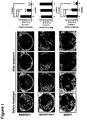
- Serial MRI was performed at the end of 1, 3 and 5 weeks of treatment to determine changes in tumor volume and/or density. Tumor reduction was notable by MRI after 1 week of mAb806 treatment (average reduction of 60% ⁇ 5% among 6 mice, Figure 1 , upper panel). Tumor burden continued to decrease after 3 weeks of treatment (average reduction of 95% ⁇ 8%), and all 6 mice had complete tumor regression after 5 weeks of treatment.
- mice with cetuximab were unable to induce tumor regression in 4 Tet-op-EGFRvIII / CCSP-rtTA, Ink4A / Arf- / - mice even after 5 weeks of treatment at 1mg per mouse with the same dosing schedule.
- cetuximab became progressively frailer and that some even succumbed because of significant tumor burden during the treatment period (data not shown).
- MAb806 inhibits EGFRvIII phosphorylation and induces apoptosis of tumor cells in Tet-op-EGFRvIII / CCSP-rtTA, Ink4A / Arf- / - mice
- Ch806 treatment leads to a dramatic tumor regression in murine lung tumors with EGFRvIII mutation
- Ch806 is a humanized form of mAb806 (22).
- mAb806 212.
- Tt-op-EGFRvIII / CCSP-rtTA, Ink4A / Arf- / - mice with one dose of 0.5 mg of ch806 by I.P. injection daily for the first week and then one dose every two days for another 7 weeks.
- mice underwent reimaging at 1.5, 5 and 8 weeks of the treatment and were then sacrificed for histological analysis.
- mice treated with ch806 were treated with ch806 ( Figure 1 , lower panel).
- the histology of mice treated with ch806 was similar to that of tumors after mAb806 treatment and was consistent with the MRI data.
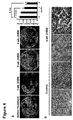
- EGFR L858R-IRES-Luciferase / CCSP-rtTA mice were employed. Ch806 was administered at 0.5 mg/mouse every day for 4 weeks and serial MRI scanning of all treated mice was performed at the end of 1, 2, and 4 weeks of treatment. Tumor regression was observed after 2 weeks of ch806 treatment (21% ⁇ 2%) and was 41% ⁇ 2 % at 4 weeks of ch806 treatment ( Figure 4A ). Microscopically, the lungs of ch806-treated mice showed an increased diffuse cellular infiltrate with macrophages, especially in areas surrounding the remaining viable tumors.
- EGFR mutations and activation events are common in human malignancies, including NSCLC. Activation of EGFR signaling can occur through receptor over expression as well as by constitutive signaling due to gain-of-function mutant forms of EGFR.
- NSCLC patients Approximately 10-30% of NSCLC patients have EGFR kinase domain mutations in their lung tumors and about 5% of patients with squamous cell lung cancer have the specific EGFRvIII extracellular domain mutation (12, 20).
- mAb806 and its humanized form, ch806 are effective in treating murine lung cancers with both types of EGFR mutations. The dramatic tumor regression observed was associated with blockage of EGFRvIII signaling and, consequently, increased apoptosis.
- T790M tumor cells with T790M mutations are resistant to treatment with erlotinib (27, 28).
- Evidence from the crystal structure of the EGFR kinase domain with a secondary T790M mutation indicates that there should be little effect of T790M mutation on the receptor function. It may be that the T790M mutation interferes with erlotinib for its binding to the ATPase pocket (27).
- the extracellular domain of the T790M mutant potentially provides a good target for antibody-based cancer therapy including cetuximab and mAb806. This could mean that NSCLC tumors with secondary T790M point mutations, which are resistant to small TKI treatment, might respond to mAb806 treatment. Efforts to generate mice harboring the compound mutant EGFR alleles containing both the activating kinase domain mutations and the T790M mutation are ongoing in order to test this hypothesis.
- ch806 unlike cetuximab, selectively binds to tumor cells of lung cancers, including squamous cell lung carcinoma, but not to normal tissues (Scott, ASCO 2006). No significant toxicities of the ch806 antibody were observed in this trial.
- ch806 appears to have a much greater specificity, by targeting a conformationally dependent epitope of the EGFR on cancer cells while sparing wt EGFR on most, if not all, normal cells. Our results clearly indicate the effectiveness of mAb 806 on blocking EGFR signaling.
- ch806 represent a new and exciting paradigm for cancer-specific molecularly targeted therapy, which may benefit patients whose cancers are dependent upon uncontrolled EGFR signaling due to overexpression or to gain-of-function mutations including EGFRvIII or EGFR kinase domain mutations.
- mice were housed in the pathogen-free environment at Harvard School of Public Health and all mouse experiments performed were approved by the Institutional Animal Care and Use Committee (IACUC). Littermates are used as controls in all experiments.
- mice were fed with a doxycycline diet (Research Diets, Inc.). Doxycycline withdraw experiment in previous studies clearly identified that lung tumors from both alleles are soley dependent on doxycycline.
- Targeted therapies using either mAb806 or ch806 or cetuximab in vivo using either mAb806 or ch806 or cetuximab in vivo.
- MAb806 or ch806 (generated by the Ludwig Institute for Cancer Research, Melbourne, Australia) was delivered into mice bearing lung tumors through I.P. injection at daily 0.5 mg per doses. After a 1-week treatment, antibodies were administered every two days at the same dose for the additional indicated weeks.
- Cetuximab (obtained commercially from BMS pharmaceuticals) was administered to mice by I. P. injection at 1 mg per dose using the same dosing schedule. Mice were imaged with MRI at the indicated time points to determine reduction in tumor volume and then sacrificed for further histological and biochemical studies after the completion of treatment. All the mice were kept on the doxycycline diet throughout the experiments. Littermates were used as controls for all the drug treatment studies.
- mice were euthanized at the indicated times and their left lungs were dissected and snap frozen for biochemical analysis. Their right lungs were then inflated under pressure (25 cm) with neutral buffered 10% formalin for 10 minutes and fixed overnight. Hematoxylin and eosin (H&E) stains were performed on 5 ⁇ m-thick sections from formalin-fixed, paraffin-embedded tumor samples in the Department of Pathology at Brigham and Women's Hospital.
- H&E Hematoxylin and eosin
- Lysates were then separated by SDS- polyacrylamidegel electrophoresis (PAGE), transferred to nitrocellulose membranes and detected by immunoblotting with antibodies using SuperSignal West Pico Chemiluminescent Substrate (Pierce Biotechnology).
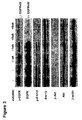
- the antibodies used in this study were directed against total EGFR, phospho-EGFR (pY1068), total Akt, phospho-AKT (pS473), total Erk1/2 and phospho-ERK 1/2 (pT202/pY204) (all from Cell Signaling); and ⁇ -actin (Santa Cruz Biotechnology, Inc.). Antibodies were used according to the conditions recommended by the manufacturer.
- MRI protocols optimized for assessing pulmonary parenchyma and vessels in normal mice were adapted for operation at 4.7 Tesla (Biospec 47/40, Bruker BioSpin, Düsseldorf, Germany).
- the system is equipped with shielded gradient systems with a maximum power gradient of 30 G/cm, and a cardiac-respiratory triggering system (BioTrig, Bruker BioSpin, Düsseldorf, Germany).
- the animals were placed prone with the electrodes (both fore pads and left rear pad) for cardiac gating and a respiratory sensor on their bodies, head first into the system, with the thorax centered with respect to the center of the radio frequency birdcage coil (inner diameter 3 cm).
- RARE fast spin echo sequence
- a pulse repetition time (TR) was selected less than the duration of one cardiac cycle (ranging 150 to 200 msec, average 178 msec), where one k-space line was filled for each image per single heartbeat.
- the minimum echo time (TE: 1.8 msec) was used to reduce the susceptibility effect arising from the interface between air/bone and tissue which would otherwise reduce the MR signal.
- the areas indicating the pulmonary tumor were manually segmented and measured to calculate tumor volumes using ImageJ (ver. 1.33, National Institute of Health).
- mice expressing the human EGFR secondary mutation T790M were generated.
- Mab806 was delivered into mice bearing lung tumors through I.P. injection at daily 0.5 mg per dose per mouse for 4 weeks.
- Serial MRI scanning of treated mice was performed at the end of 2 and 4 weeks of treatment as described below.
- mice with inducible expression of human EGFR T790M-L858R mutant we constructed a 4.7-kb DNA segment consisting of seven direct repeats of the tetracycline (tet)-operator sequence, followed by EGFR T790M-L858R cDNA and ?-globin polyA.
- the construct was injected into FVB/N blastocysts and progeny were screened using PCR strategy.
- Tet-op-hEGFR T790M-L858R founders were identified and then crossed to CCSP-rtTA mice (an allele been shown specifically targeting the expression of the reverse tetracycline trans-activator protein (rtTA) in type II alveolar epithelial cells ( Fisher GH et al (2001) Genes Dev 15(24):3249-62 ) to generate inducible bitransgenic mouse cohorts harboring both the activator and the responder transgenes ( Fisher GH et al (2001) Genes Dev 15(24):3249-62 ; Perl AK, Tichelaar JW, and Whitsett JA. (2002) Transgenic Res 11(1):21-9 ).
- rtTA reverse tetracycline trans-activator protein
- the inducibility of EGFR mutant transgene expression in the lung compartment was evaluated at the RNA level by RT-PCR with human EGFR specific primers.
- the lungs of the bitransgenic mouse Tet-op-hEGFR T790M-L858R/CCSP-rtTA cohort for each potential founder were collected before and after 8 weeks of doxycycline administration and after 3 days of doxycycline withdrawal following doxycycline administration of an 8-week period.
- the EGFR mutant transcript was undetectable from either non-transgenic mice or the bitransgenic mice without doxycycline treatment, while it became readily detectable after 8-week doxycycline administration; transcription of mutant EGFR was completely abolished by 3 days of doxycycline withdrawal in all of the lines.
- mutant EGFR transcripts is inducible and tightly regulated by doxycycline
- RT-PCR using the same primers as described above and quantitative real time PCR was performed for lung samples collected at serial time points of doxycycline administration and withdrawal from founder #19.
- EGFR expression was observed after 1 week of doxycycline administration and was kept at a comparable level throughout the 8-week period of administration; doxycycline withdrawal is sufficient to block the expression of mutant EGFR, and no expression of the transgene was observed after 12 weeks of doxycycline withdrawal.
- bitransgenic hEGFR T790M-L858R/CCSP-rtTA mice on continuous doxycycline administration underwent serial magnetic resonance imaging_(MRI) and were sacrificed at various time points for histological examination of the lungs. Tumors could only be observed by MRI after 5 ⁇ 6 weeks of doxycycline administration and tumor volume, as defined by MRI, increased following prolonged doxycycline treatment. In contrast to untreated mice, early lesions started to develop in parenchyma of the lungs after 2-3 weeks of doxycycline treatment. After 4-5 weeks, typical BAC appeared.
- MRI serial magnetic resonance imaging
- hEGFR T790M-L858R/CCSP-rtTA mice In addition to parenchymal adenocarcinomas, hEGFR T790M-L858R/CCSP-rtTA mice also developed bronchial papillary adenocarcinomas. Early papillary neoplasia in the bronchioles was observed after 2-3 weeks of continuous doxycycline administration, and then developed into adenocarcinoma within additional 6 to 8 weeks. All of the four founders showed similar morphologic features and a similar latency of tumorigenesis. Bronchial tumors were found in all of the 4 founders of hEGFR T790M-L858R/CCSP-rtTA mice identified in the current study, but were absent in all of our EGFR L858R mice.
- bronchial tumors were negative for SPC.
- CCSP CCSP expression marker
- hEGFR T790M-L858R mutants is essential for tumor maintenance of both parenchymal and bronchial adenocarcinomas
- TUNEL terminal deoxynucleotidyltransferase- mediated dUTP-biotin nick end labeling
- MRI results demonstrate that EGFR T790M-L858R driven lung tumor completely regressed after 10 days of doxycycline withdrawal.
- Microscopic analysis of the lungs from the same mouse that examined by MRI shows grossly normal lung histology. No tumor lesions were found in either airways or parenchyma after 12 weeks of doxycycline withdrawal in other tumor bearing mice.
- FIGURE 5 The results of treatment of EGFR T790M-L858R lung tumors with mAb806 versus cetuximab is depicted in FIGURE 5 .
- Mab806 was delivered into mice bearing lung tumors through I.P. injection daily at 0.5 mg doses for 4 weeks.
- Cetuximab was administered to mice by I.P. injection at 1 mg per dose daily for 4 weeks.
- Mice were imaged with MRI at 0, 2, and 4 or 5 weeks to determine reduction in tumor volume. Tumor volume was reduced at 2 weeks (over 20%) and more significantly at 4 weeks (over 30%) by treatment with mAb806.
- tumor volume was initially reduced at 2 weeks by treatment with cetuximab, tumor volume grew significantly by 5 weeks of treatment with cetuximab (tumor volume observed at 5 weeks of cetuximab treatment was greater than original volume at 0 weeks).
- mice were sacrificed for further histological and biochemical studies. Littermates were used as controls for all the treatment studies (no treatment).
Landscapes
- Health & Medical Sciences (AREA)
- Chemical & Material Sciences (AREA)
- Organic Chemistry (AREA)
- Immunology (AREA)
- Life Sciences & Earth Sciences (AREA)
- Medicinal Chemistry (AREA)
- General Health & Medical Sciences (AREA)
- Genetics & Genomics (AREA)
- Proteomics, Peptides & Aminoacids (AREA)
- Molecular Biology (AREA)
- Biophysics (AREA)
- Biochemistry (AREA)
- Veterinary Medicine (AREA)
- General Chemical & Material Sciences (AREA)
- Public Health (AREA)
- Nuclear Medicine, Radiotherapy & Molecular Imaging (AREA)
- Chemical Kinetics & Catalysis (AREA)
- Animal Behavior & Ethology (AREA)
- Pharmacology & Pharmacy (AREA)
- Engineering & Computer Science (AREA)
- Bioinformatics & Cheminformatics (AREA)
- Medicines Containing Antibodies Or Antigens For Use As Internal Diagnostic Agents (AREA)
- Medicines That Contain Protein Lipid Enzymes And Other Medicines (AREA)
- Peptides Or Proteins (AREA)
Applications Claiming Priority (2)
| Application Number | Priority Date | Filing Date | Title |
|---|---|---|---|
| US89738307P | 2007-01-25 | 2007-01-25 | |
| PCT/US2008/001024 WO2008091701A2 (en) | 2007-01-25 | 2008-01-24 | Use of anti-egfr antibodies in treatment of egfr mutant mediated disease |
Publications (3)
| Publication Number | Publication Date |
|---|---|
| EP2126127A2 EP2126127A2 (en) | 2009-12-02 |
| EP2126127A4 EP2126127A4 (en) | 2011-11-09 |
| EP2126127B1 true EP2126127B1 (en) | 2016-09-28 |
Family
ID=39645091
Family Applications (1)
| Application Number | Title | Priority Date | Filing Date |
|---|---|---|---|
| EP08724838.1A Active EP2126127B1 (en) | 2007-01-25 | 2008-01-24 | Use of anti-egfr antibodies in treatment of egfr mutant mediated disease |
Country Status (8)
| Country | Link |
|---|---|
| US (1) | US9090693B2 (enExample) |
| EP (1) | EP2126127B1 (enExample) |
| JP (1) | JP5276017B2 (enExample) |
| CN (4) | CN104043123B (enExample) |
| CA (1) | CA2676244C (enExample) |
| ES (1) | ES2609094T3 (enExample) |
| MX (2) | MX338185B (enExample) |
| WO (1) | WO2008091701A2 (enExample) |
Families Citing this family (44)
| Publication number | Priority date | Publication date | Assignee | Title |
|---|---|---|---|---|
| US20100056762A1 (en) | 2001-05-11 | 2010-03-04 | Old Lloyd J | Specific binding proteins and uses thereof |
| DK1392359T4 (da) | 2001-05-11 | 2013-06-10 | Ludwig Inst For Cancer Res Ltd | Specifikke bindingsproteiner og deres anvendelser. |
| US7767792B2 (en) | 2004-02-20 | 2010-08-03 | Ludwig Institute For Cancer Research Ltd. | Antibodies to EGF receptor epitope peptides |
| NZ556673A (en) | 2005-02-03 | 2010-03-26 | Gen Hospital Corp | Method for treating gefitinib and/or erlotinib resistant cancer with an EGFR inhibitor |
| EP3488866A1 (en) | 2005-11-04 | 2019-05-29 | Wyeth LLC | Antineoplastic combinations with mtor inhibitor, herceptin, and/or hki-272 |
| CA2833706C (en) | 2005-11-11 | 2014-10-21 | Boehringer Ingelheim International Gmbh | Quinazoline derivatives for the treatment of cancer diseases |
| US9090693B2 (en) | 2007-01-25 | 2015-07-28 | Dana-Farber Cancer Institute | Use of anti-EGFR antibodies in treatment of EGFR mutant mediated disease |
| JP5618549B2 (ja) | 2007-03-15 | 2014-11-05 | ルードヴィッヒ インスティテュート フォー キャンサーリサーチ リミテッド | Egfr抗体及びsrc阻害剤を用いる治療方法及び関連製剤 |
| JP5532486B2 (ja) | 2007-08-14 | 2014-06-25 | ルードヴィッヒ インスティテュート フォー キャンサー リサーチ | Egf受容体を標的とするモノクローナル抗体175ならびにその誘導体および用途 |
| US8022216B2 (en) | 2007-10-17 | 2011-09-20 | Wyeth Llc | Maleate salts of (E)-N-{4-[3-chloro-4-(2-pyridinylmethoxy)anilino]-3-cyano-7-ethoxy-6-quinolinyl}-4-(dimethylamino)-2-butenamide and crystalline forms thereof |
| ES2531322T3 (es) | 2008-06-17 | 2015-03-13 | Wyeth Llc | Combinaciones antineoplásicas que contienen HKI-272 y vinorelbina |
| EP3175853B1 (en) | 2008-08-04 | 2023-11-01 | Wyeth LLC | Antineoplastic combinations of neratinib and capecitabine |
| PT3000467T (pt) | 2009-04-06 | 2023-03-30 | Wyeth Llc | Regime de tratamento utilizando neratinib para o cancro de mama |
| SI2451445T1 (sl) | 2009-07-06 | 2019-07-31 | Boehringer Ingelheim International Gmbh | Postopek za sušenje BIBW2992, njegovih soli in trdnih farmacevtskih formulacij, ki obsegajo to aktivno sestavino |
| JP5680087B2 (ja) * | 2009-09-22 | 2015-03-04 | シャンハイ・イージェー・バイオテクノロジー・カンパニー、リミテッドShanghai Yijie Biotechnology Co.,Ltd | 特異的結合タンパク質およびその使用 |
| WO2011156617A2 (en) | 2010-06-09 | 2011-12-15 | Aveo Pharmaceuticals, Inc. | Anti-egfr antibodies |
| JP5828902B2 (ja) | 2010-10-29 | 2015-12-09 | イミュノジェン, インコーポレイテッド | 非拮抗性egfr結合分子およびその免疫複合体 |
| CA2815277A1 (en) | 2010-10-29 | 2012-05-03 | Immunogen, Inc. | Novel egfr-binding molecules and immunoconjugates thereof |
| CN102735844B (zh) * | 2011-04-11 | 2016-01-06 | 中国医学科学院肿瘤医院 | 蛋白组合物及其在制备肺癌诊断试剂盒中的应用 |
| US8828391B2 (en) * | 2011-05-17 | 2014-09-09 | Boehringer Ingelheim International Gmbh | Method for EGFR directed combination treatment of non-small cell lung cancer |
| EP2554551A1 (en) * | 2011-08-03 | 2013-02-06 | Fundacio Institut mar d'Investigacions Médiques (IMIM) | Mutations in the epidermal growth factor receptor gene |
| EP2765917A4 (en) * | 2011-10-10 | 2015-08-05 | Univ Monash | HEART IMAGING PROCESS |
| JP2014533954A (ja) * | 2011-11-21 | 2014-12-18 | イミュノジェン, インコーポレイテッド | Egfr抗体細胞傷害性薬物複合体による、egfr療法に耐性である腫瘍の治療方法 |
| WO2013158859A1 (en) * | 2012-04-18 | 2013-10-24 | Cell Signaling Technology, Inc. | Egfr and ros1 in cancer |
| US20130343996A1 (en) * | 2012-04-25 | 2013-12-26 | Rutgers, The State University Of New Jersey | Graphite-coated magnetic nanoparticles |
| WO2014024965A1 (ja) * | 2012-08-10 | 2014-02-13 | 学校法人 久留米大学 | 上皮成長因子受容体のt790m点突然変異配列に由来する抗原ペプチド |
| US20160040229A1 (en) | 2013-08-16 | 2016-02-11 | Guardant Health, Inc. | Systems and methods to detect rare mutations and copy number variation |
| PL2893040T3 (pl) | 2012-09-04 | 2019-05-31 | Guardant Health Inc | Sposoby wykrywania rzadkich mutacji i wariantu liczby kopii |
| US10876152B2 (en) | 2012-09-04 | 2020-12-29 | Guardant Health, Inc. | Systems and methods to detect rare mutations and copy number variation |
| US11913065B2 (en) | 2012-09-04 | 2024-02-27 | Guardent Health, Inc. | Systems and methods to detect rare mutations and copy number variation |
| CN103626871A (zh) * | 2013-04-19 | 2014-03-12 | 武汉纽斯特生物技术有限公司 | 特异性识别egfr突变蛋白的单克隆抗体、制备方法及其应用 |
| CN111534580B (zh) * | 2013-12-28 | 2024-06-04 | 夸登特健康公司 | 用于检测遗传变异的方法和系统 |
| US9242965B2 (en) | 2013-12-31 | 2016-01-26 | Boehringer Ingelheim International Gmbh | Process for the manufacture of (E)-4-N,N-dialkylamino crotonic acid in HX salt form and use thereof for synthesis of EGFR tyrosine kinase inhibitors |
| EP3114144A1 (en) * | 2014-03-05 | 2017-01-11 | Bristol-Myers Squibb Company | Treatment of renal cancer using a combination of an anti-pd-1 antibody and another anti-cancer agent |
| TWI731535B (zh) * | 2014-03-21 | 2021-06-21 | 美商艾伯維有限公司 | 抗-egfr抗體及抗體藥物結合物 |
| WO2015175705A1 (en) | 2014-05-13 | 2015-11-19 | Board Of Regents, The University Of Texas System | Gene mutations and copy number alterations of egfr, kras and met |
| CN104623660B (zh) * | 2015-01-21 | 2017-05-17 | 广州珂纳偲生物技术有限公司 | 掺杂铜的金纳米棒在制备抗肿瘤药物中的应用 |
| EP3286219A1 (en) * | 2015-04-24 | 2018-02-28 | Merrimack Pharmaceuticals, Inc. | Methods of treating patients having mutations in the extracellular domain of epidermal growth factor receptor (egfr) with a combination of three fully human monoclonal anti-egfr antibodies |
| SG11201805119QA (en) | 2015-12-17 | 2018-07-30 | Guardant Health Inc | Methods to determine tumor gene copy number by analysis of cell-free dna |
| CN109790581A (zh) * | 2016-04-27 | 2019-05-21 | 米拉迪克斯有限公司 | Kras-变体癌症患者的基于免疫的治疗 |
| CN107188957A (zh) * | 2017-07-06 | 2017-09-22 | 江苏迈健生物科技发展股份有限公司 | 抗原肽t790m‑1及其在制备治疗非小细胞肺癌的药物中的应用 |
| CN116731189A (zh) * | 2020-04-24 | 2023-09-12 | 美勒斯公司 | 使用结合lgr5及egfr的抗体的癌症治疗 |
| AR124681A1 (es) | 2021-01-20 | 2023-04-26 | Abbvie Inc | Conjugados anticuerpo-fármaco anti-egfr |
| CN112941177A (zh) * | 2021-02-03 | 2021-06-11 | 复旦大学附属金山医院(上海市金山区核化伤害应急救治中心、上海市金山区眼病防治所) | Cflar作为诊断标志物在构建肺鳞癌预后预测模型中的应用 |
Family Cites Families (255)
| Publication number | Priority date | Publication date | Assignee | Title |
|---|---|---|---|---|
| CU22545A1 (es) * | 1994-11-18 | 1999-03-31 | Centro Inmunologia Molecular | Obtención de un anticuerpo quimérico y humanizado contra el receptor del factor de crecimiento epidérmico para uso diagnóstico y terapéutico |
| US4151042A (en) * | 1977-03-31 | 1979-04-24 | Takeda Chemical Industries, Ltd. | Method for producing maytansinol and its derivatives |
| US4162940A (en) | 1977-03-31 | 1979-07-31 | Takeda Chemical Industries, Ltd. | Method for producing Antibiotic C-15003 by culturing nocardia |
| US4169888A (en) | 1977-10-17 | 1979-10-02 | The Upjohn Company | Composition of matter and process |
| US4137230A (en) * | 1977-11-14 | 1979-01-30 | Takeda Chemical Industries, Ltd. | Method for the production of maytansinoids |
| US4265814A (en) | 1978-03-24 | 1981-05-05 | Takeda Chemical Industries | Matansinol 3-n-hexadecanoate |
| US4307016A (en) | 1978-03-24 | 1981-12-22 | Takeda Chemical Industries, Ltd. | Demethyl maytansinoids |
| JPS5562090A (en) * | 1978-10-27 | 1980-05-10 | Takeda Chem Ind Ltd | Novel maytansinoid compound and its preparation |
| US4256746A (en) * | 1978-11-14 | 1981-03-17 | Takeda Chemical Industries | Dechloromaytansinoids, their pharmaceutical compositions and method of use |
| JPS55164687A (en) | 1979-06-11 | 1980-12-22 | Takeda Chem Ind Ltd | Novel maytansinoid compound and its preparation |
| JPS5566585A (en) * | 1978-11-14 | 1980-05-20 | Takeda Chem Ind Ltd | Novel maytansinoid compound and its preparation |
| US4263294A (en) * | 1978-11-20 | 1981-04-21 | Takeda Chemical Industries, Ltd. | Maytansinoids, pharmaceutical compositions thereof and method of use thereof |
| JPS55102583A (en) | 1979-01-31 | 1980-08-05 | Takeda Chem Ind Ltd | 20-acyloxy-20-demethylmaytansinoid compound |
| JPS55162791A (en) * | 1979-06-05 | 1980-12-18 | Takeda Chem Ind Ltd | Antibiotic c-15003pnd and its preparation |
| JPS55164685A (en) * | 1979-06-08 | 1980-12-22 | Takeda Chem Ind Ltd | Novel maytansinoid compound and its preparation |
| JPS55164686A (en) | 1979-06-11 | 1980-12-22 | Takeda Chem Ind Ltd | Novel maytansinoid compound and its preparation |
| US4309428A (en) * | 1979-07-30 | 1982-01-05 | Takeda Chemical Industries, Ltd. | Maytansinoids |
| JPS5622790A (en) * | 1979-07-31 | 1981-03-03 | Takeda Chem Ind Ltd | Novel maytansinoid compound and its preparation |
| JPS5645483A (en) | 1979-09-19 | 1981-04-25 | Takeda Chem Ind Ltd | C-15003phm and its preparation |
| JPS5645485A (en) | 1979-09-21 | 1981-04-25 | Takeda Chem Ind Ltd | Production of c-15003pnd |
| EP0028683A1 (en) | 1979-09-21 | 1981-05-20 | Takeda Chemical Industries, Ltd. | Antibiotic C-15003 PHO and production thereof |
| US4342566A (en) | 1980-02-22 | 1982-08-03 | Scripps Clinic & Research Foundation | Solid phase anti-C3 assay for detection of immune complexes |
| WO1982001188A1 (en) * | 1980-10-08 | 1982-04-15 | Takeda Chemical Industries Ltd | 4,5-deoxymaytansinoide compounds and process for preparing same |
| US4413132A (en) | 1980-11-18 | 1983-11-01 | The Upjohn Company | Antibiotic CC-1065 indoline intermediates |
| US4313946A (en) * | 1981-01-27 | 1982-02-02 | The United States Of America As Represented By The Secretary Of Agriculture | Chemotherapeutically active maytansinoids from Trewia nudiflora |
| US4867973A (en) | 1984-08-31 | 1989-09-19 | Cytogen Corporation | Antibody-therapeutic agent conjugates |
| US4671958A (en) | 1982-03-09 | 1987-06-09 | Cytogen Corporation | Antibody conjugates for the delivery of compounds to target sites |
| FR2523445A1 (fr) | 1982-03-17 | 1983-09-23 | Sanofi Sa | Nouveaux conjugues associant, par liaison covalente, une enzyme et un anticorps, et associations medicamenteuses utilisant lesdits conjugues |
| US4418064A (en) | 1982-09-29 | 1983-11-29 | The United States Of America As Represented By The Secretary Of Agriculture | Chemotherapeutically active maytansinoids: treflorine, trenudine, and N-methyltrenudone |
| GB8308235D0 (en) | 1983-03-25 | 1983-05-05 | Celltech Ltd | Polypeptides |
| US4816567A (en) * | 1983-04-08 | 1989-03-28 | Genentech, Inc. | Recombinant immunoglobin preparations |
| WO1985003357A1 (en) | 1984-01-30 | 1985-08-01 | Icrf Patents Ltd. | Improvements relating to growth factors |
| US4943533A (en) | 1984-03-01 | 1990-07-24 | The Regents Of The University Of California | Hybrid cell lines that produce monoclonal antibodies to epidermal growth factor receptor |
| US5807715A (en) | 1984-08-27 | 1998-09-15 | The Board Of Trustees Of The Leland Stanford Junior University | Methods and transformed mammalian lymphocyte cells for producing functional antigen-binding protein including chimeric immunoglobulin |
| US5851526A (en) | 1985-04-19 | 1998-12-22 | Ludwig Institute For Cancer Research | Methods of treating colon cancer utilizing tumor-specific antibodies |
| US5776093A (en) | 1985-07-05 | 1998-07-07 | Immunomedics, Inc. | Method for imaging and treating organs and tissues |
| US5225539A (en) | 1986-03-27 | 1993-07-06 | Medical Research Council | Recombinant altered antibodies and methods of making altered antibodies |
| US4997913A (en) * | 1986-06-30 | 1991-03-05 | Oncogen | pH-sensitive immunoconjugates and methods for their use in tumor therapy |
| IN165717B (enExample) * | 1986-08-07 | 1989-12-23 | Battelle Memorial Institute | |
| US5034223A (en) | 1986-10-09 | 1991-07-23 | Neorx Corporation | Methods for improved targeting of antibody, antibody fragments, hormones and other targeting agents, and conjugates thereof |
| USRE38008E1 (en) * | 1986-10-09 | 2003-02-25 | Neorx Corporation | Methods for improved targeting of antibody, antibody fragments, hormones and other targeting agents, and conjugates thereof |
| US5047324A (en) | 1986-12-09 | 1991-09-10 | Miles Inc. | Substantially pure enzyme-antibody conjugate preparations |
| US5332837A (en) | 1986-12-19 | 1994-07-26 | The Upjohn Company | CC-1065 analogs |
| US4952394A (en) | 1987-11-23 | 1990-08-28 | Bristol-Myers Company | Drug-monoclonal antibody conjugates |
| US5563250A (en) | 1987-12-02 | 1996-10-08 | Neorx Corporation | Cleavable conjugates for the delivery and release of agents in native form |
| WO1989006692A1 (en) | 1988-01-12 | 1989-07-27 | Genentech, Inc. | Method of treating tumor cells by inhibiting growth factor receptor function |
| US4937183A (en) | 1988-02-03 | 1990-06-26 | Cytogen Corporation | Method for the preparation of antibody-fragment conjugates |
| IL89220A (en) | 1988-02-11 | 1994-02-27 | Bristol Myers Squibb Co | Anthracycline immunoconjugates, their production and pharmaceutical compositions containing them |
| EP0329184A3 (en) * | 1988-02-19 | 1990-05-23 | Neorx Corporation | Antimers and antimeric conjugation |
| US6010902A (en) * | 1988-04-04 | 2000-01-04 | Bristol-Meyers Squibb Company | Antibody heteroconjugates and bispecific antibodies for use in regulation of lymphocyte activity |
| US5028697A (en) | 1988-08-08 | 1991-07-02 | Eli Lilly And Company | Cytotoxic antibody conjugates of hydrazide derivatized methotrexate analogs via simple organic linkers |
| WO1990002746A1 (en) | 1988-09-12 | 1990-03-22 | The Upjohn Company | Novel cc-1065 analogs having two cpi subunits |
| AU4128089A (en) * | 1988-09-15 | 1990-03-22 | Rorer International (Overseas) Inc. | Monoclonal antibodies specific to human epidermal growth factor receptor and therapeutic methods employing same |
| US5171563A (en) | 1988-09-30 | 1992-12-15 | Neorx Corporation | Cleavable linkers for the reduction of non-target organ retention of immunoconjugates |
| JPH04501266A (ja) | 1988-10-12 | 1992-03-05 | セントコアー,インコーポレーテッド | ヨード―125で標識された放射線療法用接合体 |
| CA2006408A1 (en) | 1988-12-27 | 1990-06-27 | Susumu Iwasa | Bispecific monoclonal antibody, its production and use |
| US5217713A (en) | 1988-12-27 | 1993-06-08 | Takeda Chemical Industries, Ltd. | Cytotoxic bispecific monoclonal antibody, its production and use |
| US5013547A (en) | 1989-02-07 | 1991-05-07 | Erbamont, Inc. | Anticancer drug - antibody conjugates and method for preparing same |
| US6020145A (en) * | 1989-06-30 | 2000-02-01 | Bristol-Myers Squibb Company | Methods for determining the presence of carcinoma using the antigen binding region of monoclonal antibody BR96 |
| US5980896A (en) | 1989-06-30 | 1999-11-09 | Bristol-Myers Squibb Company | Antibodies reactive with human carcinomas |
| US5332567A (en) | 1989-08-24 | 1994-07-26 | Immunomedics | Detection and treatment of infections with immunoconjugates |
| DE69025946T2 (de) | 1989-09-08 | 1996-10-17 | Univ Duke | Modifikationen der struktur des egf-rezeptor-gens in menschlichen glioma |
| US5208020A (en) | 1989-10-25 | 1993-05-04 | Immunogen Inc. | Cytotoxic agents comprising maytansinoids and their therapeutic use |
| US5459061A (en) | 1990-01-26 | 1995-10-17 | W. Alton Jones Cell Science Center, Inc. | Hybridomas producing monoclonal antibodies which specifically bind to continuous epitope on the human EGF receptor and compete with EGF for binding to the EGF receptor |
| CA2076347C (en) | 1990-02-20 | 1996-11-26 | Ravinder K. Gupta | Improved antibody-enzyme direct conjugates and method of making same |
| AU7774391A (en) | 1990-04-20 | 1991-11-11 | Ludwig Institute For Cancer Research | Aberrant, epidermal growth factor receptor dna, rna and protein forms and method |
| AU648313B2 (en) * | 1990-04-25 | 1994-04-21 | Pharmacia & Upjohn Company | Novel CC-1065 analogs |
| US6248332B1 (en) | 1990-10-05 | 2001-06-19 | Medarex, Inc. | Targeted immunostimulation with bispecific reagents |
| FI101678B (fi) * | 1990-12-31 | 1998-08-14 | Akzo Nv | Happolabiileja kytkentämolekyylejä |
| AU658396B2 (en) | 1991-03-06 | 1995-04-13 | Merck Patent Gesellschaft Mit Beschrankter Haftung | Humanized and chimeric monoclonal antibodies |
| AU668349B2 (en) | 1991-04-25 | 1996-05-02 | Chugai Seiyaku Kabushiki Kaisha | Reconstituted human antibody against human interleukin 6 receptor |
| DE69233482T2 (de) | 1991-05-17 | 2006-01-12 | Merck & Co., Inc. | Verfahren zur Verminderung der Immunogenität der variablen Antikörperdomänen |
| US6797492B2 (en) | 1991-05-17 | 2004-09-28 | Merck & Co., Inc. | Method for reducing the immunogenicity of antibody variable domains |
| DE69233528T2 (de) | 1991-11-25 | 2006-03-16 | Enzon, Inc. | Verfahren zur Herstellung von multivalenten antigenbindenden Proteinen |
| US5869619A (en) * | 1991-12-13 | 1999-02-09 | Xoma Corporation | Modified antibody variable domains |
| AU661533B2 (en) | 1992-01-20 | 1995-07-27 | Astrazeneca Ab | Quinazoline derivatives |
| US5622929A (en) * | 1992-01-23 | 1997-04-22 | Bristol-Myers Squibb Company | Thioether conjugates |
| EP0563475B1 (en) | 1992-03-25 | 2000-05-31 | Immunogen Inc | Cell binding agent conjugates of derivatives of CC-1065 |
| EP0586002B1 (en) | 1992-08-18 | 2000-01-19 | CENTRO de IMMUNOLOGIA MOLECULAR | Monoclonal antibodies recognizing the epidermal growth factor receptor, cells and methods for their production and compositions containing them |
| US5639641A (en) | 1992-09-09 | 1997-06-17 | Immunogen Inc. | Resurfacing of rodent antibodies |
| US5635483A (en) | 1992-12-03 | 1997-06-03 | Arizona Board Of Regents Acting On Behalf Of Arizona State University | Tumor inhibiting tetrapeptide bearing modified phenethyl amides |
| ATE199392T1 (de) | 1992-12-04 | 2001-03-15 | Medical Res Council | Multivalente und multispezifische bindungsproteine, deren herstellung und verwendung |
| US5780588A (en) | 1993-01-26 | 1998-07-14 | Arizona Board Of Regents | Elucidation and synthesis of selected pentapeptides |
| US5674977A (en) | 1993-02-05 | 1997-10-07 | The Ontario Cancer Institute | Branched synthetic peptide conjugate |
| US5556623A (en) | 1993-03-30 | 1996-09-17 | Eli Lilly And Company | Antibody-drug conjugates |
| US6214345B1 (en) * | 1993-05-14 | 2001-04-10 | Bristol-Myers Squibb Co. | Lysosomal enzyme-cleavable antitumor drug conjugates |
| US5443953A (en) | 1993-12-08 | 1995-08-22 | Immunomedics, Inc. | Preparation and use of immunoconjugates |
| JPH09510201A (ja) | 1994-03-07 | 1997-10-14 | メダレツクス・インコーポレーテツド | 臨床的効用を有する二重特異性分子 |
| HU221001B1 (hu) | 1994-03-17 | 2002-07-29 | Merck Patent Gmbh. | Egyláncú anti-EGFR Fv-k és anti-EGFR ellenanyagok |
| CU22615A1 (es) | 1994-06-30 | 2000-02-10 | Centro Inmunologia Molecular | Procedimiento de obtención de anticuerpos monoclonales murinos menos inmunogénicos. anticuerpos monoclonales obtenidos |
| US5612474A (en) * | 1994-06-30 | 1997-03-18 | Eli Lilly And Company | Acid labile immunoconjugate intermediates |
| US5911995A (en) | 1994-08-19 | 1999-06-15 | Regents Of The University Of Minnesota | EGF-genistein conjugates for the treatment of cancer |
| ATE262586T1 (de) | 1994-11-28 | 2004-04-15 | Univ Jefferson | Fusion junction typ iii mutant egf rezeptor peptid-tumorvakzin |
| US7060808B1 (en) | 1995-06-07 | 2006-06-13 | Imclone Systems Incorporated | Humanized anti-EGF receptor monoclonal antibody |
| US6410690B1 (en) | 1995-06-07 | 2002-06-25 | Medarex, Inc. | Therapeutic compounds comprised of anti-Fc receptor antibodies |
| CA2222231A1 (en) | 1995-06-07 | 1996-12-19 | Imclone Systems Incorporated | Antibody and antibody fragments for inhibiting the growth of tumors |
| WO1996040662A2 (en) * | 1995-06-07 | 1996-12-19 | Cellpro, Incorporated | Aminooxy-containing linker compounds and their application in conjugates |
| US5709156A (en) * | 1995-06-07 | 1998-01-20 | Krueger International, Inc. | Flip-up electrical and communications device for use in combination with a worksurface |
| JPH11513391A (ja) * | 1995-10-03 | 1999-11-16 | ザ スクリップス リサーチ インスティテュート | Cc−1065 及びズオカーマイシンのcbi 類縁体 |
| US6699715B1 (en) * | 1995-11-30 | 2004-03-02 | Bristol-Myers Squibb Co. | Modified sFv molecules which mediate adhesion between cells and uses thereof |
| EP0871490B1 (en) * | 1995-12-22 | 2003-03-19 | Bristol-Myers Squibb Company | Branched hydrazone linkers |
| US5760041A (en) | 1996-02-05 | 1998-06-02 | American Cyanamid Company | 4-aminoquinazoline EGFR Inhibitors |
| CA2255703A1 (en) | 1996-05-31 | 1997-12-04 | Dale L. Boger | Analogs of cc-1065 and the duocarmycins |
| US5708156A (en) | 1996-05-31 | 1998-01-13 | Ilekis; John V. | Epidermal growth factor receptor-like gene product and its uses |
| US6759509B1 (en) | 1996-11-05 | 2004-07-06 | Bristol-Myers Squibb Company | Branched peptide linkers |
| US5942602A (en) | 1997-02-13 | 1999-08-24 | Schering Aktiengessellschaft | Growth factor receptor antibodies |
| US6306393B1 (en) | 1997-03-24 | 2001-10-23 | Immunomedics, Inc. | Immunotherapy of B-cell malignancies using anti-CD22 antibodies |
| US20020173629A1 (en) | 1997-05-05 | 2002-11-21 | Aya Jakobovits | Human monoclonal antibodies to epidermal growth factor receptor |
| US6235883B1 (en) | 1997-05-05 | 2001-05-22 | Abgenix, Inc. | Human monoclonal antibodies to epidermal growth factor receptor |
| WO1998052925A1 (en) | 1997-05-22 | 1998-11-26 | The Scripps Research Institute | Analogs of duocarmycin and cc-1065 |
| JP2001519412A (ja) * | 1997-10-14 | 2001-10-23 | ザ スクリップス リサーチ インスティテュート | Cc−1065およびデュオカルマイシンのイソ−cbiおよびイソ−ci類似体 |
| IL136489A0 (en) | 1997-12-08 | 2001-06-14 | Scripps Research Inst | Synthesis of cc-1065/duocarmycin analogs |
| US6417168B1 (en) | 1998-03-04 | 2002-07-09 | The Trustees Of The University Of Pennsylvania | Compositions and methods of treating tumors |
| US20030224001A1 (en) | 1998-03-19 | 2003-12-04 | Goldstein Neil I. | Antibody and antibody fragments for inhibiting the growth of tumors |
| WO1999055369A1 (en) | 1998-04-28 | 1999-11-04 | Smithkline Beecham Corporation | Monoclonal antibodies with reduced immunogenicity |
| US6962702B2 (en) * | 1998-06-22 | 2005-11-08 | Immunomedics Inc. | Production and use of novel peptide-based agents for use with bi-specific antibodies |
| US20030215387A1 (en) | 1998-09-04 | 2003-11-20 | Peter Harrison | Bifunctional antibodies and their use in targeting anti-tumour agents |
| EE200100603A (et) * | 1999-05-14 | 2003-02-17 | Imclone Systems Incorporated | Inimese refraktaarsete kasvajate ravi epidermaalse kasvufaktori retseptori antagonistidega |
| US6946129B1 (en) | 1999-06-08 | 2005-09-20 | Seattle Genetics, Inc. | Recombinant anti-CD40 antibody and uses thereof |
| US6949245B1 (en) | 1999-06-25 | 2005-09-27 | Genentech, Inc. | Humanized anti-ErbB2 antibodies and treatment with anti-ErbB2 antibodies |
| US7303749B1 (en) | 1999-10-01 | 2007-12-04 | Immunogen Inc. | Compositions and methods for treating cancer using immunoconjugates and chemotherapeutic agents |
| JP4776843B2 (ja) | 1999-10-01 | 2011-09-21 | イムノゲン インコーポレーティッド | 免疫複合体及び化学療法剤を用いる癌治療用組成物及び方法 |
| HK1049997B (en) * | 1999-11-24 | 2007-02-23 | Immunogen, Inc. | Cytotoxic agents comprising taxanes and their therapeutic use |
| AU767394C (en) | 1999-12-29 | 2005-04-21 | Immunogen, Inc. | Cytotoxic agents comprising modified doxorubicins and daunorubicins and their therapeutic use |
| YU63302A (sh) | 2000-02-25 | 2005-09-19 | The Government Of The Un.Stat. | Anti-egfrv iii scfvs sa pojačanom citotoksičnošću i povećanim prinosom, imunotoksini na bazi istog i metodi za upotrebu na bazi istog |
| EP1276771A4 (en) | 2000-03-10 | 2003-06-04 | Thomas Jefferson Univarsity | Sensitive detection of wild-type and mutant egfr by specific elisa assays in any biological sample |
| US7097840B2 (en) * | 2000-03-16 | 2006-08-29 | Genentech, Inc. | Methods of treatment using anti-ErbB antibody-maytansinoid conjugates |
| PT2857516T (pt) * | 2000-04-11 | 2017-08-28 | Genentech Inc | Anticorpos multivalentes e utilizações dos mesmos |
| US7214685B2 (en) | 2000-05-02 | 2007-05-08 | Lutz F. Tietze | Prodrugs for a selective cancer therapy |
| WO2001089566A1 (en) | 2000-05-19 | 2001-11-29 | Genentech, Inc. | Gene detection assay for improving the likelihood of an effective response to an erbb antagonist cancer therapy |
| AUPQ841800A0 (en) | 2000-06-28 | 2000-07-20 | Biomolecular Research Institute Limited | Truncated egf receptor |
| AU2001295002B2 (en) | 2000-08-09 | 2007-05-31 | Imclone Systems Incorporated | Treatment of hyperproliferative diseases with epidermal growth factor receptor antagonists |
| US6333410B1 (en) | 2000-08-18 | 2001-12-25 | Immunogen, Inc. | Process for the preparation and purification of thiol-containing maytansinoids |
| AR030612A1 (es) | 2000-09-12 | 2003-08-27 | Smithkline Beecham Corp | Procedimiento e intermedios |
| DE60115265T2 (de) * | 2000-09-19 | 2006-08-10 | Lee, Moses, Holland | Zusammensetzungen und verfahren zur verwendung achiraler analoge von cc-1065 und den duocarmycinen |
| DE10048417A1 (de) | 2000-09-29 | 2002-04-11 | Roche Diagnostics Gmbh | Verbindungen mit verzweigtem Linker |
| WO2002066058A1 (en) | 2001-02-19 | 2002-08-29 | Merck Patent Gmbh | Modified anti-egfr antibodies with reduced immunogenicity |
| US20020156274A1 (en) | 2001-03-16 | 2002-10-24 | Terfloth Gerald J. | Process for preparing maytansinol |
| US20080008704A1 (en) * | 2001-03-16 | 2008-01-10 | Mark Rubin | Methods of treating colorectal cancer with anti-epidermal growth factor antibodies |
| EP1243276A1 (en) | 2001-03-23 | 2002-09-25 | Franciscus Marinus Hendrikus De Groot | Elongated and multiple spacers containing activatible prodrugs |
| US6884869B2 (en) | 2001-04-30 | 2005-04-26 | Seattle Genetics, Inc. | Pentapeptide compounds and uses related thereto |
| US20030083263A1 (en) | 2001-04-30 | 2003-05-01 | Svetlana Doronina | Pentapeptide compounds and uses related thereto |
| US7256257B2 (en) | 2001-04-30 | 2007-08-14 | Seattle Genetics, Inc. | Pentapeptide compounds and uses related thereto |
| AU2002315306B2 (en) | 2001-05-08 | 2007-05-17 | Merck Patent Gmbh | Combination therapy using anti-EGFR antibodies and anti-hormonal agents |
| US20100056762A1 (en) * | 2001-05-11 | 2010-03-04 | Old Lloyd J | Specific binding proteins and uses thereof |
| DK1392359T4 (da) | 2001-05-11 | 2013-06-10 | Ludwig Inst For Cancer Res Ltd | Specifikke bindingsproteiner og deres anvendelser. |
| US6441163B1 (en) | 2001-05-31 | 2002-08-27 | Immunogen, Inc. | Methods for preparation of cytotoxic conjugates of maytansinoids and cell binding agents |
| KR20030033007A (ko) * | 2001-05-31 | 2003-04-26 | 코울터 파머수티컬, 인코포레이티드 | 세포독소, 약물전구체, 링커 및 이에 유용한 안정화제 |
| KR100945108B1 (ko) | 2001-06-13 | 2010-03-02 | 젠맵 에이/에스 | 표피 성장 인자 수용체 (egfr)에 대한 인간모노클로날 항체 |
| US7595378B2 (en) | 2001-06-13 | 2009-09-29 | Genmab A/S | Human monoclonal antibodies to epidermal growth factor receptor (EGFR) |
| US20050107595A1 (en) | 2001-06-20 | 2005-05-19 | Genentech, Inc. | Compositions and methods for the diagnosis and treatment of tumor |
| US7803915B2 (en) | 2001-06-20 | 2010-09-28 | Genentech, Inc. | Antibody compositions for the diagnosis and treatment of tumor |
| WO2003014159A1 (en) | 2001-08-03 | 2003-02-20 | Commonwealth Scientific And Industrial Research Organisation | Methods of screening based on the egf receptor crystal structure |
| US20030109682A1 (en) | 2001-09-07 | 2003-06-12 | Daniel Santi | Maytansines and maytansine conjugates |
| EP1423110A4 (en) * | 2001-09-07 | 2005-04-27 | Scripps Research Inst | CBI ANALOGUE OF CC-1065 AND DUOCARMYCINES |
| US7091186B2 (en) | 2001-09-24 | 2006-08-15 | Seattle Genetics, Inc. | p-Amidobenzylethers in drug delivery agents |
| WO2003045312A2 (en) | 2001-11-21 | 2003-06-05 | University Of Washington | Biosynthetic gene cluster for the maytansinoid antitumor agent ansamitocin |
| US6716821B2 (en) | 2001-12-21 | 2004-04-06 | Immunogen Inc. | Cytotoxic agents bearing a reactive polyethylene glycol moiety, cytotoxic conjugates comprising polyethylene glycol linking groups, and methods of making and using the same |
| NZ533657A (en) * | 2002-01-03 | 2008-01-31 | Smithkline Beecham Corp | Methods for the preparation of immunoconjugates, in particular maytansinoids conjugated to a monoclonal antibody |
| US6790954B2 (en) * | 2002-01-29 | 2004-09-14 | Immunogen, Inc. | Mutant Actinosynnema pretiosum strain with increased maytansinoid production |
| ATE444308T1 (de) | 2002-02-13 | 2009-10-15 | Ludwig Inst Cancer Res | Fusionsproteine humanisierter g250-spezifischer antikörper sowie verwendungen davon |
| JP2005520539A (ja) | 2002-03-19 | 2005-07-14 | ザ・ペン・ステート・リサーチ・ファンデーション | Egfrリガンドおよび使用方法 |
| US6756397B2 (en) * | 2002-04-05 | 2004-06-29 | Immunogen, Inc. | Prodrugs of CC-1065 analogs |
| US6534660B1 (en) * | 2002-04-05 | 2003-03-18 | Immunogen, Inc. | CC-1065 analog synthesis |
| JP2005525423A (ja) | 2002-05-13 | 2005-08-25 | スミスクライン・ビーチャム・コーポレイション | メイタンシノールの調製方法 |
| US6596757B1 (en) | 2002-05-14 | 2003-07-22 | Immunogen Inc. | Cytotoxic agents comprising polyethylene glycol-containing taxanes and their therapeutic use |
| WO2003099205A2 (en) * | 2002-05-20 | 2003-12-04 | Abgenix, Inc. | Treatment of renal carcinoma using antibodies against the egfr |
| CN1678634A (zh) | 2002-06-28 | 2005-10-05 | 多曼蒂斯有限公司 | 免疫球蛋白单个变体抗原结合区及其特异性构建体 |
| ES2369542T3 (es) | 2002-07-31 | 2011-12-01 | Seattle Genetics, Inc. | Conjugados de auristatina y su uso para tratar cáncer, una enfermedad autoinmune o una enfermedad infecciosa. |
| EP1534674A4 (en) | 2002-08-02 | 2007-11-28 | Immunogen Inc | CYTOTOXIC AGENTS CONTAINING NEW, EFFECTIVE TAXANES AND THEIR THERAPEUTIC USE |
| US7390898B2 (en) | 2002-08-02 | 2008-06-24 | Immunogen Inc. | Cytotoxic agents containing novel potent taxanes and their therapeutic use |
| EP1542723B1 (en) | 2002-08-16 | 2011-02-23 | ImmunoGen, Inc. | Cross-linkers with high reactivity and solubility and their use in the preparation of conjugates for targeted delivery of small molecule drugs |
| KR20050048615A (ko) * | 2002-08-19 | 2005-05-24 | 제넨테크, 인크. | 종양의 진단 및 치료를 위한 조성물 및 방법 |
| JP2006505546A (ja) | 2002-10-10 | 2006-02-16 | メルク パテント ゲゼルシャフト ミット ベシュレンクテル ハフトング | 二重特異性抗ErbB抗体および腫瘍治療でのその使用 |
| WO2004043493A1 (en) | 2002-11-14 | 2004-05-27 | Syntarga B.V. | Prodrugs built as multiple self-elimination-release spacers |
| US20040147428A1 (en) | 2002-11-15 | 2004-07-29 | Pluenneke John D. | Methods of treatment using an inhibitor of epidermal growth factor receptor |
| US20040142744A1 (en) * | 2003-01-08 | 2004-07-22 | Acres Gaming Incorporated | Mobile data access |
| US20040202666A1 (en) | 2003-01-24 | 2004-10-14 | Immunomedics, Inc. | Anti-cancer anthracycline drug-antibody conjugates |
| EP1622941A2 (en) | 2003-03-20 | 2006-02-08 | ImClone Systems Incorporated | Method of producing an antibody to epidermal growth factor receptor |
| CA2450289A1 (en) | 2003-03-20 | 2005-05-19 | Imclone Systems Incorporated | Method of producing an antibody to epidermal growth factor receptor |
| US7432088B2 (en) | 2003-05-08 | 2008-10-07 | Immunogen Inc. | Methods for the production of ansamitocins |
| US20050026987A1 (en) * | 2003-05-13 | 2005-02-03 | The Scripps Research Institute | CBI analogues of the duocarmycins and CC-1065 |
| KR20060080535A (ko) * | 2003-05-14 | 2006-07-10 | 이뮤노젠 아이엔씨 | 약물 콘쥬게이트 조성물 |
| US8088387B2 (en) | 2003-10-10 | 2012-01-03 | Immunogen Inc. | Method of targeting specific cell populations using cell-binding agent maytansinoid conjugates linked via a non-cleavable linker, said conjugates, and methods of making said conjugates |
| US7276497B2 (en) | 2003-05-20 | 2007-10-02 | Immunogen Inc. | Cytotoxic agents comprising new maytansinoids |
| MXPA05014155A (es) * | 2003-06-27 | 2006-05-25 | Abgenix Inc | Anticuerpos dirigidos a los mutantes de delecion de receptor de factor de crecimiento epidermico y sus usos. |
| US8101720B2 (en) * | 2004-10-21 | 2012-01-24 | Xencor, Inc. | Immunoglobulin insertions, deletions and substitutions |
| ES2605443T3 (es) * | 2003-11-06 | 2017-03-14 | Seattle Genetics, Inc. | Conjugados de auristatina con anticuerpos anti-HER2 o anti-CD22 y su uso en terapia |
| US20050142133A1 (en) | 2003-12-03 | 2005-06-30 | Xencor, Inc. | Optimized proteins that target the epidermal growth factor receptor |
| PT1718677E (pt) | 2003-12-19 | 2012-07-18 | Genentech Inc | Fragmentos de anticorpo monovalentes úteis como agentes terapêuticos |
| WO2005070457A1 (en) | 2004-01-23 | 2005-08-04 | Seattle Genetics, Inc. | Melphalan prodrugs |
| US7767792B2 (en) | 2004-02-20 | 2010-08-03 | Ludwig Institute For Cancer Research Ltd. | Antibodies to EGF receptor epitope peptides |
| CA2556752C (en) * | 2004-02-23 | 2016-02-02 | Genentech, Inc. | Heterocyclic self-immolative linkers and conjugates |
| US7837980B2 (en) * | 2004-03-02 | 2010-11-23 | Seattle Genetics, Inc. | Partially loaded antibodies and methods of their conjugation |
| TW200533339A (en) | 2004-03-16 | 2005-10-16 | Bristol Myers Squibb Co | Therapeutic synergy of anti-cancer compounds |
| US7276585B2 (en) | 2004-03-24 | 2007-10-02 | Xencor, Inc. | Immunoglobulin variants outside the Fc region |
| EP2439284B1 (en) | 2004-03-31 | 2019-05-08 | The General Hospital Corporation | Method to determine responsiveness of cancer to epidermal growth factor receptor targeting treatments |
| WO2005099754A2 (en) | 2004-04-14 | 2005-10-27 | The Ohio State University Research Foundation | Maytansinoid analogs as antitumor agents |
| BRPI0510909A2 (pt) * | 2004-05-19 | 2008-12-16 | Medarex Inc | composto de ligaÇço fÁrmaco-ligante citotàxico, formulaÇço farmacÊutica, mÉtodo para matar uma cÉlula e mÉtodo para retardar ou interromper o crescimento de tumor |
| US7691962B2 (en) * | 2004-05-19 | 2010-04-06 | Medarex, Inc. | Chemical linkers and conjugates thereof |
| NZ551180A (en) | 2004-06-01 | 2009-10-30 | Genentech Inc | Antibody drug conjugates and methods |
| AU2005250484B2 (en) * | 2004-06-04 | 2011-08-11 | Genentech, Inc. | EGFR mutations |
| TR201808537T4 (tr) | 2004-09-23 | 2018-07-23 | Genentech Inc | Sistein değiştirilmiş antikorlar ve konjugatlar. |
| JO3000B1 (ar) | 2004-10-20 | 2016-09-05 | Genentech Inc | مركبات أجسام مضادة . |
| JP2008519863A (ja) | 2004-11-12 | 2008-06-12 | シアトル ジェネティクス インコーポレイティッド | N末端にアミノ安息香酸単位を有するオーリスタチン |
| US20080305044A1 (en) | 2004-11-29 | 2008-12-11 | Seattle Genetics, Inc. | Engineered Antibodies and Immunoconjugates |
| US20070134243A1 (en) | 2004-12-01 | 2007-06-14 | Gazzard Lewis J | Antibody drug conjugates and methods |
| EP1669358A1 (en) * | 2004-12-07 | 2006-06-14 | Aventis Pharma S.A. | Cytotoxic agents comprising new taxanes |
| EP1688415A1 (en) | 2004-12-07 | 2006-08-09 | Aventis Pharma S.A. | Cytotoxic agents comprising new C-2 modified taxanes |
| CA2587519A1 (en) * | 2004-12-07 | 2006-06-15 | Genentech, Inc. | Selecting patients for therapy with a her inhibitor |
| US7301019B2 (en) | 2005-01-21 | 2007-11-27 | Immunogen, Inc. | Method for the preparation of maytansinoid esters |
| CN100342035C (zh) * | 2005-01-28 | 2007-10-10 | 浙江大学 | 非吸烟者肺腺癌中表皮生长因子受体突变的检测方法 |
| AU2006213662B2 (en) | 2005-02-11 | 2010-08-05 | Immunogen, Inc. | Process for preparing stable drug conjugates |
| US7811572B2 (en) * | 2005-08-24 | 2010-10-12 | Immunogen, Inc. | Process for preparing purified drug conjugates |
| CA2601936C (en) * | 2005-02-24 | 2014-06-17 | Amgen Inc. | Epidermal growth factor receptor mutations |
| US7635570B2 (en) | 2005-04-01 | 2009-12-22 | Salvatore Siena | Epidermal growth factor receptor gene copy number |
| US7714016B2 (en) | 2005-04-08 | 2010-05-11 | Medarex, Inc. | Cytotoxic compounds and conjugates with cleavable substrates |
| WO2007008848A2 (en) | 2005-07-07 | 2007-01-18 | Seattle Genetics, Inc. | Monomethylvaline compounds having phenylalanine carboxy modifications at the c-terminus |
| ES2708763T3 (es) * | 2005-07-07 | 2019-04-11 | Seattle Genetics Inc | Compuestos de monometilvalina que tienen modificaciones de la cadena lateral de fenilalanina en el extremo C |
| HUE035853T2 (en) | 2005-07-18 | 2018-05-28 | Seattle Genetics Inc | Beta-glucuronide-linker-drug conjugates |
| PE20070207A1 (es) * | 2005-07-22 | 2007-03-09 | Genentech Inc | Tratamiento combinado de los tumores que expresan el her |
| WO2007019232A2 (en) * | 2005-08-03 | 2007-02-15 | Immunogen, Inc. | Immunoconjugate formulations |
| EP1909846B1 (en) | 2005-08-05 | 2018-12-26 | Syntarga B.V. | Triazole-containing releasable linkers, conjugates comprising the same and processes for their preparation |
| ATE535529T1 (de) * | 2005-08-09 | 2011-12-15 | Millennium Pharm Inc | Verfahren zur acylierung von maytansinol mit chiralen aminosäuren |
| US7612181B2 (en) * | 2005-08-19 | 2009-11-03 | Abbott Laboratories | Dual variable domain immunoglobulin and uses thereof |
| ES2283192B1 (es) * | 2005-09-16 | 2008-09-16 | GAMESA INNOVATION & TECHNOLOGY, S.L. | Metodo de montaje de elementos en el interior de la torre de un aerogenerador. |
| EA016577B1 (ru) | 2005-09-26 | 2012-06-29 | Медарекс, Инк. | Конъюгаты антитело-лекарство и их применение |
| BRPI0619331A2 (pt) | 2005-10-26 | 2011-09-27 | Medarex Inc | método para fazer um composto para preparar um análogo de cbi cc-1065, método para preparar um análogo de cbi cc-1065 e composto |
| WO2007056550A2 (en) | 2005-11-08 | 2007-05-18 | Immunogen, Inc. | Processes for preparation of maytansinol |
| WO2007059404A2 (en) | 2005-11-10 | 2007-05-24 | Medarex, Inc. | Duocarmycin derivatives as novel cytotoxic compounds and conjugates |
| CA2629249C (en) | 2005-11-11 | 2015-05-05 | Boehringer Ingelheim International Gmbh | Combination treatment of cancer comprising egfr/her2 inhibitors |
| JP2009515878A (ja) | 2005-11-12 | 2009-04-16 | イーライ リリー アンド カンパニー | 抗egfr抗体 |
| KR101222957B1 (ko) * | 2005-12-29 | 2013-01-17 | 엘지디스플레이 주식회사 | 액정표시장치 |
| WO2007076923A1 (en) | 2006-01-04 | 2007-07-12 | Merck Patent Gmbh | Combination therapy using anti-egfr and anti-her2 antibodies |
| MX2008009956A (es) | 2006-02-02 | 2008-12-12 | Syntarga Bv | Analogos de cc-1065 solubles en agua y sus conjugados. |
| US7750116B1 (en) | 2006-02-18 | 2010-07-06 | Seattle Genetics, Inc. | Antibody drug conjugate metabolites |
| WO2007103288A2 (en) | 2006-03-02 | 2007-09-13 | Seattle Genetics, Inc. | Engineered antibody drug conjugates |
| EP1832577A1 (en) * | 2006-03-07 | 2007-09-12 | Sanofi-Aventis | Improved prodrugs of CC-1065 analogs |
| WO2007106503A2 (en) * | 2006-03-13 | 2007-09-20 | Osi Pharmaceuticals, Inc. | Combined treatment with an egfr kinase inhibitor and an agent that sensitizes tumor cells to the effects of egfr kinase inhibitors |
| WO2008033495A2 (en) | 2006-09-15 | 2008-03-20 | Life Science Pharmaceuticals | Method for detecting and treating skin disorders |
| US20110038856A1 (en) | 2006-11-02 | 2011-02-17 | Seattle Genetics, Inc. | Methods of treating neoplastic, autoimmune and inflammatory diseases |
| US7790164B2 (en) | 2006-11-14 | 2010-09-07 | Van Andel Research Institute | Fragments of antibodies to epidermal growth factor receptor and methods of their use |
| AU2007353412A1 (en) | 2006-11-21 | 2008-11-20 | Fox Chase Cancer Center | Anti-EGFR family antibodies, bispecific anti-EGFR family antibodies and methods of use thereof |
| US9090693B2 (en) | 2007-01-25 | 2015-07-28 | Dana-Farber Cancer Institute | Use of anti-EGFR antibodies in treatment of EGFR mutant mediated disease |
| JP5618549B2 (ja) | 2007-03-15 | 2014-11-05 | ルードヴィッヒ インスティテュート フォー キャンサーリサーチ リミテッド | Egfr抗体及びsrc阻害剤を用いる治療方法及び関連製剤 |
| US20100322939A1 (en) | 2007-06-21 | 2010-12-23 | Genmab A/S | Novel methods for treating egfr-associated tumors |
| AU2007357156B2 (en) | 2007-08-01 | 2013-01-10 | Syntarga B.V. | Substituted CC-1065 analogs and their conjugates |
| JP5532486B2 (ja) | 2007-08-14 | 2014-06-25 | ルードヴィッヒ インスティテュート フォー キャンサー リサーチ | Egf受容体を標的とするモノクローナル抗体175ならびにその誘導体および用途 |
| US20090269343A1 (en) | 2008-04-11 | 2009-10-29 | Duke University | Dual Specific Immunotoxin for Brain Tumor Therapy |
| NZ588884A (en) | 2008-04-30 | 2013-05-31 | Immunogen Inc | Cross-linkers and their uses |
| KR20110016959A (ko) | 2008-06-03 | 2011-02-18 | 아보트 러보러터리즈 | 이원 가변 도메인 면역글로불린 및 이의 용도 |
| CA3014224C (en) | 2009-02-05 | 2022-05-24 | Immunogen, Inc. | Condensed benzodiazepine-indoline derivatives and processes to prepare said derivatives |
| BRPI1012195A2 (en) * | 2009-05-01 | 2018-04-24 | Abbott Laboratories | double variable domain immunoglobulins and their uses |
| JP5680087B2 (ja) | 2009-09-22 | 2015-03-04 | シャンハイ・イージェー・バイオテクノロジー・カンパニー、リミテッドShanghai Yijie Biotechnology Co.,Ltd | 特異的結合タンパク質およびその使用 |
| US20110076232A1 (en) * | 2009-09-29 | 2011-03-31 | Ludwig Institute For Cancer Research | Specific binding proteins and uses thereof |
-
2008
- 2008-01-24 US US12/449,129 patent/US9090693B2/en active Active
- 2008-01-24 CN CN201310593730.2A patent/CN104043123B/zh active Active
- 2008-01-24 MX MX2014007468A patent/MX338185B/es unknown
- 2008-01-24 JP JP2009547312A patent/JP5276017B2/ja active Active
- 2008-01-24 CN CN200880006008A patent/CN101711284A/zh active Pending
- 2008-01-24 ES ES08724838.1T patent/ES2609094T3/es active Active
- 2008-01-24 CA CA2676244A patent/CA2676244C/en active Active
- 2008-01-24 EP EP08724838.1A patent/EP2126127B1/en active Active
- 2008-01-24 WO PCT/US2008/001024 patent/WO2008091701A2/en not_active Ceased
- 2008-01-24 CN CN201910635232.7A patent/CN110613845B/zh active Active
- 2008-01-24 CN CN201310593708.8A patent/CN104013956B/zh active Active
- 2008-01-24 MX MX2009007987A patent/MX2009007987A/es active IP Right Grant
Also Published As
| Publication number | Publication date |
|---|---|
| CN110613845B (zh) | 2025-08-26 |
| MX2009007987A (es) | 2010-03-01 |
| MX338185B (es) | 2016-04-05 |
| CA2676244A1 (en) | 2008-07-31 |
| CN104043123B (zh) | 2019-08-13 |
| JP5276017B2 (ja) | 2013-08-28 |
| CN110613845A (zh) | 2019-12-27 |
| EP2126127A2 (en) | 2009-12-02 |
| WO2008091701A9 (en) | 2008-12-04 |
| US9090693B2 (en) | 2015-07-28 |
| WO2008091701A3 (en) | 2008-10-09 |
| ES2609094T3 (es) | 2017-04-18 |
| CN101711284A (zh) | 2010-05-19 |
| JP2010516770A (ja) | 2010-05-20 |
| CA2676244C (en) | 2017-01-17 |
| EP2126127A4 (en) | 2011-11-09 |
| CN104043123A (zh) | 2014-09-17 |
| CN104013956A (zh) | 2014-09-03 |
| CN104013956B (zh) | 2018-12-18 |
| WO2008091701A2 (en) | 2008-07-31 |
| US20100166744A1 (en) | 2010-07-01 |
Similar Documents
| Publication | Publication Date | Title |
|---|---|---|
| US9090693B2 (en) | Use of anti-EGFR antibodies in treatment of EGFR mutant mediated disease | |
| DK2364732T3 (en) | Tumor therapy with an antibody for vascular endothelial growth factor and an antibody to the human type 2 epitelvækstfaktorreceptor | |
| EP2056874B1 (en) | Tumor therapy with an anti-vegf antibody | |
| KR101371773B1 (ko) | 암 치료를 위한, 안지오포이에틴-2 길항자와 vegf-a,kdr 및/또는 flt1 길항자의 조합물 | |
| CN105999263B (zh) | 用于治疗或预防人表皮生长因子受体-3(her-3)相关疾病的材料和方法 | |
| EP2188311B1 (en) | Monoclonal antibody 175 targeting the egf receptor and derivatives and uses thereof | |
| US20120156130A1 (en) | Use of her3 binding agents in prostate treatment | |
| CA2398503A1 (en) | Therapeutic method for reducing angiogenesis | |
| KR20110140126A (ko) | 항-egfr 작용제(들) 및 igf-1r 특이적 억제제를 사용하는 조합 요법 | |
| HK1138887B (en) | Use of anti-egfr antibodies in treatment of egfr mutant mediated disease | |
| AU2007229008B2 (en) | Tumor therapy with an antibody for vascular endothelial growth factor and an antibody for human epithelial growth factor receptor type 2 | |
| HK1134441B (en) | Tumor therapy with an anti-vegf antibody |
Legal Events
| Date | Code | Title | Description |
|---|---|---|---|
| PUAI | Public reference made under article 153(3) epc to a published international application that has entered the european phase |
Free format text: ORIGINAL CODE: 0009012 |
|
| 17P | Request for examination filed |
Effective date: 20090825 |
|
| AK | Designated contracting states |
Kind code of ref document: A2 Designated state(s): AT BE BG CH CY CZ DE DK EE ES FI FR GB GR HR HU IE IS IT LI LT LU LV MC MT NL NO PL PT RO SE SI SK TR |
|
| DAX | Request for extension of the european patent (deleted) | ||
| REG | Reference to a national code |
Ref country code: HK Ref legal event code: DE Ref document number: 1138887 Country of ref document: HK |
|
| RIN1 | Information on inventor provided before grant (corrected) |
Inventor name: WONG, KWOK-KIN Inventor name: SCOTT, ANDREW, MARK |
|
| A4 | Supplementary search report drawn up and despatched |
Effective date: 20111012 |
|
| RIC1 | Information provided on ipc code assigned before grant |
Ipc: C12Q 1/68 20060101AFI20111005BHEP Ipc: A61K 38/16 20060101ALI20111005BHEP Ipc: A61K 31/704 20060101ALI20111005BHEP Ipc: A61K 39/395 20060101ALI20111005BHEP Ipc: A61K 31/19 20060101ALI20111005BHEP Ipc: C07K 16/28 20060101ALI20111005BHEP Ipc: A61K 31/498 20060101ALI20111005BHEP Ipc: A61P 35/00 20060101ALI20111005BHEP Ipc: A61K 31/7072 20060101ALI20111005BHEP Ipc: A61K 31/47 20060101ALI20111005BHEP |
|
| 17Q | First examination report despatched |
Effective date: 20121011 |
|
| RAP1 | Party data changed (applicant data changed or rights of an application transferred) |
Owner name: DANA-FARBER CANCER INSTITUTE, INC. |
|
| GRAP | Despatch of communication of intention to grant a patent |
Free format text: ORIGINAL CODE: EPIDOSNIGR1 |
|
| INTG | Intention to grant announced |
Effective date: 20160415 |
|
| GRAS | Grant fee paid |
Free format text: ORIGINAL CODE: EPIDOSNIGR3 |
|
| GRAA | (expected) grant |
Free format text: ORIGINAL CODE: 0009210 |
|
| AK | Designated contracting states |
Kind code of ref document: B1 Designated state(s): AT BE BG CH CY CZ DE DK EE ES FI FR GB GR HR HU IE IS IT LI LT LU LV MC MT NL NO PL PT RO SE SI SK TR |
|
| REG | Reference to a national code |
Ref country code: GB Ref legal event code: FG4D |
|
| REG | Reference to a national code |
Ref country code: CH Ref legal event code: EP |
|
| REG | Reference to a national code |
Ref country code: AT Ref legal event code: REF Ref document number: 832806 Country of ref document: AT Kind code of ref document: T Effective date: 20161015 |
|
| REG | Reference to a national code |
Ref country code: IE Ref legal event code: FG4D |
|
| REG | Reference to a national code |
Ref country code: DE Ref legal event code: R096 Ref document number: 602008046505 Country of ref document: DE |
|
| REG | Reference to a national code |
Ref country code: FR Ref legal event code: PLFP Year of fee payment: 10 |
|
| RAP2 | Party data changed (patent owner data changed or rights of a patent transferred) |
Owner name: DANA-FARBER CANCER INSTITUTE, INC. |
|
| REG | Reference to a national code |
Ref country code: LT Ref legal event code: MG4D |
|
| PG25 | Lapsed in a contracting state [announced via postgrant information from national office to epo] |
Ref country code: FI Free format text: LAPSE BECAUSE OF FAILURE TO SUBMIT A TRANSLATION OF THE DESCRIPTION OR TO PAY THE FEE WITHIN THE PRESCRIBED TIME-LIMIT Effective date: 20160928 Ref country code: LT Free format text: LAPSE BECAUSE OF FAILURE TO SUBMIT A TRANSLATION OF THE DESCRIPTION OR TO PAY THE FEE WITHIN THE PRESCRIBED TIME-LIMIT Effective date: 20160928 Ref country code: HR Free format text: LAPSE BECAUSE OF FAILURE TO SUBMIT A TRANSLATION OF THE DESCRIPTION OR TO PAY THE FEE WITHIN THE PRESCRIBED TIME-LIMIT Effective date: 20160928 Ref country code: NO Free format text: LAPSE BECAUSE OF FAILURE TO SUBMIT A TRANSLATION OF THE DESCRIPTION OR TO PAY THE FEE WITHIN THE PRESCRIBED TIME-LIMIT Effective date: 20161228 |
|
| REG | Reference to a national code |
Ref country code: NL Ref legal event code: MP Effective date: 20160928 |
|
| REG | Reference to a national code |
Ref country code: AT Ref legal event code: MK05 Ref document number: 832806 Country of ref document: AT Kind code of ref document: T Effective date: 20160928 |
|
| PG25 | Lapsed in a contracting state [announced via postgrant information from national office to epo] |
Ref country code: GR Free format text: LAPSE BECAUSE OF FAILURE TO SUBMIT A TRANSLATION OF THE DESCRIPTION OR TO PAY THE FEE WITHIN THE PRESCRIBED TIME-LIMIT Effective date: 20161229 Ref country code: NL Free format text: LAPSE BECAUSE OF FAILURE TO SUBMIT A TRANSLATION OF THE DESCRIPTION OR TO PAY THE FEE WITHIN THE PRESCRIBED TIME-LIMIT Effective date: 20160928 Ref country code: LV Free format text: LAPSE BECAUSE OF FAILURE TO SUBMIT A TRANSLATION OF THE DESCRIPTION OR TO PAY THE FEE WITHIN THE PRESCRIBED TIME-LIMIT Effective date: 20160928 Ref country code: SE Free format text: LAPSE BECAUSE OF FAILURE TO SUBMIT A TRANSLATION OF THE DESCRIPTION OR TO PAY THE FEE WITHIN THE PRESCRIBED TIME-LIMIT Effective date: 20160928 |
|
| REG | Reference to a national code |
Ref country code: ES Ref legal event code: FG2A Ref document number: 2609094 Country of ref document: ES Kind code of ref document: T3 Effective date: 20170418 |
|
| PG25 | Lapsed in a contracting state [announced via postgrant information from national office to epo] |
Ref country code: EE Free format text: LAPSE BECAUSE OF FAILURE TO SUBMIT A TRANSLATION OF THE DESCRIPTION OR TO PAY THE FEE WITHIN THE PRESCRIBED TIME-LIMIT Effective date: 20160928 Ref country code: RO Free format text: LAPSE BECAUSE OF FAILURE TO SUBMIT A TRANSLATION OF THE DESCRIPTION OR TO PAY THE FEE WITHIN THE PRESCRIBED TIME-LIMIT Effective date: 20160928 |
|
| PG25 | Lapsed in a contracting state [announced via postgrant information from national office to epo] |
Ref country code: PT Free format text: LAPSE BECAUSE OF FAILURE TO SUBMIT A TRANSLATION OF THE DESCRIPTION OR TO PAY THE FEE WITHIN THE PRESCRIBED TIME-LIMIT Effective date: 20170130 Ref country code: IS Free format text: LAPSE BECAUSE OF FAILURE TO SUBMIT A TRANSLATION OF THE DESCRIPTION OR TO PAY THE FEE WITHIN THE PRESCRIBED TIME-LIMIT Effective date: 20170128 Ref country code: AT Free format text: LAPSE BECAUSE OF FAILURE TO SUBMIT A TRANSLATION OF THE DESCRIPTION OR TO PAY THE FEE WITHIN THE PRESCRIBED TIME-LIMIT Effective date: 20160928 Ref country code: BG Free format text: LAPSE BECAUSE OF FAILURE TO SUBMIT A TRANSLATION OF THE DESCRIPTION OR TO PAY THE FEE WITHIN THE PRESCRIBED TIME-LIMIT Effective date: 20161228 Ref country code: SK Free format text: LAPSE BECAUSE OF FAILURE TO SUBMIT A TRANSLATION OF THE DESCRIPTION OR TO PAY THE FEE WITHIN THE PRESCRIBED TIME-LIMIT Effective date: 20160928 Ref country code: CZ Free format text: LAPSE BECAUSE OF FAILURE TO SUBMIT A TRANSLATION OF THE DESCRIPTION OR TO PAY THE FEE WITHIN THE PRESCRIBED TIME-LIMIT Effective date: 20160928 Ref country code: PL Free format text: LAPSE BECAUSE OF FAILURE TO SUBMIT A TRANSLATION OF THE DESCRIPTION OR TO PAY THE FEE WITHIN THE PRESCRIBED TIME-LIMIT Effective date: 20160928 Ref country code: BE Free format text: LAPSE BECAUSE OF FAILURE TO SUBMIT A TRANSLATION OF THE DESCRIPTION OR TO PAY THE FEE WITHIN THE PRESCRIBED TIME-LIMIT Effective date: 20160928 |
|
| REG | Reference to a national code |
Ref country code: DE Ref legal event code: R097 Ref document number: 602008046505 Country of ref document: DE |
|
| PG25 | Lapsed in a contracting state [announced via postgrant information from national office to epo] |
Ref country code: DK Free format text: LAPSE BECAUSE OF FAILURE TO SUBMIT A TRANSLATION OF THE DESCRIPTION OR TO PAY THE FEE WITHIN THE PRESCRIBED TIME-LIMIT Effective date: 20160928 |
|
| PLBE | No opposition filed within time limit |
Free format text: ORIGINAL CODE: 0009261 |
|
| STAA | Information on the status of an ep patent application or granted ep patent |
Free format text: STATUS: NO OPPOSITION FILED WITHIN TIME LIMIT |
|
| REG | Reference to a national code |
Ref country code: CH Ref legal event code: PL |
|
| 26N | No opposition filed |
Effective date: 20170629 |
|
| PG25 | Lapsed in a contracting state [announced via postgrant information from national office to epo] |
Ref country code: MC Free format text: LAPSE BECAUSE OF FAILURE TO SUBMIT A TRANSLATION OF THE DESCRIPTION OR TO PAY THE FEE WITHIN THE PRESCRIBED TIME-LIMIT Effective date: 20160928 |
|
| PG25 | Lapsed in a contracting state [announced via postgrant information from national office to epo] |
Ref country code: LI Free format text: LAPSE BECAUSE OF NON-PAYMENT OF DUE FEES Effective date: 20170131 Ref country code: CH Free format text: LAPSE BECAUSE OF NON-PAYMENT OF DUE FEES Effective date: 20170131 |
|
| REG | Reference to a national code |
Ref country code: IE Ref legal event code: MM4A |
|
| PG25 | Lapsed in a contracting state [announced via postgrant information from national office to epo] |
Ref country code: SI Free format text: LAPSE BECAUSE OF FAILURE TO SUBMIT A TRANSLATION OF THE DESCRIPTION OR TO PAY THE FEE WITHIN THE PRESCRIBED TIME-LIMIT Effective date: 20160928 Ref country code: LU Free format text: LAPSE BECAUSE OF NON-PAYMENT OF DUE FEES Effective date: 20170124 |
|
| REG | Reference to a national code |
Ref country code: FR Ref legal event code: PLFP Year of fee payment: 11 |
|
| PG25 | Lapsed in a contracting state [announced via postgrant information from national office to epo] |
Ref country code: IE Free format text: LAPSE BECAUSE OF NON-PAYMENT OF DUE FEES Effective date: 20170124 |
|
| REG | Reference to a national code |
Ref country code: HK Ref legal event code: GR Ref document number: 1138887 Country of ref document: HK |
|
| PG25 | Lapsed in a contracting state [announced via postgrant information from national office to epo] |
Ref country code: MT Free format text: LAPSE BECAUSE OF NON-PAYMENT OF DUE FEES Effective date: 20170124 |
|
| PG25 | Lapsed in a contracting state [announced via postgrant information from national office to epo] |
Ref country code: HU Free format text: LAPSE BECAUSE OF FAILURE TO SUBMIT A TRANSLATION OF THE DESCRIPTION OR TO PAY THE FEE WITHIN THE PRESCRIBED TIME-LIMIT; INVALID AB INITIO Effective date: 20080124 |
|
| PG25 | Lapsed in a contracting state [announced via postgrant information from national office to epo] |
Ref country code: CY Free format text: LAPSE BECAUSE OF NON-PAYMENT OF DUE FEES Effective date: 20160928 |
|
| PG25 | Lapsed in a contracting state [announced via postgrant information from national office to epo] |
Ref country code: TR Free format text: LAPSE BECAUSE OF FAILURE TO SUBMIT A TRANSLATION OF THE DESCRIPTION OR TO PAY THE FEE WITHIN THE PRESCRIBED TIME-LIMIT Effective date: 20160928 |
|
| P01 | Opt-out of the competence of the unified patent court (upc) registered |
Effective date: 20230528 |
|
| PGFP | Annual fee paid to national office [announced via postgrant information from national office to epo] |
Ref country code: GB Payment date: 20260227 Year of fee payment: 19 |
|
| PGFP | Annual fee paid to national office [announced via postgrant information from national office to epo] |
Ref country code: ES Payment date: 20260302 Year of fee payment: 19 |
|
| PGFP | Annual fee paid to national office [announced via postgrant information from national office to epo] |
Ref country code: DE Payment date: 20260227 Year of fee payment: 19 |
|
| PGFP | Annual fee paid to national office [announced via postgrant information from national office to epo] |
Ref country code: IT Payment date: 20260219 Year of fee payment: 19 |
|
| PGFP | Annual fee paid to national office [announced via postgrant information from national office to epo] |
Ref country code: FR Payment date: 20260225 Year of fee payment: 19 |