EP2061512B1 - Conjugates of rgd peptides and (bacterio)chlorophyll photosensitizers and their uses - Google Patents
Conjugates of rgd peptides and (bacterio)chlorophyll photosensitizers and their uses Download PDFInfo
- Publication number
- EP2061512B1 EP2061512B1 EP07805515.9A EP07805515A EP2061512B1 EP 2061512 B1 EP2061512 B1 EP 2061512B1 EP 07805515 A EP07805515 A EP 07805515A EP 2061512 B1 EP2061512 B1 EP 2061512B1
- Authority
- EP
- European Patent Office
- Prior art keywords
- conjugate
- rgd
- amide
- bacteriochlorophyll
- formula
- Prior art date
- Legal status (The legal status is an assumption and is not a legal conclusion. Google has not performed a legal analysis and makes no representation as to the accuracy of the status listed.)
- Not-in-force
Links
- 0 CCC(*(C=C(C(C)=C1C(C2C)=O)NC1=C2C([C@]1(C(CC(O)=O)C1)[C@@]1C)NC1=C1)=N2)=C(C)C2=Cc2c(C=C)c(C)c1[n]2 Chemical compound CCC(*(C=C(C(C)=C1C(C2C)=O)NC1=C2C([C@]1(C(CC(O)=O)C1)[C@@]1C)NC1=C1)=N2)=C(C)C2=Cc2c(C=C)c(C)c1[n]2 0.000 description 4
Images


















Classifications
-
- C—CHEMISTRY; METALLURGY
- C07—ORGANIC CHEMISTRY
- C07K—PEPTIDES
- C07K5/00—Peptides containing up to four amino acids in a fully defined sequence; Derivatives thereof
- C07K5/04—Peptides containing up to four amino acids in a fully defined sequence; Derivatives thereof containing only normal peptide links
- C07K5/12—Cyclic peptides with only normal peptide bonds in the ring
- C07K5/123—Tripeptides
-
- A—HUMAN NECESSITIES
- A61—MEDICAL OR VETERINARY SCIENCE; HYGIENE
- A61K—PREPARATIONS FOR MEDICAL, DENTAL OR TOILETRY PURPOSES
- A61K41/00—Medicinal preparations obtained by treating materials with wave energy or particle radiation ; Therapies using these preparations
- A61K41/0057—Photodynamic therapy with a photosensitizer, i.e. agent able to produce reactive oxygen species upon exposure to light or radiation, e.g. UV or visible light; photocleavage of nucleic acids with an agent
- A61K41/0071—PDT with porphyrins having exactly 20 ring atoms, i.e. based on the non-expanded tetrapyrrolic ring system, e.g. bacteriochlorin, chlorin-e6, or phthalocyanines
-
- A—HUMAN NECESSITIES
- A61—MEDICAL OR VETERINARY SCIENCE; HYGIENE
- A61K—PREPARATIONS FOR MEDICAL, DENTAL OR TOILETRY PURPOSES
- A61K47/00—Medicinal preparations characterised by the non-active ingredients used, e.g. carriers or inert additives; Targeting or modifying agents chemically bound to the active ingredient
- A61K47/50—Medicinal preparations characterised by the non-active ingredients used, e.g. carriers or inert additives; Targeting or modifying agents chemically bound to the active ingredient the non-active ingredient being chemically bound to the active ingredient, e.g. polymer-drug conjugates
- A61K47/51—Medicinal preparations characterised by the non-active ingredients used, e.g. carriers or inert additives; Targeting or modifying agents chemically bound to the active ingredient the non-active ingredient being chemically bound to the active ingredient, e.g. polymer-drug conjugates the non-active ingredient being a modifying agent
- A61K47/62—Medicinal preparations characterised by the non-active ingredients used, e.g. carriers or inert additives; Targeting or modifying agents chemically bound to the active ingredient the non-active ingredient being chemically bound to the active ingredient, e.g. polymer-drug conjugates the non-active ingredient being a modifying agent the modifying agent being a protein, peptide or polyamino acid
- A61K47/64—Drug-peptide, drug-protein or drug-polyamino acid conjugates, i.e. the modifying agent being a peptide, protein or polyamino acid which is covalently bonded or complexed to a therapeutically active agent
-
- A—HUMAN NECESSITIES
- A61—MEDICAL OR VETERINARY SCIENCE; HYGIENE
- A61P—SPECIFIC THERAPEUTIC ACTIVITY OF CHEMICAL COMPOUNDS OR MEDICINAL PREPARATIONS
- A61P27/00—Drugs for disorders of the senses
- A61P27/02—Ophthalmic agents
-
- A—HUMAN NECESSITIES
- A61—MEDICAL OR VETERINARY SCIENCE; HYGIENE
- A61P—SPECIFIC THERAPEUTIC ACTIVITY OF CHEMICAL COMPOUNDS OR MEDICINAL PREPARATIONS
- A61P3/00—Drugs for disorders of the metabolism
- A61P3/04—Anorexiants; Antiobesity agents
-
- A—HUMAN NECESSITIES
- A61—MEDICAL OR VETERINARY SCIENCE; HYGIENE
- A61P—SPECIFIC THERAPEUTIC ACTIVITY OF CHEMICAL COMPOUNDS OR MEDICINAL PREPARATIONS
- A61P35/00—Antineoplastic agents
-
- A—HUMAN NECESSITIES
- A61—MEDICAL OR VETERINARY SCIENCE; HYGIENE
- A61P—SPECIFIC THERAPEUTIC ACTIVITY OF CHEMICAL COMPOUNDS OR MEDICINAL PREPARATIONS
- A61P35/00—Antineoplastic agents
- A61P35/04—Antineoplastic agents specific for metastasis
-
- A—HUMAN NECESSITIES
- A61—MEDICAL OR VETERINARY SCIENCE; HYGIENE
- A61P—SPECIFIC THERAPEUTIC ACTIVITY OF CHEMICAL COMPOUNDS OR MEDICINAL PREPARATIONS
- A61P43/00—Drugs for specific purposes, not provided for in groups A61P1/00-A61P41/00
-
- A—HUMAN NECESSITIES
- A61—MEDICAL OR VETERINARY SCIENCE; HYGIENE
- A61P—SPECIFIC THERAPEUTIC ACTIVITY OF CHEMICAL COMPOUNDS OR MEDICINAL PREPARATIONS
- A61P9/00—Drugs for disorders of the cardiovascular system
-
- C—CHEMISTRY; METALLURGY
- C07—ORGANIC CHEMISTRY
- C07K—PEPTIDES
- C07K5/00—Peptides containing up to four amino acids in a fully defined sequence; Derivatives thereof
- C07K5/04—Peptides containing up to four amino acids in a fully defined sequence; Derivatives thereof containing only normal peptide links
- C07K5/08—Tripeptides
- C07K5/0815—Tripeptides with the first amino acid being basic
- C07K5/0817—Tripeptides with the first amino acid being basic the first amino acid being Arg
-
- C—CHEMISTRY; METALLURGY
- C07—ORGANIC CHEMISTRY
- C07K—PEPTIDES
- C07K5/00—Peptides containing up to four amino acids in a fully defined sequence; Derivatives thereof
- C07K5/04—Peptides containing up to four amino acids in a fully defined sequence; Derivatives thereof containing only normal peptide links
- C07K5/10—Tetrapeptides
-
- C—CHEMISTRY; METALLURGY
- C07—ORGANIC CHEMISTRY
- C07K—PEPTIDES
- C07K5/00—Peptides containing up to four amino acids in a fully defined sequence; Derivatives thereof
- C07K5/04—Peptides containing up to four amino acids in a fully defined sequence; Derivatives thereof containing only normal peptide links
- C07K5/12—Cyclic peptides with only normal peptide bonds in the ring
- C07K5/126—Tetrapeptides
-
- C—CHEMISTRY; METALLURGY
- C07—ORGANIC CHEMISTRY
- C07K—PEPTIDES
- C07K7/00—Peptides having 5 to 20 amino acids in a fully defined sequence; Derivatives thereof
- C07K7/04—Linear peptides containing only normal peptide links
- C07K7/06—Linear peptides containing only normal peptide links having 5 to 11 amino acids
-
- C—CHEMISTRY; METALLURGY
- C07—ORGANIC CHEMISTRY
- C07K—PEPTIDES
- C07K7/00—Peptides having 5 to 20 amino acids in a fully defined sequence; Derivatives thereof
- C07K7/64—Cyclic peptides containing only normal peptide links
Definitions
- the present invention relates to photosensitizers and in particular to novel conjugates of chlorophyll and bacteriochlorophyll derivatives with peptides containing the RGD motif or with RGD peptidomimetics, to their preparation and their use in methods of photodynamic therapy and diagnosis of tumors and different vascular diseases such as age-related macular degeneration.
- AMD age-related macular degeneration
- Bchl a bacteriochlorophyll a: pentacyclic 7,8,17,18-tetrahydroporphyrin with a 5 th isocyclic ring, a central Mg atom, a phytyl or geranylgeranyl group at position 17 3 , a COOCH 3 group at position 13 2 , an H atom at position 13 2 , methyl groups at positions 2, 7, 12, 18, an acetyl group at position 3, and an ethyl group at position 8, herein compound 1 ;
- Bphe bacteriopheophytin a (Bchl in which the central Mg is replaced by two H atoms);
- Bpheid bacteriopheophorbide a (the C-17 2 -free carboxylic acid derived from Bphe without the central metal atom);
- Chl chlorophyll
- EC endothelial cells
- ECM extracellular matrix
- IUPAC numbering of the bacteriochlorophyll derivatives is used throughout the specification. Using this nomenclature, the natural bacteriochlorophylls carry two carboxylic acid esters at positions 13 2 and 17 2 , however they are esterified at positions 13 3 and 17 3 .
- Photodynamic therapy is a non-surgical treatment of tumors in which non-toxic drugs and non-hazardous photosensitizing irradiation are combined to generate cytotoxic reactive oxygen species in situ. This technique is more selective than the commonly used tumor chemotherapy and radiotherapy.
- PDT of tumors involves the combination of administered photosensitizer and local light delivery, both innocuous agents by themselves, but in the presence of molecular oxygen they are capable of producing cytotoxic reactive oxygen species (ROS) that can inactivate cells.
- ROS cytotoxic reactive oxygen species
- PDT allows for greater specificity and has the potential of being more selective, yet not less destructive, when compared with commonly used chemotherapy or radiotherapy (Dougherty et al., 1998; Bonnett et al., 1999; Kessel and Dougherty, 1999; Mazon, 1999; Hahn and Glatstein, 1999).
- Porphyrins have been employed as the primary photosensitizing agents in clinics. Optimal tissue penetration by light apparently occurs between 650-800 nm.
- Porfimer sodium (Photofrin®, a trademark of Axcan Pharma Inc.), the world's first approved photodynamic therapy agent, which is obtained from hematoporphyrin-IX by treatment with acids and has received FDA approval for treatment of esophageal and endobronchial non-small cell lung cancers, is a complex and inseparable mixture of monomers, dimers, and higher oligomers.
- chlorophyll Chl
- bacteriochlorophyll BChl
- Bacteriochlorophylls are of potential advantage compared to the chlorophylls because they show intense near-infrared bands, i.e., at considerably longer wavelengths than chlorophyll derivatives.
- Targeting photodynamic reagents for destruction of the tumor vasculature may offer therapeutic advantages since tumor-cell growth and development critically depend on continuous oxygen and nutrient supply (Ruoslahti, 2002). Such vascular damage may include thrombus formation and further restrict tumor blood perfusion (Huang et al., 1997). Furthermore, targeting the tumor vascular endothelial cell (EC) layer is expected to circumvent the poor penetration of tumor stroma by the therapeutic macromolecules (Huang et al., 1997; Burrows and Thorpe 1994). Although tumor blood vessels might be affected by the tumor microenvironment and acquire a tumor associated "signature", they are not malignant and less likely to develop drug resistance.
- EC vascular endothelial cell
- tumor cells have also been shown in one case to comprise part of the luminal surface mosaic of the tumor blood vessels (Ruoslahti, 2002; Chang at al, 2000). Consequently these tumor cells are thought to be directly exposed to the blood and freely interact with therapeutic macromolecules that otherwise are unable to cross the endothelial barrier.
- vascular ECs organ/tissue specific properties for vascular ECs (Ruoslahti, 2002).
- the blood vessels in different tissues are likely to express tissue specific endothelial markers that are mostly unknown.
- Pathological processes such as inflammation, ischemia and malignancy can also impose their signature on the respective vasculature (Ruoslahti, 2002; Ruoslahti and Rajotte, 2000; Ruoslahti, 2000; Rajotte et al., 1998; Arap et al., 1998).
- the biochemical features that characterize blood vessels in tumors may include angiogenesis-related molecules such as certain integrins.
- the integrins ⁇ v ⁇ 3 , ⁇ v ⁇ 5 and ⁇ 5 ⁇ 1 have been identified in expression patterns typical for angiogenic vascular ECs associated with tumors, wounds, inflammatory tissue, and during vascular remodeling (Brooks et al, 1994a; Brooks et al, 1994b; Brooks et al, 1995; Elceiri and Cheresh, 1999).
- Endothelial-cell growth factor receptors, proteases, peptidases, cell surface proteoglycans and extracellular matrix (ECM) components have also been described (Ruoslahti, 2000). This rich repertoire of heterogenic molecules and processes may provide new opportunities for targeted delivery of therapies.
- Circulating peptides, peptidomimetics or antibodies that target specific sites in the vasculature are attractive as carriers for therapeutics and diagnostic agents offering theoretical advantages over such conjugates that directly target tumor cells, mostly situated beyond physiological barriers such as the blood vessel wall.
- Arg-Gly-Asp (RGD) motif of ECM components like fibronectin (Pierschbacher and Ruoslahti, 1984) and vitronectin, binds to integrins (Ruoslahti and Pierschbacher, 1987; D'Souza SE et al., 1991; Joshi et al, 1993; Koivunen et al., 1994). Integrin-mediated adhesion leads to intracellular signaling events that regulate cell survival, proliferation, and migration. Some 25 integrins are known, and at least eight of them bind the RGD motif as the primary recognition sequence in their ligands.
- RGD-analogues are used in tumor imaging (Haubner et al., 2001), anti-angiogenesis approaches (Kawaguchi et al., 2001; Pasqualini et al., 2000), and in tumor targeting of radionucleotides (van Hagen et al., 2000) and chemotherapeutic drugs (Arap et al., 1998; Zitzmann et al., 2002).
- Integrins are also expressed on cancer cells and therefore play an important role in the invasion, metastasis, proliferation and apoptosis of cancer cells. Metastasis invasion of tumor cells into preferred organs may represent cell-homing phenomena that depend on the adhesive interaction between the tumor cells and organ-specific endothelial markers (Ruoslahti and Rajotte, 2000). By binding to integrin of either endothelial or tumor cells, RGD peptides are capable of modulating in vivo cell traffic by inhibition of tumor cell-ECM and tumor cell-EC attachments, which are obligatory for metastatic processes.
- RGD-containing compounds can interfere with tumor cell metastatic processes in vitro (Goligorsky et al., 1998; Romanov and Goligorsky 1999) and in vivo (Saiki et al., 1989; Hardan et al., 1993).
- ⁇ v ⁇ 3 integrin was the first integrin shown to be associated with tumor angiogenesis.
- RGD peptides that specifically block the ⁇ v ⁇ 3 integrin show promise as inhibitors of tumor and retinal angiogenesis, of osteoporosis and in targeting drugs to tumor vasculature (Assa-Munt et al., 2001).
- Coupling of the anticancer drug doxorubicin or a pro-apoptotic peptide to an ⁇ v ⁇ 3 integrin-binding RGD peptide yields compounds that are more active and less toxic than unmodified drugs when tested against xenograft tumors in mice (Ruoslahti, 2000; Arap et al., 1998; Arap et al., 2002; Ellerby et al., 1999).
- US 6,576,239 , EP 0927045 B1 and WO 98/010795 disclose a conjugate comprising a tumor homing peptide comprising the amino acid sequence RGD or NGR, said tumor homing peptide linked to a therapeutic or diagnostic moiety, provided said moiety is not a phage particle.
- the therapeutic moiety may be a cytotoxic agent or a cancer chemotherapeutic agent such as doxorubicin.
- the conjugate selectively homes to angiogenic vasculature upon in vivo administration.
- the tumor homing peptide may be a peptide of up to 20 or 30 amino acids or of 50 to 100 amino acids in length, linear or cyclic.
- One preferred peptide is the cyclic nonapeptide, CDCRGDCFC or H-Cys*-Asp-Cys*- Arg-Gly-Asp -Cys*-Phe-Cys*-NH 2 .
- Bchl derivatives The spectra, photophysics, and photochemistry of Bchl derivatives have made them optimal light-harvesting molecules with clear advantages over other sensitizers presently used in PDT. These Bchl derivatives are mostly polar and remain in the circulation for a very short time with practically no extravasations into other tissues (Brandis et al., 2003). Therefore, these compounds are good candidates for vascular-targeted PDT that relies on short (5-10 min) temporal intravascular encounter with light and higher susceptibility of the tumor vessels to the PDT-generated cytotoxic ROS.
- Mitochondria, lysosomes, plasma membrane, and nuclei of cells have been evaluated as potential PDT targets. Since most PDT sensitizers do not accumulate in cell nuclei, PDT has a generally low potential of causing DNA damage, mutations, and carcinogenesis. Hydrophilic sensitizers are likely to be taken up by pinocytosis and/or endocytosis and therefore become localized in lysosomes or endosomes. Light exposure will then permeabilize the lysosomes so that sensitizers and hydrolytic enzymes are released into the cytosol (Dougherty et al., 1998).
- PDT damage to plasma membrane can be observed within minutes after light exposure. This type of damage is manifested as swelling, shedding of vesicles containing plasma membrane marker enzymes, cytosolic enzymes and lysosomal enzymes, reduction of active transport, depolarization of plasma membrane, inhibition of the activities of plasma membrane enzymes, changes in intracellular Ca 2+ , up- and down-regulation of surface antigens, LPO that may lead to protein crosslinking, and damage to multidrug transporters (Dougherty et al., 1998).
- the present invention relates to a conjugate of a RGD-containing peptide or RGD peptidomimetic and a photosensitizer selected from chlorophyll and bacteriochlorophyll,
- the photosensitizer is a chlorophyll or bacteriochlorophyll of the formulas I, II and III herein.
- the invention further provides a diagnostic, therapeutic or radiotherapeutic composition for visualization, PDT therapy or radiotherapy of tissues or organs comprising an effective amount of a photosensitizer-RGD peptide conjugate of the invention and a pharmaceutically acceptable carrier.
- the conjugates of the invention can be used in methods for tumor diagnosis using different diagnostic techniques and in methods of photodynamic therapy of tumors and vascular diseases and in tumor radiotherapy.
- the present invention relates to a conjugate of a photosensitizer selected from chlorophyll (Chl) and bacteriochlorophyll (BChl) and an RGD-containing peptide or an RGD peptidomimetic
- vascular photosensitizer targeting over vascular targeting with conventional chemotherapy.
- PDT with photosensitizers targeted to the neovascular endothelial signatures in tumor may be remarkably selective in inducing photodynamic EC injury.
- the integrin ⁇ v ⁇ 3 has been reported to play an important role in tumor metastasis and angiogenesis, which involves growth of new blood vessels from preexisting vasculatures during tumor growth. This integrin may be a viable marker for tumor growth and spread. Therefore, noninvasive imaging methods for visual monitoring of integrin ⁇ v ⁇ 3 expression in real-time provides opportunities for assessing therapeutic intervention as well as for detection of metastasis.
- Integrins link the intracellular cytoskeleton of cells with the extracellular matrix by recognizing the RGD.
- RGD peptides interact with the integrin receptor sites, which can initiate cell-signaling processes and influence many different diseases.
- the integrin RGD binding site is an attractive pharmaceutical target.
- the integrin ⁇ v ⁇ 3 has an RGD binding site and peptides containing the sequence RGD home to, and act as antagonists of, ⁇ v ⁇ 3 integrin.
- the RGD-containing peptide is an antagonist of an integrin receptor.
- the homing property is provided by the RGD-containing peptide while the PDT effect is provided by the photosensitizer.
- These conjugates should be able to target the sensitizer to neovessels of primary solid tumors and possibly respective metastases for the purpose of diagnosis and for photodynamic destruction. They can further act as antiangiogenic agents and initiate apoptotic destruction of neo-endothelial and blood exposed tumor cells.
- RGD-containing peptide or “RGD peptide” are used herein interchangeably and mean a peptide containing the RGD sequence, also referred to as RGD motif.
- RGD peptidomimetic refers to compounds, particularly, non-peptidic compounds, that mimic peptides having the RGD motif.
- the RGD-containing peptide may be an all-L, all-D or an L,D linear or cyclic peptide composed of 4-100, preferably 5-50, 5-30, 5-20 or, more preferably, 5-10, amino acid residues.
- the RGD peptide is composed of 4, 5, 6, 7, 9 or 25, most preferably 5 amino acid residues that may be optionally modified natural or non-natural amino acid.
- amino acid includes the 20 naturally occurring amino acids as well as non-natural amino acids.
- Examples of natural amino acids suitable for the invention include, but are not limited to, Ala, Arg, Asp, Cys, Gln, Glu, Gly, Ile, Leu, Lys, Met, Phe, Pro, Ser, Thr, Tyr, and Val.
- non-natural amino acids include, but are not limited to, 4-aminobutyric acid (Abu), 2-aminoadipic acid, diaminopropionic (Dap) acid, hydroxylysine, homoserine, homovaline, homoleucine, norleucine (Nle), norvaline (Nva), ornithine (Orn), TIC, naphthylalanine (Nal), ring-methylated derivatives of Phe, halogenated derivatives of Phe or o-methyl-Tyr.
- Abu 4-aminobutyric acid
- Dap diaminopropionic acid
- hydroxylysine homoserine
- homovaline homoleucine
- norleucine norleucine
- Nva norva
- Orn ornithine
- TIC naphthylalanine
- ring-methylated derivatives of Phe halogenated derivatives of Phe or o-methyl-Tyr.
- amino acid herein includes also modified amino acids such as modifications that occur post-translationally in vivo , for example, hydroxyproline, phosphoserine and phosphothreonine; D-modification; N-alkylation, preferably N-methylation, of the peptide bond; acylation or alkylation of the amino terminal group or of the free amino group of Lys; esterification or amidation of the carboxy terminal group or of a free carboxy group of Asp or Glu; and esterification or etherification of the hydroxyl group of Ser or Tyr.
- modified amino acids such as modifications that occur post-translationally in vivo , for example, hydroxyproline, phosphoserine and phosphothreonine; D-modification; N-alkylation, preferably N-methylation, of the peptide bond; acylation or alkylation of the amino terminal group or of the free amino group of Lys; esterification or amidation of the carboxy terminal group or of a free carboxy group of Asp or Glu
- amino acid includes both D- and L-amino acids.
- the peptides used in the conjugates of the invention can be all-D (except for glycine), all-L or L,D-amino acids. D-modifications as well as N-alkylation of the peptide bond are most beneficial to prevent peptide cleavage by enzymes in the organism.
- a D-amino acid is indicated by a small letter as for the D-phenylalanine 'f' residue in the peptide cycloRGDfK of SEQ ID NO:1 used herein.
- the present invention includes also cyclic peptides.
- Peptides can be cyclized by a variety of methods such as formation of disulfides, sulfides and, especially, lactam formation between carboxyl and amino functions of the N- and C-termini or amino acid side chains. Cyclization can be obtained by any method known in the art, for example, through amide bond formation, e.g., by incorporating Glu, Asp, Lys, Orn, diamino butyric (Dab) acid, di-aminopropionic (Dap) acid at various positions in the chain (-CO-NH or -NH-CO bonds).
- Dab diamino butyric
- Dap di-aminopropionic
- the RGD peptides may be those described in US 6,576,239 and EP 0927045 .
- the peptide used according to the invention is the cyclic pentapeptide RGDfK of SEQ ID NO: 1, wherein 'f' indicates a D-Phe residue.
- the peptide is the cyclic nonapeptide CDCRGDCGC of SEQ ID NO:2, herein designated 'RGD-4C', which contains four cysteine residues forming two disulfide bonds in the molecule, and is one of the promising peptides with integrin specificity.
- This peptide was shown to be a selective and potent ligand (affinity constant of ⁇ 100 nM) of the ⁇ v ⁇ 5 and ⁇ v ⁇ 3 integrins (Ruoslahti, 2002; Elceiri and Cheresh, 1999).
- the aspartic acid residue of the RGD motif is highly susceptible to chemical degradation, leading to the loss of biological activity, and this degradation could be prevented by cyclization via disulfide linkage (Bogdanowich-Knipp et al., 1999).
- double cyclic peptides show higher potency compared to single disulphide-bridge and linear peptides in inhibiting the attachment of vitronectin to cells.
- the high activity of double cyclic RGD peptide is likely to be due to an appropriately restrained conformation not only of the RGD motif but also of the flanking amino acids.
- cyclic RGD peptides remain or degrade in the lysosome, in a process that reaches saturation after 15 minutes, and only a small portion can leave the lysosome and reach the cell cytoplasm. This explains why cyclic RGD peptides are found in the cell cytoplasm only after a certain period of time (48 to 72 hours) (Hart et al., 1994; Castel et al., 2001).
- the RGD peptide is selected from the cyclic peptides: (i) tetrapeptide cycloRGDK (SEQ ID NO:4), pentapeptide cycloRGDf-n(Me)K (SEQ ID NO:7), wherein f indicates D-Phe and the peptide bond between f and K is methylated; and pentapeptide cycloRGDyK (SEQ ID NO:8), wherein y indicates D-Tyr.
- the RGD-containing peptide is linear and may be selected from the hexapeptide GRGDSP (SEQ ID NO:3), the heptapeptide GRGDSPK (SEQ ID NO:5), and the 25-mer (GRGDSP) 4 K (SEQ ID NO:7)
- the RGD peptide is linked directly to the photosensitizer chlorophyll or bacteriochlorophyll macrocycle via a functional group in its periphery, for example, COOH, forming an amide CO- NH 2 group with the amino terminal group or a free amino group of the RGD peptide.
- a functional group in its periphery for example, COOH, forming an amide CO- NH 2 group with the amino terminal group or a free amino group of the RGD peptide.
- the RGD peptide is linked to the photosensitizer macrocycle via a spacer arm/bridging group such as, but not limited to, a C 1 -C 25 hydrocarbylene, preferably a C 1 -C 10 alkylene or phenylene, substituted by an end functional group such as OH, COOH, SO 3 H, COSH or NH 2 , thus forming an ether, ester, amide, thioamide or sulfonamide group.
- a spacer arm/bridging group such as, but not limited to, a C 1 -C 25 hydrocarbylene, preferably a C 1 -C 10 alkylene or phenylene, substituted by an end functional group such as OH, COOH, SO 3 H, COSH or NH 2 , thus forming an ether, ester, amide, thioamide or sulfonamide group.
- the photosensitizer is conjugated to a RGd peptidomimetic.
- the RGD peptidomimetic is a non-peptidic compound comprising a guanidine and a carboxyl terminal groups spaced by a chain of 11 atoms, at least 5 of said atoms being carbon atoms, and said chain comprises one or more O, S or N atoms and may optionally be substituted by oxo, thioxo, halogen, amino, C1-C6 alkyl, hydroxyl, or carboxy or one or more atoms of said chain may form a 3-6 membered carbocyclic or heterocyclic ring.
- Compounds of this type are described in WO 93/09795 of the same applicant.
- the RGD peptidomimetic above comprises in the chain N atoms and is substituted by an oxo group.
- the RGD peptidomimetic has the formula shown in conjugate 41 herein.
- the photosensitizer is a chlorophyll or bacteriochlorophyll derivative that may be a natural or a synthetic non-natural derivative of chlorophyll or bacteriochlorophyll, including compounds in which modifications have been made in the macrocycle, and/or in the periphery and/or the central Mg atom may be absent or it is replaced by other metal atom suitable for the purpose of diagnosis and/or for the purpose of PDT.
- the invention relates to a conjugate wherein the photosensitizer is a chlorophyll or bacteriochlorophyll of the formula I, II or III: wherein
- the dotted line at positions 7-8 represents a double bond and the photosensitizer is a chlorophyll of the formula I, II or III.
- the positions 7-8 are hydrogenated and the photosensitizer is a bacteriochlorophyll of the formula I, II or III.
- the compounds of formula I wherein M is Mg, R 1 at position 17 3 is phytyloxy or geranylgeranyloxy, R 2 at position 13 2 is COOCH 3 , R 3 at position 13 2 is an H atom, R 5 is O, R 4 at position 3 is acetyl and at position 8 is ethyl, and the dotted line at positions 7-8 is absent are bacteriochlorophyll a, and their derivatives will have different metal atom and/or different substituents R 1 , R 2 , R 3 , R 4 , and/or R 5 .
- hydrocarbyl means any straight or branched, saturated or unsaturated, acyclic or cyclic, including aromatic, hydrocarbyl radicals, of 1-25 carbon atoms, preferably of 1 to 20, more preferably 1 to 6, most preferably 2-3 carbon atoms.
- the hydrocarbyl may be an alkyl radical, preferably of 1-4 carbon atoms, e.g. methyl, ethyl, propyl, butyl, or alkenyl, alkynyl, cycloalkyl, aryl such as phenyl or an aralkyl group such as benzyl, or at the position 17 it is a radical derived from natural Chl and Bchl compounds, e.g. geranylgeranyl (2,6-dimethyl-2,6-octadienyl) or phytyl (2,6,10,14-tetramethyl-hexadec-14-en-16-yl).
- carbocyclic moiety refers to a monocyclic or polycyclic compound containing only carbon atoms in the ring(s).
- the carbocyclic moiety may be saturated, i.e. cycloalkyl, or unsaturated, i.e. cycloalkenyl, or aromatic, i.e. aryl.
- alkoxy refers to a group (C 1 -C 25 )alkyl-O-, wherein C 1 -C 25 alkyl is as defined above. Examples of alkoxy are methoxy, ethoxy, n-propoxy, isopropoxy, butoxy, isobutoxy, tert-butoxy, pentoxy, hexoxy, -OC 15 H 31 ,-OC 16 H 33 , -OC 17 H 35 , -OC 18 H 37 , and the like.
- aryloxy refers to a group (C 6 -C 18 )aryl-O-, wherein C 6 -C 18 aryl is as defined above, for example, phenoxy and naphthoxy.
- heteroaryl or “heterocyclic moiety” or “heteroaromatic” or “heterocyclyl”, as used herein, mean a radical derived from a mono- or poly-cyclic heteroaromatic ring containing one to three heteroatoms selected from the group consisting of O, S and N.
- Particular examples are pyrrolyl, furyl, thienyl, pyrazolyl, imidazolyl, oxazolyl, thiazolyl, pyridyl, quinolinyl, pyrimidinyl, 1,3,4-triazinyl, 1,2,3-triazinyl, 1,3,5-triazinyl, benzofuryl, isobenzofuryl, indolyl, imidazo[1,2-a]pyridyl, benzimidazolyl, benzthiazolyl and benzoxazolyl.
- any "carbocyclic", “aryl” or “heteroaryl” may be substituted by one or more radicals such as halogen, C 6 -C 14 aryl, C 1 -C 25 alkyl, nitro, OR, SR, -COR, -COOR,-SO 3 R, -SO 2 R, -NHSO 2 R, -NRR', -(CH 2 ) n -NR-COR', and -(CH 2 ) n -CO-NRR'. It is to be understood that when a polycyclic heteroaromatic ring is substituted, the substitutions may be in any of the carbocyclic and/or heterocyclic rings.
- halogen refers to fluoro, chloro, bromo or iodo.
- the photosensitizer of the conjugate is a chlorophyll or bacteriochlorophyll of the formula I, II or III containing at least one negatively charged group and/or at least one acidic group that is converted to a negatively charged group at the physiological pH.
- a negatively charged group is an anion derived from an acid and includes carboxylate (COO - ), thiocarboxylate (COS - ), sulfonate (SO 3 - ), and phosphonate (PO 3 2- ), and the "acidic group that is converted to a negatively charged group under physiological conditions” include the carboxylic (-COOH), thiocarboxylic (-COSH), sulfonic (-SO 3 H) and phosphonic (-PO 3 H 2 ) acid groups.
- BChl derivatives with negatively charged groups or groups converted thereto under physiological conditions have been described in WO 2004/045492 of the same applicant.
- the photosensitizer of the conjugate is a chlorophyll or bacteriochlorophyll of the formula I, II or III containing at least one positively charged group and/or at least one basic group that is converted to a positively charged group at the physiological pH.
- a positively charged group denotes a cation derived from a N-containing group or from an onium group not containing N. Since tumor endothelium is characterized by an increased number of anionic sites, positively charged groups or basic groups that are converted to positively charged groups under physiological conditions, may enhance the targeting efficiency of the conjugates of the present invention.
- the conjugate of the present invention contains an ammonium group of the formula -N + (RR'R"), wherein each of R, R' and R" independently is H or optionally substituted hydrocarbyl or heterocyclyl, as defined herein, or one of them may be OH.
- the -N + (RR'R") ammonium group may be a secondary ammonium, wherein any two of the radicals R, R' or R" are H; a tertiary ammonium, wherein only one of R, R' or R" is H; or a quaternary ammonium, wherein each of R, R' or R" is an optionally substituted hydrocarbyl or heterocyclyl group as defined herein.
- the group is a hydroxylammonium group.
- the ammonium group is a quaternary ammonium group wherein R, R' and R" each is C 1 -C 6 alkyl such as methyl, ethyl, propyl, butyl, hexyl.
- the ammonium group may be an end group in the molecule or it may be found within an alkyl chain in the molecule.
- R, R' and R" may each independently be H or hydrocarbyl or heterocyclyl, or R' and R" together with the N atom to which they are attached form a 3-7 membered saturated ring, as defined herein.
- R is H
- R' and R" each is C 1 -C 6 alkyl such as methyl, ethyl, propyl, butyl, hexyl.
- R and R' may each independently be H or hydrocarbyl, preferably C 1 -C 6 alkyl, or heterocyclyl, or R and R' together with the N atom to which they are attached form a 3-7 membered saturated ring, as defined herein.
- the bacteriochlorophyll derivative contains a cyclic ammonium group of the formula -N + (RR'R"), wherein two of R, R' and R" together with the N atom form a 3-7 membered saturated ring defined hereinbelow.
- a 3-7 membered saturated ring formed by two of R, R' and R" together with the N atom to which they are attached may be a ring containing only N such as aziridine, pyrrolidine, piperidine, piperazine or azepine, or it may contain a further heteroatom selected from O and S such as morpholine or thiomorpholine.
- the further N atom in the piperazine ring may be optionally substituted by alkyl, e.g. C 1 -C 6 alkyl, that may be substituted by halo, OH or amino.
- the onium groups derived from said saturated rings include aziridinium, pyrrolidinium, piperidinium, piperazinium, morpholinium, thiomorpholinium and azepinium.
- a cation derived from a N-containing heteroaromatic radical denotes a cation derived from a N-heteroaromatic compound that may be a mono- or polycyclic compound optionally containing O, S or additional N atoms.
- the ring from which the cation is derived should contain at least one N atom and be aromatic, but the other ring(s), if any, can be partially saturated.
- N-heteroaromatic cations include pyrazolium, imidazolium, oxazolium, thiazolium, pyridinium, pyrimidinium, quinolinium, isoquinolinium, 1,2,4-triazinium, 1,3,5-triazinium and purinium.
- the at least one positively charged group may also be an onium group not containing nitrogen such as but not limited to, phosphonium [-P + (RR'R")], arsonium [-As + (RR'R")], oxonium [-O + (RR')], sulfonium [-S + (RR')], selenonium [-Se + (RR')], telluronium [-Te + (RR')], stibonium [-Sb + (RR'R”)], or bismuthonium [-Bi + (RR'R”)] group, wherein each of R, R' and R", independently, is H, hydrocarbyl or heterocyclyl, preferably C 1 -C 6 alkyl such as methyl, ethyl, propyl, butyl, pentyl or hexyl, or aryl, preferably, phenyl.
- R, R' and R independently, is H, hydrocarbyl or heterocyclyl, preferably C 1 -
- Examples of phosphonium groups of the formula -P + include groups wherein R, R' and R" each is methyl, ethyl, propyl, butyl or phenyl, or R is methyl, ethyl, propyl, butyl or hexyl and R' and R" both are phenyl.
- Examples of arsonium groups of the formula -As + (RR'R") include groups wherein R, R' and R" each is methyl, ethyl, propyl, butyl or phenyl.
- Examples of sulfonium groups of the formula -S + (RR') include groups wherein R and R' each is methyl, ethyl, propyl, butyl, phenyl, benzyl, phenethyl, or a substituted hydrocarbyl group.
- a basic group that is converted to a positively charged group under physiological conditions is, at least theoretically, any basic group that will generate under physiological conditions a positively charged group as defined herein. It is to be noted that the physiological conditions, as used herein, do not refer solely to the serum, but to different tissues and cell compartments in the body.
- N-containing basic groups include, without being limited to, any amino group that will generate an ammonium group, any imine group that will generate an iminium group, any hydrazine group that will generate a hydrazinium group, any aminooxy group that will generate an ammoniumoxy group, any amidine group that will generate an amidinium group, any guanidine group that will generate a guanidinium group, all as defined herein.
- Other examples include phosphino and mercapto groups.
- the 3-7 membered saturated ring may be aziridine, pyrrolidine, piperidine, morpholine, thiomorpholine, azepine or piperazine optionally substituted at the additional N atom by C 1 -C 6 alkyl optionally substituted by halo, hydroxyl or amino, and the N-containing heteroaromatic radical may be pyrazolyl, imidazolyl, oxazolyl, thiazolyl, pyridyl, quinolinyl, isoquinolinyl, pyrimidyl, 1,2,4-triazinyl, 1,3,5-triazinyl or purinyl.
- the photosensitizer is a chlorophyll or bacteriochlorophyll of formula II and R6 is a basic group -NR 9 R' 9 wherein R 9 is H and R' 9 is C 1 -C 6 alkyl substituted by a basic group -NH-(CH 2 ) 2-6 -NRR' wherein each of R and R' independently is H, C 1 -C 6 alkyl optionally substituted by NH 2 or R and R' together with the N atom form a 5-6 membered saturated ring, optionally containing an O or N atom and optionally further substituted at the additional N atom by -(CH 2 ) 2-6 - NH 2 .
- the photosensitizer is a bacteriochlorophyll of formula II and R6 is -NH-(CH 2 ) 3 -NH-(CH 2 ) 3 -NH 2 , -NH-(CH 2 ) 2 -1-morpholino, or-NH-(CH 2 ) 3 -piperazino-(CH 2 ) 3 -NH 2 or R1 and R6 together form a cyclic ring comprising an RGD peptide or RGD peptidomimetic.
- the photosensitizer is a chlorophyll or bacteriochlorophyll of formula III, X is -NR 7 , R 7 is -NRR', R is H and R' is C 2-6 -alkyl substituted by SO 3 - or an alkaline salt thereof, preferably the photosensitizer is a bacteriochlorophyll and X is -NR 7 and R 7 is -NH-(CH 2 ) 3 -SO 3 K.
- R 7 , R 8 , R 9 or R' 9 each is a C 1-6 - alkyl substituted by one or more -OH groups.
- the photosensitizer is a chlorophyll or bacteriochlorophyll of formula II and R 6 is -NR 9 R' 9 , R 9 is H and R' 9 is HOCH 2 -CH(OH)-CH 2 -.
- the photosensitizer is a chlorophyll or bacteriochlorophyll of formula II and R 6 is -NR 9 R' 9 , R 9 is H and R' 9 is C 1-6 -alkyl substituted by a polydentate ligand or its chelating complexes with metals.
- polydentate ligands include, without being limited to, EDTA (etlylenediamine tetraacetic acid), DTPA (diethylene triamine pentaacetic acid) or the macrocyclic ligand DOTA.
- the polydentate ligand is DTPA
- R 6 is -NH-(CH 2 ) 3 -NH-DTPA
- the metal is Gd.
- the cation R 8 + may be a monovalent or divalent cation derived from an alkaline or alkaline earth metal such as K + , Na + , Li + , NH 4 + , Ca 2+ , more preferably K + ; or R 8 + is an organic cation derived from an amine or from a N-containing group
- the C 1 -C 25 hydrocarbyl defined for R 7 , R 8 , R 9 and R' 9 may also be substituted by the residue of a mono-, oligo- or polysaccharide such as glycosyl, or of an amino acid, peptide or protein.
- R 8 , R 9 and R' 9 each may independently be a residue of a mono-, oligo- or polysaccharide such as glycosyl, or of an amino acid, peptide or protein, or a polydentate ligand such as DTPA, DOTA, EDTA and the like and their chelating complexes with metals.
- the photosensitizer is unmetalated, namely, M is 2H.
- the photosensitizer is metalated as defined hereinabove, more preferably M is Pd, Cu or Mn, most preferably Pd.
- the photosensitizer is a bacteriochlorophyll of the formula I, II or III, more preferably formula II, and M is 2H, Cu, Mn, more preferably Pd.
- the photosensitizer is a chlorophyll of the formula I, II or III, more preferably formula II, and M is 2H, Cu or Mn.
- the conjugate comprises a photosensitizer bacteriochlorophyll of the formula II wherein M is Pd, Mn, Cu or 2H; m is 1; R 1 is NH-P, wherein P is the residue of an RGD-containing peptide or RGD peptidomimetic linked directly to the NH- or via a spacer; R' 2 is methoxy; R 4 at position 3 is acetyl and at position 8 is ethyl; R' 4 is methyl; and R 6 is -NH-(CH 2 ) 2 -SO 3 - Me + , wherein Me + is Na + or K + .
- the conjugate comprises a photosensitizer bacteriochlorophyll of the formula II wherein M is Pd or 2H; m is 1; R 1 is NH-P, wherein P is the residue of an RGD-containing peptide or RGD peptidomimetic linked directly to the NH- or via a spacer; R' 2 is methoxy; R 4 at position 3 is acetyl and at position 8 is ethyl; R' 4 is methyl; and R 6 is -NH-CH 2 -CH(OH)-CH 2 -OH.
- the conjugate comprises a bacteriochlorophyll of the formula III wherein M is Pd; R 1 is NH-P, wherein P is the residue of an RGD-containing peptide or RGD peptidomimetic linked directly to the NH- or via a spacer; R 4 at position 3 is acetyl and at position 8 is ethyl; R' 4 is methyl; X is N-R 7 and R 7 is -NH-(CH 2 ) 3 - SO 3 - Me + , wherein Me + is Na + or K + .
- the conjugate comprises a bacteriochlorophyll of the formula I wherein M is Mn; R 1 is NH-P, wherein P is the residue of an RGD-containing peptide or RGD peptidomimetic linked directly to the NH- or via a spacer; R 2 is OH; R 3 is COOCH 3 ; R 4 at position 3 is acetyl and at position 8 is ethyl; R' 4 is methyl; and R5 is O.
- the conjugate comprises a chlorophyll of the formula II wherein M is selected from Mn, Cu or 2H; m is 1; R 1 is NH-P, wherein P is the residue of an RGD-containing peptide or RGD peptidomimetic linked directly to the NH- or via a spacer; R 4 at position 3 is vinyl and at position 8 is ethyl; R' 4 is methyl; and R 6 is -NH-(CH 2 ) 2 -SO 3 - Me + , wherein Me + is Na + or K + .
- the conjugate comprises a bacteriochlorophyll of the formula II wherein M is 2H; m is 1; R 1 is NH-P, wherein P is the residue of an RGD-containing peptide or RGD peptidomimetic linked directly to the NH- or via a spacer; R' 2 is methoxy; R 4 at position 3 is acetyl and at position 8 is ethyl; R' 4 is methyl; and R 6 is -NH-(CH 2 ) 3 -NH-(CH 2 ) 3 -NH 2 .
- the conjugate comprises a bacteriochlorophyll of the formula II wherein M is 2H; m is 1; R 1 is NH-P, wherein P is the residue of an RGD-containing peptide or RGD peptidomimetic linked directly to the NH- or via a spacer; R' 2 is methoxy; R 4 at position 3 is acetyl and at position 8 is ethyl; R' 4 is methyl; and R 6 is -NH-(CH 2 ) 2 -morpholino.
- the conjugate comprises a bacteriochlorophyll of the formula II wherein M is 2H; m is 1; R 1 is NH-P, wherein P is the residue of an RGD-containing peptide or RGD peptidomimetic linked directly to the NH- or via a spacer; R' 2 is methoxy; R 4 at position 3 is acetyl and at position 8 is ethyl; R' 4 is methyl; and R 6 is -NH-(CH 2 ) 3 -piperazino-(CH 2 ) 3 -NH 2 .
- the conjugate comprises a bacteriochlorophyll of the formula II wherein M is Pd; m is 1; R 1 is NH-P, wherein P is the residue of the RGD-peptidomimetic; R' 2 is methoxy; R 4 at position 3 is acetyl and at position 8 is ethyl; R' 4 is methyl; and R 6 is -NH-(CH 2 ) 2 -SO 3 K (conjugate 40 ).
- the conjugate comprises a bacteriochlorophyll of the formula II wherein M is Pd; m is 1; R 1 is NH-P, wherein P is the residue of the RGD-peptidomimetic; R' 2 is methoxy; R 4 at position 3 is acetyl and at position 8 is ethyl; R' 4 is methyl; and R 6 is -NH-(CH 2 ) 2 -SO 3 K (conjugate 41 ).
- R 1 and R 6 together form a cyclic ring comprising-NH-RGD-CO-NH-(CH 2 ) 2 -NH- or -NH-RGD-CO-NH-(CH 2 ) 3 -piperazino-(CH 2 ) 3 -NH-.
- the conjugate comprises a bacteriochlorophyll of the formula II wherein m is 1; R' 2 is methoxy; R 4 at position 3 is acetyl and at position 8 is ethyl; R' 4 is methyl; and either R 1 and R 6 together form a cyclic ring comprising -NH-RGD-CO-NH-(CH 2 ) 2 -NH- and M is Pd (Conjugate 37 ) or M is 2H (Conjugate 38 ) or R 1 and R 6 together form a cyclic ring comprising -NH-RGD-CO-NH-(CH 2 ) 3 -piperazino-(CH 2 ) 3 -NH- and M is Pd (Conjugate 39 ).
- the conjugate comprises a chlorophyll of the formula II wherein M is 2H; m is 1; R' 2 is methoxy; R 1 is NH-P, wherein P is the residue of the RGD-containing peptide of SEQ ID NO:1; R 4 at position 3 is vinyl and at position 8 is ethyl; R' 4 is methyl; and R 6 is -NH-(CH 2 ) 2 -SO 3 K (Conjugate 16 ).
- the conjugate comprises a chlorophyll of the formula II wherein M is Mn; m is 1; R' 2 is methoxy; R 1 is NH-P, wherein P is the residue of the RGD-containing peptide of SEQ ID NO:1; R 4 at position 3 is vinyl and at position 8 is ethyl; R' 4 is methyl; and R 6 is -NH-(CH 2 ) 2 -SO 3 K (Conjugate 17 ).
- the conjugate comprises a chlorophyll of the formula II wherein M is Cu; m is 1; R' 2 is methoxy; R 1 is NH-P, wherein P is the residue of the RGD-containing peptide of SEQ ID NO:1; R 4 at position 3 is vinyl and at position 8 is ethyl; R' 4 is methyl; and R 6 is -NH-(CH 2 ) 2 -SO 3 K (Conjugate 18 ).
- the conjugate comprises a bacteriochlorophyll of the formula I wherein M is Mn; R 1 is NH-P, wherein P is the residue of the RGD-containing peptide of SEQ ID NO:1; R 2 is OH; R 3 is COOCH 3 ; R 4 at position 3 is acetyl and at position 8 is ethyl; R' 4 is methyl; and R5 is O (Conjugate 12 ).
- the conjugate comprises a bacteriochlorophyll of the formula I wherein M is 2H; R 1 is NH-P, wherein P is the residue of the RGD-containing peptide of SEQ ID NO:1; R 2 is H; R 3 is COOCH 3 ; R 4 at position 3 is acetyl and at position 8 is ethyl; R' 4 is methyl; and R5 is O (Conjugate 27 ).
- the conjugate comprises a bacteriochlorophyll of the formula I wherein M is 2H; R 1 is NH-(CH 2 ) 2 -NH-CO-P, wherein P is the residue of the RGD-containing peptide of SEQ ID NO:4; R 2 is H; R 3 is COOCH 3 ; R 4 at position 3 is acetyl and at position 8 is ethyl; R' 4 is methyl; and R5 is O (Conjugate 32 ).
- the conjugate comprises a bacteriochlorophyll of the formula II wherein M is Pd; m is 1; R 1 is NH-P, wherein P is the residue of the RGD-containing peptide of SEQ ID NO:2; R' 2 is methoxy; R 4 at position 3 is acetyl and at position 8 is ethyl; R' 4 is methyl; and R 6 is -NH-(CH 2 ) 2 -SO 3 K (Conjugate 11 ).
- the conjugate comprises a bacteriochlorophyll of the formula II wherein M is 2H; m is 1; R 1 is NH-P, wherein P is the residue of the RGD-containing peptide of SEQ ID NO:1; R' 2 is methoxy; R 4 at position 3 is acetyl and at position 8 is ethyl; R' 4 is methyl; and R 6 is -NH-(CH 2 ) 2 -SO 3 K (Conjugate 13 ).
- the conjugate comprises a bacteriochlorophyll of the formula II wherein M is Mn; m is 1; R 1 is NH-P, wherein P is the residue of the RGD-containing peptide of SEQ ID NO:1; R' 2 is methoxy; R 4 at position 3 is acetyl and at position 8 is ethyl; R' 4 is methyl; and R 6 is -NH-(CH 2 ) 2 -SO 3 K (Conjugate 14 ).
- the conjugate comprises a bacteriochlorophyll of the formula II wherein M is Cu; m is 1; R 1 is NH-P, wherein P is the residue of the RGD-containing peptide of SEQ ID NO:1; R' 2 is methoxy; R 4 at position 3 is acetyl and at position 8 is ethyl; R' 4 is methyl; and R 6 is -NH-(CH 2 ) 2 -SO 3 K (Conjugate 15 ).
- the conjugate comprises a bacteriochlorophyll of the formula II wherein M is Pd; m is 1; R 1 is NH-P, wherein P is the residue of the RGD-containing peptide of SEQ ID NO:1; R' 2 is methoxy; R 4 at position 3 is acetyl and at position 8 is ethyl; R' 4 is methyl; and R 6 is -NH-(CH 2 ) 2 -SO 3 K (Conjugate 24 ).
- the conjugate comprises a bacteriochlorophyll of the formula III wherein M is Pd; R 1 is NH-P, wherein P is the residue of of the RGD-containing peptide of SEQ ID NO:1; R 4 at position 3 is acetyl and at position 8 is ethyl; R' 4 is methyl; X is N-R 7 and R 7 is -NH-(CH 2 ) 3 -SO 3 K (Conjugate 19 ).
- the conjugate comprises a bacteriochlorophyll of the formula II wherein M is 2H; m is 1; R 1 is NH-P, wherein P is the residue of the RGD-containing peptide of SEQ ID NO:3; R' 2 is methoxy; R 4 at position 3 is acetyl and at position 8 is ethyl; R' 4 is methyl; and R 6 is -NH-(CH 2 ) 2 -SO 3 K (Conjugate 26 ).
- the conjugate comprises a bacteriochlorophyll of the formula II wherein M is Pd; m is 1; R 1 is NH-P, wherein P is the residue of the RGD-containing peptide of SEQ ID NO:5; R' 2 is methoxy; R 4 at position 3 is acetyl and at position 8 is ethyl; R' 4 is methyl; and R 6 is -NH-(CH 2 ) 2 -SO 3 K (Conjugate 33 ).
- the conjugate comprises a bacteriochlorophyll of the formula II wherein M is Pd; m is 1; R 1 is NH-P, wherein P is the residue of the RGD-containing peptide of SEQ ID NO:6; R' 2 is methoxy; R 4 at position 3 is acetyl and at position 8 is ethyl; R' 4 is methyl; and R 6 is -NH-(CH 2 ) 2 -SO 3 K (Conjugate 34 ).
- the conjugate comprises a bacteriochlorophyll of the formula II wherein M is Pd; m is 1; R 1 is NH-P, wherein P is the residue of the RGD-containing peptide of SEQ ID NO:7; R' 2 is methoxy; R 4 at position 3 is acetyl and at position 8 is ethyl; R' 4 is methyl; and R 6 is -NH-(CH 2 ) 2 -SO 3 K (Conjugate 35 ).
- the conjugate comprises a bacteriochlorophyll of the formula II wherein M is Pd; m is 1; R 1 is NH-CH[(-(CH 2 ) 2 -CO-NH-P] 2 , wherein P is the residue of the RGD-containing peptide of SEQ ID NO:8; R' 2 is methoxy; R 4 at position 3 is acetyl and at position 8 is ethyl; R' 4 is methyl; and R 6 is -NH-(CH 2 ) 2 -SO 3 K (Conjugate 36 ).
- the conjugate comprises a bacteriochlorophyll of the formula II wherein M is Pd; m is 1; R 1 is NH-P, wherein P is the residue of of the RGD-containing peptide of SEQ ID NO:1; R' 2 is methoxy; R 4 at position 3 is acetyl and at position 8 is ethyl; R' 4 is methyl; and R 6 is -NH-CH 2 -CH(OH)-CH 2 OH. (Conjugate 23 ).
- the conjugate comprises a bacteriochlorophyll of the formula II wherein M is 2H; m is 1; R 1 is NH-P, wherein P is the residue of the RGD-containing peptide of SEQ ID NO:1; R' 2 is methoxy; R 4 at position 3 is acetyl and at position 8 is ethyl; R' 4 is methyl; and R 6 is -NH-(CH 2 ) 3 -NH-CO-DTPA (Conjugate 43 ) or its chelate complex with Gd (Conjugate 44 ).
- the invention further provides the novel bacteriochlorophyll of the formula II, wherein M is Pd; R 1 is COOH; R' 2 is methoxy; R 4 at position 3 is acetyl and at position 8 is ethyl; R' 4 is methyl; and R 6 is -NH-CH 2 -CH(OH)-CH 2 -OH (compound 10 ).
- the present invention provides a pharmaceutical composition
- a pharmaceutical composition comprising a conjugate of an RGD-containing peptide or an RGD peptidomimetic and a photosensitizer selected from a chlorophyll or a bacteriochlorophyll as defined herein and a pharmaceutically acceptable carrier.
- the pharmaceutical composition comprises a conjugate comprising a chlorophyll or a bacteriochlorophyll photosensitizer of formula I, II or III as defined herein or a pharmaceutically acceptable salt thereof.
- the pharmaceutical composition comprises a conjugate in which the chlorophyll has formula II, more preferably selected from the conjugates 16 , 17 and 18 .
- the pharmaceutical composition comprises a conjugate in which the bacteriochlorophyll has the formula I, more preferably selected from the conjugates 12 , 27 and 32 .
- the pharmaceutical composition comprises a conjugate in which the bacteriochlorophyll has the formula III, more preferably the conjugate 19 .
- the pharmaceutical composition comprises a conjugate in which the bacteriochlorophyll has the formula II conjugated with an RGD peptide, more preferably with the RGD peptide of SEQ ID NO:1, more preferably selected from the conjugates 13 , 15, 23, 28, 29, 30, 31, 43, and 44 , and more preferably the conjugate 24 .
- the pharmaceutical composition comprises a conjugate in which the bacteriochlorophyll has the formula II conjugated with an RGD peptide of any of SEQ ID NO:2 - 8, more preferably the conjugates 11, 26, 33, 34, 35, and 36 .
- the pharmaceutical composition comprises a conjugate in which the bacteriochlorophyll has the formula II conjugated with an RGD peptidomimetic, more preferably the conjugates 40 and 41 .
- the pharmaceutical composition is for use in photodynamic therapy (PDT), more particularly for vascular-targeted PDT (VTP).
- PDT photodynamic therapy
- VTP vascular-targeted PDT
- the pharmaceutical composition is for use in oncology, particularly for VTP of tumors.
- Any suitable solid tumor is encompassed by the invention, both primary tumors and metastasis, of tumors selected from, but not limited to, from melanoma, colon, breast, lung, prostate, brain or head and neck cancer.
- the pharmaceutical composition is for use in non-oncologic diseases, for VTP of non-neoplastic tissue or organ.
- the pharmaceutical composition is used for treatment of vascular diseases such as age-related macular degeneration (AMD) or disorders such as obesity by limiting vascular supply to adipose tissue and thus inhibiting its growth.
- AMD age-related macular degeneration
- the pharmaceutical composition of the invention is also used for diagnostic purposes, for visualization of organs and tissues. It can be used in methods of vascular-targeted imaging (VTI).
- VTI vascular-targeted imaging
- the pharmaceutical composition is used for diagnosis of tumors using several techniques.
- Several diagnostic techniques can be applied in accordance with the invention, by adapting the central metal atom to the particular technique.
- M in the photosensitizer is 2H or a metal selected from Cu, Pd Gd, Pt, Zn, Al, Eu, Er, Yb or isotopes thereof.
- M in the photosensitizer is a radioisotope selected from 64 Cu, 67 Cu, 99m Tc, 67 Ga, 201 Tl, 195 Pt, 60 Co, 111 In and 51 Cr.
- the radiodiagnostic technique is positron emission tomography (PET) and M is 64 Cu or 67 Cu.
- the radiodiagnostic technique is single photon emission tomography (SPET) and M is a radioisotope selected from 99m Tc, 67 Ga, 195 Pt, 111 In 51 Cr and 60 Co.
- M is a paramagnetic metal selected from Mn 3+ , Cu 2+ , Fe 3+ , Eu 3+ , Gd 3+ and Dy 3+ , or the photosensitizer is substituted by a metal chelate complex of a polydentate ligand and the metal is as defined hereinbefore.
- the present invention also provides a pharmaceutical composition for use in tumor radiotherapy, wherein M is a radioisotope selected from 103 Pd, 195 Pt, 105 Rh, 106 Rh, 188 Re, 177 Lu, 164 Er, 117m Sn, 153 Sm, 90 Y, 67 Cu and 32 P.
- M is a radioisotope selected from 103 Pd, 195 Pt, 105 Rh, 106 Rh, 188 Re, 177 Lu, 164 Er, 117m Sn, 153 Sm, 90 Y, 67 Cu and 32 P.
- the present invention further provides the novel bacteriochlorophyll of the formula II, wherein M is Pd; R 1 is COOH; R' 2 is methoxy; R 4 at position 3 is acetyl and at position 8 is ethyl; R' 4 is methyl; and R 6 is -NH-CH(OH)-CH 2 -OH herein identified as compound 10 .
- the invention relates to the pharmaceutical composition for use in tumor diagnosis by dynamic fluorescence imaging, wherein M in the photosensitizer is 2H or a metal selected from Cu, Pd Gd, Pt, Zn, Al, Eu, Er, Yb or isotopes thereof.
- the invention provides the pharmaceutical composition for use in tumor diagnosis by radiodiagnostic technique, wherein M in the photosensitizer is a radioisotope selected from 64 Cu, 67 Cu, 99m Tc, 67 Ga, 195 Pt, 201 T1, 60 Co, 111 In or 51 Cr.
- the radiodiagnostic technique is positron emission tomography (PET) and M is 64 Cu or 67 Cu.
- the radiodiagnostic technique is single photon emission tomography (SPET) and M is a radioisotope selected from the group consisting of 99m Tc, 67 Ga, 195 Pt, 111 In, 51 Cr and 60 Co.
- the invention provides the pharmaceutical composition for use in tumor diagnosis by molecular magnetic resonance imaging (MRI), wherein M is a paramagnetic metal selected from Mn 3+ , Cu 2+ , Fe 3+ , Eu 3+ , or Dy 3+ and, preferably, Gd 3+ .
- MRI molecular magnetic resonance imaging
- the RGD peptide-photosensitizer conjugates of the invention are particularly suitable for vascular-targeting PDT (VTP) and are useful for treatment of diseases associated with angiogenesis/neovascularization and new blood vessel growth such as cancer, diabetic retinopathy, macular degeneration and arthritis.
- the target for treatment with the sensitizers of the invention are abnormal blood vessels, particularly blood vessels of solid tumors, age-related macular degeneration, restenosis, acute inflammation or atherosclerosis (Dougherty and Levy, 2003), due to the inherent difference of sensitivity of normal and abnormal blood vessels to the suggested PDT protocols described herein.
- the conjugates of the invention are useful in the oncological field for treatment by PDT of precancerous states and several cancer types such as, but not limited to, melanoma, prostate, brain, colon, ovarian, breast, head and neck, chest wall tumors arising from breast cancer, skin, lung, esophagus and bladder cancers and tumors.
- the compounds are useful for treatment of primary as well as metastatic tumors.
- the invention further relates to tumor therapy without PDT, namely, to the pharmaceutical composition comprising a RGD peptide-photosensitizer conjugate according to the invention for use in tumor radiotherapy wherein M is a radioisotope selected from 103 Pd, 195 Pt, 105 Rh, 106 Rh, 188 Re, 177 Lu, 164 Er, 117m Sn, 153 Sm, 90 Y, 67 Cu, or 32 P.
- M is a radioisotope selected from 103 Pd, 195 Pt, 105 Rh, 106 Rh, 188 Re, 177 Lu, 164 Er, 117m Sn, 153 Sm, 90 Y, 67 Cu, or 32 P.
- the compounds of the invention are useful in non-oncological areas. Besides the efficient destruction of unwanted cells, like neoplasms and tumors, by PDT, the compounds of the invention can also be used against proliferating cells and blood vessels, which are the main cause of arteriosclerosis, arthritis, psoriasi, obesity and macular degeneration. In addition, the compounds can be used in the treatment of non-malignant tumors such as benign prostate hypertrophy.
- the conjugates of the invention can be used in PDT for treatment of cardiovascular diseases mainly for vessel occlusion and thrombosis in coronary artery diseases, intimal hyperplasia, restenosis, and atherosclerotic plaques.
- the compounds of the invention are used for preventing or reducing in-stent restenosis in an individual suffering from a cardiovascular disease that underwent coronary angiography.
- the compounds of the invention can be used for the treatment of atherosclerosis by destruction of atheromatous plaque in a diseased blood vessel.
- the compounds of the invention can be used in PDT for treatment of dermatological diseases, disorders and conditions such as acne, acne scarring, psoriasis, athlete's foot, warts, actinic keratosis, and port-wine stains (malformations of tiny blood vessels that connect the veins to the arteries (capillaries) located in the upper levels of the skin).
- dermatological diseases, disorders and conditions such as acne, acne scarring, psoriasis, athlete's foot, warts, actinic keratosis, and port-wine stains (malformations of tiny blood vessels that connect the veins to the arteries (capillaries) located in the upper levels of the skin).
- the comjugates of the invention can be used in PDT for treatment of ophthalmic diseases, disorders and conditions such as corneal and choroidal neovascularization and, more preferably, age-related macular degeneration (AMD).
- ophthalmic diseases, disorders and conditions such as corneal and choroidal neovascularization and, more preferably, age-related macular degeneration (AMD).
- AMD age-related macular degeneration
- the amount of the conjugate to be administered for PDT therapy will be established by the skilled physician according to the experience accumulated with porphyrin, Chl and BChl derivatives used in PDT, and will vary depending on the choice of the derivative used as active ingredient, the condition to be treated, the mode of administration, the age and condition of the patient, and the judgement of the physician.
- the wavelength of the irradiating light is preferably chosen to match the maximum absorbance of the photosensitizer.
- the suitable wavelength for any of the compounds can be readily determined from its absorption spectrum.
- a strong light source is used, more preferably lasers at 720-790 nm when the photosensitizer is a BChl derivative.
- the conjugates of the invention may be further used in photodynamic therapy as an adjuvant to another current therapy used for the treatment of a disease, disorder or condition, to make it more effective.
- they may be used intraoperatively in combination with surgery, to help prevent the recurrence of cancer on large surface areas such as the pleura (lining of the lung) and the peritoneum (lining of the abdomen), common sites of spread for some types of cancer, in intraoperative treatment of recurrent head and neck carcinomas, or following femoral artery angioplasty to prevent restenosis.
- the conjugates may be also used in intraoperative PDT tumor diagnosis, for example, of brain tumors.
- Another possibility according to the invention is to use the conjugates of the invention in PDT of large solid tumors by interstitial therapy, a technique that involves feeding optic fibers directly into tumors using needles guided by computed tomography (CT). This may be especially useful in areas that require extensive surgery such as in head and neck tumors.
- CT computed tomography
- the amount of conjugate to be administered and the route of administration will be determined according to the kind of disease, stage of the disease, age and health conditions of the patient, but will be much lower than the currently used dosage of Photofrin II® (about 5-40 mg HpD/kg body weight) or Tookad® (about 2-10 mg/kg body weight).
- compositions of the invention can be administered to the patient by standard procedures used in PDT, for example, systemically, particularly by injection, more preferably by intravenous injection, locally by direct injection into the solid tumor, or topically for treatment of skin diseases and conditions.
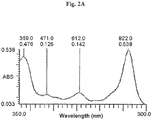
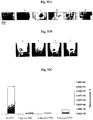
- RGD-4C (2 mg, 1.97 ⁇ moles) was dissolved in 800 ⁇ l DMSO and added to the activated ester (4.8 mg, 5.13 ⁇ moles in 800 ⁇ l DMSO and 400 ⁇ l NaHCO 3 buffer 0.1 M pH 8.5). The reaction mixture was incubated at room temperature for 24 hours, and stirred under argon. The obtained conjugate 11 was purified using HPLC and identified by mass spectroscopy (1837 m/z) ( Figs. 1A-1C ). Yield: 18%.
- Conjugate 12 was prepared starting from the synthesis of compound 9 .
- the title compound was prepared starting from the synthesis of the unmetalated conjugate 13 , as follows.
- the product, conjugate 14 was purified by HPLC using gradient elution with acetonitrile and water as described previously (Brandis et al., 2005).
- radioactive conjugates For the preparation of radioactive conjugates, the same procedure is used with water-soluble salts other than acetate of freshly-prepared radioactive isotope 64 Cu or 67 Cu (t 1/2 is 12.70 h and 2.58 d, respectively).
- Comjugate 16 was prepared as in Example 3(i), but using Pheid (compound 6 ) as the starting material instead of Bpheid.
- Conjugate 17 was synthesized according to the procedure described in Example 3(ii), using conjugate 16 obtained above as the starting material.
- Bacteriopurpurin 18 (BPP 18), 4a (20 mg) obtained as described in Materials and Methods, and palladium acetate (10 mg) in chloroform (8 ml) were mixed with palmitoyl ascorbate (25 mg) in methanol (12 ml). After 20 min. of stirring, the reaction was completed (monitoring was carried out by spectrophotometry), and the mixture was shaken with chloroform/water. The organic layer was collected, dried over sodium sulfate, evaporated, and purified on silica column with chloroform-acetone elution, to obtain Pd-BPP 18. UV-VIS Spectrum: 342, 414, 534 and 810 nm in chloroform.
- Pd-BPP 18 (18 mg) was stirred with hydrazine hydrate (12 ⁇ l) in pyridine (8 ml) for 35 min, the reaction mixture was poured into chloroform (30 ml) and IN HCl (30 ml), and stirred for additional 2 hrs. Then, the organic layer was dried over sodium sulfate, propane sultone (50 mg) was added, and the mixture stirred for 10 min. and evaporated. The residue was treated with aqueous ammonia (28%, 3 ml) for 30 min. to eliminate unreacted sultone by conversion into sulfopropylamine, and the mixture was evaporated again.
- Pd-Bacteriopurpurin-N-(3-sulfopropylamino)imide (10 mg) was reacted overnight with NHS (20 mg), in the presence of EDC (20 mg) in DMSO (3 ml).
- the obtained activated ester was purified on a silica column using CHCl 3 :MeOH (5:1), dried and kept under argon in the dark until further use.
- CycloRGDfK (5 mg) was dissolved in 1 ml of DMSO, added to the activated complex (5 mg) in 1 ml of DMSO, and the reaction mixture was incubated at room temperature for 24 hours, and stirred under argon.
- the obtained conjugate 19 was purified using HPLC, and identified by mass spectroscopy (ESI-MS positive mode, 1415 m/z).
- Conjugate 20 (4 mg) was dissolved in 50%-aqueous methanol and aqueous solutions of copper acetate (2 mg) and sodium ascorbate (2 mg) were added. The reaction was completed in 2 min. (monitored by spectrophotometry). The product was purified on RP-18 cartridge (Lichrolut, Merck), first, using water to wash out unreacted copper actetate and ascorbate, and then methanol for the elution of the main compound, conjugate 21 , which is collected and evaporated (UV-VIS Spectrum: 418 and 538 nm in water).
- Conjugate 23 was prepared starting from the synthesis of compound 10 .
- Pd-Bpheid a (compound 7 ) (100 mg) was dissolved in N-methylpyrrolidone (1 ml) and 3-amino-2-propanediol (405 mg) and the solution was mixed during 3 hours at room temperature under argon atmosphere.
- the product 10 was purified on HPLC using YMC-C18 preparative column with 0.2% acetic acid/acetonitrile. Yield: 86%.
- Analysis was performed on LC-MS using YMC-C18 analytical column with ammonium acetate, pH 4.5/acetonitrile. ESI-MS positive mode, 805 m/z.
- the active ester (10 mg) was dissolved in dry N-methylpyrrolidone (1 ml). CycloRGDfK (8 mg) and triethylamine (10 ⁇ l) were added and the solution was stirred for 75 min.
- the product was purified on HPLC using YMC-C18 preparative column with 0.2% acetic acid/acetonitrile. Yield: 50%.
- Analysis was performed on LC-MS using YMC-C18 analytical column with ammonium acetate pH 4.5/acetonitrile: ESI-MS positive mode, 1393 m/z.
- the peptide-conjugate was then cleaved from the resin and deprotected (Arg, Pbf; Asp, OtBu) using a cocktail solution of 85:5:5:5 TFA/thioanisole/H 2 O/triisopropylsilane (TIS) (10 ml) for 10 min at 0°C and then 1h at room temperature under Ar atmosphere.
- TFA/thioanisole/H 2 O/triisopropylsilane (TIS) 10 ml
- the resin was filtered and washed with the cocktail solution (4 ml) and the combined filtrate was evaporated by a stream of N 2 to about half of its volume. Upon addition of cold Et 2 0 (30 ml), a dark precipitate appeared.
- Fmoc-C ⁇ -allyl protected aspartic acid was attached on 2-chlorotrityl chloride resin.
- glycine, N G -Pbf arginine, N ⁇ -Dde lysine, and phenylalanine were attached on the resin by usual Fmoc chemistry, forming fKRGD peptidyl-resin.
- the N-terminal Fmoc group was removed with 2%-piperidine/DMF
- the C ⁇ -allyl group on aspartic acid residue was removed with tetrakis(triphenylphosphine) palladium and 1,3-dimethylbarbituric acid (DMBA) in DCM.
- DMBA 1,3-dimethylbarbituric acid
- Conjugate 27 (0.1 mmol) was treated on the resin with the appropriate amine in Table 1 (5-6 mmol) in DMF at room temperature during 2 h. Then, the amine excess was washed off, the product was disconnected from the resin, deprotected with the TFA-containing cocktail, and finally purified by RP-HPLC. Analysis was performed on LC-MS using YMC-C18 analytical column with ammonium acetate pH 4.5/acetonitrile. The results are shown in Table 1. Table 1.
- Conjugate 32 was obtained by coupling peptidylamine cycloRGDK-NH 2 (obtained as described in Marterial and Methods) and Bpheid a ( 3 ) in DMF solution in the presence of DCC, followed by Pbf and O-tBu deprotection with TFA. The product was purified by RP-HPLC. Yield: 53%. Analysis was performed on LC-MS using YMC-C18 analytical column with ammonium acetate pH 4.5/acetonitrile: ESI-MS positive mode, 1135 m/z.
- Conjugate 33 was obtained by conjugating compound 8 with the linear peptide GRGDSPK (obtained as described in Material and Methods) similarly to the method described for conjugate 24 in Example 11. Yield: 55%. Analysis was performed on LC-MS using YMC-C18 analytical column with ammonium acetate pH 4.5/acetonitrile: ESI-MS positive mode, 1537 m/z.
- Conjugate 34 was obtained by conjugating compound 8 with the linear peptide (GRGDSP) 4 K (obtained as described in Material and Methods) similarly to the method described for conjugate 24 in Example 11. Yield: 41%. Analysis was performed on LC-MS using YMC-C18 analytical column with ammonium acetate pH 4.5/acetonitrile. MALDI-MS positive mode, 3291 (M+2Na) m/z.
- Conjugate 35 was obtained by conjugating compound 8 with cycloRGDf-N(Me)K (obtained as described in Material and Methods) similarly to the method described for conjugate 24 in Example 11. Yield: 58%. Analysis was performed on LC-MS using YMC-C18 analytical column with ammonium acetate pH 4.5/acetonitrile: ESI-MS positive mode, 1439 m/z.
- Conjugate 36 was obtained by conjugating compound 8 with the cyclic dimer peptide (cycloRGDyK) 2 (obtained as described in Material and Methods) similarly to the method described for conjugate 24 in Example 11. Yield: 27%. Analysis was performed on LC-MS using YMC-C18 analytical column with ammonium acetate pH 4.5/acetonitrile. MALDI-MS positive mode, 2245 (M+2Na) m/z.
- the conjugate 37 was synthesized from Pd-Bpheid (compound 7 ) and the peptide RGD.
- the peptide was prepared by the solid phase procedure by coupling of Fmoc-Arg (Pbf)-Gly-OH to a resin bound H-Asp-O-Allyl residue.
- Attachment of the third amino acid to the dipeptide obtained in step (i) above started by stirring 2-chlorotrityl chloride resin (0.5 g; 1.4 mmol/g) with a solution of Fmoc-Asp-O-Allyl (138.4 mg; 0.35 mmol) and DIEA (244 ⁇ l; 1.4 mmol) in DCM during 1h at rt to give a loading of about 0.7 mmol/g. Then, the resin was washed and Fmoc was removed as described above.
- Fmoc-Arg (Pbf)-Gly-OH (371 mg; 0.525 mmol), HOBt (80.4 mg; 0.525 mmol) and DIC (81 ⁇ l; 0.525 mmol) were dissolved in 2.5 ml DMF and stirred at rt for 20 min. The resulting solution was added to the washed H-Asp-O-Allyl-resin, and the mixture was agitated for 2h at rt. The peptidyl-resin was washed, and Fmoc was removed.
- the resin was treated with ethylenediamine (251 ⁇ l; 375 mmol) in DMF during 1h at rt, then washed.
- the resin was reacted with a solution of [(C 6 H 5 ) 3 P] 4 Pd 0 (87 mg; 0.075 mmol) and DMBA (137 mg; 0.875 mmol) in DCM during 2h at rt.
- On-resin cyclization was accomplished by binding the deprotected Asp residue to the ethylenediamino moiety using a solution of PyBOP (195 mg; 0.375 mmol) and DIEA (131 ⁇ l; 0.75 mmol) in DMF for 2h at rt. The resin was washed and dried in vacuum for 3h. The peptide conjugate was cleaved from the resin using a cocktail solution TFA/Thioanisole/H 2 O/TIS/EDT (82.5:5:5:5:2.5) for 10 min at 0°C and then 1h at rt. Upon the addition of cold Et 2 O (25 ml), a dark solid was obtained. The crude product (95 mg) was purified by RP-HPLC to give 2 mg of pure (98%) cyclic RGD conjugate 37 . ESI-MS 1087 (M+H) m/z.
- Conjugate 40 was obtained by a method similar to that described for conjugate 24 , but using the linear RGD-peptidomimetic 5-(6-guanidino-hexanoylamino)-pentanoic acid (RGD-PM1). Yield: 42%. Analysis was performed on LC-MS using YMC-C18 analytical column with ammonium acetate pH 4.5/acetonitrile: ESI-MS positive mode, 1123 m/z.
- Conjugate 41 was obtained by a method similar to that described for conjugate 24 , but using the linear RGD-peptidomimetic 1-(4-guanidino-butyryl)-piperidine-3-carbonyl]-amino]-heptanoic acid (RGD-PM2). Yield: 66%. Analysis was performed on LC-MS using YMC-C18 analytical column with ammonium acetate pH 4.5/acetonitrile: ESI-MS positive mode, 1220 m/z.
- Conjugate 42 was obtained by a method similar to that described for conjugate 24 in Example 11, but using the peptide cycloRADfK. Yield: 30%. Analysis was performed on LC-MS using YMC-C18 analytical column with ammonium acetate pH 4.5/acetonitrile: ESI-MS positive mode, 1439 m/z.
- the title compound was prepared starting from the synthesis of the Bacteriopheophorbide-173-(cycloRGDfK)amide conjugate 27, as described in Example 13.
- Conjugate 27 (0.1 mmol) was treated on the resin with an 1,3-propylene diamine (6 mmol) in DMF at room temperature during 2 h. Then, the amine excess was washed off, and DTPA dianhydride (0.2 mmol) and triethylamine (100 ml) in anhydrous DMF (30 ml) was added. After 1-h agitation under argon atmosphere, distilled water (50 ml) was added, followed by additional agitation for 30 min. The product 43 was disconnected from the resin, deprotected with the TFA-containing cocktail, and finally purified by RP-HPLC (61 mg, 37%). Analysis was performed on LC-MS using YMC-C18 analytical column with water/acetonitrile. ESI-MS negative mode, 1643 m/z.
- Gadolinium chloride (0.1 mmol) in a sodium acetate buffered aqueous solution (0.1 N, pH 5.5) was added into a solution of conjugate 43 (6 ⁇ mol) in 2 mL of DMF. The mixture was allowed to stand at ambient temperature for overnight with stirring. The formation of the metal chelates was verified by LC-MS (1799 m/z). The reaction mixture was evaporated, and the product was purified on a RP-18 cartridge (Lichrolut, Merck), first using water to wash out non-reacted gadolinium salt, and then methanol for the elution of the main compound, conjugate 44 , which was collected and evaporated (8 mg, 73%).
- CT26luc colon carcinoma cell monolayers transfected with luciferase were scraped under saline with a rubber policeman.
- Single-cell suspensions of CT26luc (2-4 ⁇ 10 6 cells/mouse, 50 ⁇ l) were implanted subcutaneously (s.c.) on the backs of the mice.
- CT26 is an N-nitroso-N-methylurethane-(NNMU) induced, undifferentiated colon carcinoma cell line. It was cloned to generate the cell line designated CT26WT, which was stably transduced with luciferase to obtain the lethal subclone CT261uc. Tumors reached treatment size, i.e. diameter of 7-9 mm, within 1.5-2 weeks.
- CT26luc cells were kindly provided by Dina Publishing, Weizmann Institute, Rehovot, Israel.
- 4T1luc mammary gland tumor cell monolayers transfected with luciferase were scraped under saline with a rubber policeman.
- Single-cell suspensions of 4T1luc (2-4 ⁇ 10 6 cells/mouse, 50 ⁇ l) were implanted subcutaneously (s.c.) on the backs of the mice.
- 4T1 is a 6-thioguanine resistant cell line selected from the 410.4 tumor without mutagen treatment, which was stably transduced with luciferase to obtain the lethal subclone 4T1luc (kindly provided by Shimrit Ben-Zaken, Weizmann Institute, Rehovot, Israel). Tumors reached treatment size, i.e. diameter of 7-9 mm, within 1 week.
- Lung metastases model Cultured CT261uc or 4T1luc cells (0.8-1 ⁇ 10 6 cells/mouse, 300 ⁇ l) collected in saline were i.v.-injected in the tail vain of anesthetized mice. Lung metastases in the lungs were inspected using Xenogen IVIS® Imaging System as described herein, 2-3 weeks after cells injection.
- mice were sacrificed (according to the guidelines of the Weizmann Institute of Science) when tumors reached the diameter of ⁇ 15 mm.
- the binding parameters and biological activities of the cyclic nonapeptide RGD-4C were characterized in order to test its suitability for vascular photosensitizer targeting.
- RGD-4C binding was characterized in H5V cells and Human Umbilical Vein Endothelial Cells (HUVEC) using the cell-rounding assay described in Materials and Methods.
- the morphological changes of the cells were documented using light microscopy.
- This effect was reversible as the cells recovered following 3 h re-incubation with fresh culture medium (8% rounded cells in dishes with previous presence of RGD-4C versus 6% in the absence of RGD-4C).
- RGD-4C is a reversible one since removal of RGD-4C by extensive washing and subsequent maintenance of the tested endothelial cells in culture for 3 h (H5V) or 24 h (HUVEC), results in complete recovery of their adhesive capacities.
- Conjugate 24 presents a detectable NIR fluorescence and its cellular binding and localization was determind in vitro using fluorescence microscopy.
- Cultured H5V endothelial cells were incubated with 25 ⁇ M 24 in DMEM/F12 medium with 10% FCS for 2 hours at 37°C. The cell culture was then washed, and PBS++ was added. Using custom made fluorescence microscope, 24 was excited at 520 nm and the emitted fluorescence was detected at 780 nm.
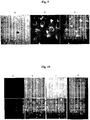
- conjugate 24 penetrated into endothelial cells and concentrated around the nucleus in granule-like structures.
- the cellular uptake of non-conjugated compound 8 was measured.
- Cultured H5V cells were incubated with 25 ⁇ M 24 or 8 in DMEM/F12 medium with 10% FCS or 75%FCS for 20 minutes or 2 hours at 37°C. The cell culture was then washed, and PBS++ was added. Excitiation was carried out at 520 nm and emitted fluorescence detection at 780 nm.
- Fig. 10 demonstrates that the conjugate cellular uptake was faster than that of compound 8 .
- conjugate 24 high serum concentrations (75% vs. 10% FCS) attenuate the cellular uptake of conjugate 24 .
- Quantitative structure function relationship studies done in our group emphasized the role of photosensitizer structure in the interactions with serum proteins. These studies suggest that there is an active involvement of serum albumin in the trafficking of compound 8 both into and out of the treated cells. Further, the cellular uptake of 8 , clearance and phototoxicity are mediated by BSA molecules that undergo continuous receptor mediated up-take and secretion.
- conjugate 24 the affinity of the bacteriochlorophyll moiety to serum albumin modifies the conjugate bioavailability to the integrin receptor ⁇ v ⁇ 3 .
- the conjugates of the invention are potential drug carriers. Therefore, their in vivo biodistribution is of great importance.
- ICP-MS Ion Coupled Plasma-Mass Spectroscopy
- the stable binding of the central merttal atom enables monitoring and accurate determination of the time dependent concentration of the compound in the target organs.
- Biodistribution of conjugate 24 and of compound 8 was determined in CD1-nude male mice with tumor xenografts of rat C6 glioma as described in Materials and Methods, using method (2) for sample preparation. Biodistribution of 24 was also determind in CD1-nude male mice bearing tumor grafts of mouse CT26luc colon carcinoma and CD 1-nude male mice bearing tumor grafts of mouse of 4T1luc mammary cancer.
- Figs. 11A-11D indicate accumulation of conjugate 24 in the different tumor tissues up to 8 hours post injection acoompanied by contineuous decrease of the conjugate levels in the blood. Moreover, the biodistribution pattern of 24 appears independent of the tumor's origin (rat C6 glioma ( Fig. 11A ), mouse CT26luc colon carcinoma ( Fig. 11B ), and mouse 4T1 carcinoma of the breast ( Fig. 11C ).
- the markedly increased tumor uptake of the conjugates of the invention compared to either M-Bchl derivative alone or GRD-containing peptide conjugated to other chelators, can be attributed to the conjugation of the RGD-containing peptide to the BChl moiety.
- Fig. 11D The relative levels of 24 in the tumor tissue and blood are illustrated in Fig. 11D , and it is shown that while 8 hours post injection the conjugate reached maximum concentration in the tumor, at 24 hours post injection its concentration in the tumor relative to the blood and surrounding normal tissue, is still sufficiently high to enable a selective vascular-targeted imaging (VTI) and possibly vascular-targeted PDT (VTP).
- VTI vascular-targeted imaging
- VTP vascular-targeted PDT
- the concentration of the conjugate in the tumor tissue relative to other organs was significantly lower in tumors where the cells are known not to express ⁇ v ⁇ 3 integrin (e.g. CT26luc).
- ⁇ v ⁇ 3 integrin e.g. CT26luc
- the biodistribution of Cu-conjugate 15 was determined in female CD-1 nude mice of 6-8 weeks-old, weighing 20-23 g and bearing 6-9-mm 3 tumors of human adenocarcinoma cells obtained from breast tissue (MDA-MB-231 cells).
- the conjugate (30 mg/ml in 5%DMSO/PBS) was injected to the tail vein, and the animals were sacrificed in selected time points.
- Cu concentrations were determined by ICP-MS as described in Material and Methods. The ICP-MS results after the subtraction of time 0 are shown in Fig 13 .
- the obtained data showed an obvious accumulation of 15 in tumor with a peak at 8-12 h after injection of about 3-fold intensity in comparison with surrounding normal tissue.
- conjugate 24 Comparison between the biodistribution of conjugate 24 and the conjugate 42 ( Fig. 14B ) demonstrates that RGD conjugate uptake in tumor tissue was faster than that of RAD conjugate and to a higher extent up to 24 hours.
- Conjugate 24 accumulated in the tumor tissue with maximal peak concentration at 8 hours post injection accompanied by a continuous decrease of the conjugate levels in the blood, while the concentrations of 42 in the tumor tissue and blood 8 hours post injection are quite the same.
- both conjugates presented a prolonged basal level after administration due to non-specific binding.
- the accumulation of the RGD conjugate in the tumor site was twice as much compare to the RAD conjugate.
- Example 31 In vivo fluorescence imaging of mice bearing rat C6 glioma xenografts following treatment with conjugate 24 or compound 8
- Dynamic fluorescence images were obtained from CD-1 nude male mice bearing rat C6 glioma xenografts. The fluorescence images were acquired using IVIS system as described in Materials and Methods. Clearance of the injected photosensitizers (compound 8 or conjugate 24 ) was measured in mice by fluorescence imaging and is demonstrated in Fig. 15 . Mice bearing rat C6 glioma xenografts on the back of the right posterior limb were injected with 200 nmol dose of conjugate 8 (mice in upper pictures) or 200-nmol dose of 24 (mice in lower pictures), and images were taken at 4, 24, 48 and 72 hours post-injection.
- Example 32 Dynamic fluorescence imaging of mice bearing mouse CT26luc colon cancer grafts transfected with luciferase following treatment with conjugate 24
- luciferin luminescence enables to monitor viable tumor cells and thus provides the means to validate the conjugate's homing at the tumor site, its imaging capability and the efficacy of VTP.
- the fluorescence images were recorded and only then the animals were i.p. injected with luciferin and the bioluminescence of the transfected tumor cells was detected.
- Dynamic fluorescence images were obtained from CD-1 nude male mice bearing grafts of mouse CT26luc colon cancer transfected with luciferase, following the intravenous injection of an integrin receptor targeting conjugate 24 .
- Figs. 16B- 16C depict fluorescence and luminescence images of a mouse bearing a graft on the back of the right posterior limb, 24 hours after injection of 200-nmol dose of conjugate 24 .
- the fluorescence and luminescence images were acquired using Xenogen IVIS® Imaging System as described in Material and Methods.
- Example 33 Dynamic fluorescence imaging of mice bearing 4T1luc mammary cancer grafts transfected with luciferase following treatment with conjugate 24
- Dynamic fluorescence images were obtained from BALB/c female mice bearing grafts of mouse 4T1luc mammary cancer transfected with luciferase, following the intravenous injection of an integrin receptor targeting conjugate 24 .
- Figs. 17A-17C show photographs fluorescence and luminescence images of two female mice bearing a subcutaneous mouse 4T1 mammary gland cancer transfected with luciferase grafts on the back of the right posterior limb, 24 hours after the injection of 200-nmol dose of conjugate 24 .
- the fluorescence and luminescence images were acquired using IVIS system as described in Material and Methods.
- Example 34 Dynamic fluorescence of mice bearing ovarian carcinoma (MLS) following treatment with conjugate 26
- Conjugate 26 (8 mg/kg) was i.v. injected into animals bearing MLS ovarian carcinoma. Images on IVIS were taken after 8 and 14 hours. As shown in Fig. 18 , the conjugate did not present accumulation after 8 hours, but at 14 hours a high level of fluorescence was observed in tumor and liver areas.
- Example 35 Fluorescence imaging demonstration of in vivo binding specificity of conjugate 24 to ⁇ v ⁇ 3 integrin receptor
- Specific binding is defined as one inhibited by the unconjugated sensitizer.
- attempts to block its accumulation were carried by competing with free cycloRGDfK for binding of the same binding sites. Fluorescence imaging was performed 24 hours after administration of 140 nmol of conjugate 24 alone ( Fig. 19 , left mouse on both panels, with tumor on the back of the right posterior limb), or administration of 140 nmol of conjugate 24 1 hour after injection of excess "free" (8.5 ⁇ mol) cycloRGDfK peptide to mice bearing C6 glioma xenografts ( Fig. 19 , right mouse on both panels, with tumor on the back of the left posterior limb).
- Fluorescence images of the blocked receptor xenografts with the same exposure time are illustrated in Fig. 19 on the same linear color scale to allow for a qualitative comparison.
- the fluorescence intensity originating from the tumor was larger when conjugate 24 was administered alone as compared to when the peptide cycloRGDfK was administered one hour prior to imaging agent administration.
- the uptake was not influenced by the pre-administration of cycloRGDfK.
- Example 36 Dynamic fluorescence imaging following treatment with conjugate 42
- CT26luc cells lack ⁇ v ⁇ 3 (although they likely express some ⁇ v ⁇ 5 ) (Yao et al., 2005; Borza et al., 2006), the higher fluorescence of 24 from the tumors probably originates in their ligation (via the RGD tripeptide) to the neoendothelial ⁇ v ⁇ 3 integrins.
- Fig. 21 depicts the fluorescence images of CD1 nude mice bearing tumors that originate in human ovary adenocarcinoma OVCAR-8, mouse colon cancer CT261uc, human epithelial ovarian carcinoma MLS, and mouse mammary carcinoma 4T1luc cell lines, 24 h after administration of conjugate 24 .
- Integrin ⁇ v ⁇ 3 is expressed on some types of solid tumor cells.
- MLS Schott al., 2002
- 4Tlluc Overexpress integrin ⁇ v ⁇ 3 receptors on their cell surface
- mouse CT26luc lack integrin ⁇ v ⁇ 3 receptors, but express some ⁇ v ⁇ 5
- OVCAR-8 lack ⁇ v integrins (Ross et al., 2000).
- the fluorescence signal was significantly higher for integrin ⁇ v ⁇ 3 positive cells (MLS and 4T1luc) compared to integrin ⁇ v ⁇ 3 negative cells (CT261uc and OVCAR-8), probably due to additional accumolation in the tumor cells themselves.
- CT261uc and OVCAR-8 integrin ⁇ v ⁇ 3 negative cells
- the observed difference between the compound accumulation in the two ⁇ v ⁇ 3 negative tumors (CT261uc and OVCAR-8 probably reflects (i) a difference in their neovascularization since they both lack the ⁇ v ⁇ 3 integrins, (ii) might be due to additional accumolation in the CT26luc tumor cells themselves, since they express ⁇ v ⁇ 5 that can binds specifically the RGD-BChl conjugate.
- Example 37 Dynamic fluorescence imaging of lung metastases
- CT26luc model metastases in the lungs were detected as a function of time post 24 injection (4, 9 and 24 h, 15 mg/kg; Figs. 23A-23I ).
- CD-1 nude male mice bearing CT26luc lung metastases that were not injected with the conjugate served as controls Figs. 23G.23H
- a CD-1 nude male mouse without lung metastases that was i.v. injected with conjugate 24 Fig. 23I ).
- the fluorescence imaging results show that the uptake of 24 in metastatic regions was significantly higher than by the surrounding normal tissue regions, with best tumor to background ratio at 24 hours after administration.
- Example 38 Dynamic fluorescence imaging of lymph node metastases
- CD-1 nude male mouse bearing CT26luc primary tumor on the back of its left leg and metastases in the near lymph node was imaged and photographed 24 hours after the i.v. injection of conjugate 24 (15 mg/kg). Detection of the CT26luc metastases in the lymph node was abled by localization of conjugate 24 .
- the black & white photograph, bioluminescence signal originated from the reaction of lucifern with the luciferase transfected tumor cells, and the fluorescence image of the mouse are shown in Fig. 24 .
- Example 39 In vivo magnetic resonance imaging (MRI) of mice bearing rat C6 glioma xenografts using compound 9 as a contrast agent
- mice were used for MRI enhanced with Mn-13 2 -OH-Bpheid (compound 9 ) (15 ⁇ mol/kg).
- the phototoxicity of conjugate 23 and the unconjugated photosensitizer 10 were determined by monitoring the survival of cultured H5V endothelial cells following PDT.
- H5V cells were incubated for 90 min at 37°C with 0-25 ⁇ M of conjugate 23 or compound 10 in different media conditions, illuminated and their survival was determined using Neutral Red viability assay as described in Materials and Methods.
- the dose-response survival curves of the H5V cells treated with the photosensitizers under different conditions are shown in Figs. 25A-25C : 10% FCS in medium ( Fig. 25A ), culture medium DMEM/F12 ( 25B ) and 10 ⁇ M BSA in medium ( 25C ).
- conjugate 23 and compound 10 in different media were found to be light- and drug concentration-dependent. Based on the LD 50 values we can conclude that the photodynamic potency of the conjugate 23 is higher than that of the non-conjugated photosensitizer 10 .
- Targeted phototoxicity is defined as one inhibited by the free ligand.
- H5V cells were incubated for 90 min at 37 °C with 0-25 ⁇ M of compound 10 or conjugate 23 in different media (10% FCS in medium or 10 ⁇ M BSA in medium) in the absence or presence of free excess cycloRGDfK (100-fold up to 1 mM). The cells were illuminated and cell survival was determined using Neutral Red viability assay, as described above.
- H5V cells were incubated at 37°C and 4°C for 15 min with 0-20 ⁇ M of conjugate 23 in medium containing 10% FCS, in the presence or absence of excess cycloRGDfK (100-fold up to 1 mM). Cells were illuminated and their survival was determined as described above. The dose-response survival curves of the treated H5V cells are shown in Figs. 27A-27B .
- the LD 50 values measured for 15-min incubation at 37°C or 4°C increased relatively to the values obtained upon incubation of the cells at 37°C for 90 min ( Table 2 ).
- the LD 50 values of conjugate 23 changed to 3.5 ⁇ M and to 20 ⁇ M following 15-min incubation at 37°C and 4°C, respectively, compared to 1 ⁇ M obtained for incubation at 37°C for 90 min.
- the increase in LD 50 values upon lowering the temperature supports the hypothesis of a possible role for endocytosis in the conjugate uptake.
- conjugate 24 was determined by monitoring the survival of cultured H5V endothelial cells following PDT. H5V cells were incubated for 2 hours at 37°C with 0-25 ⁇ M conjugate 24 in culture medium DMEM/F12 with 10% FCS. The cells were illuminated and their survival was determined as described above.
- the phototoxicity of a third conjugate, 11 , and of compound 8 was also determined using H5V endothelial cells. Cells were incubated for 90 min at 37°C in the presence of 0-20 ⁇ M conjugate 11 or compound 8 in 10 ⁇ M BSA in medium, illuminated and their survival was determined as described above.
- cycloRGDfK peptide blockage of the phototoxicity of conjugate 11 by adding free cyclic RGD-4C to the cell culture failed ( Figs. 30A-30B , Table 3 ).
- H5V cells were incubated for 90 min at 37°C with 0-10 ⁇ M conjugate 11 or compound 8 in 10 ⁇ M BSA in medium in the absence or presence of RGD-4C in excess (1 mM). The cells were illuminated and their survival was determinated as described above.
- Example 41 In vivo PDT in rat C6 glioma tumor using conjugate 24
- the protocol parameters should include: Time of treatment (drug-light interval)- Illumination 3 to 24 hours post-drug administration; Dose (mg / kg) - 5-24 mg/kg; Duration of illumination (min)- 5-30 min; Intensity of illumination (mW / cm 2 ) - 100-200 mW/ cm 2 ; Delivered energy ( J / cm 2 )- 30-360 J/cm 2 .
- the initial tumor models used comprised rat C6 glioma tumor xenografts, since these tumor cells express ⁇ v ⁇ 3 (Zhang et al., 2006) and ⁇ v ⁇ 5 integrins (Milner et al., 1999) in addition to integrin ⁇ v ⁇ 3 expressed on the tumor neovasculature.
- CD-1 nude male mice bearing C6 glioma grafts were i.v. injected with 15 or 24 mg/kg body doses of conjugate 24 or 9 mg/kg body dose of compound 8 .
- Figs. 31A and 31B show the therapeutic results of those protocols, respectively.
- dark control Fig. 31C
- light control mice were illuminated without conjugate 24 injection
- unconjugated photosensitizer control mice were i.v. injected with compound 8 and illuminated after 8 hours.
- Example 42 In vivo PDT in mouse CT26 colon tumor using conjugate 24
- CD-1 nude male mice bearing CT26luc tumors were subjected to different protocols of PDT with conjugate as shown in Table 5 .
- Table 5 Therapeutic results of different VTP protocols applying conjugate 24 to mice bearing mice CT26luc colon cancer.
- Time to treatment hrs
- Dose mg/kg
- Duration of illumination min
- Intensity of illumination mW
- Delivered energy J/cm 2
- Figs. 32A-E show the therapeutic results of applying 15 mg/kg, 10 min illumination (60 J/cm 2 ), 8 hours post injection of conjugate 24 to mice bearing CT26luc tumors (bolded protocol in Table 5).
- 32A - conjugate 24 was i.v. injected 15 mg/kg, 10 min illumination (60 J/cm 2 ) 8 hours post injection;.
- 32B overlaid images taken after i.p. injection of luciferin to the mouse described in 32A , using the IVIS system.
- the first image is black and white, which gives the photograph of the animal.
- the second image is color overlay of the emitted photon data. All images are normalized to the same scale.
- 32C Bioluminescence signal quantification (photon/sec/cm 2 ) of the data shown in B.
- 32D - control with compound 8 alone the mice were i.v. injected with compound 8 and illuminated after 8 hours.
- 32E - control with mixture of compound 8 and cycloRGDfK the mice were i.v. injected with mixture of compound 8 with cycloRGDfK and illuminated after 8 hours.
- 32F - control with cycloRGDfK alone the mice were i.v. injected with cycloRGDfK and illuminated after 8 hours. Images were taken at indicated time post PDT.
- Fig. 32B are overlaid images taken with the IVIS system after i.p. injection of luciferin to the mouse depicted in Fig. 32A.
- Fig. 32C provides quantitative description of the bioluminescence shown in Fig. 32 B .
- the controls used were (1) compound 8 alone ( Fig. 32D ); (2) mixture of unconjugated compound 8 and cycloRGDfK ( Fig. 32E ); and ( 3 ) cycloRGDfK alone ( Fig. 32F ).
- the different controls showed no PDT effect.
- the animals treated with the targeted conjugate developed necrosis within 4 days post PDT ( Fig. 32A ).
- Significant bioluminescence signal from residual tumor cells appear 8 days post PDT ( Fig. 32B ), although no tumor was palpated or visually detected. Wound healing and tumor flattening were observed in all responding animals.
- Fig. 33 shows the Kaplan- Mayer curve for the protocols indicated in the Table 5 with asterisk.
- Example 43 Tumor diagnosis and PDT treatment of breast tumors with conjugate 13
- Plasmids - the plasmid that was used for the transfection of the cells was pDsRed-Monomer-Hyg-C1 (Clontech, Palo Alto, CA) that carries the RFP gene and resistance gene for hygromycin in which the DsRed-Monomer gene was replaced with pDsRed2 (from the pDsRed2-N1 plasmid).
- Transfection process For the transfection process, LipofectamineTM 2000 (Invitrogen) was used according to the manufacturer protocol: 4 ⁇ g DNA were incubated for 5 min with 250 ⁇ l Opti-MEM medium (supplied by the manufacturer Invitrogen). In a separate test tube, 10 ⁇ l of Lipofectamine were incubated for 5 min with 250 ⁇ l Opti-MEM medium. After incubation, the DNA and Lipofectamine solutions were mixed and incubated for 20 min at room temperature and the content was evenly scattered on one out of a 6-well plate that was 50-60% confluent with the MDA-MB-231 cells.
- Figs. 34A-34B show the fluorescent MDA-MB-231 RFP clone 3 (resistant to hygromycin) after 1 sec and 3 sec exposure, respectively.
- MDA-MB-231 RFP cells (4x10 6 ) were implanted subcutaneously on the backs of the mice and tumors developed to the treatment size (6-8 mm) within 2-3 weeks.
- mice Anaesthetized mice were i.v. injected with conjugate 13 (7.5 mg drug/kg body weight). The tumors were illuminated for 10 min. The drug light interval used was 8hr post drug injection. Transdermal illumination through the mouse skin with 755 nm diode laser at 100 mW/cm 2 (CeramOptec, Germany) was used. After the treatment, the mice were returned to the cage. In the dark control group, the mice were i.v. injected with the sensitizer conjugate 13 and placed in dark cage for 24hr. In the light control group, the mice were illuminated for 10 min with 100mW/cm 2 .
- mice received analgesia (2.5 mg/kg Flunexin daily) and 3 days Oxycode in the drinking water.
- the end point of animal survival is when the size of the tumor reaches 10% of animal weight. Mice are sacrificed at this time (up to 90 days) by cervical dislocation.
- Figs. 35A-35B show two representative examples to local response of human MDA-MB-231-RFP to PDT.
- Mice with MDA-MB-231-RFP xenografts ( ⁇ 0.5 cm3) on their backs were i.v. injected with 7.5 mg/kg of conjugate 13 and illuminated 8 h later through the mouse skin with 755nm diode laser at 100mW/cm 2 .
- 35A Photographs taken from day 0 (before treatment) and after treatment at 1, 4, 7, 12 and 90 days. By day 4 partial necrosis was seen, by day 7 tumor flattening was observed, after 90 days the wound healed and the animal was cured.
- 35B In vivo whole-body red fluorescence imaging of CD-1 nude male mice bearing MDA-MB-231-RFP orthotopic tumor. No signal was detected 90 days after treatment.
- the MDA-MB-231-RFP cells (4x10 6 ) were implanted orthotopicaly in the mammary pad of the mice. Tumors developeded to the wanted size, bigger than 1cm 3 , within 3-4 weeks.
- mice were anesthetized by i.p. injection of 30 ⁇ l mixture of 85:15 ketamine: xylazine, and received an i.v. injection to the tail vein of 15 mg drug/kg body weight conjugate 13 . Fluorescence of both tumor cells and conjugate 13 are monitored by IVIS®100 Imaging system (Xenogen).
- Tumor imaging main filter set comprised: excitation filter 500-550 nm, emission filter 575-650 nm; Background filter set for subtraction the tissue auto fluorescence: excitation filter 460-490 nm, emission filter 575-650 nm.
- Photosensitizer imaging main filter set excitation filter 665-695 nm, emission filter 810-875 nm.
- Fig. 36 shows accumulation of conjugate 13 in orthotopic human breast MDA-MB-231-RFP primary tumor (tumor size ⁇ 1cm 3 ). Images were taken from 15 min to 24 hr post drug injection. Top panel - In vivo whole-body red fluorescence imaging of CD-1 nude female mice bearing MDA-MB-231-RFP orthotopic tumor. Bottom panel - In vivo whole-body NIR fluorescence imaging of conjugate 13 accumulation. The drug shows no specific accumulation in the tumor during the first 24 h.
- Fig. 37 shows accumulation of conjugate 13 in orthotopic human breast MDA-MB-231-RFP primary tumor (tumor size ⁇ 1cm 3 ). Images were taken from day 1 to 6 post drug injection. Top panel - In vivo whole-body red fluorescence imaging of CD-1 nude female mice bearing MDA-MB-231-RFP orthotopic tumor. Bottom panel - In vivo whole-body NIR fluorescence imaging of conjugate 13 accumulation. The drug shows accumulation in the tumor, reaching peak concentration specifically in the tumor from day 2 post injection.
Landscapes
- Chemical & Material Sciences (AREA)
- Health & Medical Sciences (AREA)
- Organic Chemistry (AREA)
- Life Sciences & Earth Sciences (AREA)
- Medicinal Chemistry (AREA)
- General Health & Medical Sciences (AREA)
- Molecular Biology (AREA)
- Proteomics, Peptides & Aminoacids (AREA)
- Biochemistry (AREA)
- Genetics & Genomics (AREA)
- Biophysics (AREA)
- Pharmacology & Pharmacy (AREA)
- Animal Behavior & Ethology (AREA)
- Public Health (AREA)
- Veterinary Medicine (AREA)
- Bioinformatics & Cheminformatics (AREA)
- Engineering & Computer Science (AREA)
- Nuclear Medicine, Radiotherapy & Molecular Imaging (AREA)
- General Chemical & Material Sciences (AREA)
- Chemical Kinetics & Catalysis (AREA)
- Epidemiology (AREA)
- Ophthalmology & Optometry (AREA)
- Cardiology (AREA)
- Child & Adolescent Psychology (AREA)
- Oncology (AREA)
- Obesity (AREA)
- Hematology (AREA)
- Heart & Thoracic Surgery (AREA)
- Diabetes (AREA)
- Peptides Or Proteins (AREA)
- Medicines That Contain Protein Lipid Enzymes And Other Medicines (AREA)
- Pharmaceuticals Containing Other Organic And Inorganic Compounds (AREA)
- Medicines Containing Antibodies Or Antigens For Use As Internal Diagnostic Agents (AREA)
- Nitrogen Condensed Heterocyclic Rings (AREA)
- Medicinal Preparation (AREA)
- Magnetic Resonance Imaging Apparatus (AREA)
- Investigating Or Analysing Biological Materials (AREA)
Applications Claiming Priority (2)
| Application Number | Priority Date | Filing Date | Title |
|---|---|---|---|
| US83940906P | 2006-08-23 | 2006-08-23 | |
| PCT/IL2007/001055 WO2008023378A1 (en) | 2006-08-23 | 2007-08-23 | Conjugates of rgd peptides and porphyrin or (bacterio)chlorophyll photosynthesizers and their uses |
Publications (2)
| Publication Number | Publication Date |
|---|---|
| EP2061512A1 EP2061512A1 (en) | 2009-05-27 |
| EP2061512B1 true EP2061512B1 (en) | 2019-10-02 |
Family
ID=38896083
Family Applications (1)
| Application Number | Title | Priority Date | Filing Date |
|---|---|---|---|
| EP07805515.9A Not-in-force EP2061512B1 (en) | 2006-08-23 | 2007-08-23 | Conjugates of rgd peptides and (bacterio)chlorophyll photosensitizers and their uses |
Country Status (12)
| Country | Link |
|---|---|
| US (1) | US20080138278A1 (https=) |
| EP (1) | EP2061512B1 (https=) |
| JP (3) | JP2010502574A (https=) |
| AU (1) | AU2007287205B8 (https=) |
| CA (1) | CA2661319C (https=) |
| DK (1) | DK2061512T3 (https=) |
| ES (1) | ES2763237T3 (https=) |
| HU (1) | HUE047789T2 (https=) |
| IL (1) | IL197195A (https=) |
| PT (1) | PT2061512T (https=) |
| RU (1) | RU2450018C2 (https=) |
| WO (1) | WO2008023378A1 (https=) |
Families Citing this family (47)
| Publication number | Priority date | Publication date | Assignee | Title |
|---|---|---|---|---|
| US6850788B2 (en) | 2002-03-25 | 2005-02-01 | Masimo Corporation | Physiological measurement communications adapter |
| US9161696B2 (en) | 2006-09-22 | 2015-10-20 | Masimo Corporation | Modular patient monitor |
| US8840549B2 (en) | 2006-09-22 | 2014-09-23 | Masimo Corporation | Modular patient monitor |
| JP2010539163A (ja) * | 2007-09-14 | 2010-12-16 | ヘルス リサーチ インコーポレイテッド | 腫瘍イメージング及び治療用のマルチモーダル剤 |
| AU2009219682B2 (en) | 2008-02-27 | 2015-06-18 | Yeda Research & Development Co. Ltd | RGD-(bacterio)chlorophyll conjugates for photodynamic therapy and imaging of necrotic tumors |
| LT5567B (lt) | 2008-08-06 | 2009-04-27 | Vilniaus Universitetas | Maisto ir su maistu susietų paviršių nukenksminimo būdas |
| US8673270B2 (en) * | 2008-10-23 | 2014-03-18 | Steba Biotech S.A. | RGD-containing peptidomimetics and uses thereof |
| US8263133B2 (en) * | 2009-02-18 | 2012-09-11 | The Regents Of The University Of California | Multivalent clustering targeting strategy for drug carriers |
| US9153112B1 (en) | 2009-12-21 | 2015-10-06 | Masimo Corporation | Modular patient monitor |
| PL219569B1 (pl) | 2010-02-19 | 2015-05-29 | Peptaderm Spółka Z Ograniczoną Odpowiedzialnością | Cykliczne tetrapeptydy i ich zastosowanie |
| EP2714694A4 (en) * | 2011-05-31 | 2014-11-05 | Univ North Carolina State | BAKTERIOCHLORIMIDE |
| RU2632439C2 (ru) * | 2011-08-23 | 2017-10-04 | Йеда Рисерч Энд Дивелопмент Ко., Лтд. | Фотосенсибилизаторы на основе (бактерио)хлорофилла для лечения глазных заболеваний и расстройств |
| JP6104920B2 (ja) | 2011-10-13 | 2017-03-29 | マシモ・コーポレイション | 医療用監視ハブ |
| US9943269B2 (en) | 2011-10-13 | 2018-04-17 | Masimo Corporation | System for displaying medical monitoring data |
| US10149616B2 (en) | 2012-02-09 | 2018-12-11 | Masimo Corporation | Wireless patient monitoring device |
| US10307111B2 (en) | 2012-02-09 | 2019-06-04 | Masimo Corporation | Patient position detection system |
| KR101385196B1 (ko) | 2012-05-17 | 2014-04-14 | 주식회사 유니크메디케어 | 광 조사를 이용한 광감각제―펩타이드를 유효성분으로 포함하는 발모 개선 또는 촉진용 조성물 및 이를 이용한 방법 |
| CN103665107B (zh) * | 2012-09-05 | 2017-07-14 | 上海晟顺生物科技有限公司 | 同时具溶血栓、清除自由基和血栓靶向功能的新颖化合物及其制备方法和用途 |
| US9749232B2 (en) | 2012-09-20 | 2017-08-29 | Masimo Corporation | Intelligent medical network edge router |
| RU2548675C9 (ru) * | 2013-05-29 | 2015-11-10 | Федеральное государственное бюджетное образовательное учреждение высшего профессионального образования "Московский государственный университет тонких химических технологий имени М.В. Ломоносова" (МИТХТ им. М.В. Ломоносова) | Аминоамиды в ряду бактериохлорофилла a, обладающие фотодинамической активностью, и способ их получения |
| JP6263716B2 (ja) * | 2013-07-31 | 2018-01-24 | 国立大学法人 筑波大学 | 悪性腫瘍のpet診断用トレーサー |
| US10832818B2 (en) | 2013-10-11 | 2020-11-10 | Masimo Corporation | Alarm notification system |
| US9522925B2 (en) * | 2014-11-09 | 2016-12-20 | Hong Kong Baptist University | Selective cancer tracking eradicator and the uses thereof |
| AU2016300208B2 (en) * | 2015-07-29 | 2019-08-08 | Novartis Ag | Combined use of anti PD-1 and anti M-CSF antibodies in the treatment of cancer |
| SG10201506686WA (en) * | 2015-08-24 | 2017-03-30 | Agency Science Tech & Res | Conjugates |
| EP3344123B1 (en) | 2015-08-31 | 2022-10-26 | Masimo Corporation | Wireless patient monitoring methods |
| CN105837666A (zh) * | 2015-12-30 | 2016-08-10 | 田梗 | 一种用于诊断糖尿病性视网膜病的蛋白质 |
| KR20190008206A (ko) * | 2016-04-10 | 2019-01-23 | 예다 리서치 앤드 디벨럽먼트 캄파니 리미티드 | 암 치료를 위한 병용요법 |
| US10617302B2 (en) | 2016-07-07 | 2020-04-14 | Masimo Corporation | Wearable pulse oximeter and respiration monitor |
| CN107759804B (zh) * | 2016-08-19 | 2019-12-03 | 四川大学 | 可定点结合含组氨酸标签蛋白的明胶衍生材料及其制备方法 |
| EP3525661B1 (en) | 2016-10-13 | 2025-07-23 | Masimo Corporation | Systems and methods for patient fall detection |
| US10933134B2 (en) | 2017-03-16 | 2021-03-02 | Memorial Sloan Kettering Cancer Center | Combination therapies for treatment of cancer |
| WO2019204368A1 (en) | 2018-04-19 | 2019-10-24 | Masimo Corporation | Mobile patient alarm display |
| AU2019357721B2 (en) | 2018-10-12 | 2025-05-08 | Masimo Corporation | System for transmission of sensor data using dual communication protocol |
| US12495968B2 (en) | 2018-10-12 | 2025-12-16 | Masimo Corporation | System for transmission of sensor data using dual communication protocol |
| CN110215438B (zh) * | 2019-07-15 | 2021-06-29 | 中国医学科学院生物医学工程研究所 | 双载蒽环类药物及光敏剂介孔硅纳米粒的制备方法与应用 |
| WO2021188999A2 (en) | 2020-03-20 | 2021-09-23 | Masimo Corporation | Health monitoring system for limiting the spread of an infection in an organization |
| USD980091S1 (en) | 2020-07-27 | 2023-03-07 | Masimo Corporation | Wearable temperature measurement device |
| USD974193S1 (en) | 2020-07-27 | 2023-01-03 | Masimo Corporation | Wearable temperature measurement device |
| USD1072837S1 (en) | 2020-10-27 | 2025-04-29 | Masimo Corporation | Display screen or portion thereof with graphical user interface |
| USD1000975S1 (en) | 2021-09-22 | 2023-10-10 | Masimo Corporation | Wearable temperature measurement device |
| EP4404831A1 (en) | 2021-09-22 | 2024-07-31 | Masimo Corporation | Wearable device for noninvasive body temperature measurement |
| CN115960160B (zh) * | 2021-10-12 | 2024-07-16 | 南京大学 | 活细胞膜整合素αvβ3聚糖的原位糖链延长方法 |
| EP4432919A1 (en) | 2022-01-05 | 2024-09-25 | Masimo Corporation | Wrist and finger worn pulse oximetry system |
| USD1048908S1 (en) | 2022-10-04 | 2024-10-29 | Masimo Corporation | Wearable sensor |
| CN117045787B (zh) * | 2023-09-27 | 2025-09-02 | 中国人民解放军陆军军医大学第二附属医院 | 一种自组装型纳米光敏剂及制备方法和应用 |
| WO2025105486A1 (ja) * | 2023-11-17 | 2025-05-22 | 第一三共株式会社 | 抗体-光感受性物質コンジュゲート |
Family Cites Families (4)
| Publication number | Priority date | Publication date | Assignee | Title |
|---|---|---|---|---|
| ATE158589T1 (de) * | 1991-11-22 | 1997-10-15 | Yeda Res & Dev | Nicht-peptidische surrogate der arg-gly-asp sequenz und entsprechende pharmazeutische zusammensetzungen |
| IL102645A (en) * | 1992-07-26 | 1998-02-22 | Yeda Res & Dev | Chlorophyll and bacteriochlorophyll derivatives, their preparation and pharmaceutical compositions comprising them |
| IL116126A0 (en) * | 1995-11-24 | 1996-01-31 | Yeda Res & Dev | Process for the preparation of bacteriochlorophyllis some novel compounds of this type and pharmaceutical compositions comprising them |
| US20030004334A1 (en) * | 2001-06-01 | 2003-01-02 | Ceramoptec Industries, Inc. | Water-soluble porphyrin derivatives and methods of their preparation |
-
2007
- 2007-08-23 PT PT78055159T patent/PT2061512T/pt unknown
- 2007-08-23 CA CA2661319A patent/CA2661319C/en not_active Expired - Fee Related
- 2007-08-23 ES ES07805515T patent/ES2763237T3/es active Active
- 2007-08-23 RU RU2009110226/04A patent/RU2450018C2/ru not_active IP Right Cessation
- 2007-08-23 EP EP07805515.9A patent/EP2061512B1/en not_active Not-in-force
- 2007-08-23 JP JP2009525172A patent/JP2010502574A/ja active Pending
- 2007-08-23 US US11/843,996 patent/US20080138278A1/en not_active Abandoned
- 2007-08-23 DK DK07805515.9T patent/DK2061512T3/da active
- 2007-08-23 HU HUE07805515A patent/HUE047789T2/hu unknown
- 2007-08-23 WO PCT/IL2007/001055 patent/WO2008023378A1/en not_active Ceased
- 2007-08-23 AU AU2007287205A patent/AU2007287205B8/en not_active Ceased
-
2009
- 2009-02-23 IL IL197195A patent/IL197195A/en active IP Right Grant
-
2013
- 2013-06-05 JP JP2013118542A patent/JP6177013B2/ja not_active Expired - Fee Related
-
2016
- 2016-07-22 JP JP2016144093A patent/JP2017039700A/ja active Pending
Non-Patent Citations (1)
| Title |
|---|
| None * |
Also Published As
| Publication number | Publication date |
|---|---|
| JP2017039700A (ja) | 2017-02-23 |
| JP2013231039A (ja) | 2013-11-14 |
| EP2061512A1 (en) | 2009-05-27 |
| CA2661319C (en) | 2015-12-01 |
| HUE047789T2 (hu) | 2020-05-28 |
| ES2763237T3 (es) | 2020-05-27 |
| AU2007287205B2 (en) | 2013-04-18 |
| AU2007287205B8 (en) | 2013-08-15 |
| JP2010502574A (ja) | 2010-01-28 |
| WO2008023378A1 (en) | 2008-02-28 |
| WO2008023378A9 (en) | 2008-04-10 |
| DK2061512T3 (da) | 2020-01-20 |
| RU2450018C2 (ru) | 2012-05-10 |
| CA2661319A1 (en) | 2008-02-28 |
| AU2007287205A1 (en) | 2008-02-28 |
| US20080138278A1 (en) | 2008-06-12 |
| RU2009110226A (ru) | 2010-09-27 |
| JP6177013B2 (ja) | 2017-08-09 |
| IL197195A (en) | 2015-10-29 |
| IL197195A0 (en) | 2009-12-24 |
| PT2061512T (pt) | 2020-01-14 |
Similar Documents
| Publication | Publication Date | Title |
|---|---|---|
| EP2061512B1 (en) | Conjugates of rgd peptides and (bacterio)chlorophyll photosensitizers and their uses | |
| US10689415B2 (en) | Conjugates of RGD peptides and (bacterio)chlorophyll photosensitizers | |
| RU2518296C2 (ru) | Конъюгаты rgd-(бактерио)хлорофилл для фотодинамической терапии и визуализации некротических опухолей | |
| Frochot et al. | Interest of RGD-containing linear or cyclic peptide targeted tetraphenylchlorin as novel photosensitizers for selective photodynamic activity | |
| RU2519736C2 (ru) | Rgd-содержащие пептидомиметики и их применение | |
| Yu et al. | Synthesis and biological evaluation of phthalocyanine-peptide conjugate for EGFR-targeted photodynamic therapy and bioimaging | |
| Zheng et al. | Synthesis and photodynamic activities of integrin-targeting silicon (IV) phthalocyanine-cRGD conjugates | |
| Dal Pozzo et al. | Conjugates of a novel 7-substituted camptothecin with RGD-peptides as αvβ3 integrin ligands: an approach to tumor-targeted therapy | |
| Chu | Development of Cyclic Peptide-Conjugated Photosensitizers for Targeted Photodynamic Therapy | |
| Jänicke | Targeting von Wirkstoffen gegen Krebszellen | |
| CN121108266A (zh) | 靶向整合素αvβ3的环肽及其应用 | |
| HK1161883B (en) | Rgd-containing peptidomimetics and uses thereof | |
| HK1161883A (en) | Rgd-containing peptidomimetics and uses thereof | |
| WO2016157198A1 (en) | Photodynamic quenched activity based probes and uses thereof in imaging and targeted therapy |
Legal Events
| Date | Code | Title | Description |
|---|---|---|---|
| PUAI | Public reference made under article 153(3) epc to a published international application that has entered the european phase |
Free format text: ORIGINAL CODE: 0009012 |
|
| 17P | Request for examination filed |
Effective date: 20090320 |
|
| AK | Designated contracting states |
Kind code of ref document: A1 Designated state(s): AT BE BG CH CY CZ DE DK EE ES FI FR GB GR HU IE IS IT LI LT LU LV MC MT NL PL PT RO SE SI SK TR |
|
| AX | Request for extension of the european patent |
Extension state: AL BA HR MK RS |
|
| 17Q | First examination report despatched |
Effective date: 20100809 |
|
| DAX | Request for extension of the european patent (deleted) | ||
| STAA | Information on the status of an ep patent application or granted ep patent |
Free format text: STATUS: EXAMINATION IS IN PROGRESS |
|
| REG | Reference to a national code |
Ref country code: DE Ref legal event code: R079 Ref document number: 602007059303 Country of ref document: DE Free format text: PREVIOUS MAIN CLASS: A61K0041000000 Ipc: A61K0047640000 |
|
| GRAP | Despatch of communication of intention to grant a patent |
Free format text: ORIGINAL CODE: EPIDOSNIGR1 |
|
| STAA | Information on the status of an ep patent application or granted ep patent |
Free format text: STATUS: GRANT OF PATENT IS INTENDED |
|
| RIC1 | Information provided on ipc code assigned before grant |
Ipc: A61K 47/64 20170101AFI20190222BHEP Ipc: C07K 5/103 20060101ALI20190222BHEP Ipc: C07K 7/06 20060101ALI20190222BHEP Ipc: C07K 7/08 20060101ALI20190222BHEP |
|
| INTG | Intention to grant announced |
Effective date: 20190329 |
|
| GRAS | Grant fee paid |
Free format text: ORIGINAL CODE: EPIDOSNIGR3 |
|
| GRAA | (expected) grant |
Free format text: ORIGINAL CODE: 0009210 |
|
| STAA | Information on the status of an ep patent application or granted ep patent |
Free format text: STATUS: THE PATENT HAS BEEN GRANTED |
|
| AK | Designated contracting states |
Kind code of ref document: B1 Designated state(s): AT BE BG CH CY CZ DE DK EE ES FI FR GB GR HU IE IS IT LI LT LU LV MC MT NL PL PT RO SE SI SK TR |
|
| REG | Reference to a national code |
Ref country code: GB Ref legal event code: FG4D |
|
| REG | Reference to a national code |
Ref country code: AT Ref legal event code: REF Ref document number: 1185471 Country of ref document: AT Kind code of ref document: T Effective date: 20191015 Ref country code: CH Ref legal event code: EP |
|
| REG | Reference to a national code |
Ref country code: DE Ref legal event code: R096 Ref document number: 602007059303 Country of ref document: DE |
|
| REG | Reference to a national code |
Ref country code: IE Ref legal event code: FG4D |
|
| REG | Reference to a national code |
Ref country code: CH Ref legal event code: NV Representative=s name: DENNEMEYER AG, CH |
|
| REG | Reference to a national code |
Ref country code: NL Ref legal event code: FP |
|
| REG | Reference to a national code |
Ref country code: PT Ref legal event code: SC4A Ref document number: 2061512 Country of ref document: PT Date of ref document: 20200114 Kind code of ref document: T Free format text: AVAILABILITY OF NATIONAL TRANSLATION Effective date: 20191226 |
|
| REG | Reference to a national code |
Ref country code: DK Ref legal event code: T3 Effective date: 20200113 |
|
| REG | Reference to a national code |
Ref country code: SE Ref legal event code: TRGR |
|
| REG | Reference to a national code |
Ref country code: LT Ref legal event code: MG4D |
|
| REG | Reference to a national code |
Ref country code: GR Ref legal event code: EP Ref document number: 20190403923 Country of ref document: GR Effective date: 20200318 |
|
| PG25 | Lapsed in a contracting state [announced via postgrant information from national office to epo] |
Ref country code: PL Free format text: LAPSE BECAUSE OF FAILURE TO SUBMIT A TRANSLATION OF THE DESCRIPTION OR TO PAY THE FEE WITHIN THE PRESCRIBED TIME-LIMIT Effective date: 20191002 Ref country code: LT Free format text: LAPSE BECAUSE OF FAILURE TO SUBMIT A TRANSLATION OF THE DESCRIPTION OR TO PAY THE FEE WITHIN THE PRESCRIBED TIME-LIMIT Effective date: 20191002 Ref country code: LV Free format text: LAPSE BECAUSE OF FAILURE TO SUBMIT A TRANSLATION OF THE DESCRIPTION OR TO PAY THE FEE WITHIN THE PRESCRIBED TIME-LIMIT Effective date: 20191002 |
|
| REG | Reference to a national code |
Ref country code: ES Ref legal event code: FG2A Ref document number: 2763237 Country of ref document: ES Kind code of ref document: T3 Effective date: 20200527 |
|
| REG | Reference to a national code |
Ref country code: HU Ref legal event code: AG4A Ref document number: E047789 Country of ref document: HU |
|
| PG25 | Lapsed in a contracting state [announced via postgrant information from national office to epo] |
Ref country code: IS Free format text: LAPSE BECAUSE OF FAILURE TO SUBMIT A TRANSLATION OF THE DESCRIPTION OR TO PAY THE FEE WITHIN THE PRESCRIBED TIME-LIMIT Effective date: 20200224 |
|
| REG | Reference to a national code |
Ref country code: DE Ref legal event code: R097 Ref document number: 602007059303 Country of ref document: DE |
|
| PG2D | Information on lapse in contracting state deleted |
Ref country code: IS |
|
| PG25 | Lapsed in a contracting state [announced via postgrant information from national office to epo] |
Ref country code: IS Free format text: LAPSE BECAUSE OF FAILURE TO SUBMIT A TRANSLATION OF THE DESCRIPTION OR TO PAY THE FEE WITHIN THE PRESCRIBED TIME-LIMIT Effective date: 20200202 Ref country code: EE Free format text: LAPSE BECAUSE OF FAILURE TO SUBMIT A TRANSLATION OF THE DESCRIPTION OR TO PAY THE FEE WITHIN THE PRESCRIBED TIME-LIMIT Effective date: 20191002 Ref country code: RO Free format text: LAPSE BECAUSE OF FAILURE TO SUBMIT A TRANSLATION OF THE DESCRIPTION OR TO PAY THE FEE WITHIN THE PRESCRIBED TIME-LIMIT Effective date: 20191002 |
|
| PLBE | No opposition filed within time limit |
Free format text: ORIGINAL CODE: 0009261 |
|
| STAA | Information on the status of an ep patent application or granted ep patent |
Free format text: STATUS: NO OPPOSITION FILED WITHIN TIME LIMIT |
|
| PG25 | Lapsed in a contracting state [announced via postgrant information from national office to epo] |
Ref country code: SK Free format text: LAPSE BECAUSE OF FAILURE TO SUBMIT A TRANSLATION OF THE DESCRIPTION OR TO PAY THE FEE WITHIN THE PRESCRIBED TIME-LIMIT Effective date: 20191002 |
|
| 26N | No opposition filed |
Effective date: 20200703 |
|
| PG25 | Lapsed in a contracting state [announced via postgrant information from national office to epo] |
Ref country code: SI Free format text: LAPSE BECAUSE OF FAILURE TO SUBMIT A TRANSLATION OF THE DESCRIPTION OR TO PAY THE FEE WITHIN THE PRESCRIBED TIME-LIMIT Effective date: 20191002 |
|
| REG | Reference to a national code |
Ref country code: FI Ref legal event code: MAE |
|
| REG | Reference to a national code |
Ref country code: DK Ref legal event code: EBP Effective date: 20200831 |
|
| REG | Reference to a national code |
Ref country code: SE Ref legal event code: EUG |
|
| PG25 | Lapsed in a contracting state [announced via postgrant information from national office to epo] |
Ref country code: MC Free format text: LAPSE BECAUSE OF FAILURE TO SUBMIT A TRANSLATION OF THE DESCRIPTION OR TO PAY THE FEE WITHIN THE PRESCRIBED TIME-LIMIT Effective date: 20191002 |
|
| REG | Reference to a national code |
Ref country code: CH Ref legal event code: PL |
|
| PG25 | Lapsed in a contracting state [announced via postgrant information from national office to epo] |
Ref country code: FI Free format text: LAPSE BECAUSE OF NON-PAYMENT OF DUE FEES Effective date: 20200823 Ref country code: LU Free format text: LAPSE BECAUSE OF NON-PAYMENT OF DUE FEES Effective date: 20200823 Ref country code: CH Free format text: LAPSE BECAUSE OF NON-PAYMENT OF DUE FEES Effective date: 20200831 Ref country code: GR Free format text: LAPSE BECAUSE OF NON-PAYMENT OF DUE FEES Effective date: 20210304 Ref country code: LI Free format text: LAPSE BECAUSE OF NON-PAYMENT OF DUE FEES Effective date: 20200831 |
|
| REG | Reference to a national code |
Ref country code: BE Ref legal event code: MM Effective date: 20200831 |
|
| PG25 | Lapsed in a contracting state [announced via postgrant information from national office to epo] |
Ref country code: BG Free format text: LAPSE BECAUSE OF NON-PAYMENT OF DUE FEES Effective date: 20210228 Ref country code: SE Free format text: LAPSE BECAUSE OF NON-PAYMENT OF DUE FEES Effective date: 20200824 |
|
| PG25 | Lapsed in a contracting state [announced via postgrant information from national office to epo] |
Ref country code: DK Free format text: LAPSE BECAUSE OF NON-PAYMENT OF DUE FEES Effective date: 20200831 Ref country code: BE Free format text: LAPSE BECAUSE OF NON-PAYMENT OF DUE FEES Effective date: 20200831 |
|
| REG | Reference to a national code |
Ref country code: AT Ref legal event code: MM01 Ref document number: 1185471 Country of ref document: AT Kind code of ref document: T Effective date: 20200823 |
|
| PG25 | Lapsed in a contracting state [announced via postgrant information from national office to epo] |
Ref country code: AT Free format text: LAPSE BECAUSE OF NON-PAYMENT OF DUE FEES Effective date: 20200823 |
|
| PG25 | Lapsed in a contracting state [announced via postgrant information from national office to epo] |
Ref country code: TR Free format text: LAPSE BECAUSE OF FAILURE TO SUBMIT A TRANSLATION OF THE DESCRIPTION OR TO PAY THE FEE WITHIN THE PRESCRIBED TIME-LIMIT Effective date: 20191002 Ref country code: MT Free format text: LAPSE BECAUSE OF FAILURE TO SUBMIT A TRANSLATION OF THE DESCRIPTION OR TO PAY THE FEE WITHIN THE PRESCRIBED TIME-LIMIT Effective date: 20191002 Ref country code: CY Free format text: LAPSE BECAUSE OF FAILURE TO SUBMIT A TRANSLATION OF THE DESCRIPTION OR TO PAY THE FEE WITHIN THE PRESCRIBED TIME-LIMIT Effective date: 20191002 |
|
| PGFP | Annual fee paid to national office [announced via postgrant information from national office to epo] |
Ref country code: NL Payment date: 20220822 Year of fee payment: 16 |
|
| PGFP | Annual fee paid to national office [announced via postgrant information from national office to epo] |
Ref country code: PT Payment date: 20220819 Year of fee payment: 16 Ref country code: IT Payment date: 20220825 Year of fee payment: 16 Ref country code: IE Payment date: 20220825 Year of fee payment: 16 Ref country code: GB Payment date: 20220822 Year of fee payment: 16 Ref country code: DE Payment date: 20220819 Year of fee payment: 16 Ref country code: CZ Payment date: 20220819 Year of fee payment: 16 |
|
| PGFP | Annual fee paid to national office [announced via postgrant information from national office to epo] |
Ref country code: HU Payment date: 20220819 Year of fee payment: 16 Ref country code: FR Payment date: 20220823 Year of fee payment: 16 |
|
| REG | Reference to a national code |
Ref country code: AT Ref legal event code: UEP Ref document number: 1185471 Country of ref document: AT Kind code of ref document: T Effective date: 20191002 |
|
| PGFP | Annual fee paid to national office [announced via postgrant information from national office to epo] |
Ref country code: ES Payment date: 20221024 Year of fee payment: 16 |
|
| REG | Reference to a national code |
Ref country code: DE Ref legal event code: R119 Ref document number: 602007059303 Country of ref document: DE |
|
| REG | Reference to a national code |
Ref country code: NL Ref legal event code: MM Effective date: 20230901 |
|
| GBPC | Gb: european patent ceased through non-payment of renewal fee |
Effective date: 20230823 |
|
| PG25 | Lapsed in a contracting state [announced via postgrant information from national office to epo] |
Ref country code: CZ Free format text: LAPSE BECAUSE OF NON-PAYMENT OF DUE FEES Effective date: 20230823 Ref country code: PT Free format text: LAPSE BECAUSE OF NON-PAYMENT OF DUE FEES Effective date: 20240223 |
|
| PG25 | Lapsed in a contracting state [announced via postgrant information from national office to epo] |
Ref country code: NL Free format text: LAPSE BECAUSE OF NON-PAYMENT OF DUE FEES Effective date: 20230901 |
|
| REG | Reference to a national code |
Ref country code: IE Ref legal event code: MM4A |
|
| PG25 | Lapsed in a contracting state [announced via postgrant information from national office to epo] |
Ref country code: NL Free format text: LAPSE BECAUSE OF NON-PAYMENT OF DUE FEES Effective date: 20230901 |
|
| PG25 | Lapsed in a contracting state [announced via postgrant information from national office to epo] |
Ref country code: IE Free format text: LAPSE BECAUSE OF NON-PAYMENT OF DUE FEES Effective date: 20230823 |
|
| PG25 | Lapsed in a contracting state [announced via postgrant information from national office to epo] |
Ref country code: GB Free format text: LAPSE BECAUSE OF NON-PAYMENT OF DUE FEES Effective date: 20230823 |
|
| PG25 | Lapsed in a contracting state [announced via postgrant information from national office to epo] |
Ref country code: IT Free format text: LAPSE BECAUSE OF NON-PAYMENT OF DUE FEES Effective date: 20230823 Ref country code: IE Free format text: LAPSE BECAUSE OF NON-PAYMENT OF DUE FEES Effective date: 20230823 Ref country code: GB Free format text: LAPSE BECAUSE OF NON-PAYMENT OF DUE FEES Effective date: 20230823 Ref country code: FR Free format text: LAPSE BECAUSE OF NON-PAYMENT OF DUE FEES Effective date: 20230831 Ref country code: DE Free format text: LAPSE BECAUSE OF NON-PAYMENT OF DUE FEES Effective date: 20240301 |
|
| PG25 | Lapsed in a contracting state [announced via postgrant information from national office to epo] |
Ref country code: HU Free format text: LAPSE BECAUSE OF NON-PAYMENT OF DUE FEES Effective date: 20230824 |
|
| REG | Reference to a national code |
Ref country code: ES Ref legal event code: FD2A Effective date: 20241001 |
|
| PG25 | Lapsed in a contracting state [announced via postgrant information from national office to epo] |
Ref country code: ES Free format text: LAPSE BECAUSE OF NON-PAYMENT OF DUE FEES Effective date: 20230824 |
|
| PG25 | Lapsed in a contracting state [announced via postgrant information from national office to epo] |
Ref country code: ES Free format text: LAPSE BECAUSE OF NON-PAYMENT OF DUE FEES Effective date: 20230824 |