EP2041172B1 - Zellulärer pyrogentest mittels toll-like rezeptor - Google Patents
Zellulärer pyrogentest mittels toll-like rezeptor Download PDFInfo
- Publication number
- EP2041172B1 EP2041172B1 EP07765068.7A EP07765068A EP2041172B1 EP 2041172 B1 EP2041172 B1 EP 2041172B1 EP 07765068 A EP07765068 A EP 07765068A EP 2041172 B1 EP2041172 B1 EP 2041172B1
- Authority
- EP
- European Patent Office
- Prior art keywords
- tlr
- cell
- sample
- detection
- reporter gene
- Prior art date
- Legal status (The legal status is an assumption and is not a legal conclusion. Google has not performed a legal analysis and makes no representation as to the accuracy of the status listed.)
- Active
Links
Images




Classifications
-
- C—CHEMISTRY; METALLURGY
- C12—BIOCHEMISTRY; BEER; SPIRITS; WINE; VINEGAR; MICROBIOLOGY; ENZYMOLOGY; MUTATION OR GENETIC ENGINEERING
- C12N—MICROORGANISMS OR ENZYMES; COMPOSITIONS THEREOF; PROPAGATING, PRESERVING, OR MAINTAINING MICROORGANISMS; MUTATION OR GENETIC ENGINEERING; CULTURE MEDIA
- C12N15/00—Mutation or genetic engineering; DNA or RNA concerning genetic engineering, vectors, e.g. plasmids, or their isolation, preparation or purification; Use of hosts therefor
- C12N15/09—Recombinant DNA-technology
- C12N15/11—DNA or RNA fragments; Modified forms thereof; Non-coding nucleic acids having a biological activity
-
- C—CHEMISTRY; METALLURGY
- C07—ORGANIC CHEMISTRY
- C07K—PEPTIDES
- C07K14/00—Peptides having more than 20 amino acids; Gastrins; Somatostatins; Melanotropins; Derivatives thereof
- C07K14/435—Peptides having more than 20 amino acids; Gastrins; Somatostatins; Melanotropins; Derivatives thereof from animals; from humans
- C07K14/705—Receptors; Cell surface antigens; Cell surface determinants
-
- C—CHEMISTRY; METALLURGY
- C12—BIOCHEMISTRY; BEER; SPIRITS; WINE; VINEGAR; MICROBIOLOGY; ENZYMOLOGY; MUTATION OR GENETIC ENGINEERING
- C12N—MICROORGANISMS OR ENZYMES; COMPOSITIONS THEREOF; PROPAGATING, PRESERVING, OR MAINTAINING MICROORGANISMS; MUTATION OR GENETIC ENGINEERING; CULTURE MEDIA
- C12N5/00—Undifferentiated human, animal or plant cells, e.g. cell lines; Tissues; Cultivation or maintenance thereof; Culture media therefor
- C12N5/06—Animal cells or tissues; Human cells or tissues
- C12N5/0602—Vertebrate cells
- C12N5/0652—Cells of skeletal and connective tissues; Mesenchyme
- C12N5/0656—Adult fibroblasts
-
- C—CHEMISTRY; METALLURGY
- C12—BIOCHEMISTRY; BEER; SPIRITS; WINE; VINEGAR; MICROBIOLOGY; ENZYMOLOGY; MUTATION OR GENETIC ENGINEERING
- C12N—MICROORGANISMS OR ENZYMES; COMPOSITIONS THEREOF; PROPAGATING, PRESERVING, OR MAINTAINING MICROORGANISMS; MUTATION OR GENETIC ENGINEERING; CULTURE MEDIA
- C12N5/00—Undifferentiated human, animal or plant cells, e.g. cell lines; Tissues; Cultivation or maintenance thereof; Culture media therefor
- C12N5/10—Cells modified by introduction of foreign genetic material
-
- G—PHYSICS
- G01—MEASURING; TESTING
- G01N—INVESTIGATING OR ANALYSING MATERIALS BY DETERMINING THEIR CHEMICAL OR PHYSICAL PROPERTIES
- G01N33/00—Investigating or analysing materials by specific methods not covered by groups G01N1/00 - G01N31/00
- G01N33/48—Biological material, e.g. blood, urine; Haemocytometers
- G01N33/50—Chemical analysis of biological material, e.g. blood, urine; Testing involving biospecific ligand binding methods; Immunological testing
-
- G—PHYSICS
- G01—MEASURING; TESTING
- G01N—INVESTIGATING OR ANALYSING MATERIALS BY DETERMINING THEIR CHEMICAL OR PHYSICAL PROPERTIES
- G01N33/00—Investigating or analysing materials by specific methods not covered by groups G01N1/00 - G01N31/00
- G01N33/48—Biological material, e.g. blood, urine; Haemocytometers
- G01N33/50—Chemical analysis of biological material, e.g. blood, urine; Testing involving biospecific ligand binding methods; Immunological testing
- G01N33/5005—Chemical analysis of biological material, e.g. blood, urine; Testing involving biospecific ligand binding methods; Immunological testing involving human or animal cells
- G01N33/5008—Chemical analysis of biological material, e.g. blood, urine; Testing involving biospecific ligand binding methods; Immunological testing involving human or animal cells for testing or evaluating the effect of chemical or biological compounds, e.g. drugs, cosmetics
-
- C—CHEMISTRY; METALLURGY
- C12—BIOCHEMISTRY; BEER; SPIRITS; WINE; VINEGAR; MICROBIOLOGY; ENZYMOLOGY; MUTATION OR GENETIC ENGINEERING
- C12N—MICROORGANISMS OR ENZYMES; COMPOSITIONS THEREOF; PROPAGATING, PRESERVING, OR MAINTAINING MICROORGANISMS; MUTATION OR GENETIC ENGINEERING; CULTURE MEDIA
- C12N2503/00—Use of cells in diagnostics
-
- C—CHEMISTRY; METALLURGY
- C12—BIOCHEMISTRY; BEER; SPIRITS; WINE; VINEGAR; MICROBIOLOGY; ENZYMOLOGY; MUTATION OR GENETIC ENGINEERING
- C12N—MICROORGANISMS OR ENZYMES; COMPOSITIONS THEREOF; PROPAGATING, PRESERVING, OR MAINTAINING MICROORGANISMS; MUTATION OR GENETIC ENGINEERING; CULTURE MEDIA
- C12N2510/00—Genetically modified cells
-
- G—PHYSICS
- G01—MEASURING; TESTING
- G01N—INVESTIGATING OR ANALYSING MATERIALS BY DETERMINING THEIR CHEMICAL OR PHYSICAL PROPERTIES
- G01N2333/00—Assays involving biological materials from specific organisms or of a specific nature
- G01N2333/435—Assays involving biological materials from specific organisms or of a specific nature from animals; from humans
- G01N2333/705—Assays involving receptors, cell surface antigens or cell surface determinants
-
- G—PHYSICS
- G01—MEASURING; TESTING
- G01N—INVESTIGATING OR ANALYSING MATERIALS BY DETERMINING THEIR CHEMICAL OR PHYSICAL PROPERTIES
- G01N2400/00—Assays, e.g. immunoassays or enzyme assays, involving carbohydrates
- G01N2400/10—Polysaccharides, i.e. having more than five saccharide radicals attached to each other by glycosidic linkages; Derivatives thereof, e.g. ethers, esters
- G01N2400/50—Lipopolysaccharides; LPS
Definitions
- the invention relates to methods, means and kits for the qualitative and quantitative detection and identification of pathogens and pathogen spectra based on endotoxins and other pyrogens.
- Sepsis and sepsis-associated multi-organ failure are the most important lethality factors worldwide and are among the unsolved problems of medicine. According to conservative estimates, around 500,000 patients worldwide are still dying each year as a result of "blood poisoning", which is 1,400 per day. The annual burden on the health budget of treating patients with severe sepsis was estimated at $ 17 million in the US. Sepsis (septicemia, blood poisoning) is the sum of life-threatening disease symptoms and pathophysiological changes. It is caused by pathogenic germs and their products, which enter the bloodstream from a source of infection. The resulting immune reaction leads to the formation of endogenous mediators (cytokines).
- cytokines endogenous mediators
- Sepsis-causing agents are mostly bacteria, mainly Gram-negative bacteria such as E. coli, other enterobacteria, Klebsiella, Proteus, Enterobacter species, Pseudomonas aeruginosa, Neisseria meningitidis and Bacteroides but also more common Gram-positive bacteria such as Staphylococcus aureus, Streptococcus pneumoniae and other streptococci; less common fungi, viruses or parasites (bacteremia, fungemia, viremia, parasitemia).
- Gram-negative bacteria such as E. coli, other enterobacteria, Klebsiella, Proteus, Enterobacter species, Pseudomonas aeruginosa, Neisseria meningitidis and Bacteroides
- Gram-positive bacteria such as Staphylococcus aureus, Streptococcus pneumoniae and other streptococci
- fungi viruses or parasites
- microbial structures eg endotoxins, exotoxins, superantigens
- endogenous mediators such as interleukins, tumor necrosis factors, histamine, serotonin, oxygen radicals and proteases.
- endogenous mediators such as interleukins, tumor necrosis factors, histamine, serotonin, oxygen radicals and proteases.
- leukocytes and humoral defense systems By activating leukocytes and humoral defense systems, these lead to the changes typical of septic shock.
- Systemic inflammation in response to circulating microbial antigens is an essential characteristic of the pathophysiology of sepsis and septic shock.
- SIRS Systemic Inflammatory Response Syndrome
- Pyrogens are fever-producing substances, so-called pyrogenic substances that stimulate the phagocytosis-capable body cells (immune cells) for the synthesis of proinflammatory interleukins (especially IL-1 and IL-6) and tumor necrosis factor-a (TNF-a), which then as “actual Pyrogens "influence the temperature center of the body in such a way that it leads to increased heat production and reduced heat emission.
- the most potent pyrogens are derived from Gram-negative bacteria. The pyrogens are not a single group of substances. These include cell wall components and metabolic products of microorganisms (apathogenic and pathogenic bacteria, fungi and viruses) and parasites, eg. As endotoxins, exotoxins or Supreantigene.
- Pyrogens are of clinical importance, especially in the injection or infusion of pyrogenic liquids, such as stabilizer solutions, using bacterial contaminated blood, non-pyrogenic syringes, infusion devices, etc. Lack of pyrogen free is the main cause of so-called "transfusion incidents" with high fever, shock, consumption coagulopathy and acute renal failure. In particular, there are additional risk factors that allow pyrogens to enter the body, such as central venous catheters, long-term tube feeding and long-term ventilation.
- Pyrogens are mostly heat-resistant and dialysable substances, eg lipopolysaccharide-protein-lipid complexes, LPS. Therefore, conventional methods for sterilizing infusion solutions, instruments and devices intended for use on the human or animal body are not sufficient to rid them of pyrogenic substances. Additional cleaning steps are required. Pyrogen free is a mandatory requirement for the use of such products on the body. Furthermore, all products that come into close contact with the human or animal organism, either because they are applied to the bloodstream or because they stay in the body for a long time, should be sufficiently pyrogen-free.
- pathogen-associated microbial patterns so-called "pathogen-associated microbial patterns" or PAMPs. Based on the identification and differentiation of the PAMPs, an assignment to a specific pathogen or pathogen spectrum could take place.
- pyrogenic or PAMPs in a sample (pyrogen test) there are currently three commercially available detection methods or tests available.
- One known test is the rabbit pyrogen test. It is based on the "fever reaction" of the animals on pyrogens. It is an animal experiment in which the test substance is administered to the rabbit in the ear vein. In order to detect a defense reaction of the animal body against the substance fever is measured rectally after several hours. This test is time consuming and costly and involves the calculated suffering of animals. Endotoxins and non-endotoxin pyrogens can be detected but not identified. A test for viruses is not possible. A specification of the PAMPs is not possible. In addition, its transferability to humans is controversial.
- LAL Limulus Amebocyte Lysate Test
- pyrogens e.g., pyrogens.
- blood cells of Limulus polyphemus are used to produce a proenzyme, which is converted into an active enzyme via Gram-negative bacterial endotoxin.
- enzyme-substrate reaction the amount of endotoxin can be quantitatively, e.g. via photometer.
- This method is more sensitive and better standardizable than the known rabbit test, but it only detects endotoxins of Gram-negative organisms (e.g., lipopolysaccharide, LPS; detection limit: 3 pg / ml).
- endotoxins represent only a small part of the known pyrogenic substances.
- Other pyrogens remain undetected.
- gram-positive pathogens have become increasingly important over gram-negative bacteria.
- Another known test is finally the immune pyrogen test, e.g. "Endosafe - IPT" (Charles River). It is based on the "fever reaction” of human cells to existing pyrogens. It is a human whole blood test in which, in response to a pyrogenic substance from vital blood cells, the cytokine IL-1 is released, which can be quantitatively determined by ELISA (detection limit: 20-50 pg / ml). This system also detects pyrogenic gram-positive pathogens. However, the test is associated with even greater time and effort. Human whole blood must be provided which is potentially human pathogenic. A specification of the PAMPs is not possible.
- TLRs toll-like receptors
- TLRs are highly conserved transmembrane proteins with leucine-rich extracellular domains and a cytoplasmic domain of approximately 200 amino acids. They belong to the interleukin-1 receptor / Toll-like receptor superfamily because of their homology in the cytoplasmic domain. The characteristic cytoplasmic TIR domain is essential for signal transduction. The extracellular domain is directly involved in the recognition of different pathogenic molecular structures and differs greatly from that of the IL-1 receptor. While the extracellular portion of the IL-1 receptor consists of three immunoglobulin domains, TLRs have 18-26 LRR of 24-29 amino acids in length each. TLRs are activated directly by foreign structures, in contrast to the protein known from Drosophila "Toll".
- TLRs are located on the plasma membrane; TLR-3, TLR-7 and TLR-9 are activated by nucleic acid motifs and are found in intracellular compartments.
- TLR-2 is essential for the detection of a variety of PAMPs from Gram-positive bacteria, including bacterial lipoproteins and lipoteichoic acids.
- TLR-3 is involved in the recognition of double-stranded viral RNA.
- TLR-4 is mainly activated by LPS.
- TLR-5 detects bacterial flagellin.
- TLR-7 and TLR-8 recognize small synthetic antiviral molecules and single-stranded RNA.
- TLR-9 has been detected in the endoplasmic reticulum (ER) and is recruited into the endosomal / lysosomal compartments after stimulation with CpG motifs of contained DNA, for example CpG oligodeoxynucleotides.
- CpG motifs are regions within a nucleic acid strand in which the building blocks cytosine (C) and guanine (G) occur unexpectedly frequently ('p' stands for a phosphate group which connects both building blocks, C 'and, G'); such CpG motifs are found particularly frequently in the genome of bacteria and viruses, but not of vertebrates.
- Toll-like receptor antagonists are increasingly being used in dermatology, e.g. for the treatment of virus-induced papillomas. There is a need for a test system for screening new TLR antagonists.
- NIH 3T3 cells which express Toll-like receptors and contain a NF- ⁇ B reporter system.
- the WO 01/032877 describes the transfection of mouse Toll-like receptors into the NIH 3T3 cell line together with the NF- ⁇ B luciferase reporter gene assay to detect CpG oligonucleotides.
- From the JP 2004-357607 A is a pyrogen test system with HEK293 cells into which Toll-like type 4 receptors were transformed known.
- the present invention is primarily based on the technical problem of providing methods and means for the specific detection of pyrogens (specific pyrogen test). Associated with this, another technical problem is the provision of methods and means for the specific detection of pathogens or pathogens in human or animal infections Body. Associated with this, another technical problem is the provision of methods and means for screening new TLR antagonists and / or new CpG motifs.
- the technical problem is solved by the provision of a transgenic cell or cell line for the specific detection of a pyrogen in a sample having the characterizing features of claim 1.
- the cell is preferably adherent. In one variant, the cell is preferably present in suspension.
- the transgenic cell or cell line in the genome (a) comprises at least one gene or genes which are at least responsible for a human toll-like receptor (TLR) type 2 (TLR-2) and / or the human TLR type 4 (TLR-4). which expresses the cell, and (b) at least one reporter gene which is under the expression control of an NF- ⁇ B-inducible promoter.
- the cell or cell line in the genome additionally comprises a gene encoding the CD14 receptor.
- the cell or cell line according to the invention is the murine fibroblast cell type NIH-3T3.
- the TLR especially together with the coreceptor CD14 (MD2), are transfected via plasmids.
- the invention provides a transgenic fibroblast cell NIH-3T3 which expresses and expresses at least human TLR-2 or human TLR-4 zugt the CD14 coreceptor co-expressed.
- the inventors have surprisingly found that this transgenic cell, in contact with pyrogens which specifically activate the expressed TLR, expresses the enzyme activity encoded by the reporter gene, which can be detected, for example, by color reaction and quantified under certain conditions.
- a cellular assay system for the detection of pyrogens, PAMPs and other TLR activating agents is provided.
- the selectivity and sensitivity of this test system is high.
- the sensitivity is about 1 to 10 pg / ml LPS.
- it amounts to the sensitivity of conventional pyrogen test systems is about 3 to 10 pg / ml (LAL) or 20-50 pg / ml (IPT).
- test system according to the invention can do without the equipment of a cell culture laboratory such as CO 2 gassing etc. and is therefore easy to use for any user even without special laboratory equipment.
- the basic test method characterized by the teaching according to the invention can be extended to cell lines for all TLRs (eg human TLRs 1-10) so that all PAMPs can be selectively recognized and identified.
- TLRs eg human TLRs 1-10
- PAMPs can be selectively recognized and identified.
- a simple and rapid cellular assay system can be provided which allows specific detection of one or more pyrogens or (pathogen-associated microbial patterns) PAMPs and their quantification.
- activation of TLRs induces signal transduction pathways that lead to the production of various cytokines using the transcription factor NF- ⁇ B.
- the signal cascade involves a multitude of proteins, such as MyD88 and IRAK1. This signaling cascade leads to the activation and production of proinflammatory cytokines via the activation of the transcription factor NF- ⁇ B.
- TNF tumor necrosis factor
- IL-1 interleukin-1
- IL-6 interleukin-6
- TNF tumor necrosis factor
- IL-1 interleukin-1
- IL-6 interleukin-6
- TLR-2 recognizes constituents of Gram-positive bacteria such as peptidoglycans, lipopeptides and LTA
- TLR-4 is the receptor for LPS, the main constituent of the cell wall of Gram-negative bacteria.
- TLR-2 and TLR-4 are therefore in the focus of Gram-positive and Gram-negative sepsis as signal-transmitting receptors and should therefore preferably be used for the differentiation of the pathogen spectrum.
- Table 1 shows the specificities of the individual human TLRs.
- TLR 1 / TLR 2 (heterodimer) lipoproteins bacteria
- TLR 2 lipopeptides mycoplasmas
- TLR 2 / TLR 6 (heterodimer) zymosan Yeasts
- mushrooms TLR 2 / TLR 6 (heterodimer) double-stranded RNA virus
- LPS Lipopolysaccharides
- TLR 4 Gram-negative bacteria
- TLR 4 CD14 Heatshock Protein 60 (Hsp 60) Human / Mushrooms
- flagellin bacteria TLR 5 single-stranded RNA virus
- TLR 7 / TLR 8 (heterodimer) unmethylated CpG motifs
- the identification of the pathogen-specific PAMPs results in the possibility of rapid identification of sepsis-causing germs.
- sepsis patients can be treated early and targeted.
- the transgenic cell co-expresses at least two different TLRs so that formation of TLR heterodimers having their own specificity occurs (see Table 1).
- the cell preferably has a gene or genes coding for a first toll-like receptor type (TLR type), and additionally a gene or genes encoding a second toll-like receptor type (TLR type) on ,
- reporter gene is understood as meaning one or more genes or gene constructs which code for the control of an inducible promoter for enzyme activity which is not or only to a minor extent constitutively expressed in the host organism.
- the appearance of the encoded enzyme activity indicates the induction of the reporter gene promoter.
- reporter gene and indexable promoter are on a reporter gene plasmid. It is envisaged to induce the reporter gene promoter by a transcription factor which, without being bound by theory, is part of the TLR-induced intracellular signaling cascade.
- the inventively provided at least one reporter gene is under the control of the transcription factor "nuclear factor kappa-B" (NF- ⁇ B).
- a preferred NF- ⁇ B inducible promoter is the selectin or ELAM-1 (endothelial cell leukocyte adhesion molecule-1) promoter.
- a preferred reporter gene is the SEAP (secreted alkaline phosphatase), preferably under the control of the ELAM-1 promoter, preferably in the form of a reporter gene plasmid.
- Another preferred reporter gene is the beta-galactosidase gene lacZ, preferably under the control of the ELAM-1 promoter, preferably in the form of a reporter gene plasmid.
- Another preferred reporter gene is luciferase gene, preferably under the control of the ELAM-1 promoter, preferably in the form of a reporter gene plasmid.
- Another preferred reporter gene is GFP (green fluorescent protein), preferably under the control of the ELAM-1 promoter, preferably in the form of a reporter gene plasmid.
- GFP green fluorescent protein
- Additional TLRs that can additionally express the cell according to the invention are selected from the ten currently known human TLRs. It is understood that the invention is not limited to the known human TLRs. Further TLRs still to be named are included in the present invention. Thus, an object according to the invention is also a transgenic cell or cell line which has at least one gene of a TLR variant which has not previously been described, and which expresses this TLR variant.
- the cell or cell line additionally expresses at least the human TLR type 1 (TLR-1). In a further preferred variant, the cell or cell line additionally expresses at least the human TLR type 3 (TLR-3). In a further preferred variant, the cell or cell line additionally expresses at least the human TLR type 5 (TLR-5). In a further preferred variant, the cell or cell line additionally expresses at least the human TLR type 6 (TLR-6). In a further preferred Variant additionally expresses the cell or cell line at least the human TLR type 7 (TLR-7). In a further preferred variant, the cell or cell line additionally expresses at least the human TLR type 8 (TLR-8).
- the cell or cell line additionally expresses at least the human TLR type 9 (TLR-9). In a further preferred variant, the cell or cell line additionally expresses at least the human TLR type 10 (TLR-10). In a preferred variant, the cell or cell line expresses at least the heterodimeric receptor from human TLR type 1 (TLR-1) and human TLR type 2 (TLR-2). In a further preferred variant, the cell or cell line additionally expresses at least the heterodimeric receptor from human TLR type 7 (TLR-7) and human TLR type 8 (TLR-8).
- the cell or cell line expresses at least the heterodimeric receptor from human TLR type 6 (TLR-6) and human TLR type 2 (TLR-2).
- TLR-6 human TLR type 6
- TLR-2 human TLR type 2
- the invention also concerns the coexpression of other TLRs selected from the group consisting of TLR-1, TLR-3, TLR-5, TLR-6, TLR-7, TLR-8, TLR-9 and TLR-10.
- the invention thus preferably relates to the following heterodimers: TLR-1 / TLR-2; additionally TLR1-TLR-3; TLR-1 / TLR-4; additionally TLR-1 / TLR-5; additionally TLR-1 / TLR-6; additionally TLR-1 / TLR-7; additionally TLR-1 / TLR-8; additionally TLR-1 / TLR-9; additionally TLR-1 / TLR-10; TLR-2 / TLR-3; TLR-2 / TLR-4; TLR-2 / TLR-5; TLR-2 / TLR-6; TLR-2 / TLR-7; TLR-2 / TLR-8; TLR-2 / TLR-9; TLR-2 / TLR-10; TLR-3 / TLR-4; additionally TLR-3 / TLR-5; additionally TLR-3 / TLR-6; additionally TLR-3 / TLR-7; additionally TLR-3 / TLR-8; additionally TLR-3 / TLR-9; additionally TLR-3 / TLR-10; TLR-4 / TLR-5; TLR
- a "set" of at least two different cell types of the invention each expressing different TLRs or TLR heterodimers.
- Particularly preferred are “sets” of three, four, five, six, seven, eight, nine, ten or more different cell types of the invention each expressing different TLRs or TLR heterodimers.
- individual pyrogens of a pyrogen population each bind specifically to one or a few specific TLRs and / or TLR heterodimers. In this way, a simple characterization of individual pyrogens and / or the pyrogen spectrum of a Pro be possible.
- a cell type expressing the heterodimer of TLR-2 and TLR-6 allows specific detection of mycoplasma pyrogens and yeast pyrogens.
- a "set" of a cell type that additionally expresses TLR-3 and a cell type that additionally expresses TLR-9 allows the specific detection of viruses with double-stranded RNA.
- An object of the invention is therefore also a cell culture vessel, preferably a cell culture plate, multiwell plate, wherein at least one cell type, preferably several different cell types are introduced, adhered, or incubated as a suspension.
- the cells are at the surface of the cell culture vessel, e.g. on collage film, adhered before.
- preference is also the cultivation in suspension.
- Incubation / cultivation on or in 3D biomatrices is also possible.
- the invention provides to seep out the cells on the plates, vessels or wells and to cryopreserve them for further use in storage, preferably freezing.
- TLR antagonists TLR activating or modulating agents
- the plates etc. are thawed with the cells, incubated with the sample to be tested.
- the reporter gene-mediated enzyme activity is detected in a manner known per se and indicates in the cell type the presence or absence of a specific activation of the TLR by the substance to be tested, pyrogen or PAMP.
- the cell culture vessel is preferably provided in a kit.
- the kit contains the above-characterizing cells in a cell culture vessel or assay carrier described above, and is preferably provided in the frozen state, especially for the immediate performance of the assay.
- the kit it is advantageously unnecessary to use expensive cell culture conditions such as a CO 2 incubator.
- the kit can be used in a simple laboratory of a hospital with means of detection of the color change. In the simplest case, the apparent color change already suffices for the specific TLR activation. From the pattern of color change, the user of the kit may infer the pyrogen spectrum and / or the type of agent.
- a kit according to the invention for the specific detection of a pyrogen in a sample contains at least one transgenic cell according to one of the preceding claims in a culture vessel and preferably detection medium containing at least one substrate for the enzyme encoded by the inducible reporter gene.
- a particularly preferred embodiment of the invention provides: A kit comprising one or more cell culture vessels with a well containing the transgenic cell according to claim 1 and preferably a first further well containing a first further transgenic cell, preferably expressing at least the human TLR -1, a second further well, containing a second further transgenic cell, preferably expressing at least the human TLR-3, preferably a third further well containing a third further transgenic cell, preferably expressing at least the human TLR-5, preferably a fourth further Well containing a fourth further transgenic cell, preferably expressing at least the human TLR-6, preferably a fifth further well, containing a fifth further transgenic cell, preferably expressing at least the human TLR-7, preferably a sixth further well, containing a sixth further transgenic cell, preferably expressing at least the human TLR 8, preferably a seventh further well, containing a seventh further transgenic cell, preferably expressing at least the human TLR-9, and preferably an eighth additional well containing an eighth additional well
- Another object of the invention is also a method for the specific detection of a pyrogen in a sample.
- the method comprises at least the steps of: providing a sample, providing at least one transgenic cell or cell line according to the invention, expressing at least one specific TLR or a specific TLR heterodimer; Contacting the sample with the cell, thereby creating a so-called “sample-cell complex" characterized in particular by the binding of sample contents to the cell; Incubating the sample-cell complex to induce enzyme activity, preferably at about 37 ° C for about 3 to about 24 hours; and detecting or detecting the enzyme activity induced by the reporter gene, wherein the enzyme activity is the presence of one for the TLR type or TLR heterodimer indicates the cell or cell line specific pyrogens or agonist drug.
- the detection or detection of the enzyme activity induced by the reporter gene by providing a detection medium containing substrate for the enzyme encoded by the inducible cell reporter gene, and incubation of the induced sample-cell complex in the detection medium, preferably at about 37 ° C and preferably for about 30 to about 240 minutes, wherein the enzyme activity is determined enzymatically by detection of the enzyme detected substrate and preferably quantified we.
- the quantification of the enzymatically converted substrate and thus of the enzyme activity allows conclusions about the activity and concentration of the specific pyrogen or TLR activating active substance (TLR agonist, CpG motif etc.).
- the enzyme activity is an alkaline phosphatase activity, which is preferably mediated by the SEAP.
- Alkaline phosphatases are enzymes that catalyze the hydrolysis of phosphoric acid esters in an alkaline environment.
- the substrate used is preferably 5-bromo-4-chloro-indoyl phosphate (BCIP).
- BCIP 5-bromo-4-chloro-indoyl phosphate
- the enzyme activity is detected by blue color change and / or blue precipitate, a deep blue colored, insoluble and easily recognizable precipitate of indigo.
- the substrate is p-nitrophenyl phosphate (pNPP) and the alkaline phosphatase activity is indicated by hydrolytic cleavage of the pNPP by yellow color change of the solution.
- the yellow color change of the solution is preferably detected photometrically and quantified.
- the photometric analysis takes place at about 405 nm. From the extinction, the concentration of the pyrogen or TLR activating agent in the sample can be determined.
- the cells In order to be able to quantify reporter genes, which are detected intracellularly, the cells must be lysed and the dye released therefrom. Direct intracellular detection is achieved by dissolving the dye in the cells over NaOH; This allows intracellular quantitative measurements. Of course, for quantification also a densitometric evaluation (via grayscale) is possible.
- the enzyme activity is a beta-galactosidase activity and the substrate is preferably 5-bromo-4-chloro-3-indoyl-beta-D-galactopyranoside (X-Gal).
- X-Gal 5-bromo-4-chloro-3-indoyl-beta-D-galactopyranoside
- the enzyme activity is a luciferase activity and the substrate is preferably luciferin.
- the enzyme activity is indicated by luminescence (chemiluminescence assay).
- the sample which can be analyzed by means of the method or test system according to the invention is in particular a clinical sample from a human or animal body.
- the sample is blood, preferably whole blood, for example in the case of sepsis.
- Further clinical samples are blood serum, blood plasma, urine, sputum, stool, tissue biopsy, bronchial lavage, CNS cerebrospinal fluid, spinal cord cerebrospinal fluid, lymph, synovial fluid and the like, for example for the typing of infections.
- a further subject of the invention is therefore the use of the transgenic cell for specific detection a pyrogen in a clinical sample, preferably by the method according to the invention and / or preferably using the kit according to the invention.
- the transgenic cell or cell line according to the invention can be used in a test system in order to test products for freedom from pyrogens.
- the sample is preferably a test piece (Specimen) of a medical instrument or medical device (MP) or in vitro diagnostic (IVD) or a drug, Arzneistoff feltteir, food, food ingredient or raw or starting material for food or drug.
- MP medical instrument or medical device
- IVD in vitro diagnostic
- the sample is selected from transplants, tissues and cells of human origin and products of that content or origin, as well as transplants, tissues, cells of animal origin and products of that content or origin. It is further provided that the sample is selected from cosmetic articles and cosmetics.
- a further subject of the invention is therefore the use of the transgenic cell for testing such products for freedom from pyrogens, preferably according to the method according to the invention and / or preferably using the kit according to the invention.
- the transgenic cell or cell line according to the invention can be used in a test system in order to find active substances with the property of a TLR antagonist in a group of candidate substances and to quantify their effectiveness.
- Another object of the invention is therefore also the use of the transgenic cell for the screening of active ingredients having the property of a TLR antagonist, preferably by the method according to the invention and / or preferably using the kit according to the invention.
- the transgenic cell or cell line according to the invention can be used in a test system; to find oligonucleotides with CpG motifs that activate certain TLRs, particularly TLR-9s, a group of candidate substances and to quantify their effectiveness.
- a further subject of the invention is therefore finally also use of the transgenic cell for screening oligonucleotides with CpG motifs, preferably by the method according to the invention and / or preferably using the kit according to the invention.
- the cell line NIH-3T3 was transfected with a TLR4 / CD14 complex and the reporter gene plasmid SEAP / ELAM-1.
- LPS endotoxin
- the expression of the reporter gene SEAP is controlled by an NF- ⁇ B-inducible ELAM-1 promoter. This results in an induction of TLR-4 by the endotoxin lipopolysaccharide, LPS the NF- ⁇ B activation and thus specifically the secretion of the SEAP.
- NIH-3T3 TLR-4 / CD14 clone 4/5 P35 are seeded in a density of 30,000 to 200,000 cells / because (24-well) (corresponding cell number for other well volumes) in 500 ⁇ l / well in 0.5% FCS Medium o / n for adhering;
- the detection is carried out by incubation with 300 .mu.l / well detection medium, which is added directly to the induced cells:
- SEAP activity converts the substrate BCIP in the detection medium into a deep blue, insoluble end product (indigo).
- SEAP activity converts the substrate pNPP in the detection medium into a pale yellow soluble color complex which is photometrically determined at about 405 nm. The photometric analysis takes place about 2 hours after addition of the detection medium
- transfected cell lines in the appropriate assay format here: a cell culture well plate (multiwell plate), in appropriate density (200,000 cells / well in 500 ul (at 24-well)) frozen.
- the user receives the "assay kit" with 8-10 different cell lines in the appropriate medium already cooled in the test plate on dry ice.
- the assay can be taken from the packaging and incubated directly in a 37 ° C cabinet.
- DMEM culture medium is added to adhere the cells overnight.
- a medium with HEPES buffer allows incubation of the cell test in a hot box, ie without CO 2 gassing.
- the test is induced by adding 100 ng / ml LPS.
- the detection is carried out after 24 hours by adding 300 ⁇ l / well BCIP detection medium.
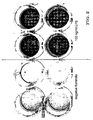
- FIG. 2 shows the results in negative control and at 100 ng / ml LPS on the inventive 3T3 NIH clone 4/5 TLR-4 / CD14 after thawing.
- SEAP activity converts the substrate BCIP in the detection medium into a deep blue, insoluble end product (indigo).
- a fast, simple detection system for LPS on the basis of cells stably transfected with TLR 4 / CD14 was developed, which can be operated without great expenditure on equipment and cell culture laboratory (sterile bench and CO 2 incubator, etc.). It is fast and easy to handle.
- FIG. 3 Figure 4 shows the induction of the NIH-3T3 clone 4 (5) TLR4 / CD14 SEAP assay system with 10 ⁇ g / ml to 100 pg / ml LPS.
- Substrate of the detection medium is BCIP.
- One negative control was not induced, another negative control was nonspecifically induced with ssRNA40.
- FIG. 4 shows the sensitivity detection of NIH-3T3 clone 4 (5) TLR4 / CD14 SEAP specific to 10 pg / ml LPS.
- FIG. 5 shows the sensitivity detection of NIH-3T3 clone 4 (5) TLR4 / CD14 SEAP specific to 1 pg / ml LPS.
- the sensitivity of the test system is about 1 to 2 pg / ml LPS.
- the aforementioned NIH-3T3 TLR-4 / CD14 SEAP test system was induced with high levels of nonspecific pyrogens (25 ⁇ g / ml ODN, PGN, poly IC) for which TLR-4 does not bind: ODN, PGN, poly IC are from TLR 9 , 2 and 3 but not recognized by TLR-4.
- FIG. 5 shows the result: Even with extremely high nonspecific pyrogen content no color change can be seen in the TLR-4 specific system; the TLR-4 test is specific.
- HEK blue 293 fibroblasts and other 293 fibroblasts were transfected with TLR-4 / CD14 SEAP and induced with 100 ng / ml LPS. All Further process parameters were selected as in inventive example 1.
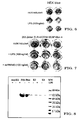
- FIGS. 6 and 7 show the results of the color test: Not only the induced cells but also the uninduced controls show a blue color change. With the HEK blue 293 and other 293 cells such as clone 4 (K4) no specific induction and thus no establishment of the test system is possible.
- K4 clone 4
- FIG. 8 shows the results of the SDS-PAGE / Western blot analysis of cell pellets after induction with 100 ng / ml LPS:
- the alkaline phosphatase is in the HEK293 and in other 293 cells (K2 and K4), in the uninduced control cells in the same amount as in the induced cells expressed; a specific detection of TLR activating agents, pyrogens, PAMPs is not possible with these cells.
- NIH 3T3 TLR4 CD14 SEAP P40 cells were at a density of 30,000 cells / because in 100 ul medium (DMEM 80mmol / l HEPES, 30% FCS and 5% DMSO) frozen in suspension at -80 ° C.
- 100 ul medium DMEM 80mmol / l HEPES, 30% FCS and 5% DMSO
- the cells were thawed by addition of 100 ul medium (10% FCS) at 37 ° C CO 2 -free.
- the medium (DMEM 0.5% FCS) was changed and the cells were induced in 100 ⁇ l with 30 ⁇ g / ml LPS or 30 ⁇ g / ml ssRNA33 (control).
- FIG. 11 shows the results: After 3 to 24 hours at the latest, the detection of the induced enzyme activity is clear. If detection medium is added directly to the well after induction time, a signal can be detected after 1 to 3 hours.
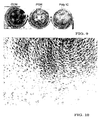
- NIH 3T3 TLR4 CD14 SEAP cells were seeded at a density of 30,000 cells / well in 100 ⁇ l of medium (30% FCS, 80 mmol / l HEPES). Adhesion was overnight at 37 ° C in a humid atmosphere without CO 2
- FIG. 10 shows the phase contrast uptake of the adherent cells in the well: The cells grow when cultivated in a 37 ° C oven in a HEPES buffered medium. The picture shows an intact cell monolayer.
- the cell line NIH-3T3 was transfected with TLR-5 and the reporter gene plasmid SEAP.
- the measures correspond to Example 1.
- NIH-3T3 clone TLR-5 are seeded at a density of 30,000 to 200,000 cells / well (24-well) in 500 ⁇ l / well in 0.5% FCS medium; induction is with 2 ⁇ g / ml flagellin; Detection by incubation with 300 ⁇ l / well detection medium with BCIP.
- FIG. 12 shows the results of the color test: There is a specific blue coloration of the induced cells; uninduced control cells show no blue coloration.
Landscapes
- Health & Medical Sciences (AREA)
- Life Sciences & Earth Sciences (AREA)
- Engineering & Computer Science (AREA)
- Chemical & Material Sciences (AREA)
- Biomedical Technology (AREA)
- Genetics & Genomics (AREA)
- Organic Chemistry (AREA)
- Molecular Biology (AREA)
- Biotechnology (AREA)
- Immunology (AREA)
- Zoology (AREA)
- Bioinformatics & Cheminformatics (AREA)
- Biochemistry (AREA)
- General Health & Medical Sciences (AREA)
- Cell Biology (AREA)
- Wood Science & Technology (AREA)
- Microbiology (AREA)
- Urology & Nephrology (AREA)
- Medicinal Chemistry (AREA)
- Hematology (AREA)
- General Engineering & Computer Science (AREA)
- Toxicology (AREA)
- Physics & Mathematics (AREA)
- Biophysics (AREA)
- Gastroenterology & Hepatology (AREA)
- Analytical Chemistry (AREA)
- General Physics & Mathematics (AREA)
- Pathology (AREA)
- Food Science & Technology (AREA)
- Proteomics, Peptides & Aminoacids (AREA)
- Tropical Medicine & Parasitology (AREA)
- Rheumatology (AREA)
- Plant Pathology (AREA)
- Measuring Or Testing Involving Enzymes Or Micro-Organisms (AREA)
- Investigating Or Analysing Biological Materials (AREA)
- Apparatus Associated With Microorganisms And Enzymes (AREA)
- Micro-Organisms Or Cultivation Processes Thereof (AREA)
Description
- Die Erfindung betrifft Verfahren, mittel und Kits zum qualitativen und quantitativen Nachweis und Identifikation von Erregern und Erregerspektren auf Basis von Endotoxinen und anderen Pyrogenen.
- Von großer Bedeutung für die Einleitung einer zielgerichteten Infektionstherapie, z. B. bei Sepsispatienten ist eine schnelle und sichere Identifikation der Erregerspektren in der klinischen Diagnostik in Krankenhäusern.
- Sepsis und Sepsis assoziierte Multiorganversagen sind weltweit die wichtigsten Letalitätsfaktoren und gehören zu den ungelösten Problemen der Medizin. Nach vorsichtigen Schätzungen sterben derzeit jährlich immer noch weltweit rund 500.000 Patienten an den Folgen einer "Blutvergiftung", das sind 1.400 pro Tag. Die jährliche Belastung des Gesundheitsbudgets durch die Behandlung von Patienten mit schwerer Sepsis wurde in den USA auf 17 Millionen Dollar geschätzt. Als Sepsis (Septikämie, Blutvergiftung) wird die Summe lebensbedrohlicher Krankheitssymptome und pathophysiologischer Veränderungen bezeichnet. Sie wird durch pathogene Keime und ihre Produkte verursacht, die aus einem Infektionsherd in die Blutbahn eindringen. Die darauf einsetzende Immunreaktion führt zur Bildung von endogenen Mediatoren (Zytokinen). Dies aktiviert die Entzündungskaskade und es kommt in Folge zu einer nicht mehr kontrolliert ablaufenden systemischen Entzündungsreaktion. Trotz intensivmedizinischer Maßnahmen ist die Prognose ernst; die Letalität beträgt um 50 %. Besonders ungünstig ist die Prognose bei spätem Therapiebeginn, nicht lokalisierbarem Infektionsherd oder nicht identifizierbarem Erreger.
- Sepsis auslösende Erreger sind meist Bakterien, vorwiegend gramnegative Bakterien wie E. coli, andere Enterobacterien, Klebsiella-, Proteus-, Enterobacter-Arten, Pseudomonas aeruginosa, Neisseria meningitidis und Bacteroides aber auch häufiger grampositive Bakterien wie Staphylococcus aureus, Streptococcus pneumoniae und andere Streptokokken; seltener Pilze, Viren oder Parasiten (Bakteriämie, Fungämie, Virämie, Parasitämie). Durch Freisetzung von so genannten mikrobiellen Strukturen (z.B. Endotoxine, Exotoxine, Superantigene) wird die Ausschüttung von endogenen Mediatoren, wie Interleukinen, Tumornekrosefaktoren, Histamin, Serotonin, Sauerstoffradikalen und Proteasen, stimuliert. Diese führen durch Aktivierung von Leukozyten und humoralen Abwehrsystemen zu den für den septischen Schock typischen Veränderungen. Die systemische Entzündung als Reaktion auf zirkulierende mikrobielle Antigene ist ein wesentliches Charakteristikum der Pathophysiologie von Sepsis und septischem Schock. Bei Kontakt der Zellen der unspezifischen Immunabwehr mit Lipopolysaccharid (LPS), Bestandteilen der bakteriellen Zellwand, Peptidoglykanen oder Lipoteichonsäure (LTA) wird die angeborene Immunität aktiviert, und es werden in der frühen Phase der Infektion von verschiedenen Immunzellen Zytokine sezerniert. Obwohl diese Zytokine eine wichtige Rolle in der Abwehrreaktion spielen, es werden beispielsweise aktivierte Neutrophile zum Entzündungsort gelockt, führt das Eintreten dieser Zytokine und bakterieller Substanzen in den Blutkreislauf zu einer Kette von ungünstigen pathophysiologischen Ereignissen. Der mit dieser Entzündungsreaktion einhergehende klinische Symptomkomplex wird als Systemic Inflammatory Response Syndrome (SIRS) bezeichnet.
- Bei Vorliegen einer septischen Erkrankung oder auch schon bei Verdacht auf eine solche Erkrankung muss eine Therapie frühzeitig erfolgen. Bislang gibt es keine Möglichkeit, das Erregerspektrum eines Sepsispatienten schnell und zuverlässig zu identifizieren. Die herkömmliche Diagnose der Sepsis besteht in einer meist mehrfachen Abnahme einer klinischen Probe: Blut- und Urinkultur, Sputum, Stuhl, Wundsekreten zur Erregeridentifizierung mit Resistenzbestimmung vor Beginn der Antibiotikatherapie. Die Wahrscheinlichkeit, mit den bisherigen Methoden einen Erregernachweis bei einer "Septikämie" zu führen liegt bei 30 bis 50%. Dies kann nur durch das Anlegen von mehreren Kulturen für mikrobiologische Untersuchungen, Keimanzüchtungsversuche aus einer venösen Blutprobe oder aus Urin, erreicht werden Die Probe wird in flüssiges Nährmedium verimpft und bebrütet. Dieses Verfahren kostet wertvolle Zeit, führt oft nicht zur Identifikation der Erreger, da es nur bei vitalen Erregern möglich ist: Wurde die Probe während einer Antibiotikatherapie entnommen, sind die Züchtungsversuche meist erfolglos. Es wird daher immer noch eine breit angelegte antibiotische, antimykotische, antivirale und/oder antiparasitäre Therapie angewandt. Pyrogene Stoffe der Erreger wie Zellwandbestandteile können mit dieser Methode nicht erfasst werden.
- Es besteht deshalb der Bedarf an einem schnellen und einfachen Testsystem, das den Nachweis und die Differenzierung des Sepsiserregers oder -erregerspektrums ermöglicht.
- Pyrogene sind fiebererzeugende Stoffe, so genannte pyrogene Substanzen, die zur Phagozytose befähigte Körperzellen (Immunzellen) zur Synthese von proinflammatorischen Interleukinen (vor allem IL-1 und IL-6) und Tumornekrosefaktor-a (TNF-a) anregen, die dann als "eigentliche Pyrogene" das Temperaturzentrum des Körpers so beeinflussen, dass es zu erhöhter Wärmeproduktion und verminderter Wärmeabgabe kommt. Die am stärksten wirksamen Pyrogene stammen von gramnegativen Bakterien. Bei den Pyrogenen handelt es sich nicht um eine einheitliche Substanzgruppe. Dazu zählen Zellwandbestandteile und Stoffwechselprodukte von Mikroorganismen (apathogene und pathogene Bakterien, Pilze und Viren) sowie Parasiten, z. B. Endotoxine, Exotoxine oder Supreantigene.
- Klinische Bedeutung haben Pyrogene vor allem bei Injektion bzw. Infusion pyrogenhaltiger Flüssigkeiten, wie Stabilisatorlösungen, bei Verwendung bakteriell verunreinigter Blutkonserven, nicht pyrogenfreier Injektionsspritzen, Infusionsgeräte usw. Fehlende Pyrogenfreiheit ist die Hauptursache für so genannte "Transfusionszwischenfälle", die mit hohem Fieber, Schock, Verbrauchskoagulopathie und akutem Nierenversagen einhergehen. Besonders sind heute zusätzliche Risikofaktoren, über die Pyrogene in den Körper gelangen können, wie zentralvenöse Katheter, langfristige Sondenernährung und Langzeitbeatmung hinzugekommen.
- Pyrogene sind meist hitzebeständige und dialysierbare Stoffe, z.B. Lipopolysaccharid-Protein-Lipid-Komplexe, LPS. Deshalb reichen übliche Verfahren zur Sterilisierung von Infusionslösungen, Instrumenten und Geräten, die für den Einsatz am menschlichen oder tierischen Körper gedacht sind, nicht aus, um diese von pyrogenen Substanzen zu befreien. Zusätzliche Reinigungsschritte sind erforderlich. Die Pyrogenfreiheit ist eine zwingende Voraussetzung für den Einsatz solcher Produkte am Körper. Weiter sollten alle Erzeugnisse, die in intensivem Kontakt mit dem menschlichen oder tierischen Organismus kommen, sei es weil sie in die Blutbahn appliziert werden, sei es weil sie lange im Körper verweilen, ausreichend pyrogenfrei sein.
- Das Spektrum der auftretenden pyrogenen Substanzen hängt vom Erreger oder Erregerspektrum ab. Bestimmte Erreger bilden erregertypische bzw. erregerspezifische Pyrogenmuster, so genannte "pathogen-associated microbial patterns" oder PAMPs. Anhand der Identifikation und Differenzierung der PAMPs könnte eine Zuordnung zu einem bestimmen Erreger oder Erregerspektrum erfolgen.
- Um pyrogene bzw. PAMPs in einer Probe nachzuweisen (Pyrogen-Test), stehen heute vor allem drei kommerziell verwertete Nachweismethoden oder Tests zur Verfügung. Ein bekannter Test ist der Kaninchen-Pyrogen-Test. Er beruht auf der "Fieberreaktion" der Tiere auf Pyrogene. Es handelt sich um einen Tierversuch, bei welchem den Kaninchen die Prüfsubstanz in die Ohrvene appliziert wird. Um eine Abwehrreaktion des tierischen Körpers gegen die Substanz nachzuweisen wird nach mehreren Stunden rektal Fieber gemessen. Diese Test ist zeit- und kostenintensiv und mit dem kalkulierten Leiden von Tieren verbunden. Endotoxine und Nicht-Endotoxin-Pyrogene können damit detektiert aber nicht identifiziert werden. Ein Test auf Viren ist nicht möglich. Eine Spezifizierung der PAMPs ist nicht möglich. Außerdem ist seine Übertragbarkeit auf den Menschen umstritten.
- Ein weiterer bekannter Test ist der "Limulus Amöbocyten Lysat Test" (LAL) (z.B. Fa. Cambrex Bioscience oder Fa. Charles River). Er beruht auf der Abwehrreaktion von Arthropoden gegen bestimmte als Pyrogene bekannte Substanzen. Beim LAL wird aus Blutzellen des Limulus polyphemus ein Proenzym gewonnen, welches über gramnegatives bakterielles Endotoxin in ein aktives Enzym umgesetzt wird. Durch eine Enzym-Substrat Umsetzung kann die Endotoxinmenge quantitativ, z.B. über Photometer, bestimmt werden. Dieses Verfahren ist sensitiver und besser standardisierbar als der bekannte Kaninchentest, aber es erfasst nur Endotoxine gramnegativer Organismen (z.B. Lipopolysaccharid, LPS; Nachweisgrenze: 3 pg/ml). Solche Endotoxine stellen nur einen geringen Teil der bekannten pyrogenen Stoffe dar. Andere Pyrogene bleiben unerkannt. In den letzten Jahren haben aber gerade gram-positive Erreger gegenüber den gram-negativen Bakterien zunehmend an Bedeutung gewonnen.
- Ein weiterer bekannter Test ist schließlich der Immun-Pyrogen-Test, z.B. "Endosafe - IPT" (Fa. Charles River). Er beruht auf der "Fieber-reaktion" humaner Zellen auf vorhandene Pyrogene. Es handelt sich um einen humanen Vollbluttest, bei welchem als Antwort auf einen pyrogenen Stoff aus vitalen Blutzellen das Zytokin IL-1 ausgeschüttet wird, das mittels ELISA quantitativ bestimmt werden kann (Nachweisgrenze: 20-50 pg/ml). Dieses System erfasst auch Pyrogene gram-positiver Erreger. Der Test ist jedoch mit noch größerem Zeit- und Arbeitsaufwand verbunden. Menschliches Vollblut muss bereitgestellt werden, welches potentiell humanpathogen ist. Eine Spezifikation der PAMPs ist nicht möglich.
- Die bekannten Tests sind zeitaufwändig und setzen ein apparativ gut ausgerüstetes Labor (ELISA-Test, Humanblutverarbeitung, Tierexperiment) voraus. Es besteht deshalb der Bedarf an einem schnell und einfach durchzuführenden Testsystem zum Nachweis von Pyrogenen. Es besteht außerdem der Bedarf an einem Testsystem zur Spezifizierung des Pyrogenmusters PAMP, um daraus Rückschlüsse auf den Erreger oder das Erregerspektrum ziehen zu können. Dies ist vorteilhaft für die Diagnose und Therapie von Infektionskrankheiten, bei denen das Auftreten von Pyrogenen eine Rolle spielt, allen voran die Sepsis.
- Weiter besteht Bedarf an verbesserten Tests auf pyrogene Rückstände an medizinischen Geräten, Spendergewebe, injizierbaren Arzneimitteln und Medizinprodukten wie Implantate oder Instrumente (Katheter, etc.). Auch in der Lebensmittelindustrie und Pharmaindustrie besteht der Bedarf an verbesserten Nachweisen von pyrogenen Substanzen und Keimen und deren Identifikation in Nahrungsmitteln, Nahrungsmittelbestandteilen, Roh- und Ausgangsstoffen für Nahrungs- oder Arzneimittel.
- Es ist bekannt, dass so genannte "Toll-like Rezeptoren" (TLR, TLRs) im Zusammenhang mit pathophysiologischen Vorgängen bei der Sepsis und ähnlichen Infektionskrankheiten, die mit dem Auftreten von Pyrogenen im Organismus einhergehenden, in Verbindung stehen. TLRs vermitteln die körperlichen Reaktionen auf Pyrogene. Bei einer mikrobiell ausgelösten Sepsis stimulieren bakterielle Bestandteile die Immunzellen des Wirtes über die TLRs.
- TLRs sind hoch konservierte Transmembranproteine mit leucinreichen extrazellulären Domänen und einer zytoplasmatischen Domäne aus ungefähr 200 Aminosäuren. Sie gehören aufgrund ihrer Homologie in der Zytoplasmadomäne zur Interleukin-1-Rezeptor/Toll-like-Rezeptor-Superfamilie. Die charakteristische zytoplasmatische TIR-Domäne ist für die Signalübertragung essentiell. Die Extrazellulärdomäne ist direkt an der Erkennung der unterschiedlichen pathogenen Molekülstrukturen beteiligt und unterscheidet sich stark von der des IL-1 Rezeptors. Während der Extrazellulärteil des IL-1 Rezeptors aus drei Immunglobulindomänen besteht, besitzen TLRs 18-26 LRR von je 24-29 Aminosäuren Länge. TLRs werden im Gegensatz zu dem aus Drosophila bekannten Protein "Toll" direkt von Fremdstrukturen aktiviert. Bis heute sind zehn verschiedene humane TLRs und 13 TLRs der Maus identifiziert worden. Sie werden auf verschiedenen Zelltypen des Immunsystems exprimiert, überwiegend auf Monozyten, Makrophagen, dendritischen Zellen sowie B- und T-Zellen. TLRs sind auf der Plasmamembran lokalisiert; TLR-3, TLR-7 und TLR-9 werden von Nukleinsäure-Motiven aktiviert und sind in intrazellulären Kompartimenten zu finden.
- TLR-2 ist essentiell für die Erkennung einer Vielzahl an PAMPs aus grampositiven Bakterien, einschließlich bakterieller Lipoproteine und Lipoteichonsäuren. TLR-3 ist in die Erkennung doppelsträngiger Virus-RNA involviert. TLR-4 wird überwiegend durch LPS aktiviert. TLR-5 detektiert bakterielles Flagellin. TLR-7 und TLR-8 erkennen synthetische kleine antivirale Moleküle und einzelsträngige RNA. TLR-9 wurde im Endoplasmatischen Retikulum (ER) nachgewiesen und wird nach Stimulation mit CpG-Motive enthaltener DNA, zum Beispiel CpG-Oligodeoxynucleotide, in die endosomalen/lysosomalen Kompartimente rekrutiert. CpG-Motive sind Bereiche innerhalb eines Nukleinsäure-Stranges, in denen die Bausteine Cytosin (C) und Guanin (G) unerwartet häufig vorkommen ('p' steht für eine Phosphatgruppe, die beide Bausteine ,C' und ,G' verbindet); solche CpG-Motive finden sich besonders häufig im Genom von Bakterien und Viren, nicht aber von Wirbeltieren.
- Antagonisten der Toll-like Rezeptoren finden zunehmend Einsatz in der Dermatologie z.B. zur Behandlung von virusinduzierten Papillomen. Es besteht der Bedarf an einem Testsystem zum Screenen neuer TLR Antagonisten.
- Das Konzept der Aktivierung des humanen Immunsystems steht im Interesse bei der Krebstherapie. Substanzen wie CPG 7909 (Fa. Coley Pharmaceutical Group) führen auf diese Weise immunmodulatorische Effekte herbei und können damit die Wirksamkeit von Chemotherapien verbessern. Es besteht der Bedarf an einem Testsystem zum Screenen neuer CpG-Motive (Oligodeoxynucleotide).
- Aus der
WO 2005/077408 sind NIH 3T3-Zellen bekannt, welche Toll-like Rezeptoren exprimieren und ein NF-κB-Reportersystem enthalten. DieWO 01/032877 JP 2004-357607 A - Der vorliegenden Erfindung liegt vor allem das technische Problem zugrunde, Verfahren und Mittel zum spezifischen Nachweis von Pyrogenen (spezifischer Pyrogentest) bereitzustellen. Damit verbunden besteht ein weiteres technisches Problem in der Bereitstellung von Verfahren und Mitteln zum spezifischen Nachweis von Erregern oder Erregerspektren bei Infektionen des menschlichen oder tierischen Körpers. Damit verbunden besteht ein weiteres technisches Problem in der Bereitstellung von Verfahren und Mitteln zum Screenen neuer TLR Antagonisten und/oder neuer CpG-Motive.
- Das technische Problem wird gelöst durch die Bereitstellung einer transgenen Zelle oder Zelllinie zum spezifischen Nachweis eines Pyrogens in einer Probe mit den kennzeichnenden Merkmalen nach Anspruch 1. Die Zelle liegt vorzugsweise adhärent vor. In einer Variante liegt die Zelle vorzugsweise in Suspension vor.
- Erfindungsgemäß weist die transgene Zelle oder Zelllinie im Genom (a) mindestens ein Gen oder Gene, die mindestens für einen humanen Toll-like Rezeptor (TLR) Typ 2 (TLR-2) und/oder den humanen TLR Typ 4 (TLR-4) kodieren, die die Zelle exprimiert, und (b) mindestens ein Reportergen, das unter der Expressionskontrolle eines durch NF-κB induzierbaren Promotors steht, auf. Bevorzugt weist die Zelle oder Zelllinie im Genom zusätzlich ein Gen auf, das für den CD14-Rezeptor kodiert. Die erfindungsgemäße Zelle oder Zellline ist die murinen Fibroblastenzelle vom Typ NIH-3T3. Bevorzugt werden die TLR, besonders zusammen mit dem Corezeptor CD14 (MD2), über Plasmide transfiziert.
- Die Erfindung sieht also vor, eine transgene Fibroblastenzelle NIH-3T3, bereitzustellen, die zumindest humanen TLR-2 oder humanen TLR-4 exprimiert und bevor zugt den CD14-Corezeptor co-exprimiert. Die Erfinder fanden überraschend, dass diese transgene Zelle in Kontakt mit Pyrogenen, die spezifisch den exprimierten TLR aktivieren, die vom Reportergen kodierte Enzymaktivität exprimiert, die beispielsweise durch Farbreaktion nachgewiesen und unter bestimmten Voraussetzungen quantifiziert werden kann. Es wird also eine zelluläres Testsystem zum Nachweis von Pyrogenen, PAMPs und anderen TLR aktivierenden Wirkstoffen bereitgestellt.
- Die Selektivität und die Sensitivität dieses Testsystems ist hoch. Die Sensitivität liegt bei etwa 1 bis 10 pg/ml LPS. Im Vergleich dazu beträgt die Sensitivität der herkömmlichen Pyrogentestsysteme etwa 3 bis 10 pg/ml (LAL) oder 20-50 pg/ml (IPT).
- Das erfindungsgemäße Testsystem kann ohne die apparative Ausstattung eines Zellkulturlabors wie CO2-Begasung etc. auskommen und ist damit für jeden Anwender auch ohne spezielle Laborausrüstung einfach anzuwenden.
- Das prinzipielle durch die erfindungsgemäße Lehre charakterisierte Testverfahren kann auf Zelllinien für alle TLRs (z. B. humane TLRs 1-10) erweitert werden, so das damit alle PAMPs selektiv erkannt und identifiziert werden können. So kann vorteilhafterweise ein einfaches und schnelles zelluläres Testsystem bereitgestellt werden, das einen spezifischen Nachweis eines oder mehrerer Pyrogene oder (pathogen-associated microbial patterns) PAMPs sowie deren Quantifizierung erlaubt. Ohne an die Theorie gebunden zu sein, induziert Aktivierung von TLRs Signaltransduktionswege, die mit Hilfe des Transkriptionsfaktors NF-κB zur Produktion verschiedener Zytokine führt. An der Signalkaskade sind eine Vielzahl an Proteinen involviert wie das MyD88 und IRAK1. Diese Signalkaskade führt über die Aktivierung des Transkriptionsfaktors NF-κB zur Induktion und Produktion proinflammatorischer Zytokine. Die Zytokine Tumornekrosefaktor (TNF), Interleukin-1 (IL-1) und Interleukin-6 (IL-6) gelten als die wichtigsten zentral und initial involvierten Mediatoren bei diesem Prozess. Nach der Aktivierung der TLRs kommt es zur Rekrutierung von Adaptormolekülen und zur Produktion proinflammatorischer Zytokine. Die Sekretion dieser Zytokine führt zu einer Stimulierung des Immunsystems und verteidigt gegen den eindringenden Mikroorganismus. Jedoch kann eine stark überschießende Produktion zur Sepsis bzw. zum septischen Schock führen. Im Zusammenhang mit der Diagnose der Sepsis sind vor allem die TLR-2 und TLR-4 bevorzugt. Während TLR-2 Bestandteile grampositiver Bakterien wie Peptidoglykane, Lipopeptide und LTA erkennt, ist TLR-4 der Rezeptor für LPS, dem Hauptbestandteil der Zellwand gramnegativer Bakterien. TLR-2 und TLR-4 stehen also bei grampositiver und gramnegativer Sepsis als Signal übertragende Rezeptoren im Mittelpunkt und sollen deshalb für die Differenzierung des Erregerspektrums bevorzugt herangezogen werden. Tabelle 1 zeigt die Spezifitäten der einzelnen humanen TLRs.
Tabelle 1: Ligand/Pyrogen Herkunft TLR-Typ Zellwandbestandteile (Peptidoglykan, Lipopeptide, Lipoteichonsäuren) Bakterien TLR 1 /TLR 2 (Heterodimer) Lipoproteine Bakterien TLR 2 Lipopeptide Mycoplasmen TLR 2 /TLR 6 (Heterodimer) Zymosan Hefen, Pilze TLR 2 /TLR 6 (Heterodimer) doppelsträngige RNA Viren TLR 3 Lipopolysaccharide (LPS) gramnegative Bakterien TLR 4, CD14 Heatshockprotein 60 (Hsp 60) Mensch/Pilze TLR 4 Flagellin Bakterien TLR 5 einzelsträngige RNA Viren TLR 7/TLR 8 (Heterodimer) unmethylierte CpG-Motive Bakterien, Viren TLR 9 - Durch die Identifikation der erregerspezifischen PAMPs ergibt sich die Möglichkeit einer schnellen Identifikation Sepsis auslösender Keime. Mit dem erfindungsgemäßen zellulären Testsystem können Sepsispatienten frühzeitig und zielgerichtet therapiert werden.
- In einer bevorzugten Variante ist vorgesehen, dass die transgene Zelle zumindest zwei verschiedene TLR co-exprimiert, so dass es zur Bildung von TLR-Heterodimeren kommt, die ihre eigene Spezifität besitzen (siehe Tabelle 1). Dazu weist die Zelle bevorzugt ein Gen oder Gene, kodierend für einen ersten Toll-like Rezeptor-Typ (TLR-Typ), und zusätzlich ein Gen oder Gene, kodierend für einen zweiten Toll-like Rezeptor-Typ (TLR-Typ), auf.
- Unter einem "Reportergen" wird ein oder mehrere Gene oder Genkonstrukte verstanden, die unter Kontrolle eines induzierbaren Promotors für Enzymaktivität kodieren, die im Wirtsorganismus nicht oder nur in unwesentlichem Maße konstitutiv exprimiert wird. Das Auftreten der kodierten Enzymaktivität zeigt die Induktion des Reportergenpromotors an. Vorzugsweise liegen Reportergen und indizierbarer Promotor auf einem Reportergenplasmid. Es ist vorgesehen, den Reportergenpromotor durch einen Transkriptionsfaktor zu induzieren, der, ohne an die Theorie gebunden zu sein, Bestandteil der TLR-induzierten intrazellulären Signalkaskade ist. Bevorzugt steht das erfindungsgemäß vorgesehene mindestens eine Reportergen unter der Kontrolle des Transkriptionsfaktors "nukleärer Faktor kappa-B" (NF-κB). Auf Aktivierung der TLR wird im Zytoplasma lokalisiertes gebundenes NF-κB freigesetzt und transloziert in den Zellkern. Ein bevorzugter NF-κB induzierbarer Promotor ist der Selektin oder ELAM-1 (endothelial cell leukocyte adhesion molecule-1) Promotor.
- Ein bevorzugtes Reportergen ist das SEAP (sezernierte alkalische Phosphatase), vorzugsweise unter Kontrolle des ELAM-1 Promotors, vorzugsweise in Form eines Reportergenplasmids. Ein weiteres bevorzugtes Reportergen ist das beta-Galactosidasegen lacZ, vorzugsweise unter Kontrolle des ELAM-1 Promotors, vorzugsweise in Form eines Reportergenplasmids. Ein weiteres bevorzugtes Reportergen ist Luciferasegen, vorzugsweise unter Kontrolle des ELAM-1 Promotors, vorzugsweise in Form eines Reportergenplasmids. Ein weiteres bevorzugtes Reportergen ist GFP (green fluorescent protein), vorzugsweise unter Kontrolle des ELAM-1 Promotors, vorzugsweise in Form eines Reportergenplasmids. Selbstverständlich kann jeder andere für den jeweiligen Anwendungszweck geeignete Promoter eingesetzt werden, der die Eigenschaft aufweist, durch eine über die Aktivierung oder Bindung des TLR ausgelöste Signalkaskade moduliert zu werden.
- Weitere TLR, die die erfindungsgemäße Zelle zusätzlich exprimieren kann, sind ausgewählt aus den zehn derzeit bekannten humanen TLRs. Es versteht sich, dass die Erfindung nicht auf die bekannten humanen TLRs beschränkt ist. Weitere noch zu benennende TLRs sind in die vorliegende Erfindung mit einbezogen. So ist ein erfindungsgemäßer Gegenstand auch eine transgene Zelle oder Zelllinie, die mindestens ein Gen einer bisher nicht näher bezeichneten TLR-Variante aufweist und diese TLR-Variante exprimiert.
- In einer bevorzugten Variante der Erfindung exprimiert die Zelle oder Zelllinie zusätzlich zumindest den humanen TLR Typ 1 (TLR-1). In einer weiteren bevorzugten Variante exprimiert die Zelle oder Zelllinie zusätzlich zumindest den humanen TLR Typ 3 (TLR-3). In einer weiteren bevorzugten Variante exprimiert die Zelle oder Zelllinie zusätzlich zumindest den humanen TLR Typ 5 (TLR-5). In einer weiteren bevorzugten Variante exprimiert die Zelle oder Zelllinie zusätzlich zumindest den humanen TLR Typ 6 (TLR-6). In einer weiteren bevorzugten Variante exprimiert die Zelle oder Zelllinie zusätzlich zumindest den humanen TLR Typ 7 (TLR-7). In einer weiteren bevorzugten Variante exprimiert die Zelle oder Zelllinie zusätzlich zumindest den humanen TLR Typ 8 (TLR-8). In einer weiteren bevorzugten Variante exprimiert die Zelle oder Zelllinie zusätzlich zumindest den humanen TLR Typ 9 (TLR-9). In einer weiteren bevorzugten Variante exprimiert die Zelle oder Zelllinie zusätzlich zumindest den humanen TLR Typ 10 (TLR-10). In einer bevorzugten Variante exprimiert die Zelle oder Zelllinie zumindest den heterodimeren Rezeptor aus humanem TLR Typ 1 (TLR-1) und humanem TLR Typ 2 (TLR-2). In einer weiteren bevorzugten Variante exprimiert die Zelle oder Zelllinie zusätzlich zumindest den heterodimeren Rezeptor aus humanem TLR Typ7 (TLR-7) und humanem TLR Typ 8 (TLR-8). In einer weiteren bevorzugten Variante exprimiert die Zelle oder Zelllinie zumindest den heterodimeren Rezeptor aus humanem TLR Typ 6 (TLR-6) und humanem TLR Typ 2 (TLR-2). Die Erfindung betrifft auch die Co-Expression weiterer TLR, ausgewählt aus der Gruppe bestehend aus TLR-1, TLR-3, TLR-5, TLR-6, TLR-7, TLR-8, TLR-9 und TLR-10. Bevorzugt betrifft die Erfindung also folgende Heterodimere: TLR-1/TLR-2; zusätzlich TLR1-TLR-3; TLR-1/TLR-4; zusätzlich TLR-1/TLR-5; zusätzlich TLR-1/TLR-6; zusätzlich TLR-1/TLR-7; zusätzlich TLR-1/TLR-8; zusätzlich TLR-1/TLR-9; zusätzlich TLR-1/TLR-10; TLR-2/TLR-3; TLR-2/TLR-4; TLR-2/TLR-5; TLR-2/TLR-6; TLR-2/TLR-7; TLR-2/TLR-8; TLR-2/TLR-9; TLR-2/TLR-10; TLR-3/TLR-4; zusätzlich TLR-3/TLR-5; zusätzlich TLR-3/TLR-6; zusätzlich TLR-3/TLR-7; zusätzlich TLR-3/TLR-8; zusätzlich TLR-3/TLR-9; zusätzlich TLR-3/TLR-10; TLR-4/TLR-5; TLR-4/TLR-6; TLR-4/TLR-7; TLR-4/TLR-8; TLR-4/TLR-9; TLR-4/TLR-10; zusätzlich TLR-5/TLR-6; zusätzlich TLR-5/TLR-7; zusätzlich TLR-5/TLR-8; zusätzlich TLR-5/TLR-9; zusätzlich TLR-5/TLR-10; zusätzlich TLR-6/TLR-7; zusätzlich TLR-6/TLR-8; zusätzlich TLR-6/TLR-9; zusätzlich TLR-6/TLR-10; zusätzlich TLR-7/TLR-8; zusätzlich TLR-7/TLR-9; zusätzlich TLR-7/TLR-10; zusätzlich TLR-8/TLR-9; zusätzlich TLR-8/TLR-10; zusätzlich TLR-9/TLR-10. Diese können zusätzlich jeweils allein oder in Kombination zumindest einem mit anderen TLR oder TLR-Heterodimer co-exprimiert werden.
- In einer bevorzugten Ausführung der Erfindung wird nicht nur die einzige erfindungsgemäße transgene Zelle oder Zelllinie bereitgestellt. Bevorzugt ist ein "Set" aus mindestens zwei verschiedenen erfindungsgemäßen Zelltypen, die jeweils unterschiedliche TLRs oder TLR-Heterodimere exprimieren. Besonders bevorzugt sind "Sets" aus drei, vier, fünf, sechs, sieben, acht, neun, zehn oder mehr verschiedenen erfindungsgemäßen Zelltypen, die jeweils unterschiedliche TLRs oder TLR-Heterodimere exprimieren. Ohne an die Theorie gebunden zu sein, binden einzelne Pyrogene einer Pyrogenpopulation jeweils spezifisch an ein oder wenige bestimmte TLRs und/oder TLR-Heterodimere. Auf diese Weise ist eine einfache Charakterisierung einzelner Pyrogene und/oder des Pyrogenspektrums einer Pro be möglich. Beispielsweise erlaubt ein Zelltyp, der das Heterodimer aus TLR-2 und TLR-6 exprimiert, den spezifischen Nachweis von Mycoplasma-Pyrogenen und Hefe-Pyrogenen. Beispielsweise erlaubt ein "Set" aus einem Zelltyp, der zusätzlich TLR-3 exprimiert, und einem Zelltyp, der zusätzlich TLR-9 exprimiert, den spezifischen Nachweis von Viren mit doppelsträngiger RNA.
- Ein Gegenstand der Erfindung ist deshalb auch ein Zellkulturgefäß, vorzugsweise eine Zellkulturplatte, Multiwellplatte, worin mindestens ein Zelltyp, bevorzugt mehrere verschiedene Zelltypen eingebracht, adhäriert, oder als Suspension inkubiert sind. Im einfachsten Fall liegen die Zellen an der Oberfläche des Zellkulturgefäßes, z.B. an Collagenfilm, adhäriert vor. Bevorzugt ist aber auch die Kultivierung in Suspension. Inkubation/Kultivierung auf oder in 3D-Biomatrices ist ebenfalls möglich. Weiter ist es möglich, jeweils verschiedene Zelltypen in adressierbaren Subkompartimentierungen eines Zellkulturträgers auf-/oder einzubringen. Die Erfindung sieht vor, die Zellen auf die Platten, Gefäße oder Wells, auszusäen und für die weitere Verwendung zu Lagern, vorzugsweise einzufrieren, zu kryokonservieren. So vorbereitete Platten, Gefäße oder Wells können dann bei Bedarf innerhalb kurzer Zeit für entsprechende Tests auf Pyrogene und andere TLR aktivierende oder modulierende Wirkstoffe (TLR-Antagonisten) eingesetzt werden. Im einfachsten Fall werden die Platten etc. mit den Zellen aufgetaut, mit der zu testenden Probe inkubiert. Die Reportergen vermittelte Enzymaktivität wird in an sich bekannter Weise nachgewiesen und zeigt in dem Zelltyp das Vorhandensein oder die Abwesenheit einer spezifischen Aktivierung des TLR durch die zu testende Substanz, Pyrogen oder PAMP an.
- Das Zellkulturgefäß wird bevorzugt in einem Kit bereitgestellt. Das Kit enthält die vorstehend charakterisierenden Zellen in einem vorstehend beschriebenen Zellkulturgefäß oder Assayträger und wird vorzugsweise im eingefrorenen Zustand vor allem zur sofortigen Durchführung des Tests bereitgestellt. Bei der Verwendung des Kits erübrigt es sich vorteilhafterweise, aufwändige Zellkulturbedingungen wie einen CO2-Brutschrank einzusetzen. Das Kit kann beispielsweise in einem einfachen Labor eines Krankenhauses mit Mitteln zur Detektion des Farbumschlags durchgeführt werden. Im einfachsten Fall genügt bereits der augenscheinlich erkennbare Farbumschlag die spezifische TLR-Aktivierung an. Aus dem Muster des Farbumschlags kann der Verwender des Kits auf das Pyrogen-spektrum und/oder den Erregertyp schließen.
- Ein erfindungsgemäßes Kit zum spezifischen Nachweis eines Pyrogens in einer Probe, enthält mindestens eine transgene Zelle nach einem der vorstehenden Ansprüche in einem Kulturgefäß und vorzugsweise Detektionsmedium, enthaltend zumindest ein Substrat für das von dem induzierbaren Reportergen kodierte Enzym. Bevorzugt ist ein Kit, das ein Zellkulturgefäß oder- platte mit mindestens zwei Kompartimenten oder Wells enthält, wobei in einem ersten Well mindestens eine erste transgene Zelle, exprimierend mindestens einen ersten TLR-Typ oder Heterodimer, und in einem zweiten Well ein von der ersten transgenen Zelle verschiedenen zweite transgene Zelle, exprimierend mindestens einen zweiten TLR-Typ oder Heterodimer, enthalten ist.
- Demgemäß sieht eine besonders bevorzugte Ausführung der Erfindung vor: Ein Kit, bestehend aus einem oder mehreren Zellkulturgefäßen mit einem Well, enthaltend die transgene Zelle nach Anspruch 1 und bevozugt einen ersten weiteren Well, enthaltend eine erste weitere transgene Zelle, vorzugsweise exprimierend zumindest den humanen TLR-1, einem zweiten weiteren Well, enthaltend eine zweite weitere transgene Zelle, vorzugsweise exprimierend zumindest den humanen TLR-3, bevorzugt einem dritten weiteren Well, enthaltend eine dritte weitere transgene Zelle, vorzugsweise exprimierend zumindest den humanen TLR-5, bevorzugt einem vierten weiteren Well, enthaltend eine vierte weitere transgene Zelle, vorzugsweise exprimierend zumindest den humanen TLR-6, bevorzugt einem fünften weiteren Well, enthaltend eine fünfte weitere transgene Zelle, vorzugsweise exprimierend zumindest den humanen TLR-7, bevorzugt einem sechsten weiteren Well, enthaltend eine sechste weitere transgene Zelle, vorzugsweise exprimierend zumindest den humanen TLR-8, bevorzugt einem siebten weiteren Well, enthaltend eine siebte weitere transgene Zelle, vorzugsweise exprimierend zumindest den humanen TLR-9, und bevorzugt einem achten weiteren Well, enthaltend eine achte weitere transgene Zelle, vorzugsweise exprimierend zumindest den humanen TLR-10, sowie bevorzugt Detektionsmedium.
- Ein weiterer Gegenstand der Erfindung ist auch ein Verfahren zum spezifischen Nachweis eines Pyrogens in einer Probe. Erfindungsgemäß umfasst das Verfahren zumindest die Schritte: Bereitstellen einer Probe, Bereitstellen mindestens einer erfindungsgemäßen transgenen Zelle oder Zelllinie, mindestens einen spezifischen TLR oder ein spezifisches TLR-Heterodimer exprimiert; Inkontaktbringen der Probe mit der Zelle, wodurch ein so genannter "Probe-Zelle-Komplex" entsteht, der besonders durch die Bindung von Probenbestanteilen an die Zelle charakterisiert ist; Inkubieren des Probe-Zelle-Komplexes zur Induktion der Enzymaktivität, vorzugsweise bei etwa 37 °C für etwa 3 bis etwa 24 Std. und Detektion oder Nachweis der von dem Reportergen induzierten Enzymaktivität, wobei die Enzymaktivität das Vorhandensein eines für den TLR-Typ oder TLR-Heterodimer der Zelle oder Zelllinie spezifischen Pyrogens oder agonistischen Wirkstoff anzeigt.
- Vorzugsweise findet die Detektion oder Nachweis der von dem Reportergen induzierten Enzymaktivität, durch Bereitstellen eines Detektionsmediums, enthaltend Substrat für das von dem induzierbaren Reportergen der Zelle kodierte Enzym, und durch Inkubation des induzierten Probe-Zelle-Komplexes im Detektionsmedium, vorzugsweise bei etwa 37 °C und vorzugsweise für etwa 30 bis etwa 240 min, statt, wobei die Enzymaktivität durch Nachweis des enzymatisch umgesetzten Substrats detektiert und bevorzugt quantifiziert wir. Die Quantifizierung des enzymatisch umgesetzten Substrats und damit der Enzymaktivität erlaubt Rückschlüsse auf die Aktivität und Konzentration des spezifischen Pyrogens oder TLR aktivierenden Wirkstoffs (TLR-Agonist; CpG-Motiv etc.).
- Bevorzugt ist die Enzymaktivität eine alkalische Phosphatase-Aktivität, die vorzugsweise durch die SEAP vermittelt wird. Alkalische Phosphatasen sind Enzyme, die im alkalischen Milieu die Hydrolyse von Phosphorsäure-Estern katalysieren. Als Substrat wird bevorzugt 5-bromo-4-chloro-Indoylphosphat (BCIP) eingesetzt. Die Detektion der Enzymaktivität erfolgt dabei durch blauen Farbumschlag und/oder blaues Präzipitat, ein tiefblau gefärbter, unlöslicher und leicht erkennbarer Niederschlag von Indigo.
- In einer alternativen Variante ist das Substrat p-Nitrophenylphosphat (pNPP) ist und die alkalische Phosphatase-Aktivität wird durch hydrolytische Spaltung des pNPP durch gelben Farbumschlag der Lösung angezeigt. Der gelbe Farbumschlag der Lösung wird vorzugsweise photometrisch detektiert und quantifiziert. Bevorzugt findet die photometrische Analyse bei etwa 405 nm statt. Aus der Extinktion lässt sich die Konzentration des Pyrogens oder TLR aktivierenden Wirkstoffs in der Probe bestimmen. Um Reportergene, die intrazellulär nachgewiesen werden, auch quantifizieren zu können, müssen die Zellen lysiert und der Farbstoff daraus freigesetzt werden. Ein direkter intrazellulärer Nachweis erfolgt durch Lösen des Farbstoffes in den Zellen über NaOH; dadurch sind intrazelluläre quantitative Messungen möglich. Selbstverständlich ist zur Quantifizierung auch eine densitometrische Auswertung (über Graustufen) möglich.
- In einer anderen bevorzugten Variante ist die Enzymaktivität eine beta-Galaktosidase-Aktivität und das Substrat vorzugsweise 5-bromo-4-chloro-3-indoyl-beta-D-Galaktopyranosid (X-Gal). Die Detektion der Enzymaktivität erfolgt durch blauen Farbumschlag und/oder blaues Präzipitat.
- In einer anderen bevorzugten Variante ist die Enzymaktivität eine Luciferase-Aktivität und das Substrat vorzugsweise Luciferin. In Gegenwart von gegebenenfalls zusätzlich zugegebenem ATP und Mg2+ wird die Enzymaktivität durch Lumineszenz angezeigt (Chemilumineszenzassay).
- Die Probe, die mittels des erfindungsgemäßen Verfahrens bzw. Testsystems analysiert werden kann, ist besonders eine klinische Probe aus einem menschlichen oder tierischen Körper. Vorzugsweise ist die Probe Blut, vorzugsweise Vollblut, beispielsweise im Falle der Sepsis. Weitere klinische Proben sind Blutserum, Blutplasma, Urin, Sputum, Stuhl, Gewebebiopsie, Bronchiallavage, ZNS-Liquor, Rückenmarksliquor, Lymphe, Synovialflüssigkeit und ähnliche, beispielsweise zur Typisierung von Infektionen Ein weiterer Gegenstand der Erfindung ist daher die Verwendung der transgenen Zelle zum spezifischen Nachweis eines Pyrogens in einer klinischen Probe, vorzugsweise nach dem erfindungsgemäßen Verfahren und/oder vorzugsweise unter Verwendung des erfindungsgemäßen Kits.
- Es hat sich überraschend gezeigt, dass die erfindungsgemäße transgene Zelle oder Zelllinie einem Testsystem eingesetzt werden kann, um Erzeugnisse auf Pyrogenfreiheit zu testen. Wird das Verfahren zur Prüfung auf Pyrogenfreiheit oder zur Bestimmung der Pyrogenkontamination eingesetzt, ist die Probe vorzugsweise ein Prüfstück (Specimen) eines medizinischen Instruments oder Medizinprodukts (MP) oder in vitro Diagnostikums (IVD) oder ein Arzneimittel, Arzneimittelbestandteir, Nahrungsmittel, Nahrungsmittelbestandteil oder Roh- oder Ausgangsstoff für Nahrungsmittel oder Arzneimittel. Darunter zählen chirurgische Instrumente, Kanülen, Spritzen, Infusionsbestecke, Blutbeutel und Transfusionsbestecke, Dialysebestecke und -apparaturen, Wundauflagen, Nahtmaterial, Implantate, Prothesen, Katheder, Infusionslösungen, Spüllösungen und ähnliche. Weiter ist vorgesehen, dass die Probe ausgewählt ist aus Transplantaten, Geweben und Zellen menschlichen Ursprungs und Produkten dieses Inhalts oder dieses Ursprungs sowie Transplantaten, Geweben, Zellen tierischen Ursprungs und Produkten dieses Inhalts oder dieses Ursprungs. Weiter ist vorgesehen, dass die Probe ausgewählt ist aus kosmetischen Artikeln und Kosmetik. Ein weiterer Gegenstand der Erfindung ist daher die Verwendung der transgenen Zelle zum Testen von solchen Erzeugnissen auf Pyrogenfreiheit, vorzugsweise nach dem erfindungsgemäßen Verfahren und/oder vorzugsweise unter Verwendung des erfindungsgemäßen Kits.
- Weiter hat sich überraschend gezeigt, dass die erfindungsgemäße transgene Zelle oder Zelllinie einem Testsystem eingesetzt werden kann, um Wirkstoffe mit der Eigenschaft eines TLR-Antagonisten in einer Gruppe von Kandidatensubstanzen aufzufinden und ihre Wirksamkeit zu quantifizieren. Ein weiterer Gegenstand der Erfindung ist daher auch die Verwendung der transgenen Zelle zum Screenen von Wirkstoffen mit der Eigenschaft eines TLR Antagonisten, vorzugsweise nach dem erfindungsgemäßen Verfahren und/oder vorzugsweise unter Verwendung des erfindungsgemäßen Kits.
- Schließlich hat sich überraschend gezeigt, dass die erfindungsgemäße transgene Zelle oder Zelllinie einem Testsystem eingesetzt werden kann; um Oligonucleotiden mit CpG-Motiven, die bestimmte TLR, besonders TLR-9, aktivieren, einer Gruppe von Kandidatensubstanzen aufzufinden und ihre Wirksamkeit zu quantifizieren. Ein weiterer Gegenstand der Erfindung ist daher schließlich auch Verwendung der transgenen Zelle zum Screenen von Oligonucleotiden mit CpG-Motiven, vorzugsweise nach dem erfindungsgemäßen Verfahren und/oder vorzugsweise unter Verwendung des erfindungsgemäßen Kits.
- Es zeigen:
-
Figur 1 : Schematische Darstellung des erfindungsgemäßen Testverfahrens (am Beispiel von TLR4/CD14 (MD2) mit dem Liganden LPS) -
Figur 2 : NIH-3T3 Klon 4/5 TLR-4/CD14 mit SEAP-Reporterplasmid nach dem Auftauen und nach Zugabe von 100 ng/ml LPS (4-well rechte Seite) und Detektionsmedium mit BCIP-Substrat -
Figur 3 : Induktion des NIH-3T3 TLR-4/CD14 Testsystems mit 10 pg/ml bis 100 pg/ml LPS; Substrat: BCIP; Negativkontrolle wurde nicht induziert oder mit ssRNA40 induziert. -
Figur 4 : Sensitivitätsnachweis des NIH-3T3 Klon 4/5 TLR-4/CD14; LPS spezifisch bis 10 pg/ml, 2 Stunden nach Zugabe des Detektionsmediums: photometrische Analyse -
Figur 5 : Sensitivitätsnachweis des NIH-3T3 Klon 4(5) TLR-4/CD14; LPS ist spezifisch bis 1 pg/ml nachweisbar, 2 Stunden nach Zugabe des Detektionsmediums: photometrische Analyse -
Figuren 6 und 7 : Vergleichsexperiment: TLR-4 Test mit HEK blue 293 Fibroblasten und andere 293 Fibroblasten, transfiziert mit TLR-4/CD14 SEAP, induziert mit 100 ng/ml LPS; sowohl die induzierte, als auch die nicht induzierte Kontrolle zeigt einen blauen Farbumschlag; ein spezifischer Nachweis ist mit diesen Zellen nicht möglich. -
Figur 8 : Vergleichsexperiment: TLR-4 Test mit HEK blue 293 Fibroblasten und anderen 293 Fibroblasten, transfiziert mit TLR-4/CD14 SEAP, induziert mit 100 ng/ml LPS: SDS-PAGE/Western Blot Analyse der Zellpellets, primäre Antikörper: Anti-SEAP sowie Anti-Maus POD konjugierte sekundäre Antikörper, Marker: SeeBlue® Plus2 pre-stained, Standard: alkalische Phosphatase (SAEP); in HEK293 und anderen 293 Zellen (K2 und K4) wird sowohl in den induzierten Zellen, als auch in den nicht induzierten Kontrollzellen in gleicher Menge exprimiert; ein spezifischer Nachweis ist mit diesen Zellen nicht möglich -
Figur 9 : Spezifität des Testsystems: NIH-3T3 TLR-4/CD14 Testsystem wurde mit unspezifischen Pyrogenen induziert (jeweils 25 µg/ml); ODN (Ligand für TLR-9), PGN (Ligand für TLR-2), Poly IC; es findet kein Farbumschlag statt, der Test reagiert spezifisch. -
Figur 10 : Phasenkontrastaufnahme des NIH-3T3 TLR-4/CD14 Klon 4/5: 30.000 Zellen/ Well ausgesät, 100 µl in 30% FCS, 80 mmol/l HEPES und 5% DMSO, eingefroren für 3 Tage bis 4 Wochen bei 80 °C; Adhäsion über Nacht 37°C, humide Atmosphäre ohne CO2 -
Figur 11 : Erfindungsgemäßer TLR-4 Test, durchgeführt an eingefrorenen und wieder aufgetauten NIH-3T3 TLR-4/CD14 SEAP P40, induziert mit 100 pg/ml LPS und 100 pg/ml ssRNA40, Induktion nach 24 Std., Detektion nach 3 Std.; eine spezifische Blaufärbung der induzierten Zellen ist zu beobachten. -
Figur 12 : Erfindungsgemäßer TLR-5 Test, durchgeführt an NIH-3T3 Klone TLR-5 SEAP, induziert mit 2 µg/ml Flagellin; eine spezifi-sche Blaufärbung der induzierten Zellen ist zu beobachten. -
Figur 13 : Vergleichsexperiment: TLR-5 Test mit HELA-Zellen, transfiziert mit TLR-5 SEAP, induziert mit 2 µg/ml Flagellin; sowohl die induzierten Zellen, als auch die nicht induzierte Kontrolle zeigen intensive Blaufärbung. Mit dieser Zelllinie ist keine spezifische Induktion möglich. - Die Zelllinie NIH-3T3 wurde mit einem TLR4/CD14-Komplex sowie dem Reportergenplasmid SEAP/ELAM-1 transfiziert.
- Die Endotoxin (LPS)-vermittelte Induktion des TLR-4 führt nach einer Signalkaskade zu der Aktivierung des Transkriptionsfaktors NF-κB.
- Die Expression des Reportergens SEAP wird von einem NF-κB induzierbaren ELAM-1 Promotor kontrolliert. Damit erfolgt auf eine Induktion des TLR-4 durch das Endotoxin Lipopolysaccharid, LPS die NF-κB Aktivierung und damit spezifisch die Sezernierung der SEAP.
- NIH-3T3 TLR-4/CD14 Klon 4/5 P35 werden in einer Dichte von 30.000 bis 200.000 Zellen/weil (24-well) (entsprechende Zellzahl für andere well-Volumina) in 500 µl/well ausgesät in 0,5% FCS Medium o/n zum Adhärieren;
- Am folgenden Tag erfolgt die Induktion mit LPS o/n (+ Negativkontrolle: ssRNA40 kann nicht von TLR-4/CD14 detektiert werden)
- An folgenden Tag erfolgt die Detektion durch Inkubation mit 300 µl/well Detektionsmedium, welches den induzierten Zellen direkt zugegeben wird: In den induzierten Zellen setzt SEAP-Aktivität das Substrat BCIP im Detektionsmedium in ein tiefblaues, unlösliches Endprodukt (Indigo) um. Alternativ setzt in den induzierten Zellen SEAP-Aktivität das Substrat pNPP im Detektionsmedium in einen hellgelben löslichen Farbkomplex um, der bei etwa 405 nm photometrisch bestimmt wird. Die photometrische Analyse erfolgt etwa 2 Stunden nach Zugabe des Detektionsmediums
- In einer Variante werden transfizierten Zelllinien im entsprechenden Assayformat, hier: eine Zellkultur-Well-Platte (Multiwellplate), in entsprechender Dichte (200.000 Zellen/well in je 500 µl (bei 24-well)) eingefroren.
- Der Anwender bekommt den "Assay-Kit" mit 8-10 verschiedenen Zelllinien im entsprechenden Medium bereits in der Testplatte auf Trockeneis gekühlt geliefert. Der Assay kann der Verpackung entnommen und direkt in einem 37°C Schrank inkubiert werden.
- Nach dem Auftauen des Kits erfolgt die Zugabe von DMEM Kulturmedium zur Adhäsion der Zellen über Nacht. Ein Medium mit HEPES-Puffer ermöglicht eine Inkubation des Zell-Tests in einem Wärmeschrank d.h. ohne CO2-Begasung. Induziert wird testweise durch Zugabe von 100 ng/ml LPS. Die Detektion wird nach 24 Stunden durch Zusatz von 300 µl/well BCIP-Detektionsmedium durchgeführt.
-
Figur 2 zeigt die Ergebnisse bei negativer Kontrolle und bei 100 ng/ml LPS an dem erfindungsgemäßen 3T3 NIH Klon 4/5 TLR-4/CD14 nach dem Auftauen. In den induzierten Zellen setzt SEAP-Aktivität das Substrat BCIP im Detektionsmedium in ein tiefblaues, unlösliches Endprodukt (Indigo) um. - Es wurde ein schnelles, einfaches, ohne großen apparativen Aufwand und Zellkulturlabor (Sterilbank und CO2-Brutschrank etc.) zu betreibendes Nachweissystem für LPS auf der Basis von Zellen, die mit TLR 4/CD14 stabil transfiziert wurden, entwickelt. Es ist schnell durchführbar und einfach in der Handhabung.
-
Figur 3 zeigt die Induktion des NIH-3T3 Klon 4(5) TLR4/CD14 SEAP Testsystems mit 10 µg/ml bis 100 pg/ml LPS. Substrat des Detektionsmediums ist BCIP. Eine Negativkontrolle wurde nicht induziert, eine andere Negativkontrolle wurde mit ssRNA40 unspezifisch induziert. -
Figur 4 zeigt den Sensitivitätsnachweis des NIH-3T3 Klon 4(5) TLR4/CD14 SEAP spezifisch bis 10 pg/ml LPS.Figur 5 zeigt den Sensitivitätsnachweis des NIH-3T3 Klon 4(5) TLR4/CD14 SEAP spezifisch bis 1 pg/ml LPS. - Die Sensitivität des Testsystems liegt bei etwa 1 bis 2 pg/ml LPS.
- Das vorgenannte NIH-3T3 TLR-4/CD14 SEAP Testsystem wurde mit hohen Mengen unspezifischen Pyrogenen (jeweils 25 µg/ml ODN, PGN, Poly IC) induziert für die TLR-4 nicht bindet: ODN, PGN, Poly IC werden von TLR 9, 2 und 3 nicht aber von TLR-4 erkannt.
Figur 5 zeigt das Ergebnis: Auch bei extrem hohem unspezifischem Pyrogenanteil ist kein Farbumschlag im TLR-4 spezifischen System zu sehen; der TLR-4 Test ist spezifisch. - HEK blue 293 Fibroblasten und andere 293 Fibroblasten wurden mit TLR-4/CD14 SEAP transfiziert und mit 100 ng/ml LPS induziert. Alle weiteren Verfahrensparameter wurden wie im erfindungsgemäßen Beispiel 1 gewählt.
- Zusätzlich wurde eine Western-Blot Analyse der Genexpression in an sich bekannter Weise durchgeführt: Erstantikörper: Anti-SEAP; konjugierter Zweitantikörper: Anti-Maus POD; Marker: SeeBlue® Plus2; Pre-Stained Standard.
- Die
Figuren 6 und 7 zeigen die Ergebnisse des Farbtests: Nicht nur die induzierten Zellen, sondern auch die nicht induzierten Kontrollen zeigen einen blauen Farbumschlag. Mit den HEK blue 293 und anderen 293 Zellen wie Klon 4(K4) ist keine spezifische Induktion und damit keine Etablierung des Testsystems möglich. - Die
Figur 8 zeigt die Ergebnisse der SDS-PAGE/Western Blot Analyse der Zellpellets nach Induktion mit 100 ng/ml LPS: Die Alkalische Phosphatase wird in den HEK293 und in anderen 293 Zellen (K2 und K4), in den nicht induzierten Kontrollzellen in gleicher Menge wie in den induzierten Zellen exprimiert; ein spezifischer Nachweis von TLR aktivierenden Wirkstoffen, Pyrogenen, PAMPs ist mit diesen Zellen nicht möglich. - Auf einer Multiwellplate (96-well) wurden NIH 3T3 TLR4 CD14 SEAP P40 Zellen in einer Dichte von 30.000 Zellen/weil in 100 µl Medium (DMEM 80mmol/l HEPES, 30% FCS und 5% DMSO) in Suspension bei -80°C eingefroren.
- Nach 72 Std. bis 4 Wochen bei -80 °C wurden die Zellen durch Zugabe von 100 µl Medium (10% FCS) bei 37°C CO2-frei aufgetaut.
- Nach 24 Std. Adhäsion wurde auf Medium (DMEM 0,5% FCS) gewechselt und die Zellen in 100 µl mit 30 pg/ml LPS oder 30 pg/ml ssRNA33 (Kontrolle) induziert.
- Nach 24 Std. Induktion wurde ein Medienwechsel auf Detektionsmedium durchgeführt. Alternativ wird 100 µl/well Detektionsmedium nach Induktionszeit ins Well direkt zugegeben.
-
Figur 11 zeigt die Ergebnisse: Nach spätestens 3 bis 24 Std. ist die Detektion der induzierten Enzymaktivität eindeutig. Wird Detektionsmediums nach Induktionszeit direkt ins Well gegeben, ist nach 1 bis 3 Std. ist ein Signal nachweisbar. - Auf einer Multiwellplate wurden NIH 3T3 TLR4 CD14 SEAP Zellen in einer Dichte von 30.000 Zellen/well in 100 µl Medium (30% FCS, 80 mmol/l HEPES) ausgesät. Die Adhäsion erfolgte über Nacht bei 37°C in humider Atmosphäre ohne CO2
-
Figur 10 zeigt die Phasenkontrastaufnahme der adhärierten Zellen im Well: Die Zellen wachsen bei einer Kultivierung im 37°C Wärmeschrank in einem HEPES gepufferten Medium. Das Bild zeigt einen intakten Zellmonolayer. - Die Zelllinie NIH-3T3 wurde mit TLR-5 sowie dem Reportergenplasmid SEAP transfiziert. Die Maßnahmen entsprechen Beispiel 1.
- NIH-3T3 Klon TLR-5 werden in einer Dichte von 30.000 bis 200.000 Zellen/well (24-well) in 500 µl/well in 0,5% FCS Medium ausgesät; die Induktion erfolgt mit 2 µg/ml Flagellin; die Detektion durch Inkubation mit 300 µl/well Detektionsmedium mit BCIP.
-
Figur 12 zeigt die Ergebnisse des Farbtests: Es tritt eine spezifische Blaufärbung der induzierten Zellen auf; nicht-induzierte Kontrollzellen zeigen keine Blaufärbung.
Claims (32)
- Transgene Zelle zum spezifischen Nachweis eines Pyrogens in einer Probe, enthaltend im Genom:a) ein Gen oder Gene, kodierend für mindestens einen humanen Toll-like Rezeptor (TLR), zumindest für humanen TLR-2 und/oder humanen TLR-4, den die Zelle exprimiert, undb) mindestens ein Reportergen, das unter der Expressionskontrolle eines durch NF-κB induzierbaren Promotors steht,wobei die Zelle eine murine Fibroblastenzelle vom Typ NIH-3T3 ist.
- Zelle nach einem der vorstehenden Ansprüche, wobei das Reportergen eine sezernierte alkalische Phosphatase (SEAP) kodiert.
- Zelle nach einem der vorstehenden Ansprüche, wobei das Reportergen eine beta-Galactosidase kodiert.
- Zelle nach einem der vorstehenden Ansprüche, wobei das Reportergen eine Luciferase kodiert.
- Zelle nach einem der vorstehenden Ansprüche, wobei das Reportergen GFP kodiert.
- Zelle nach einem der vorstehenden Ansprüche, wobei der induzierbare Promotor der Promotor für Selektin (endothelial cell leukocyte adhesion molecule; ELAM-1) ist.
- Zelle nach einem der vorstehenden Ansprüche, die zusätzlich den Corezeptor Typ CD14 (MD2) exprimiert.
- Kit zum spezifischen Nachweis eines Pyrogens in einer Probe, enthaltend: Kulturgefäß mit mindestens einer transgenen Zelle nach einem der vorstehenden Ansprüche.
- Kit nach Anspruch 8, enthaltend: Detektionsmedium, enthaltend Substrat für das von dem induzierbaren Reportergen kodierte Enzym.
- Kit nach Anspruch 8 oder 9, enthaltend: Zellkulturgefäß oderplatte mit mindestens zwei Kompartimenten oder Wells, wobei in einem ersten Well die mindestens eine transgene Zelle und in einem zweiten Well eine von der transgenen Zelle verschiedene andere transgene Zelle, exprimierend mindestens einen anderen TLR-Typ, enthalten ist.
- Verfahren zum spezifischen Nachweis eines Pyrogens in einer Probe, umfassend die Schritte:a) Bereitstellen der Probe und mindestens einer transgenen Zelle nach einem der Ansprüche 1 bis 7;b) Inkontaktbringen der Probe mit der Zelle;c) Inkubieren des Probe-Zelle-Komplexes zur Induktion; undd) Detektion der von dem induzierten Reportergen vermittelten Enzymaktivität,wobei die Detektion der Enzymaktivität das Vorhandensein eines dafür spezifischen Pyrogens anzeigt.
- Verfahren nach Anspruch 11, wobei Schritt d) die Schritte umfasst:d1) Bereitstellen eines Detektionsmediums, enthaltend Substrat für das von dem induzierbaren Reportergen der Zelle kodierte Enzym; undd2) Inkubieren des induzierten Probe-Zelle-Komplexes im Detektionsmedium zur Detektion der von dem induzierten Reportergen vermittelten Enzymaktivität.
- Verfahren nach Anspruch 11 oder 12, wobei die Enzymaktivität eine alkalische Phosphatase-Aktivität ist.
- Verfahren nach Anspruch 13, wobei das Substrat 5-bromo-4-chloro-Indoylphosphat (BCIP) ist und die Detektion durch blauen Farbumschlag und/oder blaues Präzipitat angezeigt wird.
- Verfahren nach Anspruch 14, wobei das Substrat p-Nitrophenylphosphat (pNPP) ist und die Detektion durch gelben Farbumschlag der Lösung angezeigt wird.
- Verfahren nach Anspruch 15, wobei der gelben Farbumschlag der Lösung photometrisch quantifiziert wird.
- Verfahren nach Anspruch 11 oder 12, wobei die Enzymaktivität eine beta-Galaktosidase-Aktivität ist.
- Verfahren nach Anspruch 17, wobei das Substrat 5-bromo-4-chloro-3-indoyl-beta-D-Galaktopyranosid (X-Gal) ist und die Detektion durch blauen Farbumschlag und/oder blaues Präzipitat angezeigt wird.
- Verfahren nach Anspruch 11 oder 12, wobei die Enzymaktivität eine Luciferase-Aktivität ist.
- Verfahren nach Anspruch 19, wobei das Substrat Luciferin ist, gegebenenfalls zusätzlich mit ATP und Mg2+, und die Detektion durch Lumineszenz angezeigt wird.
- Verfahren nach Anspruch 11 oder 12, wobei die Enzymaktivität GFP ist.
- Verfahren nach einem der Ansprüche 11 bis 21, wobei die Probe eine klinische Probe aus einem menschlichen oder tierischen Körper ist.
- Verfahren nach Anspruch 22, wobei die Probe Blut ist.
- Verfahren nach einem der Ansprüche 11 bis 21, wobei die Probe ein Prüfstück eines medizinischen Instruments oder Medizinprodukts ist.
- Verfahren nach einem der Ansprüche 11 bis 21, wobei die Probe ein Arzneimittel, Arzneimittelbestandteil, Nahrungsmittel, Nahrungsmittelbestandteil oder Roh- oder Ausgangsstoff für Nahrungsmittel oder Arzneimitteln ist.
- Verfahren nach einem der Ansprüche 11 bis 25, wobei in Schritt c) die Inkubation des Probe-Zell-Komplexes zur Induktion bei etwa 37 °C für mindestens etwa 1 Std. und maximal etwa 24 Std. erfolgt.
- Verwendung der transgenen Zelle nach einem der Ansprüche 1 bis 7 zum spezifischen Nachweis eines Pyrogens in einer klinischen Probe.
- Verwendung der transgenen Zelle nach einem der Ansprüche 1 bis 7 zum Testen von Erzeugnissen auf Pyrogenfreiheit.
- Verwendung der transgenen Zelle nach einem der Ansprüche 1 bis 7 zum Screenen von Wirkstoffen mit der Eigenschaft eines Antagonisten für einen humanen TLR.
- Verwendung der transgenen Zelle nach einem der Ansprüche 1 bis 7 zum Screenen von Oligonucleotiden mit CpG-Motiven.
- Verwendung nach einem der Ansprüche 27 bis 30, wobei das Kit nach einem der Ansprüche 8 bis 10 eingesetzt wird.
- Verwendung nach einem der Ansprüche 27 bis 31, wobei das Verfahren nach einem der Ansprüche 11 bis 26 durchgeführt wird.
Applications Claiming Priority (2)
| Application Number | Priority Date | Filing Date | Title |
|---|---|---|---|
| DE102006031483A DE102006031483B4 (de) | 2006-07-07 | 2006-07-07 | Zellulärer Pyrogentest |
| PCT/EP2007/005946 WO2008003489A1 (de) | 2006-07-07 | 2007-07-05 | Zellulärer pyrogentest mittels toll-like rezeptor |
Publications (2)
| Publication Number | Publication Date |
|---|---|
| EP2041172A1 EP2041172A1 (de) | 2009-04-01 |
| EP2041172B1 true EP2041172B1 (de) | 2013-11-27 |
Family
ID=38566914
Family Applications (1)
| Application Number | Title | Priority Date | Filing Date |
|---|---|---|---|
| EP07765068.7A Active EP2041172B1 (de) | 2006-07-07 | 2007-07-05 | Zellulärer pyrogentest mittels toll-like rezeptor |
Country Status (7)
| Country | Link |
|---|---|
| US (1) | US20090253134A1 (de) |
| EP (1) | EP2041172B1 (de) |
| JP (1) | JP5661280B2 (de) |
| KR (1) | KR20090039733A (de) |
| CA (1) | CA2656884A1 (de) |
| DE (1) | DE102006031483B4 (de) |
| WO (1) | WO2008003489A1 (de) |
Families Citing this family (13)
| Publication number | Priority date | Publication date | Assignee | Title |
|---|---|---|---|---|
| EP2471926A3 (de) | 2010-12-30 | 2012-07-11 | Intervet International BV | Immunstimulierende Oligodeoxynukleotide |
| EP2690950B1 (de) * | 2011-03-29 | 2017-01-04 | Dynavax Technologies Corporation | Transgene tlr8-tiere |
| CA2831003C (fr) | 2011-04-08 | 2021-06-01 | Roquette Freres | Methodes de detection de contaminants dans des solutions contenants des polymeres de glucose |
| CA2834440A1 (en) * | 2011-05-26 | 2012-11-29 | Intervet International B.V. | Immunostimulatory oligodeoxynucleotides |
| EP2714907B1 (de) * | 2011-05-26 | 2016-06-15 | Intervet International B.V. | Immunstimulierende oligodeoxynukleotide |
| KR102156616B1 (ko) * | 2012-09-26 | 2020-09-16 | 쿠크 바이오텍 인코포레이티드 | 의학적 장치 디자인, 제조 및 시험 시스템 |
| DE102014223430B4 (de) | 2014-11-17 | 2022-03-03 | Fraunhofer-Gesellschaft zur Förderung der angewandten Forschung e.V. | Kompetitives Immunassay-Testsystem zum Nachweis eines Pyrogens |
| EP3072891A1 (de) | 2015-03-24 | 2016-09-28 | Fraunhofer-Gesellschaft zur Förderung der angewandten Forschung e.V. | Neue Toll-ähnliche Rezeptor-9-Antagonisten |
| JP2016208851A (ja) * | 2015-04-30 | 2016-12-15 | 国立大学法人東北大学 | Tlr刺激物質の検出方法 |
| CN106148286B (zh) * | 2016-06-29 | 2019-10-29 | 牛刚 | 一种用于检测热原的细胞模型的构建方法和细胞模型及热原检测试剂盒 |
| US11099189B2 (en) | 2017-10-17 | 2021-08-24 | Board Of Regents, The University Of Texas System | Limulus amoebocyte lysate assay and method of same |
| CN111484980A (zh) * | 2020-03-18 | 2020-08-04 | 上海市食品药品检验所 | 一种单克隆细胞株及其构建方法和在热原测定中的应用 |
| EP4692331A1 (de) | 2023-03-30 | 2026-02-11 | Hoshi University | Zellen, verfahren zum nachweis einer pyrogenen substanz in einer probe und kit zur verwendung beim nachweis einer pyrogenen substanz |
Family Cites Families (7)
| Publication number | Priority date | Publication date | Assignee | Title |
|---|---|---|---|---|
| DE60041452D1 (de) | 1999-11-02 | 2009-03-12 | Novartis Vaccines & Diagnostic | CpG REZEPTOR (CpG-R) UND DARAUF BEZOGENE METHODEN |
| US20030232055A1 (en) * | 2000-07-31 | 2003-12-18 | Ruslan Medzhitov | Innate immune system-directed vaccines |
| WO2004053057A2 (en) * | 2002-12-11 | 2004-06-24 | 3M Innovative Properties Company | Gene expression systems and recombinant cell lines |
| JP2004357607A (ja) * | 2003-06-05 | 2004-12-24 | Japan Science & Technology Agency | エンドトキシン認識に関わる新規な分子及びそれをコードするポリヌクレオチド |
| CA2555253A1 (en) * | 2004-02-06 | 2005-08-25 | Yale University | Compositions of pamps and listeria monocytogenes and methods of use |
| BRPI0613515A2 (pt) * | 2005-07-11 | 2011-01-11 | Cbio Ltd | imunomodulação induzida por chaperonina 10 |
| EP1977252B1 (de) * | 2005-12-22 | 2012-12-05 | Baxter International Inc. | Verbesserter monozytenaktivierungstest mit besserer fähigkeit zum nachweis pyrogener nicht-endotoxin-kontaminanten in medizinischen produkten |
-
2006
- 2006-07-07 DE DE102006031483A patent/DE102006031483B4/de not_active Expired - Fee Related
-
2007
- 2007-07-05 WO PCT/EP2007/005946 patent/WO2008003489A1/de not_active Ceased
- 2007-07-05 JP JP2009518758A patent/JP5661280B2/ja not_active Expired - Fee Related
- 2007-07-05 KR KR1020097001520A patent/KR20090039733A/ko not_active Ceased
- 2007-07-05 CA CA002656884A patent/CA2656884A1/en not_active Abandoned
- 2007-07-05 EP EP07765068.7A patent/EP2041172B1/de active Active
- 2007-07-05 US US12/307,711 patent/US20090253134A1/en not_active Abandoned
Also Published As
| Publication number | Publication date |
|---|---|
| WO2008003489A8 (de) | 2008-05-02 |
| JP5661280B2 (ja) | 2015-01-28 |
| KR20090039733A (ko) | 2009-04-22 |
| US20090253134A1 (en) | 2009-10-08 |
| EP2041172A1 (de) | 2009-04-01 |
| JP2009542236A (ja) | 2009-12-03 |
| CA2656884A1 (en) | 2008-01-10 |
| WO2008003489A1 (de) | 2008-01-10 |
| DE102006031483A1 (de) | 2008-01-10 |
| DE102006031483B4 (de) | 2009-12-24 |
Similar Documents
| Publication | Publication Date | Title |
|---|---|---|
| EP2041172A1 (de) | Zellulärer pyrogentest mittels toll-like rezeptor | |
| DE69501161T2 (de) | Verfahren zum nachweis und/oder zur bestimmung und/oder zur isolierung von apoptotischen zellen in oder aus einer probe | |
| JP2015051000A (ja) | 炎症の予防または軽減のために、細胞表面受容体を調節する方法 | |
| EP2279264A1 (de) | Verfahren zur charakterisierung der biologischen aktivität von helminth-eiern, nämlich von trichuris eiern | |
| Lodeiro et al. | Early interactions of Bradyrhizobium japonicum and soybean roots: specificity in the process of adsorption | |
| DE102006062398A1 (de) | Verfahren zur Erkennung und/oder Charakterisierung zellulärer Aktivitätsmuster, Verwendung von Toll-like-Rezeptor-Liganden (TLR-Liganden) und ein Kit | |
| Hao et al. | LPS exacerbates TRPV4‐mediated itch through the intracellular TLR4‐PI3K signalling | |
| DE10235967B4 (de) | Methode zum Identifizieren von Substanzen mit antimikrobieller Wirkung | |
| DE19505056C1 (de) | In vitro Kultivierung von pleomorphen Trypanosomenstämmen | |
| DE10361243B4 (de) | Untersuchungsverfahren zur Phagozytose | |
| DE69719726T2 (de) | Verfahren zur Detektion von Leukämie | |
| WO2008049607A1 (de) | Zellkultursystem, verfahren zu seiner herstellung sowie seine verwendung in der präklinischen untersuchung | |
| DE102017101853B3 (de) | System oder Test und Verfahren zur Bestimmung des Vorliegens von Bakterien insbesondere bei der bovinen Mastitis | |
| WO2005033331A1 (de) | Verfahren zur identifizierung präbiotisch wirksamer substanzen | |
| JP2023138462A (ja) | 4-デオキシ-l-エリスロ-5-ヘキソセウロース・ウロン酸の新規用途 | |
| EP1922545A1 (de) | Funktioneller in vitro immunassay | |
| AT504367A4 (de) | Verfahren zur messung der biologischen aktivität von chemoattraktanten | |
| Kasmark | TLR4 expression on equine B lymphocytes: a clue to LPS sensitivity? | |
| WO2003033529A2 (de) | Tr4, tr4-aktivatoren, tr4-inhibitoren oder tr4-assoziierten molekülen zur behandlung von leukämischen erkrankungen | |
| Parton | Confocal microscopy analysis of the roles of intracellular ph in the regulation of polarised growth of Dryopteris protonemata | |
| Feldotto et al. | Understanding the mechanisms behind the neuroprotective effects of omega-3 PUFAs and their metabolites (SPMs) related to neuroinflammation and Alzheimer’s disease | |
| DE102015101168A1 (de) | Kontrollpräparat für mikrobiologische Fluoreszenz-in-Situ-Hybridisierungsverfahren | |
| DE10153584A1 (de) | Verfahren zur Indentifizierung Tumor-spezifischer Antigene auf Krebszellen | |
| EP3409783A1 (de) | Erfindung betreffend detektion und quantifizierung von colistin-resistenz bei gram-negativen bakterien | |
| DE10247430A1 (de) | Verfahren zur Bestimmung des Gehalts an Endotoxinen in Flüssigkeiten |
Legal Events
| Date | Code | Title | Description |
|---|---|---|---|
| PUAI | Public reference made under article 153(3) epc to a published international application that has entered the european phase |
Free format text: ORIGINAL CODE: 0009012 |
|
| 17P | Request for examination filed |
Effective date: 20090209 |
|
| AK | Designated contracting states |
Kind code of ref document: A1 Designated state(s): AT BE BG CH CY CZ DE DK EE ES FI FR GB GR HU IE IS IT LI LT LU LV MC MT NL PL PT RO SE SI SK TR |
|
| AX | Request for extension of the european patent |
Extension state: AL BA HR MK RS |
|
| RIN1 | Information on inventor provided before grant (corrected) |
Inventor name: BURGER-KENTISCHER, ANKE Inventor name: FINKELMEIER, DORIS Inventor name: BRUNNER, HERWIG Inventor name: GEIGER, GEORG |
|
| RIN1 | Information on inventor provided before grant (corrected) |
Inventor name: BRUNNER, HERWIG Inventor name: FINKELMEIER, DORIS Inventor name: GEIGER, GEORG Inventor name: BURGER-KENTISCHER, ANKE |
|
| 17Q | First examination report despatched |
Effective date: 20090813 |
|
| DAX | Request for extension of the european patent (deleted) | ||
| GRAP | Despatch of communication of intention to grant a patent |
Free format text: ORIGINAL CODE: EPIDOSNIGR1 |
|
| GRAP | Despatch of communication of intention to grant a patent |
Free format text: ORIGINAL CODE: EPIDOSNIGR1 |
|
| INTG | Intention to grant announced |
Effective date: 20130626 |
|
| GRAS | Grant fee paid |
Free format text: ORIGINAL CODE: EPIDOSNIGR3 |
|
| GRAA | (expected) grant |
Free format text: ORIGINAL CODE: 0009210 |
|
| AK | Designated contracting states |
Kind code of ref document: B1 Designated state(s): AT BE BG CH CY CZ DE DK EE ES FI FR GB GR HU IE IS IT LI LT LU LV MC MT NL PL PT RO SE SI SK TR |
|
| REG | Reference to a national code |
Ref country code: GB Ref legal event code: FG4D Free format text: NOT ENGLISH |
|
| REG | Reference to a national code |
Ref country code: CH Ref legal event code: EP |
|
| REG | Reference to a national code |
Ref country code: AT Ref legal event code: REF Ref document number: 642678 Country of ref document: AT Kind code of ref document: T Effective date: 20131215 |
|
| REG | Reference to a national code |
Ref country code: IE Ref legal event code: FG4D Free format text: LANGUAGE OF EP DOCUMENT: GERMAN |
|
| REG | Reference to a national code |
Ref country code: DE Ref legal event code: R096 Ref document number: 502007012538 Country of ref document: DE Effective date: 20140123 |
|
| REG | Reference to a national code |
Ref country code: NL Ref legal event code: VDEP Effective date: 20131127 |
|
| REG | Reference to a national code |
Ref country code: LT Ref legal event code: MG4D |
|
| PG25 | Lapsed in a contracting state [announced via postgrant information from national office to epo] |
Ref country code: NL Free format text: LAPSE BECAUSE OF FAILURE TO SUBMIT A TRANSLATION OF THE DESCRIPTION OR TO PAY THE FEE WITHIN THE PRESCRIBED TIME-LIMIT Effective date: 20131127 Ref country code: LT Free format text: LAPSE BECAUSE OF FAILURE TO SUBMIT A TRANSLATION OF THE DESCRIPTION OR TO PAY THE FEE WITHIN THE PRESCRIBED TIME-LIMIT Effective date: 20131127 Ref country code: FI Free format text: LAPSE BECAUSE OF FAILURE TO SUBMIT A TRANSLATION OF THE DESCRIPTION OR TO PAY THE FEE WITHIN THE PRESCRIBED TIME-LIMIT Effective date: 20131127 Ref country code: IS Free format text: LAPSE BECAUSE OF FAILURE TO SUBMIT A TRANSLATION OF THE DESCRIPTION OR TO PAY THE FEE WITHIN THE PRESCRIBED TIME-LIMIT Effective date: 20140327 Ref country code: SE Free format text: LAPSE BECAUSE OF FAILURE TO SUBMIT A TRANSLATION OF THE DESCRIPTION OR TO PAY THE FEE WITHIN THE PRESCRIBED TIME-LIMIT Effective date: 20131127 |
|
| PG25 | Lapsed in a contracting state [announced via postgrant information from national office to epo] |
Ref country code: CY Free format text: LAPSE BECAUSE OF FAILURE TO SUBMIT A TRANSLATION OF THE DESCRIPTION OR TO PAY THE FEE WITHIN THE PRESCRIBED TIME-LIMIT Effective date: 20131127 Ref country code: LV Free format text: LAPSE BECAUSE OF FAILURE TO SUBMIT A TRANSLATION OF THE DESCRIPTION OR TO PAY THE FEE WITHIN THE PRESCRIBED TIME-LIMIT Effective date: 20131127 Ref country code: ES Free format text: LAPSE BECAUSE OF FAILURE TO SUBMIT A TRANSLATION OF THE DESCRIPTION OR TO PAY THE FEE WITHIN THE PRESCRIBED TIME-LIMIT Effective date: 20131127 |
|
| PG25 | Lapsed in a contracting state [announced via postgrant information from national office to epo] |
Ref country code: PT Free format text: LAPSE BECAUSE OF FAILURE TO SUBMIT A TRANSLATION OF THE DESCRIPTION OR TO PAY THE FEE WITHIN THE PRESCRIBED TIME-LIMIT Effective date: 20140327 |
|
| PG25 | Lapsed in a contracting state [announced via postgrant information from national office to epo] |
Ref country code: EE Free format text: LAPSE BECAUSE OF FAILURE TO SUBMIT A TRANSLATION OF THE DESCRIPTION OR TO PAY THE FEE WITHIN THE PRESCRIBED TIME-LIMIT Effective date: 20131127 |
|
| REG | Reference to a national code |
Ref country code: DE Ref legal event code: R097 Ref document number: 502007012538 Country of ref document: DE |
|
| PG25 | Lapsed in a contracting state [announced via postgrant information from national office to epo] |
Ref country code: CZ Free format text: LAPSE BECAUSE OF FAILURE TO SUBMIT A TRANSLATION OF THE DESCRIPTION OR TO PAY THE FEE WITHIN THE PRESCRIBED TIME-LIMIT Effective date: 20131127 Ref country code: RO Free format text: LAPSE BECAUSE OF FAILURE TO SUBMIT A TRANSLATION OF THE DESCRIPTION OR TO PAY THE FEE WITHIN THE PRESCRIBED TIME-LIMIT Effective date: 20131127 Ref country code: PL Free format text: LAPSE BECAUSE OF FAILURE TO SUBMIT A TRANSLATION OF THE DESCRIPTION OR TO PAY THE FEE WITHIN THE PRESCRIBED TIME-LIMIT Effective date: 20131127 Ref country code: SK Free format text: LAPSE BECAUSE OF FAILURE TO SUBMIT A TRANSLATION OF THE DESCRIPTION OR TO PAY THE FEE WITHIN THE PRESCRIBED TIME-LIMIT Effective date: 20131127 |
|
| PG25 | Lapsed in a contracting state [announced via postgrant information from national office to epo] |
Ref country code: DK Free format text: LAPSE BECAUSE OF FAILURE TO SUBMIT A TRANSLATION OF THE DESCRIPTION OR TO PAY THE FEE WITHIN THE PRESCRIBED TIME-LIMIT Effective date: 20131127 |
|
| PLBE | No opposition filed within time limit |
Free format text: ORIGINAL CODE: 0009261 |
|
| STAA | Information on the status of an ep patent application or granted ep patent |
Free format text: STATUS: NO OPPOSITION FILED WITHIN TIME LIMIT |
|
| 26N | No opposition filed |
Effective date: 20140828 |
|
| REG | Reference to a national code |
Ref country code: DE Ref legal event code: R097 Ref document number: 502007012538 Country of ref document: DE Effective date: 20140828 |
|
| PG25 | Lapsed in a contracting state [announced via postgrant information from national office to epo] |
Ref country code: LU Free format text: LAPSE BECAUSE OF FAILURE TO SUBMIT A TRANSLATION OF THE DESCRIPTION OR TO PAY THE FEE WITHIN THE PRESCRIBED TIME-LIMIT Effective date: 20140705 Ref country code: SI Free format text: LAPSE BECAUSE OF FAILURE TO SUBMIT A TRANSLATION OF THE DESCRIPTION OR TO PAY THE FEE WITHIN THE PRESCRIBED TIME-LIMIT Effective date: 20131127 |
|
| REG | Reference to a national code |
Ref country code: CH Ref legal event code: PL |
|
| REG | Reference to a national code |
Ref country code: IE Ref legal event code: MM4A |
|
| PG25 | Lapsed in a contracting state [announced via postgrant information from national office to epo] |
Ref country code: CH Free format text: LAPSE BECAUSE OF NON-PAYMENT OF DUE FEES Effective date: 20140731 Ref country code: IT Free format text: LAPSE BECAUSE OF FAILURE TO SUBMIT A TRANSLATION OF THE DESCRIPTION OR TO PAY THE FEE WITHIN THE PRESCRIBED TIME-LIMIT Effective date: 20131127 Ref country code: LI Free format text: LAPSE BECAUSE OF NON-PAYMENT OF DUE FEES Effective date: 20140731 |
|
| PG25 | Lapsed in a contracting state [announced via postgrant information from national office to epo] |
Ref country code: IE Free format text: LAPSE BECAUSE OF NON-PAYMENT OF DUE FEES Effective date: 20140705 |
|
| REG | Reference to a national code |
Ref country code: AT Ref legal event code: MM01 Ref document number: 642678 Country of ref document: AT Kind code of ref document: T Effective date: 20140705 |
|
| PG25 | Lapsed in a contracting state [announced via postgrant information from national office to epo] |
Ref country code: AT Free format text: LAPSE BECAUSE OF NON-PAYMENT OF DUE FEES Effective date: 20140705 |
|
| PG25 | Lapsed in a contracting state [announced via postgrant information from national office to epo] |
Ref country code: MC Free format text: LAPSE BECAUSE OF FAILURE TO SUBMIT A TRANSLATION OF THE DESCRIPTION OR TO PAY THE FEE WITHIN THE PRESCRIBED TIME-LIMIT Effective date: 20131127 |
|
| PG25 | Lapsed in a contracting state [announced via postgrant information from national office to epo] |
Ref country code: BG Free format text: LAPSE BECAUSE OF FAILURE TO SUBMIT A TRANSLATION OF THE DESCRIPTION OR TO PAY THE FEE WITHIN THE PRESCRIBED TIME-LIMIT Effective date: 20131127 |
|
| PG25 | Lapsed in a contracting state [announced via postgrant information from national office to epo] |
Ref country code: MT Free format text: LAPSE BECAUSE OF FAILURE TO SUBMIT A TRANSLATION OF THE DESCRIPTION OR TO PAY THE FEE WITHIN THE PRESCRIBED TIME-LIMIT Effective date: 20131127 Ref country code: GR Free format text: LAPSE BECAUSE OF FAILURE TO SUBMIT A TRANSLATION OF THE DESCRIPTION OR TO PAY THE FEE WITHIN THE PRESCRIBED TIME-LIMIT Effective date: 20140228 |
|
| REG | Reference to a national code |
Ref country code: FR Ref legal event code: PLFP Year of fee payment: 10 |
|
| PG25 | Lapsed in a contracting state [announced via postgrant information from national office to epo] |
Ref country code: HU Free format text: LAPSE BECAUSE OF FAILURE TO SUBMIT A TRANSLATION OF THE DESCRIPTION OR TO PAY THE FEE WITHIN THE PRESCRIBED TIME-LIMIT; INVALID AB INITIO Effective date: 20070705 Ref country code: TR Free format text: LAPSE BECAUSE OF FAILURE TO SUBMIT A TRANSLATION OF THE DESCRIPTION OR TO PAY THE FEE WITHIN THE PRESCRIBED TIME-LIMIT Effective date: 20131127 Ref country code: BE Free format text: LAPSE BECAUSE OF FAILURE TO SUBMIT A TRANSLATION OF THE DESCRIPTION OR TO PAY THE FEE WITHIN THE PRESCRIBED TIME-LIMIT Effective date: 20140731 |
|
| REG | Reference to a national code |
Ref country code: FR Ref legal event code: PLFP Year of fee payment: 11 |
|
| REG | Reference to a national code |
Ref country code: FR Ref legal event code: PLFP Year of fee payment: 12 |
|
| P01 | Opt-out of the competence of the unified patent court (upc) registered |
Effective date: 20230524 |
|
| PGFP | Annual fee paid to national office [announced via postgrant information from national office to epo] |
Ref country code: DE Payment date: 20250722 Year of fee payment: 19 |
|
| PGFP | Annual fee paid to national office [announced via postgrant information from national office to epo] |
Ref country code: GB Payment date: 20250724 Year of fee payment: 19 |
|
| PGFP | Annual fee paid to national office [announced via postgrant information from national office to epo] |
Ref country code: FR Payment date: 20250723 Year of fee payment: 19 |