EP2014773B1 - Verfahren zur bestimmung der zellschälung, verfahren zum schälen kultivierter zellen, vorrichtung zur bestimmung der zellschälung und zellkulturautomat - Google Patents
Verfahren zur bestimmung der zellschälung, verfahren zum schälen kultivierter zellen, vorrichtung zur bestimmung der zellschälung und zellkulturautomat Download PDFInfo
- Publication number
- EP2014773B1 EP2014773B1 EP07741467A EP07741467A EP2014773B1 EP 2014773 B1 EP2014773 B1 EP 2014773B1 EP 07741467 A EP07741467 A EP 07741467A EP 07741467 A EP07741467 A EP 07741467A EP 2014773 B1 EP2014773 B1 EP 2014773B1
- Authority
- EP
- European Patent Office
- Prior art keywords
- cell
- area ratio
- detachment
- culture vessel
- image
- Prior art date
- Legal status (The legal status is an assumption and is not a legal conclusion. Google has not performed a legal analysis and makes no representation as to the accuracy of the status listed.)
- Not-in-force
Links
Images

Classifications
-
- G—PHYSICS
- G01—MEASURING; TESTING
- G01N—INVESTIGATING OR ANALYSING MATERIALS BY DETERMINING THEIR CHEMICAL OR PHYSICAL PROPERTIES
- G01N33/00—Investigating or analysing materials by specific methods not covered by groups G01N1/00 - G01N31/00
- G01N33/48—Biological material, e.g. blood, urine; Haemocytometers
- G01N33/50—Chemical analysis of biological material, e.g. blood, urine; Testing involving biospecific ligand binding methods; Immunological testing
- G01N33/5005—Chemical analysis of biological material, e.g. blood, urine; Testing involving biospecific ligand binding methods; Immunological testing involving human or animal cells
-
- C—CHEMISTRY; METALLURGY
- C12—BIOCHEMISTRY; BEER; SPIRITS; WINE; VINEGAR; MICROBIOLOGY; ENZYMOLOGY; MUTATION OR GENETIC ENGINEERING
- C12M—APPARATUS FOR ENZYMOLOGY OR MICROBIOLOGY; APPARATUS FOR CULTURING MICROORGANISMS FOR PRODUCING BIOMASS, FOR GROWING CELLS OR FOR OBTAINING FERMENTATION OR METABOLIC PRODUCTS, i.e. BIOREACTORS OR FERMENTERS
- C12M33/00—Means for introduction, transport, positioning, extraction, harvesting, peeling or sampling of biological material in or from the apparatus
-
- C—CHEMISTRY; METALLURGY
- C12—BIOCHEMISTRY; BEER; SPIRITS; WINE; VINEGAR; MICROBIOLOGY; ENZYMOLOGY; MUTATION OR GENETIC ENGINEERING
- C12M—APPARATUS FOR ENZYMOLOGY OR MICROBIOLOGY; APPARATUS FOR CULTURING MICROORGANISMS FOR PRODUCING BIOMASS, FOR GROWING CELLS OR FOR OBTAINING FERMENTATION OR METABOLIC PRODUCTS, i.e. BIOREACTORS OR FERMENTERS
- C12M41/00—Means for regulation, monitoring, measurement or control, e.g. flow regulation
- C12M41/46—Means for regulation, monitoring, measurement or control, e.g. flow regulation of cellular or enzymatic activity or functionality, e.g. cell viability
Definitions
- the present invention relates to a method for evaluating cell detachment, a method of detaching a cultured cell, an apparatus for evaluating cell detachment and an automated cell culture apparatus. More particularly, the invention relates to: a method for evaluating cell detachment in order to determine, in detachment of a cultured cell from the culture vessel after cell cultivation, as to whether the cultured cell was satisfactorily detached from the culture vessel or not; a method of detaching a cultured cell utilizing the same; an apparatus for evaluating cell detachment for carrying out the aforementioned method for evaluating cell detachment; and an automated cell culture apparatus in which the apparatus is used.
- regenerative medicine in which a cell or a tissue of skin, cartilage, bone, blood vessel, organ or the like in human body is removed and cultured, and thereafter used in a treatment of the same person or other person has been developed.
- the practical application of this technique has been initiated in part.
- a small amount of cells collected from a human body are cultured ex vivo, and the cell culture is conducted using a culture vessel such as a petri dish via several times of passage operations.
- the cultured cells attached to the bottom face of the culture vessel are detached using a detachment solution containing, for example, trypsin or the like, and a part thereof is transferred to another culture vessel including a fresh medium.
- the present invention was made in order to solve the problems in the aforementioned prior arts, and an object of the present invention is to provide: a novel method for evaluating cell detachment which can be used in passage operation and the like for culture of an adhesive cell; a method of detaching a cultured cell using the evaluation method; an apparatus for evaluating cell detachment for carrying out the aforementioned method for evaluating cell detachment; and an automated cell culture apparatus in which the apparatus is used.
- the present invention provides a method for evaluating cell detachment in which cell detachment from a culture vessel is evaluated, the method comprising the steps of:
- the method of detaching cultured cells of the present invention is characterized by including the steps of: placing a detachment solution into a culture vessel for allowing the cultured cell to be detached from the culture vessel; evaluating the cell detachment from the culture vessel by the aforementioned method for evaluating cell detachment; and placing a detachment stop solution into the culture vessel.
- the apparatus for evaluating cell detachment of the present invention for use in carrying out the aforementioned method for evaluating cell detachment is characterized by including a vibration exciter which allows the culture liquid in the culture vessel to turn into its flowing state; a device for taking an image for obtaining the first image and the second image; and a cell detachment evaluation means for evaluating the cell detachment from the culture vessel by determining the common area ratio C based on the cell area ratio A and the cell area ratio B, and evaluating the cell detachment from the culture vessel based on the cell area ratio A, the cell area ratio B and the common area ratio C.
- the automated cell culture apparatus of the present invention is characterized by including the apparatus for evaluating cell detachment, and an operation robot for carrying the culture vessel.
- an apparatus for evaluating cell detachment and the method of detaching cultured cells of the present invention evaluation of detachment of a cultured cell without human intervention is enabled, and construction of an apparatus for evaluating cell detachment and an automated cell culture apparatus is enabled.
- variation of the evaluation results of the cell detachment depending on the subjectivity of individual operators is obviated, thereby enabling stable evaluation at a certain level.
- an apparatus for evaluating cell detachment and automated cell culture apparatus is provided which enables to obtain constantly specified cultured cells.
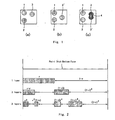
- Fig. 1 schematically illustrates a first image and a second image obtained by imaging at different time points in a flowable culture liquid. First, in a static state or a flowing state of the culture liquid, the first image shown in Fig. 1 (a) is taken, and subsequently, the second image shown in Fig.
- 1 (b) is taken after a lapse of a predetermined time (for example, after 0.1 sec to 1 sec) in a state in which the culture liquid flows.
- Comparison of the first image and the second image can lead to an evaluation that the cell 1 and cell 2 are attached cells which are attached to the culture vessel since the positions of the cell 1 and the cell 2 are unchanged.
- the position of cell 3 in the first image is migrated to the position of cell 3' in the second image, thereby capable of evaluating as a detached cell which was detached from the culture vessel. Therefore, when there are a large number of cells found at different positions between the first image and the second image, an evaluation can be made that the cell detachment has proceeded.
- the position of the center of gravity is determined for each cell, and an evaluation can be made it is an attached cell when the positions of the center of gravity are the same between the first image and the second image, while it is a floating cell when the positions of the center of gravity are different. Additionally, when the proportion of the floating cell accounting for the entire cells exceeds a predetermined proportion, an evaluation can be made that the cell detachment is completed.
- cell detachment can be also evaluated by means of the cell area ratio in the first image and the second image taken as described above.
- a specific method for evaluating cell detachment based on the cell area ratio is explained.
- Fig. 2 illustrates the method for evaluating cell detachment in terms of probability when the overlap of the detached cells is considered.
- the "area ratio" referred to herein means the value derived by dividing the area of, for example, a section where the cell is either present or absent on the culture vessel such as a petri dish or the like by the area of the bottom of the culture vessel.
- this area ratio may be supposed to be a value derived by dividing the area of a section where the cell is present or a section where the cell is absent in the image by the area of the entire face of the obtained image.
- total area of the floating cell refers to sum total of the area occupied by the floating cells on the bottom face of the culture vessel, and in the case in which the floating cells multiplly overlap, it should be a value derived by multiple estimation of the areas.
- total area ratio of the floating cell is a value derived by dividing the total area of the floating cell by the area of the bottom of the culture vessel.
- total area of the floating cell refers to sum total of the area occupied by the floating cells on the obtained image, and in the case in which the floating cells multiplly overlap, it should be a value derived by multiple integration of the areas.
- total area ratio of the floating cell is a value derived by dividing the total area of the floating cell by the entire area of the obtained image.
- projected area of the floating cell refers to the area determined when the region where the floating cells are present is projected on the bottom face of the culture vessel, and also in the case in which the floating cells multiplly overlap, it should be a value derived by estimation assuming as one cell.
- projected area ratio of the floating cell is a value derived by dividing the projected area of the floating cell by the area of the bottom face of the culture vessel.
- projected area of the floating cell refers to the area determined when the region where the floating cells are present is projected on the image face, and also in the case in which the floating cells multiplly overlap, it should be a value derived by estimation assuming as one cell.
- projected area ratio of the floating cell is a value derived by dividing the projected area of the floating cell by the entire area of the obtained image.
- the entire area ratio of the bottom face of the petri dish is 1 according to the aforementioned definition.
- probability of the presence of the floating cell in a layer among overlapping n layers is defined as r: sum total of the area ratio of the section where any cell is not present through to the layer; sum total of the projected area ratio of the cells through to the layer; and total area ratio of the cells through to the layer may be determined for each layer as presented in Table 1.
- t s - s 2 / 4 Therefore, for example, t is 0.750 when s is 1; t is 0.438 when s is 0.5; and t is 0.278 when s is 0.3 as derived according to the formula (2).
- t is 0.638 when s is 1: t is 0.393 when s is 0.5; and t is 0.259 when s is 0.3 as derived according to the formula (3):
- Condition 1 Case in which any attached cell does not overlap with any floating cell, and any floating cells do not overlap
- the common area ratio C is determined for a section where the cell is present in both the first image and the second image as shown in Fig. 1(c) .
- C f + t 1 ⁇ t 2 / 1 - f .
- x 1 or x 2 is compared with a predetermined threshold, and the evaluation that the detachment of the cultured cell was completed can be made when the detachment rate that is greater than the threshold is achieved.
- a threshold is preferably specified empirically by carrying out a preliminary experiment.
- the cell area ratio A the cell area ratio B, the common area ratio C, the area ratio of the attached cell f, the total area ratio s 1 , the projected area ratio t 1 , the cell detachment rate x 1 , the total area ratio s 2 , the projected area ratio t 2 , and the cell detachment rate x 2 .
- t 1 A - f / 1 - f
- x 1 or x 2 is compared with a predetermined threshold, and the evaluation that the detachment of the cultured cell was completed can be made when the detachment rate that is greater than the threshold is achieved.
- a threshold is preferably determined empirically by carrying out a preliminary experiment.
- C f + 1 - f ⁇ t 1 ⁇ t 2 .
- t 1 A - f / 1 - f
- t 1 s 1 - s 1 2 / 4
- t 2 s 2 - s 2 2 / 4.
- x 1 or x 2 is compared with a predetermined threshold, and the evaluation that the detachment of the cultured cell was completed can be made when the detachment rate that is greater than the threshold is achieved.
- a threshold is preferably specified empirically by carrying out a preliminary experiment.
- the cell area ratio A the cell area ratio B, the common area ratio C, the area ratio of the attached cell f, the total area ratio s 1 , the projected area ratio t 1 , the cell detachment rate x 1 , the total area ratio s 2 , the projected area ratio t 2 , and the cell detachment rate x 2 .
- C f + 1 - f ⁇ t 1 ⁇ t 2 .
- t 1 A - f / 1 - f
- t 1 1 - exp - s 1
- t 2 1 - exp - s 2 .
- x 1 or x 2 is compared with a predetermined threshold, and the evaluation that the detachment of the cultured cell was completed can be made when the detachment rate that is greater than the threshold is achieved.
- a threshold is preferably specified empirically by carrying out a preliminary experiment.
- the method of the present invention may be advantageous in that the influences can be canceled in the process of the calculation, whereby final influences on the calculation result may be avoided.
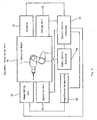
- Fig. 3 shows a schematic construction of the automated cell culture apparatus according to one embodiment of the present invention for carrying out the foregoing method for evaluating cell detachment.
- the automated cell culture apparatus of this embodiment includes an equipment installation unit 10 in the center, and the equipment installation unit 10 is equipped with an operation robot 11 that operates under the control of a robot control apparatus 11a.
- an incubator 12 for performing cell culture in a culture vessel such as a petri dish placed therein, a storage unit 13 for storing tools and reagents required for the cell culture, a operation unit 14 for carrying out operation such as addition of a detachment solution to the culture vessel or centrifugal separation, and a image-grabber unit 15 used for obtaining the image in the culture vessel are provided adjacent to the equipment installation unit 10.
- a shutter (not shown in the Figure) is provided between the equipment installation unit 10 and each of the operation robot 11, the incubator 12, the storage unit 13, the operation unit 14 and the image-grabber unit 15, and this shutter is constructed such that it can be opened only when operation by the operation robot 11 is necessary.
- the system is constructed such that the image obtained at the image-grabber unit 15 is transferred to and processed at the image processing apparatus 16.
- the robot control apparatus 11a, the incubator 12, the storage unit 13, the operation unit 14, the image-grabber unit 15 and the image processing apparatus 16 are operated under the control of overall control apparatus 17 which can serve as a cell detachment evaluation means.
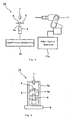
- Fig. 4 shows details of the image-grabber unit 15, and also schematically shows the image processing apparatus 16, the operation robot 11 and the robot control apparatus 11a in conjunction for explanatory purpose.
- the image-grabber unit 15 includes a table 5 having an opening 5a, an lighting 7 for lighting the culture vessel 6 on the table 5, and a microscope with camera 8.
- the automated cell culture apparatus of this embodiment operates, for example, according to the flow chart shown in Fig. 6 illustrating the method of detaching a cell, as follows. First, the shutter between the equipment installation unit 10 and the incubator 12 is opened. Next, the operation robot 11 holds and removes the culture vessel in the incubator 12, which is transferred to the operation unit 14. In the operation unit 14, a detachment solution is added to the culture vessel as depicted in step 22 in Fig. 6 , and subsequently transferred to the image-grabber unit 15 by the operation robot 11. Concurrently with or after the transferring, vibration by the operation robot 11 allows the detachment solution to turn into the flowing state, and the solution distributes throughout the culture vessel (step 23). Thus, the operation robot 11 also serves as a vibration exciter in this embodiment.
- the operation robot 11 allows the culture liquid in the culture vessel 6 to turn into the flowing state as described above, and thereafter places the culture vessel 6 on the opening 5a of the table 5.
- an image at a certain position in the culture vessel is taken (step 24), and the image is transferred to the image processing apparatus 16 as a first image.
- an image is taken at the same position as the taking position of the first image (step 25), and the thus obtained image is transferred to the image processing apparatus 16 as a second image.
- step 26 cell area ratio A and cell area ratio B, and common area ratio C are determined, and transferred to the overall control unit 17.
- the overall control unit 17 calculates detachment rate x 1 as described above based on these area ratios (step 26).
- step 27 the calculated detachment rate x 1 is compared with a predetermined threshold (step 27).
- the process returns to the step 24, and the steps 24 to 27 are repeated again.
- the detachment rate x 1 is equal to or greater than the threshold, the culture vessel is again transferred from the image-grabber unit 15 to the operation unit 14, where a detachment stop solution is added to the culture vessel (step 28).
- Fig. 5 shows a schematic construction of an image-grabber unit according to another embodiment.
- vibrating by the operation robot 11 is not carried out, but vibration exciter 9 and vibration stage 9a are used to carry out the vibrating of the culture vessel.
- the table 5, the lighting 7 and the microscope with camera 8 are fixed on the vibration stage 9a, and thus positional relationship of the culture vessel 6, the microscope with camera 8, and the lighting 7 disposed on the opening 5a of the table 5 would be fixed during vibration.
- detachment of the cultured cells from the culture vessel can be automatically evaluated, thereby enabling applications in the field of regenerative medicine and the like.
Landscapes
- Life Sciences & Earth Sciences (AREA)
- Health & Medical Sciences (AREA)
- Engineering & Computer Science (AREA)
- Chemical & Material Sciences (AREA)
- Wood Science & Technology (AREA)
- Organic Chemistry (AREA)
- Bioinformatics & Cheminformatics (AREA)
- Biomedical Technology (AREA)
- Zoology (AREA)
- General Health & Medical Sciences (AREA)
- Molecular Biology (AREA)
- Microbiology (AREA)
- Biochemistry (AREA)
- Immunology (AREA)
- Biotechnology (AREA)
- Hematology (AREA)
- Analytical Chemistry (AREA)
- General Engineering & Computer Science (AREA)
- Genetics & Genomics (AREA)
- Cell Biology (AREA)
- Sustainable Development (AREA)
- Urology & Nephrology (AREA)
- Food Science & Technology (AREA)
- Medicinal Chemistry (AREA)
- Physics & Mathematics (AREA)
- Tropical Medicine & Parasitology (AREA)
- General Physics & Mathematics (AREA)
- Pathology (AREA)
- Apparatus Associated With Microorganisms And Enzymes (AREA)
- Measuring Or Testing Involving Enzymes Or Micro-Organisms (AREA)
- Micro-Organisms Or Cultivation Processes Thereof (AREA)
Claims (14)
- Verfahren zum Untersuchen von Zellablösung, in welchem die Zellablösung von einem Kultur-Behälter untersucht wird, wobei das Verfahren folgende Schritte umfasst:Aufnehmen eines ersten Bildes durch Abbilden einer bestimmten Position in einem Kultur-Behälter;Aufnehmen eines zweiten Bildes durch Abbilden der bestimmten Position nach Aufnehmen des ersten Bildes und auch nach Strömenlassen der Kultur-Flüssigkeit in dem Kultur-Behälter ; undUntersuchen der Zellablösung von dem Kultur-Behälter durch Bestimmen eines Zell-Flächen-Verhältnisses A für einen Abschnitt, in dem die Zelle in dem ersten Bild anwesend ist, eines Zell-Flächen-Verhältnisses B für einen Abschnitt, in dem die Zelle in dem zweiten Bild anwesend ist, und eines gemeinsamen Flächen-Verhältnisses C für einen Abschnitt, in dem die Zelle in beiden, dem ersten und dem zweiten Bild, anwesend ist, und Beurteilen der Zellablösung basierend auf dem Zell-Flächen-Verhältnis A, dem Zell-Flächen-Verhältnis B und dem gemeinsamen Flächen-Verhältnis C.
- Verfahren zum Untersuchen von Zellablösung nach Anspruch 1,
wobei der Schritt des Untersuchens der Zellablösung, wenn sich eine Zelle, die an dem Kultur-Behälter haftet, und eine strömende Zelle, die von dem Kultur-Behälter abgelöst ist, nicht gegenseitig überdecken, umfasst:Bestimmen einer Ablöse-Rate x1, die ein Verhältnis darstellt von einem Zell-Flächen-Verhältnis der strömenden Zelle zu der Gesamtsumme von einem Zell-Flächen-Verhältnis der haftenden Zelle, die an dem Kultur-Behälter haftet, und einem Zell-Flächen-Verhältnis der strömenden Zelle, anhand der folgenden Gleichung: und Untersuchen der Zellablösung von dem Kultur-Behälter basierend auf der Ablöse-Rate x1.
 - Verfahren zum Untersuchen von Zellablösung nach Anspruch 1,
wobei der Schritt des Untersuchens der Zellablösung, wenn sich eine Zelle, die an dem Kultur-Behälter haftet, und eine strömende Zelle, die von dem Kultur-Behälter abgelöst ist, nicht gegenseitig überdecken, umfasst:Bestimmen einer Ablöse-Rate x2, die ein Verhältnis darstellt von einem Zell-Flächen-Verhältnis der strömenden Zelle zu der Gesamtsumme von einem Zell-Flächen-Verhältnis der haftenden Zelle, die an dem Kultur-Behälter haftet, und einem Zell-Flächen-Verhältnis der strömenden Zelle, die von dem Kultur-Behälter abgelöst ist, anhand der folgenden Gleichung:
basierend auf einem gemeinsamen Flächen-Verhältnis anhaftender Zellen f = (C-AB) / (1+C-A-B) in dem ersten Bild und dem zweiten Bild, und einem Gesamt-Flächen-Verhältnis strömender Zellen s2 = B-f in dem zweiten Bild;und Untersuchen der Zellablösung von dem Kultur-Behälter basierend auf der Ablöse-Rate x2. - Verfahren zum Untersuchen von Zellablösung nach Anspruch 1,
wobei der Schritt des Untersuchens der Zellablösung, wenn sich eine Zelle, die an dem Kultur-Behälter haftet, mit einer strömenden Zelle, die von dem Kultur-Behälter abgelöst ist, überdecken kann, aber die strömenden Zellen sich nicht gegenseitig überdecken, umfasst:Bestimmen einer Ablöse-Rate x1, die ein Verhältnis darstellt von einem Zell-Flächen-Verhältnis der strömenden Zelle zu der Gesamtsumme von einem Zell-Flächen-Verhältnis der haftenden Zelle, die an dem Kultur-Behälter haftet, und einem Zell-Flächen-Verhältnis der strömenden Zelle, die von dem Kultur-Behälter abgelöst ist, anhand der folgenden Gleichung: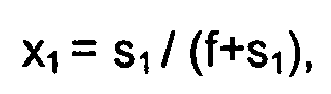 und Untersuchen der Zellablösung von dem Kultur-Behälter basierend auf der Ablöse-Rate x1.
 - Verfahren zum Untersuchen von Zellablösung nach Anspruch 1,
wobei der Schritt des Untersuchens der Zellablösung, wenn sich eine Zelle, die an dem Kultur-Behälter haftet, und eine strömende Zelle, die von dem Kultur-Behälter abgelöst ist, überdecken können, aber die strömenden Zellen sich nicht gegenseitig überdecken, umfasst:Bestimmen einer Ablöse-Rate x2, die ein Verhältnis darstellt von einem Zell-Flächen-Verhältnis der strömenden Zelle zu der Gesamtsumme von einem Zell-Flächen-Verhältnis der haftenden Zelle, die an dem Kultur-Behälter haftet, und einem Zell-Flächen-Verhältnis der strömenden Zelle, die von dem Kultur-Behälter abgelöst ist, anhand der folgenden Gleichung: und Untersuchen der Zellablösung von dem Kultur-Behälter basierend auf der Ablöse-Rate x2.
 - Verfahren zum Untersuchen von Zellablösung nach Anspruch 1,
wobei der Schritt des Untersuchens der Zellablösung, wenn sich eine Zelle, die an dem Kultur-Behälter haftet, und eine strömende Zelle, die von dem Kultur-Behälter abgelöst ist, überdecken können, und sich auch die strömenden Zellen höchstens zweifach überdecken können, umfasst:Bestimmen einer Ablöse-Rate x1, die ein Verhältnis darstellt von einem Zell-Flächen-Verhältnis der strömenden Zelle zu der Gesamtsumme von einem Zell-Flächen-Verhältnis der haftenden Zelle, die an dem Kultur-Behälter haftet, und einem Zell-Flächen-Verhältnis der strömenden Zelle, die von dem Kultur-Behälter abgelöst ist, anhand der folgenden Gleichung: und Untersuchen der Zellablösung von dem Kultur-Behälter basierend auf der Ablöse-Rate x1.
 - Verfahren zum Untersuchen von Zellablösung nach Anspruch 1,
wobei der Schritt des Untersuchens der Zellablösung, wenn sich eine Zelle, die an dem Kultur-Behälter haftet, und eine strömende Zelle, die von dem Kultur-Behälter abgelöst ist, überdecken können, und sich auch die strömenden Zellen höchstens zweifach überdecken können, umfasst:Bestimmen einer Ablöse-Rate x2, die ein Verhältnis darstellt von einem Zell-Flächen-Verhältnis der strömenden Zelle zu der Gesamtsumme von einem Zell-Flächen-Verhältnis der haftenden Zelle, die an dem Kultur-Behälter haftet, und einem Zell-Flächen-Verhältnis der strömenden Zelle, die von dem Kultur-Behälter abgelöst ist, anhand der folgenden Gleichung: und Untersuchen der Zellablösung von dem Kultur-Behälter basierend auf der Ablöse-Rate x2.
 - Verfahren zum Untersuchen von Zellablösung nach Anspruch 1,
wobei der Schritt des Untersuchens der Zellablösung, wenn sich eine Zelle, die an dem Kultur-Behälter haftet, und eine strömende Zelle, die von dem Kultur-Behälter abgelöst ist, überdecken können, und die strömenden Zellen sich vielfach überdecken können ungeachtet der Anwesenheit oder Abwesenheit der Zelle, die an dem Kultur-Behälter haftet, umfasst:Bestimmen einer Ablöse-Rate x1, die ein Verhältnis darstellt von einem Zell-Flächen-Verhältnis der strömenden Zelle zu der Gesamtsumme von einem Zell-Flächen-Verhältnis der haftenden Zelle, die an dem Kultur-Behälter haftet, und einem Zell-Flächen-Verhältnis der strömenden Zelle, die von dem Kultur-Behälter abgelöst ist, anhand der folgenden Gleichung: x1 = s1 / (f+s1), basierend auf einem gemeinsamen Flächen-Verhältnis anhaftender Zellen f = (C-AB) / (1+C-A-B) in dem ersten Bild und dem zweiten Bild, einem projizierten Flächen-Verhältnis der strömenden Zelle t1 = (A-f) / (1-f) in dem ersten Bild, und einem Gesamt-Flächen-Verhältnis strömender Zellen s1 = -ln (1-t1) in dem ersten Bild;und Untersuchen der Zellablösung von dem Kultur-Behälter basierend auf der Ablöse-Rate x1. - Verfahren zum Untersuchen von Zellablösung nach Anspruch 1,
wobei der Schritt des Untersuchens der Zellablösung, wenn sich eine Zelle, die an dem Kultur-Behälter haftet, und eine strömende Zelle, die von dem Kultur-Behälter abgelöst ist, überdecken können, und die strömenden Zellen sich vielfach überdecken können ungeachtet der Anwesenheit oder Abwesenheit der Zelle, die an den Kultur-Behälter haftet, umfasst:Bestimmen einer Ablöse-Rate x2, die ein Verhältnis darstellt von einem Zell-Flächen-Verhältnis der strömenden Zelle zu der Gesamtsumme von einem Zell-Flächen-Verhältnis der haftenden Zelle, die an dem Kultur-Behälter haftet, und einem Zell-Flächen-Verhältnis der strömenden Zelle, die von dem Kultur-Behälter abgelöst ist, anhand der folgenden Gleichung: x2 = s2 / (f+s2), basierend, auf einem gemeinsamen Flächen-Verhältnis anhaftender Zellen f = (C-AB) / (1+C-A-B) in dem ersten Bild und dem zweiten Bild, einem projizierten Flächen-Verhältnis der strömenden Zelle t2= (B-f) / (1-f) in dem zweiten Bild, und einem Gesamt-Flächen-Verhältnis strömender Zellen s2 = -ln (1-t2) in dem zweiten Bild; und Untersuchen der Zellablösung von dem Kultur-Behälter basierend auf der Ablöse-Rate x2. - Verfahren zum Ablösen kultivierter Zellen, umfassend die Schritte:Platzieren einer Ablöse-Lösung in einem Kultur-Behälter, um der kultivierten Zelle die Ablösung vom Kultur-Behälter zu ermöglichen;Untersuchen der Zellablösung von dem Kultur-Behälter durch das Verfahren zum Untersuchen von Zellablösung nach einem der Ansprüche 1 bis 9; und Platzieren einer Ablösungs-Stopp-Lösung in dem Kultur-Behälter.
- Verfahren zum Ablösen kultivierter Zellen nach Anspruch 10,
wobei in dem Schritt des Untersuchens der Zellablösung das Untersuchen von Zellablösung wiederholt wird, wenn die Zellablösung von dem Kultur-Behälter unzureichend ist. - Vorrichtung zum Untersuchen von Zellablösung für die Verwendung bei der Durchführung des Verfahrens zum Untersuchen von Zellablösung nach einem der Ansprüche 1 bis 9, enthaltend:einen Schwingungserreger, der es der Kultur-Flüssigkeit in dem Kultur-Behälter ermöglicht, in ihren Strömungszustand zu gelangen;eine Bildaufnahme-Einrichtung zum Erhalten des ersten Bildes und des zweiten Bildes; undZellablösungs-Untersuchungsmittel zum Untersuchen der Zellablösung von dem Kultur-Behälter durch Bestimmen des gemeinsamen Flächen-Verhältnisses C basierend auf dem Zell-Flächen-Verhältnis A und dem Zell-Flächen-Verhältnis B, und Untersuchen der Zellablösung von dem Kultur-Behälter basierend auf dem Zell-Flächen-Verhältnis A, dem Zell-Flächen-Verhältnis B und dem gemeinsamen Flächen-Verhältnis C.
- Automatisierte Zell-Kultur-Vorrichtung, enthaltend
die Vorrichtung zum Untersuchen von Zellablösung nach Anspruch 12, und einen Betriebs-Roboter zum Tragen des Kultur-Behälters. - Automatische Zell-Kultur-Vorrichtung nach Anspruch 13,
wobei der Betriebs-Roboter auch als Schwingungserreger in der Vorrichtung zum Untersuchen von Zellablösung dient.
Applications Claiming Priority (2)
| Application Number | Priority Date | Filing Date | Title |
|---|---|---|---|
| JP2006109545A JP4937630B2 (ja) | 2006-04-12 | 2006-04-12 | 細胞剥離判断方法、培養細胞の剥離方法、細胞剥離判断装置及び自動細胞培養装置 |
| PCT/JP2007/058031 WO2007119764A1 (ja) | 2006-04-12 | 2007-04-12 | 細胞剥離判断方法、培養細胞の剥離方法、細胞剥離判断装置及び自動細胞培養装置 |
Publications (3)
| Publication Number | Publication Date |
|---|---|
| EP2014773A1 EP2014773A1 (de) | 2009-01-14 |
| EP2014773A4 EP2014773A4 (de) | 2009-05-13 |
| EP2014773B1 true EP2014773B1 (de) | 2011-11-02 |
Family
ID=38609524
Family Applications (1)
| Application Number | Title | Priority Date | Filing Date |
|---|---|---|---|
| EP07741467A Not-in-force EP2014773B1 (de) | 2006-04-12 | 2007-04-12 | Verfahren zur bestimmung der zellschälung, verfahren zum schälen kultivierter zellen, vorrichtung zur bestimmung der zellschälung und zellkulturautomat |
Country Status (5)
| Country | Link |
|---|---|
| US (1) | US8265371B2 (de) |
| EP (1) | EP2014773B1 (de) |
| JP (1) | JP4937630B2 (de) |
| AT (1) | ATE531815T1 (de) |
| WO (1) | WO2007119764A1 (de) |
Families Citing this family (10)
| Publication number | Priority date | Publication date | Assignee | Title |
|---|---|---|---|---|
| WO2009107321A1 (ja) * | 2008-02-28 | 2009-09-03 | 株式会社ニコン | 顕微鏡装置および細胞培養装置 |
| US9567560B2 (en) * | 2009-02-26 | 2017-02-14 | National University Corporation Nagoya University | Incubated state evaluating device, incubated state evaluating method, incubator, and program |
| JP5712924B2 (ja) * | 2009-09-03 | 2015-05-07 | 株式会社ニコン | 攪拌方法、細胞培養方法、攪拌装置及び細胞培養装置 |
| JP5691009B2 (ja) | 2010-07-28 | 2015-04-01 | パナソニックヘルスケアホールディングス株式会社 | 撮像装置 |
| JP5821444B2 (ja) * | 2011-09-09 | 2015-11-24 | 大日本印刷株式会社 | 細胞画像解析装置、細胞画像解析方法、及び細胞画像解析プログラム |
| JP6495281B2 (ja) | 2013-08-12 | 2019-04-03 | インビボサイエンシーズ インコーポレイテッド | オートメーション化された細胞培養システム及び方法 |
| JP6465280B2 (ja) * | 2014-10-31 | 2019-02-06 | 澁谷工業株式会社 | 細胞剥離認識装置および細胞剥離認識方法 |
| JP7531170B2 (ja) | 2019-03-05 | 2024-08-09 | ファナック株式会社 | 細胞製造システム |
| JP7709015B2 (ja) * | 2021-03-31 | 2025-07-16 | 澁谷工業株式会社 | 培養細胞の剥離判定装置 |
| EP4361244B1 (de) * | 2021-06-24 | 2025-11-05 | FUJIFILM Corporation | Vorrichtung zur beurteilung der zellqualität, verfahren zur beurteilung der zellqualität und programm |
Family Cites Families (11)
| Publication number | Priority date | Publication date | Assignee | Title |
|---|---|---|---|---|
| JP2002218967A (ja) * | 2001-01-25 | 2002-08-06 | Inst Of Physical & Chemical Res | 細胞培養容器 |
| JP4095811B2 (ja) * | 2002-02-20 | 2008-06-04 | 正仁 田谷 | 剥離細胞選別装置、剥離細胞選別方法及びそのプログラム |
| JP4468661B2 (ja) * | 2003-07-11 | 2010-05-26 | オリンパス株式会社 | 細胞培養観察装置及び細胞培養観察方法 |
| WO2005059088A1 (en) * | 2003-12-19 | 2005-06-30 | University Of Waterloo | Cultured cell and method and apparatus for cell culture |
| JP5459817B2 (ja) * | 2004-11-29 | 2014-04-02 | 川崎重工業株式会社 | 多関節型ロボットを備えた自動細胞培養装置 |
| EP1821094A1 (de) * | 2004-12-07 | 2007-08-22 | Effector Cell Institute, Inc. | Zellmessverfahren |
| KR20070115929A (ko) * | 2005-03-22 | 2007-12-06 | 가부시키가이샤 메디넷 | 세포배양 평가시스템, 세포배양 평가방법 및 세포배양평가프로그램 |
| JP2006271210A (ja) * | 2005-03-28 | 2006-10-12 | Olympus Corp | 自動細胞培養装置 |
| WO2006104201A1 (ja) * | 2005-03-29 | 2006-10-05 | Olympus Corporation | 細胞画像解析方法、細胞画像解析プログラム、細胞画像解析装置、スクリーニング方法およびスクリーニング装置 |
| JP5332610B2 (ja) * | 2006-05-22 | 2013-11-06 | 株式会社ニコン | 細胞剥離判定装置、細胞剥離判定方法、および細胞培養装置 |
| JP5239128B2 (ja) * | 2006-05-22 | 2013-07-17 | 株式会社ニコン | 観察装置 |
-
2006
- 2006-04-12 JP JP2006109545A patent/JP4937630B2/ja not_active Expired - Fee Related
-
2007
- 2007-04-12 EP EP07741467A patent/EP2014773B1/de not_active Not-in-force
- 2007-04-12 WO PCT/JP2007/058031 patent/WO2007119764A1/ja not_active Ceased
- 2007-04-12 US US12/296,528 patent/US8265371B2/en not_active Expired - Fee Related
- 2007-04-12 AT AT07741467T patent/ATE531815T1/de active
Also Published As
| Publication number | Publication date |
|---|---|
| EP2014773A1 (de) | 2009-01-14 |
| US20090304257A1 (en) | 2009-12-10 |
| ATE531815T1 (de) | 2011-11-15 |
| JP4937630B2 (ja) | 2012-05-23 |
| US8265371B2 (en) | 2012-09-11 |
| JP2007275030A (ja) | 2007-10-25 |
| WO2007119764A1 (ja) | 2007-10-25 |
| EP2014773A4 (de) | 2009-05-13 |
Similar Documents
| Publication | Publication Date | Title |
|---|---|---|
| EP2014773B1 (de) | Verfahren zur bestimmung der zellschälung, verfahren zum schälen kultivierter zellen, vorrichtung zur bestimmung der zellschälung und zellkulturautomat | |
| Minasi et al. | Correlation between aneuploidy, standard morphology evaluation and morphokinetic development in 1730 biopsied blastocysts: a consecutive case series study | |
| Gallego et al. | Time-lapse imaging: the state of the art | |
| Gianaroli et al. | Frequency of aneuploidy in sperm from patients with extremely severe male factor infertility | |
| Garty et al. | The RABIT: a rapid automated biodosimetry tool for radiological triage | |
| Kirkegaard et al. | Time-lapse parameters as predictors of blastocyst development and pregnancy outcome in embryos from good prognosis patients: a prospective cohort study | |
| EP2430454B1 (de) | Abbildung und evaluierung von embryos, oozyten und stammzellen | |
| Amitai et al. | Embryo classification beyond pregnancy: early prediction of first trimester miscarriage using machine learning | |
| US20120009558A1 (en) | Method and apparatus for identification of bacteria | |
| SA516371827B1 (ar) | نظام متكامل لتضخيم الحمض النووي والكشف عنه | |
| Cimadomo et al. | Failure mode and effects analysis of witnessing protocols for ensuring traceability during PGD/PGS cycles | |
| Ogura et al. | A replication study for association of 5 single nucleotide polymorphisms with curve progression of adolescent idiopathic scoliosis in Japanese patients | |
| Stigliani et al. | Non-invasive mitochondrial DNA quantification on day 3 predicts blastocyst development: a prospective, blinded, multi-centric study | |
| EP2950726B1 (de) | Mit zeitrafferbildgebung beobachtete anormale syngamie-phänotypen zur frühen erkennung von embryonen mit geringem entwicklungspotential | |
| Nizamullah et al. | AI in Healthcare: Breaking New Ground in the Management and Treatment of Cancer | |
| Kaltsas | Cystic Fibrosis and Male Infertility: From Genetics to Future Perspectives in Assisted Reproductive Technologies | |
| CN114958583B (zh) | 一种用于血液游离dna的超多重pcr检测系统及方法 | |
| Hanson et al. | Re-analysis of 166 embryos not transferred after PGS with advanced reproductive maternal age as indication | |
| Sancho et al. | Optimizing the supply chain of intensive care unit blood culture samples to clinical microbiology laboratory using lean six sigma | |
| Tinkle et al. | Human genomics: Challenges and opportunities | |
| O'Brien et al. | Current status and future of genomics in fetal and maternal medicine: A scientific review commissioned by European Board and College of Obstetrics and Gynaecology (EBCOG) | |
| Alahmari et al. | The role of automation and robotics in improving laboratory efficiency and accuracy | |
| Lee et al. | DEEP LEARNING ALGORITHMS USING EMBRYO MORPHOLOGY CAN MORE ACCURATELY PREDICT GESTATIONAL SAC (G-SAC) THAN FETAL HEARTBEAT POSSIBLY DUE TO NON-EMBRYO FACTORS | |
| Roy et al. | Study of the human chronic wound tissue: addressing logistic barriers and productive use of laser capture microdissection | |
| Eichler et al. | GLOBAL AND NATIONAL BONE MARROW REGISTRIES: EXPERIENCE OF USING, MAIN ISSUES, AND PERSPECTIVES |
Legal Events
| Date | Code | Title | Description |
|---|---|---|---|
| PUAI | Public reference made under article 153(3) epc to a published international application that has entered the european phase |
Free format text: ORIGINAL CODE: 0009012 |
|
| 17P | Request for examination filed |
Effective date: 20081111 |
|
| AK | Designated contracting states |
Kind code of ref document: A1 Designated state(s): AT BE BG CH CY CZ DE DK EE ES FI FR GB GR HU IE IS IT LI LT LU LV MC MT NL PL PT RO SE SI SK TR |
|
| AX | Request for extension of the european patent |
Extension state: AL BA HR MK RS |
|
| A4 | Supplementary search report drawn up and despatched |
Effective date: 20090416 |
|
| 17Q | First examination report despatched |
Effective date: 20090723 |
|
| GRAP | Despatch of communication of intention to grant a patent |
Free format text: ORIGINAL CODE: EPIDOSNIGR1 |
|
| DAX | Request for extension of the european patent (deleted) | ||
| RIC1 | Information provided on ipc code assigned before grant |
Ipc: C12Q 1/02 20060101ALI20110701BHEP Ipc: C12N 5/07 20100101ALI20110701BHEP Ipc: C12M 3/00 20060101ALI20110701BHEP Ipc: C12Q 1/04 20060101AFI20110701BHEP |
|
| GRAS | Grant fee paid |
Free format text: ORIGINAL CODE: EPIDOSNIGR3 |
|
| GRAA | (expected) grant |
Free format text: ORIGINAL CODE: 0009210 |
|
| AK | Designated contracting states |
Kind code of ref document: B1 Designated state(s): AT BE BG CH CY CZ DE DK EE ES FI FR GB GR HU IE IS IT LI LT LU LV MC MT NL PL PT RO SE SI SK TR |
|
| REG | Reference to a national code |
Ref country code: GB Ref legal event code: FG4D |
|
| REG | Reference to a national code |
Ref country code: CH Ref legal event code: EP |
|
| REG | Reference to a national code |
Ref country code: IE Ref legal event code: FG4D |
|
| REG | Reference to a national code |
Ref country code: DE Ref legal event code: R096 Ref document number: 602007018463 Country of ref document: DE Effective date: 20111229 |
|
| REG | Reference to a national code |
Ref country code: NL Ref legal event code: VDEP Effective date: 20111102 |
|
| LTIE | Lt: invalidation of european patent or patent extension |
Effective date: 20111102 |
|
| PG25 | Lapsed in a contracting state [announced via postgrant information from national office to epo] |
Ref country code: IS Free format text: LAPSE BECAUSE OF FAILURE TO SUBMIT A TRANSLATION OF THE DESCRIPTION OR TO PAY THE FEE WITHIN THE PRESCRIBED TIME-LIMIT Effective date: 20120302 Ref country code: LT Free format text: LAPSE BECAUSE OF FAILURE TO SUBMIT A TRANSLATION OF THE DESCRIPTION OR TO PAY THE FEE WITHIN THE PRESCRIBED TIME-LIMIT Effective date: 20111102 |
|
| PG25 | Lapsed in a contracting state [announced via postgrant information from national office to epo] |
Ref country code: SI Free format text: LAPSE BECAUSE OF FAILURE TO SUBMIT A TRANSLATION OF THE DESCRIPTION OR TO PAY THE FEE WITHIN THE PRESCRIBED TIME-LIMIT Effective date: 20111102 Ref country code: NL Free format text: LAPSE BECAUSE OF FAILURE TO SUBMIT A TRANSLATION OF THE DESCRIPTION OR TO PAY THE FEE WITHIN THE PRESCRIBED TIME-LIMIT Effective date: 20111102 Ref country code: PL Free format text: LAPSE BECAUSE OF FAILURE TO SUBMIT A TRANSLATION OF THE DESCRIPTION OR TO PAY THE FEE WITHIN THE PRESCRIBED TIME-LIMIT Effective date: 20111102 Ref country code: BE Free format text: LAPSE BECAUSE OF FAILURE TO SUBMIT A TRANSLATION OF THE DESCRIPTION OR TO PAY THE FEE WITHIN THE PRESCRIBED TIME-LIMIT Effective date: 20111102 Ref country code: GR Free format text: LAPSE BECAUSE OF FAILURE TO SUBMIT A TRANSLATION OF THE DESCRIPTION OR TO PAY THE FEE WITHIN THE PRESCRIBED TIME-LIMIT Effective date: 20120203 Ref country code: SE Free format text: LAPSE BECAUSE OF FAILURE TO SUBMIT A TRANSLATION OF THE DESCRIPTION OR TO PAY THE FEE WITHIN THE PRESCRIBED TIME-LIMIT Effective date: 20111102 Ref country code: PT Free format text: LAPSE BECAUSE OF FAILURE TO SUBMIT A TRANSLATION OF THE DESCRIPTION OR TO PAY THE FEE WITHIN THE PRESCRIBED TIME-LIMIT Effective date: 20120302 Ref country code: LV Free format text: LAPSE BECAUSE OF FAILURE TO SUBMIT A TRANSLATION OF THE DESCRIPTION OR TO PAY THE FEE WITHIN THE PRESCRIBED TIME-LIMIT Effective date: 20111102 |
|
| PG25 | Lapsed in a contracting state [announced via postgrant information from national office to epo] |
Ref country code: CY Free format text: LAPSE BECAUSE OF FAILURE TO SUBMIT A TRANSLATION OF THE DESCRIPTION OR TO PAY THE FEE WITHIN THE PRESCRIBED TIME-LIMIT Effective date: 20111102 |
|
| PG25 | Lapsed in a contracting state [announced via postgrant information from national office to epo] |
Ref country code: DK Free format text: LAPSE BECAUSE OF FAILURE TO SUBMIT A TRANSLATION OF THE DESCRIPTION OR TO PAY THE FEE WITHIN THE PRESCRIBED TIME-LIMIT Effective date: 20111102 Ref country code: EE Free format text: LAPSE BECAUSE OF FAILURE TO SUBMIT A TRANSLATION OF THE DESCRIPTION OR TO PAY THE FEE WITHIN THE PRESCRIBED TIME-LIMIT Effective date: 20111102 Ref country code: BG Free format text: LAPSE BECAUSE OF FAILURE TO SUBMIT A TRANSLATION OF THE DESCRIPTION OR TO PAY THE FEE WITHIN THE PRESCRIBED TIME-LIMIT Effective date: 20120202 Ref country code: CZ Free format text: LAPSE BECAUSE OF FAILURE TO SUBMIT A TRANSLATION OF THE DESCRIPTION OR TO PAY THE FEE WITHIN THE PRESCRIBED TIME-LIMIT Effective date: 20111102 Ref country code: SK Free format text: LAPSE BECAUSE OF FAILURE TO SUBMIT A TRANSLATION OF THE DESCRIPTION OR TO PAY THE FEE WITHIN THE PRESCRIBED TIME-LIMIT Effective date: 20111102 |
|
| PG25 | Lapsed in a contracting state [announced via postgrant information from national office to epo] |
Ref country code: RO Free format text: LAPSE BECAUSE OF FAILURE TO SUBMIT A TRANSLATION OF THE DESCRIPTION OR TO PAY THE FEE WITHIN THE PRESCRIBED TIME-LIMIT Effective date: 20111102 Ref country code: IT Free format text: LAPSE BECAUSE OF FAILURE TO SUBMIT A TRANSLATION OF THE DESCRIPTION OR TO PAY THE FEE WITHIN THE PRESCRIBED TIME-LIMIT Effective date: 20111102 |
|
| PLBE | No opposition filed within time limit |
Free format text: ORIGINAL CODE: 0009261 |
|
| STAA | Information on the status of an ep patent application or granted ep patent |
Free format text: STATUS: NO OPPOSITION FILED WITHIN TIME LIMIT |
|
| REG | Reference to a national code |
Ref country code: AT Ref legal event code: MK05 Ref document number: 531815 Country of ref document: AT Kind code of ref document: T Effective date: 20111102 |
|
| 26N | No opposition filed |
Effective date: 20120803 |
|
| REG | Reference to a national code |
Ref country code: DE Ref legal event code: R097 Ref document number: 602007018463 Country of ref document: DE Effective date: 20120803 |
|
| PG25 | Lapsed in a contracting state [announced via postgrant information from national office to epo] |
Ref country code: MC Free format text: LAPSE BECAUSE OF NON-PAYMENT OF DUE FEES Effective date: 20120430 |
|
| REG | Reference to a national code |
Ref country code: CH Ref legal event code: PL |
|
| REG | Reference to a national code |
Ref country code: IE Ref legal event code: MM4A |
|
| PG25 | Lapsed in a contracting state [announced via postgrant information from national office to epo] |
Ref country code: IE Free format text: LAPSE BECAUSE OF NON-PAYMENT OF DUE FEES Effective date: 20120412 Ref country code: AT Free format text: LAPSE BECAUSE OF FAILURE TO SUBMIT A TRANSLATION OF THE DESCRIPTION OR TO PAY THE FEE WITHIN THE PRESCRIBED TIME-LIMIT Effective date: 20111102 Ref country code: LI Free format text: LAPSE BECAUSE OF NON-PAYMENT OF DUE FEES Effective date: 20120430 Ref country code: CH Free format text: LAPSE BECAUSE OF NON-PAYMENT OF DUE FEES Effective date: 20120430 |
|
| PG25 | Lapsed in a contracting state [announced via postgrant information from national office to epo] |
Ref country code: ES Free format text: LAPSE BECAUSE OF FAILURE TO SUBMIT A TRANSLATION OF THE DESCRIPTION OR TO PAY THE FEE WITHIN THE PRESCRIBED TIME-LIMIT Effective date: 20120213 |
|
| PG25 | Lapsed in a contracting state [announced via postgrant information from national office to epo] |
Ref country code: FI Free format text: LAPSE BECAUSE OF FAILURE TO SUBMIT A TRANSLATION OF THE DESCRIPTION OR TO PAY THE FEE WITHIN THE PRESCRIBED TIME-LIMIT Effective date: 20111102 |
|
| PG25 | Lapsed in a contracting state [announced via postgrant information from national office to epo] |
Ref country code: MT Free format text: LAPSE BECAUSE OF FAILURE TO SUBMIT A TRANSLATION OF THE DESCRIPTION OR TO PAY THE FEE WITHIN THE PRESCRIBED TIME-LIMIT Effective date: 20111102 |
|
| PG25 | Lapsed in a contracting state [announced via postgrant information from national office to epo] |
Ref country code: TR Free format text: LAPSE BECAUSE OF FAILURE TO SUBMIT A TRANSLATION OF THE DESCRIPTION OR TO PAY THE FEE WITHIN THE PRESCRIBED TIME-LIMIT Effective date: 20111102 |
|
| PG25 | Lapsed in a contracting state [announced via postgrant information from national office to epo] |
Ref country code: LU Free format text: LAPSE BECAUSE OF NON-PAYMENT OF DUE FEES Effective date: 20120412 |
|
| PG25 | Lapsed in a contracting state [announced via postgrant information from national office to epo] |
Ref country code: HU Free format text: LAPSE BECAUSE OF FAILURE TO SUBMIT A TRANSLATION OF THE DESCRIPTION OR TO PAY THE FEE WITHIN THE PRESCRIBED TIME-LIMIT Effective date: 20070412 |
|
| REG | Reference to a national code |
Ref country code: FR Ref legal event code: PLFP Year of fee payment: 10 |
|
| REG | Reference to a national code |
Ref country code: FR Ref legal event code: PLFP Year of fee payment: 11 |
|
| REG | Reference to a national code |
Ref country code: FR Ref legal event code: PLFP Year of fee payment: 12 |
|
| PGFP | Annual fee paid to national office [announced via postgrant information from national office to epo] |
Ref country code: FR Payment date: 20200312 Year of fee payment: 14 |
|
| PGFP | Annual fee paid to national office [announced via postgrant information from national office to epo] |
Ref country code: DE Payment date: 20200331 Year of fee payment: 14 |
|
| PGFP | Annual fee paid to national office [announced via postgrant information from national office to epo] |
Ref country code: GB Payment date: 20200401 Year of fee payment: 14 |
|
| REG | Reference to a national code |
Ref country code: DE Ref legal event code: R119 Ref document number: 602007018463 Country of ref document: DE |
|
| GBPC | Gb: european patent ceased through non-payment of renewal fee |
Effective date: 20210412 |
|
| PG25 | Lapsed in a contracting state [announced via postgrant information from national office to epo] |
Ref country code: FR Free format text: LAPSE BECAUSE OF NON-PAYMENT OF DUE FEES Effective date: 20210430 Ref country code: GB Free format text: LAPSE BECAUSE OF NON-PAYMENT OF DUE FEES Effective date: 20210412 Ref country code: DE Free format text: LAPSE BECAUSE OF NON-PAYMENT OF DUE FEES Effective date: 20211103 |