EP2004688B1 - Verbesserte protofibrilselektive antikörper und deren verwendung - Google Patents
Verbesserte protofibrilselektive antikörper und deren verwendung Download PDFInfo
- Publication number
- EP2004688B1 EP2004688B1 EP07747965A EP07747965A EP2004688B1 EP 2004688 B1 EP2004688 B1 EP 2004688B1 EP 07747965 A EP07747965 A EP 07747965A EP 07747965 A EP07747965 A EP 07747965A EP 2004688 B1 EP2004688 B1 EP 2004688B1
- Authority
- EP
- European Patent Office
- Prior art keywords
- antibody
- protofibrils
- amino acid
- human
- protofibril
- Prior art date
- Legal status (The legal status is an assumption and is not a legal conclusion. Google has not performed a legal analysis and makes no representation as to the accuracy of the status listed.)
- Active
Links
Images












Classifications
-
- G—PHYSICS
- G01—MEASURING; TESTING
- G01N—INVESTIGATING OR ANALYSING MATERIALS BY DETERMINING THEIR CHEMICAL OR PHYSICAL PROPERTIES
- G01N33/00—Investigating or analysing materials by specific methods not covered by groups G01N1/00 - G01N31/00
- G01N33/48—Biological material, e.g. blood, urine; Haemocytometers
- G01N33/50—Chemical analysis of biological material, e.g. blood, urine; Testing involving biospecific ligand binding methods; Immunological testing
- G01N33/68—Chemical analysis of biological material, e.g. blood, urine; Testing involving biospecific ligand binding methods; Immunological testing involving proteins, peptides or amino acids
- G01N33/6893—Chemical analysis of biological material, e.g. blood, urine; Testing involving biospecific ligand binding methods; Immunological testing involving proteins, peptides or amino acids related to diseases not provided for elsewhere
- G01N33/6896—Neurological disorders, e.g. Alzheimer's disease
-
- A—HUMAN NECESSITIES
- A61—MEDICAL OR VETERINARY SCIENCE; HYGIENE
- A61K—PREPARATIONS FOR MEDICAL, DENTAL OR TOILETRY PURPOSES
- A61K39/00—Medicinal preparations containing antigens or antibodies
- A61K39/395—Antibodies; Immunoglobulins; Immune serum, e.g. antilymphocytic serum
-
- A—HUMAN NECESSITIES
- A61—MEDICAL OR VETERINARY SCIENCE; HYGIENE
- A61K—PREPARATIONS FOR MEDICAL, DENTAL OR TOILETRY PURPOSES
- A61K39/00—Medicinal preparations containing antigens or antibodies
- A61K39/395—Antibodies; Immunoglobulins; Immune serum, e.g. antilymphocytic serum
- A61K39/39533—Antibodies; Immunoglobulins; Immune serum, e.g. antilymphocytic serum against materials from animals
-
- A—HUMAN NECESSITIES
- A61—MEDICAL OR VETERINARY SCIENCE; HYGIENE
- A61K—PREPARATIONS FOR MEDICAL, DENTAL OR TOILETRY PURPOSES
- A61K39/00—Medicinal preparations containing antigens or antibodies
- A61K39/395—Antibodies; Immunoglobulins; Immune serum, e.g. antilymphocytic serum
- A61K39/39533—Antibodies; Immunoglobulins; Immune serum, e.g. antilymphocytic serum against materials from animals
- A61K39/3955—Antibodies; Immunoglobulins; Immune serum, e.g. antilymphocytic serum against materials from animals against proteinaceous materials, e.g. enzymes, hormones, lymphokines
-
- A—HUMAN NECESSITIES
- A61—MEDICAL OR VETERINARY SCIENCE; HYGIENE
- A61P—SPECIFIC THERAPEUTIC ACTIVITY OF CHEMICAL COMPOUNDS OR MEDICINAL PREPARATIONS
- A61P25/00—Drugs for disorders of the nervous system
-
- A—HUMAN NECESSITIES
- A61—MEDICAL OR VETERINARY SCIENCE; HYGIENE
- A61P—SPECIFIC THERAPEUTIC ACTIVITY OF CHEMICAL COMPOUNDS OR MEDICINAL PREPARATIONS
- A61P25/00—Drugs for disorders of the nervous system
- A61P25/18—Antipsychotics, i.e. neuroleptics; Drugs for mania or schizophrenia
-
- A—HUMAN NECESSITIES
- A61—MEDICAL OR VETERINARY SCIENCE; HYGIENE
- A61P—SPECIFIC THERAPEUTIC ACTIVITY OF CHEMICAL COMPOUNDS OR MEDICINAL PREPARATIONS
- A61P25/00—Drugs for disorders of the nervous system
- A61P25/28—Drugs for disorders of the nervous system for treating neurodegenerative disorders of the central nervous system, e.g. nootropic agents, cognition enhancers, drugs for treating Alzheimer's disease or other forms of dementia
-
- A—HUMAN NECESSITIES
- A61—MEDICAL OR VETERINARY SCIENCE; HYGIENE
- A61P—SPECIFIC THERAPEUTIC ACTIVITY OF CHEMICAL COMPOUNDS OR MEDICINAL PREPARATIONS
- A61P31/00—Antiinfectives, i.e. antibiotics, antiseptics, chemotherapeutics
- A61P31/04—Antibacterial agents
-
- C—CHEMISTRY; METALLURGY
- C07—ORGANIC CHEMISTRY
- C07K—PEPTIDES
- C07K16/00—Immunoglobulins [IG], e.g. monoclonal or polyclonal antibodies
- C07K16/18—Immunoglobulins [IG], e.g. monoclonal or polyclonal antibodies against material from animals or humans
-
- C—CHEMISTRY; METALLURGY
- C07—ORGANIC CHEMISTRY
- C07K—PEPTIDES
- C07K16/00—Immunoglobulins [IG], e.g. monoclonal or polyclonal antibodies
- C07K16/46—Hybrid immunoglobulins
- C07K16/461—Igs containing Ig-regions, -domains or -residues form different species
- C07K16/464—Igs containing CDR-residues from one specie grafted between FR-residues from another
- C07K16/465—Igs containing CDR-residues from one specie grafted between FR-residues from another with additional modified FR-residues
-
- G—PHYSICS
- G01—MEASURING; TESTING
- G01N—INVESTIGATING OR ANALYSING MATERIALS BY DETERMINING THEIR CHEMICAL OR PHYSICAL PROPERTIES
- G01N33/00—Investigating or analysing materials by specific methods not covered by groups G01N1/00 - G01N31/00
- G01N33/48—Biological material, e.g. blood, urine; Haemocytometers
- G01N33/50—Chemical analysis of biological material, e.g. blood, urine; Testing involving biospecific ligand binding methods; Immunological testing
- G01N33/68—Chemical analysis of biological material, e.g. blood, urine; Testing involving biospecific ligand binding methods; Immunological testing involving proteins, peptides or amino acids
-
- A—HUMAN NECESSITIES
- A61—MEDICAL OR VETERINARY SCIENCE; HYGIENE
- A61K—PREPARATIONS FOR MEDICAL, DENTAL OR TOILETRY PURPOSES
- A61K39/00—Medicinal preparations containing antigens or antibodies
- A61K2039/505—Medicinal preparations containing antigens or antibodies comprising antibodies
-
- C—CHEMISTRY; METALLURGY
- C07—ORGANIC CHEMISTRY
- C07K—PEPTIDES
- C07K2317/00—Immunoglobulins specific features
- C07K2317/20—Immunoglobulins specific features characterized by taxonomic origin
- C07K2317/24—Immunoglobulins specific features characterized by taxonomic origin containing regions, domains or residues from different species, e.g. chimeric, humanized or veneered
-
- C—CHEMISTRY; METALLURGY
- C07—ORGANIC CHEMISTRY
- C07K—PEPTIDES
- C07K2317/00—Immunoglobulins specific features
- C07K2317/50—Immunoglobulins specific features characterized by immunoglobulin fragments
- C07K2317/56—Immunoglobulins specific features characterized by immunoglobulin fragments variable (Fv) region, i.e. VH and/or VL
- C07K2317/565—Complementarity determining region [CDR]
-
- G—PHYSICS
- G01—MEASURING; TESTING
- G01N—INVESTIGATING OR ANALYSING MATERIALS BY DETERMINING THEIR CHEMICAL OR PHYSICAL PROPERTIES
- G01N2333/00—Assays involving biological materials from specific organisms or of a specific nature
- G01N2333/435—Assays involving biological materials from specific organisms or of a specific nature from animals; from humans
- G01N2333/46—Assays involving biological materials from specific organisms or of a specific nature from animals; from humans from vertebrates
- G01N2333/47—Assays involving proteins of known structure or function as defined in the subgroups
- G01N2333/4701—Details
- G01N2333/4709—Amyloid plaque core protein
-
- G—PHYSICS
- G01—MEASURING; TESTING
- G01N—INVESTIGATING OR ANALYSING MATERIALS BY DETERMINING THEIR CHEMICAL OR PHYSICAL PROPERTIES
- G01N2800/00—Detection or diagnosis of diseases
- G01N2800/28—Neurological disorders
- G01N2800/2814—Dementia; Cognitive disorders
-
- G—PHYSICS
- G01—MEASURING; TESTING
- G01N—INVESTIGATING OR ANALYSING MATERIALS BY DETERMINING THEIR CHEMICAL OR PHYSICAL PROPERTIES
- G01N2800/00—Detection or diagnosis of diseases
- G01N2800/38—Pediatrics
- G01N2800/385—Congenital anomalies
- G01N2800/387—Down syndrome; Trisomy 18; Trisomy 13
Definitions
- This invention pertains to the prevention, treatment and diagnosis of neurodegenerative diseases, in particular Alzheimer's disease, and other similar disease. More precisely, to high affinity 10 -7 M, preferably 10 -8 M, even less than 10 -9 M or less than 10 -10 M or 10 -11 M antibodies, selective for amyloid beta protein (A ⁇ ) in its protofibril conformation and of IgG class and IgG1 or IgG4 subclass or combinations thereof or mutations thereof, retaining high Fc receptor binding and low C1(C1q) binding, effective in clearance of A ⁇ protofibrils and with reduce risk of inflammation.
- a ⁇ amyloid beta protein
- AD Alzheimer's disease
- a ⁇ amyloid beta protein
- dystrophic neurites swollen, distorted neuronal processes
- a ⁇ in these deposits can be stained with certain dyes, e.g. Congo Red, and display a fibrillar ultra structure.
- the classic intracellular AD pathologic lesion is the neurofibrillary tangle (NFT) which consists of filamentous structures called paired helical filaments (PHFs), composed of twisted strands of hyperphosphorylated microtubule-associated protein tau.
- NFT neurofibrillary tangle
- PHFs paired helical filaments
- Frequent neuritic plaques and neurofibrillary tangle deposits in the brain are diagnostic criteria for AD, as carried out post mortem.
- AD brains also display macroscopic brain atrophy, nerve cell loss, local inflammation (microgliosis and astrocytosis) and often cerebral amyloid angiopathy (CAA) in cerebral vessel walls.
- CAA cerebral amyloid ang
- a ⁇ 40 and A ⁇ 42 Two forms of A ⁇ peptides, A ⁇ 40 and A ⁇ 42, are the dominant species in AD neuritic plaques while A ⁇ 40 is the prominent species in cerebrovascular amyloid associated with AD. Enzymatic activities allow A ⁇ to be continuously formed from a larger protein called the amyloid precursor protein (APP) in both healthy and AD afflicted subjects in all cells of the body. Two major APP processing events through ⁇ - and ⁇ -secretase activities enables A ⁇ production, while a third enzyme called ⁇ -secretase, prevents A ⁇ generation by cleavage inside the A ⁇ sequence ( Selkoe, 1994 ; Ester 2001; US5604102 ). The A ⁇ 42 is a fortytwo amino acid long peptide, i.e.
- a ⁇ 42 is more hydrophobic, and does more easily aggregate into larger structures of A ⁇ peptides ( Jarret 1993) such as A ⁇ dimers, A ⁇ trimers, A ⁇ tetramers, A ⁇ oligomers, A ⁇ protofibrils or A ⁇ fibrils.
- a ⁇ fibrils are hydrophobic and insoluble, while the other structures are all less hydrophobic and soluble. All these higher molecular structures of A ⁇ peptides are individually defined based on their biophysical and structural appearance e.g. in electron microscopy, and their biochemical characteristics e.g. by analysis with size-exclusion chromatography/western blot.
- a ⁇ peptides particularly A ⁇ 42
- AD which is a strongly age-dependent disorder
- AD will occur earlier in life if this assembly process occurs more rapidly.
- Amyloid cascade hypothesis of AD which claims that APP processing, the A ⁇ 42 levels and their assembly into higher molecular structures is a central cause of AD. All other neuropathology of AD brain and the symptoms of AD such as dementia are somehow caused by A ⁇ or assembled forms thereof.
- a ⁇ can exist in different lengths i.e. 1-39,1-40,1-42 and 1-43 and fragments sizes i.e. 1-28 and 25-35. Truncations might occur at the N-terminus of the peptide. All these peptides can aggregate and form soluble intermediates and insoluble fibrils, each molecular form having a unique structural conformation and biophysical property.
- Monomeric A ⁇ 1-42 for example, is a 42 amino acid long soluble and non toxic peptide, that is suggested to be involved in normal synapse functions.
- the A ⁇ 1-42 can aggregate into dimers, trimers, tetramers, pentamers up to 12-mer and higher oligomeric forms, all with its distinct physicochemical property such as molecular size, EM structure and AFM (atomic force microscopy) molecular shape.
- An example of a higher molecular weight soluble oligomeric A ⁇ form is the protofibril (Walsh 1997 ), which has an apparent molecular weight >100 kDa and a curvelinear structure of 4-11 nm in diameter and ⁇ 200 nm in length.
- oligomeric A ⁇ peptides such as A ⁇ protofibrils impair long-term potentiation (LTP) a measure of synaptic plasticity that is thought to reflect memory formation in the hippocampus ( Walsh 2002 ).
- LTP long-term potentiation
- oligomeric Arctic A ⁇ peptides display much more profound inhibitory effect than wtA ⁇ on LTP in the brain, likely due to their strong propensity to form A ⁇ protofibrils ( Klyubin 2003) .
- ADDL Amyloid Derived Diffusible Ligand
- ASPD Amyloidspheroids
- AD Alzheimer's disease
- extracellular amyloid plaques are typically found in parenchyma and vessel walls.
- the plaques are composed of amyloid (A ⁇ 38-43 amino acid long hydrophobic and self-aggregating peptides, which gradually polymerize prior to plaque deposition.
- the soluble A ⁇ oligomeric species have been proposed to be better disease correlates than the amyloid plaques themselves ( McLean et al., 1999; Näslund et al., 2000 ).
- oligomeric forms have been shown to elicit adverse biological effects both in vitro and in vivo ( Walsh et al., 2002 ) and may thus play a central role in disease pathogenesis.
- oligomeric A ⁇ species of various molecular sizes are known. Importantly, the conformation of monomeric, oligomeric and fibrillar forms of A ⁇ are different and can be targeted by conformational selective antibodies. The identity of the main A ⁇ pathogen is unclear, although some evidence suggests high-molecular weight A ⁇ oligomers to be especially neurotoxic ( Hoshi et al., 2003).
- the fibrillary amyloid in CAA is in close proximity to the blood-brain-barrier (BBB) and the antigen-antibody reaction could thus generate damage to the BBB leading to infiltration of T-lymphocytes into the CNS ( Pfeifer et al., 2002; Racke et al., 2005).
- BBB blood-brain-barrier
- T-lymphocytes T-lymphocytes into the CNS
- Monoclonal antibodies selective for human A ⁇ protofibrils have been described ( US 2002/0162129 A1 ).
- the method to generate highly pure and stable human A ⁇ protofibrils involves the use synthetic A ⁇ 42 peptides with the Arctic mutation (Glu22Gly).
- the mutation facilities immunization and hybridoma screening for A ⁇ protofibril selective antibodies.
- these antibodies bind both wild-type A ⁇ protofibrils and A ⁇ -Arc protofibrils ( WO 2005/123775 ).
- a ⁇ fibrils O'Nua / lain 2002
- micellar A ⁇ Kayed 2003
- ADDL ADDL
- the present invention pertains to improved antibodies i.e. high affinity (less than 10 -7 M) A ⁇ protofibril selective antibodies of class IgG and subclass IgG1 or IgG4 or combination thereof or mutations thereof, with reduced risk of inflammation, for improved prevention, treatment and diagnosis of Alzheimer's disease, Downs syndrome or other neurodegenerative disorders.
- Said antibodies have been developed by classical hybridoma techniques and antibody engineering.
- the invention discloses the consensus amino acid sequence of the CDR1-3 regions on the VL and VH chains from antibodies that selectively bind oligomeric A ⁇ forms, i.e. A ⁇ protofibrils constituting the "Alzheimer disease epitope", combined with modifications of the Fc region to reduce complement factor C1q binding, reducing the risk for complement activation and inflammation.
- the constant region of an antibody has many important functions notably binding Fc-receptors and complement factor C1q. The latter function has been inactivated to avoid inflammatory reactions.
- this type of high affinity protofibril selective antibodies have the following distinct advantages as compared to other known immunotherapeutic treatment modalities:
- One aspect of the invention is the discovery of the antibody consensus amino acid sequence of the CDR regions that bind human wild type A ⁇ protofibrils (Example 1). This discovery defines the binding sites (CDR regions) that confer high affinity and high selectivity for wild-type human A ⁇ protofibrils for use as therapeutics or diagnostics.
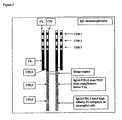
- the basic structure of an immunoglobulin (IgG) molecule comprises two identical light chains and two identical heavy chains linked together by disulphide bridges ( Figure 1 ).
- the light chain which is either lambda or kappa, has a variable region (VL) and a constant region (CL) of approximately 110 amino acid residues each.
- the heavy chain has a variable region (VH) of about 110 amino acid residues, but a much larger constant region (CH) of 300-400 amino acid residues, comprising CH ⁇ 1, CH ⁇ 2 and CH ⁇ 3 regions or domains.
- the constant region (Fc) activates the complement system and binds to a Fc receptor on macrophages, microglia and neutrophiles, which ingest and destroys infecting microorganisms or foreign/non-self antigens.
- This function is particular important since it is part of the therapeutic principle of the antibody, i.e. Fc receptor mediated microglial phagocytosis and clearance of A ⁇ protofibrils.
- Other antibody mediated clearance mechanisms are also operating, i.e. anti-aggregation properties of A ⁇ antibodies and clearance of A ⁇ protofibrils in the periphery, according to the sink hypothesis.
- variable region of the heavy and light chains contains 3 hyper variable regions called complementary determining regions or CDRs.
- the CDR regions are short stretches of about 13-23 amino acid long, located in the VL and VH regions.
- the six CDRs regions on one "arm” of the antibody forms the "pocket” that binds the antigen.
- Figure 1 shows the basic structure of an IgG immunoglobulin and its subdomains.
- Another aspect of the invention pertains to protofibril selective antibodies of high affinity. Affinities in the range of 10 -7 M preferably 10 -8 M, even less than 10 -9 M, less than 10 -10 M, or less than 10 -11 M for protofibrils are described (Example 2). These antibodies have the advantage that they can be administered at lower doses compared to antibodies with affinities in the 10 -6 M range. This has significant clinical advantage in that these high affinity antibodies, which are administered by injection, can be given subcutaneously since only a low amount of the antibody is needed to achieve efficacy. Administration modalities are not limited to subcutaneous injections. Furthermore, the lower doses needed for efficacy will reduce cost of goods for production of the antibody.
- the antibodies are of IgG class, suitable for therapeutic use since it can pass over the blood brain barrier. Clearance of A ⁇ protofibrils in the brain parenchyma is achieved by Fc receptor mediated phagocytosis by microglia cells. Other anti-A ⁇ clearance mechanisms are likely to operate as well. This clearance of soluble A ⁇ protofibrils is a central mechanism of the treatment. A ⁇ protofibrils are considered highly neurotoxic, initiating and driving the disease process. Clearance of A ⁇ protofibrils in the brain is of significant clinical value.
- a ⁇ protofibrils In addition to clearance of A ⁇ protofibrils, other A ⁇ oligomeric forms including A ⁇ fibrils, will be reduced indirectly via removal of A ⁇ protofibrils since different A ⁇ aggregated forms, i.e. dimers, trimers, tetramers and higher oligomeric forms including protofibrils and fibrils, are in equilibrium.
- Example of reduction of plaques, which contain A ⁇ fibrils, is shown in a Alzheimer transgenic mouse model (APPswe) after 72 hour treatment with a high affinity protofibril selective antibody (mAb 158) (Example 3).
- APPswe Alzheimer transgenic mouse model
- mAb 158 high affinity protofibril selective antibody
- clearance of A ⁇ protofibrils by said antibody will also have the advantage to indirectly reduce other A ⁇ aggregated or oligomeric forms.
- Yet another aspect of the invention is a high affinity human A ⁇ protofibril selective antibody of subclass IgG1, which has a high affinity for human Fc ⁇ RI receptors present on microglial cells in the brain.
- a high affinity antibody will lead to efficient clearance of A ⁇ protofibrils which will be of significant therapeutic value.
- the antibodies will exhibit clearance of A ⁇ protofibrils, both in CNS and periphery as compared to other immunotherapeutic strategies such as active vaccination or monoclonal antibody treatments with other monoclonal antibodies of IgG1 subclass targeting other A ⁇ forms.
- the treatment will be efficient early in the disease process when toxic soluble A ⁇ spices such as A ⁇ protofibrils are present at elevated levels but also later in the disease process. Elevated levels of oligomeric A ⁇ forms have been described in a transgenic mouse model exhibiting the Swedish and Arctic mutations APP swearc ( Lord A. et al. 2006 ).
- the high affinity A ⁇ protofibril selective antibodies can reduce or inhibit A ⁇ aggregation thereby reducing levels of soluble oligomeric A ⁇ forms in the brain.
- the high affinity A ⁇ protofibril selective antibodies can bind oligomeric forms of A ⁇ , i.e. A ⁇ protofibrils outside CNS as well, thereby shifting the equilibrium of said A ⁇ forms over the blood brain barrier in such a way as to lower CNS levels of said A ⁇ forms (drainage).
- the high affinity protofibril selective antibodies have low A ⁇ fibril binding (See example 2), reducing the risk for side effects, by less binding to A ⁇ fibrils present in CAA.
- the high affinity A ⁇ protofibril selective IgG antibodies are engineered to reduce complement factor C1q binding to the CH2 domain of IgG1 and reduce complement activation and risk of inflammation.
- This modification can be done in several different ways. One way is to make a chimeric antibody where the CH ⁇ 2 domain of the IgG1 constant region has been deleted and exchanged for the corresponding domain from IgG4 or part of the domain that confers C1q binding. It is well established that IgG4 does not bind C1q and hence does not activate the complement cascade.
- constant region of the heavy chain (CH) is engineered is such a way as to combine the high affinity Fc-receptor domain (CH ⁇ 3) on IgG1 with the IgG4 domain (CH ⁇ 2) which has no binding for the complement factor C1q.
- This new antibody containing the chimeric constant heavy chain (IgG1:CH ⁇ 1, CH ⁇ 2:IgG4, CH ⁇ 3:IgG1) will have the important properties of both efficient clearance of A ⁇ protofibrils through Fc-receptor mediated phagocytosis and reduced risk for side-effects, i.e inflammation such as meningioencephalitis.
- Yet another way of reducing the risk of inflammation is to alter the oligosaccharides structure of the antibody which will reduce complement factor C1q binding and complement activation.
- 30 different structures of the complex biantennary oligosaccharides at Asn-297 in human IgG1 has been described.
- the absence of CH2 associated carbohydrates is believed to cause a conformational change in the "hinge" region of the antibody, reducing interaction efficacies with effector molecules and loss of complement activation function and C1q binding.
- the modification of a high affinity human A ⁇ protofibril selective antibody by site-directed mutagenesis of Asn-297 to any other amino acid will generate an antibody of retained Fc-receptor binding with less C1q binding and hence reduced risk of inflammation in particular at the blood brain barrier.
- An alternative to modify the glycosylation on the antibody is to expressing the antibody in a cell type where the enzyme N-acteylglucosaminyl-transferase I has been inactivated. This will yield an antibody with altered carbohydrate structure at Asn-297. A structure of Man 5 GlcNAc 2, but not limited to this structure, is formed. This carbohydrate modification will reduce complement factor C1q binding and inhibit inflammation ( Wright at al. 1998 ).
- glycosylated protofibril selective antibodies can be achieved by culturing cells expressing antibodies in the presence of tunicamycin, which inhibits glycosylation. These antibodies will have altered complement activating activity as well as altered Fc-receptor function ( Leatherbarrow el al. 1985 ). Screening of clones expressing antibodies with low complement activation and high Fc-receptor binding will generate protofibril selective antibodies that exhibit high Fc-mediated clearance of A ⁇ protofibrils and low C1q binding.
- Yet another aspect of the invention is a high affinity human A ⁇ protofibril selective antibody, of IgG1 subclass, where the complement factor C1q binding site has been modified, i.e. Pro331>Ser331 ( Xu et al. 1994 ), in such a way as to reduce or inhibit binding of complement factor C1q, for the treatment or prevention of AD.
- the proline residue at position 331 in human IgG1 can also be changed to a threonine or glycine or any other polar amino acid. This modification can be achieved by standard molecular biology techniques such as site-directed mutagenesis or DNA deletions.
- Yet another aspect of the invention is the use of high affinity human A ⁇ protofibril selective IgG antibodies to specifically determine protofibril levels in human tissues, in particular in cerebrospinal fluid, blood, urine or saliva as a diagnostic tool or biomarker for Alzheimer's disease.
- Levels of human A ⁇ protofibrils in CSF or blood are likely to be different as compared to a matched elderly control group not having Alzheimer's disease.
- a person who is developing Alzheimer's disease is likely to have increased levels of A ⁇ protofibril levels in CSF or blood.
- an early diagnosis of the disease can be made.
- a ⁇ protofibril selective antibodies in combination with a sandwich ELISA method (Example 2A), where A ⁇ protofibrils have been determined down to 10 pM level. Interference of other A ⁇ forms such as A ⁇ fibrils, A ⁇ monomers and A ⁇ fragments (1-16; 17-40) in the assay, is 10% or less.
- the invention further pertains to the use of a high affinity protofibril specific antibodies for determinations of A ⁇ protofibrils in human and animal tissues, for example, cerebrospinal fluid, blood, serum, urine and brain tissue but not limited to these tissues, providing for a possible diagnostic method for Alzheimer's disease.
- Suitable methods for assaying A ⁇ protofibrils in these tissues as well as in cell cultures using an anti-A ⁇ protofibril antibody are immunoassays such as ELISA, RIA, Western blotting or dot blotting.
- the method would be suitable to follow treatment efficacy (protofibril reduction) in clinical trials and suitable as a diagnostic test for Alzheimer's disease or Down's syndrome.
- a ⁇ protofibrils levels are very low in CSF and blood, a high affinity A ⁇ protofibril selective antibody is needed in a diagnostic test based on an ELISA method, to be able to measure low levels of A ⁇ protofibrils.
- Other supersensitive methods such as proximity ligation (Example 4) (Gullberg 2004 ) or similar amplification systems or Biacore or similar techniques, can be used to increase sensitivity.
- the proximity ligation technique is based on the discovery that different antibodies, raised against different epitopes on an analyte (in this case a protein), may bind near each other on said analyte.
- the distance between said oligonucleotides will be short enough for a connector oligonucleotide, with the aid of ligation components, to form a bridge between the oligonucleotides.
- Amplification components are also added, upon which RT-PCR may be performed. By this principle, an amplifiable DNA sequence, reflecting the identity and amount of the target protein, is generated. This technique makes it possible to obtain an enhanced signal response and thus to detect lower concentrations of analyte.
- a ⁇ protofibril-specific antibodies to detect low concentrations of larger A ⁇ peptide structures, i.e. A ⁇ protofibrils but not A ⁇ monomers. They discovered that the A ⁇ peptides, in the protofibril conformation, exhibits a structure (repetitive units) that makes it possible for two antibodies, according to the present invention, to bind sufficienttly near each other on the protofibril. If said antibodies are conjugated to oligonucleotides, said oligonucleotides may be bridged using a connector oligonucleotide. PCR is performed using amplification components. By this principle, an amplifiable DNA sequence, reflecting the identity and amount of the target protofibril, is generated (see Fig 4A ).
- Proximity ligation or a version of the technique called “rolling circle”, is a highly sensitive technique and particularly well suited for detection of polymeric structures with repeated sequences, such as A ⁇ protofibrils to be used for diagnosis of Alzheimer's disease and other neurodegenerative disorders.
- the invention further pertains to the use of high affinity protofibril specific antibodies in imaging for detection, localization and quantitation of A ⁇ protofibrils in human and animal tissues.
- the antibody could be label with a radioactive ligand such as I 131 , C 14 , H 3 or Gallium 68 , but not limited to these radioisotopes, for detection purposes.
- the method will be suitable as a diagnostic tool for Alzheimer's disease or Down's syndrome.
- Yet another aspect of the invention is to make the antibody spices specific for use in veterinary medicine.
- the diagnostic methods outlined are also suitable for veterinary use.
- Another aspect of the invention is the humanization of said antibodies to avoid side-effect, i.e. to avoid an immunoresponse against said antibodies in humans when used as a therapeutic or diagnostic agent.
- Yet another aspect is a formulation of the antibody in a physiological buffer, for example PBS but not limited to PBS, suitable for administration to humans and animals.
- the antibody product can be freeze dried for better stability.
- the freeze dried formulation can contain an excipient such as manitol but not limited to manitol to stabilize the product after freeze drying.
- the antibody product can contain an antibacterial agent.
- the antibodies or fragments according to the inventions may exhibit amino acid deletions, substitutions and insertions within said CDR regions and/or its framework. Inserted or substituted amino acids may also be amino acid derivatives, with the proviso that the affinity and specificity of the antibody is still intact.
- VH variable heavy chain region
- VL variable light chain region
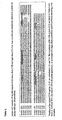
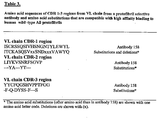
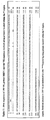
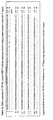
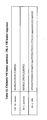
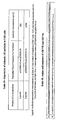
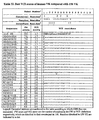
- the amino acid sequence of the CDR regions 1-3 of the VL and VH chains for a high affinity protofibril specific antibody BA9 /158 is shown in Table 1, 2 and 3.
- Sequencing data of other protofibril selective antibodies (BA2, BA3, BA4 and BA7) provide alternative amino acids sequences of the CDR regions but not limited to these.
- the combined amino acid sequences of the CDR1-3 regions of the VH and VL chains create the molecular "pocket” which binds human A ⁇ wild-type protofibrils with high affinity and specificity.
- This "pocket” forms the structural basis of the "Alzheimer's disease epitope”.
- Variations in the CDR amino acid sequence length are observed in both the VH chain and the VL is compatible binding to human A ⁇ protofibrils (Table 2 and 3).
- a shorter CDR region provides a more restricted three dimensional structure of the binding pocket of the antibody, whereas a longer is more flexible.
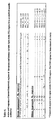
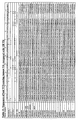
- the amino acid sequence of the framework region of VL and VH regions 1-3 of the VL and VH chains from a high affinity protofibril specific antibody BA9/158 is shown in Table 4 and 5.
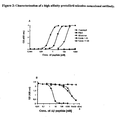
- Example 2 shows a high affinity protofibril selective antibody that cross-reacts a 200-1000-fold less with A ⁇ monomers and less than 40-fold with A ⁇ fibrils, as measured by a sandwich ELISA ( Fig.2A ).
- the antibody has a strong affinity for human A ⁇ 42 wild-type protofibrils, but only very weak affinity for the N-terminal part of the A ⁇ peptide and A ⁇ monomers. No binding was observed to the C-terminal fragment of A ⁇ ( Fig.2B ).
- the antibody does not cross-react with other types of amyloids, like medin or transthyretin.
- the antibody does not recognize human APP, the abundant precursor of A ⁇ .
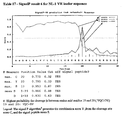
- FIG 2A a sandwich ELISA is shown.
- Antibody 158 was coated in the wells and different A ⁇ forms subsequently added to the well in increasing concentrations. Measurement of bound A ⁇ forms was made by adding biotinylated mAb 158 and HRP labelled Streptavidine. Colour development was measured according to the procedure recommended by the manufacturer.
- FIG. 2B a competitive ELISA is shown.
- An ELISA plate was coated with human A ⁇ protofibrils.
- Antibody 158 was subsequently incubated with increasing amounts of different A ⁇ forms (competition). The incubation mix was added to the microtiter plate wells and free antibody was allowed to bind to immobilized protofibrils in the wells.
- Bound 158 antibody was measured by a second antibody using standard procedures.
- a ⁇ protofibril selective antibody was determined in an Alzheimer transgenic mouse model (APPswe) by an acute intracranial injection.
- Transgenic mice used for efficacy evaluation express human APP, with the Swedish mutation (APP Swe ).
- APP Swe Swedish mutation
- antibodies are injected directly into plaque-rich regions of the brain parenchyma and effects on neuropathology are assessed after 72 hours ( Wilcock et al., 2003 ).
- Other studies have shown that the direct application of anti-A ⁇ antibodies results in a rapid clearance of amyloid deposits in vivo ( Bacskai et al., 2001; Brendza et al., 2005 ).
- the injection of high affinity A ⁇ protofibril selective antibody leads to a significant plaque reduction in the APP Swe mouse model ( Figure 3 ).
- FIG 3 the therapeutic efficacy of a high affinity protofibril selective antibody in transgenic mouse model (APPswe) was tested.
- A A 14 months old APPSwe transgenic mouse was intracranially injected with PBS and B: high affinity protofibril selective antibody (158) at 1 ⁇ g/ ⁇ l and examined 72 hours following injection. Marked clearance of A ⁇ burden is noticeable in the subiculum close to the injection site (B; arrow) as compared to the control side (A; arrow).
- Proximity ligation in combination with high affinity protofibril selective antibody for measurement of A ⁇ protofibrils Human wild-type A ⁇ protofibrils were detected down to 10 pM-range whereas the A ⁇ monomer preparation were not detected at all.
- the combination of the hypersensitive proximity ligation method and a high affinity antibody is particularly advantageous since it provides a system to determine only oligomeric forms of the analyte, which is particularly suitable when diagnosing Alzheimer's disease and other protein "aggregation" diseases such as prion disease, Creutzfelt-Jacob, amyloidosis and Parkinson's disease.
- Proximity ligation assay Method description (from Gullberg et al., 2004): Step 1, incubation of sample with proximity probe pair ( ⁇ 1 h); step 2, addition of all components required for ligation and detection by quantitative PCR ( ⁇ 5 min ligation time). A high affinity protofibril selective monoclonal antibody was used in the assay; step 3, quantitative PCR ( ⁇ 2 h). Synthetic A ⁇ monomer and A ⁇ protofibril preparations were diluted and tested for their reactivity in proximity ligation assay described above.
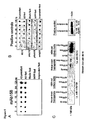
- mAb 158 does not recognize a generic amyloid epitope.
- a ⁇ conformation dependent antibodies have been shown to bind oligomers and fibrils of other amyloidogenic proteins, suggesting a common epitope present on all amyloid aggregates. Due to technical difficulties in generating protofibrils from other amyloidogenic proteins than A ⁇ , mAb158 was instead tested against different amyloid fibrils.
- the dot blot assay was used for these experiments since inhibition ELISA, where the antibody-antigen reactions take place in solution, is not suitable for insoluble antigens like fibrils.
- the dot blot assay is however not suitable for evaluation of antibody specificity for various A ⁇ forms, i.e. for measuring differences in selectivity for profibrils and fibrils.
- Fibrils of medin, islet amyloid polypeptide (IAPP) and ⁇ -synuclein were immobilized on a nitrocellulose membrane to maintain their native conformations.
- mAb158 did not exhibit reactivity with any amyloid other the A ⁇ fibril ( Fig 5A ).
- the binding of mAb 158 to A ⁇ fibrils suggests that part of the A ⁇ protofibril epitope is present also in the A ⁇ fibril structure.
- HEK-cell culture media (mock, APP Swe and APP Are-Swe ) and mouse brain homogenates (non-transgenic, APP Swe and APP Are-Swe ) were immunoprecipitated with mAb158 or 6E10, followed by a denaturing Western blot with 6E10 as detecting antibody ( Fig 5C ).
- mAb158 did not immunoprecipitate ⁇ APPs from cell culture media or full length APP from mouse brain homogenates, whereas, as expected, 6E10 did.
- a ⁇ protofibril specific sandwich ELISA To enable measurements of A ⁇ protofibrils in biological samples a sandwich ELISA with mAb158 as both capturing and detecting antibody was established. This assay measures A ⁇ protofibrils with a detection limit of 1 pM and with a linear range up to 250 pM ( Fig 6A , lines indicate linear regression of the standard curves).
- the concentration 1 pM is based on the molecular weight of one A ⁇ monomer (4514 g/mol), Though, since the molecular weight of a protofibril has been estimated to be at least 100 kDa, the limit of detection calculated as molar A ⁇ protofibrils could be as low as 50 fM.
- a standard curve of A ⁇ Arc protofibrils gave a lower signal than wild type A ⁇ protofibrils, possibly due to differences in A ⁇ protofibril size ( Fig 6A, 6B ). Titrated synthetic LMW-A ⁇ (Low Molecular Weight A ⁇ ).
- Low Molecular Weight A ⁇ monomers, dimers and trimers of A ⁇ having a molecular weight of approximately 4-12 kDa.
- a ⁇ protofibrils and A ⁇ 1-16 were used to validate the conformation specificity of the ELISA ( Fig 6B ), where the hydrophilic A ⁇ 1-16 peptide was used since it is not expected to aggregate.
- An ELISA composed of two identical antibodies requires at least a dimer of a protein to produce a signal and as predicted, A ⁇ 1-16 was not detected with the mAb158 sandwich-ELISA even at ⁇ M-concentrations ( Fig 6B ).
- This problem was investigated by adding an increasing excess of A ⁇ 1-16 to a fixed concentration of A ⁇ protofibrils (50 pM, expressed as monomer units) and analyzing it with both the mAb158 ELISA and a 6E10-6E10 sandwich ELISA ( Fig 6C ).
- the A ⁇ protofibril concentration in APP Arc-Swe HEK -cell culture media was 28 pM ( ⁇ 2), significantly higher (p ⁇ 0.0001) than the 8.2 pM ( ⁇ 0.3) seen in APP Swe ( Fig 7A ). No A ⁇ protofibrils could be detected in mock media. Levels of A ⁇ protofibrils were also measured in brains from 10 months old APP Arc-Swe and APP Swe transgenic mice with both plaques and intraneuronal A ⁇ pathology (according to Lord et al.). Brains were homogenized in TBS and centrifuged prior to analysis in order to recover the soluble A ⁇ fraction.
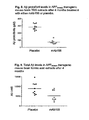
- mAb158 significantly lowers A ⁇ protofibrils and total A ⁇ in APPswearc transgenic mice after i.p. administration
- mAb158 (12 mg/kg) was injected i.p. once weekly for 18 weeks in 9-10 months old APPswearc mice.
- brains were isolated and homogenised in TBS and subsequently centrifuged to sediment insoluble material. The insoluble material was solubilised in formic acid.
- two fractions were obtained from mouse brains i.e. a TBS fraction and a formic acid fraction.
- a ⁇ protofibril levels in the TBS fractions were determined by an ELISA.
- a significant reduction of A ⁇ protofibrils was found in the mAb158 treatment group compared to the placebo group ( Fig 8).
- Figure 8 shows the A ⁇ protofibril levels in APPswearc transgenic mouse brain TBS extracts after 4 months treatment with either mAb158 or placebo.
- DNA thermal cycler GeneAmp 9600 Perkin Elmer N801-0177 A designated tissue culture laboratory containing a class II microbiological safety cabinet fitted with a UV-lamp Walker Safety Cabinets Ltd. N/a Innova® bench top incubator shaker New Brunswick Scientific 4000 Bench top centrifuge Fisher Scientific CEK-126-010N CO2-gassed 37° incubator RossLab plc HSO-501TVBB Microbiological incubator Kendro / Heraeus B6060 Electroporator Model: Gene Pulser II Bio-Rad Laboratories Ltd. 341BR-3092 ELISA reader: Microplater Reader 3550 Bio-Rad Laboratories Ltd. 3550 Microplate Manager® 2.2 data analysis software package for Macintosh computer Bio-Rad Laboratories Ltd.
- ELISA plates Nunc MaxiSorp Invitrogen Life Technologies 43945A GeneAmpTM PCR reaction tubes Perkin Elmer N801-0180 Glasstic® disposable cell-counting slide Bio-stat Diagnostic 887144 Nunc inoculating needles Life Technologies 254399 tissue culture petri 100x20mm, multi-vent Helena Biosciences 93100 tissue culture plate: 6-well + lid Corning C3516 tissue culture plate: 24-well + lid Corning C3526 Immunology and molecular biology reagents Article UK Supplier Catalog No. Lot No.
- Snap-frozen cell pellets of the mouse hybridoma 158 (labelled vials 060824#158 5x10 6 cells) were received by TAG on October 3 2006. These cells were stored frozen until processing using the Qiagen RNeasy midi kit to isolate RNA following the manufacturers protocol.
- 158 RNA was subjected to reverse transcription to produce 158 cDNA using the Amersham Biosciences 1st strand synthesis kit following the manufacturers protocol -This was repeated to generate 3 independent cDNA products (rounds 1, 2 and 3) in order to obviate DNA mutations due to the RT reaction.
- Hybridoma 158 cDNA was amplified by PCR in 23 separate reactions.
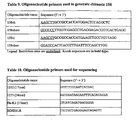
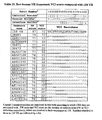
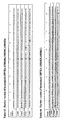
- Immunoglobulin kappa chain variable region (VK) cDNA was amplified using 11 VK primers (MKV1-11) in combination with the kappa constant region primer MKC (Table 6).
- immunoglobulin heavy chain variable region (VH) cDNA was amplified by PCR using 12 different VH primers (MHV 1-12) in combination with a mix of the four IgG constant region primers (MHCG1/2a/2b/3: Table 7 ).
- the result of the initial set of IgH PCR reactions was the single amplification product using MHV5 primer. None of the other 11 primer pairs gave a PCR product.
- the product of the PCR reaction primed by the oligonucleotide primers: MHV5 + (MHCG1/2a/2b/3 mixture) was ligated into the pCR2.1 ® -TOPO ® vector using the TOPO-TA cloning ® kit.
- the result of the initial set of IgK PCR reactions was two single amplification products using primers MKV1 and MKV2 with MKC. The other 9 primer pairs generated no product.
- the products of the PCR reaction primed by the oligonucleotide primers: MKV1 or MKV2 + MKC were ligated into the pCR2.1 ® -TOPO ® vector using the TOPO-TA cloning ® kit.
- E.coli TOP 10 bacteria transformed with the ligated vector were cloned on LB/ ampicillin /X-gal agar plates, by picking onto agar grid and into PCR screening mixture.
- the cloned plasmid inserts were screened by PCR amplification.
- the PCR products were gel electrophoresed and clones producing the correct-sized PCR amplification product (500bp approx) were identified.
- Overnight cultures (5ml) of each clone were processed using the QIAprep Spin Miniprep Kit Protocol, to produce DNA plasmid minipreps.
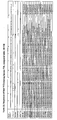
- Plasmid clones from each independent set of RT-PCR reactions were sequenced in both directions using the 1212 and 1233 primers (Table 10). Plasmids were sequenced using the BigDye® Terminator v3.0 Cycle Sequencing Ready Reaction Kit (ABI), cycled on a GeneAmp9600 PCR machine and analysed on an ABI 310 capillary sequencer.
- the chimeric 158VK protein and DNA sequence is shown in Table 14.
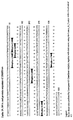
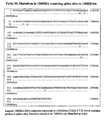
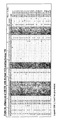
- the consensus sequence (158 VH) of VH clones generated using PCR primers MHV5 and MHCG1/2a/2b/3 mixture on 1 st strand cDNAs rounds 1-3 is shown in Table 15. As with 158 VK, there are some differences from the FW1 sequence shown in Tables 1, 4 and 5. The most identical mouse VH leader sequence to the fragment of leader, not encoded by our primers, was NL-1 (Table 16).
- chimeric expression vectors entails adding a suitable leader sequence to VH and VK, preceded by a Hin dIII restriction site and a Kozak sequence.
- the Kozak sequence (Table 8) ensures efficient translation of the variable region sequence. It defines the correct AUG codon from which a ribosome can commence translation, and the most critical base is the adenine at position -3, upstream of the AUG start.
- the leader sequence is selected as the most similar mouse leader sequence in the Kabat database.
- the construction of the chimeric expression vectors entails introducing a 5' fragment of the human ⁇ 1 constant region, up to a natural Apa I restriction site, contiguous with the 3' end of the J region of 158.
- the CH is encoded in the expression vector downstream of the inserted VH sequence but lacks the V-C intron.
- the natural splice donor site (Table 8) and a Bam HI site is added downstream of the V region.
- the splice donor sequence facilitates splicing out the kappa V:C intron which is necessary for in-frame attachment of the VK to the constant region.
- mice VH and VK genes were analysed to identify any unwanted splice donor sites, splice acceptor sites, Kozak sequences and for the presence of any extra sub-cloning restriction sites which would later interfere with the subcloning and/or expression of functional whole antibody. In this case none were found.
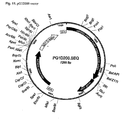
- Plasmid DNA preparations of the expression vectors pKN100, and pG1D200 were purified using Qiagen Maxi kits following the manufacturers protocol. Plasmid DNA Purification using QIAGEN Plasmid Midi and Maxi Kits, from 500ml cultures of TOP10 bacteria transfected with either vector. The vector maps are shown in Figs 10 and 11 .
- the mouse leader sequence K5.1# was incorporated into the design of the chimeric 158 VK. Primers were designed to generate a PCR product containing this complete leader, and 158 VK, with terminal restriction sites Hind III and Bam HI for cloning into the pKN100 expression vector (Table 9).
- the forward primer 158v1 introduces a Hind III restriction site; a Kozak site and the K5.1# leader sequence.
- the back primer 158vlrev introduces: a splice donor site and a Bam HI restriction site.
- the leader sequence NL-1 was incorporated into the design of the chimeric 158 VH.
- Primers were designed to generate a PCR product containing this leader, and the 158 VH region, with terminal restriction sites Hin dIII and Apa I for cloning into the pG1D200 expression vector. These are shown in Table 9.
- the forward primer, 158vh introduces a Hin dIII restriction site; a Kozak translation initiation site and the NL-1 leader sequence.
- the back primer, 158vhrev introduces the 5' end of the ⁇ 1 C region and a natural Apa I restriction site.
- the signal peptide cleavage site prediction for K5.1 leader sequence of VK is shown in Table 17.
- the 158 VH DNA fragment was amplified with primers: 158vh and 158vhrev (Table 9).
- the 450bp (approx) PCR product was T-A ligated into the vector pCR2.1 and used to transform chemically competent TOP10 bacteria. Clones were selected by appropriate insert size and sequenced using the 1212 primer (Table 10).
- the correct expression insert was subcloned into pG1D200 expression vector and the correct subclone was selected by DNA sequencing using primer BDSH61R (Table 10). This clone was grown in 200 ml culture to produce plasmid DNA using the Qiagen Maxi Kit using the manufacturers protocol.
- the chimeric 158VH protein and DNA sequence is shown in Table 18.
- the 158 VK DNA fragment was amplified with primers 158v1 and 158vlrev (Table 9).
- the 450bp (approx) PCR product was T-A ligated into vector pCR2.1 and used to transform chemically competent TOP10 bacteria. Clones were selected by insert size and sequenced using the 1212 primer (Table 10). The correct clone was subcloned into pKN100 expression vector. The correct subclone was selected by screening for insert size and DNA sequencing using primer Hu-K2 (Table 10). This clone was grown in 200 ml culture to produce plasmid DNA using the Qiagen Maxi Kit using the manufacturers protocol.
- COS 7 cells One vial of COS 7 cells was thawed and grown in DMEM supplemented with 10% Fetal clone I serum and antibiotics. One week later, cells (0.8ml at 10 7 /ml) were electroporated with pG1D200158VH plus pKN100158VK (10 ⁇ g DNA each). The cells were grown in 8ml of growth medium in petri dishes for 3 days.
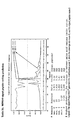
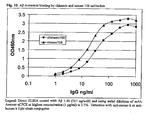
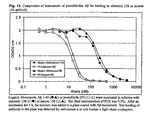
- Two ELISAs was used to analyse the antigen binding of chimeric 158. Using the 3.7 ⁇ g/ml chimeric antibody conditioned medium, binding to A ⁇ monomer was measured by a direct ELISA protocol ( Figure 12 ) and compared to the mouse 158 IgG. Secondly, a competition ELISA was done using either monomer or protofibril mixed in the fluid phase with antibody, which subsequently bound to A ⁇ monomer in the solid phase ( Figure 13 ). These showed that the chimeric 158 antibody binds to amyloid A ⁇ monomer and protofibril similarly to the original 158 mouse antibody.
- the chimeric antibody binds amyloid A ⁇ monomer and protofibrils as shown by the direct binding ELISA and the competition ELISA respectively. This evidence confirms that the combination of 158 VH and 158 VK chains encodes the anti-LSAP antibody 158 and indicates that these sequences are suitable for the humanisation procedure to generate a humanised 158 antibody.
- Proteins of Immunological Interest were used to compile a database of immunoglobulin protein sequences in Kabat alignment.
- Our database contains 9322 human VH and 2689 human VK sequences.
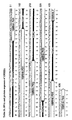
- the sequence analysis program, SR 7.6, was used to query the human VH and VK databases with 158 VH and 158 VK protein sequences (Table 20).
- VCI residues located within the V-region framework (FW) are shown in Table 21.
- AJ556669 has an unusual Pro74 not seen in the other human sequences in this dataset, leading us to discount it in the initial analysis. Pro74 is, however, present in the 158VH sequence, so AJ556669 could be considered as an alternative FW for humanisation, if the VH construct based on AF062243 does not bind antigen.
- the alignment of these sequences (Table 23) highlights their differences.
- AF062243 uniquely within this dataset has the conservative change T(82a)S and the conservation of F79.
- the other features of AF062243 are the conservative changes D1E, K19R, A23S, T77S, S118T. All other FW changes were common to all the frameworks in Table 23. AF062243 was selected as the framework on which to base 158RHA.
- 158RHA The design of 158RHA is simply the grafting of CDR 1, 2 and 3 from 158 VH into the acceptor FW of AF062243.
- the human germline V-gene most identical to AF062243 is VH M99649 (VH3-07), (Table 24) from which the leader peptide was extracted (Table 25).
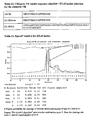
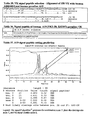
- the SignalP algorithm Nielsen,H., J.Engelbrecht, S.Brunak, and G.von Heijne. 1997. Identification of prokaryotic and eukaryotic signal peptides and prediction of their cleavage sites. Protein Eng 10:1-6 .) predicted that it would cut appropriately with signal peptidase (Table 26).
- Table 27 shows the scheme of grafting 158 VH CDR 1, 2 and 3 into the AF062243 FW, to generate 158RHA protein sequence.
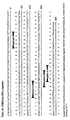
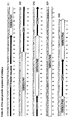
- Table 28 shows the generation of the DNA sequence 158RHAss from the natural DNA sequences of 158 VH and AF062243. Analysis of the 158RHAss DNA sequence predicted the presence of splice donor sites, the prediction scores of which are shown in Table 29. Non-coding mutations were introduced to inactivate these predicted splice sites, as shown in Table 30 to generate the final 158RHA DNA sequence (Table 31).
- VCI residues The human VK sequences with highest identity to 158 VK at VCI residues are shown in Table 32 together with the number of VCI residues (VCI score) and FW residues (FW score) identical to 158 VK. Eleven sequences have all VCI residues identical to 158 VK.
- Table 33 shows that all these sequences have CDR lengths identical to 158 VK.
- Table 34 highlights their differences, showing that K45 is retained in AB064054 only, which also retains I85.
- the G100P change is unremarkable because P100 is common, having an incidence of 15% in our human VK database.
- the two substitutions: T7S and K74R, are conservative, and all other substitutions are common to all the sequences in Table 34. For these reasons AB064054 was selected to generate 158RNA.
- 158RKA is the simple grafting of the CDRs 1, 2 and 3 from 158 VK into the acceptor FW of human AB064054.
- the nearest germline V-gene to AB064054 is A19 (Table 35), from which the leader peptide was extracted (Table 36).
- the SignalP algorithm predicted appropriate cutting (Table 37) of this leader peptide.
- Table 38 shows the generation of the protein sequence of 158RKA by intercalation of the 158 VK CDRs into the FW of AB064054.
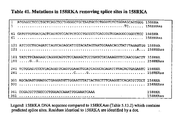
- Table 39 shows the generation of the DNA sequence of 158RKAss from the natural DNA sequence of 158 VK and AB064054. Analysis of the 158RKAss predicted the presence of splice donor sites, the scores of which are shown in Table 40. Non-coding mutations (41) were introduced to inactivate these sites and generate the final 158RKA DNA construct (Table 42).
- the 158RKA and 158RHA genes were inserted into an expression vector containing the IgG1 constant region. This construct was expressed in COS cells to generate the humanized 158 antibody.
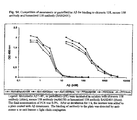
- the humanized 158 antibody was tested for binding activity and specificity in a competitive ELISA.
- the humanised antibody exhibited identical binding properties as to mAb158 and the 158 chimeric antibody (see Figure 14 .)
Landscapes
- Health & Medical Sciences (AREA)
- Chemical & Material Sciences (AREA)
- Life Sciences & Earth Sciences (AREA)
- Engineering & Computer Science (AREA)
- Medicinal Chemistry (AREA)
- Immunology (AREA)
- General Health & Medical Sciences (AREA)
- Organic Chemistry (AREA)
- Biomedical Technology (AREA)
- Molecular Biology (AREA)
- Bioinformatics & Cheminformatics (AREA)
- Proteomics, Peptides & Aminoacids (AREA)
- Biochemistry (AREA)
- Animal Behavior & Ethology (AREA)
- Veterinary Medicine (AREA)
- Public Health (AREA)
- Pharmacology & Pharmacy (AREA)
- Neurology (AREA)
- Neurosurgery (AREA)
- Hematology (AREA)
- Urology & Nephrology (AREA)
- Microbiology (AREA)
- Biophysics (AREA)
- Genetics & Genomics (AREA)
- General Chemical & Material Sciences (AREA)
- Chemical Kinetics & Catalysis (AREA)
- Nuclear Medicine, Radiotherapy & Molecular Imaging (AREA)
- Analytical Chemistry (AREA)
- Biotechnology (AREA)
- Cell Biology (AREA)
- Food Science & Technology (AREA)
- Physics & Mathematics (AREA)
- General Physics & Mathematics (AREA)
- Pathology (AREA)
- Epidemiology (AREA)
- Mycology (AREA)
- Psychiatry (AREA)
- Hospice & Palliative Care (AREA)
- Endocrinology (AREA)
- Communicable Diseases (AREA)
Claims (28)
- Antikörper oder Fragment davon, welcher bzw. welches selektiv ist und eine hohe Affinität zu menschlichen Aβ-Protofibrillen aufweist, dadurch gekennzeichnet, dass der Antikörper oder das Fragment in seinen sechs CDR-Bereichen die folgende Konsensus-Sequenzen aufweist:VH-CDR1 SFGMHVH-CDR2 YISSGSSTIYYGDTVKGVH-CDR3 EGGYYYGRSYYTMDYVL-CDR1 RSSQSIVHSNGNTYLEVL-CDR2 KVSNRFSVL-CDR3 FQGSHVPPT
- Antikörper nach Anspruch 1, dadurch gekennzeichnet, dass der Antikörper monoklonal ist.
- Antikörper nach Anspruch 1 oder 2, dadurch gekennzeichnet, dass Aminosäure-Prolin an Position 331 im menschlichen IgG1 durch Serin oder eine andere polare Aminosäure ersetzt wird.
- Antikörper nach einem der Ansprüche 1 bis 3, dadurch gekennzeichnet, dass der Antikörper von der IgG-Klasse ist.
- Antikörper nach Anspruch 4, dadurch gekennzeichnet, dass der Antikörper von der IgG1 oder der IgG4-Subklasse ist.
- Antikörper nach Anspruch 5, dadurch gekennzeichnet, dass der Antikörper eine Chimäre aus IgG1- und IgG4-Subklassen ist, wobei der konstante Schwerkettenbereich CH2 oder ein Abschnitt des CH2 aus IgG4 besteht und die Bereiche CH1 und CH3 aus IgG1 bestehen.
- Antikörper nach einem der Ansprüche 1 bis 6, dadurch gekennzeichnet, dass der Antikörper die gesamte Schwerketten-Aminosäuresequenz gemäß Tabelle 31 und die gesamte Leichtketten-Aminosäuresequenz gemäß Tabelle 42 aufweist.
- Antikörper, welcher sich an menschliche Aβ-Protofibrille bindet, dadurch gekennzeichnet, dass der Antikörper eine schwere Kette und eine leichte Kette aufweist, wobei die schwere Kette die Aminosäuresequenz 158RHA in Tabelle 27 und die leichte Kette die Aminosäuresequenz 158RKA in Tabelle 38 aufweist.
- Antikörper nach einem der Ansprüche 1 bis 6, dadurch gekennzeichnet, dass der Antikörper Mutationen in der schweren Kette (VH) gemäß Tabelle 43 aufweist, wobei die Mutationen aus E bis D an Kabat-Position 1, aus A bis P an Kabat-Position 74 und aus S bis T an Kabat-Position 82A ausgewählt werden, und/oder Mutationen in der leichten Kette (VK) gemäß Tabelle 44 aufweist, wobei die Mutationen aus V bis L an Kabat-Position 3 und aus P bis G an Kabat-Position 100 ausgewählt werden, oder dass der Antikörper Kombinationen aus diesen VH- und VK-Mutationen aufweist.
- Antikörper nach einem der Ansprüche 1 bis 6, dadurch gekennzeichnet, dass der Antikörper die gesamte Schwerkettensequenz gemäß Tabelle 31 und die gesamte Leichtkettensequenz gemäß Tabelle 42 aufweist, mit der Ausnahme, dass die Mutation S23A in die schwere Kette eingeführt worden ist.
- Antikörper nach einem der Ansprüche 1 bis 10, dadurch gekennzeichnet, dass der Antikörper menschlich oder humanisiert oder verändert ist, um Antigenität in Menschen zu vermindern.
- Antikörper nach einem der Ansprüche 1 bis 11, dadurch gekennzeichnet, dass das Spezifitätsverhältnis zwischen Aβ-Monomeren und Protofibrillen mindestens 1:200 gemäß Bestimmung durch die kompetitive ELISA-Methode beträgt.
- Antikörper nach einem der Ansprüche 1, 2, 4, 5 oder 6, dadurch gekennzeichnet, dass der Antikörper ein Maus-Antikörper ist.
- Antikörper nach Anspruch 13, dadurch gekennzeichnet, dass der Antikörper die gesamte Leichtkettensequenz aufweist, welche durch die DNA-Sequenz 158 VK gemäß Tabelle 11 codiert ist, sowie die gesamte Schwerkettensequenz, welche durch die DNA-Sequenz 158VH gemäß Tabelle 15 codiert ist.
- Zusammensetzung, welche den Antikörper gemäß einem der Ansprüche 1 bis 14 sowie einen pharmazeutisch verträglichen Puffer aufweist.
- Zusammensetzung nach Anspruch 15, welche des Weiteren ein antibakterielles Mittel aufweist.
- Zusammensetzung nach Anspruch 15 oder 16, dadurch gekennzeichnet, dass die Zusammensetzung gefriergetrocknet ist.
- Zusammensetzung nach Anspruch 17, dadurch gekennzeichnet, dass die Zusammensetzung zusammen mit einem Hilfsstoff gefriergetrocknet ist, um die Stabilität des Antikörpers während und nach der Gefriertrocknung zu erhöhen.
- Zusammensetzung nach Anspruch 18, dadurch gekennzeichnet, dass der Hilfsstoff Mannitol oder Trehalose ist.
- Verfahren zur Erfassung von Aβ-Protofibrillen in vitro, wobei das Verfahren die folgenden Schritte aufweist:- Beifügen des Antikörpers gemäß einem der Ansprüche 1-14 zu einer biologischen Probe, welche Aβ-Protofibrille aufweist oder bei welcher man vermutet, dass sie solche aufweist.- Messen der Konzentration des Komplexes, welcher zwischen dem Aβ-Protofibril und dem Antikörper gebildet wird.
- Verfahren nach Anspruch 20, dadurch gekennzeichnet, dass das Erfassungsverfahren ein Immunoassay ist.
- Verfahren nach Anspruch 20, dadurch gekennzeichnet, dass das Erfassungsverfahren ein Proximity Ligation Assay ist.
- Antikörper nach einem der Ansprüche 1 bis 14 zur Verwendung in einem Verfahren zur Diagnose von Alzheimer-Krankheit, wobei das Verfahren die folgenden Schritte aufweist:- Hinzufügen des in einem der Ansprüche 1 bis 14 definierten Antikörpers zu einer von einer Testperson entnommenen Probe; und- Messen der Konzentration des zwischen dem Antikörper und beliebigen Aβ-Protofibrillen in der Probe gebildeten Komplex.
- Antikörper nach einem der Ansprüche 1 bis 14 zur Verwendung in einem Verfahren zur Diagnose des Down-Syndroms, der Lewy-Körper-Demenz oder der vaskulären Demenz, wobei das Verfahren die folgenden Schritte aufweist:- Hinzufügen des in einem der Ansprüche 1 bis 14 definierten Antikörpers zu einer von einer Testperson entnommenen Probe; und- Messen der Konzentration des zwischen dem Antikörper und beliebigen Aβ-Protofibrillen in der Probe gebildeten Komplex.
- Verwendung des Antikörpers gemäß einem der Ansprüche 1 bis 14 oder der Zusammensetzung gemäß einem der Ansprüche 15 bis 19 zur Bereitung eines Medikaments für die Behandlung von Alzheimer-Krankheit.
- Verwendung des Antikörpers gemäß einem der Ansprüche 1 bis 14 oder der Zusammensetzung gemäß einem der Ansprüche 15 bis 19 zur Bereitung eines Medikaments für die Behandlung von Down-Syndrom, Lewy-Körper-Demenz oder vaskulärer Demenz.
- Antikörper nach einem der Ansprüche 1 bis 14 oder der Zusammensetzung nach einem der Ansprüche 15 bis 19 zur Verwendung bei der Behandlung von Alzheimer-Krankheit.
- Antikörper nach einem der Ansprüche 1 bis 14 oder der Zusammensetzung nach einem der Ansprüche 15 bis 19 zur Verwendung bei der Behandlung von Down-Syndrom, Lewy-Körper-Demenz oder vaskulärer Demenz.
Priority Applications (5)
| Application Number | Priority Date | Filing Date | Title |
|---|---|---|---|
| PL07747965T PL2004688T5 (pl) | 2006-03-23 | 2007-03-23 | Ulepszone przeciwciała wobec protofibryli oraz ich zastosowania |
| EP10195985A EP2325209A3 (de) | 2006-03-23 | 2007-03-23 | Verbesserte protofibril selektive Antikörper und deren Verwendung |
| SI200730510T SI2004688T2 (sl) | 2006-03-23 | 2007-03-23 | Izboljšana protofibrilno selektivna protitelesa in njihova uporaba |
| RS20110122A RS51723B2 (sr) | 2006-03-23 | 2007-03-23 | Poboljšana antitela selektivna za protofibrile i njihova primena |
| CY20111100288T CY1111337T1 (el) | 2006-03-23 | 2011-03-15 | Βελτιωμενα επιλεκτικα πρωτοϊνιδιων αντισωματα και η χρηση αυτων |
Applications Claiming Priority (3)
| Application Number | Priority Date | Filing Date | Title |
|---|---|---|---|
| SE0600662 | 2006-03-23 | ||
| SE0602591 | 2006-11-30 | ||
| PCT/SE2007/000292 WO2007108756A1 (en) | 2006-03-23 | 2007-03-23 | Improved protofibril selective antibodies and the use thereof |
Related Child Applications (2)
| Application Number | Title | Priority Date | Filing Date |
|---|---|---|---|
| EP10195985A Division-Into EP2325209A3 (de) | 2006-03-23 | 2007-03-23 | Verbesserte protofibril selektive Antikörper und deren Verwendung |
| EP10195985.6 Division-Into | 2010-12-20 |
Publications (4)
| Publication Number | Publication Date |
|---|---|
| EP2004688A1 EP2004688A1 (de) | 2008-12-24 |
| EP2004688B1 true EP2004688B1 (de) | 2010-12-22 |
| EP2004688B8 EP2004688B8 (de) | 2011-03-02 |
| EP2004688B2 EP2004688B2 (de) | 2014-03-05 |
Family
ID=38522718
Family Applications (2)
| Application Number | Title | Priority Date | Filing Date |
|---|---|---|---|
| EP07747965.7A Active EP2004688B2 (de) | 2006-03-23 | 2007-03-23 | Verbesserte protofibrilselektive antikörper und deren verwendung |
| EP10195985A Withdrawn EP2325209A3 (de) | 2006-03-23 | 2007-03-23 | Verbesserte protofibril selektive Antikörper und deren Verwendung |
Family Applications After (1)
| Application Number | Title | Priority Date | Filing Date |
|---|---|---|---|
| EP10195985A Withdrawn EP2325209A3 (de) | 2006-03-23 | 2007-03-23 | Verbesserte protofibril selektive Antikörper und deren Verwendung |
Country Status (29)
| Country | Link |
|---|---|
| US (2) | US8025878B2 (de) |
| EP (2) | EP2004688B2 (de) |
| JP (1) | JP5033868B2 (de) |
| KR (1) | KR101413615B1 (de) |
| CN (1) | CN101421303B (de) |
| AT (1) | ATE492561T1 (de) |
| AU (1) | AU2007227813B9 (de) |
| BE (1) | BE2025C539I2 (de) |
| BR (1) | BRPI0709050B1 (de) |
| CA (1) | CA2630344C (de) |
| CY (2) | CY1111337T1 (de) |
| DE (1) | DE602007011415D1 (de) |
| DK (1) | DK2004688T4 (de) |
| FI (1) | FIC20250030I1 (de) |
| FR (1) | FR25C1034I2 (de) |
| HR (1) | HRP20110203T4 (de) |
| HU (1) | HUS2500037I1 (de) |
| IL (1) | IL191331A (de) |
| MX (1) | MX2008012223A (de) |
| MY (1) | MY169492A (de) |
| NL (1) | NL301343I2 (de) |
| NO (2) | NO347079B1 (de) |
| NZ (1) | NZ567888A (de) |
| PL (1) | PL2004688T5 (de) |
| RS (1) | RS51723B2 (de) |
| RU (1) | RU2429244C2 (de) |
| SI (1) | SI2004688T2 (de) |
| WO (1) | WO2007108756A1 (de) |
| ZA (1) | ZA200805805B (de) |
Cited By (1)
| Publication number | Priority date | Publication date | Assignee | Title |
|---|---|---|---|---|
| US9089529B2 (en) | 2011-10-25 | 2015-07-28 | Prothena Therapeutics Limited | Antibody formulations and methods |
Families Citing this family (104)
| Publication number | Priority date | Publication date | Assignee | Title |
|---|---|---|---|---|
| AU2001268005A1 (en) | 2000-07-07 | 2002-01-21 | Lars Lannfelt | Prevention and treatment of alzheimer's disease |
| DE10303974A1 (de) | 2003-01-31 | 2004-08-05 | Abbott Gmbh & Co. Kg | Amyloid-β(1-42)-Oligomere, Verfahren zu deren Herstellung und deren Verwendung |
| SE0401601D0 (sv) | 2004-06-21 | 2004-06-21 | Bioarctic Neuroscience Ab | Protofibril specific antibodies and uses thereof |
| PL1976877T5 (pl) | 2005-11-30 | 2017-09-29 | Abbvie Inc | Przeciwciała monoklonalne przeciwko białku amyloidu beta oraz ich zastosowania |
| RU2442793C2 (ru) | 2005-11-30 | 2012-02-20 | Эбботт Лэборетриз | АНТИТЕЛА ПРОТИВ ГЛОБУЛОМЕРА Аβ, ИХ АНТИГЕНСВЯЗЫВАЮЩИЕ ЧАСТИ, СООТВЕТСТВУЮЩИЕ ГИБРИДОМЫ, НУКЛЕИНОВЫЕ КИСЛОТЫ, ВЕКТОРЫ, КЛЕТКИ-ХОЗЯЕВА, СПОСОБЫ ПОЛУЧЕНИЯ УКАЗАННЫХ АНТИТЕЛ, КОМПОЗИЦИИ, СОДЕРЖАЩИЕ УКАЗАННЫЕ АНТИТЕЛА, ПРИМЕНЕНИЯ УКАЗАННЫХ АНТИТЕЛ И СПОСОБЫ ИСПОЛЬЗОВАНИЯ УКАЗАННЫХ АНТИТЕЛ |
| MY169492A (en) | 2006-03-23 | 2019-04-15 | Bioarctic Neuroscience Ab | Improved protofibril selective antibodies and the use thereof |
| EP4793360A2 (de) | 2006-03-31 | 2026-08-19 | Chugai Seiyaku Kabushiki Kaisha | Verfahren zur kontrolle der blut-pharmazeutizität von antikörpern |
| ES2544888T3 (es) | 2006-06-08 | 2015-09-04 | Chugai Seiyaku Kabushiki Kaisha | Prevención o remedio para enfermedades inflamatorias |
| US8455626B2 (en) | 2006-11-30 | 2013-06-04 | Abbott Laboratories | Aβ conformer selective anti-aβ globulomer monoclonal antibodies |
| ES2610474T3 (es) | 2007-01-11 | 2017-04-27 | Michael Bacher | Diagnóstico y tratamiento de la enfermedad de Alzheimer y otras enfermedades neurodegenerativas causantes de demencia |
| US8895004B2 (en) | 2007-02-27 | 2014-11-25 | AbbVie Deutschland GmbH & Co. KG | Method for the treatment of amyloidoses |
| US8048420B2 (en) | 2007-06-12 | 2011-11-01 | Ac Immune S.A. | Monoclonal antibody |
| US8613923B2 (en) | 2007-06-12 | 2013-12-24 | Ac Immune S.A. | Monoclonal antibody |
| EP3127921A1 (de) | 2007-09-26 | 2017-02-08 | Chugai Seiyaku Kabushiki Kaisha | Verfahren zur modifizierung eines isoelektrischen punkts eines antikörpers über aminosäuresubstition in cdr |
| ES2687808T3 (es) | 2007-09-26 | 2018-10-29 | Chugai Seiyaku Kabushiki Kaisha | Región constante de anticuerpo modificado |
| PL2238166T3 (pl) | 2007-10-05 | 2014-07-31 | Genentech Inc | Zastosowanie przeciwciała anty-Beta amyloidowego w chorobach oczu |
| AU2008322523B2 (en) | 2007-11-16 | 2013-10-10 | The Rockefeller University | Antibodies specific for the protofibril form of beta-amyloid protein |
| TWI548418B (zh) * | 2007-12-05 | 2016-09-11 | 中外製藥股份有限公司 | Anti-NR10 / IL-31RA antibody and its use |
| PL2246427T3 (pl) * | 2008-02-08 | 2017-06-30 | Immunas Pharma, Inc. | Przeciwciała zdolne do wiązania się swoiście do oligomerów amyloidu beta i ich stosowanie |
| ES2709048T3 (es) | 2008-04-29 | 2019-04-15 | Bioarctic Ab | Anticuerpos y vacunas para su uso en métodos terapéuticos y diagnósticos para trastornos relacionados con alfasinucleína |
| US9085614B2 (en) * | 2008-08-01 | 2015-07-21 | Immunas Pharma, Inc. | Antibodies that specifically bind to Aβ oligomers and uses thereof |
| ES2533493T3 (es) * | 2008-08-20 | 2015-04-10 | Probiodrug Ag | Anticuerpos dirigidos contra la proteína 1 quimioatrayente de monocitos (MCP-1 N1pE) de piroglutamato |
| TWI544077B (zh) | 2009-03-19 | 2016-08-01 | 中外製藥股份有限公司 | Antibody constant region change body |
| JP5717624B2 (ja) | 2009-03-19 | 2015-05-13 | 中外製薬株式会社 | 抗体定常領域改変体 |
| JP5812418B2 (ja) | 2009-04-17 | 2015-11-11 | イムナス・ファーマ株式会社 | Aβオリゴマーに特異的に結合する抗体およびその利用 |
| FR2945538B1 (fr) * | 2009-05-12 | 2014-12-26 | Sanofi Aventis | Anticorps humanises specifiques de la forme protofibrillaire du peptide beta-amyloide. |
| SI2448968T1 (sl) * | 2009-06-29 | 2021-07-30 | Bioarctic Ab | Protitelesa, selektivna za protofibrile/oligomere na N-koncu skrajšanega amiloida-beta |
| EP2273273A1 (de) | 2009-07-11 | 2011-01-12 | Rheinische Friedrich-Wilhelms-Universität Bonn | Inhibitoren der Nitrierung von Amyloid-ß-Peptiden und ihre Verwendung bei der Diagnose und Behandlung von Morbus Alzheimer |
| CN102596997B (zh) * | 2009-08-06 | 2015-06-03 | 伊缪纳斯制药株式会社 | 特异性结合Aβ寡聚体的抗体及其用途 |
| WO2011016238A1 (en) | 2009-08-06 | 2011-02-10 | Immunas Pharma, Inc. | Antibodies that specifically bind to a beta oligomers and use thereof |
| US10266585B2 (en) | 2009-08-28 | 2019-04-23 | The Board Of Regents Of The Univerity Of Texas System | Methods of treating brain injury |
| CA2928846A1 (en) | 2009-11-24 | 2011-06-03 | Alethia Biotherapeutics Inc. | Anti-clusterin antibodies and antigen binding fragments and their use to reduce tumor volume |
| CN110655573B (zh) | 2010-02-26 | 2023-07-18 | 生命北极神经科学公司 | 原细纤维结合抗体及其治疗和诊断帕金森氏症、路易体痴呆和其他α-共核蛋白病的应用 |
| WO2011130377A2 (en) | 2010-04-15 | 2011-10-20 | Abbott Laboratories | Amyloid-beta binding proteins |
| US8795664B2 (en) | 2010-06-04 | 2014-08-05 | Georg-August-Universität Göttingen Stiftung Öffentlichen Rechts, Universitätsmedizin | Monoclonal antibodies targeting amyloid beta oligomers |
| US9221900B2 (en) * | 2010-07-30 | 2015-12-29 | Ac Immune S.A. | Methods for identifying safe and functional humanized antibodies |
| US9062101B2 (en) | 2010-08-14 | 2015-06-23 | AbbVie Deutschland GmbH & Co. KG | Amyloid-beta binding proteins |
| CA2817973C (en) | 2010-10-15 | 2019-06-25 | The Board Of Regents Of The University Of Texas System | Antibodies that bind amyloid oligomers |
| EP3252076B1 (de) | 2011-01-14 | 2019-09-04 | The Regents Of The University Of California | Diagnostische verwendung von antikörpern gegen das protein ror-1 |
| EP2497782A1 (de) | 2011-03-08 | 2012-09-12 | Alzinova AB | Anti-Oligomer-Antikörper und deren Verwendungen |
| JP2013159596A (ja) * | 2012-02-08 | 2013-08-19 | Nihon Univ | β−アミロイド前駆体タンパク質のマイクロ凝集体に特異的なモノクローナル抗体 |
| CA2862739A1 (en) | 2012-02-22 | 2013-08-29 | Alethia Biotherapeutics Inc. | Co-use of a clusterin inhibitor with an egfr inhibitor to treat cancer |
| SG11201510316UA (en) | 2013-07-09 | 2016-01-28 | Annexon Inc | Anti-complement factor c1q antibodies and uses thereof |
| SMT202300039T1 (it) | 2013-09-13 | 2023-03-17 | Beigene Switzerland Gmbh | Anticorpi anti-pd1 e loro uso come terapia e per diagnostica |
| LT3071597T (lt) * | 2013-11-21 | 2020-10-12 | F. Hoffmann-La Roche Ag | Antikūnai prieš alfa-sunukleiną ir jų naudojimo būdai |
| TWI726608B (zh) | 2014-07-03 | 2021-05-01 | 英屬開曼群島商百濟神州有限公司 | 抗pd-l1抗體及其作為治療及診斷之用途 |
| CN106661103B (zh) * | 2014-07-10 | 2020-11-03 | 生命北极神经科学公司 | 改进的Aβ初原纤维结合抗体 |
| KR102524920B1 (ko) | 2014-07-22 | 2023-04-25 | 아폴로믹스 인코포레이티드 | 항-pd-1 항체 |
| SG10201901057UA (en) | 2014-08-05 | 2019-03-28 | Cb Therapeutics Inc | Anti-pd-l1 antibodies |
| PL3215527T3 (pl) | 2014-11-05 | 2025-04-28 | Annexon, Inc. | Humanizowane przeciwciała przeciwko czynnikowi dopełniacza C1Q i ich zastosowanie |
| WO2016100615A2 (en) * | 2014-12-18 | 2016-06-23 | The University Of Chicago | Methods and composition for neutralization of influenza |
| FI3284480T3 (fi) | 2015-04-14 | 2025-09-11 | Chugai Pharmaceutical Co Ltd | IL-31-antagonistia vaikuttavana ainesosana sisältävä farmaseuttinen koostumus atooppisen ihottuman ehkäisemiseksi ja/tai hoitamiseksi |
| EP3325506A1 (de) * | 2015-07-21 | 2018-05-30 | BioArctic AB | Verfahren zur behandlung traumatischer hirnverletzungen mit abzielung auf aggregierte peptide |
| FI3380518T3 (fi) | 2015-11-24 | 2026-05-29 | Annexon Inc | Antikomplementtitekijä-C1Q:n Fab-fragmentteja ja niiden käyttöjä |
| JP2017132742A (ja) * | 2016-01-29 | 2017-08-03 | 国立大学法人 大分大学 | Aβオリゴマー特異的抗体の新規薬理用途 |
| TWI735600B (zh) | 2016-07-01 | 2021-08-11 | 美商美國禮來大藥廠 | 抗-N3pGlu類澱粉β肽抗體及其用途 |
| WO2018007885A1 (en) | 2016-07-05 | 2018-01-11 | Beigene, Ltd. | COMBINATION OF A PD-l ANTAGONIST AND A RAF INHIBITOR FOR TREATING CANCER |
| CA3028035A1 (en) | 2016-07-14 | 2018-01-18 | Bioarctic Ab | Brain delivery protein |
| CN110087680B (zh) | 2016-08-19 | 2024-03-19 | 百济神州有限公司 | 使用包含btk抑制剂的组合产品治疗癌症 |
| WO2018064076A1 (en) | 2016-09-27 | 2018-04-05 | Cero Therapeutics, Inc. | Chimeric engulfment receptor molecules |
| KR102630042B1 (ko) | 2016-10-27 | 2024-01-29 | 에자이 알앤드디 매니지먼트 가부시키가이샤 | 알츠하이머병의 치료를 위한 항-a베타 원시섬유 항체 및 베타-세크레타제 bace1 억제제를 포함하는 조성물 |
| EP3573989A4 (de) | 2017-01-25 | 2020-11-18 | Beigene, Ltd. | Kristalline formen von (s)-7-(1-(but-2-ynoyl)-piperidin-4-yl)-2-(4-phenoxyphenyl)-4,5,6,7-tetrahydropyrazolo[1,5-a]pyrimidin-3-carboxamid, herstellung und verwendungen davon |
| EP3645569A4 (de) | 2017-06-26 | 2021-03-24 | BeiGene, Ltd. | Immuntherapie für leberzellkarzinom |
| KR102607629B1 (ko) * | 2017-06-29 | 2023-12-01 | 더 트러스티스 오브 콜롬비아 유니버시티 인 더 시티 오브 뉴욕 | 아밀로이드 침착 질환의 치료를 위한 키메라 항체 |
| CN111201030B (zh) | 2017-07-25 | 2024-11-01 | 真和制药有限公司 | 通过阻断tim-3和其配体的相互作用治疗癌症 |
| US11382974B2 (en) | 2017-08-01 | 2022-07-12 | The Trustees Of Columbia University In The City Of New York | Methods and compositions for treatment of amyloid deposition diseases |
| DK3688032T3 (da) | 2017-09-26 | 2025-12-15 | Cero Therapeutics Holdings Inc | Kimære engulfment-receptormolekyler og anvendelsesfremgangsmåder |
| US11786529B2 (en) | 2017-11-29 | 2023-10-17 | Beigene Switzerland Gmbh | Treatment of indolent or aggressive B-cell lymphomas using a combination comprising BTK inhibitors |
| US20210032351A1 (en) * | 2017-12-13 | 2021-02-04 | Xdcexplorer (Shanghai) Co., Ltd. | Egfrviii antibody and conjugate, and preparation method and use thereof |
| WO2019191332A1 (en) | 2018-03-28 | 2019-10-03 | Cero Therapeutics, Inc. | Chimeric engulfment receptors and uses thereof for neurodegenerative diseases |
| RU2020135107A (ru) | 2018-03-28 | 2022-04-29 | Серо Терапьютикс, Инк. | Клеточные иммунотерапевтические композиции и их применения |
| US12018069B2 (en) | 2018-06-28 | 2024-06-25 | The Trustees Of Columbia University In The City Of New York | Methods and compositions for imaging amyloid deposits |
| WO2020015637A1 (zh) | 2018-07-17 | 2020-01-23 | 江苏恒瑞医药股份有限公司 | 抗Abeta抗体、其抗原结合片段及应用 |
| WO2020023530A2 (en) * | 2018-07-24 | 2020-01-30 | Eisai R&D Management Co., Ltd. | Methods of treatment and prevention of alzheimer's disease |
| KR20210124308A (ko) | 2019-01-30 | 2021-10-14 | 트루바인딩 아이엔씨. | 항-gal3 항체 및 이의 용도 |
| WO2021100794A1 (ja) | 2019-11-20 | 2021-05-27 | 中外製薬株式会社 | 抗体含有製剤 |
| WO2021155112A1 (en) * | 2020-01-29 | 2021-08-05 | The Trustees Of The University Of Pennsylvania | Compositions and methods of t cell receptor vb family member targeting for the treatment of t cell associated disease |
| MX2022014786A (es) | 2020-05-26 | 2023-01-16 | Truebinding Inc | Metodos para tratar enfermedades inflamatorias mediante el bloqueo de galectina-3. |
| HRP20250812T1 (hr) | 2020-06-26 | 2025-09-12 | Bioarctic Ab | Antitijela koja vežu alfa-sinuklein protofibril |
| JP7868033B2 (ja) | 2020-08-14 | 2026-06-01 | セロ・セラピューティクス・ホールディングス・インコーポレイテッド | キメラtim受容体およびその使用 |
| WO2022133107A1 (en) | 2020-12-16 | 2022-06-23 | Cognext Diagnostics LLC | Methods for diagnosing alzheimer's disease and other neurological disorders |
| TW202300517A (zh) | 2021-03-12 | 2023-01-01 | 美商美國禮來大藥廠 | 抗類澱粉β抗體及其用途 |
| WO2022251048A1 (en) | 2021-05-24 | 2022-12-01 | Eli Lilly And Company | Anti-amyloid beta antibodies and uses thereof |
| CA3220572A1 (en) | 2021-06-11 | 2022-12-15 | Bioarctic Ab | Bispecific binding molecule |
| JP2024525559A (ja) | 2021-07-09 | 2024-07-12 | エーザイ・アール・アンド・ディー・マネジメント株式会社 | アルツハイマー病治療用バイオマーカー |
| CA3230148A1 (en) | 2021-08-30 | 2023-03-09 | Eisai R&D Management Co., Ltd. | Subcutaneous formulations of anti-abeta protofibril antibody and methods of use thereof |
| KR102753583B1 (ko) * | 2021-11-11 | 2025-01-10 | 의료법인 명지의료재단 | Kras 특이적 활성화 t 세포 유도용 항원 조성물 |
| CA3239708A1 (en) | 2021-12-03 | 2023-06-08 | Aubin MICHALON | Novel potency assay for antibody-based drugs and useful means therefor |
| US12486322B2 (en) | 2021-12-13 | 2025-12-02 | Annexon, Inc. | Anti-complement factor C1q antibodies with single binding arms and uses thereof |
| WO2023114586A1 (en) | 2021-12-17 | 2023-06-22 | Eisai R&D Management Co., Ltd. | Methods of using an anti-amyloid beta protofibril antibody and anti-tau antibody |
| WO2023111618A1 (en) | 2021-12-17 | 2023-06-22 | Eisai R&D Management Co., Ltd. | Methods of using an anti-amyloid beta protofibril antibody and anti-tau antibody |
| KR20240142535A (ko) | 2022-02-02 | 2024-09-30 | 에자이 알앤드디 매니지먼트 가부시키가이샤 | P-tau181 수준을 사용한 치료 방법 |
| CN120202218A (zh) | 2022-11-28 | 2025-06-24 | 卫材R&D管理有限公司 | 使用tau PET水平的治疗方法 |
| CN120513256B (zh) | 2023-01-20 | 2026-07-10 | 迈威(美国)生物治疗有限公司 | 抗淀粉样蛋白β原纤丝/低聚物抗体和其用途 |
| IL324807A (en) | 2023-06-09 | 2026-01-01 | Eisai R&D Man Co Ltd | Treatment methods using anti-Abeta protofibril antibody |
| WO2025122968A1 (en) | 2023-12-06 | 2025-06-12 | Eisai R&D Management Co., Ltd. | Predicting mild cognitive impairment based on patient co-morbidities |
| WO2025137532A1 (en) | 2023-12-21 | 2025-06-26 | Eisai R&D Management Co., Ltd. | Method for quantifying amyloid beta protofibril |
| WO2025260029A1 (en) | 2024-06-14 | 2025-12-18 | Eisai R&D Management Co., Ltd. | Method for quantifying amyloid beta protofibril |
| WO2026015877A1 (en) | 2024-07-12 | 2026-01-15 | Eisai R&D Management Co., Ltd. | Fluid biomarker |
| TW202620044A (zh) * | 2024-09-12 | 2026-05-16 | 美商得納利醫療公司 | 抗β類澱粉蛋白抗體及使用方法 |
| WO2026068532A1 (en) | 2024-09-24 | 2026-04-02 | Bioarctic Ab | Bispecific binding molecule |
| JP2026096188A (ja) | 2024-12-02 | 2026-06-12 | エフ. ホフマン-ラ ロシュ アーゲー | 二重特異性抗Aベータ/TfR抗体の治療的使用 |
| WO2026119372A1 (en) | 2024-12-02 | 2026-06-11 | F. Hoffmann-La Roche Ag | Therapeutic use of bispecific anti-abeta/tfr antibodies |
| WO2026119384A1 (en) | 2024-12-04 | 2026-06-11 | F. Hoffmann-La Roche Ag | Therapeutic use of bispecific anti-abeta/tfr antibodies |
Family Cites Families (63)
| Publication number | Priority date | Publication date | Assignee | Title |
|---|---|---|---|---|
| US5231000A (en) | 1987-10-08 | 1993-07-27 | The Mclean Hospital | Antibodies to A4 amyloid peptide |
| JP2980677B2 (ja) | 1990-04-27 | 1999-11-22 | マクマイケル,ジョン | 不正常なアミロイドβタンパク質と関連する中枢神経系疾患状態の治療のための方法および組成物 |
| US5753624A (en) | 1990-04-27 | 1998-05-19 | Milkhaus Laboratory, Inc. | Materials and methods for treatment of plaquing disease |
| US6174916B1 (en) | 1990-04-27 | 2001-01-16 | Milkhaus Laboratory, Ltd. | Methods for treating herpes virus infections |
| US5604102A (en) | 1992-04-15 | 1997-02-18 | Athena Neurosciences, Inc. | Methods of screening for β-amyloid peptide production inhibitors |
| AU702293B2 (en) | 1993-10-27 | 1999-02-18 | Athena Neurosciences, Inc. | Transgenic animals harboring APP allele having Swedish mutation |
| EP0760676B1 (de) | 1994-05-25 | 2001-07-11 | McMICHAEL, John | Mittel und methoden zur behandlung von plaque-krankheiten |
| US6114133A (en) | 1994-11-14 | 2000-09-05 | Elan Pharmaceuticals, Inc. | Methods for aiding in the diagnosis of Alzheimer's disease by measuring amyloid-β peptide (x-≧41) |
| US7427392B1 (en) | 1994-11-14 | 2008-09-23 | Elan Pharmaceuticals, Inc. | Methods for aiding in the diagnosis of alzheimer's disease by measuring amyloid-β peptide (x-≧41) and tau |
| US5786180A (en) | 1995-02-14 | 1998-07-28 | Bayer Corporation | Monoclonal antibody 369.2B specific for β A4 peptide |
| US5854215A (en) | 1995-03-14 | 1998-12-29 | Praecis Pharmaceuticals Incorporated | Modulators of β-amyloid peptide aggregation |
| US6303567B1 (en) | 1995-03-14 | 2001-10-16 | Praecis Pharmaceuticals, Inc . | Modulators of β-amyloid peptide aggregation comprising D-amino acids |
| US5817626A (en) | 1995-03-14 | 1998-10-06 | Praecis Pharmaceuticals Incorporated | Modulators of beta-amyloid peptide aggregation |
| CA2214247C (en) | 1995-03-14 | 2004-02-10 | Praecis Pharmaceuticals Incorporated | Modulators of amyloid aggregation |
| US5985242A (en) | 1995-10-27 | 1999-11-16 | Praecis Pharmaceuticals, Inc. | Modulators of β-amyloid peptide aggregation comprising D-amino acids |
| JPH09178743A (ja) | 1995-12-27 | 1997-07-11 | Oriental Yeast Co Ltd | 可溶性appの定量法 |
| US6054114A (en) | 1996-05-08 | 2000-04-25 | Massachusetts Institute Of Technology | Organometallic ligands for the localization and quantification of amyloid in vivo and in vitro |
| US6218506B1 (en) | 1997-02-05 | 2001-04-17 | Northwestern University | Amyloid β protein (globular assembly and uses thereof) |
| US20030068316A1 (en) | 1997-02-05 | 2003-04-10 | Klein William L. | Anti-ADDL antibodies and uses thereof |
| US20060178302A1 (en) | 1997-02-05 | 2006-08-10 | Northwestern University & The University Of Southern California | Amyloid beta protein (globular assembly and uses thereof) |
| TWI239847B (en) | 1997-12-02 | 2005-09-21 | Elan Pharm Inc | N-terminal fragment of Abeta peptide and an adjuvant for preventing and treating amyloidogenic disease |
| US7964192B1 (en) | 1997-12-02 | 2011-06-21 | Janssen Alzheimer Immunotherapy | Prevention and treatment of amyloidgenic disease |
| DE69831971T2 (de) | 1997-12-03 | 2006-07-06 | Neuralab Ltd., Flatts | Unterdrückung von veränderungen in zusammenhang mit beta-amyloid bei alzheimer |
| AU2486900A (en) | 1998-12-29 | 2000-07-31 | University Of Georgia Research Foundation, Inc., The | Rubredoxin fusion proteins, protein expression system and methods |
| WO2000071671A2 (en) | 1999-05-26 | 2000-11-30 | New York University | New mutant genes in familial british dementia and familial danish dementia |
| UA81216C2 (en) | 1999-06-01 | 2007-12-25 | Prevention and treatment of amyloid disease | |
| PE20010212A1 (es) | 1999-06-01 | 2001-02-22 | Neuralab Ltd | Composiciones del peptido a-beta y procesos para producir las mismas |
| ATE283285T1 (de) | 1999-08-04 | 2004-12-15 | Univ Southern California | Globularer aufbau vom amyloid-beta- protein und deren verwendungen |
| HK1049279A1 (zh) | 1999-11-29 | 2003-05-09 | Neurochem (International) Limited | 预防及治疗阿尔茨海默病(早老性痴呆)及淀粉样蛋白有关的病之疫苗 |
| ATE286072T1 (de) | 2000-05-22 | 2005-01-15 | Univ New York | Synthetische immunogene jedoch nicht amyloidogene peptide, die homolog zu amyloid beta sind und deren verwendung zur induktion einer immunantwort gegen amyloid beta und amyloidaggregate |
| AU2001268005A1 (en) | 2000-07-07 | 2002-01-21 | Lars Lannfelt | Prevention and treatment of alzheimer's disease |
| US20030187011A1 (en) | 2001-12-20 | 2003-10-02 | Lashuel Hilal A. | Apomorphine inhibitors of amyloid-beta (Abeta) fibril formation and their use in amyloidosis based disease |
| MXPA04007583A (es) * | 2002-02-11 | 2005-04-25 | Genentech Inc | Variantes de anticuerpo con tasas mas rapidas de asociacion a antigeno. |
| KR100994748B1 (ko) | 2002-04-19 | 2010-11-17 | 더 가버닝 카운실 오브 더 유니버시티 오브 토론토 | 알쯔하이머병의 치료를 위한 면역학적 방법 및 조성물 |
| JP2003334075A (ja) * | 2002-05-21 | 2003-11-25 | Japan Tobacco Inc | 簡便な変異抗体の製造方法 |
| US20040049134A1 (en) | 2002-07-02 | 2004-03-11 | Tosaya Carol A. | System and methods for treatment of alzheimer's and other deposition-related disorders of the brain |
| DE60336848D1 (de) | 2002-09-12 | 2011-06-01 | Univ California | Immunogene und entsprechende antikörper, die spezifisch sind für häufige hochmolekulare aggregations-zwischenprodukte von amyloiden aus proteinen unterschiedlicher sequenz |
| WO2005025516A2 (en) | 2003-09-12 | 2005-03-24 | The Regents Of The University Of California | Monoclonal antibodies specific for conformational epitopes of prefibrillar aggregates |
| JP2006508072A (ja) | 2002-10-01 | 2006-03-09 | ノースウエスタン ユニバーシティ | アミロイドベータ由来拡散性リガンド(ADDLs)、ADDL代替物、ADDL結合性分子、およびそれらの使用 |
| EP1563066A4 (de) | 2002-11-04 | 2006-06-07 | Bioarctic Neuroscience Ab | Verfahren zur identifizierung von agentien, die die struktur und die prozessierung von beta-amyloid-vorläuferprotein modulieren |
| DE10303974A1 (de) | 2003-01-31 | 2004-08-05 | Abbott Gmbh & Co. Kg | Amyloid-β(1-42)-Oligomere, Verfahren zu deren Herstellung und deren Verwendung |
| US20050124016A1 (en) | 2003-08-01 | 2005-06-09 | Enh Research Institute | Antibodies specific for toxic amyloid beta protein oligomers |
| AU2004266324B8 (en) | 2003-08-20 | 2011-04-28 | Promis Neurosciences Inc. | Epitope protection assay and method for detecting protein conformations |
| SE0400707D0 (sv) | 2004-03-22 | 2004-03-22 | Bioarctic Neuroscience Ab | Transgenic animal model |
| SE0401601D0 (sv) | 2004-06-21 | 2004-06-21 | Bioarctic Neuroscience Ab | Protofibril specific antibodies and uses thereof |
| EP1769002A1 (de) | 2004-07-02 | 2007-04-04 | Northwestern University | Auf pathologische amyloid beta (abeta)-anordnungen abzielende monoklonale antikörper |
| US20060079447A1 (en) | 2004-10-08 | 2006-04-13 | Wetzel Ronald B | Stabilized A-beta protofibrillar aggregates |
| WO2006047254A1 (en) | 2004-10-22 | 2006-05-04 | Regents Of The University Of Minnesota | Assemblies of oligomeric amyloid beta protein and uses thereof |
| KR20070094890A (ko) | 2004-10-25 | 2007-09-27 | 머크 앤드 캄파니 인코포레이티드 | 안티 addl 항체 및 그 용도 |
| WO2006066233A1 (en) * | 2004-12-15 | 2006-06-22 | Neuralab Limited | An immunoprecipitation-based assay for predicting in vivo efficacy of beta-amyloid antibodies |
| CA2593846A1 (en) | 2005-01-14 | 2006-08-10 | The Regents Of The University Of California | Compositions and methods for inhibiting drusen formation and for diagnosing or treating drusen-related disorders |
| GT200600031A (es) | 2005-01-28 | 2006-08-29 | Formulacion anticuerpo anti a beta | |
| US7700099B2 (en) | 2005-02-14 | 2010-04-20 | Merck & Co., Inc. | Non-immunostimulatory antibody and compositions containing the same |
| US7731962B2 (en) | 2005-02-14 | 2010-06-08 | Merck & Co., Inc. | Anti-ADDL monoclonal antibody and use thereof |
| KR20080021585A (ko) | 2005-03-05 | 2008-03-07 | 애보트 게엠베하 운트 콤파니 카게 | 스크리닝 방법, 비확산성 a-베타 올리고머의 정제 방법,당해 비확산성 a-베타 올리고머에 대한 선택적 항체 및당해 항체의 제조 방법 |
| US7741448B2 (en) | 2005-06-21 | 2010-06-22 | Medical & Biological Laboratories Co., Ltd. | Antibody having inhibitory effect on amyloid fibril formation |
| TW200726774A (en) | 2005-06-30 | 2007-07-16 | Merck & Co Inc | Composition and method for producing stable amyloid beta oligomers |
| TW200726482A (en) | 2005-06-30 | 2007-07-16 | Merck & Co Inc | Method for preparing a covalently cross linked oligomer of amyloid beta peptides |
| AU2006306553B9 (en) | 2005-10-21 | 2011-09-29 | Merck Sharp & Dohme Corp. | Anti-ADDL monoclonal antibody and use thereof |
| WO2007062088A1 (en) | 2005-11-22 | 2007-05-31 | The Trustees Of The University Of Pennsylvania | Antibody treatment of alzheimer's and related diseases |
| MY169492A (en) | 2006-03-23 | 2019-04-15 | Bioarctic Neuroscience Ab | Improved protofibril selective antibodies and the use thereof |
| AU2008322523B2 (en) | 2007-11-16 | 2013-10-10 | The Rockefeller University | Antibodies specific for the protofibril form of beta-amyloid protein |
| SI2448968T1 (sl) | 2009-06-29 | 2021-07-30 | Bioarctic Ab | Protitelesa, selektivna za protofibrile/oligomere na N-koncu skrajšanega amiloida-beta |
-
2007
- 2007-03-23 MY MYPI20083703A patent/MY169492A/en unknown
- 2007-03-23 MX MX2008012223A patent/MX2008012223A/es active IP Right Grant
- 2007-03-23 US US12/294,207 patent/US8025878B2/en active Active
- 2007-03-23 AT AT07747965T patent/ATE492561T1/de active
- 2007-03-23 WO PCT/SE2007/000292 patent/WO2007108756A1/en not_active Ceased
- 2007-03-23 BR BRPI0709050A patent/BRPI0709050B1/pt not_active IP Right Cessation
- 2007-03-23 EP EP07747965.7A patent/EP2004688B2/de active Active
- 2007-03-23 CN CN2007800098173A patent/CN101421303B/zh active Active
- 2007-03-23 PL PL07747965T patent/PL2004688T5/pl unknown
- 2007-03-23 EP EP10195985A patent/EP2325209A3/de not_active Withdrawn
- 2007-03-23 NO NO20084445A patent/NO347079B1/no unknown
- 2007-03-23 DE DE602007011415T patent/DE602007011415D1/de active Active
- 2007-03-23 KR KR1020087023261A patent/KR101413615B1/ko active Active
- 2007-03-23 AU AU2007227813A patent/AU2007227813B9/en active Active
- 2007-03-23 CA CA2630344A patent/CA2630344C/en active Active
- 2007-03-23 SI SI200730510T patent/SI2004688T2/sl unknown
- 2007-03-23 RS RS20110122A patent/RS51723B2/sr unknown
- 2007-03-23 NZ NZ567888A patent/NZ567888A/en unknown
- 2007-03-23 RU RU2008141905/10A patent/RU2429244C2/ru active
- 2007-03-23 HR HRP20110203TT patent/HRP20110203T4/hr unknown
- 2007-03-23 JP JP2009501383A patent/JP5033868B2/ja active Active
- 2007-03-23 DK DK07747965.7T patent/DK2004688T4/da active
-
2008
- 2008-05-11 IL IL191331A patent/IL191331A/en active IP Right Grant
- 2008-07-02 ZA ZA2008/05805A patent/ZA200805805B/en unknown
-
2011
- 2011-03-15 CY CY20111100288T patent/CY1111337T1/el unknown
- 2011-08-26 US US13/219,012 patent/US9034334B2/en active Active
-
2025
- 2025-08-28 CY CY2025024C patent/CY2025024I2/el unknown
- 2025-08-29 FI FIC20250030C patent/FIC20250030I1/fi unknown
- 2025-09-03 FR FR25C1034C patent/FR25C1034I2/fr active Active
- 2025-09-05 NO NO2025041C patent/NO2025041I1/no unknown
- 2025-09-09 HU HUS2500037C patent/HUS2500037I1/hu unknown
- 2025-09-12 NL NL301343C patent/NL301343I2/nl unknown
- 2025-09-15 BE BE2025C539C patent/BE2025C539I2/fr unknown
Cited By (3)
| Publication number | Priority date | Publication date | Assignee | Title |
|---|---|---|---|---|
| US9089529B2 (en) | 2011-10-25 | 2015-07-28 | Prothena Therapeutics Limited | Antibody formulations and methods |
| US9884020B2 (en) | 2011-10-25 | 2018-02-06 | Prothena Therapeutics Limited | Antibody formulations and methods for treating AL amyloidosis |
| US10517830B2 (en) | 2011-10-25 | 2019-12-31 | Prothena Biosciences Limited | Antibody formulations and methods |
Also Published As
Similar Documents
| Publication | Publication Date | Title |
|---|---|---|
| EP2004688B2 (de) | Verbesserte protofibrilselektive antikörper und deren verwendung | |
| AU2018234709B2 (en) | Anti-PHF-tau antibodies and uses thereof | |
| JP6628786B2 (ja) | 改善されたAβプロトフィブリル結合抗体 | |
| JP4738696B2 (ja) | Aβペプチドを隔離するヒト化抗体 | |
| EP1940466B1 (de) | Monoklonale antikörper gegen addl und anwendung davon | |
| MX2013001834A (es) | Proteinas de union a amiloide beta. | |
| CA3176669A1 (en) | Compounds and methods targeting interleukin-34 | |
| TWI793503B (zh) | 抗IL-1β抗體 | |
| ES2356159T5 (es) | Anticuerpos selectivos de protofibrillas mejorados y su uso | |
| HK1120056B (en) | Improved protofibril selective antibodies and the use thereof | |
| HK1120056C (en) | Improved protofibril selective antibodies and the use thereof | |
| Class et al. | Patent application title: PROTOFIBRIL SELECTIVE ANTIBODIES AND THE USE THEREOF Inventors: Par Gellerfors (Lidingo, SE) Lars Lannfelt (Stockholm, SE) Dag Sehlin (Uppsala, SE) Frida Ekholm Pettersson (Uppsala, SE) Hillevi Englund (Uppsala, SE) Assignees: BIOARCTIC NEUROSCIENCE AB | |
| HK40114133A (en) | Anti-amyloid beta antibodies and methods of using the same |
Legal Events
| Date | Code | Title | Description |
|---|---|---|---|
| PUAI | Public reference made under article 153(3) epc to a published international application that has entered the european phase |
Free format text: ORIGINAL CODE: 0009012 |
|
| 17P | Request for examination filed |
Effective date: 20081020 |
|
| AK | Designated contracting states |
Kind code of ref document: A1 Designated state(s): AT BE BG CH CY CZ DE DK EE ES FI FR GB GR HU IE IS IT LI LT LU LV MC MT NL PL PT RO SE SI SK TR |
|
| AX | Request for extension of the european patent |
Extension state: AL BA HR MK RS |
|
| REG | Reference to a national code |
Ref country code: HK Ref legal event code: DE Ref document number: 1120056 Country of ref document: HK |
|
| 17Q | First examination report despatched |
Effective date: 20090908 |
|
| GRAP | Despatch of communication of intention to grant a patent |
Free format text: ORIGINAL CODE: EPIDOSNIGR1 |
|
| RAP1 | Party data changed (applicant data changed or rights of an application transferred) |
Owner name: BIOARTIC NEUROSCIENCE AB |
|
| GRAS | Grant fee paid |
Free format text: ORIGINAL CODE: EPIDOSNIGR3 |
|
| GRAA | (expected) grant |
Free format text: ORIGINAL CODE: 0009210 |
|
| AK | Designated contracting states |
Kind code of ref document: B1 Designated state(s): AT BE BG CH CY CZ DE DK EE ES FI FR GB GR HU IE IS IT LI LT LU LV MC MT NL PL PT RO SE SI SK TR |
|
| AX | Request for extension of the european patent |
Extension state: AL BA HR MK RS |
|
| REG | Reference to a national code |
Ref country code: GB Ref legal event code: FG4D |
|
| REG | Reference to a national code |
Ref country code: CH Ref legal event code: EP |
|
| REG | Reference to a national code |
Ref country code: IE Ref legal event code: FG4D |
|
| REG | Reference to a national code |
Ref country code: CH Ref legal event code: NV Representative=s name: KIRKER & CIE S.A. |
|
| REF | Corresponds to: |
Ref document number: 602007011415 Country of ref document: DE Date of ref document: 20110203 Kind code of ref document: P |
|
| REG | Reference to a national code |
Ref country code: DE Ref legal event code: R096 Ref document number: 602007011415 Country of ref document: DE Effective date: 20110203 |
|
| REG | Reference to a national code |
Ref country code: RO Ref legal event code: EPE Ref country code: NL Ref legal event code: T3 |
|
| RAP4 | Party data changed (patent owner data changed or rights of a patent transferred) |
Owner name: BIOARCTIC NEUROSCIENCE AB |
|
| REG | Reference to a national code |
Ref country code: SE Ref legal event code: TRGR |
|
| REG | Reference to a national code |
Ref country code: SE Ref legal event code: RPOT |
|
| REG | Reference to a national code |
Ref country code: DK Ref legal event code: T3 Ref country code: HR Ref legal event code: TUEP Ref document number: P20110203 Country of ref document: HR |
|
| REG | Reference to a national code |
Ref country code: ES Ref legal event code: FG2A Ref document number: 2356159 Country of ref document: ES Kind code of ref document: T3 Effective date: 20110405 |
|
| REG | Reference to a national code |
Ref country code: GR Ref legal event code: EP Ref document number: 20110400373 Country of ref document: GR Effective date: 20110317 |
|
| REG | Reference to a national code |
Ref country code: HR Ref legal event code: T1PR Ref document number: P20110203 Country of ref document: HR |
|
| REG | Reference to a national code |
Ref country code: SK Ref legal event code: T3 Ref document number: E 9019 Country of ref document: SK |
|
| REG | Reference to a national code |
Ref country code: PL Ref legal event code: T3 |
|
| REG | Reference to a national code |
Ref country code: HK Ref legal event code: GR Ref document number: 1120056 Country of ref document: HK |
|
| REG | Reference to a national code |
Ref country code: HU Ref legal event code: AG4A Ref document number: E010513 Country of ref document: HU |
|
| PLBI | Opposition filed |
Free format text: ORIGINAL CODE: 0009260 |
|
| PLAX | Notice of opposition and request to file observation + time limit sent |
Free format text: ORIGINAL CODE: EPIDOSNOBS2 |
|
| 26 | Opposition filed |
Opponent name: ACUMEN PHARMACEUTICALS, INC. Effective date: 20110922 |
|
| REG | Reference to a national code |
Ref country code: DE Ref legal event code: R026 Ref document number: 602007011415 Country of ref document: DE Effective date: 20110922 |
|
| PLBB | Reply of patent proprietor to notice(s) of opposition received |
Free format text: ORIGINAL CODE: EPIDOSNOBS3 |
|
| PUAH | Patent maintained in amended form |
Free format text: ORIGINAL CODE: 0009272 |
|
| STAA | Information on the status of an ep patent application or granted ep patent |
Free format text: STATUS: PATENT MAINTAINED AS AMENDED |
|
| 27A | Patent maintained in amended form |
Effective date: 20140305 |
|
| AK | Designated contracting states |
Kind code of ref document: B2 Designated state(s): AT BE BG CH CY CZ DE DK EE ES FI FR GB GR HU IE IS IT LI LT LU LV MC MT NL PL PT RO SE SI SK TR |
|
| AX | Request for extension of the european patent |
Extension state: AL BA HR MK RS |
|
| REG | Reference to a national code |
Ref country code: DE Ref legal event code: R102 Ref document number: 602007011415 Country of ref document: DE |
|
| REG | Reference to a national code |
Ref country code: CH Ref legal event code: AELC |
|
| REG | Reference to a national code |
Ref country code: DE Ref legal event code: R102 Ref document number: 602007011415 Country of ref document: DE Effective date: 20140305 |
|
| REG | Reference to a national code |
Ref country code: HR Ref legal event code: T4IZ Ref document number: P20110203 Country of ref document: HR |
|
| REG | Reference to a national code |
Ref country code: DK Ref legal event code: T4 Effective date: 20140508 |
|
| REG | Reference to a national code |
Ref country code: SE Ref legal event code: RPEO |
|
| REG | Reference to a national code |
Ref country code: NL Ref legal event code: T3 |
|
| REG | Reference to a national code |
Ref country code: ES Ref legal event code: DC2A Ref document number: 2356159 Country of ref document: ES Kind code of ref document: T5 Effective date: 20140604 |
|
| REG | Reference to a national code |
Ref country code: EE Ref legal event code: LD4A Ref document number: E005338 Country of ref document: EE |
|
| REG | Reference to a national code |
Ref country code: GR Ref legal event code: EP Ref document number: 20140400872 Country of ref document: GR Effective date: 20140625 |
|
| REG | Reference to a national code |
Ref country code: HK Ref legal event code: AM43 Ref document number: 1120056 Country of ref document: HK |
|
| PG25 | Lapsed in a contracting state [announced via postgrant information from national office to epo] |
Ref country code: LV Free format text: LAPSE BECAUSE OF FAILURE TO SUBMIT A TRANSLATION OF THE DESCRIPTION OR TO PAY THE FEE WITHIN THE PRESCRIBED TIME-LIMIT Effective date: 20140305 |
|
| REG | Reference to a national code |
Ref country code: PL Ref legal event code: T5 |
|
| REG | Reference to a national code |
Ref country code: GR Ref legal event code: ML Ref document number: 20140400872 Country of ref document: GR Effective date: 20141002 |
|
| PG25 | Lapsed in a contracting state [announced via postgrant information from national office to epo] |
Ref country code: GR Free format text: LAPSE BECAUSE OF NON-PAYMENT OF DUE FEES Effective date: 20141002 |
|
| REG | Reference to a national code |
Ref country code: GR Ref legal event code: MF Ref document number: 20140400872 Country of ref document: GR Effective date: 20150318 |
|
| REG | Reference to a national code |
Ref country code: FR Ref legal event code: PLFP Year of fee payment: 10 |
|
| REG | Reference to a national code |
Ref country code: FR Ref legal event code: PLFP Year of fee payment: 11 |
|
| REG | Reference to a national code |
Ref country code: FR Ref legal event code: PLFP Year of fee payment: 12 |
|
| REG | Reference to a national code |
Ref country code: HR Ref legal event code: ODRP Ref document number: P20110203 Country of ref document: HR Payment date: 20190226 Year of fee payment: 13 |
|
| REG | Reference to a national code |
Ref country code: HR Ref legal event code: ODRP Ref document number: P20110203 Country of ref document: HR Payment date: 20200225 Year of fee payment: 14 |
|
| REG | Reference to a national code |
Ref country code: HR Ref legal event code: ODRP Ref document number: P20110203 Country of ref document: HR Payment date: 20210218 Year of fee payment: 15 |
|
| REG | Reference to a national code |
Ref country code: HR Ref legal event code: ODRP Ref document number: P20110203 Country of ref document: HR Payment date: 20220315 Year of fee payment: 16 |
|
| REG | Reference to a national code |
Ref country code: HR Ref legal event code: ODRP Ref document number: P20110203 Country of ref document: HR Payment date: 20230221 Year of fee payment: 17 |
|
| P01 | Opt-out of the competence of the unified patent court (upc) registered |
Effective date: 20230526 |
|
| REG | Reference to a national code |
Ref country code: HR Ref legal event code: ODRP Ref document number: P20110203 Country of ref document: HR Payment date: 20240314 Year of fee payment: 18 |
|
| REG | Reference to a national code |
Ref country code: GB Ref legal event code: CTFF Free format text: PRODUCT NAME: LECANEMAB; REGISTERED: UK PLGB 33967/0027-0001 20240822 Spc suppl protection certif: SPC/GB25/004 Filing date: 20250203 |
|
| REG | Reference to a national code |
Ref country code: HR Ref legal event code: ODRP Ref document number: P20110203 Country of ref document: HR Payment date: 20250314 Year of fee payment: 19 |
|
| PGFP | Annual fee paid to national office [announced via postgrant information from national office to epo] |
Ref country code: SK Payment date: 20250317 Year of fee payment: 19 |
|
| REG | Reference to a national code |
Ref country code: LU Ref legal event code: HC Owner name: BIOARCTIC AB; SE Free format text: FORMER OWNER: BIOARCTIC NEUROSCIENCE AB Effective date: 20250729 |
|
| REG | Reference to a national code |
Ref country code: HR Ref legal event code: PNAN Ref document number: P20110203 Country of ref document: HR Owner name: BIOARCTIC AB, SE |
|
| REG | Reference to a national code |
Ref country code: DE Ref legal event code: R081 Ref document number: 602007011415 Country of ref document: DE Owner name: BIOARCTIC AB, SE Free format text: FORMER OWNER: BIOARCTIC NEUROSCIENCE AB, STOCKHOLM, SE |
|
| REG | Reference to a national code |
Ref country code: SK Ref legal event code: TC4A Ref document number: E 9019 Country of ref document: SK Owner name: BIOARCTIC AB, STOCKHOLM, SE Effective date: 20250812 |
|
| REG | Reference to a national code |
Ref country code: FI Ref legal event code: SPCF Ref document number: C20250030 Country of ref document: FI Spc suppl protection certif: C20250030 Filing date: 20250829 Expiry date: 20270323 |
|
| REG | Reference to a national code |
Ref country code: FR Ref legal event code: CP Free format text: PRODUCT NAME: LECANEMAB; REGISTRATION NO/DATE: EU/1/24/1891 20250415 Spc suppl protection certif: 25C1034 Filing date: 20250903 |
|
| REG | Reference to a national code |
Ref country code: DK Ref legal event code: CTFF Free format text: PRODUCT NAME: LECANEMAB; REG. NO/DATE: EU/1/24/1891 20250415 Spc suppl protection certif: CR 2025 00032 Filing date: 20250903 Expiry date: 20270323 Extension date: 20320323 Ref country code: DK Ref legal event code: CTFG Free format text: PRODUCT NAME: LECANEMAB; REG. NO/DATE: EU/1/24/1891 20250415 Spc suppl protection certif: CR 2025 00032 Filing date: 20250903 Expiry date: 20270323 Extension date: 20320323 |
|
| REG | Reference to a national code |
Ref country code: AT Ref legal event code: HC Ref document number: 492561 Country of ref document: AT Kind code of ref document: T Owner name: BIOARCTIC AB, SE Effective date: 20250729 |
|
| REG | Reference to a national code |
Ref country code: NL Ref legal event code: SPCF Free format text: PRODUCT NAME: LECANEMAB; REGISTRATION NO/DATE: EU/1/24/1891 20250415 Spc suppl protection certif: 301343 Filing date: 20250912 Expiry date: 20270322 Extension date: 20320322 |
|
| REG | Reference to a national code |
Ref country code: NL Ref legal event code: HC Owner name: BIOARCTIC AB; SE Free format text: DETAILS ASSIGNMENT: CHANGE OF OWNER(S), CHANGE OF OWNER(S) NAME; FORMER OWNER NAME: BIOARCTIC NEUROSCIENCE AB Effective date: 20250915 |
|
| REG | Reference to a national code |
Ref country code: LT Ref legal event code: SPCF Free format text: PRODUCT NAME: LEKANEMABAS; REGISTRATION NO/DATE: EU/1/24/1891 20250415 Spc suppl protection certif: PA2025533 Filing date: 20250908 Expiry date: 20270323 |
|
| REG | Reference to a national code |
Ref country code: HU Ref legal event code: AA1S Ref document number: E010513 Country of ref document: HU Spc suppl protection certif: S2500037 Filing date: 20250909 Ref country code: HU Ref legal event code: HC9C Owner name: BIOARCTIC AB, SE Free format text: FORMER OWNER(S): BIOARCTIC NEUROSCIENCE AB, SE |
|
| REG | Reference to a national code |
Ref country code: DE Ref legal event code: R065 Ref document number: 602007011415 Country of ref document: DE Free format text: PRODUCT NAME: LECANEMAB; REGISTRATION NO/DATE: EU/1/24/1891 20250415 Spc suppl protection certif: 122025000041 Filing date: 20250828 Expiry date: 20270324 Ref country code: DE Ref legal event code: R065 Ref document number: 602007011415 Country of ref document: DE Free format text: PRODUCT NAME: LECANEMAB; AUTHORISATION NO/DATE: EU/1/24/1891 20250415 Spc suppl protection certif: 122025000041 |
|
| REG | Reference to a national code |
Ref country code: LU Ref legal event code: SPCF Free format text: PRODUCT NAME: LECANEMAB; AUTHORISATION NUMBER AND DATE: EU/1/24/1891 20250415 Spc suppl protection certif: LUC50020 Filing date: 20250904 Expiry date: 20270323 Extension date: 20320323 |
|
| REG | Reference to a national code |
Ref country code: SE Ref legal event code: SPCF Free format text: PRODUCT NAME: LECANEMAB; NAT. REG. NO/DATE: EU/1/24/1891 20250415; FIRST REG.: GB PLGB 33967/0027 20250101 Spc suppl protection certif: 2590028-3 |
|
| REG | Reference to a national code |
Ref country code: IE Ref legal event code: SPCF Free format text: PRODUCT NAME: LECANEMAB; REGISTRATION NO/DATE: EU/1/24/1891 20250415 Spc suppl protection certif: 2025/033 Filing date: 20250908 Ref country code: NL Ref legal event code: SPCG Free format text: PRODUCT NAME: LECANEMAB; REGISTRATION NO/DATE: EU/1/24/1891 20250415 Spc suppl protection certif: 301343 Filing date: 20250912 Expiry date: 20270322 Extension date: 20320322 Effective date: 20251002 |
|
| REG | Reference to a national code |
Ref country code: BE Ref legal event code: HC Owner name: BIOARCTIC AB; SE Free format text: DETAILS ASSIGNMENT: CHANGE OF OWNER(S), CHANGE OF OWNER(S) NAME; FORMER OWNER NAME: BIOARCTIC NEUROSCIENCE AB Effective date: 20250814 |
|
| PG25 | Lapsed in a contracting state [announced via postgrant information from national office to epo] |
Ref country code: SK Free format text: LAPSE BECAUSE OF FAILURE TO SUBMIT A TRANSLATION OF THE DESCRIPTION OR TO PAY THE FEE WITHIN THE PRESCRIBED TIME-LIMIT Effective date: 20140305 |
|
| REG | Reference to a national code |
Ref country code: BE Ref legal event code: SPCF Free format text: PRODUCT NAME: LEQEMBI - LECANEMAB; AUTHORISATION NUMBER AND DATE: EU/1/24/1891 20250415 Spc suppl protection certif: 2025C/539 Filing date: 20250915 Expiry date: 20270323 Extension date: 20320323 Ref country code: SI Ref legal event code: SPCF Ref document number: 2004688 Country of ref document: SI Kind code of ref document: T1 Free format text: PRODUCT NAME: LECANEMAB; NATIONAL AUTHORISATION NUMBER: EU/1/24/1891; DATE OF NATIONAL AUTHORISATION: 20250415; AUTHORITY FOR NATIONAL AUTHORISATION: EU Spc suppl protection certif: 202540030 Filing date: 20250903 |
|
| REG | Reference to a national code |
Ref country code: FI Ref legal event code: SPCG Ref document number: C20250030 Country of ref document: FI Spc suppl protection certif: 839 Filing date: 20250829 Expiry date: 20270323 |
|
| REG | Reference to a national code |
Ref country code: SI Ref legal event code: SP73 Owner name: BIOARCTIC AB; SE Effective date: 20250924 |
|
| REG | Reference to a national code |
Ref country code: ES Ref legal event code: SPCF Free format text: PRODUCT NAME: LECANEMAB; NATIONAL AUTHORISATION NUMBER: EU/1/24/1891; DATE OF AUTHORISATION: 20250415; NUMBER OF FIRST AUTHORISATION IN EUROPEAN ECONOMIC AREA (EEA): EU/1/24/1891; DATE OF FIRST AUTHORISATION IN EEA: 20250415 Spc suppl protection certif: C202530044 Effective date: 20250908 |
|
| REG | Reference to a national code |
Ref country code: AT Ref legal event code: SPCF Ref document number: 492561 Country of ref document: AT Kind code of ref document: T Free format text: PRODUCT NAME: LECANEMAB; REGISTRATION NO/DATE: EU/1/24/1891 (MITTEILUNG) 20250415 Spc suppl protection certif: 50005/2025 Filing date: 20250827 Effective date: 20251215 |
|
| REG | Reference to a national code |
Ref country code: SI Ref legal event code: SPCG Ref document number: 2004688 Country of ref document: SI Kind code of ref document: T1 Free format text: PRODUCT NAME: LECANEMAB; NATIONAL AUTHORISATION NUMBER: EU/1/24/1891; DATE OF NATIONAL AUTHORISATION: 20250415; AUTHORITY FOR NATIONAL AUTHORISATION: EU Spc suppl protection certif: 202540030 Filing date: 20250903 Expiry date: 20270323 Extension date: 20320323 |
|
| PGFP | Annual fee paid to national office [announced via postgrant information from national office to epo] |
Ref country code: NL Payment date: 20260223 Year of fee payment: 20 Ref country code: LU Payment date: 20260219 Year of fee payment: 20 |
|
| REG | Reference to a national code |
Ref country code: CH Ref legal event code: U11 Free format text: ST27 STATUS EVENT CODE: U-0-0-U10-U11 (AS PROVIDED BY THE NATIONAL OFFICE) Effective date: 20260401 |
|
| PGFP | Annual fee paid to national office [announced via postgrant information from national office to epo] |
Ref country code: SE Payment date: 20260216 Year of fee payment: 20 |
|
| PGFP | Annual fee paid to national office [announced via postgrant information from national office to epo] |
Ref country code: GB Payment date: 20260217 Year of fee payment: 20 Ref country code: LT Payment date: 20260220 Year of fee payment: 20 |
|
| PGFP | Annual fee paid to national office [announced via postgrant information from national office to epo] |
Ref country code: MC Payment date: 20260223 Year of fee payment: 20 |
|
| REG | Reference to a national code |
Ref country code: HR Ref legal event code: ODRP Ref document number: P20110203 Country of ref document: HR Payment date: 20260312 Year of fee payment: 20 |
|
| PGFP | Annual fee paid to national office [announced via postgrant information from national office to epo] |
Ref country code: DK Payment date: 20260217 Year of fee payment: 20 Ref country code: DE Payment date: 20260217 Year of fee payment: 20 Ref country code: IE Payment date: 20260217 Year of fee payment: 20 |
|
| PGFP | Annual fee paid to national office [announced via postgrant information from national office to epo] |
Ref country code: AT Payment date: 20260218 Year of fee payment: 20 |
|
| PGFP | Annual fee paid to national office [announced via postgrant information from national office to epo] |
Ref country code: RO Payment date: 20260316 Year of fee payment: 20 Ref country code: BE Payment date: 20260219 Year of fee payment: 20 Ref country code: FI Payment date: 20260219 Year of fee payment: 20 Ref country code: IT Payment date: 20260218 Year of fee payment: 20 |
|
| PGFP | Annual fee paid to national office [announced via postgrant information from national office to epo] |
Ref country code: HU Payment date: 20260323 Year of fee payment: 20 |
|
| PGFP | Annual fee paid to national office [announced via postgrant information from national office to epo] |
Ref country code: FR Payment date: 20260220 Year of fee payment: 20 Ref country code: IS Payment date: 20260219 Year of fee payment: 20 |
|
| PGFP | Annual fee paid to national office [announced via postgrant information from national office to epo] |
Ref country code: TR Payment date: 20260317 Year of fee payment: 20 |
|
| PGFP | Annual fee paid to national office [announced via postgrant information from national office to epo] |
Ref country code: PT Payment date: 20260218 Year of fee payment: 20 Ref country code: CZ Payment date: 20260318 Year of fee payment: 20 |
|
| PGFP | Annual fee paid to national office [announced via postgrant information from national office to epo] |
Ref country code: GR Payment date: 20260218 Year of fee payment: 20 Ref country code: PL Payment date: 20260223 Year of fee payment: 20 Ref country code: MT Payment date: 20260227 Year of fee payment: 20 |
|
| PGFP | Annual fee paid to national office [announced via postgrant information from national office to epo] |
Ref country code: EE Payment date: 20260324 Year of fee payment: 20 Ref country code: LV Payment date: 20260316 Year of fee payment: 20 |
|
| PGFP | Annual fee paid to national office [announced via postgrant information from national office to epo] |
Ref country code: SI Payment date: 20260312 Year of fee payment: 20 |
|
| PGFP | Annual fee paid to national office [announced via postgrant information from national office to epo] |
Ref country code: BG Payment date: 20260324 Year of fee payment: 20 |
|
| REG | Reference to a national code |
Ref country code: ES Ref legal event code: PC2A Owner name: BIOARCTIC AB Effective date: 20260430 |
|
| REG | Reference to a national code |
Ref country code: BE Ref legal event code: SPCG Free format text: PRODUCT NAME: LECANEMAB; AUTHORISATION NUMBER AND DATE: EU/1/24/1891 20250415 Spc suppl protection certif: 2025C/539 Filing date: 20250915 Expiry date: 20270323 Extension date: 20320323 Effective date: 20260424 |
|
| REG | Reference to a national code |
Ref country code: FR Ref legal event code: CT Free format text: PRODUCT NAME: LECANEMAB; REGISTRATION NO/DATE: EU/1/24/1891 20250415 Spc suppl protection certif: 25C1034 Filing date: 20250903 Extension date: 20320322 |
|
| REG | Reference to a national code |
Ref country code: HU Ref legal event code: FG4S Ref document number: E010513 Country of ref document: HU Spc suppl protection certif: S2500037 Filing date: 20250909 |
|
| REG | Reference to a national code |
Ref country code: IE Ref legal event code: SPCG Free format text: PRODUCT NAME: LECANEMAB; REGISTRATION NO/DATE: EU/1/24/1891 20250415 Spc suppl protection certif: 2025/033 Extension date: 20320322 Effective date: 20260609 |
|
| PGFP | Annual fee paid to national office [announced via postgrant information from national office to epo] |
Ref country code: ES Payment date: 20260401 Year of fee payment: 20 |
|
| REG | Reference to a national code |
Ref country code: AT Ref legal event code: SPCG Ref document number: 492561 Country of ref document: AT Kind code of ref document: T Free format text: PRODUCT NAME: LECANEMAB; REGISTRATION NO/DATE: EU/1/24/1891 (MITTEILUNG) 20250415 Spc suppl protection certif: 50005/2025 Filing date: 20250827 Expiry date: 20270323 Extension date: 20320323 Effective date: 20260715 |
|
| PGFP | Annual fee paid to national office [announced via postgrant information from national office to epo] |
Ref country code: CH Payment date: 20260401 Year of fee payment: 20 |
|
| PGFP | Annual fee paid to national office [announced via postgrant information from national office to epo] |
Ref country code: CY Payment date: 20260318 Year of fee payment: 20 |