EP1998142B1 - Navigationssystem, Vorrichtung in einem Fahrzeug und tragbares Endgerät - Google Patents
Navigationssystem, Vorrichtung in einem Fahrzeug und tragbares Endgerät Download PDFInfo
- Publication number
- EP1998142B1 EP1998142B1 EP08151946.4A EP08151946A EP1998142B1 EP 1998142 B1 EP1998142 B1 EP 1998142B1 EP 08151946 A EP08151946 A EP 08151946A EP 1998142 B1 EP1998142 B1 EP 1998142B1
- Authority
- EP
- European Patent Office
- Prior art keywords
- operation mode
- mode
- route
- portable terminal
- processing data
- Prior art date
- Legal status (The legal status is an assumption and is not a legal conclusion. Google has not performed a legal analysis and makes no representation as to the accuracy of the status listed.)
- Not-in-force
Links
- 230000005236 sound signal Effects 0.000 description 26
- 238000001514 detection method Methods 0.000 description 15
- 238000003672 processing method Methods 0.000 description 13
- 238000004891 communication Methods 0.000 description 10
- 238000000034 method Methods 0.000 description 10
- 238000010586 diagram Methods 0.000 description 4
- 230000006870 function Effects 0.000 description 4
- 230000015572 biosynthetic process Effects 0.000 description 2
- 238000003786 synthesis reaction Methods 0.000 description 2
- 238000013459 approach Methods 0.000 description 1
- 238000004364 calculation method Methods 0.000 description 1
- 238000013500 data storage Methods 0.000 description 1
- 238000005516 engineering process Methods 0.000 description 1
- 230000004044 response Effects 0.000 description 1
- 238000004088 simulation Methods 0.000 description 1
- 230000000007 visual effect Effects 0.000 description 1
Images



Classifications
-
- G—PHYSICS
- G01—MEASURING; TESTING
- G01C—MEASURING DISTANCES, LEVELS OR BEARINGS; SURVEYING; NAVIGATION; GYROSCOPIC INSTRUMENTS; PHOTOGRAMMETRY OR VIDEOGRAMMETRY
- G01C21/00—Navigation; Navigational instruments not provided for in groups G01C1/00 - G01C19/00
- G01C21/26—Navigation; Navigational instruments not provided for in groups G01C1/00 - G01C19/00 specially adapted for navigation in a road network
- G01C21/34—Route searching; Route guidance
- G01C21/36—Input/output arrangements for on-board computers
- G01C21/3688—Systems comprising multiple parts or multiple output devices (not client-server), e.g. detachable faceplates, key fobs or multiple output screens
Definitions
- the present invention relates to a portable terminal, an in-vehicle apparatus installed in a vehicle, and a navigation system including a portable terminal removably mounted in the in-vehicle apparatus.
- a navigation apparatus detects the location and orientation of a vehicle by using a GPS (global positioning system) or the like.
- Map data corresponding to the vehicle location is read from a map-data storage medium, such as a hard disk, CD-ROM, or DVD-ROM, on which a large amount of map data is stored.
- a map image of the vicinity of the vehicle location is displayed on a display device with a vehicle-location mark being superimposed on the map image.
- the map image is scrolled as the vehicle travels, so that a user can recognize the vehicle location.
- a known navigation apparatus has a route-guidance function for facilitating that the user can drive a vehicle to a destination without getting lost on a road.
- a guidance route having the lowest cost of a link that connects a start point to a destination is automatically searched for using simulation calculation involving a breadth-first search method, Dijkstra method, or the like.
- a found route is stored as a guidance route.
- the guidance route is drawn, on a map image, in a different color from that of other roads and/or in boldface, or when the vehicle approaches within a predetermined distance to an intersection where the vehicle is to change a traveling direction on the guidance route, an arrow indicating the traveling direction is displayed at the intersection, to thereby guide the driver to a destination.
- a navigation apparatus that is installed in a vehicle to perform route guidance and so on of the vehicle and that is also removable therefrom for hand-held use to perform route guidance and so on of the user.
- an navigation apparatus that can be used after being removed from a vehicle (e.g., the technology disclosed in Japanese Patent Application Publication No. 2005-207934 )
- when the navigation apparatus is removed from the vehicle while performing route guidance and is then re-installed in the vehicle after being used as a hand-held device it is possible to return the operation to the route guidance operation performed before the removal.
- an object of the present invention is to provide a navigation system, an in-vehicle apparatus, and a portable terminal which are capable of appropriately taking over a route-guidance operation and a content-playback operation.
- One aspect of the present invention provides a navigation system including an in-vehicle apparatus installed in a vehicle and a portable terminal that is removably mounted in the in-vehicle apparatus.
- the portable terminal When the portable terminal is mounted in the in-vehicle apparatus, the in-vehicle apparatus and the portable terminal selectively perform processing in a route-guidance operation mode and processing in a content-playback operation mode in cooperation with each other, and when the portable terminal is removed from the in-vehicle apparatus, the portable terminal independently and selectively performs processing in the route-guidance operation mode and processing in the content-playback operation mode.
- the in-vehicle apparatus includes first storing means for storing a first operation mode before the portable terminal is removed from the in-vehicle apparatus or is disconnected from power supply and processing data in the first operation mode. In the first operation mode, the in-vehicle apparatus and the portable terminal perform processing in cooperation with each other.
- the portable terminal includes second storing means for storing a second operation mode before the portable terminal is re-mounted in the in-vehicle apparatus after being removed therefrom or is re-connected to the power supply after being disconnected therefrom and processing data in the second operation mode. In the second operation mode, the portable terminal independently performs processing.
- the in-vehicle apparatus includes: first reading means for reading the first operation mode stored in the first storing means and the second operation mode stored in the second storing means, when the portable terminal is re-mounted in the in-vehicle apparatus or is re-connected to the power supply after being disconnected therefrom; same/different-mode determining means for determining whether or not the first operation mode and the second operation mode read by the first reading means are the same; second reading means for reading the processing data in the second operation mode, when the same/different-mode determining means determines that the first operation mode and the second operation mode are the same, and for reading the processing data in the first operation mode, when the same/different-mode determining means determines that the first operation mode and the second operation mode are different from each other, the processing data in the second operation mode being stored in the second storing means and the processing data in the first operation mode being stored in the first storing means; and processing means for performing processing using the processing data read by the second reading means, in cooperation with the portable terminal.
- the in-vehicle apparatus performs processing using the processing data in the second operation mode and can take over the route-guidance operation or content-playback operation independently performed by the portable terminal.
- the in-vehicle apparatus performs processing using the processing data in the first operation mode and can take over the route-guidance operation or content-playback operation performed by the in-vehicle apparatus and the portable terminal in cooperation with each other.
- a navigation system including an in-vehicle apparatus installed in a vehicle and a portable terminal that is removably mounted in the in-vehicle apparatus.
- the portable terminal When the portable terminal is mounted in the in-vehicle apparatus, the in-vehicle apparatus and the portable terminal selectively perform processing in a route-guidance operation mode and processing in a content-playback operation mode in cooperation with each other, and when the portable terminal is removed from the in-vehicle apparatus, the portable terminal independently and selectively performs processing in the route-guidance operation mode and processing in the content-playback operation mode.
- the portable terminal includes first storing means for storing a first operation mode before the portable terminal is removed from the in-vehicle apparatus or is disconnected from power supply and processing data in the first operation mode. In the first operation mode, the in-vehicle apparatus and the portable terminal perform processing in cooperation with each other.
- the portable terminal further includes second storing means for storing a second operation mode before the portable terminal is re-mounted in the in-vehicle apparatus after being removed therefrom or is re-connected to the power supply after being disconnected therefrom and processing data in the second operation mode. In the second operation mode, the portable terminal independently performs processing.
- the in-vehicle apparatus includes: first reading means for reading the first operation mode stored in the first storing means and the second operation mode stored in the second storing means, when the portable terminal is re-mounted in the in-vehicle apparatus or is re-connected to the power supply after being disconnected therefrom; same/different-mode determining means for determining whether or not the first operation mode and the second operation mode read by the first reading means are the same; second reading means for reading the processing data in the second operation mode, when the same/different-mode determining means determines that the first operation mode and the second operation mode are the same, and for reading the processing data in the first operation mode, when the same/different-mode determining means determines that the first operation mode and the second operation mode are different from each other, the processing data in the second operation mode being stored in the second storing means and the processing data in the first operation mode being stored in the first storing means; and processing means for performing processing using the processing data read by the second reading means, in cooperation with the portable terminal.
- Another aspect of the present invention provides an in-vehicle apparatus installed in a vehicle, a portable terminal being removably mounted in the in-vehicle apparatus.
- the in-vehicle apparatus selectively performs processing in a route-guidance operation mode and processing in a content-playback operation mode in cooperation with the portable terminal.
- the in-vehicle apparatus includes: storing means for storing a first operation mode before the portable terminal is removed from the in-vehicle apparatus or is disconnected from power supply and processing data in the first operation mode, the in-vehicle apparatus and the portable terminal performing processing in cooperation with each other in the first operation mode; and first reading means for reading the first operation mode stored in the first storing means, when the portable terminal is re-mounted in the in-vehicle apparatus after being removed therefrom or is re-connected to the power supply after being disconnected therefrom, and for reading a second operation mode before the portable terminal is re-mounted in the in-vehicle apparatus after being removed therefrom or is re-connected to the power supply after being disconnected therefrom, the second operation mode being stored in the portable terminal and the portable terminal independently performing processing in the second operation mode.
- the in-vehicle apparatus further includes: same/different-mode determining means for determining whether or not the first operation mode and the second operation mode read by the first reading means are the same; second reading means for reading processing data in the second operation mode before the portable terminal is re-mounted in the in-vehicle apparatus after being removed therefrom or is re-connected to the power supply after being disconnected therefrom, when the same/different-mode determining means determines that the first operation mode and the second operation mode are the same, and for reading the processing data in the first operation mode, when the same/different-mode determining means determines that the first operation mode and the second operation mode are different from each other, the processing data in the second operation mode being stored in the portable terminal and the processing data in the first operation mode being stored in the first storing means; and processing means for performing processing using the processing data read by the second reading means, in cooperation with the portable terminal.
- same/different-mode determining means for determining whether or not the first operation mode and the second operation mode read by the first reading means are the same
- the in-vehicle apparatus performs processing using the processing data in the second operation mode and can take over the route-guidance operation or content-playback operation independently performed by the portable terminal.
- the in-vehicle apparatus performs processing using the processing data in the first operation mode and can take over the route-guidance operation or content-playback operation performed by the in-vehicle apparatus and the portable terminal in cooperation with each other.
- Still another aspect of the present invention provides an in-vehicle apparatus installed in a vehicle, a portable terminal being removably mounted in the in-vehicle apparatus.
- the in-vehicle apparatus selectively performs processing in a route-guidance operation mode and processing in a content-playback operation mode in cooperation with the portable terminal.
- the in-vehicle apparatus includes: first reading means for reading a first operation mode in which the in-vehicle apparatus and the portable terminal perform processing in cooperation with each other before the portable terminal is removed from the in-vehicle apparatus or is disconnected from power supply and a second operation mode in which the portable terminal independently performs processing before the portable terminal is re-mounted in the in-vehicle apparatus after being removed therefrom or is re-connected to the power supply after being disconnected therefrom, the first operation mode and the second operation mode being stored by the portable terminal; and same/different-mode determining means for determining whether or not the first operation mode and the second operation mode read by the first reading means are the same.
- the in-vehicle apparatus further includes second reading means for reading processing data in the second operation mode, when the same/different-mode determining means determines that the first operation mode and the second operation mode are the same, and for reading processing data in the first operation mode, when the same/different-mode determining means determines that the first operation mode and the second operation mode are different from each other, the processing data in the second operation mode and the processing data in the first operation mode being stored in the portable terminal; and processing means for performing processing using the processing data read by the second reading means, in cooperation with the portable terminal.
- the processing means may include: operation-mode determining means for determining whether or not the second operation mode is the route-guidance operation mode, when the same/different-mode determining means determines that the first operation mode and the second operation mode are the same, and for determining whether or not the first operation mode is the route-guidance operation mode, when the same/different-mode determining means determines that the first operation mode and the second operation mode are different from each other; and route guiding means for performing, when the same/different-mode determining means determines that the first operation mode and the second operation mode are the same and the operation-mode determining means determines that the second operation mode is the route-guidance operation mode, route guidance based on processing data in the route-guidance operation mode, the processing data being read by the second reading means and being the processing data in the second operation mode, and performing, when the same/different-mode determining means determines that the first operation mode and the second operation mode are different from each other and the operation-mode determining
- the processing means may further include content playback means for performing, when the same/different-mode determining means determines that the first operation mode and the second operation mode are the same and the operation-mode determining means determines that the second operation mode is the content-playback operation mode, content playback based on processing data in the content-playback operation mode, the processing data being read by the second reading means and being the processing data in the second operation mode, and performing, when the same/different-mode determining means determines that the first operation mode and the second operation mode are different from each other and the operation-mode determining means determines that the first operation mode is the content-playback operation mode, content playback based on processing data in the content-playback operation mode, the processing data being read by the second reading means and being the processing data in the first operation mode.
- the processing data in the route-guidance operation mode may include a destination location and guidance-route information.
- the route guiding means may include: vehicle-location obtaining means for obtaining a location of the vehicle; and route searching means for searching for, when the vehicle location obtained by the vehicle-location obtaining means is at a predetermined distance or more away from a guidance route identified by the guidance-route information, a guidance route from the vehicle location to the destination location, and for searching for, when the destination location is different from a destination location in immediately preceding route guidance, a guidance route from the vehicle location to the changed destination location.
- the in-vehicle apparatus can take over the route-guidance operation in processing performed by the in-vehicle apparatus and the portable terminal in cooperation with each other before the portable terminal is removed or is disconnected from the power supply or the route-guidance operation in processing independently performed by the portable terminal before the portable terminal is re-mounted in the in-vehicle apparatus after being disconnected therefrom or is re-connected to the power supply after being disconnected therefrom.
- the in-vehicle apparatus searches for a guidance route from the vehicle location to a destination location, and when the vehicle location is different from a destination location in immediately preceding route guidance, the in-vehicle apparatus searches for a guidance route from the vehicle location to the changed destination location, thereby making it possible to appropriately taking over the route-guidance operation.
- the processing data in the content-playback operation mode may include playback-position information of content, and the content-playback means may resume playback of the content from a playback position specified by the playback-position information.
- the in-vehicle apparatus resumes playback of content from the playback position specified by the playback-position information, it can take over the content-playback operation in processing performed by the in-vehicle apparatus and the portable terminal in cooperation with each other before the portable terminal is removed or is disconnected from the power supply or the content-playback operation in processing independently performed by the portable terminal before the portable terminal is re-mounted in the in-vehicle apparatus after being disconnected therefrom or is re-connected to the power supply after being disconnected therefrom.
- Another aspect of the present invention provides a portable terminal that is removably mounted in an in-vehicle apparatus installed in a vehicle.
- the portable terminal When the portable terminal is mounted in the in-vehicle apparatus, the portable terminal selectively performs processing in a route-guidance operation mode and processing in a content-playback operation mode in cooperation with the in-vehicle apparatus, and when the portable terminal is removed from the in-vehicle apparatus, the portable terminal independently and selectively performs processing in the route-guidance operation mode and processing in the content-playback operation mode.
- the portable terminal includes: storing means for storing an operation mode in which the portable terminal independently performs processing before the portable terminal is re-mounted in the in-vehicle apparatus after being removed therefrom or is re-connected to the power supply after being disconnected therefrom and processing data in the operation mode; and transmitting means for transmitting the operation mode and the processing mode in the operation mode to the in-vehicle apparatus, the operation mode and the processing mode being stored by the storing means.
- the portable terminal transmits the operation mode and the processing data in the operation mode to the in-vehicle apparatus, the portable terminal independently performing processing before the portable terminal is re-mounted in the in-vehicle apparatus after being removed therefrom or is re-connected to the power supply after being disconnected therefrom in the operation mode.
- the in-vehicle apparatus can take over the operation in the processing independently performed by the portable terminal before the portable terminal is re-mounted in the in-vehicle apparatus after being removed therefrom or is re-connected to the power supply after being disconnected therefrom.
- Yet another aspect of the present invention provides a portable terminal that is removably mounted in an in-vehicle apparatus installed in a vehicle.
- the portable terminal When the portable terminal is mounted in the in-vehicle apparatus, the portable terminal selectively performs processing in a route-guidance operation mode and processing in a content-playback operation mode in cooperation with the in-vehicle apparatus, and when the portable terminal is removed from the in-vehicle apparatus, the portable terminal independently and selectively performs processing in the route-guidance operation mode and processing in the content-playback operation mode.
- the portable terminal includes first storing means for storing a first operation mode before the portable terminal is removed from the in-vehicle apparatus or is disconnected from power supply and processing data in the first operation mode.
- the portable terminal In the first operation mode, the in-vehicle apparatus and the portable terminal perform processing in cooperation with each other.
- the portable terminal further includes second storing means for storing a second operation mode before the portable terminal is re-mounted in the in-vehicle apparatus after being removed therefrom or is re-connected to the power supply after being disconnected therefrom and processing data in the second operation mode.
- the portable terminal In the second operation mode, the portable terminal independently performs processing.
- the portable terminal further includes transmitting means for transmitting the first operation mode, the processing data in the first operation mode, the second operation mode, and the processing data in the second operation mode to the in-vehicle apparatus, the first operation mode and the processing data in the first operation mode being stored by the first storing means and the second operation mode and the processing data in the second operation mode being stored by the second storing means.
- the portable terminal transmits, to the in-vehicle apparatus, the operation mode in processing performed by the in-vehicle apparatus and the portable terminal in cooperation with each other before the portable terminal is removed from the in-vehicle apparatus or is disconnected from the power supply and the processing data in the operation mode.
- the portable terminal also transmits, to the in-vehicle apparatus, the operation mode in processing independently performed by the portable terminal before the portable terminal is re-mounted in the in-vehicle apparatus after being removed therefrom or is re-connected to the power supply after being disconnected therefrom.
- the in-vehicle apparatus can take over the operation in the processing performed by the in-vehicle apparatus and the portable terminal in cooperation with each other before the portable terminal is removed from the in-vehicle apparatus or is disconnected from the power supply and the operation in the processing independently performed by the portable terminal before the portable terminal is re-mounted in the in-vehicle apparatus after being removed therefrom or is re-connected to the power supply after being disconnected therefrom.
- Yet another aspect of the present invention provides a portable terminal that is removably mounted in an in-vehicle apparatus installed in a vehicle.
- the portable terminal When the portable terminal is mounted in the in-vehicle apparatus, the portable terminal selectively performs processing in a route-guidance operation mode and processing in a content-playback operation mode in cooperation with the in-vehicle apparatus, and when the portable terminal is removed from the in-vehicle apparatus, the portable terminal independently and selectively performs processing in the route-guidance operation mode and processing in the content-playback operation mode.
- the portable terminal includes: first storing means for storing a first operation mode before the portable terminal is removed from the in-vehicle apparatus or is disconnected from power supply and processing data in the first operation mode, the in-vehicle apparatus and the portable terminal performing processing in cooperation with each other in the first operation mode; and second storing means for storing a second operation mode before the portable terminal is re-mounted in the in-vehicle apparatus after being removed therefrom or is re-connected to the power supply after being disconnected therefrom and processing data in the second operation mode, the portable terminal independently performing processing in the second operation mode.
- the portable terminal further includes: first reading means for reading the first operation mode stored in the first storing means and the second operation mode stored in the second storing means, when the portable terminal is re-mounted in the in-vehicle apparatus after being removed therefrom or is re-connected to the power supply after being disconnected therefrom; same/different-mode determining means for determining whether or not the first operation mode and the second operation mode read by the first reading means are the same; second reading means for reading the processing data in the second operation mode, when the same/different-mode determining means determines that the first operation mode and the second operation mode are the same, and for reading the processing data in the first operation mode, when the same/different-mode determining means determines that the first operation mode and the second operation mode are different from each other, the processing data in the second operation mode being stored in the second storing means and the processing data in the first operation mode being stored in the first storing means; and processing means for performing processing using the processing data read by the second reading means, in cooperation with the in-vehicle apparatus.
- the portable terminal performs processing using the processing data in the second operation mode and can take over the route-guidance operation or content-playback operation independently performed by the portable terminal.
- the portable terminal performs processing using the processing data in the first operation mode and can take over the route-guidance operation or content-playback operation performed by the in-vehicle apparatus and the portable terminal in cooperation with each other.
- the processing means may include: operation-mode determining means for determining whether or not the second operation mode is the route-guidance operation mode, when the same/different-mode determining means determines that the first operation mode and the second operation mode are the same, and for determining whether or not the first operation mode is the route-guidance operation mode, when the same/different-mode determining means determines that the first operation mode and the second operation mode are different from each other.
- the processing means may further include: route guiding means for performing, when the same/different-mode determining means determines that the first operation mode and the second operation mode are the same and the operation-mode determining means determines that the second operation mode is the route-guidance operation mode, route guidance based on processing data in the route-guidance operation mode, the processing data being read by the second reading means and being the processing data in the second operation mode, and performing, when the same/different-mode determining means determines that the first operation mode and the second operation mode are different from each other and the operation-mode determining means determines that the first operation mode is the route-guidance operation mode, route guidance based on processing data in the route-guidance operation mode, the processing data being read by the second reading means and being the processing data in the first operation mode; and content playback means for performing, when the same/different-mode determining means determines that the first operation mode and the second operation mode are the same and the operation-mode determining means determines that the second operation mode is the content-playback operation mode, content play
- the processing data in the route-guidance operation mode may include a destination location and guidance-route information.
- the route guiding means may include: vehicle-location obtaining means for obtaining a location of the vehicle; and route searching means for searching for, when the vehicle location obtained by the vehicle-location obtaining means is at a predetermined distance or more away from a guidance route identified by the guidance-route information, a guidance route from the vehicle location to the destination location, and for searching for, when the destination location is different from a destination location in immediately preceding route guidance, a guidance route from the vehicle location to the changed destination location.
- the portable terminal can take over the route-guidance operation in processing performed by the in-vehicle apparatus and the portable terminal in cooperation with each other before the portable terminal is removed or is disconnected from the power supply or the route-guidance operation in processing independently performed by the portable terminal before the portable terminal is re-mounted in the in-vehicle apparatus after being disconnected therefrom or is re-connected to the power supply after being disconnected therefrom.
- the in-vehicle apparatus searches for a guidance route from the vehicle location to a destination location, and when the vehicle location is different from a destination location in immediately preceding route guidance, the portable terminal searches for a guidance route from the vehicle location to the changed destination location, thereby making it possible to appropriately taking over the route-guidance operation.
- the processing data in the content-playback operation mode may include playback-position information of content, and the content-playback means may resume playback of the content from a playback position specified by the playback-position information.
- the portable terminal resumes playback of content from the playback position specified by the playback-position information, it can take over the content-playback operation in processing performed by the in-vehicle apparatus and the portable terminal in cooperation with each other before the portable terminal is removed or is disconnected from the power supply or the content-playback operation in processing independently performed by the portable terminal before the portable terminal is re-mounted in the in-vehicle apparatus after being disconnected therefrom or is re-connected to the power supply after being disconnected therefrom.
- Still another aspect of the present invention provides a processing method for an in-vehicle apparatus installed in a vehicle, a portable terminal being removably mounted in the in-vehicle apparatus.
- the in-vehicle apparatus selectively performs processing in a route-guidance operation mode and processing in a content-playback operation mode in cooperation with the portable terminal.
- the processing method includes: a first storing step of storing, in storing means, a first operation mode before the portable terminal is removed from the in-vehicle apparatus or is disconnected from power supply and processing data in the first operation mode, the in-vehicle apparatus and the portable terminal performing processing in cooperation with each other in the first operation mode; a first reading step of reading the first operation mode stored in the storing means, when the portable terminal is re-mounted in the in-vehicle apparatus after being removed therefrom or is re-connected to the power supply after being disconnected therefrom, and of reading a second operation mode before the portable terminal is re-mounted in the in-vehicle apparatus after being removed therefrom or is re-connected to the power supply after being disconnected therefrom, the second operation mode being stored in the portable terminal and the portable terminal independently performing processing in the second operation mode.
- the processing method further includes a same/different-mode determining step of determining whether or not the first operation mode and the second operation mode read in the first reading step are the same; a second reading step of reading processing data in the second operation mode before the portable terminal is re-mounted in the in-vehicle apparatus after being removed therefrom or is re-connected to the power supply after being disconnected therefrom, when it is determined in the same/different-mode determining step that the first operation mode and the second operation mode are the same, and of reading the processing data in the first operation mode, when it is determined in the same/different-mode determining step that the first operation mode and the second operation mode are different from each other, the processing data in the second operation mode being stored in the portable terminal and the processing data in the first operation mode being stored in the storing means; and a processing step of performing processing using the processing data read in the second reading step, in cooperation with the portable terminal.
- a further aspect of the present invention provides a processing method for an in-vehicle apparatus installed in a vehicle, a portable terminal being removably mounted in the in-vehicle apparatus.
- the portable terminal When the portable terminal is mounted in the in-vehicle apparatus, the in-vehicle apparatus selectively performs processing in a route-guidance operation mode and processing in a content-playback operation mode in cooperation with the portable terminal.
- the processing method includes: a first reading step of reading a first operation mode in which the in-vehicle apparatus and the portable terminal perform processing in cooperation with each other before the portable terminal is removed from the in-vehicle apparatus or is disconnected from power supply and a second operation mode in which the portable terminal independently performs processing before the portable terminal is re-mounted in the in-vehicle apparatus after being removed therefrom or is re-connected to the power supply after being disconnected therefrom, the first operation mode and the second operation mode being stored by the portable terminal; and a same/different-mode determining step of determining whether or not the first operation mode and the second operation mode read in the first reading step are the same.
- the processing method further includes a second reading step of reading processing data in the second operation mode, when it is determined in the same/different-mode determining step that the first operation mode and the second operation mode are the same, and for reading processing data in the first operation mode, when it is determined in the same/different-mode determining step that the first operation mode and the second operation mode are different from each other, the processing data in the second operation mode and the processing data in the first operation mode being stored in the portable terminal; and a processing step of performing processing using the processing data read in the second reading step, in cooperation with the portable terminal.
- Another aspect of the present invention provides a processing method for a portable terminal that is removably mounted in an in-vehicle apparatus installed in a vehicle.
- the portable terminal When the portable terminal is mounted in the in-vehicle apparatus, the portable terminal selectively performs processing in a route-guidance operation mode and processing in a content-playback operation mode in cooperation with the in-vehicle apparatus, and when the portable terminal is removed from the in-vehicle apparatus, the portable terminal independently and selectively performs processing in the route-guidance operation mode and processing in the content-playback operation mode.
- the processing method includes: a storing step of storing, in storing means, an operation mode in which the portable terminal independently performs processing before the portable terminal is re-mounted in the in-vehicle apparatus after being removed therefrom or is re-connected to power supply after being disconnected therefrom and processing data in the operation mode; and a transmitting step of transmitting the operation mode and the processing mode in the operation mode to the in-vehicle apparatus, the operation mode and the processing mode being stored in the storing means.
- Still another aspect of the present invention provides a processing method for a portable terminal that is removably mounted in an in-vehicle apparatus installed in a vehicle.
- the portable terminal When the portable terminal is mounted in the in-vehicle apparatus, the portable terminal selectively performs processing in a route-guidance operation mode and processing in a content-playback operation mode in cooperation with the in-vehicle apparatus, and when the portable terminal is removed from the in-vehicle apparatus, the portable terminal independently and selectively performs processing in the route-guidance operation mode and processing in the content-playback operation mode.
- the processing method includes: a first storing step of storing, in storing means, a first operation mode before the portable terminal is removed from the in-vehicle apparatus or is disconnected from power supply and processing data in the first operation mode, the in-vehicle apparatus and the portable terminal performing processing in cooperation with each other in the first operation mode; a second storing step of storing, in the storing means, a second operation mode before the portable terminal is re-mounted in the in-vehicle apparatus after being removed therefrom or is re-connected to the power supply after being disconnected therefrom and processing data in the second operation mode, the portable terminal independently performing processing in the second operation mode; and a transmitting step of transmitting the first operation mode, the processing mode in the first operation mode, the second operation mode, and the processing data in the second operation mode, which are stored in the storing means, to the in-vehicle apparatus in response to reading performed by the in-vehicle apparatus.
- Yet another aspect of the present invention provides a processing method for a portable terminal that is removably mounted in an in-vehicle apparatus installed in a vehicle.
- the portable terminal When the portable terminal is mounted in the in-vehicle apparatus, the portable terminal selectively performs processing in a route-guidance operation mode and processing in a content-playback operation mode in cooperation with the in-vehicle apparatus, and when the portable terminal is removed from the in-vehicle apparatus, the portable terminal independently and selectively performs processing in the route-guidance operation mode and processing in the content-playback operation mode.
- the processing method includes: a first storing step of storing, in storing means, a first operation mode before the portable terminal is removed from the in-vehicle apparatus or is disconnected from power supply and processing data in the first operation mode, the in-vehicle apparatus and the portable terminal performing processing in cooperation with each other in the first operation mode; a second storing step of storing, in the storing means, a second operation mode before the portable terminal is re-mounted in the in-vehicle apparatus after being removed therefrom or is re-connected to the power supply after being disconnected therefrom and processing data in the second operation mode, the portable terminal independently performing processing in the second operation mode; and a first reading step of reading the first operation mode stored in the storing means and the second operation stored in the storing means, when the portable terminal is re-mounted in the in-vehicle apparatus after being removed therefrom or is re-connected to the power supply after being disconnected therefrom.
- the processing method further includes a same/different-mode determining step of determining whether or not the first operation mode and the second operation mode read in the first reading step are the same; a second reading step of reading the processing data in the second operation mode, when it is determined in the same/different-mode determining step that the first operation mode and the second operation mode are the same, and of reading the processing data in the first operation mode, when it is determined in the same/different-mode determining step that the first operation mode and the second operation mode are different from each other, the processing data in the second operation mode and the processing data in the first operation mode being stored in the storing means; and a processing step of performing processing using the processing data read in the second reading step, in cooperation with the in-vehicle apparatus.
- the present invention when the first operation mode in which the in-vehicle apparatus and the portable terminal perform processing in cooperation with each other before the portable terminal is removed or is disconnected from the power supply and the second operation mode in which the portable terminal independently performs processing before the portable terminal is re-mounted in the in-vehicle apparatus after being removed therefrom or is re-connected to the power supply after being disconnected therefrom are the same, processing using the processing data in the second operation mode is performed to appropriately take over the route-guidance operation or content-playback operation independently performed by the portable terminal.
- processing using the processing data in the first operation mode is performed to appropriately take over the route-guidance operation or content-playback operation performed by the in-vehicle apparatus and the portable terminal in cooperation with each other.
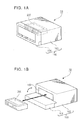
- FIGS. 1A and 1B are exterior perspective views of a navigation system according to the present invention.
- a navigation system 10 includes an in-vehicle audio apparatus 100 and a portable navigation device (PND) 200.
- the in-vehicle audio apparatus 100 is installed in a vehicle and has a main unit 102 and a front section 104, and the PND 200 is removably mounted in the in-vehicle audio apparatus 100.
- FIG. 1A shows a state in which the PND 200 is mounted in the in-vehicle audio apparatus 100.
- pivoting the front section 104 about a lower edge thereof causes a front face of the main unit 102 to be exposed, so that the PND 200 can be removed from a mounting slot 103 provided in the front face.
- inserting the PND 200 into the main unit 102 through the mounting slot 103 allows the PND 200 to be re-mounted in the in-vehicle audio apparatus 100.
- the in-vehicle audio apparatus 100 and the PND 200 selectively perform processing in a route-guidance operation mode and processing in an audio-playback operation mode in cooperation with each other.
- the PND 200 independently and selectively performs processing in the route-guidance operation mode and processing in the audio-playback operation mode.
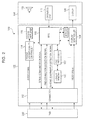
- FIG. 2 is a block diagram of the configuration of the in-vehicle audio apparatus 100.
- the main unit 102 of the in-vehicle audio apparatus 100 includes a microcomputer (MPU) 110, a memory 111, a connector 112, a sound volume/quality controller 114, a sound amplifier 116, a display memory 120, an OSD (on-screen display) processor 122, and a display controller 124.
- the front section 104 of the in-vehicle audio apparatus 100 includes an operation unit 113, a speaker 118, and a display 126.
- the MPU 110 controls the entire in-vehicle audio apparatus 100 during route-guidance operation and audio-playback operation.
- the MPU 110 corresponds to first reading means, second reading means, same/different-mode determining means, and processing means in claims 1 to 4, and also corresponds to operation-mode determining means, route guiding means, and content playback means in claim 5.
- the memory 111 stores various types of information needed for the route-guidance operation and the audio-playback operation.
- the memory 111 corresponds to storing means in claim 1 and storing means in claim 3.
- the PND 200 is connected to the connector 112, via which a serial communication signal, a PND-connection detection signal, an in-vehicle-apparatus detection signal, a video signal, and an audio signal are communicated between the in-vehicle audio apparatus 100 and the PND 200.
- the operation unit 113 is, for example, a touch panel and is operated by the user.
- the MPU 110 performs various types of control in accordance with a user operation.
- the sound volume/quality controller 114 sets the sound volumes and sound qualities of an audio signal sent from the MPU 110 and an audio signal sent from the PND 200 via the connector 112, and outputs the resulting audio signal.
- the sound amplifier 116 amplifies the audio signal input from the sound volume/quality controller 114, and the speaker 118 outputs sound.
- the display memory 120 stores various image data, such as data for a menu screen.
- the OSD processor 122 Under the control of the MPU 110, the OSD processor 122 generates an image corresponding to image data stored in the display memory 120 and outputs a video signal to the display controller 124.
- the display controller 124 Under the control of the MPU 110, the display controller 124 receives the video signals from the MPU 110 and the OSD processor 122 and also receives a video signal from the PND 200 via the connector 112, performs image synthesis and so on as needed, and displays an image on the display 126.
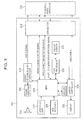
- FIG. 3 is a block diagram of the configuration of the PND 200.
- the PND 200 includes an MPU 210, a memory 211, a connector 212, an operation unit 213, a sound volume/quality controller 214, a sound amplifier 216, a speaker 218, a display memory 220, an OSD processor 222, a display controller 224, a display 226, and a GPS receiver 228.
- the MPU 210 controls the entire PND 200 during route-guidance operation and audio-playback operation.
- the MPU 210 corresponds to transmitting means in claims 8 and 9, first reading means, second reading means, same/different-mode determining means, and processing means in claim 10, and operation-mode determining means, route guiding means, and content playback means in claim 11.
- the memory 211 stores various types of information, such as map data, needed for the route-guidance operation and the audio-playback operation.
- the memory 211 corresponds to first storing means in claims 2, 9, and 10, second storing means in claims 1, 2, 9, and 10, and storing means in claim 8.
- the connector 212, the operation unit 213, the sound volume/quality controller 214, the sound amplifier 216, the speaker 218, the display memory 220, the OSD processor 222, the display controller 224, and the display 226 have functions similar to those in the in-vehicle audio apparatus 100.
- the in-vehicle audio apparatus 100 is connected to the connector 212, via which a serial communication signal, a PND-connection detection signal, an in-vehicle-apparatus detection signal, a video signal, and an audio signal are communicated between the in-vehicle audio apparatus 100 and the PND 200.
- the operation unit 213 is, for example, a touch panel and is operated by the user.
- the MPU 210 performs various types of control in accordance with a user operation.
- the sound volume/quality controller 214 sets the sound volume and sound quality of an audio signal received from the MPU 210, outputs the audio signal to the sound amplifier 216, and also transmits the audio signal to the in-vehicle audio apparatus 100 via the connector 212.
- the sound amplifier 216 amplifies the audio signal input from the sound volume/quality controller 214, and the speaker 118 outputs sound.
- the display memory 220 stores various image data, such as data for a menu screen.
- the OSD processor 222 Under the control of the MPU 210, the OSD processor 222 generates an image corresponding to image data stored in the display memory 220 and outputs a video signal to the display controller 224. Under the control of the MPU 210, the display controller 224 receives the video signals from the MPU 210 and the OSD processor 222, performs image synthesis and so on as needed, displays an image on the display 226, and transmits the video signal to the in-vehicle audio apparatus 100 via the connector 212.
- the GPS receiver 228 receives, from a GPS satellite, a GPS signal required for detecting the location of the PND 200. Based on the GPS signal, the MPU 210 can detect the location of the PND 200.
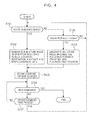
- FIG. 4 is a flowchart of an operation of the in-vehicle audio apparatus 100 when the PND 200 is mounted in the in-vehicle audio apparatus 100 and the in-vehicle audio apparatus 100 and the PND 200 perform processing in cooperation with each other.
- step S101 the MPU 110 in the in-vehicle audio apparatus 100 determines whether or not the current operation mode is a route-guidance operation mode (a route guidance mode).
- a route guidance mode a route guidance mode
- the MPU 110 transmits a serial communication signal to the PND 200 via the connector 112 to request for vehicle-location coordinates (longitude and latitude), destination coordinates, via-point coordinates, and guidance-route information.
- the MPU 210 in the PND 200 Upon receiving a vehicle-location-requesting serial communication signal via the connector 212, the MPU 210 in the PND 200 detects the coordinates of the location of the PND 200 as vehicle-location coordinates, based on the GPS signal received from the GPS receiver 228. The MPU 210 then transmits the detected vehicle-location coordinates to the MPU 110 via the connector 212 and the connector 112 of the in-vehicle audio apparatus 100. Upon receiving the vehicle-location coordinates, the MPU 110 reads destination coordinates, via-point coordinates, and guidance-route information stored in the memory 111, generates mode information including the vehicle-location coordinates, the destination coordinates, the via-point coordinates, and the guidance-route information, and stores the generated mode information in the memory 111 in step S102.
- FIG. 5A is a table showing one example of the mode information when the operation mode is the route-guidance mode.
- the mode information for the route-guidance mode (the mode information will hereinafter be referred to as "route-guidance mode information") has six fields.
- the second field from the top contains the vehicle-location coordinates
- the third field contains destination and via-point coordinates
- the fourth field contains the guidance-route information.
- the guidance-route information includes a collection of links corresponding to routes from a start point to a destination. Information in the first field is described below.
- the MPU 110 determines whether or not the current operation mode is an audio-playback operation mode (an audio-playback mode) in step S103.
- the process returns to S101 in which the MPU 110 again determines whether or not the current operation is the route-guidance mode.
- MPU 110 when the current operation mode is the audio playback mode, MPU 110 generates mode information including a track number for audio data that is currently played back (the track number will hereinafter be referred to as a "playback track number") and a playback time position of the audio data, and stores the generated mode information in the memory 111 in step S104.
- mode information including a track number for audio data that is currently played back (the track number will hereinafter be referred to as a "playback track number" and a playback time position of the audio data, and stores the generated mode information in the memory 111 in step S104.
- FIG. 5B is a table showing one example of the mode information when the operation mode is the audio playback mode.
- the mode information for the audio playback mode (the mode information will hereinafter be referred to as "audio-playback mode information") has six fields.
- the fifth field from the top contains the playback track number and the sixth field contains the playback time position.
- the first field is described below.
- the MPU 110 stores the current operation mode in the memory 111 in step S105 by adding corresponding information to the route-guidance mode information or the audio-playback mode information. More specifically, when the route-guidance mode information is stored in step S102, the MPU 110 adds identification information for the route-guidance mode to the first field shown in FIG. 5A . On the other hand, when the audio-playback mode information is stored in step S104, the MPU 110 adds identification information for the audio playback mode to the first area shown in FIG. 5B .
- the MPU 110 determines whether or not the PND 200 is removed from the in-vehicle audio apparatus 100.
- the MPU 210 in the PND 200 periodically outputs a PND-connection detection signal.
- the PND 200 While the PND 200 is mounted in the in-vehicle audio apparatus 100, the PND 200 periodically transmits the PND-connection detection signal to the MPU 110 via the connector 212 and the connector 112 of the in-vehicle audio apparatus 100.
- the MPU 110 cannot periodically receive the PND-connection detection signal, it can determine that the PND 200 is removed from the in-vehicle audio apparatus 100.
- step S107 the MPU 110 determines whether or not a predetermined time has passed from when the determination (step S101) was made as to whether or not the current operation mode is the route-guidance mode.
- the process returns to step S106 in which the MPU 110 again determines whether or not PND 200 is removed.
- the predetermined time has passed from the operation performed in step S101
- the operations in step S101 and the subsequent steps are repeated.
- the route-guidance mode information and audio-playback mode information generated and stored when the operation in step S102 or S104 is performed for the second and subsequent times are overwritten to the mode information already stored in the memory 111 at the point of time.
- the mode information for the operation mode at the point of time is stored and updated in the memory 111.
- the mode information for the operation mode in which the in-vehicle audio apparatus 100 and the PND 200 performed processing in cooperation with each other immediately before the PND 200 was removed from the in-vehicle audio apparatus 100 (the mode information will hereinafter be referred to as "latest cooperation mode information" is stored in the memory 111.
- FIG. 6 is a flowchart of an operation of the PND 200 when the PND 200 is removed from the in-vehicle audio apparatus 100 and independently performs operation.
- step S201 The MPU 210 in the PND 200 determines whether or not the current operation mode is the route-guidance mode.
- the MPU 210 detects the coordinates of the location of the PND 200 as vehicle-location coordinates, based on the GPS signal received from the GPS receiver 228.
- step S202 the MPU 210 reads destination coordinates, via-point coordinates, and guidance-route information stored in the memory 211, generates route-guidance mode information including the vehicle-location coordinates, the destination coordinates, the via-point coordinates, and the guidance-route information, and stores the generated route-guidance mode information in the memory 211.
- the MPU 210 determines whether or not the current operation mode is the audio-playback mode in step S203.
- the process returns to step S201 and the MPU 111 again determines whether or not the current operation is the route-guidance mode.
- the MPU 210 when the current operation mode is the audio playback mode, the MPU 210 generates audio-playback mode information including a playback track number for audio data that is currently played back and a playback time position of the audio data, and stores the generated audio-playback mode information in the memory 211 in step S204.
- the MPU 210 After the route-guidance mode information is stored in step S202 or after the audio-playback mode information is stored in step S204, the MPU 210 stores the current operation mode in the memory 211 in step S205 by adding corresponding information to the route-guidance mode information or the audio-playback mode information.
- step S206 the MPU 210 determines whether or not the PND 200 is re-mounted in the in-vehicle audio apparatus 100.
- the MPU 110 in the in-vehicle audio apparatus 100 periodically outputs an in-vehicle-apparatus connection detection signal.
- the MPU 110 periodically transmits the in-vehicle-apparatus connection detection signal to the MPU 210 via the connector 112 and the connector 212 of the PND 200.
- the MPU 210 can determine that the PND 200 is re-mounted in the in-vehicle audio apparatus 100.
- step S207 the MPU 210 determines whether or not a predetermined time has passed from when the determination (step S201) was made as to whether or not the current operation mode is the route-guidance mode.
- the process returns to step S206 in which the MPU 210 again determines whether or not the PND 200 is re-mounted.
- the predetermined time has passed from the operation performed in step S201
- the operations in step S201 and the subsequent steps are repeated.
- the route-guidance mode information or audio-playback mode information generated and stored when the operation in step S102 or S104 is performed for the second and subsequent times are overwritten to the mode information already stored in the memory 211 at the point of time.
- the mode information for the operation mode at the point of time is stored and updated in the memory 111.
- the mode information for the operation mode in which the PND 200 independently performed processing immediately before the PND 200 was re-mounted in the in-vehicle audio apparatus 100 (the mode information will hereinafter be referred to as "latest independence mode information") is stored in the memory 211.
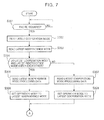
- FIGS. 7 and 8 are flowcharts showing an operation of the in-vehicle audio apparatus 100 when the PND 200 is re-mounted in the in-vehicle audio apparatus 100 and the in-vehicle audio apparatus 100 and the PND 200 perform processing in cooperation with each other.
- step S301 the MPU 110 in the in-vehicle audio apparatus 100 determines whether or not the PND 200 is re-mounted in the in-vehicle audio apparatus 100. Upon periodically receiving the PND-connection detection signal from the MPU 210 in the PND 200, the MPU 110 can determine that the PND 200 is re-connected to the in-vehicle audio apparatus 100.
- the MPU 110 When the PND 200 is re-mounted in the in-vehicle audio apparatus 100, the MPU 110 reads the operation mode in the latest cooperation mode information in step S302 (this operation mode will hereinafter be referred to as a "latest cooperation mode"). Since the latest cooperation mode information is stored in the memory 111, as described above, the MPU 110 reads, as the latest cooperation mode, the operation mode in the latest cooperation mode information stored in the memory 111.
- the MPU 110 reads the operation mode in the latest independence mode information (this operation mode will hereinafter be referred to as a "latest independence mode").
- the latest independence mode information is stored in the memory 211 in the PND 200.
- the MPU 110 transmits, to the PND 200 via the connector 112, a serial communication signal for requesting for the latest independence mode.
- the MPU 210 Upon receiving the latest-independence-mode-requesting serial communication signal via the connector 112, the MPU 210 reads the operation mode in the latest independence mode information stored in the memory 211 and transmits, as the latest independence mode, the read operation mode to the MPU 110 via the connector 212 and the connector 112 of the in-vehicle audio apparatus 100.
- the MPU 110 reads the latest independence mode.
- step S304 the MPU 110 determines whether or not the read latest cooperation mode and the latest independence mode match each other, that is, whether or not the operation mode in which the in-vehicle audio apparatus 100 and the PND 200 performed processing in cooperation with each other immediately before the PND 200 was removed from the in-vehicle audio apparatus 100 and the operation mode in which the PND 200 independently performed processing immediately before the PND 200 was re-mounted in the in-vehicle audio apparatus 100 match each other.
- the MPU 110 When the latest cooperation mode and the latest independence mode match each other, the MPU 110 reads pieces of information (hereinafter be referred to as "latest independence mode processing data") in the latest independence information in step S305. More specifically, the MPU 110 transmits a serial communication signal for requesting for the latest independence mode processing data to the PND 200 via the connector 112. Upon receiving the latest-independence-mode-requesting serial communication signal via the connector 212, the MPU 210 in the PND 200 reads information other than the mode information in the latest independence mode information stored in the memory 211. Examples of the read information include the vehicle-location coordinates, the destination and via-points coordinates, and the guidance-route information shown in FIG. 5A and the playback track number and the playback time position shown in FIG. 5B .
- the MPU 210 transmits the read information, as the latest independence mode processing data, to the MPU 110 via the connector 212 and the connector 112 of the in-vehicle audio apparatus 100.
- the MPU 110 reads the processing data.
- step S306 the MPU 110 sets the operation mode to the latest independence mode read in step S303, that is, to the operation mode in which the PND 200 independently performed processing immediately before the PND 200 was re-mounted in the in-vehicle audio apparatus 100.
- identification information for the latest independence mode is stored in the memory 111.
- the MPU 110 reads information (hereinafter be referred to as "latest cooperation mode processing data") in the latest cooperation mode information stored in the memory 111 in step S307.
- the MPU 110 sets the operation mode to the latest cooperation mode read in step S302, that is, to the operation mode in which the in-vehicle audio apparatus 100 and the PND 200 performed processing in cooperation with each other immediately before the PND 200 was removed from the in-vehicle audio apparatus 100.
- identification information for the latest cooperation mode is stored in the memory 111.
- step S401 the MPU 110 determines whether or not the operation mode set in step S306 or S308 is the route-guidance mode.
- the MPU 110 obtains a vehicle location in step S402. More specifically, as in step S102 shown in FIG. 4 , the MPU 110 transmits, to the PND 200 via the connector 112, a serial communication signal for requesting for the vehicle-location coordinates. Upon receiving the vehicle-location-coordinate-requesting serial communication signal via the connector 112, the MPU 210 in the PND 200 detects the vehicle-location coordinates based on the GPS signal received from the GPS receiver 228. The MPU 210 then transmits the detected vehicle-location coordinates to the MPU 110 via the connector 212 and the connector 112 of the in-vehicle audio apparatus 100. By receiving the vehicle-location coordinates, the MPU 110 obtains the vehicle-location coordinates.
- step S403 the MPU 110 determines whether or not the destination coordinates in the latest independence mode processing data and the destination coordinates in the latest cooperation mode processing data match each other. More specifically, when the latest independence mode processing data stored in the memory 211 in the PND 200 is read in step S305, the MPU 110 reads the latest cooperation mode processing data stored in the memory 111 and determines whether or not the destination coordinates in the latest independence mode processing data and the destination coordinates in the latest cooperation mode processing data match each other.
- the MPU 110 reads the latest independence mode processing data stored in the memory 211 in the PND 200 and determines whether or not the destination coordinates in the latest independence mode processing data and the destination coordinates in the latest cooperation mode processing data match each other.
- step S404 the MPU 110 determines whether or not the vehicle location obtained in step S402 is within a predetermined distance from a guidance route (including a case in which the vehicle location is on a guidance route). More specifically, when the latest independence mode stored in the memory 211 in the PND 200 is read in step S305, the MPU 110 determines whether or not the vehicle location is within a predetermined distance from a guidance route by comparing a guidance-route location identified by the guidance-route information in the latest independence mode processing data with the vehicle location obtained in step S402.
- the MPU 110 determines whether or not the vehicle location is within a predetermined distance from a guidance route by comparing a guidance-route location identified by the guidance-route information in the latest cooperation mode processing data with the vehicle location obtained in step S402.
- the MPU 110 When the vehicle location is within the predetermined distance from the guidance route and the latest independence mode processing data stored in the memory 211 in the PND 200 is read in step S305, the MPU 110 starts route guidance in step S405, based on the guidance-route information in the latest independence mode processing data. On the other hand, when the vehicle location is within the predetermined distance from the guidance route and the latest cooperation mode processing data stored in the memory 111 is read in step S307, the MPU 110 starts route guidance in step S405, based on the guidance-route information in the latest cooperation mode processing data. In the route guidance, the MPU 110 periodically obtains the vehicle location from the PND 200.
- the MPU 110 also reads map data stored in the memory 111 or the memory 211 in the PND 200, generates an image of the vicinity of the vehicle location, and outputs a video signal to the display controller 124.
- the display controller 124 receives the video signal and displays an image on the display 126.
- the MPU 110 outputs an audio signal for various types of voice and sound for guidance, including left turn and right turn, to the sound volume/quality controller 114.
- the sound volume/quality controller 114 sets the sound volume and sound quality of the audio signal and outputs the resulting audio signal to the sound amplifier 116.
- the sound amplifier 116 amplifies the audio signal input from the sound volume/quality controller 114 and the speaker 118 outputs sound.
- step S406 the MPU 110 searches for a guidance route from the vehicle location obtained in step S402. More specifically, when the latest independence mode processing data stored in the memory 211 in the PND 200 is read in step S305, the MPU 110 searches for a guidance route from the vehicle location to the destination, based on the destination coordinates and the via-point coordinates in the latest independence mode processing data, the vehicle location obtained in step S402, and the map data stored in the memory 111 or the memory 211 in the PND 200.
- the MPU 110 searches for a guidance route from the vehicle location to the destination, based on the destination coordinates and the via-point coordinates in the latest cooperation mode processing data, the vehicle location obtained in step S402, and the map data stored in the memory 111 or the memory 211 in the PND 200. Thereafter, in step S405, route guidance based on the found guidance route is performed.
- the MPU 110 searches for a guidance route from the vehicle location to the destination, based on the destination coordinates and the via-point coordinates in the latest independence mode processing data, the vehicle location obtained in step S402, and the map data stored in the memory 111 or the memory 211 in the PND 200.
- step S407 the MPU 110 searches for a guidance route from the vehicle location to the destination, based on the destination coordinates and the via-point coordinates in the latest cooperation mode processing data, the vehicle location obtained in step S402, and the map data stored in the memory 111 or the memory 211 in the PND 200. Thereafter, in step S405, route guidance based on the found guidance route is performed.
- step S401 When it is determined in step S401 that the set operation mode is not the route-guidance mode, in other words, when it is determined that the set operation mode is the audio-playback mode, and also the latest independence mode processing data stored in the memory 211 in the PND 200 is read in step S305, the MPU 110 reads audio data that corresponds to a playback track number in the latest independence mode processing data and that is stored in the memory 111 or the memory 211 in the PND 200, and further specifies a playback time position in the latest independence mode processing data as a resume position in step S408. In step S409, the MPU 110 resumes audio playback from the resume position.
- the MPU 110 outputs, to the sound volume/quality controller 114, an audio signal corresponding to the read audio data.
- the sound volume/quality controller 114 sets the sound volume and sound quality of the audio signal and outputs the resulting audio signal to the sound amplifier 116.
- the sound amplifier 116 amplifies the audio signal input from the sound volume/quality controller 114, and the speaker 118 outputs sound.
- step S401 When it is determined in step S401 that the set operation mode is not the route guidance mode and the latest cooperation mode processing data stored in the memory 111 is read in step S307, the MPU 110 reads audio data that corresponds to a playback track number in the latest cooperation mode processing data and that is stored in the memory 111 or the memory 211 in the PND 200, and further specifies a playback time position in the latest cooperation mode processing data as a resume position in step S408. In step S409, the MPU 110 resumes audio playback from the resume position.
- the in-vehicle audio apparatus 100 performs processing using the processing data in the latest independence mode and can take over the route-guidance operation or content-playback operation independently performed by the PND 200.
- the in-vehicle audio apparatus 100 performs processing using the processing data in the latest cooperation mode and can take over the route-guidance operation or content-playback operation performed by the in-vehicle audio apparatus 100 and the PND 200 in cooperation with each other.
- the MPU 110 in the in-vehicle audio apparatus 100 generates the route-guidance mode information and stores the mode information in the memory 111 in step S102 shown in FIG. 4 and generates the audio-playback mode information and stores the mode information in the memory 111 in step S104 in the above-described embodiment
- the arrangement may also be such that the MPU 110 transmits the route-guidance mode information and the audio-playback mode information to the MPU 210 in the PND 200 and the MPU 210 stores the route-guidance mode information and the audio-playback mode information in the memory 211.
- the MPU 110 transmits the current operation mode to the MPU 210 in the PND 200 and the MPU 210 stores the operation mode in the memory 211.
- the MPU 110 reads the latest cooperation mode in the latest cooperation mode information stored in the memory 211 in the PND 200
- step S307 the MPU 110 reads the latest cooperation mode processing data in the latest cooperation mode information stored in the memory 211 in the PND 200.
- the MPU 210 in the PND 200 may perform the operations shown in FIGS. 4 , 7 , and 8 . That is, in accordance with the flowchart shown in FIG. 4 , the MPU 210 in the PND 200 determines whether or not the current operation mode is the route guidance mode in step S101. When the current operation mode is the route guidance mode, the MPU 210 detects the vehicle-location coordinates based on the GPS signal received from the GPS receiver 228.
- step S102 the MPU 210 further reads destination coordinates, via-point coordinates, and guidance-route information stored in the memory 211, generates route-guidance mode information including the vehicle-location coordinates, the destination coordinates, the via-point coordinates, and the guidance-route information, and stores the generated route-guidance mode information in the memory 211.
- the MPU 210 determines whether or not the current operation mode is the audio playback mode in step S103. When the current operation mode is not the audio playback mode, the process returns to S101 in which the MPU 210 again determines whether or not the current operation is the route-guidance mode. On the other hand, when the current operation mode is the audio playback mode, the MPU 210 generates audio-playback mode information including a playback track number for audio data that is currently played back and a playback time position of the audio data, and stores the generated audio-playback mode information in the memory 211 in step S104.
- the MPU 210 After the route-guidance mode information is stored in step S102 or after the audio-playback mode information is stored in step S104, the MPU 210 stores the current operation mode in the memory 211 in step S105 by adding corresponding information to the route-guidance mode information or the audio-playback mode information.
- step S106 the MPU 210 determines whether or not the PND 200 is removed from the in-vehicle audio apparatus 100.
- the MPU 110 in the in-vehicle audio apparatus 100 periodically outputs an in-vehicle-apparatus connection detection signal.
- the MPU 110 While the PND 200 is mounted in the in-vehicle audio apparatus 100, the MPU 110 periodically transmits the in-vehicle-apparatus connection detection signal to the MPU 210 via the connector 112 and the connector 212 of the PND 200.
- the MPU 210 cannot periodically receive the in-vehicle-apparatus connection detection signal, it can determine that the PND 200 is removed from the in-vehicle audio apparatus 100.
- step S107 the MPU 210 determines whether or not a predetermined time has passed from when the determination (step S101) was made as to whether or not the current operation mode is the route-guidance mode.
- the process returns to step S106 in which MPU 210 again determines whether or not the PND 200 is removed.
- the predetermined time has passed from the operation performed in step S101, the operations in step S101 and the subsequent steps are repeated.
- the mode information for the operation mode at the point of time is stored and updated in the memory 211.
- the latest cooperation mode information corresponding to the operation mode in which the in-vehicle audio apparatus 100 and the PND 200 performed processing in cooperation with each other immediately before the PND 200 was removed from the in-vehicle audio apparatus 100 is stored in the memory 211.
- step S301 the MPU 210 in the PND 200 determines whether or not the PND 200 is re-mounted in the in-vehicle audio apparatus 100. More specifically, upon periodically receiving the in-vehicle-apparatus connection detection signal from the MPU 110 in the in-vehicle audio apparatus 100, the MPU 210 can determine that the PND 200 is re-connected to the in-vehicle audio apparatus 100.
- the MPU 210 reads the latest cooperation mode in the latest cooperation mode information in step S302 which is stored in the memory 211.
- the MPU 110 reads the latest independence mode in the latest independence mode information stored in the memory 211.
- step S304 the MPU 210 determines whether or not the read latest cooperation mode and the latest independence mode match each other, that is, whether or not the operation mode in which the in-vehicle audio apparatus 100 and the PND 200 performed processing in cooperation with each other immediately before the PND 200 was removed from the in-vehicle audio apparatus 100 and the operation mode in which the PND 200 independently performed processing immediately before the PND 200 was re-mounted in the in-vehicle audio apparatus 100 match each other.
- step S305 the MPU 210 reads the latest independence mode processing data in the latest independence mode information stored in the memory 211.
- the MPU 210 sets the operation mode to the latest independence mode read in step S303, that is, to the operation mode in which the PND 200 independently performed processing immediately before the PND 200 was removed from the in-vehicle audio apparatus 100.
- identification information for the latest independence mode is stored in the memory 211.
- step S307 the MPU 210 reads the latest cooperation mode processing data in the latest cooperation mode information stored in the memory 211.
- step S306 the MPU 210 sets the operation mode to the latest cooperation mode read in step S304, that is, to the operation mode in which the in-vehicle audio apparatus 100 and the PND 200 performed processing in cooperation with each other immediately before the PND 200 was removed from the in-vehicle audio apparatus 100.
- identification information for the latest cooperation mode is stored in the memory 211.
- step S401 the MPU 210 determines whether or not the operation mode set in step S306 or S308 is the route-guidance mode.
- the MPU 210 obtains the vehicle location in step S402. More specifically, the MPU 210 detects the vehicle-location coordinates based on the GPS signal received from the GPS receiver 228.
- the MPU 210 determines whether or not the destination coordinates in the latest independence mode processing data and the destination coordinates in the latest cooperation mode processing data match each other. More specifically, when the latest independence mode processing data stored in the memory 211 is read in step S305, the MPU 210 reads the latest cooperation mode processing data stored in the memory 211 and determines whether or not the destination coordinates in the latest independence mode processing data and the destination coordinates in the latest cooperation mode processing data match each other. When the latest cooperation mode processing data stored in the memory 211 is read in step S307, the MPU 210 reads the latest independence mode processing data stored in the memory 211 and determines whether or not the destination coordinates in the latest independence mode processing data and the destination coordinates in the latest cooperation mode processing data match each other.
- step S404 the MPU 210 determines whether or not the vehicle location obtained in step S402 is within a predetermined distance from a guidance route (including a case in which the vehicle location is located on a guidance route). More specifically, when the latest independence mode processing data stored in the memory 211 is read in step S305, the MPU 210 determines whether or not the vehicle location is within the predetermined distance from the guidance route by comparing a guidance-route location identified by the guidance-route information in the latest independence mode processing data with the vehicle location obtained in step S402.
- the MPU 210 determines whether or not the vehicle location is within the predetermined distance from the guidance route by comparing a guidance-route location identified by the guidance-route information in the latest cooperation mode processing data with the vehicle location obtained in step S402.
- the MPU 210 When the vehicle location is within the predetermined distance from the guidance route and the latest independence mode processing data stored in the memory 211 is read in step S305, the MPU 210 starts route guidance in step S405, based on the guidance-route information in the latest independence mode processing data. On the other hand, when the vehicle location is within the predetermined distance from the guidance route and the latest cooperation mode processing data stored in the memory 211 is read in step S307, the MPU 210 starts route guidance in step S405, based on the guidance-route information in the latest cooperation mode processing data. In the route guidance, the MPU 210 periodically obtains the vehicle location. The MPU 210 also reads map data stored in the memory 211, generates an image of the vicinity of the vehicle location, and outputs a video signal to the display controller 224.
- the display controller 224 outputs the video signal to the display controller 124 via the connector 212 and the connector 112 of the in-vehicle audio apparatus 100.
- the display controller 124 causes the display 126 to display the image.
- the MPU 210 outputs an audio signal for various types of voice and sound for guidance, including left turn and right turn, to the sound volume/quality controller 114.
- the sound volume/quality controller 114 sets the sound volume and sound quality of the audio signal and outputs the resulting audio signal to the sound amplifier 116 via the connector 212, the connector 112, and the sound volume/quality controller 114.
- the sound amplifier 116 amplifies the audio signal and the speaker 118 outputs sound.
- step S406 the MPU 210 searches for a guidance route from the vehicle location obtained in step S402. More specifically, when the latest independence mode processing data stored in the memory 211 is read in step S305, the MPU 210 searches for a guidance route from the vehicle location to the destination, based on the destination coordinates and the via-point coordinates in the latest independence mode processing data, the vehicle location obtained in step S402, and the map data stored in the memory 211.
- the MPU 210 searches for a guidance route from the vehicle location to the destination in step S407, based on the destination coordinates and the via-point coordinates in the latest cooperation mode processing data, the vehicle location obtained in step S402, and the map data stored in the memory 211. Thereafter, in step S405, route guidance based on the found guidance route is performed.
- step S403 When it is determined in step S403 the destination coordinates are not the same and the latest independence mode processing data stored in the memory 211 is read in step S305, the MPU 210 searches for a guidance route from the vehicle location to the changed destination in step S407, based on the destination coordinates and the via-point coordinates in the latest independence mode processing data, the vehicle location obtained in step S402, and the map data stored in the memory 211.
- the MPU 210 searches for a guidance route from the vehicle location to the changed destination in step S407, based on the destination coordinates and the via-point coordinates in the latest cooperation mode processing data, the vehicle location obtained in step S402, and the map data stored in the memory 211. Thereafter, in step S405, route guidance based on the found guidance route is performed.
- step S401 When it is determined in step S401 that the set operation mode is not the route guidance mode and the latest independence mode processing data stored in the memory 211 is read in step S305, the MPU 210 reads audio data that corresponds to a playback track number in the latest independence mode processing data and that is stored in the memory 211, and further specifies a playback time position in the latest independence mode processing data as a resume position in step S408.
- step S409 the MPU 210 resumes audio playback from the resume position.
- the MPU 210 outputs, to the sound volume/quality controller 214, an audio signal corresponding to the read audio data.
- the sound volume/quality controller 214 sets the sound volume and sound quality of the audio signal and outputs the resulting audio signal to the sound amplifier 116 via the connector 212, the connector 112, and the sound volume/quality controller 114 of the in-vehicle audio apparatus 100.
- the sound amplifier 116 amplifies the audio signal and the speaker 118 outputs sound.
- step S401 When it is determined in step S401 that the set operation mode is not the route guidance mode and the latest cooperation mode processing data stored in the memory 211 is read in step S307, the MPU 210 reads audio data that corresponds to a playback track number in the latest cooperation mode processing data and that is stored in the memory 211, and further specifies a playback time position in the latest cooperation mode processing data as a resume position in step S408. In step S409, the MPU 210 resumes audio playback from the resume position.
- step S106 a determination may be made as to whether or not the PND 200 is removed from the in-vehicle audio apparatus 100.
- a determination may be made as to whether or not the PND 200 is disconnected from power supply.
- the series of operations is finished, and when the PND 200 is not disconnected from the power supply, the determination (step S107) may be made as to whether or not the predetermined time has passed from the operation performed in step S101.
- a determination as to whether or not the PND 200 is re-connected to the power supply is made instead of the operation performed in step S206 in FIG. 6 , and when the PND 200 is reconnected to the power supply, the series of operations is finished.
- step S207 is made as to whether or not the predetermined time has passed from the operation performed in step S201.
- a determination as to whether or not the PND 200 is re-connected to the power supply is made instead of the operation performed in step S301 in FIG. 7 , and when the PND 200 is re-connected to the power supply, the latest cooperation mode is read in step S302.
- the present invention is also applicable to a case in which, for example, visual content, other than audio data, is played back.
- the navigation system, the in-vehicle apparatus, and the portable terminal according to the present invention are capable of appropriately taking over a route-guidance operation and a content-playback operation and are advantageously used for, for example, a navigation system and so on.
Landscapes
- Engineering & Computer Science (AREA)
- Radar, Positioning & Navigation (AREA)
- Remote Sensing (AREA)
- Automation & Control Theory (AREA)
- Physics & Mathematics (AREA)
- General Physics & Mathematics (AREA)
- Navigation (AREA)
- Instructional Devices (AREA)
- Traffic Control Systems (AREA)
Claims (9)
- Navigationssystem, umfassend:eine fahrzeuginterne Vorrichtung, die in ein Fahrzeug eingebaut ist, undein tragbares Endgerät, das entfernbar in der fahrzeuginternen Vorrichtung montiert ist, dadurch gekennzeichnet, dass das System derartig konfiguriert ist, dass, wenn das tragbare Endgerät in die fahrzeuginterne Vorrichtung montiert ist, die fahrzeuginterne Vorrichtung und das tragbare Endgerät selektiv Verarbeitung in einem Betriebsmodus für Streckenführung und Verarbeitung in einem Betriebsmodus für Inhaltswiedergabe in Kooperation miteinander ausführen und, wenn das tragbare Endgerät aus der fahrzeuginternen Vorrichtung entfernt wird, führt das tragbare Endgerät unabhängig und selektiv Verarbeitung im Betriebsmodus für Streckenführung und Verarbeitung im Betriebsmodus für Inhaltswiedergabe aus; ferner dadurch gekennzeichnet, dass die fahrzeuginterne Vorrichtung erste Speichermittel zum Speichern eines ersten Betriebsmodus einschließt, bevor das tragbare Endgerät aus der fahrzeuginternen Vorrichtung entfernt oder von der Stromversorgung und Verarbeitungsdaten im ersten Betriebsmodus getrennt wird, die fahrzeuginterne Vorrichtung und das tragbare Endgerät Verarbeitung in Kooperation miteinander im ersten Betriebsmodus ausführen; und dadurch, dass das tragbare Endgerät zweite Speichermittel zum Speichern eines zweiten Betriebsmodus einschließt, bevor das tragbare Endgerät erneut in die fahrzeuginterne Vorrichtung, nach dem Entfernen daraus, montiert oder wieder an die Stromversorgung, nach dem Trennen davon und Verarbeitungsdaten im zweiten Betriebsmodus, angeschlossen wird, führt das tragbare Endgerät unabhängig Verarbeitung im zweiten Betriebsmodus aus; und dadurch, dassdie fahrzeuginterne Vorrichtung einschließt:erstes Lesemittel, das konfiguriert ist, den ersten im ersten Speichermittel gespeicherten Betriebsmodus und den zweiten im zweiten Speichermittel gespeicherten Betriebsmodus zu lesen, wenn das tragbare Endgerät erneut in die fahrzeuginterne Vorrichtung montiert oder wieder an die Stromversorgung angeschlossen wird, nach dem es davon getrennt wurde,Bestimmungsmittel für gleichen/verschiedenen Modus, das konfiguriert ist, zu bestimmen ob der erste Betriebsmodus und der zweite Betriebsmodus, die vom ersten Lesemittel gelesen werden die gleichen sind oder nicht,zweites Lesemittel, das konfiguriert ist, die Verarbeitungsdaten im zweiten Betriebsmodus zu lesen, wenn das Bestimmungsmittel für gleichen/verschiedenen Modus bestimmt, dass der erste Betriebsmodus und der zweite Betriebsmodus die gleichen sind und, die Verarbeitungsdaten im ersten Betriebsmodus zu lesen, wenn das Bestimmungsmittel für gleichen/verschiedenen Modus bestimmt, dass der erste Betriebsmodus und der zweite Betriebsmodus voneinander verschieden sind, wobei die Verarbeitungsdaten im zweiten Betriebsmodus im zweiten Speichermittel gespeichert werden und die Verarbeitungsdaten im ersten Betriebsmodus im ersten Speichermittel gespeichert werden, undVerarbeitungsmittel, die konfiguriert sind, Verarbeitung unter Verwendung der vom zweiten Lesemittel gelesenen Verarbeitungsdaten in Kooperation mit dem tragbaren Endgerät auszuführen.
- Fahrzeuginterne Vorrichtung, die in einem Fahrzeug eingebaut ist, wobei die fahrzeuginterne Vorrichtung eingerichtet ist, ein entfernbar montierbares tragbares Endgerät aufzunehmen, wobei, wenn das tragbare Endgerät in der fahrzeuginternen Vorrichtung montiert ist, die fahrzeuginterne Vorrichtung selektiv Verarbeitung im Betriebsmodus für Streckenführung und Verarbeitung in einem Betriebsmodus für Inhaltswiedergabe in Kooperation mit dem tragbaren Endgerät ausführt, wobei die fahrzeuginterne Vorrichtung umfasst:Speichermittel, dass konfiguriert ist, einen ersten Betriebsmodus zu speichern, bevor das tragbare Endgerät aus der fahrzeuginternen Vorrichtung entfernt oder von der Stromversorgung und den Verarbeitungsdaten im ersten Betriebsmodus getrennt wird, wobei die fahrzeuginterne Vorrichtung und das tragbare Endgerät Verarbeitung in Kooperation miteinander im ersten Betriebsmodus ausführen;erstes Lesemittel, das konfiguriert ist, den ersten im ersten Speichermittel gespeicherten Betriebsmodus zu lesen, wenn das tragbare Endgerät erneut, nach dem Trennen davon, in die fahrzeuginterne Vorrichtung montiert oder wieder, nach dem es davon getrennt wurde, an die Stromversorgung angeschlossen wird und einen zweiten Betriebsmodus zu lesen, bevor das tragbare Endgerät erneut in die fahrzeuginterne Vorrichtung montiert wird, nach dem es davon entfernt wurde oder wieder an die Stromversorgung angeschlossen wird, nach dem es davon getrennt wurde, wobei der zweite Betriebsmodus im tragbaren Endgerät gespeichert ist und das tragbare Endgerät Verarbeitung im zweiten Betriebsmodus ausführt;Bestimmungsmittel für gleichen/verschiedenen Modus, konfiguriert zu bestimmen, ob der erste Betriebsmodus und der zweite Betriebsmodus, die vom ersten Lesemittel gelesen werden, die gleichen sind oder nicht,zweites Lesemittel, das konfiguriert ist, die Verarbeitungsdaten im zweiten Betriebsmodus zu lesen, bevor das tragbare Endgerät erneut in die fahrzeuginterne Vorrichtung montiert wird, nach dem es daraus entfernt wurde oder wieder an die Stromversorgung angeschlossen wird, nach dem es davon getrennt wurde, wenn das Bestimmungsmittel für gleichen/verschiedenen Modus bestimmt, dass der erste Betriebsmodus und der zweite Betriebsmodus gleich sind und konfiguriert, die Verarbeitungsdaten im ersten Betriebsmodus zu lesen, wenn das Bestimmungsmittel für gleichen/verschiedenen Modus bestimmt, dass der erste Betriebsmodus und der zweite Betriebsmodus voneinander verschieden sind, die Verarbeitungsdaten im zweiten Betriebsmodus im tragbaren Endgerät gespeichert sind und die Verarbeitungsdaten im ersten Betriebsmodus im ersten Speichermittel gespeichert sind; undVerarbeitungsmittel, die konfiguriert sind, Verarbeitung unter Verwendung der vom zweiten Lesemittel gelesenen Verarbeitungsdaten in Kooperation mit dem tragbaren Endgerät auszuführen.
- Fahrzeuginterne Vorrichtung nach Anspruch 2, wobei das Verarbeitungsmittel umfasst:Bestimmungsmittel für Betriebsmodus zum Bestimmen, ob oder nicht der zweite Betriebsmodus der Betriebsmodus für Streckenführung ist, wenn das Bestimmungsmittel für gleichen/verschiedenen Modus bestimmt, dass der erste Betriebsmodus und der zweite Betriebsmodus gleich sind, und zum Bestimmen ob oder nicht der erste Betriebsmodus der Betriebsmodus für Streckenführung ist, wenn das Bestimmungsmittel für gleichen/verschiedenen Betriebsmodus bestimmt, dass der erste Betriebsmodus und der zweite Betriebsmodus voneinander verschieden sind;Streckenführungsmittel zum Ausführen, wenn das Bestimmungsmittel für gleichen/verschiedenen Modus bestimmt, dass der erste Betriebsmodus und der zweite Betriebsmodus gleich sind und das Bestimmungsmittel für Betriebsmodus bestimmt, dass der zweite Betriebsmodus der Betriebsmodus für Streckenführung ist, von Streckenführung basierend auf Verarbeitungsdaten im Betriebsmodus für Streckenführung, wobei die Verarbeitungsdaten vom zweiten Lesemittel gelesen werden und die Verarbeitungsdaten im zweiten Betriebsmodus sind, und Ausführen, wenn das Bestimmungsmittel für gleichen/verschiedenen Modus bestimmt, dass der erste Betriebsmodus und der zweite Betriebsmodus voneinander verschieden sind, und das Bestimmungsmittel für Betriebsmodus bestimmt, dass der erste Betriebsmodus der Betriebsmodus für Streckenführung ist, von Streckenführung basierend auf Verarbeitungsdaten im Betriebsmodus für Streckenführung, wobei die Verarbeitungsdaten vom zweiten Lesemittel gelesen werden und die Verarbeitungsdaten im ersten Betriebsmodus sind; undWiedergabemittel für Inhalt zum Ausführen, wenn das Bestimmungsmittel für gleichen/verschiedenen Modus bestimmt, dass der erste Betriebsmodus und der zweite Betriebsmodus gleich sind und das Bestimmungsmittel für Betriebsmodus bestimmt, dass der zweite Betriebsmodus der Betriebsmodus für Inhaltswiedergabe ist, von Inhaltswiedergabe basierend auf Verarbeitungsdaten im Betriebsmodus für Inhaltswiedergabe, wobei die Verarbeitungsdaten vom zweiten Lesemittel gelesen werden und die Verarbeitungsdaten im zweiten Betriebsmodus sind, und Ausführen, wenn das Bestimmungsmittel für gleichen/verschiedenen Modus bestimmt, dass der erste Betriebsmodus und der zweite Betriebsmodus voneinander verschieden sind, und das Bestimmungsmittel für Betriebsmodus bestimmt, dass der erste Betriebsmodus der Betriebsmodus für Inhaltswiedergabe ist, von Inhaltswiedergabe basierend auf Verarbeitungsdaten im Betriebsmodus für Inhaltswiedergabe, wobei die Verarbeitungsdaten vom zweiten Lesemittel gelesen werden und die Verarbeitungsdaten im ersten Betriebsmodus sind.
- Fahrzeuginterne Vorrichtung nach Anspruch 3, wobei die Verarbeitungsdaten im Betriebsmodus für Streckenführung einen Zielort und Führungs-Streckeninformation einschließen, und
wobei das Streckenführungsmittel umfasst:Fahrzeug-Ortungsmittel zum Orten eines Standorts des Fahrzeugs, undStreckensuchmittel zum Suchen, wenn sich der Standort des vom Fahrzeug-Ortungsmittel erlangten Standort des Fahrzeugs in einer vorgegebenen Entfernung oder mehr von einer Führungsstrecke befindet, die durch die Führungs-Streckeninformation identifiziert wurde, einer Führungsstrecke vom Standort des Fahrzeugs zum Zielort, und zum Suchen, wenn der Zielport verschieden von einem Zielort in unmittelbar vorhergehender Streckenführung ist, einer Führungsstrecke vom Standort des Fahrzeugs zum geänderten Zielort. - Fahrzeuginterne Vorrichtung nach Anspruch 3 oder 4, wobei die Verarbeitungsdaten im Betriebsmodus für Inhaltswiedergabe Wiedergabe-Positionsinformation von Inhalt einschließen und das Mittel für Inhaltswiedergabe die Wiedergabe des Inhalts ab einer von der Wiedergabe-Positionsinformation spezifizierten Wiedergabeposition fortsetzt.
- Tragbares Endgerät, das entfernbar in einer fahrzeuginternen Vorrichtung montierbar ist, die in ein Fahrzeug eingebaut ist, derartig konfiguriert, dass, wenn das tragbare Endgerät in die fahrzeuginterne Vorrichtung montiert wird, das tragbare Endgerät selektiv Verarbeitung in einem Betriebsmodus für Streckenführung und Verarbeitung in einem Betriebsmodus für Inhaltswiedergabe in Kooperation mit der fahrzeuginternen Vorrichtung ausführt und, wenn das tragbare Endgerät aus der fahrzeuginternen Vorrichtung entfernt wird, führt das tragbare Endgerät unabhängig und selektiv Verarbeitung im Betriebsmodus für Streckenführung und Verarbeitung im Betriebsmodus für Inhaltswiedergabe aus, wobei das tragbare Endgerät umfasst:erstes Speichermittel, dass konfiguriert ist, einen ersten Betriebsmodus zu speichern, bevor das tragbare Endgerät aus der fahrzeuginternen Vorrichtung entfernt oder von der Stromversorgung und den Verarbeitungsdaten im ersten Betriebsmodus getrennt wird, wobei die fahrzeuginterne Vorrichtung und das tragbare Endgerät Verarbeitung in Kooperation miteinander im ersten Betriebsmodus ausführen;zweites Speichermittel, das konfiguriert ist, einen zweiten Betriebsmodus zu speichern, bevor das tragbare Endgerät erneut in die fahrzeuginterne Vorrichtung montiert wird, nach dem es daraus entfernt wurde oder wieder an die Stromversorgung angeschlossen wird, nach dem es davon und Verarbeitungsdaten im zweiten Betriebsmodus getrennt wurde, wobei das tragbare Endgerät unabhängig Verarbeitung im zweiten Betriebsmodus ausführt;erstes Lesemittel, das konfiguriert ist, den im ersten Speichermittel gespeicherten Betriebsmodus und den zweiten im zweiten Speichermittel gespeicherten Betriebsmodus zu lesen, wenn das tragbare Endgerät erneut in die fahrzeuginterne Vorrichtung montiert wird, nach dem es daraus entfernt wurde oder wieder an die Stromversorgung angeschlossen wird, nach dem, es davon getrennt wurde;Bestimmungsmittel für gleichen/verschiedenen Modus, konfiguriert zu bestimmen, ob der erste Betriebsmodus und der zweite Betriebsmodus, die vom ersten Lesemittel gelesen werden die gleichen sind oder nicht;zweites Lesemittel, das konfiguriert ist, die Verarbeitungsdaten im zweiten Betriebsmodus zu lesen, wenn das Bestimmungsmittel für gleichen/verschiedenen Modus bestimmt, dass der erste Betriebsmodus und der zweite Betriebsmodus die gleichen sind und die Verarbeitungsdaten im ersten Betriebsmodus zu lesen, wenn das Bestimmungsmittel für gleichen/verschiedenen Modus bestimmt, dass der erste Betriebsmodus und der zweite Betriebsmodus voneinander verschieden sind, wobei die Verarbeitungsdaten im zweiten Betriebsmodus im zweiten Speichermittel gespeichert werden und die Verarbeitungsdaten im ersten Betriebsmodus im ersten Speichermittel gespeichert werden; und
in the first storing means; andVerarbeitungsmittel, die konfiguriert sind, Verarbeitung unter Verwendung der vom zweiten Lesemittel gelesenen Verarbeitungsdaten in Kooperation mit der fahrzeuginternen Vorrichtung auszuführen. - Tragbares Endgerät nach Anspruch 6, wobei das Verarbeitungsmittel umfasst:Bestimmungsmittel für Betriebsmodus zum Bestimmen, ob oder nicht der zweite Betriebsmodus der Betriebsmodus für Streckenführung ist, wenn das Bestimmungsmittel für gleichen/verschiedenen Modus bestimmt, dass der erste Betriebsmodus und der zweite Betriebsmodus gleich sind, und zum Bestimmen ob oder nicht der erste Betriebsmodus der Betriebsmodus für Streckenführung ist, wenn das Bestimmungsmittel für gleichen/verschiedenen Betriebsmodus bestimmt, dass der erste Betriebsmodus und der zweite Betriebsmodus voneinander verschieden sind;Streckenführungsmittel zum Ausführen, wenn das Bestimmungsmittel für gleichen/verschiedenen Modus bestimmt, dass der erste Betriebsmodus und der zweite Betriebsmodus gleich sind und das Bestimmungsmittel für Betriebsmodus bestimmt, dass der zweite Betriebsmodus der Betriebsmodus für Streckenführung ist, von Streckenführung basierend auf Verarbeitungsdaten im Betriebsmodus für Streckenführung, wobei die Verarbeitungsdaten vom zweiten Lesemittel gelesen werden und die Verarbeitungsdaten im zweiten Betriebsmodus sind, und Ausführen, wenn das Bestimmungsmittel für gleichen/verschiedenen Modus bestimmt, dass der erste Betriebsmodus und der zweite Betriebsmodus voneinander verschieden sind, und das Bestimmungsmittel für Betriebsmodus bestimmt, dass der erste Betriebsmodus der Betriebsmodus für Streckenführung ist, von Streckenführung basierend auf Verarbeitungsdaten im Betriebsmodus für Streckenführung, wobei die Verarbeitungsdaten vom zweiten Lesemittel gelesen werden und die Verarbeitungsdaten im ersten Betriebsmodus sind; undWiedergabemittel für Inhalt zum Ausführen, wenn das Bestimmungsmittel für gleichen/verschiedenen Modus bestimmt, dass der erste Betriebsmodus und der zweite Betriebsmodus gleich sind und das Bestimmungsmittel für Betriebsmodus bestimmt, dass der zweite Betriebsmodus der Betriebsmodus für Inhaltswiedergabe ist, von Inhaltswiedergabe basierend auf Verarbeitungsdaten im Betriebsmodus für Inhaltswiedergabe, wobei die Verarbeitungsdaten vom zweiten Lesemittel gelesen werden und die Verarbeitungsdaten im zweiten Betriebsmodus sind, und Ausführen, wenn das Bestimmungsmittel für gleichen/verschiedenen Modus bestimmt, dass der erste Betriebsmodus und der zweite Betriebsmodus voneinander verschieden sind, und das Bestimmungsmittel für Betriebsmodus bestimmt, dass der erste Betriebsmodus der Betriebsmodus für Inhaltswiedergabe ist, von Inhaltswiedergabe basierend auf Verarbeitungsdaten im Betriebsmodus für Inhaltswiedergabe, wobei die Verarbeitungsdaten vom zweiten Lesemittel gelesen werden und die Verarbeitungsdaten im ersten Betriebsmodus sind.
- Tragbares Endgerät nach Anspruch 7, wobei die Verarbeitungsdaten im Betriebsmodus für Streckenführung einen Zielort und Führungs-Streckeninformation einschließen, und
wobei das Streckenführungsmittel umfasst:Fahrzeug-Ortungsmittel zum Orten eines Standorts des Fahrzeugs, undStreckensuchmittel zum Suchen, wenn sich der Standort des vom Fahrzeug-Ortungsmittel erlangten Standort des Fahrzeugs in einer vorgegebenen Entfernung oder mehr von einer Führungsstrecke befindet, die durch die Führungs-Streckeninformation identifiziert wurde, einer Führungsstrecke vom Standort des Fahrzeugs zum Zielort, und zum Suchen, wenn der Zielport verschieden von einem Zielort in unmittelbar vorhergehender Streckenführung ist, einer Führungsstrecke vom Standort des Fahrzeugs zum geänderten Zielort. - Tragbares Endgerät nach Anspruch 7 oder 8, wobei die Verarbeitungsdaten im Betriebsmodus für Inhaltswiedergabe Wiedergabe-Positionsinformation von Inhalt einschließen und das Mittel für Inhaltswiedergabe die Wiedergabe des Inhalts ab einer von der Wiedergabe-Positionsinformation spezifizierten Wiedergabeposition fortsetzt.
Applications Claiming Priority (1)
| Application Number | Priority Date | Filing Date | Title |
|---|---|---|---|
| JP2007142356A JP5046329B2 (ja) | 2007-05-29 | 2007-05-29 | ナビゲーションシステム、車載機器、携帯端末、車載機器における処理方法、及び、携帯端末における処理方法 |
Publications (3)
| Publication Number | Publication Date |
|---|---|
| EP1998142A2 EP1998142A2 (de) | 2008-12-03 |
| EP1998142A3 EP1998142A3 (de) | 2012-01-18 |
| EP1998142B1 true EP1998142B1 (de) | 2014-12-31 |
Family
ID=39733282
Family Applications (1)
| Application Number | Title | Priority Date | Filing Date |
|---|---|---|---|
| EP08151946.4A Not-in-force EP1998142B1 (de) | 2007-05-29 | 2008-02-26 | Navigationssystem, Vorrichtung in einem Fahrzeug und tragbares Endgerät |
Country Status (3)
| Country | Link |
|---|---|
| US (1) | US8214150B2 (de) |
| EP (1) | EP1998142B1 (de) |
| JP (1) | JP5046329B2 (de) |
Families Citing this family (8)
| Publication number | Priority date | Publication date | Assignee | Title |
|---|---|---|---|---|
| US8694241B1 (en) | 2010-10-05 | 2014-04-08 | Google Inc. | Visualization of traffic patterns using GPS data |
| US8694240B1 (en) | 2010-10-05 | 2014-04-08 | Google Inc. | Visualization of paths using GPS data |
| US8825403B1 (en) | 2010-10-06 | 2014-09-02 | Google Inc. | User queries to model road network usage |
| US8886457B2 (en) * | 2011-03-31 | 2014-11-11 | Google Inc. | Mobile state determination of location aware devices |
| KR20140032566A (ko) * | 2012-09-06 | 2014-03-17 | 전자부품연구원 | 가시광 통신 및 광 네트워킹이 가능한 차량용 통신 시스템 및 방법 |
| US8825359B1 (en) | 2013-02-27 | 2014-09-02 | Google Inc. | Systems, methods, and computer-readable media for verifying traffic designations of roads |
| US10904306B2 (en) * | 2018-05-07 | 2021-01-26 | Spotify Ab | Personal media streaming appliance system |
| JP6764198B2 (ja) * | 2019-06-11 | 2020-09-30 | 株式会社ユピテル | 装置及びプログラム |
Family Cites Families (9)
| Publication number | Priority date | Publication date | Assignee | Title |
|---|---|---|---|---|
| JPH07260507A (ja) * | 1994-03-16 | 1995-10-13 | Mitsumi Electric Co Ltd | Gps受信機 |
| JP4161554B2 (ja) * | 2001-08-06 | 2008-10-08 | 松下電器産業株式会社 | 車載端末装置 |
| JP3594011B2 (ja) * | 2001-11-30 | 2004-11-24 | 株式会社デンソー | ナビゲーション装置 |
| EP1333248A1 (de) * | 2002-02-04 | 2003-08-06 | Siemens Aktiengesellschaft | Routennavigationssytem mit tragbarer Vorrichtung |
| JP4002775B2 (ja) * | 2002-03-15 | 2007-11-07 | アルパイン株式会社 | 音声出力処理装置 |
| US6993615B2 (en) | 2002-11-15 | 2006-01-31 | Microsoft Corporation | Portable computing device-integrated appliance |
| JP4534497B2 (ja) * | 2004-01-23 | 2010-09-01 | 株式会社デンソー | ナビゲーション装置 |
| US7606660B2 (en) | 2005-12-31 | 2009-10-20 | Alpine Electronics, Inc. | In-vehicle navigation system with removable navigation unit |
| US20080010014A1 (en) * | 2006-06-16 | 2008-01-10 | Navigon Ag | Modular navigation system for media player |
-
2007
- 2007-05-29 JP JP2007142356A patent/JP5046329B2/ja not_active Expired - Fee Related
-
2008
- 2008-02-26 EP EP08151946.4A patent/EP1998142B1/de not_active Not-in-force
- 2008-04-09 US US12/100,198 patent/US8214150B2/en active Active - Reinstated
Also Published As
| Publication number | Publication date |
|---|---|
| EP1998142A2 (de) | 2008-12-03 |
| EP1998142A3 (de) | 2012-01-18 |
| US8214150B2 (en) | 2012-07-03 |
| US20080300782A1 (en) | 2008-12-04 |
| JP2008298476A (ja) | 2008-12-11 |
| JP5046329B2 (ja) | 2012-10-10 |
Similar Documents
| Publication | Publication Date | Title |
|---|---|---|
| JP4562471B2 (ja) | ナビゲーション装置及び進行方向案内方法 | |
| US8232900B2 (en) | Navigation system and route guidance method | |
| EP1998142A2 (de) | Navigationssystem, Vorrichtung in einem Fahrzeug und tragbares Endgerät | |
| JP2010054219A (ja) | 地図表示装置 | |
| US7499800B2 (en) | Vehicle navigation apparatus | |
| JP4829711B2 (ja) | 車載用ナビゲーション装置及び自車位置修正方法 | |
| JP2004212340A (ja) | ナビゲーション装置、ナビゲーション用地図データの取得方法、並びに、ナビゲーション用地図データの取得プログラムおよびそれを記録した記録媒体 | |
| JP2012037475A (ja) | サーバ装置、ナビゲーションシステム、ナビゲーション装置 | |
| JP2006080579A (ja) | 情報端末装置 | |
| JP4397983B2 (ja) | ナビゲーションセンタ装置,ナビゲーション装置,及びナビゲーションシステム | |
| JP2011179844A (ja) | ナビゲーションシステム、ナビゲーション装置、サーバ装置 | |
| JP2005009991A (ja) | 車載用ナビゲーション装置及び車載用ナビゲーション装置の表示方法 | |
| JP4097553B2 (ja) | ナビゲーション装置 | |
| JP4979553B2 (ja) | 地点検出装置、ナビゲーション装置、地点検出方法、ナビゲーション方法、地点検出プログラム、ナビゲーションプログラムおよび記録媒体 | |
| JP2006064654A (ja) | ナビゲーション装置及びナビゲーション方法 | |
| JP2007256020A (ja) | ナビゲーション装置、ナビゲーション方法及びナビゲーションプログラム | |
| JP4705394B2 (ja) | ナビゲーション装置、ナビゲーション方法及びナビゲーションプログラム | |
| JP2000310543A (ja) | カーナビゲーションシステム | |
| JP2001324348A (ja) | カーナビゲーション装置 | |
| JP2005077300A (ja) | ナビゲーション装置、ナビゲーション方法、そのプログラム及びそのプログラムを記録した記録媒体 | |
| JP4723266B2 (ja) | ナビゲーション装置、ナビゲーション方法及びナビゲーションプログラム | |
| JP4371032B2 (ja) | 車両用ナビゲーション装置 | |
| WO2010081538A2 (en) | Navigation device & method | |
| JP2006258669A (ja) | ナビゲーション装置、ナビゲーション方法及びナビゲーションプログラム | |
| JP2005265641A (ja) | ナビゲーション装置、ナビゲーション方法及びナビゲーションプログラム |
Legal Events
| Date | Code | Title | Description |
|---|---|---|---|
| PUAI | Public reference made under article 153(3) epc to a published international application that has entered the european phase |
Free format text: ORIGINAL CODE: 0009012 |
|
| AK | Designated contracting states |
Kind code of ref document: A2 Designated state(s): AT BE BG CH CY CZ DE DK EE ES FI FR GB GR HR HU IE IS IT LI LT LU LV MC MT NL NO PL PT RO SE SI SK TR |
|
| AX | Request for extension of the european patent |
Extension state: AL BA MK RS |
|
| PUAL | Search report despatched |
Free format text: ORIGINAL CODE: 0009013 |
|
| AK | Designated contracting states |
Kind code of ref document: A3 Designated state(s): AT BE BG CH CY CZ DE DK EE ES FI FR GB GR HR HU IE IS IT LI LT LU LV MC MT NL NO PL PT RO SE SI SK TR |
|
| AX | Request for extension of the european patent |
Extension state: AL BA MK RS |
|
| RIC1 | Information provided on ipc code assigned before grant |
Ipc: G01C 21/36 20060101AFI20111213BHEP |
|
| 17P | Request for examination filed |
Effective date: 20120516 |
|
| AKX | Designation fees paid |
Designated state(s): DE FR GB |
|
| GRAP | Despatch of communication of intention to grant a patent |
Free format text: ORIGINAL CODE: EPIDOSNIGR1 |
|
| INTG | Intention to grant announced |
Effective date: 20140924 |
|
| GRAS | Grant fee paid |
Free format text: ORIGINAL CODE: EPIDOSNIGR3 |
|
| GRAA | (expected) grant |
Free format text: ORIGINAL CODE: 0009210 |
|
| AK | Designated contracting states |
Kind code of ref document: B1 Designated state(s): DE FR GB |
|
| REG | Reference to a national code |
Ref country code: GB Ref legal event code: FG4D |
|
| REG | Reference to a national code |
Ref country code: DE Ref legal event code: R096 Ref document number: 602008036086 Country of ref document: DE Effective date: 20150219 |
|
| REG | Reference to a national code |
Ref country code: DE Ref legal event code: R097 Ref document number: 602008036086 Country of ref document: DE |
|
| PLBE | No opposition filed within time limit |
Free format text: ORIGINAL CODE: 0009261 |
|
| STAA | Information on the status of an ep patent application or granted ep patent |
Free format text: STATUS: NO OPPOSITION FILED WITHIN TIME LIMIT |
|
| 26N | No opposition filed |
Effective date: 20151001 |
|
| REG | Reference to a national code |
Ref country code: FR Ref legal event code: PLFP Year of fee payment: 9 |
|
| REG | Reference to a national code |
Ref country code: FR Ref legal event code: PLFP Year of fee payment: 10 |
|
| PGFP | Annual fee paid to national office [announced via postgrant information from national office to epo] |
Ref country code: FR Payment date: 20170217 Year of fee payment: 10 |
|
| PGFP | Annual fee paid to national office [announced via postgrant information from national office to epo] |
Ref country code: GB Payment date: 20170216 Year of fee payment: 10 |
|
| REG | Reference to a national code |
Ref country code: DE Ref legal event code: R082 Ref document number: 602008036086 Country of ref document: DE Representative=s name: SCHMITT-NILSON SCHRAUD WAIBEL WOHLFROM PATENTA, DE |
|
| GBPC | Gb: european patent ceased through non-payment of renewal fee |
Effective date: 20180226 |
|
| REG | Reference to a national code |
Ref country code: FR Ref legal event code: ST Effective date: 20181031 |
|
| PG25 | Lapsed in a contracting state [announced via postgrant information from national office to epo] |
Ref country code: FR Free format text: LAPSE BECAUSE OF NON-PAYMENT OF DUE FEES Effective date: 20180228 Ref country code: GB Free format text: LAPSE BECAUSE OF NON-PAYMENT OF DUE FEES Effective date: 20180226 |
|
| PGFP | Annual fee paid to national office [announced via postgrant information from national office to epo] |
Ref country code: DE Payment date: 20190219 Year of fee payment: 12 |
|
| REG | Reference to a national code |
Ref country code: DE Ref legal event code: R119 Ref document number: 602008036086 Country of ref document: DE |
|
| PG25 | Lapsed in a contracting state [announced via postgrant information from national office to epo] |
Ref country code: DE Free format text: LAPSE BECAUSE OF NON-PAYMENT OF DUE FEES Effective date: 20200901 |