EP1997882B1 - Verfahren zur bekämpfung einer pflanzenkrankheit - Google Patents
Verfahren zur bekämpfung einer pflanzenkrankheit Download PDFInfo
- Publication number
- EP1997882B1 EP1997882B1 EP07738109.3A EP07738109A EP1997882B1 EP 1997882 B1 EP1997882 B1 EP 1997882B1 EP 07738109 A EP07738109 A EP 07738109A EP 1997882 B1 EP1997882 B1 EP 1997882B1
- Authority
- EP
- European Patent Office
- Prior art keywords
- genus
- bacterium belonging
- pathogenic
- plant
- herbaspirillum
- Prior art date
- Legal status (The legal status is an assumption and is not a legal conclusion. Google has not performed a legal analysis and makes no representation as to the accuracy of the status listed.)
- Active
Links
Images




Classifications
-
- A—HUMAN NECESSITIES
- A01—AGRICULTURE; FORESTRY; ANIMAL HUSBANDRY; HUNTING; TRAPPING; FISHING
- A01H—NEW PLANTS OR NON-TRANSGENIC PROCESSES FOR OBTAINING THEM; PLANT REPRODUCTION BY TISSUE CULTURE TECHNIQUES
- A01H17/00—Symbiotic or parasitic combinations including one or more new plants, e.g. mycorrhiza
-
- A—HUMAN NECESSITIES
- A01—AGRICULTURE; FORESTRY; ANIMAL HUSBANDRY; HUNTING; TRAPPING; FISHING
- A01N—PRESERVATION OF BODIES OF HUMANS OR ANIMALS OR PLANTS OR PARTS THEREOF; BIOCIDES, e.g. AS DISINFECTANTS, AS PESTICIDES OR AS HERBICIDES; PEST REPELLANTS OR ATTRACTANTS; PLANT GROWTH REGULATORS
- A01N63/00—Biocides, pest repellants or attractants, or plant growth regulators containing microorganisms, viruses, microbial fungi, animals or substances produced by, or obtained from, microorganisms, viruses, microbial fungi or animals, e.g. enzymes or fermentates
- A01N63/20—Bacteria; Substances produced thereby or obtained therefrom
-
- C—CHEMISTRY; METALLURGY
- C12—BIOCHEMISTRY; BEER; SPIRITS; WINE; VINEGAR; MICROBIOLOGY; ENZYMOLOGY; MUTATION OR GENETIC ENGINEERING
- C12N—MICROORGANISMS OR ENZYMES; COMPOSITIONS THEREOF; PROPAGATING, PRESERVING, OR MAINTAINING MICROORGANISMS; MUTATION OR GENETIC ENGINEERING; CULTURE MEDIA
- C12N1/00—Microorganisms; Compositions thereof; Processes of propagating, maintaining or preserving microorganisms or compositions thereof; Processes of preparing or isolating a composition containing a microorganism; Culture media therefor
- C12N1/20—Bacteria; Culture media therefor
- C12N1/205—Bacterial isolates
-
- C—CHEMISTRY; METALLURGY
- C12—BIOCHEMISTRY; BEER; SPIRITS; WINE; VINEGAR; MICROBIOLOGY; ENZYMOLOGY; MUTATION OR GENETIC ENGINEERING
- C12R—INDEXING SCHEME ASSOCIATED WITH SUBCLASSES C12C - C12Q, RELATING TO MICROORGANISMS
- C12R2001/00—Microorganisms ; Processes using microorganisms
- C12R2001/01—Bacteria or Actinomycetales ; using bacteria or Actinomycetales
-
- Y—GENERAL TAGGING OF NEW TECHNOLOGICAL DEVELOPMENTS; GENERAL TAGGING OF CROSS-SECTIONAL TECHNOLOGIES SPANNING OVER SEVERAL SECTIONS OF THE IPC; TECHNICAL SUBJECTS COVERED BY FORMER USPC CROSS-REFERENCE ART COLLECTIONS [XRACs] AND DIGESTS
- Y02—TECHNOLOGIES OR APPLICATIONS FOR MITIGATION OR ADAPTATION AGAINST CLIMATE CHANGE
- Y02A—TECHNOLOGIES FOR ADAPTATION TO CLIMATE CHANGE
- Y02A40/00—Adaptation technologies in agriculture, forestry, livestock or agroalimentary production
- Y02A40/10—Adaptation technologies in agriculture, forestry, livestock or agroalimentary production in agriculture
Definitions
- the present invention relates to a method for controlling pathogenic fungal or pathogenic bacterial disease in plants using bacterial endophytes, and methods of producing plants having resistance against pathogenic fungal or pathogenic bacterial disease.
- JP 2003 300805 A and JP 2002 531117 A disclose methods for controlling plant diseases using bacteria belonging to the genus Herbasprillum or Azosprillum.
- An object of the present invention is to provide a means for imparting resistance against pathogenic fungal, pathogenic bacterial disease to agriculturally useful plants.
- the present invention is defined in the claims.
- the disclosure includes the following (1) to (9).
- novel bacterium belonging to the genus Azospirillum refers to a bacterium belonging to the genus Azospirillum, which was isolated and identified in Example 1 and deposited under accession No. NITE BP-194.
- novel bacterium belonging to the genus Herbaspirillum refers to a bacterium belonging to the genus Herbaspirillum, which was isolated and identified in Example 2 and deposited under accession No. NITE BP-193.
- plants to which resistance against pathogenic fungal or pathogenic bacterial disease is imparted through infection with the bacteria of the present invention include plants of the family Gramineae or plants of the family Brassicaceae.
- plants of the family Gramineae include, particularly, cereals such as rice, wheat, barley, rye, triticale, Coix lacryma-joli, Sorghum, oat, maize, sugarcane, foxtail millet, and Japanese millet.
- Further examples of the plants of the family Gramineae include forages or herbages such as Zoysia, buffalo grass, Bermuda grass, weeping grass, centipede grass, carpet grass, dallies grass, kikuyu grass, and Saint Augustine grass.
- Examples of the plants of the family Brassicaceae include particularly, rapeseed, turnip, qing-geng-cai, nozawana ( Brassica rapa var. hakabura), Indian mustard, takana ( Brassica juncea var. integlifolia ), kobutakana ( Brassica juncea var. integlifolia ), mizuna ( Brassica rapa var. laciniifolia ), Kohlrabi, arugula, cress, Chinese flat cabbage, cauliflower, cabbage, kale, Chinese cabbage, komatsuna ( Brassica chinensis ), radish, radioxenon, broccoli, brussels sprouts, Wasabia, and horseradish.
- the present disclosure further relates to the above plants which have been artificially infected with the bacteria of the present invention so as to have resistance against pathogenic fungal, or pathogenic bacterial disease.
- Examples of plant diseases caused by pathogenic fungi include rice blast (pathogenic fungus: Magnaporthe grisea ), Helminthosporium leaf spot of rice (pathogenic fungus: Bipolaris leersiae ), bakanae disease of rice (pathogenic fungus: Gibberella fujikuroi ), sheath blight disease of rice (pathogenic fungus: Thanatephorus cucumuris ), yellow dwarf disease of rice (pathogenic fungus: Ssclerophthora macrospora ), pseudo-sheath blight disease of rice (pathogenic fungus: Rhizoctonia solani ), ergot disease of wheat (pathogenic fungus: Claviceps purpurea ), loose kernel smut of wheat (pathogenic fungus: Ustilago tritici ), loose kernel smut in barley (pathogenic fungus: Ustilago nuda ), Typhula snow blight of rye (
- Examples of plant diseases caused by pathogenic bacteria include bacterial leaf blight of rice (pathogenic bacterium: Xanthomonas oryzae pv. oryzae ), bacterial grain rot of rice (pathogenic bacterium: Pseudomonas glumae ), soft rot of vegetables that cause severe damages on Chinese cabbage, plants of the family Brassicaceae, and the like (pathogenic bacterium: Erwinia carotovora ), and black rot of cabbage ( Xanthomonas campestris pv. campestris ).
- the bacteria according to the present invention are effective for controlling plant diseases caused by pathogenic fungi and plant diseases caused by pathogenic bacteria. This shows that the bacteria according to the present invention enhance the host plants' own disease resistance. Therefore, the bacteria according to the present disclosure may be effective not only for controlling plant diseases caused by pathogenic fungi or pathogenic bacteria, but also for controlling plant diseases caused by pathogenic viruses.
- plant diseases caused by pathogenic viruses include rice dwarf (rice dwarf reovirus), rice stripe (rice stripe tenuivirus), rice black-streaked dwarf (rice black-streaked dwarf reovirus), rice necrosis mosaic (rice necrosis mosaic potyvirus), rice waika (rice waika virus), wheat yellow mosaic (wheat yellow mosaic virus), barley yellow mosaic (barley yellow mosaic virus), barley stripe mosaic (Barley stripe hordeivirus), and viral diseases of radish, turnip, and komatsuna ( Brassica chinensis ) such as diseases caused by cucumber mosaic virus, turnip mosaic potivirus, radish enation mosaic comovirus, and broad bean wilt fabavirus.
- Bacteria that can be used for the present invention are bacteria belonging to the genus Azospirillum or the genus Herbaspirillum capable of imparting resistance against pathogenic fungal, or pathogenic bacterial disease to host plants by living symbiotically within the plants, selected from at least one of the group consisting of a bacterium belonging to the genus Azospirillum (accession No. NITE BP-194) and a bacterium belonging to the genus Herbaspirillum (accession No. NITE BP-193). Bacteria may have ability equivalent to that of the bacterium belonging to the genus Azospirillum (accession No.
- NITE BP-194 or the bacterium belonging to the genus Herbaspirillum (accession No. NITE BP-193), such as a bacterium belonging to the genus Azospirillum having the same ability of assimilating carbon sources as that of the novel bacterium belonging to the genus Azospirillum described in Example 1, a bacterium belonging the genus Azospirillum having 16S rDNA that contains the nucleotide sequence shown in SEQ ID NO: 1 as at least a portion, a bacterium belonging to the genus Herbaspirillum having the same ability of assimilating carbon sources as that of the novel bacterium belonging to the genus Herbaspirillum described in Example 2, and a bacterium belonging to the genus Herbaspirillum having 16S rDNA that contains the nucleotide sequence shown in SEQ ID NO: 2 as at least a portion.
- a mutant strain that is produced by subjecting the bacterium belonging to the genus Azospirillum (accession No. NITE BP-194) or the bacterium belonging to the genus Herbaspirillum (accession No. NITE BP-193) to mutagenesis may be capable of imparting resistance against pathogenic fungal, pathogenic bacterial, or pathogenic viral disease to host plants by living symbiotically within the plants.
- mutant strains include a bacterium belonging to the genus Azospirillum and having the same ability of assimilating carbon sources as that of the bacterium belonging to the genus Azospirillum described in Example 1, a bacterium belonging to the genus Azospirillum and having 16S rDNA that contains the nucleotide sequence shown in SEQ ID NO.
- Mutagenesis can be carried out by using any appropriate mutagen.
- mutagen is broadly interpreted, so that the term should be understood as referring not only to agents having mutagenic effects, but also to treatment having mutagenic effects such as UV irradiation.
- Suitable mutagens include ethylmethane sulfonate, UV irradiation, N-methyl-N'-nitro-N-nitrosoguanidine, a nucleotide base analogue such as bromouracil, and acridines. Furthermore, any other effective mutagen can also be used herein.
- Bacteria to be used in the present invention can be cultured under general conditions by a general culture method such as shake culture.
- media to be used for culturing include synthetic or natural media each containing saccharides such as glucose, sucrose, starch, and dextrin as carbon sources, ammonium salts such as ammonium sulfate, ammonium chloride, and ammonium nitrate as nitrogen sources, and nitrate as inorganic nitrogen sources, or yeast extract, corn steep liquor, meat extract, wheat germ, polypeptone, cane trash (bagasse), brewer grain, soy flour, rice bran, and fish meal as organic nitrogen sources, and salts containing phosphorus, potassium, manganese, magnesium, iron, or the like (e.g., potassium primary phosphate, magnesium sulfate, manganese sulfate, and ferrous sulfate) as inorganic salts.
- synthetic or natural media each containing saccharides such as glucose, sucrose, starch, and dextri
- the present disclosure further relates to a disease control agent for controlling pathogenic fungal, pathogenic bacterial, or pathogenic viral disease in plants, comprising as an active ingredient the bacteria of the present disclosure.
- a disease control agent for controlling pathogenic fungal, pathogenic bacterial, or pathogenic viral disease in plants, comprising as an active ingredient the bacteria of the present disclosure.
- the culture solution of the bacterium of the present disclosure can be used intact.
- products with high concentrations of the bacteria of the present disclosure prepared by separating the bacterial culture solutions via a method such as membrane separation, centrifugation, or separation via filtration can also be used herein.
- products prepared by drying the culture solutions of the bacteria of present disclosure can also be used as plant disease control agents .
- products prepared by adsorbing the culture solutions of the bacteria of the present disclosure to porous adsorbing materials such as activated carbon powder, diatomaceous earth, or talc and then drying the resultants can also be used herein.
- a method for drying such product may be a general method, such as freeze drying or vacuum drying.
- Such dried product can be further pulverized by a pulverization means such as ball mill after drying.
- the bacteria of the present disclosure can further be used individually as they are in the present disclosure in the forms of the above-mentioned culture solutions, products with high bacterial concentrations, or dried products. Furthermore, the bacteria of the present disclosure can be formulated into forms similar to those of general microbial preparations (e.g., powders, wettable powders, emulsions, solutions, flowable agents, or coating agents) in combination with any other arbitrary ingredients and then provided as compositions for plant disease control. Examples of such arbitrary ingredients that can be used in combination include materials acceptable for application to plants, such as solid carriers or auxiliary materials.
- the bacteria of the present invention are preferably caused to infect plants during the vegetative growth period of the plants.
- examples of possible methods for applying the bacteria or compositions containing such bacteria to plants include spraying, affusion, dipping ( dobu-zuke ), coating of plants with such bacteria or compositions, bringing such bacteria or compositions into contact with artificially provided incisions, injection with the use of a syringe, mixing into soil, mixing into water culture medium, and mixing of such bacteria or compositions with sand or the like followed by spraying (e.g., sandblasting).
- spraying e.g., sandblasting
- concentration of the bacterium in such suspension preferably ranges from 10 4 to 10 12 CFU/ml.
- Cultivated rice was inoculated with strains of the thus isolated single colonies and then a test for evaluating resistance against rice blast was conducted. As a result, a bacterial strain capable of imparting disease resistance to rice was selected.
- the strain was cultured using nutrient broth, and then genomic DNA was isolated from the microbial cells. With the use of the thus isolated DNA as a template, almost the full-length nucleotide sequence of the 16S rDNA region was determined by a dye-primer method (SEQ ID NO: 1). Homology search was performed between the thus determined nucleotide sequence and the DDBJ/EMBL/GenBank international nucleotide sequence database using the FASTA homology search program.
- Table 1 Substrates confirmed to be assimilable by the strain selected in Example 1 Glycerol L-arabinose Ribose D-xylose Galactose Glucose (anaerobic conditions) Fructose (anaerobic conditions) Inositol Mannitol Sorbitol Esculin D-mannose N-acetyl-D-glucosamine Potassium gluconate n-capric acid DL-malic acid Sodium citrate Substrates confirmed to be not assimilable by the strain selected in Example 1 Erythritol D-arabinose L-xylose Adonitol ⁇ -methyl-D-xylose Mannose Sorbose Rhamnose Dulcitol ⁇ -methyl-D-mannose ⁇ -methyl-D-glucose N-acetylglucosamine Amygdalin Arbut
- the present inventors deposited the novel bacterium belonging to the genus Azospirillum at the NITE (National Institute of Technology and Evaluation) Patent Microorganisms Depositary (NPMD) (2-5-8, Kazusa-kamatari, Kisarazu-shi, Chiba, Japan) on February 10, 2006, under accession No. NITE BP-194.
- NITE National Institute of Technology and Evaluation
- NPMD Patent Microorganisms Depositary
- Leaf blades of wild rice ( Oryza barthii W1407) conserved in Japan, having a length of approximately 3 cm, were collected and then subjected to surface sterilization using 70% ethanol and a 1% sodium hypochlorite solution.
- the product was ground down with a sterilized mortar while adding sterilized 0.85% sodium chloride water and sea sand.
- Rennie medium in which nitrogen fixing microbes can exert their nitrogen-fixing activity therein is known ( Rennie, R. J. 1981. Can. J. Micribiol. 27: 8-14 ).
- Rennie semisolid medium in test tubes was inoculated with the supernatant of the solution obtained via grinding and then cultured.
- Nutrient agar medium was inoculated with products in test tubes found to have acetylene-reducing activity, so that single colonies were isolated.
- Cultivated rice was inoculated with strains of the thus isolated single colonies and then a test for evaluating resistance against rice blast was conducted. As a result, a bacterial strain capable of imparting disease resistance to rice was selected.
- the strain was cultured using nutrient broth and then genomic DNA was isolated from the microbial cells. With the use of the thus isolated DNA as a template, almost the full-length nucleotide sequence of the 16S rDNA region was determined by a dye-primer method (SEQ ID NO: 2). Homology search was performed between the thus determined nucleotide sequence and the DDBJ/EMBL/GenBank international nucleotide sequence database using the FASTA homology search program.
- the substrate assimilability of the strain was examined.
- the strain was compared with the Herbaspirillum rubrisubalbicans ATCC19308 strain (having high homology as revealed by homology search of the 16S rDNA nucleotide sequence) in terms of substrate assimilability.
- the results of the comparison are shown in Table 2.
- "o” indicates that a substrate was assimilable and "x” indicates that a substrate was not assimilable.
- the thus selected strain was found to be capable of assimilating sodium ketoglutarate, m-erythritol, and diammonium sebacate in addition to L-rhamnose.
- the thus selected strain was unable to assimilate potassium gluconate, n-capric acid, adipic acid, DL-malic acid, sodium citrate, phenyl acetate, and saccharose in addition to the substrates listed in Table 2.
- the present inventors deposited the novel bacterium belonging to the genus Herbaspirillum at the NITE (National Institute of Technology and Evaluation) Patent Microorganisms Depositary (NPMD) (2-5-8, Kazusa-kamatari, Kisarazu-shi, Chiba, Japan) on February 10, 2006, under accession No. NITE BP-193.
- NITE National Institute of Technology and Evaluation
- NPMD Patent Microorganisms Depositary
- a method for detecting the presence or the absence of infection with the novel bacterium belonging to the genus Azospirillum or the novel bacterium belonging to the genus Herbaspirillum was examined using plants (for which infection with such bacteria had been unknown). As a result, the nested-PCR method was revealed to be effective, as described below.
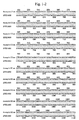
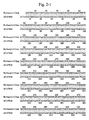
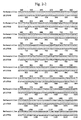
- the nucleotide sequence of the ITS region between 16SrDNA and 23SrDNA of the novel bacterium belonging to the genus Azospirillum and the same of the novel bacterium belonging to the genus Herbaspirillum were determined.
- the nucleotide sequence of the ITS region of the novel bacterium belonging to the genus Azospirillum is shown in SEQ ID NO: 3 and the same of the novel bacterium belonging to the genus Herbaspirillum is shown in SEQ ID NO: 4.
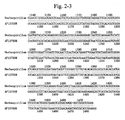
- the nucleotide sequence of the ITS region of each strain was compared with the nucleotide sequences of the ITS regions of related or distantly related 6 to 7 bacterial species registered in the DDBJ/EMBL/GeneBank international nucleotide sequence database using a multiple alignment program ClastalW.
- 2 primers sets for amplification of the ITS region were prepared with the use of regions having low homology with those of other bacteria ( Fig. 3 , Table 3).
- the PCR-amplified fragment size obtained using primer set 1 was 484 bp.
- the PCR-amplified fragment size obtained using primer set 2 was 298 bp.
- the PCR-amplified fragment size obtained using primer set 1 was 356 bp and the PCR-amplified fragment size obtained using primer set 2 was 241 bp.
- Example 3 In addition to the method examined in Example 3, a method for detecting the presence or the absence of infection with the novel bacterium belonging to the genus Azospirillum or the novel bacterium belonging to the genus Herbaspirillum was examined using plants for which infection with such bacteria had been unknown. As a result, the ELISA method was revealed to be effective, as described below.
- Polyclonal antibodies against the novel bacterium belonging to the genus Azospirillum and the novel bacterium belonging to the genus Herbaspirillum were prepared by the following method for the ELISA method.
- the novel bacterium belonging to the genus Azospirillum and the novel bacterium belonging to the genus Herbaspirillum were treated with formalin and then solutions of antigen microbes were prepared.
- Rabbits were each immunized via the back portion with 3 to 4 ⁇ 10 8 cells.
- Freund's complete adjuvant was used in the first immunization and Freund's incomplete adjuvant was used from the 2 nd and the following immunizations. Immunization was performed at intervals of 2 weeks.
- Physiological saline was added to plants inoculated with the novel bacterium belonging to the genus Azospirillum or the novel bacterium belonging to the genus Herbaspirillum and then the resultants were crushed as finely as possible with the use of a mortar or a cell crushing apparatus using beads.
- the solution obtained via crushing was weakly centrifuged, large plant residue was removed, and then the solution was subjected to a standard ELISA method using the above polyclonal antibody.
- the plant-crushed solution was injected onto a microtiter plate and then bacterial cells were adsorbed to the walls. After washing, the above polyclonal antibody diluted 100,000 fold was caused to react with the product. Solutions obtained via crushing of an uninoculated plant and a known amount of bacterial cells were tested as controls simultaneously. After washing, a peroxidase-labeled secondary antibody (anti-rabbit antibody) was caused to react with the products and then absorbances were measured after chromogenic reactions with the use of peroxidase.
- Benzisothiazole (BIT) shown in Table 7 is an active metabolite of Probenazole, which is an anti-rice-blast agricultural chemical.
- BIT Benzisothiazole
- Arabidopsis is a dicotyledonous model plant.
- Arabidopsis seeds were sterilized with 70% ethanol for 20 seconds, sterilized with a 1% hypochlorous acid aqueous solution for 5 minutes, and then washed for 20 minutes (3 times) with sterilized distilled water. Approximately 20 sterilized seeds were sown in each plastic container (5 ⁇ 5 ⁇ 5 cm) containing garden soil (Kureha) that had been autoclaved (121°C, 40 minutes), followed by cultivation within an artificial climate system under conditions of a temperature of 21°C, 60% humidity, and 16-hour lihgt/8-hour dark.
- Kureha garden soil
- Table 9 Treatment block Treatment period Preventive value with respect to no-treatment block Azospirillum 10 7 (cfu/ml) 15 days 82% Azospirillum 10 8 (cfu/ml) 15 days 42% Herbaspirillum 10 7 (cfu/ml) 15 days 70% Herbaspirillum 10 8 (cfu/ml) 15 days 62%
- Komatsuna (Brassica chinensis) (cultivar: Natsurakuten (Takii Co., Ltd.)) seedlings were planted one by one on a 200-well cell tray (soil prepared for cultivation: clay soil and the amount thereof: 20 mL/well), followed by cultivation within a greenhouse.
- the base portions of seedlings on day 4 after seeding were treated so that the final concentration of the endophyte solution was 5 ⁇ 10 7 CFU/ml.
- the degree of disease development was studied on week 6 after planting. The degree of disease development was evaluated with a scale of one to five: significant (5), high (4), medium (3), low (2), and extremely low (1). After statistical processing, the degree of disease development (%) was calculated.
- the present disclosure provides the bacteria capable of imparting resistance against pathogenic fungal, or pathogenic bacterial disease to host plants, the method for controlling disease in plants using the bacteria, and plants produced by the method, so as to have resistance against such disease.
Landscapes
- Life Sciences & Earth Sciences (AREA)
- Health & Medical Sciences (AREA)
- Engineering & Computer Science (AREA)
- Zoology (AREA)
- Microbiology (AREA)
- Chemical & Material Sciences (AREA)
- Biotechnology (AREA)
- General Health & Medical Sciences (AREA)
- Wood Science & Technology (AREA)
- Tropical Medicine & Parasitology (AREA)
- Genetics & Genomics (AREA)
- Organic Chemistry (AREA)
- Bioinformatics & Cheminformatics (AREA)
- Virology (AREA)
- Environmental Sciences (AREA)
- Biochemistry (AREA)
- General Engineering & Computer Science (AREA)
- Biomedical Technology (AREA)
- Mycology (AREA)
- Natural Medicines & Medicinal Plants (AREA)
- Botany (AREA)
- Developmental Biology & Embryology (AREA)
- Medicinal Chemistry (AREA)
- Agronomy & Crop Science (AREA)
- Pest Control & Pesticides (AREA)
- Plant Pathology (AREA)
- Dentistry (AREA)
- Micro-Organisms Or Cultivation Processes Thereof (AREA)
- Agricultural Chemicals And Associated Chemicals (AREA)
- Breeding Of Plants And Reproduction By Means Of Culturing (AREA)
Claims (4)
- Verfahren zur Kontrolle einer pathogenen fungalen oder pathogenen bakteriellen Erkrankung einer Pflanze, umfassend einen Schritt des künstlichen Infizierens einer Pflanze mit einem Bakterium, welches dem Genus Azospirillum oder dem Genus Herbaspirillum angehört, das dazu in der Lage ist, der Wirtspflanze eine Resistenz gegenüber einer pathogenen fungalen oder pathogenen bakteriellen Erkrankung durch eine Symbiose innerhalb der Pflanze zu verleihen, in der das Bakterium zumindest ein Mitglied, ausgewählt aus der Gruppe bestehend aus dem Bakterium, welches dem Genus Azospirillum angehört, hinterlegt mit der Zugriffsnummer NITE BP-194, und dem Bakterium, welches dem Genus Herbaspirillum angehört, hinterlegt mit der Zugriffsnummer NITE BP-193, ist.
- Verfahren nach Anspruch 1, worin die Pflanze der Familie Gramineae oder der Familie Brassicaceae angehört.
- Verfahren nach einem der Ansprüche 1-2, worin veranlasst wird, dass das Bakterium eine Pflanze während der vegetativen Phase infiziert.
- Verfahren zur Züchtung einer Pflanze mit einer Resistenz gegenüber einer pathogenen fungalen oder pathogenen bakteriellen Erkrankung, umfassend einen Schritt des künstlichen Infizierens einer Pflanze mit zumindest einem Mitglied, ausgewählt aus der Gruppe bestehend aus dem Bakterium, welches dem Genus Azospirillum angehört, hinterlegt mit der Zugriffsnummer NITE BP-194, und dem Bakterium, welches dem Genus Herbaspirillum angehört, hinterlegt mit der Zugriffsnummer NITE BP-193.
Applications Claiming Priority (2)
| Application Number | Priority Date | Filing Date | Title |
|---|---|---|---|
| JP2006058483 | 2006-03-03 | ||
| PCT/JP2007/054624 WO2007100162A1 (ja) | 2006-03-03 | 2007-03-02 | 新規細菌及びそれを用いた植物病害の防除方法 |
Publications (3)
| Publication Number | Publication Date |
|---|---|
| EP1997882A1 EP1997882A1 (de) | 2008-12-03 |
| EP1997882A4 EP1997882A4 (de) | 2009-12-23 |
| EP1997882B1 true EP1997882B1 (de) | 2014-07-02 |
Family
ID=38459245
Family Applications (1)
| Application Number | Title | Priority Date | Filing Date |
|---|---|---|---|
| EP07738109.3A Active EP1997882B1 (de) | 2006-03-03 | 2007-03-02 | Verfahren zur bekämpfung einer pflanzenkrankheit |
Country Status (6)
| Country | Link |
|---|---|
| US (1) | US8728459B2 (de) |
| EP (1) | EP1997882B1 (de) |
| JP (1) | JP5120849B2 (de) |
| AU (1) | AU2007221590B2 (de) |
| CA (1) | CA2638813C (de) |
| WO (1) | WO2007100162A1 (de) |
Families Citing this family (33)
| Publication number | Priority date | Publication date | Assignee | Title |
|---|---|---|---|---|
| JP5074861B2 (ja) * | 2007-08-27 | 2012-11-14 | 株式会社前川製作所 | Azospirillum属細菌の新規用途 |
| JP5198015B2 (ja) * | 2007-08-27 | 2013-05-15 | 株式会社前川製作所 | Herbaspirillum属細菌の新規用途 |
| JP5685714B2 (ja) * | 2010-09-28 | 2015-03-18 | 学校法人東京農業大学 | イネ科植物の細菌性病害の防除剤および防除方法並びに該防除剤をコートした種子 |
| JP6243347B2 (ja) | 2011-12-13 | 2017-12-06 | モンサント テクノロジー エルエルシー | 植物成長促進微生物およびその使用 |
| EP2676536A1 (de) | 2012-06-22 | 2013-12-25 | AIT Austrian Institute of Technology GmbH | Verfahren zur Herstellung von Pflanzensamen mit endophytischen Mikroorganismen |
| WO2014121366A1 (en) | 2013-02-05 | 2014-08-14 | University Of Saskatchewan | Endophytic microbial symbionts in plant prenatal care |
| US10136646B2 (en) | 2013-06-26 | 2018-11-27 | Indigo Ag, Inc. | Agricultural endophyte-plant compositions, and methods of use |
| MX380891B (es) | 2013-06-26 | 2025-03-12 | Indigo Ag Inc | Poblaciones endofitas derivadas de semillas, composiciones y metodos de uso |
| HUE048666T2 (hu) | 2013-09-04 | 2020-08-28 | Indigo Ag Inc | Mezõgazdasági endofita-növény kompozíciók és alkalmazási eljárások |
| BR112016010082A2 (pt) | 2013-11-06 | 2017-12-05 | Texas A & M Univ Sys | endófitos fúngicos para melhorar a produtividade de culturas e proteção contra pragas |
| WO2015093595A1 (ja) * | 2013-12-20 | 2015-06-25 | 学校法人東京農業大学 | 微生物保護剤及び該微生物保護剤を用いたコーティング種子並びに該コーティング種子の製造方法 |
| WO2015100432A2 (en) | 2013-12-24 | 2015-07-02 | Symbiota, Inc. | Method for propagating microorganisms within plant bioreactors and stably storing microorganisms within agricultural seeds |
| US9364005B2 (en) | 2014-06-26 | 2016-06-14 | Ait Austrian Institute Of Technology Gmbh | Plant-endophyte combinations and uses therefor |
| CA3101008A1 (en) | 2013-12-24 | 2015-07-02 | Indigo Ag, Inc. | Plants containing beneficial endophytes |
| CA2952057A1 (en) | 2014-06-20 | 2015-12-23 | The Flinders University Of South Australia | Inoculants comprising actinobacterial microorganism(s) for enhancing leguminous plant growth parameter(s) |
| EP3763214A3 (de) | 2014-06-26 | 2021-03-31 | Indigo Ag, Inc. | Endophyten, entsprechende zusammensetzungen und verfahren zur verwendung davon |
| CA2972904C (en) | 2014-12-30 | 2023-11-14 | Indigo Agriculture, Inc. | Seed endophytes across cultivars and species, associated compositions, and methods of use thereof |
| WO2016179047A1 (en) | 2015-05-01 | 2016-11-10 | Indigo Agriculture, Inc. | Designed complex endophyte compositions and methods for improved plant traits |
| RU2017141632A (ru) | 2015-05-01 | 2019-06-03 | Индиго Агрикултуре, Инк. | Изолированные комплексные эндофитные композиции и способы улучшения признаков растений |
| AU2016274683B2 (en) | 2015-06-08 | 2021-06-24 | Indigo Ag, Inc. | Streptomyces endophyte compositions and methods for improved agronomic traits in plants |
| JP5909695B1 (ja) * | 2015-06-24 | 2016-04-27 | 学校法人東京農業大学 | 植物の細菌性病害に対する微生物防除剤および種子コーティング剤並びに該種子コーティング剤をコートした種子 |
| EP3393225A4 (de) | 2015-12-21 | 2019-11-06 | Indigo AG, Inc. | Endophyte zusammensetzungen und verfahren zur verbesserung von pflanzeneigenschaften in pflanzen von agronomischer bedeutung |
| CN105838740B (zh) * | 2016-05-03 | 2020-11-06 | 湖北大学 | 一种茶树内生草螺菌制备纳米红色元素硒的方法 |
| AU2017366699A1 (en) | 2016-12-01 | 2019-07-18 | Indigo Ag, Inc. | Modulated nutritional quality traits in seeds |
| US11807586B2 (en) | 2016-12-23 | 2023-11-07 | The Texas A&M University System | Fungal endophytes for improved crop yields and protection from pests |
| CA3091731A1 (en) | 2017-03-01 | 2018-09-07 | Indigo Ag, Inc. | Endophyte compositions and methods for improvement of plant traits |
| AU2017401833A1 (en) | 2017-03-01 | 2019-10-03 | Indigo Ag, Inc. | Endophyte compositions and methods for improvement of plant traits |
| EP3629742A4 (de) | 2017-04-27 | 2022-01-05 | Flinders University Of South Australia | Bakterielle impfmittel |
| US11263707B2 (en) | 2017-08-08 | 2022-03-01 | Indigo Ag, Inc. | Machine learning in agricultural planting, growing, and harvesting contexts |
| US12075786B2 (en) | 2017-09-18 | 2024-09-03 | Indigo Ag, Inc. | Markers of plant health |
| EA202090605A1 (ru) | 2017-09-22 | 2020-06-26 | Технише Универзитэт Грац | Полимерные частицы, содержащие микроорганизмы |
| KR20210092229A (ko) | 2018-11-02 | 2021-07-23 | 니혼노야쿠가부시키가이샤 | 유해생물 방제제 조성물 및 그 사용 방법 |
| CN113736685B (zh) * | 2021-07-05 | 2023-05-09 | 西北农林科技大学 | 一种复合菌群的构建方法 |
Family Cites Families (10)
| Publication number | Priority date | Publication date | Assignee | Title |
|---|---|---|---|---|
| JPH05317092A (ja) * | 1992-05-18 | 1993-12-03 | Japan Taafu Glass:Kk | ぺレニアルライグラスにおけるエンドファイトの検定法、及びエンドファイトの導入法 |
| GB9705787D0 (en) * | 1997-03-20 | 1997-05-07 | Thrombosis Res Inst | Modified dendroaspins |
| EP0919615A4 (de) | 1997-03-24 | 2004-09-08 | Ibaraki Prefecture | Wurzelendophyt mit hemmender wirkung gegenüber bodenkrankheiten; verfahren zur herstellung des besagten wurzelendophyten und verfahren zur hemmung von bodenkrankheiten |
| US5951978A (en) | 1998-12-10 | 1999-09-14 | Tatko Biotech, Inc. | Microorganisms for improving plant productivity |
| JP2002223747A (ja) * | 2001-02-02 | 2002-08-13 | Sangaku Renkei Kiko Kyushu:Kk | 抗青枯病または抗かいよう病活性を有する細菌エンドファイト |
| JP2003274779A (ja) * | 2002-01-15 | 2003-09-30 | Society For Techno-Innovation Of Agriculture Forestry & Fisheries | イネおよびイネへの共生菌の導入方法 |
| US7084331B2 (en) | 2002-01-15 | 2006-08-01 | Society for Techno-Innovation of Agriculture Forestry and Fisheries | Rice containing endophytic bacteria and method of producing it |
| JP4313980B2 (ja) * | 2002-04-10 | 2009-08-12 | 社団法人農林水産先端技術産業振興センター | 共生菌を用いたイネ科植物の病虫害防除方法、防除剤および防除剤を結合した種子 |
| JP2006058483A (ja) | 2004-08-18 | 2006-03-02 | Sony Corp | 液晶表示用バックライト装置及び透過型液晶表示装置 |
| JP5317092B2 (ja) | 2008-03-23 | 2013-10-16 | Hoya株式会社 | マスクブランク用基板の製造方法、多層反射膜付き基板の製造方法、及び反射型マスクブランクの製造方法、並びに反射型マスクの製造方法 |
-
2007
- 2007-03-02 JP JP2008502889A patent/JP5120849B2/ja active Active
- 2007-03-02 US US12/281,560 patent/US8728459B2/en not_active Expired - Fee Related
- 2007-03-02 AU AU2007221590A patent/AU2007221590B2/en active Active
- 2007-03-02 EP EP07738109.3A patent/EP1997882B1/de active Active
- 2007-03-02 WO PCT/JP2007/054624 patent/WO2007100162A1/ja not_active Ceased
- 2007-03-02 CA CA2638813A patent/CA2638813C/en active Active
Also Published As
| Publication number | Publication date |
|---|---|
| EP1997882A4 (de) | 2009-12-23 |
| EP1997882A1 (de) | 2008-12-03 |
| AU2007221590A1 (en) | 2007-09-07 |
| WO2007100162A1 (ja) | 2007-09-07 |
| CA2638813C (en) | 2015-11-24 |
| AU2007221590B2 (en) | 2012-08-30 |
| US20090155214A1 (en) | 2009-06-18 |
| JPWO2007100162A1 (ja) | 2009-07-23 |
| US8728459B2 (en) | 2014-05-20 |
| CA2638813A1 (en) | 2007-09-07 |
| JP5120849B2 (ja) | 2013-01-16 |
Similar Documents
| Publication | Publication Date | Title |
|---|---|---|
| US8728459B2 (en) | Bacteria and method for controlling plant disease using the same | |
| RU2736382C1 (ru) | Композиции и способы для борьбы с фузариозом | |
| JP4417998B2 (ja) | 拮抗作用を有する枯草菌株を用いた植物病の防除方法 | |
| EP1719410B1 (de) | Verfahren zur Bekämpfung von Pflanzenkrankheitsschäden durch Verwendung eines Bacillus | |
| KR101569737B1 (ko) | 벼 근권에서 분리된 신규 식물 내생세균 바실러스 오리지콜라 및 이를 이용한 천연식물 보호 및 식물 강화제 개발 | |
| Hebbar et al. | Bacterial antagonists of sunflower (Helianthus annuus L.) fungal pathogens | |
| Miao et al. | Multiphasic characterization of a plant growth promoting bacterial strain, Burkholderia sp. 7016 and its effect on tomato growth in the field | |
| Nihorimbere et al. | Beneficial effects of Bacillus subtilis on field-grown tomato in Burundi: Reduction of local Fusarium disease and growth promotion | |
| EP2274414A1 (de) | Trichoderma atroviride sc1 zur biologischen bekämpfung von pilzkrankheiten bei pflanzen | |
| Postma et al. | Effect of successive cauliflower plantings and Rhizoctonia solani AG 2-1 inoculations on disease suppressiveness of a suppressive and a conducive soil | |
| CN101541948A (zh) | 对植物病害具有防除能力的微生物和使用该微生物的植物病害防除剂 | |
| WO2004024865A2 (en) | Biocontrol for plants with bacillus subtilis, pseudomonas putida, and sporobolomyces roseus | |
| CN112195142A (zh) | 一株生防贝莱斯芽孢杆菌zhx-7及其应用 | |
| Tabli et al. | Plant growth promoting and inducible antifungal activities of irrigation well water-bacteria | |
| CN107164285A (zh) | 一株枯草芽孢杆菌bbd012及防治番茄病害中的应用 | |
| Al-Hinai et al. | Isolation and characterization of Pseudomonas aeruginosa with antagonistic activity against Pythium aphanidermatum | |
| US20160029642A1 (en) | Novel collimonas bacteria and method for controlling harmful plant pathogen using said bacteria | |
| CN119776180A (zh) | 链霉菌y309及其应用 | |
| Abdelaziz et al. | Efficacy of facultative oligotrophic bacterial strains as plant growth‐promoting rhizobacteria (PGPR) and their potency against two pathogenic fungi causing damping‐off disease | |
| RU2777606C2 (ru) | Композиции и способы для борьбы с фузариозом | |
| Safara et al. | Characterizing bacterial pathogen causing sugar beet dry rot of root at harvest and its suppression by endophytic bacteria | |
| JP2017186304A (ja) | Rahnella属細菌の新規農業用途 | |
| JP6475492B2 (ja) | Comamonas属細菌の新規農業用途 | |
| Basahi | Seed tuber treatments with Pseudomonas spp. to reduce potato common scab incidence and severity | |
| Hasan et al. | Influence of Trichoderma species on mycotoxins production and pathogenic capability of Fusarium moniliforme associated with lentil seeds |
Legal Events
| Date | Code | Title | Description |
|---|---|---|---|
| PUAI | Public reference made under article 153(3) epc to a published international application that has entered the european phase |
Free format text: ORIGINAL CODE: 0009012 |
|
| 17P | Request for examination filed |
Effective date: 20080919 |
|
| AK | Designated contracting states |
Kind code of ref document: A1 Designated state(s): AT BE BG CH CY CZ DE DK EE ES FI FR GB GR HU IE IS IT LI LT LU LV MC MT NL PL PT RO SE SI SK TR |
|
| RIN1 | Information on inventor provided before grant (corrected) |
Inventor name: SHINOZAKI, SATOSHI Inventor name: NAKASHITA, HIDEO Inventor name: YASUDA, MICHIKO Inventor name: ISAWA, TSUYOSHI Inventor name: KUDO, TOSHIAKIC/O NAGASAKI UNIVERSITY |
|
| A4 | Supplementary search report drawn up and despatched |
Effective date: 20091125 |
|
| 17Q | First examination report despatched |
Effective date: 20100310 |
|
| DAX | Request for extension of the european patent (deleted) | ||
| RIC1 | Information provided on ipc code assigned before grant |
Ipc: A01N 63/00 20060101ALI20131217BHEP Ipc: A01P 3/00 20060101ALI20131217BHEP Ipc: A01G 7/00 20060101ALI20131217BHEP Ipc: C12N 1/20 20060101AFI20131217BHEP Ipc: C12N 15/09 20060101ALI20131217BHEP |
|
| GRAP | Despatch of communication of intention to grant a patent |
Free format text: ORIGINAL CODE: EPIDOSNIGR1 |
|
| INTG | Intention to grant announced |
Effective date: 20140129 |
|
| GRAS | Grant fee paid |
Free format text: ORIGINAL CODE: EPIDOSNIGR3 |
|
| GRAA | (expected) grant |
Free format text: ORIGINAL CODE: 0009210 |
|
| AK | Designated contracting states |
Kind code of ref document: B1 Designated state(s): AT BE BG CH CY CZ DE DK EE ES FI FR GB GR HU IE IS IT LI LT LU LV MC MT NL PL PT RO SE SI SK TR |
|
| RAP1 | Party data changed (applicant data changed or rights of an application transferred) |
Owner name: MAYEKAWA MFG. CO., LTD. Owner name: RIKEN |
|
| REG | Reference to a national code |
Ref country code: GB Ref legal event code: FG4D |
|
| REG | Reference to a national code |
Ref country code: AT Ref legal event code: REF Ref document number: 675946 Country of ref document: AT Kind code of ref document: T Effective date: 20140715 Ref country code: CH Ref legal event code: EP |
|
| REG | Reference to a national code |
Ref country code: IE Ref legal event code: FG4D |
|
| REG | Reference to a national code |
Ref country code: DE Ref legal event code: R096 Ref document number: 602007037461 Country of ref document: DE Effective date: 20140814 |
|
| REG | Reference to a national code |
Ref country code: NL Ref legal event code: T3 |
|
| REG | Reference to a national code |
Ref country code: AT Ref legal event code: MK05 Ref document number: 675946 Country of ref document: AT Kind code of ref document: T Effective date: 20140702 |
|
| REG | Reference to a national code |
Ref country code: LT Ref legal event code: MG4D |
|
| PG25 | Lapsed in a contracting state [announced via postgrant information from national office to epo] |
Ref country code: LT Free format text: LAPSE BECAUSE OF FAILURE TO SUBMIT A TRANSLATION OF THE DESCRIPTION OR TO PAY THE FEE WITHIN THE PRESCRIBED TIME-LIMIT Effective date: 20140702 Ref country code: CZ Free format text: LAPSE BECAUSE OF FAILURE TO SUBMIT A TRANSLATION OF THE DESCRIPTION OR TO PAY THE FEE WITHIN THE PRESCRIBED TIME-LIMIT Effective date: 20140702 Ref country code: PT Free format text: LAPSE BECAUSE OF FAILURE TO SUBMIT A TRANSLATION OF THE DESCRIPTION OR TO PAY THE FEE WITHIN THE PRESCRIBED TIME-LIMIT Effective date: 20141103 Ref country code: FI Free format text: LAPSE BECAUSE OF FAILURE TO SUBMIT A TRANSLATION OF THE DESCRIPTION OR TO PAY THE FEE WITHIN THE PRESCRIBED TIME-LIMIT Effective date: 20140702 Ref country code: SE Free format text: LAPSE BECAUSE OF FAILURE TO SUBMIT A TRANSLATION OF THE DESCRIPTION OR TO PAY THE FEE WITHIN THE PRESCRIBED TIME-LIMIT Effective date: 20140702 Ref country code: GR Free format text: LAPSE BECAUSE OF FAILURE TO SUBMIT A TRANSLATION OF THE DESCRIPTION OR TO PAY THE FEE WITHIN THE PRESCRIBED TIME-LIMIT Effective date: 20141003 Ref country code: BG Free format text: LAPSE BECAUSE OF FAILURE TO SUBMIT A TRANSLATION OF THE DESCRIPTION OR TO PAY THE FEE WITHIN THE PRESCRIBED TIME-LIMIT Effective date: 20141002 Ref country code: ES Free format text: LAPSE BECAUSE OF FAILURE TO SUBMIT A TRANSLATION OF THE DESCRIPTION OR TO PAY THE FEE WITHIN THE PRESCRIBED TIME-LIMIT Effective date: 20140702 |
|
| PG25 | Lapsed in a contracting state [announced via postgrant information from national office to epo] |
Ref country code: IS Free format text: LAPSE BECAUSE OF FAILURE TO SUBMIT A TRANSLATION OF THE DESCRIPTION OR TO PAY THE FEE WITHIN THE PRESCRIBED TIME-LIMIT Effective date: 20141102 Ref country code: AT Free format text: LAPSE BECAUSE OF FAILURE TO SUBMIT A TRANSLATION OF THE DESCRIPTION OR TO PAY THE FEE WITHIN THE PRESCRIBED TIME-LIMIT Effective date: 20140702 Ref country code: CY Free format text: LAPSE BECAUSE OF FAILURE TO SUBMIT A TRANSLATION OF THE DESCRIPTION OR TO PAY THE FEE WITHIN THE PRESCRIBED TIME-LIMIT Effective date: 20140702 Ref country code: PL Free format text: LAPSE BECAUSE OF FAILURE TO SUBMIT A TRANSLATION OF THE DESCRIPTION OR TO PAY THE FEE WITHIN THE PRESCRIBED TIME-LIMIT Effective date: 20140702 Ref country code: LV Free format text: LAPSE BECAUSE OF FAILURE TO SUBMIT A TRANSLATION OF THE DESCRIPTION OR TO PAY THE FEE WITHIN THE PRESCRIBED TIME-LIMIT Effective date: 20140702 |
|
| REG | Reference to a national code |
Ref country code: DE Ref legal event code: R097 Ref document number: 602007037461 Country of ref document: DE |
|
| PG25 | Lapsed in a contracting state [announced via postgrant information from national office to epo] |
Ref country code: DK Free format text: LAPSE BECAUSE OF FAILURE TO SUBMIT A TRANSLATION OF THE DESCRIPTION OR TO PAY THE FEE WITHIN THE PRESCRIBED TIME-LIMIT Effective date: 20140702 Ref country code: RO Free format text: LAPSE BECAUSE OF FAILURE TO SUBMIT A TRANSLATION OF THE DESCRIPTION OR TO PAY THE FEE WITHIN THE PRESCRIBED TIME-LIMIT Effective date: 20140702 Ref country code: SK Free format text: LAPSE BECAUSE OF FAILURE TO SUBMIT A TRANSLATION OF THE DESCRIPTION OR TO PAY THE FEE WITHIN THE PRESCRIBED TIME-LIMIT Effective date: 20140702 Ref country code: IT Free format text: LAPSE BECAUSE OF FAILURE TO SUBMIT A TRANSLATION OF THE DESCRIPTION OR TO PAY THE FEE WITHIN THE PRESCRIBED TIME-LIMIT Effective date: 20140702 Ref country code: EE Free format text: LAPSE BECAUSE OF FAILURE TO SUBMIT A TRANSLATION OF THE DESCRIPTION OR TO PAY THE FEE WITHIN THE PRESCRIBED TIME-LIMIT Effective date: 20140702 |
|
| PLBE | No opposition filed within time limit |
Free format text: ORIGINAL CODE: 0009261 |
|
| STAA | Information on the status of an ep patent application or granted ep patent |
Free format text: STATUS: NO OPPOSITION FILED WITHIN TIME LIMIT |
|
| 26N | No opposition filed |
Effective date: 20150407 |
|
| PG25 | Lapsed in a contracting state [announced via postgrant information from national office to epo] |
Ref country code: MC Free format text: LAPSE BECAUSE OF FAILURE TO SUBMIT A TRANSLATION OF THE DESCRIPTION OR TO PAY THE FEE WITHIN THE PRESCRIBED TIME-LIMIT Effective date: 20140702 Ref country code: LU Free format text: LAPSE BECAUSE OF FAILURE TO SUBMIT A TRANSLATION OF THE DESCRIPTION OR TO PAY THE FEE WITHIN THE PRESCRIBED TIME-LIMIT Effective date: 20150302 |
|
| PG25 | Lapsed in a contracting state [announced via postgrant information from national office to epo] |
Ref country code: SI Free format text: LAPSE BECAUSE OF FAILURE TO SUBMIT A TRANSLATION OF THE DESCRIPTION OR TO PAY THE FEE WITHIN THE PRESCRIBED TIME-LIMIT Effective date: 20140702 |
|
| REG | Reference to a national code |
Ref country code: FR Ref legal event code: ST Effective date: 20151130 |
|
| REG | Reference to a national code |
Ref country code: IE Ref legal event code: MM4A |
|
| PG25 | Lapsed in a contracting state [announced via postgrant information from national office to epo] |
Ref country code: IE Free format text: LAPSE BECAUSE OF NON-PAYMENT OF DUE FEES Effective date: 20150302 |
|
| PG25 | Lapsed in a contracting state [announced via postgrant information from national office to epo] |
Ref country code: FR Free format text: LAPSE BECAUSE OF NON-PAYMENT OF DUE FEES Effective date: 20150331 |
|
| PG25 | Lapsed in a contracting state [announced via postgrant information from national office to epo] |
Ref country code: BE Free format text: LAPSE BECAUSE OF FAILURE TO SUBMIT A TRANSLATION OF THE DESCRIPTION OR TO PAY THE FEE WITHIN THE PRESCRIBED TIME-LIMIT Effective date: 20140702 |
|
| PG25 | Lapsed in a contracting state [announced via postgrant information from national office to epo] |
Ref country code: MT Free format text: LAPSE BECAUSE OF FAILURE TO SUBMIT A TRANSLATION OF THE DESCRIPTION OR TO PAY THE FEE WITHIN THE PRESCRIBED TIME-LIMIT Effective date: 20140702 |
|
| PG25 | Lapsed in a contracting state [announced via postgrant information from national office to epo] |
Ref country code: HU Free format text: LAPSE BECAUSE OF FAILURE TO SUBMIT A TRANSLATION OF THE DESCRIPTION OR TO PAY THE FEE WITHIN THE PRESCRIBED TIME-LIMIT; INVALID AB INITIO Effective date: 20070302 |
|
| PG25 | Lapsed in a contracting state [announced via postgrant information from national office to epo] |
Ref country code: TR Free format text: LAPSE BECAUSE OF FAILURE TO SUBMIT A TRANSLATION OF THE DESCRIPTION OR TO PAY THE FEE WITHIN THE PRESCRIBED TIME-LIMIT Effective date: 20140702 |
|
| PGFP | Annual fee paid to national office [announced via postgrant information from national office to epo] |
Ref country code: NL Payment date: 20250217 Year of fee payment: 19 |
|
| PGFP | Annual fee paid to national office [announced via postgrant information from national office to epo] |
Ref country code: DE Payment date: 20250128 Year of fee payment: 19 |
|
| PGFP | Annual fee paid to national office [announced via postgrant information from national office to epo] |
Ref country code: GB Payment date: 20250130 Year of fee payment: 19 |
|
| PGFP | Annual fee paid to national office [announced via postgrant information from national office to epo] |
Ref country code: CH Payment date: 20250401 Year of fee payment: 19 |