EP1982824B2 - Vorrichtung und Verfahren zur Herstellung eines dreidimensionalen Objekts mittels Maskenbelichtung - Google Patents
Vorrichtung und Verfahren zur Herstellung eines dreidimensionalen Objekts mittels Maskenbelichtung Download PDFInfo
- Publication number
- EP1982824B2 EP1982824B2 EP08011621.3A EP08011621A EP1982824B2 EP 1982824 B2 EP1982824 B2 EP 1982824B2 EP 08011621 A EP08011621 A EP 08011621A EP 1982824 B2 EP1982824 B2 EP 1982824B2
- Authority
- EP
- European Patent Office
- Prior art keywords
- pixel
- pixels
- gray value
- imaging unit
- bitmap
- Prior art date
- Legal status (The legal status is an assumption and is not a legal conclusion. Google has not performed a legal analysis and makes no representation as to the accuracy of the status listed.)
- Active
Links
Images



Classifications
-
- G—PHYSICS
- G03—PHOTOGRAPHY; CINEMATOGRAPHY; ANALOGOUS TECHNIQUES USING WAVES OTHER THAN OPTICAL WAVES; ELECTROGRAPHY; HOLOGRAPHY
- G03F—PHOTOMECHANICAL PRODUCTION OF TEXTURED OR PATTERNED SURFACES, e.g. FOR PRINTING, FOR PROCESSING OF SEMICONDUCTOR DEVICES; MATERIALS THEREFOR; ORIGINALS THEREFOR; APPARATUS SPECIALLY ADAPTED THEREFOR
- G03F7/00—Photomechanical, e.g. photolithographic, production of textured or patterned surfaces, e.g. printing surfaces; Materials therefor, e.g. comprising photoresists; Apparatus specially adapted therefor
- G03F7/20—Exposure; Apparatus therefor
- G03F7/2022—Multi-step exposure, e.g. hybrid; backside exposure; blanket exposure, e.g. for image reversal; edge exposure, e.g. for edge bead removal; corrective exposure
-
- B—PERFORMING OPERATIONS; TRANSPORTING
- B29—WORKING OF PLASTICS; WORKING OF SUBSTANCES IN A PLASTIC STATE IN GENERAL
- B29C—SHAPING OR JOINING OF PLASTICS; SHAPING OF MATERIAL IN A PLASTIC STATE, NOT OTHERWISE PROVIDED FOR; AFTER-TREATMENT OF THE SHAPED PRODUCTS, e.g. REPAIRING
- B29C64/00—Additive manufacturing, i.e. manufacturing of three-dimensional [3D] objects by additive deposition, additive agglomeration or additive layering, e.g. by 3D printing, stereolithography or selective laser sintering
- B29C64/10—Processes of additive manufacturing
- B29C64/106—Processes of additive manufacturing using only liquids or viscous materials, e.g. depositing a continuous bead of viscous material
- B29C64/124—Processes of additive manufacturing using only liquids or viscous materials, e.g. depositing a continuous bead of viscous material using layers of liquid which are selectively solidified
- B29C64/129—Processes of additive manufacturing using only liquids or viscous materials, e.g. depositing a continuous bead of viscous material using layers of liquid which are selectively solidified characterised by the energy source therefor, e.g. by global irradiation combined with a mask
-
- B—PERFORMING OPERATIONS; TRANSPORTING
- B33—ADDITIVE MANUFACTURING TECHNOLOGY
- B33Y—ADDITIVE MANUFACTURING, i.e. MANUFACTURING OF THREE-DIMENSIONAL [3D] OBJECTS BY ADDITIVE DEPOSITION, ADDITIVE AGGLOMERATION OR ADDITIVE LAYERING, e.g. BY 3D PRINTING, STEREOLITHOGRAPHY OR SELECTIVE LASER SINTERING
- B33Y10/00—Processes of additive manufacturing
-
- B—PERFORMING OPERATIONS; TRANSPORTING
- B33—ADDITIVE MANUFACTURING TECHNOLOGY
- B33Y—ADDITIVE MANUFACTURING, i.e. MANUFACTURING OF THREE-DIMENSIONAL [3D] OBJECTS BY ADDITIVE DEPOSITION, ADDITIVE AGGLOMERATION OR ADDITIVE LAYERING, e.g. BY 3D PRINTING, STEREOLITHOGRAPHY OR SELECTIVE LASER SINTERING
- B33Y50/00—Data acquisition or data processing for additive manufacturing
- B33Y50/02—Data acquisition or data processing for additive manufacturing for controlling or regulating additive manufacturing processes
-
- G—PHYSICS
- G03—PHOTOGRAPHY; CINEMATOGRAPHY; ANALOGOUS TECHNIQUES USING WAVES OTHER THAN OPTICAL WAVES; ELECTROGRAPHY; HOLOGRAPHY
- G03F—PHOTOMECHANICAL PRODUCTION OF TEXTURED OR PATTERNED SURFACES, e.g. FOR PRINTING, FOR PROCESSING OF SEMICONDUCTOR DEVICES; MATERIALS THEREFOR; ORIGINALS THEREFOR; APPARATUS SPECIALLY ADAPTED THEREFOR
- G03F7/00—Photomechanical, e.g. photolithographic, production of textured or patterned surfaces, e.g. printing surfaces; Materials therefor, e.g. comprising photoresists; Apparatus specially adapted therefor
- G03F7/0037—Production of three-dimensional images
-
- G—PHYSICS
- G03—PHOTOGRAPHY; CINEMATOGRAPHY; ANALOGOUS TECHNIQUES USING WAVES OTHER THAN OPTICAL WAVES; ELECTROGRAPHY; HOLOGRAPHY
- G03F—PHOTOMECHANICAL PRODUCTION OF TEXTURED OR PATTERNED SURFACES, e.g. FOR PRINTING, FOR PROCESSING OF SEMICONDUCTOR DEVICES; MATERIALS THEREFOR; ORIGINALS THEREFOR; APPARATUS SPECIALLY ADAPTED THEREFOR
- G03F7/00—Photomechanical, e.g. photolithographic, production of textured or patterned surfaces, e.g. printing surfaces; Materials therefor, e.g. comprising photoresists; Apparatus specially adapted therefor
- G03F7/70—Microphotolithographic exposure; Apparatus therefor
- G03F7/70383—Direct write, i.e. pattern is written directly without the use of a mask by one or multiple beams
- G03F7/70391—Addressable array sources specially adapted to produce patterns, e.g. addressable LED arrays
Definitions
- the invention relates to a device for producing a three-dimensional object by solidifying a material that can be solidified under the action of electromagnetic radiation, in particular a photopolymer, by means of energy input via an imaging unit that has a specific number of discrete imaging elements (pixels).
- this invention relates to methods in which the solidification is based on exposure using a rasterized mask, the smallest physical resolution in the mask being given by the size of a pixel and the imaging unit being based on Spacial Light Modulator (SLM) technology.
- SLM Spacial Light Modulator
- the light output at the point of exposure is determined by adjusting the energy of the laser beam, which means that the depth of hardening of the solidifiable material such as the photopolymer can be controlled at this point.
- the laser beam is scanned over the cross-sectional area to be cured.
- the contours of the cross-sectional area to be hardened can be traced as a curve by the laser beam.
- a cross-sectional area is usually exposed at once.
- the contours of the cross-sectional area to be hardened can only be displayed as a grid; the resolution depends on the number of picture elements or pixels and the size of the projected image.
- U.S. 6,500,378 B1 discloses an apparatus according to the preamble of claim 1 and a method according to the preamble of claim 11. This shows U.S. 6,500,378 B1 gray scale modulation of pixels in a mask projection system to achieve a desired cured area size, or to form thinner layers or areas of certain layers.
- the intensity of rays is controlled by controlling the transmittance of the mask, where intensity control can be accomplished by driving gray levels of a transmission LCD. Covering with different light intensities, however, takes place in relation to a respective layer only according to whether there are solidified areas underneath or not. From a setting and / or control of an energy input in a voxel matrix according to the present invention is in WO 01/00390 A no speech.
- the present invention is about resolution and fine tuning in a voxel matrix; while gray scale gradation depending on whether an underlying hardened layer is absent or present for bonding is dispensable with the present invention.
- WO 2005/110722 A To improve the resolution, multiple exposures are made along the outer and inner contours of the cross-sectional areas of the object to be generated in the sub-pixel area, which consists of a sequence of a plurality of images offset in the sub-pixel area in the image/construction plane, with a separate mask for each offset image /Bitmap is generated. A gray scale adjustment is considered for contour pixels obtained by the sub-pixel offset. Also in the WO 2005/110722 A there is no mention of an adjustment and/or control of an energy input in a voxel matrix according to the present invention. Neither in the WO 01/00390 A still in the WO 2005/110722 it is shown how the resolution and the fine adjustment can be improved or how native inhomogeneities of the light source can be better compensated.
- the object of the invention is to improve the device and method for producing a three-dimensional object by solidifying a material that can be solidified under the action of electromagnetic radiation by means of energy input via an imaging unit that has a certain number of discrete imaging elements (pixels) in such a way that a higher Accuracy, higher resolution and fine adjustment and / or higher homogeneity of the system is achieved.
- an imaging unit that has a certain number of discrete imaging elements (pixels) in such a way that a higher Accuracy, higher resolution and fine adjustment and / or higher homogeneity of the system is achieved.
- the invention provides an apparatus according to claim 1.
- the invention further provides a method according to claim 10. Preferred embodiments are defined in the subclaims.
- a voxel matrix is to be understood as a grid arrangement of hardened voxels (volume pixels), a voxel imaging a pixel of a pixel matrix and the hardening depth per voxel being dependent on the energy coupled in per pixel.
- the ability to set and/or control a specific gray value and/or color value is advantageously provided specifically and individually for each pixel.
- the adjustment or adjustment via color values compared to gray values can be particularly advantageous because a significantly better fine adjustment, specifically related to the photopolymer used in each case, is then possible.
- the imaging unit of the device can be included in a projection unit.
- the imaging unit is usually constructed in such a way that the number of pixels is constant and are spatially fixed to one another in the plane.
- the imaging unit can be the device of the type of an emitting point, an emitting line or an emitting matrix.
- An improvement in resolution is achieved in particular when the imaging unit includes a spatial light modulator (SLM) or light valves in MEMS technology or LEDs.
- SLM spatial light modulator
- the present invention also provides a method for producing a three-dimensional object by solidifying a material that can be solidified under the action of electromagnetic radiation by means of energy input via an imaging unit that has a specific number of discrete imaging elements (pixels), the light output for Solidification of the material is controlled in at least some of the pixels via a defined gray value and/or color value.
- the penetration depth of the electromagnetic radiation for solidifying the material can advantageously be adjusted much more finely and variably and with pixel accuracy by selectively controlling a gray value and/or a color value in a voxel matrix, and preferably using a rastered mask (bitmap) without sub-pixel offset is used.
- Information on the gray value and/or color value can be stored in the rasterized image (bitmap) per picture element (pixel).
- the exposure mask or the image is projected into the building plane by means of a projection unit in order to solidify the material.
- the device and the method according to the invention it is determined which pixels are overlapped by the graphic and how much. Depending on the result of this determination, a correspondingly weighted gray value or a specific color value is assigned to each pixel.
- This measure can significantly improve the resolution in the case of very fine structures.
- antialiasing is taken into account by these measures when rasterizing a contour line, which eliminates or reduces the so-called staircase effect in the edge/contour area, which occurs when rasterizing a vector graphic - here the cross-sectional structure to be exposed becomes.
- a multiple exposure and/or a subpixel offset is not desired according to the invention.
- the pixels of the areas identified in each case are assigned uniform gray values and/or color values, so that the gray value and/or color value extend over the respective areas. For example, larger surface structures are darkened according to their extent, while smaller surface structures are irradiated brighter. As a result, a uniform depth of hardening is obtained over the entire cross-sectional image and thus over the entire area to be exposed.
- increased hardening of selected surface areas takes place through single or multiple exposure of a voxel matrix, in that a corresponding gray value assignment is made within the voxel matrix, with the hardening depth thus achieved in the selected areas being Z-direction of the voxel matrix is increased.
- the curing depth of the selected area that is not covered or has a lower gray value or color value is preferably many times, ie at least three times, preferably at least four times and more preferably at least five times, compared to the remaining area.
- information regarding the gray value and/or color value per picture element (pixel) is currently calculated online for each rasterized image (bitmap).
- the imaging performance can be improved by bit mapping for a voxel matrix by light power control using gray scales and/or color values in the macro range or specifically at the pixel level in the micro range. Imaging losses caused by pure ON/OFF (WHITE/BLACK) screening can be reduced.
- the resolution capability in the construction level is improved without having to increase the resolution of the imaging unit. This improves the overall quality of the component in terms of surface smoothness, detail and tolerances.
- the light output distribution over the image area can be significantly improved (compared to a conventional, possibly inhomogeneous distribution of up to 50% in absolute terms).
- the dependency or influence is reduced compared to the prior art with regard to a) the light source used, b) the optical system for coupling the light energy (especially to the SLM) and c) the vignetting of the projection optics. Even if the properties of the light source change over time, this can be corrected so that variable errors and changing homogeneity distributions can be compensated for.
- even constant errors that can be caused by the optical system for coupling the light energy onto the SLM and the projection optics can be avoided by compensating for deviations in homogeneity.
- the problem can be addressed that the light intensity varies depending on the size of the exposed surface structure (higher light intensity with larger, connected surfaces, lower light intensity with small, filigree surface structures), which is why without the measure according to the invention the inhomogeneity of the light power distribution in the projected image can lead to corresponding deviations in the hardening depth of the photopolymer and thus to errors / deviations, inaccuracies in the component when using mask projection using SLM technology.
- the light power distribution can be used both over the overall image (grey mask compensation).
- Macro adjustment - as well as pixel level - micro adjustment - can be adjusted without changing the native state of the light source and/or the imaging optics.
- the micro-adaptation is best done selectively, i.e. depending on the cross-sectional structure to be imaged and during the generation of the bitmap of the cross-sectional area for the currently formed voxel matrix.
- Deviations can also be compensated for, e.g. due to aging of the light source or other optical errors.
- the gray scale control and/or the color value control can most appropriately be carried out completely using software.
- a computer unit such as a CPU, an IC and/or a software implementation, each with a corresponding function, can serve as suitable components for this purpose.
- the system is therefore very flexible and open to everyone.
- Mask projection systems based on SML technology can be used.
- the selective, pixel-precise light output adjustment can be carried out independently of the exposure time by means of the gray scale and/or color scale control.
- the exposure time can advantageously remain constant for all bitmaps.
- the three-dimensional object 3 is built up in layers.
- the structure can also be layer-independent. Further design options are possible.
- the curing process can be continuous without layers; discontinuous (with the same, different or variable layer thicknesses); partially continuous and partially discontinuous (discontinuous with equal, different or variable layer thicknesses); or in a combination of different ways.
- the device and method according to the present invention is particularly suitable for creating a three-dimensional object independent of layers.
- the light radiation required for hardening is projected onto the processing level.
- the exposure is carried out with the help of a multimedia projector.
- the image is made up of individual picture elements (pixels) to form a so-called bitmap.
- the bitmap mask is formed by a spatial light modulator, with the pixels in the plane being spatially fixed to one another.
- a currently common, exemplary resolution for such semiconductor elements is SXGA+ 1400 ⁇ 1050 pixels.
- the macro adjustment is about the native deviations in the light power distribution over the entire image area caused by the optical system or its errors by means of a gray or color mask compensation.
- This method improves the homogeneity by at least a factor of two.
- the measurements can either be recorded manually or determined using a sensor matrix.
- the compensation mask As an embodiment of the compensation mask, a simple tiling can be used in the compensation mask ( 1 ), as another embodiment, the compensation gray values or color values can be interpolated between the individual measurement points ( 2 ) and thus a compensation mask with soft/continuous transitions between the individual measuring points can be generated.
- the aim of micro-adjustment is to obtain an image of the cross-sectional area to be projected that is as true to the original as possible with the highest level of accuracy, and also to keep the exposure and curing parameters of the structure to be exposed either constant or pixel-precisely through gray value or color value-controlled over - or affect underexposure.
- each pixel is assigned a gray value depending on the degree of overlap by the structure to be imaged. This is particularly important in the contour area of the structure.
- the principle is illustrated here using a structure that has both small holes and small cylinders of different sizes (diameter 200, 500 and 1000 ⁇ m) ( 3 ), from each of whose cross-sectional areas a bitmap mask is generated.
- the resolution of the grid here 1280 x 1024 pixels
- the size of the construction field here 317.5 x 254 mm, result in a pixel size of 248 ⁇ m.
- bitmap thus generated ( 4 ) clearly shows missing structures with a diameter of 200 ⁇ m. The reason is that with these structures, which are not shown in the bitmap, no pixel is covered by more than 50%, depending on their position in the grid:
- a well-known problem with rasterization is the alias effect. If a gray value depth of more than 1 bit is available for the raster graphic to be generated, this effect can be reduced by means of "edge smoothing" (antialiasing). Various SW filter methods are available for this purpose.
- the so-called staircase effect - an effect of aliasing - that occurs when rasterizing a vector graphic (here the cross-sectional structure to be exposed) is eliminated ( 6 ).
- this process also influences the hardening behavior of the material accordingly and thus achieves greater accuracy in the final component.
- the imaging inaccuracy of the projection optics and the photopolymer can also perform a low-pass filter function, which on the one hand can lead to a further smoothing effect on the component surface but on the other hand to a more imprecise component or to loss of detail.
- a 10 mm x 10 mm area is exposed once, it hardens e.g. 130 ⁇ m thick; a structure of 2 mm x 10 mm, on the other hand, only cures 100 ⁇ m with the same exposure time. If the component is now built, for example, in 100 ⁇ m layers or a corresponding voxel matrix, it can happen that in the filigree area the solidified areas generated do not have a sufficient chemical bond due to overexposure (130 ⁇ m depth hardening 30% into the previous layer). with each other, the layers in this area are separated and the component is defective. This phenomenon is particularly critical in the case of filigree support structures.
- volume areas with an accumulation of material there are volume areas with an accumulation of material, the wall thickness of which exceeds the maximum possible through-hardening depth of the material during post-curing, or which are in a position within the component that cannot be reached by the light energy in the post-curing process, or only to a limited extent .
- Such volume areas can already achieve a higher green compact hardness during the generation process by being overexposed in a targeted manner. This can be done by single or multiple exposure of individual or multiple layers, or it is done by corresponding gray value or color value allocation of subsequent layers and in particular within the framework of a voxel matrix, whereby in the latter case the depth of hardening in Z is a multiple of the normal depth of hardening.
- bitmap mask/exposure mask can contain black/white, gray value and/or color information that controls the exposure energy.
- the individually described embodiments and examples can be combined with one another as desired.
Landscapes
- Physics & Mathematics (AREA)
- Chemical & Material Sciences (AREA)
- Engineering & Computer Science (AREA)
- Materials Engineering (AREA)
- General Physics & Mathematics (AREA)
- Manufacturing & Machinery (AREA)
- Mechanical Engineering (AREA)
- Optics & Photonics (AREA)
- Preparing Plates And Mask In Photomechanical Process (AREA)
- Exposure And Positioning Against Photoresist Photosensitive Materials (AREA)
- Heating, Cooling, Or Curing Plastics Or The Like In General (AREA)
Description
- Die Erfindung betrifft eine Vorrichtung zur Herstellung eines dreidimensionalen Objektes durch Verfestigen eines unter Einwirkung von elektromagnetischer Strahlung verfestigbaren Materials, insbesondere eines Photopolymers, mittels Energieeintrag über eine bildgebende Einheit, die eine bestimmte Anzahl diskreter bildgebender Elemente (Pixel) aufweist. Insbesondere betrifft diese Erfindung Verfahren, bei denen die Verfestigung auf einer Belichtung mittels einer gerasterten Maske beruht, wobei die kleinste physikalische Auflösung in der Maske durch die Größe eines Pixels gegeben ist und die bildgebende Einheit auf der Spacial Light Modulator (SLM) Technologie beruht.
- Für den Aufbau dreidimensionaler Objekte aus "lichthärtenden" Photopolymeren werden in der Literatur unterschiedlichste Verfahren angegeben, siehe hierzu "Automated Fabrication - Improving Productivity in Manufacturing" von Marshall Burns, 1993 (ISBN 0-13-119462-3).
- Bekannte Möglichkeiten sind u.a. die Belichtung durch
- a) Multimedia Projektor
- b) LC-Display (reflexiv, transmissiv)
- c) LED-, bzw. Laser-Dioden-Zeile (die orthogonal zur Zeile über eine Fläche bewegt wird)
- d) Lichtventil-Technologie (MEMS)
- Diese Methoden werden in folgenden Patenten beschrieben:
- US-Patent
US005247180A "Stereolithographic Apparatus and Method of use" von Texas Instruments Inc., Sept. 1993. - US-Patent
US005980813A "Rapid Prototyping using multiple materials" von SRI International, Nov. 1999; - Gebrauchsmusterschrift
DE G 93 19 405.6 "Vorrichtung zur Herstellung eines dreidimensionalen Objekts (Modells) nach dem Prinzip der Photoverfestigung" vom Forschungszentrum Informatik an der Universität Karlsruhe, Dez. 1993; - eine Anwendung für die Erzeugung mikrotechnischer, dreidimensionaler Bauteile nach einem ähnlichen Verfahren wird in der Gebrauchsmusterschrift
DE 299 11 122 U1 "Vorrichtung zum Herstellen eines dreidimensionalen Objektes", DeltaMed u.a., Juni 1999, beschrieben. -
EP 1250997A (=US2002155189A ) "Vorrichtung zum Herstellen eines dreidimensionalen Objektes" der Envision Technologies GmbH, April 2002. - Deutsches Patent
DE69909136T "Rapid-Prototyping-Vorrichtung und Rapid-Prototyping-Methode", Juli 2003 (entsprechend Europäisches PatentEP 1156922 "Rapid Prototyping Apparatus and Method of Rapid Prototyping", August 2003) der DICON AS Lystrup, Dänemark. -
WO 01/00390 A -
WO 2005/110722 A der Envisiontec GmbH. - Bei Laser-basierten Systemen zur Photopolymerisation wird die Lichtleistung im Belichtungspunkt durch die Energieeinstellung des Laserstrahls vorgenommen, wodurch die Durchhärtetiefe des verfestigbaren Materials wie des Photopolymers in diesem Punkt gesteuert werden kann.
- Um selektiv auszuhärten, wird der Laserstrahl über die entsprechend auszuhärtende Querschnittsfläche gescannt.
Die Konturen der auszuhärtenden Querschnittsfläche können vom Laserstrahl als Kurve abgefahren werden. - Bei Systemen zur Photopolymerisation basierend auf Maskenprojektion mittels Projektionssystemen, speziell mit der SLM-Technologie, wird üblicherweise eine Querschnittesfläche auf einmal belichtet. Die weißen Bereiche des projezierten Bildes härten das verfestigbare Material (normalerweise ein Photopolymer) aus, die schwarzen Bereiche nicht. Die Konturen der auzuhärtenden Querschnittsfläche können nur gerastert dargestellt werden; die Auflösung ist abhängig von der Anzahl der Bildpunkte bzw. der Pixel und der Größe des projizierten Bildes.
- Das Dokument
US 6 500 378 B1 offenbart eine Vorrichtung gemäß dem Oberbegriff des Anspruchs 1 und ein Verfahren gemäß dem Oberbegriff des Anspruchs 11. Dabei zeigt dieseUS 6 500 378 B1 eine Grauwert-Modulierung von Pixeln in einem Maskenprojektionssystem, um eine gewünschte ausgehärtete Flächengröße zu erreichen, oder um dünnere Schichten oder Flächen bestimmter Schichten zu bilden. - Bei der oben genannten
WO 01/00390 A WO 01/00390 A
Bei derWO 2005/110722 A wird zur Verbesserung der Auflösung entlang der Außen- und Innenkonturen der Querschnittsflächen des zu generierenden Objektes im Subpixelbereich eine Mehrfachbelichtung vorgenommen, die aus einer Abfolge einer Mehrzahl von im Subpixelbereich versetzten Bildern in der Bild-/Bauebene besteht, wobei für jedes versetzte Bild eine separate Maske/Bitmap erzeugt wird. Eine Graustufeneinstellung wird für durch den Subpixelversatz erhaltene Kontur-Pixel in Betracht gezogen. Auch in derWO 2005/110722 A ist keine Rede von einer Einstellung und/oder Steuerung eines Energieeintrags in einer Voxel-Matrix gemäß der vorliegenden Erfindung.
Weder in derWO 01/00390 A WO 2005/110722 wird gezeigt, wie die Auflösung und die Feineinstellung verbessert werden können oder wie native Inhomogenitäten der Lichtquelle besser ausgeglichen werden können. - Aufgabe der Erfindung ist es, Vorrichtung und Verfahren zur Herstellung eines dreidimensionalen Objektes durch Verfestigen eines unter Einwirkung von elektromagnetischer Strahlung verfestigbaren Materials mittels Energieeintrag über eine bildgebende Einheit, die eine bestimmte Anzahl diskreter bildgebender Elemente (Pixel) aufweist, so zu verbessern, dass eine höhere Genauigkeit, höhere Auflösung und Feineinstellung und/oder eine höhere Homogenität des Systems erreicht wird.
- Die Erfindung stellt eine Vorrichtung gemäß Anspruch 1 dar.
- Die Erfindung stellt ferner ein Verfahren nach Anspruch 10 bereit. Bevorzugte Ausführungsformen sind in den Unteransprüchen festgelegt.
- Es hat sich als besonders vorteilhaft erwiesen, den Energieeintrag über einen bestimmten Grauwert und/oder Farbwert in einer Voxel-Matrix selektiv einzustellen und/oder zu steuern. Weiter bevorzugt wird eine gerasterte Maske (Bitmap) ohne Subpixelversatz verwendet.
- Unter Voxel-Matrix ist erfindungsgemäß eine gerasterte Anordnung von ausgehärteten Voxeln (Volumen-Pixeln) zu verstehen, wobei ein Voxel ein Bildpunkt einer Pixel-Matrix abbildet und die Durchärtetiefe je Voxel abhängig ist von der je Bildpunkt eingekoppelten Energie.
- Es wird die Fähigkeit zur Einstellung und/oder Steuerung eines bestimmten Grauwerts und/oder Farbwerts vorteilhaft spezifisch und individuell pro Pixel bereitgestellt.
- In einer nicht beanspruchten Ausführungsform kann die Ausgestaltung der bildgebenden Einheit vorteilhaft derart sein, daß die Zuordnung bzw. Einstufung von Pixeln in die mehr als zwei Energiestufen spezifisch und individuell pro Pixel bereitgestellt werden.
Die mehr als zwei Energiestufen schließen bevorzugt ein: - a1) AN- und AUS-Zustände durch im wesentlichen vollständigen Energiedurchlass (weiß) bzw. im wesentlichen vollständiger Energieblockage ohne Energiedurchlaß (schwarz) bei transmissiven Systemen (insbesondere mit Light-Valves) oder
- a2) AN- und AUS-Zustände durch im wesentlichen vollständige Energie-Reflexion in die optische Achse (weiß im Projektionsbild) bzw. im wesentlichen vollständige Reflexion aus der optischen Achse heraus in einen optischen Absorber (schwarz im Projektionsbild) bei reflexiven Systemen (insbesondere mit Digital Micromirror Device [DMD] oder Liquid Crystal on Silicon [LCoS] zur digitalen Lichtprozessierung [DLP]), und zusätzlich
- b1) eine bestimmte, gewünschte Anzahl von Graustufen oder
- b2) eine bestimmte, gewünschte Anzahl von Farbwerten. Die Farbwerte können einen Farbton und/öder eine Farbdichte bzw. -intensität repräsentieren.
- Erfindungsgemäß kann die Anpassung bzw. Einstellung über Farbwerte im Vergleich zu Grauwerten besonders vorteilhaft sein, weil dann eine signifikant bessere Feineinstellung, spezifisch bezogen auf das jeweils verwendete Photopolymer, möglich ist.
- In einer bevorzugten Weiterbildung kann die bildgebende Einheit der Vorrichtung in einer Projektionseinheit eingeschlossen sein. Die bildgebender Einheit ist üblicherweise so aufgebaut, daß die Anzahl der Pixel konstant ist und in der Ebene räumlich zueinander fest angeordnet sind.
- In einer bevorzugten Weiterbildung kann die bildgebende Einheit die Vorrichtung vom Typ eines emittierenden Punkts, einer emittierende Zeile oder einer emittierenden Matrix sein. Eine Auflösungsverbesserung wird insbesondere dann erreicht, wenn die bildgebende Einheit ein Spatial Light Modulator (SLM) oder Light-Valves in MEMS-Technologie oder LED's einschließt.
- In einer Weiterbildung stellt die vorliegende Erfindung ferner ein Verfahren bereit zur Herstellung eines dreidimensionalen Objektes durch Verfestigen eines, unter Einwirkung von elektromagnetischer Strahlung verfestigbaren Materials mittels Energieeintrag über eine bildgebende Einheit, die eine bestimmte Anzahl diskreter bildgebender Elemente (Pixel) aufweist, wobei die Lichtleistung zur Verfestigung des Materials bei mindestens einem Teil der Pixel über einen definierten Grauwert und/oder Farbwert gesteuert wird.
Durch diese Maßnahme kann vorteilhaft die Durchdringungstiefe der elektromagnetischen Strahlung zur Verfestigung des Materials wesentlich feiner und variabel und pixelgenau eingestellt werden, indem ein Grauwert und/oder eine Farbwert in einer Voxel-Matrix selektiv gesteuert wird, und wobei vorzugsweise eine gerasterten Maske (Bitmap) ohne Subpixelversatz verwendet wird. - Informationen zu Grauwert und/oder Farbwert können in dem gerasterten Bild (Bitmap) pro Bildpunkt (Pixel) gespeichert sein.
- In einer bevorzugten Ausführungsform des erfindungsgemäßen Verfahrens wird zur Verfestigung des Materials die Belichtungsmaske bzw. das Bild mittels einer Projektionseinheit in die Bauebene projiziert.
- In einer besonderen Ausführungsform der Vorrichtung und des Verfahrens gemäß der Erfindung wird ermittelt, welche Pixel von der Grafik wie stark überschnitten werden. Je nach Ergebnis dieser Ermittlung wird pixel-spezifisch ein entsprechend gewichteter Grauwert oder ein bestimmter Farbwert zugeordnet. Durch diese Maßnahme kann die Auflösung bei sehr feinen Strukturen signifikant verbessert werden. Alternativ oder zusätzlich wird durch diese Maßnahmen bei der Rasterung einer Kontur-Linie ein Antialiasing berücksichtigt, wodurch der so genannte Treppeneffekt im Kanten-/Kontur-Bereich, der bei der Rasterung einer Vektorgrafik - hier der zu belichtenden Querschnittsstruktur - entsteht, beseitigt bzw. reduziert wird.
- Eine Mehrfachbelichtung und/oder ein Subpixelversatz ist dabei erfindungsgemäß nicht erwünscht.
- Gemäß der Erfindung werden in einem Querschnittsbild, das zur Verfestigung erzeugt wurde, verschiedene Bereiche unterschiedlicher Flächenausdehnung identifiziert. Die Pixel der jeweils identifizierten Bereiche werden mit einheitlichen Grauwerten und/oder Farbwerten belegt, so daß sich Grauwert und/oder Farbwert über die jeweiligen Bereiche ausdehnen. So werden zum Beispiel größere Flächenstrukturen entsprechend ihrer Ausdehnung abgedunkelt, während kleinere Flächenstrukturen heller bestrahlt werden. Dadurch wird eine gleichmäßige Durchhärtetiefe über das gesamte Querschnittsbild und somit über die gesamt zu belichtende Fläche erhalten.
- In einer bevorzugten Ausführungsform der Vorrichtung und des Verfahrens gemäß der Erfindung erfolgt eine erhöhte Aushärtung selektierter Flächenbereiche durch Ein- oder MehrfachBelichtung einer Voxel-Matrix, indem eine entsprechende Grauwertbelegung innerhalb der Voxel-Matrix vorgenommen wird, wobei in den selektierten Bereichen die so erreichte Durhärtetiefe in Z-Richtung der Voxel-Matrix erhöht ist. Die Durchhärtetiefe des selektierten Bereichs, der nicht oder mit einem geringeren Grauwert bzw. Farbwert belegt ist, ist vorzugsweise um ein Vielfaches, d.h. um mindestens das Dreifache, vorzugsweise mindestens das Vierfache und weiter bevorzugt mindestens das Fünffache erhöht ist gegenüber dem übrigen Bereich.
- In einer bevorzugten Ausführungsform der Vorrichtung und des Verfahrens gemäß der Erfindung werden Informationen bezüglich Grauwert und/oder Farbwert pro Bildpunkt (Pixel) online für jedes gerasterte Bild (Bitmap) aktuell berechnet.
- Vorrichtung und Verfahren gemäß der Erfindung erlauben es, die Homogenität der Lichtleistungsverteilung zu verbessern. Speziell kann durch eine Lichtleistungssteuerung mittels Graustufen und/oder Farbwerten im Makrobereich oder spezifisch auf Pixel-Niveau im Mikrobereich die Abbildungsleistung durch Bitmapping für eine Voxel-Matrix verbessert werden. Abbildungsverluste, die durch eine reine AN/AUS (WEISS/SCHWARZ) - Rasterung verursacht werden, können reduziert werden. Das Auflösungsvermögen in der Bauebene wird verbessert, ohne die Auflösung der bildgebenden Einheit erhöhen zu müssen. Somit wird insgesamt die Qualität des Bauteils in Bezug auf Oberflächenglätte, Detailtreue und Toleranzen verbessert.
- Insbesondere bei Projektionssystemen mit SLM-Technologie kann die Lichtleistungsverteilung über die Bildfläche deutlich verbessert werden (gegenüber einer herkömmlich unter Umständen inhomogenen Verteilung von absolut bis zu 50%). Mithilfe einer Weiterbildung wird daher die Abhängigkeit bzw. der Einfluß im Vergleich zum Stand der Technik verringert in Bezug auf a) die verwendete Lichtquelle, b) das optische System zur Einkopplung der Lichtenergie (speziell auf den SLM) und c) die Vignetierung der Projektionsoptik.
Selbst wenn sich die Eigenschaften der Lichtquelle über die Zeit verändern, kann dies korrigiert werden, so daß variable Fehler und sich verändernde Homogenitätsverteilungen kompensiert werden können. Mit der Weiterbildung können falls gewünscht sogar konstante Fehler, die durch das optische System zur Einkopplung der Lichtenergie auf den SLM und die Projektionsoptik hervorgerufen werden können, durch Ausgleich von Homogenitätsabweichungen vermieden werden. - Mit dem erfindungsgemäßen Konzept kann das Problem angegangen werden, daß die Lichtintensität in Abhängigkeit von der Größe der belichteten Flächenstruktur (höhere Lichtintensität bei größeren, zusammenhängenden Flächen, geringere Lichtintensität bei kleinen, filigranen Flächenstrukturen) variiert, weshalb ohne die erfindungsgemäße Maßnahme die Inhomogenität der Lichtleistungsverteilung im projizierten Bild zu entsprechenden Abweichungen in der Durchhärtetiefe des Photopolymers und somit zu Fehlern / Abweichungen, Ungenauigkeiten im Bauteil beim Einsatz von Maskenprojektion mittels SLM-Technologie führen kann.
- Mittels der Graustufen-Steuerung und/oder der Farbwert-Steuerung kann die Lichtleistungsverteilung sowohl über das Gesamtbild (Graumasken-Kompensation) . Makro-Anpassung - als auch auf Pixel-Niveau - Mikro-Anpassung - angepasst werden, ohne den nativen Zustand der Lichtquelle und / oder der abbildenden Opitk zu verändern. Die Mikroanpassung erfolgt am besten selektiv, d.h. abhängig von der abzubildenden Querschnittsstruktur und während der Generierung der Bitmap der Querschnittsfläche für die jeweils aktuell gebildete Voxel-Matrix.
- Ferner kann mit der Maßnahme, mindestens einem Teil der Pixel mehr als zwei Energiestufen zuzuordnen, insbesondere zusätzlich zu den normalen AN- und AUS-Zuständen (weiß/schwarz) weitere Energiestufen über eine bestimmte Zahl von Graustufen, bevorzugt über eine bestimmte Zahl von Farbwerten bereitzustellen, eine wesentlich bessere Feinabstimmmung des Energieeintrags erzielt werden.
- Betriebsbedingungen können ebenso, insbesondere die Durchhärtetiefe über die gesamte abzubildende Querschnittsfläche weitestgehend konstant gehalten oder gezielt selektiv zwecks Über- oder Unterbelichtung selektierter Bereiche manipuliert werden, was zu einer Verbesserung der Bauteil-Qualität führt. Eine bessere Auflösung und eine bessere Feinabstimmung wird insbesondere dann erzielt, wenn als Parameter für Über- oder Unterbelichtung eingeschlossen werden:
- Grad der Überlappung des gerasterten Pixels durch die Vektorgrafik, und/oder
- Größe der Fläche des Querschnittsbildes.
- Auch können Abweichungen kompensiert werden, die z.B. durch Alterung der Lichtquelle oder sonstige optische Fehler herrühren.
- Die Graustufen-Steuerung und/oder die Farbwert-Steuerung kann am zweckmäßigsten vollständig software-technisch durchgeführt werden. Als geeignete Komponenten zu diesem Zweck können eine Computereinheit wie eine CPU, ein IC und/oder eine Softwareimplementierung mit jeweils entsprechender Funktion dienen. Das System ist somit sehr flexibel und für alle auf. SML-Technologie basierende Maskenprojektionssysteme einsetzbar.
- Ein weiterer großer Vorteil ist, dass die selektive, pixelgenaue Lichtleistungsanpassung unabhängig von der Belichtungszeit durch die Graustufen- und/oder Farbstufen-Steuerung erfolgen kann. Die Belichtungszeit kann vorteilhaft für alle Bitmaps konstant bleiben.
- Die Erfindung wird anhand von weiteren Ausführungsbeispielen unter Bezugnahme auf die beigefügten Figuren näher beschrieben; sie ist jedoch keineswegs auf die beschriebenen Ausführungsformen und -beispiele und Zeichnungen beschränkt, sondern kann beliebige Variationen und Modifikationen im Rahmen der Ansprüche einschließen.
- In den veranschaulichenden Figuren wird gezeigt:
-
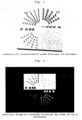
Fig. 1 zeigt schematisch ein Konzept zur Grauwert oder Farbwertanpassung auf makroskopischem Niveau gemäß einer Ausführungsform unter Verwendung einfacher Kacheln mittels Kompensationsmaske; -
Fig. 2 zeigt schematisch ein anderes Konzept zur Grauwert oder Farbwertanpassung auf makroskopischem Niveau gemäß einer anderen Ausführungsform, wobei eine Interpolation zwischen einzelnen Meßpunkte verwendet wird zum Generieren einer Kompensationsmaske; -
Fig. 3 zeigt schematisch eine Geometrie eines Modells für ein dreidimensionales Objekt mit unterschiedlich großen Löchern und Zylindern, als Grundlage zum Erzeugen einer Bitmap; -
Fig. 4 zeigt ein Vergleichsbeispiel des Erzeugens einer Bitmap ohne pixelgenaue Grauwert- oder Farbwertanpassung; -
Fig. 5 zeigt ein Beispiel des Erzeugens einer Bitmap pixelgenaue Grauwert- oder Farbwertanpassung oder -steuerung auf mikroskopischem Niveau, wobei die Anpassung bzw. die Steuerung vom Ausmaß einer Überlappung von gerasterten Pixeln durch die Vektorgraphik abhängt; -
Fig. 6 zeigt in der linken Präsentation ein Vektor-basiertes Ausgangsbit einer abzubildenden Qüerschnittstruktur mit überlagertem Raster (Pixel sind hier als Quadrate wiedergegeben); in der rechten Präsentation ist die erzeugte Bitmap auf der Basis einer gerasterten Graphik gezeigt - hier mit Kantenglättung, die durch Grauwert- oder Farbwertanpassung auf mikroskopischem Niveau erhalten wurde in Abhängigkeit davon, ob und in welchem Ausmaß Pixel durch die Graphik überdeckt sind, derart, daß sie mit einem entsprechend gewichteten Grauwert belegt sind; -
Fig. 7 zeigt schematisch eine grundsätzliche Vorrichtung, die zur Generierung eines dreidimensionalen Objekts gemäß der vorliegenden Erfindung verwendet werden kann, wobei das dreidimensionale Objekt in dieser Ausführungsform in Form von Schichten aufgebaut wird; und -
Fig. 8 zeigt schematisch eine grundsätzliche Vorrichtung, die zur Generierung eines dreidimensionalen Objekts werden kann, wobei das dreidimensionale Objekt in dieser Ausführungsform unabhängig von Schichten aufgebaut wird. -
Fig. 7 zeigt schematisch eine grundsätzliche Vorrichtung zur Generierung eines dreidimensionalen Objekts 3 durch Aushärtung eines photohärtenden Materials 4 mittels Maskenprojektion 8, wobei sich die Projektionseinheit 1 mit einer abbildenden Optik 2 oberhalb des Beckens 6, gefüllt mit photohärtendem Material 4, befindet und das Objekt 3 auf einer Trägerplatte 5 aushärtet, die innerhalb des Beckens 6 in vertikaler Richtung bewegt werden kann. In der dargestellten Arbeitsweise erfolgt der Aufbau des dreidimensionalen Objekts 3 schichtweise. Alternativ kann der Aufbau jedoch auch schichtenunabhängig erfolgen. Weitere Ausgestaltungsmöglichkeiten sind möglich. Zum Beispiel kann der Aushärtungsprozess kontinuierlich ohne Schichten; diskontinuierlich (mit gleichen, verschiedenen oder variablen Schichtdicken); teilweise kontinuierlich und teilweise diskontinuierlich (diskontinuierlich mit gleichen, verschiedenen oder variablen Schichtdicken); oder in einer Kombination verschiedener Möglichkeiten erfolgen. - Als Beispiel zeigt
Fig. 8 schematisch eine veranschaulichende Ausführungsform als Alternative zu der inFig. 7 gezeigten Vorrichtung, wobei die gleichen Bezugszeichen sich entsprechende Bauteile bezeichnen, wobei jedoch das dreidimensionale Objekt 3 unabhängig von irgendwelchen Schichten gebaut wird. - Die Vorrichtung und das Verfahren gemäß der vorliegenden Erfindung ist besonders geeignet zum Erstellen eines dreidimensionalen Objekts unabhängig von Schichten.
- Bei einem auf Photoploymerisation basierenden Verfahren wird die zum Härten notwendige Lichtstrahlung in die Bearbeitungsebene projiziert. Die Belichtung wird mit Hilfe eines Multimedia-Projektors ausgeführt. Das Bild setzt sich dabei aus einzelnen Bildpunkten (Pixeln) zu einer sogenannten Bitmap zusammen. Die Bitmap-Maske wird durch einen Spatial Light Modulator gebildet, wobei die Pixel in der Ebene räumlich zueinander fest angeordnet sind. Eine derzeit gängige, beispielhafte Auflösung für solche Halbleiterelemente liegt bei SXGA+ 1400 x 1050 Bildpunkten.
- Bei der Makro-Anpassung geht es darum, die nativen Abweichungen in der Lichtleistungsverteilung über die gesamte Bildfläche, hervorgerufen durch das optische System bzw. dessen Fehler mittels einer Grau- oder Farb-Maskenkompensation auszugleichen.
- Hierzu werden multiple Messwerte gleichmäßig verteilt über die gesamte Bildfläche aufgenommen und eine Kompensationsmaske aus Grauwerten oder Farbwerten errechnet, die über jede einzelne projizierte Bitmap-Maske gelegt bzw. überlagert wird.
- Durch dieses Verfahren wird die Homogenität mindestens um den Faktor zwei verbessert.
- Die Messungen können entweder manuell erfasst oder über eine Sensor-Matrix ermittelt werden.
- Als eine Ausführungsform der Kompensationsmaske kann eine einfache Kachelung bei der Kompensationsmaske eingesetzt werden (
Fig. 1 ), als andere Ausführungsform können die Kompensations-Grauwerte oder Farbwerte zwischen den einzelnen Messpunkten interpoliert werden (Fig. 2 ) und so eine Kompensationsmaske mit weichen/kontinuierlichen Übergängen zwischen den einzelnen Messpunkten erzeugt werden. - Bei der Mikro-Anpassung geht es darum eine möglichst originalgetreue Abbildung der zu projizierenden Querschnittsfläche mit höchster Genauigkeit zu erhalten und außerdem die Belichtungs- und Aushärte-Parameter über die zu belichtende Struktur entweder konstant zu halten oder gezielt Pixelgenau durch Grauwert- oder Farbwert-gesteuerte Über- oder Unterbelichtung zu beeinflussen.
- Hier kann es passieren, dass bei einer Strukturgröße von 1,5 x 1,5 Pixeln durch eine ungünstige Pixel-/Bitmap-Verteilung bzw. Rasterung bei einer reinen Schwarz/Weiß Umsetzung entweder nur ein Pixel oder gleich 3 x 3 Pixel Weiß geschaltet werden. Bei noch kleineren Strukturen in 1 Pixel-Größe kann es sogar zu vollständigem Verlust der abzubildenden Struktur in der Bitmap kommen.
- Um dies zu verhindern, wird jedem Pixel abhängig vom Grad der Überlappung durch die abzubildende Struktur ein entsprechender Grauwert zugeordnet. Dies kommt insbesondere im Konturbereich der Struktur zum tragen.
- Das Prinzip wird hier anhand einer Struktur dargestellt, die sowohl kleine Löcher als auch kleine Zylinder in unterschiedlicher Größe (Durchmesser 200, 500 und 1000 µm) aufweist (
Fig. 3 ), aus deren Querschnittsflächen jeweils eine Bitmap-Maske generiert wird.
Aus der Auflösung der Rasterung, hier 1280 x 1024 Pixel und der Größe des Baüfeldes, hier 317.5 x 254 mm, ergibt sich eine Pixelgröße von 248 µm. - Es ist zu beachten, dass die kleinste Struktur hier kleiner als ein Pixel ist!
- Durch zwei unterschiedliche Bitmapping-Strategien wird die Verbesserung durch die Grauwert- oder Farbwert-Anpassung aufgezeigt:
-
- Der Innenbereich der Kontur wird mit Pixeln gefüllt.
- Außenkonturen (Masse innenliegend) werden mit weißen Pixeln gefüllt.
- Innenkonturen (Hohlraum innenliegend) werden mit schwarzen Pixeln gefüllt.
- Pixel berühren nur dann die Konturlinie, wenn das Pixel zu mindestens 50% durch den Innenbereich überdeckt wird.
- Die so generierte Bitmap (
Fig. 4 ) zeigt deutlich fehlende Strukturen der Größe 200 µm im Durchmesser.
Der Grund ist, dass bei diesen in der Bitmap nicht dargestellten Strukturen in Abhängigkeit von ihrer Position im Raster kein Pixel mehr als 50% überdeckt wird: -
Original-Durchmesser Bitmap-Darstellung "Bohrung" Bitmap-Darstellung "Zylinder" 200 µm 1 Pixel 248 µm 1 Pixel 248 µm 500 µm 2 Pixel 496 µm 2 Pixel 496 µm 1000 µm 4 Pixel 992 µm 4 Pixel 992 µm -
- Der Innenbereich der Kontur wird mit Pixeln gefüllt.
- Außenkonturen (Masse innenliegend) werden mit "hellen" Pixeln gefüllt.
- Innenkonturen (Hohlraum innenliegend) werden mit "dunklen" Pixeln gefüllt.
- Die Helligkeit bzw. der Grauwert des Pixels ist abhängig von dem Grad der Überlappung durch den Innenbereich.
- In der so generierten Bitmap (
Fig. 5 ) werden alle Strukturen / Geometrien sichtbar. Die 200 µm Zylinder sind zu dunkel und die 200 µm Bohrungen sind zu hell. Der Grund dafür ist, dass, - in Abhängigkeit von der Position der Konturen im Pixel-Raster - kein Pixel zu 100% überlappt wird und somit kein Pixel 100% weiß (bei Außenkonturen) oder 100% schwarz (bei Innenkonturen) dargestellt wird: -
Original-Durchmesser Bitmap-Darstellung "Bohrung" Bitmap-Darstellung "Zylinder" 200 µm ∼1 Pixel ∼248 µm ∼1 Pixel ∼248 µm 500 µm -2 Pixel ∼496 µm -2 Pixel -496 µm 1000 µm ∼4 Pixel ∼992 µm ∼4 Pixel ∼992 µm - Hier wird sich der in der digitalen Bildverarbeitung bereits bekannte Antialiasing-Effekt zunutze gemacht.
- Ein bekanntes Problem der Rasterung ist der Alias-Effekt. Steht für die zu erzeugende Rastergrafik eine Grauwerttiefe von mehr als 1 Bit zur Verfügung, so kann dieser Effekt mittels "Kantenglättung" (Antialiasing) vermindert werden. Dazu stehen verschiedene SW-Filtermethoden zur Verfügung.
- Beim Antialiasing der Bitmapausgabe wird der so genannte Treppeneffekt - eine Auswirkung vom Aliasing - beseitigt, der bei der Rasterung einer Vektorgrafik (hier die zu belichtenden Querschnittsstruktur) entsteht (
Fig. 6 ). - Beim Zeichnen einer Linie können nur horizontale und vertikale Linien problemlos gezeichnet werden, deren Strichstärke ein Vielfaches des Pixelabstands ist und deren Anfangs- und Endpunkt auf einem Pixel liegt. Ist eine Linie etwas schräg, so entstehen zwangsläufig Treppenstufen. Das gleiche widerfährt auch allen runden/freien Formen. Je gröber die Auflösung ist, desto deutlicher wird der Effekt.
- Beim Antialiasing von Vektorgrafiken berücksichtigt man, welche Pixel von der Grafik wie stark überschnitten werden und gibt ihnen einen entsprechend gewichteten Grauwert. Dabei werden die Pixel üblicherweise als Quadrate betrachtet. Je mehr von der Pixelfläche durch die Grafik abgedeckt wird, desto heller wird der Grauwert des Pixels eingestellt. Zur Umsetzung werden spezielle Software-Filter eingesetzt.
- Durch dieses Verfahren wird letztendlich auch das Aushärteverhalten des Materials entsprechende beeinflusst und so eine höhere Genauigkeit in dem endgültigen Bauteil erzielt.
- Die Abbildungs-Ungenauigkeit der Projektionsoptik und des Photopolymers können noch zusätzlich eine Tiefpaßfilter-Funktion ausüben, was einerseits zu einem weiteren Glättungseffekt der Bauteiloberfläche aber andererseits auch zu einem ungenaueren Bauteil, bzw. zu Detailverlusten führen kann.
- Bei großflächigeren Strukturen steht mehr Lichtleistung pro Fläche zur Verfügung als bei filigranen Strukturen; dieses Phänomen führt zu unterschiedlichen Aushärtung in xy-Ausdehnung (über die Kontur hinaus) und z-Ausdehnung (Tiefe).
- Wird z.B. eine 10 mm x 10 mm große Fläche einmalig belichtet, so härtet sie z.B. 130 µm dick aus; eine Struktur von 2 mm x 10 mm härtet bei der selben Belichtungszeit dagegen nur 100 µm aus. Wird das Bauteil nun z.B. in 100 µm Schichten oder einer entsprechenden Voxel-Matrix gebaut, so kann es passieren, dass in dem filigranen Bereich die generierten verfestigten Bereiche keine ausreichende chemische Verbindung durch Überbelichtung (130 µm Tiefenhärtung zu 30% in die vorhergehende Schicht hinein) miteinander eingehen, die Schichten in diesem Bereich separiert werden und das Bauteil defekt ist. Dieses Phänomen ist besonders kritisch bei filigranen Stützstrukturen.
- Durch spezielle Algorithmen werden in dem Querschnittsbild Strukturen unterschiedlicher Flächenausdehnung identifiziert und mit entsprechenden Grauwerten pixelgenau belegt, um eine gleichmäßige Durchhärte-Tiefe (Z) und -Ausdehnung (XY) über die gesamte zu belichtende Flächenstruktur zu erhalten (größere Flächenstrukturen werden dabei entsprechend ihrer Ausdehnung abgedunkelt).
- Bei manchen Bauteilen ergeben sich Volumenbereiche mit einer Anhäufung von Material, deren Wandstärke zum einen die maximal mögliche Durchhärtetiefe des Materials bei der Nachhärtung überschreitet, oder die sich an einer Position innerhalb des Bauteils befinden, die im Nachhärteprozess nicht oder nur eingeschränkt von der Lichtenergie erreicht werden.
- Solche Volumenbereiche können schon während des Generierungsprozesses eine höhere Grünlingshärte erreichen, indem sie gezielt überbelichtet werden. Dies kann durch Ein- ober Mehrfach-Belichtung einzelner oder mehrerer Schichten erfolgen, oder es erfolgt durch entsprechende Grauwert- oder Farbwertbelegung nachfolgender Schichten und insbesondere im Rahmen einer Voxel-Matrix, wobei im letzteren Fall die Durhärtetiefe in Z ein Vielfaches der normalen Durchhärtetiefe beträgt.
- Für alle oben beschriebenen Anwendungen kann die Bitmap-Maske / Belichtungsmaske Schwarz/Weiß-, Grauwert- und/oder Farbinformationen enthalten, durch die die Belichtungsenergie gesteuert wird. Die einzeln beschriebenen Ausführungsformen und Beispiele können beliebig miteinander kombiniert werden.
Claims (13)
- Vorrichtung zur Herstellung eines dreidimensionalen Objektes (3) durch Verfestigen eines, unter Einwirkung von elektromagnetischer Strahlung verfestigbaren Materials (4) mittels Energieeintrag über eine bildgebende Einheit, die eine bestimmte Anzahl diskreter bildgebender Elemente oder Pixel aufweist,
dadurch gekennzeichnet, dass die Vorrichtung eine Computereinheit, einen IC und/oder eine Softwareimplementierung jeweils mit der Fähigkeit einschließt, den Energieeintrag jedes einzelnen bildgebenden Elements oder Pixels über einen bestimmten Grauwert und/oder Farbwert selektiv einzustellen und/oder zu steuern,
wobei der Energieeintrag jedes einzelnen bildgebenden Elements oder Pixels über einen bestimmten Grauwert und/oder Farbwert gesteuert wird in Abhängigkeit von:
der Größe der Fläche eines Querschnittsbildes vom herzustellenden dreidimensionalen Objekt, wobei größere Flächenstrukturen entsprechend ihrer Ausdehnung mit entsprechenden Grauwerten und/oder Farbwerten abgedunkelt werden. - Vorrichtung gemäß Anspruch 1, wobei die bildgebende Einheit eine gerasterte bildgebende Einheit ist, die eine bestimmte Anzahl diskreter, als Punkt, als Zeile oder als Matrix angeordneter bildgebender Elemente oder Pixel aufweist, wobei die bildgebende Einheit ein auf eine bestimmte Querschnittsfläche des dreidimensionalen Objektes bezogenes Bild aus den Pixeln zusammensetzt und so eine gerasterte Maske oder Bitmap bildet.
- Vorrichtung nach Anspruch 1 oder 2, dadurch gekennzeichnet, daß die Bitmap auf der Basis einer gerasterten Graphik oder Vektorgraphik gebildet ist.
- Vorrichtung nach Anspruch 1 oder 2, dadurch gekennzeichnet, daß der Energieeintrag jedes einzelnen bildgebenden Elements oder Pixels so gesteuert wird, daß je mehr von der Pixelfläche durch die Grafik abgedeckt wird, desto heller der Grauwert des Pixels eingestellt wird.
- Vorrichtung nach einem der Ansprüche 1 bis 4,
dadurch gekennzeichnet, dass die bildgebende Einheit bzw. die Computereinheit, der IC und/oder die Softwareimplementierung Informationen bezüglich Grauwert und/oder und Farbwert in dem gerasterten Bild oder Bitmap pro Bildpunkt oder Pixel gespeichert enthält. - Vorrichtung nach einem der Ansprüche 1 bis 4, dadurch gekennzeichnet, dass Informationen bezüglich Grauwert und/oder Farbwert pro Bildpunkt oder Pixel online für jedes gerasterte Bild oder Bitmap aktuell berechnet sind.
- Vorrichtung nach einem der vorangehenden Ansprüche, dadurch gekennzeichnet, dass die bildgebende Einheit in einer Projektionseinheit (1) eingeschlossen ist.
- Vorrichtung nach einem der Ansprüche 1 bis 7, dadurch gekennzeichnet, dass die bildgebende Einheit vom Typ eines Spatial Light Modulator ist, insbesondere dass es sich bei der bildgebenden Einheit um einen emittierenden Punkt, eine emittierende Zeile oder eine emmitierende Matrix, umfassend Light-Valves in MEMS-Technologie, handelt.
- Vorrichtung nach einem der Ansprüche 1 bis 7, dadurch gekennzeichnet, dass es sich bei der bildgebenden Einheit um einen emittierenden Punkt, eine emittierende Zeile oder eine emittierende Matrix, mit jeweils eingeschlossenen LED's, handelt.
- Verfahren zur Herstellung eines dreidimensionalen Objektes (3) durch Keine Aufzählungen oder Nummerierungen Verfestigen eines, unter Einwirkung von elektromagnetischer Strahlung verfestigbaren Materials (4) mittels Energieeintrag über eine bildgebende Einheit, die eine bestimmte Anzahl diskreter bildgebender Elemente oder Pixel aufweist,
dadurch gekennzeichnet, dass die Lichtleistung zur Verfestigung des Materials selektiv über einen definierten Grauwert und/oder Farbwert gesteuert wird,
wobei der Energieeintrag jedes einzelnen bildgebenden Elements oder Pixels über einen bestimmten Grauwert und/oder Farbwert gesteuert wird in Abhängigkeit von:
der Größe der Fläche eines Querschnittsbildes vom herzustellenden dreidimensionalen Objekt, wobei größere Flächenstrukturen entsprechend ihrer Ausdehnung abgedunkelt werden. - Verfahren nach Anspruch 10, dadurch gekennzeichnet, dass zur Verfestigung des Materials das Bild mittels einer Projektionseinheit (1) in die Bauebene (7) projiziert wird.
- Verfahren nach Anspruch 10, dadurch gekennzeichnet, daß die Bitmap auf der Basis einer gerasterten Graphik oder Vektorgraphik gebildet wird.
- Verfahren nach Anspruch 10, dadurch gekennzeichnet, daß der Energieeintrag Keine Aufzählungen oder Nummerierungen jedes einzelnen bildgebenden Elements oder Pixels so gesteuert wird, daß je mehr von der Pixelfläche durch die Grafik abgedeckt wird, desto heller der Grauwert des Pixels eingestellt wird.
Applications Claiming Priority (3)
| Application Number | Priority Date | Filing Date | Title |
|---|---|---|---|
| US79615906P | 2006-04-28 | 2006-04-28 | |
| DE102006019963.4A DE102006019963B4 (de) | 2006-04-28 | 2006-04-28 | Vorrichtung und Verfahren zur Herstellung eines dreidimensionalen Objekts durch schichtweises Verfestigen eines unter Einwirkung von elektromagnetischer Strahlung verfestigbaren Materials mittels Maskenbelichtung |
| EP07004774A EP1849587B1 (de) | 2006-04-28 | 2007-03-08 | Vorrichtung und Verfahren zur Herstellung eines dreidimensionalen Objekts mittels Maskenbelichtung |
Related Parent Applications (1)
| Application Number | Title | Priority Date | Filing Date |
|---|---|---|---|
| EP07004774A Division EP1849587B1 (de) | 2006-04-28 | 2007-03-08 | Vorrichtung und Verfahren zur Herstellung eines dreidimensionalen Objekts mittels Maskenbelichtung |
Publications (4)
| Publication Number | Publication Date |
|---|---|
| EP1982824A2 EP1982824A2 (de) | 2008-10-22 |
| EP1982824A3 EP1982824A3 (de) | 2008-11-05 |
| EP1982824B1 EP1982824B1 (de) | 2016-01-27 |
| EP1982824B2 true EP1982824B2 (de) | 2023-06-28 |
Family
ID=38542369
Family Applications (2)
| Application Number | Title | Priority Date | Filing Date |
|---|---|---|---|
| EP08011621.3A Active EP1982824B2 (de) | 2006-04-28 | 2007-03-08 | Vorrichtung und Verfahren zur Herstellung eines dreidimensionalen Objekts mittels Maskenbelichtung |
| EP07004774A Revoked EP1849587B1 (de) | 2006-04-28 | 2007-03-08 | Vorrichtung und Verfahren zur Herstellung eines dreidimensionalen Objekts mittels Maskenbelichtung |
Family Applications After (1)
| Application Number | Title | Priority Date | Filing Date |
|---|---|---|---|
| EP07004774A Revoked EP1849587B1 (de) | 2006-04-28 | 2007-03-08 | Vorrichtung und Verfahren zur Herstellung eines dreidimensionalen Objekts mittels Maskenbelichtung |
Country Status (5)
| Country | Link |
|---|---|
| US (2) | US7783371B2 (de) |
| EP (2) | EP1982824B2 (de) |
| JP (1) | JP5406432B2 (de) |
| CN (1) | CN101063811B (de) |
| DE (2) | DE102006019963B4 (de) |
Families Citing this family (133)
| Publication number | Priority date | Publication date | Assignee | Title |
|---|---|---|---|---|
| DE102004022606A1 (de) | 2004-05-07 | 2005-12-15 | Envisiontec Gmbh | Verfahren zur Herstellung eines dreidimensionalen Objekts mit verbesserter Trennung ausgehärteter Materialschichten von einer Bauebene |
| EP1744871B1 (de) | 2004-05-10 | 2008-05-07 | Envisiontec GmbH | Verfahren zur herstellung eines dreidimensionalen objekts mit auflösungsverbesserung mittels pixel-shift |
| DE102004022961B4 (de) | 2004-05-10 | 2008-11-20 | Envisiontec Gmbh | Verfahren zur Herstellung eines dreidimensionalen Objekts mit Auflösungsverbesserung mittels Pixel-Shift |
| US7758799B2 (en) | 2005-04-01 | 2010-07-20 | 3D Systems, Inc. | Edge smoothness with low resolution projected images for use in solid imaging |
| DE102006019963B4 (de) | 2006-04-28 | 2023-12-07 | Envisiontec Gmbh | Vorrichtung und Verfahren zur Herstellung eines dreidimensionalen Objekts durch schichtweises Verfestigen eines unter Einwirkung von elektromagnetischer Strahlung verfestigbaren Materials mittels Maskenbelichtung |
| DE102006019964C5 (de) | 2006-04-28 | 2021-08-26 | Envisiontec Gmbh | Vorrichtung und Verfahren zur Herstellung eines dreidimensionalen Objekts mittels Maskenbelichtung |
| US7636610B2 (en) | 2006-07-19 | 2009-12-22 | Envisiontec Gmbh | Method and device for producing a three-dimensional object, and computer and data carrier useful therefor |
| US9415544B2 (en) * | 2006-08-29 | 2016-08-16 | 3D Systems, Inc. | Wall smoothness, feature accuracy and resolution in projected images via exposure levels in solid imaging |
| US7892474B2 (en) | 2006-11-15 | 2011-02-22 | Envisiontec Gmbh | Continuous generative process for producing a three-dimensional object |
| US8003039B2 (en) | 2007-01-17 | 2011-08-23 | 3D Systems, Inc. | Method for tilting solid image build platform for reducing air entrainment and for build release |
| DK2011631T3 (da) | 2007-07-04 | 2012-06-25 | Envisiontec Gmbh | Fremgangsmåde og indretning til fremstilling af et tre-dimensionelt objekt |
| DK2052693T4 (da) * | 2007-10-26 | 2021-03-15 | Envisiontec Gmbh | Proces og fri-formfabrikationssystem til at fremstille en tredimensionel genstand |
| JP5293993B2 (ja) * | 2008-01-09 | 2013-09-18 | ソニー株式会社 | 光造形装置および光造形方法 |
| US8078309B1 (en) * | 2008-03-31 | 2011-12-13 | The United States Of America As Represented By The Administrator Of The National Aeronautics And Space Administration | Method to create arbitrary sidewall geometries in 3-dimensions using liga with a stochastic optimization framework |
| US8636496B2 (en) * | 2008-05-05 | 2014-01-28 | Georgia Tech Research Corporation | Systems and methods for fabricating three-dimensional objects |
| US9561622B2 (en) | 2008-05-05 | 2017-02-07 | Georgia Tech Research Corporation | Systems and methods for fabricating three-dimensional objects |
| GB0816258D0 (en) * | 2008-09-05 | 2008-10-15 | Ulive Entpr Ltd | Process |
| US8741203B2 (en) | 2008-10-20 | 2014-06-03 | Ivoclar Vivadent Ag | Device and method for processing light-polymerizable material for building up an object in layers |
| US8048359B2 (en) | 2008-10-20 | 2011-11-01 | 3D Systems, Inc. | Compensation of actinic radiation intensity profiles for three-dimensional modelers |
| US8666142B2 (en) * | 2008-11-18 | 2014-03-04 | Global Filtration Systems | System and method for manufacturing |
| US8777602B2 (en) | 2008-12-22 | 2014-07-15 | Nederlandse Organisatie Voor Tobgepast-Natuurwetenschappelijk Onderzoek TNO | Method and apparatus for layerwise production of a 3D object |
| US8678805B2 (en) | 2008-12-22 | 2014-03-25 | Dsm Ip Assets Bv | System and method for layerwise production of a tangible object |
| BRPI0923627A2 (pt) | 2008-12-22 | 2016-01-19 | Nl Organisate Voor Toegepast Natuurwetenchappelijk Onderzoek Tno | método e sistema para produção em camadas de um objeto tangível |
| EP2218571A1 (de) * | 2009-01-30 | 2010-08-18 | Nederlandse Organisatie voor toegepast -natuurwetenschappelijk onderzoek TNO | Beleuchtungssystem zur Verwendung in einer Stereolithographievorrichtung |
| DE102009015282B4 (de) * | 2009-04-01 | 2014-05-22 | Eos Gmbh Electro Optical Systems | Verfahren und Vorrichtung zum generativen Herstellen eines dreidimensionalen Objekts |
| US8372330B2 (en) | 2009-10-19 | 2013-02-12 | Global Filtration Systems | Resin solidification substrate and assembly |
| CN102722095B (zh) * | 2011-03-30 | 2015-04-15 | 武汉思臻光信息科技有限公司 | 一种用于生成全息干涉条纹的方法及系统 |
| US8691476B2 (en) | 2011-12-16 | 2014-04-08 | Taiwan Semiconductor Manufacturing Company, Ltd. | EUV mask and method for forming the same |
| US8822106B2 (en) * | 2012-04-13 | 2014-09-02 | Taiwan Semiconductor Manufacturing Company, Ltd. | Grid refinement method |
| US9636873B2 (en) | 2012-05-03 | 2017-05-02 | B9Creations, LLC | Solid image apparatus with improved part separation from the image plate |
| US9034237B2 (en) | 2012-09-25 | 2015-05-19 | 3D Systems, Inc. | Solid imaging systems, components thereof, and methods of solid imaging |
| DE102012224005B4 (de) | 2012-12-20 | 2015-07-23 | Heraeus Kulzer Gmbh | Verfahren zur Herstellung einer homogenen Lichtverteilung |
| MX350841B (es) | 2013-02-12 | 2017-09-18 | Carbon3D Inc | Método y aparato para fabricación tridimensional. |
| EP3187938A1 (de) | 2013-02-12 | 2017-07-05 | CARBON3D, Inc. | Verfahren und vorrichtung für dreidimensionale herstellung mit einem stromdurchführungsträger |
| US9498920B2 (en) | 2013-02-12 | 2016-11-22 | Carbon3D, Inc. | Method and apparatus for three-dimensional fabrication |
| WO2014141272A2 (en) * | 2013-03-14 | 2014-09-18 | Stratasys Ltd. | Enhanced resolution dlp projector apparatus and method of using same |
| DE102013107570B4 (de) * | 2013-07-16 | 2022-09-29 | Schultheiss Gmbh | Verfahren und Vorrichtung zum Herstellen eines dreidimensionalen Objekts sowie Belichtungsmaskenerzeugungseinrichtung |
| DE102013107571A1 (de) * | 2013-07-16 | 2015-01-22 | Rapid Shape Gmbh | Verfahren und Vorrichtung zum Herstellen eines dreidimensionalen Objekts sowie Belichtungsmaskenerzeugungseinrichtung |
| DE102013107568A1 (de) * | 2013-07-16 | 2015-01-22 | Schultheiss Gmbh | Verfahren und Vorrichtung zum Herstellen eines dreidimensionalen Objekts sowie Belichtungsmaskenerzeugungseinrichtung |
| US12151073B2 (en) | 2013-08-14 | 2024-11-26 | Carbon, Inc. | Continuous liquid interphase printing |
| US9360757B2 (en) | 2013-08-14 | 2016-06-07 | Carbon3D, Inc. | Continuous liquid interphase printing |
| US11260208B2 (en) | 2018-06-08 | 2022-03-01 | Acclarent, Inc. | Dilation catheter with removable bulb tip |
| US9950474B2 (en) | 2013-09-13 | 2018-04-24 | Statasys, Inc. | Additive manufacturing system and process with precision substractive technique |
| US10232553B2 (en) | 2013-11-07 | 2019-03-19 | B9Creations, LLC | Method for generating a three-dimensional (3D) object |
| TW201522017A (zh) * | 2013-12-13 | 2015-06-16 | 三緯國際立體列印科技股份有限公司 | 立體列印裝置 |
| US9527244B2 (en) | 2014-02-10 | 2016-12-27 | Global Filtration Systems | Apparatus and method for forming three-dimensional objects from solidifiable paste |
| CN103935035B (zh) * | 2014-03-27 | 2016-02-03 | 南京百川行远激光科技有限公司 | 一种光源移动式面成型三维打印成型系统 |
| CN104275799B (zh) * | 2014-05-26 | 2017-02-15 | 深圳市七号科技有限公司 | 一种彩色3d打印装置和打印方法 |
| DE102014108633B9 (de) | 2014-06-18 | 2024-07-04 | Kulzer Gmbh | Vorrichtung und Verfahren zur Herstellung dreidimensionaler Objekte mittels Rapid-Prototyping |
| DE102014108634A1 (de) | 2014-06-18 | 2016-01-07 | Heraeus Kulzer Gmbh | Effizienteres Verfahren zur Herstellung dreidimensionaler Objekte mittels Rapid-Prototyping |
| ES2711849T3 (es) | 2014-06-20 | 2019-05-07 | Carbon Inc | Impresión tridimensional con alimentación recíproca de líquido polimerizable |
| AU2015280283B2 (en) | 2014-06-23 | 2019-05-02 | Carbon, Inc. | Methods of producing three-dimensional objects from materials having multiple mechanisms of hardening |
| MX388488B (es) | 2014-08-20 | 2025-03-20 | Etxetar Sa | Método y sistema para fabricación aditiva usando un haz de luz. |
| JP6474995B2 (ja) | 2014-11-11 | 2019-02-27 | ローランドディー.ジー.株式会社 | スライスデータ作成装置、スライスデータ作成方法、プログラムおよびコンピューター読み取り可能な記録媒体 |
| US10417801B2 (en) | 2014-11-13 | 2019-09-17 | Hewlett-Packard Development Company, L.P. | Image projection |
| JP6500483B2 (ja) | 2015-02-19 | 2019-04-17 | セイコーエプソン株式会社 | 立体物造形装置、立体物造形装置の制御方法、及び、立体物造形装置の制御プログラム |
| DE102015103389A1 (de) | 2015-03-09 | 2016-09-15 | Schultheiss Gmbh | Verfahren und Vorrichtung zur Korrektur einer inhomogenen Intensitätsverteilung eines von einer Strahlungsquelle erzeugten Strahlungsfeldes |
| US11919229B2 (en) * | 2015-04-16 | 2024-03-05 | Lawrence Livermore National Security, Llc | Large area projection micro stereolithography |
| GB2543755B (en) * | 2015-10-22 | 2020-04-29 | Schlumberger Holdings | Method for producing solid particles |
| US20220362853A1 (en) * | 2015-10-30 | 2022-11-17 | Seurat Technologies, Inc. | Grayscale Area Printing for Additive Manufacturing |
| DE102016000967A1 (de) | 2016-01-29 | 2017-08-03 | Hendrik John | Pixelgenaue Steuerung des selektiven Energieeintrags über die Zeit bei additiven Fertigungsprozessen mittels digitaler Maskenbelichtung. |
| CN107199699B (zh) * | 2016-03-18 | 2020-02-04 | 三纬国际立体列印科技股份有限公司 | 彩色三维模型的切层打印方法 |
| CN105657389B (zh) * | 2016-03-22 | 2018-05-18 | 耿得力 | 一种光投影装置及其校准方法 |
| CN106166841B (zh) * | 2016-08-02 | 2018-07-31 | 苏州秉创科技有限公司 | 一种反向打印的3d打印设备 |
| US11353845B2 (en) * | 2016-11-17 | 2022-06-07 | Beijing University Of Technology | Model-adaptive multi-source large-scale mask projection 3D printing system |
| EP3543957B1 (de) * | 2016-11-17 | 2021-08-04 | Beijing University of Technology | Lichthomogenisierungsverfahren für den 3d-druck mit grossflächiger multiquellen-oberflächenbelichtung |
| US10737479B2 (en) | 2017-01-12 | 2020-08-11 | Global Filtration Systems | Method of making three-dimensional objects using both continuous and discontinuous solidification |
| US11597154B2 (en) | 2017-04-27 | 2023-03-07 | Hewlett-Packard Development Company, L.P. | Color representation of a property of a 3D object |
| US10316213B1 (en) | 2017-05-01 | 2019-06-11 | Formlabs, Inc. | Dual-cure resins and related methods |
| WO2019005944A1 (en) * | 2017-06-28 | 2019-01-03 | 3D Systems, Inc. | THREE-DIMENSIONAL PRINTER FOR MELTING POWDERS WITH SURFACE COLORING USING A VCSEL NETWORK |
| US10967578B2 (en) | 2017-07-11 | 2021-04-06 | Daniel S. Clark | 5D part growing machine with volumetric display technology |
| US11919246B2 (en) | 2017-07-11 | 2024-03-05 | Daniel S. Clark | 5D part growing machine with volumetric display technology |
| WO2019022730A1 (en) * | 2017-07-26 | 2019-01-31 | Hewlett-Packard Development Company, L.P. | PROPAGATION OF A MATERIAL THROUGH A VOLUME INSIDE A THREE-DIMENSIONAL OBJECT |
| US10479020B2 (en) | 2017-08-01 | 2019-11-19 | Sigma Labs, Inc. | Systems and methods for measuring radiated thermal energy during an additive manufacturing operation |
| CN107756784B (zh) * | 2017-09-29 | 2019-11-12 | 深圳晗竣雅科技有限公司 | 基于dlp快速成型技术的切片图匀光方法及系统 |
| US11254052B2 (en) | 2017-11-02 | 2022-02-22 | General Electric Company | Vatless additive manufacturing apparatus and method |
| US20190129308A1 (en) | 2017-11-02 | 2019-05-02 | Taiwan Green Point Enterprises Co., Ltd. | Digital masking system, pattern imaging apparatus and digital masking method |
| US11590691B2 (en) | 2017-11-02 | 2023-02-28 | General Electric Company | Plate-based additive manufacturing apparatus and method |
| US11260454B2 (en) | 2017-11-07 | 2022-03-01 | Sigma Labs, Inc. | Correction of non-imaging thermal measurement devices |
| US11517984B2 (en) | 2017-11-07 | 2022-12-06 | Sigma Labs, Inc. | Methods and systems for quality inference and control for additive manufacturing processes |
| WO2019145795A2 (en) | 2018-01-26 | 2019-08-01 | Cellink Ab | Systems and methods for optical assessments of bioink printability |
| US10821668B2 (en) | 2018-01-26 | 2020-11-03 | General Electric Company | Method for producing a component layer-by- layer |
| US10821669B2 (en) | 2018-01-26 | 2020-11-03 | General Electric Company | Method for producing a component layer-by-layer |
| CN112041148B (zh) | 2018-02-21 | 2022-03-04 | 西格马实验室公司 | 用于在增材制造操作期间测量辐射热能的系统和方法 |
| US11077608B2 (en) | 2018-02-21 | 2021-08-03 | Carbon, Inc. | Enhancing adhesion of objects to carriers during additive manufacturing |
| US10786850B2 (en) | 2018-02-21 | 2020-09-29 | Sigma Labs, Inc. | Photodetector array for additive manufacturing operations |
| WO2019165052A1 (en) * | 2018-02-21 | 2019-08-29 | Carbon, Inc. | Methods of reducing distortion of additively manufactured objects |
| CN110394980A (zh) | 2018-04-24 | 2019-11-01 | 三纬国际立体列印科技股份有限公司 | 立体打印系统 |
| US11198249B2 (en) | 2018-07-30 | 2021-12-14 | General Electric Company | Method of joining additively manufactured components |
| EP3613560B1 (de) | 2018-08-24 | 2020-07-22 | Ivoclar Vivadent AG | Verfahren zum schichtweisen aufbau eines formkörpers durch stereolithographisches aushärten von photopolymerisierbarem material |
| CN109246938B (zh) * | 2018-09-21 | 2019-10-11 | 北京梦之墨科技有限公司 | 一种印制电路的打印制备方法及装置 |
| KR102686855B1 (ko) * | 2018-09-27 | 2024-07-19 | 아이피지 포토닉스 코포레이션 | 상이한 근거리 필드 스캐닝 패턴에 의해 제공되는 레이저 에너지 분포를 시각화하기 위한 시스템 및 방법 |
| WO2020077118A1 (en) | 2018-10-10 | 2020-04-16 | Cellink Ab | Double network bioinks |
| US11794412B2 (en) | 2019-02-20 | 2023-10-24 | General Electric Company | Method and apparatus for layer thickness control in additive manufacturing |
| US11498283B2 (en) | 2019-02-20 | 2022-11-15 | General Electric Company | Method and apparatus for build thickness control in additive manufacturing |
| US12576588B2 (en) | 2019-02-21 | 2026-03-17 | Sprintray, Inc. | Reservoir with substrate assembly for reducing separation forces in three-dimensional printing |
| US11679555B2 (en) | 2019-02-21 | 2023-06-20 | Sprintray, Inc. | Reservoir with substrate assembly for reducing separation forces in three-dimensional printing |
| EP3708369B1 (de) | 2019-03-11 | 2023-03-22 | DENTSPLY SIRONA Inc. | Stereolithografievorrichtung mit einer detektionseinheit zur optischen anpassung und bildmodifikation |
| US11390030B2 (en) | 2019-03-15 | 2022-07-19 | Formlabs, Inc. | Techniques for optimizing photopolymer cure energy in additive fabrication |
| US11179891B2 (en) | 2019-03-15 | 2021-11-23 | General Electric Company | Method and apparatus for additive manufacturing with shared components |
| CN110216879B (zh) * | 2019-07-10 | 2021-04-20 | 华南理工大学 | 一种3d打印件表面主特征拍摄分块的提取方法 |
| JP7431532B2 (ja) * | 2019-08-21 | 2024-02-15 | 株式会社Screenホールディングス | 描画方法、および、描画装置 |
| US11826951B2 (en) | 2019-09-06 | 2023-11-28 | Cellink Ab | Temperature-controlled multi-material overprinting |
| IT202000003677A1 (it) * | 2020-02-21 | 2021-08-21 | Axtra3D Inc | Applicazione software per la compensazione del fenomeno dell’aliasing nella stampa tridimensionale stereolitografica a randomizzazione degli effetti di compressione e filtraggio immagini |
| CN111438941B (zh) * | 2020-03-30 | 2022-03-22 | 上海联泰科技股份有限公司 | 三维数据处理系统、方法及所适用的3d打印设备 |
| CN111941846A (zh) * | 2020-08-06 | 2020-11-17 | 深圳市纵维立方科技有限公司 | 一种用于lcd光固化3d打印机的均光方法及装置 |
| US11707883B2 (en) | 2020-11-20 | 2023-07-25 | General Electric Company | Foil interaction device for additive manufacturing |
| WO2022150305A1 (en) | 2021-01-05 | 2022-07-14 | Quadratic 3D, Inc. | Volumetric three-dimensional printing methods |
| CN112959662B (zh) * | 2021-01-26 | 2025-07-04 | 深圳市创必得科技有限公司 | Lcd光固化3d打印均光优化补偿装置及方法 |
| CN112848301B (zh) * | 2021-01-26 | 2024-02-23 | 深圳市创必得科技有限公司 | Lcd光固化3d打印均光优化补偿方法与装置 |
| US11865780B2 (en) | 2021-02-26 | 2024-01-09 | General Electric Company | Accumalator assembly for additive manufacturing |
| US20220350305A1 (en) * | 2021-04-09 | 2022-11-03 | 3Dfortify Inc. | Digital image transformation to reduce effects of scatter during digital light processing-style manufacturing |
| JP2024522965A (ja) | 2021-04-26 | 2024-06-25 | ローレンス リヴァーモア ナショナル セキュリティ,エルエルシー | ステレオリソグラフィシステムの較正の方法 |
| US12589549B2 (en) | 2021-04-27 | 2026-03-31 | General Electric Company | Systems and methods for additive manufacturing |
| US11951679B2 (en) | 2021-06-16 | 2024-04-09 | General Electric Company | Additive manufacturing system |
| US11731367B2 (en) | 2021-06-23 | 2023-08-22 | General Electric Company | Drive system for additive manufacturing |
| US11958250B2 (en) | 2021-06-24 | 2024-04-16 | General Electric Company | Reclamation system for additive manufacturing |
| US11958249B2 (en) | 2021-06-24 | 2024-04-16 | General Electric Company | Reclamation system for additive manufacturing |
| CN115723333B (zh) * | 2021-08-30 | 2024-04-09 | 广州黑格智造信息科技有限公司 | 一种3d打印方法、系统、装置及存储介质 |
| US11826950B2 (en) | 2021-07-09 | 2023-11-28 | General Electric Company | Resin management system for additive manufacturing |
| DE102021120194B9 (de) | 2021-08-03 | 2022-10-06 | Kulzer Gmbh | Verfahren zur Herstellung einer realen dentalen Teil- oder Vollprothesenbasis |
| US12172379B2 (en) | 2021-08-11 | 2024-12-24 | General Electric Company | Cleaning system for additive manufacturing |
| US12370741B2 (en) | 2021-08-13 | 2025-07-29 | General Electric Company | Material deposition assembly for additive manufacturing |
| US12296535B2 (en) | 2021-08-24 | 2025-05-13 | General Electric Company | Attachment structure for additive manufacturing |
| US11813799B2 (en) | 2021-09-01 | 2023-11-14 | General Electric Company | Control systems and methods for additive manufacturing |
| CN114147968B (zh) * | 2021-11-16 | 2023-09-05 | 深圳市创必得科技有限公司 | 模型打印环形纹理消隐方法、装置、设备及存储介质 |
| EP4249216A1 (de) | 2022-03-23 | 2023-09-27 | General Electric Company | Systeme und verfahren zur generativen fertigung |
| US12629888B2 (en) | 2022-07-28 | 2026-05-19 | General Electric Company | Systems and methods for additive manufacturing |
| US12686167B2 (en) | 2022-08-18 | 2026-07-21 | General Electric Company | Systems and methods for additive manufacturing using pixel shifting |
| US12403654B2 (en) | 2022-09-30 | 2025-09-02 | General Electric Company | Systems and methods for additive manufacturing |
| CN116373307B (zh) * | 2023-02-16 | 2025-12-05 | 浙江迅实科技有限公司 | 基于3d打印的三维模型切片路径的处理方法和装置 |
| CN118478525A (zh) * | 2023-03-31 | 2024-08-13 | 中国科学院长春光学精密机械与物理研究所 | 基于分层投影图片灰度优化的光固化制造系统及方法 |
| CN120374534B (zh) * | 2025-04-09 | 2025-10-14 | 桂林航天工业学院 | 基于灰度深度的表面微观形貌测量方法 |
Citations (1)
| Publication number | Priority date | Publication date | Assignee | Title |
|---|---|---|---|---|
| US6391245B1 (en) † | 1999-04-13 | 2002-05-21 | Eom Technologies, L.L.C. | Method for creating three-dimensional objects by cross-sectional lithography |
Family Cites Families (180)
| Publication number | Priority date | Publication date | Assignee | Title |
|---|---|---|---|---|
| FR2254194A5 (en) | 1973-12-10 | 1975-07-04 | Armour Dial Inc | Aesthetic fluids prepn - from water soluble resin solutions having non-Newtonian characteristics |
| US4929402A (en) | 1984-08-08 | 1990-05-29 | 3D Systems, Inc. | Method for production of three-dimensional objects by stereolithography |
| US5236637A (en) | 1984-08-08 | 1993-08-17 | 3D Systems, Inc. | Method of and apparatus for production of three dimensional objects by stereolithography |
| US5554336A (en) | 1984-08-08 | 1996-09-10 | 3D Systems, Inc. | Method and apparatus for production of three-dimensional objects by stereolithography |
| FR2583334B1 (fr) | 1985-06-14 | 1987-08-07 | Cilas Alcatel | Procede et dispositif pour realiser un modele de piece industrielle |
| US5263130A (en) * | 1986-06-03 | 1993-11-16 | Cubital Ltd. | Three dimensional modelling apparatus |
| ATE113746T1 (de) | 1986-06-03 | 1994-11-15 | Cubital Ltd | Gerät zur entwicklung dreidimensionaler modelle. |
| US4752498A (en) | 1987-03-02 | 1988-06-21 | Fudim Efrem V | Method and apparatus for production of three-dimensional objects by photosolidification |
| ATE223299T1 (de) | 1988-04-18 | 2002-09-15 | 3D Systems Inc | Stereolithografische cad/cam-datenkonversion |
| US5137662A (en) | 1988-11-08 | 1992-08-11 | 3-D Systems, Inc. | Method and apparatus for production of three-dimensional objects by stereolithography |
| US4999143A (en) | 1988-04-18 | 1991-03-12 | 3D Systems, Inc. | Methods and apparatus for production of three-dimensional objects by stereolithography |
| US4837379A (en) * | 1988-06-02 | 1989-06-06 | Organogenesis Inc. | Fibrin-collagen tissue equivalents and methods for preparation thereof |
| FR2634686B1 (fr) | 1988-07-27 | 1990-10-12 | Lenoir Cie Ets | Machine et procede pour injecter dans un gel transparent au moins un cordon d'un produit colore |
| US5258146A (en) | 1988-09-26 | 1993-11-02 | 3D Systems, Inc. | Method of and apparatus for measuring and controlling fluid level in stereolithography |
| US5174931A (en) | 1988-09-26 | 1992-12-29 | 3D Systems, Inc. | Method of and apparatus for making a three-dimensional product by stereolithography |
| IL88359A (en) | 1988-11-10 | 1993-06-10 | Cubital Ltd | Method and apparatus for volumetric digitization of 3-dimensional objects |
| US5171490A (en) | 1988-11-29 | 1992-12-15 | Fudim Efrem V | Method and apparatus for production of three-dimensional objects by irradiation of photopolymers |
| GB8910854D0 (en) | 1989-05-11 | 1989-06-28 | British Petroleum Co Plc | Semiconductor device |
| US5143663A (en) | 1989-06-12 | 1992-09-01 | 3D Systems, Inc. | Stereolithography method and apparatus |
| US5248456A (en) | 1989-06-12 | 1993-09-28 | 3D Systems, Inc. | Method and apparatus for cleaning stereolithographically produced objects |
| US5173266A (en) | 1989-07-19 | 1992-12-22 | Drummond Scientific Company | Safety pipet |
| US5093130A (en) * | 1989-09-26 | 1992-03-03 | Plant Genetics | Powder coated hydrogel capsules |
| JPH03244528A (ja) | 1989-09-28 | 1991-10-31 | Three D Syst Inc | 実質的に平担な立体平版加工面の形成装置および方法 |
| US5121329A (en) | 1989-10-30 | 1992-06-09 | Stratasys, Inc. | Apparatus and method for creating three-dimensional objects |
| US5143817A (en) | 1989-12-22 | 1992-09-01 | E. I. Du Pont De Nemours And Company | Solid imaging system |
| FR2657695B1 (fr) | 1990-01-30 | 1992-04-17 | Elf Aquitaine | Procede de pointe de surfaces dans un volume 3d. |
| IT1247585B (it) | 1990-02-22 | 1994-12-28 | Jobs Spa | Plotter multifunzione tridimensionale |
| US5626919A (en) | 1990-03-01 | 1997-05-06 | E. I. Du Pont De Nemours And Company | Solid imaging apparatus and method with coating station |
| JPH0458245A (ja) * | 1990-06-28 | 1992-02-25 | Fujitsu Ltd | 微細パターン形成用マスク及びその製造方法 |
| US5158858A (en) | 1990-07-05 | 1992-10-27 | E. I. Du Pont De Nemours And Company | Solid imaging system using differential tension elastomeric film |
| JPH04152757A (ja) * | 1990-10-16 | 1992-05-26 | Ricoh Co Ltd | 画像形成装置 |
| US5122441A (en) | 1990-10-29 | 1992-06-16 | E. I. Du Pont De Nemours And Company | Method for fabricating an integral three-dimensional object from layers of a photoformable composition |
| DE4102257A1 (de) | 1991-01-23 | 1992-07-30 | Artos Med Produkte | Vorrichtung zur herstellung von kunststoffteilen |
| US5157423A (en) | 1991-05-08 | 1992-10-20 | Cubital Ltd. | Apparatus for pattern generation on a dielectric substrate |
| DE4125534A1 (de) | 1991-08-01 | 1993-02-18 | Eos Electro Optical Syst | Verfahren und vorrichtung zum herstellen eines objekts mittels stereograhpie |
| US5298208A (en) | 1991-11-01 | 1994-03-29 | Athletic Helmet, Inc. | Method for molding a protective helmet |
| US5247180A (en) | 1991-12-30 | 1993-09-21 | Texas Instruments Incorporated | Stereolithographic apparatus and method of use |
| US5437820A (en) | 1992-02-12 | 1995-08-01 | Brotz; Gregory R. | Process for manufacturing a three-dimensional shaped product |
| US5573934A (en) * | 1992-04-20 | 1996-11-12 | Board Of Regents, The University Of Texas System | Gels for encapsulation of biological materials |
| US5510077A (en) * | 1992-03-19 | 1996-04-23 | Dinh; Thomas Q. | Method of making an intraluminal stent |
| US5545367A (en) | 1992-04-15 | 1996-08-13 | Soane Technologies, Inc. | Rapid prototype three dimensional stereolithography |
| WO1995015841A1 (fr) * | 1992-06-05 | 1995-06-15 | Finab Limited | Machine de fabrication d'objets par photopolymerisation selective de liquides ou poudres par couches |
| FR2692053A1 (fr) | 1992-06-05 | 1993-12-10 | Goreta Lucas | Machine de fabrication d'objets par photopolymérisation sélective de liquides ou poudres par couches, à base de masque ou source active en mouvement. |
| US5306446A (en) | 1992-07-10 | 1994-04-26 | Howe Robert J | Apparatus with roller and for irradiation of photopolymers |
| US5454069A (en) * | 1992-08-25 | 1995-09-26 | University Of Kentucky Research Foundation | Process for converting serial image to the sterolithography apparatus (SLA) slice file with automatic base and support generation |
| DE4310970A1 (de) | 1993-04-03 | 1994-10-06 | Huels Chemische Werke Ag | Farblose und transparente, amorph zu verarbeitende Polyamidformmassen mit guter Spannungsrißbeständigkeit und Schlagzähigkeit |
| US5490962A (en) | 1993-10-18 | 1996-02-13 | Massachusetts Institute Of Technology | Preparation of medical devices by solid free-form fabrication methods |
| US5427733A (en) | 1993-10-20 | 1995-06-27 | United Technologies Corporation | Method for performing temperature-controlled laser sintering |
| DE4340108C3 (de) | 1993-11-22 | 2003-08-14 | Emi Tec Elektronische Material | Abschirmelement und Verfahren zu dessen Herstellung |
| DE9319405U1 (de) | 1993-12-17 | 1994-03-31 | Forschungszentrum Informatik an der Universität Karlsruhe, 76131 Karlsruhe | Vorrichtung zur Herstellung eines dreidimensionalen Objekts (Modells) nach dem Prinzip der Photoverfestigung |
| AU2908895A (en) | 1994-06-27 | 1996-01-19 | Hercules Incorporated | Programmable mask for producing three-dimensional objects |
| DE4436695C1 (de) | 1994-10-13 | 1995-12-21 | Eos Electro Optical Syst | Verfahren zum Herstellen eines dreidimensionalen Objektes |
| DE69621001T2 (de) | 1995-02-01 | 2003-04-03 | 3D Systems, Inc. | Schnelles glättungsverfahren für schichtweise hergestellte dreidimensionale gegenstände |
| US5573721A (en) | 1995-02-16 | 1996-11-12 | Hercules Incorporated | Use of a support liquid to manufacture three-dimensional objects |
| US5900245A (en) * | 1996-03-22 | 1999-05-04 | Focal, Inc. | Compliant tissue sealants |
| US5653925A (en) | 1995-09-26 | 1997-08-05 | Stratasys, Inc. | Method for controlled porosity three-dimensional modeling |
| US6270335B2 (en) * | 1995-09-27 | 2001-08-07 | 3D Systems, Inc. | Selective deposition modeling method and apparatus for forming three-dimensional objects and supports |
| US5817206A (en) | 1996-02-07 | 1998-10-06 | Dtm Corporation | Selective laser sintering of polymer powder of controlled particle size distribution |
| CN1095057C (zh) | 1996-04-17 | 2002-11-27 | 迪科公司 | 用于控制光的方法和装置 |
| US5988862A (en) | 1996-04-24 | 1999-11-23 | Cyra Technologies, Inc. | Integrated system for quickly and accurately imaging and modeling three dimensional objects |
| US5980195A (en) | 1996-04-24 | 1999-11-09 | Tokyo Electron, Ltd. | Positioning apparatus for substrates to be processed |
| US5823778A (en) | 1996-06-14 | 1998-10-20 | The United States Of America As Represented By The Secretary Of The Air Force | Imaging method for fabricating dental devices |
| US6051179A (en) | 1997-03-19 | 2000-04-18 | Replicator Systems, Inc. | Apparatus and method for production of three-dimensional models by spatial light modulator |
| US6124858A (en) | 1997-04-14 | 2000-09-26 | Adobe Systems Incorporated | Raster image mapping |
| US5980813A (en) | 1997-04-17 | 1999-11-09 | Sri International | Rapid prototyping using multiple materials |
| DE19716240C2 (de) | 1997-04-18 | 2003-12-04 | Mivatec Gmbh | Fotoplott-Verfahren und Anordnung zur Aufzeichnung eines computergespeicherten Rasterbildes auf einen ebenen lichtempfindlichen Aufzeichnungsträger |
| US6420698B1 (en) | 1997-04-24 | 2002-07-16 | Cyra Technologies, Inc. | Integrated system for quickly and accurately imaging and modeling three-dimensional objects |
| US5945058A (en) | 1997-05-13 | 1999-08-31 | 3D Systems, Inc. | Method and apparatus for identifying surface features associated with selected lamina of a three-dimensional object being stereolithographically formed |
| US7403213B1 (en) | 1997-06-04 | 2008-07-22 | Texas Instruments Incorporated | Boundary dispersion for artifact mitigation |
| US5894036A (en) | 1997-06-10 | 1999-04-13 | Tylko; Marek K. | Three-dimensional plotter |
| WO1998057678A2 (en) * | 1997-06-18 | 1998-12-23 | Cohesion Technologies, Inc. | Compositions containing thrombin and microfibrillar collagen |
| DE19727554A1 (de) | 1997-06-28 | 1999-01-07 | Huels Chemische Werke Ag | Verfahren zur Hydrophilierung der Oberfläche polymerer Substrate mit einem Makroinitiator als Primer |
| IL121458A0 (en) | 1997-08-03 | 1998-02-08 | Lipsker Daniel | Rapid prototyping |
| JP4145978B2 (ja) | 1997-11-11 | 2008-09-03 | ナブテスコ株式会社 | 光造形装置及び方法 |
| SE9800665D0 (sv) * | 1998-03-02 | 1998-03-02 | Micronic Laser Systems Ab | Improved method for projection printing using a micromirror SLM |
| US6606143B1 (en) | 1998-03-13 | 2003-08-12 | Sharp Kabushiki Kaisha | Liquid crystal display device with phase element |
| US6171610B1 (en) * | 1998-04-24 | 2001-01-09 | University Of Massachusetts | Guided development and support of hydrogel-cell compositions |
| US6013099A (en) * | 1998-04-29 | 2000-01-11 | Medtronic, Inc. | Medical device for delivering a water-insoluble therapeutic salt or substance |
| US6501483B1 (en) | 1998-05-29 | 2002-12-31 | Ati Technologies, Inc. | Method and apparatus for antialiasing using a non-uniform pixel sampling pattern |
| US6271957B1 (en) | 1998-05-29 | 2001-08-07 | Affymetrix, Inc. | Methods involving direct write optical lithography |
| US20050023710A1 (en) | 1998-07-10 | 2005-02-03 | Dmitri Brodkin | Solid free-form fabrication methods for the production of dental restorations |
| US6334865B1 (en) * | 1998-08-04 | 2002-01-01 | Fusion Medical Technologies, Inc. | Percutaneous tissue track closure assembly and method |
| DE19838797A1 (de) | 1998-08-26 | 2000-03-02 | Martin Umwelt & Energietech | Einrichtung zur Abstandshaltung beim Dosieren von Leiterplatten, insbesondere auch von 3D-MID-Leiterplatten |
| ATE243616T1 (de) | 1998-10-12 | 2003-07-15 | Dicon As | Rapid-prototyping-vorrichtung und rapid- prototyping-methode |
| US6281903B1 (en) | 1998-12-04 | 2001-08-28 | International Business Machines Corporation | Methods and apparatus for embedding 2D image content into 3D models |
| US6126884A (en) | 1999-02-08 | 2000-10-03 | 3D Systems, Inc. | Stereolithographic method and apparatus with enhanced control of prescribed stimulation production and application |
| US6490496B1 (en) | 1999-02-25 | 2002-12-03 | 3D Systems, Inc. | Method, apparatus, and article of manufacture for a control system in a selective deposition modeling system |
| FR2790418B1 (fr) | 1999-03-01 | 2001-05-11 | Optoform Sarl Procedes De Prot | Procede de prototypage rapide permettant l'utilisation de materiaux pateux, et dispositif pour sa mise en oeuvre |
| DE29911122U1 (de) | 1999-06-25 | 1999-09-30 | DeltaMed Medizinprodukte GmbH, 64546 Mörfelden-Walldorf | Vorrichtung zum Herstellen eines dreidimensionalen Objektes |
| DE19929199A1 (de) * | 1999-06-25 | 2001-01-18 | Hap Handhabungs Automatisierun | Verfahren und Vorrichtung zum Herstellen eines dreidimensionalen Objektes |
| JP2003507499A (ja) | 1999-08-13 | 2003-02-25 | デルタメド・メディツィーンプロドュクテ・ゲゼルシャフト・ミット・ベシュレンクテル・ハフツング | 可視光を用いて架橋する組成物およびその使用 |
| US20050104241A1 (en) | 2000-01-18 | 2005-05-19 | Objet Geometried Ltd. | Apparatus and method for three dimensional model printing |
| DE20121318U1 (de) | 2000-01-25 | 2002-07-11 | 4D Vision Gmbh | Anordnung zur räumlichen Darstellung einer Szene / eines Gegenstandes |
| DE10003374C1 (de) | 2000-01-26 | 2001-08-23 | Fraunhofer Ges Forschung | Verfahren zum Herstellen von Prototypen oder Formen aus Formmaterial |
| US6716522B2 (en) | 2000-01-26 | 2004-04-06 | Sekisui Chemical Co., Ltd. | Molded article from thermoplastic composite material and method for producing the same |
| US6547552B1 (en) | 2000-02-08 | 2003-04-15 | Efrem V. Fudim | Fabrication of three-dimensional objects by irradiation of radiation-curable materials |
| US7133041B2 (en) | 2000-02-25 | 2006-11-07 | The Research Foundation Of State University Of New York | Apparatus and method for volume processing and rendering |
| DE10015408A1 (de) | 2000-03-28 | 2001-10-11 | Fraunhofer Ges Forschung | Verfahren und Vorrichtung zur Herstellung von Bauteilen aus lichtaushärtbaren Werkstoffen |
| DE10018987A1 (de) | 2000-04-17 | 2001-10-31 | Envision Technologies Gmbh | Vorrichtung und Verfahren zum Herstellen von dreidimensionalen Objekten |
| US20010048183A1 (en) | 2000-05-31 | 2001-12-06 | Sanyo Electric Co., Ltd | Optical shaping apparatus and optical shaping process |
| US6500378B1 (en) | 2000-07-13 | 2002-12-31 | Eom Technologies, L.L.C. | Method and apparatus for creating three-dimensional objects by cross-sectional lithography |
| FR2811922B1 (fr) | 2000-07-20 | 2003-01-10 | Optoform Sarl Procedes De Prot | Composition de pate chargee de poudre metallique, procede d'obtention de produits metalliques a partir de ladite composition, et produit metallique obtenu selon ledit procede |
| US6833234B1 (en) | 2000-08-04 | 2004-12-21 | Massachusetts Institute Of Technology | Stereolithographic patterning with variable size exposure areas |
| US6607689B1 (en) | 2000-08-29 | 2003-08-19 | Micron Technology, Inc. | Layer thickness control for stereolithography utilizing variable liquid elevation and laser focal length |
| FR2813609A1 (fr) | 2000-09-01 | 2002-03-08 | Optoform Sarl Procedes De Prot | Composition de mousse photopolymerisable, procede d'obtention de pieces tridimensionnelles par prototypage rapide, dispositif de mise en oeuvre, piece obtenue et utilisation |
| US7088432B2 (en) | 2000-09-27 | 2006-08-08 | The Regents Of The University Of California | Dynamic mask projection stereo micro lithography |
| DE20106887U1 (de) | 2001-04-20 | 2001-09-06 | Envision Technologies GmbH, 45768 Marl | Vorrichtung zum Herstellen eines dreidimensionalen Objekts |
| DE10119817A1 (de) | 2001-04-23 | 2002-10-24 | Envision Technologies Gmbh | Vorrichtung und Verfahren für die zerstörungsfreie Trennung ausgehärteter Materialschichten von einer planen Bauebene |
| US6813594B2 (en) | 2001-05-03 | 2004-11-02 | 3D Systems, Inc. | Automatic determination and selection of build parameters for solid freeform fabrication techniques based on automatic part feature recognition |
| JP2002331591A (ja) * | 2001-05-08 | 2002-11-19 | Fuji Photo Film Co Ltd | 光造形方法 |
| US6656410B2 (en) | 2001-06-22 | 2003-12-02 | 3D Systems, Inc. | Recoating system for using high viscosity build materials in solid freeform fabrication |
| DE10130968B4 (de) | 2001-06-27 | 2009-08-20 | Envisiontec Gmbh | Beschichtetes Polymermaterial, dessen Verwendung sowie Verfahren zu dessen Herstellung |
| US7095484B1 (en) * | 2001-06-27 | 2006-08-22 | University Of South Florida | Method and apparatus for maskless photolithography |
| US20080099667A1 (en) * | 2001-08-14 | 2008-05-01 | President And Fellows Of Harvard College | Methods and apparatus for sensing a physical substance |
| US7302111B2 (en) * | 2001-09-12 | 2007-11-27 | Micronic Laser Systems A.B. | Graphics engine for high precision lithography |
| US7509240B2 (en) | 2001-10-15 | 2009-03-24 | The Regents Of The University Of Michigan | Solid freeform fabrication of structurally engineered multifunctional devices |
| SE0104238D0 (sv) * | 2001-12-14 | 2001-12-14 | Micronic Laser Systems Ab | Method and apparatus for patterning a workpiece |
| WO2003059184A2 (en) | 2001-12-21 | 2003-07-24 | Biomat Sciences, Inc. | Process of making dental restorations |
| JP3792168B2 (ja) | 2002-03-12 | 2006-07-05 | ナブテスコ株式会社 | 光学的立体造形方法および装置 |
| US6855482B2 (en) * | 2002-04-09 | 2005-02-15 | Day International, Inc. | Liquid transfer articles and method for producing the same using digital imaging photopolymerization |
| AU2003243779A1 (en) * | 2002-06-25 | 2004-01-06 | University Of South Florida | Method and apparatus for maskless photolithography |
| US7027887B2 (en) | 2002-07-03 | 2006-04-11 | Theries, Llc | Apparatus, systems and methods for use in three-dimensional printing |
| US6989225B2 (en) | 2002-07-18 | 2006-01-24 | 3D Systems, Inc. | Stereolithographic resins with high temperature and high impact resistance |
| US6833231B2 (en) | 2002-07-31 | 2004-12-21 | 3D Systems, Inc. | Toughened stereolithographic resin compositions |
| US7034811B2 (en) | 2002-08-07 | 2006-04-25 | Hewlett-Packard Development Company, L.P. | Image display system and method |
| US7030894B2 (en) | 2002-08-07 | 2006-04-18 | Hewlett-Packard Development Company, L.P. | Image display system and method |
| AU2003265611A1 (en) * | 2002-08-24 | 2004-03-11 | William Daniel Meisburger | Continuous direct-write optical lithography |
| US6828068B2 (en) * | 2003-01-23 | 2004-12-07 | Photronics, Inc. | Binary half tone photomasks and microscopic three-dimensional devices and method of fabricating the same |
| JP4296943B2 (ja) * | 2003-01-28 | 2009-07-15 | ソニー株式会社 | 露光用マスクの製造方法および露光方法ならびに3次元形状の製造方法 |
| JP4183119B2 (ja) * | 2003-02-19 | 2008-11-19 | 大日本スクリーン製造株式会社 | 光造形装置 |
| JP3799614B2 (ja) * | 2003-02-28 | 2006-07-19 | 株式会社林創研 | 露光装置 |
| DE10345081A1 (de) | 2003-09-26 | 2005-05-19 | Peguform Gmbh & Co. Kg | Verfahren zur Bearbeitung einer dreidimensionalen Oberfläche |
| WO2005089090A2 (en) | 2003-10-14 | 2005-09-29 | North Dakota State University | Direct write and freeform fabrication apparatus and method |
| US7073883B2 (en) | 2003-10-16 | 2006-07-11 | Eastman Kodak Company | Method of aligning inkjet nozzle banks for an inkjet printer |
| US20050091346A1 (en) | 2003-10-23 | 2005-04-28 | Brijesh Krishnaswami | Settings management infrastructure |
| US7506299B2 (en) * | 2003-12-19 | 2009-03-17 | Asml Holding N.V. | Feature optimization using interference mapping lithography |
| US6995830B2 (en) * | 2003-12-22 | 2006-02-07 | Asml Netherlands B.V. | Lithographic projection apparatus and device manufacturing method |
| US7261542B2 (en) | 2004-03-18 | 2007-08-28 | Desktop Factory, Inc. | Apparatus for three dimensional printing using image layers |
| US20080055581A1 (en) * | 2004-04-27 | 2008-03-06 | Rogers John A | Devices and methods for pattern generation by ink lithography |
| DE102004022606A1 (de) | 2004-05-07 | 2005-12-15 | Envisiontec Gmbh | Verfahren zur Herstellung eines dreidimensionalen Objekts mit verbesserter Trennung ausgehärteter Materialschichten von einer Bauebene |
| DE102004022961B4 (de) | 2004-05-10 | 2008-11-20 | Envisiontec Gmbh | Verfahren zur Herstellung eines dreidimensionalen Objekts mit Auflösungsverbesserung mittels Pixel-Shift |
| EP1744871B1 (de) | 2004-05-10 | 2008-05-07 | Envisiontec GmbH | Verfahren zur herstellung eines dreidimensionalen objekts mit auflösungsverbesserung mittels pixel-shift |
| US7259106B2 (en) * | 2004-09-10 | 2007-08-21 | Versatilis Llc | Method of making a microelectronic and/or optoelectronic circuitry sheet |
| US7524430B2 (en) * | 2004-09-10 | 2009-04-28 | Lexmark International, Inc. | Fluid ejection device structures and methods therefor |
| US20060078638A1 (en) | 2004-10-08 | 2006-04-13 | 3D Systems, Inc. | Stereolithographic apparatus |
| US7126672B2 (en) * | 2004-12-27 | 2006-10-24 | Asml Netherlands B.V. | Lithographic apparatus and device manufacturing method |
| US7317510B2 (en) * | 2004-12-27 | 2008-01-08 | Asml Netherlands B.V. | Lithographic apparatus and device manufacturing method |
| US20060161287A1 (en) | 2005-01-14 | 2006-07-20 | Simonis Steven F | Rapid prototyping and manufacturing of photocured objects using LCD panel as programmably variable photomask |
| US20060192312A1 (en) | 2005-02-28 | 2006-08-31 | 3D Systems, Inc. | Multiple vat leveling system |
| US7568904B2 (en) * | 2005-03-03 | 2009-08-04 | Laser Solutions Co., Ltd. | Stereolithography apparatus |
| US7758799B2 (en) | 2005-04-01 | 2010-07-20 | 3D Systems, Inc. | Edge smoothness with low resolution projected images for use in solid imaging |
| US7906061B2 (en) | 2005-05-03 | 2011-03-15 | 3D Systems, Inc. | Bubble-free cross-sections for use in solid imaging |
| US7585450B2 (en) | 2005-09-30 | 2009-09-08 | 3D Systems, Inc. | Rapid prototyping and manufacturing system and method |
| US7520740B2 (en) | 2005-09-30 | 2009-04-21 | 3D Systems, Inc. | Rapid prototyping and manufacturing system and method |
| US20070077323A1 (en) | 2005-09-30 | 2007-04-05 | 3D Systems, Inc. | Rapid prototyping and manufacturing system and method |
| US7621733B2 (en) | 2005-09-30 | 2009-11-24 | 3D Systems, Inc. | Rapid prototyping and manufacturing system and method |
| US7690909B2 (en) | 2005-09-30 | 2010-04-06 | 3D Systems, Inc. | Rapid prototyping and manufacturing system and method |
| US20070075461A1 (en) | 2005-09-30 | 2007-04-05 | 3D Systems, Inc. | Rapid prototyping and manufacturing system and method |
| WO2007081913A2 (en) * | 2006-01-06 | 2007-07-19 | President And Fellows Of Harvard College | Surface plasmon enhanced radiation methods and apparatus |
| DE102006019963B4 (de) | 2006-04-28 | 2023-12-07 | Envisiontec Gmbh | Vorrichtung und Verfahren zur Herstellung eines dreidimensionalen Objekts durch schichtweises Verfestigen eines unter Einwirkung von elektromagnetischer Strahlung verfestigbaren Materials mittels Maskenbelichtung |
| DE102006019964C5 (de) | 2006-04-28 | 2021-08-26 | Envisiontec Gmbh | Vorrichtung und Verfahren zur Herstellung eines dreidimensionalen Objekts mittels Maskenbelichtung |
| US7931460B2 (en) | 2006-05-03 | 2011-04-26 | 3D Systems, Inc. | Material delivery system for use in solid imaging |
| US7467939B2 (en) | 2006-05-03 | 2008-12-23 | 3D Systems, Inc. | Material delivery tension and tracking system for use in solid imaging |
| US7636610B2 (en) | 2006-07-19 | 2009-12-22 | Envisiontec Gmbh | Method and device for producing a three-dimensional object, and computer and data carrier useful therefor |
| EP1880830B1 (de) | 2006-07-19 | 2011-12-21 | Envisiontec GmbH | Verfahren und Vorrichtung zur Herstellung eines dreidimensionalen Gegenstandes und die dafür gebrauchten Rechner sowie Datenträger |
| US9415544B2 (en) | 2006-08-29 | 2016-08-16 | 3D Systems, Inc. | Wall smoothness, feature accuracy and resolution in projected images via exposure levels in solid imaging |
| US7892474B2 (en) | 2006-11-15 | 2011-02-22 | Envisiontec Gmbh | Continuous generative process for producing a three-dimensional object |
| US7706910B2 (en) | 2007-01-17 | 2010-04-27 | 3D Systems, Inc. | Imager assembly and method for solid imaging |
| US7614866B2 (en) | 2007-01-17 | 2009-11-10 | 3D Systems, Inc. | Solid imaging apparatus and method |
| US8003039B2 (en) | 2007-01-17 | 2011-08-23 | 3D Systems, Inc. | Method for tilting solid image build platform for reducing air entrainment and for build release |
| US20080181977A1 (en) | 2007-01-17 | 2008-07-31 | Sperry Charles R | Brush assembly for removal of excess uncured build material |
| US20080170112A1 (en) | 2007-01-17 | 2008-07-17 | Hull Charles W | Build pad, solid image build, and method for building build supports |
| US20080226346A1 (en) | 2007-01-17 | 2008-09-18 | 3D Systems, Inc. | Inkjet Solid Imaging System and Method for Solid Imaging |
| US7771183B2 (en) | 2007-01-17 | 2010-08-10 | 3D Systems, Inc. | Solid imaging system with removal of excess uncured build material |
| US8105066B2 (en) | 2007-01-17 | 2012-01-31 | 3D Systems, Inc. | Cartridge for solid imaging apparatus and method |
| US8221671B2 (en) | 2007-01-17 | 2012-07-17 | 3D Systems, Inc. | Imager and method for consistent repeatable alignment in a solid imaging apparatus |
| US20080309665A1 (en) | 2007-06-13 | 2008-12-18 | 3D Systems, Inc., A California Corporation | Distributed rapid prototyping |
| DK2011631T3 (da) | 2007-07-04 | 2012-06-25 | Envisiontec Gmbh | Fremgangsmåde og indretning til fremstilling af et tre-dimensionelt objekt |
| DK2052693T4 (da) | 2007-10-26 | 2021-03-15 | Envisiontec Gmbh | Proces og fri-formfabrikationssystem til at fremstille en tredimensionel genstand |
| US8666142B2 (en) | 2008-11-18 | 2014-03-04 | Global Filtration Systems | System and method for manufacturing |
-
2006
- 2006-04-28 DE DE102006019963.4A patent/DE102006019963B4/de not_active Expired - Lifetime
-
2007
- 2007-03-08 DE DE502007001002T patent/DE502007001002D1/de active Active
- 2007-03-08 EP EP08011621.3A patent/EP1982824B2/de active Active
- 2007-03-08 EP EP07004774A patent/EP1849587B1/de not_active Revoked
- 2007-04-23 CN CN2007101010176A patent/CN101063811B/zh active Active
- 2007-04-26 US US11/796,709 patent/US7783371B2/en active Active
- 2007-04-27 JP JP2007117865A patent/JP5406432B2/ja not_active Expired - Fee Related
-
2010
- 2010-06-14 US US12/815,326 patent/US8126580B2/en active Active
Patent Citations (1)
| Publication number | Priority date | Publication date | Assignee | Title |
|---|---|---|---|---|
| US6391245B1 (en) † | 1999-04-13 | 2002-05-21 | Eom Technologies, L.L.C. | Method for creating three-dimensional objects by cross-sectional lithography |
Also Published As
| Publication number | Publication date |
|---|---|
| US20100249979A1 (en) | 2010-09-30 |
| US8126580B2 (en) | 2012-02-28 |
| DE502007001002D1 (de) | 2009-08-20 |
| EP1982824A3 (de) | 2008-11-05 |
| CN101063811B (zh) | 2012-12-19 |
| DE102006019963B4 (de) | 2023-12-07 |
| US7783371B2 (en) | 2010-08-24 |
| CN101063811A (zh) | 2007-10-31 |
| EP1849587A1 (de) | 2007-10-31 |
| JP5406432B2 (ja) | 2014-02-05 |
| EP1849587B1 (de) | 2009-07-08 |
| US20080038396A1 (en) | 2008-02-14 |
| JP2007298989A (ja) | 2007-11-15 |
| EP1982824A2 (de) | 2008-10-22 |
| EP1982824B1 (de) | 2016-01-27 |
| DE102006019963A1 (de) | 2007-10-31 |
Similar Documents
| Publication | Publication Date | Title |
|---|---|---|
| EP1982824B1 (de) | Vorrichtung und Verfahren zur Herstellung eines dreidimensionalen Objekts mittels Maskenbelichtung | |
| DE102006019964C5 (de) | Vorrichtung und Verfahren zur Herstellung eines dreidimensionalen Objekts mittels Maskenbelichtung | |
| EP1894705B1 (de) | Verfahren und Vorrichtung zur Herstellung eines dreidimensionalen Objekts mit Auflösungsverbesserung mittels Pixel-Shift | |
| DE102004022961B4 (de) | Verfahren zur Herstellung eines dreidimensionalen Objekts mit Auflösungsverbesserung mittels Pixel-Shift | |
| EP3022044B1 (de) | Verfahren und vorrichtung zum herstellen eines dreidimensionalen objekts sowie belichtungsmaskenerzeugungseinrichtung | |
| EP1192041B1 (de) | Verfahren und vorrichtung zum herstellen eines objektes mittels stereolithographie | |
| EP2934858B1 (de) | Verfahren zur herstellung einer homogenen lichtverteilung | |
| EP3187328A1 (de) | Kontinuierliches generatives verfahren und vorrichtung zur herstellung eines dreidimensionalen objekts | |
| EP3022045B1 (de) | Verfahren und vorrichtung zum herstellen eines dreidimensionalen objekts sowie belichtungsmaskenerzeugungseinrichtung | |
| EP3613560B1 (de) | Verfahren zum schichtweisen aufbau eines formkörpers durch stereolithographisches aushärten von photopolymerisierbarem material | |
| DE102004064131B4 (de) | Verfahren zur Generierung einer Bitmap und Vorrichtung zur Herstellung eines dreidimensionalen Objekts | |
| EP3811153A1 (de) | Verfahren und vorrichtung zur belichtung von bildpunkten | |
| DE102016000967A1 (de) | Pixelgenaue Steuerung des selektiven Energieeintrags über die Zeit bei additiven Fertigungsprozessen mittels digitaler Maskenbelichtung. | |
| DE102013107570A1 (de) | Verfahren und Vorrichtung zum Herstellen eines dreidimensionalen Objekts sowie Belichtungsmaskenerzeugungseinrichtung | |
| EP4470754A1 (de) | Dynamische belichtungsstrategie |
Legal Events
| Date | Code | Title | Description |
|---|---|---|---|
| PUAI | Public reference made under article 153(3) epc to a published international application that has entered the european phase |
Free format text: ORIGINAL CODE: 0009012 |
|
| PUAL | Search report despatched |
Free format text: ORIGINAL CODE: 0009013 |
|
| AC | Divisional application: reference to earlier application |
Ref document number: 1849587 Country of ref document: EP Kind code of ref document: P |
|
| AK | Designated contracting states |
Kind code of ref document: A2 Designated state(s): DE GB |
|
| AK | Designated contracting states |
Kind code of ref document: A3 Designated state(s): DE GB |
|
| 17P | Request for examination filed |
Effective date: 20090505 |
|
| AKX | Designation fees paid |
Designated state(s): DE GB |
|
| 17Q | First examination report despatched |
Effective date: 20130104 |
|
| GRAP | Despatch of communication of intention to grant a patent |
Free format text: ORIGINAL CODE: EPIDOSNIGR1 |
|
| RIC1 | Information provided on ipc code assigned before grant |
Ipc: B29C 67/00 20060101AFI20150604BHEP Ipc: G03F 7/20 20060101ALI20150604BHEP Ipc: B33Y 10/00 20150101ALN20150604BHEP Ipc: G03F 7/00 20060101ALI20150604BHEP |
|
| RIC1 | Information provided on ipc code assigned before grant |
Ipc: B33Y 10/00 20150101ALN20150611BHEP Ipc: B29C 67/00 20060101AFI20150611BHEP Ipc: G03F 7/20 20060101ALI20150611BHEP Ipc: G03F 7/00 20060101ALI20150611BHEP |
|
| INTG | Intention to grant announced |
Effective date: 20150626 |
|
| RIC1 | Information provided on ipc code assigned before grant |
Ipc: B29C 67/00 20060101AFI20150618BHEP Ipc: G03F 7/20 20060101ALI20150618BHEP Ipc: G03F 7/00 20060101ALI20150618BHEP Ipc: B33Y 10/00 20150101ALN20150618BHEP |
|
| GRAS | Grant fee paid |
Free format text: ORIGINAL CODE: EPIDOSNIGR3 |
|
| RIC1 | Information provided on ipc code assigned before grant |
Ipc: G03F 7/20 20060101ALI20151118BHEP Ipc: G03F 7/00 20060101ALI20151118BHEP Ipc: B33Y 10/00 20150101ALN20151118BHEP Ipc: B29C 67/00 20060101AFI20151118BHEP |
|
| GRAA | (expected) grant |
Free format text: ORIGINAL CODE: 0009210 |
|
| INTG | Intention to grant announced |
Effective date: 20151130 |
|
| AC | Divisional application: reference to earlier application |
Ref document number: 1849587 Country of ref document: EP Kind code of ref document: P |
|
| AK | Designated contracting states |
Kind code of ref document: B1 Designated state(s): DE GB |
|
| REG | Reference to a national code |
Ref country code: GB Ref legal event code: FG4D Free format text: NOT ENGLISH |
|
| REG | Reference to a national code |
Ref country code: DE Ref legal event code: R096 Ref document number: 502007014534 Country of ref document: DE |
|
| REG | Reference to a national code |
Ref country code: DE Ref legal event code: R026 Ref document number: 502007014534 Country of ref document: DE |
|
| PLBI | Opposition filed |
Free format text: ORIGINAL CODE: 0009260 |
|
| PLAX | Notice of opposition and request to file observation + time limit sent |
Free format text: ORIGINAL CODE: EPIDOSNOBS2 |
|
| REG | Reference to a national code |
Ref country code: DE Ref legal event code: R079 Ref document number: 502007014534 Country of ref document: DE Free format text: PREVIOUS MAIN CLASS: B29C0067000000 Ipc: B29C0064106000 |
|
| 26 | Opposition filed |
Opponent name: 3D SYSTEMS, INC. Effective date: 20161027 |
|
| PLBB | Reply of patent proprietor to notice(s) of opposition received |
Free format text: ORIGINAL CODE: EPIDOSNOBS3 |
|
| RIC2 | Information provided on ipc code assigned after grant |
Ipc: B33Y 10/00 20150101ALI20220905BHEP Ipc: B29C 64/129 20170101ALI20220905BHEP Ipc: G03F 7/20 20060101ALI20220905BHEP Ipc: G03F 7/00 20060101ALI20220905BHEP Ipc: B29C 67/00 20060101AFI20220905BHEP |
|
| APBM | Appeal reference recorded |
Free format text: ORIGINAL CODE: EPIDOSNREFNO |
|
| APBP | Date of receipt of notice of appeal recorded |
Free format text: ORIGINAL CODE: EPIDOSNNOA2O |
|
| APAH | Appeal reference modified |
Free format text: ORIGINAL CODE: EPIDOSCREFNO |
|
| APBU | Appeal procedure closed |
Free format text: ORIGINAL CODE: EPIDOSNNOA9O |
|
| RIC2 | Information provided on ipc code assigned after grant |
Ipc: B33Y 10/00 20150101ALI20230217BHEP Ipc: B29C 64/129 20170101ALI20230217BHEP Ipc: G03F 7/20 20060101ALI20230217BHEP Ipc: G03F 7/00 20060101AFI20230217BHEP |
|
| PUAH | Patent maintained in amended form |
Free format text: ORIGINAL CODE: 0009272 |
|
| STAA | Information on the status of an ep patent application or granted ep patent |
Free format text: STATUS: PATENT MAINTAINED AS AMENDED |
|
| 27A | Patent maintained in amended form |
Effective date: 20230628 |
|
| AK | Designated contracting states |
Kind code of ref document: B2 Designated state(s): DE GB |
|
| REG | Reference to a national code |
Ref country code: DE Ref legal event code: R102 Ref document number: 502007014534 Country of ref document: DE |
|
| P01 | Opt-out of the competence of the unified patent court (upc) registered |
Effective date: 20230727 |
|
| PGFP | Annual fee paid to national office [announced via postgrant information from national office to epo] |
Ref country code: GB Payment date: 20260227 Year of fee payment: 20 |
|
| PGFP | Annual fee paid to national office [announced via postgrant information from national office to epo] |
Ref country code: DE Payment date: 20260130 Year of fee payment: 20 |
|
| REG | Reference to a national code |
Ref country code: DE Ref legal event code: R081 Ref document number: 502007014534 Country of ref document: DE Owner name: SPRINTRAY INC., LOS ANGELES, US Free format text: FORMER OWNER: ENVISIONTEC GMBH, 45968 GLADBECK, DE Ref country code: DE Ref legal event code: R082 Ref document number: 502007014534 Country of ref document: DE Representative=s name: DILG, HAEUSLER, SCHINDELMANN PATENTANWALTSGESE, DE |
|
| REG | Reference to a national code |
Ref country code: GB Ref legal event code: 732E Free format text: REGISTERED BETWEEN 20260618 AND 20260624 |