EP1950196A1 - Verfahren zur Herstellung von Ammoniumhexafluorophosphaten - Google Patents
Verfahren zur Herstellung von Ammoniumhexafluorophosphaten Download PDFInfo
- Publication number
- EP1950196A1 EP1950196A1 EP07101364A EP07101364A EP1950196A1 EP 1950196 A1 EP1950196 A1 EP 1950196A1 EP 07101364 A EP07101364 A EP 07101364A EP 07101364 A EP07101364 A EP 07101364A EP 1950196 A1 EP1950196 A1 EP 1950196A1
- Authority
- EP
- European Patent Office
- Prior art keywords
- formula
- aryl
- alkyl
- und
- group
- Prior art date
- Legal status (The legal status is an assumption and is not a legal conclusion. Google has not performed a legal analysis and makes no representation as to the accuracy of the status listed.)
- Ceased
Links
- -1 ammonium hexafluorphosphates Chemical class 0.000 title claims abstract description 79
- 238000000034 method Methods 0.000 title claims abstract description 25
- 238000004519 manufacturing process Methods 0.000 title description 2
- 150000001875 compounds Chemical class 0.000 claims abstract description 42
- 238000002360 preparation method Methods 0.000 claims abstract description 18
- IJGRMHOSHXDMSA-UHFFFAOYSA-N Atomic nitrogen Chemical compound N#N IJGRMHOSHXDMSA-UHFFFAOYSA-N 0.000 claims description 28
- XLYOFNOQVPJJNP-UHFFFAOYSA-N water Substances O XLYOFNOQVPJJNP-UHFFFAOYSA-N 0.000 claims description 28
- OKKJLVBELUTLKV-UHFFFAOYSA-N Methanol Chemical compound OC OKKJLVBELUTLKV-UHFFFAOYSA-N 0.000 claims description 27
- 238000006243 chemical reaction Methods 0.000 claims description 20
- 229910052799 carbon Inorganic materials 0.000 claims description 19
- 229910052760 oxygen Inorganic materials 0.000 claims description 18
- 229910052757 nitrogen Inorganic materials 0.000 claims description 16
- 150000003839 salts Chemical class 0.000 claims description 13
- 125000003118 aryl group Chemical group 0.000 claims description 11
- LFQSCWFLJHTTHZ-UHFFFAOYSA-N Ethanol Chemical compound CCO LFQSCWFLJHTTHZ-UHFFFAOYSA-N 0.000 claims description 7
- 239000002904 solvent Substances 0.000 claims description 7
- 125000006552 (C3-C8) cycloalkyl group Chemical group 0.000 claims description 6
- 125000006374 C2-C10 alkenyl group Chemical group 0.000 claims description 6
- OKTJSMMVPCPJKN-UHFFFAOYSA-N Carbon Chemical compound [C] OKTJSMMVPCPJKN-UHFFFAOYSA-N 0.000 claims description 6
- LERNTVKEWCAPOY-DZZGSBJMSA-N tiotropium Chemical compound O([C@H]1C[C@@H]2[N+]([C@H](C1)[C@@H]1[C@H]2O1)(C)C)C(=O)C(O)(C=1SC=CC=1)C1=CC=CS1 LERNTVKEWCAPOY-DZZGSBJMSA-N 0.000 claims description 6
- 150000001450 anions Chemical class 0.000 claims description 5
- 125000000623 heterocyclic group Chemical group 0.000 claims description 5
- 239000000203 mixture Substances 0.000 claims description 5
- 229940110309 tiotropium Drugs 0.000 claims description 5
- XTFIVUDBNACUBN-UHFFFAOYSA-N 1,3,5-trinitro-1,3,5-triazinane Chemical compound [O-][N+](=O)N1CN([N+]([O-])=O)CN([N+]([O-])=O)C1 XTFIVUDBNACUBN-UHFFFAOYSA-N 0.000 claims description 4
- 125000005865 C2-C10alkynyl group Chemical group 0.000 claims description 4
- KFZMGEQAYNKOFK-UHFFFAOYSA-N Isopropanol Chemical compound CC(C)O KFZMGEQAYNKOFK-UHFFFAOYSA-N 0.000 claims description 4
- 229910052744 lithium Inorganic materials 0.000 claims description 4
- 229920006395 saturated elastomer Polymers 0.000 claims description 4
- 125000001072 heteroaryl group Chemical group 0.000 claims description 3
- 229910052717 sulfur Inorganic materials 0.000 claims description 3
- 150000001768 cations Chemical class 0.000 claims description 2
- 229940125904 compound 1 Drugs 0.000 claims description 2
- 239000002798 polar solvent Substances 0.000 claims description 2
- BDERNNFJNOPAEC-UHFFFAOYSA-N propan-1-ol Chemical compound CCCO BDERNNFJNOPAEC-UHFFFAOYSA-N 0.000 claims description 2
- 150000003254 radicals Chemical class 0.000 description 38
- CSCPPACGZOOCGX-UHFFFAOYSA-N Acetone Chemical compound CC(C)=O CSCPPACGZOOCGX-UHFFFAOYSA-N 0.000 description 35
- 125000002496 methyl group Chemical group [H]C([H])([H])* 0.000 description 22
- RWRDLPDLKQPQOW-UHFFFAOYSA-N Pyrrolidine Chemical compound C1CCNC1 RWRDLPDLKQPQOW-UHFFFAOYSA-N 0.000 description 19
- UFHFLCQGNIYNRP-UHFFFAOYSA-N Hydrogen Chemical compound [H][H] UFHFLCQGNIYNRP-UHFFFAOYSA-N 0.000 description 18
- 125000001797 benzyl group Chemical group [H]C1=C([H])C([H])=C(C([H])=C1[H])C([H])([H])* 0.000 description 17
- NQRYJNQNLNOLGT-UHFFFAOYSA-N Piperidine Chemical compound C1CCNCC1 NQRYJNQNLNOLGT-UHFFFAOYSA-N 0.000 description 14
- AMXOYNBUYSYVKV-UHFFFAOYSA-M lithium bromide Chemical compound [Li+].[Br-] AMXOYNBUYSYVKV-UHFFFAOYSA-M 0.000 description 14
- 125000001997 phenyl group Chemical group [H]C1=C([H])C([H])=C(*)C([H])=C1[H] 0.000 description 14
- 125000001495 ethyl group Chemical group [H]C([H])([H])C([H])([H])* 0.000 description 13
- 125000000286 phenylethyl group Chemical group [H]C1=C([H])C([H])=C(C([H])=C1[H])C([H])([H])C([H])([H])* 0.000 description 13
- 125000000956 methoxy group Chemical group [H]C([H])([H])O* 0.000 description 12
- 125000000882 C2-C6 alkenyl group Chemical group 0.000 description 10
- LERNTVKEWCAPOY-VOGVJGKGSA-N C[N+]1(C)[C@H]2C[C@H](C[C@@H]1[C@H]1O[C@@H]21)OC(=O)C(O)(c1cccs1)c1cccs1 Chemical compound C[N+]1(C)[C@H]2C[C@H](C[C@@H]1[C@H]1O[C@@H]21)OC(=O)C(O)(c1cccs1)c1cccs1 LERNTVKEWCAPOY-VOGVJGKGSA-N 0.000 description 10
- KAESVJOAVNADME-UHFFFAOYSA-N Pyrrole Chemical compound C=1C=CNC=1 KAESVJOAVNADME-UHFFFAOYSA-N 0.000 description 10
- 239000013078 crystal Substances 0.000 description 10
- 229960000257 tiotropium bromide Drugs 0.000 description 10
- 229910052739 hydrogen Inorganic materials 0.000 description 9
- 239000001257 hydrogen Substances 0.000 description 9
- YNAVUWVOSKDBBP-UHFFFAOYSA-N Morpholine Chemical compound C1COCCN1 YNAVUWVOSKDBBP-UHFFFAOYSA-N 0.000 description 8
- JUJWROOIHBZHMG-UHFFFAOYSA-N Pyridine Chemical compound C1=CC=NC=C1 JUJWROOIHBZHMG-UHFFFAOYSA-N 0.000 description 8
- 125000004432 carbon atom Chemical group C* 0.000 description 8
- 125000001160 methoxycarbonyl group Chemical group [H]C([H])([H])OC(*)=O 0.000 description 8
- RSEBUVRVKCANEP-UHFFFAOYSA-N 2-pyrroline Chemical compound C1CC=CN1 RSEBUVRVKCANEP-UHFFFAOYSA-N 0.000 description 7
- 125000000217 alkyl group Chemical group 0.000 description 7
- 125000001436 propyl group Chemical group [H]C([*])([H])C([H])([H])C([H])([H])[H] 0.000 description 7
- 125000004178 (C1-C4) alkyl group Chemical group 0.000 description 6
- 125000004169 (C1-C6) alkyl group Chemical group 0.000 description 6
- CPELXLSAUQHCOX-UHFFFAOYSA-M Bromide Chemical compound [Br-] CPELXLSAUQHCOX-UHFFFAOYSA-M 0.000 description 6
- 125000000484 butyl group Chemical group [H]C([*])([H])C([H])([H])C([H])([H])C([H])([H])[H] 0.000 description 6
- CBOIHMRHGLHBPB-UHFFFAOYSA-N hydroxymethyl Chemical compound O[CH2] CBOIHMRHGLHBPB-UHFFFAOYSA-N 0.000 description 6
- 239000000047 product Substances 0.000 description 6
- 239000011734 sodium Substances 0.000 description 6
- 230000015572 biosynthetic process Effects 0.000 description 5
- 238000003786 synthesis reaction Methods 0.000 description 5
- 125000006656 (C2-C4) alkenyl group Chemical group 0.000 description 4
- 125000005913 (C3-C6) cycloalkyl group Chemical group 0.000 description 4
- 125000000041 C6-C10 aryl group Chemical group 0.000 description 4
- 239000000706 filtrate Substances 0.000 description 4
- 238000001914 filtration Methods 0.000 description 4
- 239000002244 precipitate Substances 0.000 description 4
- ZVJHJDDKYZXRJI-UHFFFAOYSA-N pyrroline Natural products C1CC=NC1 ZVJHJDDKYZXRJI-UHFFFAOYSA-N 0.000 description 4
- 150000003856 quaternary ammonium compounds Chemical class 0.000 description 4
- 239000011541 reaction mixture Substances 0.000 description 4
- WEVYAHXRMPXWCK-UHFFFAOYSA-N Acetonitrile Chemical compound CC#N WEVYAHXRMPXWCK-UHFFFAOYSA-N 0.000 description 3
- YLQBMQCUIZJEEH-UHFFFAOYSA-N Furan Chemical compound C=1C=COC=1 YLQBMQCUIZJEEH-UHFFFAOYSA-N 0.000 description 3
- 125000003342 alkenyl group Chemical group 0.000 description 3
- 125000000304 alkynyl group Chemical group 0.000 description 3
- 238000002425 crystallisation Methods 0.000 description 3
- 230000008025 crystallization Effects 0.000 description 3
- RAXXELZNTBOGNW-UHFFFAOYSA-N imidazole Natural products C1=CNC=N1 RAXXELZNTBOGNW-UHFFFAOYSA-N 0.000 description 3
- SYHWYWHVEQQDMO-UHFFFAOYSA-N methyl 2-hydroxy-2,2-dithiophen-2-ylacetate Chemical compound C=1C=CSC=1C(O)(C(=O)OC)C1=CC=CS1 SYHWYWHVEQQDMO-UHFFFAOYSA-N 0.000 description 3
- 239000002808 molecular sieve Substances 0.000 description 3
- 238000001556 precipitation Methods 0.000 description 3
- UMJSCPRVCHMLSP-UHFFFAOYSA-N pyridine Natural products COC1=CC=CN=C1 UMJSCPRVCHMLSP-UHFFFAOYSA-N 0.000 description 3
- URGAHOPLAPQHLN-UHFFFAOYSA-N sodium aluminosilicate Chemical compound [Na+].[Al+3].[O-][Si]([O-])=O.[O-][Si]([O-])=O URGAHOPLAPQHLN-UHFFFAOYSA-N 0.000 description 3
- 239000007858 starting material Substances 0.000 description 3
- 238000004809 thin layer chromatography Methods 0.000 description 3
- 125000000008 (C1-C10) alkyl group Chemical group 0.000 description 2
- AVFZOVWCLRSYKC-UHFFFAOYSA-N 1-methylpyrrolidine Chemical compound CN1CCCC1 AVFZOVWCLRSYKC-UHFFFAOYSA-N 0.000 description 2
- 238000005160 1H NMR spectroscopy Methods 0.000 description 2
- VHYFNPMBLIVWCW-UHFFFAOYSA-N 4-Dimethylaminopyridine Chemical compound CN(C)C1=CC=NC=C1 VHYFNPMBLIVWCW-UHFFFAOYSA-N 0.000 description 2
- 125000003601 C2-C6 alkynyl group Chemical group 0.000 description 2
- DGAQECJNVWCQMB-PUAWFVPOSA-M Ilexoside XXIX Chemical compound C[C@@H]1CC[C@@]2(CC[C@@]3(C(=CC[C@H]4[C@]3(CC[C@@H]5[C@@]4(CC[C@@H](C5(C)C)OS(=O)(=O)[O-])C)C)[C@@H]2[C@]1(C)O)C)C(=O)O[C@H]6[C@@H]([C@H]([C@@H]([C@H](O6)CO)O)O)O.[Na+] DGAQECJNVWCQMB-PUAWFVPOSA-M 0.000 description 2
- AHVYPIQETPWLSZ-UHFFFAOYSA-N N-methyl-pyrrolidine Natural products CN1CC=CC1 AHVYPIQETPWLSZ-UHFFFAOYSA-N 0.000 description 2
- GLUUGHFHXGJENI-UHFFFAOYSA-N Piperazine Chemical compound C1CNCCN1 GLUUGHFHXGJENI-UHFFFAOYSA-N 0.000 description 2
- KYQCOXFCLRTKLS-UHFFFAOYSA-N Pyrazine Chemical compound C1=CN=CC=N1 KYQCOXFCLRTKLS-UHFFFAOYSA-N 0.000 description 2
- WQDUMFSSJAZKTM-UHFFFAOYSA-N Sodium methoxide Chemical compound [Na+].[O-]C WQDUMFSSJAZKTM-UHFFFAOYSA-N 0.000 description 2
- WYURNTSHIVDZCO-UHFFFAOYSA-N Tetrahydrofuran Chemical compound C1CCOC1 WYURNTSHIVDZCO-UHFFFAOYSA-N 0.000 description 2
- YTPLMLYBLZKORZ-UHFFFAOYSA-N Thiophene Chemical compound C=1C=CSC=1 YTPLMLYBLZKORZ-UHFFFAOYSA-N 0.000 description 2
- CSCPPACGZOOCGX-WFGJKAKNSA-N acetone d6 Chemical compound [2H]C([2H])([2H])C(=O)C([2H])([2H])[2H] CSCPPACGZOOCGX-WFGJKAKNSA-N 0.000 description 2
- 125000003545 alkoxy group Chemical group 0.000 description 2
- 150000003868 ammonium compounds Chemical class 0.000 description 2
- 125000003710 aryl alkyl group Chemical group 0.000 description 2
- 125000000753 cycloalkyl group Chemical group 0.000 description 2
- 238000002845 discoloration Methods 0.000 description 2
- 238000001035 drying Methods 0.000 description 2
- 238000004128 high performance liquid chromatography Methods 0.000 description 2
- 239000003880 polar aprotic solvent Substances 0.000 description 2
- XAEFZNCEHLXOMS-UHFFFAOYSA-M potassium benzoate Chemical compound [K+].[O-]C(=O)C1=CC=CC=C1 XAEFZNCEHLXOMS-UHFFFAOYSA-M 0.000 description 2
- LPNYRYFBWFDTMA-UHFFFAOYSA-N potassium tert-butoxide Chemical compound [K+].CC(C)(C)[O-] LPNYRYFBWFDTMA-UHFFFAOYSA-N 0.000 description 2
- 239000000843 powder Substances 0.000 description 2
- USPWKWBDZOARPV-UHFFFAOYSA-N pyrazolidine Chemical compound C1CNNC1 USPWKWBDZOARPV-UHFFFAOYSA-N 0.000 description 2
- 238000010992 reflux Methods 0.000 description 2
- 229910052708 sodium Inorganic materials 0.000 description 2
- GBXQPDCOMJJCMJ-UHFFFAOYSA-M trimethyl-[6-(trimethylazaniumyl)hexyl]azanium;bromide Chemical compound [Br-].C[N+](C)(C)CCCCCC[N+](C)(C)C GBXQPDCOMJJCMJ-UHFFFAOYSA-M 0.000 description 2
- 125000001272 (C1-C4)-alkylene-phenyl group Chemical group 0.000 description 1
- 125000000229 (C1-C4)alkoxy group Chemical group 0.000 description 1
- JYEUMXHLPRZUAT-UHFFFAOYSA-N 1,2,3-triazine Chemical compound C1=CN=NN=C1 JYEUMXHLPRZUAT-UHFFFAOYSA-N 0.000 description 1
- WNXJIVFYUVYPPR-UHFFFAOYSA-N 1,3-dioxolane Chemical compound C1COCO1 WNXJIVFYUVYPPR-UHFFFAOYSA-N 0.000 description 1
- IMLSAISZLJGWPP-UHFFFAOYSA-N 1,3-dithiolane Chemical compound C1CSCS1 IMLSAISZLJGWPP-UHFFFAOYSA-N 0.000 description 1
- RYHBNJHYFVUHQT-UHFFFAOYSA-N 1,4-Dioxane Chemical compound C1COCCO1 RYHBNJHYFVUHQT-UHFFFAOYSA-N 0.000 description 1
- OXBLVCZKDOZZOJ-UHFFFAOYSA-N 2,3-Dihydrothiophene Chemical compound C1CC=CS1 OXBLVCZKDOZZOJ-UHFFFAOYSA-N 0.000 description 1
- 239000001763 2-hydroxyethyl(trimethyl)azanium Substances 0.000 description 1
- MGADZUXDNSDTHW-UHFFFAOYSA-N 2H-pyran Chemical compound C1OC=CC=C1 MGADZUXDNSDTHW-UHFFFAOYSA-N 0.000 description 1
- BCHZICNRHXRCHY-UHFFFAOYSA-N 2h-oxazine Chemical compound N1OC=CC=C1 BCHZICNRHXRCHY-UHFFFAOYSA-N 0.000 description 1
- YEJRWHAVMIAJKC-UHFFFAOYSA-N 4-Butyrolactone Chemical compound O=C1CCCO1 YEJRWHAVMIAJKC-UHFFFAOYSA-N 0.000 description 1
- 229960000549 4-dimethylaminophenol Drugs 0.000 description 1
- QJNLUNBGDFUULX-UHFFFAOYSA-N 4-n,4-n'-dimethyl-3h-pyridine-4,4-diamine Chemical compound CNC1(NC)CC=NC=C1 QJNLUNBGDFUULX-UHFFFAOYSA-N 0.000 description 1
- ZCHVRPSCPZVZMH-UHFFFAOYSA-O C[NH+]1C(C2)C3OC3C1CC2=O Chemical compound C[NH+]1C(C2)C3OC3C1CC2=O ZCHVRPSCPZVZMH-UHFFFAOYSA-O 0.000 description 1
- FIMXSEMBHGTNKT-UHFFFAOYSA-O C[NH+]1C(C2)C3OC3C1CC2O Chemical compound C[NH+]1C(C2)C3OC3C1CC2O FIMXSEMBHGTNKT-UHFFFAOYSA-O 0.000 description 1
- 235000019743 Choline chloride Nutrition 0.000 description 1
- BDAGIHXWWSANSR-UHFFFAOYSA-N Formic acid Chemical compound OC=O BDAGIHXWWSANSR-UHFFFAOYSA-N 0.000 description 1
- WRYCSMQKUKOKBP-UHFFFAOYSA-N Imidazolidine Chemical compound C1CNCN1 WRYCSMQKUKOKBP-UHFFFAOYSA-N 0.000 description 1
- ZMXDDKWLCZADIW-UHFFFAOYSA-N N,N-Dimethylformamide Chemical compound CN(C)C=O ZMXDDKWLCZADIW-UHFFFAOYSA-N 0.000 description 1
- 238000005481 NMR spectroscopy Methods 0.000 description 1
- 229910019398 NaPF6 Inorganic materials 0.000 description 1
- ZCQWOFVYLHDMMC-UHFFFAOYSA-N Oxazole Chemical compound C1=COC=N1 ZCQWOFVYLHDMMC-UHFFFAOYSA-N 0.000 description 1
- PCNDJXKNXGMECE-UHFFFAOYSA-N Phenazine Natural products C1=CC=CC2=NC3=CC=CC=C3N=C21 PCNDJXKNXGMECE-UHFFFAOYSA-N 0.000 description 1
- WTKZEGDFNFYCGP-UHFFFAOYSA-N Pyrazole Chemical compound C=1C=NNC=1 WTKZEGDFNFYCGP-UHFFFAOYSA-N 0.000 description 1
- CZPWVGJYEJSRLH-UHFFFAOYSA-N Pyrimidine Chemical compound C1=CN=CN=C1 CZPWVGJYEJSRLH-UHFFFAOYSA-N 0.000 description 1
- NINIDFKCEFEMDL-UHFFFAOYSA-N Sulfur Chemical compound [S] NINIDFKCEFEMDL-UHFFFAOYSA-N 0.000 description 1
- DHXVGJBLRPWPCS-UHFFFAOYSA-N Tetrahydropyran Chemical compound C1CCOCC1 DHXVGJBLRPWPCS-UHFFFAOYSA-N 0.000 description 1
- DPOPAJRDYZGTIR-UHFFFAOYSA-N Tetrazine Chemical compound C1=CN=NN=N1 DPOPAJRDYZGTIR-UHFFFAOYSA-N 0.000 description 1
- FZWLAAWBMGSTSO-UHFFFAOYSA-N Thiazole Chemical compound C1=CSC=N1 FZWLAAWBMGSTSO-UHFFFAOYSA-N 0.000 description 1
- 229910021536 Zeolite Inorganic materials 0.000 description 1
- WEVYAHXRMPXWCK-FIBGUPNXSA-N acetonitrile-d3 Chemical compound [2H]C([2H])([2H])C#N WEVYAHXRMPXWCK-FIBGUPNXSA-N 0.000 description 1
- 239000013543 active substance Substances 0.000 description 1
- 230000001476 alcoholic effect Effects 0.000 description 1
- 150000001298 alcohols Chemical class 0.000 description 1
- 150000003863 ammonium salts Chemical class 0.000 description 1
- 125000005018 aryl alkenyl group Chemical group 0.000 description 1
- 125000005015 aryl alkynyl group Chemical group 0.000 description 1
- QVGXLLKOCUKJST-UHFFFAOYSA-N atomic oxygen Chemical compound [O] QVGXLLKOCUKJST-UHFFFAOYSA-N 0.000 description 1
- 239000006227 byproduct Substances 0.000 description 1
- 125000002915 carbonyl group Chemical group [*:2]C([*:1])=O 0.000 description 1
- 230000003197 catalytic effect Effects 0.000 description 1
- OEYIOHPDSNJKLS-UHFFFAOYSA-N choline Chemical compound C[N+](C)(C)CCO OEYIOHPDSNJKLS-UHFFFAOYSA-N 0.000 description 1
- 229960001231 choline Drugs 0.000 description 1
- SGMZJAMFUVOLNK-UHFFFAOYSA-M choline chloride Chemical compound [Cl-].C[N+](C)(C)CCO SGMZJAMFUVOLNK-UHFFFAOYSA-M 0.000 description 1
- 229960003178 choline chloride Drugs 0.000 description 1
- 238000011109 contamination Methods 0.000 description 1
- 238000001816 cooling Methods 0.000 description 1
- 125000006165 cyclic alkyl group Chemical group 0.000 description 1
- 125000001995 cyclobutyl group Chemical group [H]C1([H])C([H])([H])C([H])(*)C1([H])[H] 0.000 description 1
- 125000000113 cyclohexyl group Chemical group [H]C1([H])C([H])([H])C([H])([H])C([H])(*)C([H])([H])C1([H])[H] 0.000 description 1
- 125000001511 cyclopentyl group Chemical group [H]C1([H])C([H])([H])C([H])([H])C([H])(*)C1([H])[H] 0.000 description 1
- 125000001559 cyclopropyl group Chemical group [H]C1([H])C([H])([H])C1([H])* 0.000 description 1
- QPMLSUSACCOBDK-UHFFFAOYSA-N diazepane Chemical compound C1CCNNCC1 QPMLSUSACCOBDK-UHFFFAOYSA-N 0.000 description 1
- HNPSIPDUKPIQMN-UHFFFAOYSA-N dioxosilane;oxo(oxoalumanyloxy)alumane Chemical compound O=[Si]=O.O=[Al]O[Al]=O HNPSIPDUKPIQMN-UHFFFAOYSA-N 0.000 description 1
- 150000002148 esters Chemical group 0.000 description 1
- 150000002170 ethers Chemical class 0.000 description 1
- 235000019253 formic acid Nutrition 0.000 description 1
- 150000008282 halocarbons Chemical class 0.000 description 1
- 125000005842 heteroatom Chemical group 0.000 description 1
- 229930195733 hydrocarbon Natural products 0.000 description 1
- 150000002430 hydrocarbons Chemical class 0.000 description 1
- MTNDZQHUAFNZQY-UHFFFAOYSA-N imidazoline Chemical compound C1CN=CN1 MTNDZQHUAFNZQY-UHFFFAOYSA-N 0.000 description 1
- 239000012535 impurity Substances 0.000 description 1
- 125000000959 isobutyl group Chemical group [H]C([H])([H])C([H])(C([H])([H])[H])C([H])([H])* 0.000 description 1
- 238000002955 isolation Methods 0.000 description 1
- 125000001449 isopropyl group Chemical group [H]C([H])([H])C([H])(*)C([H])([H])[H] 0.000 description 1
- ZLTPDFXIESTBQG-UHFFFAOYSA-N isothiazole Chemical compound C=1C=NSC=1 ZLTPDFXIESTBQG-UHFFFAOYSA-N 0.000 description 1
- CTAPFRYPJLPFDF-UHFFFAOYSA-N isoxazole Chemical compound C=1C=NOC=1 CTAPFRYPJLPFDF-UHFFFAOYSA-N 0.000 description 1
- 229910003002 lithium salt Inorganic materials 0.000 description 1
- 159000000002 lithium salts Chemical class 0.000 description 1
- 238000002844 melting Methods 0.000 description 1
- 230000008018 melting Effects 0.000 description 1
- 125000001624 naphthyl group Chemical group 0.000 description 1
- 239000003960 organic solvent Substances 0.000 description 1
- WCPAKWJPBJAGKN-UHFFFAOYSA-N oxadiazole Chemical compound C1=CON=N1 WCPAKWJPBJAGKN-UHFFFAOYSA-N 0.000 description 1
- 239000001301 oxygen Substances 0.000 description 1
- 125000004430 oxygen atom Chemical group O* 0.000 description 1
- 239000003495 polar organic solvent Substances 0.000 description 1
- 238000000746 purification Methods 0.000 description 1
- DNXIASIHZYFFRO-UHFFFAOYSA-N pyrazoline Chemical compound C1CN=NC1 DNXIASIHZYFFRO-UHFFFAOYSA-N 0.000 description 1
- PBMFSQRYOILNGV-UHFFFAOYSA-N pyridazine Chemical compound C1=CC=NN=C1 PBMFSQRYOILNGV-UHFFFAOYSA-N 0.000 description 1
- 150000003242 quaternary ammonium salts Chemical class 0.000 description 1
- 239000000376 reactant Substances 0.000 description 1
- 230000008707 rearrangement Effects 0.000 description 1
- 238000001953 recrystallisation Methods 0.000 description 1
- 238000004064 recycling Methods 0.000 description 1
- 125000002914 sec-butyl group Chemical group [H]C([H])([H])C([H])([H])C([H])(*)C([H])([H])[H] 0.000 description 1
- 238000000926 separation method Methods 0.000 description 1
- 239000012279 sodium borohydride Substances 0.000 description 1
- 229910000033 sodium borohydride Inorganic materials 0.000 description 1
- PNGLEYLFMHGIQO-UHFFFAOYSA-M sodium;3-(n-ethyl-3-methoxyanilino)-2-hydroxypropane-1-sulfonate;dihydrate Chemical compound O.O.[Na+].[O-]S(=O)(=O)CC(O)CN(CC)C1=CC=CC(OC)=C1 PNGLEYLFMHGIQO-UHFFFAOYSA-M 0.000 description 1
- 239000011593 sulfur Substances 0.000 description 1
- 238000010189 synthetic method Methods 0.000 description 1
- 125000000999 tert-butyl group Chemical group [H]C([H])([H])C(*)(C([H])([H])[H])C([H])([H])[H] 0.000 description 1
- RAOIDOHSFRTOEL-UHFFFAOYSA-N tetrahydrothiophene Chemical compound C1CCSC1 RAOIDOHSFRTOEL-UHFFFAOYSA-N 0.000 description 1
- 150000003536 tetrazoles Chemical class 0.000 description 1
- VLLMWSRANPNYQX-UHFFFAOYSA-N thiadiazole Chemical compound C1=CSN=N1.C1=CSN=N1 VLLMWSRANPNYQX-UHFFFAOYSA-N 0.000 description 1
- BRNULMACUQOKMR-UHFFFAOYSA-N thiomorpholine Chemical compound C1CSCCN1 BRNULMACUQOKMR-UHFFFAOYSA-N 0.000 description 1
- 229930192474 thiophene Natural products 0.000 description 1
- 150000003852 triazoles Chemical class 0.000 description 1
- 238000010626 work up procedure Methods 0.000 description 1
- 239000010457 zeolite Substances 0.000 description 1
Classifications
-
- C—CHEMISTRY; METALLURGY
- C07—ORGANIC CHEMISTRY
- C07C—ACYCLIC OR CARBOCYCLIC COMPOUNDS
- C07C215/00—Compounds containing amino and hydroxy groups bound to the same carbon skeleton
- C07C215/02—Compounds containing amino and hydroxy groups bound to the same carbon skeleton having hydroxy groups and amino groups bound to acyclic carbon atoms of the same carbon skeleton
- C07C215/40—Compounds containing amino and hydroxy groups bound to the same carbon skeleton having hydroxy groups and amino groups bound to acyclic carbon atoms of the same carbon skeleton with quaternised nitrogen atoms bound to carbon atoms of the carbon skeleton
-
- C—CHEMISTRY; METALLURGY
- C07—ORGANIC CHEMISTRY
- C07D—HETEROCYCLIC COMPOUNDS
- C07D211/00—Heterocyclic compounds containing hydrogenated pyridine rings, not condensed with other rings
- C07D211/04—Heterocyclic compounds containing hydrogenated pyridine rings, not condensed with other rings with only hydrogen or carbon atoms directly attached to the ring nitrogen atom
- C07D211/68—Heterocyclic compounds containing hydrogenated pyridine rings, not condensed with other rings with only hydrogen or carbon atoms directly attached to the ring nitrogen atom having one double bond between ring members or between a ring member and a non-ring member
- C07D211/72—Heterocyclic compounds containing hydrogenated pyridine rings, not condensed with other rings with only hydrogen or carbon atoms directly attached to the ring nitrogen atom having one double bond between ring members or between a ring member and a non-ring member with hetero atoms or with carbon atoms having three bonds to hetero atoms, with at the most one bond to halogen, directly attached to ring carbon atoms
- C07D211/74—Oxygen atoms
-
- C—CHEMISTRY; METALLURGY
- C07—ORGANIC CHEMISTRY
- C07D—HETEROCYCLIC COMPOUNDS
- C07D451/00—Heterocyclic compounds containing 8-azabicyclo [3.2.1] octane, 9-azabicyclo [3.3.1] nonane, or 3-oxa-9-azatricyclo [3.3.1.0<2,4>] nonane ring systems, e.g. tropane or granatane alkaloids, scopolamine; Cyclic acetals thereof
- C07D451/02—Heterocyclic compounds containing 8-azabicyclo [3.2.1] octane, 9-azabicyclo [3.3.1] nonane, or 3-oxa-9-azatricyclo [3.3.1.0<2,4>] nonane ring systems, e.g. tropane or granatane alkaloids, scopolamine; Cyclic acetals thereof containing not further condensed 8-azabicyclo [3.2.1] octane or 3-oxa-9-azatricyclo [3.3.1.0<2,4>] nonane ring systems, e.g. tropane; Cyclic acetals thereof
- C07D451/04—Heterocyclic compounds containing 8-azabicyclo [3.2.1] octane, 9-azabicyclo [3.3.1] nonane, or 3-oxa-9-azatricyclo [3.3.1.0<2,4>] nonane ring systems, e.g. tropane or granatane alkaloids, scopolamine; Cyclic acetals thereof containing not further condensed 8-azabicyclo [3.2.1] octane or 3-oxa-9-azatricyclo [3.3.1.0<2,4>] nonane ring systems, e.g. tropane; Cyclic acetals thereof with hetero atoms directly attached in position 3 of the 8-azabicyclo [3.2.1] octane or in position 7 of the 3-oxa-9-azatricyclo [3.3.1.0<2,4>] nonane ring system
- C07D451/06—Oxygen atoms
-
- C—CHEMISTRY; METALLURGY
- C07—ORGANIC CHEMISTRY
- C07D—HETEROCYCLIC COMPOUNDS
- C07D491/00—Heterocyclic compounds containing in the condensed ring system both one or more rings having oxygen atoms as the only ring hetero atoms and one or more rings having nitrogen atoms as the only ring hetero atoms, not provided for by groups C07D451/00 - C07D459/00, C07D463/00, C07D477/00 or C07D489/00
- C07D491/12—Heterocyclic compounds containing in the condensed ring system both one or more rings having oxygen atoms as the only ring hetero atoms and one or more rings having nitrogen atoms as the only ring hetero atoms, not provided for by groups C07D451/00 - C07D459/00, C07D463/00, C07D477/00 or C07D489/00 in which the condensed system contains three hetero rings
- C07D491/18—Bridged systems
Definitions
- the invention relates to a process for the preparation of ammonium hexafluorophosphates of the general formula 1 wherein R 1 , R 2 , R 3 and R 4 may have the meanings given in the claims and in the description, new ammonium hexafluorophosphates as such and their use for the preparation of pharmaceutically active compounds.
- An inventively particularly preferred method is characterized in that the reaction of the compound of formula 2 to the compound of formula 1 with the aid of a salt Kat + PF 6 - takes place, in which Kat + is selected from the group consisting of Li + , Na + and K + , more preferably Na + and K + .
- the salts salt Kat + PF 6 - optionally also referred to as salts of salt KatPF 6 .
- Suitable solvents for carrying out the process according to the invention are preferably polar solvents.
- Preferred solvents according to the invention are selected from the group consisting of water, methanol, ethanol, propanol, isopropanol and mixtures thereof, water, methanol and mixtures thereof being of outstanding importance according to the invention.
- the process according to the invention is preferably carried out under mild reaction conditions, that is to say at temperatures in the range of 10-55.degree. C., more preferably 15-50.degree. C., particularly preferably 20-45.degree.
- the compounds of formula 1 crystallize from the solution.
- the products obtained can, if necessary, be purified by recrystallization from one of the abovementioned solvents.
- the resulting crystals are isolated and dried in vacuo.
- Also preferred according to the invention are processes for the preparation of the compounds of the formula I in which R 1 is methyl and R 2 and the radicals R 3 and R 4 may have the meanings given above or below. Also particularly preferred according to the invention are processes for preparing the compounds of the formula I in which R 1 and R 2 are methyl and the radicals R 3 and R 4 may have the meanings given above or below.
- Alkyl groups and alkyl groups which are part of other groups are branched and unbranched alkyl groups having 1 to 10 carbon atoms. Examples include: methyl, ethyl, propyl, butyl. Unless otherwise stated, of the above designations, propyl, butyl includes all of the possible isomeric forms. For example, the term propyl includes the two isomeric radicals n-propyl and iso-propyl, the term butyl n-butyl, iso-butyl, sec-butyl and tert-butyl.
- Alkoxy or alkyloxy groups are branched and unbranched alkyl groups having 1 to 10 carbon atoms which are linked via an oxygen atom. For example: methoxy, ethoxy, propoxy, butoxy. Unless otherwise specified, all of the possible isomeric forms are included in the abovementioned designations.
- alkenyl groups and alkenyl groups which are part of other groups branched and unbranched alkyl groups having 1 to 10 carbon atoms are referred to, provided they contain at least one double bond.
- Alkynyl groups and alkynyl groups which are part of other groups are branched and unbranched alkyl groups having 1 to 10 carbon atoms, provided they contain at least one triple bond.
- Cycloalkyl radicals having 3 to 8 carbon atoms are cyclic alkyl groups such as, for example, cyclopropyl, cyclobutyl, cyclopentyl or cyclohexyl.
- Cycloalkenyl radicals having 4 to 8 carbon atoms are understood as meaning cycloalkyl groups, provided they have at least one double bond.
- Cycloalkenyl radicals having 6 to 8 carbon atoms are understood as meaning cycloalkyl groups, provided they have at least one triple bond.
- Aryl groups are understood as meaning aromatic ring systems having 6 to 10 carbon atoms.
- Preferred aryl groups are phenyl and naphthyl patiio phenyl is of particular importance.
- Aryl-alkyl groups are aryl groups which are linked via alkyl groups.
- Preferred arylalkyl groups are phenylethyl and benzyl.
- Aryl-alkenyl groups are aryl groups linked via alkenyl groups.
- Aryl-alkynyl groups are aryl groups linked via alkynyl groups.
- Heterocyclyl groups are 5-, 6- or 7-membered, saturated or unsaturated heterocycles which may contain nitrogen, oxygen or sulfur as heteroatoms. Examples are furan, tetrahydrofuran, tetrahydrofuranone, ⁇ -butylrolactone, ⁇ -pyran, ⁇ -pyran, dioxolane, tetrahydropyran, dioxane, thiophene, dihydrothiophene, thiolane, dithiolane, pyrrole, pyrroline, pyrrolidine, pyrazole, pyrazoline, pyrazolidine, imidazole, imidazoline , Imidazolidine, triazole, tetrazole, pyridine, piperidine, pyridazine, pyrimidine, pyrazine, piperazine, triazine, tetrazine, morpholine, thiomorpholine, diazepane, oxazo
- the group O represents a carbonyl group.
- the salts of quaternary ammonium compounds are generally very soluble in water and alcohol. However, they are extremely poorly soluble in less polar organic solvents such as acetone, acetonitrile, hydrocarbons, halogenated hydrocarbons or ethers. Chemical reactions with quaternary ammonium compounds are therefore limited in principle to reactions in water, alcohol or strongly polar aprotic solvents such as DMF (dimethylformamide) or NMP (N-methylpyrrolidine). This results in severe restrictions on the choice of reactants or their separation from the target product.
- DMF dimethylformamide
- NMP N-methylpyrrolidine
- the compounds 1 allow a large number of reactions in less polar aprotic solvents and can be used where water or alcohol interfere. Because of these properties, the compounds of formula 1 are valuable starting materials in the synthesis of modified quaternary ammonium salts in organic solvents. After the hexafluorophosphates have been converted to the desired modified ammonium hexafluorophosphates, the hexafluorophosphate can be replaced by others using, for example, lithium salts (such as LiBr) Replace anions again. As an example, the synthesis of tiotropium salts described in the experimental part of the present invention may serve.
- the present invention further relates to ammonium hexafluorophosphate of the general formula 1 as such, in which R ', R 2 , R 3 and R 4 may have the abovementioned meanings, with the proviso that the compound of the formula 1 is not tiotropium hexafluorophosphate or the compound of the formula 1' can act.
- Another aspect of the present invention relates to the use of the abovementioned hexafluorophosphates of the formula 1 as starting compounds for the preparation of ammonium salts.
- An ammonium compound of the formula 2 is dissolved in water and admixed with an equimolar or molar excess of a water-soluble hexafluorophosphate (sodium or potassium salt).
- a water-soluble hexafluorophosphate sodium or potassium salt.
- the hexafluorophosphate of the formula 1 precipitates or crystallizes out as a white, water-insoluble product, is isolated, optionally washed with methanol and then dried at about 40 ° C. in a drying oven.
- N-methylscopinium bromide (20 g) is dissolved in methanol (100 ml) with the addition of a catalytic. Amount (4-14 mol%) of sodium methylate under reflux to the reaction (rearrangement) brought and then treated with an equimolar or molar excess amount of a solution of sodium hexafluorophosphate (13g) in 33 ml of methanol.
- N-methylscopolinium hexafluorophosphate precipitates / crystallizes out as a white, slightly water-soluble product, is isolated, optionally washed with methanol and then dried at about 40 ° C. under reduced pressure. Yield: 25g (72%); Mp: 292-293 ° C
- the following example serves to illustrate how water-insoluble hexafluorophosphates of the formula 1 which are sparingly soluble in water can be converted into water-soluble salts in a simple manner.
- N-Methylscopiniumbromid is dissolved in water and mixed with an equimolar or molar excess amount of a water-soluble hexafluorophosphate (sodium or potassium salt). Also, aqueous hexafluorophosphoric acid leads to precipitation.
- Example 11 Tiotropium hexafluorophosphate
- Tiotropium hexafluorophosphate is not isolated in the context of the reaction according to Example 10 but reacted directly to the tiotropium bromide.
- tiotropium hexafluorophosphate it was specifically prepared and isolated. Hereby, the following characterizing data were obtained.
- the crystallized unreacted N-Methylscopiniumbromid is separated by filtration. (Fractionated precipitation). The crystal fractions were filtered off and dried. The composition of the fractions was determined by thin-layer chromatography. Tiotropium bromide in an isolated yield of 16.6 g (35%) (based on the compound used in Example 9). Purity HPLC> 99%. Purity DC: no impurities detectable.
Landscapes
- Chemical & Material Sciences (AREA)
- Organic Chemistry (AREA)
- Pharmaceuticals Containing Other Organic And Inorganic Compounds (AREA)
- Nitrogen Condensed Heterocyclic Rings (AREA)
- Organic Low-Molecular-Weight Compounds And Preparation Thereof (AREA)
- Hydrogenated Pyridines (AREA)
Abstract
Die Erfindung betrifft ein Verfahren zur Herstellung von Ammoniumhexafluorophosphaten der allgemeinen Formel 1

worin R1, R2, R3 und R4 die in den Ansprüchen und in der Beschreibung genannten Bedeutungen haben kann, neue Ammoniumhexafluorophosphate als solche sowie deren Verwendung zur Herstellung pharmazeutisch wirksamer Verbindungen.
Description
- Die Erfindung betrifft ein Verfahren zur Herstellung von Ammoniumhexafluorophosphaten der allgemeinen Formel 1

- Die vorliegende Erfindung betrifft ein Verfahren zur Herstellung von Ammoniumhexafluorophosphaten der Formel 1

- R1 und R2
- gleich oder verschieden Wasserstoff oder ein Rest ausgewählt aus der Gruppe bestehend C1-C10-Alkyl, C2-C10-Alkenyl, C2-C10-Alkinyl, C3-C8-Cycloalkyl, C4-C8-Cycloalkenyl, C6-C8-Cycloalkinyl, C6-C10-Aryl-C1-C6-alkyl, C6-C10-Aryl-C2-C6-alkenyl, C6-C10-Aryl-C2-C6-alkinyl, C6-C10-Aryl und Heterocyclyl, der gegebenenfalls substituiert sein kann;
- R3 und R4
- gleich oder verschieden Wasserstoff oder ein Rest ausgewählt aus der Gruppe bestehend C1-C10-Alkyl, C2-C10-Alkenyl, C2-C10-Alkinyl, C3-C8-Cycloalkyl, C4-C8-Cycloalkenyl, C6-C8-Cycloalkinyl, C6-C10-Aryl-C1-C6-alkyl, C6-C10-Aryl-C2-C6-alkenyl, C6-C10-Aryl-C2-C6-alkinyl, C6-C10-Aryl und Heteroaryl, der gegebenenfalls substituiert sein kann, oder
- R3 und R4
- gemeinsam mit dem Stickstoff ein mono-, bi- oder tricyclischer, gesättigter oder ungesättigter Carbocyclus der 4 bis 10 Kohlenstoffzentren enthalten kann, wobei gegebenenfalls ein oder zwei dieser Kohlenstoffzentren durch O oder S ersetzt sein können, und der gegebenenfalls substituiert sein kann;
- X-
- ein einfach negativ geladenes Anion bedeuten kann,
- Ein erfindungsgemäß besonders bevorzugtes Verfahren ist dadurch gekennzeichnet, dass die Umsetzung der Verbindung der Formel 2 zur Verbindung der Formel 1 mit Hilfe eines Salzes Kat+PF6 - erfolgt, in dem Kat+ ausgewählt ist aus der Gruppe bestehend aus Li+, Na+ und K+, besonders bevorzugt Na+ und K+. Im Rahmen der vorliegenden Erfindung werden die Salze Salzes Kat+PF6 - gegebenenfalls auch als Salze Salzes KatPF6 bezeichnet.
- Als Lösungsmittel zur Durchführung des erfindungsgemäßen Verfahrens kommen bevorzugt polare Lösemittel in Betracht. Bevorzugte Lösemittel sind erfindungsgemäß ausgewählt aus der Gruppe bestehend aus Wasser, Methanol, Ethanol, Propanol, Isopropanol und Mischungen davon, wobei Wasser, Methanol und Mischungen davon erfindungsgemäß herausragende Bedeutung zukommt.
- Pro Mol eingesetzte Verbindung der Formel 2 werden erfindungsgemäß bevorzugt 1 Mol, bevorzugt 1-1.5 Mol, gegebenenfalls auch 2-5 Mol des Salzes KatPF6 eingesetzt. Für den Fachmann ist ersichtlich, dass der Einsatz geringerer Mengen an Salz KatPF6 möglich ist, dass dies aber dann nur zu einer partiellen Umsetzung der Verbindung der Formel 2 führen kann.
- Das erfindungsgemäße Verfahren wird bevorzugt unter milden Reaktionsbedingungen, das heißt bei Temperaturen im Bereich von 10-55°C, besonders bevorzugt 15-50°C, besonders bevorzugt 20-45°C, durchgeführt. Nach vollständiger Zugabe der Salze KatPF6, teilweise auch schon während der Zugabe, kristallisieren die Verbindungen der Formel 1 aus der Lösung aus. Die erhaltenen Produkte können, falls erforderlich, durch Umkristallisation aus einem der vorstehend genannten Lösemittel gereinigt werden. Die erhaltenen Kristalle werden isoliert und im Vakuum getrocknet.
- Erfindungsgemäß bevorzugt sind Verfahren zur Herstellung der Verbindungen der Formel 1 worin
- R1 und R2
- gleich oder verschieden Wasserstoff oder ein Rest ausgewählt aus der Gruppe bestehend C1-C6-Alkyl, C2-C6-Alkenyl, C2-C6-Alkinyl, C3-C6-Cycloalkyl, C6-C10-Aryl-C1-C4-alkyl, und C6-C10-Aryl, der gegebenenfalls substituiert sein kann durch einen oder mehrere Reste ausgewählt aus der Gruppe bestehend aus OH, F, Cl, Br, =O, CN, NO2, -C1-C4-Alkoxy und -COOC1-C4-Alkyl;
- R1 und R2
- gleich oder verschieden ein Rest ausgewählt aus der Gruppe bestehend C1-C6-Alkyl, C2-C6-Alkenyl, C2-C6-Alkinyl, C3-C6-Cycloalkyl, C6-C10-Aryl-C1-C4-alkyl, und C6-C10-Aryl, der gegebenenfalls substituiert sein kann durch einen oder mehrere Reste ausgewählt aus der Gruppe bestehend aus OH, F, Cl, Br, =O, CN, NO2, -C1-C4-Alkoxy und -COOC1-C4-Alkyl, oder
- R3 und R4
- gemeinsam mit dem Stickstoff ein mono-, bi- oder tricyclischer, gesättigter oder ungesättigter Carbocyclus der 4 bis 10 Kohlenstoffzentren enthalten kann, wobei gegebenenfalls ein oder zwei dieser Kohlenstoffzentren durch O ersetzt sein können, und der gegebenenfalls substituiert sein kann durch einen oder mehrere Reste ausgewählt aus der Gruppe bestehend aus OH, F, Cl, Br, =O, CN, NO2, -C1-C4-Alkoxy, C1-C4-Alkyl, -COOC1-C4-Alkyl, und -O-COR', wobei
R' ein Rest ausgewählt aus der Gruppe bestehend aus C1-C4-Alkyl, C2-C6-Alkenyl und C1-C4-alkylen-Phenyl, die jeweils substituiert sein können durch Hydroxy, Hydroxymethyl oder C1-C4-Alkoxy, - Erfindungsgemäß bevorzugt sind ferner Verfahren zur Herstellung der Verbindungen der Formel 1 worin
- R1 und R2
- gleich oder verschieden Wasserstoff oder ein Rest ausgewählt aus der Gruppe bestehend C1-C6-Alkyl, C2-C6-Alkenyl, Phenylethyl, Benzyl und Phenyl, der gegebenenfalls substituiert sein kann durch einen oder mehrere Reste ausgewählt aus der Gruppe bestehend aus OH, F, Cl, Br, =O, CN, NO2, Methoxy, Ethoxy und -COOMe;
- R3 und R4
- gleich oder verschieden Wasserstoff oder ein Rest ausgewählt aus der Gruppe bestehend C1-C6-Alkyl, C2-C6-Alkenyl, Phenylethyl, Benzyl und Phenyl, der gegebenenfalls substituiert sein kann durch einen oder mehrere Reste ausgewählt aus der Gruppe bestehend aus OH, F, Cl, Br, =O, CN, NO2, Methoxy, Ethoxy und -COOMe,
oder - R3 und R4
- gemeinsam mit dem Stickstoff eine Gruppe ausgewählt aus Pyrrol, Pyrrolin, Pyrrolidin, Pyridin, Piperidin, Morpholin,

wobei
R' ein Rest ausgewählt aus der Gruppe bestehend aus C1-C4-Alkyl, Benzyl und Phenylethyl, der jeweils substituiert sein kann durch Hydroxy, Hydroxymethyl oder Methoxy; - Erfindungsgemäß bevorzugt sind ferner Verfahren zur Herstellung der Verbindungen der Formel 1 worin
- R1 und R2
- gleich oder verschieden Wasserstoff oder ein Rest ausgewählt aus der Gruppe bestehend C1-C4-Alkyl, C2-C4-Alkenyl, Phenylethyl, Benzyl und Phenyl, der gegebenenfalls substituiert sein kann durch einen oder mehrere Reste ausgewählt aus der Gruppe bestehend aus OH, F, Cl, Br, =O, CN, NO2, Methoxy, Ethoxy und -COOMe;
- Erfindungsgemäß bevorzugt sind ferner Verfahren zur Herstellung der Verbindungen der Formel 1 worin
- R1 und R2
- gleich oder verschieden Wasserstoff oder ein Rest ausgewählt aus der Gruppe bestehend Methyl, Ethyl, Propyl, Butyl, Benzyl und Phenyl, der gegebenenfalls substituiert sein kann durch einen oder mehrere Reste ausgewählt aus der Gruppe bestehend aus OH, F und =O;
- Erfindungsgemäß bevorzugt sind ferner Verfahren zur Herstellung der Verbindungen der Formel 1 worin R1 Methyl bedeutet und R2 und die Reste R3 und R4 die vor- oder nachstehend genannten Bedeutungen haben können. Erfindungsgemäß besonders bevorzugt sind ferner Verfahren zur Herstellung der Verbindungen der Formel 1 worin R1 und R2 Methyl bedeuten und die Reste R3 und R4 die vor- oder nachstehend genannten Bedeutungen haben können.
- Erfindungsgemäß bevorzugt sind ferner Verfahren zur Herstellung der Verbindungen der Formel 1 worin
- R3 und R4
- gleich oder verschieden Wasserstoff oder ein Rest ausgewählt aus der Gruppe bestehend C1-C4-Alkyl, C2-C4-Alkenyl, Phenylethyl, Benzyl und Phenyl, der gegebenenfalls substituiert sein kann durch einen oder mehrere Reste ausgewählt aus der Gruppe bestehend aus OH, F, Cl, Br, =O, CN, NO2, Methoxy, Ethoxy und -COOMe;
- Erfindungsgemäß bevorzugt sind ferner Verfahren zur Herstellung der Verbindungen der Formel 1 worin
- R3 und R4
- gleich oder verschieden Wasserstoff oder ein Rest ausgewählt aus der Gruppe bestehend Methyl, Ethyl, Propyl, Butyl, Benzyl und Phenyl, der gegebenenfalls substituiert sein kann durch einen oder mehrere Reste ausgewählt aus der Gruppe bestehend aus OH, F und =O;
- Erfindungsgemäß bevorzugt sind ferner Verfahren zur Herstellung der Verbindungen der Formel 1 worin R3 Methyl bedeutet und R4 und die Reste R1 und R2 die vor- oder nachstehend genannten Bedeutungen haben können.
- Erfindungsgemäß bevorzugt sind ferner Verfahren zur Herstellung der Verbindungen der Formel 1 worin
- R3 und R4
- gemeinsam mit dem Stickstoff eine Gruppe ausgewählt aus Pyrrol, Pyrrolin, Pyrrolidin, Pyridin, Piperidin, Morpholin,

wobei
R' ein Rest ausgewählt aus der Gruppe bestehend aus C1-C4-Alkyl, Benzyl und Phenylethyl, der jeweils substituiert sein kann durch Hydroxy, Hydroxymethyl oder Methoxy; - Erfindungsgemäß bevorzugt sind ferner Verfahren zur Herstellung der Verbindungen der Formel 1 worin
- R3 und R4
- gemeinsam mit dem Stickstoff eine Gruppe ausgewählt aus Pyrrolin, Pyrrolidin, Piperidin,

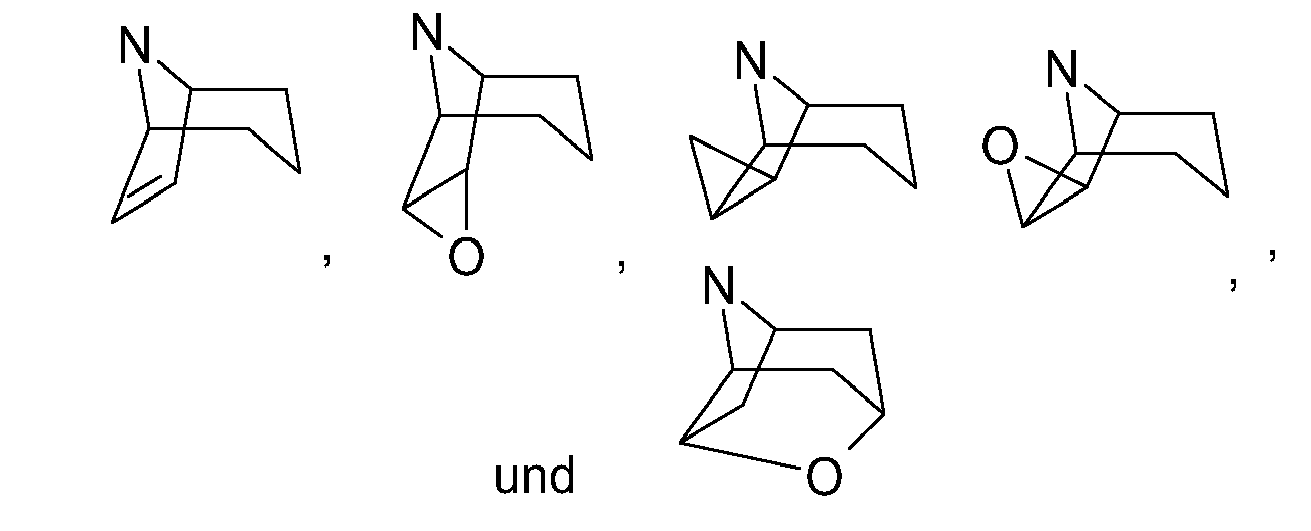
wobei
R ein Rest ausgewählt aus -CH3, -CH2-CH3, -CH2-CH2-OH, -CH(OH)-CH3, -CH2-Phenyl, -CH(OH)-Phenyl und -CH(CH2OH)-Phenyl, bevorzugt -CH3, -CH2-CH3, -CH2-Phenyl, und -CH(CH2OH)-Phenyl, besonders bevorzugt -CH(CH2OH)-Phenyl, - Erfindungsgemäß bevorzugt sind ferner Verfahren zur Herstellung der Verbindungen der Formel 1 worin
- R3 und R4
- gemeinsam mit dem Stickstoff eine Gruppe ausgewählt aus Pyrrolidin, Piperidin,

wobei
R ein Rest ausgewählt aus -CH3, -CH2-CH3, -CH2-CH2-OH, -CH(OH)-CH3, -CH2-Phenyl, -CH(OH)-Phenyl und -CH(CH2OH)-Phenyl, bevorzugt -CH3, -CH2-CH3, -CH2-Phenyl, und -CH(CH2OH)-Phenyl, besonders bevorzugt -CH(CH2OH)-Phenyl, - Als Alkylgruppen sowie Alkylgruppen, welche Bestandteil anderer Reste sind, werden verzweigte und unverzweigte Alkylgruppen mit 1 bis 10 Kohlenstoffatomen bezeichnet. Beispielsweise werden genannt: Methyl, Ethyl, Propyl, Butyl. Sofern nicht anders genannt, sind von den vorstehend genannten Bezeichnungen Propyl, Butyl sämtliche der möglichen isomeren Formen umfaßt. Beispielsweise umfaßt die Bezeichnung Propyl die beiden isomeren Reste n-Propyl und iso-Propyl, die Bezeichnung Butyl n-Butyl, iso-Butyl, sec. Butyl und tert.-Butyl.
- Als Alkoxy- oder Alkyloxygruppen, werden verzweigte und unverzweigte Alkylgruppen mit 1 bis 10 Kohlenstoffatomen bezeichnet, die über ein Sauerstoffatom verknüpft sind. Beispielsweise werden genannt: Methoxy, Ethoxy, Propoxy, Butoxy. Sofern nicht anders genannt, sind von den vorstehend genannten Bezeichnungen sämtliche der möglichen isomeren Formen umfaßt.
- Als Alkenylgruppen sowie Alkenylgruppen, welche Bestandteil anderer Reste sind, werden verzweigte und unverzweigte Alkylgruppen mit 1 bis 10 Kohlenstoffatomen bezeichnet, soweit sie wenigstens eine Doppelbindung enthalten.
- Als Alkinylgruppen sowie Alkinylgruppen, welche Bestandteil anderer Reste sind, werden verzweigte und unverzweigte Alkylgruppen mit 1 bis 10 Kohlenstoffatomen bezeichnet, soweit sie wenigstens eine Dreifachbinsung enthalten.
- Als Cycloalkylreste mit 3 - 8 Kohlenstoffatomen werden cyclische Alkylgruppen wie beispielsweise Cyclopropyl, Cyclobutyl, Cyclopentyl oder Cyclohexyl bezeichnet.
- Als Cycloalkenylreste mit 4 - 8 Kohlenstoffatomen werden Cycloalkylgruppen verstanden, soweit sie wenigstens eine Doppelbindung aufweisen.
- Als Cycloalkenylreste mit 6 - 8 Kohlenstoffatomen werden Cycloalkylgruppen verstanden, soweit sie wenigstens eine Dreifachbindung aufweisen.
- Als Arylgruppen werden aromatische Ringsysteme mit 6 bis 10 Kohelnstoffatomen verstanden. Bevorzugte Arylgruppen sind Phenyl und Naphthyl wobeio Phenyl besondere Bedeutung zukommt.
- Aryl-alkyl-gruppen sind Arylgruppen, die über Alkylgruppen verknüpft sind. Bevorzugte Arylalkylgruppen sind Phenylethyl und Benzyl.
- Aryl-alkenyl-gruppen sind Arylgruppen, die über Alkenylgruppen verknüpft sind.
- Aryl-alkinyl-gruppen sind Arylgruppen, die über Alkinylgruppen verknüpft sind.
- Heterocyclyl-Gruppen sind 5- ,6- oder 7-gliedrige, gesättigte oder ungesättigte Heterocyclen, die als Heteroatome Stickstoff, Sauerstoff oder Schwefel enthalten können. Beispieslweise werden genannt Furan, Tetrahydrofuran, Tetrahydrofuranon, γ-Butylrolacton, α-Pyran, γ-Pyran, Dioxolan, Tetrahydropyran, Dioxan, Thiophen, Dihydrothiophen, Thiolan, Dithiolan, Pyrrol, Pyrrolin, Pyrrolidin, Pyrazol, Pyrazolin, Pyrazolidin, Imidazol, Imidazolin, Imidazolidin, Triazol,Tetrazol, Pyridin, Piperidin, Pyridazin, Pyrimidin, Pyrazin, Piperazin, Triazin, Tetrazin, Morpholin, Thiomorpholin, Diazepan, Oxazol, Isoxazol, Oxazin, Thiazol, Isothiazol, Thiadiazol, Oxadiazol, Pyrazo lidin.
- Die Gruppe =O steht für eine Carbonylgruppe. Die Gruppe -O-CO-R' steht für eine Esterfunktion.
- Die Salze quaternärer Ammoniumverbindungen , wie beispielsweise diejenigen der Formel 2 sind im allgemeinen sehr gut wasser- und alkohollöslich. Sie sind jedoch ausgesprochen schwer löslich in weniger polaren organischen Solventien wie beispielsweise Aceton, Acetonitril, Kohlenwasserstoffen, Halogenkohlenwasserstoffen oder Ethern. Chemische Umsetzungen mit quaternären Ammoniumverbindungen sind deshalb im Grundsatz auf Umsetzungen in Wasser, Alkohol oder stark polaren aprotischen Lösemitteln wie DMF (Dimethylformamid) oder NMP (N-Methylpyrrolidin) beschränkt. Daraus ergeben sich starke Einschränkungen bezüglich der Auswahl von Reaktionspartnern oder deren Abtrennung vom Zielprodukt.
- Viele Synthesestrategien scheitern an der Unmöglichkeit oder Schwierigkeit, quaternäre Ammoniumverbindungen aus wässriger oder alkoholischer Lösung von anderen Reaktionskomponenten zu trennen. Mit Hilfe der Ammoniumionen der Formel 1 kann dieses Problem gelöst werden. Es gelingt die selektive Fällung oder Kristallisation der quaternären Ammoniumverbindungen der Formel 1 aus Alkoholen oder Wasser durch Umsetzung der Verbindungen 2 mit den entsprechenden Salzen KatPF6 und damit die Isolierung und Reinigung mit regelmäßig guter Ausbeute.
- Die Verbindungen 1 ermöglichen aufgrund ihrer sehr guten Löslichkeit und der ausgesprochen hohen Stabilität des Anions eine Vielzahl von Reaktionen in weniger polaren aprotischen Lösungsmitteln und können dort angewendet werden, wo Wasser oder Alkohol stört. Aufgrund dieser Eigenschaften stellen die Verbindungen der Formel 1 wertvolle Ausgangsmaterialen bei der Synthese modifizierter, quartärer Ammoniumsalze in organischen Lösemitteln dar. Nach erfolgter Umsetzung der Hexafluorophosphate zu den gewünschten modifizierten Ammoniumhexafluorophosphaten, lässt sich unter Verwendung von beispielsweise Lithiumsalzen (wie z.B. LiBr) das Hexafluorophosphat durch andere Anionen wieder ersetzen. Als Beispiel dazu kann die im experimentellen Teil der vorliegenden Erfindung beschriebene Synthese von Tiotropiumsalzen dienen.
- Vor diesem Hintergrund betrifft die vorliegende Erfindung ferner Ammonium-hexafluorophosphate der allgemeinen Formel 1 als solche,


- Ein weiterer Aspekt der vorliegenden Erfindung betrifft die Verwendung der vorstehend genannten Hexafluorophosphate der Formel 1 als Ausgangsverbindungen zur Herstellung von Ammoniumsalzen.
- Die nachfolgenden Beispiele dienen der Illustration exemplarisch durchgeführter Syntheseverfahren. Sie sind lediglich als mögliche, exemplarisch dargestellte Vorgehensweisen zu verstehen, ohne die Erfindung auf deren Inhalt zu beschränken.
- Eine Ammoniumverbindung der Formel 2 wird in Wasser gelöst und mit einer equimolaren oder molar überschüssigen Menge eines in Wasser löslichen Hexafluorophosphates (Natrium- oder Kaliumsalz) versetzt.
Das Hexafluorophosphat der Formel 1 fällt bzw. kristallisiert als weißes, wasserunlösliches Produkt aus, wird isoliert, gegebenenfalls mit Methanol gewaschen und dann bei ca. 40°C im Trockenschrank getrocknet. - In Analogie zu vorstehender allgemeiner Arbeitsvorschrift wurden die folgenden Verbindungen erhalten.
-

- 18,4g N-Methyltropinium iodid werden in 50 ml Wasser gelöst und durch Zugeben einer Lösung aus 11,4 g NaPF6 30 ml Wasser zur Kristallisation gebracht. Die Kristalle werden filtriert, mit Wasser gewaschen und getrocknet. Ausbeute: 19,6 g (74%)
-

- N-Methylscopinium Bromid (20 g) wird in Methanol (100 ml) gelöst unter Zusatz einer katalyt. Menge (4-14 mol% ) Natriummethylat unter Rückfluß zur Reaktion (Umlagerung) gebracht und anschließend mit einer equimolaren oder molar überschüssigen Menge einer Lösung aus Natriumhexafluorophosphat (13g) in 33 ml Methanol versetzt.
- Das N-Methylscopolinium-hexafluorophosphat fällt / kristallisiert als weißes, wenig wasserlösliches Produkt aus, wird isoliert, ggf. mit Methanol gewaschen und dann bei ca. 40°C im Vakuum getrocknet. Ausbeute : 25g (72%); Fp: 292-293°C
-

- 1 g N-Methyl-endo-epoxy-tropenonium Bromid werden in 25 ml Wasser gelöst und durch Zugeben einer Lösung aus 0,62 g Natriumhexafluorophosphat in 10 ml Wasser zur Kristallisation gebracht. Die Kristalle werden filtriert, mit Wasser gewaschen und getrocknet. Ausbeute: 1,3 g
-

- 6,7 g N,N-Dimethylpiperidonbromid werden in 30 ml Wasser gelöst und durch Zugeben einer Lösung aus 5,9 g Natriumhexafluorophosphat in 30 ml Wasser zur Kristallisation gebracht. Die Kristalle werden filtriert, mit Wasser gewaschen und getrocknet. Ausbeute: 8,8g (57%); Fp.: 220-221°C
-

- 20 g N-Methylscopolaminium-Bromid werden in 200 ml Wasser gelöst und mit einer Lösung von 9,2 g Natriumhexafluorophosphat in 50 ml Wasser versetzt (25°C). Die ausgefallenen Kristalle werden mit 50 ml Wasser gewaschen und getrocknet. Ausbeute: 23,3 g (83%)
-

- 14 g Cholinchlorid werden in 50 ml Wasser gelöst und durch Zugeben einer Lösung aus 16,8 g Natriumhexafluorophosphat 30 ml Wasser zur Kristallisation gebracht. Die Kristalle werden filtriert, mit Wasser gewaschen und getrocknet. Ausbeute: 24,9g (60%); Fp.: 257°C
- Die nachfolgenden Synthesebeispiele zeigen, dass die Verwendung von Hexafluorophosphaten der Formel 1 die einfache Durchführung von Synthesen mit Ammoniumverbindungen erlaubt.
-

- 3,3 g N-Methyl-endo-epoxytropanonium Bromid wurden in 33 ml Wasser gelöst und innerhalb von 1 Stunde unter Kühlung mit 1 g NaBH4 und etwas HCOOH versetzt. Nach vollständiger Umsetzung wurden 2,5 g NaPF6 zugegeben. Die ausgefallenen Kristalle werden abgesaugt, gewaschen und getrocknet. Ausbeute: 4,2g (43%)
- Da das Hexafluorophosphat durch Kristallisation dem Gleichgewicht entzogen wird, gelingt diese Reaktion in einfacher Weise.
- Das nachfolgende Beispiel dient der Illustration, wie in Wasser schwerlösliche Hexafluorophosphate der Formel 1 in einfacher Art und Weise in wasserlösliche Salze überführt werden können.
-

- 5,5g N-Methyl-endo-epoxytropanonium-hexafluorophosphat warden in 50 ml Aceton gelöst und mit einer Lösung von 1,8g LiBr in 20 ml Aceton versetzt. Die ausgefallenen Kristalle werden abgesaugt, gewaschen und getrocknet. Ausbeute 4,4g (85%); Fp. 200-202 °C;
- Die nachfolgenden Beispiele illustrieren am Beispiel des Tiotropiumbromids, wie komplexe pharmazeutische Wirkstoffe mit Hilfe der erfindungsgemäßen Hexafluorophosphate schonend und unter vereinfachten Bedingungen erhalten werden können.
- N-Methylscopiniumbromid wird in Wasser gelöst und mit einer equimolaren oder molar überschüssigen Menge eines in Wasser löslichen Hexafluorophosphates (Natrium- oder Kaliumsalz) versetzt. Auch wässrige Hexafluorophosphorsäure führt zur Ausfällung. Das N-Methylscopinium-hexafluorophosphat fällt / kristallisiert als weißes, wasserunlösliches Produkt aus, wird isoliert, gegebenenfalls mit Methanol gewaschen und dann bei ca. 40°C im Trockenschrank getrocknet.
Schmp.: 265-267°C (Schmelze unter Verfärbung);
H-NMR: in Acetonitril-d3 σ(ppm): 1,9 (dd, 2H) , 2,55( dd, 2H), 2,9 (s,3H), 3,29 (s,3H), 3,95(dd, 4H), 3,85 (s, 1H). - 1,6 g (5mmol) Methylscopinium Hexafluorophoshat (Beispiel 10) und 2,0 g (7,8 mmol) Dithienylglycolsäuremethylester werden in 50 ml Aceton und in Gegenwart von 10g Molsieb 4A 50-70 Stunden unter Rückfluß gekocht.
Das Reaktionsgemisch wird filtriert, das Filtrat mit einer Lösung aus 0,3 g LiBr in 10 ml Aceton versetzt. Das auskristallisierte noch nicht umgesetzte N-Methylscopiniumbromid wird durch Filtration abgetrennt. Nach Zugabe von weiteren 0,6 g LiBr (gelöst in Aceton) fällt Tiotropiumbromid in einer isolierten Ausbeute von 30% (bezogen auf eingesetzte Verbindung nach Beispiel 9) aus. - Tiotropiumhexafluorophosphat wird im Rahmen der Umsetzung nach Beispiel 10 nicht isoliert sondern direkt weiter zum Tiotropiumbromid umgesetzt.
Für die Zwecke der Charakterisierung des Tiotropiumhexafluorophosphat wurde dieses spezifisch hergestellt und isoliert. Hierbei wurden die folgenden charakterisierenden Daten erhalten. Schmp.: 233-236°C (Schmelzen unter Verfärbung)
H-NMR: in aceton-d6 : σ(ppm): 2,08 (dd, 2H) , 2,23( dd, 2H), 3,32 (s,3H), 3,50 (s,3H), 3,62(s,2H), 4,28(m, 2H), 5,39(m, 1H) ,6,25 (s), 7,02(m,2H), 7,027,22(m,2H), 7,46(m,2H), P-NMR: in aceton-d6 : σ(ppm): -143,04, Heptett, J =4,37. - 31,5 g (100mmol) Methylscopinium Hexafluorophoshat (Beispiel 9) und 25,4 g (100 mmol) Dithienylglycolsäuremethylester werden in 400 ml Aceton und in Gegenwart von 40g Molsieb 4A, Pulver (Fluka) und DMAP (4,4-Dimethylaminopyridin) 24h unter Rückfluß gekocht. (Molsieb wurde nach 3h in gleicher Menge ausgetauscht.)
Das Reaktionsgemisch wird filtriert, mit 200ml Aceton nachgewaschen, das Filtrat schrittweise mit einer Lösung aus 9,6 g LiBr (110mmol) in 110 ml Aceton versetzt. Das auskristallisierte noch nicht umgesetzte N-Methylscopiniumbromid wird durch Filtration abgetrennt. (Fraktionierte Fällung). Die Kristallfraktionen wurden abfiltriert und getrocknet. Die Zusammensetzung der Fraktionen wurde dünnschichtchromatographisch bestimmt. Tiotropiumbromid in einer isolierten Ausbeute von 16,6g (35%) (bezogen auf eingesetzte Verbindung nach Beispiel 9) aus. Reinheit HPLC> 99%. Reinheit DC: keine Verunreinigungen erkennbar. - 1,6 g (5 mmol) Methylscopinium Hexafluorophoshat (Beispiel 9) und 1,25 g (5 mmol) Dithienylglycolsäuremethylester werden in 50 ml Aceton und in Gegenwart von 2g Molsieb 4A, Pulver (Fluka) und 6mg Kalium-tert.-butylat bei 0°C 4 h lang gerührt.
Das Reaktionsgemisch wird filtriert, mit 20ml Aceton nachgewaschen, das Filtrat schrittweise mit einer Lösung aus 0,7 g LiBr (13mmol) in 11 ml Aceton versetzt. Das auskristallisierte noch nicht umgesetzte wird durch Filtration abgetrennt. (Fraktionierte Fällung). Die Kristallfraktionen wurden abfiltriert und getrocknet. Die Zusammensetzung der Fraktionen wurde dünnschichtchromatographisch bestimmt. Die Tiotropiumbromid-Fraktionen wurden abgesaugt, mit Aceton nachgewaschen, aus Wasser umkristallisiert, mit Aceton nachgewaschen und getrocknet. 1,2g (48% Ausbeute bezogen auf eingesetzte Verbindung nach Beispiel 9) Tiotropiumbromid wurden auf diese Weise isoliert.
Reinheit HPLC: 99,8% , DC: keine Verunreinigung sichtbar; - 31,5g (0,1 mol) Methylscopinium Hexafluorophoshat (Beispiel 9) und 30,5g (0,10mol) 2,2'-Dithienylglycolsäuremethylester werden in 400 ml Aceton gelöst und in Gegenwart von 90g Zeolith vom Typ 4A (Na12Al12Si12O48 x n H2O) und 0,2g (1mmol) Kalium-tert.-butylat über einen Zeitraum von 20-24 Stunden bei 0°C gerührt.
Das Reaktionsgemisch wird filtriert, das Filtrat mit einer Lösung aus 8,7 g LiBr (8,7 g 0,10mol in 100 ml Aceton) versetzt.
Das dabei auskristallisierte Produkt wird durch Filtration abgetrennt, mit Aceton gewaschen und dann getrocknet.
Man erhält 41,4 g (87,7%) Ausbeute, bei 90% Umsetzungsgrad. - Die beispielhaft aufgeführten Reaktionen erfolgen praktisch ohne Bildung von Nebenprodukten.. Sollten die Reaktionen gegebenenfalls ohne vollständige Umsetzung der Ausgangsmaterialien erfolgen, kann das im ersten Schritt der Aufarbeitung isolierte N-Methylscopiniumbromid daher mit der Reaktion nach Beispiel 10 zurückgeführt und damit die Gesamtausbeute im Rahmen eines Herstellverfahrens signifikant erhöht werden.

mit der Maßgabe, dass die Verbindung der Formel 1 nicht die Verbindung der Formel 1'


Claims (4)
- Verfahren zur Herstellung von Ammoniumhexafluorophosphaten der Formel 1
 R1 und R2 gleich oder verschieden Wasserstoff oder ein Rest ausgewählt aus der Gruppe bestehend C1-C10-Alkyl, C2-C10-Alkenyl, C2-C10-Alkinyl, C3-C8-Cycloalkyl, C4-C8-Cycloalkenyl, C6-C8-Cycloalkinyl, C6-C10-Aryl-C1-C6-alkyl, C6-C10-Aryl-C2-C6-alkenyl, C6-C10-Aryl-C2-C6-alkinyl, C6-C10-Aryl und Heterocyclyl, der gegebenenfalls substituiert sein kann;R3 und R4 gleich oder verschieden Wasserstoff oder ein Rest ausgewählt aus der Gruppe bestehend C1-C10-Alkyl, C2-C10-Alkenyl, C2-C10-Alkinyl, C3-C8-Cycloalkyl, C4-C8-Cycloalkenyl, C6-C8-Cycloalkinyl, C6-C10-Aryl-C1-C6-alkyl, C6-C10-Aryl-C2-C6-alkenyl, C6-C10-Aryl-C2-C6-alkinyl, C6-C10-Aryl und Heteroaryl, der gegebenenfalls substituiert sein kann, oderR3 und R4 gemeinsam mit dem Stickstoff ein mono-, bi- oder tricyclischer, gesättigter oder ungesättigter Carbocyclus der 4 bis 10 Kohlenstoffzentren enthalten kann, wobei gegebenenfalls ein oder zwei dieser Kohlenstoffzentren durch O oder S ersetzt sein können, und der gegebenenfalls substituiert sein kann;dadurch gekennzeichnet, dass eine Verbindung der Formel 2
X- ein einfach negativ geladenes Anion bedeuten kann,
in einem geeigneten Lösemittel durch Umsetzung mit einem Salz Kat+PF6-, wobei Kat+ für ein Kation ausgewählt aus der Gruppe bestehend aus Li+, Na+, K+, Mg2+, Ca2+, steht, in die Verbindung der Formel 1 überführt wird,
mit der Maßgabe, dass die Verbindung der Formel 1 nicht die Verbindung der Formel 1'
- Verfahren nach Anspruch 1, dadurch gekennzeichnet, dass mit einem Salz Kat+PF6 - erfolgt, in dem Kat+ ausgewählt ist aus der Gruppe bestehend aus Li+, Na+ und K+, besonders bevorzugt Na+ und K+.
- Verfahren nach Anspruch 1 oder 2, dadurch gekennzeichnet, dass die Umsetzung in einem polare Lösemittel, bevorzugt in einem Lösemittel ausgewählt aus der Gruppe bestehend aus Wasser, Methanol, Ethanol, Propanol und Isopropanol, bevorzugt Wasser oder Methanol oder Mischungen davon, durchgeführt wird.
- Ammonium-hexafluorophosphate der allgemeinen Formel 1 ,


Priority Applications (6)
| Application Number | Priority Date | Filing Date | Title |
|---|---|---|---|
| EP07101364A EP1950196A1 (de) | 2007-01-29 | 2007-01-29 | Verfahren zur Herstellung von Ammoniumhexafluorophosphaten |
| JP2009547654A JP2010516616A (ja) | 2007-01-29 | 2008-01-28 | ヘキサフルオロリン酸アンモニウムの製造方法 |
| EP08708305A EP2114882A1 (de) | 2007-01-29 | 2008-01-28 | Verfahren zur herstellung von ammoniumhexafluorophosphaten |
| CA002676162A CA2676162A1 (en) | 2007-01-29 | 2008-01-28 | Method for producing ammonium hexafluorophosphates |
| PCT/EP2008/050987 WO2008092832A1 (de) | 2007-01-29 | 2008-01-28 | Verfahren zur herstellung von ammoniumhexafluorophosphaten |
| US12/523,553 US20100063289A1 (en) | 2007-01-29 | 2008-01-28 | Method for producing ammonium hexafluorophosphates |
Applications Claiming Priority (1)
| Application Number | Priority Date | Filing Date | Title |
|---|---|---|---|
| EP07101364A EP1950196A1 (de) | 2007-01-29 | 2007-01-29 | Verfahren zur Herstellung von Ammoniumhexafluorophosphaten |
Publications (1)
| Publication Number | Publication Date |
|---|---|
| EP1950196A1 true EP1950196A1 (de) | 2008-07-30 |
Family
ID=38180324
Family Applications (2)
| Application Number | Title | Priority Date | Filing Date |
|---|---|---|---|
| EP07101364A Ceased EP1950196A1 (de) | 2007-01-29 | 2007-01-29 | Verfahren zur Herstellung von Ammoniumhexafluorophosphaten |
| EP08708305A Withdrawn EP2114882A1 (de) | 2007-01-29 | 2008-01-28 | Verfahren zur herstellung von ammoniumhexafluorophosphaten |
Family Applications After (1)
| Application Number | Title | Priority Date | Filing Date |
|---|---|---|---|
| EP08708305A Withdrawn EP2114882A1 (de) | 2007-01-29 | 2008-01-28 | Verfahren zur herstellung von ammoniumhexafluorophosphaten |
Country Status (5)
| Country | Link |
|---|---|
| US (1) | US20100063289A1 (de) |
| EP (2) | EP1950196A1 (de) |
| JP (1) | JP2010516616A (de) |
| CA (1) | CA2676162A1 (de) |
| WO (1) | WO2008092832A1 (de) |
Cited By (2)
| Publication number | Priority date | Publication date | Assignee | Title |
|---|---|---|---|---|
| CN107954409A (zh) * | 2017-12-14 | 2018-04-24 | 江西省东沿药业有限公司 | 一种六氟磷酸铵的制备方法 |
| CN115872385A (zh) * | 2022-12-22 | 2023-03-31 | 张家港博威新能源材料研究所有限公司 | 一种六氟磷酸钠的纯化方法 |
Families Citing this family (1)
| Publication number | Priority date | Publication date | Assignee | Title |
|---|---|---|---|---|
| EP1953156A1 (de) * | 2007-01-29 | 2008-08-06 | Boehringer Ingelheim Pharma GmbH & Co. KG | Verfahren zur Herstellung von Scopiniumsalzen |
Citations (11)
| Publication number | Priority date | Publication date | Assignee | Title |
|---|---|---|---|---|
| EP0332578A1 (de) * | 1988-03-08 | 1989-09-13 | Ciba-Geigy Ag | Biocid wirksame Phosphonium-Verbindungen |
| WO2000011041A1 (en) * | 1998-08-21 | 2000-03-02 | Ciba Specialty Chemicals Holding Inc. | Thermal- and photoinitiated radical polymerization in the presence of an addition fragmentation agent |
| DE19901524A1 (de) * | 1999-01-16 | 2000-07-20 | Wilhelm Keim | Verfahren zur Stabilisierung homogener Katalysatoren bei der destillativen Produktabtrennung unter Verwendung ionischer Flüssigkeit und der damit verbundenen Möglichkeit der Katalysator-Wiederverwendung der homogenen Katalyse |
| WO2000072956A1 (en) * | 1999-05-26 | 2000-12-07 | Personal Chemistry I Uppsala Ab | Preparation and use of ionic liquids in microwave-assisted chemical transformations |
| DE10003708A1 (de) * | 2000-01-28 | 2001-08-02 | Solvent Innovation Gmbh | Neuartige chirale ionische Flüssigkeiten und Verfahren zu ihrer Darstellung in enantiomerenreiner oder enantiomerenangereicherter Form |
| WO2002051840A1 (de) * | 2000-12-22 | 2002-07-04 | Boehringer Ingelheim Pharma Gmbh & Co. Kg | Verfahren zur herstellung des anticholinergikums tiotropiumbromid |
| EP1380569A1 (de) * | 2001-03-26 | 2004-01-14 | Nisshinbo Industries, Inc. | Ionische flüssigkeit, elektrolytsalz für eine speichereinheit, elektrolytische lösung für eine speichereinheit, elektrischer doppelschichtkondensator und sekundäre batterie |
| US6743947B1 (en) * | 1999-05-10 | 2004-06-01 | The United States Of America As Represented By The Secretary Of The Army | Electrochemically stable onium salts and electrolytes containing such for electrochemical capacitors |
| WO2004096800A2 (en) * | 2003-05-02 | 2004-11-11 | Novartis Ag | Quinuclidine derivatives binding to mucarinic m3 receptors |
| EP1505057A1 (de) * | 2002-05-14 | 2005-02-09 | Stella Chemifa Kabushiki Kaisha | Verfahren zur aufreinigung von quaternärem alkylammoniumsalz und quaternäres alkylammoniumsalz |
| WO2007012626A2 (de) * | 2005-07-27 | 2007-02-01 | Boehringer Ingelheim Pharma Gmbh & Co. Kg | Neues verfahren zur herstellung von tiotropiumsalzen |
Family Cites Families (4)
| Publication number | Priority date | Publication date | Assignee | Title |
|---|---|---|---|---|
| JPH0731412B2 (ja) * | 1985-02-25 | 1995-04-10 | キヤノン株式会社 | 静電荷像現像用正荷電性トナー |
| JPS62219910A (ja) * | 1986-03-20 | 1987-09-28 | 日本ケミコン株式会社 | 電解コンデンサ用電解液 |
| JPS63215032A (ja) * | 1987-03-04 | 1988-09-07 | 松下電器産業株式会社 | 電気二重層コンデンサ |
| EP1837333B1 (de) * | 2005-01-12 | 2013-04-10 | Otsuka Chemical Co., Ltd. | Quaternäres ammoniaksalz, elektrolyt, elektrolytlösung und elektrochemische vorrichtung |
-
2007
- 2007-01-29 EP EP07101364A patent/EP1950196A1/de not_active Ceased
-
2008
- 2008-01-28 US US12/523,553 patent/US20100063289A1/en not_active Abandoned
- 2008-01-28 CA CA002676162A patent/CA2676162A1/en not_active Abandoned
- 2008-01-28 EP EP08708305A patent/EP2114882A1/de not_active Withdrawn
- 2008-01-28 JP JP2009547654A patent/JP2010516616A/ja active Pending
- 2008-01-28 WO PCT/EP2008/050987 patent/WO2008092832A1/de not_active Ceased
Patent Citations (11)
| Publication number | Priority date | Publication date | Assignee | Title |
|---|---|---|---|---|
| EP0332578A1 (de) * | 1988-03-08 | 1989-09-13 | Ciba-Geigy Ag | Biocid wirksame Phosphonium-Verbindungen |
| WO2000011041A1 (en) * | 1998-08-21 | 2000-03-02 | Ciba Specialty Chemicals Holding Inc. | Thermal- and photoinitiated radical polymerization in the presence of an addition fragmentation agent |
| DE19901524A1 (de) * | 1999-01-16 | 2000-07-20 | Wilhelm Keim | Verfahren zur Stabilisierung homogener Katalysatoren bei der destillativen Produktabtrennung unter Verwendung ionischer Flüssigkeit und der damit verbundenen Möglichkeit der Katalysator-Wiederverwendung der homogenen Katalyse |
| US6743947B1 (en) * | 1999-05-10 | 2004-06-01 | The United States Of America As Represented By The Secretary Of The Army | Electrochemically stable onium salts and electrolytes containing such for electrochemical capacitors |
| WO2000072956A1 (en) * | 1999-05-26 | 2000-12-07 | Personal Chemistry I Uppsala Ab | Preparation and use of ionic liquids in microwave-assisted chemical transformations |
| DE10003708A1 (de) * | 2000-01-28 | 2001-08-02 | Solvent Innovation Gmbh | Neuartige chirale ionische Flüssigkeiten und Verfahren zu ihrer Darstellung in enantiomerenreiner oder enantiomerenangereicherter Form |
| WO2002051840A1 (de) * | 2000-12-22 | 2002-07-04 | Boehringer Ingelheim Pharma Gmbh & Co. Kg | Verfahren zur herstellung des anticholinergikums tiotropiumbromid |
| EP1380569A1 (de) * | 2001-03-26 | 2004-01-14 | Nisshinbo Industries, Inc. | Ionische flüssigkeit, elektrolytsalz für eine speichereinheit, elektrolytische lösung für eine speichereinheit, elektrischer doppelschichtkondensator und sekundäre batterie |
| EP1505057A1 (de) * | 2002-05-14 | 2005-02-09 | Stella Chemifa Kabushiki Kaisha | Verfahren zur aufreinigung von quaternärem alkylammoniumsalz und quaternäres alkylammoniumsalz |
| WO2004096800A2 (en) * | 2003-05-02 | 2004-11-11 | Novartis Ag | Quinuclidine derivatives binding to mucarinic m3 receptors |
| WO2007012626A2 (de) * | 2005-07-27 | 2007-02-01 | Boehringer Ingelheim Pharma Gmbh & Co. Kg | Neues verfahren zur herstellung von tiotropiumsalzen |
Cited By (2)
| Publication number | Priority date | Publication date | Assignee | Title |
|---|---|---|---|---|
| CN107954409A (zh) * | 2017-12-14 | 2018-04-24 | 江西省东沿药业有限公司 | 一种六氟磷酸铵的制备方法 |
| CN115872385A (zh) * | 2022-12-22 | 2023-03-31 | 张家港博威新能源材料研究所有限公司 | 一种六氟磷酸钠的纯化方法 |
Also Published As
| Publication number | Publication date |
|---|---|
| EP2114882A1 (de) | 2009-11-11 |
| CA2676162A1 (en) | 2008-08-07 |
| US20100063289A1 (en) | 2010-03-11 |
| JP2010516616A (ja) | 2010-05-20 |
| WO2008092832A1 (de) | 2008-08-07 |
Similar Documents
| Publication | Publication Date | Title |
|---|---|---|
| WO1992016528A1 (de) | Neue ester bi- und tricyclischer aminoalkohole, ihre herstellung und ihre verwendung in arzneimitteln | |
| EP0418716A1 (de) | Neue Thienylcarbonsäureester von Aminoalkoholen, ihre Quaternierungsprodukte sowie die Herstellung und Verwendung dieser Verbindungen | |
| DE2451480C2 (de) | ||
| DE2147023C3 (de) | Verfahren zur Herstellung von 1H- Tetrazol-Verbindungen | |
| DE2425983C3 (de) | Sulfonsäuresalze von Acylcholinen, Verfahren zu ihrer Herstellung und diese enthaltende pharmazeutische Zusammensetzung | |
| DE1159462B (de) | Verfahren zur Herstellung von s-Triazinderivaten | |
| WO2008089852A1 (de) | Neues verfahren zur herstellung von tiotropiumsalzen | |
| EP2114938B1 (de) | Verfahren zur herstellung von scopiniumsalzen | |
| EP1910354B1 (de) | Neues verfahren zur herstellung von tiotropiumsalzen | |
| WO2008092832A1 (de) | Verfahren zur herstellung von ammoniumhexafluorophosphaten | |
| DE2248477A1 (de) | Imidazolinverbindungen | |
| EP0534904A1 (de) | Imidazolylmethyl-Pyridine | |
| DE2841644C2 (de) | ||
| EP0722946A1 (de) | Verfahren zur Herstellung von 3-Formyl-Cephem-Derivaten | |
| AT502220A1 (de) | Verfahren zur herstellung von nebivolol | |
| CH535236A (de) | Verfahren zur Herstellung neuer reaktionsträger Lysergsäurederivate | |
| DE3619562A1 (de) | Verfahren zur herstellung von 2,3-dioxo-4-oxicarbonylpiperazinderivaten, neue 2,3-dioxo-4-oxicarbonylpiperazinderivate und deren verwendung | |
| AT322562B (de) | Verfahren zur herstellung von neuen pyridopyridazinderivaten und deren pharmazeutisch vertraeglichen salzen | |
| CH651036A5 (de) | 1-benzyl-4-(4-(2-pyrimidinylamino)-benzyl)-2,3-dioxopiperazin-derivate, salze derselben, verfahren zur herstellung derselben und carcinostatische mittel mit einem gehalt derselben. | |
| CH590278A5 (de) | ||
| AT225857B (de) | Verfahren zur Herstellung von Lysergsäure- und Dihydrolysergsäure-Derivaten | |
| CH646977A5 (en) | Process for the preparation of derivatives of beta-lactam antibiotics | |
| AT356291B (de) | Verfahren zur herstellung von in die dihydrolysergsaeure- und dihydroiso- lysergsaeure-reihe gehoerenden verbindungen | |
| DD292461A5 (de) | Verfahren zur herstellung von triazolo-pyrimidin-derivaten | |
| DE2533899C3 (de) | Verfahren zur Herstellung von Steryl-ß-Dglukosidestern |
Legal Events
| Date | Code | Title | Description |
|---|---|---|---|
| PUAI | Public reference made under article 153(3) epc to a published international application that has entered the european phase |
Free format text: ORIGINAL CODE: 0009012 |
|
| AK | Designated contracting states |
Kind code of ref document: A1 Designated state(s): AT BE BG CH CY CZ DE DK EE ES FI FR GB GR HU IE IS IT LI LT LU LV MC NL PL PT RO SE SI SK TR |
|
| AX | Request for extension of the european patent |
Extension state: AL BA HR MK RS |
|
| STAA | Information on the status of an ep patent application or granted ep patent |
Free format text: STATUS: THE APPLICATION HAS BEEN REFUSED |
|
| 18R | Application refused |
Effective date: 20080901 |