EP1942912B1 - Agent for applying to mucosa and method for production thereof - Google Patents
Agent for applying to mucosa and method for production thereof Download PDFInfo
- Publication number
- EP1942912B1 EP1942912B1 EP06811990.8A EP06811990A EP1942912B1 EP 1942912 B1 EP1942912 B1 EP 1942912B1 EP 06811990 A EP06811990 A EP 06811990A EP 1942912 B1 EP1942912 B1 EP 1942912B1
- Authority
- EP
- European Patent Office
- Prior art keywords
- group
- administration
- corneal epithelial
- mucosa
- corneal
- Prior art date
- Legal status (The legal status is an assumption and is not a legal conclusion. Google has not performed a legal analysis and makes no representation as to the accuracy of the status listed.)
- Not-in-force
Links
Images






Classifications
-
- A—HUMAN NECESSITIES
- A61—MEDICAL OR VETERINARY SCIENCE; HYGIENE
- A61K—PREPARATIONS FOR MEDICAL, DENTAL OR TOILETRY PURPOSES
- A61K31/00—Medicinal preparations containing organic active ingredients
- A61K31/70—Carbohydrates; Sugars; Derivatives thereof
- A61K31/7008—Compounds having an amino group directly attached to a carbon atom of the saccharide radical, e.g. D-galactosamine, ranimustine
-
- A—HUMAN NECESSITIES
- A61—MEDICAL OR VETERINARY SCIENCE; HYGIENE
- A61K—PREPARATIONS FOR MEDICAL, DENTAL OR TOILETRY PURPOSES
- A61K31/00—Medicinal preparations containing organic active ingredients
- A61K31/70—Carbohydrates; Sugars; Derivatives thereof
- A61K31/715—Polysaccharides, i.e. having more than five saccharide radicals attached to each other by glycosidic linkages; Derivatives thereof, e.g. ethers, esters
- A61K31/726—Glycosaminoglycans, i.e. mucopolysaccharides
-
- A—HUMAN NECESSITIES
- A61—MEDICAL OR VETERINARY SCIENCE; HYGIENE
- A61K—PREPARATIONS FOR MEDICAL, DENTAL OR TOILETRY PURPOSES
- A61K31/00—Medicinal preparations containing organic active ingredients
- A61K31/70—Carbohydrates; Sugars; Derivatives thereof
- A61K31/715—Polysaccharides, i.e. having more than five saccharide radicals attached to each other by glycosidic linkages; Derivatives thereof, e.g. ethers, esters
- A61K31/726—Glycosaminoglycans, i.e. mucopolysaccharides
- A61K31/728—Hyaluronic acid
-
- A—HUMAN NECESSITIES
- A61—MEDICAL OR VETERINARY SCIENCE; HYGIENE
- A61K—PREPARATIONS FOR MEDICAL, DENTAL OR TOILETRY PURPOSES
- A61K47/00—Medicinal preparations characterised by the non-active ingredients used, e.g. carriers or inert additives; Targeting or modifying agents chemically bound to the active ingredient
- A61K47/50—Medicinal preparations characterised by the non-active ingredients used, e.g. carriers or inert additives; Targeting or modifying agents chemically bound to the active ingredient the non-active ingredient being chemically bound to the active ingredient, e.g. polymer-drug conjugates
-
- A—HUMAN NECESSITIES
- A61—MEDICAL OR VETERINARY SCIENCE; HYGIENE
- A61K—PREPARATIONS FOR MEDICAL, DENTAL OR TOILETRY PURPOSES
- A61K47/00—Medicinal preparations characterised by the non-active ingredients used, e.g. carriers or inert additives; Targeting or modifying agents chemically bound to the active ingredient
- A61K47/50—Medicinal preparations characterised by the non-active ingredients used, e.g. carriers or inert additives; Targeting or modifying agents chemically bound to the active ingredient the non-active ingredient being chemically bound to the active ingredient, e.g. polymer-drug conjugates
- A61K47/51—Medicinal preparations characterised by the non-active ingredients used, e.g. carriers or inert additives; Targeting or modifying agents chemically bound to the active ingredient the non-active ingredient being chemically bound to the active ingredient, e.g. polymer-drug conjugates the non-active ingredient being a modifying agent
- A61K47/56—Medicinal preparations characterised by the non-active ingredients used, e.g. carriers or inert additives; Targeting or modifying agents chemically bound to the active ingredient the non-active ingredient being chemically bound to the active ingredient, e.g. polymer-drug conjugates the non-active ingredient being a modifying agent the modifying agent being an organic macromolecular compound, e.g. an oligomeric, polymeric or dendrimeric molecule
- A61K47/61—Medicinal preparations characterised by the non-active ingredients used, e.g. carriers or inert additives; Targeting or modifying agents chemically bound to the active ingredient the non-active ingredient being chemically bound to the active ingredient, e.g. polymer-drug conjugates the non-active ingredient being a modifying agent the modifying agent being an organic macromolecular compound, e.g. an oligomeric, polymeric or dendrimeric molecule the organic macromolecular compound being a polysaccharide or a derivative thereof
-
- A—HUMAN NECESSITIES
- A61—MEDICAL OR VETERINARY SCIENCE; HYGIENE
- A61K—PREPARATIONS FOR MEDICAL, DENTAL OR TOILETRY PURPOSES
- A61K49/00—Preparations for testing in vivo
- A61K49/001—Preparation for luminescence or biological staining
- A61K49/0013—Luminescence
- A61K49/0017—Fluorescence in vivo
- A61K49/0019—Fluorescence in vivo characterised by the fluorescent group, e.g. oligomeric, polymeric or dendritic molecules
- A61K49/0021—Fluorescence in vivo characterised by the fluorescent group, e.g. oligomeric, polymeric or dendritic molecules the fluorescent group being a small organic molecule
- A61K49/0041—Xanthene dyes, used in vivo, e.g. administered to a mice, e.g. rhodamines, rose Bengal
- A61K49/0043—Fluorescein, used in vivo
-
- A—HUMAN NECESSITIES
- A61—MEDICAL OR VETERINARY SCIENCE; HYGIENE
- A61K—PREPARATIONS FOR MEDICAL, DENTAL OR TOILETRY PURPOSES
- A61K49/00—Preparations for testing in vivo
- A61K49/001—Preparation for luminescence or biological staining
- A61K49/0013—Luminescence
- A61K49/0017—Fluorescence in vivo
- A61K49/005—Fluorescence in vivo characterised by the carrier molecule carrying the fluorescent agent
- A61K49/0054—Macromolecular compounds, i.e. oligomers, polymers, dendrimers
-
- A—HUMAN NECESSITIES
- A61—MEDICAL OR VETERINARY SCIENCE; HYGIENE
- A61K—PREPARATIONS FOR MEDICAL, DENTAL OR TOILETRY PURPOSES
- A61K9/00—Medicinal preparations characterised by special physical form
- A61K9/0012—Galenical forms characterised by the site of application
- A61K9/0048—Eye, e.g. artificial tears
-
- A—HUMAN NECESSITIES
- A61—MEDICAL OR VETERINARY SCIENCE; HYGIENE
- A61K—PREPARATIONS FOR MEDICAL, DENTAL OR TOILETRY PURPOSES
- A61K9/00—Medicinal preparations characterised by special physical form
- A61K9/0012—Galenical forms characterised by the site of application
- A61K9/0053—Mouth and digestive tract, i.e. intraoral and peroral administration
- A61K9/006—Oral mucosa, e.g. mucoadhesive forms, sublingual droplets; Buccal patches or films; Buccal sprays
-
- A—HUMAN NECESSITIES
- A61—MEDICAL OR VETERINARY SCIENCE; HYGIENE
- A61K—PREPARATIONS FOR MEDICAL, DENTAL OR TOILETRY PURPOSES
- A61K9/00—Medicinal preparations characterised by special physical form
- A61K9/08—Solutions
-
- A—HUMAN NECESSITIES
- A61—MEDICAL OR VETERINARY SCIENCE; HYGIENE
- A61P—SPECIFIC THERAPEUTIC ACTIVITY OF CHEMICAL COMPOUNDS OR MEDICINAL PREPARATIONS
- A61P1/00—Drugs for disorders of the alimentary tract or the digestive system
-
- A—HUMAN NECESSITIES
- A61—MEDICAL OR VETERINARY SCIENCE; HYGIENE
- A61P—SPECIFIC THERAPEUTIC ACTIVITY OF CHEMICAL COMPOUNDS OR MEDICINAL PREPARATIONS
- A61P1/00—Drugs for disorders of the alimentary tract or the digestive system
- A61P1/02—Stomatological preparations, e.g. drugs for caries, aphtae, periodontitis
-
- A—HUMAN NECESSITIES
- A61—MEDICAL OR VETERINARY SCIENCE; HYGIENE
- A61P—SPECIFIC THERAPEUTIC ACTIVITY OF CHEMICAL COMPOUNDS OR MEDICINAL PREPARATIONS
- A61P1/00—Drugs for disorders of the alimentary tract or the digestive system
- A61P1/04—Drugs for disorders of the alimentary tract or the digestive system for ulcers, gastritis or reflux esophagitis, e.g. antacids, inhibitors of acid secretion, mucosal protectants
-
- A—HUMAN NECESSITIES
- A61—MEDICAL OR VETERINARY SCIENCE; HYGIENE
- A61P—SPECIFIC THERAPEUTIC ACTIVITY OF CHEMICAL COMPOUNDS OR MEDICINAL PREPARATIONS
- A61P11/00—Drugs for disorders of the respiratory system
- A61P11/02—Nasal agents, e.g. decongestants
-
- A—HUMAN NECESSITIES
- A61—MEDICAL OR VETERINARY SCIENCE; HYGIENE
- A61P—SPECIFIC THERAPEUTIC ACTIVITY OF CHEMICAL COMPOUNDS OR MEDICINAL PREPARATIONS
- A61P13/00—Drugs for disorders of the urinary system
- A61P13/10—Drugs for disorders of the urinary system of the bladder
-
- A—HUMAN NECESSITIES
- A61—MEDICAL OR VETERINARY SCIENCE; HYGIENE
- A61P—SPECIFIC THERAPEUTIC ACTIVITY OF CHEMICAL COMPOUNDS OR MEDICINAL PREPARATIONS
- A61P15/00—Drugs for genital or sexual disorders; Contraceptives
- A61P15/02—Drugs for genital or sexual disorders; Contraceptives for disorders of the vagina
-
- A—HUMAN NECESSITIES
- A61—MEDICAL OR VETERINARY SCIENCE; HYGIENE
- A61P—SPECIFIC THERAPEUTIC ACTIVITY OF CHEMICAL COMPOUNDS OR MEDICINAL PREPARATIONS
- A61P17/00—Drugs for dermatological disorders
-
- A—HUMAN NECESSITIES
- A61—MEDICAL OR VETERINARY SCIENCE; HYGIENE
- A61P—SPECIFIC THERAPEUTIC ACTIVITY OF CHEMICAL COMPOUNDS OR MEDICINAL PREPARATIONS
- A61P17/00—Drugs for dermatological disorders
- A61P17/02—Drugs for dermatological disorders for treating wounds, ulcers, burns, scars, keloids, or the like
-
- A—HUMAN NECESSITIES
- A61—MEDICAL OR VETERINARY SCIENCE; HYGIENE
- A61P—SPECIFIC THERAPEUTIC ACTIVITY OF CHEMICAL COMPOUNDS OR MEDICINAL PREPARATIONS
- A61P27/00—Drugs for disorders of the senses
-
- A—HUMAN NECESSITIES
- A61—MEDICAL OR VETERINARY SCIENCE; HYGIENE
- A61P—SPECIFIC THERAPEUTIC ACTIVITY OF CHEMICAL COMPOUNDS OR MEDICINAL PREPARATIONS
- A61P27/00—Drugs for disorders of the senses
- A61P27/02—Ophthalmic agents
-
- A—HUMAN NECESSITIES
- A61—MEDICAL OR VETERINARY SCIENCE; HYGIENE
- A61P—SPECIFIC THERAPEUTIC ACTIVITY OF CHEMICAL COMPOUNDS OR MEDICINAL PREPARATIONS
- A61P43/00—Drugs for specific purposes, not provided for in groups A61P1/00-A61P41/00
-
- A—HUMAN NECESSITIES
- A61—MEDICAL OR VETERINARY SCIENCE; HYGIENE
- A61K—PREPARATIONS FOR MEDICAL, DENTAL OR TOILETRY PURPOSES
- A61K9/00—Medicinal preparations characterised by special physical form
- A61K9/0012—Galenical forms characterised by the site of application
- A61K9/0034—Urogenital system, e.g. vagina, uterus, cervix, penis, scrotum, urethra, bladder; Personal lubricants
Definitions
- the present invention relates to an agent, suitable for applying to mucosa, for use in the prevention or treatment of corneal epithelial layer disorders containing a hydrophobic group binding type glycosaminoglycan as an active ingredient, and further a method for production thereof is described.
- GAG glycosaminoglycan
- photoreactive hyaluronic acid whose water-solubility has been increased by binding a photocrosslinking group such as cinnamic acid to hyaluronic acid and further giving an alkali treatment thereto has been known (e.g., Patent Document 2).
- This photoreactive hyaluronic acid has been provided by binding a photocrosslinking group such as cinnamic acid to hyaluronic acid in order to provide medical materials such as anti-adhesion materials by giving the photocrosslinking, and does not aim at enhancing the staying property in the mucosal tissue.
- JP 01-238530 A and WO 98/29125 A1 disclose hyaluronic acid for the application to the mucosa to treat mucosal disorders. None of these documents disclose that a hydrophobic group may be bound to the hyaluronic acid via a binding chain and a spacer, wherein the hydrophobic group is an arylalkenyl group.
- the present invention aims at providing an agent, suitable for applying to mucosa, for use in the prevention or treatment of corneal epithelial layer disorders, which exerts an excellent staying property and pharmacological effects in mucosa.
- hydrophobic group binding type GAG obtained by binding a hydrophobic group to GAG via a binding chain can be used as an extremely excellent active ingredient in an agent, suitable for applying to mucosa, for use in the prevention or treatment of corneal epithelial layer disorders because this GAG keeps healing effects inherent in GAG on corneal epithelial layer disorders such as inflammation and lesions and exhibits a high staying property when applied thereto, and have completed the present invention.
- the present invention relates to an agent, suitable for applying to mucosa, for use in the prevention or treatment of corneal epithelial layer disorders containing glycosaminoglycan into which a hydrophobic group is introduced via a binding chain, as an active ingredient, wherein the glycosaminoglycan is hyaluronic acid or salt thereof, the binding chain is -CONH- or -COO-, the hydrophobic group is arylalkenyl group, "the glycosaminoglycan into which a hydrophobic group is introduced via a binding chain” further includes a spacer chain between the binding chain and the hydrophobic group, wherein the spacer chain further includes a binding chain at a hydrophobic group side , and the spacer chain further having the binding chain at the hydrophobic group side is COO (CH2)m , , -COO-(CH2)-(OCH2)n-, -CONH-(CH2)m-, or CONH(CH2)(OCH2)n-, where
- the agent, suitable for applying to mucosa, for use in the prevention or treatment of corneal epithelial layer disorders of the present invention can exert the persistent healing effect on the prevention or treatment of corneal epithelial layer disorder such as inflammation and lesions even by low frequent administration because this can stay at a diseased site for a long period of time by exhibiting high staying property in the corneal epithelial layer.
- an alkyl group refers to a straight or branched aliphatic hydrocarbon group having a described number of carbon atoms.
- An alkenyl group refers to a straight or branched aliphatic hydrocarbon group having a described number of carbon atoms, having at least one double bond.
- An alkynyl group refers to a straight or branched aliphatic hydrocarbon group having a described number of carbon atoms, having at least one triple bond.
- An aryl group refers to a monocyclic or polycyclic aromatic hydrocarbon group having 6 to 20 carbon atoms as ring-constituting atoms.
- a heteroaryl group refers to a monocyclic or polycyclic aromatic hydrocarbon group having 3 to 20 carbon atoms and one or more heteroatoms selected from nitrogen, sulfur and oxygen atoms as the ring-constituting atoms.
- An arylalkyl group refers to the alkyl group defined above substituted with the aryl group defined above.
- An arylalkenyl group refers to the alkenyl group defined above substituted with the aryl defined above.
- An arylalkynyl group is the alkynyl group defined above substituted with the aryl group defined above.
- An amino acid group refers to a group derived by losing a carboxyl group, an amino group or a hydroxyl group by a chemical bond from a natural or synthetic amino acid.
- the term “treatment” includes prevention, control of progression (prevention of deterioration), improvement (reduction) and cure of the mucosal disorder.
- the "mucosal disorder” means a condition where morphology, properties and functions to be inherent in the mucosa are disordered in some form.
- the mucosal disorder can include the conditions such as lesions, defects, erosion, inflammation, ulcers and dryness.
- GAG into which the hydrophobic group is introduced via the binding chain, which is contained as the active ingredient in the agent for applying to mucosa of the present invention can be any GAG as long as the GAG binds the group having hydrophobicity derived from a hydrophobic compound having a water insoluble and oil soluble nature. This hydrophobic group is bound to GAG via the binding chain. As described later, it is not necessary that all constitutive units of GAG bind the hydrophobic groups.
- GAG into which the hydrophobic group is introduced via the binding chain contained in the agent, suitable for applying to mucosa, for use in the prevention or treatment of corneal epithelial layer disorders of the present invention is hyaluronic acid or a pharmaceutically acceptable salt thereof.
- examples of such salts include sodium salts, potassium salts, magnesium salts and calcium salts, and among them, the sodium salt is preferable. Therefore, it is the most preferable that GAG in the agent, suitable for applying to mucosa, for use in the prevention or treatment of corneal epithelial layer disorders of the present invention is sodium hyaluronate.
- An origin of GAG is not particularly limited, and GAG may be derived from an animal or a microorganism or chemically synthesized.
- the molecular weight of GAG is not particularly limited, but its weight average molecular weight is preferably 200,000 to 3,000,000, more preferably 500,000 to 2,000,000 and most preferably 600,000 to 1,200,000.
- hyaluronic acid or the pharmaceutically acceptable salt thereof is used, its weight average molecular weight is preferably 200,000 to 3,000,000, more preferably 500,000 to 2,000,000 and most preferably 600,000 to 1,200,000.
- the hydrophobic group in GAG into which the hydrophobic group is introduced via the binding chain contained in the agent, suitable for applying to mucosa, for use in the prevention or treatment of corneal epithelial layer disorders is arylalkenyl group.
- Alkyl groups having 2 to 18 carbon atoms can include methyl, ethyl, n-propyl, i-propyl, n-butyl, sec-butyl, t-butyl, n-pentyl, t-pentyl, isopentyl, neopentyl, n-heptyl, 5-methylhexyl, 4,4-dimethyl-pentyl, 1,1-dimethyl-pentyl and n-octyl.
- the alkyl groups having 2 to 6 carbon atoms such as n-butyl can be preferably included.
- the arylalkenyl group can include groups such as 2-phenyl- ethenyl and p- aminophenylethenyl.
- hydrophobic groups may be monosubstituted or polysubstituted with groups such as hydroxyl, carboxyl, cyano, amino (which may be monosubstituted or disubstituted with the above alkyl), nitro, oxo and alkylcarbonyloxy.
- arylalkenyl groups which are the hydrophobic groups containing the aryl group are included, and the arylalkenyl group substituted with the alkylcarbonyloxy group can be preferably included.
- an arylalkenyl group it is possible to specifically use phenylethenyl and p-aminophenylethenyl.
- hydrophobic groups may also have a function such as ultraviolet ray absorption ability due to having a double bond in the hydrophobic group as shown by a functional group such as phenyl-ethenyl exemplified above contained in the hydrophobic group.
- a functional group such as phenyl-ethenyl exemplified above contained in the hydrophobic group.
- the agent, suitable for applying to mucosa, for use in the prevention or treatment of corneal epithelial layer disorders of the present invention is used for the treatment of corneal epithelial layer disorders such as corneal xerosis (dry eye), keratoconjunctivitis, superficial punctate keratitis (SPK), corneal epithelial erosion, corneal epithelial loss and corneal tumor
- corneal epithelial layer disorders such as corneal xerosis (dry eye), keratoconjunctivitis, superficial punctate keratitis (SPK), corneal epithelial erosion, corneal epithelial loss and corneal tumor
- arylalkenyl group having the conjugation double bond which is exemplified by 2-phenyl-ethenyl and p-aminophenylethenyl described above is preferable.
- the agent, suitable for applying to mucosa, for use in the prevention or treatment of corneal epithelial layer disorders of the present invention is used for the corneal disorder
- "GAG into which the hydrophobic group is introduced” which is the active ingredient of the agent for applying to mucosa of the present invention is made into an aqueous solution of 0.1% by weight, which blocks 70 to 100% transmission of the ultraviolet rays at a wavelength of 200 to 300 nm when an ultraviolet ray transmittance is measured by the method described in the Example described later.
- a hydrophobic group having the ultraviolet ray absorption ability can preferably include the arylalkenyl groups such as 2-phenyl-ethenyl and p-aminophenylethenyl.
- GAG into which the hydrophobic group is introduced via the binding chain contained in the agent for applying to mucosa of the present invention, the above GAG is bound to the above hydrophobic group via the binding chain.
- GAG has the functional group which is a carboxyl, hydroxyl or sulfonate (-SO 3 H) group as the side chain.
- the hydrophobic group can be bound to GAG via the binding chain obtained by forming a carboxylate ester bond or carboxylic acid amide bond together with these functional groups.
- Such a binding chain can specifically include -CONH-, -COO-.
- the carboxylic acid amide bond of -CONH- and the carboxylate ester bond of -COO- can be preferably used, and the carboxylic acid amide bond of -CONH- can be particularly preferably used.
- the hydrophobic group is bound to GAG via the above binding chain, and a spacer chain further exists between the binding chain and the hydrophobic group.
- the spacer chain further has a binding chain at the hydrophobic group side.
- the spacer chain having the binding chain at the hydrophobic group side is -COO-(CH 2 ) m -,-COO-(CH 2 )-(OCH 2 )-, -CONH-(CH 2 ) m - and -CONH-(CH 2 )-(OCH 2 ) n -, wherein m and n are integers of 1 to 18, respectively.
- GAG into which the hydrophobic group is introduced via the binding chain contained in the agent, suitable for applying to mucosa, for use in the prevention or treatment of corneal epithelial layer disorders of the present invention it is not necessary that all of GAG constitutive units respectively have the hydrophobic groups.
- a ratio of the bound hydrophobic group in molar equivalent relative to a disaccharide repeat unit in molar equivalent of GAG (hereinafter, referred to as an "introduction ratio”) can be optionally determined depending on the type of the hydrophobic group, the degree of required hydrophobicity, the type of the corneal epithelial layer disorders administered with the agent for use in the prevention or treatment of corneal epithelial layer disorders and the administration site, etc.
- a phenylethenyl group which may be substituted as the hydrophobic group preferably 5 to 30% and more preferably 10 to 20% of a hydrophobic group in molar equivalent is introduced relative to the disaccharide repeat unit in molar equivalent of GAG (in the case where the crosslinking bond described later is not formed).
- the hydrophobic group may form a crosslinking bond between GAG molecules by the functional group contained in the group.
- the hydrophobic group capable of forming the crosslinking bond any group can be used as long as the hydrophobic group produces a photodimerization reaction or a photopolymerization reaction by irradiation of ultraviolet rays and is the same as defined above.
- the hydrophobic group capable of forming the crosslinking bond includes, for example, phenylethenyl, p-aminophenylethenyl, ethenyl, 2-carboxyethenyl and pentane-1,3-dienyl. It is desirable that these groups are bound to GAG via the binding chain which contains the carbonyl group.
- phenylethenyl or p-aminophenylethenyl which is bound to GAG via the binding chain which contains the carbonyl group can be particularly preferably used.
- GAG molecules can be crosslinked with one another by being subjected to the photodimerization reaction or the photopolymerization reaction by standard methods.
- the photodimerization reaction or the photopolymerization reaction can be given.
- GAG having the repeat unit of the structural unit represented by the Chemical formula 1, as a basic skeleton:
- GAG into which a hydrophobic group is introduced via binding chain.
- GAG is reacted with a hydrophobic compound in which the above hydrophobic group has been bound to the functional group such as hydroxyl, carboxyl, amino or sulfonate group which can form an ether bond, carboxylate ester bond, sulfate ester bond, carboxylic acid amide bond or sulfonate amide bond together with the carboxyl, hydroxyl or sulfonate (-SO 3 H) group in GAG.
- a hydrophobic compound in which the above hydrophobic group has been bound to the functional group such as hydroxyl, carboxyl, amino or sulfonate group which can form an ether bond, carboxylate ester bond, sulfate ester bond, carboxylic acid amide bond or sulfonate amide bond together with the carboxyl, hydroxyl or sulfonate (-SO 3 H) group in GAG.
- GAG having the carboxyl group is reacted with the hydrophobic compound having an amino group to bind the carboxyl group in GAG to the amino group in the hydrophobic compound.
- GAG is reacted with the hydrophobic compound having hydroxyl or carboxyl group to bind the carboxyl group in GAG to the hydroxyl group in the hydrophobic compound or bind the hydroxyl group in GAG to the carboxyl group in the hydrophobic compound.
- GAG having the hydroxyl group is reacted with the hydrophobic compound having the hydroxyl group to react the hydroxyl group in GAG with the hydroxyl group in the hydrophobic compound.
- GAG is reacted with the hydrophobic compound having the hydroxyl group or sulfonate group to bind the hydroxyl group in GAG to the sulfonate group in the hydrophobic compound or bind the sulfonate group in GAG to the hydroxyl group in the hydrophobic compound.
- a condensing agent can preferably include water soluble carbodiimide such as 1-ethyl-3-(3-dimethylaminopropyl) carbodiimide hydrochloride (EDCI.HCl), condensing agents such as dicyclohexylcarbodiimide (DCC) and N-hydroxysuccinate imide (HOSu).
- a condensing agent can preferably include water soluble carbodiimide such as 1-ethyl-3-(3-dimethylaminopropyl) carbodiimide hydrochloride (EDCI.HCl), condensing agents such as dicyclohexylcarbodiimide (DCC) and N-hydroxysuccinate imide (HOSu).
- the condensation method using water soluble carbodiimide such as 1-ethyl-3-(3-dimethylaminopropyl)carbodiimide hydrochloride (EDCI.HCl) and N-hydroxysuccinate imide can be preferably used.
- the reaction can be accomplished using a mixed solvent of water and a water soluble organic solvent such as dioxane, dimethylformamide or ethanol.
- a water soluble organic solvent such as dioxane, dimethylformamide or ethanol.
- the hyaluronate derivative which is highly soluble in an aqueous vehicle can be obtained by treating with a base such as sodium hydrogen carbonate after the completion of the reaction.
- the crosslink can be formed by irradiating light to the solution containing them using an ultraviolet lamp.
- Such substances include but are not limited to, salts such as sodium chloride, potassium chloride, disodium hydrogen phosphate, sodium dihydrogen phosphate and monopotassium hydrogen phosphate, and preservatives such as paraoxybenzoate esters, benzalkonium chloride, chlorobutanol and chlorhexidine gluconate, and other pharmacologically active ingredients.
- the agent, suitable for applying to mucosa, for use in the prevention or treatment of corneal epithelial layer disorders of the present invention may be formulated in the form of solution and may be applied directly to the cornea as it is.
- the agent, suitable for applying to mucosa, for use in the prevention or treatment of corneal epithelial layer disorders of the present invention may be formulated and distributed in the solid form, and may be made into solution or gel when being applied to the cornea.
- the agent, suitable for applying to mucosa, for use in the prevention or treatment of corneal epithelial layer disorders of the present invention can be made into the formulation form for being prepared when used.
- the amount of GAG into which the hydrophobic group is introduced via the binding chain is preferably 0.02 to 5% by weight, more preferably 0.1 to 3% by weight, extremely preferably 0.1 to 1% by weight and most preferably 0.1 to 0.6% by weight.
- the agent, suitable for applying to mucosa, for use in the prevention or treatment of corneal epithelial layer disorders of the present invention aims at the use in the prevention or treatment of corneal epithelial layer disorders.
- Animals to which the agent, suitable for applying to mucosa, for use in the prevention or treatment of corneal epithelial layer disorders of the present invention is applied are not particularly limited as long as they have the cornea, and mammalian animals are preferable.
- the mammalian animals include, but are not limited to, humans, horses, cattle, dogs, cats, rabbits, hamsters, guinea pigs and mice.
- the agent, suitable for applying to mucosa, for use in the prevention or treatment of corneal epithelial layer disorders of the present invention may be of course made into the pharmaceuticals for humans, and can also be made into the pharmaceuticals for the animals. Among them, it is preferable to be made into the pharmaceuticals for humans.
- the cornea to which the agent, suitable for applying to mucosa, for use in the prevention or treatment of corneal epithelial layer disorders of the present invention can be applied is not particularly limited as long as the cornea is the cornea present in the animal.
- the agent, suitable for applying to mucosa, for use in the prevention or treatment of corneal epithelial layer disorders of the present invention is applied to the cornea.
- the agent suitable for applying to mucosa, for use in the prevention or treatment of corneal epithelial layer disorders of the present invention exerts excellent pharmacological effects particularly on corneal epithelial layer disorders , it is possible to be used for the treatment of corneal epithelial layer disorders such as corneal xerosis (dry eye); keratoconjunctivitis, superficial punctate keratitis (SPK), corneal epithelial erosion, corneal epithelial loss and corneal tumor.
- corneal epithelial layer disorders such as corneal xerosis (dry eye); keratoconjunctivitis, superficial punctate keratitis (SPK), corneal epithelial erosion, corneal epithelial loss and corneal tumor.
- the agent, suitable for applying to mucosa, for use in the prevention or treatment of corneal epithelial layer disorders of the present invention can be applied to the cornea, and its application method and application formulation can be appropriately determined by those skilled in the art depending on the position, morphology, property and function of the cornea to be applied, and the purpose of the application.
- the agent, suitable for applying to mucosa, for use in the prevention or treatment of corneal epithelial layer disorders of the present invention is applied to the cornea in the liquid form such as solution in use.
- the liquid upon producing (formulating) or applying the agent, suitable for applying to mucosa, for use in the prevention or treatment of corneal epithelial layer disorders of the present invention, can be obtained by dissolving GAG into which the hydrophobic group is introduced via the binding chain in the solvent.
- the solvent is not particularly limited as long as the solvent can dissolve the GAG into which the hydrophobic group is introduced via the binding chain and is the pharmaceutically acceptable solvent.
- a buffer such as a phosphate buffer or saline can be used, but the solvent is not limited thereto.
- the concentration of the GAG into which the hydrophobic group is introduced via the binding chain in the liquid agent is not particularly limited, and can be appropriately determined depending on the type of the cornea to be applied and the degree of the corneal epithelial layer disorder.
- the agent, suitable for applying to mucosa, for use in the prevention or treatment of corneal epithelial layer disorders of the present invention is the eye drops, for example, the concentration is preferably 0.02 to 5% by weight, more preferably 0.1 to 3% by weight, still more preferably 0.1 to 1% by weight, still more preferably 0.1 to 0.6% by weight, extremely preferably 0.1 to 0.5% by weight and most preferably 0.1 to 0.3% by weight.
- the administration method such as instillation of drop can be selected.
- the amount, the number of times and the frequency of the application (administration of) of the agent, suitable for applying to mucosa, for use in the prevention or treatment of corneal epithelial layer disorders of the present invention is not particularly limited, and should be determined depending on the mucosa subjected to the application, the purpose of the application, the type, age, body weight, gender, and degree of mucosal disorder in the animal to be applied.
- the agent, suitable for applying to mucosa, for use in the prevention or treatment of corneal epithelial layer disorders of the present invention can stay at the diseased site for a longer period of time because the active ingredient contained in the agent exhibits the high staying property in the cornea, compared with the conventional drugs containing hyaluronic acid as the active ingredient in which no hydrophobic group has been bound. Therefore, the agent, suitable for applying to mucosa, for use in the prevention or treatment of corneal epithelial layer disorders of the present invention can also exert the treating effect persistently even at the low administration frequency on the disorders.
- the agent for applying to mucosa of the present invention is not limited by its administration frequency.
- sodium hyaluronate (1.06 g, 2.7 mmol
- cinnamate derivative-introduced sodium hyaluronate is abbreviated as “cinnamate derivative-introduced HA”
- the introduction ratio of the cinnamate derivative was 16 %.
- the introduction ratio of the cinnamate derivative was calculated based on the amount of cinnamate by an absorbance measurement method (wavelength: 269 nm) and the amount of hyaluronate by a carbazole sulfate method.
- a 75 mg / 5 mL aqueous solution of HOSu, a 62 mg / 5 mL WFI solution of EDCI.HCl, and a 92 mg / 5 mL WFI solution of 6-aminohexyl cinnamate hydrochloride (Tokyo Chemical Industry Co., Ltd.) were added to a solution of sodium hyaluronate (1.0 g, 2.5 mmol/disaccharide unit, weight-average molecular weight 1,500,000; derived from cock's comb, Seikagaku Corporation) in water for injection (hereinafter referred to as WFI) (150 mL) / dioxane (75 mL).
- WFI sodium hyaluronate
- cinnamate derivative-introduced HA (12.5 g) was dissolved in phosphate buffered saline (concentration of phosphate: 1.5 mM, hereinafter abbreviated as "PBS") to prepare 2.5% solution of cinnamate derivative-introduced HA (500 mL).
- PBS phosphate buffered saline
- the 2.5% solution of cinnamate derivative-introduced HA was irradiated by 800W high pressure mercury lamp and performed by a heat treatment in an autoclave at 121°C for 7.5 min. to yield crosslinked cinnamate derivative-introduced HA.
- a 172 mg / 5 mL aqueous solution of HOSu, a 143 mg / 5 mL aqueous solution of EDCI.HCl, and a 181 mg / 5 mL aqueous solution of 3-aminopropyl cinnamate hydrochloride (Tokyo Chemical Industry Co., Ltd.) were added to a solution of sodium hyaluronate (1.0 g, 2.5 mmol/disaccharide unit, weight-average molecular weight 900,000; derived from cock's comb, Seikagaku Corporation) in water (150 mL) / dioxane (75 mL).
- a 3.0 mmol / mL aqueous solution of HOSu, a 1.5 mmol / mL aqueous solution of EDCI.HCl and a 1.5 mmol / mL aqueous solution of 4-aminofluorescein (Tokyo Chemical Industry Co., Ltd.) were added to a solution of cinnamate derivative-introduced HA obtained in the above (3-1)(1.00 g, 2.5 mmol/disaccharide unit) in water (150 mL) / dioxane (75 mL).
- the mixture was stirred one day and a 500 mg / 10 mL aqueous solution of sodium hydrogen carbonate (Japanese Pharmacopoeia) was added.
- a 3.0 mmol / mL aqueous solution of HOSu, a 1.5 mmol / mL aqueous solution of EDCI.HCl and a 1.5 mmol / mL aqueous solution of 4-aminofluorescein (Tokyo Chemical Industry Co., Ltd.) were added to a solution of sodium hyaluronate(1.00 g, 2.5 mmol/disaccharide unit, weight-average molecular weight 900,000; derived from cock's comb, Seikagaku Corporation) in water (150 mL) / dioxane (75 mL).
- the 0.1 % by weight aqueous solution of cinnamate derivative-introduced HA obtained in the above (1-1) was prepared, and the ultraviolet ray transmittance was measured by an spectrometer (UV-1600, Shimadzu Corporation).
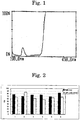
- FIG. 1 A spectrum which indicates the transmittance is shown in FIG. 1 , and the transmittance (%) at various wavelengths is shown in Table 1. As a result, 100% of the transmittance was shown at the wavelengths of 340 nm or more, but the transmittance at the wavelengths of approximately 320 nm or less was 20% or less which was extremely low, and it was demonstrated that this solution effectively blocks the transmission of the ultraviolet ray.
- FIG. 1 scales are shown with 65 nm intervals on a horizontal axis and with 20% intervals on a vertical axis.
- Table 1 ⁇ T (%) 234 19.9 340 106.2 380 101.8 450 98.5
- ⁇ and T represent the wavelength and the transmittance (%), respectively.
- the corneal epithelium of the central region was removed by using a trephine (8 mm I.D), a 23G needle and microscissors after anesthesia with an intravenous injection of 5 mg/kg of ketamine and 2mg/kg of xylazine and topical administration of 0.4% oxybuprocaine hydrochloride.
- the rabbit was given general anesthesia by intravenously injecting 5 mg/kg of ketamine and 2 mg/kg of xylazine, subsequently, the corneal epithelial loss site was stained with 0.2% sodium fluorescein dissolved in PBS, and photographed under ultra-violet light. The photographing was performed just before the administration of the subject substance one hour after the cornea was peeled and 3 hours after the final administration at 3 days after the peeling. When photographed, a focal length was made constant to make a magnification of photographs constant.
- the area of the corneal epithelial defective region stained with sodium fluorescein was measured on the printed photograph using an image analyzer. A value obtained by subtracting the area of the peeled site 3 hours after the final administration at 3 days after the peeling from the area (peeled area) of the peeled site just before the administration of the subject substance one hour after peeling the corneal epithelia was performed was rendered as "healed area.”
- the results of a healed area percentage in each individual are shown in FIG. 2 , and the results of the healed area percentage and a healed area percentage ratio in each individual are shown in Table 2.
- the healed area percentage and the healed area percentage ratio were calculated as follows.
- Healed area percentage (%) (Healed area/Peeled area) x 100
- Healed area percentage ratio (Healed area percentage in right eye/Healed area percentage in left eye) x 100 Table 2 Specimen number Healed area percentage (%) Healed area percentage ratio right eye (administration of cinnamate derivative-introduced HA) left eye (administration of saline) 1 76.90 66.59 115.47 2 69.44 85.90 80.85 3 75.23 61.71 121.91 4 75.54 56.79 133.01 5 68.41 64.53 106.01 6 83.76 66.92 125.16 Mean 74.88 67.07 113.73 Standard deviation 5.57 9.95 -
- the left column shows the healed area percentage in the right eye (administration of cinnamate derivative-introduced HA), and the right column shows the healed area percentage in the left eye (administration of saline).
- the apparent effect to facilitate the healing of the corneal epithelial layer disorder was observed in 5 of the administered 6 individuals.
- the corneal epithelium of the central region was removed by using a trephine (8 mm I.D), a 23G needle and microscissors after anesthesia with an intravenous injection of 5 mg/kg of ketamine and 2mg/kg of xylazine and topical administration of 0.4% oxybuprocaine hydrochloride.
- the rabbit was given general anesthesia by intravenously injecting 5 mg/kg of ketamine and 2 mg/kg of xylazine, subsequently, the corneal epithelial loss site was stained with 0.2% sodium fluorescein dissolved in PBS, and photographed under ultra-violet light. The photographing was performed just before the administration of the subject substance one hour after the cornea was peeled and 3 hours after the second administration at 1 to 3 days after the peeling. When photographed, the focal length was made constant to make the magnification of photographs constant.
- the area of the corneal epithelial defective region stained with sodium fluorescein was measured on the printed photograph using the image analyzer. The value obtained by subtracting the area of the peeled site 3 hours after the final administration at 3 days after the peeling from the area (peeled area) of the peeled site just before the administration of the subject substance one hour after the corneal epithelia were peeled was rendered as "healed area.”
- the results of the healed area in each individual are shown in FIG. 3
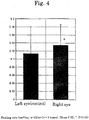
- the results of a healing rate in each individual are shown in FIG. 4 .
- Healing rate Mean of healed areas at respective time points after 1 to 3 days
- FIGS. 3 and 4 it was observed that the healed area of the corneal epithelia was significantly increased in the eyes administered with 0.5% by weight cinnamate derivative-introduced HA solution, compared with the healed area of the corneal epithelia in the control eyes. And it was also observed that the healing rate was significantly enhanced in the eyes administered with 0.5% by weight cinnamate derivative-introduced HA solution.
- the corneal epithelium of the central region was removed by using a trephine (8 mm I.D), a 23G needle and microscissors after anesthesia with an intravenous injection of 5 mg/kg of ketamine and 2mg/kg of xylazine and topical administration of 0.4% oxybuprocaine hydrochloride.
- the rabbit was given general anesthesia by intravenously injecting 5 mg/kg of ketamine and 2 mg/kg of xylazine, subsequently, the corneal epithelial loss site was stained with 0.2% sodium fluorescein dissolved in PBS, and photographed under ultra-violet light. The photographing was performed just before the administration of the subject substance one hour after the cornea was peeled and 3 hours after the second administration at 1 to 3 days after the peeling. When photographed, the focal length was made constant to make the magnification of photographs constant.
- the area of the corneal epithelial defective region stained with sodium fluorescein was measured on the printed photograph using the image analyzer. The value obtained by subtracting the area of the peeled site 3 hours after the final administration at 3 days after the peeling from the area (peeled area) of the peeled site just before the administration of the subject substance one hour after the corneal epithelia were peeled was rendered as "healed area.”
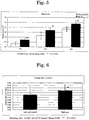
- the results of the healed area in each individual are shown in FIG. 5 , and the results of a healing rate in each individual are shown in FIG. 6 .
- Healing rate Mean of healed areas at respective time points after 1 to 3 days
- FIGS. 5 and 6 it was observed that the healed area of the corneal epithelia was significantly increased in the eyes administered with 0.3% by weight cinnamate derivative-introduced HA solution at all time points of days 1 to 3, compared with the healed area of the corneal epithelia in the control eyes. And it was also observed that the healing rate was significantly enhanced in the eyes administered with 0.3% by weight cinnamate derivative-introduced HA solution.
- the corneal epithelium of the central region was removed by using a trephine (8 mm I.D), a 23G needle and microscissors after anesthesia with an intravenous injection of 5 mg/kg of ketamine and 2mg/kg of xylazine and topical administration of 0.4% oxybuprocaine hydrochloride.
- the rabbit was given general anesthesia by intravenously injecting 5 mg/kg of ketamine and 2 mg/kg of xylazine, subsequently, the corneal epithelial loss site was stained with 0.2% sodium fluorescein dissolved in PBS, and photographed under ultra-violet light. The photographing was performed just before the administration of the subject substance one hour after the cornea was peeled and 3 hours after the second administration at 1 to 3 days after the peeling. When photographed, the focal length was made constant to make the magnification of photographs constant.
- the area of the corneal epithelial defective region stained with sodium fluorescein was measured on the printed photograph using the image analyzer. The value obtained by subtracting the area of the peeled site 3 hours after the final administration at 3 days after the peeling from the area (peeled area) of the peeled site just before the administration of the subject substance one hour after the corneal epithelia were peeled was rendered as "healed area.”
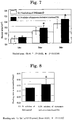
- the results of the healed area in each individual are shown in FIG. 7 , and the results of the healing rate in each individual are shown in FIG. 8 .
- Healing rate Mean of healed areas at respective time points after 1 to 3 days
- FIGS. 7 and 8 it was observed that the healed area of the corneal epithelia was significantly increased in the eyes administered with 0.1% by weight cinnamate derivative-introduced HA solution, compared with the healed area of the corneal epithelia in the control eyes administered with the 0.1% by weight HA aqueous solution. And it was also observed that the healing rate was significantly enhanced in the eyes administered with 0.1% by weight cinnamate derivative-introduced HA solution.
- the corneal epithelium of the central region was removed by using a trephine (8 mm I.D), a 23G needle and microscissors after anesthesia with an intravenous injection of 5 mg/kg of ketamine and 2mg/kg of xylazine and topical administration of 0.4% oxybuprocaine hydrochloride.
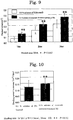
- the rabbit was given general anesthesia by intravenously injecting 5 mg/kg of ketamine and 2 mg/kg of xylazine, subsequently, the corneal epithelial loss site was stained with 0.2% sodium fluorescein dissolved in PBS, and photographed under ultra-violet light. The photographing was performed just before the administration of the subject substance one hour after the cornea was peeled and 6 hours after the administration at 1 to 3 days after the peeling. When photographed, the focal length was made constant to make the magnification of photographs constant.
- the area of the corneal epithelial defective region stained with sodium fluorescein was measured on the printed photograph using the image analyzer. The value obtained by subtracting the area of the peeled site 3 hours after the final administration at 3 days after the peeling from the area (peeled area) of the peeled site just before the administration of the subject substance one hour after the corneal epithelia were peeled was rendered as the "healed area.”
- the results of the healed area in each individual are shown in FIG. 9 , and the results of the healing rate in each individual are shown in FIG. 10 .
- Healing rate Mean of healed areas at respective time points after 1 to 3 days
- FIGS. 9 and 10 it was observed that the healed area of the corneal epithelia was significantly increased in the eyes administered with 0.1% by weight cinnamate derivative-introduced HA solution at all time points of the days 1 to 3, compared with the healed area of the corneal epithelia in the control eyes administered with the 0.1% by weight HA aqueous solution. And it was also observed that the healing rate was significantly enhanced in the eyes administered with 0.1% by weight cinnamate derivative-introduced HA solution.
- the corneal epithelium of the central region was removed by using a trephine (8 mm I.D), a 23G needle and microscissors after anesthesia with an intravenous injection of 5 mg/kg of ketamine and 2mg/kg of xylazine and topical administration of 0.4% oxybuprocaine hydrochloride.
- Two rabbits were given general anesthesia by intravenously injecting 5 mg/kg of ketamine and 2 mg/kg of xylazine per rabbit, and eyeballs were removed 30 minutes, one hour, one and a half hours and 2 hours and 30 minutes after the administration of the subject substance and the control substance.
- a pore was opened between the cornea and sclera in the removed eyeball using a surgical knife, and only the cornea was taken out using the microscissors.
- the removed cornea was placed on a biological sample slicing plate (supplied from Nisshin EM Corporation, Cat No.
- the frozen block was removed from the cryostat tray, and attached on a sample table using the O.C.T. compound.
- the sample table and a disposable microtome blade (supplied by Leica Microsystems Japan, Model 818, Lot. No. 913212) were set in a high performance frozen microtome for research, and the block was sliced under the condition of a frozen chamber temperature (CT) at -20°C and sample side temperature (OT) at -16°C to make sections with a thickness of 5 ⁇ m using silane coating slide glasses (supplied by Muto Pure Chemicals Co., Ltd., Star Frost Slide Glass, Cat. No. 5116).
- CT frozen chamber temperature
- OT sample side temperature
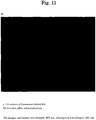
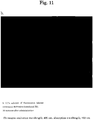
- the frozen section was set in an incident-light fluorescence microscope (Olympus Corporation, BH2-RFC), FA images and autofluorescent images were observed at IB cube (BH2-DMIB, excitation wavelength: 495 nm, absorption wavelength: 460 nm) and U cube (BH2-DMU, broad band U excitation, absorption wavelength: 435 nm), respectively.
- the FA image and the autofluorescent image were photographed using a cooled high sensitivity CCD camera (Keyence Corporation, VB-6010) under the condition of exposure time for one second and ISO sensitivity of 200.
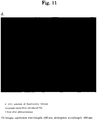
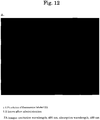
- Photographs of the sampled cornea were shown in FIGS. 11 and 12 . From FIGS. 11 and 12 , it was identified by color development of the fluorescence label that the aqueous solution of 0.3% by weight fluorescence labeled HA which was the control substance stayed until 30 minutes after the administration but did not stay after one hour. Meanwhile, although the fluorescent color development of the aqueous solution of 0.3% by weight fluorescence labeled cinnamate derivative-introduced HA which was the subject substance was weakened with the elapse of time, the color development was observed at all time points from 30 minutes to 2 hours and 30 minutes after the administration, thereby the high staying performance was confirmed.
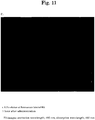
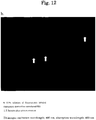
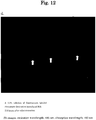
- Ultraviolet rays were irradiated to both eyes from a distance of approximately 10 cm apart from the rabbit eyeball using a 15 kW germicidal lamp. The irradiation was performed for 3 hours.
- the eyeball was stained with 0.2% sodium fluorescein under the continuous anesthesia of the rabbit, and photographed under violet light. When photographed, the focal length was made constant to make the magnification of photographs constant.
- Photographs after the irradiation of the ultraviolet rays were shown in FIG. 13 . From FIG. 13 , in the eyeball irradiated with the ultraviolet rays after the administration of the control substance, the disordered site stained with 0.2% sodium fluorescein was apparent. Meanwhile, in the eyeball irradiated with the ultraviolet rays after the administration of the subject substance, the disordered site stained with 0.2% sodium fluorescein was clearly smaller than that of the control substance, and the corneal disorder caused by the ultraviolet ray was prevented.
- Example 1 Using the removed cornea of the rabbit, the moisturizing performance of the cinnamate derivative-introduced HA prepared in Example 1 was validated.
- the rabbit was given general anesthesia by intravenously injecting 5 mg/kg of ketamine and 2 mg/kg of xylazine, and the eyeball was removed. A pore was opened between the cornea and the sclera in the removed eyeball using a surgical knife, and only the cornea was taken out using the microscissors.
- the drying treatment was performed by placing the removed cornea on a paraffin block with a False-tooth stability material and providing cold air from the distance of approximately 1 m from the cornea using a dryer for 5 minutes.
- test substances subject substance, control substance and negative control substance
- the aqueous solution of 0.3% by weight HA with a weight average molecular weight of 600,000 to 1,200,000 as the control substance or the aqueous solution of 0.5% by weight cinnamate derivative-introduced HA prepared in the above Example (1-2) as the subject substance was administered to two corneas.
- the 1 ml injection syringes were used.
- Three rabbits (6 corneas) described in the above 1) were used as the administration subjects.
- the water evaporation amount was measured using a water evaporation amount measurement apparatus (AS-TW2, ASAHIBIOMED) before the administration of the test substance, after the drying treatment, after the administration of the test substance and until 40 minutes with 10 minute intervals after the administration of the test substance.
- AS-TW2, ASAHIBIOMED a water evaporation amount measurement apparatus
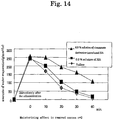
- the results of measuring the water evaporation amount were shown in FIG. 14 . From FIG. 14 , the water evaporation amount was slightly higher in the HA aqueous solution which was the control substance than in the saline which was the negative control whereas the saline became the value close to 0 after 40 minutes. On the other hand, the water evaporation amount after the administration of the subject substance kept the high value even when 40 minutes passed over, thereby the clear moisturizing performance of the subject substance was confirmed.
- the rabbit was euthanized, and after removing the eyeball, an entire corneal layer was removed by incising along the sclera.
- the removed cornea was preserved in saline, and the corneal epithelia was fixed by placing it on the paraffin block with the False-tooth stability material just before the measurement (hereinafter described as "the cornea to be measured").
- the cornea to be measured was given cold air by the dryer from the distance of 30 cm for 5 minutes, and left standing at a room temperature for one hour.
- the amount perceived as an unperceived evaporation amount was directly measured as the water evaporation amount from the cornea to be measured using the water evaporation amount measurement apparatus (AS-TW2).
- the results of measuring the water evaporation amount were shown in FIG. 15 . From FIG. 15 , the water evaporation amount was slightly higher in the HA aqueous solution which was the control substance than in the saline which was the negative control whereas the saline exhibited the value close to 0 after 40 minutes. On the other hand, the water evaporation amount of the administered subject substance kept the high value even when 40 minutes had passed over, thereby it was confirmed that the subject substance has a more persistent water retention property on the cornea compared with saline and the HA aqueous solution.
- the group administered with (A), the group administered with (B) and the group administered with (C) are referred to as PBS group, HA group and crosslinked cinnamate derivative-introduced HA group, respectively.
- PBS group group administered with (A)
- HA group group administered with (B)
- C group administered with (C)
- administration classification administration group composition
- seven hamsters were used for each of the PBS group, the HA group and the crosslinked cinnamate derivative-introduced HA group.
- FIG. 16 The results of measuring the water evaporation amount ratio are shown in FIG. 16 .
- circled numbers 1, 2, 3 and 4 on the horizontal axis represent data immediately after making the xerostomia model hamster, immediately after the administration, 10 minutes and 20 minutes after the administration, respectively.
- P represents a significance level.
- All of administration groups exhibited the water evaporation amount ratio of 3.3 to 4.5.
- the water evaporation amount ratio 10 minutes after the administration was 0.9 on average in the PBS group and 2.3 on average in the HA group. On the other hand, it was 3.2 on average in the crosslinked cinnamate derivative-introduced HA group, thus the higher water evaporation amount ratio than the PBS group and the HA group was shown.
- the water evaporation amount ratio 20 minutes after the administration was 0.9 on average in the PBS group and 1.3 on average in the HA group.
- it was 3.2 on average in the crosslinked cinnamate derivative-introduced HA group thus the extremely higher water evaporation amount ratio compared with the PBS group and the HA group was indicated.
- the water evaporation amount ratio in the crosslinked cinnamate derivative-introduced HA group was very stable regardless of the elapse of time. This indicated that the crosslinked cinnamate derivative-introduced HA stayed at the administered site for a long period of time and exerted a highly persistent effect.
- GAG into which the hydrophobic group is introduced via the binding chain including the cinnamate derivative-introduced HA and the crosslinked cinnamate derivative-introduced HA has been shown to be suitable for the application to the mucosa and capable of effectively treating the disorder in the mucosal epithelial layer by being applied to the mucosa. It has been also shown that the effect of the treatment is highly persistent.
- the mixture was stirred over night and a 376 mg / 5 mL aqueous solution of sodium hydrogen carbonate (Japanese Pharmacopoeia) was added.
- the mixture was stirred over night and a 381 mg / 5 mL aqueous solution of sodium hydrogen carbonate (Japanese Pharmacopoeia) was added.
- the corneal epithelium of the central region was removed by using a trephine (8 mm I.D), a 23G needle and microscissors after anesthesia with an intravenous injection of 5 mg/kg of ketamine and 2mg/kg of xylazine and topical administration of 0.4% oxybuprocaine hydrochloride.
- the rabbit was given general anesthesia by intravenously injecting 5 mg/kg of ketamine and 2 mg/kg of xylazine, subsequently, the corneal epithelial loss site was stained with 0.2% sodium fluorescein dissolved in PBS, and photographed under ultra-violet light. The photographing was performed just before the administration of the subject substance one hour after the cornea was peeled and 3 hours after the second administration at 1 to 3 days after the peeling. When photographed, the focal length was made constant to make the magnification of photographs constant.
- the area of the corneal epithelial defective region stained with sodium fluorescein was measured on the printed photograph using the image analyzer. The value obtained by subtracting the area of the peeled site 3 hours after the final administration at 3 days after the peeling from the area (peeled area) of the peeled site just before the administration of the subject substance one hour after the corneal epithelia were peeled was rendered as "healed area.”
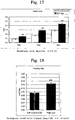
- the results of the healed area in each individual are shown in FIG. 17 , and the results of a healing rate in each individual are shown in FIG. 18 .
- Healing rate Mean of healed areas at respective time points after 1 to 3 days
- FIGS. 17 and 18 it was observed that the healed area of the corneal epithelia was significantly increased in the eyes administered with 0.1% by weight cinnamate derivative-introduced HA solution at all time points of days 1 to 3, compared with the healed area of the corneal epithelia in the control eyes. And it was also observed that the healing rate was significantly enhanced in the eyes administered with 0.1% by weight cinnamate derivative-introduced HA solution.
- the corneal epithelium of the central region was removed by using a trephine (8 mm I.D), a 23G needle and microscissors after anesthesia with an intravenous injection of 5 mg/kg of ketamine and 2mg/kg of xylazine and topical administration of 0.4% oxybuprocaine hydrochloride.
- the rabbit was given general anesthesia by intravenously injecting 5 mg/kg of ketamine and 2 mg/kg of xylazine, subsequently, the corneal epithelial loss site was stained with 0.2% sodium fluorescein dissolved in PBS, and photographed under ultra-violet light. The photographing was performed just before the administration of the subject substance one hour after the cornea was peeled and 3 hours after the second administration at 1 to 3 days after the peeling. When photographed, the focal length was made constant to make the magnification of photographs constant.
- the area of the corneal epithelial defective region stained with sodium fluorescein was measured on the printed photograph using the image analyzer. The value obtained by subtracting the area of the peeled site 3 hours after the final administration at 3 days after the peeling from the area (peeled area) of the peeled site just before the administration of the subject substance one hour after the corneal epithelia were peeled was rendered as "healed area.”
- C8-L(a: control), C8-R(b), C16-L(c: control), C16-R(d) represents left eye to which saline was administrated as a control for C8-R, right eye to which 0.1 % octylamine-introduced HA solution was administrated, left eye to which saline was administrated as a control for C16-R, right eye to which 0.1 % hexadecylamine-introduced HA solution was administrated, respectively.
- FIG. 19 C8-L(a: control), C8-R(b), C16-L(c: control), C16-R(d) represents left eye to which saline was administrated as a control for C8-R, right eye to which 0.1 % octylamine-introduced HA solution was administrated, left eye to which saline was administrated as a control for C16-R, right eye to which 0.1
- C8 represents results of the above study using octylamine
- C16 represents results of the above study using hexadecylamine.
- Healing rate Mean of healed areas at respective time points after 1 to 3 days
- FIGS. 19 and 20 it was observed that the healed area of the corneal epithelia was significantly increased in the eyes administered with 0.1 % octylamine-introduced HA and hexadecylamine-introduced HA solution at all time points of days 1 to 3, compared with the healed area of the corneal epithelia in the control eyes. And it was also observed that the healing rate was significantly enhanced in the eyes administered with 0.1 % octylamine-introduced HA or hexadecylamine-introduced HA solution.
Landscapes
- Health & Medical Sciences (AREA)
- Life Sciences & Earth Sciences (AREA)
- General Health & Medical Sciences (AREA)
- Veterinary Medicine (AREA)
- Public Health (AREA)
- Animal Behavior & Ethology (AREA)
- Chemical & Material Sciences (AREA)
- Medicinal Chemistry (AREA)
- Pharmacology & Pharmacy (AREA)
- Epidemiology (AREA)
- Engineering & Computer Science (AREA)
- Bioinformatics & Cheminformatics (AREA)
- Nuclear Medicine, Radiotherapy & Molecular Imaging (AREA)
- General Chemical & Material Sciences (AREA)
- Organic Chemistry (AREA)
- Chemical Kinetics & Catalysis (AREA)
- Molecular Biology (AREA)
- Dermatology (AREA)
- Biomedical Technology (AREA)
- Ophthalmology & Optometry (AREA)
- Physiology (AREA)
- Nutrition Science (AREA)
- Endocrinology (AREA)
- Pulmonology (AREA)
- Otolaryngology (AREA)
- Urology & Nephrology (AREA)
- Reproductive Health (AREA)
- Gynecology & Obstetrics (AREA)
- Pharmaceuticals Containing Other Organic And Inorganic Compounds (AREA)
- Medicinal Preparation (AREA)
- Polysaccharides And Polysaccharide Derivatives (AREA)
Applications Claiming Priority (3)
| Application Number | Priority Date | Filing Date | Title |
|---|---|---|---|
| JP2005297170 | 2005-10-12 | ||
| JP2006160478 | 2006-06-09 | ||
| PCT/JP2006/320801 WO2007043702A1 (en) | 2005-10-12 | 2006-10-12 | Agent for applying to mucosa and method for production thereof |
Publications (3)
| Publication Number | Publication Date |
|---|---|
| EP1942912A1 EP1942912A1 (en) | 2008-07-16 |
| EP1942912A4 EP1942912A4 (en) | 2010-10-06 |
| EP1942912B1 true EP1942912B1 (en) | 2016-12-14 |
Family
ID=37942916
Family Applications (1)
| Application Number | Title | Priority Date | Filing Date |
|---|---|---|---|
| EP06811990.8A Not-in-force EP1942912B1 (en) | 2005-10-12 | 2006-10-12 | Agent for applying to mucosa and method for production thereof |
Country Status (9)
| Country | Link |
|---|---|
| US (4) | US20080306022A1 (enExample) |
| EP (1) | EP1942912B1 (enExample) |
| JP (3) | JP4387445B2 (enExample) |
| KR (4) | KR101554834B1 (enExample) |
| CN (3) | CN103120702B (enExample) |
| AU (1) | AU2006300207C1 (enExample) |
| CA (1) | CA2625532C (enExample) |
| ES (1) | ES2616295T3 (enExample) |
| WO (1) | WO2007043702A1 (enExample) |
Families Citing this family (22)
| Publication number | Priority date | Publication date | Assignee | Title |
|---|---|---|---|---|
| GB0327723D0 (en) | 2003-09-15 | 2003-12-31 | Vectura Ltd | Pharmaceutical compositions |
| ES2616295T3 (es) * | 2005-10-12 | 2017-06-12 | Seikagaku Corporation | Agente para aplicar a mucosa y procedimiento para la producción del mismo |
| WO2008069348A1 (en) | 2006-12-06 | 2008-06-12 | Seikagaku Corporation | Pharmaceutical agent having long-lasting effect of treating arthritic disorders |
| JP2009046454A (ja) * | 2007-08-22 | 2009-03-05 | Shiseido Co Ltd | 口腔内用組成物 |
| ITMI20072237A1 (it) * | 2007-11-27 | 2009-05-28 | Sigea Srl | Esteri misti butirrico-formico di polisaccaridi acidi, loro preparazione ed uso come dermocosmetici |
| JP5758797B2 (ja) | 2008-04-04 | 2015-08-05 | ユニバーシティ・オブ・ユタ・リサーチ・ファウンデイション | アルキル化半合成グリコサミノグリカンエーテルならびにその製造および使用方法 |
| EP2360188B1 (en) | 2008-11-05 | 2014-09-17 | National University Corporation Tokyo Medical and Dental University | Hyaluronic acid derivative and pharmaceutical composition thereof |
| FR2958646B1 (fr) | 2010-04-07 | 2012-05-18 | Adocia | Polysaccharides comportant des groupes fonctionnels carboxyles substitues par un derive d'acide hydrophobe. |
| CA2703532C (en) * | 2010-05-10 | 2018-05-01 | Eva Turley | Topically administered, skin-penetrating glycosaminoglycan formulations suitable for use in cosmetic and pharmaceutical applications |
| JP6062917B2 (ja) | 2011-03-23 | 2017-01-18 | ザ ユニバーシティ オブ ユタ リサーチ ファウンデイション | 泌尿器科の炎症の治療及び予防の方法 |
| US9067299B2 (en) | 2012-04-25 | 2015-06-30 | Applied Materials, Inc. | Printed chemical mechanical polishing pad |
| CN107106594A (zh) | 2014-12-26 | 2017-08-29 | 生化学工业株式会社 | 改善眼的自觉症状的制剂和方法 |
| CN104940221A (zh) * | 2015-05-13 | 2015-09-30 | 北京大清生物技术有限公司 | 一种用于膀胱和尿道上皮损伤修复的组合物 |
| WO2016194869A1 (ja) * | 2015-05-29 | 2016-12-08 | 生化学工業株式会社 | グリコサミノグリカン誘導体とケモカイン受容体活性調節材とを含む組成物 |
| US20190008889A1 (en) * | 2015-08-20 | 2019-01-10 | Seikagaku Corporation | Agent to be applied to ophthalmic device |
| US10525159B2 (en) | 2016-05-26 | 2020-01-07 | Ophtecs Corporation | Liquid preparation for contact lenses comprising hydrolyzed hyaluronic acid derivative and cationic bactericide |
| WO2018053111A1 (en) | 2016-09-15 | 2018-03-22 | University Of Utah Research Foundation | In situ gelling compositions for the treatment or prevention of inflammation and tissue damage |
| KR20190068575A (ko) * | 2016-10-14 | 2019-06-18 | 이콤 메디칼 게엠베하 | 안구 표면 항상성의 확립, 회복 및 보존 방법 |
| CN110891611B (zh) | 2017-03-22 | 2024-03-29 | 阿森迪斯制药公司 | 水凝胶交联透明质酸前药组合物和方法 |
| RU2652581C1 (ru) * | 2017-07-03 | 2018-04-26 | федеральное государственное бюджетное образовательное учреждение высшего образования "Приволжский исследовательский медицинский университет" Министерства здравоохранения Российской Федерации | Способ лечения роговично-конъюнктивального ксероза |
| CN111228653A (zh) | 2018-11-13 | 2020-06-05 | 格莱科米拉治疗公司 | 用电离辐射加强癌症治疗的方法 |
| EP4039279A4 (en) | 2019-10-03 | 2023-11-01 | Seikagaku Corporation | TRANSMUCOSAL MEDICINAL ACTIVE DELIVERY SYSTEM FOR THE BLADDER SUBMUCOSA |
Family Cites Families (29)
| Publication number | Priority date | Publication date | Assignee | Title |
|---|---|---|---|---|
| US4851521A (en) | 1985-07-08 | 1989-07-25 | Fidia, S.P.A. | Esters of hyaluronic acid |
| JPH0723317B2 (ja) * | 1988-03-17 | 1995-03-15 | 生化学工業株式会社 | 角膜上皮層障害症治療剤 |
| US5733892A (en) * | 1990-07-24 | 1998-03-31 | Seikagaku Corporation | Metastasis inhibitor composition comprising a phospholipid-linked glycosaminoglycan and method for inhibiting metastasis employing the same |
| JP2855307B2 (ja) * | 1992-02-05 | 1999-02-10 | 生化学工業株式会社 | 光反応性グリコサミノグリカン、架橋グリコサミノグリカン及びそれらの製造方法 |
| DE4203529A1 (de) * | 1992-02-07 | 1993-08-12 | Wolff Walsrode Ag | Wasserloesliche sulfoalkylhydroxyalkylderivate der cellulose und deren verwendung in gips- und zementhaltigen massen |
| DE69513912T2 (de) * | 1994-03-14 | 2000-05-18 | Seikagaku Corp., Tokio/Tokyo | Material zum tragen auf dem augapfel |
| JP3308742B2 (ja) | 1994-11-17 | 2002-07-29 | 生化学工業株式会社 | 光架橋性ヒアルロン酸誘導体とその架橋体およびそれらの製造方法 |
| CA2162957C (en) * | 1994-11-17 | 2011-08-02 | Michinori Waki | Cinnamic acid derivative |
| US6025444A (en) * | 1994-11-17 | 2000-02-15 | Seikagaku Kogyo Kabushiki Kaisha (Seikagaku Corporation) | Cinnamic acid derivative |
| JP3955107B2 (ja) * | 1995-05-01 | 2007-08-08 | 生化学工業株式会社 | 架橋多糖の製造法 |
| EP0763754B1 (en) * | 1995-09-13 | 2003-01-08 | Seikagaku Kogyo Kabushiki Kaisha (Seikagaku Corporation) | Photocured crosslinked-hyaluronic acid contact lens |
| JP4006039B2 (ja) * | 1995-09-13 | 2007-11-14 | 生化学工業株式会社 | 光架橋ヒアルロン酸コンタクトレンズ |
| HU224697B1 (en) * | 1995-11-15 | 2006-01-30 | Seikagaku Kogyo Co Ltd | Photocured cross-linked-hyaluronic acid gel and method of preparation thereof |
| US6548487B2 (en) * | 1996-12-27 | 2003-04-15 | Seikagaku Corporation | Agent for treatment of bladder troubles |
| US6232301B1 (en) * | 1996-12-27 | 2001-05-15 | Seikagaku Corporation | Remedies for bladder disorders |
| JPH1171282A (ja) | 1997-09-01 | 1999-03-16 | Senju Pharmaceut Co Ltd | 点眼用水性製剤 |
| JP3014357B2 (ja) | 1998-01-26 | 2000-02-28 | 生化学工業株式会社 | 角膜上皮層伸展促進剤 |
| ITPD980169A1 (it) * | 1998-07-06 | 2000-01-06 | Fidia Advanced Biopolymers Srl | Ammidi dell'acido ialuronico e dei suoi derivati e processo per la loro preparazione. |
| AU3327000A (en) * | 1999-03-24 | 2000-10-09 | Seikagaku Corporation | Artificial saliva |
| PT1142566E (pt) | 2000-04-07 | 2004-02-27 | Medidom Lab | Formulacao oftalmica topica na forma de uma solucao aquosa e uso de uma ciclosporina em associacao com acido hialuronico ou um de seus sais e com polisorbato 80 |
| JP2001329002A (ja) * | 2000-05-25 | 2001-11-27 | Denki Kagaku Kogyo Kk | 修飾ヒアルロン酸ゲルとその製造方法及びそれを含有する医用材料 |
| JP2002037746A (ja) | 2000-07-24 | 2002-02-06 | Fuji Yakuhin:Kk | キノロンカルボン酸系抗菌剤を含有する液剤 |
| JP4172176B2 (ja) | 2000-12-19 | 2008-10-29 | 生化学工業株式会社 | 光反応性ヒアルロン酸およびその製造方法ならびに光架橋ヒアルロン酸および医用材料 |
| DE60117502T2 (de) * | 2000-12-19 | 2006-08-24 | Seikagaku Corp. | Photohärtbare Derivate von Hyaluronsäure, Verfahren zu deren Herstellung, vernetztes und photogehärtetes Derivat der Hyaluronsäure und diese enthaltendes medizinisches Material |
| CA2435637A1 (en) * | 2001-01-23 | 2002-08-01 | Massachusetts Institute Of Technology | Solid- and solution -phase synthesis of heparin and other glycosaminoglycans |
| JP4273208B2 (ja) * | 2001-03-30 | 2009-06-03 | チッソ株式会社 | 婦人科疾患治療剤 |
| AU2005283282B2 (en) * | 2004-09-15 | 2011-05-19 | Seikagaku Corporation | Photoreactive polysaccharide, photocrosslinked polysaccharide products, the method of making them and medical materials therefrom |
| ES2616295T3 (es) * | 2005-10-12 | 2017-06-12 | Seikagaku Corporation | Agente para aplicar a mucosa y procedimiento para la producción del mismo |
| JP7023317B2 (ja) | 2020-05-12 | 2022-02-21 | 沖電気工業株式会社 | 光波長フィルタ及び波長分離光回路 |
-
2006
- 2006-10-12 ES ES06811990.8T patent/ES2616295T3/es active Active
- 2006-10-12 KR KR1020147008031A patent/KR101554834B1/ko not_active Expired - Fee Related
- 2006-10-12 AU AU2006300207A patent/AU2006300207C1/en not_active Ceased
- 2006-10-12 KR KR1020087011277A patent/KR101411067B1/ko active Active
- 2006-10-12 JP JP2008519554A patent/JP4387445B2/ja active Active
- 2006-10-12 KR KR1020137024561A patent/KR20130109259A/ko not_active Ceased
- 2006-10-12 KR KR1020117023949A patent/KR101428153B1/ko not_active Expired - Fee Related
- 2006-10-12 US US12/083,189 patent/US20080306022A1/en not_active Abandoned
- 2006-10-12 CN CN201210562963.1A patent/CN103120702B/zh not_active Expired - Fee Related
- 2006-10-12 CN CN2006800380199A patent/CN101287473B/zh not_active Expired - Fee Related
- 2006-10-12 EP EP06811990.8A patent/EP1942912B1/en not_active Not-in-force
- 2006-10-12 WO PCT/JP2006/320801 patent/WO2007043702A1/en not_active Ceased
- 2006-10-12 CA CA2625532A patent/CA2625532C/en active Active
- 2006-10-12 CN CN201210562380.9A patent/CN103120701B/zh not_active Expired - Fee Related
-
2009
- 2009-08-11 JP JP2009186548A patent/JP5094799B2/ja not_active Expired - Fee Related
-
2011
- 2011-03-23 US US13/070,210 patent/US8969319B2/en active Active
-
2012
- 2012-06-27 JP JP2012144630A patent/JP2012211171A/ja active Pending
-
2015
- 2015-01-20 US US14/600,558 patent/US20150196574A1/en not_active Abandoned
-
2018
- 2018-03-30 US US15/941,443 patent/US20180289730A1/en not_active Abandoned
Non-Patent Citations (1)
| Title |
|---|
| None * |
Also Published As
Similar Documents
| Publication | Publication Date | Title |
|---|---|---|
| EP1942912B1 (en) | Agent for applying to mucosa and method for production thereof | |
| JP2021152032A (ja) | トレハロースの非経口投与によるタンパク質凝集ミオパシーおよび神経変性疾患の治療 | |
| US8771712B2 (en) | Topical administration of acyclovir | |
| CN1253833A (zh) | 细胞粘连分子表达抑制剂 | |
| AU2012201314B2 (en) | Agent for applying to mucosa and method for production thereof | |
| AU2011201896A1 (en) | Topical cromolyn formulations | |
| Li et al. | Preparation and properties of a drug release membrane of mitomycin C with N-succinyl-hydroxyethyl chitosan | |
| RU2352352C1 (ru) | Фармацевтическая композиция для профилактики развития и лечения начальной стадии возрастной катаракты (варианты) | |
| EP4659739A1 (de) | Topische formulierung enthaltend nicht-kovalente keratin-wirkstoff-konjugate zur therapeutischen anwendung | |
| RU2395493C2 (ru) | Новые поверхностно-активные вещества и их применение | |
| HK1184700B (en) | Use of glycosaminoglycan containing a binded hydrophobic group in the preparation of medicine for treating or preventing corneal epithelial layer disorders | |
| HK1184701B (en) | Use of glycosaminoglycan containing a binded hydrophobic group in the preparation of medicine for treating or preventing corneal epithelial layer disorders | |
| EP3305304A1 (en) | Composition including glucosaminoglycan derivative and chemokine receptor activity regulator | |
| WO2006119994A2 (de) | Verfahren zur herstellung von albumin-konjugaten mit einem röntgenkontrastmittel als wirkstoff |
Legal Events
| Date | Code | Title | Description |
|---|---|---|---|
| PUAI | Public reference made under article 153(3) epc to a published international application that has entered the european phase |
Free format text: ORIGINAL CODE: 0009012 |
|
| 17P | Request for examination filed |
Effective date: 20080331 |
|
| AK | Designated contracting states |
Kind code of ref document: A1 Designated state(s): AT BE BG CH CY CZ DE DK EE ES FI FR GB GR HU IE IS IT LI LT LU LV MC NL PL PT RO SE SI SK TR |
|
| A4 | Supplementary search report drawn up and despatched |
Effective date: 20100906 |
|
| DAX | Request for extension of the european patent (deleted) | ||
| 17Q | First examination report despatched |
Effective date: 20120109 |
|
| GRAP | Despatch of communication of intention to grant a patent |
Free format text: ORIGINAL CODE: EPIDOSNIGR1 |
|
| RIC1 | Information provided on ipc code assigned before grant |
Ipc: A61P 17/00 20060101ALI20160714BHEP Ipc: A61K 31/7008 20060101ALI20160714BHEP Ipc: A61K 31/726 20060101AFI20160714BHEP Ipc: A61K 9/00 20060101ALI20160714BHEP Ipc: A61K 49/00 20060101ALI20160714BHEP Ipc: A61K 31/728 20060101ALI20160714BHEP Ipc: A61K 47/48 20060101ALI20160714BHEP Ipc: A61P 27/00 20060101ALI20160714BHEP Ipc: A61K 9/08 20060101ALI20160714BHEP |
|
| INTG | Intention to grant announced |
Effective date: 20160725 |
|
| GRAS | Grant fee paid |
Free format text: ORIGINAL CODE: EPIDOSNIGR3 |
|
| GRAJ | Information related to disapproval of communication of intention to grant by the applicant or resumption of examination proceedings by the epo deleted |
Free format text: ORIGINAL CODE: EPIDOSDIGR1 |
|
| GRAL | Information related to payment of fee for publishing/printing deleted |
Free format text: ORIGINAL CODE: EPIDOSDIGR3 |
|
| STAA | Information on the status of an ep patent application or granted ep patent |
Free format text: STATUS: EXAMINATION IS IN PROGRESS |
|
| GRAR | Information related to intention to grant a patent recorded |
Free format text: ORIGINAL CODE: EPIDOSNIGR71 |
|
| STAA | Information on the status of an ep patent application or granted ep patent |
Free format text: STATUS: GRANT OF PATENT IS INTENDED |
|
| GRAA | (expected) grant |
Free format text: ORIGINAL CODE: 0009210 |
|
| STAA | Information on the status of an ep patent application or granted ep patent |
Free format text: STATUS: THE PATENT HAS BEEN GRANTED |
|
| INTC | Intention to grant announced (deleted) | ||
| AK | Designated contracting states |
Kind code of ref document: B1 Designated state(s): AT BE BG CH CY CZ DE DK EE ES FI FR GB GR HU IE IS IT LI LT LU LV MC NL PL PT RO SE SI SK TR |
|
| INTG | Intention to grant announced |
Effective date: 20161104 |
|
| REG | Reference to a national code |
Ref country code: GB Ref legal event code: FG4D |
|
| REG | Reference to a national code |
Ref country code: CH Ref legal event code: EP |
|
| REG | Reference to a national code |
Ref country code: IE Ref legal event code: FG4D |
|
| REG | Reference to a national code |
Ref country code: AT Ref legal event code: REF Ref document number: 852951 Country of ref document: AT Kind code of ref document: T Effective date: 20170115 |
|
| REG | Reference to a national code |
Ref country code: DE Ref legal event code: R096 Ref document number: 602006051238 Country of ref document: DE |
|
| PG25 | Lapsed in a contracting state [announced via postgrant information from national office to epo] |
Ref country code: LV Free format text: LAPSE BECAUSE OF FAILURE TO SUBMIT A TRANSLATION OF THE DESCRIPTION OR TO PAY THE FEE WITHIN THE PRESCRIBED TIME-LIMIT Effective date: 20161214 |
|
| REG | Reference to a national code |
Ref country code: LT Ref legal event code: MG4D |
|
| REG | Reference to a national code |
Ref country code: NL Ref legal event code: MP Effective date: 20161214 |
|
| PG25 | Lapsed in a contracting state [announced via postgrant information from national office to epo] |
Ref country code: GR Free format text: LAPSE BECAUSE OF FAILURE TO SUBMIT A TRANSLATION OF THE DESCRIPTION OR TO PAY THE FEE WITHIN THE PRESCRIBED TIME-LIMIT Effective date: 20170315 Ref country code: LT Free format text: LAPSE BECAUSE OF FAILURE TO SUBMIT A TRANSLATION OF THE DESCRIPTION OR TO PAY THE FEE WITHIN THE PRESCRIBED TIME-LIMIT Effective date: 20161214 Ref country code: SE Free format text: LAPSE BECAUSE OF FAILURE TO SUBMIT A TRANSLATION OF THE DESCRIPTION OR TO PAY THE FEE WITHIN THE PRESCRIBED TIME-LIMIT Effective date: 20161214 |
|
| REG | Reference to a national code |
Ref country code: AT Ref legal event code: MK05 Ref document number: 852951 Country of ref document: AT Kind code of ref document: T Effective date: 20161214 |
|
| PG25 | Lapsed in a contracting state [announced via postgrant information from national office to epo] |
Ref country code: FI Free format text: LAPSE BECAUSE OF FAILURE TO SUBMIT A TRANSLATION OF THE DESCRIPTION OR TO PAY THE FEE WITHIN THE PRESCRIBED TIME-LIMIT Effective date: 20161214 |
|
| REG | Reference to a national code |
Ref country code: ES Ref legal event code: FG2A Ref document number: 2616295 Country of ref document: ES Kind code of ref document: T3 Effective date: 20170612 |
|
| PG25 | Lapsed in a contracting state [announced via postgrant information from national office to epo] |
Ref country code: NL Free format text: LAPSE BECAUSE OF FAILURE TO SUBMIT A TRANSLATION OF THE DESCRIPTION OR TO PAY THE FEE WITHIN THE PRESCRIBED TIME-LIMIT Effective date: 20161214 |
|
| PG25 | Lapsed in a contracting state [announced via postgrant information from national office to epo] |
Ref country code: CZ Free format text: LAPSE BECAUSE OF FAILURE TO SUBMIT A TRANSLATION OF THE DESCRIPTION OR TO PAY THE FEE WITHIN THE PRESCRIBED TIME-LIMIT Effective date: 20161214 Ref country code: EE Free format text: LAPSE BECAUSE OF FAILURE TO SUBMIT A TRANSLATION OF THE DESCRIPTION OR TO PAY THE FEE WITHIN THE PRESCRIBED TIME-LIMIT Effective date: 20161214 Ref country code: RO Free format text: LAPSE BECAUSE OF FAILURE TO SUBMIT A TRANSLATION OF THE DESCRIPTION OR TO PAY THE FEE WITHIN THE PRESCRIBED TIME-LIMIT Effective date: 20161214 Ref country code: IS Free format text: LAPSE BECAUSE OF FAILURE TO SUBMIT A TRANSLATION OF THE DESCRIPTION OR TO PAY THE FEE WITHIN THE PRESCRIBED TIME-LIMIT Effective date: 20170414 Ref country code: SK Free format text: LAPSE BECAUSE OF FAILURE TO SUBMIT A TRANSLATION OF THE DESCRIPTION OR TO PAY THE FEE WITHIN THE PRESCRIBED TIME-LIMIT Effective date: 20161214 |
|
| PG25 | Lapsed in a contracting state [announced via postgrant information from national office to epo] |
Ref country code: AT Free format text: LAPSE BECAUSE OF FAILURE TO SUBMIT A TRANSLATION OF THE DESCRIPTION OR TO PAY THE FEE WITHIN THE PRESCRIBED TIME-LIMIT Effective date: 20161214 Ref country code: PL Free format text: LAPSE BECAUSE OF FAILURE TO SUBMIT A TRANSLATION OF THE DESCRIPTION OR TO PAY THE FEE WITHIN THE PRESCRIBED TIME-LIMIT Effective date: 20161214 Ref country code: PT Free format text: LAPSE BECAUSE OF FAILURE TO SUBMIT A TRANSLATION OF THE DESCRIPTION OR TO PAY THE FEE WITHIN THE PRESCRIBED TIME-LIMIT Effective date: 20170414 Ref country code: BE Free format text: LAPSE BECAUSE OF FAILURE TO SUBMIT A TRANSLATION OF THE DESCRIPTION OR TO PAY THE FEE WITHIN THE PRESCRIBED TIME-LIMIT Effective date: 20161214 Ref country code: BG Free format text: LAPSE BECAUSE OF FAILURE TO SUBMIT A TRANSLATION OF THE DESCRIPTION OR TO PAY THE FEE WITHIN THE PRESCRIBED TIME-LIMIT Effective date: 20170314 |
|
| REG | Reference to a national code |
Ref country code: DE Ref legal event code: R097 Ref document number: 602006051238 Country of ref document: DE |
|
| REG | Reference to a national code |
Ref country code: FR Ref legal event code: PLFP Year of fee payment: 12 |
|
| PLBE | No opposition filed within time limit |
Free format text: ORIGINAL CODE: 0009261 |
|
| STAA | Information on the status of an ep patent application or granted ep patent |
Free format text: STATUS: NO OPPOSITION FILED WITHIN TIME LIMIT |
|
| 26N | No opposition filed |
Effective date: 20170915 |
|
| PG25 | Lapsed in a contracting state [announced via postgrant information from national office to epo] |
Ref country code: DK Free format text: LAPSE BECAUSE OF FAILURE TO SUBMIT A TRANSLATION OF THE DESCRIPTION OR TO PAY THE FEE WITHIN THE PRESCRIBED TIME-LIMIT Effective date: 20161214 |
|
| PG25 | Lapsed in a contracting state [announced via postgrant information from national office to epo] |
Ref country code: SI Free format text: LAPSE BECAUSE OF FAILURE TO SUBMIT A TRANSLATION OF THE DESCRIPTION OR TO PAY THE FEE WITHIN THE PRESCRIBED TIME-LIMIT Effective date: 20161214 |
|
| PG25 | Lapsed in a contracting state [announced via postgrant information from national office to epo] |
Ref country code: MC Free format text: LAPSE BECAUSE OF FAILURE TO SUBMIT A TRANSLATION OF THE DESCRIPTION OR TO PAY THE FEE WITHIN THE PRESCRIBED TIME-LIMIT Effective date: 20161214 |
|
| REG | Reference to a national code |
Ref country code: CH Ref legal event code: PL |
|
| REG | Reference to a national code |
Ref country code: IE Ref legal event code: MM4A |
|
| PG25 | Lapsed in a contracting state [announced via postgrant information from national office to epo] |
Ref country code: LU Free format text: LAPSE BECAUSE OF NON-PAYMENT OF DUE FEES Effective date: 20171012 Ref country code: CH Free format text: LAPSE BECAUSE OF NON-PAYMENT OF DUE FEES Effective date: 20171031 Ref country code: LI Free format text: LAPSE BECAUSE OF NON-PAYMENT OF DUE FEES Effective date: 20171031 |
|
| REG | Reference to a national code |
Ref country code: FR Ref legal event code: PLFP Year of fee payment: 13 |
|
| PG25 | Lapsed in a contracting state [announced via postgrant information from national office to epo] |
Ref country code: IE Free format text: LAPSE BECAUSE OF NON-PAYMENT OF DUE FEES Effective date: 20171012 |
|
| PG25 | Lapsed in a contracting state [announced via postgrant information from national office to epo] |
Ref country code: HU Free format text: LAPSE BECAUSE OF FAILURE TO SUBMIT A TRANSLATION OF THE DESCRIPTION OR TO PAY THE FEE WITHIN THE PRESCRIBED TIME-LIMIT; INVALID AB INITIO Effective date: 20061012 |
|
| PG25 | Lapsed in a contracting state [announced via postgrant information from national office to epo] |
Ref country code: CY Free format text: LAPSE BECAUSE OF NON-PAYMENT OF DUE FEES Effective date: 20161214 |
|
| PG25 | Lapsed in a contracting state [announced via postgrant information from national office to epo] |
Ref country code: TR Free format text: LAPSE BECAUSE OF FAILURE TO SUBMIT A TRANSLATION OF THE DESCRIPTION OR TO PAY THE FEE WITHIN THE PRESCRIBED TIME-LIMIT Effective date: 20161214 |
|
| P01 | Opt-out of the competence of the unified patent court (upc) registered |
Effective date: 20230428 |
|
| PGFP | Annual fee paid to national office [announced via postgrant information from national office to epo] |
Ref country code: IT Payment date: 20230913 Year of fee payment: 18 Ref country code: GB Payment date: 20230831 Year of fee payment: 18 |
|
| PGFP | Annual fee paid to national office [announced via postgrant information from national office to epo] |
Ref country code: FR Payment date: 20230911 Year of fee payment: 18 |
|
| PGFP | Annual fee paid to national office [announced via postgrant information from national office to epo] |
Ref country code: ES Payment date: 20231102 Year of fee payment: 18 |
|
| PGFP | Annual fee paid to national office [announced via postgrant information from national office to epo] |
Ref country code: DE Payment date: 20230830 Year of fee payment: 18 |
|
| REG | Reference to a national code |
Ref country code: DE Ref legal event code: R119 Ref document number: 602006051238 Country of ref document: DE |
|
| GBPC | Gb: european patent ceased through non-payment of renewal fee |
Effective date: 20241012 |
|
| PG25 | Lapsed in a contracting state [announced via postgrant information from national office to epo] |
Ref country code: DE Free format text: LAPSE BECAUSE OF NON-PAYMENT OF DUE FEES Effective date: 20250501 |
|
| PG25 | Lapsed in a contracting state [announced via postgrant information from national office to epo] |
Ref country code: GB Free format text: LAPSE BECAUSE OF NON-PAYMENT OF DUE FEES Effective date: 20241012 |
|
| PG25 | Lapsed in a contracting state [announced via postgrant information from national office to epo] |
Ref country code: FR Free format text: LAPSE BECAUSE OF NON-PAYMENT OF DUE FEES Effective date: 20241031 |
|
| PG25 | Lapsed in a contracting state [announced via postgrant information from national office to epo] |
Ref country code: IT Free format text: LAPSE BECAUSE OF NON-PAYMENT OF DUE FEES Effective date: 20241012 |
|
| REG | Reference to a national code |
Ref country code: ES Ref legal event code: FD2A Effective date: 20251128 |