EP1925886B1 - Klimaanlagensystem mit Speicher sowie Betriebsverfahren und Steuerprogramm für das Klimaanlagensystem mit Speicher - Google Patents
Klimaanlagensystem mit Speicher sowie Betriebsverfahren und Steuerprogramm für das Klimaanlagensystem mit Speicher Download PDFInfo
- Publication number
- EP1925886B1 EP1925886B1 EP07022777.2A EP07022777A EP1925886B1 EP 1925886 B1 EP1925886 B1 EP 1925886B1 EP 07022777 A EP07022777 A EP 07022777A EP 1925886 B1 EP1925886 B1 EP 1925886B1
- Authority
- EP
- European Patent Office
- Prior art keywords
- storage
- air conditioning
- type air
- residual amount
- storage battery
- Prior art date
- Legal status (The legal status is an assumption and is not a legal conclusion. Google has not performed a legal analysis and makes no representation as to the accuracy of the status listed.)
- Not-in-force
Links
Images



Classifications
-
- F—MECHANICAL ENGINEERING; LIGHTING; HEATING; WEAPONS; BLASTING
- F24—HEATING; RANGES; VENTILATING
- F24F—AIR-CONDITIONING; AIR-HUMIDIFICATION; VENTILATION; USE OF AIR CURRENTS FOR SCREENING
- F24F11/00—Control or safety arrangements
- F24F11/30—Control or safety arrangements for purposes related to the operation of the system, e.g. for safety or monitoring
-
- F—MECHANICAL ENGINEERING; LIGHTING; HEATING; WEAPONS; BLASTING
- F24—HEATING; RANGES; VENTILATING
- F24F—AIR-CONDITIONING; AIR-HUMIDIFICATION; VENTILATION; USE OF AIR CURRENTS FOR SCREENING
- F24F11/00—Control or safety arrangements
- F24F11/62—Control or safety arrangements characterised by the type of control or by internal processing, e.g. using fuzzy logic, adaptive control or estimation of values
-
- F—MECHANICAL ENGINEERING; LIGHTING; HEATING; WEAPONS; BLASTING
- F24—HEATING; RANGES; VENTILATING
- F24F—AIR-CONDITIONING; AIR-HUMIDIFICATION; VENTILATION; USE OF AIR CURRENTS FOR SCREENING
- F24F11/00—Control or safety arrangements
- F24F11/30—Control or safety arrangements for purposes related to the operation of the system, e.g. for safety or monitoring
- F24F11/46—Improving electric energy efficiency or saving
-
- F—MECHANICAL ENGINEERING; LIGHTING; HEATING; WEAPONS; BLASTING
- F24—HEATING; RANGES; VENTILATING
- F24F—AIR-CONDITIONING; AIR-HUMIDIFICATION; VENTILATION; USE OF AIR CURRENTS FOR SCREENING
- F24F2140/00—Control inputs relating to system states
- F24F2140/60—Energy consumption
Definitions
- the present invention relates to a storage type air conditioning system including a plurality of air conditioners each having a storage battery which can store external power, and an operation method and a control program for the storage type air conditioning system.
- JP 11 072262 A discloses a storage type air conditioning system having plural storage type air conditioners wherein some of storage type air conditioners comprise a storage battery.
- a storage type air conditioner has a storage battery, and it charges the storage battery in the nighttime in which power demand is little and discharges the storage battery in the daytime to execute air conditioning operation by using stored power. If such a storage type air conditioner is utilized, it contributes to equalization of power demand and thus reduces the power generation amount of an electric power company, whereby the emission of CO 2 can be reduced.
- the present invention has been implemented in view of the foregoing problem, and has an object to provide a storage type air conditioning system that can proactively use stored power, and an operation method and a control program for the storage type air conditioning system.
- a storage type air conditioning system having plural storage type air conditioners each of which comprises: a storage battery in which external power from an external power source can be stored; an air conditioning unit that is supplied with stored power from the storage battery and perform an air conditioning operation; a residual amount detector for detecting a storage residual amount of the storage battery; a stored power transmission/reception switching unit for switching transmission/reception of the stored power stored in the storage battery to/from the other storage type air conditioners; and a storage controller that transmits/receives information concerning the storage residual amount of the storage battery to/from the other storage type air conditioners, and controls the stored power transmission/reception switching unit so as to supply stored power of the self storage battery to another storage type air conditioner in which the storage residual amount is short with respect to the storedpower supply amount when the storage residual amount of the self storage battery is surplus with respect to a stored power supply amount to be supplied to the self air conditioning unit, and also receive stored power from another storage type air conditioner in which the
- each storage type air conditioner is equipped with a charger that is supplied with the external power from the external power source to charge the storage battery, and the storage controller prohibits the storage battery from being charged during the air conditioning operation of the air conditioning unit.
- the storage controller controls the charger so that the storage battery is charged in a midnight power time zone.
- the storage controller makes the charger control a current value of charging current supplied from the external power source to the storage battery on the basis of the storage residual amount detected by the residual amount detector so that the storage battery is substantially fully charged within the midnight power time zone.
- each storage type air conditioner is equipped with a charger for charging the storage battery, and the storage controller detects a current value of current flowing from the external power source into the air conditioning unit and controls the charger so that the total of the detected current value and the current value of charging current supplied from the external power source through the charger into the storage battery is not more than a predetermined value.
- the storage controller controls the charger so that the storage battery is charged in a midnight power time zone.
- the storage controller makes the charger control a current value of charging current supplied from the external power source to the storage battery on the basis of the storage residual amount detected by the residual amount detector so that the storage battery is substantially fully charged within the midnight power time zone.
- a storage type air conditioning system having plural storage type air conditioners each of which comprises: a storage battery in which external power from an external power source can be stored; an air conditioning unit that is supplied with stored power from the storage battery and perform an air conditioning operation; a residual amount detector for detecting a storage residual amount of the storage battery; a stored power transmission/reception switching unit for switching transmission/reception of the stored power stored in the storage battery to/from the other storage type air conditioners; and a communication unit for transmitting information concerning the storage residual amount of the storage battery, any one of the storage type air conditioners is set as a master machine while the other storage type air conditioners is set as a slave machine, and the master machine has a center controller for receiving information concerning the storage residual amount transmitted from the slave machines and controlling the slave machines and the master machine so that slave machines or the master machine in which the storage residual amount is surplus with respect to a stored power supply amount to be supplied to the self air conditioning unit supplies stored power to slave machines or the master machine in which the storage
- a control program for controlling through a computer a storage type air conditioner comprising a storage battery in which external power supplied from an external power source can be stored, an air conditioning unit that is supplied with stored power from the storage battery and perform an air conditioning operation, a residual amount detector for detecting a storage residual amount of the storage battery, and a stored power transmission/reception switching unit for switching transmission/reception of the stored power stored in the storage battery to/from the other storage type air conditioners
- the stored power stored in the storage battery of some air conditioner (s) byusingmidnight power or the like can be effectively used over the air conditioning system. Furthermore, the air conditioning operation and the charging operation are prohibited from being performed at the same time, and thus the power amount consumed in the storage type air conditioner can be prevented from exceeding contract power, for example. When the air conditioning operation and the charging operation are performed at the same time, the total of the current value of the charging current flowing in the air conditioning unit and the charging current value supplied to the storage battery can be prevented from exceeding contract ampere (current).
- the charger is controlled by the storage controller so that the storage battery is charged in the midnight power time zone in which power demand is small and the power charge is set to a low value. Therefore, the power demand can be equalized and also the power charge can be set to a low value by using the midnight power.
- the current value of the charging current supplied from the external power source to the storage battery is controlled on the basis of the storage residual amount detected by the residual amount detector so that the storage battery is substantially fully charged within the midnight power time zone. Therefore, the charging of the storage battery can be substantially completed with the midnight power time zone.
- the stored power is supplied from slaves or the master slave in which the storage residual amount is surplus with respect to the storedpower supply amount to be supplied to the self air conditioning unit to slaves or the master machine in which the storage residual amount is short with respect to the stored power supply amount to be supplied to the self air conditioning unit. Therefore, the stored power stored in an individual storage battery by using midnight power or the like can be effectively used over the whole system.
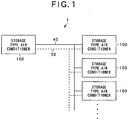
- Fig. 1 shows the construction of a storage type air conditioning system according to a first embodiment.
- the storage type air conditioning system 1 according to the first embodiment is equipped with plural storage type air conditioners 100.
- Each storage type air conditioner 100 has a storage battery 21 (see Fig. 2 ), and it is designed so that the storage battery 21 is charged, for example, by using midnight power, and the storage battery 21 is discharged at the power demand peak time or the like in the daytime to execute the air conditioning operation by using stored power.
- the respective storage type air conditioners 100 are designed so as to mutually transmit/receive various kinds of signals such as a control signal, etc. through a signal line in a peer-to-peer style, and also they are connected to one another through a stored power transmission/reception line 40.
- the self stored power can be supplied to other air conditioners through the stored power transmission/reception line 40. Accordingly, the stored power can be practically used in the overall storage type air conditioning system 1.
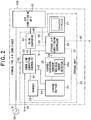
- each storage type air conditioner 100 constituting the storage type air conditioning system 1 will be described with reference to Fig. 2 .
- each storage type air conditioner 100 has an air conditioning unit 10 and a storage unit 20 as shown in Fig. 2 and is connected to a commercial power source 50 as an external power source.
- the air conditioning unit 10 has an outdoor unit (not shown), and one or plural indoor units connected to the outdoor unit through a refrigerant circuit, and it is connected to the commercial power source 50 through a power supply line 51 so that it is supplied with external power to perform an air conditioning operation.
- the air conditioning unit 10 contains an AC-DC converter (not shown) therein. AC power supplied from the commercial power source 50 is converted to DC power having a predetermined voltage in the AC-DC converter, and the air conditioning unit 10 is actuated by the DC power.
- the storage unit 20 is equipped with a storage battery 21, a power line connection controller (stored power transmission/reception switching unit) 22 which is connected to various kinds of power lines and switches the connection of these power lines, a charger (charging unit) 23 for charging the storage battery 21, a DC-DC converter 24 for converting stored power discharged from the storage battery 21 to DC power of a predetermined voltage, a charge/discharge manager 25 for managing charge/discharge of the storage battery 21, a storage air conditioning controller (storage controller) 26 for controlling the charge/discharge of the storage battery 21, the switching operation of the power lines, etc. and also transmitting/receiving a control signal to/from the air conditioning unit 10 and a storage control panel 27.
- a power line connection controller stored power transmission/reception switching unit 22 which is connected to various kinds of power lines and switches the connection of these power lines
- a charger (charging unit) 23 for charging the storage battery 21
- a DC-DC converter 24 for converting stored power discharged from the storage battery 21 to DC power of
- the storage battery 21 maybe used a lead storage battery, a sodium/sulfur battery, a sodium/nickel chloride battery, a lithium ion secondary battery, a lithium ion polymer secondary battery, a nickel hydrogen storage battery, a nickel cadmium storage battery, an electric double layer capacitor or the like.
- the power line connection controller 22 is equipped with a breaker, a magnet switch, etc., and selectively connect the various kinds of power lines to the power line connection controller 22 or release the connection concerned, thereby switching the connection of the various kinds of power lines.
- the power line connection controller 22 is connected to the power supply line 51 through an auxiliary power supply line 52, and also connected to the charger 23 through a first charging power supply line 41. Under the control of the storage air conditioning controller 26, the power line connection controller 22 can electrically connect the auxiliary power supply line 52 and the first charging power supply line 41 or release the connection concerned.
- the power line connection controller 22 is connected to the storage battery 21 through a first discharging power supply line 42, and also connected to the DC-DC converter 24 through a second discharging power supply line 43. Under the control of the storage air conditioning controller 26, the power line connection controller 22 can electrically connect the first discharging power supply line 42 and the second discharging power supply line 43 or release the connection concerned.
- the power line connection controller 22 is connected to the other storage type air conditioners 100 through the stored power transmission/reception line 40.
- the power line connection controller 22 switches the connection of the power lines so that the stored power transmission/reception line 40 and the second discharging power supply line 43 are connected to each other when stored power is supplied from another storage type air conditioner 100, and the first discharging power supply line 42 and the stored power transmission/reception line 40 are connected to each other when the stored power of the self storage battery 21 is supplied to another storage type air conditioner 100. Accordingly, the switching operation of the transmission/reception of the storedpower stocked in the storage battery 21 to/from the other storage type air conditioners 100 can be performed.
- the charger 23 contains a DC-AC converter (not shown) for converting AC power supplied from the first charging power supply line 41 through the power line connection controller 22 to DC power and outputting the DC power to the second charging power supply line 44. Under the control of the storage air conditioning controller 26, the charger 23 supplies the DC power to the storage battery 21 through the second charging power supply line 44 to charge the storage battery 21.
- a DC-AC converter (not shown) for converting AC power supplied from the first charging power supply line 41 through the power line connection controller 22 to DC power and outputting the DC power to the second charging power supply line 44.
- the DC-DC converter 24 is connected to the power line connection controller 22 through the second discharging power supply line 43, and also connected to the air conditioning unit 10 through the stored power supply line 45. Under the control of the storage air conditioning controller 2 6, the DC-DC converter 24 converts DC power supplied from the second discharging power supply line 43 through the power line connection controller 22 to DC power of a predetermined voltage, and supplies the DC power to the air conditioning unit 10 through the stored power supply line 45.
- the charge/discharge manager 25 has a residual amount detector (residual amount detecting unit) 25a for detecting the battery residual amount (storage electricity residual amount) of the storage battery 21, and manages the charge/discharge in accordance with the characteristic of the storage battery 21 every type of the storage battery 21. Under the control of the storage air conditioning controller 26, the charge/discharge manager 25 detects the storage (stored electricity) residual amount of the storage battery 21, and outputs the information concerning the storage residual amount to the storage air conditioning controller 26.
- a residual amount detector residual amount detecting unit
- the storage control panel 27 has a display unit constructed by a liquid crystal panel or the like, an operating unit having various kinds of input buttons, etc., and it is designed so that various kinds of instruction signals can be input through the operating unit and set contents, etc. can be displayed on the display unit.
- the storage air conditioning controller 26 is equipped with MPU, ROM, RAM, a time count circuit, etc. (not shown), and under the cooperation of these elements, the power line connection controller 22, the charger 23, the DC-DC converter 24, the charge/discharge manager 25 and the storage control panel 27 are controlled by the computer. However, the power line connection controller 22, the charger 23, the DC-DC converter 24, the charge/discharge manager 25, the storage control panel 27 and the storage air conditioning controller 26 are connected to one another through signal lines 31 to 35.
- the storage air conditioning controller 26 is configured to communicate with the storage air conditioning controllers 26 of the other storage type air conditioners 100 according to a predetermined communication system.
- the storage air conditioning controller 26 transmits/receives information concerning the storage residual amount of the self storage battery 21 at a predetermined time interval while being synchronized with the other storage type air conditioners 100.
- the storage air conditioning controller 26 is connected to the air conditioning unit 10 through the signal line 36. When the air conditioning controller 10 is actuated by the stored power, the storage air conditioning controller 26 transmits a control signal to the air conditioning unit 10 through the signal line 36 so that the stored power supplied through the stored power supply line 45 is controlled to act as operating power.
- the storage air conditioning controller 26 is connected to the charge/discharge manager 25 through the signal line 34, and transmits various kinds of control signals to the charge/discharge manager 25 to control the charge/discharge of the storage battery 21.
- the charge/discharge of the storage battery 21 is controlled by the charge/discharge manager 25 so that when a predetermined time (the star time of a charging time zone) comes on the basis of the time counted by the time count circuit, the charging of the storage battery 21 is started, and when a predetermined time (the start time of a discharging time zone) comes, the discharge of the storage battery 21 is started.
- the power line connection controller 22 and the respective parts are controlled so that the stored power is supplied/received to/from another storage type air conditioner 100 under a predetermined condition.
- the charge of the storage battery 21 is assumed to be executed in a midnight power time zone (for example, PM11:00 to AM7:00 (midnight power time zone) as the predetermined time, AM 1:00 to AM6:00 (second midnight power time zone).
- a midnight power time zone is a time zone in which power demand is a little and also an electric power charge is set to a low value.
- the storage battery 21 is charged by using this midnight power, and the storage battery 21 is discharged at the peak time of the power demand, so that the midnight power can be effectively used and it can contribute to the equalization of loads.
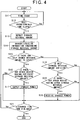
- the storage air conditioning controller 26 first transmits/receives the control signal to/from the air conditioning unit 10, and judges whether the air conditioning operation is carried out in the air conditioning unit 10 (step S2). If it is judged in the air conditioning unit 10 that the air conditioning operation is stopped (step S2: Y), the storage air conditioning controller 26 transmits the control signal to the charge/discharge manager 25, and also transmits the control signal to the power line connection controller 22, whereby the auxiliary power supply line 52 and the first charge power supply line 41 are connected to each other and the charge of the storage battery 21 is started (step S3).
- the charge of the storage battery 21 in step S3 is managed by the charge/discharge manager 25 under the control of the storage air conditioning controller 26.
- the charge/discharge manager 25 manages the charge of the storage battery 21 so that DC current having a predetermined current value is supplied from the charger 23 within a predetermined temperature range in accordance with the characteristic of the storage battery 21. Furthermore, the storage residual amount of the storage battery 21 is detected by the residual amount detector 25a every predetermined time. Under the management of the charge/discharge manager 25, the current value of the charge current supplied through the second charging power supply line 44 is controlled in accordance with the storage residual amount by the storage air conditioning controller 26 so that the storage battery 21 is substantially fully charged, preferably fully charged within the midnight power time zone.
- the storage air conditioning controller 26 monitors the start or non-start of the air conditioning operation in the air conditioning unit 10 (step S4).
- the storage air conditioning controller 26 transmits a control signal to the power line connection controller 22 to release the connection between the auxiliary power supply line 52 and the first charging power supply line 41, and also transmits a control signal to the air conditioning unit 10 so that the AC power from the commercial power source 50 is supplied to the air conditioning unit 10 as an operating power source (step S5).
- step S6 N
- the processing returns to the step S2 again, and waits until the air conditioning operation of the air conditioning unit 10 is stopped.
- step S4: N if no air conditioning operation is executed in the air conditioning unit 10 (step S4: N) from the start of the charge of the storage battery 21 (step S3), the above processing is repeated within the midnight power time zone until the storage battery 21 is fully charged, and the processing is finished if the storage battery 21 is fully charged (step S7: Y).
- the time zone in which the storage battery 21 is discharged is set to a predetermined time zone in advance.
- the time zone for discharging the storage battery 21 is set except for the midnight power time zone in which the storage battery 21 is charged.
- the time zone in which the storage battery 21 is discharged is mainly set so as to contain the power peak time (for example, AM10:00 to PM5:00 or the like). From the viewpoint of effectively using the stored power of the storage battery 21, the time zone in which the storage battery 21 is discharged may be set so as to contain a time zone excluding the midnight power time zone in addition to the power demand peak time.
- the time zone in which the storage battery 21 is discharged is set so as to contain not only the power demand peak time, but also the time other than the power demand peak time, whereby the stored power stored from the midnight power can be effectively used, so that the power demand in the daytime can be reduced and also the electric power charge can be reduced.
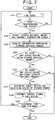
- the storage air conditioning controller 26 starts the time counting of the time count circuit contained therein (step S11).
- step S12: Y the storage air conditioning controller 26 transmits a control signal to the charge/discharge manager 25 so that the storage residual amount of the storage battery 21 is detected by the residual amount detector 25a (step S13).
- step S14 the storage air conditioning controller 26 transmits/receives information concerning the storage residual amount detected in step S13 to/from the other storage type air conditioners 100 (step S14).
- the information concerning the storage residual amount maybe information concerning the storage residual amount itself or information as to whether the storage residual amount is short or surplus with respect to the stored power supply amount to be supplied to the self air conditioning unit 10. However, it can be judged on the basis of the comparison between the storage residual amount of the storage battery 21 and a threshold value whether the storage residual amount of the storage battery 21 is short or surplus with respect to the stored power supply amount to be supplied to the self air conditioning unit 10 as described later.
- step S15 it is judged on the basis of the storage residual amount of the self storage battery 21 whether the self storage residual amount is surplus with respect to the stored power supply amount to be supplied to the self air conditioning unit 10.
- a preset threshold value may be set on the basis of a power demand prediction which is made to the air conditioning unit 10.
- the power demand prediction may be made on the basis of a past operation record or the weather of that day. Alternatively, the power demand prediction may be simply made on the basis of the average power demand amount of a day of the air conditioning unit 10.
- step S15 If it is judged in step S15 that the stored power of the self storage battery 21 is surplus (step S15: Y), the storage air conditioning controller judges on the basis of information concerning the storage residual amounts received from the other storage type air conditioners 100 whether there is any other storage type air conditioner 100 in which the storage residual amount is short with respect to the stored power supply amount (step S16).
- step S16 If it is judged that there is any other storage type air conditioner in which the storage residual amount is short (step S16: Y), the first discharge power supply line 42 and the stored power transmission/reception line 40 are connected to each another by the power line connection controller 22 to supply the stored power to the other storage type air conditioner 100 (step S17).
- step S15 if it is judged in step S15 that the storage residual amount of the self storage battery 21 is not surplus (step S15: N), then it is judged whether the storage residual amount of the self storage battery 21 is short with respect to the stored power supply amount (step S18).
- the threshold value used to judge whether the storage residual amount is surplus with respect to the stored power supply amount may be made different from the threshold value used to judge whether the storage residual amount is short with respect to the stored power supply amount.
- step S18 If it is judged that the self storage residual amount is short (step S18: Y), the storage air conditioning controller 26 judges on the basis of the information concerning the storage residual amounts received from the other storage type air conditioners 100 whether there is any other storage type air conditioner 100 in which the storage residual amount is surplus with respect to the stored power supply amount (step S19).
- the storage air conditioning controller 26 transmits a control signal to the power line connection controller 22 to connect the stored power transmission/reception line 40 and the second discharging power supply line 43 so that the stored power is supplied from another storage type air conditioner 100 (step S20).
- step S21: Y The above processing is repeated until the time zone in which the storage battery 21 is discharged is finished (step S21: Y). That is, the storage residual amount of the self storage battery 21 is detected every predetermined time interval (step S13), and transmits/receives the information concerning the storage residual amount while synchronized with the other storage type air conditioners 100 (step S14). If the self storage residual amount is surplus (step S15: Y), the stored power is supplied to another storage type air conditioner 100 in which the storage residual amount is short (step S17), and if the self storage residual amount is short (step S18: Y), the stored power is supplied from another storage type air conditioner 100 in which the storage residual amount is surplus (step S20).
- the storage air conditioning controller 26 detects the storage residual amount of the self storage battery 21 by the residual amount detector 25a.
- the power line connection controller 22 is controlled by the storage air conditioning controller 26 so that when the storage residual amount is surplus with respect to the stored power supply amount to be supplied to the self air conditioning unit 10, the stored power is supplied to another storage type air conditioner 100 in which the storage residual amount is short with respect to the stored power supply amount, and when the storage residual amount of the self storage battery 21 is short with respect to the stored power supply amount to be supplied to the self air conditioning unit 10, the stored power is received from another storage type air conditioner 100. Therefore, the stored power which is stored in the individual storage batteries 21 equipped to the respective storage type air conditioners 100 by using midnight power or the like can be effectively used in the overall storage type air conditioning system 1.
- the storage air conditioning controller 26 controls the charger 23, etc. so that the storage battery 21 is charged in the midnight power time zone, and the charging operation is prohibited when the air conditioning operation is executed in the air conditioning unit 10. That is, the air conditioning operation and the charging operation are prohibited from being carried out at the same time, whereby the power amount consumed in the storage type air conditioner 100 can be prevented from exceeding a contract power demand, for example.
- the charger 23 is controlled by the storage air conditioning controller 26 so as to charge the storage battery 21 in the midnight power time zone in which the power demand is small and the electric power rate is set to a low value. Therefore, this embodiment can contribute to the equalization of the power demand and also reduce the electric power rate by using the midnight power.
- the storage residual amount of the storage battery 21 is detected by the residual amount detector 25a every predetermined time when the storage battery 21 is charged, and thus the AC power amount supplied to the storage battery 21 can be reduced on the basis of the storage residual amount of the storage battery 21.
- Fig. 5 shows the construction of the storage type air conditioning system 2 according to the second embodiment.
- the storage type air conditioning system 2 of this embodiment is equipped with plural storage type air conditioners 100, 200 as in the case of the first embodiment.
- one storage type air conditioner 200 out of the plural storage type air conditioners 100, 200 is set as a master machine (200), and the other storage type air conditioners 100 are set as slave machines (100).
- the apparatus construction of the slave machines 100 is substantially equal to the apparatus construction of the storage type air conditioner 100 of the first embodiment ( Fig. 2 ). However, the storage air conditioning controller 26 transmits the information concerning the storage residual amount of the self storage battery 21 to the master machine 200.
- the master machine 200 has substantially the same construction as the slave machines 100, and also has a center controller 60.
- the center controller 60 receives information concerning the storage residual amounts transmitted from the slave machines 100, and controls to supply stored power from a slave machine 100 or the master machine 200 in which the storage residual amount of the storage battery 21 is surplus with respect to the stored power supply amount to be supplied to the self air conditioning unit 10 to a slave machine 100 or the master machine 200 in which the storage residual amount of the storage battery 21 is short with respect to the stored power supply amount to be supplied to the self air conditioning unit 10.
- the center controller 60 transmits a control signal to the self storage air conditioning controller 26 and starts the time count by the time count circuit contained in the storage air conditioning controller 26 (step S31).
- a signal representing that a predetermined time has elapsed is input from the storage air conditioning controller 26 to the center controller 60 (step S32: Y)
- the center controller 60 transmits a residual amount detection instructing signal to the self charge/discharge manager 25 and the slave machines 100, and controls the residual amount detector 25a to detect the storage residual amount of the storage battery 21 (step S33).
- the center controller 60 receives information concerning the storage residual amount detected in step S33 through the storage air conditioning controller 26 of the self storage air conditioning controller 26 or the slave machines 100 (step S34).
- the information concerning the storage residual amount may be information concerning the storage residual amount itself or may be information as to whether the storage residual amount is short or surplus with respect to the stored power supply amount to be supplied to the self air conditioning unit 10. However, whether the storage residual amount is short or surplus with respect to the stored power supply amount to be supplied to the self air conditioning unit 10 may be judged on the basis of the comparison between the storage residual amount and the threshold value as in the case of the first embodiment.
- step S34 On the basis of the information concerning the storage residual amount received in step S34, it is judged whether there is any slave machine 100 and/or the master machine 200 in which the self storage residual amount is surplus with respect to the stored power supply amount to be supplied to the self air conditioning unit 10 (step S35).
- step S35 If it is judged in step S35 that there is some slave machine 100 and/or master machine 200 in which the store power of the storage battery 21 is surplus, the center controller 60 judges on the basis of the information concerning the storage residual amount whether there is any slave machine 100 and/or the master machine 200 in which the storage residual amount is short with respect to the stored power supply amount (step S36).
- the central controller 60 determines slave machines 100 and/or themastermachine 200 (supply apparatus) for supplying the stored power to other slave machines 100 and/or the master machine 200, and slave machines 100 and/or the master machine 200 (receiving apparatus) for receiving the stored power from other slave machines 100 and/or the master machine 200 (step S37).
- the supply apparatus and the receiving apparatus are determined like the transmission/reception of the stored power is carried out between apparatuses located at adjacent positions, for example.
- the supply apparatuses for the stored power may be determined in the decreasing order of the storage residual amount, or the supply apparatuses for the stored power may be determined so that the transmission/reception of the stored power is carried out between the apparatuses located at adjacent positions.
- the central controller 60 transmits a control signal to the slave machines 100 or the master machine 200 as supply apparatuses and the slave machines 100 or the master machine 200 as reception apparatus, and controls these slave machines 200 and/or the master machine 200 so that the slave machines 100 and/or the master machine 200 in which the storage residual amount is surplus supply the stored power to the slave machines 100 and/or the master machine 200 in which the storage residual amount is short (step S38).
- the storage air conditioning controller 2 6 of the slave machine (s) 10 and/or the master machine 200 in which the storage residual amount is short connects the stored power transmission/reception line 40 and the second discharging power supply line 43 through the power line connection controller 22 so as to supply the stored power received from another storage type air conditioner 100 (200) to its own (i.e., self) air conditioning unit 10.
- the slave machine(s) 100 and/or the master machine 200 in which the storage residual amount is surplus connects the stored power transmission/reception line 40 and the first discharging power supply line 42 through the power line connection controller 22 to supply the stored power to another (other) storage type air conditioner (s) 100 (200).
- the first discharging power supply line 42 is branched and connected to both the stored power transmission/reception line 40 and the second discharging power supply line 43 in the power line connection controller 22.
- step S39: Y The above processing is repeated until the discharge time zone of the storage battery 21 is finished.
- the slave machine 100 or the master machine 200 in which the storage residual amount is surplus with respect to the stored power supply amount to be supplied to the self air conditioning unit 10 supplies the stored power to the slave machine 100 or the master machine 200 in which the storage residual amount is short with respect to the stored power supply amount to be supplied to the self air conditioning unit 10, and thus the storedpower stored in the storage battery 21 canbe ef fectively used in the overall storage type air conditioning system by using the midnight power or the like.
- control signal is transmitted from the master machine 200 to each slave machine 100 to detect the storage residual amount, etc. in the second embodiment, and thus it is easy to establish the synchronization among the respective machines 100 (200).
- the charging of the storage battery 21 as shown in Fig. 3 is prohibited during the period when the air conditioning operation is carried out.
- the charging of the storage battery 21 may be performed simultaneously with the air conditioning operation by detecting the current value of current flowing from the commercial power source 50 to the air conditioning unit 10 and controlling the current value of the charging current so that the total of the detected current value and the current value of the charging current supplied from the commercial power source 50 through the charger 23 to the storage battery 21 is not more than a predetermined value such as a contract current value (ampere) or the like.
Landscapes
- Engineering & Computer Science (AREA)
- Chemical & Material Sciences (AREA)
- Combustion & Propulsion (AREA)
- Mechanical Engineering (AREA)
- General Engineering & Computer Science (AREA)
- Physics & Mathematics (AREA)
- Fuzzy Systems (AREA)
- Mathematical Physics (AREA)
- Signal Processing (AREA)
- Air Conditioning Control Device (AREA)
- Supply And Distribution Of Alternating Current (AREA)
- Charge And Discharge Circuits For Batteries Or The Like (AREA)
Claims (10)
- Klimaanlagensystem vom Speichertyp, das eine Anzahl an Klimaanlagen (100) vom Speichertyp aufweist, wobei jede der Klimaanlagen (100) vom Speichertyp umfasst:eine Speicherbatterie (21), in der externe Energie von einer externen Energiequelle (50) gespeichert werden kann;eine Klimaanlageneinheit (10), die mit gespeicherter Energie aus der Speicherbatterie (21) versorgt wird und einen Klimaanlagenbetrieb durchführt;einen Restmengendetektor (25a) zum Erfassen einer Restspeichermenge der Speicherbatterie (21);eine Speicherenergie-Übertragung/Empfang-Umschalteinheit (22) zum Umschalten von Übertragung/Empfang der gespeicherten Energie, die in der Speicherbatterie (21) gespeichert ist,zu/von den anderen Klimaanlagen (100) vom Speichertyp; undeine Speichersteuerung (26), die Informationen betreffend die Restspeichermenge der Speicherbatterie (21) zu/von den anderen Klimaanlagen (100) vom Speichertyp überträgt/empfängt, dadurch gekennzeichnet, dass die Speichersteuerung (26) die Speicherenergie-Übertragung/Empfang-Umschalteinheit (22) so steuert, dass gespeicherte Energie der Eigenspeicherbatterie einer anderen Klimaanlage (100) vom Speichertyp, bei der die Restspeichermenge hinsichtlich der gespeicherten Energieversorgungsmenge niedrig ist, zugeführt wird, wenn die Restspeichermenge der Eigenspeicherbatterie (21) im Überschuss hinsichtlich einer gespeicherten Energieversorgungsmenge ist,die der Eigenklimaanlageneinheit (10) zuzuführen ist, undebenfalls gespeicherte Energie von einer anderen Klimaanlage (100) vom Speichertyp, bei der die Restspeichermenge im Überschuss hinsichtlich der gespeicherten Energieversorgungsmenge ist, empfängt, wenn die Restspeichermenge der Eigenspeicherbatterie (21) hinsichtlich einer gespeicherten Energieversorgungsmenge, die der Eigenklimaanlageneinheit (10) zuzuführen ist, gering ist.
- Klimaanlagensystem vom Speichertyp gemäß Anspruch 1, wobei jede Klimaanlage (100) vom Speichertyp mit einem Ladegerät (23) ausgerüstet ist, das mit der externen Energie aus der externen Energiequelle (50) zum Laden der Speicherbatterie (21) versorgt wird und die Speichersteuerung (26) verhindert, dass die Speicherbatterie (21) während des Klimaanlagenbetriebs der Klimaanlageneinheit (10) geladen wird.
- Klimaanlagensystem vom Speichertyp gemäß Anspruch 2, wobei die Speichersteuerung (26) das Ladegerät (23) so steuert, dass die Speicherbatterie (21) zu einer Nachtstromzeit geladen wird.
- Klimaanlagensystem vom Speichertyp gemäß Anspruch 2, wobei die Speichersteuerung (26) das Ladegerät (23) dazu veranlasst, einen Stromwert eines Ladestroms, der von der externen Energiequelle (50) der Speicherbatterie (21) zugeführt wird, auf Basis der Restspeichermenge, die durch den Restmengendetektor (25a) erfasst wird, zu steuern, sodass die Speicherbatterie (21) innerhalb der Nachtstromzeit im Wesentlichen vollgeladen wird.
- Klimaanlagensystem vom Speichertyp gemäß Anspruch 1, wobei jede Klimaanlage (100) vom Speichertyp mit einem Ladegerät (23) zum Laden der Speicherbatterie (21) ausgerüstet ist und die Speichersteuerung (26) einen Stromwert eines Stroms, der von der externen Energiequelle (50) in die Klimaanlageneinheit (10) fließt, erfasst und das Ladegerät (23) so steuert, dass die Gesamtmenge des erfassten Stromwerts und des Stromwerts eines Ladestroms, der von der externen Energiequelle (50) durch das Ladegerät (23) der Speicherbatterie (21) zugeführt wird, nicht höher als ein vorgegebener Wert ist.
- Klimaanlagensystem vom Speichertyp gemäß Anspruch 5, wobei die Speichersteuerung (26) das Ladegerät (23) so steuert, dass die Speicherbatterie (21) zu einer Nachtstromzeit geladen wird.
- Klimaanlagensystem vom Speichertyp gemäß Anspruch 5, wobei die Speichersteuerung (26) das Ladegerät (23) dazu veranlasst, einen Stromwert eines Ladestroms, der von der externen Energiequelle (50) der Speicherbatterie (21) zugeführt wird, auf Basis der Restspeichermenge, die durch den Restmengendetektor (25a) erfasst wird, so zu steuern, dass die Speicherbatterie (21) im Wesentlichen innerhalb der Nachtstromzeit vollgeladen wird.
- Klimaanlagensystem vom Speichertyp, das mehrere Klimaanlagen (100, 200) vom Speichertyp aufweist, wobei jede der Klimaanlagen (100, 200) vom Speichertyp umfasst:eine Speicherbatterie (21), in der externe Energie von einer externen Energiequelle (50) gespeichert werden kann;eine Klimaanlageneinheit (10), die mit gespeicherter Energie aus der Speicherbatterie (21) versorgt wird und einen Klimaanlagenbetrieb durchführt;einen Restmengendetektor (25a) zum Erfassen einer Restspeichermenge der Speicherbatterie;eine Speicherenergie-Übertragung/Empfang-Umschalteinheit (22) zum Umschalten von Übertragung/Empfang der gespeicherten Energie, die in der Speicherbatterie (21) gespeichert ist,zu/von den anderen Klimaanlagen (100, 200) vom Speichertyp; undeine Kommunikationseinheit (26) zum Übertragen von Informationen, welche die Restspeichermenge der Speicherbatterie (21) betreffen, dadurch gekennzeichnet, dass eine der Klimaanlagen (100, 200) vom Speichertyp als Master-Maschine (200) festgelegt wird, während die anderen Klimaanlagen vom Speichertyp als eine Slave-Maschine (100) festgelegt werden, und die Master-Maschine (200) eine Zentralsteuerung (60) zum Empfangen von Informationen, welche die Restspeichermenge betreffen, die von den Slave-Maschinen (100) übertragen wird, und Steuern der Slave-Maschinen (100) und der Master-Maschine (200) aufweist, sodass Slave-Maschinen (100) oder die Master-Maschine (200), bei denen die Restspeichermenge sich im Überschuss hinsichtlich einer gespeicherten Energieversorgungsmenge, die der Eigenklimaanlageneinheit (10) zuzuführen ist, gespeicherte Energie Slave-Maschinen (100) oder der Master-Maschine (200), bei denen die Restspeichermenge hinsichtlich der gespeicherten Energieversorgungsmenge, die der Eigenklimaanlageneinheit (10) zuzuführen ist, gering ist, zuführt.
- Verfahren zum Betrieb eines Klimaanlagensystems vom Speichertyp, das mehrere Klimaanlagen (100, 200) vom Speichertyp aufweist, von denen jede eine Speicherbatterie (21), in der externe Energie, die von einer externen Energiequelle (50) geliefert wird, gespeichert werden kann, eine Klimaanlageneinheit (10), die mit gespeicherter Energie von der Speicherbatterie (21) versorgt wird und einen Klimaanlagenbetrieb durchführt, einen Restmengendetektor (25a) zum Erfassen einer Restspeichermenge der Speicherbatterie (21) und eine Speicherenergie-Übertragung/Empfang-Umschalteinheit (22) zum Umschalten von Übertragung/Empfang der gespeicherten Energie, die in der Speicherbatterie (21) gespeichert ist, zu/von den anderen Klimaanlagen (100, 200) vom Speichertyp, umfasst, das Folgendes umfasst:Übertragen/Empfangen von Informationen, welche die Restspeichermenge, die durch den Restmengendetektor (25a) erfasst wird, betrifft, zu/von anderen Klimaanlagen (100, 200) vom Speichertyp;Zuführen von gespeicherter Energie zu einer anderen Klimaanlage (100, 200) vom Speichertyp, in der die Restspeichermenge hinsichtlich der gespeicherten Energieversorgungsmenge gering ist, wenn die Restspeichermenge der Eigenspeicherbatterie (21) hinsichtlich der gespeicherten Energieversorgungsmenge, die der Eigenklimaanlageneinheit (10) zuzuführen ist, sich im Überschuss befindet; undEmpfangen von gespeicherter Energie von einer anderen Klimaanlage (100, 200) vom Speichertyp, bei der sich die Restspeichermenge im Überschuss hinsichtlich der gespeicherten Energieversorgungsmenge befindet, wenn die Restspeichermenge der Eigenspeicherbatterie (21) hinsichtlich der gespeicherten Energieversorgungsmenge gering ist.
- Steuerprogramm zum Steuern mittels eines Computers eines Klimaanlagensystems vom Speichertyp durch Ausführen des Verfahrens gemäß Anspruch 9.
Applications Claiming Priority (1)
| Application Number | Priority Date | Filing Date | Title |
|---|---|---|---|
| JP2006316452A JP2008128604A (ja) | 2006-11-24 | 2006-11-24 | 蓄電式空気調和システム、蓄電式空気調和システムの運転方法および制御プログラム |
Publications (3)
| Publication Number | Publication Date |
|---|---|
| EP1925886A2 EP1925886A2 (de) | 2008-05-28 |
| EP1925886A3 EP1925886A3 (de) | 2013-03-06 |
| EP1925886B1 true EP1925886B1 (de) | 2017-01-04 |
Family
ID=38974686
Family Applications (1)
| Application Number | Title | Priority Date | Filing Date |
|---|---|---|---|
| EP07022777.2A Not-in-force EP1925886B1 (de) | 2006-11-24 | 2007-11-23 | Klimaanlagensystem mit Speicher sowie Betriebsverfahren und Steuerprogramm für das Klimaanlagensystem mit Speicher |
Country Status (4)
| Country | Link |
|---|---|
| US (1) | US8763413B2 (de) |
| EP (1) | EP1925886B1 (de) |
| JP (1) | JP2008128604A (de) |
| CN (1) | CN101187492B (de) |
Families Citing this family (15)
| Publication number | Priority date | Publication date | Assignee | Title |
|---|---|---|---|---|
| US20100066168A1 (en) * | 2008-09-17 | 2010-03-18 | Joseph Gamliel | Powering a direct current air conditioner using solar cells |
| JP5446636B2 (ja) * | 2009-09-11 | 2014-03-19 | パナソニック株式会社 | 空調機器およびその制御方法、プログラム |
| CN102109210B (zh) * | 2009-12-28 | 2013-06-26 | 三洋电机株式会社 | 空调系统 |
| CN103282734A (zh) | 2010-05-27 | 2013-09-04 | 江森自控科技公司 | 用于具有冷却塔的冷却系统的热虹吸冷却器 |
| US9031706B2 (en) * | 2010-07-28 | 2015-05-12 | Lg Electronics Inc. | Air conditioner and method for controlling the same |
| EP2413449A3 (de) * | 2010-07-30 | 2018-04-25 | Sanyo Electric Co., Ltd. | Klimaanlagensystem |
| US9577430B2 (en) * | 2010-08-20 | 2017-02-21 | Lg Electronics Inc. | Electronic device and method of controlling power supply therein |
| CN102012076B (zh) * | 2010-11-09 | 2013-03-27 | 广东美的电器股份有限公司 | 以蓄电池作为辅助能源的空调系统的控制方法 |
| US8788103B2 (en) * | 2011-02-24 | 2014-07-22 | Nest Labs, Inc. | Power management in energy buffered building control unit |
| JP5259763B2 (ja) | 2011-03-25 | 2013-08-07 | 株式会社東芝 | 電力管理装置、システム及び方法 |
| KR101593296B1 (ko) | 2014-03-24 | 2016-02-18 | 엘지전자 주식회사 | 공기 조화기 및 그 제어방법 |
| CN111555240B (zh) * | 2020-05-26 | 2023-02-10 | 宁波奥克斯电气股份有限公司 | 一种空调线控器保护方法及保护系统 |
| JP2023119518A (ja) * | 2022-02-16 | 2023-08-28 | 公立大学法人会津大学 | 電力取引システム及び電力取引方法 |
| JP7578214B2 (ja) * | 2022-09-14 | 2024-11-06 | 株式会社村田製作所 | 電力システム |
| CN118776034A (zh) * | 2024-08-01 | 2024-10-15 | 深圳市贸趣网络科技股份有限公司 | 一种基于低碳智慧服务的空调节能降耗方法及系统 |
Family Cites Families (14)
| Publication number | Priority date | Publication date | Assignee | Title |
|---|---|---|---|---|
| JPH0674537A (ja) * | 1992-08-26 | 1994-03-15 | Toshiba Corp | 蓄電式空気調和装置 |
| JPH1172262A (ja) * | 1997-08-29 | 1999-03-16 | Daikin Ind Ltd | 空気調和装置 |
| JP2001339855A (ja) * | 2000-05-23 | 2001-12-07 | Daikin Ind Ltd | 蓄電空気調和装置制御方法およびその装置 |
| JP4635365B2 (ja) | 2001-04-11 | 2011-02-23 | 三菱自動車工業株式会社 | 排気浄化触媒の劣化判定装置 |
| US6990593B2 (en) * | 2001-07-31 | 2006-01-24 | Hewlett-Packard Development Company, L.P. | Method for diverting power reserves and shifting activities according to activity priorities in a server cluster in the event of a power interruption |
| US20030061828A1 (en) * | 2001-08-31 | 2003-04-03 | Blevins Jerry L. | Air conditioner with battery power source |
| JP3995469B2 (ja) * | 2001-12-21 | 2007-10-24 | 三洋電機株式会社 | ネットワークシステム |
| KR100514921B1 (ko) * | 2002-06-14 | 2005-09-14 | 삼성전자주식회사 | 공기 조화 장치 및 그 제어방법 |
| KR100471233B1 (ko) * | 2002-06-26 | 2005-03-10 | 현대자동차주식회사 | 하이브리드 전기자동차 배터리의 최대 충전 및 방전전류값 생성방법 |
| CN2665593Y (zh) * | 2003-11-05 | 2004-12-22 | 海尔集团公司 | 太阳能和交流市电双电源空调系统 |
| US7002263B2 (en) * | 2004-06-09 | 2006-02-21 | Micrel, Incorporated | Elimination of recirculation current loss in load-shared switching mode power supplies |
| JP4293367B2 (ja) * | 2004-12-13 | 2009-07-08 | 株式会社竹中工務店 | 自律分散制御型蓄電システム |
| KR100624735B1 (ko) | 2005-05-14 | 2006-09-15 | 엘지전자 주식회사 | 열병합 발전시스템 |
| US7266962B2 (en) * | 2005-05-17 | 2007-09-11 | Whirlpool Corporation | Battery supplemented refrigerator and method for using same |
-
2006
- 2006-11-24 JP JP2006316452A patent/JP2008128604A/ja active Pending
-
2007
- 2007-06-11 CN CN2007101099743A patent/CN101187492B/zh not_active Expired - Fee Related
- 2007-11-21 US US11/943,805 patent/US8763413B2/en not_active Expired - Fee Related
- 2007-11-23 EP EP07022777.2A patent/EP1925886B1/de not_active Not-in-force
Non-Patent Citations (1)
| Title |
|---|
| None * |
Also Published As
| Publication number | Publication date |
|---|---|
| EP1925886A2 (de) | 2008-05-28 |
| EP1925886A3 (de) | 2013-03-06 |
| US20080184716A1 (en) | 2008-08-07 |
| US8763413B2 (en) | 2014-07-01 |
| JP2008128604A (ja) | 2008-06-05 |
| CN101187492B (zh) | 2010-06-02 |
| CN101187492A (zh) | 2008-05-28 |
Similar Documents
| Publication | Publication Date | Title |
|---|---|---|
| US8763413B2 (en) | Storage type air conditioning system, and operation method and control program for storage type air conditioning system | |
| EP2822138B1 (de) | Steuerungsvorrichtung, steuersystem und speicherzellensteuerungsverfahren | |
| JP5730990B2 (ja) | 制御装置、電力制御システム、及び電力制御方法 | |
| US9843222B2 (en) | Uninterruptible power supply system for preventing charging of batteries and method for controlling uninterruptible power supply system | |
| KR100947038B1 (ko) | 최대수요전력 제한 기능을 갖는 하이브리드 유피에스시스템 | |
| JP5466911B2 (ja) | 電力供給システム及び電力供給システムの制御装置 | |
| US11742675B2 (en) | Method of controlling charging and discharging of power station equipped with multiple battery packs | |
| JP6007385B2 (ja) | 蓄電装置およびその制御方法ならびに電源装置 | |
| JP5804506B2 (ja) | マルチ出力無停電電源装置 | |
| JP2010041782A (ja) | 配電システム | |
| CN113067404A (zh) | 一种换电站供电系统及换电站供电方法 | |
| JP2011083083A (ja) | 電力供給システム及び電力供給システムの制御装置 | |
| WO2013179357A1 (ja) | 制御装置および配電システム | |
| JP2014183640A (ja) | 蓄電システム | |
| JP2017085852A (ja) | 蓄電システム | |
| WO2013179344A1 (ja) | 蓄電池管理装置 | |
| WO2013179358A1 (ja) | 制御装置、蓄電池制御部および配電システム | |
| JP6678393B2 (ja) | 蓄電システム及びその制御方法 | |
| JP3927848B2 (ja) | 分散型電力貯蔵システム | |
| EP3340421B1 (de) | Energiespeichersteuerungsvorrichtung, energieumwandlungsvorrichtung, energiespeichersystem, energiespeichersteuerungsverfahren und programm | |
| JP5661531B2 (ja) | 電力供給システム | |
| JP2016103890A (ja) | 電力制御装置および電力制御システム | |
| JP6762297B2 (ja) | 機器制御システムおよび制御方法 | |
| JP5845408B2 (ja) | 太陽光発電の給電システム | |
| CN222928102U (zh) | 具备离网供电功能的配电系统 |
Legal Events
| Date | Code | Title | Description |
|---|---|---|---|
| PUAI | Public reference made under article 153(3) epc to a published international application that has entered the european phase |
Free format text: ORIGINAL CODE: 0009012 |
|
| 17P | Request for examination filed |
Effective date: 20071123 |
|
| AK | Designated contracting states |
Kind code of ref document: A2 Designated state(s): AT BE BG CH CY CZ DE DK EE ES FI FR GB GR HU IE IS IT LI LT LU LV MC MT NL PL PT RO SE SI SK TR |
|
| AX | Request for extension of the european patent |
Extension state: AL BA HR MK RS |
|
| PUAL | Search report despatched |
Free format text: ORIGINAL CODE: 0009013 |
|
| AK | Designated contracting states |
Kind code of ref document: A3 Designated state(s): AT BE BG CH CY CZ DE DK EE ES FI FR GB GR HU IE IS IT LI LT LU LV MC MT NL PL PT RO SE SI SK TR |
|
| AX | Request for extension of the european patent |
Extension state: AL BA HR MK RS |
|
| RIC1 | Information provided on ipc code assigned before grant |
Ipc: F24F 5/00 20060101ALI20130129BHEP Ipc: F24F 11/00 20060101AFI20130129BHEP |
|
| RBV | Designated contracting states (corrected) |
Designated state(s): AT BE BG CH CY CZ DE DK EE ES FI FR GB GR HU IE IS IT LI LT LU LV MC MT NL PL PT RO SE SI SK TR |
|
| AKX | Designation fees paid |
Designated state(s): DE FR GB HU IT |
|
| GRAP | Despatch of communication of intention to grant a patent |
Free format text: ORIGINAL CODE: EPIDOSNIGR1 |
|
| INTG | Intention to grant announced |
Effective date: 20160613 |
|
| GRAS | Grant fee paid |
Free format text: ORIGINAL CODE: EPIDOSNIGR3 |
|
| GRAA | (expected) grant |
Free format text: ORIGINAL CODE: 0009210 |
|
| STAA | Information on the status of an ep patent application or granted ep patent |
Free format text: STATUS: THE PATENT HAS BEEN GRANTED |
|
| AK | Designated contracting states |
Kind code of ref document: B1 Designated state(s): DE FR GB HU IT |
|
| REG | Reference to a national code |
Ref country code: GB Ref legal event code: FG4D |
|
| REG | Reference to a national code |
Ref country code: DE Ref legal event code: R096 Ref document number: 602007049378 Country of ref document: DE |
|
| REG | Reference to a national code |
Ref country code: DE Ref legal event code: R097 Ref document number: 602007049378 Country of ref document: DE |
|
| PG25 | Lapsed in a contracting state [announced via postgrant information from national office to epo] |
Ref country code: IT Free format text: LAPSE BECAUSE OF FAILURE TO SUBMIT A TRANSLATION OF THE DESCRIPTION OR TO PAY THE FEE WITHIN THE PRESCRIBED TIME-LIMIT Effective date: 20170104 |
|
| PLBE | No opposition filed within time limit |
Free format text: ORIGINAL CODE: 0009261 |
|
| STAA | Information on the status of an ep patent application or granted ep patent |
Free format text: STATUS: NO OPPOSITION FILED WITHIN TIME LIMIT |
|
| 26N | No opposition filed |
Effective date: 20171005 |
|
| PGFP | Annual fee paid to national office [announced via postgrant information from national office to epo] |
Ref country code: DE Payment date: 20171121 Year of fee payment: 11 |
|
| GBPC | Gb: european patent ceased through non-payment of renewal fee |
Effective date: 20171123 |
|
| REG | Reference to a national code |
Ref country code: FR Ref legal event code: ST Effective date: 20180731 |
|
| PG25 | Lapsed in a contracting state [announced via postgrant information from national office to epo] |
Ref country code: FR Free format text: LAPSE BECAUSE OF NON-PAYMENT OF DUE FEES Effective date: 20171130 |
|
| PG25 | Lapsed in a contracting state [announced via postgrant information from national office to epo] |
Ref country code: GB Free format text: LAPSE BECAUSE OF NON-PAYMENT OF DUE FEES Effective date: 20171123 |
|
| REG | Reference to a national code |
Ref country code: DE Ref legal event code: R119 Ref document number: 602007049378 Country of ref document: DE |
|
| PG25 | Lapsed in a contracting state [announced via postgrant information from national office to epo] |
Ref country code: HU Free format text: LAPSE BECAUSE OF FAILURE TO SUBMIT A TRANSLATION OF THE DESCRIPTION OR TO PAY THE FEE WITHIN THE PRESCRIBED TIME-LIMIT; INVALID AB INITIO Effective date: 20071123 |
|
| PG25 | Lapsed in a contracting state [announced via postgrant information from national office to epo] |
Ref country code: DE Free format text: LAPSE BECAUSE OF NON-PAYMENT OF DUE FEES Effective date: 20190601 |