EP1912624B1 - Wasserfreies mehr-phasen-gel-system - Google Patents
Wasserfreies mehr-phasen-gel-system Download PDFInfo
- Publication number
- EP1912624B1 EP1912624B1 EP06775843.3A EP06775843A EP1912624B1 EP 1912624 B1 EP1912624 B1 EP 1912624B1 EP 06775843 A EP06775843 A EP 06775843A EP 1912624 B1 EP1912624 B1 EP 1912624B1
- Authority
- EP
- European Patent Office
- Prior art keywords
- phase
- composition according
- mixtures
- extract
- polymer
- Prior art date
- Legal status (The legal status is an assumption and is not a legal conclusion. Google has not performed a legal analysis and makes no representation as to the accuracy of the status listed.)
- Active
Links
- 239000000203 mixture Substances 0.000 claims description 101
- 239000012071 phase Substances 0.000 claims description 74
- 150000002632 lipids Chemical class 0.000 claims description 49
- 239000013543 active substance Substances 0.000 claims description 34
- 229920000642 polymer Polymers 0.000 claims description 33
- LFQSCWFLJHTTHZ-UHFFFAOYSA-N Ethanol Chemical compound CCO LFQSCWFLJHTTHZ-UHFFFAOYSA-N 0.000 claims description 21
- 239000003795 chemical substances by application Substances 0.000 claims description 19
- 239000002904 solvent Substances 0.000 claims description 19
- 230000008961 swelling Effects 0.000 claims description 19
- DNIAPMSPPWPWGF-UHFFFAOYSA-N Propylene glycol Chemical compound CC(O)CO DNIAPMSPPWPWGF-UHFFFAOYSA-N 0.000 claims description 18
- -1 ethylhexyl Chemical group 0.000 claims description 15
- 239000000126 substance Substances 0.000 claims description 15
- 150000004650 carbonic acid diesters Chemical class 0.000 claims description 14
- PEDCQBHIVMGVHV-UHFFFAOYSA-N Glycerine Chemical compound OCC(O)CO PEDCQBHIVMGVHV-UHFFFAOYSA-N 0.000 claims description 11
- HIEKJRVYXXINKH-ADVKXBNGSA-N N1([C@H]2CC[C@H](C[C@H]2OC)/C=C(\C)[C@H]2OC(=O)[C@@H]3CCCCN3C(=O)C(=O)[C@]3(O)O[C@@H]([C@H](C[C@H]3C)OC)[C@@H](OC)C[C@@H](C)C/C(C)=C/[C@H](C(C[C@H](O)[C@H]2C)=O)CC)C=NN=N1 Chemical compound N1([C@H]2CC[C@H](C[C@H]2OC)/C=C(\C)[C@H]2OC(=O)[C@@H]3CCCCN3C(=O)C(=O)[C@]3(O)O[C@@H]([C@H](C[C@H]3C)OC)[C@@H](OC)C[C@@H](C)C/C(C)=C/[C@H](C(C[C@H](O)[C@H]2C)=O)CC)C=NN=N1 HIEKJRVYXXINKH-ADVKXBNGSA-N 0.000 claims description 11
- 239000000284 extract Substances 0.000 claims description 11
- 238000009472 formulation Methods 0.000 claims description 11
- 239000007788 liquid Substances 0.000 claims description 11
- 230000000699 topical effect Effects 0.000 claims description 11
- 238000004519 manufacturing process Methods 0.000 claims description 8
- 229920002959 polymer blend Polymers 0.000 claims description 8
- 230000015572 biosynthetic process Effects 0.000 claims description 7
- 229920000058 polyacrylate Polymers 0.000 claims description 7
- 238000000034 method Methods 0.000 claims description 6
- 239000007787 solid Substances 0.000 claims description 6
- PXDJXZJSCPSGGI-UHFFFAOYSA-N hexadecanoic acid hexadecyl ester Natural products CCCCCCCCCCCCCCCCOC(=O)CCCCCCCCCCCCCCC PXDJXZJSCPSGGI-UHFFFAOYSA-N 0.000 claims description 5
- 125000002887 hydroxy group Chemical group [H]O* 0.000 claims description 5
- 239000011159 matrix material Substances 0.000 claims description 5
- 238000002156 mixing Methods 0.000 claims description 5
- FLPJVCMIKUWSDR-UHFFFAOYSA-N 2-(4-formylphenoxy)acetamide Chemical compound NC(=O)COC1=CC=C(C=O)C=C1 FLPJVCMIKUWSDR-UHFFFAOYSA-N 0.000 claims description 4
- HIQIXEFWDLTDED-UHFFFAOYSA-N 4-hydroxy-1-piperidin-4-ylpyrrolidin-2-one Chemical compound O=C1CC(O)CN1C1CCNCC1 HIQIXEFWDLTDED-UHFFFAOYSA-N 0.000 claims description 4
- ULGZDMOVFRHVEP-RWJQBGPGSA-N Erythromycin Chemical compound O([C@@H]1[C@@H](C)C(=O)O[C@@H]([C@@]([C@H](O)[C@@H](C)C(=O)[C@H](C)C[C@@](C)(O)[C@H](O[C@H]2[C@@H]([C@H](C[C@@H](C)O2)N(C)C)O)[C@H]1C)(C)O)CC)[C@H]1C[C@@](C)(OC)[C@@H](O)[C@H](C)O1 ULGZDMOVFRHVEP-RWJQBGPGSA-N 0.000 claims description 4
- KMTRUDSVKNLOMY-UHFFFAOYSA-N Ethylene carbonate Chemical compound O=C1OCCO1 KMTRUDSVKNLOMY-UHFFFAOYSA-N 0.000 claims description 4
- QIGBRXMKCJKVMJ-UHFFFAOYSA-N Hydroquinone Chemical compound OC1=CC=C(O)C=C1 QIGBRXMKCJKVMJ-UHFFFAOYSA-N 0.000 claims description 4
- KFZMGEQAYNKOFK-UHFFFAOYSA-N Isopropanol Chemical compound CC(C)O KFZMGEQAYNKOFK-UHFFFAOYSA-N 0.000 claims description 4
- XSQUKJJJFZCRTK-UHFFFAOYSA-N Urea Chemical compound NC(N)=O XSQUKJJJFZCRTK-UHFFFAOYSA-N 0.000 claims description 4
- 239000000654 additive Substances 0.000 claims description 4
- NUZWLKWWNNJHPT-UHFFFAOYSA-N anthralin Chemical compound C1C2=CC=CC(O)=C2C(=O)C2=C1C=CC=C2O NUZWLKWWNNJHPT-UHFFFAOYSA-N 0.000 claims description 4
- 125000004432 carbon atom Chemical group C* 0.000 claims description 4
- 239000001913 cellulose Substances 0.000 claims description 4
- 229920002678 cellulose Polymers 0.000 claims description 4
- 229940074979 cetyl palmitate Drugs 0.000 claims description 4
- 150000005690 diesters Chemical class 0.000 claims description 4
- 235000011187 glycerol Nutrition 0.000 claims description 4
- BXWNKGSJHAJOGX-UHFFFAOYSA-N hexadecan-1-ol Chemical compound CCCCCCCCCCCCCCCCO BXWNKGSJHAJOGX-UHFFFAOYSA-N 0.000 claims description 4
- JVTAAEKCZFNVCJ-UHFFFAOYSA-N lactic acid Chemical compound CC(O)C(O)=O JVTAAEKCZFNVCJ-UHFFFAOYSA-N 0.000 claims description 4
- BDJRBEYXGGNYIS-UHFFFAOYSA-N nonanedioic acid Chemical compound OC(=O)CCCCCCCC(O)=O BDJRBEYXGGNYIS-UHFFFAOYSA-N 0.000 claims description 4
- GLDOVTGHNKAZLK-UHFFFAOYSA-N octadecan-1-ol Chemical compound CCCCCCCCCCCCCCCCCCO GLDOVTGHNKAZLK-UHFFFAOYSA-N 0.000 claims description 4
- 229920001223 polyethylene glycol Chemical class 0.000 claims description 4
- BDERNNFJNOPAEC-UHFFFAOYSA-N propan-1-ol Chemical compound CCCO BDERNNFJNOPAEC-UHFFFAOYSA-N 0.000 claims description 4
- RUOJZAUFBMNUDX-UHFFFAOYSA-N propylene carbonate Chemical compound CC1COC(=O)O1 RUOJZAUFBMNUDX-UHFFFAOYSA-N 0.000 claims description 4
- 230000001012 protector Effects 0.000 claims description 4
- YGSDEFSMJLZEOE-UHFFFAOYSA-N salicylic acid Chemical compound OC(=O)C1=CC=CC=C1O YGSDEFSMJLZEOE-UHFFFAOYSA-N 0.000 claims description 4
- 238000003756 stirring Methods 0.000 claims description 4
- WRIDQFICGBMAFQ-UHFFFAOYSA-N (E)-8-Octadecenoic acid Natural products CCCCCCCCCC=CCCCCCCC(O)=O WRIDQFICGBMAFQ-UHFFFAOYSA-N 0.000 claims description 3
- LQJBNNIYVWPHFW-UHFFFAOYSA-N 20:1omega9c fatty acid Natural products CCCCCCCCCCC=CCCCCCCCC(O)=O LQJBNNIYVWPHFW-UHFFFAOYSA-N 0.000 claims description 3
- QSBYPNXLFMSGKH-UHFFFAOYSA-N 9-Heptadecensaeure Natural products CCCCCCCC=CCCCCCCCC(O)=O QSBYPNXLFMSGKH-UHFFFAOYSA-N 0.000 claims description 3
- 229920002153 Hydroxypropyl cellulose Polymers 0.000 claims description 3
- 239000005642 Oleic acid Substances 0.000 claims description 3
- ZQPPMHVWECSIRJ-UHFFFAOYSA-N Oleic acid Natural products CCCCCCCCC=CCCCCCCCC(O)=O ZQPPMHVWECSIRJ-UHFFFAOYSA-N 0.000 claims description 3
- 229920001273 Polyhydroxy acid Polymers 0.000 claims description 3
- QJJXYPPXXYFBGM-LFZNUXCKSA-N Tacrolimus Chemical compound C1C[C@@H](O)[C@H](OC)C[C@@H]1\C=C(/C)[C@@H]1[C@H](C)[C@@H](O)CC(=O)[C@H](CC=C)/C=C(C)/C[C@H](C)C[C@H](OC)[C@H]([C@H](C[C@H]2C)OC)O[C@@]2(O)C(=O)C(=O)N2CCCC[C@H]2C(=O)O1 QJJXYPPXXYFBGM-LFZNUXCKSA-N 0.000 claims description 3
- 239000002253 acid Substances 0.000 claims description 3
- 239000003242 anti bacterial agent Substances 0.000 claims description 3
- 229940088710 antibiotic agent Drugs 0.000 claims description 3
- 235000013871 bee wax Nutrition 0.000 claims description 3
- 239000012166 beeswax Substances 0.000 claims description 3
- 125000005456 glyceride group Chemical class 0.000 claims description 3
- 235000020688 green tea extract Nutrition 0.000 claims description 3
- 229940094952 green tea extract Drugs 0.000 claims description 3
- 239000001863 hydroxypropyl cellulose Substances 0.000 claims description 3
- 235000010977 hydroxypropyl cellulose Nutrition 0.000 claims description 3
- 239000008384 inner phase Substances 0.000 claims description 3
- QXJSBBXBKPUZAA-UHFFFAOYSA-N isooleic acid Natural products CCCCCCCC=CCCCCCCCCC(O)=O QXJSBBXBKPUZAA-UHFFFAOYSA-N 0.000 claims description 3
- XUGNVMKQXJXZCD-UHFFFAOYSA-N isopropyl palmitate Chemical compound CCCCCCCCCCCCCCCC(=O)OC(C)C XUGNVMKQXJXZCD-UHFFFAOYSA-N 0.000 claims description 3
- 239000003120 macrolide antibiotic agent Substances 0.000 claims description 3
- 238000002844 melting Methods 0.000 claims description 3
- 230000008018 melting Effects 0.000 claims description 3
- 239000004200 microcrystalline wax Substances 0.000 claims description 3
- 235000019808 microcrystalline wax Nutrition 0.000 claims description 3
- ZQPPMHVWECSIRJ-KTKRTIGZSA-N oleic acid Chemical compound CCCCCCCC\C=C/CCCCCCCC(O)=O ZQPPMHVWECSIRJ-KTKRTIGZSA-N 0.000 claims description 3
- BARWIPMJPCRCTP-CLFAGFIQSA-N oleyl oleate Chemical compound CCCCCCCC\C=C/CCCCCCCCOC(=O)CCCCCCC\C=C/CCCCCCCC BARWIPMJPCRCTP-CLFAGFIQSA-N 0.000 claims description 3
- 229940056211 paraffin Drugs 0.000 claims description 3
- 239000012188 paraffin wax Substances 0.000 claims description 3
- KASDHRXLYQOAKZ-ZPSXYTITSA-N pimecrolimus Chemical compound C/C([C@H]1OC(=O)[C@@H]2CCCCN2C(=O)C(=O)[C@]2(O)O[C@@H]([C@H](C[C@H]2C)OC)[C@@H](OC)C[C@@H](C)C/C(C)=C/[C@H](C(C[C@H](O)[C@H]1C)=O)CC)=C\[C@@H]1CC[C@@H](Cl)[C@H](OC)C1 KASDHRXLYQOAKZ-ZPSXYTITSA-N 0.000 claims description 3
- 229960005330 pimecrolimus Drugs 0.000 claims description 3
- 229960001967 tacrolimus Drugs 0.000 claims description 3
- QJJXYPPXXYFBGM-SHYZHZOCSA-N tacrolimus Natural products CO[C@H]1C[C@H](CC[C@@H]1O)C=C(C)[C@H]2OC(=O)[C@H]3CCCCN3C(=O)C(=O)[C@@]4(O)O[C@@H]([C@H](C[C@H]4C)OC)[C@@H](C[C@H](C)CC(=C[C@@H](CC=C)C(=O)C[C@H](O)[C@H]2C)C)OC QJJXYPPXXYFBGM-SHYZHZOCSA-N 0.000 claims description 3
- 239000001993 wax Substances 0.000 claims description 3
- JNYAEWCLZODPBN-JGWLITMVSA-N (2r,3r,4s)-2-[(1r)-1,2-dihydroxyethyl]oxolane-3,4-diol Chemical class OC[C@@H](O)[C@H]1OC[C@H](O)[C@H]1O JNYAEWCLZODPBN-JGWLITMVSA-N 0.000 claims description 2
- MEJYDZQQVZJMPP-ULAWRXDQSA-N (3s,3ar,6r,6ar)-3,6-dimethoxy-2,3,3a,5,6,6a-hexahydrofuro[3,2-b]furan Chemical compound CO[C@H]1CO[C@@H]2[C@H](OC)CO[C@@H]21 MEJYDZQQVZJMPP-ULAWRXDQSA-N 0.000 claims description 2
- YYGNTYWPHWGJRM-UHFFFAOYSA-N (6E,10E,14E,18E)-2,6,10,15,19,23-hexamethyltetracosa-2,6,10,14,18,22-hexaene Chemical compound CC(C)=CCCC(C)=CCCC(C)=CCCC=C(C)CCC=C(C)CCC=C(C)C YYGNTYWPHWGJRM-UHFFFAOYSA-N 0.000 claims description 2
- ALSTYHKOOCGGFT-KTKRTIGZSA-N (9Z)-octadecen-1-ol Chemical compound CCCCCCCC\C=C/CCCCCCCCO ALSTYHKOOCGGFT-KTKRTIGZSA-N 0.000 claims description 2
- NKJOXAZJBOMXID-UHFFFAOYSA-N 1,1'-Oxybisoctane Chemical compound CCCCCCCCOCCCCCCCC NKJOXAZJBOMXID-UHFFFAOYSA-N 0.000 claims description 2
- LGEZTMRIZWCDLW-UHFFFAOYSA-N 14-methylpentadecyl octadecanoate Chemical compound CCCCCCCCCCCCCCCCCC(=O)OCCCCCCCCCCCCCC(C)C LGEZTMRIZWCDLW-UHFFFAOYSA-N 0.000 claims description 2
- NFIHXTUNNGIYRF-UHFFFAOYSA-N 2-decanoyloxypropyl decanoate Chemical compound CCCCCCCCCC(=O)OCC(C)OC(=O)CCCCCCCCC NFIHXTUNNGIYRF-UHFFFAOYSA-N 0.000 claims description 2
- 235000012871 Arctostaphylos uva ursi Nutrition 0.000 claims description 2
- 239000004342 Benzoyl peroxide Substances 0.000 claims description 2
- OMPJBNCRMGITSC-UHFFFAOYSA-N Benzoylperoxide Chemical compound C=1C=CC=CC=1C(=O)OOC(=O)C1=CC=CC=C1 OMPJBNCRMGITSC-UHFFFAOYSA-N 0.000 claims description 2
- 235000018185 Betula X alpestris Nutrition 0.000 claims description 2
- 235000018212 Betula X uliginosa Nutrition 0.000 claims description 2
- 235000005881 Calendula officinalis Nutrition 0.000 claims description 2
- 229920002134 Carboxymethyl cellulose Polymers 0.000 claims description 2
- 108090000994 Catalytic RNA Proteins 0.000 claims description 2
- 102000053642 Catalytic RNA Human genes 0.000 claims description 2
- GHXZTYHSJHQHIJ-UHFFFAOYSA-N Chlorhexidine Chemical compound C=1C=C(Cl)C=CC=1NC(N)=NC(N)=NCCCCCCN=C(N)N=C(N)NC1=CC=C(Cl)C=C1 GHXZTYHSJHQHIJ-UHFFFAOYSA-N 0.000 claims description 2
- PMATZTZNYRCHOR-CGLBZJNRSA-N Cyclosporin A Chemical compound CC[C@@H]1NC(=O)[C@H]([C@H](O)[C@H](C)C\C=C\C)N(C)C(=O)[C@H](C(C)C)N(C)C(=O)[C@H](CC(C)C)N(C)C(=O)[C@H](CC(C)C)N(C)C(=O)[C@@H](C)NC(=O)[C@H](C)NC(=O)[C@H](CC(C)C)N(C)C(=O)[C@H](C(C)C)NC(=O)[C@H](CC(C)C)N(C)C(=O)CN(C)C1=O PMATZTZNYRCHOR-CGLBZJNRSA-N 0.000 claims description 2
- 229930105110 Cyclosporin A Natural products 0.000 claims description 2
- 108010036949 Cyclosporine Proteins 0.000 claims description 2
- XTJFFFGAUHQWII-UHFFFAOYSA-N Dibutyl adipate Chemical compound CCCCOC(=O)CCCCC(=O)OCCCC XTJFFFGAUHQWII-UHFFFAOYSA-N 0.000 claims description 2
- LVGKNOAMLMIIKO-UHFFFAOYSA-N Elaidinsaeure-aethylester Natural products CCCCCCCCC=CCCCCCCCC(=O)OCC LVGKNOAMLMIIKO-UHFFFAOYSA-N 0.000 claims description 2
- VZCYOOQTPOCHFL-OWOJBTEDSA-N Fumaric acid Natural products OC(=O)\C=C\C(O)=O VZCYOOQTPOCHFL-OWOJBTEDSA-N 0.000 claims description 2
- IECPWNUMDGFDKC-UHFFFAOYSA-N Fusicsaeure Natural products C12C(O)CC3C(=C(CCC=C(C)C)C(O)=O)C(OC(C)=O)CC3(C)C1(C)CCC1C2(C)CCC(O)C1C IECPWNUMDGFDKC-UHFFFAOYSA-N 0.000 claims description 2
- 229920000663 Hydroxyethyl cellulose Polymers 0.000 claims description 2
- 239000004354 Hydroxyethyl cellulose Substances 0.000 claims description 2
- 239000004166 Lanolin Substances 0.000 claims description 2
- 108091034117 Oligonucleotide Proteins 0.000 claims description 2
- 239000004264 Petrolatum Substances 0.000 claims description 2
- 229920001363 Polidocanol Polymers 0.000 claims description 2
- 239000002202 Polyethylene glycol Chemical class 0.000 claims description 2
- 241000124033 Salix Species 0.000 claims description 2
- 206010040829 Skin discolouration Diseases 0.000 claims description 2
- 240000000785 Tagetes erecta Species 0.000 claims description 2
- 239000004098 Tetracycline Substances 0.000 claims description 2
- BHEOSNUKNHRBNM-UHFFFAOYSA-N Tetramethylsqualene Natural products CC(=C)C(C)CCC(=C)C(C)CCC(C)=CCCC=C(C)CCC(C)C(=C)CCC(C)C(C)=C BHEOSNUKNHRBNM-UHFFFAOYSA-N 0.000 claims description 2
- XEFQLINVKFYRCS-UHFFFAOYSA-N Triclosan Chemical compound OC1=CC(Cl)=CC=C1OC1=CC=C(Cl)C=C1Cl XEFQLINVKFYRCS-UHFFFAOYSA-N 0.000 claims description 2
- 244000003892 Vaccinium erythrocarpum Species 0.000 claims description 2
- JLCPHMBAVCMARE-UHFFFAOYSA-N [3-[[3-[[3-[[3-[[3-[[3-[[3-[[3-[[3-[[3-[[3-[[5-(2-amino-6-oxo-1H-purin-9-yl)-3-[[3-[[3-[[3-[[3-[[3-[[5-(2-amino-6-oxo-1H-purin-9-yl)-3-[[5-(2-amino-6-oxo-1H-purin-9-yl)-3-hydroxyoxolan-2-yl]methoxy-hydroxyphosphoryl]oxyoxolan-2-yl]methoxy-hydroxyphosphoryl]oxy-5-(5-methyl-2,4-dioxopyrimidin-1-yl)oxolan-2-yl]methoxy-hydroxyphosphoryl]oxy-5-(6-aminopurin-9-yl)oxolan-2-yl]methoxy-hydroxyphosphoryl]oxy-5-(6-aminopurin-9-yl)oxolan-2-yl]methoxy-hydroxyphosphoryl]oxy-5-(6-aminopurin-9-yl)oxolan-2-yl]methoxy-hydroxyphosphoryl]oxy-5-(6-aminopurin-9-yl)oxolan-2-yl]methoxy-hydroxyphosphoryl]oxyoxolan-2-yl]methoxy-hydroxyphosphoryl]oxy-5-(5-methyl-2,4-dioxopyrimidin-1-yl)oxolan-2-yl]methoxy-hydroxyphosphoryl]oxy-5-(4-amino-2-oxopyrimidin-1-yl)oxolan-2-yl]methoxy-hydroxyphosphoryl]oxy-5-(5-methyl-2,4-dioxopyrimidin-1-yl)oxolan-2-yl]methoxy-hydroxyphosphoryl]oxy-5-(5-methyl-2,4-dioxopyrimidin-1-yl)oxolan-2-yl]methoxy-hydroxyphosphoryl]oxy-5-(6-aminopurin-9-yl)oxolan-2-yl]methoxy-hydroxyphosphoryl]oxy-5-(6-aminopurin-9-yl)oxolan-2-yl]methoxy-hydroxyphosphoryl]oxy-5-(4-amino-2-oxopyrimidin-1-yl)oxolan-2-yl]methoxy-hydroxyphosphoryl]oxy-5-(4-amino-2-oxopyrimidin-1-yl)oxolan-2-yl]methoxy-hydroxyphosphoryl]oxy-5-(4-amino-2-oxopyrimidin-1-yl)oxolan-2-yl]methoxy-hydroxyphosphoryl]oxy-5-(6-aminopurin-9-yl)oxolan-2-yl]methoxy-hydroxyphosphoryl]oxy-5-(4-amino-2-oxopyrimidin-1-yl)oxolan-2-yl]methyl [5-(6-aminopurin-9-yl)-2-(hydroxymethyl)oxolan-3-yl] hydrogen phosphate Polymers Cc1cn(C2CC(OP(O)(=O)OCC3OC(CC3OP(O)(=O)OCC3OC(CC3O)n3cnc4c3nc(N)[nH]c4=O)n3cnc4c3nc(N)[nH]c4=O)C(COP(O)(=O)OC3CC(OC3COP(O)(=O)OC3CC(OC3COP(O)(=O)OC3CC(OC3COP(O)(=O)OC3CC(OC3COP(O)(=O)OC3CC(OC3COP(O)(=O)OC3CC(OC3COP(O)(=O)OC3CC(OC3COP(O)(=O)OC3CC(OC3COP(O)(=O)OC3CC(OC3COP(O)(=O)OC3CC(OC3COP(O)(=O)OC3CC(OC3COP(O)(=O)OC3CC(OC3COP(O)(=O)OC3CC(OC3COP(O)(=O)OC3CC(OC3COP(O)(=O)OC3CC(OC3COP(O)(=O)OC3CC(OC3COP(O)(=O)OC3CC(OC3CO)n3cnc4c(N)ncnc34)n3ccc(N)nc3=O)n3cnc4c(N)ncnc34)n3ccc(N)nc3=O)n3ccc(N)nc3=O)n3ccc(N)nc3=O)n3cnc4c(N)ncnc34)n3cnc4c(N)ncnc34)n3cc(C)c(=O)[nH]c3=O)n3cc(C)c(=O)[nH]c3=O)n3ccc(N)nc3=O)n3cc(C)c(=O)[nH]c3=O)n3cnc4c3nc(N)[nH]c4=O)n3cnc4c(N)ncnc34)n3cnc4c(N)ncnc34)n3cnc4c(N)ncnc34)n3cnc4c(N)ncnc34)O2)c(=O)[nH]c1=O JLCPHMBAVCMARE-UHFFFAOYSA-N 0.000 claims description 2
- 150000007513 acids Chemical class 0.000 claims description 2
- 229940061720 alpha hydroxy acid Drugs 0.000 claims description 2
- 150000001280 alpha hydroxy acids Chemical class 0.000 claims description 2
- 239000003098 androgen Substances 0.000 claims description 2
- 229940030486 androgens Drugs 0.000 claims description 2
- 230000001857 anti-mycotic effect Effects 0.000 claims description 2
- 230000002421 anti-septic effect Effects 0.000 claims description 2
- 229940125715 antihistaminic agent Drugs 0.000 claims description 2
- 239000000739 antihistaminic agent Substances 0.000 claims description 2
- 239000002543 antimycotic Substances 0.000 claims description 2
- 229940064004 antiseptic throat preparations Drugs 0.000 claims description 2
- LMEKQMALGUDUQG-UHFFFAOYSA-N azathioprine Chemical compound CN1C=NC([N+]([O-])=O)=C1SC1=NC=NC2=C1NC=N2 LMEKQMALGUDUQG-UHFFFAOYSA-N 0.000 claims description 2
- 229960002170 azathioprine Drugs 0.000 claims description 2
- 235000019400 benzoyl peroxide Nutrition 0.000 claims description 2
- 150000001277 beta hydroxy acids Chemical class 0.000 claims description 2
- LWQQLNNNIPYSNX-UROSTWAQSA-N calcipotriol Chemical compound C1([C@H](O)/C=C/[C@@H](C)[C@@H]2[C@]3(CCCC(/[C@@H]3CC2)=C\C=C\2C([C@@H](O)C[C@H](O)C/2)=C)C)CC1 LWQQLNNNIPYSNX-UROSTWAQSA-N 0.000 claims description 2
- 229960002882 calcipotriol Drugs 0.000 claims description 2
- 239000004202 carbamide Substances 0.000 claims description 2
- 239000001768 carboxy methyl cellulose Substances 0.000 claims description 2
- 235000010948 carboxy methyl cellulose Nutrition 0.000 claims description 2
- 239000008112 carboxymethyl-cellulose Substances 0.000 claims description 2
- 229940059958 centella asiatica extract Drugs 0.000 claims description 2
- 229960000541 cetyl alcohol Drugs 0.000 claims description 2
- 235000020221 chamomile extract Nutrition 0.000 claims description 2
- 229940119217 chamomile extract Drugs 0.000 claims description 2
- 229960003260 chlorhexidine Drugs 0.000 claims description 2
- SCKYRAXSEDYPSA-UHFFFAOYSA-N ciclopirox Chemical compound ON1C(=O)C=C(C)C=C1C1CCCCC1 SCKYRAXSEDYPSA-UHFFFAOYSA-N 0.000 claims description 2
- 229960003749 ciclopirox Drugs 0.000 claims description 2
- 229960001265 ciclosporin Drugs 0.000 claims description 2
- 229960002227 clindamycin Drugs 0.000 claims description 2
- KDLRVYVGXIQJDK-AWPVFWJPSA-N clindamycin Chemical compound CN1C[C@H](CCC)C[C@H]1C(=O)N[C@H]([C@H](C)Cl)[C@@H]1[C@H](O)[C@H](O)[C@@H](O)[C@@H](SC)O1 KDLRVYVGXIQJDK-AWPVFWJPSA-N 0.000 claims description 2
- 229960002842 clobetasol Drugs 0.000 claims description 2
- FCSHDIVRCWTZOX-DVTGEIKXSA-N clobetasol Chemical compound C1CC2=CC(=O)C=C[C@]2(C)[C@]2(F)[C@@H]1[C@@H]1C[C@H](C)[C@@](C(=O)CCl)(O)[C@@]1(C)C[C@@H]2O FCSHDIVRCWTZOX-DVTGEIKXSA-N 0.000 claims description 2
- 229940071160 cocoate Drugs 0.000 claims description 2
- 239000003246 corticosteroid Substances 0.000 claims description 2
- 229960001334 corticosteroids Drugs 0.000 claims description 2
- 229930182912 cyclosporin Natural products 0.000 claims description 2
- 239000000824 cytostatic agent Substances 0.000 claims description 2
- 230000001085 cytostatic effect Effects 0.000 claims description 2
- GHVNFZFCNZKVNT-UHFFFAOYSA-M decanoate Chemical compound CCCCCCCCCC([O-])=O GHVNFZFCNZKVNT-UHFFFAOYSA-M 0.000 claims description 2
- 229940100539 dibutyl adipate Drugs 0.000 claims description 2
- XXJWXESWEXIICW-UHFFFAOYSA-N diethylene glycol monoethyl ether Chemical compound CCOCCOCCO XXJWXESWEXIICW-UHFFFAOYSA-N 0.000 claims description 2
- 229940075557 diethylene glycol monoethyl ether Drugs 0.000 claims description 2
- 229960002311 dithranol Drugs 0.000 claims description 2
- PRAKJMSDJKAYCZ-UHFFFAOYSA-N dodecahydrosqualene Natural products CC(C)CCCC(C)CCCC(C)CCCCC(C)CCCC(C)CCCC(C)C PRAKJMSDJKAYCZ-UHFFFAOYSA-N 0.000 claims description 2
- 235000013399 edible fruits Nutrition 0.000 claims description 2
- 229960003276 erythromycin Drugs 0.000 claims description 2
- 239000000262 estrogen Substances 0.000 claims description 2
- 229940011871 estrogen Drugs 0.000 claims description 2
- FMMOOAYVCKXGMF-MURFETPASA-N ethyl linoleate Chemical compound CCCCC\C=C/C\C=C/CCCCCCCC(=O)OCC FMMOOAYVCKXGMF-MURFETPASA-N 0.000 claims description 2
- 229940031016 ethyl linoleate Drugs 0.000 claims description 2
- LVGKNOAMLMIIKO-QXMHVHEDSA-N ethyl oleate Chemical compound CCCCCCCC\C=C/CCCCCCCC(=O)OCC LVGKNOAMLMIIKO-QXMHVHEDSA-N 0.000 claims description 2
- 229940093471 ethyl oleate Drugs 0.000 claims description 2
- 229960004675 fusidic acid Drugs 0.000 claims description 2
- IECPWNUMDGFDKC-MZJAQBGESA-N fusidic acid Chemical compound O[C@@H]([C@@H]12)C[C@H]3\C(=C(/CCC=C(C)C)C(O)=O)[C@@H](OC(C)=O)C[C@]3(C)[C@@]2(C)CC[C@@H]2[C@]1(C)CC[C@@H](O)[C@H]2C IECPWNUMDGFDKC-MZJAQBGESA-N 0.000 claims description 2
- 238000001415 gene therapy Methods 0.000 claims description 2
- 150000002334 glycols Chemical class 0.000 claims description 2
- 239000003163 gonadal steroid hormone Substances 0.000 claims description 2
- 235000019447 hydroxyethyl cellulose Nutrition 0.000 claims description 2
- 239000001866 hydroxypropyl methyl cellulose Substances 0.000 claims description 2
- 229920003088 hydroxypropyl methyl cellulose Polymers 0.000 claims description 2
- 235000010979 hydroxypropyl methyl cellulose Nutrition 0.000 claims description 2
- UFVKGYZPFZQRLF-UHFFFAOYSA-N hydroxypropyl methyl cellulose Chemical compound OC1C(O)C(OC)OC(CO)C1OC1C(O)C(O)C(OC2C(C(O)C(OC3C(C(O)C(O)C(CO)O3)O)C(CO)O2)O)C(CO)O1 UFVKGYZPFZQRLF-UHFFFAOYSA-N 0.000 claims description 2
- 150000002460 imidazoles Chemical class 0.000 claims description 2
- 229960003444 immunosuppressant agent Drugs 0.000 claims description 2
- 239000003018 immunosuppressive agent Substances 0.000 claims description 2
- 229940079865 intestinal antiinfectives imidazole derivative Drugs 0.000 claims description 2
- 229940078545 isocetyl stearate Drugs 0.000 claims description 2
- 229940119170 jojoba wax Drugs 0.000 claims description 2
- 239000004310 lactic acid Substances 0.000 claims description 2
- 235000014655 lactic acid Nutrition 0.000 claims description 2
- 235000019388 lanolin Nutrition 0.000 claims description 2
- 229940039717 lanolin Drugs 0.000 claims description 2
- 229940099367 lanolin alcohols Drugs 0.000 claims description 2
- FMMOOAYVCKXGMF-UHFFFAOYSA-N linoleic acid ethyl ester Natural products CCCCCC=CCC=CCCCCCCCC(=O)OCC FMMOOAYVCKXGMF-UHFFFAOYSA-N 0.000 claims description 2
- 229940041033 macrolides Drugs 0.000 claims description 2
- 229920000609 methyl cellulose Polymers 0.000 claims description 2
- 239000001923 methylcellulose Substances 0.000 claims description 2
- 235000010981 methylcellulose Nutrition 0.000 claims description 2
- 229960002037 methylprednisolone aceponate Drugs 0.000 claims description 2
- DALKLAYLIPSCQL-YPYQNWSCSA-N methylprednisolone aceponate Chemical compound C1([C@@H](C)C2)=CC(=O)C=C[C@]1(C)[C@@H]1[C@@H]2[C@@H]2CC[C@@](C(=O)COC(C)=O)(OC(=O)CC)[C@@]2(C)C[C@@H]1O DALKLAYLIPSCQL-YPYQNWSCSA-N 0.000 claims description 2
- 229940114937 microcrystalline wax Drugs 0.000 claims description 2
- WOFMFGQZHJDGCX-ZULDAHANSA-N mometasone furoate Chemical compound O([C@]1([C@@]2(C)C[C@H](O)[C@]3(Cl)[C@@]4(C)C=CC(=O)C=C4CC[C@H]3[C@@H]2C[C@H]1C)C(=O)CCl)C(=O)C1=CC=CO1 WOFMFGQZHJDGCX-ZULDAHANSA-N 0.000 claims description 2
- 229960004866 mycophenolate mofetil Drugs 0.000 claims description 2
- RTGDFNSFWBGLEC-SYZQJQIISA-N mycophenolate mofetil Chemical compound COC1=C(C)C=2COC(=O)C=2C(O)=C1C\C=C(/C)CCC(=O)OCCN1CCOCC1 RTGDFNSFWBGLEC-SYZQJQIISA-N 0.000 claims description 2
- 229940078812 myristyl myristate Drugs 0.000 claims description 2
- GOQYKNQRPGWPLP-UHFFFAOYSA-N n-heptadecyl alcohol Natural products CCCCCCCCCCCCCCCCCO GOQYKNQRPGWPLP-UHFFFAOYSA-N 0.000 claims description 2
- BARWIPMJPCRCTP-UHFFFAOYSA-N oleic acid oleyl ester Natural products CCCCCCCCC=CCCCCCCCCOC(=O)CCCCCCCC=CCCCCCCCC BARWIPMJPCRCTP-UHFFFAOYSA-N 0.000 claims description 2
- 229940055577 oleyl alcohol Drugs 0.000 claims description 2
- XMLQWXUVTXCDDL-UHFFFAOYSA-N oleyl alcohol Natural products CCCCCCC=CCCCCCCCCCCO XMLQWXUVTXCDDL-UHFFFAOYSA-N 0.000 claims description 2
- 229940114496 olive leaf extract Drugs 0.000 claims description 2
- 125000000913 palmityl group Chemical group [H]C([*])([H])C([H])([H])C([H])([H])C([H])([H])C([H])([H])C([H])([H])C([H])([H])C([H])([H])C([H])([H])C([H])([H])C([H])([H])C([H])([H])C([H])([H])C([H])([H])C([H])([H])C([H])([H])[H] 0.000 claims description 2
- FJKROLUGYXJWQN-UHFFFAOYSA-N papa-hydroxy-benzoic acid Natural products OC(=O)C1=CC=C(O)C=C1 FJKROLUGYXJWQN-UHFFFAOYSA-N 0.000 claims description 2
- 229940001884 passion flower extract Drugs 0.000 claims description 2
- 235000020689 passion flower extract Nutrition 0.000 claims description 2
- WCVRQHFDJLLWFE-UHFFFAOYSA-N pentane-1,2-diol Chemical compound CCCC(O)CO WCVRQHFDJLLWFE-UHFFFAOYSA-N 0.000 claims description 2
- 229940066842 petrolatum Drugs 0.000 claims description 2
- 235000019271 petrolatum Nutrition 0.000 claims description 2
- ONJQDTZCDSESIW-UHFFFAOYSA-N polidocanol Chemical compound CCCCCCCCCCCCOCCOCCOCCOCCOCCOCCOCCOCCOCCO ONJQDTZCDSESIW-UHFFFAOYSA-N 0.000 claims description 2
- 229960002226 polidocanol Drugs 0.000 claims description 2
- 229940068917 polyethylene glycols Drugs 0.000 claims description 2
- 229920005862 polyol Polymers 0.000 claims description 2
- 150000003077 polyols Chemical class 0.000 claims description 2
- 239000003910 polypeptide antibiotic agent Substances 0.000 claims description 2
- 229940116422 propylene glycol dicaprate Drugs 0.000 claims description 2
- 108091092562 ribozyme Proteins 0.000 claims description 2
- 229960004889 salicylic acid Drugs 0.000 claims description 2
- 229920002545 silicone oil Polymers 0.000 claims description 2
- 229940031439 squalene Drugs 0.000 claims description 2
- TUHBEKDERLKLEC-UHFFFAOYSA-N squalene Natural products CC(=CCCC(=CCCC(=CCCC=C(/C)CCC=C(/C)CC=C(C)C)C)C)C TUHBEKDERLKLEC-UHFFFAOYSA-N 0.000 claims description 2
- 229940012831 stearyl alcohol Drugs 0.000 claims description 2
- PJANXHGTPQOBST-UHFFFAOYSA-N stilbene Chemical class C=1C=CC=CC=1C=CC1=CC=CC=C1 PJANXHGTPQOBST-UHFFFAOYSA-N 0.000 claims description 2
- 239000010677 tea tree oil Substances 0.000 claims description 2
- 229940111630 tea tree oil Drugs 0.000 claims description 2
- 235000019364 tetracycline Nutrition 0.000 claims description 2
- 150000003522 tetracyclines Chemical class 0.000 claims description 2
- DZKXJUASMGQEMA-UHFFFAOYSA-N tetradecyl tetradecanoate Chemical compound CCCCCCCCCCCCCCOC(=O)CCCCCCCCCCCCC DZKXJUASMGQEMA-UHFFFAOYSA-N 0.000 claims description 2
- 150000003626 triacylglycerols Chemical class 0.000 claims description 2
- 229960003500 triclosan Drugs 0.000 claims description 2
- VLPFTAMPNXLGLX-UHFFFAOYSA-N trioctanoin Chemical compound CCCCCCCC(=O)OCC(OC(=O)CCCCCCC)COC(=O)CCCCCCC VLPFTAMPNXLGLX-UHFFFAOYSA-N 0.000 claims description 2
- QYSXJUFSXHHAJI-YRZJJWOYSA-N vitamin D3 Chemical class C1(/[C@@H]2CC[C@@H]([C@]2(CCC1)C)[C@H](C)CCCC(C)C)=C\C=C1\C[C@@H](O)CCC1=C QYSXJUFSXHHAJI-YRZJJWOYSA-N 0.000 claims description 2
- 239000011701 zinc Substances 0.000 claims description 2
- 229940043810 zinc pyrithione Drugs 0.000 claims description 2
- PICXIOQBANWBIZ-UHFFFAOYSA-N zinc;1-oxidopyridine-2-thione Chemical compound [Zn+2].[O-]N1C=CC=CC1=S.[O-]N1C=CC=CC1=S PICXIOQBANWBIZ-UHFFFAOYSA-N 0.000 claims description 2
- WWZKQHOCKIZLMA-UHFFFAOYSA-N Caprylic acid Natural products CCCCCCCC(O)=O WWZKQHOCKIZLMA-UHFFFAOYSA-N 0.000 claims 2
- DNIAPMSPPWPWGF-GSVOUGTGSA-N (R)-(-)-Propylene glycol Chemical compound C[C@@H](O)CO DNIAPMSPPWPWGF-GSVOUGTGSA-N 0.000 claims 1
- FHCBGGAPSRVQCN-UHFFFAOYSA-N 2-[1-[1-(2-hexyldodecoxy)propan-2-yloxy]propan-2-yloxy]ethyl acetate Chemical compound CCCCCCCCCCC(CCCCCC)COCC(C)OCC(C)OCCOC(C)=O FHCBGGAPSRVQCN-UHFFFAOYSA-N 0.000 claims 1
- 239000005632 Capric acid (CAS 334-48-5) Substances 0.000 claims 1
- 239000005635 Caprylic acid (CAS 124-07-2) Substances 0.000 claims 1
- 241001440269 Cutina Species 0.000 claims 1
- GHVNFZFCNZKVNT-UHFFFAOYSA-N Decanoic acid Natural products CCCCCCCCCC(O)=O GHVNFZFCNZKVNT-UHFFFAOYSA-N 0.000 claims 1
- 241000208690 Hamamelis Species 0.000 claims 1
- 235000014104 aloe vera supplement Nutrition 0.000 claims 1
- 230000001741 anti-phlogistic effect Effects 0.000 claims 1
- 150000001875 compounds Chemical class 0.000 claims 1
- 239000001530 fumaric acid Substances 0.000 claims 1
- 239000001649 glycyrrhiza glabra l. absolute Substances 0.000 claims 1
- 229940051810 licorice root extract Drugs 0.000 claims 1
- 235000020725 licorice root extract Nutrition 0.000 claims 1
- WWZKQHOCKIZLMA-UHFFFAOYSA-M octanoate Chemical compound CCCCCCCC([O-])=O WWZKQHOCKIZLMA-UHFFFAOYSA-M 0.000 claims 1
- 239000000419 plant extract Substances 0.000 claims 1
- 230000003637 steroidlike Effects 0.000 claims 1
- 229960002180 tetracycline Drugs 0.000 claims 1
- 229930101283 tetracycline Natural products 0.000 claims 1
- VZCYOOQTPOCHFL-UHFFFAOYSA-N trans-butenedioic acid Natural products OC(=O)C=CC(O)=O VZCYOOQTPOCHFL-UHFFFAOYSA-N 0.000 claims 1
- 210000003491 skin Anatomy 0.000 description 37
- 239000003981 vehicle Substances 0.000 description 35
- 239000002674 ointment Substances 0.000 description 24
- 230000035515 penetration Effects 0.000 description 20
- 229930195733 hydrocarbon Natural products 0.000 description 16
- 150000002430 hydrocarbons Chemical class 0.000 description 16
- 230000000694 effects Effects 0.000 description 14
- 206010012442 Dermatitis contact Diseases 0.000 description 12
- 229920002125 Sokalan® Polymers 0.000 description 11
- 239000004480 active ingredient Substances 0.000 description 11
- 238000011282 treatment Methods 0.000 description 11
- 230000003902 lesion Effects 0.000 description 10
- XLYOFNOQVPJJNP-UHFFFAOYSA-N water Substances O XLYOFNOQVPJJNP-UHFFFAOYSA-N 0.000 description 10
- 239000004215 Carbon black (E152) Substances 0.000 description 9
- 208000003251 Pruritus Diseases 0.000 description 9
- 239000006071 cream Substances 0.000 description 9
- 230000007803 itching Effects 0.000 description 9
- LOTKRQAVGJMPNV-UHFFFAOYSA-N 1-fluoro-2,4-dinitrobenzene Chemical compound [O-][N+](=O)C1=CC=C(F)C([N+]([O-])=O)=C1 LOTKRQAVGJMPNV-UHFFFAOYSA-N 0.000 description 7
- 241000699670 Mus sp. Species 0.000 description 7
- 229940068196 placebo Drugs 0.000 description 7
- 239000000902 placebo Substances 0.000 description 7
- 239000002537 cosmetic Substances 0.000 description 6
- 238000002360 preparation method Methods 0.000 description 6
- NIXOWILDQLNWCW-UHFFFAOYSA-N Acrylic acid Chemical compound OC(=O)C=C NIXOWILDQLNWCW-UHFFFAOYSA-N 0.000 description 5
- 206010030113 Oedema Diseases 0.000 description 5
- 102000003992 Peroxidases Human genes 0.000 description 5
- 206010040880 Skin irritation Diseases 0.000 description 5
- 208000002029 allergic contact dermatitis Diseases 0.000 description 5
- 230000008901 benefit Effects 0.000 description 5
- 229940079593 drug Drugs 0.000 description 5
- 239000003814 drug Substances 0.000 description 5
- 108040007629 peroxidase activity proteins Proteins 0.000 description 5
- 231100000475 skin irritation Toxicity 0.000 description 5
- JVTIXNMXDLQEJE-UHFFFAOYSA-N 2-decanoyloxypropyl decanoate 2-octanoyloxypropyl octanoate Chemical compound C(CCCCCCC)(=O)OCC(C)OC(CCCCCCC)=O.C(=O)(CCCCCCCCC)OCC(C)OC(=O)CCCCCCCCC JVTIXNMXDLQEJE-UHFFFAOYSA-N 0.000 description 4
- WLAMNBDJUVNPJU-UHFFFAOYSA-N 2-methylbutyric acid Chemical compound CCC(C)C(O)=O WLAMNBDJUVNPJU-UHFFFAOYSA-N 0.000 description 4
- IAZDPXIOMUYVGZ-UHFFFAOYSA-N Dimethylsulphoxide Chemical compound CS(C)=O IAZDPXIOMUYVGZ-UHFFFAOYSA-N 0.000 description 4
- 239000000470 constituent Substances 0.000 description 4
- 208000010247 contact dermatitis Diseases 0.000 description 4
- 230000002500 effect on skin Effects 0.000 description 4
- 239000003623 enhancer Substances 0.000 description 4
- 210000003714 granulocyte Anatomy 0.000 description 4
- 238000010348 incorporation Methods 0.000 description 4
- 230000008595 infiltration Effects 0.000 description 4
- 238000001764 infiltration Methods 0.000 description 4
- 239000003921 oil Substances 0.000 description 4
- 230000036556 skin irritation Effects 0.000 description 4
- 210000000434 stratum corneum Anatomy 0.000 description 4
- 230000001225 therapeutic effect Effects 0.000 description 4
- 206010012438 Dermatitis atopic Diseases 0.000 description 3
- 208000010201 Exanthema Diseases 0.000 description 3
- 210000001744 T-lymphocyte Anatomy 0.000 description 3
- 206010000496 acne Diseases 0.000 description 3
- 150000001298 alcohols Chemical class 0.000 description 3
- 201000008937 atopic dermatitis Diseases 0.000 description 3
- 230000004888 barrier function Effects 0.000 description 3
- KRKNYBCHXYNGOX-UHFFFAOYSA-N citric acid Chemical compound OC(=O)CC(O)(C(O)=O)CC(O)=O KRKNYBCHXYNGOX-UHFFFAOYSA-N 0.000 description 3
- UAOMVDZJSHZZME-UHFFFAOYSA-N diisopropylamine Chemical compound CC(C)NC(C)C UAOMVDZJSHZZME-UHFFFAOYSA-N 0.000 description 3
- 201000005884 exanthem Diseases 0.000 description 3
- 230000007062 hydrolysis Effects 0.000 description 3
- 238000006460 hydrolysis reaction Methods 0.000 description 3
- 230000002757 inflammatory effect Effects 0.000 description 3
- 239000004615 ingredient Substances 0.000 description 3
- 206010037844 rash Diseases 0.000 description 3
- 239000011877 solvent mixture Substances 0.000 description 3
- 238000012360 testing method Methods 0.000 description 3
- HHJIUUAMYGBVSD-YTFFSALGSA-N Diflucortolone valerate Chemical compound C1([C@@H](F)C2)=CC(=O)C=C[C@]1(C)[C@]1(F)[C@@H]2[C@@H]2C[C@@H](C)[C@H](C(=O)COC(=O)CCCC)[C@@]2(C)C[C@@H]1O HHJIUUAMYGBVSD-YTFFSALGSA-N 0.000 description 2
- LYCAIKOWRPUZTN-UHFFFAOYSA-N Ethylene glycol Chemical compound OCCO LYCAIKOWRPUZTN-UHFFFAOYSA-N 0.000 description 2
- OFOBLEOULBTSOW-UHFFFAOYSA-N Malonic acid Chemical compound OC(=O)CC(O)=O OFOBLEOULBTSOW-UHFFFAOYSA-N 0.000 description 2
- 241001465754 Metazoa Species 0.000 description 2
- 208000002193 Pain Diseases 0.000 description 2
- 230000001133 acceleration Effects 0.000 description 2
- 239000013566 allergen Substances 0.000 description 2
- 229960001631 carbomer Drugs 0.000 description 2
- 229910052799 carbon Inorganic materials 0.000 description 2
- 229940075510 carbopol 981 Drugs 0.000 description 2
- 230000003750 conditioning effect Effects 0.000 description 2
- 230000001419 dependent effect Effects 0.000 description 2
- 238000009826 distribution Methods 0.000 description 2
- 239000000839 emulsion Substances 0.000 description 2
- 238000011156 evaluation Methods 0.000 description 2
- 238000002474 experimental method Methods 0.000 description 2
- 239000003862 glucocorticoid Substances 0.000 description 2
- 229940116364 hard fat Drugs 0.000 description 2
- 238000010438 heat treatment Methods 0.000 description 2
- 238000000265 homogenisation Methods 0.000 description 2
- 230000036571 hydration Effects 0.000 description 2
- 238000006703 hydration reaction Methods 0.000 description 2
- 230000005764 inhibitory process Effects 0.000 description 2
- 239000006210 lotion Substances 0.000 description 2
- 210000004379 membrane Anatomy 0.000 description 2
- 239000012528 membrane Substances 0.000 description 2
- 230000009467 reduction Effects 0.000 description 2
- 230000035807 sensation Effects 0.000 description 2
- BJEPYKJPYRNKOW-REOHCLBHSA-N (S)-malic acid Chemical compound OC(=O)[C@@H](O)CC(O)=O BJEPYKJPYRNKOW-REOHCLBHSA-N 0.000 description 1
- 208000030507 AIDS Diseases 0.000 description 1
- QTBSBXVTEAMEQO-UHFFFAOYSA-M Acetate Chemical compound CC([O-])=O QTBSBXVTEAMEQO-UHFFFAOYSA-M 0.000 description 1
- 235000009024 Ceanothus sanguineus Nutrition 0.000 description 1
- 208000032544 Cicatrix Diseases 0.000 description 1
- 108090000695 Cytokines Proteins 0.000 description 1
- 102000004127 Cytokines Human genes 0.000 description 1
- FBPFZTCFMRRESA-FSIIMWSLSA-N D-Glucitol Natural products OC[C@H](O)[C@H](O)[C@@H](O)[C@H](O)CO FBPFZTCFMRRESA-FSIIMWSLSA-N 0.000 description 1
- FBPFZTCFMRRESA-JGWLITMVSA-N D-glucitol Chemical compound OC[C@H](O)[C@@H](O)[C@H](O)[C@H](O)CO FBPFZTCFMRRESA-JGWLITMVSA-N 0.000 description 1
- XMSXQFUHVRWGNA-UHFFFAOYSA-N Decamethylcyclopentasiloxane Chemical compound C[Si]1(C)O[Si](C)(C)O[Si](C)(C)O[Si](C)(C)O[Si](C)(C)O1 XMSXQFUHVRWGNA-UHFFFAOYSA-N 0.000 description 1
- 201000004624 Dermatitis Diseases 0.000 description 1
- 206010013786 Dry skin Diseases 0.000 description 1
- 206010015150 Erythema Diseases 0.000 description 1
- 206010016326 Feeling cold Diseases 0.000 description 1
- 241000208680 Hamamelis mollis Species 0.000 description 1
- 241000282412 Homo Species 0.000 description 1
- 229920001479 Hydroxyethyl methyl cellulose Polymers 0.000 description 1
- 240000003553 Leptospermum scoparium Species 0.000 description 1
- 206010024438 Lichenification Diseases 0.000 description 1
- 235000015459 Lycium barbarum Nutrition 0.000 description 1
- 101100328463 Mus musculus Cmya5 gene Proteins 0.000 description 1
- 102000016387 Pancreatic elastase Human genes 0.000 description 1
- 108010067372 Pancreatic elastase Proteins 0.000 description 1
- 239000005662 Paraffin oil Substances 0.000 description 1
- 206010070834 Sensitisation Diseases 0.000 description 1
- 208000024780 Urticaria Diseases 0.000 description 1
- UWGRWFCLGQWKPR-GSTUPEFVSA-N [2-[(6s,8s,9r,10s,11s,13s,14s,16r,17s)-6,9-difluoro-11-hydroxy-10,13,16-trimethyl-3-oxo-7,8,11,12,14,15,16,17-octahydro-6h-cyclopenta[a]phenanthren-17-yl]-2-oxoethyl] 2,2-dimethylpropanoate Chemical compound C1([C@@H](F)C2)=CC(=O)C=C[C@]1(C)[C@]1(F)[C@@H]2[C@@H]2C[C@@H](C)[C@H](C(=O)COC(=O)C(C)(C)C)[C@@]2(C)C[C@@H]1O UWGRWFCLGQWKPR-GSTUPEFVSA-N 0.000 description 1
- 230000001154 acute effect Effects 0.000 description 1
- 125000000217 alkyl group Chemical group 0.000 description 1
- 230000002009 allergenic effect Effects 0.000 description 1
- BJEPYKJPYRNKOW-UHFFFAOYSA-N alpha-hydroxysuccinic acid Natural products OC(=O)C(O)CC(O)=O BJEPYKJPYRNKOW-UHFFFAOYSA-N 0.000 description 1
- 230000003110 anti-inflammatory effect Effects 0.000 description 1
- 239000003125 aqueous solvent Substances 0.000 description 1
- 208000010668 atopic eczema Diseases 0.000 description 1
- 230000036772 blood pressure Effects 0.000 description 1
- 206010006451 bronchitis Diseases 0.000 description 1
- 235000012000 cholesterol Nutrition 0.000 description 1
- 150000001841 cholesterols Chemical class 0.000 description 1
- 230000001684 chronic effect Effects 0.000 description 1
- 230000001427 coherent effect Effects 0.000 description 1
- 238000001816 cooling Methods 0.000 description 1
- 210000004087 cornea Anatomy 0.000 description 1
- 239000006184 cosolvent Substances 0.000 description 1
- 150000001924 cycloalkanes Chemical class 0.000 description 1
- 229940086555 cyclomethicone Drugs 0.000 description 1
- 238000009792 diffusion process Methods 0.000 description 1
- 229940043279 diisopropylamine Drugs 0.000 description 1
- 201000010099 disease Diseases 0.000 description 1
- 208000037265 diseases, disorders, signs and symptoms Diseases 0.000 description 1
- 239000002270 dispersing agent Substances 0.000 description 1
- 230000037336 dry skin Effects 0.000 description 1
- 239000000975 dye Substances 0.000 description 1
- 230000008030 elimination Effects 0.000 description 1
- 238000003379 elimination reaction Methods 0.000 description 1
- 239000003995 emulsifying agent Substances 0.000 description 1
- 231100000321 erythema Toxicity 0.000 description 1
- 230000005713 exacerbation Effects 0.000 description 1
- 238000004299 exfoliation Methods 0.000 description 1
- 125000005313 fatty acid group Chemical group 0.000 description 1
- 238000005243 fluidization Methods 0.000 description 1
- 239000003205 fragrance Substances 0.000 description 1
- 239000012676 herbal extract Substances 0.000 description 1
- 239000005556 hormone Substances 0.000 description 1
- 229940088597 hormone Drugs 0.000 description 1
- 230000002209 hydrophobic effect Effects 0.000 description 1
- WGCNASOHLSPBMP-UHFFFAOYSA-N hydroxyacetaldehyde Natural products OCC=O WGCNASOHLSPBMP-UHFFFAOYSA-N 0.000 description 1
- 239000002955 immunomodulating agent Substances 0.000 description 1
- 229940121354 immunomodulator Drugs 0.000 description 1
- 230000002584 immunomodulator Effects 0.000 description 1
- 238000001727 in vivo Methods 0.000 description 1
- 230000003993 interaction Effects 0.000 description 1
- 239000002085 irritant Substances 0.000 description 1
- 231100000021 irritant Toxicity 0.000 description 1
- 239000001630 malic acid Substances 0.000 description 1
- 235000011090 malic acid Nutrition 0.000 description 1
- 239000000463 material Substances 0.000 description 1
- 238000005259 measurement Methods 0.000 description 1
- 230000007246 mechanism Effects 0.000 description 1
- 239000000155 melt Substances 0.000 description 1
- 239000002480 mineral oil Substances 0.000 description 1
- 210000004400 mucous membrane Anatomy 0.000 description 1
- 229940021182 non-steroidal anti-inflammatory drug Drugs 0.000 description 1
- 238000013421 nuclear magnetic resonance imaging Methods 0.000 description 1
- 239000003883 ointment base Substances 0.000 description 1
- 230000036407 pain Effects 0.000 description 1
- 208000035824 paresthesia Diseases 0.000 description 1
- 239000008194 pharmaceutical composition Substances 0.000 description 1
- 230000000144 pharmacologic effect Effects 0.000 description 1
- 239000003755 preservative agent Substances 0.000 description 1
- 230000008569 process Effects 0.000 description 1
- 238000012545 processing Methods 0.000 description 1
- ZLIBICFPKPWGIZ-UHFFFAOYSA-N pyrimethanil Chemical compound CC1=CC(C)=NC(NC=2C=CC=CC=2)=N1 ZLIBICFPKPWGIZ-UHFFFAOYSA-N 0.000 description 1
- 230000004044 response Effects 0.000 description 1
- 231100000241 scar Toxicity 0.000 description 1
- 230000037387 scars Effects 0.000 description 1
- 239000008299 semisolid dosage form Substances 0.000 description 1
- 230000035945 sensitivity Effects 0.000 description 1
- 230000008313 sensitization Effects 0.000 description 1
- 208000017520 skin disease Diseases 0.000 description 1
- 230000036558 skin tension Effects 0.000 description 1
- 230000007928 solubilization Effects 0.000 description 1
- 238000005063 solubilization Methods 0.000 description 1
- 239000012453 solvate Substances 0.000 description 1
- 239000000600 sorbitol Substances 0.000 description 1
- 230000002269 spontaneous effect Effects 0.000 description 1
- 230000035900 sweating Effects 0.000 description 1
- 229940040944 tetracyclines Drugs 0.000 description 1
- 238000002560 therapeutic procedure Methods 0.000 description 1
- 238000000176 thermal ionisation mass spectrometry Methods 0.000 description 1
- 239000006208 topical dosage form Substances 0.000 description 1
- 238000013055 trapped ion mobility spectrometry Methods 0.000 description 1
- 229940099259 vaseline Drugs 0.000 description 1
- 238000010792 warming Methods 0.000 description 1
- 239000003871 white petrolatum Substances 0.000 description 1
- 229940118846 witch hazel Drugs 0.000 description 1
Images



Classifications
-
- A—HUMAN NECESSITIES
- A61—MEDICAL OR VETERINARY SCIENCE; HYGIENE
- A61K—PREPARATIONS FOR MEDICAL, DENTAL OR TOILETRY PURPOSES
- A61K9/00—Medicinal preparations characterised by special physical form
- A61K9/0012—Galenical forms characterised by the site of application
- A61K9/0014—Skin, i.e. galenical aspects of topical compositions
-
- A—HUMAN NECESSITIES
- A61—MEDICAL OR VETERINARY SCIENCE; HYGIENE
- A61K—PREPARATIONS FOR MEDICAL, DENTAL OR TOILETRY PURPOSES
- A61K31/00—Medicinal preparations containing organic active ingredients
- A61K31/33—Heterocyclic compounds
- A61K31/395—Heterocyclic compounds having nitrogen as a ring hetero atom, e.g. guanethidine or rifamycins
- A61K31/435—Heterocyclic compounds having nitrogen as a ring hetero atom, e.g. guanethidine or rifamycins having six-membered rings with one nitrogen as the only ring hetero atom
- A61K31/4353—Heterocyclic compounds having nitrogen as a ring hetero atom, e.g. guanethidine or rifamycins having six-membered rings with one nitrogen as the only ring hetero atom ortho- or peri-condensed with heterocyclic ring systems
- A61K31/436—Heterocyclic compounds having nitrogen as a ring hetero atom, e.g. guanethidine or rifamycins having six-membered rings with one nitrogen as the only ring hetero atom ortho- or peri-condensed with heterocyclic ring systems the heterocyclic ring system containing a six-membered ring having oxygen as a ring hetero atom, e.g. rapamycin
-
- A—HUMAN NECESSITIES
- A61—MEDICAL OR VETERINARY SCIENCE; HYGIENE
- A61K—PREPARATIONS FOR MEDICAL, DENTAL OR TOILETRY PURPOSES
- A61K31/00—Medicinal preparations containing organic active ingredients
- A61K31/33—Heterocyclic compounds
- A61K31/395—Heterocyclic compounds having nitrogen as a ring hetero atom, e.g. guanethidine or rifamycins
- A61K31/435—Heterocyclic compounds having nitrogen as a ring hetero atom, e.g. guanethidine or rifamycins having six-membered rings with one nitrogen as the only ring hetero atom
- A61K31/439—Heterocyclic compounds having nitrogen as a ring hetero atom, e.g. guanethidine or rifamycins having six-membered rings with one nitrogen as the only ring hetero atom the ring forming part of a bridged ring system, e.g. quinuclidine
-
- A—HUMAN NECESSITIES
- A61—MEDICAL OR VETERINARY SCIENCE; HYGIENE
- A61K—PREPARATIONS FOR MEDICAL, DENTAL OR TOILETRY PURPOSES
- A61K47/00—Medicinal preparations characterised by the non-active ingredients used, e.g. carriers or inert additives; Targeting or modifying agents chemically bound to the active ingredient
- A61K47/30—Macromolecular organic or inorganic compounds, e.g. inorganic polyphosphates
- A61K47/34—Macromolecular compounds obtained otherwise than by reactions only involving carbon-to-carbon unsaturated bonds, e.g. polyesters, polyamino acids, polysiloxanes, polyphosphazines, copolymers of polyalkylene glycol or poloxamers
-
- A—HUMAN NECESSITIES
- A61—MEDICAL OR VETERINARY SCIENCE; HYGIENE
- A61K—PREPARATIONS FOR MEDICAL, DENTAL OR TOILETRY PURPOSES
- A61K47/00—Medicinal preparations characterised by the non-active ingredients used, e.g. carriers or inert additives; Targeting or modifying agents chemically bound to the active ingredient
- A61K47/44—Oils, fats or waxes according to two or more groups of A61K47/02-A61K47/42; Natural or modified natural oils, fats or waxes, e.g. castor oil, polyethoxylated castor oil, montan wax, lignite, shellac, rosin, beeswax or lanolin
-
- A—HUMAN NECESSITIES
- A61—MEDICAL OR VETERINARY SCIENCE; HYGIENE
- A61K—PREPARATIONS FOR MEDICAL, DENTAL OR TOILETRY PURPOSES
- A61K8/00—Cosmetics or similar toiletry preparations
- A61K8/02—Cosmetics or similar toiletry preparations characterised by special physical form
- A61K8/04—Dispersions; Emulsions
- A61K8/042—Gels
-
- A—HUMAN NECESSITIES
- A61—MEDICAL OR VETERINARY SCIENCE; HYGIENE
- A61K—PREPARATIONS FOR MEDICAL, DENTAL OR TOILETRY PURPOSES
- A61K8/00—Cosmetics or similar toiletry preparations
- A61K8/02—Cosmetics or similar toiletry preparations characterised by special physical form
- A61K8/14—Liposomes; Vesicles
-
- A—HUMAN NECESSITIES
- A61—MEDICAL OR VETERINARY SCIENCE; HYGIENE
- A61K—PREPARATIONS FOR MEDICAL, DENTAL OR TOILETRY PURPOSES
- A61K9/00—Medicinal preparations characterised by special physical form
- A61K9/06—Ointments; Bases therefor; Other semi-solid forms, e.g. creams, sticks, gels
-
- A—HUMAN NECESSITIES
- A61—MEDICAL OR VETERINARY SCIENCE; HYGIENE
- A61P—SPECIFIC THERAPEUTIC ACTIVITY OF CHEMICAL COMPOUNDS OR MEDICINAL PREPARATIONS
- A61P17/00—Drugs for dermatological disorders
-
- A—HUMAN NECESSITIES
- A61—MEDICAL OR VETERINARY SCIENCE; HYGIENE
- A61P—SPECIFIC THERAPEUTIC ACTIVITY OF CHEMICAL COMPOUNDS OR MEDICINAL PREPARATIONS
- A61P17/00—Drugs for dermatological disorders
- A61P17/02—Drugs for dermatological disorders for treating wounds, ulcers, burns, scars, keloids, or the like
-
- A—HUMAN NECESSITIES
- A61—MEDICAL OR VETERINARY SCIENCE; HYGIENE
- A61Q—SPECIFIC USE OF COSMETICS OR SIMILAR TOILETRY PREPARATIONS
- A61Q19/00—Preparations for care of the skin
-
- B—PERFORMING OPERATIONS; TRANSPORTING
- B01—PHYSICAL OR CHEMICAL PROCESSES OR APPARATUS IN GENERAL
- B01J—CHEMICAL OR PHYSICAL PROCESSES, e.g. CATALYSIS OR COLLOID CHEMISTRY; THEIR RELEVANT APPARATUS
- B01J13/00—Colloid chemistry, e.g. the production of colloidal materials or their solutions, not otherwise provided for; Making microcapsules or microballoons
- B01J13/0052—Preparation of gels
-
- A—HUMAN NECESSITIES
- A61—MEDICAL OR VETERINARY SCIENCE; HYGIENE
- A61K—PREPARATIONS FOR MEDICAL, DENTAL OR TOILETRY PURPOSES
- A61K2800/00—Properties of cosmetic compositions or active ingredients thereof or formulation aids used therein and process related aspects
- A61K2800/20—Chemical, physico-chemical or functional or structural properties of the composition as a whole
- A61K2800/30—Characterized by the absence of a particular group of ingredients
- A61K2800/31—Anhydrous
-
- A—HUMAN NECESSITIES
- A61—MEDICAL OR VETERINARY SCIENCE; HYGIENE
- A61K—PREPARATIONS FOR MEDICAL, DENTAL OR TOILETRY PURPOSES
- A61K2800/00—Properties of cosmetic compositions or active ingredients thereof or formulation aids used therein and process related aspects
- A61K2800/74—Biological properties of particular ingredients
- A61K2800/75—Anti-irritant
Definitions
- the present invention relates to a topically applicable composition in the form of an aqueous multi-phase gel system.
- compositions are known in the prior art. Two representatives of these dermal applicable systems are creams and ointments.
- Creams are emulsions comprising a dispersed phase and a dispersing agent.
- a distinction is essentially made between water-in-oil and oil-in-water emulsions, depending on the type of emulsifier used. In any case, these are water-containing systems.
- a disadvantage of creams is that they have little occlusion.
- the occlusion provides hydration of the horny layer of the skin and the horny layer can absorb three to five times its weight in water and becomes more permeable in this state.
- creams as a vehicle of active substances is limited because the water necessarily present in lotions severely restricts or even precludes the incorporation of hydrolysis-sensitive substances.
- Ointments are usually semi-solid dosage forms based on fatty material, which are used for external Application are suitable.
- An ointment type is anhydrous hydrocarbon ointments which may contain straight or branched chain C 16 to C 30 hydrocarbons as well as cyclic alkanes.
- a typical formulation contains liquid hydrocarbons (mineral oils and liquid paraffins) mixed with hydrocarbons having longer alkyl chains (average chain length of about 35 to 50 carbon atoms, usually n- and iso-paraffins) with high melting points, for example vaseline, hard paraffins and waxes.
- An advantage of these anhydrous compositions is that they have a high degree of occlusion on the skin.
- fatty ointments are usually very sticky and greasy and therefore cause an unpleasant sensation in the application of many users. Furthermore, they have a poor spreadability on the skin.
- the solvent volume available to an active substance in the hydrocarbon ointment may be increased by processing the ointment bases with solvents which are miscible with hydrocarbons, such as isopropyl myristate. This, however, only the solubility of active substances in the fatty ointment which are soluble in hydrocarbons miscible solvents.
- Another significant aspect that determines the quality of a topically applicable composition is that it provides a high level of penetration of contained cosmetic, conditioning and / or therapeutic ingredients into the skin.
- the penetration can be increased by the use of penetration enhancers.
- substances that solvate the polar components of the skin lipids for example, water, dimethylsulfoxide (DMSO), and ethanol, act to promote penetration by both the hydrophilic and lipophilic active substances due to the resulting increase in the volume of the lipid layers of the skin.
- Substances that interact with the nonpolar components of the skin lipids can affect the microfluidicity of the membranes and thus improve penetration as well. These include isopropyl myristate, isopropyl palmitate and oleic acid. Higher alcohols such as propylene glycol, glycerol and sorbitol can be incorporated directly into the water layers between the lipid double membranes, improving their solubility many active substances, which often also increases penetration.
- the vehicle interacts with the intercellular lipids in the stratum corneum, leading either to lipid fluidization or even to the elimination of some stratum lipid fractions corneum can lead. Interactions with the lipids are possible depending on the property of the vehicle with the polar head groups and / or with the lipophilic fatty acid residues of the lipids.
- the penetration of larger amounts of vehicle into the barrier results in a cosolvent effect. The prerequisite is that vehicle components are able to penetrate into the skin while also entraining the active substance.
- the enhanced hydration of the stratum corneum under occlusive conditions is also to be considered, and as described above, the hydrocarbon ointments known in the prior art show a strong occlusion.
- Penetration acceleration is achieved in all cases by an increase in the diffusion coefficient of the active substance in the stratum corneum and / or by an increase in the saturation concentration of the active substance in the barrier.
- composition If an active substance has little tendency to enter the skin from the topical composition, the composition must be changed that nevertheless optimal dermal availability is achieved.
- the inventors refer to the system according to the invention with the acronym "EDRS” or “EDR system”, as an abbreviation for "Entrapped Drug Reservoir System”.
- lipid phase contains skin-compatible lipids.
- the lipids are selected from petrolatum, paraffin, microcrystalline wax, squalene, cetyl stearyl octanoate, ethyl oleate, glyceryl tricaprylate / caprate, myristyl myristate, propylene glycol dicaprate, Cetyl esters, isopropyl myristate, isopropyl palmitate, mono-, di- and triglycerides, ethoxylated glycerides, polyethylene glycol esters, sorbitan esters, hard fat, hard fat (Novata TM ), dibutyl adipate, ethyl linoleate, glycol isoceteth-3 acetate (crodamole) such as ethylhexyl cocoate isocetyl stearate, oleyl oleate (Cetiol TM) cetylpalmitate, cetyl palmitate
- the cellulose derivatives are hydroxypropylcellulose, carboxymethylcellulose, methylcellulose, hydroxypropylmethylcellulose, hydroxyethylcellulose and their derivatives or mixtures thereof.
- the acrylate polymers are crosslinked acrylate polymers.
- the swelling agent mono- to trihydric aliphatic alcohols having a chain length of up to 5 carbon atoms or mixtures thereof.
- the monohydric aliphatic alcohols are selected from ethanol, n-propanol and isopropanol or a mixture thereof.
- the polyols are selected from glycerol, propylene glycol and 1,2-pentanediol or a mixture thereof.
- the swelling agent comprises carbonic acid diesters or mixtures of carbonic diesters.
- the carbonic acid diesters are selected from the group consisting of ethylene carbonate, propylene carbonate and further homologs of ethylene carbonate and mixtures thereof.
- the swelling agent further comprises diethylene glycol monoethyl ether, polyoxylated caprylcaprylic glycerides, dimethyl isosorbide and / or other pharmaceutically acceptable solvents or mixtures thereof.
- the lipid phase and the polymer phase contain various active ingredients. It is particularly preferred that the active ingredients are selected from skin-care substances, skin-coloring substances, UV protectors, pharmaceutically active substances or mixtures thereof.
- Preferred active ingredients are, for example, selected from polidocanol, synthetic tanning agents, antiseptics, such as chlorhexidine and triclosan, antibiotics, such as fusidic acid, erythromycin, tetracyclines, clindamycin, Peptide antibiotics, antimycotics such as imidazole derivatives, terbenafine, ciclopirox, salicylic acid, zinc pyrithione, topical corticosteroids such as methylprednisolone aceponate, clobetasol, mometasone fuorate, topical macrolides such as tacrolimus and pimecrolimus, oligonucleotides for gene therapy such as si-RNA and ribozymes, antihistamines, immunosuppressants such as cyclosporin, azathioprine and mycophenolate mofetil, anthralins such as cignolin and dithranol, vitamin D3 analogues such as calc
- the active ingredient is introduced together with a solubilizing agent.
- a preferred system of the invention further comprises one or more additives useful for topically applicable compositions.
- Another object of the present invention is the use of a system according to the invention for the preparation of a pharmaceutical composition for use on the skin, the mucous membranes and / or on wound surfaces.
- compositions according to the invention have pronounced advantageous properties. They have a similar to a fatty ointment occlusion and also have the positive application properties of a cream, such as pleasant skin feel in the user and easy spreadability on the skin.
- compositions according to the invention are particularly suitable as topically applicable vehicles for a wide variety of substance classes.
- compositions of the invention allow the incorporation of different classes of substances in effective amounts.
- the active agent can be incorporated into either the outer lipid matrix or the gelled dispersed phase that provides a solution reservoir.
- different active substances may be included in a composition according to the invention by being introduced together in one phase or distributed to the two phases of the system.
- compositions according to the invention result from the fact that a stable multi-phase gel system is formed.
- composition according to the invention is outstandingly suitable, inter alia, as a solution vehicle for hydrophobic active substances which are present in hydrocarbons are sparingly soluble or practically insoluble in effective concentrations or are not allowed to come into contact with water due to their sensitivity to hydrolysis (eg TIMS (eg tacrolimus, pimecrolimus, ascrolimus), corticoids and hormones, antibiotics). This was done by means of an induced contact dermatitis detected in mice.
- TIMS eg tacrolimus, pimecrolimus, ascrolimus
- composition of the invention the stable incorporation of non-aqueous solvents such as Propylene carbonate, propylene glycol, glycerol in the system up to concentrations of 30% and the inclusion of ethanol and other short-chain alcohols up to 25%.
- a significant advantage of the multi-phase gel composition according to the invention lies in the effective solubilization of sparingly soluble active substances, which is usually not possible in conventional hydrocarbon ointments in effective concentrations.
- solubilizers or solvent mixtures which increase the saturation solubility of an active substance in the formulation is limited in the creams and hydrocarbon ointments known in the prior art in that only limited amounts of penetration enhancers are introduced into the systems can be incorporated without dramatically reducing the stability of the system becomes.
- the addition of the penetration enhancers achieves an increased active substance concentration in deeper skin layers, since these substances in turn diffuse into the skin and reduce the barrier function of the cornea.
- the increase in penetration is possible by the choice of the type and amount of the solvent, depending on the active ingredients used and the choice of the concentration and the place of loading of the system.
- both essential aspects of the penetration enhancement of active substances into the skin are present, the occlusion effect and the penetration enhancement by skin-tolerated compatible solvents, which convey the incorporated active substances into the skin.
- a multi-phase gel system refers to a system formed of two or more phases.
- active substance refers to a substance which exerts a desired cosmetic, nourishing and / or therapeutic effect on the skin directly or on the whole organism of the user.
- the term "effective concentration” refers to the concentration required to produce the desired cosmetic, conditioning and / or therapeutic effect.
- compositions according to the invention can not only physiologically improve the condition of the skin, but can also be used in the field of decorative cosmetics. Exemplary of this is in addition to the decorative covering of the skin as makeup and the coverage of skin areas such as moles, scars and skin disorders, as they often occur as a result of diseases such as AIDS, as a so-called “camouflage”.
- Anhydrous in the sense of the present invention means that up to 1% of water can be contained in the composition.
- Anhydrous solvents may according to the invention contain up to 5% of water.
- ethanol for the use according to the invention can contain up to 4.5% of water (azeotrope).
- short-chain alcohols refers to mono- to trihydric aliphatic alcohols having up to five carbon atoms.
- step b) All of the process steps for preparing the compositions of the invention can be accomplished by techniques known to one of ordinary skill in the art.
- the mixing and homogenization of the constituents in step b) to produce the dispersed polymer phase can be carried out by means of customary stirring systems and homogenizers.
- the adjustment of the viscosity of the polymer phase produced can be carried out by, for example, heating.
- composition of the invention may further comprise one or more additives useful for topically applicable compositions.
- additives may be selected, for example, from dyes, fragrances, preservatives and absorption-promoting agents.
- Table 1 below shows exemplary formulations (ad 100 g) for the anhydrous multi-phase gel system according to the invention based on semi-solid lipid formulations with gelled mixtures of propylene carbonate and propylene glycol or ethanol.
- Table 1 shows compositions according to the invention based on Examples 1 to 5.
- the first column shows the ingredients used in the preparation.
- the second column indicates the limits in which quantities (in% by weight) the respective constituents can be present in the finished formulation. Columns three to seven represent selected recipes (amounts in wt.% In each case).
- the compositions according to the invention contain Ascrolimus as the active substance.
- Table 1 thus shows that the amounts of the individual constituents can be varied within wide limits in order to obtain the composition according to the invention with the advantageous properties.
- Example 2 Example 3
- Example 4 Example 5 Ascrolimus (active ingredient) 0 - 1.0 - - 1.0 0.1 - Carbomer Copolymer (Pemulen TR-1 / TR-2) 0.1 - 0.6 0.45 0.3 0.15 0.15 0.40 Carbomer (Carbopol 980) 0 - 0.3 0.17 - - - 0.17 Hydroxypropylcellulose (Klucel HF) 0 - 0.4 0.12 - - - - Hydroxyethylmethylcellulose (Tylopur MH 1000) 0 - 0.4 - 0.15 - - - propylene carbonate 5.0 - 15.0 14.75 9.775 5.0 5.0 - 96% ethanol 0 - 20 - - - - 19.0 propylene glycol 5.0 - 15.0 14.75 9.775 5.0 5.0 diisopropylamine 0 - 0.1 0,075 0.024 - - 0.05 White Vaseline
- compositions according to the invention were used for the topical treatment of atopic dermatitis over a period of one week on a single target lesion.
- the trial was conducted as a double-blind, randomized, single-center two-period crossover study.
- the classical water-in-oil formulation is generally preferred by the test persons.
- the EDRS according to the invention (vehicle B) has considerable advantages, in particular with regard to the therapeutically important properties such as itching, skin irritations and the overall effect the formulations of the prior art.
- a suitable pharmacological model is the 'Irritant contact dematitis (ICD)' model on mice.
- ICD 'Irritant contact dematitis
- eczema the inflammatory components of eczema are mimicked.
- This inflammatory aspect also plays a role in allergic contact dermatitis and atopic dermatitis involving allergen-specific Hauteigenic T cells. Therefore, a T cell dependent model of allergic contact dermatitis (in response to dinitrofluorobenzene, DNFB) may be used.
- DNFB dinitrofluorobenzene
- ACD Acute and chronic allergic contact dermatitis
- DNFB dinitrofluorobenzene
- mice were sensitized with 0.5% DNFB on day 0 and day 1. On day 5, the mice were re-treated with 0.3% DNFB.
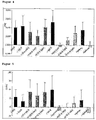
- the test products with the active ingredient Ascrolimus were topically co-administered in three different concentrations (0.1, 0.3, 1.0%) in a standard fatty ointment and with the EDRS according to the invention. After 24 h, the animals were sacrificed to the ear weight, elastase and peroxidase activity of ear homogenates as parameters for edema and granulocyte infiltration. Each experiment was repeated twice.
- EDRS systems according to the invention
- the solvent mixture in nature and amount in the hydrocarbon system can be varied within certain limits.
Landscapes
- Health & Medical Sciences (AREA)
- Life Sciences & Earth Sciences (AREA)
- Chemical & Material Sciences (AREA)
- Animal Behavior & Ethology (AREA)
- Veterinary Medicine (AREA)
- Public Health (AREA)
- General Health & Medical Sciences (AREA)
- Epidemiology (AREA)
- Medicinal Chemistry (AREA)
- Pharmacology & Pharmacy (AREA)
- Dermatology (AREA)
- Organic Chemistry (AREA)
- Birds (AREA)
- Chemical Kinetics & Catalysis (AREA)
- Dispersion Chemistry (AREA)
- Nuclear Medicine, Radiotherapy & Molecular Imaging (AREA)
- General Chemical & Material Sciences (AREA)
- Bioinformatics & Cheminformatics (AREA)
- Engineering & Computer Science (AREA)
- Proteomics, Peptides & Aminoacids (AREA)
- Inorganic Chemistry (AREA)
- Oil, Petroleum & Natural Gas (AREA)
- Medicinal Preparation (AREA)
- Pharmaceuticals Containing Other Organic And Inorganic Compounds (AREA)
- Cosmetics (AREA)
Description
- Die vorliegende Erfindung betrifft eine topisch anwendbare Zusammensetzung in Form eines wasserfreien Mehr-Phasen-Gel-Systems.
- Im Stand der Technik sind verschiedenste topisch anwendbare Zusammensetzungen bekannt. Zwei Vertreter dieser dermal anwendbaren Systeme sind Cremes und Salben.
- Cremes sind Emulsionen, die eine dispergierte Phase und ein Dispersionsmittel umfassen. Man unterscheidet hierbei in wesentlichen zwischen Wasser-in-Öl- und Öl-in-Wasser-Emulsionen, je nachdem, welche Art von Emulgatoren eingesetzt werden. In jedem Fall handelt es sich jedoch um wasserhaltige Systeme.
- Als besonders vorteilhaft empfinden viele Anwender von Cremes deren leichte Verteilbarkeit und die Tatsache, dass Cremes sich nicht klebrig und fettig auf der Haut anfühlen.
- Ein Nachteil von Cremes ist jedoch, dass sie nur eine geringe Okklusion besitzen. Durch die Okklusion wird eine Hydratisierung der Hornschicht der Haut erreicht und die Hornschicht kann das Drei- bis Fünffache ihres Gewichts an Wasser aufnehmen und wird in diesem Zustand permeabler.
- Weiterhin ist die Anwendung von Cremes als Vehikel aktiver Substanzen begrenzt, da das in Lotionen zwingend anwesende Wasser die Einbindung hydrolyseempfindlicher stark einschränkt oder sogar ausschließt.
- Salben hingegen sind üblicherweise halbfeste Darreichungsformen aus Basis von Fettmaterial, die zur externen Applikation geeignet sind. Eine Salbenart sind wasserfreie Kohlenwasserstoff-Salben (Fettsalben), welche gerade oder verzweigte Kohlenwasserstoffe mit Kettenlängen von C16 bis C30 enthalten sowie auch cyclische Alkane beinhalten können. Eine typische Formulierung enthält flüssige Kohlenwasserstoffe (Mineralöle und flüssige Paraffine) gemischt mit Kohlenwasserstoffen mit längeren Alkylketten (mittlere Kettenlänge ca. 35 bis 50 Kohlenstoffatomen, üblicherweise n- und iso-Paraffine) mit hohen Schmelzpunkten, beispielsweise Vaseline, Hart-Paraffine und Wachse.
- Vorteilhaft bei diesen wasserfreien Zusammensetzungen ist, dass sie eine hohe Okklusion auf der Haut aufweisen.
- Nachteilig ist jedoch, dass Fettsalben zumeist sehr klebrig und fettig sind und deshalb bei vielen Anwendern ein unangenehmes Empfinden bei der Anwendung hervorrufen. Ferner weisen sie eine schlechte Verteilbarkeit auf der Haut auf.
- Weiterhin ist die Anwendbarkeit dieser wasserfreien Salben als Freisetzungssystem für topisch zu verabreichende aktive Substanzen limitiert, weil viele aktive Substanzen eine relative schlechte Löslichkeit in einer Kohlenwasserstoff-Salbe besitzen. Dadurch ist die Inkorporation dieser Substanzen in diese topisch anwendbaren Systeme nur begrenzt und häufig nicht in einer wirksamen Konzentration möglich.
- Bis zu einem bestimmten Maß kann das einer aktiven Substanz in der Kohlenwasserstoff-Salbe zur Verfügung stehende Lösemittelvolumen durch Verarbeitung der Salbengrundlagen mit Solventien erhöht werden, die mit Kohlenwasserstoffen mischbar sind, wie beispielsweise Isopropylmyristat. Hierdurch wird allerdings nur die Löslichkeit von aktiven Substanzen in der Fettsalbe gesteigert, die in mit Kohlenwasserstoffen mischbaren Lösemitteln löslich sind.
- Um auch aktive Substanzen in die oben beschriebenen Kohlenwasserstoff-Salben zu inkorporieren, die in den mit Kohlenwasserstoffen mischbaren Lösemitteln nicht oder nur sehr begrenzt löslich sind, wurden in Kohlenwaserstoff-Salben Lösemittel eingebracht, welche nicht mit Kohlenwasserstoffen mischbar sind. Allerdings konnten bisher nur bis zu 5 % dieser Lösemittel in die klassischen Fettsalben eingebracht werden. Die Zubereitung wird sonst instabil (Synärese), d. h. es erfolgt ein "Ausschwitzen" der Lösemittel.
- Ein weiterer wesentlicher Aspekt, der die Güte einer topisch anwendbaren Zusammensetzung bestimmt, ist dass sie ein hohes Maß an Penetration von enthaltenen kosmetischen, pflegenden und / oder therapeutischen Bestandteilen in die Haut bewirkt.
- Es ist bekannt, dass sich die Penetration durch den Einsatz von Penetrationsförderern (Enhancern) steigern lässt. So wirken Substanzen, welche die polaren Komponenten der Hautlipide solvatisieren, zum Beispiel Wasser, Dimethylsulfoxid (DMSO) und Ethanol, durch die resultierende Erhöhung des Volumens der Lipidschichten der Haut sowohl für hydrophile als auch lipophile aktive Substanzen penetrationsfördernd. Stoffe, die mit den unpolaren Komponenten der Hautlipide interagieren, können die Mikrofluidität der Membranen beeinflussen und damit ebenfalls die Penetration verbessern. Dazu zählen Isopropylmyristat, Isopropylpalmitat und Ölsäure. Höhere Alkohole wie Propylenglykol, Glycerol und Sorbitol können sich direkt in die Wasserschichten zwischen den Lipiddoppelmembranen einlagern und verbessern hier die Löslichkeit vieler aktiver Substanzen, was häufig ebenfalls die Penetration erhöht.
- Dabei sind viele unterschiedliche Einflüsse des Vehikels auf das Stratum corneum möglich, die sich auf die Permeation einer aktiven Substanz durch die Haut auswirken können. In den meisten Fällen kommt es zu einer Penetrationsbeschleunigung, die überwiegend durch die folgenden Mechanismen erklärt wird: Am häufigsten tritt eine Interaktion des Vehikels mit den interzellulären Lipiden im Stratum corneum auf, die entweder zu einer Lipidfluidisierung oder sogar zu einem Herauslösen einiger Lipidfraktionen aus dem Stratum corneum führen kann. Interaktionen mit den Lipiden sind je nach Eigenschaft des Vehikels mit den polaren Kopfgruppen und/oder mit den lipophilen Fettsäureresten der Lipide möglich. Außerdem führt das Eindringen größerer Mengen Vehikel in die Barriere zu einem Cosolventieneffekt. Voraussetzung ist, dass Vehikelbestandteile in der Lage sind in die Haut einzudringen und dabei die aktive Substanz mit einschleppen.
- Neben dem Eindringen von Vehikel ist auch die verstärkte Hydratisierung des Stratum corneum unter okklusiven Bedingungen zu berücksichtigen und wie oben beschrieben, zeigen die im Stand der Technik bekannten Kohlenwasserstoff-Salben eine starke Okklusion. Die Penetrationsbeschleunigung kommt in allen Fällen durch eine Erhöhung des Diffusionskoeffizienten der wirksamen Substanz im Stratum corneum und/oder durch eine Erhöhung der Sättigungskonzentration der aktiven Substanz in der Barriere zu Stande.
- Hat eine aktive Substanz nur eine geringe Neigung, aus der topisch anwendbaren Zusammensetzung in die Haut überzugehen, muss die Zusammensetzung so geändert werden, dass dennoch eine optimale dermale Verfügbarkeit erreicht wird.
- Aufgabe der vorliegenden Erfindung ist es deshalb, eine topisch anwendbare Zusammensetzung bereitzustellen, welche die vorteilhaften Okklussionseigenschaften einer Fettsalbe besitzt, einer Creme oder auch Lotion ähnliche Anwendungseigenschaften zeigt, und zusätzlich als Vehikel mit hohem Penetrationsvermögen für eine Vielzahl, auch hydrolyseempfindlicher, aktiver Substanzen fungieren kann. Die Erfinder bezeichnen das erfindungsgemäße System mit dem Akronym "EDRS" oder "EDR-System", als Abkürzung für "Entrapped Drug Reservoir System".
- Erfindungsgemäß wird die Aufgabe gelöst durch die Bereitstellung einer Zusammensetzung in Form eines wasserfreien Mehr-Phasen-Gel-Systems bestehend aus äußerer Lipidmatrix und einer mittels Polymer gelierten inneren Phase, dadurch gekennzeichnet, dass die Lipidphase hautverträgliche Lipid enthält, weiterhin dadurch gekennzeichnet, dass man die quellbaren Polymere oder Polymergemische mittels OH-Gruppen-haltigen Quellmittel quillt, weiterhin dadurch gkennzeichnet, dass das Quellmittel weiterhin Kohlensäurediester oder Mischungen aus Kohlensäurediestern umfasst erhältlich durch
- a) Aufschmelzen der Lipidphase unter Bildung einer flüssigen Lipidphase,
- b) Mischen und Homogenisieren von quellbaren Polymeren oder Polymergemischen unter Bildung einer zu dispergierenden Polymerphase, die OH-Gruppen-haltige Quellmittel sowie weiterhin Kohlensäurediester oder Mischungen aus Kohlendiestern umfasst
- c) Vereinigen der Polymerphase mit der flüssigen Lipidphase und Homogenisierung der Phasen und
- d) Kaltrühren des Phasengemisches bis zur Ausbildung einer festen gelartigen Misch-Struktur des Gesamtsystems (EDRS).
- Erfindungsgemäß bevorzugt ist ein System, wobei die Lipidphase hautverträgliche Lipide enthält.
- Besonders bevorzugt ist, dass die Lipide ausgewählt sind aus Petrolatum, Paraffin, mikrokristallinem Wachs, Squalen, Cetylstearyloctanoat, Ethyloleat, Glyceryltricaprylat/caprat, Myristylmyristat, Propylenglycoldicaprat, Cetylestern, Isopropylmyrisat, Isopropylpalmitat, Mono-, Di- und Triglyceriden, ethoxylierten Glyceriden, Polyethylenglycolestern, Sorbitanestern, Hartfett, Hartfett (Novata™), Dibutyladipat, Ethyllinoleat, Glycol Isoceteth-3 Acetat (Crodamole) wie E-thylhexylcocoat Isocetylstearat, Oleyloleat (Cetiol™) Cetylpalmitate, Cetylpalmitat (Cutina CP™) Cetylalkohol, Oleylalkohol, Stearylakohol, Dicaprylylether, Ölsäure, Wachsen, wie Jojobawachs und Bienenwachs, Cholesterinen, Polyethylenglykolen, Lanolin, Lanolinalkoholen, Silikonölen und deren Mischungen Bevorzugt ist ferner ein erfindungsgemäßes System, wobei es sich bei den Polymeren um Cellulosederivate, Acrylatpolymere und deren Derivate oder deren Mischung handelt.
- Besonders bevorzugt ist auch, dass es sich bei den Cellulosederivaten um Hydroxypropylcellulose, Carboxymethylcellulose, Methylcellulose, Hydroxypropylmethylcellulose, Hydroxyethylcellulose und deren Derivate oder deren Mischung handelt.
- Insbesondere bevorzugt ist es auch, dass es sich bei den Acrylatpolymeren um quervernetzte Acrylatpolymere handelt.
- Bevorzugt ist dabei, dass das Quellmittel ein- bis dreiwertige aliphatische Alkohole mit einer Kettenlänge von bis zu 5 Kohlenstoffatomen oder deren Mischungen sind.
- Ganz besonders bevorzugt ist auch, dass die einwertigen aliphatischen Alkohole ausgewählt sind aus Ethanol, n-Propanol und Isopropanol oder deren Mischung.
- Außerdem ist erfindungsgemäß bevorzugt, dass die Polyole ausgewählt sind aus Glycerin, Propylenglykol und 1,2-Pentandiol oder deren Mischung. Das Quellmittel umfasst Kohlensäuredieseter oder Mischungen aus Kohlensäurediestern.
- Besonders bevorzugt ist hierbei, dass die Kohlensäurediester ausgewählt sind aus der Gruppe Ethylencarbonat, Propylencarbonat und weiteren Homologen von Ethylencarbonat und deren Mischungen.
- Weiterhin ist bevorzugt, dass das Quellmittel weiterhin Diethylenglykolmonoethylether, polyoxylierte Caprylcaprinsäureglyceride, Dimethylisosorbid und/oder weitere pharmazeutisch verträgliche Lösemittel oder deren Mischungen umfasst.
- Ganz besonders bevorzugt ist ein erfindungsgemäßes System, wobei die Lipidphase und/oder die Polymerphase aktive Bestandteile enthält.
- Bevorzugt ist auch, dass die Lipidphase und die Polymerphase verschiedene aktive Bestandteile enthalten. Besonders bevorzugt ist es, dass die aktiven Bestandteile ausgewählt sind aus hautpflegenden Substanzen, hautfärbenden Substanzen, UV-Protektoren, pharmazeutisch wirksamen Substanzen oder deren Mischungen.
- Bevorzugte aktive Bestandteile sind beispielsweise ausgewählt aus Polidocanol, synthetischen Gerbstoffen, Antiseptika, wie Chlorhexidin und Triclosan, Antibiotika, wie Fusidinsäure, Erythromycin, Tetracykline, Clindamycin, Peptidantibiotika, Antimykotika, wie Imidazolderivate, Terbenafin, Ciclopirox, Salizylsäure, Zink-Pyrithion, topische Kortikosteroide, wie z.B. Methylprednisolonaceponat, Clobetasol, Mometasonfuorat, topische Makrolide, wie Tacrolimus und Pimecrolimus, Oligonukleotide zur Gentherapie, wie si-RNA und Ribozyme, Antihistaminika, Immunsuppressiva, wie Cyclosporin, Azathioprin und Mycophenolatmofetil, Anthralinen, wie Cignolin und Dithranol, Vitamin D3-Analoga, wie Calcipotriol, topische Retinoide, Harnstoff, Milchsäure, Fumarsäureester, Azelainsäure, Hydrochinon, Benzoylperoxid, nicht-steroidale Antiphlogistika, Sexualhormone, wie Östrogene und Androgene, Zytostatika, UV-Protektoren, wie Stilbenderivaten, Makeup (Camouflage), pflanzlichen Extrakten, wie Grünteeextrakt, Centella asiatica Extrakt, Weidenrindenextrakt, Birkenextrakt, Grünteeextrakt, Teebaumöl, Olivenblattextrakt, A-loe vera Extrakt, Ringelblumenextrakt, Passionsblütenextrakt, Hamamelisextrakt, Kamillenextrakt, Teebaumöl, Bärentraubenblätterextrakt und Süßholzwurelextrakt, beispielsweise als 18ß-Glycyrhetinsäure (Zn Kombination), Fruchtsäuren, wie α-Hydroxysäuren, β-Hydroxysäuren und Polyhydroxysäuren (PHA), Äpfelsäure, Malonsäure, Citronensäure, oder deren Mischungen. Die Aufzählung der verwendbaren Wirkstoffe ist nicht abschließend. Natürlich können auch andere Wirkstoffe in das erfindungsgemäß System eingebracht werden.
- Besonders bevorzugt ist es, dass der aktive Bestandteil gemeinsam mit einem Solubilisierungsmittel eingebracht wird.
- Ein bevorzugtes erfindungsgemäßes System umfasst weiterhin ein oder mehrere für eine topisch anwendbare Zusammensetzungen nützliche Additive umfasst.
- Ein weiterer Gegenstand der vorliegenden Erfindung ist die Verwendung eines erfindungsgemäßen Systems zur Herstellung einer pharmazeutischen Zusammensetzung zur Anwendung auf der Haut, den Schleimhüten und/oder auf Wundflächen.
- Bevorzugt ist dabei die Verwendung zur Herstellung eines human- oder veterinärmedizinischen Erzeugnisses, also zur Anwendung bei Menschen und bei Tieren.
- Ein weiterer Gegenstand der vorliegenden Erfindung ist ein Verfahren zur Herstellung einer Zusammensetzung in Form eines wasserfreien Mehr-Phasen-Gel-Systems bestehend aus äußerer Lipidmatrix und einer mittels Polymer gelierten inneren Phase, dadurch gekennzeichnet, dass die Lipidphase hautverträgliche Lipid enthält, weiterhin dadurch gekennzeichnet, dass man die quellbaren Polymere oder Polymergemische mittels OH-Gruppen-haltigen Quellmittel quillt, weiterhin dadurch gkennzeichnet, dass das Quellmittel weiterhin Kohlensäurediester oder Mischungen aus Kohlensäurediestern umfasst wobei man
- a) die Lipidphase unter Bildung einer flüssigen Lipidphase aufschmilzt,
- b) quellbare Polymere oder Polymergemische unter Bildung einer zu dispergierenden Polymerphase mischt und homogenisiert, wobei die Polymerphase die OH-Gruppen-haltige Quellmittel sowie weiterhin Kohlensäurediester oder Mischungen aus Kohlendiestern umfasst
- c) die Polymerphase mit der flüssigen Lipidphase vereinigt und die Phasen homogenisiert und
- d) das Phasengemisch bis zur Ausbildung einer festen gelartigen Misch-Struktur des Systems kaltrührt.
- Bevorzugt ist ein Verfahren, wobei man der Polymerphase, der Lipidphase oder beiden Phasen einen Wirkstoff zusetzt.
- Überraschenderweise wurde gefunden, dass die erfindungsgemäßen Zusammensetzungen ausgesprochen vorteilhafte Eigenschaften besitzen. Sie weisen eine mit einer Fettsalbe vergleichbaren Okklusion auf und besitzen zusätzlich die positiven Anwendungseigenschaften einer Creme, wie angenehmes Hautgefühl beim Anwender und leichte Verteilbarkeit auf der Haut.
- Weiterhin hat sich gezeigt, dass die erfindungsgemäßen Zusammensetzungen als topisch anzuwendende Vehikel für unterschiedlichste Substanzklassen besonders geeignet sind.
- Die erfindungsgemäßen Zusammensetzungen gestatten die Inkorporation unterschiedlichster Stoffklassen in wirksamen Mengen. Der aktive Stoff kann entweder in die äußere Lipidmatrix oder in die gelierte dispergierte Phase, die ein Lösungsreservoir bereitstellt, aufgenommen werden. Und weiterhin können unterschiedliche aktive Stoffe in einer erfindungsgemäßen Zusammensetzung enthalten sein, indem sie gemeinsam in eine Phase eingebracht werden, oder auf die beiden Phasen des Systems verteilt werden.
- Und auch die Penetration der in der erfindungsgemäßen Zusammensetzung enthaltenen kosmetischen, pflegenden und/oder therapeutischen Substanzen in die Haut hat sich als ausgesprochen vorteilhaft erwiesen.
- Diese überraschenden Eigenschaften der erfindungsgemäßen Zusammensetzungen ergeben sich offensichtlich dadurch, dass ein stabiles Mehr-Phasen-Gel-System gebildet wird.
- Der Vorteil einer solchen Kompartimentierung in Form einer kohärenten Lipid-Phase und einer darin eingeschlossenen gelierten, dispergierten Phase, die ein Reservoir ausbildet, hat sich beispielsweise dadurch gezeigt, dass sich die erfindungsgemäße Zusammensetzung u. a. hervorragend als Lösungsvehikel für hydrophobe aktive Substanzen eignet, die in Kohlenwasserstoffen in wirksamen Konzentrationen wenig löslich oder praktisch unlöslich sind oder aufgrund ihrer Hydrolyseempfindlichkeit nicht mit Wasser in Berührung kommen dürfen (z.B. TIMS (z. B. Tacrolimus, Pimecrolimus, Ascrolimus), Korticoide und Hormone, Antibiotika). Dies wurde mittels einer induzierten Kontaktdermatitis an Mäusen nachgewiesen.
- Hierbei ist es insbesondere vorteilhaft, dass die erfindungsgemäße Zusammensetzung die stabile Inkorporation von nicht-wässerigen Lösungsmitteln wie z.B. Propylencarbonat, Propylenglycol, Glycerin im System bis zu Konzentrationen von 30 % und die Aufnahme von Ethanol und anderen kurzkettigen Alkoholen bis zu 25 % gestattet.
- Damit steht aktiven Substanzen ein wesentlich größeres Lösungsmittelreservoir zur Verfügung, verglichen mit im Stand der Technik bekannten topisch anwendbaren Systemen mit vergleichbaren Anwendungseigenschaften.
- Ein wesentlicher Vorteil der erfindungsgemäßen Mehr-Phasen-Gel-Zusammensetzung liegt hierbei also in der effektiven Lösungsvermittlung von schwerlöslichen aktiven Substanzen, die in klassischen Kohlenwasserstoff-Salben in wirksamen Konzentrationen meist nicht möglich ist.
- Und es hat sich auch gezeigt, dass die besonderen Eigenschaften des erfindungsgemäßen Systems die dermale Zuführung von aktiven Substanzen, die nur eine geringe Tendenz zeigen, aus einer Zusammensetzung in die Haut einzudringen, beim Einsatz von Lösungsvermittlern oder Lösungsmittelgemischen im Vergleich zu im Stand der Technik bekannten Systemen verbessern.
- Allerdings ist nach dem bekannten Stand der Technik der Einsatz von Lösungsvermittlern oder Lösemittelgemischen, welche die Sättigungslöslichkeit einer aktiven Substanz in der Formulierung erhöhen, bei den im Stand der Technik bekannten Cremes und Kohlenwasserstoff-Salben dadurch begrenzt, dass davon nur begrenzte Mengen Penetrationsverstärker in die Systeme inkorporiert werden können, ohne dass die Stabilität des Systems dramatisch reduziert wird.
- Diese Eigenschaft wurde insbesondere dann beobachtet, wenn sich der Lösungsvermittler und die aktive Substanz in die innere Phase des Systems eingebracht wurden, die als diskretes Kompartiment in der erfindungsgemäßen Zusammensetzung vorliegt.
- Bei dem erfindungsgemäßen System wird hingegen ein eigenes Lösemittel-Kompartiment erzeugt. Hierin liegen Penetrationsverstärker und Wirkstoff in hohen Konzentrationen und enger räumlicher Nähe vor, was zu einer besseren Löslichkeit des Wirkstoffs an sich im System und folglich auch zu einer besseren Penetration durch die Haut führt.
- Es wird davon ausgegangen, dass dadurch das Konzentrationsgefälle der aktiven Substanz zunimmt, wodurch gleichzeitig die Penetrationsgeschwindigkeit steigt. Somit erreicht man im erfindungsgemäßen System durch den Zusatz der Penetrationsverbesserer eine erhöhte Wirkstoffkonzentration in tieferen Hautschichten, da diese Substanzen ihrerseits in die Haut diffundieren und die Barrierefunktion der Hornhaut reduzieren.
- Die Steigerung der Penetration ist möglich durch die Wahl der Art und der Menge des Lösemittels, in Abhängigkeit der eingesetzten Wirkstoffe und der Wahl der Konzentration und des Ortes der Beladung des Systems.
- Es sind also in den erfindungsgemäßen Systemen beide wesentliche Aspekte der Penetrationsverbesserung von aktiven Substanzen in die Haut gegeben, Okklusionseffekt und Penetrationsverstärkung durch hautgängige verträgliche Lösemittel, welche die inkorporierten aktiven Substanzen in die Haut befördern.
- Im Sinne dieser Erfindung bezeichnet ein Mehr-Phasen-Gelsystem ein System, welches aus zwei und mehr Phasen gebildet ist.
- Im Zusammenhang der vorliegenden Erfindung bezieht sich der Begriff "aktive Substanz" auf eine Substanz, die einen gewünschten kosmetischen, pflegenden und / oder therapeutischen Effekt auf der Haut direkt oder den Organismus des Anwenders insgesamt ausübt.
- Erfindungsgemäß bezieht sich der Begriff "wirksame Konzentration" auf die Konzentration, die erforderlich ist, um den gewünschten kosmetischen, pflegenden und / oder therapeutischen Effekt zu bewirken.
- Die Verwendung des Begriffs "kosmetischer Effekt" im vergleich zum "pflegenden Effekt" soll hervorheben, dass die erfindungsgemäßen Zusammensetzungen nicht nur physiologisch den Zustand der Haut verbessern können, sondern auch im Bereich der dekorativen Kosmetik einsetzbar sind. Beispielhaft hierfür ist neben der dekorativen Bedeckung der Haut als Makeup auch die Abdeckung von Hautstellen wie Muttermalen, Narben und Hautstörungen, wie sie häufig als Folge von Erkrankungen, wie beispielsweise AIDS auftreten, als so genanntes "Camouflage".
- Wasserfrei im Sinne der vorliegenden Erfindung bedeutet, dass bis zu 1 % Wasser in der Zusammensetzung enthalten sein können. Wasserfreie Lösemittel, können erfindungsgemäß bis zu 5 % Wasser enthalten. So hat sich beispielsweise gezeigt, dass Ethanol für die erfindungsgemäße Verwendung bis zu 4,5 % Wasser (Azeotrop) enthalten kann.
- Die mittels OH-Gruppen quellbaren Polymere können ausgewählt werden aus Acrylatpolymeren oder deren Mischungen. Beispielhaft seien hier einige Produkte der Firma Noveon Inc. genannt:
- Carbopol 934 NF, Carbopol 934P NF, Carbopol 940 NF, Carbopol 971P NF, Carbopol 71G NF, Carbopol 974P NF, Carbopol 980 NF, Carbopol 981 NF, Carbopol 1342 NF, Carbopol 5984 EP, Pemulen TR-1 NF, Pemulen TR-2 NF, Noveon AA-1 USP, Noveon CA-1 USP und Noveon CA-2 USP.
- Im Zusammenhang der vorliegenden Erfindung bezieht sich der Begriff kurzkettige Alkohole auf ein- bis dreiwertige aliphatische Alkohole mit bis zu fünf Kohlenstoffatomen.
- Sämtliche Verfahrensschritte zur Herstellung der erfindungsgemäßen Zusammensetzungen können durch Techniken erfolgen, die einem Durchschnittsfachmann bekannt sind. So kann das Mischen und Homogenisieren der Bestandteile in Schritt b) zur Erzeugung der dispergierten Polymerphase durch gängige Rührsysteme und Homogenisatoren erfolgen.
- Die Einstellung der Viskosität der erzeugten Polymerphase kann durch beispielsweise Erwärmen erfolgen.
- Neben den bereits aufgeführten Bestandteilen, kann die erfindungsgemäße Zusammensetzung weiterhin ein oder mehrere, für eine topisch anwendbare Zusammensetzungen nützliche Additive umfassen. Diese Additive können beispielsweise ausgewählt sein aus Farbstoffen, Geruchsstoffen, Konservierungsmitteln und absorptionsfördernden Mitteln.
- Nachfolgend werden Ausführungsbeispiele der Erfindung dargelegt und Untersuchungsergebnisse vorgestellt, welche die Eigenschaften und Vorteile der erfindungsgemäße Zusammensetzungen, auch im Vergleich mit herkömmlichen topisch anwendbaren Systemen zeigen.
- An Hand der
Figuren 1 bis 5 werden die experimentellen Ergebnisse erläutert. - Es zeigt:
-
Figur 1
Ergebnisse einer Anwendungsstudie auf menschlicher Haut (Messwert: Hautgefühl allgemein) gemäß Beispiel 7 -
Figur 2
Ergebnisse einer Anwendungsstudie auf menschlicher Haut (Messwert: Wirkung bei Läsionen) gemäß Beispiel 7 -
Figur 3
Ergebnisse einer Anwendungsstudie auf menschlicher Haut (Messwert: Gesamtwirkung) gemäß Beispiel 7 -
Figur 4
Ergebnisse einer induzierten Kontaktdermatitis bei Mäusen (Messwert: Ohrgewicht) gemäß Beispiel 8 -
Figur 5
Ergebnisse einer induzierten Kontaktdermatitis bei Mäusen (Messwert: Peroxidase) gemäß Beispiel 8 - Die nachfolgenden Beispiele erläutern die Erfindung ohne diese jedoch einzuschränken. Es wird ausdrücklich beansprucht, dass vorteilhafte Wirkungen in den nachfolgenden Beispielen nur zur Veranschaulichung dargestellt werden können, ohne eine abschließende Aufzählung darstellen zu wollen.
- Die folgende Tabelle 1 zeigt beispielhafte Rezepturen (ad 100 g) für das erfindungsgemäße wasserfreie Mehr-Phasen-Gel-System auf Basis von halbfesten Lipidformulierungen mit gelierten Mischungen aus Propylencarbonat und Propylenglycol oder Ethanol. Tabelle 1 zeigt erfindungsgemäße Zusammensetzungen an Hand der Beispiele 1 bis 5. Die erste Spalte gibt die bei der Herstellung verwendeten Bestandteile wieder. Die zweite Spalte gibt die Grenzen an, in welchen Mengen (in Gew.-%) die jeweiligen Bestandteile in der fertigen Formulierung vorliegen können. Die Spalten drei bis sieben stellen ausgewählte Rezepturen dar (Mengenangeben jeweils in Gew.-%). In den Beispielen 3 und 4 (Spalten fünf und sechs) enthalten die erfindungsgemäßen Zusammensetzungen als aktive Substanz Ascrolimus.
- Tabelle 1 zeigt somit, dass die Mengen der einzelnen Bestandteile in weiten Grenzen variierbar sind, um die erfindungsgemäße Zusammensetzung mit den vorteilhaften Eigenschaften zu erhalten.
- Es ist dem Fachmann daher ohne weiteres möglich, mit Hilfe weniger Versuche eine Rezeptur zu ermitteln, welche auch sehr schwer lösliche Wirkstoffe in der erfindungsgemäßen Zusammensetzung in Lösung bringt, um deren Applikation auf oder durch die Haut zu gewährleisten. Als Beispiel für einen Wirkstoff, der sich mit topischen Zubereitungen nach dem Stand der Technik fast nicht topisch applizieren lässt, ist in den Beispielen 3 und 4 dargestellt. Das topische Makrolid Ascrolimus ist hier in einer hoher Konzentration (bis zu 1,0 Gew.-%) in eine erfindungsgemäße Zusammensetzung eingebracht worden.
Tabelle 1 Bestandteil Grenzen Beispiel 1 Beispiel 2 Beispiel 3 Beispiel 4 Beispiel 5 Ascrolimus (Wirkstoff) 0 - 1,0 - - 1,0 0,1 - Carbomer Copolymer (Pemulen TR-1/TR-2) 0,1 - 0,6 0,45 0,3 0,15 0,15 0,40 Carbomer (Carbopol 980) 0 - 0,3 0,17 - - - 0,17 Hydroxypropylcellulose (Klucel HF) 0 - 0,4 0,12 - - - - Hydroxyethylmethylcellulose (Tylopur MH 1000) 0 - 0,4 - 0,15 - - - Propylencarbonat 5,0 - 15,0 14,75 9,775 5,0 5,0 - Ethanol 96%ig 0 - 20 - - - - 19,0 Propylenglykol 5,0 - 15,0 14,75 9,775 5,0 5,0 Diisopropylamin 0 - 0,1 0,075 0,024 - - 0,05 Weißes Vaselin 40,0 - 80,0 47,685 57,976 65,85 66,75 59,95 Paraffinöl, dickflüssig 0 - 10,0 10,0 10,0 10,0 10,0 10,0 Cyclomethicone 0 - 10,0 3,0 - - - 3,0 Bienenwachs (Cera Alba) 0 - 5,0 2,0 5,0 5,0 5,0 2,0 Hartparaffin 0 - 7,0 7,0 7,0 5,0 5,0 7,0 Mikrokristallines Wachs 0 - 5,0 - - 3,0 3,0 - - Das nachstehend abgebildete Schema 1 zeigt die allgemeine Herstellungstechnologie für das erfindungsgemäße EDR-System. Die in das System einzubringenden Wirkstoffe können, je nach dem gewünschten Zweck, entweder in die Lipidphase oder in die Polymerphase, oder aber auch in beide Phasen eingebracht werden. Auch können die Temperaturen, bei denen die einzelnen Herstellungsschritte erfolgen, einen Einfluss ausüben. Die Lipide müssen fast immer aufgeschmolzen werden, während die Polymerphase unter besonderen Bedingungen der Zusammensetzung bereits hinreichend flüssig ist, so dass ein weiteres Verflüssigen, beispielsweise durch Erwärmen ausbleiben kann. Beim Vereinigen der Phasen kann dann die Vesikel-Größenverteilung in gewünschter Weise beeinflusst werden. Bei Anschließenden Abkühlen der Mischungen werden dann die Vesikel unter Gelbildung immobilisiert. Die einzelnen Herstellungsschritte sind dem Fachmann, einem Galeniker durchaus geläufig. Die entsprechenden Parameter zu ändern, um das optimale EDRS zu erhalten, ist somit dem Fachmann ohne weiteres möglich und geläufig. Das hier angegebene Herstellungsschema ist nicht als Beschränkung zu verstehen. Übliche Verfahrensvariationen werden als zum Umfang der Erfindung gehörend angesehen.
- Nachfolgend wird eine Untersuchung zur Verträglichkeit der erfindungsgemäßen Zusammensetzung im Vergleich mit zwei Formulierungen nach dem Stand der Technik beschrieben. Eingesetzt wurden die Zusammensetzungen zur topischen Behandlung atopischer Dermatitis über den Zeitraum von einer Woche an einer einzelnen Targetläsion. Durchgeführt wurde die Versuchsreihe als doppelblinde, randomisierte, Einzel-Center Zwei-Perioden Crossover-Untersuchung.
- 18 Probanden (weiblich und männlich, kaukasischer Typ im Alter von 19 bis 41 mit wenigstens zwei 4 cm2 großen Läsionen) nahmen an der Studie bis zum Ende teil; eine statistische Verteilung fand nicht statt. Die Probanden erhielten innerhalb zweier aufeinander folgender Wochen zwei unterschiedliche Behandlungen an jeweils anderen Läsionen. Lediglich einzelne Anwendungen wurden von einzelnen Probanden ausgelassen.
-
- Vehikel A: Fettsalbe (Stand der Technik)
- Vehikel B: erfindungsgemäßes wasserfreies Mehr-Phasen-Gel-System (EDRS)
- Vehikel C: Wasser-in-Öl-Zubereitung (Stand der Technik)
-
- 1. Die Probanden sollten das Hautgefühl einschließlich des Auftretens von Juckreiz auf einem Fragebogen beurteilen, wobei der Bereich der Beurteilung 0 bis 100 betrug.
- 2. Die Probanden sollten den Gesamteindruck der jeweiligen Behandlungen angeben.
- 3. Kommentare der Probanden jeder Art, spontan geäußert oder auf Nachfrage (alles was dem Probanden missfiel, jedes wahrgenommene Empfinden; Hautirritationen, Pickel/Ausschlag, Hauterwärmung, Kältegefühl, Stechen, Kribbeln, Brennen, Juckreiz, Hautspannung, Schmerzen, etc.) wurden gesammelt.
- 4. Bewertung der Gesamtschwere der Läsionen (Abschätzung der Zielläsionen durch den Arzt: Schwere des Erythems, Ödem/Papulation, Nässen/Verkrustung, Exkoration, Lichenifikation wurden abgeschätzt und auf einer 4-Punkte-Scala bewertet) wurde durch einen Arzt durchgeführt.
- 5. Fotodokumentation, Negativereignisreport, Blutdruck, Herzfrequenz wurden gemessen bzw. erstellt.
-
- Ad 1. Die Ergebnisse sind in der
Figur 1 dargestellt. Auf der x-Achse ist der Mittelwert (Balken) und die Standardabweichung (Strich) in mm aufgetragen.
Die Probanden wurden nach folgenden Parametern befragt: Gesamteindruck (GE), Eindringen in die Haut (EH), Klebrigkeit (KL), Fettigkeit (FE), Juckreiz während der Behandlung (JB), Juckreiz beim Auftragen (JA), Hautrockenheit (HT), Feuchtigkeit (FT), Geruch (GR).
Es wird deutlich, dass die erfindungsgemäße Zusammensetzung (Vehikel B) in den meisten Fällen mit der Wasser-in-Öl-Formulierung (Vehikel C), welche im Allgemeinen als besonders angenehm auf der Haut empfunden wird, vergleichbar ist. Besonders bemerkenswert ist, dass der Juckreiz, sowohl direkt beim Auftragen, als auch im Verlauf der Behandlung, als signifikant geringer, im Vergleich zu den anderen Vehikeln A und C, bewertet wurde. - Ad 2. Sieben Probanden bevorzugten insgesamt Vehikel C, fünf Probanden bevorzugten Vehikel A und gleichfalls fünf Probanden bevorzugten Vehikel B (Erfindungsgemäßes EDRS).
- Ad 3. Von den Probanden wurde keine spontanen Kommentare abgegeben. Auf Nachfrage konzentrierten sich die Kommentare der Probanden auf drei Bereiche, nämlich Hautirritation, Pickel/Ausschlag und Juckreiz. In den
Figur 2a bis 2c sind die Ergebnisse für die Messgrößen Hautirritation (Figur 2a ), Pickel/Ausschlag (Figur 2b ) und Juckreiz (Figur 2c ) graphisch dargestellt. Der Bewertungsrahmen umfasst eine Skala (y-Achse) von 0 bis 12 und berücksichtigt die Intensität des Empfindens (0 - 3) und deren Dauer (1 - 4). Auf der x-Achse sind jeweils zwei Balken für die Vehikel A (A), Vehikel B (B) und Vehikel C (C) aufgetragen, wobei die jeweils linke Säule das Empfinden vor der Behandlung und die jeweils rechte Säule das Empfinden nach der Behandlung mit dem jeweiligen Vehikel angibt. Es zeigt sich, dass das erfindungsgemäße EDRS (Vehikel B) in allen Fällen die signifikant bessern Ergebnisse erzielte. Besonders deutlich ist hierbei der Behandlungseffekt bei Hautirritationen und beim Juckreiz. - Ad 4. Die Bewertung der Gesamtschwere der Läsionen ist in
Figur 3 dargestellt. Auf der x-Achse sind jeweils zwei Balken für die Vehikel A (A), Vehikel B (B) und Vehikel C (C) aufgetragen. Die jeweils linken Säulen der Säulenpaare zeigen die Schwere vor der jeweiligen Behandlung. Die jeweils rechten Säulen geben die Schwere der Läsionen nach der Behandlung mit dem entsprechenden Vehikel wieder. Es zeigt sich deutlich, dass Vehikel B (erfindungsgemäßes EDRS) die signifikant beste Wirkung zeigte. - Ad 5. Während der Studie wurden drei Negativereignisse berichtet:
- Proband 1: Bronchitis, steht in keiner Beziehung zur Behandlung im Verlauf der Studie
- Proband 2: Urtikaria geringer Intensität, weit entfernt von den Läsionen, beim Probanden schon früher beobachtet Proband 8: Exacerbation der atopischen Dermatitis in der behandelten Läsion, vermutlich durch Vehikel C bedingt.
- Zusammenfassend wird festgestellt, dass die klassische Wasser-in-Öl-Formulierung von den Probanden im Allgemeinen bevorzugt ist, Allerdings weist das erfindungsgemäße EDRS (Vehikel B) insbesondere bei den therapeutisch wichtigen Eigenschaften, wie Juckreiz, Hautirritationen und in der Gesamtwirkung, erheblich Vorteile gegenüber den Formulierungen des Standes der Technik auf.
- Um die Effektivität und Bioverfügbarkeit von Wirkstoffen in Abhängigkeit von der verwendeten topischen Arzneiform zu ermitteln kann man sich verschiedener Modelle bedienen. Ein geeignetes pharmakologisches Modell stellt im Rahmen anti-inflammatorischer Therapie an der Haut das 'Irritant contact dematitis (ICD)' Modell an Mäusen dar. Hierbei werden die inflammatorischen-Komponenten von Ekzemen imitiert. Dieser inflammatorische Aspekt spielt ebenso bei allergischer Kontaktdermatitis und atopischer Dermatitis unter Beteiligung Allergen-spezifischer Hauteigener T-Zellen eine Rolle. Daher kann ein T-Zellen abhängiges Modell allergischer Kontaktdermatitis (in Reaktion auf Dinitrofluorobenzol, DNFB) herangezogen werden.
- Akute und chronische allergische Kontaktdermatitis (ACD) sind durch ein Typ 1 dominiertes Cytokin Profil charakterisiert. Deshalb wurde das Dinitrofluorobenzol (DNFB) induzierte ACD Modell benutzt, um in vivo die Aktivität des Wirkstoffes 'Ascrolimus' (topischer Immunmodulator) zu beurteilen. Nach Sensibilisierung mittels DNFB wurden durch nachfolgende Applikation mit demselben Kontaktallergen Ödeme erzeugt sowie eine kutane Infiltration von allergenen T-Tellen und Granulozyten provoziert.
- Die Mäuse (NMRI) wurden mit 0.5% DNFB an Tag 0 und Tag 1 sensibilisiert. Am Tag 5 wurden die Mäuse mit 0.3% DNFB erneut behandelt. Die Testprodukte mit dem Wirkstoff Ascrolimus wurden in drei verschiedenen Konzentrationen (0.1, 0.3, 1.0%) in einer Standard-Fettsalbe sowie mit dem erfindungsgemäßen EDRS topisch co-appliziert. Nach 24 h wurden die Tiere geopfert, um das Ohrgewicht, Elastase und Peroxidase Aktivität von Ohr-Homogenisaten als Parameter für Ödeme und Granulozyten-Infiltration. Jedes Experiment wurde zweimal wiederholt.
- Die Ergebnisse der Ohrgewichtsmessung als Maß für die Ödembildung zeigen für die EDRS-Verum Salben, konzentrationsabhängig eine deutliche Reduktion der induzierten inflammatorischen Effekte gegenüber den Standard-Fettsalben. Hier zeigt sich bei gleicher 1%iger Konzentration von Ascrolimus keine signifikante Reduktion des Ohrgewichtes (y-Achse = delta Ohrgewicht in mg [mg]) im Vergleich zum Placebo (
Figur 4 ). - Die Peroxidase-Aktivität als Maß für die Granulozyten-Infiltration (
Figur 5 ) zeigte (y-Achse = delta Peroxidase in Einheiten pro ml [U/ml]) ebenso signifikant eine konzentrationsabhängige Hemmung, wenn Ascrolimus in im EDR-System appliziert wurde. Dem gegenüber konnte mit der Standard-Fettsalbe kein signifikanter Effekt gemessen werde. Lediglich der interne Standard (Glucocorticoid) zeigte auch eine Hemmung der Ödembildung sowie der Granulozyten-Infiltration. - Legende zu den
Figuren 4 und 5 : - Vehikel A = Standard-Fettsalbe (Placebo)
- Vehikel B = EDRS (Placebo)
- Es konnte beispielhaft gezeigt werden, dass die erfindungsgemäßen Systeme (EDRS) ausreichend stabil sind und eine hohe Tolerabilität aufweisen. In Abhängigkeit der physiko-chemischem Eigenschaften sowie der Potenz von Arzneistoffen, können das Lösemittelgemisch in Art und Menge im Kohlenwasserstoff-System innerhalb bestimmter Grenzen variiert werden.
Neribas = Grundlage (Placebo); Interner Standard Nerisona = Standard-Fettsalbe mit Diflucortolonpivalat (Glukocorticoid); Interner Standard
Claims (18)
- Zusammensetzung in Form eines Wasserfreien Mehr-Phasen-Gel-Systems bestehend aus äußerer Lipidmatrix und einer mittels Polymer gelierten inneren Phase, dadurch gekennzeichnet, dass die Lipidphase hautverträgliche Lipide enthält, weiterhin dadurch gekennzeichnet, dass man die quellbaren Polymere oder Polymergemische mittels OH-Gruppen-haltigen Quellmitteln quillt, weiterhin dadurch gekennzeichnet, dass das Quellmittel weiterhin Kohlensäuredieseter oder Mischungen aus Kohlensäurediestern umfasst erhältlich durcha) Aufschmelzen der Lipidphase unter Bildung einer flüssigen Lipidphase,b) Mischen und Homogenisieren von quellbaren Polymeren oder Polymergemischen unter Bildung einer zu dispergierenden Polymerphase, die OH-Gruppen-haltige Quellmittel sowie weiterhin Kohlensäurediester oder Mischungen aus Kohlensäurediestern umfasstc) Vereinigen der Polymerphase mit der flüssigen Lipidphase und Homogenisierung der Phasen undd) Kaltrühren des Phasengemisches bis zur Ausbildung einer festen gelartigen Misch-Struktur des Gesamtsystems.
- Zusammensetzung gemäß Anspruch 1, dadurch gekennzeichnet, dass die Lipide ausgewählt sind aus Petrolatum, Paraffin, mikrokristallinem Wachs, Squalen, Cetylstearyloctanoat, Ethyloleat, Glyceryltricaprylat/caprat (wohl nicht 2 Verbindungen), Myristylmyristat, Propylenglycoldicaprat, Cetylestern, Isopropylmyrisat, Isopropylpalmitat, Mono-, Di- und Triglyceriden, ethoxylierten Glyceriden, Polyethylenglycolestern, Sorbitanestern, Hartfett (Novata™), Dibutyladipat, Ethyllinoleat, Propylen Glycol Isoceteth-3 Acetat(Crodamole), Ethylhexylcocoat, Isocetylstearat, Oleyloleat (Cetiol™), Cetylpalmitat, Cetylpalmitat (Cutina CP™), Cetylalkohol, Oleylalkohol, Stearylakohol, Dicaprylylether, Ölsäure, Wachsen, Jojobawachs, Bienenwachs, Cholesterinen, Polyethylenglykolen, Lanolin, Lanolinalkoholen, Silikonölen und deren Mischungen
- Zusammensetzung gemäß einem der vorangehenden Ansprüche 1 bis 2, dadurch gekennzeichnet, dass es sich bei den Polymeren um Cellulosederivate, Acrylatpolymere oder deren Mischung handelt.
- Zusammensetzung gemäß Anspruch 3, dadurch gekennzeichnet, dass es sich bei den Cellulosederivaten um Hydroxypropylcellulose, Carboxymethylcellulose, Methylcellulose, Hydroxypropylmethylcellulose, Hydroxyethylcellulose oder deren Mischung handelt.
- Zusammensetzung gemäß Anspruch einem der Ansprüche 1 bis 3, dadurch gekennzeichnet, dass es sich bei den Acrylatpolymeren um quervernetzte Acrylatpolymere handelt.
- Zusammensetzung gemäß einem oder mehreren der Ansprüche 1 bis 5, dadurch gekennzeichnet, dass das Quellmittel ein- bis dreiwertige aliphatische Alkohole mit einer Kettenlänge von bis zu 5 Kohlenstoffatomen oder deren Mischungen sind.
- Zusammensetzung gemäß Anspruch 6, dadurch gekennzeichnet, dass die einwertigen aliphatischen Alkohole ausgewählt sind aus Ethanol, n-Propanol und Isopropanol oder deren Mischung.
- Zusammensetzung gemäß Anspruch 6, dadurch gekennzeichnet, dass die Polyole ausgewählt sind aus Glycerin, Propylenglykol und 1,2-Pentandiol oder deren Mischung.
- Zusammensetzung gemäß einem oder mehreren der Ansprüche 1 bis 8, dadurch gekennzeichnet, dass die Kohlensäurediester ausgewählt sind aus der Gruppe Ethylencarbonat, Propylencarbonat und weiteren Homologen von Ethylencarbonat und deren Mischungen.
- Zusammensetzung gemäß einem der Ansprüche 6 bis 9, dadurch gekennzeichnet, dass das Quellmittel weiterhin Diethylenglykolmonoethylether, polyoxylierte Caprylcaprinsäureglyceride, Dimethylisosorbid und/oder weitere pharmazeutisch verträgliche Lösemittel oder deren Mischungen umfasst.
- Zusammensetzung gemäß einem oder mehreren der Ansprüche 1 bis 10, dadurch gekennzeichnet, dass die Lipidphase und/oder die Polymerphase weiterhin aktive Bestandteile enthält.
- Zusammensetzung gemäß Anspruch 11, dadurch gekennzeichnet, dass die Lipidphase und die Polymerphase verschiedene aktive Bestandteile enthalten.
- Zusammensetzung gemäß Anspruch 11 oder Anspruch 12, dadurch gekennzeichnet, dass die aktiven Bestandteile ausgewählt sind aus hautpflegenden Substanzen, hautfärbenden Substanzen, UV-Protektoren, pharmazeutisch wirksamen Substanzen oder deren Mischungen.
- Zusammensetzung gemäß Anspruch 11 oder 12, dadurch gekennzeichnet, dass die aktiven Bestandteile ausgewählt sind aus Polidocanol, synthetischen Gerbstoffen, Antiseptika, Chlorhexidin, Triclosan, Antibiotika, Fusidinsäure, Erythromycin, Tetracykline, Clindamycin, Peptidantibiotika, Antimykotika, Imidazolderivate, Terbenafin, Ciclopirox, Salizylsäure, Zink-Pyrithion, topische Kortikosteroide, Methylprednisolonaceponat, Clobetasol, Mometasonfuorat, topische Makrolide, Ascrolimus, Tacrolimus, Pimecrolimus, Oligonukleotide zur Gentherapie, si-RNA, Ribozyme, Antihistaminika, Immunsuppressiva, Cyclosporin, Azathioprin, Mycophenolatmofetil, Anthraline, Cignolin, Dithranol, Vitamin D3-Analoga, Calcipotriol, topische Retinoide, Harnstoff, Milchsäure, Fumarsäureester, Azelainsäure, Hydrochinon, Benzoylperoxid, nicht-steroidale Antiphlogistika, Sexualhormone, Östrogene, Androgene, Zytostatika, UV-Protektoren, Stilbenderivate, pflanzlichen Extraktewie Grünteeextrakt, Centella asiatica Extrakt, Weidenrindenextrakt, Birkenextrakt, Teebaumöl, Olivenblattextrakt, Aloe vera Extrakt, Ringelblumenextrakt, Passionsblütenextrakt, Hamamelisextrakt, Kamillenextrakt, Bärentraubenblätterextrakt und Süßholzwurelextrakt, 18β-Glycyrhetinsäure (Zn Kombination), Fruchtsäuren wie α-Hydroxysäuren, β-Hydroxysäuren, Polyhydroxysäuren oder deren Mischungen.
- Zusammensetzung gemäß einem der Ansprüche 11 bis 14, dadurch gekennzeichnet, dass der aktive Bestandteil gemeinsam mit einem Solubilisierungsmittel eingebracht wird.
- Zusammensetzung gemäß einem oder mehreren der Ansprüche 1 bis 15, dadurch gekennzeichnet, dass die Formulierung weiterhin ein oder mehrere für eine topisch anwendbare Zusammensetzungen nützliche Additive umfasst.
- Verfahren zur Herstellung einer wasserfreien Mehr-Phasen-Gel-Zusammensetzung bestehend aus äußerer Lipidmatrix und einer mittels Polymer gelierten inneren Phase, dadurch gekennzeichnet, dass die Lipidphase hautverträgliche Lipide enthält, weiterhin dadurch gekennzeichnet, dass man die quellbaren Polymere oder Polymergemische mittels OH-Gruppen-haltigen Quellmitteln quillt, weiterhin dadurch gekennzeichnet, dass das Quellmittel weiterhin Kohlensäuredieseter oder Mischungen aus Kohlensäurediestern umfasst, wobei mana) die Lipidphase unter Bildung einer flüssigen Lipidphase aufschmilzt,b) quellbare Polymere oder Polymergemische unter Bildung einer zu dispergierenden Polymerphase mischt und homogenisiert, wobei die Polymerphase die OH-Gruppen-haltige Quellmittel sowie weiterhin Kohlensäurediester oder Mischungen aus Kohlendiestern umfasstc) die Polymerphase mit der flüssigen Lipidphase vereinigt und die Phasen homogenisiert undd) das Phasengemisch bis zur Ausbildung einer festen gelartigen Misch-Struktur des Systems kaltrührt.
- Verfahren gemäß Anspruch 17, dadurch gekennzeichnet, dass man der Polymerphase, der Lipidphase oder beiden Phasen einen Wirkstoff zusetzt.
Priority Applications (3)
| Application Number | Priority Date | Filing Date | Title |
|---|---|---|---|
| EP11169258.8A EP2364693B1 (de) | 2005-08-04 | 2006-08-04 | Wasserfreies MehrPhasen-Gel-System |
| DK11169258T DK2364693T3 (en) | 2005-08-04 | 2006-08-04 | Anhydrous multiphase gel system |
| PL11169258T PL2364693T3 (pl) | 2005-08-04 | 2006-08-04 | Bezwodny wielofazowy układ żelowy |
Applications Claiming Priority (2)
| Application Number | Priority Date | Filing Date | Title |
|---|---|---|---|
| DE102005037844A DE102005037844A1 (de) | 2005-08-04 | 2005-08-04 | Wasserfreies Mehr-Phasen-Gel-System |
| PCT/DE2006/001410 WO2007014563A2 (de) | 2005-08-04 | 2006-08-04 | Wasserfreies mehr-phasen-gel-system |
Related Child Applications (2)
| Application Number | Title | Priority Date | Filing Date |
|---|---|---|---|
| EP11169258.8A Division-Into EP2364693B1 (de) | 2005-08-04 | 2006-08-04 | Wasserfreies MehrPhasen-Gel-System |
| EP11169258.8A Division EP2364693B1 (de) | 2005-08-04 | 2006-08-04 | Wasserfreies MehrPhasen-Gel-System |
Publications (2)
| Publication Number | Publication Date |
|---|---|
| EP1912624A2 EP1912624A2 (de) | 2008-04-23 |
| EP1912624B1 true EP1912624B1 (de) | 2017-07-19 |
Family
ID=37309687
Family Applications (2)
| Application Number | Title | Priority Date | Filing Date |
|---|---|---|---|
| EP06775843.3A Active EP1912624B1 (de) | 2005-08-04 | 2006-08-04 | Wasserfreies mehr-phasen-gel-system |
| EP11169258.8A Not-in-force EP2364693B1 (de) | 2005-08-04 | 2006-08-04 | Wasserfreies MehrPhasen-Gel-System |
Family Applications After (1)
| Application Number | Title | Priority Date | Filing Date |
|---|---|---|---|
| EP11169258.8A Not-in-force EP2364693B1 (de) | 2005-08-04 | 2006-08-04 | Wasserfreies MehrPhasen-Gel-System |
Country Status (17)
| Country | Link |
|---|---|
| US (3) | US20100166681A1 (de) |
| EP (2) | EP1912624B1 (de) |
| JP (1) | JP5563218B2 (de) |
| CN (1) | CN101511339B (de) |
| AU (1) | AU2006275206A1 (de) |
| CA (1) | CA2620451C (de) |
| CY (1) | CY1116074T1 (de) |
| DE (1) | DE102005037844A1 (de) |
| DK (1) | DK2364693T3 (de) |
| ES (1) | ES2536933T3 (de) |
| IL (1) | IL189154A (de) |
| NZ (1) | NZ565634A (de) |
| PL (1) | PL2364693T3 (de) |
| PT (1) | PT2364693E (de) |
| RU (1) | RU2429815C2 (de) |
| SI (1) | SI2364693T1 (de) |
| WO (1) | WO2007014563A2 (de) |
Families Citing this family (32)
| Publication number | Priority date | Publication date | Assignee | Title |
|---|---|---|---|---|
| IL152486A0 (en) | 2002-10-25 | 2003-05-29 | Meir Eini | Alcohol-free cosmetic and pharmaceutical foam carrier |
| US9265725B2 (en) | 2002-10-25 | 2016-02-23 | Foamix Pharmaceuticals Ltd. | Dicarboxylic acid foamable vehicle and pharmaceutical compositions thereof |
| US10117812B2 (en) | 2002-10-25 | 2018-11-06 | Foamix Pharmaceuticals Ltd. | Foamable composition combining a polar solvent and a hydrophobic carrier |
| US8636982B2 (en) | 2007-08-07 | 2014-01-28 | Foamix Ltd. | Wax foamable vehicle and pharmaceutical compositions thereof |
| US20100240621A1 (en) * | 2007-09-10 | 2010-09-23 | Glenmark Pharmaceuticals Ltd. | Topical pharmaceutical composition for the combination of fusidic acid and a corticosteroid |
| WO2009090495A2 (en) | 2007-12-07 | 2009-07-23 | Foamix Ltd. | Oil and liquid silicone foamable carriers and formulations |
| WO2010125470A2 (en) | 2009-04-28 | 2010-11-04 | Foamix Ltd. | Foamable vehicle and pharmaceutical compositions comprising aprotic polar solvents and uses thereof |
| CA2769625C (en) | 2009-07-29 | 2017-04-11 | Foamix Ltd. | Non surfactant hydro-alcoholic foamable compositions, breakable foams and their uses |
| WO2011013008A2 (en) | 2009-07-29 | 2011-02-03 | Foamix Ltd. | Non surface active agent non polymeric agent hydro-alcoholic foamable compositions, breakable foams and their uses |
| EP2482788B1 (de) | 2009-10-02 | 2022-12-14 | Journey Medical Corporation | Topische tetracyclinzusammensetzungen |
| US9849142B2 (en) | 2009-10-02 | 2017-12-26 | Foamix Pharmaceuticals Ltd. | Methods for accelerated return of skin integrity and for the treatment of impetigo |
| CN104138352B (zh) * | 2013-04-19 | 2018-02-27 | 江苏知原药业有限公司 | 卡泊三醇非水凝胶 |
| US9687455B2 (en) | 2014-08-14 | 2017-06-27 | John Daniel Dobak | Sodium tetradecyl sulfate formulations for treatment of adipose tissue |
| KR20170097164A (ko) * | 2014-12-23 | 2017-08-25 | 헨켈 아게 운트 코. 카게아아 | 다층 자기-접착성 겔 및 적용기구 |
| US9351945B1 (en) | 2015-02-27 | 2016-05-31 | John Daniel Dobak, III | Reduction of adipose tissue |
| CN105434199B (zh) * | 2015-12-28 | 2018-06-19 | 佛山市雅丽诗化妆品股份有限公司 | 一种双色油彩的生产工艺 |
| ES2949053T3 (es) * | 2016-01-07 | 2023-09-25 | Viramal Ltd | Composiciones de gel para administración transdérmica para maximizar las concentraciones de fármaco en el estrato córneo y suero, y métodos de uso de las mismas |
| US11102993B2 (en) | 2016-02-22 | 2021-08-31 | Mars, Incorporated | Pet food |
| CA2978573A1 (en) | 2016-09-08 | 2018-03-08 | Foamix Pharmaceuticals Ltd. | Compositions and methods for treating rosacea and acne |
| WO2018046678A1 (de) | 2016-09-08 | 2018-03-15 | Bayer Aktiengesellschaft | Glukokorticoid-rezeptor-agonisten enthaltende formulierungen |
| WO2018046681A1 (en) | 2016-09-08 | 2018-03-15 | Bayer Pharma Aktiengesellschaft | Forms of 5-{[(1s,2s)-1-(2-chloro-3-fluoro-4-methoxyphenyl)-3,3,3-trifluoro-2-hydroxy-2-(methoxymethyl)propyl]amino}-7-fluoro-1h-quinolin-2-one |
| JP7167059B2 (ja) * | 2017-04-19 | 2022-11-08 | フィオ ファーマシューティカルズ コーポレーション | 核酸化合物の局所送達 |
| DE102017221630A1 (de) * | 2017-12-01 | 2019-06-06 | Henkel Ag & Co. Kgaa | Restrukturierung von blondierten Haaren durch Mittel mit aliphatischen Polyolen und cyclischen Carbonaten |
| CN108467464A (zh) * | 2018-04-02 | 2018-08-31 | 常熟理工学院 | 含壬二酸可见光固化水凝胶及其制备方法 |
| CN108853312B (zh) * | 2018-09-25 | 2021-04-16 | 陕西天宇制药有限公司 | 聚桂醇外用凝胶及其制备方法 |
| EP3870150A1 (de) | 2018-10-26 | 2021-09-01 | Viramal Limited | Mukoadhäsive gelzusammensetzung |
| CN109467696B (zh) * | 2018-11-05 | 2021-08-31 | 西南林业大学 | 一种聚酰胺-单宁木材胶粘剂的制备方法 |
| ES2948955T3 (es) | 2018-11-30 | 2023-09-22 | Viramal Ltd | Un método de preparación de un agente gelificante, el agente gelificante obtenido de este modo y el uso de dicho agente gelificante |
| CN110438149A (zh) * | 2019-08-08 | 2019-11-12 | 天津大学 | 转LcSABP基因烟草耐三氯生的用途 |
| CN111467258A (zh) * | 2020-05-28 | 2020-07-31 | 许文斌 | 一种抗氧化抗衰老的美白凝胶及其制备方法 |
| CN114028325B (zh) * | 2021-12-10 | 2023-08-01 | 福元药业有限公司 | 一种他克莫司软膏制剂 |
| CN116850087A (zh) * | 2023-07-18 | 2023-10-10 | 上海臻臣化妆品有限公司 | 乙基纤维素凝胶及其制备方法、亮面唇釉 |
Citations (4)
| Publication number | Priority date | Publication date | Assignee | Title |
|---|---|---|---|---|
| EP0344040A1 (de) * | 1988-05-27 | 1989-11-29 | Centre National De La Recherche Scientifique (Cnrs) | Insbesondere zum Tragen von biologisch aktiven Molekülen geeignetes teilchenförmiges Vektorsystem und Verfahren zu seiner Herstellung |
| WO2000061077A1 (en) * | 1999-04-07 | 2000-10-19 | Ciba Specialty Chemicals Holding Inc. | Liquid dispersion polymer compositions, their preparation and their use |
| US6284375B1 (en) * | 1996-10-18 | 2001-09-04 | Tuo Jin | Lipid vesicle system |
| DE69431807T2 (de) * | 1993-03-02 | 2003-11-06 | Biovector Therapeutics S.A., Labege | Teilchenförmige synthetische Träger sowie Verfahren zu deren Herstellung |
Family Cites Families (15)
| Publication number | Priority date | Publication date | Assignee | Title |
|---|---|---|---|---|
| US4017615A (en) * | 1970-10-29 | 1977-04-12 | Syntex Corporation | Propylene carbonate ointment vehicle |
| US4708861A (en) * | 1984-02-15 | 1987-11-24 | The Liposome Company, Inc. | Liposome-gel compositions |
| SE9003706L (sv) * | 1990-11-21 | 1992-05-22 | Eva Greijer | Metoder foer immobilisering av liposomer i gelkulor, och gelkulor med liposomer vilka immobiliserats med anvaendning av dessa metoder |
| FR2681248B1 (fr) * | 1991-09-13 | 1995-04-28 | Oreal | Composition pour un traitement cosmetique et/ou pharmaceutique de longue duree des couches superieures de l'epiderme par une application topique sur la peau. |
| SE9402455L (sv) * | 1994-07-12 | 1996-01-13 | Karlshamns Lipidteknik Ab | Biskiktspreparat |
| FR2735689B1 (fr) * | 1995-06-21 | 1997-08-01 | Oreal | Composition comprenant une dispersion de particules de polymeres dans un milieu non aqueux |
| US5776494A (en) * | 1996-12-20 | 1998-07-07 | The Procter & Gamble Company | Pharmaceuticals compositions containing gellants in the form of alkyl amides of di-and tri-carboxylic acids |
| US6271278B1 (en) * | 1997-05-13 | 2001-08-07 | Purdue Research Foundation | Hydrogel composites and superporous hydrogel composites having fast swelling, high mechanical strength, and superabsorbent properties |
| FR2787730B1 (fr) * | 1998-12-29 | 2001-02-09 | Oreal | Nanocapsules a base de poly(alkylene adipate), leur procede de preparation et compositions cosmetiques ou dermatologiques les contenant |
| FR2805761B1 (fr) * | 2000-03-02 | 2002-08-30 | Mainelab | Nanocapsules lipidiques, procede de preparation et utilisation comme medicament |
| US20020022040A1 (en) * | 2000-07-10 | 2002-02-21 | The Proctor & Gamble Company | Methods of enhancing delivery of oil-soluble skin care actives |
| GB0218996D0 (en) * | 2002-08-14 | 2002-09-25 | Novartis Ag | Organic compounds |
| FR2848879A1 (fr) * | 2002-12-20 | 2004-06-25 | Oreal | Nanocapsules comprenant un polymere silicone de type polysilsesquioxane, composition cosmetique ou pharmaceutique les comprenant, et procede de preparation |
| EP1624858B1 (de) * | 2003-04-09 | 2018-06-06 | Rutgers, the State University of New Jersey | Neue encochleationsverfahren |
| US7477940B2 (en) * | 2003-06-30 | 2009-01-13 | J&J Consumer Companies, Inc. | Methods of administering an active agent to a human barrier membrane with galvanic generated electricity |
-
2005
- 2005-08-04 DE DE102005037844A patent/DE102005037844A1/de not_active Withdrawn
-
2006
- 2006-08-04 US US11/989,968 patent/US20100166681A1/en not_active Abandoned
- 2006-08-04 EP EP06775843.3A patent/EP1912624B1/de active Active
- 2006-08-04 AU AU2006275206A patent/AU2006275206A1/en not_active Abandoned
- 2006-08-04 CA CA2620451A patent/CA2620451C/en not_active Expired - Fee Related
- 2006-08-04 SI SI200631903T patent/SI2364693T1/sl unknown
- 2006-08-04 JP JP2008524360A patent/JP5563218B2/ja not_active Expired - Fee Related
- 2006-08-04 RU RU2008107393/15A patent/RU2429815C2/ru not_active IP Right Cessation
- 2006-08-04 WO PCT/DE2006/001410 patent/WO2007014563A2/de not_active Ceased
- 2006-08-04 PT PT11169258T patent/PT2364693E/pt unknown
- 2006-08-04 CN CN2006800288120A patent/CN101511339B/zh not_active Expired - Fee Related
- 2006-08-04 ES ES11169258.8T patent/ES2536933T3/es active Active
- 2006-08-04 NZ NZ565634A patent/NZ565634A/en not_active IP Right Cessation
- 2006-08-04 PL PL11169258T patent/PL2364693T3/pl unknown
- 2006-08-04 EP EP11169258.8A patent/EP2364693B1/de not_active Not-in-force
- 2006-08-04 DK DK11169258T patent/DK2364693T3/en active
-
2008
- 2008-01-31 IL IL189154A patent/IL189154A/en not_active IP Right Cessation
-
2013
- 2013-09-19 US US14/031,619 patent/US20140186278A1/en not_active Abandoned
-
2015
- 2015-03-03 CY CY20151100225T patent/CY1116074T1/el unknown
-
2016
- 2016-06-17 US US15/185,210 patent/US20160361252A1/en not_active Abandoned
Patent Citations (4)
| Publication number | Priority date | Publication date | Assignee | Title |
|---|---|---|---|---|
| EP0344040A1 (de) * | 1988-05-27 | 1989-11-29 | Centre National De La Recherche Scientifique (Cnrs) | Insbesondere zum Tragen von biologisch aktiven Molekülen geeignetes teilchenförmiges Vektorsystem und Verfahren zu seiner Herstellung |
| DE69431807T2 (de) * | 1993-03-02 | 2003-11-06 | Biovector Therapeutics S.A., Labege | Teilchenförmige synthetische Träger sowie Verfahren zu deren Herstellung |
| US6284375B1 (en) * | 1996-10-18 | 2001-09-04 | Tuo Jin | Lipid vesicle system |
| WO2000061077A1 (en) * | 1999-04-07 | 2000-10-19 | Ciba Specialty Chemicals Holding Inc. | Liquid dispersion polymer compositions, their preparation and their use |
Also Published As
| Publication number | Publication date |
|---|---|
| CY1116074T1 (el) | 2017-02-08 |
| EP2364693A3 (de) | 2013-02-27 |
| CN101511339B (zh) | 2013-09-11 |
| JP5563218B2 (ja) | 2014-07-30 |
| RU2008107393A (ru) | 2009-09-10 |
| WO2007014563A3 (de) | 2007-04-26 |
| WO2007014563A2 (de) | 2007-02-08 |
| ES2536933T3 (es) | 2015-05-29 |
| DK2364693T3 (en) | 2015-03-30 |
| IL189154A (en) | 2010-11-30 |
| DE102005037844A1 (de) | 2007-04-05 |
| PL2364693T3 (pl) | 2015-05-29 |
| EP1912624A2 (de) | 2008-04-23 |
| CA2620451C (en) | 2014-11-25 |
| US20100166681A1 (en) | 2010-07-01 |
| US20160361252A1 (en) | 2016-12-15 |
| EP2364693A2 (de) | 2011-09-14 |
| CA2620451A1 (en) | 2007-02-08 |
| SI2364693T1 (sl) | 2015-10-30 |
| RU2429815C2 (ru) | 2011-09-27 |
| IL189154A0 (en) | 2008-08-07 |
| PT2364693E (pt) | 2015-03-17 |
| US20140186278A1 (en) | 2014-07-03 |
| JP2009502988A (ja) | 2009-01-29 |
| EP2364693B1 (de) | 2014-12-17 |
| NZ565634A (en) | 2011-03-31 |
| CN101511339A (zh) | 2009-08-19 |
| AU2006275206A1 (en) | 2007-02-08 |
Similar Documents
| Publication | Publication Date | Title |
|---|---|---|
| EP2364693B1 (de) | Wasserfreies MehrPhasen-Gel-System | |
| DE69232914T2 (de) | Topische Zubereitung, die eine Suspension von festen lipidischen Teilchen enthält | |
| DE68914365T2 (de) | Topische metronidazol-formulationen und deren verwendung als arzneimittel. | |
| AT408067B (de) | Pharmazeutische zusammensetzung zur topischen applizierung und verfahren zu ihrer herstellung | |
| WO2007118653A2 (de) | Nanopartikel, enthaltend nicotin und/oder cotinin, dispersionen und die verwendung derselben | |
| DE69734114T2 (de) | Topische zusammensetzung und verfahren zur verbesserung der lipidbarrieresynthese | |
| DE69231287T2 (de) | Verwendung von Dibutyl-Adipat und Isopropyl-Myristat in topischen und transdermalen Produkten | |
| DE69912760T2 (de) | Verwendung von topischen formulierungen des öl-in-wasser typs, enthaltend galaktolipid material als emulsionsmittel, um eine länger anhaltende wirkung eines darin enthaltenen aktiven wirkstoffs zu vermitteln | |
| EP0367103B1 (de) | Topische Salbe | |
| EP2001433B1 (de) | Topisch zu applizierende zusammensetzung | |
| DE69022314T2 (de) | Stabile emulgierte Tretinoin-Cremeformulierungen. | |
| DE69300854T2 (de) | Mittel zur topischen Verabreichung von Spironolakton. | |
| DE102005008299B4 (de) | Kosmetische und/oder dermatologische Formulierung, Verfahren zu deren Herstellung und Verwendung der Formulierung | |
| DE60123652T2 (de) | Mikronisierten harnstoff enthaltende wasserfreie hautpflegezusammensezung und verfahren zu ihrer herstellung | |
| DE60122827T2 (de) | Wasserfreie topische Zubereitungen für die Haut | |
| WO2019086195A1 (de) | Verfahren zur herstellung von topischen formulierungen mittels ultraschall und hergestellte formulierungen | |
| AU2012261730B2 (en) | Anhydrous multiphase gel system | |
| DE202024106904U1 (de) | Hautverträgliches, pflegendes und schützendes Mittel zum Auftragen auf die Haut | |
| HK1116666A (en) | Anhydrous multiphase gel system | |
| HK1116666B (en) | Anhydrous multiphase gel system | |
| WO1995001776A1 (de) | Phospholipidische zusammensetzung sowie verwendung einer derartigen zusammensetzung |
Legal Events
| Date | Code | Title | Description |
|---|---|---|---|
| PUAI | Public reference made under article 153(3) epc to a published international application that has entered the european phase |
Free format text: ORIGINAL CODE: 0009012 |
|
| 17P | Request for examination filed |
Effective date: 20080304 |
|
| AK | Designated contracting states |
Kind code of ref document: A2 Designated state(s): AT BE BG CH CY CZ DE DK EE ES FI FR GB GR HU IE IS IT LI LT LU LV MC NL PL PT RO SE SI SK TR |
|
| AX | Request for extension of the european patent |
Extension state: AL BA HR MK RS |
|
| REG | Reference to a national code |
Ref country code: HK Ref legal event code: DE Ref document number: 1116666 Country of ref document: HK |
|
| 17Q | First examination report despatched |
Effective date: 20090617 |
|
| RAP1 | Party data changed (applicant data changed or rights of an application transferred) |
Owner name: INTENDIS GMBH |
|
| REG | Reference to a national code |
Ref country code: DE Ref legal event code: R079 Ref document number: 502006015588 Country of ref document: DE Free format text: PREVIOUS MAIN CLASS: A61K0009127000 Ipc: A61Q0019000000 |
|
| GRAP | Despatch of communication of intention to grant a patent |
Free format text: ORIGINAL CODE: EPIDOSNIGR1 |
|
| RIC1 | Information provided on ipc code assigned before grant |
Ipc: A61K 31/439 20060101ALI20170112BHEP Ipc: A61K 9/06 20060101ALI20170112BHEP Ipc: A61K 9/00 20060101ALI20170112BHEP Ipc: A61K 8/04 20060101ALI20170112BHEP Ipc: A61K 31/436 20060101ALI20170112BHEP Ipc: A61K 47/34 20170101ALI20170112BHEP Ipc: A61K 47/44 20170101ALI20170112BHEP Ipc: B01J 13/00 20060101ALI20170112BHEP Ipc: A61Q 19/00 20060101AFI20170112BHEP Ipc: A61K 8/14 20060101ALI20170112BHEP |
|
| INTG | Intention to grant announced |
Effective date: 20170206 |
|
| GRAS | Grant fee paid |
Free format text: ORIGINAL CODE: EPIDOSNIGR3 |
|
| GRAA | (expected) grant |
Free format text: ORIGINAL CODE: 0009210 |
|
| AK | Designated contracting states |
Kind code of ref document: B1 Designated state(s): AT BE BG CH CY CZ DE DK EE ES FI FR GB GR HU IE IS IT LI LT LU LV MC NL PL PT RO SE SI SK TR |
|
| AX | Request for extension of the european patent |
Extension state: AL BA HR MK RS |
|
| REG | Reference to a national code |
Ref country code: GB Ref legal event code: FG4D Free format text: NOT ENGLISH |
|
| REG | Reference to a national code |
Ref country code: CH Ref legal event code: EP |
|
| REG | Reference to a national code |
Ref country code: IE Ref legal event code: FG4D Free format text: LANGUAGE OF EP DOCUMENT: GERMAN |
|
| REG | Reference to a national code |
Ref country code: AT Ref legal event code: REF Ref document number: 909815 Country of ref document: AT Kind code of ref document: T Effective date: 20170815 |
|
| REG | Reference to a national code |
Ref country code: DE Ref legal event code: R096 Ref document number: 502006015588 Country of ref document: DE |
|
| REG | Reference to a national code |
Ref country code: NL Ref legal event code: MP Effective date: 20170719 |
|
| REG | Reference to a national code |
Ref country code: LT Ref legal event code: MG4D |
|
| PG25 | Lapsed in a contracting state [announced via postgrant information from national office to epo] |
Ref country code: NL Free format text: LAPSE BECAUSE OF FAILURE TO SUBMIT A TRANSLATION OF THE DESCRIPTION OR TO PAY THE FEE WITHIN THE PRESCRIBED TIME-LIMIT Effective date: 20170719 Ref country code: LT Free format text: LAPSE BECAUSE OF FAILURE TO SUBMIT A TRANSLATION OF THE DESCRIPTION OR TO PAY THE FEE WITHIN THE PRESCRIBED TIME-LIMIT Effective date: 20170719 Ref country code: SE Free format text: LAPSE BECAUSE OF FAILURE TO SUBMIT A TRANSLATION OF THE DESCRIPTION OR TO PAY THE FEE WITHIN THE PRESCRIBED TIME-LIMIT Effective date: 20170719 Ref country code: FI Free format text: LAPSE BECAUSE OF FAILURE TO SUBMIT A TRANSLATION OF THE DESCRIPTION OR TO PAY THE FEE WITHIN THE PRESCRIBED TIME-LIMIT Effective date: 20170719 |
|
| PG25 | Lapsed in a contracting state [announced via postgrant information from national office to epo] |
Ref country code: IS Free format text: LAPSE BECAUSE OF FAILURE TO SUBMIT A TRANSLATION OF THE DESCRIPTION OR TO PAY THE FEE WITHIN THE PRESCRIBED TIME-LIMIT Effective date: 20171119 Ref country code: GR Free format text: LAPSE BECAUSE OF FAILURE TO SUBMIT A TRANSLATION OF THE DESCRIPTION OR TO PAY THE FEE WITHIN THE PRESCRIBED TIME-LIMIT Effective date: 20171020 Ref country code: BG Free format text: LAPSE BECAUSE OF FAILURE TO SUBMIT A TRANSLATION OF THE DESCRIPTION OR TO PAY THE FEE WITHIN THE PRESCRIBED TIME-LIMIT Effective date: 20171019 Ref country code: ES Free format text: LAPSE BECAUSE OF FAILURE TO SUBMIT A TRANSLATION OF THE DESCRIPTION OR TO PAY THE FEE WITHIN THE PRESCRIBED TIME-LIMIT Effective date: 20170719 Ref country code: LV Free format text: LAPSE BECAUSE OF FAILURE TO SUBMIT A TRANSLATION OF THE DESCRIPTION OR TO PAY THE FEE WITHIN THE PRESCRIBED TIME-LIMIT Effective date: 20170719 Ref country code: PL Free format text: LAPSE BECAUSE OF FAILURE TO SUBMIT A TRANSLATION OF THE DESCRIPTION OR TO PAY THE FEE WITHIN THE PRESCRIBED TIME-LIMIT Effective date: 20170719 |
|
| REG | Reference to a national code |
Ref country code: DE Ref legal event code: R119 Ref document number: 502006015588 Country of ref document: DE |
|
| REG | Reference to a national code |
Ref country code: CH Ref legal event code: PL |
|
| REG | Reference to a national code |
Ref country code: HK Ref legal event code: GR Ref document number: 1116666 Country of ref document: HK |
|
| PG25 | Lapsed in a contracting state [announced via postgrant information from national office to epo] |
Ref country code: RO Free format text: LAPSE BECAUSE OF FAILURE TO SUBMIT A TRANSLATION OF THE DESCRIPTION OR TO PAY THE FEE WITHIN THE PRESCRIBED TIME-LIMIT Effective date: 20170719 Ref country code: DK Free format text: LAPSE BECAUSE OF FAILURE TO SUBMIT A TRANSLATION OF THE DESCRIPTION OR TO PAY THE FEE WITHIN THE PRESCRIBED TIME-LIMIT Effective date: 20170719 Ref country code: MC Free format text: LAPSE BECAUSE OF FAILURE TO SUBMIT A TRANSLATION OF THE DESCRIPTION OR TO PAY THE FEE WITHIN THE PRESCRIBED TIME-LIMIT Effective date: 20170719 Ref country code: CZ Free format text: LAPSE BECAUSE OF FAILURE TO SUBMIT A TRANSLATION OF THE DESCRIPTION OR TO PAY THE FEE WITHIN THE PRESCRIBED TIME-LIMIT Effective date: 20170719 Ref country code: CH Free format text: LAPSE BECAUSE OF NON-PAYMENT OF DUE FEES Effective date: 20170831 Ref country code: LI Free format text: LAPSE BECAUSE OF NON-PAYMENT OF DUE FEES Effective date: 20170831 |
|
| PLBE | No opposition filed within time limit |
Free format text: ORIGINAL CODE: 0009261 |
|
| REG | Reference to a national code |
Ref country code: FR Ref legal event code: ST Effective date: 20180430 |
|
| STAA | Information on the status of an ep patent application or granted ep patent |
Free format text: STATUS: NO OPPOSITION FILED WITHIN TIME LIMIT |
|
| REG | Reference to a national code |
Ref country code: IE Ref legal event code: MM4A |
|
| PG25 | Lapsed in a contracting state [announced via postgrant information from national office to epo] |
Ref country code: EE Free format text: LAPSE BECAUSE OF FAILURE TO SUBMIT A TRANSLATION OF THE DESCRIPTION OR TO PAY THE FEE WITHIN THE PRESCRIBED TIME-LIMIT Effective date: 20170719 Ref country code: SK Free format text: LAPSE BECAUSE OF FAILURE TO SUBMIT A TRANSLATION OF THE DESCRIPTION OR TO PAY THE FEE WITHIN THE PRESCRIBED TIME-LIMIT Effective date: 20170719 Ref country code: IT Free format text: LAPSE BECAUSE OF FAILURE TO SUBMIT A TRANSLATION OF THE DESCRIPTION OR TO PAY THE FEE WITHIN THE PRESCRIBED TIME-LIMIT Effective date: 20170719 |
|
| REG | Reference to a national code |
Ref country code: BE Ref legal event code: MM Effective date: 20170831 |
|
| 26N | No opposition filed |
Effective date: 20180420 |
|
| GBPC | Gb: european patent ceased through non-payment of renewal fee |
Effective date: 20171019 |
|
| PG25 | Lapsed in a contracting state [announced via postgrant information from national office to epo] |
Ref country code: LU Free format text: LAPSE BECAUSE OF NON-PAYMENT OF DUE FEES Effective date: 20170804 |
|
| PG25 | Lapsed in a contracting state [announced via postgrant information from national office to epo] |
Ref country code: GB Free format text: LAPSE BECAUSE OF NON-PAYMENT OF DUE FEES Effective date: 20171019 Ref country code: DE Free format text: LAPSE BECAUSE OF NON-PAYMENT OF DUE FEES Effective date: 20180301 Ref country code: IE Free format text: LAPSE BECAUSE OF NON-PAYMENT OF DUE FEES Effective date: 20170804 |
|
| PG25 | Lapsed in a contracting state [announced via postgrant information from national office to epo] |
Ref country code: BE Free format text: LAPSE BECAUSE OF NON-PAYMENT OF DUE FEES Effective date: 20170831 Ref country code: FR Free format text: LAPSE BECAUSE OF NON-PAYMENT OF DUE FEES Effective date: 20170919 Ref country code: SI Free format text: LAPSE BECAUSE OF FAILURE TO SUBMIT A TRANSLATION OF THE DESCRIPTION OR TO PAY THE FEE WITHIN THE PRESCRIBED TIME-LIMIT Effective date: 20170719 |
|
| REG | Reference to a national code |
Ref country code: AT Ref legal event code: MM01 Ref document number: 909815 Country of ref document: AT Kind code of ref document: T Effective date: 20170804 |
|
| PG25 | Lapsed in a contracting state [announced via postgrant information from national office to epo] |
Ref country code: AT Free format text: LAPSE BECAUSE OF NON-PAYMENT OF DUE FEES Effective date: 20170804 |
|
| PG25 | Lapsed in a contracting state [announced via postgrant information from national office to epo] |
Ref country code: HU Free format text: LAPSE BECAUSE OF FAILURE TO SUBMIT A TRANSLATION OF THE DESCRIPTION OR TO PAY THE FEE WITHIN THE PRESCRIBED TIME-LIMIT; INVALID AB INITIO Effective date: 20060804 |
|
| PG25 | Lapsed in a contracting state [announced via postgrant information from national office to epo] |
Ref country code: CY Free format text: LAPSE BECAUSE OF NON-PAYMENT OF DUE FEES Effective date: 20170719 |
|
| PG25 | Lapsed in a contracting state [announced via postgrant information from national office to epo] |
Ref country code: TR Free format text: LAPSE BECAUSE OF FAILURE TO SUBMIT A TRANSLATION OF THE DESCRIPTION OR TO PAY THE FEE WITHIN THE PRESCRIBED TIME-LIMIT Effective date: 20170719 |
|
| PG25 | Lapsed in a contracting state [announced via postgrant information from national office to epo] |
Ref country code: PT Free format text: LAPSE BECAUSE OF FAILURE TO SUBMIT A TRANSLATION OF THE DESCRIPTION OR TO PAY THE FEE WITHIN THE PRESCRIBED TIME-LIMIT Effective date: 20170719 |