EP1891102B1 - Fusionsprotein von antikörper l19 gegen fibronectin ed-b und interleukin 12 - Google Patents
Fusionsprotein von antikörper l19 gegen fibronectin ed-b und interleukin 12 Download PDFInfo
- Publication number
- EP1891102B1 EP1891102B1 EP06742774A EP06742774A EP1891102B1 EP 1891102 B1 EP1891102 B1 EP 1891102B1 EP 06742774 A EP06742774 A EP 06742774A EP 06742774 A EP06742774 A EP 06742774A EP 1891102 B1 EP1891102 B1 EP 1891102B1
- Authority
- EP
- European Patent Office
- Prior art keywords
- scfv
- conjugate according
- conjugate
- seq
- fusion protein
- Prior art date
- Legal status (The legal status is an assumption and is not a legal conclusion. Google has not performed a legal analysis and makes no representation as to the accuracy of the status listed.)
- Active
Links
- 0 CC*C*CC(C(C12)C1=C1C(*3)=CC(*)C3[C@](CCCCCC(CC*)*(C)C)*3(C)CC1)*23C(C)=C Chemical compound CC*C*CC(C(C12)C1=C1C(*3)=CC(*)C3[C@](CCCCCC(CC*)*(C)C)*3(C)CC1)*23C(C)=C 0.000 description 1
Images



Classifications
-
- C—CHEMISTRY; METALLURGY
- C07—ORGANIC CHEMISTRY
- C07K—PEPTIDES
- C07K14/00—Peptides having more than 20 amino acids; Gastrins; Somatostatins; Melanotropins; Derivatives thereof
- C07K14/435—Peptides having more than 20 amino acids; Gastrins; Somatostatins; Melanotropins; Derivatives thereof from animals; from humans
- C07K14/52—Cytokines; Lymphokines; Interferons
- C07K14/54—Interleukins [IL]
- C07K14/5434—IL-12
-
- A—HUMAN NECESSITIES
- A61—MEDICAL OR VETERINARY SCIENCE; HYGIENE
- A61K—PREPARATIONS FOR MEDICAL, DENTAL OR TOILETRY PURPOSES
- A61K39/00—Medicinal preparations containing antigens or antibodies
- A61K39/395—Antibodies; Immunoglobulins; Immune serum, e.g. antilymphocytic serum
-
- A—HUMAN NECESSITIES
- A61—MEDICAL OR VETERINARY SCIENCE; HYGIENE
- A61K—PREPARATIONS FOR MEDICAL, DENTAL OR TOILETRY PURPOSES
- A61K47/00—Medicinal preparations characterised by the non-active ingredients used, e.g. carriers or inert additives; Targeting or modifying agents chemically bound to the active ingredient
- A61K47/50—Medicinal preparations characterised by the non-active ingredients used, e.g. carriers or inert additives; Targeting or modifying agents chemically bound to the active ingredient the non-active ingredient being chemically bound to the active ingredient, e.g. polymer-drug conjugates
-
- A—HUMAN NECESSITIES
- A61—MEDICAL OR VETERINARY SCIENCE; HYGIENE
- A61K—PREPARATIONS FOR MEDICAL, DENTAL OR TOILETRY PURPOSES
- A61K47/00—Medicinal preparations characterised by the non-active ingredients used, e.g. carriers or inert additives; Targeting or modifying agents chemically bound to the active ingredient
- A61K47/50—Medicinal preparations characterised by the non-active ingredients used, e.g. carriers or inert additives; Targeting or modifying agents chemically bound to the active ingredient the non-active ingredient being chemically bound to the active ingredient, e.g. polymer-drug conjugates
- A61K47/51—Medicinal preparations characterised by the non-active ingredients used, e.g. carriers or inert additives; Targeting or modifying agents chemically bound to the active ingredient the non-active ingredient being chemically bound to the active ingredient, e.g. polymer-drug conjugates the non-active ingredient being a modifying agent
- A61K47/68—Medicinal preparations characterised by the non-active ingredients used, e.g. carriers or inert additives; Targeting or modifying agents chemically bound to the active ingredient the non-active ingredient being chemically bound to the active ingredient, e.g. polymer-drug conjugates the non-active ingredient being a modifying agent the modifying agent being an antibody, an immunoglobulin or a fragment thereof, e.g. an Fc-fragment
- A61K47/6801—Drug-antibody or immunoglobulin conjugates defined by the pharmacologically or therapeutically active agent
- A61K47/6803—Drugs conjugated to an antibody or immunoglobulin, e.g. cisplatin-antibody conjugates
- A61K47/6811—Drugs conjugated to an antibody or immunoglobulin, e.g. cisplatin-antibody conjugates the drug being a protein or peptide, e.g. transferrin or bleomycin
- A61K47/6813—Drugs conjugated to an antibody or immunoglobulin, e.g. cisplatin-antibody conjugates the drug being a protein or peptide, e.g. transferrin or bleomycin the drug being a peptidic cytokine, e.g. an interleukin or interferon
-
- A—HUMAN NECESSITIES
- A61—MEDICAL OR VETERINARY SCIENCE; HYGIENE
- A61K—PREPARATIONS FOR MEDICAL, DENTAL OR TOILETRY PURPOSES
- A61K47/00—Medicinal preparations characterised by the non-active ingredients used, e.g. carriers or inert additives; Targeting or modifying agents chemically bound to the active ingredient
- A61K47/50—Medicinal preparations characterised by the non-active ingredients used, e.g. carriers or inert additives; Targeting or modifying agents chemically bound to the active ingredient the non-active ingredient being chemically bound to the active ingredient, e.g. polymer-drug conjugates
- A61K47/51—Medicinal preparations characterised by the non-active ingredients used, e.g. carriers or inert additives; Targeting or modifying agents chemically bound to the active ingredient the non-active ingredient being chemically bound to the active ingredient, e.g. polymer-drug conjugates the non-active ingredient being a modifying agent
- A61K47/68—Medicinal preparations characterised by the non-active ingredients used, e.g. carriers or inert additives; Targeting or modifying agents chemically bound to the active ingredient the non-active ingredient being chemically bound to the active ingredient, e.g. polymer-drug conjugates the non-active ingredient being a modifying agent the modifying agent being an antibody, an immunoglobulin or a fragment thereof, e.g. an Fc-fragment
- A61K47/6835—Medicinal preparations characterised by the non-active ingredients used, e.g. carriers or inert additives; Targeting or modifying agents chemically bound to the active ingredient the non-active ingredient being chemically bound to the active ingredient, e.g. polymer-drug conjugates the non-active ingredient being a modifying agent the modifying agent being an antibody, an immunoglobulin or a fragment thereof, e.g. an Fc-fragment the modifying agent being an antibody or an immunoglobulin bearing at least one antigen-binding site
- A61K47/6849—Medicinal preparations characterised by the non-active ingredients used, e.g. carriers or inert additives; Targeting or modifying agents chemically bound to the active ingredient the non-active ingredient being chemically bound to the active ingredient, e.g. polymer-drug conjugates the non-active ingredient being a modifying agent the modifying agent being an antibody, an immunoglobulin or a fragment thereof, e.g. an Fc-fragment the modifying agent being an antibody or an immunoglobulin bearing at least one antigen-binding site the antibody targeting a receptor, a cell surface antigen or a cell surface determinant
-
- A—HUMAN NECESSITIES
- A61—MEDICAL OR VETERINARY SCIENCE; HYGIENE
- A61K—PREPARATIONS FOR MEDICAL, DENTAL OR TOILETRY PURPOSES
- A61K47/00—Medicinal preparations characterised by the non-active ingredients used, e.g. carriers or inert additives; Targeting or modifying agents chemically bound to the active ingredient
- A61K47/50—Medicinal preparations characterised by the non-active ingredients used, e.g. carriers or inert additives; Targeting or modifying agents chemically bound to the active ingredient the non-active ingredient being chemically bound to the active ingredient, e.g. polymer-drug conjugates
- A61K47/51—Medicinal preparations characterised by the non-active ingredients used, e.g. carriers or inert additives; Targeting or modifying agents chemically bound to the active ingredient the non-active ingredient being chemically bound to the active ingredient, e.g. polymer-drug conjugates the non-active ingredient being a modifying agent
- A61K47/68—Medicinal preparations characterised by the non-active ingredients used, e.g. carriers or inert additives; Targeting or modifying agents chemically bound to the active ingredient the non-active ingredient being chemically bound to the active ingredient, e.g. polymer-drug conjugates the non-active ingredient being a modifying agent the modifying agent being an antibody, an immunoglobulin or a fragment thereof, e.g. an Fc-fragment
- A61K47/6835—Medicinal preparations characterised by the non-active ingredients used, e.g. carriers or inert additives; Targeting or modifying agents chemically bound to the active ingredient the non-active ingredient being chemically bound to the active ingredient, e.g. polymer-drug conjugates the non-active ingredient being a modifying agent the modifying agent being an antibody, an immunoglobulin or a fragment thereof, e.g. an Fc-fragment the modifying agent being an antibody or an immunoglobulin bearing at least one antigen-binding site
- A61K47/6851—Medicinal preparations characterised by the non-active ingredients used, e.g. carriers or inert additives; Targeting or modifying agents chemically bound to the active ingredient the non-active ingredient being chemically bound to the active ingredient, e.g. polymer-drug conjugates the non-active ingredient being a modifying agent the modifying agent being an antibody, an immunoglobulin or a fragment thereof, e.g. an Fc-fragment the modifying agent being an antibody or an immunoglobulin bearing at least one antigen-binding site the antibody targeting a determinant of a tumour cell
-
- A—HUMAN NECESSITIES
- A61—MEDICAL OR VETERINARY SCIENCE; HYGIENE
- A61P—SPECIFIC THERAPEUTIC ACTIVITY OF CHEMICAL COMPOUNDS OR MEDICINAL PREPARATIONS
- A61P19/00—Drugs for skeletal disorders
-
- A—HUMAN NECESSITIES
- A61—MEDICAL OR VETERINARY SCIENCE; HYGIENE
- A61P—SPECIFIC THERAPEUTIC ACTIVITY OF CHEMICAL COMPOUNDS OR MEDICINAL PREPARATIONS
- A61P19/00—Drugs for skeletal disorders
- A61P19/02—Drugs for skeletal disorders for joint disorders, e.g. arthritis, arthrosis
-
- A—HUMAN NECESSITIES
- A61—MEDICAL OR VETERINARY SCIENCE; HYGIENE
- A61P—SPECIFIC THERAPEUTIC ACTIVITY OF CHEMICAL COMPOUNDS OR MEDICINAL PREPARATIONS
- A61P21/00—Drugs for disorders of the muscular or neuromuscular system
-
- A—HUMAN NECESSITIES
- A61—MEDICAL OR VETERINARY SCIENCE; HYGIENE
- A61P—SPECIFIC THERAPEUTIC ACTIVITY OF CHEMICAL COMPOUNDS OR MEDICINAL PREPARATIONS
- A61P27/00—Drugs for disorders of the senses
- A61P27/02—Ophthalmic agents
-
- A—HUMAN NECESSITIES
- A61—MEDICAL OR VETERINARY SCIENCE; HYGIENE
- A61P—SPECIFIC THERAPEUTIC ACTIVITY OF CHEMICAL COMPOUNDS OR MEDICINAL PREPARATIONS
- A61P29/00—Non-central analgesic, antipyretic or antiinflammatory agents, e.g. antirheumatic agents; Non-steroidal antiinflammatory drugs [NSAID]
-
- A—HUMAN NECESSITIES
- A61—MEDICAL OR VETERINARY SCIENCE; HYGIENE
- A61P—SPECIFIC THERAPEUTIC ACTIVITY OF CHEMICAL COMPOUNDS OR MEDICINAL PREPARATIONS
- A61P3/00—Drugs for disorders of the metabolism
- A61P3/08—Drugs for disorders of the metabolism for glucose homeostasis
- A61P3/10—Drugs for disorders of the metabolism for glucose homeostasis for hyperglycaemia, e.g. antidiabetics
-
- A—HUMAN NECESSITIES
- A61—MEDICAL OR VETERINARY SCIENCE; HYGIENE
- A61P—SPECIFIC THERAPEUTIC ACTIVITY OF CHEMICAL COMPOUNDS OR MEDICINAL PREPARATIONS
- A61P35/00—Antineoplastic agents
-
- A—HUMAN NECESSITIES
- A61—MEDICAL OR VETERINARY SCIENCE; HYGIENE
- A61P—SPECIFIC THERAPEUTIC ACTIVITY OF CHEMICAL COMPOUNDS OR MEDICINAL PREPARATIONS
- A61P9/00—Drugs for disorders of the cardiovascular system
-
- A—HUMAN NECESSITIES
- A61—MEDICAL OR VETERINARY SCIENCE; HYGIENE
- A61P—SPECIFIC THERAPEUTIC ACTIVITY OF CHEMICAL COMPOUNDS OR MEDICINAL PREPARATIONS
- A61P9/00—Drugs for disorders of the cardiovascular system
- A61P9/10—Drugs for disorders of the cardiovascular system for treating ischaemic or atherosclerotic diseases, e.g. antianginal drugs, coronary vasodilators, drugs for myocardial infarction, retinopathy, cerebrovascula insufficiency, renal arteriosclerosis
-
- C—CHEMISTRY; METALLURGY
- C07—ORGANIC CHEMISTRY
- C07K—PEPTIDES
- C07K2317/00—Immunoglobulins specific features
- C07K2317/60—Immunoglobulins specific features characterized by non-natural combinations of immunoglobulin fragments
- C07K2317/62—Immunoglobulins specific features characterized by non-natural combinations of immunoglobulin fragments comprising only variable region components
- C07K2317/622—Single chain antibody (scFv)
-
- C—CHEMISTRY; METALLURGY
- C07—ORGANIC CHEMISTRY
- C07K—PEPTIDES
- C07K2319/00—Fusion polypeptide
-
- C—CHEMISTRY; METALLURGY
- C07—ORGANIC CHEMISTRY
- C07K—PEPTIDES
- C07K2319/00—Fusion polypeptide
- C07K2319/33—Fusion polypeptide fusions for targeting to specific cell types, e.g. tissue specific targeting, targeting of a bacterial subspecies
-
- C—CHEMISTRY; METALLURGY
- C12—BIOCHEMISTRY; BEER; SPIRITS; WINE; VINEGAR; MICROBIOLOGY; ENZYMOLOGY; MUTATION OR GENETIC ENGINEERING
- C12N—MICROORGANISMS OR ENZYMES; COMPOSITIONS THEREOF; PROPAGATING, PRESERVING, OR MAINTAINING MICROORGANISMS; MUTATION OR GENETIC ENGINEERING; CULTURE MEDIA
- C12N2770/00—MICROORGANISMS OR ENZYMES; COMPOSITIONS THEREOF; PROPAGATING, PRESERVING, OR MAINTAINING MICROORGANISMS; MUTATION OR GENETIC ENGINEERING; CULTURE MEDIA ssRNA viruses positive-sense
- C12N2770/00011—Details
- C12N2770/36011—Togaviridae
- C12N2770/36111—Alphavirus, e.g. Sindbis virus, VEE, EEE, WEE, Semliki
Definitions
- This invention relates to targeting of a drug to a desired in vivo site by conjugation to a target-specific specific binding member.
- the invention is especially directed to conjugates between IL12 and antibody molecules for therapeutic applications such as inhibition of pathological angiogenesis, including treatment of cancer and other tumours, rheumatoid arthritis, diabetic retinopathy, age-related macular degeneration and angiomas.
- cytokine interleukin-12 is a key mediator of innate and cellular immunity with potent antitumor and antimetastatic activity [4-6]. It is currently (Spring 2005) being tested in Phase II clinical trials for the treatment of cancer and infectious diseases. IL12 acts primarily on T and NK cells, stimulating their activity and the secretion of interferon-y (IFN- ⁇ ) [7]. As with many other cytokines, however, the administration of recombinant human IL12 is associated with severe toxicity, even at doses as low as 1 ⁇ g/kg/day [8, 9], hampering its development as an anticancer drug.
- IFN- ⁇ interferon-y
- a targeted delivery of IL12 to the tumour environment may be used to increase the therapeutic index of the cytokine.
- IgG-cytokine fusions are in reality multi-functional proteins, and so in addition to antigen binding and cytokine activity, these IgG-based fusion proteins can activate complement and interact with Fc receptors.
- IL12 single-chain polypeptide which sequentially encodes the subunits p40 and p35 of the murine cytokine IL12 ("scIL12") with the human single-chain Fv antibody fragment L19 ("scFv(L19)").
- ScFv(L19) has been shown to be capable of selective tumour targeting in patients with cancer [16].
- L19 specifically binds the ED-B domain of fibronectin isoform B-FN, which is one of the best known markers angiogenesis [14, 25].
- ED-B is an extra domain of 91 amino acids found in the B-FN isoform and is identical in mouse, rat, rabbit, dog and man.
- B-FN accumulates around neovascular structures in aggressive tumours and other tissues undergoing angiogenesis, such as the endometrium in the proliferative phase and some ocular structures in pathological conditions, but is otherwise undetectable in normal adult tissues [1-3].
- the fusion protein scIL12-scFv(L19) exhibited a therapeutic index far superior to scIL12 fused to a scFv of irrelevant specificity in mouse, and to recombinant murine IL12.
- IL12 at the level of tumour blood vessels, such as using L19, is therapeutically beneficial for a number of reasons.
- the tumour neovasculature is more accessible to intravenously-administered therapeutic agents than are tumour cells, which helps avoid problems associated with the interstitial hypertension of solid tumours [10].
- angiogenesis the growth of new capillaries from pre-existing blood vessels
- Targeting IL12 to the neovasculature should allow the immunotherapy of a variety of different tumour types.
- IL12 shows an anti-angiogenic activity, conferred by its down-stream mediator IP-10 [12, 13].
- ScFv(L19)-IL2 displays an excellent tumour-targeting performance in tumour-bearing mice, with tumour:blood and tumour:organ ratios as high as 30 : 1 twenty-four hours after intravenous injection.
- tumour-targeting ability of scIL12-scFv(L19) in the same animal models is more modest, with tumour:blood and tumour:organ ratios generally worse than 10:1 at 24h, and with poor tumour:liver and tumour:spleen ratios [15].
- tumour:blood and tumour:organ ratios generally worse than 10:1 at 24h
- tumour:liver and tumour:spleen ratios [15].
- These targeting results were nevertheless superior compared to a fusion protein scIL12-scFv(HyHEL10), specific to hen egg lysozyme but devoid of antigen-specific recognition in the mouse.
- tumour targeting properties of scFv(L19) have been shown to be improved when scFv(L19) was dimerised through a CH4 domain of human IgE, building a mini-antibody structure, also termed "small immune protein" or SIP.
- small immune protein also termed "small immune protein” or SIP.
- the tumour targeting properties of SIP(L19) have been previously described [21].
- the present invention is based on work in which we, the Inventors, compared tumour-targeting abilities of three conjugates of IL12 and scFv(L19) each having a different format of the cytokine and/or of the antibody, and found that the tumour-targeting ability of scIL12-scFv(L19) could be improved by changing the format of the conjugate in a particular way.
- Another format was a heterodimer of IL12 p40 and p35 subunits, in which each subunit was fused to scFv(L19), forming a scFv(L19)-p35/p40-scFv(L19) heterodimer as illustrated in Figure 1C .
- This heterodimeric format we achieved a marked improvement in tumour uptake of the conjugate.
- IL12 IL12
- tumours and to other sites of pathological angiogenesis, e.g. for treating rheumatoid arthritis, diabetic retinopathy, age-related macular degeneration and angiomas.
- the usefulness of this invention extends not only to the fusion of IL12 to scFv(L19), but also to conjugates between other specific binding members and other drugs and substances.
- conjugates may be constructed with specific binding members other than scFv(L19) conjugated to IL12 subunits, such as other antibody fragments specific for tumour-associated antigens e.g. isoforms of tenascin-C, and used for tumour targeting and cancer therapy.
- the wider implications also include a variety of other applications involving targeting of substances in vivo, including diagnostic methods as well as the prevention and treatment of diseases and other pathological conditions.
- the invention in various aspects relates to the new conjugates, methods of producing them, nucleic acids encoding the conjugates or components thereof, pharmaceutical compositions containing the conjugates, and use of the conjugates in methods of treatment.
- the invention is a conjugate comprising an IL12 heterodimer having first and second subunits, wherein the first and second subunits are each conjugated to an antibody molecule, wherein the antibody molecule is a single chain Fv (scFv) or a domain antibody (dAb).
- scFv single chain Fv
- dAb domain antibody
- the conjugate normally has the following format: specific binding member - first subunit - second subunit - specific binding member wherein the specific binding members are scFv or dAb antibody molecules.
- Single chain Fv (scFv) antibody molecules are particularly preferred in the present invention owing to their small size, which provides physiological and therapeutic advantages for in vivo use of the conjugates.
- scFv lack an Fc region, potentially reducing anti-idiotypic reactions and also minimising undesirable properties relating to activation of complement and interaction with Fc receptors that may hinder tumour targeting and cause non-specific cell activation.
- a preferred format of the conjugate is: ScFv - first subunit - second subunit - ScFv
- the specific binding member may be a single domain antibody.
- Specific binding members and antibody molecules are described in more detail below.
- the conjugate may be or may comprise a fusion protein, i.e. a polypeptide that is a translation product resulting from the fusion of two or more genes or nucleic acid coding sequences into one open reading frame (ORF).
- the fused expression products of the two genes or ORFs may be conjugated by a peptide linker (a short 2 - 20, preferably 2 - 15, residue stretch of amino acids).
- the peptide linker is a 6-residue sequence GSADGG (SEQ ID NO: 15).
- the fusion protein may comprise signal peptide sequence, normally located upstream (5') of the specific binding member and subunit.
- the first and second subunits are generally linked, for instance they may be covalently linked, e.g. through one or more disulphide bonds.
- the first and second subunits in the conjugate may associate with each other in their natural way.
- the invention therefore allows use and maintenance of a natural format of the IL-12 protein in the conjugate. This avoids any need to construct or use a single-chain variant of the drug and maximises the potential for the drug to retain its full activity in the conjugate.
- conjugation between the subunits allows the conjugate to be conveniently constructed and assembled by allowing the first and second subunits to associate (dimerise) in the oligomer.
- the first and second subunits may each be conjugated to a specific binding member, forming a pair of specific binding member-subunit constructs (heterodimers) that associate through the subunits.
- the first subunit is conjugated to a specific binding member as a first fusion protein
- the second subunit is conjugated to a specific binding member as a second fusion protein.
- the conjugate has a molecular weight of 250 kDa or less, more preferably 200 kDa, 150 kDa, 125 kDa, 120 kDa or 115 kDa or less (i.e. an Mr of or less than 250 000, 200 000, 150 000, 125 000, 120 000 or 115 000).
- This may be the actual measured molecular weight (with or without glycosylation), or an estimated value based on e.g. the expected molecular weight of the conjugate (with or, normally, without) glycosylation.
- a relatively small size of the conjugate increases its ability to penetrate tissues and access the target site (e.g. site of angiogenesis, tumour or disease), thus increasing its therapeutic efficacy and reducing the dosage required, while still achieving a multivalent (generally bivalent) binding of the conjugate to the target.
- the specific binding member is selected according to the intended use of the conjugate.
- IL12 is suitable for treating cancer, inhibiting tumour growth and metastasis, and for treating other conditions associated with pathological angiogenesis.
- One or both specific binding members in a conjugate may specifically bind a marker associated with neoplastic (especially tumour) growth and/or angiogenesis, e.g. a marker located at the site of neoplastic growth and/or angiogenesis.
- Extracellular matrix components may be markers of neoplastic growth and/or angiogenesis, because the extracellular matrix is remodelled during these processes.
- a specific binding member of the invention preferably binds specifically to ED-B of fibronectin isoform B-FN.
- the specific binding member may have an amino acid sequence comprising the VH CDR1 (SEQ ID NO: 25), VH CDR2 (SEQ ID NO: 26) and/or VH CDR3 (SEQ ID NO: 27) sequences of L19 and/or the VL CDR1 (SEQ ID NO: 28), VL CDR2 (SEQ ID NO: 29) and/or VL CDR 3 (SEQ ID NO: 30) sequences of L19.
- the specific binding member may be an scFv having a VH domain with an amino acid sequence comprising VH CDR1, VH CDR2 and/or VH CDR3 of L19, and a VL domain with an amino acid sequence comprising VL CDR1, VL CDR2 and/or VL CDR3 of L19.
- a specific binding member may comprise a VH domain having an amino acid sequence with at least 60%, 65%, 70%, 75%, 80%, 85%, 90%, 95% or 100% sequence identity with the amino acid sequence of the L19 VH domain as set out in SEQ ID NO: 22, and/or comprises a VL domain having an amino acid sequence with at least 60%, 65%, 70%, 75%, 80%, 85%, 90%, 95% or 100% sequence identity with the amino acid sequence of the L19 VL domain as set out in SEQ ID NO: 23.
- the specific binding member is an scFv(L19) comprising an L19 VH domain (SEQ ID NO: 22) and an L19 VL domain (SEQ ID NO: 23).
- the specific binding member is scFv(L19) having the amino acid sequence SEQ ID NO: 5 ( Figure 10 ).
- TnC tenascin-C
- TnC tenascin-C
- cTN-C domain C
- a specific binding member in conjugates of the invention may specifically bind tenascin-C isoforms associated with neoplastic tissues, especially cTN-C.
- the specific binding member may be TN11 scFv having a sequence as set out in SEQ ID NO: 21 ( Figure 11 ) [33].
- the specific binding member in conjugates of the invention may alternatively bind other tumour-associated antigens, i.e. antigens more prevalent in a tumour environment (such as on a tumour cell) than in a normal cellular environment (such as on non-tumour cells).
- the two specific binding members in a conjugate are identical, or are at least both specific for the same target, antigen or epitope.
- the conjugate comprises a human IL12 heterodimer conjugated to and between two specific binding members, preferably scFv(L19); wherein the heterodimer has a first (normally p40) subunit and a second (normally p35) subunit; the first or p40 subunit is conjugated to a first specific binding member as a first fusion protein; the second or p35 subunit is conjugated to a second specific binding member as a second fusion protein, wherein the specific binding members are scFv or dAb antibody molecules.
- first and second subunits are typically covalently linked e.g. disulphide bonded.
- the first or p40 subunit is fused N-terminal to the specific binding member, i.e. the subunit is upstream of the specific binding member in the fusion protein and in the nucleic acid encoding it.
- the N-terminus of p40 can therefore be free (unfused), which is believed to maximise its activity.
- the second or p35 subunit is fused C-terminal to the specific binding member, i.e. the subunit is downstream of the specific binding member in the fusion protein and in the nucleic acid encoding it.
- the specific binding member especially with an upstream N-terminal signal peptide, may be easily expressed and thus allow efficient expression of the fusion protein.
- the first fusion protein has the amino acid sequence of p40-scFv(L19) as shown in SEQ ID NO: 1.
- the second fusion protein has the amino acid of scFv(L19)-p35 as shown in SEQ ID NO: 2.
- Conjugates of the invention may be produced in any available method, e.g. using recombinant techniques, for example by expressing all or part of the conjugate as a fusion protein.
- a conjugate may be produced in a method comprising:
- the method comprises purifying the first and second fusion proteins after expression.
- the expression is performed in a host cell containing nucleic acid encoding the fusion protein, e.g. a cultured eukaryotic cell such as HEK or a CHO cell, or a bacterial cell such as Escherichia coli. Expression may therefore comprise culturing such a host cell.
- a host cell containing nucleic acid encoding the fusion protein
- the first and second fusion proteins are expressed in the same cell (e.g. a cell co-transfected with or containing nucleic acids encoding the two fusion proteins)
- heterodimerisation or oligomerisation of the subunits may occur in the cell or during purification of the fusion proteins from the cell.
- the first and second fusion proteins may be expressed separately (e.g. in different cells) and then brought together (combined) such that the first and second subunits heterodimerise or otherwise associate.
- Conjugating the subunits together may be an active or passive process. Conjugating may comprise exposing or subjecting the first and second fusion proteins to conditions in which the first and second subunits are conjugated together (e.g. associate or oligomerise/heterodimerise). Conjugating may comprise disulphide bond formation between the subunits, or formation of another covalent linkage. Conjugation such as disulphide bond formation may occur under non-reducing conditions, and therefore conjugating may comprise exposing the first and second fusion proteins to non-reducing conditions.
- the method may comprise formulating the conjugate into a pharmaceutical composition.
- a pharmaceutical composition generally this involves purifying the conjugate and combining it with a physiologically acceptable carrier.
- Pharmaceutical compositions are described in more detail below.
- Nucleic acid molecules encoding the conjugates and parts thereof also form part of the invention.
- the invention is a composition comprising a first nucleic acid molecule comprising a nucleotide sequence encoding a fusion protein, wherein the fusion protein comprises an scFv or dAb and an IL-12 p40 subunit; and a second nucleic acid molecule comprising a nucleotide sequence encoding a fusion protein, wherein the fusion protein comprises an scFv or dAb and an IL-12 p35 subunit.
- the nucleic acid molecule may encode a peptide linker between the specific binding member and the subunit, such that in the fusion protein the specific binding member and subunit are joined by the peptide linker.
- Particular fusion proteins, subunits, specific binding member and linkers that may be encoded are described in more detail elsewhere herein.
- the first and second subunits are IL12 heterodimeric subunits (p40 and p35 subunits), respectively, and preferably the specific binding member is an scFv, especially scFv(L19).
- the first nucleic acid molecule encodes the amino acid sequence of IL12p40-scFv(L19) as set out in SEQ ID NO: 1 and/or the second nucleic acid molecule encodes the amino acid sequence of scFv(L19)-IL12p35 as set out in SEQ ID NO: 2.
- the nucleic acid molecule may be a vector, e.g. a plasmid suitable for expression of the nucleotide sequence.
- the first and second nucleic acid molecules may be first and second vectors.
- the nucleotide sequence is operably linked to a regulatory element such as a promoter for transcription.
- the first and second nucleic acid molecules may be contained in a host cell, which may be a cell co-transfected with the nucleic acid molecules or a daughter of such a cell.
- a host cell which may be a cell co-transfected with the nucleic acid molecules or a daughter of such a cell.
- Cells especially eukaryotic cells e.g. HEK and CHO cells, or bacterial cells e.g. Escherichia coli, containing the nucleic acid molecules also form part of the invention.
- the fusion proteins may be conjugated through the subunits to form conjugates of the invention, as described elsewhere herein.
- Conjugates according to the invention may be for use in a method of treatment of the human or animal body, such as a method of treatment (which may include prophylactic treatment) of a disease or disorder in a patient (typically a human patient) comprising administering the conjugate to the patient.
- a method of treatment which may include prophylactic treatment
- a disease or disorder in a patient typically a human patient
- Conditions treatable using the conjugates include cancer, other tumours and neoplastic conditions.
- the conjugates may be used to inhibit angiogenesis and thereby treat rheumatoid arthritis, diabetic retinopathy, age-related macular degeneration, angiomas and tumours, including cancer. Treatment may include prophylactic treatment.
- the conjugates may also be administered in diagnostic methods, e.g. targeting and diagnosis of angiogenesis, which may be associated with any of the above conditions.
- aspects of the invention provide compounds for use in methods of treatment comprising administering a conjugate of the invention, pharmaceutical compositions comprising such a conjugate, and use of such a conjugate in the manufacture of a medicament for treatment of a condition or disease, for example in a method of making a medicament or pharmaceutical composition comprising formulating the conjugate with a physiologically acceptable carrier or excipient.
- compositions provided may be administered to a patient.
- Administration is preferably in a "therapeutically effective amount", this being sufficient to show benefit to the patient.
- Such benefit may be at least amelioration of at least one symptom.
- the actual amount administered, and rate and time-course of administration, will depend on the nature and severity of what is being treated. Prescription of treatment, e.g. decisions on dosage etc, is within the responsibility of general practitioners and other medical doctors. Appropriate doses of antibody are well known in the art [26, 27].
- Conjugates of the invention may be administered to a patient in need of treatment via any suitable route, usually by injection into the bloodstream and/or directly into the site to be treated, e.g. tumour or tumour vasculature.
- a suitable route usually by injection into the bloodstream and/or directly into the site to be treated, e.g. tumour or tumour vasculature.
- the precise dose and its frequency of administration will depend upon a number of factors, the route of treatment, the size and location of the area to be treated (e.g. tumour), the precise nature of the antibody (e.g. scFv molecule), and the nature of any detectable label or other molecule contained in the conjugate.
- a composition may be administered alone or in combination with other treatments, either simultaneously or sequentially dependent upon the condition to be treated.
- Other treatments may include the administration of suitable doses of pain relief drugs such as non-steroidal anti-inflammatory drugs (e.g. aspirin, paracetamol, ibuprofen or ketoprofen) or opiates such as morphine, or anti-emetics.
- pain relief drugs such as non-steroidal anti-inflammatory drugs (e.g. aspirin, paracetamol, ibuprofen or ketoprofen) or opiates such as morphine, or anti-emetics.
- compositions according to the present invention may comprise, in addition to active ingredient (conjugate), a pharmaceutically acceptable excipient, carrier, buffer, stabiliser or other materials well known to those skilled in the art. Such materials should be nontoxic and should not interfere with the efficacy of the active ingredient.
- a pharmaceutically acceptable excipient such materials should be nontoxic and should not interfere with the efficacy of the active ingredient.
- the precise nature of the carrier or other material will depend on the route of administration, which may be oral, or by injection, e.g. intravenous.
- the active ingredient will be in the form of a parenterally acceptable aqueous solution which is pyrogen-free and has suitable pH, isotonicity and stability.
- the IL-12 protein may be native or recombinant interleukin-12 (IL12).
- IL12 useful in the invention may be derived from any animal, e.g. human, rodent (e.g. rat, mouse), horse, cow, pig, sheep, dog, etc.. Human IL12 is preferred in conjugates for administration to humans.
- IL12 occurs naturally as a heterodimeric protein composed of a 40 kDa (p40) subunit and a 35 kDa (p35) subunit.
- the actual molecular weights of the subunits may vary, e.g. when expressed in different species and depending on whether the protein is glycosylated and on the glycosylation pattern.
- Heterodimeric IL12 comprises a first and a second polypeptide subunit homologous or identical with or the p40 subunit and p35 subunit of human IL12, respectively.
- first subunit of IL12 comprises an amino acid sequence that has at least 60%, 65%, 70%, 75%, 80%, 85%, 90%, 95% or 100% sequence identity with the amino acid sequence of human IL12 subunit p40 as set out in SEQ ID NO: 3.
- the second subunit of IL12 comprises an amino acid sequence that has at least 60%, 65%, 70%, 75%, 80%, 85%, 90%, 95% or 100% sequence identity with the amino acid sequence of human IL12 subunit p35 as set out in SEQ ID NO: 4.
- IL12 in conjugates of the invention retains a biological activity of IL12, e.g.
- angiogenesis e.g. through the downstream mediator IP-10
- a specific binding member is a member of a pair of molecules that have binding specificity for one another.
- the members of a specific binding pair may be naturally derived or wholly or partially synthetically produced.
- One member of the pair of molecules has an area on its surface, or a cavity, which specifically binds to and is therefore complementary to a particular spatial and polar organisation of the other member of the pair of molecules.
- the members of the pair have the property of binding specifically to each other.
- the specific binding member comprises an scFv or dAb antibody molecule.
- Small size of a specific binding member may confer useful physiological properties such as an ability to enter cells, penetrate deep into tissues or reach targets within other structures, or to bind within protein cavities of the target antigen.
- immunoglobulin variable domains may be determined by reference to Kabat et al. [35], and updates thereof, now available on the internet (http://immuno.bme.nwu.edu or find "Kabat” using any search engine).
- An antibody molecule is an immunoglobulin whether natural or partly or wholly synthetically produced.
- the term also covers any polypeptide or protein comprising an antibody antigen-binding site.
- a hybridoma or other cell producing an antibody may be subject to genetic mutation or other changes, which may or may not alter the binding specificity of antibodies produced.
- antibody molecule should be construed as covering any specific binding member or substance having an antibody antigen-binding site with the required specificity.
- this term covers antibody fragments and derivatives, including any polypeptide comprising an antibody antigen-binding site, whether natural or wholly or partially synthetic. Chimeric molecules comprising an antibody antigen-binding site, or equivalent, fused to another polypeptide are therefore included. Cloning and expression of chimeric antibodies is well known [40, 41].
- human hybridomas can be made as previously described [36].
- Phage display another established technique for generating specific binding members has been described in detail [36, 42].
- Transgenic mice in which the mouse antibody genes are inactivated and functionally replaced with human antibody genes while leaving intact other components of the mouse immune system, can be used for isolating human antibodies [43].
- Synthetic antibody molecules may be created by expression from genes generated by means of oligonucleotides synthesized and assembled within suitable expression vectors [44, 45].
- scFv or dAb can perform the function of binding antigens. They are chosen in conjugates of the invention owing to their small size and minimised interaction with other molecules and receptors (e.g. Fc receptor). Particularly preferred are single chain Fv molecules (scFv), wherein a VH domain and a VL domain are linked by a peptide linker which allows the two domains to associate to form an antigen binding site [46, 47]. scFv may be stabilised by the incorporation of disulphide bridges linking the VH and VL domains [48].
- VH dAbs occur naturally in camelids (e.g. camel, Ilama) and may be produced by immunising a camelid with a target antigen, isolating antigen-specific B cells and directly cloning dAb genes from individual B cells. dAbs are also producible in cell culture. Their small size, good solubility and temperature stability makes them particularly physiologically useful and suitable for selection and affinity maturation.
- Single domain antibodies such as dAbs, may be used in the invention, and are commercially available e.g. from Domantis, Phylos, Pieris and Affibody.
- An antigen-binding site is the part of a molecule that binds to and is complementary to all or part of the target antigen.
- an antibody molecule it is referred to as the antibody antigen-binding site, and comprises the part of the antibody that specifically binds to and is complementary to all or part of the target antigen.
- an antibody antigen-binding site may be provided by one or more antibody variable domains.
- an antibody antigen-binding site comprises an antibody light chain variable region (VL) and an antibody heavy chain variable region (VH).
- the term "specific” may be used to refer to the situation in which one member of a specific binding pair will not show any significant binding to molecules other than its specific binding partner(s).
- the term is also applicable where e.g. an antigen-binding site is specific for a particular epitope that is carried by a number of antigens, in which case the specific binding member carrying the antigen-binding site will be able to bind to the various antigens carrying the epitope.
- L19 is a human recombinant antibody specific for the ED-B domain of fibronectin isoform B-FN. This antibody and its sequence have been previously described [20].
- Single-chain Fv of L19 has also been described, and is preferentially employed in conjugates of the invention.
- ScFv(L19) is an scFv comprising an L19 VH domain and an L19 VL domain, wherein the VH and VL are conjoined in a single polypeptide chain by a peptide linker sequence.
- the VH domain contains VH CDR1, CDR2 and CDR3 sequences
- the VL domain contains VL CDR1, CDR2 and CDR3 sequences, as shown in Figure 10 .
- the L19 CDR sequences are: VH CDR1 SFSMS SEQ ID NO: 25 VH CDR 2 SISGSSGTTYYADSVKG SEQ ID NO: 26 VH CDR 3 PFPYFDY SEQ ID NO: 27 VL CDR 1 RASQSVSSSFLA SEQ ID NO: 28 VL CDR 2 YASSRAT SEQ ID NO: 29 VL CDR 3 QQTGRIPPT SEQ ID NO: 30
- the VH domain may have an amino acid sequence as set out in SEQ ID NO: 22, and the VL domain may have an amino acid sequence as set out in SEQ ID NO: 23 ( Figure 10 ).
- the VH and VL domains are normally joined by a peptide linker such as the 12 residue linker SEQ ID NO: 24 ( Figure 10 ).
- the scFv(L19) has the amino acid sequence as set out in SEQ ID NO: 5.
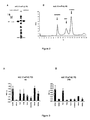
- the three formats are scIL12-scFv(L19), scIL12-SIP(L19) homodimer and p40-scFv(L19)/scFv(L19)-p35 heterodimer.
- scIL12-scFv(L19) depicted in Figure 1 A , is a fusion protein of scIL12 and scFv(L19). This conjugate is monovalent owing to the single scFv antigen-binding site per molecule.
- the scIL12-SIP(L19) homodimer depicted in Figure 1 B , is a homodimer of two fusion proteins, each fusion protein containing scIL12, scFv(L19) and the CH4 domain of human IgE, respectively.
- the conjugate is dimerised through disulphide linkage between the two CH4 domains, forming a mini-antibody or SIP structure. This conjugate is bivalent owing to the presence of two scFv(L19) antigen-binding sites per molecule.
- the p40-scFv(L19)/scFv(L19)-p35 heterodimer is a heterodimer of two different fusion proteins.
- the first fusion protein contains the human IL12 p40 subunit fused to the N terminus of scFv(L19) through a 6 amino acid peptide linker GSADGG (SEQ ID NO: 15).
- the second fusion protein contains scFv(L19) fused to the N terminus of human IL12 p35 subunit through a 6 amino acid peptide linker GSADGG (SEQ ID NO: 15).
- the two fusion proteins are heterodimerised through disulphide linkage between the p40 and p35 subunit, to form the heterodimeric p40-scFv(L19)/scFv(L19)-p35.
- the conjugate is bivalent, owing to the presence of two scFv(L19) antigen-binding sites per molecule.
- the DNA-fragment for scIL12-scFv(L19) was amplified using the pCH33 vector containing the gene for scIL12-scFv(L19)-FLAG [15] as a template.
- the PCR reaction was performed with the primer sp40backEco (5' ccg gaattc atg tgt cct cag aag cta acc atc 3') (SEQ ID NO: 6), which anneals to the endogenous secretion sequence of p40 and appends a restriction site for the endonuclease EcoR1 to its 5'end, and the primer L19stopNotfor (5' ttt tcc ttt t gcggccgc cta tca tca ttt gat ttc cac ctt ggt ccc 3') (SEQ ID NO: 7) appending 3 stop codons followed by a
- HEK 293 cells were transfected with the vector and stable transfectants selected in the presence of G418 (500 ⁇ g/ml).
- Clones of G418-resistant cells were screened for the expression of the fusion protein by ELISA, using recombinant ED-B domain of human fibronectin as an antigen.
- the fusion protein was purified from cell culture medium by affinity chromatography over antigen column as described previously [19, 20] and desalted by dialysis over night at 4°C. The fusion protein was frozen in aliquots at -20°C.
- the size of the scIL12-scFv(L19) fusion protein was analyzed under reducing and non reducing conditions on SDS-PAGE and under native conditions by FPLC gel filtration on a Superdex S-200 column (Amersham Pharmacia Biotech) ( Figure 2 ). Unlike the monomeric original scIL12-scFv(L19)-FLAG fusion protein, about one third of the IL12-L19 protein fraction showed to be a dimer.
- tumour targeting properties of scFv(L19) have been shown to be improved when scFv(L19) was dimerised thanks to the CH4 domain of human IgE, building a mini-antibody structure, also termed "small immune protein" or SIP.
- small immune protein also termed "small immune protein” or SIP.
- the tumour targeting properties of SIP(L19) have been previously described [21]. Therefore, we constructed a homodimer of scIL12-SIP(L19) to test whether this format would also improve targeting of IL12 to tumours.
- the fusion of the CH4 domain to the c-terminus of the scIL12-L19 fragment was performed by one round of PCR and inserting the PCR fragment in a vector already containing the CH4 domain.
- the scIL12-scFv(L19) fragment was amplified from the pCH33 vector containing the gene for scIL12-scFv(L19)-FLAG [15].
- the restriction sites were exchanged with the primer sp40backHind (5'ccgta aagctt atg tgt cct cag aag cta acc atc 3') (SEQ ID NO: 8) that anneals at the 5' end of the p40 secretion sequence and changes the EcoR1 to a HindIII restriction site, and the primer L19forAgelBsp (5' tgt ggg accggt ttt gat ttc cac ctt ggt ccc 3') (SEQ ID NO: 9) annealing at the 3' end, deleting the FLAG tag and introducing an Age1 restriction site which provides cohesive ends with BspE1.
- Age1/BspE1 restriction site is not recleavable with BspE1 any more. This step is necessary because the scIL12 sequence contains a BspE1 restriction site.
- the fragment was now cloned in a mammalian cell pcDNA3.1 (+) expression vector already containing a CH4 domain with a BspE1 restriction site at its 5'end [21].
- the transfection, expression and purification procedure for the scIL12-SIP(L19) was performed as described above for the scIL12-scFv(L19) fusion protein.
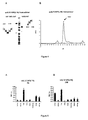
- the size of the IL12-SIP(L19) fusion protein was as well analyzed under reducing and non reducing conditions on SDS-PAGE and under native conditions by FPLC gel filtration on a Superdex S-200 column ( Figure 4 ).
- the scIL12-SIP(L19) protein was purified in a second step over a gel filtration Superdex S-200 column and the dimer fraction radio iodinated immediately after collection.
- the labelled protein was injected in 129SvEv immunocompetent mice bearing F9 murine teratocarcinoma tumours. The mice were sacrificed 4 and 24 hours after injection, the organs were weighed and the radioactivity counted. The accumulation in representative organs and the tumour was expressed in % injected dose per gram of tissue (%ID/g) ( Figure 5 ).
- %ID/g % injected dose per gram of tissue
- the p40-scFv(L19)/scFv(L19)-p35 heterodimer consists of two subunits. One contains a scFv(L19) fragment, fused at the N-terminal extremity of the p35 subunit of IL12 (scFv(L19)-p35). In the second, the subunit p40 of IL12 is fused at the N-terminal end of scFv(L19) (p40-scFv(L19)). The fusion proteins then build the heterodimeric p40-scFv(L19)/scFv(L19)-p35 by means of the disulphide bonds between p40 and p35.
- This heterodimeric antibody-cytokine fusion protein conjugate is expected to have a size of 114 kD when unglycosylated. Owing to different glycosylation states, the molecular weight of the conjugate may vary according to the species in which it is expressed, owing to different glycosylation patterns. Theoretical sizes for the fusion proteins, based on length of DNA sequence without post-translational glycosylation, were 65 kDa for p40-L19, 49 kDa for L19-p35 and 114 kDa for the heterodimer p40-L19/L19-p35.
- the two subunits p40-scFv(L19) and scFv(L19)-p35 were cloned separately into two different vectors, the first containing a myc tag for detection and the second containing a his tag for detection.
- the p40-scFv(L19)-myc fragment was produced by PCR assembly using as templates the pCH33 vector containing the gene encoding the scIL12-scFv(L19)-FLAG protein [15] and the pLB vector containing the gene encoding the SIP(L19) fragment [21].
- a first fragment A containing the p40 moiety was constructed using pCH33 as a template.
- the PCR reaction was performed with a first primer HindSp40back (5 'ccc aagctt atg tgt cct cag aag cta acc atc 3') (SEQ ID NO: 10) annealing to the secretion sequence of the p40 subunit of IL12 introducing a restriction site for the endonuclease HindIII at its 5'end and with a second primer Sp40HaLifor (5' acc tcc atc agc gct tcc gga tcg gac cct gca gg 3') (SEQ ID NO: 11) annealing to the 3'end of p40, appending a part of the linker (GSADGG) to be fused to the second fragment B.
- HindSp40back 5 'ccc aagctt atg tgt cct cag aag cta acc
- This fragment B contributing the scFv(L19) moiety was constructed in 2 rounds of PCR using the template pLB with a first primer LinkL19back (5' gga agc gct gat gga ggt gag gtg cag ctg ttg gag tc 3') (SEQ ID NO: 12) annealing to the 5'end of the scFvL19 appending a part of the linker (GSADGG) (SEQ ID NO: 15) and a second primer L19mycstoBamfor (5' att cag atc ctc ttc tga gat gag ttt tg ttc ttt gat ttc cac ctt ggt ccc ttg 3') (SEQ ID NO: 13) annealing to the 3'end of the scFv(L19) and appending a C-terminal myc tag.
- This fragment was finished in a second round of PCR using the primer LinkL19back and a third primer mycstoBamfor (5' cgc ggatcc cta tca tca att cag atc ctc ttc tga gat gag ttt 3') (SEQ ID NO: 14) appending 3 stop codons and a restriction site for BamH1 to the 5'end of fragment B.
- the scFv(L19)-p35-His fragment was produced by PCR assembling as well using the same plasmids pCH33 and pLB as templates.
- a first fragment C corresponding to the scFv(L19) moiety was constructed from the template pLB with a first primer EcoLonSL19back (5' ccg gaattc gct tgt cga cca tgg gct g 3') (SEQ ID NO: 16) annealing to the secretion sequence of the scFvL19 introducing a restriction site for the endonuclease EcoR1 at its 5'end and a second primer L19HaLifor (5' acc tcc atc agc gct tcc ttt gat ttc cac ctt ggt ccc 3') (SEQ ID NO: 17) annealing to the 3'end of scFv
- a second fragment D containing the p35 moiety was constructed in two rounds of PCR using the template pCH33 with a first primer HaLip35back (5' gga agc gct gat gga ggt agg gtc att cca gtc tct gga 3') (SEQ ID NO: 18) annealing to the 5'end of the mature p35 subunit appending a part of the linker (GSADGG) to its 5'end and a second primer p35hisfor (5' gtg atg gtg atg atg atg atg ggc gga gct cag ata gcc 3') (SEQ ID NO: 19) annealing to the 3'end of the p35 subunit appending a his tag.
- a first primer HaLip35back 5' gga agc gct gat gga ggt agg gtc att cca
- HEK 293 cells were transfected and stable transfectants selected with G418 (500 ⁇ g/ml). Transfected cells were screened for resistant clones expressing the fusion protein by ELISA, using human recombinant EDB as an antigen and anti-his antibody for detection.
- the fusion protein was purified from the cell culture medium by affinity chromatography over an antigen column as described previously [19, 20] desalted by dialyzation over night at 4°C. An SDS PAGE analysis showed the expression to be very week and the protein was shown to consist of monomers, dimers and higher order oligomers.
- HEK 293 cells The cotransfection of HEK 293 cells with the two vectors coding for scFv(L19)-p35 and p40-scFv(L19) was then performed simultaneously.
- the selection for stable transfectants that contain both fusion proteins was performed with G418 (500 ⁇ g/ml) and hygromycine (500 ⁇ g/ml).
- Cells were screened for expression of both proteins with ELISA using recombinant EDB as an antigen and anti-myc antibody as well as anti-his antibody for detection.
- the fusion proteins were purified in a first step by affinity chromatography over an ED-B antigen column as described previously [19, 20] and desalted by dialysis over night at 4°C.
- This first fraction was then purified in a second step over a HisTrap HP 1ml Ni 2+ column (Amersham Biosciences) washing away the free p40-scFv(L19) fragments not bound in the heterodimer (p40-scFv(L19)/scFv(L19)-p35).
- 0.1% Tween 80 was added to the protein that was then frozen in aliquots at -80°C.
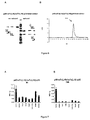
- An SDS PAGE analysis showed under non reduced conditions the protein to be a dimer in two glycosylation states and under reduced conditions the two hetero monomers of different sizes where of the p40-L19 monomer appears in its two different glycosylation states.
- the protein By performing gel filtration with a Superdex S-200 column the protein showed to be a pure dimer under native conditions ( Figure 6 ).
- the correct folding of the fusion protein and building of the correct disulfide bonds were determined by the IL12 activity of the purified heterodimeric protein.
- the IL-12 activity was determined by performing a T cell proliferation assay [24].
- PBMC peripheral blood monocytes
- mitogen phytohemagglutinin (PHA) and IL-2
- PHA phytohemagglutinin
- IL-12 IL-12 activity was determined by performing a T cell proliferation assay [24].
- PBMC peripheral blood monocytes
- mitogen phytohemagglutinin
- IL-2 IL-2
Landscapes
- Health & Medical Sciences (AREA)
- Life Sciences & Earth Sciences (AREA)
- Chemical & Material Sciences (AREA)
- Engineering & Computer Science (AREA)
- Bioinformatics & Cheminformatics (AREA)
- Medicinal Chemistry (AREA)
- General Health & Medical Sciences (AREA)
- Animal Behavior & Ethology (AREA)
- Veterinary Medicine (AREA)
- Public Health (AREA)
- Pharmacology & Pharmacy (AREA)
- Organic Chemistry (AREA)
- Nuclear Medicine, Radiotherapy & Molecular Imaging (AREA)
- Chemical Kinetics & Catalysis (AREA)
- General Chemical & Material Sciences (AREA)
- Epidemiology (AREA)
- Immunology (AREA)
- Molecular Biology (AREA)
- Cell Biology (AREA)
- Physical Education & Sports Medicine (AREA)
- Diabetes (AREA)
- Genetics & Genomics (AREA)
- Zoology (AREA)
- Orthopedic Medicine & Surgery (AREA)
- Proteomics, Peptides & Aminoacids (AREA)
- Biophysics (AREA)
- Biochemistry (AREA)
- Rheumatology (AREA)
- Gastroenterology & Hepatology (AREA)
- Heart & Thoracic Surgery (AREA)
- Cardiology (AREA)
- Toxicology (AREA)
- Pain & Pain Management (AREA)
- Microbiology (AREA)
- Obesity (AREA)
- Hematology (AREA)
- Vascular Medicine (AREA)
- Urology & Nephrology (AREA)
- Endocrinology (AREA)
- Emergency Medicine (AREA)
Claims (35)
- Konjugat, das ein IL12-Heterodimer mit einer ersten und einer zweiten Untereinheit umfasst, worin die erste und zweite Untereinheit an ein Antikörpermolekül konjugiert sind, worin das Antikörpermolekül ein einkettiges Fv (scFv) oder ein Domänenantikörper (dAb) ist.
- Konjugat nach Anspruch 1, worin die erste und zweite Untereinheit des heterodimeren Proteins über eine Disulfidbindung kovalent gebunden sind.
- Konjugat nach Anspruch 1 oder Anspruch 2, worin das Antikörpermolekül ein einkettiges Fv (scFv) ist.
- Konjugat nach Anspruch 1 oder Anspruch 2, worin das Antikörpermolekül ein Einzeldomänenantikörpermolekül (dAb) ist.
- Konjugat nach einem der vorangegangenen Ansprüche, worin die erste Untereinheit als erstes Fusionsprotein an das Antikörpermolekül konjugiert ist und die zweite Untereinheit als zweites Fusionsprotein an das Antikörpermolekül konjugiert ist.
- Konjugat nach einem der vorangegangenen Ansprüche, worin das Konjugat ein Molekulargewicht von 250.000 oder weniger aufweist.
- Konjugat nach Anspruch 6, worin das Konjugat ein Molekulargewicht von 150.000 oder weniger aufweist.
- Konjugat nach Anspruch 7, worin das Konjugat ein Molekulargewicht von 120.000 oder weniger aufweist.
- Konjugat nach einem der vorangegangenen Ansprüche, worin die beiden Antikörpermoleküle identisch sind.
- Konjugat nach einem der Ansprüche 1 bis 9, das ein menschliches IL12-Heterodimer umfasst, welches an und zwischen zwei scFv- oder dAb-Antikörpermoleküle(n) konjugiert ist; worin
das IL12-Heterodimer eine erste und eine zweite Untereinheit aufweist;
die erste Untereinheit als erstes Fusionsprotein an ein scFv- oder dAb-Antikörpermolekül konjugiert ist; und
die zweite Untereinheit als zweites Fusionsprotein an ein scFv- oder dAb-Antikörpermolekül konjugiert ist. - Konjugat nach Anspruch 10, worin die beiden Antikörpermoleküle scFv sind.
- Konjugat nach Anspruch 10, worin die beiden Antikörpermoleküle dAbs sind.
- Konjugat nach Anspruch 11, worin das erste Fusionsprotein eine Aminosäuresequenz aufweist, wie sie in Seq.-ID Nr. 1 dargelegt ist.
- Konjugat nach Anspruch 10 oder Anspruch 13, worin das zweite Fusionsprotein eine Aminosäuresequenz aufweist, wie sie in Seq.-ID Nr. 2 dargelegt ist.
- Konjugat nach einem der Ansprüche 1 bis 14, worin ein oder beide Antikörpermoleküle spezifisch an eine Komponente einer extrazellulären Matrix binden, die mit neoplastischem Wachstum und/oder Angiogenese assoziiert ist.
- Konjugat nach Anspruch 15, worin die Komponente der extrazellulären Matrix Fibronectin-ED-B ist.
- Konjugat nach Anspruch 16, worin das Antikörpermolekül scFv(L19) mit einer VH-Domäne, welche die Aminosäuresequenzen der Seq.-ID Nr. 25, Seq.-ID Nr. 26 und Seq.-ID Nr. 27 umfasst, und einer VL-Domäne, welche die Aminosäuresequenzen der Seq.-ID Nr. 28, Seq.-ID Nr. 29 und Seq.-ID Nr. 30 umfasst, ist.
- Konjugat nach Anspruch 17, worin das Antikörpermolekül scFv(L19) mit einer Aminosäuresequenz ist, wie sie in Seq.-ID Nr. 5 dargelegt ist.
- Konjugat nach Anspruch 15, worin die Komponente der extrazellulären Matrix eine Tesascin-C-Isoform ist.
- Konjugat nach Anspruch 19, worin das Antikörpermolekül scFv(TN11) mit einer Aminosäuresequenz ist, wie sie in Seq.-ID Nr. 21 dargelegt ist.
- Verfahren zur Herstellung eines Konjugats nach einem der Ansprüche 5 bis 20, das Folgendes umfasst:das Exprimieren des ersten und zweiten Fusionsproteins; unddas Konjugieren der ersten und zweiten Untereinheit, um das IL12-Heterodimer zu bilden.
- Verfahren nach Anspruch 21, welches das Expremieren des ersten und zweiten Fusionsproteins in einer Zelle umfasst, die für beide Fusionsproteine kodierende Nucleinsäure enthält.
- Verfahren nach Anspruch 21 oder Anspruch 22, das weiters das Formulieren des Konjugats zu einer pharmazeutischen Zusammensetzung umfasst.
- Zusammensetzung, die Folgendes umfasst:ein erstes Nucleinsäuremolekül, das eine für ein Fusionsprotein kodierende Nucleotidsequenz umfasst, worin das Fusionsprotein ein scFv- oder dAb-Antikörpermolekül und eine IL12-p40-Untereinheit umfasst; undein zweites Nucleinsäuremolekül, das eine für ein Fusionsprotein kodierende Nucleotidsequenz umfasst, worin das Fusionsprotein ein scFv- oder dAb-Antikörpermolekül und eine IL12-p35-Untereinheit umfasst.
- Zusammensetzung nach Anspruch 24, worin das Antikörpermolekül ein scFv ist.
- Zusammensetzung nach Anspruch 24, worin das Antikörpermolekül ein dAb ist.
- Zusammensetzung nach Anspruch 24, worin das Antikörpermolekül wie in einem der Ansprüche 15 bis 20 definiert ist.
- Zusammensetzung nach einem der Ansprüche 24 bis 27, worin das erste und zweite Nucleinsäuremolekül ein erster und zweiter Vektor sind.
- Wirtszelle, die ein erstes und zweites Nucleinsäuremolekül nach einem der Ansprüche 24 bis 28 enthält.
- Pharmazeutische Zusammensetzung, die ein Konjugat nach einem der Ansprüche 1 bis 20 umfasst.
- Konjugat nach einem der Ansprüche 1 bis 20 zur Verwendung bei der Behandlung eines menschlichen oder tierischen Körpers durch eine Therapie.
- Konjugat nach Anspruch 31 zur Verwendung bei der Hemmung von Angiogenese und/oder neoplastischem Wachstum in einem Patienten.
- Konjugat nach Anspruch 32 zur Verwendung bei der Behandlung eines Tumors, von rheumatoider Arthritis, von diabetischer Retinopathie, von altersbedingter Makuladegeneration oder Angiomen.
- Verwendung eines Konjugats nach einem der Ansprüche 13 bis 20 zur Herstellung eines Medikaments zur Hemmung von Angiogenese und/oder neoplastischem Wachstum in einem Patienten.
- Verwendung nach Anspruch 34, worin das Medikament zur Behandlung eines Tumors, von rheumatoider Arthritis, von diabetischer Retinopathie, von altersbedingter Makuladegeneration oder Angiomen dient.
Applications Claiming Priority (2)
| Application Number | Priority Date | Filing Date | Title |
|---|---|---|---|
| US68010505P | 2005-05-11 | 2005-05-11 | |
| PCT/EP2006/004114 WO2006119897A2 (en) | 2005-05-11 | 2006-05-03 | Fusion protein of antibody l19 against fibronectin ed-b and interleukin 12 |
Publications (2)
| Publication Number | Publication Date |
|---|---|
| EP1891102A2 EP1891102A2 (de) | 2008-02-27 |
| EP1891102B1 true EP1891102B1 (de) | 2010-03-03 |
Family
ID=37027526
Family Applications (1)
| Application Number | Title | Priority Date | Filing Date |
|---|---|---|---|
| EP06742774A Active EP1891102B1 (de) | 2005-05-11 | 2006-05-03 | Fusionsprotein von antikörper l19 gegen fibronectin ed-b und interleukin 12 |
Country Status (14)
| Country | Link |
|---|---|
| US (1) | US8455625B2 (de) |
| EP (1) | EP1891102B1 (de) |
| JP (1) | JP2008543278A (de) |
| KR (1) | KR101281208B1 (de) |
| CN (1) | CN101258162A (de) |
| AT (1) | ATE459648T1 (de) |
| AU (1) | AU2006246061A1 (de) |
| BR (1) | BRPI0609100A2 (de) |
| CA (1) | CA2607954A1 (de) |
| DE (1) | DE602006012667D1 (de) |
| EA (1) | EA011992B1 (de) |
| ES (1) | ES2341126T3 (de) |
| MX (1) | MX2007013875A (de) |
| WO (1) | WO2006119897A2 (de) |
Families Citing this family (73)
| Publication number | Priority date | Publication date | Assignee | Title |
|---|---|---|---|---|
| DE19932688B4 (de) | 1999-07-13 | 2009-10-08 | Scil Proteins Gmbh | Design von Beta-Faltblatt-Proteinen des gamma-II-kristallins antikörperähnlichen |
| DE10324447A1 (de) | 2003-05-28 | 2004-12-30 | Scil Proteins Gmbh | Generierung künstlicher Bindungsproteine auf der Grundlage von Ubiquitin |
| EA200802289A1 (ru) * | 2006-05-08 | 2009-04-28 | Филоджен Спа | Направляемые к мишени антителами цитокины для терапии |
| EP1925664A1 (de) | 2006-11-15 | 2008-05-28 | Scil proteins GmbH | Künstliche Bindungsproteine auf Grundlage einer modifizierten alpha-Helix Region von Ubiquitin |
| EP2142567B1 (de) | 2007-04-02 | 2013-01-16 | Philogen S.p.A. | Das ed-a-antigen von fibrinogen ist mit der gefässneubildung von tumormetastasen assoziiert |
| US10202442B2 (en) | 2007-07-25 | 2019-02-12 | Philogen S.P.A. | Antigen associated with lung cancers and lymphomas |
| WO2009056268A1 (en) | 2007-10-30 | 2009-05-07 | Philogen S.P.A. | An antigen associated with rheumatoid arthritis |
| WO2009126725A1 (en) * | 2008-04-09 | 2009-10-15 | The Regents Of The University Of Michigan | Method of modulating neovascularization |
| US8580267B2 (en) | 2008-12-19 | 2013-11-12 | Philogen S.P.A. | Immunocytokines for tumour therapy with chemotherapeutic agents |
| EP2461832B1 (de) | 2009-08-05 | 2017-06-28 | Philogen S.p.A. | Abzielung auf die neovaskulatur des knochenmarks |
| ES2534085T3 (es) | 2009-08-17 | 2015-04-17 | Roche Glycart Ag | Inmunoconjugados dirigidos |
| AU2010332932B2 (en) | 2009-12-14 | 2013-01-17 | Navigo Proteins Gmbh | Modified ubiquitin proteins having a specific binding activity for the extradomain B of fibronectin |
| WO2012001196A2 (es) | 2010-06-28 | 2012-01-05 | Proyecto De Biomedicina Cima, S.L. | Vectores alfavirales y usos de los mismos para la expresión de genes heterólogos |
| RU2429005C1 (ru) * | 2010-10-07 | 2011-09-20 | Учреждение Российской академии наук Институт биоорганической химии им. академиков М.М. Шемякина и Ю.А. Овчинникова РАН | Способ стимуляции противоопухолевой активности цитотоксических эффекторов иммунной системы |
| HUE029139T2 (hu) * | 2011-02-10 | 2017-02-28 | Roche Glycart Ag | Mutáns interleukin-2 polipeptidek |
| MX2013009151A (es) * | 2011-02-10 | 2013-08-29 | Roche Glycart Ag | Inmunoterapia mejorada. |
| EA201892619A1 (ru) | 2011-04-29 | 2019-04-30 | Роше Гликарт Аг | Иммуноконъюгаты, содержащие мутантные полипептиды интерлейкина-2 |
| WO2012171541A1 (en) | 2011-06-15 | 2012-12-20 | Scil Proteins Gmbh | Human fusion proteins comprising interferons and hetero-dimeric modified ubiquitin proteins |
| JP6146821B2 (ja) | 2011-06-15 | 2017-06-14 | ナフィゴ プロテインズ ゲゼルシャフト ミット ベシュレンクテル ハフツングNavigo Proteins GmbH | 修飾ユビキチンに基づく二量体型結合タンパク質 |
| EP2736535B1 (de) | 2011-07-27 | 2018-10-17 | Philogen S.p.A. | Il-12 immunokonjugate |
| ES2762179T3 (es) * | 2011-09-26 | 2020-05-22 | Philogen Spa | Terapia de combinación de inmunocitocinas |
| WO2013186329A1 (en) | 2012-06-13 | 2013-12-19 | Scil Proteins Gmbh | Human fusion proteins comprising single chain tnfalpha and targeting domains |
| RU2612878C2 (ru) | 2012-10-03 | 2017-03-13 | Филоджен С.П.А. | Антигены, ассоциированные с воспалительным заболеванием кишечника |
| WO2014094799A1 (en) | 2012-12-19 | 2014-06-26 | Scil-Proteins-Gmbh | Ubiquitin moieties as a means for prolonging serum half-life |
| WO2014182532A1 (en) | 2013-05-07 | 2014-11-13 | The Usa, As Represented By The Secretary, Dept. Of Health And Human Services | Mesothelin-specific immunocytokine and use thereof |
| JP2017501712A (ja) * | 2013-12-18 | 2017-01-19 | イントレキソン コーポレーション | 単鎖il−12核酸、ポリペプチド、およびそれらの使用 |
| GB201409558D0 (en) | 2014-05-29 | 2014-07-16 | Ucb Biopharma Sprl | Method |
| GB201412658D0 (en) | 2014-07-16 | 2014-08-27 | Ucb Biopharma Sprl | Molecules |
| GB201412659D0 (en) | 2014-07-16 | 2014-08-27 | Ucb Biopharma Sprl | Molecules |
| JP6738340B2 (ja) | 2015-02-06 | 2020-08-12 | ナフィゴ プロテインズ ゲゼルシャフト ミット ベシュレンクテル ハフツングNavigo Proteins GmbH | 新規なegfr結合タンパク質 |
| RU2018105687A (ru) | 2015-07-16 | 2019-08-16 | Филоджен С.П.А. | Иммуноконъюгаты на основе il22 |
| AU2016293063B2 (en) | 2015-07-16 | 2018-11-08 | Navigo Proteins Gmbh | Novel immunoglobulin-binding proteins and their use in affinity purification |
| GB201601073D0 (en) | 2016-01-20 | 2016-03-02 | Ucb Biopharma Sprl | Antibodies |
| GB201601077D0 (en) | 2016-01-20 | 2016-03-02 | Ucb Biopharma Sprl | Antibody molecule |
| GB201601075D0 (en) | 2016-01-20 | 2016-03-02 | Ucb Biopharma Sprl | Antibodies molecules |
| JP2018520675A (ja) | 2015-07-20 | 2018-08-02 | ナフィゴ プロテインズ ゲゼルシャフト ミット ベシュレンクテル ハフツングNavigo Proteins GmbH | ジユビキチン変異タンパク質をベースとした新規結合タンパク質及びその生成方法 |
| GB201521383D0 (en) | 2015-12-03 | 2016-01-20 | Ucb Biopharma Sprl And Ucb Celltech | Method |
| GB201521389D0 (en) | 2015-12-03 | 2016-01-20 | Ucb Biopharma Sprl | Method |
| GB201521391D0 (en) | 2015-12-03 | 2016-01-20 | Ucb Biopharma Sprl | Antibodies |
| GB201521382D0 (en) | 2015-12-03 | 2016-01-20 | Ucb Biopharma Sprl | Antibodies |
| GB201521393D0 (en) | 2015-12-03 | 2016-01-20 | Ucb Biopharma Sprl | Antibodies |
| EP3452097A1 (de) | 2016-05-04 | 2019-03-13 | Navigo Proteins GmbH | Zielgerichtete verbindungen zur stellenspezifischen kupplung chemischer einheiten mit einem peptidlinker |
| MA45779A (fr) | 2016-07-29 | 2019-06-05 | Juno Therapeutics Inc | Polypeptides immunomdulateurs et compositions et procédés associés |
| SG11201901066UA (en) | 2016-08-11 | 2019-03-28 | Navigo Proteins Gmbh | Novel alkaline stable immunoglobulin-binding proteins |
| SG11201903400WA (en) | 2016-10-17 | 2019-05-30 | Pfizer | Anti-edb antibodies and antibody-drug conjugates |
| GB201621806D0 (en) | 2016-12-21 | 2017-02-01 | Philogen Spa | Immunocytokines with progressive activation mechanism |
| CN108250302A (zh) * | 2016-12-29 | 2018-07-06 | 天津天锐生物科技有限公司 | 一种多功能蛋白质 |
| US20210017247A1 (en) | 2017-07-03 | 2021-01-21 | Torque Therapeutics, Inc. | Fusion Molecules Targeting Immune Regulatory Cells and Uses Thereof |
| WO2019091918A1 (en) | 2017-11-07 | 2019-05-16 | Navigo Proteins Gmbh | Fusion proteins with specificity for ed-b and long serum half-life for diagnosis or treatment of cancer |
| TWI844524B (zh) * | 2018-02-09 | 2024-06-11 | 義大利商費洛根公司 | 靶向edb之il-12組合物 |
| KR102140557B1 (ko) * | 2018-03-30 | 2020-08-03 | 한국과학기술원 | 단백질-단백질 결합체를 형성 매개 펩타이드 및 이를 이용한 단백질-단백질 결합체 형성 방법 |
| CA3109361A1 (en) * | 2018-08-30 | 2020-03-05 | HCW Biologics, Inc. | Single-chain and multi-chain chimeric polypeptides and uses thereof |
| US11518792B2 (en) | 2018-08-30 | 2022-12-06 | HCW Biologics, Inc. | Multi-chain chimeric polypeptides and uses thereof |
| US11401324B2 (en) | 2018-08-30 | 2022-08-02 | HCW Biologics, Inc. | Single-chain chimeric polypeptides and uses thereof |
| EP3660039A1 (de) | 2018-11-30 | 2020-06-03 | Philogen S.p.A. | Il2-immunkonjugate |
| WO2020070150A1 (en) | 2018-10-02 | 2020-04-09 | Philogen S.P.A | Il2 immunoconjugates |
| MA54501A (fr) | 2018-12-18 | 2021-10-27 | Navigo Proteins Gmbh | Nouvelles protéines de liaison spécifiques de folr1 pour le diagnostic et le traitement du cancer |
| WO2020160350A1 (en) * | 2019-02-01 | 2020-08-06 | Board Of Regents, The University Of Texas System | Modified il-12 t cell therapy for the treatment of cancer |
| WO2020161602A1 (en) | 2019-02-04 | 2020-08-13 | University Of Tartu | Bi-specific extracellular matrix binding peptides and methods of use thereof |
| CN111848811B (zh) * | 2019-04-27 | 2024-10-01 | 张晋宇 | 一种蛋白质异二聚体及其用途 |
| WO2020249757A1 (en) | 2019-06-14 | 2020-12-17 | Philogen S.P.A | Immunoconjugates comprising a single chain diabody and interleukin-15 or interleukin-15 and a sushi domain of interleukin-15 receptor alpha |
| CN120924491A (zh) | 2019-06-21 | 2025-11-11 | 免疫生物公司 | 多链嵌合多肽和其用途 |
| WO2021163299A1 (en) | 2020-02-11 | 2021-08-19 | HCW Biologics, Inc. | Chromatography resin and uses thereof |
| CA3169243A1 (en) | 2020-02-11 | 2021-08-19 | HCW Biologics, Inc. | Methods of activating regulatory t cells |
| AU2021220870A1 (en) | 2020-02-11 | 2022-08-04 | Immunitybio, Inc. | Methods of treating age-related and inflammatory diseases |
| US20230312726A1 (en) * | 2020-04-14 | 2023-10-05 | Philogen S.P.A. | Dosage units and regimen, uses, methods or formulations of compositions comprising a recombinant protein comprising interleukin-12 and an antibody binding the extra-domain b of fibronectin |
| CN115836087A (zh) | 2020-04-29 | 2023-03-21 | Hcw生物科技公司 | 抗cd26蛋白及其用途 |
| US12024545B2 (en) | 2020-06-01 | 2024-07-02 | HCW Biologics, Inc. | Methods of treating aging-related disorders |
| WO2022094046A1 (en) * | 2020-10-29 | 2022-05-05 | Proviva Therapeutics (Hong Kong) Limited | Il-12 compositions and methods of use thereof |
| AU2023206004B2 (en) | 2022-01-04 | 2025-04-17 | Philogen S.P.A. | Combination of an immunocytokine comprising il-12 and a kinase inhibitor |
| WO2023201311A1 (en) | 2022-04-13 | 2023-10-19 | HCW Biologics, Inc. | Multi-chain chimeric polypeptide for use in the treatment of treating neuroinflammatory disorder |
| CN119816493A (zh) | 2022-09-06 | 2025-04-11 | 菲罗化学股份公司 | 用于靶向递送应用的多价成纤维细胞激活蛋白配体 |
| WO2026003203A1 (en) | 2024-06-27 | 2026-01-02 | Philogen S.P.A. | Combination of an immunocytokine comprising targeted il2 and a jak inhibitor |
Family Cites Families (1)
| Publication number | Priority date | Publication date | Assignee | Title |
|---|---|---|---|---|
| EP1489100B1 (de) * | 1997-12-08 | 2016-06-15 | Merck Patent GmbH | Heterodimäre Fusionsproteine zur Verwendung für gezielte Immuntherapie und allgemeine Immunerregung |
-
2006
- 2006-05-03 AT AT06742774T patent/ATE459648T1/de active
- 2006-05-03 CA CA002607954A patent/CA2607954A1/en not_active Abandoned
- 2006-05-03 ES ES06742774T patent/ES2341126T3/es active Active
- 2006-05-03 MX MX2007013875A patent/MX2007013875A/es active IP Right Grant
- 2006-05-03 WO PCT/EP2006/004114 patent/WO2006119897A2/en not_active Ceased
- 2006-05-03 CN CNA2006800158042A patent/CN101258162A/zh active Pending
- 2006-05-03 US US11/913,483 patent/US8455625B2/en not_active Expired - Fee Related
- 2006-05-03 KR KR1020077028774A patent/KR101281208B1/ko not_active Expired - Fee Related
- 2006-05-03 JP JP2008510449A patent/JP2008543278A/ja active Pending
- 2006-05-03 BR BRPI0609100-8A patent/BRPI0609100A2/pt not_active IP Right Cessation
- 2006-05-03 AU AU2006246061A patent/AU2006246061A1/en not_active Abandoned
- 2006-05-03 DE DE602006012667T patent/DE602006012667D1/de active Active
- 2006-05-03 EA EA200702460A patent/EA011992B1/ru not_active IP Right Cessation
- 2006-05-03 EP EP06742774A patent/EP1891102B1/de active Active
Non-Patent Citations (2)
| Title |
|---|
| D'AMATO R.J.; ADAMIS A.P.: "Angiogenesis Inhibition in Age-related Macular Degeneration", OPHTHALMOLOGY, vol. 102, no. 9, September 1995 (1995-09-01), pages 1262 - 1263 * |
| NILSSON F.; KOSMEHL H.; ZARDI L.; NERI D.: "Targeted Delivery of Tissue Factor to the ED-B Domain of Fibronectin, a Marker of Angiogenesis, Mediates the Infarction of Solid Tumors in Mice", CANCER RESEARCH, vol. 61, 15 January 2001 (2001-01-15), pages 711 - 716, XP002339889 * |
Also Published As
| Publication number | Publication date |
|---|---|
| EA200702460A1 (ru) | 2008-06-30 |
| DE602006012667D1 (de) | 2010-04-15 |
| US20090035255A1 (en) | 2009-02-05 |
| WO2006119897A3 (en) | 2007-03-15 |
| KR101281208B1 (ko) | 2013-07-26 |
| KR20080009161A (ko) | 2008-01-24 |
| EA011992B1 (ru) | 2009-06-30 |
| EP1891102A2 (de) | 2008-02-27 |
| US8455625B2 (en) | 2013-06-04 |
| ATE459648T1 (de) | 2010-03-15 |
| ES2341126T3 (es) | 2010-06-15 |
| WO2006119897A2 (en) | 2006-11-16 |
| CN101258162A (zh) | 2008-09-03 |
| BRPI0609100A2 (pt) | 2010-02-17 |
| CA2607954A1 (en) | 2006-11-16 |
| JP2008543278A (ja) | 2008-12-04 |
| HK1113579A1 (en) | 2008-10-10 |
| AU2006246061A1 (en) | 2006-11-16 |
| MX2007013875A (es) | 2008-01-28 |
Similar Documents
| Publication | Publication Date | Title |
|---|---|---|
| EP1891102B1 (de) | Fusionsprotein von antikörper l19 gegen fibronectin ed-b und interleukin 12 | |
| US11274133B2 (en) | IL2 and TNF immunoconjugates | |
| ES2893249T3 (es) | Inmunoconjugados que comprenden IL-2, anticuerpo anti-fibronectina y TNF-alfa mutante | |
| US20160200789A1 (en) | Il4 conjugated to antibodies against extracellular matrix components | |
| US20200270322A1 (en) | Novel interleukin 4 immunoconjugates | |
| JP2018525032A (ja) | Il22免疫コンジュゲート | |
| WO2020249757A1 (en) | Immunoconjugates comprising a single chain diabody and interleukin-15 or interleukin-15 and a sushi domain of interleukin-15 receptor alpha | |
| HK1113579B (en) | Fusion protein of antibody l19 against fibronectin ed-b and interleukin 12 | |
| HK40051742A (en) | Immunoconjugates comprising il-2, anti-fibronectin antibody and mutant tnf-alpha |
Legal Events
| Date | Code | Title | Description |
|---|---|---|---|
| PUAI | Public reference made under article 153(3) epc to a published international application that has entered the european phase |
Free format text: ORIGINAL CODE: 0009012 |
|
| 17P | Request for examination filed |
Effective date: 20071130 |
|
| AK | Designated contracting states |
Kind code of ref document: A2 Designated state(s): AT BE BG CH CY CZ DE DK EE ES FI FR GB GR HU IE IS IT LI LT LU LV MC NL PL PT RO SE SI SK TR |
|
| DAX | Request for extension of the european patent (deleted) | ||
| 17Q | First examination report despatched |
Effective date: 20080820 |
|
| REG | Reference to a national code |
Ref country code: HK Ref legal event code: DE Ref document number: 1113579 Country of ref document: HK |
|
| GRAP | Despatch of communication of intention to grant a patent |
Free format text: ORIGINAL CODE: EPIDOSNIGR1 |
|
| GRAS | Grant fee paid |
Free format text: ORIGINAL CODE: EPIDOSNIGR3 |
|
| GRAA | (expected) grant |
Free format text: ORIGINAL CODE: 0009210 |
|
| AK | Designated contracting states |
Kind code of ref document: B1 Designated state(s): AT BE BG CH CY CZ DE DK EE ES FI FR GB GR HU IE IS IT LI LT LU LV MC NL PL PT RO SE SI SK TR |
|
| REG | Reference to a national code |
Ref country code: GB Ref legal event code: FG4D |
|
| REG | Reference to a national code |
Ref country code: CH Ref legal event code: EP |
|
| REG | Reference to a national code |
Ref country code: IE Ref legal event code: FG4D |
|
| REF | Corresponds to: |
Ref document number: 602006012667 Country of ref document: DE Date of ref document: 20100415 Kind code of ref document: P |
|
| REG | Reference to a national code |
Ref country code: HK Ref legal event code: GR Ref document number: 1113579 Country of ref document: HK |
|
| REG | Reference to a national code |
Ref country code: NL Ref legal event code: T3 |
|
| REG | Reference to a national code |
Ref country code: ES Ref legal event code: FG2A Ref document number: 2341126 Country of ref document: ES Kind code of ref document: T3 |
|
| PG25 | Lapsed in a contracting state [announced via postgrant information from national office to epo] |
Ref country code: LT Free format text: LAPSE BECAUSE OF FAILURE TO SUBMIT A TRANSLATION OF THE DESCRIPTION OR TO PAY THE FEE WITHIN THE PRESCRIBED TIME-LIMIT Effective date: 20100303 |
|
| PGFP | Annual fee paid to national office [announced via postgrant information from national office to epo] |
Ref country code: IE Payment date: 20100525 Year of fee payment: 5 |
|
| LTIE | Lt: invalidation of european patent or patent extension |
Effective date: 20100303 |
|
| PG25 | Lapsed in a contracting state [announced via postgrant information from national office to epo] |
Ref country code: FI Free format text: LAPSE BECAUSE OF FAILURE TO SUBMIT A TRANSLATION OF THE DESCRIPTION OR TO PAY THE FEE WITHIN THE PRESCRIBED TIME-LIMIT Effective date: 20100303 Ref country code: SI Free format text: LAPSE BECAUSE OF FAILURE TO SUBMIT A TRANSLATION OF THE DESCRIPTION OR TO PAY THE FEE WITHIN THE PRESCRIBED TIME-LIMIT Effective date: 20100303 Ref country code: PL Free format text: LAPSE BECAUSE OF FAILURE TO SUBMIT A TRANSLATION OF THE DESCRIPTION OR TO PAY THE FEE WITHIN THE PRESCRIBED TIME-LIMIT Effective date: 20100303 Ref country code: LV Free format text: LAPSE BECAUSE OF FAILURE TO SUBMIT A TRANSLATION OF THE DESCRIPTION OR TO PAY THE FEE WITHIN THE PRESCRIBED TIME-LIMIT Effective date: 20100303 |
|
| PGFP | Annual fee paid to national office [announced via postgrant information from national office to epo] |
Ref country code: NL Payment date: 20100524 Year of fee payment: 5 |
|
| PG25 | Lapsed in a contracting state [announced via postgrant information from national office to epo] |
Ref country code: EE Free format text: LAPSE BECAUSE OF FAILURE TO SUBMIT A TRANSLATION OF THE DESCRIPTION OR TO PAY THE FEE WITHIN THE PRESCRIBED TIME-LIMIT Effective date: 20100303 Ref country code: GR Free format text: LAPSE BECAUSE OF FAILURE TO SUBMIT A TRANSLATION OF THE DESCRIPTION OR TO PAY THE FEE WITHIN THE PRESCRIBED TIME-LIMIT Effective date: 20100604 Ref country code: RO Free format text: LAPSE BECAUSE OF FAILURE TO SUBMIT A TRANSLATION OF THE DESCRIPTION OR TO PAY THE FEE WITHIN THE PRESCRIBED TIME-LIMIT Effective date: 20100303 Ref country code: CY Free format text: LAPSE BECAUSE OF FAILURE TO SUBMIT A TRANSLATION OF THE DESCRIPTION OR TO PAY THE FEE WITHIN THE PRESCRIBED TIME-LIMIT Effective date: 20100303 Ref country code: SE Free format text: LAPSE BECAUSE OF FAILURE TO SUBMIT A TRANSLATION OF THE DESCRIPTION OR TO PAY THE FEE WITHIN THE PRESCRIBED TIME-LIMIT Effective date: 20100303 |
|
| PGFP | Annual fee paid to national office [announced via postgrant information from national office to epo] |
Ref country code: BE Payment date: 20100531 Year of fee payment: 5 |
|
| PG25 | Lapsed in a contracting state [announced via postgrant information from national office to epo] |
Ref country code: IS Free format text: LAPSE BECAUSE OF FAILURE TO SUBMIT A TRANSLATION OF THE DESCRIPTION OR TO PAY THE FEE WITHIN THE PRESCRIBED TIME-LIMIT Effective date: 20100703 Ref country code: CZ Free format text: LAPSE BECAUSE OF FAILURE TO SUBMIT A TRANSLATION OF THE DESCRIPTION OR TO PAY THE FEE WITHIN THE PRESCRIBED TIME-LIMIT Effective date: 20100303 Ref country code: BG Free format text: LAPSE BECAUSE OF FAILURE TO SUBMIT A TRANSLATION OF THE DESCRIPTION OR TO PAY THE FEE WITHIN THE PRESCRIBED TIME-LIMIT Effective date: 20100603 Ref country code: SK Free format text: LAPSE BECAUSE OF FAILURE TO SUBMIT A TRANSLATION OF THE DESCRIPTION OR TO PAY THE FEE WITHIN THE PRESCRIBED TIME-LIMIT Effective date: 20100303 |
|
| PG25 | Lapsed in a contracting state [announced via postgrant information from national office to epo] |
Ref country code: MC Free format text: LAPSE BECAUSE OF NON-PAYMENT OF DUE FEES Effective date: 20100531 |
|
| PLBE | No opposition filed within time limit |
Free format text: ORIGINAL CODE: 0009261 |
|
| STAA | Information on the status of an ep patent application or granted ep patent |
Free format text: STATUS: NO OPPOSITION FILED WITHIN TIME LIMIT |
|
| PG25 | Lapsed in a contracting state [announced via postgrant information from national office to epo] |
Ref country code: DK Free format text: LAPSE BECAUSE OF FAILURE TO SUBMIT A TRANSLATION OF THE DESCRIPTION OR TO PAY THE FEE WITHIN THE PRESCRIBED TIME-LIMIT Effective date: 20100303 Ref country code: PT Free format text: LAPSE BECAUSE OF FAILURE TO SUBMIT A TRANSLATION OF THE DESCRIPTION OR TO PAY THE FEE WITHIN THE PRESCRIBED TIME-LIMIT Effective date: 20100705 |
|
| 26N | No opposition filed |
Effective date: 20101206 |
|
| BERE | Be: lapsed |
Owner name: PHILOGEN S.P.A. Effective date: 20110531 |
|
| REG | Reference to a national code |
Ref country code: NL Ref legal event code: V1 Effective date: 20111201 |
|
| PG25 | Lapsed in a contracting state [announced via postgrant information from national office to epo] |
Ref country code: NL Free format text: LAPSE BECAUSE OF NON-PAYMENT OF DUE FEES Effective date: 20111201 |
|
| REG | Reference to a national code |
Ref country code: IE Ref legal event code: MM4A |
|
| PG25 | Lapsed in a contracting state [announced via postgrant information from national office to epo] |
Ref country code: BE Free format text: LAPSE BECAUSE OF NON-PAYMENT OF DUE FEES Effective date: 20110531 |
|
| PG25 | Lapsed in a contracting state [announced via postgrant information from national office to epo] |
Ref country code: IE Free format text: LAPSE BECAUSE OF NON-PAYMENT OF DUE FEES Effective date: 20110503 |
|
| PG25 | Lapsed in a contracting state [announced via postgrant information from national office to epo] |
Ref country code: HU Free format text: LAPSE BECAUSE OF FAILURE TO SUBMIT A TRANSLATION OF THE DESCRIPTION OR TO PAY THE FEE WITHIN THE PRESCRIBED TIME-LIMIT Effective date: 20100904 Ref country code: LU Free format text: LAPSE BECAUSE OF NON-PAYMENT OF DUE FEES Effective date: 20100503 |
|
| PG25 | Lapsed in a contracting state [announced via postgrant information from national office to epo] |
Ref country code: TR Free format text: LAPSE BECAUSE OF FAILURE TO SUBMIT A TRANSLATION OF THE DESCRIPTION OR TO PAY THE FEE WITHIN THE PRESCRIBED TIME-LIMIT Effective date: 20100303 |
|
| REG | Reference to a national code |
Ref country code: AT Ref legal event code: MM01 Ref document number: 459648 Country of ref document: AT Kind code of ref document: T Effective date: 20110503 |
|
| PG25 | Lapsed in a contracting state [announced via postgrant information from national office to epo] |
Ref country code: AT Free format text: LAPSE BECAUSE OF NON-PAYMENT OF DUE FEES Effective date: 20110503 |
|
| REG | Reference to a national code |
Ref country code: FR Ref legal event code: PLFP Year of fee payment: 11 |
|
| REG | Reference to a national code |
Ref country code: FR Ref legal event code: PLFP Year of fee payment: 12 |
|
| REG | Reference to a national code |
Ref country code: FR Ref legal event code: PLFP Year of fee payment: 13 |
|
| P01 | Opt-out of the competence of the unified patent court (upc) registered |
Effective date: 20230523 |
|
| PGFP | Annual fee paid to national office [announced via postgrant information from national office to epo] |
Ref country code: IT Payment date: 20230522 Year of fee payment: 18 Ref country code: FR Payment date: 20230425 Year of fee payment: 18 Ref country code: ES Payment date: 20230601 Year of fee payment: 18 Ref country code: DE Payment date: 20230425 Year of fee payment: 18 Ref country code: CH Payment date: 20230602 Year of fee payment: 18 |
|
| PGFP | Annual fee paid to national office [announced via postgrant information from national office to epo] |
Ref country code: GB Payment date: 20230419 Year of fee payment: 18 |
|
| REG | Reference to a national code |
Ref country code: DE Ref legal event code: R119 Ref document number: 602006012667 Country of ref document: DE |
|
| REG | Reference to a national code |
Ref country code: CH Ref legal event code: PL |
|
| GBPC | Gb: european patent ceased through non-payment of renewal fee |
Effective date: 20240503 |
|
| PG25 | Lapsed in a contracting state [announced via postgrant information from national office to epo] |
Ref country code: CH Free format text: LAPSE BECAUSE OF NON-PAYMENT OF DUE FEES Effective date: 20240531 |
|
| PG25 | Lapsed in a contracting state [announced via postgrant information from national office to epo] |
Ref country code: DE Free format text: LAPSE BECAUSE OF NON-PAYMENT OF DUE FEES Effective date: 20241203 |
|
| PG25 | Lapsed in a contracting state [announced via postgrant information from national office to epo] |
Ref country code: FR Free format text: LAPSE BECAUSE OF NON-PAYMENT OF DUE FEES Effective date: 20240531 |
|
| PG25 | Lapsed in a contracting state [announced via postgrant information from national office to epo] |
Ref country code: IT Free format text: LAPSE BECAUSE OF NON-PAYMENT OF DUE FEES Effective date: 20240503 Ref country code: GB Free format text: LAPSE BECAUSE OF NON-PAYMENT OF DUE FEES Effective date: 20240503 |
|
| REG | Reference to a national code |
Ref country code: ES Ref legal event code: FD2A Effective date: 20250626 |
|
| PG25 | Lapsed in a contracting state [announced via postgrant information from national office to epo] |
Ref country code: ES Free format text: LAPSE BECAUSE OF NON-PAYMENT OF DUE FEES Effective date: 20240504 |