EP1789559B1 - Methods for constructing antibiotic resistance free vaccines - Google Patents
Methods for constructing antibiotic resistance free vaccines Download PDFInfo
- Publication number
- EP1789559B1 EP1789559B1 EP05808671.1A EP05808671A EP1789559B1 EP 1789559 B1 EP1789559 B1 EP 1789559B1 EP 05808671 A EP05808671 A EP 05808671A EP 1789559 B1 EP1789559 B1 EP 1789559B1
- Authority
- EP
- European Patent Office
- Prior art keywords
- plasmid
- listeria
- gene
- strain
- antigen
- Prior art date
- Legal status (The legal status is an assumption and is not a legal conclusion. Google has not performed a legal analysis and makes no representation as to the accuracy of the status listed.)
- Expired - Lifetime
Links
Images



Classifications
-
- A—HUMAN NECESSITIES
- A61—MEDICAL OR VETERINARY SCIENCE; HYGIENE
- A61K—PREPARATIONS FOR MEDICAL, DENTAL OR TOILETRY PURPOSES
- A61K35/00—Medicinal preparations containing materials or reaction products thereof with undetermined constitution
- A61K35/66—Microorganisms or materials therefrom
- A61K35/74—Bacteria
-
- A—HUMAN NECESSITIES
- A61—MEDICAL OR VETERINARY SCIENCE; HYGIENE
- A61K—PREPARATIONS FOR MEDICAL, DENTAL OR TOILETRY PURPOSES
- A61K39/00—Medicinal preparations containing antigens or antibodies
- A61K39/12—Viral antigens
-
- A—HUMAN NECESSITIES
- A61—MEDICAL OR VETERINARY SCIENCE; HYGIENE
- A61K—PREPARATIONS FOR MEDICAL, DENTAL OR TOILETRY PURPOSES
- A61K40/00—Cellular immunotherapy
- A61K40/10—Cellular immunotherapy characterised by the cell type used
- A61K40/11—T-cells, e.g. tumour infiltrating lymphocytes [TIL] or regulatory T [Treg] cells; Lymphokine-activated killer [LAK] cells
-
- A—HUMAN NECESSITIES
- A61—MEDICAL OR VETERINARY SCIENCE; HYGIENE
- A61K—PREPARATIONS FOR MEDICAL, DENTAL OR TOILETRY PURPOSES
- A61K40/00—Cellular immunotherapy
- A61K40/40—Cellular immunotherapy characterised by antigens that are targeted or presented by cells of the immune system
- A61K40/46—Viral antigens
-
- C—CHEMISTRY; METALLURGY
- C12—BIOCHEMISTRY; BEER; SPIRITS; WINE; VINEGAR; MICROBIOLOGY; ENZYMOLOGY; MUTATION OR GENETIC ENGINEERING
- C12N—MICROORGANISMS OR ENZYMES; COMPOSITIONS THEREOF; PROPAGATING, PRESERVING, OR MAINTAINING MICROORGANISMS; MUTATION OR GENETIC ENGINEERING; CULTURE MEDIA
- C12N15/00—Mutation or genetic engineering; DNA or RNA concerning genetic engineering, vectors, e.g. plasmids, or their isolation, preparation or purification; Use of hosts therefor
- C12N15/09—Recombinant DNA-technology
- C12N15/11—DNA or RNA fragments; Modified forms thereof; Non-coding nucleic acids having a biological activity
- C12N15/52—Genes encoding for enzymes or proenzymes
-
- C—CHEMISTRY; METALLURGY
- C12—BIOCHEMISTRY; BEER; SPIRITS; WINE; VINEGAR; MICROBIOLOGY; ENZYMOLOGY; MUTATION OR GENETIC ENGINEERING
- C12N—MICROORGANISMS OR ENZYMES; COMPOSITIONS THEREOF; PROPAGATING, PRESERVING, OR MAINTAINING MICROORGANISMS; MUTATION OR GENETIC ENGINEERING; CULTURE MEDIA
- C12N15/00—Mutation or genetic engineering; DNA or RNA concerning genetic engineering, vectors, e.g. plasmids, or their isolation, preparation or purification; Use of hosts therefor
- C12N15/09—Recombinant DNA-technology
- C12N15/63—Introduction of foreign genetic material using vectors; Vectors; Use of hosts therefor; Regulation of expression
- C12N15/74—Vectors or expression systems specially adapted for prokaryotic hosts other than E. coli, e.g. Lactobacillus, Micromonospora
-
- C—CHEMISTRY; METALLURGY
- C12—BIOCHEMISTRY; BEER; SPIRITS; WINE; VINEGAR; MICROBIOLOGY; ENZYMOLOGY; MUTATION OR GENETIC ENGINEERING
- C12N—MICROORGANISMS OR ENZYMES; COMPOSITIONS THEREOF; PROPAGATING, PRESERVING, OR MAINTAINING MICROORGANISMS; MUTATION OR GENETIC ENGINEERING; CULTURE MEDIA
- C12N7/00—Viruses; Bacteriophages; Compositions thereof; Preparation or purification thereof
-
- C—CHEMISTRY; METALLURGY
- C12—BIOCHEMISTRY; BEER; SPIRITS; WINE; VINEGAR; MICROBIOLOGY; ENZYMOLOGY; MUTATION OR GENETIC ENGINEERING
- C12N—MICROORGANISMS OR ENZYMES; COMPOSITIONS THEREOF; PROPAGATING, PRESERVING, OR MAINTAINING MICROORGANISMS; MUTATION OR GENETIC ENGINEERING; CULTURE MEDIA
- C12N9/00—Enzymes; Proenzymes; Compositions thereof; Processes for preparing, activating, inhibiting, separating or purifying enzymes
- C12N9/10—Transferases (2.)
- C12N9/1096—Transferases (2.) transferring nitrogenous groups (2.6)
-
- C—CHEMISTRY; METALLURGY
- C12—BIOCHEMISTRY; BEER; SPIRITS; WINE; VINEGAR; MICROBIOLOGY; ENZYMOLOGY; MUTATION OR GENETIC ENGINEERING
- C12N—MICROORGANISMS OR ENZYMES; COMPOSITIONS THEREOF; PROPAGATING, PRESERVING, OR MAINTAINING MICROORGANISMS; MUTATION OR GENETIC ENGINEERING; CULTURE MEDIA
- C12N9/00—Enzymes; Proenzymes; Compositions thereof; Processes for preparing, activating, inhibiting, separating or purifying enzymes
- C12N9/14—Hydrolases (3)
- C12N9/16—Hydrolases (3) acting on ester bonds (3.1)
-
- C—CHEMISTRY; METALLURGY
- C12—BIOCHEMISTRY; BEER; SPIRITS; WINE; VINEGAR; MICROBIOLOGY; ENZYMOLOGY; MUTATION OR GENETIC ENGINEERING
- C12N—MICROORGANISMS OR ENZYMES; COMPOSITIONS THEREOF; PROPAGATING, PRESERVING, OR MAINTAINING MICROORGANISMS; MUTATION OR GENETIC ENGINEERING; CULTURE MEDIA
- C12N9/00—Enzymes; Proenzymes; Compositions thereof; Processes for preparing, activating, inhibiting, separating or purifying enzymes
- C12N9/90—Isomerases (5.)
-
- C—CHEMISTRY; METALLURGY
- C12—BIOCHEMISTRY; BEER; SPIRITS; WINE; VINEGAR; MICROBIOLOGY; ENZYMOLOGY; MUTATION OR GENETIC ENGINEERING
- C12Y—ENZYMES
- C12Y206/00—Transferases transferring nitrogenous groups (2.6)
- C12Y206/01—Transaminases (2.6.1)
-
- C—CHEMISTRY; METALLURGY
- C12—BIOCHEMISTRY; BEER; SPIRITS; WINE; VINEGAR; MICROBIOLOGY; ENZYMOLOGY; MUTATION OR GENETIC ENGINEERING
- C12Y—ENZYMES
- C12Y206/00—Transferases transferring nitrogenous groups (2.6)
- C12Y206/01—Transaminases (2.6.1)
- C12Y206/01021—D-Amino-acid transaminase (2.6.1.21), i.e. D-alanine aminotransferase/transaminase or D-aspartic aminotransferase/transaminase
-
- C—CHEMISTRY; METALLURGY
- C12—BIOCHEMISTRY; BEER; SPIRITS; WINE; VINEGAR; MICROBIOLOGY; ENZYMOLOGY; MUTATION OR GENETIC ENGINEERING
- C12Y—ENZYMES
- C12Y501/00—Racemaces and epimerases (5.1)
- C12Y501/01—Racemaces and epimerases (5.1) acting on amino acids and derivatives (5.1.1)
- C12Y501/01001—Alanine racemase (5.1.1.1)
-
- A—HUMAN NECESSITIES
- A61—MEDICAL OR VETERINARY SCIENCE; HYGIENE
- A61K—PREPARATIONS FOR MEDICAL, DENTAL OR TOILETRY PURPOSES
- A61K39/00—Medicinal preparations containing antigens or antibodies
- A61K2039/51—Medicinal preparations containing antigens or antibodies comprising whole cells, viruses or DNA/RNA
- A61K2039/52—Bacterial cells; Fungal cells; Protozoal cells
- A61K2039/523—Bacterial cells; Fungal cells; Protozoal cells expressing foreign proteins
-
- A—HUMAN NECESSITIES
- A61—MEDICAL OR VETERINARY SCIENCE; HYGIENE
- A61K—PREPARATIONS FOR MEDICAL, DENTAL OR TOILETRY PURPOSES
- A61K39/00—Medicinal preparations containing antigens or antibodies
- A61K2039/58—Medicinal preparations containing antigens or antibodies raising an immune response against a target which is not the antigen used for immunisation
- A61K2039/585—Medicinal preparations containing antigens or antibodies raising an immune response against a target which is not the antigen used for immunisation wherein the target is cancer
-
- C—CHEMISTRY; METALLURGY
- C12—BIOCHEMISTRY; BEER; SPIRITS; WINE; VINEGAR; MICROBIOLOGY; ENZYMOLOGY; MUTATION OR GENETIC ENGINEERING
- C12N—MICROORGANISMS OR ENZYMES; COMPOSITIONS THEREOF; PROPAGATING, PRESERVING, OR MAINTAINING MICROORGANISMS; MUTATION OR GENETIC ENGINEERING; CULTURE MEDIA
- C12N2710/00—MICROORGANISMS OR ENZYMES; COMPOSITIONS THEREOF; PROPAGATING, PRESERVING, OR MAINTAINING MICROORGANISMS; MUTATION OR GENETIC ENGINEERING; CULTURE MEDIA dsDNA viruses
- C12N2710/00011—Details
- C12N2710/00034—Use of virus or viral component as vaccine, e.g. live-attenuated or inactivated virus, VLP, viral protein
-
- C—CHEMISTRY; METALLURGY
- C12—BIOCHEMISTRY; BEER; SPIRITS; WINE; VINEGAR; MICROBIOLOGY; ENZYMOLOGY; MUTATION OR GENETIC ENGINEERING
- C12N—MICROORGANISMS OR ENZYMES; COMPOSITIONS THEREOF; PROPAGATING, PRESERVING, OR MAINTAINING MICROORGANISMS; MUTATION OR GENETIC ENGINEERING; CULTURE MEDIA
- C12N2710/00—MICROORGANISMS OR ENZYMES; COMPOSITIONS THEREOF; PROPAGATING, PRESERVING, OR MAINTAINING MICROORGANISMS; MUTATION OR GENETIC ENGINEERING; CULTURE MEDIA dsDNA viruses
- C12N2710/00011—Details
- C12N2710/20011—Papillomaviridae
- C12N2710/20033—Use of viral protein as therapeutic agent other than vaccine, e.g. apoptosis inducing or anti-inflammatory
Definitions
- Listeria vaccine strains that express a heterologous antigen and a metabolic enzyme, and methods of generating same.
- Vaccines represent the most beneficial and cost effective public health measure currently known. However, as the understanding of neoplasias and infectious diseases grows, it has become apparent that traditional vaccine strategies may not be completely effective.
- Traditional vaccines have employed killed or attenuated organisms or antigen subunits in order to elicit immunity in an animal.
- a limit with these approaches, especially with killed or subunit vaccines, is that the immune response is primarily humoral in nature, and therefore not effective in combating intracellular organism or tumors that require cell mediated immunity for their destruction.
- attenuated or inactivated bacteria often only induce immunization for a short period of time and immunity is limited to a humoral response.
- traditional attenuated or inactivated bacterial vaccines do not elicit the cytotoxic T-lymphocyte (CTL) immune response necessary for the lysis of tumor cells and cells infected with intracellular pathogens.
- CTL cytotoxic T-lymphocyte
- Viral vaccines are often used to induce a CTL response in a vaccinee.
- Viral vaccines are usually pathogenic viruses attenuated by serial passage in cell culture or viruses killed through heat or chemical inactivation. Killed viruses are incapable of infecting cells, and thus, like subunit vaccines, primarily elicit a humoral immune response. Attenuated viruses are capable of infecting cells, and can induce a CTL response in an individual.
- attenuated virus vaccines are not without drawbacks. First, attenuating a virus is often a process of trial and error. Second, there is a serious safety issue in using attenuated viruses, especially in children, the elderly, and the immuno-compromised.
- a solution to the problems of traditional bacterial and viral vaccines exists with bacterial vaccine vectors such as Listeria monocytogenes (LM). LM is a beta hemolytic gram positive facultative intracellular microbe.
- chromosome expression systems Three methods are currently used to express a heterologous antigen in Listeria monocytogenes, and include plasmid-based expression systems and chromosome expression systems.
- One chromosomal based method is described in Frankel et al. (1995, J. Immunol. 155:4775-4782 ) and Mata et al. (2001, Vaccine 19:1435-1445 ). Briefly, a gene encoding the antigen of interest is placed, along with a suitable promoter and signal sequence, between two regions of DNA homologous to a region of the Listeria chromosome. This homologous recombination allows specific integration of the antigen in the Listeria chromosome.
- the cassette comprising the antigen and the homologous DNA is ligated into a temperature sensitive plasmid incapable of replication at temperatures above 40° C.
- the plasmid further comprises drug resistance markers for selection and plasmid maintenance purposes.
- the manipulation and replication of this plasmid usually takes place in E. coli, because of its rapid replication and ease of transformation compared to Listeria. Because Listeria is a gram positive organism and E. coli is a gram negative organism, the drug resistance genes can be specific to each category of organism, or there may be two copies of the same drug resistance gene effective in both types of organism, but under the control of separate gram positive and gram negative promoters.
- the plasmid is transformed into LM by direct conjugation with the E. coli comprising the plasmid, or by lysis and isolation of the plasmid from the E. coli, followed by electroporation of competent LM.
- the two-step allelic exchange method of Camilli et al. (1992, Mol. Microbiol. 8:143-157 ) is followed. Briefly, the Listeria is passaged at greater than 40° C to prevent plasmid replication. Integration of the plasmid into the Listeria chromosome is selected by growth at 40° C in the presence of a selecting drug, e.g. chloramphenicol. After selection of transformants, bacteria are passaged at 30° C and selected for drug sensitivity to screen for Listeria in which excision of extraneous vector sequences has occurred.
- a selecting drug e.g. chloramphenicol
- the disadvantage of this method is that the double allelic exchange method is time consuming and requires the selection of many clones in order to arrive at a suitable vaccine strain.
- a second chromosomal method of producing Listeria strains comprising a heterologous antigen is described by Lauer et al. (2002, J. Bacteriol. 184:4177-4186 ). This method does not require allelic exchange, but instead requires two phage-based integration vectors. This method utilizes one or two drug resistance genes, resulting in a Listeria organism comprising resistance to one or more drugs.
- the disadvantage of the methods of Lauer et al is the presence of drug resistance genes, which are not considered safe because of concern over the spread of antibiotic resistance to microorganisms previously susceptible to antibiotic therapy. Therefore, the presence of antibiotic resistance genes in a vaccine vector is considered a liability from a safety perspective.
- a third method of expressing foreign antigen in Listeria is to express the antigen episomally from a plasmid. This method is described in Ikonomidis et al. (1994 J. Exp. Med. 180: 2209 - 2218 ) and Gunn et al. (2001, J Immunol 167: 6471-6479 ). This method has the advantage that the gene does not have to be integrated into the chromosome and can be expressed in multiple copies, which may enhance immunogenicity. However, in order to select for plasmid transformants and ensure the retention of the plasmid during propagation in vitro it is necessary to include two drug resistance genes on the plasmid, one for the construction of the plasmid in E . coli and one for the propagation of the transformed Listeria monocytogenes.
- Pilgrim S et al. Bactofection of mammalian cells by Listeria monocytogenes: improvement and mechanism of DNA delivery.,gene therapy (2003), vol. 10, no. 24, pages 2036-2045 , discloses the construction of a balanced lethal system for bactofection of mammalian cells.
- Listeria vaccine strains that express a heterologous antigen and a metabolic enzyme, and methods of generating same.
- a method of engineering a Listeria vaccine strain to express a heterologous antigen comprising contacting an auxotrophic Listeria strain with a plasmid, the plasmid comprising a first nucleic acid sequence encoding a polypeptide that comprises the heterologous antigen, and the plasmid further comprising a second nucleic acid sequence encoding a metabolic enzyme, whereby the auxotrophic Listeria strain takes up the plasmid, and whereby the metabolic enzyme complements a metabolic deficiency of the auxotrophic Listeria strain, thereby engineering a Listeria vaccine strain to express a heterologous antigen.
- a Listeria vaccine strain comprising a plasmid, wherein the plasmid comprises a first nucleic acid sequence encoding a polypeptide, wherein the polypeptide comprises a protein antigen, and the plasmid further comprises a second nucleic acid sequence encoding a metabolic enzyme, whereby the metabolic enzyme complements an endogenous metabolic gene that is lacking in a chromosome of the Listeria vaccine strain, and whereby the plasmid is stably maintained in the Listeria vaccine strain in the absence of an antibiotic selection.
- a method of engineering a Listeria vaccine strain to express a heterologous antigen comprising contacting an auxotrophic Listeria strain with a nucleic acid construct, the nucleic acid construct comprising a first nucleic acid sequence encoding a polypeptide that comprises the heterologous antigen, and the nucleic acid construct further comprising a second nucleic acid sequence encoding a metabolic enzyme, whereby the nucleic acid construct is incorporated into a genome of the auxotrophic Listeria strain, and whereby the metabolic enzyme complements a metabolic deficiency of the auxotrophic Listeria strain, thereby engineering a Listeria vaccine strain to express a heterologous antigen.
- the present invention provides Listeria vaccine strains that express a heterologous antigen and a metabolic enzyme, and methods of generating same.
- a method of engineering a Listeria vaccine strain to express a heterologous antigen comprising contacting an auxotrophic Listeria strain with a plasmid, the plasmid comprising a first nucleic acid sequence encoding a polypeptide that comprises the heterologous antigen, and the plasmid further comprising a second nucleic acid sequence encoding a metabolic enzyme, whereby the auxotrophic Listeria strain takes up the plasmid, and whereby the metabolic enzyme complements a metabolic deficiency of the auxotrophic Listeria strain, thereby engineering a Listeria vaccine strain to express a heterologous antigen.
- a method of engineering a Listeria vaccine strain to express a heterologous antigen comprising transforming an auxotrophic Listeria strain with a plasmid comprising a first nucleic acid encoding the heterologous antigen and a second nucleic acid encoding a metabolic enzyme, whereby the metabolic enzyme complements a metabolic deficiency of the auxotrophic Listeria strain, thereby engineering a Listeria vaccine strain to express a heterologous antigen.
- Transforming is used identically with the term “transfecting,” and refers to engineering a bacterial cell to take up a plasmid or other heterologous DNA molecule.
- transforming refers to engineering a bacterial cell to express a gene of a plasmid or other heterologous DNA molecule.
- a bacterial vaccine vector comprising a plasmid that expresses an antigen induces a stronger immune response than a fusion protein comprising an antigen expressed from the bacterial chromosome.
- a bacterial vaccine vector that expresses a protein antigen and lacks antibiotic resistance genes.
- the plasmid of methods and compositions may further comprise a transcription factor.
- the transcription factor may be lacking in the auxotrophic Listeria strain or in the bacteria chromosome of a Listeria strain.
- the transcription factor may be prfA (Examples herein).
- the transcription factor may be any other transcription factor known in the art.
- the metabolic gene, transcription factor, etc. may be lacking in a chromosome of the bacterial strain.
- the metabolic gene, transcription factor, etc. may be lacking in all the chromosomes of the bacterial strain.
- the metabolic gene, transcription factor, etc. may be lacking in the genome of the bacterial strain.
- the transcription factor may be mutated in the chromosome.
- the transcription factor may be deleted from the chromosome.
- the transcription factor may be mutated in the chromosome.
- the transcription factor may be deleted from the chromosome.
- the plasmid of methods and compositions may not confer antibiotic resistance to the Listeria vaccine strain.
- the plasmid may not contain an antibiotic resistance gene.
- a polypeptide encoded by a nucleic acid sequence thereof may be a fusion protein comprising the heterologous antigen and an additional polypeptide.
- the additional polypeptide may be a non-hemolytic fragment of an LLO protein (Examples herein).
- the additional polypeptide is a PEST sequence.
- the additional polypeptide may be an ActA protein or a fragment thereof. ActA proteins and fragments thereof augment antigen presentation and immunity in a similar fashion to LLO.
- the first nucleic acid sequence of methods and compositions may be operably linked to a promoter/regulatory sequence.
- the second nucleic acid sequence may be operably linked to a promoter/regulatory sequence.
- Each of the nucleic acid sequences may be operably linked to a promoter/regulatory sequence.
- the promoter/regulatory sequence of the second nucleic acid sequence may function in E . coli, thereby enabling stable maintenance of the plasmid in the E. coli strain.
- the second nucleic acid sequence may be expressed in an E. coli strain upon transfecting the E . coli strain with a plasmid of the present invention, thereby enabling stable maintenance of the plasmid in the E. coli strain.
- a metabolic enzyme encoded by a nucleic acid sequence thereof may be an amino acid metabolism enzyme.
- the metabolic enzyme is an alanine racemase (dal) enzyme.
- the metabolic enzyme may be a D-amino acid transferase enzyme (dat).
- the LM dal and dat genes were cloned and isolated from LM as described in Thompson et al (Infec Immun 66: 3552-3561, 1998 ). ,
- a dal gene utilized may have the sequence set forth in GenBank Accession Number AF038438.
- the dal gene may be any another dal gene known in the art.
- a dat gene utilized may have the sequence set forth in GenBank Accession Number AF038439.
- the dat gene may be any another dat gene known in the art.
- Bacteria auxotrophic for D-alanine synthesis are well known in the art, and are described in, for example, E. coli, ( Strych et al, 2002, J. Bacteriol. 184:4321-4325 ), Corynebacterium glutamicum ( Tauch et al, 2002, J. Biotechnol 99:79-91 ), and Listeria monocytogenes ( Frankel et al, U.S. Patent 6,099,848 )), Lactococcus species and Lactobacillus species Bron et al., (2002, Appl Environ Microbiol, 68: 5663-70 ).
- a Listeria vaccine strain comprising a plasmid, wherein the plasmid comprises a first nucleic acid sequence encoding a polypeptide, wherein the polypeptide comprises a protein antigen, and the plasmid further comprises a second nucleic acid sequence encoding a metabolic enzyme, whereby the metabolic enzyme complements an endogenous metabolic gene that is lacking in a chromosome of the Listeria vaccine strain, and whereby the plasmid is stably maintained in the Listeria vaccine strain in the absence of an antibiotic selection.
- the endogenous metabolic gene may be mutated in the chromosome.
- the endogenous metabolic gene may be deleted from the chromosome.
- a Listeria vaccine strain to express a heterologous antigen
- the methods comprising contacting an auxotrophic Listeria strain with a nucleic acid construct, the nucleic acid construct comprising a first nucleic acid sequence encoding a polypeptide that comprises the heterologous antigen, and the nucleic acid construct further comprising second nucleic acid sequence encoding a metabolic enzyme, whereby the nucleic acid construct is incorporated into a genome, of the auxotrophic Listeria strain, and whereby the metabolic enzyme complements a metabolic deficiency of the auxotrophic Listeria strain, thereby engineering a Listeria vaccine strain to express a heterologous antigen.
- the nucleic acid construct may not contain a Listeria replication region. Thus, only Listeria that contain a copy that is integrated into the genome are selected upon growth in LB media.
- the nucleic acid construct may contain a Listeria replication region.
- the nucleic acid construct may contain an integration site.
- the site may be a PSA attPP' integration site.
- the site may be any another integration site known in the art.
- the nucleic acid construct may contain an integrase gene.
- the integrase gene may be a PSA integrase gene.
- the integrase gene may be any other integrase gene known in the art.
- the integrase gene is expressed under the control of the Listeria p60 promoter.
- the integrase gene may be expressed under the control of any other promoter that functions in Listeria .
- the nucleic acid construct may a plasmid.
- the nucleic acid construct may be a shuttle plasmid.
- the nucleic acid construct may be any other type of nucleic acid construct known in the art. Each possibility represents a separate embodiment of the present invention.
- the step of incorporating the nucleic acid construct into the genome of the auxotrophic Listeria strain may utilize two-step allelic exchange.
- the step of incorporating may utilize a phage-based integration vector.
- the step of incorporating may utilize any other integration method known in the art.
- the step of incorporating the nucleic acid construct may utilize a prophage integration site of the auxotrophic Listeria strain.
- the step of incorporating may utilized any other integration site known in the art.
- the metabolic gene may be a D-alanine racemase gene.
- the metabolic gene may be any other metabolic gene of known in the art.
- a method of attenuating a bacterial vaccine strain comprising introducing into the strain a mutation in a gene encoding a metabolic enzyme and transfecting the strain with a plasmid containing a nucleotide sequence encoding the metabolic enzyme, thereby attenuating a bacterial vaccine strain.
- a method of attenuating a Listeria vaccine strain comprising introducing into the strain a mutation in a gene encoding a metabolic enzyme and transfecting the strain with a plasmid containing a nucleotide sequence encoding the metabolic enzyme, thereby attenuating a metabolic enzyme vaccine strain.
- a metabolic gene methods and compositions of the present invention may be expressed under an inducible promoter.
- the promoter may be a constitutive promoter.
- the promoter may be any other type of promoter known in the art.
- a bacterial vaccine strain constructed by the method of the present invention.
- Listeria vaccine strain constructed by the method of the present invention.
- the antigen of methods and compositions of the present invention may include but is not limited to antigens from the following infectious diseases, measles, mumps, rubella, poliomyelitis, hepatitis A, B (e.g., GenBank Accession No. E02707), and C (e.g., GenBank Accession No. E06890), as well as other hepatitis viruses, influenza, adenovirus (e.g., types 4 and 7), rabies (e.g., GenBank Accession No. M34678), yellow fever, Japanese encephalitis (e.g., GenBank Accession No. E07883), dengue (e.g., GenBank Accession No.
- Bacterial and parasitic antigens will be derived from known causative agents responsible for diseases including, but not limited to, diphtheria, pertussis (e.g., GenBank Accession No. M35274), tetanus (e.g., GenBank Accession No. M64353), tuberculosis, bacterial and fungal pneumonias (e.g., Haernophilus influenzae, Pneumocystis carinii, etc.), cholera, typhoid, plague, shigellosis, salmonellosis (e.g., GenBank Accession No.
- L03833 Legionnaire's Disease, Lyme disease (e.g., GenBank Accession No. U59487), malaria (e.g., GenBank Accession No. X53832), hookworm, onchocerciasis (e.g., GenBank Accession No. M27807), schistosomiasis (e.g., GenBank Accession No. L08198), trypanosomiasis, leshmaniasis, giardiasis (e.g., GenBank Accession No. M33641), amoebiasis, filariasis (e.g., GenBank Accession No. J03266), borreliosis, and trichinosis.
- Lyme disease e.g., GenBank Accession No. U59487
- malaria e.g., GenBank Accession No. X53832
- hookworm e.g., GenBank Accession No. M27807
- schistosomiasis e.g
- the antigen may be one of the following tumor antigens: any of the various MAGEs (Melanoma-Associated Antigen E), including MAGE 1 (e.g., GenBank Accession No. M77481), MAGE 2 (e.g., GenBank Accession No. U03735), MAGE 3, MAGE 4, etc.; any of the various tyrosinases; mutant ras; mutant p53 (e.g., GenBank Accession No. X54156 and AA494311); and p97 melanoma antigen (e.g., GenBank Accession No. M12154).
- MAGE 1 e.g., GenBank Accession No. M77481
- MAGE 2 e.g., GenBank Accession No. U03735
- MAGE 3 MAGE 4
- any of the various tyrosinases mutant ras
- mutant p53 e.g., GenBank Accession No. X54156 and AA494311
- tumor-specific antigens include the Ras peptide and p53 peptide associated with advanced cancers, the HPV 16/18 and E6/E7 antigens associated with cervical cancers, MUC 1 -KLH antigen associated with breast carcinoma (e.g., GenBank Accession No. J0365 1), CEA (carcinoembryonic antigen) associated with colorectal cancer (e.g., GenBank Accession No. X983 11), gp100 (e.g., GenBank Accession No. S73003) or MART1 antigens associated with melanoma, and the PSA antigen associated with prostate cancer (e.g., GenBank Accession No. X14810).
- MUC 1 -KLH antigen associated with breast carcinoma e.g., GenBank Accession No. J0365 1
- CEA carcinoembryonic antigen
- gp100 e.g., GenBank Accession No. S73003
- Tumor antigens further include, but are not limited to, Her-2/Neu (e.g. GenBank Accession Nos. M16789.1, M16790.1, M16791.1, M16792.1), NY-ESO-1 (e.g. GenBank Accession No. U87459), hTERT (aka telomerase) (GenBank Accession. Nos.
- NM003219 variant 1
- NM198255 variant 2
- NM 198253 variant 3
- NM 198254 variant 4
- proteinase 3 e.g. GenBank Accession Nos. M29142, M75154, M96839, X55668, NM 00277, M96628 and X56606
- HPV E6 and E7 e.g. GenBank Accession No. NC 001526
- WT-1 e.g. GenBank Accession Nos. NM000378 (variant A), NM024424 (variant B), NM 024425 (variant C), and NM024426 (variant D)
- Her-2/Neu e.g. GenBank Accession Nos.
- the disclosed vaccine strains can be used as immunotherapeutics for cancers including, but not limited to, cervical, breast, colorectal, prostate, lung cancers, and for melanomas.
- Vectors provide the benefits of a Listeria vaccine vector without the risk of increasing antibiotic resistance in bacterial organisms.
- An advantage of vaccine strains is that the recombinant plasmids contained therein are not likely to be retained upon potential transfer to other bacteria in the gut.
- the advantage may be that the plasmids do not confer an evolutionary advantage on normal cells.
- the advantage may be that the plasmids do not contain active retention systems such as partition sequences. Thus, outside their deficient host cells, the plasmids will most likely be diluted out of the population and ultimately be eliminated over time.
- kits comprising an antibiotic resistance free bacterial strain, a pharmaceutically-acceptable carrier, an applicator, and an instructional material for use thereof
- kits comprising an antibiotic resistance free Listeria strain, an applicator, and an instructional material for use thereof.
- Alpha-1 amino acid racemase
- amino acid metabolism enzyme refers, to a peptide or protein that has a functional role in converting an amino acid from one form to another, such as, but not limited to, altering the stereochemistry of the amino acid, hydrolyzing or adding groups to an amino acid, cleaving amino acids, and the like.
- auxotrophic, bacteria refers to a bacteria strain that is not capable of growing or replicating without supplementation of a factor that will permit such growth or replication.
- Fusion protein refers, to a protein that comprises two or more proteins linked together.
- the proteins may be linked peptide bonds.
- the proteins may be linked by other chemical bonds.
- the proteins may be linked by with one or more amino acids between the two or more proteins, which may be referred to as a spacer.
- “Homologous” refers, to the subunit sequence similarity between two polymeric molecules, e.g., between two nucleic acid molecules, e.g., two DNA molecules or two RNA molecules, or between two polypeptide molecules. When a subunit position in both of the two molecules is occupied by the same monomeric subunit, e.g., if a position in each of two DNA molecules is occupied by adenine, then they are homologous at that position.
- the homology between two sequences may be a direct function of the number of matching or homologous positions, e.g., if half (e.g., five positions in a polymer ten subunits in length) of the positions in two compound sequences are homologous then the two sequences are 50% homologous, if 90% of the positions, e.g., 9 of 10, are matched or homologous, the two sequences share 90% homology.
- the DNA sequences 3'ATTGCC5' and 3'TATGGC share 50% homology.
- Homology may be used synonymously with “identity.”
- identity may be used synonymously with “identity.”
- identity may be used herein to refer to the nucleic acids and proteins, it should be construed to be applied to homology or identity at both the nucleic acid and the ammo acid sequence levels.
- gene and “recombinant gene” refer to nucleic acid molecules comprising an open reading frame encoding a polypeptide. Such natural allelic variations can typically result in 1-5% variance in the nucleotide sequence of a given gene. Alternative alleles can be identified by sequencing the gene of interest in a number of different individuals or organisms. This can be readily carried out by using hybridization probes to identify the same genetic locus in a variety of individuals or organisms.
- Describing two polynucleotides as "operably linked” means that a single-stranded or double-stranded nucleic acid moiety comprises the two polynucleotides arranged within the nucleic acid moiety in such a manner that at least one of the two polynucleotides is able to exert a physiological effect by which it is characterized upon the other.
- a promoter operably linked to the coding region of a gene is able to promote transcription of the coding region.
- Promoter/regulatory sequence refers to a nucleic acid sequence which is required for, or enhances, expression of a gene product operably linked to the promoter/regulatory sequence. This sequence may be the core promoter sequence. This sequence may also include an enhancer sequence and other regulatory elements that are required for expression of the gene product.
- Listeria strains which can be employed include Listeria monocytogenes (ATCC No. 15313). Attenuated Listeria strains, such as LM delta-actA mutant ( Brundage et al, 1993, Proc, Natl. Acad. Sci., USA, 90:11890-11894 ), or L. monocytogenes delta-pIcA ( Camilli et al, 1991, J. Exp. Med., 173:751-754 ). New attenuated Listeria strains are constructed by introducing one or more attenuating mutations, as will be understood by one of average skill in the art when equipped with the disclosure herein.
- strains includes, but are not limited to Listeria strains auxotrophic for aromatic amino acids ( Alexander et al, 1993, Infection and Immunity 61:2245-2248 ) and mutant for the formation of lipoteichoic acids ( Abachin et al, 2002, Mol. Microbiol. 43:1-14 ).
- transcriptional promoters e.g. those in commercially available cloning vectors
- carrier vectors e.g. those in commercially available cloning vectors
- specific gene sequences e.g. those in commercially available cloning vectors
- these functionalities are provided in, for example, the commercially available vectors known as the pUC series.
- Non-essential DNA sequences e.g. antibiotic resistance genes
- plasmid in another embodiment, a commercially available plasmid is used in the present invention.
- plasmids are available from a variety of sources, for example, Invitrogen (La Jolla, CA), Stratagene (La Jolla, CA), Clontech (Palo Alto, CA), or can be constructed using methods well known in the art.
- Another embodiment is a plasmid such as pCR2.1 (Invitrogen, La Jolla, CA), which is a prokaryotic expression vector with a prokaryotic origin of replication and promoter/regulatory elements to facilitate expression in a prokaryotic organism.
- extraneous nucleotide sequences are removed to decrease the size of the plasmid and increase the size of the cassette that may be placed therein.
- Antibiotic resistance genes are used in the conventional selection and cloning processes commonly employed in molecular biology and vaccine preparation. Antibiotic resistance genes contemplated include, but are not limited to, gene products that confer resistance to ampicillin, penicillin, methicillin,1 streptomycin, erythromycin, kanamycin, tetracycline, cloramphenicol (CAT), neomycin, hygromycin, gentamicin and others well known in the art.
- CAT cloramphenicol
- Methods for transforming bacteria are well known in the art, and include calcium-chloride competent cell-based methods, electroporation methods, bacteriophage-mediated transduction, chemical, and physical transformation techniques ( de Boer et al, 1989, Cell 56:641-649 ; Miller et al, 1995, FASEB J., 9:190-199 ; Sambrook et al.
- the Listeria vaccine strain may be transformed by electroporation.
- Plasmids and other expression vectors are described elsewhere herein, and can include such features as a promoter/regulatory sequence, an origin of replication for gram negative and gram positive bacteria, an isolated nucleic acid encoding a fusion protein and an isolated nucleic acid encoding an amino acid metabolism gene. Further, an isolated nucleic acid encoding a fusion protein and an amino acid metabolism gene will have a promoter suitable for driving expression of such an isolated nucleic acid.
- Promoters useful for driving expression in a bacterial system include bacteriophage lambda, the bla promoter of the beta-lactamase gene of pBR322, and the CAT promoter of the chloramphenicol acetyl transferase gene of pBR325.
- prokaryotic promoters include the major right and left promoters of bacteriophage lambda (P L and P R ), the trp, recA, lacZ, lad, and gal promoters of E. coli, the alpha-amylase ( Ulmanen et al, 1985. J. Bacteriol. 162:176-182 ) and the S28-specific promoters of B.
- subtilis ( Gilman et al, 1984 Gene 32:11-20 ), the promoters of the bacteriophages of Bacillus ( Gryczan, 1982, In: The Molecular Biology of the Bacilli, Academic Press, Inc., New York ), and Streptomyces promoters ( Ward et al, 1986, Mol. Gen. Genet. 203:468-478 ). Additional prokaryotic promoters contemplated in the present invention are reviewed in, for example, Glick (1987, J. Ind. Microbiol. 1:277-282 ); Cenatiempo, (1986, Biochimie, 68:505-516 ); and Gottesman, (1984, Ann. Rev, Genet. 18:415-442 ).
- promoter/regulatory elements contemplated include, but are not limited to the Listerial prfA promoter, the Listerial hly promoter, the Listerial p60 promoter and the Listeria l ActA promoter (GenBank Acc. No. NC_003210) or fragments thereof.
- the gene expressed on a plasmid comprises, an isolated nucleic acid encoding a protein that complements the auxotrophic mutant.
- the auxotrophic bacteria is deficient in a gene encoding a vitamin synthesis gene (e.g. pantothenic acid) necessary for bacterial growth
- the plasmid DNA comprises a gene encoding a protein for pantothenic acid synthesis.
- the auxotrophic bacteria when expressing the gene on the plasmid, can grow in the absence of pantothenic acid, whereas an auxotrophic bacteria not expressing the gene on the plasmid cannot grow in the absence of pantothenic acid.
- the plasmid may comprise a gene encoding an amino acid metabolism enzyme.
- Such enzymes metabolize amino acids such that they can be used for bacterial growth and replication processes, such as cell wall synthesis, protein synthesis, fatty acid metabolism, and the like.
- An auxotrophic bacteria may be deficient in the amino acid metabolism enzymes for D-glutamic acid, a cell wall component. D-glutamic acid synthesis is controlled by the dat gene, which is involved in the conversion of D-glu + pyr to alpha-ketoglutarate + D-ala, and the reverse reaction.
- D-glutamic acid synthesis is also controlled by the dga gene, and an auxotrophic mutant for D-glutamic acid synthesis will not grow in the absence of D-glutamic acid ( Pucci et al, 1995, J Bacteriol. 177: 336-342 ).
- a further example includes a gene involved in the synthesis of diaminopimelic acid. Such synthesis genes encode beta-semialdehyde dehydrogenase, and when inactivated, renders a mutant auxotrophic for this synthesis pathway ( Sizemore et al, 1995, Science 270: 299-302 ).
- a plasmid may comprise a gene encoding a fusion protein.
- Fusion proteins comprising an antigen may be prepared by any suitable method, including, for example, cloning and restriction of appropriate sequences or direct chemical synthesis by methods discussed below. Alternatively, subsequences may be cloned and the appropriate subsequences cleayed using appropriate restriction enzymes. The fragments may then be ligated to produce the desired DNA sequence.
- DNA encoding the antigen may be produced using DNA amplification methods, for example polymerase chain reaction (PCR). First, the segments of the native DNA oil either side of the new terminus are amplified separately.
- PCR polymerase chain reaction
- the 5' end of the one amplified sequence encodes the peptide linker, while the 3' end of the other amplified sequence also encodes the peptide linker. Since the 5' end of the first fragment is complementary to the 3' end of the second fragment, the two fragments (after partial purification, e.g. on LMP agarose) can be used as an overlapping template in a third PCR reaction.
- the amplified sequence will contain codons, the segment on the carboxy side of the opening site (now forming the amino sequence), the linker, and the sequence on the amino side of the opening site (now forming the carboxyl sequence).
- the antigen is ligated into a plasmid.
- a phage based chromosomal integration system for clinical applications.
- a host strain that is auxotrophic for essential enzymes including, but not limited to, d-alanine racemase will be used, for example Lmdal(-)dat(-).
- a phage integration system based on PSA will be used ( Lauer, et al., 2002 J Bacteriol, 184: 4177-4186 ). This requires continuous selection by antibiotics to maintain the integrated gene.
- an auxotrophic host strain will be complemented.
- the recombinant proteins are synthesized, using recombinant DNA methodology. This involves creating a DNA sequence that encodes the fusion protein, placing the DNA in an expression cassette, such as a plasmid under the control of a particular promoter/regulatory element, and expressing the protein.
- DNA encoding the fusion protein e.g. non-hemolytic LLO/antigen
- DNA encoding the fusion protein may be prepared by any suitable method, including, for example, cloning and restriction of appropriate sequences or direct chemical synthesis by methods such as the phosphotriester method of Narang et al. (1979, Meth. Enzymol. 68: 90-99 ); the phosphodiester method of Brown et al. (1979, Meth.
- Chemical synthesis may be used to produce a single stranded oligonucleotide.
- This single stranded oligonucleotide is converted into double stranded DNA by hybridization with a complementary sequence, or by polymerization with DNA polymerase using the single strand as a template.
- DNA polymerase DNA polymerase
- One of skill in the art would recognize that while chemical synthesis of DNA is limited to sequences of about 100 bases, longer sequences may be obtained by the ligation of shorter sequences. Subsequences are cloned and the appropriate subsequences cleaved using appropriate restriction enzymes. The fragments are then be ligated to produce the desired DNA sequence.
- DNA encoding the fusion protein or the recombinant protein may be cloned using DNA amplification methods such as polymerase chain reaction (PCR).
- PCR polymerase chain reaction
- the gene for non-hemolytic LLO is PCR amplified, using a sense primer comprising a suitable restriction site and an antisense primer comprising another restriction site, e.g. a non-identical restriction site to facilitate cloning.
- a sense primer comprising a suitable restriction site
- an antisense primer comprising another restriction site, e.g. a non-identical restriction site to facilitate cloning.
- Ligation of the non-hemolytic LLO and antigen sequences and insertion into a plasmid or vector produces a vector encoding non-hemolytic LLO joined to a terminus of the antigen.
- the two molecules are joined either directly or by a short spacer introduced by the restriction site.
- the molecules may be separated by a peptide spacer consisting of one or more amino acids, generally the spacer will have no specific biological activity other than to join the proteins or to preserve some minimum distance or other spatial relationship between them. However, the constituent amino acids of the spacer may be selected to influence some property of the molecule such as the folding, net charge, or hydrophobicity.
- the nucleic acid sequences encoding the fusion or recombinant proteins may be transformed into a variety of host cells, including E. coli, other bacterial hosts, such as Listeria, yeast, and various higher eukaryotic cells such as the COS, CHO and HeLa cells lines and myeloma cell lines. The recombinant fusion protein gene will be operably linked to appropriate expression control sequences for each host.
- the plasmid may further comprise additional promoter regulatory elements, as well as a ribosome binding site and a transcription termination signal.
- the control sequences will include a promoter and an enhancer derived from e.g. immunoglobulin genes, SV40, cytomegalovirus, etc., and a polyadenylation sequence, and may include splice donor and acceptor sequences.
- a fusion protein may comprise, inter alia, an LM non-hemolytic LLO protein.
- the non-hemolytic LLO protein comprises about the first 400 to 441 amino acids of the 529 amino acid full-length LLO protein, the sequence of which is described in, for example, Mengaud et al, (1988, Infect. Immun. 56:766-772 , GenBank Acc. No. P13128).
- the construction of a fusion protein comprising an antigen and a non-hemolytic LLO protein is described elsewhere herein, and in, for example, Gunn et al, (2001, J. Immunology 167: 6471-6479 ).
- a fusion protein may comprise a PEST sequence, either from an LLO protein or from another organism, e.g. a prokaryotic organism.
- a fusion protein may comprise an Act A sequence from a Listeria organism.
- the construction and use of a fusion protein comprising a PEST sequence or an ActA sequence can proceed essentially as described herein and in U.S. Patent 6,767,542 , International Publication No. WO 01/72329 and U.S. Application Serial No. 10/835,662 of Paterson et al.
- auxotrophic bacteria comprising the plasmid
- transformed auxotrophic bacteria may be grown on a media that will select for expression of the amino acid metabolism gene.
- a bacteria auxotrophic for D-glutamic acid synthesis is transformed with a plasmid comprising a gene for D-glutamic acid synthesis, and the auxotrophic bacteria will grow in the absence of D-glutamic acid, whereas auxotrophic bacteria that have not been transformed with the plasmid, or are not expressing the plasmid encoding a protein for D-glutamic acid synthesis, will not grow.
- a bacteria auxotrophic for D-alanine synthesis may grow in the absence of D-alanine when transformed and expressing the plasmid if the plasmid comprises an isolated nucleic acid encoding an amino acid metabolism enzyme for D-alanine synthesis.
- Such methods for making appropriate media comprising or lacking necessary growth factors, supplements, amino acids, vitamins, antibiotics, and the like are well known in the art, and are available commercially (Becton-Dickinson, Franklin Lakes, NJ). .
- the bacteria are propagated in the presence of a selective pressure. Such propagation comprises growing the bacteria in media without the auxotrophic factor.
- the presence of the plasmid expressing an amino acid metabolism enzyme in the auxotrophic bacteria ensures that the plasmid will replicate along with the bacteria, thus continually selecting for bacteria harboring the plasmid.
- the skilled artisan when equipped with the present disclosure and methods herein will be readily able to scale-up the production of the Listeria vaccine vector by adjusting the volume of the media in which the auxotrophic bacteria comprising the plasmid are growing.
- E. coli strain MB2159 was used for transformations, using standard protocols. Bacterial cells were prepared for electroporation by washing with H 2 O.
- E. coli were cultured following standard methods. Listeria were grown at 37° C, 250 rpm shaking in LB media (Difco, Detroit, MI). + 50 ⁇ g/ml streptomycin, and harvested during exponential growth phase. For Lm-LLOE7, 37 ⁇ g/ml chloramphenicol was added to the media. For growth kinetics determinations, bacteria were grown for 16 hours in 10 ml of LB + antibiotics. The OD 600nm was measured and culture densities were normalized between the strains. The culture was diluted 1:50 into LB + suitable antibiotics and D-alanine if applicable.
- pDP1659 was generated by PCR (polymerase chain reaction)-amplifying from LM genomic DNA the DNA fragment encoding first 420 amino acids of LLO together with the upstream regulatory sequences and promoter, then ligating the fragment into pUC19.
- the DNA fragment encoding the NP antigen was PCR amplified, using plasmid pAPR501, provided by Dr. Peter Palese, as a template, and ligated into pUC19 as an in-frame translational fusion downstream of the LLO fragment.
- the fusion protein was then subcloned into pAM401, a shuttle vector able to replicate in both gram-negative and gram-positive bacteria ( Wirth R, An FY, Clewell DB. Highly efficient protoplast transformation system for Streptococcus faecalis and a new Escherichia coli-S. faecalis shuttle vector. J Bacteriol 165(3): 831-6, 1986 ).
- the hly promoter and gene fragment were generated using primers 5'-GGGGGCTAGCCCTCCTTTGATTAGTATATTC-3'. (SEQ ID NO: 3) and 5'-CTCCCTCGAGATCATAATTTACTTCATC-3' (SEQ ID NO: 4).
- plasmid pDP2028 was constructed by cloning the prfA gene into the SalI site of pDP1659.
- the prfA gene was PCR amplified using the following primers:
- pGG34 was next created from pDP2028 and pGG49.
- pGG49 contains an insert that consists of the hly-promoter, a gene encoding an N-terminal LLO fragment fused with HIV gp70, and the Listeria prfA gene.
- pGG49 was digested with NheI and SalI to remove the insert, which was ligated into Xbal and SalI-digested pDP2028 to yield pGG34.
- pGG55 was then generated from pGG34 as follows:
- the human papilloma virus E7 gene was amplified by PCR using the primers 5'-GGCTCGAGCATGGAGATACACC-3' (SEQ ID NO: 1) and 5'-GGGGACTAGTTTATGGTTTCTGAGAACA-3' (SEQ ID NO: 2), digested with XhoI and SpeI (New England Biolabs, Beverly, MA), and ligated into similarly digested pGG34, thereby fusing the E7 gene to the hly gene that is located upstream of XhoI.
- the resulting plasmid is pGG55 which contains a multi-gene cassette of hly, E7 antigen and prfA.
- the hly promoter drives the expression of the first 441 amino acids of the hly gene product, LLO, which is joined by the Xhol site to the E7 gene. By deleting the hemolytic C-terminus of LLO, the hemolytic activity of the fusion protein is neutralized.
- the pluripotent transcription factor, prfA is also included on pGG-55 with its expression driven by its natural promoter.
- GG-L74 was created from Listeria strain 10403S by double allelic exchange at the orfZ domain, using a temperature-sensitive shuttle plasmid, as described in Gunn et al. (2001, J. Immunology 167: 6471-6479 ).
- GG-L74 was generated by introducing an expression cassette containing the hly -E7 fusion gene into the orfZ domain of the L. monocytogenes genome.
- the hly promoter drives the expression of the first 441 amino acids of the hly gene product, LLO, which is joined, by the XhoI site to the E7 gene.
- LLO first 441 amino acids of the hly gene product
- the hly -E7 gene was ligated into the pKSV7 shuttle vector in the reverse orientation to avoid integration into the hly gene.
- the resulting plasmid, GG-L74 is an expression system that includes the previously described expression cassette inserted in the middle of a 1.6 Kb sequence that corresponds to the orfX, Y, Z domain of the L. monocytogenes genome.
- L. monocytogenes strain 10403S was transformed with pGG-74.
- the homology domains allow for insertion of the LLO-E7 gene cassette into the orfZ domain by homologous recombination as described in Gunn et al. (2001, J. Immunology 167: 6471-6479 ). Clones were screened for integration of the LLO-E7 gene cassette into the orfZ domain.
- TCI is a C57BL/6 epithelial cell line that was immortalized with HPV E6 and E7 and transformed with activated ras, which forms tumors upon subcutaneous implantation. Mice were immunized with the appropriate Listeria strain on days 7 and 14 following implantation of tumor cells. A non-immunized control group (na ⁇ ve) was also included. Tumor growth was measured with electronic calipers.
- GG-L55 and GGL74 has LD 50 in mice of 10 9 and 10 6 CFU, respectively.
- TC-1 cells were implanted subcutaneously in mice and allowed to grow until tumors were palpable (approximately 5 mm in size). Mice were then immunized with 0.1 LD 50 of GG-L55, GG-L74, or 0.001 LD 50 of GG-L55 (to determine the effect of immunizing load).
- antigen constructs expressed from a plasmid confer stronger and more protective immune response than antigen constructs expressed from the Listeria chromosome.
- the first step in the construction of the antibiotic resistance gene-free vector was construction of a fusion of a truncated p60 promoter to the dal gene.
- the LM alanine racemase (dal) gene forward primer: 5'-CCA TGG TGA CAG GCT GGC ATC-3'; SEQ ID NO: 8
- a minimal p60 promoter sequence forward primer: 5'-TTA ATT AAC AAA TAG TTG GTA TAG TCC-3'; SEQ ID No: 22
- the primers introduced a PacI site upstream of the p60 sequence, an NheI site downstream of the dal sequence (restriction sites in bold type), and an overlapping dal sequence (the first 18 bp) downstream of the p60 promoter for subsequent fusion of p60 and dal by splice overlap extension (SOE)-PCR.
- the sequence of the truncated p60 promoter was: CAAATAGTTGGTATAGTCCTCTTTAGCCTTTGGAGTATTATCTCATCATTTGTTTTT TAGGTGAAAACTGGGTAAACTTAGTATTATCAATATAAAATTAATTCTCAAATACT TAATTACGTACTGGGATTTTCTGAAAAAAGAGAGGAGTTTTCC (SEQ ID NO: 7, Kohler et al, J Bacteriol 173: 4668-74, 1991 ).
- SOE-PCR the p60 and dal PCR products were fused and cloned into cloning vector pCR2.1 (Invitrogen, La Jolla, CA).
- the oriRep was PCR-amplified from pGG55, using a 5'-primer that added a NarI/EheI site upstream of the sequence (GGCGCCACTAACTCAACGCTAGTAG, SEQ ID NO: 10) and a 3'-primer that added a NheI site downstream of the sequence (GCTAGCCAGCAAAGAAAAACAAACACG, SEQ ID NO: 11).
- the PCR product was cloned into cloning vector pCR2.1 and sequence verified.
- the p60-dal expression cassette was excised from pCR-p60dal by PacI/NheI double digestion.
- the replication region for gram-positive bacteria in pGG55 was amplified from pCR-oriRep by PCR (primer 1, 5'-GTC GAC GGT CAC CGG CGC CAC TAA CTC AAC GCT AGT AG-3'; SEQ ID No: 20); (primer 2, 5'-TTA ATT AAG CTA GCC AGC AAA GAA AAA CAA ACA CG-3'; SEQ ID No: 21) to introduce additional restriction sites for EheI and NheI.
- the PCR product was ligated into pCR2.1-TOPO (Invitrogen, Carlsbad, Calif.), and the sequence was verified.
- the replication region was excised by EheI/NheI digestion, and vector pGG55 was double digested with EheI and NheI, removing both CAT genes from the plasmid simultaneously.
- the two inserts, p60-dal and oriRep, and the pGG55 fragment were ligated together, yielding pTV3.
- Total Listeria DNA was prepared using the Masterpure Total DNA kit (Epicentre, Madison, WI). Briefly, Listeria were cultured for 24 hours at 37° C and shaken at 250 rpm in 25 ml of Luria-Bertoni broth (LB). Bacterial cells were pelleted by centrifugation, resuspended in PBS supplemented with 5 mg/ml of lysozyme and incubated for 20 minutes at 37° C, after which DNA was isolated.
- LB Luria-Bertoni broth
- the LLO-E7 gene was PCR amplified from pGG55 (5'-ATGAAAAAAATAATGCTAGTTTTTATTAC-3' (SEQ ID NO: 12); 5'-GCGGCCGCTTAATGATGATGATGATGATGTGGTTTCTG AGAACAGATG-3' (SEQ ID NO: 13)) and cloned into vector pETblueI (Novagen, San Diego, CA). Similarly, the plcA amplicon was cloned into pCR2.1. E. coli were transformed with pET-LLOE7 and pCR-plcA, respectively, and purified plasm id DNA was prepared for use in real-time PCR.
- Taqman primer-probe sets (Applied Biosystems, Foster City, CA) were designed using the ABI PrimerExpress software (Applied Biosystems) with E7 as a plasmid target, using the following primers: 5'-GCAAGTGTGACTCTACGCTTCG-3' (SEQ ID NO: 14); 5'-TGCCCATTAACAGGTCTTCCA-3' (SEQ ID NO: 15); 5'-FAM-TGCGTA CAAAGCACACACGTAGACATTCGTAC-TAMRA-3' (SEQ ID NO: 16) and the one-copy gene plcA (TGACATCGTTTGTGTTTGAGCTAG -3' (SEQ ID NO: 17), 5'-GCAGCGCTCTCTATACCAGGTAG-3' (SEQ ID NO: 18); 5'-TET-TTAATGTCCATGTTA TGTCTCCGTTATAGCTCATCGTA-TAMRA-3 ; SEQ ID NO: 19) as a Listeria genome target.
- Bacteria were grown at 37°C, 250 rpm shaking in Luria Bertani (LB) Medium +/- 100 micrograms ( ⁇ g/ml D-alanine and/or 37 ⁇ g/ml chloramphenicol. The starting inoculum was adjusted based on OD 600 nm measurements to be the same for all strains.
- E. coli strain MB2159 is an alr (-)/dadX (-) deficient mutant that is not able to synthesize D-alanine racemase.
- Listeria strain Lm dal(-)/dat(-) (Lmdd) similarly is not able to synthesize D-alanine racemase due to partial deletions of the dal and the dat genes.
- Plasmid pGG55 which is based on E .
- coli-Listeria shuttle vector pAM401 was modified by removing both CAT genes and replacing them with a p60-dal expression cassette under control of the Listeria p60 promoter, as described in the Methods section ( Figure 1 ). DNA was purified from several colonies ( Figure 2 ).
- LM-LLO-E7 and Lmdd(pTV3) were cultured for 70 generations in the presence and absence of selective pressure.
- CFU were determined daily on selective and nonselective plates for each culture.
- plasmid loss results in a greater number of colonies growing on nonselective plates (BHI plus D-alanine for Lmdd(pTV3), BHI only for LM-LLO-E7) versus selective plates (BHI only for Lmdd(pTV3), BHI plus chloramphenicol for LM-LLO-E7).
- No difference in CFU was detected between nonselective and selective plates ( Figure 3A ), indicating stable maintenance of the plasmid throughout the culture for at least 70 generations, when the experiment was terminated.
- plasmid stability in vivo was tested in C57BL/6 mice by isolating viable bacteria at different time points after injection. Again, CFU counts on selective and nonselective plates were used to determine plasmid maintenance among the isolated bacteria (( Figure 3B ). No differences in CFU were detected on selective and nonselective plates for each construct, indicating the stable presence of the recombinant plasmid in all bacteria isolated. Since viable Lmdd(pTV3) bacteria were isolated at least until day 5, plasmid loss in vivo followed by early clearance of injected bacteria could be excluded as a possible reason for the low virulence observed for Lmdd(pTV3) bacteria (Example 3).
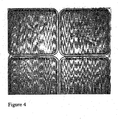
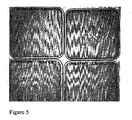
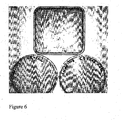
- pTV3 was stably maintained in E. coli as well as in Listeria, both in vitro and in vivo. Bacterial growth on LB media that was not supplemented with additional D-alanine indicated that the dal expression cassette was active also in gram-negative E. coli. Both E. coli- pTV3 and Lmdd-pTV3 remained sensitive to chloramphenicol, indicating the successful removal of both CAT genes from the plasmid. Representative plates are depicted in Figures 4-7 .
- Lm-LLOE7 expresses LLO/E7 fusion protein from pGG55. Plasmid copy numbers of Lmdd-TV3 and Lm-LLOE7 did not significantly differ from one another, showing stable retention of plasmid pTV3 in both Listeria and E. coli.
- Lmdd-TV3 In order to verify the complementation of bacterial functions, in vitro growth kinetics were compared among Lmdd, Lmdd-TV3 and Lm-LLOE7.
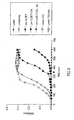
- Lmdd-TV3 but not non-complemented Lmdd was able to grow in alanine-free media ( Figure 8 ).
- Lmdd-TV3 reached logarithmic growth phase sooner than both Lm-LLOE7 and Lmdd complemented with exogenous D-alanine.
- This growth attenuation of Lm-LLOE7 was partially due to the metabolic burden of CAT expression.
- Lm-LLOE7 still grew more slowly in vitro than Lmdd-TV3.
- Defibrinated total sheep blood (Cedarlane, Hornby, Ontario, Canada) was washed twice with 5 volumes of PBS and three to four times with 6 volumes of PBS-Cysteine until the supernatant remained clear, pelleting cells at 3000 x g for 8 minutes between wash steps, then resuspended to a final concentration of 10 % (v/v) in PBS-Cysteine.
- 100 ?1 of 10% washed blood cells were mixed with 100 ⁇ l of Listeria suspension and incubated for additional 45 minutes at 37° C. Un-lysed blood cells were then pelleted by centrifugation (10 minutes, 1000 x g). 100 ⁇ l of supernatant was transferred into a new plate and the OD 530nm was determined and plotted against the sample dilution.
- Lmdd-TV3 As virulence is linked to LLO function, the hemolytic lysis activity between Lmdd-TV3 and Lm-LLOE7 was compared.
- This assay tests LLO function by lysis of red blood cells and can be performed with culture supernatant, purified LLO or bacterial cells.
- Lmdd-TV3. displayed higher hemolytic lysis activity than Lm-LLOE7.
- In vivo virulence was also measured by determining LD50 values, a more direct, and therefore accurate, means of measuring virulence.
- the LD50 of Lmdd-TV3 (0.75 x 10 9 ) was very close to that of Lm-LLOE7 (1 x 10 9 ), showing that plasmids containing a metabolic enzymes do not increase the virulence of bacteria.
- Lmdd-TV3 cultures contained approximately double the amount of total antigen than Lm-LLOE7 cultures. This difference may be a result of a higher overall metabolic load in Lm-LLOE7, due to the larger size of the plasmid (12.8 kB) compared to Lmdd-TV3 (7.6 kB).
- metabolic enzymes can be used instead of antibiotic resistance genes to mediate plasmid retention in auxtrophic bacteria. Further, such plasmids have utility in expression of heterologous proteins in bacteria.
- Efficacy of the metabolic enzyme-containing plasmid as a cancer vaccine was determined in a tumor regression model, as described in Example 1.
- the TC-1 cell line model which is well characterized for HPV vaccine development and which allowed for a controlled comparison of the regression of established tumors of similar size after immunization with Lmdd-TV3 or Lm-LLOE7, was used.
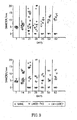
- immunization of mice with Lmdd-TV3 and Lm-LLOE7 resulted in similar tumor regression ( Figure 9 ) with no statistically significant difference (p ⁇ 0.05) between vaccinated groups. All immunized mice were still alive after 63 days, whereas non-immunized mice had to be sacrificed when their tumors reached 20 mm diameter. Cured mice remained tumor-free until the termination of the experiment.
- metabolic enzyme-containing plasmids are efficacious as a therapeutic cancer vaccine. Because immune responses required for a therapeutic cancer vaccine are stronger than those required for a prophylactic cancer vaccine, these results demonstrate utility as well for a prophylactic cancer vaccine.
- T-cells from spleen and tumor infiltrating T-cells were analyzed for CD8 and CD4 surface markers and E7 specificity according to standard protocols ( Gunn et al. (2001; J. Immunol, 167: 6471-6479 ).
- C57BL/6 mice were immunized ip. 7 and 14 days after tumor implantation with Lmdd-TV3 or Lm-LLOE7.
- Splenocytes and tumors were harvested 5 days after the second injection, and were stained at room temperature with H-2D b tetramers loaded with the E7 peptide (RAHYNIVTF, SEQ ID NO: 19) or a control (HIV-Gag) peptide at a 1:200 dilution.
- Tetramers were provided by the National Institute of Allergy and Infectious Diseases Tetramer Core Facility and the National Institutes of Health AIDS Research and Reference Reagent Program.
- Anti-tumor efficacy of a vaccine is often linked to its ability to induce antigen-specific, tumor-infiltrating lymphocytes.
- the tumor-infiltrating cytotoxic T-cells (CTL) for E7 antigen specificity were therefore analyzed.
- CTL cytotoxic T-cells
- Both Lmdd-TV3 and Lm-LLOE7 induce a significant percentage of E7 tetramer specific T-cells infiltrating the tumor (Table 1). No significant differences were observed in the percentages of IFN-?-producing CD8 + T cells in L. monocytogenes LLO-E7-immunized mice versus Lmdd(pTV3)-treated mice.
- mice were injected with 1 x 10 5 TC-1 tumor cells in a matrigel suspension on day. Cells were stained with anti-CD8- antibody and E7-tetramer and subjected to FACS analysis. After gating on (selecting) CD8 + /E7-tetramer + /CD62 - , the percentage of CD8 + /E7-tetramer + /CD62 - cells from total live cells was calculated.
- a shuttle plasmid is constructed containing (1) a replication gene for E. coli, (2) a PSA attPP' integration site, (3) a Listeria dal gene under the control of its natural promoter, and (4) a PSA integrase gene under the control of the Listeria p60 promoter.
- the skilled artisan will appreciate that other promoters or polycistronic expression cassettes may be used to drive the expression of the introduced genes, in particular the dal gene and the PSA integrase gene.
- the PSA integrase gene and the PSA attPP' integration site from pPL2 ( Lauer et al., 2002, J Bacteriol, 2002.
- plasmid pTV6 contains replication functions for its amplification in E. coli, a dal gene for complementation of dal auxotroph E. coli and Listeria, and integration functions (PSA integrase, attPP' site) for integration of the plasmid into the Listeria genome.
- the plasmid is amplified in dal auxotroph E. coli strain MB2159 (Strych et al), isolated, and subsequently electroporated into Listeria.
- dal auxotroph Lmdal(-) drat(-) (previous Examples) is used as a host strain. Because the plasmid does not contain a Listeria replication region, only Listeria that contain a copy that is integrated into the genome are selected upon growth in LB media.
- pTV3 is digested with KasI or EheI and AatII, removing the prfA gene, the LLO-E7 fusion gene, and most of the LLO promoter.
- a multiple cloning site consisting of BamHI, XhoI, XbaI, NotI, SpeI, SmaI, and SacI is introduced by ligating the following paired oligonucleotides to the vector backbone:
- An antigen cassette of interest is then ligated into the multiple cloning site.
- the plasmid is then used to create a vaccine strain expressing the antigen encoded therein.
- the p60-dal expression cassette (Example 2) is introduced into an expression plasmid.
- a commercial plasmid e.g. pCR2.1
- the antibiotic resistance genes are removal from the plasmid.
- the plasmid is then used to create a vaccine strain expressing the antigen encoded therein.
Landscapes
- Health & Medical Sciences (AREA)
- Life Sciences & Earth Sciences (AREA)
- Chemical & Material Sciences (AREA)
- Genetics & Genomics (AREA)
- Engineering & Computer Science (AREA)
- Organic Chemistry (AREA)
- Bioinformatics & Cheminformatics (AREA)
- Wood Science & Technology (AREA)
- Zoology (AREA)
- General Health & Medical Sciences (AREA)
- General Engineering & Computer Science (AREA)
- Biomedical Technology (AREA)
- Biochemistry (AREA)
- Biotechnology (AREA)
- Microbiology (AREA)
- Molecular Biology (AREA)
- Medicinal Chemistry (AREA)
- Epidemiology (AREA)
- Veterinary Medicine (AREA)
- Public Health (AREA)
- Animal Behavior & Ethology (AREA)
- Physics & Mathematics (AREA)
- Plant Pathology (AREA)
- Biophysics (AREA)
- Pharmacology & Pharmacy (AREA)
- Mycology (AREA)
- Immunology (AREA)
- Virology (AREA)
- Proteomics, Peptides & Aminoacids (AREA)
- Micro-Organisms Or Cultivation Processes Thereof (AREA)
- Medicines Containing Antibodies Or Antigens For Use As Internal Diagnostic Agents (AREA)
- Oncology (AREA)
Priority Applications (2)
| Application Number | Priority Date | Filing Date | Title |
|---|---|---|---|
| EP15167706.9A EP2942391B1 (en) | 2004-08-13 | 2005-08-15 | Methods for constructing antibiotic resistance free vaccines |
| DK15167706.9T DK2942391T3 (en) | 2004-08-13 | 2005-08-15 | PROCEDURES FOR THE MANUFACTURE OF ANTIBIOTICS-RESISTANCE-FREE VACCINES |
Applications Claiming Priority (2)
| Application Number | Priority Date | Filing Date | Title |
|---|---|---|---|
| US60149204P | 2004-08-13 | 2004-08-13 | |
| PCT/US2005/028895 WO2006017856A2 (en) | 2004-08-13 | 2005-08-15 | Methods for constructing antibiotic resistance free vaccines |
Related Child Applications (1)
| Application Number | Title | Priority Date | Filing Date |
|---|---|---|---|
| EP15167706.9A Division EP2942391B1 (en) | 2004-08-13 | 2005-08-15 | Methods for constructing antibiotic resistance free vaccines |
Publications (3)
| Publication Number | Publication Date |
|---|---|
| EP1789559A2 EP1789559A2 (en) | 2007-05-30 |
| EP1789559A4 EP1789559A4 (en) | 2009-02-11 |
| EP1789559B1 true EP1789559B1 (en) | 2015-05-20 |
Family
ID=35839990
Family Applications (2)
| Application Number | Title | Priority Date | Filing Date |
|---|---|---|---|
| EP05808671.1A Expired - Lifetime EP1789559B1 (en) | 2004-08-13 | 2005-08-15 | Methods for constructing antibiotic resistance free vaccines |
| EP15167706.9A Expired - Lifetime EP2942391B1 (en) | 2004-08-13 | 2005-08-15 | Methods for constructing antibiotic resistance free vaccines |
Family Applications After (1)
| Application Number | Title | Priority Date | Filing Date |
|---|---|---|---|
| EP15167706.9A Expired - Lifetime EP2942391B1 (en) | 2004-08-13 | 2005-08-15 | Methods for constructing antibiotic resistance free vaccines |
Country Status (9)
| Country | Link |
|---|---|
| US (4) | US8906664B2 (enExample) |
| EP (2) | EP1789559B1 (enExample) |
| JP (1) | JP5530065B2 (enExample) |
| AU (1) | AU2005271246A1 (enExample) |
| CA (1) | CA2577306A1 (enExample) |
| DK (2) | DK1789559T3 (enExample) |
| ES (2) | ES2684749T3 (enExample) |
| PT (2) | PT2942391T (enExample) |
| WO (1) | WO2006017856A2 (enExample) |
Families Citing this family (36)
| Publication number | Priority date | Publication date | Assignee | Title |
|---|---|---|---|---|
| US8114414B2 (en) * | 1994-11-08 | 2012-02-14 | The Trustees Of The University Of Pennsylvania | Compositions and methods for treatment of cervical cancer |
| US7820180B2 (en) * | 2004-09-24 | 2010-10-26 | The Trustees Of The University Of Pennsylvania | Listeria-based and LLO-based vaccines |
| US8791237B2 (en) * | 1994-11-08 | 2014-07-29 | The Trustees Of The University Of Pennsylvania | Compositions and methods for treatment of non-hodgkins lymphoma |
| US7794729B2 (en) * | 1994-11-08 | 2010-09-14 | The Trustees Of The University Of Pennsylvania | Methods and compositions for immunotherapy of cancer |
| US8956621B2 (en) | 1994-11-08 | 2015-02-17 | The Trustees Of The University Of Pennsylvania | Compositions and methods for treatment of cervical dysplasia |
| US9012141B2 (en) | 2000-03-27 | 2015-04-21 | Advaxis, Inc. | Compositions and methods comprising KLK3 of FOLH1 antigen |
| JP2004500405A (ja) * | 2000-03-29 | 2004-01-08 | ザ トラスティーズ オブ ザ ユニバーシティー オブ ペンシルヴァニア | 抗原の免疫原性を増強するための組成物および方法 |
| US7700344B2 (en) * | 2001-03-26 | 2010-04-20 | The Trustees Of The University Of Pennsylvania | Compositions and methods for enhancing the immunogenicity of antigens |
| US8771702B2 (en) | 2001-03-26 | 2014-07-08 | The Trustees Of The University Of Pennsylvania | Non-hemolytic LLO fusion proteins and methods of utilizing same |
| JP2005527240A (ja) * | 2002-05-29 | 2005-09-15 | ザ・レジェンツ・オブ・ザ・ユニバーシティ・オブ・カリフォルニア | 弱毒リステリア種とこれを使用する方法 |
| ES2684749T3 (es) | 2004-08-13 | 2018-10-04 | The Trustees Of The University Of Pennsylvania | Métodos para construir vacunas sin resistencia a antibióticos |
| EP1991263B8 (en) * | 2006-03-01 | 2015-02-25 | Aduro Biotech | Engineered listeria and methods of use thereof |
| US8277797B2 (en) * | 2006-11-22 | 2012-10-02 | The Regents Of The University Of California | Interferon-β production modulating Listeria strains and methods for using same |
| JP2010534058A (ja) * | 2007-04-16 | 2010-11-04 | ザ・トラスティーズ・オブ・ザ・ユニバーシティ・オブ・ペンシルバニア | 抗生物質耐性のないリステリア菌およびその構築および使用方法 |
| WO2008130551A2 (en) * | 2007-04-16 | 2008-10-30 | The Trustees Of The University Of Pennsylvania | Antibiotic resistance free listeria strains and methods for constructing and using same |
| US9650639B2 (en) | 2008-05-19 | 2017-05-16 | Advaxis, Inc. | Dual delivery system for heterologous antigens |
| US9017660B2 (en) | 2009-11-11 | 2015-04-28 | Advaxis, Inc. | Compositions and methods for prevention of escape mutation in the treatment of Her2/neu over-expressing tumors |
| ES2741730T3 (es) * | 2008-05-19 | 2020-02-12 | Advaxis Inc | Sistema de administración doble para antígenos heterólogos que comprende una cepa de Listeria recombinante atenuada por la mutación de dal/dat y la deleción de ActA que comprende una molécula de ácido nucleico que codifica una proteína de fusión de listeriolisina O - antígeno prostático específico |
| JP5539411B2 (ja) | 2009-03-04 | 2014-07-02 | ザ トラスティーズ オブ ザ ユニバーシティ オブ ペンシルバニア | 血管新生因子を含む組成物およびその使用方法 |
| US10016617B2 (en) | 2009-11-11 | 2018-07-10 | The Trustees Of The University Of Pennsylvania | Combination immuno therapy and radiotherapy for the treatment of Her-2-positive cancers |
| EP2498808A4 (en) | 2009-11-11 | 2014-01-08 | Advaxis | COMPOSITIONS AND METHOD FOR PREVENTING FLUID MUTATIONS IN THE TREATMENT OF TUMORS WITH HER2 / NEW OVEREXPRESSION |
| WO2012138377A2 (en) | 2010-10-01 | 2012-10-11 | Trustees Of The University Of Pennsylvania | The use of listeria vaccine vectors to reverse vaccine unresponsiveness in parasitically infected individuals |
| WO2012125551A1 (en) | 2011-03-11 | 2012-09-20 | Advaxis | Listeria-based adjuvants |
| EP2825195A4 (en) | 2012-03-12 | 2015-10-07 | Advaxis Inc | INHIBITION OF SUPPRESSOR CELL FUNCTION AFTER TREATMENT WITH A LISTERIAL VACCINE |
| MX2016010791A (es) | 2014-02-18 | 2017-04-27 | Advaxis Inc | Inmunoterapia con multiples objetivos dirigida por biomarcadores. |
| MA39717A (fr) * | 2014-03-05 | 2017-01-11 | Advaxis Inc | Procédés et compositions pour accroître le rapport des lymphocytes t effecteurs aux lymphocytes t régulateurs |
| MA39849A (fr) * | 2014-04-24 | 2017-03-01 | Advaxis Inc | Souches de listeria utilisées comme vaccin recombinant et procédé de production |
| US20160228530A1 (en) * | 2014-10-14 | 2016-08-11 | The Trustees Of The University Of Pennsylvania | Combination therapy for use in cancer therapy |
| MA41644A (fr) | 2015-03-03 | 2018-01-09 | Advaxis Inc | Compositions à base de listeria comprenant un système d'expression de minigènes codant pour des peptides, et leurs procédés d'utilisation |
| EP3313376A2 (en) * | 2015-06-26 | 2018-05-02 | Bayer Animal Health GmbH | Methods of modulating cytosolic dna surveillance molecules |
| CN108138123A (zh) * | 2015-09-02 | 2018-06-08 | 加利福尼亚大学董事会 | 用于调节李斯特菌属某些种中prfa介导的毒力基因活化的方法和组合物 |
| HK1258860A1 (zh) * | 2015-09-15 | 2019-11-22 | Advaxis, Inc. | 含有重组李斯特氏菌株的免疫治疗制剂的制作方法 |
| MX2019005685A (es) | 2016-11-30 | 2019-09-04 | Advaxis Inc | Composiciones inmunogenicas contra mutaciones de cancer recurrentes y metodos de uso de las mismas. |
| KR102748132B1 (ko) | 2017-09-19 | 2025-01-02 | 어드박시스, 인크. | 박테리아 또는 리스테리아 균주의 동결건조를 위한 조성물 및 방법 |
| CN111349645B (zh) * | 2018-12-24 | 2022-05-17 | 上海若泰医药科技有限公司 | 一种提高非整合减毒李斯特菌疫苗安全性的方法 |
| KR102052108B1 (ko) * | 2019-08-16 | 2019-12-04 | 주식회사 쎌바이오텍 | 영양요구성 마커를 포함하는 재조합 플라스미드, 이를 포함하는 항암 약물 위장관 전달용 미생물 및 그를 포함하는 항암 약제학적 조성물 |
Family Cites Families (16)
| Publication number | Priority date | Publication date | Assignee | Title |
|---|---|---|---|---|
| US4458066A (en) | 1980-02-29 | 1984-07-03 | University Patents, Inc. | Process for preparing polynucleotides |
| US5204252A (en) | 1989-02-08 | 1993-04-20 | Henkel Research Corporation | Candida tropicalis transformation system |
| US5595756A (en) * | 1993-12-22 | 1997-01-21 | Inex Pharmaceuticals Corporation | Liposomal compositions for enhanced retention of bioactive agents |
| US5922583A (en) | 1995-10-17 | 1999-07-13 | Biostar Inc. | Methods for production of recombinant plasmids |
| US6099848A (en) * | 1997-11-18 | 2000-08-08 | The Trustees Of The University Of Pennsylvania | Immunogenic compositions comprising DAL/DAT double-mutant, auxotrophic, attenuated strains of Listeria and their methods of use |
| US6855320B2 (en) | 2000-03-29 | 2005-02-15 | The Trustees Of The University Of Pennsylvania | Fusion of non-hemolytic, truncated form of listeriolysin O to antigens to enhance immunogenicity |
| JP2004500405A (ja) | 2000-03-29 | 2004-01-08 | ザ トラスティーズ オブ ザ ユニバーシティー オブ ペンシルヴァニア | 抗原の免疫原性を増強するための組成物および方法 |
| TWI221854B (en) | 2000-05-26 | 2004-10-11 | Anawrahta Biotech Co Ltd | Lac shuttle vectors, kit for expression of a heterologous gene and DNA vaccine carrier containing the same |
| JP2002253253A (ja) | 2001-03-01 | 2002-09-10 | Toyobo Co Ltd | 新規dna断片及びグラム陰性細菌用新規ベクター |
| JP2002253212A (ja) | 2001-03-02 | 2002-09-10 | Yamaguchi Technology Licensing Organization Ltd | 有用酵母の栄養要求性変異株とその育種方法 |
| DE50103240D1 (de) | 2001-09-05 | 2004-09-16 | Ferro Gmbh | Strahlenhärtbares Edelmetallpräparat, dieses enthaltende Abziehbilder und Verfahren zum Dekorieren |
| US7425449B2 (en) | 2002-04-30 | 2008-09-16 | The Regents Of The University Of California | Site specific Listeria integration vectors and methods for using the same |
| GB0211459D0 (en) | 2002-05-18 | 2002-06-26 | Cobra Therapeutics Ltd | Plasmid stabilisation in vivo |
| FI116068B (fi) | 2003-09-15 | 2005-09-15 | Fit Biotech Oyj Plc | Uusi selektiojärjestelmä, siinä käyttökelpoinen vektori, bakteerisolukantoja sekä menetelmä solujen valikoimiseksi |
| ES2684749T3 (es) | 2004-08-13 | 2018-10-04 | The Trustees Of The University Of Pennsylvania | Métodos para construir vacunas sin resistencia a antibióticos |
| US7855064B2 (en) * | 2004-08-13 | 2010-12-21 | The Trustees Of The University Of Pennsylvania | Antibiotic resistance free vaccines and methods for constructing and using same |
-
2005
- 2005-08-15 ES ES15167706.9T patent/ES2684749T3/es not_active Expired - Lifetime
- 2005-08-15 US US11/203,415 patent/US8906664B2/en active Active - Reinstated
- 2005-08-15 ES ES05808671.1T patent/ES2543079T3/es not_active Expired - Lifetime
- 2005-08-15 AU AU2005271246A patent/AU2005271246A1/en not_active Abandoned
- 2005-08-15 EP EP05808671.1A patent/EP1789559B1/en not_active Expired - Lifetime
- 2005-08-15 WO PCT/US2005/028895 patent/WO2006017856A2/en not_active Ceased
- 2005-08-15 CA CA002577306A patent/CA2577306A1/en not_active Abandoned
- 2005-08-15 PT PT15167706T patent/PT2942391T/pt unknown
- 2005-08-15 EP EP15167706.9A patent/EP2942391B1/en not_active Expired - Lifetime
- 2005-08-15 DK DK05808671.1T patent/DK1789559T3/en active
- 2005-08-15 DK DK15167706.9T patent/DK2942391T3/en active
- 2005-08-15 JP JP2007525861A patent/JP5530065B2/ja not_active Expired - Fee Related
- 2005-08-15 PT PT58086711T patent/PT1789559E/pt unknown
-
2014
- 2014-11-10 US US14/537,599 patent/US9492527B2/en not_active Expired - Lifetime
-
2016
- 2016-10-18 US US15/296,973 patent/US9700608B2/en not_active Expired - Lifetime
-
2017
- 2017-06-13 US US15/621,411 patent/US10426823B2/en not_active Expired - Lifetime
Non-Patent Citations (4)
| Title |
|---|
| DATABASE MEDLINE [online] US NATIONAL LIBRARY OF MEDICINE (NLM), BETHESDA, MD, US; 1 December 2001 (2001-12-01), GUNN G R ET AL: "Two Listeria monocytogenes vaccine vectors that express different molecular forms of human papilloma virus-16 (HPV-16) E7 induce qualitatively different T cell immunity that correlates with their ability to induce regression of established tumors immortalized by HPV-16.", Database accession no. NLM11714814 * |
| GUNN G R ET AL: "Two Listeria monocytogenes vaccine vectors that express different molecular forms of human papilloma virus-16 (HPV-16) E7 induce qualitatively different T cell immunity that correlates with their ability to induce regression of established tumors immortalized by HPV-16.", JOURNAL OF IMMUNOLOGY (BALTIMORE, MD. : 1950) 1 DEC 2001 LNKD- PUBMED:11714814, vol. 167, no. 11, 1 December 2001 (2001-12-01), pages 6471 - 6479, ISSN: 0022-1767 * |
| JOURNAL OF IMMUNOLOGY (BALTIMORE, MD. : 1950) 1 DEC 2001 LNKD- PUBMED:11714814, vol. 167, no. 11, 1 December 2001 (2001-12-01), pages 6471 - 6479, ISSN: 0022-1767 * |
| US DEPARTMENT OF HEALTH AND HUMAN SERVICES: "guidance for industry, guidance for human somatic cell therapy and gene therapy", pages 1 - 27 * |
Also Published As
| Publication number | Publication date |
|---|---|
| ES2684749T3 (es) | 2018-10-04 |
| US20170281691A1 (en) | 2017-10-05 |
| EP2942391B1 (en) | 2018-05-23 |
| HK1217108A1 (en) | 2016-12-23 |
| US9700608B2 (en) | 2017-07-11 |
| DK1789559T3 (en) | 2015-08-24 |
| US8906664B2 (en) | 2014-12-09 |
| JP5530065B2 (ja) | 2014-06-25 |
| ES2543079T3 (es) | 2015-08-14 |
| US9492527B2 (en) | 2016-11-15 |
| US20170028045A1 (en) | 2017-02-02 |
| US20150125480A1 (en) | 2015-05-07 |
| EP1789559A4 (en) | 2009-02-11 |
| EP1789559A2 (en) | 2007-05-30 |
| EP2942391A1 (en) | 2015-11-11 |
| US10426823B2 (en) | 2019-10-01 |
| DK2942391T3 (en) | 2018-08-27 |
| US20060104991A1 (en) | 2006-05-18 |
| JP2008509677A (ja) | 2008-04-03 |
| WO2006017856A3 (en) | 2006-08-31 |
| PT1789559E (pt) | 2015-10-09 |
| CA2577306A1 (en) | 2006-02-16 |
| PT2942391T (pt) | 2018-10-09 |
| WO2006017856A2 (en) | 2006-02-16 |
| AU2005271246A1 (en) | 2006-02-16 |
| WO2006017856A9 (en) | 2006-10-19 |
Similar Documents
| Publication | Publication Date | Title |
|---|---|---|
| EP1789559B1 (en) | Methods for constructing antibiotic resistance free vaccines | |
| US7855064B2 (en) | Antibiotic resistance free vaccines and methods for constructing and using same | |
| US7858097B2 (en) | Antibiotic resistance free Listeria strains and methods for constructing and using same | |
| JP5985397B2 (ja) | 組換えリステリア株およびそれを含む免疫原性組成物 | |
| EP2147092A2 (en) | Antibiotic resistance free listeria strains and methods for constructing and using same | |
| JP6039669B2 (ja) | Her2/neu発現腫瘍に対する薬剤の調製における弱毒化組換えリステリアの使用 | |
| TWI808415B (zh) | 包含肽袖珍基因表現系統之以李斯特菌屬為主的組成物及其使用方法 | |
| KR20190082850A (ko) | 반복되는 암 돌연변이를 표적화하는 면역원 조성물 및 그것의 사용 방법 | |
| KR20140134695A (ko) | 리스테리아 백신 치료 후 억제 세포 기능 저해 | |
| Paglia et al. | The defined attenuated Listeria monocytogenes Δmpl2 mutant is an effective oral vaccine carrier to trigger a long‐lasting immune response against a mouse fibrosarcoma | |
| HK1213008A1 (zh) | 兼性减毒细菌种类及其制备和使用方法 | |
| US20060135457A1 (en) | Methods for constructing antibiotic resistance free vaccines | |
| HK1217108B (en) | Methods for constructing antibiotic resistance free vaccines | |
| JP2010534058A (ja) | 抗生物質耐性のないリステリア菌およびその構築および使用方法 | |
| JP6329211B2 (ja) | 脳腫瘍または乳腺腫瘍の発症を遅延させるための医薬の製造における組換えリステリア株の使用 |
Legal Events
| Date | Code | Title | Description |
|---|---|---|---|
| PUAI | Public reference made under article 153(3) epc to a published international application that has entered the european phase |
Free format text: ORIGINAL CODE: 0009012 |
|
| 17P | Request for examination filed |
Effective date: 20070309 |
|
| AK | Designated contracting states |
Kind code of ref document: A2 Designated state(s): AT BE BG CH CY CZ DE DK EE ES FI FR GB GR HU IE IS IT LI LT LU LV MC NL PL PT RO SE SI SK TR |
|
| DAX | Request for extension of the european patent (deleted) | ||
| RIC1 | Information provided on ipc code assigned before grant |
Ipc: C12N 15/68 20060101AFI20070124BHEP Ipc: A61K 39/00 20060101ALI20081229BHEP Ipc: C12N 15/61 20060101ALI20081229BHEP Ipc: C12N 15/65 20060101ALI20081229BHEP Ipc: C12N 15/74 20060101ALI20081229BHEP Ipc: C12N 1/20 20060101ALI20081229BHEP Ipc: A61K 35/74 20060101ALI20081229BHEP |
|
| A4 | Supplementary search report drawn up and despatched |
Effective date: 20090113 |
|
| 17Q | First examination report despatched |
Effective date: 20091104 |
|
| GRAP | Despatch of communication of intention to grant a patent |
Free format text: ORIGINAL CODE: EPIDOSNIGR1 |
|
| INTG | Intention to grant announced |
Effective date: 20140724 |
|
| GRAP | Despatch of communication of intention to grant a patent |
Free format text: ORIGINAL CODE: EPIDOSNIGR1 |
|
| INTG | Intention to grant announced |
Effective date: 20150105 |
|
| GRAS | Grant fee paid |
Free format text: ORIGINAL CODE: EPIDOSNIGR3 |
|
| GRAA | (expected) grant |
Free format text: ORIGINAL CODE: 0009210 |
|
| AK | Designated contracting states |
Kind code of ref document: B1 Designated state(s): AT BE BG CH CY CZ DE DK EE ES FI FR GB GR HU IE IS IT LI LT LU LV MC NL PL PT RO SE SI SK TR |
|
| REG | Reference to a national code |
Ref country code: GB Ref legal event code: FG4D |
|
| REG | Reference to a national code |
Ref country code: CH Ref legal event code: EP |
|
| REG | Reference to a national code |
Ref country code: AT Ref legal event code: REF Ref document number: 727778 Country of ref document: AT Kind code of ref document: T Effective date: 20150615 |
|
| REG | Reference to a national code |
Ref country code: IE Ref legal event code: FG4D |
|
| RIN2 | Information on inventor provided after grant (corrected) |
Inventor name: VERCH, THORSTEN Inventor name: PATERSON, YVONNE |
|
| REG | Reference to a national code |
Ref country code: DE Ref legal event code: R096 Ref document number: 602005046614 Country of ref document: DE Effective date: 20150702 |
|
| REG | Reference to a national code |
Ref country code: ES Ref legal event code: FG2A Ref document number: 2543079 Country of ref document: ES Kind code of ref document: T3 Effective date: 20150814 |
|
| REG | Reference to a national code |
Ref country code: DK Ref legal event code: T3 Effective date: 20150817 |
|
| REG | Reference to a national code |
Ref country code: SE Ref legal event code: TRGR |
|
| REG | Reference to a national code |
Ref country code: NL Ref legal event code: T3 |
|
| REG | Reference to a national code |
Ref country code: CH Ref legal event code: NV Representative=s name: NOVAGRAAF INTERNATIONAL SA, CH |
|
| REG | Reference to a national code |
Ref country code: PT Ref legal event code: SC4A Free format text: AVAILABILITY OF NATIONAL TRANSLATION Effective date: 20150717 |
|
| REG | Reference to a national code |
Ref country code: LT Ref legal event code: MG4D |
|
| PG25 | Lapsed in a contracting state [announced via postgrant information from national office to epo] |
Ref country code: LT Free format text: LAPSE BECAUSE OF FAILURE TO SUBMIT A TRANSLATION OF THE DESCRIPTION OR TO PAY THE FEE WITHIN THE PRESCRIBED TIME-LIMIT Effective date: 20150520 |
|
| PG25 | Lapsed in a contracting state [announced via postgrant information from national office to epo] |
Ref country code: LV Free format text: LAPSE BECAUSE OF FAILURE TO SUBMIT A TRANSLATION OF THE DESCRIPTION OR TO PAY THE FEE WITHIN THE PRESCRIBED TIME-LIMIT Effective date: 20150520 Ref country code: BG Free format text: LAPSE BECAUSE OF FAILURE TO SUBMIT A TRANSLATION OF THE DESCRIPTION OR TO PAY THE FEE WITHIN THE PRESCRIBED TIME-LIMIT Effective date: 20150820 Ref country code: GR Free format text: LAPSE BECAUSE OF FAILURE TO SUBMIT A TRANSLATION OF THE DESCRIPTION OR TO PAY THE FEE WITHIN THE PRESCRIBED TIME-LIMIT Effective date: 20150821 |
|
| PG25 | Lapsed in a contracting state [announced via postgrant information from national office to epo] |
Ref country code: EE Free format text: LAPSE BECAUSE OF FAILURE TO SUBMIT A TRANSLATION OF THE DESCRIPTION OR TO PAY THE FEE WITHIN THE PRESCRIBED TIME-LIMIT Effective date: 20150520 |
|
| REG | Reference to a national code |
Ref country code: AT Ref legal event code: UEP Ref document number: 727778 Country of ref document: AT Kind code of ref document: T Effective date: 20150520 |
|
| REG | Reference to a national code |
Ref country code: DE Ref legal event code: R097 Ref document number: 602005046614 Country of ref document: DE |
|
| PG25 | Lapsed in a contracting state [announced via postgrant information from national office to epo] |
Ref country code: PL Free format text: LAPSE BECAUSE OF FAILURE TO SUBMIT A TRANSLATION OF THE DESCRIPTION OR TO PAY THE FEE WITHIN THE PRESCRIBED TIME-LIMIT Effective date: 20150520 Ref country code: RO Free format text: LAPSE BECAUSE OF NON-PAYMENT OF DUE FEES Effective date: 20150520 Ref country code: SK Free format text: LAPSE BECAUSE OF FAILURE TO SUBMIT A TRANSLATION OF THE DESCRIPTION OR TO PAY THE FEE WITHIN THE PRESCRIBED TIME-LIMIT Effective date: 20150520 |
|
| PLBE | No opposition filed within time limit |
Free format text: ORIGINAL CODE: 0009261 |
|
| STAA | Information on the status of an ep patent application or granted ep patent |
Free format text: STATUS: NO OPPOSITION FILED WITHIN TIME LIMIT |
|
| PG25 | Lapsed in a contracting state [announced via postgrant information from national office to epo] |
Ref country code: MC Free format text: LAPSE BECAUSE OF FAILURE TO SUBMIT A TRANSLATION OF THE DESCRIPTION OR TO PAY THE FEE WITHIN THE PRESCRIBED TIME-LIMIT Effective date: 20150520 Ref country code: LU Free format text: LAPSE BECAUSE OF FAILURE TO SUBMIT A TRANSLATION OF THE DESCRIPTION OR TO PAY THE FEE WITHIN THE PRESCRIBED TIME-LIMIT Effective date: 20150815 |
|
| 26N | No opposition filed |
Effective date: 20160223 |
|
| PG25 | Lapsed in a contracting state [announced via postgrant information from national office to epo] |
Ref country code: SI Free format text: LAPSE BECAUSE OF FAILURE TO SUBMIT A TRANSLATION OF THE DESCRIPTION OR TO PAY THE FEE WITHIN THE PRESCRIBED TIME-LIMIT Effective date: 20150520 |
|
| REG | Reference to a national code |
Ref country code: FR Ref legal event code: PLFP Year of fee payment: 12 |
|
| PG25 | Lapsed in a contracting state [announced via postgrant information from national office to epo] |
Ref country code: HU Free format text: LAPSE BECAUSE OF FAILURE TO SUBMIT A TRANSLATION OF THE DESCRIPTION OR TO PAY THE FEE WITHIN THE PRESCRIBED TIME-LIMIT; INVALID AB INITIO Effective date: 20050815 |
|
| PG25 | Lapsed in a contracting state [announced via postgrant information from national office to epo] |
Ref country code: CY Free format text: LAPSE BECAUSE OF FAILURE TO SUBMIT A TRANSLATION OF THE DESCRIPTION OR TO PAY THE FEE WITHIN THE PRESCRIBED TIME-LIMIT Effective date: 20150520 |
|
| REG | Reference to a national code |
Ref country code: FR Ref legal event code: PLFP Year of fee payment: 13 |
|
| PG25 | Lapsed in a contracting state [announced via postgrant information from national office to epo] |
Ref country code: TR Free format text: LAPSE BECAUSE OF FAILURE TO SUBMIT A TRANSLATION OF THE DESCRIPTION OR TO PAY THE FEE WITHIN THE PRESCRIBED TIME-LIMIT Effective date: 20150520 |
|
| REG | Reference to a national code |
Ref country code: FR Ref legal event code: PLFP Year of fee payment: 14 |
|
| PGFP | Annual fee paid to national office [announced via postgrant information from national office to epo] |
Ref country code: IE Payment date: 20230127 Year of fee payment: 18 Ref country code: FR Payment date: 20230127 Year of fee payment: 18 Ref country code: FI Payment date: 20230127 Year of fee payment: 18 Ref country code: ES Payment date: 20230127 Year of fee payment: 18 Ref country code: DK Payment date: 20230201 Year of fee payment: 18 Ref country code: CZ Payment date: 20230116 Year of fee payment: 18 Ref country code: CH Payment date: 20230130 Year of fee payment: 18 Ref country code: AT Payment date: 20230127 Year of fee payment: 18 |
|
| PGFP | Annual fee paid to national office [announced via postgrant information from national office to epo] |
Ref country code: PT Payment date: 20230113 Year of fee payment: 18 Ref country code: IT Payment date: 20230130 Year of fee payment: 18 Ref country code: IS Payment date: 20230131 Year of fee payment: 18 Ref country code: GB Payment date: 20230130 Year of fee payment: 18 Ref country code: DE Payment date: 20230127 Year of fee payment: 18 Ref country code: BE Payment date: 20230127 Year of fee payment: 18 |
|
| PGFP | Annual fee paid to national office [announced via postgrant information from national office to epo] |
Ref country code: NL Payment date: 20230127 Year of fee payment: 18 |
|
| P01 | Opt-out of the competence of the unified patent court (upc) registered |
Effective date: 20230526 |
|
| REG | Reference to a national code |
Ref country code: DE Ref legal event code: R119 Ref document number: 602005046614 Country of ref document: DE |
|
| REG | Reference to a national code |
Ref country code: DK Ref legal event code: EBP Effective date: 20230831 |
|
| REG | Reference to a national code |
Ref country code: CH Ref legal event code: PL |
|
| REG | Reference to a national code |
Ref country code: NL Ref legal event code: MM Effective date: 20230901 |
|
| REG | Reference to a national code |
Ref country code: AT Ref legal event code: MM01 Ref document number: 727778 Country of ref document: AT Kind code of ref document: T Effective date: 20230815 |
|
| PG25 | Lapsed in a contracting state [announced via postgrant information from national office to epo] |
Ref country code: AT Free format text: LAPSE BECAUSE OF NON-PAYMENT OF DUE FEES Effective date: 20230815 |
|
| GBPC | Gb: european patent ceased through non-payment of renewal fee |
Effective date: 20230815 |
|
| PG25 | Lapsed in a contracting state [announced via postgrant information from national office to epo] |
Ref country code: FI Free format text: LAPSE BECAUSE OF NON-PAYMENT OF DUE FEES Effective date: 20230815 Ref country code: CZ Free format text: LAPSE BECAUSE OF NON-PAYMENT OF DUE FEES Effective date: 20230815 Ref country code: AT Free format text: LAPSE BECAUSE OF NON-PAYMENT OF DUE FEES Effective date: 20230815 Ref country code: PT Free format text: LAPSE BECAUSE OF NON-PAYMENT OF DUE FEES Effective date: 20240215 Ref country code: CH Free format text: LAPSE BECAUSE OF NON-PAYMENT OF DUE FEES Effective date: 20230831 |
|
| REG | Reference to a national code |
Ref country code: BE Ref legal event code: MM Effective date: 20230831 |
|
| PG25 | Lapsed in a contracting state [announced via postgrant information from national office to epo] |
Ref country code: NL Free format text: LAPSE BECAUSE OF NON-PAYMENT OF DUE FEES Effective date: 20230901 |
|
| REG | Reference to a national code |
Ref country code: IE Ref legal event code: MM4A |
|
| PG25 | Lapsed in a contracting state [announced via postgrant information from national office to epo] |
Ref country code: SE Free format text: LAPSE BECAUSE OF NON-PAYMENT OF DUE FEES Effective date: 20230816 Ref country code: NL Free format text: LAPSE BECAUSE OF NON-PAYMENT OF DUE FEES Effective date: 20230901 |
|
| PG25 | Lapsed in a contracting state [announced via postgrant information from national office to epo] |
Ref country code: IE Free format text: LAPSE BECAUSE OF NON-PAYMENT OF DUE FEES Effective date: 20230815 |
|
| PG25 | Lapsed in a contracting state [announced via postgrant information from national office to epo] |
Ref country code: GB Free format text: LAPSE BECAUSE OF NON-PAYMENT OF DUE FEES Effective date: 20230815 |
|
| PG25 | Lapsed in a contracting state [announced via postgrant information from national office to epo] |
Ref country code: DK Free format text: LAPSE BECAUSE OF NON-PAYMENT OF DUE FEES Effective date: 20230831 |
|
| PG25 | Lapsed in a contracting state [announced via postgrant information from national office to epo] |
Ref country code: IT Free format text: LAPSE BECAUSE OF NON-PAYMENT OF DUE FEES Effective date: 20230815 Ref country code: IE Free format text: LAPSE BECAUSE OF NON-PAYMENT OF DUE FEES Effective date: 20230815 Ref country code: GB Free format text: LAPSE BECAUSE OF NON-PAYMENT OF DUE FEES Effective date: 20230815 Ref country code: FR Free format text: LAPSE BECAUSE OF NON-PAYMENT OF DUE FEES Effective date: 20230831 Ref country code: DK Free format text: LAPSE BECAUSE OF NON-PAYMENT OF DUE FEES Effective date: 20230831 Ref country code: DE Free format text: LAPSE BECAUSE OF NON-PAYMENT OF DUE FEES Effective date: 20240301 |
|
| PG25 | Lapsed in a contracting state [announced via postgrant information from national office to epo] |
Ref country code: BE Free format text: LAPSE BECAUSE OF NON-PAYMENT OF DUE FEES Effective date: 20230831 |
|
| REG | Reference to a national code |
Ref country code: ES Ref legal event code: FD2A Effective date: 20240930 |
|
| PG25 | Lapsed in a contracting state [announced via postgrant information from national office to epo] |
Ref country code: ES Free format text: LAPSE BECAUSE OF NON-PAYMENT OF DUE FEES Effective date: 20230816 |
|
| PG25 | Lapsed in a contracting state [announced via postgrant information from national office to epo] |
Ref country code: ES Free format text: LAPSE BECAUSE OF NON-PAYMENT OF DUE FEES Effective date: 20230816 |
|
| PGFP | Annual fee paid to national office [announced via postgrant information from national office to epo] |
Ref country code: SE Payment date: 20240723 Year of fee payment: 20 |
|
| PG25 | Lapsed in a contracting state [announced via postgrant information from national office to epo] |
Ref country code: IS Free format text: LAPSE BECAUSE OF NON-PAYMENT OF DUE FEES Effective date: 20240305 |