EP1663274B1 - Extraits placentaires vegetaux, procede pour les preparer et leur utilisation - Google Patents
Extraits placentaires vegetaux, procede pour les preparer et leur utilisation Download PDFInfo
- Publication number
- EP1663274B1 EP1663274B1 EP03818689A EP03818689A EP1663274B1 EP 1663274 B1 EP1663274 B1 EP 1663274B1 EP 03818689 A EP03818689 A EP 03818689A EP 03818689 A EP03818689 A EP 03818689A EP 1663274 B1 EP1663274 B1 EP 1663274B1
- Authority
- EP
- European Patent Office
- Prior art keywords
- placenta
- extracts
- extract
- cell
- cereals
- Prior art date
- Legal status (The legal status is an assumption and is not a legal conclusion. Google has not performed a legal analysis and makes no representation as to the accuracy of the status listed.)
- Expired - Lifetime
Links
- 239000000284 extract Substances 0.000 title claims description 251
- 210000002826 placenta Anatomy 0.000 title claims description 147
- 238000000034 method Methods 0.000 title claims description 43
- 238000004519 manufacturing process Methods 0.000 title claims description 22
- 210000004027 cell Anatomy 0.000 claims description 151
- 235000013339 cereals Nutrition 0.000 claims description 65
- 239000000243 solution Substances 0.000 claims description 65
- 244000082988 Secale cereale Species 0.000 claims description 50
- 235000007238 Secale cereale Nutrition 0.000 claims description 49
- 238000002360 preparation method Methods 0.000 claims description 49
- 241000196324 Embryophyta Species 0.000 claims description 46
- XLYOFNOQVPJJNP-UHFFFAOYSA-N water Substances O XLYOFNOQVPJJNP-UHFFFAOYSA-N 0.000 claims description 44
- 239000000203 mixture Substances 0.000 claims description 43
- 239000000463 material Substances 0.000 claims description 35
- 238000004113 cell culture Methods 0.000 claims description 34
- 235000019714 Triticale Nutrition 0.000 claims description 32
- 241000228158 x Triticosecale Species 0.000 claims description 32
- 210000001557 animal structure Anatomy 0.000 claims description 28
- 210000000056 organ Anatomy 0.000 claims description 26
- 239000000725 suspension Substances 0.000 claims description 24
- 230000000694 effects Effects 0.000 claims description 21
- 240000007594 Oryza sativa Species 0.000 claims description 20
- 235000007164 Oryza sativa Nutrition 0.000 claims description 20
- 239000002537 cosmetic Substances 0.000 claims description 20
- 108090000623 proteins and genes Proteins 0.000 claims description 20
- 230000008569 process Effects 0.000 claims description 19
- 239000001963 growth medium Substances 0.000 claims description 18
- 102000004169 proteins and genes Human genes 0.000 claims description 18
- 239000000126 substance Substances 0.000 claims description 18
- RTZKZFJDLAIYFH-UHFFFAOYSA-N Diethyl ether Chemical compound CCOCC RTZKZFJDLAIYFH-UHFFFAOYSA-N 0.000 claims description 17
- 239000002609 medium Substances 0.000 claims description 17
- 235000009566 rice Nutrition 0.000 claims description 17
- 239000007858 starting material Substances 0.000 claims description 17
- 235000021307 Triticum Nutrition 0.000 claims description 15
- 239000003960 organic solvent Substances 0.000 claims description 14
- 239000008346 aqueous phase Substances 0.000 claims description 13
- 230000002087 whitening effect Effects 0.000 claims description 13
- HEDRZPFGACZZDS-UHFFFAOYSA-N Chloroform Chemical compound ClC(Cl)Cl HEDRZPFGACZZDS-UHFFFAOYSA-N 0.000 claims description 12
- 238000004114 suspension culture Methods 0.000 claims description 12
- 244000075850 Avena orientalis Species 0.000 claims description 11
- 240000005979 Hordeum vulgare Species 0.000 claims description 11
- 235000011684 Sorghum saccharatum Nutrition 0.000 claims description 11
- 244000062793 Sorghum vulgare Species 0.000 claims description 11
- 238000004458 analytical method Methods 0.000 claims description 11
- 235000007319 Avena orientalis Nutrition 0.000 claims description 10
- 235000007340 Hordeum vulgare Nutrition 0.000 claims description 10
- 240000006394 Sorghum bicolor Species 0.000 claims description 10
- 239000000872 buffer Substances 0.000 claims description 10
- 235000019713 millet Nutrition 0.000 claims description 10
- 238000009472 formulation Methods 0.000 claims description 9
- IJGRMHOSHXDMSA-UHFFFAOYSA-N Atomic nitrogen Chemical compound N#N IJGRMHOSHXDMSA-UHFFFAOYSA-N 0.000 claims description 8
- 238000010790 dilution Methods 0.000 claims description 8
- 239000012895 dilution Substances 0.000 claims description 8
- 238000002156 mixing Methods 0.000 claims description 8
- 238000005406 washing Methods 0.000 claims description 8
- 230000004913 activation Effects 0.000 claims description 7
- 239000007857 degradation product Substances 0.000 claims description 7
- 235000005911 diet Nutrition 0.000 claims description 7
- 230000000378 dietary effect Effects 0.000 claims description 7
- 230000002163 immunogen Effects 0.000 claims description 7
- 230000001717 pathogenic effect Effects 0.000 claims description 7
- 230000017854 proteolysis Effects 0.000 claims description 7
- 238000011146 sterile filtration Methods 0.000 claims description 7
- 102000029797 Prion Human genes 0.000 claims description 6
- 108091000054 Prion Proteins 0.000 claims description 6
- 239000002775 capsule Substances 0.000 claims description 6
- 201000010099 disease Diseases 0.000 claims description 6
- 208000037265 diseases, disorders, signs and symptoms Diseases 0.000 claims description 6
- 238000006460 hydrolysis reaction Methods 0.000 claims description 6
- 238000001990 intravenous administration Methods 0.000 claims description 6
- 239000006285 cell suspension Substances 0.000 claims description 5
- 230000007062 hydrolysis Effects 0.000 claims description 5
- 239000002917 insecticide Substances 0.000 claims description 5
- 240000003834 Triticum spelta Species 0.000 claims description 4
- 210000004102 animal cell Anatomy 0.000 claims description 4
- 210000002421 cell wall Anatomy 0.000 claims description 4
- 230000002255 enzymatic effect Effects 0.000 claims description 4
- 229910052757 nitrogen Inorganic materials 0.000 claims description 4
- 239000003973 paint Substances 0.000 claims description 4
- 206010003210 Arteriosclerosis Diseases 0.000 claims description 3
- 206010052428 Wound Diseases 0.000 claims description 3
- 208000027418 Wounds and injury Diseases 0.000 claims description 3
- 208000011775 arteriosclerosis disease Diseases 0.000 claims description 3
- 230000015572 biosynthetic process Effects 0.000 claims description 3
- 230000019522 cellular metabolic process Effects 0.000 claims description 3
- 238000001816 cooling Methods 0.000 claims description 3
- 230000006378 damage Effects 0.000 claims description 3
- 239000004744 fabric Substances 0.000 claims description 3
- 210000000987 immune system Anatomy 0.000 claims description 3
- 238000007918 intramuscular administration Methods 0.000 claims description 3
- 235000016709 nutrition Nutrition 0.000 claims description 3
- 230000035764 nutrition Effects 0.000 claims description 3
- 239000002243 precursor Substances 0.000 claims description 3
- 238000000746 purification Methods 0.000 claims description 3
- 230000005855 radiation Effects 0.000 claims description 3
- 238000007920 subcutaneous administration Methods 0.000 claims description 3
- 230000000699 topical effect Effects 0.000 claims description 3
- 230000003213 activating effect Effects 0.000 claims description 2
- 239000004922 lacquer Substances 0.000 claims description 2
- 230000000087 stabilizing effect Effects 0.000 claims description 2
- 238000011200 topical administration Methods 0.000 claims description 2
- 241000209140 Triticum Species 0.000 claims 3
- 235000004240 Triticum spelta Nutrition 0.000 claims 3
- 241001677738 Aleuron Species 0.000 claims 1
- 229920000877 Melamine resin Polymers 0.000 claims 1
- 230000035876 healing Effects 0.000 claims 1
- 125000003473 lipid group Chemical group 0.000 claims 1
- JDSHMPZPIAZGSV-UHFFFAOYSA-N melamine Chemical compound NC1=NC(N)=NC(N)=N1 JDSHMPZPIAZGSV-UHFFFAOYSA-N 0.000 claims 1
- 238000012360 testing method Methods 0.000 description 55
- 210000003491 skin Anatomy 0.000 description 24
- 239000006071 cream Substances 0.000 description 21
- 239000012071 phase Substances 0.000 description 20
- 238000005259 measurement Methods 0.000 description 19
- 241001465754 Metazoa Species 0.000 description 18
- 244000098338 Triticum aestivum Species 0.000 description 16
- 235000018102 proteins Nutrition 0.000 description 16
- HEMHJVSKTPXQMS-UHFFFAOYSA-M Sodium hydroxide Chemical compound [OH-].[Na+] HEMHJVSKTPXQMS-UHFFFAOYSA-M 0.000 description 15
- 235000015097 nutrients Nutrition 0.000 description 13
- QCDWFXQBSFUVSP-UHFFFAOYSA-N 2-phenoxyethanol Chemical compound OCCOC1=CC=CC=C1 QCDWFXQBSFUVSP-UHFFFAOYSA-N 0.000 description 12
- LFQSCWFLJHTTHZ-UHFFFAOYSA-N Ethanol Chemical compound CCO LFQSCWFLJHTTHZ-UHFFFAOYSA-N 0.000 description 12
- 229960005323 phenoxyethanol Drugs 0.000 description 12
- 230000003169 placental effect Effects 0.000 description 12
- 239000000839 emulsion Substances 0.000 description 11
- 239000000287 crude extract Substances 0.000 description 10
- 238000004809 thin layer chromatography Methods 0.000 description 10
- 241000700159 Rattus Species 0.000 description 9
- 238000002474 experimental method Methods 0.000 description 9
- 238000000605 extraction Methods 0.000 description 9
- 239000003921 oil Substances 0.000 description 9
- 235000019198 oils Nutrition 0.000 description 9
- 230000029058 respiratory gaseous exchange Effects 0.000 description 9
- 239000000523 sample Substances 0.000 description 9
- 229910002091 carbon monoxide Inorganic materials 0.000 description 8
- 235000013399 edible fruits Nutrition 0.000 description 8
- 210000004185 liver Anatomy 0.000 description 8
- 239000013612 plasmid Substances 0.000 description 8
- 230000036558 skin tension Effects 0.000 description 8
- KFZMGEQAYNKOFK-UHFFFAOYSA-N Isopropanol Chemical compound CC(C)O KFZMGEQAYNKOFK-UHFFFAOYSA-N 0.000 description 7
- 108010050181 aleurone Proteins 0.000 description 7
- 238000001914 filtration Methods 0.000 description 7
- 239000008269 hand cream Substances 0.000 description 7
- 238000003756 stirring Methods 0.000 description 7
- CURLTUGMZLYLDI-UHFFFAOYSA-N Carbon dioxide Chemical compound O=C=O CURLTUGMZLYLDI-UHFFFAOYSA-N 0.000 description 6
- 241000699666 Mus <mouse, genus> Species 0.000 description 6
- 241000283973 Oryctolagus cuniculus Species 0.000 description 6
- 238000010521 absorption reaction Methods 0.000 description 6
- 238000005119 centrifugation Methods 0.000 description 6
- 235000015872 dietary supplement Nutrition 0.000 description 6
- 230000012010 growth Effects 0.000 description 6
- 230000006872 improvement Effects 0.000 description 6
- 230000002503 metabolic effect Effects 0.000 description 6
- LXCFILQKKLGQFO-UHFFFAOYSA-N methylparaben Chemical compound COC(=O)C1=CC=C(O)C=C1 LXCFILQKKLGQFO-UHFFFAOYSA-N 0.000 description 6
- FEMOMIGRRWSMCU-UHFFFAOYSA-N ninhydrin Chemical compound C1=CC=C2C(=O)C(O)(O)C(=O)C2=C1 FEMOMIGRRWSMCU-UHFFFAOYSA-N 0.000 description 6
- 239000002304 perfume Substances 0.000 description 6
- 239000000419 plant extract Substances 0.000 description 6
- 239000002994 raw material Substances 0.000 description 6
- KDYFGRWQOYBRFD-UHFFFAOYSA-N succinic acid Chemical compound OC(=O)CCC(O)=O KDYFGRWQOYBRFD-UHFFFAOYSA-N 0.000 description 6
- 230000029663 wound healing Effects 0.000 description 6
- 102000008186 Collagen Human genes 0.000 description 5
- 108010035532 Collagen Proteins 0.000 description 5
- FBPFZTCFMRRESA-JGWLITMVSA-N D-glucitol Chemical compound OC[C@H](O)[C@@H](O)[C@H](O)[C@H](O)CO FBPFZTCFMRRESA-JGWLITMVSA-N 0.000 description 5
- PEDCQBHIVMGVHV-UHFFFAOYSA-N Glycerine Chemical compound OCC(O)CO PEDCQBHIVMGVHV-UHFFFAOYSA-N 0.000 description 5
- 229940024606 amino acid Drugs 0.000 description 5
- 235000001014 amino acid Nutrition 0.000 description 5
- 150000001413 amino acids Chemical class 0.000 description 5
- 229920001436 collagen Polymers 0.000 description 5
- 235000013305 food Nutrition 0.000 description 5
- 239000011521 glass Substances 0.000 description 5
- 238000011534 incubation Methods 0.000 description 5
- 230000036512 infertility Effects 0.000 description 5
- 230000029052 metamorphosis Effects 0.000 description 5
- CXKWCBBOMKCUKX-UHFFFAOYSA-M methylene blue Chemical compound [Cl-].C1=CC(N(C)C)=CC2=[S+]C3=CC(N(C)C)=CC=C3N=C21 CXKWCBBOMKCUKX-UHFFFAOYSA-M 0.000 description 5
- 238000004321 preservation Methods 0.000 description 5
- 239000011734 sodium Substances 0.000 description 5
- ZCYVEMRRCGMTRW-UHFFFAOYSA-N 7553-56-2 Chemical compound [I] ZCYVEMRRCGMTRW-UHFFFAOYSA-N 0.000 description 4
- DHMQDGOQFOQNFH-UHFFFAOYSA-N Glycine Chemical compound NCC(O)=O DHMQDGOQFOQNFH-UHFFFAOYSA-N 0.000 description 4
- 241000699670 Mus sp. Species 0.000 description 4
- 230000009471 action Effects 0.000 description 4
- OHJMTUPIZMNBFR-UHFFFAOYSA-N biuret Chemical compound NC(=O)NC(N)=O OHJMTUPIZMNBFR-UHFFFAOYSA-N 0.000 description 4
- 239000003814 drug Substances 0.000 description 4
- 238000011156 evaluation Methods 0.000 description 4
- 235000019197 fats Nutrition 0.000 description 4
- 210000002950 fibroblast Anatomy 0.000 description 4
- 238000004128 high performance liquid chromatography Methods 0.000 description 4
- 208000010544 human prion disease Diseases 0.000 description 4
- 239000004615 ingredient Substances 0.000 description 4
- 229910052740 iodine Inorganic materials 0.000 description 4
- 239000011630 iodine Substances 0.000 description 4
- 150000002632 lipids Chemical class 0.000 description 4
- 239000007788 liquid Substances 0.000 description 4
- 230000014759 maintenance of location Effects 0.000 description 4
- 229960000907 methylthioninium chloride Drugs 0.000 description 4
- NLKNQRATVPKPDG-UHFFFAOYSA-M potassium iodide Chemical compound [K+].[I-] NLKNQRATVPKPDG-UHFFFAOYSA-M 0.000 description 4
- 108090000765 processed proteins & peptides Proteins 0.000 description 4
- 229940099259 vaseline Drugs 0.000 description 4
- PUPZLCDOIYMWBV-UHFFFAOYSA-N (+/-)-1,3-Butanediol Chemical compound CC(O)CCO PUPZLCDOIYMWBV-UHFFFAOYSA-N 0.000 description 3
- 241000269350 Anura Species 0.000 description 3
- 241000283690 Bos taurus Species 0.000 description 3
- 108091003079 Bovine Serum Albumin Proteins 0.000 description 3
- 241000754798 Calophyllum brasiliense Species 0.000 description 3
- 206010013786 Dry skin Diseases 0.000 description 3
- 239000006144 Dulbecco’s modified Eagle's medium Substances 0.000 description 3
- 241000160765 Erebia ligea Species 0.000 description 3
- 241000282412 Homo Species 0.000 description 3
- 239000004166 Lanolin Substances 0.000 description 3
- DNIAPMSPPWPWGF-UHFFFAOYSA-N Propylene glycol Chemical compound CC(O)CO DNIAPMSPPWPWGF-UHFFFAOYSA-N 0.000 description 3
- 235000019486 Sunflower oil Nutrition 0.000 description 3
- 241000700605 Viruses Species 0.000 description 3
- 241000269368 Xenopus laevis Species 0.000 description 3
- 239000002253 acid Substances 0.000 description 3
- 239000013543 active substance Substances 0.000 description 3
- 231100000215 acute (single dose) toxicity testing Toxicity 0.000 description 3
- 238000011047 acute toxicity test Methods 0.000 description 3
- 239000000654 additive Substances 0.000 description 3
- 150000001412 amines Chemical class 0.000 description 3
- 230000002509 aphrodisiac effect Effects 0.000 description 3
- TZCXTZWJZNENPQ-UHFFFAOYSA-L barium sulfate Chemical compound [Ba+2].[O-]S([O-])(=O)=O TZCXTZWJZNENPQ-UHFFFAOYSA-L 0.000 description 3
- KRKNYBCHXYNGOX-UHFFFAOYSA-N citric acid Chemical compound OC(=O)CC(O)(C(O)=O)CC(O)=O KRKNYBCHXYNGOX-UHFFFAOYSA-N 0.000 description 3
- 239000012091 fetal bovine serum Substances 0.000 description 3
- 238000011049 filling Methods 0.000 description 3
- 125000001449 isopropyl group Chemical group [H]C([H])([H])C([H])(*)C([H])([H])[H] 0.000 description 3
- 229940039717 lanolin Drugs 0.000 description 3
- 235000019388 lanolin Nutrition 0.000 description 3
- 210000002414 leg Anatomy 0.000 description 3
- 201000001441 melanoma Diseases 0.000 description 3
- 239000004006 olive oil Substances 0.000 description 3
- 235000008390 olive oil Nutrition 0.000 description 3
- 230000000144 pharmacologic effect Effects 0.000 description 3
- 239000003755 preservative agent Substances 0.000 description 3
- 230000002335 preservative effect Effects 0.000 description 3
- 102000004196 processed proteins & peptides Human genes 0.000 description 3
- 238000012545 processing Methods 0.000 description 3
- 230000000241 respiratory effect Effects 0.000 description 3
- 239000001384 succinic acid Substances 0.000 description 3
- 239000002600 sunflower oil Substances 0.000 description 3
- 231100000027 toxicology Toxicity 0.000 description 3
- -1 vitamins A Natural products 0.000 description 3
- QPFMBZIOSGYJDE-UHFFFAOYSA-N 1,1,2,2-tetrachloroethane Chemical compound ClC(Cl)C(Cl)Cl QPFMBZIOSGYJDE-UHFFFAOYSA-N 0.000 description 2
- LEACJMVNYZDSKR-UHFFFAOYSA-N 2-octyldodecan-1-ol Chemical compound CCCCCCCCCCC(CO)CCCCCCCC LEACJMVNYZDSKR-UHFFFAOYSA-N 0.000 description 2
- 238000010953 Ames test Methods 0.000 description 2
- 231100000039 Ames test Toxicity 0.000 description 2
- 241000282472 Canis lupus familiaris Species 0.000 description 2
- 241000700199 Cavia porcellus Species 0.000 description 2
- 239000004471 Glycine Substances 0.000 description 2
- 241001456088 Hesperocnide Species 0.000 description 2
- QZRGKCOWNLSUDK-UHFFFAOYSA-N Iodochlorine Chemical compound ICl QZRGKCOWNLSUDK-UHFFFAOYSA-N 0.000 description 2
- 231100000002 MTT assay Toxicity 0.000 description 2
- 238000000134 MTT assay Methods 0.000 description 2
- XUMBMVFBXHLACL-UHFFFAOYSA-N Melanin Chemical compound O=C1C(=O)C(C2=CNC3=C(C(C(=O)C4=C32)=O)C)=C2C4=CNC2=C1C XUMBMVFBXHLACL-UHFFFAOYSA-N 0.000 description 2
- 239000005662 Paraffin oil Substances 0.000 description 2
- 241000276427 Poecilia reticulata Species 0.000 description 2
- 239000004372 Polyvinyl alcohol Substances 0.000 description 2
- 206010070834 Sensitisation Diseases 0.000 description 2
- 229920002472 Starch Polymers 0.000 description 2
- QAOWNCQODCNURD-UHFFFAOYSA-N Sulfuric acid Chemical compound OS(O)(=O)=O QAOWNCQODCNURD-UHFFFAOYSA-N 0.000 description 2
- 208000025865 Ulcer Diseases 0.000 description 2
- 235000009108 Urtica dioica Nutrition 0.000 description 2
- 240000008042 Zea mays Species 0.000 description 2
- 235000016383 Zea mays subsp huehuetenangensis Nutrition 0.000 description 2
- 235000002017 Zea mays subsp mays Nutrition 0.000 description 2
- 150000007513 acids Chemical class 0.000 description 2
- 231100000403 acute toxicity Toxicity 0.000 description 2
- 230000007059 acute toxicity Effects 0.000 description 2
- CEGOLXSVJUTHNZ-UHFFFAOYSA-K aluminium tristearate Chemical compound [Al+3].CCCCCCCCCCCCCCCCCC([O-])=O.CCCCCCCCCCCCCCCCCC([O-])=O.CCCCCCCCCCCCCCCCCC([O-])=O CEGOLXSVJUTHNZ-UHFFFAOYSA-K 0.000 description 2
- 229940063655 aluminum stearate Drugs 0.000 description 2
- 239000003963 antioxidant agent Substances 0.000 description 2
- 235000006708 antioxidants Nutrition 0.000 description 2
- YZXBAPSDXZZRGB-DOFZRALJSA-N arachidonic acid Chemical compound CCCCC\C=C/C\C=C/C\C=C/C\C=C/CCCC(O)=O YZXBAPSDXZZRGB-DOFZRALJSA-N 0.000 description 2
- 238000007664 blowing Methods 0.000 description 2
- 229910021538 borax Inorganic materials 0.000 description 2
- 230000000711 cancerogenic effect Effects 0.000 description 2
- 231100000315 carcinogenic Toxicity 0.000 description 2
- 230000004663 cell proliferation Effects 0.000 description 2
- 238000006243 chemical reaction Methods 0.000 description 2
- 239000000490 cosmetic additive Substances 0.000 description 2
- 238000012258 culturing Methods 0.000 description 2
- 230000001186 cumulative effect Effects 0.000 description 2
- SASYSVUEVMOWPL-NXVVXOECSA-N decyl oleate Chemical compound CCCCCCCCCCOC(=O)CCCCCCC\C=C/CCCCCCCC SASYSVUEVMOWPL-NXVVXOECSA-N 0.000 description 2
- 230000006735 deficit Effects 0.000 description 2
- 238000004821 distillation Methods 0.000 description 2
- 239000012153 distilled water Substances 0.000 description 2
- 229940079593 drug Drugs 0.000 description 2
- 230000037336 dry skin Effects 0.000 description 2
- 230000009982 effect on human Effects 0.000 description 2
- 229920001971 elastomer Polymers 0.000 description 2
- 238000000855 fermentation Methods 0.000 description 2
- 230000004151 fermentation Effects 0.000 description 2
- 239000000706 filtrate Substances 0.000 description 2
- 235000011187 glycerol Nutrition 0.000 description 2
- 238000011194 good manufacturing practice Methods 0.000 description 2
- 229910001385 heavy metal Inorganic materials 0.000 description 2
- 239000005556 hormone Substances 0.000 description 2
- 229940088597 hormone Drugs 0.000 description 2
- 235000009973 maize Nutrition 0.000 description 2
- 230000007246 mechanism Effects 0.000 description 2
- VYQNWZOUAUKGHI-UHFFFAOYSA-N monobenzone Chemical compound C1=CC(O)=CC=C1OCC1=CC=CC=C1 VYQNWZOUAUKGHI-UHFFFAOYSA-N 0.000 description 2
- 231100000286 mucous membrane, eye irritation or corrosion testing Toxicity 0.000 description 2
- 231100000150 mutagenicity / genotoxicity testing Toxicity 0.000 description 2
- VMGAPWLDMVPYIA-HIDZBRGKSA-N n'-amino-n-iminomethanimidamide Chemical compound N\N=C\N=N VMGAPWLDMVPYIA-HIDZBRGKSA-N 0.000 description 2
- 239000002736 nonionic surfactant Substances 0.000 description 2
- 231100000956 nontoxicity Toxicity 0.000 description 2
- 102000039446 nucleic acids Human genes 0.000 description 2
- 108020004707 nucleic acids Proteins 0.000 description 2
- 150000007523 nucleic acids Chemical class 0.000 description 2
- 229920002451 polyvinyl alcohol Polymers 0.000 description 2
- 239000000843 powder Substances 0.000 description 2
- BOLDJAUMGUJJKM-LSDHHAIUSA-N renifolin D Natural products CC(=C)[C@@H]1Cc2c(O)c(O)ccc2[C@H]1CC(=O)c3ccc(O)cc3O BOLDJAUMGUJJKM-LSDHHAIUSA-N 0.000 description 2
- 239000005060 rubber Substances 0.000 description 2
- 238000007127 saponification reaction Methods 0.000 description 2
- 238000012216 screening Methods 0.000 description 2
- 230000008313 sensitization Effects 0.000 description 2
- 238000000926 separation method Methods 0.000 description 2
- 239000002884 skin cream Substances 0.000 description 2
- BTURAGWYSMTVOW-UHFFFAOYSA-M sodium dodecanoate Chemical compound [Na+].CCCCCCCCCCCC([O-])=O BTURAGWYSMTVOW-UHFFFAOYSA-M 0.000 description 2
- 229940082004 sodium laurate Drugs 0.000 description 2
- 239000004328 sodium tetraborate Substances 0.000 description 2
- 235000010339 sodium tetraborate Nutrition 0.000 description 2
- 230000006641 stabilisation Effects 0.000 description 2
- 238000011105 stabilization Methods 0.000 description 2
- 235000019698 starch Nutrition 0.000 description 2
- 239000008107 starch Substances 0.000 description 2
- 238000005728 strengthening Methods 0.000 description 2
- 239000013589 supplement Substances 0.000 description 2
- 208000011580 syndromic disease Diseases 0.000 description 2
- 239000012085 test solution Substances 0.000 description 2
- VZGDMQKNWNREIO-UHFFFAOYSA-N tetrachloromethane Chemical compound ClC(Cl)(Cl)Cl VZGDMQKNWNREIO-UHFFFAOYSA-N 0.000 description 2
- 238000010257 thawing Methods 0.000 description 2
- 231100000419 toxicity Toxicity 0.000 description 2
- 230000001988 toxicity Effects 0.000 description 2
- 231100000820 toxicity test Toxicity 0.000 description 2
- 230000002110 toxicologic effect Effects 0.000 description 2
- 230000004102 tricarboxylic acid cycle Effects 0.000 description 2
- 231100000397 ulcer Toxicity 0.000 description 2
- 210000000689 upper leg Anatomy 0.000 description 2
- 235000013311 vegetables Nutrition 0.000 description 2
- 235000013343 vitamin Nutrition 0.000 description 2
- 239000011782 vitamin Substances 0.000 description 2
- 229940088594 vitamin Drugs 0.000 description 2
- 229930003231 vitamin Natural products 0.000 description 2
- JNYAEWCLZODPBN-JGWLITMVSA-N (2r,3r,4s)-2-[(1r)-1,2-dihydroxyethyl]oxolane-3,4-diol Chemical compound OC[C@@H](O)[C@H]1OC[C@H](O)[C@H]1O JNYAEWCLZODPBN-JGWLITMVSA-N 0.000 description 1
- GHOKWGTUZJEAQD-ZETCQYMHSA-N (D)-(+)-Pantothenic acid Chemical compound OCC(C)(C)[C@@H](O)C(=O)NCCC(O)=O GHOKWGTUZJEAQD-ZETCQYMHSA-N 0.000 description 1
- BJEPYKJPYRNKOW-REOHCLBHSA-N (S)-malic acid Chemical compound OC(=O)[C@@H](O)CC(O)=O BJEPYKJPYRNKOW-REOHCLBHSA-N 0.000 description 1
- WXHLLJAMBQLULT-UHFFFAOYSA-N 2-[[6-[4-(2-hydroxyethyl)piperazin-1-yl]-2-methylpyrimidin-4-yl]amino]-n-(2-methyl-6-sulfanylphenyl)-1,3-thiazole-5-carboxamide;hydrate Chemical compound O.C=1C(N2CCN(CCO)CC2)=NC(C)=NC=1NC(S1)=NC=C1C(=O)NC1=C(C)C=CC=C1S WXHLLJAMBQLULT-UHFFFAOYSA-N 0.000 description 1
- YCPXWRQRBFJBPZ-UHFFFAOYSA-N 5-sulfosalicylic acid Chemical compound OC(=O)C1=CC(S(O)(=O)=O)=CC=C1O YCPXWRQRBFJBPZ-UHFFFAOYSA-N 0.000 description 1
- 240000004731 Acer pseudoplatanus Species 0.000 description 1
- 235000002754 Acer pseudoplatanus Nutrition 0.000 description 1
- 241000251468 Actinopterygii Species 0.000 description 1
- 239000000592 Artificial Cell Substances 0.000 description 1
- DCXYFEDJOCDNAF-UHFFFAOYSA-N Asparagine Natural products OC(=O)C(N)CC(N)=O DCXYFEDJOCDNAF-UHFFFAOYSA-N 0.000 description 1
- 208000037260 Atherosclerotic Plaque Diseases 0.000 description 1
- 239000002028 Biomass Substances 0.000 description 1
- 241000700198 Cavia Species 0.000 description 1
- 108010059892 Cellulase Proteins 0.000 description 1
- 241000371652 Curvularia clavata Species 0.000 description 1
- 241000192700 Cyanobacteria Species 0.000 description 1
- FBPFZTCFMRRESA-FSIIMWSLSA-N D-Glucitol Natural products OC[C@H](O)[C@H](O)[C@@H](O)[C@H](O)CO FBPFZTCFMRRESA-FSIIMWSLSA-N 0.000 description 1
- FBPFZTCFMRRESA-KVTDHHQDSA-N D-Mannitol Chemical compound OC[C@@H](O)[C@@H](O)[C@H](O)[C@H](O)CO FBPFZTCFMRRESA-KVTDHHQDSA-N 0.000 description 1
- SNPLKNRPJHDVJA-ZETCQYMHSA-N D-panthenol Chemical compound OCC(C)(C)[C@@H](O)C(=O)NCCCO SNPLKNRPJHDVJA-ZETCQYMHSA-N 0.000 description 1
- KCXVZYZYPLLWCC-UHFFFAOYSA-N EDTA Chemical compound OC(=O)CN(CC(O)=O)CCN(CC(O)=O)CC(O)=O KCXVZYZYPLLWCC-UHFFFAOYSA-N 0.000 description 1
- 208000001382 Experimental Melanoma Diseases 0.000 description 1
- 244000194101 Ginkgo biloba Species 0.000 description 1
- 235000008100 Ginkgo biloba Nutrition 0.000 description 1
- PMMYEEVYMWASQN-DMTCNVIQSA-N Hydroxyproline Chemical compound O[C@H]1CN[C@H](C(O)=O)C1 PMMYEEVYMWASQN-DMTCNVIQSA-N 0.000 description 1
- DCXYFEDJOCDNAF-REOHCLBHSA-N L-asparagine Chemical compound OC(=O)[C@@H](N)CC(N)=O DCXYFEDJOCDNAF-REOHCLBHSA-N 0.000 description 1
- FFEARJCKVFRZRR-BYPYZUCNSA-N L-methionine Chemical compound CSCC[C@H](N)C(O)=O FFEARJCKVFRZRR-BYPYZUCNSA-N 0.000 description 1
- OYHQOLUKZRVURQ-HZJYTTRNSA-N Linoleic acid Chemical compound CCCCC\C=C/C\C=C/CCCCCCCC(O)=O OYHQOLUKZRVURQ-HZJYTTRNSA-N 0.000 description 1
- 229930195725 Mannitol Natural products 0.000 description 1
- 241000699673 Mesocricetus auratus Species 0.000 description 1
- 206010028400 Mutagenic effect Diseases 0.000 description 1
- 235000006485 Platanus occidentalis Nutrition 0.000 description 1
- 229920003171 Poly (ethylene oxide) Polymers 0.000 description 1
- 208000024777 Prion disease Diseases 0.000 description 1
- 230000002292 Radical scavenging effect Effects 0.000 description 1
- 206010038669 Respiratory arrest Diseases 0.000 description 1
- 241000235070 Saccharomyces Species 0.000 description 1
- 241000209056 Secale Species 0.000 description 1
- 241000270295 Serpentes Species 0.000 description 1
- 206010040880 Skin irritation Diseases 0.000 description 1
- 241000592344 Spermatophyta Species 0.000 description 1
- 229930006000 Sucrose Natural products 0.000 description 1
- CZMRCDWAGMRECN-UGDNZRGBSA-N Sucrose Chemical compound O[C@H]1[C@H](O)[C@@H](CO)O[C@@]1(CO)O[C@@H]1[C@H](O)[C@@H](O)[C@H](O)[C@@H](CO)O1 CZMRCDWAGMRECN-UGDNZRGBSA-N 0.000 description 1
- 206010043275 Teratogenicity Diseases 0.000 description 1
- JZRWCGZRTZMZEH-UHFFFAOYSA-N Thiamine Natural products CC1=C(CCO)SC=[N+]1CC1=CN=C(C)N=C1N JZRWCGZRTZMZEH-UHFFFAOYSA-N 0.000 description 1
- 241000006364 Torula Species 0.000 description 1
- 241000269370 Xenopus <genus> Species 0.000 description 1
- 238000002835 absorbance Methods 0.000 description 1
- 230000001133 acceleration Effects 0.000 description 1
- 229940048299 acetylated lanolin alcohols Drugs 0.000 description 1
- 239000004480 active ingredient Substances 0.000 description 1
- 230000001154 acute effect Effects 0.000 description 1
- 230000000996 additive effect Effects 0.000 description 1
- 238000005273 aeration Methods 0.000 description 1
- 230000000172 allergic effect Effects 0.000 description 1
- BJEPYKJPYRNKOW-UHFFFAOYSA-N alpha-hydroxysuccinic acid Natural products OC(=O)C(O)CC(O)=O BJEPYKJPYRNKOW-UHFFFAOYSA-N 0.000 description 1
- 230000003078 antioxidant effect Effects 0.000 description 1
- 239000003048 aphrodisiac agent Substances 0.000 description 1
- 229940114079 arachidonic acid Drugs 0.000 description 1
- 235000021342 arachidonic acid Nutrition 0.000 description 1
- 229960001230 asparagine Drugs 0.000 description 1
- 235000009582 asparagine Nutrition 0.000 description 1
- 238000003556 assay Methods 0.000 description 1
- QVGXLLKOCUKJST-UHFFFAOYSA-N atomic oxygen Chemical compound [O] QVGXLLKOCUKJST-UHFFFAOYSA-N 0.000 description 1
- 208000010668 atopic eczema Diseases 0.000 description 1
- 230000009286 beneficial effect Effects 0.000 description 1
- 230000003851 biochemical process Effects 0.000 description 1
- 230000033228 biological regulation Effects 0.000 description 1
- 230000000740 bleeding effect Effects 0.000 description 1
- 230000037396 body weight Effects 0.000 description 1
- 238000009395 breeding Methods 0.000 description 1
- 230000001488 breeding effect Effects 0.000 description 1
- XNVWFBHTEBDKCA-UHFFFAOYSA-N butanedioic acid;2-hydroxypropane-1,2,3-tricarboxylic acid Chemical compound OC(=O)CCC(O)=O.OC(=O)CC(O)(C(O)=O)CC(O)=O XNVWFBHTEBDKCA-UHFFFAOYSA-N 0.000 description 1
- 238000004364 calculation method Methods 0.000 description 1
- 150000001720 carbohydrates Chemical class 0.000 description 1
- 235000014633 carbohydrates Nutrition 0.000 description 1
- 229910052799 carbon Inorganic materials 0.000 description 1
- BVKZGUZCCUSVTD-UHFFFAOYSA-N carbonic acid Chemical compound OC(O)=O BVKZGUZCCUSVTD-UHFFFAOYSA-N 0.000 description 1
- 235000021466 carotenoid Nutrition 0.000 description 1
- 150000001747 carotenoids Chemical class 0.000 description 1
- 241001233037 catfish Species 0.000 description 1
- 230000020411 cell activation Effects 0.000 description 1
- 229940106157 cellulase Drugs 0.000 description 1
- 229960000541 cetyl alcohol Drugs 0.000 description 1
- 230000008859 change Effects 0.000 description 1
- 230000007073 chemical hydrolysis Effects 0.000 description 1
- 238000001311 chemical methods and process Methods 0.000 description 1
- 239000003153 chemical reaction reagent Substances 0.000 description 1
- 230000007665 chronic toxicity Effects 0.000 description 1
- 231100000160 chronic toxicity Toxicity 0.000 description 1
- 238000000576 coating method Methods 0.000 description 1
- 235000020197 coconut milk Nutrition 0.000 description 1
- 239000000084 colloidal system Substances 0.000 description 1
- 230000003750 conditioning effect Effects 0.000 description 1
- 239000000470 constituent Substances 0.000 description 1
- 238000012136 culture method Methods 0.000 description 1
- 210000004748 cultured cell Anatomy 0.000 description 1
- XUJNEKJLAYXESH-UHFFFAOYSA-N cysteine Natural products SCC(N)C(O)=O XUJNEKJLAYXESH-UHFFFAOYSA-N 0.000 description 1
- 235000018417 cysteine Nutrition 0.000 description 1
- 238000004042 decolorization Methods 0.000 description 1
- 230000007423 decrease Effects 0.000 description 1
- 239000008367 deionised water Substances 0.000 description 1
- 229910021641 deionized water Inorganic materials 0.000 description 1
- 239000002781 deodorant agent Substances 0.000 description 1
- 230000003544 deproteinization Effects 0.000 description 1
- 238000001514 detection method Methods 0.000 description 1
- 238000011161 development Methods 0.000 description 1
- 230000018109 developmental process Effects 0.000 description 1
- 238000010586 diagram Methods 0.000 description 1
- 238000000502 dialysis Methods 0.000 description 1
- 239000006185 dispersion Substances 0.000 description 1
- PMMYEEVYMWASQN-UHFFFAOYSA-N dl-hydroxyproline Natural products OC1C[NH2+]C(C([O-])=O)C1 PMMYEEVYMWASQN-UHFFFAOYSA-N 0.000 description 1
- UKHVLWKBNNSRRR-ODZAUARKSA-M dowicil 200 Chemical compound [Cl-].C1N(C2)CN3CN2C[N+]1(C\C=C/Cl)C3 UKHVLWKBNNSRRR-ODZAUARKSA-M 0.000 description 1
- 238000001035 drying Methods 0.000 description 1
- 230000002500 effect on skin Effects 0.000 description 1
- 238000010828 elution Methods 0.000 description 1
- 239000003995 emulsifying agent Substances 0.000 description 1
- 230000007071 enzymatic hydrolysis Effects 0.000 description 1
- 238000006047 enzymatic hydrolysis reaction Methods 0.000 description 1
- 230000035558 fertility Effects 0.000 description 1
- 239000012467 final product Substances 0.000 description 1
- 238000005188 flotation Methods 0.000 description 1
- 230000037406 food intake Effects 0.000 description 1
- 239000007789 gas Substances 0.000 description 1
- 238000009499 grossing Methods 0.000 description 1
- 229910052736 halogen Inorganic materials 0.000 description 1
- 150000002367 halogens Chemical class 0.000 description 1
- 238000011553 hamster model Methods 0.000 description 1
- 238000003306 harvesting Methods 0.000 description 1
- 238000010438 heat treatment Methods 0.000 description 1
- 239000012676 herbal extract Substances 0.000 description 1
- 244000038280 herbivores Species 0.000 description 1
- 244000144980 herd Species 0.000 description 1
- BXWNKGSJHAJOGX-UHFFFAOYSA-N hexadecan-1-ol Chemical compound CCCCCCCCCCCCCCCCO BXWNKGSJHAJOGX-UHFFFAOYSA-N 0.000 description 1
- 238000000265 homogenisation Methods 0.000 description 1
- 229960002591 hydroxyproline Drugs 0.000 description 1
- 239000005457 ice water Substances 0.000 description 1
- 238000010191 image analysis Methods 0.000 description 1
- 230000005764 inhibitory process Effects 0.000 description 1
- PNDPGZBMCMUPRI-UHFFFAOYSA-N iodine Chemical compound II PNDPGZBMCMUPRI-UHFFFAOYSA-N 0.000 description 1
- 229940089456 isopropyl stearate Drugs 0.000 description 1
- 210000002510 keratinocyte Anatomy 0.000 description 1
- 210000004936 left thumb Anatomy 0.000 description 1
- 230000003902 lesion Effects 0.000 description 1
- 238000012454 limulus amebocyte lysate test Methods 0.000 description 1
- 235000020778 linoleic acid Nutrition 0.000 description 1
- OYHQOLUKZRVURQ-IXWMQOLASA-N linoleic acid Natural products CCCCC\C=C/C\C=C\CCCCCCCC(O)=O OYHQOLUKZRVURQ-IXWMQOLASA-N 0.000 description 1
- 239000001630 malic acid Substances 0.000 description 1
- 235000011090 malic acid Nutrition 0.000 description 1
- 239000000594 mannitol Substances 0.000 description 1
- 235000010355 mannitol Nutrition 0.000 description 1
- 238000002844 melting Methods 0.000 description 1
- 230000008018 melting Effects 0.000 description 1
- 229930182817 methionine Natural products 0.000 description 1
- 229960002216 methylparaben Drugs 0.000 description 1
- 230000003020 moisturizing effect Effects 0.000 description 1
- 231100000243 mutagenic effect Toxicity 0.000 description 1
- 230000003505 mutagenic effect Effects 0.000 description 1
- 230000035772 mutation Effects 0.000 description 1
- 231100000252 nontoxic Toxicity 0.000 description 1
- 230000003000 nontoxic effect Effects 0.000 description 1
- QIQXTHQIDYTFRH-UHFFFAOYSA-N octadecanoic acid Chemical compound CCCCCCCCCCCCCCCCCC(O)=O QIQXTHQIDYTFRH-UHFFFAOYSA-N 0.000 description 1
- 230000010355 oscillation Effects 0.000 description 1
- 210000001672 ovary Anatomy 0.000 description 1
- 239000001301 oxygen Substances 0.000 description 1
- 229910052760 oxygen Inorganic materials 0.000 description 1
- 230000036284 oxygen consumption Effects 0.000 description 1
- 238000010979 pH adjustment Methods 0.000 description 1
- 229940101267 panthenol Drugs 0.000 description 1
- 229940014662 pantothenate Drugs 0.000 description 1
- 235000019161 pantothenic acid Nutrition 0.000 description 1
- 239000011713 pantothenic acid Substances 0.000 description 1
- 235000020957 pantothenol Nutrition 0.000 description 1
- 239000011619 pantothenol Substances 0.000 description 1
- 210000004197 pelvis Anatomy 0.000 description 1
- 239000000825 pharmaceutical preparation Substances 0.000 description 1
- 229940068065 phytosterols Drugs 0.000 description 1
- 230000007505 plaque formation Effects 0.000 description 1
- 239000004033 plastic Substances 0.000 description 1
- 229920003023 plastic Polymers 0.000 description 1
- 229920000642 polymer Polymers 0.000 description 1
- 230000035935 pregnancy Effects 0.000 description 1
- 239000000047 product Substances 0.000 description 1
- 230000002035 prolonged effect Effects 0.000 description 1
- ZPWFUIUNWDIYCJ-UHFFFAOYSA-N propan-2-yl octadecanoate Chemical compound CCCCCCCCCCCCCCCCCC(=O)OC(C)C ZPWFUIUNWDIYCJ-UHFFFAOYSA-N 0.000 description 1
- 239000002510 pyrogen Substances 0.000 description 1
- 208000010540 rapid respiration Diseases 0.000 description 1
- 230000036556 skin irritation Effects 0.000 description 1
- 231100000475 skin irritation Toxicity 0.000 description 1
- AKHNMLFCWUSKQB-UHFFFAOYSA-L sodium thiosulfate Chemical compound [Na+].[Na+].[O-]S([O-])(=O)=S AKHNMLFCWUSKQB-UHFFFAOYSA-L 0.000 description 1
- 235000019345 sodium thiosulphate Nutrition 0.000 description 1
- 239000002904 solvent Substances 0.000 description 1
- 239000011877 solvent mixture Substances 0.000 description 1
- 239000000600 sorbitol Substances 0.000 description 1
- 241000894007 species Species 0.000 description 1
- 230000001954 sterilising effect Effects 0.000 description 1
- 238000013190 sterility testing Methods 0.000 description 1
- 238000004659 sterilization and disinfection Methods 0.000 description 1
- 238000003860 storage Methods 0.000 description 1
- 239000008362 succinate buffer Substances 0.000 description 1
- 239000005720 sucrose Substances 0.000 description 1
- 239000010414 supernatant solution Substances 0.000 description 1
- 230000009469 supplementation Effects 0.000 description 1
- 239000004094 surface-active agent Substances 0.000 description 1
- 238000003786 synthesis reaction Methods 0.000 description 1
- 230000003390 teratogenic effect Effects 0.000 description 1
- 231100000211 teratogenicity Toxicity 0.000 description 1
- 238000010998 test method Methods 0.000 description 1
- 235000019157 thiamine Nutrition 0.000 description 1
- KYMBYSLLVAOCFI-UHFFFAOYSA-N thiamine Chemical compound CC1=C(CCO)SCN1CC1=CN=C(C)N=C1N KYMBYSLLVAOCFI-UHFFFAOYSA-N 0.000 description 1
- 229960003495 thiamine Drugs 0.000 description 1
- 239000011721 thiamine Substances 0.000 description 1
- 210000001519 tissue Anatomy 0.000 description 1
- 238000004448 titration Methods 0.000 description 1
- 231100000723 toxicological property Toxicity 0.000 description 1
- 231100000041 toxicology testing Toxicity 0.000 description 1
- FGMPLJWBKKVCDB-UHFFFAOYSA-N trans-L-hydroxy-proline Natural products ON1CCCC1C(O)=O FGMPLJWBKKVCDB-UHFFFAOYSA-N 0.000 description 1
- 238000002211 ultraviolet spectrum Methods 0.000 description 1
- 235000021122 unsaturated fatty acids Nutrition 0.000 description 1
- 150000004670 unsaturated fatty acids Chemical class 0.000 description 1
- 235000019155 vitamin A Nutrition 0.000 description 1
- 239000011719 vitamin A Substances 0.000 description 1
- 239000002569 water oil cream Substances 0.000 description 1
- 239000001993 wax Substances 0.000 description 1
- 230000004584 weight gain Effects 0.000 description 1
- 235000019786 weight gain Nutrition 0.000 description 1
- 210000005253 yeast cell Anatomy 0.000 description 1
Images

Classifications
-
- A—HUMAN NECESSITIES
- A61—MEDICAL OR VETERINARY SCIENCE; HYGIENE
- A61K—PREPARATIONS FOR MEDICAL, DENTAL OR TOILETRY PURPOSES
- A61K36/00—Medicinal preparations of undetermined constitution containing material from algae, lichens, fungi or plants, or derivatives thereof, e.g. traditional herbal medicines
- A61K36/18—Magnoliophyta (angiosperms)
- A61K36/88—Liliopsida (monocotyledons)
- A61K36/899—Poaceae or Gramineae (Grass family), e.g. bamboo, corn or sugar cane
-
- A—HUMAN NECESSITIES
- A23—FOODS OR FOODSTUFFS; TREATMENT THEREOF, NOT COVERED BY OTHER CLASSES
- A23L—FOODS, FOODSTUFFS OR NON-ALCOHOLIC BEVERAGES, NOT OTHERWISE PROVIDED FOR; PREPARATION OR TREATMENT THEREOF
- A23L33/00—Modifying nutritive qualities of foods; Dietetic products; Preparation or treatment thereof
- A23L33/10—Modifying nutritive qualities of foods; Dietetic products; Preparation or treatment thereof using additives
- A23L33/105—Plant extracts, their artificial duplicates or their derivatives
-
- A—HUMAN NECESSITIES
- A23—FOODS OR FOODSTUFFS; TREATMENT THEREOF, NOT COVERED BY OTHER CLASSES
- A23L—FOODS, FOODSTUFFS OR NON-ALCOHOLIC BEVERAGES, NOT OTHERWISE PROVIDED FOR; PREPARATION OR TREATMENT THEREOF
- A23L7/00—Cereal-derived products; Malt products; Preparation or treatment thereof
- A23L7/10—Cereal-derived products
- A23L7/115—Cereal fibre products, e.g. bran, husk
-
- A—HUMAN NECESSITIES
- A61—MEDICAL OR VETERINARY SCIENCE; HYGIENE
- A61P—SPECIFIC THERAPEUTIC ACTIVITY OF CHEMICAL COMPOUNDS OR MEDICINAL PREPARATIONS
- A61P1/00—Drugs for disorders of the alimentary tract or the digestive system
- A61P1/04—Drugs for disorders of the alimentary tract or the digestive system for ulcers, gastritis or reflux esophagitis, e.g. antacids, inhibitors of acid secretion, mucosal protectants
-
- A—HUMAN NECESSITIES
- A61—MEDICAL OR VETERINARY SCIENCE; HYGIENE
- A61P—SPECIFIC THERAPEUTIC ACTIVITY OF CHEMICAL COMPOUNDS OR MEDICINAL PREPARATIONS
- A61P15/00—Drugs for genital or sexual disorders; Contraceptives
- A61P15/10—Drugs for genital or sexual disorders; Contraceptives for impotence
-
- A—HUMAN NECESSITIES
- A61—MEDICAL OR VETERINARY SCIENCE; HYGIENE
- A61P—SPECIFIC THERAPEUTIC ACTIVITY OF CHEMICAL COMPOUNDS OR MEDICINAL PREPARATIONS
- A61P17/00—Drugs for dermatological disorders
- A61P17/02—Drugs for dermatological disorders for treating wounds, ulcers, burns, scars, keloids, or the like
-
- A—HUMAN NECESSITIES
- A61—MEDICAL OR VETERINARY SCIENCE; HYGIENE
- A61P—SPECIFIC THERAPEUTIC ACTIVITY OF CHEMICAL COMPOUNDS OR MEDICINAL PREPARATIONS
- A61P17/00—Drugs for dermatological disorders
- A61P17/16—Emollients or protectives, e.g. against radiation
-
- A—HUMAN NECESSITIES
- A61—MEDICAL OR VETERINARY SCIENCE; HYGIENE
- A61P—SPECIFIC THERAPEUTIC ACTIVITY OF CHEMICAL COMPOUNDS OR MEDICINAL PREPARATIONS
- A61P37/00—Drugs for immunological or allergic disorders
-
- A—HUMAN NECESSITIES
- A61—MEDICAL OR VETERINARY SCIENCE; HYGIENE
- A61P—SPECIFIC THERAPEUTIC ACTIVITY OF CHEMICAL COMPOUNDS OR MEDICINAL PREPARATIONS
- A61P39/00—General protective or antinoxious agents
-
- A—HUMAN NECESSITIES
- A61—MEDICAL OR VETERINARY SCIENCE; HYGIENE
- A61P—SPECIFIC THERAPEUTIC ACTIVITY OF CHEMICAL COMPOUNDS OR MEDICINAL PREPARATIONS
- A61P39/00—General protective or antinoxious agents
- A61P39/06—Free radical scavengers or antioxidants
-
- A—HUMAN NECESSITIES
- A61—MEDICAL OR VETERINARY SCIENCE; HYGIENE
- A61P—SPECIFIC THERAPEUTIC ACTIVITY OF CHEMICAL COMPOUNDS OR MEDICINAL PREPARATIONS
- A61P43/00—Drugs for specific purposes, not provided for in groups A61P1/00-A61P41/00
-
- A—HUMAN NECESSITIES
- A61—MEDICAL OR VETERINARY SCIENCE; HYGIENE
- A61P—SPECIFIC THERAPEUTIC ACTIVITY OF CHEMICAL COMPOUNDS OR MEDICINAL PREPARATIONS
- A61P9/00—Drugs for disorders of the cardiovascular system
- A61P9/10—Drugs for disorders of the cardiovascular system for treating ischaemic or atherosclerotic diseases, e.g. antianginal drugs, coronary vasodilators, drugs for myocardial infarction, retinopathy, cerebrovascula insufficiency, renal arteriosclerosis
Definitions
- the invention relates to a process for the production of cereal-placental extracts from placenta cell lines of the respective cereals, the products obtained thereby and their use individually or in the form of combinations in pharmaceutical, cosmetic, dietary and other compositions, in particular in the form of them ( undiluted or diluted) containing capsules for oral administration In particular as a dietary supplement.
- Animal organ extracts in particular animal placenta extracts, are of great importance as bases for pharmaceuticals and cosmetics.
- animal placenta extracts are due to the active substances containing them used extensively in pharmaceuticals and cosmetics [cf. "Selenium-oil-fat-waxes" 112 , 211-218 (1986)], where they are optionally supplemented in some cases by low molecular weight additives.
- the use of animal organ extracts is only conditionally permissible, for example extracts based on porcine placentas; The latter may in some cases replace the bovine placenta extracts legally prohibited from 12.12.2000 [R. Riemschneider, M. Heisler, Relata Techica Web Site htpp: //www.vevy.com/relata, Isuues, Articles 2001, 3 pages].
- Animal organ extracts in particular animal placenta extracts, are distinguished by a multiplicity of ingredients or active substances which are used either in the form of the complete extract or in the form of individual substances extracted therefrom. For example, more than 100 components have been detected for animal plant extracts [cf. "Cosmetics International" 6, 1-8 (1978)]. For a part of certain individual substances of the animal placental extracts, the synthesis has not been successful, especially since the necessary effort would be too large.
- organ extracts in particular placenta extracts, are today available in more or less natural form, for example the abovementioned pig placenta extracts.
- the fresh organ material is washed, crushed (last in colloid mills) and extracted by treating the thus obtained Organmaterialbreis at -10 to -20 ° C with organic solvents.
- animal organ extracts particularly of animal placenta extracts, in particular, the (ncephalopathien t ransmissible s pongioforme E) by non-conventional viruses, ie known prion diseases caused, such as TSE, especially BSE (mad cow disease), and Jacob-Creutzfeld syndrome
- protein-containing animal placenta extracts are also known which, when applied to humans, can be carcinogenic.
- DE-OS 24 05 983 and DE-OS 20 21 969 combinations of low molecular weight components are known from natural, fresh organ material derived animal organ extracts, which, however, also have the disadvantages described above.
- EP-A-0 552 516 has shown a way of producing water-soluble synthetic animal organ extracts, in which synthetically derived low molecular weight components, such as those found in natural animal organ extracts, are combined.
- the synthetic animal organ extracts have the disadvantage that they largely the full biochemical efficiency of the do not develop natural animal organ extracts, in particular animal placental extracts, because they lack certain components.
- CH-A-692 408 describes a process for obtaining plant extracts and their use as a herbal cosmetic additive in the sense of collagen replacement (see, for example, Table VI). However, these are not plant placenta extracts.
- WO-A-02/15711 describes processes for obtaining aleurone from Klele.
- the starting point is "mixed" cell aggregates of inhomogeneous composition. Plant placenta cell lines are not described therein.
- the object of the present invention is to provide placenta extracts of cereals which at least at least and preferably exceed the biochemical action profile of natural placenta extracts and mixed cell culture extracts of these cereals, but which are reliably reproducibly free from undesirable substances, in particular immunogenic and pathogenic proteins and protein degradation products, and therefore also free from their undesirable effects, are like synthetic placenta extracts of cereals, without, however, having their disadvantages in terms of their unfavorable biological / biochemical activity profile.
- this object can be achieved in a technically simple and extremely effective manner by using cell lines as starting material for the production of cereal placenta extracts with improved biochemical efficiency, which are free from undesirable substances and can be produced in any amount ie, clones (genetically identical individuals) of single cells of the placenta of specific cereals are used which, in contrast to mixed cell cultures of the cereal placenta, which consist of cells of different types, on an industrial scale as often and in any amount to achieve consistently consistent, reliable reproducible properties and thus increases the mass production of health-safe and yet effective placenta extracts of the desired specific cereals are used.
- the essential principle underlying the invention described herein is to substitute cereal-placental cell lines with their reliably reproducible properties and effects, rather than whole placentas or instead of mixed cell aggregates of the placentas of cereals.
- the present invention thus relates to a process for the preparation of placenta extracts of specific cereals from placental cells of cell lines of these cereals, as described in claims 1 to 8, and their uses in various fields according to claims 9 to 17, the characteristic feature of which consists of placenta cells of cell lines of cereals from the group of wheat, rice, maize, barley, rye, oats, sorghum (millet), triticale and spelled derived from fresh cereal placenta material or from a cell bank in which it is deposited and freely accessible so that it can be obtained from any third party by said cell bank.
- the cereal placenta extracts obtainable by the process according to the invention at least achieve the biochemical profile of action of the known natural and synthetic cereal placenta extracts, preferably they have a significantly improved profile of action, and in particular are free of undesirable substances, especially immunogenic and pathogenic proteins and protein degradation products and their undesirable effects as found in natural cereal placenta extracts.
- the cereal placenta extracts of placental cells of cell lines of the corresponding cereals obtainable by the method according to the invention are particularly suitable for the preparation of cosmetic formulations, for the preparation of pharmaceutical preparations and / or for the preparation of dietary supplements or as dietary supplements themselves, preferably (in diluted or undiluted form) may be present in capsules containing them for direct oral administration.
- the cereal-placenta extracts prepared according to the invention are not only free of undesired side effects (compare, in particular, the acute toxicity test, the cumulative toxicity test, the intravenous clinical-toxicological test Mouse administration, guinea pig sensitization test, rabbit eye irritation test, human allergic patch test, mutagenicity test, virus and proton absence test), but also have beneficial physiological and metabolic properties (cf. In particular, improvement in Warburg test respiration, improvement in guppy fish and tadpole test growth, improvement in skin smoothness in the modified Padberg test, improvement in wound tension in skin tension test, improvement in skin tension Moisture retention capacity of the skin). In particular, the metabolic activation and whitening effects evident from the following embodiments were also quite surprising to the person skilled in the art.
- Preferred embodiments of the method according to the invention are those which have the following additional features, individually or in combination, and are characterized in that a plant cell mass recovered in step (d) is suspended in ethyl ether or chloroform and allowed to stand in the cold room for about 8 to about 15 days at about -10 to about -20 ° C and then centrifuged to recover the aqueous phase; the last traces of ether or chloroform are removed from the dialysate (external solution) in step (f) by blowing nitrogen through at pH 7.2 to 7.5; as Zeilline a placenta cell line from the pericarp (Pericarp), the seed coat (Testa) or the protein-rich aleurone layer of cereals from the group oats, barley, rice, triticale, rye, welzen, spelled and sorghum (millet) is used; then, when it comes to the cell wall material, the cell material suspended in water or in an organic solvent in the step (e) is broken
- the invention further provides, in a further aspect, the use of the cereal placenta extracts and extract mixtures obtainable by the method according to the invention described above, as a substitute or supplement for herbal and / or animal organ extracts, especially placenta extracts; for the preparation of a preparation with radical scavenging effect, in particular for cosmetic and / or technical purposes; for the preparation of a cosmetic formulation; for the preparation of a cosmetic formulation with the melanin-forming properties (whitening effect); for the preparation of a medicinal preparation for topical, subcutaneous, intravenous, intramuscular or oral administration for the purpose of external or internal wound healing, for the treatment of arteriosclerosis or radiation damage; for the preparation of a medicinal preparation for strengthening the immune system, for activating the cell metabolism or for the treatment of gastroenterological diseases, in particular ulcers; for the preparation of a preparation with aphrodisiac effect; and the crude extracts and precursors contained therein for the stabilization and preservation of dyed fabrics and paints, in particular coatings; for the preparation of
- placentas of the above-mentioned cereals are preferably used.
- the term “cereal placenta” is understood as meaning the entirety of the pericarp, the seed coat (testa) and the aleurone layer, hereinafter generally referred to as the "fruit peel placenta material” or "placenta material”,
- the cereal placenta extracts obtainable by the process of the present invention can be prepared in two ways, namely cereal-placental cell lines derived from fresh cereal-placental material or those deposited in a cell bank. So are for example in the cell bank of the pharmacological institute and in the department Biochemistry of the Central Chemical Institute of the Brazilian Federal University Santa Maria (UFSM) S. Maria, RS, Brazil, the following, by Dr. med. A. Brown and Prof. Dr.Dr. Cell cultures of Secale cereale, Triticum vulgare, Oryza sativa, Triticale and others have been preserved and have been provided to the assignee and assignee of this patent application on request.
- the plant placental cell lines deposited in the cell bank mentioned above are freely accessible and can be obtained from bellebigen third parties from the above-mentioned university.
- the sterile-filtered cereal-placenta extracts prepared according to the invention from cereal-placental cell lines may be used singly or in admixture, preferably in admixture with at least one synthetically produced plant placenta extract or with at least one plant placenta prepared from fresh plant placenta material Extract or both, the weight ratio being between the sterile-filtered placenta extract obtained from the plant placenta cell lines and the synthetically produced plant placenta extract and / or the plant plant derived from fresh plant placenta materials. Extract preferably (1 to 99) :( 99 to 1), in particular (1 to 50) :( 50 to 1), especially (1 to 20) :( 99 to 80).
- the method of making the cereal placenta extracts of the present invention can be illustrated by the following reaction scheme, exemplified by the preparation of a placenta extract from Secale cereale, as follows: Starting material: Fruit peel placenta cell line material from Secale cereale (Carpel) from rye of defined origin, genetically untreated, without insecticide residues Creating a cell culture Peel-placentas (Cell line culture) and possibly deposited cell culture in a database ⁇ Activate a commercial Plant placenta cell lineal matter as in a water bath Adding a preheated for the selected cells prescribed culture medium with mixing and then incubate in known manner (37 ° C / 5%) CO 2 / air), Obtaining the cells formed as raw material for large scale in suspension by deodorant canting the nutrient medium, the resulting cell mass with a suitable buffer and Recording the cells in one complete medium and settings one for mass production on suitable dilution, Cultivating the cells in suspension ons
- the water-soluble cereal-placenta extracts prepared according to the invention can be mixed with both synthetic vegetable and / or animal Organ extracts, as described in EP-A-0 552 516, as well as combine with natural plant and / or animal organ extracts or both. Also in the case of these combinations, improved biochemical activity profiles are obtained which are better than those of the synthetic organ extracts alone, and which are free from the undesirable side effects of the natural organ extracts. According to the invention, it is possible in particular to produce virus-free and prion-free combinations of synthetic organ extracts and plant cell line organ extracts in a technically simple and particularly elegant manner, which is particularly significant in connection with today's very acute TSE problems, especially BSE.
- Preferred embodiments of the method according to the invention for the preparation of cereal placenta extracts are characterized in that a plant cell mass recovered in step (d) is suspended in ethyl ether or chloroform and allowed to stand in the cold room for about 8 to about 15 days at about -10 to about -20 ° C and then centrifuged to recover the aqueous phase; the last traces of ether or chloroform are removed from the dialysate (external solution) in step (f) by blowing nitrogen through at pH 7.2 to 7.5; and or
- step (a) cell cultures of commercially available plant cell lines, including the non-commercial specific plant cell lines mentioned in the description, are used singly or in admixture.
- At least one of the "placenta cell lines" are preferably used as placenta cell lines. and sorghum (millet).
- step (e) the aqueous phase of the cell material treated for a prolonged period with one or more organic solvents is further treated alkaline and / or acid and / or with organic solvents, optionally also in an ultrasonic generator. broken ", and the digested material is digested after centrifugation and washing with water by chemical and / or enzymatic partial hydrolysis and optionally subsequently dialyzed .
- Further preferred embodiments of the method according to the invention are that for the preparation of plant organ extracts from placenta cell lines of cereals such starting materials are used which have not been subjected to gene manipulation and which are free of undesirable Substances, especially immunogenic and / or pathogenic proteins (prions) and protein degradation products, as found in natural plant extracts with undesirable effects and in which no insecticide residues can be detected.
- starting materials which have not been subjected to gene manipulation and which are free of undesirable Substances, especially immunogenic and / or pathogenic proteins (prions) and protein degradation products, as found in natural plant extracts with undesirable effects and in which no insecticide residues can be detected.
- the present invention relates to the use of the aqueous cereal-placenta extracts described above, alone or in the form of mixtures or combinations thereof, as a replacement or supplement for placenta, collagen or other organ extracts or combinations thereof and for manufacture of cosmetic formulations and for the preparation of medical preparations for the strengthening of the immune system, for the activation of Zellstoffwechseis or for the treatment of gastroenterological diseases, in particular ulcers, and for the topical, subcutaneous, intravenous or intramuscular administration for the purpose of external or internal wound healing, for the treatment of arteriosclerosis or radiation damage.
- aqueous plant organ extracts and extract combinations according to the invention are also suitable for the preparation of preparations having an aphrodisiac effect.
- the cereal placenta extracts may also be used singly or in the form of mixtures or extracts, neat or diluted, in the form of capsules containing them for direct oral ingestion, for example as dietary supplements.
- the present invention relates to the use of the above-described plant extracts and extract mixtures including Crude extracts, crude extract mixtures and their precursors for stabilizing and preserving dyed fabrics, paints and lacquers, in particular those containing water-based paints, and for producing culture solutions, nutrient solutions and dietetic solutions.
- the very large scale suspension cultures are then grown in 50 L to 1500 L fermentors, e.g. according to Moore et al.
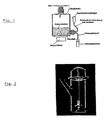
- Tubular coil cultivators IGV from 50 L up to 2000 L for the biomass production of plant cells according to enclosed FIG. 3 have also proven successful.
- cell proliferation it may be expected from arithmetic considerations that the described large culture methods will provide sufficient quantities of cell material, starting from a frozen cell culture, within relatively short times. Slowly multiply cells in a week to 10 times, in 6 weeks to 10 6 times. A cell can produce 10 12 cells (4 kg) within 12 weeks, and 10 16 cells (4000 kg) within 15 weeks.
- the water-soluble cereal-placenta extracts prepared according to the invention can be combined with both synthetic plant and / or animal organ extracts as described in EP-A-0 552 516 and with natural plant and / or animal organ extracts or both. Also in the case of these combinations, improved biochemical activity profiles are obtained which are better than those of the synthetic organ extracts and which are free from the undesirable side effects of the natural organ extracts.
- the invention allows a technically simple and particularly elegant preparation of guaranteed virus-free and prion-free organ extracts, which are a combination of synthetic extracts and cell line extracts, which is particularly important in connection with TSE problems, especially BSE.
- the cereal-placenta extracts prepared according to the invention generally contain the cereal placenta in dilute form with a placental dry matter content of 0.001 to 15% by weight, preferably from 0.1 to 10% by weight, in particular from 1 to 6 wt .-%.
- the cereal placenta extracts themselves are used in the abovementioned uses in amounts of from 0.001 to 20% by weight, preferably from 0.1 to 12% by weight, in particular from 0.5 to 6% by weight.
- the weight ratios used in the combination of cell extracts from plant and animal cell lines with corresponding synthetic cell extracts can be varied widely, e.g. between (1 to 50) :( 98 to 50), preferably (1 to 20) :( 99-80), in particular (1 to 10) :( 99 to 90).
- combinations of all three extract species are of interest, in many areas of, for example, (1 to 20) :( 1 to 10) :( residual synthetic extract), preferably (1 to 10) :( 1 to 5) :( Residual synthetic extract), in particular (1 to 5) :( 1 to 5) :( residual synthetic extract), for cell line organ extract to corresponding natural organ extract to corresponding synthetic organ extract.
- (1 to 20) ( 1 to 10) :( residual synthetic extract), preferably (1 to 10) :( 1 to 5) :( Residual synthetic extract), in particular (1 to 5) :( 1 to 5) :( residual synthetic extract), for cell line organ extract to corresponding natural organ extract to corresponding synthetic organ extract.
- Particular characteristics that can be used to characterize the placenta extracts of cereals are, in particular, measurements to determine the metabolic activities, such as e.g. The Warburg test for the determination of respiratory and fermentation increases and growth increases in fish, tadpoles: Metamorphosebeschieun Trent.
- the cells thus formed which are used as starting material for a large culture in suspension, are obtained by decanting the first nutrient medium, washing the resulting cell mass with a suitable buffer and taking up the cells in a complete medium, setting a suitable for mass production dilution.
- Solution V is analyzed and adjusted to the desired standard pH of 6.7 (standardization), e.g., pH 6.7; Dry residue 1.6 - 1.8%; N at 1.9 to 2.0 mg / ml; Preservation with phenoxyethanol 0.3%: rye "placenta" extract I (Table 3) [in case of use of the extract in oral capsules as a dietary supplement, preservation with nipagin (p-hydroxy-benzoic acid methyl ester)]
- the cell masses harvested from the two cell cultures are combined and stored in diethyl ether (4 parts of ether, 1 part of water) at -20 ° C. for 14 days.
- diethyl ether (4 parts of ether, 1 part of water) at -20 ° C. for 14 days.
- an explosion-proof drum centrifuge is decomposed into a residue and an aqueous phase. The latter is aspirated and divided: Solution I preserved with 0.3% phenoxyethanol.
- Both solutions (II + III) are combined and the pH is adjusted to 6.7.
- a solution IV and the residue II are obtained.
- the residue II is extracted with a solution of butylene glycol: ethanol: water (5: 1: 1) at room temperature for 24 hours.
- the solvent mixture is drawn off in a vacuum of 0.1 Torr, the liquid residue is added to the solution IV and the pH is adjusted to 6.7.
- the toxicological and pharmacological data of the rye-placenta extracts of Table 3 are as follows: acute toxicity to mice (140 animals): DL 50 iv> 25 ml / kg ip> 50 mg / kg po> 25 g / kg acute toxicity to rats (90 animals): DL 50 iv> 25 ml / kg ip> 20 mg / kg
- the respiratory arrest factors have been obtained according to the following protocol "Efficacy testing of test solutions for respiratory enhancement in rat liver homogenate (Warburg method)".
- Conical Warburg tubes with a cylindrical insert (ZE) and a side arm (SA) and a volume of approx. 13 ml are filled as follows:
- the solutions are pipetted in the order given.
- folded filter strips are inserted into the cylinder inserts.
- the vessels are tightly closed with the appropriate tube valve plugs on the side arm attachment, The vessels are attached to the gauges and secured with clamps or parcel rubbers.
- the manometers With the taps open, the manometers are suspended in the apparatus at 37 ° C. and shaken for 60 minutes in order to temper the reaction solution and allow the initially very rapid respiration to subside.
- the right pressure gauge legs are set to the mark "15" with Hillfe of the pinch cock, the difference of the left thumb to 15 is noted, the manometer cocks are closed and the solutions from the side arms are tipped into the main chambers (0 time).
- the experiment runs up to a measurement duration of 100 min.
- test treatment was performed by applying a sample twice a day for a period of 20 days. It was ensured that the test subjects had not used any other cosmetic either 3 days before the test or during the test period. On the 21st day after the start of the treatment, the above-mentioned process steps including the elution were carried out 4 hours before the final evaluation.
- Hautraulgkelt % Absorption after application Absorption of untreated skin ⁇ 100 . It is believed that a skin treated with a cream absorbs only a small amount of methylene blue. The mean values for 21 subjects revealed that the rye "placenta" extract (column I) shows good roughness values over the control cream (column II).
- a defined amount of the resulting lyophilizate was dissolved in deionized water and further treated as indicated below.
- mice B16 melanoma cells were inoculated and cultured for 6 days with the test sample at 37 ° C, 5% CO 2 + 95% air, changing culture medium on the third day.
- DMEM Dulbecco's Modified Eagle's Medium
- cultivation was carried out in DMEM medium + 1% FBS without CR-1.
- Human fibroblasts were used in the MTT assay to evaluate cell metabolism activation by rye-placenta extract:
- the respective cells were cultured in their above-defined medium containing varying amounts of rye-placenta extract (CR-1) and no rye-placenta extract (CR-1) (control) for 48 hours. After removal of the medium, the blue formazan formed in the cells was solubilized in 200 ⁇ l of 2-propanol. The determination of the formazan was carried out by measuring the absorbance at 550 m using a microplate reader. The results are shown in the diagram below.
- the mechanically dissected and minced plant organics residue I from Example 1.1 is suspended in batches of 5 kg in a citrate-succinate buffer of pH 6.5 and processed in a kilowatt ultrasonic generator that provides strong oscillations.
- the recovered centrifuge residue contains the desired cell wall material which serves as the basis for the following enzymatic and chemical hydrolysis processes.
- the plant organics residue I (from Example 1) minced in Example 2 and sonicated are extracted under N 2 at room temperature for 30 days with 10 times the amount of olive oil / isopropyl myristate / sunflower oil (4.5: 1: 0.02) and freed from undissolved constituents by a suitable filter: Extract I.
- Dried cell masses from fruit-shell placenta and aleurone layer are extracted under N 2 as described under A for 30 days with olive oil / isopropyl myristate / sunflower oil; after filtration, the extract II.
- the oil-soluble rye "placenta” extract is excellently incorporated into W / O-type fat creams and oils (emulsions) so that the placental ingredients are fully blended in the initial phase of the emulsion. It is a brownish oil with a typical low odor, but does not affect the perfuming of the cosmetics when added up to 2%.
- the oil-soluble extract is standardized.
- the key figures that are important for assessment and operational control are the saponification value and the content of fat-soluble vitamins, such as vitamins A, D 2 , E, K 3 , provitamins and others.
- the extract is free from hormones (see quality standard).
- the extract is so stabilized (antioxidants) that a shelf life of one year is guaranteed.
- Vitamins e.g. A, D 2 , E, K 3 also provitamins carotenoids phytosterols unsaturated fatty acids linoleic acid linolenic arachidonic acid hormones C 17 -Ketasteroide not detectable sterility germ-free toxicity DL 60 po 50 ml / kg mouse
- the DL 50 is> 50 ml / kg mouse.
- the iodine value indicates how much g of halogen, calculated as iodine, is bound by 100 g of substance.
- Reagents Carbon tetrachloride, Wijs solution (iodine monochloride solution), potassium iodide solution 25%, starch solution, 0.1 N sodium thiosulfate solution.
- the water phase consisting of glycerol, borax and dowicil, also heated to 80 ° C and slowly added initially with rapid stirring the fat phase.
- tadpoles The growth of tadpoles was observed from day 1 (spawn of spawn) to day 66 and measured from day 3 after free-floating tadpoles were obtained. Water temperature 24 ° C. On day 7, the tadpoles were divided into two groups to perform a test with the extract and a control. Each experimental group comprised about 150 tadpoles.
- Table 3 Obtaining a triticale "placental" extract via cell culture ⁇ / u> Triticale vulgare placenta cell culture (20 ml) ⁇ Propagation according to the Rotary Shaker technique (500 ml) ⁇ in suspension bottles (5 - 20 L) ⁇ in 50 - 1000 L fermentors or In 2000 L-coil snake cultivators ⁇ Harvest of placental triticale cell material in suspension or powder form
- suspended cell material is broken in the kilowatt ultrasonic generator ⁇ Centrifuge the digested material and wash with water ⁇ Splitting and deproteination ⁇ by chemical and enzymatic partial hydrolysis, pH adjustment to 6.7 Filtration and concentration in vacuo to the desired extract concentration ⁇ Preservation with 0.3% phenoxyethanol ⁇ Setting the key figures ⁇ Sterile filtration 0.2 ⁇ m.
- a lanolin-containing hand cream was formulated into which triticale "placenta” extract was incorporated.
- the final composition of the cream formulation was as follows: soluble lanolin derivative 1.0% by weight acetylated lanolin alcohols 5.0% by weight liquid multisterol extract 5.0% by weight vaseline 5.0% by weight Polyvinyl alcohol gel 0.75% by weight 10% NaOH 2.25% by weight Triticale "placenta” extract 6.0% by weight ethoxylated fatty amines 3.75% by weight perfume oil 0.3% by weight Water, redist. ad 100.00% by weight
- the fat phase ingredients and vaseline were heated to about 75 ° C.
- the PVA gel was dispersed in hot water of about 80 ° C and gradually dissolved.
- the ethoxylated fatty amine (with about 25 EO units) and optionally also an emulsifier were added to the latter dispersion, after which the previously prepared heated fatty phase was emulsified therein.
- After 5 minutes stirring at the mixing temperature was cooled to 60 ° C, then treated with 10% sodium hydroxide solution and further cooled to below 40 ° C. With slow stirring, then 6% triticale "placenta" extract and the perfume were added.
- the batch was well homogenized.
- the hand cream was stably made and showed improved skin conditioning compared to a non-triticale "placenta” extract.
- a cream base was compounded as follows: vaseline 40% by weight cetanol 18% by weight sorbitan 5% by weight polyoxyethylene 0.5% by weight p-Hydroxyalkylbenzoat 0.2% by weight Cream foundation with Triticale "placenta" extract 5.0% by weight water ad 100.00% by weight
- the cell mass was treated with a mixture of propylene glycol / water / ethanol and the solvent was partially withdrawn under a vacuum of 0.1 Torr.
- the remaining aqueous distillation residue was precipitated with acids of the citric acid cycle for deproteinization, adjusted to pH 6.7 and dialyzed.
- the dry residue was adjusted to 2.0 to 2.3% after the desired amount of preservative was added.
- the final pH was 6.7. Sterile filtration was carried out in a known manner.
Landscapes
- Health & Medical Sciences (AREA)
- Life Sciences & Earth Sciences (AREA)
- Chemical & Material Sciences (AREA)
- Engineering & Computer Science (AREA)
- Animal Behavior & Ethology (AREA)
- Public Health (AREA)
- Veterinary Medicine (AREA)
- General Health & Medical Sciences (AREA)
- Pharmacology & Pharmacy (AREA)
- Medicinal Chemistry (AREA)
- General Chemical & Material Sciences (AREA)
- Nuclear Medicine, Radiotherapy & Molecular Imaging (AREA)
- Organic Chemistry (AREA)
- Chemical Kinetics & Catalysis (AREA)
- Bioinformatics & Cheminformatics (AREA)
- Natural Medicines & Medicinal Plants (AREA)
- Toxicology (AREA)
- Nutrition Science (AREA)
- Mycology (AREA)
- Food Science & Technology (AREA)
- Polymers & Plastics (AREA)
- Botany (AREA)
- Dermatology (AREA)
- Biochemistry (AREA)
- Alternative & Traditional Medicine (AREA)
- Biotechnology (AREA)
- Immunology (AREA)
- Medical Informatics (AREA)
- Microbiology (AREA)
- Heart & Thoracic Surgery (AREA)
- Epidemiology (AREA)
- Cardiology (AREA)
- Vascular Medicine (AREA)
- Urology & Nephrology (AREA)
- Gynecology & Obstetrics (AREA)
- Endocrinology (AREA)
- Reproductive Health (AREA)
- Cosmetics (AREA)
- Paints Or Removers (AREA)
- Coloring Foods And Improving Nutritive Qualities (AREA)
Claims (17)
- Procédé de fabrication d'extraits de placenta de céréales issues du groupe blé, riz, orge, seigle, avoine, sorgho (millet), triticale et épeautre, à partir de cellules de placenta de lignées cellulaire de placenta, courantes ou fabriquées à cet effet, des céréales citées,
caractérisé par les étapes suivantes:a) activation de la lignée cellulaire de placenta sélectionnée d'une des céréales du groupe blé, riz, orge, seigle, avoine, sorgho (millet), triticale et épeautre dans un bain-marie de préférence de 25 à 30°C,b) ajout d'un milieu de culture préchauffé et prescrit pour la lignée cellulaire sélectionnée concernée par mélange, puis incubation d'une manière connue en soi, de préférence à environ 37°C et de préférence dans une atmosphère contenant environ 5 % de CO2,c) extraction des cellules ainsi formées afin de les employer comme matériau de départ pour de grandes cultures en suspension par décantation du milieu nutritif, nettoyage de la masse cellulaire obtenue au moyen d'un tampon adapté et dépôt des cellules dans un milieu complet en réglant une dilution adaptée à la production en masse,d) mise en culture à grande échelle des cellules dans une culture en suspension, d'une manière connue en soi, par inoculation d'un appareil de culture à partir d'une suspension de cellules dans un mélange stérile CO2/air,
sachant que l'introduction d'un plasmide et l'analyse de l'ADN permettent de démontrer que les cellules cultivées en masse correspondent à celles de la culture de cellules de départ,e) fabrication d'un extrait par traitement du matériel cellulaire en suspension récolté, dans un solvant organique et/ou de l'eau, extraction de la phase aqueuse, de préférence par centrifugation, suppression des lipides résiduels (résidu I) de la phase aqueuse, le cas échéant par traitement répété à partir d'un solvant organique en formant un extrait brut aqueux , le cas échéant sous la forme d'une suspension,f) rinçage et/ou traitement de l'extrait brut en fonction du matériau de départ ; etg) filtration stérilisante de l'extrait, de préférence en utilisant un filtre (Millipore®) de 0,2 µm ou une bougie PALL, après avoir réglé l'extrait à la valeur de pH souhaitée, de préférence comprise entre 5,0 et 7,2. - Procédé suivant la revendication 1, caractérisé en ce qu'une masse cellulaire végétale obtenue au cours de l'étape (d) est en suspension dans de l'éther éthylique ou du chloroforme et laissée environ 8 à environ 15 jours dans une chambre froide dont la température est comprise entre environ -10 et environ -20°C puis centrifugée afin d'extraire la phase aqueuse.
- Procédé suivant la revendication 1 ou 2, caractérisé en ce que les dernières traces d'éther ou de chloroforme sont supprimées du dialysat (solution extérieure), au cours de l'étape (f), en faisant barboter de l'azote à une valeur de pH comprise entre 7,2 et 7,5.
- Procédé suivant au moins l'une des revendications 1 à 3, caractérisé en ce qu'on emploie comme lignée cellulaire une lignée cellulaire de placenta issue du tégument du fruit (péricarpe), du tégument du grain (testa) ou de la couche d'aleurone protéique de céréales provenant du groupe avoine, orge, riz, triticale, seigle, blé, épeautre et sorgho (millet).
- Procédé suivant au moins l'une des revendications 1 à 4, caractérisé en ce que, lorsque c'est le matériau de la paroi cellulaire qui importe, le matériau cellulaire suspendu dans de l'eau ou dans un solvant organique est fragmenté au cours de l'étape (e) dans un générateur à ultrasons et que le matériau désagrégé est désagrégé par hydrolyse partielle chimique et/ou enzymatique et dialysé après la centrifugation et le rinçage à l'eau.
- Procédé suivant au moins l'une des revendications 1 à 5, caractérisé en ce qu'on utilise, pour la fabrication d'extraits de placenta végétaux à partir de lignées cellulaires des céréales, des matériaux de départ qui n'ont fait l'objet d'aucune manipulation génétique, qui ne contiennent aucune substance indésirable, en particulier aucune protéine immunogène et/ou pathogène (prions) ni aucun produit de la protéolyse, et dans lesquels ne se trouve aucun résidu d'insecticide.
- Procédé suivant au moins l'une des revendications 1 à 6, caractérisé en ce qu'un ou plusieurs extrait(s) de placenta stérilisé(s) par filtrage et obtenu(s) à partir d'une ou de plusieurs différente(s) lignée(s) cellulaire(s) de placenta de céréales est(sont) fabriqué(s) et, le cas échéant, combiné(s) avec un ou plusieurs extrait(s) organique(s) animal(aux) stérilisé(s) par filtrage et obtenu(s) à partir d'une ou de plusieurs lignée(s) cellulaire(s) animale(s) différente(s) ainsi que, le cas échéant, avec un ou plusieurs extrait(s) organique(s) animal(aux) fabriqué(s) par synthèse à partir d'un ou de plusieurs organe(s) différent(s) et/ou avec un ou plusieurs extrait(s) organique(s) animal(aux) différent(s), fabriqué(s) à partir d'organes animaux frais, et/ou, le cas échéant, avec un ou plusieurs extrait(s) végétal(aux) fabriqué(s) à partir d'un ou de plusieurs organe(s) ou élément(s) végétal(aux) frais différent(s).
- Procédé suivant la revendication 7, caractérisé en ce que le rapport du poids entre l(es)'extrait(s) organique(s) végétal(aux) et l(es)'extrait(s) organique(s) animal(aux) s'élève à (1 à 99) : (99 à 1), de préférence (1 à 50) : (50 à 1), en particulier (1 à 20) : (99 à 80).
- Utilisation des extraits de placenta de céréales et des mélanges d'extraits, fabriqués suivant au moins l'une des revendications 1 à 8, afin de produire une préparation antiradicalaire, en particulier à des fins cosmétiques et/ou techniques.
- Utilisation des extraits de placenta de céréales et des mélanges d'extraits, fabriqués suivant au moins l'une des revendications 1 à 8, afin de produire une formule cosmétique.
- Utilisation suivant la revendication 10 afin de produire une formule cosmétique ayant des propriétés qui empêchent la formation de mélanine (effet blanchissant).
- Utilisation des extraits de placenta de céréales et des mélanges d'extraits, fabriqués suivant au moins l'une des revendications 1 à 8, afin de produire une préparation médicale destinée à une administration topique, sous-cutanée, intraveineuse, intramusculaire ou orale à des fins de cicatrisation externe ou interne, de traitement de l'artériosclérose ou de dommages résultant de rayonnements.
- Utilisation des extraits de placenta de céréales et des mélanges d'extraits, fabriqués suivant au moins l'une des revendications 1 à 8, afin de produire une préparation médicale permettant de renforcer le système immunitaire, d'activer le métabolisme cellulaire ou de traiter des maladies gastro-entérologiques, en particulier les ulcères.
- Utilisation des extraits de placenta de céréales et des mélanges d'extraits, fabriqués suivant au moins l'une des revendications 1 à 8, afin de produire une préparation ayant des effets aphrodisiaques.
- Utilisation des extraits de placenta de céréales et des mélanges d'extraits, fabriqués suivant au moins l'une des revendications 1 à 8, et des extraits bruts et précurseurs qu'ils contiennent afin de stabiliser et de conserver des tissus colorés ainsi que des peintures, en particulier des vernis.
- Utilisation des extraits de placenta de céréales et des mélanges d'extraits, fabriqués suivant au moins l'une des revendications 1 à 8, afin de produire des solutions de culture, des solutions nutritives et des solutions diététiques.
- Utilisation suivant la revendication 16 afin de produire des solutions nutritives et des solutions diététiques en gélules les contenant (diluées ou non diluées) et destinées à une administration orale directe, en particulier comme compléments nutritifs.
Applications Claiming Priority (1)
| Application Number | Priority Date | Filing Date | Title |
|---|---|---|---|
| PCT/EP2003/009239 WO2005027946A1 (fr) | 2003-08-20 | 2003-08-20 | Extraits placentaires vegetaux, procede pour les preparer et leur utilisation |
Publications (2)
| Publication Number | Publication Date |
|---|---|
| EP1663274A1 EP1663274A1 (fr) | 2006-06-07 |
| EP1663274B1 true EP1663274B1 (fr) | 2007-03-28 |
Family
ID=34354382
Family Applications (1)
| Application Number | Title | Priority Date | Filing Date |
|---|---|---|---|
| EP03818689A Expired - Lifetime EP1663274B1 (fr) | 2003-08-20 | 2003-08-20 | Extraits placentaires vegetaux, procede pour les preparer et leur utilisation |
Country Status (4)
| Country | Link |
|---|---|
| EP (1) | EP1663274B1 (fr) |
| JP (1) | JP4653658B2 (fr) |
| DE (1) | DE50306943D1 (fr) |
| WO (1) | WO2005027946A1 (fr) |
Cited By (1)
| Publication number | Priority date | Publication date | Assignee | Title |
|---|---|---|---|---|
| CN106109287A (zh) * | 2016-06-30 | 2016-11-16 | 理想科技集团有限公司 | 一种植物胎盘素的制备方法 |
Families Citing this family (14)
| Publication number | Priority date | Publication date | Assignee | Title |
|---|---|---|---|---|
| EP2260831A1 (fr) * | 2009-06-12 | 2010-12-15 | L V M H Recherche | Extraits de plantes à modulation Myo-X à utiliser dans des compositions |
| US8409633B2 (en) | 2008-09-10 | 2013-04-02 | L V M H Recherche | Methods useful in studying or modulating skin or hair pigmentation, plant extracts for use in compositions and cosmetic care method |
| JP5427921B2 (ja) * | 2011-06-07 | 2014-02-26 | 株式会社 銀座・トマト | バラ胎座組織培養物またはその抽出物を含有する皮膚外用剤組成物およびその製造方法、機能性食品、ならびに抗酸化用組成物 |
| CN105724892B (zh) * | 2014-12-11 | 2019-06-18 | 国玺干细胞应用技术股份有限公司 | 促使干细胞增生及增加端粒酶活性的食物补充品 |
| KR101533217B1 (ko) * | 2015-03-18 | 2015-07-10 | 주식회사 바이오에프디엔씨 | 수련화 식물 태좌 세포 배양 추출물을 함유한 항노화, 항염, 항산화 화장료 조성물 |
| KR101533947B1 (ko) * | 2015-03-18 | 2015-07-10 | 주식회사 바이오에프디엔씨 | 모란꽃 식물 태좌 세포 배양 추출물을 함유한 항노화, 항염, 항산화 화장료 조성물 |
| KR101533216B1 (ko) * | 2015-03-18 | 2015-07-10 | 주식회사 바이오에프디엔씨 | 크리스마스 로즈 식물 태좌 세포 배양 추출물을 함유한 항노화, 항염, 항산화 화장료 조성물 |
| KR101533213B1 (ko) * | 2015-03-18 | 2015-07-10 | 주식회사 바이오에프디엔씨 | 아네모네 식물 태좌 세포 배양 추출물을 함유한 항노화, 항염, 항산화 화장료 조성물 |
| KR101533215B1 (ko) * | 2015-03-18 | 2015-07-10 | 주식회사 바이오에프디엔씨 | 할미꽃 식물 태좌 세포 배양 추출물을 함유한 항노화, 항염, 항산화 화장료 조성물 |
| KR101533214B1 (ko) * | 2015-03-18 | 2015-07-10 | 주식회사 바이오에프디엔씨 | 노루귀 식물 태좌 세포 배양 추출물을 함유한 항노화, 항염, 항산화 화장료 조성물 |
| KR101810410B1 (ko) * | 2017-06-20 | 2017-12-19 | 김용수 | 버섯 균사체 및 청호밀 태좌의 혼합 배양 추출물의 제조방법 및 이를 함유하는 화장료 조성물 |
| JP2019019101A (ja) * | 2017-07-20 | 2019-02-07 | クラシエホームプロダクツ株式会社 | 皮膚化粧料 |
| JP7803087B2 (ja) * | 2020-11-19 | 2026-01-21 | 大正製薬株式会社 | 鉄化合物含有組成物 |
| KR102474843B1 (ko) * | 2021-11-15 | 2022-12-07 | (주)아모레퍼시픽 | 항노화 조성물 및 이를 포함하는 피부 외용제 조성물 |
Family Cites Families (13)
| Publication number | Priority date | Publication date | Assignee | Title |
|---|---|---|---|---|
| FR2676936B1 (fr) * | 1991-05-27 | 1993-11-05 | Inocosm Laboratoires | Procede de separation d'un compose riche en glycolipides lysophospholipides shingolipides et ceramides d'origine vegetale, ainsi que produits cosmetiques obtenus par la mise en óoeuvre de ce procede. |
| JPH06506000A (ja) * | 1991-12-02 | 1994-07-07 | 山川貿易株式会社 | 水性の合成生体抽出物 |
| JPH05310586A (ja) * | 1992-05-15 | 1993-11-22 | Soken Kk | 糠およびふすまからの活性酸素消去剤 |
| JPH0787930A (ja) * | 1993-09-28 | 1995-04-04 | Otsuka Shokuhin Kk | マグネシウム補給用組成物及びその製造法 |
| JPH0856681A (ja) * | 1994-08-25 | 1996-03-05 | Mitsui Petrochem Ind Ltd | タキサン型ジテルペンの製造方法 |
| DE19624476C2 (de) * | 1996-06-19 | 2001-01-04 | Randolph Riemschneider | Wasserlösliche Organextrakte mit verbessertem biochemischen Wirkungsgrad, Verfahren zu ihrer Herstellung und ihre Verwendung |
| JPH10287525A (ja) * | 1997-02-11 | 1998-10-27 | Pure:Kk | 化粧品、食品および入浴剤 |
| JP2000026228A (ja) * | 1998-07-10 | 2000-01-25 | Nippon Flour Mills Co Ltd | コラゲナーゼ抑制剤、保湿剤並びにそれらを含む化粧料及び食品 |
| FR2786778A1 (fr) * | 1998-12-04 | 2000-06-09 | Soldive | Extrait placentaire de fruit, procede de preparation et composition le contenant |
| JP2000256131A (ja) * | 1999-03-09 | 2000-09-19 | Kose Corp | チロシナーゼ生成抑制剤及びこれを含有する皮膚外用剤 |
| EP1311166B1 (fr) * | 2000-08-21 | 2006-09-13 | Bühler AG | Procede pour extraire l'aleurone du son |
| KR100441596B1 (ko) * | 2001-06-30 | 2004-07-23 | 주식회사 코스메카코리아 | 미백과 세포 증식효과를 갖는 혼합 식물추출물을 함유한화장료 조성물 |
| JP4025600B2 (ja) * | 2002-08-12 | 2007-12-19 | 山川貿易株式会社 | 皮膚外用剤 |
-
2003
- 2003-08-20 JP JP2005508981A patent/JP4653658B2/ja not_active Expired - Lifetime
- 2003-08-20 EP EP03818689A patent/EP1663274B1/fr not_active Expired - Lifetime
- 2003-08-20 WO PCT/EP2003/009239 patent/WO2005027946A1/fr not_active Ceased
- 2003-08-20 DE DE50306943T patent/DE50306943D1/de not_active Expired - Lifetime
Non-Patent Citations (1)
| Title |
|---|
| None * |
Cited By (1)
| Publication number | Priority date | Publication date | Assignee | Title |
|---|---|---|---|---|
| CN106109287A (zh) * | 2016-06-30 | 2016-11-16 | 理想科技集团有限公司 | 一种植物胎盘素的制备方法 |
Also Published As
| Publication number | Publication date |
|---|---|
| JP4653658B2 (ja) | 2011-03-16 |
| JP2007515376A (ja) | 2007-06-14 |
| EP1663274A1 (fr) | 2006-06-07 |
| DE50306943D1 (de) | 2007-05-10 |
| WO2005027946A1 (fr) | 2005-03-31 |
Similar Documents
| Publication | Publication Date | Title |
|---|---|---|
| DE60030766T2 (de) | Verwendung eines extraktes der gattung vaccinium als anti-glykations-agens | |
| DE60029801T2 (de) | Verwendung von einem produkt aus pflanzlichem öl zur erhöhung der hautlipiden produktion | |
| DE69100591T2 (de) | Kosmetische mittel, die einen extrakt des ölkuchens der sonnenblume (helianthus annuus) enthalten. | |
| DE60017392T2 (de) | Avenanthramides aus haferextrakt enthaltende zusammensetzungen | |
| DE112008001242B4 (de) | Kosmetische Zusammensetzung mit einem Extrakt aus Adenium obesum, deren Verwendung sowie ein deren Auftragen umfassendes kosmetisches Pflegeverfahren | |
| DE69524663T2 (de) | Verwendung von Extracten aus filamentösen Bakterien als kosmetische Mittel gegen Hautaltern | |
| EP1663274A1 (fr) | Extraits placentaires vegetaux, procede pour les preparer et leur utilisation | |
| DE69522103T2 (de) | Verwendung des laminarins oder abgeleiteten oligosacchariden in der kosmetik oder dermatologie | |
| DE69901309T2 (de) | Myrteextrakt, verfahren zur herstellung und verwendung | |
| DE69403800T2 (de) | Tephrosia-extrakt, insbesondere tephrosia purpurea enthaltende kosmetische oder pharmazeutische, insbesondere dermatologische, zusammensetzung | |
| DE69611082T2 (de) | Bertholletia enthaltende kosmetische oder pharmazeutische,insbesondere dermatologische zusammensetzung | |
| JP2011088845A (ja) | インボルクリン発現抑制剤 | |
| DE60000286T2 (de) | Lipide enthaltende sojaextrakte, verfahren zu deren herstellung und pharmazeutische und kosmetische zusammensetzung | |
| DE68912950T2 (de) | Kosmetische oder dermatologische Zusammensetzung, die schlankmachend oder gegen Zellulitis wirkt, mit Liposomen Kolaextrakten. | |
| CN112999131A (zh) | 一种适用于压力肌肤的抗皱修复组合物及其精华乳产品 | |
| DE69318724T2 (de) | Verwendung eines simaroubaextraktes zur verminderung von fleckiger hautpigmentierung | |
| DE102010061237A1 (de) | Extrakt aus der Pflanze Ravenala madgascariensis und Verwendung als kosmetischer hydratisierender Wirkstoff | |
| AT414082B (de) | Verfahren zur herstellung von tocotrienol-angereicherten präparationen | |
| DE60320265T2 (de) | Kosmetische zusammensetzung gegen das altern der haut | |
| DE69905603T2 (de) | Walnusssamenschrotmehlextrakt | |
| DE69316216T2 (de) | Rohextrakte der blaualge, herstellungsmethode und verwendung in der kosmetologie und dermatologie | |
| DE19624476C2 (de) | Wasserlösliche Organextrakte mit verbessertem biochemischen Wirkungsgrad, Verfahren zu ihrer Herstellung und ihre Verwendung | |
| DE69402409T2 (de) | Vismia extrakt enthaltende kosmetische oder pharmazeutische zubereitung insbesonders dermatologisch. | |
| JP2025000883A (ja) | 抗老化成分のスクリーニング方法 | |
| DE202018102546U1 (de) | Zellkulturmedium, welches von der chinesischen Kräutermedizin abgeleitete wässrige Extrakte enthält |
Legal Events
| Date | Code | Title | Description |
|---|---|---|---|
| PUAI | Public reference made under article 153(3) epc to a published international application that has entered the european phase |
Free format text: ORIGINAL CODE: 0009012 |
|
| 17P | Request for examination filed |
Effective date: 20051219 |
|
| AK | Designated contracting states |
Kind code of ref document: A1 Designated state(s): CH DE LI |
|
| RBV | Designated contracting states (corrected) |
Designated state(s): CH DE LI |
|
| GRAP | Despatch of communication of intention to grant a patent |
Free format text: ORIGINAL CODE: EPIDOSNIGR1 |
|
| GRAS | Grant fee paid |
Free format text: ORIGINAL CODE: EPIDOSNIGR3 |
|
| GRAA | (expected) grant |
Free format text: ORIGINAL CODE: 0009210 |
|
| AK | Designated contracting states |
Kind code of ref document: B1 Designated state(s): CH DE LI |
|
| RIN1 | Information on inventor provided before grant (corrected) |
Inventor name: RIEMSCHNEIDER, RANDOLPH, PROF. DR. DR. Inventor name: REIHER, CHRISTEL |
|
| REG | Reference to a national code |
Ref country code: CH Ref legal event code: EP |
|
| REF | Corresponds to: |
Ref document number: 50306943 Country of ref document: DE Date of ref document: 20070510 Kind code of ref document: P |
|
| PLBE | No opposition filed within time limit |
Free format text: ORIGINAL CODE: 0009261 |
|
| STAA | Information on the status of an ep patent application or granted ep patent |
Free format text: STATUS: NO OPPOSITION FILED WITHIN TIME LIMIT |
|
| 26N | No opposition filed |
Effective date: 20080102 |
|
| PGFP | Annual fee paid to national office [announced via postgrant information from national office to epo] |
Ref country code: DE Payment date: 20220801 Year of fee payment: 20 |
|
| PGFP | Annual fee paid to national office [announced via postgrant information from national office to epo] |
Ref country code: CH Payment date: 20220824 Year of fee payment: 20 |
|
| REG | Reference to a national code |
Ref country code: DE Ref legal event code: R071 Ref document number: 50306943 Country of ref document: DE |
|
| REG | Reference to a national code |
Ref country code: CH Ref legal event code: PL |