EP1663274B1 - Vegetal placenta extracts, method for the production and use thereof - Google Patents
Vegetal placenta extracts, method for the production and use thereof Download PDFInfo
- Publication number
- EP1663274B1 EP1663274B1 EP03818689A EP03818689A EP1663274B1 EP 1663274 B1 EP1663274 B1 EP 1663274B1 EP 03818689 A EP03818689 A EP 03818689A EP 03818689 A EP03818689 A EP 03818689A EP 1663274 B1 EP1663274 B1 EP 1663274B1
- Authority
- EP
- European Patent Office
- Prior art keywords
- placenta
- extracts
- extract
- cell
- cereals
- Prior art date
- Legal status (The legal status is an assumption and is not a legal conclusion. Google has not performed a legal analysis and makes no representation as to the accuracy of the status listed.)
- Expired - Lifetime
Links
- 239000000284 extract Substances 0.000 title claims description 251
- 210000002826 placenta Anatomy 0.000 title claims description 147
- 238000000034 method Methods 0.000 title claims description 43
- 238000004519 manufacturing process Methods 0.000 title claims description 22
- 210000004027 cell Anatomy 0.000 claims description 151
- 235000013339 cereals Nutrition 0.000 claims description 65
- 239000000243 solution Substances 0.000 claims description 65
- 244000082988 Secale cereale Species 0.000 claims description 50
- 235000007238 Secale cereale Nutrition 0.000 claims description 49
- 238000002360 preparation method Methods 0.000 claims description 49
- 241000196324 Embryophyta Species 0.000 claims description 46
- XLYOFNOQVPJJNP-UHFFFAOYSA-N water Substances O XLYOFNOQVPJJNP-UHFFFAOYSA-N 0.000 claims description 44
- 239000000203 mixture Substances 0.000 claims description 43
- 239000000463 material Substances 0.000 claims description 35
- 238000004113 cell culture Methods 0.000 claims description 34
- 235000019714 Triticale Nutrition 0.000 claims description 32
- 241000228158 x Triticosecale Species 0.000 claims description 32
- 210000001557 animal structure Anatomy 0.000 claims description 28
- 210000000056 organ Anatomy 0.000 claims description 26
- 239000000725 suspension Substances 0.000 claims description 24
- 230000000694 effects Effects 0.000 claims description 21
- 240000007594 Oryza sativa Species 0.000 claims description 20
- 235000007164 Oryza sativa Nutrition 0.000 claims description 20
- 239000002537 cosmetic Substances 0.000 claims description 20
- 108090000623 proteins and genes Proteins 0.000 claims description 20
- 230000008569 process Effects 0.000 claims description 19
- 239000001963 growth medium Substances 0.000 claims description 18
- 102000004169 proteins and genes Human genes 0.000 claims description 18
- 239000000126 substance Substances 0.000 claims description 18
- RTZKZFJDLAIYFH-UHFFFAOYSA-N Diethyl ether Chemical compound CCOCC RTZKZFJDLAIYFH-UHFFFAOYSA-N 0.000 claims description 17
- 239000002609 medium Substances 0.000 claims description 17
- 235000009566 rice Nutrition 0.000 claims description 17
- 239000007858 starting material Substances 0.000 claims description 17
- 235000021307 Triticum Nutrition 0.000 claims description 15
- 239000003960 organic solvent Substances 0.000 claims description 14
- 239000008346 aqueous phase Substances 0.000 claims description 13
- 230000002087 whitening effect Effects 0.000 claims description 13
- HEDRZPFGACZZDS-UHFFFAOYSA-N Chloroform Chemical compound ClC(Cl)Cl HEDRZPFGACZZDS-UHFFFAOYSA-N 0.000 claims description 12
- 238000004114 suspension culture Methods 0.000 claims description 12
- 244000075850 Avena orientalis Species 0.000 claims description 11
- 240000005979 Hordeum vulgare Species 0.000 claims description 11
- 235000011684 Sorghum saccharatum Nutrition 0.000 claims description 11
- 244000062793 Sorghum vulgare Species 0.000 claims description 11
- 238000004458 analytical method Methods 0.000 claims description 11
- 235000007319 Avena orientalis Nutrition 0.000 claims description 10
- 235000007340 Hordeum vulgare Nutrition 0.000 claims description 10
- 240000006394 Sorghum bicolor Species 0.000 claims description 10
- 239000000872 buffer Substances 0.000 claims description 10
- 235000019713 millet Nutrition 0.000 claims description 10
- 238000009472 formulation Methods 0.000 claims description 9
- IJGRMHOSHXDMSA-UHFFFAOYSA-N Atomic nitrogen Chemical compound N#N IJGRMHOSHXDMSA-UHFFFAOYSA-N 0.000 claims description 8
- 238000010790 dilution Methods 0.000 claims description 8
- 239000012895 dilution Substances 0.000 claims description 8
- 238000002156 mixing Methods 0.000 claims description 8
- 238000005406 washing Methods 0.000 claims description 8
- 230000004913 activation Effects 0.000 claims description 7
- 239000007857 degradation product Substances 0.000 claims description 7
- 235000005911 diet Nutrition 0.000 claims description 7
- 230000000378 dietary effect Effects 0.000 claims description 7
- 230000002163 immunogen Effects 0.000 claims description 7
- 230000001717 pathogenic effect Effects 0.000 claims description 7
- 230000017854 proteolysis Effects 0.000 claims description 7
- 238000011146 sterile filtration Methods 0.000 claims description 7
- 102000029797 Prion Human genes 0.000 claims description 6
- 108091000054 Prion Proteins 0.000 claims description 6
- 239000002775 capsule Substances 0.000 claims description 6
- 201000010099 disease Diseases 0.000 claims description 6
- 208000037265 diseases, disorders, signs and symptoms Diseases 0.000 claims description 6
- 238000006460 hydrolysis reaction Methods 0.000 claims description 6
- 238000001990 intravenous administration Methods 0.000 claims description 6
- 239000006285 cell suspension Substances 0.000 claims description 5
- 230000007062 hydrolysis Effects 0.000 claims description 5
- 239000002917 insecticide Substances 0.000 claims description 5
- 240000003834 Triticum spelta Species 0.000 claims description 4
- 210000004102 animal cell Anatomy 0.000 claims description 4
- 210000002421 cell wall Anatomy 0.000 claims description 4
- 230000002255 enzymatic effect Effects 0.000 claims description 4
- 229910052757 nitrogen Inorganic materials 0.000 claims description 4
- 239000003973 paint Substances 0.000 claims description 4
- 206010003210 Arteriosclerosis Diseases 0.000 claims description 3
- 206010052428 Wound Diseases 0.000 claims description 3
- 208000027418 Wounds and injury Diseases 0.000 claims description 3
- 208000011775 arteriosclerosis disease Diseases 0.000 claims description 3
- 230000015572 biosynthetic process Effects 0.000 claims description 3
- 230000019522 cellular metabolic process Effects 0.000 claims description 3
- 238000001816 cooling Methods 0.000 claims description 3
- 230000006378 damage Effects 0.000 claims description 3
- 239000004744 fabric Substances 0.000 claims description 3
- 210000000987 immune system Anatomy 0.000 claims description 3
- 238000007918 intramuscular administration Methods 0.000 claims description 3
- 235000016709 nutrition Nutrition 0.000 claims description 3
- 230000035764 nutrition Effects 0.000 claims description 3
- 239000002243 precursor Substances 0.000 claims description 3
- 238000000746 purification Methods 0.000 claims description 3
- 230000005855 radiation Effects 0.000 claims description 3
- 238000007920 subcutaneous administration Methods 0.000 claims description 3
- 230000000699 topical effect Effects 0.000 claims description 3
- 230000003213 activating effect Effects 0.000 claims description 2
- 239000004922 lacquer Substances 0.000 claims description 2
- 230000000087 stabilizing effect Effects 0.000 claims description 2
- 238000011200 topical administration Methods 0.000 claims description 2
- 241000209140 Triticum Species 0.000 claims 3
- 235000004240 Triticum spelta Nutrition 0.000 claims 3
- 241001677738 Aleuron Species 0.000 claims 1
- 229920000877 Melamine resin Polymers 0.000 claims 1
- 230000035876 healing Effects 0.000 claims 1
- 125000003473 lipid group Chemical group 0.000 claims 1
- JDSHMPZPIAZGSV-UHFFFAOYSA-N melamine Chemical compound NC1=NC(N)=NC(N)=N1 JDSHMPZPIAZGSV-UHFFFAOYSA-N 0.000 claims 1
- 238000012360 testing method Methods 0.000 description 55
- 210000003491 skin Anatomy 0.000 description 24
- 239000006071 cream Substances 0.000 description 21
- 239000012071 phase Substances 0.000 description 20
- 238000005259 measurement Methods 0.000 description 19
- 241001465754 Metazoa Species 0.000 description 18
- 244000098338 Triticum aestivum Species 0.000 description 16
- 235000018102 proteins Nutrition 0.000 description 16
- HEMHJVSKTPXQMS-UHFFFAOYSA-M Sodium hydroxide Chemical compound [OH-].[Na+] HEMHJVSKTPXQMS-UHFFFAOYSA-M 0.000 description 15
- 235000015097 nutrients Nutrition 0.000 description 13
- QCDWFXQBSFUVSP-UHFFFAOYSA-N 2-phenoxyethanol Chemical compound OCCOC1=CC=CC=C1 QCDWFXQBSFUVSP-UHFFFAOYSA-N 0.000 description 12
- LFQSCWFLJHTTHZ-UHFFFAOYSA-N Ethanol Chemical compound CCO LFQSCWFLJHTTHZ-UHFFFAOYSA-N 0.000 description 12
- 229960005323 phenoxyethanol Drugs 0.000 description 12
- 230000003169 placental effect Effects 0.000 description 12
- 239000000839 emulsion Substances 0.000 description 11
- 239000000287 crude extract Substances 0.000 description 10
- 238000004809 thin layer chromatography Methods 0.000 description 10
- 241000700159 Rattus Species 0.000 description 9
- 238000002474 experimental method Methods 0.000 description 9
- 238000000605 extraction Methods 0.000 description 9
- 239000003921 oil Substances 0.000 description 9
- 235000019198 oils Nutrition 0.000 description 9
- 230000029058 respiratory gaseous exchange Effects 0.000 description 9
- 239000000523 sample Substances 0.000 description 9
- 229910002091 carbon monoxide Inorganic materials 0.000 description 8
- 235000013399 edible fruits Nutrition 0.000 description 8
- 210000004185 liver Anatomy 0.000 description 8
- 239000013612 plasmid Substances 0.000 description 8
- 230000036558 skin tension Effects 0.000 description 8
- KFZMGEQAYNKOFK-UHFFFAOYSA-N Isopropanol Chemical compound CC(C)O KFZMGEQAYNKOFK-UHFFFAOYSA-N 0.000 description 7
- 108010050181 aleurone Proteins 0.000 description 7
- 238000001914 filtration Methods 0.000 description 7
- 239000008269 hand cream Substances 0.000 description 7
- 238000003756 stirring Methods 0.000 description 7
- CURLTUGMZLYLDI-UHFFFAOYSA-N Carbon dioxide Chemical compound O=C=O CURLTUGMZLYLDI-UHFFFAOYSA-N 0.000 description 6
- 241000699666 Mus <mouse, genus> Species 0.000 description 6
- 241000283973 Oryctolagus cuniculus Species 0.000 description 6
- 238000010521 absorption reaction Methods 0.000 description 6
- 238000005119 centrifugation Methods 0.000 description 6
- 235000015872 dietary supplement Nutrition 0.000 description 6
- 230000012010 growth Effects 0.000 description 6
- 230000006872 improvement Effects 0.000 description 6
- 230000002503 metabolic effect Effects 0.000 description 6
- LXCFILQKKLGQFO-UHFFFAOYSA-N methylparaben Chemical compound COC(=O)C1=CC=C(O)C=C1 LXCFILQKKLGQFO-UHFFFAOYSA-N 0.000 description 6
- FEMOMIGRRWSMCU-UHFFFAOYSA-N ninhydrin Chemical compound C1=CC=C2C(=O)C(O)(O)C(=O)C2=C1 FEMOMIGRRWSMCU-UHFFFAOYSA-N 0.000 description 6
- 239000002304 perfume Substances 0.000 description 6
- 239000000419 plant extract Substances 0.000 description 6
- 239000002994 raw material Substances 0.000 description 6
- KDYFGRWQOYBRFD-UHFFFAOYSA-N succinic acid Chemical compound OC(=O)CCC(O)=O KDYFGRWQOYBRFD-UHFFFAOYSA-N 0.000 description 6
- 230000029663 wound healing Effects 0.000 description 6
- 102000008186 Collagen Human genes 0.000 description 5
- 108010035532 Collagen Proteins 0.000 description 5
- FBPFZTCFMRRESA-JGWLITMVSA-N D-glucitol Chemical compound OC[C@H](O)[C@@H](O)[C@H](O)[C@H](O)CO FBPFZTCFMRRESA-JGWLITMVSA-N 0.000 description 5
- PEDCQBHIVMGVHV-UHFFFAOYSA-N Glycerine Chemical compound OCC(O)CO PEDCQBHIVMGVHV-UHFFFAOYSA-N 0.000 description 5
- 229940024606 amino acid Drugs 0.000 description 5
- 235000001014 amino acid Nutrition 0.000 description 5
- 150000001413 amino acids Chemical class 0.000 description 5
- 229920001436 collagen Polymers 0.000 description 5
- 235000013305 food Nutrition 0.000 description 5
- 239000011521 glass Substances 0.000 description 5
- 238000011534 incubation Methods 0.000 description 5
- 230000036512 infertility Effects 0.000 description 5
- 230000029052 metamorphosis Effects 0.000 description 5
- CXKWCBBOMKCUKX-UHFFFAOYSA-M methylene blue Chemical compound [Cl-].C1=CC(N(C)C)=CC2=[S+]C3=CC(N(C)C)=CC=C3N=C21 CXKWCBBOMKCUKX-UHFFFAOYSA-M 0.000 description 5
- 238000004321 preservation Methods 0.000 description 5
- 239000011734 sodium Substances 0.000 description 5
- ZCYVEMRRCGMTRW-UHFFFAOYSA-N 7553-56-2 Chemical compound [I] ZCYVEMRRCGMTRW-UHFFFAOYSA-N 0.000 description 4
- DHMQDGOQFOQNFH-UHFFFAOYSA-N Glycine Chemical compound NCC(O)=O DHMQDGOQFOQNFH-UHFFFAOYSA-N 0.000 description 4
- 241000699670 Mus sp. Species 0.000 description 4
- 230000009471 action Effects 0.000 description 4
- OHJMTUPIZMNBFR-UHFFFAOYSA-N biuret Chemical compound NC(=O)NC(N)=O OHJMTUPIZMNBFR-UHFFFAOYSA-N 0.000 description 4
- 239000003814 drug Substances 0.000 description 4
- 238000011156 evaluation Methods 0.000 description 4
- 235000019197 fats Nutrition 0.000 description 4
- 210000002950 fibroblast Anatomy 0.000 description 4
- 238000004128 high performance liquid chromatography Methods 0.000 description 4
- 208000010544 human prion disease Diseases 0.000 description 4
- 239000004615 ingredient Substances 0.000 description 4
- 229910052740 iodine Inorganic materials 0.000 description 4
- 239000011630 iodine Substances 0.000 description 4
- 150000002632 lipids Chemical class 0.000 description 4
- 239000007788 liquid Substances 0.000 description 4
- 230000014759 maintenance of location Effects 0.000 description 4
- 229960000907 methylthioninium chloride Drugs 0.000 description 4
- NLKNQRATVPKPDG-UHFFFAOYSA-M potassium iodide Chemical compound [K+].[I-] NLKNQRATVPKPDG-UHFFFAOYSA-M 0.000 description 4
- 108090000765 processed proteins & peptides Proteins 0.000 description 4
- 229940099259 vaseline Drugs 0.000 description 4
- PUPZLCDOIYMWBV-UHFFFAOYSA-N (+/-)-1,3-Butanediol Chemical compound CC(O)CCO PUPZLCDOIYMWBV-UHFFFAOYSA-N 0.000 description 3
- 241000269350 Anura Species 0.000 description 3
- 241000283690 Bos taurus Species 0.000 description 3
- 108091003079 Bovine Serum Albumin Proteins 0.000 description 3
- 241000754798 Calophyllum brasiliense Species 0.000 description 3
- 206010013786 Dry skin Diseases 0.000 description 3
- 239000006144 Dulbecco’s modified Eagle's medium Substances 0.000 description 3
- 241000160765 Erebia ligea Species 0.000 description 3
- 241000282412 Homo Species 0.000 description 3
- 239000004166 Lanolin Substances 0.000 description 3
- DNIAPMSPPWPWGF-UHFFFAOYSA-N Propylene glycol Chemical compound CC(O)CO DNIAPMSPPWPWGF-UHFFFAOYSA-N 0.000 description 3
- 235000019486 Sunflower oil Nutrition 0.000 description 3
- 241000700605 Viruses Species 0.000 description 3
- 241000269368 Xenopus laevis Species 0.000 description 3
- 239000002253 acid Substances 0.000 description 3
- 239000013543 active substance Substances 0.000 description 3
- 231100000215 acute (single dose) toxicity testing Toxicity 0.000 description 3
- 238000011047 acute toxicity test Methods 0.000 description 3
- 239000000654 additive Substances 0.000 description 3
- 150000001412 amines Chemical class 0.000 description 3
- 230000002509 aphrodisiac effect Effects 0.000 description 3
- TZCXTZWJZNENPQ-UHFFFAOYSA-L barium sulfate Chemical compound [Ba+2].[O-]S([O-])(=O)=O TZCXTZWJZNENPQ-UHFFFAOYSA-L 0.000 description 3
- KRKNYBCHXYNGOX-UHFFFAOYSA-N citric acid Chemical compound OC(=O)CC(O)(C(O)=O)CC(O)=O KRKNYBCHXYNGOX-UHFFFAOYSA-N 0.000 description 3
- 239000012091 fetal bovine serum Substances 0.000 description 3
- 238000011049 filling Methods 0.000 description 3
- 125000001449 isopropyl group Chemical group [H]C([H])([H])C([H])(*)C([H])([H])[H] 0.000 description 3
- 229940039717 lanolin Drugs 0.000 description 3
- 235000019388 lanolin Nutrition 0.000 description 3
- 210000002414 leg Anatomy 0.000 description 3
- 201000001441 melanoma Diseases 0.000 description 3
- 239000004006 olive oil Substances 0.000 description 3
- 235000008390 olive oil Nutrition 0.000 description 3
- 230000000144 pharmacologic effect Effects 0.000 description 3
- 239000003755 preservative agent Substances 0.000 description 3
- 230000002335 preservative effect Effects 0.000 description 3
- 102000004196 processed proteins & peptides Human genes 0.000 description 3
- 238000012545 processing Methods 0.000 description 3
- 230000000241 respiratory effect Effects 0.000 description 3
- 239000001384 succinic acid Substances 0.000 description 3
- 239000002600 sunflower oil Substances 0.000 description 3
- 231100000027 toxicology Toxicity 0.000 description 3
- -1 vitamins A Natural products 0.000 description 3
- QPFMBZIOSGYJDE-UHFFFAOYSA-N 1,1,2,2-tetrachloroethane Chemical compound ClC(Cl)C(Cl)Cl QPFMBZIOSGYJDE-UHFFFAOYSA-N 0.000 description 2
- LEACJMVNYZDSKR-UHFFFAOYSA-N 2-octyldodecan-1-ol Chemical compound CCCCCCCCCCC(CO)CCCCCCCC LEACJMVNYZDSKR-UHFFFAOYSA-N 0.000 description 2
- 238000010953 Ames test Methods 0.000 description 2
- 231100000039 Ames test Toxicity 0.000 description 2
- 241000282472 Canis lupus familiaris Species 0.000 description 2
- 241000700199 Cavia porcellus Species 0.000 description 2
- 239000004471 Glycine Substances 0.000 description 2
- 241001456088 Hesperocnide Species 0.000 description 2
- QZRGKCOWNLSUDK-UHFFFAOYSA-N Iodochlorine Chemical compound ICl QZRGKCOWNLSUDK-UHFFFAOYSA-N 0.000 description 2
- 231100000002 MTT assay Toxicity 0.000 description 2
- 238000000134 MTT assay Methods 0.000 description 2
- XUMBMVFBXHLACL-UHFFFAOYSA-N Melanin Chemical compound O=C1C(=O)C(C2=CNC3=C(C(C(=O)C4=C32)=O)C)=C2C4=CNC2=C1C XUMBMVFBXHLACL-UHFFFAOYSA-N 0.000 description 2
- 239000005662 Paraffin oil Substances 0.000 description 2
- 241000276427 Poecilia reticulata Species 0.000 description 2
- 239000004372 Polyvinyl alcohol Substances 0.000 description 2
- 206010070834 Sensitisation Diseases 0.000 description 2
- 229920002472 Starch Polymers 0.000 description 2
- QAOWNCQODCNURD-UHFFFAOYSA-N Sulfuric acid Chemical compound OS(O)(=O)=O QAOWNCQODCNURD-UHFFFAOYSA-N 0.000 description 2
- 208000025865 Ulcer Diseases 0.000 description 2
- 235000009108 Urtica dioica Nutrition 0.000 description 2
- 240000008042 Zea mays Species 0.000 description 2
- 235000016383 Zea mays subsp huehuetenangensis Nutrition 0.000 description 2
- 235000002017 Zea mays subsp mays Nutrition 0.000 description 2
- 150000007513 acids Chemical class 0.000 description 2
- 231100000403 acute toxicity Toxicity 0.000 description 2
- 230000007059 acute toxicity Effects 0.000 description 2
- CEGOLXSVJUTHNZ-UHFFFAOYSA-K aluminium tristearate Chemical compound [Al+3].CCCCCCCCCCCCCCCCCC([O-])=O.CCCCCCCCCCCCCCCCCC([O-])=O.CCCCCCCCCCCCCCCCCC([O-])=O CEGOLXSVJUTHNZ-UHFFFAOYSA-K 0.000 description 2
- 229940063655 aluminum stearate Drugs 0.000 description 2
- 239000003963 antioxidant agent Substances 0.000 description 2
- 235000006708 antioxidants Nutrition 0.000 description 2
- YZXBAPSDXZZRGB-DOFZRALJSA-N arachidonic acid Chemical compound CCCCC\C=C/C\C=C/C\C=C/C\C=C/CCCC(O)=O YZXBAPSDXZZRGB-DOFZRALJSA-N 0.000 description 2
- 238000007664 blowing Methods 0.000 description 2
- 229910021538 borax Inorganic materials 0.000 description 2
- 230000000711 cancerogenic effect Effects 0.000 description 2
- 231100000315 carcinogenic Toxicity 0.000 description 2
- 230000004663 cell proliferation Effects 0.000 description 2
- 238000006243 chemical reaction Methods 0.000 description 2
- 239000000490 cosmetic additive Substances 0.000 description 2
- 238000012258 culturing Methods 0.000 description 2
- 230000001186 cumulative effect Effects 0.000 description 2
- SASYSVUEVMOWPL-NXVVXOECSA-N decyl oleate Chemical compound CCCCCCCCCCOC(=O)CCCCCCC\C=C/CCCCCCCC SASYSVUEVMOWPL-NXVVXOECSA-N 0.000 description 2
- 230000006735 deficit Effects 0.000 description 2
- 238000004821 distillation Methods 0.000 description 2
- 239000012153 distilled water Substances 0.000 description 2
- 229940079593 drug Drugs 0.000 description 2
- 230000037336 dry skin Effects 0.000 description 2
- 230000009982 effect on human Effects 0.000 description 2
- 229920001971 elastomer Polymers 0.000 description 2
- 238000000855 fermentation Methods 0.000 description 2
- 230000004151 fermentation Effects 0.000 description 2
- 239000000706 filtrate Substances 0.000 description 2
- 235000011187 glycerol Nutrition 0.000 description 2
- 238000011194 good manufacturing practice Methods 0.000 description 2
- 229910001385 heavy metal Inorganic materials 0.000 description 2
- 239000005556 hormone Substances 0.000 description 2
- 229940088597 hormone Drugs 0.000 description 2
- 235000009973 maize Nutrition 0.000 description 2
- 230000007246 mechanism Effects 0.000 description 2
- VYQNWZOUAUKGHI-UHFFFAOYSA-N monobenzone Chemical compound C1=CC(O)=CC=C1OCC1=CC=CC=C1 VYQNWZOUAUKGHI-UHFFFAOYSA-N 0.000 description 2
- 231100000286 mucous membrane, eye irritation or corrosion testing Toxicity 0.000 description 2
- 231100000150 mutagenicity / genotoxicity testing Toxicity 0.000 description 2
- VMGAPWLDMVPYIA-HIDZBRGKSA-N n'-amino-n-iminomethanimidamide Chemical compound N\N=C\N=N VMGAPWLDMVPYIA-HIDZBRGKSA-N 0.000 description 2
- 239000002736 nonionic surfactant Substances 0.000 description 2
- 231100000956 nontoxicity Toxicity 0.000 description 2
- 102000039446 nucleic acids Human genes 0.000 description 2
- 108020004707 nucleic acids Proteins 0.000 description 2
- 150000007523 nucleic acids Chemical class 0.000 description 2
- 229920002451 polyvinyl alcohol Polymers 0.000 description 2
- 239000000843 powder Substances 0.000 description 2
- BOLDJAUMGUJJKM-LSDHHAIUSA-N renifolin D Natural products CC(=C)[C@@H]1Cc2c(O)c(O)ccc2[C@H]1CC(=O)c3ccc(O)cc3O BOLDJAUMGUJJKM-LSDHHAIUSA-N 0.000 description 2
- 239000005060 rubber Substances 0.000 description 2
- 238000007127 saponification reaction Methods 0.000 description 2
- 238000012216 screening Methods 0.000 description 2
- 230000008313 sensitization Effects 0.000 description 2
- 238000000926 separation method Methods 0.000 description 2
- 239000002884 skin cream Substances 0.000 description 2
- BTURAGWYSMTVOW-UHFFFAOYSA-M sodium dodecanoate Chemical compound [Na+].CCCCCCCCCCCC([O-])=O BTURAGWYSMTVOW-UHFFFAOYSA-M 0.000 description 2
- 229940082004 sodium laurate Drugs 0.000 description 2
- 239000004328 sodium tetraborate Substances 0.000 description 2
- 235000010339 sodium tetraborate Nutrition 0.000 description 2
- 230000006641 stabilisation Effects 0.000 description 2
- 238000011105 stabilization Methods 0.000 description 2
- 235000019698 starch Nutrition 0.000 description 2
- 239000008107 starch Substances 0.000 description 2
- 238000005728 strengthening Methods 0.000 description 2
- 239000013589 supplement Substances 0.000 description 2
- 208000011580 syndromic disease Diseases 0.000 description 2
- 239000012085 test solution Substances 0.000 description 2
- VZGDMQKNWNREIO-UHFFFAOYSA-N tetrachloromethane Chemical compound ClC(Cl)(Cl)Cl VZGDMQKNWNREIO-UHFFFAOYSA-N 0.000 description 2
- 238000010257 thawing Methods 0.000 description 2
- 231100000419 toxicity Toxicity 0.000 description 2
- 230000001988 toxicity Effects 0.000 description 2
- 231100000820 toxicity test Toxicity 0.000 description 2
- 230000002110 toxicologic effect Effects 0.000 description 2
- 230000004102 tricarboxylic acid cycle Effects 0.000 description 2
- 231100000397 ulcer Toxicity 0.000 description 2
- 210000000689 upper leg Anatomy 0.000 description 2
- 235000013311 vegetables Nutrition 0.000 description 2
- 235000013343 vitamin Nutrition 0.000 description 2
- 239000011782 vitamin Substances 0.000 description 2
- 229940088594 vitamin Drugs 0.000 description 2
- 229930003231 vitamin Natural products 0.000 description 2
- JNYAEWCLZODPBN-JGWLITMVSA-N (2r,3r,4s)-2-[(1r)-1,2-dihydroxyethyl]oxolane-3,4-diol Chemical compound OC[C@@H](O)[C@H]1OC[C@H](O)[C@H]1O JNYAEWCLZODPBN-JGWLITMVSA-N 0.000 description 1
- GHOKWGTUZJEAQD-ZETCQYMHSA-N (D)-(+)-Pantothenic acid Chemical compound OCC(C)(C)[C@@H](O)C(=O)NCCC(O)=O GHOKWGTUZJEAQD-ZETCQYMHSA-N 0.000 description 1
- BJEPYKJPYRNKOW-REOHCLBHSA-N (S)-malic acid Chemical compound OC(=O)[C@@H](O)CC(O)=O BJEPYKJPYRNKOW-REOHCLBHSA-N 0.000 description 1
- WXHLLJAMBQLULT-UHFFFAOYSA-N 2-[[6-[4-(2-hydroxyethyl)piperazin-1-yl]-2-methylpyrimidin-4-yl]amino]-n-(2-methyl-6-sulfanylphenyl)-1,3-thiazole-5-carboxamide;hydrate Chemical compound O.C=1C(N2CCN(CCO)CC2)=NC(C)=NC=1NC(S1)=NC=C1C(=O)NC1=C(C)C=CC=C1S WXHLLJAMBQLULT-UHFFFAOYSA-N 0.000 description 1
- YCPXWRQRBFJBPZ-UHFFFAOYSA-N 5-sulfosalicylic acid Chemical compound OC(=O)C1=CC(S(O)(=O)=O)=CC=C1O YCPXWRQRBFJBPZ-UHFFFAOYSA-N 0.000 description 1
- 240000004731 Acer pseudoplatanus Species 0.000 description 1
- 235000002754 Acer pseudoplatanus Nutrition 0.000 description 1
- 241000251468 Actinopterygii Species 0.000 description 1
- 239000000592 Artificial Cell Substances 0.000 description 1
- DCXYFEDJOCDNAF-UHFFFAOYSA-N Asparagine Natural products OC(=O)C(N)CC(N)=O DCXYFEDJOCDNAF-UHFFFAOYSA-N 0.000 description 1
- 208000037260 Atherosclerotic Plaque Diseases 0.000 description 1
- 239000002028 Biomass Substances 0.000 description 1
- 241000700198 Cavia Species 0.000 description 1
- 108010059892 Cellulase Proteins 0.000 description 1
- 241000371652 Curvularia clavata Species 0.000 description 1
- 241000192700 Cyanobacteria Species 0.000 description 1
- FBPFZTCFMRRESA-FSIIMWSLSA-N D-Glucitol Natural products OC[C@H](O)[C@H](O)[C@@H](O)[C@H](O)CO FBPFZTCFMRRESA-FSIIMWSLSA-N 0.000 description 1
- FBPFZTCFMRRESA-KVTDHHQDSA-N D-Mannitol Chemical compound OC[C@@H](O)[C@@H](O)[C@H](O)[C@H](O)CO FBPFZTCFMRRESA-KVTDHHQDSA-N 0.000 description 1
- SNPLKNRPJHDVJA-ZETCQYMHSA-N D-panthenol Chemical compound OCC(C)(C)[C@@H](O)C(=O)NCCCO SNPLKNRPJHDVJA-ZETCQYMHSA-N 0.000 description 1
- KCXVZYZYPLLWCC-UHFFFAOYSA-N EDTA Chemical compound OC(=O)CN(CC(O)=O)CCN(CC(O)=O)CC(O)=O KCXVZYZYPLLWCC-UHFFFAOYSA-N 0.000 description 1
- 208000001382 Experimental Melanoma Diseases 0.000 description 1
- 244000194101 Ginkgo biloba Species 0.000 description 1
- 235000008100 Ginkgo biloba Nutrition 0.000 description 1
- PMMYEEVYMWASQN-DMTCNVIQSA-N Hydroxyproline Chemical compound O[C@H]1CN[C@H](C(O)=O)C1 PMMYEEVYMWASQN-DMTCNVIQSA-N 0.000 description 1
- DCXYFEDJOCDNAF-REOHCLBHSA-N L-asparagine Chemical compound OC(=O)[C@@H](N)CC(N)=O DCXYFEDJOCDNAF-REOHCLBHSA-N 0.000 description 1
- FFEARJCKVFRZRR-BYPYZUCNSA-N L-methionine Chemical compound CSCC[C@H](N)C(O)=O FFEARJCKVFRZRR-BYPYZUCNSA-N 0.000 description 1
- OYHQOLUKZRVURQ-HZJYTTRNSA-N Linoleic acid Chemical compound CCCCC\C=C/C\C=C/CCCCCCCC(O)=O OYHQOLUKZRVURQ-HZJYTTRNSA-N 0.000 description 1
- 229930195725 Mannitol Natural products 0.000 description 1
- 241000699673 Mesocricetus auratus Species 0.000 description 1
- 206010028400 Mutagenic effect Diseases 0.000 description 1
- 235000006485 Platanus occidentalis Nutrition 0.000 description 1
- 229920003171 Poly (ethylene oxide) Polymers 0.000 description 1
- 208000024777 Prion disease Diseases 0.000 description 1
- 230000002292 Radical scavenging effect Effects 0.000 description 1
- 206010038669 Respiratory arrest Diseases 0.000 description 1
- 241000235070 Saccharomyces Species 0.000 description 1
- 241000209056 Secale Species 0.000 description 1
- 241000270295 Serpentes Species 0.000 description 1
- 206010040880 Skin irritation Diseases 0.000 description 1
- 241000592344 Spermatophyta Species 0.000 description 1
- 229930006000 Sucrose Natural products 0.000 description 1
- CZMRCDWAGMRECN-UGDNZRGBSA-N Sucrose Chemical compound O[C@H]1[C@H](O)[C@@H](CO)O[C@@]1(CO)O[C@@H]1[C@H](O)[C@@H](O)[C@H](O)[C@@H](CO)O1 CZMRCDWAGMRECN-UGDNZRGBSA-N 0.000 description 1
- 206010043275 Teratogenicity Diseases 0.000 description 1
- JZRWCGZRTZMZEH-UHFFFAOYSA-N Thiamine Natural products CC1=C(CCO)SC=[N+]1CC1=CN=C(C)N=C1N JZRWCGZRTZMZEH-UHFFFAOYSA-N 0.000 description 1
- 241000006364 Torula Species 0.000 description 1
- 241000269370 Xenopus <genus> Species 0.000 description 1
- 238000002835 absorbance Methods 0.000 description 1
- 230000001133 acceleration Effects 0.000 description 1
- 229940048299 acetylated lanolin alcohols Drugs 0.000 description 1
- 239000004480 active ingredient Substances 0.000 description 1
- 230000001154 acute effect Effects 0.000 description 1
- 230000000996 additive effect Effects 0.000 description 1
- 238000005273 aeration Methods 0.000 description 1
- 230000000172 allergic effect Effects 0.000 description 1
- BJEPYKJPYRNKOW-UHFFFAOYSA-N alpha-hydroxysuccinic acid Natural products OC(=O)C(O)CC(O)=O BJEPYKJPYRNKOW-UHFFFAOYSA-N 0.000 description 1
- 230000003078 antioxidant effect Effects 0.000 description 1
- 239000003048 aphrodisiac agent Substances 0.000 description 1
- 229940114079 arachidonic acid Drugs 0.000 description 1
- 235000021342 arachidonic acid Nutrition 0.000 description 1
- 229960001230 asparagine Drugs 0.000 description 1
- 235000009582 asparagine Nutrition 0.000 description 1
- 238000003556 assay Methods 0.000 description 1
- QVGXLLKOCUKJST-UHFFFAOYSA-N atomic oxygen Chemical compound [O] QVGXLLKOCUKJST-UHFFFAOYSA-N 0.000 description 1
- 208000010668 atopic eczema Diseases 0.000 description 1
- 230000009286 beneficial effect Effects 0.000 description 1
- 230000003851 biochemical process Effects 0.000 description 1
- 230000033228 biological regulation Effects 0.000 description 1
- 230000000740 bleeding effect Effects 0.000 description 1
- 230000037396 body weight Effects 0.000 description 1
- 238000009395 breeding Methods 0.000 description 1
- 230000001488 breeding effect Effects 0.000 description 1
- XNVWFBHTEBDKCA-UHFFFAOYSA-N butanedioic acid;2-hydroxypropane-1,2,3-tricarboxylic acid Chemical compound OC(=O)CCC(O)=O.OC(=O)CC(O)(C(O)=O)CC(O)=O XNVWFBHTEBDKCA-UHFFFAOYSA-N 0.000 description 1
- 238000004364 calculation method Methods 0.000 description 1
- 150000001720 carbohydrates Chemical class 0.000 description 1
- 235000014633 carbohydrates Nutrition 0.000 description 1
- 229910052799 carbon Inorganic materials 0.000 description 1
- BVKZGUZCCUSVTD-UHFFFAOYSA-N carbonic acid Chemical compound OC(O)=O BVKZGUZCCUSVTD-UHFFFAOYSA-N 0.000 description 1
- 235000021466 carotenoid Nutrition 0.000 description 1
- 150000001747 carotenoids Chemical class 0.000 description 1
- 241001233037 catfish Species 0.000 description 1
- 230000020411 cell activation Effects 0.000 description 1
- 229940106157 cellulase Drugs 0.000 description 1
- 229960000541 cetyl alcohol Drugs 0.000 description 1
- 230000008859 change Effects 0.000 description 1
- 230000007073 chemical hydrolysis Effects 0.000 description 1
- 238000001311 chemical methods and process Methods 0.000 description 1
- 239000003153 chemical reaction reagent Substances 0.000 description 1
- 230000007665 chronic toxicity Effects 0.000 description 1
- 231100000160 chronic toxicity Toxicity 0.000 description 1
- 238000000576 coating method Methods 0.000 description 1
- 235000020197 coconut milk Nutrition 0.000 description 1
- 239000000084 colloidal system Substances 0.000 description 1
- 230000003750 conditioning effect Effects 0.000 description 1
- 239000000470 constituent Substances 0.000 description 1
- 238000012136 culture method Methods 0.000 description 1
- 210000004748 cultured cell Anatomy 0.000 description 1
- XUJNEKJLAYXESH-UHFFFAOYSA-N cysteine Natural products SCC(N)C(O)=O XUJNEKJLAYXESH-UHFFFAOYSA-N 0.000 description 1
- 235000018417 cysteine Nutrition 0.000 description 1
- 238000004042 decolorization Methods 0.000 description 1
- 230000007423 decrease Effects 0.000 description 1
- 239000008367 deionised water Substances 0.000 description 1
- 229910021641 deionized water Inorganic materials 0.000 description 1
- 239000002781 deodorant agent Substances 0.000 description 1
- 230000003544 deproteinization Effects 0.000 description 1
- 238000001514 detection method Methods 0.000 description 1
- 238000011161 development Methods 0.000 description 1
- 230000018109 developmental process Effects 0.000 description 1
- 238000010586 diagram Methods 0.000 description 1
- 238000000502 dialysis Methods 0.000 description 1
- 239000006185 dispersion Substances 0.000 description 1
- PMMYEEVYMWASQN-UHFFFAOYSA-N dl-hydroxyproline Natural products OC1C[NH2+]C(C([O-])=O)C1 PMMYEEVYMWASQN-UHFFFAOYSA-N 0.000 description 1
- UKHVLWKBNNSRRR-ODZAUARKSA-M dowicil 200 Chemical compound [Cl-].C1N(C2)CN3CN2C[N+]1(C\C=C/Cl)C3 UKHVLWKBNNSRRR-ODZAUARKSA-M 0.000 description 1
- 238000001035 drying Methods 0.000 description 1
- 230000002500 effect on skin Effects 0.000 description 1
- 238000010828 elution Methods 0.000 description 1
- 239000003995 emulsifying agent Substances 0.000 description 1
- 230000007071 enzymatic hydrolysis Effects 0.000 description 1
- 238000006047 enzymatic hydrolysis reaction Methods 0.000 description 1
- 230000035558 fertility Effects 0.000 description 1
- 239000012467 final product Substances 0.000 description 1
- 238000005188 flotation Methods 0.000 description 1
- 230000037406 food intake Effects 0.000 description 1
- 239000007789 gas Substances 0.000 description 1
- 238000009499 grossing Methods 0.000 description 1
- 229910052736 halogen Inorganic materials 0.000 description 1
- 150000002367 halogens Chemical class 0.000 description 1
- 238000011553 hamster model Methods 0.000 description 1
- 238000003306 harvesting Methods 0.000 description 1
- 238000010438 heat treatment Methods 0.000 description 1
- 239000012676 herbal extract Substances 0.000 description 1
- 244000038280 herbivores Species 0.000 description 1
- 244000144980 herd Species 0.000 description 1
- BXWNKGSJHAJOGX-UHFFFAOYSA-N hexadecan-1-ol Chemical compound CCCCCCCCCCCCCCCCO BXWNKGSJHAJOGX-UHFFFAOYSA-N 0.000 description 1
- 238000000265 homogenisation Methods 0.000 description 1
- 229960002591 hydroxyproline Drugs 0.000 description 1
- 239000005457 ice water Substances 0.000 description 1
- 238000010191 image analysis Methods 0.000 description 1
- 230000005764 inhibitory process Effects 0.000 description 1
- PNDPGZBMCMUPRI-UHFFFAOYSA-N iodine Chemical compound II PNDPGZBMCMUPRI-UHFFFAOYSA-N 0.000 description 1
- 229940089456 isopropyl stearate Drugs 0.000 description 1
- 210000002510 keratinocyte Anatomy 0.000 description 1
- 210000004936 left thumb Anatomy 0.000 description 1
- 230000003902 lesion Effects 0.000 description 1
- 238000012454 limulus amebocyte lysate test Methods 0.000 description 1
- 235000020778 linoleic acid Nutrition 0.000 description 1
- OYHQOLUKZRVURQ-IXWMQOLASA-N linoleic acid Natural products CCCCC\C=C/C\C=C\CCCCCCCC(O)=O OYHQOLUKZRVURQ-IXWMQOLASA-N 0.000 description 1
- 239000001630 malic acid Substances 0.000 description 1
- 235000011090 malic acid Nutrition 0.000 description 1
- 239000000594 mannitol Substances 0.000 description 1
- 235000010355 mannitol Nutrition 0.000 description 1
- 238000002844 melting Methods 0.000 description 1
- 230000008018 melting Effects 0.000 description 1
- 229930182817 methionine Natural products 0.000 description 1
- 229960002216 methylparaben Drugs 0.000 description 1
- 230000003020 moisturizing effect Effects 0.000 description 1
- 231100000243 mutagenic effect Toxicity 0.000 description 1
- 230000003505 mutagenic effect Effects 0.000 description 1
- 230000035772 mutation Effects 0.000 description 1
- 231100000252 nontoxic Toxicity 0.000 description 1
- 230000003000 nontoxic effect Effects 0.000 description 1
- QIQXTHQIDYTFRH-UHFFFAOYSA-N octadecanoic acid Chemical compound CCCCCCCCCCCCCCCCCC(O)=O QIQXTHQIDYTFRH-UHFFFAOYSA-N 0.000 description 1
- 230000010355 oscillation Effects 0.000 description 1
- 210000001672 ovary Anatomy 0.000 description 1
- 239000001301 oxygen Substances 0.000 description 1
- 229910052760 oxygen Inorganic materials 0.000 description 1
- 230000036284 oxygen consumption Effects 0.000 description 1
- 238000010979 pH adjustment Methods 0.000 description 1
- 229940101267 panthenol Drugs 0.000 description 1
- 229940014662 pantothenate Drugs 0.000 description 1
- 235000019161 pantothenic acid Nutrition 0.000 description 1
- 239000011713 pantothenic acid Substances 0.000 description 1
- 235000020957 pantothenol Nutrition 0.000 description 1
- 239000011619 pantothenol Substances 0.000 description 1
- 210000004197 pelvis Anatomy 0.000 description 1
- 239000000825 pharmaceutical preparation Substances 0.000 description 1
- 229940068065 phytosterols Drugs 0.000 description 1
- 230000007505 plaque formation Effects 0.000 description 1
- 239000004033 plastic Substances 0.000 description 1
- 229920003023 plastic Polymers 0.000 description 1
- 229920000642 polymer Polymers 0.000 description 1
- 230000035935 pregnancy Effects 0.000 description 1
- 239000000047 product Substances 0.000 description 1
- 230000002035 prolonged effect Effects 0.000 description 1
- ZPWFUIUNWDIYCJ-UHFFFAOYSA-N propan-2-yl octadecanoate Chemical compound CCCCCCCCCCCCCCCCCC(=O)OC(C)C ZPWFUIUNWDIYCJ-UHFFFAOYSA-N 0.000 description 1
- 239000002510 pyrogen Substances 0.000 description 1
- 208000010540 rapid respiration Diseases 0.000 description 1
- 230000036556 skin irritation Effects 0.000 description 1
- 231100000475 skin irritation Toxicity 0.000 description 1
- AKHNMLFCWUSKQB-UHFFFAOYSA-L sodium thiosulfate Chemical compound [Na+].[Na+].[O-]S([O-])(=O)=S AKHNMLFCWUSKQB-UHFFFAOYSA-L 0.000 description 1
- 235000019345 sodium thiosulphate Nutrition 0.000 description 1
- 239000002904 solvent Substances 0.000 description 1
- 239000011877 solvent mixture Substances 0.000 description 1
- 239000000600 sorbitol Substances 0.000 description 1
- 241000894007 species Species 0.000 description 1
- 230000001954 sterilising effect Effects 0.000 description 1
- 238000013190 sterility testing Methods 0.000 description 1
- 238000004659 sterilization and disinfection Methods 0.000 description 1
- 238000003860 storage Methods 0.000 description 1
- 239000008362 succinate buffer Substances 0.000 description 1
- 239000005720 sucrose Substances 0.000 description 1
- 239000010414 supernatant solution Substances 0.000 description 1
- 230000009469 supplementation Effects 0.000 description 1
- 239000004094 surface-active agent Substances 0.000 description 1
- 238000003786 synthesis reaction Methods 0.000 description 1
- 230000003390 teratogenic effect Effects 0.000 description 1
- 231100000211 teratogenicity Toxicity 0.000 description 1
- 238000010998 test method Methods 0.000 description 1
- 235000019157 thiamine Nutrition 0.000 description 1
- KYMBYSLLVAOCFI-UHFFFAOYSA-N thiamine Chemical compound CC1=C(CCO)SCN1CC1=CN=C(C)N=C1N KYMBYSLLVAOCFI-UHFFFAOYSA-N 0.000 description 1
- 229960003495 thiamine Drugs 0.000 description 1
- 239000011721 thiamine Substances 0.000 description 1
- 210000001519 tissue Anatomy 0.000 description 1
- 238000004448 titration Methods 0.000 description 1
- 231100000723 toxicological property Toxicity 0.000 description 1
- 231100000041 toxicology testing Toxicity 0.000 description 1
- FGMPLJWBKKVCDB-UHFFFAOYSA-N trans-L-hydroxy-proline Natural products ON1CCCC1C(O)=O FGMPLJWBKKVCDB-UHFFFAOYSA-N 0.000 description 1
- 238000002211 ultraviolet spectrum Methods 0.000 description 1
- 235000021122 unsaturated fatty acids Nutrition 0.000 description 1
- 150000004670 unsaturated fatty acids Chemical class 0.000 description 1
- 235000019155 vitamin A Nutrition 0.000 description 1
- 239000011719 vitamin A Substances 0.000 description 1
- 239000002569 water oil cream Substances 0.000 description 1
- 239000001993 wax Substances 0.000 description 1
- 230000004584 weight gain Effects 0.000 description 1
- 235000019786 weight gain Nutrition 0.000 description 1
- 210000005253 yeast cell Anatomy 0.000 description 1
Images

Classifications
-
- A—HUMAN NECESSITIES
- A61—MEDICAL OR VETERINARY SCIENCE; HYGIENE
- A61K—PREPARATIONS FOR MEDICAL, DENTAL OR TOILETRY PURPOSES
- A61K36/00—Medicinal preparations of undetermined constitution containing material from algae, lichens, fungi or plants, or derivatives thereof, e.g. traditional herbal medicines
- A61K36/18—Magnoliophyta (angiosperms)
- A61K36/88—Liliopsida (monocotyledons)
- A61K36/899—Poaceae or Gramineae (Grass family), e.g. bamboo, corn or sugar cane
-
- A—HUMAN NECESSITIES
- A23—FOODS OR FOODSTUFFS; TREATMENT THEREOF, NOT COVERED BY OTHER CLASSES
- A23L—FOODS, FOODSTUFFS OR NON-ALCOHOLIC BEVERAGES, NOT OTHERWISE PROVIDED FOR; PREPARATION OR TREATMENT THEREOF
- A23L33/00—Modifying nutritive qualities of foods; Dietetic products; Preparation or treatment thereof
- A23L33/10—Modifying nutritive qualities of foods; Dietetic products; Preparation or treatment thereof using additives
- A23L33/105—Plant extracts, their artificial duplicates or their derivatives
-
- A—HUMAN NECESSITIES
- A23—FOODS OR FOODSTUFFS; TREATMENT THEREOF, NOT COVERED BY OTHER CLASSES
- A23L—FOODS, FOODSTUFFS OR NON-ALCOHOLIC BEVERAGES, NOT OTHERWISE PROVIDED FOR; PREPARATION OR TREATMENT THEREOF
- A23L7/00—Cereal-derived products; Malt products; Preparation or treatment thereof
- A23L7/10—Cereal-derived products
- A23L7/115—Cereal fibre products, e.g. bran, husk
-
- A—HUMAN NECESSITIES
- A61—MEDICAL OR VETERINARY SCIENCE; HYGIENE
- A61P—SPECIFIC THERAPEUTIC ACTIVITY OF CHEMICAL COMPOUNDS OR MEDICINAL PREPARATIONS
- A61P1/00—Drugs for disorders of the alimentary tract or the digestive system
- A61P1/04—Drugs for disorders of the alimentary tract or the digestive system for ulcers, gastritis or reflux esophagitis, e.g. antacids, inhibitors of acid secretion, mucosal protectants
-
- A—HUMAN NECESSITIES
- A61—MEDICAL OR VETERINARY SCIENCE; HYGIENE
- A61P—SPECIFIC THERAPEUTIC ACTIVITY OF CHEMICAL COMPOUNDS OR MEDICINAL PREPARATIONS
- A61P15/00—Drugs for genital or sexual disorders; Contraceptives
- A61P15/10—Drugs for genital or sexual disorders; Contraceptives for impotence
-
- A—HUMAN NECESSITIES
- A61—MEDICAL OR VETERINARY SCIENCE; HYGIENE
- A61P—SPECIFIC THERAPEUTIC ACTIVITY OF CHEMICAL COMPOUNDS OR MEDICINAL PREPARATIONS
- A61P17/00—Drugs for dermatological disorders
- A61P17/02—Drugs for dermatological disorders for treating wounds, ulcers, burns, scars, keloids, or the like
-
- A—HUMAN NECESSITIES
- A61—MEDICAL OR VETERINARY SCIENCE; HYGIENE
- A61P—SPECIFIC THERAPEUTIC ACTIVITY OF CHEMICAL COMPOUNDS OR MEDICINAL PREPARATIONS
- A61P17/00—Drugs for dermatological disorders
- A61P17/16—Emollients or protectives, e.g. against radiation
-
- A—HUMAN NECESSITIES
- A61—MEDICAL OR VETERINARY SCIENCE; HYGIENE
- A61P—SPECIFIC THERAPEUTIC ACTIVITY OF CHEMICAL COMPOUNDS OR MEDICINAL PREPARATIONS
- A61P37/00—Drugs for immunological or allergic disorders
-
- A—HUMAN NECESSITIES
- A61—MEDICAL OR VETERINARY SCIENCE; HYGIENE
- A61P—SPECIFIC THERAPEUTIC ACTIVITY OF CHEMICAL COMPOUNDS OR MEDICINAL PREPARATIONS
- A61P39/00—General protective or antinoxious agents
-
- A—HUMAN NECESSITIES
- A61—MEDICAL OR VETERINARY SCIENCE; HYGIENE
- A61P—SPECIFIC THERAPEUTIC ACTIVITY OF CHEMICAL COMPOUNDS OR MEDICINAL PREPARATIONS
- A61P39/00—General protective or antinoxious agents
- A61P39/06—Free radical scavengers or antioxidants
-
- A—HUMAN NECESSITIES
- A61—MEDICAL OR VETERINARY SCIENCE; HYGIENE
- A61P—SPECIFIC THERAPEUTIC ACTIVITY OF CHEMICAL COMPOUNDS OR MEDICINAL PREPARATIONS
- A61P43/00—Drugs for specific purposes, not provided for in groups A61P1/00-A61P41/00
-
- A—HUMAN NECESSITIES
- A61—MEDICAL OR VETERINARY SCIENCE; HYGIENE
- A61P—SPECIFIC THERAPEUTIC ACTIVITY OF CHEMICAL COMPOUNDS OR MEDICINAL PREPARATIONS
- A61P9/00—Drugs for disorders of the cardiovascular system
- A61P9/10—Drugs for disorders of the cardiovascular system for treating ischaemic or atherosclerotic diseases, e.g. antianginal drugs, coronary vasodilators, drugs for myocardial infarction, retinopathy, cerebrovascula insufficiency, renal arteriosclerosis
Definitions
- the invention relates to a process for the production of cereal-placental extracts from placenta cell lines of the respective cereals, the products obtained thereby and their use individually or in the form of combinations in pharmaceutical, cosmetic, dietary and other compositions, in particular in the form of them ( undiluted or diluted) containing capsules for oral administration In particular as a dietary supplement.
- Animal organ extracts in particular animal placenta extracts, are of great importance as bases for pharmaceuticals and cosmetics.
- animal placenta extracts are due to the active substances containing them used extensively in pharmaceuticals and cosmetics [cf. "Selenium-oil-fat-waxes" 112 , 211-218 (1986)], where they are optionally supplemented in some cases by low molecular weight additives.
- the use of animal organ extracts is only conditionally permissible, for example extracts based on porcine placentas; The latter may in some cases replace the bovine placenta extracts legally prohibited from 12.12.2000 [R. Riemschneider, M. Heisler, Relata Techica Web Site htpp: //www.vevy.com/relata, Isuues, Articles 2001, 3 pages].
- Animal organ extracts in particular animal placenta extracts, are distinguished by a multiplicity of ingredients or active substances which are used either in the form of the complete extract or in the form of individual substances extracted therefrom. For example, more than 100 components have been detected for animal plant extracts [cf. "Cosmetics International" 6, 1-8 (1978)]. For a part of certain individual substances of the animal placental extracts, the synthesis has not been successful, especially since the necessary effort would be too large.
- organ extracts in particular placenta extracts, are today available in more or less natural form, for example the abovementioned pig placenta extracts.
- the fresh organ material is washed, crushed (last in colloid mills) and extracted by treating the thus obtained Organmaterialbreis at -10 to -20 ° C with organic solvents.
- animal organ extracts particularly of animal placenta extracts, in particular, the (ncephalopathien t ransmissible s pongioforme E) by non-conventional viruses, ie known prion diseases caused, such as TSE, especially BSE (mad cow disease), and Jacob-Creutzfeld syndrome
- protein-containing animal placenta extracts are also known which, when applied to humans, can be carcinogenic.
- DE-OS 24 05 983 and DE-OS 20 21 969 combinations of low molecular weight components are known from natural, fresh organ material derived animal organ extracts, which, however, also have the disadvantages described above.
- EP-A-0 552 516 has shown a way of producing water-soluble synthetic animal organ extracts, in which synthetically derived low molecular weight components, such as those found in natural animal organ extracts, are combined.
- the synthetic animal organ extracts have the disadvantage that they largely the full biochemical efficiency of the do not develop natural animal organ extracts, in particular animal placental extracts, because they lack certain components.
- CH-A-692 408 describes a process for obtaining plant extracts and their use as a herbal cosmetic additive in the sense of collagen replacement (see, for example, Table VI). However, these are not plant placenta extracts.
- WO-A-02/15711 describes processes for obtaining aleurone from Klele.
- the starting point is "mixed" cell aggregates of inhomogeneous composition. Plant placenta cell lines are not described therein.
- the object of the present invention is to provide placenta extracts of cereals which at least at least and preferably exceed the biochemical action profile of natural placenta extracts and mixed cell culture extracts of these cereals, but which are reliably reproducibly free from undesirable substances, in particular immunogenic and pathogenic proteins and protein degradation products, and therefore also free from their undesirable effects, are like synthetic placenta extracts of cereals, without, however, having their disadvantages in terms of their unfavorable biological / biochemical activity profile.
- this object can be achieved in a technically simple and extremely effective manner by using cell lines as starting material for the production of cereal placenta extracts with improved biochemical efficiency, which are free from undesirable substances and can be produced in any amount ie, clones (genetically identical individuals) of single cells of the placenta of specific cereals are used which, in contrast to mixed cell cultures of the cereal placenta, which consist of cells of different types, on an industrial scale as often and in any amount to achieve consistently consistent, reliable reproducible properties and thus increases the mass production of health-safe and yet effective placenta extracts of the desired specific cereals are used.
- the essential principle underlying the invention described herein is to substitute cereal-placental cell lines with their reliably reproducible properties and effects, rather than whole placentas or instead of mixed cell aggregates of the placentas of cereals.
- the present invention thus relates to a process for the preparation of placenta extracts of specific cereals from placental cells of cell lines of these cereals, as described in claims 1 to 8, and their uses in various fields according to claims 9 to 17, the characteristic feature of which consists of placenta cells of cell lines of cereals from the group of wheat, rice, maize, barley, rye, oats, sorghum (millet), triticale and spelled derived from fresh cereal placenta material or from a cell bank in which it is deposited and freely accessible so that it can be obtained from any third party by said cell bank.
- the cereal placenta extracts obtainable by the process according to the invention at least achieve the biochemical profile of action of the known natural and synthetic cereal placenta extracts, preferably they have a significantly improved profile of action, and in particular are free of undesirable substances, especially immunogenic and pathogenic proteins and protein degradation products and their undesirable effects as found in natural cereal placenta extracts.
- the cereal placenta extracts of placental cells of cell lines of the corresponding cereals obtainable by the method according to the invention are particularly suitable for the preparation of cosmetic formulations, for the preparation of pharmaceutical preparations and / or for the preparation of dietary supplements or as dietary supplements themselves, preferably (in diluted or undiluted form) may be present in capsules containing them for direct oral administration.
- the cereal-placenta extracts prepared according to the invention are not only free of undesired side effects (compare, in particular, the acute toxicity test, the cumulative toxicity test, the intravenous clinical-toxicological test Mouse administration, guinea pig sensitization test, rabbit eye irritation test, human allergic patch test, mutagenicity test, virus and proton absence test), but also have beneficial physiological and metabolic properties (cf. In particular, improvement in Warburg test respiration, improvement in guppy fish and tadpole test growth, improvement in skin smoothness in the modified Padberg test, improvement in wound tension in skin tension test, improvement in skin tension Moisture retention capacity of the skin). In particular, the metabolic activation and whitening effects evident from the following embodiments were also quite surprising to the person skilled in the art.
- Preferred embodiments of the method according to the invention are those which have the following additional features, individually or in combination, and are characterized in that a plant cell mass recovered in step (d) is suspended in ethyl ether or chloroform and allowed to stand in the cold room for about 8 to about 15 days at about -10 to about -20 ° C and then centrifuged to recover the aqueous phase; the last traces of ether or chloroform are removed from the dialysate (external solution) in step (f) by blowing nitrogen through at pH 7.2 to 7.5; as Zeilline a placenta cell line from the pericarp (Pericarp), the seed coat (Testa) or the protein-rich aleurone layer of cereals from the group oats, barley, rice, triticale, rye, welzen, spelled and sorghum (millet) is used; then, when it comes to the cell wall material, the cell material suspended in water or in an organic solvent in the step (e) is broken
- the invention further provides, in a further aspect, the use of the cereal placenta extracts and extract mixtures obtainable by the method according to the invention described above, as a substitute or supplement for herbal and / or animal organ extracts, especially placenta extracts; for the preparation of a preparation with radical scavenging effect, in particular for cosmetic and / or technical purposes; for the preparation of a cosmetic formulation; for the preparation of a cosmetic formulation with the melanin-forming properties (whitening effect); for the preparation of a medicinal preparation for topical, subcutaneous, intravenous, intramuscular or oral administration for the purpose of external or internal wound healing, for the treatment of arteriosclerosis or radiation damage; for the preparation of a medicinal preparation for strengthening the immune system, for activating the cell metabolism or for the treatment of gastroenterological diseases, in particular ulcers; for the preparation of a preparation with aphrodisiac effect; and the crude extracts and precursors contained therein for the stabilization and preservation of dyed fabrics and paints, in particular coatings; for the preparation of
- placentas of the above-mentioned cereals are preferably used.
- the term “cereal placenta” is understood as meaning the entirety of the pericarp, the seed coat (testa) and the aleurone layer, hereinafter generally referred to as the "fruit peel placenta material” or "placenta material”,
- the cereal placenta extracts obtainable by the process of the present invention can be prepared in two ways, namely cereal-placental cell lines derived from fresh cereal-placental material or those deposited in a cell bank. So are for example in the cell bank of the pharmacological institute and in the department Biochemistry of the Central Chemical Institute of the Brazilian Federal University Santa Maria (UFSM) S. Maria, RS, Brazil, the following, by Dr. med. A. Brown and Prof. Dr.Dr. Cell cultures of Secale cereale, Triticum vulgare, Oryza sativa, Triticale and others have been preserved and have been provided to the assignee and assignee of this patent application on request.
- the plant placental cell lines deposited in the cell bank mentioned above are freely accessible and can be obtained from bellebigen third parties from the above-mentioned university.
- the sterile-filtered cereal-placenta extracts prepared according to the invention from cereal-placental cell lines may be used singly or in admixture, preferably in admixture with at least one synthetically produced plant placenta extract or with at least one plant placenta prepared from fresh plant placenta material Extract or both, the weight ratio being between the sterile-filtered placenta extract obtained from the plant placenta cell lines and the synthetically produced plant placenta extract and / or the plant plant derived from fresh plant placenta materials. Extract preferably (1 to 99) :( 99 to 1), in particular (1 to 50) :( 50 to 1), especially (1 to 20) :( 99 to 80).
- the method of making the cereal placenta extracts of the present invention can be illustrated by the following reaction scheme, exemplified by the preparation of a placenta extract from Secale cereale, as follows: Starting material: Fruit peel placenta cell line material from Secale cereale (Carpel) from rye of defined origin, genetically untreated, without insecticide residues Creating a cell culture Peel-placentas (Cell line culture) and possibly deposited cell culture in a database ⁇ Activate a commercial Plant placenta cell lineal matter as in a water bath Adding a preheated for the selected cells prescribed culture medium with mixing and then incubate in known manner (37 ° C / 5%) CO 2 / air), Obtaining the cells formed as raw material for large scale in suspension by deodorant canting the nutrient medium, the resulting cell mass with a suitable buffer and Recording the cells in one complete medium and settings one for mass production on suitable dilution, Cultivating the cells in suspension ons
- the water-soluble cereal-placenta extracts prepared according to the invention can be mixed with both synthetic vegetable and / or animal Organ extracts, as described in EP-A-0 552 516, as well as combine with natural plant and / or animal organ extracts or both. Also in the case of these combinations, improved biochemical activity profiles are obtained which are better than those of the synthetic organ extracts alone, and which are free from the undesirable side effects of the natural organ extracts. According to the invention, it is possible in particular to produce virus-free and prion-free combinations of synthetic organ extracts and plant cell line organ extracts in a technically simple and particularly elegant manner, which is particularly significant in connection with today's very acute TSE problems, especially BSE.
- Preferred embodiments of the method according to the invention for the preparation of cereal placenta extracts are characterized in that a plant cell mass recovered in step (d) is suspended in ethyl ether or chloroform and allowed to stand in the cold room for about 8 to about 15 days at about -10 to about -20 ° C and then centrifuged to recover the aqueous phase; the last traces of ether or chloroform are removed from the dialysate (external solution) in step (f) by blowing nitrogen through at pH 7.2 to 7.5; and or
- step (a) cell cultures of commercially available plant cell lines, including the non-commercial specific plant cell lines mentioned in the description, are used singly or in admixture.
- At least one of the "placenta cell lines" are preferably used as placenta cell lines. and sorghum (millet).
- step (e) the aqueous phase of the cell material treated for a prolonged period with one or more organic solvents is further treated alkaline and / or acid and / or with organic solvents, optionally also in an ultrasonic generator. broken ", and the digested material is digested after centrifugation and washing with water by chemical and / or enzymatic partial hydrolysis and optionally subsequently dialyzed .
- Further preferred embodiments of the method according to the invention are that for the preparation of plant organ extracts from placenta cell lines of cereals such starting materials are used which have not been subjected to gene manipulation and which are free of undesirable Substances, especially immunogenic and / or pathogenic proteins (prions) and protein degradation products, as found in natural plant extracts with undesirable effects and in which no insecticide residues can be detected.
- starting materials which have not been subjected to gene manipulation and which are free of undesirable Substances, especially immunogenic and / or pathogenic proteins (prions) and protein degradation products, as found in natural plant extracts with undesirable effects and in which no insecticide residues can be detected.
- the present invention relates to the use of the aqueous cereal-placenta extracts described above, alone or in the form of mixtures or combinations thereof, as a replacement or supplement for placenta, collagen or other organ extracts or combinations thereof and for manufacture of cosmetic formulations and for the preparation of medical preparations for the strengthening of the immune system, for the activation of Zellstoffwechseis or for the treatment of gastroenterological diseases, in particular ulcers, and for the topical, subcutaneous, intravenous or intramuscular administration for the purpose of external or internal wound healing, for the treatment of arteriosclerosis or radiation damage.
- aqueous plant organ extracts and extract combinations according to the invention are also suitable for the preparation of preparations having an aphrodisiac effect.
- the cereal placenta extracts may also be used singly or in the form of mixtures or extracts, neat or diluted, in the form of capsules containing them for direct oral ingestion, for example as dietary supplements.
- the present invention relates to the use of the above-described plant extracts and extract mixtures including Crude extracts, crude extract mixtures and their precursors for stabilizing and preserving dyed fabrics, paints and lacquers, in particular those containing water-based paints, and for producing culture solutions, nutrient solutions and dietetic solutions.
- the very large scale suspension cultures are then grown in 50 L to 1500 L fermentors, e.g. according to Moore et al.
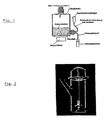
- Tubular coil cultivators IGV from 50 L up to 2000 L for the biomass production of plant cells according to enclosed FIG. 3 have also proven successful.
- cell proliferation it may be expected from arithmetic considerations that the described large culture methods will provide sufficient quantities of cell material, starting from a frozen cell culture, within relatively short times. Slowly multiply cells in a week to 10 times, in 6 weeks to 10 6 times. A cell can produce 10 12 cells (4 kg) within 12 weeks, and 10 16 cells (4000 kg) within 15 weeks.
- the water-soluble cereal-placenta extracts prepared according to the invention can be combined with both synthetic plant and / or animal organ extracts as described in EP-A-0 552 516 and with natural plant and / or animal organ extracts or both. Also in the case of these combinations, improved biochemical activity profiles are obtained which are better than those of the synthetic organ extracts and which are free from the undesirable side effects of the natural organ extracts.
- the invention allows a technically simple and particularly elegant preparation of guaranteed virus-free and prion-free organ extracts, which are a combination of synthetic extracts and cell line extracts, which is particularly important in connection with TSE problems, especially BSE.
- the cereal-placenta extracts prepared according to the invention generally contain the cereal placenta in dilute form with a placental dry matter content of 0.001 to 15% by weight, preferably from 0.1 to 10% by weight, in particular from 1 to 6 wt .-%.
- the cereal placenta extracts themselves are used in the abovementioned uses in amounts of from 0.001 to 20% by weight, preferably from 0.1 to 12% by weight, in particular from 0.5 to 6% by weight.
- the weight ratios used in the combination of cell extracts from plant and animal cell lines with corresponding synthetic cell extracts can be varied widely, e.g. between (1 to 50) :( 98 to 50), preferably (1 to 20) :( 99-80), in particular (1 to 10) :( 99 to 90).
- combinations of all three extract species are of interest, in many areas of, for example, (1 to 20) :( 1 to 10) :( residual synthetic extract), preferably (1 to 10) :( 1 to 5) :( Residual synthetic extract), in particular (1 to 5) :( 1 to 5) :( residual synthetic extract), for cell line organ extract to corresponding natural organ extract to corresponding synthetic organ extract.
- (1 to 20) ( 1 to 10) :( residual synthetic extract), preferably (1 to 10) :( 1 to 5) :( Residual synthetic extract), in particular (1 to 5) :( 1 to 5) :( residual synthetic extract), for cell line organ extract to corresponding natural organ extract to corresponding synthetic organ extract.
- Particular characteristics that can be used to characterize the placenta extracts of cereals are, in particular, measurements to determine the metabolic activities, such as e.g. The Warburg test for the determination of respiratory and fermentation increases and growth increases in fish, tadpoles: Metamorphosebeschieun Trent.
- the cells thus formed which are used as starting material for a large culture in suspension, are obtained by decanting the first nutrient medium, washing the resulting cell mass with a suitable buffer and taking up the cells in a complete medium, setting a suitable for mass production dilution.
- Solution V is analyzed and adjusted to the desired standard pH of 6.7 (standardization), e.g., pH 6.7; Dry residue 1.6 - 1.8%; N at 1.9 to 2.0 mg / ml; Preservation with phenoxyethanol 0.3%: rye "placenta" extract I (Table 3) [in case of use of the extract in oral capsules as a dietary supplement, preservation with nipagin (p-hydroxy-benzoic acid methyl ester)]
- the cell masses harvested from the two cell cultures are combined and stored in diethyl ether (4 parts of ether, 1 part of water) at -20 ° C. for 14 days.
- diethyl ether (4 parts of ether, 1 part of water) at -20 ° C. for 14 days.
- an explosion-proof drum centrifuge is decomposed into a residue and an aqueous phase. The latter is aspirated and divided: Solution I preserved with 0.3% phenoxyethanol.
- Both solutions (II + III) are combined and the pH is adjusted to 6.7.
- a solution IV and the residue II are obtained.
- the residue II is extracted with a solution of butylene glycol: ethanol: water (5: 1: 1) at room temperature for 24 hours.
- the solvent mixture is drawn off in a vacuum of 0.1 Torr, the liquid residue is added to the solution IV and the pH is adjusted to 6.7.
- the toxicological and pharmacological data of the rye-placenta extracts of Table 3 are as follows: acute toxicity to mice (140 animals): DL 50 iv> 25 ml / kg ip> 50 mg / kg po> 25 g / kg acute toxicity to rats (90 animals): DL 50 iv> 25 ml / kg ip> 20 mg / kg
- the respiratory arrest factors have been obtained according to the following protocol "Efficacy testing of test solutions for respiratory enhancement in rat liver homogenate (Warburg method)".
- Conical Warburg tubes with a cylindrical insert (ZE) and a side arm (SA) and a volume of approx. 13 ml are filled as follows:
- the solutions are pipetted in the order given.
- folded filter strips are inserted into the cylinder inserts.
- the vessels are tightly closed with the appropriate tube valve plugs on the side arm attachment, The vessels are attached to the gauges and secured with clamps or parcel rubbers.
- the manometers With the taps open, the manometers are suspended in the apparatus at 37 ° C. and shaken for 60 minutes in order to temper the reaction solution and allow the initially very rapid respiration to subside.
- the right pressure gauge legs are set to the mark "15" with Hillfe of the pinch cock, the difference of the left thumb to 15 is noted, the manometer cocks are closed and the solutions from the side arms are tipped into the main chambers (0 time).
- the experiment runs up to a measurement duration of 100 min.
- test treatment was performed by applying a sample twice a day for a period of 20 days. It was ensured that the test subjects had not used any other cosmetic either 3 days before the test or during the test period. On the 21st day after the start of the treatment, the above-mentioned process steps including the elution were carried out 4 hours before the final evaluation.
- Hautraulgkelt % Absorption after application Absorption of untreated skin ⁇ 100 . It is believed that a skin treated with a cream absorbs only a small amount of methylene blue. The mean values for 21 subjects revealed that the rye "placenta" extract (column I) shows good roughness values over the control cream (column II).
- a defined amount of the resulting lyophilizate was dissolved in deionized water and further treated as indicated below.
- mice B16 melanoma cells were inoculated and cultured for 6 days with the test sample at 37 ° C, 5% CO 2 + 95% air, changing culture medium on the third day.
- DMEM Dulbecco's Modified Eagle's Medium
- cultivation was carried out in DMEM medium + 1% FBS without CR-1.
- Human fibroblasts were used in the MTT assay to evaluate cell metabolism activation by rye-placenta extract:
- the respective cells were cultured in their above-defined medium containing varying amounts of rye-placenta extract (CR-1) and no rye-placenta extract (CR-1) (control) for 48 hours. After removal of the medium, the blue formazan formed in the cells was solubilized in 200 ⁇ l of 2-propanol. The determination of the formazan was carried out by measuring the absorbance at 550 m using a microplate reader. The results are shown in the diagram below.
- the mechanically dissected and minced plant organics residue I from Example 1.1 is suspended in batches of 5 kg in a citrate-succinate buffer of pH 6.5 and processed in a kilowatt ultrasonic generator that provides strong oscillations.
- the recovered centrifuge residue contains the desired cell wall material which serves as the basis for the following enzymatic and chemical hydrolysis processes.
- the plant organics residue I (from Example 1) minced in Example 2 and sonicated are extracted under N 2 at room temperature for 30 days with 10 times the amount of olive oil / isopropyl myristate / sunflower oil (4.5: 1: 0.02) and freed from undissolved constituents by a suitable filter: Extract I.
- Dried cell masses from fruit-shell placenta and aleurone layer are extracted under N 2 as described under A for 30 days with olive oil / isopropyl myristate / sunflower oil; after filtration, the extract II.
- the oil-soluble rye "placenta” extract is excellently incorporated into W / O-type fat creams and oils (emulsions) so that the placental ingredients are fully blended in the initial phase of the emulsion. It is a brownish oil with a typical low odor, but does not affect the perfuming of the cosmetics when added up to 2%.
- the oil-soluble extract is standardized.
- the key figures that are important for assessment and operational control are the saponification value and the content of fat-soluble vitamins, such as vitamins A, D 2 , E, K 3 , provitamins and others.
- the extract is free from hormones (see quality standard).
- the extract is so stabilized (antioxidants) that a shelf life of one year is guaranteed.
- Vitamins e.g. A, D 2 , E, K 3 also provitamins carotenoids phytosterols unsaturated fatty acids linoleic acid linolenic arachidonic acid hormones C 17 -Ketasteroide not detectable sterility germ-free toxicity DL 60 po 50 ml / kg mouse
- the DL 50 is> 50 ml / kg mouse.
- the iodine value indicates how much g of halogen, calculated as iodine, is bound by 100 g of substance.
- Reagents Carbon tetrachloride, Wijs solution (iodine monochloride solution), potassium iodide solution 25%, starch solution, 0.1 N sodium thiosulfate solution.
- the water phase consisting of glycerol, borax and dowicil, also heated to 80 ° C and slowly added initially with rapid stirring the fat phase.
- tadpoles The growth of tadpoles was observed from day 1 (spawn of spawn) to day 66 and measured from day 3 after free-floating tadpoles were obtained. Water temperature 24 ° C. On day 7, the tadpoles were divided into two groups to perform a test with the extract and a control. Each experimental group comprised about 150 tadpoles.
- Table 3 Obtaining a triticale "placental" extract via cell culture ⁇ / u> Triticale vulgare placenta cell culture (20 ml) ⁇ Propagation according to the Rotary Shaker technique (500 ml) ⁇ in suspension bottles (5 - 20 L) ⁇ in 50 - 1000 L fermentors or In 2000 L-coil snake cultivators ⁇ Harvest of placental triticale cell material in suspension or powder form
- suspended cell material is broken in the kilowatt ultrasonic generator ⁇ Centrifuge the digested material and wash with water ⁇ Splitting and deproteination ⁇ by chemical and enzymatic partial hydrolysis, pH adjustment to 6.7 Filtration and concentration in vacuo to the desired extract concentration ⁇ Preservation with 0.3% phenoxyethanol ⁇ Setting the key figures ⁇ Sterile filtration 0.2 ⁇ m.
- a lanolin-containing hand cream was formulated into which triticale "placenta” extract was incorporated.
- the final composition of the cream formulation was as follows: soluble lanolin derivative 1.0% by weight acetylated lanolin alcohols 5.0% by weight liquid multisterol extract 5.0% by weight vaseline 5.0% by weight Polyvinyl alcohol gel 0.75% by weight 10% NaOH 2.25% by weight Triticale "placenta” extract 6.0% by weight ethoxylated fatty amines 3.75% by weight perfume oil 0.3% by weight Water, redist. ad 100.00% by weight
- the fat phase ingredients and vaseline were heated to about 75 ° C.
- the PVA gel was dispersed in hot water of about 80 ° C and gradually dissolved.
- the ethoxylated fatty amine (with about 25 EO units) and optionally also an emulsifier were added to the latter dispersion, after which the previously prepared heated fatty phase was emulsified therein.
- After 5 minutes stirring at the mixing temperature was cooled to 60 ° C, then treated with 10% sodium hydroxide solution and further cooled to below 40 ° C. With slow stirring, then 6% triticale "placenta" extract and the perfume were added.
- the batch was well homogenized.
- the hand cream was stably made and showed improved skin conditioning compared to a non-triticale "placenta” extract.
- a cream base was compounded as follows: vaseline 40% by weight cetanol 18% by weight sorbitan 5% by weight polyoxyethylene 0.5% by weight p-Hydroxyalkylbenzoat 0.2% by weight Cream foundation with Triticale "placenta" extract 5.0% by weight water ad 100.00% by weight
- the cell mass was treated with a mixture of propylene glycol / water / ethanol and the solvent was partially withdrawn under a vacuum of 0.1 Torr.
- the remaining aqueous distillation residue was precipitated with acids of the citric acid cycle for deproteinization, adjusted to pH 6.7 and dialyzed.
- the dry residue was adjusted to 2.0 to 2.3% after the desired amount of preservative was added.
- the final pH was 6.7. Sterile filtration was carried out in a known manner.
Landscapes
- Health & Medical Sciences (AREA)
- Life Sciences & Earth Sciences (AREA)
- Chemical & Material Sciences (AREA)
- Engineering & Computer Science (AREA)
- Animal Behavior & Ethology (AREA)
- Public Health (AREA)
- Veterinary Medicine (AREA)
- General Health & Medical Sciences (AREA)
- Pharmacology & Pharmacy (AREA)
- Medicinal Chemistry (AREA)
- General Chemical & Material Sciences (AREA)
- Nuclear Medicine, Radiotherapy & Molecular Imaging (AREA)
- Organic Chemistry (AREA)
- Chemical Kinetics & Catalysis (AREA)
- Bioinformatics & Cheminformatics (AREA)
- Natural Medicines & Medicinal Plants (AREA)
- Toxicology (AREA)
- Nutrition Science (AREA)
- Mycology (AREA)
- Food Science & Technology (AREA)
- Polymers & Plastics (AREA)
- Botany (AREA)
- Dermatology (AREA)
- Biochemistry (AREA)
- Alternative & Traditional Medicine (AREA)
- Biotechnology (AREA)
- Immunology (AREA)
- Medical Informatics (AREA)
- Microbiology (AREA)
- Heart & Thoracic Surgery (AREA)
- Epidemiology (AREA)
- Cardiology (AREA)
- Vascular Medicine (AREA)
- Urology & Nephrology (AREA)
- Gynecology & Obstetrics (AREA)
- Endocrinology (AREA)
- Reproductive Health (AREA)
- Cosmetics (AREA)
- Paints Or Removers (AREA)
- Coloring Foods And Improving Nutritive Qualities (AREA)
Description
Die Erfindung betrifft ein Verfahren zur Herstellung von Cereallen-Plazenta-Extrakten aus Plazenta-Zelllinien der jeweiligen Cerealien, die dabei erhaltenen Produkte sowie deren Verwendung einzeln oder in Form von Kombinationen in pharmazeutischen, kosmetischen, diätetischen und sonstigen Zusammensetzungen, insbesondere in Form von sie (unverdünnt oder verdünnt) enthaltenden Kapseln für die orale Einnahme Insbesondere als Nahrungsergänzungsmittel.The invention relates to a process for the production of cereal-placental extracts from placenta cell lines of the respective cereals, the products obtained thereby and their use individually or in the form of combinations in pharmaceutical, cosmetic, dietary and other compositions, in particular in the form of them ( undiluted or diluted) containing capsules for oral administration In particular as a dietary supplement.
Tierische Organextrakte, insbesondere tierische Plazenta-Extrakte, haben als Grundstoffe für Pharmaka und Kosmetika eine große Bedeutung. Insbesondere tierische Plazenta-Extrakte werden aufgrund der sie enthaltenden Wirkstoffe in Pharmaka und Kosmetika in großem Umfang eingesetzt [vgl. "Selfen-Öle-Fette-Wachse" 112, 211-218 (1986)], wobei sie in vielen Fällen gegebenenfalls noch durch niedermolekulare Zusätze ergänzt werden. In manchen Ländern, beispielsweise in Japan, ist die Anwendung tierischer Organextrakte nur noch bedingt erlaubt, beispielsweise Extrakte auf Basis von Schweineplazenten; letztere können in einigen Fällen die ab 12.12.2000 gesetzlich verbotenen Rinderplazenten-Extrakte ersetzen [R. Riemschneider, M. Heisler, Relata Techica Web Site htpp://www.vevy.com/relata, Isuues, Articles 2001, 3 Seiten].Animal organ extracts, in particular animal placenta extracts, are of great importance as bases for pharmaceuticals and cosmetics. In particular animal placenta extracts are due to the active substances containing them used extensively in pharmaceuticals and cosmetics [cf. "Selenium-oil-fat-waxes" 112 , 211-218 (1986)], where they are optionally supplemented in some cases by low molecular weight additives. In some countries, for example in Japan, the use of animal organ extracts is only conditionally permissible, for example extracts based on porcine placentas; The latter may in some cases replace the bovine placenta extracts legally prohibited from 12.12.2000 [R. Riemschneider, M. Heisler, Relata Techica Web Site htpp: //www.vevy.com/relata, Isuues,
Tierische Organextrakte, insbesondere tierische Plazenta-Extrakte, zeichnen sich durch eine Vielzahl von Inhalts- bzw. Wirkstoffen aus, die entweder in Form des vollständigen Extrakts oder in Form von daraus Isollerten Einzelsubstanzen Verwendung finden. Für tierische Pflanzen-Extrakte wurden beispielsweise über 100 Komponenten nachgewiesen [vgl. "Kosmetik International" 6, 1-8 (1978)]. Für einen Teil bestimmter Einzelsubstanzen der tierischen Plazenta-Extrakte ist die Synthese bisher nicht gelungen, zumal der dazu nötige Aufwand zu groß wäre.Animal organ extracts, in particular animal placenta extracts, are distinguished by a multiplicity of ingredients or active substances which are used either in the form of the complete extract or in the form of individual substances extracted therefrom. For example, more than 100 components have been detected for animal plant extracts [cf. "Cosmetics International" 6, 1-8 (1978)]. For a part of certain individual substances of the animal placental extracts, the synthesis has not been successful, especially since the necessary effort would be too large.
Zahlrelche tierische Organextrakte, insbesondere Plazenta-Extrakte, stehen heute in mehr oder minder naturbelassener Form zur Verfügung, beispielsweise die oben erwähnten Schweineplazenta-Extrakte. Zu ihrer Herstellung wird das frische Organmaterial gewaschen, zerkleinert (zuletzt in Kolloidmühlen) und durch Behandeln des dabei erhaltenen Organmaterialbreis bei -10 bis -20 °C mit organischen Lösungsmitteln extrahiert.Numerous animal organ extracts, in particular placenta extracts, are today available in more or less natural form, for example the abovementioned pig placenta extracts. For their preparation, the fresh organ material is washed, crushed (last in colloid mills) and extracted by treating the thus obtained Organmaterialbreis at -10 to -20 ° C with organic solvents.
Nach der Gewinnung der oben erwähnten wässrigen tierischen Rohextrakte durch Zentrifugieren bzw. Filtrieren oder andere geeignete Maßnahmen werden diese weiterverarbeitet zu reinen proteinhaltigen oder proteinfreien Extrakten, die bis zur weiteren Verwendung sterlifiltriert werden, beispielsweise unter Verwendung eines 0,2 µm Millipore®-Filters. Solche Präparate enthalten zuweilen noch Proteine oder hochmolekulare Protein-Abbauprodukte, die pathogene und immunogene Eigenschaften aufweisen können, und die bei regeimäßiger oder wiederholter Verabreichung - meistens verbunden mit langen inkubationszeiten - zu schwerwiegenden Erkrankungen führen können. Im Falle tierischer Organextrakte, insbesondere tierischer Plazenta-Extrakte, sind insbesondere die durch unkonventionelle Viren, d.h. Prionen, verursachten Krankheitsbilder bekannt, wie z.B. TSE (transmissible spongioforme Encephalopathien), insbesondere BSE (Rinderwahnsinn), und das Jacob-Creutzfeld-Syndrom. Es sind aber auch Protein-haltige tierische Plazenta-Extrakte bekannt, die bei ihrer Anwendung auf den Menschen krebserregend sein können.After extraction of the aqueous crude extracts of animal mentioned above by centrifugation or filtration or other suitable measures, these are further processed into pure protein-containing or protein-free extracts that are sterlifiltriert until further use, for example, using a 0.2 micron Millipore ® -filter. Such preparations sometimes still contain proteins or high molecular weight protein degradation products which may have pathogenic and immunogenic properties, and which may be more regular or repeated administration - usually associated with long periods of incubation - can lead to serious illnesses. In the case of animal organ extracts, particularly of animal placenta extracts, in particular, the (ncephalopathien t ransmissible s pongioforme E) by non-conventional viruses, ie known prion diseases caused, such as TSE, especially BSE (mad cow disease), and Jacob-Creutzfeld syndrome , However, protein-containing animal placenta extracts are also known which, when applied to humans, can be carcinogenic.
Vor allem durch die mit Prionen, insbesondere mit BSE-Prionen, zusammenhängenden Probleme sind tierische Organextrakte, insbesondere tierische Plazenta-Extrakte, weitweit in Verruf geraten. Der Nachweis, dass Organmaterial von Herden stammt, die BSE-frei waren, ist im Falle der Verwendung großer Organmengen bestimmten Alters kaum durchzuführen. Um BSE-Freiheit eines Endprodukts experimentell im Goldhamster-Modell-Versuch zu beweisen, bedarf es mindestens 9 Monate Zeit - in vielen Fällen undurchführbar. Ein sicherer BSE-Schnelltest fehlt bisher.Primarily due to the problems associated with prions, in particular with BSE prions, animal organ extracts, in particular animal placenta extracts, have fallen into disrepute throughout the world. Evidence that organ material originates from herds that were BSE-free is difficult to perform when using large amounts of organs of a certain age. To prove the BSE-freedom of a final product experimentally in the golden hamster model experiment requires at least 9 months - in many cases impracticable. A safe BSE rapid test is missing so far.
Aus DE-OS 24 05 983 und DE-OS 20 21 969 sind Kombinationen niedermolekularer Komponenten mit aus natürlichem, frischem Organmaterial gewonnenen tierischen Organextrakten bekannt, die jedoch ebenfalls die vorstehend geschilderten Nachteile haben.DE-OS 24 05 983 and DE-OS 20 21 969 combinations of low molecular weight components are known from natural, fresh organ material derived animal organ extracts, which, however, also have the disadvantages described above.
Um solche Komplikationen zu vermeiden, wurde in EP-A-0 552 516 ein Weg zur Herstellung wasserlöslicher synthetischer tierischer Organextrakte aufgezeigt, bei dem auf synthetischem Wege gewonnene niedermolekulare Komponenten, wie sie auch in natürlichen tierischen Organextrakten vorkommen, miteinander kombiniert werden.In order to avoid such complications, EP-A-0 552 516 has shown a way of producing water-soluble synthetic animal organ extracts, in which synthetically derived low molecular weight components, such as those found in natural animal organ extracts, are combined.
Während die natürlichen tierischen Organextrakte die oben geschilderten Nachteile aufweisen, haben die synthetischen tierischen Organextrakte den Nachteil, dass sie großenteils den vollen biochemischen Wirkungsgrad der natürlichen tierischen Organextrakte, insbesondere der tierischen Plazenta-Extrakte, nicht entwickeln, weil ihnen bestimmte Komponenten fehlen.While the natural animal organ extracts have the disadvantages described above, the synthetic animal organ extracts have the disadvantage that they largely the full biochemical efficiency of the do not develop natural animal organ extracts, in particular animal placental extracts, because they lack certain components.
Man ist daher seit langem bemüht, die in Verruf geratenen tierischen Organextrakte, insbesondere Plazenta-Extrakte, durch entsprechende pflanzliche Extrakte zu ersetzen, welche die oben genannten Nachteile nicht aufweisen.It has therefore long been endeavored to replace the discredited animal organ extracts, in particular placenta extracts, by corresponding herbal extracts, which do not have the disadvantages mentioned above.
In CH-A-692 408 ist ein Verfahren zur Gewinnung von Pflanzenextrakten und deren Verwendung als pflanzliches kosmetisches Additiv im Sinne von Kollagen-Ersatz (vgl. z.B. Tabelle VI) beschrieben. Dabei handelt es sich jedoch nicht um pflanzliche Plazenta-Extrakte.CH-A-692 408 describes a process for obtaining plant extracts and their use as a herbal cosmetic additive in the sense of collagen replacement (see, for example, Table VI). However, these are not plant placenta extracts.
In WO-A-02/15711 sind Verfahren zur Gewinnung von Aleuron aus Klele beschrieben. Dabei geht man von "gemischten" Zellverbänden mit inhomologer Zusammensetzung aus. Pflanzliche Plazenta-Zelllinien sind darin nicht beschrieben.WO-A-02/15711 describes processes for obtaining aleurone from Klele. The starting point is "mixed" cell aggregates of inhomogeneous composition. Plant placenta cell lines are not described therein.
In dem Artikel von Ling Wen Hua et al., "Supplementation of the black rice outer layer fraction to rabbits decreases atherosclerotic plaque formation and increases antioxidant status", veröffentlicht im "Journal of Nutrition, Wistar Institute of Anatomie and Biology", Philadelphia, GA, US, Band 132, Nr. 1, Januar 2002, Seiten 20 bis 26, sind Extrakte von aus den äußeren Schichten von Relskörnern beschrieben. Dabei handelt es sich jedoch ebenfalls um gemischte Zellverbände mit inhomologer Zusammensetzung.In the article by Ling Wen Hua et al., "Supplementation of the black rice outer layer fraction to rabbits decreases atherosclerotic plaque formation and increasing antioxidant status", published in the "Journal of Nutrition, Wistar Institute of Anatomy and Biology", Philadelphia, GA , US, Vol. 132, No. 1, January 2002,
Dies gilt auch für die Veröffentlichungen in "DataBase WPI Section Ch, Week 199522 Derwent Publications", Ltd., London, GB, AN 1995-166 347 XP 00 226 809 + JP-A-07/087 930 sowie in "Patent Abstracts of Japan", Band 199, Nr. 01, 29. Januar 1999 + JP-A-10/287 525, die sich auf Präparate beziehen, die aus der Hülle von Cerealien hergestellt werden. Auch hierbei handelt es sich um gemischte Zellverbände mit inhomologer Zusammensetzung.This also applies to the publications in "DataBase WPI Section Ch, Week 199522 Derwent Publications", Ltd., London, GB, AN 1995-166 347 XP 00 226 809 + JP-A-07/087 930 and in "Patent Abstracts of Japan, Vol. 199, No. 01, 29 January 1999 + JP-A-10/287 525, which relates to preparations made from the shell of cereals. Again, these are mixed cell aggregates of inhomogeneous composition.
In einem Artikel von R. Rlemschneider, "Cytocatalyzer, Cellryel and Collaplant PO, plant-based cosmetic additives", veröffentlicht im Internet durch das "Bimonthly Journal of the BWW Society", am 29.06.03, ist ein pflanzlicher Plazenta-Extrakt aus Roggen (Secale cereale) beschrieben, der durch mehrere Extraktionen aus Zellkulturen gewonnen wird. Auch in diesem Fall geht man von gemischten Zellverbänden aus unterschiedlichen Teilen der Roggen-Plazenta mit inhomologer Zusammensetzung aus. Außerdem enthält dieser Artikel keine Einzelhelten hinsichtlich der Durchführung des Herstellungsverfahrens.In an article by R. Rlemschneider, "Cytocatalyzer, Cellryel and Collaplant PO, plant-based cosmetic additive", published on the Internet by the "Bimonthly Journal of the BWW Society," on 29.06.03, is a plant placenta extract of rye (Secale cereale), which is obtained by several extractions from cell cultures. Also in this case one starts from mixed cell groups from different parts of the rye placenta with inhomologer composition. In addition, this article contains no individual notes regarding the implementation of the manufacturing process.
Der in der vorliegenden Anmeldung beschriebenen Erfindung liegt die Aufgabe zugrunde, Plazenta-Extrakte von Cerealien zur Verfügung zu stellen, die das biochemische Wirkungsprofil von natürlichen Plazenta-Extrakten und gemischten Zellkultur-Extrakten dieser Cerealien mindestens erreichen und vorzugsweise übertreffen, andererseits aber zuverlässig reproduzierbar frei von unerwünschten Substanzen, insbesondere immunogenen und pathogenen Proteinen und Protein-Abbauprodukten, und daher auch frei von deren unerwünschten Wirkungen sind wie synthetische Plazenta-Extrakte von Cerealien, ohne jedoch deren Nachteile in Bezug auf ihr ungünstiges biologisches/biochemisches Wirkungsprofil zu besitzen.The object of the present invention is to provide placenta extracts of cereals which at least at least and preferably exceed the biochemical action profile of natural placenta extracts and mixed cell culture extracts of these cereals, but which are reliably reproducibly free from undesirable substances, in particular immunogenic and pathogenic proteins and protein degradation products, and therefore also free from their undesirable effects, are like synthetic placenta extracts of cereals, without, however, having their disadvantages in terms of their unfavorable biological / biochemical activity profile.
Es wurde überraschend gefunden, dass diese Aufgabe auf technisch einfache und außerordentlich wirkungsvolle Weise dadurch gelöst werden kann, dass als Ausgangsmaterial für die Herstellung von Cerealien-Plazenta-Extrakten mit verbessertem biochemischem Wirkungsgrad, die frei von unerwünschten Substanzen und in beliebier Menge produzierbar sind, Zelllinien, d.h. Klone (genetisch identische Individuen) von Einzeizellen der Plazenta spezifischer Cerealien verwendet werden, die im Gegensatz zu gemischten Zellkulturen der Cerealien-Plazenta, die aus Zellen unterschiedlichen Typs bestehen, in großtechnischem Maßstab beliebig oft und in beliebiger Menge unter Erzielung stets gleichbleibender, zuverlässig reproduzierbarende Eigenschaften vermehrt und damit zur Massenproduktion von gesundheitlich unbedenklichen und dennoch wirksamen Plazenta-Extrakten der gewünschten spezifischen Cerealien eingesetzt werden. Das wesentliche Prinzip, das der in der vorliegenden Anmeldung beschriebenen Erfindung zugrunde liegt, besteht darin, anstelle der ganzen Plazenten oder anstelle von gemischten Zellverbänden der Plazenten von Cerealien, Cerealien-Plazenta-Zelllinien mit Ihren zuverlässig reproduzierbaren Eigenschaften und Wirkungen einzusetzen. Dies führt zu überraschenden, biologisch-technischen Vorteilen, deren Bedeutung gar nicht hoch genug eingeschätzt werden kann, insbesondere wenn man berücksichtigt, dass viele Mechanismen der in den Zellen ablaufenden biologisch-chemischen Vorgänge noch gar nicht oder nicht ausreichend bekannt sind. Es ist daher von höchster Bedeutung, ein zuverlässig reproduzierbares Ausgangsmaterial mit zuverlässig reproduzierbaren Eigenschaften einzusetzen, dessen Wirkungen abschätzbar und stets gleichbleibend sind, ohne den genauen Mechanismus, der im einzelnen ablaufenden biologisch-chemischen Vorgänge zu kennen.It has surprisingly been found that this object can be achieved in a technically simple and extremely effective manner by using cell lines as starting material for the production of cereal placenta extracts with improved biochemical efficiency, which are free from undesirable substances and can be produced in any amount ie, clones (genetically identical individuals) of single cells of the placenta of specific cereals are used which, in contrast to mixed cell cultures of the cereal placenta, which consist of cells of different types, on an industrial scale as often and in any amount to achieve consistently consistent, reliable reproducible properties and thus increases the mass production of health-safe and yet effective placenta extracts of the desired specific cereals are used. The essential principle underlying the invention described herein is to substitute cereal-placental cell lines with their reliably reproducible properties and effects, rather than whole placentas or instead of mixed cell aggregates of the placentas of cereals. This leads to surprising biological-technical advantages, the importance of which can not be overestimated, especially when one considers that many mechanisms of the biological-chemical processes occurring in the cells are not or not sufficiently well known. It is therefore of paramount importance to use a reliably reproducible starting material with reliably reproducible properties, whose effects can be estimated and always consistent, without knowing the exact mechanism of the biochemical processes occurring in detail.
Zur Durchführung des hier beschriebenen Verfahrens können im Prinzip alle bereits bekannten Cerealien-Plazenta-Zelllinien eingesetzt werden, sowohl solche, die eigens dafür hergestellt worden sind, als auch solche, die bei einschlägig anerkannten Instituten hinterlegt sind, als auch noch nicht bekannte und noch nicht bei allgemein anerkannten Instituten hinterlegte Cerealien-Plazenta-Zelllinien und künftig noch zu entwickelnde neue Cerealien-Plazenta-Zelllinien. Die vom Anmelder mit bestimmten Cereallen-Plazenta-Zelllinien bereits festgestellten überraschenden Effekte und die für andere Cerealien-Plazenta-Zelllinien vom Fachmann zu erwartenden Effekte führen zu einem beträchtlichen technischen Fortschritt, der kein Vorbild im Stand der Technik hat und daher auch vom Fachmann auf diesem Gebiet nicht vorhersehbar war, wie die zahlenmäßigen Nachweise in den weiter unten folgenden Ausführungsbelsplelen zeigen.For carrying out the method described here, it is possible in principle to use all the already known cereal-placental cell lines, both those which have been prepared for this purpose and those which have been deposited at the relevant recognized institutes, as well as not yet known and not yet cereal-placental cell lines deposited at generally recognized institutions and new cereal-placental cell lines to be developed in the future. The surprising effects already observed by the Applicant with certain cereal-placental cell lines and the effects to be expected by those skilled in the art for other cereal-placental cell lines lead to considerable technical progress, which has no precedent in the prior art and therefore also by a person skilled in the art The area was unpredictable, as the numerical evidence in the following Ausführungsbelsplelen show.
Die vorliegende Erfindung betrifft somit ein Verfahren zur Herstellung von Plazenta-Extrakten von spezifischen Cerealien aus Plazenta-Zellen von Zelllinien dieser Cerealien, wie sie in den Patentansprüchen 1 bis 8 beschrieben sind, sowie deren Verwendungen auf verschiedenen Einsatzgebieten entsprechend den Patentansprüchen 9 bis 17, deren charakteristisches Merkmal darin besteht, dass sie aus Plazenta-Zellen von Zeillinien vom Cerealien aus der Gruppe Weizen, Reis, Mais, Gerste, Roggen, Hafer, Sorghum (Hirse), Triticale und Dinkel hergestellt sind, die aus frischem Cerealien-Plazenta-Materlal gewonnen worden sind oder von einer Zellbank stammen, in der sie hinterlegt und frei zugänglich sind, sodass sie von beliebigen Dritten von der genannten Zellbank bezogen werden können.The present invention thus relates to a process for the preparation of placenta extracts of specific cereals from placental cells of cell lines of these cereals, as described in
Gegenstand der vorliegenden Erfindung ist gemäß einem ersten Aspekt ein Verfahren zur Herstellung von Plazenta-Extrakten von Cerealien aus der Gruppe Weizen, Rels, Gerste, Roggen, Hafer, Sorghum (Hirse), Triticale (eine Kreuzung aus Weizen und Roggen) und Dinkel aus Plazenta-Zellen von speziell hergestellten oder handelsüblichen Plazenta-Zellinien der genannten Cereallen,
das gekennzeichnet ist durch die folgenden Stufen:
- a) Aktivierung der gewählten Plazenta-Zelllinie einer der Cerealien aus der Gruppe Weizen, Rels, Gerste, Roggen, Hafer, Sorghum (Hirse), Triticale und Dinkel, in einem Wasserbad von vorzugsweise 25 bis 30 °C,
- b) Zugabe eines vorgewärmten, für die jeweils gewählte Zelllinie vorgeschriebenen Kulturmediums unter Vermischung und anschließendes Inkubieren in an sich bekannter Weise, vorzugsweise bei etwa 37°C, und vorzugsweise in einer etwa 5 % CO2 enthaltenden Atmosphäre,
- c) Gewinnung der dabei gebildeten Zellen als Ausgangsmaterial für Großkulturen in Suspension durch Dekantieren des Nährmediums, Waschen der entstandenen Zellmasse mit einem geeigneten Puffer und Aufnahme der Zellen in einem kompletten Medium unter Einstellung einer für die Massenproduktion geeigneten Verdünnung,
- d) Kultivierung der Zellen in Suspensionskultur im Großmaßstab auf an sich bekannte Weise durch Beimpfen einer Kultivierungsapparatur mit einer Zellsuspension in einem sterilen CO2/Luft-Gemisch,
wobei durch Einbringen eines Plasmids und durch DNA-Analyse gezeigt werden kann, dass die in Masse gezüchteten Zellen denjenigen der Anfangs-Zellkultur entsprechen, - e) Herstellung eines Extrakts durch Behandlung des suspendierten geernteten Zellmaterials in einem organischen Lösungsmittel und/oder Wasser, Gewinnung der wäßrigen Phase vorzugsweise durch Zentrifugieren, Entfernung von restlichen Lipidanteilen (Rückstand I) aus der wäßrigen Phase, gegebenenfalls durch mehrmaliges Behandeln mit dem organischen Lösungsmittel unter Bildung eines wäßrigen Rohextrakts, gegebenenfalls in Form einer Suspension,
- f) Reinigung bzw. Behandlung des Rohextrakts je nach Ausgangsmaterial; und
- g) Sterilfiltration des Extrakts, vorzugsweise unter Verwendung eines 0,2 µm (Millipore®)-Filters oder einer PALL-Kerze, nach Einstellung des Extrakts auf den gewünschten pH-Wert, vorzugsweise 5,0 bis 7,2.
characterized by the following stages:
- a) Activation of the selected placental cell line of one of the cereals from the group wheat, Rels, barley, rye, oats, sorghum (millet), triticale and spelled, in a water bath of preferably 25 to 30 ° C,
- b) addition of a prewarmed culture medium prescribed for the particular cell line selected with mixing and subsequent incubation in a manner known per se, preferably at about 37 ° C., and preferably in an atmosphere containing about 5% CO 2 ,
- c) recovering the cells thus formed as a starting material for large cultures in suspension by decanting the nutrient medium, washing the resulting cell mass with a suitable buffer and taking up the cells in a complete medium and setting a suitable for mass production dilution,
- d) culturing the cells in suspension culture on a large scale in a manner known per se by inoculating a culture apparatus with a cell suspension in a sterile CO 2 / air mixture,
whereby, by introducing a plasmid and by DNA analysis, it can be shown that the cells grown in mass correspond to those of the initial cell culture, - e) Preparation of an extract by treating the suspended harvested cell material in an organic solvent and / or water, recovering the aqueous phase, preferably by centrifugation, removal of residual lipid (residue I) from the aqueous phase, optionally by repeated treatment with the organic solvent Formation of an aqueous crude extract, optionally in the form of a suspension,
- f) purification or treatment of the crude extract, depending on the starting material; and
- g) sterile filtration of the extract, preferably using a 0.2 .mu.m (Millipore ®) filter or a PALL-candle, after adjustment of the extract to the desired pH, preferably from 5.0 to 7.2.
Die nach dem erfindungsgemäßen Verfahren erhältlichen Cerealien-Plazenta-Extrakte erreichen zumindest das biochemische Wirkungsprofil der bekannten natürlichen und synthetischen Cerealien-Plazenta-Extrakte, vorzugsweise weisen sie ein wesentlich verbessertes Wirkungsprofil auf, und sie sind insbesondere frei von unerwünschten Substanzen, speziell frei von immunogenen und pathogenen Proteinen und Protein-Abbauprodukten sowie deren unerwünschten Wirkungen, wie sie in natürlichen Cerealien-Plazenta-Extrakten vorkommen.The cereal placenta extracts obtainable by the process according to the invention at least achieve the biochemical profile of action of the known natural and synthetic cereal placenta extracts, preferably they have a significantly improved profile of action, and in particular are free of undesirable substances, especially immunogenic and pathogenic proteins and protein degradation products and their undesirable effects as found in natural cereal placenta extracts.
Die nach dem erfindungsgemäßen Verfahren erhältlichen Cerealien-Plazenta-Extrakte aus Plazenta-Zellen von Zelllinien der entsprechenden Cerealien eignen sich insbesondere zur Herstellung von kosmetischen Formulierungen, zur Herstellung von pharmazeutischen Präparaten und/oder zur Herstellung von Nahrungsergänzungsmitteln oder als Nahrungsergänzungsmittel selbst, die vorzugsweise (in verdünnter oder unverdünnter Form) in sie enthaltenden Kapseln zur direkten oralen Einnahme vorliegen können. Dadurch ist es möglich, die in der Pharmaindustrie, in der Kosmetikindustrie und in der Nahrungsmittellidustrie bekannten tierischen und pflanzlichen Plazenta-Extrakte, die sich durch eine Vielzahl von vorteilhaften inhalts- bzw. Wirkstoffen auszeichnen, die aber aufgrund ihres Gehaltes an Proteinen oder hochmolekularen Protein-Abbauprodukten, die pathogene und immunogene Eigenschaften aufweisen und bei regelmäßiger oder wiederholter Verabreichung - meistens verbunden mit lange Inkubationszeit beträgt - zu schwerwiegenden Erkrankungen führen, sogar carcinogen sein können und daher insbesondere im Zusammenhang mit TSE, speziell BSE (Rinderwahnsinn) und dem Jacob-Creutzfeld-Syndrom, weltweit in Verruf gekommen sind, teilweise oder vollständig zu ersetzen durch die erfindungsgemäß hergestellten, zuverlässig nebenwirkungsfreien Cereallen-Plazenta-Extrakte mit mindestens gleicher Wirksamkeit.The cereal placenta extracts of placental cells of cell lines of the corresponding cereals obtainable by the method according to the invention are particularly suitable for the preparation of cosmetic formulations, for the preparation of pharmaceutical preparations and / or for the preparation of dietary supplements or as dietary supplements themselves, preferably (in diluted or undiluted form) may be present in capsules containing them for direct oral administration. This makes it possible the animal and plant placenta extracts known in the pharmaceutical industry, in the cosmetics industry and in the food industry, which are distinguished by a multiplicity of advantageous ingredients or active substances, but which, due to their content of proteins or high-molecular protein degradation products, the pathogenic and have immunogenic properties and when regularly or repeatedly administered - usually associated with a long incubation period - lead to serious diseases, may even be carcinogenic and therefore in particular in connection with TSE, especially BSE (mad cow disease) and the Jacob Creutzfeld syndrome, worldwide in disrepute have come to replace partially or completely by the present invention, reliably side effect-free cereal placenta extracts with at least the same efficacy.
In dem weiter unten folgenden umfangreichen experimentellen Teil wurde anhand von einschlägigen Versuchen nachgewiesen, dass die erfindungsgemäß hergestellten Cerealien-Plazenta-Extrakte nicht nur frei von unerwünschten Nebenwirkungen sind (vgl. insbesondere die akute Toxizitätsprüfung, die kumulative Toxizitätsprüfung, die klinisch-toxikologische Prüfung nach intravenöser Verabreichung bei der Maus, der Sensibilisierungstest am Meerschweinchen, der Augenreiztest am Kaninchen, die klinisch-allergologische Prüfung im Patch-Test beim Menschen, die Mutagenitätsprüfung, die Prüfung auf Abwesenheit von Viren und Protonen), sondern auch vorteilhafte physiologische und metabolische Eigenschaften aufweisen (vgl. insbesondere die Verbesserung der Atmung im Warburg-Test, die Verbesserung des Wachstums im Guppy-Fisch- und Kaulquappen-Test, die Verbesserung der Glätte der Haut im modifizierten Padberg-Test, die Verbesserung der Wundheilung im Hautspannungstest, die Verbesserung des Feuchtigkeitsretentionsvermögens der Haut). Insbesondere die aus den nachfolgenden Ausführungsbeispielen ersichtlichen Stoffwechselaktivierungs- und Whitening-Effekte waren auch für den Fachmann auf diesem Gebiet durchaus überraschend.In the extensive experimental part that follows, it has been demonstrated on the basis of relevant experiments that the cereal-placenta extracts prepared according to the invention are not only free of undesired side effects (compare, in particular, the acute toxicity test, the cumulative toxicity test, the intravenous clinical-toxicological test Mouse administration, guinea pig sensitization test, rabbit eye irritation test, human allergic patch test, mutagenicity test, virus and proton absence test), but also have beneficial physiological and metabolic properties (cf. In particular, improvement in Warburg test respiration, improvement in guppy fish and tadpole test growth, improvement in skin smoothness in the modified Padberg test, improvement in wound tension in skin tension test, improvement in skin tension Moisture retention capacity of the skin). In particular, the metabolic activation and whitening effects evident from the following embodiments were also quite surprising to the person skilled in the art.
Bevorzugte Ausführungsformen des erfindungsgemäßen Verfahrens sind solche, welche die folgenden Zusatzmerkmale, einzeln oder in Kombination, aufweisen, und dadurch gekennzeichnet sind, dass
eine in der Stufe (d) gewonnene pflanzliche Zellmasse in Ethylether oder Chloroform suspendiert und etwa 8 bis etwa 15 Tage lang bei etwa -10 bis etwa - 20°C im Kälteraum stehen gelassen und dann zur Gewinnung der wäßrigen Phase zentrifugiert wird;
die letzten Spuren von Ether oder Chloroform aus dem Dialysat (Außenlösung) in der Stufe (f) durch Stickstoff-Durchblasen bei pH 7,2 bis 7,5 entfernt werden;
als Zeillinie eine Plazenta-Zelllinie aus der Fruchtschale (Pericarp), der Samenschale (Testa) oder der proteinreichen Aleuronschicht von Cereallen aus der Gruppe Hafer, Gerste, Reis, Triticale, Roggen, Welzen, Dinkel und Sorghum (Hirse) verwendet wird;
dann, wenn es auf das Zellwandmaterial ankommt, das in Wasser oder in einem organischen Lösungsmittel suspendierte Zellmaterial in der Stufe (e) in einem Ultraschallgenerator zerbrochen und das aufgeschlossene Material nach dem Zentrifugieren und Waschen mit Wasser durch chemische und/oder enzymatische Partialhydrolyse aufgeschlossen und dialysiert wird;
zur Herstellung von Pflanzen-Plazenta-Extrakten aus Zelllinien der Cerealien solche Ausgangsmaterialien verwendet werden, die keiner Genmanipulation unterzogen worden sind und die frei sind von unerwünschten Substanzen, speziell immunogenen und/oder pathogenen Proteinen (Prionen) und Proteinabbauprodukten, und in denen sich keine Insektizid-Rückstände nachweisen lassen;
ein oder mehrere von aus einer oder mehreren unterschiedlichen Cerealien-Plazenta-Zelllinlen gewonnenen, sterilfiltrierten Plazenta-Extrakten hergestellt und gegebenenfalls kombiniert wird (werden) mit einer oder mehreren aus einem oder mehreren unterschiedlichen tierischen Zelllinien gewonnenen, sterilfiltrierten tierischen Organextrakten sowie gegebenenfalls mit einem oder mehreren aus einem oder mehreren verschiedenen, synthetisch hergestellten tierischen Organextrakten und/oder mit einem oder mehreren verschiedenen, aus frischen tierischen Organen hergestellten tierischen Organextrakten und/oder gegebenenfalls mit einem oder mehreren aus einem oder mehreren verschiedenen, aus frischen Pflanzenorganen bzw. -teilen hergestellten Pflanzenextrakten;
wobei das Gewichtsverhältnis zwischen dem (den) pflanzlichen OrganExtrakt(en) und dem (den) tierischen Organ-Extrakt(en) (1 bis 99) : (99 bis 1), vorzugsweise (1 bis 50) : (50 bis 1), insbesondere (1 bis 20) : (99 bis 80), beträgt.Preferred embodiments of the method according to the invention are those which have the following additional features, individually or in combination, and are characterized in that
a plant cell mass recovered in step (d) is suspended in ethyl ether or chloroform and allowed to stand in the cold room for about 8 to about 15 days at about -10 to about -20 ° C and then centrifuged to recover the aqueous phase;
the last traces of ether or chloroform are removed from the dialysate (external solution) in step (f) by blowing nitrogen through at pH 7.2 to 7.5;
as Zeillinie a placenta cell line from the pericarp (Pericarp), the seed coat (Testa) or the protein-rich aleurone layer of cereals from the group oats, barley, rice, triticale, rye, welzen, spelled and sorghum (millet) is used;
then, when it comes to the cell wall material, the cell material suspended in water or in an organic solvent in the step (e) is broken in an ultrasonic generator and the digested material after centrifugation and washing with water by chemical and / or enzymatic partial hydrolysis digested and dialyzed becomes;
for the production of plant placenta extracts from cell lines of cereals, such starting materials are used which have not been genetically modified and which are free of undesirable substances, especially immunogenic and / or pathogenic proteins (prions) and protein degradation products, and in which no insecticide Detect residues;
one or more sterile-filtered placenta extracts derived from one or more different cereal placenta cell lines and optionally combined with one or more sterile-filtered animal organ extracts obtained from one or more different animal cell lines and optionally with one or more of one or more different, synthetically produced animal organ extracts and / or with one or more different fresh ones animal organ extracts of animal organ extracts and / or, where appropriate, one or more of one or more different plant extracts produced from fresh plant organs or parts;
wherein the weight ratio between the plant organ extract (s) and the animal organ extract (s) (1 to 99): (99 to 1), preferably (1 to 50): (50 to 1), in particular (1 to 20): (99 to 80).
Gegenstand der Erfindung ist ferner gemäß einem weiteren Aspekt die Verwendung der Cerealien-Plazenta-Extrakte und Extraktgemische, die nach dem vorstehend beschriebenen erfindungsgemäßen Verfahren erhältlich sind,
als Ersatz oder Ergänzung für pflanzliche und/oder tierische Organ-Extrakte, insbesondere Plazenta-Extrakte;
zur Herstellung eines Präparats mit Radikalfängerwirkung, insbesondere für kosmetische und/oder technische Zwecke;
zur Herstellung einer kosmetischen Formulierung;
zur Herstellung einer kosmetischen Formulierung mit die Melaninbildung hemmenden Eigenschaften (Whitening Effect);
zur Herstellung eines medizinischen Präparats für die topische, subkutane, intravenöse, intramuskuläre oder orale Applikation zum Zwecke der äußeren oder inneren Wundhellung, zur Behandlung von Arteriosklerose oder von Strahlungsschäden;
zur Herstellung eines medizinischen Präparats für die Stärkung des Immunsystems, für die Aktivierung des Zellstoffwechsels oder die Behandlung gastroenterologischer Erkrankungen, insbesondere Ulcera;
zur Herstellung eines Präparats mit aphrodisiakatischer Wirkung;
und der darin enthaltenen Rohextrakte und Vorstufen zur Stabilisierung und Haltbarmachung von gefärbten Geweben und Farbanstrichen, insbesondere Lackierungen;
zur Herstellung von Kulturlösungen, Nährlösungen und diätetischen Lösungen; und/oder
zur Herstellung von Nährlösungen und diätetischen Lösungen in sie (verdünnt oder unverdünnt) enthaltenden Kapseln für die direkte orale Einnahme, insbesondere als Nahrungsergänzungsmittel.The invention further provides, in a further aspect, the use of the cereal placenta extracts and extract mixtures obtainable by the method according to the invention described above,
as a substitute or supplement for herbal and / or animal organ extracts, especially placenta extracts;
for the preparation of a preparation with radical scavenging effect, in particular for cosmetic and / or technical purposes;
for the preparation of a cosmetic formulation;
for the preparation of a cosmetic formulation with the melanin-forming properties (whitening effect);
for the preparation of a medicinal preparation for topical, subcutaneous, intravenous, intramuscular or oral administration for the purpose of external or internal wound healing, for the treatment of arteriosclerosis or radiation damage;
for the preparation of a medicinal preparation for strengthening the immune system, for activating the cell metabolism or for the treatment of gastroenterological diseases, in particular ulcers;
for the preparation of a preparation with aphrodisiac effect;
and the crude extracts and precursors contained therein for the stabilization and preservation of dyed fabrics and paints, in particular coatings;
for the preparation of culture solutions, nutrient solutions and dietetic solutions; and or
for the preparation of nutrient solutions and dietetic solutions in them (diluted or undiluted) containing capsules for direct oral administration, in particular as food supplements.
Zur Herstellung von Plazenta-Extrakten von spezifischen Cerealien nach dem erfindungsgemäßen Verfahren werden vorzugsweise die "Plazenten" der oben genannten Cerealien verwendet. Unter den "Cerealien-Plazenten" versteht man im vorliegenden Fall die Gesamtheit von Fruchtschale (Pericarp), Samenschale (Testa) und Aleuron-Schicht, nachstehend allgemein als "Fruchtschalen-Plazenta-Material" oder "Plazenta-Material" bezeichnet,For the preparation of placenta extracts of specific cereals by the method according to the invention, the "placentas" of the above-mentioned cereals are preferably used. In the present case, the term "cereal placenta" is understood as meaning the entirety of the pericarp, the seed coat (testa) and the aleurone layer, hereinafter generally referred to as the "fruit peel placenta material" or "placenta material",
Die nach dem erfindungsgemäßen Verfahren erhältlichen Cerealien-Plazenta-Extrakte können auf zweierlei Weise hergestellt werden, nämlich aus Cerealien-Plazenta-Zelllinien, die aus frischem Cereallen-Plazenta-Material gewonnen worden sind, oder aus solchen, die in einer Zellbank hinterlegt sind. So sind beispielsweise in der Zellbank des pharmakologischen Instituts und in der Abteilung Biochemie des Chemischen Zentralinstituts der Brasilianischen Bundesuniversität Santa Maria (UFSM) S. Maria, RS, Brasilien, die folgenden, von Dr. A. Brown und Prof. Dr.Dr. R. Riemschneider hergestellten Zellkulturen von Secale cereale, Triticum vulgare, Oryza sativa, Triticale und anderen aufbewahrt und sie wurden dem Anmelder und den Haltern dieser Patentanmeldung auf Anforderung zur Verfügung gestellt. Die in der oben genannten Zellbank hinterlegten pflanzlichen Plazenta-Zelllinien sind frei zugänglich und können von bellebigen Dritten von der oben genannten Universität bezogen werden.The cereal placenta extracts obtainable by the process of the present invention can be prepared in two ways, namely cereal-placental cell lines derived from fresh cereal-placental material or those deposited in a cell bank. So are for example in the cell bank of the pharmacological institute and in the department Biochemistry of the Central Chemical Institute of the Brazilian Federal University Santa Maria (UFSM) S. Maria, RS, Brazil, the following, by Dr. med. A. Brown and Prof. Dr.Dr. Cell cultures of Secale cereale, Triticum vulgare, Oryza sativa, Triticale and others have been preserved and have been provided to the assignee and assignee of this patent application on request. The plant placental cell lines deposited in the cell bank mentioned above are freely accessible and can be obtained from bellebigen third parties from the above-mentioned university.
Die aus Cerealien-Plazenta-Zelllinien gewonnenen, sterilfiltrierten erfindungsgemäß hergestellten Cerealien-Plazenta-Extrakte können einzeln oder im Gemisch, vorzugsweise im Gemisch mit mindestens einem synthetisch hergestellten Pflanzen-Plazenta-Extrakt oder mit mindestens einem aus frischem pflanzlichem Plazenta-Material hergestellten Pflanzen-Plazenta-Extrakt oder mit beiden kombiniert werden, wobei das Gewichts-Mengenverhältnis zwischen dem aus den pflanzlichen Plazenta-Zelllinien gewonnenen, sterilfiltrierten Plazenta-Extrakt und dem synthetisch hergestellten Pflanzen-Plazenta-Extrakt und/oder dem aus frischen Pflanzen-Plazenta-Materialien hergestellten Pflanzen-Extrakt vorzugsweise (1 bis 99):(99 bis 1), insbesondere (1 bis 50):(50 bis 1), speziell (1 bis 20):(99 bis 80), beträgt.The sterile-filtered cereal-placenta extracts prepared according to the invention from cereal-placental cell lines may be used singly or in admixture, preferably in admixture with at least one synthetically produced plant placenta extract or with at least one plant placenta prepared from fresh plant placenta material Extract or both, the weight ratio being between the sterile-filtered placenta extract obtained from the plant placenta cell lines and the synthetically produced plant placenta extract and / or the plant plant derived from fresh plant placenta materials. Extract preferably (1 to 99) :( 99 to 1), in particular (1 to 50) :( 50 to 1), especially (1 to 20) :( 99 to 80).
Das erfindungsgemäße Verfahren zur Herstellung von Cerealien-Plazenta-Extrakten, insbesondere von Cerealien aus der Gruppe Weizen, Reis, Mais, Gerste, Roggen, Hafer, Sorghum (Hirse), Triticale (eine Kreuzung aus Weizen und Roggen) und Dinkel, wird im Einzelnen wie folgt durchgeführt:
- I) In einer ersten Stufe wird ein frisch hergestelltes oder handelsübliches Cerealien-Plazenta-Zelllinienmaterial in einem Wasserbad von vorzugsweise 25 bis 30 °C aktiviert, bevor nach der Zugabe eines vorgewärmten, für die jeweils gewählte Zelllinie vorgeschriebenen Kulturmediums durch Vermischen und anschließendes Inkubieren in an sich bekannter Welse, vorzugsweise bei etwa 37 °C und vorzugsweise in einer etwa 5 % CO2 enthaltenden Atmosphäre, die dabei gewonnenen Zellen als Ausgangsmaterial für Großkulturen in Suspension durch Dekantieren des Nährmediums, Waschen der entstandenen Zellmassen mit einem geeigneten Puffer und Aufnahme der Zellen in einem kompletten Medium unter Einstellung einer für die Massenproduktion geeigneten Verdünnung im Großmaßstab in Suspensionskultur auf an sich bekannte Weise kultiviert werden durch Beimpfung der Kultivierungsapparatur mit einer Zellsuspension in einem sterilen CO2/Luft-Gemisch zur Bildung der gewünschten Zellmasse, wobei durch Einbringen eines Plasmids und durch DNA-Analyse gezeigt werden kann, dass die in Masse gezüchteten Zellen denjenigen der Anfangs-Zellkultur entsprechen.
- II. Danach wird in einer zweiten Stufe das in der Stufe (I) gewonnene suspendierte Zellmaterial zur Herstellung eines Extrakts in einem organischen Lösungsmittel und/oder Wasser behandelt,
die wässrige Phase wird vorzugsweise durch Zentrifugieren gewonnen und von restlichen Lipidanteilen (Rückstand I) befreit, gegebenenfalls durch mehrmaliges Behandeln mit dem organischen Lösungsmittel unter Bildung eines wässrigen Rohextrakts, gegebenenfalls in Form einer Suspension,
der Rohextrakt wird je nach Ausgangsmaterial durch Dialyse gereinigt bzw. behandelt und
der dabei erhaltene Extrakt wird sterilfiltriert, vorzugsweise unter Verwendung eines 0,2 µm Millipore®-Fifters oder einer Pall-Kerze, nach Einstellung des Extrakts auf den gewünschten pH-Wert von vorzugsweise 5,0bis 7,2.
- I) In a first step, a freshly prepared or commercially available cereal-placental cell line material is activated in a water bath of preferably 25 to 30 ° C before mixing after addition of a prewarmed, prescribed for the selected cell line culture medium by mixing and then in known catfish, preferably at about 37 ° C and preferably in an atmosphere containing about 5% CO 2 , the cells thus obtained are cultured as a starting material for large cultures in suspension by decanting the nutrient medium, washing the resulting cell masses with a suitable buffer and uptake of the cells in a complete medium while adjusting a large-scale dilution suitable for mass production in suspension culture in a manner known per se by inoculating the culture apparatus with a cell suspension in a sterile CO 2 / air mixture to form the desired cell mass, wherein it can be shown by introducing a plasmid and by DNA analysis that the cells grown in mass correspond to those of the initial cell culture.
- II. Thereafter, in a second step, the suspended cell material obtained in step (I) is treated to produce an extract in an organic solvent and / or water,
the aqueous phase is preferably obtained by centrifugation and freed from residual lipid fractions (residue I), if appropriate by repeated treatment with the organic solvent to give an aqueous crude extract, optionally in the form of a suspension,
the crude extract is purified or treated by dialysis depending on the starting material and
the extract obtained is sterilized by filtration, preferably using a 0.2 micron Millipore ® -Fifters or Pall-candle, after the extract adjust to the desired pH value of preferably 5.0 to 7.2.
Allgemein kann das erfindungsgemäße Verfahren zur Herstellung der Cerealien-Plazenta-Extrakte durch das folgende Reaktionsschema, dargestellt am Beispiel der Herstellung eines Plazenta-Extrakts von Secale cereale, wie folgt veranschaulicht werden:
Ausgangsmaterial: Fruchtschalen-Plazenta-Zelllinien-Material von Secale cereale (Carpel) aus Roggen definierter Herkunft, genetisch unbehandelt, ohne Insektizidrückstände
Starting material: Fruit peel placenta cell line material from Secale cereale (Carpel) from rye of defined origin, genetically untreated, without insecticide residues
Die erfindungsgemäß hergestellten wasserlöslichen Cerealien-Plazenta-Extrakte lassen sich sowohl mit synthetischen pflanzlichen und/oder tierischen Organextrakten, wie sie in EP-A-0 552 516 beschrieben sind, als auch mit natürlichen pflanzlichen und/oder tierischen Organextrakten oder beiden kombinieren. Auch im Falle dieser Kombinationen werden verbesserte biochemische Wirkungsprofile erzielt, die besser sind als diejenigen der synthetischen Organextrakte allein, und die frei sind von den unerwünschten Nebenwirkungen der natürlichen Organextrakte. Erfindungsgemäß ist es insbesondere möglich, auf technisch einfache und besonders elegante Weise garantiert virusfreie und prionenfreie Kombinationen von synthetischen Organextrakten und pflanzlichen Zelllinien-Organextrakten herzustellen, was besonders bedeutsam ist im Zusammenhang mit den heute sehr akuten TSE-Problemen, speziell BSE.The water-soluble cereal-placenta extracts prepared according to the invention can be mixed with both synthetic vegetable and / or animal Organ extracts, as described in EP-A-0 552 516, as well as combine with natural plant and / or animal organ extracts or both. Also in the case of these combinations, improved biochemical activity profiles are obtained which are better than those of the synthetic organ extracts alone, and which are free from the undesirable side effects of the natural organ extracts. According to the invention, it is possible in particular to produce virus-free and prion-free combinations of synthetic organ extracts and plant cell line organ extracts in a technically simple and particularly elegant manner, which is particularly significant in connection with today's very acute TSE problems, especially BSE.
Vorzugsweise werden die erfindungsgemäß hergestellten Cerealien-Plazenta-Extrakte aus einer im Handel erhältlichen Cerealien-Plazenta-Zelllinie der jeweiligen Cerealle nach einem Verfahren hergestellt, das durch die folgenden Stufen gekennzeichnet ist:
- a) Aktivierung der Zellkultur der gewählten pflanzlichen Zellen in einem Wasserbad von vorzugsweise 25 bis 30°C,
- b) Zugabe eines vorgewärmten, für die jeweils gewählten Zellen vorgeschriebenen Kulturmediums unter Vermischung und anschließendes inkubieren in an sich bekannter Weise, vorzugsweise bei etwa 37°C und vorzugsweise in einer etwa 5 % CO2 enthaltenden Atmosphäre,
- c) Gewinnung der dabei gebildeten Zellen als Ausgangsmaterial für Großkulturen in Suspension oder auf Oberflächen oder in Suspension durch Dekantieren des Nährmediums, Waschen der entstandenen Zellmasse mit einem geeigneten Puffer und Aufnahme der Zellen in einem kompletten Medium unter Einstellung einer für die Massenproduktion geeigneten Verdünnung,
- d) Kultivierung der Zellen in Suspensionskultur im Großmaßstab auf an sich bekannte Weise durch Beimpfen der Kultivierungsapparatur mit einer Zellsuspension in einem sterilen CO2/Luft-Gemisch, zur Bildung der gewünschten Zellmasse, wobei durch Einbringen eines Plasmids und durch DNA-Analyse gezeigt werden kann, dass die in Masse gezüchteten Zellen denjenigen der Anfangs-Zellkultur entsprechen,
- e) Herstellung eines Extrakts durch Behandlung des suspendierten geernteten Zellmaterials in einem organischen Lösungsmittel und/oder Wasser, Gewinnung der wäßrigen Phase vorzugsweise durch Zentrifugieren (Trommelzentrlfuge), Entfernung von restlichen Lipidanteilen aus der wäßrigen Phase durch mehrmaliges Behandeln mit dem organischen Lösungsmittel unter Bildung eines wäßrigen Rohextrakts, gegebenenfalls in Form einer Suspension,
wobei zur Gewinnung der öllöslichen Anteile eine Extraktion des Trommelzentrifugen-Rückstandes mit Olivenöl/Sonnenblumenöl/lsopropylmyristat bzw. eine Extraktion von getrocknetem geerntetem Zellmaterial direkt mit einem Lipoidgemisch wie angegeben oder ähnlich erfolgt, - f) weitere Reinigung bzw. Behandlung der Rohextrakte je nach Material und
- g) Sterilfiltration der Extrakte, vorzugsweise unter Verwendung eines 0,2 bzw. 0,1 µm Millipore®-Filters oder einer PALL-Kerze nach Einstellung des Extrakts auf den gewünschten pH-Wert, vorzugsweise 5,0
bis 7,2.
- a) activation of the cell culture of the selected plant cells in a water bath of preferably 25 to 30 ° C,
- b) addition of a prewarmed culture medium prescribed for the particular cells selected with mixing and subsequent incubation in a manner known per se, preferably at about 37 ° C. and preferably in an atmosphere containing about 5% CO 2 ,
- c) obtaining the cells thus formed as starting material for large cultures in suspension or on surfaces or in suspension by decanting the nutrient medium, washing the resulting cell mass with a suitable buffer and uptake of the cells in a complete medium, setting a suitable for mass production dilution,
- d) culturing the cells in large scale suspension culture in a manner known per se by inoculating the culture apparatus with a cell suspension in a sterile CO 2 / air mixture to form the desired cell mass, by introducing a plasmid and can be shown by DNA analysis that the cells grown in mass correspond to those of the initial cell culture,
- e) Preparation of an extract by treating the suspended harvested cell material in an organic solvent and / or water, recovering the aqueous phase preferably by centrifuging (drum centrifuge), removing residual lipid contents from the aqueous phase by repeated treatment with the organic solvent to form an aqueous one Raw extract, optionally in the form of a suspension,
extraction of the drum centrifuge residue with olive oil / sunflower oil / isopropyl myristate or extraction of dried harvested cell material directly with a lipid mixture as indicated or similar, to obtain the oil-soluble components, - f) further purification or treatment of the crude extracts depending on the material and
- g) sterile filtration of the extracts, preferably using a 0.2 or 0.1 micron Millipore ® -filter or a PALL-candle according to the extract adjustment to the desired pH, preferably from 5.0 to 7.2.
Bevorzugte Ausführungsformen des erfindungsgemäßen Verfahrens zur Herstellung von Cerealien-Plazenta-Extrakten sind dadurch charakterisiert, dass
eine in der Stufe (d) gewonnene pflanzliche Zellmasse in Ethylether oder Chloroform suspendiert und etwa 8 bis etwa 15 Tage lang bei etwa -10 bis etwa -20°C im Kälteraum stehen gelassen und dann zur Gewinnung der wäßrigen Phase zentrifugiert wird;
die letzten Spuren von Ether oder Chloroform aus dem Dialysat (Außenlösung) in der Stufe (f) durch Stickstoff-Durchblasen bei pH 7,2 bis 7,5 entfernt werden; und/oder
In der Stufe (a) Zellkulturen aus handelsüblichen pflanzlichen Zelllinien einschließlich der in der Beschreibung genannten nicht-handelsüblichen speziellen pflanzlichen Zeillinien einzeln oder im Gemisch eingesetzt werden.Preferred embodiments of the method according to the invention for the preparation of cereal placenta extracts are characterized in that
a plant cell mass recovered in step (d) is suspended in ethyl ether or chloroform and allowed to stand in the cold room for about 8 to about 15 days at about -10 to about -20 ° C and then centrifuged to recover the aqueous phase;
the last traces of ether or chloroform are removed from the dialysate (external solution) in step (f) by blowing nitrogen through at pH 7.2 to 7.5; and or
In step (a), cell cultures of commercially available plant cell lines, including the non-commercial specific plant cell lines mentioned in the description, are used singly or in admixture.
Zur Herstellung der erfindungsgemäß hergestellten Cerealien-Plazenta-Extrakte und zur Durchführung des erfindungsgemäßen Verfahrens werden vorzugsweise als Plazenta-Zelllinien mindestens eine der "Plazenta-Zeillinien", der Cerealien aus der Gruppe Gerste, Hafer, Reis, Triticale, Roggen, Weizen, Dinkel, und Sorghum (Hirse) verwendet.For the preparation of the cereal-placenta extracts according to the invention and for carrying out the method according to the invention, at least one of the "placenta cell lines", the cereals from the group barley, oats, rice, triticale, rye, wheat, spelled, are preferably used as placenta cell lines. and sorghum (millet).
In der Zellbank des Pharmakologischen Instituts und in der Abteilung Biochemie des Chemischen Zentralinstituts der Brasillanischen Bundesuniversität Santa Maria (UFSM) S. Maria, RS, Brasilien, werden die folgenden, von Dr. A. Brown und Prof. Dr.Dr. R. Riemschneider hergestellten Zellkulturen von Secale cereale (Roggen), Triticum vulgare, Oryza sativa, Triticale und andere aufbewahrt und sind dem Anmelder und den Haltern dieser Patentanmeldung auf Anforderung zur Verfügung gestellt worden. Sie können von bellebigen Dritten von der genannten Universität bezogen werden.In the cell bank of the Pharmacological Institute and in the Department of Biochemistry of the Central Institute of the Brazilian Central University of Santa Maria (UFSM) S. Maria, RS, Brazil, the following A. Brown and Prof. Dr.Dr. Cell cultures of Secale cereale (rye), Triticum vulgare, Oryza sativa, triticale and others have been preserved and have been made available to the assignee and the owners of this patent application on request. They can be obtained from bellebigen third from the said university.
Bei der Herstellung der Cerealien-Plazenta-Extrakte wird in der Stufe (e) die wässrige Phase des längere Zeit mit einem oder mehreren organischen Lösungsmitteln behandelten Zellmaterials alkalisch und/oder sauer und/oder mit organischen Lösungsmittel weiter behandelt, gegebenenfalls auch in einem Ultraschallgenerator "zerbrochen", und das aufgeschlossene Material wird nach dem Zentrifugieren und Waschen mit Wasser durch chemische und/oder enzymatische Partialhydrolyse aufgeschlossen und gegebenenfalls anschlie-ßend dialysiert.In the preparation of the cereal placenta extracts, in step (e) the aqueous phase of the cell material treated for a prolonged period with one or more organic solvents is further treated alkaline and / or acid and / or with organic solvents, optionally also in an ultrasonic generator. broken ", and the digested material is digested after centrifugation and washing with water by chemical and / or enzymatic partial hydrolysis and optionally subsequently dialyzed ßend.
Weitere bevorzugte Ausgestaltungen des erfindungsgemäßen Verfahrens bestehen darin, dass zur Herstellung von Pflanzen-Organextrakten aus Plazenta-Zelllinien von Cerealien solche Ausgangsmaterialien verwendet werden, die keiner Genmanipulation unterzogen worden sind und die frei sind von unerwünschten Substanzen, speziell immunogenen und/oder pathogenen Proteinen (Prionen) und Proteinabbauprodukten, wie sie in natürlichen Pflanzenextrakten mit unerwünschten Wirkungen zu finden sind, und in denen sich keine Insektizid-Rückstände nachweisen lassen.Further preferred embodiments of the method according to the invention are that for the preparation of plant organ extracts from placenta cell lines of cereals such starting materials are used which have not been subjected to gene manipulation and which are free of undesirable Substances, especially immunogenic and / or pathogenic proteins (prions) and protein degradation products, as found in natural plant extracts with undesirable effects and in which no insecticide residues can be detected.
Gemäß einem weiteren Aspekt betrifft die vorliegende Erfindung die Verwendung der vorstehend beschriebenen wäßrigen Cerealien-Plazenta-Extrakte, einzeln oder in Form von Gemischen oder Kombinationen derselben, als Ersatz oder Ergänzung für Plazenta-, Kollagen- oder andere Organextrakte bzw. Kombinationen davon sowie zur Herstellung von kosmetischen Formulierungen und zur Herstellung medizinischer Präparate für die Stärkung des Immunsystems, für die Aktivierung des Zellstoffwechseis oder für die Behandlung gastroenterologischer Erkrankungen, insbesondere Ulcera, und für die topische, subkutane, intravenöse oder Intramuskuläre Applikation zum Zwecke der äußeren oder Inneren Wundheilung, zur Behandlung von Arteriosklerose oder von Strahlungsschäden.In a further aspect, the present invention relates to the use of the aqueous cereal-placenta extracts described above, alone or in the form of mixtures or combinations thereof, as a replacement or supplement for placenta, collagen or other organ extracts or combinations thereof and for manufacture of cosmetic formulations and for the preparation of medical preparations for the strengthening of the immune system, for the activation of Zellstoffwechseis or for the treatment of gastroenterological diseases, in particular ulcers, and for the topical, subcutaneous, intravenous or intramuscular administration for the purpose of external or internal wound healing, for the treatment of arteriosclerosis or radiation damage.
Die vorstehend beschriebenen erfindungsgemäßen wäßrigen Pflanzenorganextrakte und Extrakt-Kombinationen eignen sich auch zur Herstellung von Präparaten mit aphrodisiakatischer Wirkung, Dies gilt insbesondere für die aus pflanzlichen Cerealien-Zelllinien gewonnenen Extrakte in Kombination mit vorzugsweise aus Ginkgo biloba, Sycamore, Saccharomyces, Torula oder Cyanophyten gewonnenen Extrakten und ihren Kombinationen mit auf tierischen Zelllinien basierenden Extrakten, die als Wirkstoffe in Präparaten mit aphrodisiakatischer Wirkung verwendet werden können. Die Cerealien-Plazenta-Extrakte können auch - einzeln oder in Form von Gemischen oder Komblnatlonen, unverdünnt oder verdünnt - in Form von sie enthaltenden Kapseln für die direkte orale Einnahme, beispielsweise als Nahrungsergänzungsmittel, verwendet werden.The above-described aqueous plant organ extracts and extract combinations according to the invention are also suitable for the preparation of preparations having an aphrodisiac effect. This applies in particular to the extracts obtained from plant cereal cell lines in combination with extracts preferably obtained from Ginkgo biloba, Sycamore, Saccharomyces, Torula or Cyanophytes and their combinations with animal cell line-based extracts that can be used as active ingredients in preparations having aphrodisiac activity. The cereal placenta extracts may also be used singly or in the form of mixtures or extracts, neat or diluted, in the form of capsules containing them for direct oral ingestion, for example as dietary supplements.
Außerdem betrifft die vorliegende Erfindung die Verwendung der vorstehend beschriebenenen Pflanzenextrakte und Extraktgemische einschließlich der Rohextrakte, Rohextraktgemische und ihrer Vorstufen zur Stabilisierung und Haltbarmachung von gefärbten Geweben, Farbanstrichen und Lackierungen, insbesondere solchen mit Lacken auf Wasserbasis, sowie zur Herstellung von Kulturlösungen, Nährlösungen und diätetischen Lösungen.Moreover, the present invention relates to the use of the above-described plant extracts and extract mixtures including Crude extracts, crude extract mixtures and their precursors for stabilizing and preserving dyed fabrics, paints and lacquers, in particular those containing water-based paints, and for producing culture solutions, nutrient solutions and dietetic solutions.
Das erfindungsgemäße Verfahren, insbesondere die einzelnen Stufen (a) bis (g) des erfindungsgemäßen Verfahrens, werden nachstehend unter Bezugnahme auf die beiliegenden Zeichnungen näher erläutert.The process according to the invention, in particular the individual stages (a) to (g) of the process according to the invention, are explained in more detail below with reference to the accompanying drawings.
Auftauen von tiefgefrorenen pflanzlichen Zellkulturen aus kompetenten Quellen, aus eigener Zucht oder Zelllinien, wie sie im Handel sind, von Zelllinien der Cerealien aus der Gruppe Hafer, Gerste, Reis, Triticale, Roggen, Weizen, Dinkel und Sorghum (Hirse); Thawing of frozen vegetable cell cultures from competent sources, from their own breeding or cell lines, as in the trade, from cell lines of cereals from the group of oats, barley, rice, triticale, rye, wheat, spelled and sorghum (millet);
Inkubieren der jeweiligen pflanzlichen Zellkulturen nach den gegebenen Vorschriften; Incubate the respective plant cell cultures according to the given instructions;
Gewinnung von pflanzlichen Zellen als Ausgangsmaterial für Großkulturen; Production of plant cells as starting material for large-scale crops;
Kultivierung der pflanzlichen Zellen in Suspension zunächst in Suspensionskulturflaschen (Figur 1 und Figur 2), dann in Rohrschlangen-Kultivatoren IGV von 50 L bis 2000 L gemäß Figur 3; Cultivation of the plant cells in suspension first in suspension culture bottles (Figure 1 and Figure 2), then in coiled tube cultivators IGV from 50 L to 2000 L according to Figure 3;
Extraktion durch Behandlung des suspendierten geernteten pflanzlichen Zellmaterials bei 0°C, vorzugsweise bei -10 °C bis -20 °C, in organischen Lösungsmitteln für vorzugsweise 6 bis 14 Tage;
bzw. durch Gewinnung eines wässrigen Rohextrakts vorzugsweise durch Zentrifugieren mit beispielsweise 3000 UpM, wobei zuweilen der Zentrifugierenrückstand wichtig ist für die öllöslichen Extrakte; Extraction by treatment of the suspended harvested plant cell material at 0 ° C, preferably at -10 ° C to -20 ° C, in organic solvents for preferably 6 to 14 days;
or by recovering an aqueous crude extract, preferably by centrifugation at, for example, 3000 rpm, with the centrifuging residue sometimes being important for the oil-soluble extracts;
weitere Verarbeitung zu reinen, Protein-haltigen oder Protein-freien Pflanzen-Plazenta-Extrakten, die vor ihrer Lagerung sterilfiltriert werden. further processing into pure, protein-containing or protein-free plant placenta extracts, which are sterile-filtered before storage.
Für den Fall, dass die gewählte pflanzliche Zelllinie in Suspensionskultur wächst, wird mit der "Rotary Shaker Technique" begonnen und dann wird in Suspensionskulturflaschen, z.B. gemäß beiliegenden Figuren 1 und 2, weiter gearbeitet.In the event that the chosen plant cell line grows in suspension culture, the "Rotary Shaker Technique" is started and then it is placed in suspension culture bottles, e.g. according to the accompanying figures 1 and 2, further worked.
Die Suspensionskulturen in sehr großem Maßstab werden dann in 50 L- bis zu 1500 L-Fermentern, z.B. nach Moore et al., durchgeführt.The very large scale suspension cultures are then grown in 50 L to 1500 L fermentors, e.g. according to Moore et al.
Bewährt haben sich auch Rohrschlangen-Kultivatoren IGV von 50L bis zu 2000L zur Biomasse-Produktion pflanzlicher Zellen gemäß beiliegender Fig. 3.Tubular coil cultivators IGV from 50 L up to 2000 L for the biomass production of plant cells according to enclosed FIG. 3 have also proven successful.
Die Erfindung wird nachstehend unter Bezugnahme auf die beiliegenden Zeichnungen näher erläutert. Es zeigen:
- Flg. 1
- eine Suspensionskulturflasche, die aus einer Saugflasche hergestellt ist. Um zwischendurch Kulturmedium zugeben und Proben entnehmen zu können, sind der Schlauch zur Erneuerung des Kulturmediums und der Probenschlauch mit einer Klemme abgequetscht. Zum "Futtern" wird die Klemme vom Schlauch zur Erneuerung des Kulturmediums entfernt und Kulturmedium wird durch die Gummiverschlußkappe injiziert. Zur Proben-Entnahme wird die Klemme vom Probenschlauch entfernt. Danach wird der Universalbehälter durch einen sterilen ersetzt. Das Gefäß sollte nicht mehr als zu einem Viertel gefüllt sein. Es sei darauf hingewiesen, dass der "Kragen" um den Magnetstab herum dazu dient, den Kontakt zwischen dem Magneten und dem Boden der Flasche möglichst klein zu halten;
- Fig. 2
- ein Gefäß, das zur Züchtung von Zellen in Suspension dient. Der mit Kunststoff überzogene Magnet wird durch einen außerhalb des Gefäßes befindlichen Magnetrührer gedreht; und
- Fig. 3
- einen Rohrschlangen-Kultivator IGV zur Produktion von pflanzlichen Zellen in Suspensions-Kulturen.
- Fig. 4a
- eine Vorrichtung zur Messung der Hautfeuchtigkeit (
Corneometer CM 820 PC); - Fig. 4b
- den Meßfühler
eines Corneometers CM 820 PC mit einem flachen Kondensator als Stirnfläche, der auf die Haut gedrückt wird zur Messung der Hautfeuchtigkeit; - Fig. 5
- eine graphische Darstellung des Feuchtigkeitshaltevermögens der Haut (In h) nach einmaliger Applikation einer Hautcreme ohne Zusätze (Kontrolle) bzw. einer Hautcreme mit zugesetztem Triticale-"Plazenta"-Extrakt in unterschiedlichen Mengen (1 % und 3 %) gemäß dem weiter unten folgenden Beispiel 5.
- Flg. 1
- a suspension culture bottle made from a feeding bottle. In order to be able to add culture medium in between and take samples, the tube for renewing the culture medium and the sample tube are squeezed off with a clamp. For "feeding" is the Remove the clamp from the culture medium renewal tube and culture medium is injected through the rubber closure cap. For sample removal, the clamp is removed from the sample tube. Thereafter, the universal container is replaced by a sterile one. The jar should not be more than a quarter full. It should be noted that the "collar" around the magnetic rod serves to minimize the contact between the magnet and the bottom of the bottle;
- Fig. 2
- a vessel used to grow cells in suspension. The magnet coated with plastic is rotated by a magnetic stirrer located outside the vessel; and
- Fig. 3
- a coiled tube cultivator IGV for the production of plant cells in suspension cultures.
- Fig. 4a
- a device for measuring skin moisture (
Corneometer CM 820 PC); - Fig. 4b
- the probe of a
Corneometer CM 820 PC with a flat condenser as a face, which is pressed onto the skin to measure skin moisture; - Fig. 5
- a graphic representation of the moisture retention capacity of the skin (In h) after a single application of a skin cream without additives (control) or a skin cream with added triticale "placenta" extract in varying amounts (1% and 3%) according to the example below 5th
Die Herstellung der Organextrakte aus den "Plazenta"-Anteilen der oben genannten Cerealien via Zelllinien-Kultur verläuft im Wesentlichen in drei Stufen, die nachstehend kurz beschrieben werden:
- 1) Begonnen wird mit dem Anlegen einer bzw. von zwei "Plazenta"-Zellkulturen aus Zellen der Fruchtblätter der Samenleisten und der proteinreichen Aleuronschicht von Cerealien, die nicht genmanipuliert worden sind und in denen sich keine Insektizid-Rückstände nachweisen lassen.
Lege artis sind seinerzeit den Fruchtblättern der Cerealien-Samenanlage und der Cerealien-Aleuronschicht Zellen entnommen und zum Anlegen von Kulturen in geeigneten Nährlösungen gezüchtet worden. Die beiden Zellkulturen wurden unter geeigneten Bedingungen tiefgefroren und in der Bundesuniversität Santa Maria (UFSM), S. Maria, RS, Brasilien, aufbewahrt. Angaben über die Zusammensetzung der hierfür erforderlichen Nährlösungen sowie auch der Lösungen der nachfolgenden Stufe (2) finden sich in den weiter unten folgenden Beispielen. - 2) Gewinnung einer ausreichenden Menge Pflanzen-Zellmasse aus den beiden unter (1) angelegten Cerealien-"Plazenta"-Zellkutluren, zunächst in einer Anzahl von Suspensionskultur-Flaschen von jede 10 L, dann in Fermentern (1000 bis 4000 L) bzw. Rohrschlangen-Kultivatoren (1000 bis 2000 L).
- 3) Herstellung des Cereallen-"Plazenta"-Extrakts aus der unter (2) gewonnenen Zellmasse (siehe die weiter unten folgenden Beispiele).
- 1) One or two "placenta" cell cultures are started from cells of the carpels of the seed strips and the protein-rich aleurone layer of cereals which have not been genetically modified and in which no insecticide residues can be detected.
Lege artis were at that time taken from the fruit leaves of the cereal seed plant and the cereal aleurone layer cells and grown for application of cultures in suitable nutrient solutions. The two cell cultures were deep-frozen under suitable conditions and stored in the Federal University of Santa Maria (UFSM), S. Maria, RS, Brazil. Information on the composition of the necessary nutrient solutions and also the solutions of the subsequent step (2) can be found in the examples below. - 2) Obtain a sufficient amount of plant cell mass from the two (1) applied cereal "placenta" cell cultures, first in a number of suspension culture flasks of every 10 L, then in fermentors (1000 to 4000 L) or coils Cultivators (1000 to 2000 L).
- 3) Preparation of the cereal "placenta" extract from the cell mass obtained in (2) (see examples below).
In allen Fällen ist es wichtig, dass sterile Bedingungen streng eingehalten werden und zwar sowohl hinsichtlich der Apparaturen als auch hinsichtlich der in beträchtlichen Mengen erforderlichen, vorher zu testenden und zu sterilisierenden Kulturmedien.In all cases, it is important that sterile conditions be strictly adhered to, both in terms of equipment and in terms of the volume of culture media required to be tested and sterilized beforehand.
Hinsichtlich der Zellvermehrung kann aufgrund arithmetischer Überlegungen erwartet werden, dass die beschriebenen Großkultur-Verfahren innerhalb verhältnismäßig kurzer Zeiten ausreichende Zellmaterial-Mengen, ausgehend von einer gefrorenen Zellkultur, liefern werden. Langsam wachsende Zellen vermehren sich in einer Woche auf das 10-fache, in 6 Wochen auf das 106-fache. Aus einer Zelle können innerhalb von 12 Wochen 1012 Zellen (4 kg), innerhalb von 15 Wochen 1016 Zellen (4000 kg) entstehen.With regard to cell proliferation, it may be expected from arithmetic considerations that the described large culture methods will provide sufficient quantities of cell material, starting from a frozen cell culture, within relatively short times. Slowly multiply cells in a week to 10 times, in 6 weeks to 10 6 times. A cell can produce 10 12 cells (4 kg) within 12 weeks, and 10 16 cells (4000 kg) within 15 weeks.
Bei der Entwicklung und beim Einsatz von geeigneten Nährlösungen ist darauf zu achten, dass nur Komponenten zum Einsatz kommen, die in dem angestrebten Organextrakt später keine pharmakologisch-toxikologischen und dermatologisch unerwünschten Effekte verursachen. Dies gilt vor allem im Falle einer medizinischen, kosmetischen und diätetischen Anwendung der erfindungsgemäß hergestellten Pflanzen-Plazenta-Extrakte.In the development and use of suitable nutrient solutions, care must be taken that only components are used which later do not cause any pharmacological-toxicological and dermatologically undesired effects in the desired organ extract. This is especially true in the case of a medical, cosmetic and dietetic use of the plant placental extracts prepared according to the invention.
Die Auswahl geeigneter Nährlösungen und die Standardisierung der Bedingungen bei der Zellvermehrung zur Gewinnung einer Zellmasse sind wichtig, um die Zelllinien bei der Vermehrung vor Veränderungen und Mutationen zu bewahren. Durch Einbringen eines Plasmids und durch DNA-Analyse kann gezeigt werden, dass die in Masse gezüchteten Zellen denjenigen der Ausgangs-Zellkultur entsprechen.The selection of suitable nutrient solutions and the standardization of conditions for cell proliferation to obtain a cell mass are important in preserving the cell lines from changes and mutations during multiplication. By introducing a plasmid and by DNA analysis, it can be shown that the cells grown in mass correspond to those of the starting cell culture.
Die erfindungsgemäß hergestellten wasserlöslichen Cerealien-Plazenta-Extrakte, lassen sich sowohl mit synthetischen pflanzlichen und/oder tierischen Organextrakten wie sie in EP-A-0 552 516 beschrieben sind, als auch mit natürlichen pflanzlichen und/oder tierischen Organextrakten oder beiden kombinieren. Auch im Falle dieser Kombinationen werden verbesserte biochemische Wirkungsprofile erzielt, die besser sind als diejenigen der synthetischen Organextrakte und die frei sind von den unerwünschten Nebenwirkungen der natürlichen Organextrakte. Die Erfindung erlaubt insbesondere eine technisch einfache und besonders elegante Herstellung von garantiert virusfreien und prionenfreien Organextrakten, die eine Kombination von synthetischen Extrakten und Zelllinien-Extrakten darstellen, was besonders bedeutsam ist im Zusammenhang mit den TSE-Problemen, speziell BSE.The water-soluble cereal-placenta extracts prepared according to the invention can be combined with both synthetic plant and / or animal organ extracts as described in EP-A-0 552 516 and with natural plant and / or animal organ extracts or both. Also in the case of these combinations, improved biochemical activity profiles are obtained which are better than those of the synthetic organ extracts and which are free from the undesirable side effects of the natural organ extracts. In particular, the invention allows a technically simple and particularly elegant preparation of guaranteed virus-free and prion-free organ extracts, which are a combination of synthetic extracts and cell line extracts, which is particularly important in connection with TSE problems, especially BSE.
Die erfindungsgemäß hergestellten Cerealien-Plazenta-Extrakte enthalten die Cereallen-Plazenta in der Regel in verdünnter Form mit einem Plazenta-Trockensubstanzgehalt von 0,001 bis 15 Gew.-%, vorzugsweise von 0,1 bis 10 Gew.-%, insbesondere von 1 bis 6 Gew.-%.The cereal-placenta extracts prepared according to the invention generally contain the cereal placenta in dilute form with a placental dry matter content of 0.001 to 15% by weight, preferably from 0.1 to 10% by weight, in particular from 1 to 6 wt .-%.
Die Cerealien-Plazenta-Extrakte selbst werden bei den oben genannten Verwendungen in Mengen von 0,001 bis 20 Gew.-%, vorzugsweise von 0,1 bis 12 Gew.-%, insbesondere von 0,5 bis 6 Gew.-%, eingesetzt.The cereal placenta extracts themselves are used in the abovementioned uses in amounts of from 0.001 to 20% by weight, preferably from 0.1 to 12% by weight, in particular from 0.5 to 6% by weight.
Die Gewichts-Mengenverhältnisse, die bei der Kombination von Zellextrakten aus pflanzlichen und tierischen Zelllinien mit entsprechenden synthetischen Zellextrakten anzuwenden sind, können in weiten Bereichen varliert werden, z.B. zwischen (1 bis 50):(98 bis 50), vorzugsweise (1 bis 20):(99-80), insbesondere (1 bis 10):(99 bis 90), liegen. Entsprechendes gilt auch für die Extrakt-Kombination, die aus frischen Pflanzenorganen und zugehörigen pflanzlichen Zelllinien hergestellt werden. Auch Kombinationen aller drei Extrakt-Arten sind von interesse, und zwar in vielen Bereichen von beispielsweise (1 bis 20):(1 bis 10):(Rest synthetischer Extrakt), vorzugsweise (1 bis 10):(1 bis 5):(Rest synthetischer Extrakt), insbesondere (1 bis 5):(1 bis 5):(Rest synthetischer Extrakt), für Zelllinien-Organextrakt zu entsprechendem natürlichem Organextrakt zu entsprechendem synthetischem Organextrakt. Die angegebenen Mengenverhältnisse sollen die Erfindung besser verständlich machen, die Erfindung ist darauf aber nicht beschränkt.The weight ratios used in the combination of cell extracts from plant and animal cell lines with corresponding synthetic cell extracts can be varied widely, e.g. between (1 to 50) :( 98 to 50), preferably (1 to 20) :( 99-80), in particular (1 to 10) :( 99 to 90). The same applies to the extract combination, which are produced from fresh plant organs and associated plant cell lines. Also, combinations of all three extract species are of interest, in many areas of, for example, (1 to 20) :( 1 to 10) :( residual synthetic extract), preferably (1 to 10) :( 1 to 5) :( Residual synthetic extract), in particular (1 to 5) :( 1 to 5) :( residual synthetic extract), for cell line organ extract to corresponding natural organ extract to corresponding synthetic organ extract. The proportions given to make the invention better understood, but the invention is not limited thereto.
Wie in der mehrfach zitierten EP-A-0 552 516 ausgeführt, lassen sich durch Erhöhung der Anteile an bestimmten Komponenten, z.B. an Glycin bis auf 4,5 %, durch Erhöhung der Anteile an Sorbit, Mannit bis auf 6 % und durch Erhöhung der Anteile an Panthenol bis auf 35 %, besondere kosmetische Effekte erzielen, die Naturextrakten fehlen.As stated in the cited EP-A-0 552 516, by increasing the proportions of certain components, e.g. Glycine to 4.5%, by increasing the levels of sorbitol, mannitol to 6% and by increasing the proportions of panthenol up to 35%, achieve special cosmetic effects that lack nature extracts.
Die erfindungsgemäß hergestellten Cerealien-Plazenta-Extrakte, werden üblicherweise durch die folgenden Kennzahlen charakterisiert:
- pH-Wert, Trockenrückstand (5 h bei 105°C), N-Gehalt (nach Kjeldahl), Aminosäurebestimmung: qualitativ mittels Ninhydrin, mittels Dünnschichtchromatographie (TLC) und HPLC; Peptidnachweis: mittels Biuret-Reagens, Protein-Freihelt (mittels Sulfosalicylsäure); Nucleinsäurekomponenten: TLC. Kohlenhydrat-Komponenten: TLC, UV-Spektrum (1:50 oder 1:100), HPLC, Sterilitätsprüfungen nach DAB 10.
- pH, dry residue (5 h at 105 ° C), N content (according to Kjeldahl), amino acid determination: qualitatively using ninhydrin, by thin layer chromatography (TLC) and HPLC; Peptide Detection: Using Biuret Reagent, Protein Freeze (Using Sulfosalicylic Acid); Nucleic acid components: TLC. Carbohydrate components: TLC, UV spectrum (1:50 or 1: 100), HPLC, sterility testing according to DAB 10.
Besondere Kennzahlen, die zur Charakterisierung der Plazenta-Extrakte von Cereallen herangezogen werden können, sind vor allem Messungen zur Bestimmung der Stoffwechsel-Aktivitäten, wie z.B. der Warburg-Versuch zur Bestimmung von Atmungs- und Gärungssteigerungen und Wachstumssteigerungen bei Fischen, Kaulquappen: Metamorphosebeschieunigung.Particular characteristics that can be used to characterize the placenta extracts of cereals are, in particular, measurements to determine the metabolic activities, such as e.g. The Warburg test for the determination of respiratory and fermentation increases and growth increases in fish, tadpoles: Metamorphosebeschieunigung.
Die Wirkungsweise aller obengenannten Extrakte wurde mit Hilfe folgender Untersuchungen verglichen und gestützt (biochemische und biologische Tests):
Im Falle medizinischer Anwendung der Organextrakte ist Prüfung auf Pyrogene im Kaninchen- bzw. LAL-Test erforderlich. Besondere Kennzahlen, die zur Charakterisierung der Extrakte herangezogen werden, sind die Hydroxyprolin-Bestimmung z.B. für pflanzliche Extrakte, die aus Zellwandmaterial gewonnen werden können. Manche Hefezell-Präparationen lassen sich durch ihre hohe Gärungssteigerungs-Aktivität im WARBURG-Versuch charakterisieren. Entsprechendes gilt auch für die Atmungssteigerung solcher Präparate (vgl. DE-C2-40 42 157 (Salvioni)).In the case of medical use of the organ extracts, testing for pyrogens in the rabbit or LAL test is required. Particular characteristic numbers which are used to characterize the extracts are the hydroxyproline determination, for example for plant extracts, which can be obtained from cell wall material. Some yeast cell preparations can be characterized by their high fermentation activity in the WARBURG trial. The same applies to the increase in respiration of such preparations (see DE-C 2 -40 42 157 (Salvioni)).
Die dermatologische Verträglichkelt und die Toxikologie wurden in üblicher Weise nach den in der folgenden Tabelle II angegebenen Methoden geprüft:
Die lege artis, d.h. nach GMP (Good Manufacturing Practice), erfindungsgemäß hergestellten Cerealien-Plazenta-Extrakte passieren sämtliche genannten Tests problemlos - sachgemäße Produktion vorausgesetzt. Weitere Angaben sind in den weiter unten folgenden Beispielen enthalten.The lege artis, ie according to GMP (Good Manufacturing Practice), produced according to the invention cereal placenta extracts pass all the above tests easily - assuming proper production. Further details are included in the examples below.
Die Erfindung wird durch die folgenden Beispiele näher erläutert, ohne jedoch darauf beschränkt zu sein.The invention is further illustrated by the following examples, but is not limited thereto.
1.1 Zunächst erfolgt die Aktivierung der beiden "Plazenta"-Zellkulturen aus Roggen-Fruchtschalen der Samenanlagen sowie aus der proteinreichen Aleuronschicht von Roggenkörnern durch Mischen mit dem vorgewärmten Kulturmedium (s. unten), anschließendes Inkubieren bei 37 °C in einer 5 % CO2 enthaltenden Atmosphäre, Als Kulturmedium wurde das folgende verwendet (Angaben in g/L):
Die dabei gebildeten Zellen, die als Ausgangsmaterial für eine Großkultur in Suspension verwendet werden, werden durch Dekantieren des ersten Nährmediums, Waschen der entstandenen Zellmasse mit einem geeigneten Puffer und Aufnahme der Zellen in einem kompletten Medium unter Einstellung einer für die Massenproduktion geeigneten Verdünnung gewonnen.

Lösung V wird analysiert und auf den gewünschten Standard-pH-Wert 6,7 eingestellt (Standardisierung), z.B.: pH 6,7; Trockenrückstand 1,6 - 1,8 %; N auf 1,9 bis 2,0 mg/ml; Konservierung mit Phenoxyethanol 0,3 %: Roggen"Plazenta"-Extrakt I (Tabelle 3) [im Falle der Verwendung des Extraktes in Oralkapsein als Nahrungsergänzungsmittel erfolgt die Konservierung mit Nipagin (p-Hydroxy-benzoresäure-methylester)]Solution V is analyzed and adjusted to the desired standard pH of 6.7 (standardization), e.g., pH 6.7; Dry residue 1.6 - 1.8%; N at 1.9 to 2.0 mg / ml; Preservation with phenoxyethanol 0.3%: rye "placenta" extract I (Table 3) [in case of use of the extract in oral capsules as a dietary supplement, preservation with nipagin (p-hydroxy-benzoic acid methyl ester)]
Die aus den beiden Zellkulturen geernteten Zellmassen werden vereinigt und in Diethylether (4 Teile Ether, 1 Teil Wasser) 14 Tage bei -20 °C aufbewahrt. In einer explosionssicheren Trommelzentrifuge wird in einen Rückstand und eine wässrige Phase zerlegt. Letztere wird abgesaugt und geteilt: Lösung I konserviert mit 0,3 % Phenoxyethanol.The cell masses harvested from the two cell cultures are combined and stored in diethyl ether (4 parts of ether, 1 part of water) at -20 ° C. for 14 days. In an explosion-proof drum centrifuge is decomposed into a residue and an aqueous phase. The latter is aspirated and divided: Solution I preserved with 0.3% phenoxyethanol.
Die eine Hälfte der Lösung I wird unter Rühren bei Raumtemperatur mit 0,1 bis 0,5 N NaOH behandelt: Lösung II; die andere Hälfte wird entsprechend behandelt mit 0,1 bis 0,5 N HCl : Lösung III. One half of the solution I is treated with stirring at room temperature with 0.1 to 0.5 N NaOH: solution II; the other half is treated with 0.1 to 0.5 N HCl: Solution III.
Beide Lösungen (II+III) werden miteinander vereinigt und der pH-Wert wird auf 6,7 eingestellt. Beim Filtrieren erhält man eine Lösung IV und den Rückstand II. Der Rückstand II wird mit einer Lösung aus Butylenglycol : Ethanol : Wasser (5:1: 1) bei Raumtemperatur 24 h lang extrahiert. Das Lösungsmittelgemisch wird in einem Vakuum von 0,1 Torr abgezogen, der flüssige Rückstand wird zur Lösung IV zugegeben und der pH-Wert wird auf 6,7 eingestellt. Nach der Filtration werden aus dem Filtrat mit einem Gemisch aus Säuren des Citronensäurecyclus (Citronensäure : Apfelsäure : Bernsteinsäure (2 : 0,3 : 1) Restproteine ausgefällt. Das Filtrat der Lösung V wird mit Lösung IV vereinigt und mit Bernsteinsäure wird der pH-Wert auf 6,7 eingestellt (vgl. Übersicht zu 1.1). Das Lösungsgemisch IV/V wird analysiert und auf die gewünschten Standardwerte (Nachregulierung zur Einstellung auf die gewünschten Standardwerte in bezug auf Trockenrückstand, Stickstoff-Gehalt und pH-Wert auf an sich bekannte Weise) durch Verdünnen mit destilliertem Wasser unter Zusatz des Konservierungsmittels Phenoxyethanol eingestellt etc. (vgl. Tabelle 3, Extrakt I).Both solutions (II + III) are combined and the pH is adjusted to 6.7. Upon filtration, a solution IV and the residue II are obtained. The residue II is extracted with a solution of butylene glycol: ethanol: water (5: 1: 1) at room temperature for 24 hours. The solvent mixture is drawn off in a vacuum of 0.1 Torr, the liquid residue is added to the solution IV and the pH is adjusted to 6.7. After filtration, residual proteins are precipitated from the filtrate with a mixture of acids of the citric acid cycle (citric acid: malic acid: succinic acid (2: 0.3: 1).) The filtrate of solution V is combined with solution IV and the pH is adjusted with succinic acid The solution mixture IV / V is analyzed and adjusted to the desired standard values (readjustment to set to the desired standard values with respect to dry residue, nitrogen content and pH in a manner known per se ) by dilution with distilled water with the addition of the preservative phenoxyethanol, etc. (see Table 3, Extract I).

Nach Analyse (Standardisierung), z.B. Regulation des Trockenrückstandes auf die Konzentration von ca. 1,6 bis 1,8 %. N auf 1,9 bis 2,0 mg/ml und Konservierung mit Phenoxyethanol bis auf 0,3 % wird sterilfiltriert: 0,2 µm Milllpore®: Roggen"Plazenta"-Extrakt II (vgl, Tabelle 3).
Die toxikologischen und pharmakologischen Daten der Roggen-Plazenta-Extrakte der Tabelle 3 sind folgende:
Studie der chronischen Toxizität an Albinoratten (40 Tiere): keine Toxizität Toxizität bei Hunden (10 Beagle-Hunde, 26 Wochen alt): keine Toxizität Untersuchung der Reproduktion, Fertilität und Teratogenität bei Ratten (80 Tiere): keine Beeinträchtigung Toxizitätsstudlen, peri- und postnatal an Ratten (30 Tiere, 21 Tage alt) Schwangerschaft (Alter der Tiere ca. 100 Tage): keine negativen Befunde Untersuchung der teratogenen Wirkung bei Kaninchen (20 Tiere, Körpergewicht ca. 2,4 kg): keine negativen Befunde
- 1.2 Testversuche mit Roggen-Plazenta in Extrakten zur Demonstation ihrer Wirksamkeit
- 1.2.1 Wundhellungsversuche, Hautspannungsmessungen
- 1.2.2 Atmungssteigerung (WARBURG)
- 1.2.3 Anwendung der PADBERG-Methode
- 1.2.4. Wirkung auf menschliche Fibroblasten und Keratinozyten (MTT-Test).
- 1.2 Test Trials with Rye Placenta in Extracts to Demonstrate Efficacy
- 1.2.1 Wound healing tests, skin tension measurements
- 1.2.2 Increasing respiration (WARBURG)
- 1.2.3 Application of the PADBERG method
- 1.2.4. Effect on human fibroblasts and keratinocytes (MTT test).
Unter anderem waren zur Demonstration der Wirksamkeit des erfindungsgemäßen Extraktes Wundheilungsversuche bei Ratten gemäß DE-PS 37 11 054 sowie anschließend Hautspannungsmessungen durchgeführt worden (vgl. auch EP-A-0 552 516, Tabelle II). Diese Ergebnisse sind in der folgenden Tabelle 4 aufgeführt:
Die in der Tabelle 4 aufgeführten Ergebnisse der Hautspannungsmessungen dokumentieren die überlegene Wirksamkeit des erfindungsgemäßen Präparats gegenüber der Kontrollgruppe.The results of the skin tension measurements listed in Table 4 document the superior activity of the preparation according to the invention over the control group.
Die Atmungsstelgerungs-Faktoren sind nach folgender Arbeitsvorschrift über "Wirksamkeitsprüfung von Testlösungen auf Atmungssteigerung im Rattenleberhomogenat (Warburg-Methode)" gewonnen worden.The respiratory arrest factors have been obtained according to the following protocol "Efficacy testing of test solutions for respiratory enhancement in rat liver homogenate (Warburg method)".
-
1. Sörensen-Puffer, pH 7,4 aus 80,4 ml einer Lösung von 11,87 g Na2HPO4.2H2O/l und 19,6 ml einer Lösung von 9,08 g KH2PO4/l.
Nach Zusammengeben der genannten Lösungsmengen wird der pH-Wert überprüft und, falls erforderlich, durch Zusatz der einen oder anderen Lösung korrigiert. 1. Sörensen buffer, pH 7.4, from 80.4 ml of a solution of 11.87 g Na 2 HPO 4 .2H 2 O / l and 19.6 ml of a solution of 9.08 g KH 2 PO 4 / l ,
After combining the said amounts of solution, the pH is checked and, if necessary, corrected by adding one or the other solution. - 2. Rattenleberhomogenat: Einer 24 h-Hungerratte wird nach Dekapitation und Ausbluten die Leber entnommen und sofort auf Eis gekühlt. Nach dem Waschen und Abtrocknen mit Zellstoff werden 6 g zerkleinerte Leber im Homogenisator nach Potter-Elvehjem mit leichtgängigem Teflonpistill auf 30 ml mit gekühltem Sörensenpuffer aufgefüllt und unter Eiswasserkühlung für 2 bis 3 min homogenisiert. Das fertige Homogenat läßt man für ca. 3 min unter Eiskühlung stehen, um die beim Homogenisieren eingequirite Luft entweichen zu lassen.2. Rat liver homogenate: After decapitation and bleeding, the liver is removed from a 24-h starter rat and immediately cooled on ice. After washing and drying with pulp 6 g of minced liver in the homogenizer according to Potter-Elvehjem smooth-running Teflonpistill be made up to 30 ml with cooled Sörensenpuffer and ice water cooling homogenised for 2 to 3 minutes. The finished homogenate is allowed to stand for about 3 minutes under ice-cooling to let escape the queriated during homogenization air.
- 3. KOH 6N3. KOH 6N
- 4. Testlösungen dieser Patentanmeldung, z.B. Extrakt I aus den Tabellen 3 und 44. Test solutions of this patent application, e.g. Extract I from Tables 3 and 4
- 5. Aqua dest.5. Aqua dist.
Kegelförmige Warburg-Gefäße mit einem Zylindereinsatz (ZE) und einem Seitenarm (SA) und einem Volumen von ca. 13 ml werden wie folgt gefüllt:Conical Warburg tubes with a cylindrical insert (ZE) and a side arm (SA) and a volume of approx. 13 ml are filled as follows:
Füllpian, die Angaben erfolgen in ml.
Die Lösungen werden in der angegebenen Reihenfolge einpipettiert. Zur Erhöhung der KOH-Oberfläche werden in die Zylindereinsätze gefaltete Filterstreifen eingesetzt. Sofort nach Beendigung der Füllung werden die Gefäße mit den passenden Schlauchventilstopfen am Seitenarmansatz dicht verschlossen, die Gefäße an den Manometern befestigt und mit Klammern oder Paketgummis gesichert. Die Manometer werden bei geöffneten Hähnen In die auf 37 °C temperierte Apparatur eingehängt und 60 min geschüttelt, um die Reaktlonslösung zu temperieren und die anfänglich sehr schnelle Atmung abklingen zu lassen. Danach werden die rechten Manometerschenkel mit Hillfe des Quetschhahns auf die Marke "15" eingestellt, die Differenz der linken Schnekel zu "15" notiert, die Manometerhähne geschlossen und die Lösungen aus den Seitenarmen durch Kippen in die Haupträume überführt (0-Zeit). Nach je 20 min wird die Schüttelvorrichtung abgestellt, die rechten Manometerschenkel auf "15" eingestellt (V = konst.) und die Differenz der linken Schenkel zu "15" notiert.The solutions are pipetted in the order given. To increase the KOH surface, folded filter strips are inserted into the cylinder inserts. Immediately after completion of the filling, the vessels are tightly closed with the appropriate tube valve plugs on the side arm attachment, The vessels are attached to the gauges and secured with clamps or parcel rubbers. With the taps open, the manometers are suspended in the apparatus at 37 ° C. and shaken for 60 minutes in order to temper the reaction solution and allow the initially very rapid respiration to subside. Then the right pressure gauge legs are set to the mark "15" with Hillfe of the pinch cock, the difference of the left thumb to 15 is noted, the manometer cocks are closed and the solutions from the side arms are tipped into the main chambers (0 time). After every 20 minutes, the shaking device is switched off, the right pressure gauge legs are set to "15" (V = const.) And the difference of the left legs is noted to "15".
Der Versuch läuft bis zu einer Messdauer von 100 min.The experiment runs up to a measurement duration of 100 min.
Sollte in einigen Gläsern der Sauerstoffverbrauch so groß sein, dass die Manometerlänge nicht ausreicht, wird rechtzeitig ein Druckausgleich geschaffen, indem man sofort nach der Ablesung den Manometerhahn öffnet, den rechten Schenkel wieder auf "15" einstellt, die Differenz des linken Schenkels zu "15" notiert und den Manometerhahn sofort wieder schließt. Nach der letzten Ablesung werden die Manometerhähne geöffnet und die Volumina der Gefäße und der dazugehörigen Manometer notiert.If in some glasses the oxygen consumption is so great that the gauge length is insufficient, a pressure equalization is created in time by opening the manometer cock immediately after the reading, setting the right thigh back to "15", the difference of the left thigh to "15 "notes and immediately closes the manometer tap again. After the last reading, the manometer taps are opened and the volumes of the vessels and associated pressure gauges noted.
Zunächst werden die Gefäße 3/4 und 7/8 mit den entsprechenden Thermobarometern (TB: Gefäß 1/2 bzw. 5/6) abgeglichen, um Luftdruck- und Temperaturschwankungen während des Versuchs auszugleichen. Danach werden die Gefäßkonstnaten für O2 der Gläser 3/4 und 7/8 nach folgender Gleichung berechnet: 
- Vg =
- Volumen der Gasphase (Volumen des Gefäßes und des Manometers bis zur Marke "15" abzüglich Vf).
- Vf =
- Volumen der im Gefäß enthaltenen Gesamtflüssigkelt. T = Versuchstemperatur in °K, α = Bunsenscher Absorptionskoeffizient (O2 37 °C = 0,0239).
- P0 =
- 1 atm, gemessen in mm Brodie'sche Lösung (Monometerfüllung) bei 0,1 MPa (760 mm Hg) = 10 0000 Brodie'sche Lösung.
- V g =
- Volume of the gas phase (volume of the vessel and manometer to the mark "15" minus V f ).
- V f =
- Volume of total liquid contained in the vessel. T = experimental temperature in ° K, α = Bunsen absorption coefficient (O 2 37 ° C = 0.0239).
- P 0 =
- 1 atm, measured in mm Brodie's solution (monometer fill) at 0.1 MPa (760 mm Hg) = 10 0000 Brodie's solution.
Der verbrauchte Sauerstoff kann nun direkt nach der Gleichung 
berechnet werden, da die durch die Atmung entstandene Kohlensäure durch die KOH vollständig absorbiert wurde (h = manometrische Differenz). Dividiert man die verbrauchten µl O2 der Gläser 7/8 durch die der Gläser 3/4, so erhält man einen Faktor, der das Maß der Atmungssteigerung darstellt.The consumed oxygen can now go directly to the equation
since the carbonic acid produced by respiration was completely absorbed by the KOH (h = manometric difference). Dividing the consumed μl O 2 of the glasses 7/8 by that of the
Die kosmetische Wirksamkeit des zu prüfenden Extrakts wurde nach der Padberg-Methode ermittelt. Getestet wurden eine W/Ö-Creme mit 2 % Extrakt und zur Kontrolle eine Creme ohne Extrakt-Zusatz. Der Padberg-Test wurde wie folgt durchgeführt:
- Markieren der Teststelle auf der Haut
- Vorbehandlung der Hautstelle mit einer 1 %igen Lösung eines nlchtlonischen Tensids zur Beeinträchtigung der Haut ("subjektiv raue Haut")
- Waschen der Teststelle mit 37 °C warmem Wasser
- Abwischen der Teststelle
- Akklimatisieren des Subjekts bei 20°C und einer relativen Feuchte von 60 % für eine Zeitdauer von 45 min
Auftragen von 20 ml einer Flecklösung, die 20 % 0,5 %iges Methylenblau und 80 % eines 1 %igen nichtionischen Tensids enthält- 30 Sekunden langes Einwirken der Flecklösung auf die Teststeile
- Trocknen des Farbstoffs, 1 min lang
- Entfernen von überschüssigem
Farbstoff mit einer 0,2 %Igen Lösung des verwendeten nichtionischen Tensids - 2-maliges, jeweils 60 Sekunden
langes Eluieren mit 2 ml-Portionen einer Natriumlauratlösung (2,3 % Natriumlaurat, 48,7 % reines Wasser, 49 % Isopropylalkohol) - Bestimmung der Absorption des Eluats bei 660 nm mit einem Spektrometer
- Mark the test site on the skin
- Pretreatment of the skin site with a 1% solution of a Nlchtlonic surfactant for impairment of the skin ("subjectively rough skin")
- Wash the test site with 37 ° C warm water
- Wipe off the test site
- Acclimating the subject at 20 ° C and a relative humidity of 60% for a period of 45 min
- Apply 20 ml of a stain solution containing 20% 0.5% methylene blue and 80% of a 1% nonionic surfactant
- 30 seconds exposure of the stain solution to the test pieces
- Dry the dye for 1 min
- Remove excess dye with a 0.2% solution of the nonionic surfactant used
-
Elute 2 times, 60 seconds each, with 2 ml portions of sodium laurate solution (2.3% sodium laurate, 48.7% pure water, 49% isopropyl alcohol) - Determination of the absorption of the eluate at 660 nm with a spectrometer
Die Testbehandlung wurde durchgeführt, indem über einen Zeitraum von 20 Tagen zweimal täglich eine Probe aufgetragen wurde. Dabei wurde sichergestellt, dass die Testpersonen sowohl 3 Tage vor dem Test als auch während der Testperiode kein anderes Kosmetikum verwendet hatten. Am 21. Tag nach Beginn der Behandlung wurden die oben aufgeführten Verfahrensstufen einschließlich der Elution 4 Stunden vor der abschließenden Bewertung durchgeführt.The test treatment was performed by applying a sample twice a day for a period of 20 days. It was ensured that the test subjects had not used any other cosmetic either 3 days before the test or during the test period. On the 21st day after the start of the treatment, the above-mentioned process steps including the elution were carried out 4 hours before the final evaluation.
In der folgenden Tabelle 5 ist das jeweilige Verhältnis der Absorption von Methylenblau vor und nach dem Auftragen bei jeder Person für die W/Ö-Cremes in % aufgeführt, wobei die Extrakt-haltige Creme mit der Kontroll-Creme verglichen wurde.In the following Table 5, the respective ratio of the absorption of methylene blue before and after the application in each person for the W / O creams in% is listed, wherein the extract-containing cream was compared with the control cream.
Die absorbierte Menge an Methylenblau verläuft proportional zur Rauheit der Haut und die in der Tabelle aufgeführten Prozentgehalte wurden gemäß der folgenden Gleichung ermittelt: 
wobei davon ausgegangen wird, dass eine mit einer Creme behandelte Haut nur eine kleine Menge Methylenblau absorbiert. Die Mittelwerte für 21 Versuchspersonen ergaben, dass der Roggen-"Plazenta"-Extrakt (Spalte I) gute Rauigkeitswerte gegenüber der Kontroll-Creme (Spalte II) zeigt.
it is believed that a skin treated with a cream absorbs only a small amount of methylene blue. The mean values for 21 subjects revealed that the rye "placenta" extract (column I) shows good roughness values over the control cream (column II).
Bestimmung des Whitening-Effekts von Roggen-"Plazenta"-Extrakt (Extrakt in einer Handcreme-Emulsion, die Zusammensetzung der Handcreme ist nachstehend angegeben).Determination of whitening effect of rye "placenta" extract (extract in a hand cream emulsion, the composition of the hand cream is given below).
Ergebnis: Nach Zerstörung der Emulsion der Roggen-"Plazenta"-Extrakthaltigen Handcreme durch Wasserzusatz und durch Erhitzen auf 80°C wurde die wässrige Phase abgetrennt, im Vakuum eingeengt und der Zentrifugenrückstand wurde gefriergetrocknet. Result: After destroying the emulsion of the rye "placenta" extract-containing hand cream by addition of water and by heating to 80 ° C, the aqueous phase was separated, concentrated in vacuo and the centrifuge residue was freeze-dried.
Eine definierte Menge des dabei erhaltenen Lyophilisats wurde in entlonisiertem Wasser gelöst und wie nachstehend angegeben weiter behandelt.A defined amount of the resulting lyophilizate was dissolved in deionized water and further treated as indicated below.
B16-Melanoma-Zellen von Mäusen wurden überimpft und 6 Tage lang kultiviert mit der Testprobe bzw. Kontrolle bei 37 °C, 5 % CO2 + 95 % Luft, wobei das Kulturmedium am dritten Tag gewechselt wurde.Mice B16 melanoma cells were inoculated and cultured for 6 days with the test sample at 37 ° C, 5% CO 2 + 95% air, changing culture medium on the third day.
Die Beurtellung der Whitening-Effekte wurde vorgenommen nach Abtrennung der Zellen unter Verwendung von 6 ml EDTA-Lösung und Auszählung der Zellen.
5 % acetylierte Lanoninalkohole, 1 % Lanolin-Derivat (lösllch), 5 % Multisterol-Extrakt, 5 % Vaseline, 0,75 % Pvlyvinylalkohol-Gel, 10 %iges NaOH, 3,75 % ethoxylierte Fettamine, 0,3 % Roggen-"Plazenta"-Extrakt, 0,2 % Parfümöl, Wasser bidest. ad 100 %.5% acetanated Lanoninalkohole, 1% lanolin derivative (soluble), 5% multisterol extract, 5% Vaseline, 0.75% Pvlyvinylalkohol gel, 10% NaOH, 3.75% ethoxylated fatty amines, 0.3% rye "Placenta" extract, 0.2% perfume oil, water redist. ad 100%.
- 1. Herstellung und Sterilisierung eines Test-Kulturmediums1. Preparation and Sterilization of a Test Culture Medium
- 2. Herstellung einer Zellenflotationslösung2. Preparation of a cell flotation solution
- 3. Einstellung des pH-Wertes des Kulturmediums3. Adjust the pH of the culture medium
- 4. Ausstreichen des Kulturmediums auf einer Petrischale4. Streak the culture medium on a Petri dish
- 5. Einimpfen von B16-Melanoma-Zellen von Mäusen5. inoculating B 16 -Melanoma cells of mice
- 6. Kultivieren in einem Thermostaten (37 °C, 5 % CO2, 95 % Luft)6. Cultivate in a thermostat (37 ° C, 5% CO 2 , 95% air)
- 7. Auswechseln des Kulturmediums am 3. Tag7. Change the culture medium on the 3rd day
- 8. Kultivieren in dem Thermostaten (37 °C, 5 % CO2, 95 % Luft)8. Cultivate in the thermostat (37 ° C, 5% CO 2 , 95% air)
Normale menschliche Hautfibroblasten wurden bei 37 °C in einer Atmosphäre aus 5 % CO2 und 95 % Luft in Dulbecco's modifiziertem Eagle's Medium (DMEM) unter Zusatz von 1 % FBS (fetalem Rinderserum) gezüchtet, wobei für den Test die fünfte und siebte Passage verwendet wurden.Normal human dermal fibroblasts were cultured at 37 ° C in an atmosphere of 5% CO 2 and 95% air in Dulbecco's Modified Eagle's Medium (DMEM) supplemented with 1% FBS (fetal bovine serum) using the fifth and seventh passages for the assay were.
Zur Kontrolle wurde die Züchtung in DMEM-Medium + 1 % FBS ohne CR-1 durchgeführt.As a control, cultivation was carried out in DMEM medium + 1% FBS without CR-1.
Menschliche Fibroblasten wurden im MTT-Assay eingesetzt, um die Zellstoffwechselaktivierung durch Roggen-Plazenta-Extrakt zu bewerten:Human fibroblasts were used in the MTT assay to evaluate cell metabolism activation by rye-placenta extract:
Die Jeweiligen Zellen wurden in ihrem oben definierten Medium, das varlierende Mengen an Roggen-Plazenta-Extrakt (CR-1) enthielt, bzw. keinen Roggen-Plazenta-Extrakt (CR-1) enthielt (Kontrolle), 48 h lang gezüchtet. Nach der Entfernung des Mediums wurde das in den Zellen gebildete blaue Formazan in 200 µl 2-Propanol solubilisiert. Die Bestimmung des Formazans erfolgte durch Messung der Extinktion bei 550 m unter Verwendung eines Mikroplate-Reader. Die Ergebnisse sind in dem nachfolgenden Diagramm dargestellt.

Das mechanisch zerschnittene und zerkleinerte Pflanzenorganmaterial des Rückstandes I aus Beispiel 1.1 wird in Chargen zu 5 kg in einem Citrat-Succinat-Puffer von pH 6,5 suspendiert und in einem Kilowatt-Ultraschall-Generator, der starke Oszillationen liefert, bearbeitet. Der gewonnene Zentrifugenrückstand enthält das gewünschte Zellwandmaterial, das als Basis für die folgenden enzymatischen und chemischen Hydrolysen-Prozesse dient.The mechanically dissected and minced plant organics residue I from Example 1.1 is suspended in batches of 5 kg in a citrate-succinate buffer of pH 6.5 and processed in a kilowatt ultrasonic generator that provides strong oscillations. The recovered centrifuge residue contains the desired cell wall material which serves as the basis for the following enzymatic and chemical hydrolysis processes.
Nach 5-tägiger Behandlung mit 10 % Cellulase bei 40 °C wird zentrifugiert. Der Rückstand I wird bei 4 °C für die weitere Behandlung aufbewahrt. Die überstehende Lösung I wird mit Schwefelsäure auf eine Konzentration von 2 N gebracht und zur partiellen Hydrolyse 5 Tage lang bei 15 at autoklaviert (4 bis 9 °C). Bei der Trennung erhält man den Rückstand II und die Lösung II, die auf pH 5,9 gebracht wird. Die Rückstände I und II werden partiell im Autoklaven in 3 N HCl hydrolysiert und dann mit Hydrolysat II (aus I) vereinigt und dialysiert. Nach dem Einengen des Dialysats im Vakuum bei 20 °C auf ca. 3 % Trockenrückstand erfolgt Einstellung auf pH 6,7 und Sterilfiltration (0,2 µm).After 5 days treatment with 10% cellulase at 40 ° C is centrifuged. The residue I is stored at 4 ° C for further treatment. The supernatant solution I is brought to a concentration of 2 N with sulfuric acid and autoclaved for partial hydrolysis for 5 days at 15 at (4 to 9 ° C). The separation gives the residue II and the solution II, which is brought to pH 5.9. The residues I and II are partially hydrolyzed in an autoclave in 3N HCl and then combined with hydrolyzate II (from I) and dialyzed. After concentration of the dialysate in vacuo at 20 ° C to about 3% dry residue is adjusted to pH 6.7 and sterile filtration (0.2 microns).
Der resultierende Roggen-"Plazenta"-Extrakt III weist folgende Eigenschaften auf:
- pH 6,7;
Trockenrückstand 2,9 %;N
- pH 6.7; Dry residue 2.9%; N, 3.1 mg / ml; Amino acids: TLC and ninhydrin positive; Metabolic activity WARBURG factor:>1.8; Sterility: germ-free (0.3% phenoxyethanol); Protein-free.
Das in Beispiel 2 zerkleinerte und mit Ultraschall aufgeschlossene Pflanzenorganmaterial des Rückstands I (aus Beispiel 1) wird unter N2 bei Raumtemperatur 30 Tage lang mit der 10-fachen Menge Olivenöl/Isopropylmyristat/Sonnenblumenöl (4,5 : 1 : 0,02) ausgezogen und durch ein geeignetes Filter von ungelösten Bestandteilen befreit: Extrakt I.The plant organics residue I (from Example 1) minced in Example 2 and sonicated are extracted under N 2 at room temperature for 30 days with 10 times the amount of olive oil / isopropyl myristate / sunflower oil (4.5: 1: 0.02) and freed from undissolved constituents by a suitable filter: Extract I.
Getrocknete Zellmassen aus Fruchtschalen-Plazenta und Aleuronschicht werden unter N2 wie unter A beschrieben 30 Tage lang mit Olivenöl/Isopropylmyristat/Sonnenblumenöl ausgezogen; nach der Filtration erhält man den Extrakt II.Dried cell masses from fruit-shell placenta and aleurone layer are extracted under N 2 as described under A for 30 days with olive oil / isopropyl myristate / sunflower oil; after filtration, the extract II.
Die unter N2 gelagerten Extrakte I und II werden vereinigt und analysiert; schließlich erhält man den Roggen-"Plazenta"-Extrakt III.The extracts I and II stored under N 2 are pooled and analyzed; finally, the rye "placenta" extract III is obtained.
Der öllösliche Roggen-"Plazenta"-Extrakt lässt sich ausgezeichnet in Fettcremes und Ölen (Emulsionen) vom W/O-Typ einarbeiten, sodass die Plazenta-Inhaltsstoffe in der Ausgangsphase der Emulsion voll zur Geitung kommen. Es handelt sich dabei um ein bräunliches Öl von typischem schwachem Geruch, der jedoch die Parfümierung der Kosmetika bei einem Zusatz bis zu 2 % nicht beeinflusst.The oil-soluble rye "placenta" extract is excellently incorporated into W / O-type fat creams and oils (emulsions) so that the placental ingredients are fully blended in the initial phase of the emulsion. It is a brownish oil with a typical low odor, but does not affect the perfuming of the cosmetics when added up to 2%.
Der öllösliche Extrakt ist standardisiert. Die für die Beurteilung und Betriebskontrolle wichtigen Kennzahlen sind die Verseifungszahl und der Gehalt an fettlöslichen Vitaminen, wie z.B. Vitamine A, D2, E, K3, Provitamine u.a. Der Extrakt ist frei von Hormonen (siehe Qualitätsstandard). Der Extrakt ist so stabilisiert (Antioxidantien), dass eine Haltbarkeit von einem Jahr garantiert ist.The oil-soluble extract is standardized. The key figures that are important for assessment and operational control are the saponification value and the content of fat-soluble vitamins, such as vitamins A, D 2 , E, K 3 , provitamins and others. The extract is free from hormones (see quality standard). The extract is so stabilized (antioxidants) that a shelf life of one year is guaranteed.
Aufgrund einer akuten Toxizitätsprüfung, und zwar durch einmalige orale Applikation, erweist sich der Extrakt als ungiftig. Die DL50 beträgt > 50 ml/kg Maus.Due to an acute toxicity test, namely by a single oral application, the extract proves to be non-toxic. The DL 50 is> 50 ml / kg mouse.
Aussage: die Jodzahl gibt an, wie viel g Halogen, berechnet als Jod, von 100 g Substanz gebunden werden. Statement: the iodine value indicates how much g of halogen, calculated as iodine, is bound by 100 g of substance.
Reagentien: Tetrachlorkohlenstoff, Wijs-Lösung (Jodmonochlorid-Lösung), Kaliumjodld-Lösung 25 %ig, Stärke-Lösung, 0,1 N Natriumthiosulfat-Lösung. Reagents: Carbon tetrachloride, Wijs solution (iodine monochloride solution), potassium iodide solution 25%, starch solution, 0.1 N sodium thiosulfate solution.
Analyse: 0,25 bis 0,3 g (genau gewogen) Extrakt werden in einem 250 ml Jodzahikolben in 10 ml Tetrachlorethan gelöst, mit 25 ml Wljs-Lösung versetzt und 30 min im Dunkeln verschlossen stehen gelassen. Danach fügt man 10 ml 25 %ige KJ-Lösung und 100 ml H2O hinzu und titriert sofort unter kräftigem Schütteln mit 0,1 N Na2S2O3 bis zur hellbraunen Färbung; nach Zusatz von ca. 5 ml Stärke wird die Titration bis zur völligen Entfärbung fortgesetzt. Ein Blindversuch wird in gleicher Weise behandelt. 
Aluminiumstearat und Paraffinöl solange erhitzen, bis das Stearat vollständig gelöst ist. Anschließend erfolgt die Zugabe von Lunacera M, Lameform GE 2, Isopropylstearat, Eutanol G, Lunacera alba und Oxynex. Die Fettphase wird auf ca. 80 °C erhitzt.Heat the aluminum stearate and paraffin oil until the stearate is completely dissolved. Followed by the addition of Lunacera M,
Die Wasserphase, bestehend aus Glycerin, Borax und Dowicil, ebenfalls auf 80 °C erhitzen und unter anfänglich schnellem Rühren langsam der Fettphase zugeben.The water phase, consisting of glycerol, borax and dowicil, also heated to 80 ° C and slowly added initially with rapid stirring the fat phase.
Bei ca. 30 °C erfolgt die Zugabe von Plazenta-Extrakt und Parfümöl. Die fertige Emulsion wird bei Stufe 2 homogenisiert.At about 30 ° C, the addition of placenta extract and perfume oil. The finished emulsion is homogenized at
Die von Dr. A. Brown 1990 in der Abteilung Biochemie des Chemischen Zentralinstituts der Brasilianischen Bundesunlversität S. Maria (UFSM) hergestellte, später tiefgefroren gelagerte Rels-Plazenta-Zellkultur [aus den geschnittenen Fruchtblättern des Fruchtknotens der Samenanlage] diente als Ausgangszelikultur. Die aufgetaute Zellkultur wurden in üblicher Weise in eine modifizierte Nährlösung gebracht und es wurde dann nach und nach in verschiedenen Systemen eine ausreichende Zellmasse gezüchtet. Die Zellmasse wurde einige Zeit mit einem Gemisch aus Butylenglycol/Ethanol/H2O behandelt, das man dann im Vakuum von ca. 0,1 Torr abzieht. Der pH-Wert des flüssigen Destillationsrückstandes wird mit Bernsteinsäure auf pH 6,8 eingestellt und nach dem Abfiltrieren von restlichen Proteinen analysiert, gegebenenfalls auch dialysiert. Nach Einstellung des Trockenrückstandes durch Verdünnen mit destilliertem Wasser oder Einengen im Vakuum von 0,1 Torr werden die N-Konzentration und die Konzentration des Konservierungsmittels Nipagin (4-Hydroxy-benzoesäure-methylester) auf 0,3 % und der pH-Wert auf 6,8 eingestellt. Dann wenn eine Sterilfiltration durch Millipore 0,2 µm durchgeführt. Die dabei erhaltenen analytischen Daten sind wie folgt:
- 1. Der Reis-"Plazenta"-Extrakt, eingearbeitet in einer Menge von 1 bis 3 % in eine W/Öl-Emulsion reguliert und verbessert das Feuchthaltevermögen (Humidity-maintaining-capacity) der menschlichen Haut: vgl. die weiter unten folgende Tabelle 9: Hautfeuchtigkeltsmessungen.1. The rice "placenta" extract, incorporated in an amount of 1 to 3% in a W / oil emulsion and improves the humidity-maintaining capacity of human skin: cf. Table 9 below: Skin moisturizing measurements.
- 2. Nachweis des "Whitening-Effekts" nach Anwendung einer Reis-"Plazenta"-Extrakt-Formulierung nach Vorschrift analog Beispiel 1.2. Evidence of the "whitening effect" after application of a rice "placenta" extract formulation as prescribed in Example 1.
- 3. Einfluss des Reis-Plazenta-Extrakts auf das Wachstum und die Metamorphose von Kaulguappen (Xenopus laevis DAUDIN) 3. Influence of Rice Placenta Extract on the Growth and Metamorphosis of Chaulguards (Xenopus laevis DAUDIN)
Das Wachstum von Kaulquappen wurde vom Tag 1 (vom Froschpaar abgelegter Laich) bis zum Tag 66 beobachtet und ab Tag 3 gemessen, nachdem die frei schwimmenden Kaulquappen erhalten worden waren. Wassertemperatur 24 °C. Am Tag 7 wurden die Kaulquappen in zwei Gruppen aufgeteilt, um einen Test mit dem Extrakt und einer Kontrolle durchzuführen. Jede Versuchsgruppe umfaßte ca. 150 Kaulquappen.The growth of tadpoles was observed from day 1 (spawn of spawn) to day 66 and measured from
Die Wassermenge wurde gesteigert auf 2,5 L bis zum Tag 21, auf 5 L bis zum Tag 35 und auf 7,5 L pro Gruppe ab Tag 36 bis 67. Belüftung mittels handelsüblicher poröser Aquariensteine. Wasserwechsel der Becken alle 7 Tage. Futter ab Tag 7 Brennesselpulver, vorher Liquifry.
Zugabe des Extrakts pro Woche in 3 Portionen, Menge 0,2 %. Längenmessungen hier nicht notiert.
Beginn der Metamorphose beim Extrakt am Tag 50, bei den Kontrollen erst am Tag 56: vgl. Tabelle 8.The amount of water was increased to 2.5 L by day 21, to 5 L by day 35 and to 7.5 L per group from day 36 to 67. Aeration by means of commercially available porous aquarium a. Water changes of the pelvis every 7 days. Food from day 7 stinging nettle powder, before Liquifry.
Add the extract per week in 3 portions, amount 0.2%. Length measurements not noted here.
Beginning of the metamorphosis of the extract on day 50, in the controls only on day 56: cf. Table 8.
Die Frösche von Xenopus laevis sind Carnivoren und erhalten frische Leber als Futter, die Kaulquappen sind Pflanzenfresser (Brennessel).
- Erste Zahl:
- Anzahl der Frösche
- Zweite Zahl:
- Anzahl der Metamorphosen
(Die Metamorphose ist beendet, wenn der Schwanz vollständig oder fast vollständig resorbiert worden ist) - 1, 2:
- Kontrollen
- 3, 4:
- Reis-"Plazenta"-Extrakt
- First number:
- Number of frogs
- Second number:
- Number of metamorphoses
(The metamorphosis is over when the tail has been completely or almost completely resorbed) - 1, 2:
- controls
- 3, 4:
- Rice "placenta" extract
Verwendung einer Zellkultur aus den Fruchtblättern der Triticale-Samenanlage, gewonnen 1992 in der Abteilung Biochemie des Chemischen Zentralinstituts der UFSM S. Maria R.S., Brasilien und tiefgefroren gelagert ebenda.
Auftauen der Zellkultur und Züchten einer ausreichenden Menge Zellmasse in Suspensionskultur.
Weiterverarbeitung gemäß Übersicht in der folgenden Tafel 3.
Thawing the cell culture and growing a sufficient amount of cell mass in suspension culture.
Further processing according to overview in the following table 3.
Hautfeuchtigkeitsmessungen nach einmaliger und nach 14-tägiger Applikation einer Triticale-"Plazenta"-Extrakt bzw. Reis-"Plazenta"-Extrakt enthaltenden Creme (Corneometer, Figuren 4a und 4b).Measurements of skin moisture after a single and 14-day application of a triticale "placenta" extract or rice "placenta" extract containing cream (Corneometer, Figures 4a and 4b).
Triticale-"Plazenta"-Extrakt bzw. Reis-"Plazenta"-Extrakt wurde zu 5 % in die folgende Rezeptur eingearbeitet:
- Phase I Schmelzen auf 70°C: C: 10 % Cetiol V, 10 % Lanette N; 5
% Mlglyol 812, 2 % Adeps lanae; 0,3 % Phenoxyethanol: - Phase II auf ca. 70°C erwärmen, enthaltend: 0,3 % Phenoxyethanol; 5 % Karion fl., Karion F; 62,3 % Wasser;
- Phase II in Phase I einrühren, weiterrühren bis die Mischung auf 32°C abgekühlt ist, dann Triticale- bzw. Reis-"Plazenta"-Extrakt (5 %) und Parfümöle einrühren und homogenisieren.
- Phase I melting to 70 ° C: C: 10% Cetiol V, 10% Lanette N; 5
% Mlglyol 812, 2% Adeps lanae; 0.3% phenoxyethanol: - Heat phase II to about 70 ° C, containing: 0.3% phenoxyethanol; 5% Karion fl., Karion F; 62.3% water;
- Stir phase II into phase I, continue stirring until the mixture has cooled to 32 ° C, then stir in triticale or rice "placenta" extract (5%) and perfume oils and homogenize.
Analog wurde eine Creme mit 5 % Kollagen (1 %ig) herstellen, ebenso eine Kontrollcreme ohne Zusatz eines Additivs.Similarly, a cream with 5% collagen (1%) was produced, as well as a control cream without the addition of an additive.
Die Messungen ergaben für das Feuchtigkeitshaltevermögen:
Einfluss einer Triticale-"Plazenta"-Extrakt enthaltenden Öl/Wasser-Emulsion auf die Haut-Temperatur von Probanden mit trockener Haut.Influence of a triticale "placenta" extract containing oil / water emulsion on the skin temperature of volunteers with dry skin.
Der Einfluß der Emulsion auf die Hauttemperatur wurde an 30 Probandinnen im Alter von 40 bis 60 Jahren mit trockener Haut getestet. Die Ergebnisse sind in der nachfolgenden Tabelle 10 angegeben.
Ohne Triticale-"Plazenta"-Extrakt konnte keine merkliche Stabilisierung (kleinerΔT-Wert) der Hauttemperatur festgestellt werden, daher hoher ΔT-Wert bei Verwendung der Kontrollemulsion.Without triticale "placenta" extract no appreciable stabilization (small ΔT value) of the skin temperature could be detected, hence high ΔT value when using the control emulsion.
Nach folgender Vorschrift wurde eine Lanolin enthaltende Handcreme formuliert, in die Triticale-"Plazenta"-Extrakt inkorporiert wurde. Die End-Zusammensetzung der Creme-Formulierung war folgende:
Zur Herstellung dieser Handcreme wurden die Fettphasen-Bestandteile und Vaseline auf ca. 75°C erwärmt. Gleichzeitig wurde das PVA-Gel in heißem Wasser von ca. 80°C dispergiert und alimählich gelöst. Zur letzteren Dispersion wurden das ethoxylierte Fettamin (mit ca. 25 EO-Einheiten) und gegebenenfalls noch ein Emulgator gegeben, wonach die vorher angesetzte erwärmte Fettphase darin emulgiert wurde. Nach 5 Minuten Rühren bei der Mischungstemperatur wurde auf 60°C abgekühlt, dann mit 10 %iger Natronlauge versetzt und weiter bis auf unter 40°C gekühlt. Unter langsamem Rühren wurden dann 6 % Triticale-"Plazenta"-Extrakt sowie das Parfüm zugesetzt. Der Ansatz wurde gut homogenisiert. Die Handcreme war stabil konfektioniert und zeigte eine verbesserne Hautkonditionierung, verglichen mit einem Ansatz ohne Triticale-"Plazenta"-Extrakt.To make this hand cream, the fat phase ingredients and vaseline were heated to about 75 ° C. At the same time the PVA gel was dispersed in hot water of about 80 ° C and gradually dissolved. The ethoxylated fatty amine (with about 25 EO units) and optionally also an emulsifier were added to the latter dispersion, after which the previously prepared heated fatty phase was emulsified therein. After 5 minutes stirring at the mixing temperature was cooled to 60 ° C, then treated with 10% sodium hydroxide solution and further cooled to below 40 ° C. With slow stirring, then 6% triticale "placenta" extract and the perfume were added. The batch was well homogenized. The hand cream was stably made and showed improved skin conditioning compared to a non-triticale "placenta" extract.
Eine Creme-Grundlage wurde wie folgt compoundiert:
Ausgangsmaterial: gut gewaschene Roggen-Fruchtschalen, die Plazenta-Material enthalten, werden erneut gewaschen, zerkleinert (Verfahrensvariante A) und mit Butylenglycol/Ethanol/Wasser behandelt (vgl. die Überschrift zu 1.2 In Beispiel 1). Zur weiteren Extraktion wird verfahren wie ebenda beschrieben.Starting material: well-washed rye fruit peels containing placenta material are again washed, crushed (Process Variant A) and treated with butylene glycol / ethanol / water (see the heading for 1.2 in Example 1). For further extraction, proceed as described in the following.
Die aus 100 kg frischen Roggen-Fruchtschalen erhaltene Masse III liefert nach NaOH- und HCl-Extraktion 200 I Lösung VIII, deren Trockenrückstand nach Standardisierung auf einen Wert von 1,7 % eingestellt worden ist. Dieser Extrakt ist ohne weiteres mit einem der in Beispiel 1 beschriebenen Roggen-Plazenta-Extrakte auf Zellkulturbasis kombinierbar, kann aber auch ohne Roggen-Plazenta-Extrakt-Zusatz eingesetzt werden.The mass III obtained from 100 kg of fresh rye fruit peel, after NaOH and HCl extraction, gives 200 l of solution VIII whose dry residue has been adjusted to a value of 1.7% after standardization. This extract can readily be combined with one of the cell culture-based rye-placenta extracts described in Example 1, but it can also be used without addition of rye-placenta extract.
Die Kennzahlen eines 1 : 1 enthaltenden Roggen-Plazenta-Extrakts sind beispielsweise folgende:
- pH 6,70;
Trockenrückstand 1,71 %; N: 1,89 mg/ml; Warburg-Faktor 1,95; weitere Daten entsprechend Tabelle 1.
- pH 6.70; Dry residue 1.71%; N: 1.89 mg / ml; Warburg factor 1.95; further data according to Table 1.
Einzelheiten sind aus der Übersicht zu 1.1 des Beispiels 1 zu entnehmen.Details can be found in the overview of 1.1 of Example 1.
Der Beweis dafür, dass die Zellen der Ausgangskultur der Roggen-Plazenten identisch sind mit denjenigen der gezüchteten Zellmasse, wurde mit Hilfe eines Plasmids und DNA-Analyse geführt.The proof that the cells of the starting culture of the rye placentas are identical to those of the cultured cell mass was guided by means of a plasmid and DNA analysis.
Ausgangskultur: Eine analog zu dem obigen Beispiel 4 im Jahre 1991 in der UFSM angesetzte Weizen-Plazenta-Kultur, aus der in der vorstehend beschriebenen Weise eine ausreichende Menge an Zellmasse gezüchtet wurde.Starting culture: A wheat placenta culture prepared in the UFSM analogous to Example 4 above in 1991, from which a sufficient amount of cell mass was grown in the manner described above.
Anschließend wurde die Zellmasse mit einem Gemisch von Propylenglycol/Wasser/Ethanol behandelt und das Lösungsmittel wurde unter einem Vakuum von 0,1 Torr teilweise abgezogen. Der verbliebene wässrige Destillationsrückstand wurde zur Deproteinisierung mit Säuren des Citronensäurecyclus gefällt, auf pH 6,7 eingestellt und dialysiert. Der Trockenrückstand wurde auf 2,0 bis 2,3 % eingestellt, nachdem die gewünschte Menge an Konservierungsmittel hinzugefügt worden war. Der End-pH-Wert betrug 6,7. Eine Sterilfiltration wurde in bekannter Weise durchgeführt.Subsequently, the cell mass was treated with a mixture of propylene glycol / water / ethanol and the solvent was partially withdrawn under a vacuum of 0.1 Torr. The remaining aqueous distillation residue was precipitated with acids of the citric acid cycle for deproteinization, adjusted to pH 6.7 and dialyzed. The dry residue was adjusted to 2.0 to 2.3% after the desired amount of preservative was added. The final pH was 6.7. Sterile filtration was carried out in a known manner.
Daten hinsichtlich der Wirksamkeit des Weizen-Plazenta-Extrakts:
Claims (17)
- A process for preparing placenta extracts of cereals, selected from the group consisting of wheat, rice, barley, rye, oats, sorghum (millet), triticale and spelt, from placenta cells of specifically prepared or commercially available placenta cell lines of the said cereals, characterized by the following steps:a) activation of the selected placenta cell line of one of the cereals, selected from the group consisting of wheat, rice, barley, rye, oats, sorghum (millet), triticale and spelt, in a water bath at a temperature of preferably from 25 to 30 °C,b) addition of a pre-heated culture medium which is prescribed for the selected cell line by mixing it therewith and then incubating it in a manner known per se, preferably at a temperature of about 37 °C and preferably in an atmosphere containing about 5 % CO2,c) separating and using the obtained cells as starting material for mass cultures in suspension by decanting the culture medium, washing the produced cell mass with a suitable buffer and introducing the cells into a complete medium and adjusting a dilution which is suitable for the mass production,d) cultivating the cells in suspension culture in a large scale in a manner known per se by inoculating a cell suspension in a sterile CO2/air mixture into a cultivating apparatus,
wherein by introducing a plasmide and by DNA analysis it can be shown that the cells cultivated in large scale correspond to those of the initial cell culture;e) preparation of an extract by treating the suspended collected cell material in an organic solvent and/or in water, separating the aqueous phase, preferably by centrifugating, removing residual lipid moieties (residue I) from the aqueous phase, optionally by multiple treatment with the organic solvent, for forming an aqueous raw extract, optionally in the form of a suspension,f) purification or treatment of the raw extract depending on the starting material; andg) sterile filtration of the extract, preferably by using a 0.2 µm Millipore® filter or a PALL-candle, after having adjusted the pH of the extract to a desired value of preferably 5.0 to 7,2. - The process according to claim 1, characterized in that a vegetal cell mass obtained in step (d) is suspended in ethyl ether or chloroform and stored for about 8 to about 15 days at a temperature of about -10 °C to about -20°C in a cooling room and then centrifugated for separating the aqueous phase.
- The process according to claim 1 or 2, characterized in that the last traces of ether or chloroform are removed from the dialysate (outer solution) in step (f) by introducing nitrogen at pH 7.2 to 7.5.
- The process according to at least one of claims 1 to 3, characterized in that as a cell line a placenta cell line of the pericarp (Fruchtschale), the testa (Samenschale) or the protein-rich aleuron layer (Aleuronschicht) of cereals, selected from the group consisting of wheat, rice, barley, rye, oats, sorghum (millet), triticale and spelt, is used.
- The process according to at least one of claims 1 to 4, characterized in that, if the cell wall material is important, the cell material suspended in water or in an organic solvent in step (e) is broken open in an ultrasonic generator and the obtained material after having been centrifugated and washed with water is treated by chemical and/or enzymatic partial hydrolysis and dialyzed.
- The process according to at least one of claims 1 to 5, characterized in that for preparing vegetal placenta extracts from cell lines of cereals such starting materials are used which have not been subjected to a gene manipulation and which are free of undesired substances, especially free of immunogenic and/or pathogenic proteins (prions) and protein degradation products, and wherein no residues of insecticides can be detected.
- The process according to at least one of claims 1 to 6, characterized in that one or more sterile filtrated vegetal extracts, which have been produced from one or more different vegetal cell lines, are prepared and optionally combined with one or more sterile filtrated animal organ extracts, which have been produced from one or more different animal cell lines, and optionally combined with one or more different, synthetically prepared animal organ extracts, and/or with one or more different animal organ extracts, which have been produced from fresh animal organs, and/or optionally with one or more vegetal extracts which have been produced from one or more different fresh organs or parts of plants.
- The process according to claim 7, characterized in that the weight ratio between the vegetal placenta extract(s) and the animal organ extract(s) is (1 to 99) : (99 to 1), preferably (1 to 50) : (50 to 1), especially (1 to 20) : (99 to 80).
- Use of the cereals placenta extracts and extract mixtures according to at least one of claims 1 to 8 for preparing a composition having a radical removing effect, in particular for cosmetic and/or technical purposes.
- The use of the cereals placenta extracts and extract mixtures prepared according to at least one of claims 1 to 8 for preparing a cosmetic formulation.
- The use according to claim 10 for preparing a cosmetic formulation having properties which inhibit the melamine formation (whitening effect).
- The use of the cereals placenta extracts and extract mixtures prepared according to at least one of claims 1 to 8 for preparing a medical preparation for the topical, subcutaneous, intravenous or intramuscular administration for the healing of outer or inner wounds, for treatment of arteriosclerosis or of radiation damages.
- The use of the cereals placenta extracts and extract mixtures prepared according to at least one of claims 1 to 8 for preparing a medical preparation for improving the immune system, for activating of the cell metabolism or for the treatment of gastroenterological diseases, in particular ulcera.
- The use of the the cereals placenta extracts and extract mixtures prepared according to at least one of claims 1 to 8 for preparing a composition having an aphrodisiacatic effect.
- The use of the the cereals placenta extracts and extract mixtures prepared according to at least one of claims 1 to 8 and of the raw extracts and precursors contained therein for stabilizing and improving durability of colored fabrics and color paints, especially lacquer works.
- The use of the cereals placenta extracts and extract mixtures prepared according to at least one of claims 1 to 8 for preparing cultivation solutions, nutrition solutions and dietetic solutions.
- The use according to claim 16 for preparing nutrition solutions and dietetic solutions in the form of capsules containing them in an undiluted or diluted form for oral administration, in particular as foodstuff complements.
Applications Claiming Priority (1)
| Application Number | Priority Date | Filing Date | Title |
|---|---|---|---|
| PCT/EP2003/009239 WO2005027946A1 (en) | 2003-08-20 | 2003-08-20 | Vegetal placenta extracts, method for the production and use thereof |
Publications (2)
| Publication Number | Publication Date |
|---|---|
| EP1663274A1 EP1663274A1 (en) | 2006-06-07 |
| EP1663274B1 true EP1663274B1 (en) | 2007-03-28 |
Family
ID=34354382
Family Applications (1)
| Application Number | Title | Priority Date | Filing Date |
|---|---|---|---|
| EP03818689A Expired - Lifetime EP1663274B1 (en) | 2003-08-20 | 2003-08-20 | Vegetal placenta extracts, method for the production and use thereof |
Country Status (4)
| Country | Link |
|---|---|
| EP (1) | EP1663274B1 (en) |
| JP (1) | JP4653658B2 (en) |
| DE (1) | DE50306943D1 (en) |
| WO (1) | WO2005027946A1 (en) |
Cited By (1)
| Publication number | Priority date | Publication date | Assignee | Title |
|---|---|---|---|---|
| CN106109287A (en) * | 2016-06-30 | 2016-11-16 | 理想科技集团有限公司 | A kind of preparation method of plant placeula element |
Families Citing this family (14)
| Publication number | Priority date | Publication date | Assignee | Title |
|---|---|---|---|---|
| EP2260831A1 (en) * | 2009-06-12 | 2010-12-15 | L V M H Recherche | Plant extracts modulating Myo-X for use in compositions |
| US8409633B2 (en) | 2008-09-10 | 2013-04-02 | L V M H Recherche | Methods useful in studying or modulating skin or hair pigmentation, plant extracts for use in compositions and cosmetic care method |
| JP5427921B2 (en) * | 2011-06-07 | 2014-02-26 | 株式会社 銀座・トマト | Skin external preparation composition containing rose culture or extract thereof, method for producing the same, functional food, and antioxidant composition |
| CN105724892B (en) * | 2014-12-11 | 2019-06-18 | 国玺干细胞应用技术股份有限公司 | Food supplement for promoting stem cell proliferation and increasing telomerase activity |
| KR101533217B1 (en) * | 2015-03-18 | 2015-07-10 | 주식회사 바이오에프디엔씨 | Anti-aging and Anti-inflammation and Anti-oxidation cosmetic composition including Nymphaea tetragona Plant Placenta Cell Cultures Extracts |
| KR101533947B1 (en) * | 2015-03-18 | 2015-07-10 | 주식회사 바이오에프디엔씨 | Anti-aging and Anti-inflammation and Anti-oxidation cosmetic composition including Paeonia suffruticosa Plant Placenta Cell Cultures Extracts |
| KR101533216B1 (en) * | 2015-03-18 | 2015-07-10 | 주식회사 바이오에프디엔씨 | Anti-aging and Anti-inflammation and Anti-oxidation cosmetic composition including Christmas rose Plant Placenta Cell Cultures Extracts |
| KR101533213B1 (en) * | 2015-03-18 | 2015-07-10 | 주식회사 바이오에프디엔씨 | Anti-aging and Anti-inflammation and Anti-oxidation cosmetic composition including Anemone Plant Placenta Cell Cultures Extracts |
| KR101533215B1 (en) * | 2015-03-18 | 2015-07-10 | 주식회사 바이오에프디엔씨 | Anti-aging and Anti-inflammation and Anti-oxidation cosmetic composition including Pulsatilla koreana Plant Placenta Cell Cultures Extracts |
| KR101533214B1 (en) * | 2015-03-18 | 2015-07-10 | 주식회사 바이오에프디엔씨 | Anti-aging and Anti-inflammation and Anti-oxidation cosmetic composition including epatica asiatica Nakai Ranunculales Plant Placenta Cell Cultures Extracts |
| KR101810410B1 (en) * | 2017-06-20 | 2017-12-19 | 김용수 | Method for Preparing Extracts of Mixed Culture of Green Rye Placenta and Mushroom Mycelium and Cosmetic Composition Containing the Same |
| JP2019019101A (en) * | 2017-07-20 | 2019-02-07 | クラシエホームプロダクツ株式会社 | Skin Cosmetic |
| JP7803087B2 (en) * | 2020-11-19 | 2026-01-21 | 大正製薬株式会社 | Iron compound-containing composition |
| KR102474843B1 (en) * | 2021-11-15 | 2022-12-07 | (주)아모레퍼시픽 | Anti-aging composition and skin external composition compring the same |
Family Cites Families (13)
| Publication number | Priority date | Publication date | Assignee | Title |
|---|---|---|---|---|
| FR2676936B1 (en) * | 1991-05-27 | 1993-11-05 | Inocosm Laboratoires | PROCESS FOR SEPARATING A COMPOUND RICH IN GLYCOLIPIDES LYSOPHOSPHOLIPIDES SHINGOLIPIDES AND CERAMIDES OF PLANT ORIGIN, AS WELL AS COSMETIC PRODUCTS OBTAINED BY THE IMPLEMENTATION OF THIS PROCESS. |
| JPH06506000A (en) * | 1991-12-02 | 1994-07-07 | 山川貿易株式会社 | Aqueous synthetic biological extract |
| JPH05310586A (en) * | 1992-05-15 | 1993-11-22 | Soken Kk | Active oxygen scavenger from bran and bran |
| JPH0787930A (en) * | 1993-09-28 | 1995-04-04 | Otsuka Shokuhin Kk | Magnesium supplement composition and method for producing the same |
| JPH0856681A (en) * | 1994-08-25 | 1996-03-05 | Mitsui Petrochem Ind Ltd | Method for producing taxane-type diterpene |
| DE19624476C2 (en) * | 1996-06-19 | 2001-01-04 | Randolph Riemschneider | Water soluble organ extracts with improved biochemical efficiency, process for their preparation and their use |
| JPH10287525A (en) * | 1997-02-11 | 1998-10-27 | Pure:Kk | Cosmetic, food and bathing agent |
| JP2000026228A (en) * | 1998-07-10 | 2000-01-25 | Nippon Flour Mills Co Ltd | Collagenase inhibitors, humectants and cosmetics and foods containing them |
| FR2786778A1 (en) * | 1998-12-04 | 2000-06-09 | Soldive | PLACENTARY FRUIT EXTRACT, PREPARATION METHOD AND COMPOSITION CONTAINING THE SAME |
| JP2000256131A (en) * | 1999-03-09 | 2000-09-19 | Kose Corp | Tyrosinase production inhibitor and skin lotion containing the same |
| EP1311166B1 (en) * | 2000-08-21 | 2006-09-13 | Bühler AG | Method for the extraction of aleurone from bran |
| KR100441596B1 (en) * | 2001-06-30 | 2004-07-23 | 주식회사 코스메카코리아 | cosmetic composition containing plant extract complex |
| JP4025600B2 (en) * | 2002-08-12 | 2007-12-19 | 山川貿易株式会社 | Topical skin preparation |
-
2003
- 2003-08-20 JP JP2005508981A patent/JP4653658B2/en not_active Expired - Lifetime
- 2003-08-20 EP EP03818689A patent/EP1663274B1/en not_active Expired - Lifetime
- 2003-08-20 WO PCT/EP2003/009239 patent/WO2005027946A1/en not_active Ceased
- 2003-08-20 DE DE50306943T patent/DE50306943D1/en not_active Expired - Lifetime
Non-Patent Citations (1)
| Title |
|---|
| None * |
Cited By (1)
| Publication number | Priority date | Publication date | Assignee | Title |
|---|---|---|---|---|
| CN106109287A (en) * | 2016-06-30 | 2016-11-16 | 理想科技集团有限公司 | A kind of preparation method of plant placeula element |
Also Published As
| Publication number | Publication date |
|---|---|
| JP4653658B2 (en) | 2011-03-16 |
| JP2007515376A (en) | 2007-06-14 |
| EP1663274A1 (en) | 2006-06-07 |
| DE50306943D1 (en) | 2007-05-10 |
| WO2005027946A1 (en) | 2005-03-31 |
Similar Documents
| Publication | Publication Date | Title |
|---|---|---|
| DE60030766T2 (en) | USE OF AN EXTRACT OF THE GENUS VACCINIUM AS ANTI-GLYCATION AGENCY | |
| DE60029801T2 (en) | USE OF A PRODUCT FROM PLANT OIL TO INCREASE SKIN LIPIDES PRODUCTION | |
| DE69100591T2 (en) | COSMETIC PRODUCTS CONTAINING AN EXTRACT OF SUNFLOWER OIL CAKE (HELIANTHUS ANNUUS). | |
| DE60017392T2 (en) | AVENANTHRAMIDES OF COMPOSITIONS CONTAINING OXYGEN EXTRACT | |
| DE112008001242B4 (en) | Cosmetic composition with an extract of adenium obesum, its use and a cosmetic care procedure that includes its application | |
| DE69524663T2 (en) | Use of extracts from filamentous bacteria as cosmetic agents against skin aging | |
| EP1663274A1 (en) | Vegetal placenta extracts, method for the production and use thereof | |
| DE69522103T2 (en) | USE OF LAMINARINE OR DERIVED OLIGOSACCHARIDES IN COSMETICS OR DERMATOLOGY | |
| DE69901309T2 (en) | MYRTE EXTRACT, METHOD FOR THE PRODUCTION AND USE | |
| DE69403800T2 (en) | TEPHROSIA EXTRACT, IN PARTICULAR TEPHROSIA PURPUREA, CONTAINING COSMETIC OR PHARMACEUTICAL, PARTICULARLY DERMATOLOGICAL, COMPOSITION | |
| DE69611082T2 (en) | BERTHOLLETIA CONTAINING COSMETIC OR PHARMACEUTICAL, IN PARTICULAR DERMATOLOGICAL COMPOSITION | |
| JP2011088845A (en) | Involucrin expression inhibitor | |
| DE60000286T2 (en) | SOYA EXTRACTS CONTAINING LIPIDS, METHOD FOR THE PRODUCTION THEREOF AND PHARMACEUTICAL AND COSMETIC COMPOSITION | |
| DE68912950T2 (en) | Cosmetic or dermatological composition that slimming or against cellulite, with liposome cola extracts. | |
| CN112999131A (en) | Anti-wrinkle repair composition suitable for pressure skin and essence emulsion product thereof | |
| DE69318724T2 (en) | USE OF A SIMAROUBA EXTRACT TO REDUCE SPOTY SKIN PIGMENTATION | |
| DE102010061237A1 (en) | Extract of the plant Ravenala madgascariensis and use as a cosmetic hydrating agent | |
| AT414082B (en) | PROCESS FOR THE PREPARATION OF TOCOTRIENOL-ENRICHED PREPARATIONS | |
| DE60320265T2 (en) | COSMETIC COMPOSITION AGAINST THE AGING OF THE SKIN | |
| DE69905603T2 (en) | WALNUT SEED EXTRACT SCHROT FLOUR | |
| DE69316216T2 (en) | RAW EXTRACTS OF BLUE ALGAE, PRODUCTION METHOD AND USE IN COSMETOLOGY AND DERMATOLOGY | |
| DE19624476C2 (en) | Water soluble organ extracts with improved biochemical efficiency, process for their preparation and their use | |
| DE69402409T2 (en) | VISMIA EXTRACT CONTAINING COSMETIC OR PHARMACEUTICAL PREPARATION, ESPECIALLY DERMATOLOGICAL. | |
| JP2025000883A (en) | Method for screening anti-aging component | |
| DE202018102546U1 (en) | Cell culture medium containing aqueous extracts derived from Chinese herbal medicine |
Legal Events
| Date | Code | Title | Description |
|---|---|---|---|
| PUAI | Public reference made under article 153(3) epc to a published international application that has entered the european phase |
Free format text: ORIGINAL CODE: 0009012 |
|
| 17P | Request for examination filed |
Effective date: 20051219 |
|
| AK | Designated contracting states |
Kind code of ref document: A1 Designated state(s): CH DE LI |
|
| RBV | Designated contracting states (corrected) |
Designated state(s): CH DE LI |
|
| GRAP | Despatch of communication of intention to grant a patent |
Free format text: ORIGINAL CODE: EPIDOSNIGR1 |
|
| GRAS | Grant fee paid |
Free format text: ORIGINAL CODE: EPIDOSNIGR3 |
|
| GRAA | (expected) grant |
Free format text: ORIGINAL CODE: 0009210 |
|
| AK | Designated contracting states |
Kind code of ref document: B1 Designated state(s): CH DE LI |
|
| RIN1 | Information on inventor provided before grant (corrected) |
Inventor name: RIEMSCHNEIDER, RANDOLPH, PROF. DR. DR. Inventor name: REIHER, CHRISTEL |
|
| REG | Reference to a national code |
Ref country code: CH Ref legal event code: EP |
|
| REF | Corresponds to: |
Ref document number: 50306943 Country of ref document: DE Date of ref document: 20070510 Kind code of ref document: P |
|
| PLBE | No opposition filed within time limit |
Free format text: ORIGINAL CODE: 0009261 |
|
| STAA | Information on the status of an ep patent application or granted ep patent |
Free format text: STATUS: NO OPPOSITION FILED WITHIN TIME LIMIT |
|
| 26N | No opposition filed |
Effective date: 20080102 |
|
| PGFP | Annual fee paid to national office [announced via postgrant information from national office to epo] |
Ref country code: DE Payment date: 20220801 Year of fee payment: 20 |
|
| PGFP | Annual fee paid to national office [announced via postgrant information from national office to epo] |
Ref country code: CH Payment date: 20220824 Year of fee payment: 20 |
|
| REG | Reference to a national code |
Ref country code: DE Ref legal event code: R071 Ref document number: 50306943 Country of ref document: DE |
|
| REG | Reference to a national code |
Ref country code: CH Ref legal event code: PL |