EP1640468A1 - Tuyau d'acier de puits de petrole a placer sous terre et a expanser - Google Patents
Tuyau d'acier de puits de petrole a placer sous terre et a expanser Download PDFInfo
- Publication number
- EP1640468A1 EP1640468A1 EP04745326A EP04745326A EP1640468A1 EP 1640468 A1 EP1640468 A1 EP 1640468A1 EP 04745326 A EP04745326 A EP 04745326A EP 04745326 A EP04745326 A EP 04745326A EP 1640468 A1 EP1640468 A1 EP 1640468A1
- Authority
- EP
- European Patent Office
- Prior art keywords
- content
- steel
- less
- soluble
- hydrogen
- Prior art date
- Legal status (The legal status is an assumption and is not a legal conclusion. Google has not performed a legal analysis and makes no representation as to the accuracy of the status listed.)
- Withdrawn
Links
Images


Classifications
-
- C—CHEMISTRY; METALLURGY
- C22—METALLURGY; FERROUS OR NON-FERROUS ALLOYS; TREATMENT OF ALLOYS OR NON-FERROUS METALS
- C22C—ALLOYS
- C22C38/00—Ferrous alloys, e.g. steel alloys
- C22C38/02—Ferrous alloys, e.g. steel alloys containing silicon
-
- C—CHEMISTRY; METALLURGY
- C22—METALLURGY; FERROUS OR NON-FERROUS ALLOYS; TREATMENT OF ALLOYS OR NON-FERROUS METALS
- C22C—ALLOYS
- C22C38/00—Ferrous alloys, e.g. steel alloys
- C22C38/04—Ferrous alloys, e.g. steel alloys containing manganese
-
- Y—GENERAL TAGGING OF NEW TECHNOLOGICAL DEVELOPMENTS; GENERAL TAGGING OF CROSS-SECTIONAL TECHNOLOGIES SPANNING OVER SEVERAL SECTIONS OF THE IPC; TECHNICAL SUBJECTS COVERED BY FORMER USPC CROSS-REFERENCE ART COLLECTIONS [XRACs] AND DIGESTS
- Y10—TECHNICAL SUBJECTS COVERED BY FORMER USPC
- Y10T—TECHNICAL SUBJECTS COVERED BY FORMER US CLASSIFICATION
- Y10T428/00—Stock material or miscellaneous articles
- Y10T428/12—All metal or with adjacent metals
Definitions
- Pipes for oil wells are shipped in a state subjected to heat treatment, and conventionally, the corrosion resistance, and among others, the resistance to the sulfide stress cracking (hereinafter referred to as "SSC” as the case may be) in the environment of wet hydrogen sulfide, namely, the sulfide stress cracking resistance (hereinafter referred to as "SSC resistance” as the case may be) are taken into account.
- SSC resistance sulfide stress cracking resistance
- the steel pipe presented therein is a steel pipe in which, because the SSC resistance after expanding working is affected by the crystal grains and the strength of the steep pipe before expanding working, the crystal grain size is made to be a predetermined value or less in a manner associated with the strength, and hence for the steel pipe, the SSC resistance after expanding working is ensured.
- Patent Document 1 Japanese Publication of International Patent Application No.7-507610.
- Patent Document 2 Publication of unexamined Japanese Patent application No.2002-266055.
- An object of the present invention is the provision of an oil well steel pipe for embedding-expanding, which is excellent in the corrosion resistance after expanding working, more specifically, the SSC resistance.
- the present inventors In order to attain the above described subject, the present inventors, concerning the steel pipe made of a carbon steel and the steel pipe made of a low alloy steel, which are used as oil well steel pipes, paid attention to the SSC resistances of these pipes after applying the radially expanding working, in particular, the occlusion hydrogen penetrating into the steel in the environment of wet hydrogen sulfide, and examined in detail the relation between the trap site of the occlusion hydrogen and the constituent elements of the steel. Consequently, the present inventors perfected the present invention by obtaining the following findings a) and b) .
- the gist of the present invention perfected on the basis of the above described findings consists in the below described oil well steel pipe for embedding-expanding.
- An oil well steel pipe for embedding-expanding made of a steel which consists of, by mass %, C: 0.05 to 0.45%, Si: 0.1 to 1.5%, Mn: 0.1 to 3.0%, P: 0.03% or less, S: 0.01% or less, sol .A1 : 0.05% or less, and the balance being Fe and impurities, with a soluble N content of 40 ppm or less.
- the above described oil well steel pipe for embedding-expanding may be made of a steel comprising, in place of a part of Fe, at least one component selected from at least one group of the following groups A to C.
- the hydrogen trap site will be described.
- a method for quantifying the content of the occluded hydrogen in a steel here can be cited the method of the temperature programmed desorption analysis of hydrogen.
- the temperature of the steel to be analyzed is being increased, the amounts of the hydrogen atoms desorbed at the respective temperatures are measured with the aid of a quadrupole massspectrometer or the like.
- the temperature at which the hydrogen is desorbed varies, and the amounts of hydrogen (the desorbed amounts of hydrogen) can be taken as the measure for representing the activation energies of hydrogen associated with the trapped states.
- the embrittlement phenomena including the SSC have been considered to depend on the diffusive hydrogen. It is generally accepted that in the case of the measurement based on the above described temperature programmed desorption analysis of hydrogen, the hydrogen fractions released at the temperatures of 200°C or below are to be associated with the diffusive hydrogen.
- the hydrogen fractions released at the temperatures higher than 200°C involve the high values of activation energy associated with the hydrogen traps, and are irreversibly trapped hydrogen fractions, which scarcely diffuse at a room temperature. Thus, such hydrogen fractions are considered to affect the hydrogen embrittlement to a small extent.
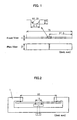
- the 4 types of steels having the chemical compositions shown in Table 1 were produced by melting. By using these steels and applying hot forging, bars of 80 mm in diameter and 300 mm in length were produced. From these bars, by outside cutting and hollow machining, seamless steel pipes of 75 mm in outside diameter, 10 mm in wall thickness and 300 mm in length were produced. The yield strength [YS (MPa)] values and the Rockwell C scale hardness (HRC) values of these steel pipes were the values shown in Table 2.
- each of the amounts of the soluble N was taken as the value derived from the total amount of N in the steel concerned measured by the chemical analysis by subtracting the amount of N involved in the nitrides of Ti, Nb, Al, V, B and the like obtained by the extracted residual method.
- the specimens of the steels having the marks A and D, of the 4-point bending test specimens after being subjected to the above described SSC resistance investigation test were subjected to the investigation of the hydrogen occluded in steel on the basis of the above described temperature programmed desorption analysis of hydrogen.
- the temperature raising rate was set at 10°C/min .
- the hardness when subjected to expanding working, the hardness is raised owing to the working hardening.
- the activation energy level of the diffusive hydrogen occluded in the steel after expanding working varies largely depending on the soluble N content, and the concentration of the diffusive hydrogen released at the temperatures of 200°C or below is lower for the steel lower in the soluble N content. This means that in the steel low in the soluble N content, the growth of the hydrogen brittleness susceptibility, namely, the growth of the SSC susceptibility is suppressed to a low level.
- the first peak of a steel large in the soluble N content is almost the same as that of a steel low in the soluble N content, and the amounts of the occluded diffusive hydrogen of these steels are almost identical to each other.
- the total content of N in the steel may be reduced, or the N may be fixed by positively adding the nitride forming elements such as Ti, Nb, V, B and Al; however, no particular constraint is imposed on the method for reducing the soluble N content in a steel.
- the soluble N content in a steel is not only determined by the conditions of the production by melting, but is varied in a manner complicatedly affected by the production conditions involved in the subsequent stages, for example, the factors at the time of pipe production including the billet heating condition, the temperature at the completion of the pipe production, the temperatures and the time periods of the heating and cooling processes for the purpose of hardening, and the temperatures and the time periods of the heating and cooling processes for the purpose of tempering. Accordingly, it is important to determine the addition amounts of the nitride forming elements such as Ti, Nb, V, B and Al, by taking account of the above described factors in a comprehensive manner.
- the high temperature retention time is made as long as possible, and the reactions are thereby allowed to proceed to a sufficient extent which meets the addition amounts of the nitride forming elements.
- the types of nitrides formed at different temperature ranges are different from each other, and hence it is desirable to optimize the heating temperature and time according to the types of the above described nitride forming elements such as Ti and Nb.
- nitride forming elements such as Ti and Nb.
- N is fixed with Ti
- N is fixed by adding Al or Nb
- the wall thickness of the steel pipe being produced affects the nitride formation.
- a thick wall material is slow in cooling rate, and hence it can be expected that the nitride formation proceeds during the time interval between the time of the taking out at the time of hardening from the heating furnace and the time of starting water cooling; accordingly, the soaking time can be shortened by the above described time interval.
- a thin wall material is fast in cooling rate, so that the time management in the furnace comes to be important.
- C 0.05 to 0.45% C is an element necessary for ensuring the steel strength and for attaining the sufficient hardenability. For the purpose of obtaining these effects, the content of C of at least 0.05% is necessary. On the other hand, if the content of C exceeds 0.45%, the hardening crack susceptibility at the time of hardening is increased. Accordingly, the content of C is made to be 0.05 to 0.45%.
- the preferable lower limit is 0.1% and the preferable upper limit is 0.35%.
- Si 0.1 to 1.5%
- Si is an element having the effect as a deoxidizing agent and the effect of enhancing the tempering softening resistance and thereby raising the strength.
- the content of Si less than 0.1%, these effects cannot be fully attained.
- the content of Si exceed 1.5%, the hot workability of the steel is markedly degraded. Accordingly, the content of Si is made to be 0.1 to 1.5%.
- the preferable lower limit is 0.2% and the preferable upper limit is 1.0%.
- Mn 0.1 to 3.0%
- Mn is an element effective for increasing the steel hardenability and for ensuring the steel pipe strength. With the content of Mn less than 0.1%, these effects cannot be attained. On the other hand, with the content of Mn exceeding 3.0%, the segregation of Mn is enhanced and the toughness is lowered. Accordingly, the content of Mn is made to be 0.1 to 3.0%.
- the preferable lower limit is 0.3% and the preferable upper limit is 1.5%.
- P 0.03% or less
- P is an element contained in steel as an impurity; if the content thereof exceeds 0.03%, P segregates on the grain boundary and degrades the toughness, so that the content of P is made to be 0.03% or less.
- the content of P is preferably 0.015% or less. Additionally, it is preferable that the content of P is as small as possible.
- S 0.01% or less S is an element contained in steel as an impurity, similarly to the above described P, and forms sulfide inclusion with Mn, Ca and the like to degrade the toughness, if the content of S exceeds 0.01%, the toughness degradation becomes remarkable. Accordingly, the content of S is made to be 0.01% or less.
- the content of S is preferably 0.005% or less. Additionally, it is also preferable that the content of S is as small as possible.
- sol.Al 0.05% or less Al is added as a deoxidizing agent; if the content of Al exceeds 0.05% in terms of the content of sol.Al, the toughness lowering is caused and additionally the deoxidizing effect is saturated. Accordingly, the content of Al is made to be 0.05% or less in terms of the content of sol.Al. The preferable content is 0.03% or less.
- the lower limit can be at a level of impurity.
- Al has an effect to form AlN and to fix N; this effect can be attained with the content of sol.Al of 0.001% or more, so that it is recommended that the content of sol.Al is made to be 0.001% or more when the above mentioned effect is desired.
- An oil well steel pipe for embedding-expanding of the present invention is made of a steel having the above described chemical composition and the balance being Fe and impurities other than P and S.
- Another oil well steel pipe for embedding-expanding of the present invention is made of a steel having, in addition to the above described components, in place of a part of Fe, at least one component selected from at least one group of the below described groups A to C.
- any one of these elements has the effect for forming nitride and thereby fixing N in steel.
- these elements are the elements that reduce the soluble N content. Accordingly, when the effect of these elements are desired, one or more of these elements may be added, and the desired effect can be obtained with the content of 0.005% or more for V, Ti and Nb, and with the content of 0.0005% or more for B.
- the contents of these elements, when they are added are made to be as follows: 0.005 to 0.2% for V, 0.005 to 0.1% for Ti and Nb, and 0.0005 to 0.005% for B.
- Ca is an element contributing to controlling the forms of the sulfides and effective for improving the toughness and the like. Accordingly, Ca may be added when the effect of Ca is desired; the desired effect can be obtained with the content of 0.001% or more. However, when the content exceeds 0.005%, there occur adverse effects including the generation of a large amount of inclusion to provide the origins for pitting corrosion. Accordingly, it is recommended that the content of Ca, when it is added, is made to be 0.001 to 0.005%.
- Table 5 also shows the yield strengths YS (MPa) obtained by the room-temperature tensile test applied to the 12B specimens specified in JIS Z2241 sampled from the steel pipes before expanding.
- the steel pipes made of the steels Nos.1 to 18 are excellent in the SSC resistance after expanding working.
- the steel pipes made of the steels Nos.2 to 4, 7 to 12, and 15 to 18 are as extremely low as 20 ppm or less in the soluble N content, and hence maintain the excellent SSC resistances even after application of the expansion with the radial expansion ratio of 20%.
Landscapes
- Chemical & Material Sciences (AREA)
- Engineering & Computer Science (AREA)
- Materials Engineering (AREA)
- Mechanical Engineering (AREA)
- Metallurgy (AREA)
- Organic Chemistry (AREA)
- Heat Treatment Of Articles (AREA)
- Heat Treatment Of Steel (AREA)
- Rigid Pipes And Flexible Pipes (AREA)
Applications Claiming Priority (2)
| Application Number | Priority Date | Filing Date | Title |
|---|---|---|---|
| JP2003151269 | 2003-05-28 | ||
| PCT/JP2004/007174 WO2004106572A1 (fr) | 2003-05-28 | 2004-05-26 | Tuyau d'acier de puits de petrole a placer sous terre et a expanser |
Publications (2)
| Publication Number | Publication Date |
|---|---|
| EP1640468A1 true EP1640468A1 (fr) | 2006-03-29 |
| EP1640468A4 EP1640468A4 (fr) | 2006-09-13 |
Family
ID=33487215
Family Applications (1)
| Application Number | Title | Priority Date | Filing Date |
|---|---|---|---|
| EP04745326A Withdrawn EP1640468A4 (fr) | 2003-05-28 | 2004-05-26 | Tuyau d'acier de puits de petrole a placer sous terre et a expanser |
Country Status (13)
| Country | Link |
|---|---|
| US (1) | US7082992B2 (fr) |
| EP (1) | EP1640468A4 (fr) |
| JP (1) | JP4475424B2 (fr) |
| CN (1) | CN100554473C (fr) |
| AR (1) | AR044438A1 (fr) |
| AU (1) | AU2004243718B9 (fr) |
| BR (1) | BRPI0410732A (fr) |
| CA (1) | CA2527117A1 (fr) |
| EA (1) | EA008418B1 (fr) |
| MX (1) | MXPA05012510A (fr) |
| NO (1) | NO20055154L (fr) |
| UA (1) | UA79213C2 (fr) |
| WO (1) | WO2004106572A1 (fr) |
Cited By (3)
| Publication number | Priority date | Publication date | Assignee | Title |
|---|---|---|---|---|
| US7887649B2 (en) * | 2006-07-05 | 2011-02-15 | Jfe Steel Corporation | High-tensile strength welded steel tube for structural parts of automobiles and method of producing the same |
| CN102352462A (zh) * | 2011-09-28 | 2012-02-15 | 中国钢研科技集团有限公司 | 一种高强高冲击韧性的锚杆钢筋及其制备方法 |
| DE102014016073A1 (de) * | 2014-10-23 | 2016-04-28 | Vladimir Volchkov | Stahl |
Families Citing this family (33)
| Publication number | Priority date | Publication date | Assignee | Title |
|---|---|---|---|---|
| AU2006214807B2 (en) * | 2005-02-21 | 2011-11-03 | Bluescope Steel Limited | Linepipe steel |
| US20090104069A1 (en) | 2005-02-21 | 2009-04-23 | Bluescope Steel Limited | Linepipe steel |
| CN101180449A (zh) * | 2005-03-21 | 2008-05-14 | 亿万奇环球技术公司 | 径向扩张系统 |
| CN100395368C (zh) * | 2005-10-17 | 2008-06-18 | 马鞍山钢铁股份有限公司 | 铌钛复合微合金化控冷钢筋用钢及其生产方法 |
| CN100439552C (zh) * | 2006-06-28 | 2008-12-03 | 宝山钢铁股份有限公司 | 一种复合强化高强度高韧性调质钢及其制造方法 |
| CN100463993C (zh) * | 2007-02-28 | 2009-02-25 | 天津钢管集团股份有限公司 | 低碳当量微合金钢管及其在线常化工艺 |
| CN101275207B (zh) * | 2007-03-27 | 2010-04-07 | 宝山钢铁股份有限公司 | 抗硫化氢腐蚀石油钻杆用工具接头的热处理方法 |
| CN101376943B (zh) * | 2007-08-28 | 2011-07-20 | 宝山钢铁股份有限公司 | N80q钢级直缝焊石油套管的制造方法 |
| JP5487543B2 (ja) * | 2008-01-25 | 2014-05-07 | Jfeスチール株式会社 | 拡管性に優れた油井用鋼管 |
| JP5447278B2 (ja) * | 2009-08-17 | 2014-03-19 | 新日鐵住金株式会社 | 内面突起つきスパイラル鋼管およびその製造法 |
| WO2011071865A2 (fr) * | 2009-12-08 | 2011-06-16 | National Oilwell Varco, L.P. | Appareil et procédés d'essai de corrosion |
| CN102002637B (zh) * | 2010-10-26 | 2012-06-13 | 攀钢集团钢铁钒钛股份有限公司 | 一种合金钢及其制造方法 |
| CN102002633B (zh) * | 2010-10-26 | 2012-08-08 | 攀钢集团钢铁钒钛股份有限公司 | 碳素钢及其制造方法 |
| CN102031451B (zh) * | 2010-10-26 | 2012-09-05 | 攀钢集团钢铁钒钛股份有限公司 | 含钒钛的碳素钢及其制造方法 |
| CN102002634B (zh) * | 2010-10-26 | 2012-06-13 | 攀钢集团钢铁钒钛股份有限公司 | 一种含钒钛的碳素钢及其制造方法 |
| CN102031453A (zh) * | 2010-10-26 | 2011-04-27 | 攀钢集团钢铁钒钛股份有限公司 | 含钛合金钢及其制造方法 |
| CN102051529B (zh) * | 2010-10-26 | 2012-07-25 | 攀钢集团钢铁钒钛股份有限公司 | 一种碳素钢及其制造方法 |
| CN102367555A (zh) * | 2010-11-08 | 2012-03-07 | 江苏诚德钢管股份有限公司 | 海上石油平台用高钢级耐腐蚀的原料管坯 |
| CN102465234B (zh) * | 2010-11-18 | 2013-11-13 | 中国石油天然气集团公司 | 一种低合金n80钢级实体可膨胀管材料的制备方法 |
| CN102251189B (zh) * | 2011-06-30 | 2013-06-05 | 天津钢管集团股份有限公司 | 105ksi钢级耐硫化物应力腐蚀钻杆料的制造方法 |
| AR088424A1 (es) * | 2011-08-22 | 2014-06-11 | Nippon Steel & Sumitomo Metal Corp | Tubo de acero para pozo de petroleo con excelente resistencia a la corrosion bajo tension por presencia de sulfuros |
| CN102690992B (zh) * | 2012-05-07 | 2014-03-19 | 攀钢集团成都钢钒有限公司 | 一种制造稠油热采井用套管的方法 |
| CN102676942B (zh) * | 2012-05-08 | 2014-01-15 | 无锡宏达热处理锻造有限公司 | 石油钻具材料的热处理工艺 |
| RU2541255C1 (ru) * | 2013-11-26 | 2015-02-10 | Закрытое акционерное общество "Омутнинский металлургический завод" | Конструкционная легированная сталь с повышенной прочностью и способ термоупрочнения горячекатаного проката |
| JP5943165B1 (ja) | 2014-12-24 | 2016-06-29 | Jfeスチール株式会社 | 油井用高強度継目無鋼管およびその製造方法 |
| BR112017011971B1 (pt) * | 2014-12-24 | 2021-05-04 | Jfe Steel Corporation | tubo de aço sem costura de alta resistência para produtos tubulares da indústria petrolífera e seu método de produção |
| CN105441799B (zh) * | 2015-11-25 | 2017-05-24 | 武汉钢铁(集团)公司 | 低温环境用高强韧低屈强比调质钢板及其制备方法 |
| CN106399830A (zh) * | 2016-10-14 | 2017-02-15 | 武汉钢铁股份有限公司 | 扩孔性能稳定的高扩孔钢及其生产方法 |
| CN107385323B (zh) * | 2017-06-08 | 2019-01-25 | 中国石油天然气集团公司 | 一种j55钢级大膨胀率焊管及其制备方法 |
| CN108048737A (zh) * | 2017-11-28 | 2018-05-18 | 兰州兰石集团有限公司 | 钻采提升设备主承载件用钢及其制备方法 |
| CA3152893C (fr) * | 2019-11-20 | 2024-11-05 | Jfe Steel Corporation | Tole d'acier laminee a chaud pour tuyau en acier electrosoude et son procede de production, tuyau en acier electrosoude et son procede de production, canalisation et structure d'immeuble |
| JP7564499B1 (ja) * | 2023-04-13 | 2024-10-09 | 日本製鉄株式会社 | 鋼材 |
| WO2024214486A1 (fr) * | 2023-04-13 | 2024-10-17 | 日本製鉄株式会社 | Matériau d'acier |
Family Cites Families (16)
| Publication number | Priority date | Publication date | Assignee | Title |
|---|---|---|---|---|
| JPS522825A (en) * | 1975-06-24 | 1977-01-10 | Nippon Steel Corp | Method of manufacturing high tensile seam welded steel tube |
| JPS52128821A (en) * | 1976-04-12 | 1977-10-28 | Nippon Steel Corp | Preparation of high tensile steel having superior low temperature toughness and yield point above 40 kg/pp2 |
| JPS54117311A (en) * | 1978-03-06 | 1979-09-12 | Kawasaki Steel Co | Production of steel pipe for oil well |
| JPH061021B2 (ja) * | 1987-07-13 | 1994-01-05 | 株式会社大井製作所 | 上下開閉式車両用ドアの開閉装置 |
| JPH0774413B2 (ja) * | 1990-01-30 | 1995-08-09 | 新日本製鐵株式会社 | 被削性の優れた機械構造用電気抵抗溶接鋼管 |
| JP3265591B2 (ja) * | 1991-08-12 | 2002-03-11 | 住友金属工業株式会社 | 溶接部靱性に優れた自動車用高強度電縫鋼管 |
| MY108743A (en) | 1992-06-09 | 1996-11-30 | Shell Int Research | Method of greating a wellbore in an underground formation |
| WO1997024203A1 (fr) * | 1995-12-28 | 1997-07-10 | Kawasaki Steel Corporation | Procede de fabrication de tubes d'acier soudes de grand diametre qui possedent une grande resistance et une grande solidite |
| JP3499085B2 (ja) * | 1996-06-28 | 2004-02-23 | 新日本製鐵株式会社 | 耐破壊性能に優れた建築用低降伏比高張力鋼材及びその製造方法 |
| JP3562353B2 (ja) * | 1998-12-09 | 2004-09-08 | 住友金属工業株式会社 | 耐硫化物応力腐食割れ性に優れる油井用鋼およびその製造方法 |
| JP2000199029A (ja) * | 1999-01-07 | 2000-07-18 | Nippon Steel Corp | 耐炭酸ガス腐食性および耐硫化物応力割れ性に優れた鋼板および鋼管とその製造方法 |
| EP1231289B1 (fr) * | 2000-06-07 | 2005-10-19 | Nippon Steel Corporation | Tuyau d'acier a haute aptitude au formage et son procede de fabrication |
| JP3804438B2 (ja) * | 2000-11-15 | 2006-08-02 | Jfeスチール株式会社 | ハイドロフォーム特性に優れた鋼材、鋼帯・鋼管の製造方法及びハイドロフォーム成形方法 |
| JP3849438B2 (ja) * | 2001-03-09 | 2006-11-22 | 住友金属工業株式会社 | 拡管用油井鋼管 |
| US6749954B2 (en) * | 2001-05-31 | 2004-06-15 | Jfe Steel Corporation | Welded steel pipe having excellent hydroformability and method for making the same |
| JP3846246B2 (ja) * | 2001-09-21 | 2006-11-15 | 住友金属工業株式会社 | 鋼管の製造方法 |
-
2004
- 2004-05-26 BR BRPI0410732-2A patent/BRPI0410732A/pt not_active Application Discontinuation
- 2004-05-26 UA UAA200512670A patent/UA79213C2/uk unknown
- 2004-05-26 MX MXPA05012510A patent/MXPA05012510A/es active IP Right Grant
- 2004-05-26 WO PCT/JP2004/007174 patent/WO2004106572A1/fr not_active Ceased
- 2004-05-26 CN CN200480011474.0A patent/CN100554473C/zh not_active Expired - Fee Related
- 2004-05-26 EP EP04745326A patent/EP1640468A4/fr not_active Withdrawn
- 2004-05-26 AU AU2004243718A patent/AU2004243718B9/en not_active Ceased
- 2004-05-26 CA CA002527117A patent/CA2527117A1/fr not_active Abandoned
- 2004-05-26 EA EA200501880A patent/EA008418B1/ru not_active IP Right Cessation
- 2004-05-26 JP JP2005506479A patent/JP4475424B2/ja not_active Expired - Fee Related
- 2004-05-27 AR ARP040101828A patent/AR044438A1/es not_active Application Discontinuation
-
2005
- 2005-11-03 NO NO20055154A patent/NO20055154L/no not_active Application Discontinuation
- 2005-11-23 US US11/284,918 patent/US7082992B2/en not_active Expired - Lifetime
Cited By (3)
| Publication number | Priority date | Publication date | Assignee | Title |
|---|---|---|---|---|
| US7887649B2 (en) * | 2006-07-05 | 2011-02-15 | Jfe Steel Corporation | High-tensile strength welded steel tube for structural parts of automobiles and method of producing the same |
| CN102352462A (zh) * | 2011-09-28 | 2012-02-15 | 中国钢研科技集团有限公司 | 一种高强高冲击韧性的锚杆钢筋及其制备方法 |
| DE102014016073A1 (de) * | 2014-10-23 | 2016-04-28 | Vladimir Volchkov | Stahl |
Also Published As
| Publication number | Publication date |
|---|---|
| AU2004243718A1 (en) | 2004-12-09 |
| EA200501880A1 (ru) | 2006-04-28 |
| US7082992B2 (en) | 2006-08-01 |
| UA79213C2 (en) | 2007-05-25 |
| MXPA05012510A (es) | 2006-02-08 |
| CN1780929A (zh) | 2006-05-31 |
| US20060073352A1 (en) | 2006-04-06 |
| JP4475424B2 (ja) | 2010-06-09 |
| JPWO2004106572A1 (ja) | 2006-07-20 |
| EP1640468A4 (fr) | 2006-09-13 |
| WO2004106572A1 (fr) | 2004-12-09 |
| AU2004243718B2 (en) | 2007-07-05 |
| EA008418B1 (ru) | 2007-04-27 |
| AR044438A1 (es) | 2005-09-14 |
| BRPI0410732A (pt) | 2006-06-27 |
| CA2527117A1 (fr) | 2004-12-09 |
| NO20055154D0 (no) | 2005-11-03 |
| NO20055154L (no) | 2005-12-27 |
| AU2004243718B9 (en) | 2007-07-05 |
| CN100554473C (zh) | 2009-10-28 |
Similar Documents
| Publication | Publication Date | Title |
|---|---|---|
| US7082992B2 (en) | Oil well steel pipe for embedding-expanding | |
| EP3508603B1 (fr) | Matériau en acier, tube en acier pour puits de pétrole ou tube en acier pour puits de gaz | |
| AU2005209562B2 (en) | Oil well seamless steel pipe excellent in resistance to sulfide stress cracking and method for production thereof | |
| JP5135557B2 (ja) | 耐遅れ破壊特性に優れた高強度鋼材と高強度ボルト、及び、その製造方法 | |
| JP6064955B2 (ja) | 耐硫化物応力割れ性に優れた油井用高強度継目無鋼管の製造方法 | |
| JP2003041341A (ja) | 高靱性を有する鋼材およびそれを用いた鋼管の製造方法 | |
| EP2000555A1 (fr) | Canalisation de puits pétrolier expansible destinée à être expansée dans un puits et procédé de production de la canalisation | |
| JP4427010B2 (ja) | 耐遅れ破壊特性に優れた高強度調質鋼およびその製造方法 | |
| JP2000063940A (ja) | 耐硫化物応力割れ性に優れた高強度鋼の製造方法 | |
| EP2322679B1 (fr) | Tuyau continu en acier inoxydable martensitique pour un tuyau de puits de pétrole et processus de production associé | |
| JP2002060893A (ja) | 耐硫化物応力腐食割れ性に優れた油井用鋼とその製造方法 | |
| JP2001288538A (ja) | 耐遅れ破壊特性の優れた高強度ボルト用鋼、ボルトおよびそのボルトの製造方法 | |
| JP2020128592A (ja) | ボルト、ボルト用鋼、及びボルトの製造方法 | |
| JP3849438B2 (ja) | 拡管用油井鋼管 | |
| JPWO2000068450A1 (ja) | 耐硫化物割れ性に優れた高強度油井用鋼材及びその製造方法 | |
| JP3648192B2 (ja) | 耐遅れ破壊特性に優れた高強度pc鋼棒および製造方法 | |
| JP3451993B2 (ja) | 耐硫化水素腐食性および耐炭酸ガス腐食性能に優れたCr含有油井管用鋼 | |
| JP4054179B2 (ja) | 耐遅れ破壊特性に優れた高強度パーライト鋼 | |
| JP3912334B2 (ja) | 埋設拡管用油井管 | |
| JP3489333B2 (ja) | 耐硫化物応力割れ性に優れたマルテンサイト系ステンレス鋼 | |
| JPH07179943A (ja) | 耐食性に優れた高靭性マルテンサイト系ステンレス鋼継目無鋼管の製造法 | |
| JP4081234B2 (ja) | 耐水素脆化特性の優れた高強度鋼 | |
| JP2730090B2 (ja) | 高降伏比マルテンサイト系ステンレス鋼 | |
| JPH0741909A (ja) | 油井用ステンレス鋼およびその製造方法 |
Legal Events
| Date | Code | Title | Description |
|---|---|---|---|
| PUAI | Public reference made under article 153(3) epc to a published international application that has entered the european phase |
Free format text: ORIGINAL CODE: 0009012 |
|
| 17P | Request for examination filed |
Effective date: 20051206 |
|
| AK | Designated contracting states |
Kind code of ref document: A1 Designated state(s): AT BE BG CH CY CZ DE DK EE ES FI FR GB GR HU IE IT LI LU MC NL PL PT RO SE SI SK TR |
|
| DAX | Request for extension of the european patent (deleted) | ||
| A4 | Supplementary search report drawn up and despatched |
Effective date: 20060816 |
|
| 17Q | First examination report despatched |
Effective date: 20100714 |
|
| RAP1 | Party data changed (applicant data changed or rights of an application transferred) |
Owner name: NIPPON STEEL & SUMITOMO METAL CORPORATION |
|
| STAA | Information on the status of an ep patent application or granted ep patent |
Free format text: STATUS: THE APPLICATION IS DEEMED TO BE WITHDRAWN |
|
| 18D | Application deemed to be withdrawn |
Effective date: 20130518 |