EP1613028A2 - Anpassung des Ruftons in Abhängigkeit von einem Logbuch - Google Patents
Anpassung des Ruftons in Abhängigkeit von einem Logbuch Download PDFInfo
- Publication number
- EP1613028A2 EP1613028A2 EP05254087A EP05254087A EP1613028A2 EP 1613028 A2 EP1613028 A2 EP 1613028A2 EP 05254087 A EP05254087 A EP 05254087A EP 05254087 A EP05254087 A EP 05254087A EP 1613028 A2 EP1613028 A2 EP 1613028A2
- Authority
- EP
- European Patent Office
- Prior art keywords
- message
- telecommunications terminal
- property
- value
- call
- Prior art date
- Legal status (The legal status is an assumption and is not a legal conclusion. Google has not performed a legal analysis and makes no representation as to the accuracy of the status listed.)
- Granted
Links
Images





Classifications
-
- H—ELECTRICITY
- H04—ELECTRIC COMMUNICATION TECHNIQUE
- H04M—TELEPHONIC COMMUNICATION
- H04M1/00—Substation equipment, e.g. for use by subscribers
- H04M1/57—Arrangements for indicating or recording the number of the calling subscriber at the called subscriber's set
- H04M1/575—Means for retrieving and displaying personal data about calling party
-
- H—ELECTRICITY
- H04—ELECTRIC COMMUNICATION TECHNIQUE
- H04M—TELEPHONIC COMMUNICATION
- H04M1/00—Substation equipment, e.g. for use by subscribers
- H04M1/57—Arrangements for indicating or recording the number of the calling subscriber at the called subscriber's set
- H04M1/575—Means for retrieving and displaying personal data about calling party
- H04M1/576—Means for retrieving and displaying personal data about calling party associated with a pictorial or graphical representation
-
- H—ELECTRICITY
- H04—ELECTRIC COMMUNICATION TECHNIQUE
- H04M—TELEPHONIC COMMUNICATION
- H04M19/00—Current supply arrangements for telephone systems
- H04M19/02—Current supply arrangements for telephone systems providing ringing current or supervisory tones, e.g. dialling tone or busy tone
- H04M19/04—Current supply arrangements for telephone systems providing ringing current or supervisory tones, e.g. dialling tone or busy tone the ringing-current being generated at the substations
-
- H—ELECTRICITY
- H04—ELECTRIC COMMUNICATION TECHNIQUE
- H04M—TELEPHONIC COMMUNICATION
- H04M1/00—Substation equipment, e.g. for use by subscribers
- H04M1/72—Mobile telephones; Cordless telephones, i.e. devices for establishing wireless links to base stations without route selection
- H04M1/724—User interfaces specially adapted for cordless or mobile telephones
- H04M1/72403—User interfaces specially adapted for cordless or mobile telephones with means for local support of applications that increase the functionality
- H04M1/7243—User interfaces specially adapted for cordless or mobile telephones with means for local support of applications that increase the functionality with interactive means for internal management of messages
-
- H—ELECTRICITY
- H04—ELECTRIC COMMUNICATION TECHNIQUE
- H04M—TELEPHONIC COMMUNICATION
- H04M19/00—Current supply arrangements for telephone systems
- H04M19/02—Current supply arrangements for telephone systems providing ringing current or supervisory tones, e.g. dialling tone or busy tone
- H04M19/04—Current supply arrangements for telephone systems providing ringing current or supervisory tones, e.g. dialling tone or busy tone the ringing-current being generated at the substations
- H04M19/048—Arrangements providing optical indication of the incoming call, e.g. flasher circuits
Definitions
- the present invention relates to telecommunications equipment in general, and, in particular, to techniques for intelligently notifying the user of a telecommunications terminal of the arrival of a message.
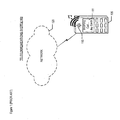
- FIG. 1 depicts telecommunications system 100 comprising telecommunications terminal 105 (e.g. , a wireless telephone, a wireline telephone, a personal digital assistant [PDA], etc .) and network 120 (e.g., the Public Switched Telephone Network [PSTN], a cellular wireless network, a wireless local-area network, etc .) in accordance with the prior art.
- Telecommunications terminal 105 is capable of receiving messages (e.g ., voice telephone calls, email messages, Short Message Service [SMS] messages, etc .) from other telecommunications terminals via network 120.
- messages e.g ., voice telephone calls, email messages, Short Message Service [SMS] messages, etc .
- telecommunications terminal 105 When telecommunications terminal 105 receives a message, it notifies the user of the terminal of the arrival of the message by playing a "ringtone" (e.g ., a tune, a series of beeps, etc .) via speaker 110 and by displaying visual information (e.g ., text, an image, etc .) via display 111.
- a "ringtone” e.g ., a tune, a series of beeps, etc .
- Telecommunications terminal 105 might play a particular ringtone for all incoming messages, or a ringtone that is associated with a category of callers (e.g ., a ringtone for business contacts, a ringtone for friends, a ringtone for family members, etc .), or a ringtone that is associated with an individual caller, etc.
- a category of callers e.g ., a ringtone for business contacts, a ringtone for friends, a
- telecommunications terminal 105 might display a text message (e.g ., "Incoming Call”, “Incoming Call: Mom”, “Incoming Call: 555-555-5555”, etc .) or an image (e.g ., an animated icon of a ringing telephone, a photo of the caller, etc .), or both, to indicate that there is an incoming message.
- a text message e.g ., "Incoming Call”, “Incoming Call: Mom”, “Incoming Call: 555-555-5555”, etc .
- an image e.g ., an animated icon of a ringing telephone, a photo of the caller, etc .
- a record of the call is typically stored in a call log that specifies information about the call such as the identity of the caller, what time the call was received, whether the call was answered or missed, the duration of the call, etc.
- a call log can similarly maintain a record of outgoing calls that are placed by the user of telecommunications terminal 105.
- FIG. 2 depicts an illustrative block diagram of the salient components of network 120 in the prior art.
- Each network infrastructure element 201- i might be a switch, a private branch exchange (PBX), a wireless base station, a wireless switching center, a server, etc., depending on the type and topology of network 120.
- PBX private branch exchange
- element 201-1 might be a switch
- element 201-2 might be a private branch exchange, etc .
- the fact that network 120 has four elements 201 in Figure 2 is merely illustrative; network 120 might have fewer elements or a greater number of elements than that depicted.
- the present invention enables a telecommunications terminal to notify its user of the arrival of a message via a ringtone whose properties are based on information from one or more call logs.
- a network infrastructure element e.g ., a switch, a wireless base station, a server, etc .
- receives a message directed to a telecommunications terminal sets the values of one or more properties of a ringtone (e.g ., tempo, volume, pitch, rhythm, etc .) based on information from one or more call logs.
- Pertinent call logs might include call logs associated with the telecommunications terminal that receives the call, call logs associated with other telecommunications terminals used by the user, call logs associated with a particular private branch exchange (PBX), etc.
- Examples of such call log information include: (i) the time of the most recent prior message from the caller; (ii) the number of times that the caller has attempted to contact the user during a particular time interval; etc .
- a telecommunications terminal plays the Beatles song "Hello Goodbye" when a message arrives, the song might be played in a variety of ways, depending on attributes of the message:
- a network infrastructure element when a network infrastructure element receives a message for sending to a telecommunications terminal, the element sends a signal that represents an instance of a ringtone (e.g ., an audio clip, a Musical Instrument Digital Interface [MIDI] file, etc .) along with the message.
- a ringtone e.g ., an audio clip, a Musical Instrument Digital Interface [MIDI] file, etc .
- the values of one or more musical properties of the ringtone instance such as tempo, volume, pitch, rhythm, etc ., are established based on information from one or more call logs.
- the network infrastructure element determines property values for music (e.g ., key signature equals C major, metronome marking equals 140 beats per minute, etc .) based on one or more attributes of the message, and sends the property values, but not an instance of a ringtone, to the telecommunications terminal along with the message.
- the telecommunications terminal then plays a ringtone that is stored at the terminal in accordance with the received property values.
- the illustrative embodiments of the present invention similarly establish values of properties of images and text that are displayed to notify the user of an incoming message.
- Values of properties such as brightness, size, contrast, resolution, etc . can be changed without interfering with the user's ability to recognize an image. For example, when an incoming message is determined to be important based on a call log ( e.g ., the first ten messages from a new client, etc .), an image might be displayed at a higher brightness, or an animated image might move at a faster speed.
- the network infrastructure element sends a signal that represents an instance of an image (e.g ., a Joint Photographic Experts Group [JPEG] file, a Graphics Interchange Format [GIF] file, etc .) to the telecommunications terminal along with the message, where the values of one or more properties of the image instance are established based on information from one or more call logs.
- an image e.g ., a Joint Photographic Experts Group [JPEG] file, a Graphics Interchange Format [GIF] file, etc .
- the network infrastructure element determines property values for images (e.g ., resolution equals 100 by 120 pixels, saturation equals 90%, etc .) based on one or more call logs, and sends the property values, but not an instance of an image, to the telecommunications terminal along with the message.
- the telecommunications terminal displays an image that is stored at the terminal in accordance with the received property values.
- the illustrative embodiments of the present invention similarly establish property values for text (e.g ., font size, font style, color, dynamic behavior such as flashing, etc .) that is displayed to notify the user of an incoming message. For example, when an incoming message is determined to be important based on information from a call log, a text notification might flash or might be rendered in a bold font to indicate the importance of the message.
- text notifications both the first and second illustrative embodiments send one or more property values of text with the message (i.e ., no text is sent), and the telecommunications terminal displays an appropriate text string in accordance with the received property values.
- one or more property values of the output signal might also be based on one or more attributes of the incoming message (e.g ., the identity of the sender of the message, a priority level embedded in the message, a subject associated with the message, the semantic content of the message, the location from which the message was sent, etc .).
- attributes of the incoming message e.g ., the identity of the sender of the message, a priority level embedded in the message, a subject associated with the message, the semantic content of the message, the location from which the message was sent, etc .
- the illustrative embodiment comprises: (a) receiving at a telecommunications terminal (i) a message, and (ii) a first signal representing an instance of a musical composition; and (b) outputting an acoustic second signal based on the first signal to notify the user of the telecommunications terminal of the arrival of the message; wherein the value of a property of the instance is based on information from one or more call logs; and wherein the property is a property of music that is independent of melody.
- Figure 1 depicts a telecommunications system in the prior art.
- Figure 2 depicts an illustrative block diagram of the salient components of network 120, as shown in Figure 1, in the prior art.
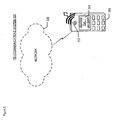
- Figure 3 depicts a telecommunications system in accordance with the illustrative embodiments of the present invention.
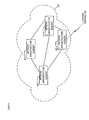
- Figure 4 depicts an illustrative block diagram of the salient components of network 320, as shown in Figure 3, in accordance with the illustrative embodiments of the present invention.
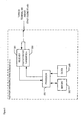
- Figure 5 depicts a block diagram of the salient components of network infrastructure element 401- i , as shown in Figure 4, in accordance with the illustrative embodiments of the present invention.
- Figure 6 depicts a block diagram of the salient components of telecommunications terminal 305, as shown in Figure 3, in accordance with the illustrative embodiments of the present invention.
- Figure 7 depicts an illustrative organization of information in call log 700, in accordance with the illustrative embodiment of the present invention.
- Figure 8 depicts a flowchart of the salient tasks of network infrastructure element 401- i , as shown in Figure 4, in accordance with the first illustrative embodiment of the present invention.
- Figure 9 depicts a detailed flowchart of task 830, as shown in Figure 8, in accordance with the first illustrative embodiment of the present invention.
- Figure 10 depicts a detailed flowchart of task 840, as shown in Figure 8, in accordance with the first illustrative embodiment of the present invention.
- FIG 11 depicts a detailed flowchart of task 850, as shown in Figure 8, in accordance with the first illustrative embodiment of the present invention.
- Figure 12 depicts a flowchart of the salient tasks of telecommunications terminal 305, as shown in Figure 3, in accordance with the first illustrative embodiment of the present invention.
- Figure 13 depicts a flowchart of the salient tasks of network infrastructure element 401- i , as shown in Figure 4, in accordance with the second illustrative embodiment of the present invention.
- Figure 14 depicts a detailed flowchart of task 1330, as shown in Figure 13, in accordance with the second illustrative embodiment of the present invention.
- Figure 15 depicts a detailed flowchart of task 1340, as shown in Figure 13, in accordance with the second illustrative embodiment of the present invention.
- Figure 16 depicts a detailed flowchart of task 1350, as shown in Figure 13, in accordance with the second illustrative embodiment of the present invention.
- FIG 17 depicts a flowchart of the salient tasks of telecommunications terminal 305, as shown in Figure 3, in accordance with the second illustrative embodiment of the present invention.
- messages is defined as a signal sent from a first telecommunications terminal to a second telecommunications terminal that does one or both of the following: (i) transmits information, or (ii) attempts to establish a dialogue between the terminals.
- messages include a telephone call setup signal, an email, an instant message [IM], etc .
- call is defined similarly to " message ": a signal sent from a first telecommunications terminal to a second telecommunications terminal that does one or both of the following: (i) transmits information, or (ii) attempts to establish a dialogue between the terminals.
- Examples of calls include a telephone call setup signal, an email, an instant message [IM], etc.
- a person that initiates a signal that is sent from a first telecommunications terminal to a second telecommunications terminal is referred to as the " caller " when the signal is referred to as a " call ,” and is referred to as “ the sender " when the signal is referred to as a " message .”
- the term " musical composition” is defined as either a piece of music or a sound effect (e.g., one or more beeps, etc.).
- call log is defined as a data structure that stores information about calls and/or messages.
- FIG. 3 depicts a telecommunications system 300 in accordance with the illustrative embodiments of the present invention.
- telecommunications system 300 comprises telecommunications terminal 305 and network 320.
- Telecommunications terminal 305 is a wireless telephone, a wireline telephone, a personal digital assistant (PDA), etc . that is capable of receiving messages (e.g ., voice telephone calls, email messages, Short Message Service [SMS] messages, etc .) from other telecommunications terminals via network 320, and of notifying its user of the arrival of a message as described below and with respect to Figures 12 and 17.
- telecommunications terminal 305 comprises speaker 310 and display 311.
- Speaker 310 like speaker 110 of telecommunications terminal 105, is capable of generating acoustic signals (e.g ., ringtones, etc .) in well-known fashion
- display 311 like display 111 of telecommunications terminal 105, is capable of displaying visual signals ( e.g ., text, images, etc.) in well-known fashion.
- Network 320 is a communications network (e.g ., the Public Switched Telephone Network [PSTN], a cellular wireless network, a wireless local-area network, etc .) that sends messages to telecommunications terminal 305 as described below and with respect to Figures 8 through 11 and Figures 13 through 16.
- PSTN Public Switched Telephone Network
- FIG. 4 depicts an illustrative block diagram of the salient components of network 320 in accordance with the illustrative embodiments of the present invention.
- Each network infrastructure element 401- i e.g. , a switch, a private branch exchange (PBX), a wireless base station, a wireless switching center, a server, etc .
- PBX private branch exchange
- a wireless base station e.g., a wireless base station, a wireless switching center, a server, etc .
- telecommunications terminal 305 either directly or via one or more other network infrastructure elements 401, depending on what kind of element it is
- Figures 8 through 11 and Figures 13 through 16 e.g., the fact that Figure 4 depicts network 320 with four elements 401 is merely illustrative.
- FIG. 5 depicts a block diagram of the salient components of network infrastructure element 401- i in accordance with the illustrative embodiments of the present invention.
- network infrastructure element 401- i comprises receiver 501, processor 502, memory 503, and transmitter 504, interconnected as shown.
- Receiver 501 receives signals from one or both of telecommunications terminal 305 and other elements 401, depending on the type of element 401- i is, and forwards the information encoded in these signals to processor 502 in well-known fashion. It will be clear to those skilled in the art, after reading this disclosure, how to make and use receiver 501.
- Processor 502 is a general-purpose processor that is capable of reading data from and writing data into memory 503 and of executing the tasks described below and with respect to Figures 8 through 11 and Figures 13 through 16. In some alternative embodiments of the present invention, processor 502 might be a special-purpose processor. In either case, it will be clear to those skilled in the art, after reading this disclosure, how to make and use processor 502.
- Memory 503 stores data and executable instructions, as is well-known in the art, and might be any combination of random-access memory (RAM), flash memory, disk drive, etc. It will be clear to those skilled in the art, after reading this disclosure, how to make and use memory 503.
- RAM random-access memory
- flash memory disk drive
- Transmitter 504 receives information from processor 502 and transmits signals that encode this information to one or both of telecommunications terminal 305 and other elements 401, depending on the type of element 401- i is, in well-known fashion. It will be clear to those skilled in the art, after reading this disclosure, how to make and use transmitter 504.
- FIG. 6 depicts a block diagram of the salient components of telecommunications terminal 305, in accordance with the illustrative embodiments of the present invention.
- telecommunications terminal 305 comprises receiver 601, processor 602, memory 603, transmitter 604, speaker 310, and display 311, interconnected as shown.
- Receiver 601 is capable of receiving signals sent from network 320 and of forwarding the information encoded in these signals to processor 602, in well-known fashion. It will be clear to those skilled in the art, after reading this disclosure, how to make and use receiver 601.
- Processor 602 is a general-purpose processor that is capable of reading data from and writing data into memory 603, of sending signals to speaker 310 and display 311 in well-known fashion, and of executing the tasks described below and with respect to Figures 12 and 17.
- processor 602 might be a special-purpose processor. In either case, it will be clear to those skilled in the art, after reading this disclosure, how to make and use processor 602.
- Memory 603 stores data and executable instructions, as is well-known in the art, and might be any combination of random-access memory (RAM), flash memory, disk drive, etc. It will be clear to those skilled in the art, after reading this disclosure, how to make and use memory 603.
- RAM random-access memory
- flash memory disk drive
- Transmitter 604 is capable of receiving information from processor 602 and of transmitting signals that encode this information to network 320 in well-known fashion. It will be clear to those skilled in the art, after reading this disclosure, how to make and use transmitter 604.
- Figure 7 depicts three tables for an illustrative organization of information in call log 700, in accordance with the illustrative embodiment of the present invention.
- Call log 700 is a record of call activity that comprises at least a subset of:
- Incoming log 701 comprises the status of incoming calls. For each incoming call, incoming log 701 comprises: the identity (if known) of the caller; the telephone number of the caller; the time and date of the call; and the duration of the call.
- Outgoing log 702 comprises the status of outgoing calls. For each outgoing call, outgoing log 702 comprises: the identity of the called party; the telephone number of the called party; the time and date of the call; and the duration of the call.
- Missed log 703 comprises the status of missed calls. For each missed call, missed log 703 comprises: the identity (if known) of the caller; the contact identifier (e.g., telephone number, email address, etc .) of the caller; the time and date of the call; and the treatment of the call (if known).
- the call treatment information if known, indicates if the call was directed to voicemail, directed to another terminal, or handled in another way.
- call log 700 as depicted in Figure 4 provides a record of telephone calls only, it will be clear to those skilled in the art, after reading this specification, how to use call logs that provide a record of other kinds of messages (e.g ., emails, instant messages, etc .) As will be appreciated by those skilled in the art, in some embodiments a call log might record information for different kinds of calls and messages, while in some other embodiments there might be a call log for each kind of message.
- other kinds of messages e.g ., emails, instant messages, etc .
- call log 700 maintains a record of calls associated with terminal 305 (i . e ., calls received at terminal 305, calls placed from terminal 305, and calls received at terminal 305 that were missed), in some alternative embodiments call log 700 might maintain a record of calls for a plurality of terminals associated with a user (for example, a user's wireless phone, wireline phone, and PDA). It will be clear to those skilled in the art, after reading this specification, how to aggregate individual call logs from multiple terminals for the purpose of retrieving information from an aggregated call log.
- call log 700 might be stored in memory 603 of terminal 305, while in some other embodiments a plurality of call logs 700 corresponding to a plurality of telecommunications terminals might instead be stored at one or more of network infrastructure elements 401 or at a remote server.
- the plurality of call logs could be stored in a variety of different organization schemes: one call log for each user ( i.e., all terminals associated with a given user combined into a single call log); each call log stored separately; call logs for all users aggregated into a single call log; etc .
- Terminal 305 uses information in call log 700 to determine the values of one or more properties of an output signal (e.g ., a ringtone, an image, etc .) for notifying the user of an incoming call. For example, if Sam Perez were to call at 2:00 pm on April 22, 2004, then it could be readily determined that it has been one hour, sixteen minutes since Sam's most recent prior communication (at 12:44 pm on the same day). As another example, if Liz Brown were to call at 1:30 pm on April 22, 2004, then it could be readily determined that her latest call is her second attempt since 1:00 pm to reach the user of terminal 305. As will be appreciated by those skilled in the art, other facts can be established from the information in call log 700 in a similar fashion.
- an output signal e.g ., a ringtone, an image, etc .
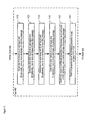
- Figure 8 depicts a flowchart of the salient tasks of network infrastructure element 401- i in accordance with the first illustrative embodiment of the present invention.
- the method of Figure 8 need only be performed by one of the network infrastructure elements 401- i in the (potentially multi-hop) path from the message sender to telecommunications terminal 305.
- the method might be performed only by edge switches, or only by wireless base stations, etc .
- tasks depicted in Figure 8 can be performed simultaneously or in a different order than that depicted.
- receiver 501 of network infrastructure element 401- i receives a message directed to telecommunications terminal 305 and forwards the message to processor 502, in well-known fashion.
- processor 502 determines what musical composition (i.e ., ringtone) and/or what image will be used to notify the user of telecommunications terminal 305 of the arrival of the message.
- the user of telecommunications terminal 305 might be notified via the same musical composition and image for all incoming messages, while in some other embodiments musical compositions and images might be associated with categories of callers, while in still some other embodiments each individual caller might have an associated musical composition and image, etc.
- these ringtone and image "rules" might be specified by the user of telecommunications terminal 305 and uploaded to memory 503 of network infrastructure element 401- i , while in some other embodiments the calling terminal might automatically piggyback a ringtone and/or image on outgoing messages, etc .
- processor 502 sets the values of one or more properties of the musical composition that was determined at task 820 based on
- processor 502 sets the values of one or more properties of the image that was determined at task 820 based on
- processor 502 determines the values of one or more properties of text based on
- processor 502 forwards the message, a file comprising the musical composition as "instantiated” at task 830 (e.g ., an audio clip, a Musical Instrument Digital Interface [MIDI] file, etc .), the image as instantiated at task 840, and the text property values determined at task 850 to transmitter 504 for sending to telecommunications terminal 305, in well-known fashion.
- a file comprising the musical composition as "instantiated” at task 830 (e.g ., an audio clip, a Musical Instrument Digital Interface [MIDI] file, etc .)
- the image as instantiated at task 840 e.g., an audio clip, a Musical Instrument Digital Interface [MIDI] file, etc .
- MIDI Musical Instrument Digital Interface
- Figure 9 depicts a detailed flowchart of task 830 in accordance with the first illustrative embodiment of the present invention. It will be clear to those skilled in the art which tasks depicted in Figure 9 can be performed simultaneously or in a different order than that depicted.
- processor 502 sets the volume of the musical composition based on pertinent entries from one or more call logs.
- processor 502's setting of volume might also be based on one or more attributes of the incoming message, such as: the identity of the sender of the message, a priority associated with the message, a subject associated with the message, the semantic content of the message, the location from which the message was sent (if such information is available), etc.
- the logic by which processor 502 sets the volume of the musical composition might be specified by a network 320 service provider, or by the user of telecommunications terminal and uploaded to network infrastructure element 401- i , etc.
- processor 502 sets the tempo of the musical composition based on pertinent entries from one or more call logs, and optionally, on one or more attributes of the message, as in task 910.
- processor 502 sets the pitch (i.e ., key signature) of the musical composition based on pertinent entries from one or more call logs, and optionally, on one or more attributes of the message.
- processor 502 sets the timbre (e.g ., the musical instrument playing the composition, etc .) of the musical composition based on pertinent entries from one or more call logs, and optionally, on one or more attributes of the message.
- timbre e.g ., the musical instrument playing the composition, etc .
- processor 502 sets the values of additional properties of the musical composition (e.g ., harmony, rhythm, gender for vocal music, language for vocal music, etc .) based on pertinent entries from one or more call logs, and optionally, on one or more attributes of the message. After task 950, execution continues at task 840.
- additional properties of the musical composition e.g ., harmony, rhythm, gender for vocal music, language for vocal music, etc .
- Figure 10 depicts a detailed flowchart of task 840 in accordance with the first illustrative embodiment of the present invention. It will be clear to those skilled in the art which tasks depicted in Figure 10 can be performed simultaneously or in a different order than that depicted.
- processor 502 sets the size of the image based on pertinent entries from one or more call logs, and optionally, on one or more attributes of the message such as: the identity of the sender of the message, a priority associated with the message, a subject associated with the message, the semantic content of the message, the location from which the message was sent (if such information is available), etc .
- processor 502 sets the brightness of the image based on pertinent entries from one or more call logs, and optionally, on one or more attributes of the message.
- processor 502 sets the contrast of the image based on pertinent entries from one or more call logs, and optionally, on one or more attributes of the message.
- processor 502 sets the resolution of the image based on pertinent entries from one or more call logs, and optionally, on one or more attributes of the message.
- processor 502 sets the values of additional properties of the image (e.g ., hue, saturation, position on display 311, speed of animation, etc .) based on pertinent entries from one or more call logs, and optionally, on one or more attributes of the message. After task 1050, execution continues at task 850.
- additional properties of the image e.g ., hue, saturation, position on display 311, speed of animation, etc .
- Figure 11 depicts a detailed flowchart of task 850 in accordance with the first illustrative embodiment of the present invention. It will be clear to those skilled in the art which tasks depicted in Figure 11 can be performed simultaneously or in a different order than that depicted.
- processor 502 determines the text font based on pertinent entries from one or more call logs, and optionally, on one or more attributes of the message such as: the identity of the sender of the message, a priority associated with the message, a subject associated with the message, the semantic content of the message, the location from which the message was sent (if such information is available), etc .
- processor 502 determines the font style (e.g ., bold, italics, etc .) based on pertinent entries from one or more call logs, and optionally, on one or more attributes of the message.
- font style e.g ., bold, italics, etc .
- processor 502 determines the font size based on pertinent entries from one or more call logs, and optionally, on one or more attributes of the message.
- processor 502 determines the text color based on pertinent entries from one or more call logs, and optionally, on one or more attributes of the message.
- processor 502 determines the values of additional properties of the text (e.g ., background color, position on display 311, dynamic behavior, speed of dynamic behavior, etc .) based on pertinent entries from one or more call logs, and optionally, on one or more attributes of the message.
- additional properties of the text e.g ., background color, position on display 311, dynamic behavior, speed of dynamic behavior, etc .
- processor 502 builds a text property-value list based on tasks 1110 through 1150, in well-known fashion. After task 1160, execution continues at task 860.
- Figure 12 depicts a flowchart of the salient tasks of telecommunications terminal 305 in accordance with the first illustrative embodiment of the present invention.
- receiver 601 of telecommunications terminal 305 receives a message, a musical composition, an image, and a text property-value list and forwards them to processor 602, in well-known fashion.
- telecommunications terminal 305 plays the musical composition through speaker 312, in well-known fashion.
- telecommunications terminal 305 renders the image in display 310, in well-known fashion.
- telecommunications terminal 305 determines what text string to display to notify its user of the incoming message, in the same fashion as telecommunications terminal 105 in the prior art.
- telecommunications terminal 305 renders the text string of task 1240 in display 310 in accordance with the text property-value list received at task 1210, in well-known fashion. After task 1250, the method of Figure 12 terminates.
- FIG. 13 depicts a flowchart of the salient tasks of network infrastructure element 401- i in accordance with the second illustrative embodiment of the present invention.
- network infrastructure element 401- i does not determine which ringtone and/or image is used to notify the user of telecommunications terminal 305.
- Network infrastructure element 401- i only determines the property values for the ringtone and the image, while telecommunications terminal 305 determines which ringtone (stored locally) to play and which image (stored locally) to display.
- network infrastructure element 401- i determines the property values for text used to notify the user of telecommunications terminal 305 of the incoming message, but not the text itself.
- the method of Figure 13 need only be performed by one of the network infrastructure elements 401- i in the (potentially multi-hop) path from the sender of a message to telecommunications terminal 305. It will be clear to those skilled in the art which tasks depicted in Figure 13 can be performed simultaneously or in a different order than that depicted.
- receiver 501 of network infrastructure element 401- i receives a message directed to telecommunications terminal 305 and forwards the message to processor 502, in well-known fashion.
- processor 502 builds a property-value list comprising values for one or more properties of music based on
- processor 502 builds a property-value list comprising values for one or more properties of images based on
- processor 502 builds a property-value list comprising values for one or more properties of text based on
- processor 502 forwards the message and the property-value lists of tasks 1320 through 1340 to transmitter 504 for sending to telecommunications terminal 305, in well-known fashion. After task 1350, the method of Figure 13 terminates.
- Figure 14 depicts a detailed flowchart of task 1320 in accordance with the second illustrative embodiment of the present invention. It will be clear to those skilled in the art which tasks depicted in Figure 14 can be performed simultaneously or in a different order than that depicted.
- processor 502 determines volume based on pertinent entries from one or more call logs, and optionally, on one or more attributes of the message such as: the identity of the sender of the message, a priority associated with the message, a subject associated with the message, the semantic content of the message, the location from which the message was sent (if such information is available), e tc .
- processor 502 determines tempo based on pertinent entries from one or more call logs, and optionally, on one or more attributes of the message.
- processor 502 determines pitch ( i . e ., key signature) based on pertinent entries from one or more call logs, and optionally, on one or more attributes of the message.
- processor 502 determines timbre (e.g ., the musical instrument playing the composition, etc .) based on pertinent entries from one or more call logs, and optionally, on one or more attributes of the message.
- timbre e.g ., the musical instrument playing the composition, etc .
- processor 502 determines the values of additional properties of music (e.g ., harmony, rhythm, gender for vocal music, language for vocal music, etc .) based on pertinent entries from one or more call logs, and optionally, on one or more attributes of the message.
- additional properties of music e.g ., harmony, rhythm, gender for vocal music, language for vocal music, etc .
- processor 502 builds a property-value list based on tasks 1410 through 1450. After task 1460, execution continues at task 1330.
- Figure 15 depicts a detailed flowchart of task 1330 in accordance with the second illustrative embodiment of the present invention. It will be clear to those skilled in the art which tasks depicted in Figure 9 can be performed simultaneously or in a different order than that depicted.
- processor 502 determines image size based on pertinent entries from one or more call logs, and optionally, on one or more attributes of the message such as: the identity of the sender of the message, a priority associated with the message, a subject associated with the message, the semantic content of the message, the location from which the message was sent (if such information is available), etc .
- processor 502 determines brightness based on pertinent entries from one or more call logs, and optionally, on one or more attributes of the message.
- processor 502 determines contrast based on pertinent entries from one or more call logs, and optionally, on one or more attributes of the message.
- processor 502 determines resolution based on pertinent entries from one or more call logs, and optionally, on one or more attributes of the message.
- processor 502 determines the values of additional properties of images (e.g ., hue, saturation, position on display 311, speed of animation, etc .) based on pertinent entries from one or more call logs, and optionally, on one or more attributes of the message.
- additional properties of images e.g ., hue, saturation, position on display 311, speed of animation, etc .
- processor 502 builds a property-value list based on tasks 1510 through 1550. After task 1560, execution continues at task 1340.
- Figure 16 depicts a detailed flowchart of task 1340 in accordance with the second illustrative embodiment of the present invention. It will be clear to those skilled in the art which tasks depicted in Figure 16 can be performed simultaneously or in a different order than that depicted.
- processor 502 determines the text font based on pertinent entries from one or more call logs, and optionally, on one or more attributes of the message such as: the identity of the sender of the message, a priority associated with the message, a subject associated with the message, the semantic content of the message, the location from which the message was sent (if such information is available), etc .
- processor 502 determines the font style (e.g ., bold, italics, etc .) based on pertinent entries from one or more call logs, and optionally, on one or more attributes of the message.
- font style e.g ., bold, italics, etc .
- processor 502 determines the font size based on pertinent entries from one or more call logs, and optionally, on one or more attributes of the message.At task 1640, processor 502 determines the text color based on pertinent entries from one or more call logs, and optionally, on one or more attributes of the message.
- processor 502 determines the values of additional properties of text (e.g ., background color, position on display 311, dynamic behavior, speed of dynamic behavior, etc .) based on pertinent entries from one or more call logs, and optionally, on one or more attributes of the message.
- additional properties of text e.g ., background color, position on display 311, dynamic behavior, speed of dynamic behavior, etc .
- processor 502 builds a property-value list based on tasks 1610 through 1650, in well-known fashion. After task 1660, execution continues at task 1350.
- Figure 17 depicts a flowchart of the salient tasks of telecommunications terminal 305 in accordance with the second illustrative embodiment of the present invention.
- receiver 601 of telecommunications terminal 305 receives a message, a musical property-value list, an image property-value list, and a text property-value list and forwards them to processor 602, in well-known fashion.
- processor 602 determines what musical composition to play to notify the user of the arrival of the message, in the same fashion as telecommunications terminal 105 in the prior art.
- processor 602 sends a signal to speaker 311 to play the musical composition of task 1720 in accordance with the musical property-value list received at task 1710, in well-known fashion.
- processor 602 determines what image to display to notify the user of the arrival of the message, in the same fashion as telecommunications terminal 105 in the prior art.
- processor 602 sends a signal to display 310 to render the image of task 1740 in accordance with the image property-value list received at task 1710, in well-known fashion.
- processor 602 determines what text string to display to notify the user of the arrival of the message.
- processor 602 might determine what text string to display in the same way that telecommunications terminal 105 of the prior art determines the appropriate text string, while in some other embodiments, the text string might itself be based on information from one or more call logs ( e.g. , "Incoming Call from Liz Brown (5 th call today)", etc .).
- processor 602 sends a signal to display 310 to render the text string of task 1760 in accordance with the text property-value list received at task 1710, in well-known fashion. After task 1770, the method of Figure 17 terminates.
Landscapes
- Engineering & Computer Science (AREA)
- Signal Processing (AREA)
- Telephone Function (AREA)
- Telephonic Communication Services (AREA)
- Mobile Radio Communication Systems (AREA)
Applications Claiming Priority (2)
| Application Number | Priority Date | Filing Date | Title |
|---|---|---|---|
| US10/881,908 US7343150B2 (en) | 2004-06-30 | 2004-06-30 | Log-based ringtones |
| US10/899,662 US7308253B2 (en) | 2004-06-30 | 2004-07-27 | Log-based ringtone service |
Publications (3)
| Publication Number | Publication Date |
|---|---|
| EP1613028A2 true EP1613028A2 (de) | 2006-01-04 |
| EP1613028A3 EP1613028A3 (de) | 2007-09-19 |
| EP1613028B1 EP1613028B1 (de) | 2009-09-02 |
Family
ID=35094587
Family Applications (1)
| Application Number | Title | Priority Date | Filing Date |
|---|---|---|---|
| EP05254087A Expired - Lifetime EP1613028B1 (de) | 2004-06-30 | 2005-06-29 | Anpassung des Ruftons in Abhängigkeit von einem Logbuch |
Country Status (5)
| Country | Link |
|---|---|
| US (1) | US7308253B2 (de) |
| EP (1) | EP1613028B1 (de) |
| JP (1) | JP4152971B2 (de) |
| CA (1) | CA2510127A1 (de) |
| DE (1) | DE602005016341D1 (de) |
Cited By (3)
| Publication number | Priority date | Publication date | Assignee | Title |
|---|---|---|---|---|
| EP2224713A1 (de) * | 2009-02-27 | 2010-09-01 | Research In Motion Limited | Getaktete Klingeltöne basierend auf einem geräteseitigen Inhalt |
| US8577715B2 (en) | 2009-02-27 | 2013-11-05 | Blackberry Limited | Pushed ringtones based on device-side content |
| EP2846521B1 (de) * | 2012-05-04 | 2018-11-14 | ZTE Corporation | Auf nachrichtenstärke basierendes ruftonverfahren, vorrichtung und mobiles endgerät |
Families Citing this family (25)
| Publication number | Priority date | Publication date | Assignee | Title |
|---|---|---|---|---|
| US7693553B2 (en) | 2004-06-30 | 2010-04-06 | Avaya Inc. | Intelligent ringtone service |
| KR100737558B1 (ko) * | 2004-08-16 | 2007-07-10 | 주식회사 팬택앤큐리텔 | 선호도를 이용한 수신알림 레벨 제어 기능을 가지는무선통신 단말기 및 그 방법 |
| US7280652B2 (en) | 2004-09-13 | 2007-10-09 | Research In Motion Limited | Handheld electronic device having improved phone call log, and associated method |
| KR100705027B1 (ko) * | 2005-03-23 | 2007-04-09 | 엘지전자 주식회사 | 대기화면에 메시지 표시가 가능한 이동통신 단말기 및메시지 표시 방법 |
| US20090109957A1 (en) * | 2005-07-12 | 2009-04-30 | Hewlett-Packard Development Company, L.P. | Content Delivery During Call Setup |
| US8868614B2 (en) * | 2005-12-22 | 2014-10-21 | Universal Electronics Inc. | System and method for creating and utilizing metadata regarding the structure of program content |
| US8010094B2 (en) | 2006-06-06 | 2011-08-30 | Turner Broadcasting System, Inc. | Mobile device with themed multimedia effects |
| US8745680B2 (en) | 2007-01-06 | 2014-06-03 | At&T Intellectual Property I, Lp | Techniques for call integration with a television set-top box (STB) |
| US20100061540A1 (en) * | 2008-09-10 | 2010-03-11 | Christopher Lamont Dickens | Video media composition ring tones |
| JP5223640B2 (ja) * | 2008-12-10 | 2013-06-26 | 日本電気株式会社 | 移動体端末、移動体端末の着信動作制御方法、移動体端末の着信動作制御プログラム |
| US9177264B2 (en) | 2009-03-06 | 2015-11-03 | Chiaramail, Corp. | Managing message categories in a network |
| US9088882B2 (en) * | 2009-06-16 | 2015-07-21 | Intel Corporation | Method and system for communication behavior |
| CN108134847B (zh) | 2009-10-30 | 2021-12-21 | 三星电子株式会社 | 服务器和消息发送方法 |
| US20110197134A1 (en) * | 2010-02-11 | 2011-08-11 | Nokia Corporation | Methods, apparatuses and computer program products for setting the most played items of media data as ringtone alerts |
| EP3022771A4 (de) | 2013-07-15 | 2017-03-15 | HRL Laboratories, LLC | Hemt-vorrichtung und -verfahren |
| US20150180845A1 (en) * | 2013-12-19 | 2015-06-25 | Robert Uomini | Electronic mail system and methods |
| CN115700434A (zh) | 2014-09-02 | 2023-02-07 | 苹果公司 | 用于可变触觉输出的语义框架 |
| US9601610B1 (en) | 2015-06-18 | 2017-03-21 | Hrl Laboratories, Llc | Vertical super junction III/nitride HEMT with vertically formed two dimensional electron gas |
| DK179823B1 (en) | 2016-06-12 | 2019-07-12 | Apple Inc. | DEVICES, METHODS, AND GRAPHICAL USER INTERFACES FOR PROVIDING HAPTIC FEEDBACK |
| DK179657B1 (en) | 2016-06-12 | 2019-03-13 | Apple Inc. | Devices, methods and graphical user interfaces for providing haptic feedback |
| DK179278B1 (en) | 2016-09-06 | 2018-03-26 | Apple Inc | Devices, methods and graphical user interfaces for haptic mixing |
| DK201670720A1 (en) | 2016-09-06 | 2018-03-26 | Apple Inc | Devices, Methods, and Graphical User Interfaces for Generating Tactile Outputs |
| DK201770372A1 (en) | 2017-05-16 | 2019-01-08 | Apple Inc. | TACTILE FEEDBACK FOR LOCKED DEVICE USER INTERFACES |
| CN108712551A (zh) * | 2018-06-04 | 2018-10-26 | 联想(北京)有限公司 | 一种通话控制方法及电子设备 |
| JP7521378B2 (ja) * | 2020-10-28 | 2024-07-24 | 株式会社Jvcケンウッド | 端末装置、プログラム |
Citations (1)
| Publication number | Priority date | Publication date | Assignee | Title |
|---|---|---|---|---|
| US6532477B1 (en) | 2000-02-23 | 2003-03-11 | Sun Microsystems, Inc. | Method and apparatus for generating an audio signature for a data item |
Family Cites Families (42)
| Publication number | Priority date | Publication date | Assignee | Title |
|---|---|---|---|---|
| US5001709A (en) * | 1988-02-09 | 1991-03-19 | Canon Kabushiki Kaisha | Communication system and apparatus |
| US5241586A (en) * | 1991-04-26 | 1993-08-31 | Rolm Company | Voice and text annotation of a call log database |
| KR0135777B1 (ko) * | 1995-01-25 | 1998-04-27 | 김광호 | 전화기에 있어서 선택적 통화 방법 |
| JPH09186744A (ja) * | 1995-12-29 | 1997-07-15 | Nec Corp | 無線通信機 |
| JP3855443B2 (ja) | 1998-03-24 | 2006-12-13 | ブラザー工業株式会社 | 電話装置 |
| JP2000244633A (ja) | 1999-02-18 | 2000-09-08 | Denso Corp | 無線通信装置 |
| JP2000253111A (ja) | 1999-03-01 | 2000-09-14 | Toshiba Corp | 無線携帯端末 |
| JP2001007902A (ja) | 1999-06-24 | 2001-01-12 | Nec Corp | 無線電話装置 |
| JP2001094637A (ja) | 1999-09-20 | 2001-04-06 | Nec Shizuoka Ltd | 着信報知方法及び携帯端末 |
| US6381322B1 (en) * | 1999-10-04 | 2002-04-30 | Avaya Technology Corp. | System for processing incoming calls based on call priority for telephone stations having multiple lines |
| US6363258B1 (en) * | 1999-10-28 | 2002-03-26 | Ericsson Inc. | Communications system providing call type indication for group calls |
| JP3501215B2 (ja) | 1999-12-14 | 2004-03-02 | 日本電気株式会社 | 携帯端末 |
| JP4167785B2 (ja) * | 2000-01-07 | 2008-10-22 | 株式会社日立製作所 | 携帯電話機 |
| JP2001237921A (ja) * | 2000-02-24 | 2001-08-31 | Nec Saitama Ltd | 携帯電話機 |
| JP3975639B2 (ja) * | 2000-03-02 | 2007-09-12 | ヤマハ株式会社 | 電話端末装置 |
| JP2001274867A (ja) | 2000-03-24 | 2001-10-05 | Hitachi Kokusai Electric Inc | 無線端末 |
| JP4186382B2 (ja) | 2000-05-11 | 2008-11-26 | 日本電気株式会社 | 留守番電話装置 |
| JP3782644B2 (ja) | 2000-06-12 | 2006-06-07 | 日本電信電話株式会社 | 通信システム |
| JP2002014200A (ja) | 2000-06-30 | 2002-01-18 | Mitsubishi Heavy Ind Ltd | 粒子線等の取出窓構造 |
| KR100491606B1 (ko) * | 2000-09-29 | 2005-05-27 | 산요덴키가부시키가이샤 | 폴더식 통신단말장치 및 폴더식 통신단말장치에 있어서의표시제어방법 |
| KR100353212B1 (ko) * | 2000-10-31 | 2002-09-18 | 삼성전자 주식회사 | 이동무선 단말기에 있어서 착신링 편집 방법 |
| US7197120B2 (en) * | 2000-12-22 | 2007-03-27 | Openwave Systems Inc. | Method and system for facilitating mediated communication |
| GB2370718B (en) * | 2000-12-29 | 2004-08-04 | Vtech Communications Ltd | Pulsed volume control of a magnetic ringer |
| GB0103918D0 (en) * | 2001-02-16 | 2001-04-04 | Pathfinder Tech Resources Ltd | Mobile telephone operation |
| FR2824218A1 (fr) | 2001-04-25 | 2002-10-31 | Thomson Multimedia Sa | Dispositif de selection de sonneries en temps reel en fonction du numero d'appelant et methodes et systemes associes |
| JP2003069662A (ja) | 2001-08-29 | 2003-03-07 | Matsushita Electric Ind Co Ltd | 電話装置及びコードレス電話装置 |
| JP4200348B2 (ja) * | 2001-07-06 | 2008-12-24 | 日本電気株式会社 | 移動体端末及びその着信鳴動方法 |
| JP2003047043A (ja) | 2001-07-31 | 2003-02-14 | Sanyo Electric Co Ltd | 携帯電話装置 |
| US6904137B2 (en) * | 2001-07-31 | 2005-06-07 | Sbc Technology Resources, Inc. | System and method for creating and accessing outgoing telephone call log |
| JP2003051864A (ja) * | 2001-08-06 | 2003-02-21 | Nec Corp | 移動無線端末装置 |
| EP1324575A1 (de) * | 2001-12-28 | 2003-07-02 | Sony International (Europe) GmbH | Allgemeine Rufnummer für Rufleitungsidentifizierung |
| JP3911527B2 (ja) | 2002-01-17 | 2007-05-09 | 富士通株式会社 | 携帯端末、携帯端末処理用プログラム及び携帯端末システム |
| JP2003218999A (ja) | 2002-01-23 | 2003-07-31 | Seiko Epson Corp | 音声認識機能付き携帯電話装置及びその制御プログラム |
| US6950648B2 (en) * | 2002-02-01 | 2005-09-27 | Microsoft Corporation | System and method for creating a note related to a phone call |
| JP2003244280A (ja) | 2002-02-15 | 2003-08-29 | Sanyo Electric Co Ltd | 携帯電話機 |
| AU2003221153A1 (en) | 2002-03-25 | 2003-10-08 | Yoshihiko Sano | Representation generation method, representation generation device, and representation generation system |
| US20030198322A1 (en) * | 2002-04-18 | 2003-10-23 | White Danny Eugene | Ring that matters |
| US7142664B2 (en) * | 2002-05-06 | 2006-11-28 | Avaya Technology Corp. | Intelligent multimode message alerts |
| US7233658B2 (en) * | 2002-08-13 | 2007-06-19 | At&T Knowledge Ventures, L.P. | Flexible ring-tone service |
| US7454009B2 (en) * | 2003-04-25 | 2008-11-18 | International Business Machines Corporation | Ring-tone identification of urgent phone calls |
| US7212840B2 (en) * | 2003-06-11 | 2007-05-01 | Nec Corporation | Cellular phone and incoming call reception informing method |
| US7248900B2 (en) * | 2003-11-18 | 2007-07-24 | Nokia Corporation | Compound ring tunes |
-
2004
- 2004-07-27 US US10/899,662 patent/US7308253B2/en not_active Expired - Lifetime
-
2005
- 2005-06-16 CA CA002510127A patent/CA2510127A1/en not_active Abandoned
- 2005-06-29 DE DE602005016341T patent/DE602005016341D1/de not_active Expired - Lifetime
- 2005-06-29 EP EP05254087A patent/EP1613028B1/de not_active Expired - Lifetime
- 2005-06-30 JP JP2005191144A patent/JP4152971B2/ja not_active Expired - Fee Related
Patent Citations (1)
| Publication number | Priority date | Publication date | Assignee | Title |
|---|---|---|---|---|
| US6532477B1 (en) | 2000-02-23 | 2003-03-11 | Sun Microsystems, Inc. | Method and apparatus for generating an audio signature for a data item |
Cited By (3)
| Publication number | Priority date | Publication date | Assignee | Title |
|---|---|---|---|---|
| EP2224713A1 (de) * | 2009-02-27 | 2010-09-01 | Research In Motion Limited | Getaktete Klingeltöne basierend auf einem geräteseitigen Inhalt |
| US8577715B2 (en) | 2009-02-27 | 2013-11-05 | Blackberry Limited | Pushed ringtones based on device-side content |
| EP2846521B1 (de) * | 2012-05-04 | 2018-11-14 | ZTE Corporation | Auf nachrichtenstärke basierendes ruftonverfahren, vorrichtung und mobiles endgerät |
Also Published As
| Publication number | Publication date |
|---|---|
| US20060003743A1 (en) | 2006-01-05 |
| CA2510127A1 (en) | 2005-12-30 |
| JP2006020322A (ja) | 2006-01-19 |
| DE602005016341D1 (de) | 2009-10-15 |
| EP1613028A3 (de) | 2007-09-19 |
| US7308253B2 (en) | 2007-12-11 |
| JP4152971B2 (ja) | 2008-09-17 |
| EP1613028B1 (de) | 2009-09-02 |
Similar Documents
| Publication | Publication Date | Title |
|---|---|---|
| EP1613028B1 (de) | Anpassung des Ruftons in Abhängigkeit von einem Logbuch | |
| US8463330B2 (en) | Intelligent ringtone service | |
| CA2480908C (en) | Log-based ringtones | |
| CA2480998C (en) | Intelligent ringtones | |
| US8433295B2 (en) | Server-coordinated ringtones | |
| US8027455B2 (en) | Ringbacks based on extrinsic information | |
| JP2006020321A (ja) | 情報提供式振動モード | |
| US20100061540A1 (en) | Video media composition ring tones |
Legal Events
| Date | Code | Title | Description |
|---|---|---|---|
| PUAI | Public reference made under article 153(3) epc to a published international application that has entered the european phase |
Free format text: ORIGINAL CODE: 0009012 |
|
| 17P | Request for examination filed |
Effective date: 20050707 |
|
| AK | Designated contracting states |
Kind code of ref document: A2 Designated state(s): AT BE BG CH CY CZ DE DK EE ES FI FR GB GR HU IE IS IT LI LT LU MC NL PL PT RO SE SI SK TR |
|
| AX | Request for extension of the european patent |
Extension state: AL BA HR LV MK YU |
|
| RIC1 | Information provided on ipc code assigned before grant |
Ipc: H04M 19/04 20060101AFI20070510BHEP Ipc: H04M 1/19 20060101ALI20070510BHEP |
|
| PUAL | Search report despatched |
Free format text: ORIGINAL CODE: 0009013 |
|
| AK | Designated contracting states |
Kind code of ref document: A3 Designated state(s): AT BE BG CH CY CZ DE DK EE ES FI FR GB GR HU IE IS IT LI LT LU MC NL PL PT RO SE SI SK TR |
|
| AX | Request for extension of the european patent |
Extension state: AL BA HR LV MK YU |
|
| AKX | Designation fees paid |
Designated state(s): DE FI GB SE |
|
| 17Q | First examination report despatched |
Effective date: 20080618 |
|
| RAP1 | Party data changed (applicant data changed or rights of an application transferred) |
Owner name: AVAYA INC. |
|
| GRAP | Despatch of communication of intention to grant a patent |
Free format text: ORIGINAL CODE: EPIDOSNIGR1 |
|
| GRAS | Grant fee paid |
Free format text: ORIGINAL CODE: EPIDOSNIGR3 |
|
| GRAA | (expected) grant |
Free format text: ORIGINAL CODE: 0009210 |
|
| AK | Designated contracting states |
Kind code of ref document: B1 Designated state(s): DE FI GB SE |
|
| REF | Corresponds to: |
Ref document number: 602005016341 Country of ref document: DE Date of ref document: 20091015 Kind code of ref document: P |
|
| REG | Reference to a national code |
Ref country code: SE Ref legal event code: TRGR |
|
| PLBE | No opposition filed within time limit |
Free format text: ORIGINAL CODE: 0009261 |
|
| STAA | Information on the status of an ep patent application or granted ep patent |
Free format text: STATUS: NO OPPOSITION FILED WITHIN TIME LIMIT |
|
| 26N | No opposition filed |
Effective date: 20100603 |
|
| PGFP | Annual fee paid to national office [announced via postgrant information from national office to epo] |
Ref country code: FI Payment date: 20130611 Year of fee payment: 9 |
|
| PG25 | Lapsed in a contracting state [announced via postgrant information from national office to epo] |
Ref country code: SE Free format text: LAPSE BECAUSE OF NON-PAYMENT OF DUE FEES Effective date: 20130630 |
|
| REG | Reference to a national code |
Ref country code: SE Ref legal event code: EUG |
|
| PG25 | Lapsed in a contracting state [announced via postgrant information from national office to epo] |
Ref country code: FI Free format text: LAPSE BECAUSE OF NON-PAYMENT OF DUE FEES Effective date: 20140629 |
|
| PGFP | Annual fee paid to national office [announced via postgrant information from national office to epo] |
Ref country code: SE Payment date: 20170620 Year of fee payment: 13 |
|
| PGFP | Annual fee paid to national office [announced via postgrant information from national office to epo] |
Ref country code: GB Payment date: 20220628 Year of fee payment: 18 |
|
| PGFP | Annual fee paid to national office [announced via postgrant information from national office to epo] |
Ref country code: DE Payment date: 20220629 Year of fee payment: 18 |
|
| REG | Reference to a national code |
Ref country code: DE Ref legal event code: R119 Ref document number: 602005016341 Country of ref document: DE |
|
| GBPC | Gb: european patent ceased through non-payment of renewal fee |
Effective date: 20230629 |
|
| PG25 | Lapsed in a contracting state [announced via postgrant information from national office to epo] |
Ref country code: DE Free format text: LAPSE BECAUSE OF NON-PAYMENT OF DUE FEES Effective date: 20240103 Ref country code: GB Free format text: LAPSE BECAUSE OF NON-PAYMENT OF DUE FEES Effective date: 20230629 |