EP1593307A2 - Mittel zur Bekämpfung von Pflanzenschädlingen - Google Patents
Mittel zur Bekämpfung von Pflanzenschädlingen Download PDFInfo
- Publication number
- EP1593307A2 EP1593307A2 EP05016734A EP05016734A EP1593307A2 EP 1593307 A2 EP1593307 A2 EP 1593307A2 EP 05016734 A EP05016734 A EP 05016734A EP 05016734 A EP05016734 A EP 05016734A EP 1593307 A2 EP1593307 A2 EP 1593307A2
- Authority
- EP
- European Patent Office
- Prior art keywords
- formula
- compound
- spp
- active
- compounds
- Prior art date
- Legal status (The legal status is an assumption and is not a legal conclusion. Google has not performed a legal analysis and makes no representation as to the accuracy of the status listed.)
- Granted
Links
- 0 Cc1cc(*)nc(Nc2ccccc2)n1 Chemical compound Cc1cc(*)nc(Nc2ccccc2)n1 0.000 description 6
- UAEPNZWRGJTJPN-UHFFFAOYSA-N CC1CCCCC1 Chemical compound CC1CCCCC1 UAEPNZWRGJTJPN-UHFFFAOYSA-N 0.000 description 1
- ZOTBXTZVPHCKPN-HTXNQAPBSA-N Cc(cccc1)c1OCc(cccc1)c1/C(/C(OC)=O)=N\OC Chemical compound Cc(cccc1)c1OCc(cccc1)c1/C(/C(OC)=O)=N\OC ZOTBXTZVPHCKPN-HTXNQAPBSA-N 0.000 description 1
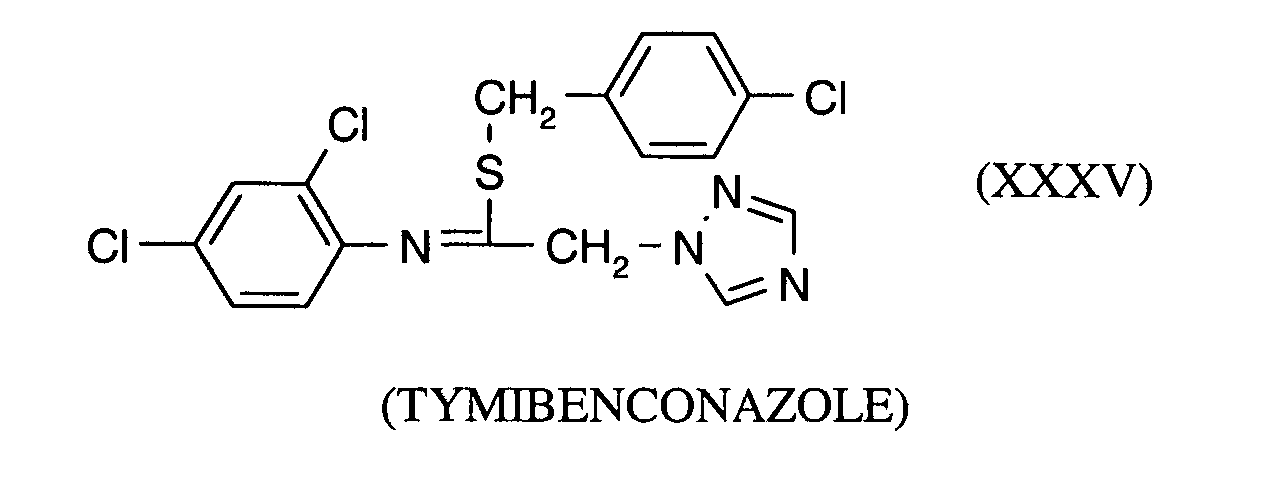
- AGKSTYPVMZODRV-QJOMJCCJSA-N Clc1ccc(CS/C(/C[n]2ncnc2)=N\c(c(Cl)c2)ccc2Cl)cc1 Chemical compound Clc1ccc(CS/C(/C[n]2ncnc2)=N\c(c(Cl)c2)ccc2Cl)cc1 AGKSTYPVMZODRV-QJOMJCCJSA-N 0.000 description 1
- OZSVBRVFXIOJSU-UHFFFAOYSA-N O=C(c(c(Cl)ccc1)c1Cl)NCc1ccc(C(F)(F)F)cc1 Chemical compound O=C(c(c(Cl)ccc1)c1Cl)NCc1ccc(C(F)(F)F)cc1 OZSVBRVFXIOJSU-UHFFFAOYSA-N 0.000 description 1
- YYZGDCNUUBYZPR-UHFFFAOYSA-N OC(c1ccccc1)(c(cc1)ccc1Cl)c(cccc1)c1Cl Chemical compound OC(c1ccccc1)(c(cc1)ccc1Cl)c(cccc1)c1Cl YYZGDCNUUBYZPR-UHFFFAOYSA-N 0.000 description 1
- ZSBRXYGARIQFIX-UHFFFAOYSA-N S=C(CS[N]SC1)NCCCNC1=S Chemical compound S=C(CS[N]SC1)NCCCNC1=S ZSBRXYGARIQFIX-UHFFFAOYSA-N 0.000 description 1
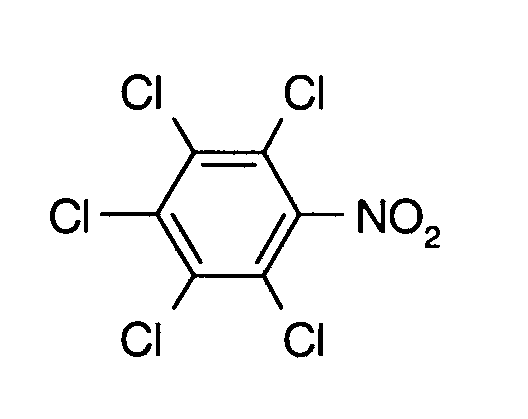
- LKPLKUMXSAEKID-UHFFFAOYSA-N [O-][N+](c(c(Cl)c(c(Cl)c1Cl)Cl)c1Cl)=O Chemical compound [O-][N+](c(c(Cl)c(c(Cl)c1Cl)Cl)c1Cl)=O LKPLKUMXSAEKID-UHFFFAOYSA-N 0.000 description 1
Classifications
-
- C—CHEMISTRY; METALLURGY
- C07—ORGANIC CHEMISTRY
- C07D—HETEROCYCLIC COMPOUNDS
- C07D277/00—Heterocyclic compounds containing 1,3-thiazole or hydrogenated 1,3-thiazole rings
- C07D277/02—Heterocyclic compounds containing 1,3-thiazole or hydrogenated 1,3-thiazole rings not condensed with other rings
- C07D277/20—Heterocyclic compounds containing 1,3-thiazole or hydrogenated 1,3-thiazole rings not condensed with other rings having two or three double bonds between ring members or between ring members and non-ring members
- C07D277/32—Heterocyclic compounds containing 1,3-thiazole or hydrogenated 1,3-thiazole rings not condensed with other rings having two or three double bonds between ring members or between ring members and non-ring members with hetero atoms or with carbon atoms having three bonds to hetero atoms with at the most one bond to halogen, e.g. ester or nitrile radicals, directly attached to ring carbon atoms
-
- A—HUMAN NECESSITIES
- A01—AGRICULTURE; FORESTRY; ANIMAL HUSBANDRY; HUNTING; TRAPPING; FISHING
- A01N—PRESERVATION OF BODIES OF HUMANS OR ANIMALS OR PLANTS OR PARTS THEREOF; BIOCIDES, e.g. AS DISINFECTANTS, AS PESTICIDES OR AS HERBICIDES; PEST REPELLANTS OR ATTRACTANTS; PLANT GROWTH REGULATORS
- A01N51/00—Biocides, pest repellants or attractants, or plant growth regulators containing organic compounds having the sequences of atoms O—N—S, X—O—S, N—N—S, O—N—N or O-halogen, regardless of the number of bonds each atom has and with no atom of these sequences forming part of a heterocyclic ring
-
- B—PERFORMING OPERATIONS; TRANSPORTING
- B27—WORKING OR PRESERVING WOOD OR SIMILAR MATERIAL; NAILING OR STAPLING MACHINES IN GENERAL
- B27K—PROCESSES, APPARATUS OR SELECTION OF SUBSTANCES FOR IMPREGNATING, STAINING, DYEING, BLEACHING OF WOOD OR SIMILAR MATERIALS, OR TREATING OF WOOD OR SIMILAR MATERIALS WITH PERMEANT LIQUIDS, NOT OTHERWISE PROVIDED FOR; CHEMICAL OR PHYSICAL TREATMENT OF CORK, CANE, REED, STRAW OR SIMILAR MATERIALS
- B27K3/00—Impregnating wood, e.g. impregnation pretreatment, for example puncturing; Wood impregnation aids not directly involved in the impregnation process
- B27K3/34—Organic impregnating agents
- B27K3/50—Mixtures of different organic impregnating agents
Definitions
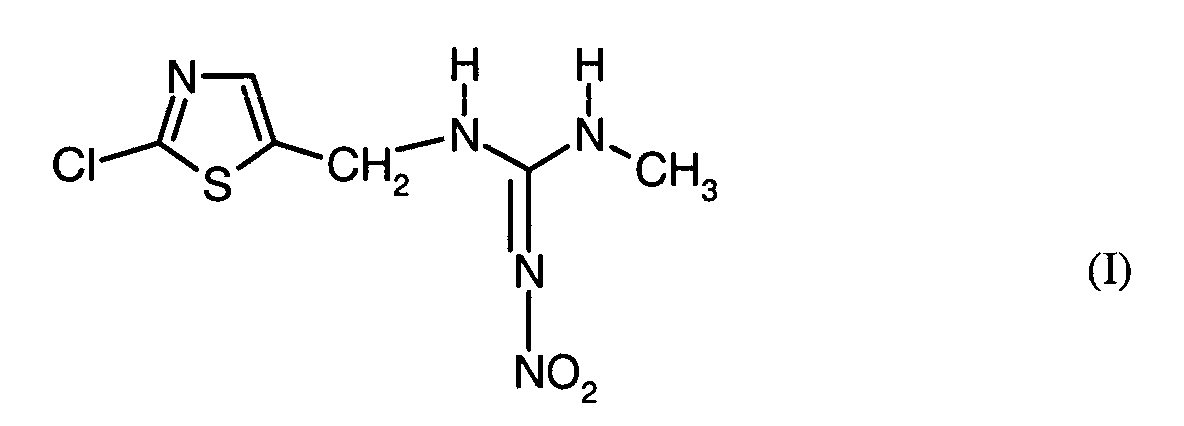
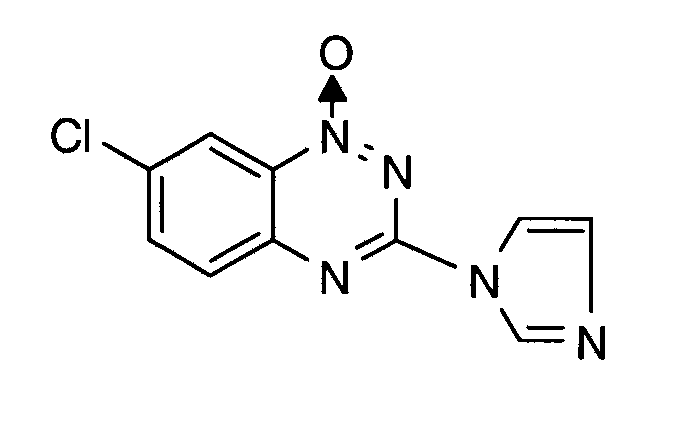
- the present invention relates to pesticides which comprise an active ingredient combination of the compound of the formula (I) containing fungicides.
- Fungicidal agents such as azole derivatives, aryl benzyl ethers, benzamides, morpholine compounds and other heterocycles are known (see K.H. Büchel "Plant protection and pest control", Pages 140 to 153, Georg Thieme-Verlag, Stuttgart 1977, EP-OS 0 040 345, DE-OS 2 324 010, DE-OS 2 201 063, EP-OS 0 112 284, EP-OS 0 304 758 and DD-PS 140 412).
- JP 0410 8704, WO 97/24032, JP 0503 9205, JP 0411 2805 and JP 0412 0007 Mixtures of the compound of formula (I) with other active substances, including certain Fungicides.
- nitroguanidine derivatives and certain azole derivatives influence each other so favorably in their effect that they are good Plant compatibility in an excellent way as a control agent against plant pests can be used.
- the present invention relates to agents against plant pests containing the compound of formula (I) in mixture with fungicidal active ingredients mentioned below.
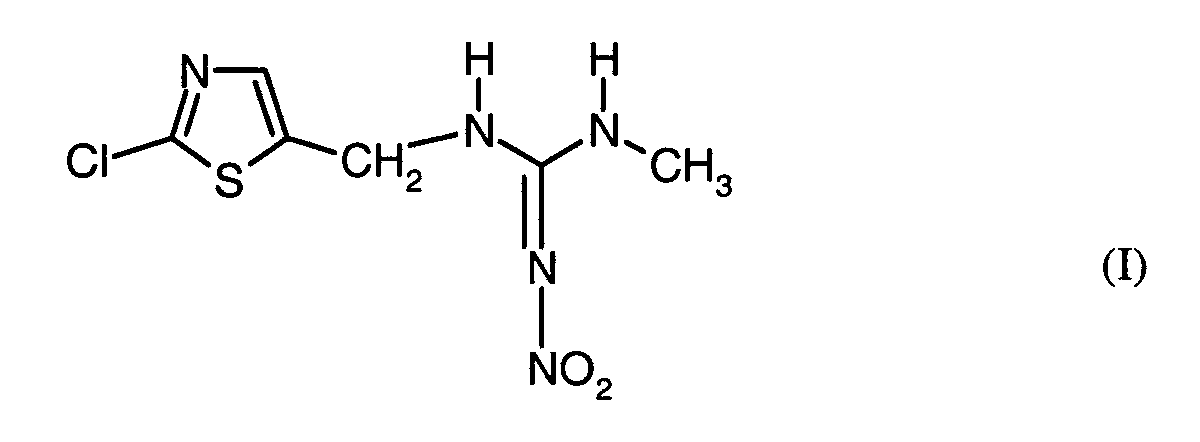
- the active ingredient of the formula (I) is known from EP-OS 0 375 907.
- the fungicidal agents are also known.
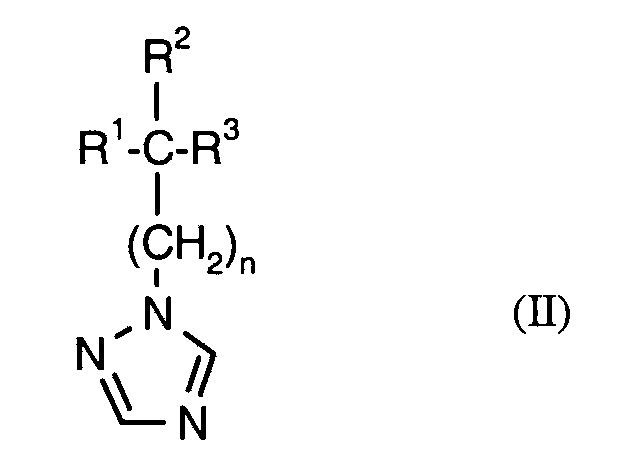
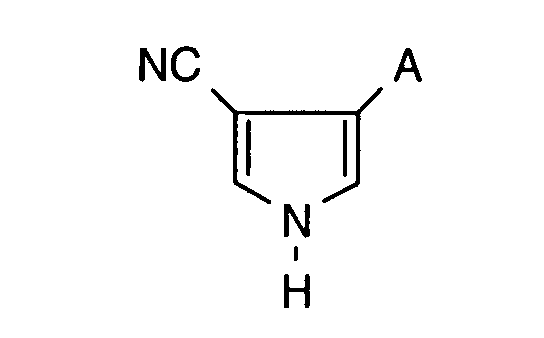
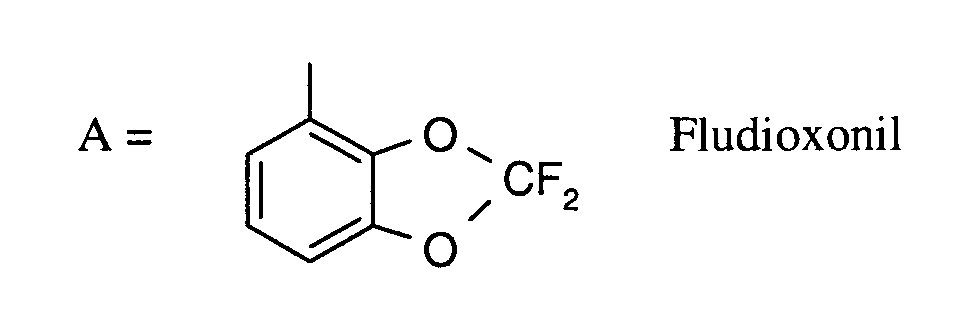
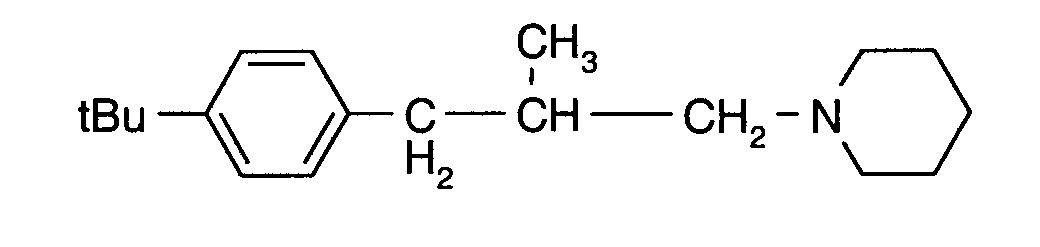
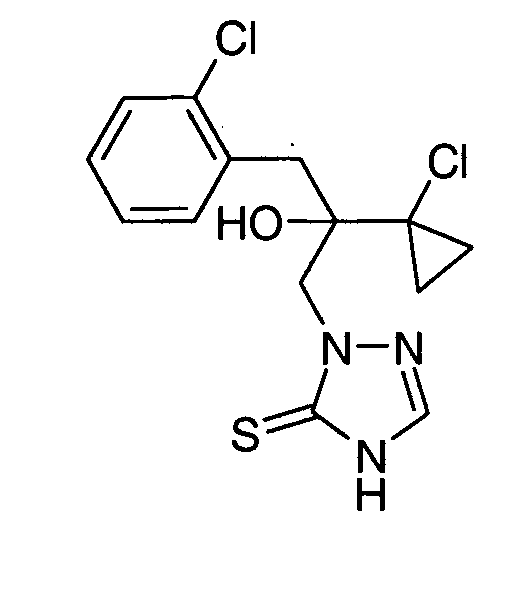
- the active compound combinations according to the invention contain, in addition to the active ingredient of the formula (I) at least one fungicidal active ingredient selected from the compounds of group (1). She In addition, other active ingredients and conventional auxiliaries and additives as well Contain diluent.
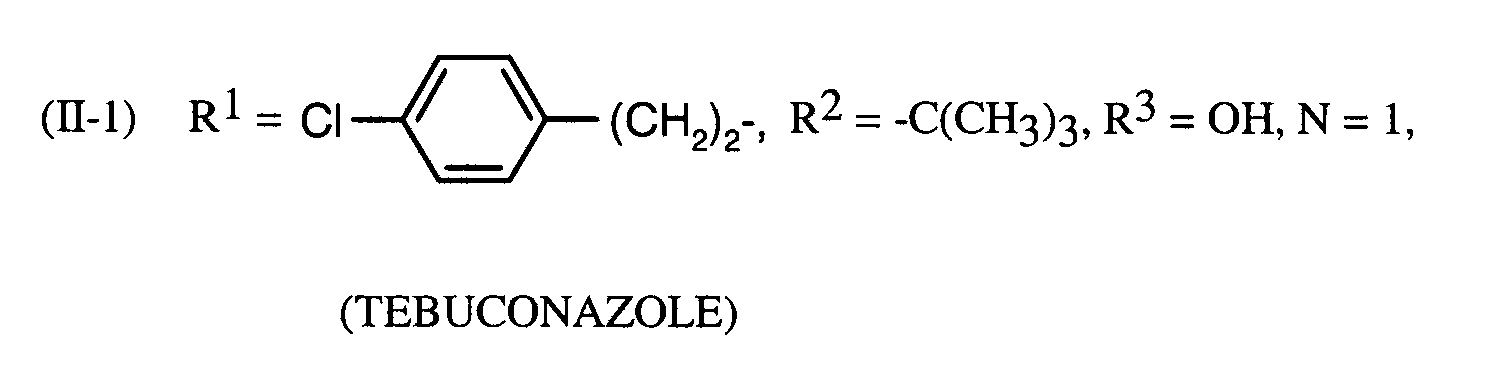
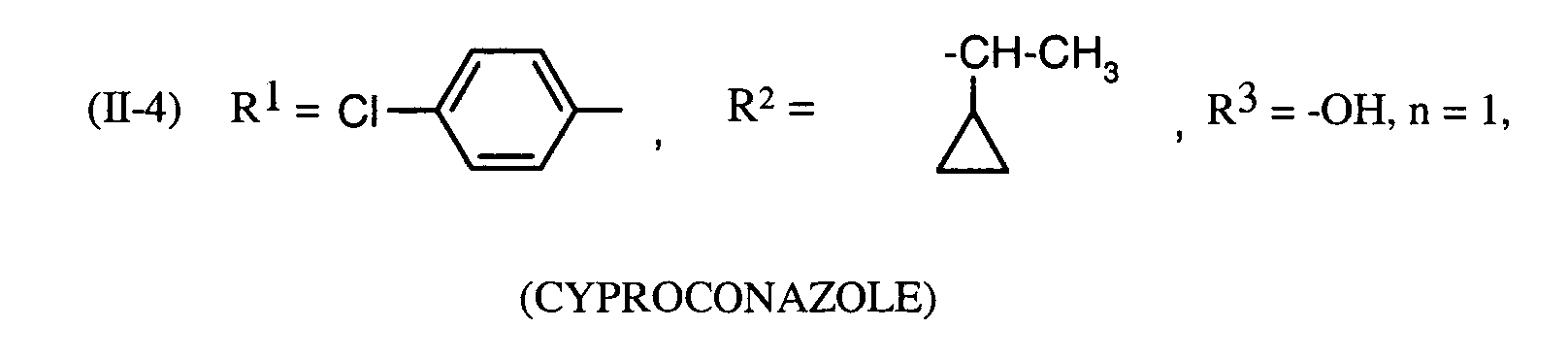
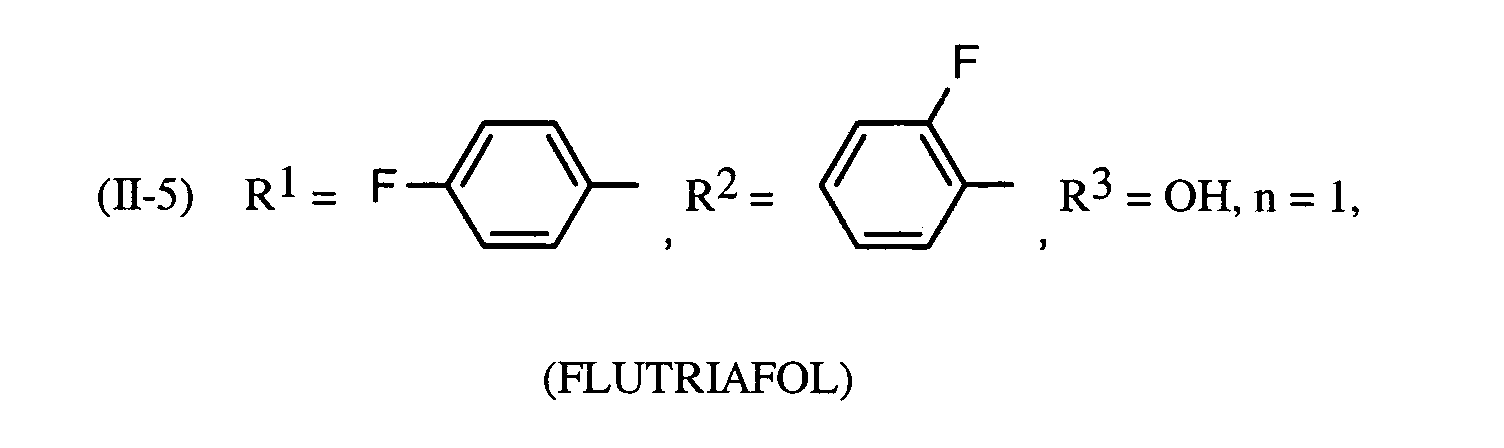
- Preferred fungicidal active substances in the compositions according to the invention are: Tebuconazole, triadimenol, cyproconazole.
- the active ingredients in the active compound combinations according to the invention are present in certain weight ratios, a clear synergistic effect of the mixtures is shown.
- the weight ratios of the active ingredients in the drug combinations can be varied within a relatively wide range. In general, 1 part by weight of active compound of the formula (I) 0.1 to 10 parts by weight, preferably 0.3 to 3 parts by weight of at least one fungicidal active substance from the group (1).
- the active compound combinations according to the invention have very good fungicidal properties. she can be used especially for controlling phytopathogenic fungi, such as Plasmodiophoromycetes, Oomycetes, Chytridiomycetes, Zygomycetes, Ascomycetes, Basidiomycetes, Deuteromycetes, etc. deploy.
- phytopathogenic fungi such as Plasmodiophoromycetes, Oomycetes, Chytridiomycetes, Zygomycetes, Ascomycetes, Basidiomycetes, Deuteromycetes, etc. deploy.
- the active compound combinations according to the invention are particularly suitable for controlling Cereal diseases such as Erysiphe, Cochliobolus, Septoria, Pyrenophora and Leptosphaeria, and against fungal attack on vegetables, wine and fruit, for example against Venturia or Podosphaera Apples, Uncinula on vines or Sphaeroteca on cucumbers.
- the good plant tolerance of the drug combinations in the fight against plant diseases necessary concentrations allows treatment of aboveground plant parts, of plant and seed, and of the soil.
- the active compound combinations according to the invention can be converted into the customary formulations such as solutions, emulsions, suspensions, powders, foams, pastes, granules, Aerosols, ultra-fine encapsulations in polymeric materials and in seed coating materials, as well as ULV formulations.
- formulations are prepared in a known manner, e.g. by mixing the active ingredients with diluents, that is, liquid solvents, liquefied gases under pressure and / or solid carriers, optionally with the use of surfactants, ie emulsifiers and / or dispersants and / or foam-forming agents.
- diluents that is, liquid solvents, liquefied gases under pressure and / or solid carriers
- surfactants ie emulsifiers and / or dispersants and / or foam-forming agents.
- water e.g. also organic solvents as auxiliary solvents be used.
- Aromatics such as xylene, toluene or alkylnaphthalenes, chlorinated aromatic or chlorinated aliphatic Hydrocarbons, such as chlorobenzenes, chloroethylenes or methylene chloride, aliphatic Hydrocarbons, such as cyclohexane or paraffins, e.g. Petroleum fractions, alcohols, such as butanol or glycol and their ethers and esters, ketones, such as acetone, methyl ethyl ketone, methyl isobutyl ketone or cyclohexanone, strongly polar solvents, such as dimethylformamide and dimethyl sulfoxide, as well as water.
- Aromatics such as xylene, toluene or alkylnaphthalenes, chlorinated aromatic or chlorinated aliphatic Hydrocarbons, such as chlorobenzenes, chloroethylenes or methylene chloride, aliphatic Hydrocarbons, such as cyclo
- liquids which are gaseous at normal temperature and under normal pressure are, e.g. Aerosol propellants, such as halogenated hydrocarbons, as well as butane, propane, nitrogen and Carbon dioxide.
- Suitable solid carriers are: e.g. natural minerals, such as Kaolins, clays, talc, chalk, quartz, attapulgite, montmorillonite or diatomaceous earth and ground synthetic minerals, such as fumed silica, alumina and silicates.
- solid Carriers for granules are suitable: e.g.
- emulsifying and / or foam-producing Means are suitable: e.g. nonionic and anionic emulsifiers, such as polyoxyethylene fatty acid esters, Polyoxyethylene fatty alcohol ethers, e.g. Alkylaryl polyglycol ethers, alkylsulfonates, Alkyl sulfates, aryl sulfonates and protein hydrolysates.
- Suitable dispersants are: e.g. Lignin-sulphite liquors and methylcellulose.
- adhesives such as carboxymethylcellulose, natural and synthetic powdery, granular or latex-shaped polymers are used, such as gum arabic, Polyvinyl alcohol, polyvinyl acetate, as well as natural phospholipids such as cephalins and lecithins, and synthetic phospholipids.
- Other additives may be mineral and vegetable oils.
- Dyes such as inorganic pigments, e.g. Iron oxide, titanium oxide, ferrocyan blue and organic dyes such as alizarin, azo and metal phthalocyanine dyes and trace nutrients, how salts of iron, manganese, boron, copper, cobalt, molybdenum and zinc are used.
- inorganic pigments e.g. Iron oxide, titanium oxide, ferrocyan blue and organic dyes such as alizarin, azo and metal phthalocyanine dyes and trace nutrients, how salts of iron, manganese, boron, copper, cobalt, molybdenum and zinc are used.
- the formulations generally contain between 0.1 and 95% by weight of active ingredient, preferably between 0.5 and 90%.
- the active compound combinations according to the invention can be mixed with the formulations in the formulations other known active substances, such as fungicides, insecticides, acaricides and herbicides, as well as in mixtures with fertilizers or plant growth regulators.
- the active ingredient combinations can be used as such, in the form of their formulations or the resulting prepared application forms, such as ready-to-use solutions, emulsifiable concentrates, emulsions, Suspensions, wettable powders, soluble powders and granules.
- the application is done in the usual way, e.g. by casting, spraying, spraying, Scattering, spreading, dry pickling, wet pickling, wet pickling, slurry pickling or Encrusting.
- the drug concentrations in the forms of application be varied in a wider range. They are generally between 1 and 0.0001% by weight, preferably between 0.5 and 0.001%.
- amounts of active ingredient are from 0.001 to 50 g per kilogram Seed, preferably 0.01 to 10 g needed.
- drug concentrations are from 0.00001 to 0.1% by weight, preferably from 0.0001 to 0.02 wt%, required at the site of action.
- the active compound combinations according to the invention have a high insecticidal activity Show effect against insects that destroy technical materials.
- insects By way of example and preferably without limiting however, the following insects are mentioned:
- Kalotermes flavicollis Cryptotermes brevis, Heterotermes indicola, Reticulitermes flavipes, Reticulitermes santonensis, Reticulitermes lucifugus, Mastotermes darwiniensis, Zootermopsis nevadensis, Coptotermes formosanus.
- Solvent or solvent mixture and / or a polar organic-chemical solvent or solvent mixture and / or water and optionally an emulsifier and / or wetting agent are optionally used.
- organic-chemical solvents are preferably oily or oily solvents with an evaporation number above 35 and a flash point above 30 ° C, preferably above 45 ° C, used.
- water-insoluble, oily and oily solvents appropriate mineral oils or their aromatic fractions or mineral oil-containing solvent mixtures, preferably white spirit, petroleum and / or alkylbenzene used.
- mineral oils with a boiling range of 170 to 220 ° C, white spirit with a Boiling range of 170 to 220 ° C, spindle oil with a boiling range of 250 to 350 ° C, petroleum or aromatics boiling range of 160 to 280 ° C, turpentine oil and the like are used.
- the organic low volatility oily or oily solvents with an evaporation number above 35 and a flash point above 30 ° C, preferably above 45 ° C, can partially through be replaced by light or medium volatile organic chemical solvents, with the proviso that the solvent mixture also has an evaporation number above 35 and a flash point above 30 ° C, preferably above 45 ° C, and that the insecticide-fungicide mixture in this Solvent mixture is soluble or emulsifiable.
- a part of the organic chemical solvent or solvent mixture by an aliphatic polar organic chemical solvent or solvent mixture replaced.
- hydroxyl and / or ester and / or Ether group-containing aliphatic organic chemical solvents such as Glycol ethers, esters or the like.
- organic-chemical binders are in the context of the present invention, the se known water-dilutable and / or in the organic chemical solvents used soluble or dispersible or emulsifiable synthetic resins and / or binding drying oils, in particular Binder consisting of or containing an acrylate resin, a vinyl resin, e.g. polyvinyl acetate, Polyester resin, polycondensation or polyaddition resin, polyurethane resin, alkyd resin or modified alkyd resin, phenolic resin, hydrocarbon resin such as indene coumarone resin, silicone resin, Bristle tails like Lepisma saccharina.
- Binder consisting of or containing an acrylate resin, a vinyl resin, e.g. polyvinyl acetate, Polyester resin, polycondensation or polyaddition resin, polyurethane resin, alkyd resin or modified alkyd resin, phenolic resin, hydrocarbon resin such as indene coumarone resin, silicone resin, Brist
- the material to be protected from insect attack is Wood and woodwork products.
- wood and woodworking products which can be protected by the composition according to the invention or mixtures containing it, is to be understood by way of example: Timber, wooden beams, railway sleepers, bridge parts, boat jetties, wooden vehicles, crates, pallets, containers, telephone poles, wooden cladding, wooden windows and doors, plywood, chipboard, carpentry or wood products, which are generally used in home construction or joinery.
- the active compound combinations can be used as such, in the form of concentrates or generally customary Formulations such as powders, granules, solutions, suspensions, emulsions or pastes applied become.
- the formulations mentioned can be prepared in a manner known per se, e.g. by Mixing the active ingredients with at least one solvent or diluent, emulsifier, Dispersing and / or binding or fixing agent, water repellent, optionally siccatives and UV stabilizers and optionally dyes and pigments and other processing aids.
- the insecticides or concentrates used to protect wood and wood-based materials contain the active compound according to the invention in a concentration of 0.0001 to 95 wt .-%, in particular 0.001 to 60 wt .-%.
- the amount of agents or concentrates used depends on the type and occurrence of Insects and dependent on the medium.
- the optimal amount can be applied each determined by test series. In general, however, it is sufficient 0.0001 to 20 wt .-%, preferably 0.001 to 10 wt .-%, of the active ingredient, based on the protected Material to use.
- the solvent and / or diluent used is an organic-chemical solvent or Solvent mixture and / or an oily or oily heavy organic-chemical drying vegetable and / or drying oils and / or physically drying binders the base of a natural and / or synthetic resin used.
- the synthetic resin used as a binder may be in the form of an emulsion, dispersion or solution, be used. Bitumen or bituminous substances can also be used as binders 10% by weight.
- dyes, pigments, water-repellent Agents, odor correctors and inhibitors or corrosion inhibitors and the like are used.
- At least one alkyd resin is preferred as organic-chemical binder or modified alkyd resin and / or a drying vegetable oil in the middle or in the concentrate contain.
- the mentioned binder may be wholly or partially by a fixative (mixture) or a Plasticizer (mixture) to be replaced. These additives are intended to volatilize the active ingredients and prevent crystallization or precipitation. Preferably, they replace 0.01 to 30% of the Binder (based on 100% of the binder used).
- the plasticizers come from the chemical classes of phthalic acid esters such as dibutyl, dioctyl or benzyl butyl phthalate, phosphoric acid esters such as tributyl phosphate, adipic acid esters such as di (2-ethylhexyl) adipate, Stearates such as butyl stearate or amyl stearate, oleates such as butyl oleate, glycerol ethers or higher molecular weight glycol ethers, glycerol esters and p-toluenesulfonic acid esters.
- phthalic acid esters such as dibutyl, dioctyl or benzyl butyl phthalate
- phosphoric acid esters such as tributyl phosphate
- adipic acid esters such as di (2-ethylhexyl) adipate
- Stearates such as butyl ste
- Fixing agents are chemically based on polyvinyl alkyl ethers such as e.g. Polyvinyl methyl ether or Ketones such as benzophenone, ethylene benzophenone.
- Particularly suitable solvents or diluents are also water, optionally in Mixture with one or more of the abovementioned organochemical solvents or diluents, Emulsifiers and dispersants.
- wood protection is provided by large scale impregnation methods, e.g. Vacuum, Double vacuum or printing process achieved.
- the ready-to-use agents may optionally contain further insecticides.
- Very particularly preferred admixing partners are insecticides, such as chlorpyriphos, phoxim, Silafluofin, alphamethrin, cyfluthrin, cypermethrin, deltamethrin, permethrin, imidacloprid, NI-25, Called flufenoxuron, hexaflumuron and triflumuron.
- insecticides such as chlorpyriphos, phoxim, Silafluofin, alphamethrin, cyfluthrin, cypermethrin, deltamethrin, permethrin, imidacloprid, NI-25, Called flufenoxuron, hexaflumuron and triflumuron.
- fungicidal active ingredients also used are given in the examples.
- a suitable preparation of active compound 1 part by weight of a Active ingredient or a combination of active ingredients with the indicated amounts of solvent and Emulsifier and dilute the concentrate with water to the desired concentration.
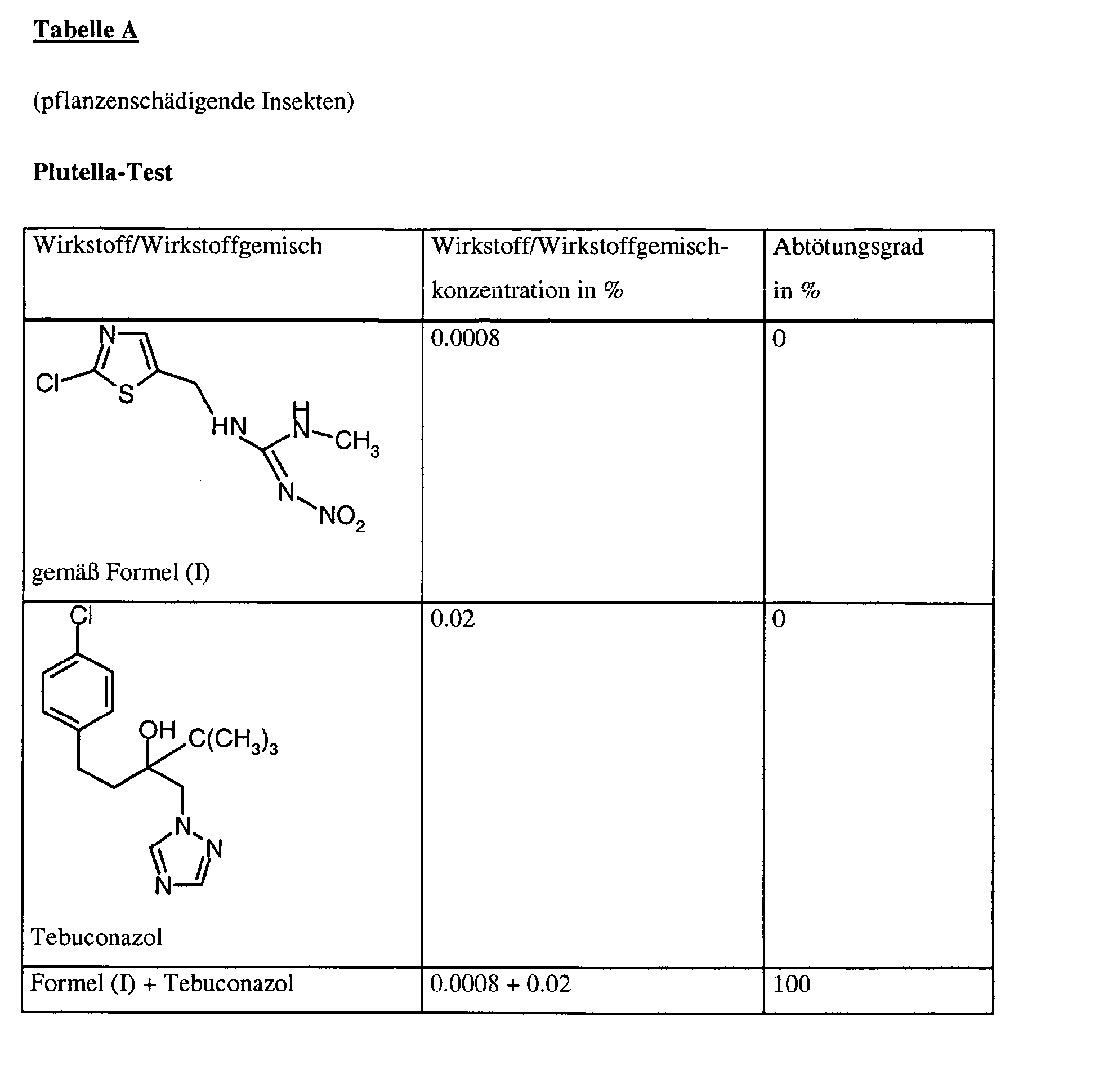
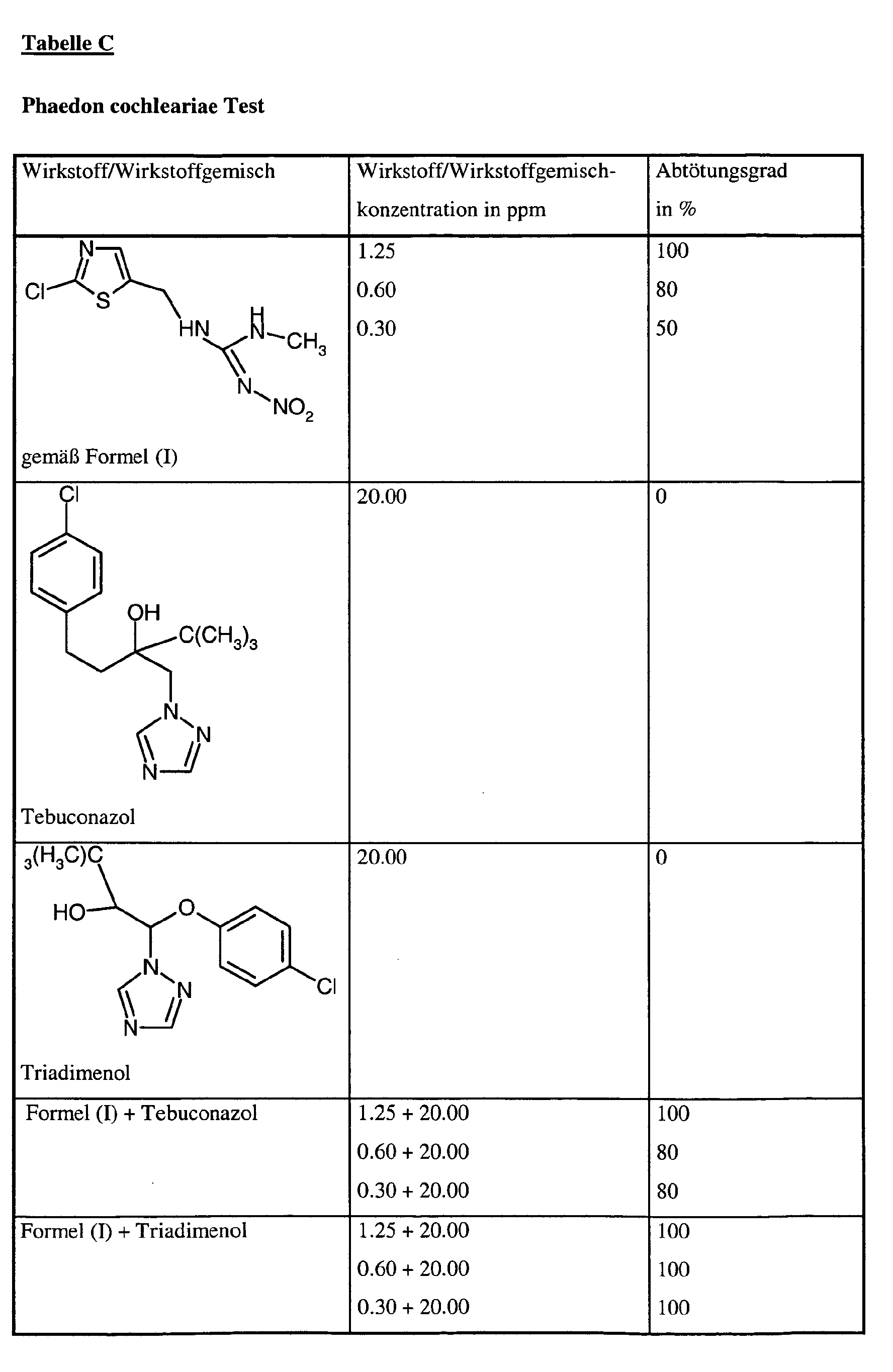
- Cabbage leaves (Brassica oleracea) are dipped into the preparation of the active ingredient treated with caterpillars of the cockroach (Plutella xylostella) occupied as long as the leaves are still wet.
- the kill is determined in%. 100% means that all Caterpillars were killed; 0% means that no caterpillars have been killed.
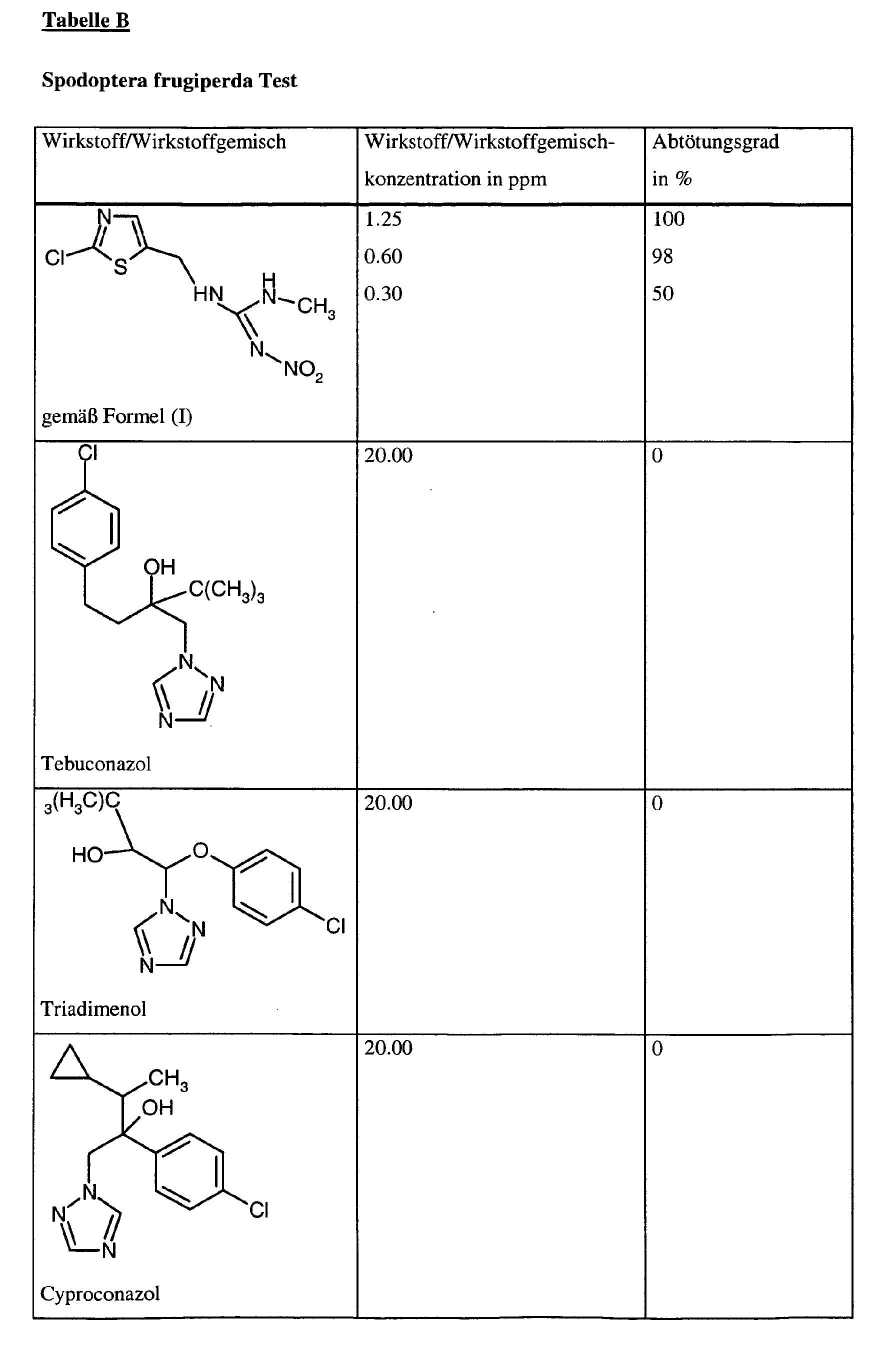
- the preparation of active compound is intimately mixed with soil. It plays the concentration of Active ingredient in the preparation is virtually irrelevant, the only decisive factor is the active substance or Weight of active ingredient mixture per unit volume of soil, which is given in ppm (mg / l) becomes.
- the preparation of active compound is intimately mixed with soil. It plays the concentration of Active ingredient in the preparation is virtually irrelevant, the only decisive factor is the active substance or Weight of active ingredient mixture per unit volume of soil, which is given in ppm (mg / l) becomes.
- the active substance or the drug combination can be absorbed by the plant roots from the soil and transported to the leaves.
- the leaves are filled with the above test animals. After another 3 Days, the kill rate is determined in%. 100% means that all test insects are killed were; 0% means that just as many insects live as in the untreated control.
- the combination is effective overadditive, i. there is a synergistic effect.
- the actual observed efficiency be greater than the value calculated from the above formula for the expected efficiency (E).
- Botrytis test (bean) / protective
- the application of the active ingredients is carried out as a dry dressing. They are prepared by Stretching the respective active ingredient with rock flour to a finely powdered mixture, the ensures a uniform distribution on the seed surface.
- the wheat is sown with 2 x 100 grain 1 cm deep in a standard soil and cultivated in the Greenhouse at a temperature of about 18 ° C and a relative humidity of about 95% in seed boxes exposed to light for 15 hours daily.
- 0% means an efficiency which corresponds to that of the control, while an efficiency of 100% means that no infestation is observed.
- active compound 1 part by weight of active compound is mixed or drug combination with the indicated amounts of solvent and emulsifier and Dilute the concentrate with water to the desired concentration or dilute one commercial formulation of active ingredient or drug combination with water on the desired concentration.
- the plants are then grown in a greenhouse at a temperature of about 20 ° C and a Relative humidity of 80% set up to favor the development of rust pustules.
Landscapes
- Chemical & Material Sciences (AREA)
- Organic Chemistry (AREA)
- Life Sciences & Earth Sciences (AREA)
- Dentistry (AREA)
- Wood Science & Technology (AREA)
- Plant Pathology (AREA)
- Health & Medical Sciences (AREA)
- Engineering & Computer Science (AREA)
- Agronomy & Crop Science (AREA)
- General Health & Medical Sciences (AREA)
- Pest Control & Pesticides (AREA)
- Zoology (AREA)
- Environmental Sciences (AREA)
- Agricultural Chemicals And Associated Chemicals (AREA)
- Plural Heterocyclic Compounds (AREA)
- Nitrogen And Oxygen Or Sulfur-Condensed Heterocyclic Ring Systems (AREA)
- Heterocyclic Carbon Compounds Containing A Hetero Ring Having Nitrogen And Oxygen As The Only Ring Hetero Atoms (AREA)
- Organic Low-Molecular-Weight Compounds And Preparation Thereof (AREA)
Abstract
Description

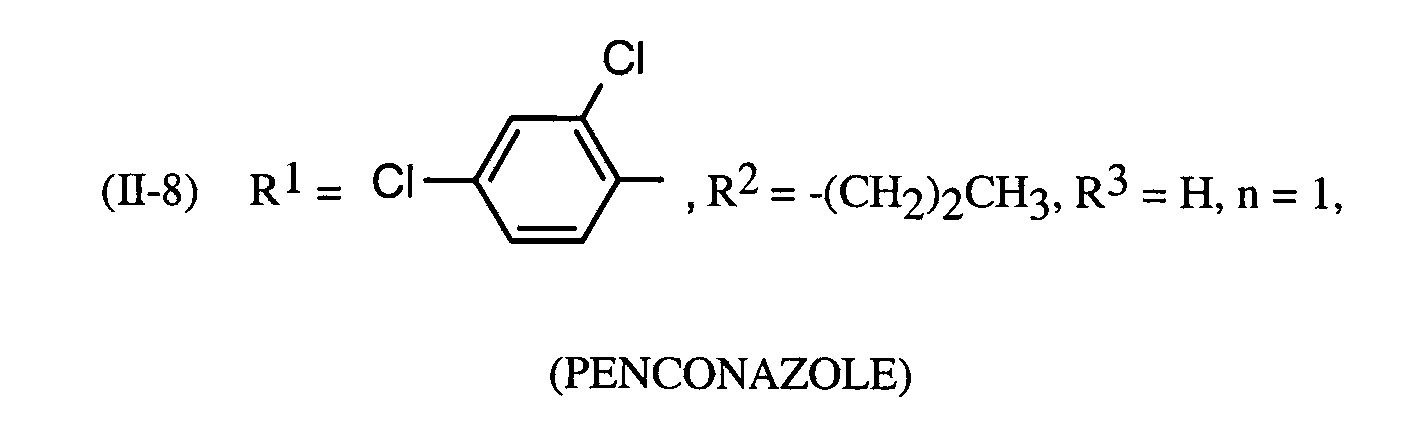
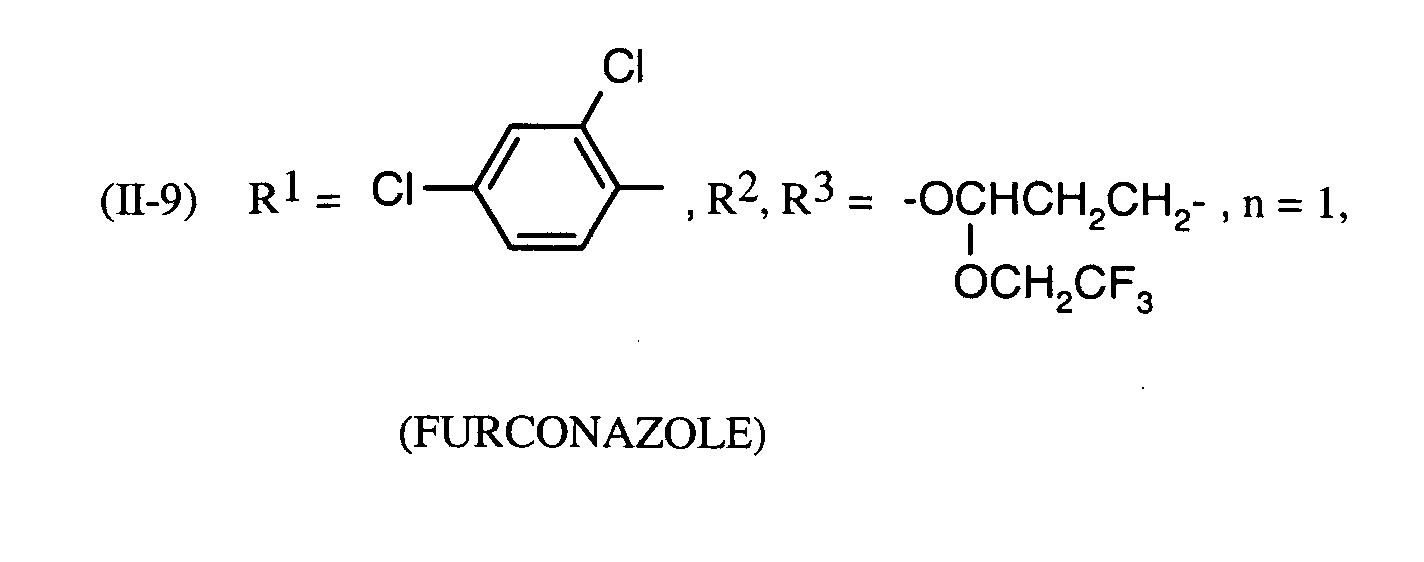
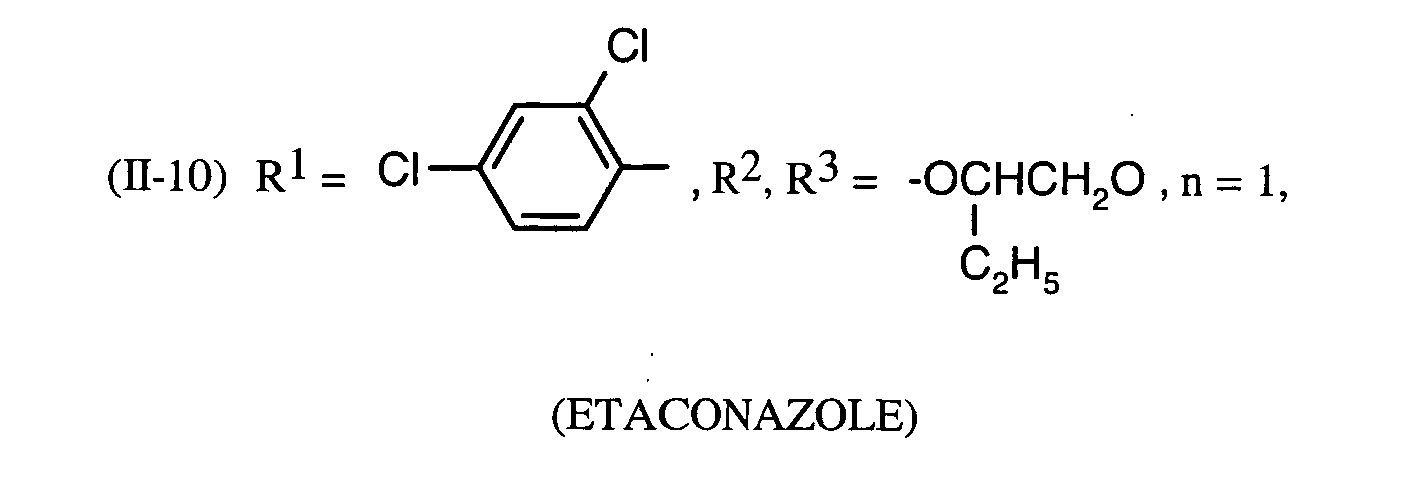
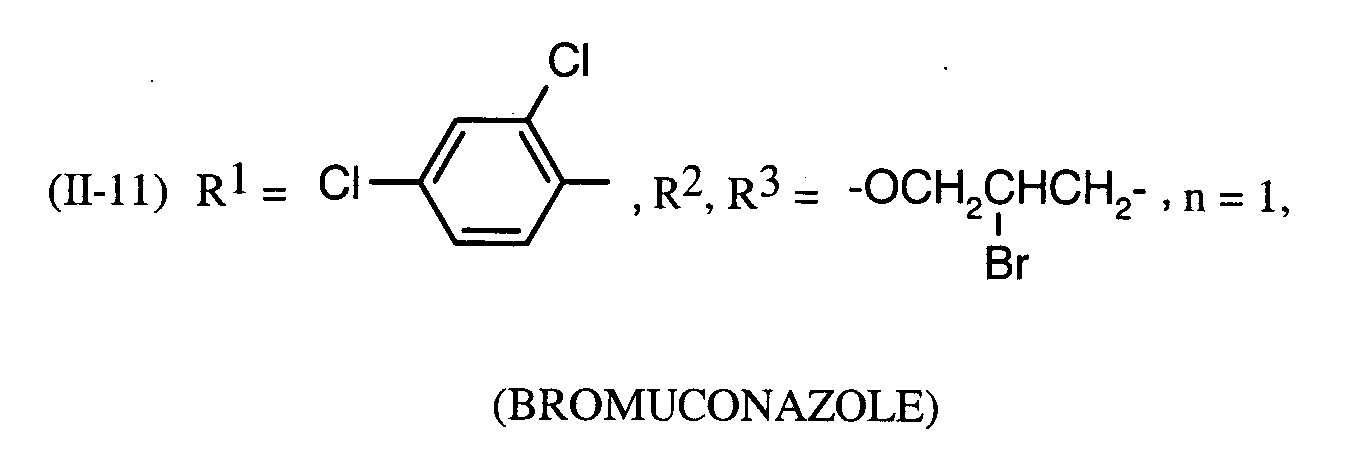

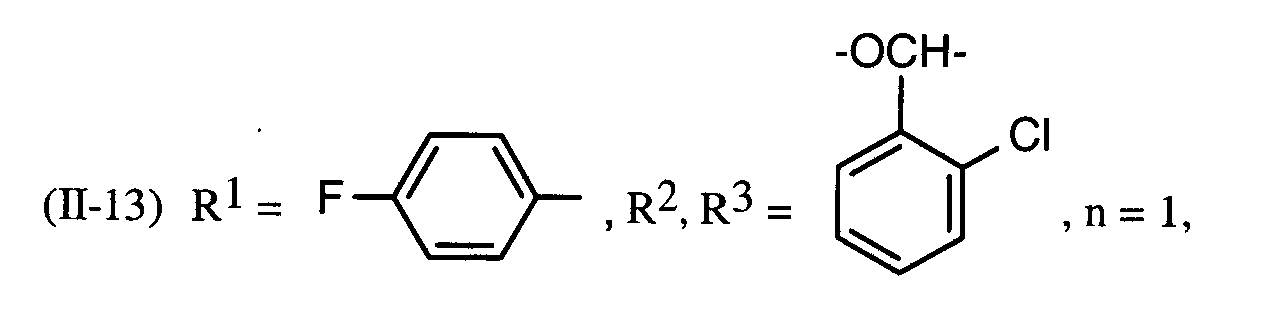
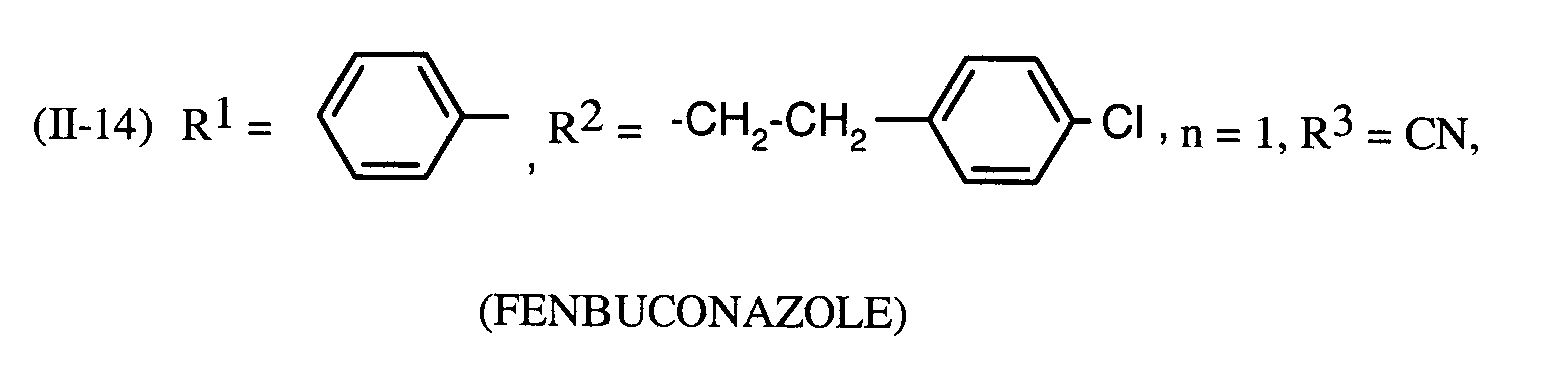
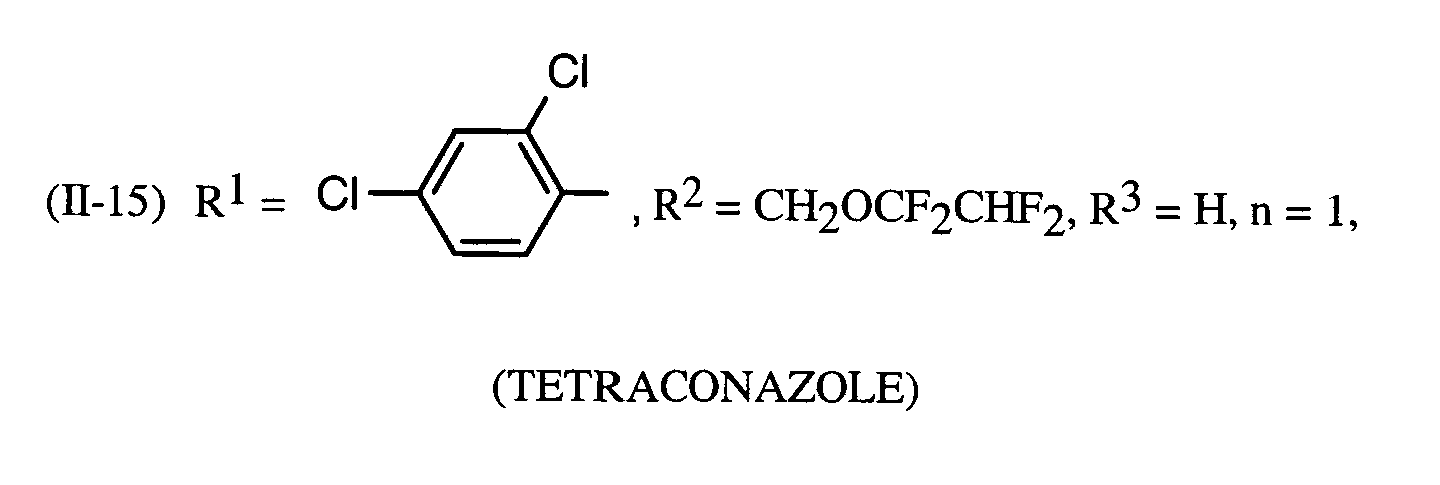

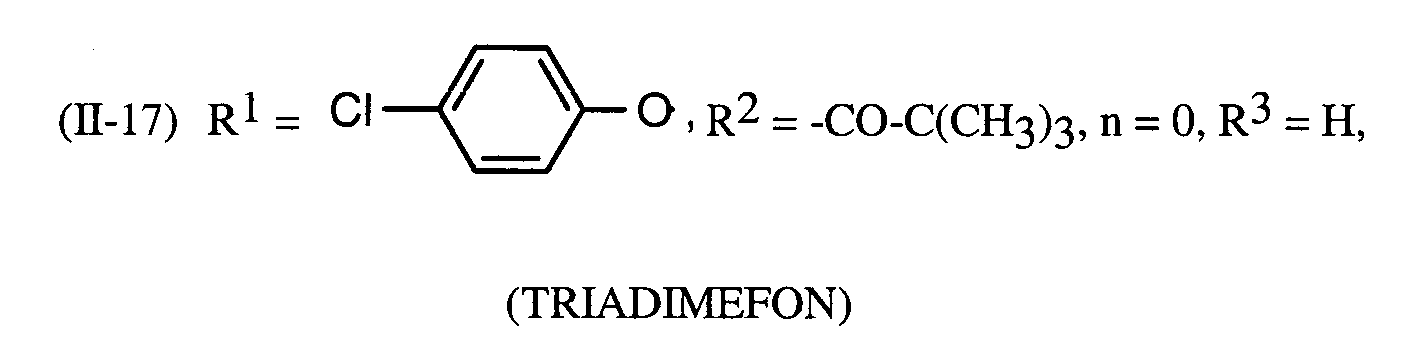

(TRIDEMORPH)
(ALDIMORPH)




(PYRIMETHANIL)
(MEPANIPYRIM)

(DICHLORFLUANID)
(TOLYLFLUANID)
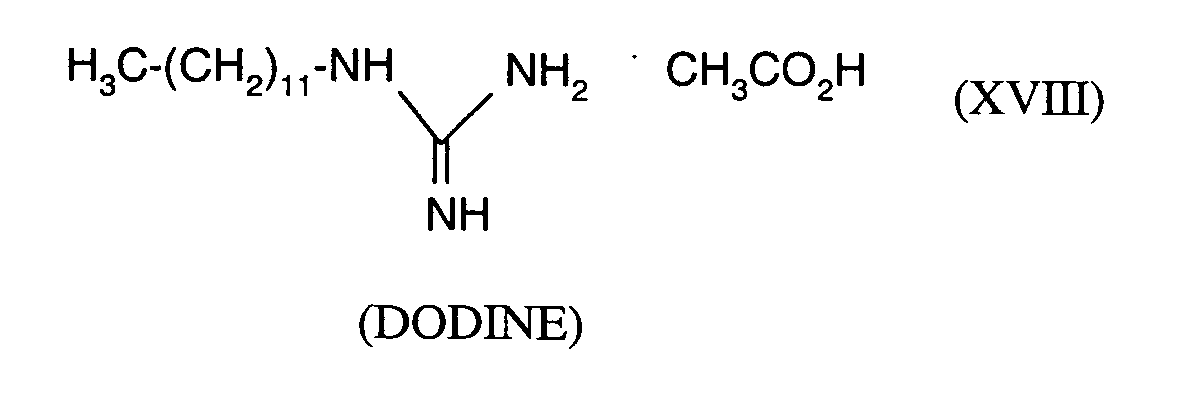

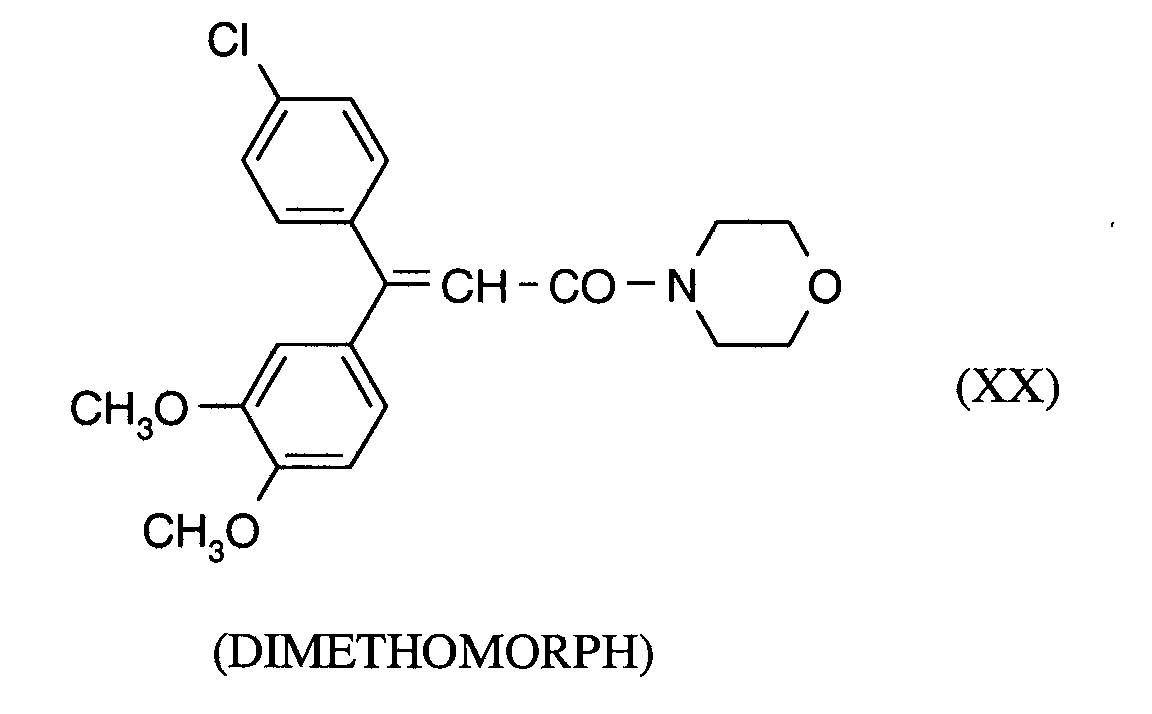
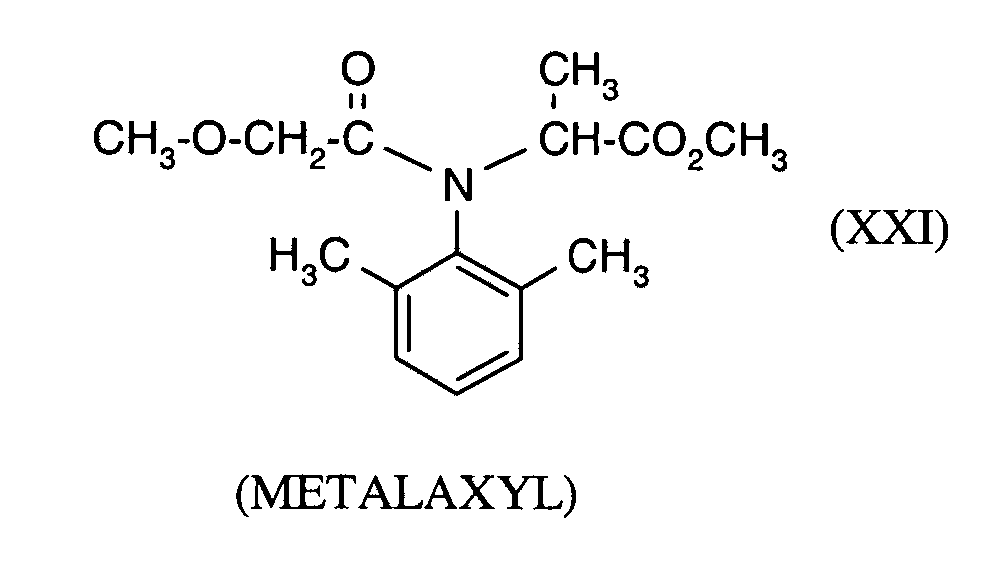

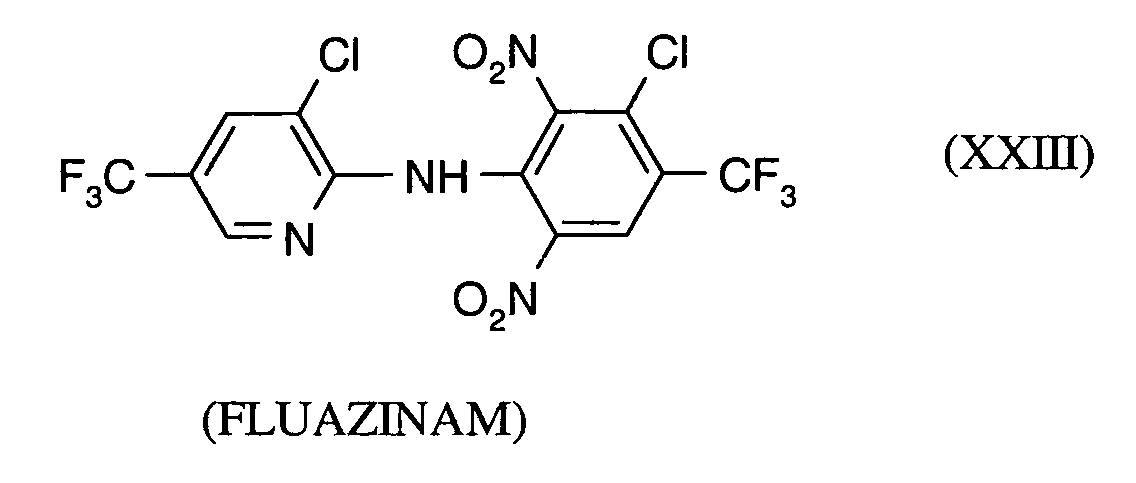



(ZINEB)
(MANEB)
(Mancozeb)



R15 und R16 unabhängig voneinander für Wasserstoff, Halogen, Methyl oder Phenyl stehen und
R17 für Wasserstoff oder Methyl steht,





0,1 bis 10 Gewichtsteile, vorzugsweise
0,3 bis 3 Gewichtsteile an mindestens einem fungiziden Wirkstoff aus der Gruppe (1).
Bauholz, Holzbalken, Eisenbahnschwellen, Brückenteile, Bootsstege, Holzfahrzeuge, Kisten, Paletten, Container, Telefonmasten, Holzverkleidungen, Holzfenster und -türen, Sperrholz, Spanplatten, Tischlerarbeiten oder Holzprodukte, die ganz allgemein beim Hausbau oder in der Bautischlerei Verwendung finden.
- Emulgator:
- 1 Gewichtsteil Alkyarylpolyglykolether
- Testinsekt:
- Spodoptera frugiperda
- Lösungsmittel:
- 4 Gewichtsteile Aceton
- Emulgator:
- 1 Gewichtsteil Alkylarylpolyglykolether

- Testinsekt:
- Phaedon cochleariea-Larven
- Lösungsmittel:
- 4 Gewichtsteile Aceton
- Emulgator:
- 1 Gewichtsteil Alkylarylpolyglykolether
- X
- den Wirkungsgrad, ausgedrückt in % der unbehandelten Kontrolle, beim Einsatz des Wirkstoffes A in einer Aufwandmenge von m g/ha,
- Y
- den Wirkungsgrad, ausgedrückt in % der unbehandelten Kontrolle, beim Einsatz des Wirkstoffes B in einer Aufwandmenge von n g/ha,
- E
- den Wirkungsgrad, ausgedrückt in % der unbehandelten Kontrolle, beim Einsatz der Wirkstoffe A und B in Aufwandmengen von m und n g/ha bedeutet,
- Lösungsmittel:
- 47 Gewichtsteile Aceton
- Emulgator:
- 3 Gewichtsteile Alkylarylpolyglykolether

- Lösungsmittel:
- 47 Gewichtsteile Aceton
- Emulgator:
- 3 Gewichtsteile Alkylarylpolyglkyolether
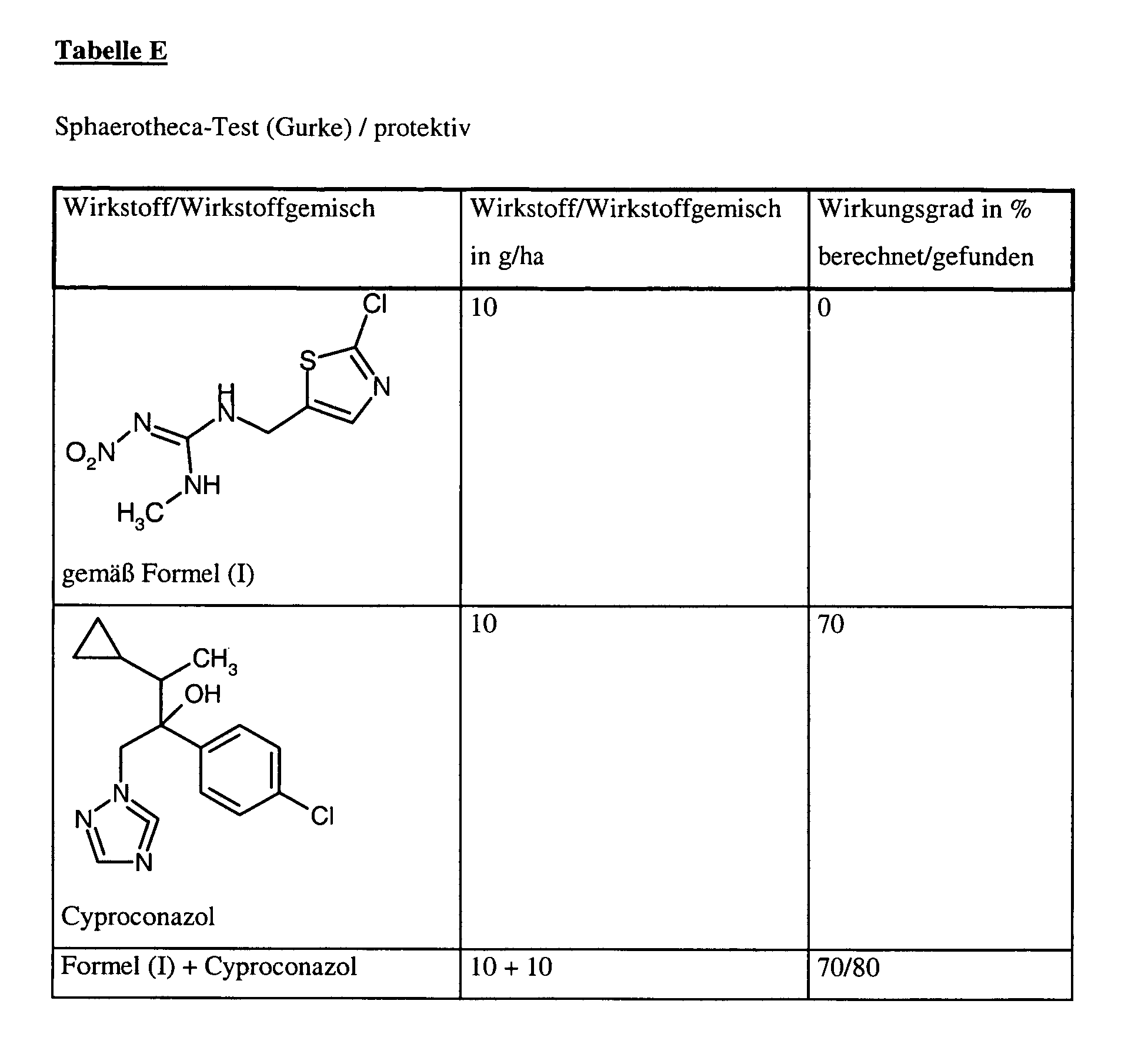
- Lösungsmittel:
- 47 Gewichtsteile Aceton
- Emulgator:
- 3 Gewichtsteile Alkylarylpolyglykolether

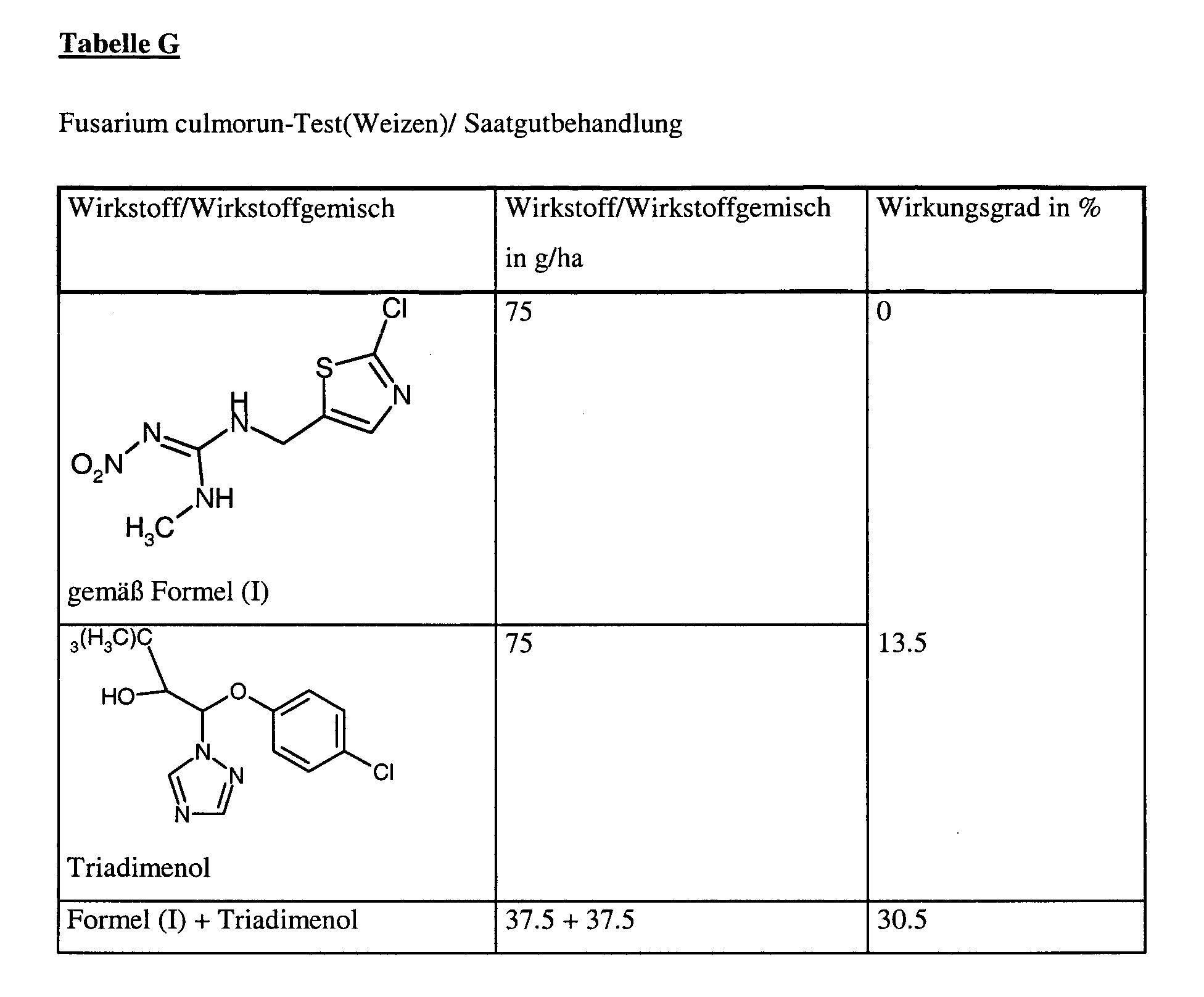
- Lösungsmittel:
- 25 Gewichtsteile N,N-Dimethylacetamid
- Emulgator:
- 0,6 Gewichtsteile Alkylarylpolyglykolether
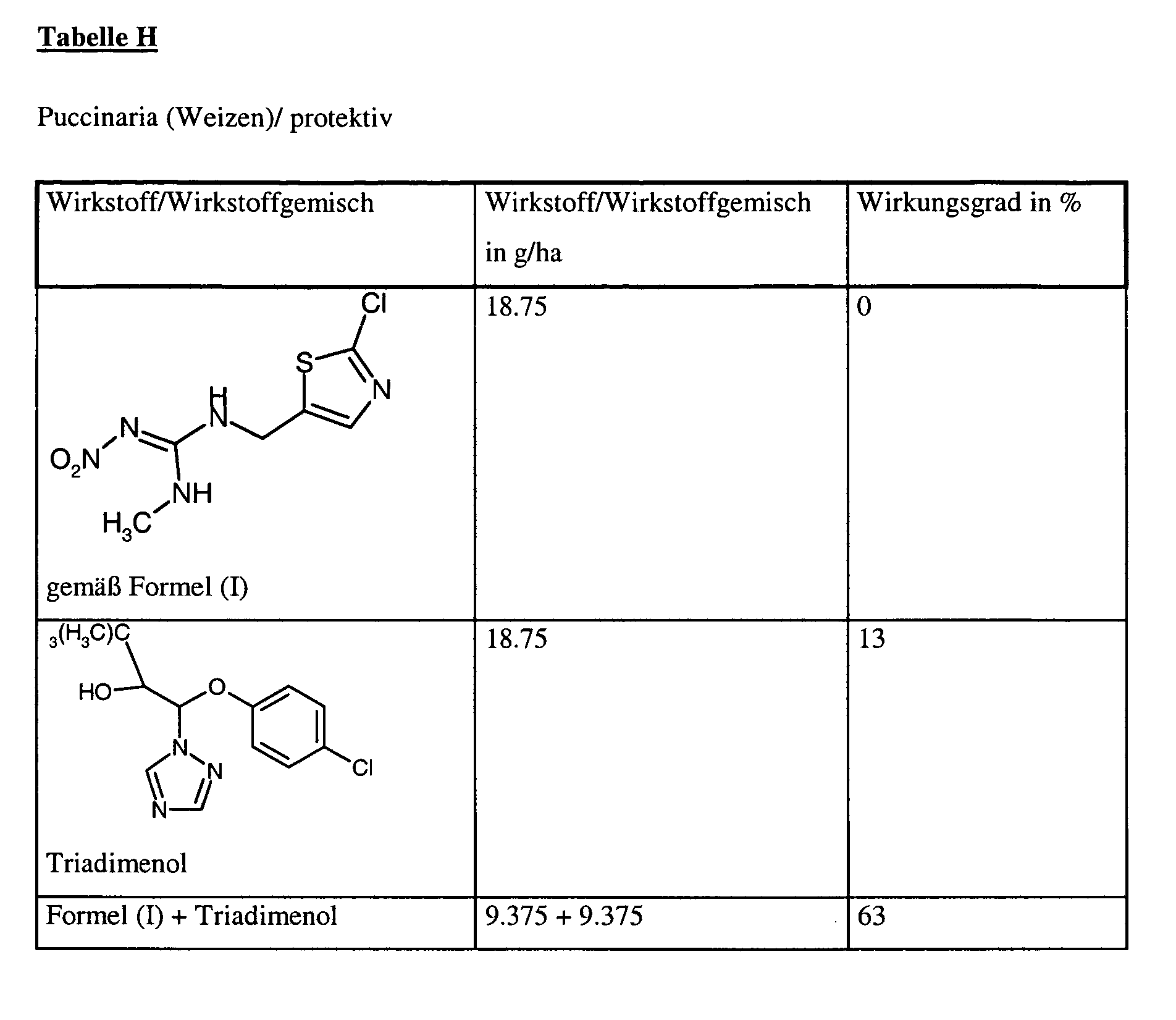
Claims (5)
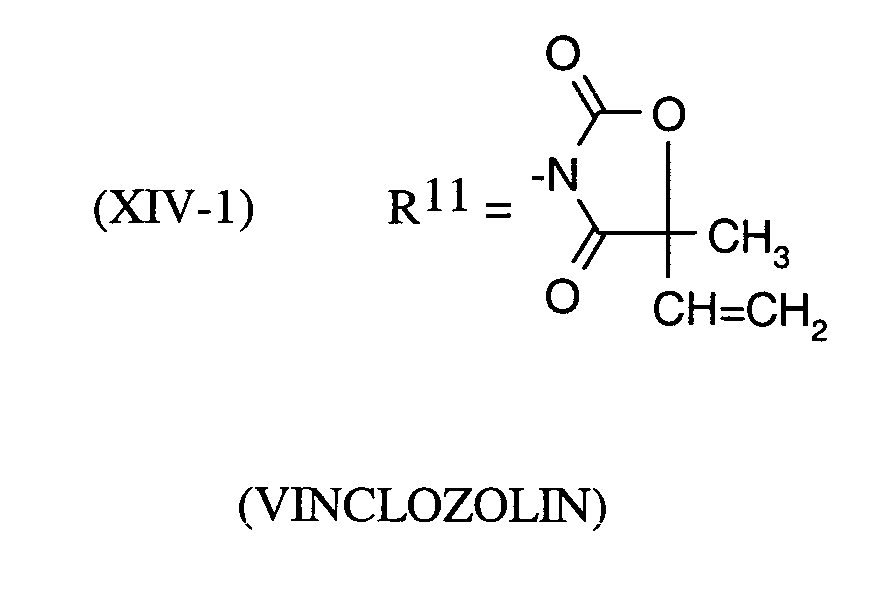
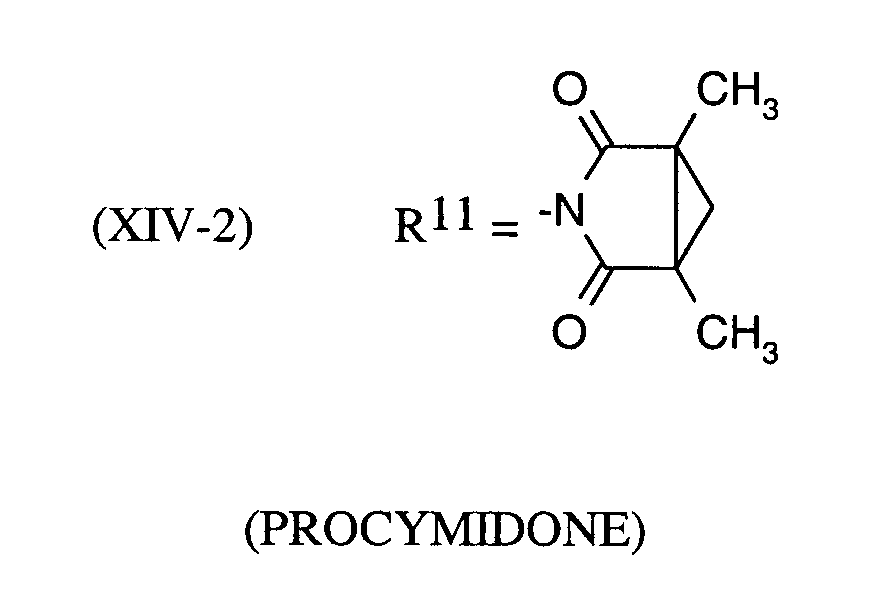
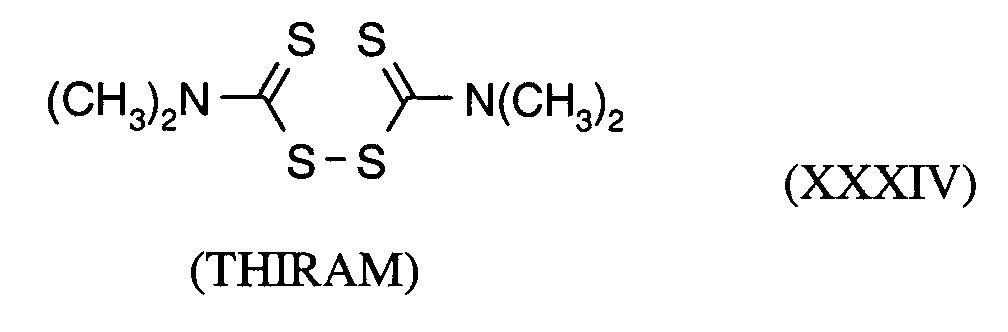
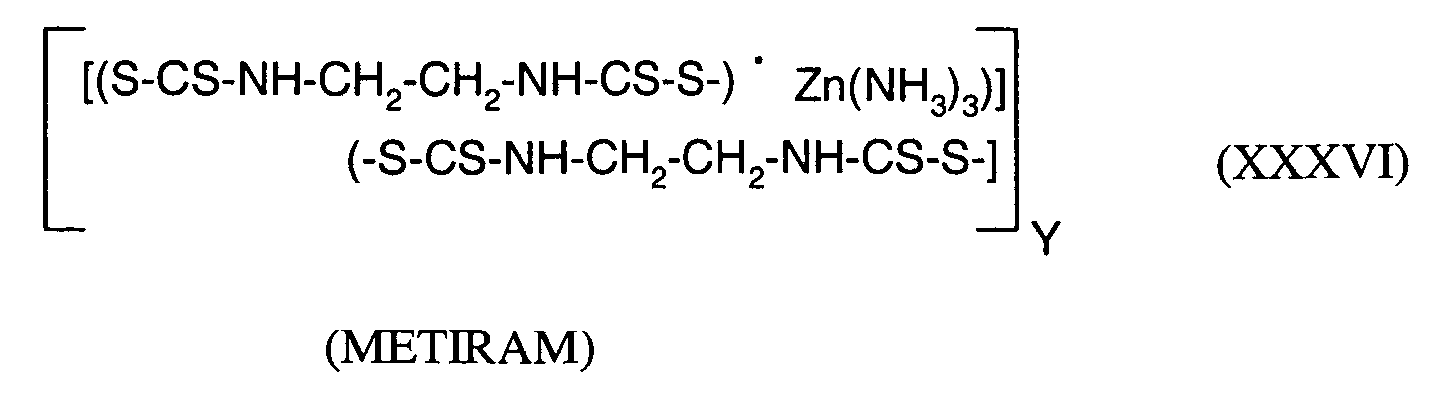
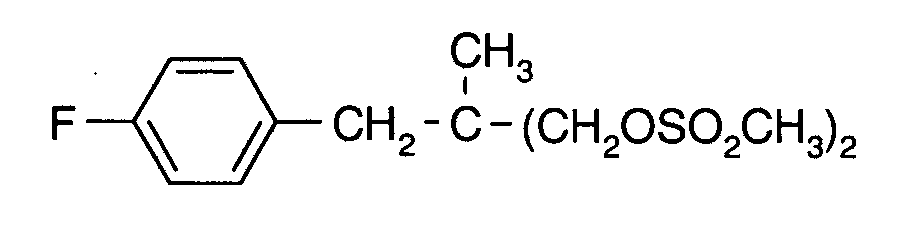
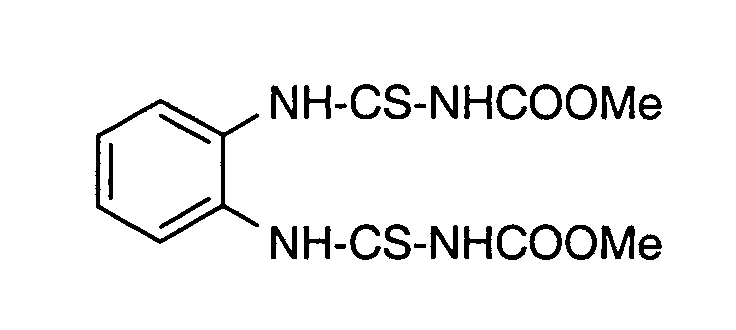
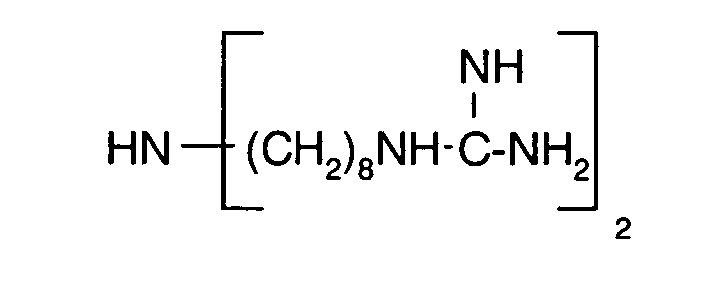
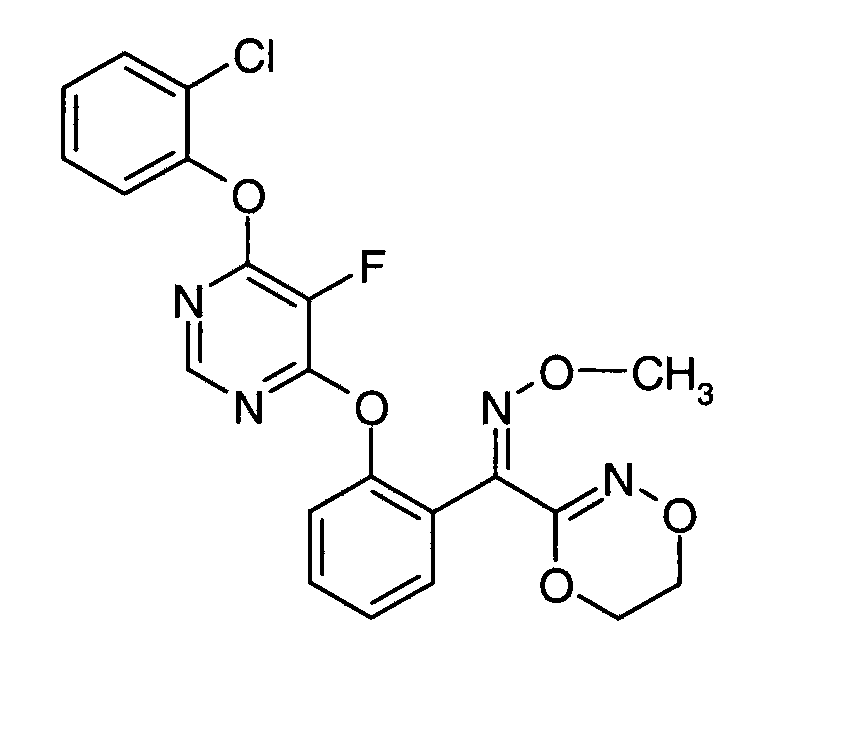
- Mittel enthaltend die Verbindung der Formel (I)in Mischung mit einem oder mehreren fungiziden Wirkstoffen aus der Reihe
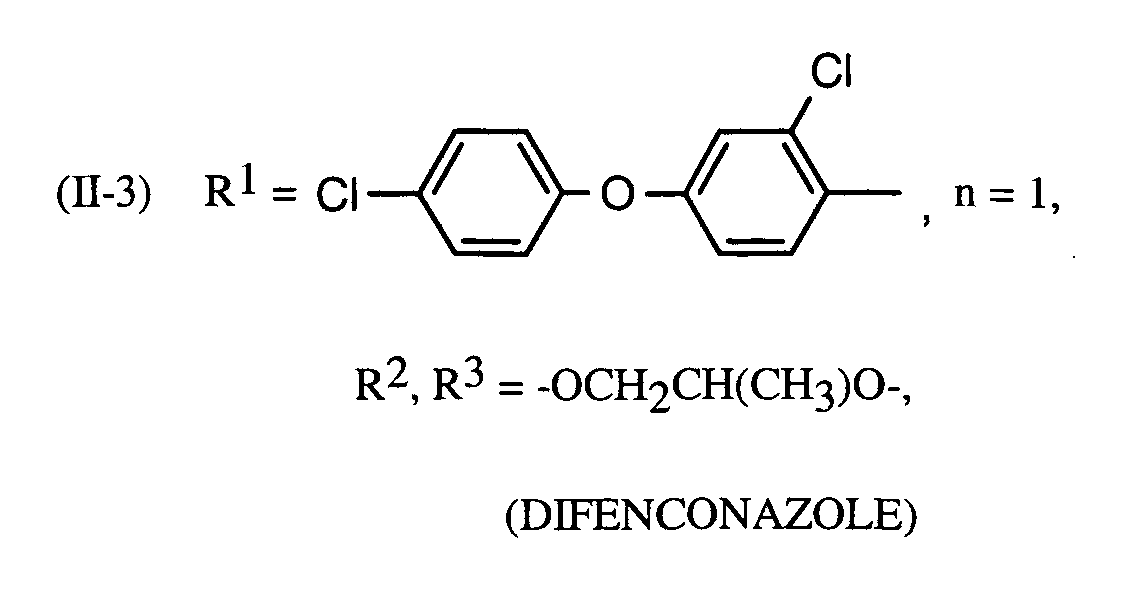
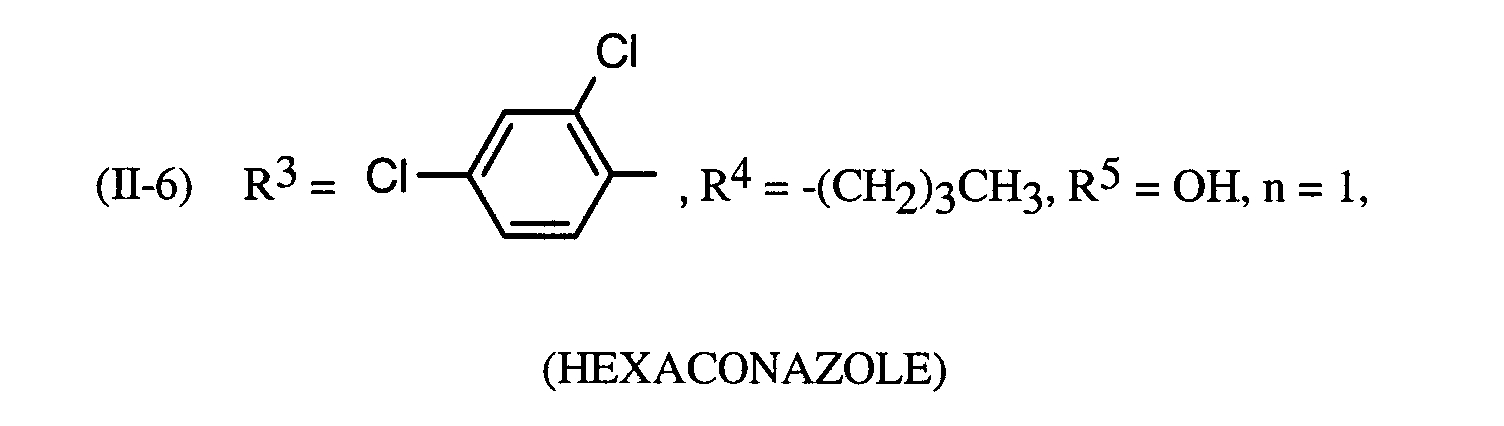
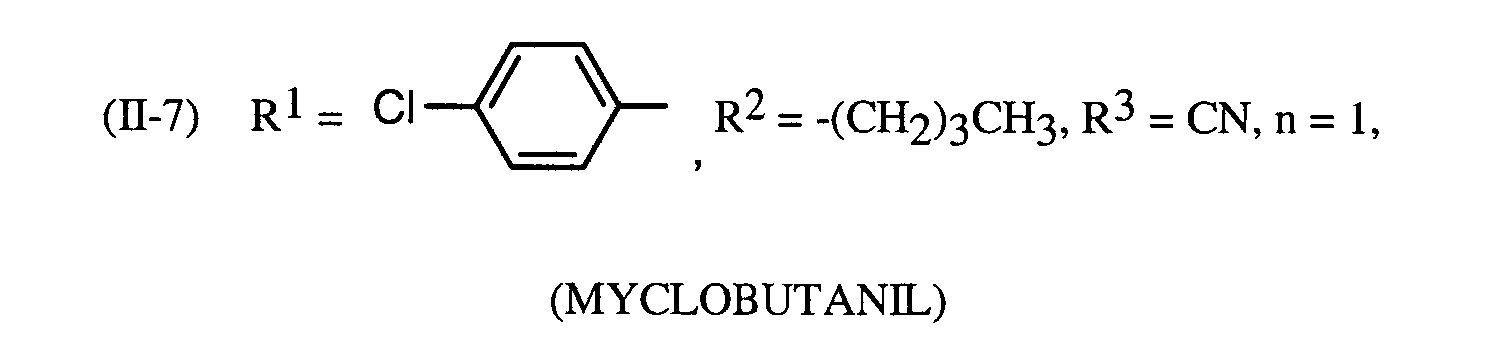
 (1) Azol-Derivate der Formel
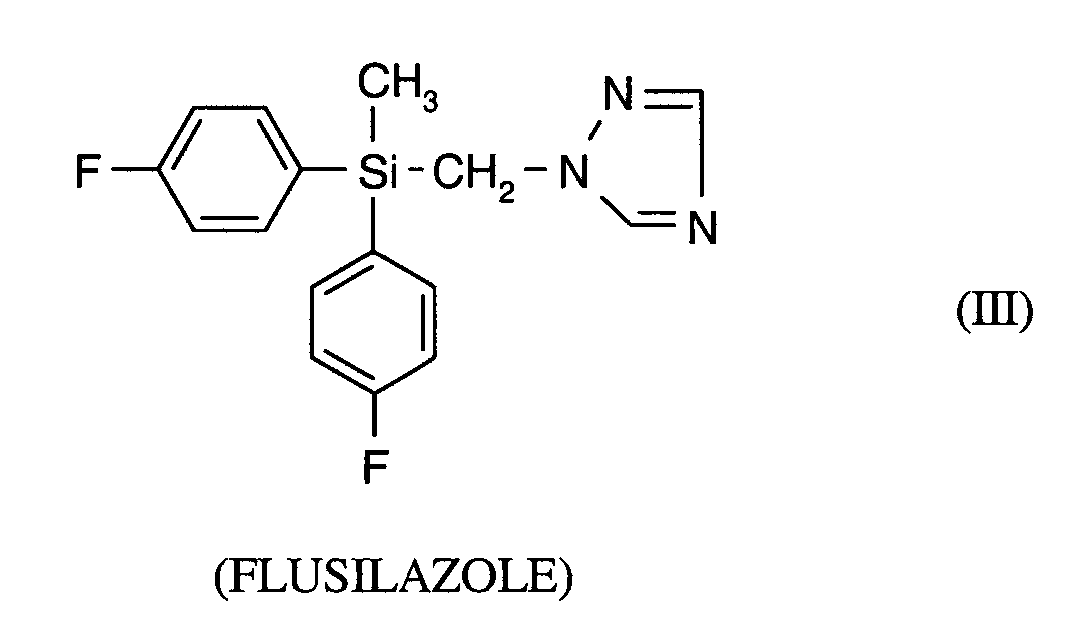 (2) dem Azol-Derivat der Formel
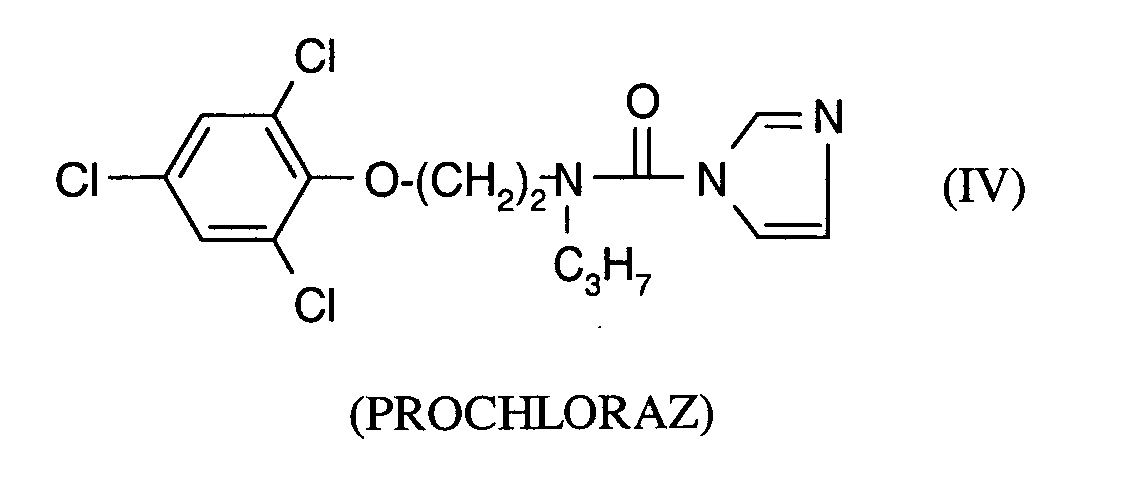 (3) der Verbindung(4) Azol-Derivat der Formel
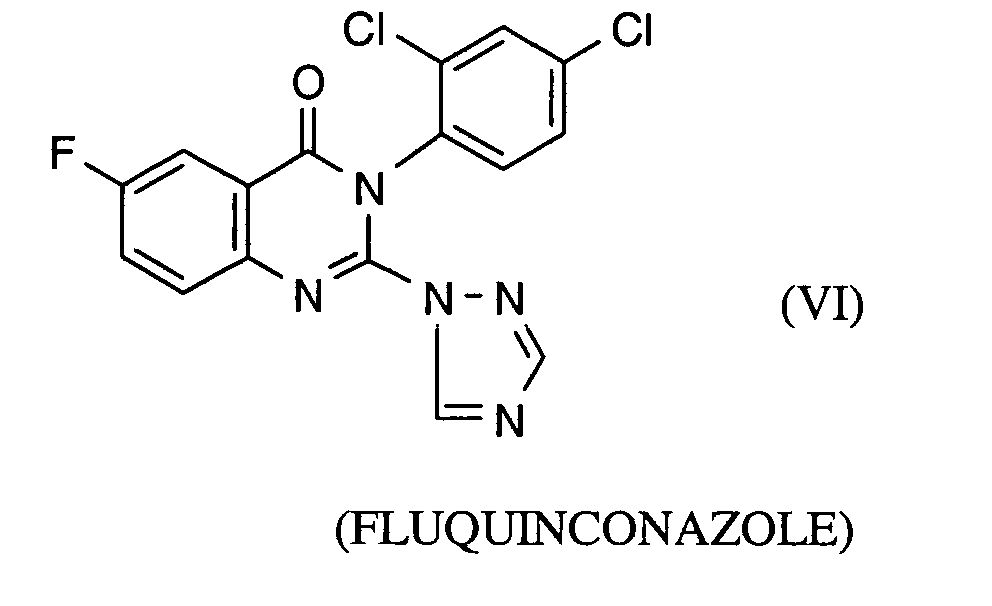 (5) Heterocyclen der Formel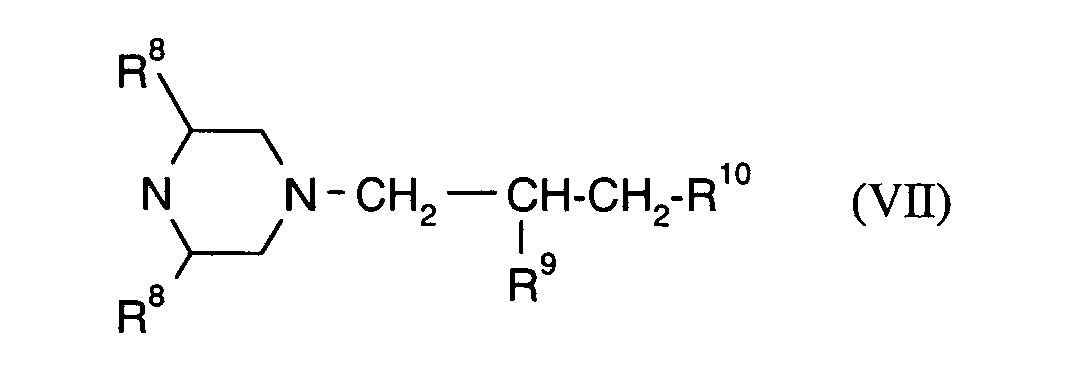
(TRIDEMORPH)
(ALDIMORPH)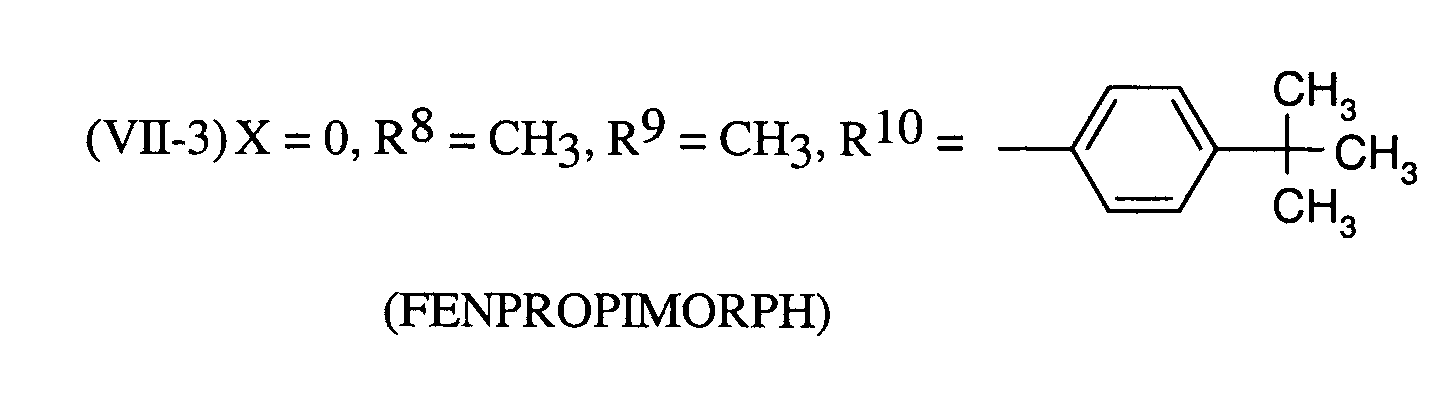
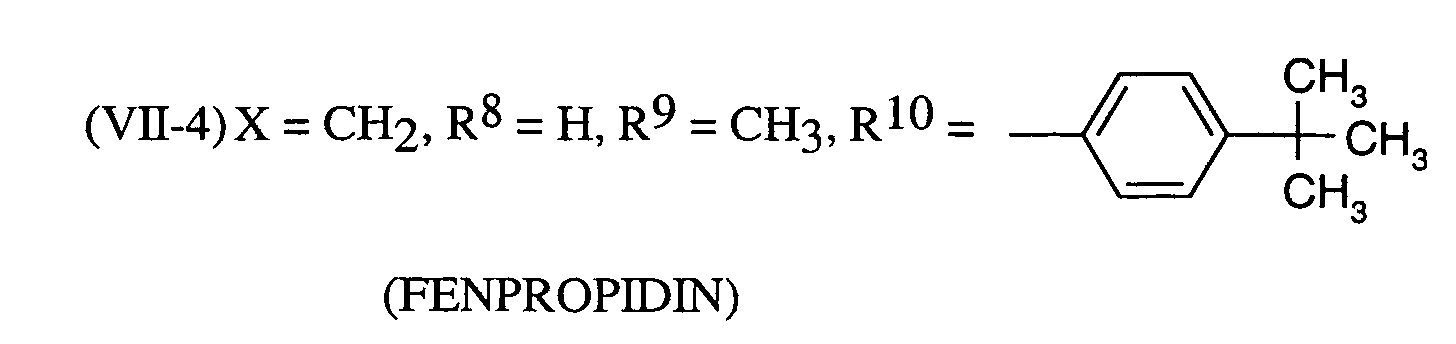 (6) Verbindung der Formel
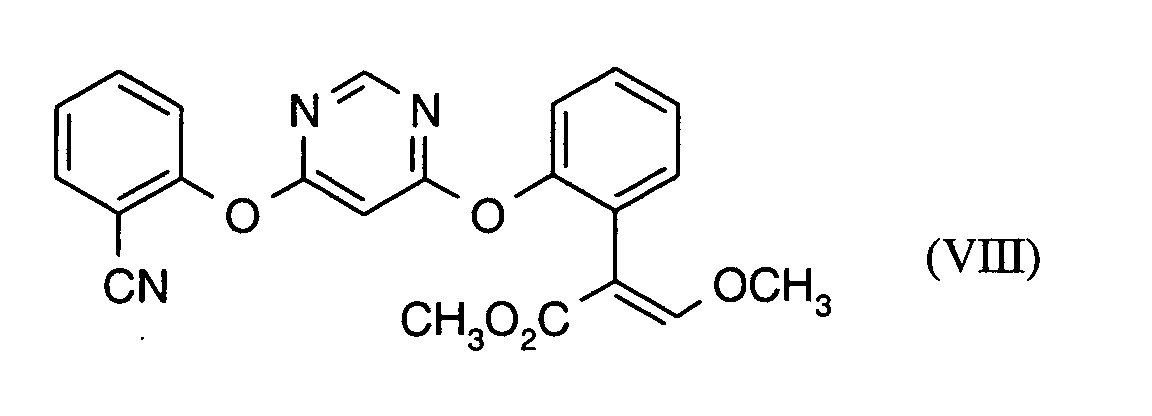 (7) Verbindung der Formel
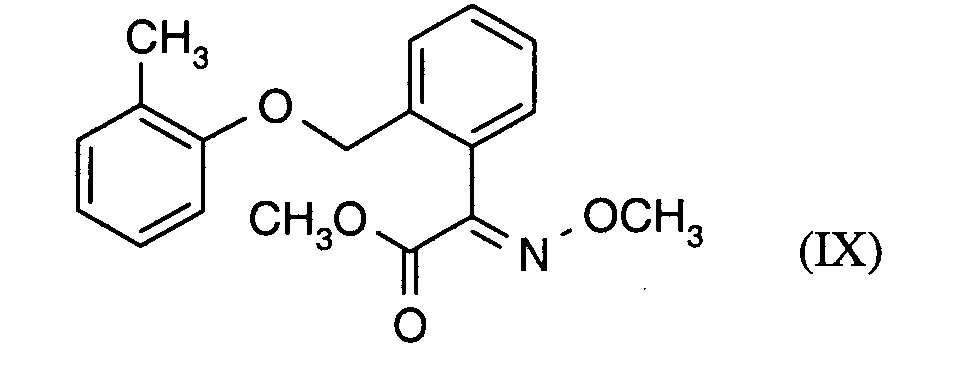 (8) Verbindung der Formel
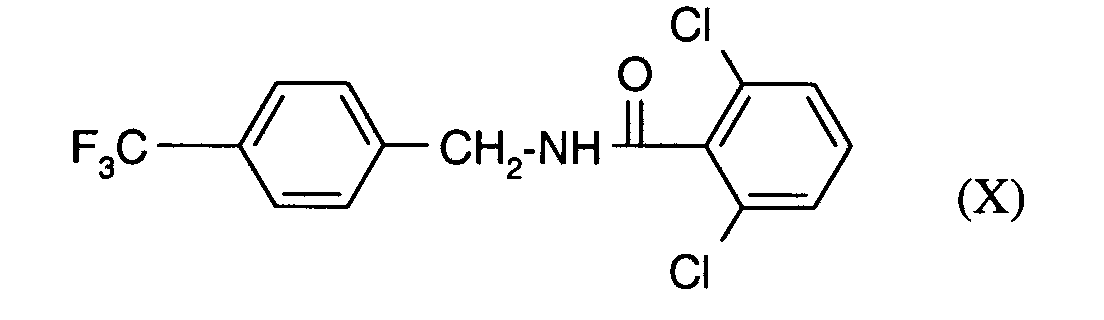 (9) Verbindung der Formel
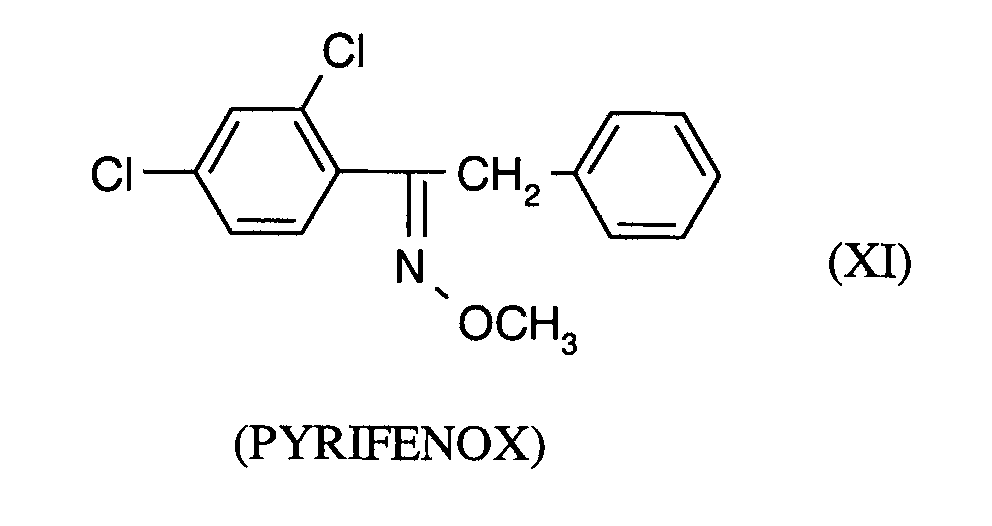 (10) Verbindung der Formel
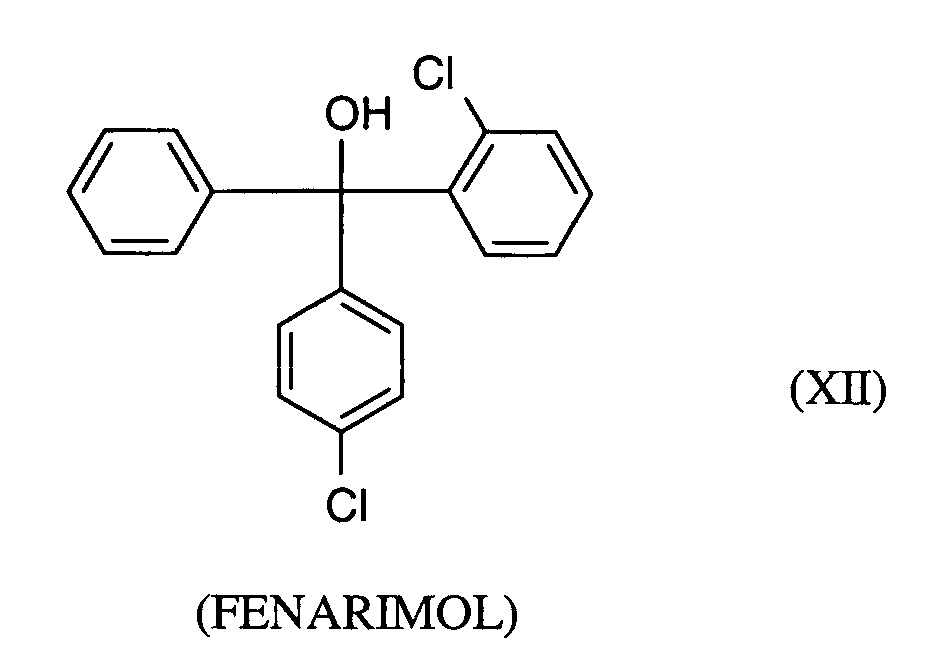 (11) Verbindung der Formel
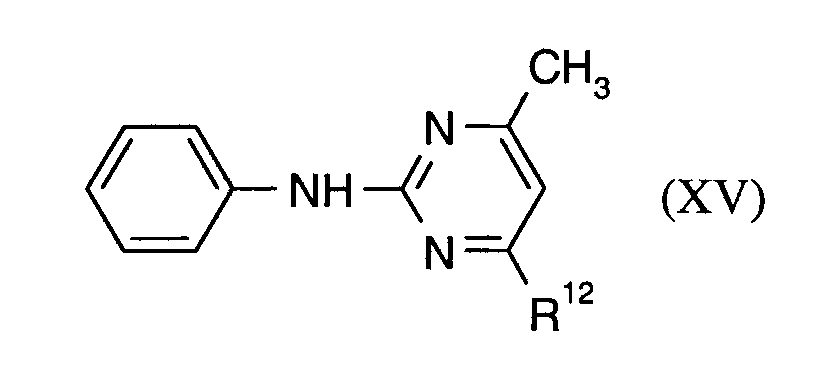
 (12) Verbindungen der Formel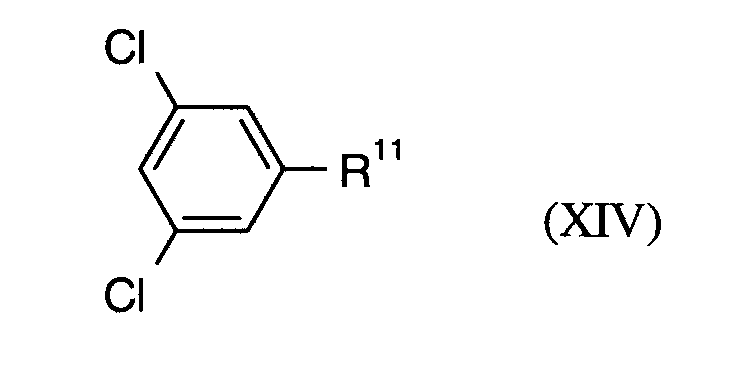

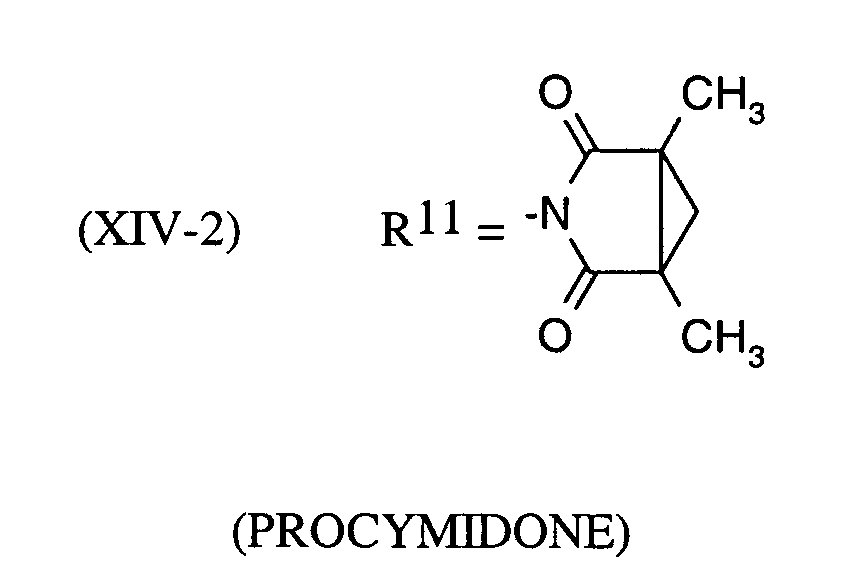
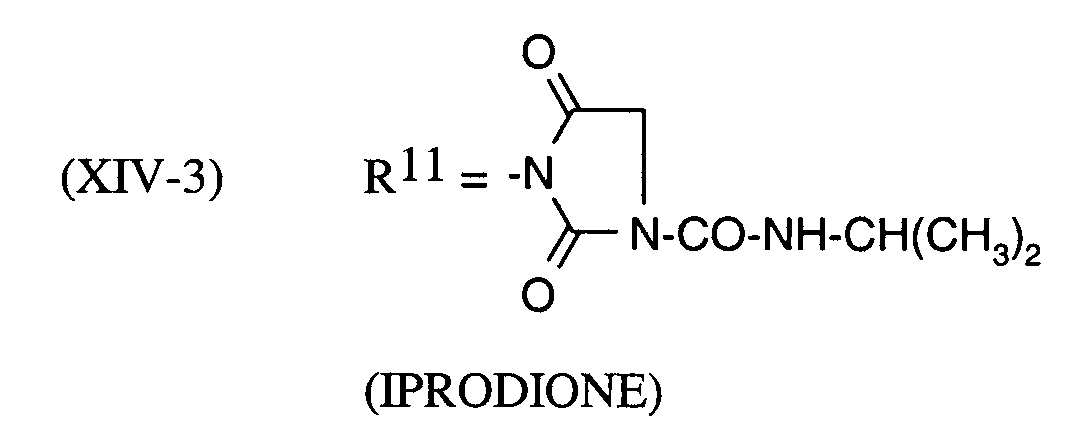 (13) Verbindungen der Formel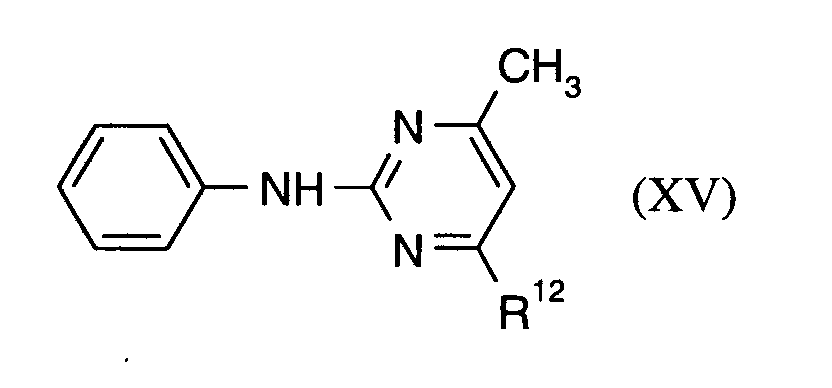
(PYRIMETHANIL)
(MEPANIPYRIM)(14) Verbindungen der Formel
(DICHLORFLUANID)
(TOLYLFLUANID)(15) Verbindung der Formel (16) Verbindung der Formel
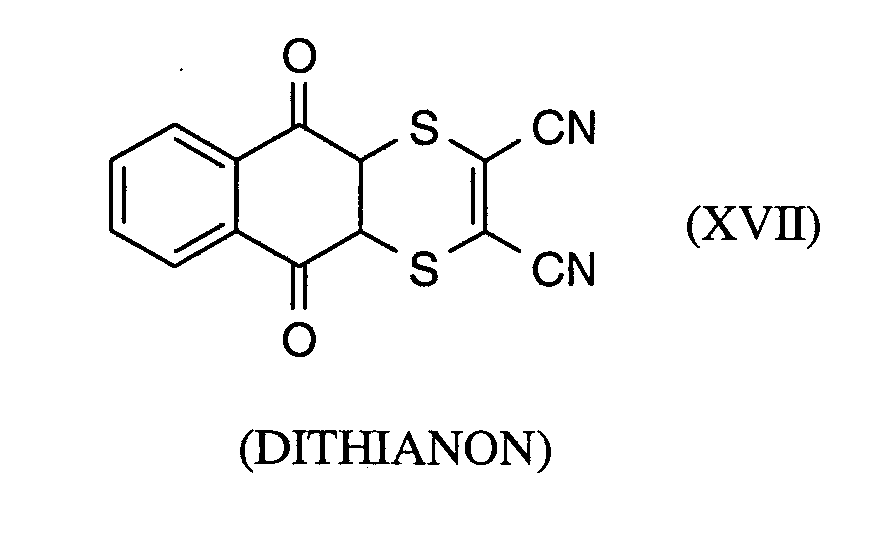
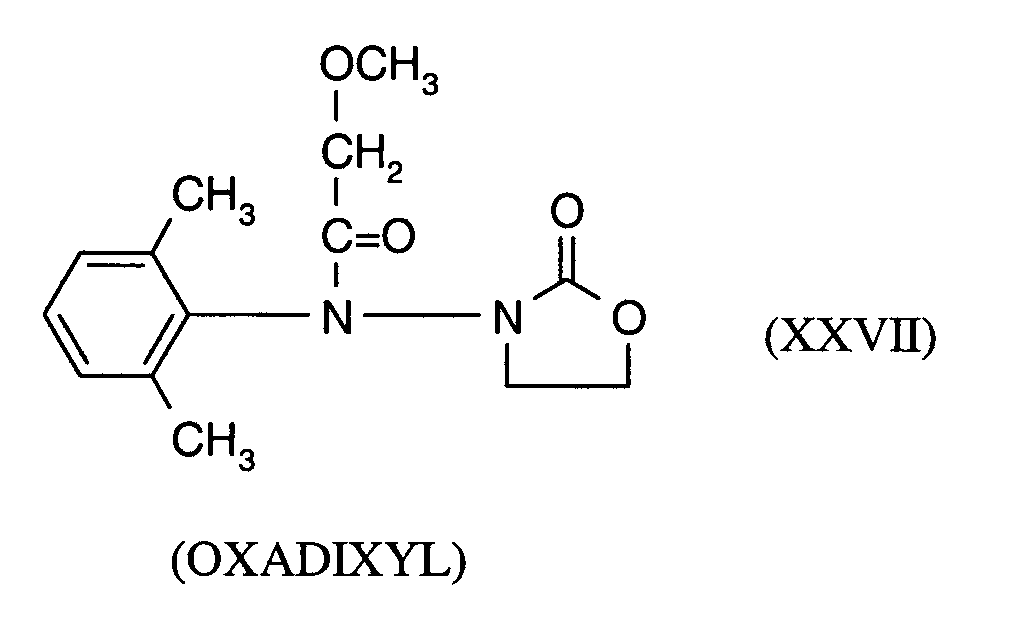
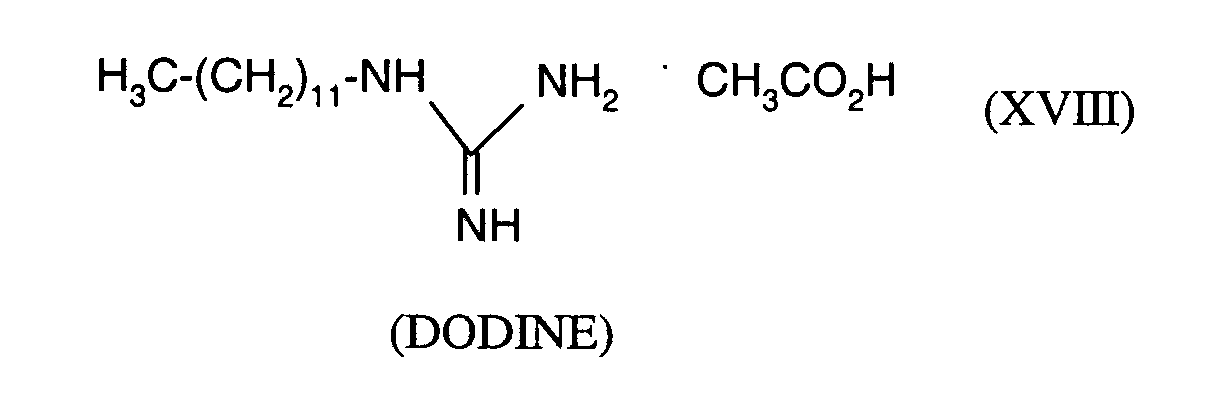 (17) Verbindung der Formel
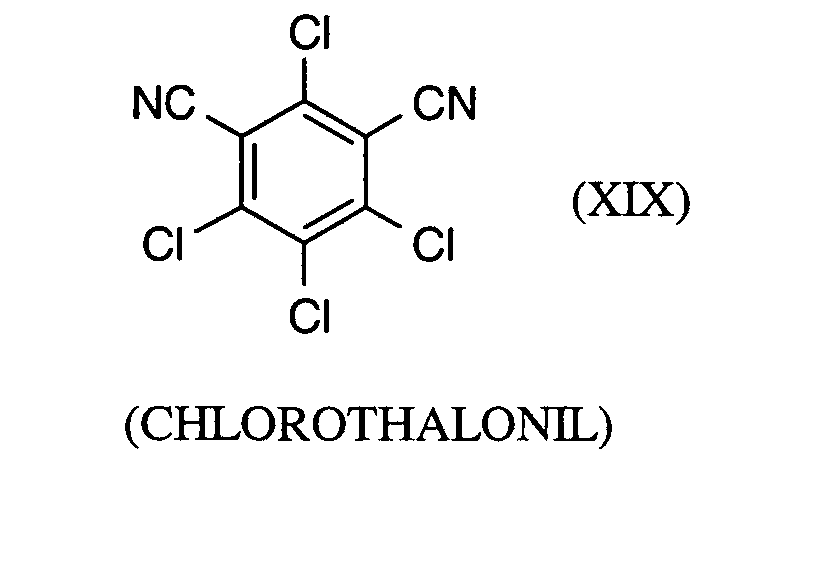 (18) Verbindung der Formel
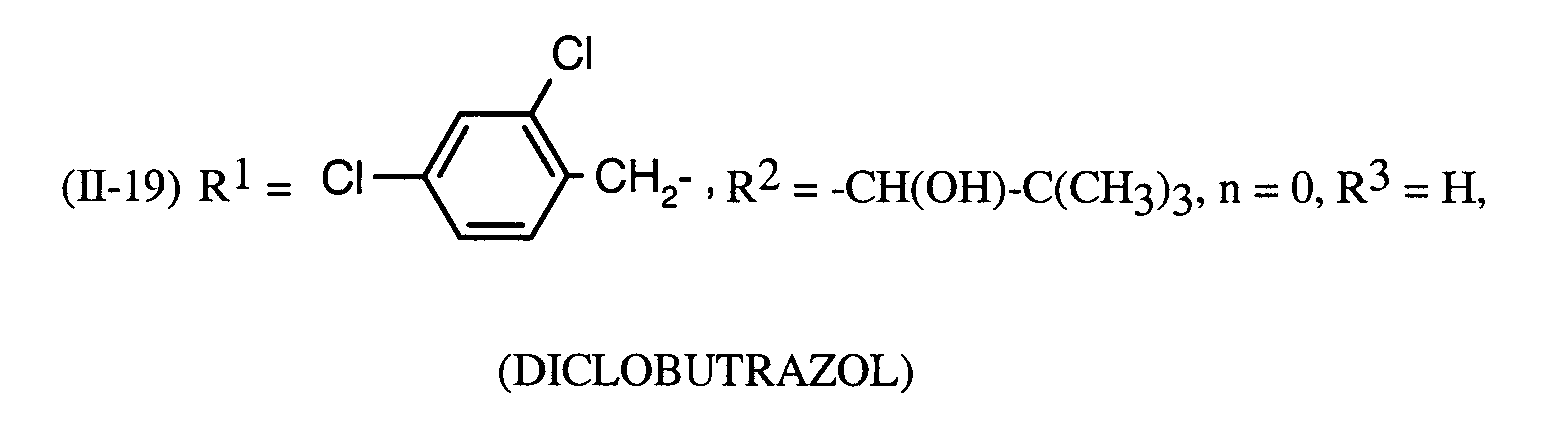
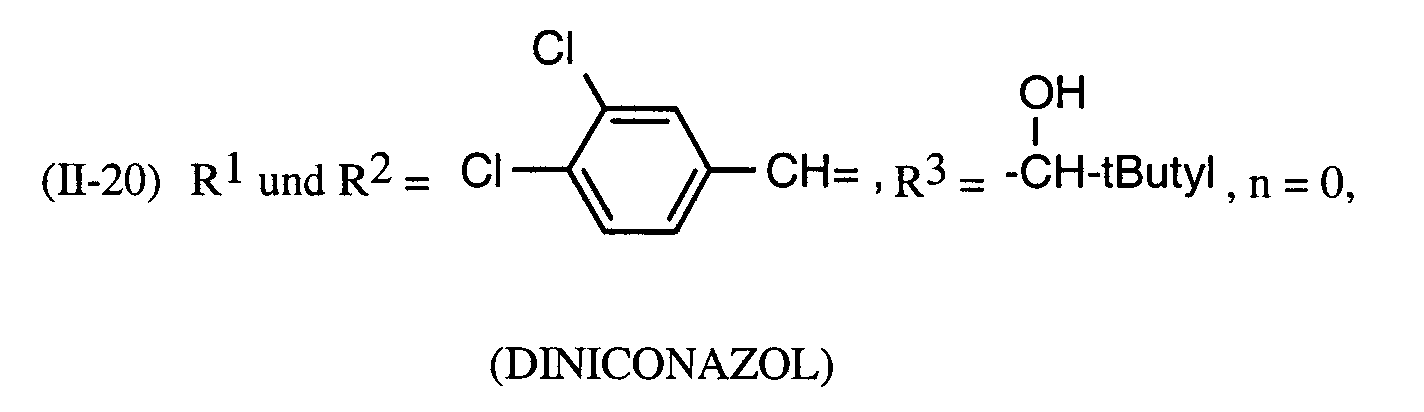
 (19) Verbindung der Formel
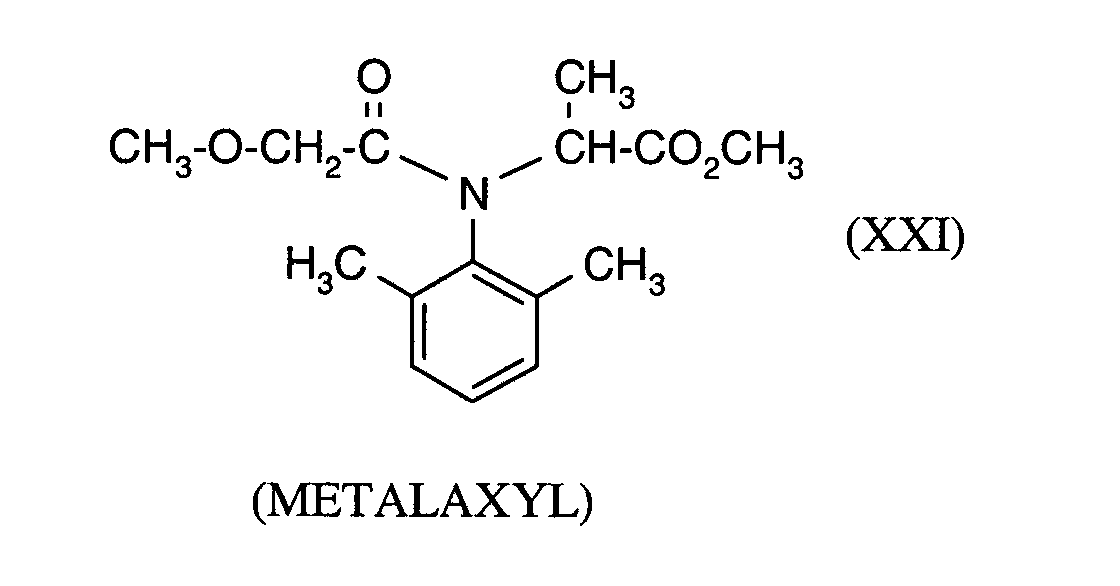 (20) Verbindung der Formel
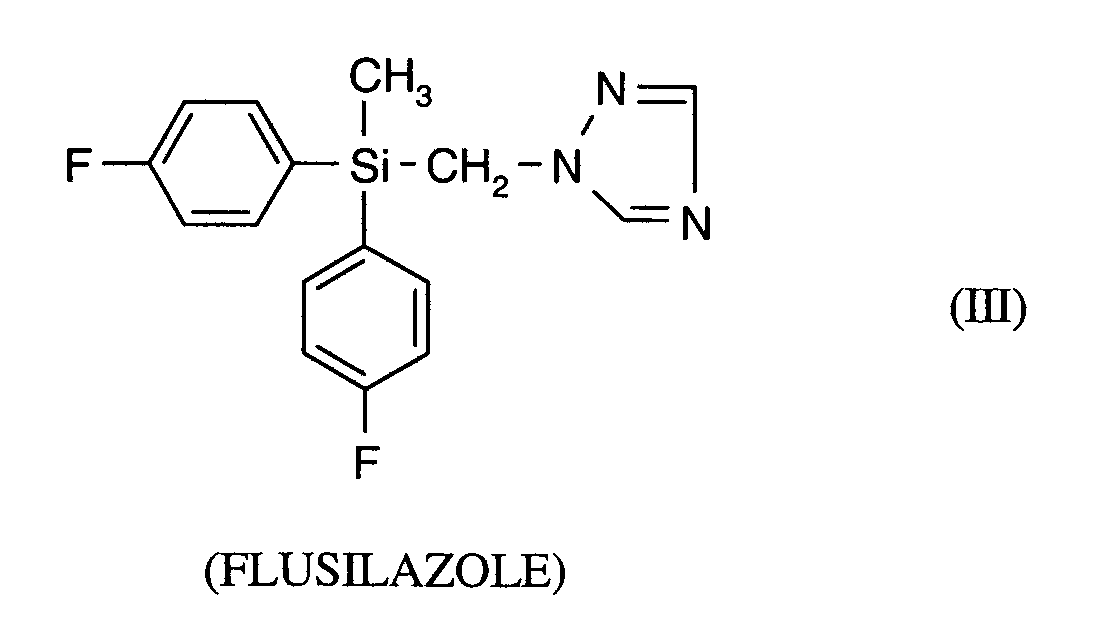
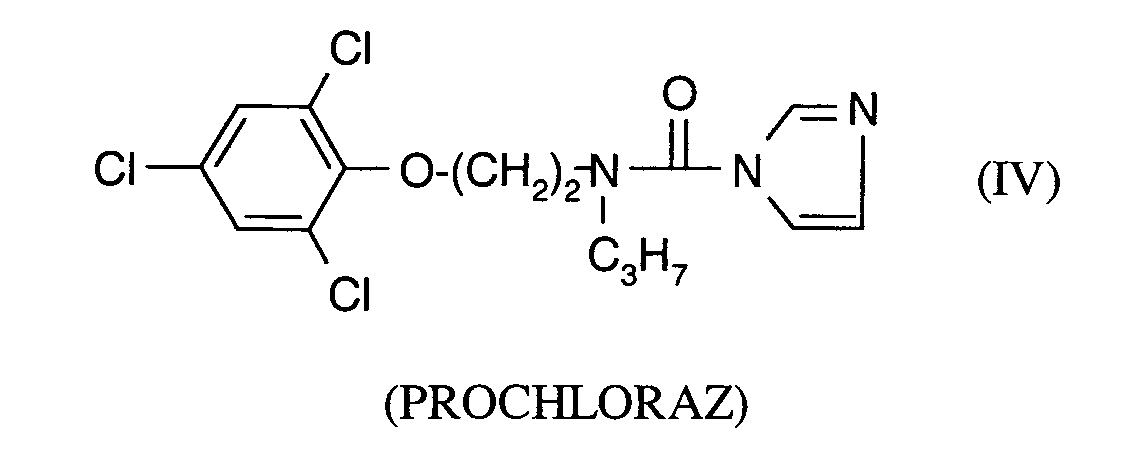
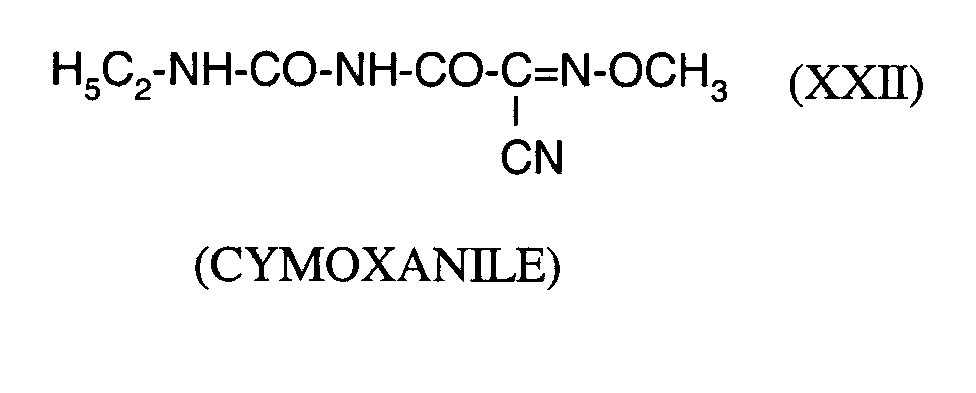 (21) Verbindung der Formel
 (22) Verbindung der Formel
 (23) Verbindungen der Formel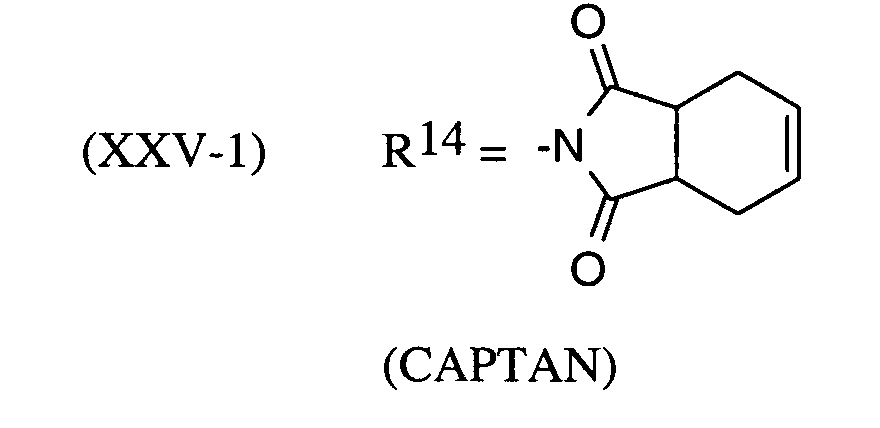
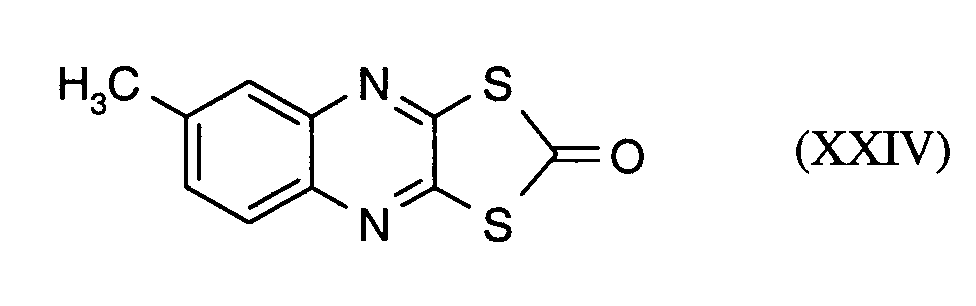
 (24) Verbindung der Formel
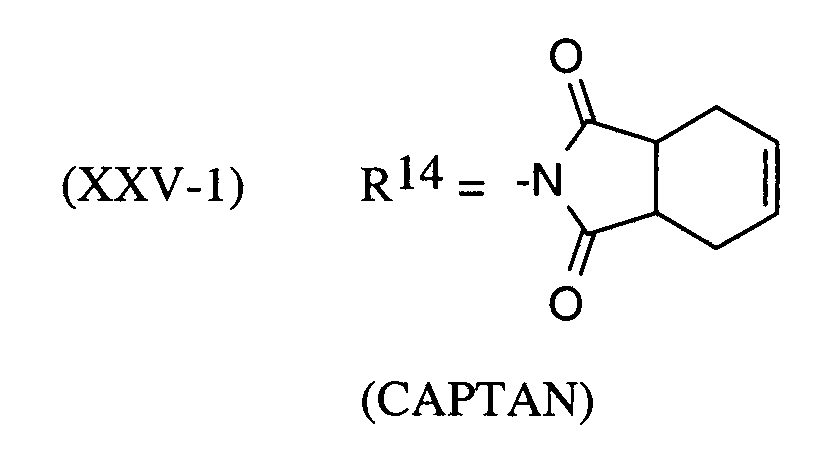
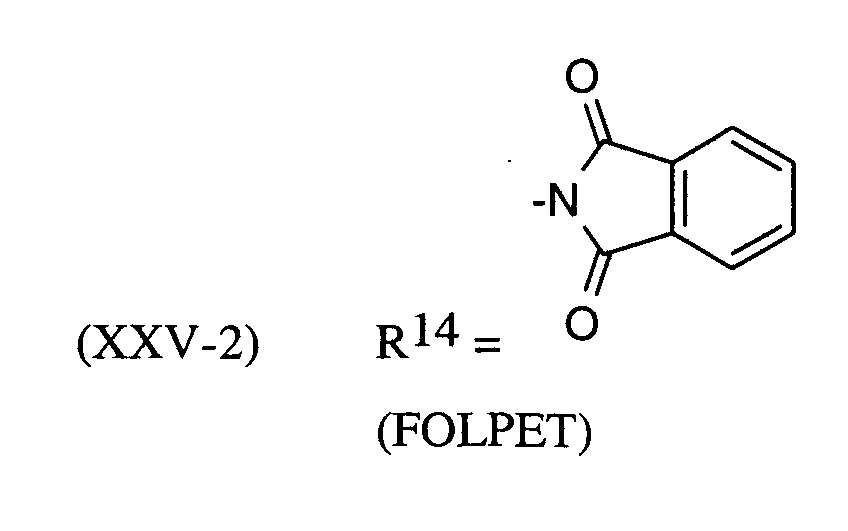
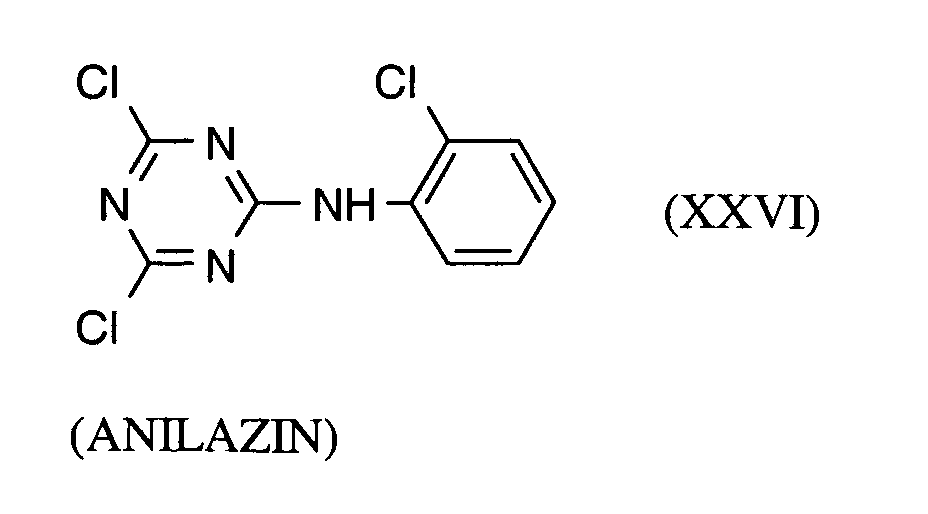 (25) Verbindung der Formel
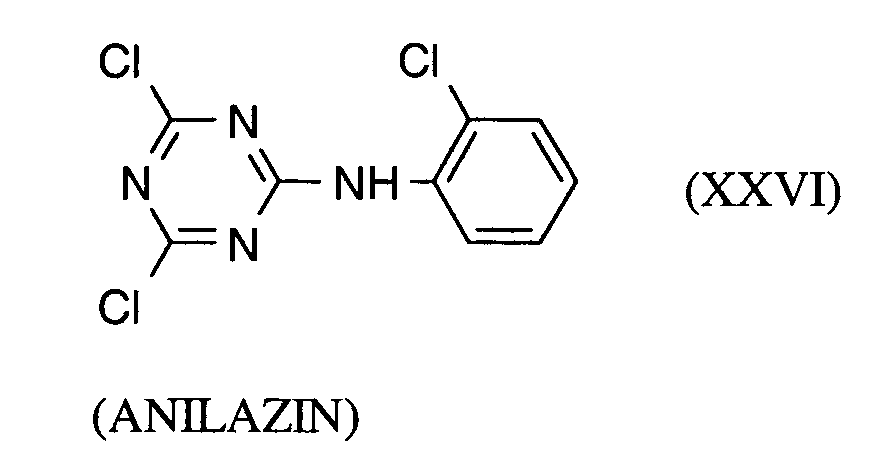
 (26) Verbindung der Formel
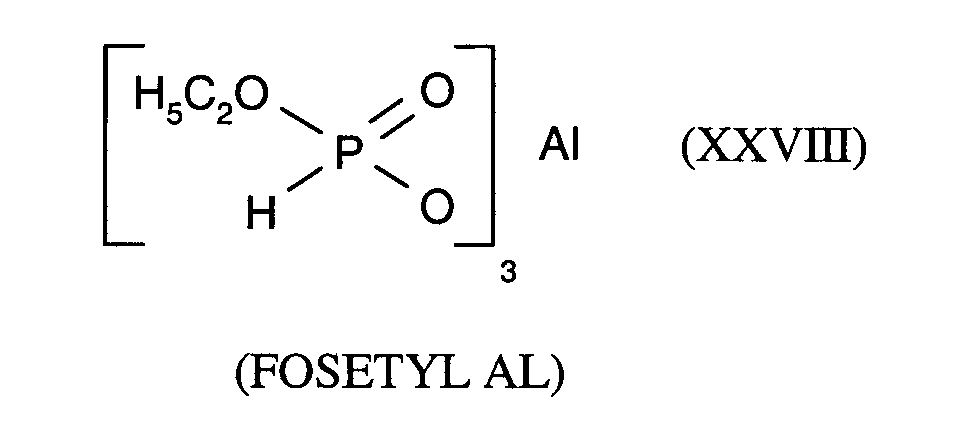 (27) Verbindung der Formel
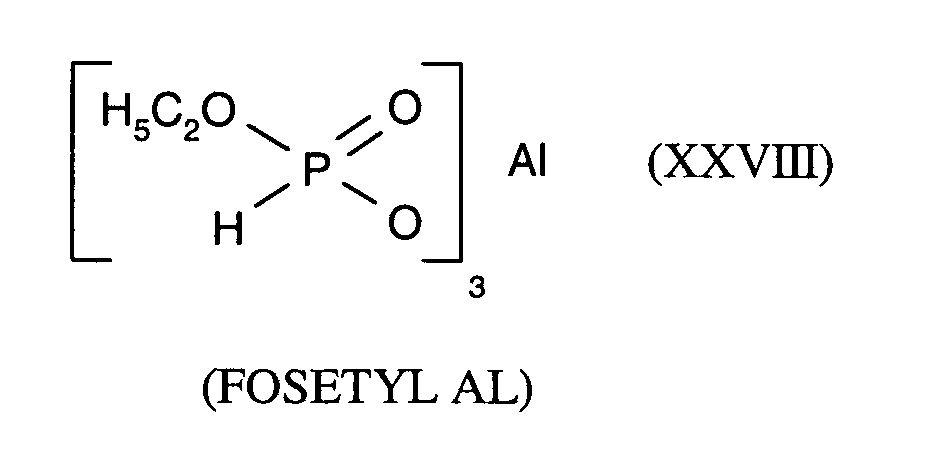
 (28) Verbindung der Formel
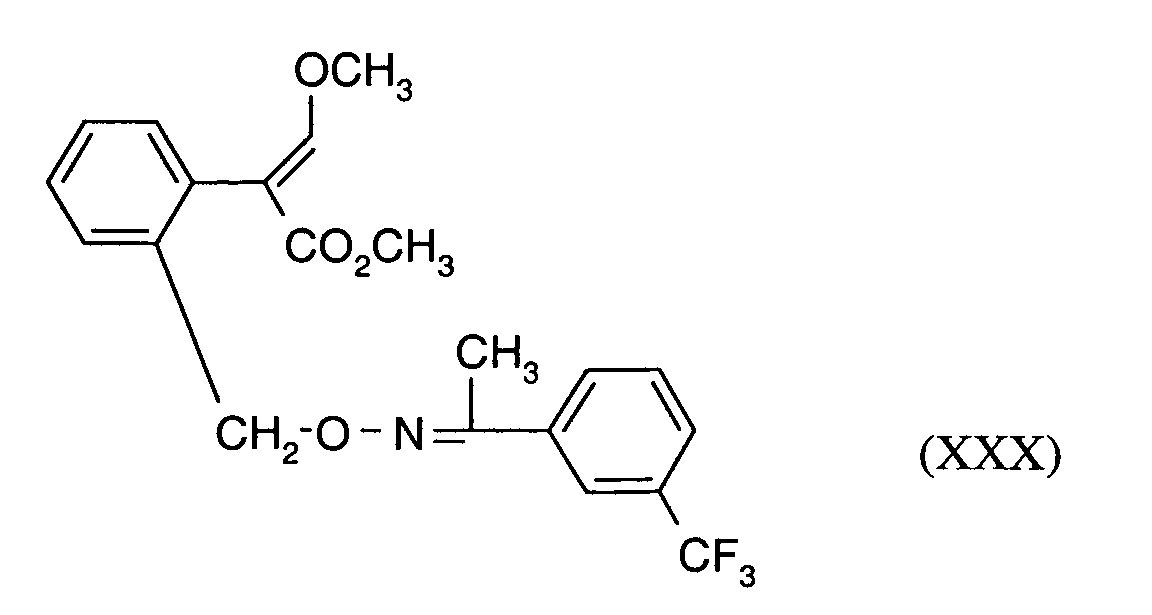 (29) Verbindung der Formel
 (30) Verbindung der Formel
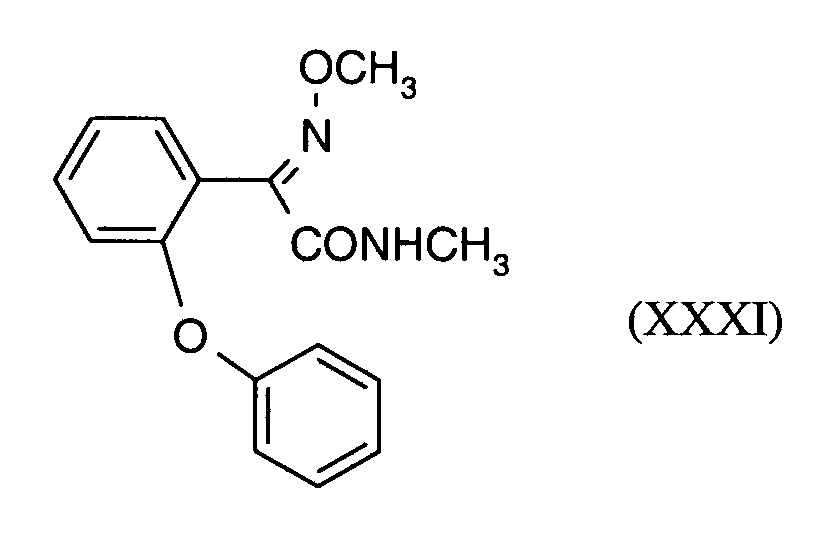
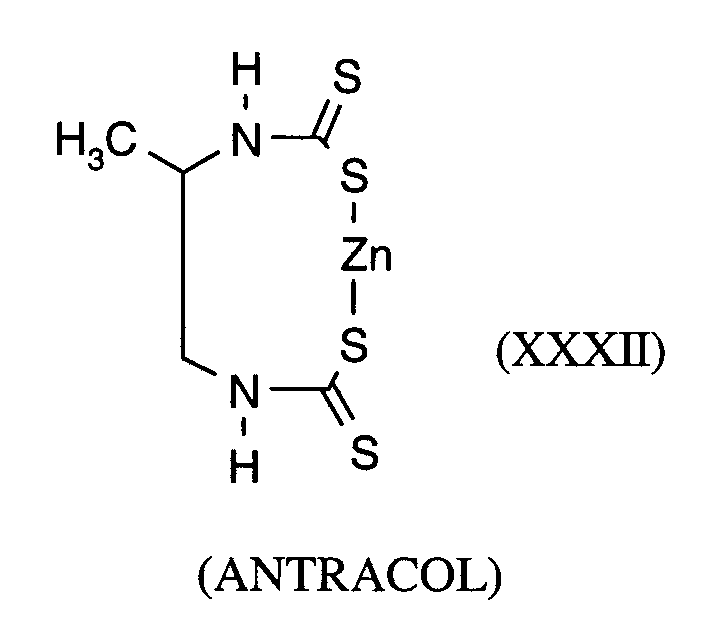 (31) Verbindungen der Formel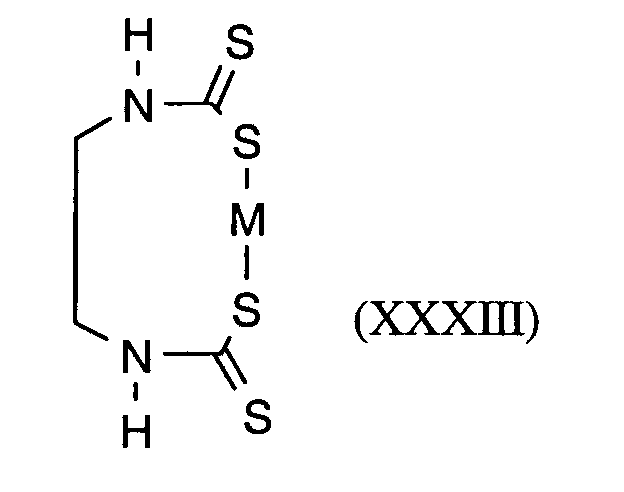
(ZINEB)
(MANEB)
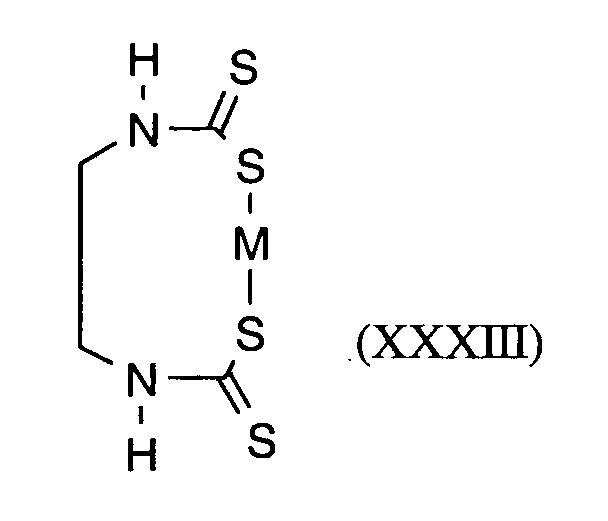
(Mancozeb)(32) Verbindung der Formel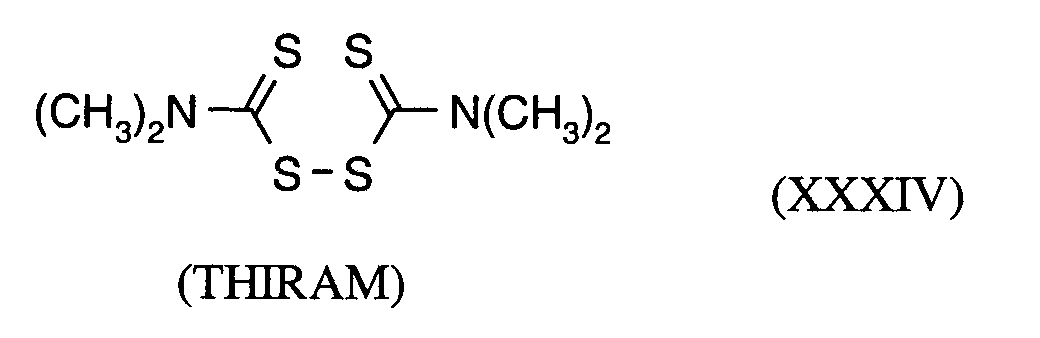 (33) Verbindung der Formel
 (34) Verbindung der Formel
 (35) Verbindung der Formel
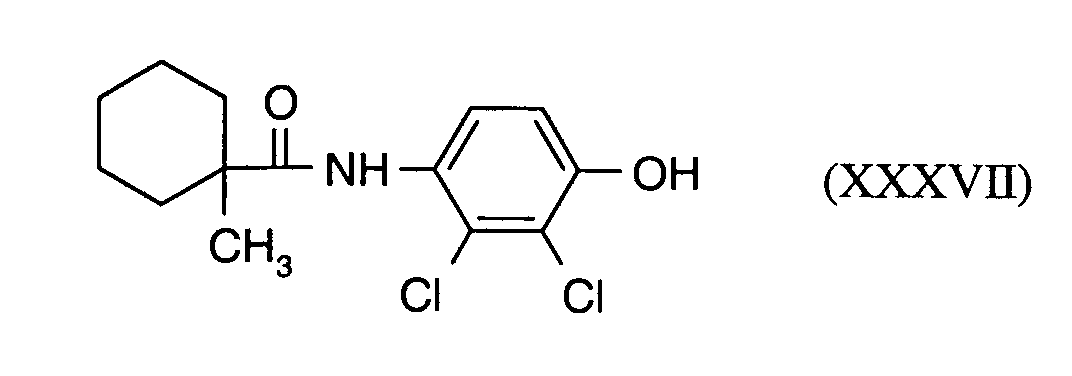 (36) Verbindung der Formel
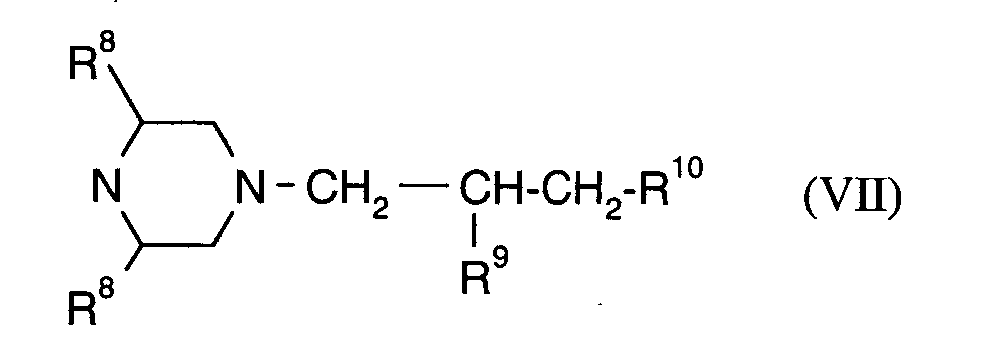
 (37) Verbindungen der Formelin welcher
R15 und R16 unabhängig voneinander für Wasserstoff, Halogen, Methyl oder Phenyl stehen und
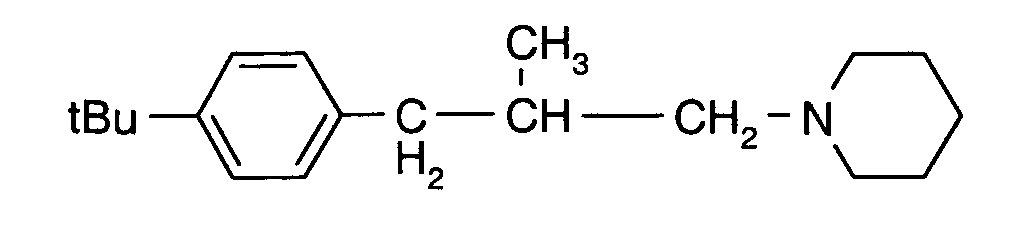
R17 für Wasserstoff oder Methyl steht,(38) 8-tButyl-2-(N-ethyl-N-n-propylamino)-methyl-1,4-dioxaspiro[4,5]decan der Formel (39) Verbindung der Formel
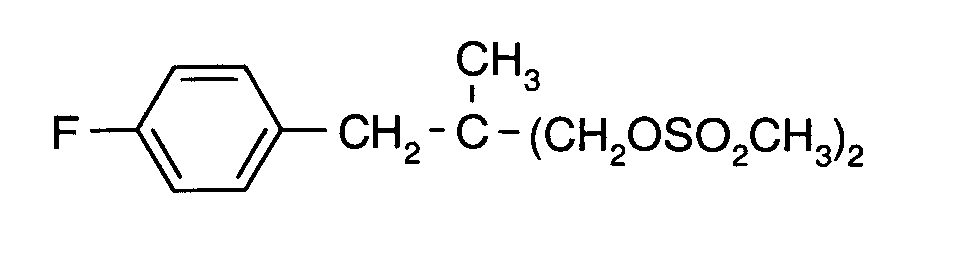 (40) Verbindung der Formel
 (41) Verbindung der Formel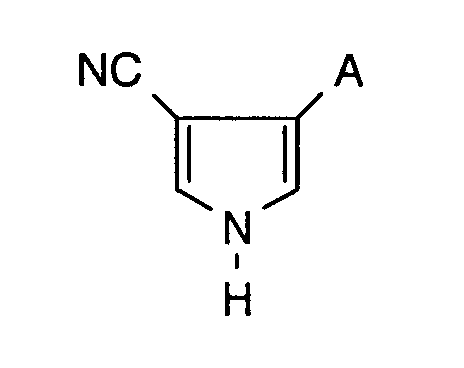
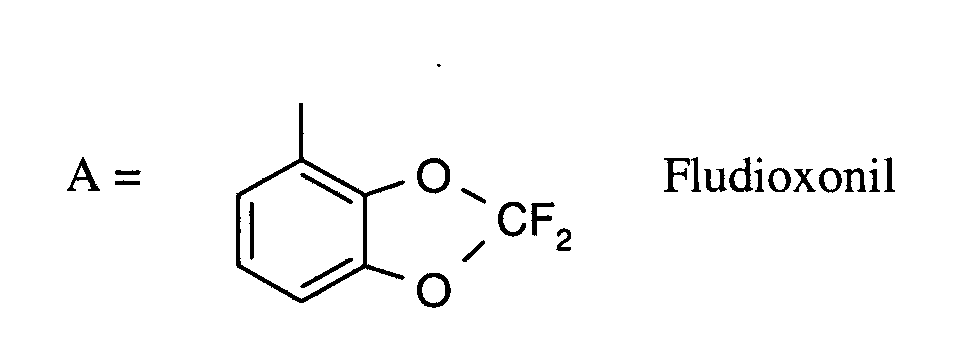
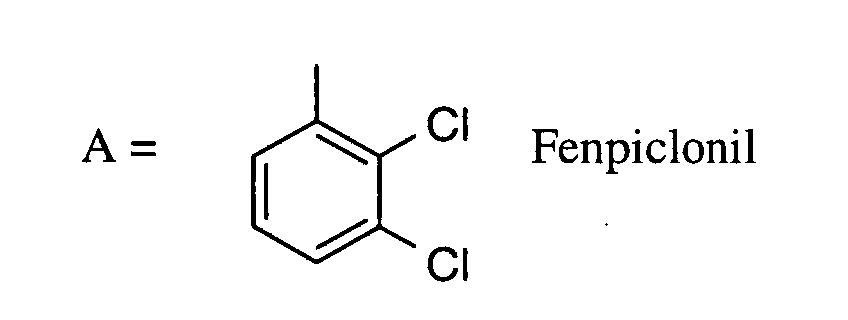
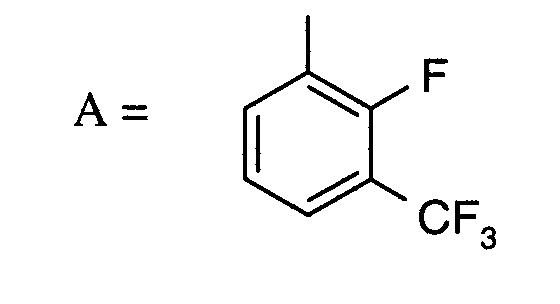 (42) Verbindung der Formel
 (43) Benzimidazol der FormelR9 = CONHtBu; R6 = -NHCOOMe Benomyl
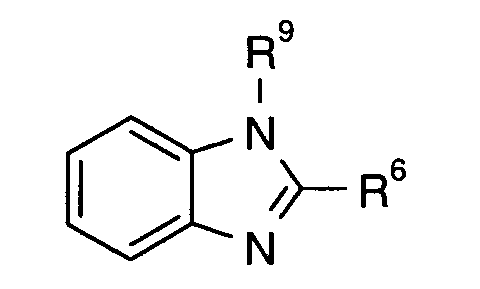 R9 = H; R6 = -NHCOOMe Carbendazin
 (44) Verbindung der Formel
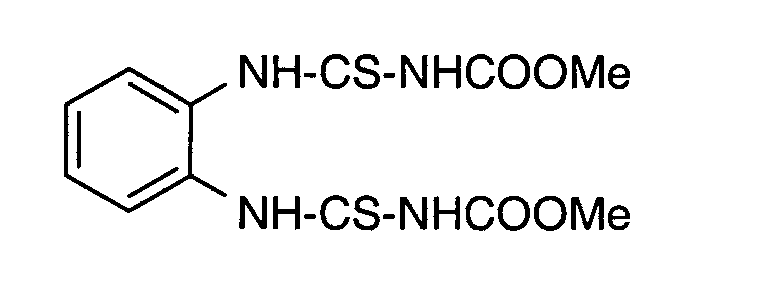 (45) Verbindung der Formel
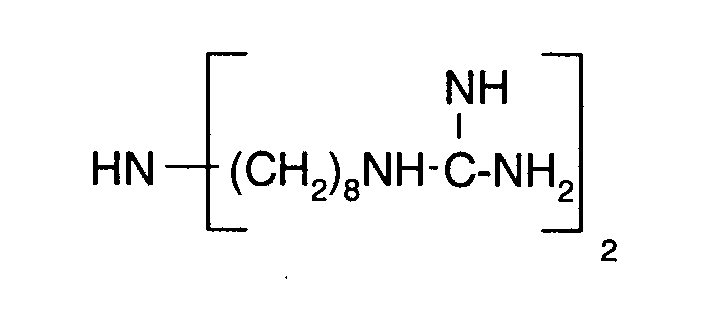 (46) Verbindung der Formel
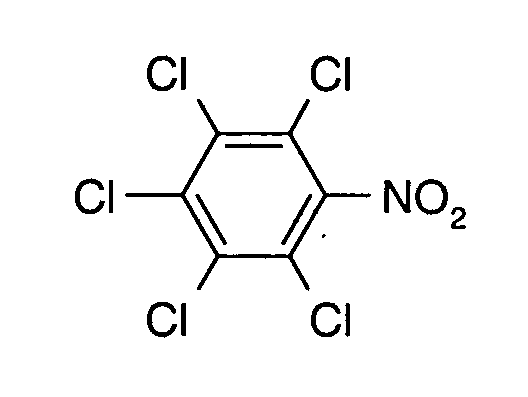 (47) Verbindung der Formel
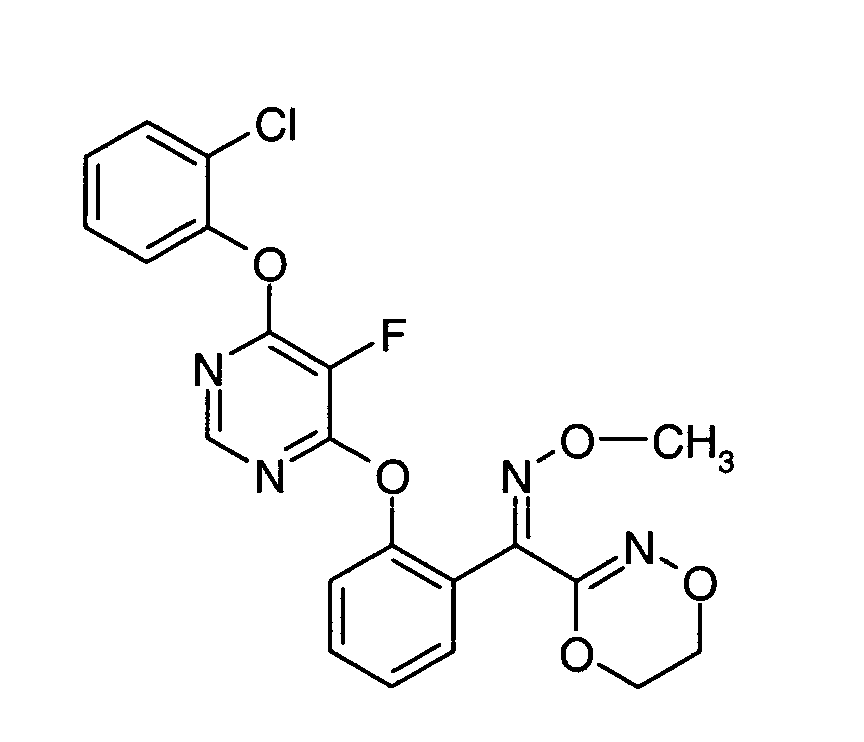 (48) Verbindung der Formel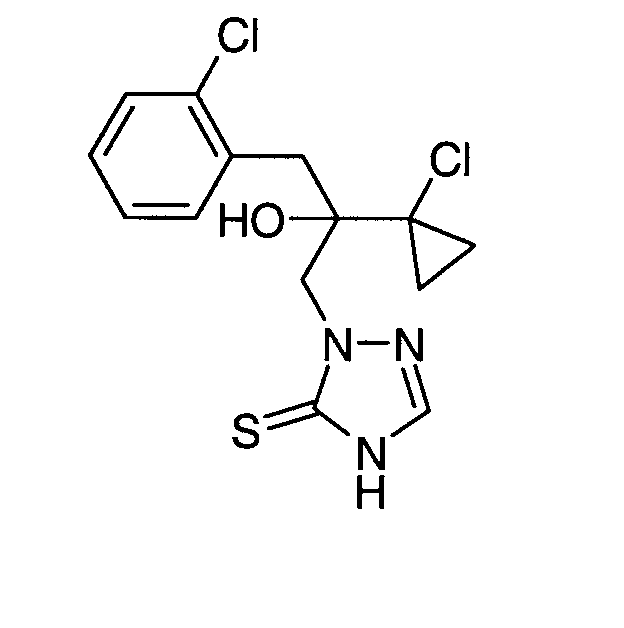
- Mittel gemäß Anspruch 1, dadurch gekennzeichnet, dass in den Wirkstoffkombinationen auf 1 Gewichtsteil an Wirkstoff der Formel (I) 0,1 bis 10 Gew.-Teile an mindestens einem fungiziden Wirkstoff entfallen.
- Verfahren zur Bekämpfung von Pilzen und Insekten, dadurch gekennzeichnet, dass man Wirkstoffkombinationen gemäß Anspruch 1 auf die Pilze, Insekten und/oder deren Lebensraum einwirken lässt.
- Verwendung von Wirkstoffkombinationen gemäß Anspruch 1 zur Bekämpfung von Pilzen und Insekten.
- Verfahren zur Herstellung von Mitteln gemäß Anspruch 1, dadurch gekennzeichnet, dass man Wirkstoffkombinationen gemäß Anspruch 1 mit Streckmitteln und/oder oberflächenaktiven Stoffen vermischt.
Priority Applications (7)
| Application Number | Priority Date | Filing Date | Title |
|---|---|---|---|
| EP10180601.6A EP2305034B1 (de) | 1998-06-10 | 1999-05-29 | Mittel zur Bekämpfung von Pflanzenschädlingen |
| EP10180616A EP2298076B1 (de) | 1998-06-10 | 1999-05-29 | Mittel zur Bekämpfung von Pflanzenschädlingen |
| EP10180646A EP2319314B1 (de) | 1998-06-10 | 1999-05-29 | Mittel zur Bekämpfung von Pflanzenschädlingen |
| EP10180660A EP2301353B1 (de) | 1998-06-10 | 1999-05-29 | Mittel zur Bekämpfung von Pflanzenschädlingen |
| EP10180670A EP2305031B1 (de) | 1998-06-10 | 1999-05-29 | Mittel zur Bekämpfung von Pflanzenschädlingen |
| EP10180632A EP2305035B1 (de) | 1998-06-10 | 1999-05-29 | Mittel zur Bekämpfung von Pflanzenschädlingen |
| EP10180684A EP2298077A1 (de) | 1998-06-10 | 1999-05-29 | Mittel zur Bekämpfung von Pflanzenschädlingen |
Applications Claiming Priority (5)
| Application Number | Priority Date | Filing Date | Title |
|---|---|---|---|
| DE19825891 | 1998-06-10 | ||
| DE19825891 | 1998-06-10 | ||
| DE19829113A DE19829113A1 (de) | 1998-06-10 | 1998-06-30 | Mittel zur Bekämpfung von Pflanzenschädlingen |
| DE19829113 | 1998-06-30 | ||
| EP99927800A EP1085810B1 (de) | 1998-06-10 | 1999-05-29 | Mittel zur bekämpfung von pflanzenschädlingen |
Related Parent Applications (2)
| Application Number | Title | Priority Date | Filing Date |
|---|---|---|---|
| EP99927800A Division EP1085810B1 (de) | 1998-06-10 | 1999-05-29 | Mittel zur bekämpfung von pflanzenschädlingen |
| EP99927800.5 Division | 1999-05-29 |
Related Child Applications (12)
| Application Number | Title | Priority Date | Filing Date |
|---|---|---|---|
| EP10180632A Division EP2305035B1 (de) | 1998-06-10 | 1999-05-29 | Mittel zur Bekämpfung von Pflanzenschädlingen |
| EP10180670A Division EP2305031B1 (de) | 1998-06-10 | 1999-05-29 | Mittel zur Bekämpfung von Pflanzenschädlingen |
| EP10180646A Division EP2319314B1 (de) | 1998-06-10 | 1999-05-29 | Mittel zur Bekämpfung von Pflanzenschädlingen |
| EP10180616A Division EP2298076B1 (de) | 1998-06-10 | 1999-05-29 | Mittel zur Bekämpfung von Pflanzenschädlingen |
| EP10180660A Division EP2301353B1 (de) | 1998-06-10 | 1999-05-29 | Mittel zur Bekämpfung von Pflanzenschädlingen |
| EP10180646.1 Division-Into | 2010-09-28 | ||
| EP10180670.1 Division-Into | 2010-09-28 | ||
| EP10180684.2 Division-Into | 2010-09-28 | ||
| EP10180660.2 Division-Into | 2010-09-28 | ||
| EP10180601.6 Division-Into | 2010-09-28 | ||
| EP10180616.4 Division-Into | 2010-09-28 | ||
| EP10180632.1 Division-Into | 2010-09-28 |
Publications (3)
| Publication Number | Publication Date |
|---|---|
| EP1593307A2 true EP1593307A2 (de) | 2005-11-09 |
| EP1593307A3 EP1593307A3 (de) | 2006-01-18 |
| EP1593307B1 EP1593307B1 (de) | 2010-12-15 |
Family
ID=7870496
Family Applications (8)
| Application Number | Title | Priority Date | Filing Date |
|---|---|---|---|
| EP10180660A Expired - Lifetime EP2301353B1 (de) | 1998-06-10 | 1999-05-29 | Mittel zur Bekämpfung von Pflanzenschädlingen |
| EP10180684A Withdrawn EP2298077A1 (de) | 1998-06-10 | 1999-05-29 | Mittel zur Bekämpfung von Pflanzenschädlingen |
| EP10180632A Expired - Lifetime EP2305035B1 (de) | 1998-06-10 | 1999-05-29 | Mittel zur Bekämpfung von Pflanzenschädlingen |
| EP05016734A Expired - Lifetime EP1593307B1 (de) | 1998-06-10 | 1999-05-29 | Mittel zur Bekämpfung von Pflanzenschädlingen |
| EP10180670A Expired - Lifetime EP2305031B1 (de) | 1998-06-10 | 1999-05-29 | Mittel zur Bekämpfung von Pflanzenschädlingen |
| EP10180616A Expired - Lifetime EP2298076B1 (de) | 1998-06-10 | 1999-05-29 | Mittel zur Bekämpfung von Pflanzenschädlingen |
| EP10180646A Expired - Lifetime EP2319314B1 (de) | 1998-06-10 | 1999-05-29 | Mittel zur Bekämpfung von Pflanzenschädlingen |
| EP10180601.6A Expired - Lifetime EP2305034B1 (de) | 1998-06-10 | 1999-05-29 | Mittel zur Bekämpfung von Pflanzenschädlingen |
Family Applications Before (3)
| Application Number | Title | Priority Date | Filing Date |
|---|---|---|---|
| EP10180660A Expired - Lifetime EP2301353B1 (de) | 1998-06-10 | 1999-05-29 | Mittel zur Bekämpfung von Pflanzenschädlingen |
| EP10180684A Withdrawn EP2298077A1 (de) | 1998-06-10 | 1999-05-29 | Mittel zur Bekämpfung von Pflanzenschädlingen |
| EP10180632A Expired - Lifetime EP2305035B1 (de) | 1998-06-10 | 1999-05-29 | Mittel zur Bekämpfung von Pflanzenschädlingen |
Family Applications After (4)
| Application Number | Title | Priority Date | Filing Date |
|---|---|---|---|
| EP10180670A Expired - Lifetime EP2305031B1 (de) | 1998-06-10 | 1999-05-29 | Mittel zur Bekämpfung von Pflanzenschädlingen |
| EP10180616A Expired - Lifetime EP2298076B1 (de) | 1998-06-10 | 1999-05-29 | Mittel zur Bekämpfung von Pflanzenschädlingen |
| EP10180646A Expired - Lifetime EP2319314B1 (de) | 1998-06-10 | 1999-05-29 | Mittel zur Bekämpfung von Pflanzenschädlingen |
| EP10180601.6A Expired - Lifetime EP2305034B1 (de) | 1998-06-10 | 1999-05-29 | Mittel zur Bekämpfung von Pflanzenschädlingen |
Country Status (15)
| Country | Link |
|---|---|
| EP (8) | EP2301353B1 (de) |
| CN (2) | CN1895047B (de) |
| AR (3) | AR019861A1 (de) |
| AT (1) | ATE491334T1 (de) |
| BR (4) | BR122012006637B1 (de) |
| CA (1) | CA2686471C (de) |
| CO (1) | CO5070575A1 (de) |
| DE (2) | DE19829113A1 (de) |
| DK (1) | DK1593307T3 (de) |
| ES (2) | ES2356550T3 (de) |
| IN (3) | IN216564B (de) |
| RU (1) | RU2268592C2 (de) |
| TR (3) | TR200905380T2 (de) |
| UA (1) | UA72464C2 (de) |
| ZA (1) | ZA200006557B (de) |
Families Citing this family (6)
| Publication number | Priority date | Publication date | Assignee | Title |
|---|---|---|---|---|
| JP4559100B2 (ja) * | 2004-03-10 | 2010-10-06 | シンジェンタ ジャパン株式会社 | 害虫から樹木類への加害を防止するための樹幹注入用組成物及び方法 |
| DE102004062513A1 (de) * | 2004-12-24 | 2006-07-06 | Bayer Cropscience Ag | Insektizide auf Basis von Neonicotinoiden und ausgewählten Strobilurinen |
| CL2008003713A1 (es) * | 2007-12-20 | 2009-10-09 | Composicion plaguicida sinergica que contiene clotianidina, ipconazol y metalaxilo y su uso en procedimientos para proteger una semilla y/o brotes y follaje de una planta desarrollada a partir de dicha semilla. | |
| JP5355053B2 (ja) * | 2008-09-19 | 2013-11-27 | 住友化学株式会社 | 有害生物防除用組成物及び有害生物の防除方法 |
| AU2015215849B2 (en) * | 2014-11-24 | 2016-12-15 | Arch Wood Protection Pty Ltd | Improved wood preservative formulations |
| CN116535480B (zh) * | 2023-03-22 | 2023-12-26 | 华南师范大学 | Fubp及其应用 |
Family Cites Families (37)
| Publication number | Priority date | Publication date | Assignee | Title |
|---|---|---|---|---|
| DE2324010C3 (de) | 1973-05-12 | 1981-10-08 | Bayer Ag, 5090 Leverkusen | 1-Substituierte 2-Triazolyl-2-phenoxyäthanol-Verbindungen, Verfahren zu ihrer Herstellung und ihre Verwendung zur Bekämpfung von Pilzen |
| NZ179111A (en) | 1974-11-18 | 1978-03-06 | Janssen Pharmaceutica Nv | I-(aryl)-ethyl-1h-1,2,4-triazole ketals,anti-microbial and plant growth controlling compositions |
| AU515134B2 (en) | 1976-08-10 | 1981-03-19 | Janssen Pharmaceutica N.V. | 1-(2-aryl-2-r-ethyl)-1h-1,2,4-triazoles |
| IE45765B1 (en) | 1976-08-19 | 1982-11-17 | Ici Ltd | Triazoles and imidazoles useful as plant fungicides and growth regulating agents |
| DD140412B1 (de) | 1978-08-22 | 1986-05-07 | Hans Lehmann | Fungizides mittel zur bekaempfung echter mehltaupilze |
| AU542623B2 (en) | 1980-05-16 | 1985-02-28 | Bayer Aktiengesellschaft | 1-hydroxyethyl-azole derivatives |
| DE3018866A1 (de) | 1980-05-16 | 1981-11-26 | Bayer Ag, 5090 Leverkusen | 1-hydroxyethyl-azol-derivate, verfahren zu ihrer herstellung sowie ihre verwendung als pflanzenwachstumsregulatoren und fungizide |
| EP0131684B1 (de) | 1980-08-18 | 1992-03-11 | Imperial Chemical Industries Plc | Verwendung von Triazolyläthanol-Derivate und deren Zusammensetzungen als nichtlandwirtschaftliche Fungizide |
| FI834141A7 (fi) | 1982-11-16 | 1984-05-17 | Ciba Geigy Ag | Foerfarande foer framstaellning av nya arylfenyleterderivat. |
| US4731385A (en) | 1985-10-26 | 1988-03-15 | Nihon Tokushu Noyaku Seizo K.K. | Insecticidal and fungicidal composition for agricultural and horticultural use |
| JPS6372608A (ja) | 1986-09-16 | 1988-04-02 | Nippon Tokushu Noyaku Seizo Kk | 農園芸用殺虫殺菌組成物 |
| JPS6368507A (ja) | 1986-09-10 | 1988-03-28 | Nippon Tokushu Noyaku Seizo Kk | 農業用殺虫殺菌組成物 |
| JPS6372609A (ja) | 1986-09-16 | 1988-04-02 | Nippon Tokushu Noyaku Seizo Kk | 農園芸用殺虫殺菌組成物 |
| JPS6368505A (ja) | 1986-09-10 | 1988-03-28 | Nippon Tokushu Noyaku Seizo Kk | 農業用殺虫殺菌組成物 |
| JPS6372610A (ja) | 1986-09-16 | 1988-04-02 | Nippon Tokushu Noyaku Seizo Kk | 農業用殺虫殺菌組成物 |
| DE3728277A1 (de) | 1987-08-25 | 1989-03-09 | Bayer Ag | N,n'-diacylaminale |
| JP2779403B2 (ja) | 1988-11-29 | 1998-07-23 | 日本バイエルアグロケム株式会社 | 殺虫性ニトロ化合物 |
| JP2884425B2 (ja) | 1989-03-10 | 1999-04-19 | 日本バイエルアグロケム株式会社 | 農業用殺虫殺菌組成物 |
| JPH077201Y2 (ja) | 1990-05-23 | 1995-02-22 | スガツネ工業株式会社 | キャスタのロック表示装置 |
| JP2997736B2 (ja) * | 1990-08-28 | 2000-01-11 | 武田薬品工業株式会社 | 殺虫殺菌組成物 |
| JPH04112804A (ja) * | 1990-08-31 | 1992-04-14 | Takeda Chem Ind Ltd | 殺虫組成物 |
| JP3086924B2 (ja) | 1990-09-03 | 2000-09-11 | 武田薬品工業株式会社 | 殺虫組成物 |
| JP3086925B2 (ja) * | 1990-09-07 | 2000-09-11 | 武田薬品工業株式会社 | 殺虫組成物 |
| JPH0539205A (ja) | 1990-12-21 | 1993-02-19 | Takeda Chem Ind Ltd | 農園芸用混合組成物 |
| JP3162450B2 (ja) | 1991-04-27 | 2001-04-25 | 日本バイエルアグロケム株式会社 | 工芸素材類を害虫より保護するための害虫防除剤 |
| WO1992021241A1 (fr) | 1991-06-04 | 1992-12-10 | Nippon Soda Co., Ltd. | Composition insecticide et bactericide utilisee en agriculture et en horticulture |
| JPH04368303A (ja) | 1991-06-13 | 1992-12-21 | Nippon Soda Co Ltd | 新規な農園芸用殺虫殺菌組成物 |
| JP2990872B2 (ja) | 1991-07-02 | 1999-12-13 | 日本曹達株式会社 | 農園芸用殺虫殺菌組成物 |
| FR2684519B1 (fr) | 1991-12-06 | 1994-01-28 | Rhone Poulenc Agrochimie | Association d'un fongicide de la famille des triazoles et d'imidacloprid. |
| JP3271207B2 (ja) | 1993-03-18 | 2002-04-02 | ソニー株式会社 | 基板搬送装置 |
| DE4426753A1 (de) * | 1994-07-28 | 1996-02-01 | Bayer Ag | Mittel zur Bekämpfung von Pflanzenschädlingen |
| JPH08245323A (ja) | 1995-03-14 | 1996-09-24 | Mitsui Toatsu Chem Inc | 殺虫殺菌組成物 |
| AU1191897A (en) | 1995-12-18 | 1997-07-14 | Ciba-Geigy Ag | Pesticidal composition |
| DE19548872A1 (de) | 1995-12-27 | 1997-07-03 | Bayer Ag | Synergistische insektizide Mischungen |
| EP1085810B1 (de) * | 1998-06-10 | 2005-12-28 | Bayer CropScience AG | Mittel zur bekämpfung von pflanzenschädlingen |
| AR021261A1 (es) * | 1998-11-16 | 2002-07-03 | Syngenta Participations Ag | COMPOSICIoN PLAGUICIDA AL MENOS CUATERNARIA, Y MÉTODO PARA PROTEGER EL MATERIAL DE PROPAGACIoN DE PLANTAS CONTRA EL ATAQUE POR INSECTOS O REPRESENTANTES DEL ORDEN ACARINA Y HONGOS FITOPATOGÉNICOS. |
| ID29076A (id) * | 1998-11-20 | 2001-07-26 | Bayer Ag | Kombinasi senyawa aktif fungisida |
-
1998
- 1998-06-30 DE DE19829113A patent/DE19829113A1/de not_active Withdrawn
-
1999
- 1999-05-29 DE DE59915228T patent/DE59915228D1/de not_active Expired - Lifetime
- 1999-05-29 BR BR122012006637A patent/BR122012006637B1/pt active IP Right Grant
- 1999-05-29 ES ES05016734T patent/ES2356550T3/es not_active Expired - Lifetime
- 1999-05-29 CN CN2006101014577A patent/CN1895047B/zh not_active Expired - Lifetime
- 1999-05-29 EP EP10180660A patent/EP2301353B1/de not_active Expired - Lifetime
- 1999-05-29 EP EP10180684A patent/EP2298077A1/de not_active Withdrawn
- 1999-05-29 TR TR2009/05380T patent/TR200905380T2/xx unknown
- 1999-05-29 BR BRPI9917800-1A patent/BR9917800B1/pt active IP Right Grant
- 1999-05-29 BR BRPI9917799-4A patent/BR9917799B1/pt active IP Right Grant
- 1999-05-29 EP EP10180632A patent/EP2305035B1/de not_active Expired - Lifetime
- 1999-05-29 EP EP05016734A patent/EP1593307B1/de not_active Expired - Lifetime
- 1999-05-29 AT AT05016734T patent/ATE491334T1/de active
- 1999-05-29 EP EP10180670A patent/EP2305031B1/de not_active Expired - Lifetime
- 1999-05-29 EP EP10180616A patent/EP2298076B1/de not_active Expired - Lifetime
- 1999-05-29 EP EP10180646A patent/EP2319314B1/de not_active Expired - Lifetime
- 1999-05-29 RU RU2001101439/04A patent/RU2268592C2/ru active Protection Beyond IP Right Term
- 1999-05-29 TR TR2010/11065T patent/TR201011065T2/xx unknown
- 1999-05-29 UA UA2001010170A patent/UA72464C2/uk unknown
- 1999-05-29 TR TR2008/01031T patent/TR200801031T2/xx unknown
- 1999-05-29 CA CA2686471A patent/CA2686471C/en not_active Expired - Lifetime
- 1999-05-29 ES ES10180601T patent/ES2407860T3/es not_active Expired - Lifetime
- 1999-05-29 EP EP10180601.6A patent/EP2305034B1/de not_active Expired - Lifetime
- 1999-05-29 DK DK05016734.5T patent/DK1593307T3/da active
- 1999-05-29 BR BR122012006673A patent/BR122012006673B1/pt active IP Right Grant
- 1999-05-29 CN CN2006101014581A patent/CN1891697B/zh not_active Expired - Lifetime
- 1999-05-31 IN IN821DE1999 patent/IN216564B/en unknown
- 1999-06-10 CO CO99036615A patent/CO5070575A1/es unknown
- 1999-06-10 AR ARP990102776A patent/AR019861A1/es active IP Right Grant
-
2000
- 2000-11-13 ZA ZA200006557A patent/ZA200006557B/xx unknown
-
2008
- 2008-01-31 AR ARP080100394A patent/AR065106A2/es active IP Right Grant
- 2008-03-05 IN IN541DE2008 patent/IN2008DE00541A/en unknown
- 2008-03-05 IN IN542DE2008 patent/IN2008DE00542A/en unknown
-
2015
- 2015-05-07 AR ARP150101390A patent/AR100336A2/es not_active Application Discontinuation
Non-Patent Citations (1)
| Title |
|---|
| COLBY, S.R.: "Calculating Synergistic and antagonistic Responses of Herbicide Combinations", WEEDS, vol. 15, 1967, pages 20 - 22, XP001112961 |
Also Published As
Similar Documents
| Publication | Publication Date | Title |
|---|---|---|
| EP1085810B1 (de) | Mittel zur bekämpfung von pflanzenschädlingen | |
| EP1089626B1 (de) | Mittel zur bekämpfung von pflanzenschädlingen | |
| EP2305034B1 (de) | Mittel zur Bekämpfung von Pflanzenschädlingen | |
| KR20010043801A (ko) | 식물 해충 구제제 | |
| MXPA00011673A (en) | Agents for controlling plant pests |
Legal Events
| Date | Code | Title | Description |
|---|---|---|---|
| PUAI | Public reference made under article 153(3) epc to a published international application that has entered the european phase |
Free format text: ORIGINAL CODE: 0009012 |
|
| AC | Divisional application: reference to earlier application |
Ref document number: 1085810 Country of ref document: EP Kind code of ref document: P |
|
| AK | Designated contracting states |
Kind code of ref document: A2 Designated state(s): AT BE CH DE DK ES FR GB IT LI NL PT SE |
|
| PUAL | Search report despatched |
Free format text: ORIGINAL CODE: 0009013 |
|
| AK | Designated contracting states |
Kind code of ref document: A3 Designated state(s): AT BE CH DE DK ES FR GB IT LI NL PT SE |
|
| 17P | Request for examination filed |
Effective date: 20060718 |
|
| 17Q | First examination report despatched |
Effective date: 20060822 |
|
| AKX | Designation fees paid |
Designated state(s): AT BE CH DE DK ES FR GB IT LI NL PT SE |
|
| GRAP | Despatch of communication of intention to grant a patent |
Free format text: ORIGINAL CODE: EPIDOSNIGR1 |
|
| RIC1 | Information provided on ipc code assigned before grant |
Ipc: A01N 51/00 20060101AFI20100608BHEP |
|
| GRAS | Grant fee paid |
Free format text: ORIGINAL CODE: EPIDOSNIGR3 |
|
| GRAA | (expected) grant |
Free format text: ORIGINAL CODE: 0009210 |
|
| AC | Divisional application: reference to earlier application |
Ref document number: 1085810 Country of ref document: EP Kind code of ref document: P |
|
| AK | Designated contracting states |
Kind code of ref document: B1 Designated state(s): AT BE CH DE DK ES FR GB IT LI NL PT SE |
|
| REG | Reference to a national code |
Ref country code: CH Ref legal event code: EP Ref country code: GB Ref legal event code: FG4D Free format text: NOT ENGLISH |
|
| REF | Corresponds to: |
Ref document number: 59915228 Country of ref document: DE Date of ref document: 20110127 Kind code of ref document: P |
|
| RAP2 | Party data changed (patent owner data changed or rights of a patent transferred) |
Owner name: BAYER CROPSCIENCE AG |
|
| REG | Reference to a national code |
Ref country code: NL Ref legal event code: T3 |
|
| REG | Reference to a national code |
Ref country code: DK Ref legal event code: T3 |
|
| REG | Reference to a national code |
Ref country code: SE Ref legal event code: TRGR |
|
| REG | Reference to a national code |
Ref country code: ES Ref legal event code: FG2A Ref document number: 2356550 Country of ref document: ES Kind code of ref document: T3 Effective date: 20110411 |
|
| PG25 | Lapsed in a contracting state [announced via postgrant information from national office to epo] |
Ref country code: PT Free format text: LAPSE BECAUSE OF FAILURE TO SUBMIT A TRANSLATION OF THE DESCRIPTION OR TO PAY THE FEE WITHIN THE PRESCRIBED TIME-LIMIT Effective date: 20110415 |
|
| PLBE | No opposition filed within time limit |
Free format text: ORIGINAL CODE: 0009261 |
|
| STAA | Information on the status of an ep patent application or granted ep patent |
Free format text: STATUS: NO OPPOSITION FILED WITHIN TIME LIMIT |
|
| 26N | No opposition filed |
Effective date: 20110916 |
|
| REG | Reference to a national code |
Ref country code: CH Ref legal event code: PL |
|
| REG | Reference to a national code |
Ref country code: DE Ref legal event code: R097 Ref document number: 59915228 Country of ref document: DE Effective date: 20110916 |
|
| PG25 | Lapsed in a contracting state [announced via postgrant information from national office to epo] |
Ref country code: CH Free format text: LAPSE BECAUSE OF NON-PAYMENT OF DUE FEES Effective date: 20110531 Ref country code: LI Free format text: LAPSE BECAUSE OF NON-PAYMENT OF DUE FEES Effective date: 20110531 |
|
| REG | Reference to a national code |
Ref country code: AT Ref legal event code: MM01 Ref document number: 491334 Country of ref document: AT Kind code of ref document: T Effective date: 20110529 |
|
| PG25 | Lapsed in a contracting state [announced via postgrant information from national office to epo] |
Ref country code: AT Free format text: LAPSE BECAUSE OF NON-PAYMENT OF DUE FEES Effective date: 20110529 |
|
| REG | Reference to a national code |
Ref country code: DE Ref legal event code: R081 Ref document number: 59915228 Country of ref document: DE Owner name: BAYER INTELLECTUAL PROPERTY GMBH, DE Free format text: FORMER OWNER: BAYER CROPSCIENCE AG, 40789 MONHEIM, DE Effective date: 20141023 Ref country code: DE Ref legal event code: R081 Ref document number: 59915228 Country of ref document: DE Owner name: BAYER CROPSCIENCE AKTIENGESELLSCHAFT, DE Free format text: FORMER OWNER: BAYER CROPSCIENCE AG, 40789 MONHEIM, DE Effective date: 20141023 |
|
| REG | Reference to a national code |
Ref country code: FR Ref legal event code: PLFP Year of fee payment: 17 |
|
| REG | Reference to a national code |
Ref country code: GB Ref legal event code: 732E Free format text: REGISTERED BETWEEN 20160107 AND 20160113 |
|
| REG | Reference to a national code |
Ref country code: FR Ref legal event code: TP Owner name: BAYER INTELLECTUAL PROPERTY GMBH, DE Effective date: 20160107 |
|
| REG | Reference to a national code |
Ref country code: NL Ref legal event code: PD Owner name: BAYER CROPSCIENCE AG; DE Free format text: DETAILS ASSIGNMENT: VERANDERING VAN EIGENAAR(S), OVERDRACHT; FORMER OWNER NAME: BAYER CROPSCIENCE AG Effective date: 20151208 |
|
| REG | Reference to a national code |
Ref country code: FR Ref legal event code: PLFP Year of fee payment: 18 |
|
| REG | Reference to a national code |
Ref country code: ES Ref legal event code: PC2A Owner name: BAYER INTELLECTUAL PROPERTY GMBH Effective date: 20160801 |
|
| REG | Reference to a national code |
Ref country code: NL Ref legal event code: PD Owner name: BAYER INTELLECTUAL PROPERTY GMBH; DE Free format text: DETAILS ASSIGNMENT: VERANDERING VAN EIGENAAR(S), OVERDRACHT; FORMER OWNER NAME: BAYER INTELLECTUAL PROPERTY GMBH Effective date: 20160629 |
|
| REG | Reference to a national code |
Ref country code: FR Ref legal event code: PLFP Year of fee payment: 19 |
|
| REG | Reference to a national code |
Ref country code: FR Ref legal event code: PLFP Year of fee payment: 20 |
|
| PGFP | Annual fee paid to national office [announced via postgrant information from national office to epo] |
Ref country code: ES Payment date: 20180601 Year of fee payment: 20 Ref country code: DE Payment date: 20180515 Year of fee payment: 20 Ref country code: DK Payment date: 20180514 Year of fee payment: 20 |
|
| PGFP | Annual fee paid to national office [announced via postgrant information from national office to epo] |
Ref country code: IT Payment date: 20180522 Year of fee payment: 20 Ref country code: BE Payment date: 20180424 Year of fee payment: 20 Ref country code: FR Payment date: 20180501 Year of fee payment: 20 Ref country code: NL Payment date: 20180514 Year of fee payment: 20 |
|
| REG | Reference to a national code |
Ref country code: DE Ref legal event code: R081 Ref document number: 59915228 Country of ref document: DE Owner name: BAYER CROPSCIENCE AKTIENGESELLSCHAFT, DE Free format text: FORMER OWNER: BAYER INTELLECTUAL PROPERTY GMBH, 40789 MONHEIM, DE |
|
| PGFP | Annual fee paid to national office [announced via postgrant information from national office to epo] |
Ref country code: SE Payment date: 20180511 Year of fee payment: 20 |
|
| PGFP | Annual fee paid to national office [announced via postgrant information from national office to epo] |
Ref country code: GB Payment date: 20180523 Year of fee payment: 20 |
|
| REG | Reference to a national code |
Ref country code: DE Ref legal event code: R071 Ref document number: 59915228 Country of ref document: DE Ref country code: NL Ref legal event code: MK Effective date: 20190528 |
|
| REG | Reference to a national code |
Ref country code: DK Ref legal event code: EUP Effective date: 20190529 |
|
| REG | Reference to a national code |
Ref country code: GB Ref legal event code: PE20 Expiry date: 20190528 Ref country code: BE Ref legal event code: MK Effective date: 20190529 Ref country code: BE Ref legal event code: PD Owner name: BAYER INTELLECTUAL PROPERTY GMBH; DE Free format text: DETAILS ASSIGNMENT: CHANGE OF OWNER(S), AFFECTATION / CESSION Effective date: 20160616 |
|
| REG | Reference to a national code |
Ref country code: SE Ref legal event code: EUG |
|
| PG25 | Lapsed in a contracting state [announced via postgrant information from national office to epo] |
Ref country code: GB Free format text: LAPSE BECAUSE OF EXPIRATION OF PROTECTION Effective date: 20190528 |
|
| REG | Reference to a national code |
Ref country code: ES Ref legal event code: FD2A Effective date: 20200721 |
|
| PG25 | Lapsed in a contracting state [announced via postgrant information from national office to epo] |
Ref country code: ES Free format text: LAPSE BECAUSE OF EXPIRATION OF PROTECTION Effective date: 20190530 |