EP1559460A1 - Game controller that converts between wireless operation and wired operation - Google Patents
Game controller that converts between wireless operation and wired operation Download PDFInfo
- Publication number
- EP1559460A1 EP1559460A1 EP05100446A EP05100446A EP1559460A1 EP 1559460 A1 EP1559460 A1 EP 1559460A1 EP 05100446 A EP05100446 A EP 05100446A EP 05100446 A EP05100446 A EP 05100446A EP 1559460 A1 EP1559460 A1 EP 1559460A1
- Authority
- EP
- European Patent Office
- Prior art keywords
- video game
- controller
- wireless
- game controller
- mode
- Prior art date
- Legal status (The legal status is an assumption and is not a legal conclusion. Google has not performed a legal analysis and makes no representation as to the accuracy of the status listed.)
- Withdrawn
Links
Images


Classifications
-
- A—HUMAN NECESSITIES
- A63—SPORTS; GAMES; AMUSEMENTS
- A63F—CARD, BOARD, OR ROULETTE GAMES; INDOOR GAMES USING SMALL MOVING PLAYING BODIES; VIDEO GAMES; GAMES NOT OTHERWISE PROVIDED FOR
- A63F13/00—Video games, i.e. games using an electronically generated display having two or more dimensions
- A63F13/20—Input arrangements for video game devices
- A63F13/23—Input arrangements for video game devices for interfacing with the game device, e.g. specific interfaces between game controller and console
-
- A—HUMAN NECESSITIES
- A63—SPORTS; GAMES; AMUSEMENTS
- A63F—CARD, BOARD, OR ROULETTE GAMES; INDOOR GAMES USING SMALL MOVING PLAYING BODIES; VIDEO GAMES; GAMES NOT OTHERWISE PROVIDED FOR
- A63F13/00—Video games, i.e. games using an electronically generated display having two or more dimensions
- A63F13/20—Input arrangements for video game devices
-
- A—HUMAN NECESSITIES
- A63—SPORTS; GAMES; AMUSEMENTS
- A63F—CARD, BOARD, OR ROULETTE GAMES; INDOOR GAMES USING SMALL MOVING PLAYING BODIES; VIDEO GAMES; GAMES NOT OTHERWISE PROVIDED FOR
- A63F13/00—Video games, i.e. games using an electronically generated display having two or more dimensions
- A63F13/20—Input arrangements for video game devices
- A63F13/23—Input arrangements for video game devices for interfacing with the game device, e.g. specific interfaces between game controller and console
- A63F13/235—Input arrangements for video game devices for interfacing with the game device, e.g. specific interfaces between game controller and console using a wireless connection, e.g. infrared or piconet
-
- A—HUMAN NECESSITIES
- A63—SPORTS; GAMES; AMUSEMENTS
- A63F—CARD, BOARD, OR ROULETTE GAMES; INDOOR GAMES USING SMALL MOVING PLAYING BODIES; VIDEO GAMES; GAMES NOT OTHERWISE PROVIDED FOR
- A63F13/00—Video games, i.e. games using an electronically generated display having two or more dimensions
- A63F13/45—Controlling the progress of the video game
- A63F13/49—Saving the game status; Pausing or ending the game
-
- A—HUMAN NECESSITIES
- A63—SPORTS; GAMES; AMUSEMENTS
- A63F—CARD, BOARD, OR ROULETTE GAMES; INDOOR GAMES USING SMALL MOVING PLAYING BODIES; VIDEO GAMES; GAMES NOT OTHERWISE PROVIDED FOR
- A63F13/00—Video games, i.e. games using an electronically generated display having two or more dimensions
- A63F13/45—Controlling the progress of the video game
- A63F13/49—Saving the game status; Pausing or ending the game
- A63F13/493—Resuming a game, e.g. after pausing, malfunction or power failure
-
- A—HUMAN NECESSITIES
- A63—SPORTS; GAMES; AMUSEMENTS
- A63F—CARD, BOARD, OR ROULETTE GAMES; INDOOR GAMES USING SMALL MOVING PLAYING BODIES; VIDEO GAMES; GAMES NOT OTHERWISE PROVIDED FOR
- A63F13/00—Video games, i.e. games using an electronically generated display having two or more dimensions
- A63F13/70—Game security or game management aspects
- A63F13/71—Game security or game management aspects using secure communication between game devices and game servers, e.g. by encrypting game data or authenticating players
-
- A—HUMAN NECESSITIES
- A63—SPORTS; GAMES; AMUSEMENTS
- A63F—CARD, BOARD, OR ROULETTE GAMES; INDOOR GAMES USING SMALL MOVING PLAYING BODIES; VIDEO GAMES; GAMES NOT OTHERWISE PROVIDED FOR
- A63F13/00—Video games, i.e. games using an electronically generated display having two or more dimensions
- A63F13/70—Game security or game management aspects
- A63F13/73—Authorising game programs or game devices, e.g. checking authenticity
-
- H—ELECTRICITY
- H04—ELECTRIC COMMUNICATION TECHNIQUE
- H04W—WIRELESS COMMUNICATION NETWORKS
- H04W76/00—Connection management
- H04W76/10—Connection setup
- H04W76/19—Connection re-establishment
-
- H—ELECTRICITY
- H04—ELECTRIC COMMUNICATION TECHNIQUE
- H04W—WIRELESS COMMUNICATION NETWORKS
- H04W84/00—Network topologies
- H04W84/18—Self-organising networks, e.g. ad-hoc networks or sensor networks
- H04W84/22—Self-organising networks, e.g. ad-hoc networks or sensor networks with access to wired networks
-
- A—HUMAN NECESSITIES
- A63—SPORTS; GAMES; AMUSEMENTS
- A63F—CARD, BOARD, OR ROULETTE GAMES; INDOOR GAMES USING SMALL MOVING PLAYING BODIES; VIDEO GAMES; GAMES NOT OTHERWISE PROVIDED FOR
- A63F2300/00—Features of games using an electronically generated display having two or more dimensions, e.g. on a television screen, showing representations related to the game
- A63F2300/10—Features of games using an electronically generated display having two or more dimensions, e.g. on a television screen, showing representations related to the game characterized by input arrangements for converting player-generated signals into game device control signals
- A63F2300/1025—Features of games using an electronically generated display having two or more dimensions, e.g. on a television screen, showing representations related to the game characterized by input arrangements for converting player-generated signals into game device control signals details of the interface with the game device, e.g. USB version detection
-
- A—HUMAN NECESSITIES
- A63—SPORTS; GAMES; AMUSEMENTS
- A63F—CARD, BOARD, OR ROULETTE GAMES; INDOOR GAMES USING SMALL MOVING PLAYING BODIES; VIDEO GAMES; GAMES NOT OTHERWISE PROVIDED FOR
- A63F2300/00—Features of games using an electronically generated display having two or more dimensions, e.g. on a television screen, showing representations related to the game
- A63F2300/10—Features of games using an electronically generated display having two or more dimensions, e.g. on a television screen, showing representations related to the game characterized by input arrangements for converting player-generated signals into game device control signals
- A63F2300/1025—Features of games using an electronically generated display having two or more dimensions, e.g. on a television screen, showing representations related to the game characterized by input arrangements for converting player-generated signals into game device control signals details of the interface with the game device, e.g. USB version detection
- A63F2300/1031—Features of games using an electronically generated display having two or more dimensions, e.g. on a television screen, showing representations related to the game characterized by input arrangements for converting player-generated signals into game device control signals details of the interface with the game device, e.g. USB version detection using a wireless connection, e.g. Bluetooth®, infrared connections
-
- A—HUMAN NECESSITIES
- A63—SPORTS; GAMES; AMUSEMENTS
- A63F—CARD, BOARD, OR ROULETTE GAMES; INDOOR GAMES USING SMALL MOVING PLAYING BODIES; VIDEO GAMES; GAMES NOT OTHERWISE PROVIDED FOR
- A63F2300/00—Features of games using an electronically generated display having two or more dimensions, e.g. on a television screen, showing representations related to the game
- A63F2300/20—Features of games using an electronically generated display having two or more dimensions, e.g. on a television screen, showing representations related to the game characterised by details of the game platform
- A63F2300/201—Playing authorisation given at platform level
-
- A—HUMAN NECESSITIES
- A63—SPORTS; GAMES; AMUSEMENTS
- A63F—CARD, BOARD, OR ROULETTE GAMES; INDOOR GAMES USING SMALL MOVING PLAYING BODIES; VIDEO GAMES; GAMES NOT OTHERWISE PROVIDED FOR
- A63F2300/00—Features of games using an electronically generated display having two or more dimensions, e.g. on a television screen, showing representations related to the game
- A63F2300/40—Features of games using an electronically generated display having two or more dimensions, e.g. on a television screen, showing representations related to the game characterised by details of platform network
- A63F2300/401—Secure communication, e.g. using encryption or authentication
-
- A—HUMAN NECESSITIES
- A63—SPORTS; GAMES; AMUSEMENTS
- A63F—CARD, BOARD, OR ROULETTE GAMES; INDOOR GAMES USING SMALL MOVING PLAYING BODIES; VIDEO GAMES; GAMES NOT OTHERWISE PROVIDED FOR
- A63F2300/00—Features of games using an electronically generated display having two or more dimensions, e.g. on a television screen, showing representations related to the game
- A63F2300/50—Features of games using an electronically generated display having two or more dimensions, e.g. on a television screen, showing representations related to the game characterized by details of game servers
- A63F2300/53—Features of games using an electronically generated display having two or more dimensions, e.g. on a television screen, showing representations related to the game characterized by details of game servers details of basic data processing
- A63F2300/532—Features of games using an electronically generated display having two or more dimensions, e.g. on a television screen, showing representations related to the game characterized by details of game servers details of basic data processing using secure communication, e.g. by encryption, authentication
-
- A—HUMAN NECESSITIES
- A63—SPORTS; GAMES; AMUSEMENTS
- A63F—CARD, BOARD, OR ROULETTE GAMES; INDOOR GAMES USING SMALL MOVING PLAYING BODIES; VIDEO GAMES; GAMES NOT OTHERWISE PROVIDED FOR
- A63F2300/00—Features of games using an electronically generated display having two or more dimensions, e.g. on a television screen, showing representations related to the game
- A63F2300/60—Methods for processing data by generating or executing the game program
- A63F2300/63—Methods for processing data by generating or executing the game program for controlling the execution of the game in time
- A63F2300/636—Methods for processing data by generating or executing the game program for controlling the execution of the game in time involving process of starting or resuming a game
Definitions
- This invention relates to peripherals for controlling video games, and more particularly, to game controllers that can be used for both wired and wireless play.
- Game controllers facilitate user interaction with video games.
- Game controllers come in many configurations depending upon the desired gaming environment for which the controllers are to be used. There are multi-purpose controllers with one or more multi-function actuators for controlling a wide range of games and specialty controllers designed for specific genre of games, such as steering wheels for racing games, weapons for shooting games, and navigation sticks for aviation games.
- Game controllers are designed to connect with the game hosting system using either wireless or wired technologies.
- wired controllers for PC-based games typically connect to the PC via a serial port, such as a USB port, and wired controllers for console-based gaming systems might use a proprietary interface.
- Wireless controllers are designed using such technologies as infrared, RF, or Bluetooth.
- a game controller operates in both a wired mode and a wireless mode, and is able to switch between these two modes without permanent disruption to an ongoing game.
- a host gaming system detects when the controller is physically disconnected (for wired mode to wireless mode) or connected (for wireless mode to wired mode). Upon detection, the host gaming system stores the game data and user information and establishes a new communication link with the controller. The host gaming system subsequently reassociates the game data and user information with the game controller as it begins operating in the new mode. This allows the player to continue game play without interruption.
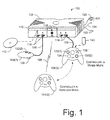
- Fig. 1 illustrates a gaming system with a game console and a controller that can operate in both wireless and wired modes.
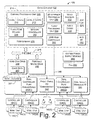
- Fig. 2 is a block diagram of the gaming system.
- Fig. 3 is a block diagram of the controller.
- Fig. 4 is a flow diagram showing a process for converting use of the controller from wireless operation to wired operation.
- Fig. 5 is a flow diagram showing a process for converting use of the controller from wired operation to wireless operation.
- the following disclosure describes a game controller that can be operated in both a wired mode and a wireless mode.
- the game controller can switch easily between the two modes without disrupting continued play of the game.
- the game controller is described in the context of a multi-purpose game controller for a console-based gaming system.
- the game controller may be configured in many different ways and with a wide variety of functionality, including specialty controllers.
- Fig. 1 shows an exemplary console-based gaming system 100. It includes a game console 102 and up to four controllers, as represented by two controllers 104(1) and 104(2). Each controller 104 is coupled to the game console 102 via a wire or wireless interface and utilizes a suitable data protocol, such as USB (Universal Serial Bus).
- One controller 104(2) is illustrated as operating in two different modes: a wired mode and a wireless mode. In the wired mode, the controller 104(2) is connected to the game console 102 via a cable 106. The controller derives power from the game console through the cable 106. In the wireless mode, the controller 104(2) is connected to the game console 102 via a wireless link 108.
- the wireless link may be implemented using any one of many different technologies including, for example, infrared, Bluetooth, or RF technologies.
- the controller 104(2) draws from its own power source, such as a battery.
- the cable 106 may optionally be detached from the controller to offer more freedom of movement.
- the player can switch between wireless operation and wired operation by connecting the serial cable 106 to, or disconnecting it from, the game console 102. Mode-switching may occur during game play without interrupting the game. For example, if a game controller is in wireless mode and the battery runs low during game play, the player may switch to wired mode by plugging the cable 106 into the game console 102 and game play continues without interruption. While in wired mode, the game controller is powered by the game console and the controller battery is recharged.
- the game console 102 is equipped with a portable media drive 110 and an optional internal hard disk drive.
- the portable media drive supports various forms of portable storage media as represented by an optical storage disc 112. Examples of suitable portable storage media include DVD, CD-ROM, game discs, game cartridges, and so forth.
- the game console 102 has four slots 114 on its front face to support up to four controllers, although the number and arrangement of slots may be modified.
- the game controllers 104 are assigned to the physical slots 114 for controlling various characters/features of the video game.
- the game controllers 104(1)-104(4) are assigned to virtual slots.
- virtual slots are assigned, without prompting the user, in sequential order to reduce complexity for the user.
- the first virtual slot is assigned to the first wireless game controller introduced to the host game console 102; the second virtual slot is assigned to the second wireless game controller, and so on.
- the user can choose a virtual slot via a user interface presented on the display. Actuation of a pre-designated button on the console invokes a slot assignment pane from which the player can select an available virtual slot.
- Control buttons 116 are positioned on the front face of the game console 102.
- Control buttons 116 include, for example, a power button that switches power to the game console and an eject button that alternately opens and closes a tray of the portable media drive 110 to allow insertion and extraction of the storage disc 112.
- the game console 102 connects to a television or other display (not shown) via A/V interfacing cables 120.
- a power cable 122 provides power to the game console.
- the game console 102 may be further equipped with internal or externally added network capabilities, as represented by the cable or modem connector 124 to facilitate access to a network, such as a local area network (LAN) or the Internet.
- LAN local area network
- Each controller 104 may be equipped with any of a wide variety of user interaction mechanisms. As illustrated in Fig. 1, each controller 104 is equipped with two thumbsticks 132(1) and 132(2), a directional or D-pad 134, surface buttons 136, and two triggers 138. These mechanisms are merely representative, and other known gaming mechanisms (e.g., shoulder buttons) may be substituted for or added to those shown in Fig. 1.
- a memory unit (MU) 140 may be inserted into the controller 104 to provide additional and portable storage (as illustrated) or alternatively into the game console 102.
- Portable memory units enable users to store game parameters and transport them for play on other consoles.
- each controller is configured to accommodate two memory units 140, although more or less than two units may be employed in other implementations.
- the game console may support one or more memory units per player.
- the game console 102 has a central processing unit (CPU) 200 and a memory controller 202 that facilitates processor access to various types of memory, including a flash ROM (Read Only Memory) 204, a RAM (Random Access Memory) 206, a hard disk drive 208, and the portable media drive 106.
- the CPU 200 is equipped with a level 1 cache 210 and a level 2 cache 212 to temporarily store data and hence reduce the number of memory access cycles, thereby improving processing speed and throughput.
- the CPU 200, memory controller 202, and various memory devices are interconnected via one or more buses, including serial and parallel buses, a memory bus, a peripheral bus, and a processor or local bus using any of a variety of bus architectures.
- bus architectures can include an Industry Standard Architecture (ISA) bus, a Micro Channel Architecture (MCA) bus, an Enhanced ISA (EISA) bus, a Video Electronics Standards Association (VESA) local bus, and a Peripheral Component Interconnect (PCI) bus.
- ROM 204 is configured as a flash ROM that is connected to the memory controller 202 via a PCI (Peripheral Component Interconnect) bus and a ROM bus (neither of which are shown).
- RAM 206 is configured as multiple DDR SDRAM (Double Data Rate Synchronous Dynamic RAM) modules that are independently controlled by the memory controller 202 via separate buses (not shown).
- the hard disk drive 208 and portable media drive 106 are connected to the memory controller via the PCI bus and an ATA (AT Attachment) bus 216.
- a 3D graphics processing unit 220 and a video encoder 222 form a video processing pipeline for high speed and high resolution graphics processing.
- Data is carried from the graphics processing unit 220 to the video encoder 222 via a digital video bus (not shown).
- An audio processing unit 224 and an audio codec (coder/decoder) 226 form a corresponding audio processing pipeline with high fidelity and stereo processing. Audio data is carried between the audio processing unit 224 and the audio codec 226 via a communication link (not shown).
- the video and audio processing pipelines output data to an A/V (audio/video) port 228 for transmission to the television or other display.
- the video and audio processing components 220-228 are mounted on the module 214.
- the USB host controller 230 is coupled to the CPU 200 and the memory controller 202 via a bus (e.g., PCI bus) and serves as host for the peripheral controllers 104(1)-104(4).
- the network interface 232 provides access to a network (e.g., LAN, Internet, etc.) and may be any of a wide variety of various wired or wireless interface components including an Ethernet card, a modem, a Bluetooth module, a cable modem, and the like.
- the game console 102 has two dual controller support subassemblies 240(1) and 240(2), with each subassembly supporting up to two of the game controllers 104(1)-104(4).
- a front panel I/O subassembly 242 supports the functionality of the control buttons 116, as well as any LEDs (light emitting diodes) or other indicators exposed on the outer surface of the game console.
- a controller wireless interface 244 is also provided to support wireless communication with the game controllers.
- the wireless interface 244 may use any one of many technologies, including IR, Bluetooth, and RF technologies.
- the subassemblies 240(1), 240(2), and 242 and controller wireless interface 244 are coupled to the module 214, and particularly the USB controller 230, via one or more cable assemblies 246.
- Eight memory units 140(1)-140(8) are illustrated as being connectable to the four controllers 104(1)-104(4), i.e., two memory units for each controller. Each memory unit 140 offers additional storage on which games, game parameters, and other data may be stored. When inserted into a controller, the memory unit 140 can be accessed by the memory controller 202. It is noted that, in other implementations, the memory units 140 may be inserted into compatible slots in the game console 102.
- a system power supply module 250 provides power to the components of the gaming system 100 and to the game controllers 104 when operating in the wired mode.
- a fan 252 cools the circuitry within the game console 102.
- the game console 102 may further implement a cryptography engine to perform common cryptographic functions, such as encryption, decryption, authentication, digital signing, hashing, and the like.
- the cryptography engine may be implemented as part of the CPU 200, or in software stored in memory (e.g., ROM 204, hard disk drive 208) that executes on the CPU, so that the CPU is configured to perform the cryptographic functions.
- Game data 260 generated during game play is stored in memory at the game console, such as in hard disk drive 208 (although other storage may be used).
- the type and quantity of game data is game specific and can be essentially anything that a game developer would like to track. Examples of game data might include skid marks or fuel level in a racing game, weapon selection or life count in shooter games, and so forth.
- the game data 260 is stored in relation to a controller ID 262.
- the controller passes in the controller ID and the console tries to match it with any controller IDs stored on hard disk drive 208 in relation to saved game data 260. If a match is found, the game console reassociates the corresponding game data with the controller.
- Fig. 3 shows functional components of the game controller 104 in more detail.
- the controller 104 has a central processing unit (CPU) 302 and memory, including ROM 304, RAM 306 and EEPROM 308.
- CPU central processing unit
- ROM 304 read-only memory
- RAM 306 random access memory
- EEPROM 308 is separate from, but interfaced with, the module 310.
- the game controller 104 further includes motor drives 312 to provide tactile feedback to the player and a PWM (pulse width modulation) output 314 to provide the control signals for the motor drives.
- Player actions received via variable-input actuators 316 e.g., thumbsticks 132 and triggers 138
- ADC 318 can be implemented, for example, as an eight channel 10-bit or 12-bit converter.
- Other player actions received through dual-state switches 320 e.g., buttons 136 and D-pad 134) are passed through I/O 322 to CPU 302.
- the game controller 104 supports both wired operation and wireless operation.
- the game controller 104 includes a USB interface 330 and USB connector 332 for the wired mode of operation.
- the game controller 104 is configured to support wireless operation using RF (radio frequency) technologies.
- An RF module 334 e.g., 2.4 GHz RF module
- a radio baseband unit 336 e.g., 2.4 GHz RF module
- DMA Direct Memory Access
- the game controller can be designed to utilize alternative wireless technologies, such as IR (infrared), Bluetooth, UWB (Ultra Wide Band), and so forth.
- the game controller 104 is equipped with its own power source to enable wireless operation.
- a battery 350 supplies power to the electronic modules and components of the game controller 104.
- a battery power controller 352 monitors the battery 350 and detects when power is low. Upon detection, a low power condition can be conveyed to the player (e.g., illumination of a light indicator on the controller or display of a warning while the game is being played). The player can then switch to wired mode by plugging in the cable to the game console.
- the battery power controller 352 also monitors charging behavior of the battery, such as how long it takes to charge and detection of when it is fully charged. In wired mode, the game controller 104 receives power from the game console.
- a battery charging circuit 354 recharges battery 350 while the controller is connected via the cable.
- a reset circuit 358 and power on reset circuitry 360 allow the game controller to be reset during operation or when power is initially provided.
- a power management module 356 generates voltages for the different components on the module 310 and dynamically manages power consumption of those components.
- the console maintains battery life data including, for example, the total life expectancy of the battery, how much power has been drawn during wireless play, and the amount of time left before the battery supply is effectively depleted.
- the controller sends the battery life data to the console and the console can utilize the data to instruct the player when to switch from wireless play to wired play so that the controller can be recharged.
- the console may flash a warning light on the console or present a pop up message on the display to inform the player of low battery conditions and suggest that the player plug the controller cable into the console for continued play.
- a voice module 370 may be optionally included in the game controller 104 to receive oral commands or speech from the player.
- the game controller 104 also has timing components to provide timing functionality, including a general purpose timer 374 (e.g., 16-bit timer), a watchdog timer 376, an oscillator 378, and a crystal 380.
- One or more identifiers 390 are stored in EEPROM 308.
- the EEPROM 308 stores a session ID that is used to facilitate switching between wired mode and wireless mode without causing permanent disruption to game play.
- the session ID includes an active game ID that identifies the current virtual slot being used by the controller and a device ID that identifies the controller itself.
- the game controller 104 passes the session ID to the game console.
- the game console extracts the controller ID portion and looks to match it with any controller ID stored on the game console in relation to saved game data. If a match is found, the game console reassociates the corresponding game data with the controller. In this manner, game play can continue uninterrupted during transition from wireless mode to wired mode.
- Fig. 4 shows a process 400 for switching a game controller from a wireless mode of operation to a wired mode of operation.
- the process 400 is illustrated as a collection of blocks in a logical flow graph, which represent a sequence of operations that can be implemented in hardware, software, or a combination thereof.
- the blocks represent computer instructions that, when executed by one or more processors, perform the recited operations.
- the process includes operations performed by both the game controller and a host gaming system.
- the process 400 is described with reference to the controller 104 and game console 102 described above with respect to Figs. 1-3. It is noted that the process 400 may be implemented by other types of controllers that are designed for both wired and wireless communication, and for other types of gaming systems, such as PCs.
- the game controller 104 is operated in a wireless mode. In this mode, the game controller 104 draws power from the battery 350 and transmits user commands via the RF module 334 to the game console 104.
- the game controller 104 monitors for conditions that might suggest a switch in operation from wireless mode to wired mode (block 404).
- a condition is where battery power controller 352 detects that battery 350 is running low.
- Another example condition occurs when a number of packets are lost or otherwise contain incorrect data during the wireless exchange between the controller 104 and console 102, perhaps due to a noisy RF environment or other interference. If no such conditions arise (i.e., the "No" branch from block 404), the game controller remains in wireless mode.
- the game controller 104 determines whether the session ID is saved in memory resident at the controller (block 406).
- the session ID includes an active game ID that identifies the current virtual slot being used by the controller and a device ID that identifies the controller. If the session ID is not saved (i.e., the "No" branch from block 406), the game controller 104 saves the session ID in nonvolatile memory resident at the controller, such as EEPROM 308 (block 408).
- the host determines whether the cable 106 is connected to one of the physical slots 114 (block 410). If not (i.e., the "No" branch from block 410), the game controller 104 continues to be operated in wireless mode. It may continue in this mode until the cable is attached or the battery ceases to supply sufficient power. When the cable is connected (i.e., the "Yes" branch from block 410), the game console 102 performs USB enumeration to establish a USB connection via the cable 106 (block 412).
- the game controller 104 retrieves the session ID from nonvolatile memory and sends it to the game console (block 414).
- the game console uses the session ID to locate any saved game data and reassociates that game data with the controller (block 416). More particularly, as game data 260 is generated during play, it is stored at the game console 102 in relation to a controller ID 262 associated with the game controller.
- the controller ID may be unique to the controller itself or it may represent a connection slot currently being used by the controller.
- the game console uses the controller ID from the session ID received from the newly attached game controller and looks to match it with any controller ID stored on the game console.
- the game console reassociates the game data for the active game identified in the session ID with the controller. In this manner, game play can continue uninterrupted during transition from wireless mode to wired mode.
- the game controller 104 continues in wired mode.
- Fig. 5 shows a process 500 for switching a game controller from a wired mode of operation to a wireless mode of operation.
- the process includes operations performed by both the game controller and a host gaming system, and once again will be described with reference to the controller 104 and game console 102 described above with respect to Figs. 1-3.
- the host e.g., game console 102 performs USB enumeration to establish a USB connection with the game controller 104 via the cable 106.
- the game controller 104 is operated in the wired mode (block 504).
- the game controller 104 determines whether the session ID is saved in controller memory. If the session ID is not saved (i.e., the "No" branch from block 506), the game controller 104 saves the session ID in nonvolatile memory, such as EEPROM 308 (block 508).
- the game controller 104 determines whether the cable 106 remains connected to one of the physical slots 114 of the game console (block 510). If it is still connected (i.e., the "Yes” branch from block 510), the game controller 104 continues to be operated in wired mode. When the cable is disconnected (i.e., the "No” branch from block 510), the game controller 104 performs a discovery process to become part of a wireless network and establish a wireless connection between the game controller and the game console (block 512).
- the game controller 104 retrieves the session ID from its nonvolatile memory and sends it to the game console so that any on-going game data can be reassociated with the controller (block 514). At block 516, the game controller 104 continues to operate in wireless mode.
- the described mode switching processes 400 and 500 also accommodate the situation where a new player joins a game.
- a new player can connect his/her game controller to an available physical slot for wired operation or begin operation directly in wireless mode using the discovery process.
- the game console first attempts to match the session ID with a current list of session IDs. When a match is not found, the game console associate that device ID with the physical or virtual slot through which it communicates. It can then begin storing game data in relation to that device ID.
- the above-described game controller facilitates both wired and wireless operation and the ability to switch between wired and wireless operation without interrupting an ongoing game.
Landscapes
- Engineering & Computer Science (AREA)
- Multimedia (AREA)
- Human Computer Interaction (AREA)
- Computer Networks & Wireless Communication (AREA)
- Computer Security & Cryptography (AREA)
- Business, Economics & Management (AREA)
- General Business, Economics & Management (AREA)
- Signal Processing (AREA)
- Software Systems (AREA)
- Slot Machines And Peripheral Devices (AREA)
- Mobile Radio Communication Systems (AREA)
- Selective Calling Equipment (AREA)
Applications Claiming Priority (2)
| Application Number | Priority Date | Filing Date | Title |
|---|---|---|---|
| US769431 | 2004-01-30 | ||
| US10/769,431 US7753788B2 (en) | 2004-01-30 | 2004-01-30 | Game controller that converts between wireless operation and wired operation |
Publications (1)
| Publication Number | Publication Date |
|---|---|
| EP1559460A1 true EP1559460A1 (en) | 2005-08-03 |
Family
ID=34654389
Family Applications (1)
| Application Number | Title | Priority Date | Filing Date |
|---|---|---|---|
| EP05100446A Withdrawn EP1559460A1 (en) | 2004-01-30 | 2005-01-25 | Game controller that converts between wireless operation and wired operation |
Country Status (8)
| Country | Link |
|---|---|
| US (4) | US7753788B2 (enExample) |
| EP (1) | EP1559460A1 (enExample) |
| JP (1) | JP4864329B2 (enExample) |
| KR (1) | KR101085610B1 (enExample) |
| CN (1) | CN1654104B (enExample) |
| AU (1) | AU2005200143B2 (enExample) |
| CA (1) | CA2494438A1 (enExample) |
| TW (1) | TWI361711B (enExample) |
Cited By (8)
| Publication number | Priority date | Publication date | Assignee | Title |
|---|---|---|---|---|
| FR2881585A1 (fr) * | 2005-01-31 | 2006-08-04 | Intec Inc | Dispositif de commande de jeu video avec ensemble a accumulateurs de type rechargeable. |
| WO2007032248A1 (ja) | 2005-09-15 | 2007-03-22 | Sony Computer Entertainment Inc. | 情報通信システム、情報処理装置、及び操作端末 |
| WO2009063335A2 (en) | 2007-11-13 | 2009-05-22 | Spielo Manufacturing Ulc | Wireless wagering system |
| EP2222104A3 (en) * | 2009-02-03 | 2011-01-05 | Yao, Chih-Ang | Information exchange apparatus, method and managing system applied thereto |
| EP1952862A3 (en) * | 2006-11-17 | 2011-01-26 | Nintendo Co., Ltd. | Storage medium having game program stored thereon and game apparatus |
| CN101998691B (zh) * | 2009-08-26 | 2013-10-16 | 中兴通讯股份有限公司 | 一种数据传输的方法、系统和装置 |
| WO2021262423A1 (en) | 2020-06-25 | 2021-12-30 | Sony Interactive Entertainment LLC | Charger for video game controller |
| US12280499B2 (en) | 2020-11-11 | 2025-04-22 | Sony Interactive Entertainment Inc. | Domain adaptation for simulated motor backlash |
Families Citing this family (91)
| Publication number | Priority date | Publication date | Assignee | Title |
|---|---|---|---|---|
| US7749089B1 (en) | 1999-02-26 | 2010-07-06 | Creative Kingdoms, Llc | Multi-media interactive play system |
| US6761637B2 (en) | 2000-02-22 | 2004-07-13 | Creative Kingdoms, Llc | Method of game play using RFID tracking device |
| US7878905B2 (en) | 2000-02-22 | 2011-02-01 | Creative Kingdoms, Llc | Multi-layered interactive play experience |
| US7445550B2 (en) | 2000-02-22 | 2008-11-04 | Creative Kingdoms, Llc | Magical wand and interactive play experience |
| US7066781B2 (en) | 2000-10-20 | 2006-06-27 | Denise Chapman Weston | Children's toy with wireless tag/transponder |
| US6967566B2 (en) | 2002-04-05 | 2005-11-22 | Creative Kingdoms, Llc | Live-action interactive adventure game |
| US20070066396A1 (en) | 2002-04-05 | 2007-03-22 | Denise Chapman Weston | Retail methods for providing an interactive product to a consumer |
| US7674184B2 (en) | 2002-08-01 | 2010-03-09 | Creative Kingdoms, Llc | Interactive water attraction and quest game |
| US9446319B2 (en) | 2003-03-25 | 2016-09-20 | Mq Gaming, Llc | Interactive gaming toy |
| US7753788B2 (en) * | 2004-01-30 | 2010-07-13 | Microsoft Corporation | Game controller that converts between wireless operation and wired operation |
| US7400878B2 (en) | 2004-02-26 | 2008-07-15 | Research In Motion Limited | Computing device with environment aware features |
| US9289678B2 (en) * | 2005-01-12 | 2016-03-22 | Microsoft Technology Licensing, Llc | System for associating a wireless device to a console device |
| US8369795B2 (en) | 2005-01-12 | 2013-02-05 | Microsoft Corporation | Game console notification system |
| US7927216B2 (en) | 2005-09-15 | 2011-04-19 | Nintendo Co., Ltd. | Video game system with wireless modular handheld controller |
| US8313379B2 (en) | 2005-08-22 | 2012-11-20 | Nintendo Co., Ltd. | Video game system with wireless modular handheld controller |
| JP4805633B2 (ja) | 2005-08-22 | 2011-11-02 | 任天堂株式会社 | ゲーム用操作装置 |
| JP4262726B2 (ja) | 2005-08-24 | 2009-05-13 | 任天堂株式会社 | ゲームコントローラおよびゲームシステム |
| US8308563B2 (en) | 2005-08-30 | 2012-11-13 | Nintendo Co., Ltd. | Game system and storage medium having game program stored thereon |
| US8157651B2 (en) | 2005-09-12 | 2012-04-17 | Nintendo Co., Ltd. | Information processing program |
| JP5010822B2 (ja) * | 2005-09-29 | 2012-08-29 | 株式会社ソニー・コンピュータエンタテインメント | 情報通信システム、情報処理装置、情報処理プログラム、及び情報処理プログラムが記憶された記憶媒体、表示制御方法 |
| JP2007099035A (ja) * | 2005-10-03 | 2007-04-19 | Kayaba Ind Co Ltd | ミキサ車 |
| JP4827613B2 (ja) | 2006-05-24 | 2011-11-30 | 株式会社ソニー・コンピュータエンタテインメント | 端末装置、バッテリ充電制御方法およびゲームシステム |
| JP5051822B2 (ja) | 2006-08-02 | 2012-10-17 | 任天堂株式会社 | 汎用遠隔制御機能を備えたゲーム装置 |
| JP4875464B2 (ja) * | 2006-11-09 | 2012-02-15 | 株式会社ソニー・コンピュータエンタテインメント | 情報通信システム、情報処理装置、及び情報通信方法 |
| US8704492B2 (en) * | 2007-02-20 | 2014-04-22 | Microsoft Corporation | Automatic power switching in game peripheral |
| US20080248882A1 (en) * | 2007-04-03 | 2008-10-09 | Hsu Kent T J | Video game console adapter |
| US8430752B2 (en) | 2007-06-20 | 2013-04-30 | The Nielsen Company (Us), Llc | Methods and apparatus to meter video game play |
| US8180295B2 (en) * | 2007-07-19 | 2012-05-15 | Sony Computer Entertainment Inc. | Bluetooth enabled computing system and associated methods |
| US20090058707A1 (en) * | 2007-08-30 | 2009-03-05 | Speakercraft, Inc. | Dual mode remote control system |
| US20090137315A1 (en) * | 2007-11-28 | 2009-05-28 | Shing-Wai David Wu | Game console remote controller integration |
| US8856268B2 (en) * | 2008-04-22 | 2014-10-07 | Microsoft Corporation | Sharing of console and web-based games and gaming profiles |
| US20110228062A1 (en) * | 2008-10-20 | 2011-09-22 | Macnaughton Boyd | 3D Glasses with OLED Shutters |
| USRE45394E1 (en) | 2008-10-20 | 2015-03-03 | X6D Limited | 3D glasses |
| EP2354896B1 (en) * | 2008-11-14 | 2016-12-21 | Sony Interactive Entertainment Inc. | Operating device and information processing apparatus |
| US8542326B2 (en) | 2008-11-17 | 2013-09-24 | X6D Limited | 3D shutter glasses for use with LCD displays |
| CA2684513A1 (en) * | 2008-11-17 | 2010-05-17 | X6D Limited | Improved performance 3d glasses |
| EP2327460B1 (en) | 2009-07-24 | 2022-01-12 | Nintendo Co., Ltd. | Game system and controller |
| TWI397841B (zh) * | 2009-09-15 | 2013-06-01 | Hanwang Technology Co Ltd | Coordinate positioning device |
| USD692941S1 (en) | 2009-11-16 | 2013-11-05 | X6D Limited | 3D glasses |
| TWI409095B (zh) * | 2010-02-05 | 2013-09-21 | Uniband Electronic Corp | 建立及進行無線網路多人線上遊戲且無需網際網路的方法 |
| US8452877B2 (en) * | 2010-04-28 | 2013-05-28 | Lenovo (Singapore) Pte. Ltd. | Establishing a remote desktop |
| WO2011146668A2 (en) | 2010-05-18 | 2011-11-24 | Seektech, Inc. | User interface devices, apparatus, and methods |
| US9029721B2 (en) | 2010-08-30 | 2015-05-12 | Microsoft Technology Licensing, Llc | Controller with transformable surface topology |
| WO2012051357A1 (en) | 2010-10-12 | 2012-04-19 | Mark Olsson | Magnetic thumbstick user interface devices |
| US20130198273A1 (en) | 2010-10-16 | 2013-08-01 | James Charles Vago | Methods, devices, and systems for video gaming |
| US8696461B2 (en) * | 2011-06-01 | 2014-04-15 | Microsoft Corporation | Automated sensor driven match-making |
| US9678577B1 (en) | 2011-08-20 | 2017-06-13 | SeeScan, Inc. | Magnetic sensing user interface device methods and apparatus using electromagnets and associated magnetic sensors |
| TWI444794B (zh) | 2011-12-23 | 2014-07-11 | Ind Tech Res Inst | 負載管理系統以及負載管理方法 |
| CN103389930B (zh) * | 2012-05-10 | 2018-11-16 | 索尼公司 | 数据存储装置和数据存储方法 |
| US8972762B2 (en) | 2012-07-11 | 2015-03-03 | Blackberry Limited | Computing devices and methods for resetting inactivity timers on computing devices |
| USD711959S1 (en) | 2012-08-10 | 2014-08-26 | X6D Limited | Glasses for amblyopia treatment |
| US9107028B2 (en) * | 2012-12-14 | 2015-08-11 | Microsoft Technology Licensing, Llc | Coupling devices using multiple discovery zones |
| WO2014186806A1 (en) | 2013-05-17 | 2014-11-20 | SeeScan, Inc. | User interface devices |
| US9579567B2 (en) | 2013-06-03 | 2017-02-28 | Microsoft Technology Licensing, Llc | Managing controller pairings |
| US10567865B2 (en) * | 2013-10-16 | 2020-02-18 | Voyetra Turtle Beach, Inc. | Electronic headset accessory |
| CN111510875B (zh) * | 2013-12-17 | 2023-01-06 | 贝利莫控股公司 | 移动通信装置和用于管理多个致动器的操作的方法 |
| US9928188B2 (en) * | 2014-06-18 | 2018-03-27 | MediaLeash, LLC | Battery pack to regulate access to media systems |
| CN104159259B (zh) * | 2014-08-26 | 2018-06-08 | 北京智谷技术服务有限公司 | 无线通信方法及无线通信装置 |
| US10370060B2 (en) * | 2015-10-30 | 2019-08-06 | Shimano Inc. | Bicycle electrical component assembly |
| US10318013B1 (en) * | 2015-04-01 | 2019-06-11 | Bansen Labs LLC | System and method for converting input from alternate input devices |
| CN105263194A (zh) * | 2015-09-18 | 2016-01-20 | 北京金山安全软件有限公司 | 移动设备与固定设备之间通信连接的建立方法及装置 |
| KR101675297B1 (ko) * | 2015-10-08 | 2016-11-11 | 양택훈 | 네트워크 게임용 토이, 네트워크 게임용 토이 시스템 및 이들의 제어방법 |
| KR102757228B1 (ko) * | 2015-11-09 | 2025-01-21 | 삼성전자주식회사 | 유선 혹은 무선 인터페이스를 통한 온-고잉 세션의 연속성을 유지하는 방법 및 장치 |
| EP3207967A1 (en) | 2016-02-22 | 2017-08-23 | Nintendo Co., Ltd. | Information processing apparatus, information processing system, information processing method, and information processing program |
| US20180059788A1 (en) * | 2016-08-23 | 2018-03-01 | Colopl, Inc. | Method for providing virtual reality, program for executing the method on computer, and information processing apparatus |
| USD849145S1 (en) * | 2016-12-12 | 2019-05-21 | Hyperkin, Inc. | Video game controller |
| US20180197501A1 (en) * | 2017-01-06 | 2018-07-12 | Intel Corporation | Display connection switching |
| US10507385B2 (en) | 2017-01-25 | 2019-12-17 | Kieran S. Lyden | Game controller |
| US12194375B2 (en) | 2017-01-25 | 2025-01-14 | Kieran S. Lyden | Game controller |
| USD849146S1 (en) | 2017-01-26 | 2019-05-21 | Hyperkin, Inc. | Video game controller |
| US10904248B2 (en) | 2017-06-09 | 2021-01-26 | Microsoft Technology Licensing, Llc | Persistent linked sign-in for gaming consoles |
| US10758829B2 (en) * | 2017-08-28 | 2020-09-01 | Brandon Cragg | Mobile DC powered entertainment center |
| US11484803B2 (en) * | 2017-08-28 | 2022-11-01 | Brandon Cragg | Mobile DC powered entertainment center |
| US10751611B2 (en) * | 2017-10-31 | 2020-08-25 | Microsoft Technology Licensing, Llc | Using a game controller as a mouse or gamepad |
| US10814222B2 (en) | 2018-09-21 | 2020-10-27 | Logitech Europe S.A. | Gaming controller with adaptable input configurations |
| US10847979B2 (en) * | 2018-12-14 | 2020-11-24 | Zhuhai Jieli Technology Co., Ltd | Charging and communication system |
| US11000759B2 (en) * | 2019-03-29 | 2021-05-11 | Valve Corporation | Game controller operable in bluetooth low energy (BLE) mode |
| US11535339B2 (en) * | 2019-08-30 | 2022-12-27 | Shimano Inc. | Bicycle derailleur |
| TWI751688B (zh) * | 2020-09-11 | 2022-01-01 | 寶德科技股份有限公司 | 遊戲控制器 |
| CN112612738A (zh) * | 2020-11-26 | 2021-04-06 | 国网浙江省电力有限公司开化县供电公司 | 一种无线console连接装置 |
| JP7248720B2 (ja) * | 2021-02-16 | 2023-03-29 | 任天堂株式会社 | ゲームプログラム、ゲーム装置、ゲームシステム、およびゲーム処理方法 |
| CN115342487A (zh) * | 2021-05-12 | 2022-11-15 | 重庆美的通用制冷设备有限公司 | 电控柜系统、终端装置、冷水机组和空调系统 |
| US12586483B2 (en) | 2021-11-15 | 2026-03-24 | Raytheon Company | Modular circuit card assembly for advanced training applications |
| KR102619427B1 (ko) * | 2021-12-06 | 2024-01-04 | 대한민국 | 장애인 접근성 향상을 위한 게임 컨트롤러 장치 |
| DE112022006745T5 (de) * | 2022-03-29 | 2025-01-09 | Lg Electronics Inc. | Anzeigevorrichtung |
| US12074946B2 (en) * | 2022-11-04 | 2024-08-27 | Backbone Labs, Inc. | System and method for automatic content capability detection |
| WO2024107654A2 (en) | 2022-11-15 | 2024-05-23 | Backbone Labs, Inc. | Position-adjustable connector for mobile device controller |
| CN115970268A (zh) * | 2023-01-16 | 2023-04-18 | 深圳市达实智控科技股份有限公司 | 多模式游戏控制器及其控制方法 |
| GB2630033A (en) * | 2023-05-12 | 2024-11-20 | Sony Interactive Entertainment Inc | Controller apparatus, systems and methods |
| US12678689B2 (en) | 2023-05-26 | 2026-07-14 | Backbone Labs, Inc. | Cloud game queueing |
| US20260138032A1 (en) * | 2024-11-15 | 2026-05-21 | Sony Interactive Entertainment Inc. | Controller-driven video game console login |
Citations (4)
| Publication number | Priority date | Publication date | Assignee | Title |
|---|---|---|---|---|
| US20020107071A1 (en) * | 1996-03-05 | 2002-08-08 | Atsunori Himoto | Controller and expansion unit for controller |
| US20020105229A1 (en) * | 2001-01-23 | 2002-08-08 | Makoto Tanaka | Wireless controller and power supply method thereof |
| US6511378B1 (en) * | 2000-05-05 | 2003-01-28 | Intel Corporation | Method of identifying game controllers in multi-player game |
| WO2005043333A2 (en) * | 2003-10-31 | 2005-05-12 | Jaalaa, Inc. | Computer interface with both wired and wireless links |
Family Cites Families (35)
| Publication number | Priority date | Publication date | Assignee | Title |
|---|---|---|---|---|
| JPH0381804A (ja) | 1989-08-25 | 1991-04-08 | Amada Co Ltd | 工作機械のメンテナンスエイドシステム |
| US5311116A (en) * | 1992-04-02 | 1994-05-10 | Electronic Development, Inc. | Multi-channel electromagnetically transparent voltage waveform monitor link |
| DE4306152A1 (de) | 1993-02-27 | 1994-09-01 | Hoechst Ag | Positiv arbeitendes strahlungsempfindliches Gemisch und damit hergestelltes Aufzeichnungsmaterial |
| JP2985636B2 (ja) * | 1994-01-26 | 1999-12-06 | 松下電工株式会社 | リモコンシステム |
| JP2723873B2 (ja) * | 1995-12-26 | 1998-03-09 | 日本電気移動通信株式会社 | 電池残量表示装置付携帯無線機 |
| US5881366A (en) * | 1996-05-01 | 1999-03-09 | Logitech, Inc. | Wireless peripheral interface |
| US6084638A (en) * | 1996-10-08 | 2000-07-04 | Hare; Charles S. | Computer interface extension system and method |
| US6169789B1 (en) * | 1996-12-16 | 2001-01-02 | Sanjay K. Rao | Intelligent keyboard system |
| KR19980073520A (ko) * | 1997-03-15 | 1998-11-05 | 김광호 | 유.무선 겸용 입력 장치 및 그의 제어 방법 |
| US5983073A (en) * | 1997-04-04 | 1999-11-09 | Ditzik; Richard J. | Modular notebook and PDA computer systems for personal computing and wireless communications |
| KR100229602B1 (ko) * | 1997-04-12 | 1999-11-15 | 윤종용 | 포인팅장치를 장착가능한 유무선 겸용의 입력장치 및 이를 사용하는 컴퓨터 시스템 |
| US6195712B1 (en) * | 1997-06-13 | 2001-02-27 | Intel Corporation | Dynamic discovery of wireless peripherals |
| US6085247A (en) * | 1998-06-08 | 2000-07-04 | Microsoft Corporation | Server operating system for supporting multiple client-server sessions and dynamic reconnection of users to previous sessions using different computers |
| US6011489A (en) * | 1998-01-12 | 2000-01-04 | Toymax Inc. | Remotely controlled toy and wireless remote operable in a point of sale package |
| CA2248745C (en) * | 1998-02-13 | 2005-08-23 | Arista Interactive Llc | Wireless game control units |
| US6151645A (en) * | 1998-08-07 | 2000-11-21 | Gateway 2000, Inc. | Computer communicates with two incompatible wireless peripherals using fewer transceivers |
| JP3659294B2 (ja) * | 1998-08-17 | 2005-06-15 | 株式会社タイトー | ラジオコントロール模型ゲーム機 |
| US6599194B1 (en) * | 1998-09-08 | 2003-07-29 | Darren Smith | Home video game system with hard disk drive and internet access capability |
| US6317061B1 (en) * | 1998-10-08 | 2001-11-13 | Sanjay Batra | Detachable keyboard |
| US6468160B2 (en) * | 1999-04-08 | 2002-10-22 | Nintendo Of America, Inc. | Security system for video game system with hard disk drive and internet access capability |
| US6459896B1 (en) * | 1999-10-18 | 2002-10-01 | Gateway, Inc. | Notification of low-battery in a wireless network |
| US6293798B1 (en) * | 1999-11-10 | 2001-09-25 | Skyline Products | System and method for an RC controller and software |
| US6404393B1 (en) * | 2000-10-04 | 2002-06-11 | 3Com Corporation | Embedded antenna in a type II PCMCIA card |
| US6684062B1 (en) * | 2000-10-25 | 2004-01-27 | Eleven Engineering Incorporated | Wireless game control system |
| DE60116364T2 (de) * | 2000-10-27 | 2006-09-28 | Sony Computer Entertainment Inc. | Datenverarbeitungssystem mit mehreren bedienungsterminals und einer datenverarbeitungssvorrichtung |
| JP3467262B2 (ja) * | 2000-11-10 | 2003-11-17 | 株式会社ソニー・コンピュータエンタテインメント | エンタテインメント装置及び受信装置 |
| JP3494998B2 (ja) * | 2001-01-25 | 2004-02-09 | 株式会社ソニー・コンピュータエンタテインメント | 情報通信システム、情報処理装置、通信特定情報の保存方法、通信特定情報の保存プログラムを記録したコンピュータ読み取り可能な記録媒体、通信特定情報の保存プログラム |
| US6917611B2 (en) * | 2001-02-17 | 2005-07-12 | Motorola, Inc. | Method and apparatus for switching an on going communication of user information between a wireless connection and a wired connection |
| JP2003179673A (ja) * | 2001-12-11 | 2003-06-27 | Toshiba Corp | 携帯型電子機器 |
| US7876704B1 (en) * | 2002-01-11 | 2011-01-25 | Broadcom Corporation | Tunneling protocols for wireless communications |
| US7336602B2 (en) * | 2002-01-29 | 2008-02-26 | Intel Corporation | Apparatus and method for wireless/wired communications interface |
| US7333785B1 (en) * | 2002-02-20 | 2008-02-19 | Logitech Europe S.A. | Power management for wireless peripheral device with force feedback |
| US20030228911A1 (en) | 2002-06-05 | 2003-12-11 | Dernis Mitchell S. | DVD-enabling code server and loader for a console-based gaming system |
| US7136904B2 (en) * | 2002-12-23 | 2006-11-14 | Microtine (San Diego), Inc. | Wireless cable replacement for computer peripherals using a master adapter |
| US7753788B2 (en) * | 2004-01-30 | 2010-07-13 | Microsoft Corporation | Game controller that converts between wireless operation and wired operation |
-
2004
- 2004-01-30 US US10/769,431 patent/US7753788B2/en not_active Expired - Fee Related
-
2005
- 2005-01-12 TW TW094100930A patent/TWI361711B/zh not_active IP Right Cessation
- 2005-01-13 AU AU2005200143A patent/AU2005200143B2/en not_active Ceased
- 2005-01-25 EP EP05100446A patent/EP1559460A1/en not_active Withdrawn
- 2005-01-26 CA CA002494438A patent/CA2494438A1/en not_active Abandoned
- 2005-01-28 JP JP2005021783A patent/JP4864329B2/ja not_active Expired - Fee Related
- 2005-01-28 CN CN2005100068630A patent/CN1654104B/zh not_active Expired - Fee Related
- 2005-01-28 KR KR1020050007873A patent/KR101085610B1/ko not_active Expired - Fee Related
-
2010
- 2010-03-26 US US12/748,071 patent/US8727882B2/en not_active Expired - Fee Related
-
2014
- 2014-05-19 US US14/281,460 patent/US9427660B2/en not_active Expired - Lifetime
-
2016
- 2016-08-19 US US15/242,248 patent/US9808712B2/en not_active Expired - Fee Related
Patent Citations (4)
| Publication number | Priority date | Publication date | Assignee | Title |
|---|---|---|---|---|
| US20020107071A1 (en) * | 1996-03-05 | 2002-08-08 | Atsunori Himoto | Controller and expansion unit for controller |
| US6511378B1 (en) * | 2000-05-05 | 2003-01-28 | Intel Corporation | Method of identifying game controllers in multi-player game |
| US20020105229A1 (en) * | 2001-01-23 | 2002-08-08 | Makoto Tanaka | Wireless controller and power supply method thereof |
| WO2005043333A2 (en) * | 2003-10-31 | 2005-05-12 | Jaalaa, Inc. | Computer interface with both wired and wireless links |
Cited By (17)
| Publication number | Priority date | Publication date | Assignee | Title |
|---|---|---|---|---|
| FR2881585A1 (fr) * | 2005-01-31 | 2006-08-04 | Intec Inc | Dispositif de commande de jeu video avec ensemble a accumulateurs de type rechargeable. |
| WO2006085901A1 (en) * | 2005-01-31 | 2006-08-17 | Intec, Inc. | Video game controller with rechargeable battery system |
| EP2853298A1 (en) * | 2005-09-15 | 2015-04-01 | Sony Computer Entertainment Inc. | Information and telecommunications system, information processing unit, and operation terminal |
| WO2007032248A1 (ja) | 2005-09-15 | 2007-03-22 | Sony Computer Entertainment Inc. | 情報通信システム、情報処理装置、及び操作端末 |
| US9474975B2 (en) | 2005-09-15 | 2016-10-25 | Sony Corporation | Information and telecommunications system, information processing unit, and operation terminal |
| EP2668984A1 (en) * | 2005-09-15 | 2013-12-04 | Sony Computer Entertainment Inc. | Information and telecommunications system, information processing unit, and operation terminal |
| EP1936511A4 (en) * | 2005-09-15 | 2012-01-11 | Sony Computer Entertainment Inc | INFORMATION COMMUNICATION SYSTEM, INFORMATION PROCESSING DEVICE AND OPERATING DEVICE |
| US8559892B2 (en) | 2005-09-15 | 2013-10-15 | Sony Corporation | Information communication system, information processing apparatus, and operating terminal |
| EP1952862A3 (en) * | 2006-11-17 | 2011-01-26 | Nintendo Co., Ltd. | Storage medium having game program stored thereon and game apparatus |
| EP2210242A4 (en) * | 2007-11-13 | 2012-04-18 | Spielo Mfg Ulc | WIRELESS WEATHER SYSTEM |
| US8574079B2 (en) | 2007-11-13 | 2013-11-05 | Spielo International Canada, Ulc | Wireless wagering system |
| WO2009063335A2 (en) | 2007-11-13 | 2009-05-22 | Spielo Manufacturing Ulc | Wireless wagering system |
| EP2222104A3 (en) * | 2009-02-03 | 2011-01-05 | Yao, Chih-Ang | Information exchange apparatus, method and managing system applied thereto |
| CN101998691B (zh) * | 2009-08-26 | 2013-10-16 | 中兴通讯股份有限公司 | 一种数据传输的方法、系统和装置 |
| WO2021262423A1 (en) | 2020-06-25 | 2021-12-30 | Sony Interactive Entertainment LLC | Charger for video game controller |
| EP4171766A4 (en) * | 2020-06-25 | 2023-11-01 | Sony Interactive Entertainment LLC | VIDEO GAME CONTROL CHARGER |
| US12280499B2 (en) | 2020-11-11 | 2025-04-22 | Sony Interactive Entertainment Inc. | Domain adaptation for simulated motor backlash |
Also Published As
| Publication number | Publication date |
|---|---|
| CN1654104B (zh) | 2010-06-09 |
| JP2005211665A (ja) | 2005-08-11 |
| US8727882B2 (en) | 2014-05-20 |
| US20050170889A1 (en) | 2005-08-04 |
| US20170043246A1 (en) | 2017-02-16 |
| CN1654104A (zh) | 2005-08-17 |
| CA2494438A1 (en) | 2005-07-30 |
| US9808712B2 (en) | 2017-11-07 |
| TWI361711B (en) | 2012-04-11 |
| JP4864329B2 (ja) | 2012-02-01 |
| TW200533405A (en) | 2005-10-16 |
| KR20050078226A (ko) | 2005-08-04 |
| US20140256444A1 (en) | 2014-09-11 |
| US7753788B2 (en) | 2010-07-13 |
| AU2005200143B2 (en) | 2010-05-13 |
| KR101085610B1 (ko) | 2011-11-23 |
| AU2005200143A1 (en) | 2005-08-18 |
| US20100178984A1 (en) | 2010-07-15 |
| US9427660B2 (en) | 2016-08-30 |
Similar Documents
| Publication | Publication Date | Title |
|---|---|---|
| AU2005200143B2 (en) | Game controller that converts between wireless operation and wired operation | |
| EP1583321B1 (en) | Binding of wireless game controller to host | |
| US20050221894A1 (en) | Multi-system game controller that operates in multiple USB modes | |
| US9573056B2 (en) | Expandable control device via hardware attachment | |
| AU2005201230B2 (en) | Game controller power management | |
| EP1583317A1 (en) | Wireless game controller with fast connect to a host | |
| KR20060045142A (ko) | 게임 컨트롤러 전력 관리 |
Legal Events
| Date | Code | Title | Description |
|---|---|---|---|
| PUAI | Public reference made under article 153(3) epc to a published international application that has entered the european phase |
Free format text: ORIGINAL CODE: 0009012 |
|
| AK | Designated contracting states |
Kind code of ref document: A1 Designated state(s): AT BE BG CH CY CZ DE DK EE ES FI FR GB GR HU IE IS IT LI LT LU MC NL PL PT RO SE SI SK TR |
|
| AX | Request for extension of the european patent |
Extension state: AL BA HR LV MK YU |
|
| 17P | Request for examination filed |
Effective date: 20060104 |
|
| AKX | Designation fees paid |
Designated state(s): AT BE BG CH CY CZ DE DK EE ES FI FR GB GR HU IE IS IT LI LT LU MC NL PL PT RO SE SI SK TR |
|
| 17Q | First examination report despatched |
Effective date: 20070130 |
|
| STAA | Information on the status of an ep patent application or granted ep patent |
Free format text: STATUS: THE APPLICATION HAS BEEN WITHDRAWN |
|
| 18W | Application withdrawn |
Effective date: 20120920 |