EP1556337B1 - Verfahren zur herstellung einer multimetalloxidmasse - Google Patents
Verfahren zur herstellung einer multimetalloxidmasse Download PDFInfo
- Publication number
- EP1556337B1 EP1556337B1 EP03753552.3A EP03753552A EP1556337B1 EP 1556337 B1 EP1556337 B1 EP 1556337B1 EP 03753552 A EP03753552 A EP 03753552A EP 1556337 B1 EP1556337 B1 EP 1556337B1
- Authority
- EP
- European Patent Office
- Prior art keywords
- multimetal oxide
- oxide material
- process according
- washed
- group
- Prior art date
- Legal status (The legal status is an assumption and is not a legal conclusion. Google has not performed a legal analysis and makes no representation as to the accuracy of the status listed.)
- Expired - Lifetime
Links
Images

Classifications
-
- C—CHEMISTRY; METALLURGY
- C07—ORGANIC CHEMISTRY
- C07C—ACYCLIC OR CARBOCYCLIC COMPOUNDS
- C07C51/00—Preparation of carboxylic acids or their salts, halides or anhydrides
- C07C51/16—Preparation of carboxylic acids or their salts, halides or anhydrides by oxidation
- C07C51/21—Preparation of carboxylic acids or their salts, halides or anhydrides by oxidation with molecular oxygen
- C07C51/215—Preparation of carboxylic acids or their salts, halides or anhydrides by oxidation with molecular oxygen of saturated hydrocarbyl groups
-
- C—CHEMISTRY; METALLURGY
- C01—INORGANIC CHEMISTRY
- C01G—COMPOUNDS CONTAINING METALS NOT COVERED BY SUBCLASSES C01D OR C01F
- C01G1/00—Methods of preparing compounds of metals not covered by subclasses C01B, C01C, C01D, or C01F, in general
- C01G1/02—Oxides
-
- B—PERFORMING OPERATIONS; TRANSPORTING
- B01—PHYSICAL OR CHEMICAL PROCESSES OR APPARATUS IN GENERAL
- B01J—CHEMICAL OR PHYSICAL PROCESSES, e.g. CATALYSIS OR COLLOID CHEMISTRY; THEIR RELEVANT APPARATUS
- B01J23/00—Catalysts comprising metals or metal oxides or hydroxides, not provided for in group B01J21/00
- B01J23/002—Mixed oxides other than spinels, e.g. perovskite
-
- B—PERFORMING OPERATIONS; TRANSPORTING
- B01—PHYSICAL OR CHEMICAL PROCESSES OR APPARATUS IN GENERAL
- B01J—CHEMICAL OR PHYSICAL PROCESSES, e.g. CATALYSIS OR COLLOID CHEMISTRY; THEIR RELEVANT APPARATUS
- B01J23/00—Catalysts comprising metals or metal oxides or hydroxides, not provided for in group B01J21/00
- B01J23/16—Catalysts comprising metals or metal oxides or hydroxides, not provided for in group B01J21/00 of arsenic, antimony, bismuth, vanadium, niobium, tantalum, polonium, chromium, molybdenum, tungsten, manganese, technetium or rhenium
- B01J23/20—Vanadium, niobium or tantalum
-
- B—PERFORMING OPERATIONS; TRANSPORTING
- B01—PHYSICAL OR CHEMICAL PROCESSES OR APPARATUS IN GENERAL
- B01J—CHEMICAL OR PHYSICAL PROCESSES, e.g. CATALYSIS OR COLLOID CHEMISTRY; THEIR RELEVANT APPARATUS
- B01J23/00—Catalysts comprising metals or metal oxides or hydroxides, not provided for in group B01J21/00
- B01J23/16—Catalysts comprising metals or metal oxides or hydroxides, not provided for in group B01J21/00 of arsenic, antimony, bismuth, vanadium, niobium, tantalum, polonium, chromium, molybdenum, tungsten, manganese, technetium or rhenium
- B01J23/24—Chromium, molybdenum or tungsten
- B01J23/31—Chromium, molybdenum or tungsten combined with bismuth
-
- B—PERFORMING OPERATIONS; TRANSPORTING
- B01—PHYSICAL OR CHEMICAL PROCESSES OR APPARATUS IN GENERAL
- B01J—CHEMICAL OR PHYSICAL PROCESSES, e.g. CATALYSIS OR COLLOID CHEMISTRY; THEIR RELEVANT APPARATUS
- B01J23/00—Catalysts comprising metals or metal oxides or hydroxides, not provided for in group B01J21/00
- B01J23/38—Catalysts comprising metals or metal oxides or hydroxides, not provided for in group B01J21/00 of noble metals
- B01J23/54—Catalysts comprising metals or metal oxides or hydroxides, not provided for in group B01J21/00 of noble metals combined with metals, oxides or hydroxides provided for in groups B01J23/02 - B01J23/36
- B01J23/56—Platinum group metals
- B01J23/64—Platinum group metals with arsenic, antimony, bismuth, vanadium, niobium, tantalum, polonium, chromium, molybdenum, tungsten, manganese, technetium or rhenium
- B01J23/652—Chromium, molybdenum or tungsten
- B01J23/6525—Molybdenum
-
- B—PERFORMING OPERATIONS; TRANSPORTING
- B01—PHYSICAL OR CHEMICAL PROCESSES OR APPARATUS IN GENERAL
- B01J—CHEMICAL OR PHYSICAL PROCESSES, e.g. CATALYSIS OR COLLOID CHEMISTRY; THEIR RELEVANT APPARATUS
- B01J23/00—Catalysts comprising metals or metal oxides or hydroxides, not provided for in group B01J21/00
- B01J23/70—Catalysts comprising metals or metal oxides or hydroxides, not provided for in group B01J21/00 of the iron group metals or copper
- B01J23/76—Catalysts comprising metals or metal oxides or hydroxides, not provided for in group B01J21/00 of the iron group metals or copper combined with metals, oxides or hydroxides provided for in groups B01J23/02 - B01J23/36
- B01J23/84—Catalysts comprising metals or metal oxides or hydroxides, not provided for in group B01J21/00 of the iron group metals or copper combined with metals, oxides or hydroxides provided for in groups B01J23/02 - B01J23/36 with arsenic, antimony, bismuth, vanadium, niobium, tantalum, polonium, chromium, molybdenum, tungsten, manganese, technetium or rhenium
- B01J23/85—Chromium, molybdenum or tungsten
- B01J23/88—Molybdenum
- B01J23/887—Molybdenum containing in addition other metals, oxides or hydroxides provided for in groups B01J23/02 - B01J23/36
- B01J23/8877—Vanadium, tantalum, niobium or polonium
-
- B—PERFORMING OPERATIONS; TRANSPORTING
- B01—PHYSICAL OR CHEMICAL PROCESSES OR APPARATUS IN GENERAL
- B01J—CHEMICAL OR PHYSICAL PROCESSES, e.g. CATALYSIS OR COLLOID CHEMISTRY; THEIR RELEVANT APPARATUS
- B01J27/00—Catalysts comprising the elements or compounds of halogens, sulfur, selenium, tellurium, phosphorus or nitrogen; Catalysts comprising carbon compounds
- B01J27/02—Sulfur, selenium or tellurium; Compounds thereof
- B01J27/057—Selenium or tellurium; Compounds thereof
- B01J27/0576—Tellurium; Compounds thereof
-
- C—CHEMISTRY; METALLURGY
- C01—INORGANIC CHEMISTRY
- C01G—COMPOUNDS CONTAINING METALS NOT COVERED BY SUBCLASSES C01D OR C01F
- C01G31/00—Compounds of vanadium
- C01G31/02—Oxides
-
- B—PERFORMING OPERATIONS; TRANSPORTING
- B01—PHYSICAL OR CHEMICAL PROCESSES OR APPARATUS IN GENERAL
- B01J—CHEMICAL OR PHYSICAL PROCESSES, e.g. CATALYSIS OR COLLOID CHEMISTRY; THEIR RELEVANT APPARATUS
- B01J2235/00—Indexing scheme associated with group B01J35/00, related to the analysis techniques used to determine the catalysts form or properties
- B01J2235/15—X-ray diffraction
-
- B—PERFORMING OPERATIONS; TRANSPORTING
- B01—PHYSICAL OR CHEMICAL PROCESSES OR APPARATUS IN GENERAL
- B01J—CHEMICAL OR PHYSICAL PROCESSES, e.g. CATALYSIS OR COLLOID CHEMISTRY; THEIR RELEVANT APPARATUS
- B01J2523/00—Constitutive chemical elements of heterogeneous catalysts
-
- B—PERFORMING OPERATIONS; TRANSPORTING
- B01—PHYSICAL OR CHEMICAL PROCESSES OR APPARATUS IN GENERAL
- B01J—CHEMICAL OR PHYSICAL PROCESSES, e.g. CATALYSIS OR COLLOID CHEMISTRY; THEIR RELEVANT APPARATUS
- B01J37/00—Processes, in general, for preparing catalysts; Processes, in general, for activation of catalysts
- B01J37/0009—Use of binding agents; Moulding; Pressing; Powdering; Granulating; Addition of materials ameliorating the mechanical properties of the product catalyst
- B01J37/0027—Powdering
- B01J37/0045—Drying a slurry, e.g. spray drying
-
- B—PERFORMING OPERATIONS; TRANSPORTING
- B01—PHYSICAL OR CHEMICAL PROCESSES OR APPARATUS IN GENERAL
- B01J—CHEMICAL OR PHYSICAL PROCESSES, e.g. CATALYSIS OR COLLOID CHEMISTRY; THEIR RELEVANT APPARATUS
- B01J37/00—Processes, in general, for preparing catalysts; Processes, in general, for activation of catalysts
- B01J37/02—Impregnation, coating or precipitation
- B01J37/0215—Coating
- B01J37/0221—Coating of particles
- B01J37/0223—Coating of particles by rotation
Definitions
- Multimetal oxide materials M are known (cf., for example DE-A 10248584 . DE-A 10119933 and DE-A 10118814 ). They are suitable as catalysts for heterogeneously catalyzed partial gas phase oxidations and / or ammoxidations of saturated and unsaturated hydrocarbons, as described, for example, by the abovementioned documents. If propane and / or propene is used as the hydrocarbon, it is possible to produce, for example, acrolein, acrylic acid and / or acrylonitrile as target compounds. These form important intermediates which are used, for example, for the preparation of polymers which can be used, for example, as adhesives.
- the preparation of multimetal oxide materials M is carried out according to the teachings of DE-A 10248584 .
- the acidic washing of Mo and V containing multimetal oxide materials is described in US Pat JP-A 8-57319 also recommended for activation reasons.
- multimetal oxide compositions M are also obtainable in a direct way by producing an intimate, preferably finely divided dry mixture from sources of (starting compounds) of their elemental constituents and then converting this into an active multimetal oxide M by thermal treatment, without any such Abovementioned wash to be carried out is involved.
- Examples include the example 11 of DE-A 19835247 and Example 6 of EP-A 895809 ,
- a disadvantage of such directly obtained multimetal oxide compositions M is that when used as catalysts for heterogeneously catalyzed partial gas phase oxidations and / or ammoxidations of saturated and / or unsaturated hydrocarbons, the selectivity of formation of the target compound is generally not fully satisfactory can.
- the object of the present invention was therefore to provide a process which substantially reduces or completely eliminates this disadvantage of multimetal oxide compositions M obtained directly.
- a process for the preparation of multimetal oxide compositions M in which one prepares such a Multimetalloxidmasse M with the proviso that in the course of preparing this Multimetalloxidmasse M no Vor meetingrmultimetalloxidmasse this Multimetalloxidmasse M with a liquid F from the group comprising the group members organic acids, inorganic Acids, solutions of organic acids, solutions of inorganic acids and mixtures of aforementioned group members is washed found, which is characterized in that the multimetal oxide mass M thus prepared first with a liquid F from the group comprising the group members organic acids, inorganic acids, solutions of organic acids , Solutions of inorganic acids and mixtures of the above group members is washed.
- acid in this document means protic Bronsted acids according to H.R. Christians, Foundations of General and Inorganic Chemistry, Sauerators Verlag, 1973.
- washing liquids F are organic acids such as oxalic acid, formic acid, acetic acid, citric acid, tartaric acid and / or their solutions, for example their aqueous solutions.
- organic acids such as oxalic acid, formic acid, acetic acid, citric acid, tartaric acid and / or their solutions
- Such an aqueous solution may also contain dissolved two or more of the aforementioned organic acids.
- alcohols for example methanol and / or ethanol
- washing liquid F inorganic acids such as, for example, nitric acid.
- the inorganic acids can also be used in aqueous or other, for example alcoholic or aqueous-alcoholic (eg methanolic and / or ethanolic) solution.
- aqueous nitric acid is preferably used as washing liquid F.
- washing liquid F a mixture of organic and inorganic acids can also be used as washing liquid F.
- this mixture can be used in water, alcohols (for example methanol or ethanol) or mixtures thereof.
- the acid solutions contain 5 to 30 wt .-%, often 5 to 15 wt .-% dissolved in acid.
- hydrogen peroxide may additionally be added to said acidic washing liquids F.
- the washing according to the invention is advantageously carried out at elevated temperature.
- the multimetal oxide mass M (preferably in finely divided form) obtained by the direct route is mixed with the washing liquid F and stirred under reflux for a few hours (generally 1 to 10 hours).
- typically applied temperatures are 50 to 100 ° C.
- the remaining solid is normally separated from the liquid phase by filtration and subsequently, e.g. with water, washed free from the detergent. Finally, the washed solid, expediently at elevated temperature, dried.
- multimetal oxide compositions M obtained by direct route contain the abovementioned secondary phase as a coating on their surface only in the tiniest amounts, which are barely detectable by X-ray analysis, and which are removed by the process according to the invention.
- the definition of the intensity of a diffraction reflex in the X-ray diffractogram in this document refers to that in the DE-A 19835247 , of the DE-A 10122027 , as well as in the DE-A 10051419 and DE-A 10046672 defined definition; the same applies to the definition of the half-width.
- the X-ray diffractogram of multimetal oxide compositions M also contains the reflectances 29.2 ⁇ 0.4 ° (m) and 35.4 ⁇ 0.4 ° (n) (vertex layers).
- the half-width thereof is generally ⁇ 1 ° both before and after the washing according to the invention.
- the specific surface area of multimetal oxide materials M obtainable according to the invention is often 1 to 40 m 2 / g, frequently 15 to 40 or 30 m 2 / g (determined by the BET method, nitrogen).
- the stoichiometric coefficient a of the multimetal oxide compositions M obtainable according to the invention is, independently of the preferred ranges for the other stoichiometric coefficients of the multimetal oxide compositions M obtainable according to the invention, 0.05 to 0.6, particularly preferably 0.1 to 0.6 or 0.5.
- the stoichiometric coefficient b is preferably 0.01 to 1, and particularly preferably 0.01 or 0.1 to 0.5 or 0.4.
- the stoichiometric coefficient c of the multimetal oxide compositions M obtainable according to the invention is, independently of the preferred ranges for the other stoichiometric coefficients of the multimetal oxide compositions M obtainable according to the invention M 0.01 to 1 and particularly preferably 0.01 or 0.1 to 0.5 or 0.4.
- a very particularly preferred range for the stoichiometric coefficient c, which, regardless of the preferred ranges for the other stoichiometric coefficients of the multimetal oxide compositions M obtainable according to the invention, can be combined with all other preferred ranges in this specification is the range 0.05 to 0.2.
- the stoichiometric coefficient d of the multimetal oxide compositions M obtainable according to the invention is> 0 and is advantageously 0.00005 or 0.0001 to 0.5, particularly preferably 0.0005 to 0.3, often 0.00075 to 0.2 and often 0.001 to 0.01 or 0.1.
- M 1 is preferably Te.
- Multimetalloxidmassen MM 2 at least 50 mol% of its total amount Nb and most preferably when M 2 to at least 75 mol% of its total amount, or to 100 mol% of its Total Nb is.
- M 3 comprises at least one element from the group comprising Ni, Co, Bi, Pd, Ag, Au, Pb and Ga or at least one element from the group Ni, Co, Pd and Bi is.
- M 2 in the multimetal oxide compositions M obtainable according to the invention at least 50 mol% of its total amount, or at least 75 mol%, or 100 mol% Nb and M 3 at least one element of the Group comprising Ni, Co, Bi, Pd, Ag, Au, Pb and Ga.
- M 2 in the multimetal oxide compositions M obtainable according to the invention at least 50 mol%, or at least 75 mol%, or 100 mol% of its total amount Nb and M 3 at least one element of the Group comprising Ni, Co, Pd and Bi.
- Multimetalloxidmassen M can under suitable circumstances, for example according to those in the writings DE-A 19835247 .
- EP-A 1192983 and EP-A 1192988 be obtained described manufacturing process.
- a very intimate, preferably finely divided, dry mixture is produced from suitable sources of the elemental constituents of the multimetal oxide composition and this is thermally treated at temperatures of 350 to 700 ° C. or 400 to 650 ° C. or 400 to 600 ° C.
- the thermal treatment can be carried out in principle under both oxidizing, reducing and under inert atmosphere.
- an oxidizing atmosphere for example, air, air enriched with molecular oxygen or oxygen-depleted air comes into consideration.
- the thermal treatment is preferably carried out in an inert atmosphere, ie, for example, under molecular nitrogen and / or noble gas.
- the thermal treatment is carried out at atmospheric pressure (1 atm).
- the thermal treatment can also be carried out under vacuum or under pressure.
- the thermal treatment takes place under a gaseous atmosphere, it can both stand and flow. Preferably, it flows. Overall, the thermal treatment can take up to 24 hours or more.
- the thermal treatment can also take place in such a way that the intimately mixed dry mass is first tabletted (optionally after pulverization) before its thermal treatment (optionally with the addition of from 0.5 to 2% by weight of finely divided graphite), then thermally treated and subsequently split again.
- the intimate mixing of the starting compounds can be carried out in dry or wet form.
- the starting compounds are expediently used as finely divided powders and, after mixing and optionally compacting the calcination (thermal treatment) subjected.
- the intimate mixing takes place in wet form.
- the starting compounds are in the form of an aqueous solution (optionally with the concomitant use of complexing agents; DE-A 10145958 ) and / or suspension mixed together.
- the aqueous mass is dried and calcined after drying.
- the aqueous mass is an aqueous solution or an aqueous suspension.
- the drying process preferably takes place immediately after the preparation of the aqueous mixture (in particular in the case of an aqueous solution; JP-A 7-315842 and spray-drying (the outlet temperatures are generally from 100 to 150 ° C., the spray-drying can be carried out in cocurrent or countercurrent), which requires a particularly intimate dry mixture, especially if the aqueous mass to be spray-dried is one aqueous solution or suspension. It can also be dried by evaporation in vacuo, by freeze-drying, or by conventional evaporation.
- Suitable sources of elemental constituents in the context of carrying out the preparation described above are all those which are capable of forming oxides and / or hydroxides on heating (optionally in air).
- oxides and / or hydroxides of the elemental constituents may also be used as such starting compounds or may be used exclusively. That is, in particular all come in the writings of the acknowledged prior art called starting compounds into consideration.
- Molybdenum oxides such as molybdenum trioxide, molybdate such as ammonium heptamolybdate tetrahydrate, and molybdenum halides such as molybdenum chloride.
- Suitable starting compounds for the element V which are to be used according to the invention are, for example, vanadium oxysulphate hydrate, vanadyl acetylacetonate, vanadates, such as ammonium metavanadate, vanadium oxides, such as Vanadium pentoxide (V 2 O 5 ), vanadium halides such as vanadium tetrachloride (VCl 4 ) and vanadium oxyhalides such as VOCl 3 . It can also be used as VanadinausgangsENSen those which contain the vanadium in the oxidation state +4.
- tellurium oxides such as tellurium dioxide, metallic tellurium, tellurium halides such as TeCl 2 , as well as telluric acids such as orthothelluric acid H 6 TeO 6 are suitable as sources of the element tellurium.
- antimony starting compounds are antimony halides such as SbCl 3 , antimony oxides such as antimony trioxide (Sb 2 O 3 ), antimony acids such as HSb (OH) 6 , but also antimony oxide salts such as antimony oxide sulfate (SbO) 2 SO 4 .
- suitable niobium sources are z.
- niobium oxides such as niobium pentoxide (Nb 2 O 5 )
- niobium oxyhalides such as NbOCl 3
- niobium halides such as NbCl 5
- complex compounds of niobium and organic carboxylic acids and / or dicarboxylic acids such as oxalates and alcoholates.
- the source of niobium also comes in the EP-A 895 809 used Nb-containing solutions.
- suitable starting compounds are, in particular, their halides, nitrates, formates, oxalates, acetates, carbonates and / or hydroxides.
- Suitable starting compounds are often their oxo compounds such. As tungstates or derived from these acids. Frequently used as starting compounds and ammonium salts.
- polyanions suitable as starting compounds are e.g. Eg those of the Dawson or Keggin type. Preference is given to using those starting compounds which convert into their oxides at elevated temperatures either in the presence or in the absence of oxygen, if appropriate with the release of gaseous compounds.
- the multimetal oxide compositions M which can be obtained in a direct way as described can then be converted, as described, into multimetal oxide compositions M obtainable in accordance with the invention by washing in accordance with the invention.
- multimetal oxide compositions M With increased frequency, it is possible to prepare multimetal oxide compositions M to be washed according to the invention when they are prepared by a hydrothermal route, such as, for example, the DE-A 10029338 and the JP-A 2000-143244 describe.
- a mixture of sources of the elemental constituents of the multimetal oxide material M is subjected to a hydrothermal treatment.
- the newly formed solid is separated and transferred as an intimate dry mixture as described by thermal treatment in a multimetal O.
- the hydrothermal procedure is familiar to the skilled worker (see column 2, below, the DE-A 10029338 ).
- the Druch Schl extends here typically to up to 500 atm, preferably up to 250 atm.
- temperatures above 600 ° C and water vapor pressures above 500 atm can be applied, which is application-wise, however, not very useful.
- the hydrothermal treatment is carried out under such conditions, under which water vapor and liquid water coexist.
- the amounts of water are expediently such that the liquid phase is able to absorb the total amount of the starting compounds in suspension and / or solution.
- the intimate mixture of the starting compounds completely absorbs the liquid water quantity in equilibrium with the steam.
- the hydrothermal treatment takes place at temperatures of> 100 to 300 ° C, preferably at temperatures of 150 to 250 ° C (eg 160 to 200 ° C).
- the proportion by weight of the latter in the autoclave is generally at least 1% by weight.
- the aforementioned weight fraction is not above 90 wt .-%.
- Typical are weight fractions of 30 to 60, or from 5 to 30 wt .-%, often 5 to 15 wt .-%.
- hydrothermal treatment both stirred and not stirred.
- the hydrothermal treatment itself usually takes a period of a few hours to a few days to complete. Typical is a period of 48 h.
- the autoclave to be used for the hydrothermal treatment is coated on the inside with Teflon.
- the autoclave Prior to the hydrothermal treatment, the autoclave may be evacuated, optionally including the contained aqueous mixture. Subsequently, before the temperature increase with inert gas (N 2 , noble gas) can be filled. Both measures can also be omitted.
- inert gas N 2 , noble gas
- Both measures can also be omitted.
- the aqueous mixture for inerting prior to a hydrothermal treatment can be additionally rinsed with inert gas.
- the aforementioned inert gases can also be suitably used in terms of application technology to set superatmospheric pressure in the autoclave in advance of the hydrothermal treatment.
- the thermal treatment is carried out under an inert atmosphere, i.e., e.g. under molecular nitrogen and / or noble gas.
- the thermal treatment can also be carried out under vacuum.
- Such, preferably finely divided, multimetal oxide composition M ' can then be impregnated with solutions (eg aqueous) of elements M 3 (eg by spraying), subsequently dried (preferably at temperatures ⁇ 100 ° C.) and then, as already described, calcined (preferably in Inert gas stream) are (often here is dispensed with a pre-decomposition in air).
- aqueous nitrate and / or halide solutions of elements M 3 and / or the use of aqueous solutions in which the elements M 3 are complexed with organic compounds (for example acetates or acetylacetonates) is particularly advantageous for this preparation variant.
- the multimetal oxides M obtainable by washing according to the invention can be used as such [e.g. as powder or after tabletting of the powder (often with the addition of 0.5 to 2 wt .-% of finely divided graphite) and subsequent splitting to chippings] or formed into moldings as catalysts for heterogeneously catalyzed gas phase partial oxidations and / or ammoxidations of saturated and / or unsaturated hydrocarbons are used.
- the catalyst bed may be a fixed bed, a moving bed or a fluidized bed.
- the molding into shaped bodies can be carried out, for example, by application to a carrier body, as described, for example, in US Pat DE-A 10118814 respectively. PCT / EP / 02/04073 respectively. DE-A 10051419 is described.
- the carrier bodies to be used for the multimetal oxide compositions M obtainable according to the invention are preferably chemically inert. That is, they do not substantially interfere with the course of the partial catalytic gas phase oxidation or ammoxidation of the hydrocarbon (e.g., propane and / or propene to acrylic acid) catalysed by the multimetal oxide compositions of the present invention.
- the hydrocarbon e.g., propane and / or propene to acrylic acid
- alumina, silica, silicates such as clay, kaolin, steatite (preferably having a low alkali content which is soluble in water), pumice, aluminum silicate and magnesium silicate, silicon carbide, zirconium dioxide and thorium dioxide are suitable as material for the carrier bodies. Preference is given to using carriers having a minimal or vanishing alkali content.
- the surface of the carrier body can be both smooth and rough.
- the surface of the support body is rough, since an increased surface roughness usually requires an increased adhesive strength of the applied active mass shell.
- the surface roughness R z of the carrier body in the range of 5 to 200 microns, often in the range of 20 to 100 microns (determined according to DIN 4768 sheet 1 with a "Hommel Tester for DIN-ISO heatnmeßsettingn" Fa. Hommeltechnike, DE).
- the support material may be porous or non-porous.
- the carrier material is non-porous (total volume of the pores based on the volume of the carrier body ⁇ 1% by volume).
- the thickness of the active oxide composition shell on the shell catalysts of the invention is usually from 10 to 1000 .mu.m. But it can also be 50 to 700 microns, 100 to 600 microns or 150 to 400 microns. Possible shell thicknesses are also 10 to 500 .mu.m, 100 to 500 .mu.m or 150 to 300 .mu.m.
- any geometries of the carrier body come into consideration. Their longest extent is usually 1 to 10 mm.
- balls or cylinders in particular hollow cylinders, are used as carrier bodies.
- Favorable diameters for carrier balls are 1.5 to 4 mm.
- cylinders are used as carrier bodies, their length is preferably 2 to 10 mm and their outer diameter is preferably 4 to 10 mm.
- the wall thickness is usually 1 to 4 mm.
- suitable annular support body may also have a length of 3 to 6 mm, an outer diameter of 4 to 8 mm and a wall thickness of 1 to 2 mm.
- coated catalysts can be carried out in the simplest way so that according to the invention available oxide compositions M, preforming them in a finely divided form and finally applying with the aid of a liquid binder on the surface of the carrier body.
- the surface of the carrier body is moistened in the simplest manner with the liquid binder and adhered by contacting with finely divided active oxide material M, a layer of the active composition on the moistened surface.
- the coated carrier body is dried.
- the fineness of the applied catalytically active oxide composition M to be applied to the surface of the support body according to the invention is of course adapted to the desired shell thickness.
- the shell thickness range of 100 to 500 microns z.
- such active mass powder of which at least 50% of the total number of powder particles pass through a sieve of mesh size 1 to 20 microns and their numerical proportion of particles with a longitudinal extension above 50 microns less than 10%.
- the distribution of the longitudinal extents of the powder particles corresponds to the production of a Gaussian distribution.
- the particle size distribution is as follows:
- the carrier bodies to be coated are in a preferably inclined (the angle of inclination is usually ⁇ 0 ° and ⁇ 90 °, usually ⁇ 30 ° and ⁇ 90 °, the angle of inclination is the angle of the rotary container center axis to the horizontal) rotating rotary container (z B. Turntable or coating drum) submitted.
- the rotating rotary container leads the z. B. spherical or cylindrical carrier body under two at a certain distance successively arranged metering devices.
- the first of the two metering devices expediently corresponds to a nozzle (for example a spray nozzle operated with compressed air), through which the carrier bodies rolling in the rotating turntable are sprayed with the liquid binder and moistened in a controlled manner.
- the second metering device is located outside of the atomizing cone of the sprayed liquid binder and serves to supply the finely divided oxidic active material M (eg via a vibrating trough or a powder screw).
- the controlled moistened carrier balls take up the supplied active mass powder, which flows through the rolling Movement on the outer surface of the z.
- Finely divided oxidic active material M and liquid binder are generally fed continuously and simultaneously.
- the removal of the liquid binder may, after completion of the coating z. B. by the action of hot gases, such as N 2 or air done. It is noteworthy that the coating process described produces both a fully satisfactory adhesion of the successive layers to one another and the base layer on the surface of the support body.
- the moistening of the surface to be coated of the carrier body is carried out in a controlled manner. In short, this means that it is advisable to moisten the carrier surface in such a way that, although it has adsorbed liquid binder, no liquid phase as such visually appears on the carrier surface. If the carrier body surface is too moist, the finely divided catalytically active oxide mass will agglomerate into separate agglomerates instead of growing on the surface.
- Detailed information can be found in the DE-A 2909671 and in the DE-A 10051419 ,
- the abovementioned final removal of the liquid binder used can be controlled in a controlled manner, for. B. be made by evaporation and / or sublimation. In the simplest case, this can be done by exposure to hot gases of appropriate temperature (often 50 to 300, often 150 ° C). By the action of hot gases but only a pre-drying can be effected. The final drying can then take place, for example, in a dry kiln of any type (eg belt drier) or in the reactor. The acting temperature should not be above the calcination temperature used for the preparation of the oxidic active composition. Of course, the drying can also be carried out exclusively in a drying oven.
- binders for the coating process water, monohydric alcohols, such as ethanol, methanol, propanol and butanol, polyhydric alcohols, such as ethylene glycol, 1,4-butanediol, 1,6-hexanediol or glycerol, mono- or polyvalent organic carboxylic acids such as propionic acid, oxalic acid, malonic acid, glutaric acid or maleic acid, amino alcohols such as ethanolamine or diethanolamine and mono- or polyfunctional organic amides such as formamide.
- monohydric alcohols such as ethanol, methanol, propanol and butanol
- polyhydric alcohols such as ethylene glycol, 1,4-butanediol, 1,6-hexanediol or glycerol
- mono- or polyvalent organic carboxylic acids such as propionic acid, oxalic acid, malonic acid, glutaric acid or maleic acid
- amino alcohols such as ethanol
- binders are also solutions consisting of 20 to 90% by weight of water and 10 to 80% by weight of an organic compound dissolved in water, their boiling point or sublimation temperature at normal pressure (1 atm)> 100 ° C., preferably> 150 ° C, is.
- the organic compound is selected from the above list of possible organic binders.
- the organic content of the aforementioned aqueous binder solutions is 10 to 50 and more preferably 20 to 30 wt .-%.
- Suitable organic components are also monosaccharides and oligosaccharides such as glucose, fructose, sucrose or lactose, as well as polyethylene oxides and polyacrylates.
- the shaping of multimetal oxide compositions M obtainable according to the invention can also be effected by extrusion and / or tabletting of finely divided multimetal oxide material M obtainable according to the invention.
- the longest extent of the aforementioned geometries is usually 1 to 10 mm.
- their length is preferably 2 to 10 mm and their outer diameter is preferably 4 to 10 mm.
- the wall thickness is usually 1 to 4 mm.
- Annular unsupported catalysts suitable according to the invention may also have a length of 3 to 6 mm, an outer diameter of 4 to 8 mm and a wall thickness of 1 to 2 mm.
- the definition of the intensity of a diffraction reflex in the X-ray diffractogram in this document refers, as already stated, to those in the DE-A 19835247 , as well as in the DE-A 10051419 and DE-A 10046672 defined definition.
- a 1 denotes the vertex of a reflection 1
- B 1 in the line of the X-ray diffractogram when viewed along the intensity axis perpendicular to the 2 ⁇ axis, indicates the nearest distinct minimum (reflective shoulders indicating minima are left unconsidered) to the left of vertex A 1 and B 2 in FIG
- the nearest pronounced minimum to the right of vertex A 1 and C 1 denotes the point at which a straight line drawn from vertex A 1 perpendicular to the 2 ⁇ -axis intersects a straight line connecting points B 1 and B 2 , then the intensity of the reflex 1 the length of the straight line section A 1 C 1 , which extends from the vertex A 1 to the point C 1 .
- the term minimum means a point at which the slope gradient of a tangent applied to the curve in a base region of the reflex 1 changes from a negative value to a positive value, or a point at which the gradient gradient approaches zero, wherein for the determination the slope gradient, the coordinates of the 2 ⁇ axis and the intensity axis are used.
- the half-width in this document is correspondingly the length of the straight line section which arises between the two intersections H 1 and H 2 , if one draws a parallel to the 2 ⁇ -axis in the middle of the straight section A 1 C 1 , where H 1 , H 2 mean the respective first intersection of these parallels with the line of the X-ray diffractogram as defined above to the left and right of A 1 .
- multimetal oxide compositions M obtainable according to the invention may also be used in finely divided, e.g. colloidal materials such as silica, titania, alumina, zirconia, nioboxid, dilute form can be used as the active catalytic species.
- the dilution mass ratio can be up to 9 (diluent): 1 (active composition). That is, possible dilution mass ratios are, for example, 6 (thinner): 1 (active composition) and 3 (thinner): 1 (active composition).
- the incorporation of the diluents can be carried out before and / or after the calcination within the scope of the preparation of the multimetal oxide composition M to be washed according to the invention, as a rule even before drying.
- the diluent must be chosen so that it is essentially retained in the fluid medium or in the calcination. This is e.g. in the case of oxides fired at correspondingly high temperatures, as a rule.
- the multimetal oxide compositions M obtainable according to the invention are, as already stated, suitable as active compositions or in dilute form as described above for heterogeneously catalyzed partial gas phase oxidations (including oxydehydrogenations) and / or ammoxidations of saturated and / or unsaturated hydrocarbons.
- Such saturated and / or unsaturated hydrocarbons are especially ethane, ethylene, propane, propylene, n-butane, iso-butane and butenes such as e.g. 2-butene and iso-butene.
- Target products are mainly acrolein, acrylic acid, methacrolein, methacrylic acid, acrylonitrile and methacrylonitrile. However, they are also suitable for the heterogeneously catalyzed partial gas phase oxidation and / or ammoxidation of compounds such as acrolein and methacrolein.
- ethylene, propylene and acetic acid can be the target product.
- a complete oxidation of the hydrocarbon is understood in this document to mean that the total carbon contained in the hydrocarbon is converted into oxides of carbon (CO, CO 2 ).
- the multimetal oxide compositions M obtainable in accordance with the invention are preferably used as catalytic active compositions for the conversion of propane into acrolein and / or acrylic acid, from propane to acrylic acid and / or acrylonitrile, from propylene to acrolein and / or acrylic acid, from propylene to acrylonitrile, from iso-butane to methacrolein and / or methacrylic acid, from iso-butane to methacrylic acid and / or methacrylonitrile, from ethane to ethylene, from ethane to acetic acid and from ethylene to acetic acid.
- reaction can be designed essentially exclusively as partial oxidation, or exclusively as partial ammoxidation, or as superimposition of both reactions; eg WO 98/22421 ) is known per se and can be carried out in a completely corresponding manner.
- a partial oxidation of propane to acrylic acid to be carried out with multimetal oxide M active mass catalysts obtainable according to the invention can be carried out, for example, as in US Pat EP-A 608838 , of the WO 0029106 , of the JP-A 10-36311 , of the EP-A 1193240 and the EP-A 1192987 be described described.
- a source of the required molecular oxygen e.g. Air
- enriched with oxygen or deoxygenated air or pure oxygen can be used.
- the starting reaction gas mixture contains no noble gas, in particular no helium, as an inert diluent gas.
- the reaction gas starting mixture may of course comprise inert diluent gases such as N 2 , CO and CO 2 .
- Water vapor as reaction gas mixture component is advantageous according to the invention.
- a product gas mixture which does not consist exclusively of acrylic acid. Rather, the product gas mixture in addition to unreacted propane contains secondary components such as propene, acrolein, CO 2 , CO, H 2 O, acetic acid, propionic acid, etc., of which the acrylic acid must be separated.
- the acrylic acid contained can be absorbed by absorption with water or by absorption with a high-boiling inert hydrophobic organic solvent (eg, a mixture of diphenyl ether and diphyl which may optionally contain additives such as dimethyl phthalate).
- a high-boiling inert hydrophobic organic solvent eg, a mixture of diphenyl ether and diphyl which may optionally contain additives such as dimethyl phthalate.
- the resulting mixture of absorbent and acrylic acid can then be worked up in a manner known per se by rectification, extraction and / or crystallization to pure acrylic acid.
- the basic separation of the acrylic acid from the product gas mixture can also be effected by fractional condensation, as described, for example, in US Pat DE-A 19 924 532 is described.
- the resulting aqueous acrylic acid condensate may then be e.g. by fractional crystallization (e.g., suspension crystallization and / or layer crystallization).
- fractional crystallization e.g., suspension crystallization and / or layer crystallization.
- the residual gas mixture remaining in the basic separation of the acrylic acid contains in particular unconverted propane, which is preferably recycled to the gas phase oxidation. It can be partially or fully separated from the residual gas mixture, for example by fractional pressure rectification and then recycled to the gas phase oxidation. It is more favorable, however, to bring the residual gas into contact with a hydrophobic organic solvent in an extraction device (for example by passing it through), which is able to preferentially absorb the propane.
- the multimetal oxide compositions M obtainable according to the invention are also capable of heterogeneously catalyzing the partial oxidation and / orammoxidation of the homologous olefinic hydrocarbon to the same target product.
- acrylic acid can be obtained by heterogeneously catalyzed partial gas phase oxidation of propene with molecular oxygen as described in US Pat DE-A 10118814 respectively.
- PCT / EP / 02/04073 or the JP-A 7-53448 be prepared described.
- reaction zone A a single reaction zone A is sufficient for carrying out the process according to the invention.
- reaction zone are as catalytically active compositions exclusively according to the invention available Multimetalloxidmasse-M catalysts.
- a temperature of a heat transfer medium which varies along the reaction zone A can be used to control the temperature of the reaction zone A. This temperature change can be increasing or decreasing.
- the reaction is conveniently carried out in a tube bundle reactor whose catalyst tubes are charged with the catalyst.
- a liquid usually a salt bath, is passed around the catalyst tubes as the heat carrier.
- the reaction gas mixture is considered in the catalyst tubes over the reactor either in cocurrent or in countercurrent to the salt bath.
- the salt bath itself can perform a pure parallel flow relative to the contact tubes. Of course, this can also be superimposed on a cross flow. Overall, the salt bath around the catalyst tubes can also perform a meandering flow which, viewed only over the reactor, is conducted in cocurrent or countercurrent to the reaction gas mixture.
- the reaction temperature in the process according to the invention of propene partial oxidation along the entire reaction zone A can be from 200 ° to 500 ° C. Usually it will be 250 to 450 ° C. Preferably, the reaction temperature will be 330 to 420 ° C, more preferably 350 to 400 ° C.
- the working pressure can be both 1 bar, less than 1 bar or more than in the catalysed with the invention obtainable multimetal M catalysts catalyzed propene partial oxidation 1 bar.
- Typical working pressures according to the invention are 1.5 to 10 bar, often 1.5 to 5 bar.
- the propene to be used for this process of propene partial oxidation does not impose particularly high purity requirements.
- propene can for such a method, as already said and as for all one or two-stage process of heterogeneously catalyzed gas phase oxidation of propene to acrolein and / or acrylic acid in general, for example, propene (also called crude propene) of the following two specifications completely easily be used: a) Polymer grade propylene: ⁇ 99.6% by weight propene, ⁇ 0.4% by weight Propane, ⁇ 300 ppm by weight Ethane and / or methane, ⁇ 5 wt.ppm C 4 -hydrocarbons, ⁇ 1 ppm by weight Acetylene, ⁇ 7 ppm by weight ethylene, ⁇ 5 wt.ppm Water, ⁇ 2 ppm by weight O 2 , ⁇ 2 ppm by weight Sulfur-containing compounds (calculated as sulfur), ⁇ 1 ppm by weight Chlorine-containing compounds (calculated as chlorine), ⁇ 5 wt.ppm CO 2 , ⁇ 5
- the crude propene is used as such mixed with recycle gas, air and / or molecular oxygen and / or dilute air and / or inert gas for the described method and all other methods of heterogeneously catalyzed gas phase oxidation of propene to acrolein and / or acrylic acid.
- propene source for the described method but also propene into consideration, which contains up to 40% of its weight propane.
- This propene may additionally be accompanied by other, essentially non-interfering, accompanying components catalyzed by processes which are catalyzed by multimetal oxide M catalysts obtainable according to the invention.
- both pure oxygen and air or oxygen-enriched or depleted air can be used as the source of oxygen for this process of propene partial oxidation.
- a reaction gas starting mixture to be used for such a process usually also contains at least one diluent gas.
- Nitrogen carbon oxides, noble gases and lower hydrocarbons such as methane, ethane and propane are considered (higher, eg C 4 -, hydrocarbons should be avoided).
- steam is also used as diluent gas.
- mixtures of the abovementioned gases form the diluent gas for the partial propene oxidation process according to the invention.
- the described heterogeneously catalyzed partial oxidation of the propene takes place in the presence of propane.
- propane is used as diluent gas, this, as described, can advantageously also be partially oxidized to acrylic acid in the process described.
- the reaction gas starting mixture contains molecular nitrogen, CO, CO 2 , steam and propane as a diluent gas.
- the molar ratio of propane: propene in the process described can be as follows: 0 to 15, often 0 to 10, often 0 to 5, advantageously 0.01 to 3.
- the loading of the catalyst charge with propene can be reduced in the described process of partial propene oxidation, e.g. 40 to 250 Nl / l ⁇ h.
- the load of reaction gas starting mixture is often in the range of 500 to 15,000 Nl / l ⁇ h, often in the range 600 to 10,000 Nl / l ⁇ h, often 700 to 5000 Nl / l ⁇ h.
- a product gas mixture is obtained, which does not consist exclusively of acrylic acid. Rather, the product gas mixture in addition to unconverted propene secondary components such as propane, acrolein, CO 2 , CO, H 2 O, acetic acid, propionic acid, etc., of which the acrylic acid must be separated.
- unconverted propene secondary components such as propane, acrolein, CO 2 , CO, H 2 O, acetic acid, propionic acid, etc.
- the acrylic acid contained can be absorbed by absorption with water or by absorption with a high-boiling inert hydrophobic organic solvent (eg, a mixture of diphenyl ether and diphyl which may optionally contain additives such as dimethyl phthalate).
- a high-boiling inert hydrophobic organic solvent eg, a mixture of diphenyl ether and diphyl which may optionally contain additives such as dimethyl phthalate.
- the resulting mixture of absorbent and acrylic acid can then be worked up in a manner known per se by rectification, extraction and / or crystallization to pure acrylic acid.
- the basic separation of the acrylic acid from the product gas mixture can also be effected by fractional condensation, as described, for example, in US Pat DE-A 19 924 532 is described.
- the resulting aqueous acrylic acid condensate may then be e.g. by fractional crystallization (e.g., suspension crystallization and / or layer crystallization).
- fractional crystallization e.g., suspension crystallization and / or layer crystallization.
- the residual gas mixture remaining in the basic separation of the acrylic acid contains in particular unconverted propene (and possibly propane). This can be made from the residual gas mixture, e.g. separated by fractional pressure rectification and then recycled to the described gas phase partial oxidation. It is more favorable, however, to bring the residual gas into contact with (for example, pass through) the hydrophobic organic solvent in an extraction apparatus which is capable of preferentially absorbing the propene (and optionally propane).
- propene By subsequent desorption and / or stripping with air, the absorbed propene (and optionally propane) can be released again and recycled into the process according to the invention. In this way, economic Monpropenum alternatives be achieved.
- propene When propene is partially oxidized in the presence of propane, propene and propane are preferably separated and recycled together.
- the multimetal oxides M obtainable according to the invention can be used as catalysts for the partial oxidation of isobutane and / or isobutene to methacrylic acid.
- the resulting multimetal oxide compositions (hereinafter called total compositions) preferably contain ⁇ 50% by weight, more preferably ⁇ 75% by weight, and most preferably ⁇ 90% by weight or ⁇ 95% by weight of multimetal oxide compositions M obtainable according to the invention and are also suitable for the partial oxidations and / or ammoxidations discussed herein.
- the geometric shaping takes place in the total masses in an expedient manner as described for the multimetal oxide compositions M obtainable according to the invention.
- the advantageousness of the multimetal oxide compositions M obtainable according to the invention is based on their outstanding target product selectivity, both with regard to the partial oxidations mentioned in the document and partial ammoxidations.
- the multimetal oxide compositions M obtainable in accordance with the invention and multi-metal oxide compositions or catalysts containing them are preferably as described in US Pat DE-A 10122027 described put into operation.
- the active composition powder was subsequently ground in a Retsch mill (centrifugal mill, type ZM 100, Retsch, DE) (particle size ⁇ 0.12 mm).
- the coated carrier body was dried under air for 16 h at 150 ° C in a muffle furnace. This resulted in a shell catalyst VB1 with 20 wt .-% active composition.
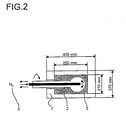
- the outside temperature of the charged reaction tube was set to 350 ° C. over the entire length from the outside.
- the residence time (based on the catalyst bed volume) was adjusted to 2.4 sec.
- the inlet pressure was 2 bar absolute.
- reaction tube charge was first run in each case at the aforementioned outside temperature of the charged reaction tube over a period of 24 hours before this outside temperature was increased to the respective reaction temperature listed in the table below.
- the following table shows, depending on the shell catalyst used, the resulting conversion of propane (U PAN ) at a single reaction tube passage at this external temperature T (° C.) and the resulting selectivity of acrylic acid formation (S ACS (mol%)) and the selectivity byproduct formation on propene (S PEN (mol%)).
- the table shows the intensity ratio R of the active material on the coated catalyst.
Landscapes
- Chemical & Material Sciences (AREA)
- Organic Chemistry (AREA)
- Engineering & Computer Science (AREA)
- Materials Engineering (AREA)
- Chemical Kinetics & Catalysis (AREA)
- Oil, Petroleum & Natural Gas (AREA)
- Inorganic Chemistry (AREA)
- Catalysts (AREA)
- Organic Low-Molecular-Weight Compounds And Preparation Thereof (AREA)
- Inorganic Compounds Of Heavy Metals (AREA)
- Low-Molecular Organic Synthesis Reactions Using Catalysts (AREA)
- Oxygen, Ozone, And Oxides In General (AREA)
- Pharmaceuticals Containing Other Organic And Inorganic Compounds (AREA)
- Agricultural Chemicals And Associated Chemicals (AREA)
Description
- Vorliegende Erfindung betrifft ein Verfahren zur Herstellung einer Multimetalloxidmasse M der allgemeinen Stöchiometrie
MoVaM1 bM2 cM3 dOn (I),
mit - M1 =
- wenigstens eines der Elemente aus der Gruppe umfassend Te und Sb;
- M2 =
- wenigstens eines der Elemente aus der Gruppe umfassend Nb, Ti, W, Ta und Ce;
- M3 =
- wenigstens eines der Elemente aus der Gruppe umfassend Pb, Ni, Co, Bi, Pd, Ag, Pt, Cu, Au, Ga, Zn, Sn, In, Re, Ir, Sm, Sc, Y, Pr, Nd und Tb;
- a =
- 0,01 bis 1,
- b =
- > 0 bis 1,
- c =
- > 0 bis 1,
- d =
- > 0 bis 0,5 und
- n =
- eine Zahl, die durch die Wertigkeit und Häufigkeit der von Sauerstoff verschiedenen Elemente in (I) bestimmt wird,
- der Beugungsreflex h innerhalb des Röntgendiffraktogramms der intensitätsstärkste ist, sowie eine Halbwertsbreite von höchstens 0,5° aufweist,
- die Intensität Pi des Beugungsreflexes i und die Intensität Pk des Beugungsreflexes k die Beziehung 0,65 ≤ R ≤ 0,85 erfüllen, in der R das durch die Formel

definierte Intensitätsverhältnis ist, und - die Halbwertsbreite des Beugungsreflexes i und des Beugungsreflexes k jeweils ≤ 1° beträgt,
- Multimetalloxidmassen M sind bekannt (vgl. z.B.
DE-A 10248584 ,DE-A 10119933 undDE-A 10118814 ). Sie eignen sich als Katalysatoren für heterogen katalysierte partielle Gasphasenoxidationen und/oder -ammoxidationen von gesättigten und ungesättigten Kohlenwasserstoffen, wie es z.B. die vorgenannten Schriften beschreiben. Wird als Kohlenwasserstoff Propan und/oder Propen verwendet, können dabei als Zielverbindungen z.B. Acrolein, Acrylsäure und/oder Acrylnitril erzeugt werden. Diese bilden bedeutende Zwischenprodukte, die z.B. zur Herstellung von Polymerisaten Verwendung finden, die z.B. als Klebstoffe eingesetzt werden können. - Die Herstellung von Multimetalloxidmassen M erfolgt gemäß den Lehren der
DE-A 10248584 ,DE-A 10119933 undDE-A 10118814 in systematischer Weise so, daß zunächst eine von einer Multimetalloxidmasse M verschiedene Vorläuferroultimetalloxidmasse (unter diesem Begriff sollen ganz generell Multimetalloxidmassen verstanden werden, die auf dem Herstellweg zu einer Multimetalloxidmasse M vor dieser durchlaufen werden), deren Röntgendiffraktogramm bei der Scheitelpunktlage 2Θ = 50,0 ± 0,3° einen eine Nebenphase ausweisenden Beugungsreflex aufweist, erzeugt und diese Vorläuferroultimetalloxidmasse anschließend mit einer Flüssigkeit aus der Gruppe umfassend die Gruppenmitglieder organische Säuren, anorganische Säuren, Lösungen organischer Säuren, Lösungen anorganischer Säuren und Mischungen von vorgenannten Gruppenmitgliedern gewaschen wird. Das saure Waschen von Mo und V enthaltenden Multimetalloxidmassen wird in derJP-A 8-57319 - In weniger systematischer Weise sind Multimetalloxidmassen M auf direktem Weg aber auch dadurch erhältlich, daß man aus Quellen (Ausgangsverbindungen) ihrer elementaren Konstituenten ein möglichst inniges, vorzugsweise feinteiliges Trockengemisch erzeugt und dieses anschließend durch thermische Behandlung in ein aktives Multimetalloxid M überführt, ohne dass eine wie vorstehend beschrieben durchzuführende Waschung involviert ist.
- Beispielhaft genannt seien das Beispiel 11 der
DE-A 19835247 sowie Example 6 derEP-A 895809 - Nachteilig an solchen auf direktem Weg erhaltenen Multimetalloxidmassen M ist jedoch, daß bei ihrer Verwendung als Katalysatoren für heterogen katalysierte partielle Gasphasen-oxidationen und/oder -ammoxidationen von gesättigten und/oder ungesättigten Kohlenwasserstoffen die Selektivität der Bildung der Zielverbindung in der Regel nicht voll zu befriedigen vermag.
- Die Aufgabe der vorliegenden Erfindung bestand daher darin, ein Verfahren zur Verfügung zu stellen, das diesen Nachteil von auf direktem Weg erhaltenen Multimetalloxidmassen M weitgehend mindert oder vollständig beseitigt.
- Demgemäß wurde ein Verfahren zur Herstellung von Multimetalloxidmassen M, bei dem man zunächst eine solche Multimetalloxidmasse M mit der Maßgabe herstellt, daß im Verlauf der Herstellung dieser Multimetalloxidmasse M keine Vorläufermultimetalloxidmasse dieser Multimetalloxidmasse M mit einer Flüssigkeit F aus der Gruppe umfassend die Gruppenmitglieder organische Säuren, anorganische Säuren, Lösungen organischer Säuren, Lösungen anorganischer Säuren und Mischungen von vorngenannten Gruppenmitgliedern gewaschen wird, gefunden, das dadurch gekennzeichnet ist, dass die zunächst so hergestellte Multimetalloxidmasse M mit einer Flüssigkeit F aus der Gruppe umfassend die Gruppenmitglieder organische Säuren, anorganische Säuren, Lösungen organischer Säuren, Lösungen anorganischer Säuren und Mischungen von vorngenannten Gruppenmitgliedern gewaschen wird.
- Der Begriff Säure meint in dieser Schrift protische Brönsted-Säuren gemäß H.R. Christen, Grundlagen der allgemeinen und anorganischen Chemie, Sauerländer Verlag, 1973.
- Als erfindungsgemäß geeignete Waschflüssigkeiten F kommen z.B. organische Säuren wie Oxalsäure, Ameisensäure, Essigsäure, Zitronensäure, Weinsäure und/oder deren Lösungen, z.B. deren wäßrige Lösungen, in Betracht. Eine solche wäßrige Lösung kann auch zwei oder mehr der vorgenannten organischen Säuren gelöst enthalten. Anstelle von Wasser können als Lösungsmittel auch Alkohole (z.B. Methanol und/oder Ethanol) und/oder deren wäßrige Lösungen eingesetzt werden. Anstelle der genannten organischen Säuren können erfindungsgemäß als Waschflüssigkeit F auch anorganische Säuren wie z.B. Salpetersäure verwendet werden. Auch die anorganischen Säuren können in wässriger oder sonstiger, z.B. alkoholischer oder wäßrig-alkoholischer (z.B. methanolischer und/oder ethanolischer) Lösung eingesetzt werden. Erfindungsgemäß bevorzugt wird als Waschflüssigkeit F eine wäßrige Salpetersäure verwendet.
- Selbstredend kann als Waschflüssigkeit F auch ein Gemisch aus organischen und anorganischen Säuren eingesetzt werden. Dabei kann dieses Gemisch ebenso wie alle vorstehenden Säuren in Wasser, Alkoholen (z.B. Methanol oder Ethanol) oder deren Gemischen zum Einsatz kommen. In der Regel enthalten die Säurelösungen 5 bis 30 Gew.-%, häufig 5 bis 15 Gew.-% an Säure gelöst. Bei Bedarf kann den genannten sauren Waschflüssigkeiten F zusätzlich Wasserstoffperoxid zugesetzt werden.
- Die erfindungsgemäße Waschung wird mit Vorteil bei erhöhter Temperatur durchgeführt. In anwendungstechnisch zweckmäßiger Weise wird man die auf direktem Weg erhaltene Multimetalloxid-masse M (bevorzugt in feinteiliger Form) mit der Waschflüssigkeit F versetzen und einige Stunden (in der Regel 1 h bis 10 h) unter Rückfluß rühren. Dabei in typischer Weise angewendete Temperaturen betragen 50 bis 100°C. Nach beendeter Waschung wird der verbliebene Feststoff normalerweise durch Filtration von der Flüssigphase getrennt und nachfolgend, z.B. mit Wasser, vom Waschmittel frei gewaschen. Abschließend wird der gewaschene Feststoff, zweckmäßig bei erhöhter Temperatur, getrocknet.
- Erfindungsgemäß bemerkenswert ist, daß die Performance von auf direktem Weg erhaltenen Multimetalloxidmassen M durch die erfindungsgemäße Verfahrensweise verbessert werden kann, obwohl sie ausweislich ihres Röntgendiffraktogramms die üblicherweise störende und in den erfindungsgemäß zu verwendenden Waschflüssigkeiten F in der Regel gut lösliche, durch ihren Beugungsreflex bei der Scheitelpunktlage 2Θ = 50,0 ± 0,3° ausgewiesene, Nebenphase nicht ersichtlich enthalten.
- Dies ist eventuell darauf zurückzuführen, daß auf direktem Weg erhaltene Multimetalloxidmassen M die besagte Nebenphase nur in winzigsten, röntgenographisch kaum nachweisbaren Mengen auf ihrer Oberfläche als Belag enthalten, der durch die erfindungsgemäße Verfahrensweise abgelöst wird.
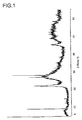
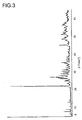
- Alle in dieser Schrift auf ein Röntgendiffraktogramm bezogenen Angaben beziehen sich auf ein unter Anwendung von Cu-Kα-Strahlung als Röntgenstrahlung erzeugtes Röntgendiffraktogramm (Siemens-Diffraktometer Theta-Theta D-5000, Röhrenspannung: 40 kV, Röhrenstrom: 40 mA, Aperturblende V20 (variabel), Streustrahlblende V20 (variabel), Sekundärmonochromatorblende (0,1 mm), Detektorblende (0,6 mm), Meßintervall (2Θ):0,02°, Meßzeit je Schritt: 2,4 s, Detektor: Scintillationszählrohr). Die Definition der Intensität eines Beugungsreflexes im Röntgendiffraktogramm bezieht sich in dieser Schrift auf die in der
DE-A 19835247 , derDE-A 10122027 , sowie die in derDE-A 10051419 undDE-A 10046672 niedergelegte Definition; das gleiche gilt für die Definition der Halbwertsbreite. - Erfindungsgemäß bevorzugt gilt für die Multimetalloxidmasse M, sowohl vor als auch nach ihrer erfindungsgemäßen Waschung, 0,67 ≤ R ≤ 0,75 und ganz besonders bevorzugt gilt R = 0,69 bis 0,75 bzw. R = 0,71 bis 0,74, bzw. R = 0,72.
- Neben den Beugungsreflexen h, i und k enthält das Röntgendiffraktogramm von Multimetalloxidmassen M, sowohl vor als auch nach ihrer erfindungsgemäßen Waschung, in der Regel noch weitere Beugungsreflexe, deren Scheitelpunkte bei den nachfolgenden Beugungswinkeln (2Θ) liegen:
- 9,0 ± 0,4° (l),
- 6,7 ± 0,4° (o) und
- 7,9 ± 0,4° (p).
- Günstig ist es ferner, wenn das Röntgendiffraktogramm zusätzlich einen Beugungsreflex enthält, dessen Scheitelpunkt beim Beugungswinkel (2Θ) = 45,2 ± 0,4° (q) liegt.
- Häufig enthält das Röntgendiffraktogramm von Multimetalloxidmassen M, sowohl vor als auch nach ihrer erfindungsgemäßen Waschung, auch noch die Reflexe 29,2 ± 0,4° (m) und 35,4 ± 0,4° (n) (Scheitelpunktlagen).
- Ordnet man dem Beugungsreflex h die Intensität 100 zu, ist es erfindungsgemäß günstig, wenn die Beugungsreflexe i, l, m, n, o, p, q in der gleichen Intensitätsskala, sowohl vor als auch nach erfindungsgemäßer Waschung der Multimetalloxidmasse M, die nachfolgenden Intensitäten aufweisen:
- i: 5 bis 95, häufig 5 bis 80, teilweise 10 bis 60;
- l: 1 bis 30;
- m: 1 bis 40;
- n: 1 bis 40;
- o: 1 bis 30;
- p: 1 bis 30 und
- q: 5 bis 60.
- Enthält das Röntgendiffraktogramm der erfindungsgemäß erhältlichen Multimetalloxidmassen M von den vorgenannten zusätzlichen Beugungsreflexen, ist die Halbwertsbreite derselben in der Regel sowohl vor als auch nach der erfindungsgemäßen Waschung ≤ 1°.
- Die spezifische Oberfläche von erfindungsgemäß erhältlichen Multimetalloxidmassen M beträgt vielfach 1 bis 40 m2/g, häufig 15 bis 40 bzw. 30 m2/g (bestimmt nach der BET-Methode, Stickstoff).
- Erfindungsgemäß bevorzugt beträgt der stöchiometrische Koeffizient a der erfindungsgemäß erhältlichen Multimetalloxidmassen M, unabhängig von den Vorzugsbereichen für die anderen stöchiometrischen Koeffizienten der erfindungsgemäß erhältlichen Multimetalloxidmassen M, 0,05 bis 0,6, besonders bevorzugt 0,1 bis 0,6 oder 0,5.
- Unabhängig von den Vorzugsbereichen für die anderen stöchiometrischen Koeffizienten der erfindungsgemäß erhältlichen Multimetalloxidmassen M beträgt der stöchiometrische Koeffizient b bevorzugt 0,01 bis 1, und besonders bevorzugt 0,01 bzw. 0,1 bis 0,5 oder 0,4.
- Der stöchiometrische Koeffizient c der erfindungsgemäß erhältlichen Multimetalloxidmassen M beträgt, unabhängig von den Vorzugsbereichen für die anderen stöchiometrischen Koeffizienten der erfindungsgemäß erhältlichen Multimetalloxidmassen M 0,01 bis 1 und besonders bevorzugt 0,01 bzw. 0,1 bis 0,5 oder 0,4. Ein ganz besonders bevorzugter Bereich für den stöchiometrischen Koeffizienten c, der, unabhängig von den Vorzugsbereichen für die anderen stöchiometrischen Koeffizienten der erfindungsgemäß erhältlichen Multimetalloxidmassen M, mit allen anderen Vorzugsbereichen in dieser Schrift kombinierbar ist, ist der Bereich 0,05 bis 0,2.
- Erfindungsgemäß ist der stöchiometrische Koeffizient d der erfindungsgemäß erhältlichen Multimetalloxidmassen M, unabhängig von den Vorzugsbereichen für die anderen stöchiometrischen Koeffizienten der erfindungsgemäß erhältlichen Multimetalloxidmassen M, > 0 und beträgt vorteilhaft 0,00005 bzw. 0,0001 bis 0,5, besonders bevorzugt 0,0005 bis 0,3, häufig 0,00075 bis 0,2 und oft 0,001 bis 0,01 bzw. 0,1.
- Besonders günstig sind erfindungsgemäß erhältliche Multimetalloxidmassen M, deren stöchiometrische Koeffizienten a, b, c und d gleichzeitig im nachfolgenden Raster liegen:
- a = 0,05 bis 0,6;
- b = 0,01 bis 1 (bzw. 0,01 bis 0,5);
- c = 0,01 bis 1 (bzw. 0,01 bis 0,5); und
- d = 0,0001 bis 0,5 (bzw. 0,0005 bis 0,3).
- Ganz besonders günstig sind erfindungsgemäß erhältliche Multimetalloxidmassen M, deren stöchiometrische Koeffizienten a, b, c und d gleichzeitig im nachfolgenden Raster liegen:
- a = 0,1 bis 0,6;
- b = 0,1 bis 0,5;
- c = 0,1 bis 0,5; und
- d = 0,00075 bis 0,2, bzw. 0,001 bis 0,01, bzw. 0,001 bis 0,1.
- M1 ist bevorzugt Te.
- Alles vorgenannte gilt vor allem dann, wenn in den erfindungsgemäß erhältlichen Multimetalloxidmassen M M2 wenigstens zu 50 mol-% seiner Gesamtmenge Nb und ganz besonders bevorzugt dann, wenn M2 zu wenigstens 75 mol-% seiner Gesamtmenge, bzw. zu 100 mol-% seiner Gesamtmenge Nb ist.
- Es gilt vor allem aber auch, unabhängig von der Bedeutung von M2, dann, wenn M3 wenigstens ein Element aus der Gruppe umfassend Ni, Co, Bi, Pd, Ag, Au, Pb und Ga oder wenigstens ein Element aus der Gruppe umfassend Ni, Co, Pd und Bi ist.
- Alles vorgenannte gilt vor allem aber auch dann, wenn M2 in den erfindungsgemäß erhältlichen Multimetalloxidmassen M wenigstens zu 50 mol-% seiner Gesamtmenge, oder zu wenigstens 75 mol-%, oder zu 100 mol-% Nb und M3 wenigstens ein Element aus der Gruppe umfassend Ni, Co, Bi, Pd, Ag, Au, Pb und Ga ist.
- Alles vorgenannte gilt vor allem aber auch dann, wenn M2 in den erfindungsgemäß erhältlichen Multimetalloxidmassen M wenigstens zu 50 mol-%, oder zu wenigstens 75 mol-%, oder zu 100 mol-% seiner Gesamtmenge Nb und M3 wenigstens ein Element aus der Gruppe umfassend Ni, Co, Pd und Bi ist.
- Ganz besonders bevorzugt gelten alle Aussagen hinsichtlich der stöchiometrischen Koeffizienten dann, wenn in den erfindungsgemäß erhältlichen Multimetalloxidmassen M M1 = Te, M2 = Nb und M3 = wenigstens ein Element aus der Gruppe umfassend Ni, Co und Pd.
- Weitere erfindungsgemäß geeignete Stöchiometrien für die erfindungsgemäß erhältlichen Multimetalloxidmassen M sind jene, die im eingangs zitierten Stand der Technik offenbart sind.
- Erfindungsgemäß zu waschende Multimetalloxidmassen M können unter geeigneten Umständen z.B. nach den in den Schriften
DE-A 19835247 ,EP-A 529853 EP-A 603836 EP-A 608838 EP-A 895809 DE-A 19835247 ,EP-A 962253 EP-A 1080784 ,EP-A 1090684 ,EP-A 1123738 ,EP-A 1192987 ,EP-A 1192986 ,EP-A 1192982 ,EP-A 1192983 undEP-A 1192988 beschriebenen Herstellverfahren erhalten werden. Nach diesen Verfahren wird von geeigneten Quellen der elementaren Konstituenten der Multimetalloxidmasse ein möglichst inniges, vorzugsweise feinteiliges, Trokkengemisch erzeugt und dieses bei Temperaturen von 350 bis 700°C bzw. 400 bis 650°C oder 400 bis 600°C thermisch behandelt. Die thermische Behandlung kann prinzipiell sowohl unter oxidierender, reduzierender als auch unter inerter Atmosphäre erfolgen. Als oxidierende Atmosphäre kommt z.B. Luft, mit molekularem Sauerstoff angereicherte Luft oder an Sauerstoff entreicherte Luft in Betracht. Vorzugsweise wird die thermische Behandlung jedoch un-ter inerter Atmosphäre, d.h., z.B. unter molekularem Stickstoff und/oder Edelgas, durchgeführt. Üblicherweise erfolgt die thermische Behandlung bei Normaldruck (1 atm). Selbstverständlich kann die thermische Behandlung auch unter Vakuum oder unter Überdruck erfolgen. - Erfolgt die thermische Behandlung unter gasförmiger Atmosphäre, kann diese sowohl stehen als auch fließen. Vorzugsweise fließt sie. Insgesamt kann die thermische Behandlung bis zu 24 h oder mehr in Anspruch nehmen.
- Bevorzugt erfolgt die thermische Behandlung zunächst unter oxidierender (Sauerstoff enthaltender) Atmosphäre (z.B. unter Luft) bei einer Temperatur von 150 bis 400°C bzw. 250 bis 350°C (= Vorzersetzungsschritt). Im Anschluß daran wird die thermische Behandlung zweckmäßig unter Inertgas bei Temperaturen von 350 bis 700°C bzw. 400 bis 650°C oder 450 bis 600°C fortgesetzt. Selbstredend kann die thermische Behandlung auch so erfolgen, daß die innig gemischte Trockenmasse vor ihrer thermischen Behandlung zunächst (gegebenenfalls nach Pulverisierung) tablettiert (gegebenenfalls unter Zusatz von 0,5 bis 2 Gew.-% an feinteiligem Graphit), dann thermisch behandelt und nachfolgend wieder versplittet wird.
- Das innige Vermischen der Ausgangsverbindungen kann in trockener oder in nasser Form erfolgen.
- Erfolgt es in trockener Form, werden die Ausgangsverbindungen zweckmäßigerweise als feinteilige Pulver eingesetzt und,nach dem Mischen und gegebenenfalls Verdichten der Calcinierung (thermischen Behandlung) unterworfen.
- Vorzugsweise erfolgt das innige Vermischen jedoch in nasser Form. Üblicherweise werden die Ausgangsverbindungen dabei in Form einer wäßrigen Lösung (gegebenenfalls unter Mitverwendung komplexbildender Mittel; vgl. z.B.
DE-A 10145958 ) und/oder Suspension miteinander vermischt. Anschließend wird die wäßrige Masse getrocknet und nach der Trocknung calciniert. Zweckmäßigerweise handelt es sich bei der wäßrigen Masse um eine wäßrige Lösung oder um eine wäßrige Suspension. Vorzugsweise erfolgt der Trocknungsprozeß unmittelbar im Anschluß an die Herstellung der wäßrigen Mischung (insbesondere im Fall einer wäßrigen Lösung; vgl. z.B.JP-A 7-315842 - Als Quellen für die elementaren Konstituenten kommen im Rahmen der Durchführung der vorstehend beschriebenen Herstellweise alle diejenigen in Betracht, die beim Erhitzen (gegebenenfalls an Luft) Oxide und/oder Hydroxide zu bilden vermögen. Selbstredend können als solche Ausgangsverbindungen auch bereits Oxide und/ oder Hydroxide der elementaren Konstituenten mitverwendet oder ausschließlich verwendet werden. D.h., insbesondere kommen alle in den Schriften des gewürdigten Standes der Technik genannten Ausgangsverbindungen in Betracht.
- Erfindungsgemäß geeignete Quellen für das Element Mo sind z.B. Molybdänoxide wie Molybdäntrioxid, Molybdate wie Ammoniumheptamolybdattetrahydrat und Molybdänhalogenide wie Molybdänchlorid.
- Geeignete, erfindungsgemäß mitzuverwendende Ausgangsverbindungen für das Element V sind z.B. Vanadiumoxysulfathydrat, Vanadylacetylacetonat, Vanadate wie Ammoniummetavanadat, Vanadinoxide wie Vanadinpentoxid (V2O5), Vanadinhalogenide wie Vanadintetrachlorid (VCl4) und Vanadinoxyhalogenide wie VOCl3. Dabei können als Vanadinausgangsverbindungen auch solche mitverwendet werden, die das Vanadin in der Oxidationsstufe +4 enthalten.
- Als Quellen für das Element Tellur eignen sich erfindungsgemäß Telluroxide wie Tellurdioxid, metallisches Tellur, Tellurhalogenide wie TeCl2, aber auch Tellursäuren wie Orthothellursäure H6TeO6.
- Vorteilhafte Antimonausgangsverbindungen sind Antimonhalogenide wie SbCl3, Antimonoxide wie Antimontrioxid (Sb2O3), Antimonsäuren wie HSb(OH)6, aber auch Antimonoxid-Salze wie Antimonoxid-sulfat (SbO)2SO4.
- Erfindungsgemäß geeignete Niobquellen sind z. B. Nioboxide wie Niobpentoxid (Nb2O5), Nioboxidhalogenide wie NbOCl3, Niobhalogenide wie NbCl5, aber auch komplexe Verbindungen aus Niob und organischen Carbonsäuren und/oder Dicarbonsäuren wie z. B. Oxalate und Alkoholate. Selbstredend kommen als Niobquelle auch die in der
EP-A 895 809 - Bezüglich aller anderen möglichen Elemente (insbesondere des Ni, Pb, Cu, Co, Bi und Pd) kommen als geeignete Ausgangsverbindungen vor allem deren Halogenide, Nitrate, Formiate, Oxalate, Acetate, Carbonate und/oder Hydroxide in Betracht. Geeignete Ausgangsverbindungen sind vielfach auch deren Oxoverbindungen wie z. B. Wolframate bzw. die von diesen abgeleiteten Säuren. Häufig werden als Ausgangsverbindungen auch Ammoniumsalze eingesetzt.
- Ferner kommen als Ausgangsverbindungen auch Polyanionen vom Anderson Typ in Betracht, wie sie z. B. in Polyhedron Vol. 6, No. 2, pp. 213-218, 1987 beschrieben sind. Eine weitere geeignete Li-teraturquelle für Polyanionen vom Anderson Typ bildet Kinetics and Catalysis, Vol. 40, No. 3, 1999, pp 401 bis 404.
- Andere als Ausgangsverbindungen geeignete Polyanionen sind z. B. solche vom Dawson oder Keggin Typ. Vorzugsweise werden solche Ausgangsverbindungen verwendet, die sich bei erhöhten Temperaturen entweder im Beisein oder bei Ausschluß von Sauerstoff, gegebenenfalls unter Freisetzung gasförmiger Verbindungen, in ihre Oxide umwandeln.
- Die wie beschrieben auf direktem Weg erhältlichen Multimetalloxidmassen M können dann wie beschrieben durch erfindungsgemäßes Waschen in erfindungsgemäß erhältliche Multimetalloxidmassen M überführt werden.
- Mit erhöhter Häufigkeit gelingt die Herstellung von erfindungsgemäß zu waschenden Multimetalloxidmassen M wenn ihre Herstellung auf hydrothermalem Weg erfolgt, wie es z.B. die
DE-A 10029338 und dieJP-A 2000-143244 DE-A 10029338 ). Im besonderen wird hier darunter die thermische Behandlung eines, vorzugsweise innigen, Gemisches von Quellen der elementaren Konstituenten der gewünschten Multimetalloxidmasse M in einem Überdruckgefäß (Autoklav) im Beisein von überatmosphärischen Druck aufweisendem Wasserdampf, üblicherweise bei Temperaturen im Bereich von > 100°C bis 600°C, verstanden. Der Druchbereich erstreckt sich dabei in typischer Weise auf bis zu 500 atm, vorzugsweise auf bis zu 250 atm. Selbstverständlich können auch Temperaturen oberhalb von 600°C und Wasserdampfdrucke oberhalb von 500 atm angewendet werden, was anwendungstechnisch jedoch wenig zweckmäßig ist. Mit besonderem Vorteil erfolgt die hydrothermale Behandlung unter solchen Bedingungen, unter denen Wasserdampf und flüssiges Wasser koexistieren. - Dies ist im Temperaturbereich von > 100°C bis 374, 15°C (kritische Temperatur des Wasser) unter Anwendung der entsprechenden Drücke möglich.
- Die Mengen an Wasser werden dabei zweckmäßig so bemessen, daß die flüssige Phase die Gesamtmenge der Ausgangsverbindungen in Suspension und/oder Lösung aufzunehmen vermag. Es ist aber auch eine solche Verfahrensweise möglich, bei der das innige Gemisch der Ausgangsverbindungen die mit dem Wasserdampf im Gleichgewicht befindliche flüssige Wassermenge vollständig absorbiert.
- Vorteilhaft erfolgt die hydrothermale Behandlung bei Temperaturen von > 100 bis 300°C, vorzugsweise bei Temperaturen von 150 bis 250°C (z.B. 160 bis 200°C). Bezogen auf die Summe aus Wasser und Quellen der elementaren Konstituenten der gewünschten Multimetalloxidmasse M beträgt der Gewichtsanteil der letzteren im Autoklaven in der Regel wenigstens 1 Gew.-%. Üblicherweise liegt der vorgenannte Gewichtsanteil nicht oberhalb von 90 Gew.-%. Typisch sind Gewichtsanteile von 30 bis 60, bzw. von 5 bis 30 Gew.-%, häufig 5 bis 15 Gew.-%.
- Während der hydrothermalen Behandlung kann sowohl gerührt als auch nicht gerührt werden. Die hydrothermale Behandlung selbst nimmt in der Regel eine Zeitdauer von wenigen Stunden bis zu einigen Tagen in Anspruch. Typisch ist ein Zeitraum von 48 h.
- Anwendungstechnisch zweckmäßig ist der für die hydrothermale Behandlung zu verwendende Autoklav innenseitig mit Teflon beschichtet. Vorab der hydrothermalen Behandlung kann der Autoklav, gegebenenfalls einschließlich des enthaltenen wäßrigen Gemisches, evakuiert werden. Anschließend kann vor der Temperaturerhöhung mit Inertgas (N2, Edelgas) gefüllt werden. Beide Maßnahmen können auch unterlassen werden. Selbstredend kann das wäßrige Gemisch zur Inertisierung vorab einer hydrothermalen Behandlung zusätzlich mit Inertgas gespült werden. Die vorgenannten Inertgase können anwendungstechnisch zweckmäßig auch dazu benutzt werden, bereits vorab der hydrothermalen Behandlung im Autoklaven überatmosphärischen Druck einzustellen.
- Die zur Erzeugung der erfindungsgemäß zu waschenden Multimetalloxidmasse M erforderliche thermische Behandlung des sich im Verlauf der hydrothermalen Behandlung neu gebildeten und nach Beendigung der hydrothermalen Behandlung (nach Beendigung der hydrothermalen Behandlung kann der Autoklav entweder auf Raumtemperatur abgeschreckt oder langsam, d.h., über einen längeren Zeitraum (z.B. durch sich selbst überlassen) auf Raumtemperatur gebracht werden) abgetrennten Feststoffs (innigen Gemischs) wird (wie im Fall der konventionellen Herstellung bereits beschrieben) zweckmäßigerweise bei einer Temperatur von 350 bis 700°C, häufig bei einer Temperatur von 400 bis 650°C, bzw. 400 bis 600°C durchgeführt. Sie kann sowohl unter oxidierender, reduzierender als auch unter inerter Atmosphäre erfolgen. Als oxidierende Atmosphäre kommt z.B. Luft, mit molekularem Sauerstoff angereicherte Luft oder an Sauerstoff entreicherte Luft in Betracht. Vorzugsweise wird die thermische Behandlung unter inerter Atmosphäre, d.h., z.B. unter molekularem Stickstoff und/oder Edelgas, durchgeführt. Selbstverständlich kann die thermische Behandlung auch unter Vakuum erfolgen.
- Die Herstellung von erfindungsgemäß zu behandelnden Multimetall-oxidmassen M kann aber auch dadurch erfolgen, dass man zunächst eine Multimetalloxidmasse M' erzeugt, die sich von einer Multimetalloxidmasse M nur dadurch unterscheidet, dass d = 0 ist. Eine solche, bevorzugt feinteilige, Multimetalloxidmasse M' kann dann mit Lösungen (z.B. wässrigen) von Elementen M3 getränkt (z.B. durch Besprühen), nachfolgend getrocknet (bevorzugt bei Temperaturen ≤ 100°C) und anschließend, wie bereits beschrieben, calciniert (bevorzugt im Inertgasstrom) werden (oft wird hier auf eine Vorzersetzung an Luft verzichtet) werden. Die Verwendung von wäßrigen Nitrat- und/oder Halogenidlösungen von Elementen M3 und/ oder die Verwendung von wässrigen Lösungen in denen die Elemente M3 mit organischen Verbindungen (z.B. Acetate oder Acetylacetonate) komplexiert vorliegen ist für diese Herstellvariante besonders vorteilhaft.
- Die durch erfindungsgemäßes Waschen erhältlichen Multimetalloxide M können als solche [z.B. als Pulver oder nach Tablettieren des Pulvers (häufig unter Zusatz von 0,5 bis 2 Gew.-% an feinteiligem Graphit) und nachfolgendem Versplitten zu Splitt zerkleinert] oder auch zu Formkörpern geformt als Katalysatoren für heterogen katalysierte Gasphasenpartialoxidationen und/oder -ammoxidationen von gesättigten und/oder ungesättigten Kohlenwasserstoffen eingesetzt werden. Dabei kann das Katalysatorbett ein Festbett, ein Wanderbett oder ein Wirbelbett sein.
- Die Formung zu Formkörpern kann z.B. durch Aufbringen auf einen Trägerkörper erfolgen, wie es z.B. in der
DE-A 10118814 bzw.PCT/EP/02/04073 bzw.DE-A 10051419 beschrieben wird. - Die dabei für die erfindungsgemäß erhältlichen Multimetalloxidmassen M zu verwendenden Trägerkörper sind vorzugsweise chemisch inert. D.h., sie greifen in den Ablauf der partiellen katalytischen Gasphasenoxidation bzw. -ammoxidation des Kohlenwasserstoffs (z.B. Propan und/oder Propen zu Acrylsäure), die durch die erfindungsgemäß erhältlichen Multimetalloxidmassen M katalysiert wird, im wesentlichen nicht ein.
- Als Material für die Trägerkörper kommen erfindungsgemäß insbesondere Aluminiumoxid, Siliciumdioxid, Silicate wie Ton, Kaolin, Steatit (bevorzugt mit geringem in Wasser löslichem Alkaligehalt), Bims, Aluminiumsilicat und Magnesiumsilicat, Siliciumcarbid, Zirkondioxid und Thoriumdioxid in Betracht. Bevorzugt werden Träger mit minimalem bzw. verschwindendem Alkaligehalt eingesetzt.
- Die Oberfläche des Trägerkörpers kann sowohl glatt als auch rauh sein. Mit Vorteil ist die Oberfläche des Trägerkörpers rauh, da eine erhöhte Oberflächenrauhigkeit in der Regel eine erhöhte Haftfestigkeit der aufgebrachten Aktivmassenschale bedingt. Häufig liegt die Oberflächenrauhigkeit Rz des Trägerkörpers im Bereich von 5 bis 200 µm, oft im Bereich von 20 bis 100 µm (bestimmt gemäß DIN 4768 Blatt 1 mit einem "Hommel Tester für DIN-ISO Oberflächenmeßgrößen" der Fa. Hommelwerke, DE).
- Ferner kann das Trägermaterial porös oder unporös sein. Zweckmäßigerweise ist das Trägermaterial unporös (Gesamtvolumen der Poren auf das Volumen des Trägerkörpers bezogen ≤ 1 Vol.-%).
- Die Dicke der auf den erfindungsgemäßen Schalenkatalysatoren befindlichen aktiven Oxidmassenschale liegt üblicherweise bei 10 bis 1000 µm. Sie kann aber auch 50 bis 700 µm, 100 bis 600 µm oder 150 bis 400 µm betragen. Mögliche Schalendicken sind auch 10 bis 500 µm, 100 bis 500 µm oder 150 bis 300 µm.
- Prinzipiell kommen beliebige Geometrien der Trägerkörper in Betracht. Ihre Längstausdehnung beträgt in der Regel 1 bis 10 mm. Vorzugsweise werden jedoch Kugeln oder Zylinder, insbesondere Hohlzylinder, als Trägerkörper angewendet. Günstige Durchmesser für Trägerkugeln betragen 1,5 bis 4 mm. Werden Zylinder als Trägerkörper verwendet, so beträgt deren Länge vorzugsweise 2 bis 10 mm und ihr Außendurchmesser bevorzugt 4 bis 10 mm. Im Fall von Ringen liegt die Wanddicke darüber hinaus üblicherweise bei 1 bis 4 mm. Erfindungsgemäß geeignete ringförmige Trägerkörper können auch eine Länge von 3 bis 6 mm, einen Außendurchmesser von 4 bis 8 mm und eine Wanddicke von 1 bis 2 mm aufweisen. Möglich ist aber auch eine Trägerringgeometrie von 7 mm x 3 mm x 4 mm oder von 5 mm x 3 mm x 2 mm (Außendurchmesser x Länge x Innendurchmesser).
- Die Herstellung von Schalenkatalysatoren kann in einfachster Weise so erfolgen, dass man erfindungsgemäß erhältliche Oxidmassen M vorbildet, sie in eine feinteilige Form überführt und abschließend mit Hilfe eines flüssigen Bindemittels auf die Oberfläche des Trägerkörpers aufbringt. Dazu wird die Oberfläche des Trägerkörpers in einfachster Weise mit dem flüssigen Bindemittel befeuchtet und durch Inkontaktbringen mit feinteiliger aktiver Oxidmasse M eine Schicht der Aktivmasse auf der befeuchteten Oberfläche angeheftet. Abschließend wird der beschichtete Trägerkörper getrocknet. Selbstredend kann man zur Erzielung einer erhöhten Schichtdicke den Vorgang periodisch wiederholen. In diesem Fall wird der beschichtete Grundkörper zum neuen "Trägerkörper" etc..
- Die Feinheit der auf die Oberfläche des Trägerkörpers aufzubringenden erfindungsgemäß erhältlichen katalytisch aktiven Oxidmasse M wird selbstredend an die gewünschte Schalendicke angepaßt. Für den Schalendickenbereich von 100 bis 500 µm eignen sich z. B. solche Aktivmassenpulver, von denen wenigstens 50 % der Gesamtzahl der Pulverpartikel ein Sieb der Maschenweite 1 bis 20 µm passieren und deren numerischer Anteil an Partikeln mit einer Längstausdehnung oberhalb von 50 µm weniger als 10 % beträgt. In der Regel entspricht die Verteilung der Längstausdehnungen der Pulverpartikel herstellungsbedingt einer Gaußverteilung. Häufig ist die Korngrößenverteilung wie folgt beschaffen:

- Dabei sind:
- D =
- Durchmesser des Korns,
- x =
- der prozentuale Anteil der Körner, deren Durchmesser ≥ D ist; und
- y =
- der prozentuale Anteil der Körner, deren Durchmesser < D ist.
- Für eine Durchführung des beschriebenen Beschichtungsverfahrens im technischen Maßstab empfiehlt sich z. B. die Anwendung des in der
DE-A 2909671 , sowie der in derDE-A 10051419 offenbarten Verfahrensprinzips. D.h., die zu beschichtenden Trägerkörper werden in einem vorzugsweise geneigten (der Neigungswinkel beträgt in der Regel ≥ 0° und ≤ 90°, meist ≥ 30° und ≤ 90°; der Neigungswinkel ist der Winkel der Drehbehältermittelachse gegen die Horizontale) rotierenden Drehbehälter (z. B. Drehteller oder Dragiertrommel) vorgelegt. Der rotierende Drehbehälter führt die z. B. kugelförmigen oder zylindrischen Trägerkörper unter zwei in bestimmtem Abstand aufeinanderfolgend angeordneten Dosiervorrichtungen hindurch. Die erste der beiden Dosiervorrichtungen entspricht zweckmäßig einer Düse (z.B. eine mit Druckluft betriebene Zerstäuberdüse), durch die die im rotierenden Drehteller rollenden Trägerkörper mit dem flüssigen Bindemittel besprüht und kontrolliert befeuchtet werden. Die zweite Dosiervorrichtung befindet sich außerhalb des Zerstäubungskegels des eingesprühten flüssigen Bindemittels und dient dazu, die feinteilige oxidische Aktivmasse M zuzuführen (z.B. über eine Schüttelrinne oder eine Pulverschnecke). Die kontrolliert befeuchteten Trägerkugeln nehmen das zugeführte Aktivmassenpulver auf, das sich durch die rollende Bewegung auf der äußeren Oberfläche des z. B. zylinderoder kugelförmigen Trägerkörpers zu einer zusammenhängenden Schale verdichtet. - Bei Bedarf durchläuft der so grundbeschichtete Trägerkörper im Verlauf der darauffolgenden Umdrehung wiederum die Sprühdüsen, wird dabei kontrolliert befeuchtet, um im Verlauf der Weiterbewegung eine weitere Schicht feinteiliger oxidischer Aktivmasse aufnehmen zu können usw. (eine Zwischentrocknung ist in der Regel nicht erforderlich). Feinteilige oxidische Aktivmasse M und flüssiges Bindemittel werden dabei in der Regel kontinuierlich und simultan zugeführt.
- Die Entfernung des flüssigen Bindemittels kann nach beendeter Beschichtung z. B. durch Einwirkung von heißen Gasen, wie N2 oder Luft, erfolgen. Bemerkenswerterweise bewirkt das beschriebene Beschichtungsverfahren sowohl eine voll befriedigende Haftung der aufeinanderfolgenden Schichten aneinander, als auch der Grundschicht auf der Oberfläche des Trägerkörpers.
- Wesentlich für die vorstehend beschriebene Beschichtungsweise ist, dass die Befeuchtung der zu beschichtenden Oberfläche des Trägerkörpers in kontrollierter Weise vorgenommen wird. Kurz ausgedrückt heißt dies, dass man die Trägeroberfläche zweckmäßig so befeuchtet, dass diese zwar flüssiges Bindemittel adsorbiert aufweist, aber auf der Trägeroberfläche keine Flüssigphase als solche visuell in Erscheinung tritt. Ist die Trägerkörperoberfläche zu feucht, agglomeriert die feinteilige katalytisch aktive Oxidmasse zu getrennten Agglomeraten, anstatt auf die Oberfläche aufzuziehen. Detaillierte Angaben hierzu finden sich in der
DE-A 2909671 und in derDE-A 10051419 . - Die vorerwähnte abschließende Entfernung des verwendeten flüssigen Bindemittels kann in kontrollierter Weise z. B. durch Verdampfen und/oder Sublimieren vorgenommen werden. Im einfachsten Fall kann dies durch Einwirkung heißer Gase entsprechender Temperatur (häufig 50 bis 300, häufig 150°C) erfolgen. Durch Einwirkung heißer Gase kann aber auch nur eine Vortrocknung bewirkt werden. Die Endtrocknung kann dann beispielsweise in einem Trokkenofen beliebiger Art (z. B. Bandtrockner) oder im Reaktor erfolgen. Die einwirkende Temperatur sollte dabei nicht oberhalb der zur Herstellung der oxidischen Aktivmasse angewendeten Calcinationstemperatur liegen. Selbstverständlich kann die Trocknung auch ausschließlich in einem Trockenofen durchgeführt werden. Als Bindemittel für den Beschichtungsprozeß können unabhängig von der Art und der Geometrie des Trägerkörpers verwendet werden: Wasser, einwertige Alkohole wie Ethanol, Methanol, Propanol und Butanol, mehrwertige Alkohole wie Ethylenglykol, 1,4-Butandiol, 1,6-Hexandiol oder Glycerin, ein- oder mehrwertige organische Carbonsäuren wie Propionsäure, Oxalsäure, Malonsäure, Glutarsäure oder Maleinsäure, Aminoalkohole wie Ethanolamin oder Diethanolamin sowie ein- oder mehrwertige organische Amide wie Formamid. Günstige Bindemittel sind auch Lösungen, bestehend aus 20 bis 90 Gew.-% Wasser und 10 bis 80 Gew.-% einer in Wasser gelösten organischen Verbindung, deren Siedepunkt oder Sublimationstemperatur bei Normaldruck (1 atm) > 100°C, vorzugsweise > 150°C, beträgt. Mit Vorteil wird die organische Verbindung aus der vorstehenden Auflistung möglicher organischer Bindemittel ausgewählt. Vorzugsweise beträgt der organische Anteil an vorgenannten wäßrigen Bindemittellösungen 10 bis 50 und besonders bevorzugt 20 bis 30 Gew.-%. Als organische Komponenten kommen dabei auch Monosaccharide und Oligosaccharide wie Glucose, Fructose, Saccharose oder Lactose sowie Polyethylenoxide und Polyacrylate in Betracht.
- Selbstredend kann die Formgebung von erfindungsgemäß erhältlichen Multimetalloxidmassen M auch durch Extrusion und/oder Tablettierung von feinteiliger erfindungsgemäß erhältlicher Multimetalloxidmasse M erfolgen.
- Als Geometrien kommen dabei sowohl Kugeln, Vollzylinder und Hohlzylinder (Ringe) in Betracht. Die Längstausdehnung der vorgenannten Geometrien beträgt dabei in der Regel 1 bis 10 mm. Im Fall von Zylindern beträgt deren Länge vorzugsweise 2 bis 10 mm und ihr Außendurchmesser bevorzugt 4 bis 10 mm. Im Fall von Ringen liegt die Wanddicke darüber hinaus üblicherweise bei 1 bis 4 mm. Erfindungsgemäß geeignete ringförmige Vollkatalysatoren können auch eine Länge von 3 bis 6 mm, einen Außendurchmesser von 4 bis 8 mm und eine Wanddicke von 1 bis 2 mm aufweisen. Möglich ist aber auch eine Vollkatalysatorringgeometrie von 7 mm x 3 mm x 4 mm oder von 5 mm x 3 mm x 2 mm (Außendurchmesser x Länge x Innendurchmesser).
- Selbstredend kommen für die Geometrie der als Katalysatoren zu verwendenden erfindungsgemäß erhältlichen Multimetalloxidaktivmassen M auch all jene der
DE-A 10101695 in Betracht. - Die Definition der Intensität eines Beugungsreflexes im Röntgendiffraktogramm bezieht sich in dieser Schrift, wie bereits gesagt, auf die in der
DE-A 19835247 , sowie die in derDE-A 10051419 undDE-A 10046672 niedergelegte Definition. D.h., bezeichnet A1 den Scheitelpunkt eines Reflexes 1 und bezeichnet B1 in der Linie des Röntgendiffraktogramms bei Betrachtung entlang der zur 2Θ-Achse senkrecht stehenden Intensitätsache das nächstliegende ausgeprägte Minimum (Reflexschultern ausweisende Minima bleiben unberücksichtigt) links vom Scheitelpunkt A1 und B2 in entsprechender Weise das nächstliegende ausgeprägte Minimum rechts vom Scheitelpunkt A1 und bezeichnet C1 den Punkt, an dem eine vom Scheitelpunkt A1 senkrecht zur 2Θ-Achse gezogene Gerade eine die Punkte B1 und B2 verbindende Gerade schneidet, dann ist die Intensität des Reflexes 1 die Länge des Geradenabschnitts A1C1, der sich vom Scheitelpunkt A1 zum Punkt C1 erstreckt. Der Ausdruck Minimum bedeutet dabei einen Punkt, an dem der Steigungsgradient einer an die Kurve in einem Basisbereich des Reflexes 1 angelegten Tangente von einem negativen Wert auf einen positiven Wert übergeht, oder einen Punkt, an dem der Steigungsgradient gegen Null geht, wobei für die Festlegung des Steigungsgradienten die Koordinaten der 2Θ Achse und der Intensitätsachse herangezogen werden. - Die Halbwertsbreite ist in dieser Schrift in entsprechender Weise die Länge des Geradenabschnitts, der sich zwischen den beiden Schnittpunkten H1 und H2 ergibt, wenn man in der Mitte des Geradenabschnitts A1C1 eine Parallele zur 2Θ-Achse zieht, wobei H1, H2 den jeweils ersten Schnittpunkt dieser Parallelen mit der wie vorstehend definierten Linie des Röntgendiffraktogramms links und rechts von A1 meinen.
- Eine beispielhafte Durchführung der Bestimmung von Halbwertsbreite und Intensität zeigt auch die Figur 6 in der
DE-A 10046672 . - Selbstredend können die erfindungsgemäß erhältlichen Multimetalloxidmassen M auch in mit feinteiligen, z.B. kolloidalen, Materialien, wie Siliciumdioxid, Titandioxid, Aluminiumoxid, Zirkonoxid, Nióboxid, verdünnter Form als katalytische Aktivmassen eingesetzt werden.
- Das Verdünnungsmassenverhältnis kann dabei bis zu 9 (Verdünner): 1 (Aktivmasse) betragen. D.h., mögliche Verdünnungsmassenverhältnisse betragen z.B. 6 (Verdünner) : 1 (Aktivmasse) und 3 (Verdünner): 1 (Aktivmasse). Die Einarbeitung der Verdünner kann vor und/oder nach der Calcination im Rahmen der Herstellung der erfindungsgemäß zu waschenden Multimetalloxidmasse M, in der Regel sogar vor der Trocknung erfolgen.
- Erfolgt die Einarbeitung vor der Trocknung bzw. vor der Calcination, muß der Verdünner so gewählt werden, dass er im fluiden Medium bzw. bei der Calcination im wesentlichen erhalten bleibt. Dies ist z.B. im Fall von bei entsprechend hohen Temperaturen gebrannten Oxiden in der Regel gegeben.
- Die erfindungsgemäß erhältlichen Multimetalloxidmassen M eignen sich, wie bereits gesagt, als solche oder in wie eben beschrieben verdünnter Form als Aktivmassen für heterogen katalysierte partielle Gasphasenoxidationen (einschließlich Oxidehydrierungen) und/oder -ammoxidationen von gesättigten und/oder ungesättigten Kohlenwasserstoffen.
- Solche gesättigten und/oder ungesättigten Kohlenwasserstoffe sind insbesondere Ethan, Ethylen, Propan, Propylen, n-Butan, iso-Butan und Butene wie z.B. 2-Buten und iso-Buten. Zielprodukte sind dabei vor allem Acrolein, Acrylsäure, Methacrolein, Methacrylsäure, Acrylnitril und Methacrylnitril. Sie eignen sich aber auch für die heterogen katalysierte partielle Gasphasenoxidation und/oder -ammoxidation von Verbindungen wie Acrolein und Methacrolein.
- Aber auch Ethylen, Propylen und Essigsäure können Zielprodukt sein.
- Unter einer vollständigen Oxidation des Kohlenwasserstoffs wird in dieser Schrift verstanden, dass der im Kohlenwasserstoff insgesamt enthaltene Kohlenstoff in Oxide des Kohlenstoffs (CO, CO2) umgewandelt wird.
- Alle davon verschiedenen Umsetzungen des Kohlenwasserstoffs unter reaktiver Einwirkung von molekularem Sauerstoff werden in dieser Schrift mit dem Begriff der Partialoxidation subsummiert. Die zusätzliche reaktive Einwirkung von Ammoniak kennzeichnet die partielle Ammoxidation.
- Bevorzugt eignen sich die in dieser Schrift niedergelegten erfindungsgemäß erhältlichen Multimetalloxidmassen M als katalytische Aktivmassen für die Umsetzung von Propan zu Acrolein und/oder Acrylsäure, von Propan zu Acrylsäure und/oder Acrylnitril, von Propylen zu Acrolein und/oder Acrylsäure, von Propylen zu Acrylnitril, von iso-Butan zu Methacrolein und/oder Methacrylsäure, von iso-Butan zu Methacrylsäure und/oder Methacrylnitril, von Ethan zu Ethylen, von Ethan zu Essigsäure und von Ethylen zu Essigsäure.
- Die Durchführung solcher partiellen Oxidationen und/oder Ammoxidationen (durch in an sich bekannter Weise zu steuernde Wahl des Gehaltes an Ammoniak im Reaktionsgasgemisch kann die Reaktion im wesentlichen ausschließlich als partielle Oxidation, oder ausschließlich als partielle Ammoxidation, oder als Überlagerung beider Reaktionen gestaltet werden; vgl. z.B.
WO 98/22421 - Wird als Kohlenwasserstoff Roh-Propan oder Roh-Propylen eingesetzt, ist dieses bevorzugt wie in der
DE-A 10246119 bzw.DE-A 10118814 bzw.PCT/EP/02/04073 beschrieben zusammengesetzt. Ebenso wird bevorzugt wie dort beschrieben verfahren. - Eine mit erfindungsgemäß erhältlichen Multimetalloxid-M-aktivmasse-Katalysatoren durchzuführende partielle Oxidation von Propan zu Acrylsäure kann z.B. wie in der
EP-A 608838 WO 0029106 JP-A 10-36311 EP-A 1193240 und derEP-A 1192987 beschrieben durchgeführt werden. - Als Quelle für den benötigten molekularen Sauerstoff kann z.B. Luft, mit Sauerstoff angreicherte oder an Sauerstoff entreicherte Luft oder reiner Sauerstoff verwendet werden.
- Ein solches Verfahren ist auch dann vorteilhaft, wenn das Reaktionsgasausgangsgemisch kein Edelgas, insbesondere kein Helium, als inertes Verdünnungsgas enthält. Im übrigen kann das Reaktionsgasausgangsgemisch neben Propan und molekularem Sauerstoff selbstredend inerte Verdünnungsgase wie z.B. N2, CO und CO2 umfassen. Wasserdampf als Reaktionsgasgemischbestandteil ist erfindungsgemäß vorteilhaft.
- D.h., das Reaktionsgasausgangsgemisch, mit dem die erfindugsgemäß erhältliche Multimetalloxidaktivmasse M bei Reaktionstemperaturen von z.B. 200 bis 550°C oder von 230 bis 480°C bzw. 300 bis 440°C und Drücken von 1 bis 10 bar, bzw. 2 bis 5 bar zu belasten ist, kann z.B. nachfolgende Zusammensetzung aufweisen:
- 1 bis 15, vorzugsweise 1 bis 7 Vol.-% Propan,
- 44 bis 99 Vol.-% Luft und
- 0 bis 55 Vol.-% Wasserdampf.
- Bevorzugt sind Wasserdampf enthaltende Reaktionsgasausgangsgemische.
- Als andere mögliche Zusammensetzungen des Reaktionsgasausgangsgemisches kommen in Betracht:
- 70 bis 95 Vol.-% Propan,
- 5 bis 30 Vol.-% molekularer Sauerstoff und
- 0 bis 25 Vol.-% Wasserdampf.
- Selbstredend wird bei einem solchen Verfahren ein Produktgasgemisch erhalten, das nicht ausschließlich aus Acrylsäure besteht. Vielmehr enthält das Produktgasgemisch neben nicht umgesetztem Propan Nebenkomponenten wie Propen, Acrolein, CO2, CO, H2O, Essigsäure, Propionsäure etc., von denen die Acrylsäure abgetrennt werden muß.
- Dies kann so erfolgen, wie es von der heterogen katalysierten Gasphasenoxidation von Propen zu Acrylsäure bekannt ist.
- D.h., aus dem Produktgasgemisch kann die enthaltene Acrylsäure durch Absorption mit Wasser oder durch die Absorption mit einem hochsiedenden inerten hydrophoben organischen Lösungsmittel (z.B. einem Gemisch aus Diphenylether und Diphyl das gegebenenfalls noch Zusätze wie Dimethylphthalat enthalten kann) aufgenommen werden. Das dabei resultierende Gemisch aus Absorbens und Acrylsäure kann anschließend in an sich bekannter Weise rektifikativ, extraktiv und/oder kristallisativ bis zur Reinacrylsäure aufgearbeitet werden. Alternativ kann die Grundabtrennung der Acrylsäure aus dem Produktgasgemisch auch durch fraktionierende Kondensation erfolgen, wie es z.B. in der
DE-A 19 924 532 beschrieben ist. - Das dabei resultierende wäßrige Acrylsäurekondensat kann dann z.B. durch fraktionierende Kristallisation (z.B. Suspensionskristallisation und/oder Schichtkristallisation) weitergereinigt werden.
- Das bei der Grundabtrennung der Acrylsäure verbleibende Restgasgemisch enthält insbesondere nicht umgesetztes Propan, welches vorzugsweise in die Gasphasenoxidation rückgeführt wird. Es kann dazu aus dem Restgasgemisch z.B. durch fraktionierende Druckrektifikation teil- oder vollabgetrennt und anschließend in die Gasphasenoxidation rückgeführt werden. Günstiger ist es jedoch, das Restgas in einer Extraktionsvorrichtung mit einem hydrophoben organischen Lösungsmittel in Kontakt zu bringen (z.B. durch selbiges durchleiten), das das Propan bevorzugt zu absorbieren vermag.
- Durch nachfolgende Desorption und/oder Strippung mit Luft kann das absorbierte Propan wieder freigesetzt und in das erfindungsgemäße Verfahren rückgeführt werden. Auf diese Weise sind wirtschaftliche Gesamtpropanumsätze erzielbar. Als Nebenkomponente gebildetes Propen wird dabei, ebenso wie bei anderen Abtrennverfahren, in der Regel vom Propan nicht oder nicht vollständig abgetrennt und mit diesem im Kreis geführt. Dies gilt so auch im Fall von anderen homologen gesättigten und olefinischen Kohlenwasserstoffen. Vor allem gilt es ganz generell für mit erfindungsgemäß erhältlichen Multimetalloxidmassen M heterogen katalysierte partielle Oxidationen und/oder -ammoxidationen von gesättigten Kohlenwasserstoffen.
- Dabei macht es sich vorteilhaft bemerkbar, daß die erfindungsgemäß erhältlichen Multimetalloxidmassen M auch die partielle Oxidation und/oder -ammoxidation des homologen olefinischen Kohlenwasserstoffs zum selben Zielprodukt heterogen zu katalysieren vermögen.
- So kann mit den erfindungsgemäß erhältlichen Multimetalloxidmassen M als Aktivmassen Acrylsäure durch heterogen katalysierte partielle Gasphasenoxidation von Propen mit molekularem Sauerstoff wie in der
DE-A 10118814 bzw.PCT/EP/02/04073 oder derJP-A 7-53448 - D.h., eine einzige Reaktionszone A ist für die Durchführung des erfindungsgemäßen Verfahrens ausreichend. In dieser Reaktionszone befinden sich als katalytisch aktive Massen ausschließlich erfindungsgemäß erhältliche Multimetalloxidmasse-M-Katalysatoren.
- Dies ist ungewöhnlich, verläuft die heterogen katalysierte Gasphasenoxidation von Propen zu Acrylsäure doch ganz allgemein in zwei zeitlich aufeinanderfolgenden Schritten. Im ersten Schritt wird üblicherweise Propen im wesentlichen zu Acrolein oxidiert und im zweiten Schritt wird üblicherweise im ersten Schritt gebildetes Acrolein zu Acrylsäure oxidiert.
- Konventionelle Verfahren der heterogen katalysierten Gasphasen-oxidation von Propen zu Acrylsäure setzen daher üblicherweise für jeden der beiden vorgenannten Oxidationsschritte einen speziellen, auf den Oxidationsschritt maßgeschneiderten, Katalysatortyp ein.
- D.h., die konventionellen Verfahren der heterogen katalysierten Gasphasenoxidation von Propen zu Acrylsäure arbeiten im Unterschied zum erfindungsgemäßen Verfahren mit zwei Reaktionszonen.
- Selbstredend kann sich beim mit erfindungsgemäß erhältlichen Multimetalloxidmassen M katalysierten Verfahren der Propenpartialoxidation in der einen Reaktionszone A nur ein oder aber auch mehr als ein erfindungsgemäß erhältlicher Multimetalloxidmasse-M-Katalysator befinden. Natürlich können diese erfindungsgemäß erhältlichen Katalysatoren mit Inertmaterial verdünnt sein, wie es in dieser Schrift beispielsweise auch als Trägermaterial empfohlen wurde.
- Längs der einen Reaktionszone A kann beim mit erfindungsgemäß erhältlichen Multimetalloxidmassen M katalysierten Verfahren der Propenpartialoxidation nur eine oder aber auch eine sich längs der Reaktionszone A ändernde Temperatur eines Wärmeträgers zur Temperierung der Reaktionszone A herrschen. Diese Temperaturänderung kann zunehmend oder abnehmend sein.
- Wird ein solches Verfahren der Propenpartialoxidation als Festbettoxidation ausgeführt, erfolgt die Durchführung in zweckmäßiger Weise in einem Rohrbündelreaktor, dessen Kontaktrohre mit dem Katalysator beschickt sind. Um die Kontaktrohre wird im Normalfall als Wärmeträger eine Flüssigkeit, in der Regel ein Salzbad geführt.
- Mehrere Temperaturzonen längs der Reaktionszone A können dann in einfacher Weise dadurch realisiert werden, daß längs der Kontaktrohre abschnittsweise mehr als ein Salzbad um die Kontaktrohre geführt wird.
- Das Reaktionsgasgemisch wird in den Kontaktrohren über den Reaktor betrachtet entweder im Gleichstrom oder im Gegenstrom zum Salzbad geführt. Das Salzbad selbst kann relativ zu den Kontaktrohren eine reine Parallelströmung ausführen. Selbstverständlich kann dieser aber auch eine Querströmung überlagert sein. Insgesamt kann das Salzbad um die Kontaktrohre auch eine mäanderförmige Strömung ausführen, die nur über den Reaktor betrachtet im Gleich- oder im Gegenstrom zum Reaktionsgasgemisch geführt ist.
- Die Reaktionstemperatur kann beim erfindungsgemäßen Verfahren der Propenpartialoxidation längs der gesamten Reaktionszone A 200° bis 500°C betragen. Üblicherweise wird sie 250 bis 450°C betragen. Bevorzugt wird die Reaktionstemperatur 330 bis 420°C, besonders bevorzugt 350 bis 400°C betragen.
- Der Arbeitsdruck kann beim mit erfindungsgemäß erhältlichen Multimetalloxid-M-katalysatoren katalysierten Verfahren der Propenpartialoxidation sowohl 1 bar, weniger als 1 bar oder mehr als 1 bar betragen. Erfindungsgemäß typische Arbeitsdrücke sind 1,5 bis 10 bar, häufig 1,5 bis 5 bar.
- An das für dieses Verfahren der Propenpartialoxidation zu verwendende Propen werden keine besonders hohen Ansprüche im Bezug auf seine Reinheit gestellt.
- Als Propen kann für ein solches Verfahren, wie bereits gesagt und wie für alle ein- oder zweistufigen Verfahren der heterogen katalysierten Gasphasenoxidation von Propen zu Acrolein und/oder Acrylsäure ganz generell, z.B. Propen (auch Roh-Propen genannt) der nachfolgenden beiden Spezifikationen völlig problemlos verwendet werden:
a) Polymer grade Propylen:≥ 99,6 gew.-% Propen, ≤ 0,4 gew.-% Propan, ≤ 300 gew.ppm Ethan und/oder Methan, ≤ 5 gew.ppm C4-Kohlenwasserstoffe, ≤ 1 gew.ppm Acetylen, ≤ 7 gew.ppm Ethylen, ≤ 5 gew.ppm Wasser, ≤ 2 gew.ppm O2, ≤ 2 gew.ppm Schwefel enthaltende Verbindungen (berechnet als Schwefel), ≤ 1 gew.ppm Chlor enthaltende Verbindungen (berechnet als Chlor), ≤ 5 gew.ppm CO2, ≤ 5 gew.ppm CO, ≤ 10 gew.ppm Cyclopropan, ≤ 5 gew.ppm Propadien und/oder Propin, ≤ 10 gew.ppm C≥5-Kohlenwasserstoffe und ≤ 10 gew.ppm Carbonylgruppen enthaltende Verbindungen (berechnet als Ni(CO)4).
b) Chemical grade Propylen:≥ 94 gew.-% Propen, ≤ 6 gew.-% Propan, ≤ 0,2 gew.-% Methan und/oder Ethan, ≤ gew.ppm Ethylen, ≤ 1 gew.ppm Acetylen, ≤ 20 gew.ppm Propadien und/oder Propin, ≤ 100 gew.ppm Cyclopropan, ≤ 50 gew.ppm Buten, ≤ 50 gew.ppm Butadien, ≤ 200 gew.ppm C4-Kohlenwasserstoffe, ≤ 10 gew.ppm C≥5-Kohlenwasserstoffe, ≤ 2 gew.ppm Schwefel enthaltende Verbindungen (berechnet als Schwefel), ≤ 0,1 gew.ppm Sulfide (berechnet als H2S), ≤ 1 gew.ppm Chlor enthaltende Verbindungen (berechnet als Chlor), ≤ 0,1 gew.ppm Chloride (berechnet als ClΘ) und ≤ 30 gew.ppm Wasser. - Selbstverständlich können alle vorstehend genannten möglichen Begleiter des Propens jeweils aber auch in der zwei- bis zehnfachen der genannten individuellen Menge im Roh-Propen enthalten sein, ohne die Verwendbarkeit des Roh-Propens für das beschriebene Verfahren bzw. für die bekannten Verfahren der ein- oder zweistufigen heterogen katalysierten Gasphasenoxidation von Propen zu Acrolein und/oder Acrylsäure ganz generell, zu beeinträchtigen.
- Dies gilt insbesondere dann, wenn es sich wie bei den gesättigten Kohlenwasserstoffen, dem Wasserdampf, den Kohlenoxiden oder dem molekularen Sauerstoff sowieso um Verbindungen handelt, die entweder als inerte Verdünnungsgase oder als Reaktionspartner in erhöhten Mengen bei den vorgenannten Verfahren am Reaktionsgeschehen teilnehmen. Normalerweise wird das Roh-Propen als solches mit Kreisgas, Luft und/oder molekularem Sauerstoff und/oder verdünnter Luft und/oder Inertgas vermischt für das beschriebene Verfahren und alle sonstigen Verfahren der heterogen katalysierten Gasphasenoxidation von Propen zu Acrolein und/oder Acrylsäure eingesetzt.
- Als Propenquelle kommt für das beschriebene Verfahren aber auch Propen in Betracht, das bis zu 40 % seines Gewichts Propan enthält. Dabei kann dieses Propen zusätzlich noch von anderen, das mit erfindungsgemäß erhältlichen Multimetalloxidmassen-M-katalysatoren katalysierte Verfahren im wesentlichen nicht störenden, Begleitkomponenten begleitet werden.
- Als Sauerstoffquelle kann für dieses Verfahren der Propenpartialoxidation sowohl reiner Sauerstoff als auch Luft oder mit Sauerstoff angereicherte bzw. abgereicherte Luft verwendet werden.
- Neben molekularem Sauerstoff und Propen enthält ein für ein solches Verfahren zu verwendendes Reaktionsgasausgangsgemisch üblicherweise noch wenigstens ein Verdünnungsgas. Als solches kommen Stickstoff, Kohlenoxide, Edelgase und niedere Kohlenwasserstoffe wie Methan, Ethan und Propan in Betracht (höhere, z.B. C4-,Kohlenwasserstoffe sollten gemieden werden). Häufig wird auch Wasserdampf als Verdünnungsgas verwendet. Vielfach bilden Mischungen aus vorgenannten Gasen das Verdünnungsgas für das erfindungsgemäße Verfahren der partiellen Propenoxidation.
- Vorteilhaft erfolgt die beschriebene heterogen katalysierte Partialoxidation des Propens im Beisein von Propan.
- In typischer Weise ist das Reaktionsgasausgangsgemisch für ein Propenpartialoxidationsverfahren wie folgt zusammengesetzt (molare Verhältnisse):
- Propen : Sauerstoff : H2O : sonstige Verdünnungsgase = 1 : (0,1 - 10) : (0 - 70) : (0 - 20).
- Wird Propan als Verdünnungsgas verwendet, kann dieses, wie be-schrieben, beim beschriebenen Verfahren vorteilhaft teilweise ebenfalls zu Acrylsäure oxidiert werden.
- Bevorzugt enthält das Reaktionsgasausgangsgemisch molekularen Stickstoff, CO, CO2, Wasserdampf und Propan als Verdünnungsgas.
- Das molare Verhältnis von Propan : Propen kann beim beschriebenen Verfahren folgende Werte annehmen: 0 bis 15, häufig 0 bis 10, vielfach 0 bis 5, zweckmäßig 0,01 bis 3.
- Die Belastung der Katalysatorbeschickung mit Propen kann beim beschriebenen Verfahren der partiellen Propenoxidation z.B. 40 bis 250 Nl/l·h betragen. Die Belastung mit Reaktionsgasausgangs-gemisch liegt häufig im Bereich von 500 bis 15000 Nl/l·h, vielfach im Bereich 600 bis 10000 Nl/l·h, häufig 700 bis 5000 Nl/l·h.
- Selbstredend wird beim beschriebenen Verfahren der Propenpartialöxidation zu Acrylsäure ein Produktgasgemisch erhalten, das nicht ausschließlich aus Acrylsäure besteht. Vielmehr enthält das Produktgasgemisch neben nicht umgesetztem Propen Nebenkomponenten wie Propan, Acrolein, CO2, CO, H2O, Essigsäure, Propionsäure etc., von denen die Acrylsäure abgetrennt werden muß.
- Dies kann so erfolgen, wie es von der heterogen katalysierten zweistufigen (in zwei Reaktionszonen durchgeführten) Gasphasenoxidation von Propen zu Acrylsäure allgemein bekannt ist.
- D.h., aus dem Produktgasgemisch kann die enthaltene Acrylsäure durch Absorption mit Wasser oder durch die Absorption mit einem hochsiedenden inerten hydrophoben organischen Lösungsmittel (z.B. einem Gemisch aus Diphenylether und Diphyl das gegebenenfalls noch Zusätze wie Dimethylphthalat enthalten kann) aufgenommen werden. Das dabei resultierende Gemisch aus Absorbens und Acrylsäure kann anschließend in an sich bekannter Weise rektifikativ, extraktiv und/oder kristallisativ bis zur Reinacrylsäure aufgearbeitet werden. Alternativ kann die Grundabtrennung der Acrylsäure aus dem Produktgasgemisch auch durch fraktionierende Kondensation erfolgen, wie es z.B. in der
DE-A 19 924 532 beschrieben ist. - Das dabei resultierende wäßrige Acrylsäurekondensat kann dann z.B. durch fraktionierte Kristallisation (z.B. Suspensionskristallisation und/oder Schichtkristallisation) weitergereinigt werden.
- Das bei der Grundabtrennung der Acrylsäure verbleibende Restgasgemisch enthält insbesondere nicht umgesetztes Propen (und gegebenenfalls Propan). Dieses kann aus dem Restgasgemisch z.B. durch fraktionierte Druckrektifikation abgetrennt und anschließend in die beschriebene Gasphasenpartialoxidation rückgeführt werden. Günstiger ist es jedoch, das Restgas in einer Extraktionsvorrichtung mit einem hydrophoben organischen Lösungsmittel in Kontakt zu bringen (z.B. durch selbiges durchleiten), das das Propen (und gegebenenfalls Propan) bevorzugt zu absorbieren vermag.
- Durch nachfolgende Desorption und/oder Strippung mit Luft kann das absorbierte Propen (und gegebenenfalls Propan) wieder freigesetzt und in das erfindungsgemäße Verfahren rückgeführt werden. Auf diese Weise sind wirtschaftliche Gesamtpropenumsätze erzielbar. Wird Propen im Beisein von Propan partialoxidiert, werden Propen und Propan bevorzugt gemeinsam abgetrennt und rückgeführt.
- In völlig entsprechender Weise lassen sich die erfindungsgemäß erhältlichen Multimetalloxide M als Katalysatoren für die Partialoxidation von iso-Butan und/oder iso-Buten zu Methacrylsäure einsetzen.
- Ihre Verwendung für die Ammoxidation von Propan und/oder Propen kann z.B. wie in der
EP-A 529853 DE-A 2351151 , derJP-A 6-166668 JP-A 7-232071 - Ihre Verwendung für die Ammoxidation von n-Butan und/oder n-Buten kann wie in der
JP-A 6-211767 - Ihre Verwendung für die Oxidehydrierung von Ethan zu Ethylen, bzw. die Weiterreaktion zu Essigsäure, kann wie in der
US-A 4250346 oder wie in derEP-B 261264 - Die erfindungsgemäß erhältlichen Multimetalloxidmassen M können aber auch in andere Multimetalloxidmassen integriert werden (z.B. ihre feinteiligen Massen vermengen, gegebenenfalls verpressen und calcinieren, oder als Schlämmen (vorzugsweise wässrig) vermengen, trocknen und calcinieren (z.B. wie es die
EP-A 529853 - Die dabei resultierenden Multimetalloxidmassen (nachfolgend Gesamtmassen genannt) enthalten bevorzugt ≥ 50 Gew.-%, besonders bevorzugt ≥ 75 Gew.-%, und ganz besonders bevorzugt ≥ 90 Gew.-% bzw. ≥ 95 Gew.-% an erfindungsgemäß erhältlichen Multimetalloxidmassen M und sind für die in dieser Schrift besprochenen Partialoxidationen und/oder -ammoxidationen ebenfalls geeignet.
- Bevorzugt enthalten auch die Gesamtmassen bei 2Θ = 50,0 ± 3,0° keine Beugungsreflex-Scheitelpunktlage.
- Enthält die Gesamtmasse bei 2Θ = 50,0 ± 0,3° eine Beugungsrelfex-Scheitelpunktlage, ist es günstig, wenn der Gewichtsanteil der erfindungsgemäß erhältlichen Multimetalloxidmassen M ≥ 80 Gew.-%, oder ≥ 90 Gew.-%, oder ≥ 95 Gew.-% beträgt.
- Die geometrische Formgebung erfolgt bei den Gesamtmassen in zweckmäßiger Weise wie für die erfindungsgemäß erhältlichen Multimetalloxidmassen M beschrieben.
- Die Vorteilhaftigkeit der erfindungsgemäß erhältlichen Multimetalloxidmassen M basiert auf ihrer hervorragenden Zielproduktselektivität, und zwar sowohl bezüglich der in der Schrift genannten Partialoxidationen als auch Partialammoxidationen.
- Zum Zweck der heterogen katalysierten partiellen Gasphasenoxidation von Propan zu Acrylsäure werden die erfindungsgemäß erhältlichen Multimetalloxidmassen M und diese enthaltende Multi-metalloxidmassen bzw. Katalysatoren bevorzugt wie in der
DE-A 10122027 beschrieben in Betrieb genommen. - 100 g Ammoniumheptamolybdat (81,5 Gew.-% MoO3, Fa. Starck/Goslar) wurden zusammen mit 9,4 g Tellursäure (99 Gew.-% H6TeO6, Fa. Aldrich) bei 50°C in der genannten Reihenfolge in 423 ml Wasser gelöst, wobei eine Lösung 1 erhalten wurde.
- In einem zweiten Behälter wurden ebenfalls bei 50°C 35,83 g Ammoniumnioboxalat (21,0 Gew.-% Nb, Fa. Starck/Goslar) zusammen mit 9,4 g der vorgenannten Tellursäure in der genannten Reihenfolge in 423 ml Wasser gelöst, wobei eine Lösung 2 erhalten wurde. Eine dritte Lösung wurde dadurch hergestellt, daß bei 50°C 41,1 g Vanadium-(IV)-oxysulfat (20,1 Gew.-% V, Fa. Aldrich) in 500 ml Wasser gelöst wurden, wobei eine Lösung 3 erhalten wurde. Unter Rühren wurde dann unter Beibehalt der 50°C die Lösung 2 innerhalb von 0,5 min. in die Lösung 1 eingerührt. In das dabei resultierende Gemisch wurde ebenfalls unter Beibehalt der 50°C innerhalb von 1,5 min. Lösung 3 eingerührt. Die dabei resultierende wäßrige Suspension wurde anschließend in einen Stahlautoklaven mit einem Innenvolumen von 2300 ml gefüllt und ohne Rühren im geschlossenen Autoklaven auf 175°C aufgeheizt (innerhalb von 60 min.). Nach einer ungerührten Verweilzeit von 48 h bei 175°C im Autoklaven wird der Autoklav durch sich selbst überlassen auf 25°C abgekühlt, geöffnet und der in der flüssigen Phase enthaltene Feststoff aus der Lösung abfiltriert, mit 50 ml Wasser der Temperatur 25°C gewaschen und bei einer Temperatur von 40°C während 12 h getrocknet.
- 100 g des getrockneten Feststoffs, dessen Röntgendiffraktogramm
Fig. 1 zeigt, wurden in einem Drehkugelofen gemäßFigur 2 (Quarzglaskugel mit 1 Liter Innenvolumen; 1 = Ofengehäuse, 2 = Drehkolben, 3 = beheizter Raum, 4 = Stickstoff-/Luftstrom) unter einem Luftstrom von 50 Nl/h innerhalb von 25 min. zunächst linear von 25°C auf 250°C aufgeheizt und diese Temperatur und der Luftstrom anschließend für 1 h aufrechterhalten. Unmittelbar daran anschließend wurde der Luftstrom durch einen Stickstoffstrom von 50 Nl/h ersetzt und innerhalb von 35 min. linear von 250°C auf 600°C aufgeheizt. Diese Temperatur und der Stickstoffstrom wurden dann während 2 h aufrechterhalten. Abschließend wurde unter Aufrechterhaltung des Stickstoffstromes der gesamte Drehkugelofen auf 25°C abgekühlt. - Es wurde ein schwarzes Pulver der Zusammensetzung Mo1,0V0,28Te0,11Nb0,16Ox erhalten. Das zugehörige Röntgendiffraktogramm zeigt die
Figur 3 . - Das Aktivmassenpulver wurde anschließend in einer Retsch-Mühle (Zentrifugalmühle, Typ ZM 100, Fa. Retsch, DE) gemahlen (Korngröße ≤ 0,12 mm).
- 38 g des nach Mahlung vorliegenden Pulvers wurde auf 150 g kugelförmige Trägerkörper mit einem Durchmesser von 2,2 bis 3,2 mm (Rz = 45 µm, Trägermaterial = Steatit der Fa. Ceramtec, DE, Porengesamtvolumen des Trägers ≤ 1 Vol.-% bezogen auf das Trägergesamtvolumen) aufgebracht. Dazu wurde der Träger in eine Dragiertrommel mit 2 l Innenvolumen (Neigungswinkel der Trommelmittelachse gegen die Horizontale = 30°) vorgelegt. Die Trommel wurde mit 25 Umdrehungen je Minute in Rotation versetzt. Über eine mit 300 Nl/h Druckluft betriebene Zerstäuberdüse wurden über 60 min. hinweg ca. 25 ml eines Gemisches aus Glycerin und Wasser (Gewichtsverhältnis Glycerin: Wasser = 1:3) auf den Träger gesprüht. Die Düse war dabei derart installiert, daß der Sprühkegel die in der Trommel durch Mitnahmebleche an den obersten Punkt der geneigten Trommel beförderten Trägerkörper in der oberen Hälfte der Abrollstrecke benetzte. Das feinteilige Aktivmassenpulver wurde über eine Pulverschnecke in die Trommel eingetragen, wobei der Punkt der Pulverzugabe innerhalb der Abrollstrecke oder unterhalb des Sprühkegels lag. Durch die periodische Wiederholung von Benetzung und Pulveraufdosierung wurde der grundbeschichtete Trägerkörper in der darauffolgenden Periode selbst zum Trägerkörper.
- Nach Abschluß der Beschichtung wurde der beschichtete Trägerkörper unter Luft während 16 h bei 150°C im Muffelofen getrocknet. Es resultierte ein Schalenkatalysator VB1 mit 20 Gew.-% Aktivmassenanteil.
- 100 g an schwarzem Aktivmassenpulver Mo1,0V0,28Te0,11Nb0,16Ox gemäß des Vergleichsbeispiels wurden in 1000 ml einer 10 gew.-%igen wäßrigen HNO3-Lösung während 7 h bei 70°C unter Rückfluß gerührt. Der dabei verbliebene Feststoff wurde aus der resultierenden Aufschlämmung abfiltriert und mit Wasser nitratfrei gewaschen. Der dabei verbliebene Filterkuchen wurde 12 h unter Luft bei 110°C in einem Muffelofen getrocknet. Die resultierende trockene Aktivmasse hatte die Zusammensetzung Mo1,0V0,22Te0,09Nb0,17Ox. Das zugehörige Röntgendiffraktogramm zeigt die
Figur 4 . - Sie wurde in gleicher Weise wie im Vergleichsbeispiel gemahlen und auf denselben Träger aufgebracht, so dass ein Schalenkatalysator B1 mit ebenfalls 20 Gew.-% Aktivmassenanteil resultierte.
- Mit jeweils 35,0 g des jeweiligen Schalenkatalysators aus A) wurde ein aus Stahl gefertigter Rohrreaktor (Innendurchmesser: 8,5 mm, Länge: 140 cm, Wanddicke: 2,5 cm) beschickt (Katalysatorschüttlänge in allen Fällen ca. 53 cm). Vor der Katalysatorschüttung wurde eine Vorschüttung von 30 cm Steatitkugeln (Durchmesser: 2,2 bis 3,2 mm, Hersteller: Fa. Ceramtec) und nach der Katalysatorschüttung auf der Restlänge des Rohrreaktors eine Nachschüttung derselben Steatitkugeln angebracht.
- Mittels elektrisch beheizter Heizmatten wurde von außen die Außentemperatur des beschickten Reaktionsrohres auf der gesamten Länge auf 350°C eingestellt.
- Dann wurde das Reaktionsrohr mit einem Reaktionsgasausgangsgemisch der molaren Zusammensetzung Propan: Luft: H2O = 1:15:14 beschickt (die Eintrittsseite war auf der Seite der Nachschüttung). Die Verweilzeit (bezogen auf das Katalysatorschüttungsvolumen) wurde auf 2,4 sec. eingestellt. Der Eingangsdruck betrug 2 bar absolut.
- Die Reaktionsrohrbeschickung wurde zunächst jeweils bei der vorgenannten Außentemperatur des beschickten Reaktionsrohres über einen Zeitraum von 24 h eingefahren, bevor diese Außentemperatur auf die in der nachfolgenden Tabelle aufgeführte jeweilige Reaktionstemperatur erhöht wurde.
- Die nachfolgende Tabelle zeigt in Abhängigkeit vom verwendeten Schalenkatalysator den bei dieser Außentemperatur T (°C) auf einmaligen Reaktionsrohrdurchgang bezogenen resultierenden Umsatz des Propans (UPAN), sowie die dabei resultierende Selektivität der Acrylsäurebildung (SACS (mol-%)) und die Selektivität der Nebenproduktbildung an Propen (SPEN (mol-%)). Zusätzlich zeigt die Tabelle das Intensitätsverhältnis R der auf dem Schalenkatalysator befindlichen Aktivmasse.
Tabelle Beispiel R T [°C] UPAN (mol-%) SACS (mol-%) SPEN (mol-%) VB 1 0,66 390 15,42 49,23 19,55 B1 0,75 390 30,73 67,63 9,21
bei dem man zunächst eine solche Multimetalloxidmasse M mit der Maßgabe herstellt, daß im Verlauf der Herstellung dieser Multimetalloxidmasse M keine Vorläufermultimetalloxidmasse dieser Multimetalloxidmasse M mit einer Flüssigkeit aus der Gruppe umfassend die Gruppenmitglieder organische Säuren, anorganische Säuren, Lösungen organischer Säuren, Lösungen anorganischer Säuren und Mischungen von vorgenannten Gruppenmitgliedern gewaschen wird. Außerdem betrifft die vorliegende Erfindung die Verwendung von erfindungsgemäß erhältlichen Multimetalloxidmassen M als Aktivmasse für Katalysatoren zur heterogen katalysierten Gasphasenpartialoxidation und/oder -ammoxidation von gesättigten und/oder ungesättigten Kohlenwasserstoffen.
Claims (11)
- Verfahren zur Herstellung einer Multimetalloxidmasse M der allgemeinen Stöchiometrie I
MolVaM1 bM2 cM3 dOn (I),
mitM1 = wenigstens eines der Elemente aus der Gruppe umfassend Te und Sb;M2 = wenigstens eines der Elemente aus der Gruppe umfassend Nb, Ti, W, Ta und Ce;M3 = wenigstens eines der Elemente aus der Gruppe umfassend Pb, Ni, Co, Bi, Pd, Ag, Pt, Cu, Au, Ga, Zn, Sn, In, Re, Ir, Sm, Sc, Y, Pr, Nd und Tb;a = 0,01 bis 1,b = > 0 bis 1,c = > 0 bis 1,d = > 0 bis 0,5 undn = eine Zahl, die durch die Wertigkeit und Häufigkeit der von Sauerstoff verschiedenen Elemente in (I) bestimmt wird,deren Röntgendiffraktogramm Beugungsreflexe h, i und k aufweist, deren Scheitelpunkte bei den Beugungswinkeln (2Θ) 22,2 ± 0,5° (h), 27,3 ± 0,5° (i) und 28,2 ± 0,5° (k) liegen, wobei- der Beugungsreflex h innerhalb des Röntgendiffraktogramms der intensitätsstärkste ist, sowie eine Halbwertsbreite von höchstens 0,5° aufweist,- die Intensität Pi des Beugungsreflexes i und die Intensität Pk des Beugungsreflexes k die Beziehung 0,65 ≤ R ≤ 0,85 erfüllen, in der R das durch die Formel
definierte Intensitätsverhältnis ist, und- die Halbwertsbreite des Beugungsreflexes i und des Beugungsreflexes k jeweils ≤ 1° beträgt,aber keinen Beugungsreflex mit der Scheitelpunktlage 2Θ = 50,0 ± 0,3° aufweist,
bei dem man zunächst eine solche Multimetalloxidmasse M mit der Maßgabe herstellt, daß im Verlauf der Herstellung dieser Multimetalloxidmasse M keine Vorläuferroultimetalloxidmasse dieser Multimetalloxidmasse M mit einer Flüssigkeit aus der Gruppe umfassend die Gruppenmitglieder organische Säuren, anorganische Säuren, Lösungen organischer Säuren, Lösungen anorganischer Säuren und Mischungen von vorgenannten Gruppenmitgliedern gewaschen wird, und das dadurch gekennzeichnet ist, daß die zunächst so hergestellte Multimetalloxidmasse M mit einer Flüssigkeit aus der Gruppe umfassend die Gruppenmitglieder organische Säuren, anorganische Säuren, Lösungen organischer Säuren, Lösungen anorganischer Säuren und Mischungen von vorgenannten Gruppenmitgliedern gewaschen wird. - Verfahren nach Anspruch 1, dadurch gekennzeichnet, daß die Flüssigkeit mit der gewaschen wird, eine wässrige Salpetersäurelösung ist.
- Verfahren nach Anspruch 1, dadurch gekennzeichnet, daß das Röntgendiffraktogramm der zu waschenden Multimetalloxidmasse M neben den Beugungsreflexen h, i un k noch weitere Beugungsreflexe enthält, deren Scheitelpunkte bei den nachfolgenden Beugungswinkeln 2Θ liegen:9,0 ± 0,4° (l),6,7 ± 0,4° (o), und7,9 ± 0,4° (p).
- Verfahren nach Anspruch 3, dadurch gekennzeichnet, daß das Röntgendiffraktogramm der zu waschenden Multimetalloxidmasse M neben den Beugungsreflexen h, i, k, 1, o und p noch weitere Beugungsreflexe enthält, deren Scheitelpunkte bei den nachfolgenden Beugungswinkeln 2Θ liegen:45,2 ± 0,4° (q),29,2 ± 0,4° (m), und35,4 ± 0,4° (n).
- Verfahren nach Anspruch 4, dadurch gekennzeichnet, daß das Röntgendiffraktogramm der zu waschenden Multimetalloxidmasse M die Beugungsreflexe h, i, l, m, n, o, p und q in der gleichen Intensitätsskala mit den nachfolgenden Intensitäten aufweist:h: 100;i: 5 bis 95;l: 1 bis 30;m: 1 bis 40;n: 1 bis 40;o: 1 bis 30;p: 1 bis 30 undq: 5 bis 60.
- Verfahren nach einem der Ansprüche 1 bis 5, dadurch gekennzeichnet, daß die stöchiometrischen Koeffizienten a, b, c und d der zu waschenden Multimetalloxidmasse M gleichzeitig im nachfolgenden Raster liegen:a = 0,05 bis 6;b = 0,01 bis 1;c = 0,01 bis 1; undd = 0,00005 bis 0,5.
- Verfahren nach einem der Ansprüche 1 bis 6, dadurch gekennzeichnet, daß M1 = Te.
- Verfahren nach einem der Ansprüche 1 bis 7, dadurch gekennzeichnet, daß M2 zu wenigstens 50 mol-% seiner Gesamtmenge Nb ist.
- Verfahren nach einem der Ansprüche 6 bis 8, dadurch gekennzeichnet, daß M3 wenigstens ein Element aus der Gruppe umfassend Ni, Co, Pd und Bi ist.
- Verfahren nach einem der Ansprüche 1 bis 9, dadurch gekennzeichnet, daß die Herstellung der zu waschenden Multimetalloxidmasse M auf hydrothermalem Weg erfolgt.
- Verfahren der heterogen katalysierten Gasphasenpartialoxidation und/oder -ammoxidation eines gesättigten und/oder ungesättigten Kohlenwasserstoffs, dadurch gekennzeichnet, daß als katalytisch aktive Masse das unmittelbare Verfahrensprodukt eines Verfahrens gemäß einem der Ansprüche 1 bis 10 verwendet wird.
Applications Claiming Priority (7)
| Application Number | Priority Date | Filing Date | Title |
|---|---|---|---|
| DE10248584 | 2002-10-17 | ||
| DE10248584A DE10248584A1 (de) | 2002-10-17 | 2002-10-17 | Multimetalloxidmassen |
| DE10254278 | 2002-11-20 | ||
| DE2002154278 DE10254278A1 (de) | 2002-11-20 | 2002-11-20 | Verfahren zur Herstellung einer Multimetalloxidmasse |
| DE10254279A DE10254279A1 (de) | 2002-11-20 | 2002-11-20 | Multimetalloxidmassen |
| DE10254279 | 2002-11-20 | ||
| PCT/EP2003/011367 WO2004035528A1 (de) | 2002-10-17 | 2003-10-14 | Verfahren zur herstellung einer multimetalloxidmasse |
Publications (2)
| Publication Number | Publication Date |
|---|---|
| EP1556337A1 EP1556337A1 (de) | 2005-07-27 |
| EP1556337B1 true EP1556337B1 (de) | 2014-08-20 |
Family
ID=32110473
Family Applications (2)
| Application Number | Title | Priority Date | Filing Date |
|---|---|---|---|
| EP03808715A Expired - Lifetime EP1558569B1 (de) | 2002-10-17 | 2003-10-09 | Multimetalloxidmassen |
| EP03753552.3A Expired - Lifetime EP1556337B1 (de) | 2002-10-17 | 2003-10-14 | Verfahren zur herstellung einer multimetalloxidmasse |
Family Applications Before (1)
| Application Number | Title | Priority Date | Filing Date |
|---|---|---|---|
| EP03808715A Expired - Lifetime EP1558569B1 (de) | 2002-10-17 | 2003-10-09 | Multimetalloxidmassen |
Country Status (11)
| Country | Link |
|---|---|
| US (2) | US7038082B2 (de) |
| EP (2) | EP1558569B1 (de) |
| JP (2) | JP4465275B2 (de) |
| KR (1) | KR100975494B1 (de) |
| AT (1) | ATE444282T1 (de) |
| AU (2) | AU2003276080A1 (de) |
| BR (2) | BRPI0315223B1 (de) |
| DE (1) | DE50311977D1 (de) |
| MY (2) | MY149847A (de) |
| SA (1) | SA03240345B1 (de) |
| WO (2) | WO2004035527A1 (de) |
Families Citing this family (74)
| Publication number | Priority date | Publication date | Assignee | Title |
|---|---|---|---|---|
| CN100333831C (zh) * | 2000-12-22 | 2007-08-29 | 日本化药株式会社 | 烷烃氧化催化剂及其制备方法和生产不饱和含氧化合物的方法 |
| US7038082B2 (en) * | 2002-10-17 | 2006-05-02 | Basf Aktiengesellschaft | Preparation of a multimetal oxide material |
| US7229946B2 (en) * | 2003-03-24 | 2007-06-12 | Saudi Basic Industries Corporation | Catalyst composition for the selective conversion of alkanes to unsaturated carboxylic acids, method of making and method of using thereof |
| WO2004099081A1 (de) * | 2003-05-12 | 2004-11-18 | Basf Aktiengesellschaft | In reiner i-phase vorliegende, mo, v und alkalimetall enthaltende multimetalloxidmassen |
| US7589046B2 (en) * | 2003-06-04 | 2009-09-15 | Basf Aktiengesellschaft | Thermal treatment of the precursor material of a catalytically active material |
| US7642214B2 (en) | 2003-06-10 | 2010-01-05 | Nippon Kayaku Kabushiki Kaisha | Catalyst for oxidation of alkane, process for preparing thereof and process for producing unsaturated oxygen-containing compound |
| EP1656335A1 (de) | 2003-08-14 | 2006-05-17 | Basf Aktiengesellschaft | Verfahren zur herstellung von (meth)acrolein und/oder (meth)acryls ure |
| US7253310B2 (en) * | 2003-08-19 | 2007-08-07 | Basf Aktiengesellschaft | Preparation of (meth)acrylic acid |
| US7019169B2 (en) * | 2003-09-23 | 2006-03-28 | Basf Aktiengesellschaft | Preparation of (meth)acrylic acid |
| US7012157B2 (en) | 2003-09-23 | 2006-03-14 | Basf Aktiengesellschaft | Preparation of (meth)acrylic acid |
| JP4666336B2 (ja) * | 2003-09-29 | 2011-04-06 | 旭化成ケミカルズ株式会社 | アンチモン含有複合金属酸化物の製造方法 |
| WO2005113123A1 (de) * | 2004-05-07 | 2005-12-01 | Basf Aktiengesellschaft | Verfahren zur strukturierten befüllung von kontaktrohren eines kontaktrohrbündels |
| DE102004027999A1 (de) * | 2004-06-09 | 2005-01-27 | Basf Ag | Verfahren zur Herstellung einer Multimetalloxidmasse |
| JP5517407B2 (ja) * | 2004-06-09 | 2014-06-11 | ビーエーエスエフ ソシエタス・ヨーロピア | 多金属酸化物材料の製造方法 |
| DE102007004961A1 (de) | 2007-01-26 | 2008-07-31 | Basf Se | Verfahren zur Herstellung von Katalysatorformkörpern, deren Aktivmasse ein Multielementoxid ist |
| JP5094459B2 (ja) * | 2007-03-09 | 2012-12-12 | ローム アンド ハース カンパニー | アルカンを不飽和カルボン酸に変換するための改良法 |
| US7820854B2 (en) | 2008-03-19 | 2010-10-26 | Rohm And Haas Company | Process for converting alkanes to unsaturated carboxylic acids |
| DE102008040094A1 (de) | 2008-07-02 | 2009-01-29 | Basf Se | Verfahren zur Herstellung eines oxidischen geometrischen Formkörpers |
| DE102008040093A1 (de) | 2008-07-02 | 2008-12-18 | Basf Se | Verfahren zur Herstellung eines ringähnlichen oxidischen Formkörpers |
| DE102008044946B4 (de) * | 2008-08-29 | 2022-06-15 | Evonik Superabsorber Gmbh | Einsatz von Schaumkörpern in Oxidations-Reaktoren zur Herstellung ungesättigter Carbonsäuren |
| US8649759B2 (en) * | 2009-01-28 | 2014-02-11 | Blackberry Limited | Method of providing location information in an emergency |
| US8153546B2 (en) * | 2010-03-23 | 2012-04-10 | Ineos Usa Llc | Mixed metal oxide ammoxidation catalysts |
| CN102477020A (zh) * | 2010-11-29 | 2012-05-30 | 中国科学院大连化学物理研究所 | 一种催化碳水化合物制备5-羟甲基糠醛的方法 |
| SG191979A1 (en) | 2011-01-24 | 2013-08-30 | Shell Int Research | Process for the production of ethylene oxide |
| MX2013008306A (es) | 2011-01-24 | 2013-09-06 | Shell Int Research | Proceso para la produccion de oxido de etileno. |
| EP2688666B1 (de) | 2011-03-25 | 2019-03-20 | Rohm and Haas Company | Dampfrekalzinierung von mischmetalloxidkatalysatoren |
| EP2644604A1 (de) | 2012-03-30 | 2013-10-02 | Shell Internationale Research Maatschappij B.V. | Verfahren zur Herstellung von Ethylenoxid |
| CA2871853C (en) | 2012-05-04 | 2021-09-21 | Friso DE ROOIJ | Catalyst for alkane oxidative dehydrogenation and/or alkene oxidation |
| BR112015006660B1 (pt) | 2012-09-28 | 2020-05-05 | Rohm & Haas | processo para preparar um catalisador de oxidação de propano |
| US9517451B2 (en) | 2012-09-28 | 2016-12-13 | Rohm And Haas Company | Preparation of propane oxidation catalysts |
| AR098594A1 (es) | 2013-12-06 | 2016-06-01 | Shell Int Research | Deshidrogenación oxidativa de alcanos y/u oxidación de alquenos |
| AR098595A1 (es) * | 2013-12-06 | 2016-06-01 | Shell Int Research | Deshidrogenación oxidativa de alcanos y/u oxidación de alquenos |
| JP2015120133A (ja) * | 2013-12-25 | 2015-07-02 | 株式会社日本触媒 | アクリル酸製造用の触媒および該触媒を用いたアクリル酸の製造方法 |
| US20170137348A1 (en) * | 2014-06-30 | 2017-05-18 | Shell Oil Company | Alkane oxidative dehydrogenation and/or alkene oxidation |
| CN106660901B (zh) * | 2014-06-30 | 2019-07-05 | 国际壳牌研究有限公司 | 烷烃氧化脱氢和/或烯烃氧化 |
| CA2953891C (en) | 2014-06-30 | 2022-11-08 | Shell Internationale Research Maatschappij B.V. | Treatment of a mixed metal oxide catalyst containing molybdenum, vanadium, niobium and optionally tellurium |
| EP3026037A1 (de) | 2014-11-26 | 2016-06-01 | Shell Internationale Research Maatschappij B.V. | Oxidative Alkendehydrierung und/oder Alkenoxydierung |
| CN108137465B (zh) | 2015-08-07 | 2021-06-01 | 巴斯夫欧洲公司 | 制备丙烯酸的方法 |
| CA2900775C (en) | 2015-08-20 | 2023-10-10 | Nova Chemicals Corporation | Improved oxidative dehydrogenation catalyst |
| CA2996656C (en) | 2015-09-18 | 2024-01-16 | Shell Internationale Research Maatschappij B.V. | Alkane oxidative dehydrogenation |
| WO2017072086A1 (en) | 2015-10-26 | 2017-05-04 | Shell Internationale Research Maatschappij B.V. | Ethane oxidative dehydrogenation and acetic acid recovery |
| US20190054454A1 (en) | 2015-10-26 | 2019-02-21 | Shell Oil Company | Mechanically strong catalyst and catalyst carrier, its preparation, and its use |
| CN109071380B (zh) | 2016-02-04 | 2022-03-29 | 国际壳牌研究有限公司 | 混合甲烷/乙烷流的转化 |
| CN121913856A (zh) | 2016-02-26 | 2026-04-24 | 国际壳牌研究有限公司 | 烷烃氧化脱氢(odh) |
| EP3246090A1 (de) | 2016-05-19 | 2017-11-22 | Shell Internationale Research Maatschappij B.V. | Behandlung eines mischmetalloxidkatalysators mit molybdän, vanadium, niob und gegebenenfalls tellur |
| EP3246092A1 (de) | 2016-05-19 | 2017-11-22 | Shell Internationale Research Maatschappij B.V. | Behandlung eines mischmetalloxidkatalysators mit molybdän, vanadium, niob und gegebenenfalls tellur |
| WO2017198762A1 (en) | 2016-05-19 | 2017-11-23 | Shell Internationale Research Maatschappij B.V. | Process of alkane oxidative dehydrogenation and/or alkene oxidation |
| WO2018015479A1 (en) | 2016-07-22 | 2018-01-25 | Shell Internationale Research Maatschappij B.V. | Molybdenum-vanadium-niobium-ceria-based catalyst for oxidative dehydrogenation of alkanes and/or alkene oxidation |
| CA3031560C (en) | 2016-07-26 | 2024-06-25 | Shell Internationale Research Maatschappij B.V. | Oxidative dehydrogenation (odh) of ethane |
| KR20190038578A (ko) | 2016-07-26 | 2019-04-08 | 쉘 인터내셔날 리써취 마트샤피지 비.브이. | 에탄의 산화적 탈수소화 (odh) |
| EP3494101B1 (de) | 2016-08-02 | 2020-09-23 | Shell Internationale Research Maatschappij B.V. | Ethylenherstellungsverfahren und chemischer komplex |
| JP6668207B2 (ja) * | 2016-09-15 | 2020-03-18 | 日本化薬株式会社 | アクリル酸製造用触媒 |
| AU2017384130B2 (en) | 2016-12-19 | 2020-03-05 | Shell Internationale Research Maatschappij B.V. | Ethane oxidative dehydrogenation with co-production of vinyl acetate |
| WO2018114747A1 (en) | 2016-12-19 | 2018-06-28 | Shell Internationale Research Maatschappij B.V. | Ethane oxidative dehydrogenation with co-production of vinyl acetate |
| WO2018114900A1 (en) | 2016-12-20 | 2018-06-28 | Shell Internationale Research Maatschappij B.V. | Oxidative dehydrogenation (odh) of ethane |
| EP3354634A1 (de) | 2017-01-30 | 2018-08-01 | Shell International Research Maatschappij B.V. | Oxidative ethandehydrierung |
| DE102017000865A1 (de) | 2017-01-31 | 2018-08-02 | Clariant Produkte (Deutschland) Gmbh | Synthese eines MoVNbTe-Katalysators mit erhöhter spezifischer Oberfläche und höherer Aktivität für die oxidative Dehyxdrierung von Ethan zu Ethylen |
| DE102017000862A1 (de) | 2017-01-31 | 2018-08-02 | Clariant Produkte (Deutschland) Gmbh | Synthese eines MoVNbTe-Katalysators mit reduziertem Gehalt an Niob und Tellur und höherer Aktivität für die oxidative Dehydrierung von Ethan |
| DE102017000848A1 (de) | 2017-01-31 | 2018-08-02 | Clariant Produkte (Deutschland) Gmbh | Verfahren zur Herstellung molybdänhaltiger Mischoxidmaterialien |
| DE102017000861A1 (de) * | 2017-01-31 | 2018-08-02 | Clariant Produkte (Deutschland) Gmbh | Synthese eines MoVTeNb-Katalysators aus preisgünstigen Metalloxiden |
| HUE053059T2 (hu) | 2017-02-22 | 2021-06-28 | Shell Int Research | Alkán oxidatív dehidrogénezése során kilépó anyagáram gázoktól való megtisztítása |
| US20200079708A1 (en) | 2017-05-16 | 2020-03-12 | Shell Oil Company | Oxidative coupling of methane |
| HUE055749T2 (hu) | 2017-08-16 | 2021-12-28 | Shell Int Research | Etán oxidatív dehidrogénezése |
| MY202877A (en) | 2017-08-16 | 2024-05-28 | Shell Int Research | Ethane oxidative dehydrogenation |
| DE102017121709A1 (de) | 2017-09-19 | 2019-03-21 | Clariant International Ltd | Synthese eines MoVNbTe-Schalenkatalysators für die oxidative Dehydrierung von Ethan zu Ehtylen |
| TW201943709A (zh) | 2018-04-09 | 2019-11-16 | 荷蘭商蜆殼國際研究公司 | 用於生產環氧乙烷之方法 |
| CA3114655A1 (en) | 2018-10-18 | 2020-04-23 | Shell Internationale Research Maatschappij B.V. | Catalyst for alkane oxidative dehydrogenation and/or alkene oxidation |
| PL3873876T3 (pl) | 2018-11-02 | 2023-12-27 | Shell Internationale Research Maatschappij B.V. | Wytwarzanie etylenu przez odwodornienie oksydacyjne etanu |
| PE20212191A1 (es) | 2018-12-11 | 2021-11-15 | Shell Int Research | Deshidrogenacion oxidativa de alcanos y/u oxidacion de alquenos |
| WO2020127003A1 (en) | 2018-12-19 | 2020-06-25 | Shell Internationale Research Maatschappij B.V. | Catalyst for alkane oxidative dehydrogenation and/or alkene oxidation |
| AR122770A1 (es) | 2020-06-30 | 2022-10-05 | Shell Int Research | Proceso de deshidrogenación oxidativa de etano |
| US12540109B2 (en) | 2020-06-30 | 2026-02-03 | Shell Usa, Inc. | Ethane oxidative dehydrogenation process |
| AR123123A1 (es) | 2020-08-03 | 2022-11-02 | Shell Int Research | Proceso integrado de producción de etileno |
| WO2022050110A1 (ja) * | 2020-09-03 | 2022-03-10 | 株式会社日本触媒 | アクリル酸製造用触媒とその製造方法およびアクリル酸の製造方法 |
Family Cites Families (34)
| Publication number | Priority date | Publication date | Assignee | Title |
|---|---|---|---|---|
| JP2608768B2 (ja) | 1987-11-25 | 1997-05-14 | 三菱化学株式会社 | ニトリルの製造法 |
| KR920021498A (ko) | 1991-05-09 | 1992-12-18 | 에또 다께또시 | 니트릴의 제조 방법 |
| BR9203080A (pt) | 1991-08-08 | 1993-03-30 | Mitsubishi Chem Ind | Processo e catalisador para a producao de uma nitrila,e processo para produzir o dito cartlaisador |
| EP0603836B1 (de) | 1992-12-24 | 1998-05-20 | Mitsubishi Chemical Corporation | Herstellungsverfahren eines Katalysators zur Herstellung von Nitrilen |
| EP0608838B1 (de) | 1993-01-28 | 1997-04-16 | Mitsubishi Chemical Corporation | Methode zur Herstellung einer ungesättigten Carbonsäure |
| JP3500682B2 (ja) | 1994-02-23 | 2004-02-23 | 三菱化学株式会社 | アルカンよりニトリルを製造するための触媒 |
| JPH0857319A (ja) | 1994-08-24 | 1996-03-05 | Mitsubishi Chem Corp | 金属酸化物触媒の活性化方法 |
| US5750760A (en) | 1995-10-05 | 1998-05-12 | Mitsubishi Chemical Corporation | Method for producing a nitrile |
| US6063725A (en) * | 1995-11-07 | 2000-05-16 | Mitsui Chemicals, Inc. | Olefin polymerization catalyst system |
| ID20670A (id) | 1997-08-05 | 1999-02-11 | Asahi Chemical Ind | Katalis amoksidasi untuk digunakan dalam memproduksi akrilonitril atau metakrilonitril dari propana atau isobutana dengan amoksidasi |
| EP0895809B1 (de) | 1997-08-05 | 2014-03-19 | Asahi Kasei Kabushiki Kaisha | Verfahren zur Herstellung von Niobium enthaltender Oxidkatalysator aus Niobium enthaltender wässriger Lösung |
| ID20720A (id) | 1997-08-05 | 1999-02-18 | Asahi Chemical Ind | Larutan berair yang mengandung niobium untuk digunakan dalam pembuatan katalis oksida yang mengandung niobium |
| JPH11169719A (ja) | 1997-12-17 | 1999-06-29 | Asahi Chem Ind Co Ltd | 芳香族のアルキル化用A1−βゼオライト触媒 |
| CA2271397A1 (en) | 1998-05-21 | 1999-11-21 | Rohm And Haas Company | A process for preparing a catalyst |
| US6114278A (en) | 1998-11-16 | 2000-09-05 | Saudi Basic Industries Corporation | Catalysts for catalytic oxidation of propane to acrylic acid, methods of making and using the same |
| US6060421A (en) | 1998-12-23 | 2000-05-09 | Saudi Basic Industries Corporation | Catalysts for the oxidation of ethane to acetic acid, methods of making and using the same |
| US6043185A (en) * | 1999-04-02 | 2000-03-28 | The Standard Oil Company | Gallium promoted molybdenum vanadium-antimony-oxide based catalyst for selective paraffin ammoxidation |
| US6143921A (en) | 1999-05-14 | 2000-11-07 | Saudi Basic Industries Corporation | Method for producing vinyl acetate monomer from ethane or ethylene oxidation |
| DE10119933A1 (de) | 2001-04-23 | 2002-10-24 | Basf Ag | Verfahren zur Herstellung von Acrylsäure durch heterogen katalysierte Gasphasenoxidation von Propan |
| DE10118814A1 (de) | 2001-04-17 | 2002-10-24 | Basf Ag | Verfahren zur Herstellung von Acrylsäure durch heterogen katalysierte Gasphasenoxidation von Propen mit molekularem Sauerstoff in einer Reaktionszone |
| DE50113787D1 (de) * | 2000-07-18 | 2008-05-08 | Basf Se | Verfahren zur herstellung von acrylsäure durch heterogen katalysierte gasphasenoxidation von propan |
| KR100407528B1 (ko) * | 2000-09-18 | 2003-11-28 | 아사히 가세이 가부시키가이샤 | 산화 또는 가암모니아산화용 산화물 촉매의 제조 방법 |
| US6407031B1 (en) * | 2000-09-28 | 2002-06-18 | Rohm And Haas Company | Promoted multi-metal oxide catalyst |
| US6734136B2 (en) | 2000-09-28 | 2004-05-11 | Rohm And Haas Company | IR and/or SM promoted multi-metal oxide catalyst |
| US6407280B1 (en) * | 2000-09-28 | 2002-06-18 | Rohm And Haas Company | Promoted multi-metal oxide catalyst |
| US6403525B1 (en) | 2000-09-28 | 2002-06-11 | Rohm And Haas Company | Promoted multi-metal oxide catalyst |
| US6589907B2 (en) * | 2000-09-28 | 2003-07-08 | Rohm And Haas Company | Zn and/or Ga promoted multi-metal oxide catalyst |
| EP1349651A4 (de) | 2000-12-22 | 2006-07-19 | Uop Llc | Kristalline multinäre metalloxidzusammensetzungen, verfahren zur herstellung und verfahren zur verwendung der zusammensetzung |
| US6383978B1 (en) * | 2001-04-25 | 2002-05-07 | Rohm And Haas Company | Promoted multi-metal oxide catalyst |
| US6642173B2 (en) * | 2001-04-25 | 2003-11-04 | Rohm And Haas Company | Catalyst |
| US6841699B2 (en) | 2001-04-25 | 2005-01-11 | Rohm And Haas Company | Recalcined catalyst |
| US6740620B2 (en) | 2001-04-25 | 2004-05-25 | Rohn And Haas Company | Single crystalline phase catalyst |
| DE10248584A1 (de) | 2002-10-17 | 2004-04-29 | Basf Ag | Multimetalloxidmassen |
| US7038082B2 (en) * | 2002-10-17 | 2006-05-02 | Basf Aktiengesellschaft | Preparation of a multimetal oxide material |
-
2003
- 2003-08-26 US US10/647,335 patent/US7038082B2/en not_active Expired - Fee Related
- 2003-09-26 MY MYPI20033674A patent/MY149847A/en unknown
- 2003-10-09 BR BRPI0315223A patent/BRPI0315223B1/pt not_active IP Right Cessation
- 2003-10-09 EP EP03808715A patent/EP1558569B1/de not_active Expired - Lifetime
- 2003-10-09 WO PCT/EP2003/011144 patent/WO2004035527A1/de not_active Ceased
- 2003-10-09 AT AT03808715T patent/ATE444282T1/de not_active IP Right Cessation
- 2003-10-09 DE DE50311977T patent/DE50311977D1/de not_active Expired - Lifetime
- 2003-10-09 JP JP2004544114A patent/JP4465275B2/ja not_active Expired - Fee Related
- 2003-10-09 AU AU2003276080A patent/AU2003276080A1/en not_active Abandoned
- 2003-10-09 KR KR1020057006550A patent/KR100975494B1/ko not_active Expired - Fee Related
- 2003-10-14 EP EP03753552.3A patent/EP1556337B1/de not_active Expired - Lifetime
- 2003-10-14 JP JP2004544220A patent/JP4437089B2/ja not_active Expired - Fee Related
- 2003-10-14 WO PCT/EP2003/011367 patent/WO2004035528A1/de not_active Ceased
- 2003-10-14 BR BRPI0315102-6B1A patent/BR0315102B1/pt not_active IP Right Cessation
- 2003-10-14 AU AU2003271723A patent/AU2003271723A1/en not_active Abandoned
- 2003-10-15 US US10/684,559 patent/US7091377B2/en not_active Expired - Fee Related
- 2003-10-15 SA SA03240345A patent/SA03240345B1/ar unknown
- 2003-10-16 MY MYPI20033950A patent/MY137818A/en unknown
Also Published As
| Publication number | Publication date |
|---|---|
| BRPI0315223B1 (pt) | 2015-12-15 |
| AU2003276080A1 (en) | 2004-05-04 |
| US20040097368A1 (en) | 2004-05-20 |
| JP2006502950A (ja) | 2006-01-26 |
| MY137818A (en) | 2009-03-31 |
| US20040082190A1 (en) | 2004-04-29 |
| ATE444282T1 (de) | 2009-10-15 |
| KR20050052540A (ko) | 2005-06-02 |
| EP1556337A1 (de) | 2005-07-27 |
| KR100975494B1 (ko) | 2010-08-11 |
| EP1558569B1 (de) | 2009-09-30 |
| AU2003271723A8 (en) | 2004-05-04 |
| JP4437089B2 (ja) | 2010-03-24 |
| JP4465275B2 (ja) | 2010-05-19 |
| BR0315102B1 (pt) | 2013-08-27 |
| BR0315223A (pt) | 2005-08-23 |
| BR0315102A (pt) | 2005-08-16 |
| DE50311977D1 (en) | 2009-11-12 |
| US7091377B2 (en) | 2006-08-15 |
| AU2003271723A1 (en) | 2004-05-04 |
| WO2004035528A8 (de) | 2005-04-28 |
| WO2004035527A1 (de) | 2004-04-29 |
| MY149847A (en) | 2013-10-31 |
| US7038082B2 (en) | 2006-05-02 |
| SA03240345B1 (ar) | 2008-11-15 |
| JP2006502847A (ja) | 2006-01-26 |
| WO2004035528A1 (de) | 2004-04-29 |
| EP1558569A1 (de) | 2005-08-03 |
Similar Documents
| Publication | Publication Date | Title |
|---|---|---|
| EP1558569B1 (de) | Multimetalloxidmassen | |
| EP1301457B1 (de) | Verfahren zur herstellung von acrylsäure durch heterogen katalysierte gasphasenoxidation von propan | |
| EP1387823B1 (de) | Verfahren zur herstellung von acrylsäure durch heterogen katalysierte partialoxidation von propan | |
| EP1335793B1 (de) | Katalysator bestehend aus einem trägerkörper und einer auf der oberfläche des trägerkörpers aufgebrachten katalytisch aktiven oxidmasse | |
| DE60124481T2 (de) | Aktivierter Multimetalloxidkatalysator | |
| EP0714700B1 (de) | Verfahren zur Herstellung eines Katalysators, bestehend aus einem Trägerkörper und einer auf der Oberfläche des Trägerkörpers aufgebrachten katalytisch aktiven Oxidmasse | |
| DE60210709T2 (de) | Herstellung von hydrothermal synthetisierten Mo-V-M-X-Oxid Katalysatoren für die Oxidation von Kohlenwasserstoffen | |
| WO2002083615A1 (de) | Verfahren zur herstellung von acrylsäure durch heterogen katalysierte gasphasenoxidation von propen mit molekularem sauerstoff in einer reaktionszone | |
| WO2005120702A1 (de) | Verfahren zur herstellung einer multimetalloxidmasse | |
| EP1546080A1 (de) | Verfahren der heterogen katalysierten gasphasenpartialoxidation von acrolein zu acrylsäure | |
| EP2271424A2 (de) | Schalenkatalysatoren enthaltend ein molybdän enthaltendes multimetalloxid | |
| DE10119933A1 (de) | Verfahren zur Herstellung von Acrylsäure durch heterogen katalysierte Gasphasenoxidation von Propan | |
| DE10248584A1 (de) | Multimetalloxidmassen | |
| WO2004099081A1 (de) | In reiner i-phase vorliegende, mo, v und alkalimetall enthaltende multimetalloxidmassen | |
| DE10254278A1 (de) | Verfahren zur Herstellung einer Multimetalloxidmasse | |
| DE10254279A1 (de) | Multimetalloxidmassen | |
| DE102004027999A1 (de) | Verfahren zur Herstellung einer Multimetalloxidmasse | |
| DE112004000501B3 (de) | Mo und V enthaltende Multimetalloxidmassen | |
| DE10261186A1 (de) | Verfahren der heterogen katalysierten Gasphasenpartialoxidation von Acrolein zu Acrylsäure | |
| US7019169B2 (en) | Preparation of (meth)acrylic acid | |
| DE10359027A1 (de) | Verfahren zur Herstellung einer Multimetalloxidmasse | |
| DE10344265A1 (de) | Verfahren zur Herstellung von (Meth)acrylsäure | |
| RU2352390C2 (ru) | Массы оксидов металлов | |
| DE10338529A1 (de) | Verfahren zur Herstellung von (Meth)acrylsäure |
Legal Events
| Date | Code | Title | Description |
|---|---|---|---|
| PUAI | Public reference made under article 153(3) epc to a published international application that has entered the european phase |
Free format text: ORIGINAL CODE: 0009012 |
|
| 17P | Request for examination filed |
Effective date: 20050517 |
|
| AK | Designated contracting states |
Kind code of ref document: A1 Designated state(s): AT BE BG CH CY CZ DE DK EE ES FI FR GB GR HU IE IT LI LU MC NL PT RO SE SI SK TR |
|
| AX | Request for extension of the european patent |
Extension state: AL LT LV MK |
|
| DAX | Request for extension of the european patent (deleted) | ||
| 17Q | First examination report despatched |
Effective date: 20070316 |
|
| RAP1 | Party data changed (applicant data changed or rights of an application transferred) |
Owner name: BASF SE |
|
| GRAP | Despatch of communication of intention to grant a patent |
Free format text: ORIGINAL CODE: EPIDOSNIGR1 |
|
| INTG | Intention to grant announced |
Effective date: 20140303 |
|
| GRAS | Grant fee paid |
Free format text: ORIGINAL CODE: EPIDOSNIGR3 |
|
| GRAA | (expected) grant |
Free format text: ORIGINAL CODE: 0009210 |
|
| AK | Designated contracting states |
Kind code of ref document: B1 Designated state(s): AT BE BG CH CY CZ DE DK EE ES FI FR GB GR HU IE IT LI LU MC NL PT RO SE SI SK TR |
|
| REG | Reference to a national code |
Ref country code: GB Ref legal event code: FG4D Free format text: NOT ENGLISH |
|
| REG | Reference to a national code |
Ref country code: CH Ref legal event code: EP |
|
| REG | Reference to a national code |
Ref country code: AT Ref legal event code: REF Ref document number: 683371 Country of ref document: AT Kind code of ref document: T Effective date: 20140915 |
|
| REG | Reference to a national code |
Ref country code: IE Ref legal event code: FG4D Free format text: LANGUAGE OF EP DOCUMENT: GERMAN |
|
| REG | Reference to a national code |
Ref country code: DE Ref legal event code: R096 Ref document number: 50315112 Country of ref document: DE Effective date: 20140925 |
|
| REG | Reference to a national code |
Ref country code: NL Ref legal event code: VDEP Effective date: 20140820 |
|
| PG25 | Lapsed in a contracting state [announced via postgrant information from national office to epo] |
Ref country code: BG Free format text: LAPSE BECAUSE OF FAILURE TO SUBMIT A TRANSLATION OF THE DESCRIPTION OR TO PAY THE FEE WITHIN THE PRESCRIBED TIME-LIMIT Effective date: 20141120 Ref country code: GR Free format text: LAPSE BECAUSE OF FAILURE TO SUBMIT A TRANSLATION OF THE DESCRIPTION OR TO PAY THE FEE WITHIN THE PRESCRIBED TIME-LIMIT Effective date: 20141121 Ref country code: ES Free format text: LAPSE BECAUSE OF FAILURE TO SUBMIT A TRANSLATION OF THE DESCRIPTION OR TO PAY THE FEE WITHIN THE PRESCRIBED TIME-LIMIT Effective date: 20140820 Ref country code: FI Free format text: LAPSE BECAUSE OF FAILURE TO SUBMIT A TRANSLATION OF THE DESCRIPTION OR TO PAY THE FEE WITHIN THE PRESCRIBED TIME-LIMIT Effective date: 20140820 Ref country code: PT Free format text: LAPSE BECAUSE OF FAILURE TO SUBMIT A TRANSLATION OF THE DESCRIPTION OR TO PAY THE FEE WITHIN THE PRESCRIBED TIME-LIMIT Effective date: 20141222 Ref country code: SE Free format text: LAPSE BECAUSE OF FAILURE TO SUBMIT A TRANSLATION OF THE DESCRIPTION OR TO PAY THE FEE WITHIN THE PRESCRIBED TIME-LIMIT Effective date: 20140820 |
|
| PG25 | Lapsed in a contracting state [announced via postgrant information from national office to epo] |
Ref country code: NL Free format text: LAPSE BECAUSE OF FAILURE TO SUBMIT A TRANSLATION OF THE DESCRIPTION OR TO PAY THE FEE WITHIN THE PRESCRIBED TIME-LIMIT Effective date: 20140820 |
|
| PG25 | Lapsed in a contracting state [announced via postgrant information from national office to epo] |
Ref country code: EE Free format text: LAPSE BECAUSE OF FAILURE TO SUBMIT A TRANSLATION OF THE DESCRIPTION OR TO PAY THE FEE WITHIN THE PRESCRIBED TIME-LIMIT Effective date: 20140820 Ref country code: RO Free format text: LAPSE BECAUSE OF FAILURE TO SUBMIT A TRANSLATION OF THE DESCRIPTION OR TO PAY THE FEE WITHIN THE PRESCRIBED TIME-LIMIT Effective date: 20140820 Ref country code: SK Free format text: LAPSE BECAUSE OF FAILURE TO SUBMIT A TRANSLATION OF THE DESCRIPTION OR TO PAY THE FEE WITHIN THE PRESCRIBED TIME-LIMIT Effective date: 20140820 Ref country code: IT Free format text: LAPSE BECAUSE OF FAILURE TO SUBMIT A TRANSLATION OF THE DESCRIPTION OR TO PAY THE FEE WITHIN THE PRESCRIBED TIME-LIMIT Effective date: 20140820 Ref country code: DK Free format text: LAPSE BECAUSE OF FAILURE TO SUBMIT A TRANSLATION OF THE DESCRIPTION OR TO PAY THE FEE WITHIN THE PRESCRIBED TIME-LIMIT Effective date: 20140820 |
|
| REG | Reference to a national code |
Ref country code: DE Ref legal event code: R097 Ref document number: 50315112 Country of ref document: DE |
|
| PG25 | Lapsed in a contracting state [announced via postgrant information from national office to epo] |
Ref country code: MC Free format text: LAPSE BECAUSE OF FAILURE TO SUBMIT A TRANSLATION OF THE DESCRIPTION OR TO PAY THE FEE WITHIN THE PRESCRIBED TIME-LIMIT Effective date: 20140820 Ref country code: LU Free format text: LAPSE BECAUSE OF FAILURE TO SUBMIT A TRANSLATION OF THE DESCRIPTION OR TO PAY THE FEE WITHIN THE PRESCRIBED TIME-LIMIT Effective date: 20141014 |
|
| REG | Reference to a national code |
Ref country code: CH Ref legal event code: PL |
|
| PLBE | No opposition filed within time limit |
Free format text: ORIGINAL CODE: 0009261 |
|
| STAA | Information on the status of an ep patent application or granted ep patent |
Free format text: STATUS: NO OPPOSITION FILED WITHIN TIME LIMIT |
|
| 26N | No opposition filed |
Effective date: 20150521 |
|
| GBPC | Gb: european patent ceased through non-payment of renewal fee |
Effective date: 20141120 |
|
| REG | Reference to a national code |
Ref country code: IE Ref legal event code: MM4A |
|
| PG25 | Lapsed in a contracting state [announced via postgrant information from national office to epo] |
Ref country code: LI Free format text: LAPSE BECAUSE OF NON-PAYMENT OF DUE FEES Effective date: 20141031 Ref country code: CH Free format text: LAPSE BECAUSE OF NON-PAYMENT OF DUE FEES Effective date: 20141031 |
|
| REG | Reference to a national code |
Ref country code: FR Ref legal event code: PLFP Year of fee payment: 13 |
|
| PG25 | Lapsed in a contracting state [announced via postgrant information from national office to epo] |
Ref country code: IE Free format text: LAPSE BECAUSE OF NON-PAYMENT OF DUE FEES Effective date: 20141014 Ref country code: GB Free format text: LAPSE BECAUSE OF NON-PAYMENT OF DUE FEES Effective date: 20141120 |
|
| PG25 | Lapsed in a contracting state [announced via postgrant information from national office to epo] |
Ref country code: SI Free format text: LAPSE BECAUSE OF FAILURE TO SUBMIT A TRANSLATION OF THE DESCRIPTION OR TO PAY THE FEE WITHIN THE PRESCRIBED TIME-LIMIT Effective date: 20140820 |
|
| REG | Reference to a national code |
Ref country code: AT Ref legal event code: MM01 Ref document number: 683371 Country of ref document: AT Kind code of ref document: T Effective date: 20141014 |
|
| PG25 | Lapsed in a contracting state [announced via postgrant information from national office to epo] |
Ref country code: AT Free format text: LAPSE BECAUSE OF NON-PAYMENT OF DUE FEES Effective date: 20141014 |
|
| PGFP | Annual fee paid to national office [announced via postgrant information from national office to epo] |
Ref country code: FR Payment date: 20151029 Year of fee payment: 13 Ref country code: BE Payment date: 20151028 Year of fee payment: 13 Ref country code: CZ Payment date: 20151012 Year of fee payment: 13 |
|
| PGFP | Annual fee paid to national office [announced via postgrant information from national office to epo] |
Ref country code: DE Payment date: 20151230 Year of fee payment: 13 |
|
| PG25 | Lapsed in a contracting state [announced via postgrant information from national office to epo] |
Ref country code: CY Free format text: LAPSE BECAUSE OF FAILURE TO SUBMIT A TRANSLATION OF THE DESCRIPTION OR TO PAY THE FEE WITHIN THE PRESCRIBED TIME-LIMIT Effective date: 20140820 |
|
| PG25 | Lapsed in a contracting state [announced via postgrant information from national office to epo] |
Ref country code: HU Free format text: LAPSE BECAUSE OF FAILURE TO SUBMIT A TRANSLATION OF THE DESCRIPTION OR TO PAY THE FEE WITHIN THE PRESCRIBED TIME-LIMIT; INVALID AB INITIO Effective date: 20031014 Ref country code: TR Free format text: LAPSE BECAUSE OF FAILURE TO SUBMIT A TRANSLATION OF THE DESCRIPTION OR TO PAY THE FEE WITHIN THE PRESCRIBED TIME-LIMIT Effective date: 20140820 |
|
| PG25 | Lapsed in a contracting state [announced via postgrant information from national office to epo] |
Ref country code: BE Free format text: LAPSE BECAUSE OF NON-PAYMENT OF DUE FEES Effective date: 20161031 |
|
| REG | Reference to a national code |
Ref country code: DE Ref legal event code: R119 Ref document number: 50315112 Country of ref document: DE |
|
| REG | Reference to a national code |
Ref country code: FR Ref legal event code: ST Effective date: 20170630 |
|
| PG25 | Lapsed in a contracting state [announced via postgrant information from national office to epo] |
Ref country code: FR Free format text: LAPSE BECAUSE OF NON-PAYMENT OF DUE FEES Effective date: 20161102 Ref country code: DE Free format text: LAPSE BECAUSE OF NON-PAYMENT OF DUE FEES Effective date: 20170503 Ref country code: CZ Free format text: LAPSE BECAUSE OF NON-PAYMENT OF DUE FEES Effective date: 20161014 |
|
| REG | Reference to a national code |
Ref country code: BE Ref legal event code: MM Effective date: 20161031 |