EP1545147A2 - Verfahren zur Vermeidung eines Datenbanküberlaufs in einem Besucherpositionsregister (VLR) - Google Patents
Verfahren zur Vermeidung eines Datenbanküberlaufs in einem Besucherpositionsregister (VLR) Download PDFInfo
- Publication number
- EP1545147A2 EP1545147A2 EP04077920A EP04077920A EP1545147A2 EP 1545147 A2 EP1545147 A2 EP 1545147A2 EP 04077920 A EP04077920 A EP 04077920A EP 04077920 A EP04077920 A EP 04077920A EP 1545147 A2 EP1545147 A2 EP 1545147A2
- Authority
- EP
- European Patent Office
- Prior art keywords
- service information
- switching station
- subscriber service
- station
- management unit
- Prior art date
- Legal status (The legal status is an assumption and is not a legal conclusion. Google has not performed a legal analysis and makes no representation as to the accuracy of the status listed.)
- Granted
Links
Images




Classifications
-
- H—ELECTRICITY
- H04—ELECTRIC COMMUNICATION TECHNIQUE
- H04W—WIRELESS COMMUNICATION NETWORKS
- H04W8/00—Network data management
- H04W8/02—Processing of mobility data, e.g. registration information at HLR [Home Location Register] or VLR [Visitor Location Register]; Transfer of mobility data, e.g. between HLR, VLR or external networks
- H04W8/06—Registration at serving network Location Register, VLR or user mobility server
-
- H—ELECTRICITY
- H04—ELECTRIC COMMUNICATION TECHNIQUE
- H04W—WIRELESS COMMUNICATION NETWORKS
- H04W60/00—Affiliation to network, e.g. registration; Terminating affiliation with the network, e.g. de-registration
- H04W60/04—Affiliation to network, e.g. registration; Terminating affiliation with the network, e.g. de-registration using triggered events
-
- H—ELECTRICITY
- H04—ELECTRIC COMMUNICATION TECHNIQUE
- H04W—WIRELESS COMMUNICATION NETWORKS
- H04W24/00—Supervisory, monitoring or testing arrangements
-
- H—ELECTRICITY
- H04—ELECTRIC COMMUNICATION TECHNIQUE
- H04W—WIRELESS COMMUNICATION NETWORKS
- H04W76/00—Connection management
- H04W76/20—Manipulation of established connections
-
- H—ELECTRICITY
- H04—ELECTRIC COMMUNICATION TECHNIQUE
- H04W—WIRELESS COMMUNICATION NETWORKS
- H04W8/00—Network data management
- H04W8/02—Processing of mobility data, e.g. registration information at HLR [Home Location Register] or VLR [Visitor Location Register]; Transfer of mobility data, e.g. between HLR, VLR or external networks
- H04W8/04—Registration at HLR or HSS [Home Subscriber Server]
-
- H—ELECTRICITY
- H04—ELECTRIC COMMUNICATION TECHNIQUE
- H04W—WIRELESS COMMUNICATION NETWORKS
- H04W8/00—Network data management
- H04W8/02—Processing of mobility data, e.g. registration information at HLR [Home Location Register] or VLR [Visitor Location Register]; Transfer of mobility data, e.g. between HLR, VLR or external networks
- H04W8/08—Mobility data transfer
- H04W8/12—Mobility data transfer between location registers or mobility servers
-
- H—ELECTRICITY
- H04—ELECTRIC COMMUNICATION TECHNIQUE
- H04W—WIRELESS COMMUNICATION NETWORKS
- H04W8/00—Network data management
- H04W8/18—Processing of user or subscriber data, e.g. subscribed services, user preferences or user profiles; Transfer of user or subscriber data
- H04W8/20—Transfer of user or subscriber data
-
- H—ELECTRICITY
- H04—ELECTRIC COMMUNICATION TECHNIQUE
- H04W—WIRELESS COMMUNICATION NETWORKS
- H04W92/00—Interfaces specially adapted for wireless communication networks
- H04W92/16—Interfaces between hierarchically similar devices
- H04W92/24—Interfaces between hierarchically similar devices between backbone network devices
Definitions
- the present invention relates to a switching station, a subscriber location information registration method, a subscriber service information acquisition method, a subscriber service information registration method, and a subscriber service information transmission method.
- HLR Home Location Register
- VLR Visitd Location Register
- connection processing of location registration function, call origination function and call termination function of the VLR method when a mobile station moves into an area covered by a switching station, the mobile station recognizes change of location area and transmits a location registration signal to the switching station.
- the switching station acquires subscriber service information about the mobile station from the switching station in whose coverage area the mobile station has been located (from the HLR at the time of the first location registration). Also, information on the location of the mobile station used at the time of call termination is registered in the HLR. When the mobile station makes a call origination, the switching station performs call origination processing by using subscriber service information from the VLR. At the time of call termination, call termination processing is performed by using the (subscriber) location information from the HLR.
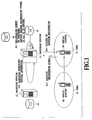
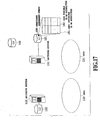
- FIG. 1 is a diagram showing an example of a conventional mobile communication system and an example of processing when a location registration request is made.
- switching stations 11 and 12 have VLR 21 and 22, respectively.
- the switching station 11 receives a location registration (request) signal from the mobile station 50 (in S11 of FIG. 1) and acquires (in S12) subscriber service information about the mobile station 50 from the switching station 12 in whose coverage area the mobile station 50 has been located.
- a location registration (request) signal from the mobile station 50 (in S11 of FIG. 1) and acquires (in S12) subscriber service information about the mobile station 50 from the switching station 12 in whose coverage area the mobile station 50 has been located.
- no subscriber service information can be newly registered in the VLR 21 (in S13). Therefore location registration processing ends in failure (in S14) and updating (registration) of subscriber location information in an HLR 40 is not performed.
- call origination processing is not normally performed since the switching station 11 has no service information about the subscriber on the VLR 21.
- Call termination processing also ends in failure since the subscriber location information in the HLR 40 has not been updated.
- the number of subscribers (subscriber information items) possible to be registered in the VLR depends on hardware resources. Also, because the hardware resources are fixedly assigned, it is not possible to manage information on dynamically changing subscribers (users) with flexibility.
- an object of the present invention is to enable a subscriber to acquire service without dependence on the accommodation capacity of a management unit which manages subscriber information.
- a switching station comprising: means for receiving a location registration signal from a mobile station; and means for registering, when the location registration signal is received, subscriber location information about the mobile station that has transmitted the location registration signal in a second management unit managing subscriber information in a case where no subscriber service information can be newly registered in a first management unit provided for use with the switching station and managing subscriber information.
- a switching station comprising: means for receiving a call origination signal from a mobile station; and means for acquiring, when the call origination signal is received, subscriber service information about the mobile station that has transmitted the call origination signal from a second management unit managing subscriber information in a case where the subscriber service information about the mobile station that has transmitted the call origination signal is not registered in a first management unit provided for use with the switching station and managing subscriber information.
- a switching station comprising: means for receiving a call termination signal to a mobile station; and means for acquiring, when the call termination signal is received, subscriber service information about the mobile station designated as a destination of the call termination signal from a second management unit managing subscriber information in a case where the subscriber service information about the mobile station designated as the destination of the call termination signal is not registered in a first management unit provided for use with the switching station and managing subscriber information.
- the first management unit may be a VLR.
- the second management unit may be an HLR.
- a switching station comprising: means for receiving a location registration signal from a mobile station; and means for registering, when the location registration signal is received, subscriber service information about the mobile station that has transmitted the location registration signal in a management unit provided for use with another switching station and managing subscriber information in a case where no subscriber service information can be newly registered in a management unit provided for use with the switching station and managing subscriber information.
- a switching station comprising: means for receiving a call origination signal from a mobile station; and means for acquiring, when the call origination signal is received, subscriber service information about the mobile station that has transmitted the call origination signal from a management unit provided for use with another switching station and managing subscriber information in a case where the subscriber service information about the mobile station that has transmitted the call origination signal is not registered in a management unit provided for use with the switching station and managing subscriber information.
- a switching station comprising: means for receiving a call termination signal to a mobile station; and means for acquiring, when the call termination signal is received, subscriber service information about the mobile station designated as a destination of the call termination signal from a management unit provided for use with another switching station and managing subscriber information in a case where the subscriber service information about the mobile station designated as the destination of the call termination signal is not registered in a management unit provided for use with the switching station and managing subscriber information.
- a switching station comprising: means for registering, at a request from another switching station, subscriber service information in a management unit provided for use with the switching station and managing subscriber information; and means for transmitting the subscriber service information registered in the management unit to the another switching station at a request from the another switching station.
- the management unit may be a VLR.
- a switching station comprising: means for receiving a location registration signal from a mobile station; and means for deleting, when the location registration signal is received, one of pieces of subscriber service information presently registered in a first management unit provided for use with the switching station and managing subscriber information, and for registering subscriber service information of the mobile station that has transmitted the location registration signal in the first management unit provided for use with the switching station, in a case where no subscriber service information can be newly registered in the first management unit provided for use with the switching station.
- the may further comprises means for registering subscriber location information about a mobile station in a second management unit managing subscriber information, and means for receiving subscriber service information about a mobile station from the second management unit, wherein the switching station may register, when the location registration signal is received, subscriber location information about the mobile station that has transmitted the location registration signal in a second management unit managing subscriber information, receive subscriber service information about the mobile station that has transmitted the location registration signal from the second management unit, delete one of pieces of subscriber service information presently registered in the first management unit provided for use with the switching station, and register the subscriber service information of the mobile station that has transmitted the location registration signal in the first management unit provided for use with the switching station, in a case where no subscriber service information can be newly registered in the first management unit provided for use with the switching station.
- the switching station may further comprises means for registering subscriber location information about a mobile station in a second management unit managing subscriber information, wherein when the switching station deletes one of pieces of subscriber service information presently registered in the first management unit for use with the switching station, the switching station may decide not to delete, from the first management unit for use with the switching station, subscriber location information about a mobile station corresponding to the subscriber service information to be deleted, and wherein when the switching station receives the location registration signal from the mobile station, the switching station may register in the second management unit the subscriber location information about the mobile station registered in the first management unit for use with the switching station.
- the switching station may further comprises means for receiving a call origination signal from a mobile station, and means for acquiring subscriber service information about a mobile station from a second management unit managing subscriber information, wherein when the switching station receives, after deleting one of pieces of subscriber service information presently registered in the first management unit for use with the switching station, a call origination signal from a mobile station corresponding to the deleted subscriber service information, the switching station may acquire the subscriber service information about the mobile station from the second management unit, and, if the acquired subscriber service information cannot be newly registered in the first management unit for use with the switching station, the switching station may delete one of pieces of subscriber service information presently registered in the first management unit, and registers the acquired subscriber service information in the first management unit for use with the switching station.
- the switching station may further comprises means for receiving a call termination signal to a mobile station, and means for acquiring subscriber service information about a mobile station from a second management unit managing subscriber information, wherein when the switching station receives, after deleting one of pieces of subscriber service information presently registered in the first management unit for use with the switching station, a call termination signal to a mobile station corresponding to the deleted subscriber service information, the switching station may acquire the subscriber service information about the mobile station from the second management unit, and, if the acquired subscriber service information cannot be newly registered in the first management unit for use with the switching station, the switching station may delete one of pieces of subscriber service information presently registered in the first management unit, and registers the acquired subscriber service information in the first management unit for use with the switching station.
- the second management unit may be an HLR.
- the first management unit may be a VLR.
- the switching station may select the mobile station whose subscriber service information is to be deleted, in consideration of at least one of call origination, call termination, location registration, and power state of mobile stations.
- the switching station may select, as the mobile station whose subscriber service information is to be deleted, a mobile station which has made neither call origination nor call termination during the longest time period till the present time.
- the switching station may select, as the mobile station whose subscriber service information is to be deleted, a mobile station which has made neither call origination, call termination nor location registration for predetermined period of time, or a mobile station whose power state is off.
- the switching station may select the mobile station whose subscriber service information is to be deleted, in consideration of communication state of mobile stations.
- the switching station may register, when it resisters subscriber service information, the subscriber service information as first type of subscriber service information or as second type of subscriber service information, and select the subscriber service information to be deleted from the first type of subscriber service information.
- a subscriber location information registration method comprising the steps of: receiving, at a switching station, a location registration signal from a mobile station; and registering, at the switching station, when the location registration signal is received, subscriber location information about the mobile station that has transmitted the location registration signal in a second management unit managing subscriber information in a case where no subscriber service information can be newly registered in a first management unit provided for use with the switching station and managing subscriber information.
- a subscriber service information acquisition method comprising the steps of: receiving, at a switching station, a call origination signal from a mobile station; and acquiring, at the switching station, when the call origination signal is received, subscriber service information about the mobile station that has transmitted the call origination signal from a second management unit managing subscriber information in a case where the subscriber service information about the mobile station that has transmitted the call origination signal is not been registered in a first management unit provided for use with the switching station and managing subscriber information.
- a subscriber service information acquisition method comprising the steps of: receiving, at a switching station, a call termination signal to a mobile station; and acquiring, at the switching station, when the call termination signal is received, subscriber service information about the mobile station designated as a destination of the call termination signal from a second management unit managing subscriber information in a case where the subscriber service information about the mobile station designated as the destination of the call termination signal is not registered in a first management unit provided for use with the switching station and managing subscriber information.
- a subscriber service information registration method comprising the steps of: receiving, at a first switching station, a location registration signal from a mobile station; and registering, at the first switching station, when the location registration signal is received, subscriber service information about the mobile station that has transmitted the location registration signal in a management unit provided for use with a second switching station and managing subscriber information in a case where no subscriber service information can be newly registered in a management unit provided for use with the first switching station and managing subscriber information.
- a subscriber service information acquisition method comprising the steps of: receiving, at a first switching station, a call origination signal from a mobile station; and acquiring, at the first switching station, when the call origination signal is received, subscriber service information about the mobile station that has transmitted the call origination signal from a management unit provided for use with a second switching station and managing subscriber information in a case where the subscriber service information about the mobile station that has transmitted the call origination signal is not registered in a management unit provided for use with the first switching station and managing subscriber information.
- a subscriber service information acquisition method comprising the steps of: receiving, at a first switching station, a call termination signal to a mobile station; and acquiring, at the first switching station, when the call termination signal is received, subscriber service information about the mobile station designated as a destination of the call termination signal from a management unit provided for use with a second switching station and managing subscriber information in a case where the subscriber service information about the mobile station designated as the destination of the call termination signal is not registered in a management unit provided for use with the first switching station and managing subscriber information.
- a subscriber service information transmission method comprising the steps of: registering, at a first switching station, at a request from a second switching station, subscriber service information in a management unit provided for use with the first switching station and managing subscriber information; and transmitting, at the first switching station, the service information registered in the management unit to the second switching station at a request from the second switching station.
- a subscriber service information registration method comprising the steps of: receiving, at a switching station, a location registration signal from a mobile station; and deleting, at the switching station, when the location registration signal is received, one of pieces of subscriber service information presently registered in a first management unit provided for use with the switching station and managing subscriber information, and registering, at the switching station, subscriber service information of the mobile station that has transmitted the location registration signal in the first management unit provided for use with the switching station, in a case where no subscriber service information can be newly registered in the first management unit provided for use with the switching station.
- a subscriber can acquire service without dependence on the accommodation capacity of a management unit which manages subscriber information.
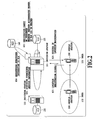
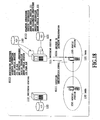
- FIG. 2 is a diagram showing an example of a configuration of a mobile communication system and an example of processing when a location registration request is made in the first embodiment of the present invention.
- switching stations 111 and 112 have VLRs 121 and 122, respectively.
- the VLRs 121 and 122 may be provided inside or outside the switching stations 111 and 112.
- the VLRs 121 and 122 which are management units respectively used by the switching stations in management of subscriber information, manage subscriber information such as subscriber service information and subscriber location information.
- An HLR 140 is a management unit which is provided independently of switching stations, and which manages subscriber information.
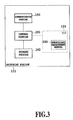
- FIG. 3 is a diagram showing an example of a configuration of a switching station.
- the switching station 111 has a control portion 191 which performs various kinds of control, a storage portion 192 which stores various processing procedures, data, etc., and a communication portion 193.
- a VLR 121 may be provided inside or outside the switching station 111, as are those described above.
- the control portion 191 performs communication with other switching stations, mobile stations, HLRs, VLRs, etc., through the communication portion 193 and other switching stations, base stations or the like.
- the VLR 121 has a subscriber management memory 180 which stores subscriber information.
- Other switching stations (the switching station 112 etc.) can have the same configuration as the switching station 111.
- the switching station 111 receives a location registration signal from the mobile station 150 (in S21 of FIG. 2) and acquires (in S22) subscriber service information about the mobile station 150 from the switching station 112 in whose coverage area the mobile station 150 has been located.
- a location registration signal from the mobile station 150 (in S21 of FIG. 2) and acquires (in S22) subscriber service information about the mobile station 150 from the switching station 112 in whose coverage area the mobile station 150 has been located.
- no subscriber service information can be newly registered in the VLR 121 (in S23 ) .
- the switching station 111 registers subscriber location information about the mobile station 150 in the HLR 140 (in S24), as it stores corresponding information in the VLR 121 in the case where subscriber service information can be registered in the VLR 121.
- the switching station 111 normally completes location registration processing (in S25).
- the switching station 111 can store in the storage portion 192 or the VLR 121, information of the mobile station 150 as a mobile station whose subscriber service information is not registered in the VLR 121. Thereby, the switching station 111 can recognize that subscriber service information of the mobile station 150 is not registered in the VLR 121, when call origination from the mobile station 150 or call termination to the mobile station 150 occurs later.
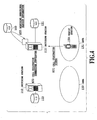
- FIG. 4 is a diagram showing an example of processing when a call origination request is made in the present embodiment.
- the switching station 111 acquires subscriber service information about the mobile station 150 from the HLR 140 (in step S32) since the VLR 121 has no subscriber service information about the mobile station 150. Then the switching station 111 normally performs call origination connection processing (in S33).
- FIG. 5 is a diagram showing an example of processing when a call termination request is made in the present embodiment.
- call termination processing can also be performed normally since the subscriber location information about the mobile station 150 has been correctly updated in the HLR 140.
- a call termination signal to the mobile station 150 is transmitted to the switching station 111 (in S41 of FIG. 5)
- the switching station 111 acquires the subscriber service information about the mobile station 150 from the HLR 140 (in S42) and performs call termination processing (in S43).
- the arrangement may alternatively be such that in a case where a switching station cannot register subscriber service information in its own VLR, it registers the subscriber service information in the VLR of another switching station instead of acquiring the subscriber service information from the HLR 140.
- "Another switching station” may be an adjacent switching station, a switching station in whose coverage area the mobile station has been located, a switching station having a large capacity VLR, etc.
- a first candidate, a second candidate, and so on for "another switching station” may be determined in advance with respect to each switching station. When one switching station requests another switching station to register subscriber service information, the requested switching station registers the subscriber service information.
- Each switching station stores information that in which VLR the subscriber service information of the mobile station was stored, if it had subscriber service information registered by the another switching station in a situation where it could not register the subscriber service information of the mobile station in its own VLR. Thereby, the switching station can recognize the VLR in which the subscriber service information is stored, when call origination from the mobile station or call termination to the mobile station occurs later.
- FIG. 6 is a diagram showing an example of processing when a location registration request is made in the second embodiment of the present invention.
- the switching station 111 receives a location registration signal from the mobile station 150 (in S51 of FIG. 6) and acquires (in S52) subscriber service information about the mobile station 150 from the switching station 112 in whose coverage area the mobile station 150 has been located.
- no subscriber service information can be newly registered in the VLR 121 (in S53) .
- the switching station 111 registers subscriber location information about the mobile station 150 in the HLR 140 (in S54), as it stores corresponding information in the VLR 121 in the case where subscriber service information can be registered in the VLR 121. Further, the switching station 111 registers subscriber service information about the mobile station 150 in another switching station (in a VLR 123 of a switching station 113 in this example) (in S55), and normally completes location registration processing (in S56).
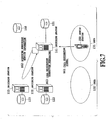
- FIG. 7 is a diagram showing an example of processing when a call origination request is made in the present embodiment.
- the switching station When a call origination signal is transmitted from the mobile station to the switching station (in S61 of FIG. 7) after registration in the another VLR, the switching station acquires subscriber service information about the mobile station from the another VLR (in step S62) and performs call origination connection processing (in S63) . When the switching station requests the another switching station to transmit the subscriber service information, the another switching station transmits the subscriber service information to the switching station.
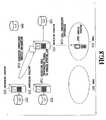
- FIG. 8 is a diagram showing an example of processing when a call termination request is made in the present embodiment.
- the switching station When a call termination signal is transmitted to the mobile station (in S71 of FIG. 8) after registration in the another switching station, the switching station acquires the subscriber service information about the mobile station from the another switching station (in S72) and performs call termination processing (in S73). When the switching station requests the another switching station to transmit the subscriber service information, the another switching station transmits the subscriber service information to the switching station.
- a method may be used in which a switching station deletes one of pieces of subscriber service information presently registered in its own VLR to enable registration of subscriber service information about a mobile station that has transmitted a location registration signal in its own VLR.
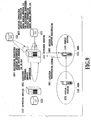
- FIG. 9 is a diagram showing an example of processing when a location registration request is made in the third embodiment of the present invention.
- the switching station 111 receives a location registration signal from the mobile station 150 (in S81 of FIG. 9) and acquires (in S82) subscriber service information about the mobile station 150 from the switching station 112 in whose coverage area the mobile station 150 has been located. In this situation, no subscriber service information can be newly registered in the VLR 121.
- the switching station 111 deletes one of pieces of subscriber service information presently registered in the VLR 121 (assumed to be subscriber service information about a mobile station 151) and registers the subscriber service information about the mobile station 150 in the VLR 121 (in S83). The switching station 111 then registers subscriber location information about the mobile station 150 in the HLR 140 (in S84) , and normally completes location registration processing (in S85).
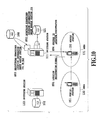
- the arrangement may be such that when one piece of subscriber service information presently registered in the VLR of the switching station is deleted, deletion from the VLR of the subscriber location information about the mobile station corresponding to the subscriber service information to be deleted is inhibited.
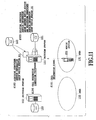
- FIG. 10 is a diagram showing an example of processing when a location registration request is made in the present embodiment.
- the switching station can acquire the subscriber location information about the mobile station from its own VLR (in S92), and register it in the HLR 140 (in S93). Then, the switching station normally completes location registration processing (in S94).
- FIG. 11 is a diagram showing an example of processing when a call origination request is made in the present embodiment.
- the switching station receives a call origination signal from the mobile station whose subscriber service information has been deleted (in S101 of FIG. 11 ) ; the switching station acquires the subscriber service information about the mobile station from the HLR 140 (in S102). If the switching station cannot newly register the acquired subscriber service information in its own VLR, it may delete one of pieces of subscriber service information presently registered in its own VLR and register the acquired subscriber service information in its own VLR (in S103). Then the switching station performs call origination connection processing (in S104).
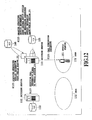
- FIG. 12 is a diagram showing an example of processing when a call termination request is made in the present embodiment.
- the switching station In a case where the switching station receives a call termination signal to the mobile station whose subscriber service information has been deleted (in S121 of FIG. 12), the switching station acquires the subscriber service information about the mobile station from the HLR 140 (in S122). If the switching station cannot newly register the acquired subscriber service information in its own VLR, it may delete one of pieces of subscriber service information presently registered in its own VLR and register the acquired subscriber service information in its own VLR (in S123). Then the switching station performs call termination processing (in S124).
- the mobile station whose subscriber service information is to be deleted can be selected in consideration of call origination, call termination, location registration, power state, etc. of mobile stations.
- a mobile station which has made neither call origination nor call termination during the longest time period till the present time can be selected.
- a mobile station in detach state i.e. , a mobile station which has made neither call origination, call termination nor location registration for predetermined period of time, or a mobile station whose power state is off can be selected.
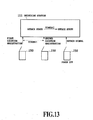
- FIG. 13 is a diagram for explaining attach state and detach state.
- a switching station makes the state of the mobile station attach state. Thereafter, the switching station finds, using a timer #2 (mobile not reachable timer), a mobile station which has made neither call origination, call termination nor location registration for predetermined period of time in the area of the switching station, and makes the state of the found mobile station detach state.
- the switching station also makes the state of a mobile station detach state, when it receives from the mobile station a detach signal indicating that the power has become off.
- the switching station makes the state of the mobile station attach state.
- a mobile station periodically (for example, every three hours) transmits, using a timer #1 (periodic routing update timer), a location registration signal to the switching station to request location registration.
- Attach state and detach state can be represented, for example, by using off and on of a (detach) flag.
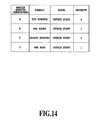
- FIG. 14 is a diagram for explaining an example of selecting a mobile station whose subscriber service information is to be deleted.
- the timer #2 column shows, for each mobile station (subscriber), elapsed time since the last time the mobile station made call origination, call termination or location registration.
- the priority of FIG. 14 is priority (rank) for each mobile station to be selected as the mobile station whose subscriber service information is to be deleted.
- the mobile stations C and D have higher priority than the mobile stations A and B. Between mobile stations having the same state, a mobile station having longer elapsed time has higher priority. Therefore, the mobile station D has higher priority than the mobile station C, and the mobile station B has higher priority than the mobile station A.
- the mobile station whose subscriber service information is to be deleted can be selected in consideration of communication state of mobile stations.
- the communication is disconnected unconditionally. Therefore, as the mobile station whose subscriber service information is to be deleted, a mobile station which is not in communication can be selected. That is, when a switching station intends to select a mobile station as the mobile station whose subscriber service information is to be deleted, and if the mobile station is in communication, the switching station can select another mobile station as the mobile station whose subscriber service information is to be deleted.
- Communication state of each mobile station can be managed, for example, at VLR or a service control unit performing control regarding call processing and service to subscriber, by having management table of communication state.
- FIG. 15 is a diagram showing an example of inquiring communication state of a service control unit, when the service control unit manages the communication state.
- a service control unit is provided for each switching station.
- the switching station 111 inquires communication state of each mobile station of a service control unit 161, receives its response from the service control unit 161, and selects in consideration of the response, the mobile station whose subscriber service information is to be deleted.
- FIG. 16 is a diagram for explaining an example of selecting a mobile station whose subscriber service information is to be deleted.
- the mobile stations A and D since the communication state of mobile stations A and D is not in communication and the state of mobile stations B and C is in communication, the mobile stations A and D have higher priority than the mobile stations B and C. That is, one of the mobile stations A and D is selected as the mobile station whose subscriber service information is to be deleted.
- the switching station registers, when it resisters subscriber service information, the subscriber service information as subscriber service information possible to be overwritten (subscriber service information possible to be deleted when the maximum number of accommodated users has been reached in VLR) or as subscriber service information impossible to be overwritten, and selects the subscriber service information to be overwritten from (pieces of) subscriber service information possible to be overwritten. For example, it is possible to register subscriber service information of a subscriber who frequently uses communication as subscriber service information impossible to be overwritten, and register subscriber service information of a subscriber who rarely uses communication as subscriber service information possible to be overwritten.
- FIG. 17 is a diagram showing an example of preparing an area possible to be overwritten and an area impossible to be overwritten in a subscriber management memory of VLR.
- the switching station 111 registers subscriber service information possible to be overwritten in an area 181 possible to be overwritten, and registers subscriber service information impossible to be overwritten in an area 182 impossible to be overwritten.
- the subscriber service information about a mobile station is acquired from a switching station in whose coverage area the mobile station has been located is described.
- the subscriber service information can be acquired from HLR when location registration other than the first location registration is made as well as when the first location registration is made.
- FIG. 18 is a diagram showing an example of processing corresponding to the example of processing shown in FIG. 9 when a location registration request is made, in a case where subscriber service information is acquired from an HLR.
- the switching station 111 having the VLR 121 which has accepted the maximum number of subscribers receives a location registration signal from the mobile station 150 (in S111 of FIG. 18)
- the switching station 111 registers subscriber location information about the mobile station 150 in the HLR 140, and receives subscriber service information about the mobile station 150 from the HLR 140 (in S112).
- the switching station 111 deletes one of pieces of subscriber service information presently registered in the VLR 121 and registers the subscriber service information about the mobile station 150 in the VLR 121 (in S113). In this way, location registration processing is normally completed (in S114).
- a subscriber can acquire service without dependence on the accommodation capacity of a management unit which manages subscriber information. That is, the system allows location registration, call origination and call termination processing for subscribers as an excess over the maximum number of accommodated subscribers, and more comfortable communication environment can be provided to subscribers by effectively using VLR memories.
Landscapes
- Engineering & Computer Science (AREA)
- Computer Networks & Wireless Communication (AREA)
- Signal Processing (AREA)
- Databases & Information Systems (AREA)
- Mobile Radio Communication Systems (AREA)
Applications Claiming Priority (3)
| Application Number | Priority Date | Filing Date | Title |
|---|---|---|---|
| JP2001031467 | 2001-02-07 | ||
| JP2001031467 | 2001-02-07 | ||
| EP02250831A EP1233640A3 (de) | 2001-02-07 | 2002-02-07 | Verfahren zur Vermeidung eines Datenbanküberlaufs in einem Besucherpositionsregister (VLR) |
Related Parent Applications (2)
| Application Number | Title | Priority Date | Filing Date |
|---|---|---|---|
| EP02250831.1 Division | 2002-02-07 | ||
| EP02250831A Division EP1233640A3 (de) | 2001-02-07 | 2002-02-07 | Verfahren zur Vermeidung eines Datenbanküberlaufs in einem Besucherpositionsregister (VLR) |
Publications (3)
| Publication Number | Publication Date |
|---|---|
| EP1545147A2 true EP1545147A2 (de) | 2005-06-22 |
| EP1545147A3 EP1545147A3 (de) | 2005-07-06 |
| EP1545147B1 EP1545147B1 (de) | 2012-05-30 |
Family
ID=18895547
Family Applications (3)
| Application Number | Title | Priority Date | Filing Date |
|---|---|---|---|
| EP04077920A Expired - Lifetime EP1545147B1 (de) | 2001-02-07 | 2002-02-07 | Verfahren zur Vermeidung eines Datenbanküberlaufs in einem Besucherpositionsregister (VLR) |
| EP02250831A Withdrawn EP1233640A3 (de) | 2001-02-07 | 2002-02-07 | Verfahren zur Vermeidung eines Datenbanküberlaufs in einem Besucherpositionsregister (VLR) |
| EP04077919A Expired - Lifetime EP1511348B1 (de) | 2001-02-07 | 2002-02-07 | Verfahren zur Vermeidung eines Datenbanküberlaufs in einem Besucherpositionsregister (VLR) |
Family Applications After (2)
| Application Number | Title | Priority Date | Filing Date |
|---|---|---|---|
| EP02250831A Withdrawn EP1233640A3 (de) | 2001-02-07 | 2002-02-07 | Verfahren zur Vermeidung eines Datenbanküberlaufs in einem Besucherpositionsregister (VLR) |
| EP04077919A Expired - Lifetime EP1511348B1 (de) | 2001-02-07 | 2002-02-07 | Verfahren zur Vermeidung eines Datenbanküberlaufs in einem Besucherpositionsregister (VLR) |
Country Status (7)
| Country | Link |
|---|---|
| US (4) | US7016677B2 (de) |
| EP (3) | EP1545147B1 (de) |
| KR (1) | KR100455701B1 (de) |
| CN (1) | CN100379298C (de) |
| AU (1) | AU770748B2 (de) |
| CA (1) | CA2371010C (de) |
| SG (3) | SG120057A1 (de) |
Families Citing this family (15)
| Publication number | Priority date | Publication date | Assignee | Title |
|---|---|---|---|---|
| JP2003319442A (ja) * | 2002-04-25 | 2003-11-07 | Nec Corp | 移動通信システム |
| US7496102B2 (en) * | 2002-06-07 | 2009-02-24 | At&T Corp. | Broadband telecommunication service with personalized service capability for mobile terminals |
| US7792053B1 (en) | 2002-07-08 | 2010-09-07 | At&T Intellectual Property Ii, L.P. | System for accessing end-to-end broadband network via network access server platform |
| AU2003280551B2 (en) * | 2002-12-12 | 2008-05-01 | Huawei Technologies Co., Ltd. | Method and network for establishing or cancelling service connection between the wireless local area network and user terminal |
| FR2852476A1 (fr) * | 2003-03-11 | 2004-09-17 | France Telecom | Procede et systeme de surveillance de telephones mobiles |
| US20060003762A1 (en) * | 2004-06-22 | 2006-01-05 | General Motors Corporation | Method and system for telematically deactivating satellite radio systems |
| JP4268605B2 (ja) * | 2005-09-07 | 2009-05-27 | パナソニック株式会社 | 無線通信装置および通信制御方法 |
| CN100415052C (zh) * | 2005-09-19 | 2008-08-27 | 华为技术有限公司 | 一种解决移动台被呼问题的方法 |
| JP4955490B2 (ja) * | 2007-09-12 | 2012-06-20 | 株式会社エヌ・ティ・ティ・ドコモ | 移動通信システム、ローカル加入者情報管理装置、および、通信情報管理方法 |
| KR101007353B1 (ko) * | 2008-12-03 | 2011-01-13 | 주식회사 케이티 | 이동 통신 시스템 및 호 설정 방법 |
| WO2010094334A1 (en) * | 2009-02-19 | 2010-08-26 | Telefonaktiebolaget Lm Ericsson (Publ) | Traffic control for roaming subscribers |
| CN102065519A (zh) * | 2009-11-11 | 2011-05-18 | 中国移动通信集团公司 | 一种数据存储设备、网络子系统和呼叫控制方法 |
| WO2012060566A2 (ko) * | 2010-11-02 | 2012-05-10 | 엘지전자 주식회사 | 무선 통신 시스템에서 측정 결과 보고 방법 및 장치 |
| JP5670962B2 (ja) * | 2012-06-15 | 2015-02-18 | 株式会社Nttドコモ | 移動通信制御装置、移動通信システム、移動通信制御方法、移動通信制御プログラム |
| CN117979300B (zh) * | 2024-04-02 | 2024-07-30 | 中国信息通信研究院 | 异常网络注册行为分析方法及装置 |
Family Cites Families (13)
| Publication number | Priority date | Publication date | Assignee | Title |
|---|---|---|---|---|
| US5097951A (en) * | 1990-10-16 | 1992-03-24 | Nucon Corporation | Unit load assembly for spools |
| US6078811A (en) * | 1997-08-04 | 2000-06-20 | Industrial Technology Research Institute | Mobile user registration overflow control for portable communications network |
| US6097951A (en) * | 1997-08-06 | 2000-08-01 | Northern Telecom Limited | Method and apparatus for wireless network architecture based on subscriber distribution |
| US6253081B1 (en) * | 1998-08-12 | 2001-06-26 | Bellsouth Intellect Pty Corp | Method and system for providing roaming service in a telecommunications system that is partially enabled for local number portability |
| JP3584747B2 (ja) | 1998-09-10 | 2004-11-04 | 富士通株式会社 | 呼制御装置及び方法 |
| JP2000138960A (ja) | 1998-10-30 | 2000-05-16 | Fujitsu Ltd | 移動通信システム及び加入者データ管理方法 |
| EP1011274A1 (de) * | 1998-12-16 | 2000-06-21 | TELEFONAKTIEBOLAGET L M ERICSSON (publ) | Verfahren und Vorrichtung zum Bereitstellen von Diensten in einem Telekommunikationsnetz |
| JP3286939B2 (ja) * | 1998-12-17 | 2002-05-27 | 富士通株式会社 | 移動通信システムにおける移動局の加入者データ収容制御方法及び装置 |
| KR100365784B1 (ko) * | 1999-03-22 | 2002-12-26 | 삼성전자 주식회사 | 셀룰러 시스템에서 가입자의 과금요율 차등적용 및 위치표시 방법 |
| EP1065904A1 (de) * | 1999-06-29 | 2001-01-03 | Alcatel | Standortregistrierungsystem für eines Mobilkommunikationsystems |
| JP2001086546A (ja) * | 1999-08-23 | 2001-03-30 | Swisscom Ag | 電気通信ネットワークのための信号送信方法および変換デバイス |
| TW530507B (en) * | 2000-05-05 | 2003-05-01 | Ind Tech Res Inst | VoIP mobility in IP/cellular networks interworking |
| US6804540B1 (en) * | 2000-08-02 | 2004-10-12 | Ericsson Inc. | Remote band-pass filter in a distributed antenna system |
-
2002
- 2002-02-06 CA CA2371010A patent/CA2371010C/en not_active Expired - Fee Related
- 2002-02-07 SG SG200200738A patent/SG120057A1/en unknown
- 2002-02-07 KR KR10-2002-0006945A patent/KR100455701B1/ko not_active Expired - Fee Related
- 2002-02-07 SG SG200508436-3A patent/SG131817A1/en unknown
- 2002-02-07 EP EP04077920A patent/EP1545147B1/de not_active Expired - Lifetime
- 2002-02-07 CN CNB021008868A patent/CN100379298C/zh not_active Expired - Fee Related
- 2002-02-07 US US10/071,933 patent/US7016677B2/en not_active Expired - Fee Related
- 2002-02-07 AU AU15503/02A patent/AU770748B2/en not_active Ceased
- 2002-02-07 EP EP02250831A patent/EP1233640A3/de not_active Withdrawn
- 2002-02-07 SG SG200508432-2A patent/SG131816A1/en unknown
- 2002-02-07 EP EP04077919A patent/EP1511348B1/de not_active Expired - Lifetime
-
2006
- 2006-02-02 US US11/346,023 patent/US20060128378A1/en not_active Abandoned
- 2006-02-02 US US11/345,793 patent/US20060142065A1/en not_active Abandoned
- 2006-02-02 US US11/346,116 patent/US20060128379A1/en not_active Abandoned
Also Published As
| Publication number | Publication date |
|---|---|
| AU770748B2 (en) | 2004-03-04 |
| CA2371010C (en) | 2010-06-22 |
| US20060128379A1 (en) | 2006-06-15 |
| SG131816A1 (en) | 2007-05-28 |
| EP1511348A2 (de) | 2005-03-02 |
| US20020123346A1 (en) | 2002-09-05 |
| US20060142065A1 (en) | 2006-06-29 |
| EP1545147A3 (de) | 2005-07-06 |
| KR100455701B1 (ko) | 2004-11-06 |
| US7016677B2 (en) | 2006-03-21 |
| SG131817A1 (en) | 2007-05-28 |
| EP1233640A2 (de) | 2002-08-21 |
| EP1511348A3 (de) | 2005-03-16 |
| KR20020065860A (ko) | 2002-08-14 |
| CA2371010A1 (en) | 2002-08-07 |
| US20060128378A1 (en) | 2006-06-15 |
| CN1370019A (zh) | 2002-09-18 |
| CN100379298C (zh) | 2008-04-02 |
| SG120057A1 (en) | 2006-03-28 |
| AU1550302A (en) | 2002-08-08 |
| EP1511348B1 (de) | 2012-06-20 |
| EP1233640A3 (de) | 2002-10-30 |
| EP1545147B1 (de) | 2012-05-30 |
Similar Documents
| Publication | Publication Date | Title |
|---|---|---|
| EP1511348A2 (de) | Verfahren zur Vermeidung eines Datenbanküberlaufs in einem Besucherpositionsregister (VLR) | |
| KR101033424B1 (ko) | 멀티 모드 무선 통신 디바이스용 로밍 인디케이터 | |
| WO2001050781A2 (en) | Mobile station supported private system roaming | |
| GB2328119A (en) | VLR mobile user registration overflow control | |
| MXPA97006518A (es) | Sistema de servicio inalambrico compartido para inquilinos | |
| CA2476345C (en) | Switching station, subscriber location information registration method, subscriber service information acquisition method, subscriber service information registration method, and subscriber service information transmission method | |
| JP2005026735A (ja) | 携帯無線通信端末及び記憶装置 | |
| JP3735075B2 (ja) | 交換機、加入者位置情報登録方法、加入者サービス情報取得方法、加入者サービス情報登録方法および加入者サービス情報送信方法 | |
| JP4215129B2 (ja) | 交換機、加入者位置情報登録方法、加入者サービス情報取得方法、加入者サービス情報登録方法および加入者サービス情報送信方法 | |
| KR100994621B1 (ko) | 이동통신 시스템, 로컬 가입자 정보 관리장치, 및,통신정보 관리방법 | |
| JPH1056668A (ja) | 加入者情報移設方法 | |
| JP4615396B2 (ja) | ロケーションレジスタ及び収容移管制御方法 | |
| KR101569771B1 (ko) | 귀국 통보 메시지 서비스 제공 방법 및 이를 위한 홈 위치 등록기 | |
| JP2004260429A (ja) | 移動局情報の転送システムと方法およびプログラム | |
| JP4579210B2 (ja) | 位置管理方法、位置管理装置、及び、無線端末 | |
| KR100810248B1 (ko) | 이동 통신 시스템에서 이동 통신 단말의 위치 정보 제공방법 | |
| JP2897174B2 (ja) | 移動通信加入者データアクセス方法 | |
| JP3001030B2 (ja) | パーソナル通信方法、パーソナル移動通信方法及びそのデータベース | |
| KR101059231B1 (ko) | 단말 및 이의 네트워크 선택 방법 | |
| JPH1070757A (ja) | 位置情報管理システム | |
| JP2004297597A (ja) | 位置管理システム、移動端末、アクセスルータ、ローカル位置情報管理装置、ホーム位置情報管理装置、位置管理方法 | |
| JPH06121368A (ja) | 移動通信加入者データアクセス方式 | |
| JPH06121367A (ja) | 移動通信加入者データアクセス方式 | |
| JP2002223468A (ja) | 移動体通信システムおよびその番号変換方法 | |
| JP2001274890A (ja) | 移動体通信端末 |
Legal Events
| Date | Code | Title | Description |
|---|---|---|---|
| PUAI | Public reference made under article 153(3) epc to a published international application that has entered the european phase |
Free format text: ORIGINAL CODE: 0009012 |
|
| PUAL | Search report despatched |
Free format text: ORIGINAL CODE: 0009013 |
|
| AC | Divisional application: reference to earlier application |
Ref document number: 1233640 Country of ref document: EP Kind code of ref document: P |
|
| AK | Designated contracting states |
Kind code of ref document: A2 Designated state(s): DE FR GB IT |
|
| AK | Designated contracting states |
Kind code of ref document: A3 Designated state(s): DE FR GB IT |
|
| 17P | Request for examination filed |
Effective date: 20051017 |
|
| AKX | Designation fees paid |
Designated state(s): DE FR GB IT |
|
| 17Q | First examination report despatched |
Effective date: 20080111 |
|
| RIC1 | Information provided on ipc code assigned before grant |
Ipc: H04W 28/08 20090101ALN20110823BHEP Ipc: H04W 8/04 20090101ALN20110823BHEP Ipc: H04W 8/12 20090101ALN20110823BHEP Ipc: H04W 8/06 20090101AFI20110823BHEP |
|
| RIC1 | Information provided on ipc code assigned before grant |
Ipc: H04W 8/06 20090101AFI20110901BHEP Ipc: H04W 28/08 20090101ALN20110901BHEP Ipc: H04W 8/04 20090101ALN20110901BHEP Ipc: H04W 8/12 20090101ALN20110901BHEP |
|
| RIC1 | Information provided on ipc code assigned before grant |
Ipc: H04W 8/04 20090101ALN20110916BHEP Ipc: H04W 8/12 20090101ALN20110916BHEP Ipc: H04W 28/08 20090101ALN20110916BHEP Ipc: H04W 8/06 20090101AFI20110916BHEP |
|
| REG | Reference to a national code |
Ref country code: DE Ref legal event code: R079 Ref document number: 60243074 Country of ref document: DE Free format text: PREVIOUS MAIN CLASS: H04Q0007380000 Ipc: H04W0008060000 |
|
| GRAP | Despatch of communication of intention to grant a patent |
Free format text: ORIGINAL CODE: EPIDOSNIGR1 |
|
| RIC1 | Information provided on ipc code assigned before grant |
Ipc: H04W 28/08 20090101ALN20111208BHEP Ipc: H04W 8/04 20090101ALN20111208BHEP Ipc: H04W 8/12 20090101ALN20111208BHEP Ipc: H04W 8/06 20090101AFI20111208BHEP |
|
| GRAS | Grant fee paid |
Free format text: ORIGINAL CODE: EPIDOSNIGR3 |
|
| GRAA | (expected) grant |
Free format text: ORIGINAL CODE: 0009210 |
|
| RAP1 | Party data changed (applicant data changed or rights of an application transferred) |
Owner name: NTT DOCOMO, INC. |
|
| AC | Divisional application: reference to earlier application |
Ref document number: 1233640 Country of ref document: EP Kind code of ref document: P |
|
| AK | Designated contracting states |
Kind code of ref document: B1 Designated state(s): DE FR GB IT |
|
| REG | Reference to a national code |
Ref country code: GB Ref legal event code: FG4D |
|
| REG | Reference to a national code |
Ref country code: DE Ref legal event code: R096 Ref document number: 60243074 Country of ref document: DE Effective date: 20120726 |
|
| PLBE | No opposition filed within time limit |
Free format text: ORIGINAL CODE: 0009261 |
|
| STAA | Information on the status of an ep patent application or granted ep patent |
Free format text: STATUS: NO OPPOSITION FILED WITHIN TIME LIMIT |
|
| PGFP | Annual fee paid to national office [announced via postgrant information from national office to epo] |
Ref country code: GB Payment date: 20130207 Year of fee payment: 12 Ref country code: FR Payment date: 20130301 Year of fee payment: 12 Ref country code: DE Payment date: 20130131 Year of fee payment: 12 |
|
| 26N | No opposition filed |
Effective date: 20130301 |
|
| REG | Reference to a national code |
Ref country code: DE Ref legal event code: R097 Ref document number: 60243074 Country of ref document: DE Effective date: 20130301 |
|
| REG | Reference to a national code |
Ref country code: DE Ref legal event code: R119 Ref document number: 60243074 Country of ref document: DE |
|
| GBPC | Gb: european patent ceased through non-payment of renewal fee |
Effective date: 20140207 |
|
| REG | Reference to a national code |
Ref country code: FR Ref legal event code: ST Effective date: 20141031 |
|
| REG | Reference to a national code |
Ref country code: DE Ref legal event code: R119 Ref document number: 60243074 Country of ref document: DE Effective date: 20140902 |
|
| PG25 | Lapsed in a contracting state [announced via postgrant information from national office to epo] |
Ref country code: FR Free format text: LAPSE BECAUSE OF NON-PAYMENT OF DUE FEES Effective date: 20140228 Ref country code: GB Free format text: LAPSE BECAUSE OF NON-PAYMENT OF DUE FEES Effective date: 20140207 Ref country code: DE Free format text: LAPSE BECAUSE OF NON-PAYMENT OF DUE FEES Effective date: 20140902 |
|
| PG25 | Lapsed in a contracting state [announced via postgrant information from national office to epo] |
Ref country code: IT Free format text: LAPSE BECAUSE OF NON-PAYMENT OF DUE FEES Effective date: 20140207 |