EP1544710A2 - Informationsverarbeitungsgerät, Bilderzeugungsgerät und Verfahren zum Annullieren von elektronischer Datenbewegung - Google Patents
Informationsverarbeitungsgerät, Bilderzeugungsgerät und Verfahren zum Annullieren von elektronischer Datenbewegung Download PDFInfo
- Publication number
- EP1544710A2 EP1544710A2 EP04029669A EP04029669A EP1544710A2 EP 1544710 A2 EP1544710 A2 EP 1544710A2 EP 04029669 A EP04029669 A EP 04029669A EP 04029669 A EP04029669 A EP 04029669A EP 1544710 A2 EP1544710 A2 EP 1544710A2
- Authority
- EP
- European Patent Office
- Prior art keywords
- electronic data
- recording medium
- card
- copy
- movement
- Prior art date
- Legal status (The legal status is an assumption and is not a legal conclusion. Google has not performed a legal analysis and makes no representation as to the accuracy of the status listed.)
- Ceased
Links
Images











Classifications
-
- G—PHYSICS
- G06—COMPUTING OR CALCULATING; COUNTING
- G06F—ELECTRIC DIGITAL DATA PROCESSING
- G06F21/00—Security arrangements for protecting computers, components thereof, programs or data against unauthorised activity
- G06F21/10—Protecting distributed programs or content, e.g. vending or licensing of copyrighted material ; Digital rights management [DRM]
-
- G—PHYSICS
- G06—COMPUTING OR CALCULATING; COUNTING
- G06Q—INFORMATION AND COMMUNICATION TECHNOLOGY [ICT] SPECIALLY ADAPTED FOR ADMINISTRATIVE, COMMERCIAL, FINANCIAL, MANAGERIAL OR SUPERVISORY PURPOSES; SYSTEMS OR METHODS SPECIALLY ADAPTED FOR ADMINISTRATIVE, COMMERCIAL, FINANCIAL, MANAGERIAL OR SUPERVISORY PURPOSES, NOT OTHERWISE PROVIDED FOR
- G06Q20/00—Payment architectures, schemes or protocols
- G06Q20/30—Payment architectures, schemes or protocols characterised by the use of specific devices or networks
- G06Q20/36—Payment architectures, schemes or protocols characterised by the use of specific devices or networks using electronic wallets or electronic money safes
- G06Q20/367—Payment architectures, schemes or protocols characterised by the use of specific devices or networks using electronic wallets or electronic money safes involving electronic purses or money safes
- G06Q20/3674—Payment architectures, schemes or protocols characterised by the use of specific devices or networks using electronic wallets or electronic money safes involving electronic purses or money safes involving authentication
-
- G—PHYSICS
- G06—COMPUTING OR CALCULATING; COUNTING
- G06Q—INFORMATION AND COMMUNICATION TECHNOLOGY [ICT] SPECIALLY ADAPTED FOR ADMINISTRATIVE, COMMERCIAL, FINANCIAL, MANAGERIAL OR SUPERVISORY PURPOSES; SYSTEMS OR METHODS SPECIALLY ADAPTED FOR ADMINISTRATIVE, COMMERCIAL, FINANCIAL, MANAGERIAL OR SUPERVISORY PURPOSES, NOT OTHERWISE PROVIDED FOR
- G06Q20/00—Payment architectures, schemes or protocols
- G06Q20/38—Payment protocols; Details thereof
- G06Q20/40—Authorisation, e.g. identification of payer or payee, verification of customer or shop credentials; Review and approval of payers, e.g. check credit lines or negative lists
- G06Q20/401—Transaction verification
- G06Q20/4012—Verifying personal identification numbers [PIN]
Definitions
- the present invention relates to an information processing apparatus, an image forming apparatus, and an electronic data movement canceling method, and, in particular, to an information processing apparatus, an image forming apparatus, and an electronic data movement canceling method for canceling processing of movement of electronic data between recording media.
- a multifunctional image forming apparatus (referred to as a 'fusion machine', hereinafter) which may function as a printer, a copier, a facsimile machine, a scanner or such as a result of a display part, a printing part, an image pickup part and so forth being provided in a single housing thereof, as well as relevant four programs enabling the machine to function as the printer, copier, facsimile machine, scanner or such being mounted therein and switching being made thereamong.
- Such a fusion machine may be configured so that, in addition to the programs already mounted therein, another new function may be provided additionally as a result of an application module (simply referred to as a 'module' hereinafter), provided in a portable recording medium such as an SD card (which may also be called 'SD memory card'), being read in.
- an application module hereinafter
- a portable recording medium such as an SD card (which may also be called 'SD memory card')
- a fact that a new function may be easily added by means of an SD card or such s mentioned above may provide an advantage in particular in that an extensibility of the fusion machine is improved.
- data stored in an SD card or such may be easily referred to via another apparatus such as a PC (personal computer) or such, the module stored in the medium may be tampered by a malicious person, whereby the tampered module may rather cause a fault in the fusion machine which executes the module. Furthermore, it is necessary to avoid illegal copy of the module stored in the SD card or such.
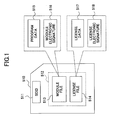
- FIG. 1 shows an example of a configuration of the module in the SD card.
- an SDID 511 and a module 512 are stored.
- the SDID 511 is information (ID) used for identifying each particular SD card.
- the module 512 includes a module file 513, a license file 514 and so forth.
- the module file 513 is a file in which a function to be achieved by the module is mounted.
- the license file 514 is a file in which license information of the module is stored.
- the module file 513 includes program data 515, a module electronic signature and so forth.
- the program data 515 is a module program itself. Accordingly, as a result of the program data being processed, the function of the module is achieved.
- the module electronic signature 516 is used to verify a validity of the program data 515. That is, when execution of the module is requested, the fusion machine digitizes the program data by means of a message digest for example, and compares the thus-obtained value with a value of the electronic signature 516. When both values do not agree with one another, the fusion machine determines that the program data 515 is improper one, and thus, rejects execution thereof.
- the license file 514 includes license data 517, a license electronic signature 518 and so forth.
- the license data 517 is data in which license data (for example, a term of validity, a number of usable times of validity, and so forth) of the module is recorded. Accordingly, when the license is invalid, or no license file 514 exists, the program data is not executed.
- the license electronic signature 518 is data used for verifying a validity of the license data 517. That is, when execution of the module is requested, the fusion machine digitizes the license data 517 and the SDID 511 according to a message digest or such, compares the thus-obtained value with a value of the license electronic signature 518, and thus, determines a validity of the license data 517. Then, when the validity of the license data 517 is thus verified properly, a validity of the license of the module is then verified based on the license data 517.
- the program data 515 and the license data 517 are authenticated with the use of the module electronic signature 516 or the license electronic signature 518, and thereby, it is possible to detect a tamper of the program data 515, the license data 517 or such. Thus, it is possible to avoid execution of an improper module.
- the SDID 511 being used for authenticating the license data 515, a unity between the module 512 and the SD card 510 may be ensured, whereby it is possible to avoid illegal copy of the module 512. That is, even if the module 512 is copied to another SD card, it is possible to detect that the copy was thus carried out as a result of the value digitized from the license data 517 and the SDID of this other SD card being compared with the license electronic signature 518 based on the SD card 510 and the SDID 511 upon authentication of the license data 517.
- 'move' in this case means that, same as a general term of 'move' for a file, the module from which the 'movement' has been carried out is then made invalid or deleted. That is, 'movement' is different from 'copying', creation of a new license is thus not required, and as a result, no significant disbenefit may occur even if 'movement' is allowed.
- a user is not allowed actually to carry out 'movement' of the module between recording media in the above-described method. It is very convenient for the user if 'movement' of the module is allowed while safety is ensured. Further, it is further convenient for the user if the user can cancel (UNDO) 'movement' after the 'movement' of the module has been carried out. This is because, the user may erroneously carry out 'movement', or may wish to return to the state before the 'movement'.
- an object of the present invention is to provide an information processing apparatus, an image forming apparatus and an electronic data movement canceling method by which, in a case where electronic data, valid only when it is stored in a specific recording medium, is moved to another recording medium, it is possible to return to a state before the movement.
- an information processing apparatus deleting, from a second recording medium, a copy of electronic data once recorded in the second recording medium, an original of the electronic data being previously recorded in a first recording medium different from the second recording medium, includes: an electronic data deleting part deleting the copy of the electronic data from the second recording medium, which copy can be actually used only when authentication thereof is succeeded in based on medium identification information which is previously provided for identifying the first recording medium; an electronic data validating part validating the electronic data once invalidated when the copy of the electronic data was created in the second recording medium; and a medium identification information deleting part deleting the medium identification information of the first recording medium once recorded in a predetermined storage area when the copy is created in the second recording medium.
- this information processing apparatus in a case where a copy of electronic data which is originally recorded in the first recording medium is generated in the second recording medium and further the electronic data originally recorded in the first recording medium is made invalid so that movement of the electronic data is apparently achieved, it is possible to return to the state before the movement is thus carried out.
- the present invention may be in a form of an electronic data movement canceling method.
- FIG. 2 shows a configuration of a fusion machine in an embodiment of the present invention.
- the fusion machine which is a multifunctional image forming apparatus is applied.
- the fusion machine 1 includes a plotter 11, a scanner 12, and other hardware resources 13 such as a facsimile device; a software group 20 and a fusion machine start part 50.
- the software group 20 includes applications 30 and a platform 40.
- the applications 30 are used for carrying out unique processing particularly for user services concerning image processing such as a printing process, a facsimile process, a scanner process or such.
- the applications 30 include a printer application 31 which is an application for the printer having a page description language (PDL, PCL) and a postscript (PS); a copy application 32 for a copy process; a fax application 33 for a facsimile process; a scanner application 34 for a scanner process; and a net file application 35 for a network file.
- a printer application 31 which is an application for the printer having a page description language (PDL, PCL) and a postscript (PS); a copy application 32 for a copy process; a fax application 33 for a facsimile process; a scanner application 34 for a scanner process; and a net file application 35 for a network file.
- PDL page description language
- PS postscript
- the platform 40 includes a control service interpreting a processing request from the applications 30 and generating an acquisition request for a hardware resource; a system resource manager (referred to as an SRM, hereinafter) 43 carrying out management of at least one hardware resource and carrying out arbitration of acquisition requests given by the control service; and an operating system (referred to as an OS, hereinafter) 41.
- a control service interpreting a processing request from the applications 30 and generating an acquisition request for a hardware resource
- SRM system resource manager
- OS operating system
- the control service is configured to have at least one service module such as a system control service (referred to as an SCS, hereinafter) 42, an engine control service (referred to as an ECS, hereinafter) 44, a memory control service (referred to as an MCS, hereinafter) 45, an operation panel control service (referred to as an OSC, hereinafter) 46, a fax control service (referred to as an FCS, hereinafter) 47, a network control service (referred to as an NCS, hereinafter) 48, or such.
- SCS system control service
- ECS engine control service
- MCS memory control service
- an OSC operation panel control service
- FCS fax control service
- NCS network control service
- the platform 40 is configured to have an application program interface (referred to as an API, hereinafter) by which the processing request given by the applications 30 can be received by means of a previously defined function.
- the OS 41 is made of a UNIX (registered trade name) or such, and regards respective software of the applications 30 or the platform 40 as processes, and executes them in parallel.
- a process of the SRM 43 carries out system control and management of the hardware resources. For example, the process of the SRM 43 carries out arbitration according to a request from an upper layer which uses the engine, memory, HDD file, host I/O (Centro I/F, network I/F, IEEE1394 I/F, RS232C I/R or such) or such, and carries out control of execution.
- an upper layer which uses the engine, memory, HDD file, host I/O (Centro I/F, network I/F, IEEE1394 I/F, RS232C I/R or such) or such, and carries out control of execution.
- the SRM 43 determines whether or not the required hardware resource is available (that is, not used by another request), and, when it is available, notifies this matter to the upper layer. Further, the SRM 43 carries out scheduling for using the hardware resource according to a request from the upper layer, and caries out the requested contents (for example, paper conveyance and image forming processing by means of the printer engine, ensuing a memory, file generation or such) directly.
- a process of the SCS 42 caries out application management, operation part control, system page display, LED display, hardware resource management, interrupt application control, or such.
- a process of the ECS 44 carries out engine control of the plotter 11, the scanner 12 and the other hardware resources 13.
- a process of the MCS 45 carries out memory control such as obtaining and releasing an image memory, usage of the HDD, compression/decompression of image data or such.
- a process of the OCS 46 carries out control of an operation panel which acts as an information transmitting agent between an operator and the apparatus body control.
- a process of the FCS 47 provides an API for carrying out facsimile transmission/reception with the use of a PSTN or an ISDN network from each application layer of the system controller, registration/citation of various sorts of facsimile data managed in a memory for backup, facsimile reading, facsimile reception printing, combined transmission/reception or such.
- a process of the NCS 48 provides a service which is available in common among the applications which require a network I/O, and acts as an agent distributing data received from the side of the network according to each protocol to the respective applications, or transmitting data from the respective applications to the side of the network.
- the NCS 48 controls data communication with a network device according to HTTP (hypertext transfer protocol) with the use of an httpd (hypertext transfer protocol daemon).
- HTTP hypertext transfer protocol
- httpd hypertext transfer protocol daemon
- the fusion machine start part 50 is executed first when power supply is turned on in the fusion machine 1, and starts the platform 40 or the applications 30.
- the fusion machine 1 can unitarily manage processing which is required in common among the respective applications in the platform 40. Next, a hardware configuration of the fusion machine 1 is described.
- FIG. 3 shows a hardware configuration of the fusion machine 1 in the embodiment of the present invention described above.
- the fusion machine 1 includes a controller 60, the operation panel 80, an FCU 81 and an engine part 82.
- the controller 60 includes a CPU 61, a system memory 62, a north bridge (NB) 63, a south bridge (SB) 64, an ASIC 66, a local memory 67, a HDD 68, a network interface card (NIC) 69, a USB device 70, an IEEE1394 device 71, a centronics device 72, an SD slot 75, and an SD slot 76.
- the operation panel 80 is connected to the ASIC 66 of the controller 60.
- the FCU 81 and the engine part 82 are connected to the ASIC 66 of the controller 60 via a PCI bus 83.
- the controller 60 to the ASIC 60, the local memory 67, the HDD 68 and so forth are connected, and also, the CPU 61 and the ASIC 66 are connected via the NB 63 which is a CPU chip set.
- the CPU 61 and the ASIC 66 being connected via the NB 63 in the controller 60 for a case where an interface of the CPU 61 is not disclosed. It is noted that the ASIC 66 and the NB 63 are connected together via an AGP (accelerated graphic port) 65.
- AGP accelerated graphic port
- the ASIC 66 and the NB 63 are connected, not via a low-speed PCI bus but via the AGP 65. Thus, it is possible to avoid degradation in performance.
- the CPU 61 carries out control of the fusion machine 1 totally.
- the CPU 61 starts and executes the SCS 42, the SRM 43, the ECS 44, the MCS 45, the OCS 46, the FCS 47 or the NCS 48 with the OS 41, and also, starts and executes the printer application 31, the copy application 42, the fax application 33, the scanner application 34 or the net file application 35 included in the applications 30.
- the NB 63 is a bridge for connecting the CPU 61, the system memory 62, the SB 64, the ASIC 66, the NIC 69, the USB 70, the IEEE1394 device 71 and the centronics device 72.
- the SB 64, the NIC 69, the USB device 70, the IEEE1394 device 71 and the centronics device 72 are connected to the NB 63 via the PCI bus 73.
- the SB 64 is a bridge for connecting the PCI bus 73 with a ROM, a peripheral device, or such.
- the SD slots 75 and 76 are slots to which SD cards which are recording media in a type such that they can be inserted in or removed from such SD slots.
- Various sorts of application modules or such may be recorded in the SD cards. That is, it is possible to expand the functions of the fusion machine 1 with the use of application modules recorded the SD card.
- a user should prepare the SD card in which an application module for achieving a required function, and insert it in the SD slot 75 or 76. Thereby, it is possible to expand the functions of the fusion machine 1 easily.
- the system memory 62 is used as an image drawing memory or such.
- the local memory 67 is used as a copy image buffer, a code buffer or such.
- the ASIC 66 is an IC includes a hardware element specially prepared for image processing, and thus is specially prepared to be used for image processing.
- the HDD 68 is one example of storage (secondary storage device) used for storing image data, document data, program, font data, or such.
- the USB device 70, the IEEE device 1394 device 71, and the centronics device 72 are interfaces in compliance with respective standards.
- the operation panel 80 acts as an operation part to receive input operation from an operator, and also, acts as a display part provides a display for the operator.
- the FCU 81 has a backup memory. The memory of the FCU 81 is used, for example, for temporarily storing facsimile data received, when the power source of the fusion machine 1 is turned off.
- processing is carried out for moving the application module recorded in the SD card inserted in the SD slot 75 to another SD card inserted in the SD slot 76. It is noted that one or a plurality of application modules may be moved within a single action of the application module moving processing.
- FIG. 4 illustrates information stored in the SD card.
- an SDID 770 As shown, in the SD card 77, an SDID 770, a license invalid flag 771, and at least application module, i.e., application modules 772a, 772b, 772c, 772d and so forth are stored.
- the SDID 770 is information (ID) for identifying each particular SD card.
- the license invalid flag 771 is a flag used for determining a validity of the application modules stored in the SD card 77. That is, when the license invalid flag is ON, the fusion machine 1 determines that the application modules in the SD card 77 is invalid, and thus, rejects execution of the application modules 772a and so forth.
- Each application module includes a module file 773 and a license file 774, as shown.
- the module file 773 is a file in which a function for achieving a function which the module caries out is mounted.
- the license file 774 is a file in which license information of the application module is stored.
- the module file 773 includes program data 775, module information 776 and a module electronic signature 777.
- the program data 775 is an application module program itself. Therefore, as a result of the program data 775 being processed by the CPU 61, the function o the application module is actually obtained.
- the module information 776 is attribute information of the application module, and includes a module name 781, an immobility flag 782, applicable machine type information 783 and electronic signature key information 784.
- the module name 781 is a name of the application module.
- the immobility flag 782 is a flag which indicates whether or not movement of the application to another SD card is allowed.
- the applicable machine type information 783 is information for identifying a machine type (a machine type of the fusion machine 1) in which the application module can be properly operated.
- the electronic signature key information 784 is key information required for decoding the module electronic signature 777 or the license electronic signature 779 coded.
- the module electronic signature 777 is used to verify a validity of the program data 775. That is, when execution of the application module is required, the fusion machine 1 digitizes the program data 775 according to a message digest for example, and also, decodes the module electronic signature 777 with the use of the electronic signature key information 784. Then, the fusion machine 1 compares both of the thus-obtained values. Then, when both do not agree with each other, the fusion machine 1 determines that the program data 775 is improper data, and thus, rejects execution thereof.
- the license file 774 includes license data 778 and a license electronic signature 779.
- the license data 778 is data in which license information (for example, a term of validity, a number of times of usage in validity or such) of the application module is recorded.
- the license electronic signature 779 is data used for verifying a validity of the license data 778. That is, when execution of the application module is requested, the fusion machine 1 digitizes the license data 778 and the SDID 770 according to a message digest or such for example, and also, decodes the license electronic signature 779 with the use of the electronic signature key information 784. Then, the fusion machine 1 compares both so as to verify a validity of the license data 778. After the license data 778 is thus verified as being valid, the fusion machine 1 determines a validity of the license of the application module based on the license data 778.
- the license invalid flag 771 is described in further detail.
- 'movement of a file' includes deletion of the movement-source file, as mentioned above.
- the moving processing of the application module in the embodiment of the present invention is different from the 'movement of a file' in terms of the precise meaning of the term, and rather, corresponds to 'copying'. That is, in the present embodiment, the fusion machine 1 does not actually delete the application module in the movement-source SD card. This is because, if the movement-source application module were actually deleted upon the moving processing, the application module would completely vanish even if a fault occurs during the moving processing, and such a situation should be avoided preferably.
- the license invalid flag 771 of the copy-source SD card is turned ON, and thus, the copy-source application module is made not actually usable (invalidated) in a software manner. Thereby, the moving processing in the original meaning of the term is apparently achieved.
- the present invention is also applicable for a case where, same as the common file movement manner, the movement-source is made not available as a result of the movement-source application module being actually deleted.
- the single license invalid flag 771 is provided for the SD card 77.
- This configuration is advantageous because of its simplified manner for a case where all the application modules stored in the SD card 77 is always moved simultaneously.
- the license invalid flag 771 is turned ON even when only the single application module 772a is moved to another SD card, for example. In such a case, the application modules other than the application module 772a actually moved cannot be executed thereafter.
- the license invalid flag 771 may be provided for each of the application modules.
- FIG. 5 shows an example in which the license invalid flag 771 is provided for each application modules.
- the same reference numerals are given to parts the same as those in FIG. 4, and duplicate description thereof is omitted.
- the license invalid flag 771 does not exist, but instead, a license invalid flag 785 is provided in the module information 776 of each application module.
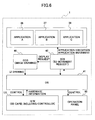
- FIG. 6 shows an example of a configuration in the fusion machine for achieving the application moving processing. That is, FIG. 6 shows a part extracted from the configuration shown in FIG. 2 only concerning the application moving processing.
- the same reference numerals are given to parts the same as those of FIG. 6, and duplicate description is omitted.
- An application A 36, an application B 37, an application C 38 and so forth shown in FIG. 6 are the same as the various sorts of application modules (the printer application 31, the copy application 32, the fax application 33 and so forth) included in the applications 30 in FIG. 2, but expressed in an abstraction manner.
- the applications A 36 and so forth shown in FIG. 6 are not those previously incorporated in the fusion machine 1 but those recorded in the SD card inserted in the SD slot 75 or 76.
- the SCS 42 caries out control of the application module moving processing. Further, the OCS 46 carries out, based on a request from the SCS 42, display of various sorts of pages concerning the application module moving processing on the operation panel 80.
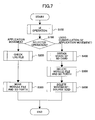
- FIG. 7 shows a flow chart illustrating the processing of the fusion machine 1.
- the user selects an item from a page displayed on the operation panel so as to input as to whether or not the application module moving processing is to be carried out (S100).
- the relevant processing is started.
- FIG. 8 shows a flow chart illustrating the log file checking processing.
- the SCS 42 obtains file information stored in the SD card of an application module movement destination (in this example, the SD card inserted in the SD slot 76, and referred to as a 'movement-destination SD card 761', hereinafter), and thus, determines whether or not a log file exists in the movement-destination SD card 761 (S201).
- an application module movement destination in this example, the SD card inserted in the SD slot 76, and referred to as a 'movement-destination SD card 761', hereinafter
- the log file is a file in which a process actually carried out in the application module moving processing is recorded, and, is created in the movement-destination SD card 761 in processing (S207) described later.
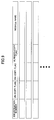
- FIG. 9 shows an example of a configuration of the log file.
- an identification number an un-copy flag, an on-copy flag and an already-copy flag (generally referred to as 'copy state flags', hereinafter), a module name and so forth are recorded.
- the identification number is a number for identifying each record of the log file.
- the un-copy flag, the on-copy flag and the already-copy flag are flags for identifying statuses of the application module moving processing, and indicate that copy of the module file 773 or such is not yet started, that the same are on operation and that the copy is already finished, respectively.
- the module name is a name of the application module (module name 781).
- the log file is deleted at a timing at which movement of all the application modules for which the movement is requested has been completed. Accordingly, if the log file still exists in the movement-destination SD card 761, Step S203 is carried out, and the SCS 42 determines that an abnormal termination occurred in previous application module moving processing due to some cause, for example, an accidental power source break occurring during the processing or such.
- Step S204 is carried out after Step S203, and the SCS 42 determines whether or not continuation of processing (automatic recovery) from the relevant abnormal termination timing, that is, from the relevant terminated state can be carried out.
- Step S205 is carried out, and the SCS 42 determines from the log file the application modules already copied to the movement-destination SD card 761 until the processing was abnormally terminated in the previous processing, and deletes the module files 773 and so forth of the thus-obtained application modules.
- Step S206 is carried out, and the SCS 42 searches the movement-source SD card (in this example, the SD card inserted in the SD slot 75, and referred to as 'movement-source SD card 751' hereinafter) for the application modules which were on copy or not yet copied at the time the previous moving processing was abnormally terminated, based on the log file, and executes moving processing of the module file 773 and so forth for the thus-retrieved application modules (S300).
- the movement-source SD card in this example, the SD card inserted in the SD slot 75, and referred to as 'movement-source SD card 751' hereinafter
- Step S202 when it is determined that no log file exists, Step S207 is executed, and the SCS 42 newly creates a log file in the movement-destination SD card 716.
- FIG. 10 shows an initial state of the log file thus created.
- the application modules having module names 'C', 'D' and 'E' stored in the movement-source SD card 751 are those requested to be moved, for example. Since copy of all the application modules is not started yet, the un-copy flag of each of the application modules in the initial state has a value '0', as shown.
- Step S300 is executed, and the SCS 42 executes moving processing for the module files 773 and so forth.
- FIG. 14 shows a sequence diagram illustrating the moving processing of the module file and so forth.
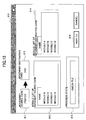
- the OCS 46 displays a page (referred to as a 'module list page', hereinafter) on the operation panel 80 showing lists of the application modules stored in the movement-source SD card 751 and the movement-destination SD card 761 (S301), respectively, as shown in FIG. 15.
- a 'module list page' hereinafter
- FIG. 15 shows an example of display of the module list page.
- types of the application modules stored in the movement-source SD card 751 and the movement-destination SD card 761 are indicated in areas 811 and 812, respectively. From these areas 811 and 812, it can be seen that the application modules stored in the movement-source SD card 751 and the movement-destination SD card 761 are those concerning the printer function and the fax function, respectively.
- areas 813 and 814 lists of module names of the application modules stored in the movement-source SD card 751 and the movement-destination SD card 761 are shown, respectively.
- an area 815 a progress state (step) of the application module moving processing is shown.
- the SCS 42 obtains the SDID 770 from each of the movement-source SD card 751 and the movement-destination SD card 761 (Steps S302, S303).
- Step S304 is carried out, and, the SCS 42 obtains a value of the license invalid flag from the movement-source SD card 751, and thereby determines a validity of the movement-source SD card 751.
- the SCS 42 stops the moving processing.
- the fact that the license invalid flag has the value ON means that this SD card has already undergone the moving processing as a moving source, and also, if the same SD card again underwent the moving processing as a moving source, notwithstanding this situation, the application modules would be 'copied' actually.
- Steps S305 and S306 subsequent to Step S304 the SCS 42 reads the module information 776 of all the application modules stored in the movement-source SD card 751 and in the movement-destination SD card 761.
- Step S307 subsequent to Step S306, the SCS 42 carries out calculation of a capacity required for movement of the application modules, check of values of the immobility flags of the respective application modules and so forth, so as to determine whether or not the moving processing can be actually carried out.
- Step S308 subsequent to Step S307 the SCS 42 obtains a spare area in the movement-destination SD card 761, from the movement-destination SD card 761.
- a 'module detail page' hereinafter
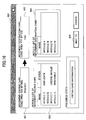
- FIG. 16 shows an example of the module detail page.
- a used area of the movement-source SD card 751 and an unused area of the movement-destination SD card 761 are shown in areas 821 and 822, respectively.
- areas 823 and 824 lists of the module names of the application modules stored in the movement-source SD card 751 and the movement-destination SD card 761 are shown, respectively.
- the movement-source SD card in particular, further, statues are shown for the respective application modules.
- the module F a fact that the license invalid flag 785 is ON is shown.
- the module G a fact that, since the immobility flag 782 is ON, and thus, movement is not allowed, is shown.
- the user can recognize the details of the movement-source SD card 751 and the movement-destination SD card 761 by refereeing to this module detail page 820.
- the OCS 46 displays a page (referred to as a 'module selection page', hereinafter) for the user to select the application modules to actually move, from the operation panel 80 (S310).
- a 'module selection page' hereinafter
- FIG. 17 shows one example of display of the module selection page. From the module selection page 830 shown in FIG. 17, the user can select the application modules to actually move, from an area 831 particularly.
- a symbol 'X' attached to the module name of the application module means that the relevant application module cannot be moved due to a reason that the application module is duplicated, the immobility flag is ON, the license invalid flag is ON or such.
- the SCS 42 recognizes the application module (referred to as 'target module', hereinafter) to actually move, based on the module selection page 830 (S311), and copies the module file 773 and the license file 774 of the target module to the movement-destination SD card 761 from the movement-source SD card 751 (S312, S313).
- 'target module' the application module
- the SCS 42 turns the license invalid flag of each of the relevant movement-source target modules ON, and thus, invalidates them, in Step S314.
- the value of the SDID of the movement-destination SD card 761 may be applied to the value of the license invalid flag 785. Thereby, it becomes possible to trace the movement destination therefrom afterwards.
- Step S315 subsequent to Step S314, the SCS 42 writes the SDID 770 of the movement-source SD card 751 to the movement-destination SD card 761.
- the SDID 770 of the movement-source SD card 751 being thus written in the movement-destination SD card 761, execution of the application modules copied to the movement-destination is made possible. The details thereof are described later.
- Step S312 through S315 may be changed in various manners.
- the processing of writing of the SDID 770 of the movement-source SD card 751 in the movement-destination SD card 761 in Step S315 may be carried out before the processing of Steps S312 through S314.
- the copying processing and the invalidating processing in Steps S312 through S314 may be carried out in a manner of loop processing for each application module. By applying the loop processing, even if the copying processing is interrupted, the application modules which have been already copied can be executed from the movement-destination SD card 761.
- FIG. 18 shows a manner of the actual application module moving processing. As shown, the module file 773 and the license file 774 of the application module of the movement-source SD card 751 are copied to the movement-destination SD card 761, the SDID 770 (SDID #1) of the movement-source SD card 751 is written in the movement-destination SD card 761, and further, the license invalid flag 785 is turned ON.
- the SDID of the SD card of the counterpart may be stored in a file.
- the SDID of the SD card of the counterpart may be stored in a management area at a predetermined address, which area a general user cannot access easily.
- the management area does not mean an area of the SD card in which a substance of the file is stored, but it means an area of the SD card in which management information of a file system such as a folder structure or such is stored.
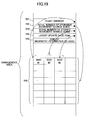
- FIG. 19 shows a data structure of an area to store the SDID of the counterpart in the management area of the SD card.
- an area 551 is an area in which, when the relevant SD card is the movement-destination SD card 761, a starting address of an area, from which the SDID of the movement-source SD card 751 is stored, is stored.
- An area 552 is an area in which the number of the SDIDs which can be stored in the area 556 is stored.
- An area 553 is an area in which the number of the SDIDs currently stored in the area 556 is stored.
- An area 554 is an area in which dates/times at which the currently stored SDIDs were last written are stored.
- An area 555 is an area in which, when the relevant SD card is the movement-source SD card 751, the SDID of the movement-destination SD card 761 is stored.
- the module list page 810, the module detail page 820, the module selection page 830 and so forth are displayed, and the user should carry out operation of selecting the application module to actually move and so forth.
- the user should carry out operation of selecting the application module to actually move and so forth.
- more easy pages may be displayed instead.
- FIG. 20 shows an example of the easy pages.
- an initial page 840 for the user to input start of the moving processing is displayed.
- a check page 850 is displayed.
- a notification page 860 notifying that the moving processing is currently proceeded with is displayed.
- a finish page 870 is displayed.
- an error page 880 is displayed.
- authentication processing were carried out according to the related art by the fusion machine 1 for the license data 778, that is, authentication with the use of the SDID 770 of the movement-destination SD card 761 were carried out upon execution of the application module generated in the movement-destination SD card 761 through the processing described above with reference to FIG. 14, the authentication of the license data 778 would not be succeeded in, and thus, the application module in the movement-destination could not be actually used, whereby the movement of the application modules would have no meaning accordingly.
- FIG. 21 shows a flow chart illustrating the authentication processing of the license data.
- the SCS 42 caries out electronic authentication for the license data 778 with the use of the original SDID 770 of the SD card 761 (referred tog as 'current SD card', hereinafter) in which the application module which is a target of the authentication is stored (S351). That is, the original SDID 770 and the license data 778 are digitized according to a message digest for example, and the thus-obtained value is compared with the value of the license electronic signature 779.
- Step S352 subsequent to Step S351, the SCS 42 determines whether or not the authentication has been succeeded in (the compared values agree with one another). When it is determined that the authentication has been succeeded in, the SCS 42 finishes the license data authentication processing normally. This is a case where, for example, the application module which thus undergoing the authenticate is not one which has been moved to the current SD card from another SD card.
- Step S353 is carried out, and, the SCS 42v determines whether or not the SDID 770 (referred to as 'other SDID', hereinafter) of another SD card is written in the current SD card.
- the SCS 42 determines that the license data 778 is improper, and finishes the authentication processing abnormally. This is a case where, for example, the relevant application module is not one moved from another SD card properly but one tampered or such.
- the SCS 42 carries out authentication of the license data 778 based on this other SDID, in Step S354.
- the SCS 42 finishes the authentication processing of the license data normally. This is a case where the relevant application module is one properly moved from another SD card.
- the SCS 42 repeats authentication processing with the use of further another SDID written if any, and then, when the authentication is succeeded in at this time, the processing is finished normally. However, when the authentication has not been succeeded in even when any SDID written is used, the processing is finished abnormally.
- the application module which is authenticated based on the SDID 770, to another SD card in such a condition that the application module may be used also in the movement destination, and thus, it is possible to use the application module thus-moved.
- the SDID 770 in the movement-source SD card 751 may be coded with the use of the SDID 770 of the movement-destination SD card 761 so as to strengthen a binding between the SDID 770 of the movement-source SD card 751 copied to the movement-destination SD card 761 and the movement-destination SD card 761.
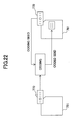
- FIG. 22 shows an example in which the SDID of the movement-source SD card 751 is coded with the use of the SDID of the movement-destination SD card.
- the SDID 770 of the movement-source SD card 751 is copied to the movement-destination SD card 761
- the SDID 770 of the movement-destination SD card 761 is used as a seed of coding and the SDID 770 of the movement-source SD card 751 is used therewith.
- the thus-coded SDID 770 is stored in the movement-destination SD card 761.
- the once-coded SDID 770 should be decoded with the use of the SDID 770 of the movement-destination SD card 761. Therefore, if the application module and the coded SDID 776 were illegally copied to further another SD card, it is not possible to decode the coded SDID 770 with the use of the SDID 770 of the further another SD card. As a result, the thus-illegally copied application module cannot be executed.
- the fusion machine 1 carries out the movement processing and also carries out the authentication of the moved application module (license data 778), for the purpose of simplification of the description.
- the moving processing may be carried out by another information processing apparatus in which the function of application moving processing is mounted, and the fusion machine 1 may use the thus-moved application module from the movement destination.
- the SDID 770 of the movement-source SD card 751 is written in the movement-destination SD card 761. What is at least necessary is that the SDID of the movement-source SD card 751 is written in a location (storage area) which the fusion machine 1 which actually uses the movement-destination application module can refer to.
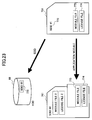
- FIG. 23 shows an example in which the SDID 770 of the movement-source SD card 751 is written in a hard disk of the fusion machine 1.
- the module file 773 and the license file 774 of the target application module are copied to the movement-destination SD card 761, while the SDID 770 of the movement-source SD card 751 is written in the HDD 68 of the fusion machine 1.
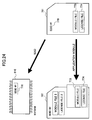
- FIG. 24 shows an example in which the SDID 770 of the movement-source SD card 751 is written in an NVRAM of the fusion machine 1.
- the module file 773 and the license file 774 of the relevant application module are copied to the movement-destination SD card 761, while the SDID 770 of the movement-source SD card 751 is written in the NVRAM 910 of the fusion machine 1.
- FIG. 25 shows an example in which the SDID 770 of the movement-source SD card 751 is written in a flash ROM of the fusion machine 1.
- the module file 773 and the license file 774 of the relevant application module are copied to the movement-destination SD card 761, while the SDID 770 of the movement-source SD card 751 is written in the flash ROM 920 of the fusion machine 1.
- the fusion machine 1 should carry out authentication of the license data 778 with the use of the SDID 770 written in the respective one of the HDD 68, the NVRAM 910 and the flash ROM 920.
- the present invention is applicable for a case where the application module itself is moved to a storage location other than the SD card.
- FIG. 26 shows an example in which the application module itself is moved to the hard disk of the fusion machine 1.
- the SDID 770 of the movement-source SD card 751 is written in the HDD 68 of the fusion machine 1
- the module file 773 and the license file 774 are written in the HDD 68 of the fusion machine 1.
- FIG. 27 shows an example in which the application module itself is moved to the flash ROM of the fusion machine 1.
- the SDID 770 of the movement-source SD card 751 is written in the flash ROM 910 of the fusion machine 1
- the module file 773 and the license file 774 are written in the flash ROM 910 of the fusion machine 1.
- Step S400 is carried out, and processing is carried out to obtain respective states of the movement-source SD card 751 and the movement-destination SD card 761 so as to determine whether or not both the SD cards are those having undergone the moving processing for which cancellation is now desired.
- the module file 773 and the license file of the application module copied to the movement-destination SD card 761 in the relevant moving processing are deleted (Step S500).
- the SDID 770 of the movement-source SD card 751 written in the movement-destination SD card 761 or another recording medium is also deleted (Step S600).
- FIG. 28 shows a sequence diagram of the SD card state obtaining processing.
- Step S401 the SCS 42 refers to the movement-source SD card 761, and determines whether or not the canceling processing has been already carried out, and, at this time, the canceling processing was terminated due to some fault. Details of this determination are described later.
- Step S402 subsequent to Step S401 the SCS 42 determines whether or not the SDID 770 of the movement-source SD card 751 is written in the movement-destination SD card 761.
- the SDID 770 of the movement-source SD card 751 is written in the movement-destination SD card 761. Accordingly, if the SDID 770 of the movement-source SD card 751 is not written in the movement-destination SD card 761, the SCS 42 determines that the movement-destination SD card 751 is not the movement destination with respect to the relevant movement-source SD card 751, and terminates the canceling processing.
- the SCS 42 should determine whether or not the SDID 770 of the movement-source SD card 751 exists in the relevant other recording medium.
- Step S403 subsequent to Step S402, the SCS 42 refers to the license invalid flag 785 of the application module in the movement-source SD card 751, and determines whether or not the license invalid flag 785 is invalidated. When it is not invalidated, the SCS 42 determines that the movement-source SD card 751 is not the SD card which is regarded as the relevant movement source, and thus, terminates the canceling processing.
- the SCS 42 obtains list information of the module names of the application modules stored in the respective ones of the movement-destination SD card 761 and the movement-source SD card 751 (Steps S404, S405), and determines whether or not the application modules stored in the movement-destination SD card 761 include the application module (referred to as 'duplicate module', hereinafter) which is the same as that stored in the movement-source SD card 751. That is, if the movement-source SD card 751 is the relevant movement source of the movement-destination SD card 761, the movement-source SD card 751 should have the application module stored therein the same as that stored in the movement-destination SD card 761.
- the SCS 42 determines that both SD cards do not correspond to those having the correspondence relationship concerning the movement processing, and terminates the canceling processing. On the other hand, when existence of the duplicate module is confirmed, the SCS 42 determines that correspondence relationship between both SD cards has been confirmed, and as a result carries out application module deletion processing (S500).
- FIG. 29 shows a flow chart illustrating the movement destination application module deletion processing.
- Step S501 the SCS 42 obtains the SDID 770 (referred to as 'movement-source SDID', hereinafter) of the movement-source SD card 751, from the movement-source SD card 751.
- SDID 770 referred to as 'movement-source SDID', hereinafter
- Step S502 subsequent to Step S501 the SCS 42 writes list information (referred to as 'deletion candidate list', hereinafter) of the module names of the duplicate modules for which the existence has been confirmed in Step S406 (FIG. 28) as deletion candidates, in the movement-destination SD card 761.
- list information referred to as 'deletion candidate list', hereinafter
- processing should be carried out only for the application modules for which the module names are included in the thus-created deletion candidate list, and thus, processing efficiency can be improved.
- Step S503 subsequent to Step S502, the SCS 42 determines whether or not any module names exist in the deletion candidate list.
- Step S504 is carried out, and the module name located at the top of the deletion candidate list is taken (the thus-taken module name is referred to as 'current module name', and the application module of the current module name is referred to as 'current module', hereinafter).
- Step S505 subsequent to Step S504, the SCS 42 carries out authentication of the license data 778 of the current module based on the movement-source SDID, and thereby determines whether or not the movement source of the current module is positively the relevant movement-source SD card 751.
- This processing is carried out to avoid erroneously delete the application module for a possible case where the application module having the module name the same as that of the application module existing in the movement-source SD card 751 previously exists (different from that moved from another SD card) in the movement-destination SD card 761, a case where the same was moved from another SD card or such.
- Step S506 subsequent to Step S505, the SCS 42 determines success/failure of the authentication of the current module.
- Step S507 is carried out, and the SCS 42 determines that the current module is positively one which was moved from the relevant movement-source SD card 751.
- the SCS 42 deletes the module file 703 and the license file 704 of the current module from the movement-destination SD card 761, and also, clears the license invalid flag of the current module in the movement-source SD card 751 (Step S508). Thereby, the application module in the movement source becomes usable again.
- Step S506 the current module is determined as not being one which was moved from the relevant movement-source SD card 751, and thus, deletion of the current module and so forth is not carried out.
- Step S509 subsequent to Step S508 or Step S506, the SCS 52 deletes the current module name from the deletion candidate list, and carries out the processing, starting from the Step S503, for each of all the application modules remaining in the deletion candidate list.
- the movement-source SDID is deleted form the movement-destination SD card 761 or another recording medium in which the same is previously written (S600), and thus, the canceling processing is completed.
- the license invalid flag is provided not for each application module but for each SD card, the license invalid flag 771b of the movement-source SD card 751 should be cleared at the timing of Step S600.
- Step S403 the deletion candidate list is used to determine whether or not the previous canceling processing was properly finished. That is, when the deletion candidate list is left undeleted in the movement-destination SD card 761, the SCS 42 determines that the previous canceling processing is terminated on the way due to a failure, and carries out the processing, starting from Step S503, based on the left deletion candidate list.
- the fusion machine 1 As described above, in the fusion machine 1 according to the embodiment of the present invention, it is possible to return the movement-source SD card 751 and the movement-destination SD card 761 to the respective states before the application module moving processing was carried out, after once the application module moving processing was carried out.
- the log file generated during the movement of the module file is recorded in the movement-destination SD card 761.
- a recording location of the log file is not limited to the movement-destination SD card 761.
- the log file may be recorded, instead, in a computer (referred to as a 'log management server', hereinafter) which is connected with the fusion machine 1 via a communication network.
- a 'log management server' hereinafter
- An example in which the log file is thus recorded in the log management server is described below:
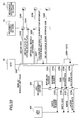
- Step S701 After carrying out processing of determination as to whether or not the module file movement is actually carried out and so forth in Steps S301 through S308, the SCS 42 establishes a session with the log management server 200 (S701).
- Step S702 subsequent to Step S701, the SCS 42 transmits the machine number of the fusion machine 1 to the log management server 200.
- the log management server 200 writes the machine number of the fusion machine 1 in the header information in Step S703.
- Step 704 subsequent to Step S703, the SCS 42 transmits the SDID of the movement-source SD card 751 and the SDID of the movement-destination SD card 761 to the log management server 200, which then writes these SDIDs in the header information (Step S705).
- Step S706 the SCS 42 transmits the log information to the log management server 200 (Step S706), which then updates the log file 600 based on the thus-received log information (Step S707).
- Step S708 the SCS 42 notifies the finish of the moving processing to the log management server 200 (Step S708), which then writes the latest update date in the header information of the log file 600 (Step S709).
- the log file 600 should not be necessarily deleted even after the moving processing is finished.
- the log file may be left, and may be used for security check processing carried out when the fusion machine 1 starts up the application from the SD card. That is, when the application is started up from the SD card, if the log file has a last log which indicates that this application was moved to another SD card, this application should be invalidated in the present SD card. In such a case, if this application is not actually invalidated in the present SD card, it can be detected that the license invalid flag 771 or 785 may have been tampered by some improper measure or such.
- the communication information amount increases accordingly, whereby the processing speed of the module file moving processing may be degraded. Further, it is not necessary to store information, in the log file, such as the above-mentioned on-copy flag which indicates an intermediate process state. Therefore, only the copy state flags may not be recorded in the log file but may be recorded in the movement-destination SD card 761.
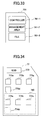
- FIG. 33 illustrates an area in which the copy state flags are written.
- a storage area of the movement-destination SD card 761 includes a controller area 761-1, a management area 761-2, and a file area 761-3.
- the copy state flags may be written in any area thereamong. For example, when the copy state flags are written in the controller area 761-1 or the management area 761-2, information bits at predetermined addresses within the relevant area may be used. When the copy state flags are written in the file area 761-3, they may be recorded in a predetermined file.
- the file area 761-3 is an area used for writing a substance of a file.
- the management area 761-2 is an area in which file system management information such as a folder structure or such is written.
- an SD card to which a so-called radio IC tag (such as an RFID tag) is attached is provided.
- the license file 774 may be stored in the radio IC tag, for example.
- FIG. 34 shows an example in which the license file is stored in the radio IC tag.
- rectangles 773a through 773d included in the SD card 77 denote the module files 773 of the respective application modules.
- Rectangles 774a through 774d denote the license files of the respective application modules.
- the license files 774a through 774d are stored in the radio IC tag 790.
- the radio IC tag 790 may be built in the SD card 77, or may be attached to the SD card instead of a decal. There is a radio IC tag having a coding function on the market. By applying such a type of radio IC tag, it is possible to effectively avoid illegal usage of the license files 774.
- radio IC tag 790 a type of radio IC tag having a security function such as a coding function so that it may become also possible to safely store the license files 774 and so forth and effectively avoid illegal usage of the license files 774 and so forth.
- the SD card is mainly applied as a recording medium in the above-described embodiment, the present invention may be applied to any other various types of recording media.
- electronic data to be moved is not limited to a program such as the application module as in the embodiment described above.
- image data, sound data (audio data), motion picture data (video data) or such, for which illegal copy should be avoided, may be applied widely instead.
Landscapes
- Engineering & Computer Science (AREA)
- Business, Economics & Management (AREA)
- Accounting & Taxation (AREA)
- Theoretical Computer Science (AREA)
- General Physics & Mathematics (AREA)
- Finance (AREA)
- Physics & Mathematics (AREA)
- Software Systems (AREA)
- General Business, Economics & Management (AREA)
- Strategic Management (AREA)
- Computer Security & Cryptography (AREA)
- Multimedia (AREA)
- Computer Networks & Wireless Communication (AREA)
- Technology Law (AREA)
- Computer Hardware Design (AREA)
- General Engineering & Computer Science (AREA)
- Storage Device Security (AREA)
- Information Retrieval, Db Structures And Fs Structures Therefor (AREA)
- Signal Processing For Digital Recording And Reproducing (AREA)
Applications Claiming Priority (4)
| Application Number | Priority Date | Filing Date | Title |
|---|---|---|---|
| JP2003416454 | 2003-12-15 | ||
| JP2003416454 | 2003-12-15 | ||
| JP2004354089 | 2004-12-07 | ||
| JP2004354089A JP4698211B2 (ja) | 2003-12-15 | 2004-12-07 | 情報処理装置、画像形成装置、電子データの移動の取り消し方法 |
Publications (2)
| Publication Number | Publication Date |
|---|---|
| EP1544710A2 true EP1544710A2 (de) | 2005-06-22 |
| EP1544710A3 EP1544710A3 (de) | 2005-06-29 |
Family
ID=34525515
Family Applications (1)
| Application Number | Title | Priority Date | Filing Date |
|---|---|---|---|
| EP04029669A Ceased EP1544710A3 (de) | 2003-12-15 | 2004-12-15 | Informationsverarbeitungsgerät, Bilderzeugungsgerät und Verfahren zum Annullieren von elektronischer Datenbewegung |
Country Status (4)
| Country | Link |
|---|---|
| US (1) | US7703143B2 (de) |
| EP (1) | EP1544710A3 (de) |
| JP (1) | JP4698211B2 (de) |
| CN (1) | CN1332324C (de) |
Cited By (1)
| Publication number | Priority date | Publication date | Assignee | Title |
|---|---|---|---|---|
| WO2007118591A1 (en) * | 2006-04-14 | 2007-10-25 | Stryker Leibinger Gmbh & Co. Kg | Item, accessory kit, and method for software based medical resource activation |
Families Citing this family (19)
| Publication number | Priority date | Publication date | Assignee | Title |
|---|---|---|---|---|
| JP2006065503A (ja) * | 2004-08-25 | 2006-03-09 | Matsushita Electric Ind Co Ltd | 権利情報を格納した記録媒体、情報処理装置及び権利情報の管理方法 |
| JP2007041736A (ja) * | 2005-08-01 | 2007-02-15 | Konica Minolta Business Technologies Inc | ライセンス管理システム、同管理装置及び情報処理装置 |
| JP2007080245A (ja) * | 2005-08-19 | 2007-03-29 | Ricoh Co Ltd | 画像形成装置及び認証課金方法 |
| JP4518058B2 (ja) | 2006-01-11 | 2010-08-04 | ソニー株式会社 | コンテンツ伝送システム、コンテンツ伝送装置及びコンテンツ伝送方法、並びにコンピュータ・プログラム |
| JP2007199890A (ja) * | 2006-01-25 | 2007-08-09 | Sony Corp | コンテンツ伝送システム、コンテンツ伝送装置及びコンテンツ伝送方法、並びにコンピュータ・プログラム |
| EP2000942A4 (de) * | 2006-03-13 | 2012-03-07 | Fujitsu Ltd | Digitalausstrahlungsinhalt-verschiebungsfunktion |
| DE102006016994A1 (de) * | 2006-04-11 | 2007-10-18 | Giesecke & Devrient Gmbh | Erfassen des Betriebsmittelverbrauchs |
| JP2008171306A (ja) * | 2007-01-15 | 2008-07-24 | Ricoh Co Ltd | 電子装置およびプログラム |
| US8127168B2 (en) * | 2007-07-05 | 2012-02-28 | Panasonic Corporation | Data processing device for reducing power consumption while operating a virtualized environment, and a non-transitory computer-readable recording medium and integrated circuit for performing the same |
| JP5095325B2 (ja) | 2007-09-14 | 2012-12-12 | 株式会社リコー | 画像処理装置及び画像処理方法 |
| JP2009070247A (ja) * | 2007-09-14 | 2009-04-02 | Ricoh Co Ltd | 情報処理装置、情報処理方法および画像処理装置 |
| JP4459284B2 (ja) | 2008-07-14 | 2010-04-28 | 株式会社東芝 | 情報処理装置 |
| KR101370340B1 (ko) * | 2008-10-30 | 2014-03-06 | 삼성전자 주식회사 | 화상형성장치 및 그 소프트웨어 활성화 방법 |
| JP5326918B2 (ja) * | 2009-08-05 | 2013-10-30 | 株式会社リコー | 電子機器,ソフトウェア更新方法,プログラム,および記録媒体 |
| JP2013131158A (ja) * | 2011-12-22 | 2013-07-04 | Fujitsu Ltd | 自動仮想化プログラム、自動仮想化方法及び情報処理装置 |
| US20160034602A1 (en) * | 2014-08-01 | 2016-02-04 | Lenovo (Singapore) Pte. Ltd. | Storing and presenting data associating information in a file with the source of the information |
| KR20240105515A (ko) | 2019-05-21 | 2024-07-05 | 에이치아이디 글로벌 코포레이션 | 물리적 액세스 제어 시스템 및 방법 |
| US20240015149A1 (en) * | 2020-11-13 | 2024-01-11 | Assa Abloy Ab | Secure element arrays in internet-of-things systems |
| JP2023140700A (ja) * | 2022-03-23 | 2023-10-05 | 株式会社リコー | 情報処理装置、情報処理方法及びプログラム |
Family Cites Families (36)
| Publication number | Priority date | Publication date | Assignee | Title |
|---|---|---|---|---|
| US5805699A (en) | 1996-05-20 | 1998-09-08 | Fujitsu Limited | Software copying system |
| JP4022976B2 (ja) * | 1998-03-06 | 2007-12-19 | ソニー株式会社 | 記録再生システム |
| JPH11328033A (ja) * | 1998-05-20 | 1999-11-30 | Fujitsu Ltd | ライセンス委譲装置 |
| US7073063B2 (en) * | 1999-03-27 | 2006-07-04 | Microsoft Corporation | Binding a digital license to a portable device or the like in a digital rights management (DRM) system and checking out/checking in the digital license to/from the portable device or the like |
| JP4161466B2 (ja) * | 1999-04-22 | 2008-10-08 | 日本ビクター株式会社 | コンテンツ情報記録方法及びコンテンツ情報処理装置 |
| JP4168358B2 (ja) * | 1999-04-22 | 2008-10-22 | 日本ビクター株式会社 | コンテンツ情報復元方法、及びコンテンツ情報復元装置 |
| JP2001084275A (ja) | 1999-04-28 | 2001-03-30 | Ricoh Co Ltd | データ転送装置 |
| JP3682840B2 (ja) * | 1999-05-21 | 2005-08-17 | 日本ビクター株式会社 | コンテンツ情報記録方法及びコンテンツ情報記録装置 |
| JP4127587B2 (ja) * | 1999-07-09 | 2008-07-30 | 株式会社東芝 | コンテンツ管理方法およびコンテンツ管理装置および記録媒体 |
| KR100769437B1 (ko) * | 1999-09-01 | 2007-10-22 | 마츠시타 덴끼 산교 가부시키가이샤 | 분배 시스템, 반도체 메모리 카드, 수신장치, 컴퓨터가판독할 수 있는 기록매체 및 수신방법 |
| JP4135287B2 (ja) * | 2000-02-01 | 2008-08-20 | ソニー株式会社 | 記録再生装置、携帯装置、データ転送システム、データ転送方法、データ再生方法、データ転送及び再生方法 |
| EP1179240B1 (de) * | 2000-03-09 | 2014-01-08 | Panasonic Corporation | System zur wiedergabeverwaltung von audiodaten |
| JP2001256113A (ja) * | 2000-03-13 | 2001-09-21 | Toshiba Corp | コンテンツ処理システムおよびコンテンツ保護方法 |
| JP2004507842A (ja) * | 2000-08-28 | 2004-03-11 | リー スー ウォン | 電子商取引による電子領収書管理システム及びその方法 |
| US6857067B2 (en) * | 2000-09-01 | 2005-02-15 | Martin S. Edelman | System and method for preventing unauthorized access to electronic data |
| JP4524480B2 (ja) | 2000-11-24 | 2010-08-18 | 三洋電機株式会社 | データ端末装置 |
| US6976072B2 (en) * | 2001-03-30 | 2005-12-13 | Sharp Laboratories Of America, Inc. | Method and apparatus for managing job queues |
| US7298844B2 (en) * | 2001-04-11 | 2007-11-20 | Matsushita Electric Industrial Co., Ltd. | Recording/reproducing apparatus, data moving method, and data deletion method |
| JP2002325146A (ja) | 2001-04-26 | 2002-11-08 | Ricoh Co Ltd | データ蓄積装置 |
| EP1351161A4 (de) * | 2001-05-30 | 2004-04-14 | Matsushita Electric Industrial Co Ltd | Endgerätevorrichtung, server, inhaltsdatenspeicherverfahren und programm zur ausführung des verfahrens |
| JP3778009B2 (ja) * | 2001-06-13 | 2006-05-24 | ソニー株式会社 | データ転送システム、データ転送装置、データ記録装置、データ管理方法 |
| JP3719396B2 (ja) * | 2001-07-02 | 2005-11-24 | ソニー株式会社 | 機器制御方法、データ転送装置、記録媒体 |
| KR20040053170A (ko) | 2001-10-17 | 2004-06-23 | 코닌클리케 필립스 일렉트로닉스 엔.브이. | 안전한 단일 구동 복제 방법 및 장치 |
| JP2003125122A (ja) | 2001-10-19 | 2003-04-25 | Ricoh Co Ltd | 複合装置 |
| JP3879594B2 (ja) * | 2001-11-02 | 2007-02-14 | 日本電気株式会社 | スイッチ方法、装置およびプログラム |
| JP4136397B2 (ja) | 2002-02-25 | 2008-08-20 | 株式会社リコー | 画像形成装置及びメモリ管理方法 |
| JP3857598B2 (ja) | 2002-02-25 | 2006-12-13 | 株式会社リコー | データ転送方法およびそのデータ転送方法を利用するデバイス制御モジュール,画像形成装置 |
| JP4093770B2 (ja) | 2002-02-26 | 2008-06-04 | 株式会社リコー | データ転送方法およびそのデータ転送方法を利用するインターフェース制御モジュール,デバイス制御モジュール,画像形成装置 |
| JP2003271457A (ja) * | 2002-03-14 | 2003-09-26 | Sanyo Electric Co Ltd | データ記憶装置 |
| KR20040103891A (ko) * | 2002-04-05 | 2004-12-09 | 마쯔시다덴기산교 가부시키가이샤 | 컨텐츠 이용 시스템 |
| JP2003303130A (ja) | 2002-04-09 | 2003-10-24 | Ricoh Co Ltd | メモリ管理方式 |
| JP2003330652A (ja) | 2002-05-10 | 2003-11-21 | Ricoh Co Ltd | 画像形成装置 |
| JP2004066809A (ja) | 2002-06-11 | 2004-03-04 | Ricoh Co Ltd | 画像形成装置およびプログラム起動方法 |
| JP3762347B2 (ja) * | 2002-10-01 | 2006-04-05 | 株式会社東芝 | 情報記録再生装置 |
| US20060098937A1 (en) * | 2002-12-20 | 2006-05-11 | Koninklijke Philips Electronics N.V. | Method and apparatus for handling layered media data |
| US20040230817A1 (en) * | 2003-05-14 | 2004-11-18 | Kenneth Ma | Method and system for disaster recovery of data from a storage device |
-
2004
- 2004-12-07 JP JP2004354089A patent/JP4698211B2/ja not_active Expired - Fee Related
- 2004-12-13 US US11/009,415 patent/US7703143B2/en not_active Expired - Fee Related
- 2004-12-15 EP EP04029669A patent/EP1544710A3/de not_active Ceased
- 2004-12-15 CN CNB2004101037688A patent/CN1332324C/zh not_active Expired - Fee Related
Non-Patent Citations (1)
| Title |
|---|
| None * |
Cited By (1)
| Publication number | Priority date | Publication date | Assignee | Title |
|---|---|---|---|---|
| WO2007118591A1 (en) * | 2006-04-14 | 2007-10-25 | Stryker Leibinger Gmbh & Co. Kg | Item, accessory kit, and method for software based medical resource activation |
Also Published As
| Publication number | Publication date |
|---|---|
| CN1673983A (zh) | 2005-09-28 |
| US7703143B2 (en) | 2010-04-20 |
| CN1332324C (zh) | 2007-08-15 |
| JP4698211B2 (ja) | 2011-06-08 |
| EP1544710A3 (de) | 2005-06-29 |
| US20050159972A1 (en) | 2005-07-21 |
| JP2005202935A (ja) | 2005-07-28 |
Similar Documents
| Publication | Publication Date | Title |
|---|---|---|
| US7703143B2 (en) | Information processing apparatus, image forming apparatus, and electronic data movement canceling method | |
| US8073257B2 (en) | Information processing system, information processing method, image processing apparatus, program, and recording medium | |
| US8629999B2 (en) | Apparatus for carrying out a job stored in storing part, and method of controlling the apparatus | |
| US8600958B2 (en) | Security policy management device, security policy management system, and storage medium | |
| US8112808B2 (en) | Server apparatus and installation information making method | |
| US7644288B2 (en) | Image forming apparauts that checks authenticity of an update program | |
| US20100100565A1 (en) | License management system and control method for the license management system | |
| US20080178265A1 (en) | Information processing system, information processing apparatus and method and program therefor | |
| JP2003039770A (ja) | 画像処理装置およびその制御方法 | |
| JP4704233B2 (ja) | 情報処理装置及びその制御方法 | |
| US9128656B2 (en) | Information processing system, information processing apparatus, and information processing method for avoiding overlap of logs | |
| JP2004303216A (ja) | 情報処理装置,画像形成装置,プログラム起動時のエラー処理方法および記録媒体 | |
| JP4340482B2 (ja) | 文書管理システム | |
| US20060279764A1 (en) | Image processing system and image processing method | |
| JP2008171306A (ja) | 電子装置およびプログラム | |
| US20090195838A1 (en) | Image processing apparatus, image processing method, and computer-readable recording medium | |
| JPH1196118A (ja) | ネットワーク装置およびネットワーク装置のデータ処理方法およびコンピュータが読み出し可能なプログラムを格納した記憶媒体 | |
| JP4485785B2 (ja) | 電子データ処理システム及び電子データ処理方法 | |
| JP2004185312A (ja) | 文書管理装置 | |
| JP2003266863A (ja) | 印刷システム及び印刷装置 | |
| JP4444641B2 (ja) | 情報処理装置、画像形成装置、及び電子データ移動方法 | |
| US8089661B2 (en) | Embedding authentication information to prevent document spoofing | |
| US11941309B2 (en) | Information processing system, printing control method, and medium for supporting trust printing | |
| US7546296B2 (en) | Information processing apparatus started from a program recorded on a recording medium with well-maintained security, and a recording medium storing such a program and a producing method of such a recording medium | |
| JP3997197B2 (ja) | 画像処理システム |
Legal Events
| Date | Code | Title | Description |
|---|---|---|---|
| PUAI | Public reference made under article 153(3) epc to a published international application that has entered the european phase |
Free format text: ORIGINAL CODE: 0009012 |
|
| PUAL | Search report despatched |
Free format text: ORIGINAL CODE: 0009013 |
|
| 17P | Request for examination filed |
Effective date: 20041215 |
|
| AK | Designated contracting states |
Kind code of ref document: A2 Designated state(s): AT BE BG CH CY CZ DE DK EE ES FI FR GB GR HU IE IS IT LI LT LU MC NL PL PT RO SE SI SK TR |
|
| AX | Request for extension of the european patent |
Extension state: AL BA HR LV MK YU |
|
| AK | Designated contracting states |
Kind code of ref document: A3 Designated state(s): AT BE BG CH CY CZ DE DK EE ES FI FR GB GR HU IE IS IT LI LT LU MC NL PL PT RO SE SI SK TR |
|
| AX | Request for extension of the european patent |
Extension state: AL BA HR LV MK YU |
|
| AKX | Designation fees paid |
Designated state(s): DE ES FR GB IT NL |
|
| 17Q | First examination report despatched |
Effective date: 20061220 |
|
| STAA | Information on the status of an ep patent application or granted ep patent |
Free format text: STATUS: THE APPLICATION HAS BEEN REFUSED |
|
| 18R | Application refused |
Effective date: 20170402 |