EP1541024A2 - Fungizide Mischungen auf der Basis von Amidverbindungen - Google Patents
Fungizide Mischungen auf der Basis von Amidverbindungen Download PDFInfo
- Publication number
- EP1541024A2 EP1541024A2 EP05006154A EP05006154A EP1541024A2 EP 1541024 A2 EP1541024 A2 EP 1541024A2 EP 05006154 A EP05006154 A EP 05006154A EP 05006154 A EP05006154 A EP 05006154A EP 1541024 A2 EP1541024 A2 EP 1541024A2
- Authority
- EP
- European Patent Office
- Prior art keywords
- der
- und
- formula
- oder
- viii
- Prior art date
- Legal status (The legal status is an assumption and is not a legal conclusion. Google has not performed a legal analysis and makes no representation as to the accuracy of the status listed.)
- Granted
Links
- QMFJIJFIHIDENY-UHFFFAOYSA-N CC1=CC=CCC1 Chemical compound CC1=CC=CCC1 QMFJIJFIHIDENY-UHFFFAOYSA-N 0.000 description 1
Classifications
-
- A—HUMAN NECESSITIES
- A01—AGRICULTURE; FORESTRY; ANIMAL HUSBANDRY; HUNTING; TRAPPING; FISHING
- A01N—PRESERVATION OF BODIES OF HUMANS OR ANIMALS OR PLANTS OR PARTS THEREOF; BIOCIDES, e.g. AS DISINFECTANTS, AS PESTICIDES OR AS HERBICIDES; PEST REPELLANTS OR ATTRACTANTS; PLANT GROWTH REGULATORS
- A01N43/00—Biocides, pest repellants or attractants, or plant growth regulators containing heterocyclic compounds
- A01N43/34—Biocides, pest repellants or attractants, or plant growth regulators containing heterocyclic compounds having rings with one nitrogen atom as the only ring hetero atom
- A01N43/40—Biocides, pest repellants or attractants, or plant growth regulators containing heterocyclic compounds having rings with one nitrogen atom as the only ring hetero atom six-membered rings
-
- A—HUMAN NECESSITIES
- A01—AGRICULTURE; FORESTRY; ANIMAL HUSBANDRY; HUNTING; TRAPPING; FISHING
- A01N—PRESERVATION OF BODIES OF HUMANS OR ANIMALS OR PLANTS OR PARTS THEREOF; BIOCIDES, e.g. AS DISINFECTANTS, AS PESTICIDES OR AS HERBICIDES; PEST REPELLANTS OR ATTRACTANTS; PLANT GROWTH REGULATORS
- A01N43/00—Biocides, pest repellants or attractants, or plant growth regulators containing heterocyclic compounds
- A01N43/48—Biocides, pest repellants or attractants, or plant growth regulators containing heterocyclic compounds having rings with two nitrogen atoms as the only ring hetero atoms
- A01N43/54—1,3-Diazines; Hydrogenated 1,3-diazines
-
- A—HUMAN NECESSITIES
- A01—AGRICULTURE; FORESTRY; ANIMAL HUSBANDRY; HUNTING; TRAPPING; FISHING
- A01N—PRESERVATION OF BODIES OF HUMANS OR ANIMALS OR PLANTS OR PARTS THEREOF; BIOCIDES, e.g. AS DISINFECTANTS, AS PESTICIDES OR AS HERBICIDES; PEST REPELLANTS OR ATTRACTANTS; PLANT GROWTH REGULATORS
- A01N43/00—Biocides, pest repellants or attractants, or plant growth regulators containing heterocyclic compounds
- A01N43/34—Biocides, pest repellants or attractants, or plant growth regulators containing heterocyclic compounds having rings with one nitrogen atom as the only ring hetero atom
- A01N43/36—Biocides, pest repellants or attractants, or plant growth regulators containing heterocyclic compounds having rings with one nitrogen atom as the only ring hetero atom five-membered rings
-
- A—HUMAN NECESSITIES
- A01—AGRICULTURE; FORESTRY; ANIMAL HUSBANDRY; HUNTING; TRAPPING; FISHING
- A01N—PRESERVATION OF BODIES OF HUMANS OR ANIMALS OR PLANTS OR PARTS THEREOF; BIOCIDES, e.g. AS DISINFECTANTS, AS PESTICIDES OR AS HERBICIDES; PEST REPELLANTS OR ATTRACTANTS; PLANT GROWTH REGULATORS
- A01N43/00—Biocides, pest repellants or attractants, or plant growth regulators containing heterocyclic compounds
- A01N43/34—Biocides, pest repellants or attractants, or plant growth regulators containing heterocyclic compounds having rings with one nitrogen atom as the only ring hetero atom
- A01N43/40—Biocides, pest repellants or attractants, or plant growth regulators containing heterocyclic compounds having rings with one nitrogen atom as the only ring hetero atom six-membered rings
- A01N43/42—Biocides, pest repellants or attractants, or plant growth regulators containing heterocyclic compounds having rings with one nitrogen atom as the only ring hetero atom six-membered rings condensed with carbocyclic rings
-
- A—HUMAN NECESSITIES
- A01—AGRICULTURE; FORESTRY; ANIMAL HUSBANDRY; HUNTING; TRAPPING; FISHING
- A01N—PRESERVATION OF BODIES OF HUMANS OR ANIMALS OR PLANTS OR PARTS THEREOF; BIOCIDES, e.g. AS DISINFECTANTS, AS PESTICIDES OR AS HERBICIDES; PEST REPELLANTS OR ATTRACTANTS; PLANT GROWTH REGULATORS
- A01N43/00—Biocides, pest repellants or attractants, or plant growth regulators containing heterocyclic compounds
- A01N43/72—Biocides, pest repellants or attractants, or plant growth regulators containing heterocyclic compounds having rings with nitrogen atoms and oxygen or sulfur atoms as ring hetero atoms
- A01N43/74—Biocides, pest repellants or attractants, or plant growth regulators containing heterocyclic compounds having rings with nitrogen atoms and oxygen or sulfur atoms as ring hetero atoms five-membered rings with one nitrogen atom and either one oxygen atom or one sulfur atom in positions 1,3
- A01N43/76—1,3-Oxazoles; Hydrogenated 1,3-oxazoles
-
- A—HUMAN NECESSITIES
- A01—AGRICULTURE; FORESTRY; ANIMAL HUSBANDRY; HUNTING; TRAPPING; FISHING
- A01N—PRESERVATION OF BODIES OF HUMANS OR ANIMALS OR PLANTS OR PARTS THEREOF; BIOCIDES, e.g. AS DISINFECTANTS, AS PESTICIDES OR AS HERBICIDES; PEST REPELLANTS OR ATTRACTANTS; PLANT GROWTH REGULATORS
- A01N47/00—Biocides, pest repellants or attractants, or plant growth regulators containing organic compounds containing a carbon atom not being member of a ring and having no bond to a carbon or hydrogen atom, e.g. derivatives of carbonic acid
- A01N47/02—Biocides, pest repellants or attractants, or plant growth regulators containing organic compounds containing a carbon atom not being member of a ring and having no bond to a carbon or hydrogen atom, e.g. derivatives of carbonic acid the carbon atom having no bond to a nitrogen atom
- A01N47/04—Biocides, pest repellants or attractants, or plant growth regulators containing organic compounds containing a carbon atom not being member of a ring and having no bond to a carbon or hydrogen atom, e.g. derivatives of carbonic acid the carbon atom having no bond to a nitrogen atom containing >N—S—C≡(Hal)3 groups
-
- A—HUMAN NECESSITIES
- A01—AGRICULTURE; FORESTRY; ANIMAL HUSBANDRY; HUNTING; TRAPPING; FISHING
- A01N—PRESERVATION OF BODIES OF HUMANS OR ANIMALS OR PLANTS OR PARTS THEREOF; BIOCIDES, e.g. AS DISINFECTANTS, AS PESTICIDES OR AS HERBICIDES; PEST REPELLANTS OR ATTRACTANTS; PLANT GROWTH REGULATORS
- A01N53/00—Biocides, pest repellants or attractants, or plant growth regulators containing cyclopropane carboxylic acids or derivatives thereof
-
- A—HUMAN NECESSITIES
- A01—AGRICULTURE; FORESTRY; ANIMAL HUSBANDRY; HUNTING; TRAPPING; FISHING
- A01N—PRESERVATION OF BODIES OF HUMANS OR ANIMALS OR PLANTS OR PARTS THEREOF; BIOCIDES, e.g. AS DISINFECTANTS, AS PESTICIDES OR AS HERBICIDES; PEST REPELLANTS OR ATTRACTANTS; PLANT GROWTH REGULATORS
- A01N2300/00—Combinations or mixtures of active ingredients covered by classes A01N27/00 - A01N65/48 with other active or formulation relevant ingredients, e.g. specific carrier materials or surfactants, covered by classes A01N25/00 - A01N65/48
Definitions
- WO 97/08952 describes fungicidal mixtures which besides amide compounds, fenazaquin as further components contain. These are described as being very effective against botrytis.
- the compounds Va and Vb are among the common names Dichlofluanid or Tolylfluanid known and in German Patent 1193498 described
- Compound VII is available from K. Gehmann, R. Nyfeler, A.J. Leadbeater D. Nevill and D. Sozzi, Proceedings of the Brighton Crop Protection Conference, Pests and Diseases 1990, Vol. 2, p. 399 known (common name: fludioxinil) and commercially available from Fa. Novartis available.
- Compound VIII is from D. Nevill, R. Nyfeler, D. Sozzi, Proceedings of the Brighton Crop Protection Conference, Pests and Diseases 1988, Vol. 1, p. 65 known (common name: Fenpiclonil).
- the mixtures according to the invention act synergistically and are therefore to control harmful fungi and in particular Botrytis species particularly suitable.
- halogen is fluorine, Chlorine, bromine and iodine and in particular for fluorine, chlorine and bromine.
- alkyl includes straight-chain and branched alkyl groups. These are preferably straight-chain or branched C 1 -C 12 -alkyl and in particular C 1 -C 6 -alkyl groups.
- alkyl groups are alkyl, in particular methyl, ethyl, propyl, 1-methylethyl, butyl, 1-methylpropyl, 2-methylpropyl, 1,1-dimethylethyl, n-pentyl, 1-methylbutyl, 2-methylbutyl, 3-methylbutyl, 1, 2-dimethylpropyl, 1,1-dimethylpropyl, 2,2-dimethylpropyl, 1-ethylpropyl, n-hexyl, 1-methylpentyl, 2-methylpentyl, 3-methylpentyl, 4-methylpentyl, 1,2-dimethylbutyl, 1,3- Dimethylbutyl, 2,3-dimethylbutyl, 1,1-dimethylbutyl,
- the preparation of the amide compounds of the formula I is, for example known from EP-A-545 099 or 589 301 or can after analogous procedures.
- amide compound of the formula I Preferably Amide compound and active ingredient of the formula II and / or III bis VIII in a weight ratio in the range of 50: 1 to 1:50, especially 10: 1 to 1:10 used. It is also possible to use ternary mixtures, in addition to amide I both Compounds II and one or more compounds III to contain VIII. In such mixtures, the mixing ratio the compounds II and III to VIII with each other in usually in the range of 50: 1 to 1:50, preferably 10: 1 to 1:10.
- the compounds IV, VI, VII and VIII are due to the basic Character of the nitrogen atoms contained in them, with inorganic or organic acids or with metal ions To form salts or adducts.
- inorganic acids examples include hydrohalic acids such as hydrogen fluoride, hydrogen chloride, hydrogen bromide and hydrogen iodide, Sulfuric acid, phosphoric acid and nitric acid.
- organic acids for example, formic acid, carbonic acid and alkanoic acids such as acetic acid, trifluoroacetic acid, trichloroacetic acid and propionic acid and glycolic acid, thiocyanic acid, Lactic acid, succinic acid, citric acid, benzoic acid, Cinnamic acid, oxalic acid, alkylsulfonic acids (sulfonic acids with straight-chain or branched alkyl radicals having 1 to 20 carbon atoms), Arylsulfonic acids or disulfonic acids (aromatic radicals such as phenyl and naphthyl which have one or two sulfonic acid groups carry), alkylphosphonic acids (phosphonic acids with straight-chain or branched alkyl radicals having 1 to 20 carbon atoms), Arylphosphonic acids or diphosphonic acids (aromatic radicals such as Phenyl and naphthyl bearing one or two phosphonic acid residues), wherein the alkyl or aryl radicals
- the metal ions are in particular the ions of the elements of first to eighth subgroup, especially chromium, manganese, iron, Cobalt, nickel, copper, zinc and next to the second main group, especially calcium and magnesium, the third and fourth main group, in particular aluminum, tin and lead into consideration.
- the Metals may be present in different cases Valences exist.
- Erysiphe graminis (powdery mildew) Cereals, Erysiphe cichoracearum and Sphaerotheca fuliginea Cucurbitaceae, Podosphaera leucotricha on apples, Uncinula necator on vines, Puccinia species on cereals, Rhizoctonia species on cotton, rice and turf, Ustilago species on cereals and Sugarcane, Venturia inaequalis (scab) on apples, Helminthosporium species on cereals, Septoria nodorum on wheat, Botrytis cinerea (gray mold) on strawberries, vegetables, and ornamental plants Vines, Cercospora arachidicola on peanuts, Pseudocercosporella herpotrichoides on wheat and barley, Pyricularia oryzae on rice, Phytophthora infestans on potatoes and tomatoes, Plasmopara viticola
- mixtures according to the invention for controlling of Botrytis species in vine and vegetable crops as well can be used in ornamental plants.
- the compounds I and II and / or III to VIII can simultaneously, together or separately, or applied one after the other be, with the order in separate application generally has no effect on the control success.
- the application rates of the mixtures according to the invention are especially on agricultural crops, depending on the type of crop Effects at 0.01 to 8 kg / ha, preferably 0.1 to 5_kg / ha, in particular 0.2 to 3.0 kg / ha.
- the application rates are for the compounds I at 0.01 to 2.5 kg / ha, preferably 0.05 to 2.5 kg / ha, in particular 0.1 up to 1.0 kg / ha.
- the application rates for the compounds II and / or III to VIII Accordingly, 0.01 to 10 kg / ha, preferably 0.05 to 5 kg / ha, in particular 0.05 to 2.0 kg / ha.
- Seed treatment generally involves application rates Mixture of 0.001 to 250 g / kg of seed, preferably 0.01 to 100 g / kg, in particular 0.01 to 50 g / kg used.
- pathogenic harmful fungi are to be controlled for plants, takes place the separate or joint application of the compounds I and II and / or III to VIII or the mixtures of the Compounds I and II and / or III to VIII by spraying or Dusting seeds, plants or soils before or after the sowing of the plants or before or after the emergence of the Plants.
- the fungicidal synergistic mixtures or
- the compounds I and II and / or III to VIII in the form of directly sprayable solutions, powders and suspensions or in the form of high-percentage aqueous, oily or other suspensions, dispersions, emulsions, oil dispersions, Prepared pastes, dusts, litter or granules and by spraying, misting, dusting, scattering or Pouring be applied.
- the application form depends on Usage; In any case, it should be as fine as possible ensure uniform distribution of the mixture according to the invention.
- the formulations are prepared in a known manner, e.g. by stretching the active ingredient with solvents and / or Carriers, if desired using emulsifiers and dispersants, wherein in the case of water as a diluent also other organic solvents as auxiliary solvents can be used.
- auxiliaries come for it essentially: solvents such as aromatics (e.g. Xylene), chlorinated aromatics (e.g., chlorobenzenes), paraffins (e.g. Petroleum fractions), alcohols (e.g., methanol, butanol), ketones (e.g.
- Cyclohexanone amines (e.g., ethanolamine, dimethylformamide) and Water
- Carriers such as ground natural minerals (e.g., kaolin, Clays, talc, chalk) and ground synthetic minerals (e.g. fumed silica, silicates);
- Emulsifiers such as nonionic and anionic emulsifiers (e.g., polyoxyethylene fatty alcohol ethers, Alkyl sulfonates and aryl sulfonates) and dispersants such as Ligninsulfitablaugen and methylcellulose.
- Surfactants are the alkali, alkaline earth, Ammonium salts of aromatic sulfonic acids, e.g. Lignin-, Phenol, naphthalene and dibutylnaphthalenesulfonic acid, and of Fatty acids, alkyl and alkylaryl sulfonates, alkyl, lauryl ether and fatty alcohol sulfates, as well as salts of sulfated hexa-, hepta and Octadecanols or fatty alcohol glycol ethers, condensation products sulfonated naphthalene and its derivatives with formaldehyde, Condensation of naphthalene or the Naphthalenesulfonic acids with phenol and formaldehyde, polyoxyethylene octylphenol ether, ethoxylated isooctyl, octyl or Nonylphenol, alkylphenol or tributylphenyl poly
- Powders and dusts can be mixed or mixed Grinding the compounds I or II and / or III to VIII or the mixture of the compounds I and II and / or III bis VIII are prepared with a solid carrier.
- Granules for example coated, impregnated or homogeneous granules
- fillers or solid carriers serve, for example Mineral earths such as silica gel, silicic acids, silica gels, silicates, Talc, kaolin, limestone, lime, chalk, bolus, loess, clay, Dolomite, diatomaceous earth, calcium and magnesium sulphate, magnesium oxide, ground plastics, as well as fertilizers such as ammonium sulphate, Ammonium phosphate, ammonium nitrate, ureas and vegetable Products such as cereal flour, tree bark, wood and nutshell flour, Cellulose powder or other solid carriers.
- Mineral earths such as silica gel, silicic acids, silica gels, silicates, Talc, kaolin, limestone, lime, chalk, bolus, loess, clay, Dolomite, diatomaceous earth, calcium and magnesium sulphate, magnesium oxide, ground plastics, as well as fertilizers such as ammonium sulphate, Ammonium phosphate, ammonium nitrate, ure
- the formulations generally contain from 0.1 to 95% by weight, preferably 0.5 to 90% by weight of one of the compounds I or II and / or III to VIII or the mixture of the compounds I and II and / or III to VIII.
- the active ingredients are in a purity of 90% to 100%, preferably 95% to 100% (according to NMR spectrum or HPLC).
- the application may be before or after the infestation by the harmful fungi respectively.
- the active ingredients are separated or together as a 10% emulsion in a mixture of 63% by weight of cyclohexanone and 27% by weight Emulsifier prepared and according to the desired concentration diluted with water.
- the infestation corresponds to the treated Plants that of the untreated control plants; at an efficiency of 100, the treated plants had no Infested.
- Paprika seedlings of the cultivar "Neusiedler Ideal Elite" were, after 4 - 5 leaves had developed well, sprayed to drip point with an aqueous drug preparation, which was prepared from a stock solution of 10% active ingredient, 63% cyclohexanone and 27% emulsifier.
- an aqueous drug preparation which was prepared from a stock solution of 10% active ingredient, 63% cyclohexanone and 27% emulsifier.
- the treated plants were inoculated with a spore suspension of Botrytis cinerea containing 1.7 x 10 6 spores / ml in a 2% aqueous biomalt solution. Subsequently, the test plants were placed in a climatic chamber with 22 to 24 ° C and high humidity. After 5 days, the extent of fungal attack on the leaves could be determined visually in%.
Landscapes
- Life Sciences & Earth Sciences (AREA)
- Agronomy & Crop Science (AREA)
- Pest Control & Pesticides (AREA)
- Plant Pathology (AREA)
- Health & Medical Sciences (AREA)
- Engineering & Computer Science (AREA)
- Dentistry (AREA)
- General Health & Medical Sciences (AREA)
- Wood Science & Technology (AREA)
- Zoology (AREA)
- Environmental Sciences (AREA)
- Agricultural Chemicals And Associated Chemicals (AREA)
Abstract

- R4
- für Halogen steht und
- R11
- für Phenyl steht, das durch Halogen substituiert ist
- b) ein Phthalimidderivat ausgewählt aus der Gruppe der
Verbindungen IIa, IIb und III gemäß der Beschreibung
und/oder - c) ein Dinitroanilin der Formel IV gemäß der Beschreibung und/oder
- d) ein Arylsulfamid der Formeln Va oder Vb gemäß der Beschreibung
und/oder - e) ein Pyrimidinderivat der Formel VI, gemäß der Beschreibung
in der R für Methyl, Propin-1-yl oder Cyclopropyl steht,
und/oder - f) mindestens einen Wirkstoff der Formel VII oder VIII, gemäß
der Beschreibung
in einer synergistisch wirksamen Menge enthalten, sie enthaltende Mittel und Verfahren zur Bekämpfung von Schadpilzen.
Description

- R4
- für Halogen steht und
- R11
- für Phenyl steht, das durch Halogen substituiert ist
- b) ein Phthalimidderivat ausgewählt aus der Gruppe der
Verbindungen IIa, IIb und III
 und/oder
- c) ein Dinitroanilin der Formel IV
und/oder

- d) ein Arylsulfamid der Formeln Va oder Vb
und/oder

- e) ein Pyrimidinderivat der Formel VI,
in der R für Methyl, Propin-1-yl oder Cyclopropyl steht, und/oder

- f) mindestens einen Wirkstoff der Formel VII oder VIII,
 in einer synergistisch wirksamen Menge enthalten.
- I.
- eine Lösung aus 90 Gew.-Teilen der Wirkstoffe und 10 Gew.-Teilen N-Methylpyrrolidon, die zur Anwendung in Form kleinster Tropfen geeignet ist;
- II.
- eine Mischung aus 20 Gew.-Teilen der Wirkstoffe, 80 Gew.-Teilen Xylol, 10 Gew.-Teilen des Anlagerungsproduktes von 8 bis 10 Mol Ethylenoxid an 1 Mol Ölsäure-N-monoethanolamid, 5 Gew.-Teilen Calciumsalz der Dodecylbenzolsulfonsäure, 5 Gew.-Teilen des Anlagerungsproduktes von 40 Mol Ethylenoxid an 1 Mol Ricinusöl; durch feines Verteilen der Lösung in Wasser erhält man eine Dispersion;
- III.
- eine wäßrige Dispersion aus 20 Gew.-Teilen der Wirkstoffe, 40 Gew.-Teilen Cyclohexanon, 30 Gew.-Teilen Isobutanol, 20 Gew.-Teilen des Anlagerungsproduktes von 40 Mol Ethylenoxid an 1 Mol Ricinusöl;
- IV.
- eine wäßrige Dispersion aus 20 Gew.-Teilen der Wirkstoffe, 25 Gew.-Teilen Cyclohexanol, 65 Gew.-Teilen einer Mineralölfraktion vom Siedepunkt 210 bis 280°C und 10 Gew.-Teilen des Anlagerungsproduktes von 40 Mol Ethylenoxid an 1 Mol Ricinusöl;
- V.
- eine in einer Hammermühle vermahlene Mischung aus 80 Gew.-Teilen der Wirkstoffe, 3 Gew.-Teilen des Natriumsalzes der Diisobutylnaphthalin-1-sulfonsäure, 10 Gew.-Teilen des Natriumsalzes einer Ligninsulfonsäure aus einer Sulfitablauge und 7 Gew.-Teilen pulverförmigem Kieselsäuregel; durch feines Verteilen der Mischung in Wasser erhält man eine Spritzbrühe;
- VI.
- eine innige Mischung aus 3 Gew.-Teilen der Wirkstoffe und 97 Gew.-Teilen feinteiligem Kaolin; dieses Stäubemittel enthält 3 Gew.-% Wirkstoff;
- VII.
- eine innige Mischung aus 30 Gew.-Teilen der Wirkstoffe, 92 Gew.-Teilen pulverförmigem Kieselsäuregel und 8 Gew.-Teilen Paraffinöl, das auf die Oberfläche dieses Kieselsäuregels gesprüht wurde; diese Aufbereitung gibt dem Wirkstoff eine gute Haftfähigkeit;
- VIII.
- eine stabile wäßrige Dispersion aus 40 Gew.-Teilen der Wirkstoffe, 10 Gew.-Teilen des Natriumsalzes eines Phenolsulfonsäure-Harnstoff-Formaldehyd-Kondensates, 2 Gew.-Teilen Kieselgel und 48 Gew.-Teilen Wasser, die weiter verdünnt werden kann;
- IX.
- eine stabile ölige Dispersion aus 20 Gew.-Teilen der Wirkstoffe, 2 Gew.-Teilen des Calciumsalzes der Dodecylbenzolsulfonsäure, 8 Gew.-Teilen Fettalkohol-polyglykolether, 20 Gew.-Teilen des Natriumsalzes eines Phenolsulfonsäure-Harnstoff-Formaldehydkondensates und 88 Gew.-Teilen eines paraffinischen Mineralöls.
- α
- entspricht dem Pilzbefall der behandelten Pflanzen in % und
- β
- entspricht dem Pilzbefall der unbehandelten (Kontroll-) Pflanzen in %
- E
- zu erwartender Wirkungsgrad, ausgedrückt in % der unbehandelten Kontrolle, beim Einsatz der Mischung aus den Wirkstoffen A und B in den Konzentrationen a und b
- x
- der Wirkungsgrad, ausgedrückt in % der unbehandelten Kontrolle, beim Einsatz des Wirkstoffs A in der Konzentration a
- y
- der Wirkungsgrad, ausgedrückt in % der unbehandelten Kontrolle, beim Einsatz des Wirkstoffs B in der Konzentration b


| Bsp. | Wirkstoff | Wirkstoffkonzentration in der Spritzbrühe in ppm | Wirkungsgrad in % der unbehandelten Kontrolle |
| 1V | unbehandelt | 0 (99 % Befall) | 0 |
| 2V | Verbindung I.1 | 31 | 78 |
| 16 | 67 | ||
| 8 | 11 | ||
| 3V | Verbindung I.2 | 31 | 67 |
| 16 | 44 | ||
| 8 | 44 | ||
| 4V | Verbindung IIa | 31 | 0 |
| 16 | 0 | ||
| 8 | 0 | ||
| 5V | Verbindung III | 31 | 0 |
| 16 | 0 | ||
| 8 | 0 | ||
| 6V | Verbindung Va | 31 | 0 |
| 16 | 0 | ||
| 8 | 0 |
| Bsp. | erfindungsgemäße Mischungen (Gehalt in ppm) | beobachteter Wirkungsgrad | berechneter Wirkungsgrad) |
| 7 | 31 ppm I.1 | 97 | 78 |
| + | |||
| 31 ppm IIa | |||
| 8 | 8 ppm I.1 | 30 | 11 |
| + | |||
| 8 ppm IIa | |||
| 9 | 31 ppm I.2 | 100 | 67 |
| + | |||
| 31 ppm IIa | |||
| 10 | 16 ppm I.2 | 70 | 44 |
| + | |||
| 16 ppm IIa | |||
| 11 | 31 ppm I.1 | 90 | 78 |
| + | |||
| 31 ppm III | |||
| 12 | 8 ppm I.1 | 39 | 11 |
| + | |||
| 8 ppm III | |||
| 13 | 31 ppm I.2 | 93 | 67 |
| + | |||
| 31 ppm III | |||
| 14 | 16 ppm I.2 | 90 | 44 |
| + | |||
| 16 ppm III | |||
| 15 | 8 ppm I.2 | 90 | 44 |
| + | |||
| 8 ppm III | |||
| 16 | 31 ppm I.1 | 95 | 78 |
| + | |||
| 31 ppm Va | |||
| 17 | 16 ppm I.1 | 90 | 67 |
| + | |||
| 16 ppm Va | |||
| 18 | 31 ppm I.2 | 100 | 67 |
| + | |||
| 31 ppm Va | |||
| 19 | 16 ppm I.2 | 99 | 44 |
| + | |||
| 16 ppm Va | |||
| 20 | 8 ppm I.2 | 90 | 44 |
| + | |||
| 8 ppm Va |
| Bsp. | Wirkstoff | Wirkstoffkonzentration in der Spritzbrühe in ppm | Wirkungsgrad in % der unbehandelten Kontrolle |
| 21V | unbehandelt | 0 (100 % Befall) | 0 |
| 22V | Verbindung I.1 | 31 | 0 |
| 16 | 0 | ||
| 23V | Verbindung I.2 | 31 | 20 |
| 16 | 0 | ||
| 24V | Verbindung IIa | 31 | 0 |
| 25V | Verbindung III | 31 | 0 |
| 26V | Verbindung IV | 31 | 0 |
| 16 | 0 | ||
| 27V | Verbindung VII | 31 | 0 |
| 16 | 0 |
| Bsp. | erfindungsgemäße Mischungen (Gehalt in ppm) | beobachteter Wirkungsgrad | berechneter Wirkungsgrad) |
| 28 | 31 ppm I.2 | 50 | 20 |
| + | |||
| 31 ppm IIa | |||
| 29 | 31 ppm I.2 | 40 | 20 |
| + | |||
| 31 ppm III | |||
| 30 | 31 ppm I.1 | 30 | 0 |
| + | |||
| 31 ppm IV | |||
| 31 | 16 ppm I.2 | 20 | 0 |
| + | |||
| 16 ppm IV | |||
| 32 | 31 ppm I.1 | 50 | 0 |
| + | |||
| 31 ppm VII | |||
| 33 | 16 ppm I.1 | 20 | 0 |
| + | |||
| 16 ppm VII | |||
| 34 | 31 ppm I.2 | 70 | 20 |
| + | |||
| 31 ppm VII | |||
| 35 | 16 ppm 1.2 | 20 | 0 |
| + | |||
| 16 ppm VII |
Claims (4)
- Fungizide Mischungen, enthaltend als aktive Komponentena) eine Amidverbindung der Formel Iworin
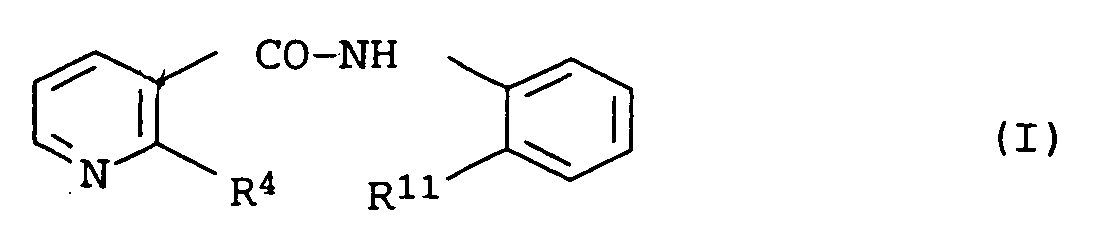
- R4
- für Halogen steht und
- R11
- für Phenyl steht, das durch Halogen substituiert ist
b) ein Dinitroanilin der Formel IVund/oder c) ein Pyrimidinderivat der Formel VI,in der R für Methyl, Propin-1-yl oder Cyclopropyl steht, und/oder
 d) mindestens einen Wirkstoff der Formel VII oder VIII,
 in einer synergistisch wirksamen Menge.
- Fungizide Mischung nach Anspruch 1, welche als Amidverbindung eine Verbindung der nachfolgenden Formeln enthält:

- Fungizide Mischung nach einem der vorhergehenden Ansprüche, welche in zwei Teilen konditioniert ist, wobei der eine Teil die Amidverbindung I in einem festen oder flüssigen Träger enthält und der andere Teil eine oder mehrere Verbindungen der Formeln IIa bis VIII in einem festen oder flüssigen Träger enthält.
- Verfahren zur Bekämpfung von Schadpilzen, dadurch gekennzeichnet, daß man die Pilze, deren Lebensraum oder die vor Pilzbefall zu schützenden Materialien, Pflanzen, Samen, Böden, Flächen oder Räume mit einer fungiziden Mischung gemäß einem der Ansprüche 1 oder 2 behandelt, wobei die Anwendung der Wirkstoffe Amidverbindung I und einer oder mehrerer Verbindungen der Formeln IIa bis VIII gleichzeitig, und zwar gemeinsam oder getrennt, oder nacheinander erfolgen kann.
Priority Applications (4)
| Application Number | Priority Date | Filing Date | Title |
|---|---|---|---|
| EP08015067A EP1989941B1 (de) | 1997-12-18 | 1998-12-15 | Fungizide Mischungen auf der Basis von Amidverbindungen |
| SI9830914T SI1541024T1 (sl) | 1997-12-18 | 1998-12-15 | Fungicidne meĺ anice na osnovi piridin karboksamidnih sestavin |
| EP10001728A EP2186409B1 (de) | 1997-12-18 | 1998-12-15 | Fungizide Mischungen auf der Basis von Amidverbindungen |
| CY20091100033T CY1108688T1 (el) | 1997-12-18 | 2009-01-14 | Μυκητοκτονα μειγματα στη βαση ενωσεων αμιδιου |
Applications Claiming Priority (4)
| Application Number | Priority Date | Filing Date | Title |
|---|---|---|---|
| DE19756379 | 1997-12-18 | ||
| DE19756379 | 1997-12-18 | ||
| EP98966623A EP1039803B1 (de) | 1997-12-18 | 1998-12-15 | Fungizide mischungen auf der basis von amidverbindungen |
| EP01129795A EP1201126B1 (de) | 1997-12-18 | 1998-12-15 | Fungizide Mischungen auf der Basis von Pyridincarboxamidverbindungen |
Related Parent Applications (3)
| Application Number | Title | Priority Date | Filing Date |
|---|---|---|---|
| EP01129795A Division EP1201126B1 (de) | 1997-12-18 | 1998-12-15 | Fungizide Mischungen auf der Basis von Pyridincarboxamidverbindungen |
| EP98966623.5 Division | 1998-12-15 | ||
| EP01129795.9 Division | 2001-12-14 |
Related Child Applications (3)
| Application Number | Title | Priority Date | Filing Date |
|---|---|---|---|
| EP08015067A Division EP1989941B1 (de) | 1997-12-18 | 1998-12-15 | Fungizide Mischungen auf der Basis von Amidverbindungen |
| EP08015067.5 Division-Into | 2008-08-26 | ||
| EP10001728.4 Division-Into | 2010-02-19 |
Publications (4)
| Publication Number | Publication Date |
|---|---|
| EP1541024A2 true EP1541024A2 (de) | 2005-06-15 |
| EP1541024A3 EP1541024A3 (de) | 2006-01-25 |
| EP1541024B1 EP1541024B1 (de) | 2008-10-15 |
| EP1541024B2 EP1541024B2 (de) | 2012-07-18 |
Family
ID=7852427
Family Applications (5)
| Application Number | Title | Priority Date | Filing Date |
|---|---|---|---|
| EP01129795A Expired - Lifetime EP1201126B1 (de) | 1997-12-18 | 1998-12-15 | Fungizide Mischungen auf der Basis von Pyridincarboxamidverbindungen |
| EP08015067A Expired - Lifetime EP1989941B1 (de) | 1997-12-18 | 1998-12-15 | Fungizide Mischungen auf der Basis von Amidverbindungen |
| EP05006154A Expired - Lifetime EP1541024B2 (de) | 1997-12-18 | 1998-12-15 | Fungizide Mischungen auf der Basis von Amidverbindungen |
| EP98966623A Expired - Lifetime EP1039803B1 (de) | 1997-12-18 | 1998-12-15 | Fungizide mischungen auf der basis von amidverbindungen |
| EP10001728A Expired - Lifetime EP2186409B1 (de) | 1997-12-18 | 1998-12-15 | Fungizide Mischungen auf der Basis von Amidverbindungen |
Family Applications Before (2)
| Application Number | Title | Priority Date | Filing Date |
|---|---|---|---|
| EP01129795A Expired - Lifetime EP1201126B1 (de) | 1997-12-18 | 1998-12-15 | Fungizide Mischungen auf der Basis von Pyridincarboxamidverbindungen |
| EP08015067A Expired - Lifetime EP1989941B1 (de) | 1997-12-18 | 1998-12-15 | Fungizide Mischungen auf der Basis von Amidverbindungen |
Family Applications After (2)
| Application Number | Title | Priority Date | Filing Date |
|---|---|---|---|
| EP98966623A Expired - Lifetime EP1039803B1 (de) | 1997-12-18 | 1998-12-15 | Fungizide mischungen auf der basis von amidverbindungen |
| EP10001728A Expired - Lifetime EP2186409B1 (de) | 1997-12-18 | 1998-12-15 | Fungizide Mischungen auf der Basis von Amidverbindungen |
Country Status (28)
| Country | Link |
|---|---|
| US (2) | US6365608B1 (de) |
| EP (5) | EP1201126B1 (de) |
| JP (1) | JP4405078B2 (de) |
| KR (4) | KR100558793B1 (de) |
| CN (1) | CN1213656C (de) |
| AR (1) | AR017902A1 (de) |
| AT (5) | ATE292384T1 (de) |
| AU (1) | AU754336B2 (de) |
| BR (3) | BR9816326B1 (de) |
| CA (5) | CA2313322C (de) |
| CO (1) | CO5130029A1 (de) |
| CY (1) | CY1108688T1 (de) |
| CZ (1) | CZ294407B6 (de) |
| DE (4) | DE59805354D1 (de) |
| DK (3) | DK1541024T3 (de) |
| EA (1) | EA003284B1 (de) |
| ES (4) | ES2239645T3 (de) |
| HU (1) | HUP0100717A3 (de) |
| IL (3) | IL136469A0 (de) |
| NZ (1) | NZ505625A (de) |
| PL (5) | PL194328B1 (de) |
| PT (4) | PT1039803E (de) |
| SI (2) | SI1039803T1 (de) |
| SK (1) | SK285861B6 (de) |
| TW (1) | TW450787B (de) |
| UA (1) | UA68368C2 (de) |
| WO (1) | WO1999031981A2 (de) |
| ZA (1) | ZA9811555B (de) |
Cited By (1)
| Publication number | Priority date | Publication date | Assignee | Title |
|---|---|---|---|---|
| EP2092823A3 (de) * | 2005-09-29 | 2009-12-23 | Syngenta Participations AG | Fungizidzusammensetzungen |
Families Citing this family (21)
| Publication number | Priority date | Publication date | Assignee | Title |
|---|---|---|---|---|
| AU2005242193B2 (en) * | 1997-12-18 | 2008-04-24 | Basf Aktiengesellschaft | Fungicide mixtures based on amide compounds and pyridine derivatives |
| AU2005242192B2 (en) * | 1997-12-18 | 2008-04-24 | Basf Aktiengesellschaft | Fungicide mixtures based on amide compounds and pyridine derivatives |
| EA003284B1 (ru) * | 1997-12-18 | 2003-04-24 | Басф Акциенгезельшафт | Синергетические фунгицидные смеси на основе производных n-фенилникотинамида |
| ATE296806T1 (de) * | 1999-12-09 | 2005-06-15 | Syngenta Participations Ag | Pyrazolcarboxamide und pyrazolthioamide als fungizide |
| CZ301674B6 (cs) * | 2001-01-18 | 2010-05-19 | Basf Aktiengesellschaft | Fungicidní smesi |
| DE10250110A1 (de) * | 2002-10-28 | 2004-05-13 | Bayer Cropscience Ag | Thiazol-(bi)cycloalkyl-carboxanilide |
| CA2505495A1 (en) | 2002-11-15 | 2004-06-03 | Basf Aktiengesellschaft | Fungicidal mixtures based on a triazolopyrimidine derivative and amide compounds |
| EP1527683A1 (de) * | 2003-10-31 | 2005-05-04 | Bayer CropScience S.A. | Ein Pyridylmethylbenzamidderivat und ein Sulfamidderivat enthaltende fungizide Zusammensetzung |
| GB0418047D0 (en) | 2004-08-12 | 2004-09-15 | Syngenta Participations Ag | Fungicidal compositions |
| JP2009502747A (ja) * | 2005-07-14 | 2009-01-29 | ビーエーエスエフ ソシエタス・ヨーロピア | 1−メチル−ピラゾール−4−イルカルボキシアニリド類に基づく殺菌性混合物 |
| EP1813151A1 (de) * | 2006-01-26 | 2007-08-01 | BASF Aktiengesellschaft | Fungizide Mischungen auf der Basis von 1-Methyl-pyrazol-4-yl-carbonsäureaniliden |
| UA90035C2 (ru) * | 2005-11-10 | 2010-03-25 | Басф Се | Фунгицидная смесь, которая содержит боскалид и пириметанил и способ борьбы с фитопатогенными грибами |
| ATE505083T1 (de) * | 2007-08-09 | 2011-04-15 | Basf Se | Fungizide mischungen |
| JP2012025735A (ja) * | 2010-06-24 | 2012-02-09 | Sumitomo Chemical Co Ltd | 植物病害防除組成物及び植物病害防除方法 |
| WO2014029697A1 (en) * | 2012-08-22 | 2014-02-27 | Basf Se | Fungicidal ternary mixtures comprising fluazinam |
| CN103875692A (zh) * | 2012-12-20 | 2014-06-25 | 陕西汤普森生物科技有限公司 | 一种含有胺苯吡菌酮的杀菌组合物 |
| CN103348989B (zh) * | 2013-07-15 | 2015-08-12 | 江苏龙灯化学有限公司 | 一种杀真菌混合物 |
| CN104068033B (zh) * | 2014-05-28 | 2015-06-24 | 深圳诺普信农化股份有限公司 | 一种含有啶酰菌胺的杀菌组合物 |
| CN105360128B (zh) * | 2015-11-06 | 2017-12-05 | 南京华洲药业有限公司 | 一种含嘧菌胺和啶酰菌胺的杀菌组合物及其应用 |
| WO2018085318A2 (en) * | 2016-11-01 | 2018-05-11 | Hanss Basil G | Self-contained syringe for dissolution and administration of drugs |
| CN116762810B (zh) * | 2023-03-17 | 2025-08-01 | 贵州省烟草科学研究院 | 一种含咯菌腈和啶酰菌胺的农药组合物、其制备方法及用途 |
Family Cites Families (20)
| Publication number | Priority date | Publication date | Assignee | Title |
|---|---|---|---|---|
| DE2514460C2 (de) | 1975-04-03 | 1984-08-02 | Consortium für elektrochemische Industrie GmbH, 8000 München | Getreide-Fungicid-Kombination |
| IL78825A0 (en) * | 1985-06-05 | 1986-09-30 | Uniroyal Ltd | Fungicidal compositions containing carboxamidothiazoles and a method for protecting plants utilizing same |
| JPH0613442B2 (ja) * | 1985-06-25 | 1994-02-23 | 石原産業株式会社 | 農園芸用殺菌剤組成物 |
| DE3782883T2 (de) * | 1986-08-12 | 1993-06-09 | Mitsubishi Chem Ind | Pyridincarboxamid-derivate und ihre verwendung als fungizides mittel. |
| DE3701715A1 (de) * | 1987-01-22 | 1988-08-04 | Bayer Ag | Fungizide wirkstoffkombinationen |
| JPH02196701A (ja) * | 1989-01-24 | 1990-08-03 | Nissan Chem Ind Ltd | 農園芸用殺菌剤組成物 |
| GB9118871D0 (en) | 1991-09-04 | 1991-10-23 | Rhone Poulenc Agriculture | Herbicidal compositions |
| IL103614A (en) * | 1991-11-22 | 1998-09-24 | Basf Ag | Carboxamides for controlling botrytis and certain novel such compounds |
| US5521184A (en) * | 1992-04-03 | 1996-05-28 | Ciba-Geigy Corporation | Pyrimidine derivatives and processes for the preparation thereof |
| GB2267644B (en) * | 1992-06-10 | 1996-02-07 | Schering Ag | Fungicidal mixtures |
| DE4231517A1 (de) | 1992-09-21 | 1994-03-24 | Basf Ag | Carbonsäureanilide, Verfahren zu ihrer Herstellung und sie enthaltende Mittel zur Bekämpfung von Schadpilzen |
| DE4313867A1 (de) * | 1993-04-28 | 1994-11-03 | Bayer Ag | Fungizide Wirkstoffkombinationen |
| DE4421041A1 (de) | 1994-06-17 | 1995-12-21 | Basf Ag | Fungizide Mischungen |
| DE4437048A1 (de) * | 1994-10-17 | 1996-04-18 | Bayer Ag | Fungizide Wirkstoffkombinationen |
| TW349094B (en) | 1995-09-05 | 1999-01-01 | Basf Ag | Compositions and methods for controlling harmful fungi |
| TW384208B (en) * | 1995-09-22 | 2000-03-11 | Basf Ag | Compositions and methods for controlling harmful fungi |
| DE19615976A1 (de) † | 1996-04-22 | 1997-10-23 | Basf Ag | Mittel und Verfahren zur Bekämpfung von Schadpilzen |
| DE19615977A1 (de) | 1996-04-22 | 1997-10-23 | Basf Ag | Mittel und Verfahren zur Bekämpfung von Schadpilzen |
| EA003284B1 (ru) * | 1997-12-18 | 2003-04-24 | Басф Акциенгезельшафт | Синергетические фунгицидные смеси на основе производных n-фенилникотинамида |
| JPH11196701A (ja) | 1998-01-12 | 1999-07-27 | Akio Kubota | 猫類誘引材料入りゴム製猫用品 |
-
1998
- 1998-12-15 EA EA200000677A patent/EA003284B1/ru not_active IP Right Cessation
- 1998-12-15 JP JP2000524994A patent/JP4405078B2/ja not_active Expired - Fee Related
- 1998-12-15 CA CA002313322A patent/CA2313322C/en not_active Expired - Fee Related
- 1998-12-15 PT PT98966623T patent/PT1039803E/pt unknown
- 1998-12-15 ES ES01129795T patent/ES2239645T3/es not_active Expired - Lifetime
- 1998-12-15 EP EP01129795A patent/EP1201126B1/de not_active Expired - Lifetime
- 1998-12-15 DE DE59805354T patent/DE59805354D1/de not_active Expired - Lifetime
- 1998-12-15 NZ NZ505625A patent/NZ505625A/xx unknown
- 1998-12-15 PL PL98378989A patent/PL194328B1/pl unknown
- 1998-12-15 KR KR1020057018153A patent/KR100558793B1/ko not_active Expired - Fee Related
- 1998-12-15 AT AT01129795T patent/ATE292384T1/de active
- 1998-12-15 US US09/581,833 patent/US6365608B1/en not_active Expired - Lifetime
- 1998-12-15 EP EP08015067A patent/EP1989941B1/de not_active Expired - Lifetime
- 1998-12-15 SI SI9830155T patent/SI1039803T1/xx unknown
- 1998-12-15 EP EP05006154A patent/EP1541024B2/de not_active Expired - Lifetime
- 1998-12-15 ES ES08015067T patent/ES2349284T3/es not_active Expired - Lifetime
- 1998-12-15 KR KR1020057018155A patent/KR100558791B1/ko not_active Expired - Lifetime
- 1998-12-15 IL IL13646998A patent/IL136469A0/xx active IP Right Grant
- 1998-12-15 ES ES98966623T patent/ES2183441T3/es not_active Expired - Lifetime
- 1998-12-15 AT AT05006154T patent/ATE410922T1/de active
- 1998-12-15 CA CA002574129A patent/CA2574129C/en not_active Expired - Fee Related
- 1998-12-15 DK DK05006154T patent/DK1541024T3/da active
- 1998-12-15 PL PL98378988A patent/PL194327B1/pl unknown
- 1998-12-15 AU AU24139/99A patent/AU754336B2/en not_active Ceased
- 1998-12-15 UA UA2000074342A patent/UA68368C2/uk unknown
- 1998-12-15 BR BRPI9816326-4B1A patent/BR9816326B1/pt active IP Right Grant
- 1998-12-15 DK DK98966623T patent/DK1039803T3/da active
- 1998-12-15 ES ES05006154T patent/ES2313138T5/es not_active Expired - Lifetime
- 1998-12-15 PL PL375827A patent/PL193812B1/pl unknown
- 1998-12-15 DE DE59814307T patent/DE59814307D1/de not_active Expired - Lifetime
- 1998-12-15 AT AT10001728T patent/ATE545338T1/de active
- 1998-12-15 CZ CZ20002225A patent/CZ294407B6/cs not_active IP Right Cessation
- 1998-12-15 BR BRPI9816374-4B1A patent/BR9816374B1/pt not_active IP Right Cessation
- 1998-12-15 EP EP98966623A patent/EP1039803B1/de not_active Expired - Lifetime
- 1998-12-15 KR KR1020057018154A patent/KR100558792B1/ko not_active Expired - Fee Related
- 1998-12-15 WO PCT/EP1998/008231 patent/WO1999031981A2/de not_active Ceased
- 1998-12-15 SI SI9830914T patent/SI1541024T1/sl unknown
- 1998-12-15 PT PT08015067T patent/PT1989941E/pt unknown
- 1998-12-15 CA CA2652125A patent/CA2652125C/en not_active Expired - Fee Related
- 1998-12-15 CA CA2652122A patent/CA2652122C/en not_active Expired - Lifetime
- 1998-12-15 BR BRPI9813681-0A patent/BR9813681B1/pt not_active IP Right Cessation
- 1998-12-15 AT AT08015067T patent/ATE475312T1/de not_active IP Right Cessation
- 1998-12-15 HU HU0100717A patent/HUP0100717A3/hu unknown
- 1998-12-15 CN CNB988123037A patent/CN1213656C/zh not_active Expired - Lifetime
- 1998-12-15 PT PT01129795T patent/PT1201126E/pt unknown
- 1998-12-15 CA CA002652116A patent/CA2652116A1/en not_active Abandoned
- 1998-12-15 PL PL98378987A patent/PL194053B1/pl not_active IP Right Cessation
- 1998-12-15 KR KR1020007006689A patent/KR100546519B1/ko not_active Expired - Fee Related
- 1998-12-15 DE DE59814460T patent/DE59814460D1/de not_active Expired - Lifetime
- 1998-12-15 DK DK01129795T patent/DK1201126T3/da active
- 1998-12-15 SK SK813-2000A patent/SK285861B6/sk not_active IP Right Cessation
- 1998-12-15 DE DE59812725T patent/DE59812725D1/de not_active Expired - Lifetime
- 1998-12-15 PT PT05006154T patent/PT1541024E/pt unknown
- 1998-12-15 AT AT98966623T patent/ATE222695T1/de active
- 1998-12-15 PL PL342400A patent/PL191907B1/pl unknown
- 1998-12-15 EP EP10001728A patent/EP2186409B1/de not_active Expired - Lifetime
- 1998-12-16 TW TW087120897A patent/TW450787B/zh active
- 1998-12-17 ZA ZA9811555A patent/ZA9811555B/xx unknown
- 1998-12-18 CO CO98075476A patent/CO5130029A1/es unknown
- 1998-12-18 AR ARP980106483A patent/AR017902A1/es active IP Right Grant
-
2000
- 2000-05-31 IL IL136469A patent/IL136469A/en not_active IP Right Cessation
-
2002
- 2002-01-14 US US10/044,255 patent/US6903108B2/en not_active Expired - Lifetime
-
2006
- 2006-03-02 IL IL174098A patent/IL174098A/en not_active IP Right Cessation
-
2009
- 2009-01-14 CY CY20091100033T patent/CY1108688T1/el unknown
Cited By (1)
| Publication number | Priority date | Publication date | Assignee | Title |
|---|---|---|---|---|
| EP2092823A3 (de) * | 2005-09-29 | 2009-12-23 | Syngenta Participations AG | Fungizidzusammensetzungen |
Also Published As
Similar Documents
| Publication | Publication Date | Title |
|---|---|---|
| EP1989941B1 (de) | Fungizide Mischungen auf der Basis von Amidverbindungen | |
| EP1039807B1 (de) | Fungizide mischungen auf der basis von pyridinamiden und chlorothalonil | |
| EP1039805B1 (de) | Fungizide mischungen auf der basis von amidverbindungen | |
| EP1201128B1 (de) | Fungizide Mischungen auf der Basis von Pyridincarboxamidverbindungen | |
| EP0910949B1 (de) | Fungizide Mischung | |
| EP1041884B1 (de) | Fungizide mischungen auf der basis von pyridincarboxamiden und benzimidazolen bzw. deren vorstufen | |
| EP1039806B1 (de) | Fungizide mischungen auf der basis von pyridinamiden und fenarimol | |
| EP1041883B1 (de) | Fungizide mischungen auf der basis von pyridinamiden und morpholin- bzw. piperidinderivaten | |
| EP1494531A1 (de) | Fungizide mischungen auf der basis von benzamidoxim-derivaten und azolen | |
| EP0880319B1 (de) | Fungizide mischungen | |
| EP1521526B1 (de) | Fungizide mischungen auf basis von dithianon | |
| EP1365652B1 (de) | Fungizide mischungen aus benzophenonen und n-biphenylnikotinamiden | |
| EP1517608B1 (de) | Fungizide mischungen auf der basis von benzamidoxim-derivaten, benzophenonen und einem azol | |
| EP1524904B1 (de) | Fungizide mischungen | |
| EP1345493B1 (de) | Fungizide mischungen auf der basis von amidverbindungen | |
| EP0923290B1 (de) | Fungizide Mischungen, die ein Carbamat-Strobilurin und Tetrachlorisophthalonitril enthalten | |
| EP1521525B1 (de) | Fungizide mischungen auf basis von dithianon | |
| EP0844822B1 (de) | Fungizide mischungen eines oximethercarbonsäureamids mit einem n-trichlormethylthiophthalimid | |
| EP0900013A1 (de) | Fungizide mischungen | |
| DE10252657A1 (de) | Fungizide Mischungen auf der Basis von Benzamidoxim-Derivaten | |
| EP1365654A1 (de) | Fungizide mischungen aus benzophenonen und imidazolderivaten | |
| WO2002049434A1 (de) | Fungizide mischungen auf der basis von oximetherderivaten | |
| WO2005053404A1 (de) | Fungizide mischungen auf der basis von benzamidoxim-derivaten | |
| EP0984690A1 (de) | Fungizide mischung |
Legal Events
| Date | Code | Title | Description |
|---|---|---|---|
| PUAI | Public reference made under article 153(3) epc to a published international application that has entered the european phase |
Free format text: ORIGINAL CODE: 0009012 |
|
| AC | Divisional application: reference to earlier application |
Ref document number: 1201126 Country of ref document: EP Kind code of ref document: P Ref document number: 1039803 Country of ref document: EP Kind code of ref document: P |
|
| AK | Designated contracting states |
Kind code of ref document: A2 Designated state(s): AT BE CH CY DE DK ES FI FR GB GR IE IT LI LU MC NL PT SE |
|
| AX | Request for extension of the european patent |
Extension state: AL LT LV MK SI |
|
| PUAL | Search report despatched |
Free format text: ORIGINAL CODE: 0009013 |
|
| AK | Designated contracting states |
Kind code of ref document: A3 Designated state(s): AT BE CH CY DE DK ES FI FR GB GR IE IT LI LU MC NL PT SE |
|
| AX | Request for extension of the european patent |
Extension state: AL LT LV MK SI |
|
| 17P | Request for examination filed |
Effective date: 20060725 |
|
| AKX | Designation fees paid |
Designated state(s): AT BE CH CY DE DK ES FI FR GB GR IE IT LI LU MC NL PT SE |
|
| AXX | Extension fees paid |
Extension state: LV Payment date: 20060725 Extension state: AL Payment date: 20060725 Extension state: LT Payment date: 20060725 Extension state: SI Payment date: 20060725 Extension state: MK Payment date: 20060725 |
|
| 17Q | First examination report despatched |
Effective date: 20060911 |
|
| GRAP | Despatch of communication of intention to grant a patent |
Free format text: ORIGINAL CODE: EPIDOSNIGR1 |
|
| RIC1 | Information provided on ipc code assigned before grant |
Ipc: A01N 43/40 20060101AFI20071017BHEP |
|
| RAP1 | Party data changed (applicant data changed or rights of an application transferred) |
Owner name: BASF SE |
|
| GRAS | Grant fee paid |
Free format text: ORIGINAL CODE: EPIDOSNIGR3 |
|
| RAX | Requested extension states of the european patent have changed |
Extension state: SI Payment date: 20060725 Extension state: RO Payment date: 20060725 Extension state: LV Payment date: 20060725 Extension state: AL Payment date: 20060725 Extension state: LT Payment date: 20060725 Extension state: MK Payment date: 20060725 |
|
| GRAA | (expected) grant |
Free format text: ORIGINAL CODE: 0009210 |
|
| AC | Divisional application: reference to earlier application |
Ref document number: 1039803 Country of ref document: EP Kind code of ref document: P Ref document number: 1201126 Country of ref document: EP Kind code of ref document: P |
|
| AK | Designated contracting states |
Kind code of ref document: B1 Designated state(s): AT BE CH CY DE DK ES FI FR GB GR IE IT LI LU MC NL PT SE |
|
| AX | Request for extension of the european patent |
Extension state: AL LT LV MK RO SI |
|
| REG | Reference to a national code |
Ref country code: GB Ref legal event code: FG4D Free format text: NOT ENGLISH Ref country code: CH Ref legal event code: EP |
|
| REG | Reference to a national code |
Ref country code: IE Ref legal event code: FG4D Free format text: LANGUAGE OF EP DOCUMENT: GERMAN |
|
| REF | Corresponds to: |
Ref document number: 59814307 Country of ref document: DE Date of ref document: 20081127 Kind code of ref document: P |
|
| REG | Reference to a national code |
Ref country code: SE Ref legal event code: TRGR |
|
| REG | Reference to a national code |
Ref country code: DK Ref legal event code: T3 |
|
| REG | Reference to a national code |
Ref country code: GR Ref legal event code: EP Ref document number: 20090400067 Country of ref document: GR |
|
| REG | Reference to a national code |
Ref country code: ES Ref legal event code: FG2A Ref document number: 2313138 Country of ref document: ES Kind code of ref document: T3 |
|
| REG | Reference to a national code |
Ref country code: PT Ref legal event code: SC4A Free format text: AVAILABILITY OF NATIONAL TRANSLATION Effective date: 20081030 |
|
| PLBI | Opposition filed |
Free format text: ORIGINAL CODE: 0009260 |
|
| PG25 | Lapsed in a contracting state [announced via postgrant information from national office to epo] |
Ref country code: MC Free format text: LAPSE BECAUSE OF NON-PAYMENT OF DUE FEES Effective date: 20081231 |
|
| 26 | Opposition filed |
Opponent name: MAKHTESHIM CHEMICAL WORKS Effective date: 20090710 |
|
| PLAX | Notice of opposition and request to file observation + time limit sent |
Free format text: ORIGINAL CODE: EPIDOSNOBS2 |
|
| NLR1 | Nl: opposition has been filed with the epo |
Opponent name: MAKHTESHIM CHEMICAL WORKS |
|
| PLAF | Information modified related to communication of a notice of opposition and request to file observations + time limit |
Free format text: ORIGINAL CODE: EPIDOSCOBS2 |
|
| PLAF | Information modified related to communication of a notice of opposition and request to file observations + time limit |
Free format text: ORIGINAL CODE: EPIDOSCOBS2 |
|
| PLBB | Reply of patent proprietor to notice(s) of opposition received |
Free format text: ORIGINAL CODE: EPIDOSNOBS3 |
|
| PGFP | Annual fee paid to national office [announced via postgrant information from national office to epo] |
Ref country code: DK Payment date: 20101223 Year of fee payment: 13 Ref country code: AT Payment date: 20101229 Year of fee payment: 13 Ref country code: IE Payment date: 20101222 Year of fee payment: 13 |
|
| PLAB | Opposition data, opponent's data or that of the opponent's representative modified |
Free format text: ORIGINAL CODE: 0009299OPPO |
|
| PGFP | Annual fee paid to national office [announced via postgrant information from national office to epo] |
Ref country code: CH Payment date: 20101231 Year of fee payment: 13 Ref country code: PT Payment date: 20101125 Year of fee payment: 13 Ref country code: FI Payment date: 20101222 Year of fee payment: 13 Ref country code: LU Payment date: 20101228 Year of fee payment: 13 |
|
| R26 | Opposition filed (corrected) |
Opponent name: MAKHTESHIM CHEMICAL WORKS Effective date: 20090710 |
|
| PGFP | Annual fee paid to national office [announced via postgrant information from national office to epo] |
Ref country code: GR Payment date: 20101228 Year of fee payment: 13 Ref country code: NL Payment date: 20101222 Year of fee payment: 13 Ref country code: SE Payment date: 20101221 Year of fee payment: 13 Ref country code: GB Payment date: 20101230 Year of fee payment: 13 |
|
| PGFP | Annual fee paid to national office [announced via postgrant information from national office to epo] |
Ref country code: BE Payment date: 20110120 Year of fee payment: 13 |
|
| PGFP | Annual fee paid to national office [announced via postgrant information from national office to epo] |
Ref country code: CY Payment date: 20101125 Year of fee payment: 13 |
|
| PUAH | Patent maintained in amended form |
Free format text: ORIGINAL CODE: 0009272 |
|
| STAA | Information on the status of an ep patent application or granted ep patent |
Free format text: STATUS: PATENT MAINTAINED AS AMENDED |
|
| REG | Reference to a national code |
Ref country code: PT Ref legal event code: MM4A Free format text: LAPSE DUE TO NON-PAYMENT OF FEES Effective date: 20120615 |
|
| BERE | Be: lapsed |
Owner name: BASF SE Effective date: 20111231 |
|
| REG | Reference to a national code |
Ref country code: NL Ref legal event code: V1 Effective date: 20120701 |
|
| 27A | Patent maintained in amended form |
Effective date: 20120718 |
|
| AK | Designated contracting states |
Kind code of ref document: B2 Designated state(s): AT BE CH CY DE DK ES FI FR GB GR IE IT LI LU MC NL PT SE |
|
| AX | Request for extension of the european patent |
Extension state: AL LT LV MK RO SI |
|
| REG | Reference to a national code |
Ref country code: DK Ref legal event code: EBP |
|
| LTIE | Lt: invalidation of european patent or patent extension | ||
| LTLA | Lt: lapse of european patent or patent extension |
Effective date: 20111215 |
|
| REG | Reference to a national code |
Ref country code: CH Ref legal event code: PL Ref country code: SE Ref legal event code: EUG |
|
| GBPC | Gb: european patent ceased through non-payment of renewal fee |
Effective date: 20111215 |
|
| PG25 | Lapsed in a contracting state [announced via postgrant information from national office to epo] |
Ref country code: PT Free format text: LAPSE BECAUSE OF NON-PAYMENT OF DUE FEES Effective date: 20120615 Ref country code: FI Free format text: LAPSE BECAUSE OF NON-PAYMENT OF DUE FEES Effective date: 20111215 |
|
| REG | Reference to a national code |
Ref country code: GR Ref legal event code: ML Ref document number: 20090400067 Country of ref document: GR Effective date: 20120704 |
|
| REG | Reference to a national code |
Ref country code: DE Ref legal event code: R102 Ref document number: 59814307 Country of ref document: DE Effective date: 20120718 |
|
| REG | Reference to a national code |
Ref country code: AT Ref legal event code: MM01 Ref document number: 410922 Country of ref document: AT Kind code of ref document: T Effective date: 20111215 |
|
| REG | Reference to a national code |
Ref country code: IE Ref legal event code: MM4A |
|
| PG25 | Lapsed in a contracting state [announced via postgrant information from national office to epo] |
Ref country code: CY Free format text: LAPSE BECAUSE OF NON-PAYMENT OF DUE FEES Effective date: 20111215 |
|
| REG | Reference to a national code |
Ref country code: SI Ref legal event code: KO00 Effective date: 20120807 |
|
| REG | Reference to a national code |
Ref country code: ES Ref legal event code: DC2A Ref document number: 2313138 Country of ref document: ES Kind code of ref document: T5 Effective date: 20121018 |
|
| PG25 | Lapsed in a contracting state [announced via postgrant information from national office to epo] |
Ref country code: IE Free format text: LAPSE BECAUSE OF NON-PAYMENT OF DUE FEES Effective date: 20111215 Ref country code: CH Free format text: LAPSE BECAUSE OF NON-PAYMENT OF DUE FEES Effective date: 20111231 Ref country code: SE Free format text: LAPSE BECAUSE OF NON-PAYMENT OF DUE FEES Effective date: 20111216 Ref country code: BE Free format text: LAPSE BECAUSE OF NON-PAYMENT OF DUE FEES Effective date: 20111231 Ref country code: GB Free format text: LAPSE BECAUSE OF NON-PAYMENT OF DUE FEES Effective date: 20111215 Ref country code: LI Free format text: LAPSE BECAUSE OF NON-PAYMENT OF DUE FEES Effective date: 20111231 |
|
| REG | Reference to a national code |
Ref country code: PT Ref legal event code: MP4A Effective date: 20121119 |
|
| PG25 | Lapsed in a contracting state [announced via postgrant information from national office to epo] |
Ref country code: GR Free format text: LAPSE BECAUSE OF NON-PAYMENT OF DUE FEES Effective date: 20120704 |
|
| PG25 | Lapsed in a contracting state [announced via postgrant information from national office to epo] |
Ref country code: NL Free format text: LAPSE BECAUSE OF NON-PAYMENT OF DUE FEES Effective date: 20120701 Ref country code: DK Free format text: LAPSE BECAUSE OF NON-PAYMENT OF DUE FEES Effective date: 20120102 Ref country code: AT Free format text: LAPSE BECAUSE OF NON-PAYMENT OF DUE FEES Effective date: 20111215 |
|
| PG25 | Lapsed in a contracting state [announced via postgrant information from national office to epo] |
Ref country code: PT Free format text: LAPSE BECAUSE OF FAILURE TO SUBMIT A TRANSLATION OF THE DESCRIPTION OR TO PAY THE FEE WITHIN THE PRESCRIBED TIME-LIMIT Effective date: 20121127 Ref country code: GR Free format text: LAPSE BECAUSE OF FAILURE TO SUBMIT A TRANSLATION OF THE DESCRIPTION OR TO PAY THE FEE WITHIN THE PRESCRIBED TIME-LIMIT Effective date: 20121019 |
|
| PG25 | Lapsed in a contracting state [announced via postgrant information from national office to epo] |
Ref country code: LU Free format text: LAPSE BECAUSE OF NON-PAYMENT OF DUE FEES Effective date: 20111215 |
|
| PGFP | Annual fee paid to national office [announced via postgrant information from national office to epo] |
Ref country code: IT Payment date: 20141218 Year of fee payment: 17 |
|
| PGFP | Annual fee paid to national office [announced via postgrant information from national office to epo] |
Ref country code: DE Payment date: 20150227 Year of fee payment: 17 Ref country code: ES Payment date: 20150127 Year of fee payment: 17 |
|
| PGFP | Annual fee paid to national office [announced via postgrant information from national office to epo] |
Ref country code: FR Payment date: 20141230 Year of fee payment: 17 |
|
| REG | Reference to a national code |
Ref country code: DE Ref legal event code: R119 Ref document number: 59814307 Country of ref document: DE |
|
| REG | Reference to a national code |
Ref country code: FR Ref legal event code: ST Effective date: 20160831 |
|
| PG25 | Lapsed in a contracting state [announced via postgrant information from national office to epo] |
Ref country code: DE Free format text: LAPSE BECAUSE OF NON-PAYMENT OF DUE FEES Effective date: 20160701 |
|
| PG25 | Lapsed in a contracting state [announced via postgrant information from national office to epo] |
Ref country code: FR Free format text: LAPSE BECAUSE OF NON-PAYMENT OF DUE FEES Effective date: 20151231 |
|
| PG25 | Lapsed in a contracting state [announced via postgrant information from national office to epo] |
Ref country code: IT Free format text: LAPSE BECAUSE OF NON-PAYMENT OF DUE FEES Effective date: 20151215 |
|
| REG | Reference to a national code |
Ref country code: ES Ref legal event code: FD2A Effective date: 20170127 |
|
| PG25 | Lapsed in a contracting state [announced via postgrant information from national office to epo] |
Ref country code: ES Free format text: LAPSE BECAUSE OF NON-PAYMENT OF DUE FEES Effective date: 20151216 |