EP1537130B1 - Phosphorgruppenhaltige carbonsäurederivate mit organisch polymerisierbaren gruppen - Google Patents
Phosphorgruppenhaltige carbonsäurederivate mit organisch polymerisierbaren gruppen Download PDFInfo
- Publication number
- EP1537130B1 EP1537130B1 EP03757825A EP03757825A EP1537130B1 EP 1537130 B1 EP1537130 B1 EP 1537130B1 EP 03757825 A EP03757825 A EP 03757825A EP 03757825 A EP03757825 A EP 03757825A EP 1537130 B1 EP1537130 B1 EP 1537130B1
- Authority
- EP
- European Patent Office
- Prior art keywords
- formula
- compounds
- chr
- optionally substituted
- arylalkyl
- Prior art date
- Legal status (The legal status is an assumption and is not a legal conclusion. Google has not performed a legal analysis and makes no representation as to the accuracy of the status listed.)
- Expired - Lifetime
Links
Classifications
-
- C—CHEMISTRY; METALLURGY
- C07—ORGANIC CHEMISTRY
- C07F—ACYCLIC, CARBOCYCLIC OR HETEROCYCLIC COMPOUNDS CONTAINING ELEMENTS OTHER THAN CARBON, HYDROGEN, HALOGEN, OXYGEN, NITROGEN, SULFUR, SELENIUM OR TELLURIUM
- C07F9/00—Compounds containing elements of Groups 5 or 15 of the Periodic Table
- C07F9/02—Phosphorus compounds
- C07F9/28—Phosphorus compounds with one or more P—C bonds
- C07F9/30—Phosphinic acids [R2P(=O)(OH)]; Thiophosphinic acids ; [R2P(=X1)(X2H) (X1, X2 are each independently O, S or Se)]
- C07F9/301—Acyclic saturated acids which can have further substituents on alkyl
-
- A—HUMAN NECESSITIES
- A61—MEDICAL OR VETERINARY SCIENCE; HYGIENE
- A61K—PREPARATIONS FOR MEDICAL, DENTAL OR TOILETRY PURPOSES
- A61K6/00—Preparations for dentistry
- A61K6/20—Protective coatings for natural or artificial teeth, e.g. sealings, dye coatings or varnish
-
- A—HUMAN NECESSITIES
- A61—MEDICAL OR VETERINARY SCIENCE; HYGIENE
- A61K—PREPARATIONS FOR MEDICAL, DENTAL OR TOILETRY PURPOSES
- A61K6/00—Preparations for dentistry
- A61K6/30—Compositions for temporarily or permanently fixing teeth or palates, e.g. primers for dental adhesives
-
- A—HUMAN NECESSITIES
- A61—MEDICAL OR VETERINARY SCIENCE; HYGIENE
- A61K—PREPARATIONS FOR MEDICAL, DENTAL OR TOILETRY PURPOSES
- A61K6/00—Preparations for dentistry
- A61K6/80—Preparations for artificial teeth, for filling teeth or for capping teeth
- A61K6/884—Preparations for artificial teeth, for filling teeth or for capping teeth comprising natural or synthetic resins
- A61K6/887—Compounds obtained by reactions only involving carbon-to-carbon unsaturated bonds
-
- C—CHEMISTRY; METALLURGY
- C07—ORGANIC CHEMISTRY
- C07F—ACYCLIC, CARBOCYCLIC OR HETEROCYCLIC COMPOUNDS CONTAINING ELEMENTS OTHER THAN CARBON, HYDROGEN, HALOGEN, OXYGEN, NITROGEN, SULFUR, SELENIUM OR TELLURIUM
- C07F9/00—Compounds containing elements of Groups 5 or 15 of the Periodic Table
- C07F9/02—Phosphorus compounds
- C07F9/28—Phosphorus compounds with one or more P—C bonds
- C07F9/38—Phosphonic acids [RP(=O)(OH)2]; Thiophosphonic acids ; [RP(=X1)(X2H)2(X1, X2 are each independently O, S or Se)]
- C07F9/3804—Phosphonic acids [RP(=O)(OH)2]; Thiophosphonic acids ; [RP(=X1)(X2H)2(X1, X2 are each independently O, S or Se)] not used, see subgroups
- C07F9/3808—Acyclic saturated acids which can have further substituents on alkyl
-
- C—CHEMISTRY; METALLURGY
- C07—ORGANIC CHEMISTRY
- C07F—ACYCLIC, CARBOCYCLIC OR HETEROCYCLIC COMPOUNDS CONTAINING ELEMENTS OTHER THAN CARBON, HYDROGEN, HALOGEN, OXYGEN, NITROGEN, SULFUR, SELENIUM OR TELLURIUM
- C07F9/00—Compounds containing elements of Groups 5 or 15 of the Periodic Table
- C07F9/02—Phosphorus compounds
- C07F9/28—Phosphorus compounds with one or more P—C bonds
- C07F9/50—Organo-phosphines
- C07F9/5004—Acyclic saturated phosphines
Definitions
- the present invention relates to novel carboxylic acid derivatives which have at least one organically polymerizable group and at least one reactive or the properties of the molecule modulating phosphorus-containing group. Furthermore, the invention relates to methods for producing the molecules according to the invention and their use in the dental field and for influencing the properties of materials.
- C C double bonds containing phosphorus compounds which can be incorporated into organic polymers or polymerized directly.
- the presence of phosphorus-containing groups in polymers can positively influence a number of properties of these compounds, for example an increase in thermal stability, a reduction in flammability, an improvement in the adhesive properties and / or an improvement in the solubility in polar solvents.
- Double bond-containing phosphorus compounds eg appropriately substituted phosphonic acid derivatives
- they represent, for example, due to the complexation of Ca 2+ ions very effective adhesion promoter / bonding.
- the known polymerizable phosphorus compounds have disadvantages.
- those compounds whose phosphorus atom (s) is / are linked to the organic component of the molecule via oxygen are hydrolytically unstable.
- the DE 27 11 234 C3 of Kuraray Co. phosphoric diesters the two ester groups are hydrolyzed in an aqueous medium in each case, as well as phosphonic acid esters, which still have a hydrolyzable group.
- the EP 0554890 Dentspley discloses phosphoric acid-derivatized poly (meth) acrylates as a basis for light-curable glass ionomer cements which are also sensitive to hydrolysis.
- Phosphoric acid esters and phosphonic acid esters are disclosed in US Pat WO 01/74826 A1 for the preparation of phosphorus-containing polyurethane copolyers, which in turn can be used as flame retardants, corrosion inhibitors, dispersants for pigments and / or adhesion improvers.
- US 3,762,865 relates to a process for flameproofing textiles, paper or the like, in which an allyl 2-carbamoylalkylene phosphonate is applied to the substrate on the substrate to be flame-proofed.
- the phosphonate may be, for example, N, N'-methylenebis (diatlyl-2-carbamoylalkylphosphonate).
- US 3,839,207 refers to polymers of these phosphonates.
- WO 00/58316 A relates to organophosphorus compounds for polymerizable dental materials, especially phosphate compounds.
- the yield of the underlying monomeric phosphate monoesters should be improved and less discoloring by-products should be produced during production.
- the storage stability should be improved.
- the object of the present invention is to provide organically polymerizable, phosphorus-containing compounds which are stable to hydrolysis on the one hand in the above sense and relatively easily accessible on the other hand.
- these compounds should be suitable for the production of materials that can be used in the dental field.
- carboxylic acid derivatives having at least one phosphorus-containing group bound to the carbon of the acid moiety of the molecule and at least one organically polymerizable group in the acid derivative moiety (ie in the ester, amide, thioester residue or the like) solved task solves.
- the radical ⁇ B ⁇ is connected via an ester, amide or thioester bridge -C (O) X- with the phosphorus-containing moiety (R 1 ) (R 2 ) P (O) - (CHR 3 ) - (CHR 4 ) - (CHR 5 ) m - connected.
- X means oxygen or nitrogen. X is particularly preferably oxygen.
- the radical ⁇ B ⁇ contains more than one acrylate, methacrylate or glycidyl group.
- the acrylate and / or methacrylate groups may be esterified with a relatively short chain (in particular, containing three to ten carbon atoms) oligoalcohol, for example, a di- or tri- or tetra- or penta-alcohol such as glycol, glycerol, trimethylolpropane or pentaerythritol or the like
- Alcohol is preferably bonded to the C (O) X group via another of its alcohol functions.
- thio or amine functions may also be present in suitable cases; possibly also mixed with alcohol functions.
- either the coupling group CO (X) may be an acid amide group or thioester group, and / or the above-mentioned double bond-containing groups may be via amine or Tied to thiophore functions.
- ⁇ B ⁇ contains, for example, thio (meth) acrylate or (meth) acrylamide groups.
- ⁇ B ⁇ may contain or else consist of the oligo (meth) acrylate esters, amides, thioesters outlined above. Among this group, the oligo (meth) acrylate esters are preferred.
- a combination of at least two of the groups or indices mentioned in the preceding paragraphs as being preferred or particularly preferred is realized, in more preferred embodiments at least three, and even more preferably at least four. It is very particularly preferred that in the latter case the radical ⁇ B ⁇ has one, two, three or even more radicals selected from acrylate radicals or methacrylate radicals or a mixture of both.
- Carboxylic acid-functionalized (meth) acrylatalkoxysilanes are described, which are characterized by a variety of ways to vary the properties of the resulting inorganic-organic composite polymers. Due to the carboxylic acid groups contained there are additional reaction possibilities (eg glass ionomer reactions) as well as improved adhesion on inorganic surfaces. However, the phosphorus compounds disclosed herein far exceed the adhesion-promoting effect of the carboxylic acid radicals contained in the compositions mentioned therein by far. Therefore, with the present compounds of formula (I), materials are provided which are superior to the substances proposed therein.
- the compounds of the invention can be prepared in various ways. Particularly favorable and convenient, moreover, based on inexpensive starting compounds, their preparation is achieved by the reaction of compounds of the formula (II) Y - CHR 5 m C O ⁇ X - n B with corresponding phosphorus compounds which contain a PH bond, for example dialkyl phosphites HP (O) (OR) 2 , dialkylphosphine oxides HP (O) R 2 or mixed compounds (eg R 1 alkyl, R 2 alkoxy).
- the reaction preferably takes place with the addition of a free-radical (eg unactivated double bonds) or basic (eg activated double bonds) catalyst, for example a sodium alkoxide or a tertiary amine, eg a trialkylamine compound.
- Y is an organic group, for example a vinyl, allyl, norbornene or glycidyl group, which is reacted with the hydrogen bound to the phosphorus atom in this reaction to form a (CHR 3 ) - (CHR 4 ) group.
- m in this embodiment is preferably 0, ie YC (O) in this case is a (meth) acrylate radical (when X is O) or a corresponding derivative (eg with X equal to S or NR 6 with R 6 is hydrogen, C C 1 -C 6 -alkyl or C 6 -C 12 -aryl).
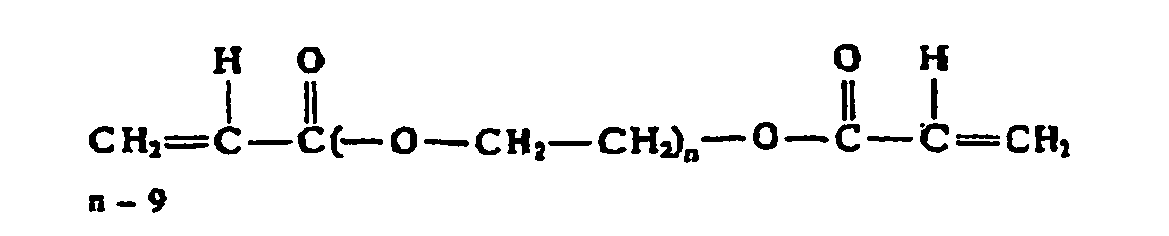
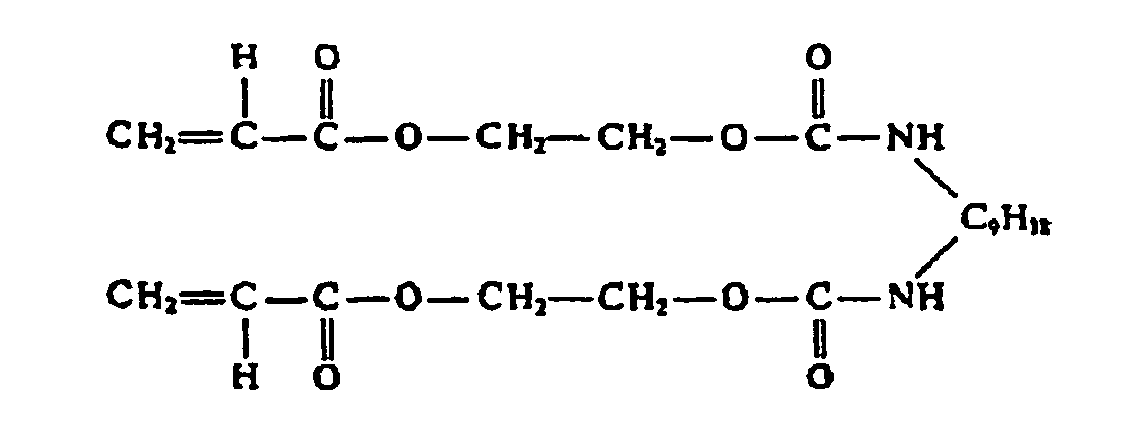
- oligo (meth) acrylates such as trimethylolpropane trimethacrylate (TMPT (M) A) or pentaerythritol triacrylate or (meth) acrylates of the following formulas:
- n is greater than 1, the phosphorus compound is not added in an equivalent amount, but in a deficit, for example with 1.5 moles per mole of a compound of formula (II) with n equal to 2, so to obtain mixtures of compounds of formula (I).
- a component of this mixture will then usually be a compound of the formula (I) in which n is 2, and a further a compound of the formula (I) in which n is 1 and in which ⁇ B ⁇ is a further group [Y- (CHR 5 ) m C (O) X-] which may, for example, be esterified with an alcohol function of ⁇ B ⁇ .
- alkoxy groups attached to the phosphorus can then be readily converted (if necessary by hydrolysis) into hydroxy groups as needed by means known to those skilled in the art.
- the compounds according to the invention can either be polymerized as such via their organically polymerisable groups or incorporated (polymerized, polyadded) into other polymers via these groups.
- They can, for example, as constituents of purely organic copolymers are used or, in a particularly advantageous manner, with provided for ORMOCER ® materials (hydrolytically condensable compounds or already hydrolytically condensed sols / gels) are polymerized together organic (ORMOCER ® are inorganic-organic polymer materials obtained by Hydrolysis of hydrolyzable silanes and optionally hydrolysable compounds of other metals and optionally an organic crosslinking of organic constituents of said silanes and / or other components are available).
- the purely organic or inorganic-organic polymers (homopolymers or hybrid materials) obtained in this way can be used, for example, in the form of bulk materials, composites, cements, adhesives, potting compounds, coating materials, adhesion promoters or as binders for ceramic particles (in ceramic molding processes) , Furthermore, they are suitable, for example, for the preparation or priming of fillers and fibers, for Abrasive wheels or for use in reaction extruders or the like.
- their organically polymerizable group (s) can be crosslinked photochemically, thermally or radiation-induced or incorporated into the organic network of the co-components.
- incorporation reactions is the thiol-en addition, in which the compounds of the invention can be added to thiols.
- self-curing processes are possible, for example covalently nucleophilic (for example by amino curing) or via redox reactions, which can optionally be combined with photoinduced or thermal curing.
- the compounds according to the invention have advantageous properties or combinations of properties, and these properties or property combinations should also be inherent in the products (homopolymers or hybrid materials) which can be prepared therefrom or therewith. These properties are highly dependent on the nature of the groups R 1 and R 2 . The nature of these groups essentially determines the acidity, conductivity, polarity, reactivity, and complexing ability.
- Acidity, conductivity, polarity and reactivity, in particular also the etching capacity, and also the complexing capacity in the series R 1 / R 2 are equal to OH / OH, OH / OR, OH / R, OR / OR, R / OR, R / R (With R here in the meaning of alkyl, alkenyl, aryl, alkylaryl or arylalkyl) from.
- R 1 / R 2 equal to R / OR or R / R can therefore be used when less aggressive compounds are required and gentler surfaces are to be produced.
- the fact that the phosphorus-containing group can be a charge carrier makes it possible to prepare aqueous emulsions or dispersions from or with the compounds according to the invention or (pre-) polymers thereof which have advantageous properties with regard to their conductivity, are suitable, for example, for electrocoating and are or can be antistatic.
- the phosphorus-containing group can be catalytically active, which is why it can serve, for example, as an acidic polymerizable catalyst for example for the hydrolytic condensation in the sol-gel process for the preparation of (hetero) polycondensates, for example with Si-O-Si bridges.
- the compounds according to the invention since they can be incorporated into the network of the end product via their organically polymerizable fraction with other organically polymerizable groups in the polycondensate, omits a later separation step of the catalyst otherwise to be used. Due to the polarity of the phosphorus-containing group, the compounds according to the invention are furthermore readily soluble in polar media. The phosphorus-containing group also ensures good adhesion properties to inorganic, organic and hybrid (inorganic-organic) Surfaces, and also especially when R 1 and / or R 2 is hydroxy.
- the phosphorus-containing groups have an antimicrobial effect, and they can be used again as reactive groups in cement formation reactions or for growth of inorganic materials, for example hydroxyapatite, again especially with radicals R 1 and / or R 2 as hydroxy groups. , In particular, the dental area seems suitable.
- the phosphorous-containing groups can be further functionalized, and physically the products prepared with the compounds according to the invention offer high temperature stability, good corrosion protection and flame resistance (intrinsic flame retardancy), the flame-retardant effect increasing with the number of phosphorus atoms in the material.
- Particularly suitable compounds for the medical sector, in particular the dental sector are compounds of the present invention according to formula (I) in which at least one, preferably both, of the groups R 1 , R 2 is OR or hydroxy.
- the reason lies in the above-mentioned properties of these compounds.
- Especially uses of the materials prepared therefrom or therewith as adhesion promoters, as matrix components for cements, for the growth of natural tooth or bone tissue, as composites, compomers, potting compounds or adhesives are suitable.
- TMPTA trimethylolpropane triacrylate
- the resulting phosphonate-modified acrylate (mixture of isomers) can be isolated by conventional work-up or preferably further reacted directly.
- TMPTMA trimethylolpropane trimethacrylate
- the resulting phosphonate-modified methacrylate (mixture of isomers) can be isolated by conventional work-up or preferably further reacted directly.
- the phosphonic acid of example with 1% Lucirin TPO is placed in a hardening form (eg 2 x 2 x 25 mm 3 ).
- the methacrylate groups are reacted as part of a photoinduced radical polymerization, whereby the resin hardens.
- the phosphonic acid from example with 1% Lucirin TPO is z. B. applied to dental tissue.
- the methacrylate groups are reacted as part of a phato-induced radical polymerization, wherein the resin (adhesion promoter for a dental composite) hardens.
- TMPTA trimethylolpropane triscrylate
- the resulting phosphonate-modified acrylate (mixture of isomers) can be isolated by conventional workup and hydrolyzed by conventional methods (see, for example, Example 5).
Landscapes
- Health & Medical Sciences (AREA)
- Chemical & Material Sciences (AREA)
- Organic Chemistry (AREA)
- Life Sciences & Earth Sciences (AREA)
- General Health & Medical Sciences (AREA)
- Oral & Maxillofacial Surgery (AREA)
- Animal Behavior & Ethology (AREA)
- Veterinary Medicine (AREA)
- Public Health (AREA)
- Biochemistry (AREA)
- Molecular Biology (AREA)
- Epidemiology (AREA)
- Plastic & Reconstructive Surgery (AREA)
- Dental Preparations (AREA)
- Lubricants (AREA)
- Emulsifying, Dispersing, Foam-Producing Or Wetting Agents (AREA)
Description
- Die vorliegende Erfindung betrifft neue Carbonsäurederivate, die mindestens eine organisch polymerisierbare Gruppe und mindestens eine reaktionsfähige oder die Eigenschaften des Moleküls modulierende phosphorhaltige Gruppe aufweisen. Weiterhin betrifft die Erfindung Verfahren zum Herstellen der erfindungsgemäßen Moleküle und ihre Verwendung im Dentalbereich und zur Beeinflussung der Eigenschaften von Materialien.
- Es ist eine Vielzahl von organisch substituierten, ggf. auch C=C-Doppelbindungen enthaltenden Phosphorverbindungen bekannt, die sich in organische Polymere einbauen oder direkt polymerisieren lassen. Das Vorhandensein von phosphorhaltigen Gruppen in Polymeren kann eine Reihe von Eigenschaften dieser Verbindungen positiv beeinflussen, z.B. eine Steigerung der thermischen Stabilität, eine Verminderung der Entflammbarkeit, eine Verbesserung der Hafteigenschaften und/oder eine Verbesserung der Löslichkeit in polaren Solventien bewirken. Doppelbindungshaltige Phosphorverbindungen (z.B. entsprechend substituierte Phosphonsäurederivate) werden insbesondere auch im Dentalbereich eingesetzt, wobei sie z.B. aufgrund der Komplexierung von Ca2+-Ionen sehr effektive Haftvermittler/Bondings darstellen.
- Allerdings besitzen die bekannten polymerisierbaren Phosphorverbindungen Nachteile. So sind diejenigen Verbindungen, deren Phosphoratom(e) über Sauerstoff mit der organischen Komponente des Moleküls verbunden ist/sind, hydrolytisch instabil. Beispielsweise offenbart die
DE 27 11 234 C3 von Kuraray Co. Phosphorsäurediester, deren beide Estergruppen in wäßrigem Milieu jeweils verseift werden, sowie Phosphonsäureester, die immer noch eine hydrolysierbare Gruppe aufweisen. DieEP 0554890 von Dentspley offenbart phosphorsäurederivatisierte Poly(meth)acrylate als Basis für lichthärtbare Glasionomerzemente, die ebenfalls hydrolyseempfindlich sind. Für den Dentalbereich geeignete Materialien sollten diese Eigenschaft jedoch nicht besitzen, da sie im Mund immer einer Umgebung mit hohem Feuchtegehalt ausgesetzt sind. Zwar gibt es auch eine Reihe von doppelbindungshaltigen Phosphorverbindungen, in denen die oder eine organische Gruppe direkt an den Phosphor gebunden vorliegt. Diese sind jedoch nur sehr aufwendig herstellbar. So beschreibt dieDE 199 18 974 A1 Dentalwerkstoffe mit polymerisierbaren Phosphonsäuren, die sich sehr gut als Zahnfüllmaterialien eignen, da sie eine starke und dauerhafte Anbindung des Füllkörpers an den Zahnuntergrund gewährleisten. Bei diesen Dentalwerkstoffen handelt es sich um (Meth-)Acrylsäurephosphonsäurealkylester, die auf folgende Weise zugänglich sind: Phosphorsäuredialkylester werden mit doppelbindungshaltigen Ethern zu Monoalkylphosphonsäureestern umgesetzt, die, ggf. nach Hydrolyse, mit (Meth-)-Acrylsäurechlorid zur Reaktion gebracht werden. Das Produkt wird anschließen einer Hydrolyse unterworfen. Die Herstellung der hydrolysestabilen und polymerisierbaren Acrylphosphonsäure derDE 197 46 708 C2 erfordert die Synthese von Halogenmethylacrylsäureestern sowie von geschützten mono- oder difunktionellen Phosphonsäureestem, also von Ausgangsverbindungen, die jeweils nur sehr mühsam und aufwendig darzustellen sind. - Phosphorsäureester und Phosphonsäureester, die jeweils eine (Meth-)Acrylatgruppe enthalten könne, werden in
WO 01/74826 A1 -
US 3,762,865 betrifft ein Verfahren zum Flammfestmachen von Textilien, Papier oder dergleichen, bei welchem auf dem Substrat ein Allyl-2-carbamoylalkylenphosphonat auf das flammfest zu machende Substrat aufgebracht wird. Das Phosphonat kann beispielsweise N,N'-Methylenbis-(diatlyl-2-carbamoylalkylphosphonat) sein.
US 3,839,207 betrifft Polymere dieser Phosphonate. -
WO 00/58316 A - Aufgabe der vorliegenden Erfindung ist es, organisch polymerisierbare, phosphorhaltige Verbindungen bereitzustellen, die auf der einen Seite im obigen Sinne hydrolysestabil und auf der anderen Seite relativ einfach zugänglich sind. Insbesondere, aber nicht nur, sollen diese Verbindungen für die Herstellung von Materialien geeignet sein, die im Dentalbereich einsetzbar sind.
- Überraschend konnte gefunden werden, dass Carbonsäurederivate mit mindestens einer an den Kohlenstoff des Säureteils der Moleküle gebundenen, phosphorhaltigen Gruppe und mindestens einer organisch polymerisierbaren Gruppe im Säurederivat-Teil des Moleküls (d.h. im Ester-, Amid-, Thioester-Rest oder dgl.) die gestellte Aufgabe löst.
- Erfindungsgemäß werden demzufolge Verbindungen der Formel

bereitgestellt, worin die Reste und Indices die folgende Bedeutung haben: - X ist O, NH, NR6 oder S,
- R1, R2 können unabhängig voneinander Wasserstoff sein; vorzugsweise sind sie ggf. substituiertes Alkyl, Alkenyl, Aryl, Alkylaryl oder Arylalkyl oder ggf. substituiertes Alkoxy, Aryloxy, Alkylaryloxy oder Arylalkyloxy oder Hydroxy mit stärker bevorzugt jeweils 1-6 Kohlenstoffatomen für offenkettige aliphatische Gruppen und stärker bevorzugt 6 bis 12 Kohlenstoffatomen für cycloaliphatische oder aromatische Gruppen, wobei die Substitution beispielsweise mit Halogen oder Aminogruppen, sauerstoffhaltigen und/oder schwefelhaltigen Resten erfolgen kann,
- R3, R4, R5 und R6 sind unabhängig voneinander Wasserstoff oder ggf. substituiertes Alkyl, Alkenyl, Aryl, Alkylaryl oder Arylalkyl mit vorzugsweise jeweils 1-6 Kohlenstoffatomen für offenkettige aliphatische Gruppen und vorzugsweise 6 bis 12 Kohlenstoffatome für cycloaliphatische oder aromatische Gruppen, wobei die
- Substitution beispielsweise mit Halogen oder Aminogruppen, sauerstoffhaltigen und/oder schwefelhaltigen Resten erfolgen kann.
- {B} ist ein geradkettiger oder verzweigter Rest, der mindestens zwei Vinyl-, Allyl-. Norbonen-, Glycidyl-, Acrylat-, Methacrylat-, Thioacrylat- oder Thiomethacrylat-Gruppen oder von (Meth)Acrylsäureamiden abgeleitete Gruppen aufweist und der kein Siliciumatom und vorzugsweise bis zu 50 Kohlenstoffatome enthält; {B} weist n Bindungen zu den n phosphorhaltigen Resten auf, deren Definition in eckige Klammern gesetzt ist;
- m ist vorzugsweise 0, kann aber auch 1, 2, 3, 4 oder ggf. sogar eine höhere Zahl bis 20 sein, und
- n ist vorzugsweise 1, kann aber auch 2, 3, 4 oder ggf. sogar eine höhere Zahl bis 20 sein.
- {B} ist wie erwähnt ein Rest mit n Bindungen zu den n phosphorhaltigen Resten. Wenn n größer als 1 ist, enthält {B} dementsprechend mehrere Gruppen, die über X an diese Reste gebunden sind. Wenn es sich bei den organisch polymensierbare(n) Gruppe(n) des Restes {B} um Vinyl- bzw. Allylgruppe handelt, sind diese zweckmäßigerweise über eine reine Kohlenstoffkette an die den Phosphorteil des Moleküls mit dem Teil {B} verbindende Gruppe C(O)X gebunden. Besonders bevorzugt leitet sich {B} von einer substituierten oder unsubstituierten Verbindung mit Acrylat- oder Methacrylatgruppen oder den Thioanalogen hiervon oder deren Säureamiden ab. Es können gegebenenfalls sogar mehr als zwei verschiedene Gruppen, z.B. eine Acrylat- und zwei Methacrylatgruppen oder vice versa in {B} vorhanden sein. {B} kann ein durchgehendes Kohlenstoffskelett aufweisen, die Kohlenstoffkette(n) (Haupt- und/oder Seitenkette(n)) kann/können aber auch durch Heteroatome bzw. Gruppen wie O, S, SO, NH, NHCO, PR, POR, CONHCO, COO, NHCOO oder dergleichen unterbrochen sein. Das Kohlenstoffskelett kann ausschließlich aliphatisch sein, und zwar mit offenen und/oder geschlossenen Strukturen, {B} kann aber auch einen oder mehrere aromatische(n) Kem(e) oder kondensierte Systeme oder Triazingruppen oder dgl. aufweisen, z.B. Bisphenol-A-Strukturen oder dergleichen. Ferner können die Gruppen oder Strukturen beliebig substituiert sein, z.B. mit Säure-, Säureamid-, Ester oder Aminogruppen. Dagegen ist die vorliegende Erfindung nur sehr nachrangig auf Verbindungen der Formel (I) gerichtet, in denen {B} eine oder mehrere isolierte oder oligomerisierte Isoprengruppe(n) aufweist, da diese in der Regel gegenüber einer weiteren organischen Vernetzung gegenüber relativ inert sind.
- Der Rest {B} ist über eine Ester-, Amid- oder Thioesterbrücke -C(O)X- mit dem die phosphorhaltige Gruppe aufweisenden Molekülteil (R1)(R2)P(O)-(CHR3)-(CHR4)-(CHR5)m- verbunden.
- Es ist bevorzugt, dass X Sauerstoff oder Stickstoff bedeutet. Besonders bevorzugt ist X Sauerstoff.
- Weiterhin ist es besonders bevorzugt, dass der Rest {B} mehr als eine Acrylat-, Methacrylatgruppe oder Glycidylgruppe enthält. Die Acrylat- und/oder Methacrylatgruppen können mit einem relativ kurzkettigen (insbesondere drei bis zehn Kohlenstoffatome enthaltenden) Oligoalkohol, z.B, einem Di- oder Tri- oder Tetra- oder Pentaalkohol wie Glycol, Glycerin, Trimethylolpropan oder Pentaerythrit oder dergleichen verestert vorliegen, wobei der Alkohol vorzugsweise über eine weitere seiner Alkoholfunktionen an die C(O)X-Gruppe gebunden vorliegt. Statt der Alkoholfunktionen können in geeigneten Fällen auch Thio- oder Aminfunktionen vorhanden sein; ggf. auch gemischt mit Alkoholfunktionen. Dann kann entweder die Kopplungsgruppe CO(X) eine Säureamidgruppe oder Thioestergruppe sein, und/oder die oben genannten doppelbindungshaltigen Gruppen können über Amin- bzw. Thiofunktionen angebunden sein. In diesen Fällen enthält {B} z.B. Thio(meth)acrylat- oder (Meth)Acrylsäureamidgruppen. {B} kann die vorstehend skizzierten Oligo(meth)acrylatester, -amide, thioester enthalten oder aber auch daraus bestehen. Unter dieser Gruppe sind die Oligo(meth)acrylatester bevorzugt.
- In besonders bevorzugten Ausgestaltungen der Erfindung ist eine Kombination aus mindestens zwei der in den voranstehenden Absätzen als bevorzugt oder besonders bevorzugt genannten Gruppen oder Indices verwirklicht, in stärker bevorzugten Ausgestaltungen mindestens drei, und in noch stärker bevorzugten mindestens vier. Ganz besonders bevorzugt ist, dass im letzteren Falle der Rest {B} einen, zwei, drei oder noch mehr Reste, ausgewählt unter Acrylatresten oder Methacrylatresten oder einer Mischung aus beiden, besitzt.
- Weitere Ausgestaltungen der Erfindung ergeben sich aus den beigefügten Unteransprüchen.
- In der
DE 44 16 857 A1 sind Carbonsäure-funktionalisierte (Meth-)Acrylatalkoxysilane beschrieben, die sich durch eine Vielfalt von Möglichkeiten auszeichnen, die Eigenschaften der daraus resultierenden anorganisch-organischen Verbundpolymere zu variieren bzw. einzustellen. Bedingt durch die enthaltenen Carbonsäuregruppen ergeben sich zusätzliche Reaktionsmöglichkeiten (z.B. Glasionomerreaktionen) sowie eine verbesserte Haftung auf anorganischen Oberflächen. Die vorliegend offenbarten Phosphorverbindungen übertreffen die haftvermittelnde Wirkung der in den dort genannten Zusammensetzungen enthaltenen Carbonsäurereste jedoch bei weitem. Daher werden mit den vorliegenden Verbindungen der Formel (I) Materialien bereitgestellt, die den dort vorgeschlagenen Substanzen überlegen sind. - Die erfindungsgemäßen Verbindungen lassen sich auf verschiedenen Wegen herstellen. Besonders günstig und bequem, außerdem auf Basis billiger Ausgangsverbindungen, gelingt ihre Herstellung durch die Umsetzung von Verbindungen der Formel (II)

mit entsprechenden Phosphorverbindungen, die eine P-H-Bindung enthalten, z.B. Dialkylphosphiten HP(O)(OR)2, Dialkylphosphinoxiden HP(O)R2 oder gemischten Verbindungen (z.B. R1 Alkyl, R2 Alkoxy). Vorzugsweise erfolgt die Reaktion unter Zugabe eines radikalischen (z.B. bei nichtaktivierten Doppelbindungen) oder basischen (z.B. bei aktivierten Doppelbindungen) Katalysators, z.B. einem Natriumalkoholat oder eines tertiären Amins, z.B. einer Trialkylaminverbindung. Dabei ist Y eine organische Gruppe, z.B. eine Vinyl-, Allyl-, Norbomen-, oder Glycidylgruppe, die mit dem an das Phosphoratom gebundenen Wasserstoff bei dieser Reaktion zu einer (CHR3)-(CHR4)-Gruppe umgesetzt wird. Bevorzugt handelt es sich bei Y um eine Gruppe, die Teil eines Michaelsystems ist, z.B. um den Rest CH2=CZ mit Z gleich H oder CH3, und gleichzeitig - ist m in dieser Ausgestaltung vorzugsweise 0, d.h. Y-C(O) ist in diesem Fall ein (Meth-)Acrylatrest (wenn X gleich O ist) oder ein entsprechendes Derivat (z.B. mit X gleich S oder NR6 mit R6 gleich Wasserstoff, C1-C6-Alkyl oder C6-C12-Aryl). Sehr geeignet ist die Umsetzung von Dialkylphosphiten mit Oligo(meth)acrylaten wie Trimethylolpropan trimethacrylat (TMPT(M)A) oder Pentaerythritol-Triacrylat oder (Meth)Acrylaten der nachstehenden Formeln:












- Wird in Fällen, in denen in Formel (II) n größer 1 ist, die Phosphorverbindung nicht in äquivalenter Menge zugegeben, sondern in einem Unterschuß, beispielsweise mit 1,5 Mol pro Mol einer Verbindung der Formel (II) mit n gleich 2, so erhält man Mischungen aus Verbindungen der Formel (I). Ein Bestandteil dieser Mischung wird dann in der Regel eine Verbindung der Formel (I) sein, in der n gleich 2 ist, und ein weiterer eine Verbindung der Formel (I), in der n gleich 1 ist und worin {B} eine weitere Gruppe [Y-(CHR5)m C(O)X-] enthält, die beispielsweise mit einer Alkoholfunktion von {B} verestert sein kann.
- Die am Phosphor gebundenen Alkoxygruppen lassen sich anschließend bei Bedarf durch dem Fachmann bekannte Maßnahmen in einfacher Weise (z.B. durch Hydrolyse) in Hydroxygruppen umwandeln.
- Die efindungsgemäßen Verbindungen können entweder als solche über ihre organisch polymerisierbaren Gruppen polymerisiert oder über diese Gruppen in andere Polymere eingearbeitet (polymerisiert, polyaddiert) werden. So können sie beispielsweise als Bestandteile rein organischer Copolymere dienen oder, in besonders vorteilhafter Weise, mit für ORMOCERe® vorgesehenen Materialien (hydrolytisch kondensierbaren Massen oder bereits hydrolytisch kondensierten Solen/Gelen) zusammen organisch polymerisiert werden (ORMOCERe® sind anorganisch-organische Polymermaterialien, die durch Hydrolyse von hydrolysierbaren Silanen und ggf. hydrolysierbaren Verbindungen anderer Metalle sowie ggf. eine organische Vernetzung organischer Bestandteile der genannten Silane und/oder weiterer Komponenten erhältlich sind). Die auf diese Weise erhaltenen, rein organischen oder anorganisch-organischen Polymere (Homopolymere oder hybride Werkstoffe) können beispielsweise in Form von Bulkmaterialien, Kompositen, Zementen, Klebstoffen, Vergußmassen, Beschichtungsmaterialien, Haftvermittlern oder als Bindemittel für keramisch Partikel (in keramischen Formgebungsverfahren) eingesetzt werden. Weiterhin eignen sie sich beispielsweise zur Herstellung bzw. Primung von Füllstoffen und Fasern, für Schleifscheiben oder für die Verwendung in Reaktionsextrudern oder dergleichen. Dabei kann bzw. können ihre organisch polymerisierbare(n) Gruppe(n) photochemisch, thermisch oder strahlungsinduziert vernetzt bzw. in das organische Netzwerk der Cokomponenten eingebaut werden. Ein Beispiel für mögliche Einbaureaktionen ist die Thiol-en-Addition, bei der die erfindungsgemäßen Verbindungen an Thiole addiert werden können. Alternativ sind Selbsthärtungprozesse möglich, beispielsweise kovalent-nukleophil (z.B. durch Aminohärtung) oder über Redoxreaktionen, die ggf. mit photoinduzierter bzw. thermischer Härtung kombinierbar sind.
- Die erfindungsgemäßen Verbindungen besitzen vorteilhafte Eigenschaften bzw. Eigenschaftskombinationen, und diese Eigenschaften bzw. Eigenschaftskombinationen sollten auch den daraus oder damit herstellbaren Produkten (Homopolymeren oder hybriden Werkstoffen) innewohnen. Diese Eigenschaften sind sehr stark von der Art der Gruppen R1 und R2 abhängig. Die Natur dieser Gruppen bestimmt wesentlich die Acidität, die Leitfähigkeit, die Polarität, die Reaktivität und das Komplexierungsvermögen. Acidität, Leitfähigkeit, Polarität und Reaktivität, insbesondere auch das Ätzvermögen, und auch das Komplexierungsvermögen nehmen in der Reihe R1/R2 gleich OH/OH, OH/OR, OH/R, OR/OR, R/OR, R/R (mit R hier in der Bedeutung Alkyl, Alkenyl, Aryl, Alkylaryl oder Arylalkyl) ab. Verbindungen mit R1/R2 gleich R/OR bzw. R/R sind daher dann einsetzbar, wenn weniger agressive Verbindungen benötigt werden und schonendere Oberflächen erzeugt werden sollen. Beispielhaft sei angeführt: Die Tatsache, dass die phosphorhaltige Gruppe ein Ladungsträger sein kann (nämlich für R1 und/oder R2 = Hydroxy bzw. in Hydroxy überführbares Alkoxy, Aryloxy u.dgl.), ermöglicht die Herstellung wässriger Emulsionen oder Dispersionen aus bzw. mit den erfindungsgemäßen Verbindungen bzw. (Pre-)Polymeren davon, die vorteilhafte Eigenschaften bezüglich ihrer Leitfähigkeit haben, sich z.B. für die Elektrotauchlackierung eignen und antistatisch sind bzw. sein können. Die phosphorhaltige Gruppe kann katalytisch wirksam sein, weshalb sie z.B. als saurer einpolymerisierbarer Katalysator z.B. für die hydrolytische Kondensation im Sol-Gel-Verfahren zur Herstellung von (Hetero)Polykondensaten z.B. mit Si-O-Si-Brücken dienen kann. Die Anwesenheit bzw. Beigabe der erfindungsgemäßen Verbindungen läßt dabei, da sie über ihren organisch polymerisierbaren Anteil mit anderen organisch polymerisierbaren Gruppen im Polykondensat in das Netzwerk des Endproduktes eingebaut werden können, einen späteren Abtrennungsschritt des ansonsten zu verwendenden Katalysators entfallen. Aufgrund der Polarität der phosphorhaltigen Gruppe sind die erfindungsgemäßen Verbindungen weiterhin gut in polaren Medien löslich. Die phosphorhaltige Gruppe sorgt außerdem für gute Haftungseigenschaften auf anorganischen, organischen und hybriden (anorganischorganischen) Oberflächen, und zwar ebenfalls vor allem dann, wenn R1 und/oder R2 Hydroxy bedeuten. Ihre Fähigkeit zur Komplexierung/Bindung von Titan-, Zirkonium-, Zinn-, Calcium- und anderen Metall- und Übergangsmetallionen läßt eine Modifikation bzw. Einstellung von Eigenschaften wie der Röntgenopazität, der Brechzahl und der Kontakttoxizität der aus den erfindungsgemäßen Verbindungen hergestellten Materialien erwarten. Außerdem wirken die phosphorhaltigen Gruppen antimikrobiell, und sie können - wiederum vor allem mit Resten R1 und/oder R2 gleich Hydroxy - als reaktive Gruppen bei Zementbildungsreaktionen oder zum Aufwachsen von anorganischen Werkstoffen, z.B. Hydroxylapatit, eingesetzt werden, was sie für den Medizin-, insbesondere den Dentalbereich geeignet erscheinen läßt. Chemisch lassen sich die phoshorhaltigen Gruppen weiter funktionalisieren, und physikalisch bieten die mit den erfindungsgemäßen Verbindungen hergestellten Produkte eine hohe Temperaturstabilität, guten Korrosionsschutz und Flammfestigkeit (matrixinternen Flammschutz), wobei die flammhemmende Wirkung mit der Anzahl der Phosphoratome im Werkstoff zunimmt.
- Für den Medizinsektor, insbesondere den Dentalbereich besonders geeignet sind Verbindungen der vorliegenden Erfindung gemäß Formel (I), in denen mindestens eine, bevorzugt beide der Gruppen R1, R2 OR bzw. Hydroxy bedeutet. Der Grund liegt in den oben erwähnten Eigenschaften dieser Verbindungen. Besonders bieten sich Verwendungen der daraus oder damit hergestellten Massen als Haftvermittler, als Matrixbestandteil für Zemente, zum Aufwachsen von natürlichem Zahn- oder Knochengewebe, als Komposite, Kompomere, Vergußmassen oder Klebstoffe an. Außerdem sind für die genannten Zwecke von Massen für den Einsatz im Dentalbereich besonders geeignet solche Verbindungen, die statt dessen oder zusätzlich zu den vorgenannten Merkmalen mehrere Doppelbindungen, vor allem mehrere in ein Michaelsystem eingebundene Doppelbindungen enthalten, da diese eine engmaschigere organische Vernetzung ermöglichen. Hierfür kann man auch in geeigneter Weise Mischungen von erfindungsgemäßen Verbindungen einsetzen, die z.B. wie voranstehend erläutert dadurch erhältlich sind, dass eine Verbindung der Formel (II) mit n größer 1 mit einem Unterschuß an Phosphorverbindung, bezogen auf die reaktiven Gruppen Y, umgesetzt wird. Das erhaltene Gemisch enthält dann eine Verbindung mit einer zusätzlichen Gruppe [Y-(CHR5)m C(O)X-].
- Nachstehend soll die Erfindung anhand von Beispielen näher erläutert werden.
- Reaktionsschema:
- (Umsetzung eines Oligo(meth-)acrylates mit einem Phosphit und anschließende Hydrolyse)

- Umsetzung von Trimethylolpropantriacrylat (TMPTA) mit Diethylphosphit.
- Zur Vorlage von 4,61 g (15,5 mmol) TMPTA werden unter trockener Schutzgasatmosphäre, Kühlung (exotherme Reaktion!) und Rühren zunächst 2,13 g Diethylphosphit (15,5 mmol) und anschließen eine 25%-ige Natriummethanolat-Lösung als Katalysator zugesetzt. Es findet eine schnelle Reaktion statt, die innerhalb weniger Minuten abgeschlossen ist. Der Reaktionsverlauf und somit der vollständige Umsatz dieser exothermen PH-Addition kann mittels IR-Spektroskopie anhand folgender Änderungen nachgewiesen werden:
- Verschwinden der νPH-Bande bei 2426 cm-1
- Abnahme der νCH-Bande (Olefin) bei ca. 3040 cm-1,
- Abnahme der νC=C-Bande bei 1635/1619 cm-1
- Entstehen der νC=O-Ester-Bande bei 1739 cm-1 und
damit Überlagerung der νC=O-Acrylat-Bande bei 1728 cm-1, die abnimmt. - Das resultierende Phosphonat-modifizierte Acrylat (Isomerengemisch) kann durch übliche Aufarbeitung isoliert oder bevorzugt direkt weiter umgesetzt werden.
- Umsetzung von Trimethylolpropantrimethacrylat (TMPTMA) mit Diethylphosphit.
- Zur Vorlage von 25,9 g (76,5 mmol) TMPTMA werden unter trockener Schutzgasatmosphäre, Kühlung (exotherme Reaktion!) und Rühren zunächst 10,8 g Diethylphosphit (76,5 mmol) und anschließend eine 25%-ige Natriummethanolat-Lösung als Katalysator zugesetzt. Es findet eine schnelle Reaktion statt, die innerhalb weniger Minuten abgeschlossen ist. Der Reaktionsverlauf und somit der vollständige Umsatz dieser exothermen PH-Addition kann mittels IR-Spektroskopie anhand folgender Änderungen nachgewiesen werden:
- Verschwinden der νPH-Bande bei 2426 cm-1
- Abnahme der νCH-Bande (Olefin) bei ca. 3040 cm-1
- Abnahme der νC=C-Bande bei 1638 cm-1.
- Entstehen der νC=O-Ester-Bande bei 1738 cm-1 und
damit Überlagerung der νC=O-Methacrylat-Bande bei 1721 cm-1 die abnimmt. - Das resultierende Phosphonat-modifizierte Methacrylat (Isomerengemisch) kann durch übliche Aufarbeitung isoliert oder bevorzugt direkt weiter umgesetzt werden.
- Umsetzung von Glycerinacrylatdimethacrylat mit Diethylphosphit
- Zu einem Gemisch von 32 g (0.1133 mol) Glycerinacrylatdimethacrylat und 15,85 g (0,1133 mol) Diethylphosphit wird unter trockener Schutzgasatmosphäre und Rühren ein basischer Katalysator langsam zugetropft. Es findet eine schnelle Reaktion mit vollständigem Umsatz des Diethylphosphits, sichtbar am Verschwinden der νPH-Bande bei 2426 cm-1 statt. Das resultierende, flüssig, doppelbindungshaltige Phosphonat kann durch übliche Aufarbeitung isoliert werden. Die erfolgreiche durchgeführte Synthese der Phosphonatverbindung kann mit Hilfe von 1H-, 13C- und FT-IR-Spektroskopie nachgewiesen werden. Folgende NMR-Daten für das Acrylat-addierte Phosphonat werden erhalten:
1H-NMR (400 MHz, CDCl3, δ [ppm]): 1,32 (t, 6H, P(OCH2CH3)2), 1,94 (s, 6H, 2x=CCH3-), 2,06 (m, 2H, PCH2CH2-), 2,62 (m. 2H, PCH2CH2-), 4,0-4,6 (m, 8H, P(OCH2CH3)2, -OCH2CH(O-)CH2O-), 5,38 (1H, -OCH2CH(O-)CH2O-), 5,61 und 6,11 (s, 4H, 2xCH2=)
13C-NMR (100 MHz, CDCl3, δ [ppm]): 16,70 (P OCH2CH3), 18,25 (=CHCH3-), 20,23 und 21,67 (PCH2CH2-), 27,54 (PCH2CH2-), 61,85 (POCH2CH3), 62,42 (-OCH2CH(O-)CH2O-),
126,43 und 135,66 (C=CH2), 166,72 (CH2=C(CH3)COO-), 174,76 (PCH2CH2COO-) - IR (Film):
- νPH-Bande bei 2426 cm-1 verschwindet bei der Umsetzung
- νCH-Bande (Olefin) bei ca. 3040 cm-1 nimmt ab
- νC=C-Bande bei 1638 cm-1 nimmt ab
- Entstehung der νC=O-Ester-Bande bei 1746 cm-1 und damit Überlagerung der νC=O-Methacrylat-Bande bei 1724 cm-1 die abnimmt.
- Hydrolyse der Phosphonatverbindung aus Beispiel 3
- Zu einer Lösung von 15 g (0,0356 mol) Phosphonatverbindung (Beispiel 4) in 20 ml wasserfreiem Methylenchlorid werden bei Raumtemperatur unter Schutzgasatmosphäre und Rühren 11,76 ml (0,0891 mol) Trimethylsilyibromid langsam zugetropft. Der Ansatz wird für 24 Stunden bei Raumtemperatur gerührt. Anschließend wird das Reaktionsgemisch eingeengt, mit 15 ml absolutem Methanol unter Rühren versetzt und für 4 Stunden bei Raumtemperatur gerührt. Das Lösungsmittel wird danach im Vakuum abgezogen und das flüssige Produkt erhalten. Die Phosphonsäure und damit die Vollständigkeit der Hydrolyse kann mit Hilfe von 1H-,13C- und FT-IR-Spektroskopie nachgewiesen werden.
1H-NMR (400 MHz, CDCl3, δ [ppm]): 1,93 (s, 6H, 2x-CCH3-), 2,09 (m, 2H, PCH2CH2-), 2,64 (m, 2H, PCH2CH2-), 4,0-4,60 (m, 4H, -OCH2CH(O-)CH2O-), 5,38 (1H, -OCH2CH(O-)CH2O-) 5,61 und 6,11 (s, 4H, 2xCH2=), 9,97 (s, POH)
13C-NMR (100 MHz, CDCl3, δ [ppm]): 18,23 (=CHCH3-), 20,81 und 22,27 (PCH2CH2-), 27,44 (PCH2CH2-), 62.44 (-OCH2CH(O-)CH2O-), 126,58 und 135,62 (C=CH2), 166,86 (CH2=C(CH3)COO-), 171,55 (PCH2CH2COO-)
IR (Film): νC=C-Banden bei 1638 cm-1 νC=O-Ester-Bande bei 1746 cm-1; νC=O-Methacrylat-Bande bei 1724 cm-1 - Polymerisation der Phosphonsäure aus Beispiel 4 zur Herstellung von Formkörpern
- Die Phosphonsäure aus Beispiel mit 1% Lucirin TPO wird in eine Härtungsform (z. B. 2 x 2 x 25 mm3) gegeben. Die Methacrylatgruppen werden im Rahmen einer photoinduzierten radikalischen Polymerisation umgesetzt, wobei das Harz aushärtet.
- Flammtest mit Formkörpern aus Beispiel 5
- Nach Beflammung (ca. 10 sec lang) der Formkörper aus Beispiel 6 mit einer ca. 900°C Flamme wird nach Entfernung der Flamme eine augenblickliche Selbstverlöschung beobachtet. Ein entsprechender Formkörper ohne die Phosphonsäuregruppen, d. h. auf rein organischer Basis verbrennt hingegen vollständig mit großer Flamme.
- Polymerisation der Phosphonsäure aus Beispiel 6 zur Herstellung einer haftvermittelnden Schichten
- Die Phosphonsäure aus Beispiel mit 1% Lucirin TPO wird z. B. auf Dentalgewebe aufgetragen. Die Methacrylatgruppen werden im Rahmen einer phatoinduzierten radikalischen Polymerisation umgesetzt, wobei das Harz (Haftvermittler für ein dentales Komposit) aushärtet.
-

- Das resultierende Phosphonat-modifizierte Acrylat (Isomerengemisch) kann durch übliche Aufarbeitung isoliert werden und nach üblichen Verfahren (s. z. B. Beispiel 5) hydrolysiert werden.
Claims (21)
- Verbindungen der Formel (I)
[(R1)(R2)P(O)-(CHR3)-(CHR4)-(CHR5)m-C(O)X-]n{B} I
worin die Reste und Indices die folgende Bedeutung haben:X ist O, NH, NR6 oder S,R1, R2 sind unabhängig voneinander Wasserstoff oder ggf. substituiertes Alkyl, Alkenyl, Aryl, Alkylaryl oder Arylalkyl oder ggf. substituiertes Alkoxy, Aryloxy, Alkylaryloxy, Arylalkyloxy oder HydroxyR3, R4, R6 und R6 sind unabhängig voneinander Wasserstoff oder ggf. substituiertes Alkyl, Alkenyl, Aryl, Alkylaryl oder Arylalkyl{B} ist ein geradkettiger oder verzweigter Rest, der mindestens zwei Vinyl-, Allyl-, Norbomen-, Glycidyl-, Acrylat-, Metacrylat-, Thioacrylat- oder Thiomethacrylat-Gruppen oder von (Meth)Acrylsäureamiden abgeleitete Gruppen aufweist und der kein Siliciumatom enthält,m ist eine ganze Zahl von 0 bis 20,n ist eine ganze Zahl von 1 bis 20ausgenommen Verbindungen, in denen {B} eine oder mehrere Isolierte oder oligomerisierte Isoprenguppe(n) aufweist. - Verbindungen der Formel (I) nach Anspruch 1, dadurch gekennzeichnet, dass R1 und R2 beide Hydroxy sind oder dass R1 und R2 beide ggf. substituiertes Alkoxy, Alkenyloxy, Aryloxy, Alkylaryloxy oder Arylalkyloxy sind oder dass R1 ggf.
substituiertes Alkoxy, Alkenyloxy, Aryloxy, Alkylaryloxy oder Arylalkyloxy ist und R2 ggf. substituiertes Alkyl, Alkenyl, Aryl, Alkylaryl oder Arylalkyl ist oder dass R1 OH ist und R2 ggf. substituiertes Alkyl, Alkenyl, Aryl, Alkylaryl oder Arylalkyl ist oder
dass R1 und R2 beide Wasserstoff oder ggf. substituiertes Alkyl, Alkenyl, Aryl,
Alkylaryl oder Arylalkyl sind. - Verbindungen der Formel (I) nach einem der voranstehenden Ansprüche, dadurch gekennzeichnet, dass X NH oder NR6 oder Sauerstoff ist und besonders bevorzugt Sauerstoff ist.
- Verbindungen der Formel (I) nach einem der voranstehenden Ansprüche, dadurch gekennzeichnet, dass m 0, 1, 2, 3 oder 4 ist und/oder dass n 1, 2, 3 oder 4 ist.
- Verbindungen der Formel (I) nach Anspruch 4, dadurch gekennzeichnet, dass m 0 ist und/oder dass n 1 ist.
- Verbindungen der Formel (I) nach einem der voranstehenden Ansprüche, dadurch gekennzeichnet, dass {B} mindestens 4 Kohlenstoffatome aufweist.
- Verbindungen der Formel (I) nach einem der voranstehenden Anspruch, dadurch gekennzeichnet, dass X Sauerstoff bedeutet.
- Verbindungen der Formel (I) nach Anspruch 7, dadurch gekennzeichnet, dass der Rest {B} mindestens zwei Michaelsysteme, insbesondere Acrylat-, Methacrylatgruppen, und/oder Glycidylgruppe(n) enthält, wobei ggf. {B} ein von einem Oligoalkohol abgeleitetes Kohlenstoffgerüst enthält, wobei eine oder mehrere der Hydroxyfunktionen des Oligoalkohols mit einer bzw. mehreren Acrylat- und/oder Methacrylatgruppen verestert ist/sind.
- Verbindungen der Formel (I) nach Anspruch 8, dadurch gekennzeichnet, dass der Oligoalkohol ein Kohlostoffgerüst mit drei bis 15 Kohlenstoffatomen aufweist.
- Verbindungen der Formel (I) nach einem der Ansprüche 8 oder 9, dadurch gekennzeichnet, dass X Sauerstoff ist und als weitere Hydroxyfunktion des Oligoalkohols aufgefasst werden kann.
- Verbindungen der Formel (I) nach Anspruch 10, dadurch gekennzeichnet, dass {B} über das genannte von einem Oligoalkohol abgeleitete Kohlenstoffgerüst und die damit veresterten Acrylat- und/oder Methacrylatgruppen hinaus keine weiteren Gruppen aufweist.
- Verfahren zum Herstellen von Verbindungen der Formel (I) wie in einem der voranstehenden Ansprüche definiert, dadurch gekennzeichnet, dass man Verbindungen der Formel (II)
[Y-(CHR5)m C(C)X-]n{B} II
mit Verbindungen der Formel (III)
(R1)(R2)P(O)H III
umsetzt, wobei die Reste und Indices wie in Anspruch 1 für Formel (I) definiert sind und Y eine organische Gruppe ist, aus der mit dem an das Phosphoratom gebundene Wasserstoff der Verbindung (III) eine (CHR3)-(CHR4)-Gruppe entsteht. - Verfahren nach Anspruch 12, dadurch gekennzeichnet, dass die Reste R1 und R2 C1-C6-Alkoxy, vorzugsweise Methoxy oder Ethoxy bedeuten.
- Verfahren nach Anspruch 13 zur Herstellung von Verbindungen mit der Formel (I), worin die Reste R1 und R2 Hydroxy bedeuten, dadurch gekennzeichnet, dass das Produkt der Umsetzung der Verbindung mit der Formel (II) mit der Verbindung der Formel (III) einer Hydrolyse unterworfen wird.
- Verfahren nach einem der Ansprüche 12 bis 14, dadurch gekennzeichnet, dass n in der Verbindung mit der Formel (II) größer 1, vorzugsweise 2 oder 3 ist, und dass man 1 Mol dieser Verbindung mit weniger als n Mol der Verbindung mit der Formel (III) umsetzt, wobei n dieselbe Bedeutung wie in Formel (II) besitzt, um ein Gemisch mit einer Verbindung der Formel (I), in der n größer 1, vorzugsweise 2 oder 3 bedeutet, und einer Verbindung der Formel (II), in der n 1 bedeutet und worin die Gruppe {B} mindestens einen Rest [Y-(CHR5)m C(O)X-] enthält, zu erhalten.
- Homopolymere einer Verbindung der Formel (I)
[(R1)(R2)P(O)-(CHR3)-(CHR4)-(CHR5)m-C(O)X-]n{B} I
worin die Reste und Indices die folgende Bedeutung haben:X ist O, NH, NR6 oder S,R1, R2 sind unabhängig voneinander Wasserstoff oder ggf. substituiertes Alkyl, Alkenyl, Aryl, Alkylaryl oder Arylalkyl oder ggf. substituiertes Alkoxy, Aryloxy, Alkylaryloxy, Arylalkyloxy oder HydroxyR3, R4, R5 und R6 sind unabhängig voneinander Wasserstoff oder ggf.substituiertes Alkyl, Alkenyl, Aryl, Alkylaryl oder Arylalkyl{B} ist ein geradkettiger oder verzweigter Rest mit mehr als einer organisch polymerisierbaren Gruppe und mindestens 2 Kohlenstoffatomen, der kein Siliciumatom enthält,m ist eine ganze Zahl von 0 bis 20,n ist eine ganze Zahl von 1 bis 20. - Homopolymere nach Anspruch 16 worin die in Formel (I) angegebenen Reste und Indices die in einem der Ansprüche 2 bis 11 angegebene Bedeutung besitzen.
- Mischpolymere von verschiedenen Verbindungen der Formel (I)
[(R1)(R2)P(O)-(CHR3)-(CHR4)-(CHR6)m-C(O)X-]n{B} I
worin die Reste und Indices die folgende Bedeutung haben:X ist O, NH, NR6 oder S,R1, R2 sind unabhängig voneinander Wasserstoff oder ggf. substituiertes Alkyl, Alkenyl, Aryl, Alkylaryl oder Arylalkyl oder ggf. substituiertes Alkoxy, Aryloxy, Alkylaryloxy, Arylalkyloxy oder HydroxyR3, R4, R5 und R6 sind unabhängig voneinander Wasserstoff oder ggf.substituiertes Alkyl, Alkenyl, Aryl, Alkylaryl oder Arylalkyl{B} ist ein geradkettiger oder verzweigter Rest mit mehr als einer organisch polymerisierbaren Gruppe und mindestens 2 Kohlenstoffatomen, der kein Siliciumatom enthält,m ist eine ganze Zahl von 0 bis 20,n ist eine ganze Zahl von 1 bis 20. - Mischpolymere nach Anspruch 18, worin die in Formel (I) angegebenen Reste und Indices die in einem der Ansprüche 2 bis 11 angegebene Bedeutung besitzen.
- Copolymerisate, gebildet unter Verwendung von Monomereinheiten der Formel (I) oder von Blockpolymer-Einheiten, die aus Monomeren der Formel (I) aufgebaut sind,
[(R1)(R2)P(O)-(CHR3)-(CHR4)-(CHR5)m-C(O)X-]n{B} I
worin die Reste und Indices die folgende Bedeutung haben:X ist O, NH, NR6 oder S,R1, R2 sind unabhängig voneinander Wasserstoff oder ggf. substituiertes Alkyl, Alkenyl, Aryl, Alkylaryl oder Aralkyl oder ggf. substituiertes Alkoxy, Aryloxy, Alkylaryloxy, Arylalkyloxy oder HydroxyR3, R4, R5 und R6 sind unabhängig voneinander Wasserstoff oder ggf.substituiertes Alkyl, Alkenyl, Aryl, Alkylaryl oder Arylalkyl{B} ist ein geradkettiger oder verzweigter Rest mit mehr als einer organisch polymerisierbaren Gruppe und mindestens 2 Kohlenstoffatomen, der kein Siliciumatom enthält,m ist eine ganze Zahl von 0 bis 20,n ist eine ganze Zahl von 1 bis 20. - Copolymerisate nach Anspruch 20, worin die in Formel (I) angegebenen Reste und Indices die in einem der Ansprüche 2 bis 11 angegebene Bedeutung besitzen.
Applications Claiming Priority (3)
| Application Number | Priority Date | Filing Date | Title |
|---|---|---|---|
| DE10242106 | 2002-09-11 | ||
| DE10242106A DE10242106A1 (de) | 2002-09-11 | 2002-09-11 | Phosphorgruppenhaltige Carbonsäurederivate mit organisch polymerisierbaren Gruppen |
| PCT/EP2003/010131 WO2004026884A1 (de) | 2002-09-11 | 2003-09-11 | Phosphorgruppenhaltige carbonsäurederivate mit organisch polymerisierbaren gruppen |
Publications (2)
| Publication Number | Publication Date |
|---|---|
| EP1537130A1 EP1537130A1 (de) | 2005-06-08 |
| EP1537130B1 true EP1537130B1 (de) | 2011-11-23 |
Family
ID=32009816
Family Applications (1)
| Application Number | Title | Priority Date | Filing Date |
|---|---|---|---|
| EP03757825A Expired - Lifetime EP1537130B1 (de) | 2002-09-11 | 2003-09-11 | Phosphorgruppenhaltige carbonsäurederivate mit organisch polymerisierbaren gruppen |
Country Status (6)
| Country | Link |
|---|---|
| US (1) | US7777080B2 (de) |
| EP (1) | EP1537130B1 (de) |
| AT (1) | ATE534651T1 (de) |
| AU (1) | AU2003273860A1 (de) |
| DE (1) | DE10242106A1 (de) |
| WO (1) | WO2004026884A1 (de) |
Families Citing this family (4)
| Publication number | Priority date | Publication date | Assignee | Title |
|---|---|---|---|---|
| US7335770B2 (en) | 2004-03-24 | 2008-02-26 | Reddy U5 Therapeutics, Inc. | Triazine compounds and their analogs, compositions, and methods |
| DE102005002330A1 (de) | 2005-01-17 | 2006-07-20 | Heraeus Kulzer Gmbh | Hydrolysestabile Monomere mit Säuregruppen |
| TWI503323B (zh) | 2010-03-29 | 2015-10-11 | Oncotherapy Science Inc | 三環化合物以及含此化合物之pbk抑制劑 |
| MX2020010756A (es) | 2018-04-12 | 2021-03-09 | Alexium Inc | Polimeros retardantes de flama y metodo de fabricacion. |
Family Cites Families (55)
| Publication number | Priority date | Publication date | Assignee | Title |
|---|---|---|---|---|
| US2273891A (en) * | 1939-02-18 | 1942-02-24 | Pittsburgh Plate Glass Co | Method of polymerizing polymerizable materials containing more than one polymerizable grouping |
| US2409633A (en) * | 1943-07-17 | 1946-10-22 | American Cyanamid Co | Polymers of unsaturated compounds and processes of producing same |
| US3078256A (en) * | 1954-09-24 | 1963-02-19 | Basf Ag | Production of unsaturated compounds |
| NL101070C (de) * | 1957-12-11 | |||
| US3299015A (en) * | 1960-06-15 | 1967-01-17 | Du Pont | Method for preparing alpha, beta-unsaturated tertiary phosphine oxides and polymers thereof |
| FR1395178A (fr) * | 1963-05-03 | 1965-04-09 | Ciba Geigy | Nouveaux composés renfermant du phosphore |
| CH445126A (de) * | 1963-09-18 | 1967-10-15 | Ciba Geigy | Verfahren zur Herstellung Phosphor enthaltender Polymerisate |
| NL299935A (de) * | 1963-10-30 | 1965-08-25 | ||
| US3437719A (en) * | 1963-12-27 | 1969-04-08 | Union Carbide Corp | Dyeable polypropylene compositions |
| US3426004A (en) * | 1965-01-13 | 1969-02-04 | Goodrich Co B F | Crosslinked acrylic acid interpolymers |
| US3762865A (en) * | 1971-04-30 | 1973-10-02 | Stauffer Chemical Co | Flame retarding of solid substrates with allyl 2-carbamoylalkylphosphonates |
| US3839207A (en) * | 1971-04-30 | 1974-10-01 | Stauffer Chemical Co | Allyl 2-carbamoyalkylphosphonates flame retardants |
| FR2256923B1 (de) * | 1974-01-03 | 1976-11-26 | Ugine Kuhlmann | |
| CH1703674A4 (de) * | 1974-12-20 | 1976-06-30 | ||
| DK497075A (da) * | 1974-12-20 | 1976-06-21 | Ciba Geigy Ag | Fremgangsmade til impregnering, iser antistatisk og smudsafvisende impregnering, af syntetiske organiske fibermaterialer |
| GB1569021A (en) | 1976-03-17 | 1980-06-11 | Kuraray Co | Adhesive cementing agents containing partial phosphonic orphosphonic acid esters |
| JPS53134037A (en) * | 1977-04-27 | 1978-11-22 | Kuraray Co Ltd | Adhesive for human hard tissue with good adhesiveness |
| US4539382A (en) * | 1981-07-29 | 1985-09-03 | Kuraray Co., Ltd. | Adhesive composition |
| US4514342A (en) * | 1982-02-16 | 1985-04-30 | Dentsply Limited | Polyethylenically unsaturated monophosphates |
| JPS59135272A (ja) * | 1983-01-21 | 1984-08-03 | Kuraray Co Ltd | 接着剤 |
| US4581180A (en) * | 1983-02-01 | 1986-04-08 | Nippon Kayaku Kabushiki Kaisha | Phosphates having one to three (meth)acrylate groups |
| JPH0762054B2 (ja) * | 1987-10-13 | 1995-07-05 | 倉敷紡績株式会社 | 架橋重合体粒子 |
| US5444123A (en) * | 1991-09-06 | 1995-08-22 | Basf Aktiengesellschaft | Halogen-free flameproofed thermoplastic molding materials based on polyphenylene ethers and polystyrene |
| US5367002A (en) | 1992-02-06 | 1994-11-22 | Dentsply Research & Development Corp. | Dental composition and method |
| US5998499A (en) * | 1994-03-25 | 1999-12-07 | Dentsply G.M.B.H. | Liquid crystalline (meth)acrylate compounds, composition and method |
| DE4404363A1 (de) * | 1994-02-11 | 1995-08-17 | Cassella Ag | Phosphin- bzw. phosphonsäuregruppen- und siloxangruppenhaltige Polykondensate |
| DE4416857C1 (de) | 1994-05-13 | 1995-06-29 | Fraunhofer Ges Forschung | Hydrolysierbare und polymerisierbare Silane, Verfahren zu deren Herstellung sowie deren Verwendung |
| DE4431751C1 (de) * | 1994-09-06 | 1996-05-09 | Siemens Ag | Flammwidriges einkomponentiges Reaktionsharz |
| JPH09124668A (ja) | 1995-10-25 | 1997-05-13 | Sanyo Chem Ind Ltd | 含リンエチレン性不飽和単量体およびそれを用いた難燃性樹脂 |
| IT1276162B1 (it) * | 1995-11-23 | 1997-10-27 | Baldacci Lab Spa | Geranilgeranil-derivati,procedimento per la loro preparazione e relative composizioni farmaceutiche |
| FR2767829B1 (fr) * | 1997-09-01 | 1999-12-03 | Georges Sturtz | Composes phosphonates ou gem-bisphosphonates acryliques ou methacryliques |
| US6172131B1 (en) | 1997-10-16 | 2001-01-09 | Ivoclar Ag | Hydrolysis-stable and polymerizable acrylphosphonic acids |
| DE19746708C2 (de) * | 1997-10-16 | 2000-02-17 | Ivoclar Ag Schaan | Hydrolysestabile und polymerisierbare Acrylphosphonsäuren |
| DE19806572B4 (de) * | 1998-02-17 | 2007-01-25 | 3M Espe Ag | Adhäsive Befestigung von dentalen Füllungsmaterialien |
| DE19918974A1 (de) * | 1998-06-09 | 1999-12-16 | Degussa | Dentalwerkstoff mit polymerisierbaren Phosphonsäuren |
| BR0006009A (pt) * | 1999-03-31 | 2001-03-06 | Kuraray Co | Compostos organofosforosos para composições dentais polimerizáveis |
| US6433117B1 (en) * | 1999-08-04 | 2002-08-13 | E. I. Du Pont De Nemours & Company | Phosphorylated polymer dispersants for inks |
| ES2208250T3 (es) * | 1999-12-08 | 2004-06-16 | Ciba Specialty Chemicals Holding Inc. | Nuevos sistemas de fotoiniciadores de oxido de fosfina y composiciones reticulables de color bajo. |
| MXPA02009620A (es) * | 2000-04-03 | 2003-05-14 | Ucb Sa | Materiales que contienen fosforo, su preparacion y uso. |
| DE10029695A1 (de) * | 2000-06-16 | 2001-12-20 | Basf Ag | Verfahren zur Herstellung eines polymeren Umsetzungsprodukts |
| US6566474B1 (en) * | 2000-06-19 | 2003-05-20 | Colonial Chemical Inc | Phosphate polymers |
| EP1302487B1 (de) * | 2000-07-04 | 2006-09-13 | Kansai Paint Co., Ltd. | Harz enthaltend eine Phosphatgruppe |
| EP1169996A1 (de) * | 2000-07-06 | 2002-01-09 | Ernst Mühlbauer Kg | Phosphonsäuren enthaltendes Dentalmaterial |
| DE60135302D1 (de) * | 2000-08-22 | 2008-09-25 | Tokuyama Corp | Aushärtbare dentalzusammensetzung |
| EP1358151A2 (de) * | 2000-10-16 | 2003-11-05 | Ciba SC Holding AG | Mono- und polyamide von perfluoroalkyl-substituierten ungesättigten säuren |
| DE60137532D1 (de) * | 2000-10-19 | 2009-03-12 | Canon Kk | (zusammengesetzte) membranen aus festpolyelektrolyte tragenden phosphorsäuregruppen und prozesse zu ihrer herstellung |
| WO2002088222A1 (de) * | 2001-03-13 | 2002-11-07 | Fraunhofer-Gesellschaft Zur Foerderung Der Angewandten Forschung E.V. | Phosphorhaltige, organisch polymerisierbare silane und damit hergestellte kieselsäure-polykondensate |
| JP4822617B2 (ja) * | 2001-06-28 | 2011-11-24 | クラレメディカル株式会社 | 歯科用セメント組成物 |
| JP2003138183A (ja) * | 2001-11-07 | 2003-05-14 | Fuji Photo Film Co Ltd | 静電式インクジェット用油性インク |
| JP4398254B2 (ja) * | 2001-12-28 | 2010-01-13 | 株式会社トクヤマ | 歯科用接着剤 |
| US6729879B2 (en) * | 2002-03-13 | 2004-05-04 | Ultradent Products, Inc. | Dental bonding methods for adhering amalgam restoratives to dental substrates |
| US6900251B2 (en) * | 2002-06-26 | 2005-05-31 | Ivoclar Vivadent Ag | Dental materials based on acrylic-ester phosphonic acids |
| US6835790B2 (en) * | 2002-12-25 | 2004-12-28 | Nippon Shokubai Co., Ltd. | (Meth) acrylic copolymer and its production process |
| US6803439B2 (en) * | 2003-02-20 | 2004-10-12 | Johns Nanville International, Inc. | Fatty acid containing fiberglass binder |
| US7214726B2 (en) * | 2003-07-17 | 2007-05-08 | Kerr Corporation | Methods of using two-part self-adhering dental compositions |
-
2002
- 2002-09-11 DE DE10242106A patent/DE10242106A1/de not_active Withdrawn
-
2003
- 2003-09-11 US US10/527,326 patent/US7777080B2/en not_active Expired - Fee Related
- 2003-09-11 AU AU2003273860A patent/AU2003273860A1/en not_active Abandoned
- 2003-09-11 AT AT03757825T patent/ATE534651T1/de active
- 2003-09-11 EP EP03757825A patent/EP1537130B1/de not_active Expired - Lifetime
- 2003-09-11 WO PCT/EP2003/010131 patent/WO2004026884A1/de not_active Ceased
Also Published As
| Publication number | Publication date |
|---|---|
| WO2004026884A1 (de) | 2004-04-01 |
| US20060142515A1 (en) | 2006-06-29 |
| DE10242106A1 (de) | 2004-04-15 |
| AU2003273860A1 (en) | 2004-04-08 |
| US7777080B2 (en) | 2010-08-17 |
| EP1537130A1 (de) | 2005-06-08 |
| ATE534651T1 (de) | 2011-12-15 |
Similar Documents
| Publication | Publication Date | Title |
|---|---|---|
| JP4637994B2 (ja) | 歯科用接着剤 | |
| EP2758455B1 (de) | Hydrolysierbare und polymerisierbare silane mit einstellbarer räumlicher verteilung der funktionellen gruppen sowie deren verwendung | |
| DE19746708C2 (de) | Hydrolysestabile und polymerisierbare Acrylphosphonsäuren | |
| EP1374829B1 (de) | Dentalmaterialien auf der Basis von Acrylesterphosphonsäuren | |
| DE3421060C2 (de) | ||
| DE4133494A1 (de) | Dentalharzmasse | |
| EP0218248A2 (de) | Polymerisierbare Säure und Säurederivate enthaltende Verbindungen, dieselben enthaltende Mischungen und ihre Verwendung | |
| DE10206451A1 (de) | Dentalkleber-Zusammensetzung | |
| EP1296634A1 (de) | Phosphonsäuren enthaltendes dentalmaterial | |
| WO2014057095A1 (de) | VERFAHREN ZUR UMWANDLUNG REAKTIVER GRUPPEN AN SI-C-GEBUNDENEN RESTEN VON SILANEN UNTER GLEICHZEITIGER VERGRÖßERUNG VON DEREN RÄUMLICHEM ABSTAND ZUEINANDER | |
| EP1377628B1 (de) | Phosphorhaltige, organisch polymerisierbare silane und damit hergestellte kieselsäure-polykondensate | |
| WO2015018906A1 (de) | Silane und kieselsäure(hetero)polykondensate mit über kupplungsgruppen angebundenen aromaten, die sich als oder für matrixsysteme mit hoher transluzenz und guter mechanik eignen | |
| EP1148060B1 (de) | Hydrolysestabile und polymerisierbare Acrylphosphonsäure | |
| DE10132654A1 (de) | Phosphorhaltige, organisch polymerisierbare Silane und damit hergestellte Kieselsäure-Polykondensate | |
| DE60034383T2 (de) | Selbstklebendes polymerisierbares Monomer und damit hergestellte Dental/Medizinische Zusammensetzungen | |
| WO2004026884A1 (de) | Phosphorgruppenhaltige carbonsäurederivate mit organisch polymerisierbaren gruppen | |
| DE10234326B3 (de) | Dentalmaterialien auf der Basis von Acrylesterphosphonsäuren | |
| EP1148071B1 (de) | Hydrolysestabile und polymerisierbare Acrylphosphonsäuremonoester | |
| Nikolic | Synthesis and evaluation of novel MAPO-based photoinitiators |
Legal Events
| Date | Code | Title | Description |
|---|---|---|---|
| PUAI | Public reference made under article 153(3) epc to a published international application that has entered the european phase |
Free format text: ORIGINAL CODE: 0009012 |
|
| 17P | Request for examination filed |
Effective date: 20050201 |
|
| AK | Designated contracting states |
Kind code of ref document: A1 Designated state(s): AT BE BG CH CY CZ DE DK EE ES FI FR GB GR HU IE IT LI LU MC NL PT RO SE SI SK TR |
|
| AX | Request for extension of the european patent |
Extension state: AL LT LV MK |
|
| DAX | Request for extension of the european patent (deleted) | ||
| RIN1 | Information on inventor provided before grant (corrected) |
Inventor name: NIQUE, SOMCHITH Inventor name: WOLTER, HERBERT |
|
| RAP1 | Party data changed (applicant data changed or rights of an application transferred) |
Owner name: FRAUNHOFER-GESELLSCHAFT ZUR FOERDERUNG DER ANGEWAN |
|
| 17Q | First examination report despatched |
Effective date: 20090429 |
|
| R17C | First examination report despatched (corrected) |
Effective date: 20090429 |
|
| GRAP | Despatch of communication of intention to grant a patent |
Free format text: ORIGINAL CODE: EPIDOSNIGR1 |
|
| GRAS | Grant fee paid |
Free format text: ORIGINAL CODE: EPIDOSNIGR3 |
|
| GRAA | (expected) grant |
Free format text: ORIGINAL CODE: 0009210 |
|
| AK | Designated contracting states |
Kind code of ref document: B1 Designated state(s): AT BE BG CH CY CZ DE DK EE ES FI FR GB GR HU IE IT LI LU MC NL PT RO SE SI SK TR |
|
| REG | Reference to a national code |
Ref country code: GB Ref legal event code: FG4D Free format text: NOT ENGLISH |
|
| REG | Reference to a national code |
Ref country code: CH Ref legal event code: EP Ref country code: CH Ref legal event code: NV Representative=s name: ALDO ROEMPLER PATENTANWALT |
|
| REG | Reference to a national code |
Ref country code: IE Ref legal event code: FG4D Free format text: LANGUAGE OF EP DOCUMENT: GERMAN |
|
| REG | Reference to a national code |
Ref country code: DE Ref legal event code: R096 Ref document number: 50314086 Country of ref document: DE Effective date: 20120202 |
|
| REG | Reference to a national code |
Ref country code: NL Ref legal event code: T3 |
|
| PG25 | Lapsed in a contracting state [announced via postgrant information from national office to epo] |
Ref country code: SE Free format text: LAPSE BECAUSE OF FAILURE TO SUBMIT A TRANSLATION OF THE DESCRIPTION OR TO PAY THE FEE WITHIN THE PRESCRIBED TIME-LIMIT Effective date: 20111123 Ref country code: PT Free format text: LAPSE BECAUSE OF FAILURE TO SUBMIT A TRANSLATION OF THE DESCRIPTION OR TO PAY THE FEE WITHIN THE PRESCRIBED TIME-LIMIT Effective date: 20120323 Ref country code: SI Free format text: LAPSE BECAUSE OF FAILURE TO SUBMIT A TRANSLATION OF THE DESCRIPTION OR TO PAY THE FEE WITHIN THE PRESCRIBED TIME-LIMIT Effective date: 20111123 Ref country code: GR Free format text: LAPSE BECAUSE OF FAILURE TO SUBMIT A TRANSLATION OF THE DESCRIPTION OR TO PAY THE FEE WITHIN THE PRESCRIBED TIME-LIMIT Effective date: 20120224 |
|
| REG | Reference to a national code |
Ref country code: IE Ref legal event code: FD4D |
|
| PG25 | Lapsed in a contracting state [announced via postgrant information from national office to epo] |
Ref country code: CY Free format text: LAPSE BECAUSE OF FAILURE TO SUBMIT A TRANSLATION OF THE DESCRIPTION OR TO PAY THE FEE WITHIN THE PRESCRIBED TIME-LIMIT Effective date: 20111123 |
|
| PG25 | Lapsed in a contracting state [announced via postgrant information from national office to epo] |
Ref country code: CZ Free format text: LAPSE BECAUSE OF FAILURE TO SUBMIT A TRANSLATION OF THE DESCRIPTION OR TO PAY THE FEE WITHIN THE PRESCRIBED TIME-LIMIT Effective date: 20111123 Ref country code: DK Free format text: LAPSE BECAUSE OF FAILURE TO SUBMIT A TRANSLATION OF THE DESCRIPTION OR TO PAY THE FEE WITHIN THE PRESCRIBED TIME-LIMIT Effective date: 20111123 Ref country code: BG Free format text: LAPSE BECAUSE OF FAILURE TO SUBMIT A TRANSLATION OF THE DESCRIPTION OR TO PAY THE FEE WITHIN THE PRESCRIBED TIME-LIMIT Effective date: 20120223 Ref country code: IE Free format text: LAPSE BECAUSE OF FAILURE TO SUBMIT A TRANSLATION OF THE DESCRIPTION OR TO PAY THE FEE WITHIN THE PRESCRIBED TIME-LIMIT Effective date: 20111123 Ref country code: SK Free format text: LAPSE BECAUSE OF FAILURE TO SUBMIT A TRANSLATION OF THE DESCRIPTION OR TO PAY THE FEE WITHIN THE PRESCRIBED TIME-LIMIT Effective date: 20111123 Ref country code: EE Free format text: LAPSE BECAUSE OF FAILURE TO SUBMIT A TRANSLATION OF THE DESCRIPTION OR TO PAY THE FEE WITHIN THE PRESCRIBED TIME-LIMIT Effective date: 20111123 |
|
| PG25 | Lapsed in a contracting state [announced via postgrant information from national office to epo] |
Ref country code: RO Free format text: LAPSE BECAUSE OF FAILURE TO SUBMIT A TRANSLATION OF THE DESCRIPTION OR TO PAY THE FEE WITHIN THE PRESCRIBED TIME-LIMIT Effective date: 20111123 |
|
| PLBE | No opposition filed within time limit |
Free format text: ORIGINAL CODE: 0009261 |
|
| STAA | Information on the status of an ep patent application or granted ep patent |
Free format text: STATUS: NO OPPOSITION FILED WITHIN TIME LIMIT |
|
| 26N | No opposition filed |
Effective date: 20120824 |
|
| REG | Reference to a national code |
Ref country code: DE Ref legal event code: R097 Ref document number: 50314086 Country of ref document: DE Effective date: 20120824 |
|
| BERE | Be: lapsed |
Owner name: FRAUNHOFER-GESELLSCHAFT ZUR FORDERUNG DER ANGEWAN Effective date: 20120930 |
|
| REG | Reference to a national code |
Ref country code: NL Ref legal event code: V1 Effective date: 20130401 |
|
| PG25 | Lapsed in a contracting state [announced via postgrant information from national office to epo] |
Ref country code: MC Free format text: LAPSE BECAUSE OF NON-PAYMENT OF DUE FEES Effective date: 20120930 Ref country code: ES Free format text: LAPSE BECAUSE OF FAILURE TO SUBMIT A TRANSLATION OF THE DESCRIPTION OR TO PAY THE FEE WITHIN THE PRESCRIBED TIME-LIMIT Effective date: 20120305 |
|
| PG25 | Lapsed in a contracting state [announced via postgrant information from national office to epo] |
Ref country code: FI Free format text: LAPSE BECAUSE OF FAILURE TO SUBMIT A TRANSLATION OF THE DESCRIPTION OR TO PAY THE FEE WITHIN THE PRESCRIBED TIME-LIMIT Effective date: 20111123 |
|
| PG25 | Lapsed in a contracting state [announced via postgrant information from national office to epo] |
Ref country code: BE Free format text: LAPSE BECAUSE OF NON-PAYMENT OF DUE FEES Effective date: 20120930 |
|
| PG25 | Lapsed in a contracting state [announced via postgrant information from national office to epo] |
Ref country code: NL Free format text: LAPSE BECAUSE OF NON-PAYMENT OF DUE FEES Effective date: 20130401 |
|
| REG | Reference to a national code |
Ref country code: AT Ref legal event code: MM01 Ref document number: 534651 Country of ref document: AT Kind code of ref document: T Effective date: 20120911 |
|
| PG25 | Lapsed in a contracting state [announced via postgrant information from national office to epo] |
Ref country code: AT Free format text: LAPSE BECAUSE OF NON-PAYMENT OF DUE FEES Effective date: 20120911 |
|
| PG25 | Lapsed in a contracting state [announced via postgrant information from national office to epo] |
Ref country code: TR Free format text: LAPSE BECAUSE OF FAILURE TO SUBMIT A TRANSLATION OF THE DESCRIPTION OR TO PAY THE FEE WITHIN THE PRESCRIBED TIME-LIMIT Effective date: 20111123 |
|
| PG25 | Lapsed in a contracting state [announced via postgrant information from national office to epo] |
Ref country code: LU Free format text: LAPSE BECAUSE OF NON-PAYMENT OF DUE FEES Effective date: 20120911 |
|
| PG25 | Lapsed in a contracting state [announced via postgrant information from national office to epo] |
Ref country code: HU Free format text: LAPSE BECAUSE OF FAILURE TO SUBMIT A TRANSLATION OF THE DESCRIPTION OR TO PAY THE FEE WITHIN THE PRESCRIBED TIME-LIMIT Effective date: 20030911 |
|
| PGFP | Annual fee paid to national office [announced via postgrant information from national office to epo] |
Ref country code: CH Payment date: 20140922 Year of fee payment: 12 |
|
| PGFP | Annual fee paid to national office [announced via postgrant information from national office to epo] |
Ref country code: GB Payment date: 20140923 Year of fee payment: 12 |
|
| PGFP | Annual fee paid to national office [announced via postgrant information from national office to epo] |
Ref country code: FR Payment date: 20140917 Year of fee payment: 12 |
|
| PGFP | Annual fee paid to national office [announced via postgrant information from national office to epo] |
Ref country code: IT Payment date: 20140929 Year of fee payment: 12 |
|
| PG25 | Lapsed in a contracting state [announced via postgrant information from national office to epo] |
Ref country code: IT Free format text: LAPSE BECAUSE OF NON-PAYMENT OF DUE FEES Effective date: 20150911 |
|
| PGFP | Annual fee paid to national office [announced via postgrant information from national office to epo] |
Ref country code: DE Payment date: 20160329 Year of fee payment: 13 |
|
| REG | Reference to a national code |
Ref country code: CH Ref legal event code: PL |
|
| GBPC | Gb: european patent ceased through non-payment of renewal fee |
Effective date: 20150911 |
|
| REG | Reference to a national code |
Ref country code: FR Ref legal event code: ST Effective date: 20160531 |
|
| PG25 | Lapsed in a contracting state [announced via postgrant information from national office to epo] |
Ref country code: GB Free format text: LAPSE BECAUSE OF NON-PAYMENT OF DUE FEES Effective date: 20150911 Ref country code: LI Free format text: LAPSE BECAUSE OF NON-PAYMENT OF DUE FEES Effective date: 20150930 Ref country code: CH Free format text: LAPSE BECAUSE OF NON-PAYMENT OF DUE FEES Effective date: 20150930 |
|
| PG25 | Lapsed in a contracting state [announced via postgrant information from national office to epo] |
Ref country code: FR Free format text: LAPSE BECAUSE OF NON-PAYMENT OF DUE FEES Effective date: 20150930 |
|
| REG | Reference to a national code |
Ref country code: DE Ref legal event code: R119 Ref document number: 50314086 Country of ref document: DE |
|
| PG25 | Lapsed in a contracting state [announced via postgrant information from national office to epo] |
Ref country code: DE Free format text: LAPSE BECAUSE OF NON-PAYMENT OF DUE FEES Effective date: 20170401 |